



Thick hair is not hard to style because of its texture. It is hard to style because of its weight. A dense head of hair takes longer to dry, resists holding a shape, and turns small styling mistakes into visible bulk. The fix happens at the cut, not in the product aisle. The right haircut removes weight from the inside, lets the hair fall into shape on its own, and cuts daily styling down to minutes.
These 20 low maintenance haircuts for thick hair are chosen for one thing: how little you have to do after you leave the salon. Every idea includes what to ask for, how it handles bulk, and what upkeep it actually needs.
Quick Takeaways
- Low maintenance for thick hair starts with weight removal: internal layers, thinning, and undercuts do more than any product.
- Ask for a dry cut when you can. It shows exactly how your hair falls at full density, so there are no surprises.
- Thick hair dries fastest in cuts with shorter interior layers, since air reaches the under-sections.
- Most of these cuts need trims every 8 to 12 weeks. Shorter cuts with undercuts need touch-ups every 4 to 6.
- Skip heavy oils and butters on fine strands within thick hair. Lightweight leave-ins keep the cut moving.
20 Low Maintenance Haircuts for Thick Hair
1. Blunt Collarbone Bob

A one-length bob at the collarbone gives thick hair a clear stopping point. The blunt edge contains the ends so they do not flare outward, and the shorter length dries in about half the time of long hair. Ask your stylist to keep the perimeter solid and remove weight only through the interior, never at the edge.
This cut air-dries neatly on straight to wavy hair. If the ends puff out, a quick pass with a flat iron tames them. Use heat protectant first. Trims every 8 to 10 weeks keep the line sharp.
Try this: tuck one side behind the ear. The asymmetry shows off the blunt edge and needs no styling.
Difficulty: Easy · Cost: standard cut ($50–$90)
2. Long Cut with Internal Layers
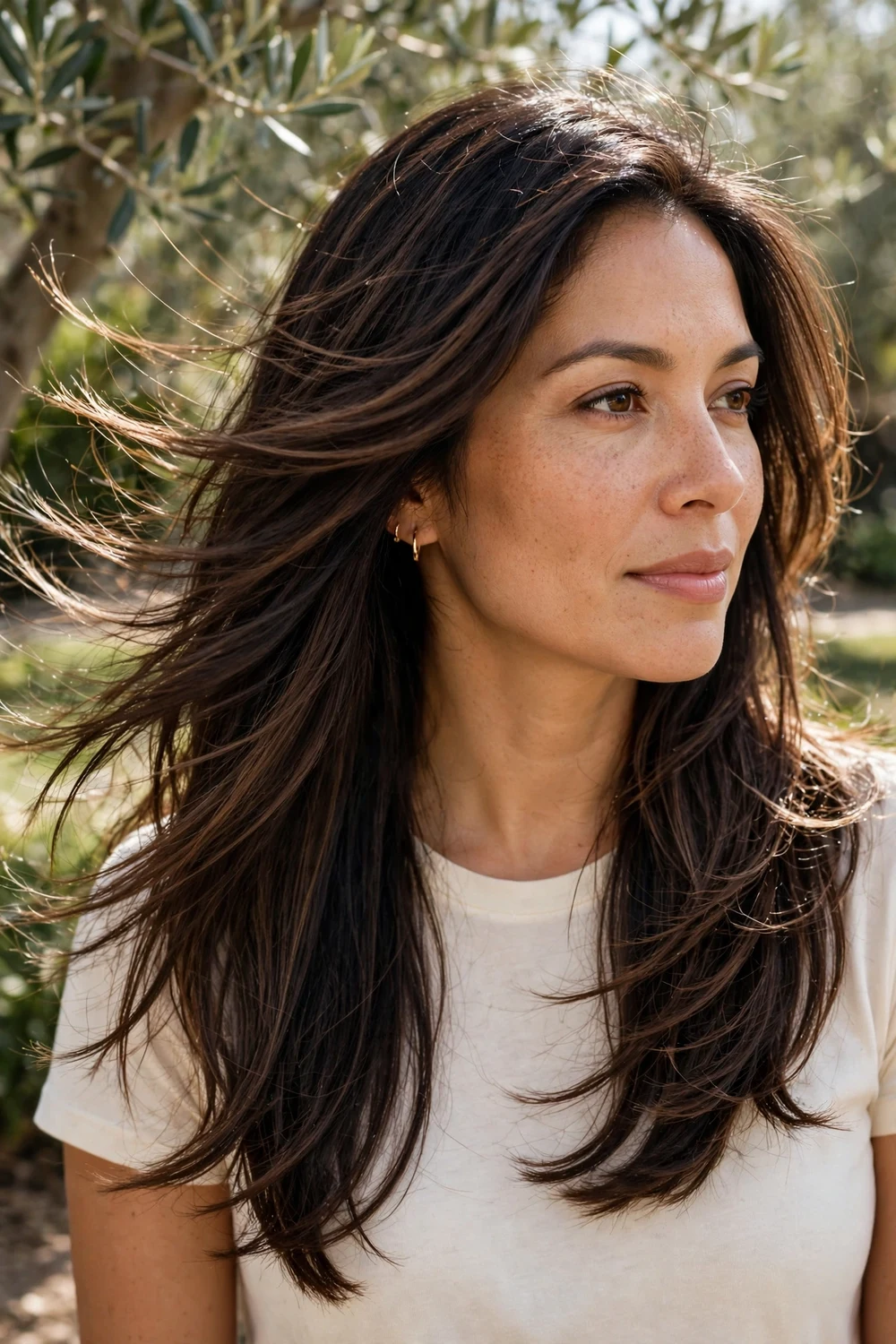
Internal layers are cut underneath the top layer, so the outline stays long while the bulk disappears. This is the single best technique for thick hair that you want to keep long. The top falls smooth, the weight underneath is gone, and the cut moves instead of sitting in one heavy sheet.
Ask for the layers to start at chin level or below so the top stays sleek. It works on straight, wavy, and curly hair. Air-drying takes noticeably less time once the interior is thinned out.
Try this: ask your stylist to show you how much hair came off the interior. It makes the technique easy to request next time.
Difficulty: Easy · Cost: standard cut ($60–$110)
3. Textured Shag

A shag is built from short crown layers and choppy ends, which is exactly what thick hair needs to stop looking like a solid block. The layers break the density into pieces that move on their own. Collarbone length is the easiest version to live with.
Scrunch in a little mousse and air-dry. That is the whole routine on most days. The cut grows out well because the layers are uneven by design. Trims every 8 to 12 weeks.
Try this: flip your part to the other side on day two. The roots lift and the shag looks freshly styled.
Difficulty: Easy · Cost: textured cut ($60–$120)
4. Shaggy Pixie
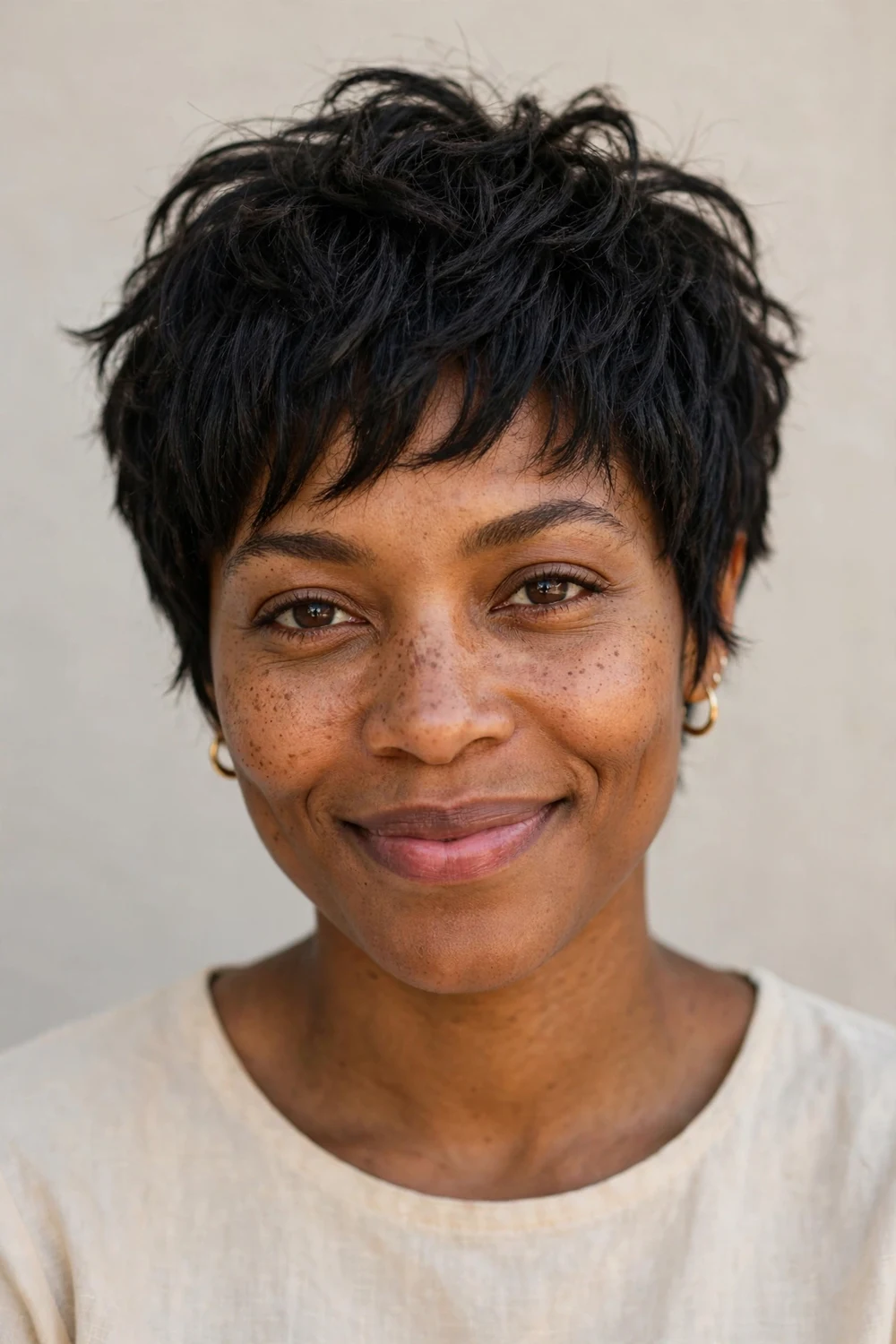
A shaggy pixie keeps the top long and piecey while the sides and nape stay tapered. Thick hair finally gets to be the asset here: the density creates the piecey texture that fine hair cannot fake. Wash, rough-dry, and go.
Work a pea-sized amount of matte paste through dry hair for separation. The cut needs shaping every 5 to 6 weeks, but daily styling takes under five minutes.
Try this: push the top forward and to one side while damp. It dries into a fringe with no extra work.
Difficulty: Easy · Cost: pixie cut ($45–$85)
5. Hidden Undercut Lob
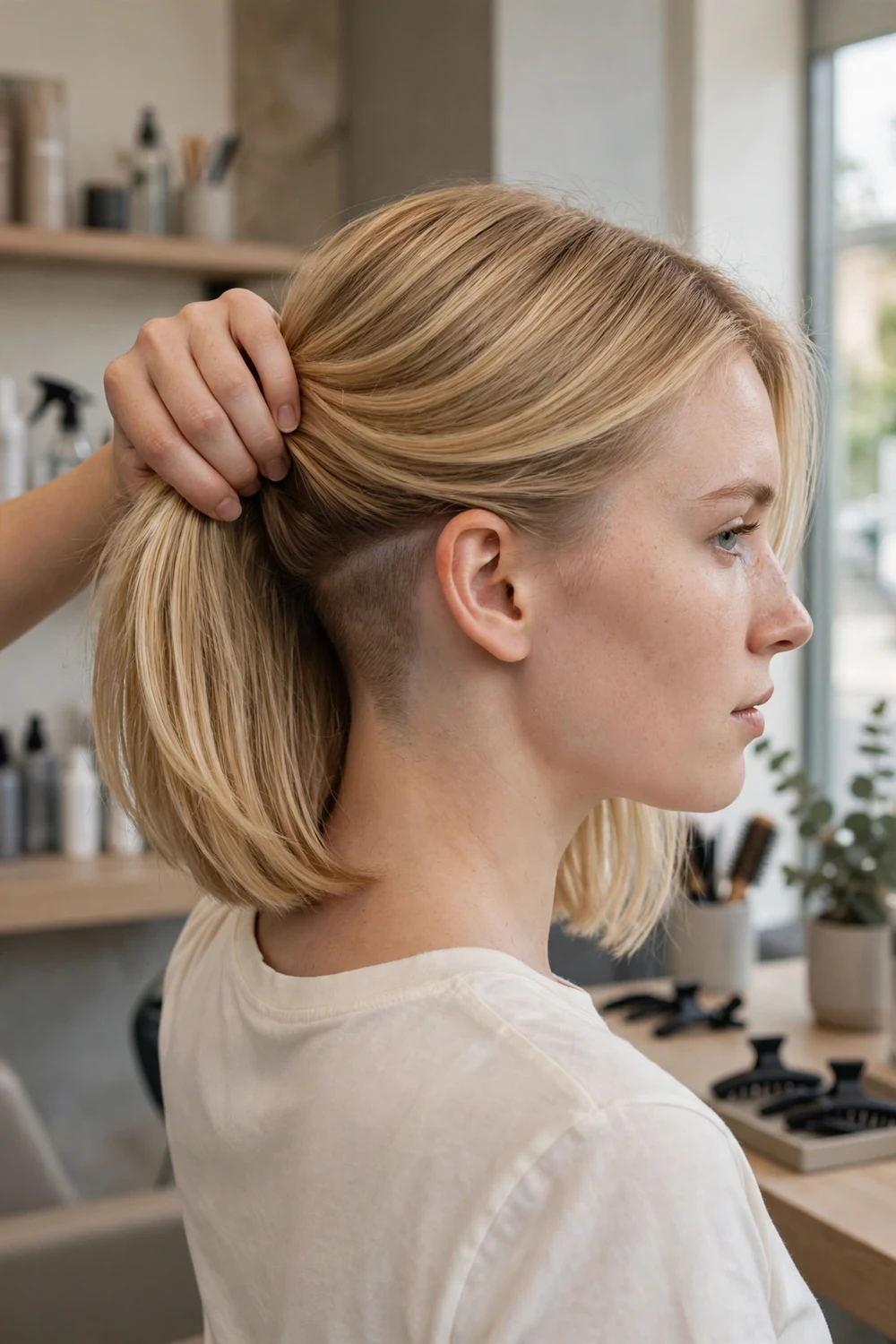
A shaved panel at the nape, hidden under a lob, removes the thickest section of hair entirely. From the front it reads as a normal lob. From the back, with hair up, it shows the detail. Drying time drops because the densest under-layer is gone.
The undercut needs re-shaving every 4 to 6 weeks. Between visits the grow-out stays hidden. This is one of the most effective bulk-removal options on the list.
Try this: start with a small panel at the nape. You can take it wider at the next appointment if you like it.
Difficulty: Easy · Cost: cut + undercut ($60–$110)
If you want shorter takes on this same idea, our short hairstyles for thick hair guide covers crops and pixies built for density.
6. One-Length Long with Face-Framing Layers
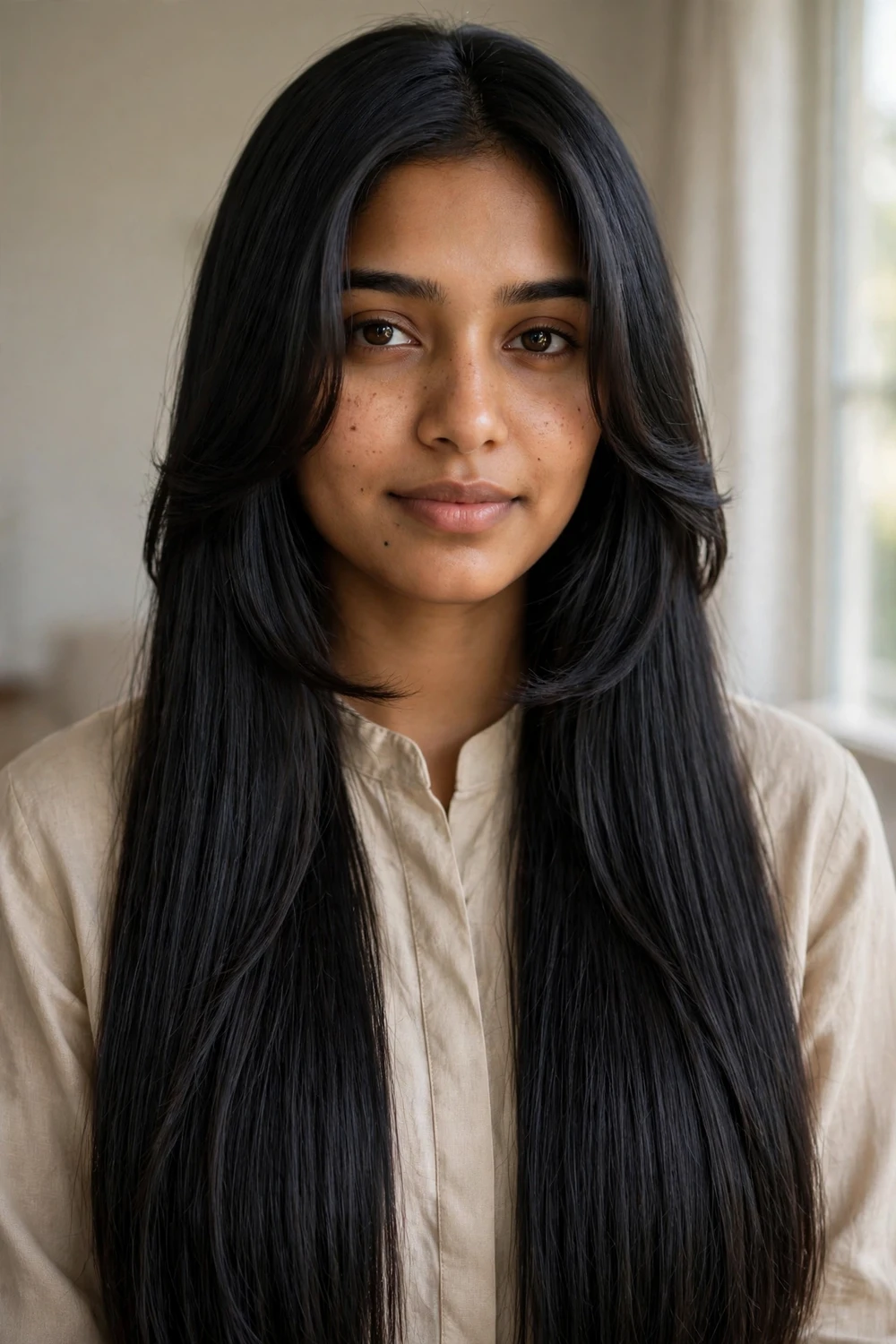
Keeping the full length one-length while adding soft layers only around the face gives you the easiest grow-out on this list. Nothing to maintain through the lengths, no layers to lose their shape. The face-framing pieces keep it from looking heavy around the jaw.
Ask for the front pieces to start at the chin. Wear it straight, wavy, or in a ponytail. Trims every 10 to 12 weeks are enough since the shape is so simple.
Try this: curl only the face-framing pieces with a flat iron for a styled look in three minutes. Use heat protectant first.
Difficulty: Easy · Cost: standard cut ($50–$90)
7. Curtain-Bang Lob

Curtain bangs paired with a lob give thick hair movement at the front without full layers through the back. The bangs take weight off the hairline, which is where thick hair tends to look heaviest. The lob length keeps drying time reasonable.
Blow-dry the bangs forward with a round brush, then let them fall to each side. Five minutes. The bangs need trimming every 6 to 8 weeks; the lob itself goes longer.
Try this: pin the bangs to each side with flat clips while you do your makeup. They set into the curtain shape with no heat.
Difficulty: Easy · Cost: standard cut ($55–$95)
8. Wash-and-Go Long Layers

This cut is designed for natural texture with zero heat. Long layers remove the weight that pulls curls into a triangle, and the shape is cut to air-dry. Apply leave-in conditioner to soaking-wet hair and do not touch it until dry.
Tell your stylist you want wash-and-go before they cut. It changes where the layers sit. Most people need only one product. Trims every 10 to 12 weeks.
Try this: pineapple the hair loosely at night. Morning curls need only a shake, not a full refresh.
Difficulty: Easy · Cost: curl-specialist cut ($70–$140)
9. Textured Razor Bob

A razor, used lightly through the ends, thins thick hair without visible layer lines. The bob keeps its blunt outline while the interior loses bulk. It sits between a blunt bob and a layered bob: structured outside, light inside.
Ask for razor work only through the bottom two inches, never near the roots. Over-razoring causes frizz on thick hair. Style smooth or tousled. Both work.
Try this: air-dry with a little smoothing cream for a lived-in finish that needs no hot tools.
Difficulty: Easy · Cost: standard cut ($55–$95)
10. Tapered Pixie
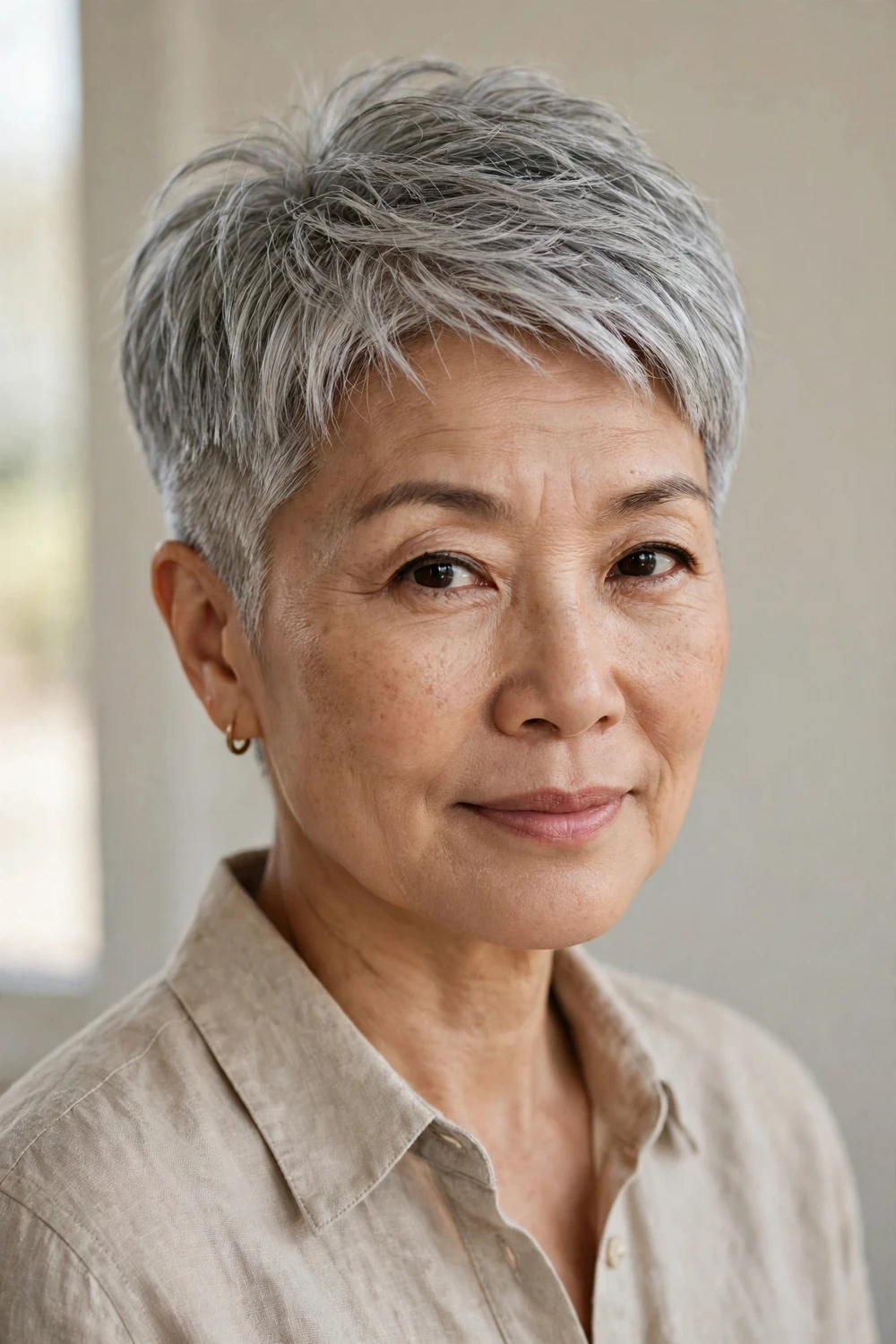
A tapered pixie keeps the sides and nape close while the top stays long enough to show texture. Thick hair holds this shape with almost no product because the density does the work. Drying takes minutes.
Finger-style with a little cream or go without. The taper needs cleaning up every 4 to 5 weeks, which is the only real upkeep. Suits straight, wavy, and curly thick hair.
Try this: ask for the taper to be done with clippers over comb. It grows out softer than a hard fade line.
Difficulty: Easy · Cost: pixie cut ($45–$85)
For more layered shapes at short lengths, browse our short layered haircuts for cuts that style themselves.
11. Curly Shag

Thick curls and shag layers are a natural match. The layers take out the interior weight that makes curly hair widen into a triangle, and each curl gets room to spring. The rounded shape holds itself.
Get it cut dry so the stylist sees your true curl length. Scrunch in curl cream on wet hair and diffuse or air-dry. Use heat protectant before diffusing. Trims every 10 to 12 weeks.
Try this: sleep in a loose pineapple. The crown layers keep their lift until morning.
Difficulty: Medium · Cost: curl-specialist cut ($75–$150)
12. Butterfly Cut

The butterfly cut pairs short, bouncy layers around the face with long layers through the back. For thick hair it works because the short front pieces remove weight where it shows most, while the long back keeps the length you want. It looks styled with almost no effort.
Blow-dry the front layers with a round brush for the signature bounce, about 8 minutes, or let them air-dry for a softer version. Always use heat protectant with the dryer.
Try this: tie the back up and leave the front layers out. It reads as a full style in one minute.
Difficulty: Medium · Cost: layered cut ($65–$125)
13. A-Line Bob with Interior Thinning

An A-line bob angles longer toward the front, which suits thick hair because the weight sits forward instead of puffing out at the sides. Interior thinning through the back removes the bulk that makes bobs balloon. The result sits close and polished.
Blow-dry smooth with a paddle brush, about 10 minutes, with heat protectant applied first. The angle needs re-cutting every 7 to 8 weeks or the back loses its shape.
Try this: part it deep on one side. The sweep adds polish and needs no extra styling time.
Difficulty: Easy · Cost: precision cut ($55–$95)
14. Air-Dried Wavy Lob

A lob cut for your natural wave pattern, with layers placed where your hair already wants to bend. Thick wavy hair does half the styling on its own once the weight is distributed right. Scrunch in sea salt spray on damp hair and walk away.
Tell your stylist you air-dry. They will cut the layers to fall correctly without heat. The grow-out is graceful, so trims every 10 to 12 weeks work.
Try this: braid damp hair loosely into two braids overnight once a week. Morning waves need nothing else.
Difficulty: Easy · Cost: standard cut ($55–$100)
15. Undercut Pixie
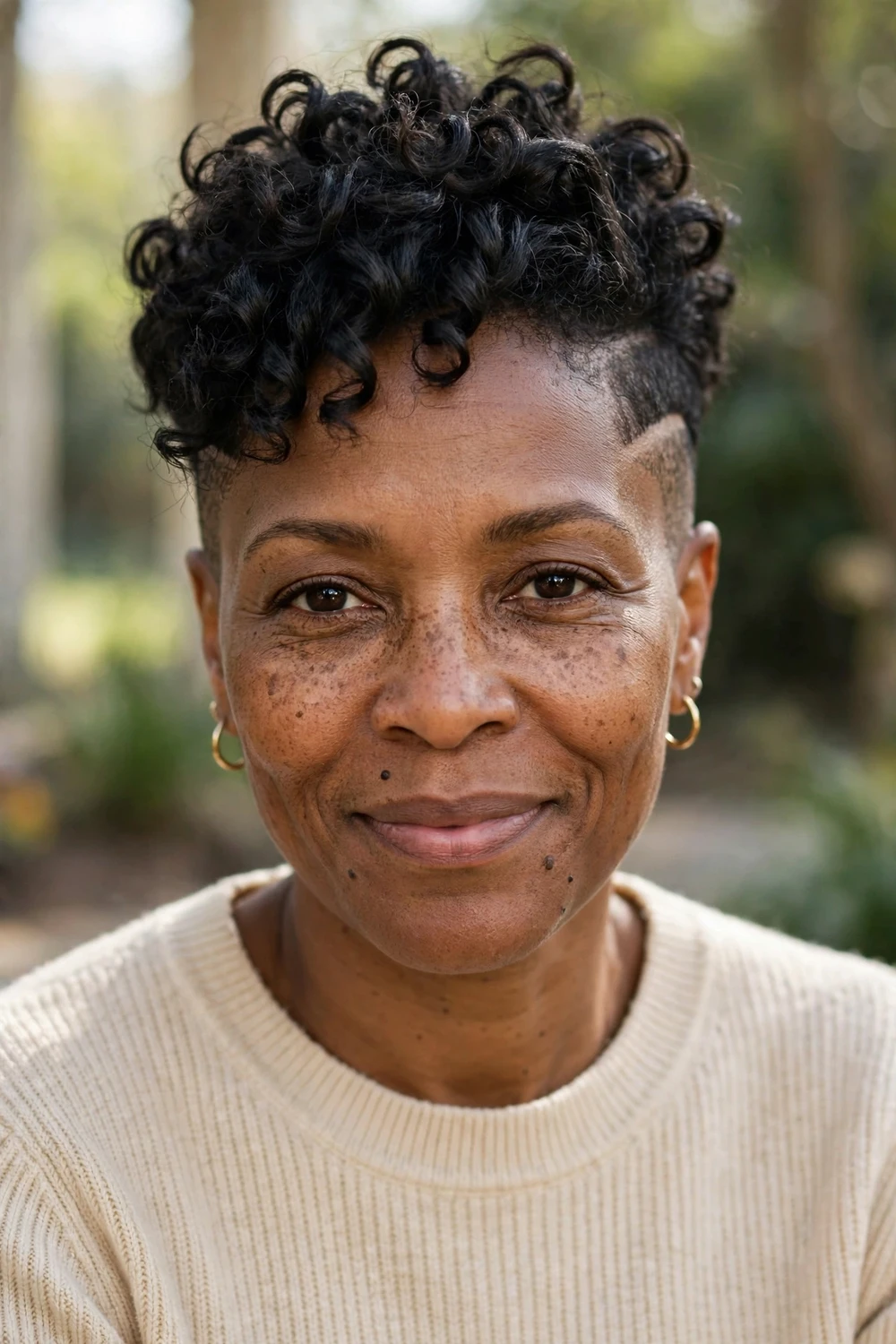
Shaved sides with length on top is the fastest-drying cut on this list. Thick hair that once took an hour to dry is done in minutes. The contrast between the close sides and the fuller top also makes the cut look deliberate with zero styling.
Define the top with curl cream or paste, depending on your texture. The sides need edging every 3 to 4 weeks to stay crisp. That is the trade-off for the easiest mornings.
Try this: grow the top an extra inch before your next cut. Longer tops give more styling options without more effort.
Difficulty: Easy · Cost: pixie cut ($45–$90)
More bob shapes cut with weight in mind are in our layered bob hairstyles collection.
16. Debulked Bixie

A bixie sits between a bob and a pixie, and on thick hair it needs deliberate de-bulking through the interior to avoid widening at the ears. Thinning shears through the mid-lengths, used carefully, take out the puff while keeping the outline strong.
Style with fingers and a dab of cream. The cut grows into a soft bob over 8 weeks, so it is forgiving between appointments. Ask your stylist to thin the interior, never the perimeter.
Try this: wear it tucked behind one ear. The tuck shows off the tapered shape and stays put all day.
Difficulty: Easy · Cost: standard cut ($50–$90)
17. V-Cut with Sliced Layers

A V-cut tapers the ends to a soft point, which removes a surprising amount of weight from the bottom third of long thick hair. Sliced layers through the lengths keep the rest moving. It keeps maximum length while fixing the heavy-ends problem.
Wear it straight or wavy. The V shape shows best from the back, so it suits people who wear their hair down. Trims every 10 to 12 weeks keep the point defined.
Try this: ask for the V to be soft, not sharp. A gentle point grows out better than a dramatic one.
Difficulty: Easy · Cost: standard cut ($55–$100)
18. Blunt Fringe Bob

Thick hair holds a blunt fringe better than any other texture because there is enough density to make a solid line. Paired with a chin-length bob, the fringe anchors the cut and the whole shape reads polished with minimal work.
The fringe needs trimming every 4 to 5 weeks, more often than the bob itself. Blow-dry it forward with a paddle brush in the morning, about three minutes. Use heat protectant if you flat-iron it.
Try this: wash only the fringe in the sink on day two. It refreshes the whole cut without a full wash.
Difficulty: Medium · Cost: standard cut ($55–$95) + fringe trims
19. U-Cut Layers
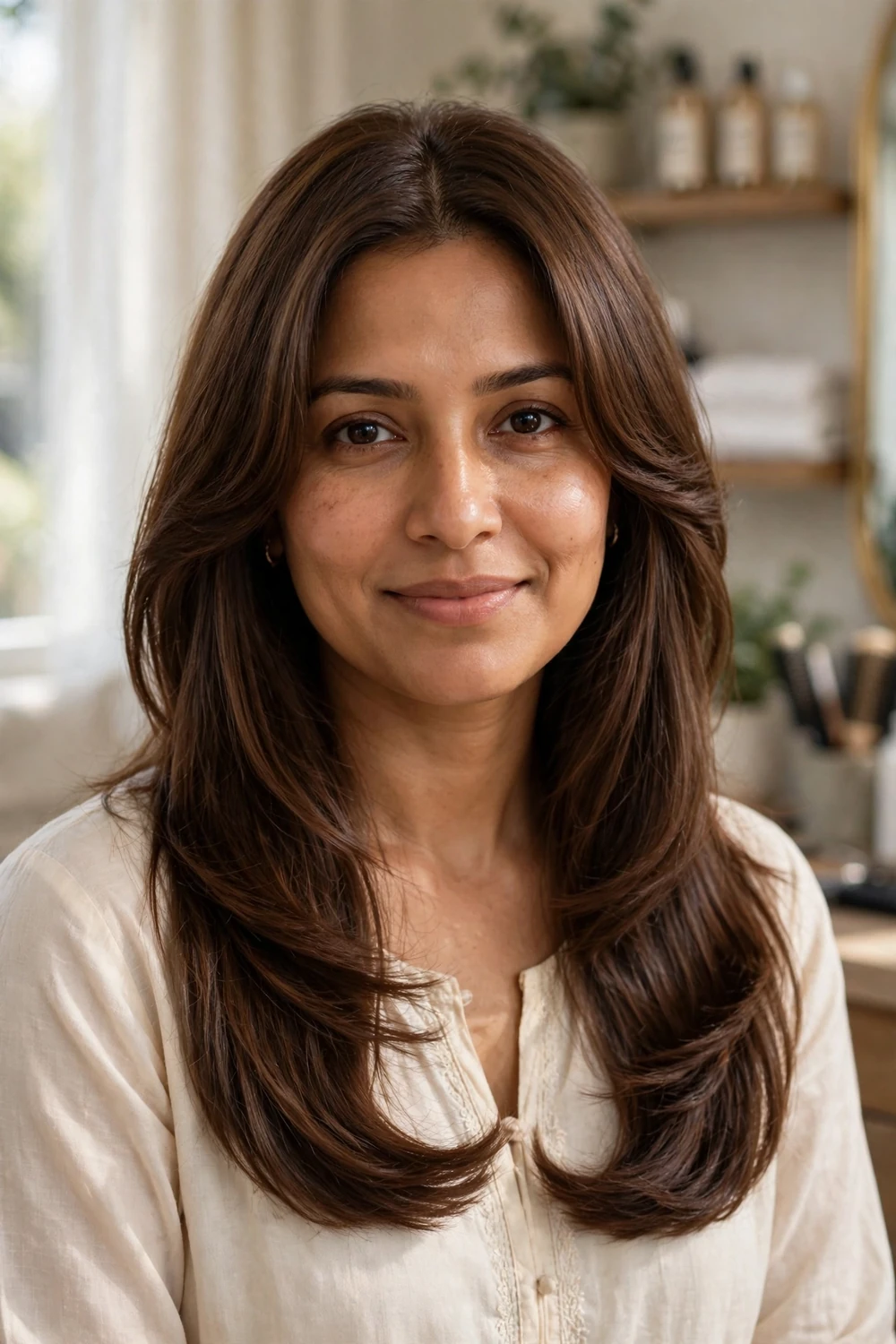
A U-cut rounds the bottom edge instead of pointing it, which distributes thick hair evenly so no section looks heavier than the rest. Soft layers through the lengths add movement without the maintenance of short, choppy ones.
This is the lowest-effort long cut here. Air-dry or blow-dry, both work. The rounded shape hides uneven growth, so trims every 12 weeks are fine.
Try this: flip the ends under with a round brush while blow-drying for a polished finish in five extra minutes.
Difficulty: Easy · Cost: standard cut ($50–$90)
20. Grow-Out Long Layers
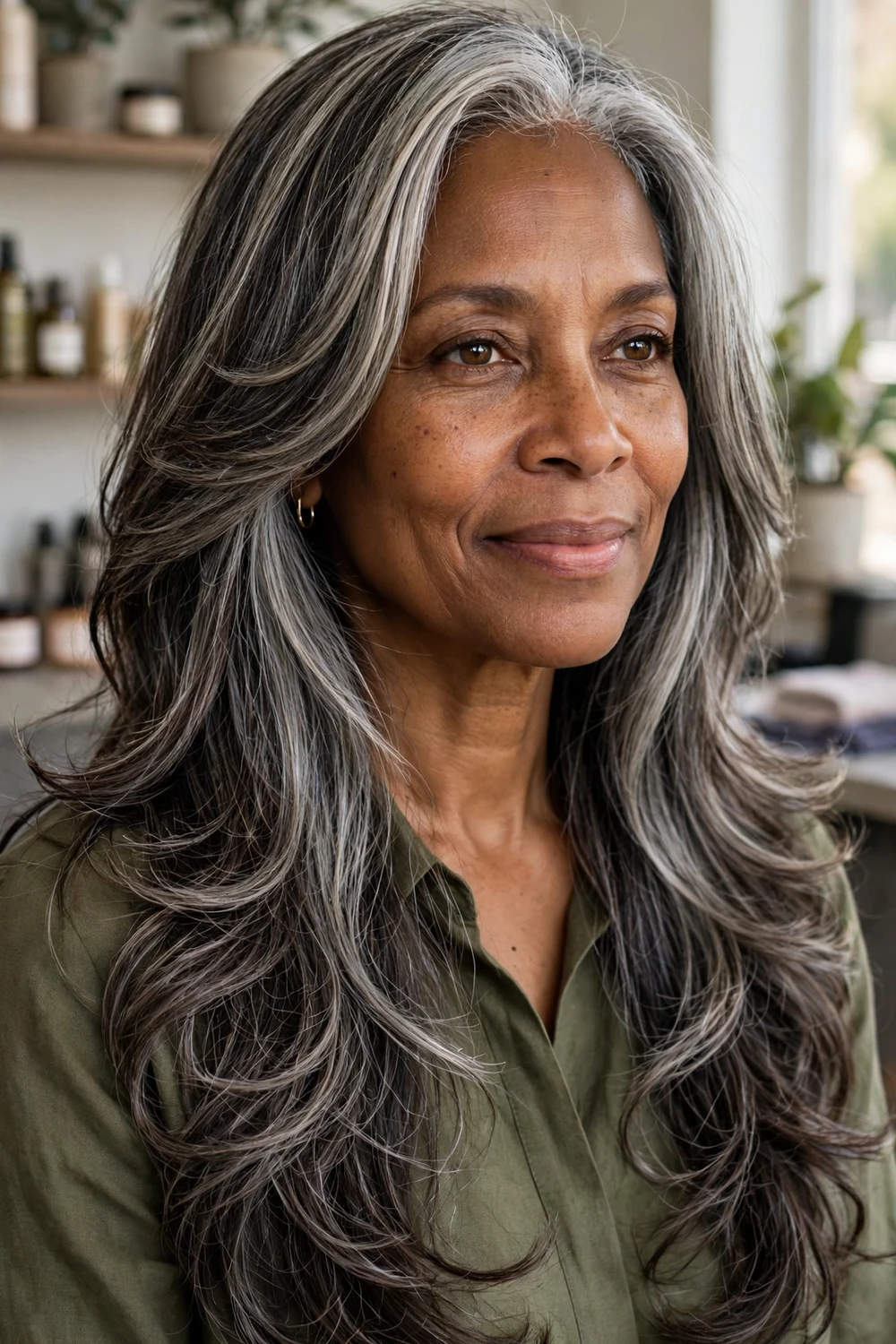
Long layers cut with grow-out in mind use soft, blended transitions instead of dramatic steps. Thick hair keeps its shape for months because there are no harsh lines to lose. This is the cut for people who want to visit the salon as rarely as possible.
Ask for blended layers and a soft perimeter. The cut looks good for 12 to 16 weeks, the longest stretch on this list. A little leave-in conditioner is the only product it needs.
Try this: book the next trim before you leave the salon. A standing appointment keeps the grow-out on track.
Difficulty: Easy · Cost: standard cut ($60–$110)
Fine hair needs the opposite approach to density. Our bob hairstyles for fine hair collection shows how the same lengths work when the goal is adding fullness.
Quick Comparison
| Haircut | Best for | Daily styling | Trim cycle |
|---|---|---|---|
| Blunt collarbone bob | Containing ends, faster drying | 5 min | 8–10 weeks |
| Long cut with internal layers | Keeping length, losing weight | 5 min | 10–12 weeks |
| Textured shag | Air-dry texture | 3 min | 8–12 weeks |
| Hidden undercut lob | Maximum bulk removal | 5 min | 4–6 weeks (undercut) |
| Undercut pixie | Fastest drying | 3 min | 3–4 weeks (sides) |
| Wash-and-go long layers | No-heat routines | 2 min | 10–12 weeks |
| Grow-out long layers | Fewest salon visits | 5 min | 12–16 weeks |
What to Avoid with Thick Hair
Aggressive razor work near the roots is the biggest mistake. It creates frizz that no product fully controls on thick hair. Thinning belongs through the mid-lengths and ends, done lightly, with the perimeter left strong.
Skip one-length cuts past the waist without any internal work. The bottom third turns into a heavy curtain that takes forever to dry and never moves. If you want extreme length, internal layers are not optional.
Avoid heavy oils and butters as daily products on thick hair that is also fine-stranded. They coat the hair and press it flat, which defeats the movement the cut was built to create. A lightweight leave-in does the job better.
Do not skip the consultation about drying. Tell your stylist how you actually dry your hair. A cut designed for blow-drying behaves differently from one designed to air-dry, and thick hair punishes the mismatch more than other textures.
Frequently Asked Questions
How do you thin out thick hair without making it frizzy?
Thin through the mid-lengths and ends with thinning shears or a razor, never near the roots. Keep the perimeter solid so the outline stays clean. The frizz comes from over-thinning or thinning too high up, where short pieces poke through the top layer.
How often should thick hair be trimmed?
Every 8 to 12 weeks for most cuts on this list. Shorter cuts with undercuts or tapers need touch-ups every 3 to 6 weeks. Long layered cuts with soft perimeters can stretch to 12 or even 16 weeks because the shape hides growth.
Can thick hair be wash and go?
Yes, when the cut is designed for it. Long layers, shags, and wash-and-go cuts for natural texture all air-dry into shape. Tell your stylist you air-dry before they cut, since layer placement changes. One leave-in product is usually enough.
Should thick hair be layered or one length?
Most thick hair does better with layers, because layers remove the weight that makes one-length cuts sit heavy and dry slowly. The exception is a blunt bob or lob with internal weight removal, which keeps a clean outline while thinning the inside.
How do I reduce drying time for thick hair?
Cut weight first: shorter lengths, internal layers, and undercuts all speed drying more than any product. Then rough-dry the roots before styling the lengths, and use a microfiber towel instead of a regular one. Thick hair holds a lot of water in the under-sections, so lifting the top layers while drying helps air reach them.
Final Thoughts
Thick hair stops being high maintenance the moment the cut starts doing the work. Pick the idea that matches how you actually dry and style your hair, ask for the weight-removal technique by name at the salon, and keep the products light. The right cut makes thick hair feel lighter the same day you get it.
For more hair ideas across every texture and length, browse the full collection at PrimeHairPicks.
If your thickness comes with mature hair, these hairstyles for thick hair over 60 show how to cut bulk without losing fullness. If your thickness sits on an angular face, see which hairstyles for square faces soften a strong jawline. For more on this topic, see hairstyles for thin hair over 50.
If your thick hair is also curly, these curly hairstyles for thick hair cover cuts and updos built for dense curls, from long layers and shags to buns, braids, and twist-outs.

