


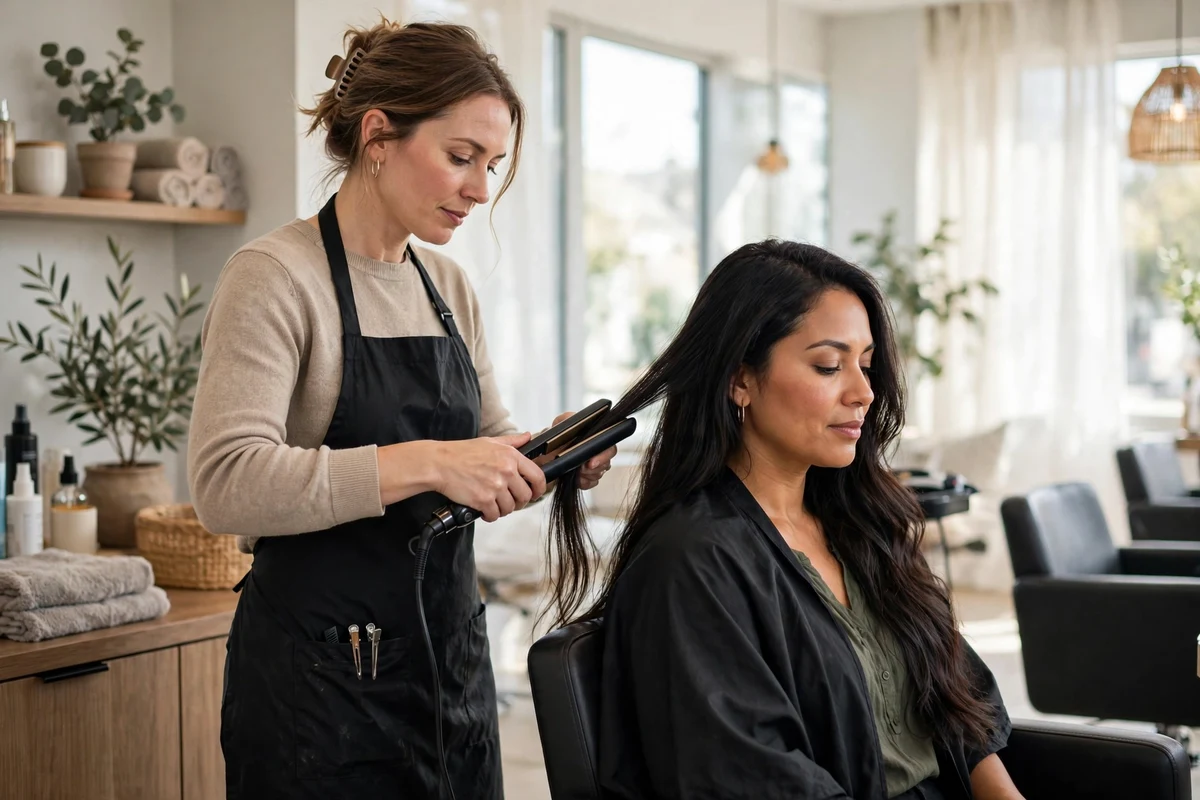
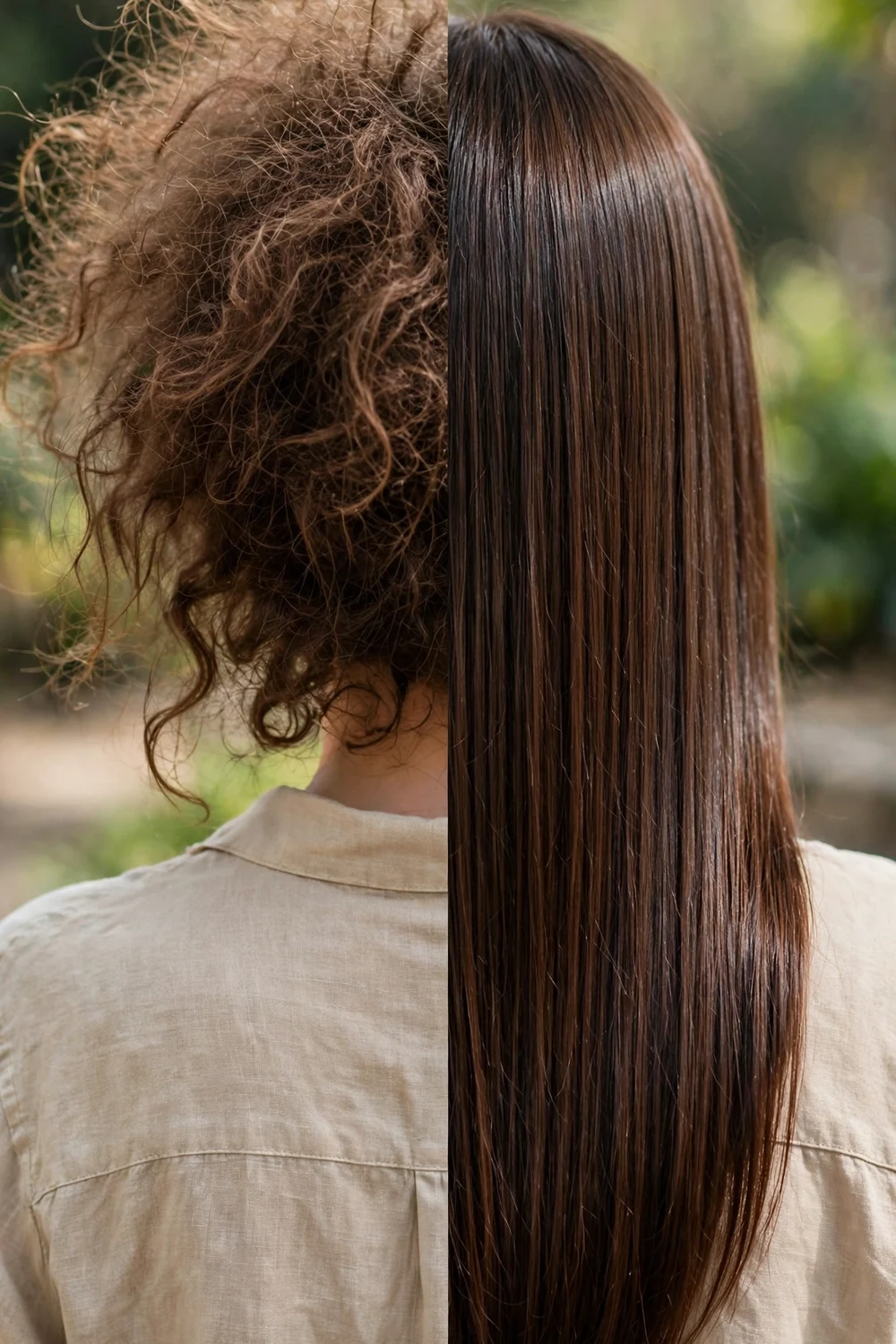
A keratin treatment is a semi-permanent salon service that coats the hair with keratin, a protein your hair already contains, and seals it in with heat. The result is smoother, shinier hair with far less frizz for three to six months. It is a smoothing treatment, not a straightening one: it relaxes curl and wave patterns and cuts styling time, but it does not permanently restructure your hair the way chemical straighteners do.
Treatments take two to four hours in the salon and typically cost between $150 and $450 depending on your hair length and location. This guide explains exactly how the treatment works, what happens at each step, who it suits, what it costs, how to care for it afterward, and the safety facts worth knowing before you book.
Quick Takeaways
- A keratin treatment infuses hair with keratin protein and seals it with a flat iron, creating a smooth, humidity-resistant coating that lasts 3 to 6 months.
- It reduces frizz and loosens curl patterns but does not permanently straighten hair. Your natural texture returns gradually as the treatment wears off.
- The salon process takes 2 to 4 hours: clarifying wash, solution application, processing time, blow-dry, and flat-iron sealing.
- Typical salon cost is $150 to $450; aftercare requires sulfate-free shampoo and avoiding washing for 48 to 72 hours.
- Some formulas release formaldehyde when heated, so ask your salon whether their product is formaldehyde-free before booking.
How a Keratin Treatment Works
Keratin is a fibrous protein that makes up most of your hair’s structure. Daily life breaks it down: sun exposure, heat styling, chemical processing, and even friction from pillowcases wear away the hair’s natural keratin over time. That damage leaves the outer cuticle layer rough and raised, which is what you see as frizz and dullness.
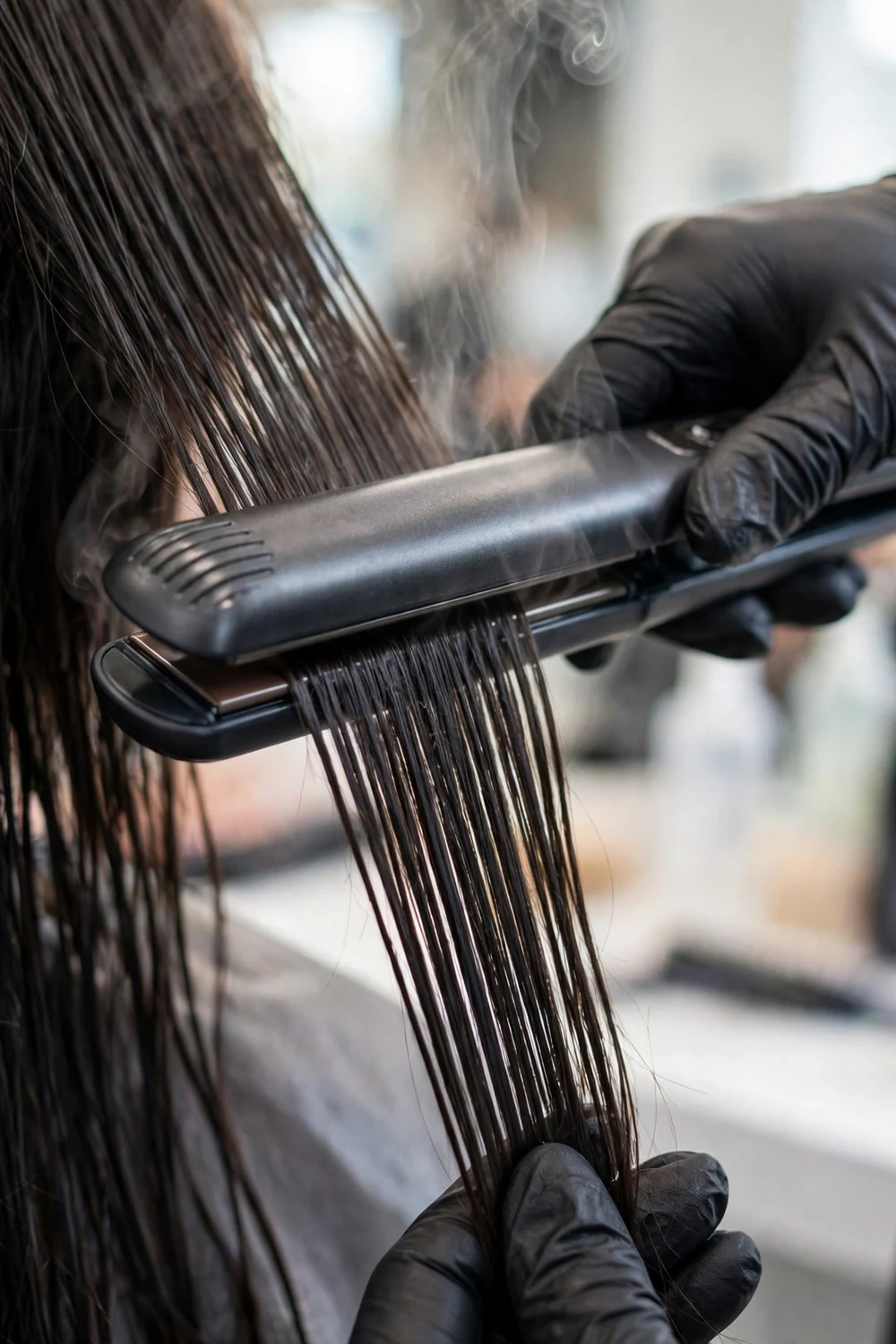
A keratin treatment reverses this cosmetically. The stylist applies a liquid formula rich in keratin (and usually conditioning agents) to the hair, lets it penetrate for 20 to 60 minutes, then blow-dries and flat-irons the hair at high heat, typically around 400 to 450 degrees Fahrenheit. The heat bonds the keratin to the hair shaft, filling in the rough spots and sealing the cuticle flat. The sealed surface reflects light evenly, which reads as shine, and resists humidity, which reads as frizz control.
The key difference: the treatment coats and fills rather than restructuring. Chemical straighteners and relaxers break the hair’s internal bonds and rebuild them; keratin treatments leave those bonds alone. That is why the effect is temporary: regular washing gradually removes the coating, and your natural texture comes back over several months.
The Salon Process, Step by Step
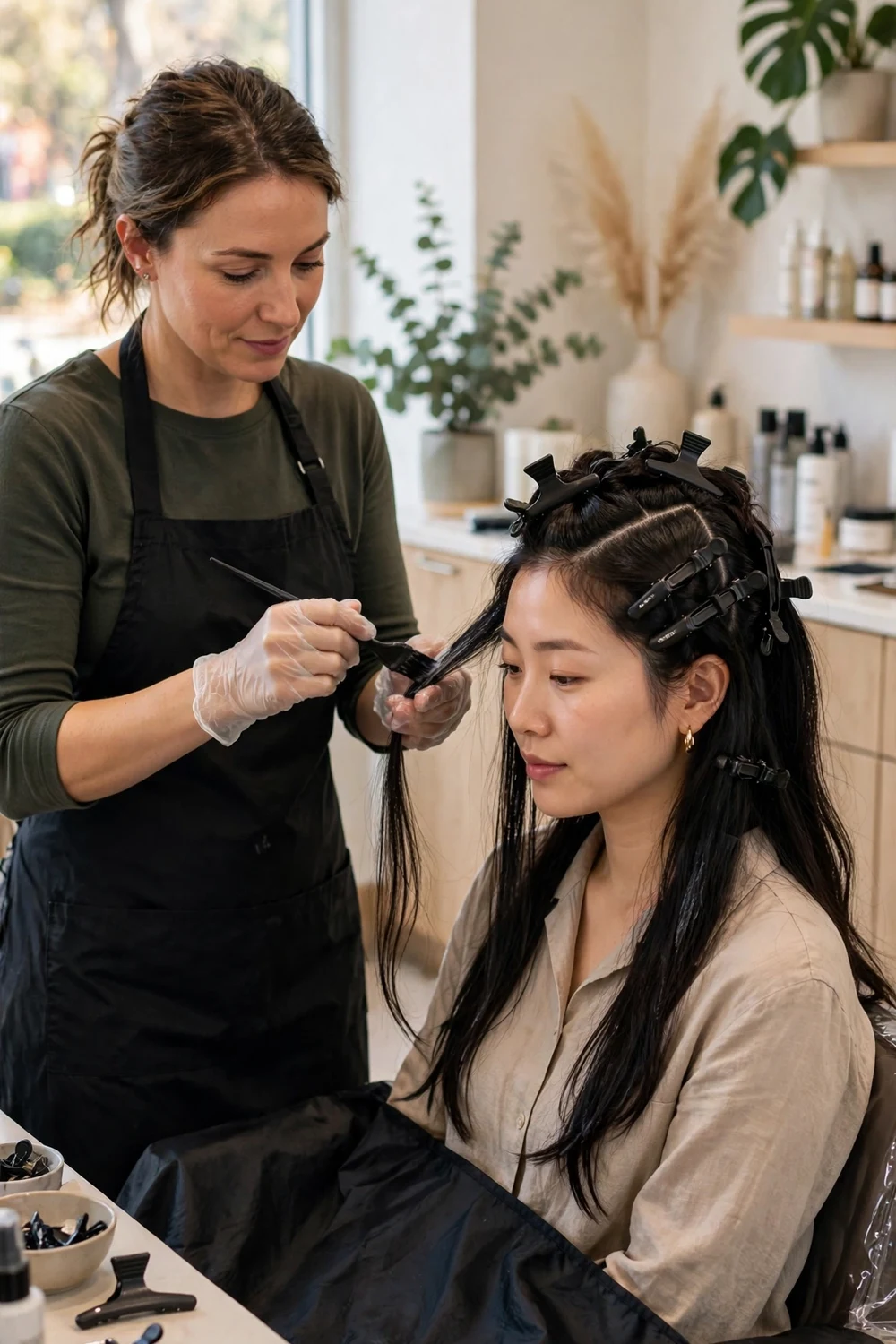
Step 1: Consultation. The stylist assesses your hair type, damage level, and goals. This is when you should discuss your expectations: how straight you want the result, how much curl you want to keep, and whether your hair has been bleached or chemically treated, which affects the formula choice.
Step 2: Clarifying wash. Your hair is washed, usually twice, with a clarifying shampoo that strips away oils, silicones, and product residue. This leaves the cuticle open so the keratin formula can penetrate. Your hair is then towel-dried or partially blow-dried.
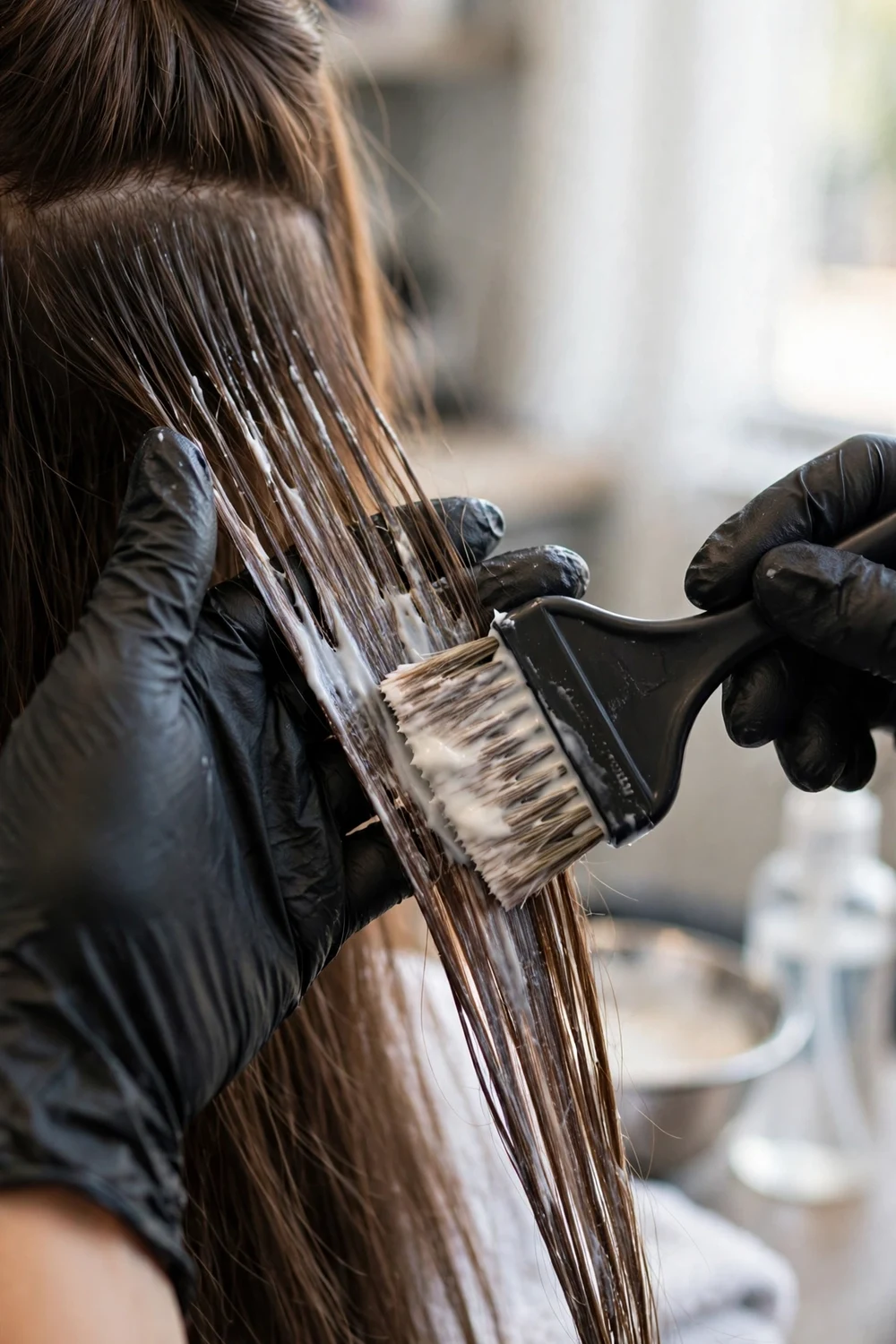
Step 3: Application. The keratin solution is applied section by section from roots to ends, similar to how color is applied. The stylist combs it through to distribute it evenly and remove excess. This step takes 20 to 40 minutes depending on hair length and density.
Step 4: Processing time. The solution sits on the hair for 20 to 60 minutes. You will likely sit under no heat; the formula works at room temperature.
Step 5: Blow-dry. The stylist blow-dries the hair straight with the product still in it. This begins the smoothing and removes moisture before the flat iron stage.
Step 6: Flat-iron sealing. Small sections are passed with a flat iron at high heat, usually 400 to 450 degrees, several passes per section. This is the step that bonds the keratin to the hair. It also produces the most fumes, which is why ventilation and the formaldehyde question matter (see the safety section below).
Step 7: Rinse and finish (varies). Some formulas are rinsed out the same day with a light conditioner; others instruct you to leave the product in and wash at home after 48 to 72 hours. Your stylist will tell you which version you received.
Total appointment time runs two to four hours, longer for very long or thick hair.
Types of Keratin Treatments
Not all keratin treatments are the same formula or the same strength. The main categories:
Traditional keratin treatment (Brazilian keratin treatment). The full-strength version described above. Strongest frizz reduction, loosens curls significantly, lasts three to six months. This is the category most associated with formaldehyde concerns, so ask about the formula.
Brazilian blowout. A brand-name treatment that works similarly but is marketed as customizable: the stylist can leave more of your natural curl intact. It is rinsed the same day, so there is no waiting period before washing. Lasts about three months.
Express keratin treatment. A lighter, faster version taking about an hour. Less dramatic results and a shorter lifespan of six to eight weeks, but lower cost and less heat exposure. Good for a trial run before committing to the full treatment.
At-home keratin kits. Priced around $30 to $100, these use weaker formulas and your own flat iron. Results are less even and shorter-lived than salon work, and the fume risk is higher without salon ventilation. They suit mildly wavy or frizzy hair better than tight curls.

Who a Keratin Treatment Suits (and Who Should Skip It)
Good candidates: Thick, frizzy, or unruly hair that takes long to style; wavy or curly hair you regularly straighten; hair that puffs up in humidity; anyone wanting to cut daily styling time significantly. If you straighten your hair most days, a keratin treatment can save you an hour or more each week.
Our guide to short hairstyles for thick hair pairs well with this treatment, since thick hair is one of the types that benefits most from professional smoothing.
Think twice if: Your hair is very fine and already straight (the treatment can make it look flat and limp); your hair is severely damaged or over-bleached (the high heat of the flat-iron stage can push it past breaking point); you are pregnant or breastfeeding (discuss chemical exposure with your doctor first); or you love your curl pattern and do not want it loosened, since even “curl-friendly” versions relax texture somewhat.
Color timing matters. Do color before the keratin treatment, not after. The treatment can slightly lighten or shift fresh color, and coloring too soon afterward strips the keratin coating. Most stylists recommend coloring at least two weeks before, or waiting two weeks after.


How Much Does a Keratin Treatment Cost?
Salon keratin treatments typically cost $150 to $450 in most markets. Short hair sits at the lower end, long or very thick hair at the higher end. High-end salons in major cities can charge $500 to $800 for the full treatment with premium formulas.
Express treatments run $100 to $200. At-home kits cost $30 to $100 but deliver weaker, shorter-lived results. Factor in aftercare costs too: you will need sulfate-free shampoo and conditioner, which most people buy specifically for the treatment’s lifespan.
Done two to three times a year, a keratin treatment is a real budget line. Weigh it against what you currently spend on anti-frizz products, blowout appointments, and the time you spend heat styling each week. For heavy daily straighteners, the math often works out; for occasional frizz, it may not.
How Long Does It Last?
Most keratin treatments last three to five months, with some lasting up to six on coarse, less-washed hair. Longevity depends on three things: your hair’s porosity (damaged, porous hair loses the coating faster), how often you wash (daily washing shortens it), and your aftercare (sulfates and chlorine are the biggest enemies).
The grow-out is gradual and natural-looking. There is no harsh line of demarcation the way there is with relaxers or color, because your natural texture simply re-emerges as the coating washes away. Repeat treatments are usually done two to three times per year at most; more frequent full treatments risk heat damage from the repeated flat-ironing.

Aftercare: How to Make It Last
The first 72 hours matter most for traditional treatments. Follow these rules:
- Do not wash your hair for 48 to 72 hours after the treatment (or follow your stylist’s specific timing for same-day-rinse formulas).
- Keep hair straight and untouched. No ponytails, clips, headbands, or tucking behind ears during the setting period; kinks can set into the coating.
- Avoid getting it wet. Rain, sweat, and swimming all count. If it gets damp accidentally, blow-dry and flat-iron it straight immediately.
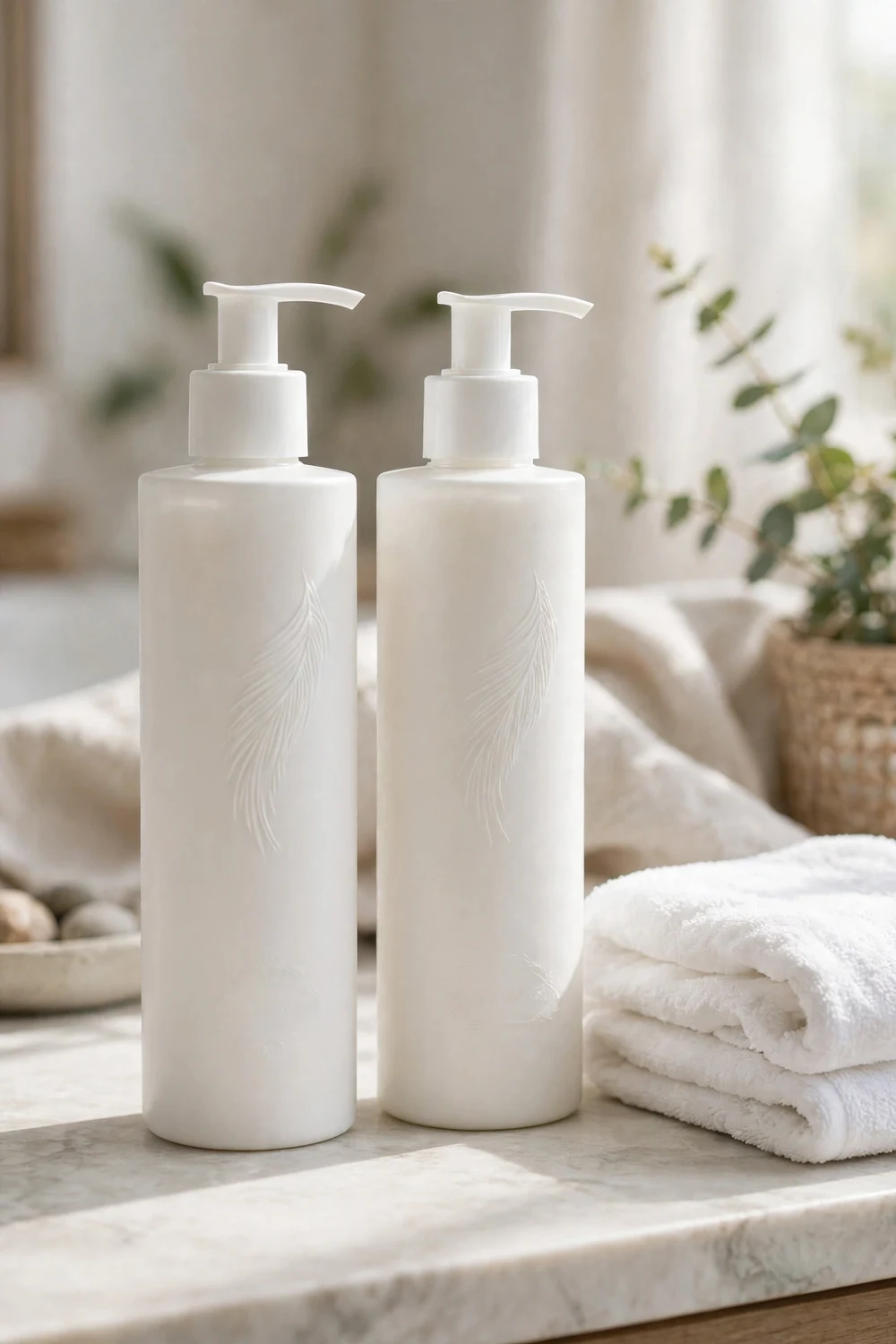
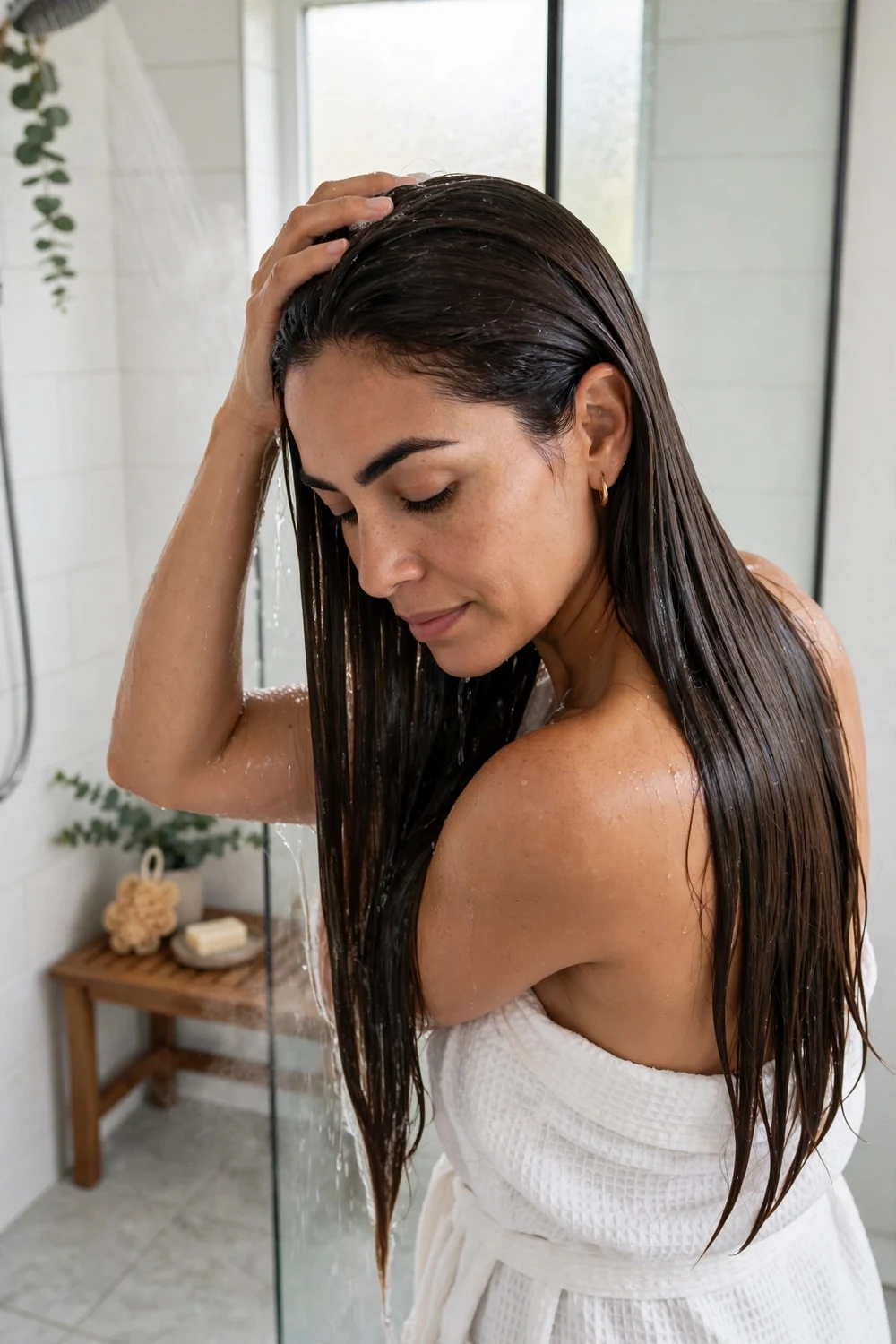
- Switch to sulfate-free shampoo and conditioner. Sulfates dissolve the keratin coating and are the fastest way to shorten the treatment’s life. Wash less often than usual, ideally two to three times per week.
- Skip salt water and chlorine. Both strip the treatment quickly. If you swim, wear a swim cap and rinse immediately after.
- Sleep on silk or satin. Less friction means the smooth coating lasts longer.
For special occasions during the treatment’s lifespan, your hair will hold polished styles with much less effort. Our formal hairstyles for long hair are noticeably easier to achieve on keratin-smoothed hair.
Safety: The Formaldehyde Question
This is the part to read carefully. Many traditional keratin formulas contain formaldehyde or chemicals that release formaldehyde when heated to flat-iron temperatures. Formaldehyde is classified as a known human carcinogen, and salon exposure during the flat-iron stage has caused eye, nose, and throat irritation in both stylists and clients.
What to do about it:
- Ask directly: “Is your keratin formula formaldehyde-free, and does it release formaldehyde when heated?” Get a straight answer before booking.
- Know the label games. Some products claim “formaldehyde-free” while containing methylene glycol, which converts to formaldehyde gas when heated. They are functionally the same thing.
- Check ventilation. A reputable salon performs the flat-iron stage in a ventilated area. Strong fumes with burning eyes are a sign to speak up.
- Consider formaldehyde-free options. Glyoxylic acid-based formulas smooth without formaldehyde release. Results may be slightly less dramatic, but many clients find the trade-off worthwhile.
The treatment is not risk-free even without formaldehyde: the 450-degree flat ironing is intense heat on already-processed hair. Severely damaged hair can break under it, which is why the consultation matters.

Keratin Treatment vs. Other Smoothing Options
| Treatment | What It Does | Lasts | Typical Cost |
|---|---|---|---|
| Keratin treatment | Coats hair in protein; smooths and defrizzes without restructuring bonds | 3 to 6 months | $150 to $450 |
| Brazilian blowout | Similar protein smoothing; customizable curl retention; same-day rinse | About 3 months | $150 to $400 |
| Japanese straightening | Chemically restructures bonds for permanent straightness | 6+ months (grows out; needs touch-ups) | $400 to $800 |
| Relaxer | Chemically breaks curl pattern; permanent on treated hair | Permanent (new growth needs retouching) | $80 to $250 |
| Hair botox | Deep conditioning filler treatment; no bond changes | 2 to 4 months | $150 to $350 |
Frequently Asked Questions
Will a keratin treatment make my hair permanently straight?
No. A keratin treatment is semi-permanent: it coats the hair and relaxes the texture for three to six months, then gradually washes out. Your natural curl or wave pattern returns fully. Only chemical straighteners like relaxers or Japanese thermal straightening permanently change the hair’s structure.
Does a keratin treatment damage hair?
On healthy hair, it is generally low-risk, and many people find their hair looks healthier because the sealed cuticle breaks less. The main risks are the high heat of the flat-iron stage on already-damaged hair, and formaldehyde exposure from some formulas. Severely bleached or fragile hair should be evaluated carefully before booking.
Can I get a keratin treatment on curly hair without losing my curls?
The treatment will loosen your curl pattern to some degree; that is part of how it works. Brazilian blowout-style treatments can be customized to preserve more curl than traditional keratin treatments. If keeping your exact curl pattern matters to you, discuss this explicitly in the consultation, because results vary by formula and technique.
How soon can I wash my hair after a keratin treatment?
For traditional treatments, wait 48 to 72 hours before the first wash. Brazilian blowout and some newer formulas are rinsed the same day in the salon, so you can wash normally right away. Always follow your stylist’s specific instructions for the formula they used.
Can I color my hair after a keratin treatment?
Wait at least two weeks after the treatment before coloring, since fresh dye can strip the keratin coating. Ideally, do your color first and the keratin treatment second, with about two weeks between them. Tell your colorist about the treatment so they can adjust the formula.

Final Thoughts
A keratin treatment is one of the most effective tools for taming frizz and cutting styling time, as long as you go in with clear expectations: smoother, not permanently straight; months, not forever; and aftercare that actually matters. Ask about formaldehyde, time your color correctly, and switch to sulfate-free washing to protect your investment.
For more guidance on caring for treated and textured hair, explore the hair care guides on the PrimeHairPicks homepage.

