


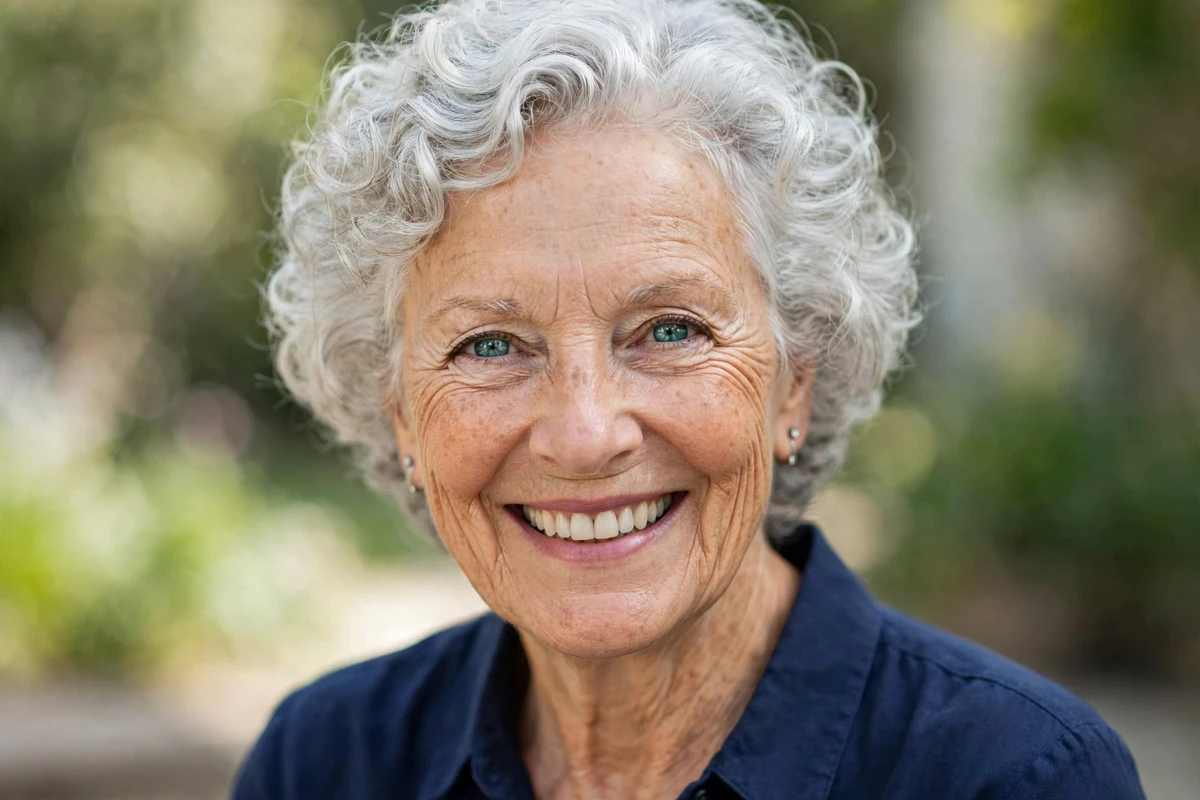
Curly short hairstyles for women over 60 are having a well-earned moment. Shorter lengths let curls do what they do best: spring up, hold their shape, and frame the face without hours of daily work. If your curls have loosened or thinned with age, the right cut can bring back bounce you thought was gone.
This guide rounds up 42 ideas, from classic bobs and pixies to wash-and-go routines and silver styles, plus a curl-type breakdown and face-shape guide. For even more short options, browse our guide to short hairstyles for women over 60.
Quick answer: This guide covers the best styles, who they suit, and how to get them right.
Quick Takeaways
- Shorter cuts remove weight so curls spring up tighter, which reads as more volume even on fine or thinning hair.
- Ask for dry or curl-by-curl cutting, since curly hair shrinks as it dries and a wet cut can land shorter than planned.
- Layered bobs and tapered pixies are the most forgiving choices for curl types 3A through 4C.
- A sulfate-free routine with one leave-in and one styler covers almost every short curly style in this list.
- Silver, salt-and-pepper, and warm-toned color all pair well with short curls and need less upkeep than full dye jobs.
Why Short Curls Work So Well After 60
Gravity is the enemy of long curly hair. Once you cut above the shoulders, each curl cluster carries less weight and coils tighter, which creates natural lift at the roots. That lift is especially helpful after 60, when many women notice their hair getting finer or losing density.
Short curly cuts also simplify the routine. Most of the styles below need nothing more than damp styling with cream or gel, a few minutes with a diffuser or air drying, and a light fluff at the end. If you wear glasses, hearing aids, or bold earrings, a cropped silhouette keeps everything visible instead of tangled in hair. Below are 42 styles to discuss with your stylist, organized from classic to bold to practical guides.
1. Classic Short Curly Bob With Soft Volume
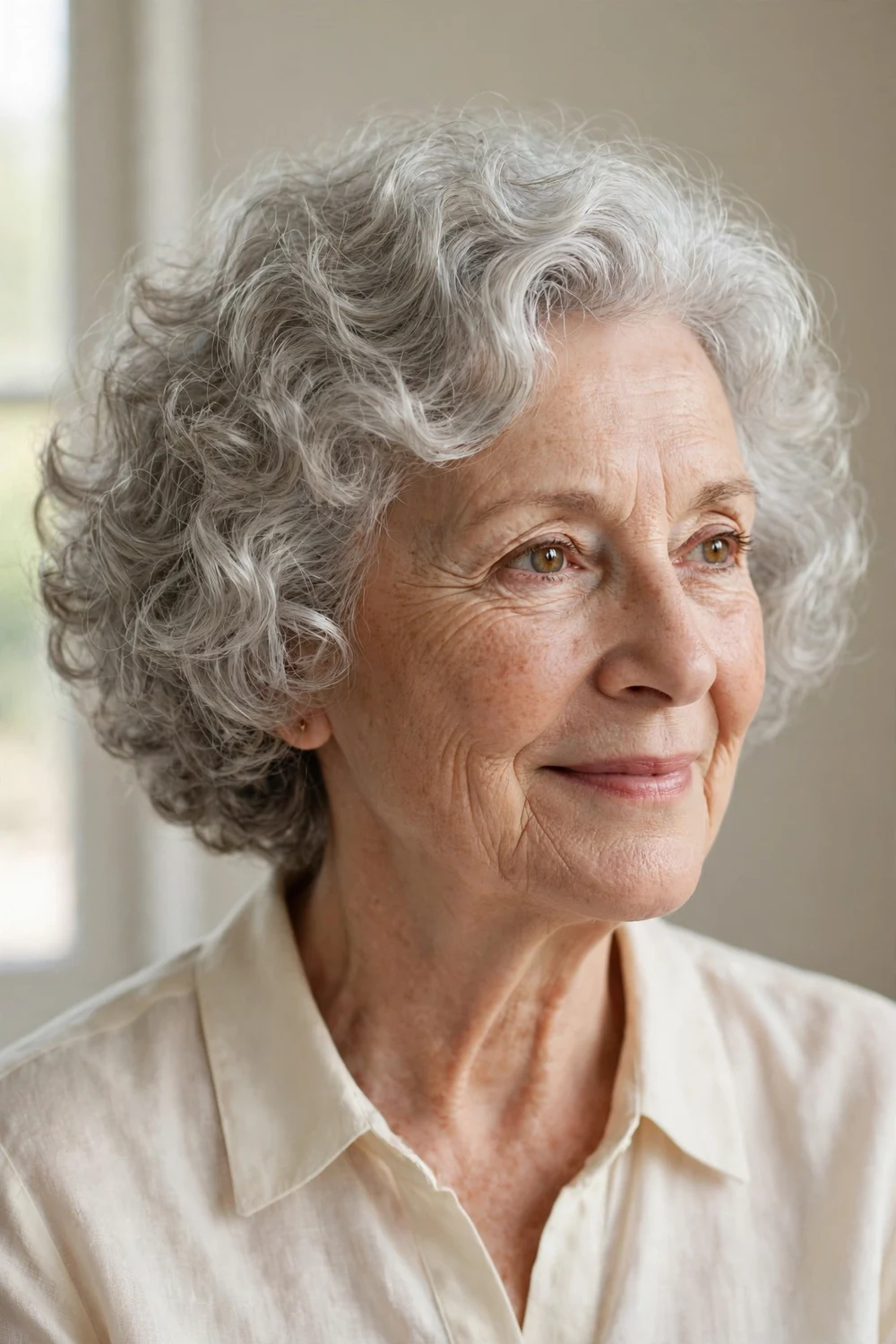
A jawline-skimming bob is the dependable starting point for curly short hair. The cut keeps weight at the perimeter so curls bunch into a rounded shape that looks full without puffing out. Ask your stylist to cut it dry or nearly dry, because curly hair shrinks as it dries and a wet cut can land an inch shorter than you expected. This length suits most curl patterns from 3A to 3C, and it grows out gracefully. Side parting or center parting both work, depending on where your curls naturally fall.
Try this: Scrunch a pea-sized amount of curl cream into damp ends, then air dry or diffuse on low heat for soft, even volume.
2. Voluminous Curly Bob With Face-Framing Layers
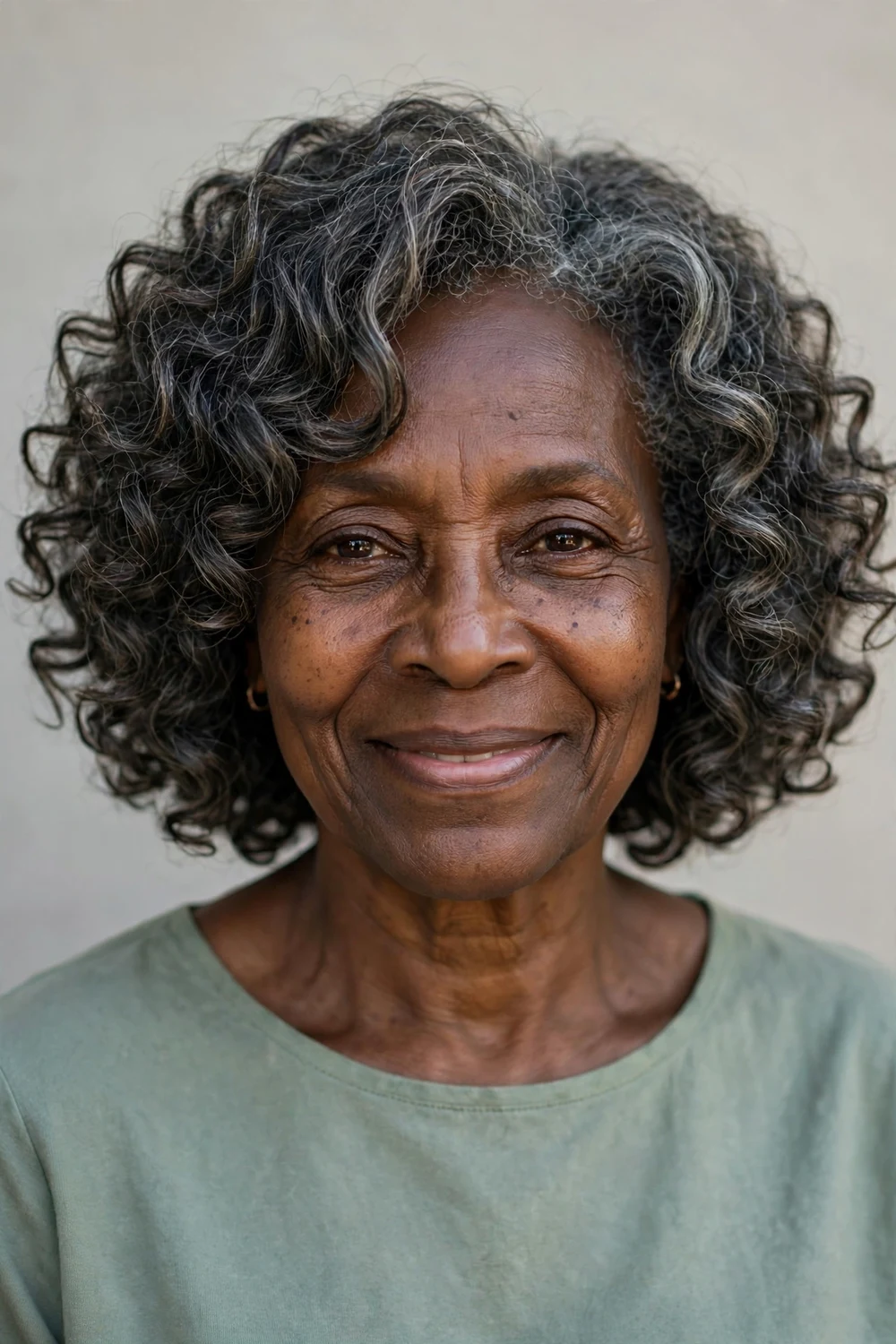
Does your bob widen at the bottom and flatten at the top? That triangle effect comes from one-length cutting, and face-framing layers fix it. Shorter pieces around the face remove bulk where curls stack up, while the back keeps enough length to balance the shape. The result is a bob that looks deliberately shaped instead of bottom-heavy. This approach works well for dense 3B and 3C curls that expand sideways, and it keeps the front pieces soft around the cheekbones.
Try this: Twist two damp front sections away from the face before drying so the face-framing pieces curl in a defined ribbon.
3. Angled / Inverted Curly Bob
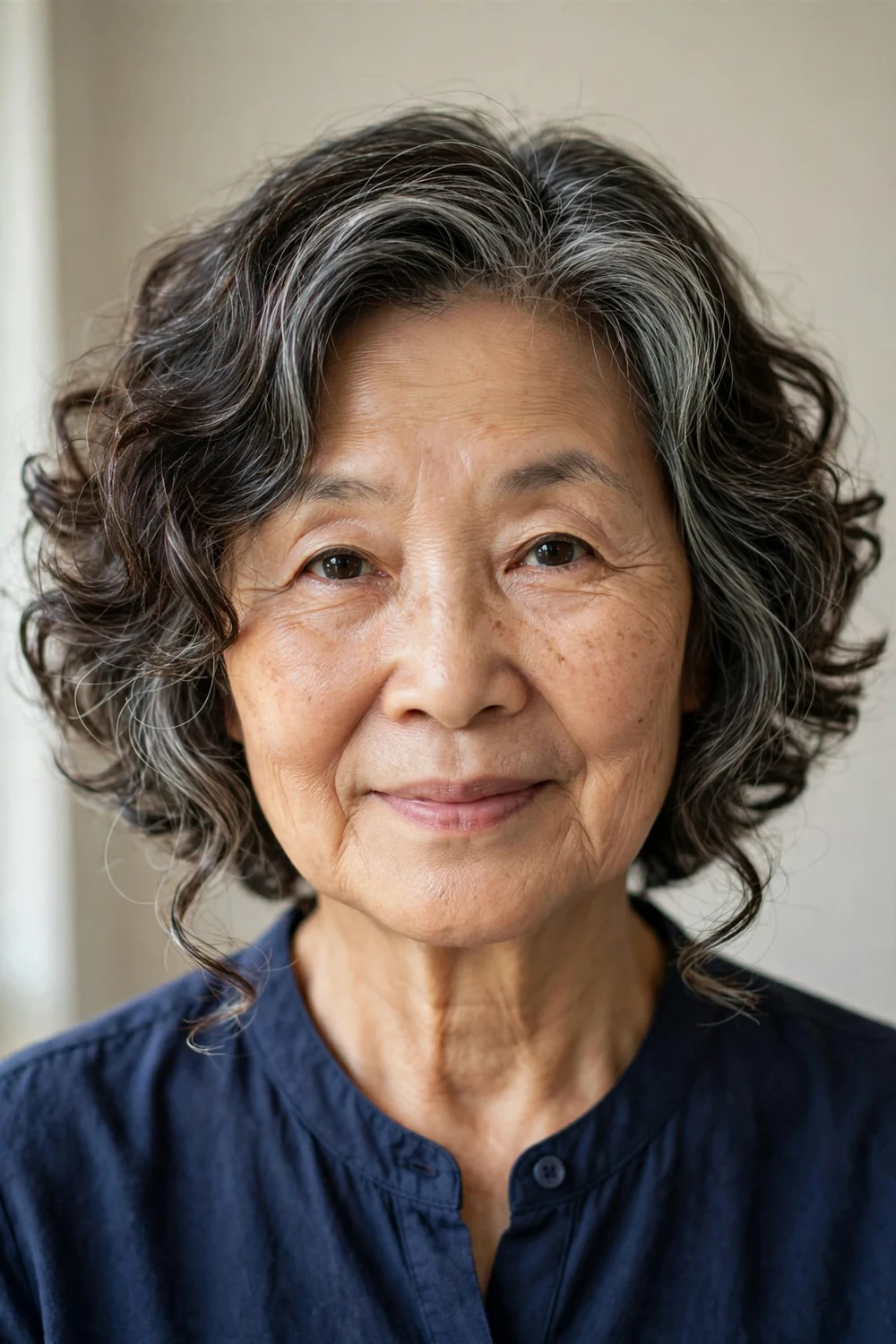
The angled cut does its work from the back. Stacked shorter layers at the nape push the front sections forward, so the bob reads longer around the face while staying neat behind. On curls, the graduation needs to be cut generously, since tight coils will compress the back even further once dry. This style suits women who want a bob with a bit of structure and a modern silhouette, and it pairs nicely with a deep side part for extra asymmetry.
Try this: Diffuse the back sections upward with your head flipped forward to set the stacked shape before it cools.
4. Stacked Piecey Curly Bob

Ask your stylist for short stacked layers through the back and piecey, separated ends all over. The stacking builds automatic height at the crown, which is useful for finer curls that collapse without internal support. The piecey finish comes from point-cutting the ends rather than cutting straight across, so curls separate into distinct clumps instead of one solid mass. This bob works best on 3A to 3C curls with medium density, and it holds its shape between trims.
Try this: Rub a drop of light pomade between your palms and pinch individual curl clumps at the ends for definition.
5. Airy Curly Bob
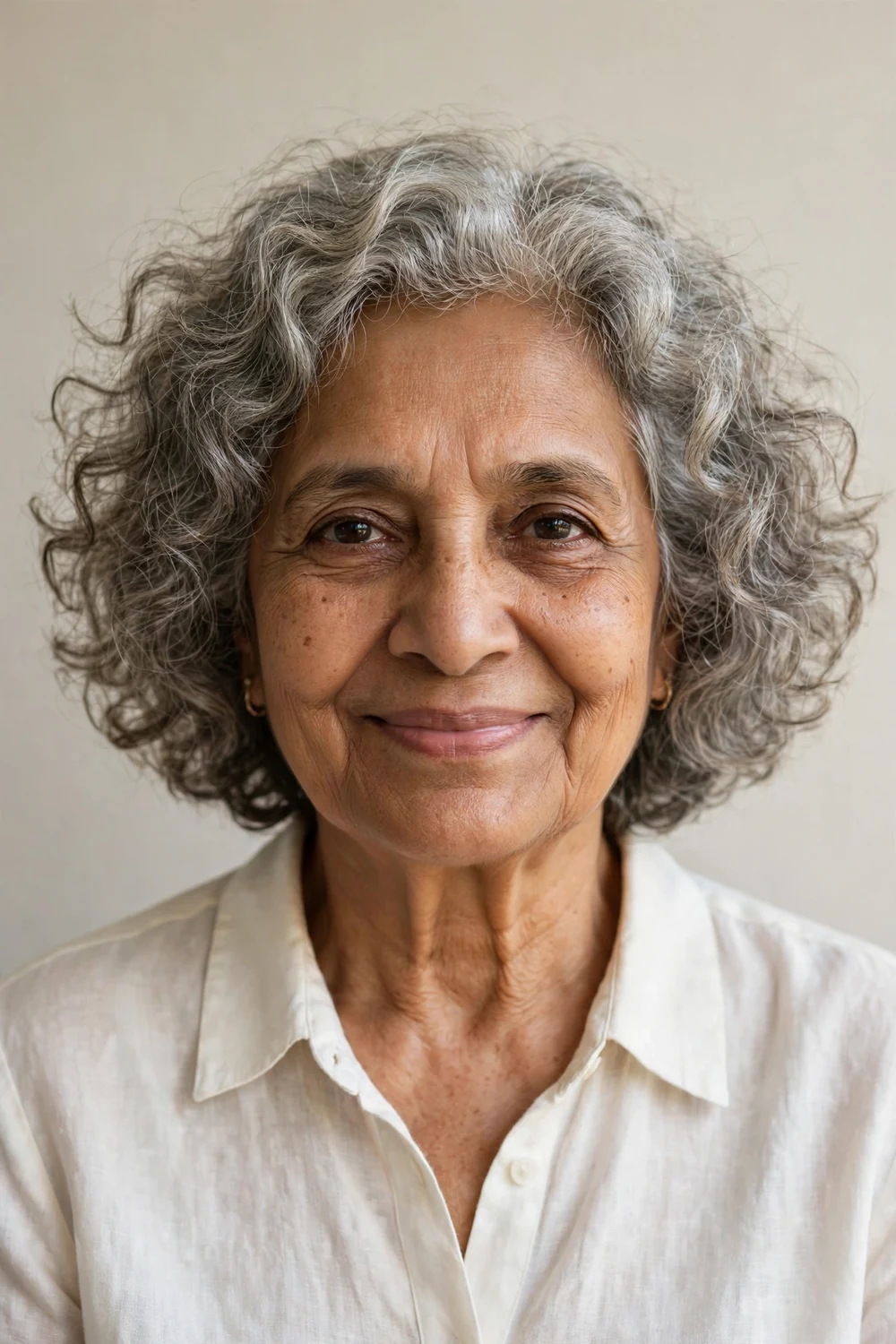
Fine curls can look weighed down by too much hair, and the airy bob answers that by removing interior weight. Your stylist thins out the under-layers while keeping the surface curls intact, so the shape looks light and moves freely. This is different from a standard bob, where the density stays the same throughout. The cut suits women whose curls are soft and easily flattened, and it dries faster than a denser bob, which is a real advantage on busy mornings.
Try this: Skip heavy creams here and use a foam or mousse, which lifts fine curls without dragging them down.
6. Feathered Curly Bob
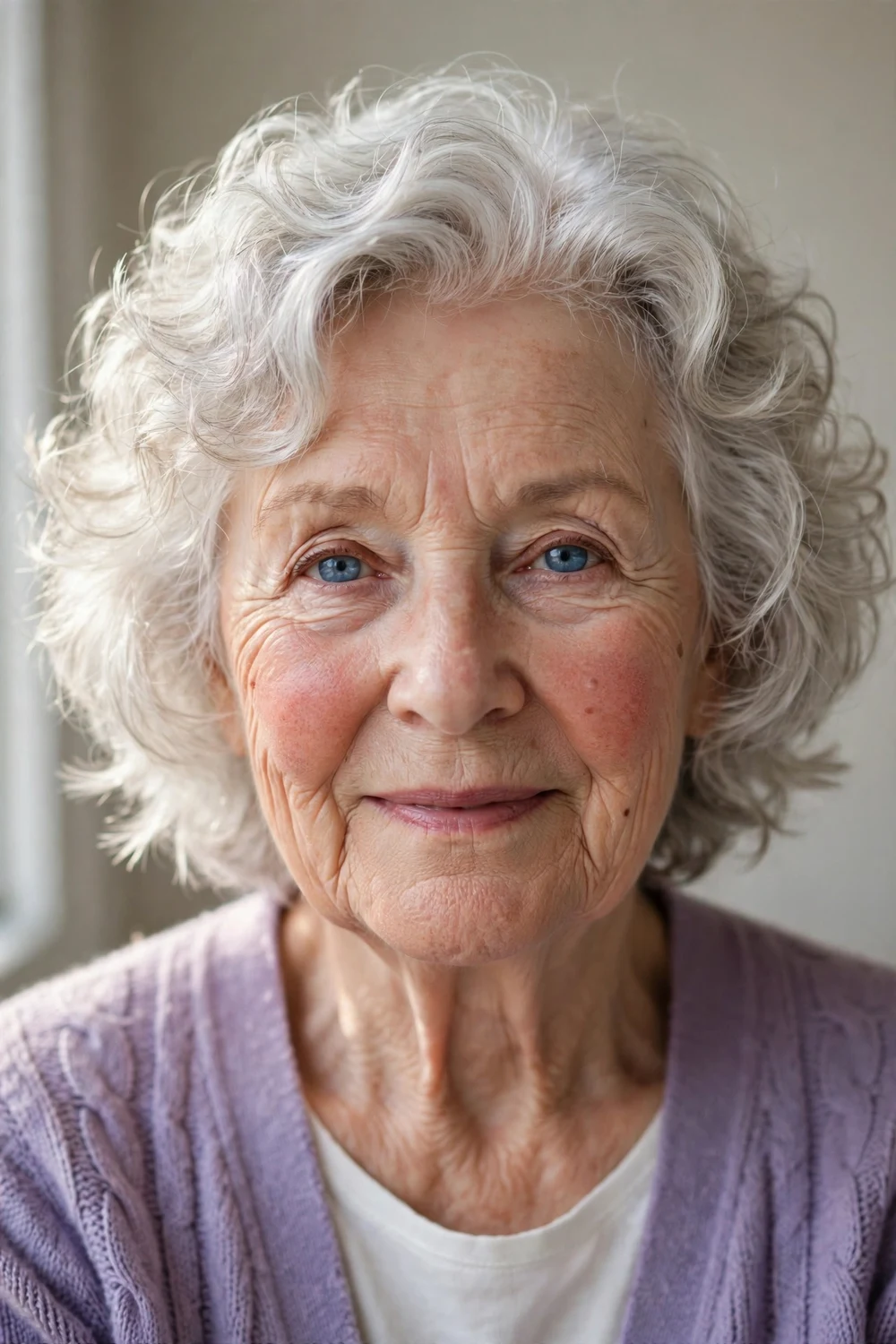
Feathering takes away the blunt edge that can make a curly bob look heavy. The ends are cut at a soft angle so each curl tapers instead of stopping in a hard line, which gives the whole shape a natural bounce. This technique works on curl types from loose waves to tight 3C coils, though the feathering shows most on medium textures. It is a good choice if your hair is thick and you want a bob that moves rather than sitting still.
Try this: Flip the ends outward with a round brush on low heat while blow-drying for an extra flicked finish.
7. Wedge Bob With Defined Highlights
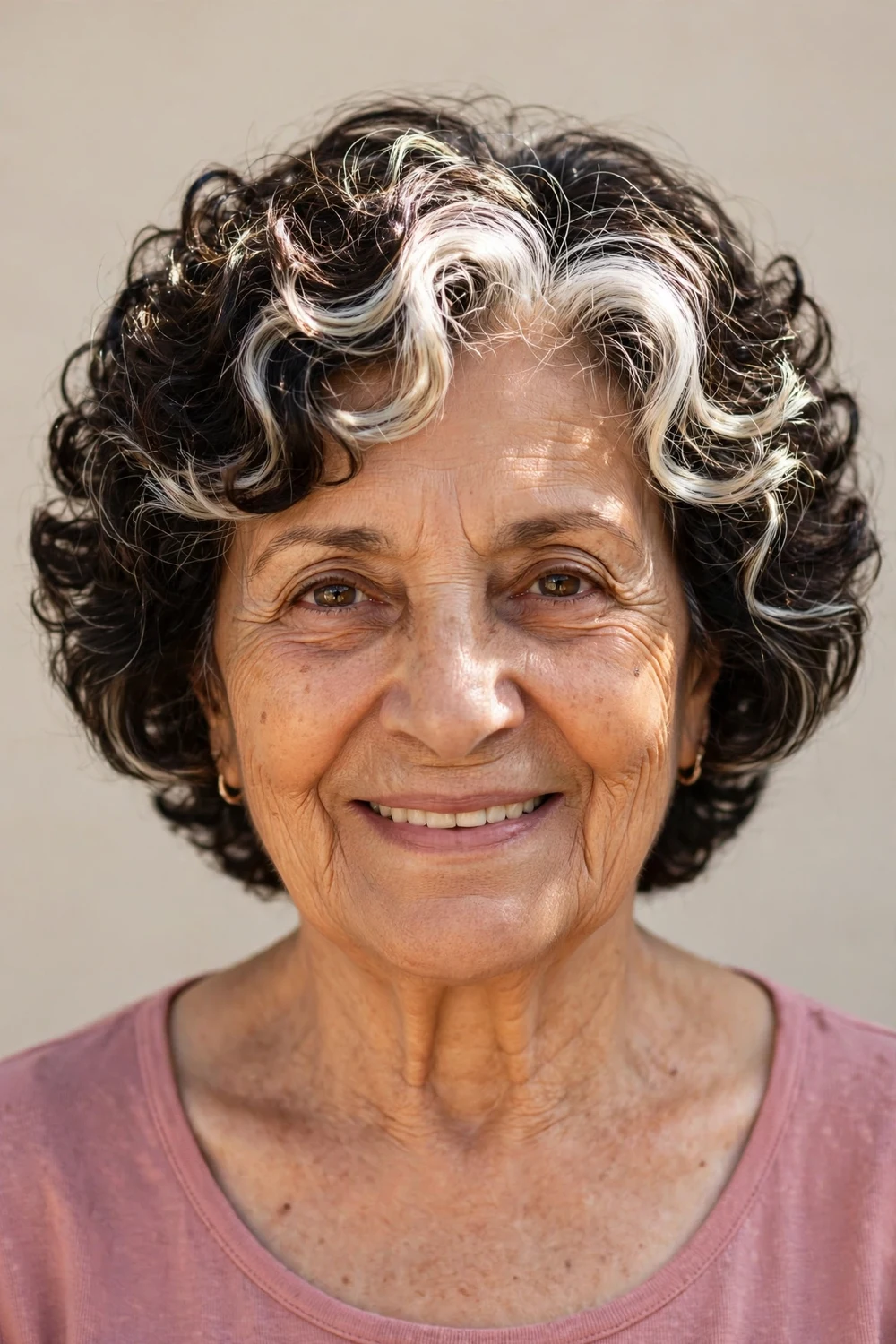
The wedge contour gives tight curls a shape to grow into, with a rounded back that tapers toward the nape and longer pieces at the front. On silver or gray hair, platinum highlights woven through the top layers add dimension that keeps gray from looking flat. The highlights should be painted on, not foiled in thick stripes, so they blend with natural silver. This cut suits 3B to 4A curls best, since the dense texture fills out the wedge shape.
Try this: Use a purple-tinted conditioner once a week to keep the platinum pieces bright and stop yellowing.
8. Curly Lob With Layers
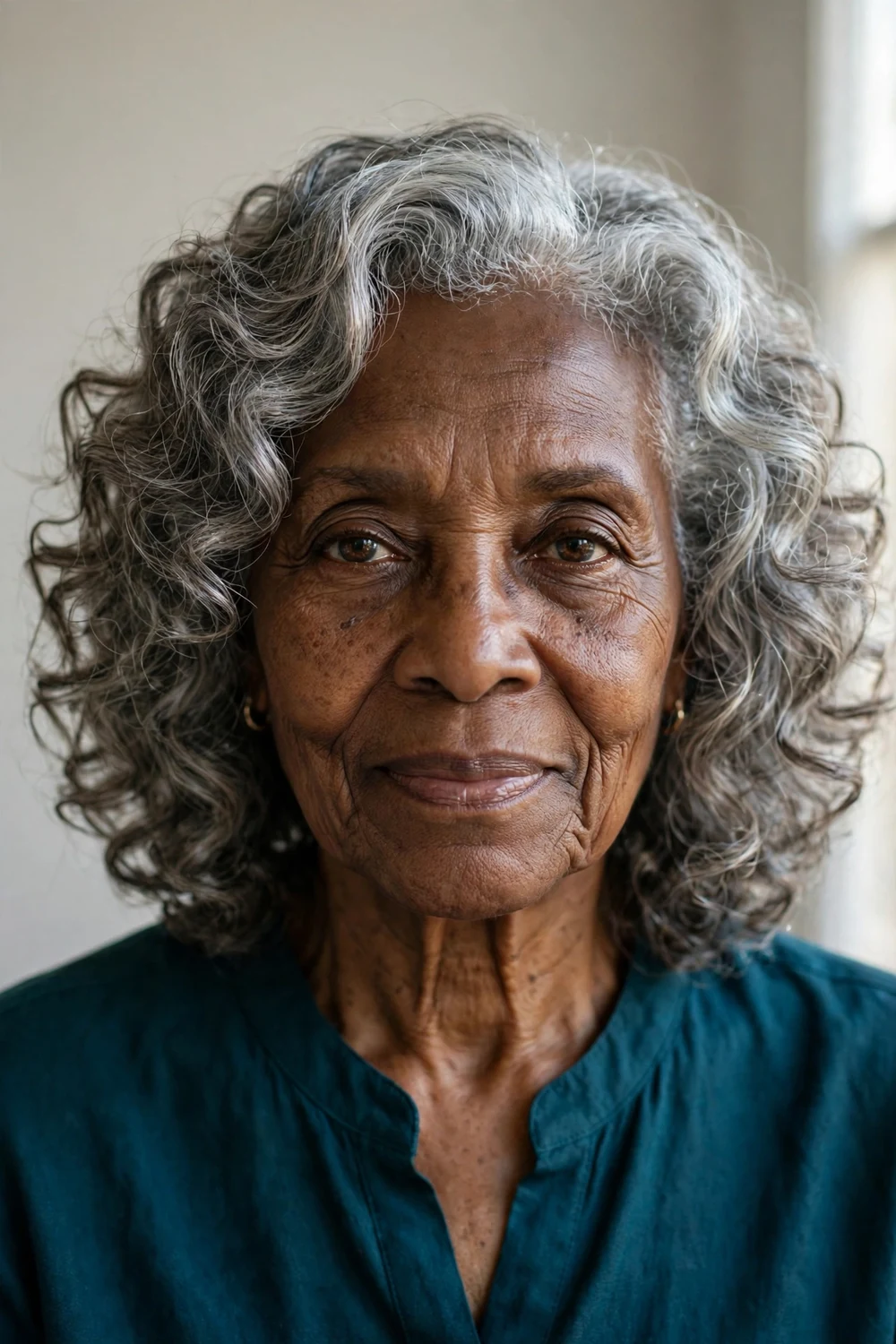
When you want length you can still manage, the curly lob sits at the collarbone and keeps its shape with inner layers. Those hidden layers remove bulk from the middle of the hair without changing the outline, so the lob stays narrow instead of widening. Silver tones look especially good at this length, since the longer curls show off the color variation. This is the longest style on this list, and it suits women transitioning from long hair to short.
Try this: Pineapple the hair loosely at night in a high, loose ponytail to preserve the curl pattern for second-day wear.
9. Curly Bob With Full Fringe
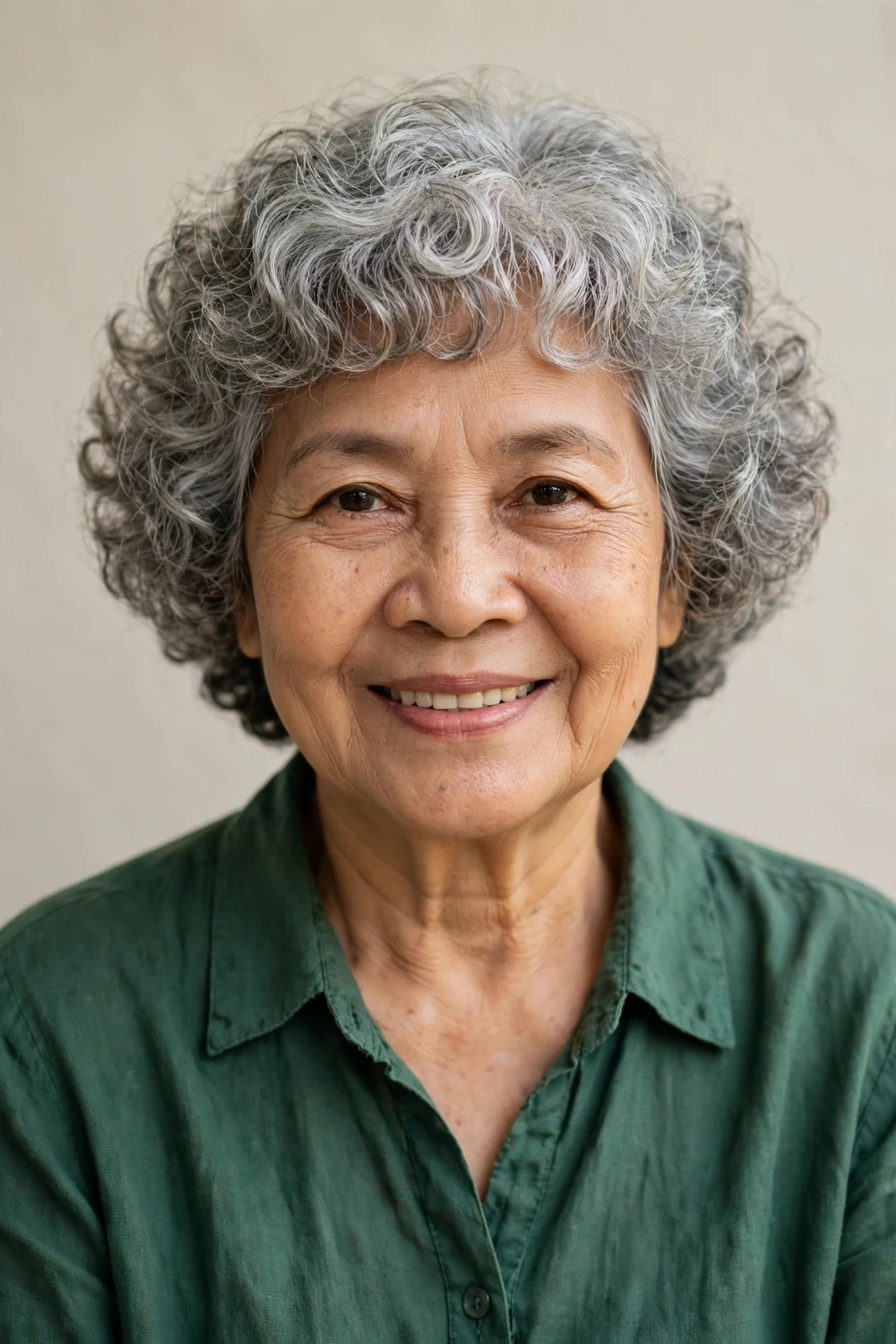
Bangs are no longer off-limits for curls, and a full fringe of cropped curls proves it. The fringe should be cut longer than you think, since curls spring up once dry, and it works best when the stylist cuts it curl by curl. A full fringe shortens a long forehead and draws attention to the eyes, which many women over 60 appreciate. Keep the rest of the bob at jaw length or slightly above so the proportions stay balanced.
Try this: Style the fringe first while it is still very damp, since bangs dry fastest and set the curl pattern early.
10. Wet-Look Curls With Piecey Fringe
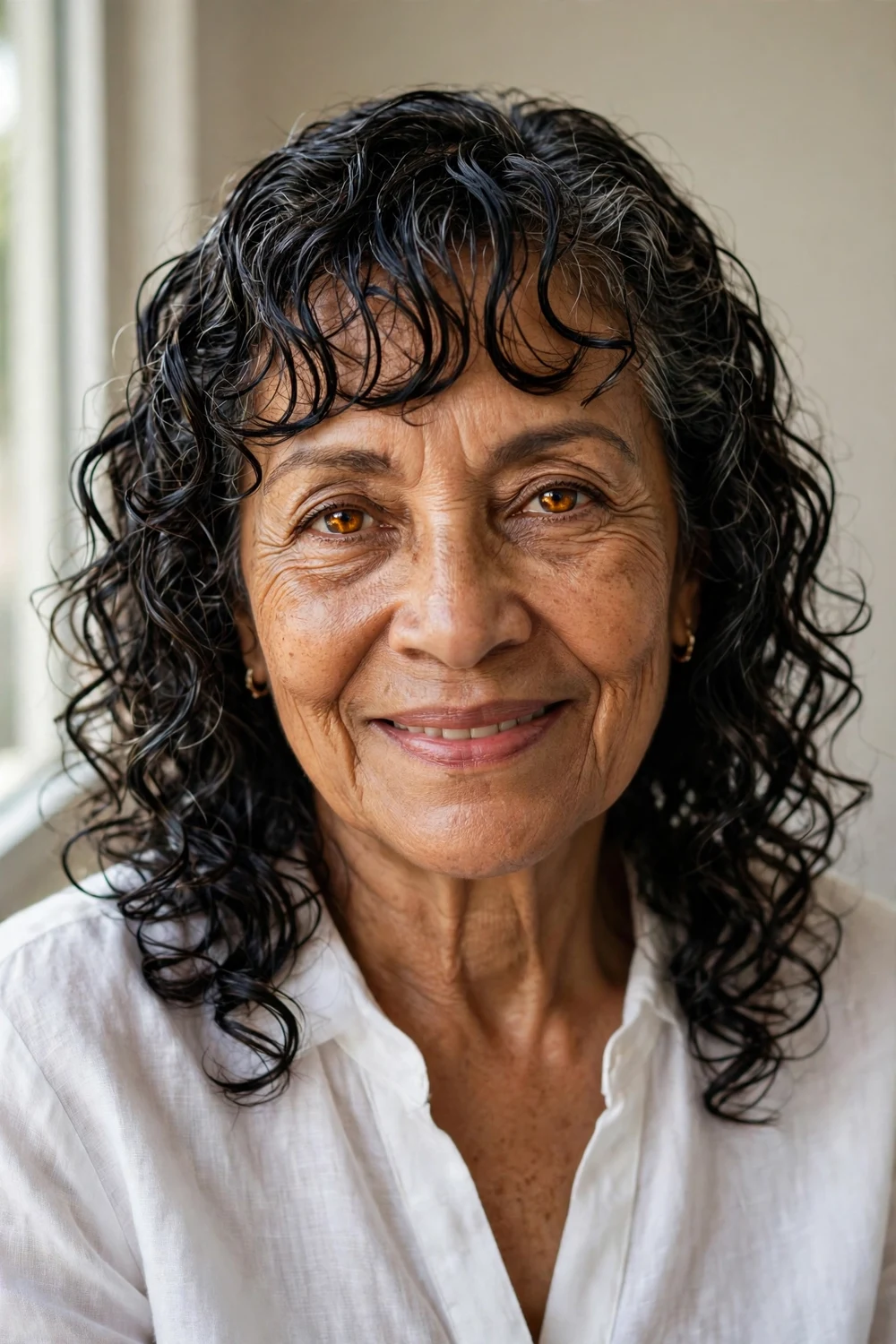
A glossy finish turns everyday curls into evening hair. Strong-hold gel worked through soaking-wet hair and left to air dry creates that polished, wet-look sheen, and the crunch can be scrunched out once fully dry for softness with shine. A piecey fringe keeps the look from feeling severe. Choose a gel without drying alcohols, since mature curls lose moisture faster. This style works for events, dinners, or any day you want your curls to look deliberate.
Try this: Apply gel in sections on very wet hair and avoid touching it until fully dry to prevent frizz.
11. Curly Crop With Wispy Bangs
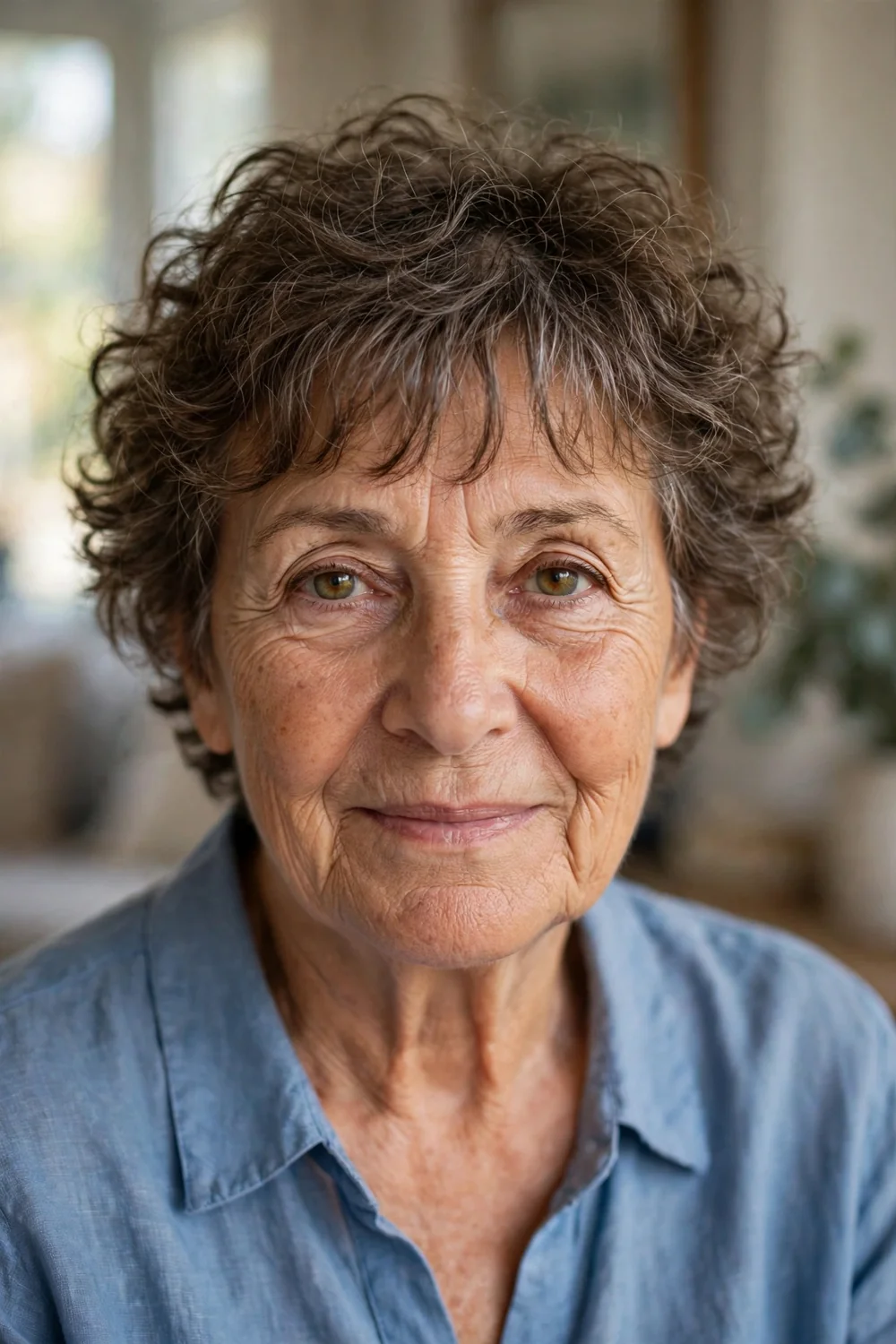
Short crops don’t have to mean bare foreheads. Wispy bangs, cut light and feathery, soften a curly crop without adding bulk or covering the face. The bangs should be cut into the top layers rather than as a separate heavy section, so they blend when the curls move. This combination suits women with finer curls who want a pixie-length cut but aren’t ready for a fully exposed forehead. The overall effect is soft and easy to maintain.
Try this: Direct the bangs forward with a small round brush while blow-drying on low heat for a smooth, airy finish.
12. Side-Swept Curls With a Silver Streak
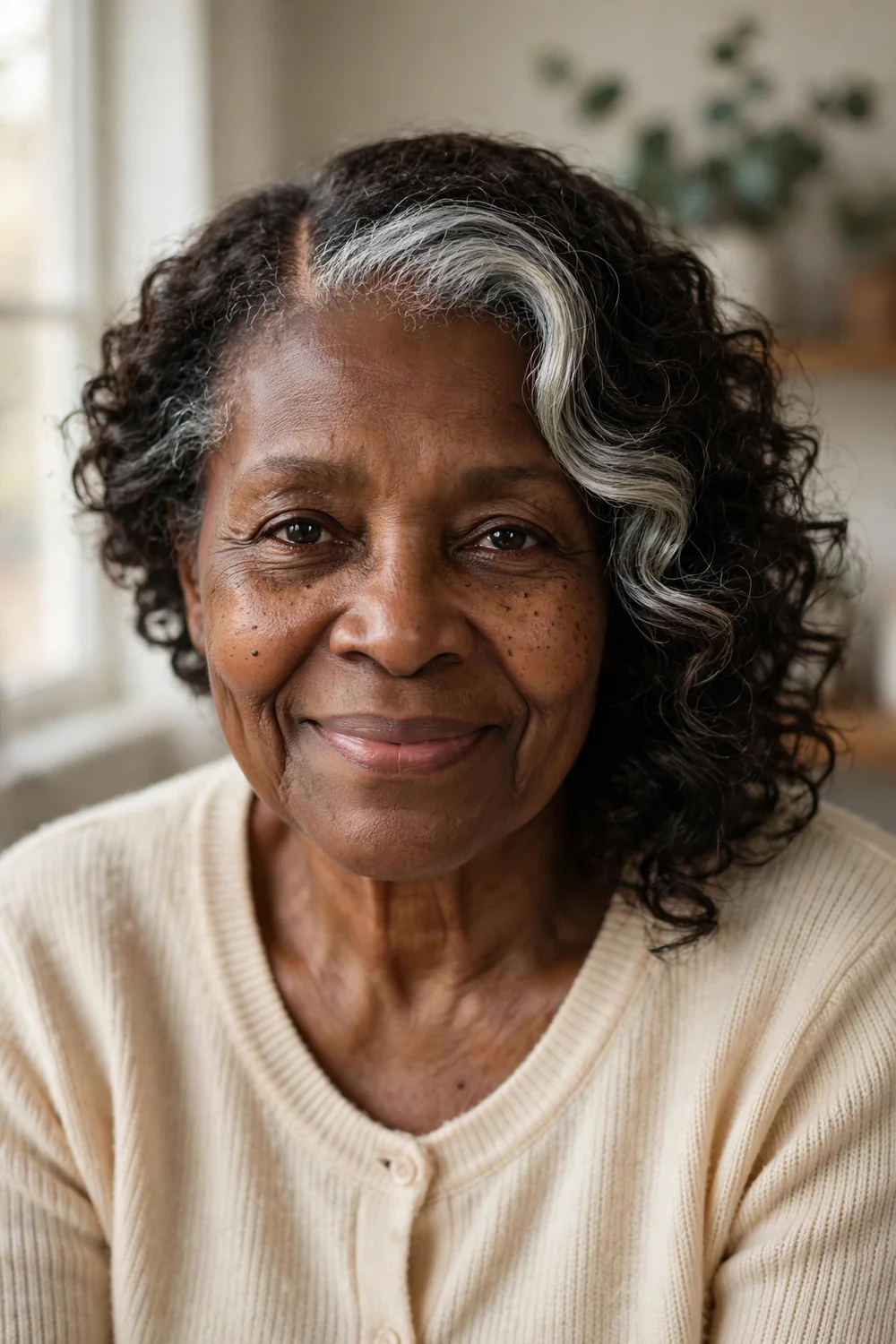
A deep side part costs nothing and changes everything about a short curly cut. Sweeping the bulk of the curls to one side creates instant volume at the part and a flattering diagonal line across the face. Adding a silver or platinum streak at the front turns the part into a feature, especially on women growing out gray. The streak can be bleached and toned or simply left as your natural gray against darker dyed curls. This works on bobs, lobs, and crops alike.
Try this: Train the part by clipping the hair flat while damp for ten minutes after washing.
13. Side-Parted Choppy Waves
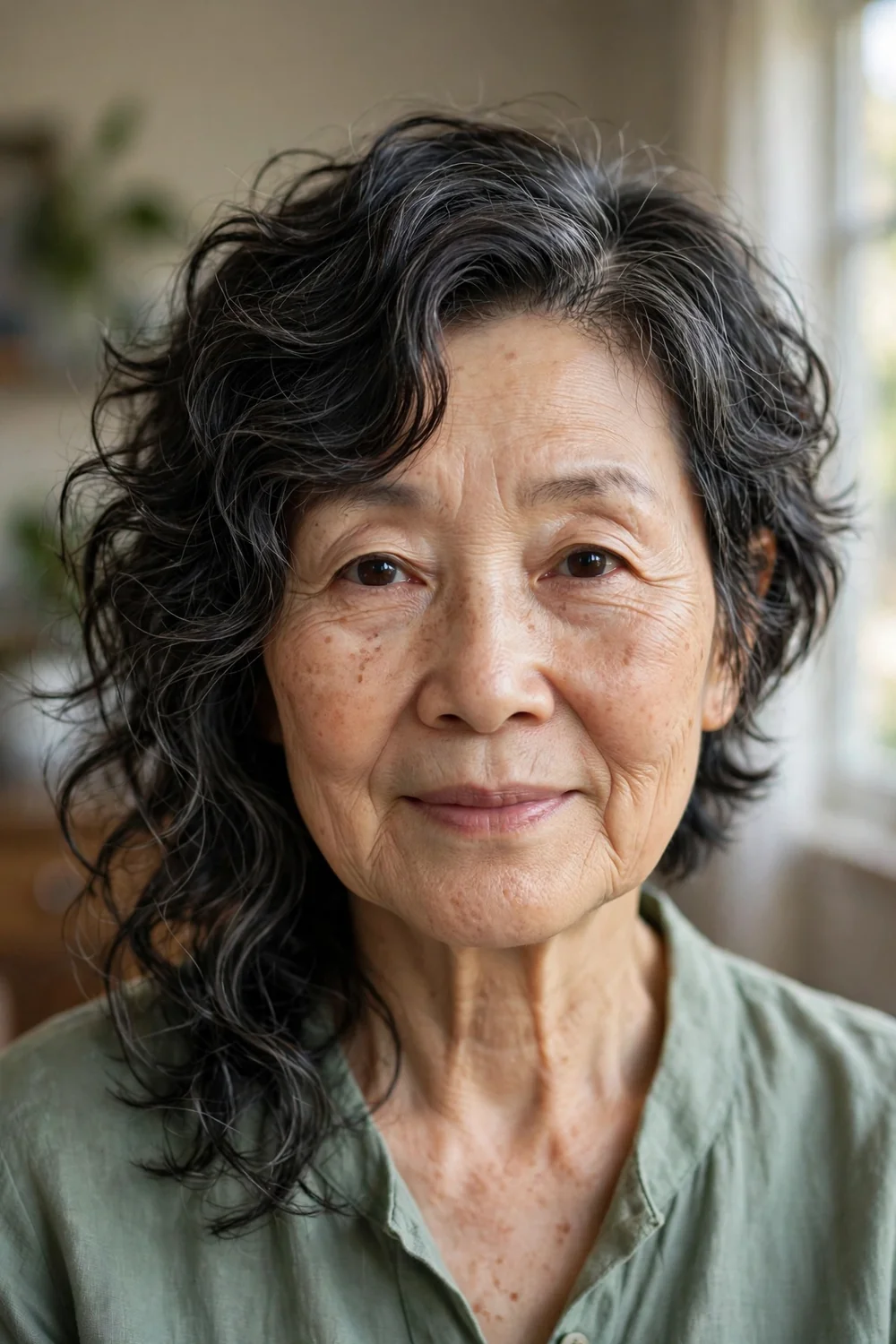
Asymmetry is doing the heavy lifting in this cut. Choppy layers of different lengths keep loose waves from looking too neat, and the side part pushes more hair to one side for a fuller effect. This suits 2C to 3A textures that wave rather than coil, since the choppy cutting shows best on looser patterns. It is a relaxed, low-commitment style that grows out without an awkward stage, which makes it good for women trying short hair for the first time.
Try this: Scrunch with a salt spray on damp hair for piecey, beach-like texture that holds all day.
14. Soft Face-Framing Waves
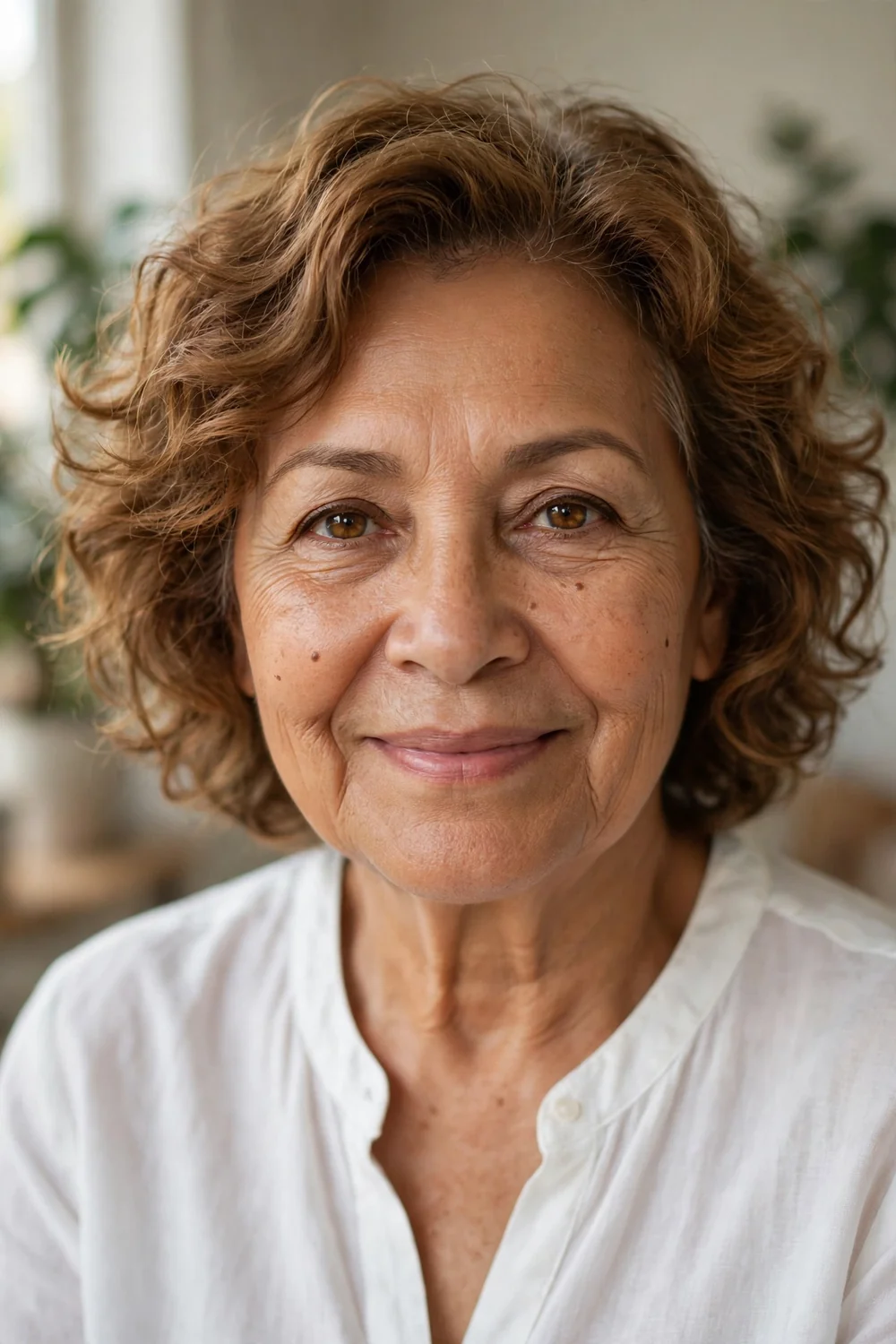
Loose waves frame the face without demanding much in return. The cut keeps the perimeter long enough to tuck behind the ears, with gentle layers starting at the cheekbones to open up the face. This is one of the easiest styles here to maintain, since soft waves don’t need precise definition to look good. It suits women whose curl pattern has loosened with age into waves, and it works with or without color. A center or side part both flatter this shape.
Try this: Wrap two front sections around a large-barrel curling iron for two minutes to refresh the face-framing pieces on day two.
15. Curly Pixie Bob
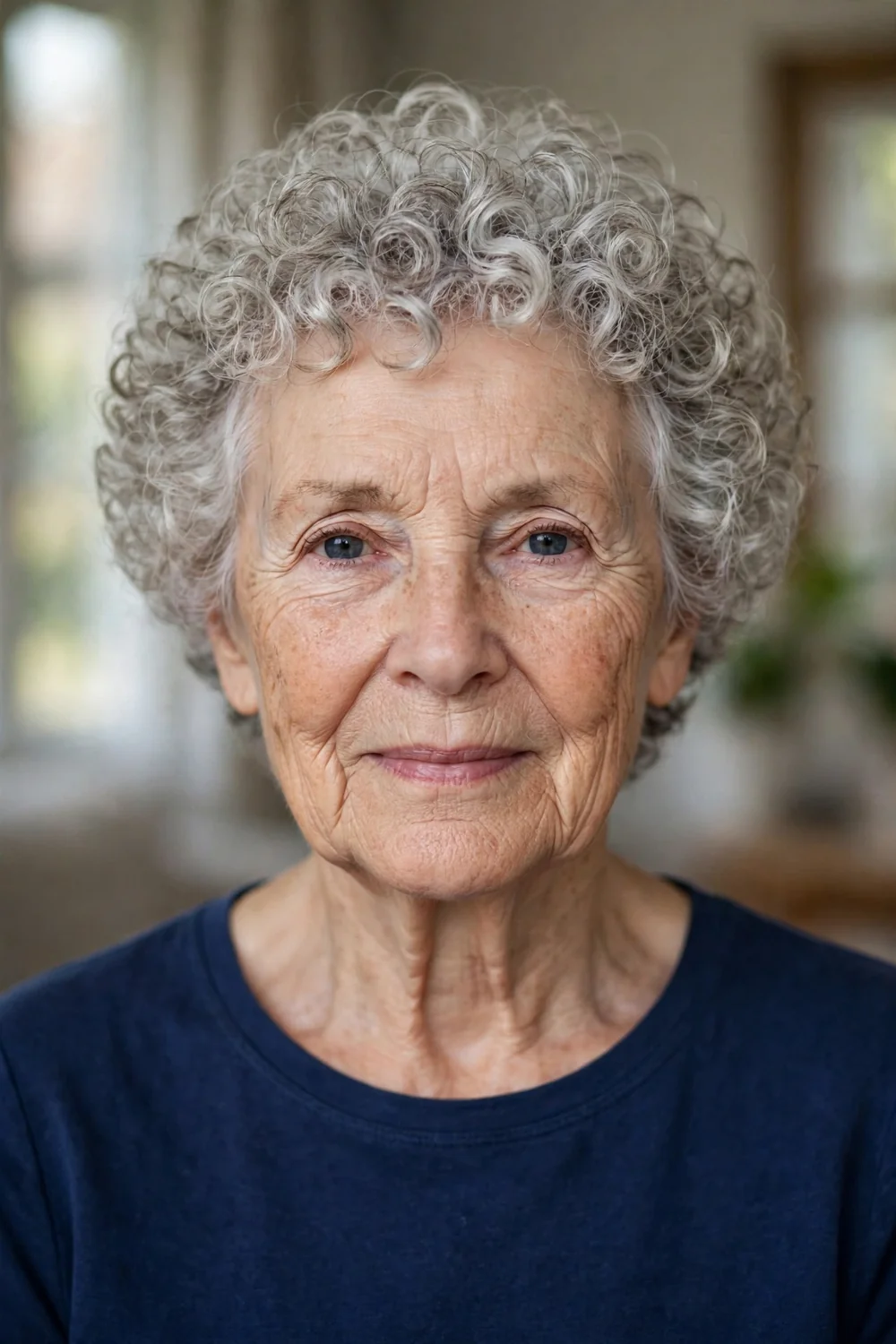
Part pixie, part bob, this hybrid keeps pixie-short length at the nape with enough body on top to read like a bob. The extra length on the crown lets curls form and show their pattern, while the short back keeps the silhouette neat. It is a good bridge for women who find a full pixie too short but a bob too much hair. The cut works on 3A to 4A curls and needs trims about every six weeks to keep the nape clean.
Try this: Use a small amount of curl-defining cream and pick the crown gently with your fingers for lift without frizz.
16. Voluminous Curly Pixie With Lifted Top
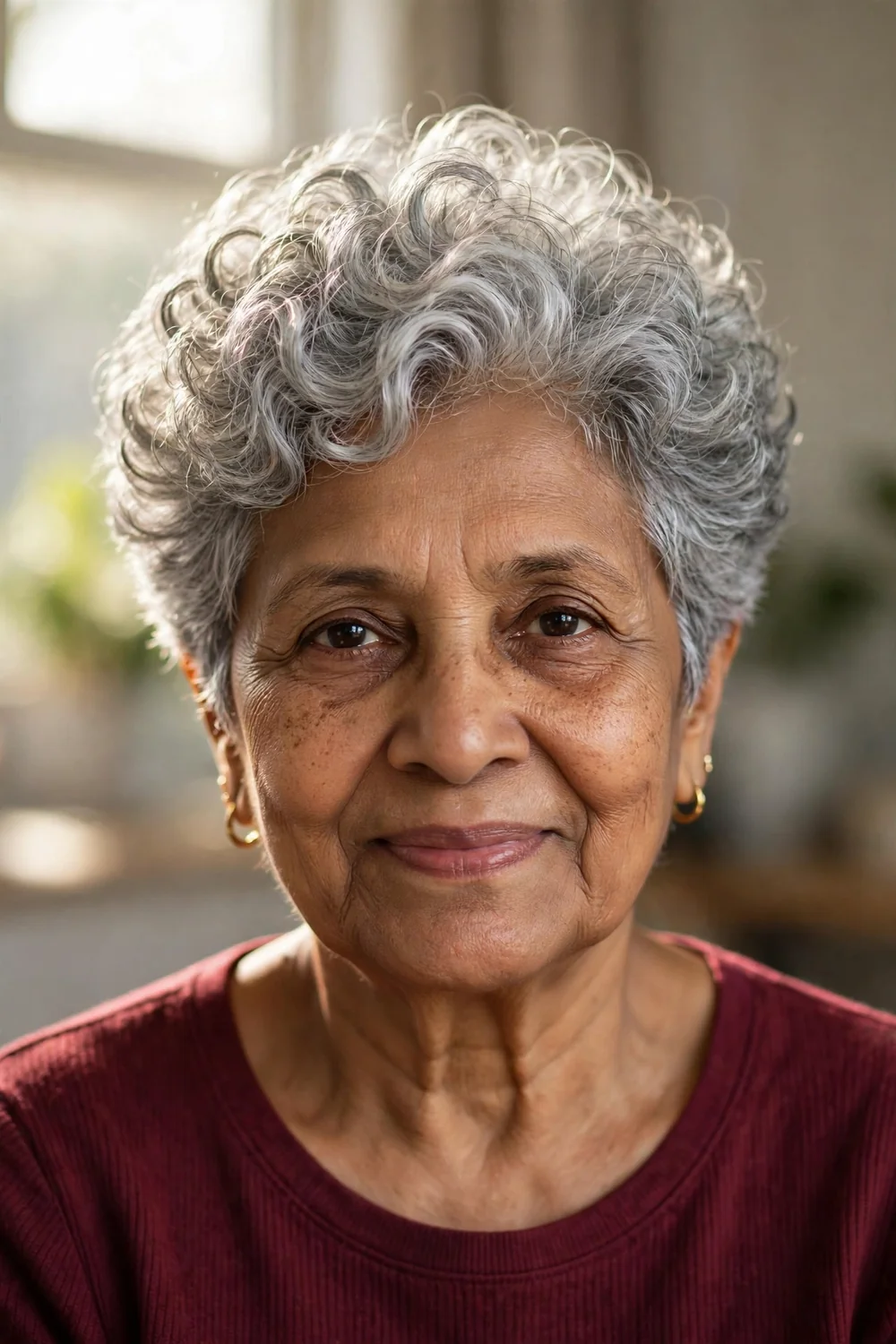
Height at the crown is this cut’s whole point. Short, layered curls on top are cut to stand up and out, while the sides stay close to the head for contrast. The volume on top lengthens the face visually, which flatters rounder face shapes. This pixie needs a stylist who understands that curly hair expands as it dries, so the top should be cut with room to grow. It suits 3B to 4B curls with enough density to support the height.
Try this: Diffuse upside down on medium heat for three minutes, then finish with a cool shot to lock the lift.
17. Disconnected Curly Pixie
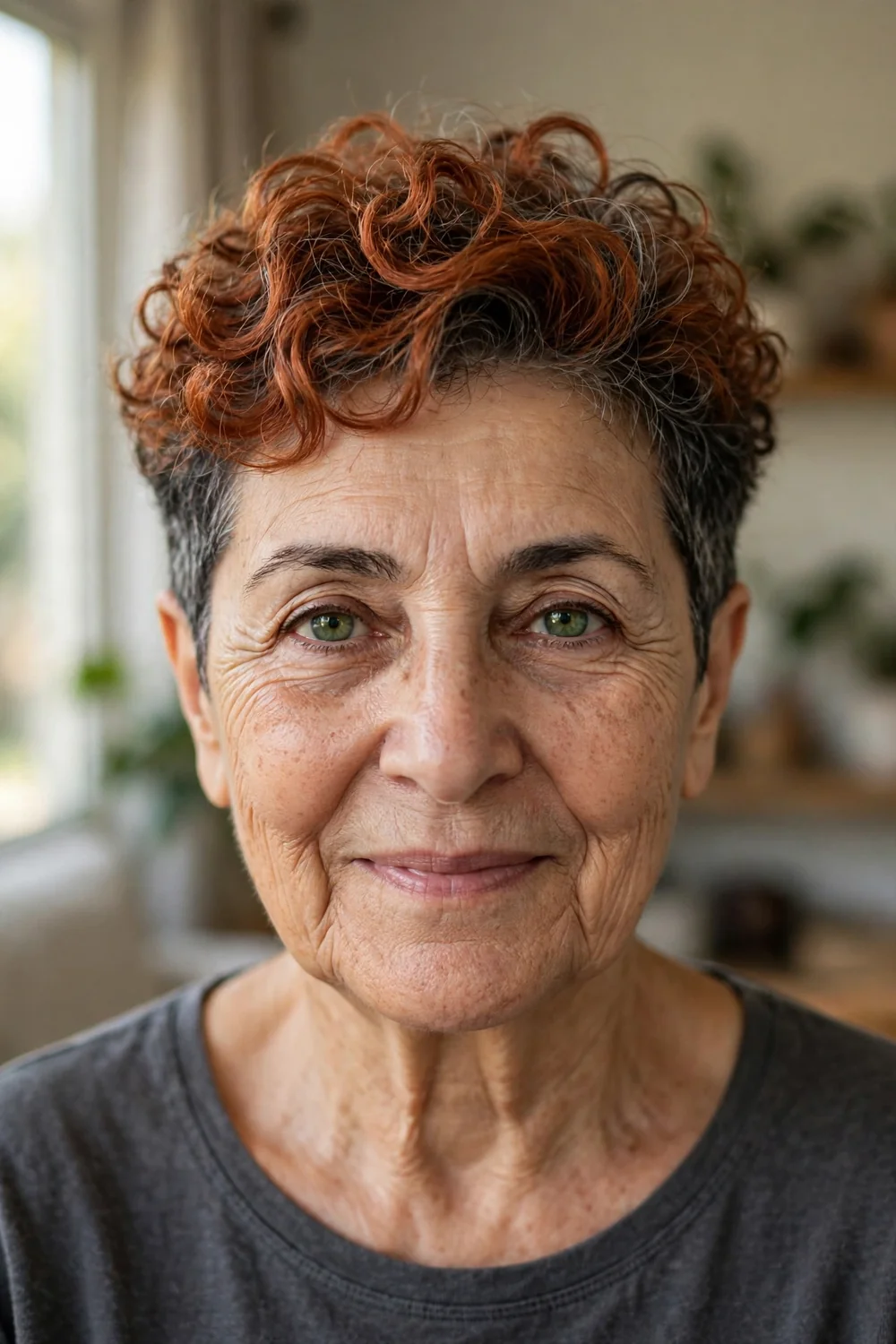
Contrast is the design tool here: very short layers underneath and noticeably longer curls on top, with no blending between them. The disconnection creates a bold, modern shape that shows off the curl pattern on the longer sections. This is not a subtle cut, so it suits women who like their hair to make a statement. It works best on 3A to 3C curls where the length difference is clearly visible, and it needs regular trims to keep the contrast sharp.
Try this: Define the longer top curls with a light gel so the separation between the two lengths stays crisp.
18. Tapered Curly Pixie
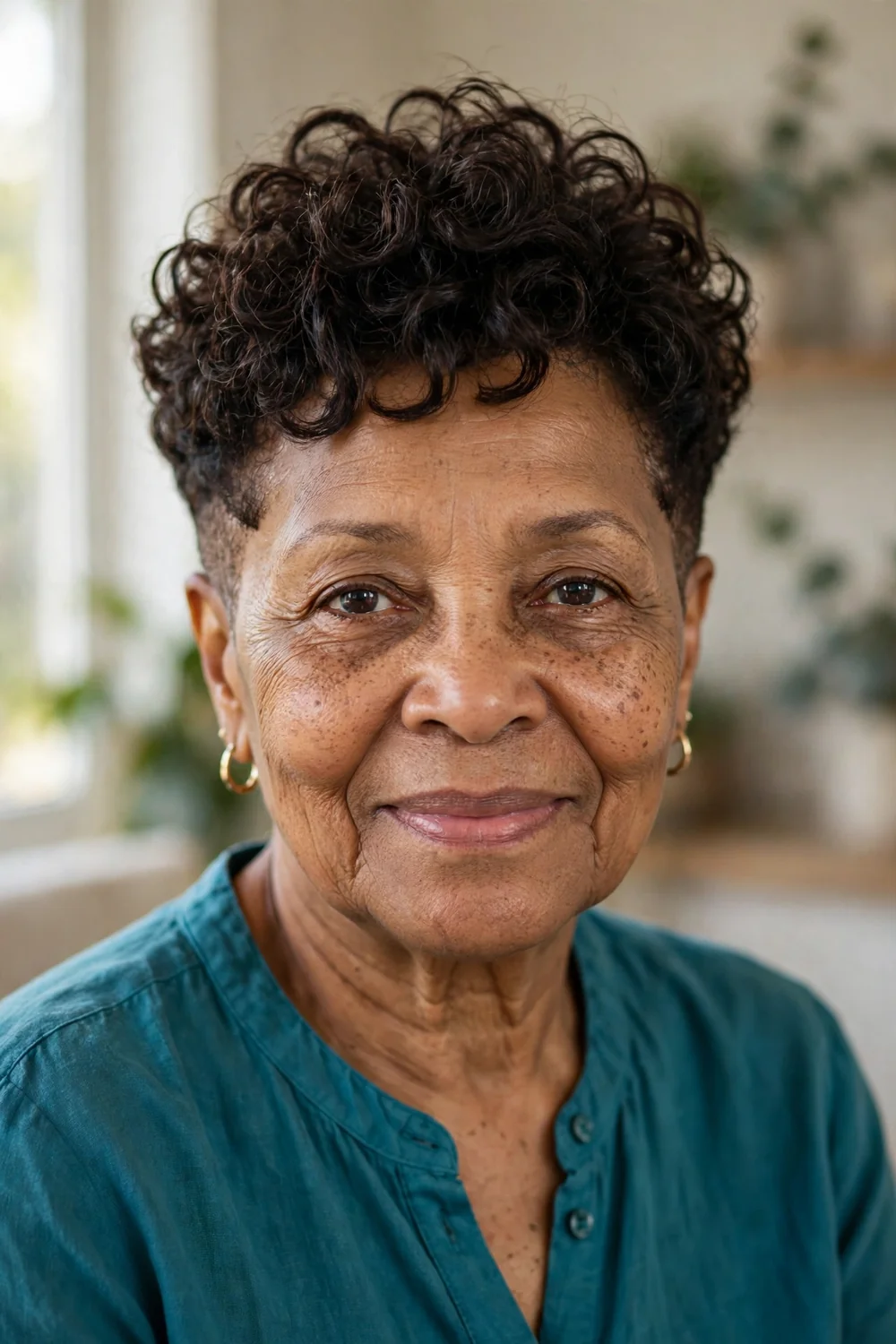
The taper keeps the sides and nape neat while the crown stays full and bouncy. Gradual shortening from the crown down to the neckline creates a clean outline that grows out smoothly, which means fewer emergency trims. This is one of the most versatile curly pixies, working across curl types 3A to 4C and suiting most face shapes. The tapered shape also shows off earrings and glasses frames instead of competing with them.
Try this: Smooth a tiny amount of edge control along the tapered nape for a polished finish that lasts.
19. Curly Pixie With Undercut
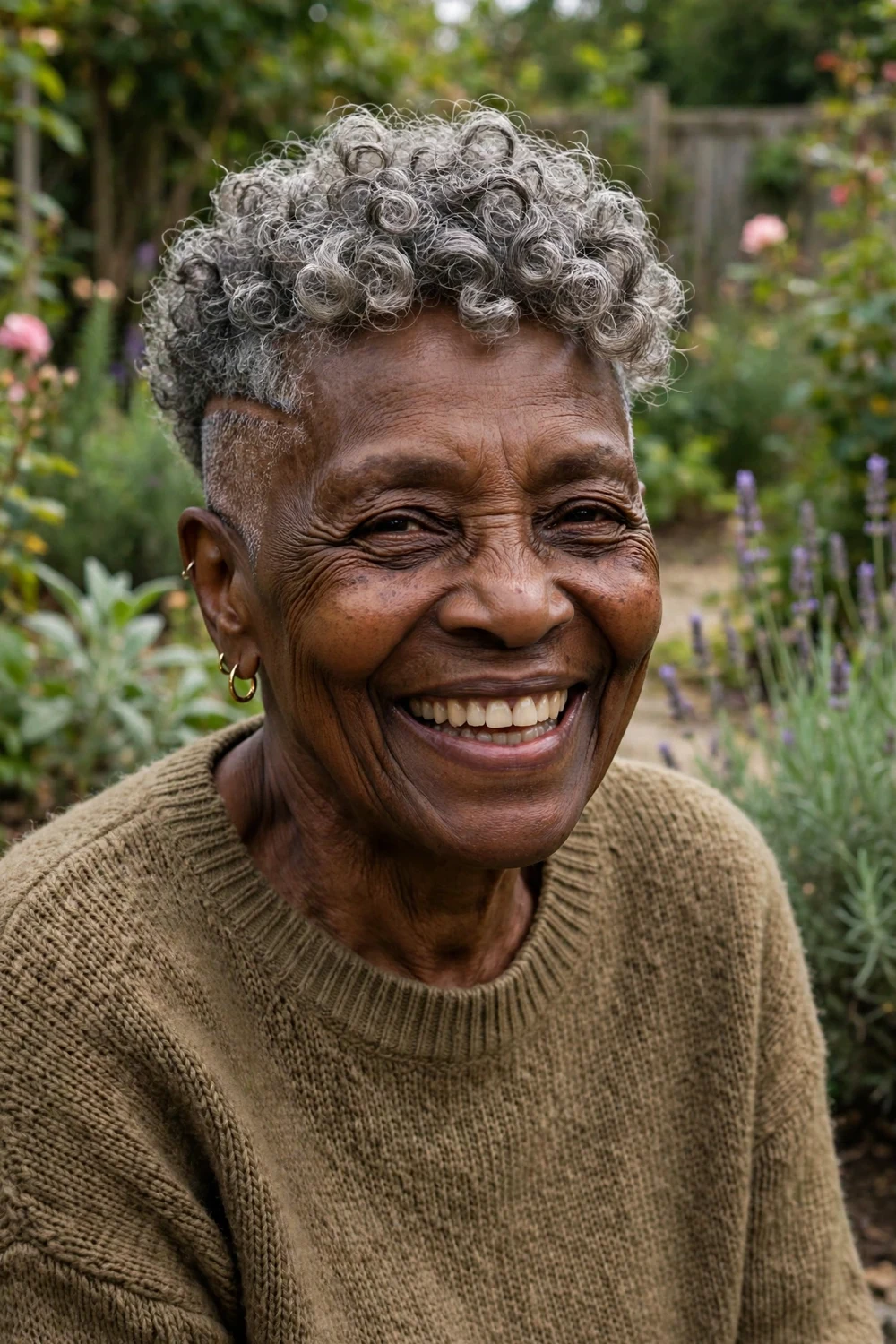
For women who like an edge, the undercut removes the hair at the nape or sides entirely, leaving choppy curls to fall from the top. The shaved section reduces bulk dramatically, which helps very thick curls lie the way you want. The contrast between the close-cut undercut and the textured top is striking, and it keeps the neck cool in warm weather. Regrowth needs attention every three to four weeks if you want the undercut to stay sharp.
Try this: Keep the undercut crisp between salon visits with a trimmer on a longer guard, or let it grow into a tapered pixie.
20. Curly Tomboy Crop
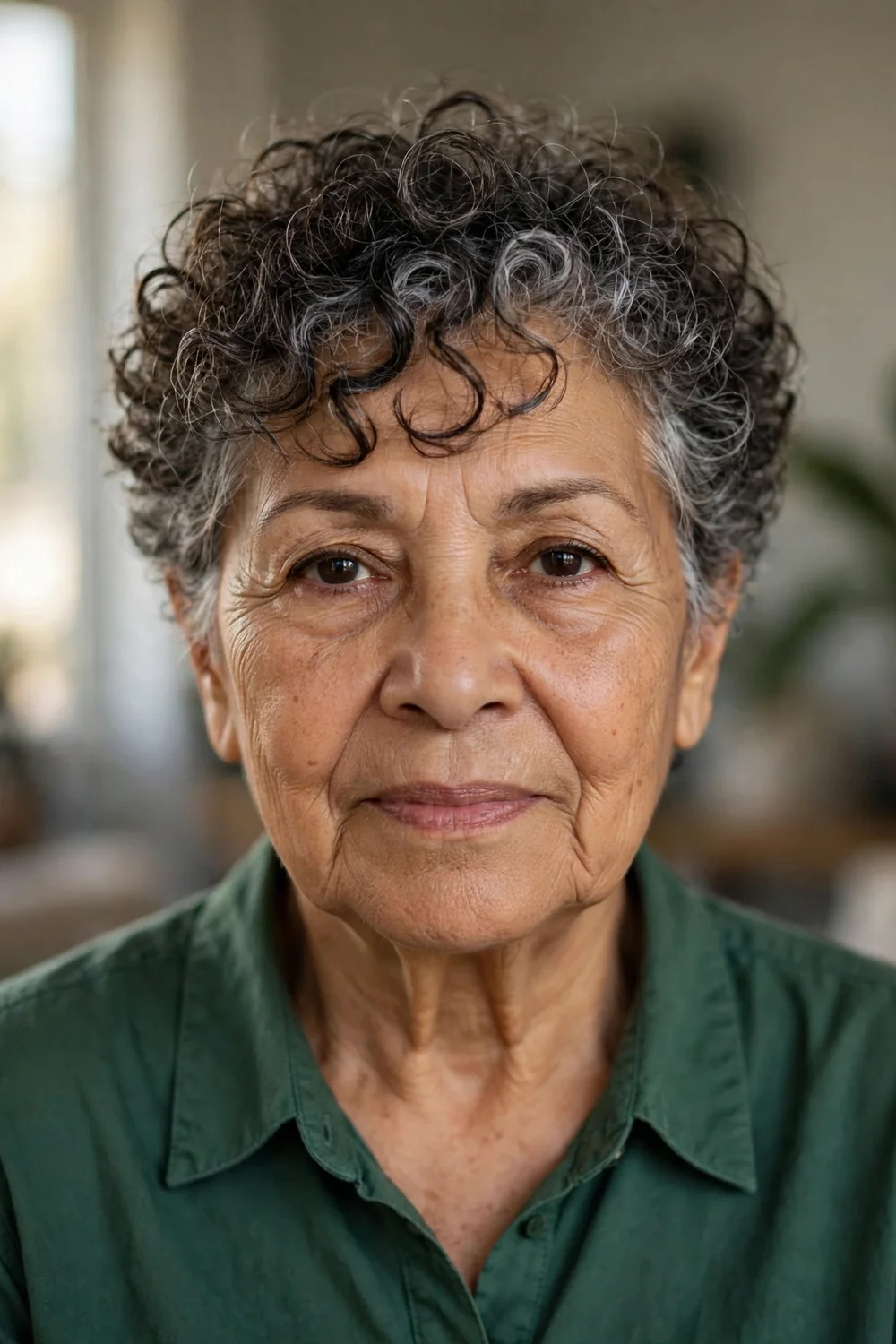
This boyish crop is as low-effort as short hair gets. Cut close all over with just enough length for curls to show their texture, it needs little more than a wash and a scrunch to look finished. The androgynous shape suits strong features and works well with glasses, and it is a confident choice for women who are done fussing over their hair. It grows out into a textured pixie, so the awkward phase is minimal.
Try this: Work a small amount of matte paste through dry curls to separate the texture and add a lived-in finish.
21. Ear-Length Chic Curly Crop
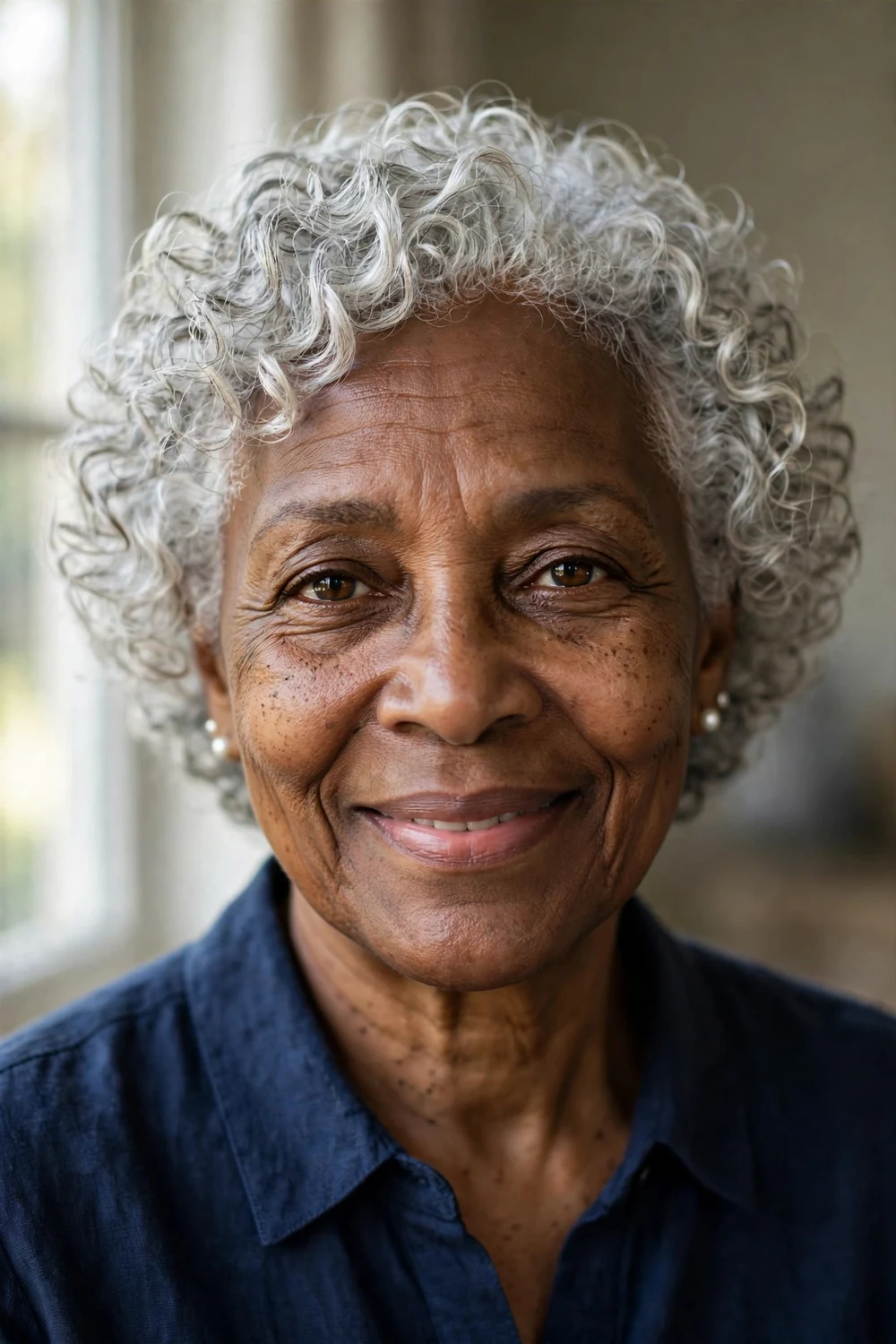
Short enough to show off your earrings, this crop ends right at the ears with curls clipped close at the sides and more length on top. The silhouette is clean and tailored, which suits structured features and women who like a polished look. In silver or salt-and-pepper, the short length shows off the color variation clearly. This cut needs trimming every five to six weeks to keep the ear-length line precise.
Try this: Tuck one side behind the ear and let the other fall forward for an easy asymmetrical styling option.
22. Curly Faux Mohawk
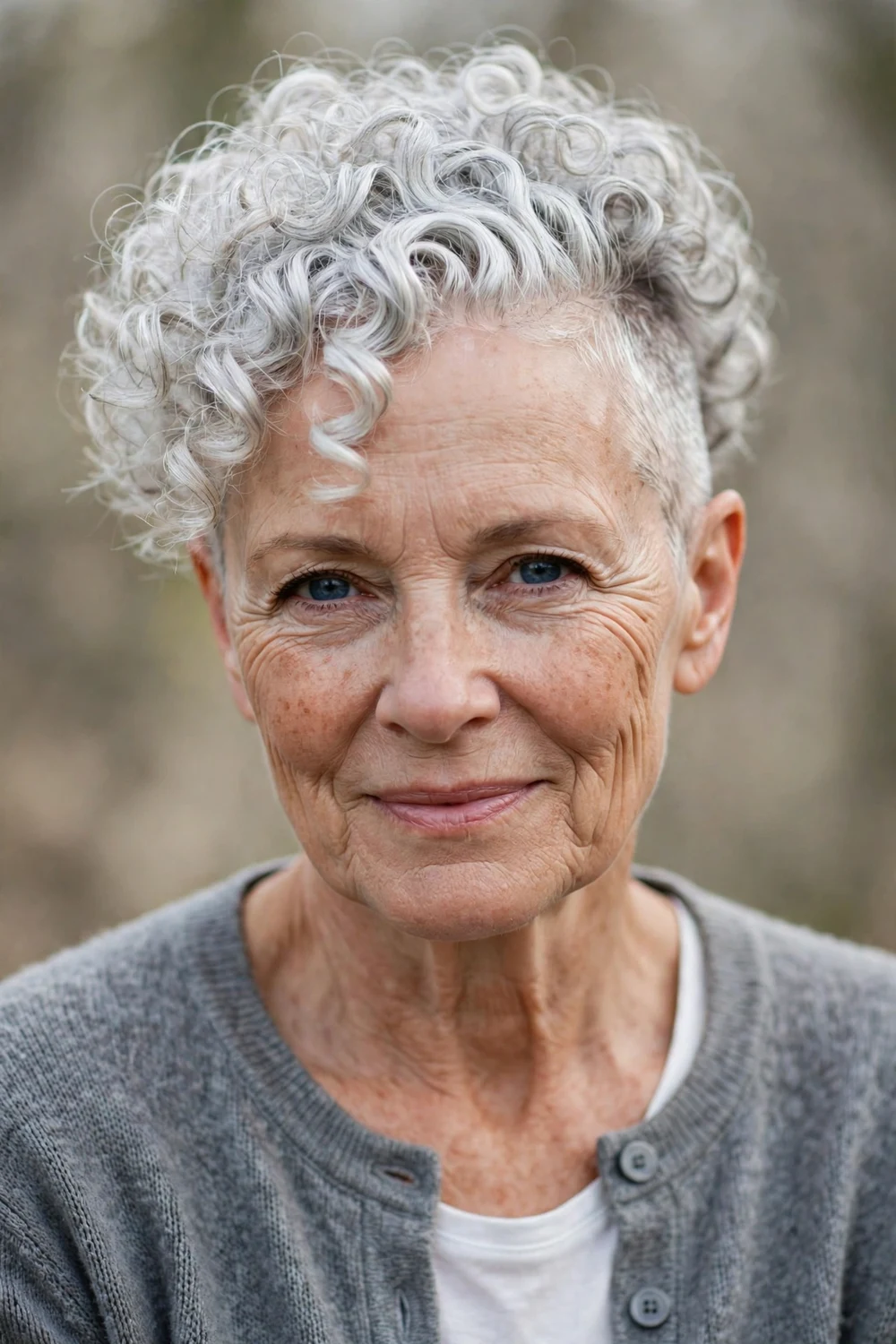
Not ready to commit to shaved sides? The faux mohawk keeps the sides tapered short while leaving a bold strip of volume down the center. The central section is cut long enough for curls to stack upward, creating height without any actual shaving. It is a dramatic choice that works on 3A to 4B curls, and it photographs well for events. The sides need regular upkeep to maintain the contrast with the longer center strip.
Try this: Pin the center strip up with the sides smoothed down for a special-occasion version of the shape.
23. Curly Shag / Short Curly Wolf Cut
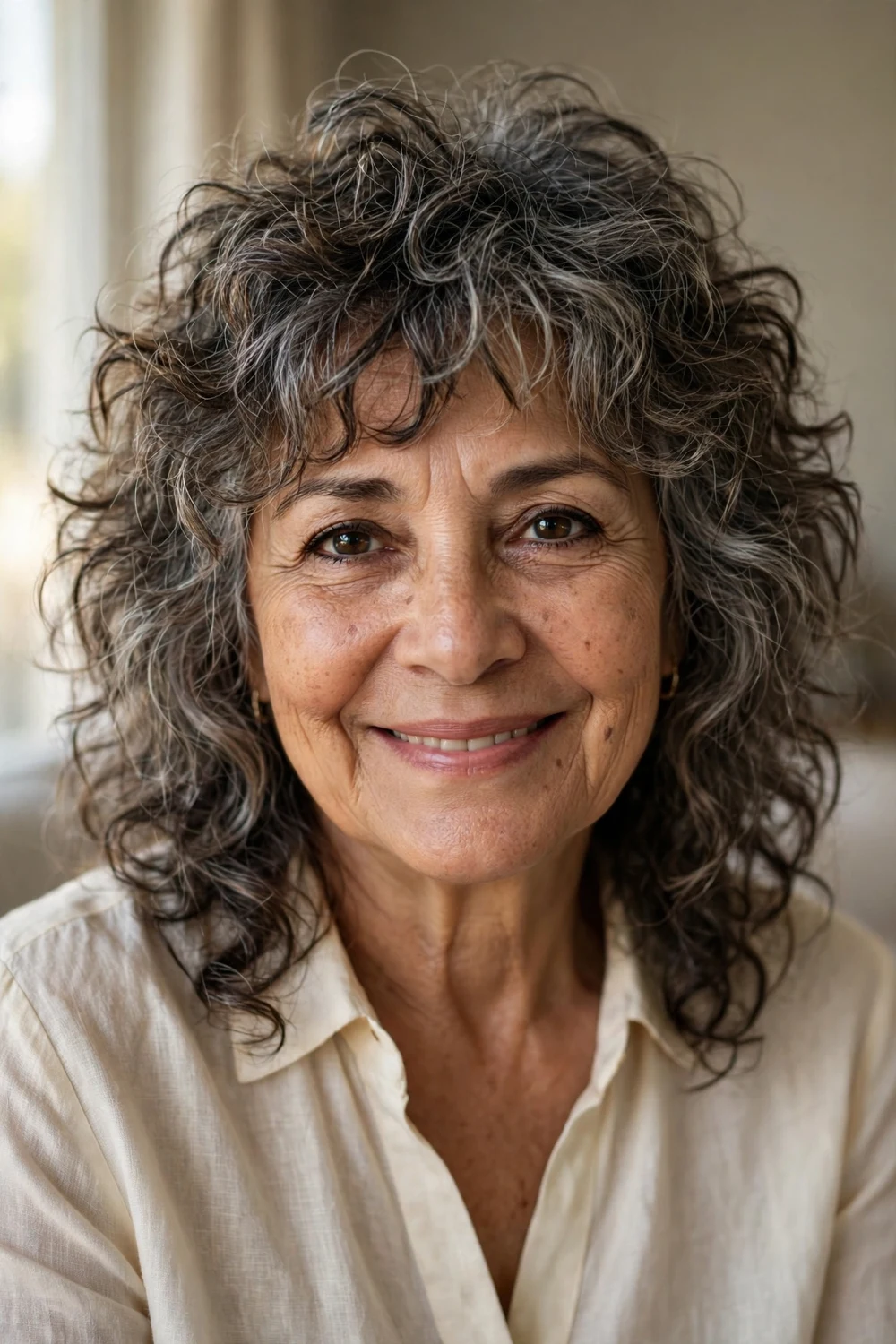
Feathery layers everywhere make the short shag, also called the wolf cut, one of the most textured styles on this list. Choppy, dimensional cutting throughout lets each curl sit at its own length, which creates movement and an intentionally undone finish. This cut suits 3A to 3C curls with medium to thick density, since the layers need enough hair to work with. It is wash-and-go friendly and looks better slightly messy, so perfectionists should steer toward a tidier option.
Try this: Shake the roots gently once dry instead of combing, which preserves the piecey separation.
24. Wispy Curly Layers
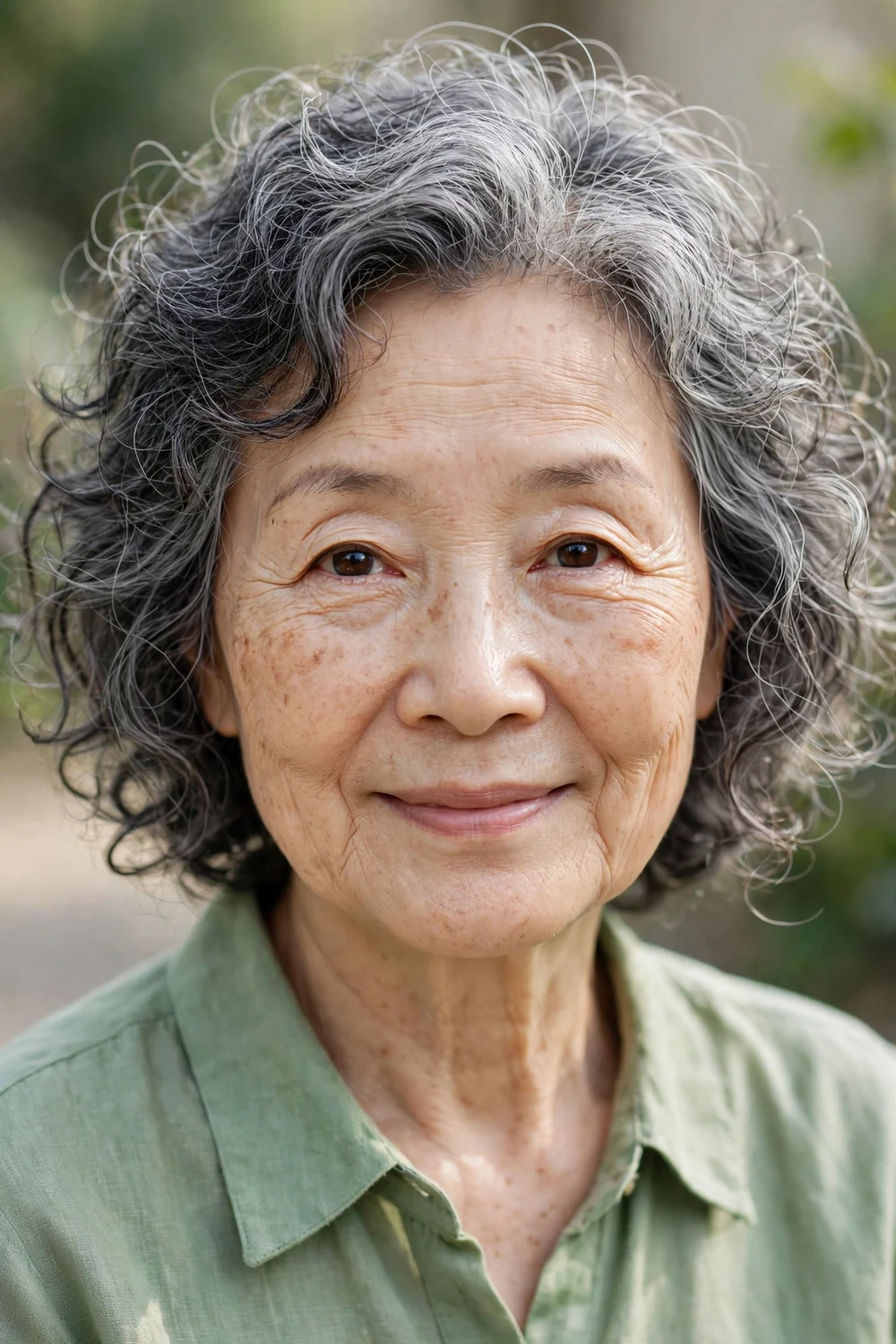
Lightness is the entire brief for this cut. Wispy layering removes weight from the ends so curls taper softly instead of ending in a blunt line, and the overall effect is soft and airy. This works well for fine to medium curls that can look stringy in a one-length cut, since the layers create the illusion of more hair. It suits women who want movement without a dramatic shape change, and it pairs well with air drying.
Try this: Use a wide-tooth comb only on wet, conditioned hair, then leave the curls alone to set without disturbance.
25. Asymmetrical Curly Cut
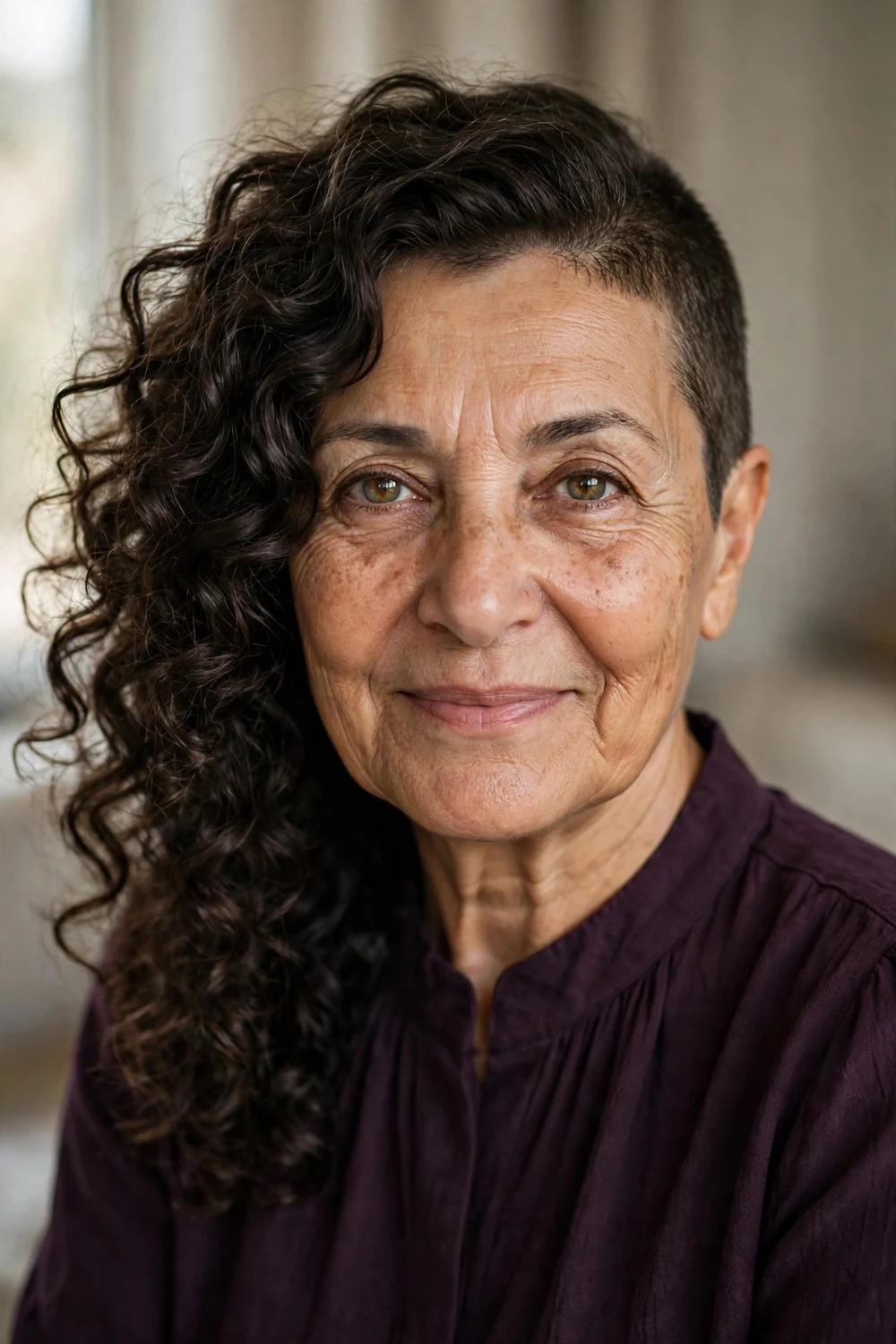
Uneven on purpose, this cut keeps one side noticeably longer than the other, which gives short curls a bold, modern line. The asymmetry draws the eye diagonally across the face, a flattering trick for square or round face shapes. On curls, the length difference needs to be exaggerated slightly, since shrinkage will soften it once dry. This is a statement cut that needs confidence and a stylist who is comfortable cutting outside the lines.
Try this: Style with a deep side part on the shorter side to emphasize the length difference.
26. Voluminous Curly Crop With Crown Lift
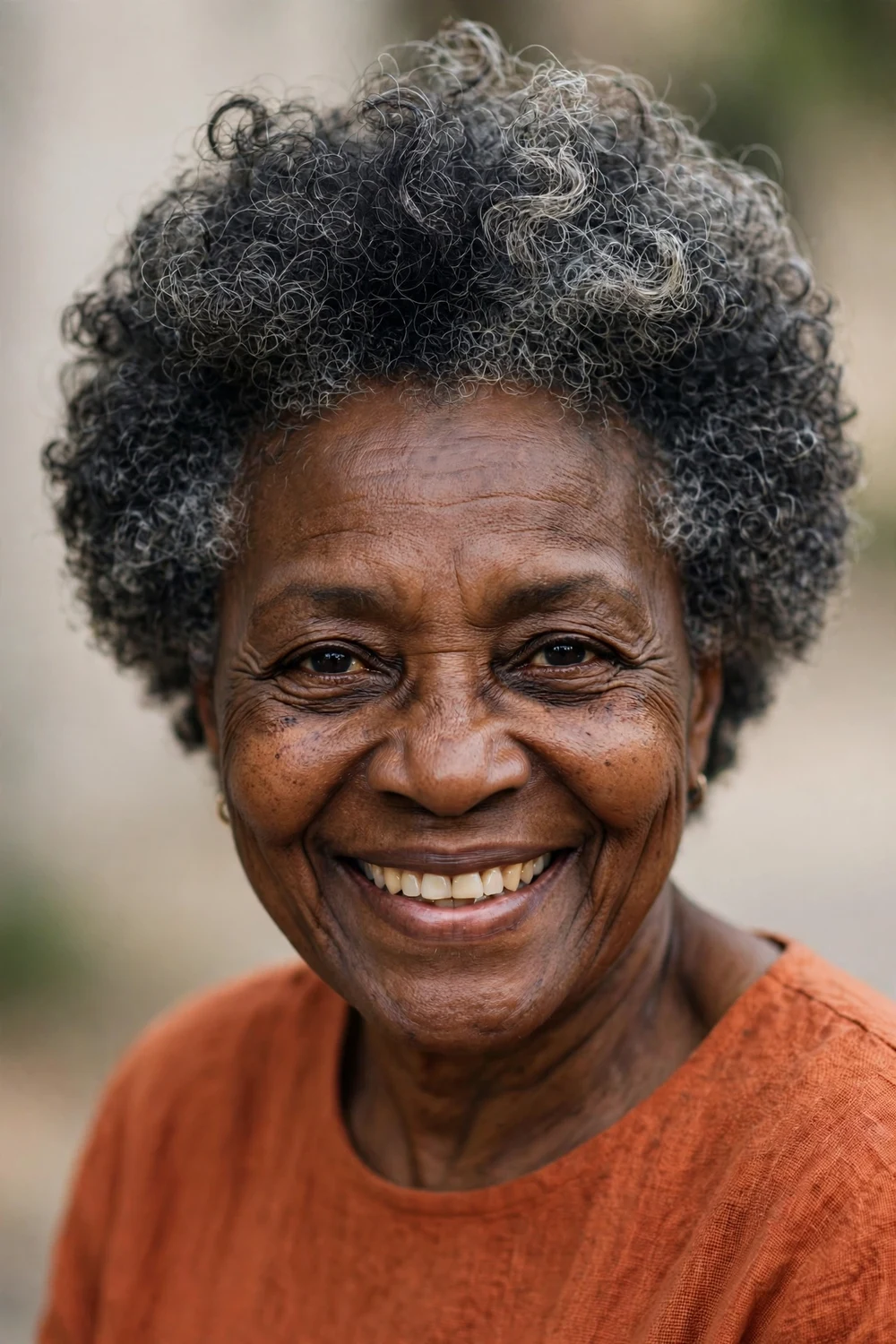
Fine-to-medium curls get a built-in boost from this rounded crop, where short crown layers are cut to stack and lift. The shape is deliberately round on top, which creates the appearance of density even on hair that has thinned. It works on 3A to 4A curls and suits women who want fullness without growing their hair out. Root-lifting products help, but the cut itself does most of the work, so the style holds even on lazy days.
Try this: Dry the crown with a diffuser attachment, lifting sections at the root with your fingers as you go.
27. High Curly Puff
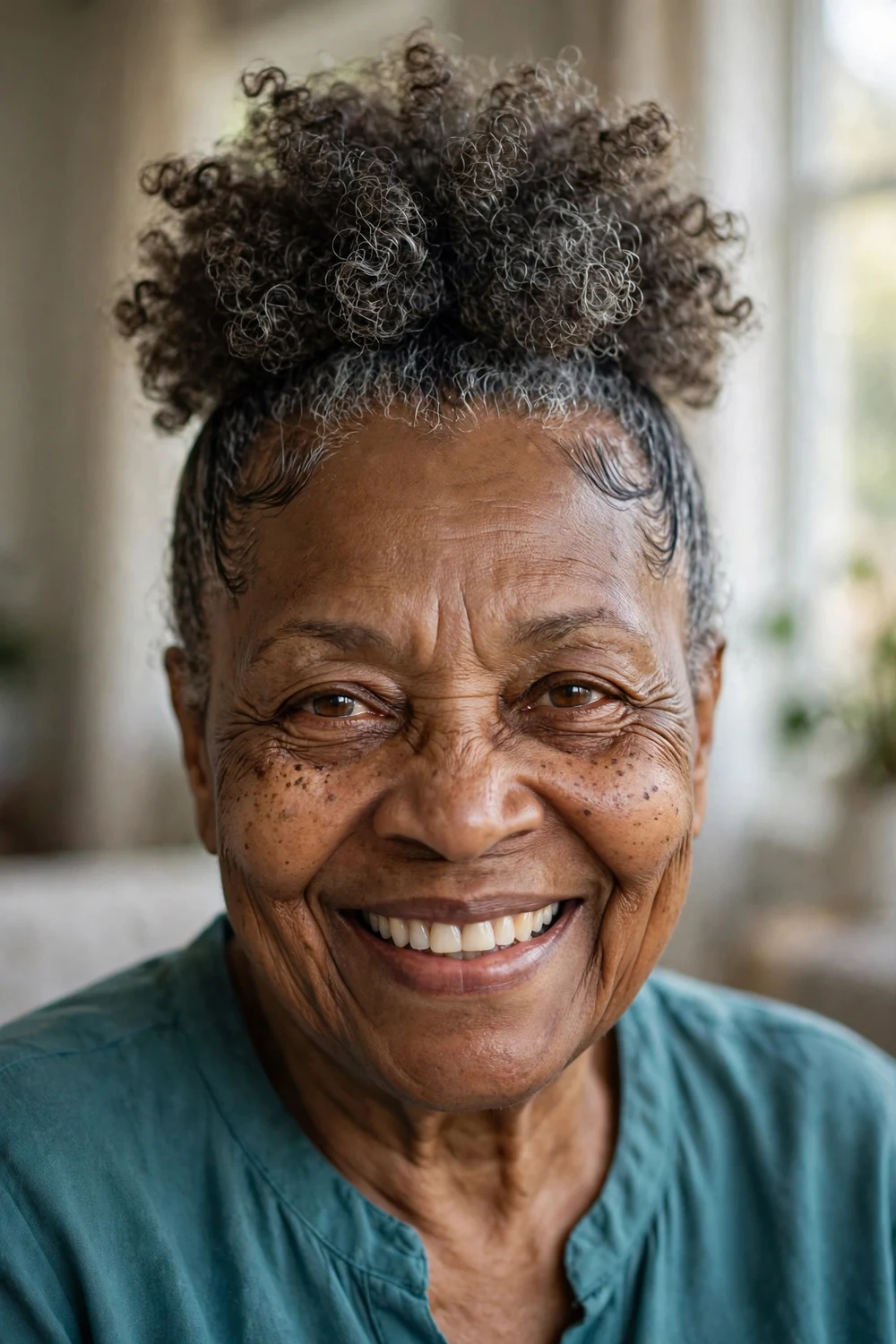
One elastic, one minute: the high puff gathers all the curls into a rounded shape at the crown. It works best on hair that is at least a few inches long on top, which includes many pixie-bob hybrids and crops grown out a little. A satin scrunchie or a loose band protects the curls from breakage better than a tight elastic. This is a practical style for hot days, workouts, or second-day hair that needs a quick refresh.
Try this: Smooth the hairline with a soft brush and a little gel before gathering for a neat, polished puff.
28. High Curly Ponytail
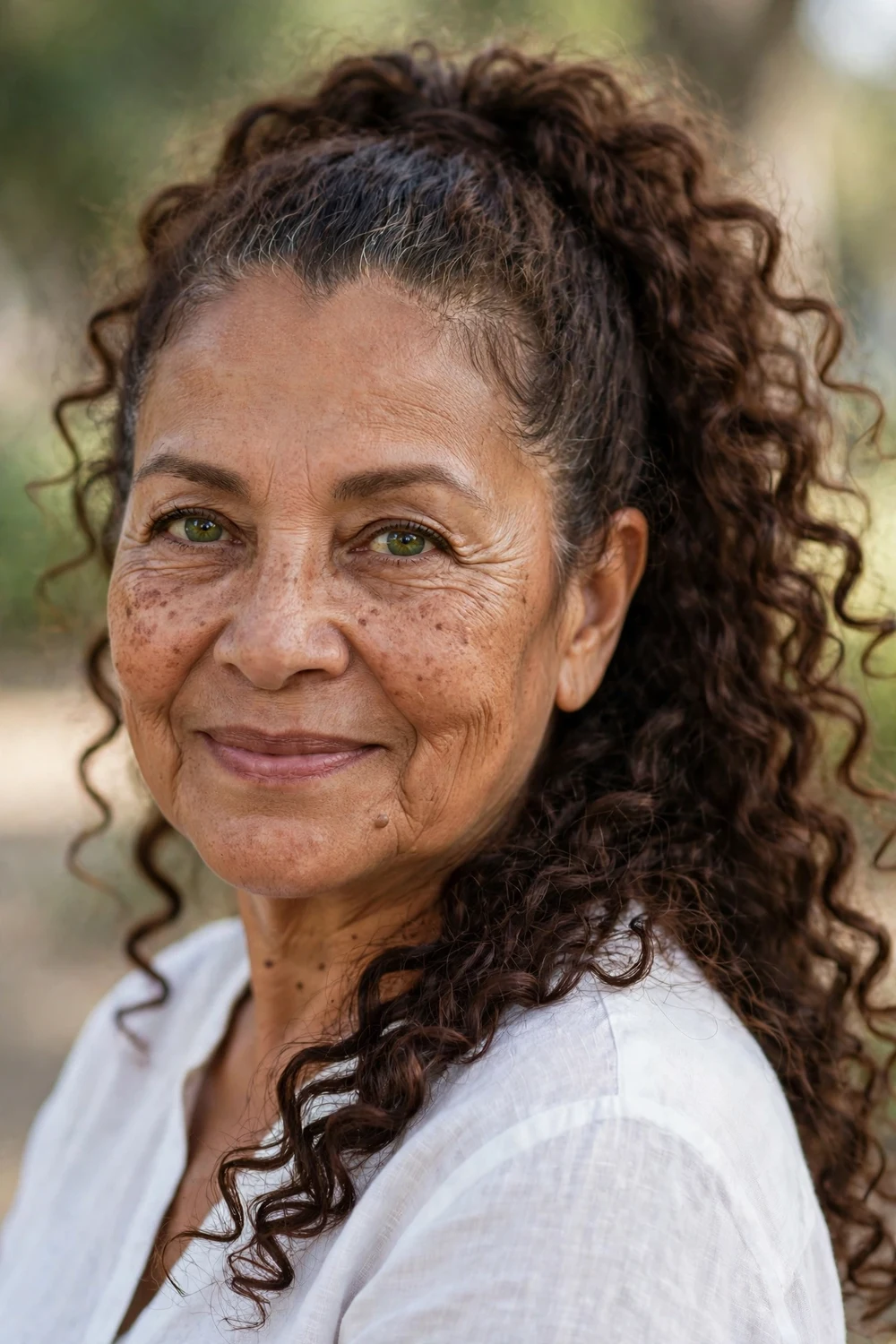
Second-day curls are the raw material for this style, since slightly lived-in hair holds a ponytail better than freshly washed curls. Gathered high at the crown, the ponytail shows off curl texture while keeping hair off the neck and face. Leave the ends free and full rather than pulling them tight, which keeps the volume. This suits bobs and longer pixie cuts, and it takes under five minutes with a brush and one elastic.
Try this: Wrap a small section of hair around the elastic and pin it underneath to hide the band.
29. Curly Bun Updo With Soft Tendrils
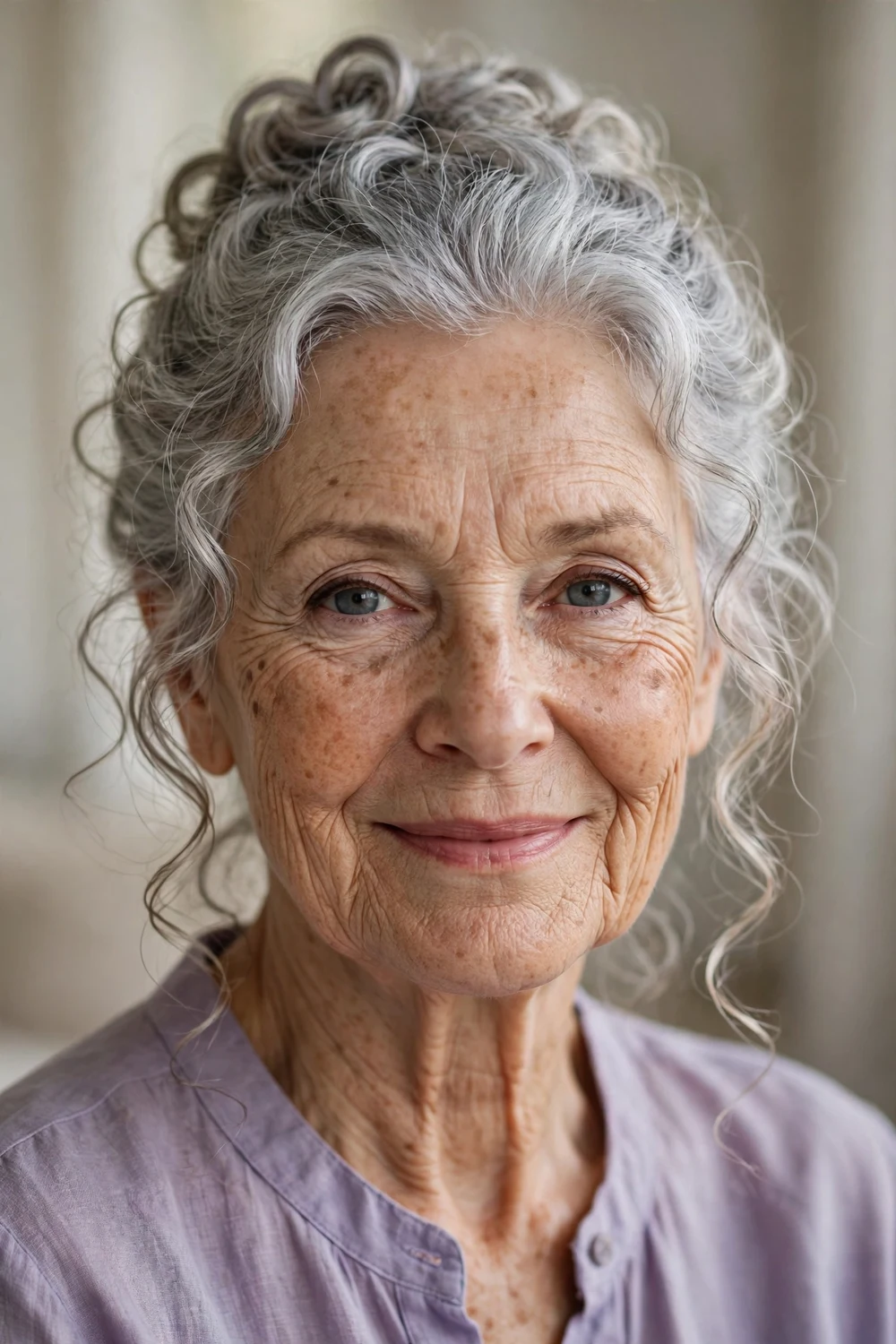
A bun plus loose tendrils is the classic dressed-up option for short curls. The bun itself can sit high, low, or messy depending on your hair length and the occasion, while a few curls left out around the face keep it soft instead of severe. On shorter hair, pin curls into a cluster at the back rather than trying to twist one smooth bun. Bobby pins in a shade close to your hair color disappear into the curls.
Try this: Curl the tendrils around your finger while damp so they dry into defined spirals.
30. Braided Curly Updo With Crown Braid
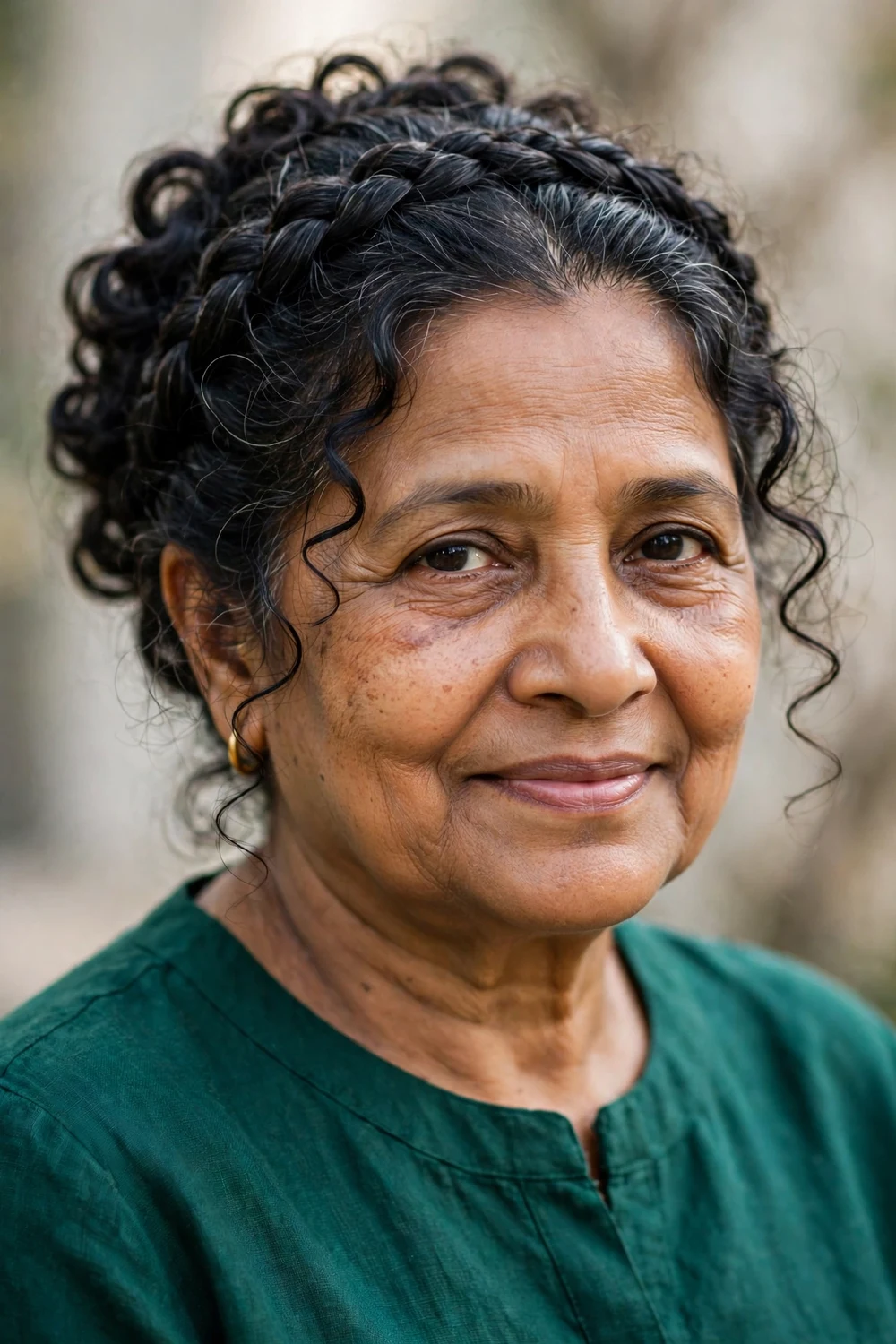
Braids give short curly hair structure that pins alone can’t provide. A crown braid worked around the head uses the front sections while the back curls stay free or get pinned into a low bun. This style keeps hair off the face for the whole day and suits 3B to 4C textures, where the braid holds well. It takes some practice, so try it on a relaxed day before wearing it to an event.
Try this: Braid on damp, detangled hair with a little cream for grip, since dry curls slip out of braids easily.
Curly Short Cuts Comparison at a Glance
| Style | Curl Type | Maintenance | Best For |
|---|---|---|---|
| Classic Short Curly Bob | 3A–3C | Low | Everyday wear, first short cut |
| Face-Framing Layered Bob | 3B–3C | Low | Fixing triangle shape |
| Angled / Inverted Bob | 3A–3C | Medium | Structured, modern silhouette |
| Stacked Piecey Bob | 3A–3C | Medium | Fine curls needing height |
| Airy Curly Bob | 2C–3B | Low | Fine hair, quick drying |
| Feathered Curly Bob | 2C–3C | Low | Thick hair that needs movement |
| Wedge Bob With Highlights | 3B–4A | Medium | Silver hair with dimension |
| Curly Lob With Layers | 3A–3C | Low | Transitioning from long hair |
| Curly Bob With Full Fringe | 3A–3C | Medium | Softening a long forehead |
| Wet-Look Curls | 3A–4A | Medium | Evenings and events |
| Curly Crop With Wispy Bangs | 2C–3B | Low | Soft pixie-length cut |
| Side-Swept With Silver Streak | 2C–4A | Low | Growing out gray |
| Side-Parted Choppy Waves | 2C–3A | Low | Relaxed, low-commitment cut |
| Soft Face-Framing Waves | 2B–3A | Low | Loosened curl patterns |
| Curly Pixie Bob | 3A–4A | Medium | Bridge between pixie and bob |
| Voluminous Pixie, Lifted Top | 3B–4B | Medium | Round faces, bold volume |
| Disconnected Curly Pixie | 3A–3C | High | Statement cut |
| Tapered Curly Pixie | 3A–4C | Medium | Most versatile pixie |
| Curly Pixie With Undercut | 3A–4B | High | Very thick hair, edgy look |
| Curly Tomboy Crop | 2C–4A | Low | Minimal styling routine |
| Ear-Length Chic Crop | 3A–4A | Medium | Showing off earrings |
| Curly Faux Mohawk | 3A–4B | High | Dramatic volume |
| Curly Shag / Wolf Cut | 3A–3C | Low | Textured, undone finish |
| Wispy Curly Layers | 2C–3B | Low | Fine curls, soft movement |
| Asymmetrical Curly Cut | 3A–3C | Medium | Square or round faces |
| Voluminous Crop, Crown Lift | 3A–4A | Low | Fine or thinning curls |
| High Curly Puff | 3B–4C | Low | Hot days, quick styling |
| High Curly Ponytail | 3A–4A | Low | Second-day hair |
| Curly Bun With Tendrils | 3A–4B | Medium | Dressy occasions |
| Braided Crown Updo | 3B–4C | High | All-day hold |
How to Choose the Right Curly Cut for You
Start with your curl type and density, not with a photo of someone else’s hair. Tight coils behave nothing like loose waves, so a cut designed for one will disappoint on the other. The curl-type breakdown in idea 38 above is the fastest way to narrow the field.
Next, think about your styling tolerance. If you want wash-and-go, choose crops, tapered pixies, or the airy bob, which look finished with minimal effort. If you enjoy styling, bobs with fringe, wet-look finishes, and vintage waves reward the extra minutes. Be honest about trims too: pixies and undercuts need the salon every four to six weeks, while bobs and lobs forgive longer gaps.
Finally, consider your face shape and features using the guide in idea 40. The right combination of curl type, maintenance level, and face shape usually leaves you with two or three strong candidates, which is exactly what to bring to your stylist for a consultation.
Styling Routine and Maintenance for Mature Short Curls
A simple routine beats a complicated one. Wash with a sulfate-free shampoo, condition the mid-lengths and ends, and style on soaking-wet hair with a leave-in cream plus one styler. Check gel and cream labels for drying alcohols such as isopropyl alcohol, which strip moisture from mature curls, and favor water-based formulas instead.
For heat, keep the diffuser on a low or medium setting and always use a heat protectant first, since hair over 60 dries out faster and high heat causes breakage. Air drying is the gentlest option when you have the time. Trim every six to eight weeks to keep the shape, since curly ends dry out and lose definition as they grow.
Scalp care matters more as hair thins. Avoid tight styles that pull at the hairline, handle wet curls gently with a wide-tooth comb, and massage with fingertips rather than scratching with nails. If you notice sudden or patchy shedding, book a dermatologist visit rather than switching products, since hair loss can have treatable medical causes.
Frequently Asked Questions
Are short curly hairstyles a good choice for women over 60?
Yes. Short cuts remove weight so curls spring up and hold their shape, which means less daily styling and fewer products. They also keep the neckline clean, which suits women who wear glasses or prefer earrings visible. The key is a stylist who cuts curls dry or curl-by-curl, since curly hair shrinks as it dries and a wet cut can end up far shorter than planned.
How can I add volume to short curly hair after 60?
Start with a cut that builds in height, like a tapered pixie or a stacked bob with short crown layers. Root-lifting mousse on damp hair, drying with a diffuser on a low heat setting, and flipping the part once hair is dry all add lift. Keep conditioner off the roots and avoid heavy oils near the crown, because both flatten fine or thinning curls.
Should I keep coloring my gray curls or let them go natural?
Either choice works well on short curls. Gray and silver tones can look striking with defined curl texture, and skipping dye removes the upkeep of root touch-ups. If you keep coloring, ask for a demi-permanent or glossing service with a warm or cool tone matched to your skin, and condition well afterward since color-treated curls dry out faster than uncolored ones.
How often do short curly cuts need trimming?
Most short curly styles need a trim every 6 to 8 weeks to hold their shape, since curls lose definition as the ends dry out and the weight shifts. Pixies and tapered cuts may need attention closer to the 6-week mark. Regular dustings of the ends also cut down on single-strand knots, which are common in tight curl patterns.
What products are best for mature short curly hair?
A sulfate-free shampoo, a lightweight leave-in conditioner, and one styler such as a curl cream or light-hold gel cover most needs. Look for gels and creams without drying alcohols like isopropyl alcohol, which strip moisture from mature curls. If you notice new shedding or visible thinning, switch to gentle formulas and talk to a dermatologist rather than trying stronger products.
Final Thoughts
Short curly hair after 60 is about working with your texture instead of against it. Pick a cut that matches your curl type and the maintenance you are willing to do, keep the routine simple, and let the curls do the rest. One of these 42 ideas will fit, and your stylist can tailor the details from there.

