


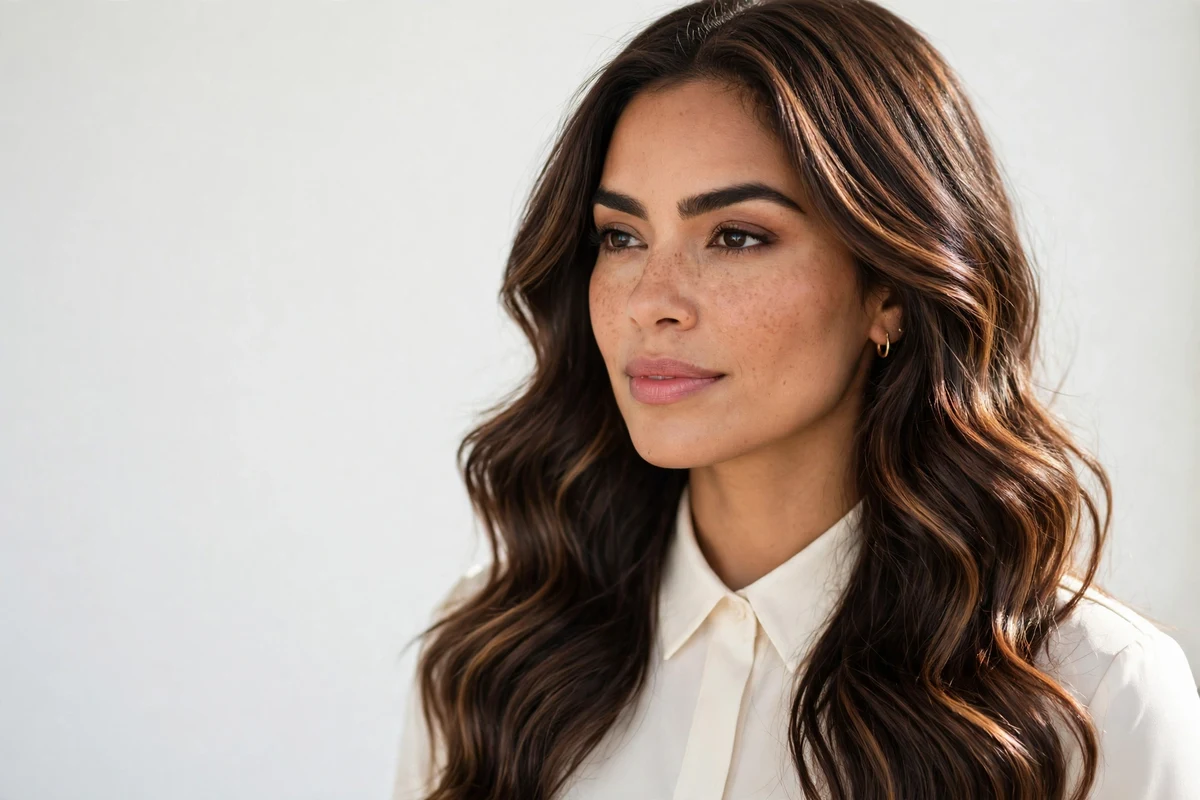
Winter changes how your hair color reads. Low light, dry indoor heat, and pale winter skin can make summer shades look flat, which is why so many women refresh their color when the temperature drops.
Below you’ll find 29 winter hair color ideas that actually work in cold weather, from smoky blondes and glossy brunettes to mulled wine reds. I’ve spent years testing how different shades hold up through dry months, and every pick here is chosen for winter light, winter wardrobes, and realistic upkeep.
Quick answer: The best winter hair colors add depth and warmth where your skin loses it in cold months. Think glossy espresso, mulled wine red, honey bronde, and smoky ash blonde. Pick one level deeper than your summer shade and ask your colorist for a gloss to fight winter dryness.
Quick Takeaways
- Winter light flatters deeper, glossier shades more than bright summer blondes.
- Going one level darker than your summer color usually looks more natural in winter.
- Balayage and melted techniques grow out softly, so they need fewer salon visits.
- Cool skin tones suit ash, mushroom, and silver shades; warm skin tones suit honey, copper, and caramel.
- A clear gloss every 6 to 8 weeks keeps any winter shade shiny through dry indoor heat.
Why Winter Calls for a Different Shade
Summer hair color is built for sunlight. Winter hair color has to work under grey skies, office lighting, and the warm glow of evening lamps. Shades with depth and shine hold up far better than flat, bright colors once the days get short.
Your skin changes too. Most people lose their tan by December, and a shade that looked sun-kissed in August can wash you out in January. That’s why winter trends lean toward richness: deeper brunettes, warmer coppers, and blondes with shadow roots.
Upkeep matters more in winter as well. Cold air and indoor heating dry hair out, so low-maintenance techniques like balayage, sombre, and root melts are smart picks. You’ll stretch the time between appointments while the color still looks intentional.
1. Smoky Ash Blonde Waves
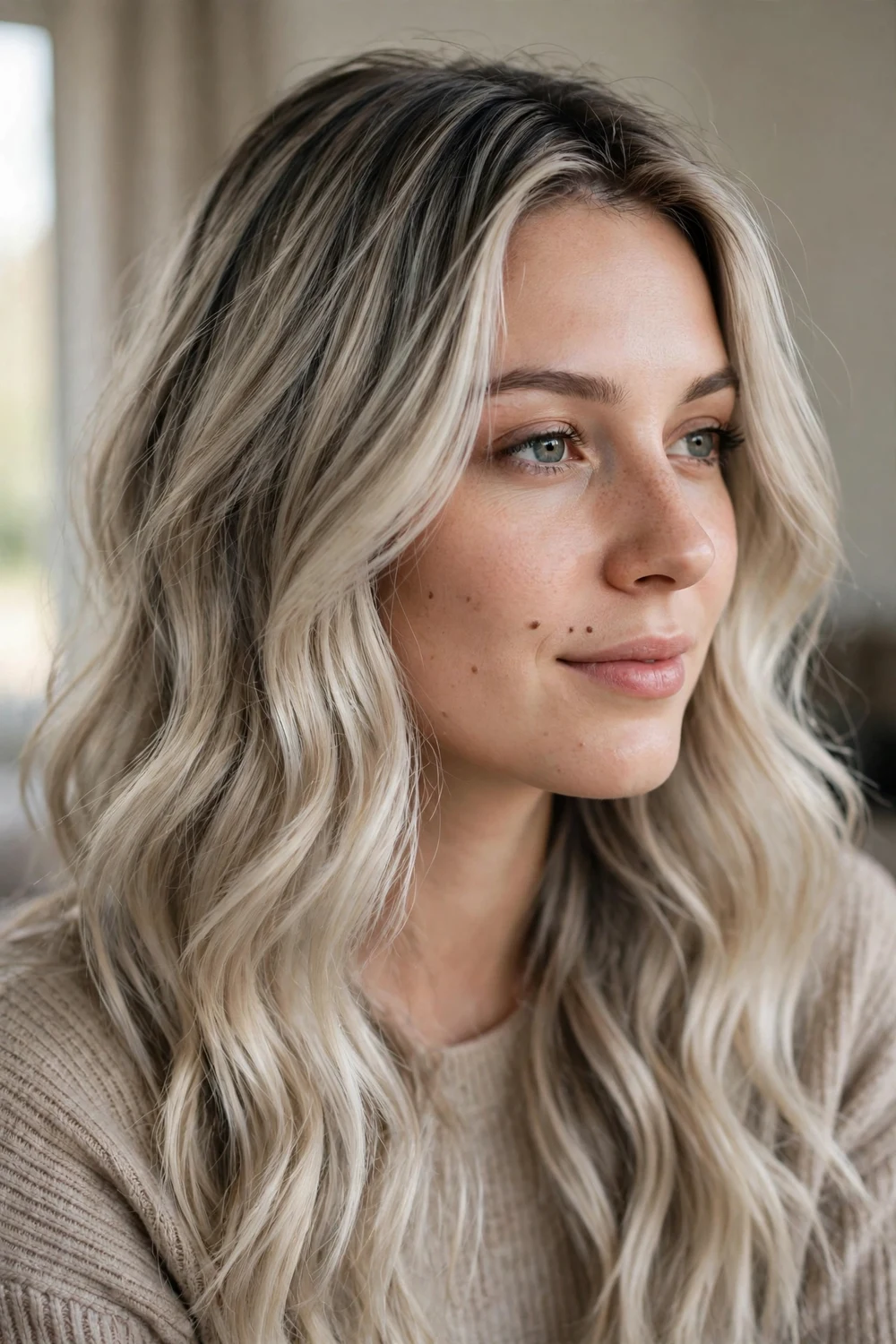
Want blonde that doesn’t fight winter’s pale light? Smoky ash blonde starts with a dark shadow root that melts into cool, muted blonde lengths. The result looks soft and dimensional rather than summery and bright. It suits women with naturally dark blonde or light brown hair who want to stay blonde without the high upkeep of platinum. The shadow root lets your natural color grow in for 8 to 10 weeks without a visible line. Wavy styling shows off the blend best, since straight hair can make the root line more obvious.
Try this: Ask your colorist for a root melt in your natural shade plus cool ash toner on the lengths, and use purple shampoo once a week to keep the tone from warming up.
2. Frosted Caramel Blend
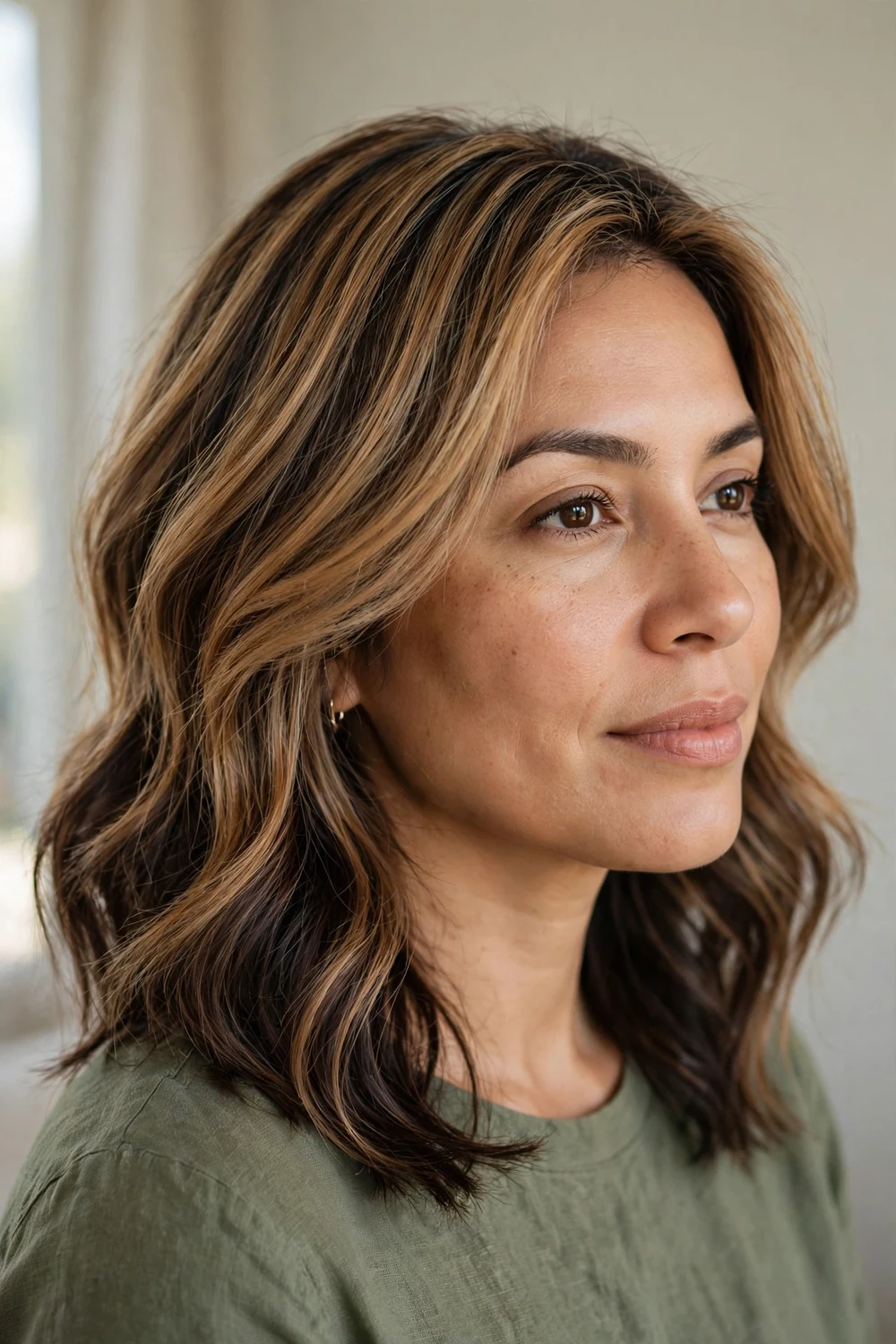
Picture caramel highlights, but cooled down for winter. This blend layers warm caramel pieces over a cooler brunette base, which gives you brightness around the face without the golden summer feel. It works on fine to medium hair because the multi-tonal pieces create the illusion of fullness. The cooler base keeps the overall look seasonal while the caramel keeps it from going flat. Grow-out is gentle since the pieces are painted softly off the root. This is a strong pick if you want warmth without committing to an all-over warm shade.
Try this: Keep the caramel pieces thin and blended near the roots; chunky highlights will read as summer color instead of winter color.
3. Golden Brunette Glow
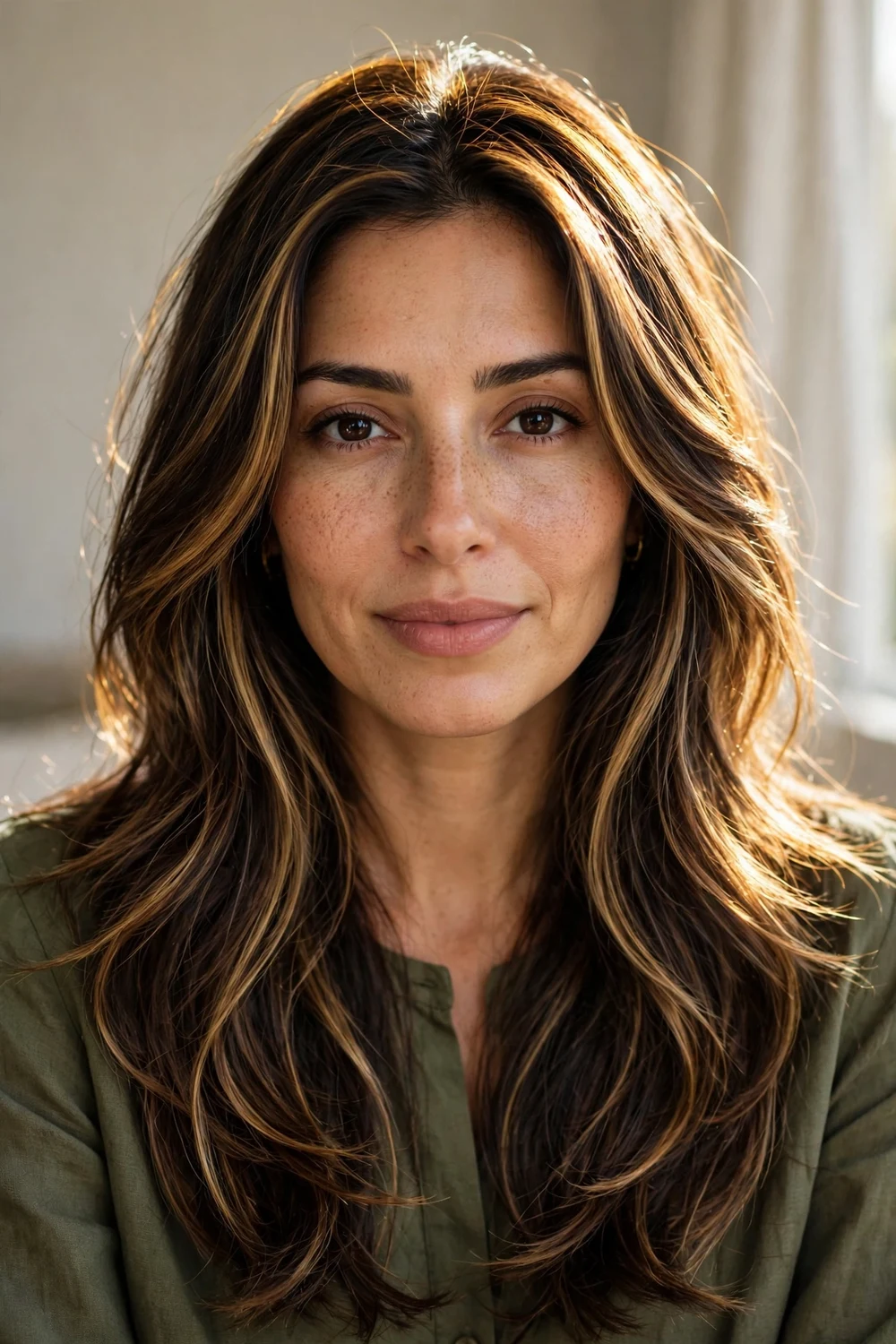
If your skin looks dull by midwinter, this shade puts the warmth back. A deep brunette base gets painted with honey-gold strokes that catch the light and create a halo effect. It flatters medium to thick hair best, since the dimension needs length and layers to show. The golden pieces are concentrated where light naturally hits, around the face and through the ends. Maintenance is easy because the base stays close to most brunettes’ natural color. You’ll need a gloss every couple of months to keep the gold from fading.
Try this: Style it with a round brush blowout or loose curls; straight flat-ironed hair hides the golden dimension this color is built for.
4. Cool Mushroom Brown
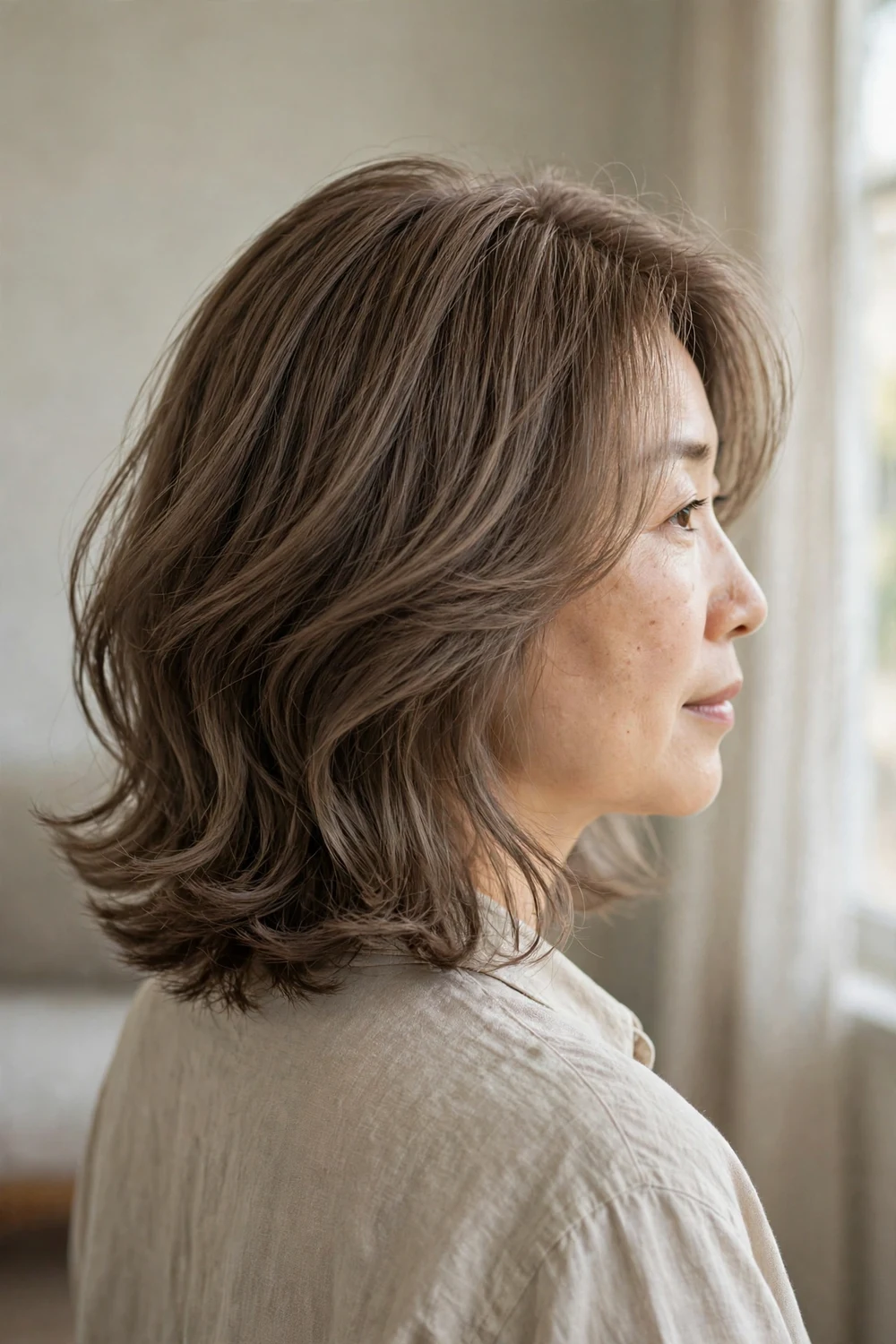
Mushroom brown sits right between ash and beige, and it’s one of the most wearable cool shades for winter. The tone is muted and natural, never grey or green when it’s done right. Women with cool or neutral skin tones get the most out of it, and it pairs well with the dark winter wardrobe most of us live in. The shade works on all hair textures but shows best on smooth, softly waved hair where the tone reads clearly. Keep up with toning so the cool beige doesn’t warm up over time.
Try this: Fight brassiness with a blue shampoo every third wash so the cool beige tone stays clean through winter.
5. Chestnut with Curtain Bangs
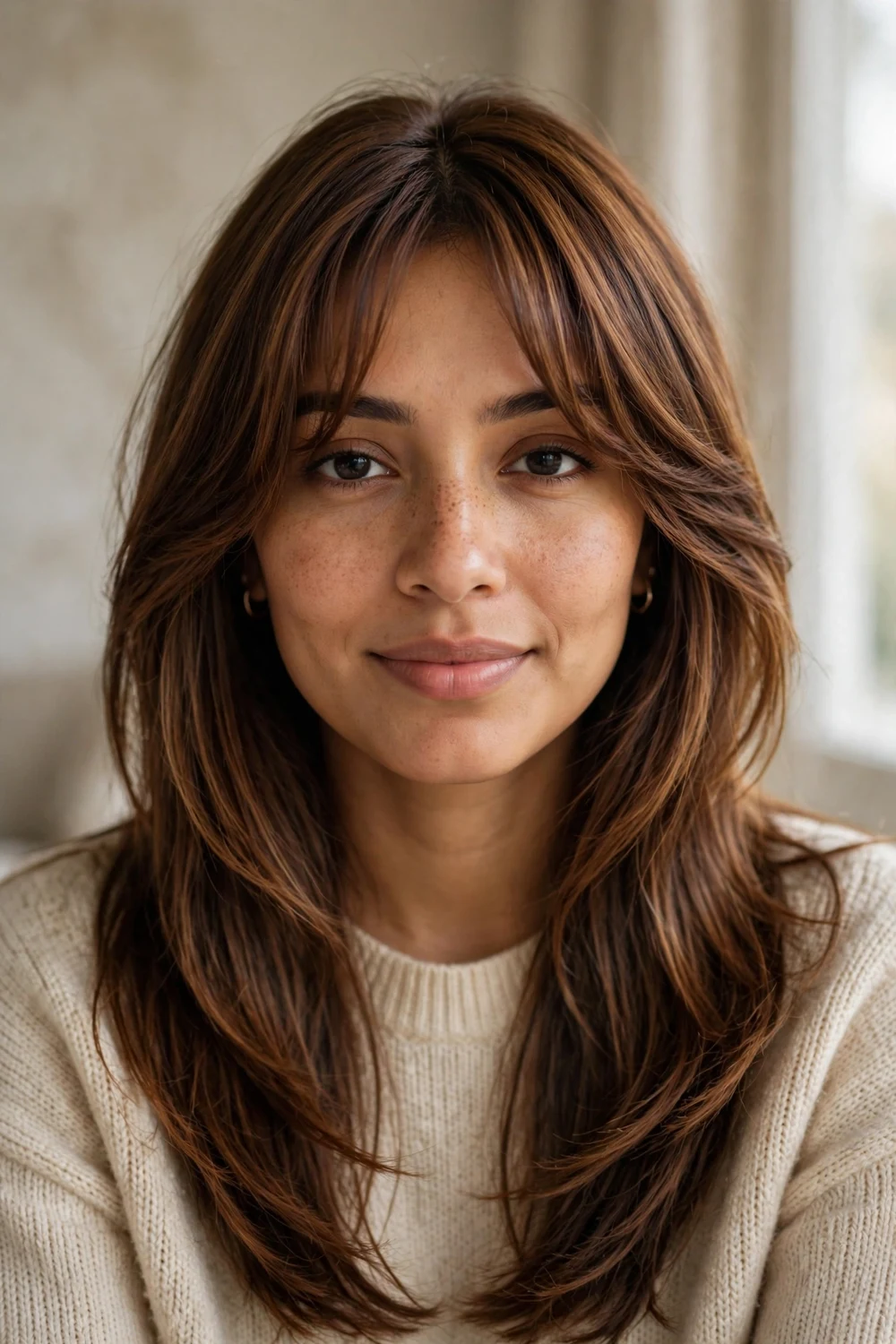
Warm chestnut is a classic winter brunette, and curtain bangs make it feel current. The rich brown shade looks cozy against winter knits, while the face-framing bangs soften the forehead and cheekbones. This combination suits straight or slightly wavy hair and most skin tones. Chestnut is forgiving on regrowth since it sits close to many women’s natural brown. The bangs need trimming every 3 to 4 weeks to keep their shape. A shine spray brings out the warm tones that make this shade glow.
Try this: Blow-dry the bangs with a round brush right after washing; letting them air-dry usually leaves them sitting flat or splitting oddly.
6. Espresso with Soft Dimension
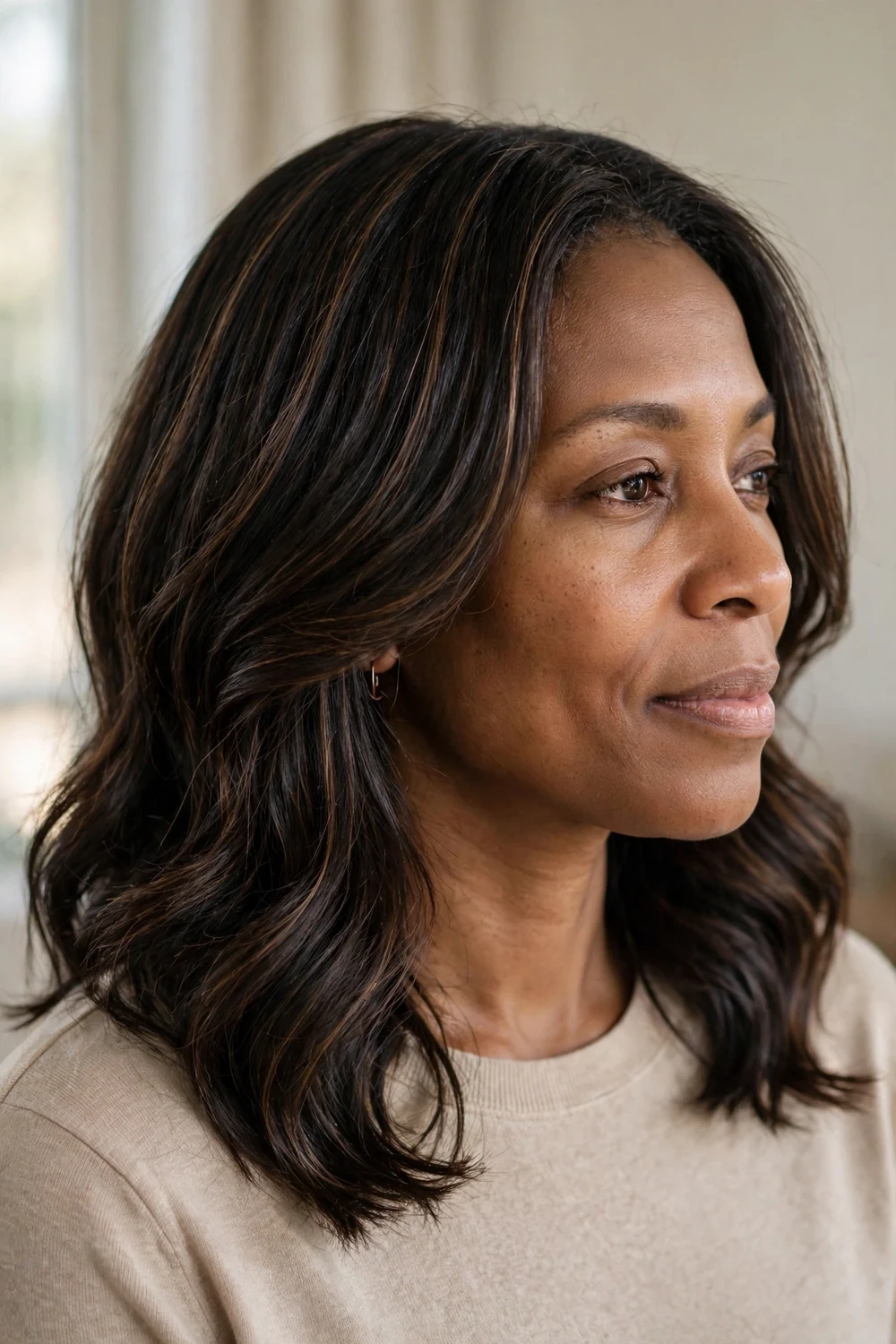
Flat black-brown can look harsh in winter light, but espresso with fine, subtle highlights stays rich without going dull. The lighter pieces are woven through so finely that you notice the shine and movement before you notice the highlights themselves. It’s a strong pick for women who want depth without obvious color work. The technique works on all lengths but looks especially polished on bobs and lobs. Because the highlights stay close to the base, touch-ups stretch easily to 10 or 12 weeks.
Try this: Ask for the highlights to stay within two levels of your base; anything lighter turns it into a different look entirely.
7. Plum-Tinted Brunette
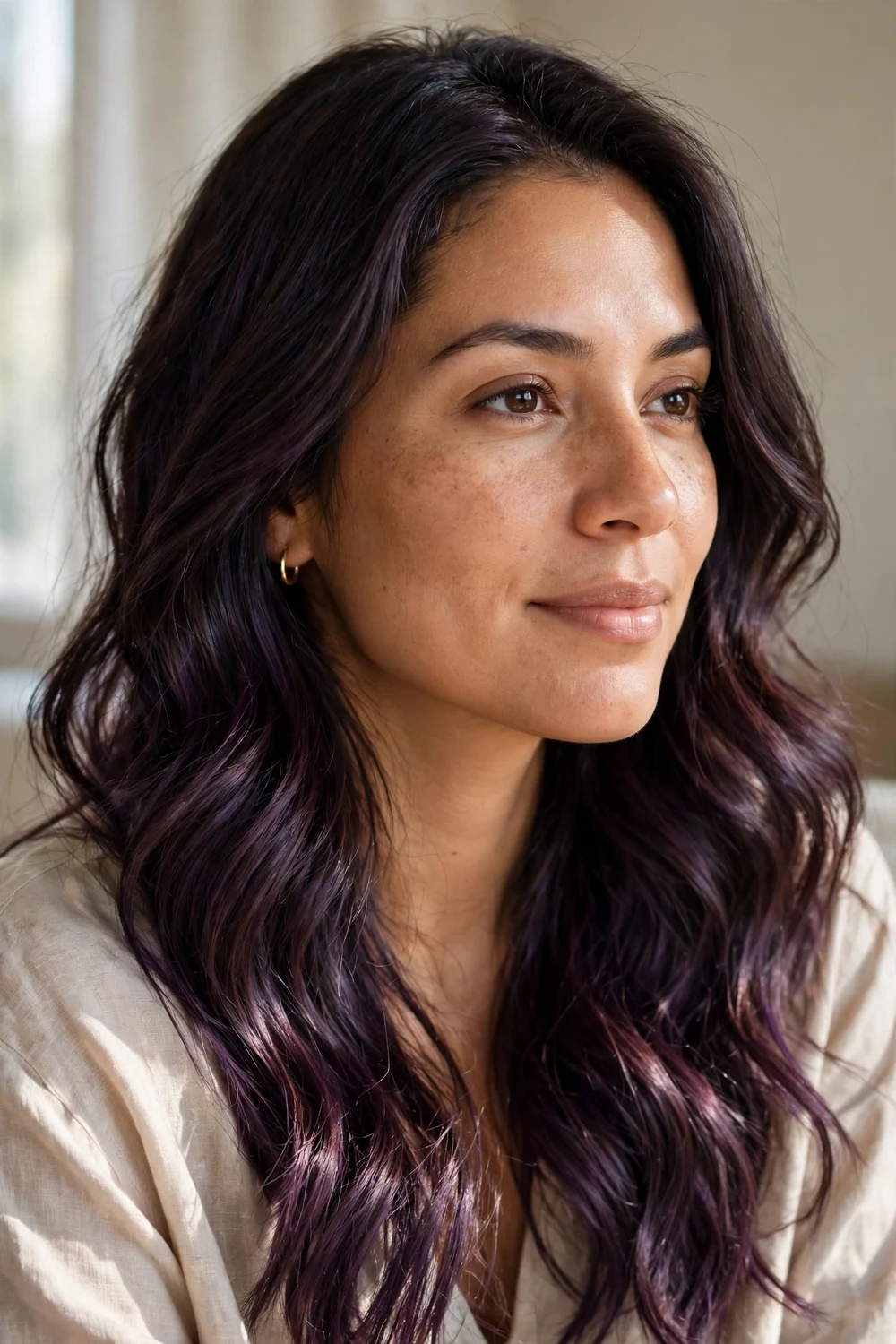
For brunettes who want something a little different without going full fashion color, plum tint is the middle ground. Dark brown hair gets a wash of deep purple-red that shows most in sunlight and looks almost black indoors. It flatters medium to deep skin tones especially well. The effect is more visible on layered or wavy hair where light catches the tones. Since plum fades faster than natural shades, a color-depositing conditioner keeps the purple alive between appointments.
Try this: Red and purple tones fade fastest, so wash with cool water and a color-safe shampoo to hold the plum for as long as possible.
8. Mulled Wine Red
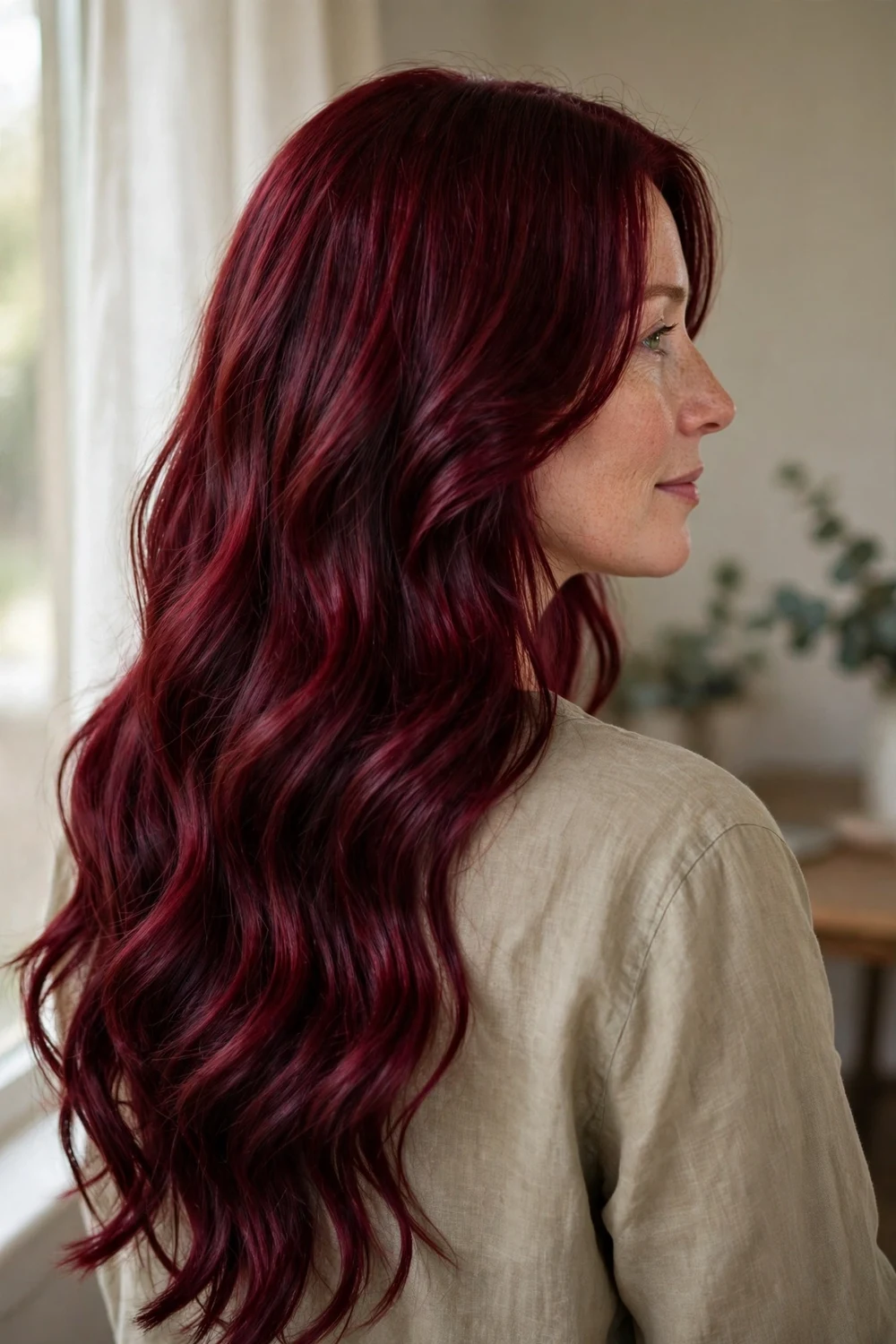
Deep red, burgundy, and wine tones blended into one rich shade. Mulled wine red is dramatic but still wearable, and it looks incredible against winter’s dark clothing palette. Thicker hair shows the depth best, since the color needs density to look full rather than thin. The multi-tonal blend keeps it from looking flat like a single-process red. Expect the shade to soften as it fades, shifting toward a gentler burgundy. Regular gloss treatments keep the richness from washing out.
Try this: Book a gloss refresh at week six; red molecules wash out faster than any other shade, and a gloss brings the depth right back.
9. Soft Mocha Balayage
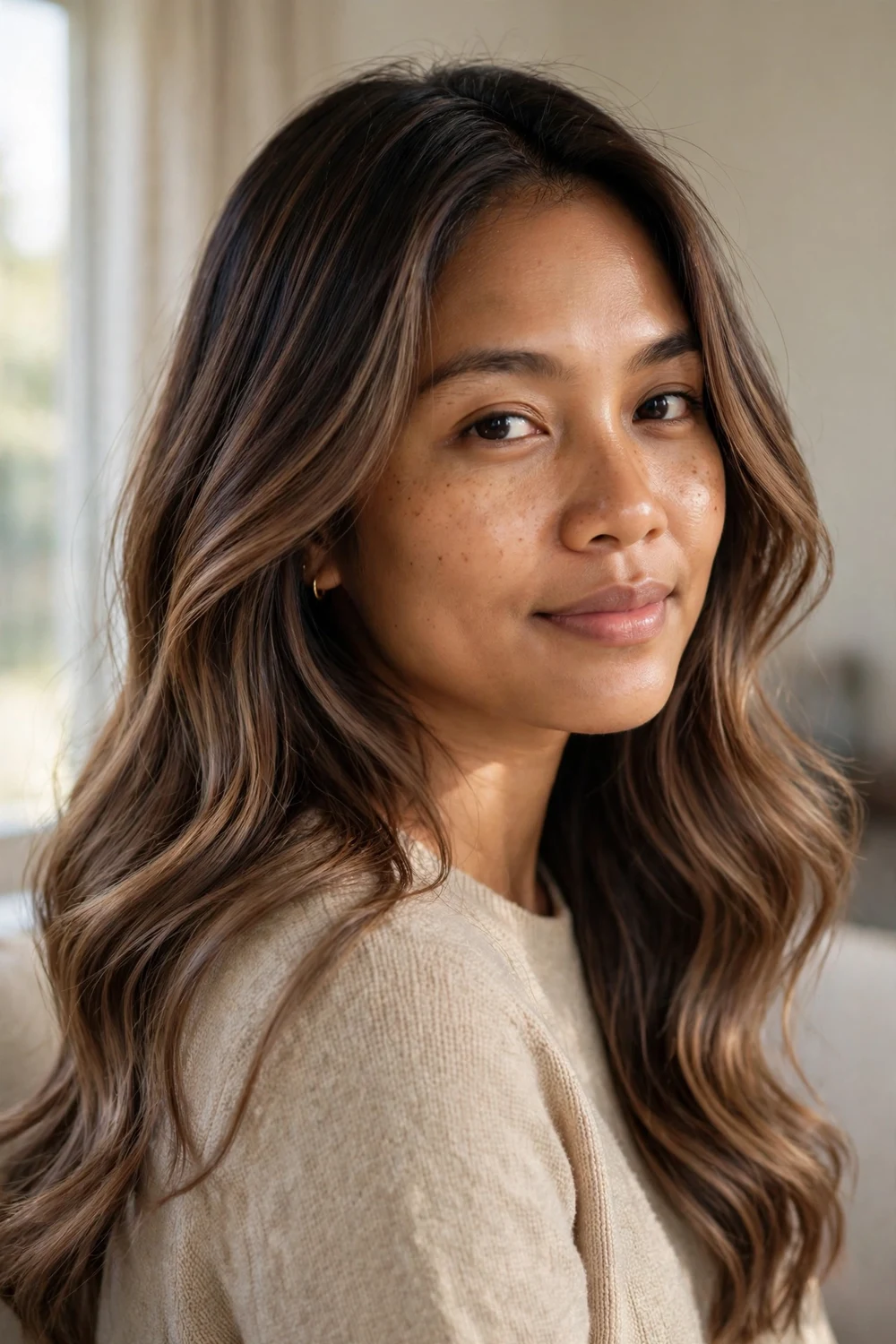
Mocha balayage is the low-drama way to lighten dark hair for winter. Deep brown roots fade gradually into warm mocha ends with no harsh lines, so the grow-out is nearly invisible. It’s one of the easiest winter colors to maintain, and it works on straight or curled hair equally well. The warm mocha tone flatters most skin tones without skewing orange. You can easily go 12 weeks or more between appointments. It’s ideal if you want visible change with minimal salon time.
Try this: Keep the mocha pieces concentrated from the mid-lengths down; bringing them too high toward the roots shortens the time before you need a touch-up.
10. Honey Bronde
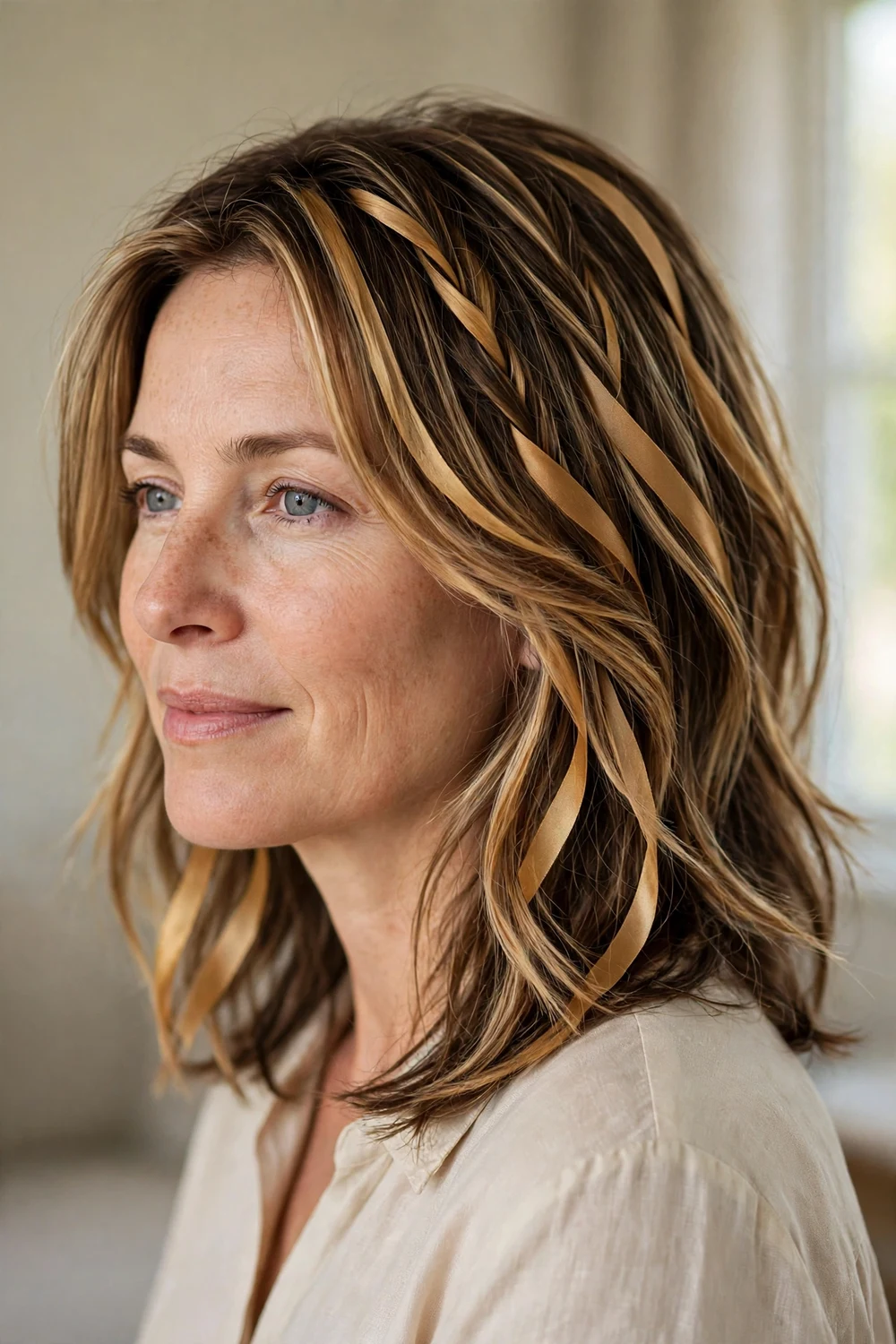
Can’t decide between blonde and brunette? Bronde is the in-between shade that works year-round, and the honey version is made for winter. Golden ribbons woven through a brunette base light up the face without committing you to full blonde upkeep. Layered cuts show it off best. The blend is forgiving on regrowth since neither the blonde nor the brunette dominates. It’s a smart choice for women growing out summer blonde who don’t want to go fully dark.
Try this: Ask your colorist to place the brightest ribbons around your face and keep the back slightly deeper for contrast.
11. Bold Contrast Balayage
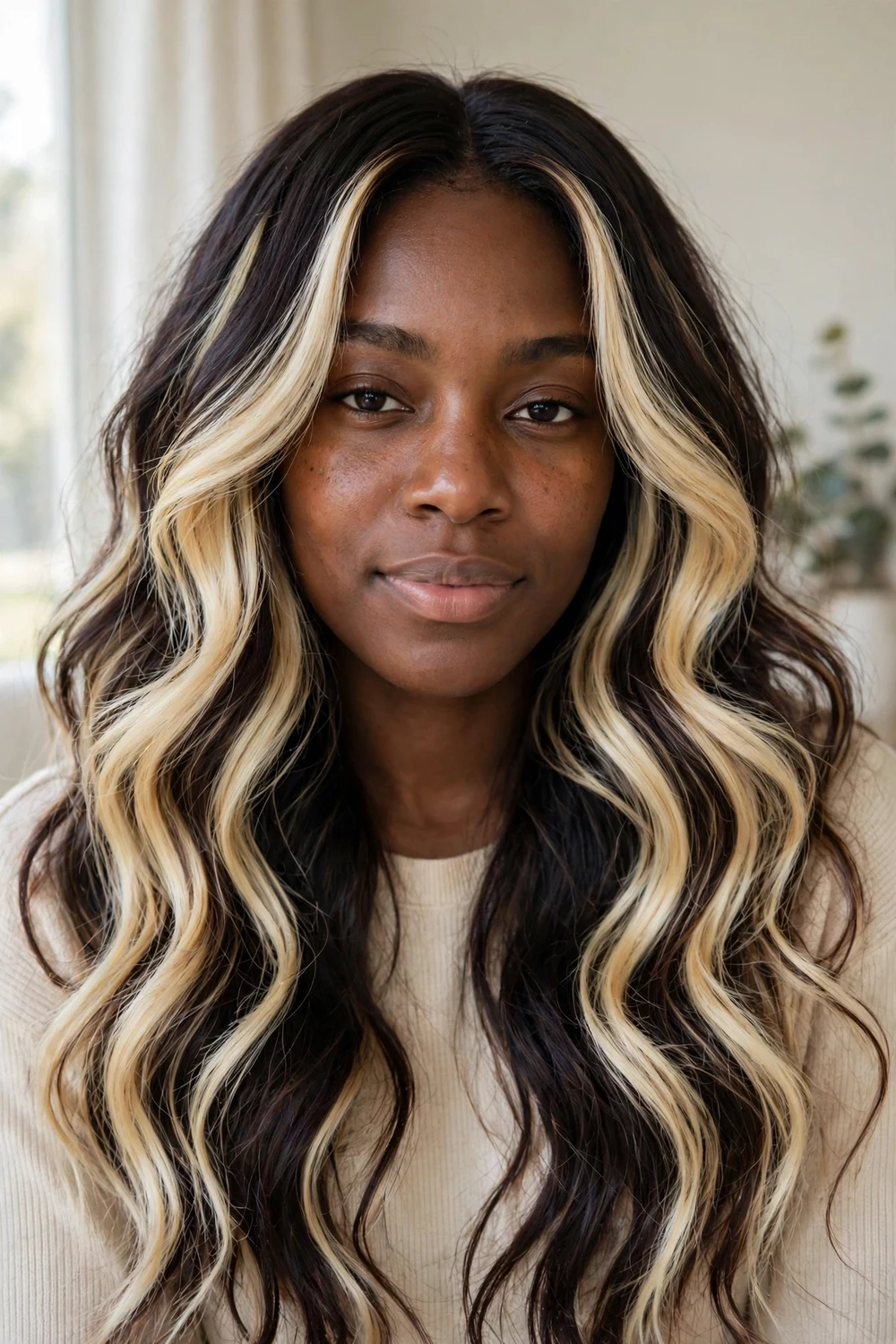
Some winters call for drama. Bold contrast balayage pairs bright blonde pieces with a dark brunette base for a high-impact look that still grows out gracefully. The dark roots keep it low-maintenance while the blonde ends do all the talking. It suits wavy and curly textures best, since movement shows off the contrast. The key is keeping the blonde pieces bright with regular toning. Without it, the contrast turns brassy and the whole look loses its edge.
Try this: Use a weekly hair mask; high-lift blonde on dark hair needs extra moisture to stay smooth through dry winter air.
12. Soft Honey Blonde Waves
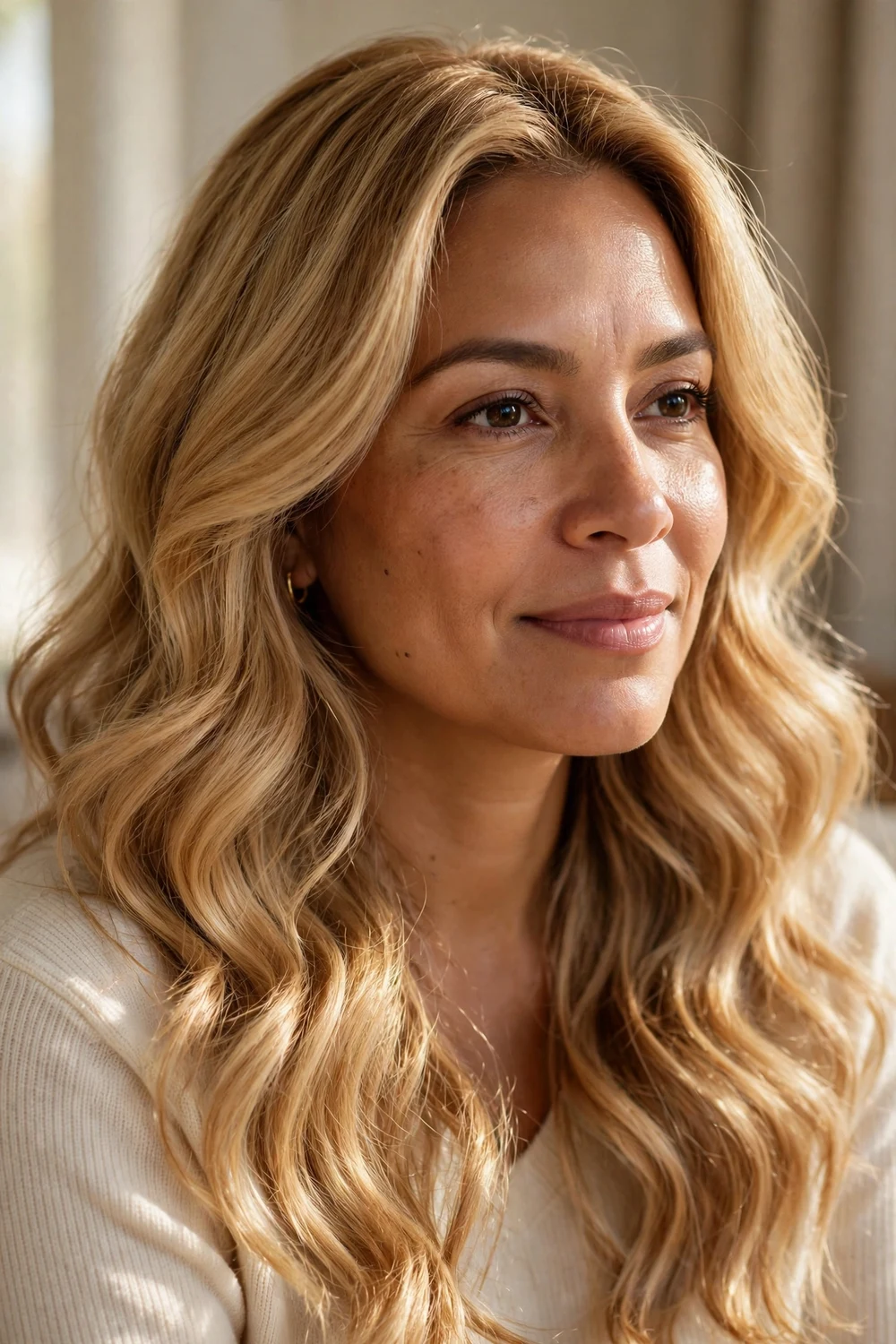
Honey blonde is the warm blonde that refuses to look washed out in January. The golden tones brighten your complexion when your skin has lost its summer color. It suits fine to medium hair and long layers, and it pairs well with a gloss treatment every couple of months to keep the warmth rich. Unlike ash blondes, honey blonde doesn’t need purple shampoo, which simplifies the routine. It’s the easiest blonde to maintain through winter.
Try this: Skip purple shampoo with this shade; it will strip the honey warmth you’re paying for and push the color toward beige.
13. Caramel Ribbon Balayage
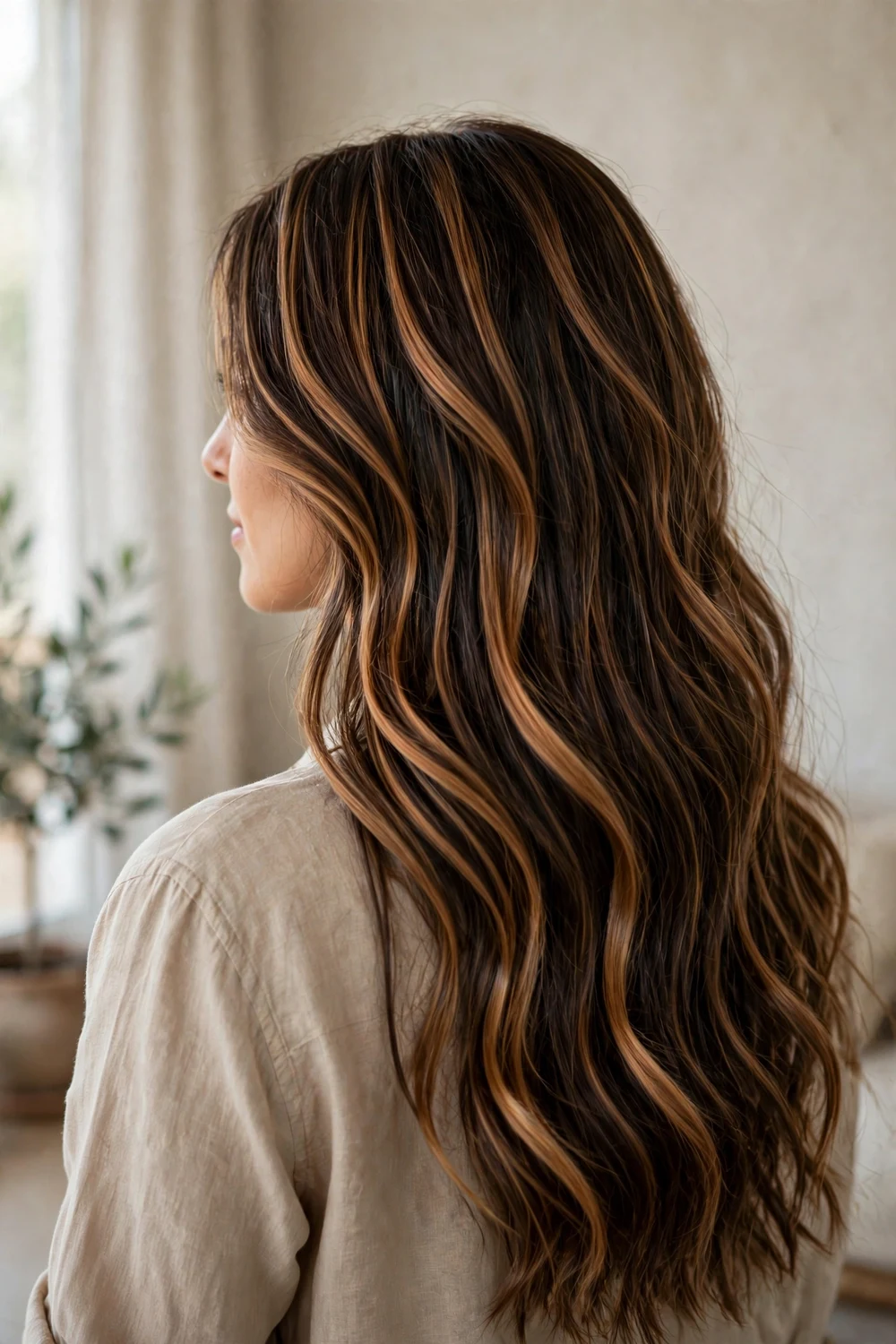
Rather than an all-over blend, caramel ribbon balayage weaves distinct caramel ribbons through brunette hair. Each ribbon catches the light separately, which gives the hair visible depth and movement. It’s polished without being fussy, and it needs only slight maintenance through the season. The ribbon placement is what sets it apart from a standard balayage melt. Loose waves separate the ribbons and show the technique at its best, while straight styling blends them together.
Try this: Style with loose waves to separate the ribbons; pin-straight styling blends them together and hides the effect.
14. Icy Blonde Melt
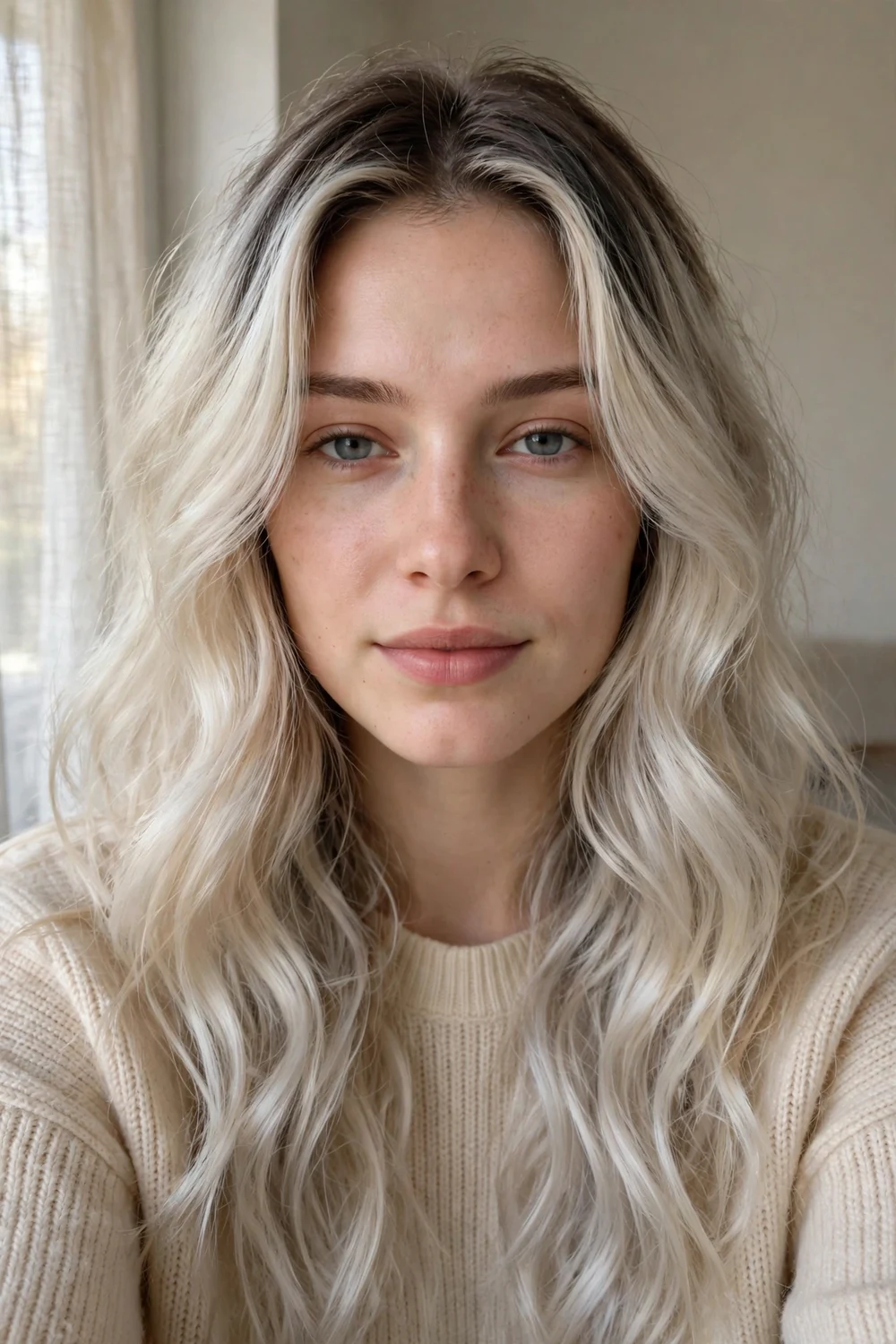
Icy blonde with a melted root is the boldest cool blonde on this list. Frosty, almost-white lengths blend down from ash-brown roots for a dramatic winter look that still grows out softly. It suits medium to thick hair with waves, since the texture shows off the melt. This shade demands commitment: purple shampoo twice a week and regular deep conditioning are non-negotiable. Without toning, icy blonde turns yellow fast. But kept up, it’s the most striking blonde you can wear in winter.
Try this: This shade needs purple shampoo twice a week and a deep conditioner; icy tones go yellow fast without toning and care.
15. Face-Framing Platinum Streaks
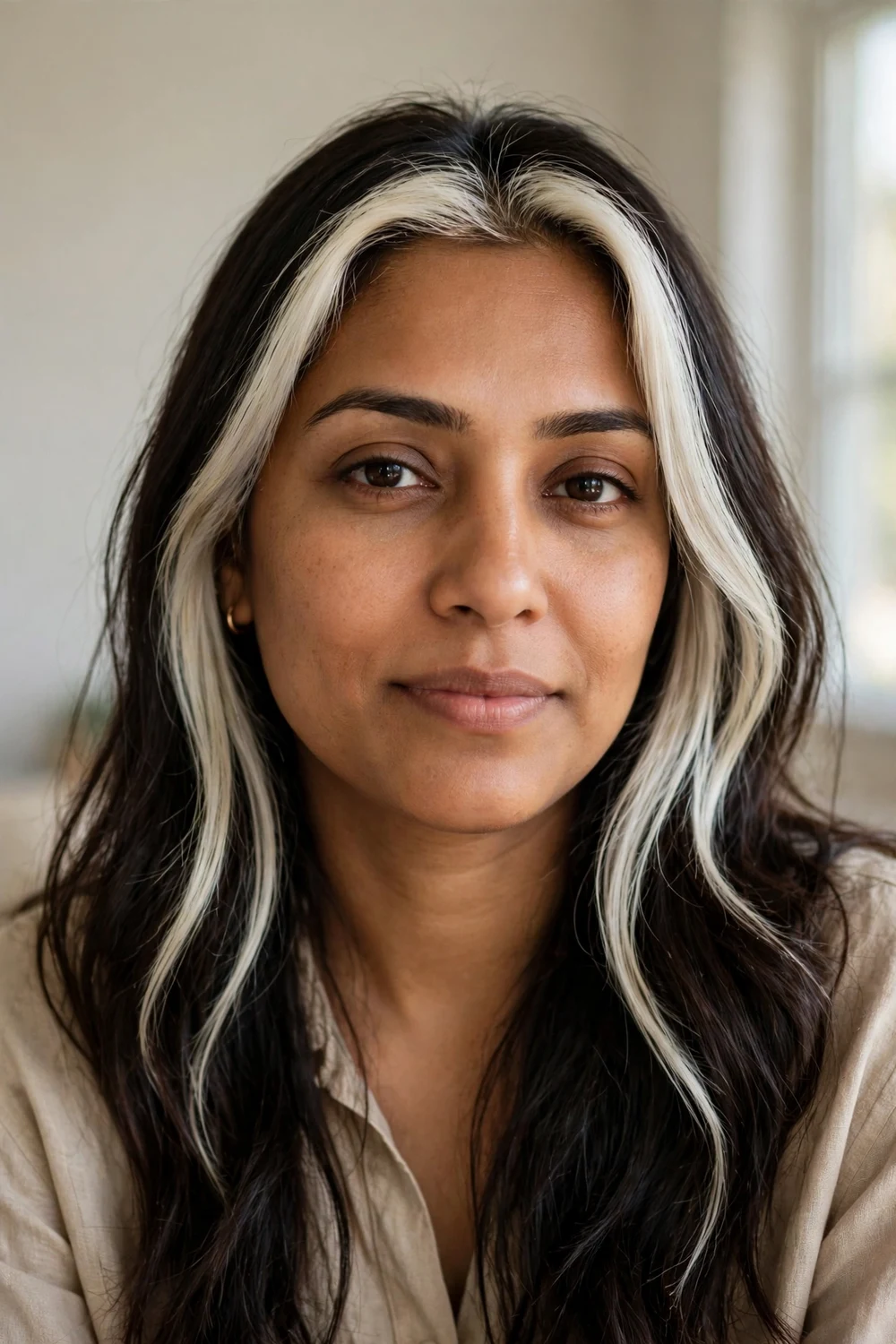
Not ready for full blonde? Two bold platinum streaks around the face give you the brightness without coloring your whole head. The light front pieces draw attention to your eyes and cheekbones, and they make the rest of your dark hair look richer by contrast. It suits oval and round faces especially well. The streaks need toning every few weeks to stay clean and bright. It’s a small amount of hair to maintain, which makes upkeep easy compared to full-head blonde.
Try this: Tone the streaks to a clean platinum, not yellow; brassy front pieces are the first thing people notice.
16. Smoky Silver Layers
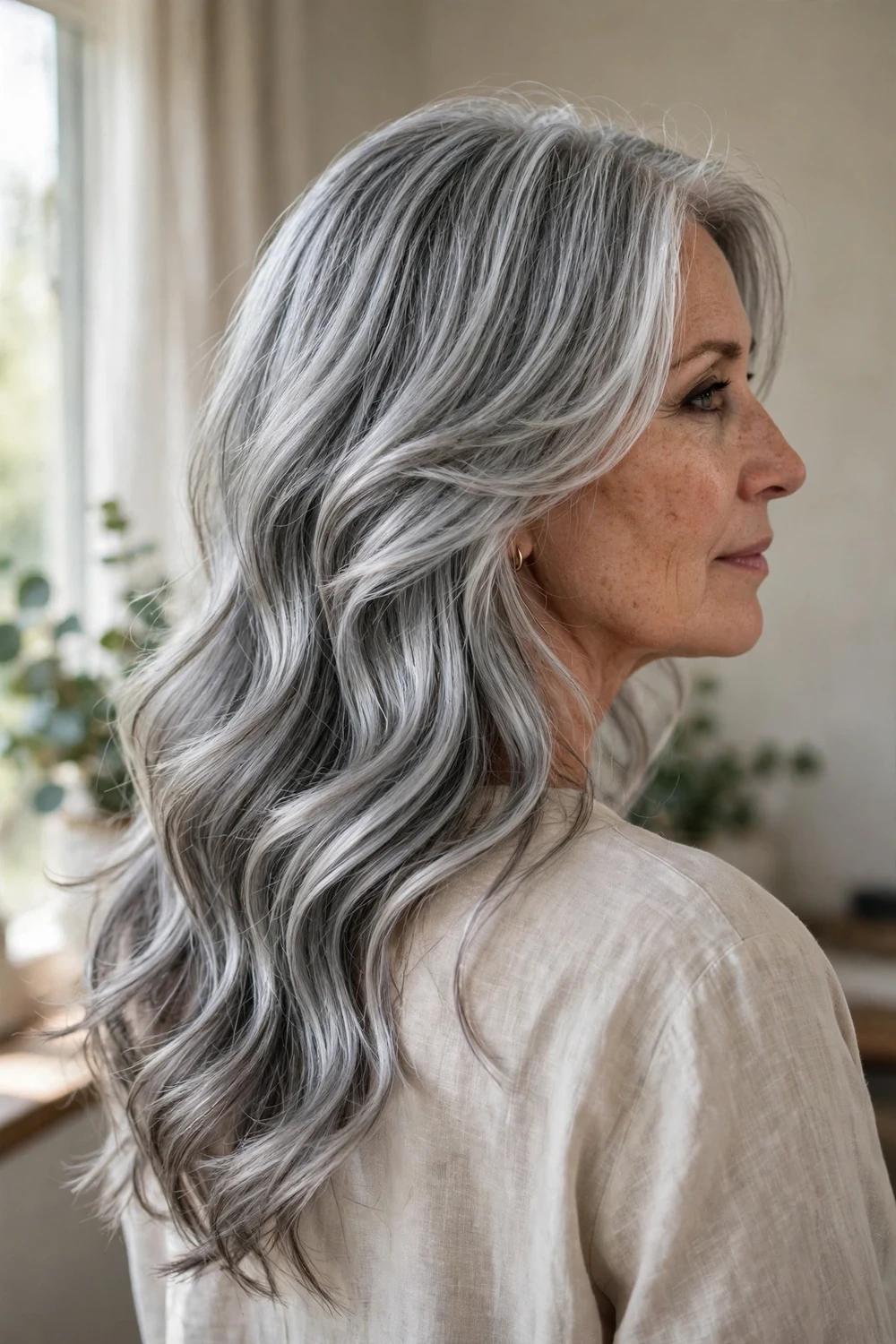
Silver isn’t just for covering grey anymore. A full smoky silver shade over layered hair looks sleek and modern in winter light. It’s also a smart way to blend natural grey into something deliberate and polished instead of fighting it. Medium to thick straight or layered cuts carry it best. Silver needs regular toning to stay bright rather than dull grey, so a silver-depositing conditioner from day one makes maintenance simple. The result is a cool, confident shade that stands out among winter brunettes.
Try this: Silver fades to dull grey without toning, so keep a silver-depositing conditioner in your routine from day one.
17. Pearl Blonde with Volume
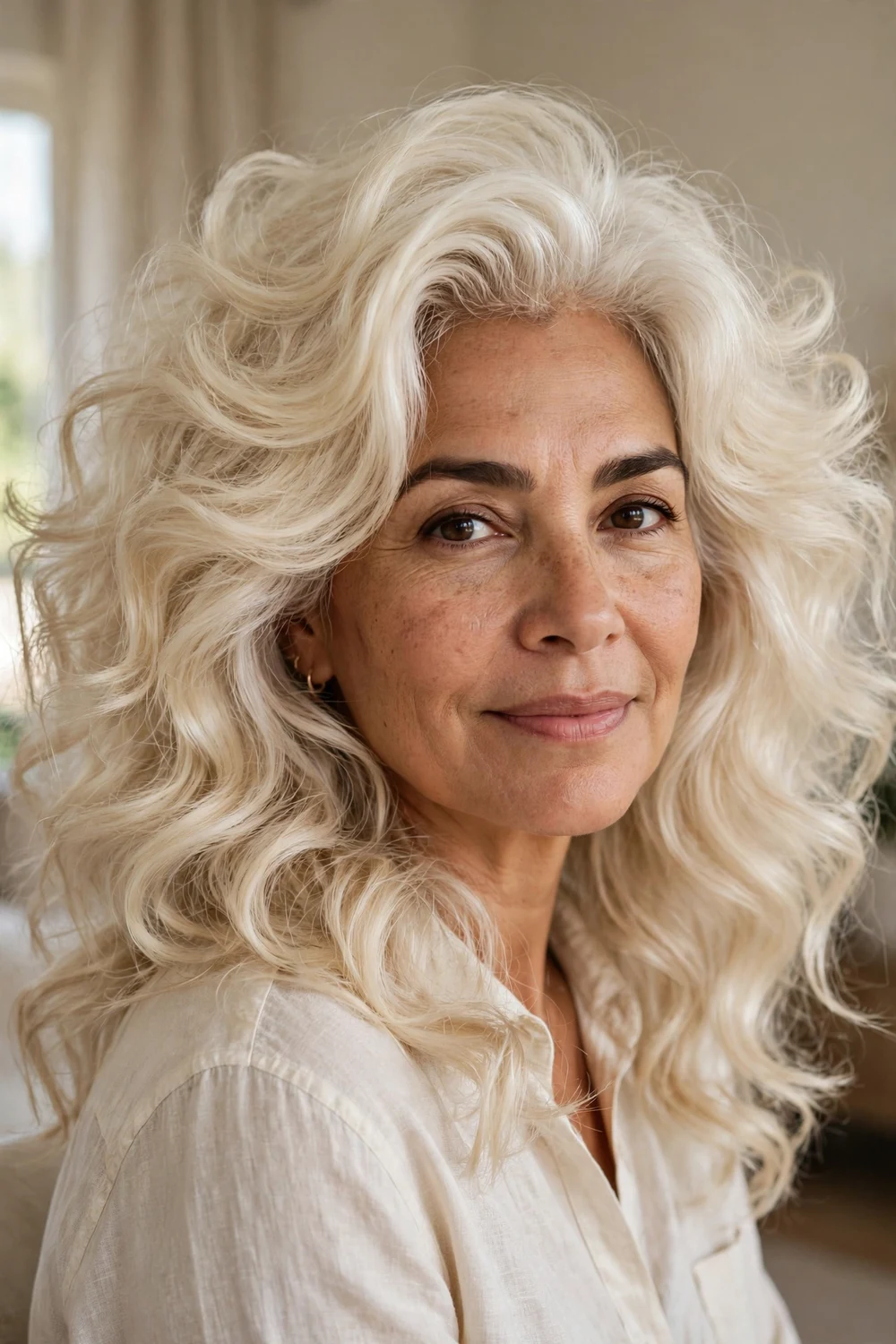
Pearl blonde is creamier and softer than icy platinum, with an airy finish that adds the look of volume. The light color reflects winter light well, which helps fine hair look fuller. It’s a refined pick for women who want blonde without the starkness of white-blonde. The creamy tone flatters a wide range of skin tones. Blow-drying with a round brush builds the lift that makes this shade shine. It’s lower maintenance than platinum since the softer tone grows out more gracefully.
Try this: Blow-dry with a round brush for lift at the roots; pearl blonde looks its best with movement and body.
18. Fawn Blonde
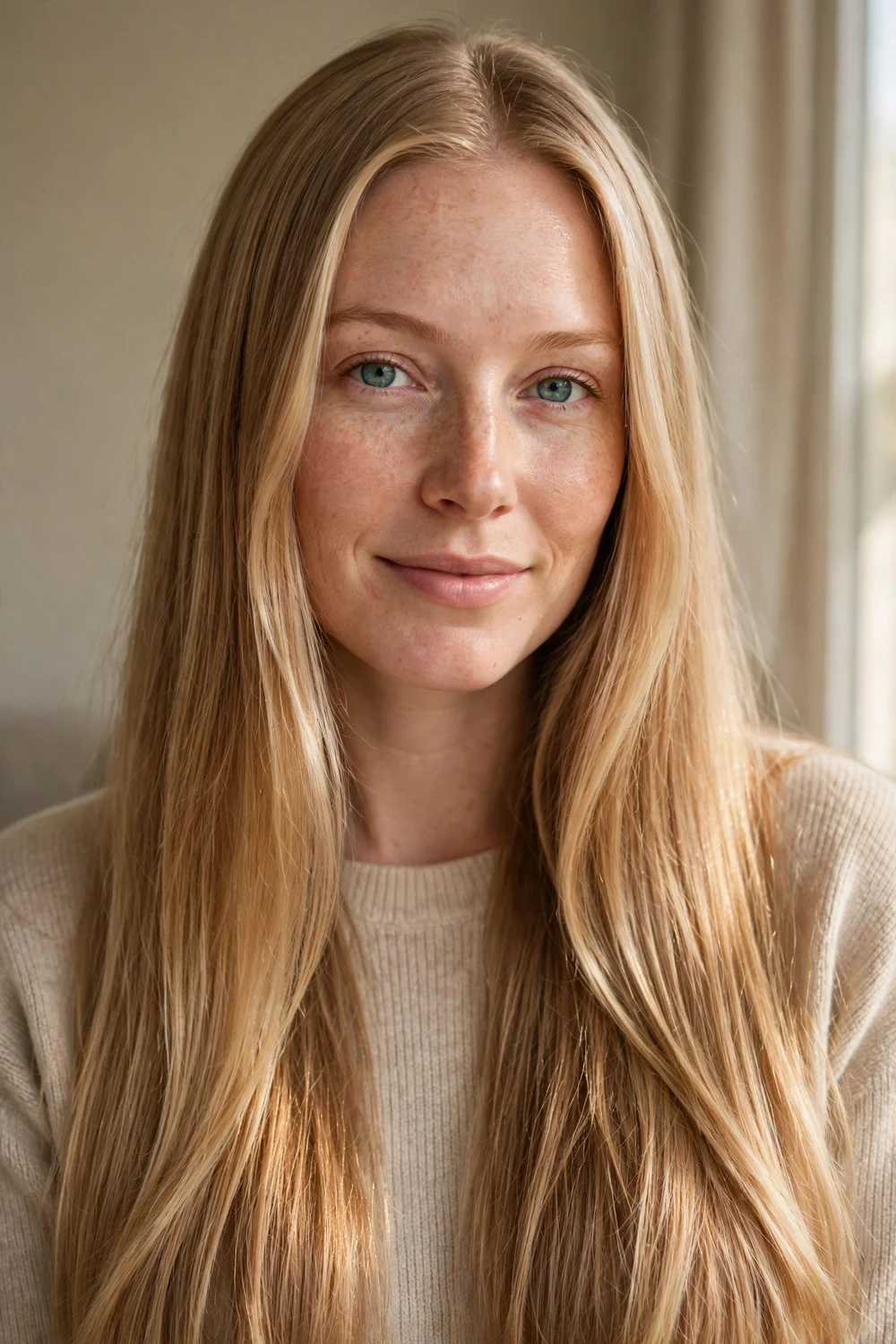
Fawn blonde is the bright, warm blonde that colorists are recommending as the winter answer to summer platinum. It’s lighter and warmer than honey blonde, with a soft golden cast that keeps skin looking alive. It suits women who don’t want to go darker for winter but need something less icy than their summer shade. The warmth is the whole point, so skip purple shampoo and stick with color-safe products. Regular gloss treatments keep the golden tone rich through the dry months.
Try this: Ask for a warm toner, not an ash one; the whole point of fawn blonde is the golden warmth.
19. Warm Hazelnut Chestnut
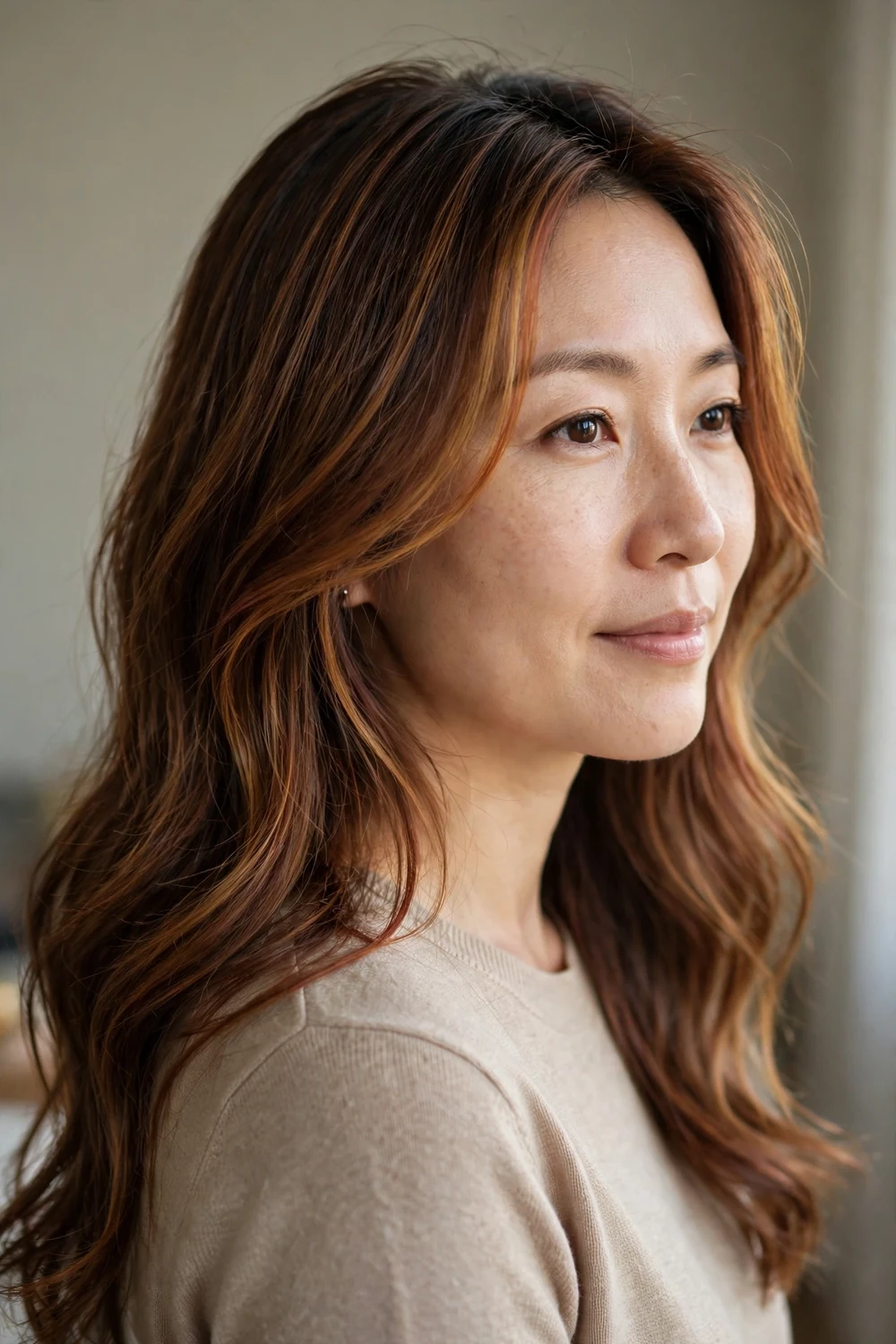
Hazelnut chestnut is a golden brown with subtle red undertones that glow in winter light. Shadowed roots and soft face-framing highlights keep it from looking flat. It suits a wide range of skin tones and works well on medium to long hair. The shade sits close to many women’s natural brown, which makes regrowth forgiving. A demi-permanent gloss in a warm brown between salon visits keeps the red undertones from fading to dull brown. It’s an easy, wearable winter shade.
Try this: A demi-permanent gloss in a warm brown shade between salon visits keeps the red undertones from fading to dull brown.
20. Frosty Midnight Blue
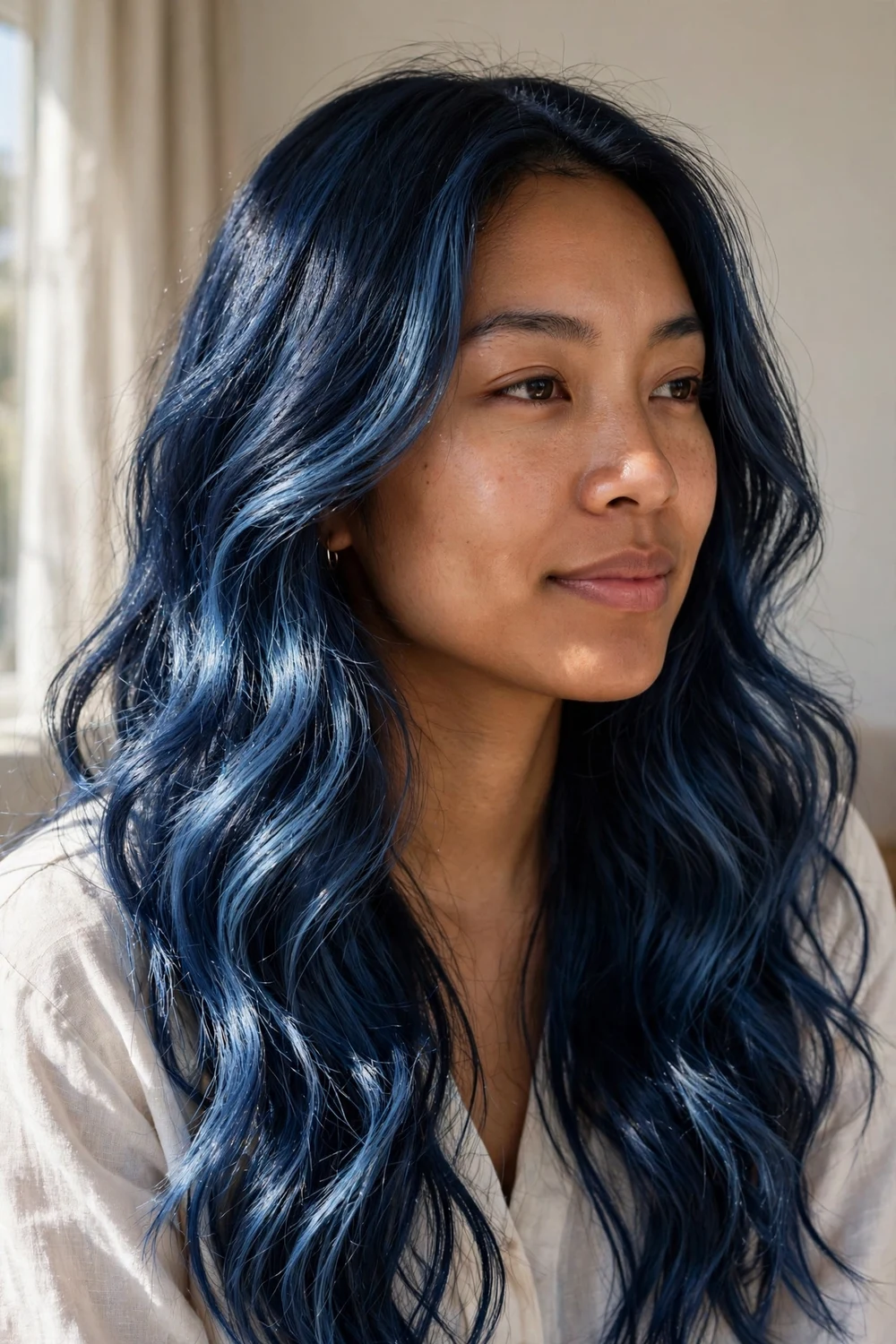
The boldest pick on this list. Midnight blue with frosty undertones looks almost black indoors and glows blue in the light. It needs thick or wavy hair to show the movement, and it takes more upkeep than natural shades. But if you want a true head-turner this winter, this is it. Fashion colors fade with every wash, so stretch washes as long as you can and use cool water. A blue color-depositing conditioner keeps the tone vivid between salon visits.
Try this: Wash as rarely as you can get away with and always in cool water; fashion blue tones fade with every hot wash.
21. Ash Brown Balayage
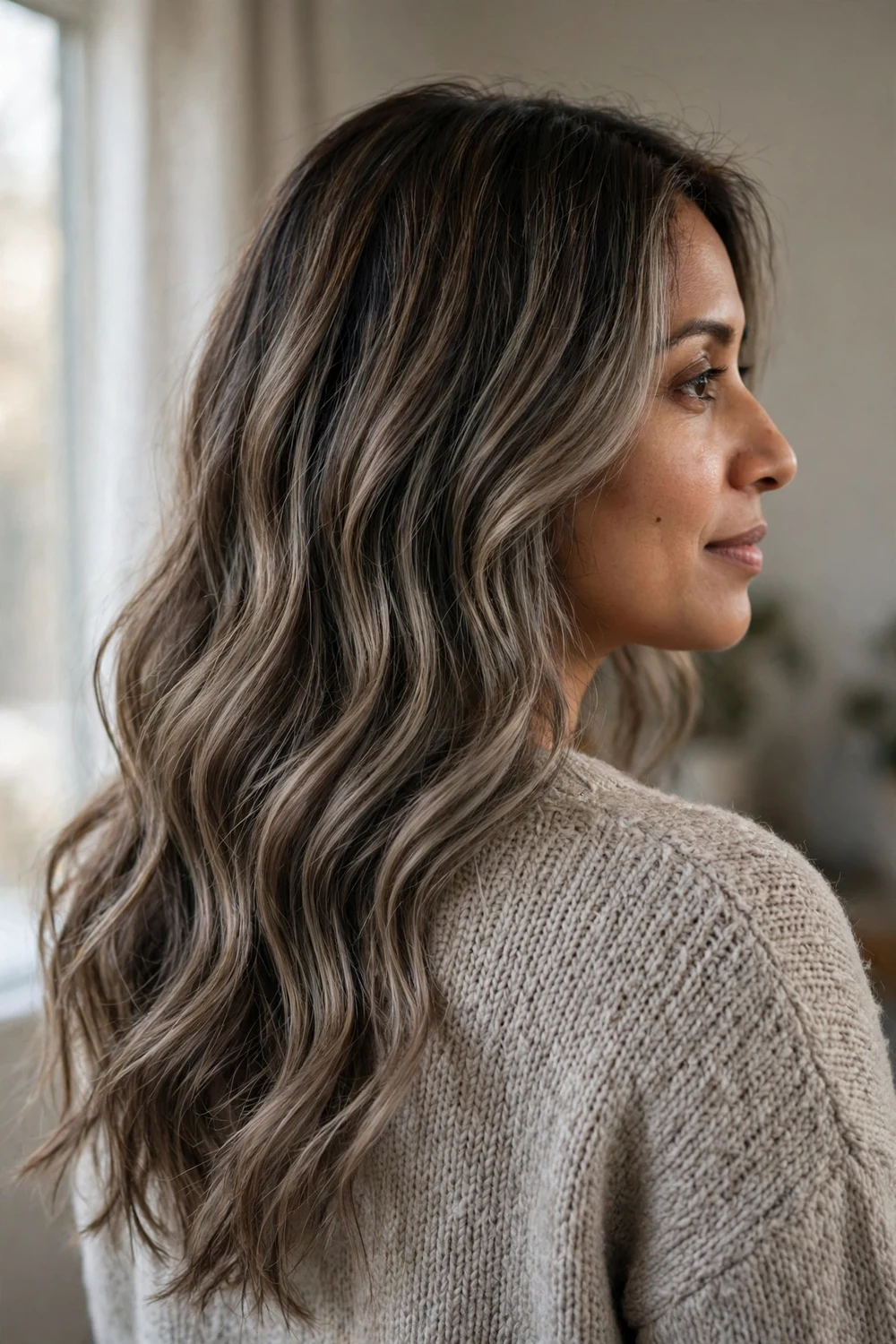
Light brown highlights hand-painted over darker brunette roots give you a lived-in blonde effect without going blonde. The ashy tone keeps it cool and winter-appropriate, and the balayage placement means the color lasts through the whole season with minimal touch-ups. It’s a natural-looking way to add light to dark hair. The contrast stays soft because the highlights sit only a few levels above the base. This is one of the most forgiving lightening options for brunettes.
Try this: Keep the lightest pieces at the ends and around the face; scattering them through the top shortens the grow-out window.
22. Sombre Babylights
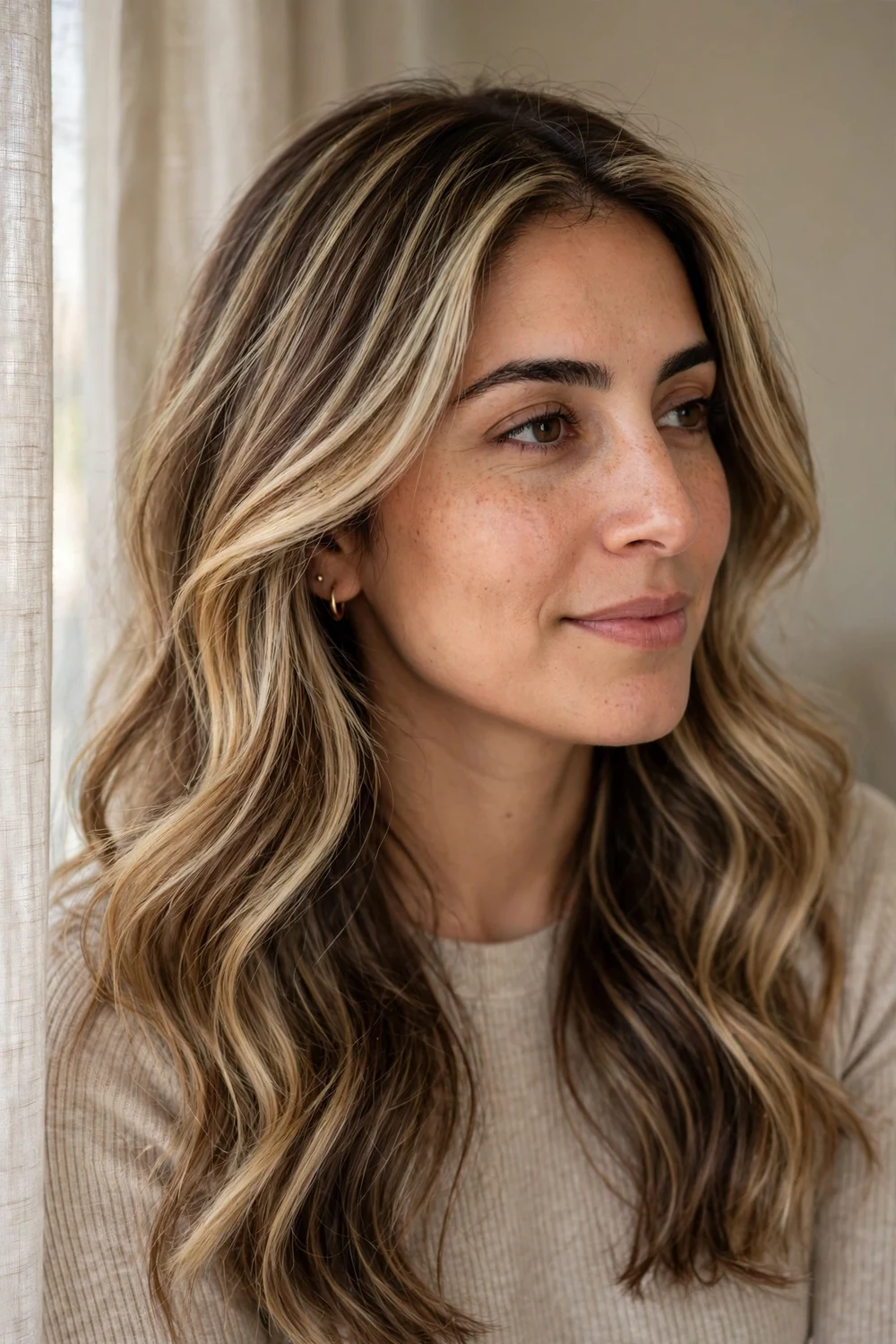
Sombre is ombre’s softer sister: a subtle, sun-kissed fade with fine babylights instead of bold bands. Two close shades of light blonde over a medium brown base give you brightness that looks completely natural. It’s one of the lowest-maintenance lightening techniques on this list. The fine sections blend so seamlessly that regrowth is nearly invisible. Find a colorist who specializes in babylights for the best result, and you can stretch appointments to 12 weeks or beyond.
Try this: This technique relies on fine sections, so find a colorist who specializes in babylights rather than asking for a general balayage.
23. Black with Ashy Babylights
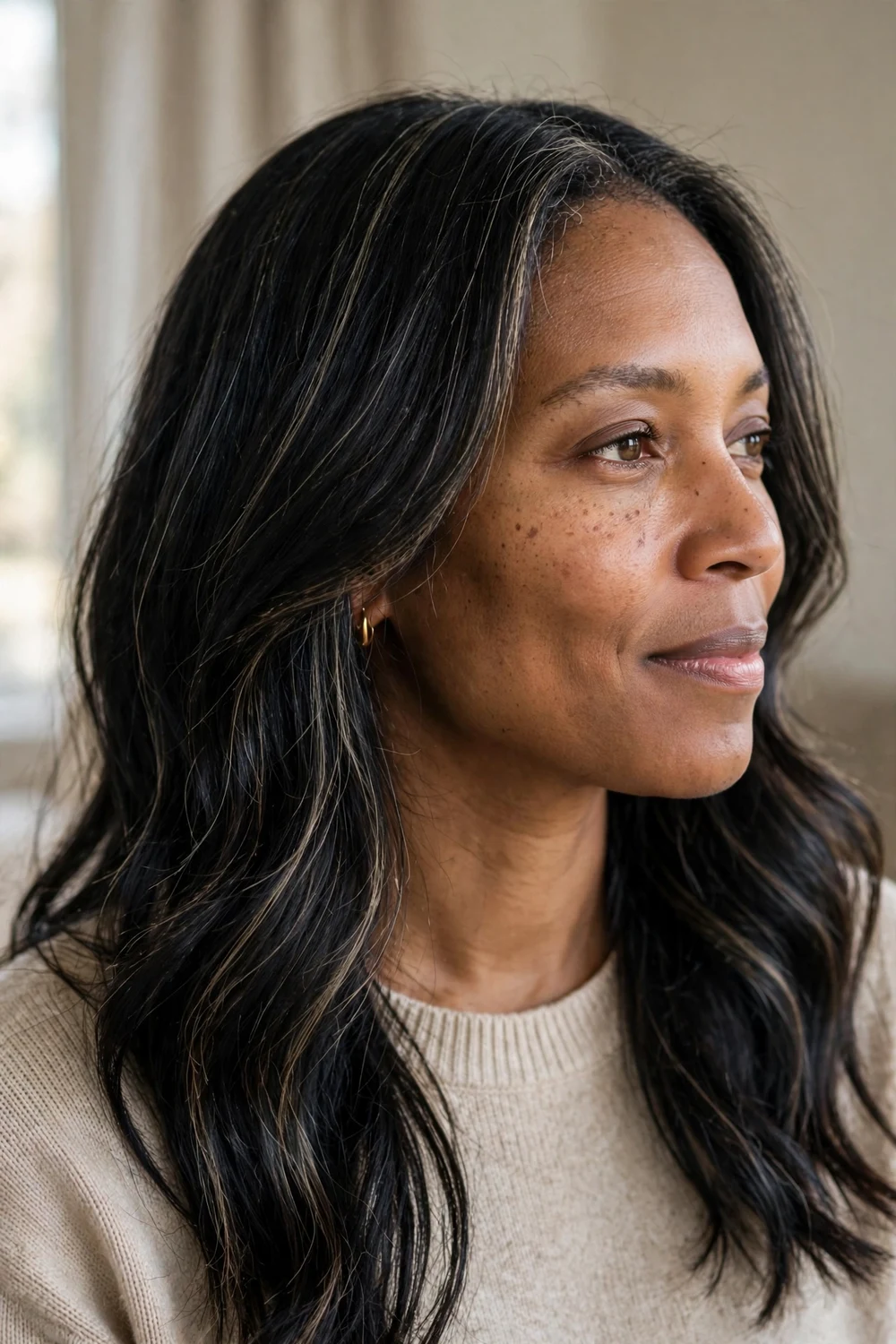
Black hair can look flat and heavy in winter, but fine ashy babylights fix that without changing your base. Thin cool brown and light blonde strands woven through black hair add movement and light. You keep the drama of black hair with none of the dullness. The babylights must stay very fine and cool-toned to avoid a stripey look. This technique adds dimension that shows best in wavy or curled styles. It’s subtle color work with a visible payoff.
Try this: Keep the babylights very fine and cool-toned; thick or warm highlights against black hair will look stripey.
24. Pastel Pink
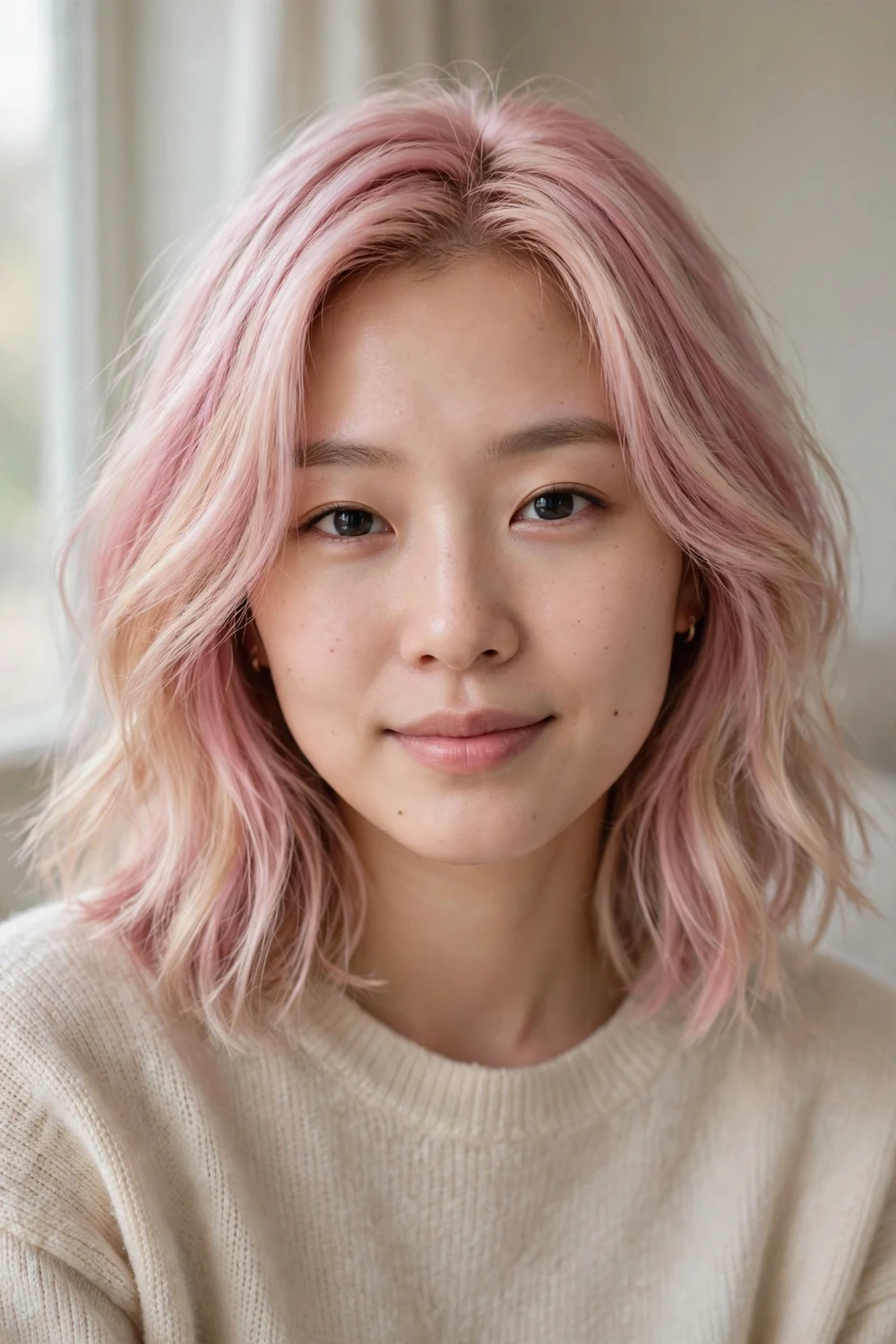
Pastel pink isn’t just a spring shade. Against winter’s dark clothing and grey skies, a cool soft pink stands out in the best way. It works best on pre-lightened hair, so it’s a bigger commitment than most shades here, but the payoff is a color nobody else in the room is wearing. Pastel fades within weeks, so maintenance is constant and a pink color-depositing conditioner is a must from the start. If you’re willing to put in the work, it’s the most fun shade on this list.
Try this: Pastel fades within weeks, so stock up on a pink color-depositing conditioner before your appointment, not after.
25. Melted Chocolate Brown
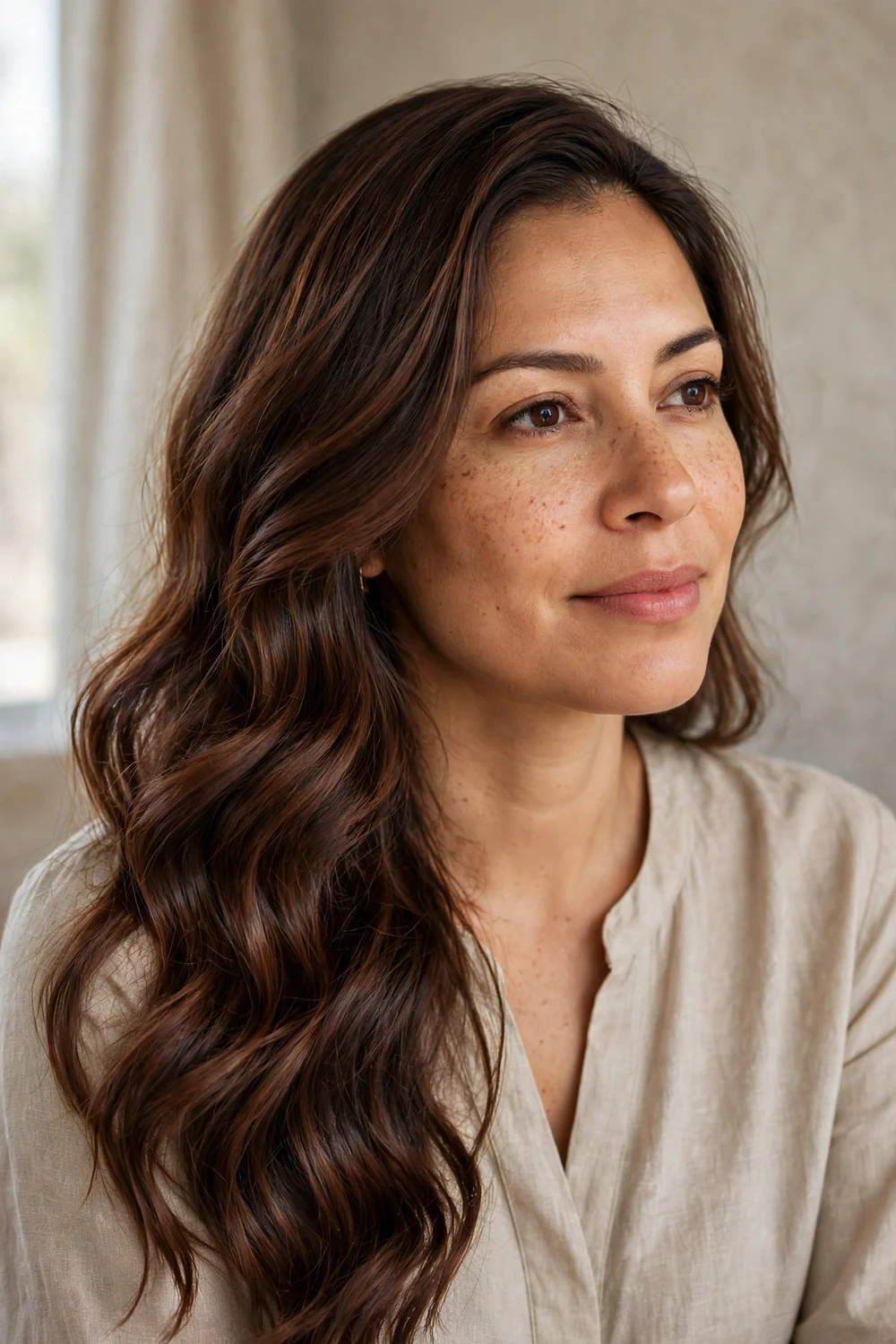
Chocolate brown melted seamlessly from roots to ends is the definition of winter hair. The warm, deep tones look rich under low light, and the melted technique means zero harsh lines as it grows. It’s polished, classic, and suits nearly every skin tone. Dry winter air dulls dark hair fast, so a weekly deep-conditioning mask keeps the chocolate glossy. This is the shade to pick when you want something timeless that always looks intentional.
Try this: A weekly deep-conditioning mask keeps chocolate shades glossy; dry winter air dulls dark hair faster than you expect.
26. All-Over Auburn Copper
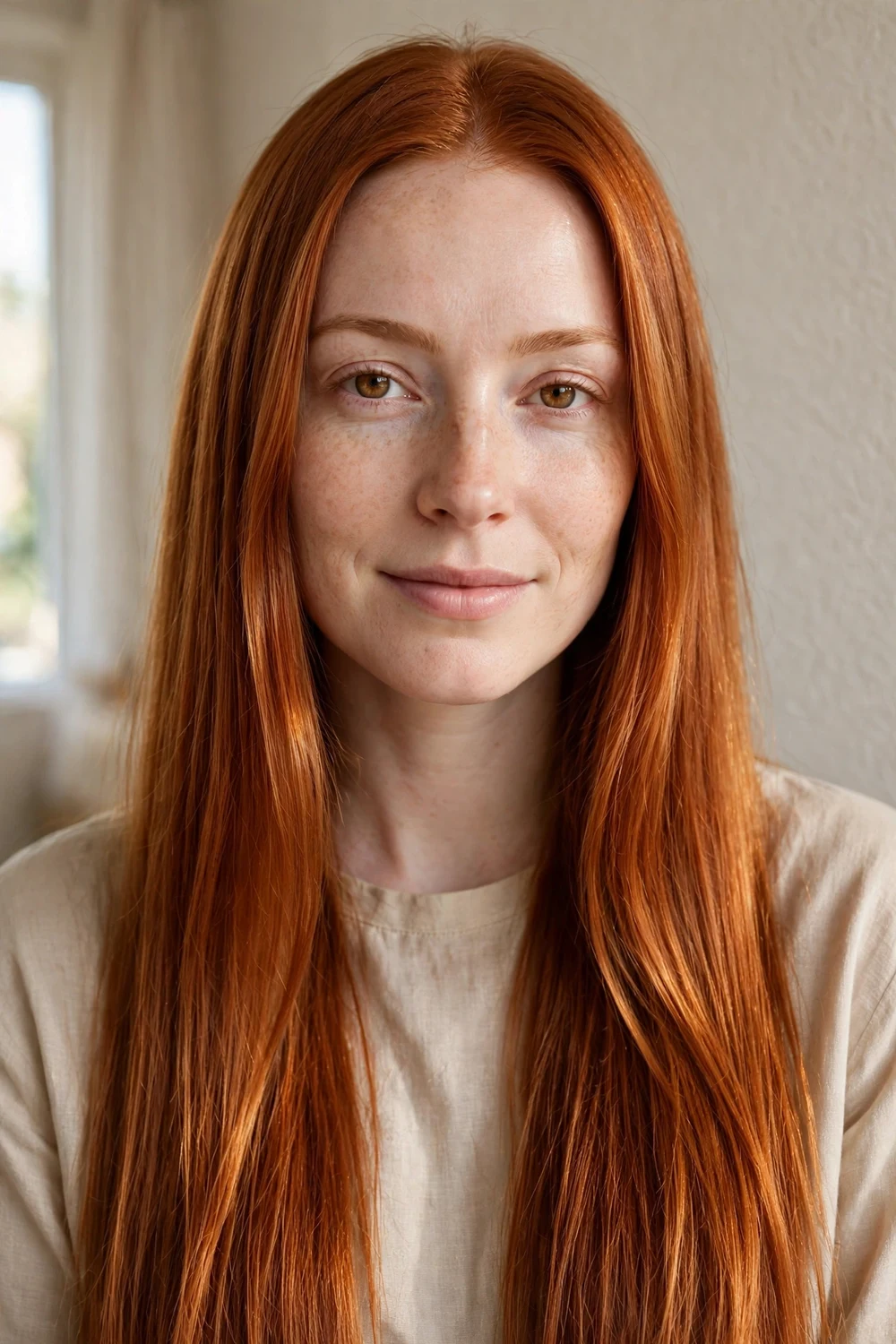
One solid shade, full coverage, maximum impact. All-over auburn copper with a golden undertone warms up pale winter skin like nothing else. It’s a bigger maintenance commitment than balayage since roots show, but the color payoff is unmatched for copper lovers. Plan root touch-ups every 5 to 6 weeks, since copper regrowth shows more than brunette or blonde. Color-safe shampoo and cool water help the shade last. It’s bold, warm, and unmistakably winter.
Try this: Plan root touch-ups every 5 to 6 weeks; copper regrowth is more visible than brunette or blonde regrowth.
27. Creamy Midway Blonde
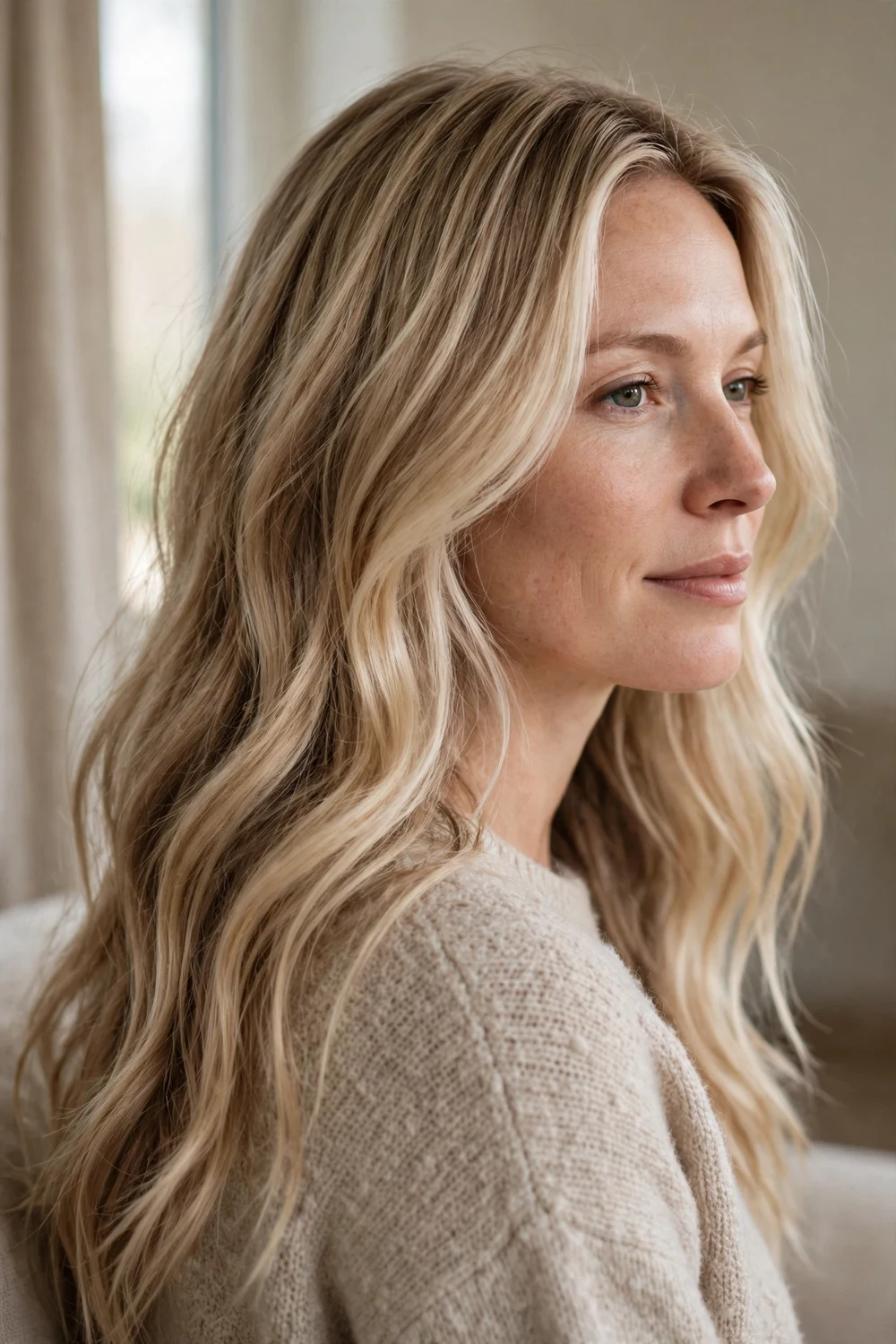
Midway blonde is the toned-down answer for blondes who don’t want to go dark for winter. It sits between bright blonde and bronde, with creamy champagne and beige tones that work with fading summer tans. Your hair and complexion stay in harmony instead of fighting each other. A melted root an inch or two deep is what makes it winter-ready. The softer tone also means less obvious regrowth than bright blonde. It’s the easiest way to keep blonde through the cold months.
Try this: Ask your colorist to melt your natural root shade down an inch or two; the shadow root is what makes this look winter-ready.
28. Rose-Toned Brunette Balayage
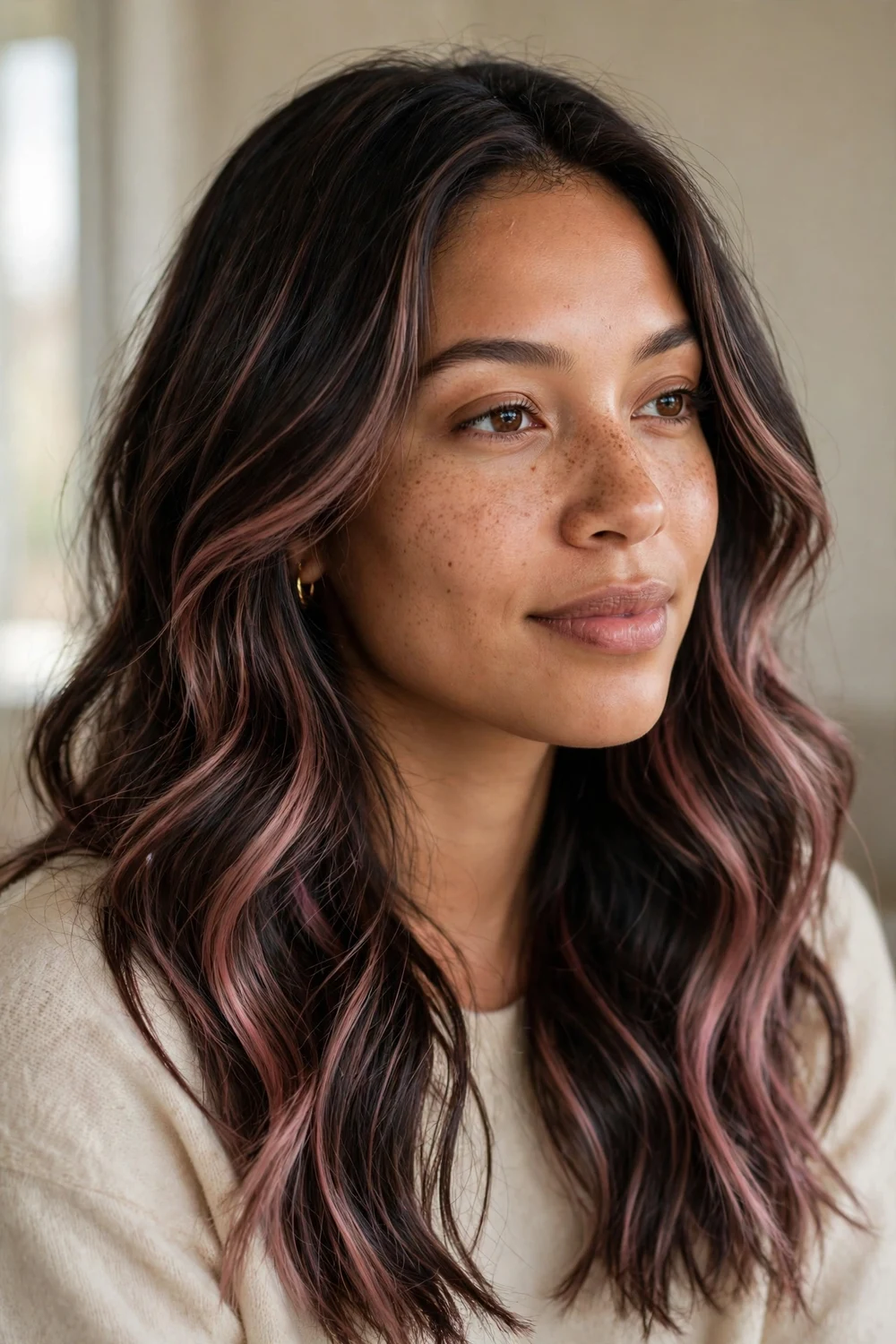
A whisper of rose through dark brunette hair is playful without being loud. The rose tones are hand-painted through the lengths for a soft, dimensional effect that reads as warm and modern. It suits short and medium lengths especially well, where the color stays visible. Sulfate-free shampoo is a must, since sulfates strip fashion tones faster than anything else. The rose will fade to a soft warm brown over time, which still looks good. It’s low-risk color with a fun payoff.
Try this: Use a sulfate-free shampoo; sulfates strip fashion tones like rose faster than almost anything else.
29. Expensive Brunette
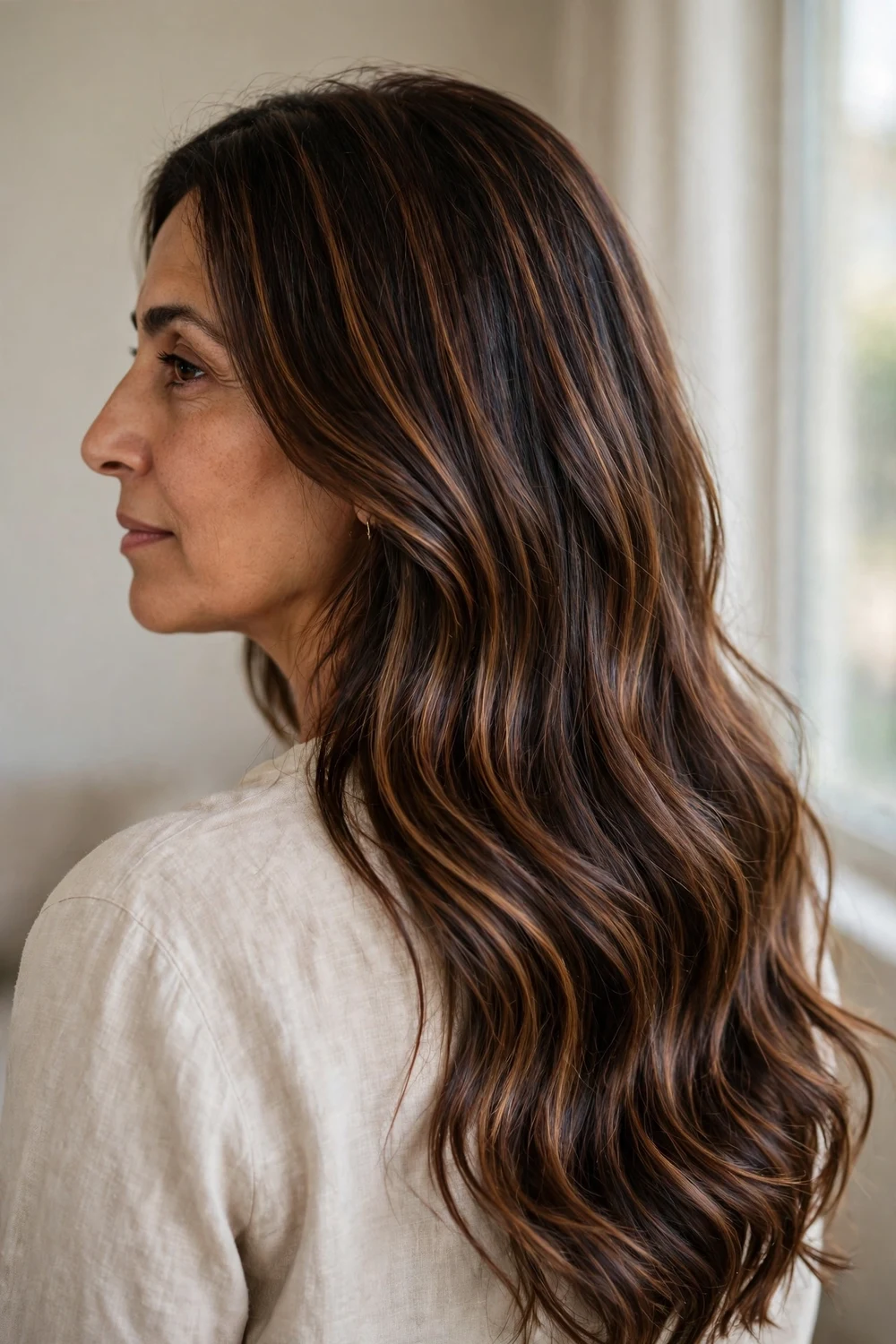
Expensive brunette is about customization, not a single shade. Your colorist weaves barely-there ribbons of espresso, chestnut, and soft amber through your natural base so the dimension looks completely intentional. People notice how rich your hair looks before they ever notice a highlight. Because it’s built on your natural base, grow-out is seamless and appointments stretch easily. Bring photos of your own hair in good lighting to the consultation. This is the ultimate low-maintenance luxury shade.
Try this: Bring reference photos of your own hair in good lighting, not someone else’s; this look is built around your base, not a formula.
Winter Hair Color Comparison at a Glance
| Shade | Best For | Maintenance | Touch-Up Frequency |
|---|---|---|---|
| Smoky Ash Blonde Waves | Cool skin tones, dark blonde bases | Medium | 8-10 weeks |
| Frosted Caramel Blend | Fine to medium hair needing fullness | Low | 10-12 weeks |
| Golden Brunette Glow | Dull winter skin, medium to thick hair | Low | 10-12 weeks |
| Cool Mushroom Brown | Cool and neutral skin tones | Low | 8-10 weeks |
| Chestnut with Curtain Bangs | Most skin tones, straight to wavy hair | Medium | 6-8 weeks |
| Espresso with Soft Dimension | Women wanting depth without contrast | Low | 10-12 weeks |
| Plum-Tinted Brunette | Medium to deep skin tones | Medium | 6-8 weeks |
| Mulled Wine Red | Thick hair, bold color lovers | High | 5-6 weeks |
| Soft Mocha Balayage | Dark hair, low-maintenance routines | Low | 12+ weeks |
| Honey Bronde | Layered cuts, in-between blondes | Low | 10-12 weeks |
| Bold Contrast Balayage | Wavy and curly textures | Medium | 8-10 weeks |
| Soft Honey Blonde Waves | Warm skin tones, fine to medium hair | Medium | 8-10 weeks |
| Caramel Ribbon Balayage | Brunettes wanting visible dimension | Low | 10-12 weeks |
| Icy Blonde Melt | Medium to thick hair, bold blondes | High | 6-8 weeks |
| Face-Framing Platinum Streaks | Dark bases wanting brightness | Medium | 6-8 weeks |
| Smoky Silver Layers | Blending natural grey, medium to thick hair | Medium | 8-10 weeks |
| Pearl Blonde with Volume | Fine hair needing fullness | Medium | 8-10 weeks |
| Fawn Blonde | Warm bright blondes staying light | Medium | 8-10 weeks |
| Warm Hazelnut Chestnut | Most skin tones, medium to long hair | Low | 8-10 weeks |
| Frosty Midnight Blue | Thick or wavy hair, fashion color fans | High | 4-6 weeks |
| Ash Brown Balayage | Brunettes wanting lived-in lightness | Low | 10-12 weeks |
| Sombre Babylights | Natural-looking brightness | Low | 12+ weeks |
| Black with Ashy Babylights | Black hair needing movement | Low | 10-12 weeks |
| Pastel Pink | Pre-lightened hair, bold personalities | High | 3-4 weeks |
| Melted Chocolate Brown | Nearly every skin tone | Low | 8-10 weeks |
| All-Over Auburn Copper | Pale winter skin, copper lovers | High | 5-6 weeks |
| Creamy Midway Blonde | Blondes going softer, not darker | Medium | 8-10 weeks |
| Rose-Toned Brunette Balayage | Short to medium lengths | Medium | 6-8 weeks |
| Expensive Brunette | Custom dimension on any brunette base | Low | 10-12 weeks |
How to Choose the Right Winter Shade for You
Start with your skin’s winter undertone, not your summer one. Look at the veins on your wrist in natural light: blue or purple means cool, green means warm, and a mix means neutral. Cool undertones pair with ash, mushroom, silver, and cool browns. Warm undertones pair with honey, copper, caramel, and golden shades.
Next, be honest about your maintenance tolerance. If you visit the salon twice a year, stick with balayage, sombre, melts, and root shadows. If you go every six weeks without fail, all-over shades like auburn copper and mulled wine red are on the table. There’s no wrong answer, but picking a high-maintenance shade with a low-maintenance routine ends in regrets.
Finally, consider your natural depth. Staying within three levels of your natural color almost always looks better and grows out easier than a dramatic jump. The shades on this list cover the full range, so there’s a winter color for every starting point.
Mistakes to Avoid
The biggest winter color mistake is going too ashy on warm skin, or too golden on cool skin. Undertone mismatch is what makes a new color look “off” even when the application is perfect. When in doubt, ask your colorist to keep you neutral rather than pushing to an extreme.
Another common mistake is skipping the gloss. Winter air is dry, and color without shine looks dull no matter how good the shade is. A clear or tinted gloss every couple of months is the cheapest way to keep any of these 29 shades looking fresh.
Don’t lighten aggressively in one sitting either. Going from dark brown to icy blonde in a single winter appointment usually means damage, and damaged hair won’t hold any of these tones well. Two sessions with bond builder will get you there safely.
If you love the hand-painted look, our guide to winter balayage brunettes breaks down the best brunette balayage placements for cold weather.
Blondes going softer for the season should see winter blonde balayage for lived-in blonde shades that survive winter dryness.
For brown hair specifically, winter highlights for brown hair covers caramel ribbons and ash tones that add light without full color.
And if you’re staying dark, winter hair colors for brunettes rounds up glossy dark shades built for low winter light.
Frequently Asked Questions
What hair color looks best in winter?
Shades with depth and shine look best in winter’s low light. Glossy espresso, mulled wine red, honey bronde, and smoky ash blonde all flatter pale winter skin. The key is picking a shade with enough richness that it doesn’t wash you out under grey skies and indoor lighting.
Should I go darker for winter?
Going one level darker than your summer shade usually looks more natural in winter, but it’s not a rule. Many blondes stay blonde with warmer or softer tones like fawn blonde or honey blonde instead of going dark. What matters more than depth is undertone: match it to your skin and the shade will work.
How do I keep my hair color from fading in winter?
Wash less often, use cool water, and stick to color-safe sulfate-free shampoo. Indoor heating dries hair out, so a weekly deep-conditioning mask helps color last longer. A gloss refresh at the salon every 6 to 8 weeks also revives shine and tone between full color appointments.
Is balayage good for winter?
Yes, balayage is one of the best techniques for winter. The soft grow-out means fewer salon visits during the months when cold air and hats make frequent appointments annoying. Shades like soft mocha balayage, caramel ribbon balayage, and ash brown balayage are all built for the season.
What is the lowest maintenance winter hair color?
Sombre babylights, soft mocha balayage, and melted chocolate brown need the least upkeep. These techniques blend with your natural root color, so regrowth is nearly invisible and you can go 12 or more weeks between appointments. Avoid all-over reds and fashion shades if low maintenance is your priority.
If frost appeals to you more than warmth, these cool winter hair colors cover the icy side of the season, from platinum to blue-black.
Final Thoughts
Winter is the best season to play with richer, deeper hair color. Whether you go for smoky ash blonde waves, mulled wine red, or a low-maintenance soft mocha balayage, pick the shade that fits your skin tone and your real routine. Save your favorite from these 29 winter hair color ideas and bring the photo to your colorist.
If you want winter shades with extra luminosity, these bright winter hair colors focus on the most light-reflecting options of the season, from icy platinum to glossy black.

