


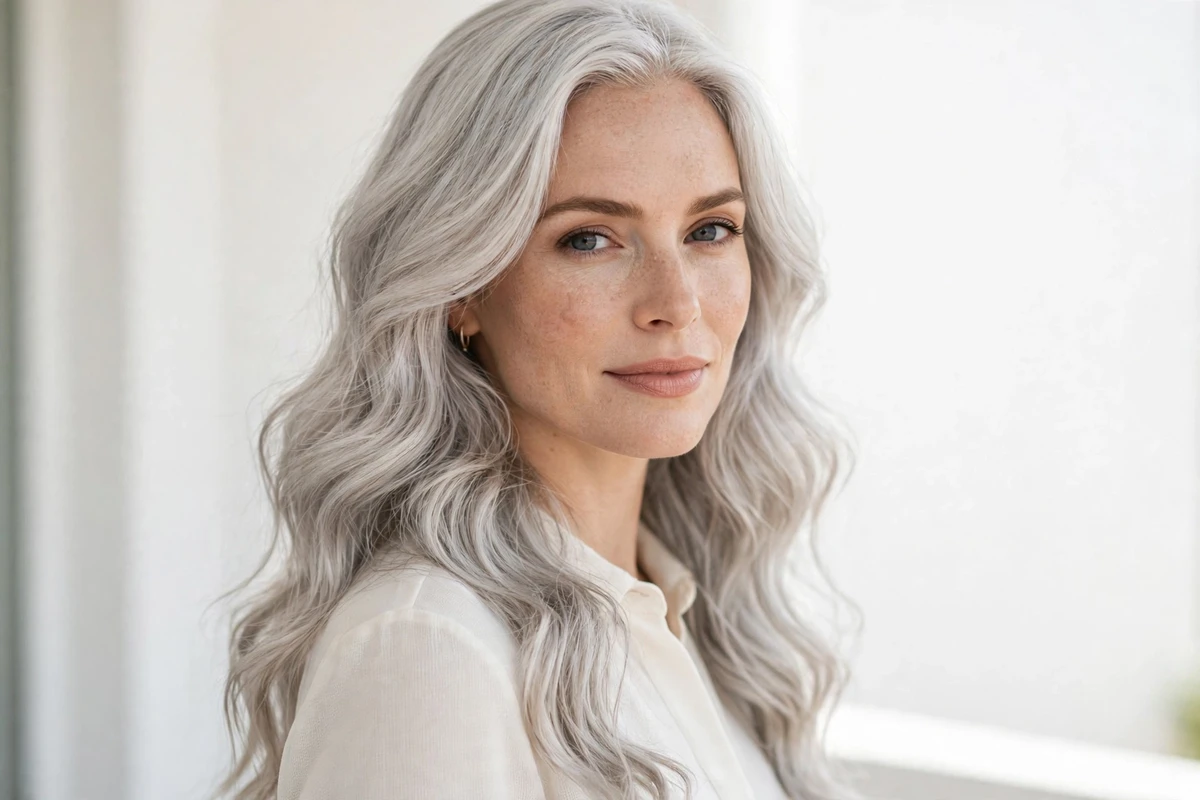
Cool winter hair colors are all about frost, not warmth. While most seasonal lists lean cozy, this one goes in the other direction: icy blondes, smoky silvers, cool brunettes, and blue-toned blacks that look right at home under gray skies and holiday lights. I’ve spent years studying how cool tones behave in cold weather, and this season’s lineup is stronger than ever.
Below you’ll find 30 cool-toned shades that genuinely suit the season, organized from lightest to deepest. Each one comes with a practical tip so you know what you’re signing up for before you book the appointment.
Quick answer: Cool winter hair colors are icy, ash, silver, and cool-toned shades worn through the cold months. The easiest low-maintenance picks are mushroom brown, subtle ice brown, and gray blending, while platinum, silver, and metallic white blondes need the most upkeep.
Quick Takeaways
- Cool winter colors skip warmth: think ash, ice, silver, smoke, and blue-black instead of gold, copper, and honey.
- Cool skin tones and pink or rosy undertones pair naturally with these shades, but the right tone works on warm complexions too.
- Purple shampoo once a week keeps blondes and silvers from going brassy or yellow.
- Brunette options like espresso, smoky chocolate, and polar brunette give you cool tones with far less maintenance.
- Dark bases often skip full bleach, so several deeper shades here are kinder to your hair than platinum.
Why Cool Tones Own the Winter Months
Winter light is cool by nature. The sun sits lower, the sky skews gray, and indoor lighting runs bluish. Warm hair colors can fight that light and look flat, while cool tones absorb it and reflect it back cleanly. That’s why silver hair looks more dramatic in December than in July.
Dry winter air matters too. Cool-toned dye jobs rely on gloss and shine to look crisp, and a weekly hydrating mask keeps the cuticle smooth so the color reads icy instead of dull. If your cool shade starts looking muddy by January, dullness is usually the problem, not the formula.
Skin also shifts in winter. Most people lose their summer tan and go paler, which can make warm shades look sallow. Cool hair colors harmonize with that paler base, especially on skin with pink or neutral undertones.
1. Icy Blonde Melt
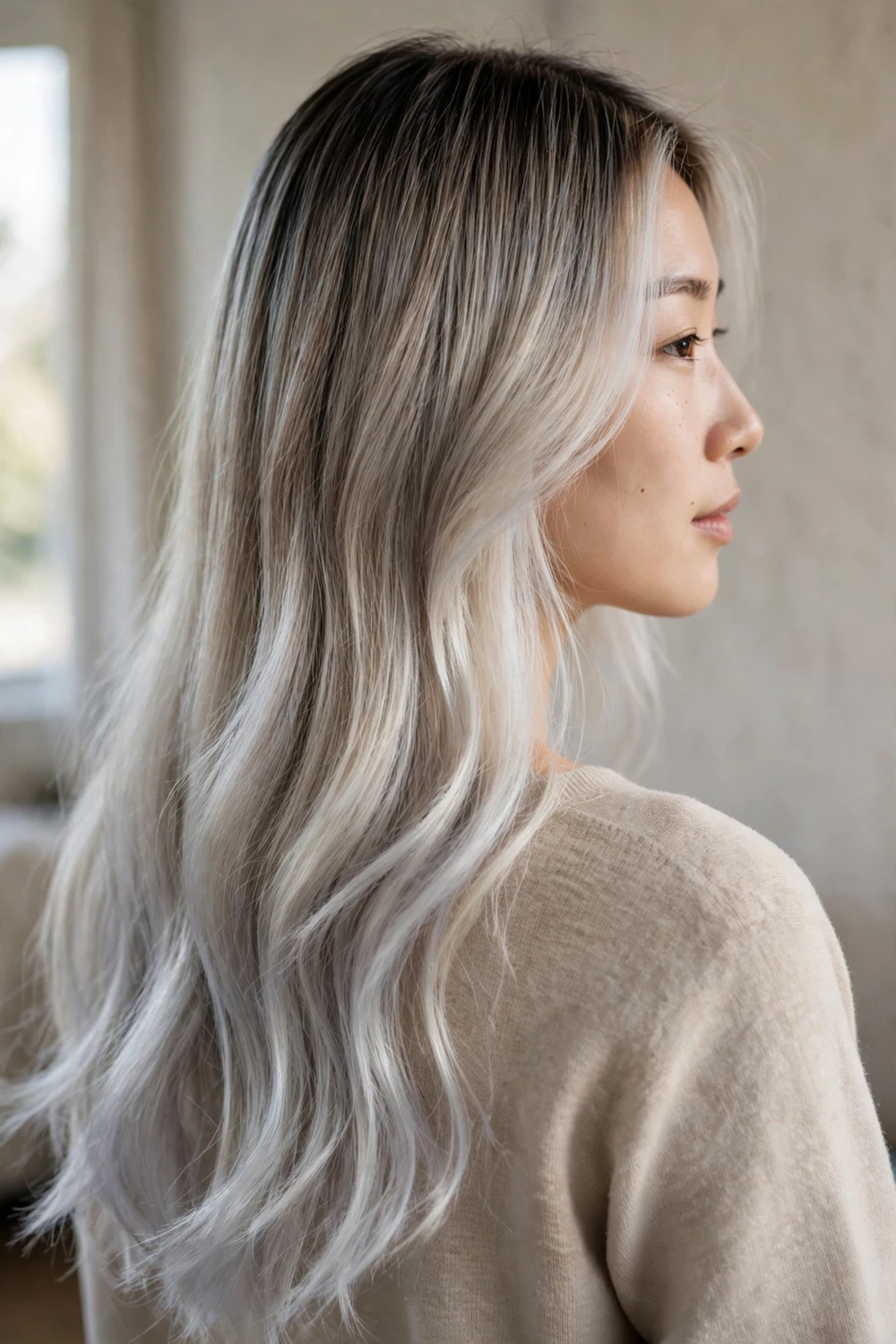
A melt keeps the root a touch deeper while the lengths dissolve into frosty platinum. The seamless transition means regrowth shows up softly instead of as a hard line, which buys you an extra week or two between appointments. Ask for a root color one to two levels deeper than the ends with an ash toner over the top.
Try this: Book your toner refresh at the 4-week mark. The root depth carries you, but the icy finish on the lengths is what fades first.
2. Snowy Platinum
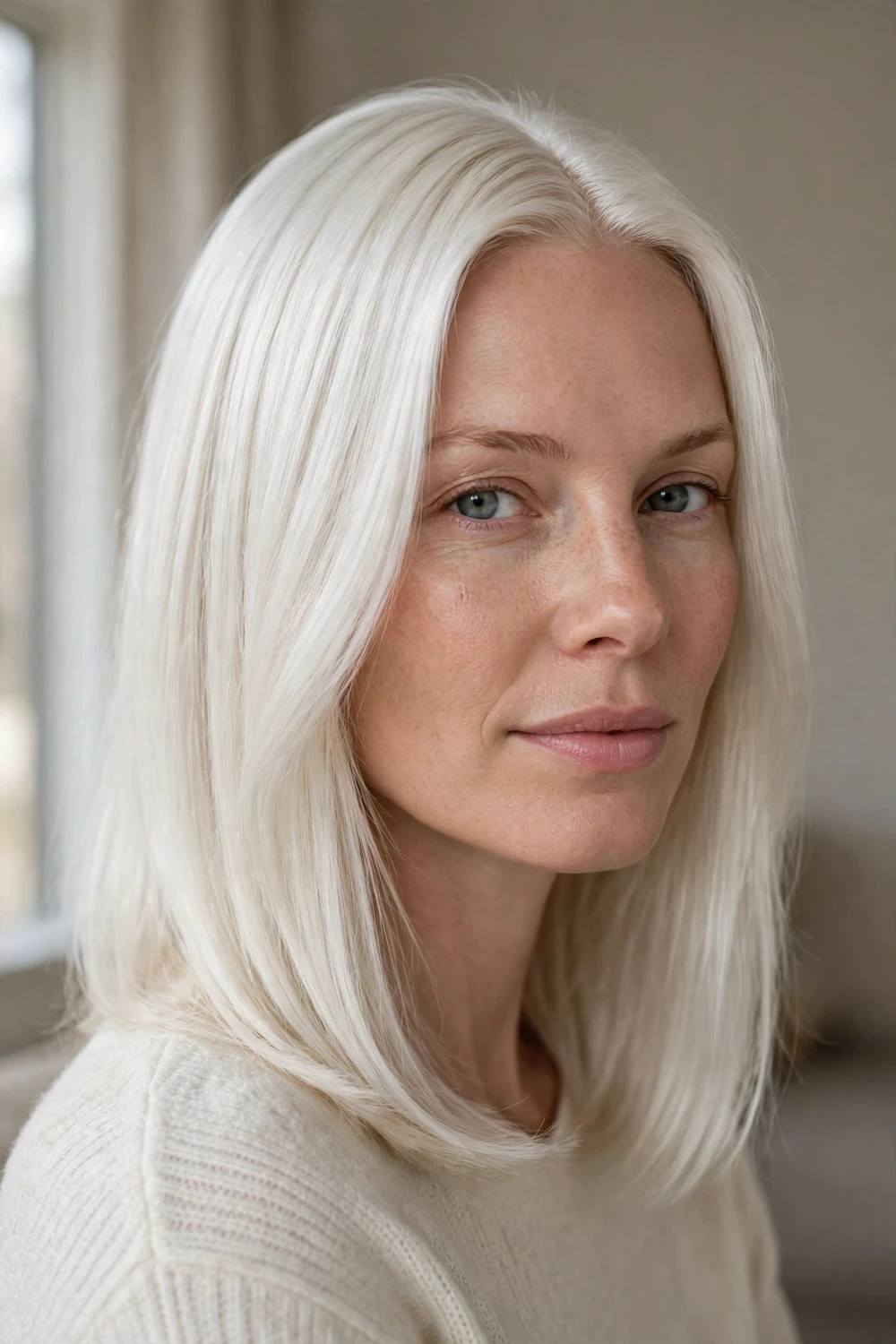
Snowy platinum is the purest, brightest blonde you can wear. It takes hair to a level 10 with almost no visible warmth, then locks that finish in with a violet-based toner. It flatters cool and neutral skin best and makes blue or gray eyes look noticeably brighter. Fair warning: this is a salon-only process with real upkeep.
Try this: Use purple shampoo once a week and a deep conditioning mask every second wash. Lifted hair goes porous fast, and porous hair turns yellow.
3. Ash Platinum Blonde
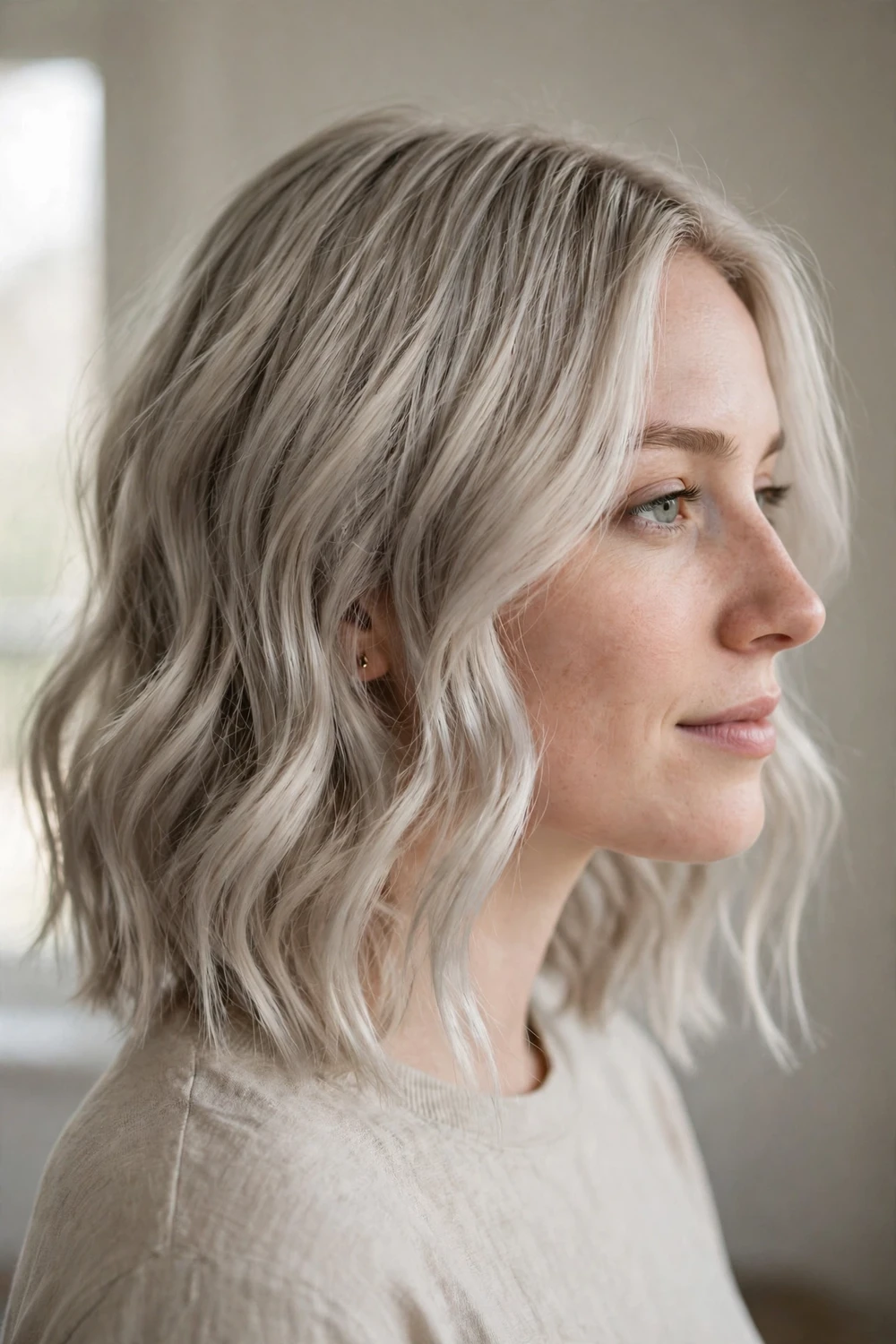
If pure platinum feels too stark, ash platinum pulls it one step back. The smoky undertone softens the contrast against your skin and forgives minor regrowth better than a true white blonde. This is the platinum to pick if you want the icy effect without the high-contrast severity.
Try this: Ask your colorist to tone with an ash demi-permanent rather than a violet toner for a grayer, less lilac cast.
4. Metallic White Blonde
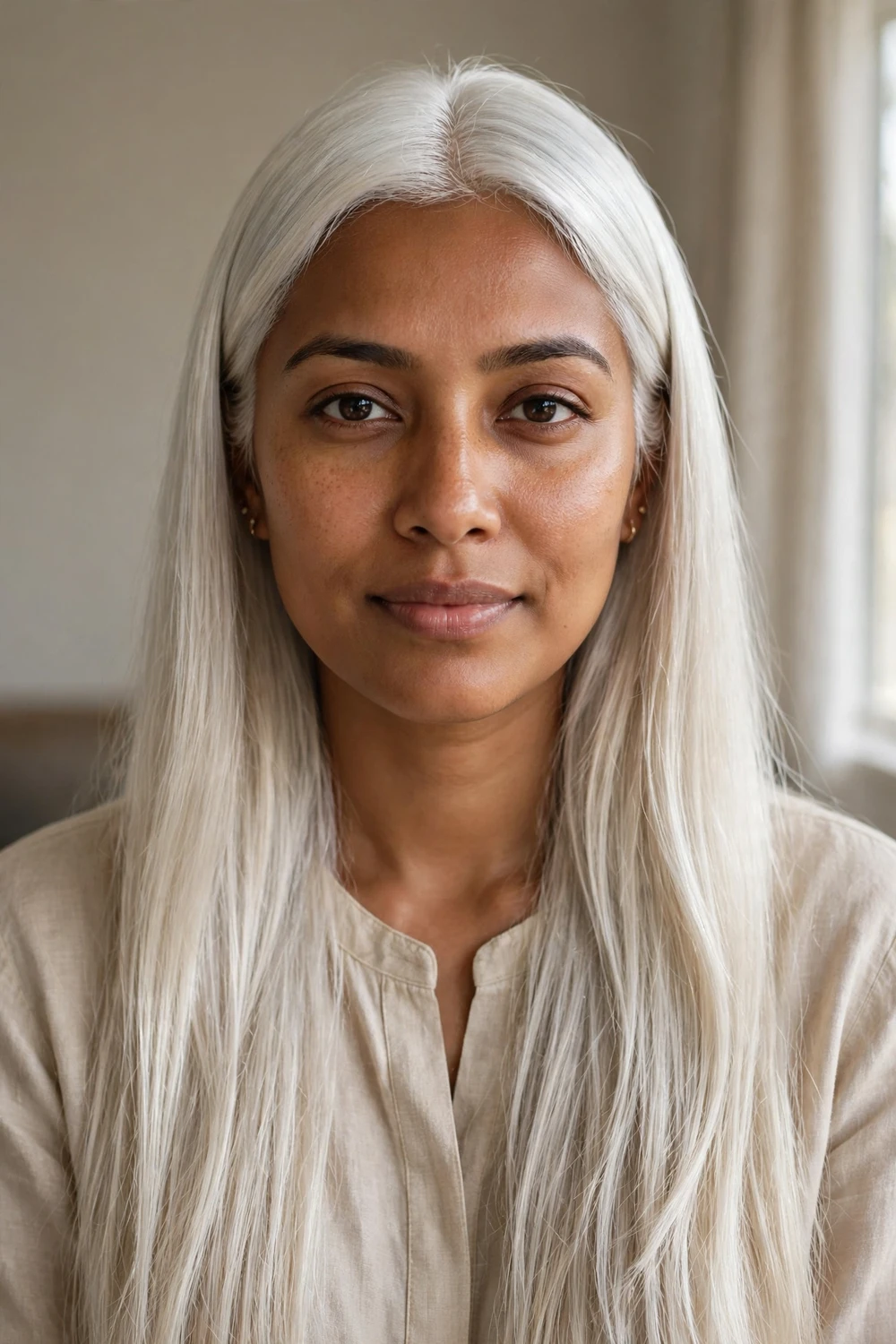
Metallic white sits between platinum and silver. It has the brightness of a blonde with the reflective quality of a metal, which catches winter light in a way matte ash can’t. It works best on healthy hair because the shine is doing half the talking. If your hair is fine, this shade makes it look denser than an opaque cream blonde would.
Try this: Finish with a clear gloss at every toner appointment. The gloss is what gives this shade its liquid-metal look.
5. Crystal Ash Blonde
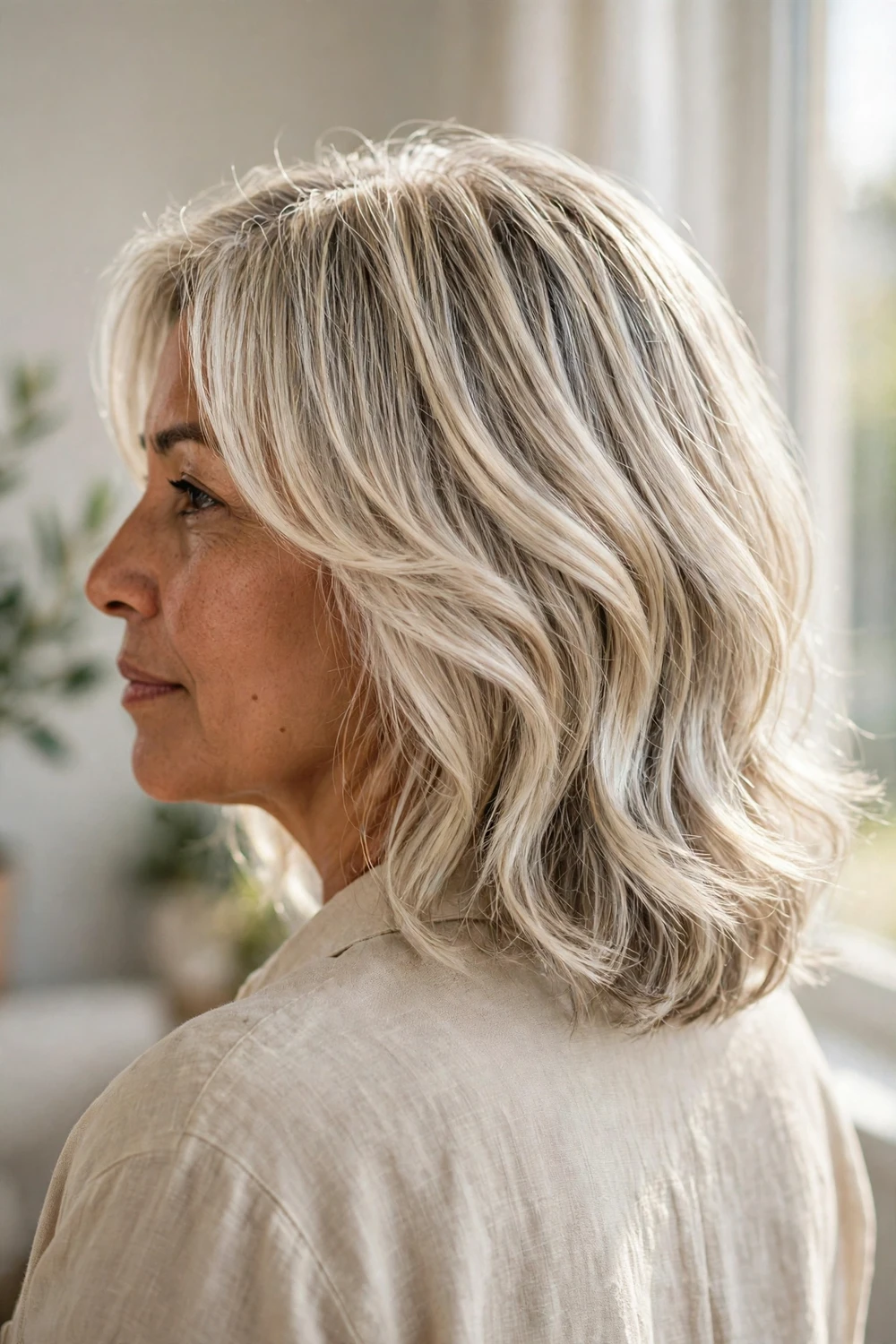
Crystal ash blonde is the clean, crisp answer to winter blonde. It reads brighter than mushroom tones but cooler than pearl, with a soft gray-ash base that keeps it firmly in cool territory. It suits medium skin tones that wash out in full platinum but go muddy in warm blondes.
Try this: Blue shampoo keeps the ash tone true between appointments. Use it alternating with your regular color-safe shampoo.
6. Pearl Blonde
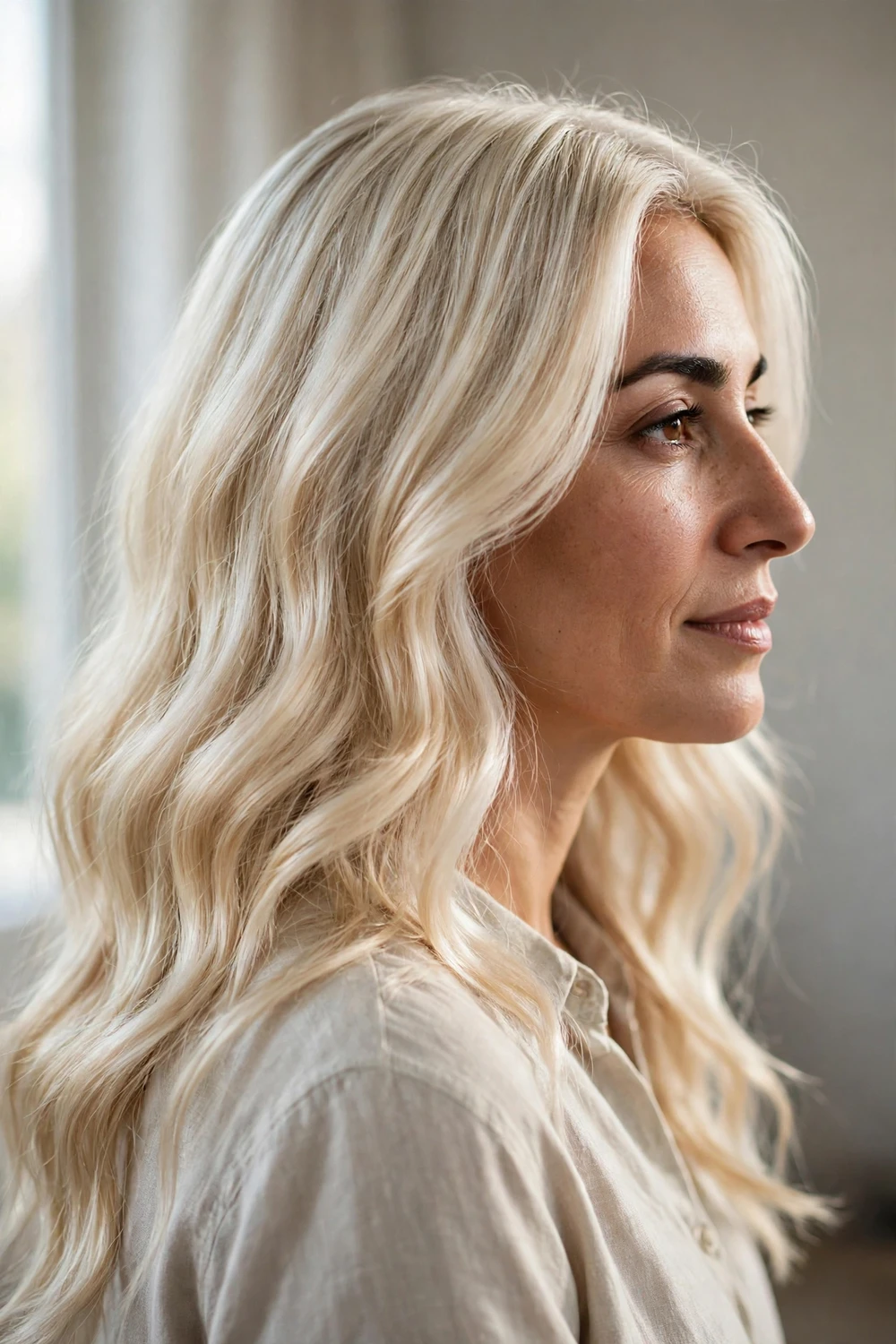
Pearl blonde has a softness the other icy blondes skip. The finish glows rather than shines, with an almost iridescent quality that moves as you do. It’s gentler against the face than platinum, which makes it a strong pick for first-time cool blondes. It also grows out more gracefully than a solid icy shade.
Try this: Avoid hot tools without heat protectant. Heat yellows pearl tones faster than almost any other cool blonde.
7. Icy Pearl Ombre
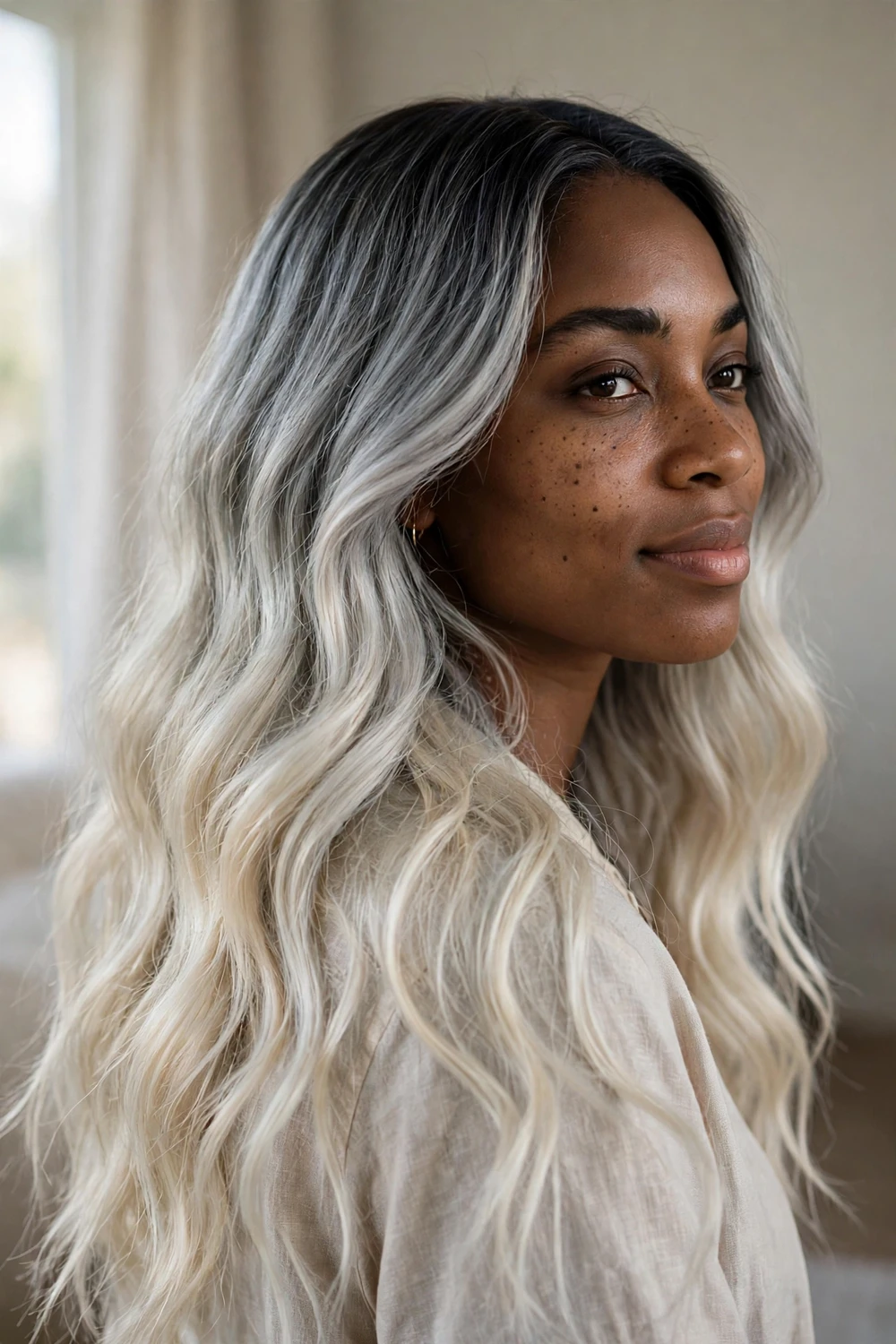
Start dark at the root and melt into pearl blonde ends for the lowest-maintenance version of icy blonde. The contrast between the smoky root and luminous ends gives you the drama of light hair without the monthly root appointment. This is the ombre to pick when you want winter blonde on a budget.
Try this: Have the transition point sit below the cheekbone. A low transition reads modern and lets you go 10 to 12 weeks between visits.
8. Glacier Silver
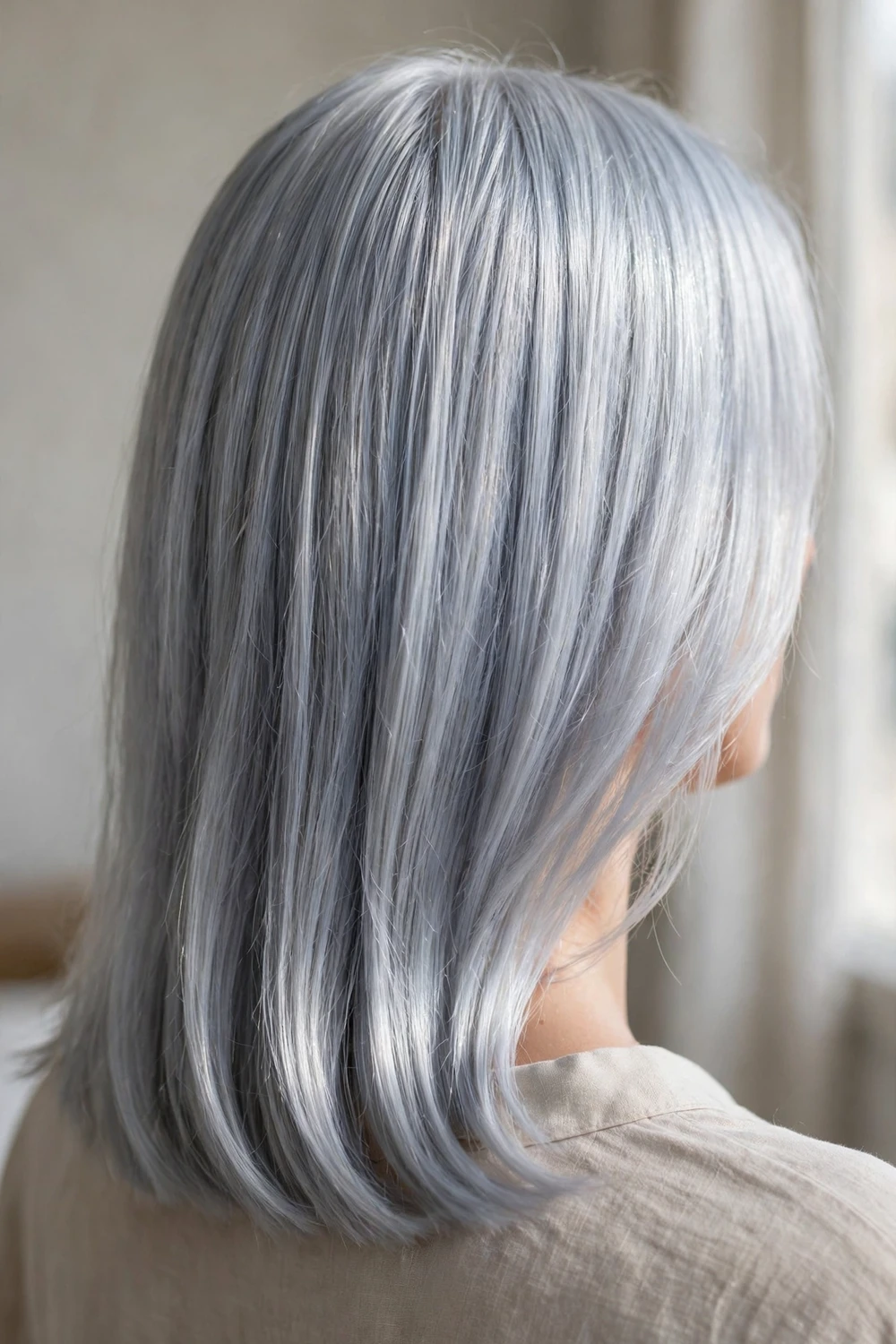
Glacier silver is a full-commitment metallic: icy, reflective, and impossible to miss. It needs a near-white canvas underneath, so most people reach it through double processing. The payoff is a shade that turns heads in any light. Pair it with simple styling since the color is doing all the work.
Try this: Sleep on a silk pillowcase. Silver dye fades through friction, and a rough cotton case speeds it up.
9. Silver Ash Dimension
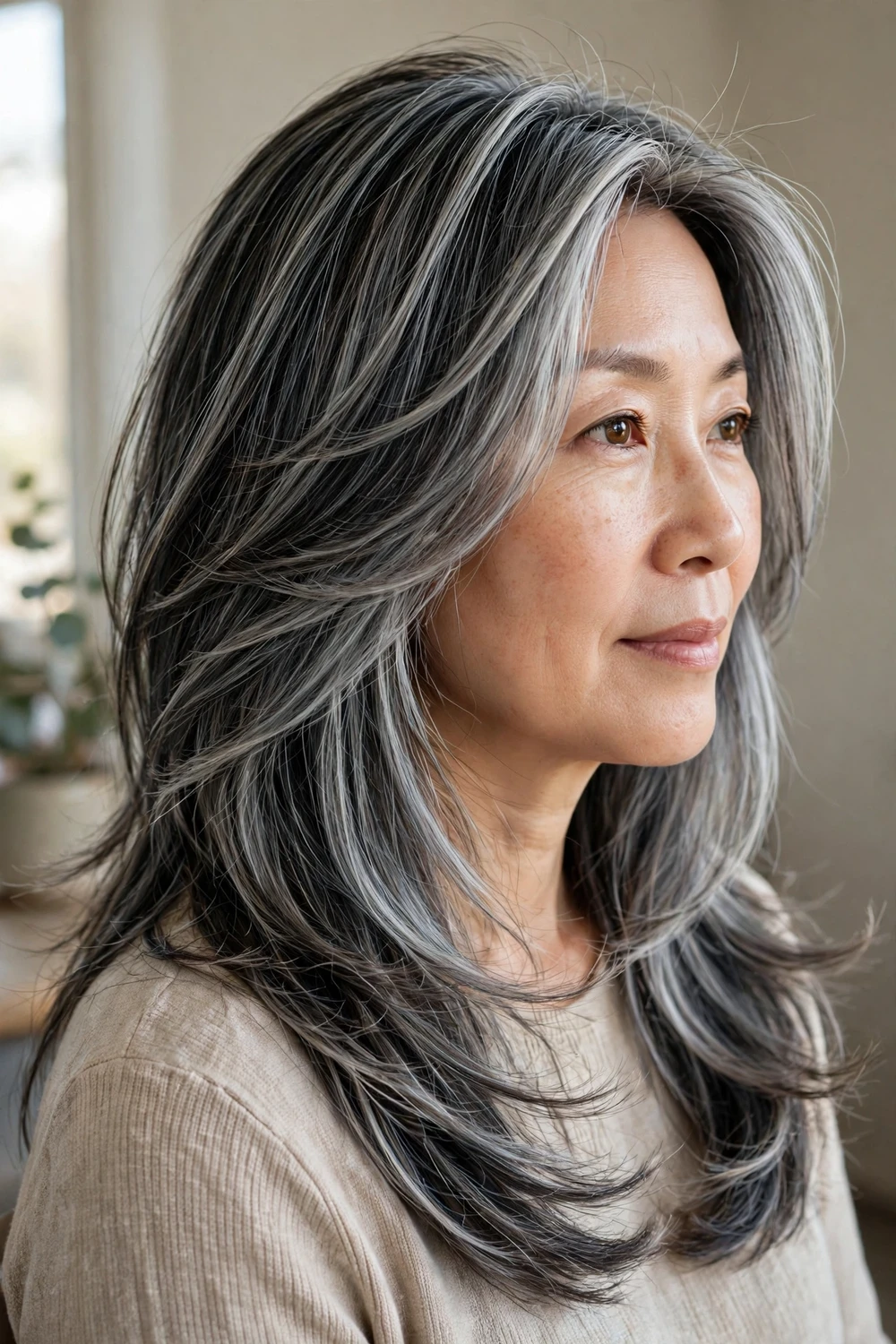
Not ready for full silver? Layered silver and ash highlights give you the metallic effect with your natural base still in play. The dimension keeps the look textured and wearable, and because it’s not a solid global color, regrowth blends for weeks. This is the practical way to try silver without the plunge.
Try this: Ask for the highlights concentrated through the mid-lengths and ends rather than at the root for the softest grow-out.
10. Ash Beige Balayage
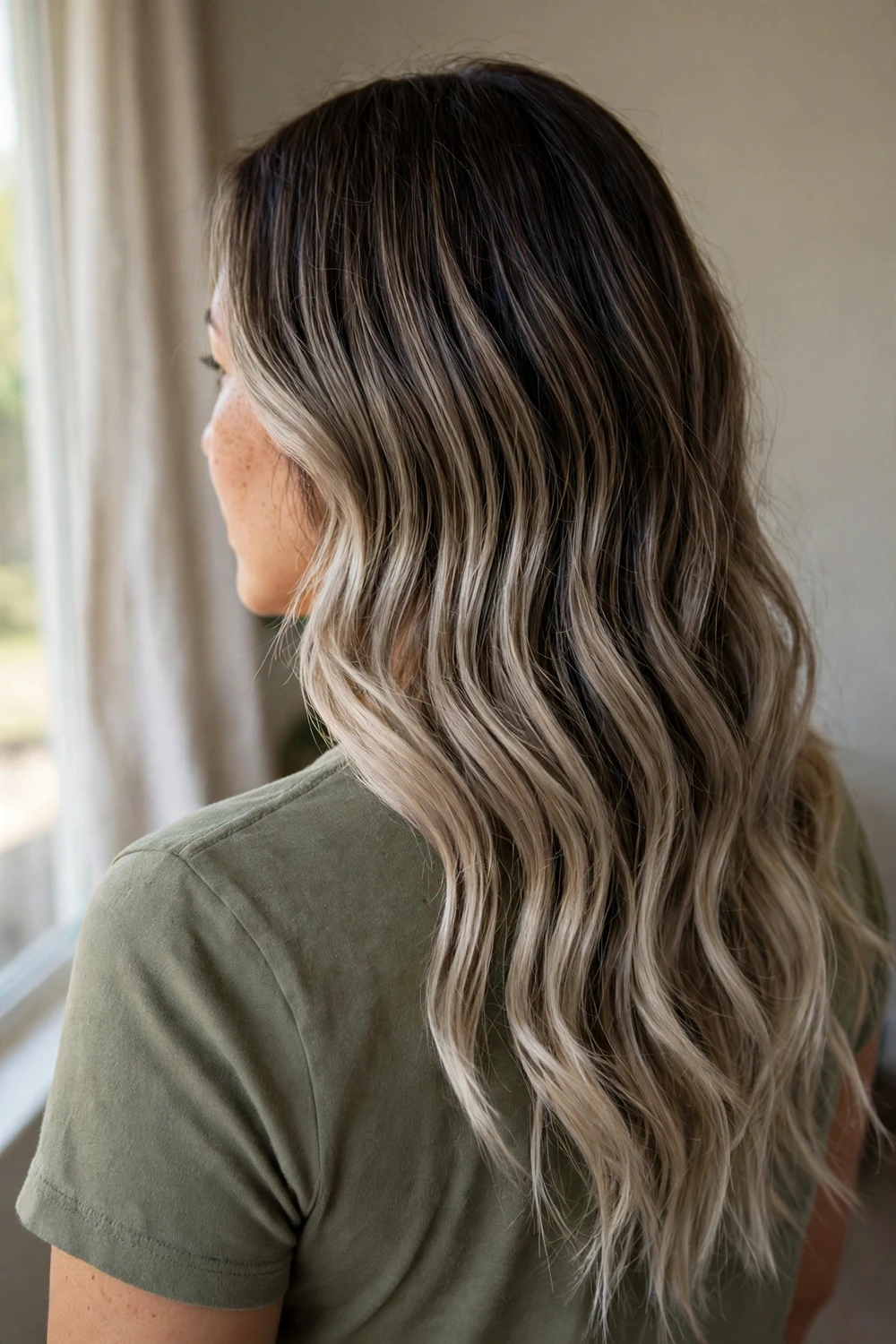
Ash beige balayage mixes smoky ash with soft beige for a blonde that doesn’t scream “winter ice.” The beige note keeps it wearable for work and everyday life, while the ash keeps it firmly cool. The hand-painted technique means grow-out is gentle, and touch-ups can wait 8 to 12 weeks.
Try this: Bring a photo showing the exact ratio of ash to beige you want. “Ash beige” means different things to different colorists.
11. Snowfall Balayage
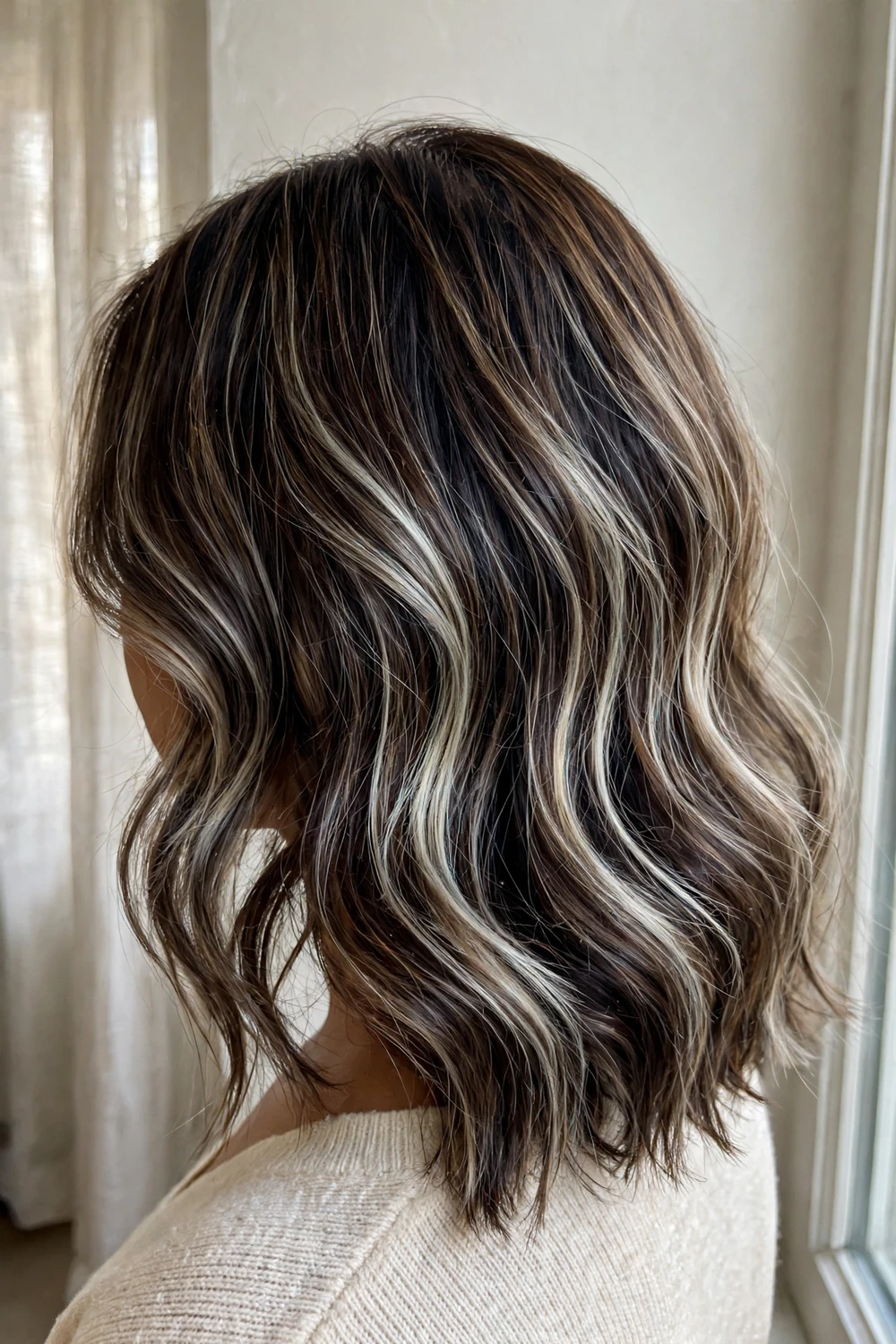
Soft icy accents scattered through a dark base, like the first snow on dark branches. Snowfall balayage gives brunettes a way to try cool tones without lifting their whole head. The accents are fine and diffused, so the effect is frost rather than stripe. It catches the light best in movement, so loose waves show it off.
Try this: Keep the pieces thin. Chunky icy streaks on dark hair age fast; fine pieces stay current.
12. Sombre Babylights
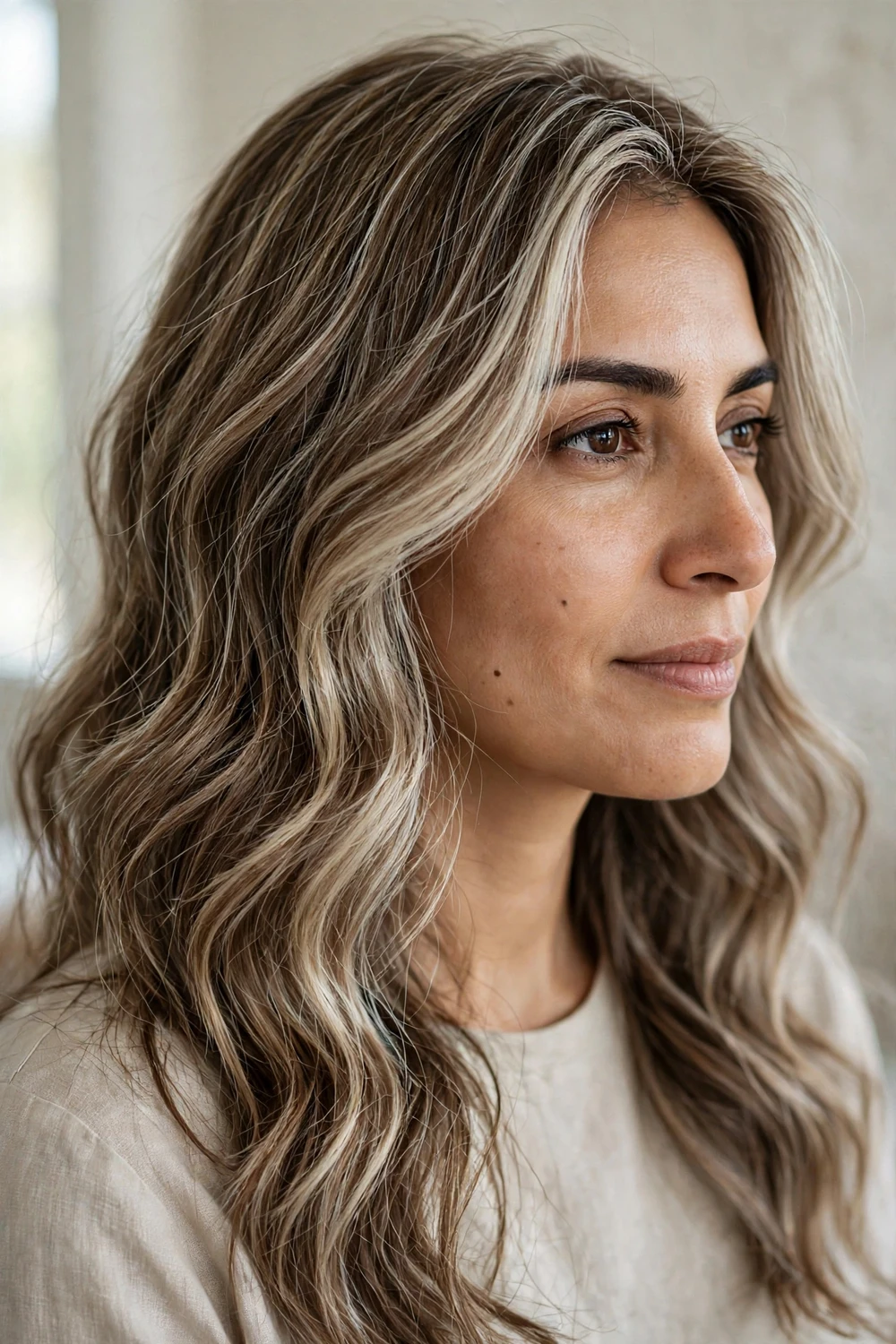
Sombre babylights are the quiet achiever of cool winter color. Fine icy strands are woven through a medium brown base for brightness that reads natural, not colored. Because the pieces are so fine, this grows out with almost no line of demarcation. It’s the top pick for anyone who wants cool tones and forgettable maintenance.
Try this: Refresh with a gloss, not a full highlight appointment. A cool gloss revives the icy tone without more lightening.
13. Gray Hair Blending
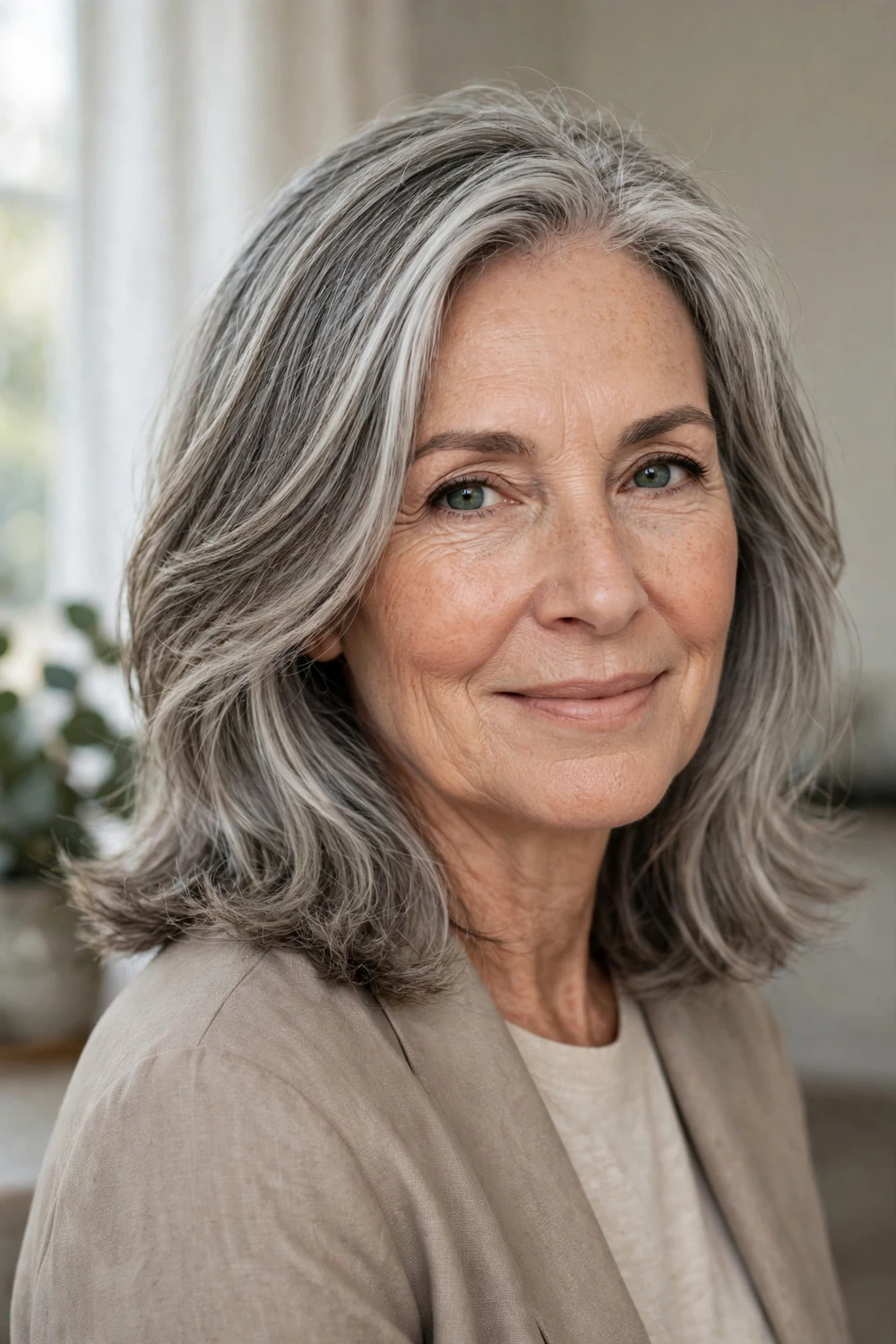
Instead of covering gray, blending works with it. Silver and ash lowlights are woven into your natural gray so new growth stops looking like regrowth and starts looking like part of the design. Women who started blending report stretching their appointments to 10 or 12 weeks. It also lets you test-drive a silver look before committing to full silver.
Try this: Tell your colorist you want to “blend, not cover.” Those words change the whole formulation and technique.
14. Dreamy Dusty Lavender
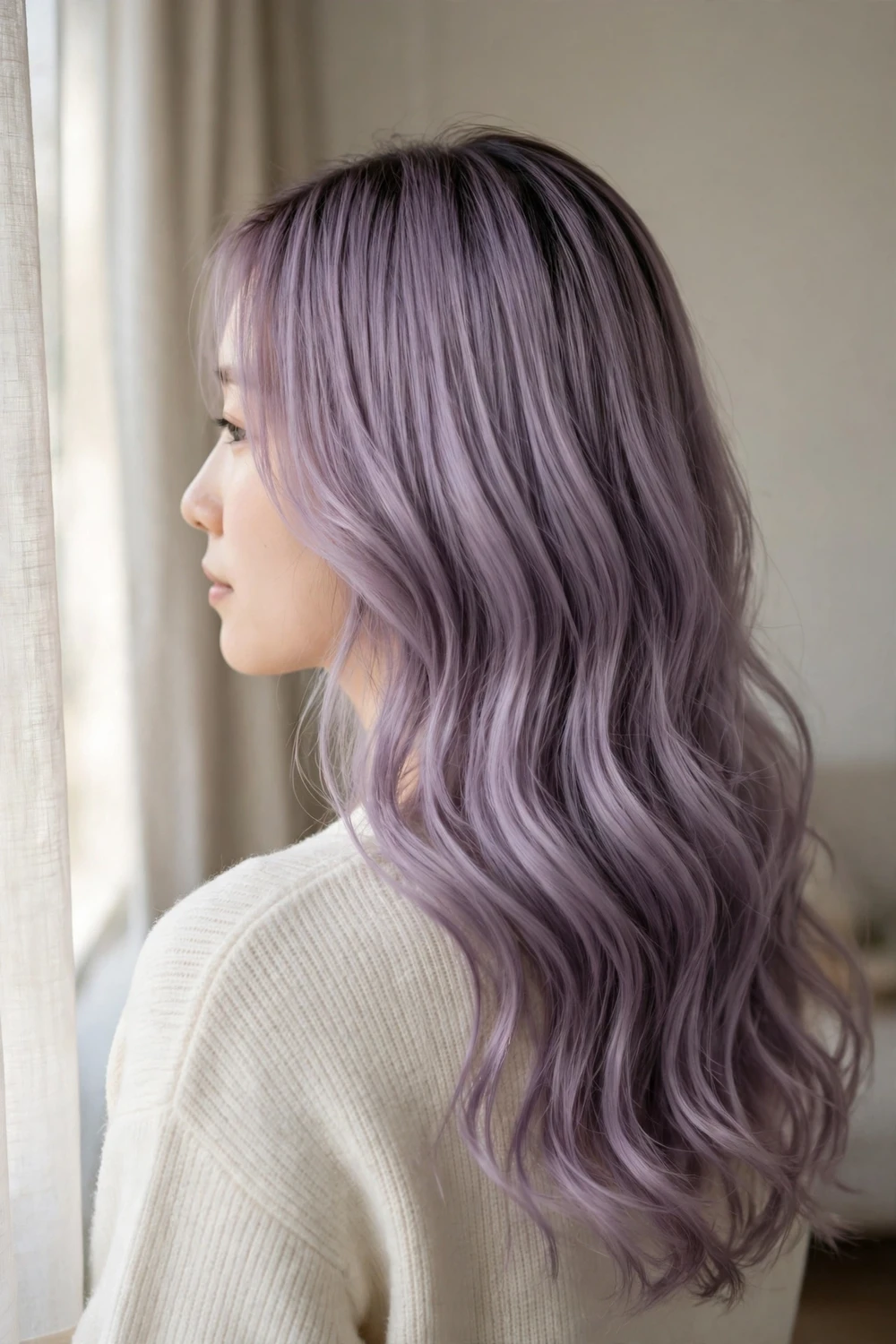
Dusty lavender is a cool pastel with the saturation turned down. It’s edgier than a silver but calmer than a fashion purple, and the muted finish sits well in winter’s gray light. It fades to a soft ash over 3 to 4 weeks, so treat it as a temporary experiment rather than a permanent change.
Try this: It needs a very light base to show up true. Dark hair must be pre-lightened, which makes this a bigger project than it looks.
15. Granite Grey
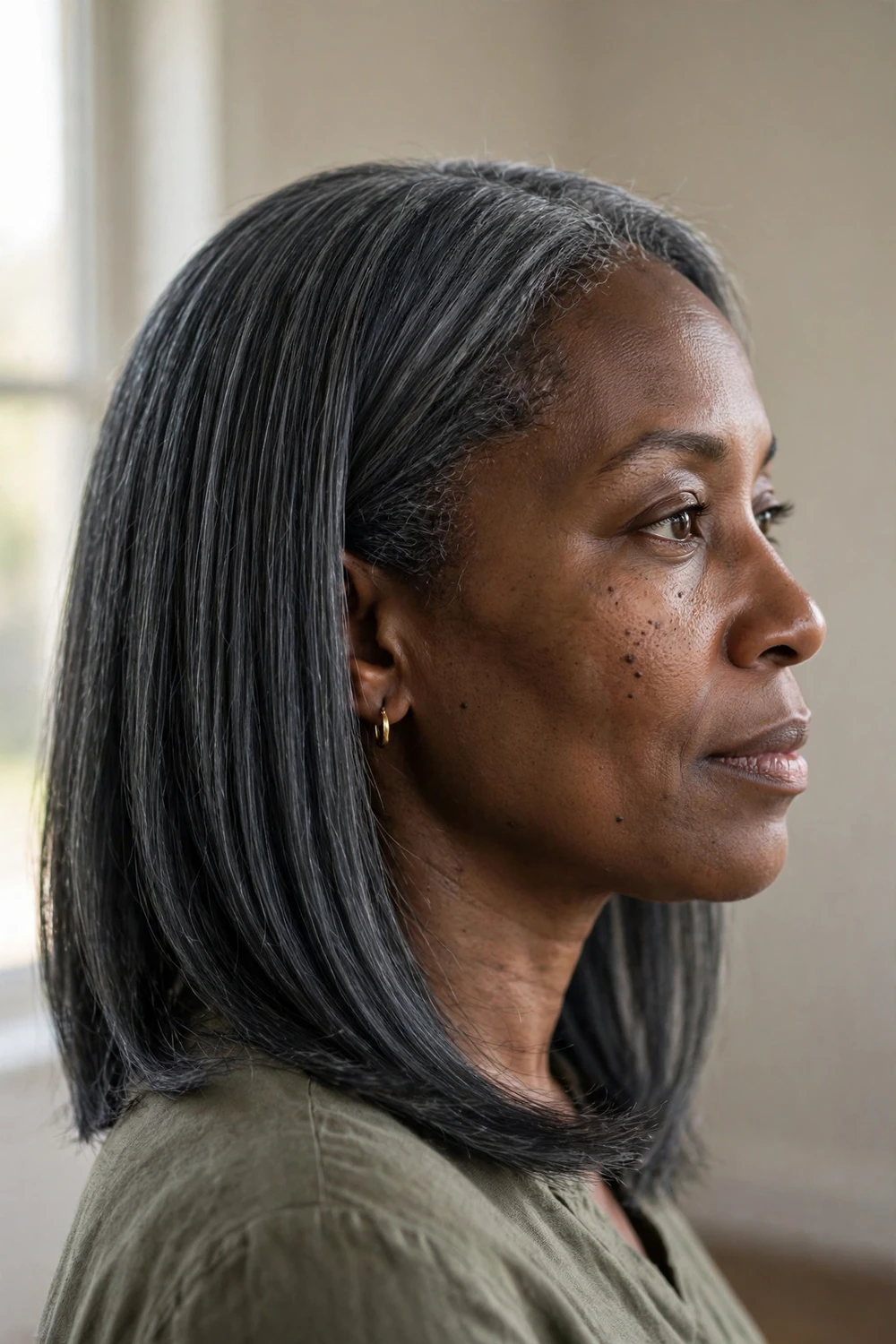
Granite grey goes darker than most silvers. It’s a steel gray with depth, like polished stone, and it flatters deeper skin tones that lighter silvers can wash out. Because it’s darker, it doesn’t demand a white-blonde canvas underneath, which means less bleach damage for naturally dark hair.
Try this: Use a gray-depositing conditioner weekly. It keeps the steel tone from fading to a dull brown.
16. Mushroom Brown
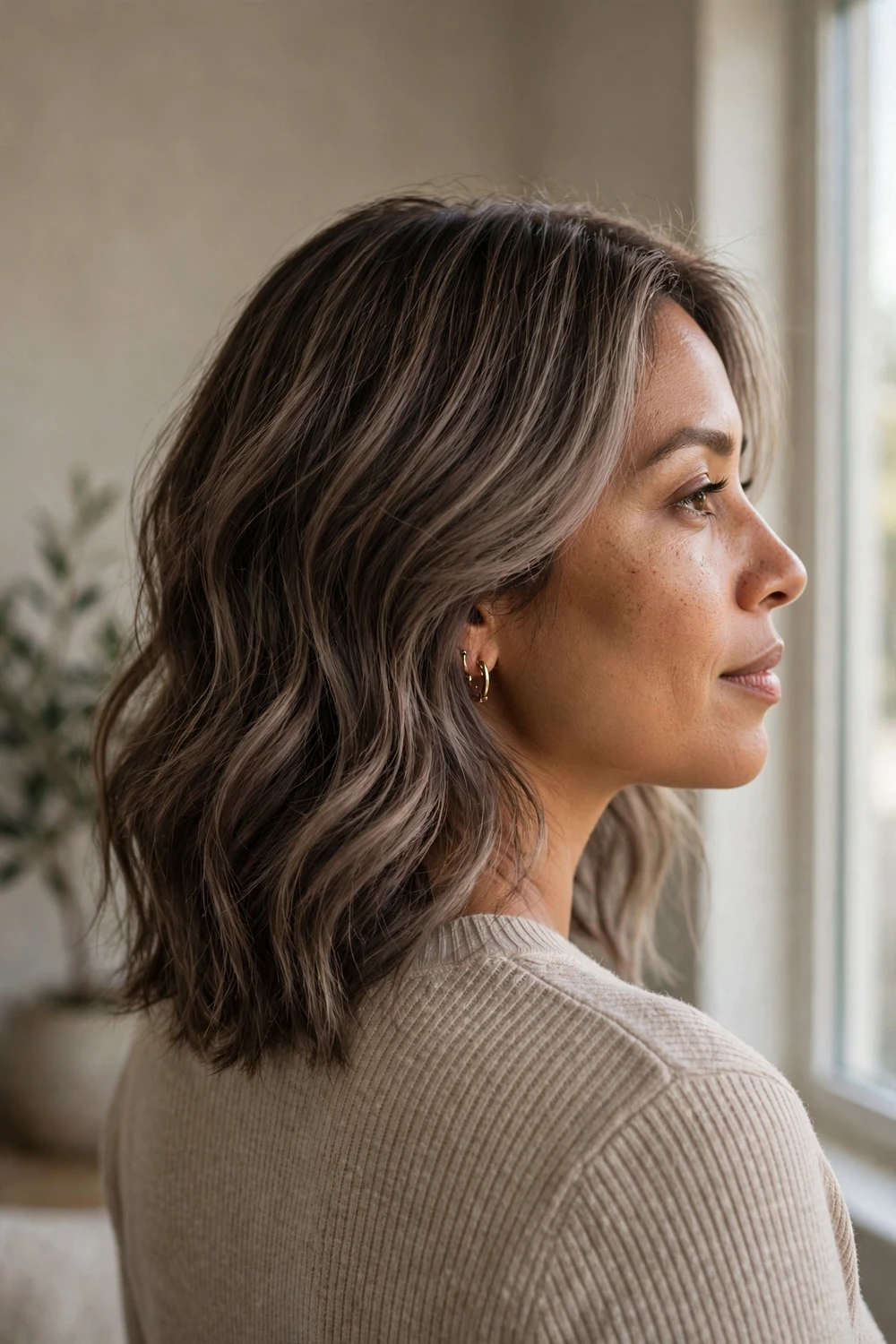
Mushroom brown mixes ashy beige with soft cocoa for the ultimate cool neutral. It sits right between blonde and brunette, which makes it forgiving on almost every skin tone. Stylists love it because it covers warm regrowth gracefully, and clients love it because it looks expensive without trying.
Try this: Ask for the formula to lean taupe, not beige. Too much beige pulls warm, which defeats the cool purpose.
17. Smoky Chocolate
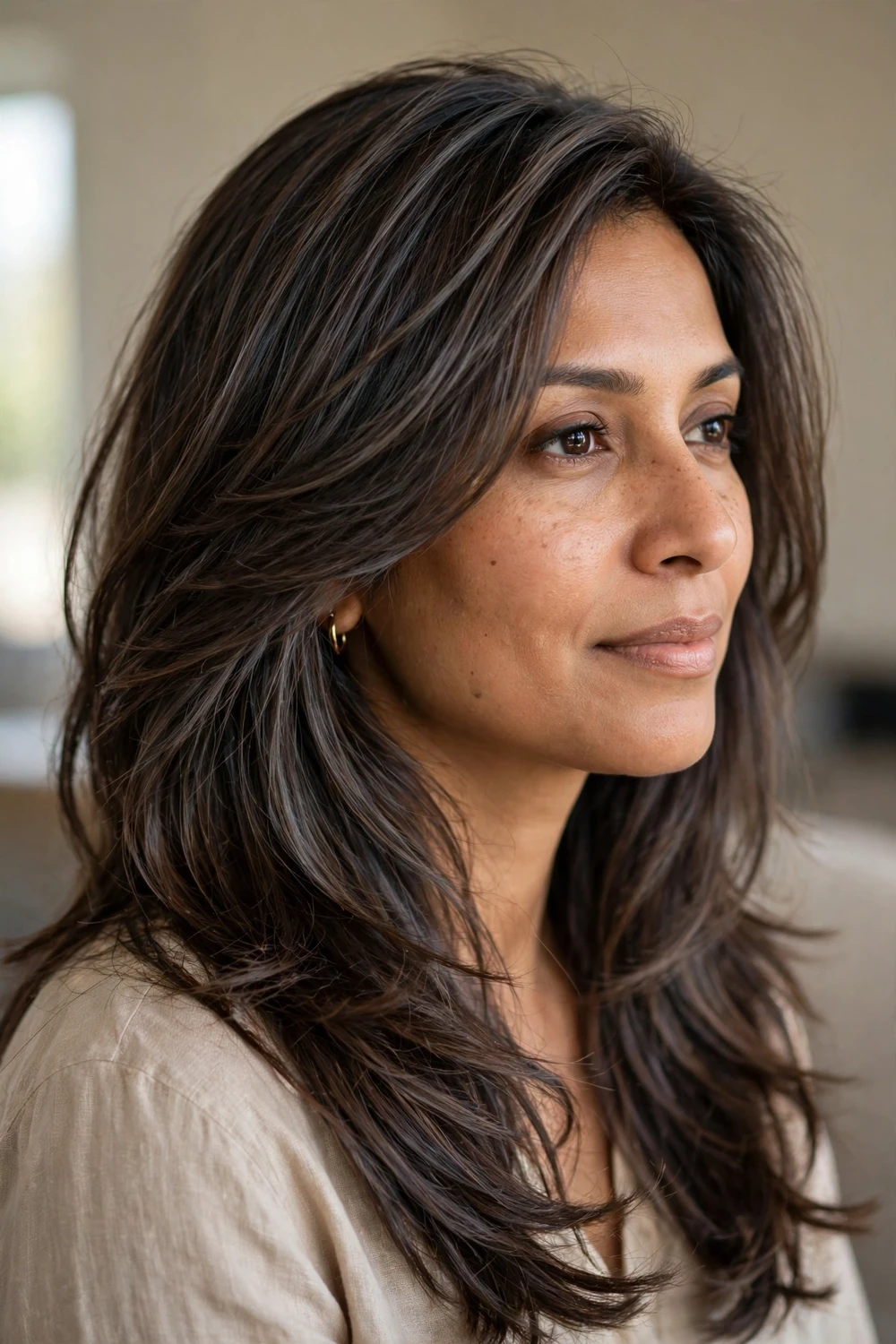
Take a deep chocolate base and layer smoky gray undertones through it. You get the richness of brown with none of the warmth. Smoky chocolate works on long hair especially well because the length shows off the tonal shifts. It’s also one of the easiest cool shades to maintain at home.
Try this: A weekly blue shampoo keeps the smoky tone from drifting warm as the weeks pass.
18. Subtle Ice Brown
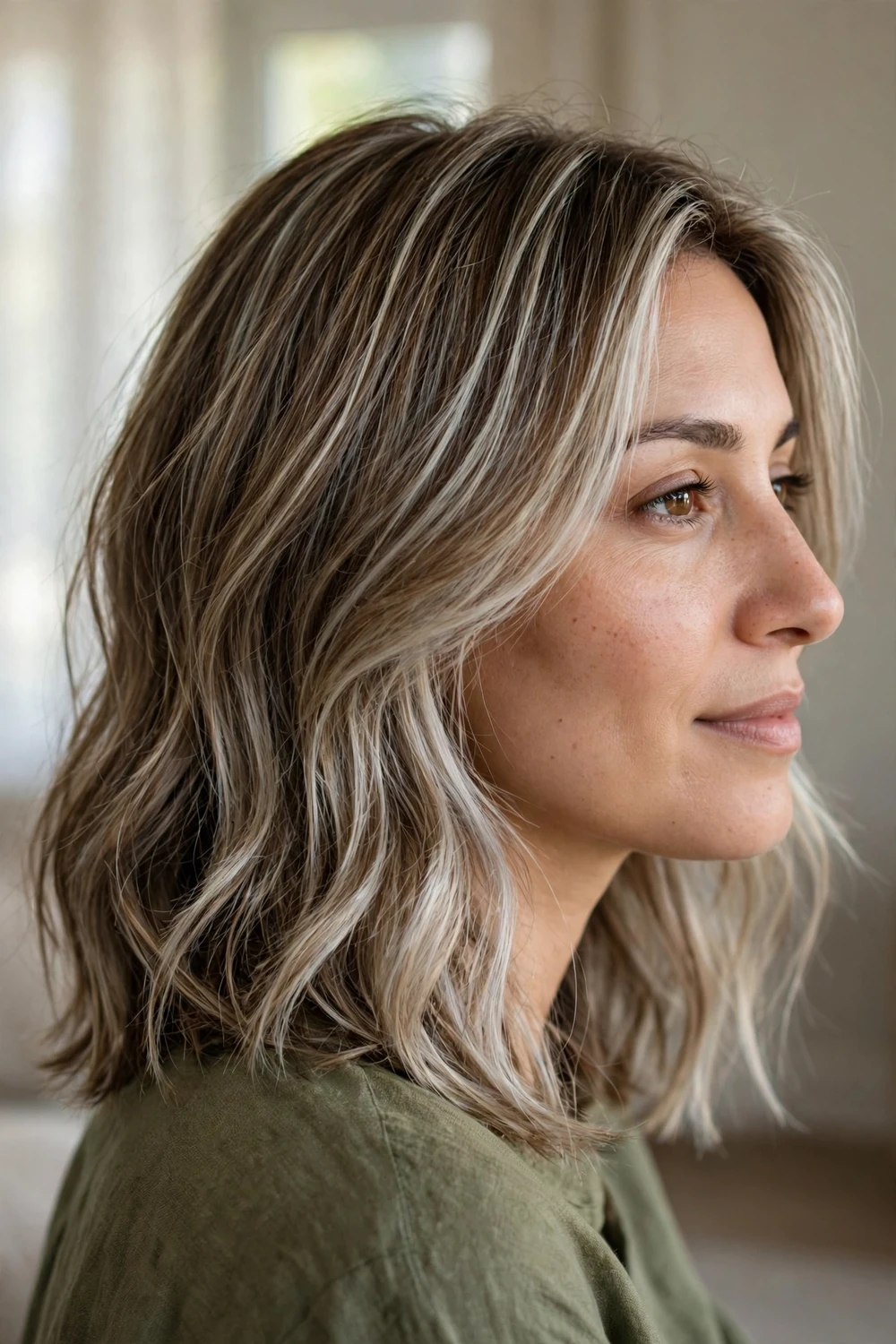
Subtle ice brown adds cool, icy highlights to a medium brown base without changing the overall depth. It’s the gentlest way to go cooler for winter. The highlights sit mostly through the mid-lengths and ends, so the root area stays low-maintenance. If your workplace frowns on dramatic color, this is your shade.
Try this: Keep the highlights one to two levels lighter than your base. More contrast pushes it out of the “subtle” zone.
19. Frosted Mocha
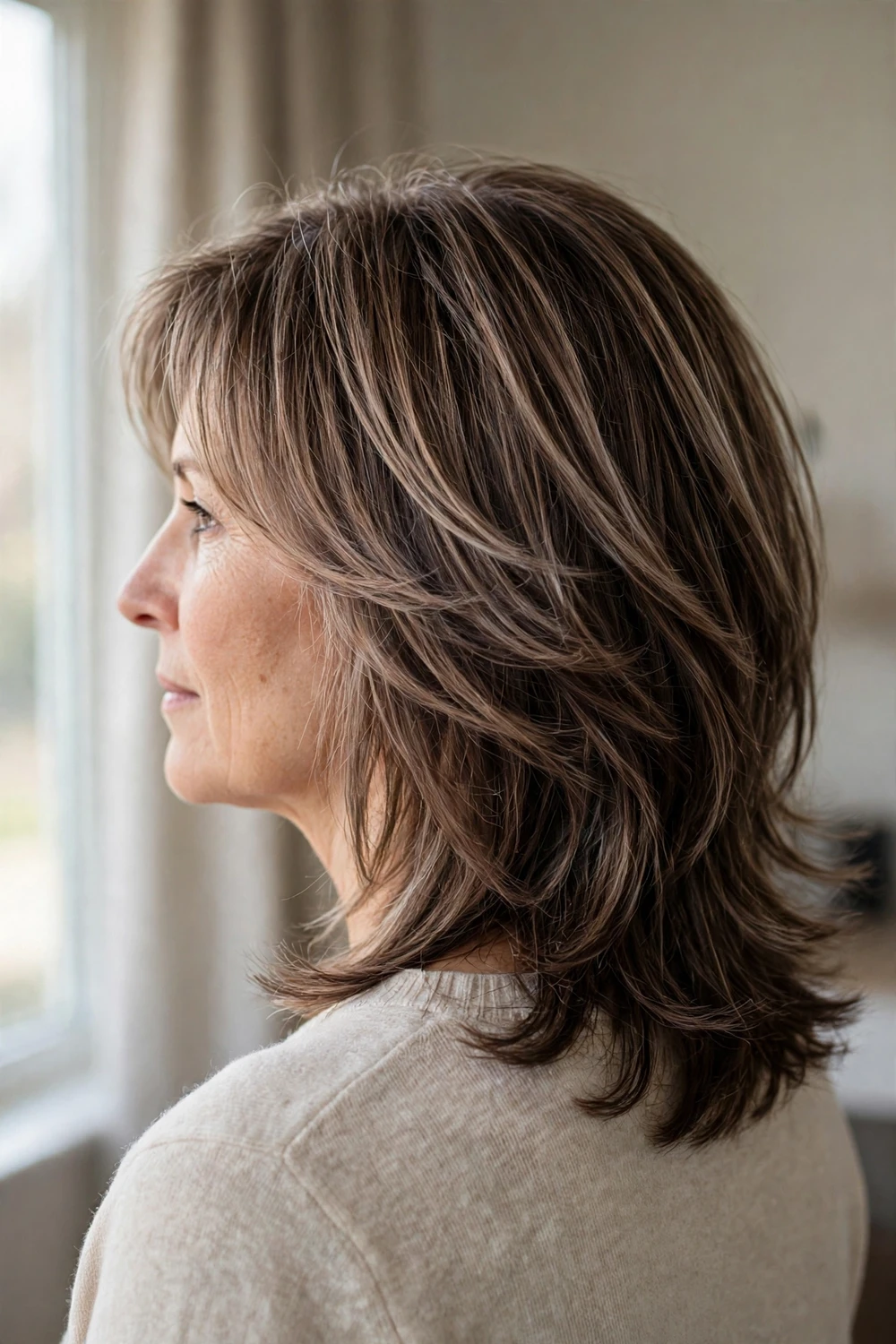
Frosted mocha blends deep mocha with cool, frosted accents for a winter-ready brunette that reads rich, not flat. The frosted pieces catch light through the lengths, which adds movement to thick or coarse hair. It’s a strong pick if you want noticeable change without going blonde.
Try this: Style with loose waves to show off the frosted accents. Pin-straight styling hides them.
20. Polar Brunette
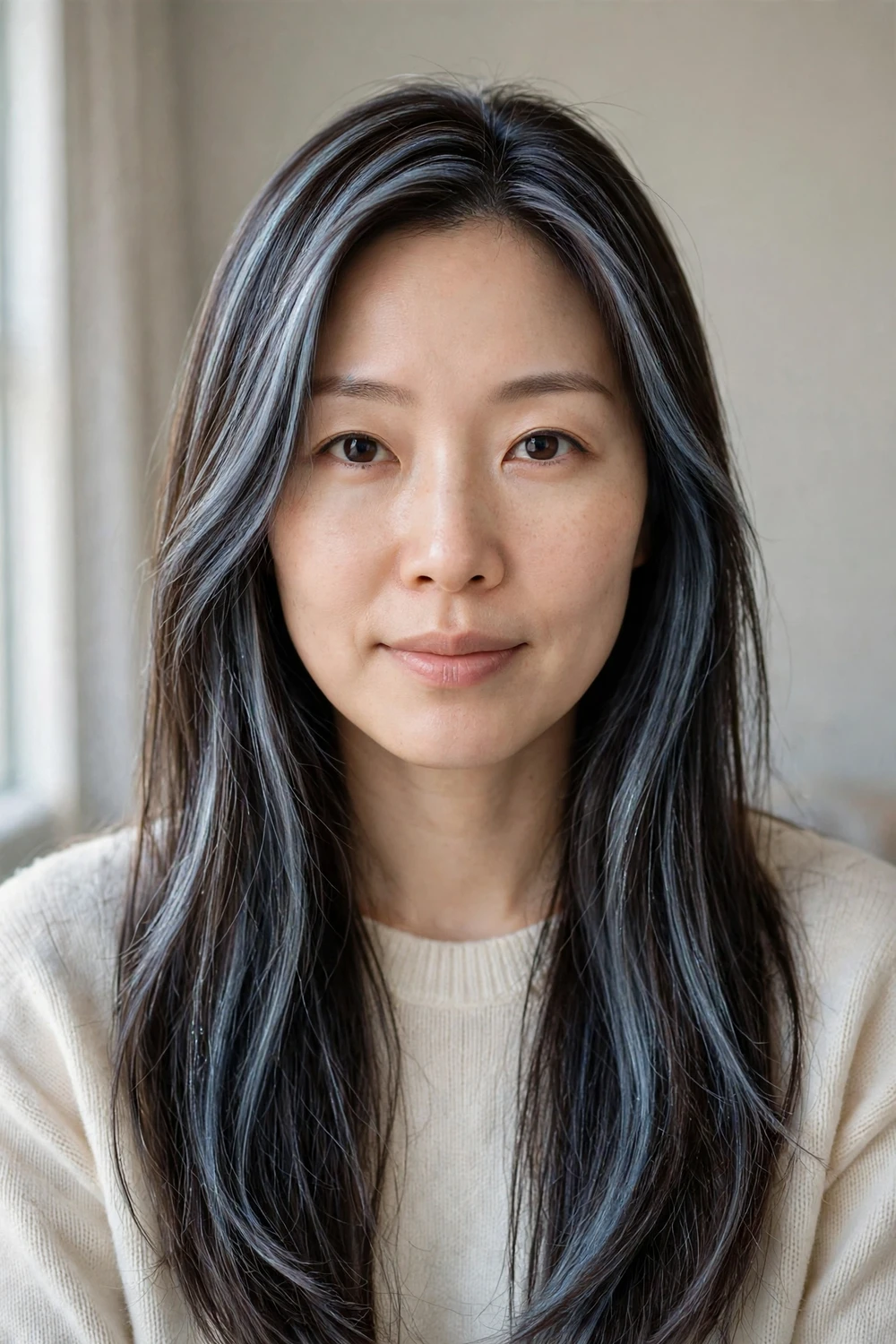
Polar brunette keeps a deep brown base but weaves in cool, icy accents for a frost-kissed finish. The icy pieces frame the face and catch the light, while the deep base keeps maintenance easy. It’s the brunette answer to icy blonde without the bleach bill.
Try this: Concentrate the icy pieces around the face and through the top layers, where they have the most visual impact.
21. Cool Dark Brown
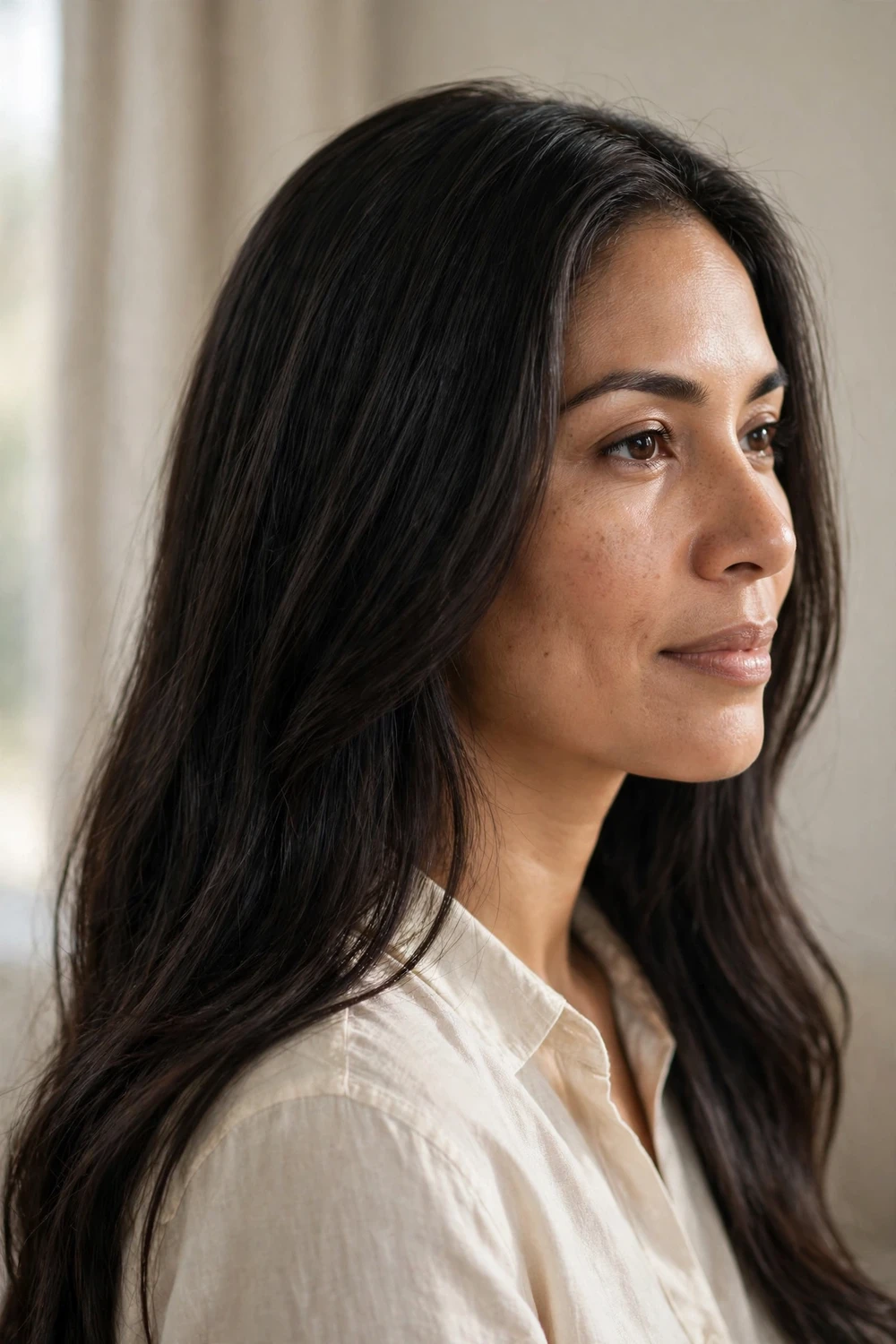
Sometimes the best move is simple. Cool dark brown is a solid, even shade with no red or gold hiding in it. It looks polished on its own and photographs well in winter’s flat light. If your natural hair is dark brown, this is a one-step color with almost no maintenance beyond shine.
Try this: Check the color in natural daylight before you leave the salon. Warm undertones in artificial light hide until you’re outside.
22. Soft Black
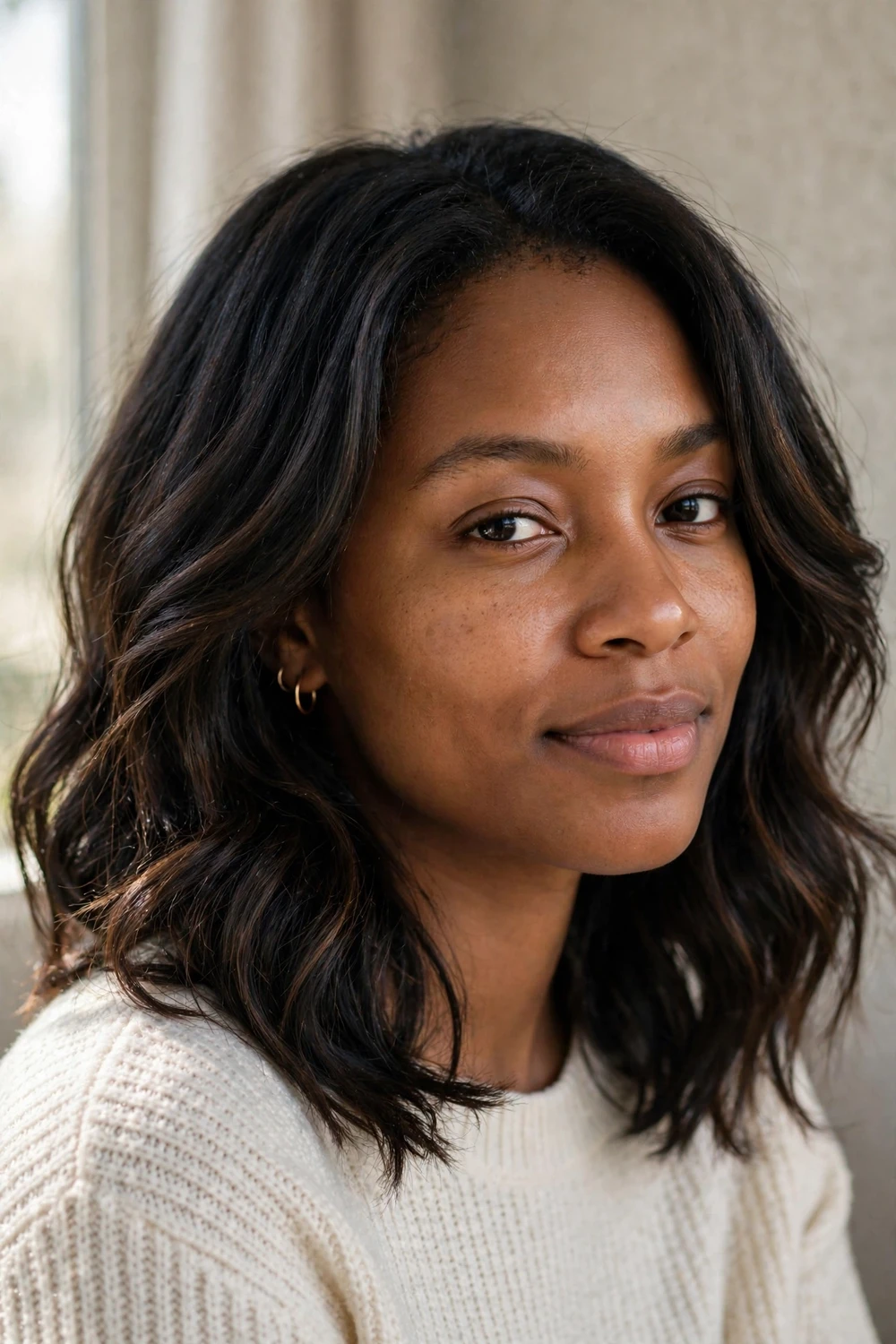
Soft black backs off the severity of jet black with subtle espresso undertones. You keep the depth and shine but lose the harshness that can overwhelm fair skin in winter. It reads natural rather than dyed, which is exactly the point. This is the black to choose if you want depth without drama.
Try this: Add a clear gloss at the 6-week mark. Black fades gradually, and gloss brings back the shine without more dye.
23. Deep Espresso
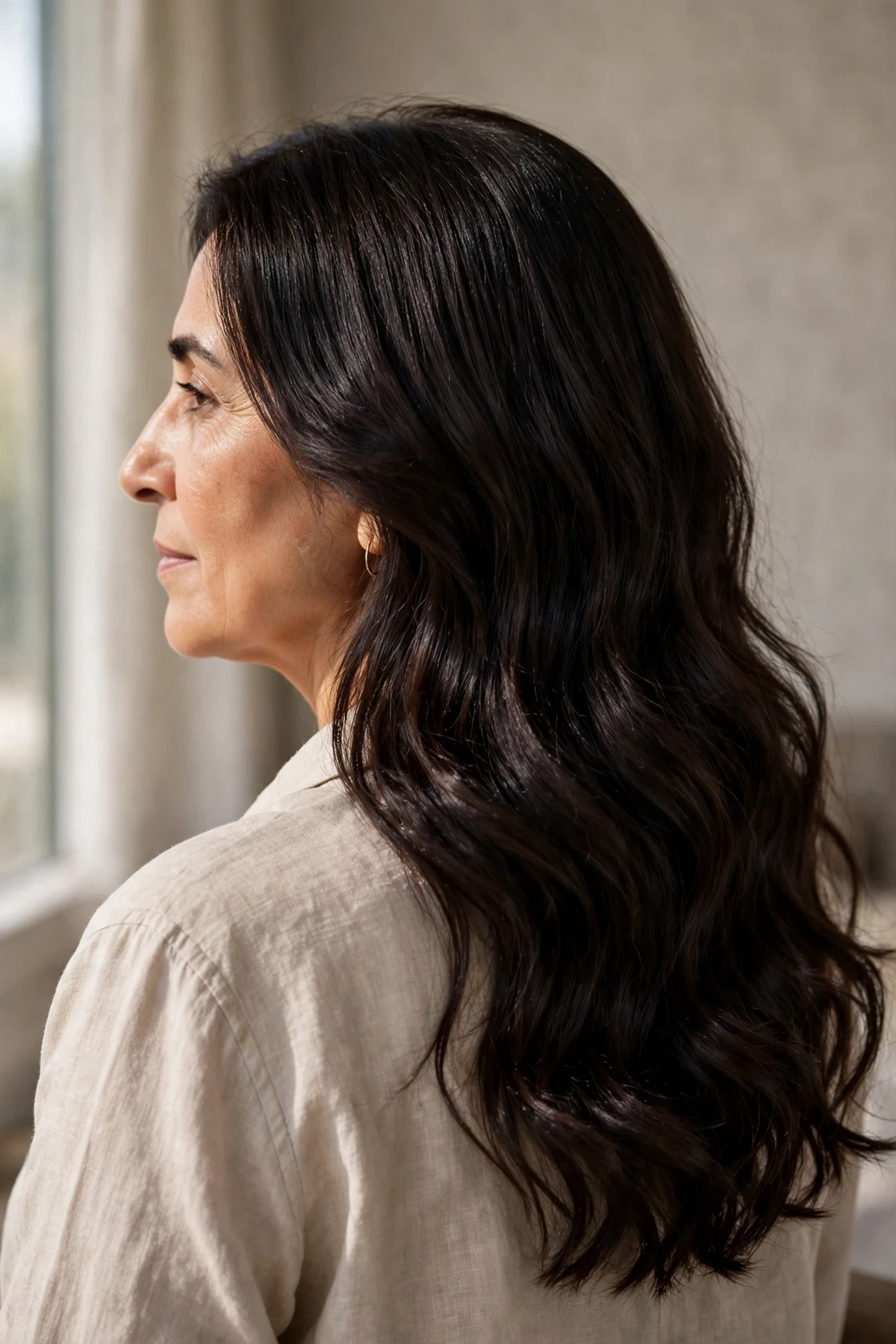
Deep espresso is the darkest cool brown before you hit black. It has a velvety, almost matte depth with a strong shine when styled smooth. It suits deep skin tones and medium complexions well, and it’s one of the most forgiving shades if your hair is damaged, since dark dye evens out porosity.
Try this: Wash in lukewarm water, not hot. Heat opens the cuticle and dark dye molecules slip out faster.
24. Midnight Black Shine
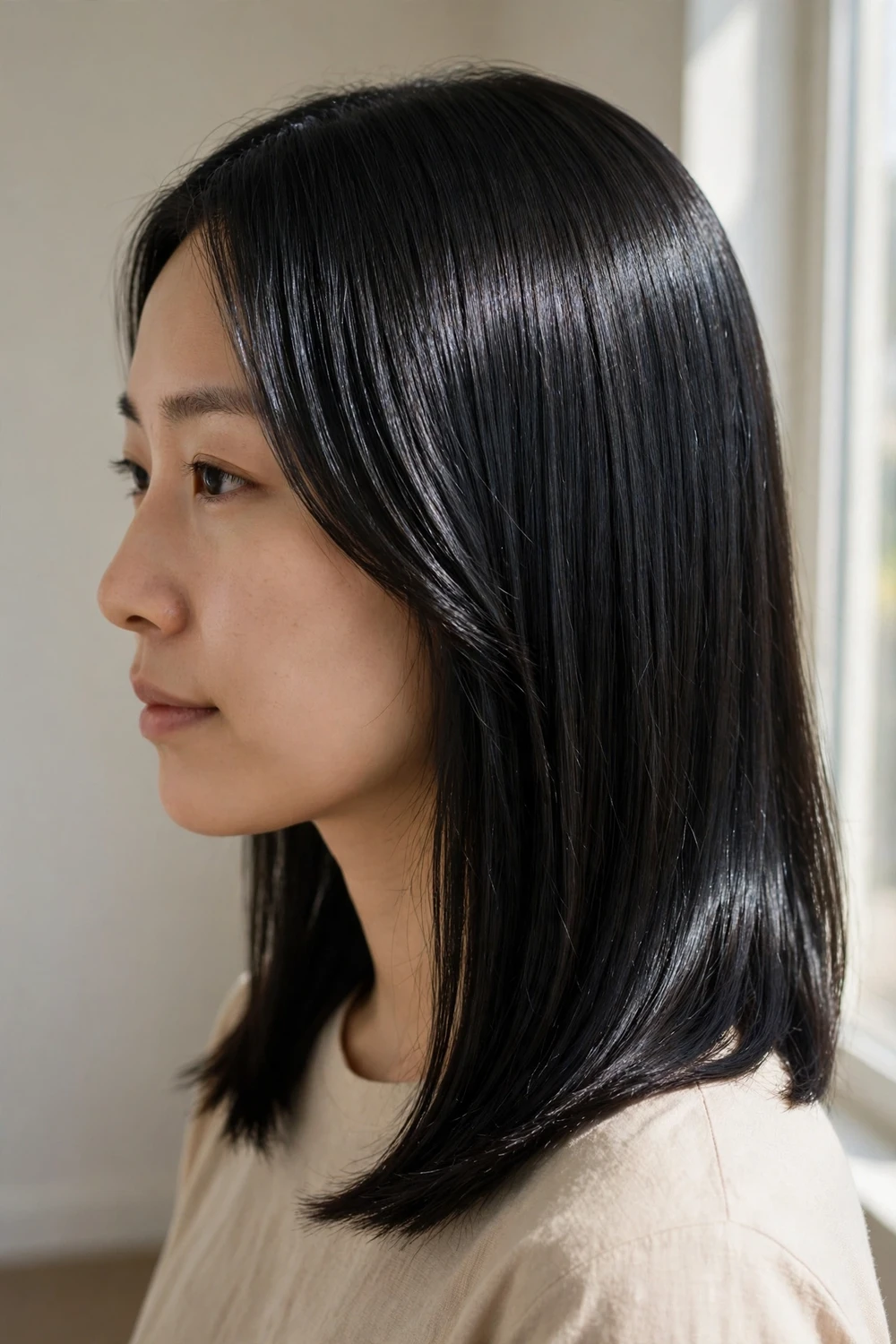
Midnight black is pure jet black with maximum gloss. The shine is the whole point: it reflects light like polished stone. Keep it sleek, either straight or with a single smooth bend, because texture breaks up the reflective surface. This shade also covers gray completely in one process.
Try this: A silicone-free shine serum on dry ends keeps the reflective finish between washes.
25. Arctic Blue-Toned Black
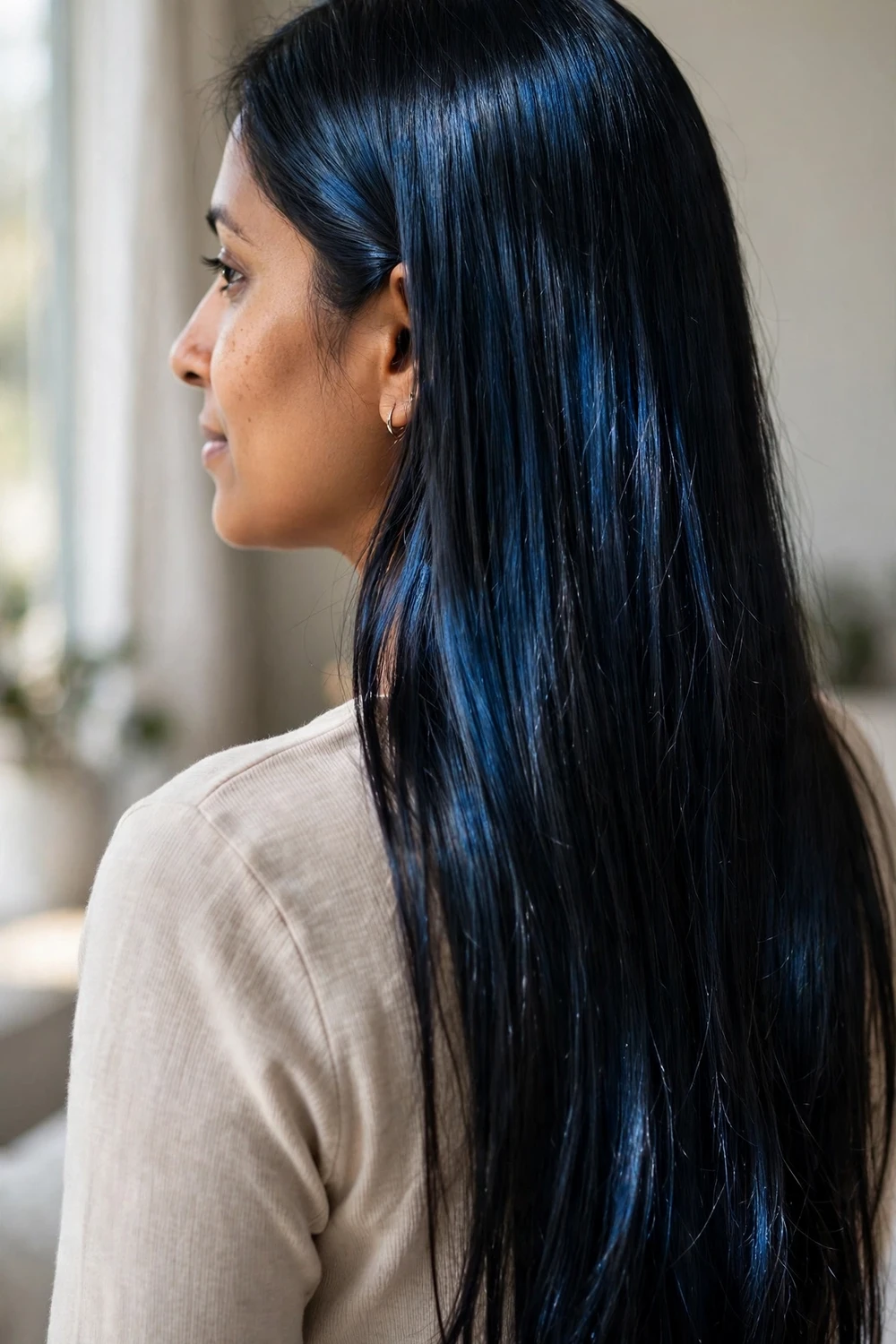
Arctic blue-black adds a cool blue sheen to deep black that shows up most in sunlight and bright indoor light. Indoors it reads as a rich black; outside, the blue comes alive. It’s an easy way to make black feel new without changing your depth at all. The effect is subtle enough for conservative settings.
Try this: Ask for a blue-black demi-permanent over your existing black instead of a full lift. It deposits the tone without lightening.
26. Black Hair with Ashy Babylights
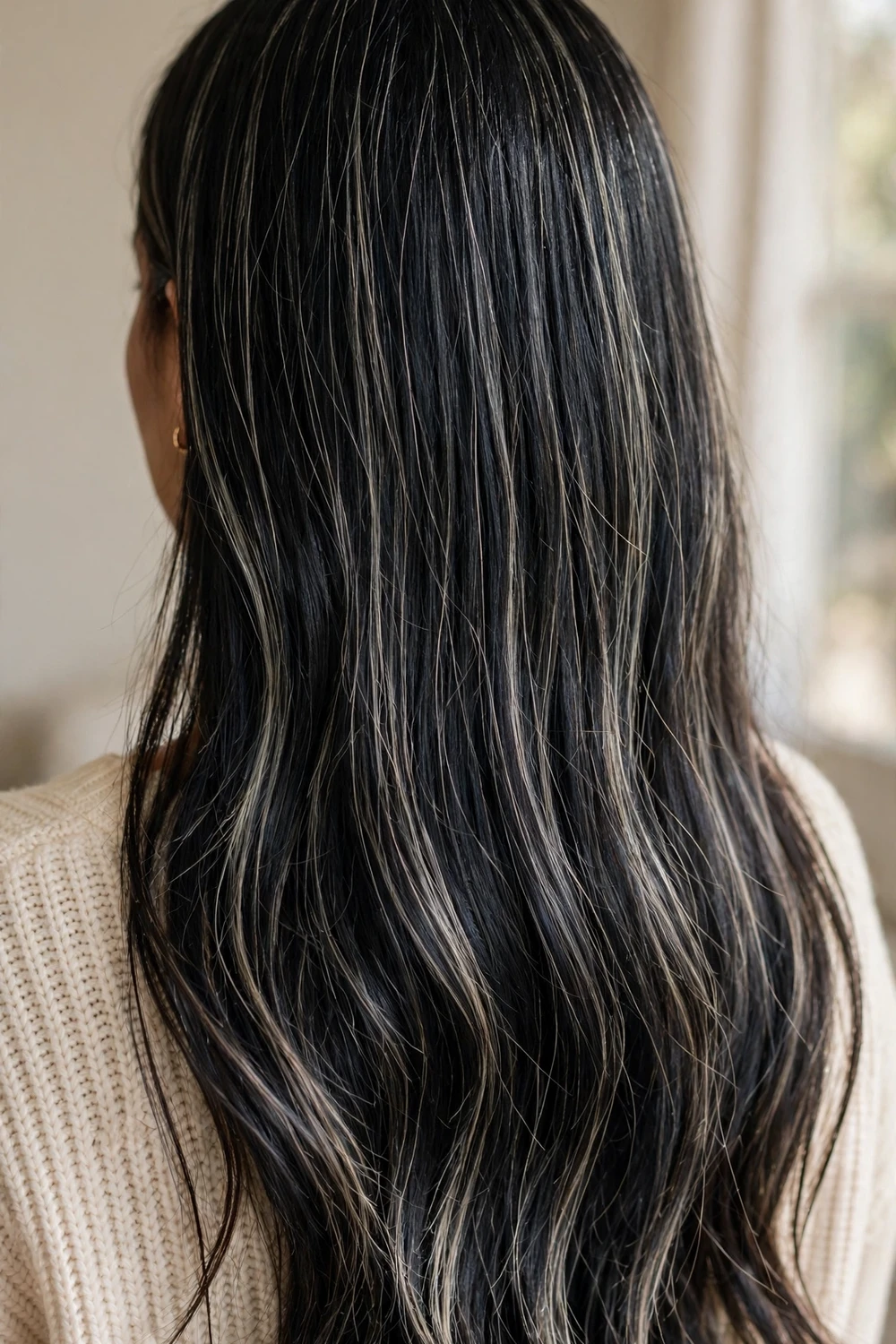
Fine ashy babylights woven through black hair break up a solid dark shade without turning it blonde. The result has movement and dimension that a flat black can’t give. Because the lights are fine and cool, regrowth stays discreet. This is the least committal way to add cool tone to black hair.
Try this: Keep the babylights fine and close to your natural level plus two. Thicker or lighter pieces read chunky against black.
27. Cool-Toned Bronde Balayage
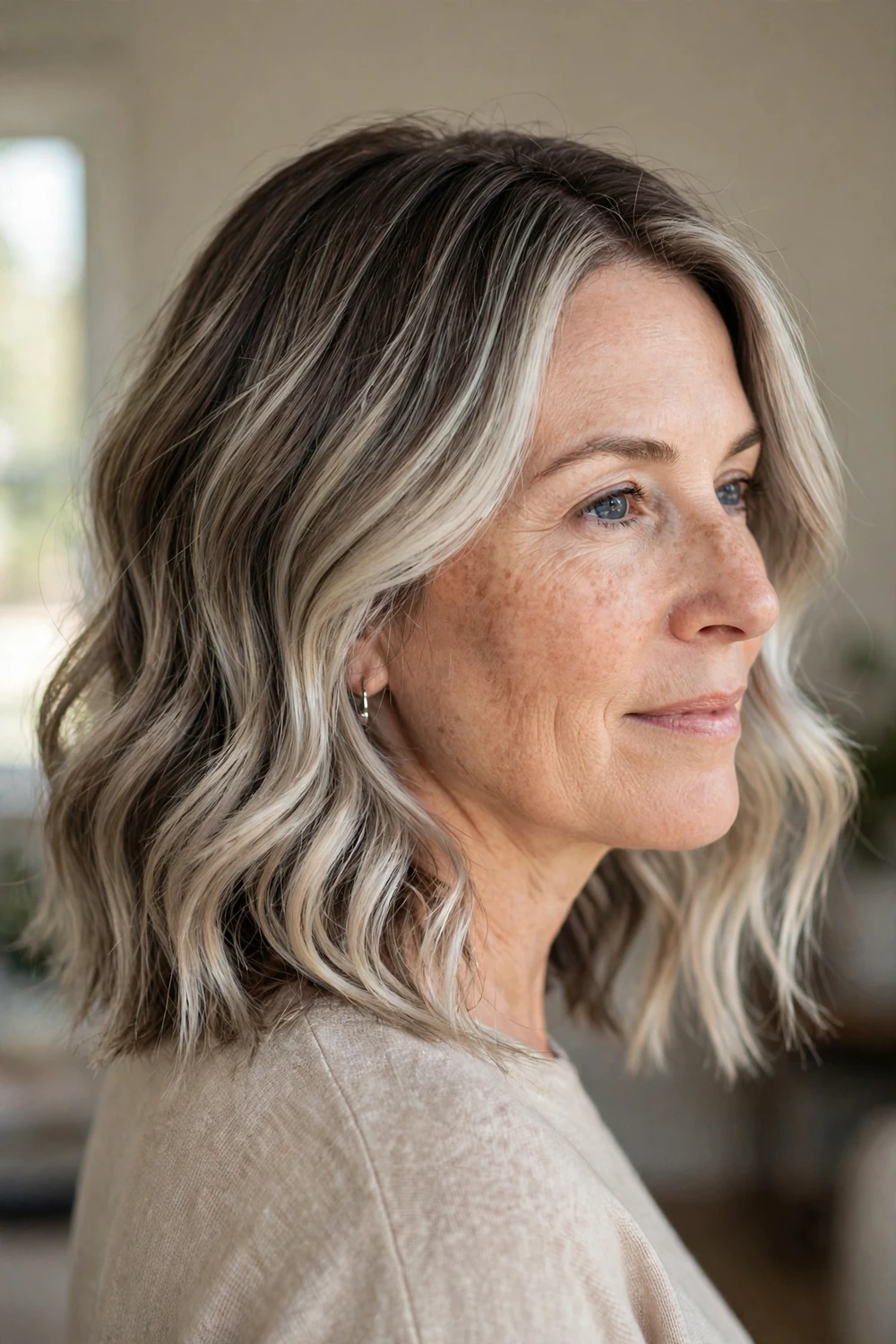
Bronde lives between brown and blonde, and the cool version keeps both halves frosty. The two-toned blend is painted on, so grow-out is soft and forgiving. It suits medium to long hair where the gradient has room to show. This is a workhorse shade: modern, wearable, and easy to live with.
Try this: Schedule a toner at 6 to 8 weeks. The bronde blend stays, but the cool tone is what needs refreshing.
28. Dark Ash Blonde
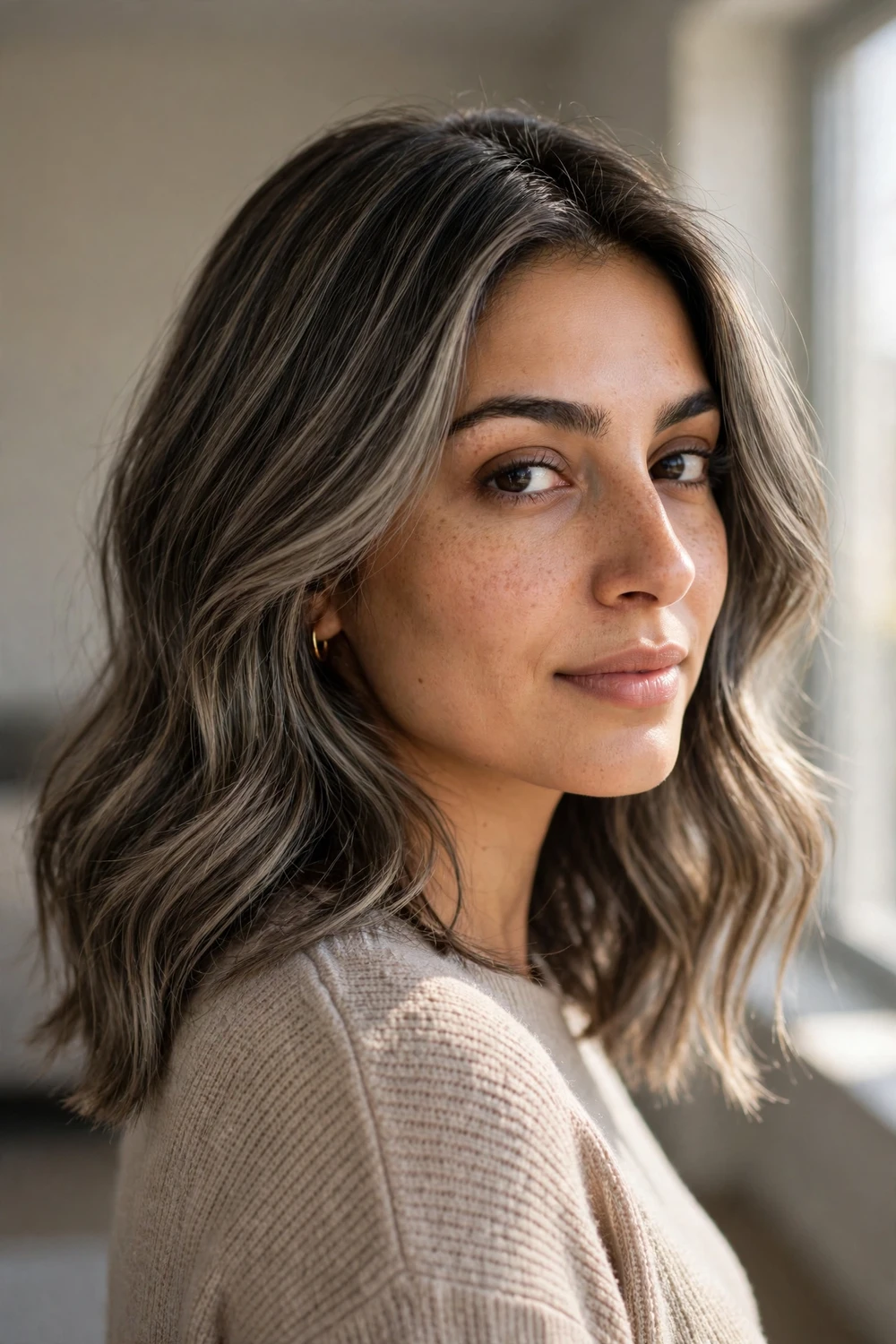
Dark ash blonde sits at the deep end of blonde, around a level 7, with smoky gray undertones. It’s cooler and more defined than a dark beige blonde, and it flatters medium skin tones that can’t hold icy platinum. It also covers gray better than lighter ash blondes do.
Try this: If you have hard water, use a clarifying shampoo monthly. Mineral buildup turns ash tones warm and brassy.
29. Deep Burgundy
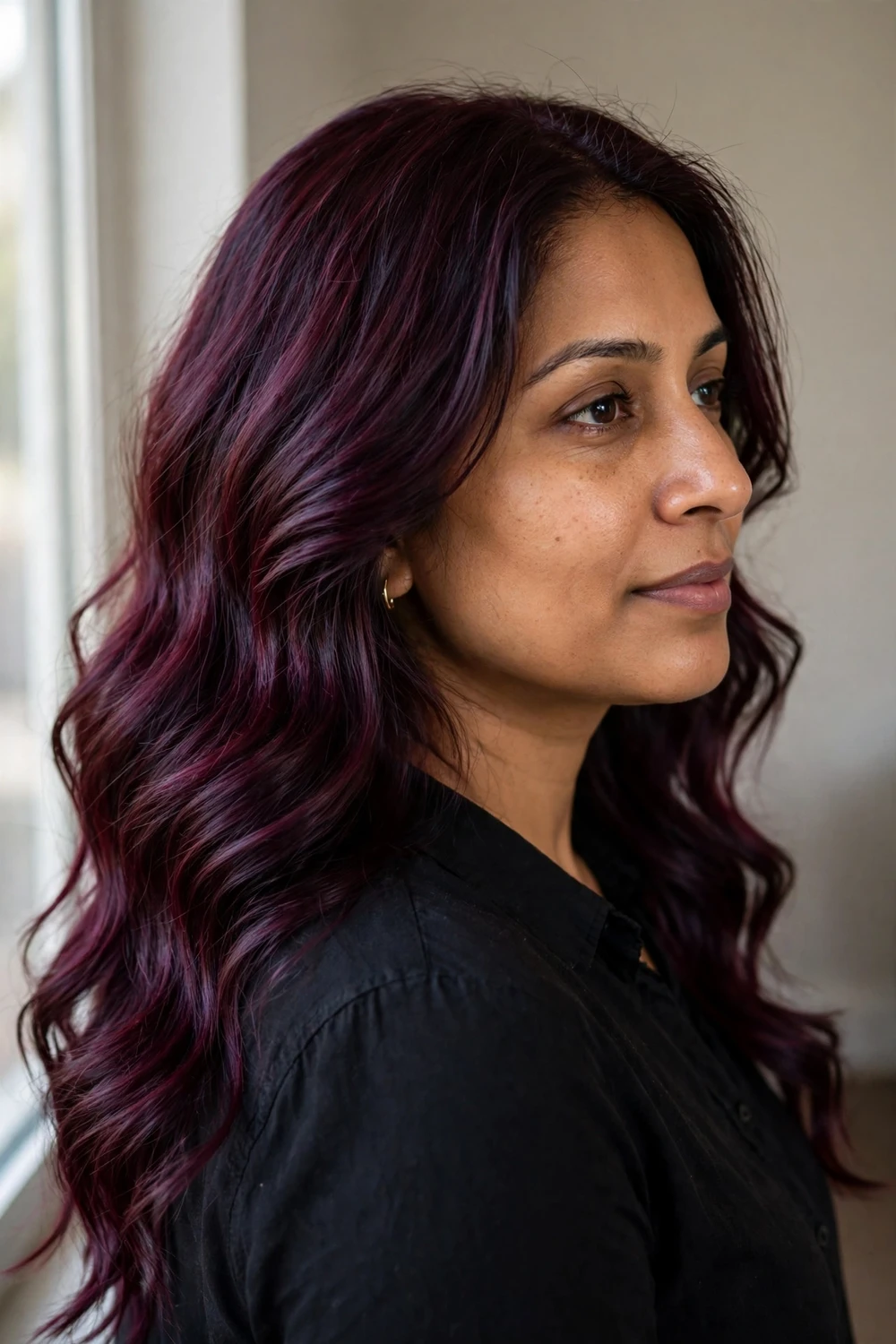
Deep burgundy is the one cool-leaning red that earns its place here. The violet undertones keep it on the cool side of the spectrum, unlike copper or auburn. It glows in winter light and adds warmth to the face without clashing with a cool palette. It’s also a strong gray-covering shade.
Try this: Red fades fastest of all dye colors. Wash with cool water and a color-safe shampoo to stretch it to 6 weeks.
30. Cool Plum and Aubergine
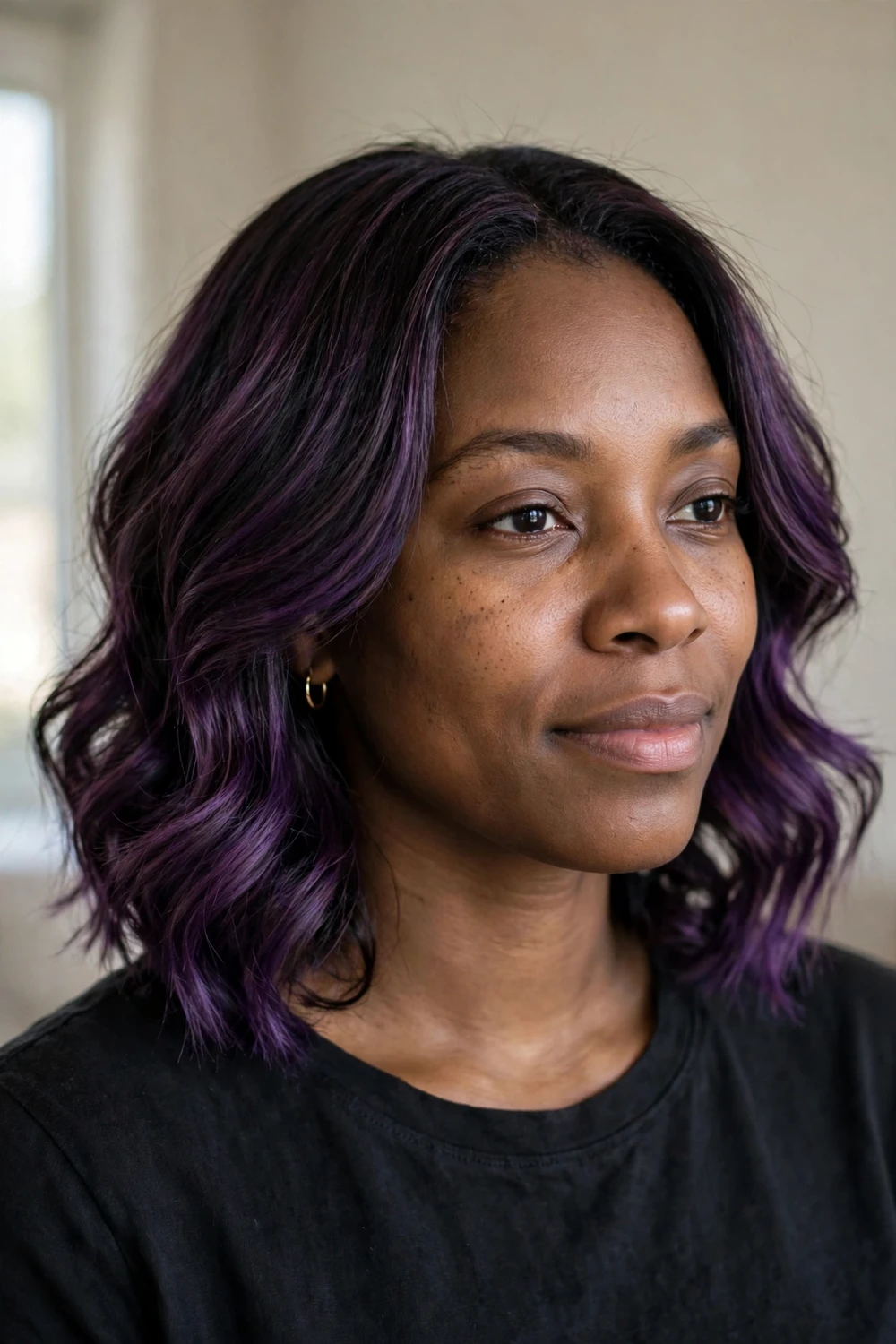
Cool plum and aubergine blend purple and deep violet into a dark base for a shade that’s moody and modern. The cool purple tones harmonize with winter palettes, and the depth means it doesn’t demand heavy lightening on naturally dark hair. It’s bold enough to feel like a change, dark enough to stay wearable.
Try this: Use a purple-depositing mask every other week to keep the violet tones from washing out to a muddy brown.
Cool Winter Hair Colors Comparison at a Glance
| Style | Best Occasion | Difficulty | Hold Time |
|---|---|---|---|
| Icy Blonde Melt | Everyday with edge | Hard | 6-8 weeks |
| Snowy Platinum | Statement looks | Hard | 4-6 weeks |
| Ash Platinum Blonde | Work-friendly cool | Hard | 5-7 weeks |
| Metallic White Blonde | Events and photos | Hard | 4-6 weeks |
| Crystal Ash Blonde | Everyday cool | Medium | 6-8 weeks |
| Pearl Blonde | Soft winter looks | Medium | 6-8 weeks |
| Icy Pearl Ombre | Low-key drama | Medium | 8-12 weeks |
| Glacier Silver | Statement looks | Hard | 3-5 weeks |
| Silver Ash Dimension | Everyday with edge | Medium | 8-10 weeks |
| Ash Beige Balayage | Work-friendly cool | Medium | 8-12 weeks |
| Snowfall Balayage | Subtle seasonal change | Medium | 8-12 weeks |
| Sombre Babylights | Natural-looking lift | Easy | 10-12 weeks |
| Gray Hair Blending | Embracing gray | Easy | 10-12 weeks |
| Dreamy Dusty Lavender | Temporary experiment | Medium | 3-4 weeks |
| Granite Grey | Modern minimal looks | Medium | 5-7 weeks |
| Mushroom Brown | Everyday neutral | Easy | 8-10 weeks |
| Smoky Chocolate | Rich winter brunette | Easy | 8-10 weeks |
| Subtle Ice Brown | Conservative settings | Easy | 10-12 weeks |
| Frosted Mocha | Noticeable refresh | Medium | 8-10 weeks |
| Polar Brunette | Everyday with edge | Medium | 8-10 weeks |
| Cool Dark Brown | Polished simplicity | Easy | 8-12 weeks |
| Soft Black | Natural depth | Easy | 8-12 weeks |
| Deep Espresso | High-shine brunette | Easy | 8-10 weeks |
| Midnight Black Shine | Full gray coverage | Easy | 8-12 weeks |
| Arctic Blue-Toned Black | Subtle statement | Easy | 6-8 weeks |
| Black Hair with Ashy Babylights | Dimension on dark hair | Medium | 8-12 weeks |
| Cool-Toned Bronde Balayage | Modern everyday | Medium | 8-12 weeks |
| Dark Ash Blonde | Cool skin tones | Medium | 6-8 weeks |
| Deep Burgundy | Evening and events | Medium | 4-6 weeks |
| Cool Plum and Aubergine | Bold winter looks | Medium | 5-7 weeks |
How to Choose the Right Cool Winter Shade for You
Start with your skin’s undertone. Look at the veins on your wrist in daylight. Blue or purple veins point to cool undertones, which pair with every shade on this list. Green veins point to warm undertones, where softer options like mushroom brown or frosted mocha will sit better than icy platinum.
Next, be honest about maintenance. Platinum, silver, and metallic white need salon visits every 4 to 6 weeks plus weekly toning at home. If that sounds like too much, the balayage, ombre, and blended options on this list give you cool tones with two to three appointments a year.
Consider your starting point too. If your hair is naturally dark, the brunette and black shades here need little to no lightening. Light hair reaches the icy blondes and silvers with far less damage. Your colorist can tell you in one consultation which shades are realistic for your hair in a single session.
Mistakes to Avoid
The biggest mistake is going warm by accident. Box dyes and generic “ash” formulas can pull brassy as they fade, so if you’re maintaining at home, stick to products labeled cool, ash, or anti-brass. A warm fade undoes the whole point of a cool shade.
Skipping the strand test is another common one. Cool tones, especially silver and lavender, behave unpredictably on previously colored hair. A quick test behind the ear saves you from a surprise on the full head.
Don’t ignore the cut. Cool colors show every uneven layer and split end because the light reflects off the damage. A trim before coloring makes the shade look noticeably cleaner.
If you want to compare the frosty side of winter with its brighter, more vivid cousin, browse these bright winter hair colors to see which temperature suits your style better.
For more icy blonde inspiration beyond this list, our ash blonde hair color ideas cover the full range from silver-blonde to smoky ash.
Brunettes looking to stay cool without going light should also see these ash brown hair color ideas for deeper smoky options.
And if the dimensional silver looks caught your eye, these brown hair with silver highlights show how metallic tones play on darker bases.
Frequently Asked Questions
What are the best cool winter hair colors for cool skin tones?
Icy platinum, glacier silver, ash platinum blonde, and arctic blue-toned black all harmonize with cool skin undertones. If you want something softer, mushroom brown and dark ash blonde give you cool tones without the high contrast. Silver jewelry looking better on you than gold is a good sign these shades will work.
Can warm skin tones wear cool winter hair colors?
Yes, with the right depth. Warm skin tones usually do better with the deeper cool shades like smoky chocolate, frosted mocha, and deep espresso than with stark platinum, which can create too much contrast. Mushroom brown is the safest crossover shade since its neutral base works with both warm and cool undertones.
How do I keep cool-toned hair from turning brassy?
Wash with purple shampoo once a week to neutralize yellow tones, and add a blue shampoo rotation if you have ash browns going warm. Hard water is a common culprit, so a shower filter or monthly clarifying wash helps. Heat styling without protectant also pushes cool tones warm, so keep temperatures moderate.
Do cool winter hair colors work on dark hair?
Many of them work better on dark hair. Deep espresso, cool dark brown, midnight black shine, and arctic blue-toned black need little to no lightening. Balayage and babylight options like snowfall balayage and sombre babylights add cool dimension while keeping your natural base. Only the lightest silvers and platinums require serious lifting.
Which cool winter hair color is easiest to maintain?
Cool dark brown, soft black, and midnight black shine are the easiest since they need no lightening and fade slowly. Among lighter options, icy pearl ombre and ash beige balayage grow out the most gracefully. Glacier silver and snowy platinum sit at the other end and need salon visits every 4 to 6 weeks.
Final Thoughts
Cool winter hair colors reward commitment to the cool side. Pick your depth honestly, budget for the maintenance your shade demands, and protect the tone with the right shampoo. I’ve seen too many cool blondes turn brassy from neglect, so treat upkeep as part of the color, not an afterthought. Done right, these shades look sharper in winter than anything warm could.

