


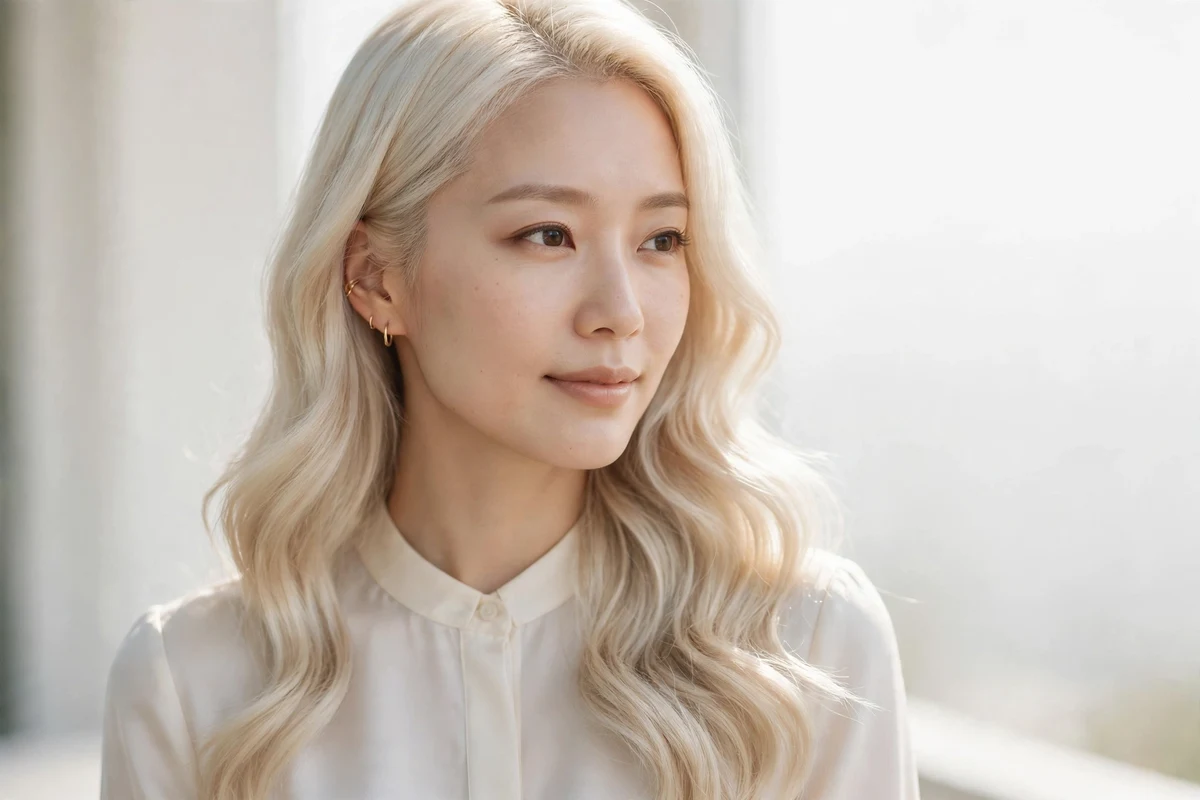
Winter hair does not have to go dark and flat. The right shade can catch low winter light, add glow to pale skin, and keep your whole look feeling alive through the coldest months. Bright shades work because winter wardrobes run dark, so hair becomes the focal point.
This list covers 26 bright winter hair colors, from icy blondes and glossy blacks to cherry reds and jewel tones. I’ve spent years testing how different shades behave in winter light, and cool, high-shine color almost always wins. Each idea includes who it suits and how to keep it looking fresh.
Quick answer: The brightest winter hair colors are icy platinum, silver blonde, glossy jet black, cherry cola, burgundy, and jewel tones like emerald and sapphire. Cool undertones and high shine keep them looking luminous instead of dull in winter light.
Quick Takeaways
- Bright winter color means luminous and light-reflecting, not necessarily blonde. Glossy black reads as bright as platinum under the right light.
- Cool undertones suit most winter skin. Ash, icy, and blue-based shades keep color from turning brassy or muddy.
- Vivid fashion shades (emerald, sapphire, magenta) last 4 to 8 weeks and need sulfate-free shampoo.
- Balayage and money pieces give brightness with softer grow-out, so they need less salon time than all-over color.
- Purple shampoo is the single most useful product for keeping blondes and silvers bright through winter.
Why Bright Shades Work So Well in Winter
Winter light is weaker and cooler than summer light. Hair color that looked rich in August can read flat by January. Shades with built-in brightness, either very light tones or very dark tones with heavy shine, hold their impact when daylight fades.
Your wardrobe helps too. Dark coats, scarves, and sweaters create a high-contrast frame around your face. A luminous shade inside that frame draws the eye, while a dull one disappears. This is why icy blondes and glossy blacks both count as bright winter hair colors, even though they sit at opposite ends of the spectrum.
One caution: brightness fades faster in winter. Indoor heating dries hair out, and dry hair reflects less light. Every idea below includes an upkeep note, because a bright shade that goes dull is worse than a safe shade done well.
1. Snow Platinum
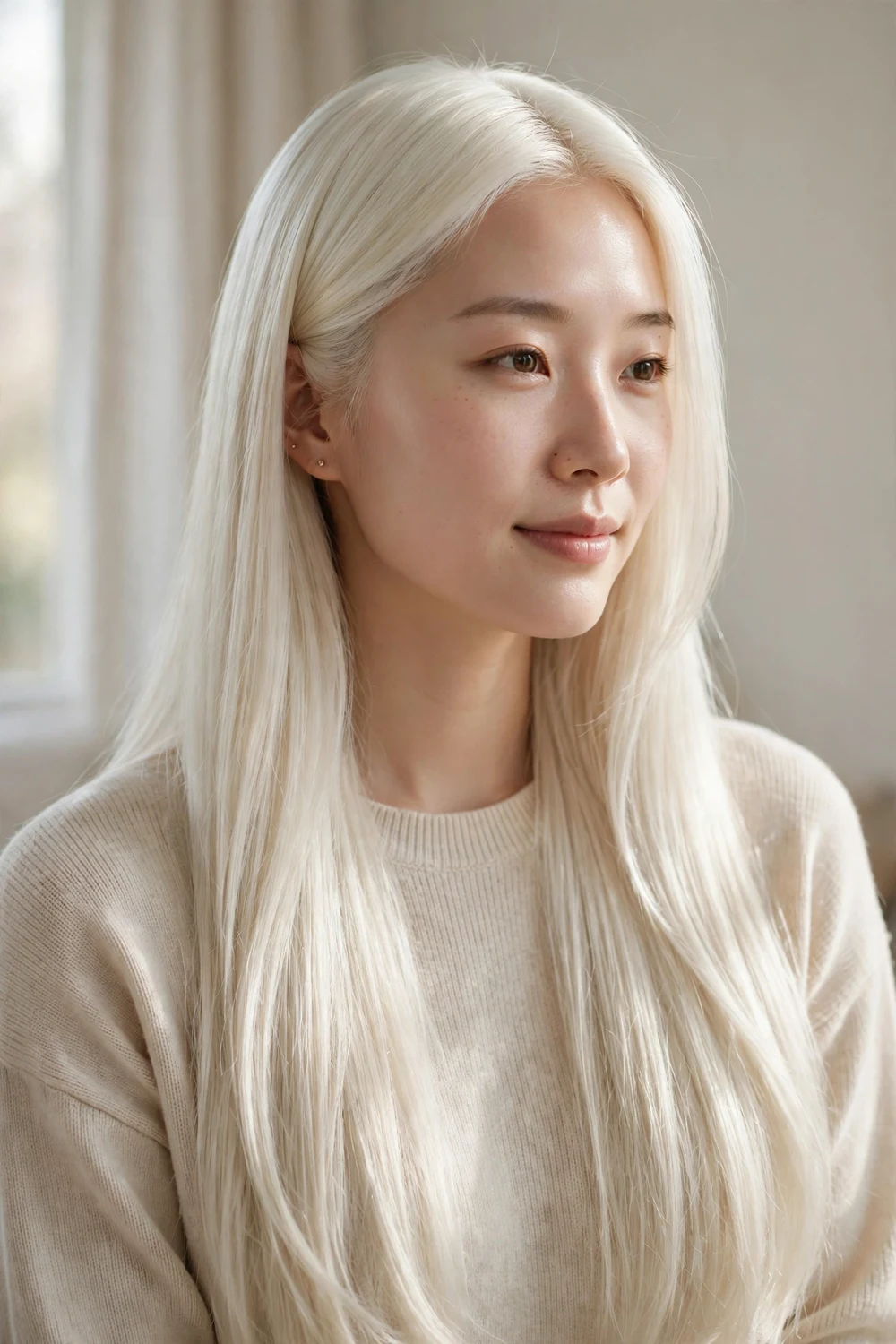
Nothing catches weak winter daylight like near-white hair. Snow platinum sits at level 10 with cool, almost blue undertones, and it creates maximum contrast against dark winter clothing. It suits fair and light skin best, though deeper skin tones can carry it with the right makeup. The tradeoff is upkeep: roots show in 3 to 4 weeks, and the hair needs regular toning to stay icy instead of yellow.
Try this: Wash with purple shampoo twice a week and leave a violet toner on for 5 minutes every third wash. Book a root touch-up every 4 weeks so the grow-out line stays soft.
2. Icy Blonde
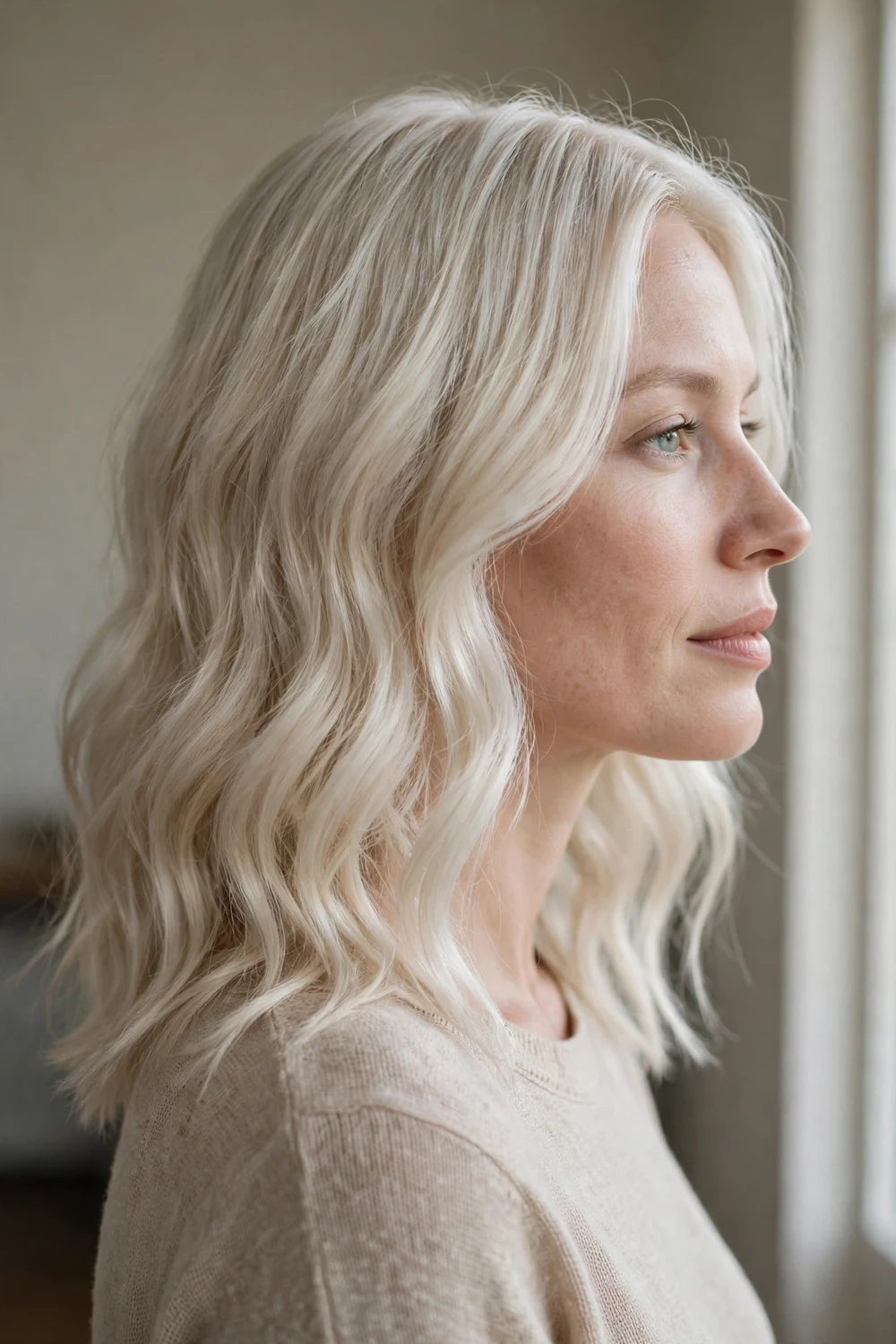
Think of icy blonde as platinum with the edges softened. It keeps the pale, cool brightness but allows a little more depth at the root, which makes grow-out far more forgiving. This shade flatters light to medium skin and works on straight, wavy, or curly textures. Because it is not quite as lifted as platinum, hair health holds up better, so fine hair types can manage it with less breakage.
Try this: Ask your colorist for a shadow root one level darker than the lengths. It stretches the time between appointments to 6 or 8 weeks without a harsh line.
3. Silver Blonde
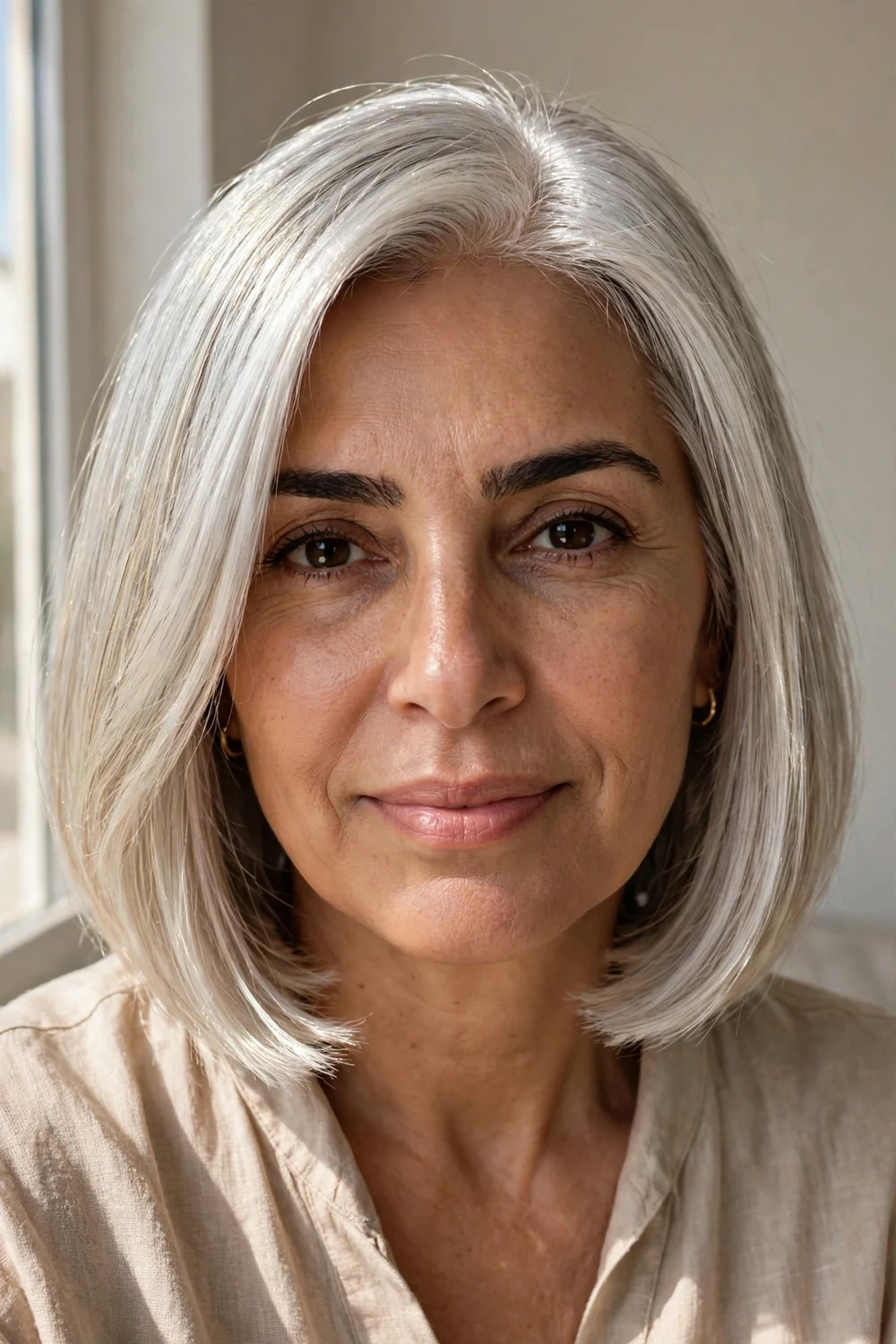
A metallic gray sheen sets silver blonde apart from plain platinum. The silver cast reflects light in a way that looks almost luminous indoors, which is exactly what winter hair needs. It suits cool and neutral skin tones and looks sharp on blunt cuts like bobs and lobs, where the flat surface shows off the shine. Silver fades faster than other blondes, so expect the tone to drift toward pale blonde within 3 weeks.
Try this: Refresh the silver with a silver color-depositing conditioner once a week. It takes 10 minutes in the shower and pushes a salon gloss out by weeks.
4. Cool Champagne
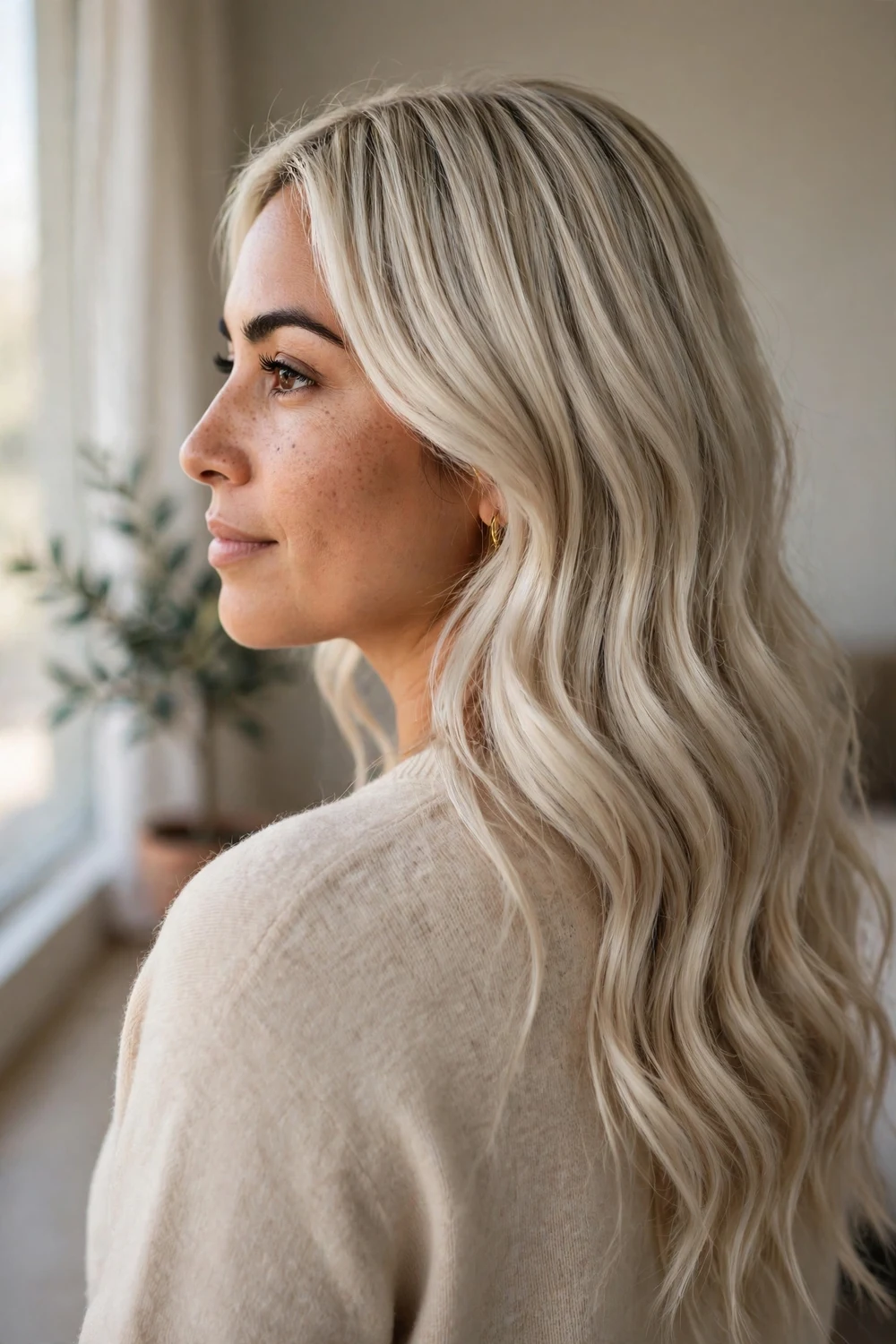
Champagne sits between icy blonde and beige, with just enough cool tone to stay bright without looking stark. It is one of the most wearable light shades for winter because it flatters a wider range of skin tones, including medium and olive. The softness makes it office-friendly while still reading as a deliberate, polished color. It also photographs well in the warm indoor lighting of holiday events.
Try this: A clear gloss at the salon every 6 weeks keeps champagne from dulling. At home, a weekly hydrating mask matters more than toner for this shade.
5. Creamy Baby Blonde
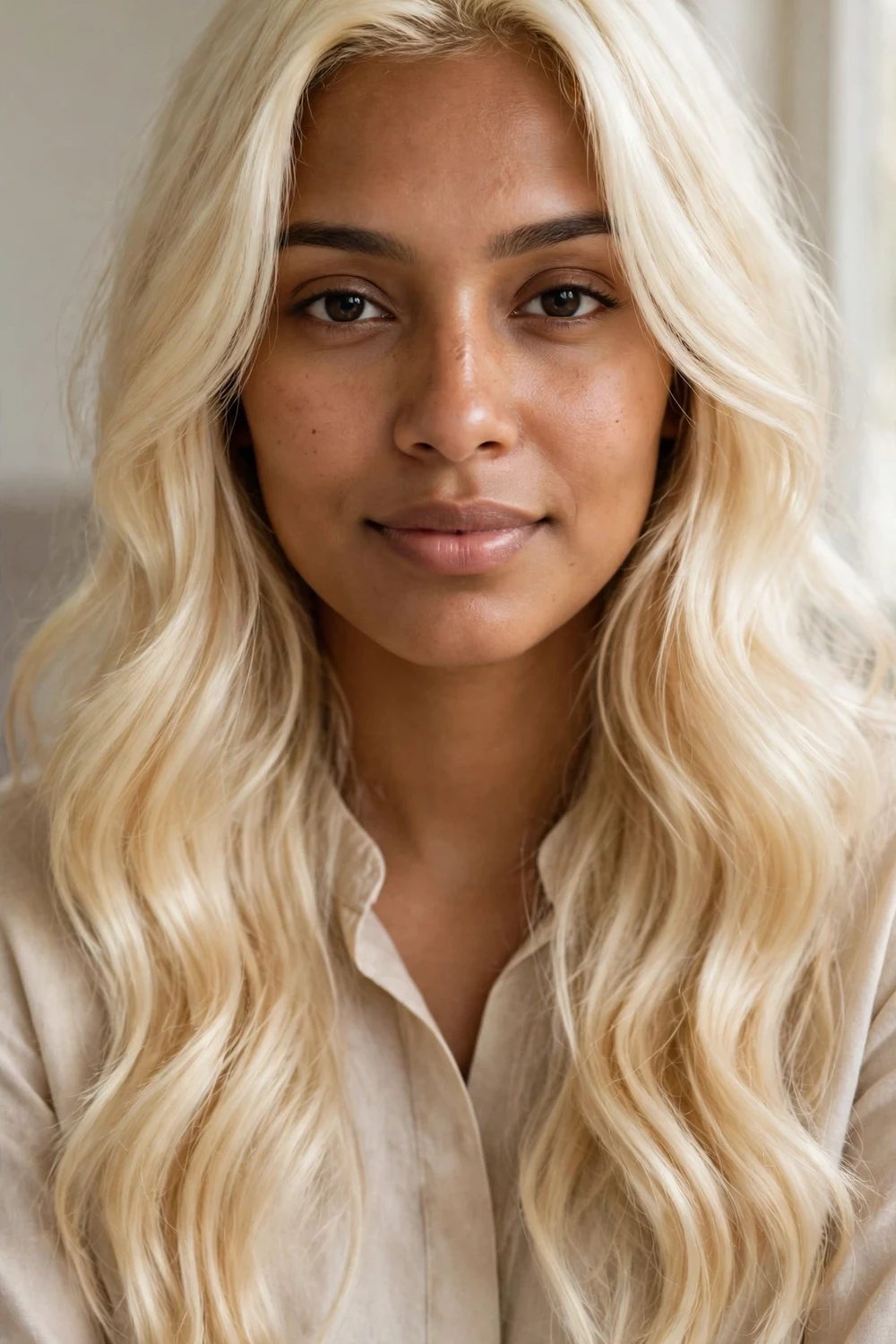
For brightness without heavy bleaching, baby blonde keeps things light and soft. Fine, closely spaced highlights mimic the way children’s hair lightens, which gives a natural glow rather than an obvious dye job. This is a strong pick for naturally dark blonde or light brown hair, since the lift is only 2 to 3 levels. It suits most skin tones and grows out with almost no visible line.
Try this: Request babylights rather than chunky foils. The finer the highlight, the softer the grow-out, and you can stretch appointments to 10 or 12 weeks.
6. Ashy Blonde Bombshell
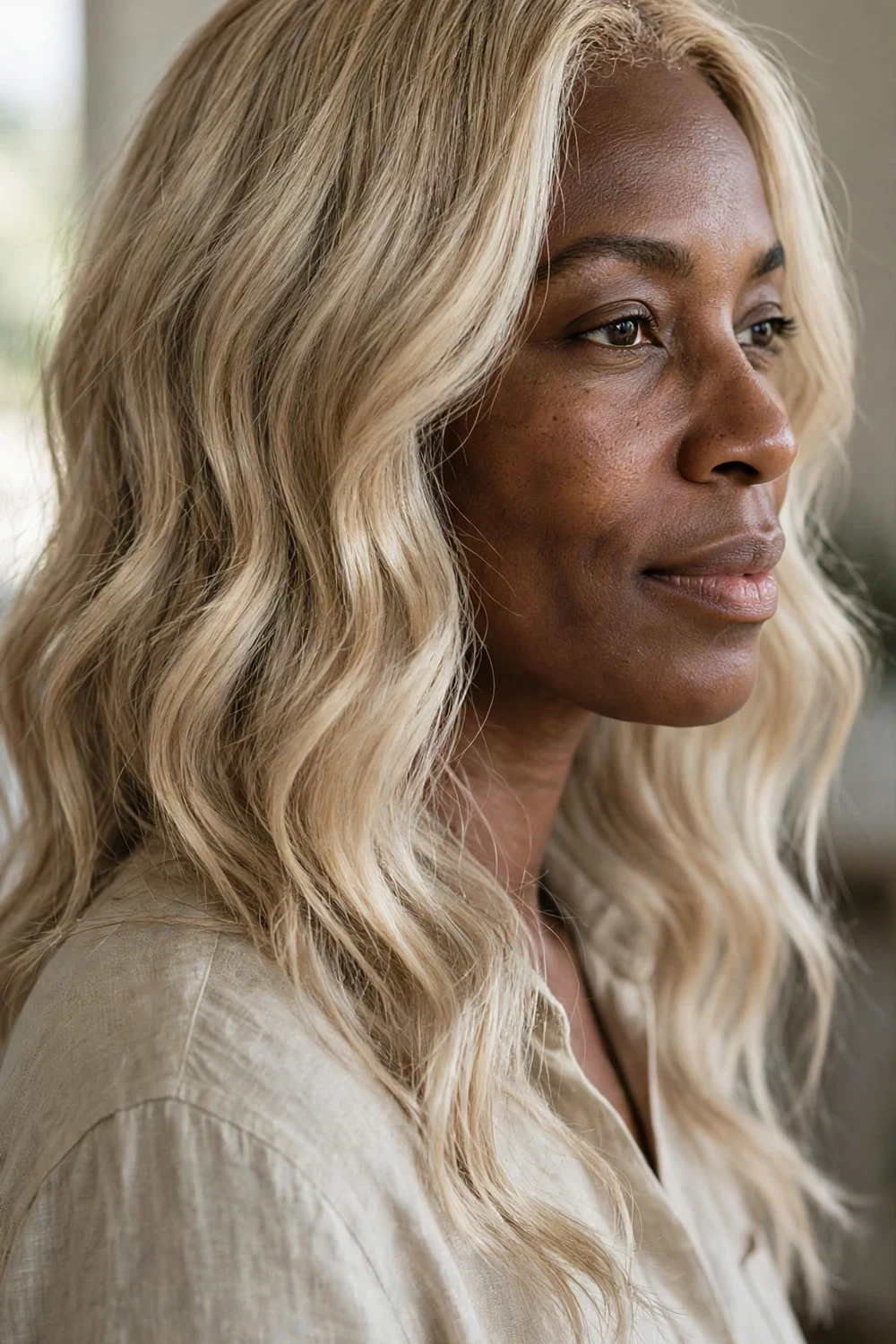
Ash tones keep blonde looking expensive in winter. The gray-beige cast cuts warmth, which stops the color from turning brassy under indoor lighting. Ashy blonde suits cool and neutral skin and adds a sleek, modern edge to long layers or waves. If your hair pulls warm naturally, this shade needs a blue-based toner at every appointment to hold the cool finish.
Try this: If brassiness creeps in between visits, a blue shampoo (not purple) targets orange tones specifically. Use it once a week, alternating with your regular shampoo.
7. Jet Black

Gloss is the whole point of jet black in winter. A true level 1 black with a mirror finish reflects more light than most brown shades, which is why it reads as bright rather than heavy. It suits fair to deep skin and creates striking contrast with light eyes. The risk is flatness: black without shine looks dull fast, so this color demands healthy, conditioned hair more than any other on this list.
Try this: Finish every wash with a cold rinse and a silicone-free shine serum on the mid-lengths. A clear gloss treatment every 8 weeks restores the reflective finish.
8. Blue-Black
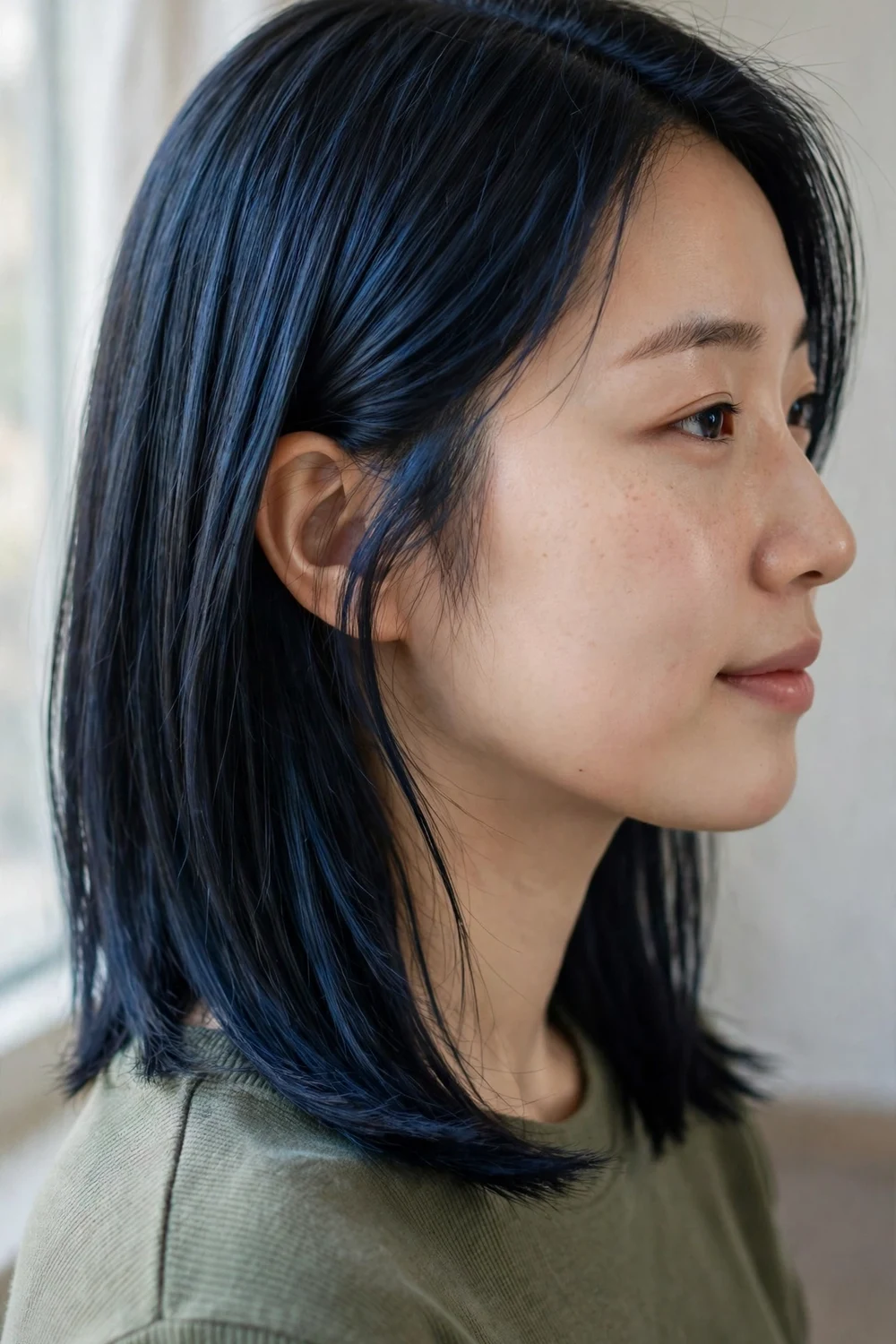
A hint of blue gives black hair a cool, almost electric depth that plain black lacks. In daylight the blue sheen shows clearly; indoors it reads as an unusually rich black. This shade flatters cool skin tones and looks especially sharp on sleek, straight styles where light hits evenly. Blue-black fades toward regular black within a few weeks, so the special effect needs refreshing.
Try this: Use a blue-black color-depositing conditioner every other week to hold the blue cast. Regular black dye will cover it but kill the effect.
9. Glossy Espresso
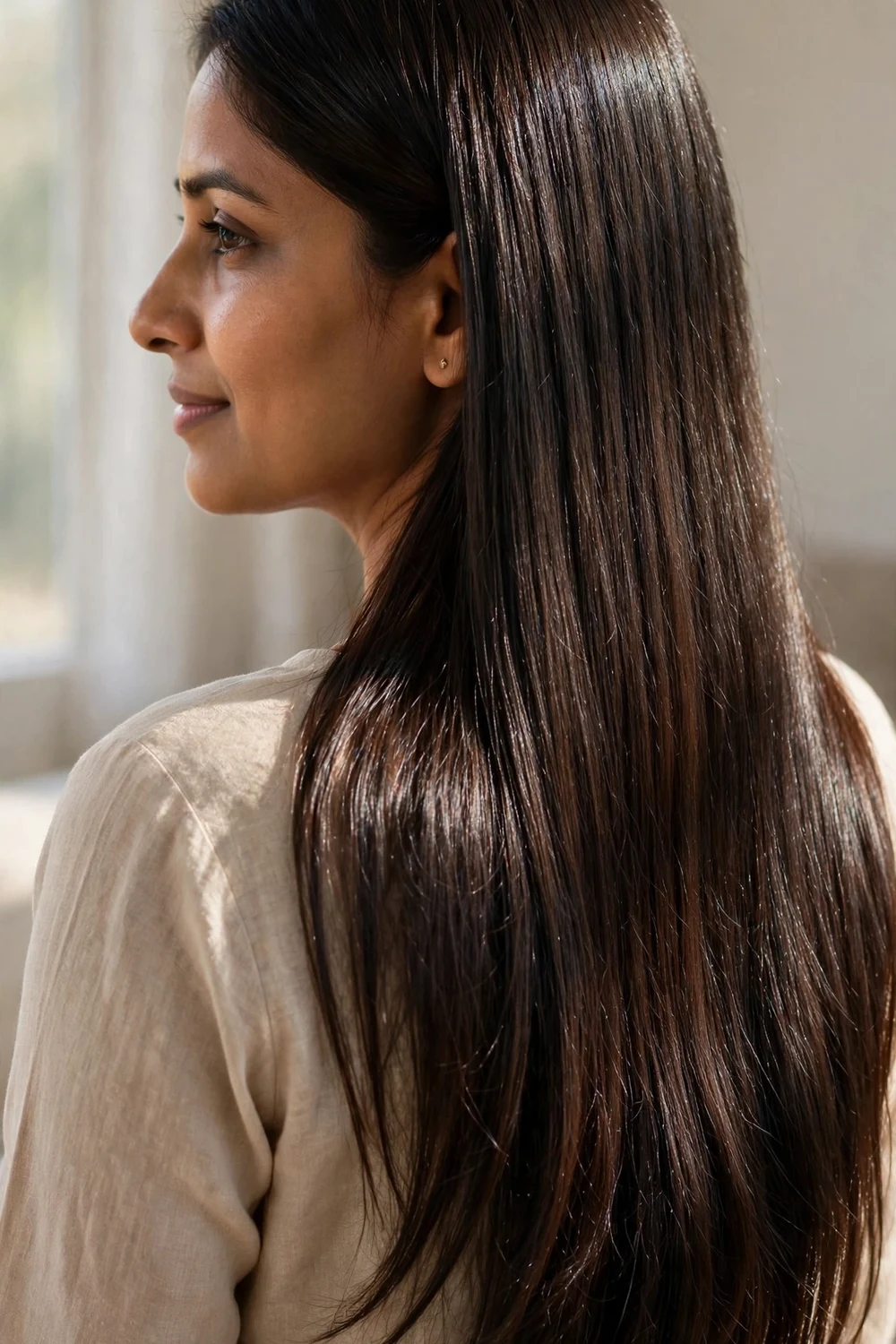
Espresso reads nearly black indoors but reveals warm-free brown depth in daylight. That dual behavior makes it one of the most versatile dark shades for winter, bright enough to frame the face, soft enough for professional settings. It suits every skin tone and needs less maintenance than true black because regrowth blends in. If your natural hair is dark brown, this is often just a gloss away.
Try this: A demi-permanent espresso gloss (level 3) over your natural color gives the shine without full commitment. It fades gradually over 6 to 8 weeks.
10. Rich Chocolate
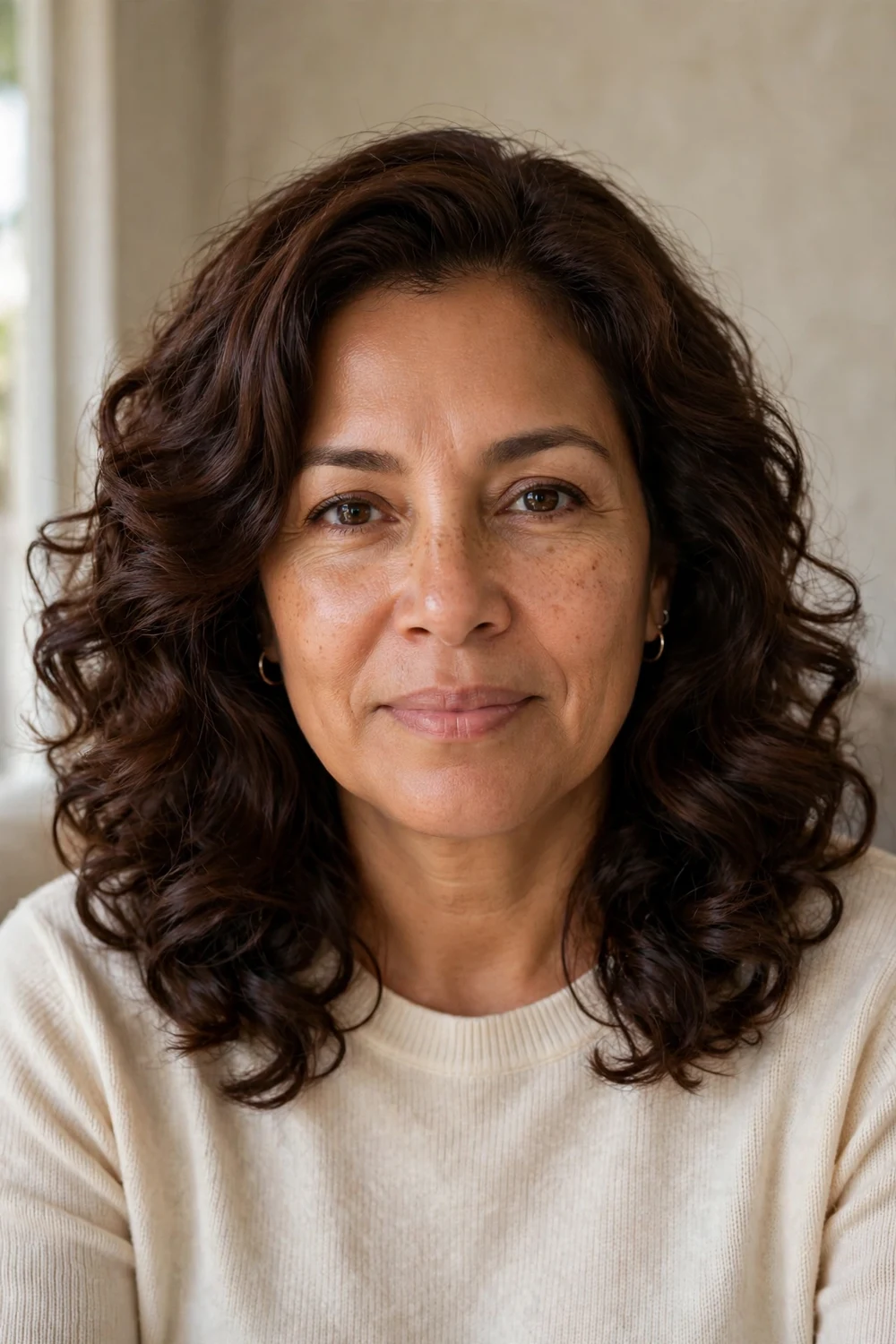
Chocolate keeps its glow where flatter browns go dull. The medium-dark depth (around level 4) holds shine well and warms the complexion without drifting brassy. It suits light to deep skin and looks full on medium and thick hair. On fine hair, ask for the color in a demi-permanent formula, which adds shine without the damage of permanent dye.
Try this: Chocolate fades fastest at the ends. Apply leftover dye or a chocolate gloss to the last 3 inches for the final 10 minutes of processing.
11. Ash Brown
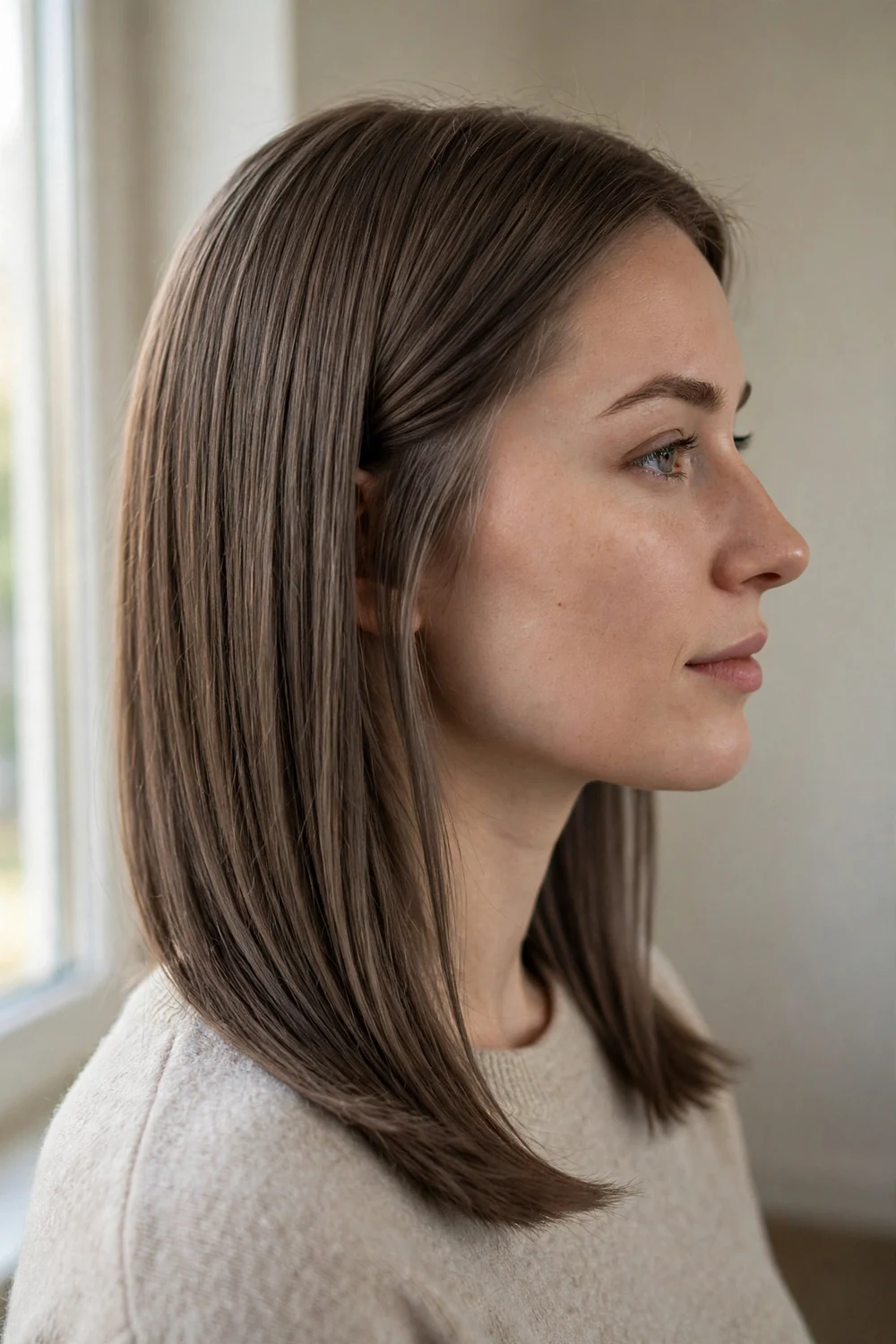
Ash brown is the workhorse of bright winter color. The cool, gray-tinged finish keeps medium brown hair looking clean and deliberate instead of muddy. It suits cool and neutral skin and is a natural-looking option for anyone growing out darker dye. Because it sits at level 5 to 6, it also makes a good base for the balayage ideas later in this list.
Try this: If your hair pulls red, your colorist should use a green-based ash formula to neutralize it. At home, avoid clarifying shampoos, which strip ash tones fast.
12. Cool Mocha
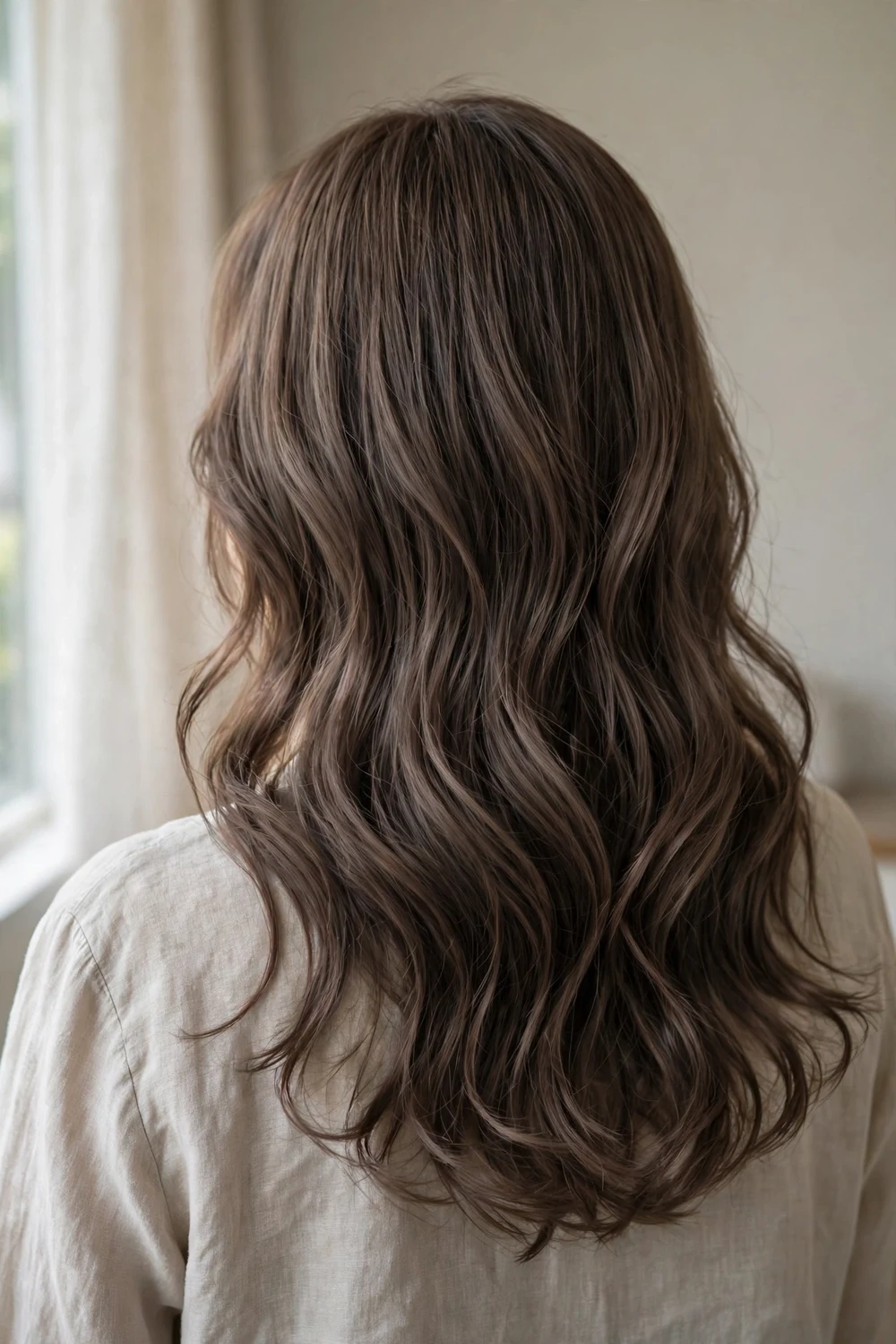
Mocha adds a whisper of warmth-free richness to medium brown hair. It is darker than caramel and cooler than chestnut, landing in a spot that flatters most skin tones without washing anyone out. The subtle depth makes hair look thicker, which helps fine hair in particular. Mocha grows out gracefully, so it is a low-stress pick if you color at home.
Try this: Box dye in a cool mocha shade works well for root touch-ups between salon visits. Apply to roots only, then pull through for the last 5 minutes.
13. Cherry Cola
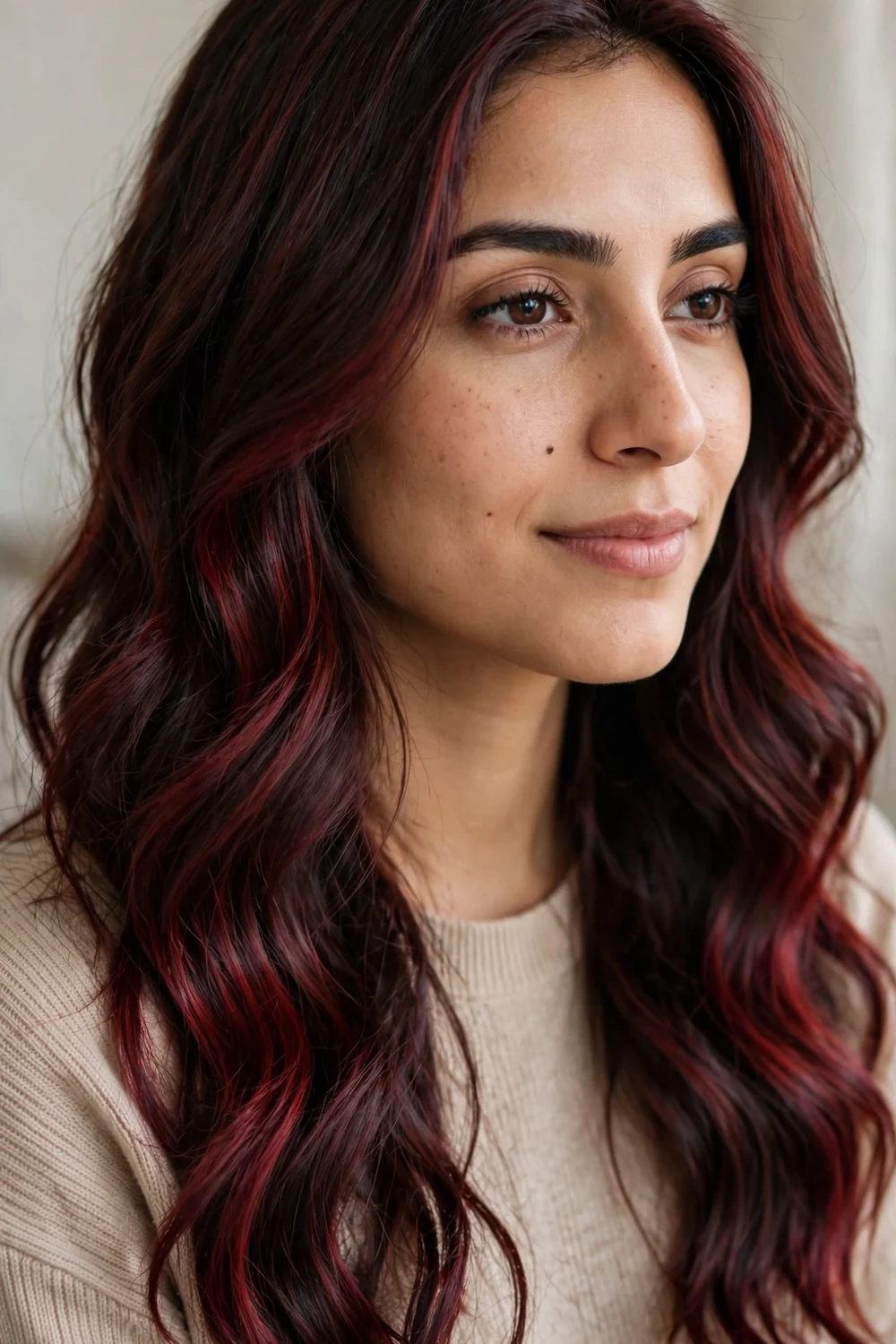
Cherry cola layers dark red over a deep brunette base, giving dimension that flat red dye cannot match. The color shifts between brown and red depending on the light, which keeps it interesting through long winter days. It suits light to deep skin and works as an all-over color or a first step toward bolder reds. The red tones fade fastest, so the color needs more care than the browns above.
Try this: Wash in cool water and use a red color-depositing conditioner weekly. Heat styling above 350°F strips red pigment quickly, so keep the flat iron low.
14. Vivid Burgundy
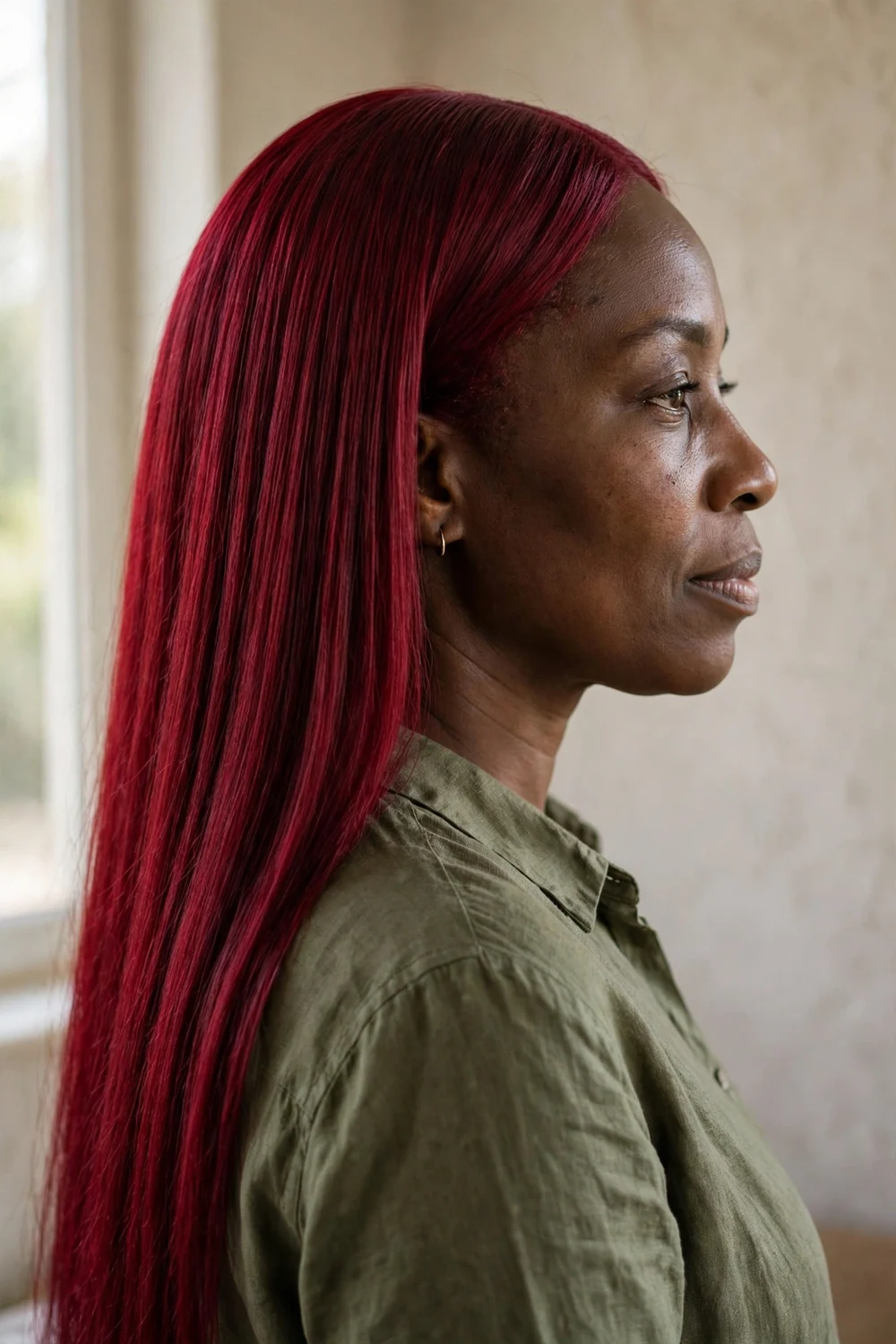
Burgundy at full saturation is a winter classic for a reason. The deep wine-red tone glows against dark clothing and flatters fair to deep skin, especially with cool undertones. Unlike brighter reds, burgundy stays sophisticated at work while still reading as bold. It needs pre-lightening only on very dark hair; medium brown hair can often take it directly.
Try this: For maximum richness, ask for a double process: a red base with a violet-red gloss on top. The layered color lasts noticeably longer than a single application.
15. Wine Red and Plum
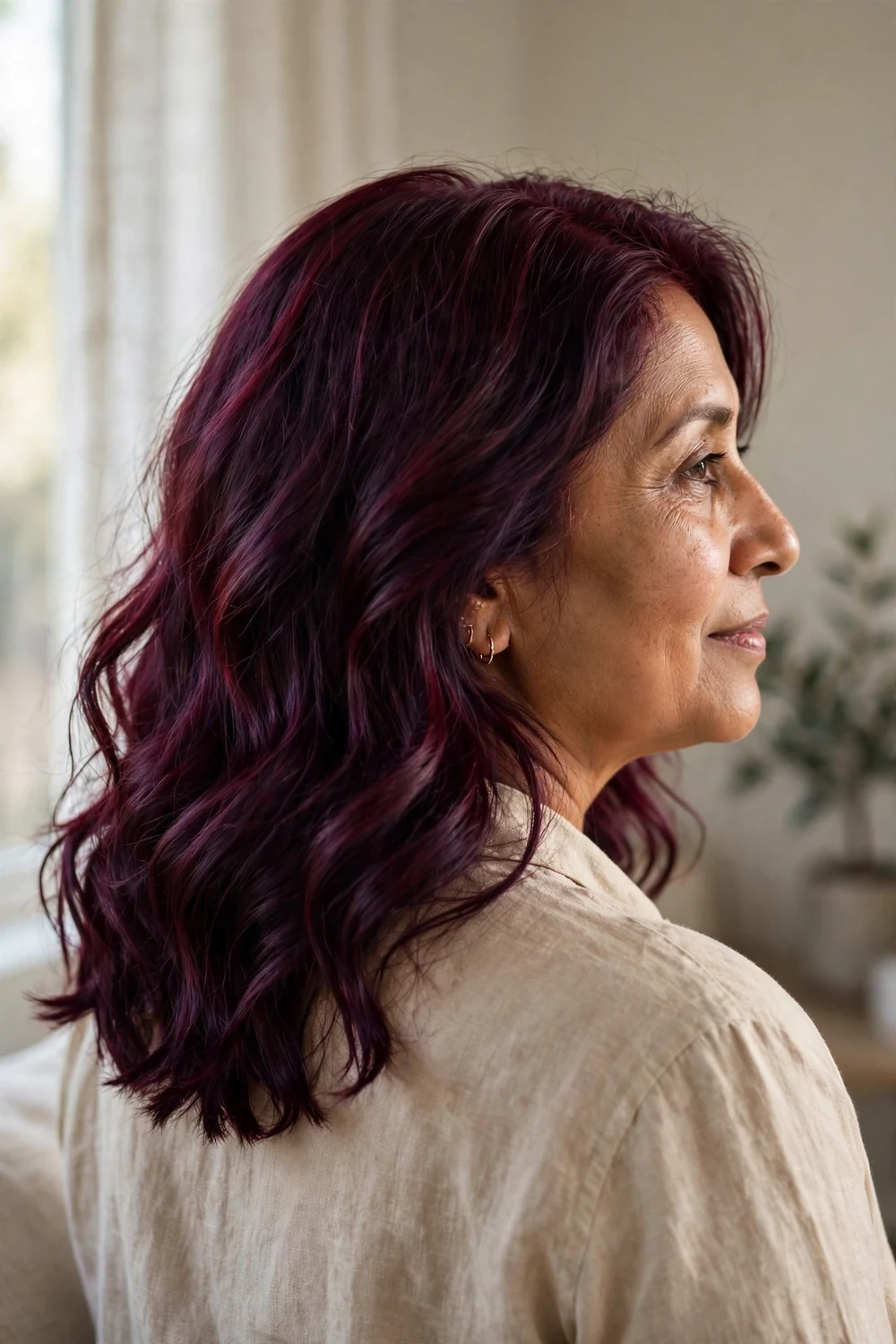
Plum leans purple where burgundy leans red, and that cooler cast makes it glow on cool skin tones. In low light it reads as a rich dark shade; when light hits it, the purple-red dimension shows. This is a good middle ground if full magenta feels like too much but you still want visible color. It suits medium to deep skin particularly well.
Try this: Plum fades toward brown within a month. A purple-red gloss refresh at week 4 costs less than a full color and brings the dimension back.
16. Magenta Berry
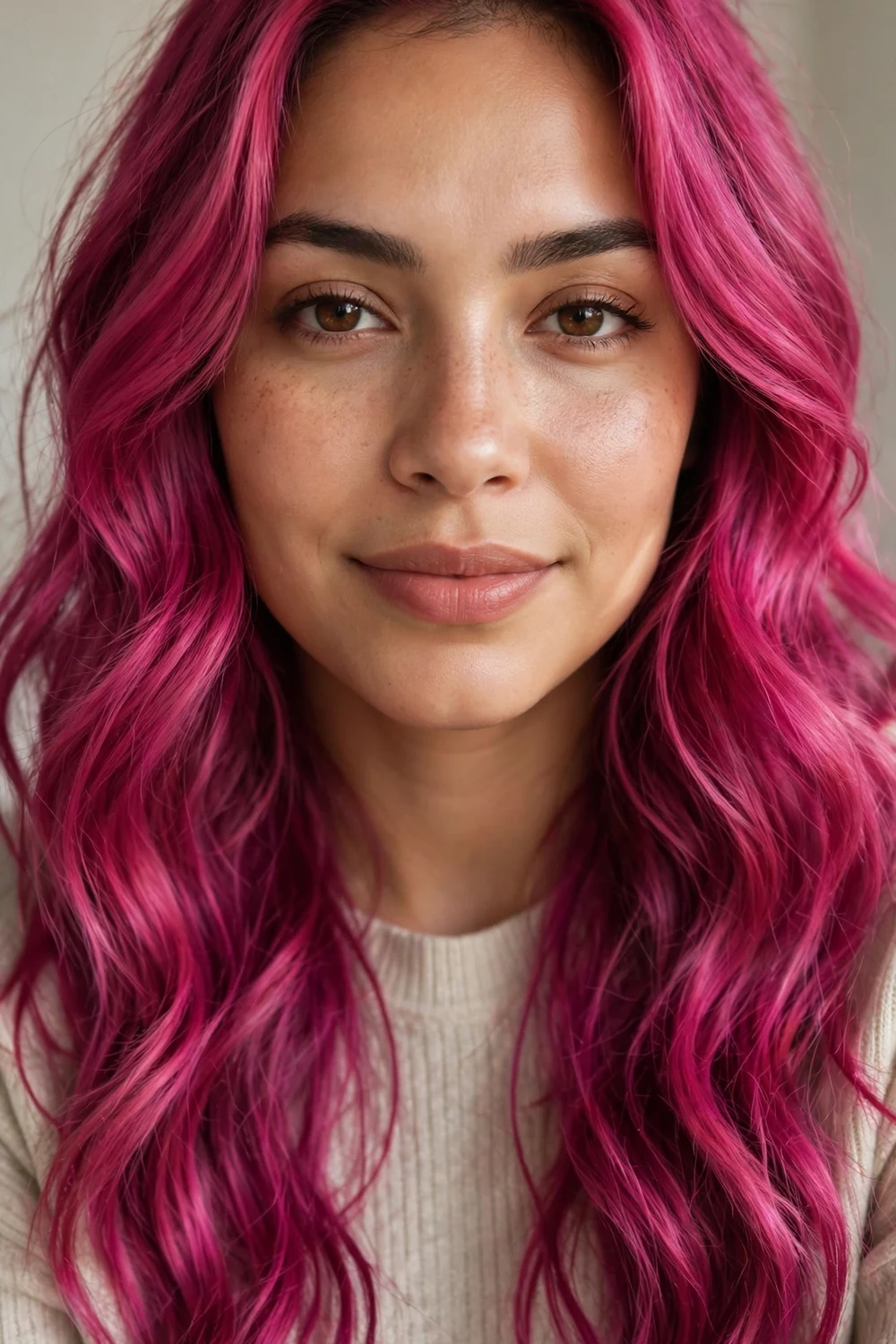
If you want one shade that guarantees brightness, magenta delivers. The pink-purple intensity stands out against gray winter skies and dark coats like nothing else on this list. It suits fair to medium skin best and needs pre-lightened hair to show true, so dark hair requires bleaching first. Expect 4 to 6 weeks of strong color before it softens to pink.
Try this: Sleep on a dark pillowcase and rinse with cold water only. Magenta transfers to fabric and fades fast in hot water, so these two habits add weeks to the color.
17. Rose Gold Tones
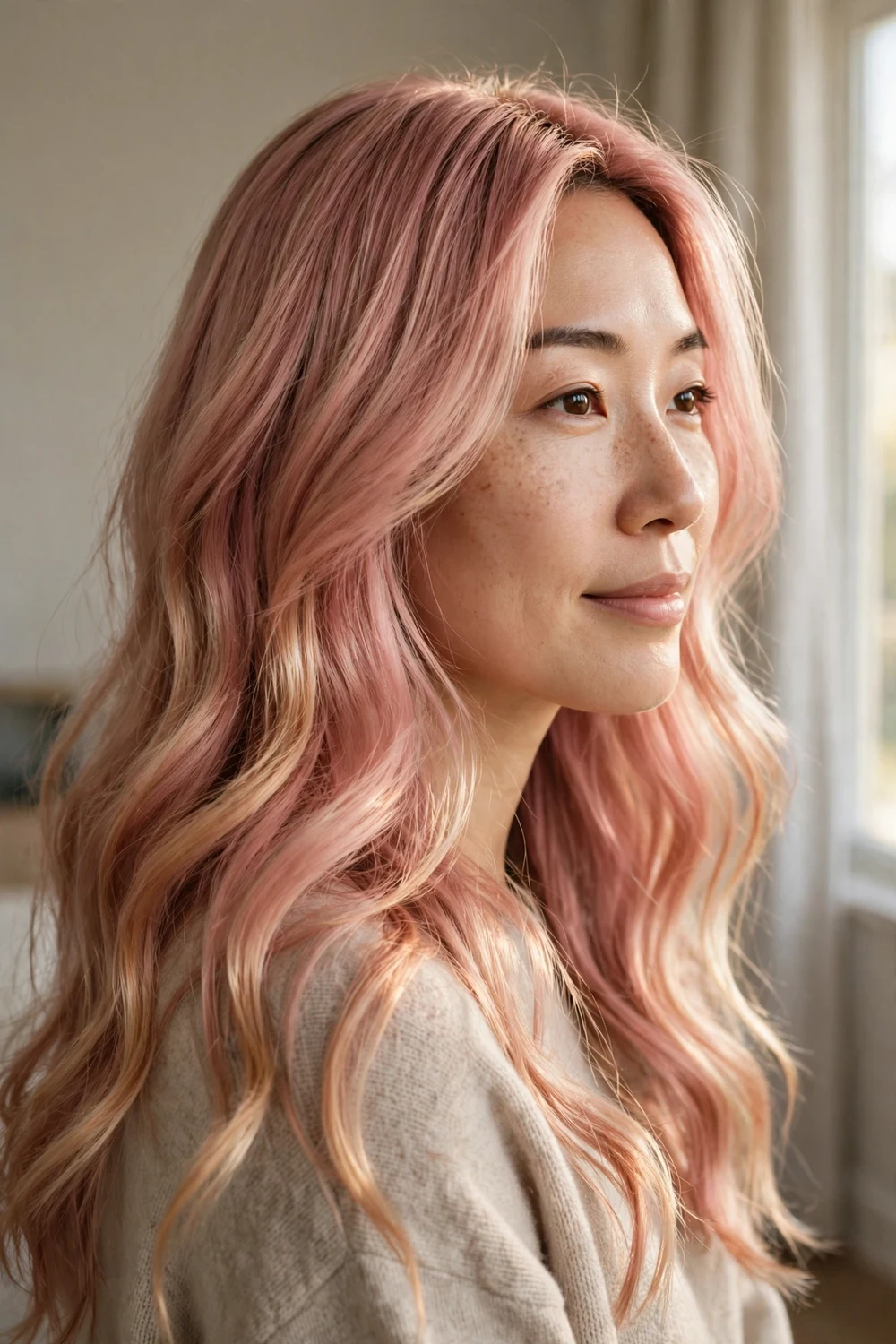
Rose gold splits the difference between blonde and pink, giving brightness with a soft, romantic edge. It flatters fair to medium skin and looks current without screaming for attention. The shade works best on pre-lightened hair at level 8 or above; on darker hair it needs bleaching, which raises both cost and damage. If you like pink tones but want something wearable, you will find plenty of variations among rose gold hair color ideas to compare before you commit.
Try this: Rose gold fades to a soft peachy blonde, which still looks good. Plan a toner refresh at week 3 to keep the pink visible longer.
18. Bright Copper

Copper lights up winter palettes with genuine warmth. The bright orange-red tone glows against pale winter skin and pairs naturally with the season’s cozy textures. It suits fair to medium skin with warm or neutral undertones. Copper is one of the fastest-fading shades in hair color, so it asks for real commitment to upkeep. For help choosing the right copper depth, browse copper hair color ideas and pick the brightness level that matches your maintenance appetite.
Try this: A copper color-depositing mask every single week is non-negotiable. Without it, bright copper dulls to strawberry brown within 2 weeks.
19. Deep Violet
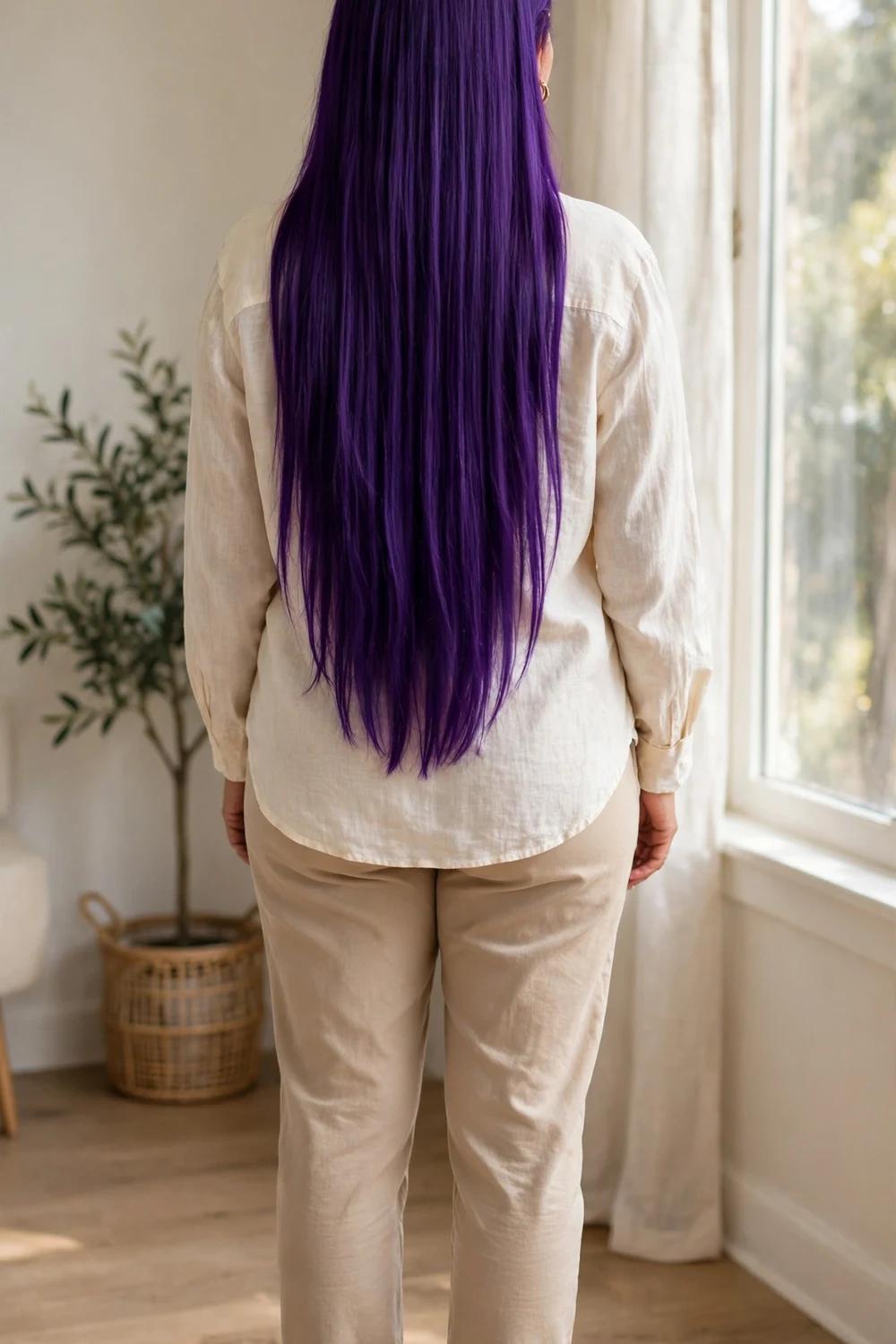
Violet reads almost black indoors, then reveals its purple depth when light catches it. That hidden-color quality makes it wearable in conservative settings while still feeling bold. It suits fair to deep skin and needs pre-lightening on dark hair for the purple to show. The color fades through lavender to silver, which means the grow-out phases all look intentional.
Try this: Apply violet dye to dry, unwashed hair and leave it the full recommended time. Greasy hair actually helps vivid dyes grip, which extends the color by a week or more.
20. Emerald Green
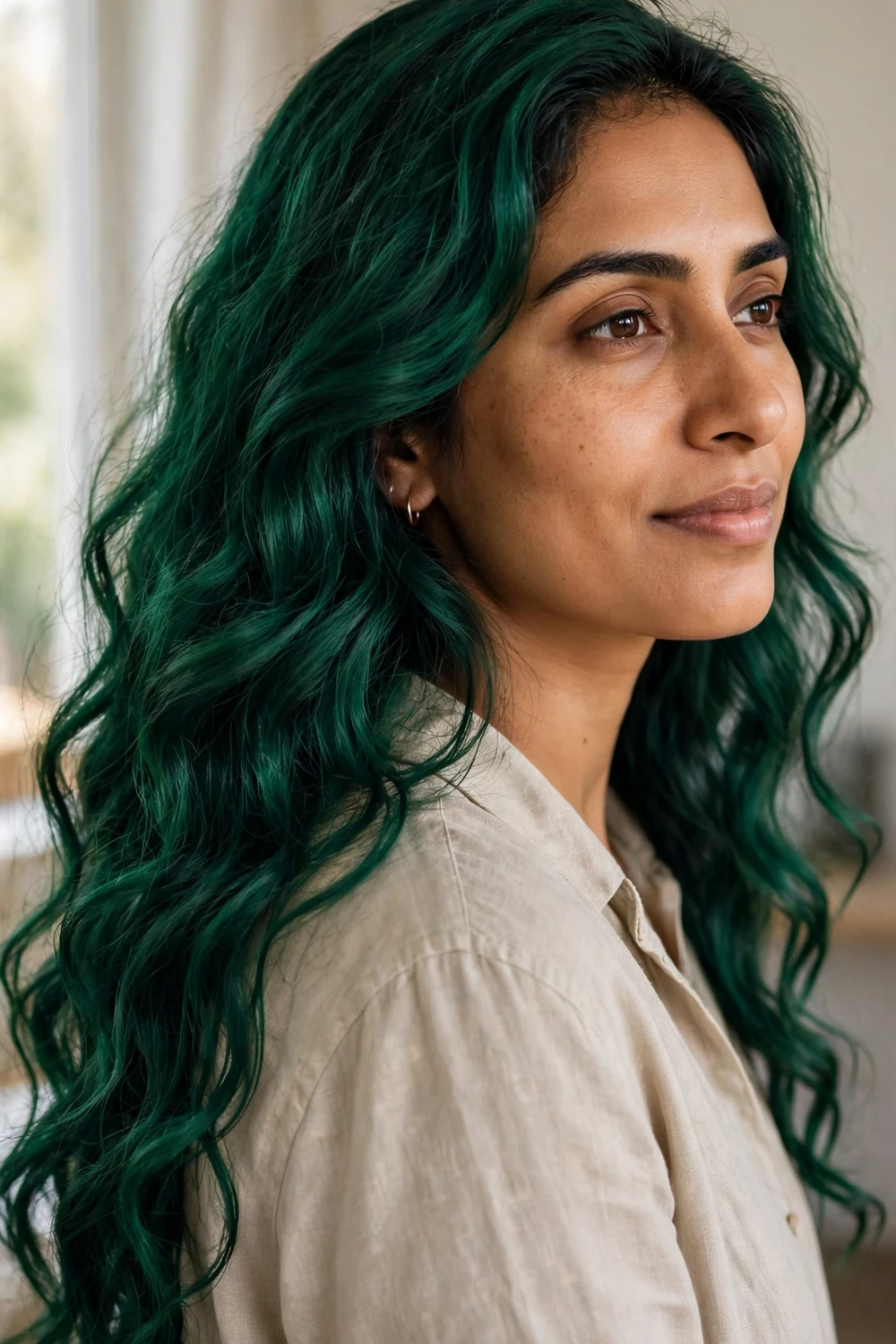
Emerald is the jewel tone that feels most at home in winter. The deep green richness pairs with the season’s dark clothing and metallic accessories, and it photographs strikingly in snow or holiday lights. It suits light to deep skin and needs bleached hair underneath for the green to read true. Green fades toward teal and then mint, so the color journey is part of the appeal.
Try this: Mix a little of your green dye into white conditioner for a custom color-depositing conditioner. Use it every third wash to hold the emerald depth.
21. Sapphire Blue

Blue suits winter because the season itself runs blue: cold light, long shadows, gray skies. Sapphire hair leans into that instead of fighting it. The deep, saturated blue flatters fair to medium skin and looks dramatic on long, straight hair where the color reads as one clean sheet. Like all vivid shades, it needs pre-lightened hair and fades over 4 to 8 weeks.
Try this: Blue fades fastest of all vivid colors. Wash hair as rarely as you can manage, and use dry shampoo between washes to stretch each wash cycle.
22. Teal Streaks on a Dark Base
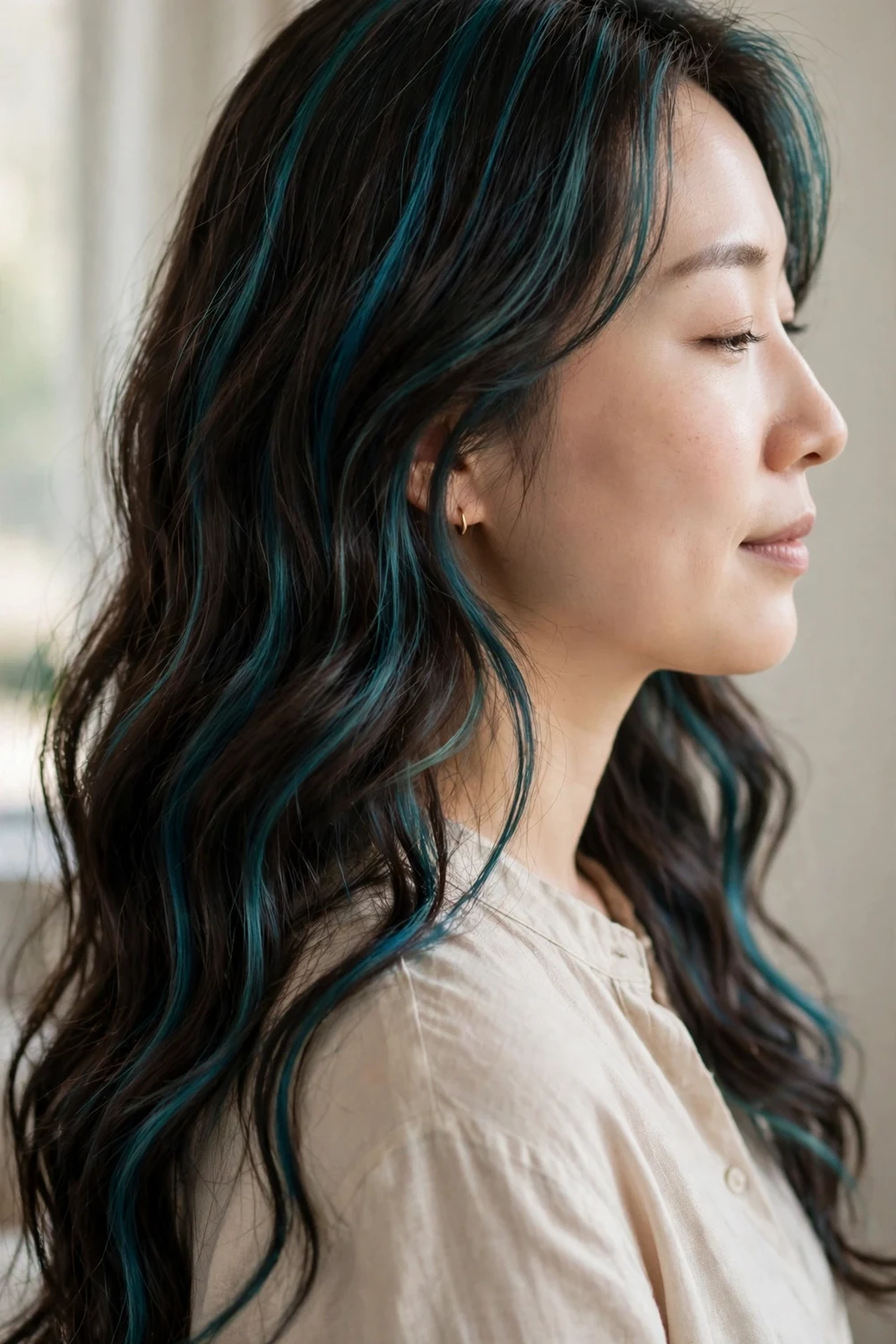
Teal streaks give you vivid color without committing the whole head. Keeping your natural dark base means grow-out is invisible and the teal sections can be refreshed or changed independently. The blue-green tone suits most skin tones and looks modern in waves or braids where the streaks weave through. This is the lowest-commitment way to try a fashion color.
Try this: Ask for the teal as painted panels rather than foils. Panels grow out softer and can be placed to frame the face, which maximizes the brightness effect.
23. Icy Money Pieces
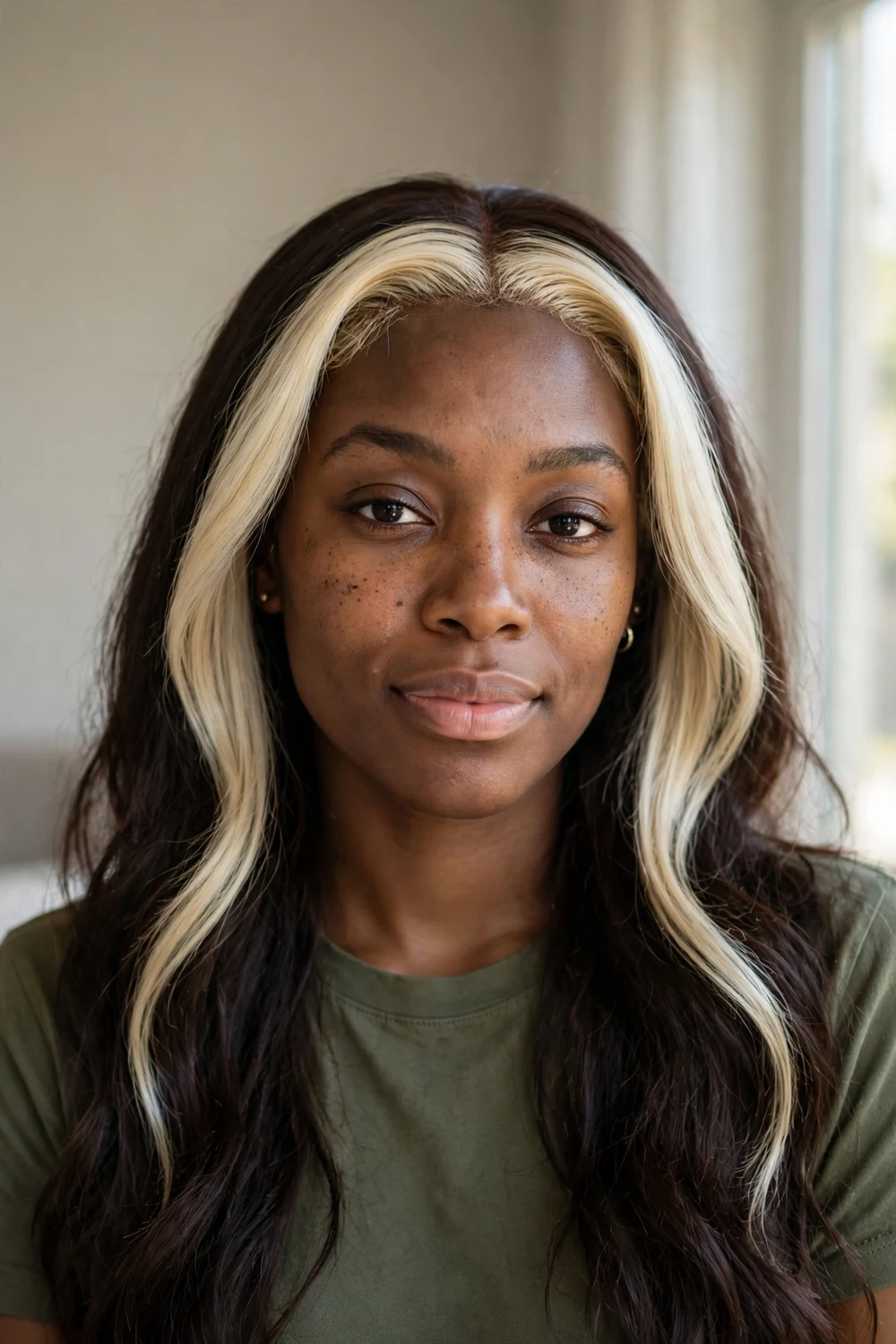
Two bold front pieces do more for brightness than a full head of highlights. The icy blonde frames the face directly, which lifts the complexion in photos and in person. The rest of the hair stays dark, so maintenance is limited to the front sections. This technique suits every skin tone because the brightness sits exactly where it flatters most. If you want to see how versatile this placement is, look through blonde balayage with money piece styles for variations on the same idea.
Try this: Money pieces need toning every 4 to 6 weeks to stay icy. A purple toning mask on just the front sections takes 5 minutes at home.
24. Platinum Balayage on a Dark Base
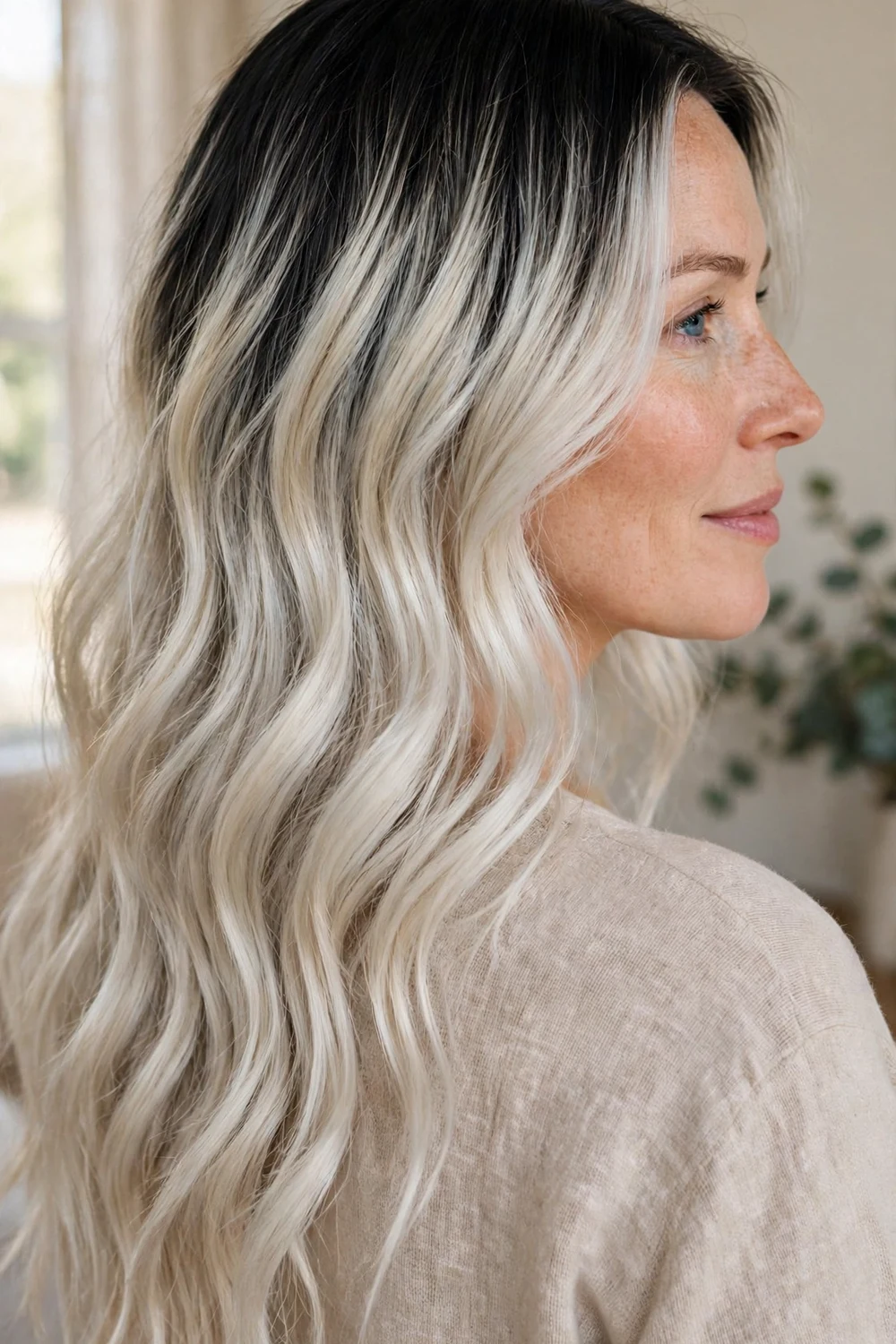
A dark root melting into platinum lengths gives maximum contrast with minimum upkeep. The brightness concentrates at the ends where it catches light, while the dark base keeps grow-out invisible for months. This suits anyone who wants the platinum effect without the 4-week root cycle. The technique works on medium to long hair where the blend has room to develop.
Try this: Book a toner and trim every 8 to 10 weeks instead of full color. The balayage itself can last 4 to 6 months before it needs re-painting.
25. Ash Blonde Balayage on Cool Brown
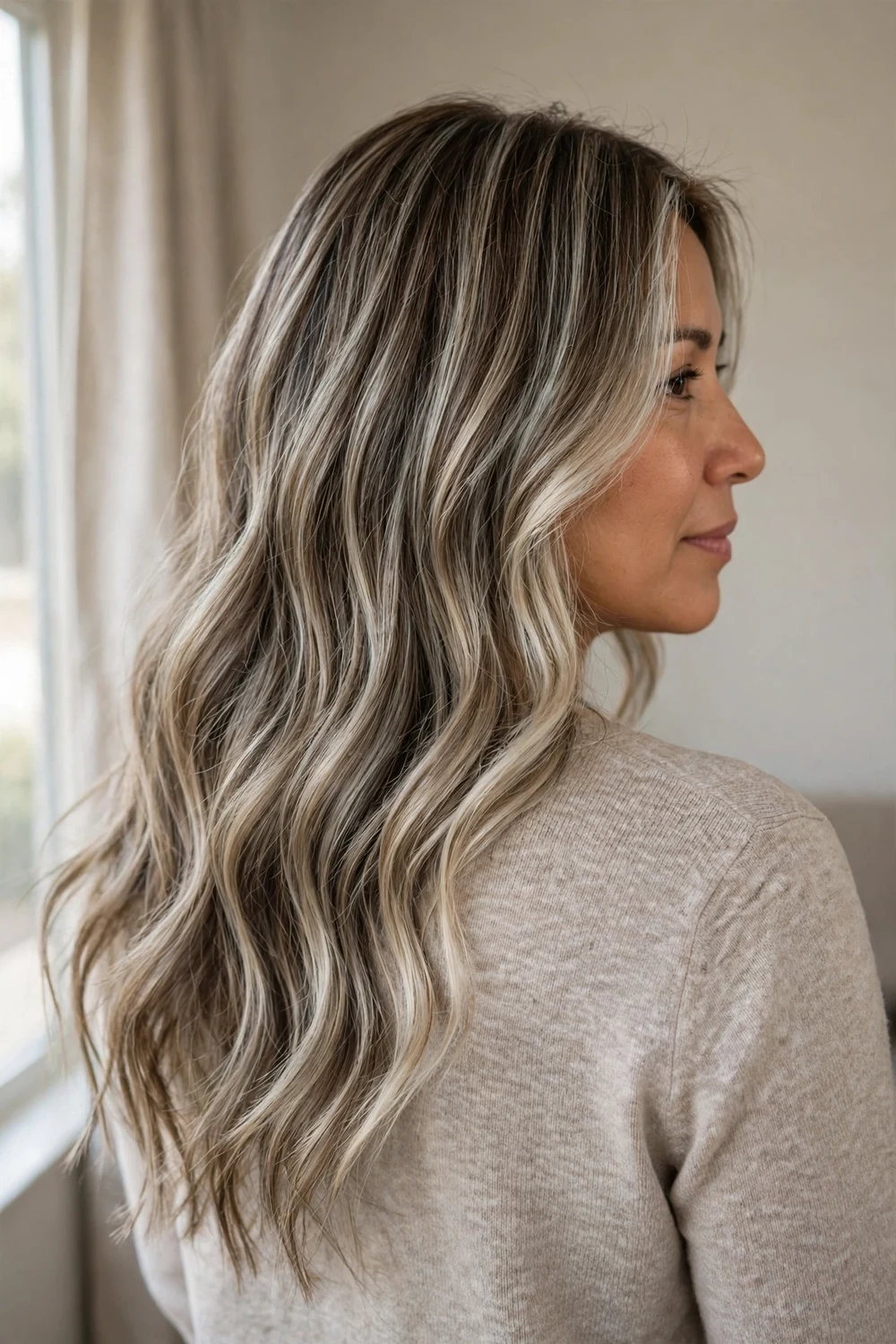
This one blends ash blonde ribbons through a cool brown base for brightness that looks completely natural. The contrast is softer than platinum balayage, which makes it office-appropriate while still lifting the overall look. It suits cool and neutral skin tones and adds visible dimension to straight hair, where the highlights read as clean lines. For more ash-focused inspiration, ash blonde hair color ideas cover everything from subtle to bold.
Try this: Ask for the highlights to start 3 inches below the root. The deeper start keeps grow-out invisible and lets you go 3 to 4 months between appointments.
26. Burgundy Balayage on Black
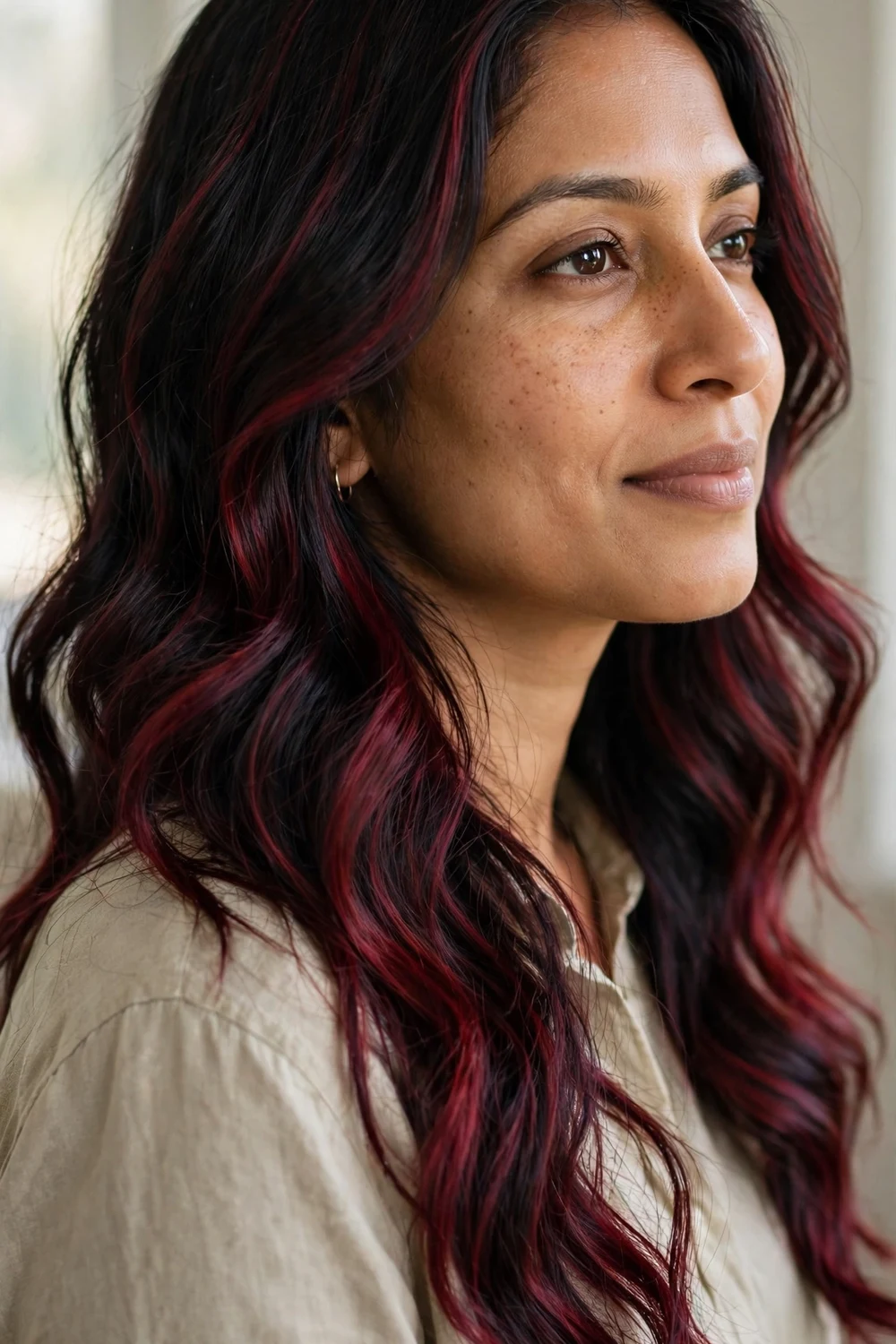
Burgundy woven through black hair gives depth that solid black lacks. The red shows most in movement and sunlight, so the color feels dynamic rather than static. This suits deep brunette and black hair without any bleaching, since burgundy shows on dark bases. It is one of the lowest-damage ways to add visible color, and the grow-out is seamless.
Try this: A burgundy gloss every 6 weeks keeps the red lively. Because the base stays black, you only need to refresh the balayage pieces, not the whole head.
Bright Winter Hair Colors Comparison at a Glance
| Style | Best Occasion | Difficulty | Hold Time |
|---|---|---|---|
| Snow Platinum | Everyday statement | Hard | 3-4 weeks |
| Icy Blonde | Everyday statement | Hard | 4-6 weeks |
| Silver Blonde | Evenings, events | Hard | 3 weeks |
| Cool Champagne | Work, everyday | Medium | 6 weeks |
| Creamy Baby Blonde | Everyday, natural | Medium | 10-12 weeks |
| Ashy Blonde | Work, everyday | Medium | 6-8 weeks |
| Jet Black | Everyday, formal | Easy | 6-8 weeks |
| Blue-Black | Evenings, events | Easy | 4-6 weeks |
| Glossy Espresso | Work, everyday | Easy | 6-8 weeks |
| Rich Chocolate | Everyday, holidays | Easy | 6-8 weeks |
| Ash Brown | Work, everyday | Easy | 8 weeks |
| Cool Mocha | Everyday, natural | Easy | 6-8 weeks |
| Cherry Cola | Holidays, evenings | Medium | 4-6 weeks |
| Vivid Burgundy | Holidays, events | Medium | 6 weeks |
| Wine Red and Plum | Evenings, work | Medium | 4-6 weeks |
| Magenta Berry | Events, statement | Hard | 4-6 weeks |
| Rose Gold Tones | Everyday, events | Hard | 3-4 weeks |
| Bright Copper | Everyday, holidays | Medium | 2-4 weeks |
| Deep Violet | Events, statement | Hard | 4-6 weeks |
| Emerald Green | Events, statement | Hard | 4-8 weeks |
| Sapphire Blue | Events, statement | Hard | 4-8 weeks |
| Teal Streaks | Everyday, casual | Medium | 4-6 weeks |
| Icy Money Pieces | Everyday, work | Medium | 6-8 weeks |
| Platinum Balayage | Everyday, events | Hard | 4-6 months |
| Ash Blonde Balayage | Work, everyday | Medium | 3-4 months |
| Burgundy Balayage | Everyday, holidays | Medium | 3-4 months |
How to Choose the Right Bright Winter Color for You
Start with your skin’s undertone. Cool undertones suit the icy, ash, and jewel shades that dominate this list. Warm undertones suit copper, cherry cola, and chocolate better. If you are unsure, hold a piece of silver and gold jewelry against your face in daylight; the one that flatters more points to your undertone.
Next, be honest about maintenance. Platinum, silver, and vivid fashion shades need salon visits every 3 to 6 weeks plus at-home toning. Balayage versions of the same shades need attention every 3 to 4 months. If you know you will skip appointments, pick from the low-maintenance end: espresso, chocolate, ash brown, or burgundy balayage. For a seasonal comparison of lighter options, fall blonde hair colors show how blonde brightness shifts between seasons.
Finally, consider your starting color. Going lighter than 3 levels from your natural shade means bleach, which adds cost, damage, and time. Darker shades and same-level changes are safer for hair health. If your hair is already dark brown or black, the dark and red ideas on this list give brightness with far less processing than the blondes.
Mistakes to Avoid
The most common mistake is choosing a warm bright shade for cool skin, or the reverse. Warm golds and coppers can make cool skin look sallow, while icy ash can make warm skin look gray. Match the undertone first, then pick the brightness level.
Skipping the strand test is another costly error, especially with bleach and vivid dyes. Hair that has been previously colored, particularly with dark box dye, can lift unevenly or refuse vivid color entirely. A 20-minute strand test behind the ear saves you from a full-head correction.
Many people also underestimate how fast bright color fades in winter. Hot showers, daily heat styling, and clarifying shampoos strip color in days. If you invest in a bright shade, protect it: cool water, sulfate-free shampoo, and heat protectant every time you style. Darker bases hold up better with less effort, which is why dark brown hair color ideas remain popular through the cold months.
Frequently Asked Questions
What hair colors look brightest in winter?
Icy platinum, silver blonde, glossy jet black, cherry red, burgundy, and jewel tones like emerald and sapphire look brightest in winter. They either reflect a lot of light or create strong contrast against dark winter clothing. Cool undertones and high shine matter more than the actual lightness of the shade.
Can I go platinum in winter without damaging my hair?
Yes, but it takes patience. Lift in two sessions spaced 2 to 3 weeks apart instead of one aggressive bleach, and use bond-building treatments at each appointment. Fine or previously colored hair needs a strand test first. Once you reach platinum, purple shampoo and weekly masks keep it healthy.
Do bright winter hair colors suit deep skin tones?
Yes. Glossy jet black, blue-black, vivid burgundy, deep violet, and emerald all glow on deep skin. Icy blondes can work too but need the right makeup balance to avoid washing out the complexion. The key is choosing shades with enough saturation to hold their own against rich skin tones.
How do I keep bright hair color from fading in winter?
Wash less often with sulfate-free shampoo in cool water, and use color-depositing conditioners matched to your shade weekly. Indoor heating dries hair out, so deep condition every week to keep the cuticle smooth and reflective. Limit heat styling and always use a heat protectant.
Which bright winter hair color needs the least maintenance?
Glossy espresso, rich chocolate, and ash brown need the least maintenance because they sit close to most natural dark shades. Among brighter options, burgundy balayage on black and ash blonde balayage on brown grow out softly and need salon visits only every 3 to 4 months.
If your coloring runs cool rather than bright, these cool winter hair colors trade vividness for frost, ice, and smoke while staying firmly in the season.
Final Thoughts
Bright winter hair is about light, not just color. Pick the shade that fits your skin tone and your real maintenance habits, protect it through the dry months, and let it do the talking against your winter wardrobe. After years of seasonal color changes, I keep coming back to the same rule: shine matters more than shade.

