


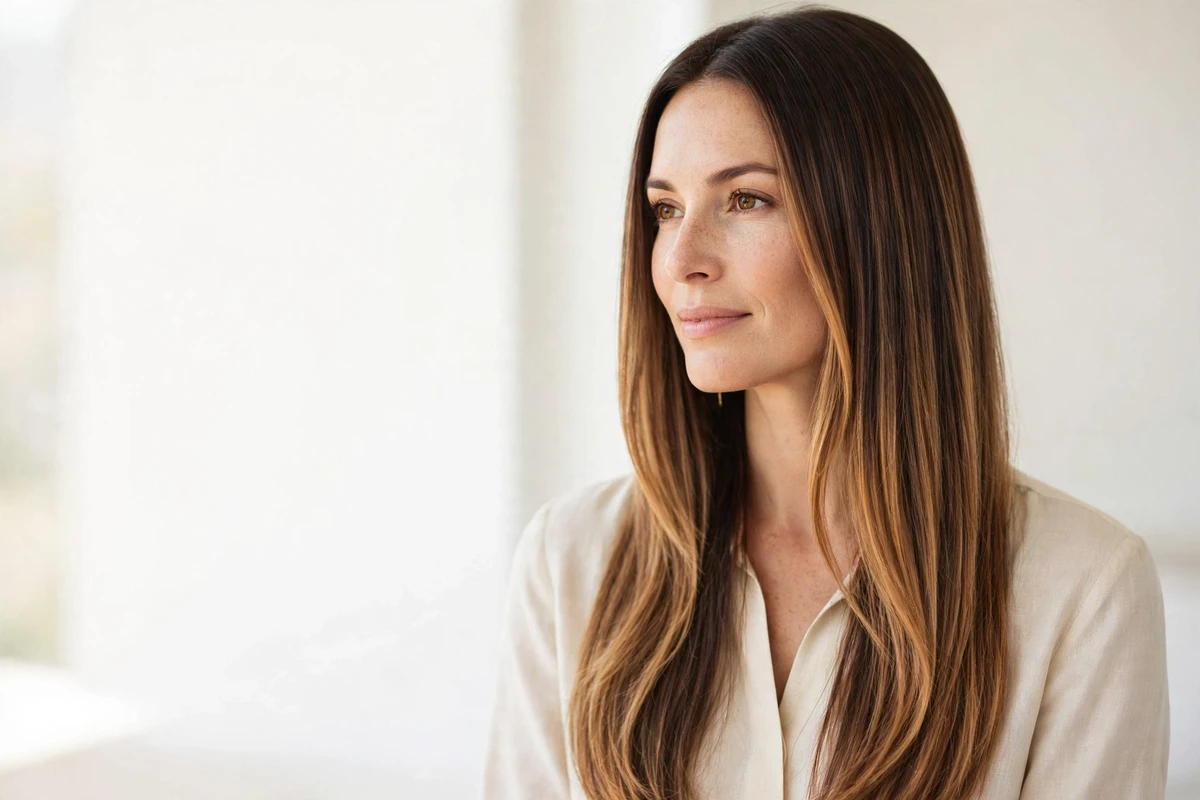
Straight hair shows color exactly as it is. There is no wave or curl to blur the blend, so a balayage on straight brunette hair reads as one clean sheet of color with light moving through it. That is why this combination has stayed popular: the hand-painted technique creates a soft, grown-in gradient that looks deliberate from root to end.
Below you will find 30 ideas covering warm, cool, and red-toned options, plus short cuts and long lengths. I keep a running list of color techniques that actually deliver, and balayage on straight brunette hair sits near the top. Each idea includes a practical tip so you can walk into the salon knowing what to ask for.
Quick answer: Brunette balayage for straight hair works best with a soft, gradual blend and a shade chosen for your skin undertone. Warm options like caramel, honey, and copper flatter warm undertones, while ash, mushroom brown, and icy blonde suit cool undertones. Expect salon upkeep every 10 to 16 weeks.
Quick Takeaways
- Straight hair makes every color transition visible, so the blend has to be smooth with no harsh lines.
- Match the balayage tone to your skin undertone: warm shades for warm skin, cool shades for cool skin.
- Brunette balayage grows out softly, which means fewer salon visits than traditional highlights.
- Short straight hair can carry balayage too, but the contrast between base and ends should be moderate.
- Gloss treatments and sulfate-free shampoo keep the color from fading or turning brassy.
Why Balayage Works So Well on Straight Hair
Balayage means hand-painting color onto the hair in a sweeping motion. On straight hair, that painted gradient shows up clearly, which is both the appeal and the risk. A skilled colorist places the lightest pieces where light would naturally hit, around the face and through the mid-lengths, while keeping the roots deep for a low-maintenance grow-out.
The other reason this pairing works is shine. Straight hair reflects more light than textured hair, and a balayage adds several tonal layers that catch that reflection. The result looks glossy even without extra styling products. The tradeoff is precision: any spotty or striped placement will show, so choose a colorist who does this technique daily.
1. Face-Framing Money Piece
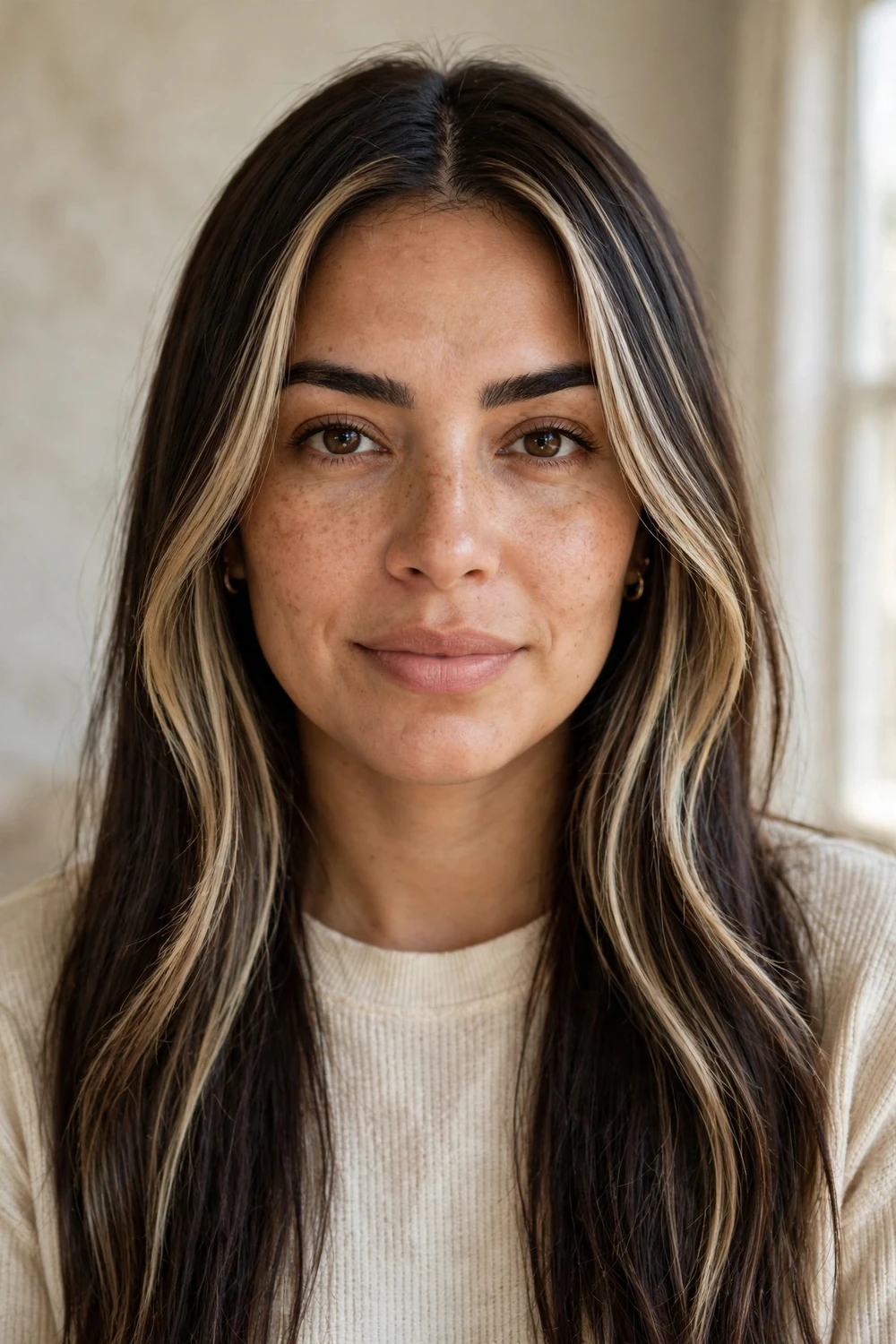
Ask for this if you want maximum impact with minimum commitment. A money piece lightens only the two front sections of hair, usually from temple to chin, while the rest of the brunette base stays deep. On straight hair the brightened frame draws attention to the eyes and cheekbones right away. Keep the surrounding pieces about two to three levels lighter than your base so it reads as a deliberate accent, not an accident.
Try this: Request a “soft money piece” rather than a chunky one if your office dress code is conservative. Difficulty: Easy. Cost: $60 to $120 as an add-on to a full service.
2. Sun-Kissed Honey Strands
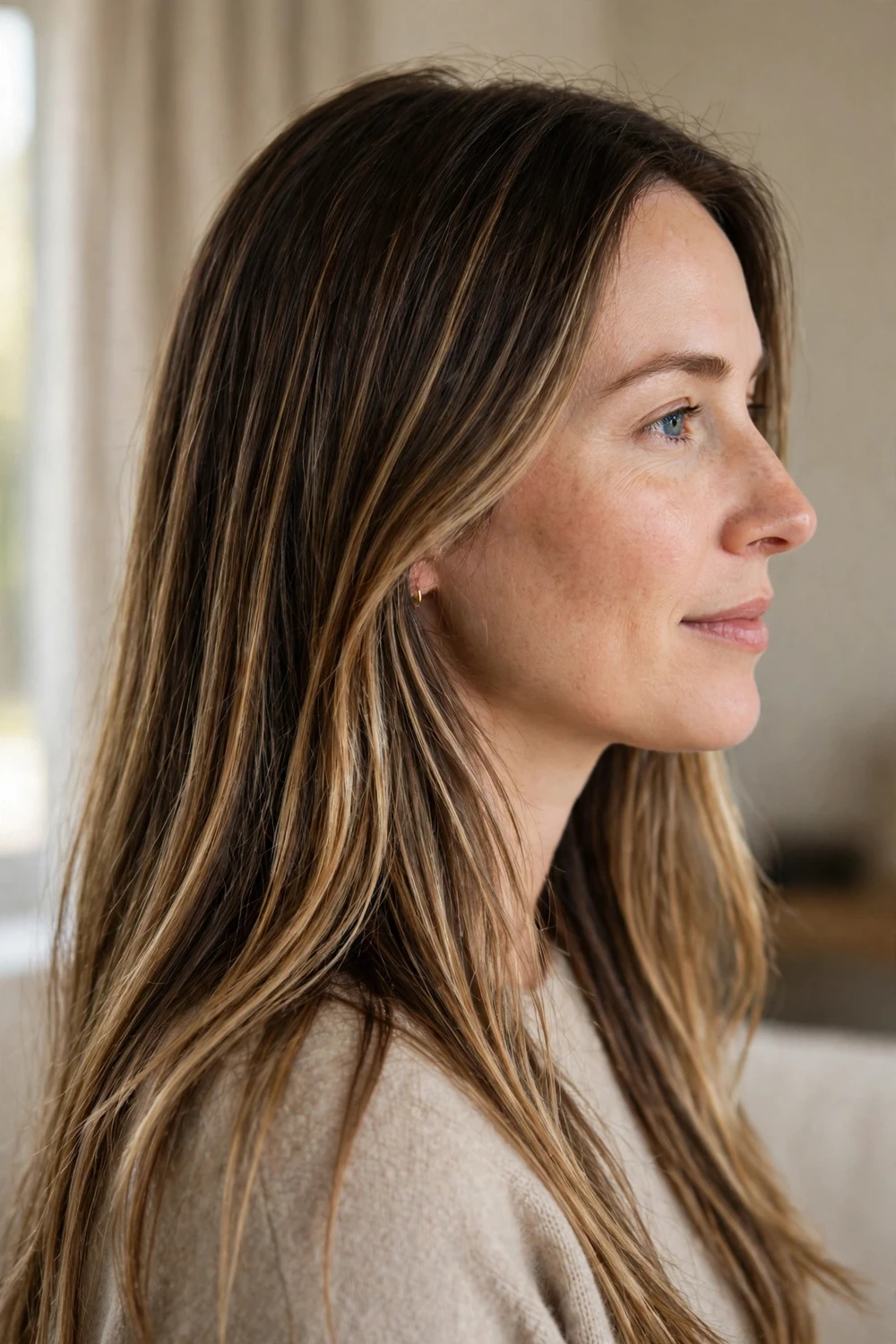
Think of this as the color your hair would pick up after a summer spent outdoors. Thin honey-toned strands are painted through the mid-lengths and ends of a medium or dark brunette base, spaced widely so plenty of natural color shows between them. Because the placement is sparse, the grow-out is nearly invisible and you can stretch salon visits to four or five months. It suits long straight hair best, where the scattered light pieces have room to show.
Try this: Bring a photo of hair in daylight, not salon lighting, so the honey tone does not skew too golden. Difficulty: Medium. Cost: $140 to $200.
3. Warm Caramel Melt
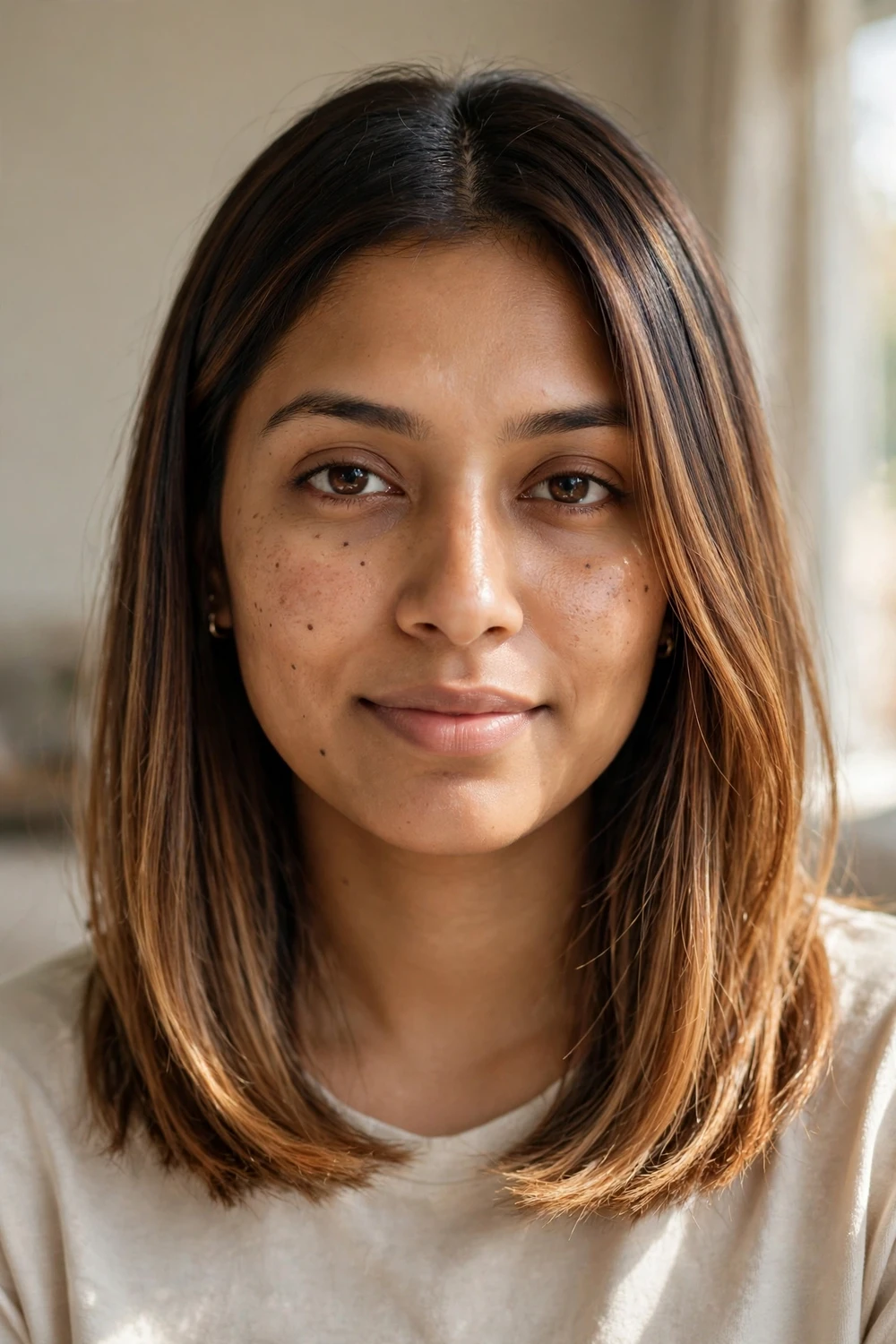
A color melt uses one tone flowing into the next with no visible stopping point, and caramel is the classic warm choice for brunettes. The colorist keeps your natural root, then melts caramel through the mid-lengths into slightly lighter ends. On straight hair the seamless transition is the whole point: run your fingers through it and you should not be able to tell where one shade ends. This works on medium lengths and lobs where the melt has enough distance to develop.
Try this: Ask for the melt to start lower, around ear level, if you want the longest grow-out window. Difficulty: Medium. Cost: $150 to $220.
4. Chestnut Brunette Highlights
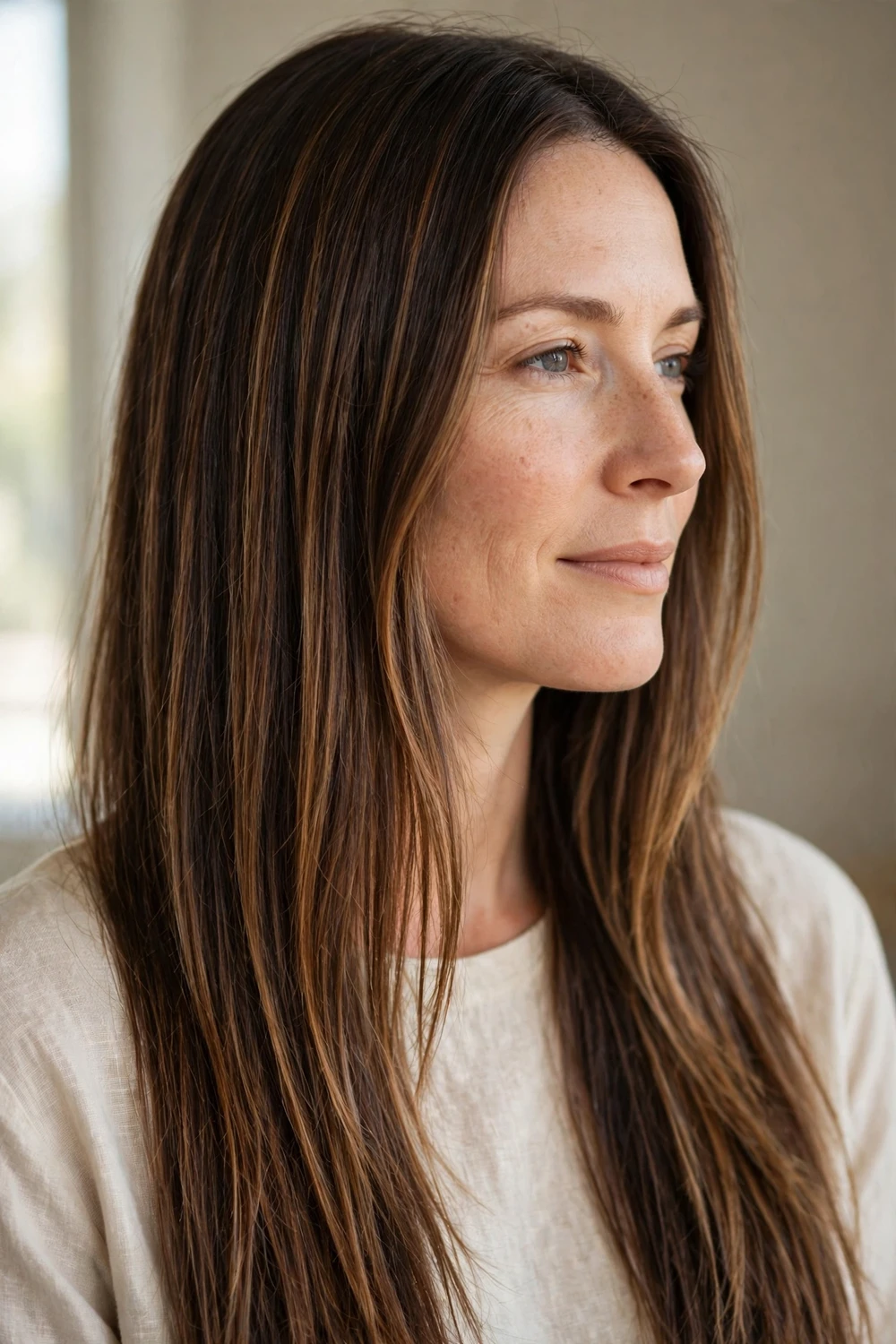
Chestnut sits between brown and red, which makes it a safe first step for brunettes who are nervous about going lighter. The hand-painted pieces add a russet warmth that shows up most in sunlight and photographs. Because chestnut is only one to two levels above a typical brunette base, the result looks natural rather than colored. It is also one of the easiest options to maintain, since regrowth blends into the base with no obvious line.
Try this: A clear gloss at home every three weeks keeps the chestnut from fading flat. Difficulty: Easy. Cost: $120 to $180.
5. Mushroom Ash Brown
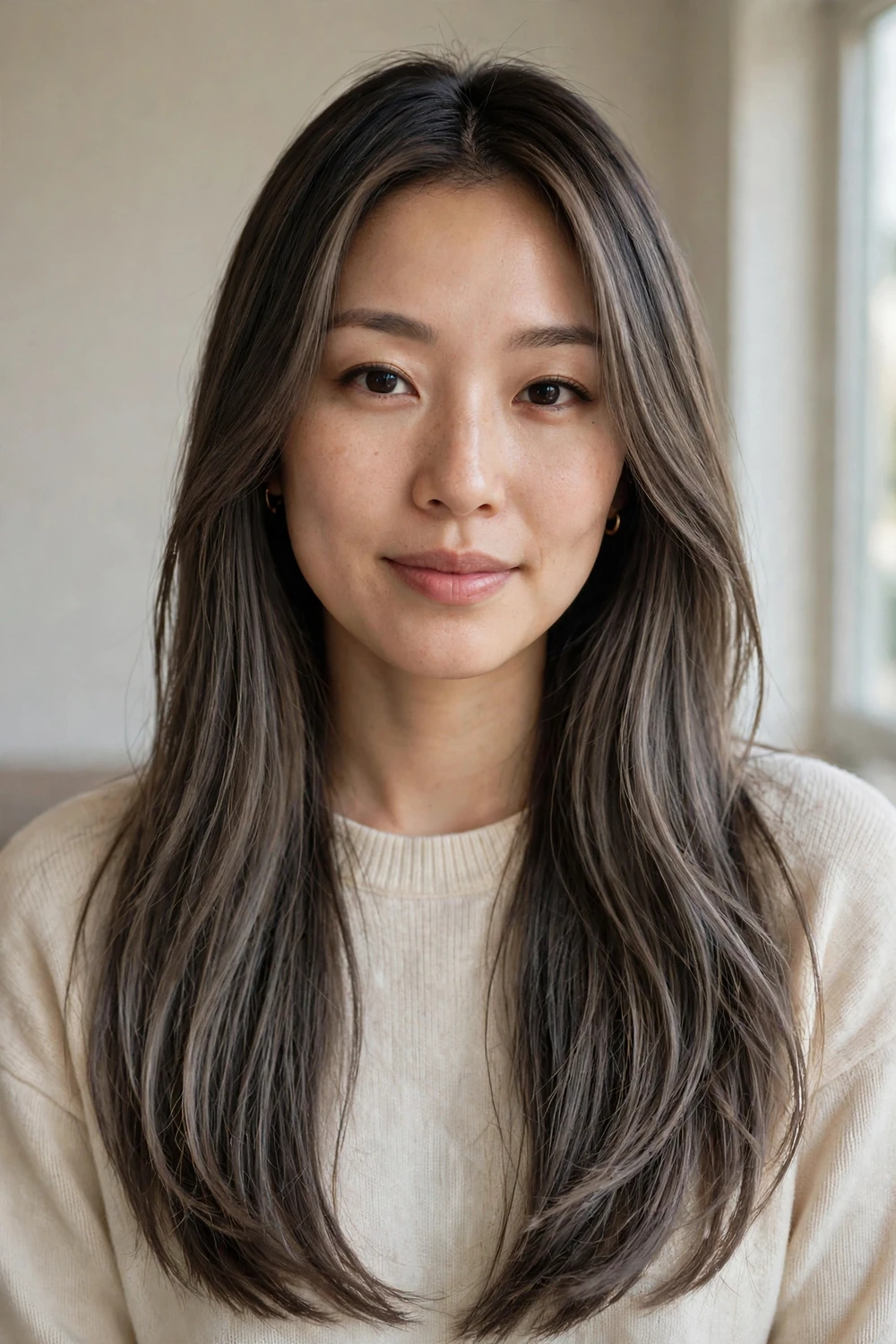
Here is the cool-toned answer for brunettes who find warm balayage turns brassy on them. Mushroom brown mixes ashy beige and taupe tones into the lengths, giving straight hair a smoky, dimensional finish without going blonde. The shade flatters cool and neutral skin undertones and pairs well with a sharp straight cut, where the muted tones look intentional and modern. It needs purple or blue-toned shampoo to keep the ash from warming up over time.
Try this: Wash with a blue-based shampoo once a week to neutralize orange tones as they appear. Difficulty: Medium. Cost: $150 to $210.
6. Cool-Toned Icy Blonde
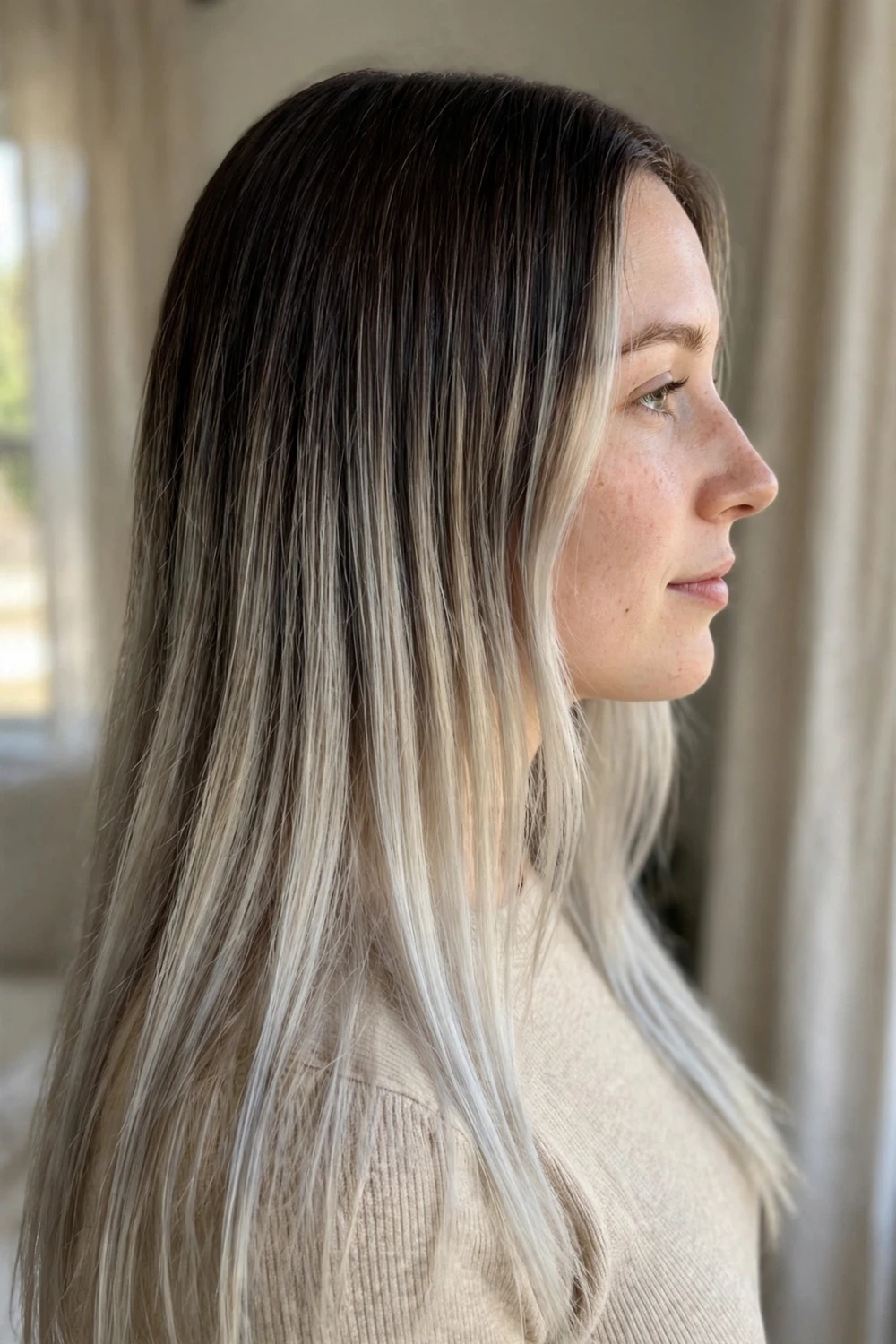
For brunettes who want real contrast, an icy blonde balayage takes the ends several levels lighter while keeping the roots dark. The cool finish is what makes it work on straight hair: warm blondes can look stripey against a dark base, but an icy tone reads as a clean gradient. This is a high-lift service, so expect a longer appointment and a toner refresh every six to eight weeks to keep the blonde from yellowing.
Try this: Book a toner-only appointment between full services to keep the icy tone crisp for less money. Difficulty: Hard. Cost: $180 to $280.
7. Contrasting Blonde Ribbons
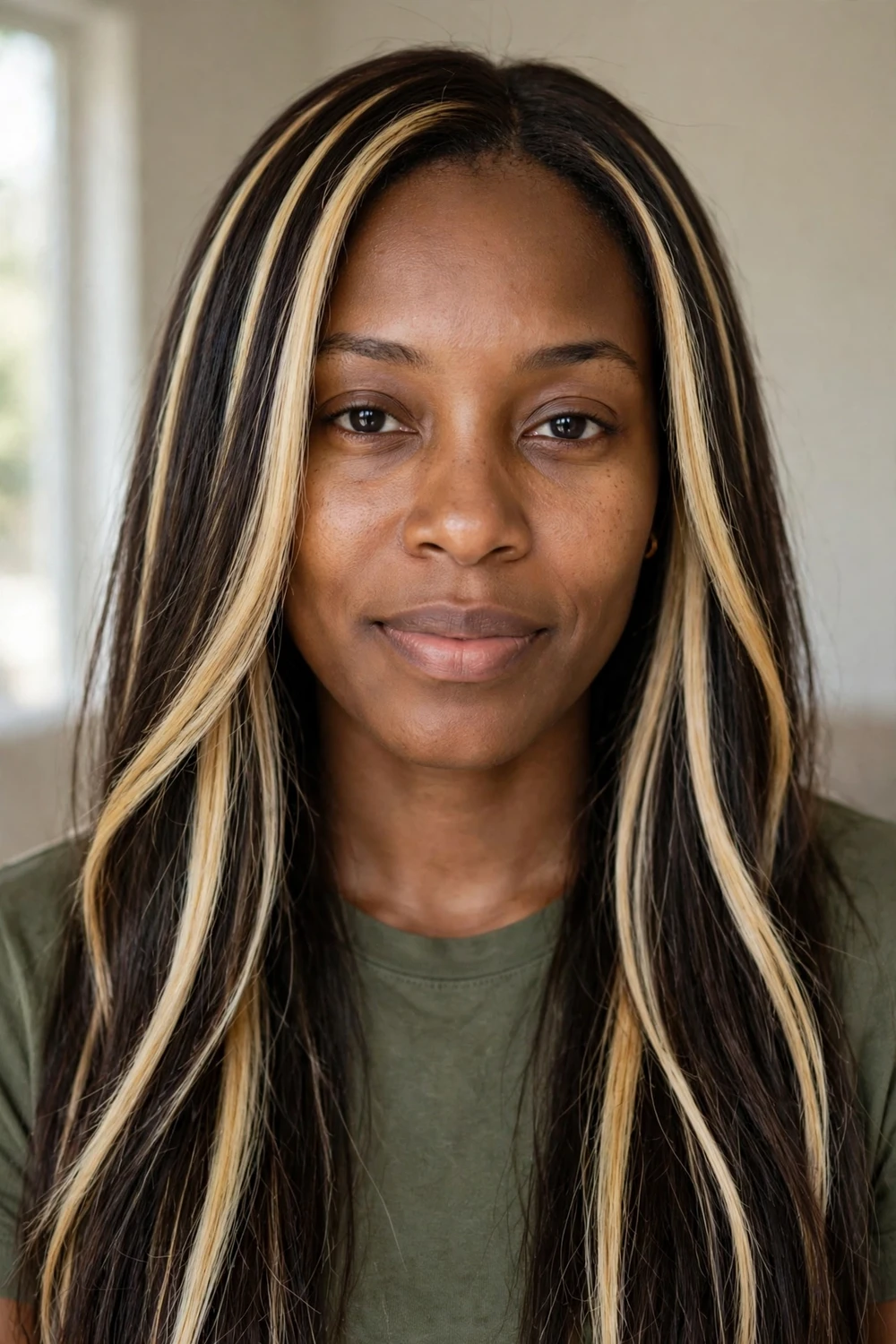
Instead of a soft blend, this look paints distinct blonde ribbons through dark hair so the two tones sit side by side. The contrast is bold, almost graphic, which suits straight hair because the smooth surface keeps the ribbons looking clean rather than messy. Space the ribbons at least an inch apart so the dark base stays visible between them. This is the pick for brunettes who want their balayage to be noticed, not whispered.
Try this: Ask the colorist to vary the ribbon widths slightly; identical widths can look striped instead of painted. Difficulty: Hard. Cost: $170 to $260.
8. Chocolate and Auburn Blend
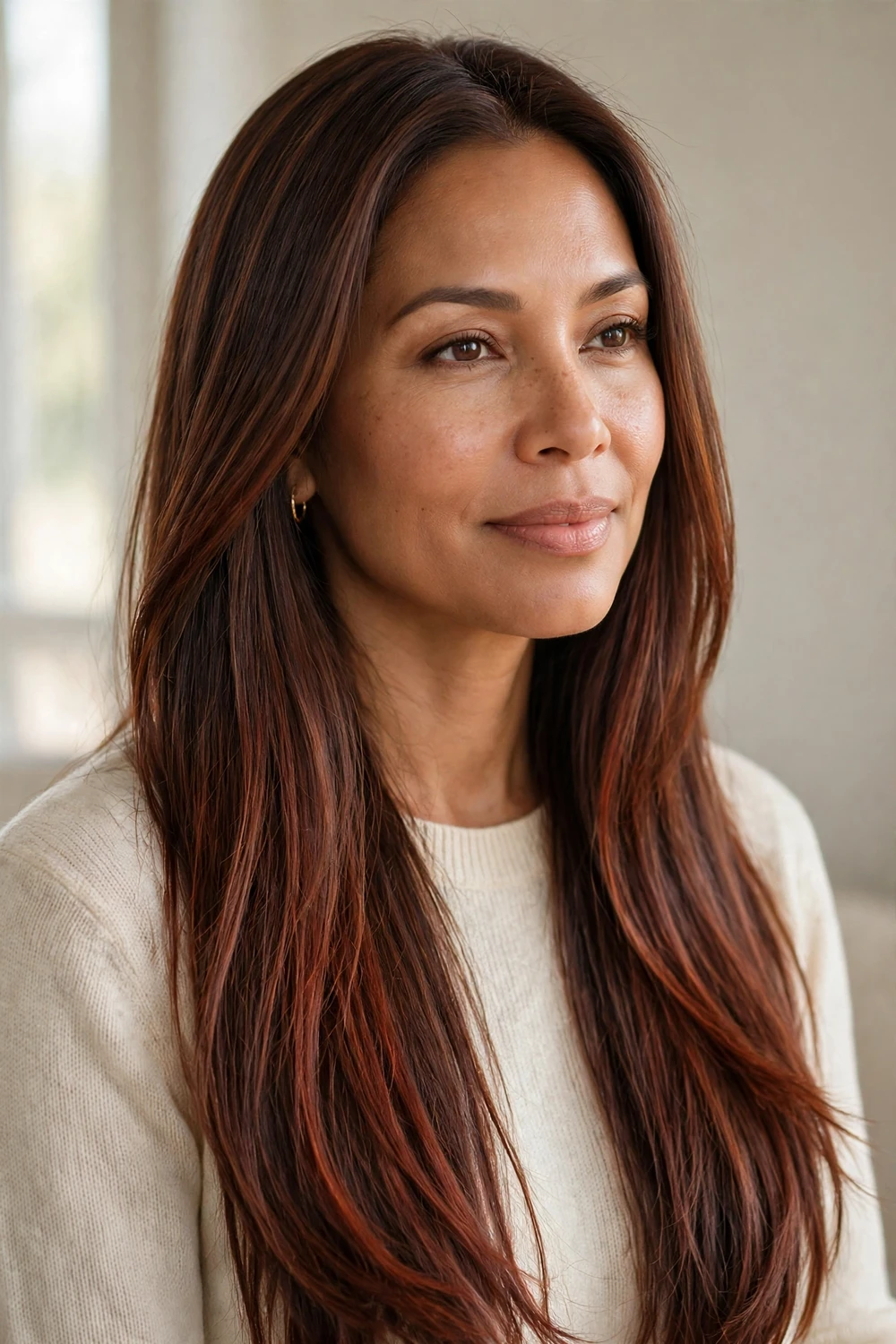
Chocolate brown deepens the base while auburn pieces add a red glow through the lengths. Together they create a rich, warm color that looks different in every light: brown indoors, red-bronze in the sun. On straight hair the blend shows as a smooth wash of warm tones with no harsh edges. This combination is especially flattering on medium to deep skin tones and on anyone whose natural hair already leans warm.
Try this: Red tones fade fastest, so rinse with cool water and skip daily washing to hold the auburn. Difficulty: Medium. Cost: $140 to $200.
9. Cherry Red and Mahogany
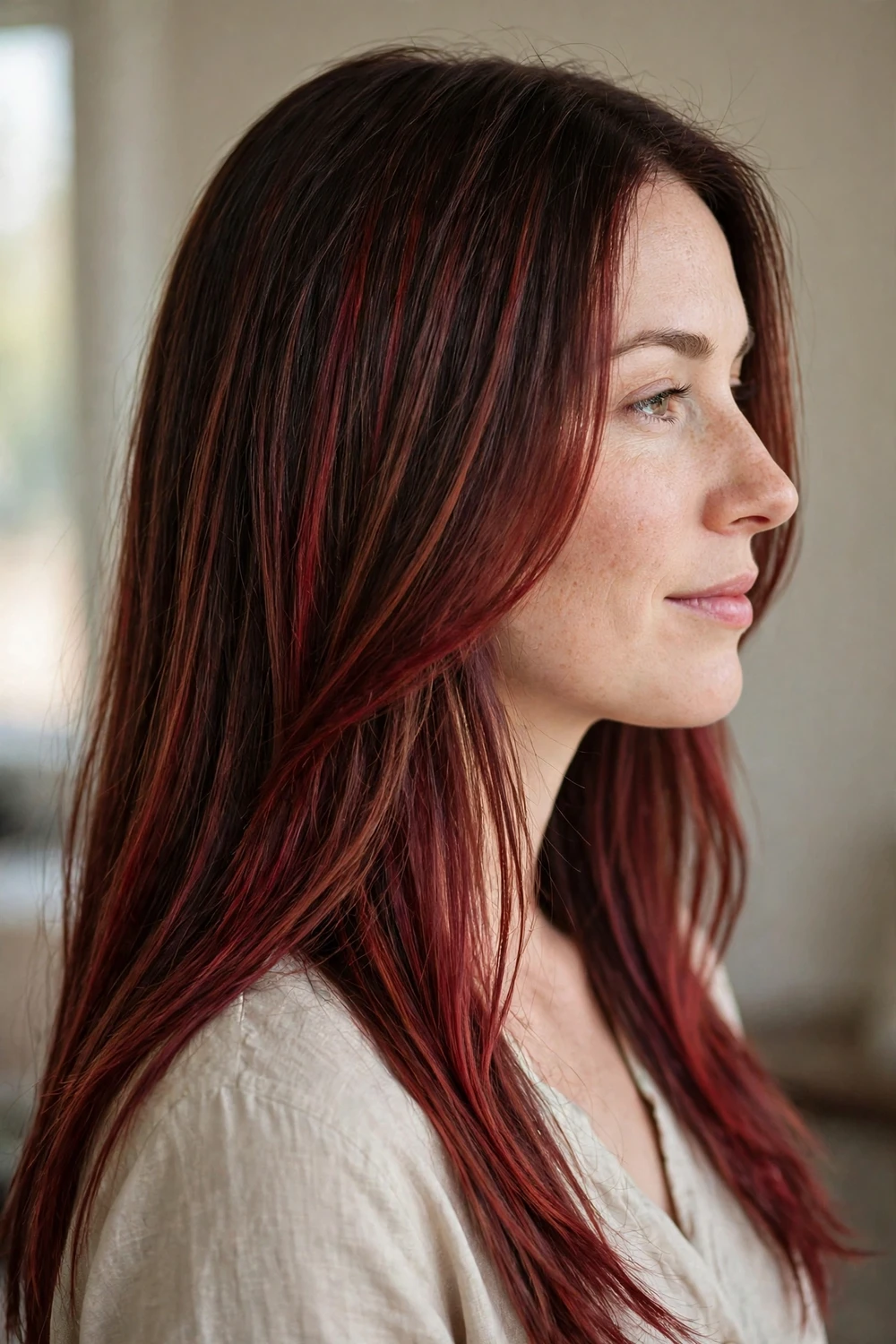
If subtle is not your goal, cherry red balayage over a dark brunette base delivers. Mahogany pieces keep the overall look grounded while cherry strands add brightness through the ends. Straight hair shows the red clearly, so the colorist should feather the placement to avoid a hard line where the red begins. This is a fashion shade, which means it needs commitment: red fades faster than any other color family.
Try this: A red color-depositing conditioner once a week extends the life of the cherry tone by several weeks. Difficulty: Medium. Cost: $150 to $220.
10. Copper Ribbons
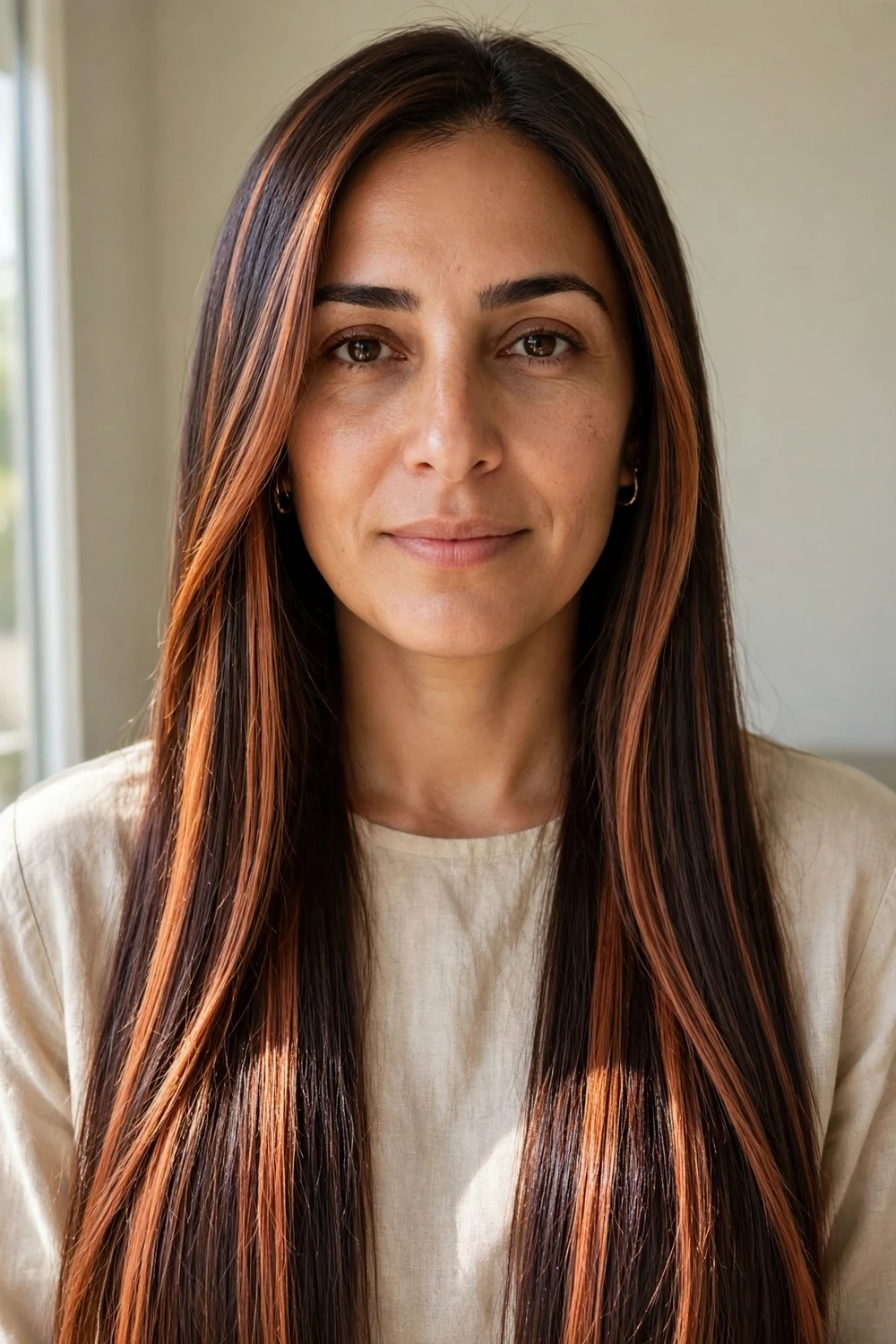
Copper sits between red and orange with a metallic shine that flat-ironed hair shows off well. Painted as ribbons through a dark brunette base, the copper catches light with every movement of the head. The shade works best on warm and neutral skin undertones. Because copper is a bright, reflective color, the grow-out is more visible than with browns, so plan touch-ups every eight to ten weeks. On freshly flat-ironed hair the metallic shine shows at its best.
Try this: Ask for the copper to be concentrated from the mid-lengths down so regrowth stays soft. Difficulty: Medium. Cost: $150 to $210.
11. Strawberry Blonde
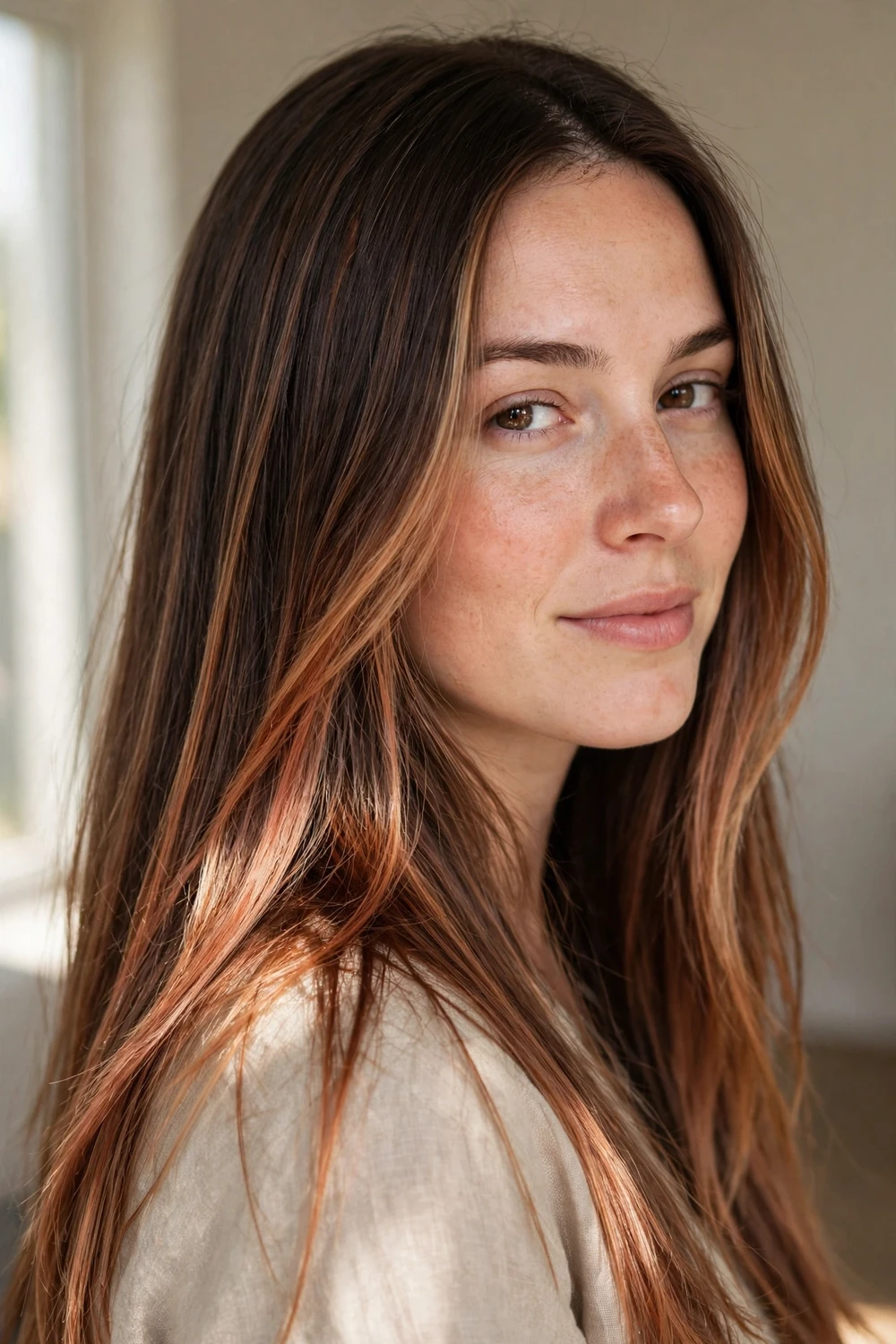
Strawberry blonde mixes warm blonde with a whisper of copper, and on a brunette base it reads as a soft, rosy lightening. The colorist typically blends ash blonde and light copper pieces to build the tone. On straight hair the pinkish warmth shows as a gentle glow rather than a loud color. It suits fair to medium skin with warm or neutral undertones and gives long straight hair a noticeable lift without going fully blonde.
Try this: Mention any pink undertones in your skin so the formula can be adjusted; too much pink in both can clash. Difficulty: Medium. Cost: $150 to $220.
12. Rose Gold
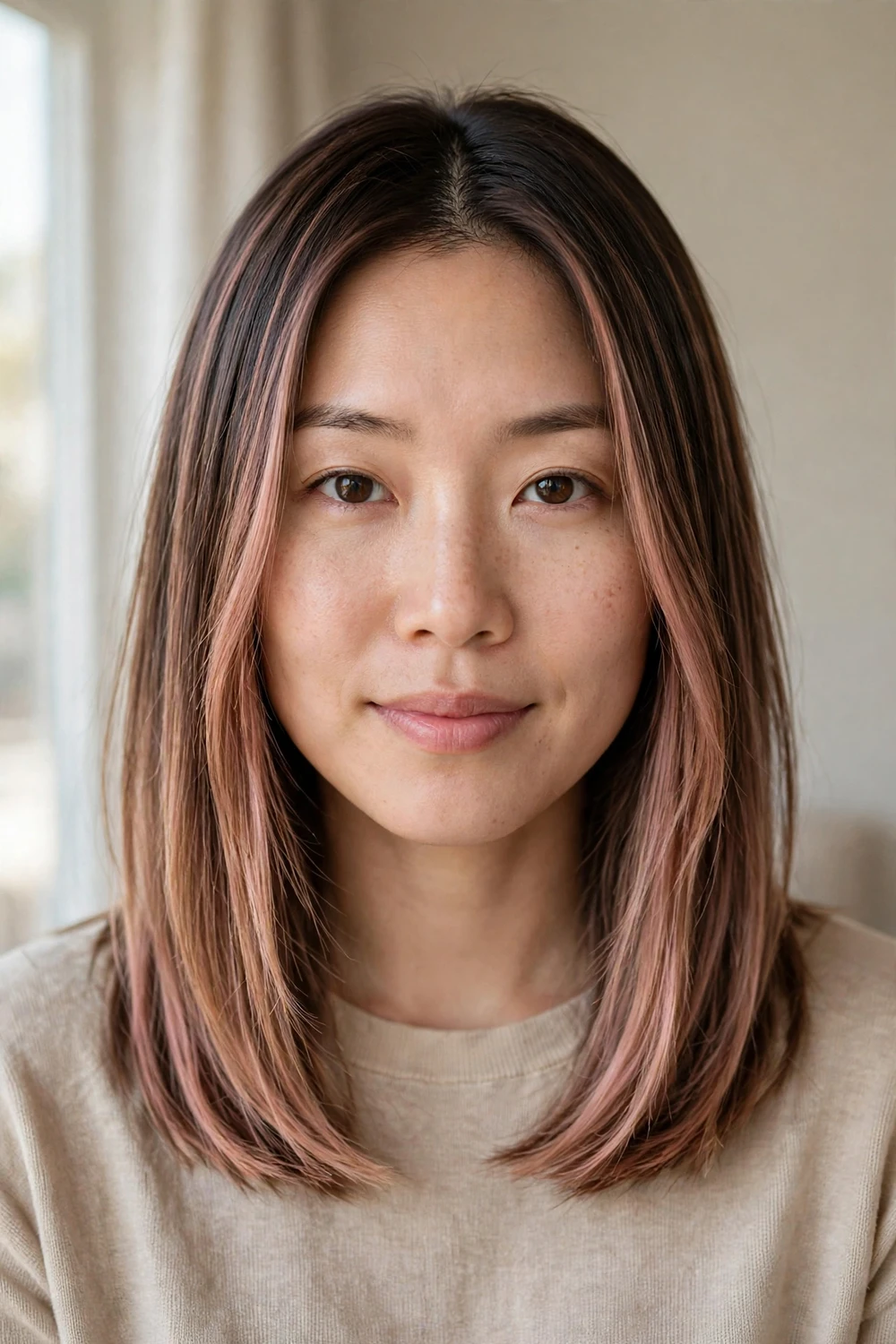
Rose gold brings a pink-champagne tone to the mid-lengths and ends of brunette hair. On straight hair the metallic quality of the shade shows clearly, which is why it photographs so well. The color works best when the brunette base is medium rather than near-black, since the rose needs enough lift to show. Expect the pink to fade toward a soft peach within a month, which most wearers find they enjoy as a second phase of the color.
Try this: A pink color-depositing mask every other week keeps the rose tone from washing out to plain blonde. Difficulty: Medium. Cost: $150 to $220.
13. Auburn with Blonde Strands
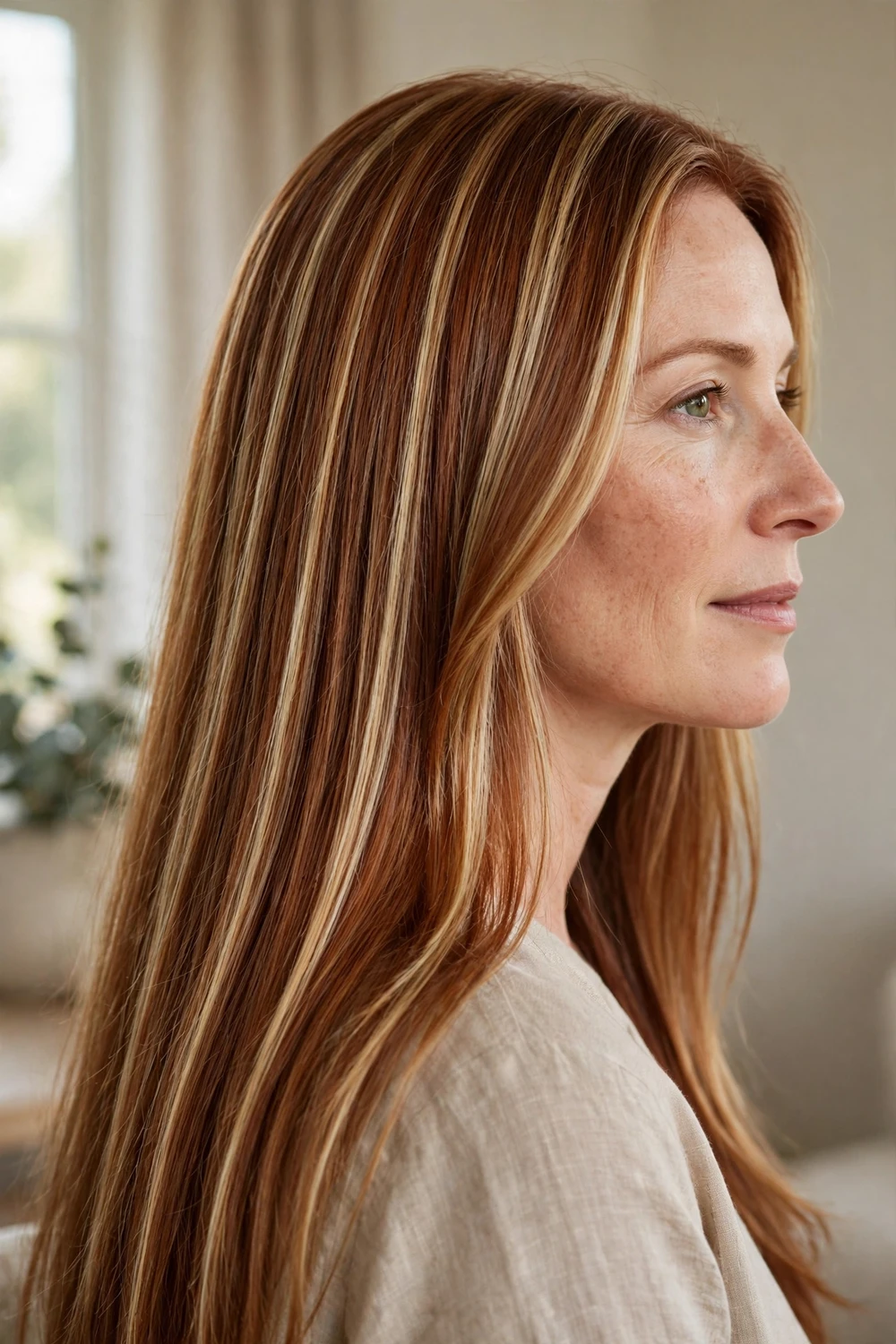
This one flips the usual formula: the base goes auburn and the balayage adds blonde strands on top. The combination creates a warm, multi-dimensional red that still has brightness from the blonde pieces. Straight hair carries the layered tones cleanly, and the look works well on anyone who has always wanted red hair but finds solid red too flat. The blonde strands need toner upkeep to stay golden rather than brassy.
Try this: Keep the blonde pieces fine rather than chunky so the overall effect stays refined. Difficulty: Hard. Cost: $170 to $250.
14. Walnut Bronde
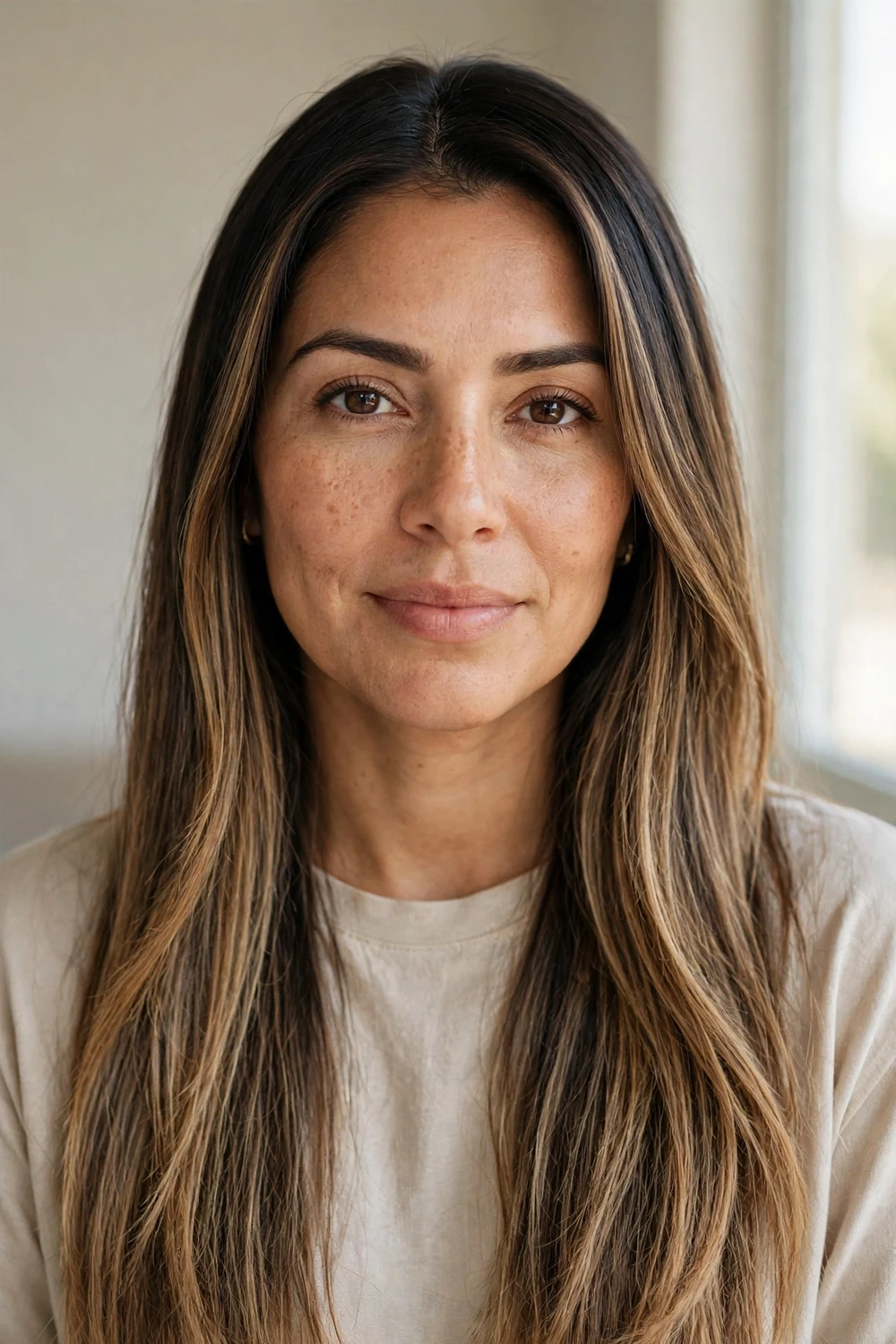
Bronde is the middle ground between brown and blonde, and walnut is its most natural-looking shade. The colorist blends dark roots into walnut brown ends with so little contrast that the change reads as depth rather than color. On straight hair this creates a polished, expensive-looking finish that needs almost no maintenance. It is the right choice for brunettes who want dimension without anyone guessing they colored their hair. Ask for the pieces to be painted slightly brighter around the face for a gentle framing effect.
Try this: This is the lowest-maintenance option on the list; twice a year is enough for most people. Difficulty: Easy. Cost: $120 to $180.
15. Toffee Balayage
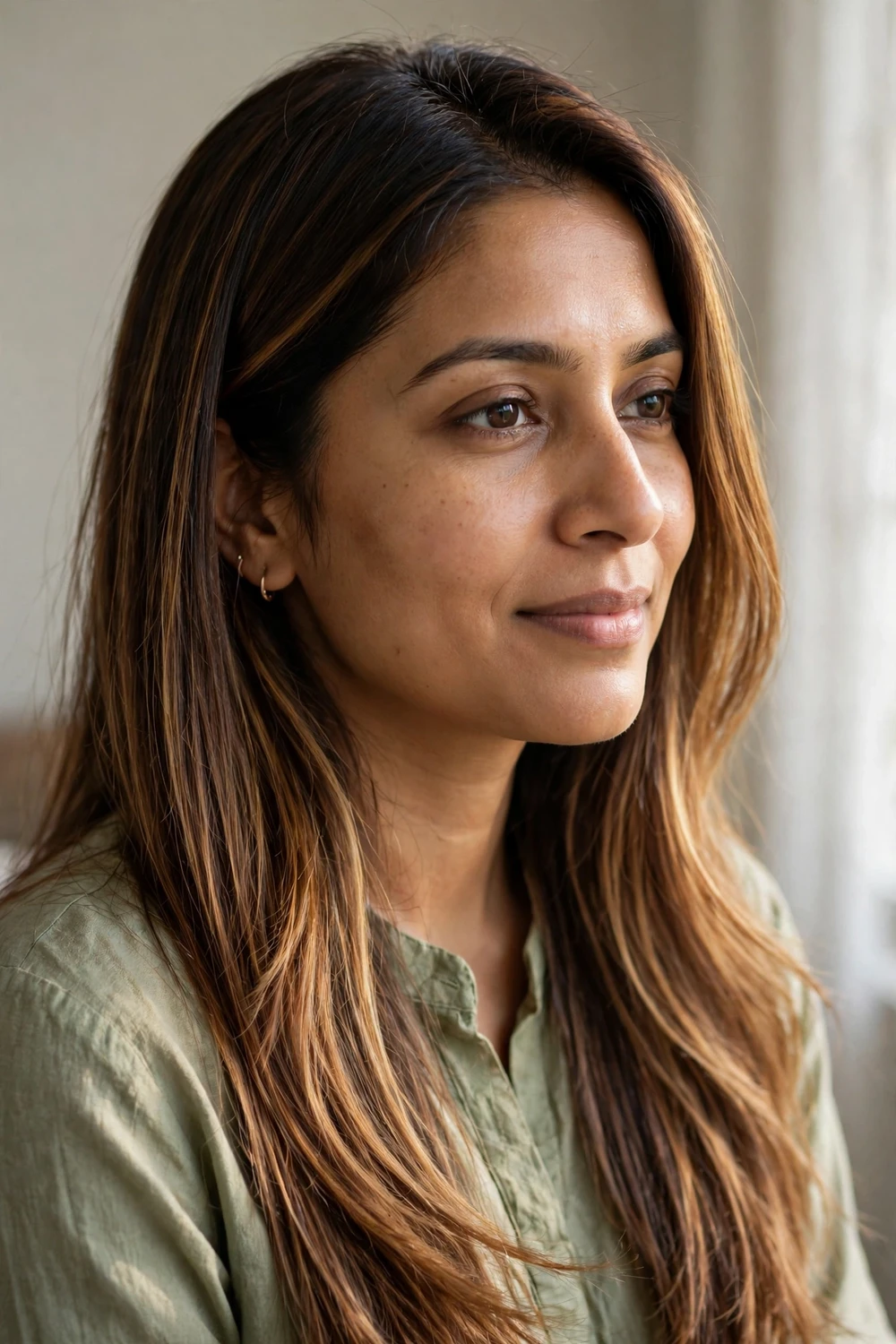
Toffee is deeper and richer than caramel, with a candy-like warmth that suits dark brunette bases. Painted through long straight hair, it creates a glossy, dimensional color that looks rich in indoor light and glowing outdoors. The depth of the tone means it grows out gracefully, and it flatters warm skin tones especially well. Ask for the toffee to be placed mostly through the lower half of the hair for the most natural effect.
Try this: A shine spray on dry hair makes the toffee tones look freshly colored between appointments. Difficulty: Medium. Cost: $140 to $200.
16. Biscuit Blonde Roots
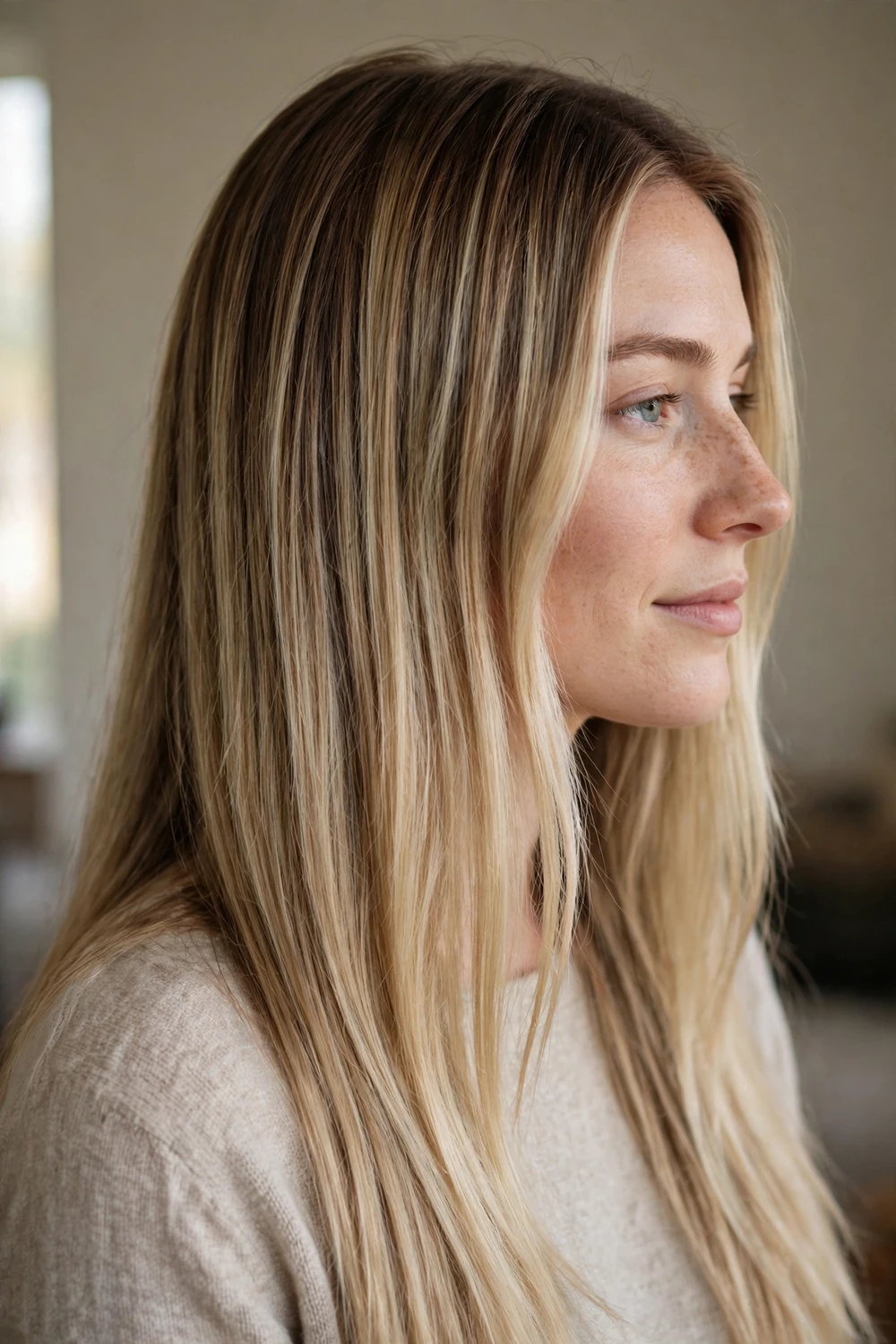
Meet the sandy, lived-in blonde that looks like it grew out perfectly on purpose. Biscuit blonde keeps the roots in a deeper sandy tone and melts into lighter blonde through the lengths, so there is no harsh regrowth line at any stage. On straight hair the rooted blend looks smooth and intentional. This is a strong choice for natural blondes going darker at the root or brunettes lifting toward blonde gradually.
Try this: Ask for a shadow root in a biscuit tone rather than your natural color if your roots grow in darker than you want. Difficulty: Medium. Cost: $150 to $210.
17. Brunette and Grey
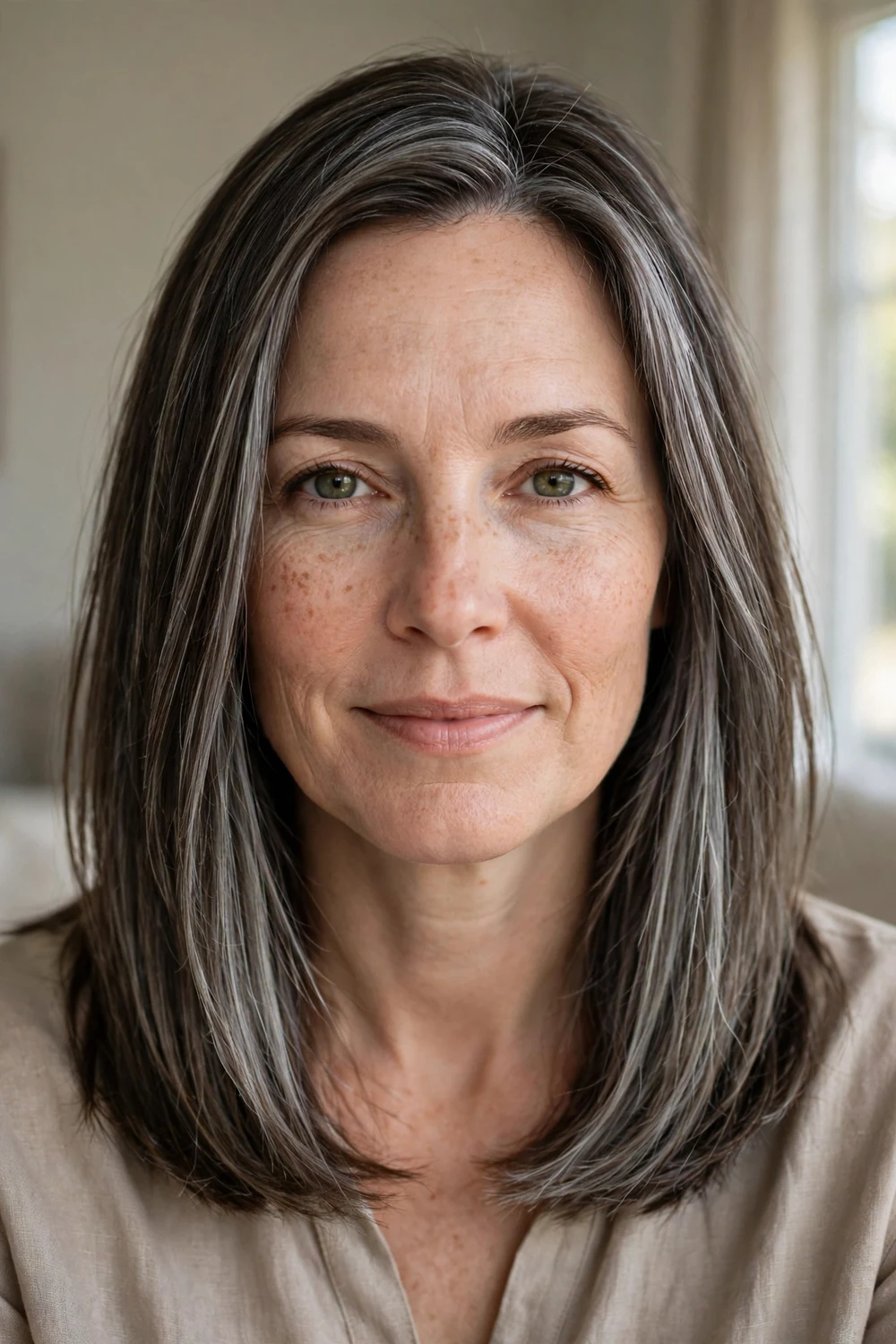
Silver and grey balayage over a brunette base creates a striking, modern contrast that straight hair displays crisply. The colorist lifts selected pieces to a pale tone and then applies a grey or silver toner. The dark base keeps the look wearable while the grey pieces add the edge. This shade needs the most upkeep of any cool option: purple shampoo weekly and toner refreshes every six weeks to stop the grey from yellowing.
Try this: This works best on hair that lifts cleanly; very dark or previously colored hair may need two sessions. Difficulty: Hard. Cost: $180 to $280.
18. Champagne-Vanilla Blonde
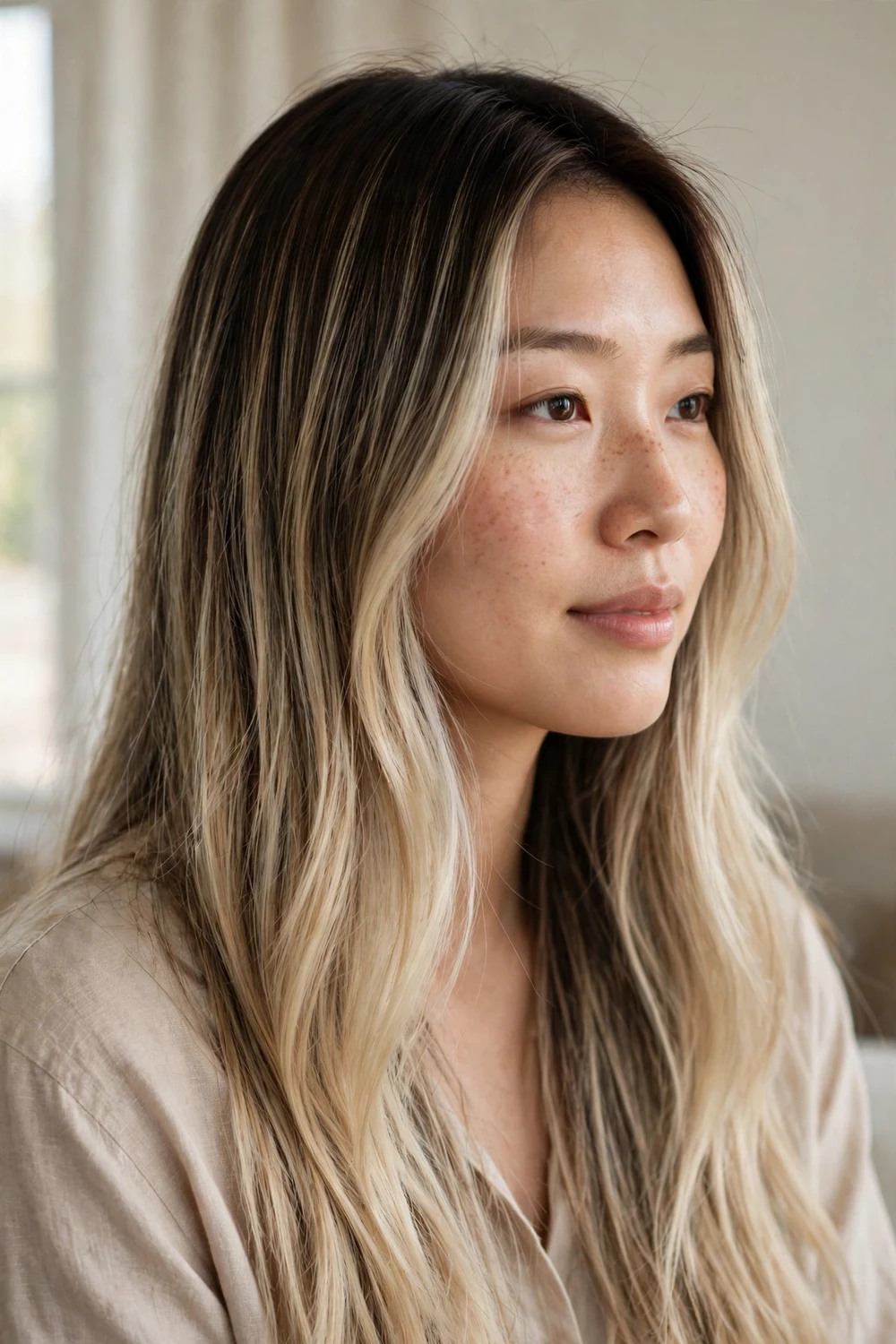
Champagne blonde has a soft golden fizz to it, lighter than honey but warmer than ash. Painted over a dark brunette base on long straight hair, it creates an elegant light-to-dark gradient that suits formal and professional settings. The shade flatters warm and neutral undertones. Because it is a light blonde on dark hair, the ends need bond-building treatments during the service to keep the hair healthy. The pale golden tone pairs well with a sleek blowout or a sharp straight cut.
Try this: Request a bond builder like Olaplex in the lightener to protect the ends during the lift. Difficulty: Hard. Cost: $180 to $260.
19. Multi-Tonal Long Blonde
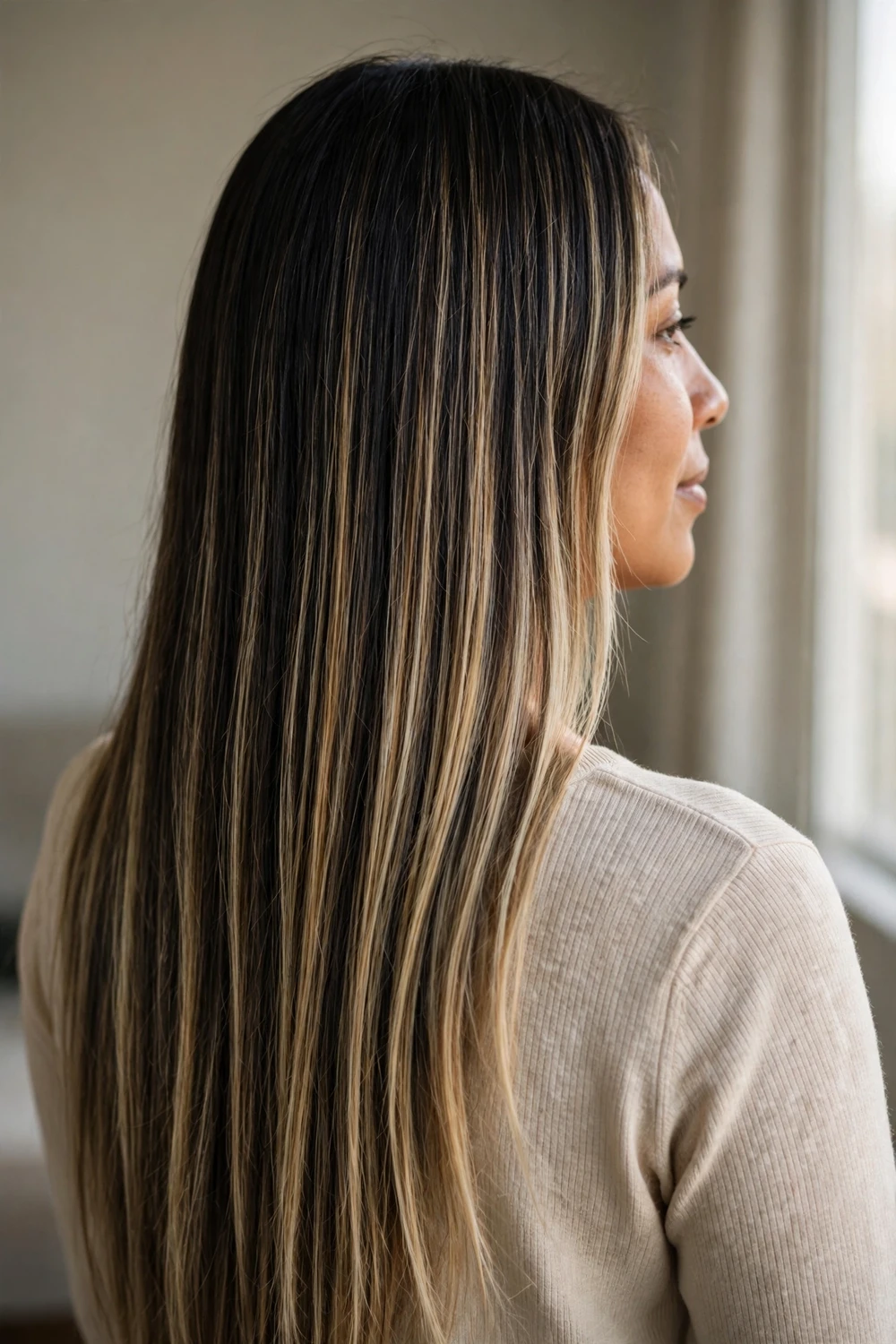
Why settle for one blonde when the colorist can paint three or four? A multi-tonal balayage weaves golden, honey, and beige blonde pieces through long dark hair so the color shifts as the hair moves. On very long straight hair there is enough length for the full range of tones to show. The complexity of the color makes regrowth nearly invisible, which offsets the higher initial cost with fewer visits.
Try this: This is best done on hair below the shoulders; shorter lengths cannot fit the full tonal range. Difficulty: Hard. Cost: $200 to $300.
20. Blunt Lob with White Blonde
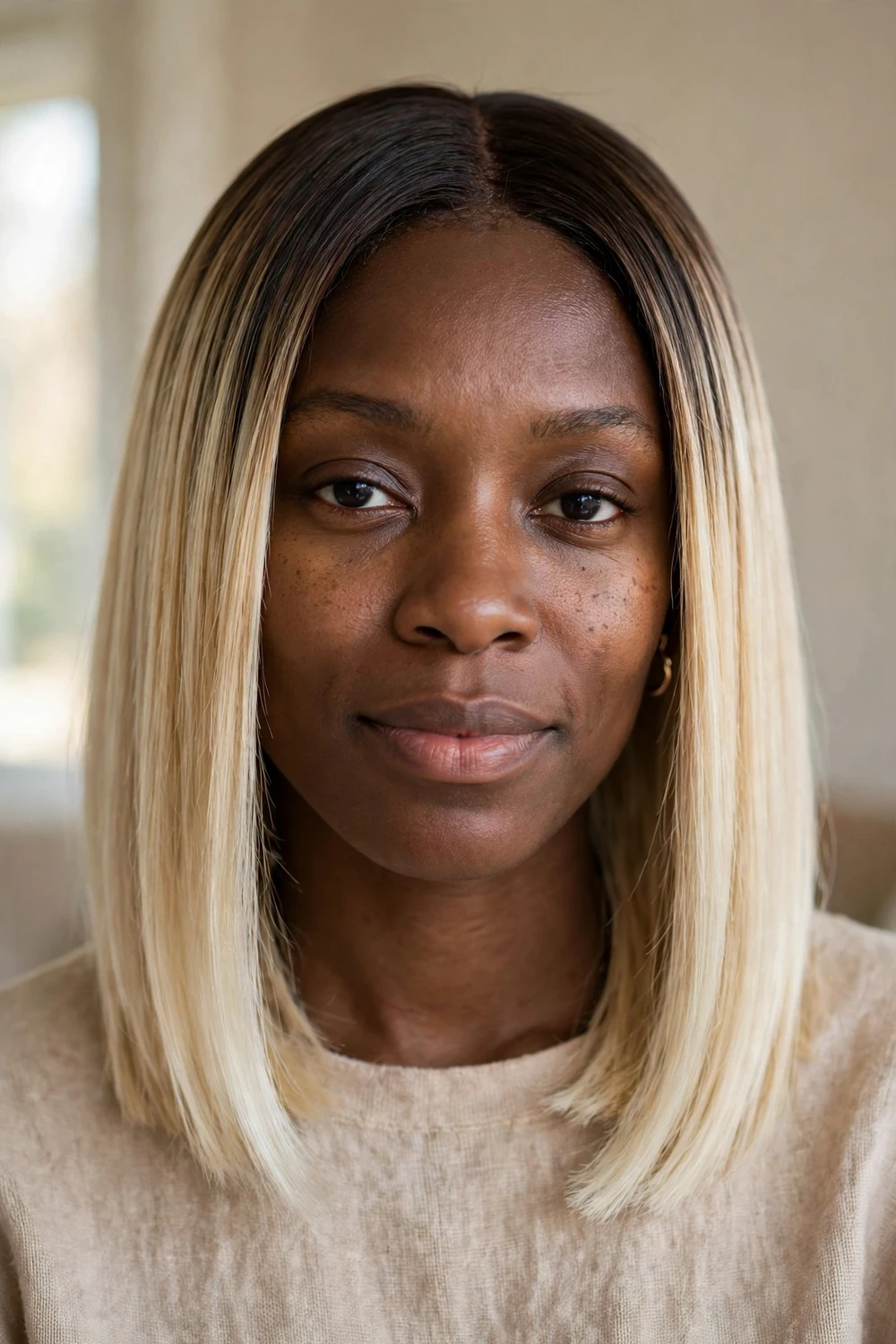
A blunt lob gives the colorist a clean, straight edge to work with, and white blonde ends against dark roots make the most of it. The contrast is dramatic but the blunt cut keeps it sharp rather than messy. On straight hair this pairing looks precise and fashion-forward. The white blonde needs purple shampoo from the first wash and regular trims, since lightened ends on a blunt cut show damage quickly.
Try this: Trim every eight weeks to keep the blunt edge sharp; split ends ruin this look fast. Difficulty: Hard. Cost: $170 to $260.
21. Honey Blonde Short Bob
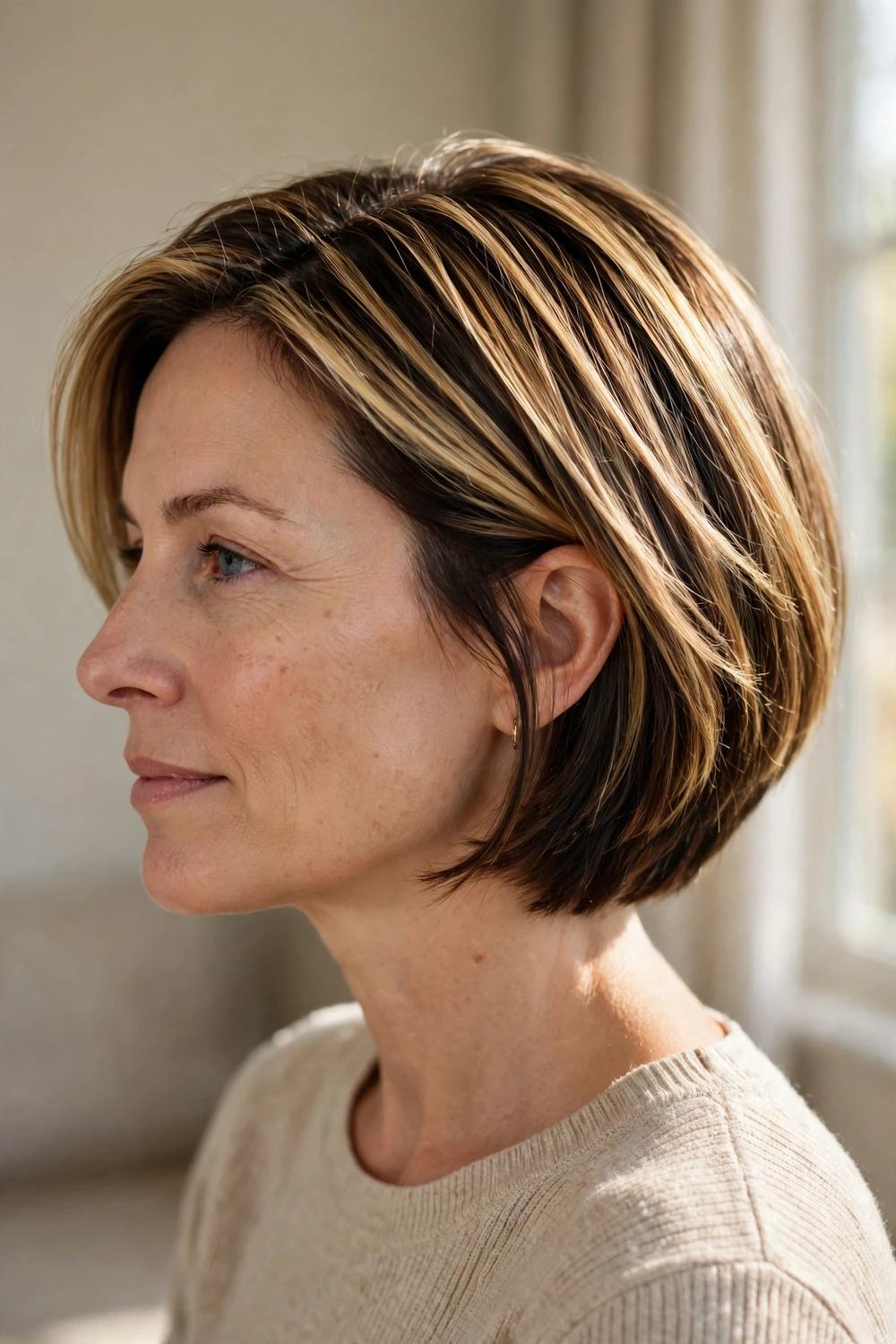
Short hair can carry balayage when the colorist paints with a light hand. Honey blonde swept across the surface of a dark bob creates a sun-kissed glow without needing length for a gradient. The key is keeping the contrast moderate: honey is close enough to brunette that the grow-out stays soft. This is a good entry point for bob wearers who want color without a high-maintenance commitment. A root shadow in your natural color keeps the grow-out soft for months.
Try this: Ask for the lightest pieces around the face and crown, where short hair catches the most light. Difficulty: Easy. Cost: $100 to $160.
22. Bright Blonde Choppy Bob
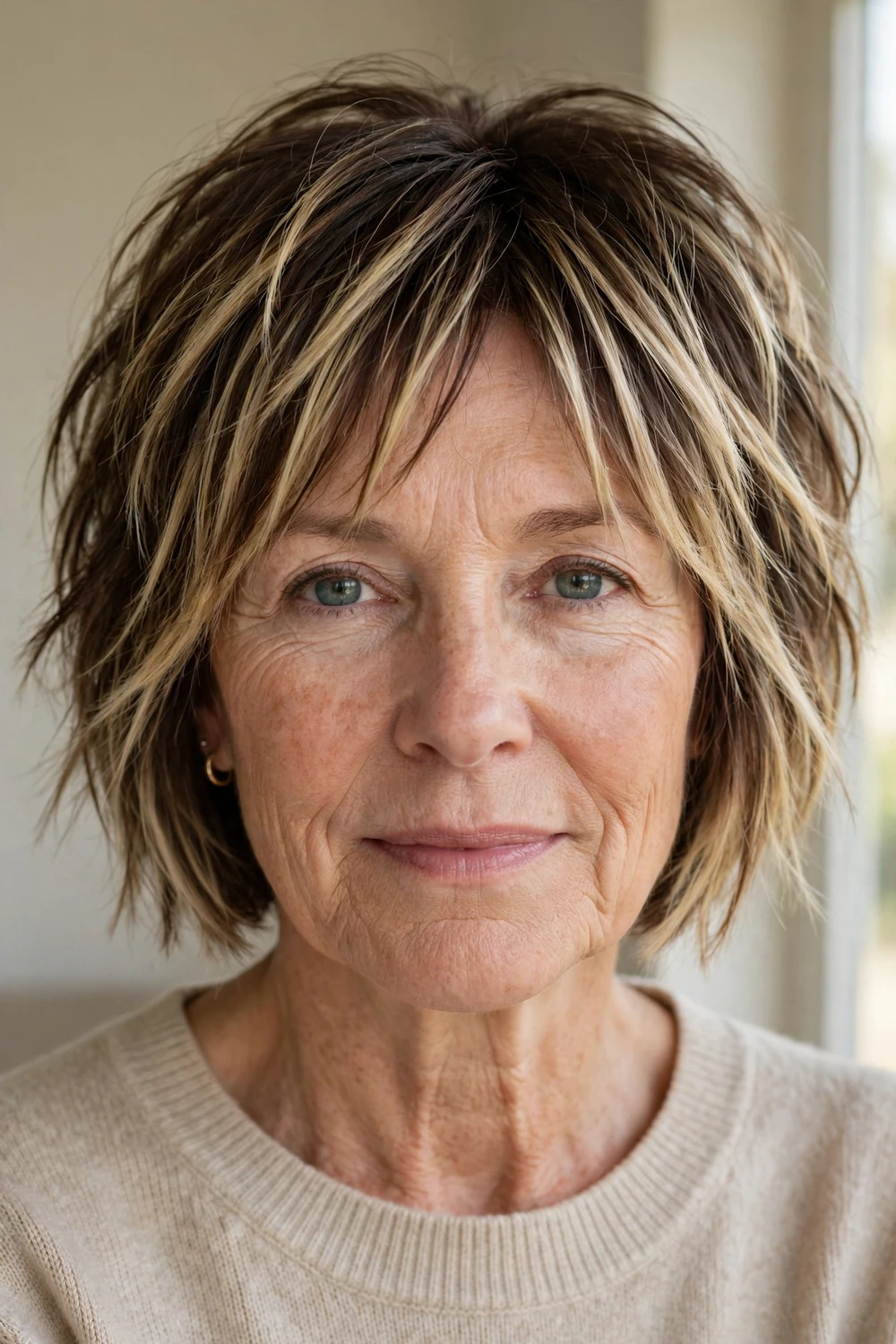
Choppy layers and bright blonde balayage are a practical pairing for fine or thinning straight hair. The textured cut creates movement while the blonde pieces add the illusion of thickness and light. The colorist should paint the brightest pieces through the top layers where they are most visible. This combination suits women who want both volume and color from a single salon visit. Keep the fringe area slightly darker than the ends so the bright pieces do not overwhelm the face.
Try this: A texturizing spray on dry hair boosts the choppy layers and makes the blonde pieces pop. Difficulty: Medium. Cost: $130 to $190.
23. Dark Stacked Bob with Neat Strands
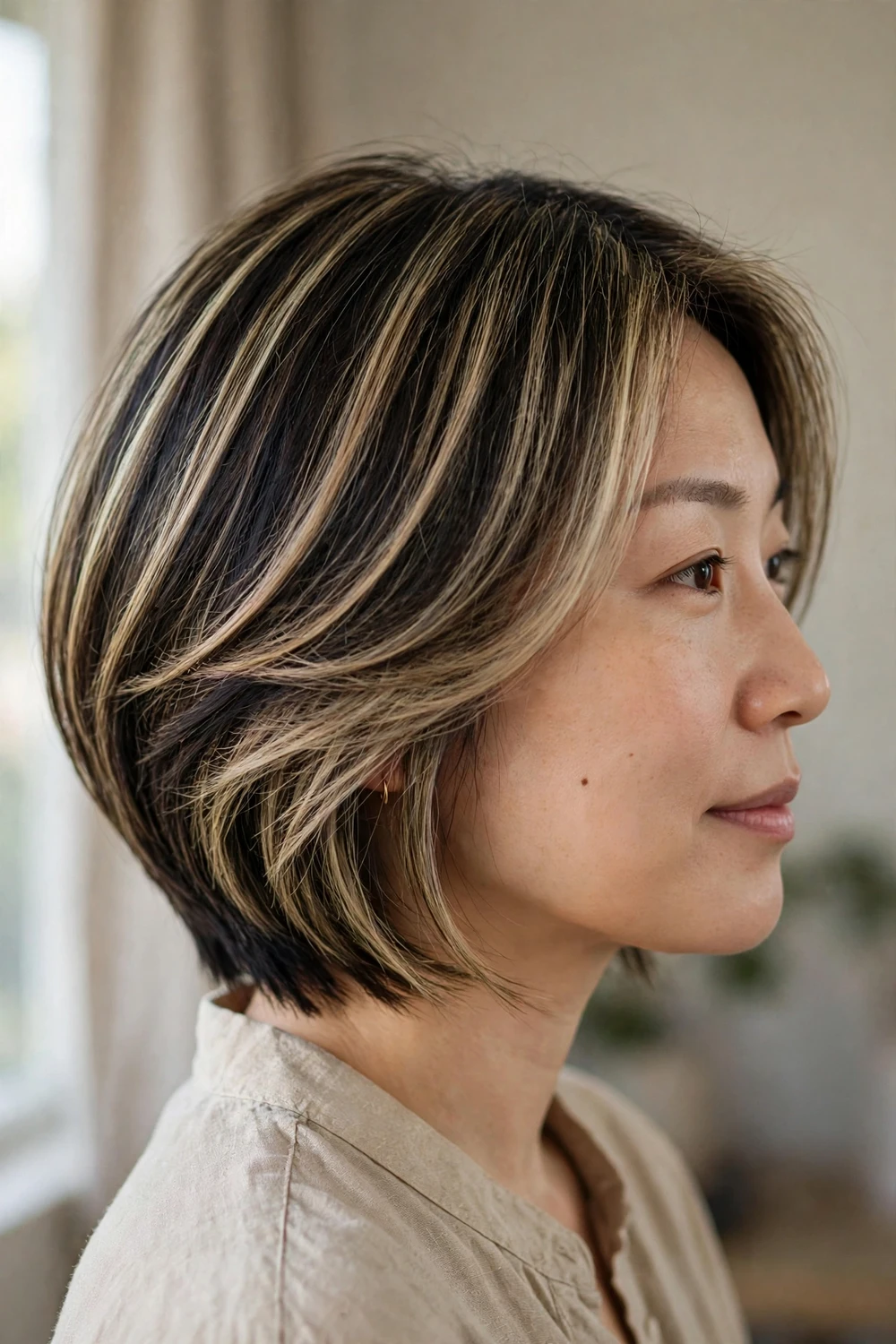
A stacked bob already has built-in dimension from its graduated layers, and neat balayage strands placed through the layers highlight that shape. The colorist paints thin, precise pieces rather than a soft melt, which suits the geometric nature of the cut. On straight hair the neat strands read as deliberate highlights that follow the curve of the stack. Keep the overall tone close to the base for a polished result.
Try this: This cut-and-color combo needs reshaping every six to eight weeks to hold the stacked shape. Difficulty: Medium. Cost: $140 to $200.
24. Mocha Brown Lob
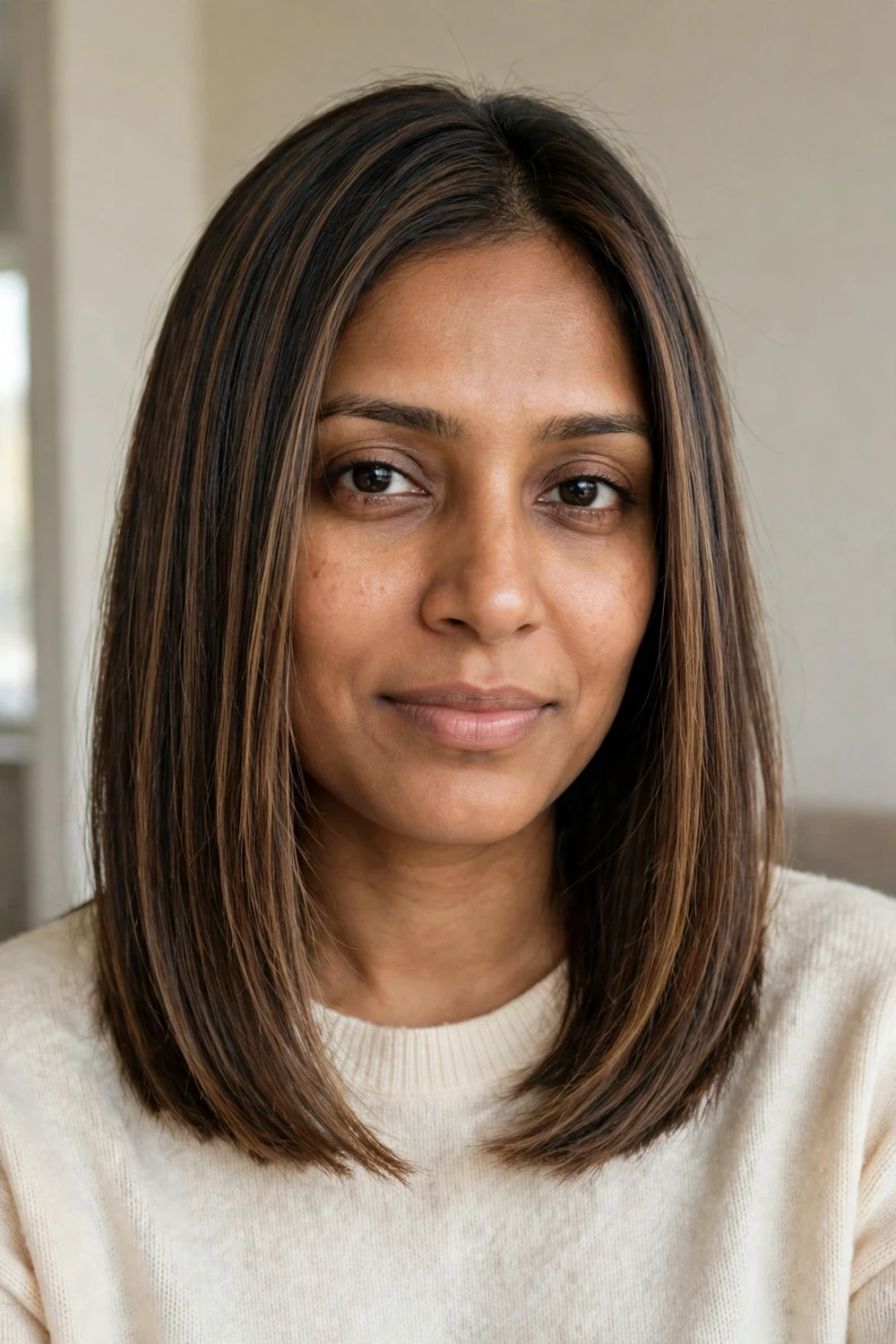
Mocha is the understated option: a medium brunette base with softly lightened pieces that may be warm or cool depending on your skin tone. On a straight lob the subtle color adds just enough dimension to keep the cut from looking flat. This is the right pick for anyone who wants a change that coworkers will notice as “something different” without being able to name it. Maintenance is minimal. A demi-permanent formula works well here since the change is subtle and low-commitment.
Try this: Decide warm or cool with your colorist using the veins on your wrist as a guide: green means warm, blue means cool. Difficulty: Easy. Cost: $110 to $170.
25. Natural-Looking Babylights
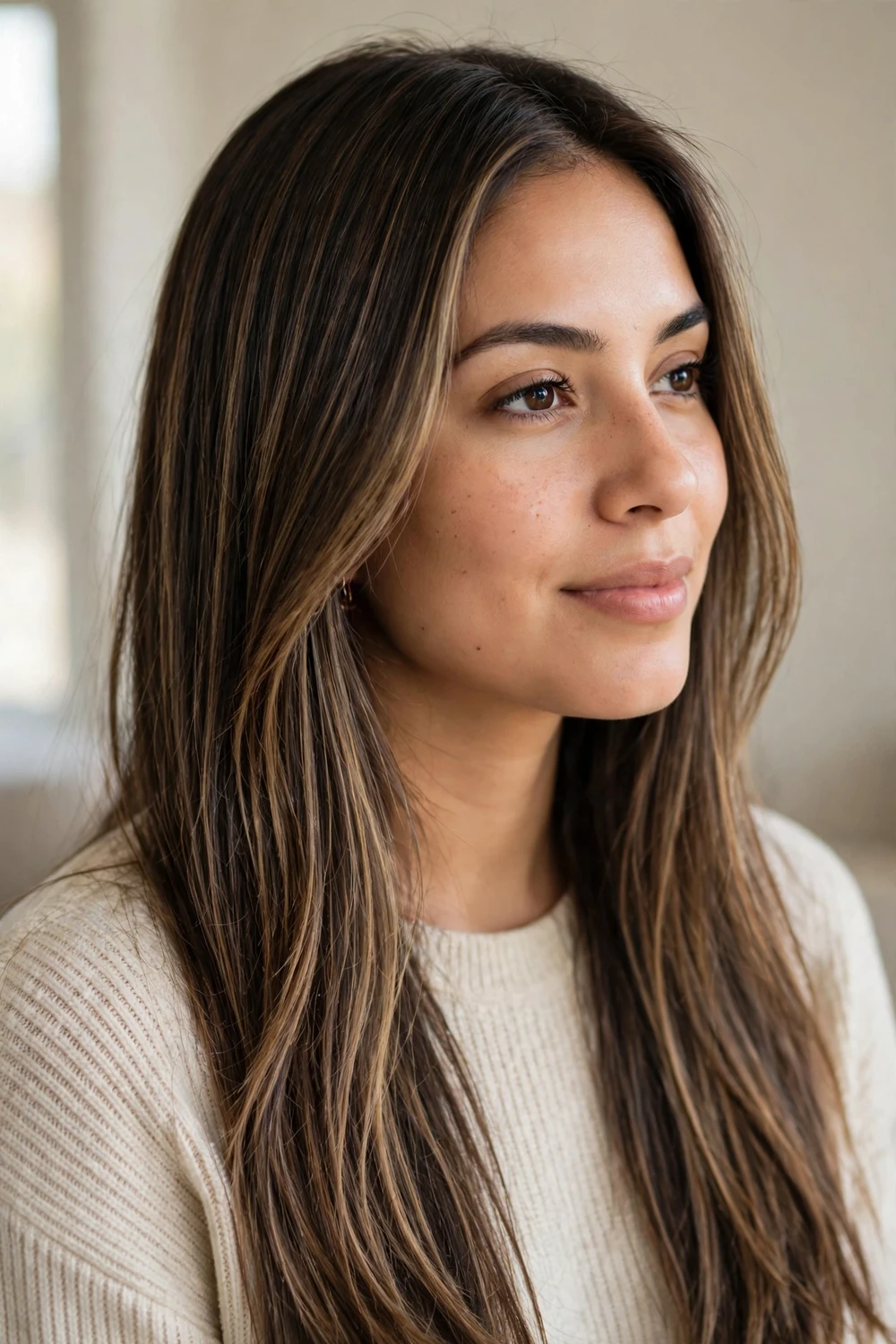
Babylights are ultra-fine highlights painted in a balayage technique, so delicate they mimic the natural lightening hair gets from sun exposure. On long straight brunette hair they create a soft, all-over brightness with no visible pattern. This is the most natural option on the list and the best choice for anyone who wants to look like they simply have great hair. The fine placement means the grow-out is seamless. The fine weaving takes patience, but the result needs almost no upkeep for months.
Try this: Babylights take longer to paint than they look; book a full three-hour appointment. Difficulty: Medium. Cost: $160 to $230.
26. Peek-a-Boo Highlights
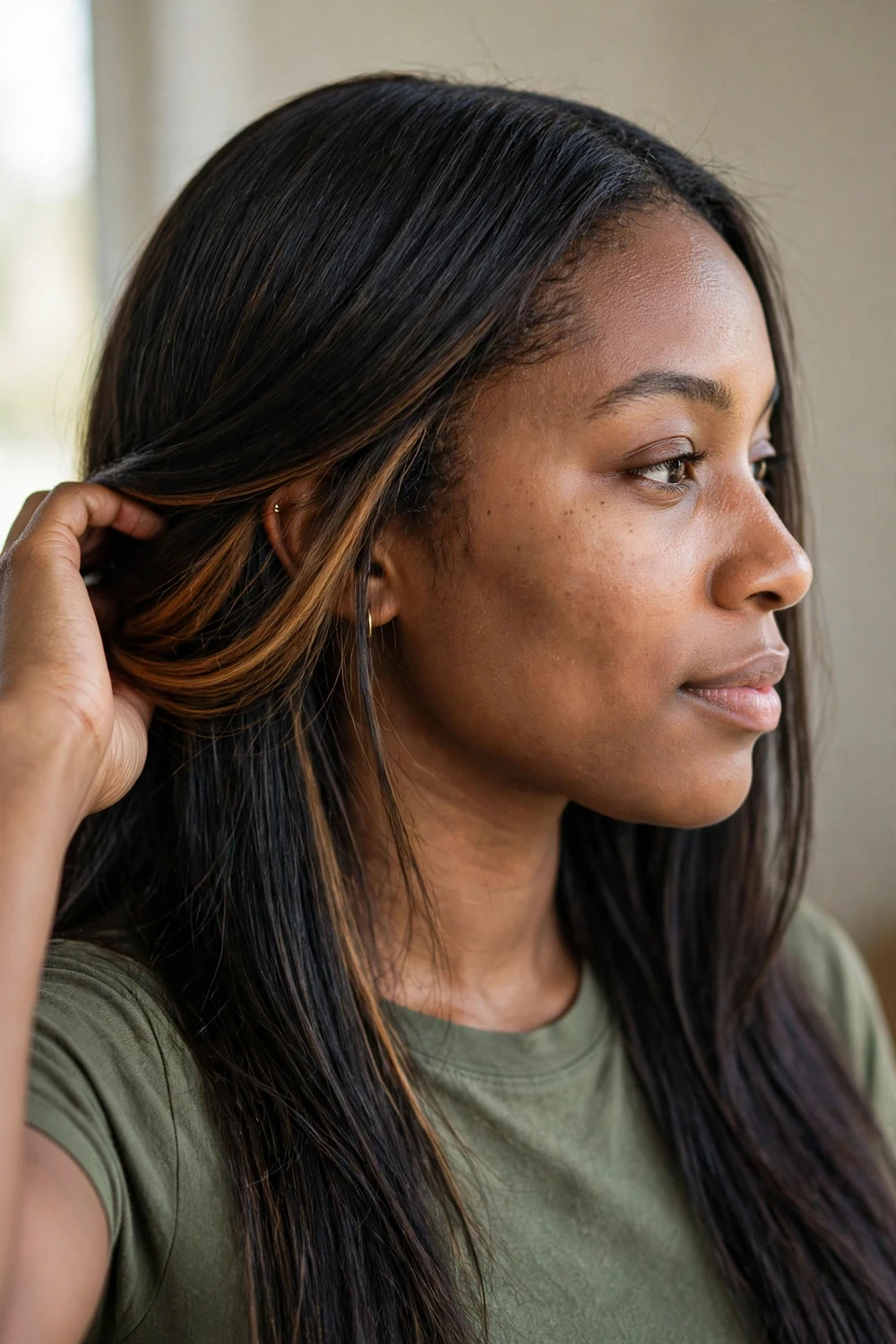
Peek-a-boo color hides the balayage in the underlayer of the hair so it only shows when the hair moves or is tucked back. On straight hair the effect is a flash of caramel or blonde beneath a dark top layer. This suits anyone who wants color with a professional cover: worn down and still, the hair looks like a solid brunette. The hidden placement also means the color is protected from sun fading.
Try this: Choose a shade two to three levels lighter than your base so the peek-a-boo pieces actually show when revealed. Difficulty: Easy. Cost: $100 to $160.
27. Reverse Balayage
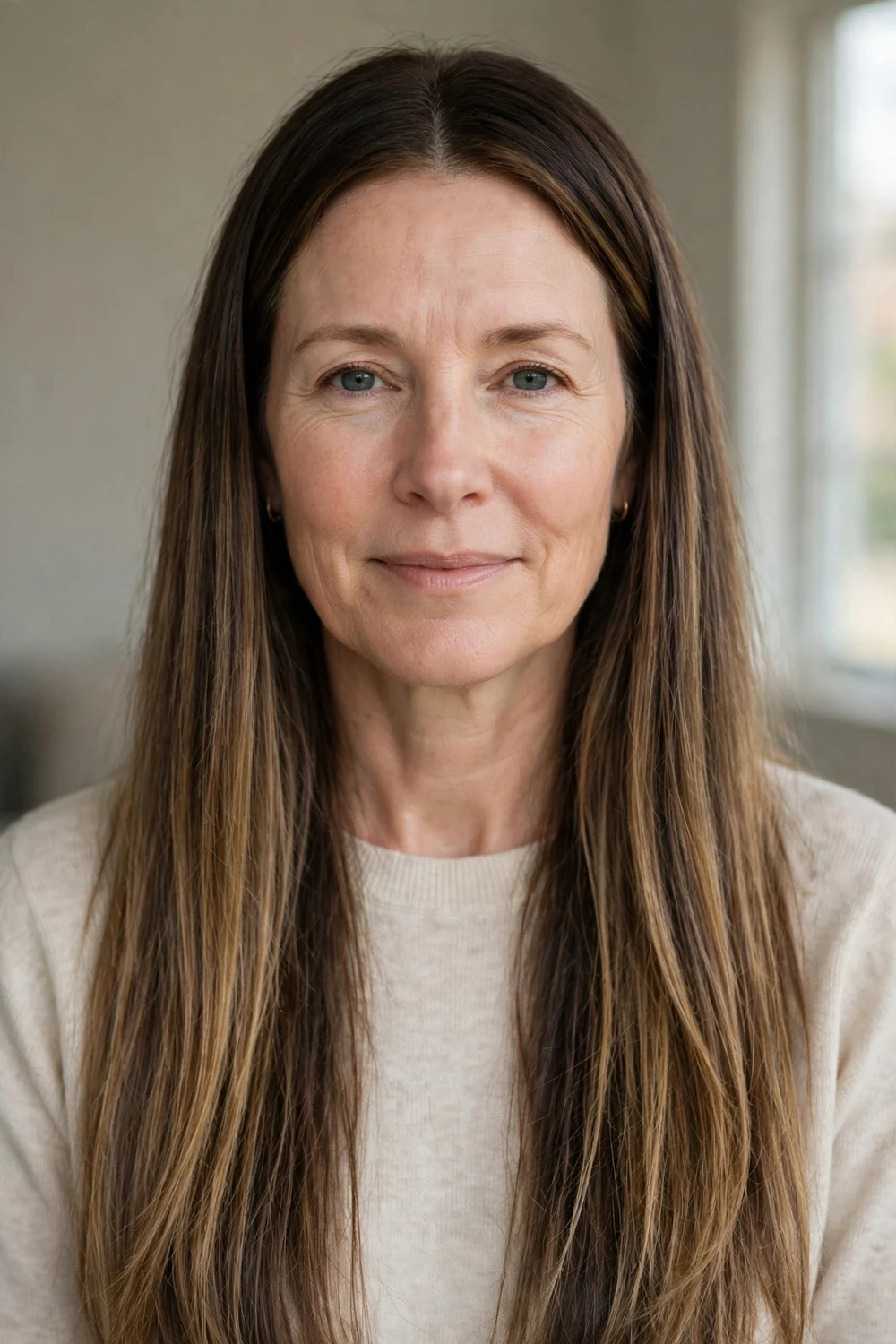
Reverse balayage flips the technique by painting darker lowlights onto lighter hair instead of lightening dark hair. The added depth makes the existing blonde or light brown pieces look brighter by contrast. On straight hair the lowlights create shadow and dimension that flat, over-lightened hair often lacks. This is also the fix when a previous balayage went too light and needs to come back toward brunette gradually. This service usually costs less than a full balayage since no lightener is involved.
Try this: Bring photos of the depth you want, not just the lightness; lowlights are about shadow placement. Difficulty: Medium. Cost: $130 to $190.
28. Soft Lavender-Lilac
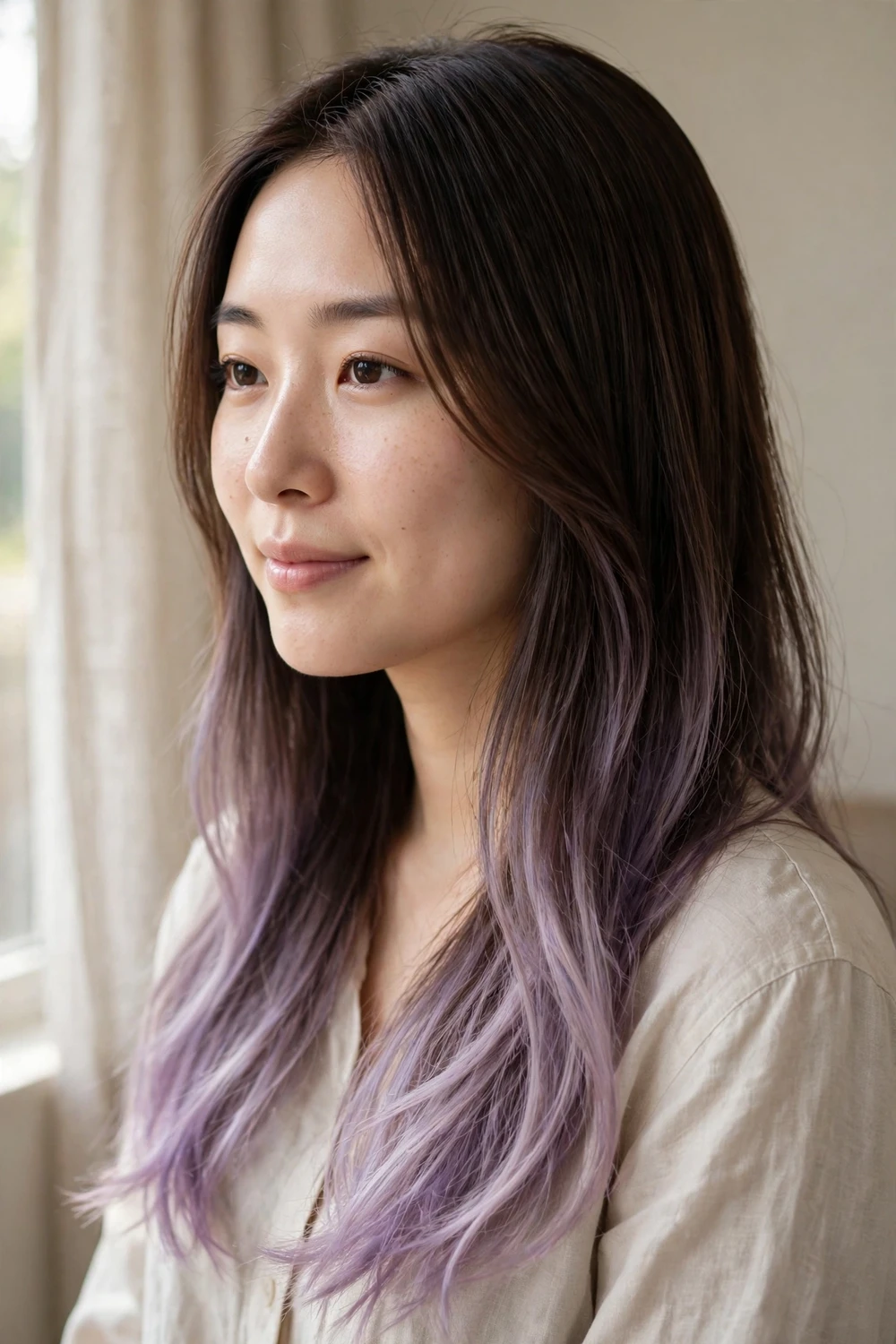
A wash of lavender or lilac over pre-lightened brunette ends gives straight hair a pastel accent without a full fashion color commitment. The cool purple tone pairs naturally with ash and mushroom brown bases. Because pastel fades within a few weeks, this works as a trial: if you love it, the colorist can deepen it next visit, and if not, it washes out on its own. Keep washes cool and infrequent to hold the tone.
Try this: A purple conditioner between salon visits keeps the lilac from fading to grey too quickly. Difficulty: Medium. Cost: $140 to $200.
29. Lived-In Ash Balayage
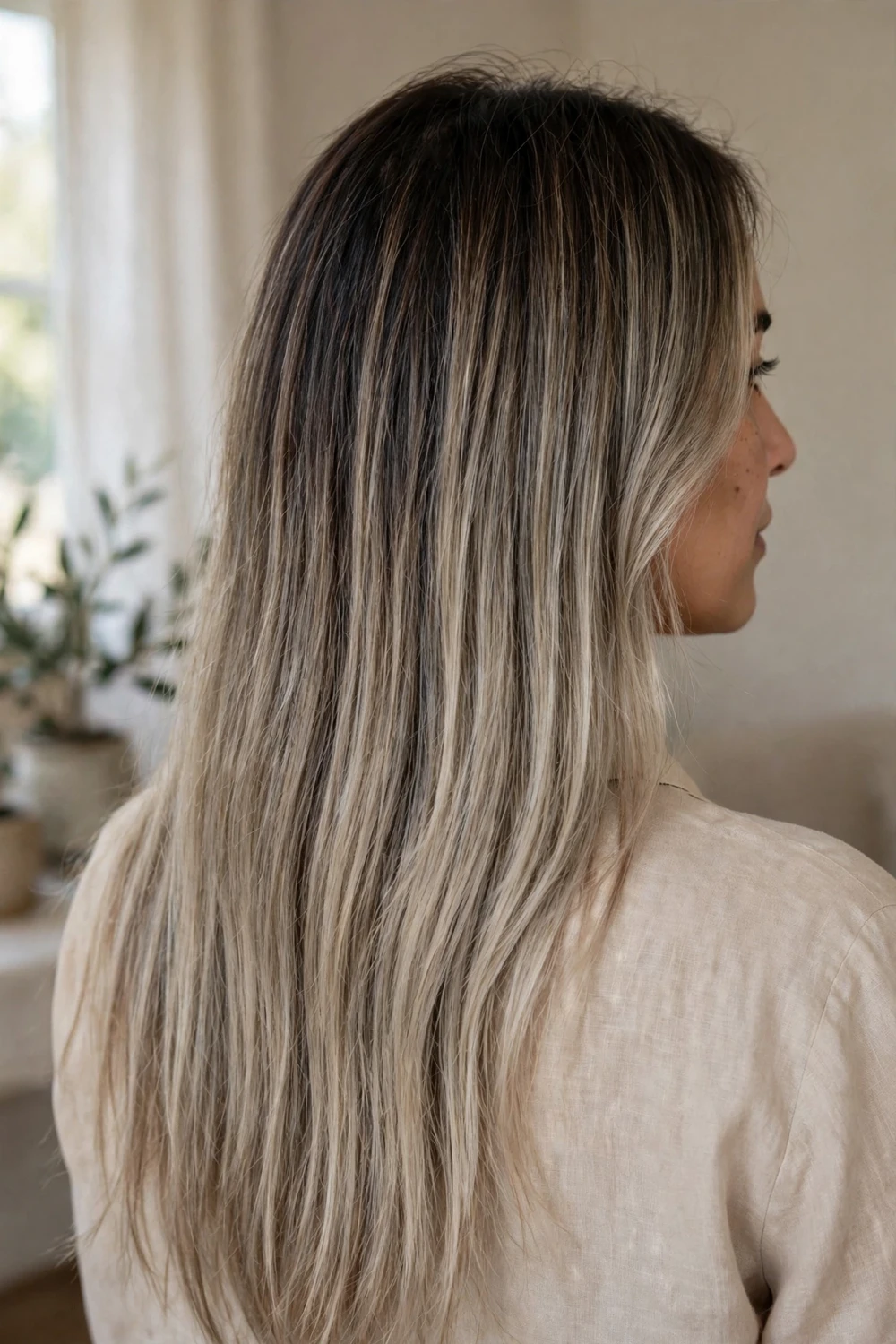
Lived-in color is designed to look good at every stage of grow-out, and ash tones make it even more forgiving. The colorist blends smoky ash blonde through the lengths while leaving several inches of natural root untouched. On straight hair the soft grow-out reads as intentional rather than neglected. This is the lowest-maintenance blonde option for brunettes, with many wearers going five to six months between appointments. A clear gloss at the six-month mark revives the ash tone without a full re-color.
Try this: Skip the root touch-up entirely; the dark root is part of the design. Difficulty: Medium. Cost: $150 to $210.
30. Glass-Hair Sleek Balayage
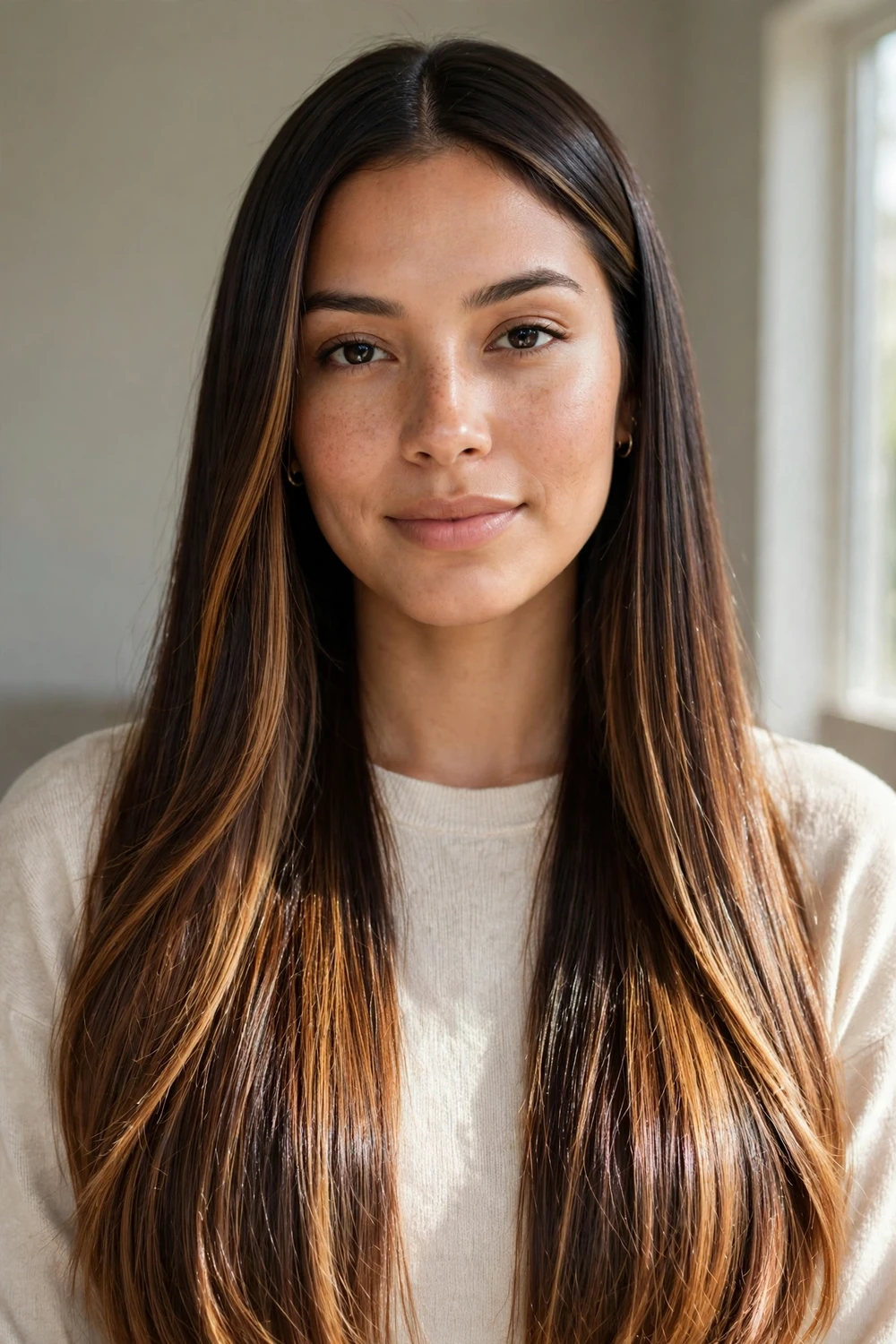
Glass hair is straight hair polished to a mirror shine, and a caramel balayage gives that shine something to reflect. The colorist paints glossy caramel tones through a dark base, then the style is flat-ironed pin-straight with a shine serum. On straight hair this is the highest-gloss option on the list. The look depends as much on the finish as the color, so a smoothing treatment or keratin service pairs well with it.
Try this: A silicone-free shine serum on the mid-lengths adds reflection without weighing the hair down. Difficulty: Medium. Cost: $150 to $220.
Brunette Balayage for Straight Hair Comparison at a Glance
| Style | Shade Tone | Maintenance | Best For |
|---|---|---|---|
| Face-Framing Money Piece | Warm to cool blonde | Low | Maximum impact, low commitment |
| Sun-Kissed Honey Strands | Warm honey | Low | Natural summer brightness |
| Warm Caramel Melt | Warm caramel | Low | Seamless gradient lovers |
| Chestnut Brunette Highlights | Warm russet brown | Low | First-time color caution |
| Mushroom Ash Brown | Cool taupe | Medium | Cool undertones, anti-brass |
| Cool-Toned Icy Blonde | Cool icy blonde | High | Bold contrast seekers |
| Contrasting Blonde Ribbons | Neutral blonde | Medium | Graphic, noticeable color |
| Chocolate and Auburn Blend | Warm red-brown | Medium | Warm skin tones |
| Cherry Red and Mahogany | Deep red | High | Fashion-forward brunettes |
| Copper Ribbons | Metallic copper | Medium | Reflective warm shine |
| Strawberry Blonde | Warm rosy blonde | Medium | Soft lift without full blonde |
| Rose Gold | Pink champagne | High | Trendy metallic finish |
| Auburn with Blonde Strands | Warm red and blonde | High | Red hair with brightness |
| Walnut Bronde | Neutral walnut | Low | Undetectable natural dimension |
| Toffee Balayage | Deep warm toffee | Low | Rich glossy warmth |
| Biscuit Blonde Roots | Sandy blonde | Low | Lived-in blonde grow-out |
| Brunette and Grey | Cool silver grey | High | Modern edgy contrast |
| Champagne-Vanilla Blonde | Warm pale blonde | High | Elegant light gradient |
| Multi-Tonal Long Blonde | Mixed blondes | Medium | Very long hair |
| Blunt Lob with White Blonde | Cool white blonde | High | Sharp fashion statement |
| Honey Blonde Short Bob | Warm honey | Low | Short hair entry point |
| Bright Blonde Choppy Bob | Bright blonde | Medium | Fine hair needing volume |
| Dark Stacked Bob with Neat Strands | Neutral light brown | Medium | Geometric precision cuts |
| Mocha Brown Lob | Warm or cool brown | Low | Subtle everyday change |
| Natural-Looking Babylights | Soft natural blonde | Low | Invisible natural brightness |
| Peek-a-Boo Highlights | Warm caramel | Low | Hidden color, professional settings |
| Reverse Balayage | Dark lowlights | Medium | Adding depth back to blonde |
| Soft Lavender-Lilac | Cool pastel purple | High | Temporary fashion accent |
| Lived-In Ash Balayage | Cool smoky ash | Low | Longest time between visits |
| Glass-Hair Sleek Balayage | Warm caramel | Medium | Maximum shine and polish |
How to Choose the Right Brunette Balayage for You
Start with your skin undertone, since it decides whether warm or cool shades will flatter you. Warm undertones (greenish wrist veins, gold jewelry looks best) pair with caramel, honey, copper, and chestnut. Cool undertones (bluish veins, silver jewelry) pair with ash, mushroom brown, icy blonde, and grey. Neutral undertones can wear either family.
Next, consider your natural depth. The closer the balayage stays to your base color, the more natural the result and the longer you can go between appointments. Jumping four or more levels lighter means more upkeep and more stress on the hair. If your hair is fine or fragile, stay within two to three levels and ask for a bond builder in the formula.
If you are deciding between going lighter overall or adding red tones, this related guide on blonde balayage on brown hair breaks down how blonde balayage behaves specifically on brown bases, which helps you compare the two directions.
Finally, think about your styling routine. Balayage on straight hair looks best when the hair is actually worn straight and smooth, since that is when the gradient shows cleanly. If you rarely heat-style, choose a softer, lower-contrast option like walnut bronde or babylights, which look good air-dried too.
Mistakes to Avoid
The most common mistake is placing the lightest color too high. Balayage should start softly around the mid-lengths; when the blonde begins at the crown it grows out like a harsh root line and needs fixing within weeks. Ask the colorist to show you exactly where the lightest pieces will start before they begin.
Another frequent error is choosing a shade from a photo without adjusting for your base. A caramel that glows on medium brown hair can turn orange on near-black hair, and an ash that looks chic on light brown can go muddy on dark bases. A good colorist adjusts the formula to your starting level, so bring photos but let them adapt the shade.
For seasonal timing, many brunettes refresh their balayage as the weather changes. If you are planning around the colder months, browse these winter hair color ideas to see which brunette balayage tones pair best with winter wardrobes and lower sun exposure.
Skipping toner appointments is the third mistake. Toner is what keeps blonde and ash balayage from turning yellow or brassy, and it fades faster than the color itself. A toner-only visit every six to eight weeks costs far less than a full re-color and keeps the shade true.
Finally, do not bleach over previously colored dark hair without a strand test. Box dye and old permanent color lift unpredictably, and straight hair will show every uneven patch. A strand test takes twenty minutes and saves you from a correction that costs three times the original service.
When autumn arrives, warm balayage tones get a seasonal boost. This roundup of fall hair colors shows how copper, auburn, and caramel balayage shades fit the fall palette if you want your color to match the season.
Blonde-leaning brunette balayage also has a seasonal sweet spot. These fall blonde hair colors include several balayage placements that transition well from summer brightness into richer autumn tones.
Frequently Asked Questions
Does balayage look good on straight hair?
Yes. Balayage suits straight hair well because the smooth surface displays the painted gradient clearly, from dark roots through lighter ends. The key is a skilled colorist: straight hair hides nothing, so the blend must be seamless with no spots or stripes. Most colorists recommend at least shoulder length so the gradient has room to develop smoothly.
What is better on straight hair, balayage or highlights?
Both work, but they give different results. Balayage creates a soft, graduated blend with a natural grow-out, which means fewer salon visits. Traditional foil highlights give a brighter, more uniform lift with a more visible regrowth line. If you want low maintenance and a sun-kissed effect, balayage is usually the better pick for straight hair.
How long does brunette balayage last on straight hair?
The color itself lasts three to four months before the tone starts to fade, but the grow-out stays soft enough that many people wait four to six months between full appointments. Toner refreshes every six to eight weeks keep blonde and ash tones from turning brassy. Using sulfate-free shampoo and washing less often extends the color noticeably.
Does balayage damage straight hair?
Any lightening causes some stress to the hair, but balayage is gentler than full-head bleaching because it processes in open air and skips the roots. Damage stays minimal when the lift is kept within three to four levels and a bond builder is used. Deep conditioning weekly and heat protectant before flat-ironing keep straight balayaged hair healthy.
How do I ask my colorist for brunette balayage on straight hair?
Bring two or three photos of hair in a similar base color to yours, and specify three things: the tone family (warm, cool, or red), where you want the lightest pieces to start, and how much contrast you want. Mention that you wear your hair straight so the colorist paints with extra precision. Ask for a gloss or toner to be included so the final tone matches the photo.
Final Thoughts
Brunette balayage for straight hair earns its popularity: the technique flatters the smooth texture, the grow-out is forgiving, and the shade range covers every undertone. Pick your tone family first, keep the contrast honest about your maintenance budget, and find a colorist who paints this daily. Do that and the color will look deliberate for months, not weeks.

