



An Italian bob is a chin-to-neck-length bob with full, bouncy ends and a blowout finish. It grew out of the 1960s Roman salon look: heavier at the ends than a French bob, more polished than a shaggy cut, and shaped to move when you turn your head. This guide covers 18 italian bob haircuts, from the classic sleek version to retro, shaggy, and color variations, so you can find the one that matches your hair and your routine.
Quick takeaways
- The Italian bob is defined by full ends and a blow-dried finish, which separates it from the air-dried French bob.
- It suits medium to thick hair best; fine hair can wear it with the right layering.
- Most versions need a round brush and 15 to 20 minutes of blow-drying to look right.
- The cut ranges from chin-grazing to just above the shoulders across its 18 variations.
- Salon prices run $55 to $95, with trims every 6 to 8 weeks.
1. Classic Sleek Italian Bob

The classic version is the reference point for all italian bob haircuts: chin-to-neck length, blunt ends with minimal layering, and a smooth blow-dried finish. Stylists keep the weight at the perimeter so the ends look full rather than wispy, then round-brush the hair under for that signature bounce. It suits straight and slightly wavy hair, and it frames oval and heart-shaped faces cleanly. A smoothing serum on damp hair is the only product the base version needs.
Try this: ask for the ends cut to graze the top of the neck so the bounce lands at the jawline.
Effort: Medium · Salon cut: $55–$85
2. Roman Blunt Italian Bob

Named for its Roman salon roots, this take sharpens the classic into a strict blunt edge just below the chin. No layers, no texture, just one heavy line that swings as a single piece. The severity suits confident dressers and strong bone structure; softer faces may find it harsh without bangs to break the line. It demands precision cutting, so book a stylist known for blunt work rather than a generalist.
Try this: wear it with a center part for the strictest look, or push the part slightly off-center to soften one side.
Styling: Medium · Price range: $60–$90
3. Textured Italian Bob

Point-cutting through the last two inches loosens the classic into a textured finish with visible separation. This version keeps the Italian bob’s fullness but trades the glassy blowout for movement, which makes it the easiest of the italian bob haircuts to grow out. Thick hair benefits most, since the texture removes bulk without thinning shears. Scrunch a texturizing cream into dry ends and the style holds all day with no heat.
Try this: keep the texture in the bottom third only; texturizing higher up collapses the fullness the cut is known for.
Maintenance: Low · Cost: $55–$85
4. Layered Italian Bob

Soft interior layers give this version its lift, especially through the crown and sides. The Milanese-style layering works on fine to medium hair that needs volume the blunt versions cannot provide, and it takes highlights well because the layers catch light at different depths. Blow-dry with a round brush, rolling each section under, to set the bounce the layers are cut to create. Flat hair at the roots is the common complaint; a root-lifting spray fixes it in one step.
Try this: ask where the shortest layer falls; anything above the cheekbone turns this into a shaggy cut instead.
Daily effort: Medium · Salon price: $60–$90
5. Wavy Italian Bob

Loose waves replace the blowout in this relaxed take, giving the Italian bob a beachy finish without losing its shape. A 1.25-inch curling iron through the mid-lengths, brushed out once cool, builds the wave; the full ends keep it from reading as a generic wavy lob. This is the best of the italian bob haircuts for naturally wavy hair, since the cut works with the existing pattern instead of fighting it. Always use a heat protectant before the iron touches the hair.
Try this: leave the last inch of each section uncurled so the ends keep their blunt fullness.
For more cuts that work with a natural wave pattern, see our bob haircuts for wavy hair roundup with styling tips for every density.
Styling time: 15 minutes · Salon cut: $55–$85
6. Long Italian Bob

Stretching to just above the shoulders, the long Italian bob keeps the full ends and bouncy finish of the classic while adding styling room. The extra length allows loose ponytails and half-up styles the chin version cannot manage, which makes it the practical pick for anyone nervous about short hair. Round faces benefit from the added length, which draws the eye downward. It needs the same round-brush routine as the classic, just with larger sections.
If you want more ideas at this length, see long bob hairstyles for styling options that suit longer bobs.
Try this: keep the front pieces half an inch longer than the back so the cut reads as a bob, not just medium hair.
Versatility: High · Cost: $55–$85
7. Short Italian Bob

Cut to the jawline with the same heavy ends as the classic, the short Italian bob is the boldest length in the family. It exposes the neck completely and puts cheekbones on display, which suits oval and heart-shaped faces. The short length actually makes the blowout faster, about 10 minutes, but trims come every 5 to 6 weeks because the shape overgrows quickly. Thick hair needs the ends thinned slightly underneath or the cut goes boxy.
Try this: tuck one side behind the ear at the consultation to check how the jawline framing looks on you.
Commitment: High · Salon price: $55–$85
8. Inverted Italian Bob

Stacked layers at the nape curve this version under at the back while the front stays at chin length. The inversion adds volume exactly where flat hair needs it, and the A-line slope toward the front lengthens the neck. It is the most technical of the italian bob haircuts to cut, so ask to see the stylist’s stacked work before booking. Blow-dry the nape downward with a paddle brush to set the curve each morning.
Try this: keep the stack subtle, two or three layers, or the back starts reading as a 2000s wedge.
Skill needed: High · Cost: $65–$95
9. Asymmetrical Italian Bob

One side falls an inch or two longer than the other in this deliberately uneven take. The asymmetry adds edge to the otherwise polished Italian silhouette and flatters round faces by breaking up width with a diagonal line. Keep the difference visible but wearable: more than two inches starts looking like a mistake instead of a choice. The longer side needs the full blowout treatment or it drags the whole cut down.
Try this: part on the shorter side so the long sweep crosses the face and the asymmetry reads clearly.
Upkeep: Medium · Salon cut: $60–$90
10. Shaggy Italian Bob

Choppy layers through the crown and ends push the Italian bob toward shag territory while keeping its chin-to-neck length. The result has more movement and less polish than the classic, which suits wavy and thick hair that fights sleek finishes. This is a wash-and-go version: scrunch in mousse, air-dry, and the cut does the rest. The trade-off is grow-out, since shaggy layers lose their shape faster than blunt ends.
Try this: ask for the layers to start at the cheekbone, not the crown, so the top keeps enough weight to sit smooth.
Effort: Low · Price range: $55–$85
11. Retro 1920s Italian Bob
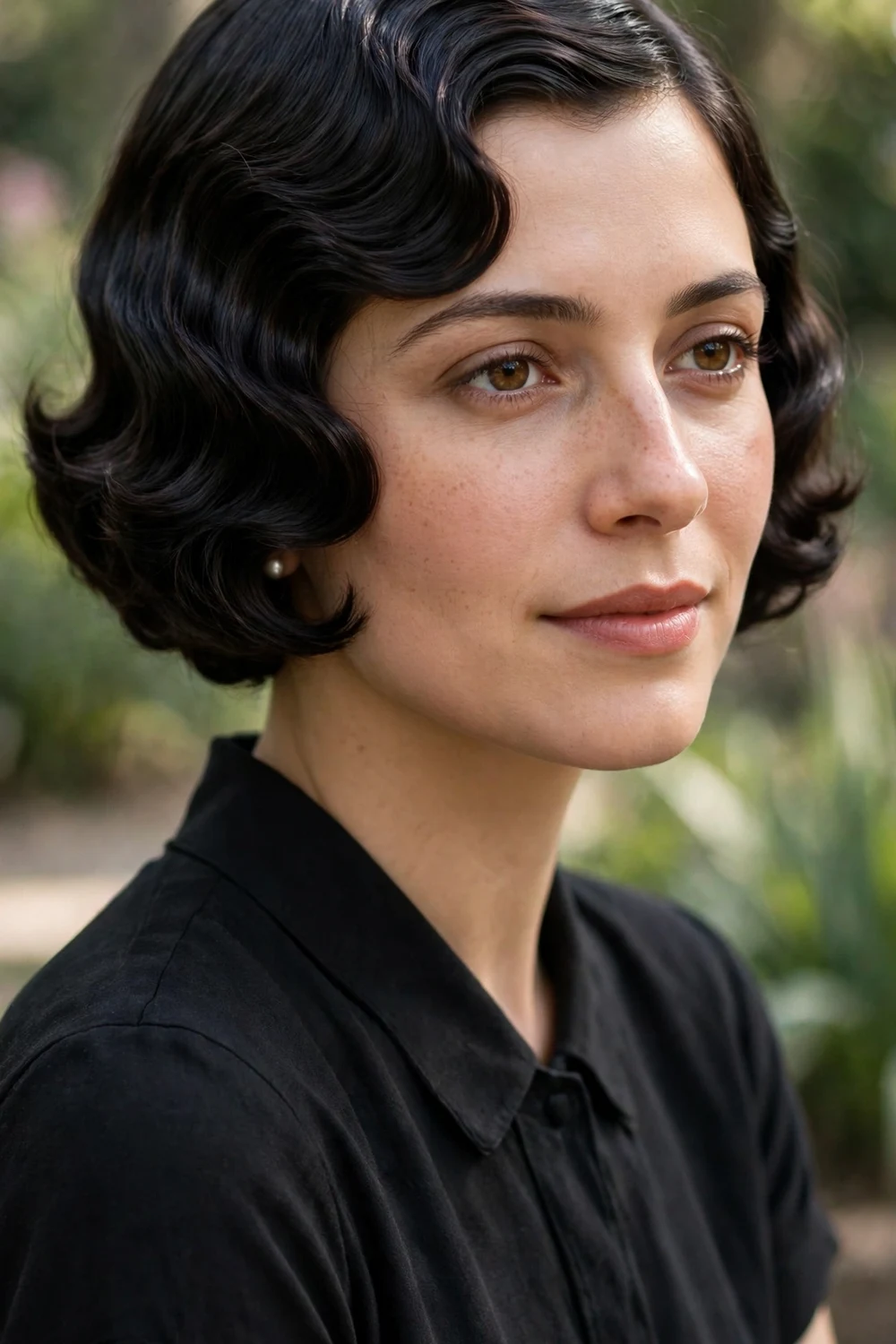
Soft finger waves and a deep side part give this version its flapper-era character. The cut underneath is a classic Italian bob, but the styling does the period work: sculpted waves set with clips and dried, then brushed into a smooth ripple. It is an occasion style more than a daily one, since the set takes 30 minutes and a strong-hold gel. Pair it with a bold lip and the reference lands without a costume.
Try this: set the waves the night before an event; they hold better after a few hours than straight off the iron.
Styling: High · Cost: $60–$95 (cut + set)
12. Side-Part Italian Bob

A deep side part, set 2 to 3 inches off-center, transforms the classic into a more dramatic silhouette with instant crown volume. The sweep of hair across the forehead softens wide foreheads and adds asymmetry that flatters square jawlines. It works on any Italian bob length and needs no extra cutting, just a committed part and a light mist of hairspray to hold it against the hair’s natural fall.
Try this: train a new part by wearing it damp under a headband for an hour; dry hair resists part changes.
Effort: Minimal · Salon cut: $55–$85
13. Italian Bob with Side Fringe

A long fringe swept across the forehead adds softness to the Italian bob’s full shape. The fringe should hit at cheekbone length so it blends into the bob rather than sitting as a separate bang. Copper and warm red tones pair especially well with this version, since the diagonal line of the fringe shows off dimensional color. Trim the fringe every 4 weeks to keep it out of the eyes.
Try this: blow-dry the fringe across the forehead first, in the opposite direction of the sweep, for natural bend.
Maintenance: Medium · Cost: $60–$90
14. Italian Bob with Curtain Bangs

Center-parted curtain bangs frame the face symmetrically and melt into the bob’s full sides. This pairing suits round and square faces because the parted bangs create a lengthening vertical line through the middle of the face. The bangs need their own styling each morning: a round brush, rolled away from the face on each side, sets the curtain shape in under two minutes.
For more ways to wear this fringe, browse curtain bangs for short hair for pairing ideas.
Try this: keep the bangs at cheekbone length or longer; shorter curtain bangs fight the bob’s fullness.
Daily effort: Medium · Salon price: $60–$90
15. Italian Bob with Feathered Bangs

Long, airy bangs with feathered ends lighten the Italian bob’s heavy perimeter. The feathering lets forehead show through in pieces, which keeps the look soft on mature faces and wide foreheads. This version grows out gracefully, since feathered bangs blend into layers instead of hitting an awkward stage. A quick pass with a flat iron, bent slightly at the ends, is the whole styling routine.
Try this: ask for the bangs to be razor-cut, not scissor-cut; the razor creates the feathered texture scissors cannot.
Upkeep: Low · Cost: $55–$85
16. Face-Framing Italian Bob

Shorter pieces around the face, starting at the cheekbone and blending into the bob’s length, define this version. The framing layers spotlight the eyes and cheekbones while the full ends keep the Italian character. It flatters most face shapes because the stylist places the shortest piece exactly where your face needs emphasis. The layers need a light curl or bend when styling, or they fall flat against the cheek.
To match the cut to your bone structure, see bob hairstyles for round faces for face-shape guidance.
Try this: curl the framing pieces away from the face with a 1-inch iron for a lifted, open effect.
Styling: Medium · Price range: $60–$90
17. Copper Red Italian Bob

A rich copper tone turns the Italian bob into a color statement while the cut stays classic. The warm red catches light on the full, rounded ends, which shows off the blowout finish better than any neutral shade. Copper fades faster than other colors, so plan a gloss refresh every 4 to 6 weeks and use color-safe shampoo. The cut underneath can be any version on this list; the color does the talking.
Try this: ask for a copper with a brown base rather than a bright orange one; it fades more gracefully.
Color upkeep: High · Cost: $120–$200 (cut + color)
18. Beige Blonde Italian Bob

Cool beige blonde with soft root shadowing gives the Italian bob a modern, dimensional finish. The multi-tonal color adds depth to the full ends, making the blowout look thicker than it is, and the shadowed root stretches the time between color appointments to 8 or 10 weeks. This is the most salon-intensive version here because the color and the cut both need precision. Purple shampoo once a week keeps the beige from turning brassy.
Try this: bring a photo of the exact blonde level you want; “beige blonde” covers three shades in most stylists’ minds.
Color upkeep: High · Cost: $150–$250 (cut + color)
Italian bob haircuts compared
| Variation | Defining feature | Best hair texture | Daily styling |
|---|---|---|---|
| Classic sleek | Full ends, blowout finish | Straight to wavy | 15–20 min |
| Roman blunt | Strict one-length edge | Straight | 10–15 min |
| Textured | Piecey, separated ends | Thick, wavy | 5 min |
| Layered | Interior lift layers | Fine to medium | 15–20 min |
| Wavy | Loose iron-set waves | Naturally wavy | 15 min |
| Long | Above-shoulder length | All textures | 15–20 min |
| Short | Jawline length | Straight to wavy | 10 min |
| Inverted | Stacked nape, A-line front | Fine to medium | 15 min |
| Shaggy | Choppy crown layers | Wavy, thick | 5 min |
| Curtain bangs | Center-parted fringe | All textures | 2 min extra |
How to choose your Italian bob
Match the version to your hair’s natural behavior first. Thick hair that fights sleek finishes belongs in the textured, shaggy, or wavy versions; fine hair that falls flat needs the layered or inverted versions with built-in lift. Then be honest about your mornings: the classic, Roman blunt, and long versions need a real blow-dry every time, while the textured and shaggy versions survive on product and air-drying.
Avoid the two mistakes that ruin this cut. First, do not ask for heavy thinning on thick hair; the Italian bob’s identity is full ends, and over-thinning turns it into a generic layered bob. Second, do not skip the heat protectant: this cut asks for a blow-dryer or iron almost daily, and the ends are always visible, so damage shows immediately. Book a trim every 6 to 8 weeks, and bring reference photos, since “Italian bob” means slightly different lengths to different stylists.
New to the bob family entirely? Start at bob hairstyles to compare the Italian cut against its cousins before you commit.
Frequently asked questions
What is an Italian bob haircut?
An Italian bob is a chin-to-neck-length bob with full, heavy ends and a bouncy blowout finish, inspired by 1960s Roman salon styling. It is fuller and more polished than the French bob, with minimal layering at the perimeter.
What is the difference between an Italian bob and a French bob?
The Italian bob is slightly longer with full, rounded ends and a blow-dried finish, while the French bob is chin-length with piecey, air-dried texture. Italian suits medium to thick hair; French suits fine to medium hair.
Does the Italian bob work on fine hair?
Yes, with the right version. The layered and inverted Italian bobs build volume that fine hair needs, while the blunt and classic versions can fall flat. Ask for interior layers rather than thinning.
How do you style an Italian bob at home?
Blow-dry with a round brush, rolling sections under to build the bounce, and finish with a smoothing serum. Use a heat protectant first. The routine takes 15 to 20 minutes once you have the technique down.
How often should you trim an Italian bob?
Every 6 to 8 weeks for most versions. The short and inverted versions need trims closer to 5 or 6 weeks, since their shapes overgrow faster.
Final thoughts
The Italian bob earns its reputation the honest way: full ends, a real blowout, and a shape that moves. Pick the version that matches your texture and your mornings, protect the ends from heat, and keep the trim schedule. Do that, and the cut does most of the work for you.
For more on this topic, see short french bobs.

