


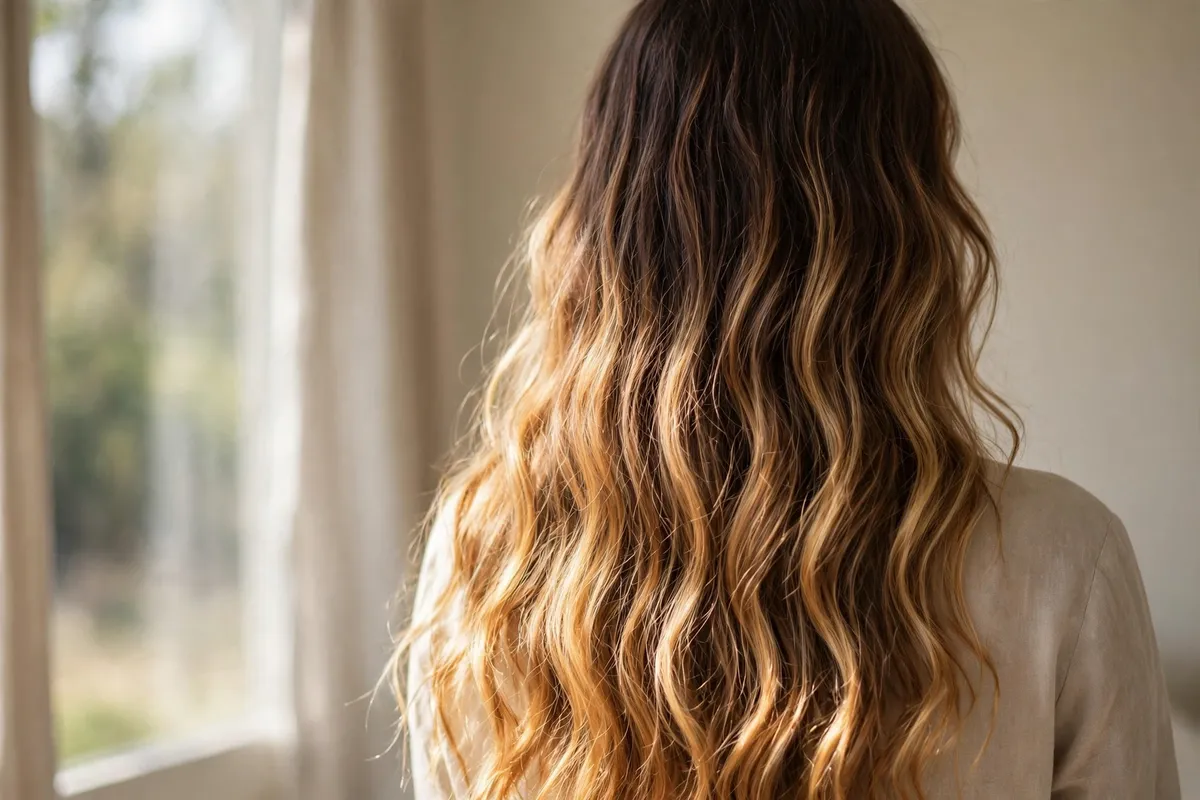
Honey blonde balayage is a hand-painted highlighting technique that sweeps warm, golden-blonde tones through the mid-lengths and ends of your hair, leaving the roots darker for a soft, grown-out finish. It suits brunettes best because the dark base gives the honey pieces something to melt into, and it grows out without a hard line.
This guide covers 38 ways to wear it, from subtle face-framing to high-contrast ombré. Each idea notes the placement, upkeep, and typical salon cost so you can walk into your appointment knowing exactly what to ask for.
Quick Takeaways
- Balayage means hand-painted. Color is swept on freehand, so the grow-out stays soft for 3–4 months.
- Honey tones sit between gold and caramel. Ask for “warm golden, not ashy” to get the right shade.
- Dark bases lift best. Level 3–6 brown hair gives the most natural-looking honey melt.
- Toner decides the finish. The same balayage can read buttery, beige, or golden depending on the gloss applied after.
- Budget $150–$350. Full-head work on long hair costs more than partial or face-framing applications.
1. Classic Honey Blonde Balayage
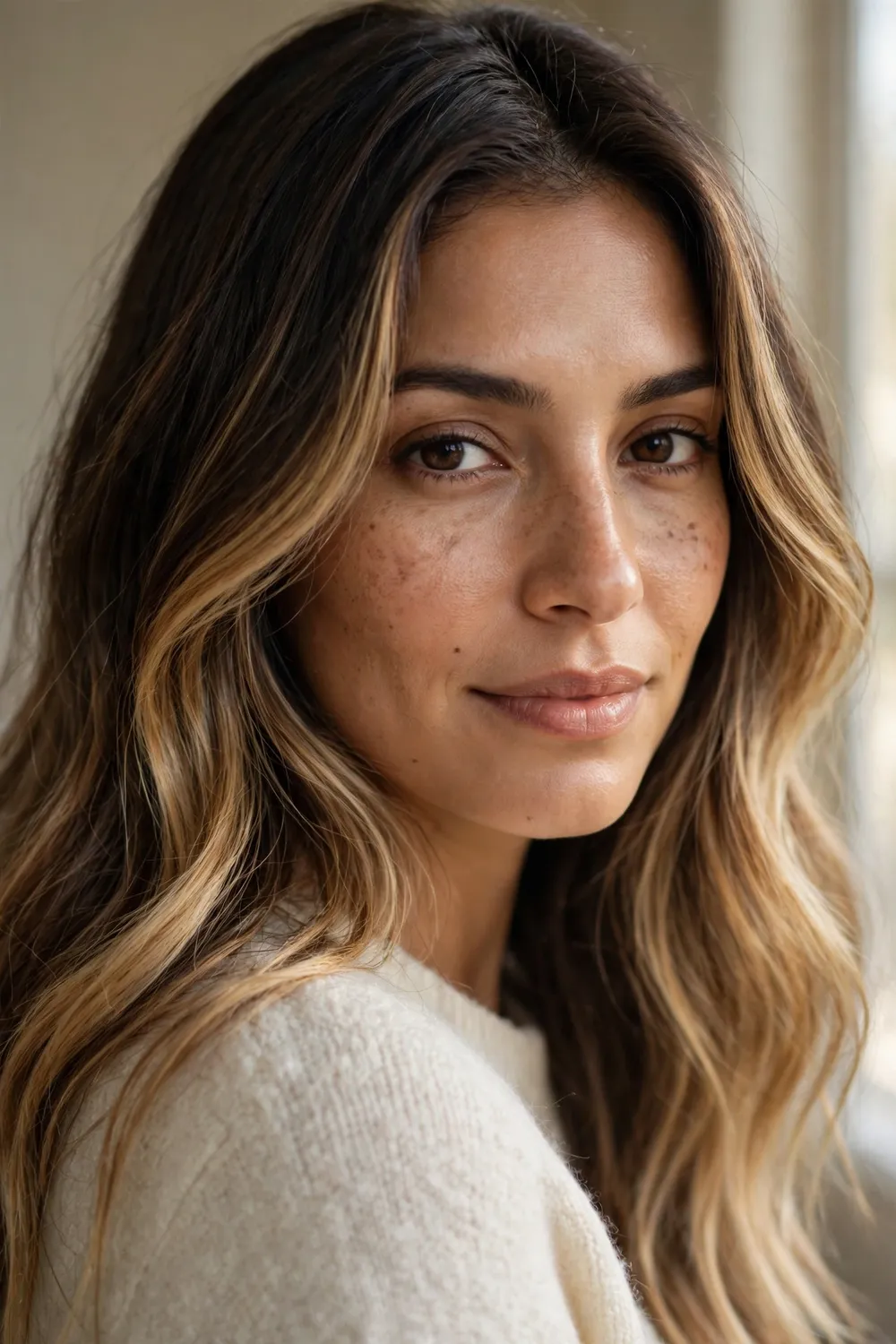
This is the standard everyone pictures: hand-painted honey pieces starting a few inches from the root and getting denser toward the ends. Your colorist works in diagonal sections, feathering the lightener upward so no line forms. The result reads natural, like hair that lightened over one long summer. It works on medium to long hair of almost any texture. Most appointments take 2.5 to 3.5 hours, and a toner refresh at week 6 keeps the honey from going brassy.
Try this: Ask for the honey pieces to begin at cheekbone level, not at the root. That placement keeps the top half dark enough to frame your face while the ends carry the light.
Difficulty: Salon pro | Cost: $180–$300
2. Soft Face-Framing Honey Highlights

Here the lightest honey pieces sit only around the hairline, temples, and cheekbones, with the back left mostly natural. It brightens your complexion without changing your overall color, which makes it a good first step if you’re unsure about going lighter. The pieces are painted thin so they blend instead of striping. Fine hair handles this well because the placement is concentrated, not spread thin. Because the work is concentrated, this usually takes under 90 minutes and costs less than a partial highlight.
Try this: Pair it with a center or side part check in the mirror. Face-framing pieces fall differently with each part, so confirm the placement matches how you actually wear your hair.
Difficulty: Salon pro | Cost: $80–$150
3. Honey Blonde Money Piece
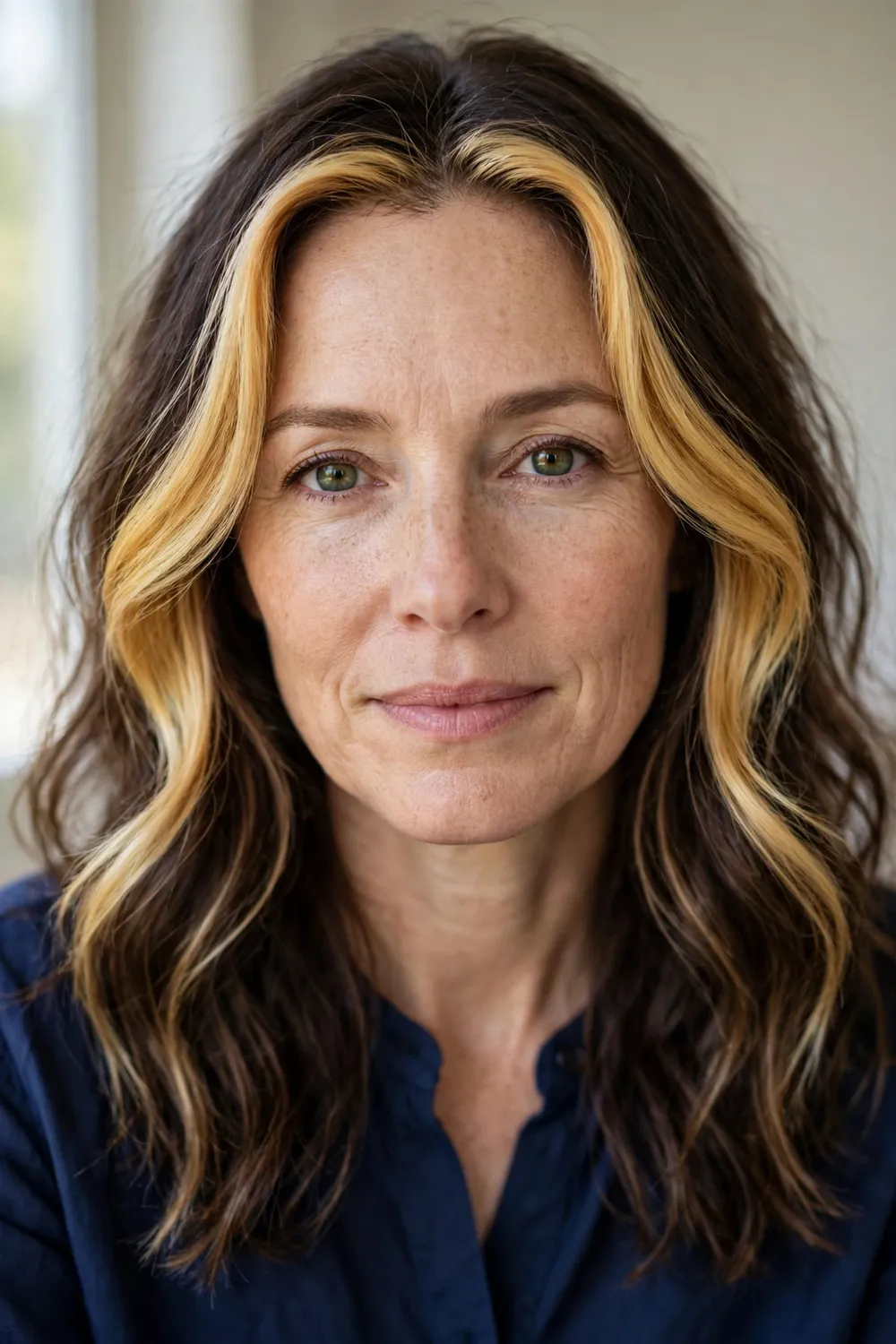
The money piece is a bold, bright section of honey blonde right at the front, usually an inch or two wide on each side of the part. Everything behind it stays softer, so the contrast does the work. It photographs well and makes eyes look brighter. Because only the front is lifted high, the appointment is shorter than a full balayage. The trade-off is upkeep: that front section shows regrowth faster than blended pieces. The front sections lift fastest since the hair there is finest, so your colorist watches them closely to avoid over-processing.
Try this: Ask your colorist to keep the money piece one to two levels lighter than the rest of the balayage. Any lighter and it starts reading as a separate color instead of an accent.
If you like the face-framing effect but want it warmer, a blonde balayage with copper money piece paints the same front sections in copper for extra glow near the face.
Difficulty: Salon pro | Cost: $100–$180
For 30 face-framing variations, from subtle honey to bold platinum, see our guide to blonde balayage with money piece.
4. Caramel to Honey Melt
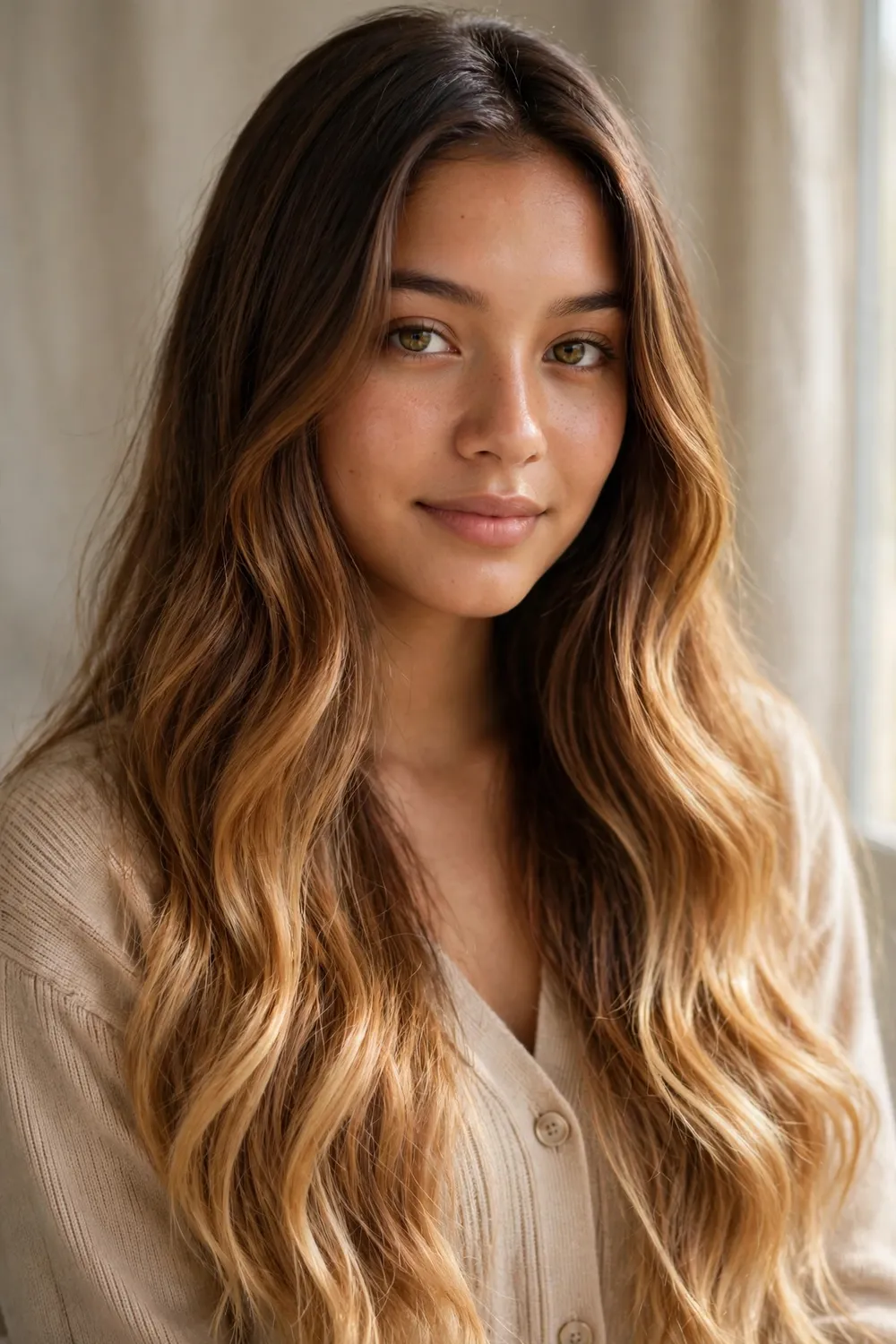
This uses three tones: a dark base, a caramel mid-section, and honey ends. The caramel acts as a bridge so the jump from dark to light never looks abrupt. Your colorist melts each zone into the next with a brush, sometimes back-combing slightly for diffusion. It flatters long hair because the gradient has room to develop. On shorter cuts the three zones can crowd together and look muddy.
If caramel tones are your thing, our caramel balayage hair color 2026 breaks down more caramel-forward placements worth comparing. Plan for at least three hours in the chair; three-tone melts are slow because each zone is painted and blended separately.
Try this: Request that the caramel zone start no higher than ear level. Starting it too high eats up the dark base and the melt loses its depth.
Difficulty: Salon pro | Cost: $200–$350
5. Golden Honey Ombré
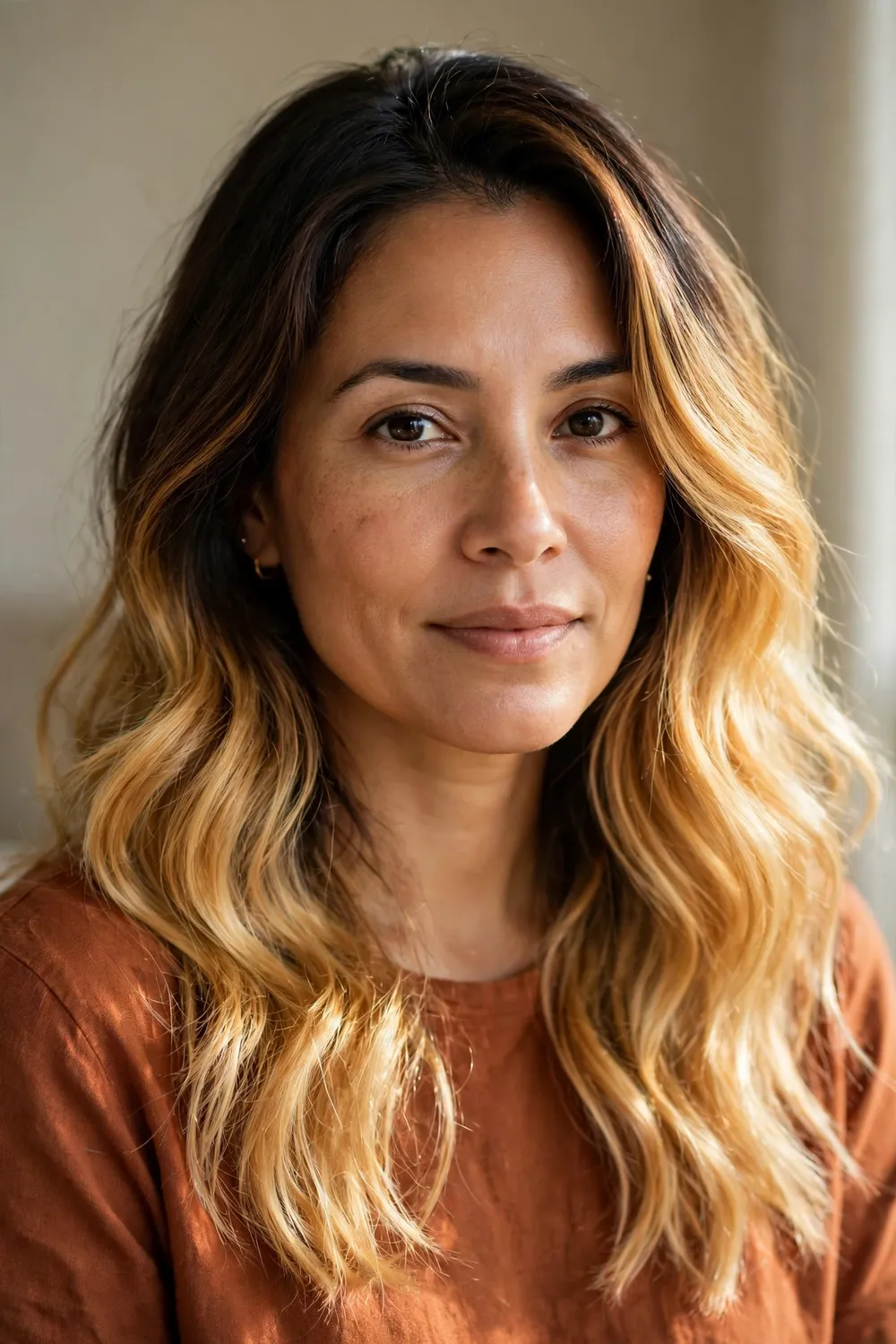
Ombré keeps the transition point higher and more defined than a melt: dark roots, then a clear shift into bright honey from about chin or shoulder level down. It’s higher contrast than classic balayage, which gives it more drama. The blended application still lets it grow out gracefully. Dark-haired women who want an obvious change without all-over bleach usually land here. The ends take the most damage since they are lifted highest, so bond-building treatments during the service are worth it.
Try this: Decide on your transition point before the appointment. Chin level reads bold, shoulder level reads wearable, and anywhere between changes the whole look.
Difficulty: Salon pro | Cost: $180–$320
6. Ribbons of Honey Light
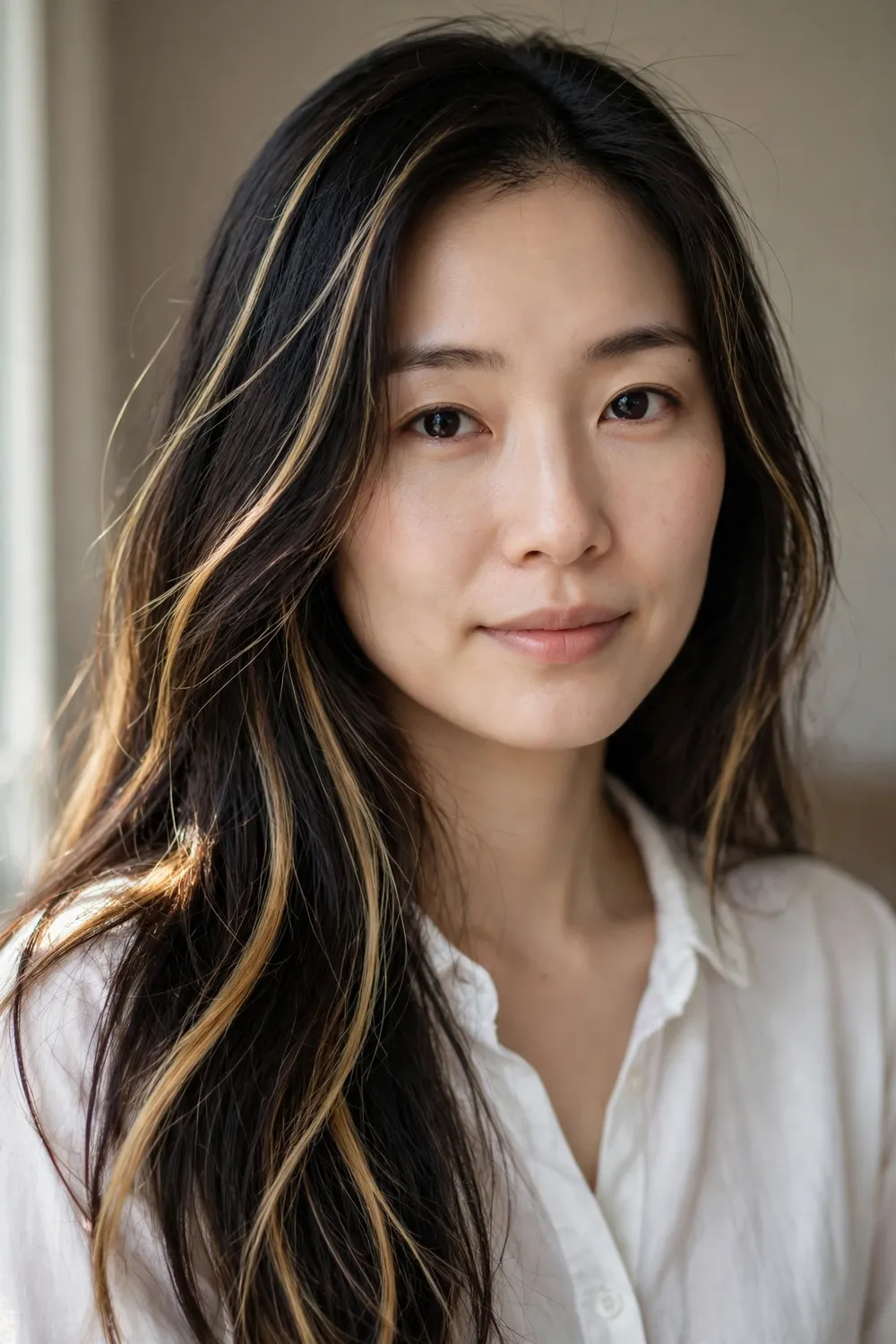
Instead of broad painted sections, this technique weaves thin, irregular ribbons of honey through the hair in varying widths. Some are pencil-thin, others a half-inch wide. The mix copies how hair lightens unevenly in real life, so it never looks uniform. Straight hair shows this best because every ribbon stays visible. On very curly hair the ribbons break up and read as general dimension. This works on any base from level 4 to 7, but very dark hair may need two sessions to reach clean honey.
Try this: Ask for at least two ribbon widths in each section. Uniform ribbons look like traditional highlights; the variation is what sells the natural effect.
Difficulty: Salon pro | Cost: $160–$280
7. Lived-In Root Stretch
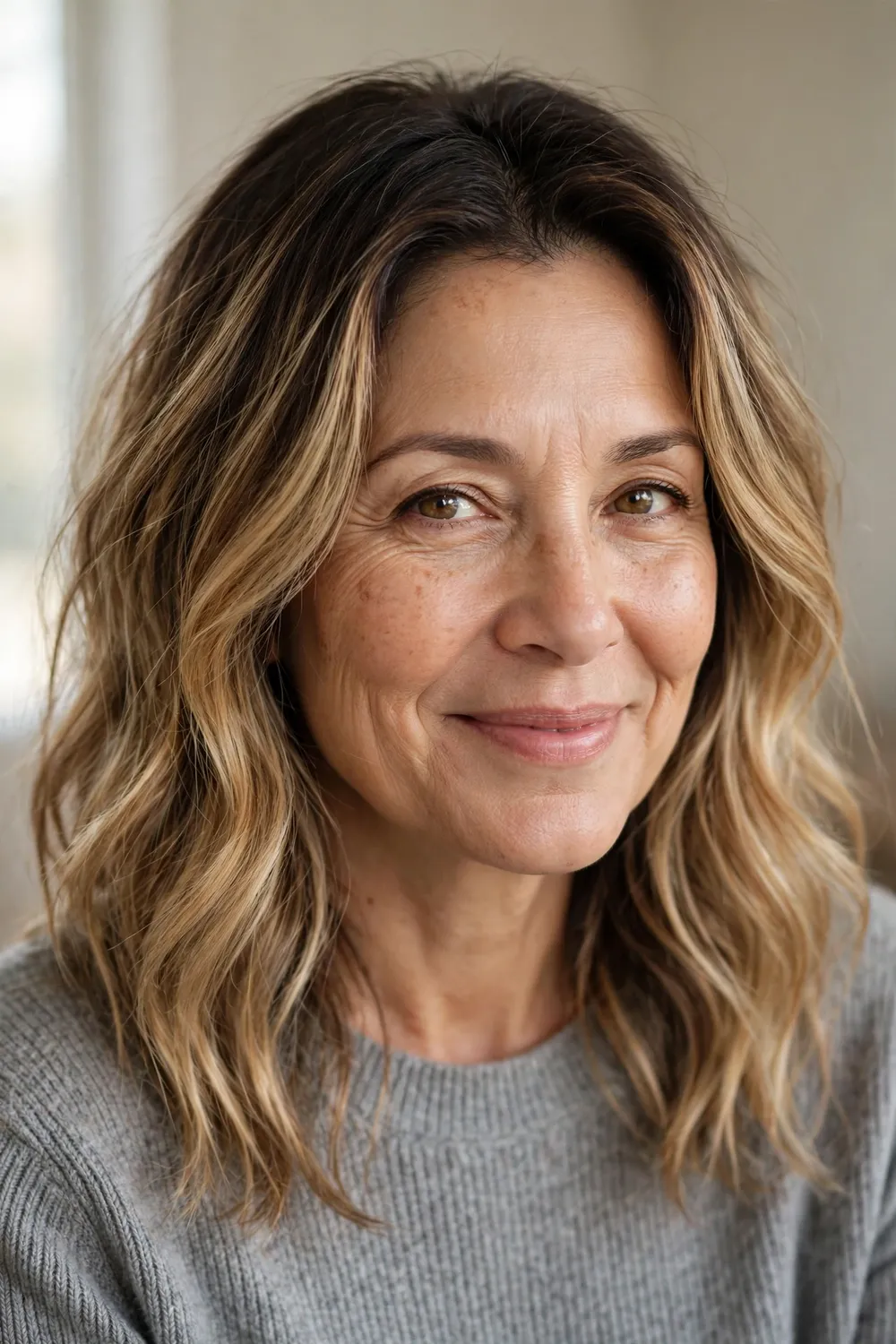
A root stretch pulls your natural color (or a close match) down a few inches over the balayage, so the grow-out looks intentional from day one. Your colorist often teases sections before painting, which softens where the dark meets the light. This is the lowest-maintenance balayage option: most people stretch appointments to 4–6 months. It suits anyone who hates the regrowth line of traditional highlights. Because the root area is never fully lightened, you can stretch this to two appointments per year without it looking grown out.
Try this: Bring a photo of hair at the 3-month grow-out stage, not fresh from the salon. That tells your colorist the lived-in look you’re actually after.
Difficulty: Salon pro | Cost: $180–$300
8. Honeycomb Dimension
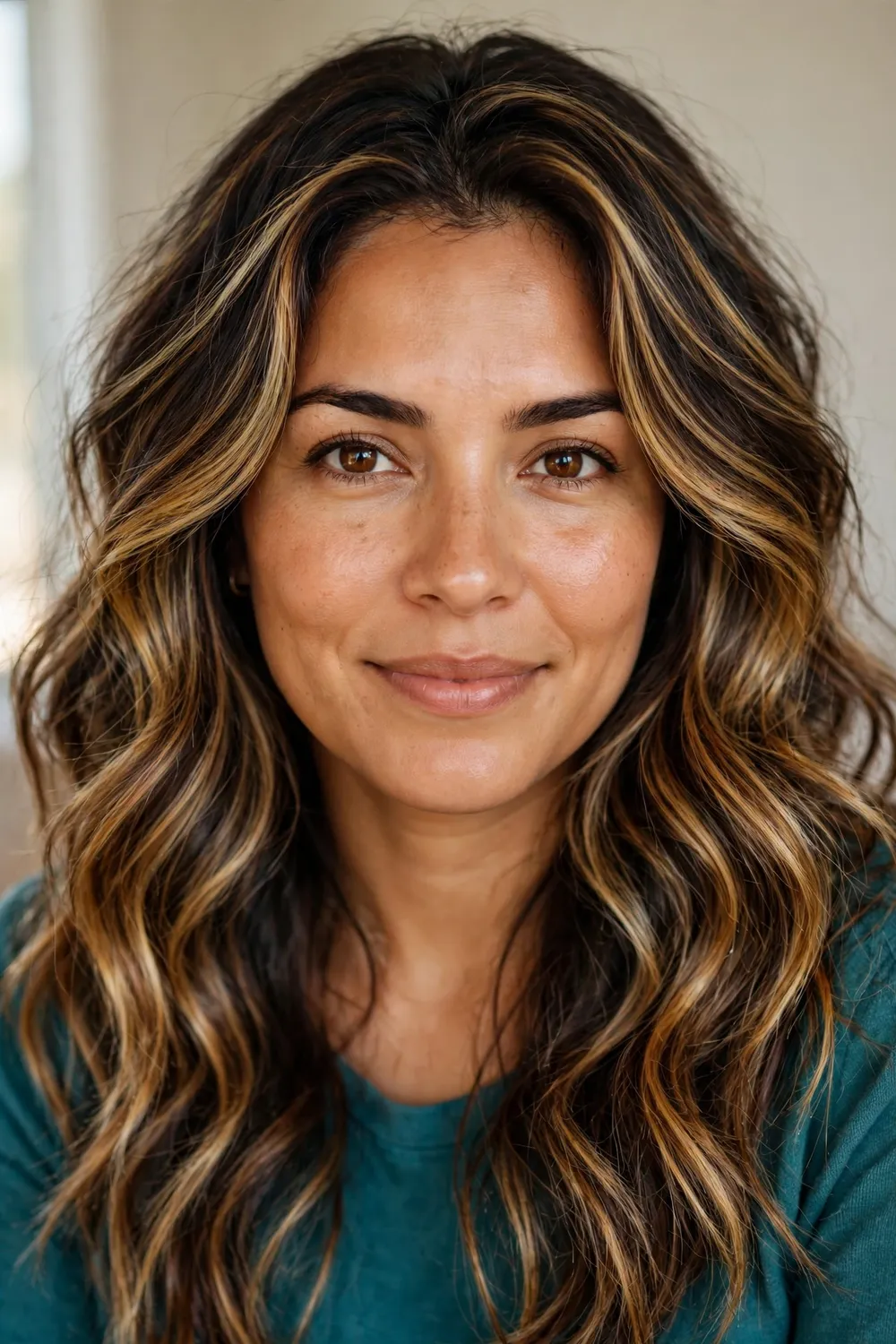
This mixes several honey shades at once: light golden honey, deeper amber honey, and a touch of caramel. The colorist paints them in an irregular pattern so no two sections match. The payoff is depth that shifts as you move. It takes longer in the chair because the colorist is juggling multiple bowls, and it costs more for the same reason. Thick hair carries it best since there’s enough hair to show the variation. Ask your colorist to show you the three bowls before starting; seeing the actual tones prevents surprises at the basin.
Try this: Ask for the darkest honey shade to sit underneath. That shadow layer is what makes the lighter pieces on top look three-dimensional.
Difficulty: Salon pro | Cost: $220–$380
9. Sun-Kissed Balayage on Curls
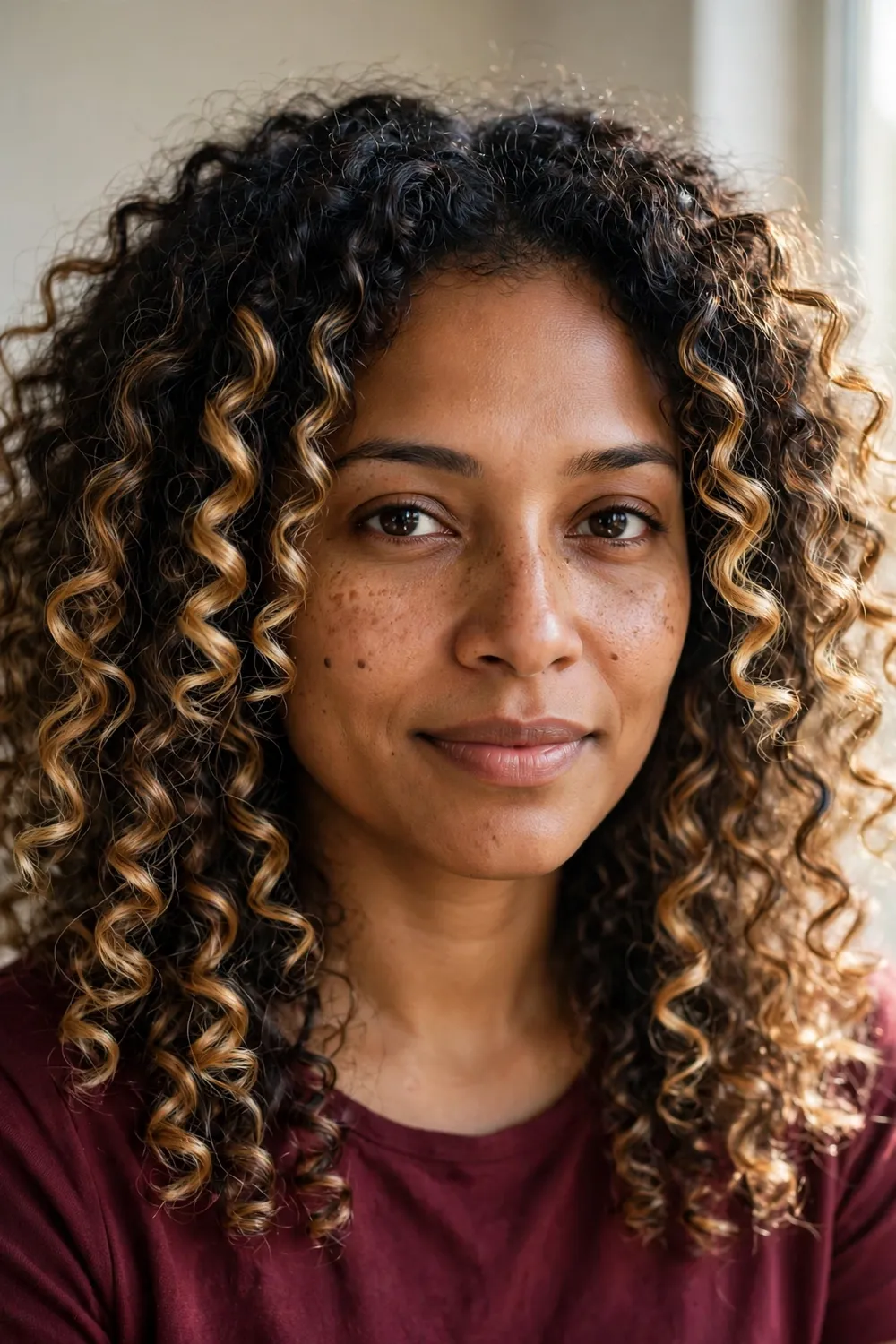
On curly hair, balayage is painted onto the outer surface of each curl clump, not through the whole section. When the curls coil, the honey pieces alternate with the dark base and the dimension looks built-in. This needs a colorist who paints curls dry or stretched, because wet curls shrink and the placement shifts. Expect the appointment to run long, and plan for extra conditioning since lifted curls dry out faster. Schedule this on wash day and skip heavy stylers beforehand, since product buildup blocks lightener on curly hair.
Try this: Ask for the brightest pieces at the mid-shaft and ends of each curl, keeping the roots untouched. That placement copies real sun lightening and keeps regrowth invisible.
Difficulty: Curl specialist | Cost: $200–$350
10. Butterscotch Blend
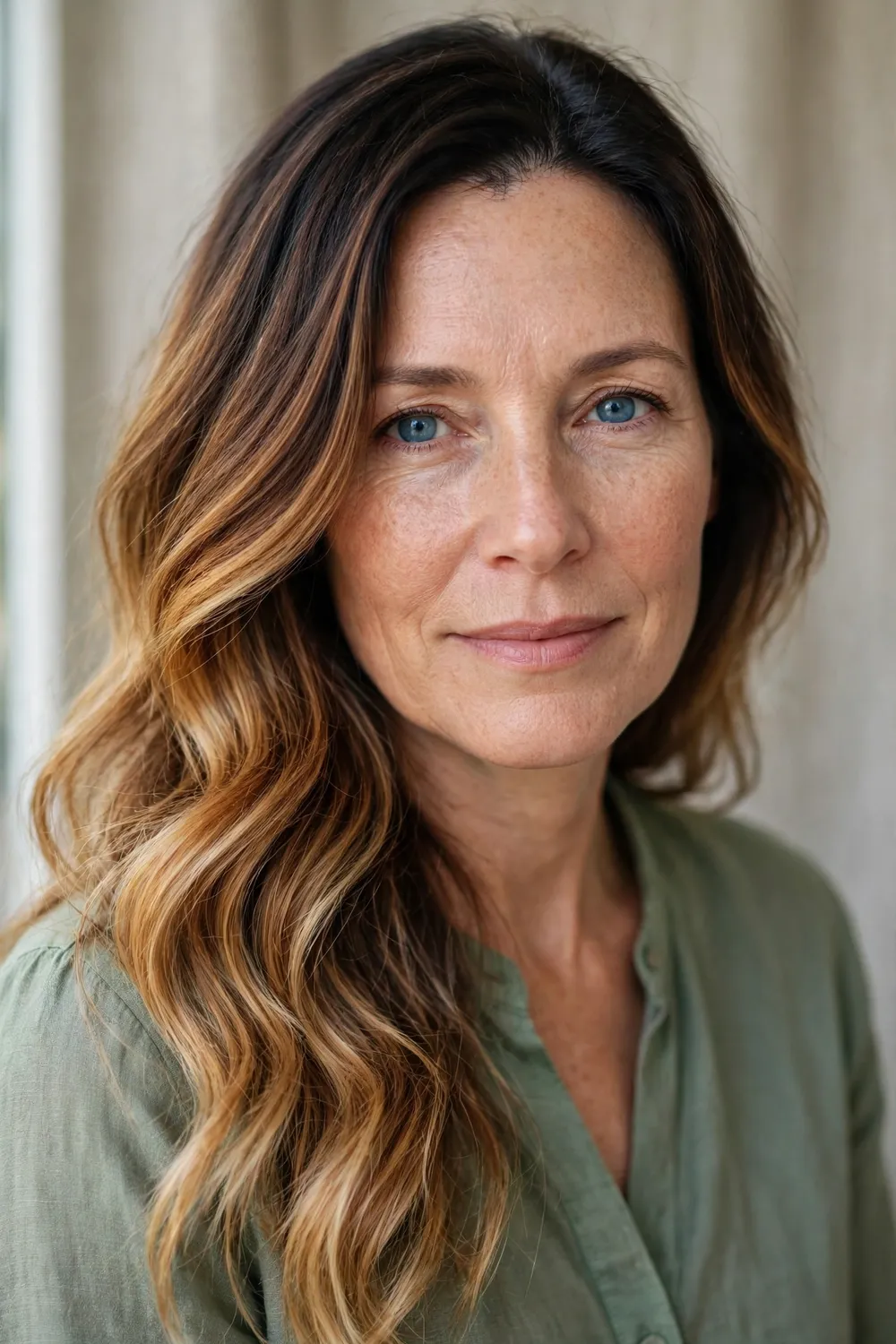
Butterscotch sits one step deeper than honey: warmer, richer, with a brown-sugar depth. As a mid-tone between a dark base and honey ends, it stops the blend from going brassy because the warmth is intentional, not leftover. The colorist uses it through the middle third of the hair. It flatters warm and olive skin tones especially well. If your hair pulls orange easily, mention it, since butterscotch can tip that way without careful toning. A blue-based shampoo once a month keeps the butterscotch rich instead of letting it drift toward orange.
Try this: Ask for a cooler toner on the honey ends to balance the warmth of the butterscotch middle. The contrast keeps the whole thing from reading flat orange.
Difficulty: Salon pro | Cost: $180–$300
11. Golden Hour Glow
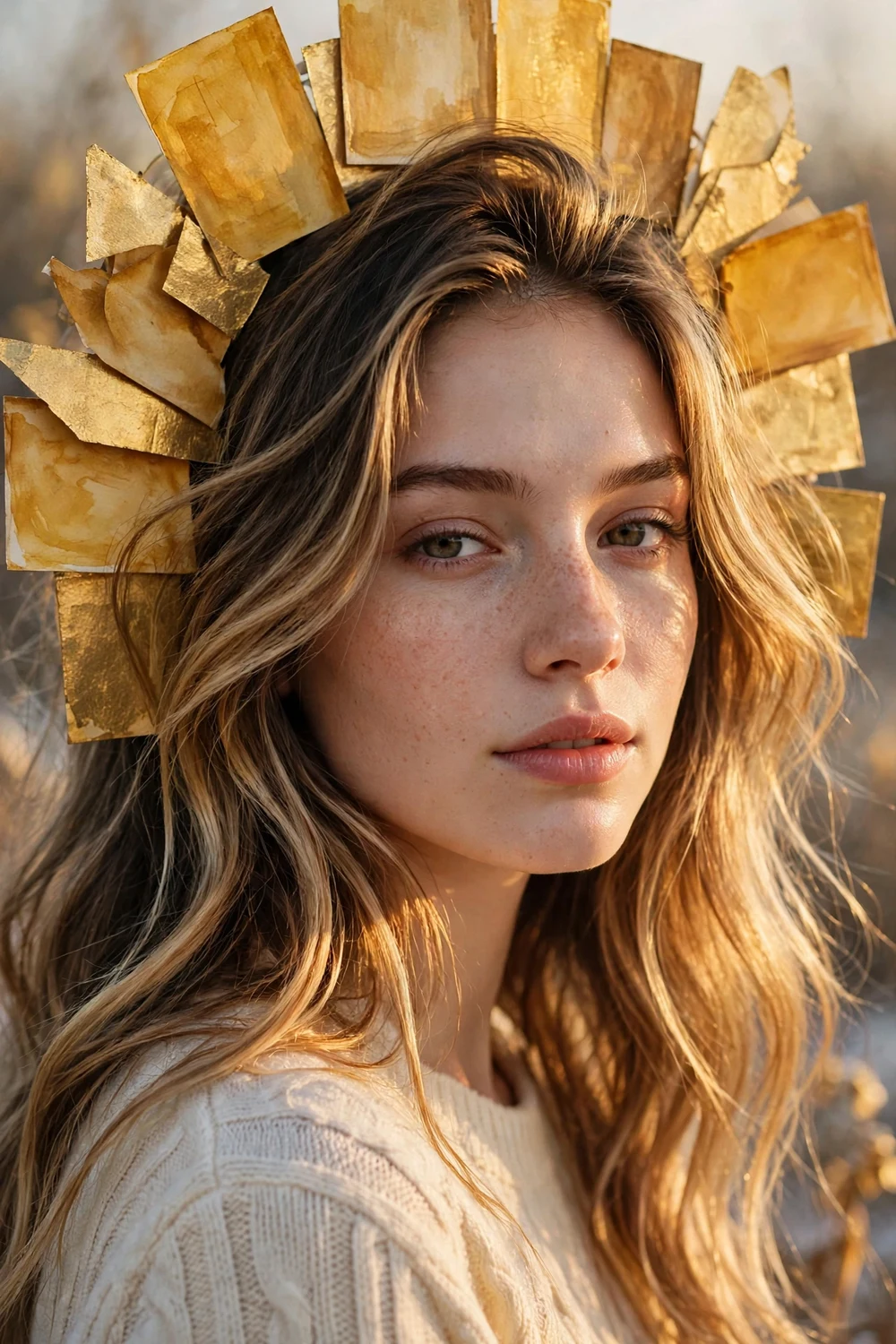
This placement puts the brightest honey pieces where light actually hits: the outer layers, the crown, and around the face. The underneath stays darker, which creates a halo effect in sunlight. It’s less about overall lightness and more about strategic brightness. Medium to long hair works best because the outer layer needs length to drape over the darker underneath.
If you want more golden-toned inspiration beyond balayage, see our winter blonde balayage ideas for how golden pieces behave in cooler months. This photographs best in natural light, so check the result near a window before you leave the salon.
Try this: Ask your colorist to hold a section up and paint only what faces outward. Painting through the section wastes lightener on hair nobody sees.
Difficulty: Salon pro | Cost: $160–$280
12. Teasylights
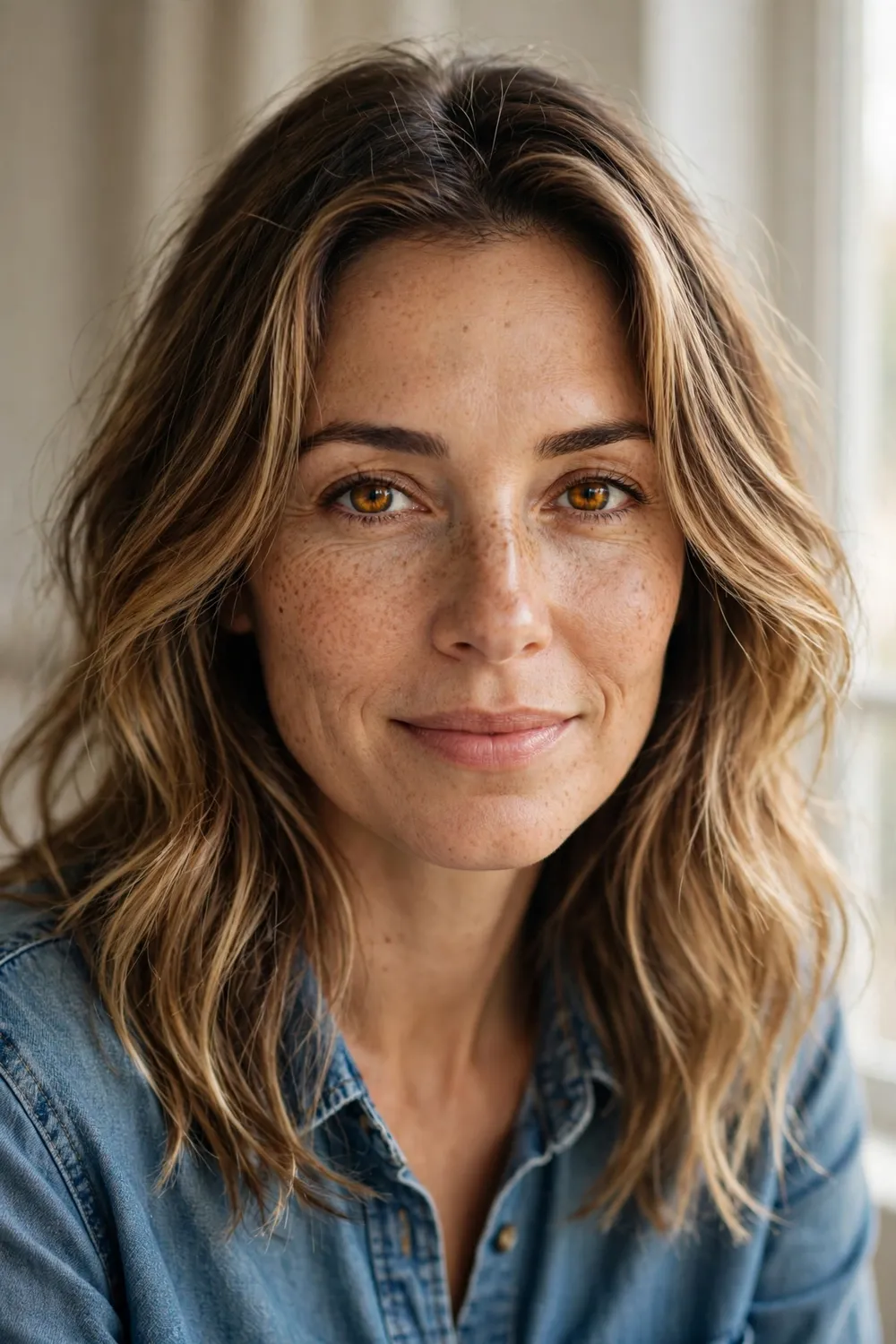
Teasylights combine backcombing with lightener: the colorist teases each section, then paints the remaining smooth hair. The teased hair stays dark and diffuses the line where the light piece begins. The result is the softest possible transition from root to honey. It takes more time than standard balayage because of the teasing step, and detangling afterward needs patience. The grow-out, though, is nearly seamless. The teasing adds 30 to 45 minutes to the appointment, but the diffused grow-out saves you months of maintenance.
Try this: This technique suits clients who want balayage brightness with foil-highlight coverage. Tell your colorist both goals upfront so they tease to the right density.
Difficulty: Salon pro | Cost: $200–$340
13. Honey-Dipped Ends
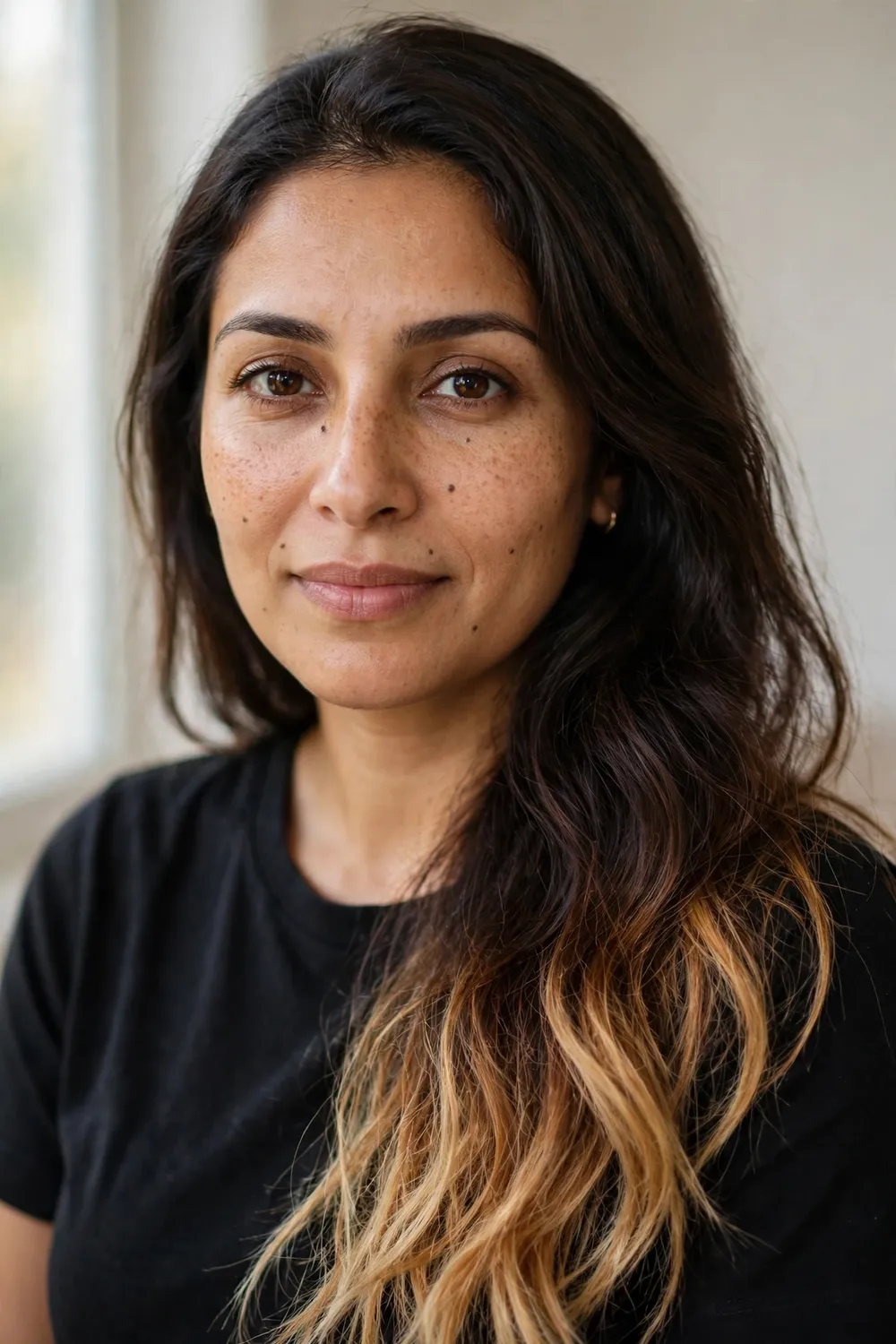
Only the bottom two to three inches get the honey treatment here, as if you dipped the ends in color. Everything above stays your natural shade. It’s the smallest commitment in this list: cheap, fast, and easy to grow out or cut off. The catch is that it can look unfinished if the transition isn’t blended, so the colorist still needs to feather the top edge of the painted zone. Because only the ends are lightened, damage is minimal and a trim every 10 weeks keeps them healthy.
Try this: This is a smart trial run. If you love the honey tone on your ends, you can go fuller at your next appointment; if not, a trim removes it entirely.
Difficulty: Salon pro or skilled DIY | Cost: $70–$140
14. Tiger Eye Effect
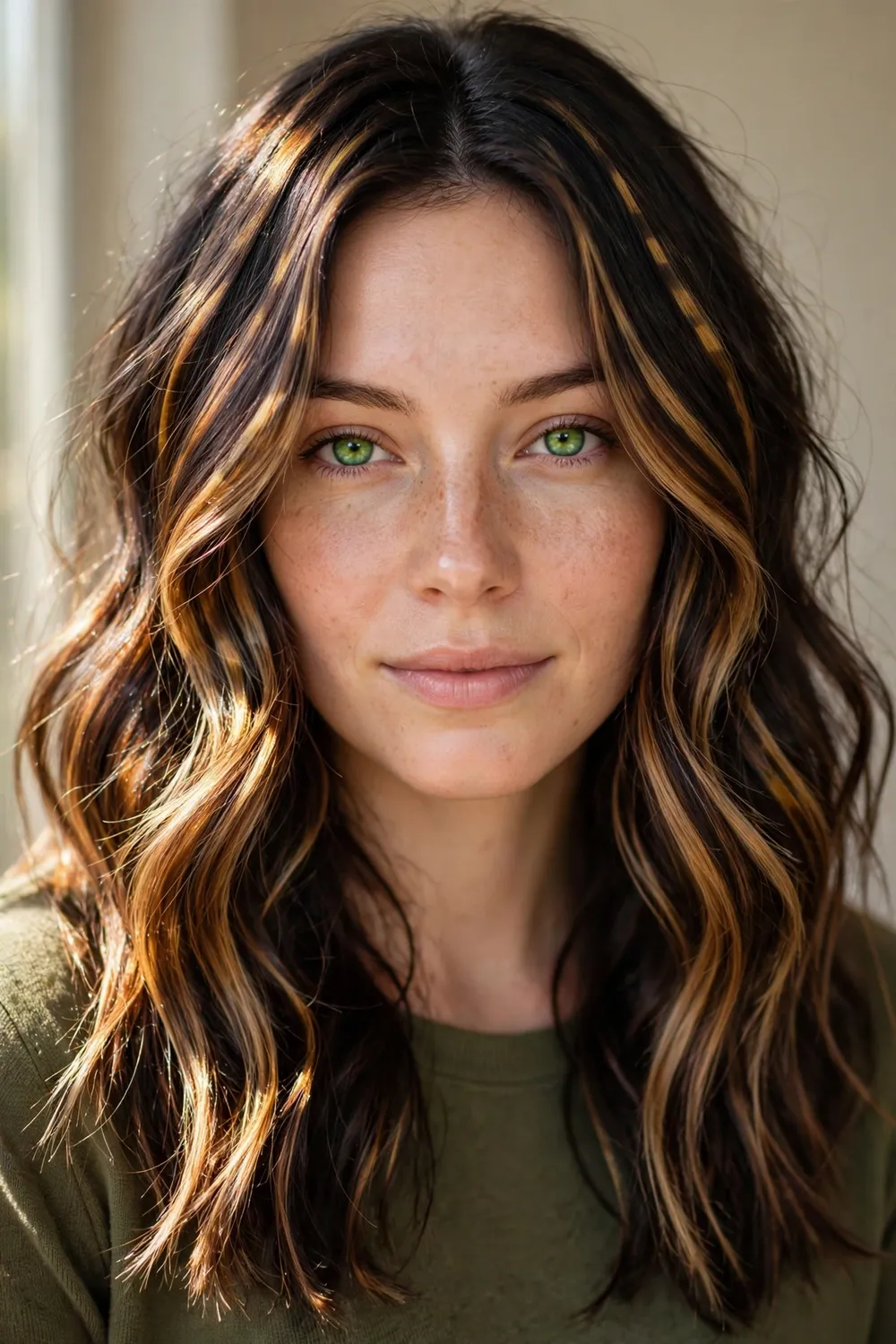
Named after the striped gemstone, this layers bronze, caramel, and honey tones in bands through a dark base. The colorist alternates the shades in thin sections so the stripes catch light at different angles. It suits olive and golden skin tones because the bronze range mirrors their warmth. The banded pattern needs refreshing sooner than blended balayage, since the stripes grow out more visibly. The banded pattern shows best on straight or loosely waved hair; tight curls break up the stripes.
Try this: Ask for the bronze shade to be the darkest of the three. If the bronze goes too light, the whole effect loses its gemstone depth.
Difficulty: Salon pro | Cost: $200–$330
15. Backswept Brightness
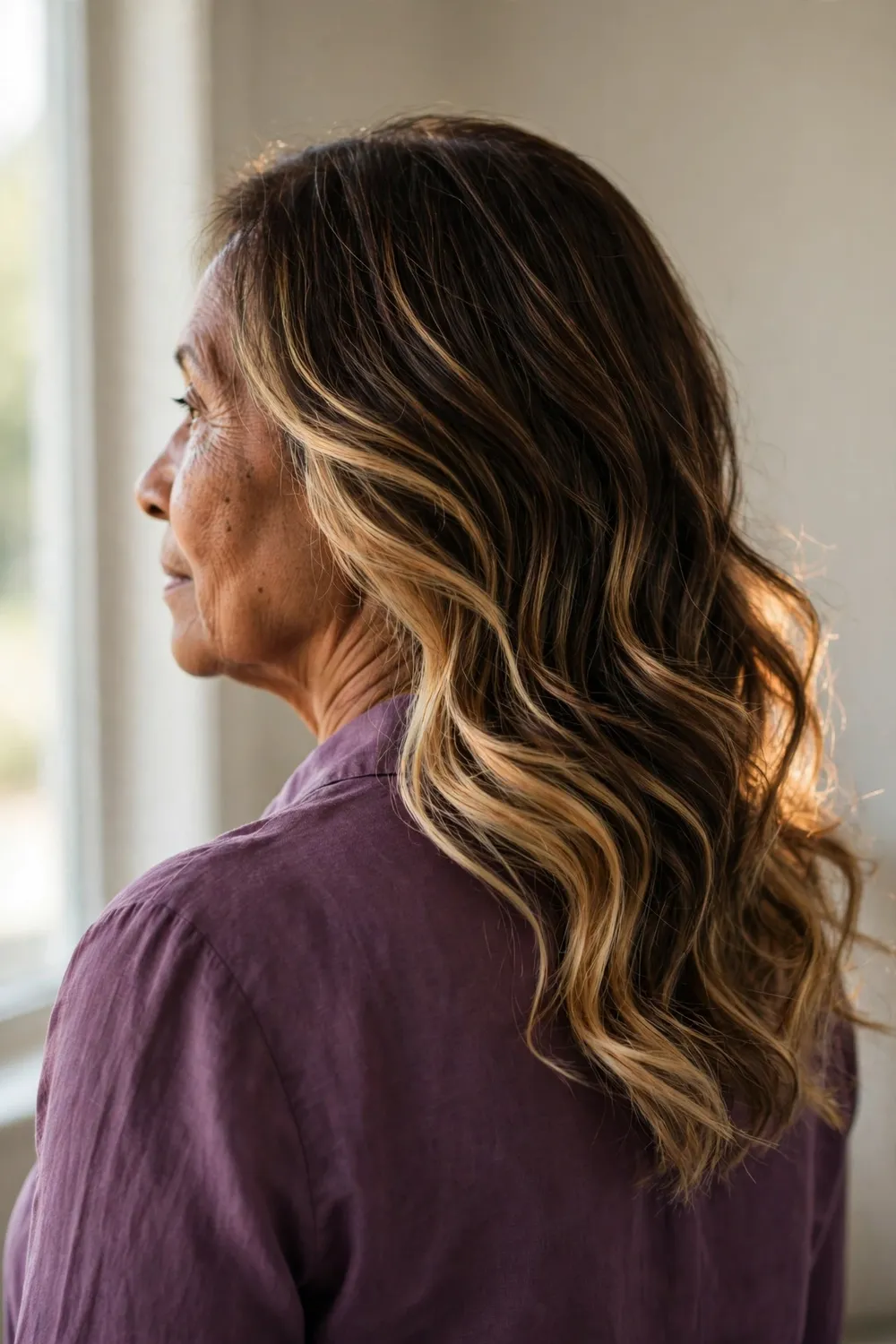
Most balayage concentrates at the front, but this one loads the honey pieces into the back and underside sections instead. From the front you look mostly brunette; when you turn or the wind moves your hair, the brightness shows. It suits people who want dimension at work-friendly levels. The colorist paints the back sections heavier and keeps the front pieces minimal. Bring a photo of the back of your head to the consultation so the colorist understands how much hair they are working with.
Try this: Ask to see the back in a hand mirror before you leave the salon. Back-heavy placement is hard to judge from the chair, and you want the balance right.
Difficulty: Salon pro | Cost: $160–$270
16. Tortoiseshell (Écaille)
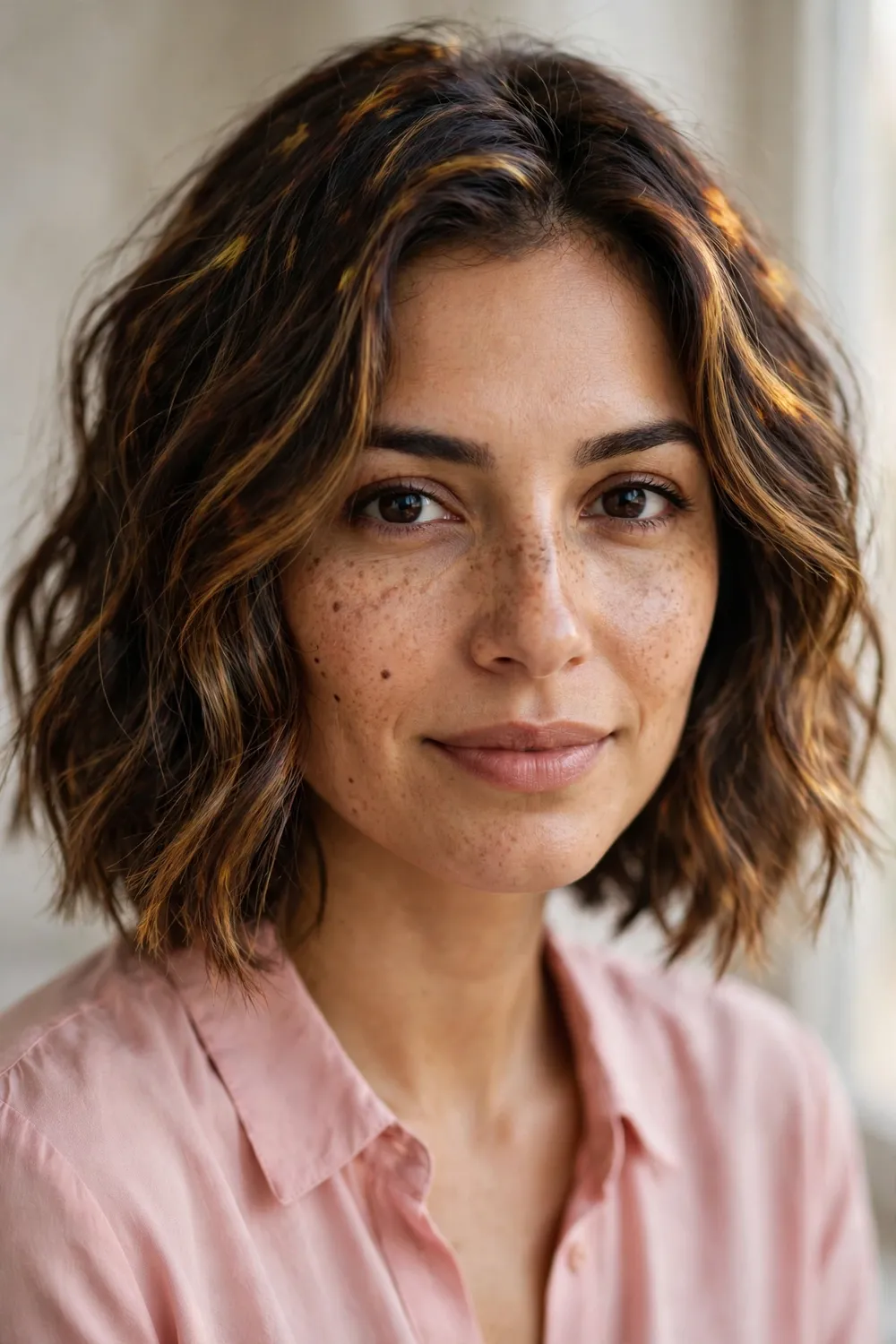
Écaille, French for tortoiseshell, blends dark chocolate, amber, and honey in a mottled pattern. The colorist places the three tones in irregular patches rather than stripes, which gives it that shell-like depth. It flatters nearly every skin tone because the mix contains both warm and neutral browns. This is one of the more technical applications, so book with a colorist who has done it before. This suits medium to thick hair best, since fine hair cannot show three tones without looking busy.
Try this: Bring three reference photos, not one. Écaille varies a lot between colorists, and multiple photos pin down the exact mix you want.
Difficulty: Experienced colorist | Cost: $220–$370
17. Foilyage Fusion
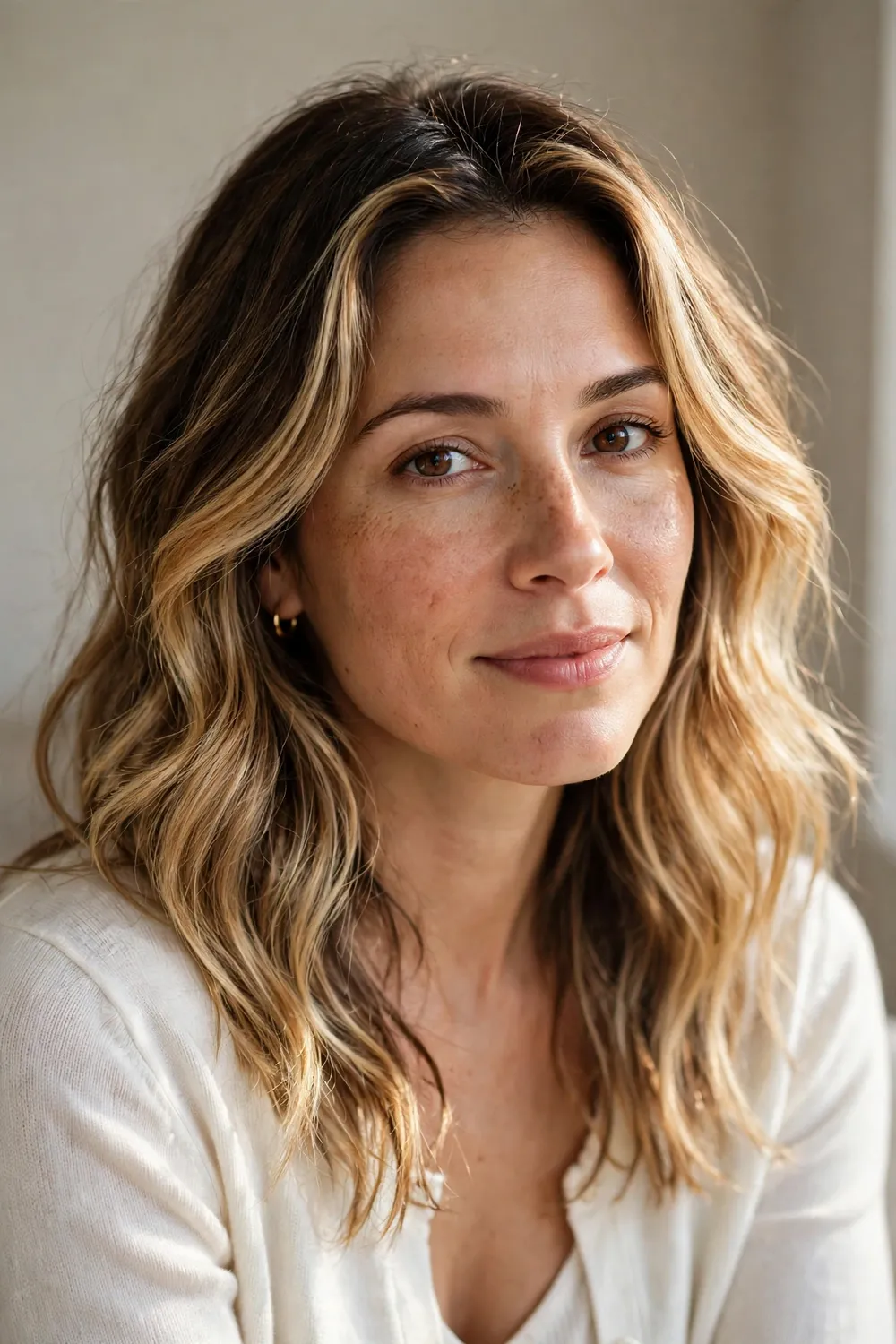
Foilyage paints the hair freehand like balayage, then wraps each section in foil. The foil traps heat, so the lift goes brighter than open-air balayage. You get balayage’s soft grow-out with near-highlight brightness. It’s the right call for dark hair that resists lifting, or when you want honey pieces that really pop. Processing takes longer, and the service costs more than standard balayage. Foil processing runs 30 to 50 minutes, longer than open-air balayage, because the trapped heat works gradually.
Try this: If your hair has been box-dyed dark, mention it before booking. Foilyage lifts harder than balayage, and old dye can surprise the colorist mid-process.
Difficulty: Salon pro | Cost: $200–$350
18. Toasted Coconut
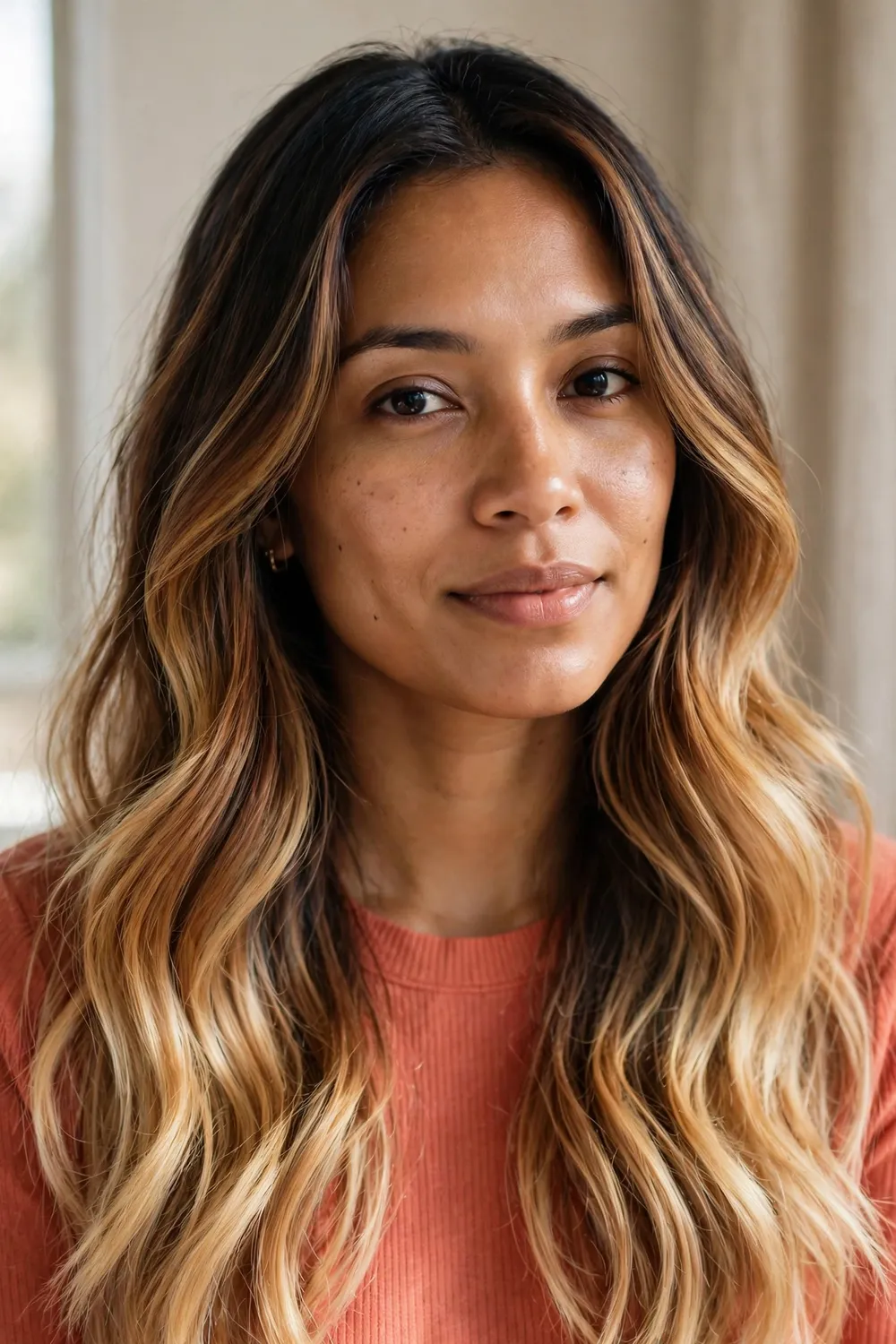
This runs a three-stage gradient: very dark roots, caramel mid-lengths, and bright honey ends. Each stage is distinct but the edges are melted. The name comes from the toasted coconut look, dark shell to golden flesh. It needs the most lift of any idea here, so it’s usually a multi-session job on dark hair. The payoff is the brightest honey finish achievable without going fully blonde. With this much lift, a bond builder during the service is not optional; it is what keeps the hair intact.
Try this: Plan for a toner refresh at 6 weeks. With this much lift, the bright ends fade fastest and a gloss keeps them honey instead of brassy.
Difficulty: Salon pro, likely 2 sessions | Cost: $250–$450
19. Tweed Technique
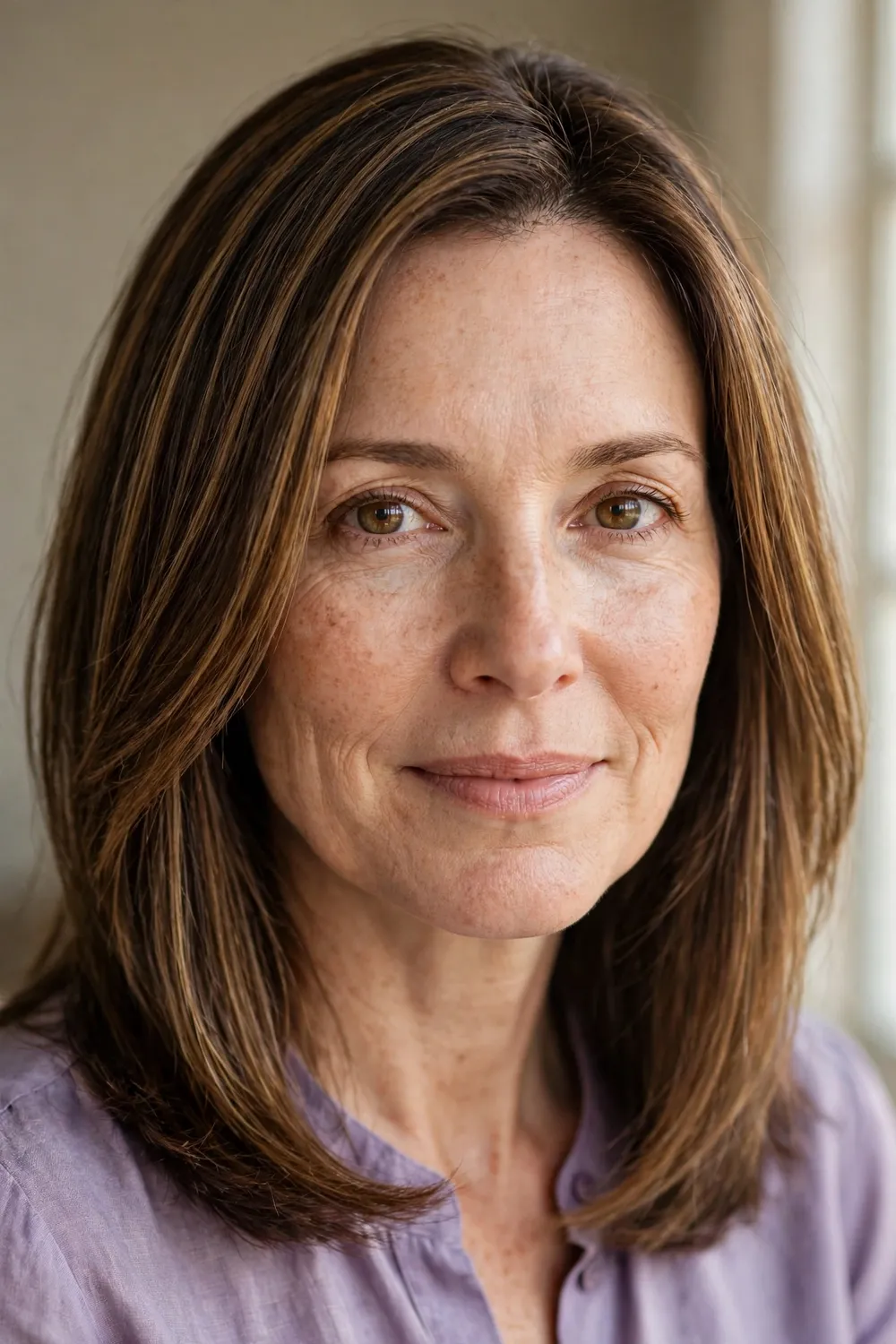
Tweed alternates ultra-fine honey highlights with slightly darker lowlights in a tight weave. The colorist works in small sections with two formulas at once. From a distance it reads as one rich honey tone; up close you see the texture. Fine hair benefits most because the weave creates an illusion of thickness. It’s slow work, so expect a long appointment. The two formulas are applied simultaneously, so the appointment is long but you leave with finished dimension.
Try this: Ask for the lowlights to be only one level darker than your base. Go darker and the weave starts looking striped instead of textured.
The same idea works beyond honey tones. Browse blonde balayage with lowlights for 30 combinations that pair blonde with darker pieces.
Difficulty: Experienced colorist | Cost: $220–$360
20. Honey Blonde Panels
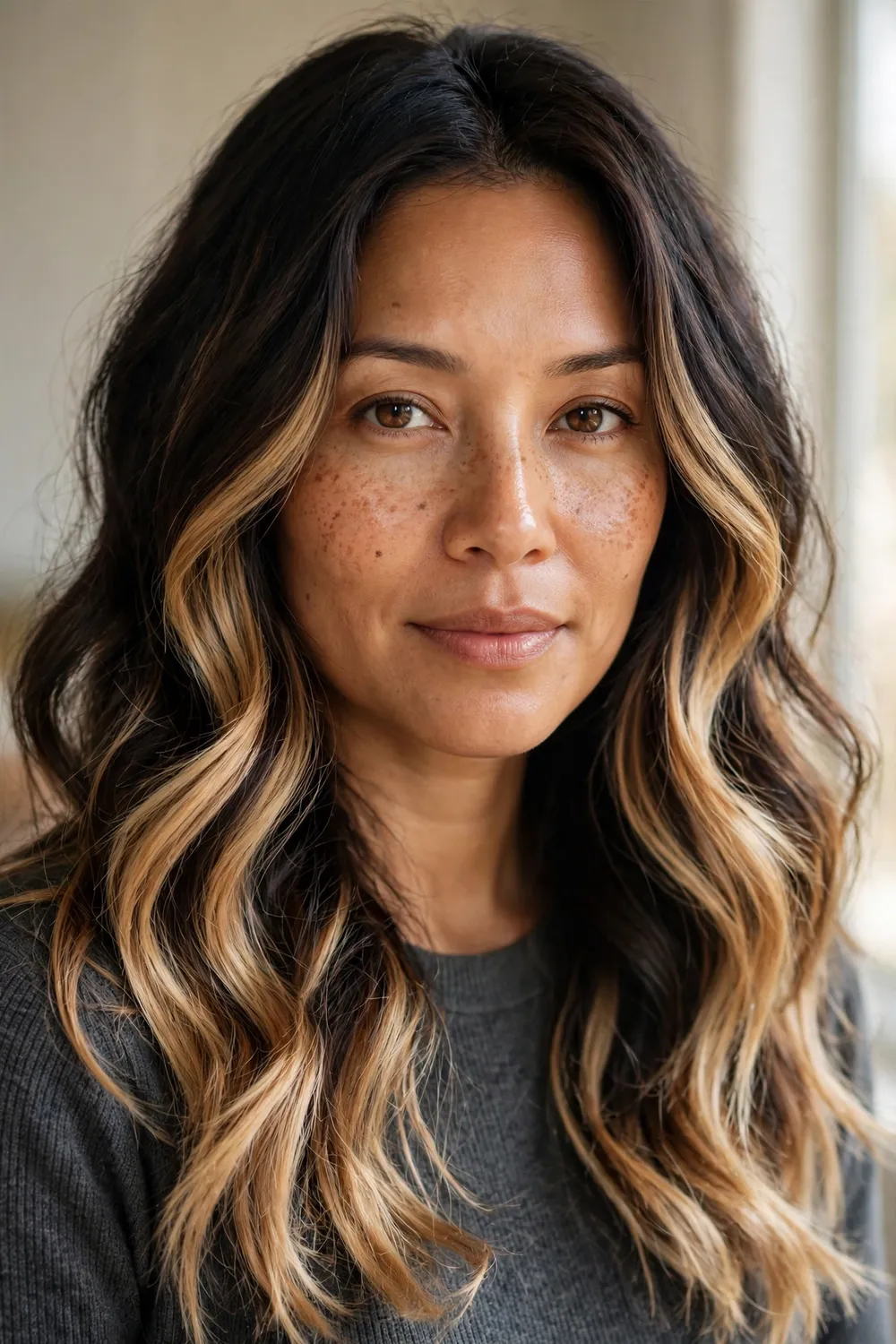
Panels are wide, one-to-two-inch sections of honey painted from mid-shaft to ends, spaced through a dark base. They’re bolder than ribbons and more modern than chunky highlights, because the panel edges are still feathered. This suits thick hair that can handle wide sections without looking sparse. On fine hair, wide panels can overwhelm the base color. Panels grow out softer than they look fresh, since the feathered edges blur as your hair grows.
Try this: Limit panels to the mid-lengths and ends, keeping the top six inches mostly dark. That dark frame is what keeps bold panels wearable.
Difficulty: Salon pro | Cost: $190–$320
21. Smudged Root Balayage
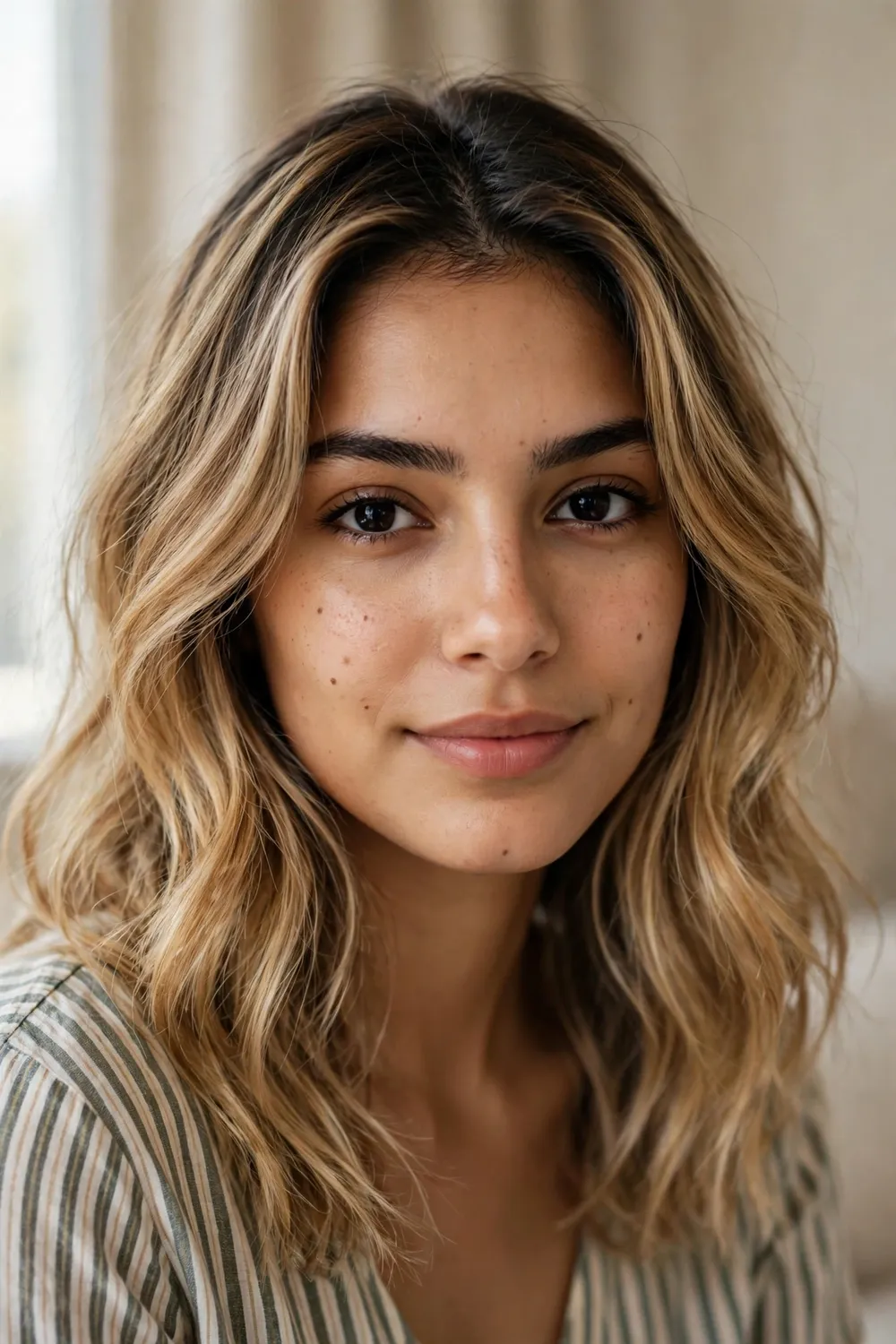
A root smudge taps a demi-permanent shade close to your natural color over the top few inches of the balayage, blurring where the light pieces begin. Unlike a root stretch, which drags color down, the smudge just softens the starting point. The result looks lived-in even when it’s fresh. It’s ideal if your natural root color and the balayage are more than three levels apart. The smudge is usually a demi-permanent that lasts 6 to 8 weeks, fading before it can ever form a line.
Try this: Ask for the smudge formula to be demi-permanent, not permanent. Demi fades gradually, so you never get a line as it wears off.
Difficulty: Salon pro | Cost: $180–$300
22. Amber Waves Dimension

Amber is the bridge tone between your dark base and the honey pieces: deeper than honey, warmer than caramel. The colorist weaves it through the mid-lengths so the dark-to-light journey has a middle step. This prevents the hollow look that happens when dark roots jump straight to light ends. Wavy hair shows it off well because the waves separate the tones. Amber sits around a level 7, so it lifts easily from most brown bases without aggressive bleach.
Try this: Style with loose waves after your appointment to check the blend. If the amber and honey separate into visible bands when waved, the melt needs softening.
Difficulty: Salon pro | Cost: $180–$300
23. Shadow Root Honey Blonde
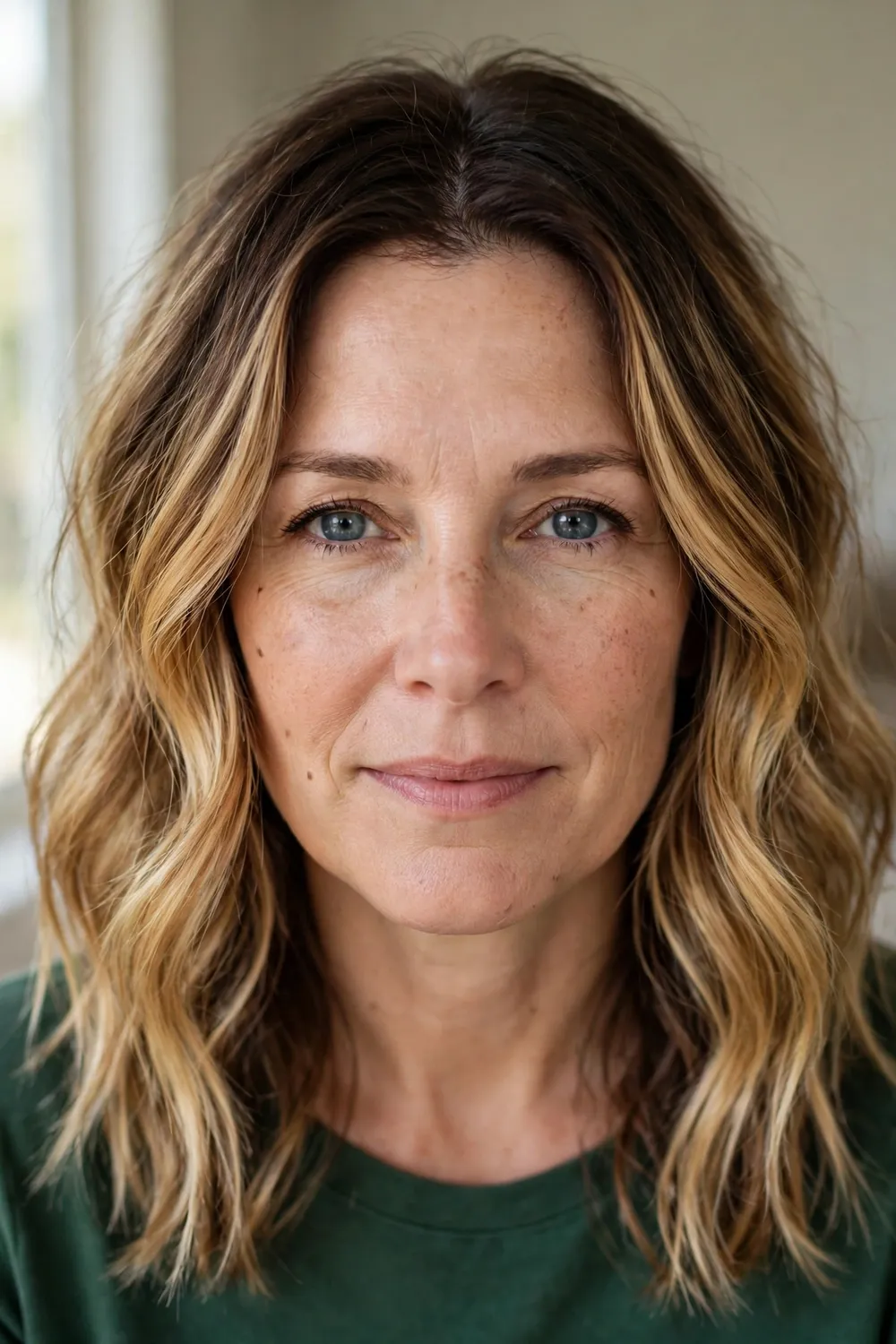
A shadow root keeps several inches of deliberate depth at the roots before the honey begins, deeper and more defined than a smudge. The contrast makes the honey ends look brighter by comparison. It’s a good choice if you like the look of regrowth but want it styled on purpose. Dark-haired clients get the most from it because their natural depth does half the work. The shadow is typically applied after the balayage processes, adding about 20 minutes to the service.
Try this: The shadow should be no more than two levels darker than your natural color. Go darker and it reads as a dye job instead of a shadow.
Difficulty: Salon pro | Cost: $180–$310
24. Painted Desert Balayage
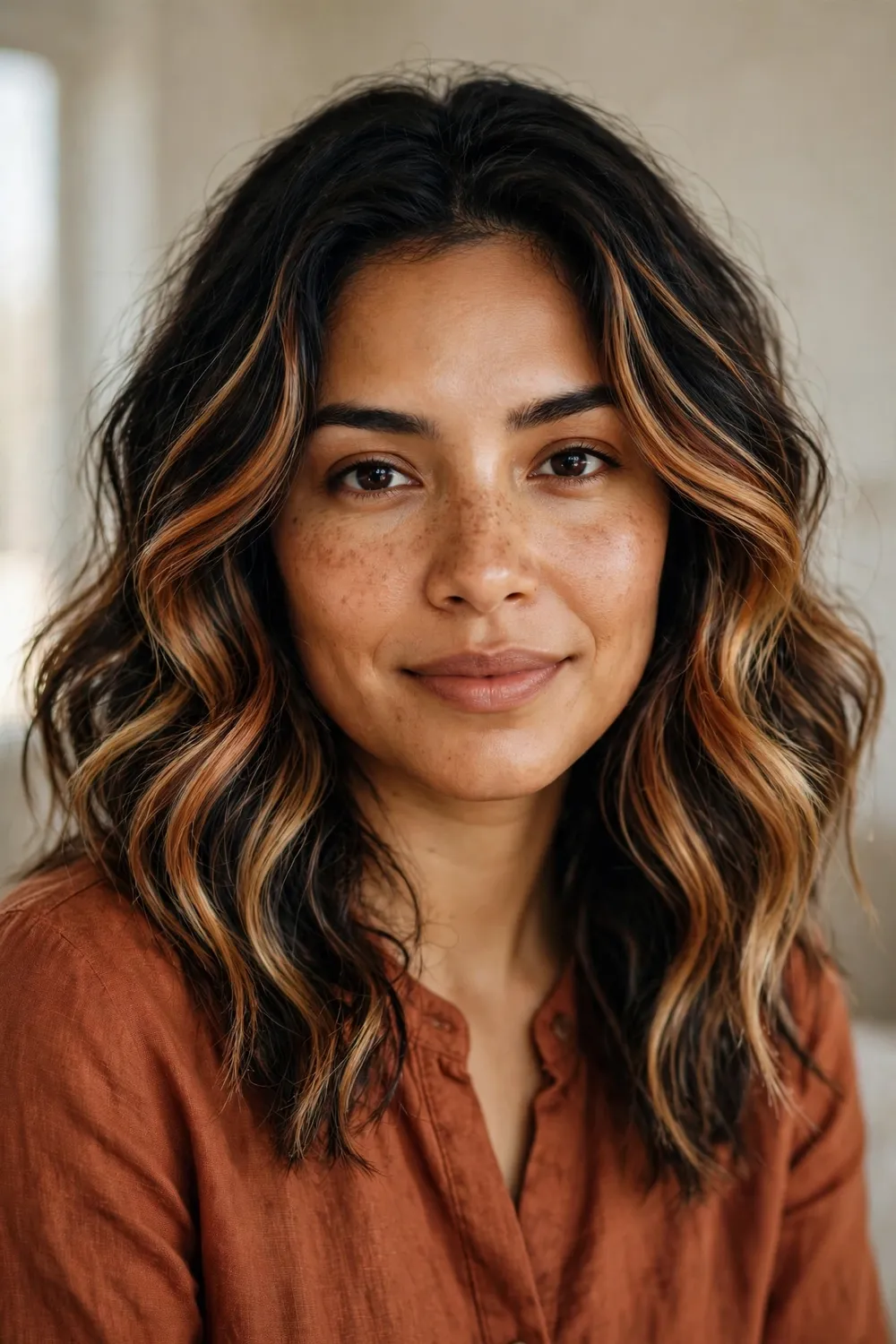
This mixes copper, sandy blonde, and honey in one application, painted in sweeping sections. The copper gives it an earthy warmth that plain honey lacks. It suits warm skin tones and anyone whose hair pulls red naturally. Because copper fades fastest, this needs a gloss refresh sooner than a pure honey balayage, usually around the two-month mark. Copper is the first tone to fade, so expect the look to settle into sand and honey after a month.
Try this: Wash with lukewarm water and a sulfate-free shampoo. Hot water strips copper tones first, and they’re the tones that make this look special.
Difficulty: Salon pro | Cost: $200–$340
25. Babylights Blend
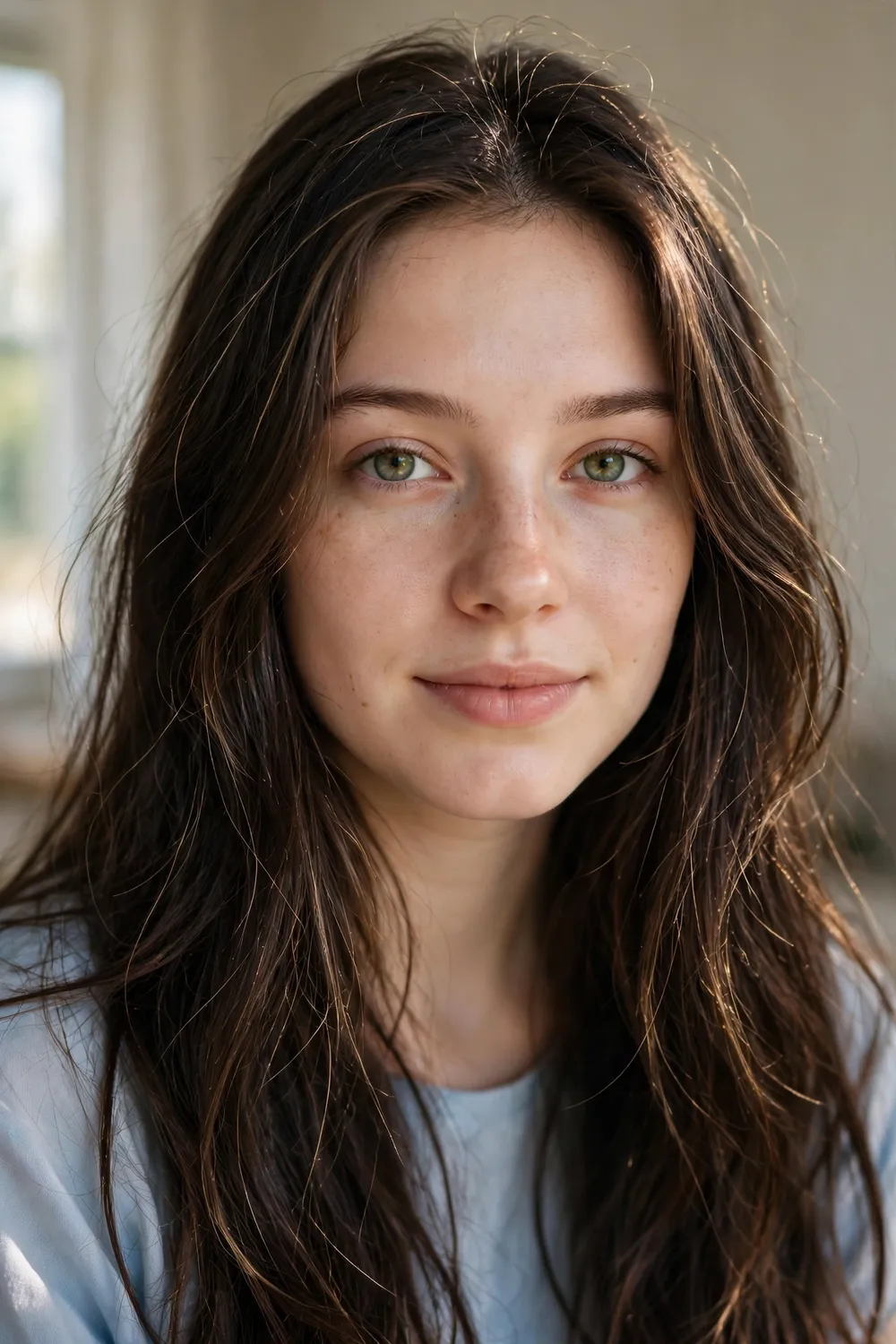
Babylights are ultra-fine, almost invisible sections lightened to honey, scattered through the hair like a child’s sun-lightened strands. The colorist works with tiny weaves, so the appointment runs long even though each piece is small. The finish is the most natural-looking blonde in this list. It’s also the easiest to maintain because the pieces are so fine that regrowth barely shows. Despite the subtle result, this is one of the longest appointments here because of the hundreds of tiny sections.
Try this: Babylights suit first-time lighteners. The change is subtle enough that if you don’t love it, nobody will notice it growing out.
Difficulty: Salon pro | Cost: $180–$320
26. Contour Balayage
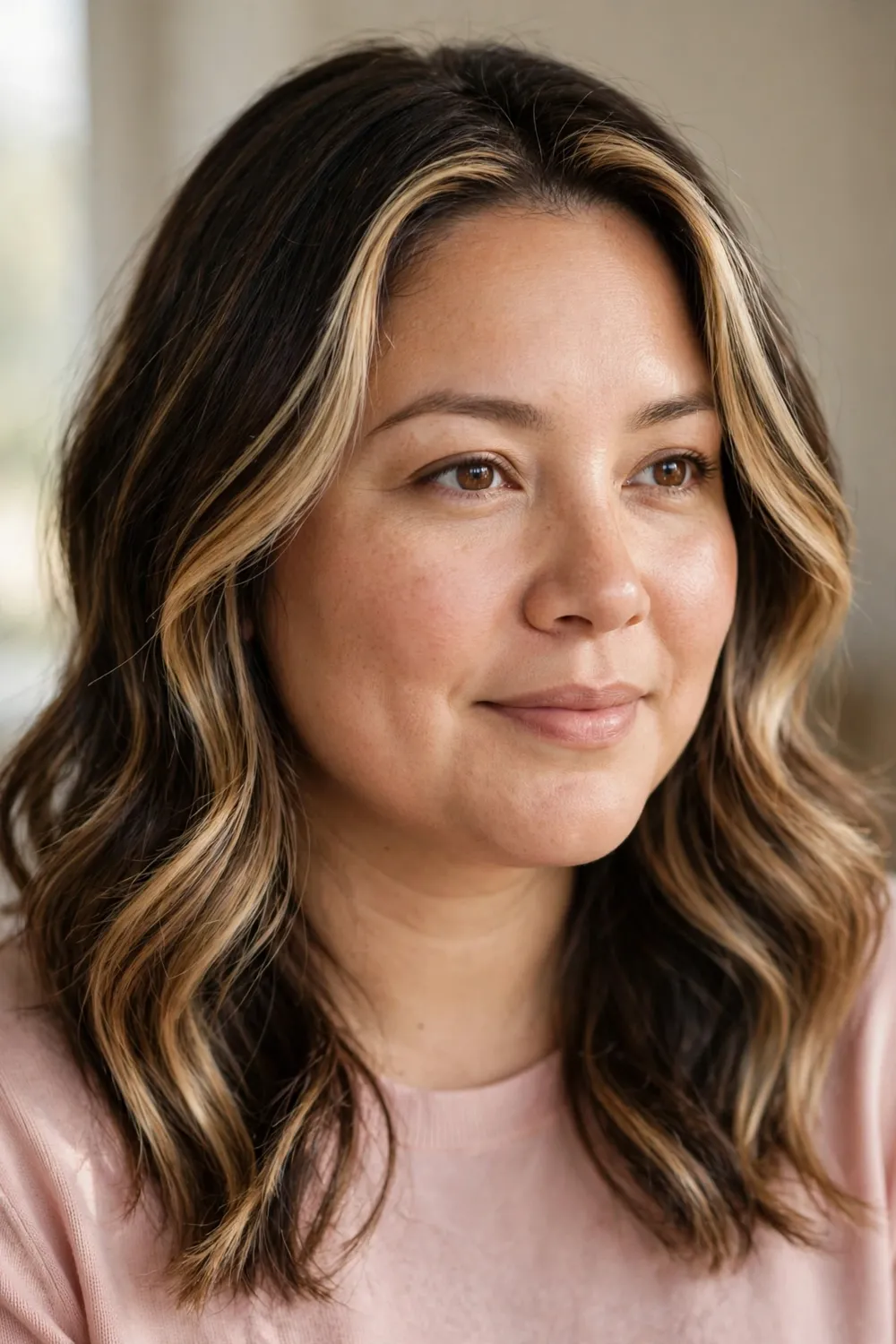
Contour balayage places the honey pieces specifically to flatter your face shape: higher and brighter near the temples for round faces, lower and softer for long faces. Your colorist should study your face shape before picking up the brush. It’s less a color and more a placement strategy, so it pairs with any honey tone. The consultation matters more here than with any other idea on this list. The consultation should take 15 minutes on its own; any colorist who skips it is not really contouring.
Try this: Wear your hair exactly as you style it daily to the consultation. Contour placement that assumes a center part fails if you always wear a side part.
Difficulty: Experienced colorist | Cost: $200–$340
27. Liquid Honey Melt
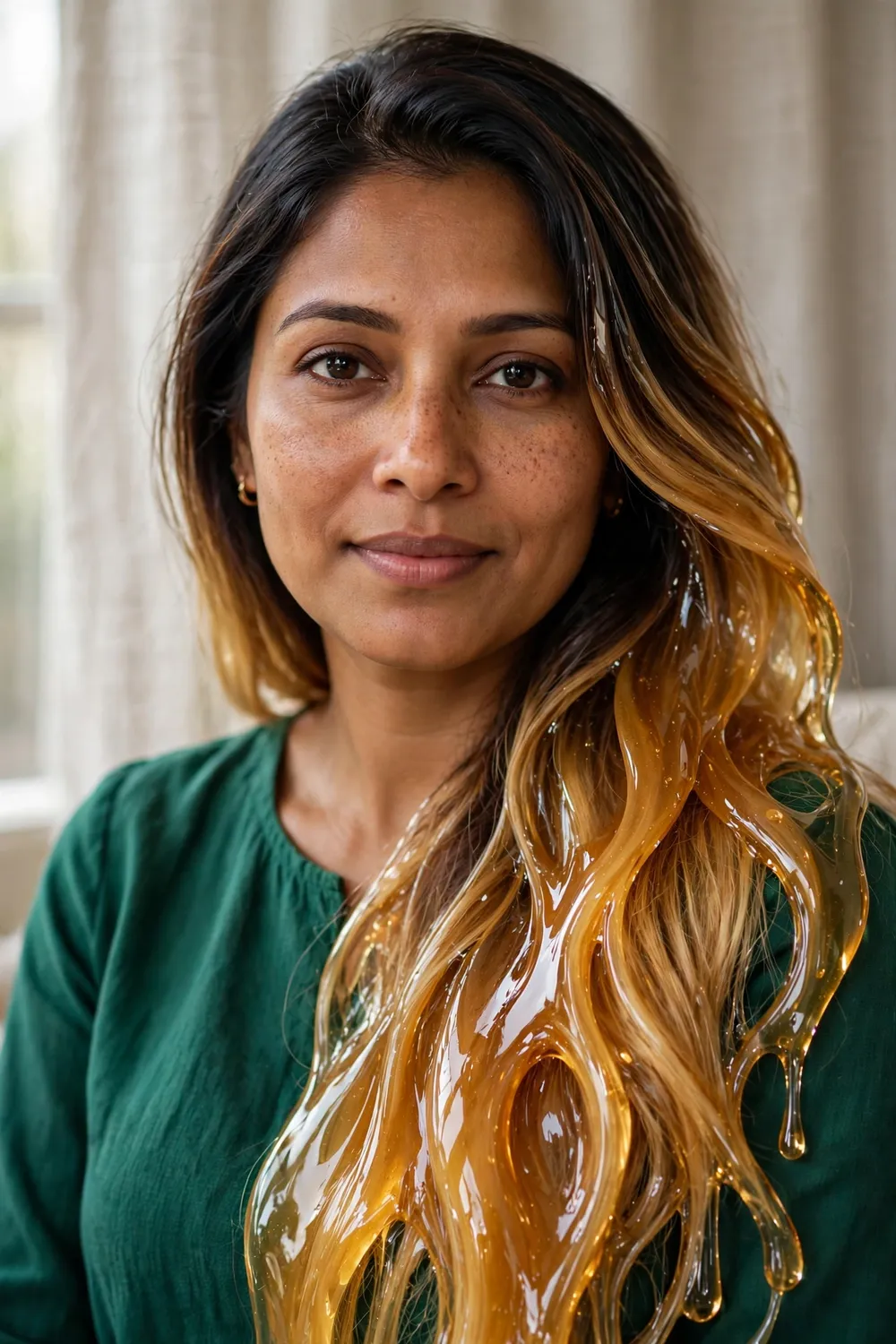
This is less about placement and more about finish: the balayage is painted, then glazed with a high-shine honey toner until the hair looks wet with shine. The colorist may add a clear gloss on top for reflectiveness. It photographs incredibly well and makes hair look healthier than it is. The gloss fades in 4–6 weeks, so this look depends on regular toning to maintain. The gloss that creates the liquid finish lasts 4 to 6 weeks, so book gloss-only appointments between full colors.
Try this: Book the gloss as a standalone service between full balayage appointments. It’s cheaper than a full color and keeps the liquid finish alive.
Difficulty: Salon pro | Cost: $200–$330
28. Honey Bronde Balayage
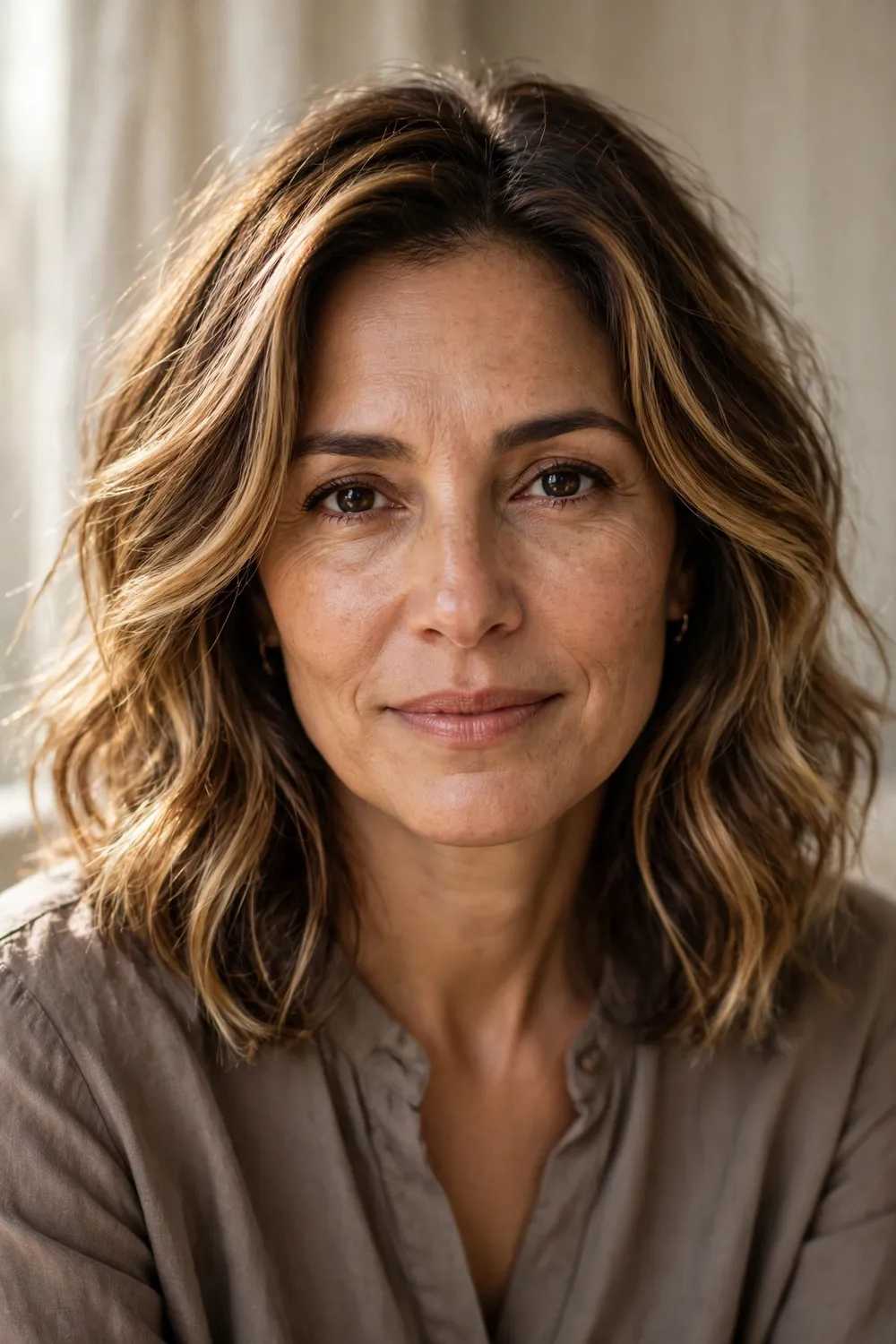
Bronde sits exactly between brown and blonde, and the honey version keeps the blend on the warm side. The colorist leaves more of your natural brown visible than in a standard balayage, lifting only selected pieces to honey. It’s the right choice for brunettes who want lightness without reading blonde. The maintenance is easy because so much natural color remains. This is the easiest balayage to maintain because so much of your natural color remains untouched.
Try this: Ask your colorist what ratio of brown to honey they’re planning. A true bronde keeps at least half the head at your natural depth.
Difficulty: Salon pro | Cost: $170–$290
29. Warm Beige Balayage with Dark Roots
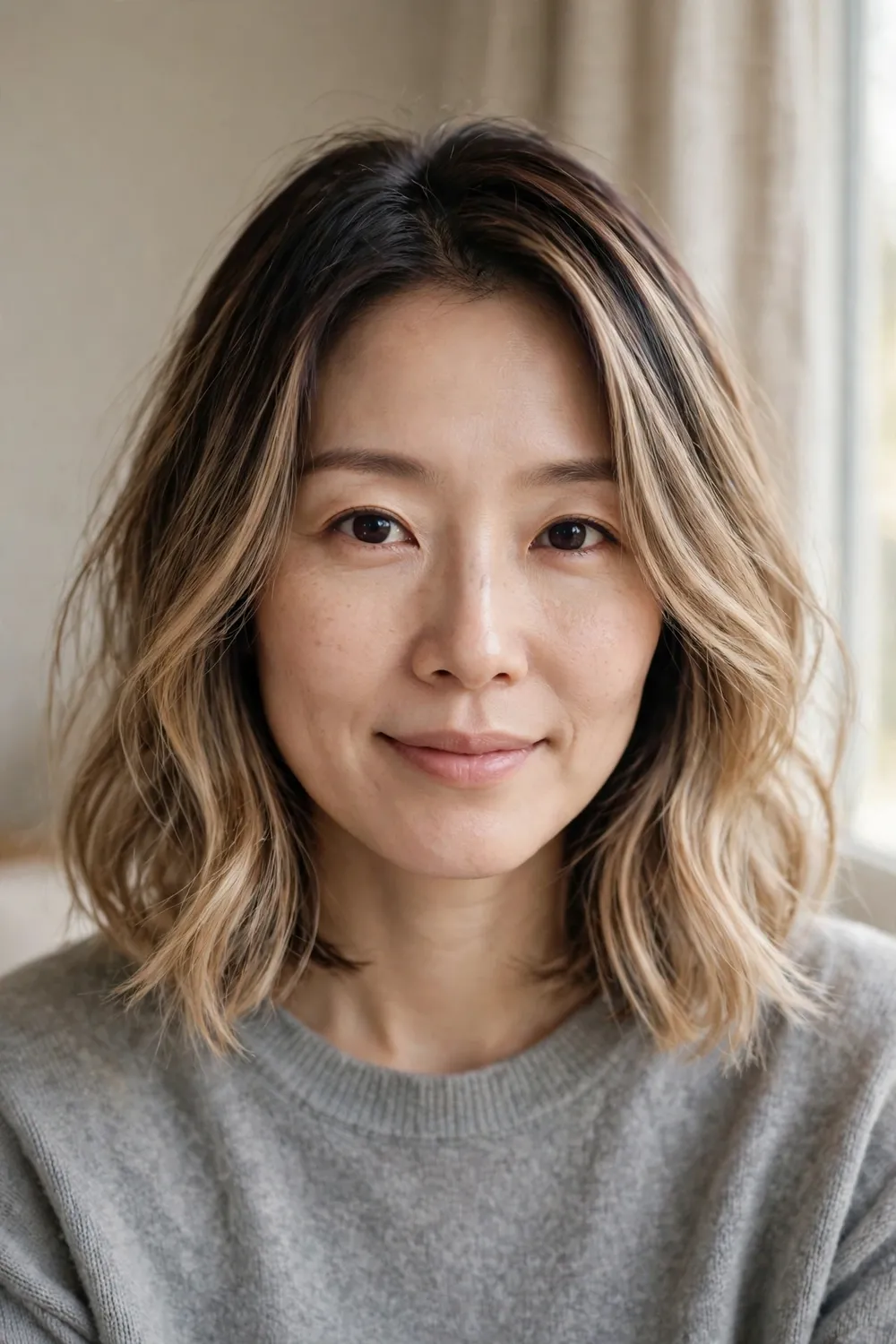
This tones the honey pieces toward beige instead of gold, which mutes the warmth without going ashy. The dark root stays deep for contrast. It suits neutral and cool skin tones that want honey’s softness without its yellow cast. The colorist needs to watch the toner carefully: beige can slide into ash if it processes too long, and then it’s no longer honey. Beige toners process fast, so your colorist will watch the clock closely to stop it before it goes ashy.
Try this: Ask for a “warm beige” toner specifically, not “ash beige.” The wording matters because the formulas sit on opposite sides of the tone chart.
Difficulty: Salon pro | Cost: $180–$300
30. Buttery Honey Balayage
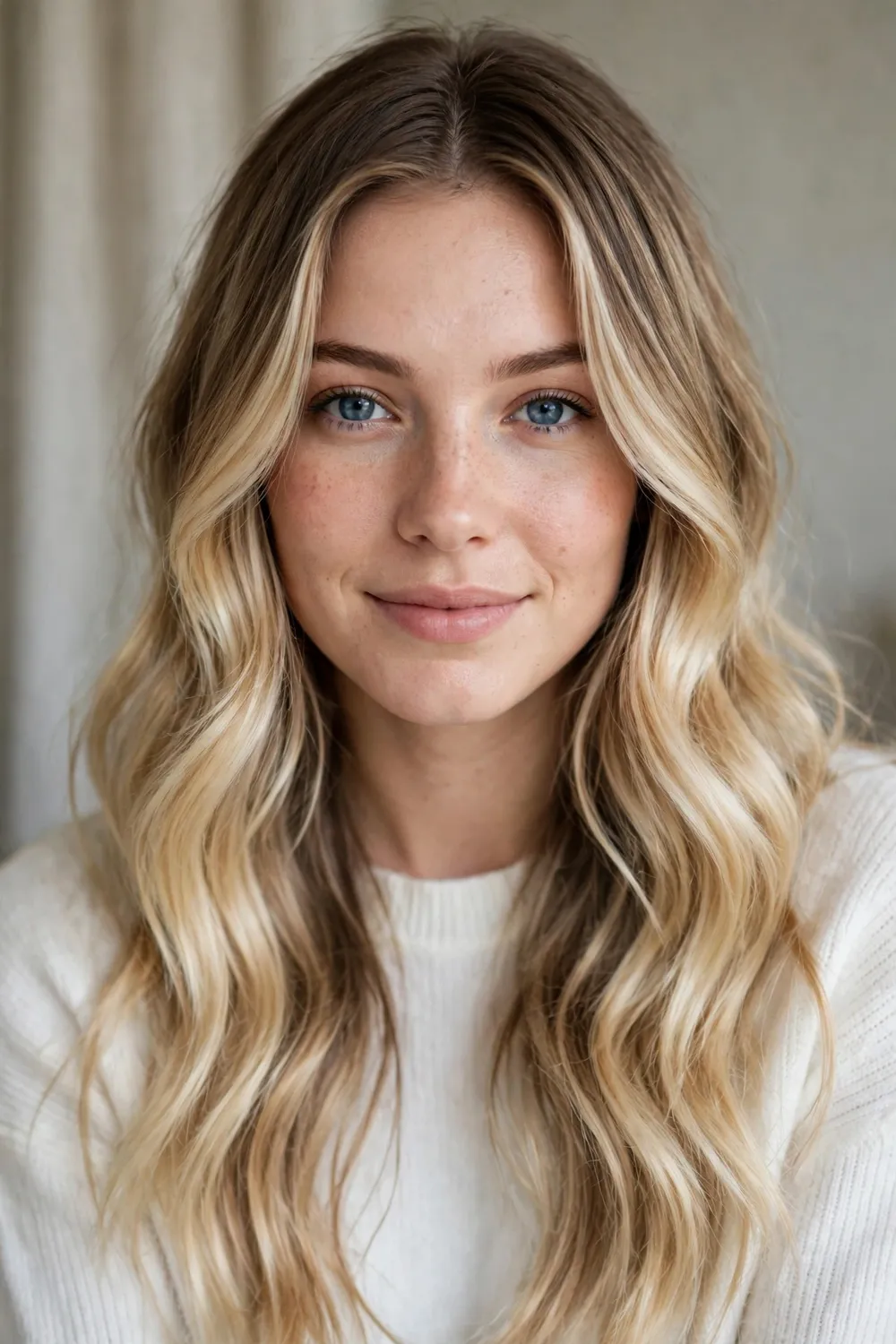
Buttery honey is the softest, creamiest version of the shade: pale gold with no orange and no ash. The colorist lifts to a clean pale yellow, then tones with a neutral-gold gloss. It suits fair to medium skin tones and fine hair, where the soft tone won’t overwhelm. Getting here from dark hair takes careful, slow lifting; rushing it leaves warmth that fights the buttery finish. Buttery honey needs a clean, pale lift underneath; any leftover warmth in the lift will fight the soft finish.
Try this: Use a purple shampoo once a week, not daily. Daily use over-tones buttery honey toward gray, which kills the softness.
If you like the cream but want less gold, creamy blonde balayage leans on vanilla and beige tones instead of honey.
Difficulty: Salon pro | Cost: $190–$320
31. Honey Balayage on Short Hair
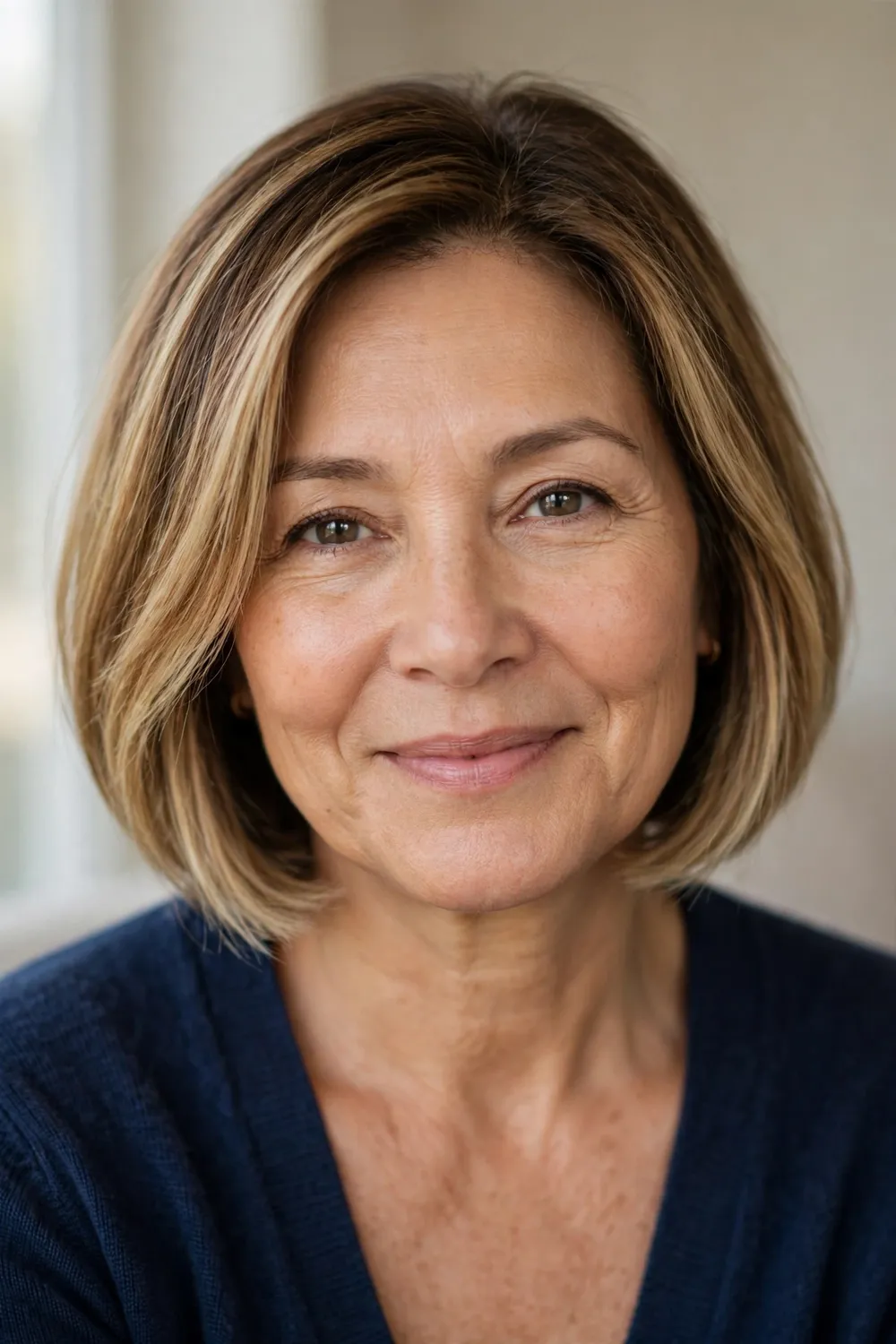
Balayage works on bobs and lobs when the colorist concentrates the honey through the lower third and around the face. There’s no long gradient to develop, so the placement has to be precise: too much and it looks like highlights, too little and it disappears. Chin-length to collarbone cuts take it best. The grow-out is quick to refresh because there’s simply less hair to repaint. Short-hair balayage usually takes under two hours since there is simply less hair to paint. For bob-specific shade combinations aimed at women over 50, see these balayage bobs for women over 50.
Try this: On short hair, ask for the honey pieces to be painted slightly heavier than feels right. Short hair shows less of each piece, so subtle work vanishes.
Difficulty: Salon pro | Cost: $140–$240
32. Honey Balayage with Curtain Bangs
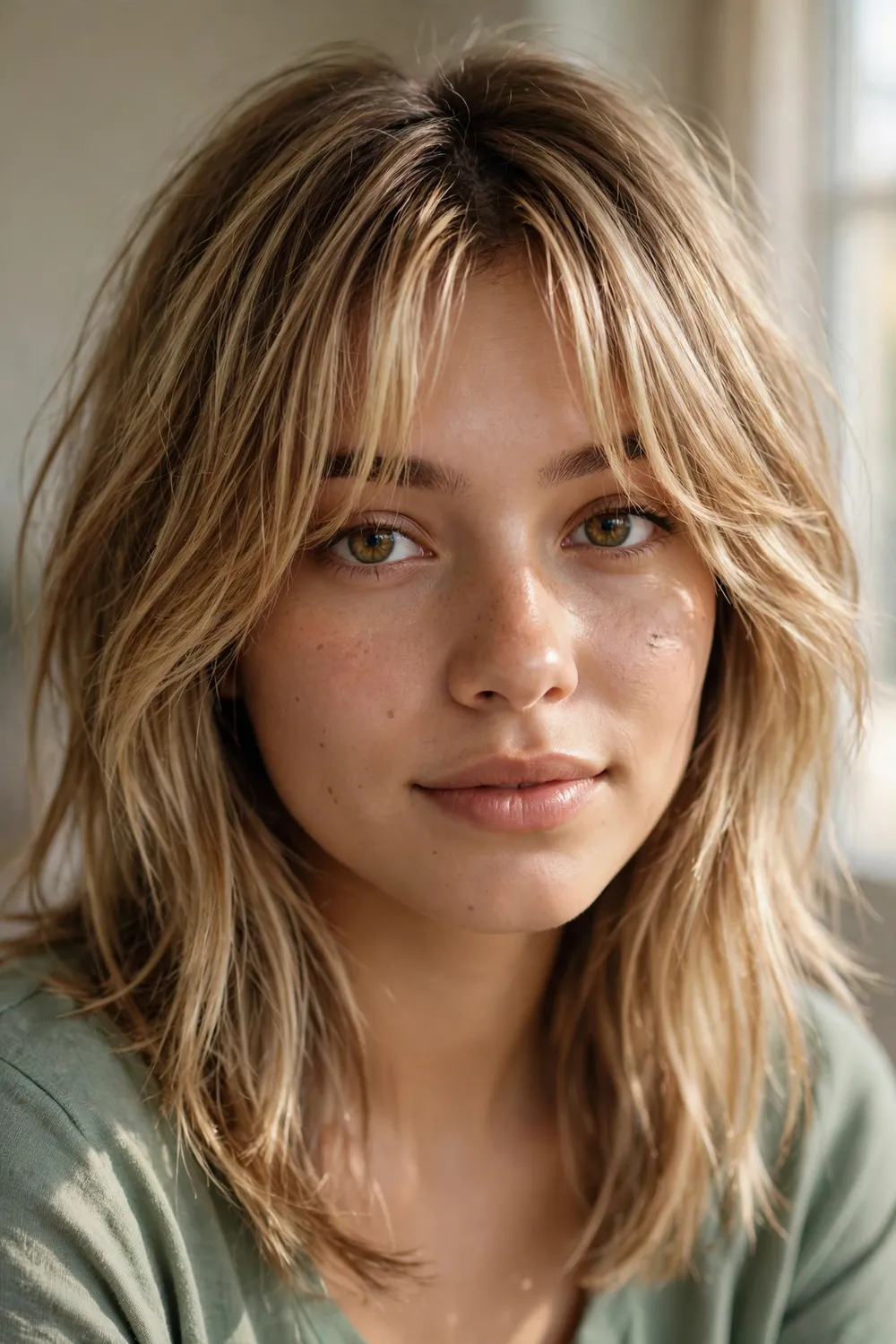
Curtain bangs get the lightest honey pieces in this version, which pulls attention to the eyes. The rest of the balayage stays mid-level so the bangs stay the focal point. The colorist has to paint the bang area carefully: bangs are the first thing people see, and any stripey work shows immediately. Shaggy, layered cuts pair naturally with this placement. Bang pieces process faster than the rest because the hair is finer, so the colorist checks them first.
Try this: If your bangs are new, wait two weeks before coloring them. Fresh-cut bangs settle into their real length and texture, and the colorist needs to see that before painting.
Difficulty: Salon pro | Cost: $170–$290
33. Honey Balayage on Long Dark Layers
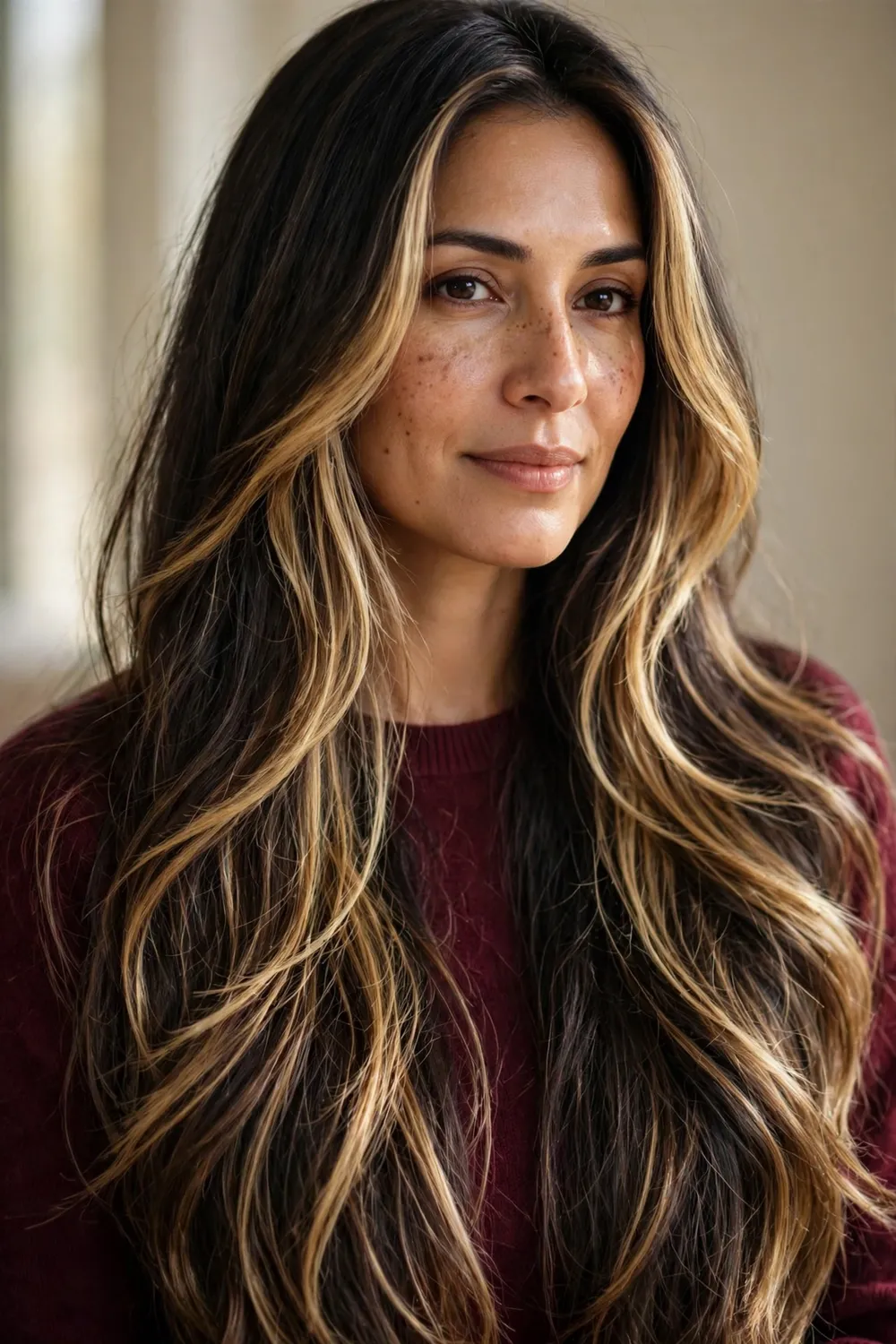
Long layers give balayage the most room to show off: the honey pieces can start at different heights on each layer, creating a cascading effect. The colorist paints the face-framing layers brightest and lets the back layers carry softer pieces. This is the most forgiving canvas in the list because length hides minor placement unevenness. It does use the most product, so expect the higher end of pricing. Expect the highest product usage here; some salons charge a long-hair supplement of $30 to $60.
Try this: Ask for the layers to be cut before the color, not after. Cutting first lets the colorist see exactly where each layer falls and place the honey accordingly.
Difficulty: Salon pro | Cost: $200–$350
34. Subtle Honey Balayage on a Natural Brown Base
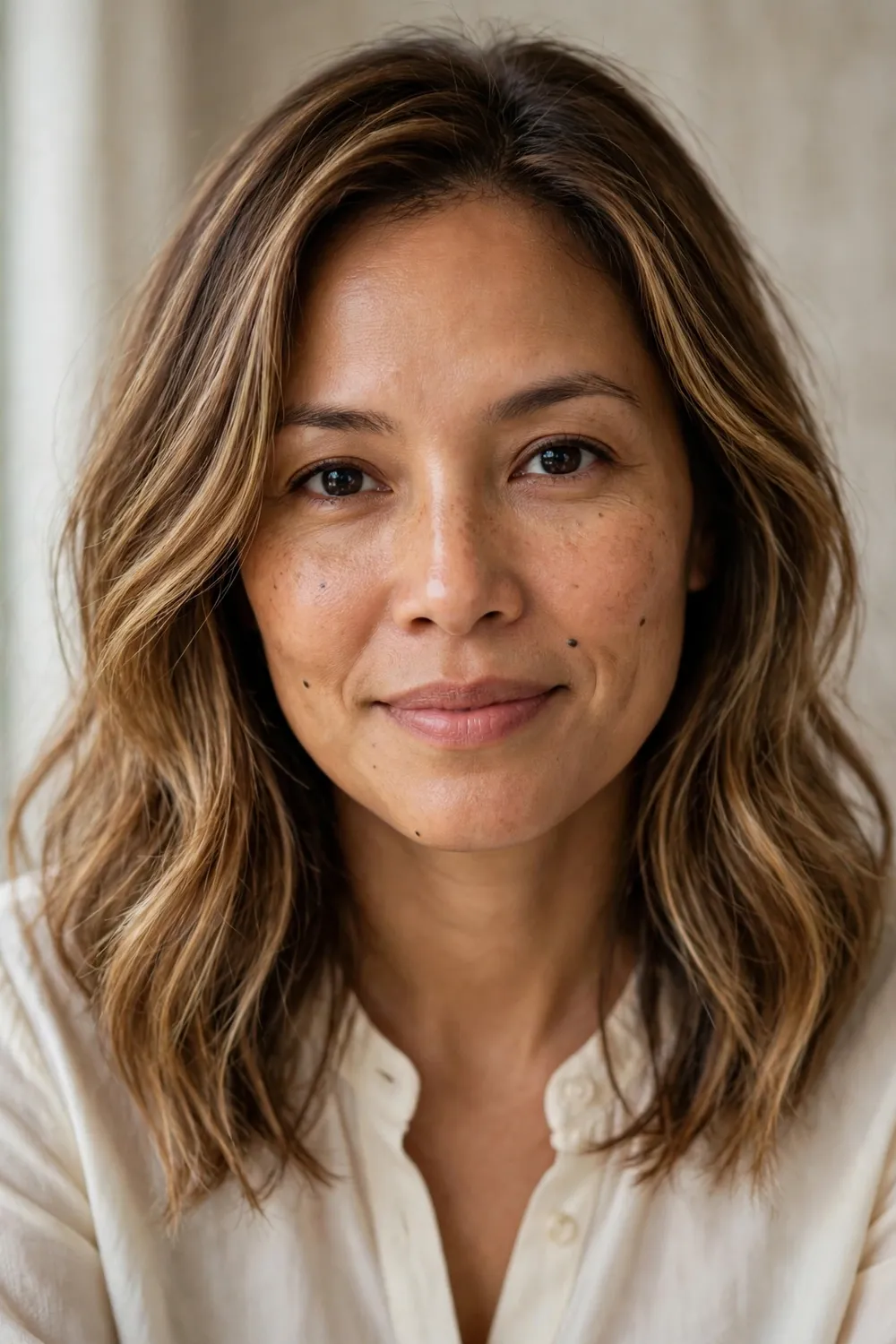
If your natural hair is already a medium brown, you only need one to two levels of lift to reach honey. The colorist paints sparingly, just enough to add warmth and movement. Nobody will guess it’s colored; it reads as really good natural hair. The lift is gentle enough that damage is minimal, and a gloss every couple of months keeps it fresh. This is the easiest entry point on the whole list. This gentle lift rarely needs a toner refresh before 10 to 12 weeks, making it the cheapest to maintain.
Try this: Ask whether your natural base can reach honey with a high-lift tint instead of bleach. On medium brown hair it often can, which is far gentler.
Difficulty: Salon pro | Cost: $130–$230
35. Smoky Honey Balayage with Airy Layers
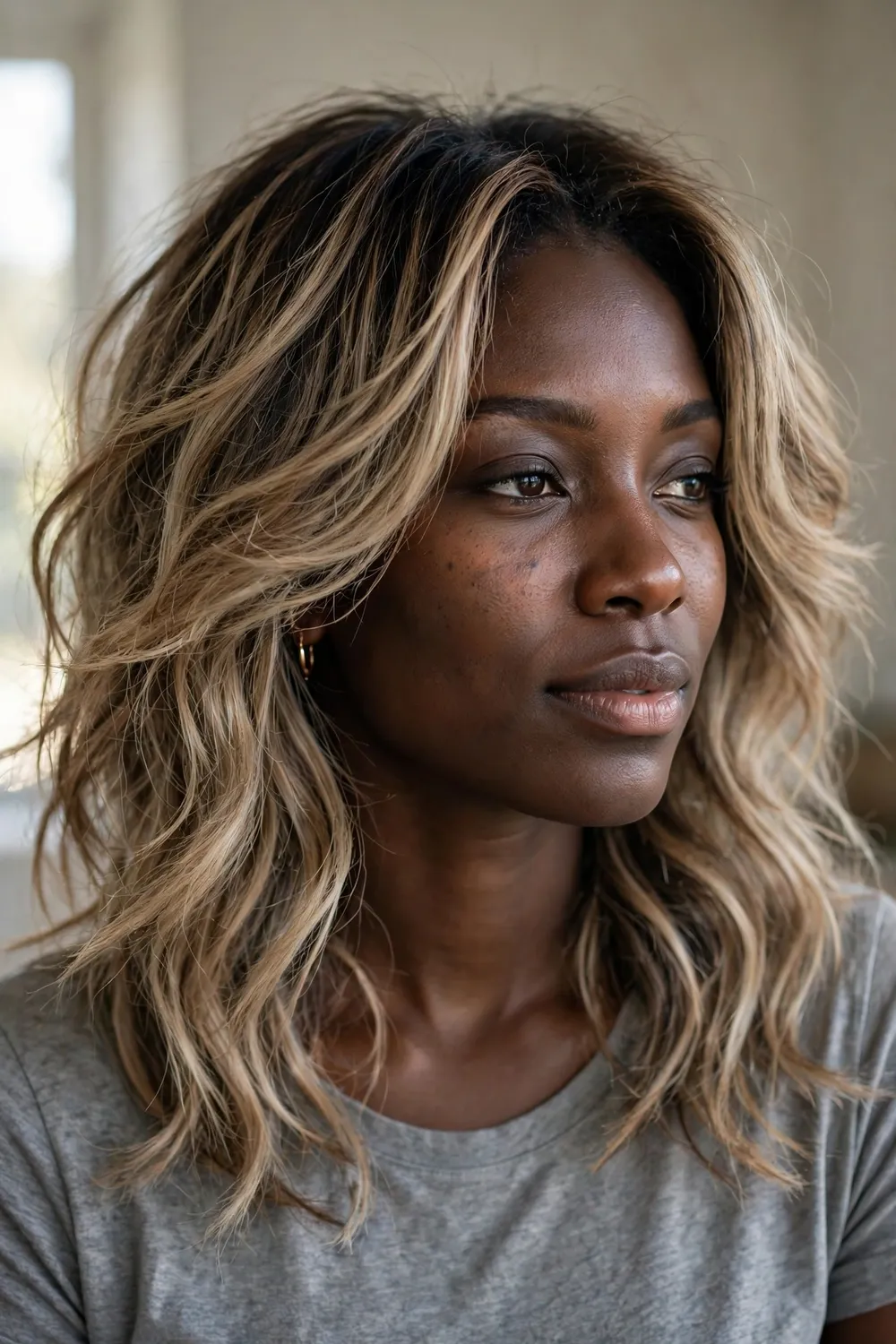
This mutes the honey with a sheer smoky overlay, cooling the gold just enough to take the edge off without turning it ash. The colorist applies the balayage, then glazes everything with a smoky-beige toner. Airy, feathered layers suit it because the muted tone needs movement to avoid looking flat. It flatters deeper skin tones that want honey’s lightness with less yellow. The smoky overlay is a sheer toner, so it fades first while the honey balayage underneath remains.
Try this: This toner fades faster than standard honey glosses, so plan a refresh at 5–6 weeks if you want to keep the smoky cast.
Difficulty: Salon pro | Cost: $180–$310
36. Honey Balayage on Light Brown Hair
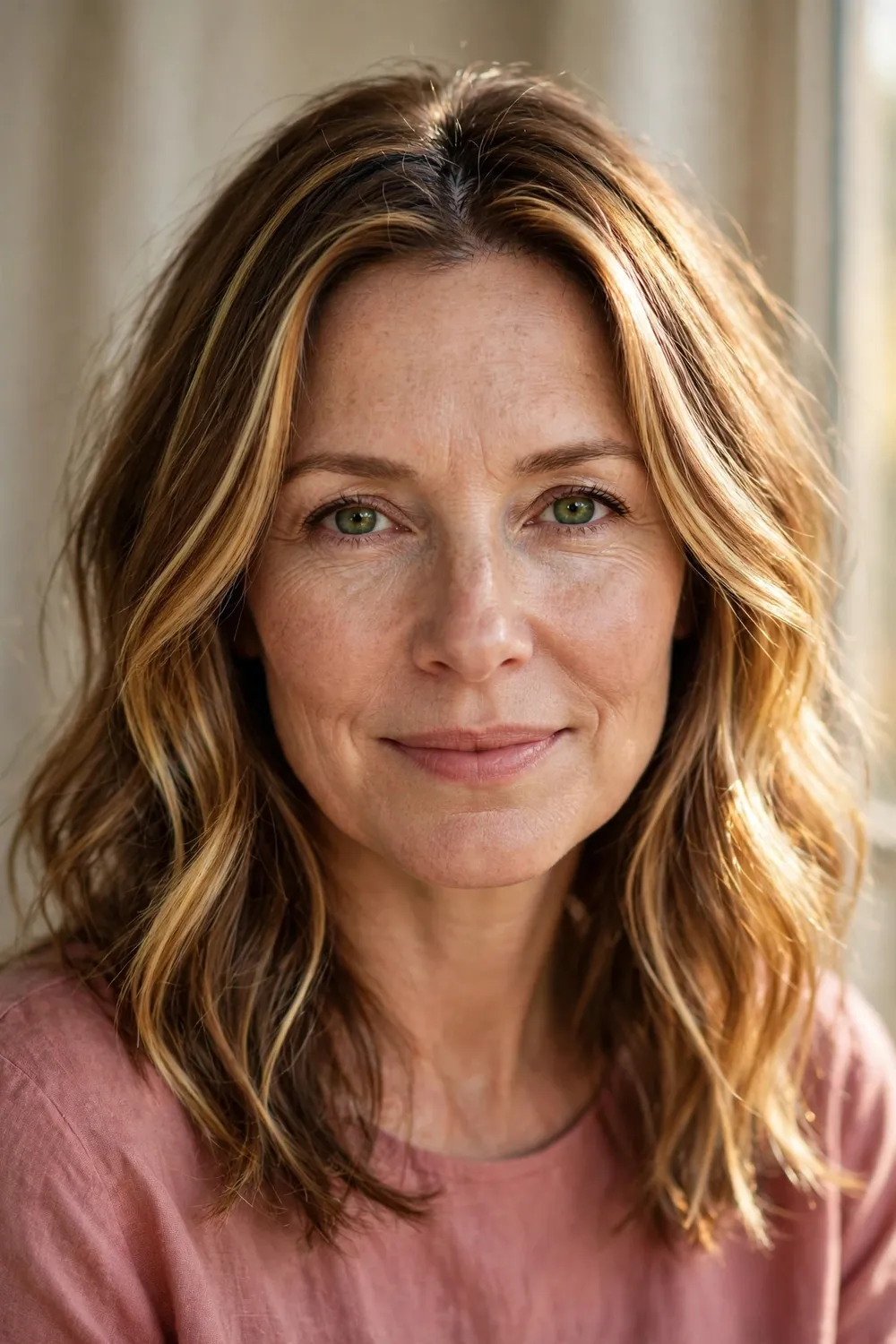
Starting from light brown, the colorist only lifts one level to reach honey, which means less damage and a faster appointment. The challenge is the opposite of dark hair: keeping enough contrast so the balayage is visible at all. The fix is painting fewer, slightly brighter pieces rather than many subtle ones. A root shadow helps too, deepening the base artificially for contrast. A root shadow is often added in the same appointment to manufacture the contrast light brown hair lacks.
Try this: Ask for the honey pieces to be at least one full level lighter than your base. Half-level differences disappear in indoor lighting.
Difficulty: Salon pro | Cost: $150–$260
37. Honey Balayage for Gray Blending
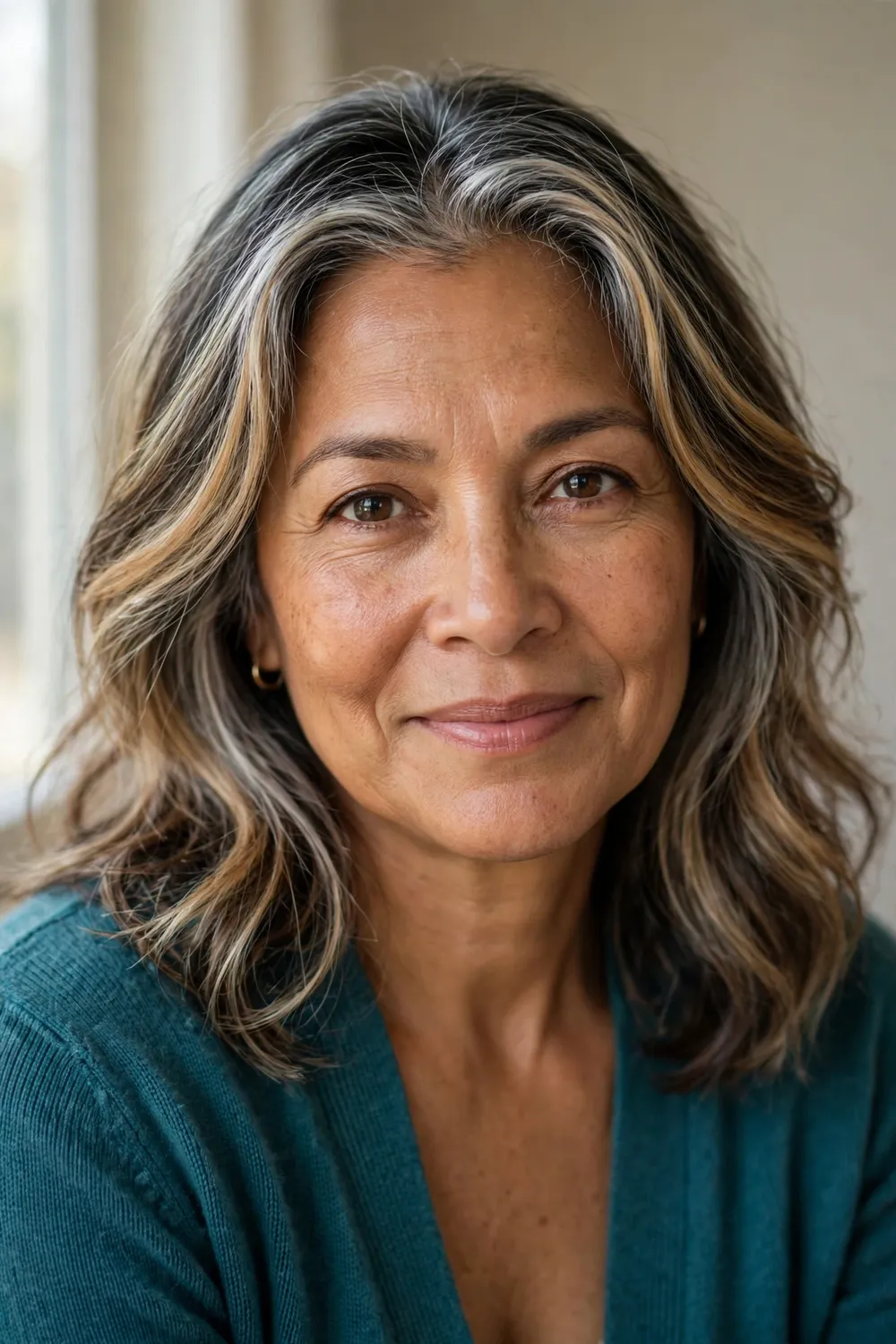
Instead of covering grays with solid color, this weaves honey balayage around them so the silver strands read as highlights. The colorist places honey pieces near the temples and part where grays concentrate most. It works best when gray is under 50%; beyond that, the blend gets patchy. Touch-ups stretch to 3–4 months because there’s no solid regrowth line to chase. This works best when gray is concentrated at the temples and part, where the honey pieces can camouflage it.
Try this: Be honest about your gray percentage at the consultation. Colorists can estimate, but your own report helps them choose the right density of honey pieces.
Difficulty: Experienced colorist | Cost: $180–$300
38. Reverse Honey Balayage
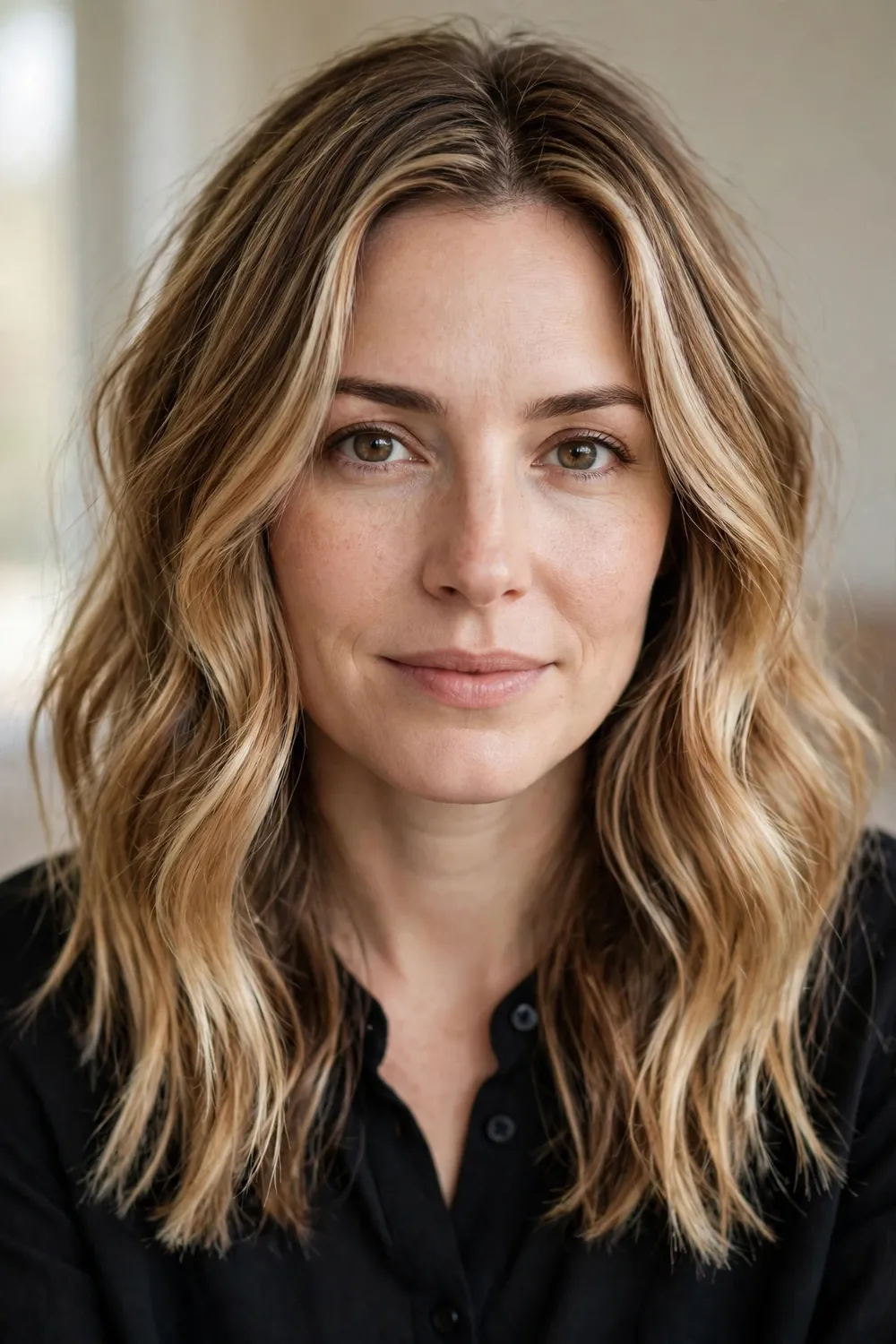
Reverse balayage starts from over-lightened blonde and paints depth back in: honey and light brown lowlights are swept through the mid-lengths while the brightest blonde stays at the ends. It’s the fix for hair that’s gone too light, too flat, or too damaged from repeated bleaching. The lowlights add dimension without any lightener, so it’s the gentlest service on this list. No lightener touches your hair in this service, so it is safe to book even when your hair feels fragile.
Try this: This is ideal between bleaching sessions. It gives blonde hair a break while keeping it dimensional, and your next lightening will lift more evenly.
Difficulty: Salon pro | Cost: $140–$250
Balayage Techniques Compared
| Technique | How It Looks | Upkeep | Typical Cost |
|---|---|---|---|
| Classic balayage | Freehand honey pieces, soft grow-out | 3–4 months | $180–$300 |
| Foilyage | Brighter lift, still blended | 3–4 months | $200–$350 |
| Teasylights | Most diffused root transition | 4–5 months | $200–$340 |
| Babylights | Finest, most natural pieces | 4–6 months | $180–$320 |
| Root melt / shadow root | Dark roots melting into honey | 4–6 months | $180–$310 |
| Money piece | Bright front sections only | 2–3 months | $100–$180 |
How to Choose Your Honey Blonde Balayage
Start with your natural base. Dark brown to black hair (levels 2–4) gives the most striking honey contrast but needs the most lift, so budget for a longer appointment and possibly two sessions. Medium to light brown hair lifts faster and cheaper, but you’ll need to ask for brighter pieces to keep the balayage visible.
Match the tone to your skin’s undertone. Warm and olive skin takes golden and buttery honey easily. Neutral skin can wear most versions. Cool skin does better with the beige or smoky honey options, which dial back the yellow.
Decide your maintenance level honestly. If you visit the salon twice a year, stick with lived-in root stretches, smudged roots, or babylights. If you’re happy with quarterly appointments, the bolder options like money pieces and toasted coconut stay fresh with regular toning.
What to avoid: Don’t ask for an ashy toner on honey balayage; ash kills the golden warmth that defines the shade. Don’t try to lift dark hair to bright honey in one aggressive session; that path leads to breakage. Skip daily purple shampoo, which over-tones honey toward gray. And if you style with a curling iron or flat iron, apply a heat protectant first, since lightened ends are the first to fry.
For honey color worn as all-over dye, highlights, or gloss instead of balayage, our honey blonde hair color ideas covers 38 non-balayage ways to wear the shade.
If warm honey is not your undertone, ash blonde balayage shows the cool-toned side of hand-painted color with the same soft, low-maintenance grow-out.
If honey is not the only tone on your mind, our broader roundup of blonde balayage highlights covers 30 ideas across platinum, ash, golden and caramel shades.
If your skin runs cool or you simply prefer smoky tones over warm honey, compare with dark brown hair with ash blonde balayage before you decide.
Frequently Asked Questions
How long does honey blonde balayage last?
The color itself is permanent, but the tone fades. Most people need a gloss or toner refresh every 6–8 weeks to keep the honey golden instead of brassy, and a full balayage touch-up every 3–4 months. Lived-in techniques like root stretches can stretch to 5–6 months between appointments.
Is honey blonde balayage low maintenance?
Compared to all-over blonde or traditional highlights, yes. The hand-painted grow-out has no hard line, so regrowth looks intentional. You’ll still need purple or blue shampoo occasionally and a toner refresh a few times a year, but you won’t need monthly root appointments.
Will honey blonde balayage work on very dark hair?
Yes, dark hair is actually the ideal canvas because the contrast shows the technique off. It usually takes one long session or two shorter ones to lift dark hair to clean honey tones without brassiness. Foilyage is often the better technique for resistant dark hair since the foil gives extra lift.
How much does honey blonde balayage cost?
Expect $150–$350 for most full applications, with partial or face-framing work running $80–$180. Long, thick hair costs more because it uses more product and time. Major cities and senior colorists sit at the higher end. A standalone toner refresh between appointments usually runs $50–$100.
How do I prevent honey blonde balayage from turning brassy?
Brassiness comes from underlying warm pigment resurfacing as toner fades. Use a sulfate-free shampoo, wash with lukewarm water, and add a purple shampoo once a week once you notice warmth creeping in. A shower filter helps if your water is heavy in minerals, and a salon gloss every 6–8 weeks resets the tone completely.
Final Thoughts
Honey blonde balayage earns its popularity: it’s warm without being brassy, dimensional without being high-maintenance, and it flatters the dark bases most women actually have. Pick your placement based on how much upkeep you’ll honestly do, bring reference photos to your consultation, and let the toner do the talking. The right honey tone makes the whole technique work. To compare honey against the other shades that suit dark hair, see our balayage hairstyles for dark brown hair roundup of 30 ideas.

