


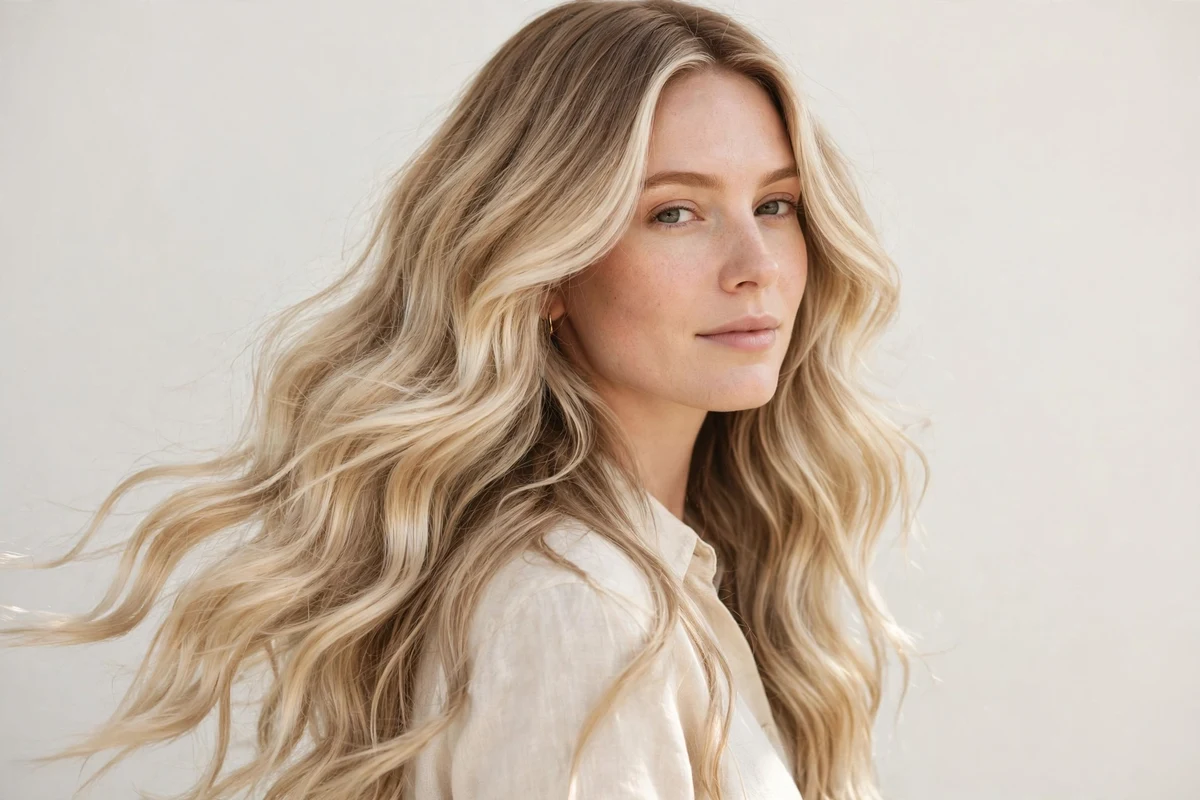
Creamy blonde balayage sits in the sweet spot between icy platinum and golden honey. It reads soft and sunlit, with warm beige and vanilla tones melting through the mid-lengths and ends. The finish never looks flat or stripey.
Below, you’ll find 24 takes on the look: short cuts, long waves, curls, bold contrast, and low-maintenance grow-out options. Every idea includes what to ask for in the chair and how to keep the tone right at home. I keep notes on which blondes actually last between appointments, and creamy tones consistently outlast cooler ones.
Quick answer: Creamy blonde balayage is a freehand highlighting technique painted in warm beige, vanilla, and soft champagne tones. It grows out softly, suits most skin tones, and needs a toning gloss every 6 to 8 weeks to stay creamy instead of brassy.
Quick Takeaways
- Creamy blonde means warm beige and vanilla tones, not ash or platinum.
- Balayage grows out softly, so touch-ups stretch to 12 to 16 weeks for many people.
- Face-framing pieces and a root melt make the grow-out look intentional.
- Purple shampoo once or twice a week keeps the cream from turning yellow.
- Bring reference photos to your appointment and ask for a strand test first.
What Is Creamy Blonde Balayage?
Balayage is a French word meaning “to sweep.” Your colorist paints lightener freehand onto the hair’s surface instead of using foils. The result mimics how the sun naturally lightens hair: brighter through the ends, softer near the roots, no hard lines.
The “creamy” part is the tonal family. Think warm beiges, buttery whites, soft champagnes, and pale honeys. It sits between icy platinum and caramel brown. Not too yellow, not too cool. That middle ground is why it flatters warm, cool, and neutral skin tones alike.
Because the lightening is painted rather than foiled to the root, regrowth doesn’t show as an obvious line. Most people can go three to four months between appointments and still look pulled together.
How to Ask Your Colorist for It
Words matter at the color bar. Ask for a “creamy, neutral-warm blonde balayage with a soft root melt and toning gloss.” Show photos of the exact tone you want, lit in daylight if possible. Phone screens shift color, so pick photos from the same lighting.
Talk about your natural base. Dark brown bases need more lift sessions than light brown ones, and your colorist may suggest two visits to reach creamy without damage. A strand test tells you how your hair lifts before anyone commits to a full head.
Decide on maintenance honestly. If you visit the salon twice a year, ask for a lived-in placement with lots of depth at the crown. If you’re in the chair every eight weeks, you can afford brighter, higher-contrast pieces.
1. Soft Beach Wave Creamy Blonde Balayage

Waves and balayage were made for each other. Each bend of the hair catches light differently, so the creamy ribbons look richer than they would on straight hair. The color here blends warm beige pieces through a honey-toned base, with brighter vanilla strands near the face. Ask for the face-framing pieces to sit one to two levels lighter than the rest.
Try this: Wrap sections around a 1.25-inch wand away from your face, then rake through with fingers. A pea-sized amount of texturizing cream keeps the waves from falling flat by noon.
2. Creamy Blonde Money Piece

Want to test blonde without coloring your whole head? The money piece puts the brightest, creamiest sections right around your face and leaves everything else alone. Light at the face brightens your complexion and pulls attention up toward your eyes. It also grows out painlessly because the brightness is concentrated where regrowth is least obvious.
Try this: Ask for a soft, blended money piece rather than a chunky one. A quarter-inch shadow root at the part keeps it from looking like a harsh streak.
If you like bright pieces around the face, blonde balayage with money piece shows how different widths and tones change the effect.
3. Buttercream Bob Balayage

Short hair shows color differently. On a bob, balayage becomes a concentrated burst of dimension instead of a long fade, and every inch of the color is visible. Buttercream tones of vanilla and pale champagne sweep over a slightly deeper beige root. The result reads bold but not harsh, and it draws the eye to the ends of the cut, which makes the shape look sharper.
Try this: Blow-dry with a round brush, flipping ends both under and out. The two directions show off the color ribbons in completely different ways.
4. Warm Vanilla Root Melt

A root melt blends a warm, shadow-like tone into the roots before the lighter color sweeps down. It solves the one awkward part of balayage: the transition between your natural root and the lightened sections. With a vanilla-warm melt, everything reads as one seamless gradient from deep to light, and regrowth just extends the melt instead of ruining it.
Try this: Wear this one straight and smooth at least once. A flat iron reveals the full root-to-tip color story better than waves do.
5. Platinum-Tipped Creamy Balayage

This one leans toward the lighter end of the spectrum. The mid-lengths stay warm and creamy while the tips are lifted to a bright, cool platinum. The warm-to-cool contrast creates real depth, and your eye travels the full length of each strand reading light and shadow. It suits people who already have some lightening history, since pushing virgin dark hair to platinum in one session risks breakage.
Try this: Tone the platinum sections with a violet toner regularly. Tips fade toward yellow faster than any other part of the hair.
6. Buttery Blonde Full Balayage

Buttery blonde sits comfortably between platinum and honey, and it has that melted-butter richness the name promises. The freehand painting creates multi-dimensional strands: champagne and wheat-toned ribbons over a warm neutral base. Nothing about it looks artificial. This is the shade to ask for when you want maximum creaminess without going all the way to platinum.
Try this: Request a creamy, warm toner rather than an ashy one at the end of your service. Ash toner is the fastest way to lose the buttery warmth.
For more ways to shape bright sections, blonde balayage highlights breaks down ribbon, babylight, and chunky placements.
7. Creamy Latte Blend

Coffee-inspired color sounds odd until you see it. A latte blend layers warm coffee tones at the roots under milky blonde and beige highlights, like the swirl in a cup. The depth at the crown makes the blonde on top look brighter by contrast. It works on nearly every hair length and texture, and it suits people whose natural base is medium brown or darker.
Try this: Keep the roots a half shade deeper than you think. Extra depth up top is what sells the latte effect.
8. Soft Linen Balayage

Linen tones mix warm beige with a whisper of cool blonde for a natural, sun-kissed look that never screams “colored.” This is the quietest creamy blonde on the list. The blend sits close to the natural base, so the grow-out is nearly invisible. People who want a subtle refresh rather than a transformation land here.
Try this: This shade photographs best in soft daylight. If your inspo photos were taken under warm indoor light, expect the salon result to look a touch cooler.
9. Silky Wheat Balayage

Wheat blonde brings a golden, grain-field warmth that flatters olive and tan skin especially well. The golden hues blend seamlessly with a natural warm base, so the whole thing reads effortless and beachy. On silky, fine-to-medium hair, the smooth texture shows off the color transition cleanly, with no frizz to blur the lines.
Try this: A silicone-free smoothing serum on damp hair before air-drying keeps this look polished without weighing the waves down.
10. Vanilla Honey Balayage

Picture hair kissed by the warmest sun of the year. This blend pairs creamy vanilla with buttery honey for a luminous, glowing finish. The honey keeps it from tipping too pale, and the vanilla keeps it from going brassy. It’s one of the most forgiving creamy blondes if your hair tends to pull warm anyway.
Try this: Ask your colorist to concentrate the honey tones underneath and the vanilla on the surface. That layering is what creates the glow.
11. Amber Gleam Balayage

Amber tones melt into blonde strands for a warm, sunlit glow that flatters warm undertones well. This one mimics the natural highlights you’d get after a long summer outdoors. The transition is deliberately soft: no obvious starting point where the amber ends and the blonde begins.
Try this: Style with loose bends instead of tight curls. Amber reads richest on open, flowing texture.
Curious how this tone family compares to cooler blondes? ash blonde balayage covers the smoky, cool-toned side of the spectrum.
12. Golden Sunbeam Balayage

Golden balayage spares no warmth. Honey and gold ribbons melt into lighter creamy blonde for a radiant, high-shine finish. This version suits medium to dark natural bases because the gold bridges the gap between the root and the lightened ends. Expect this to be the brightest option on the list under direct sunlight.
Try this: A gloss treatment every six weeks keeps gold from dulling into flat yellow. Book it as a standalone 20-minute service between full appointments.
13. Chestnut Frost Creamy Balayage

Warm chestnut roots melt into creamy, frosted blonde tips in this cozy take on the trend. The contrast is stronger than most creamy blondes, which makes the color story dramatic on long hair. The frosted tips catch light with every turn of the head, and the chestnut base keeps everything grounded so it never looks washed out.
Try this: This look needs the most conditioning of any on this list. Deep-condition weekly, since the tips have been lifted the furthest.
14. Creamy Beige Butterfly Layers

The butterfly cut’s sweeping layers give balayage a lot to work with. Creamy beige blonde sits softly over a deeper neutral base, creating depth at the crown and brightness through the ends. The face-framing front layers carry the lightest pieces, which opens up the face. A round-brush blowout makes both the layers and the color pop.
Try this: Blow-dry the front layers with a large round brush, rolling away from the face. That outward sweep is the signature move of this cut.
15. Pearl Blonde Balayage

Pearl blonde is the coolest member of the creamy family. Fine pearl-toned ribbons run through a muted beige base, with slightly brighter pieces around the face. It’s luminous rather than warm, and it suits fair and cool skin tones that go brassy easily. Think of it as cream with the warmth dialed back one notch.
Try this: Use purple shampoo every third wash, not every wash. Overdoing it pushes pearl into lavender.
16. Champagne Beige Balayage

Champagne beige mixes neutral blonde, pale gold, and soft brown for a dimensional, expensive-looking finish. The tone sits dead center between warm and cool, which makes it the safest creamy blonde if you’re unsure about your undertones. Long face-framing layers carry the color well and keep the grow-out soft.
Try this: Ask for the champagne toner to be demi-permanent. It fades gracefully instead of leaving a line when it wears off.
If you prefer honey-leaning blondes over champagne ones, honey blonde balayage leans warmer with placement ideas for every base shade.
17. Reverse Creamy Balayage

Reverse balayage fixes hair that feels over-lightened and flat. Instead of adding more blonde, your colorist paints deeper beige and caramel tones back into the roots and underneath sections. The creamy blonde stays on the surface, and the added depth makes it look brighter by comparison. It’s a correction technique that doubles as a style.
Try this: Bring photos of your hair from before it got too light. That “before” shot is the best reference for how much depth to add back.
18. Toasted Blonde Balayage

Toasted blonde blends golden, beige, and honey tones into a creamy base for a sunlit, multi-dimensional finish. The natural root melt keeps it easy to grow out, while the warm-neutral mix flatters nearly every complexion. Styled in loose waves, it reflects light with every turn and reads healthy and radiant.
Try this: This is an autumn-friendly shade, but it works year-round. The toast tones look especially rich against darker fall wardrobes.
19. Sleek Straight Creamy Balayage

Balayage on straight hair is unforgiving, which is exactly why a good one impresses. With no waves to hide behind, the blend has to be seamless. When it is, the payoff is a polished, glassy color story from root to tip. Creamy beige and vanilla tones show as clean, defined ribbons on a smooth surface.
Try this: Flat-iron in thin sections and finish with a lightweight shine spray. Frizz is the enemy of this look.
20. Curly Creamy Blonde Balayage

Curls and balayage are a natural match because the colorist paints each curl individually. The creamy blonde lands on the outer curves where light hits, creating ribbon-like dimension that moves when you do. This placement also means less overall lightening, so curls keep more of their natural strength and pattern.
Try this: Get the color done on dry, styled curls so your colorist can see exactly where each curl sits. Wet cuts and colors hide the real placement.
21. Creamy Ribbon Highlights

Instead of thin, scattered streaks, ribbon highlights use brighter, more defined creamy strands that interlace through the hair. They stand out best on wavy or curly textures and create clear dimension without looking stripey. If classic balayage feels too subtle for you, ribbons are the middle ground.
Try this: Keep the ribbons at least a finger’s width apart. Crowding them together is what turns dimension into stripes.
22. Creamy Blonde Lob Balayage

The lob is the most requested cut for a reason, and creamy balayage makes it better. Vanilla and beige tones blend over a medium brown base in a shoulder-grazing cut that suits nearly every face shape. The color placement here usually concentrates brightness at the ends, which keeps the top looking natural and the grow-out painless.
Try this: Tuck one side behind your ear. The asymmetry shows off the color placement and keeps a lob from looking too “done.”
23. Root Smudge Creamy Blonde

A root smudge blurs your natural root color down into the balayage so there’s no visible starting line at all. The result is a lived-in blonde that can go four to six months between appointments. This is the lowest-maintenance creamy blonde on the list, and it’s ideal if you want the color but not the salon schedule.
Try this: Ask for the smudge to be no more than two shades deeper than the mid-lengths. Go darker and it reads as an ombre instead of a smudge.
24. Creamy Caramel Melt Balayage

Caramel melts warm up the creamy blonde with golden-brown richness. Soft caramel and toffee shades blend into creamy blonde ends for a finish that glows under natural light. This is a good pick if pure cream feels too pale on you but you still want the softness of the creamy family.
Try this: Pair this with a warm-toned gloss, not a clear one. Clear gloss can pull the caramel cooler than you want.
Creamy Blonde Balayage Comparison at a Glance
| Style | Best For | Upkeep | Tone |
|---|---|---|---|
| Soft Beach Wave | Medium to long hair | Medium | Warm beige |
| Money Piece | Low-commitment trial | Low | Bright vanilla |
| Buttercream Bob | Short cuts | Medium | Vanilla champagne |
| Warm Vanilla Root Melt | Dark natural bases | Low | Warm vanilla |
| Platinum-Tipped | Statement looks | High | Warm to cool |
| Buttery Full Balayage | Maximum creaminess | Medium | Buttery warm |
| Creamy Latte Blend | Medium brown bases | Low | Coffee beige |
| Soft Linen | Subtle refresh | Low | Beige linen |
| Silky Wheat | Warm skin tones | Medium | Golden wheat |
| Vanilla Honey | Warm-pulling hair | Medium | Vanilla honey |
| Amber Gleam | Sun-kissed glow | Medium | Warm amber |
| Golden Sunbeam | High shine | Medium | Golden |
| Chestnut Frost | Long hair drama | High | Chestnut to frost |
| Butterfly Layers | Layered cuts | Medium | Creamy beige |
| Pearl Blonde | Cool skin tones | Medium | Cool pearl |
| Champagne Beige | Neutral undertones | Medium | Neutral champagne |
| Reverse Balayage | Over-lightened hair | Medium | Beige caramel |
| Toasted Blonde | Year-round warmth | Low | Toasted gold |
| Sleek Straight | Polished finish | Medium | Creamy beige |
| Curly Balayage | Curly textures | Low | Vanilla beige |
| Ribbon Highlights | Bold dimension | Medium | Defined cream |
| Creamy Lob | Shoulder cuts | Low | Vanilla beige |
| Root Smudge | Lowest maintenance | Low | Lived-in cream |
| Caramel Melt | Warm richness | Medium | Caramel cream |
How to Choose the Right Creamy Blonde for You
Start with your skin’s undertone. Warm undertones (golden, olive, tan skin) suit buttery, honey, and caramel-adjacent creams. Cool undertones (pink, rosy, fair skin) do better with pearl, linen, and champagne-leaning creams. Neutral undertones can pull from both families.
Then factor in your natural base and your honesty about maintenance. Dark bases need more lift, which means either multiple sessions or a deeper, more lived-in placement like a root melt. If you visit the salon twice a year, pick ideas 4, 7, 20, 22, or 23. If you’re a regular, the higher-contrast options are fair game.
Finally, match the placement to your styling habits. Waves and curls hide blend imperfections and amplify dimension, so they’re forgiving. Sleek straight styles show everything, so they need the most precise application. Choose the version that fits how you actually wear your hair, not how you wish you did.
Mistakes to Avoid
The biggest mistake is asking for creamy and getting ash. Say the word “warm” out loud at the appointment, and check the toner formula before it goes on. An ashy toner over lifted hair kills the creaminess in one step.
Skipping the gloss is the second. Creamy blonde oxidizes and drifts warmer over time. A toning gloss every six to eight weeks, or a purple conditioner at home once or twice a week, keeps the tone where you want it.
Over-washing fades everything faster. Two to three washes a week with a sulfate-free, color-safe shampoo is the sweet spot. And always use heat protectant before styling, since lightened hair is more porous and takes damage faster.
Last: don’t chase someone else’s photo without a strand test. Hair lifts differently, and the difference between creamy and brassy often comes down to how your specific hair responds to lightener.
Frequently Asked Questions
What is the difference between creamy blonde and ash blonde balayage?
Creamy blonde uses warm beige, vanilla, and champagne tones, while ash blonde uses cool, smoky, gray-leaning tones. Creamy flatters warm and neutral skin tones and grows out with less visible brassiness drama. Ash suits cool undertones but needs stricter purple-shampoo maintenance to avoid fading dull.
How long does creamy blonde balayage last?
The placement lasts 12 to 16 weeks for most people because the painted blend grows out without a hard line. The tone fades faster: expect to refresh it with a gloss or purple conditioner every 6 to 8 weeks. Darker natural bases may need a root touch-up sooner if the contrast bothers them.
Does creamy blonde balayage work on dark hair?
Yes, but it usually takes more than one session. Dark brown hair needs significant lift to reach creamy blonde, and rushing it in a single visit risks damage and brassiness. Most colorists plan two appointments spaced 6 to 8 weeks apart, with a root melt or smudge to keep the grow-out soft between visits.
How do I keep creamy blonde from turning brassy?
Use a purple shampoo or conditioner once or twice a week, not every wash. Book a toning gloss every 6 to 8 weeks. Wash with cool water and a sulfate-free shampoo, limit heat styling, and wear a UV protectant outdoors. Sun fades creamy blonde faster than almost anything else.
Is creamy blonde balayage low maintenance?
The placement is low maintenance, but the tone needs attention. You can stretch salon visits to 3 to 4 months thanks to the soft grow-out, especially with a root melt or smudge. At home, a simple routine of purple conditioner, weekly deep conditioning, and heat protectant keeps it looking fresh between appointments.
Final Thoughts
Creamy blonde balayage earns its staying power by being adaptable. It works on bobs and waist-length waves, on curls and pin-straight hair, for salon regulars and twice-a-year visitors. Pick the version that matches your base, your undertones, and your real maintenance habits, and the color does the rest. In my experience tracking which blondes hold up, the creamy family is the one clients stop complaining about.

