



Curls and pixies are a strong match. The short length keeps the shape under control, and your natural texture supplies the volume and movement that straight hair has to fake. For older women, that combination means a cut that looks deliberate with very little daily work.
This guide rounds up 21 curly pixie haircuts for older women, from close-cropped curls to longer, face-framing versions. I’ve spent years watching how different cuts sit on curly hair, and pixies keep winning on ease. Each idea below names who it suits, how to ask for it, and what upkeep it needs.
Quick answer: A curly pixie works best when the cut follows your curl pattern instead of fighting it. Ask for a dry cut so shrinkage is factored in, keep the sides shorter with fullness on top, and plan trims every 6 to 8 weeks. The 21 ideas below cover every curl type, including gray and thinning hair.
Quick Takeaways
- Curly pixies suit nearly every curl pattern, from loose waves to tight coils, when the cut is done dry.
- Shorter sides with fuller curls on top flatter mature faces and add lift where hair tends to fall flat.
- Most curly pixies need only curl cream and a quick scrunch each morning, no hot tools required.
- Gray and silver curls need extra moisture and a purple shampoo to stay bright.
- Plan a trim every 6 to 8 weeks to keep the shape; tapered and fringed versions need 4 to 6.
Why Curly Pixies Work So Well After 50
Hair changes with age. Curls often turn coarser and drier, the hairline can thin, and long hair starts to drag the face down. A pixie removes the weight that pulls curls flat, so texture springs back up where it belongs.
There is a practical side too. Short curly hair dries fast, uses less product, and skips the arm workout of styling long layers. Many women find their morning routine drops to under ten minutes once the cut is right.
The real win is fit. A good curly pixie is cut for your specific curl pattern, your face shape, and how much effort you want to spend. That is why the same “pixie” can look completely different on two women, and why the ideas below are organized by what actually changes: length, layering, fringe, and color.
1. Classic Curly Pixie Cut
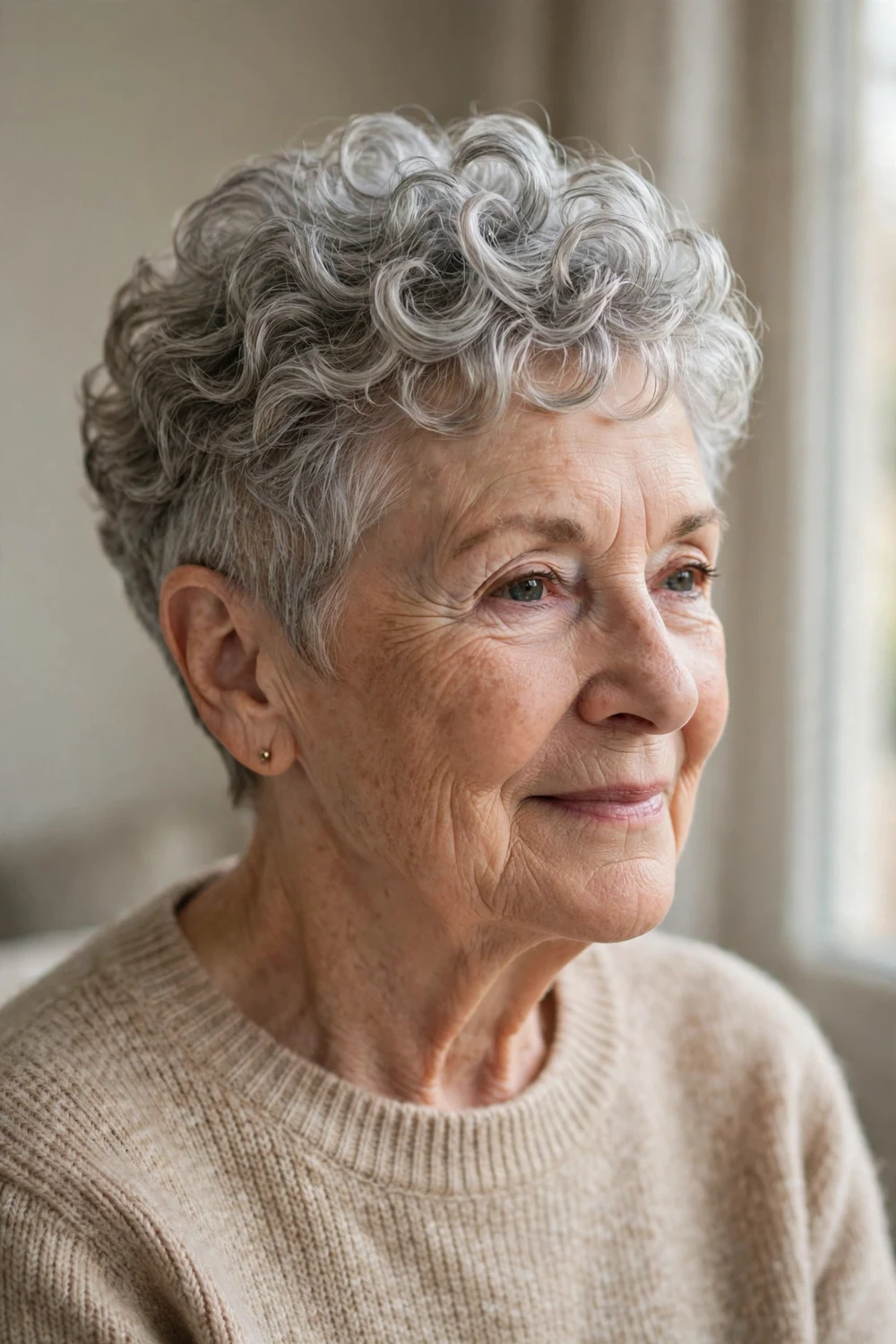
The classic version keeps the outline even all around: short sides, a slightly fuller top, and curls left to form where they want. It suits oval and heart faces well, and it handles most curl patterns from loose waves to tight coils. Ask your stylist to cut it dry so the length accounts for shrinkage, since wet curls spring up as they dry. This is the baseline every other curly pixie builds on, so it is a smart first cut if you are new to short hair.
Try this: work a pea-sized amount of curl cream through damp hair, scrunch upward, and let it air dry. Difficulty: Easy. Upkeep: trim every 6 to 8 weeks.
2. Layered Curly Pixie
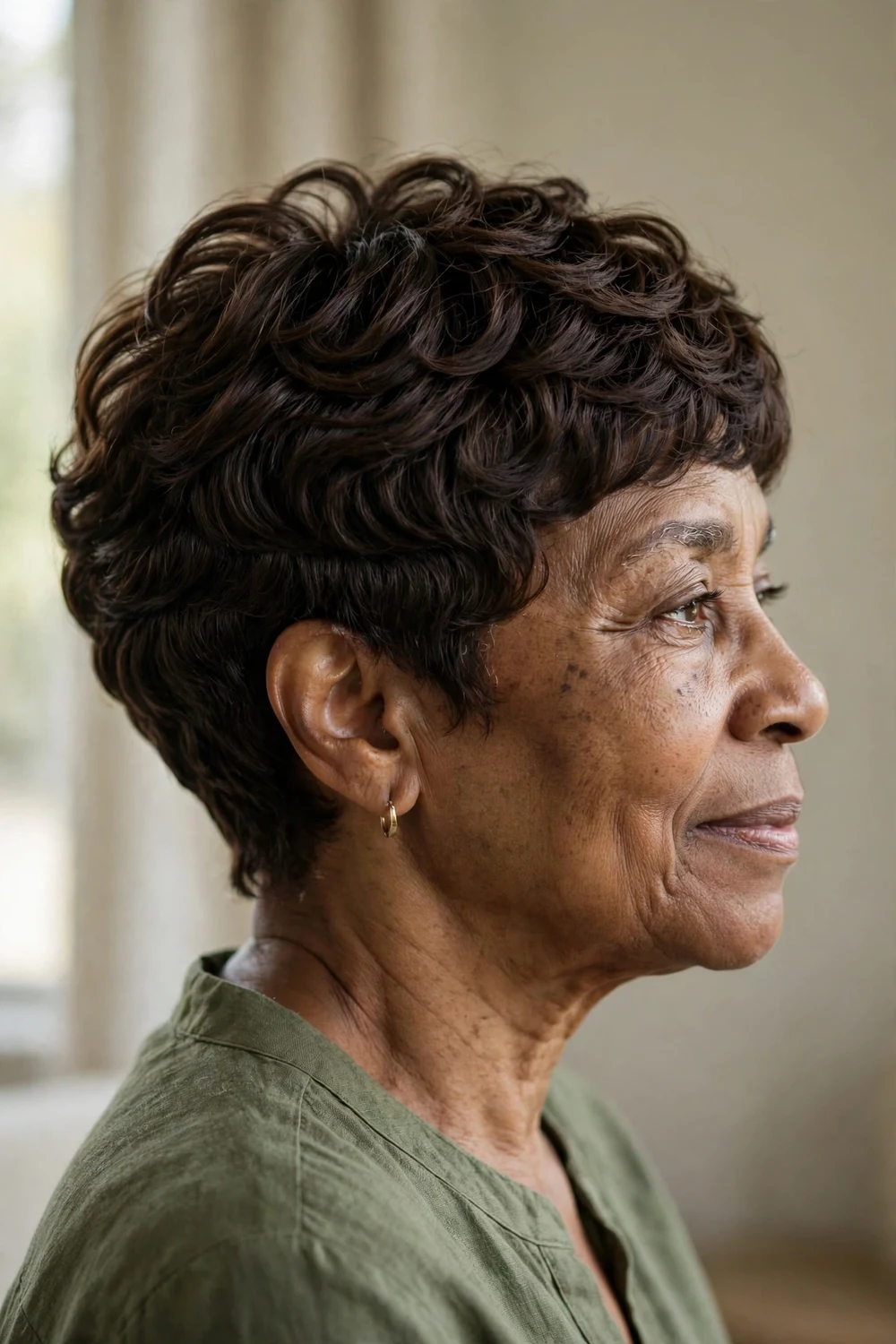
Tell your stylist you want the weight taken out, not the length. Layers slice through the bulk of thick curly hair so each curl can spring instead of sitting in one heavy mass. The result is a rounded shape with movement in every direction, and it stops the dreaded triangle silhouette where hair goes wide at the bottom. Women with dense, heavy curls notice the difference immediately because the cut finally lets the texture breathe.
Try this: ask for point-cutting on the ends, which thins without creating harsh steps. Difficulty: Medium. Upkeep: trim every 6 to 8 weeks.
3. Tapered Curly Pixie
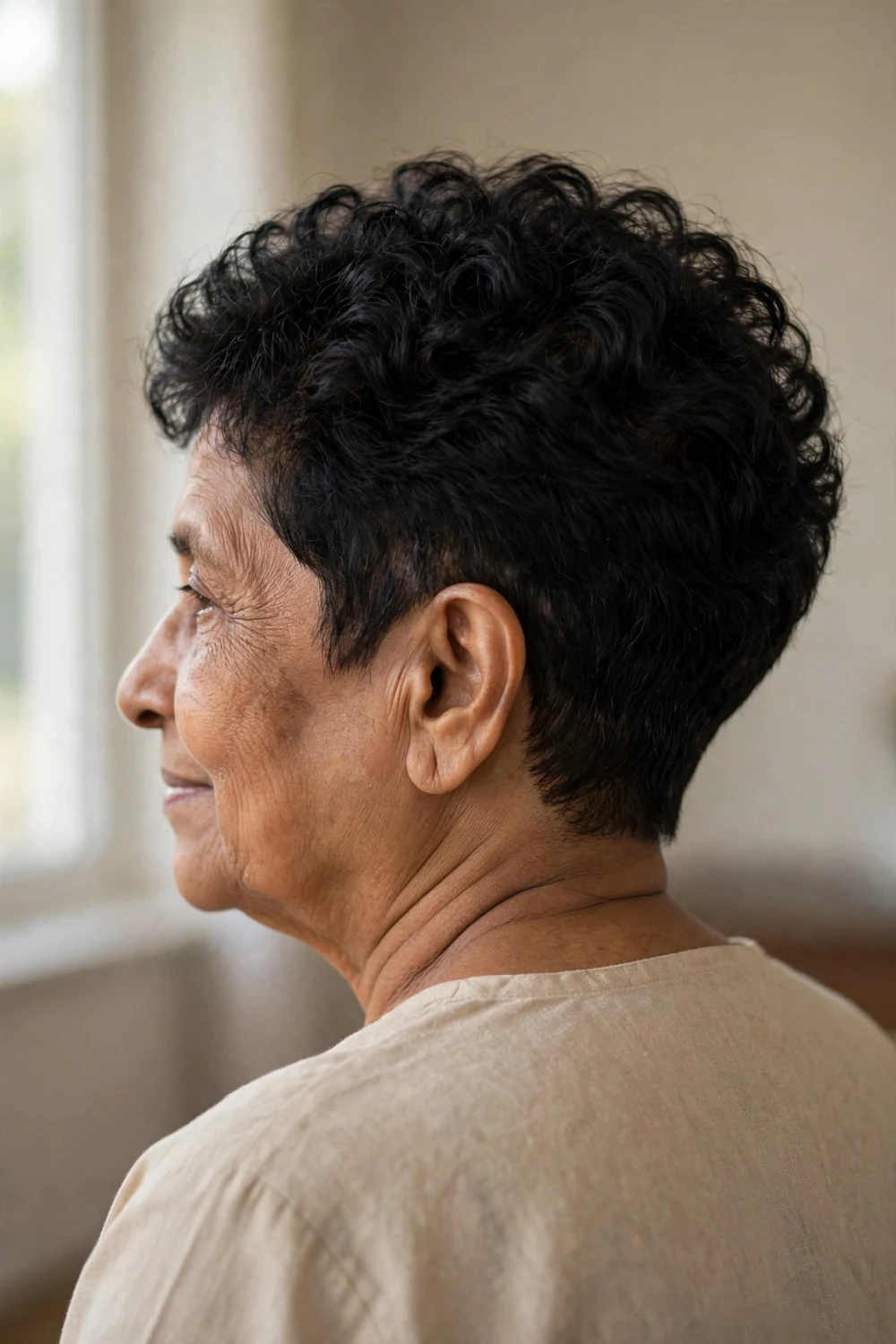
If your curls puff out wider at the sides than you would like, tapering fixes it. The sides and back are cut close and gradually lengthen toward the crown, where the curls stay full. That contrast creates a clean, sculpted outline and draws the eye upward, which flatters round and square faces. It reads polished without looking severe, and it keeps the neckline neat between appointments. Ask for the taper to follow your natural hairline so it grows out evenly.
Try this: keep the nape tidy with a trim every 4 to 6 weeks, since taper growth shows fast. Difficulty: Medium. Upkeep: trim every 4 to 6 weeks.
4. Curly Pixie with Side-Swept Bangs
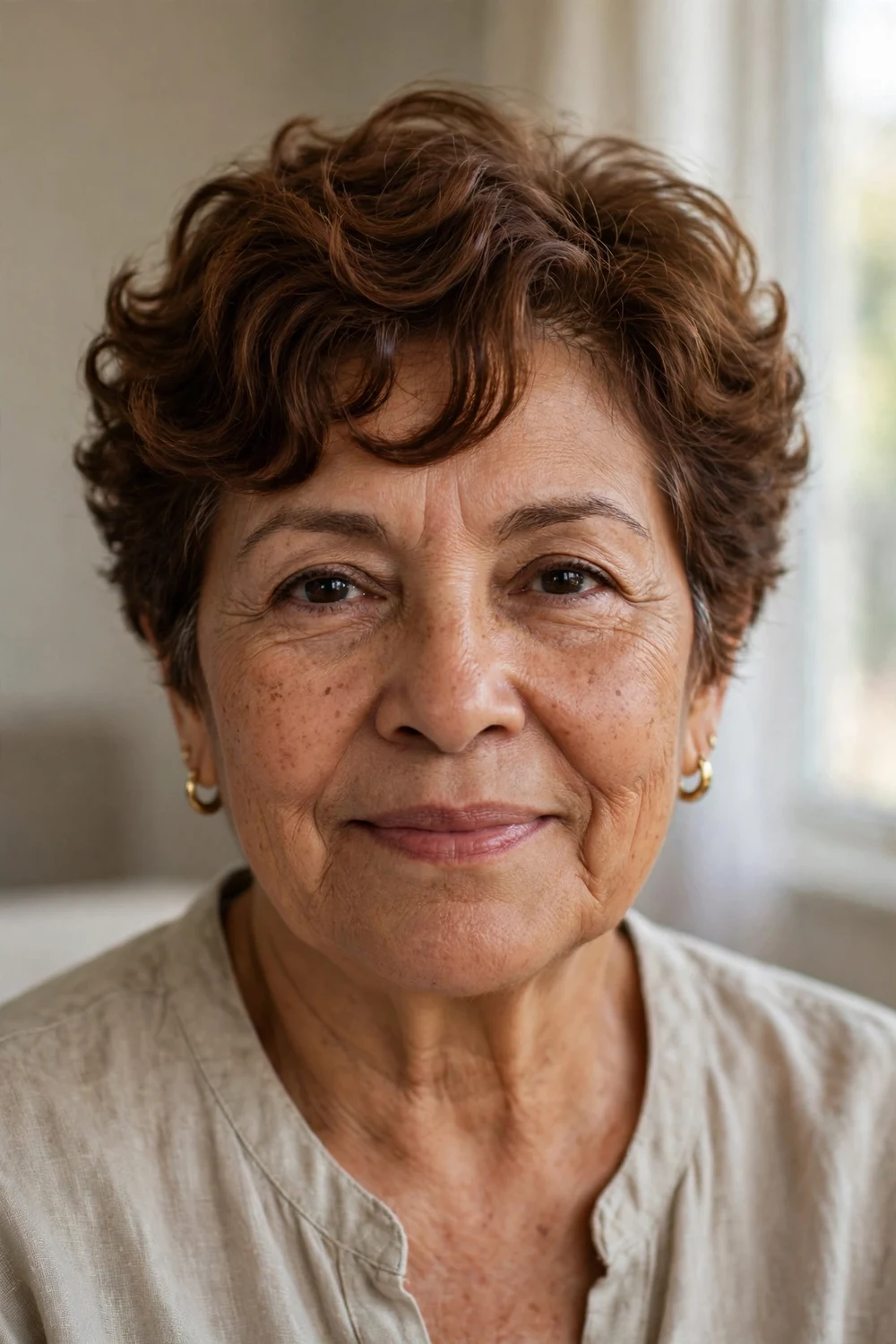
A side-swept fringe softens a pixie faster than any other single change. The bangs sweep across the forehead, drawing attention to the eyes and cheekbones while breaking up the short outline. It works on loose to medium curls and suits heart-shaped faces especially well, since the diagonal line balances a wider forehead. The fringe also gives you a styling option on days the crown will not cooperate: sweep it over and move on.
Try this: twist the fringe section while damp so it dries in one smooth wave. Difficulty: Easy. Upkeep: trim every 6 to 8 weeks.
5. Soft Ringlet Pixie
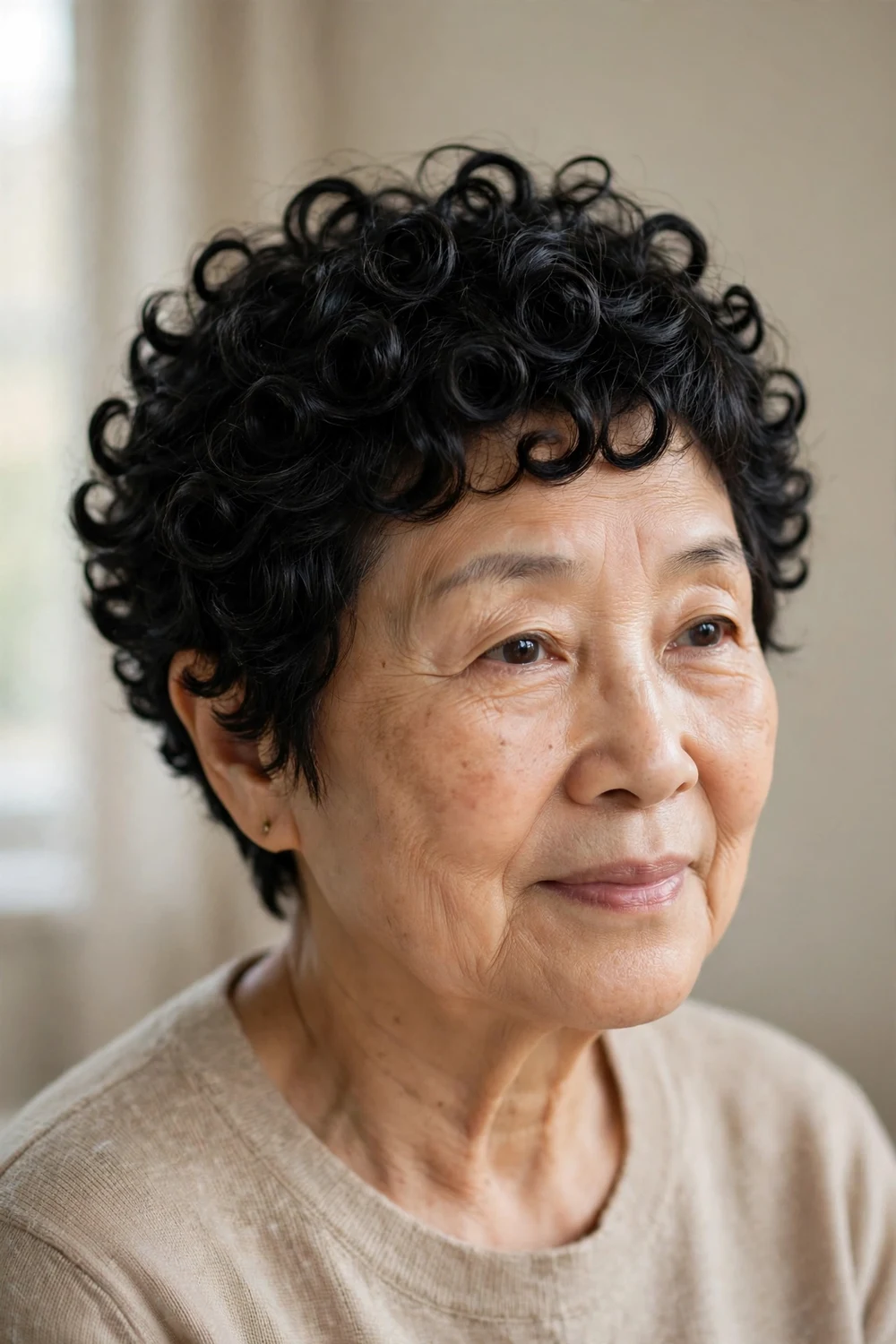
Want curls that read as actual ringlets instead of frizz? This cut is shaped specifically for defined spiral patterns. The stylist cuts each section to let ringlets clump and coil on their own, with enough length on top for the spirals to complete a full turn. It suits women whose natural pattern is already ringlet-leaning, and it looks best with minimal touching once it dries. The shape stays compact and neat instead of expanding outward.
Try this: apply curl cream to soaking-wet hair and do not touch it until fully dry. Difficulty: Medium. Upkeep: trim every 8 weeks.
6. Curly Pixie with Crown Volume
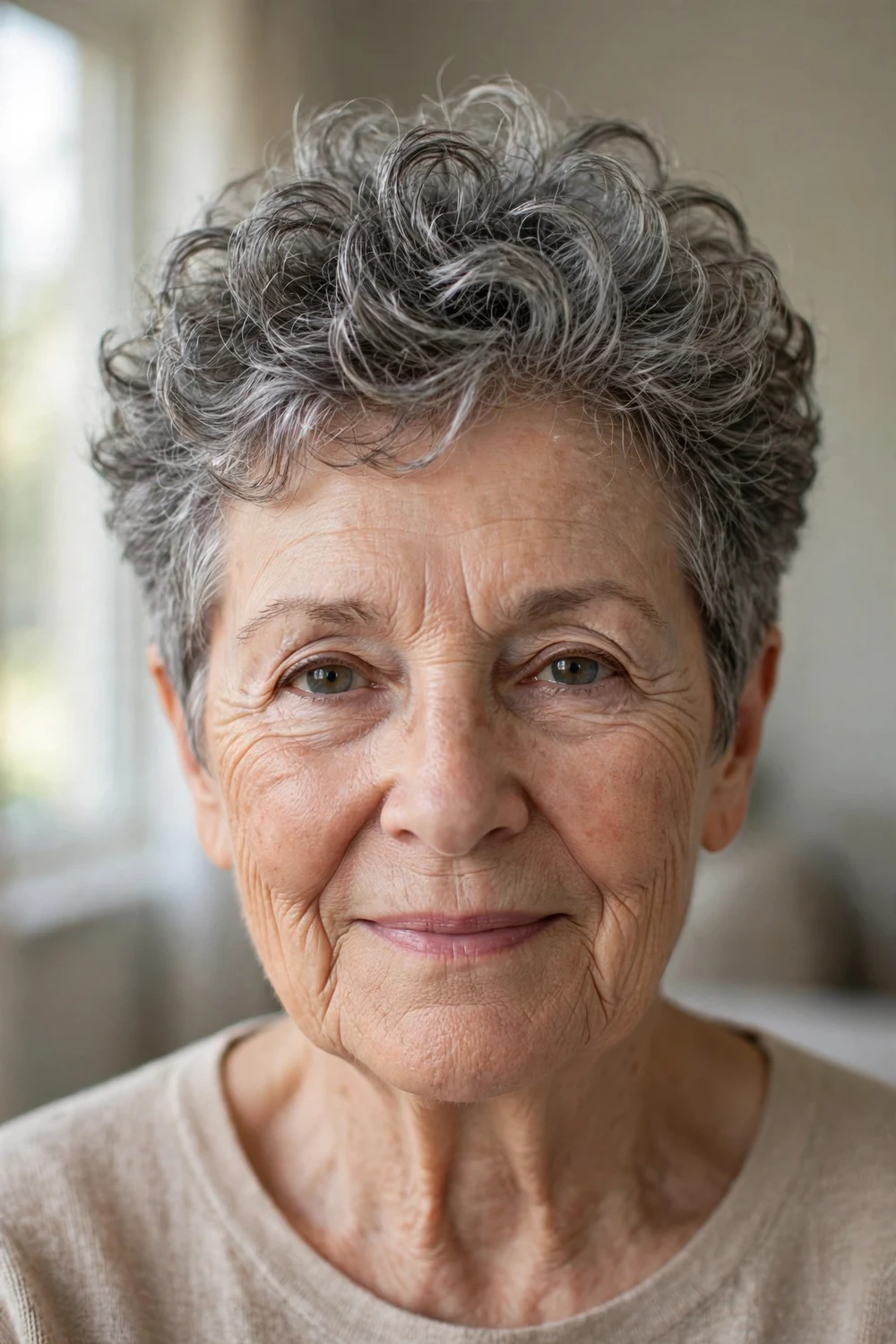
Fine curly hair falls flat at the roots more than any other texture. This cut builds the fullness back in by keeping extra length at the crown and cutting the sides closer, so the silhouette lifts from the top. Root-lifting mousse and a diffuser do the rest. It is one of the most flattering options for women whose curls have thinned with age, because the height creates the impression of density that is no longer there naturally.
Try this: flip your head upside down and diffuse the roots first for maximum lift. Difficulty: Easy. Upkeep: trim every 6 to 8 weeks.
7. Silver Curly Pixie
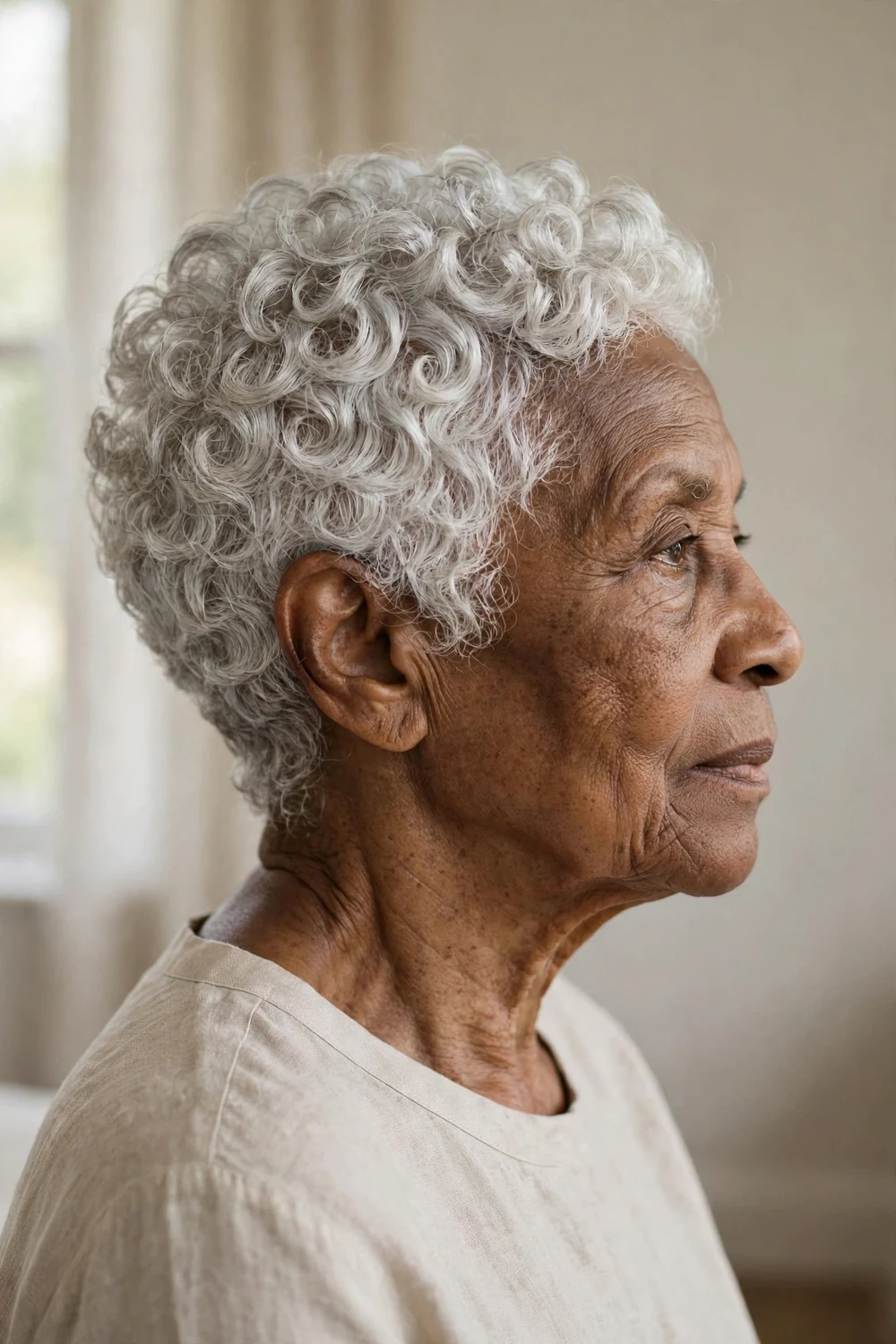
Gray curls have their own texture: coarser, drier, and more wiry than pigmented hair. This cut embraces that instead of fighting it, with a rounded pixie shape that shows off silver strands at their shiniest. Shorter length keeps the coarser texture manageable and stops the dryness from traveling down long strands. A purple shampoo once a week keeps the silver bright instead of letting it go dull or yellow. The short shape also makes the wiry texture look intentional rather than unruly.
Try this: add a weekly deep-conditioning mask, since gray curls drink up moisture. Difficulty: Easy. Upkeep: trim every 6 to 8 weeks.
8. Textured Curly Pixie
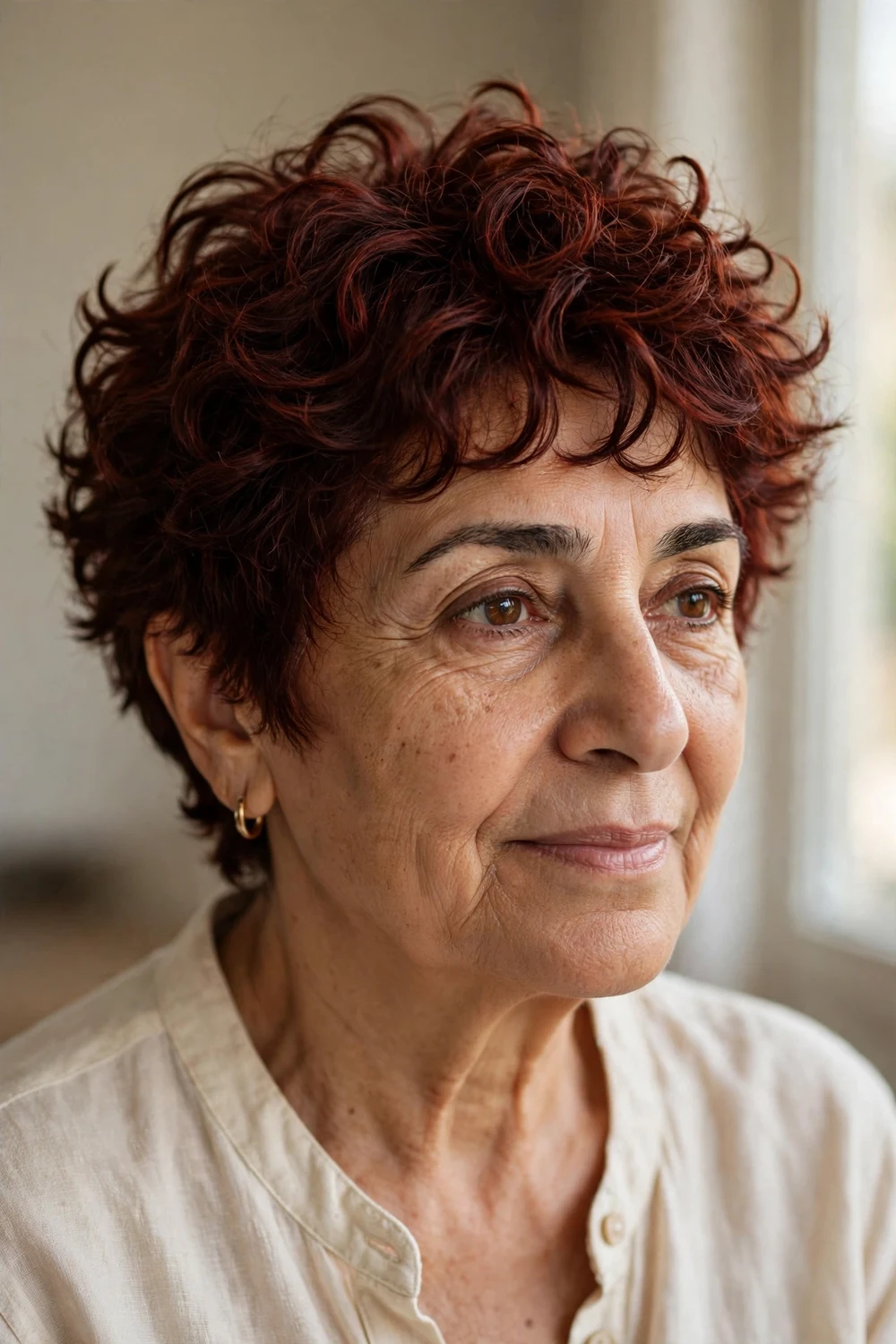
Unlike the classic cut’s smooth outline, the textured version is all about piece-y, separated ends. The stylist carves choppy layers through the curls so they break apart into distinct pieces instead of merging into one mass. It reads modern and a little undone, and it adds visible movement even when the hair is short. Medium curls with some natural grit hold this texture best, since very soft curls tend to blend back together.
Try this: pinch small sections with a dab of pomade to define the separated pieces. Difficulty: Medium. Upkeep: trim every 6 to 8 weeks.
9. Long Curly Pixie
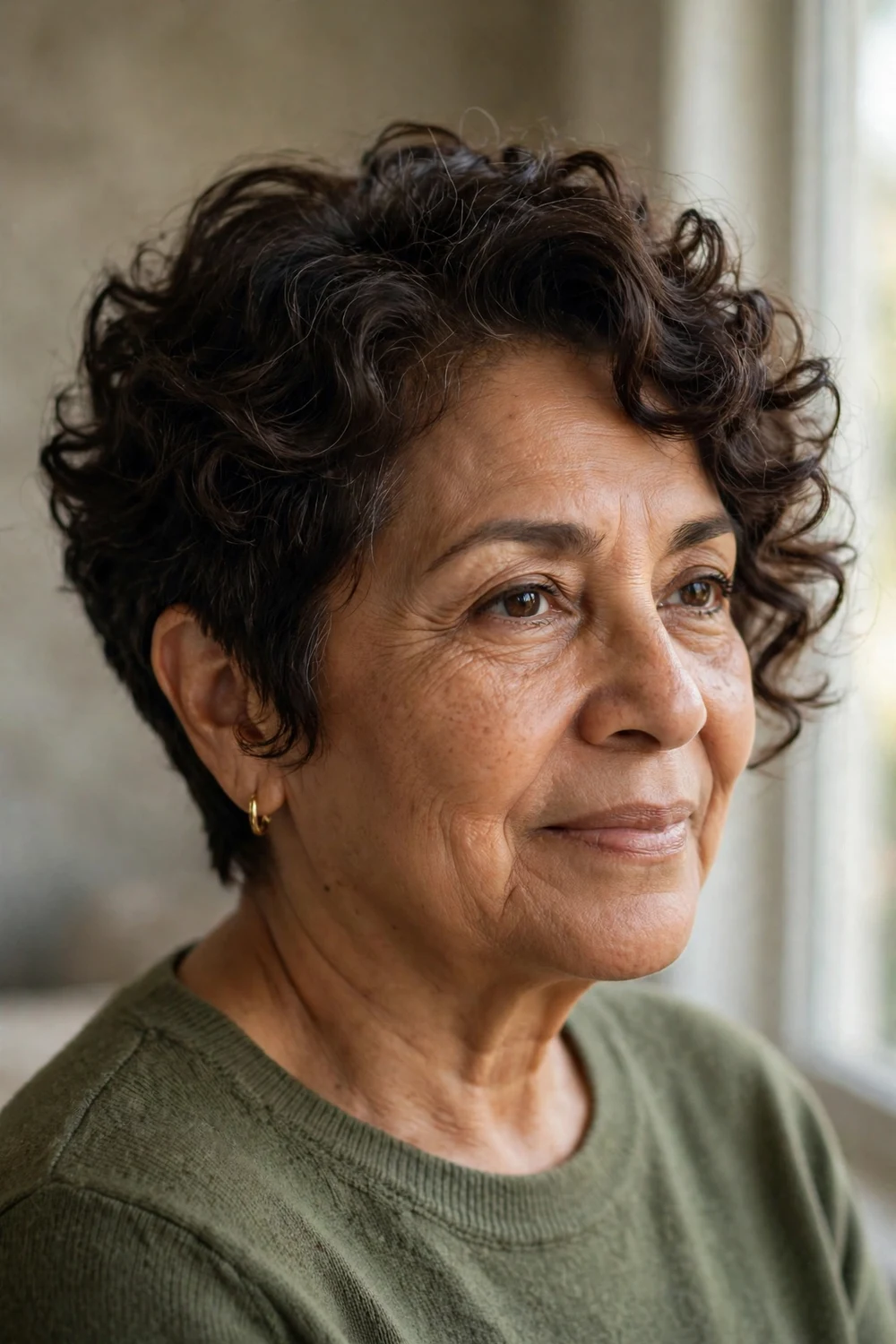
If a super-short crop feels like too big a jump, the long pixie meets you halfway. It keeps extra length through the crown and front, sometimes brushing the ears, while the back stays short and neat. That extra inch or two gives real styling flexibility: tuck it behind an ear, sweep it to one side, or let the curls fall forward. It is a good transition cut for women growing out a bob or easing into short hair for the first time.
Try this: part it deep on one side while damp to build volume at the roots. Difficulty: Easy. Upkeep: trim every 8 to 10 weeks.
10. Feathered Curly Pixie
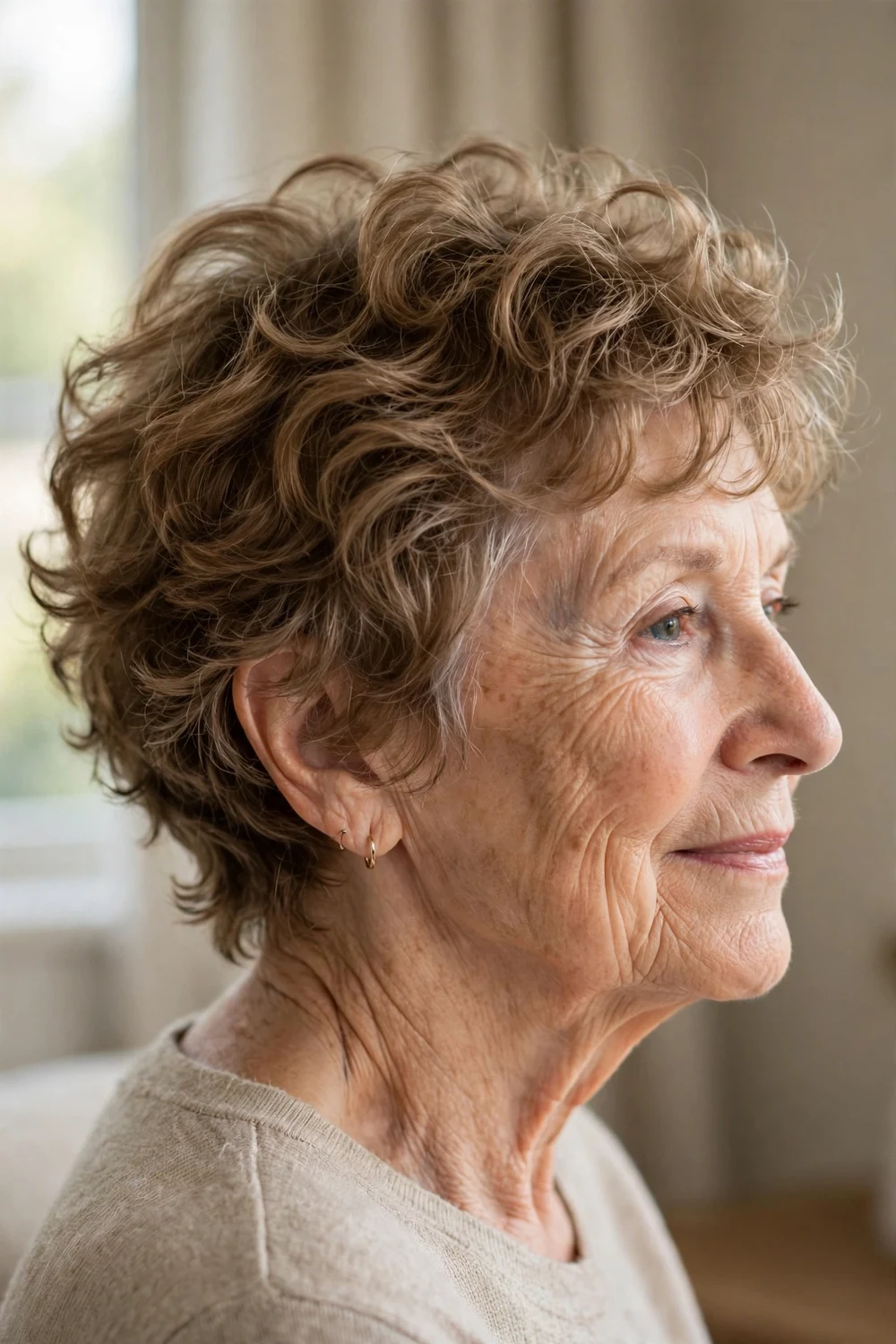
Feathering is a cutting technique, not just a style name. The stylist thins the ends of each layer so they taper to soft, wispy points instead of blunt edges. On curly hair that means the outline looks airy and light, with curls that float instead of sitting in a solid block. It suits fine to medium curls and gives a gentle, feminine finish. The feathered ends also blend regrowth gracefully, so the cut ages well between appointments.
Try this: ask for the feathering to be concentrated at the ends, not carved up high. Difficulty: Medium. Upkeep: trim every 6 to 8 weeks.
11. Soft Wave Pixie
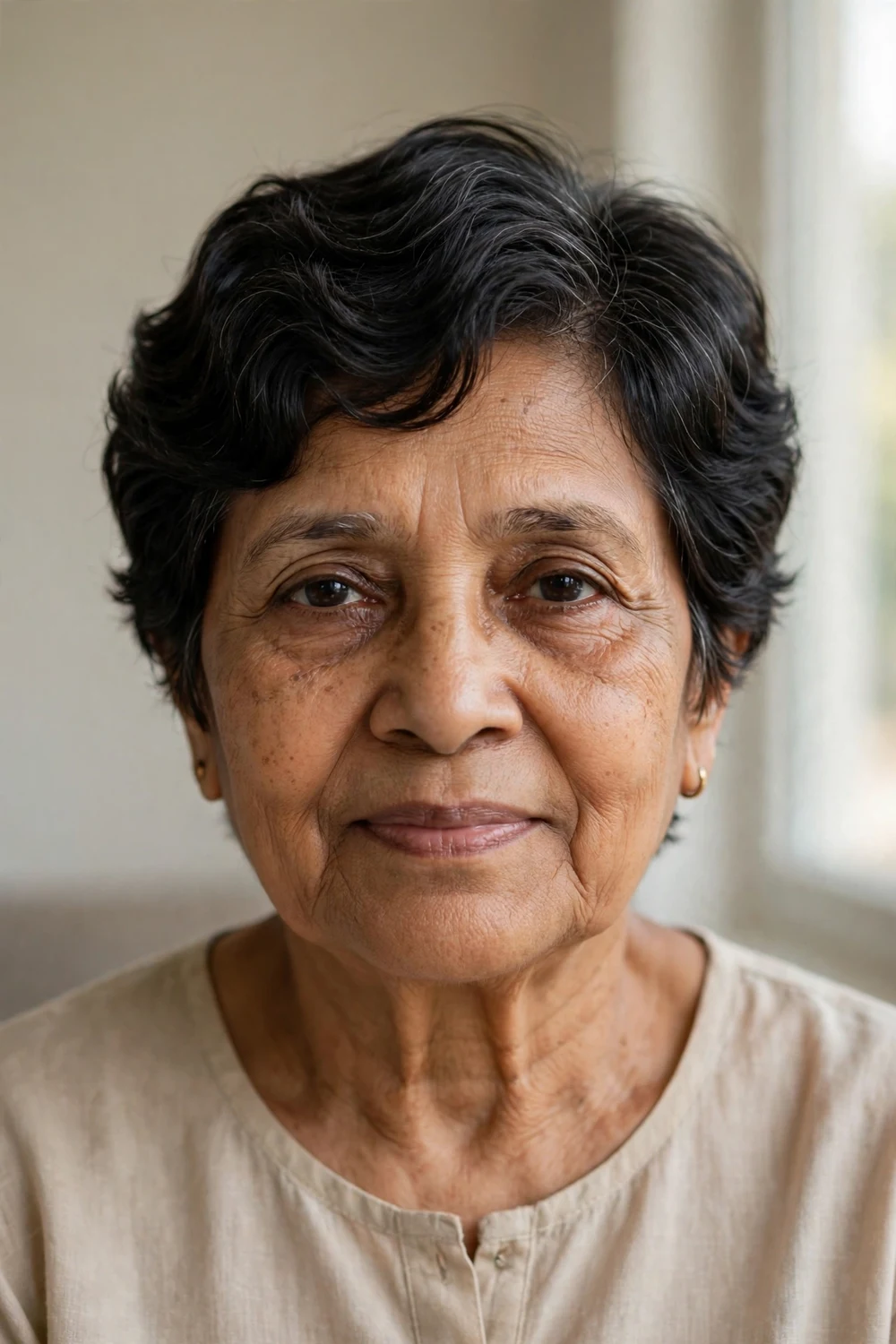
Not every curly head has tight curls. If your texture is more wave than curl, this cut is built for it. The shape is slightly longer than a classic pixie so the waves have room to form their S-pattern, and light layering keeps the ends from flipping outward. It reads relaxed and touchable, and it needs the least product of any cut on this list. Women with wavy hair that never quite curls will finally feel like the cut was designed for them.
Try this: scrunch in a light wave spray instead of heavy curl cream. Difficulty: Easy. Upkeep: trim every 8 weeks.
12. Curly Pixie Bob
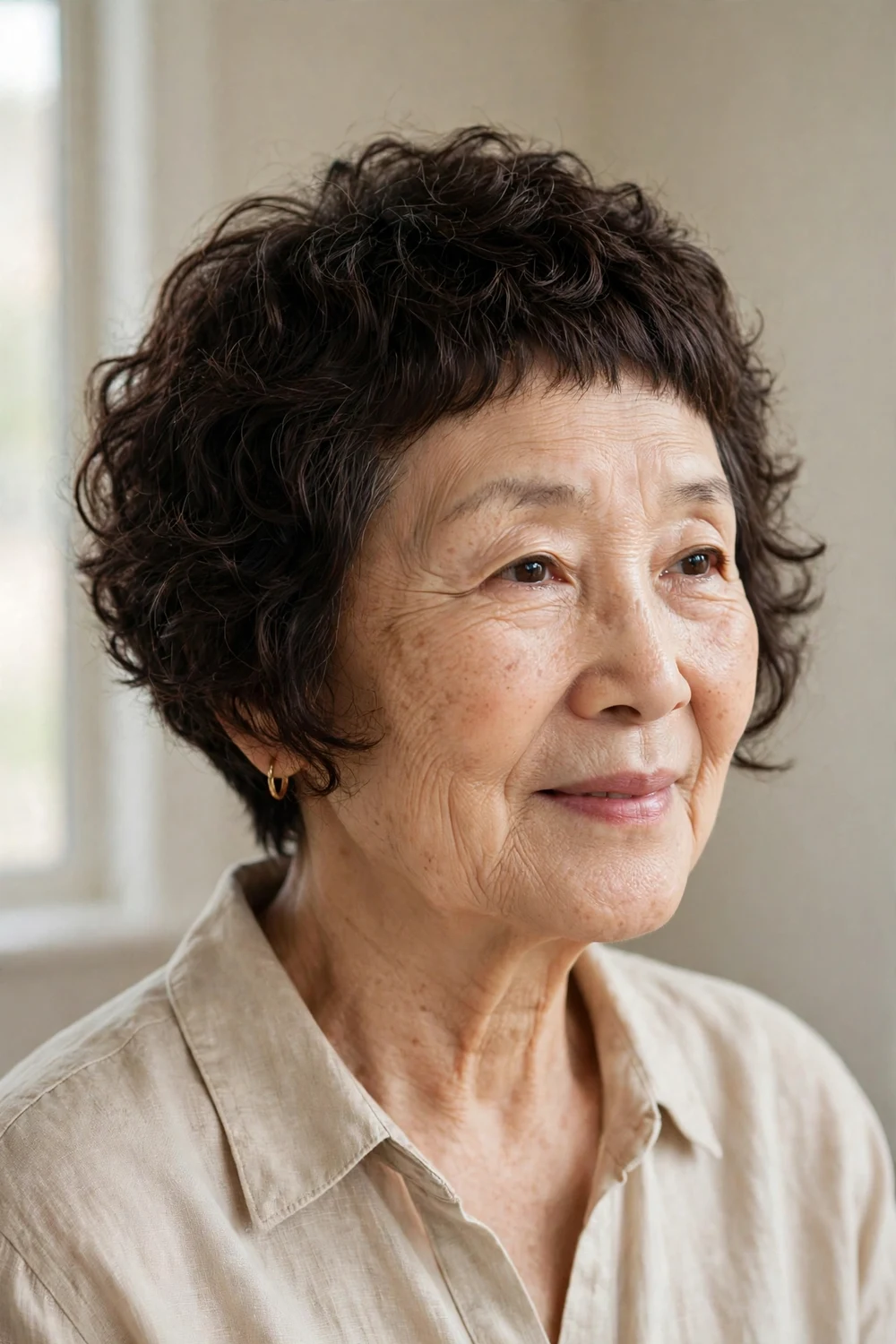
Half pixie, half bob, this hybrid keeps pixie-short layers at the crown with longer, bob-like pieces framing the face and nape. The extra length around the face softens the whole look and gives more to work with on styling. It suits medium to thick curls that need some weight to hang properly. Think of it as the pixie’s more forgiving sibling: all the ease, with a little more coverage and versatility.
Try this: tuck one side behind the ear to show off the asymmetric length. Difficulty: Medium. Upkeep: trim every 8 weeks.
13. Pixie with Soft Curls
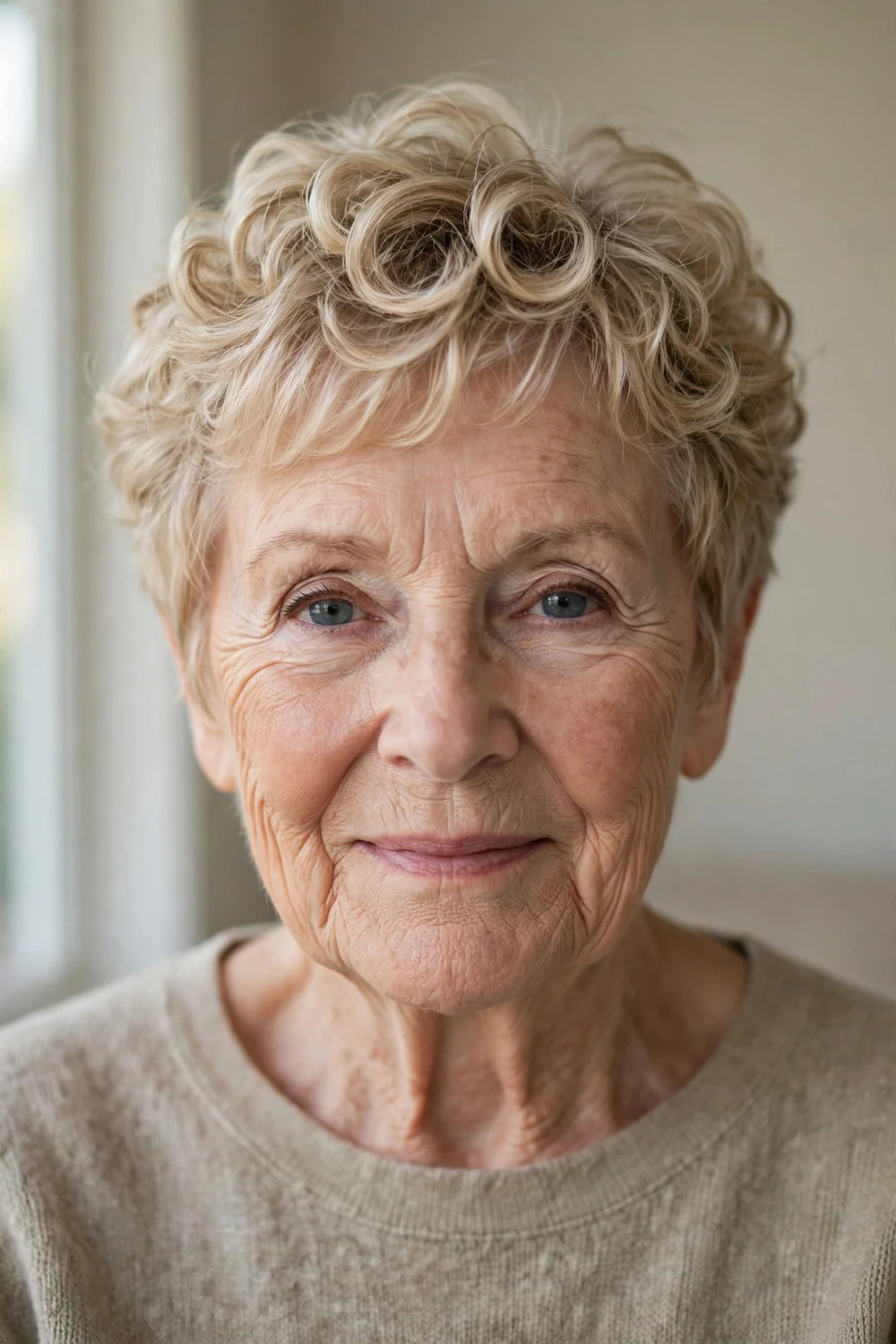
Different from the ringlet pixie above, this one uses looser, bouncier curls for a gentle, romantic feel. The curls are defined but not tight, which makes the style especially kind to fine or thinning hair: the softness creates fullness without the separation that can expose the scalp. It is one of the easiest curly pixies to maintain because the looser pattern forgives imperfect styling days. Oval and long faces wear it particularly well.
Try this: use a lightweight curl cream so fine curls are not weighed down. Difficulty: Easy. Upkeep: trim every 6 to 8 weeks.
14. Tousled Curly Pixie
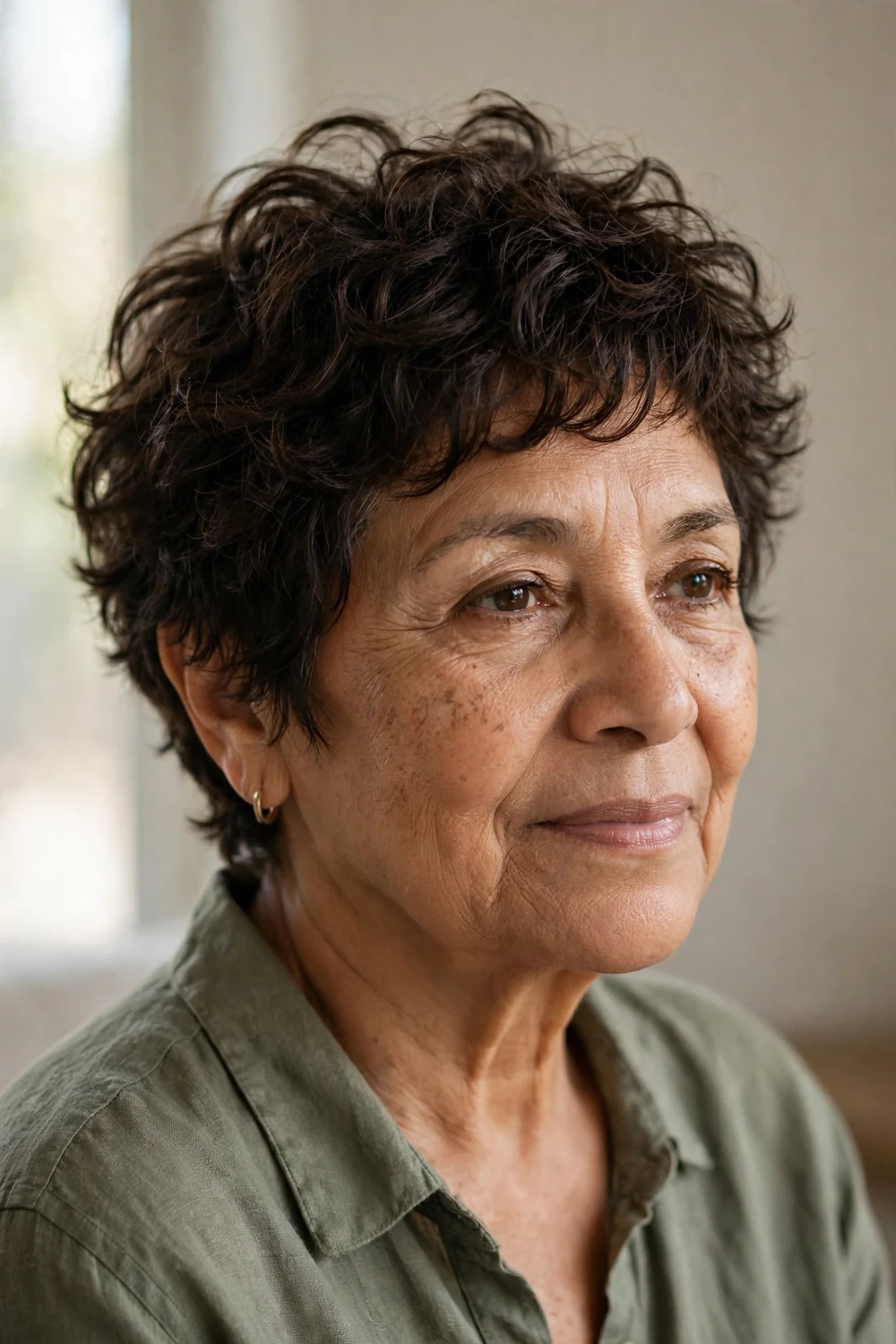
Second-day hair is this cut’s best friend. The tousled pixie is cut with uneven, lived-in layers that look better slightly messy, so you can skip the wash and just refresh. It suits women who want a wash-and-go routine and do not mind a relaxed finish. The key is the cut itself: without the right choppy layering, tousled turns into shapeless. With it, you get texture that looks intentional from the moment you wake up.
Try this: revive day-two curls with a water-and-conditioner spray mix, then scrunch. Difficulty: Easy. Upkeep: trim every 8 weeks.
15. Asymmetrical Curly Pixie
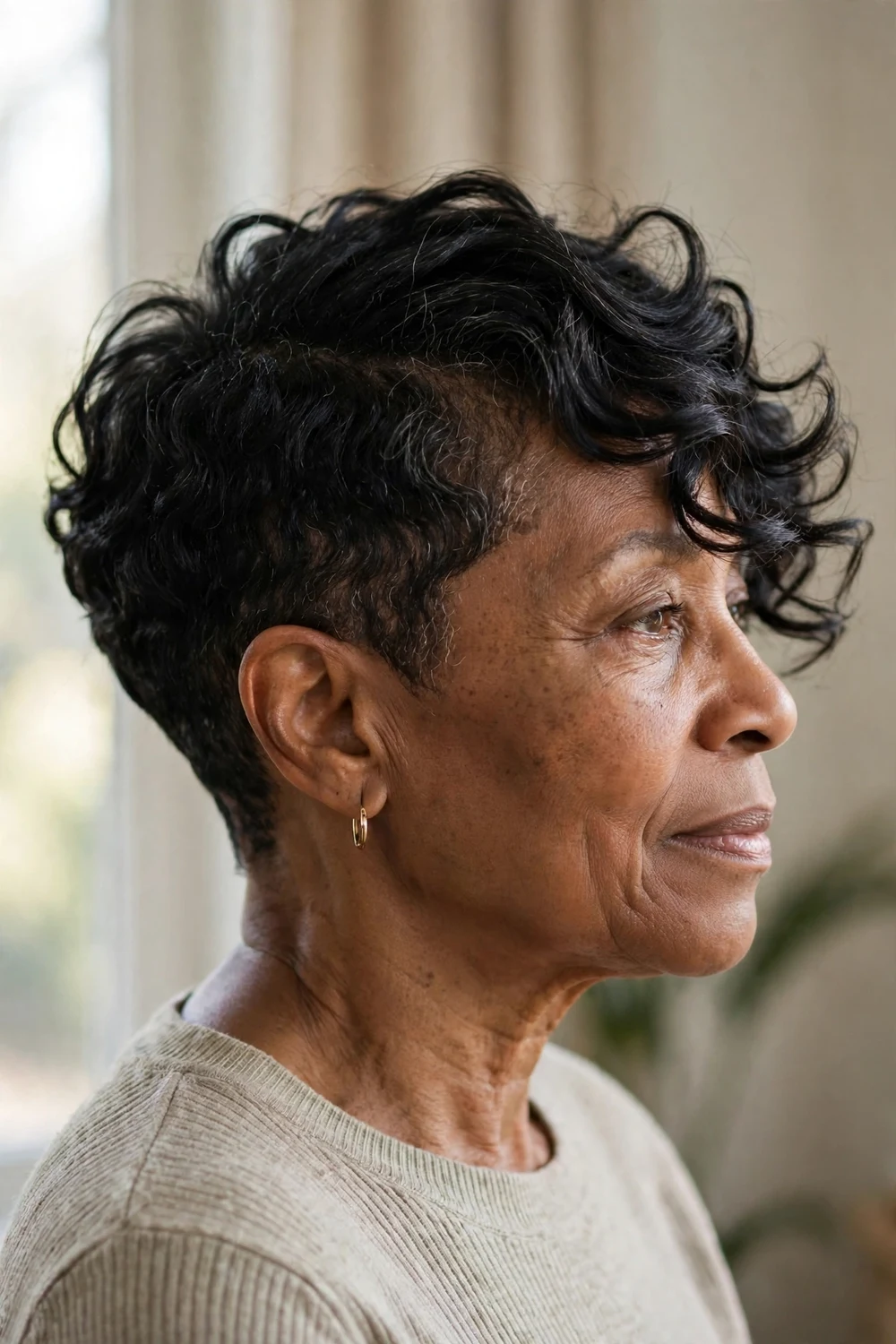
One side sits shorter than the other, and the longer side sweeps across in a deep diagonal. The asymmetry adds instant edge and works as a styling shortcut: the longer side always has somewhere to go. It suits confident dressers and flatters round faces, since the diagonal line breaks up the symmetry. Curls keep the look soft rather than severe, which is why the asymmetric shape works better on curly hair than on straight.
Try this: keep the short side neat with trims every 4 to 6 weeks, since growth unbalances it fast. Difficulty: Hard. Upkeep: trim every 4 to 6 weeks.
16. Copper-Red Curly Pixie
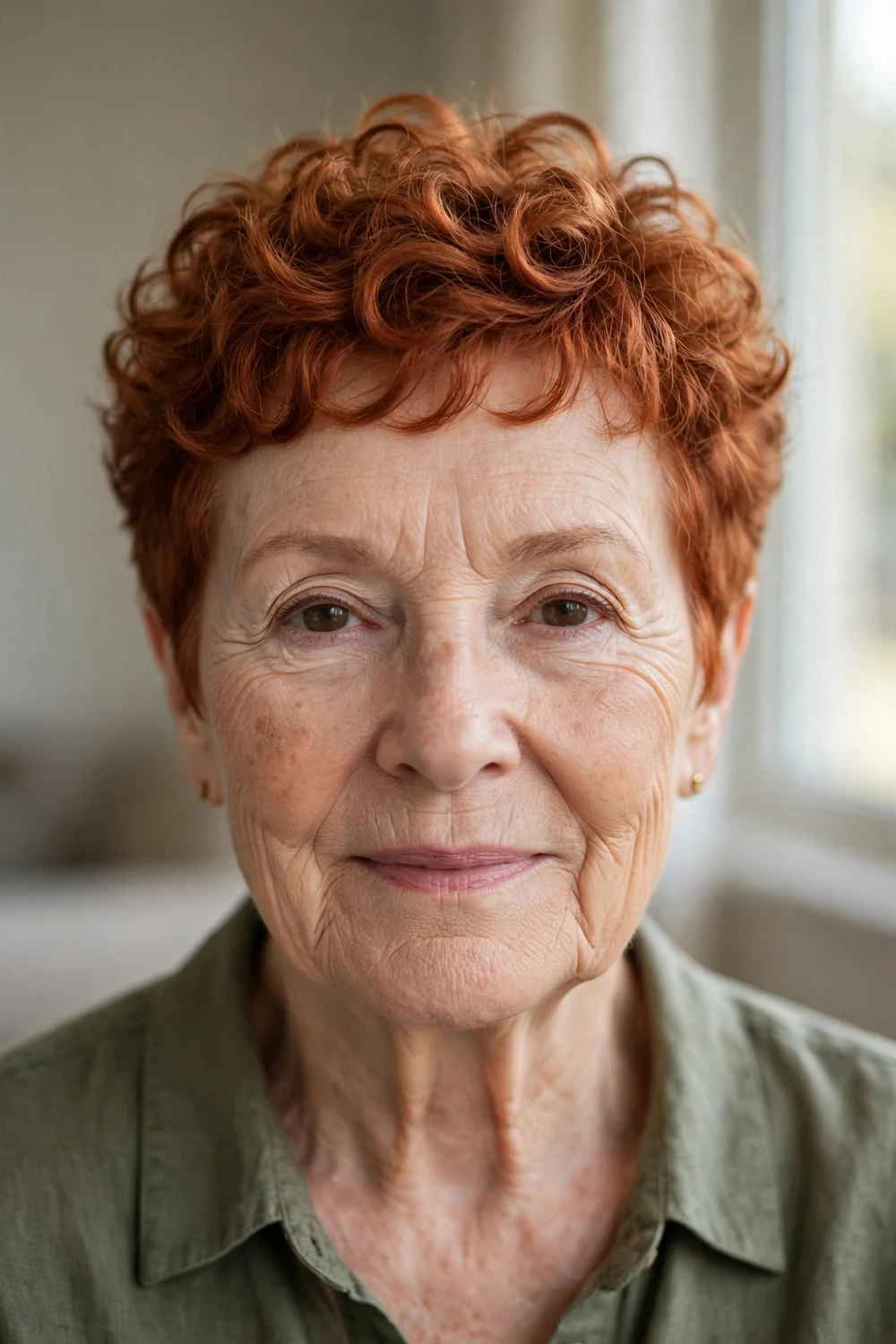
Warm copper tones light up mature skin in a way few colors manage. This pairs a rich, warm red shade with a shaped curly pixie, and the short length keeps the color looking fresh instead of faded at the ends. The warmth brings out the dimension in each curl, so the texture reads even more clearly. It needs color upkeep every 6 weeks or so, but the payoff is a cut that turns heads without any daily styling effort.
Try this: use a color-safe shampoo to slow fading between salon visits. Difficulty: Medium. Upkeep: cut every 6 to 8 weeks, color every 6 weeks.
17. Curly Pixie Shag
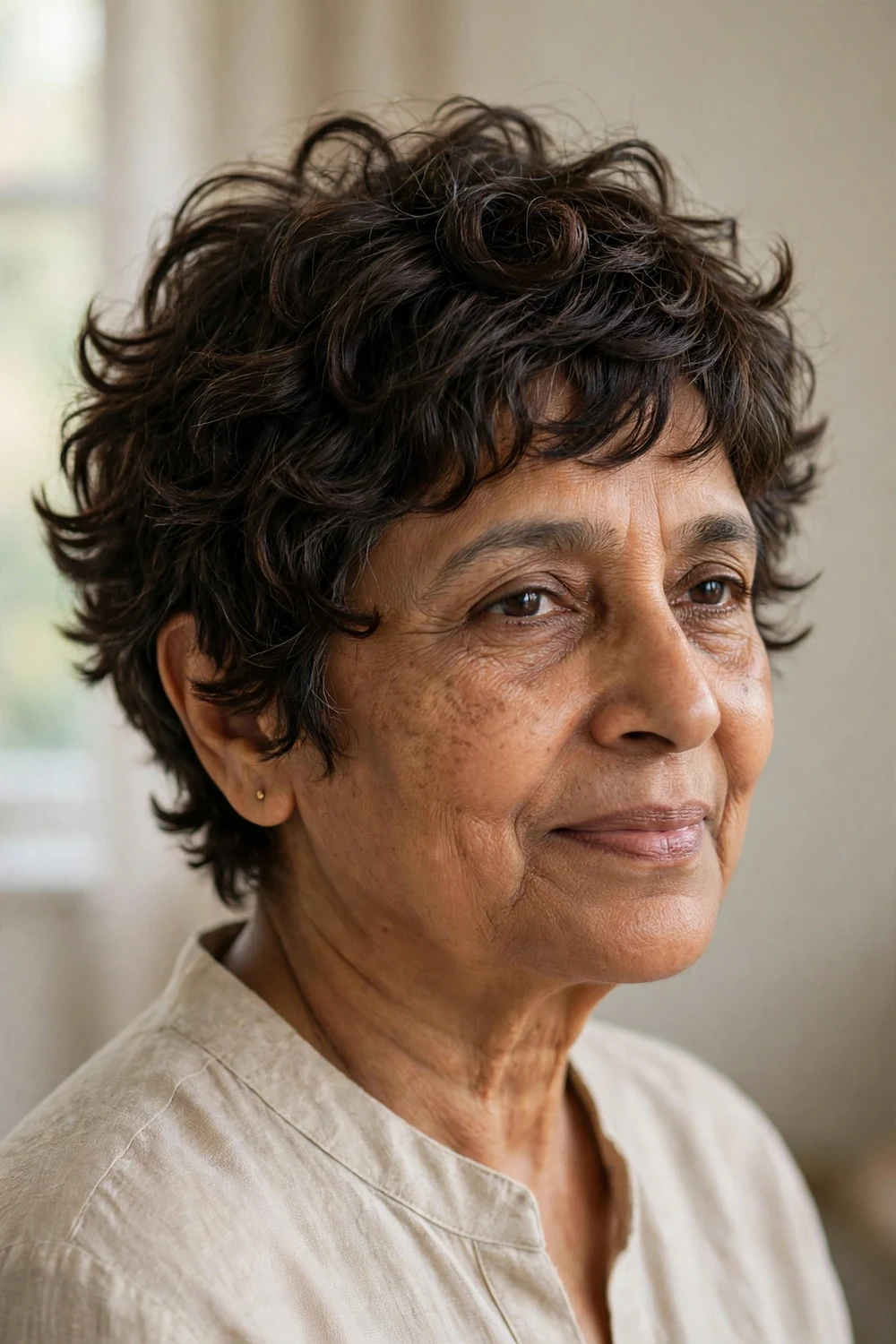
The shag brings its choppy, rock-and-roll layering down to pixie length. Heavy texture runs through the whole cut, with shorter pieces at the crown and longer, piece-y bits around the edges. On curly hair the shag’s layers separate curls into distinct clumps with tons of movement. It suits thick curls that can handle aggressive layering and women who like a cut with visible attitude. The finish is deliberately undone, never polished.
Try this: rake a small amount of texturizing cream through dry curls to boost separation. Difficulty: Medium. Upkeep: trim every 8 weeks.
18. Wispy Curly Pixie
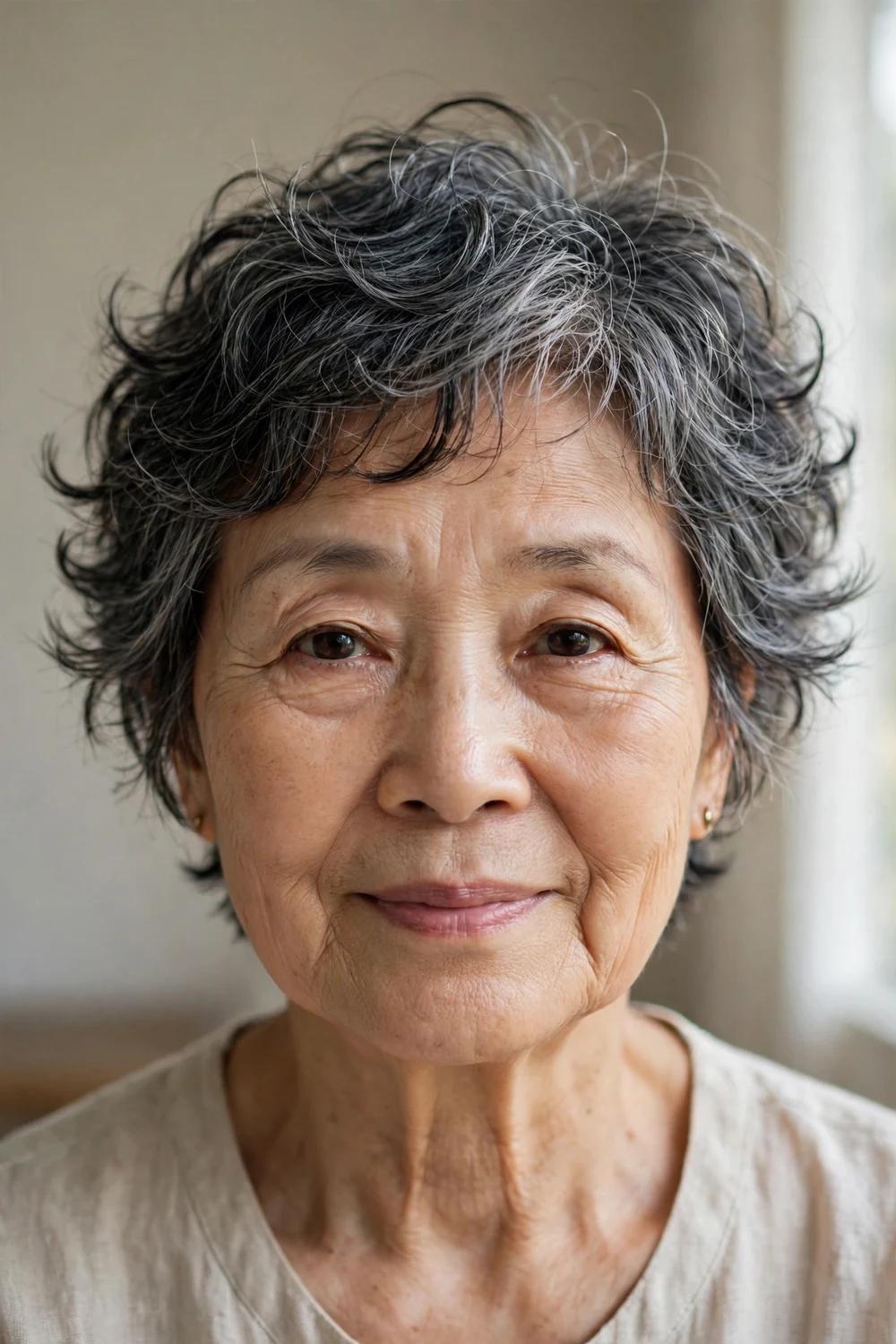
For curls that are fine as well as curly, blunt ends are the enemy: they make thin hair look thinner. The wispy pixie avoids that with soft, feathered ends that blur the outline and create the illusion of fullness. Strategic wispy layers add movement without removing the little density you have. It is one of the kindest cuts for age-related thinning combined with curl, because nothing about it draws attention to sparse areas.
Try this: blow-dry with a diffuser on low heat to build airy volume at the roots. Difficulty: Easy. Upkeep: trim every 6 to 8 weeks.
19. Curly Pixie with Full Fringe
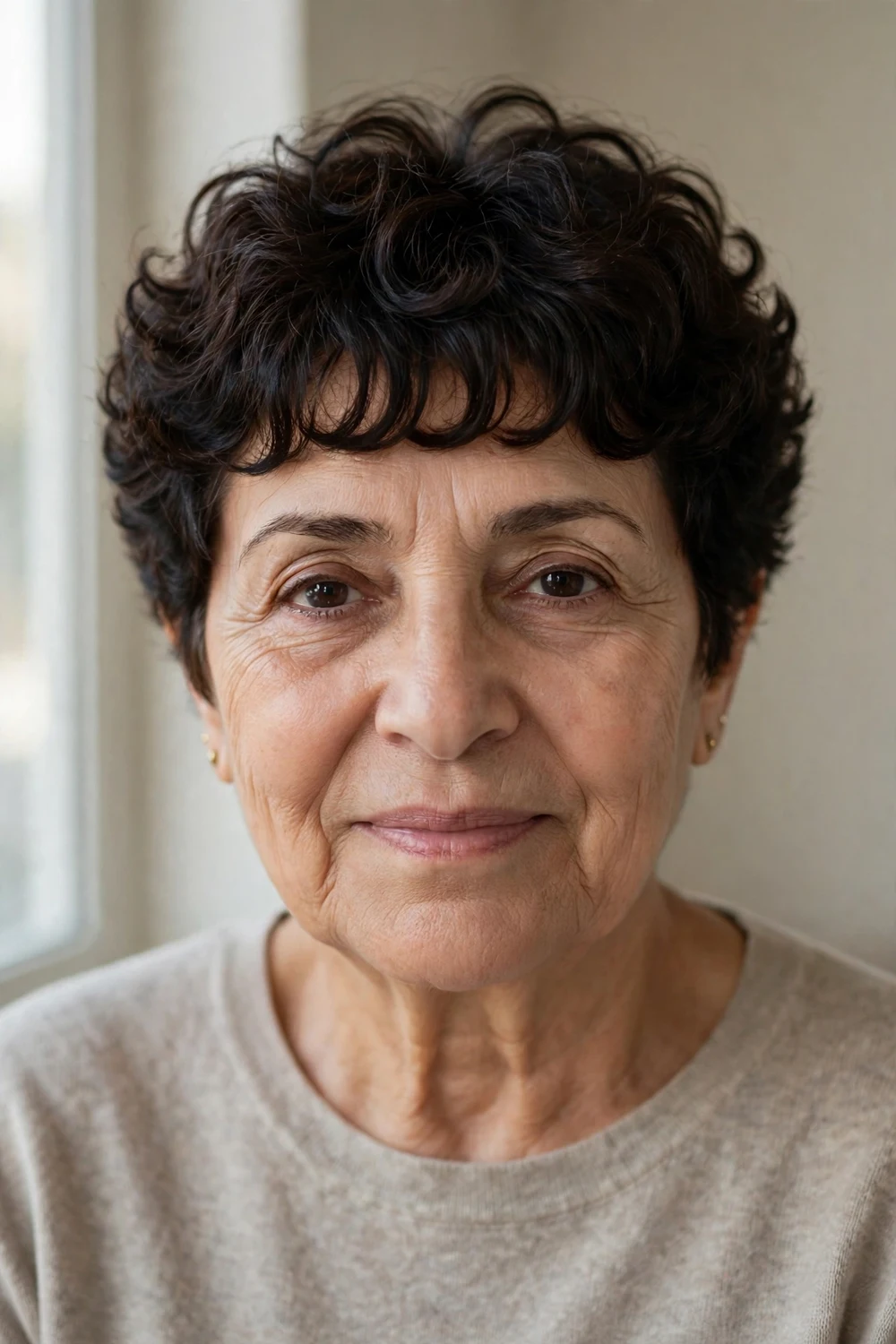
Side-swept bangs get all the attention, but a full curly fringe deserves its own spot. The bangs fall straight across the forehead in soft curls, framing the eyes and giving the pixie a youthful, French-inspired feel. The trick is length: cut the fringe longer than you think, because curls shrink as they dry and a too-short fringe springs up fast. It suits medium to tight curls and women with longer foreheads who want more coverage.
Try this: coil each fringe curl around a finger while damp to set the shape. Difficulty: Medium. Upkeep: trim every 4 to 6 weeks.
20. Curly Pixie with Highlights
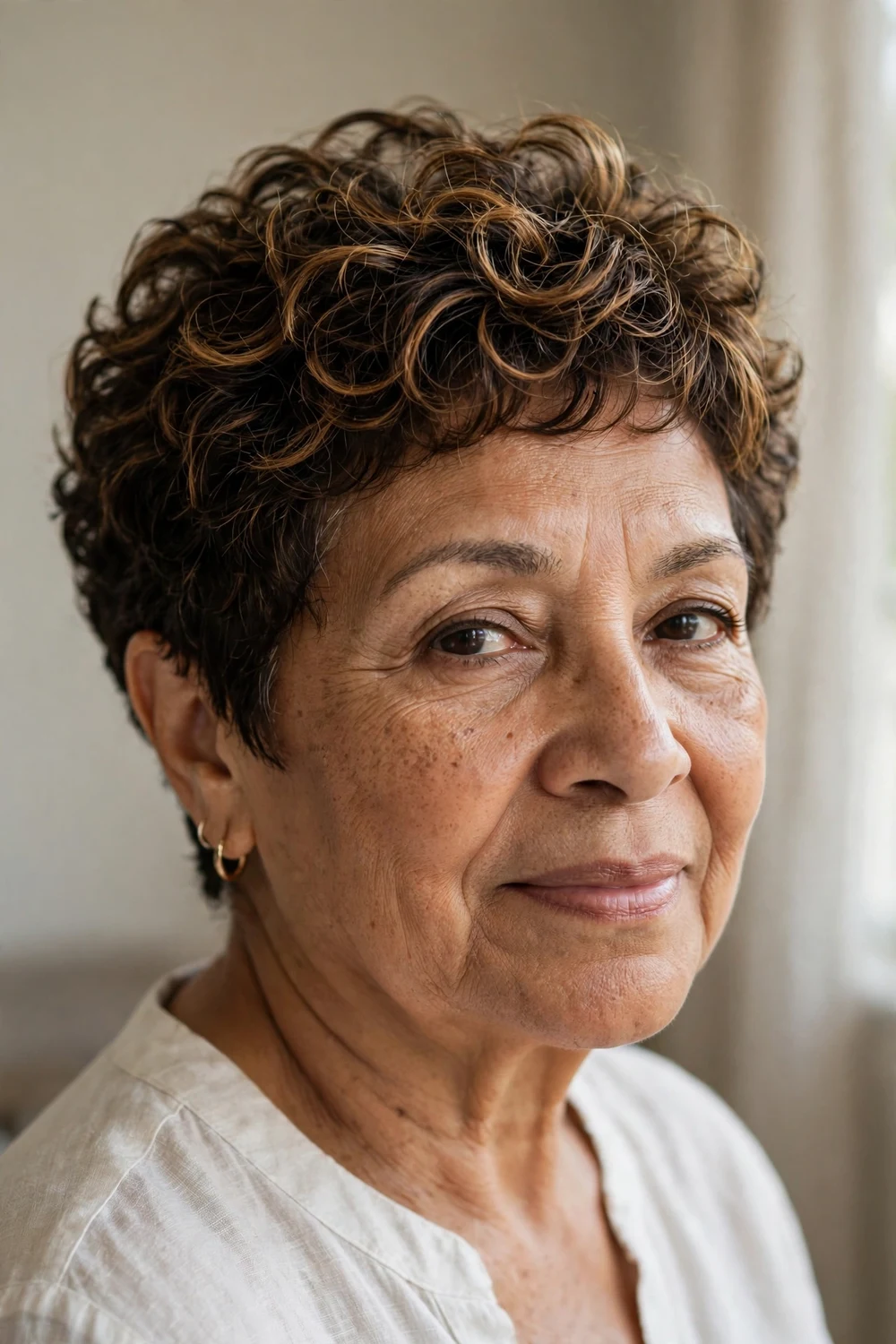
A few well-placed highlights can separate curls visually in a way no cut can. Light pieces woven through the top catch the light and make each curl read as its own shape, which adds depth to even a simple pixie. On graying hair, soft caramel or honey pieces blend the grow-out line so salon visits stretch further. Keep the highlights fine and scattered: chunky streaks fight with curl texture instead of enhancing it.
Try this: ask for balayage-style painting, which grows out softer than foils. Difficulty: Medium. Upkeep: cut every 6 to 8 weeks, color touch-up as needed.
21. Very Short Curly Crop
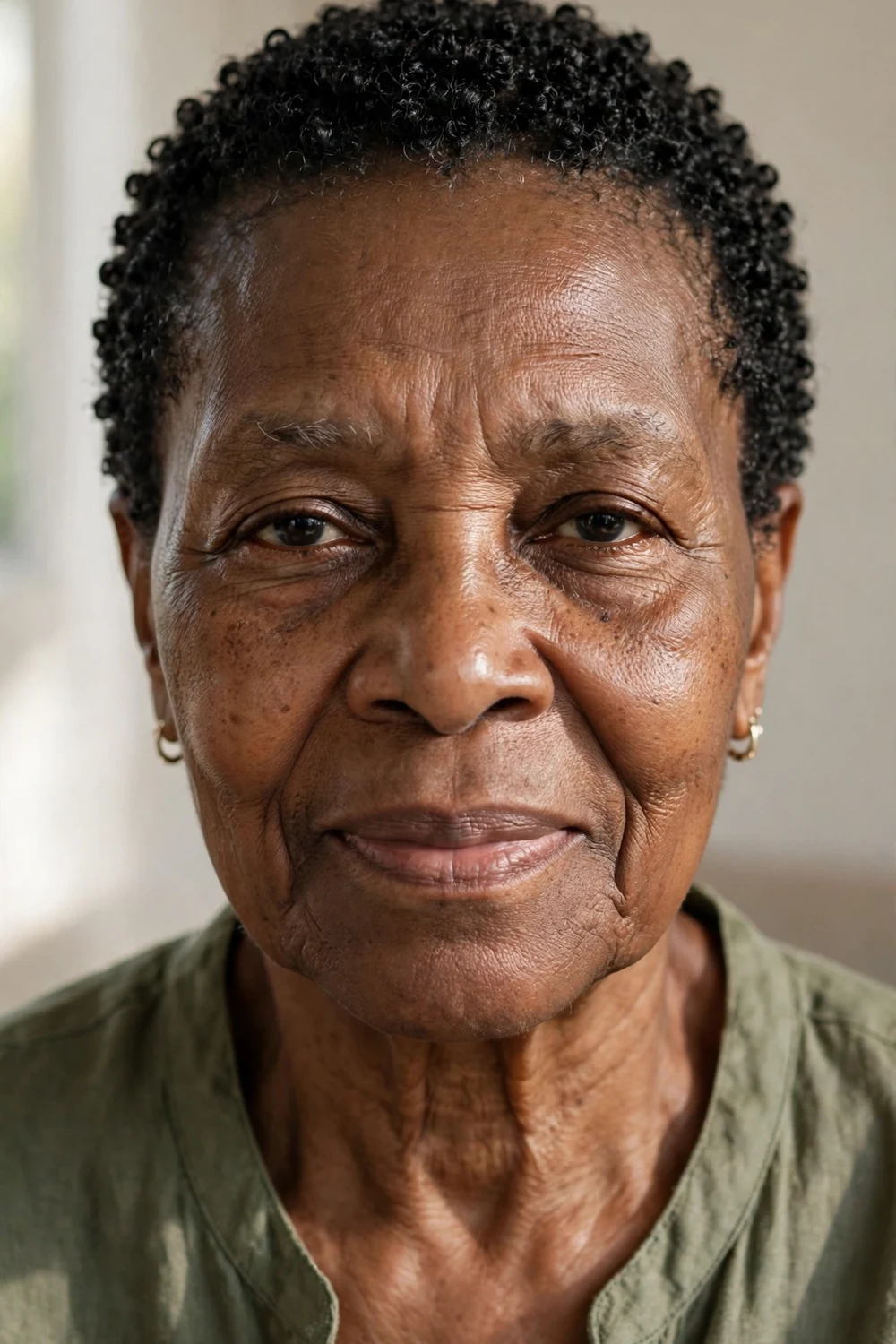
Tight coils shrink dramatically, sometimes to half their stretched length, so this cut is designed around that reality. It stays very close all over, letting the natural coil pattern form a neat, even cap of texture. There is almost no daily styling involved: wash, condition, and go. It suits women with type 4a-style coils and anyone who wants the lowest-maintenance option on this list. The cut puts the face completely front and center, so it pairs well with bold earrings or glasses.
Try this: keep a rich leave-in conditioner in the routine, since short coils still need moisture. Difficulty: Easy. Upkeep: trim every 4 to 6 weeks.
Curly Pixie Haircuts Comparison at a Glance
| Style | Best Curl Type | Difficulty | Trim Cadence |
|---|---|---|---|
| Classic Curly Pixie | All curl types | Easy | 6-8 weeks |
| Layered Curly Pixie | Thick, dense curls | Medium | 6-8 weeks |
| Tapered Curly Pixie | Medium to tight curls | Medium | 4-6 weeks |
| Curly Pixie with Side-Swept Bangs | Loose to medium curls | Easy | 6-8 weeks |
| Soft Ringlet Pixie | Defined spiral curls | Medium | 8 weeks |
| Curly Pixie with Crown Volume | Fine curls | Easy | 6-8 weeks |
| Silver Curly Pixie | Gray, coarse curls | Easy | 6-8 weeks |
| Textured Curly Pixie | Medium curls | Medium | 6-8 weeks |
| Long Curly Pixie | All curl types | Easy | 8-10 weeks |
| Feathered Curly Pixie | Fine to medium curls | Medium | 6-8 weeks |
| Soft Wave Pixie | Wavy to loose curls | Easy | 8 weeks |
| Curly Pixie Bob | Medium to thick curls | Medium | 8 weeks |
| Pixie with Soft Curls | Fine to medium curls | Easy | 6-8 weeks |
| Tousled Curly Pixie | All curl types | Easy | 8 weeks |
| Asymmetrical Curly Pixie | Medium curls | Hard | 4-6 weeks |
| Copper-Red Curly Pixie | All curl types | Medium | 6-8 weeks + color |
| Curly Pixie Shag | Thick curls | Medium | 8 weeks |
| Wispy Curly Pixie | Fine curls | Easy | 6-8 weeks |
| Curly Pixie with Full Fringe | Medium to tight curls | Medium | 4-6 weeks |
| Curly Pixie with Highlights | All curl types | Medium | 6-8 weeks + color |
| Very Short Curly Crop | Tight coils | Easy | 4-6 weeks |
How to Choose the Right Curly Pixie for You
Start with your curl pattern, not the photo. Tight coils need a different approach than loose waves, and a cut designed for one will not behave on the other. Bring your stylist photos of women with hair like yours, and ask whether the cut should be done dry. For curly hair, dry cutting is almost always the better call because it accounts for shrinkage.
Next, be honest about effort. A tapered cut or a full fringe looks sharp but needs trims every 4 to 6 weeks to hold its shape. A classic or tousled pixie forgives an extra two weeks. Pick the upkeep level you will actually maintain, because a grown-out precision cut looks worse than a simple cut kept fresh.
Finally, factor in your face shape and features. Height on top lengthens round faces, side-swept bangs soften strong jawlines, and close crops put cheekbones and eyes on full display. A good stylist will adjust any of these 21 ideas to your face, so treat the list as a starting point for the consultation, not a final answer.
If you want to compare straight-hair versions before deciding, these short pixie haircuts for older women show what the same lengths look like without curl.
Mistakes to Avoid
The most common mistake is cutting curly hair wet and short. Wet curls stretch, so a length that looks right in the chair springs up inches as it dries. Always confirm the plan for shrinkage before the scissors come out, and cut in small increments if you are unsure.
Another is skipping layers on thick curls. One-length curly pixies turn into a triangle: flat on top, wide at the bottom. Layers distribute the volume evenly and let each curl do its own thing. On the flip side, over-layering fine curls removes the little density they have, so fine hair needs fewer, longer layers.
Product mistakes matter too. Heavy butters and oils weigh down short curls and leave them stringy. Stick to lightweight creams and mousses, and use less than you think you need. You can always add more, but over-producted curls have to be washed out and restarted.
For cuts broken down by decade, see these pixie haircuts for women over 60, which cover the same ideas tuned for that age group.
For a roundup focused entirely on curls after 60, see these curly pixie haircuts for women over 60.
Not ready to go this short yet? These long pixie haircuts for older women keep extra length while you test the waters.
To match the cut to your specific curl pattern first, start with this guide to curly pixie haircuts before you book the appointment.
Frequently Asked Questions
Will a curly pixie work with my curl pattern?
Yes, in most cases. Curly pixies are cut to follow the natural pattern, whether you have loose waves, defined spirals, or tight coils. The key is a dry cut that accounts for shrinkage, since each pattern springs up differently. Bring photos of your exact texture to the consultation so the stylist plans for how your curls behave, not how straight hair behaves.
How often does a curly pixie need trimming?
Most curly pixies need a trim every 6 to 8 weeks to hold their shape. Precision versions like tapered cuts, full fringes, and asymmetrical styles grow out faster and do better on a 4 to 6 week cycle. Longer, more forgiving versions like the long pixie or tousled pixie can stretch to 8 to 10 weeks without looking untidy.
How do I style a curly pixie in the morning?
Dampen the hair lightly, work a small amount of curl cream through with your fingers, scrunch upward, and let it air dry or diffuse. The whole routine takes under ten minutes. On non-wash days, revive the curls with a water spray instead of re-wetting fully, then scrunch again. Avoid brushing dry curls, which turns definition into frizz.
Will a pixie make thin curly hair look thinner?
A well-cut pixie usually does the opposite. Shorter length removes the weight that pulls thin curls flat, and options like crown volume, feathered ends, and wispy layering are designed to fake density. What hurts thin hair is a one-length cut with blunt ends, which exposes the scalp. Ask for texture and layering that build the silhouette up instead.
Can older women with gray curly hair wear a pixie?
Absolutely, and it is one of the most flattering combinations. Gray curls have natural dimension that a short cut shows off well, and the silver curly pixie above is built exactly for this. Gray hair runs drier, so add a weekly deep-conditioning mask and a purple shampoo to keep the tone bright instead of dull or yellow.
Final Thoughts
Twenty-one cuts, one shared idea: work with your curls and the pixie practically styles itself. Pick the version that matches your texture and your tolerance for upkeep, find a stylist who cuts curly hair dry, and enjoy the shortest morning routine you have had in years. I’ve seen enough of these cuts to know the right one feels less like a risk and more like a relief.

