


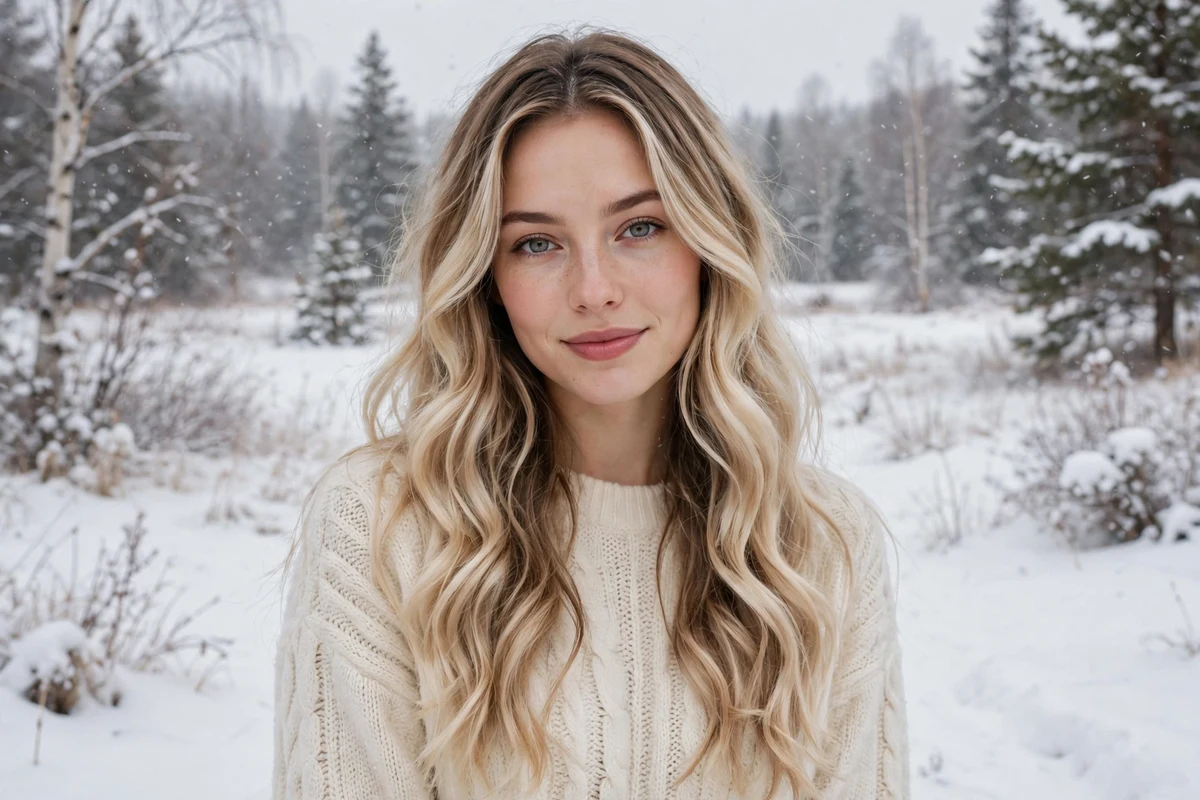
Winter blonde balayage is a hand-painted way to keep blonde hair looking deliberate through the cold months. A colorist paints lightener onto the mid-lengths and ends by hand, leaving the root area deeper, so the blonde melts down instead of starting at a hard line. That soft grow-out is the whole point in winter, when salon visits get spaced out and roots showing through look messy fast.
Every idea below is balayage only: painted placement, a root stretch or melt, and a toner chosen for winter light. Each one includes a winter toning note, a salon cost range, and how long the color holds before it needs attention. To compare balayage against the full seasonal menu of all-over shades and other techniques, see winter hair color ideas.
Quick Takeaways
- Balayage grows out softer than foils, which makes it the lowest-maintenance blonde option for winter.
- Winter toners run cooler or deeper than summer ones to fight brassiness from dry indoor heat.
- A root stretch of 1 to 3 inches buys 8 to 12 weeks between salon visits.
- Purple shampoo once a week and a deep conditioner keep painted ends from going dull or brassy.
- Expect to pay $120 to $300 at a salon, with icy and platinum finishes at the top of that range.
24 Winter Blonde Balayage Ideas
1. Sun-Kissed Balayage on Brunette-to-Blonde
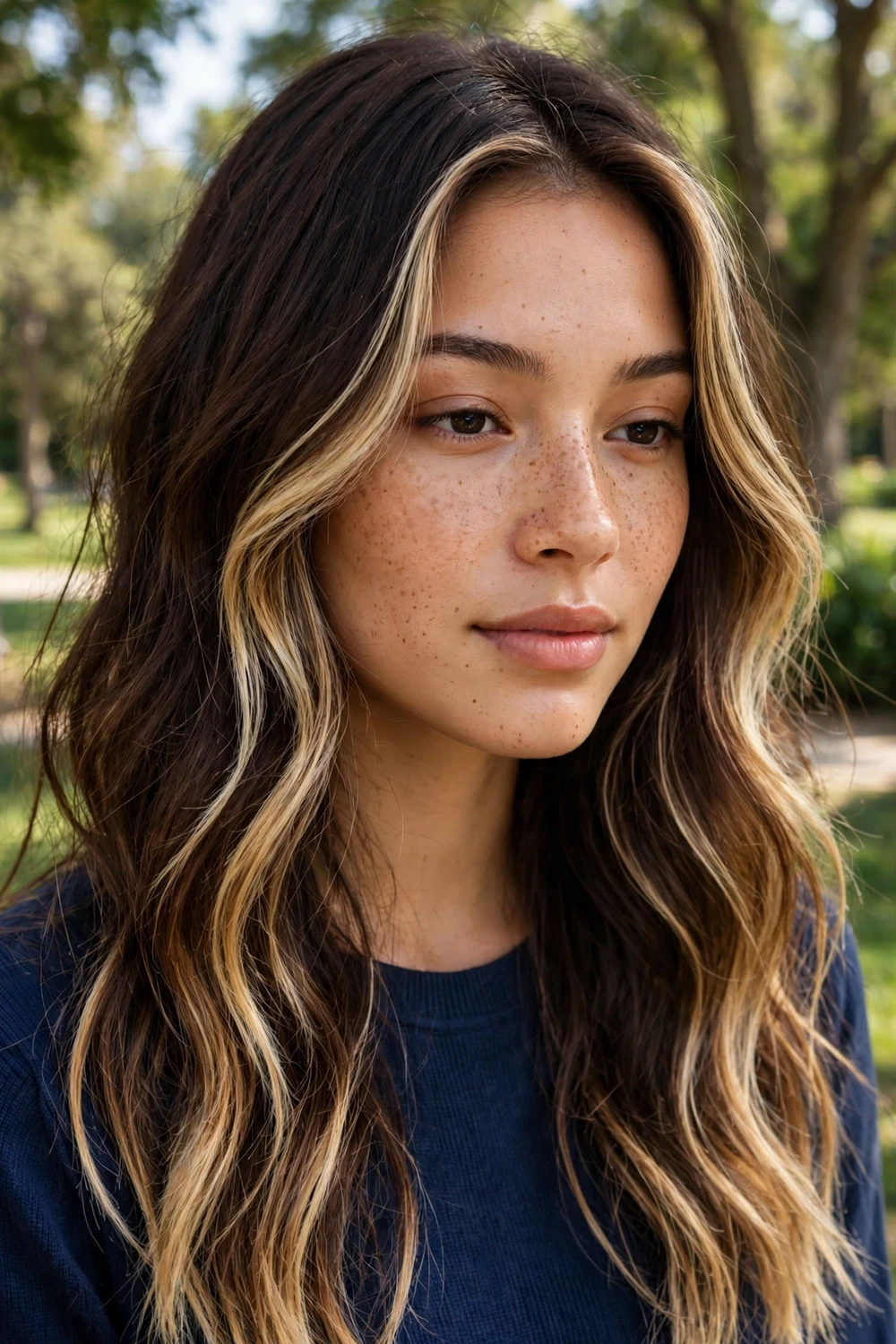
This one starts from a brunette base and keeps the blonde where the sun would hit: the bottom third of the hair and a few bright pieces around the face. The colorist paints lightener in soft V-shaped sections, leaving the roots untouched, then tones the lifted ends to a warm golden blonde. It suits anyone growing out darker hair who wants blonde without committing to a full head of foils. The contrast between dark roots and bright ends also photographs well in flat winter light.
Try this: ask for the brightest pieces to sit one shade lighter than the rest of the ends so the face-framing sections pop without looking striped.
Difficulty: Salon only | Cost: $150–$250
2. Caramel Blonde Balayage
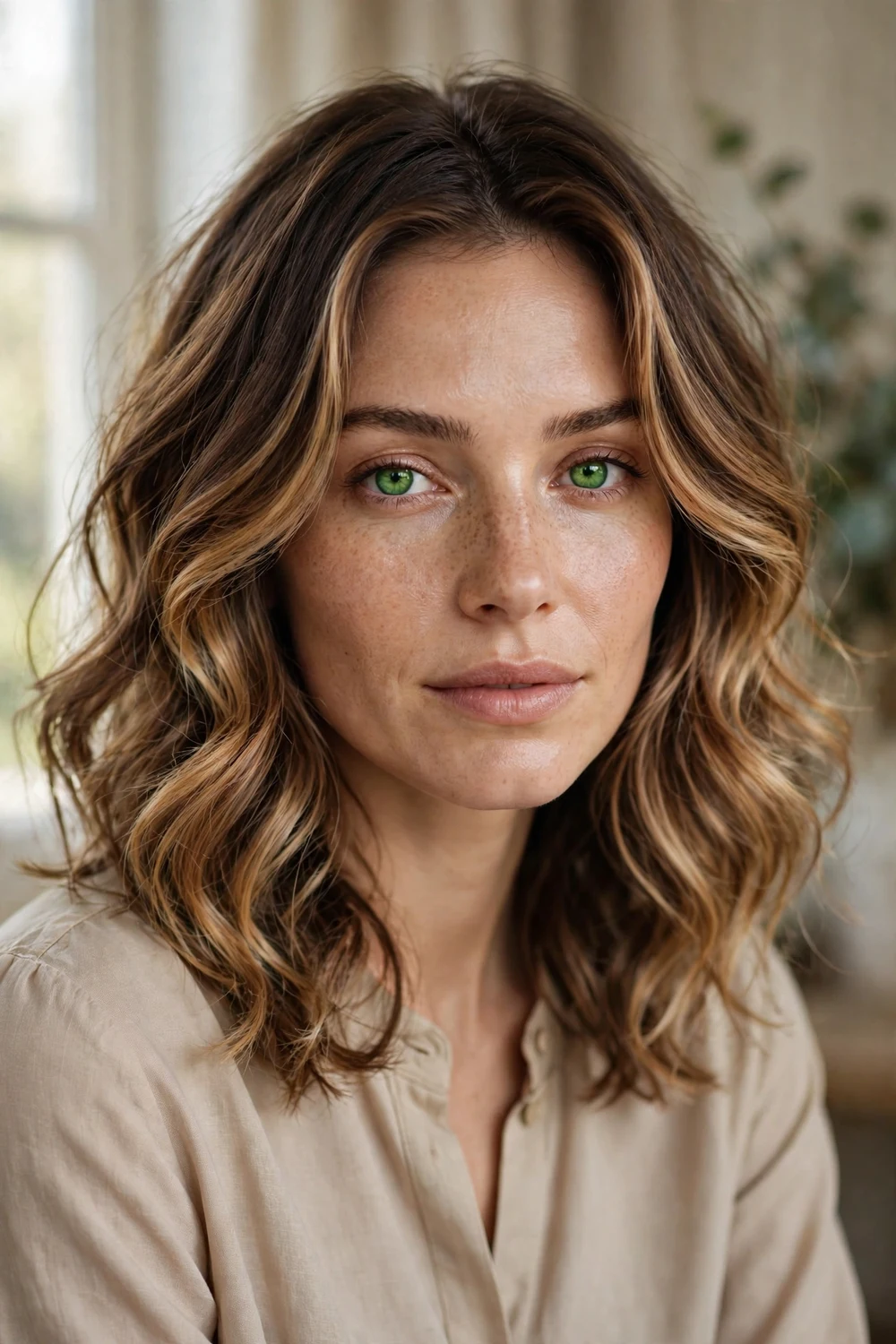
Deep brown roots fade into warm caramel blonde through hand-painted ribbons, with the heaviest lightness at the ends. A caramel gloss over the lifted sections keeps the tone rich instead of brassy, which is the main winter risk for warm blondes. This works on medium to dark bases and flatters warm skin tones that turn sallow under icy shades. Maintenance is a gloss refresh every 8 to 10 weeks; the painted placement means regrowth blends in rather than showing a line.
Try this: a clear or caramel gloss between appointments revives the shine that indoor heating strips out.
Difficulty: Salon only | Cost: $140–$230
3. Dark-to-Light Ash Blonde Balayage
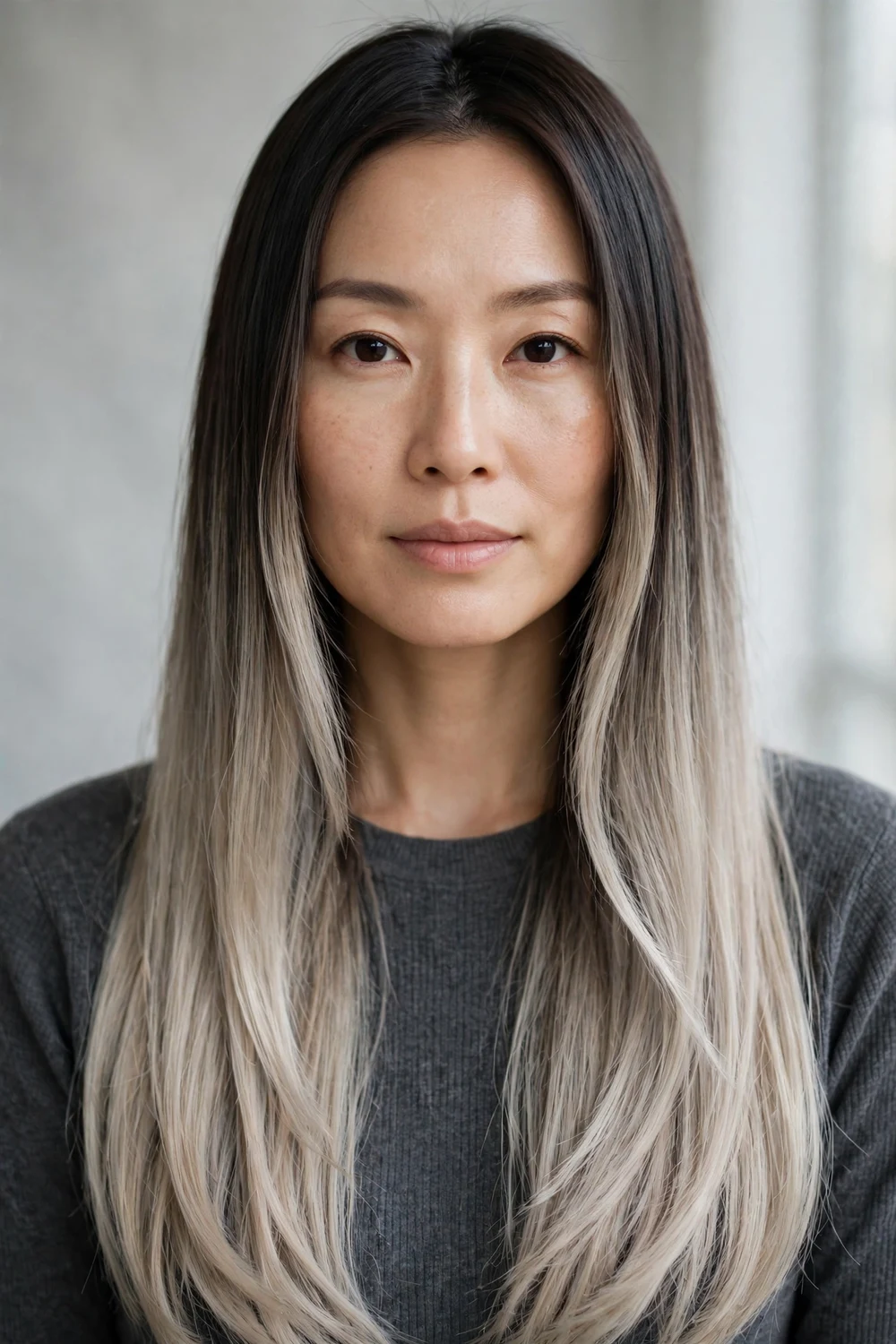
For a bold winter contrast, dark roots drop straight into pale ash blonde ends with very little transition zone. The colorist lifts the ends to a level 10, then tones with an ash-violet formula to kill warmth. The result reads dramatic and modern, and the cool tone holds up well under winter’s flat daylight. Dark bases lift with more warmth, so this takes longer in the chair and needs a strong purple shampoo routine at home to stay ash rather than drifting gold.
Try this: use purple shampoo once a week from day one, since ash tones on dark bases fade fastest in the first two weeks.
Difficulty: Salon only | Cost: $180–$300
4. Icy Ash Blonde Balayage
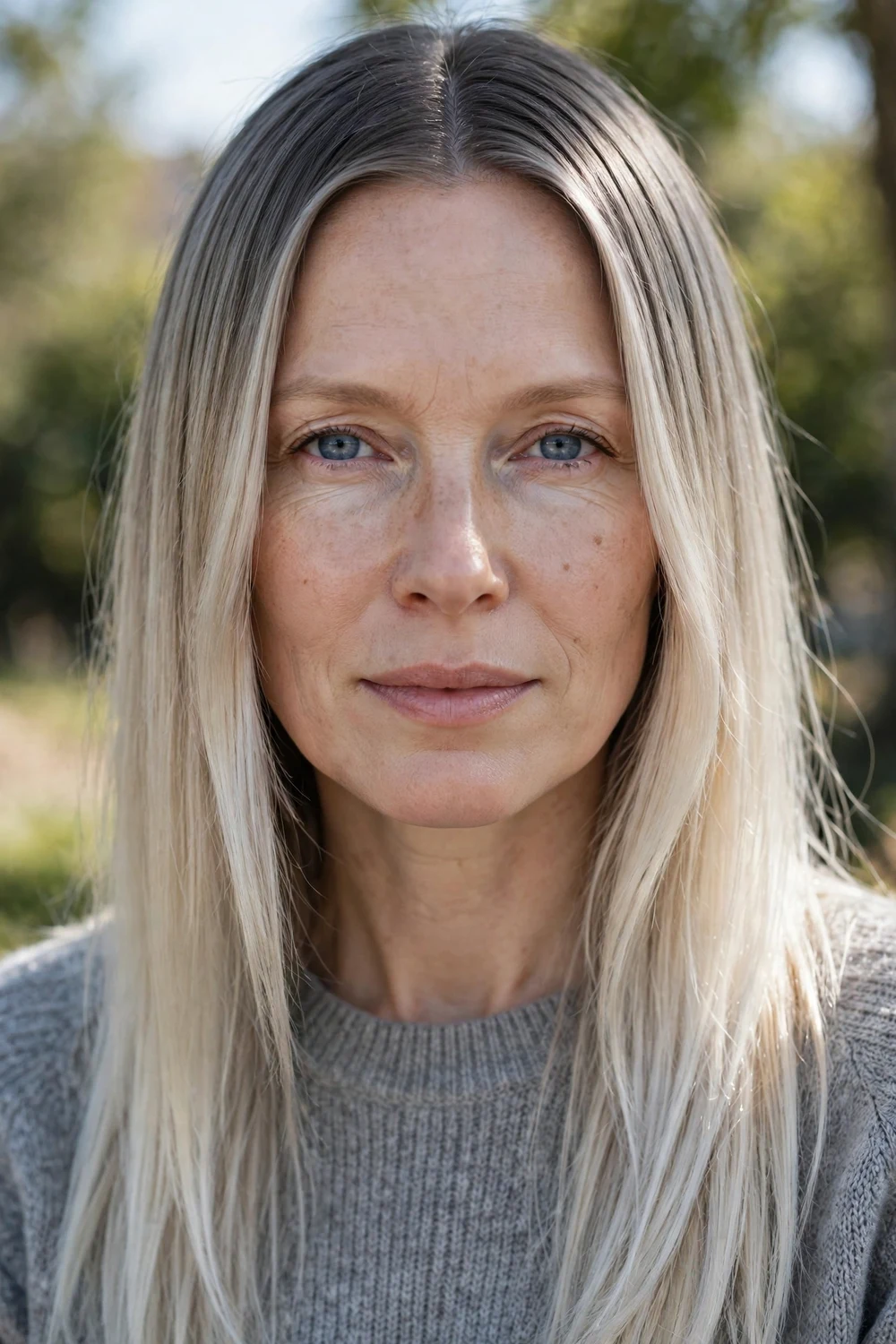
Cool shadowed roots melt into near-white icy blonde ends, painted on in fine sections so the blend looks seamless. The toner is the star here: a blue-violet base that keeps the ends frosty instead of yellow. Icy balayage suits cool and neutral skin tones and looks sharp against winter wardrobes of black, grey, and navy. The trade-off is upkeep, since icy ends show regrowth contrast more than warmer options and need toning every 6 to 8 weeks to stay crisp.
Try this: book a toner-only appointment between full balayage sessions; it costs far less and keeps the ice from going dull.
Difficulty: Salon only | Cost: $180–$300
5. Frosty Pearl Balayage
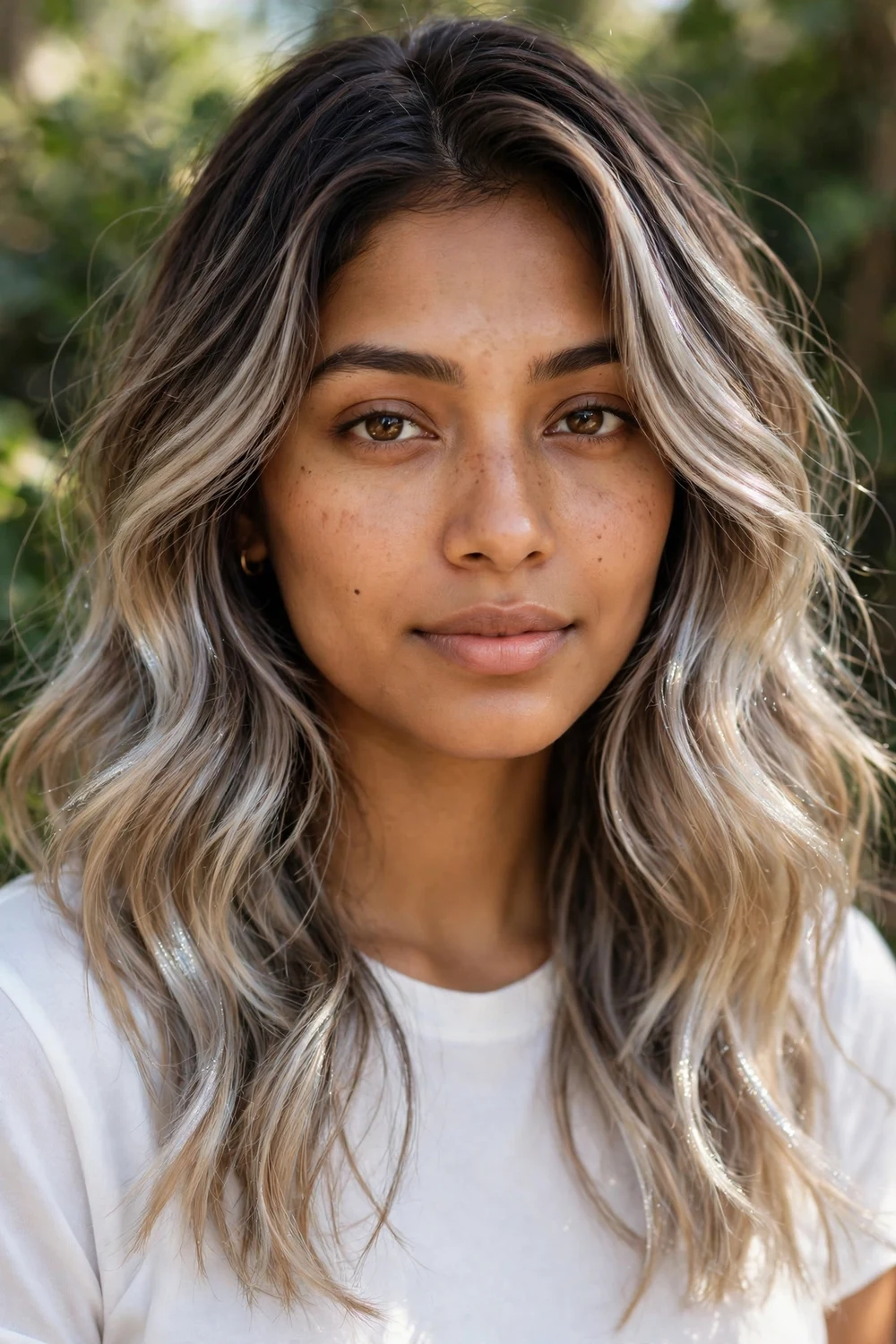
A pearl toner over pre-lightened ends gives this balayage its silvery shimmer, like frost catching light. The base stays a light natural blonde while the painted sections lift to platinum and get toned with a pearl-violet gloss. It reads softer than flat platinum because the pearl finish has dimension that shifts as the hair moves. This is a strong pick for fine hair, since the shimmer adds visual fullness. Winter dryness dulls pearl tones fast, so a weekly deep-conditioning mask matters more here than with most shades.
Try this: style with loose waves to catch light on the pearl finish; pin-straight styling hides the shimmer. Use a heat protectant before curling.
Difficulty: Salon only | Cost: $170–$280
6. Caramel and Cream Balayage
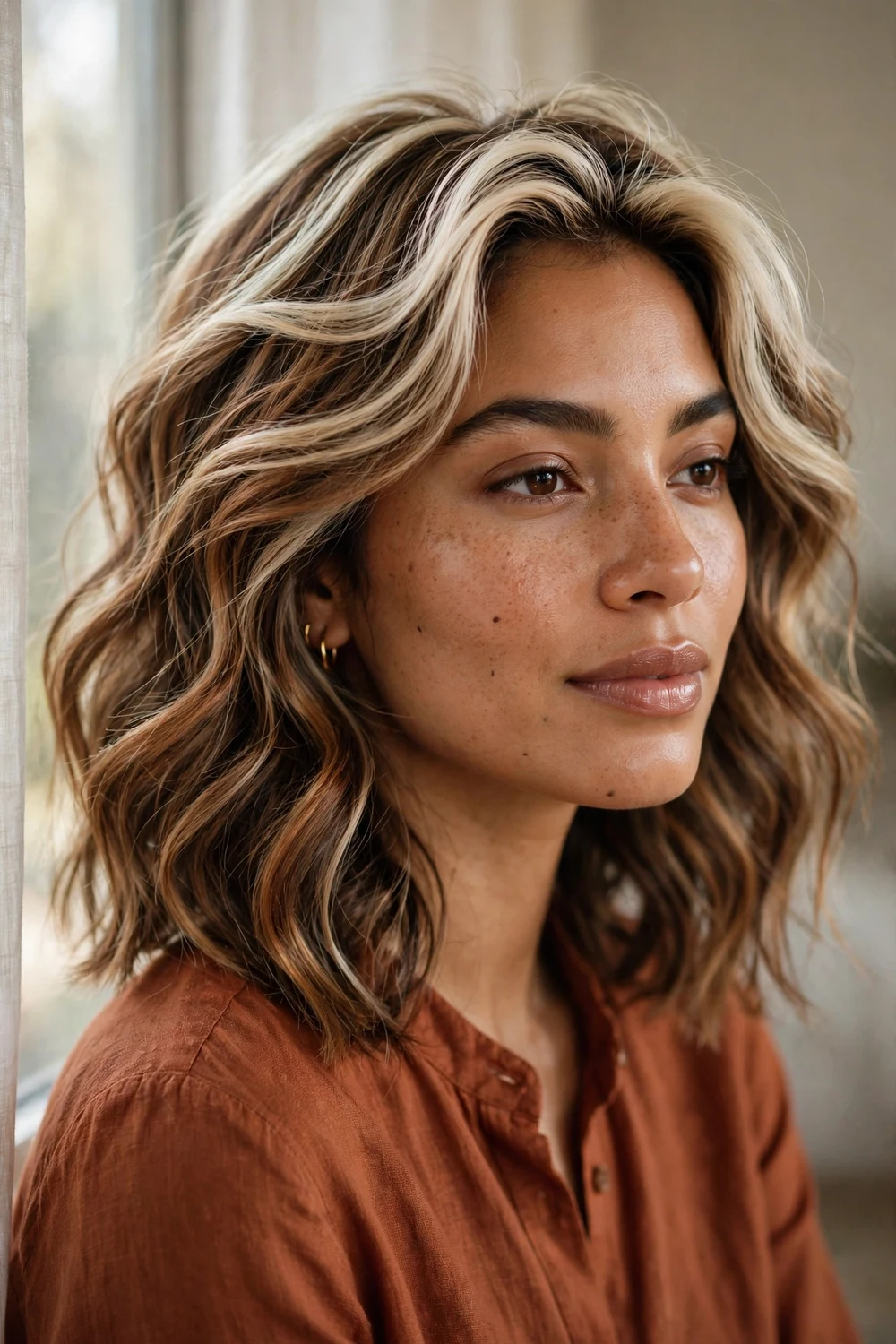
Two tones do the work here: warm caramel ribbons painted low and bright cream pieces woven through the top layers. The mix keeps the blonde from reading flat, and the cream sections stop the caramel from going muddy. A colorist alternates the two formulas in the same appointment, which takes a bit longer but delivers dimension that lasts. This flatters medium skin tones and works well on wavy textures where the two tones separate naturally as the hair moves.
Try this: ask the colorist to place the cream pieces mostly on the top layer, where light hits, and keep caramel underneath for depth.
Difficulty: Salon only | Cost: $160–$260
7. Snowy Silver Balayage
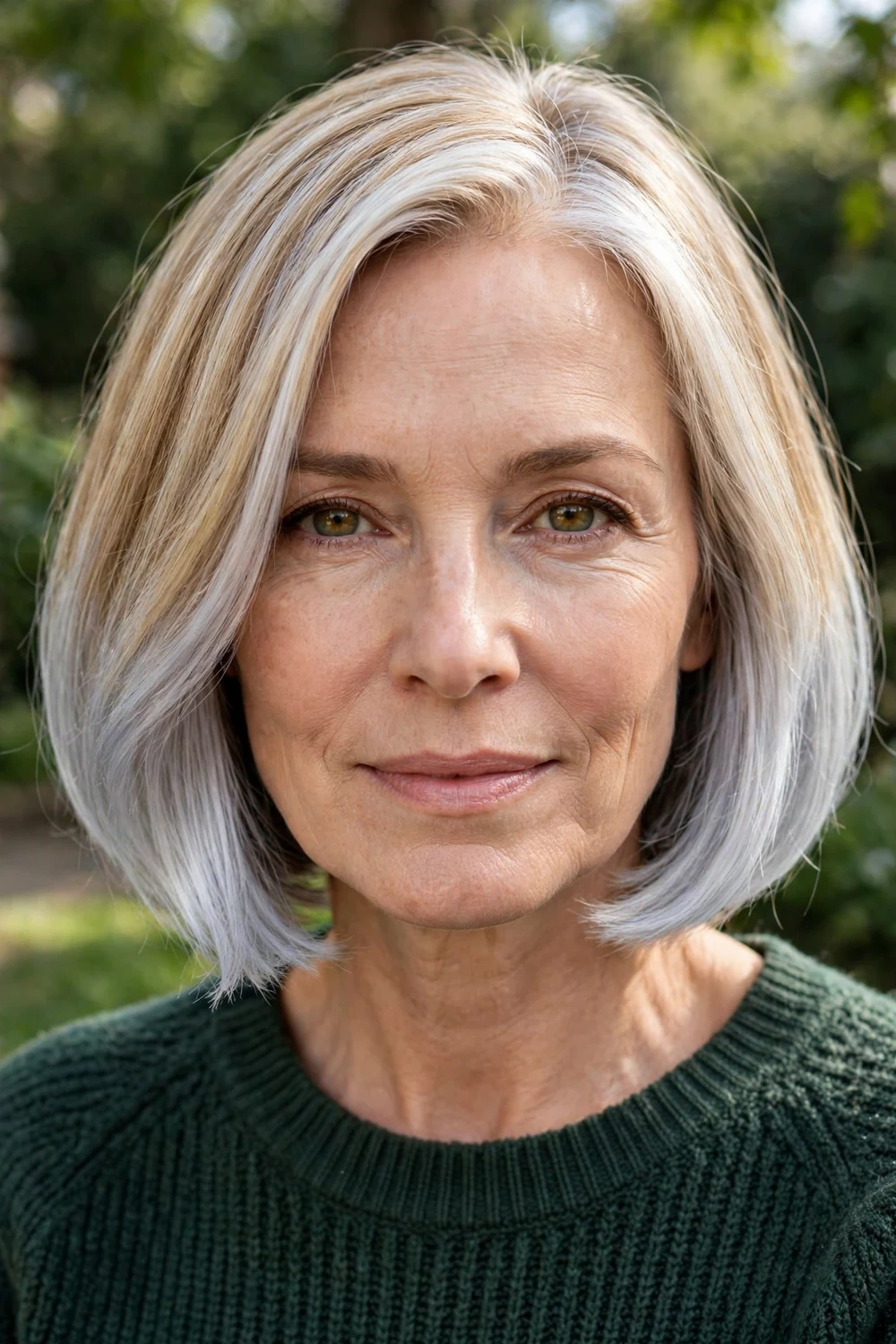
Light blonde hair gets hand-painted silver sections that read snowy rather than grey, thanks to a toner with a clean violet base and no green undertone. This suits women whose natural blonde has gone dull or ashy with age, since the silver brings back brightness without committing to platinum. On shorter cuts like bobs, the silver sits close to the face and brightens the complexion. The main caution is toner fade: silver washes out faster than most shades, so plan a gloss refresh around week six.
Try this: wash with lukewarm water instead of hot, since heat opens the cuticle and pulls silver toner out faster.
Difficulty: Salon only | Cost: $150–$250
8. Golden Honey Balayage
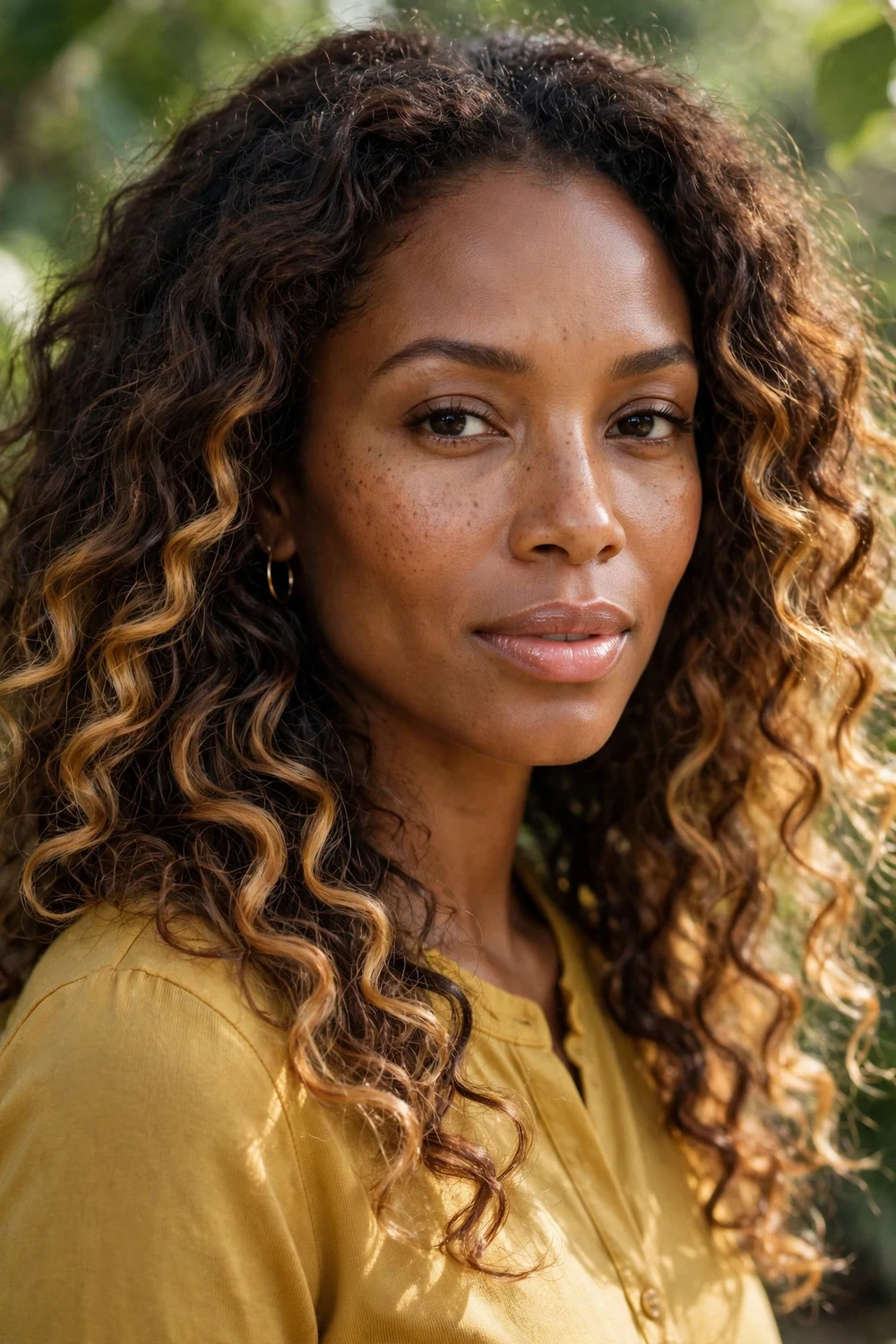
A warm golden honey tone painted through the mid-lengths and ends gives blonde hair a glow that winter daylight flattens out of cooler shades. The colorist keeps the roots close to the natural base and blends honey panels down, finishing with a warm gloss. This is one of the most forgiving winter blondes: warmth hides regrowth, the tone suits a wide range of skin tones, and it needs nothing more than a gloss every 10 weeks. On curly hair, the honey panels separate naturally and show off the curl pattern.
Try this: scrunch a curl cream into damp hair and air-dry to let the honey pieces define themselves without heat styling.
Difficulty: Salon only | Cost: $130–$220
9. Cool Beige Balayage
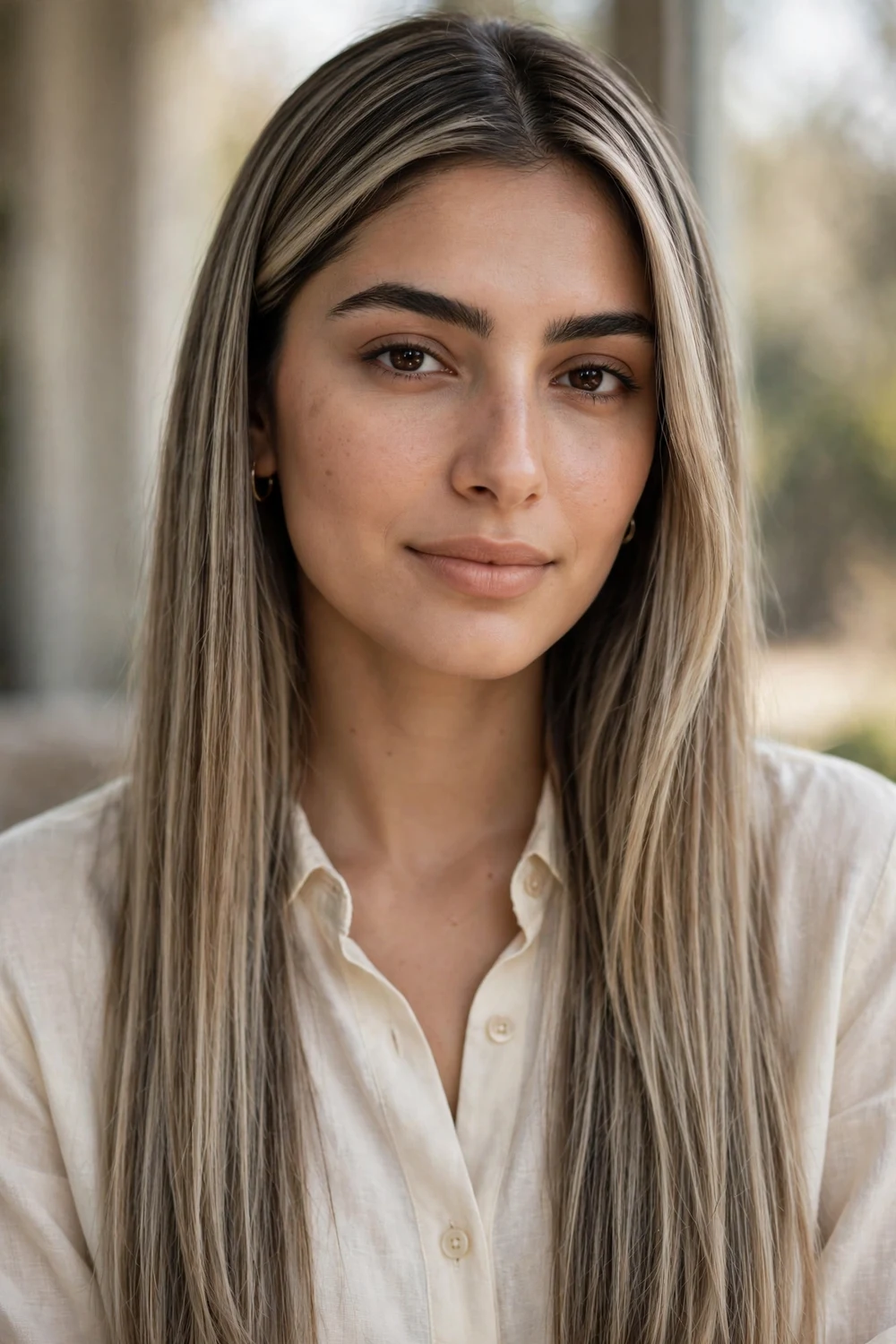
Cool beige sits between ash and neutral: not icy, not warm, with a soft taupe undertone that flatters neutral skin. The balayage is painted in fine weaves so the beige reads as one seamless tone rather than stripes. Because it is neither warm nor dramatically cool, it grows out with almost no visible line and holds its tone longer than ash or silver. This is a smart choice for anyone who wants winter blonde without the high-maintenance reputation, and it pairs well with straight, sleek styling that shows the even tone.
Try this: a sulfate-free shampoo keeps the beige tone from dulling; harsh sulfates strip painted color fastest in winter.
Difficulty: Salon only | Cost: $140–$230
10. Mocha and Vanilla Balayage
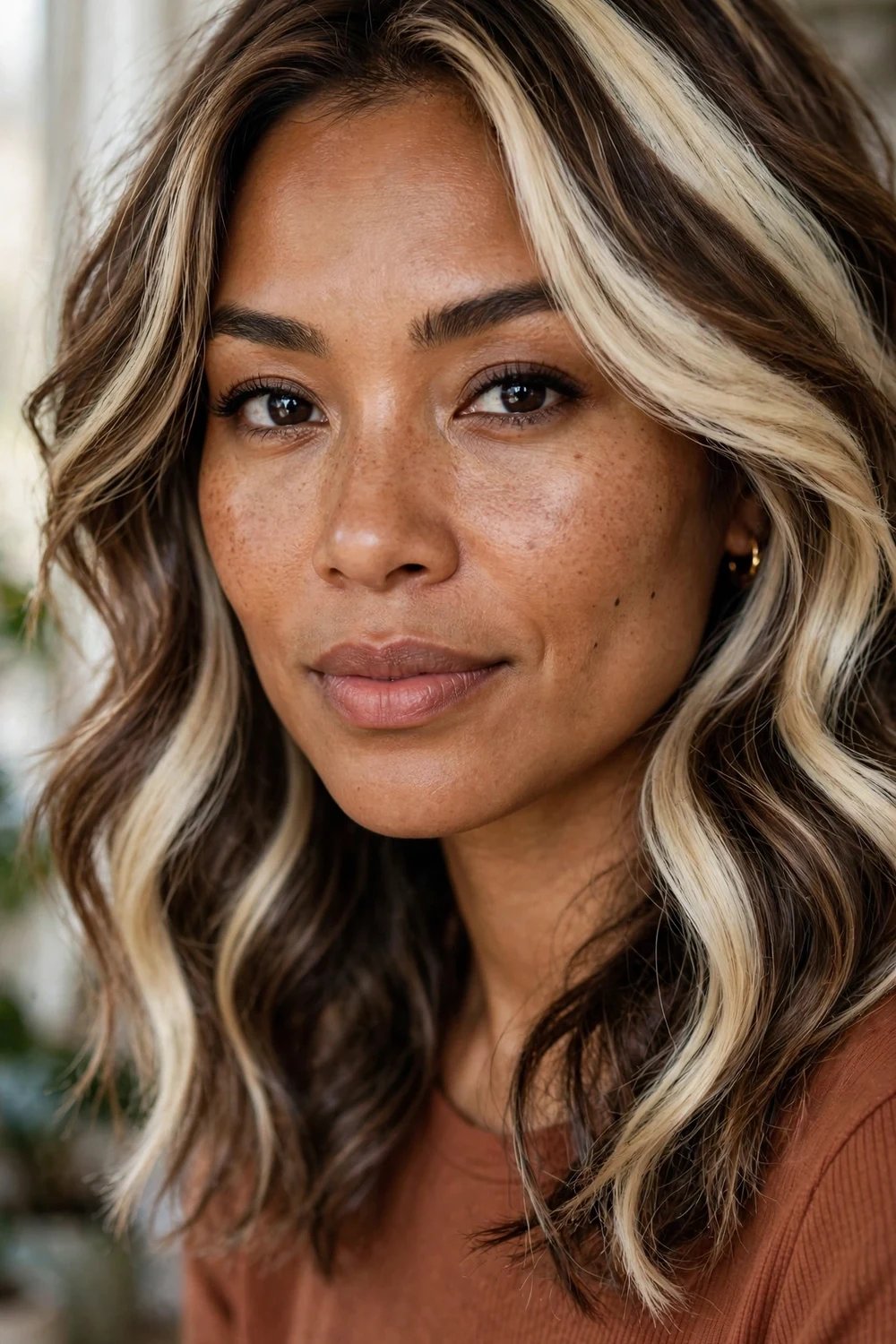
A mocha brown base carries bright vanilla blonde ribbons painted on in wide sections. The warm-cool pairing is the appeal: mocha keeps the overall look grounded for winter while vanilla ribbons give the brightness blonde wearers want. The contrast is stronger than in most balayage, so the placement has to be deliberate, with ribbons angled to fall naturally around the face. This works on layered cuts where the ribbons can sit at different lengths. Regrowth is gentle because the base stays close to natural.
Try this: ask for the vanilla ribbons to start no higher than cheekbone level so the grow-out stays soft.
Difficulty: Salon only | Cost: $160–$260
11. Honey Butter Cascade
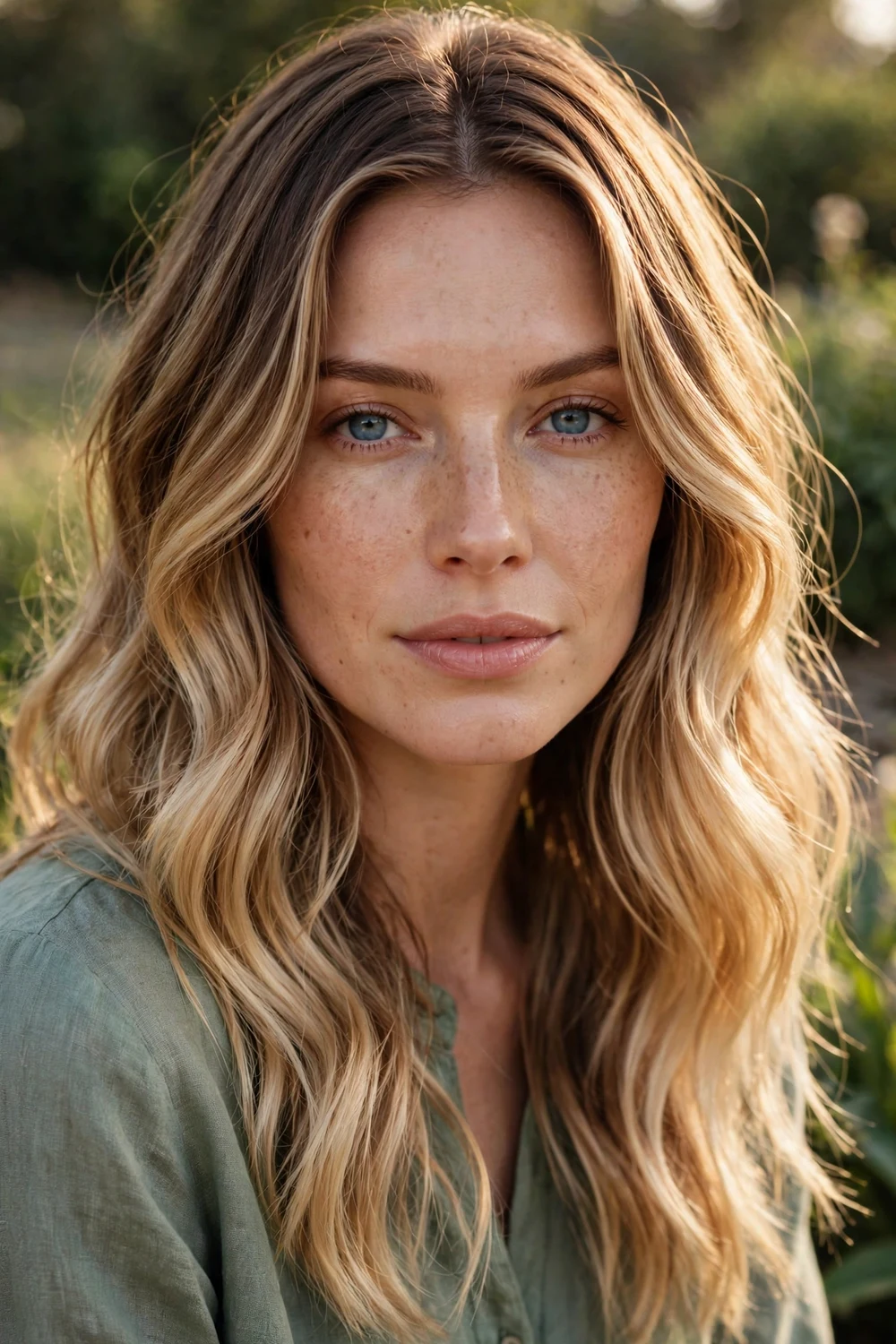
Honey-toned roots flow into buttery blonde ends in one continuous painted gradient, with no visible start point. The colorist saturates the mid-lengths more heavily and feathers the lightener down so the ends look almost solid buttery blonde. This suits naturally blonde to dark-blonde hair, since the honey root sits close to the base and the lift needed is modest. It is a warm, low-contrast look that stays flattering as it grows, and the buttery ends reflect what little winter light there is.
Try this: a shine spray on dry ends makes the buttery tone read richer; matte winter air flattens it otherwise.
Difficulty: Salon only | Cost: $140–$240
12. Platinum Ice Melt
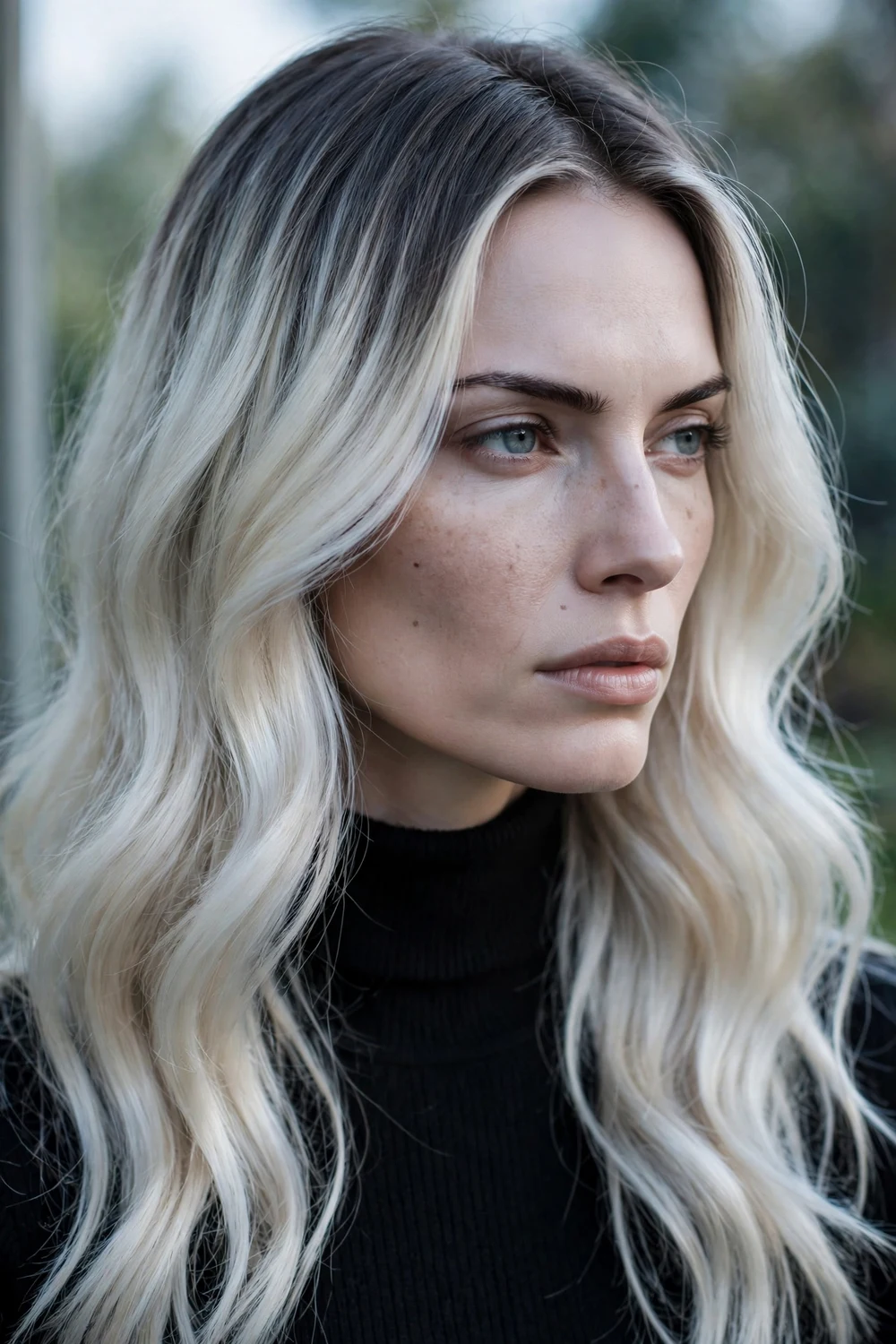
Ashy shadow roots stretch about two inches before melting into bright platinum ends, all hand-painted so the transition looks airbrushed. The melt technique is what separates this from a harsh platinum: the root color is dragged down with a demi-permanent formula, blurring where natural hair ends and lightened hair begins. This is the highest-maintenance option on the list, since platinum ends need toning every 6 weeks and regular bond treatments, but the shadow root stretches full appointments to every 10 to 12 weeks.
Try this: sleep on a silk pillowcase to cut down on the breakage platinum ends are prone to in dry winter air. Apply a heat protectant before any hot styling.
Difficulty: Salon only | Cost: $200–$320
13. Caramel Ribbon Infusion
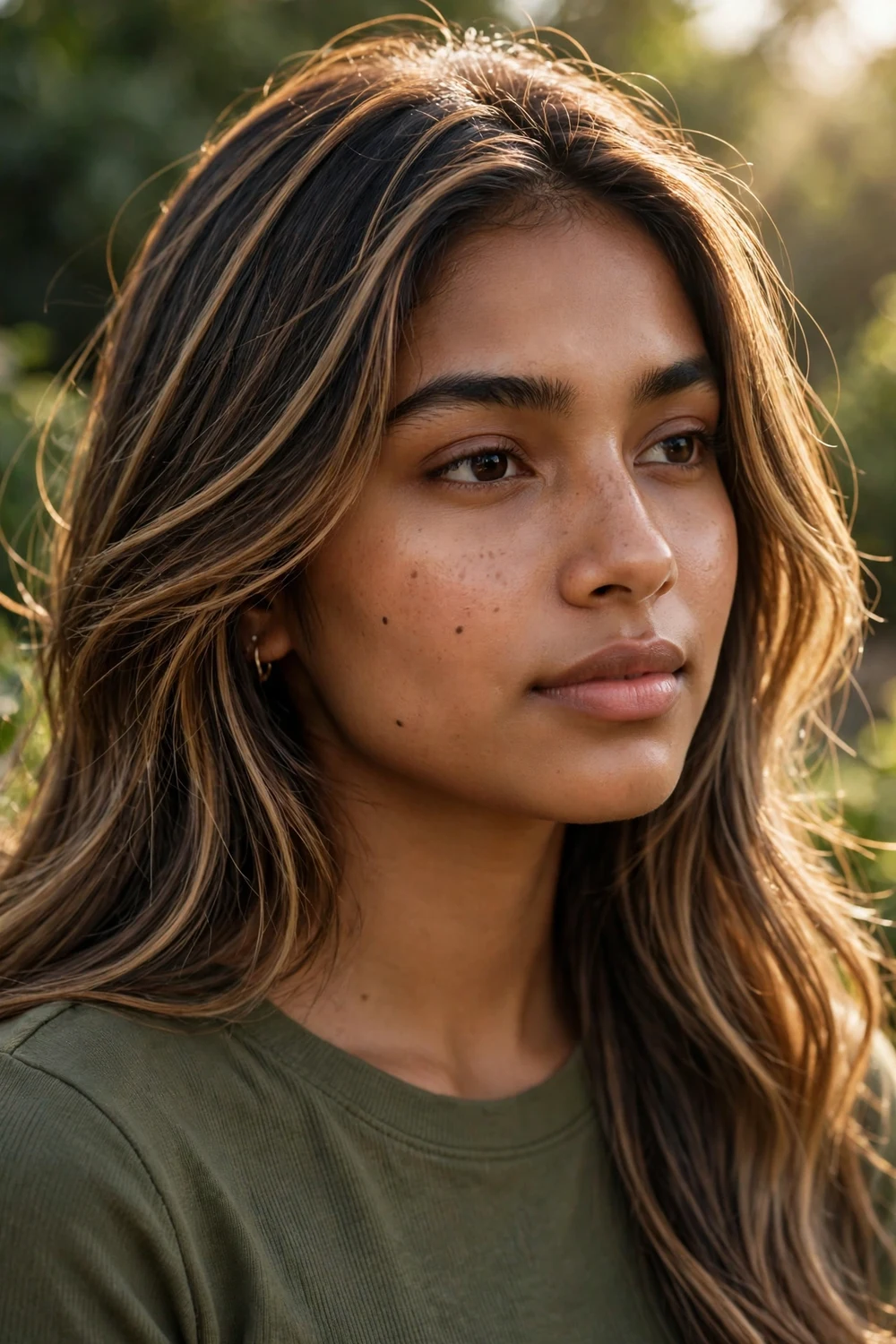
Thin hand-painted caramel streaks run through a dark blonde base like ribbons, concentrated around the face and through the top layers. Because each streak is painted individually, the colorist controls exactly where the brightness lands, which keeps the effect natural instead of chunky. The caramel tone warms up dark blonde that looks flat in winter, and the grow-out is nearly invisible since the base barely lifts. If a full caramel balayage feels like too much change, this is the lighter-commitment version of idea 2.
Try this: wear the hair parted where it falls naturally for the first week; the ribbons were placed for that part and moving it shifts the effect.
Difficulty: Salon only | Cost: $120–$200
14. Mushroom Blonde Gradient
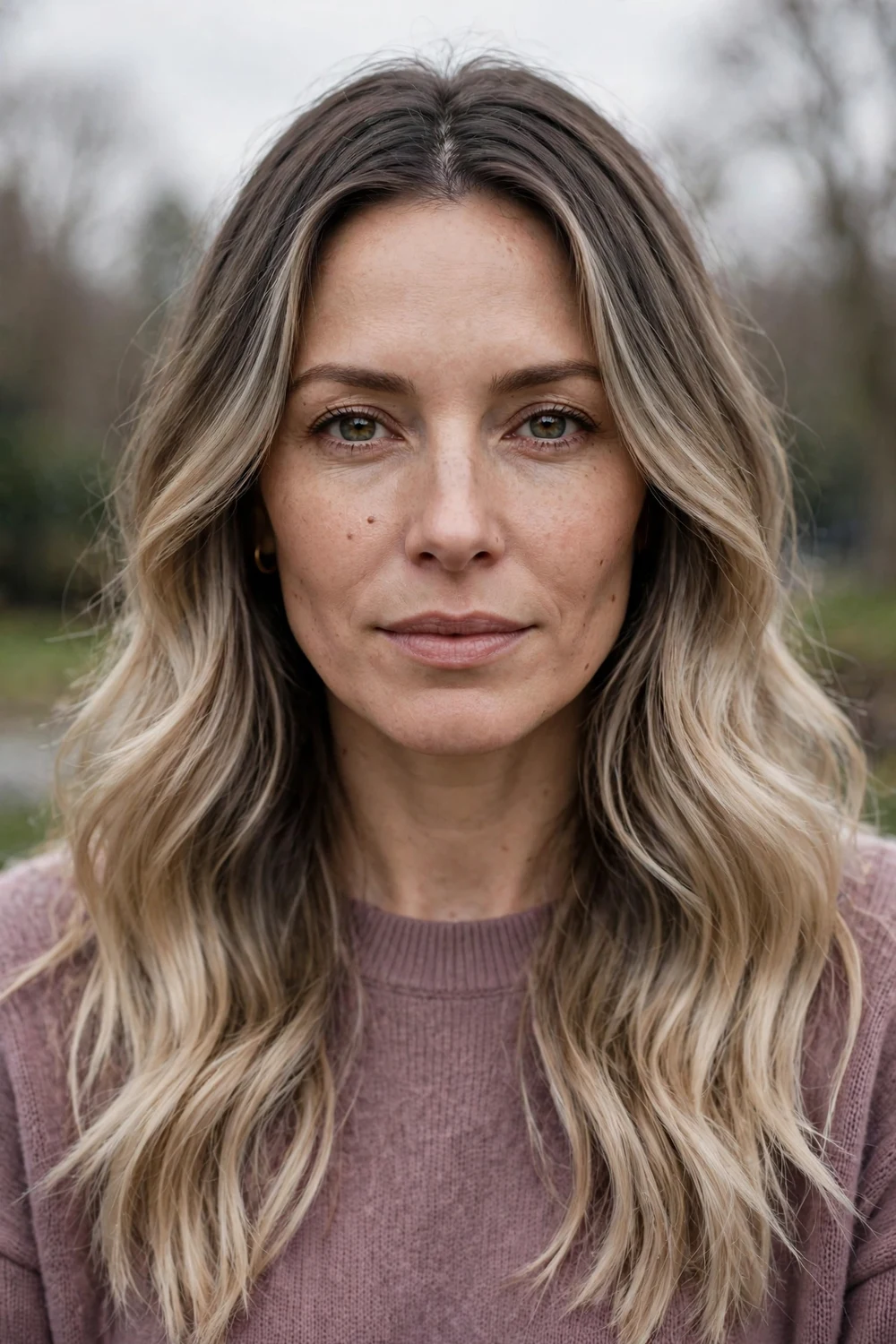
Ashy mushroom-brown roots melt into lighter beige-blonde ends in a gradient that stays cool all the way down. The mushroom tone, a mix of ash brown and grey, is painted at the root and blended into the blonde with a smudging technique. This is one of the trendiest winter blondes because the cool root looks intentional as it grows, buying 10 to 12 weeks between appointments. It suits cool skin tones and anyone whose blonde tends to pull warm or brassy.
Try this: ask for the mushroom root to be done with demi-permanent color so it fades gradually instead of growing out with a line.
Difficulty: Salon only | Cost: $150–$250
15. Biscuit Blonde Balayage
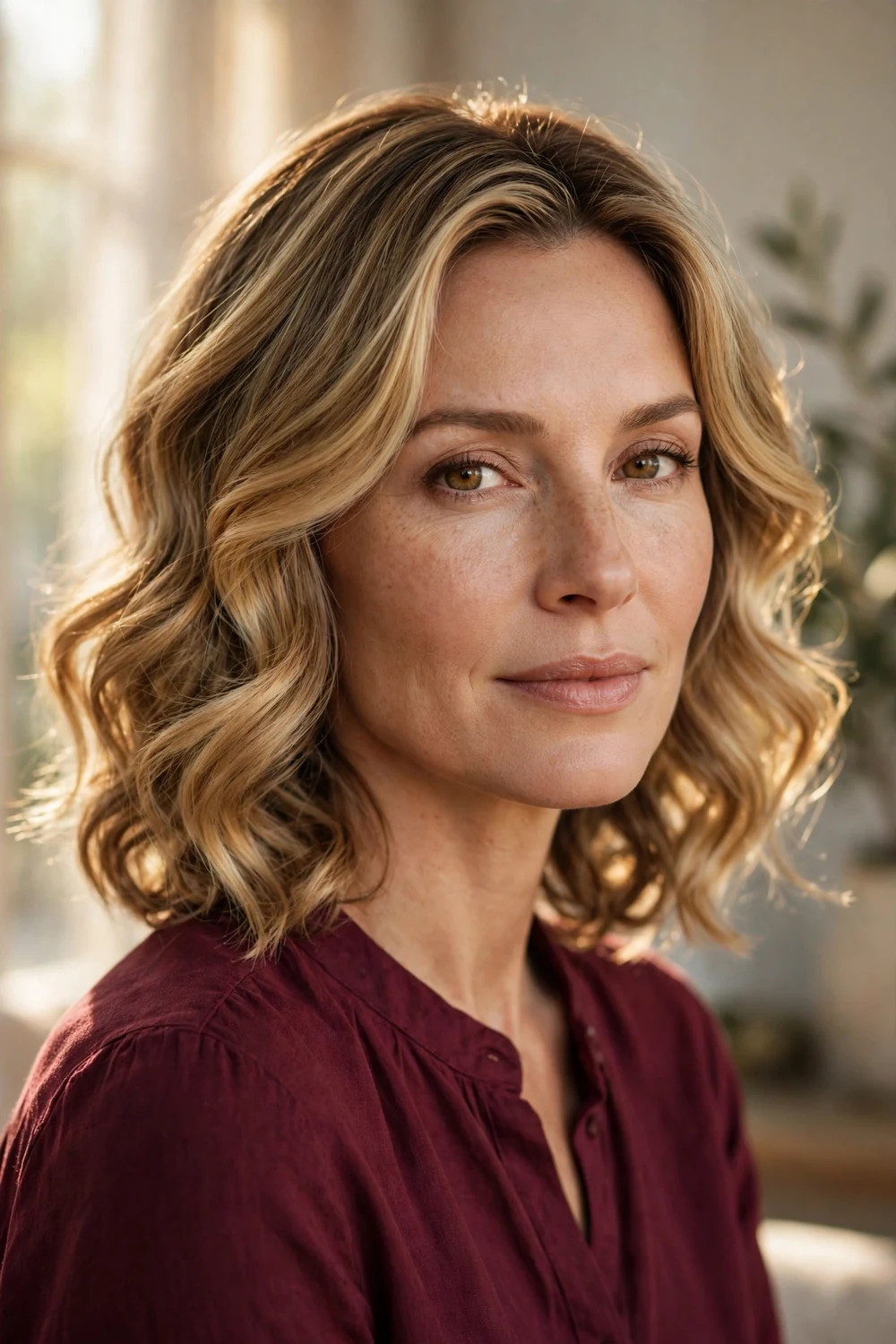
Biscuit blonde is a golden honey-wheat tone, warmer than beige but softer than gold, painted through the ends of a darker blonde base. The shade sits in the middle of the blonde spectrum, which makes it forgiving: it flatters warm, neutral, and many cool skin tones, and it does not show regrowth harshly. The colorist paints it in soft sections and finishes with a golden gloss. Winter is a good season for this shade because the warmth counters the paleness that cold months bring to the complexion.
Try this: a golden gloss at week eight refreshes the wheat tone without a full re-lightening appointment.
Difficulty: Salon only | Cost: $130–$220
16. Linen Blonde Ribbons
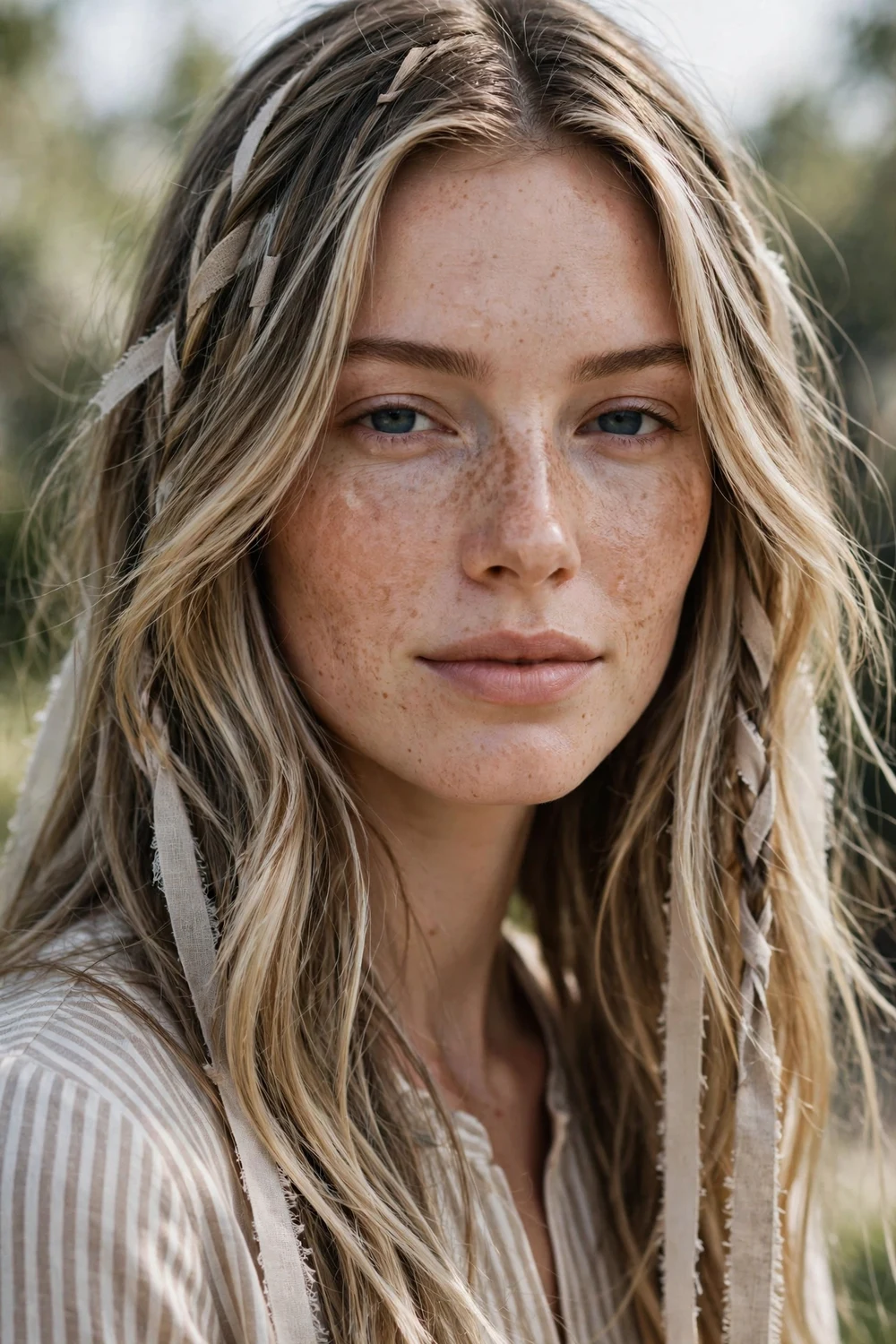
Linen blonde is a quiet neutral shade, like undyed fabric, painted as fine ribbons through dark blonde hair. The effect is subtle dimension rather than obvious color: hair that looks thicker and more interesting without anyone being able to name the change. This suits minimalists and anyone in a conservative workplace who wants winter brightness without a visible dye job. The neutral tone holds well between appointments and needs only a clear gloss to stay fresh. To see how ribbon-style placement differs from foil work, read winter highlights for blondes, which covers every highlight technique side by side.
Try this: keep the ribbons fine, no wider than a pencil, so the linen tone reads as texture rather than stripes.
Difficulty: Salon only | Cost: $120–$200
17. Coconut Cream Balayage
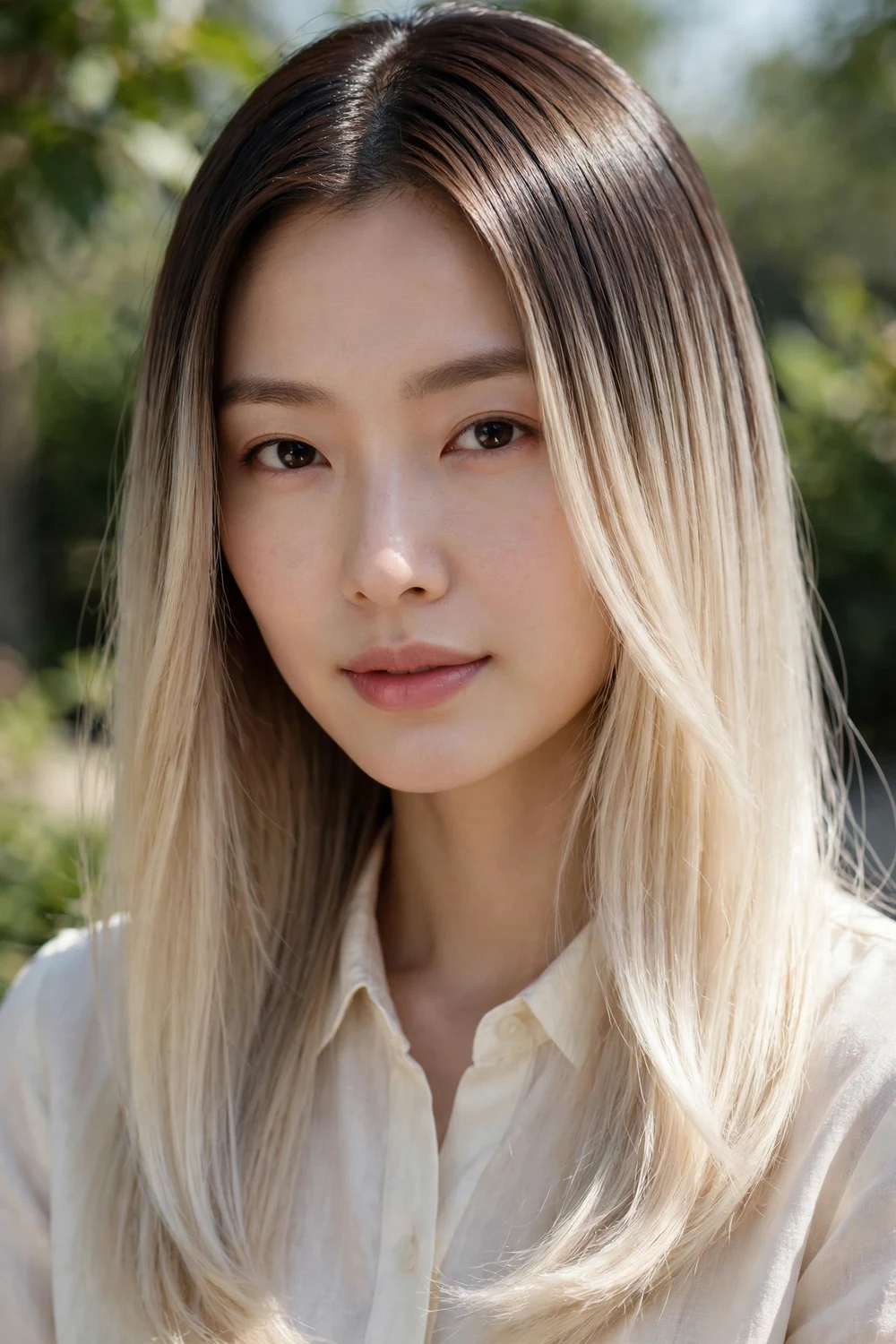
A milky, luminous blonde with a creamy white finish, painted from a slightly deeper root into bright ends. Coconut cream is lighter than beige and softer than platinum, with a smooth opaque tone that looks rich in person. It suits straight, sleek hair best, since the even tone shows clearly on a smooth surface. The ends need toning every 6 to 8 weeks to keep the milky finish from yellowing, and a bond-building treatment at the salon protects the heavily lifted ends through winter.
Try this: flat-iron in small sections for a glass-hair finish that shows the creamy tone at its best. Always use a heat protectant first.
Difficulty: Salon only | Cost: $170–$280
18. Winter Wheat Root Stretch
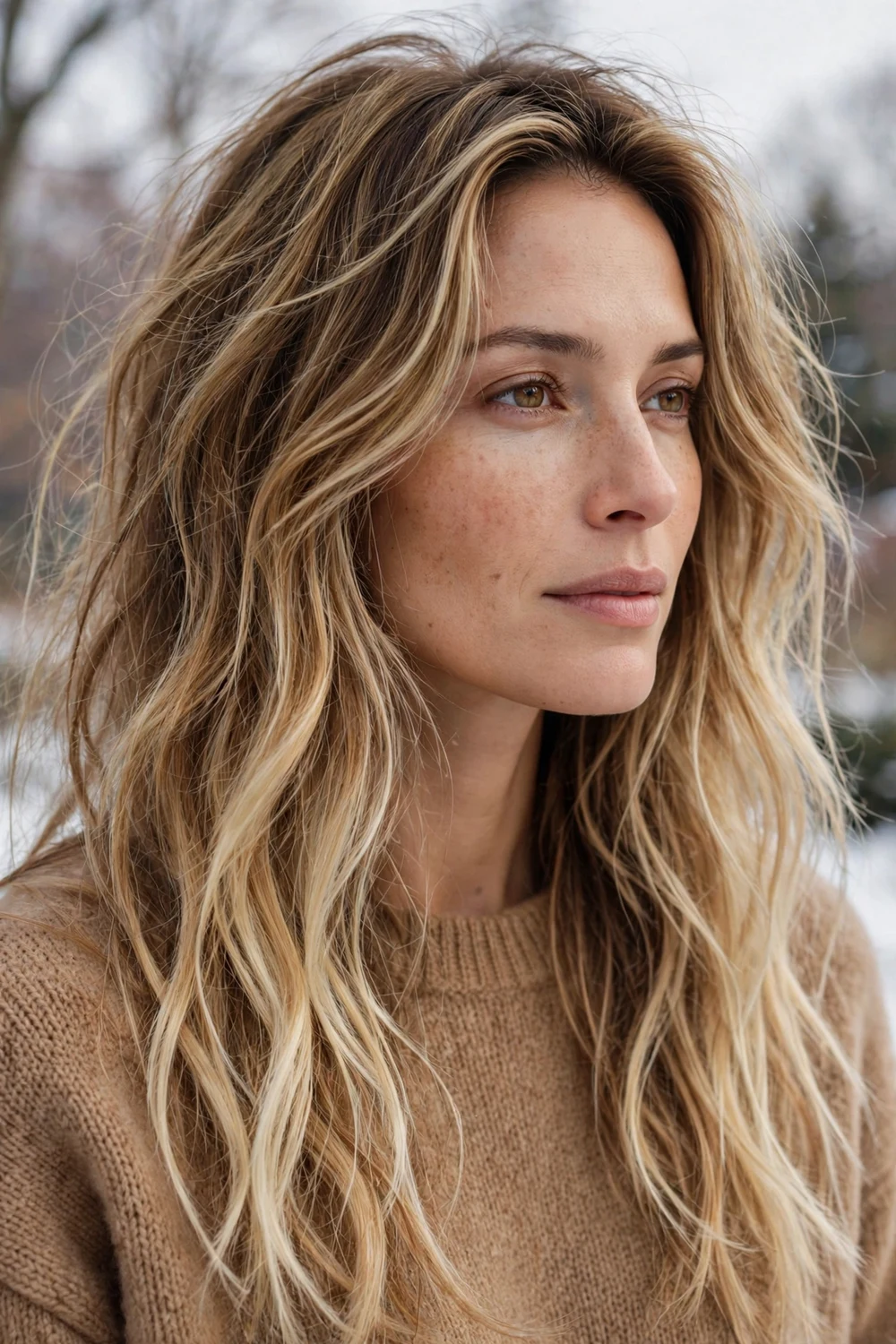
The roots stay a deeper wheat blonde for the first two to three inches, then stretch into bright blonde ends with a long, gradual blend. A root stretch is the most practical winter technique in this list: the deeper root hides regrowth completely, stretches appointments to 12 weeks, and the bright ends keep the blonde feeling fresh. The wheat tone is warm-neutral, so it works across skin tones. This is the look to choose when low maintenance matters more than drama.
Try this: dry shampoo at the roots between washes keeps the stretched root looking clean without stripping color.
Difficulty: Salon only | Cost: $130–$220
19. Honey-Dipped Bronde Balayage
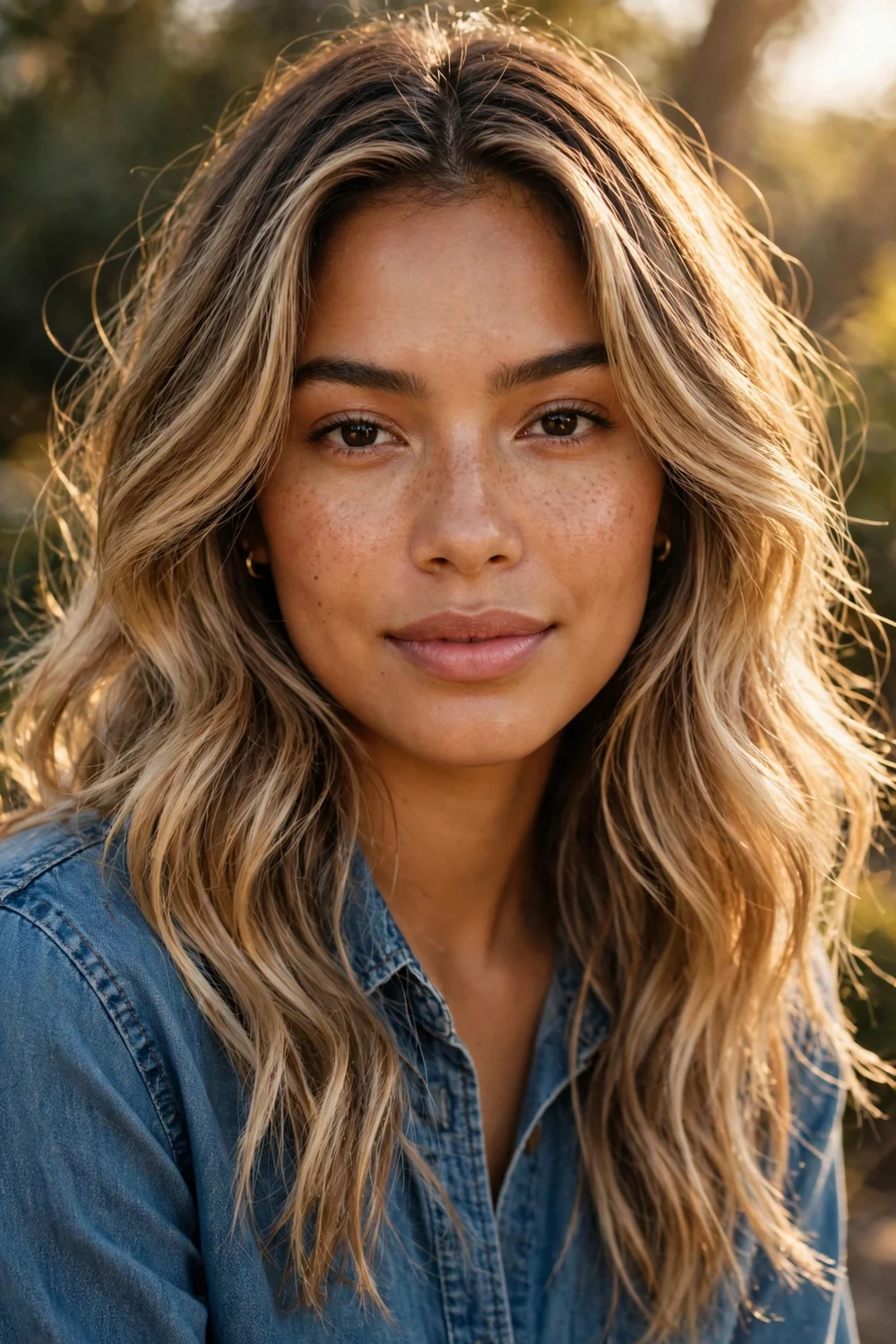
Bronde, the brown-blonde middle ground, gets a winter treatment: toasted beige at the roots warming into buttery blonde ends, all hand-painted. The brown base means less lifting, less damage, and a color that looks rich under winter’s dim light. Honey-dipped ends add the brightness without pushing the whole head to blonde. This suits naturally dark-blonde to light-brown hair and anyone nervous about going too light. If the caramel family appeals but a full caramel blonde feels heavy, the related dark caramel balayage looks show how caramel placement works on deeper bases.
Try this: keep the buttery ends to the bottom third so the bronde base stays the dominant tone and upkeep stays light.
Difficulty: Salon only | Cost: $140–$240
20. Shadow-Rooted Champagne Balayage
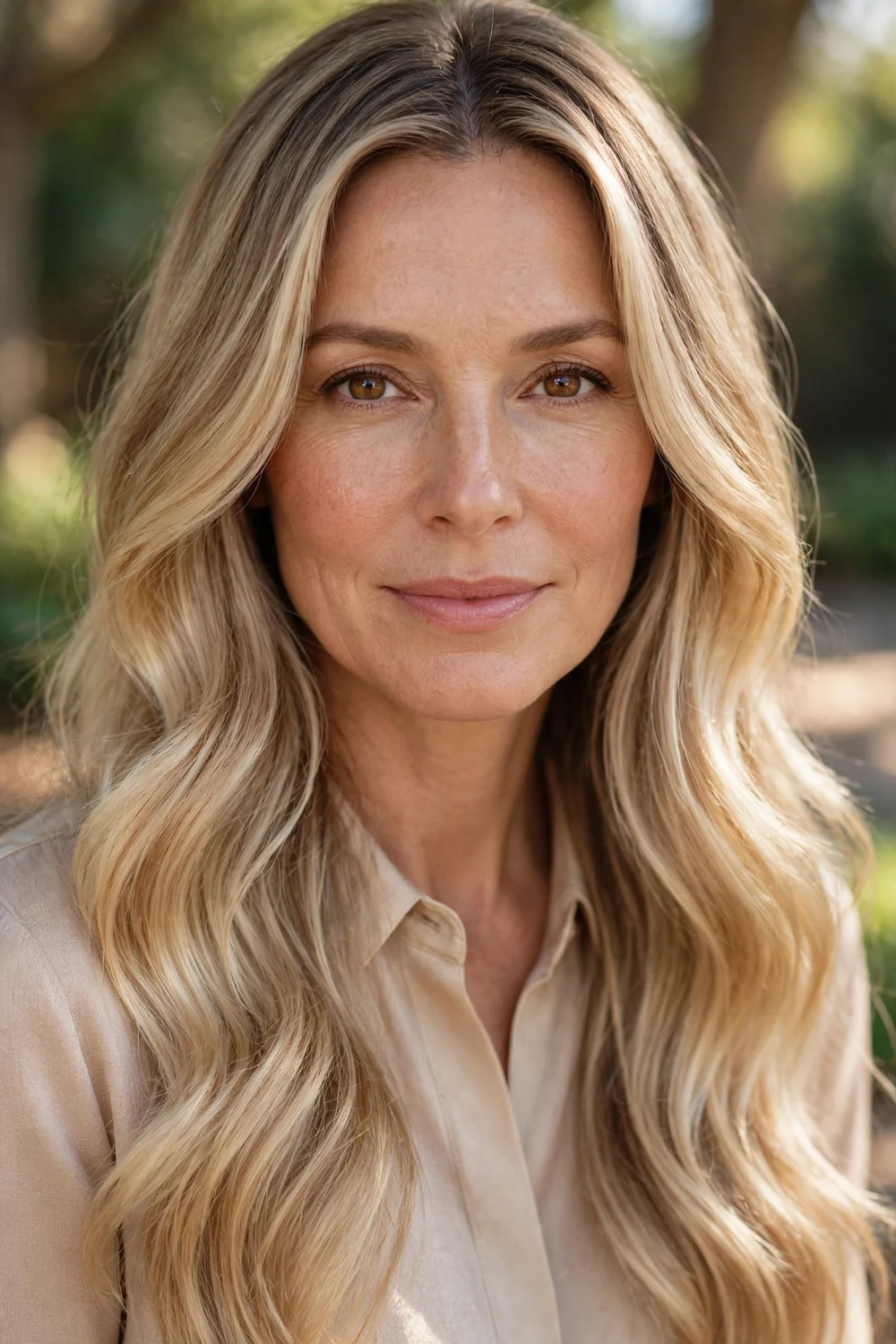
A soft shadow root, about an inch of slightly deeper blonde at the crown, gives way to champagne blonde through the lengths: pale gold with a whisper of pink-beige. The champagne tone is flattering and a little festive, which suits the winter season without looking costume-like. The shadow root means regrowth blends for 10 weeks or more. This works on light to medium blonde bases and flatters fair to medium skin tones. The pink-beige undertone fades faster than neutral tones, so a champagne gloss mid-cycle keeps it true.
Try this: style with a large-barrel curling iron for soft bends that show the champagne dimension; use a heat protectant before curling.
Difficulty: Salon only | Cost: $150–$250
21. Rooted Vanilla Bean Balayage
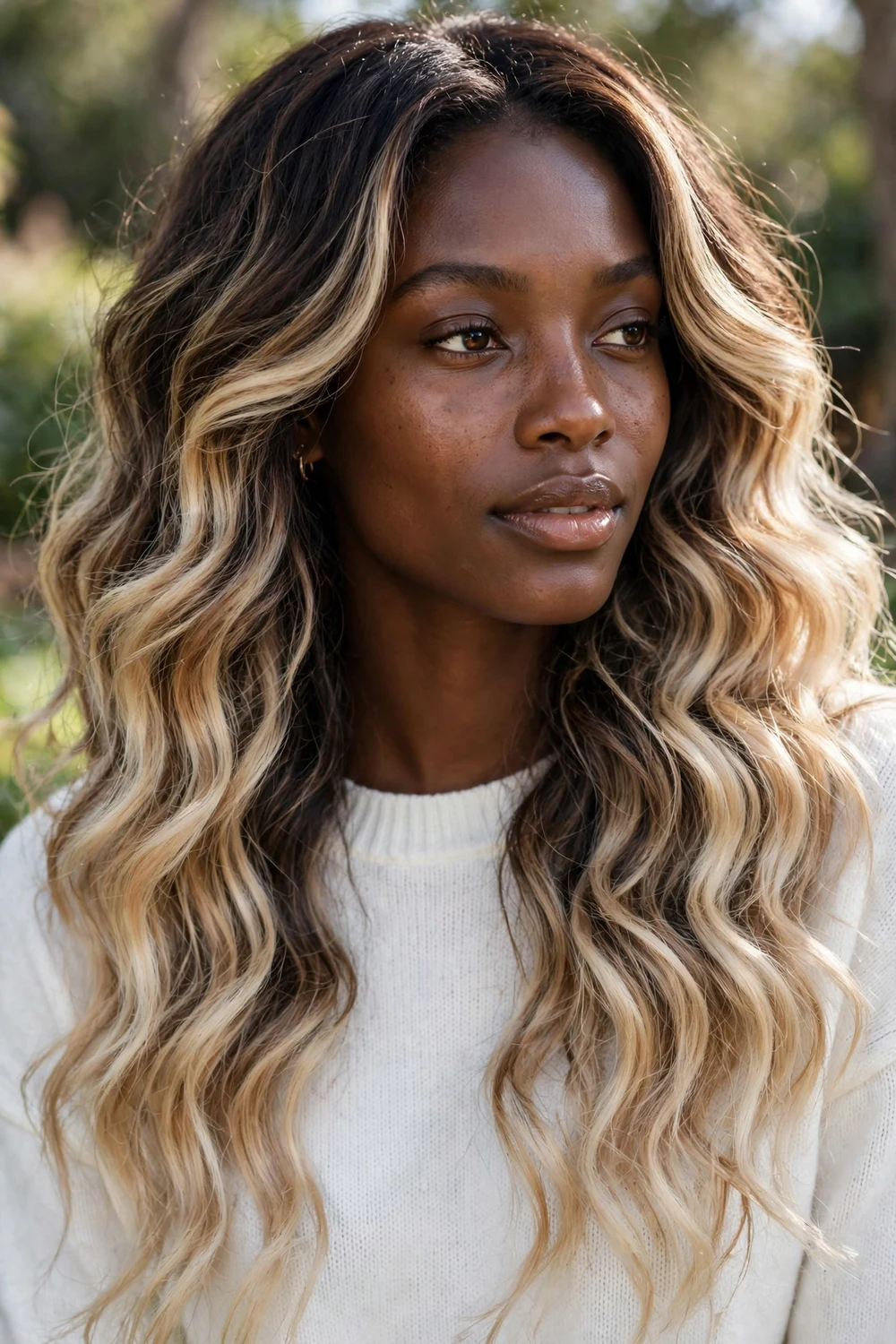
The natural root stays deep, sometimes barely lifted at all, while warm vanilla blonde is painted through the lengths in soft panels. Vanilla bean is a warm, creamy blonde with depth, less stark than platinum and less orange than gold. Keeping the root natural is the lowest-damage way to wear blonde balayage, and the grow-out is the softest on this list since nothing was lifted at the scalp. This suits dark bases best and anyone who wants blonde ends with genuinely minimal upkeep.
Try this: ask the colorist to feather the vanilla panels upward in thin weaves so the deep root never meets a hard blonde edge.
Difficulty: Salon only | Cost: $140–$230
22. Icy Beige Melt
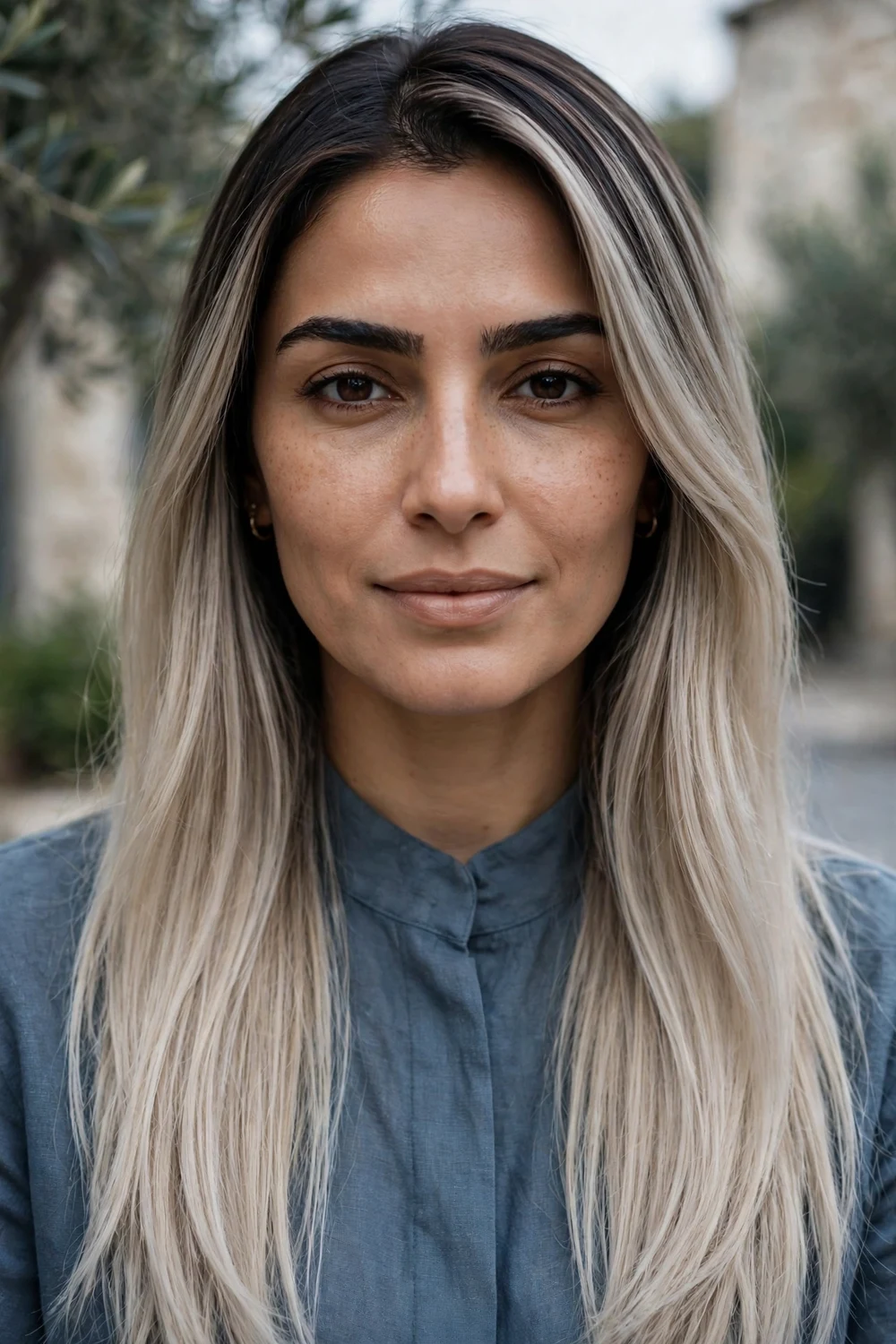
Pre-lightened ends get a cool beige toner melted down from a shadowed root, landing between icy ash and neutral beige. The melt technique blurs the root into the blonde so thoroughly that the color looks like one continuous cool tone. Icy beige is the answer for anyone who finds pure ash too stark but still wants a frosty winter finish. The toner needs refreshing every 6 to 8 weeks, but the melted root stretches full lightening appointments to 12 weeks. Fine hair benefits here: the cool tone adds the illusion of density.
Try this: alternate purple shampoo with a regular sulfate-free shampoo so the cool tone stays without over-drying the ends.
Difficulty: Salon only | Cost: $160–$270
23. Golden Hour Glow Balayage
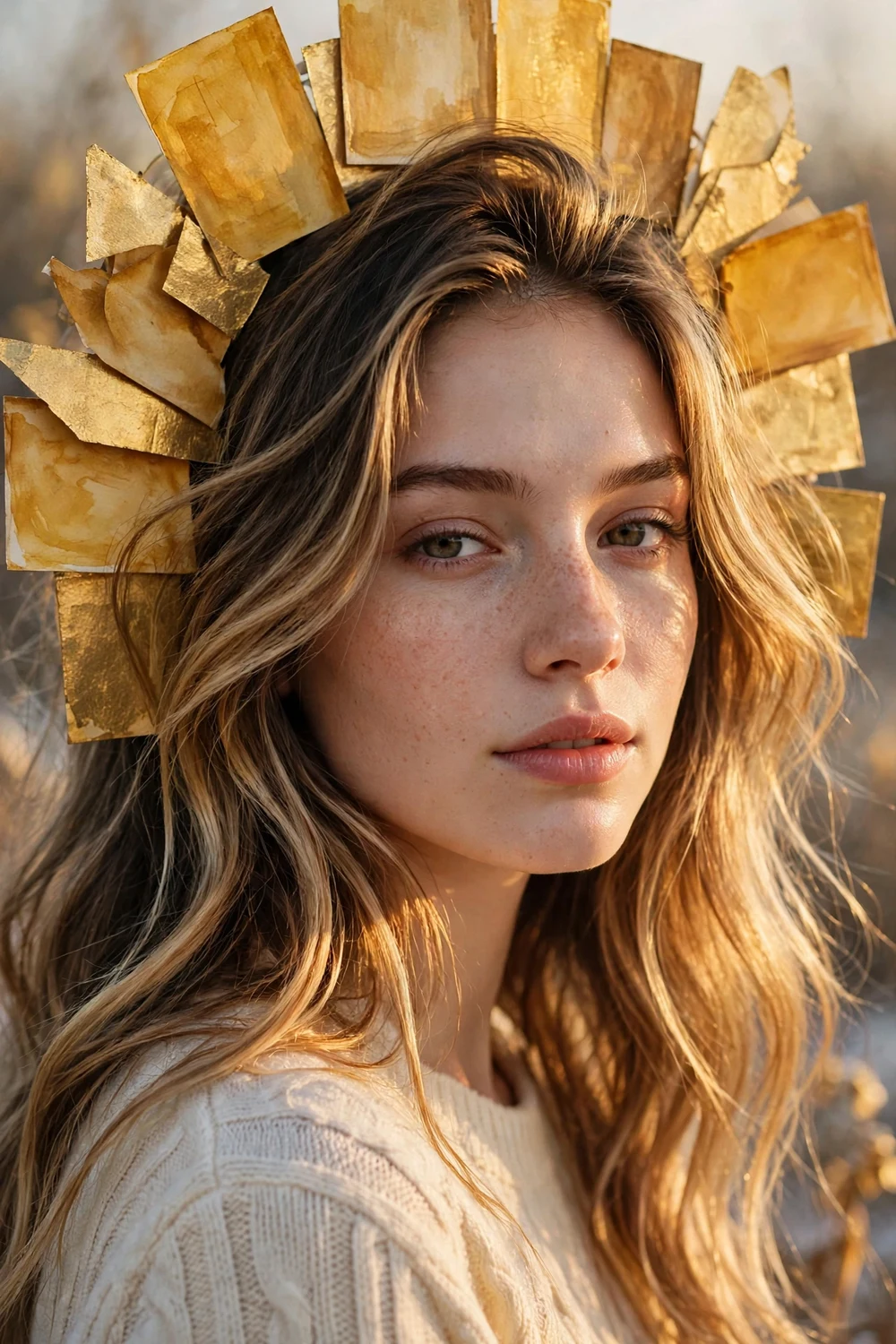
Warm golden panels are hand-painted around the face and through the top layers to mimic the glow of low winter sun on hair. The base stays a natural dark blonde, and the golden pieces are concentrated where light would hit: the crown, the face frame, and the ends. A warm gloss seals the tone. This is the most natural-looking warm option here, since it copies how sunlight actually lightens hair. It suits warm and neutral skin tones and needs only a gloss every 10 weeks, as the placement is deliberately soft.
Try this: part the hair in the center to show the face-framing golden panels evenly on both sides.
Difficulty: Salon only | Cost: $130–$220
24. Smoked Ash Balayage
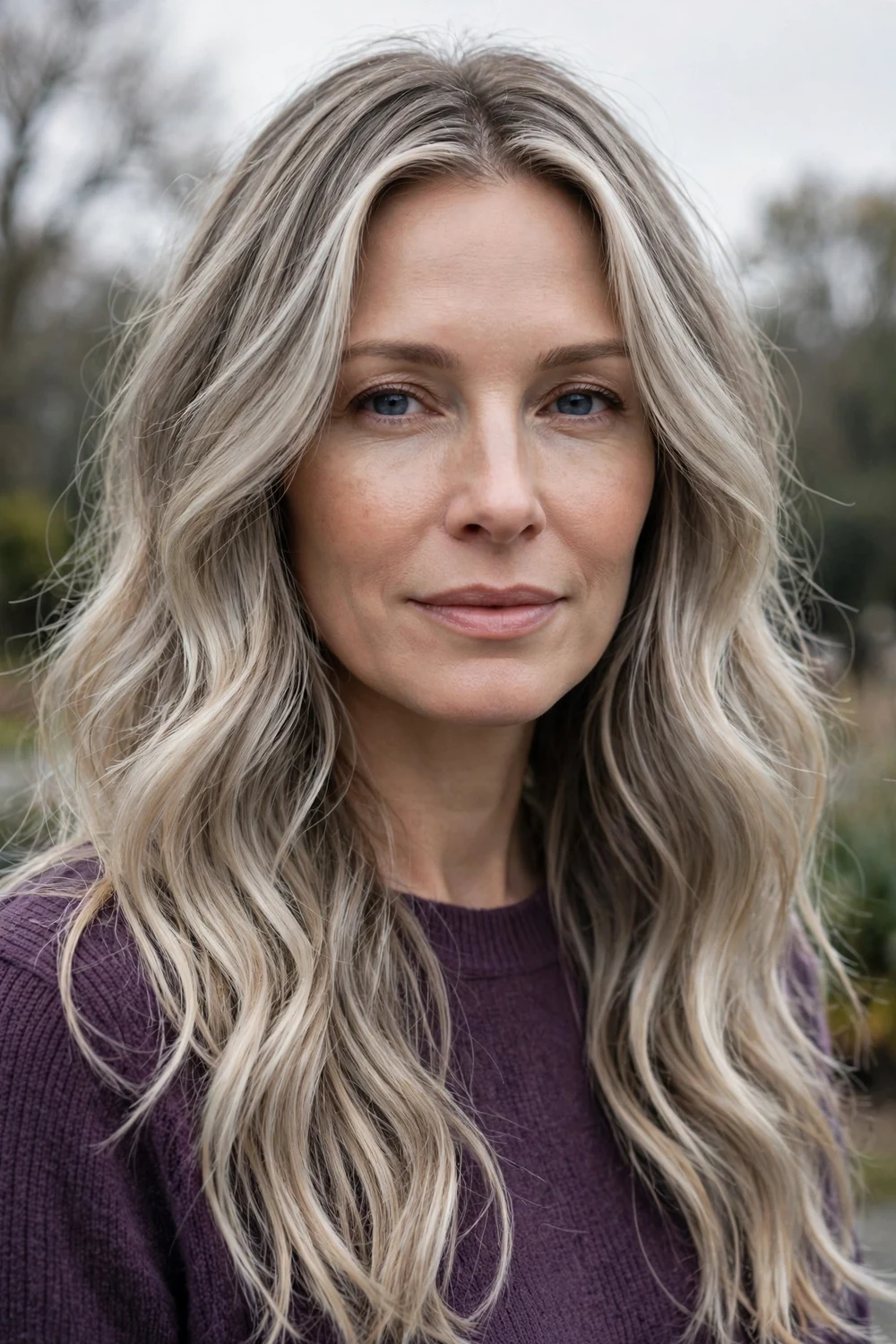
A smoky ash toner is worked over naturally blonde to light-brown hair, with hand-painted lighter pieces breaking through the smoke. The smoked effect mutes the base to a cool, hazy blonde that hides brassiness completely, while the painted highlights keep it from looking flat. This is the strongest anti-brass option on the list for blondes whose hair pulls warm no matter what. The smoky toner fades gradually and evenly, so the grow-out stays graceful for 10 to 12 weeks. For more on keeping blonde tones clean between appointments, see highlights on dirty blonde hair, which covers toning routines in detail.
Try this: avoid clarifying shampoos, which strip smoky toners faster than anything else; stick to gentle sulfate-free formulas.
Difficulty: Salon only | Cost: $140–$240
How to Choose Your Winter Blonde Balayage
Start with your natural base. Dark bases lift warm, so cool icy finishes take longer and cost more; warm caramels and honeys are the easier path. Light to medium bases can go either direction with less chair time.
Next, match the tone to your skin. Cool and neutral skin handles ash, pearl, and icy beige. Warm skin looks best with caramel, honey, biscuit, and golden tones. Beige and linen sit in the middle and suit most people.
Be honest about upkeep. If salon visits happen twice a year, pick a root stretch, a melted root, or a rooted vanilla look and skip platinum. If monthly toning sounds fine, the icy and silver options open up.
Finally, think about damage. The lighter the ends, the more care they need: bond treatments at the salon, weekly masks at home, and a heat protectant every time hot tools come out. Painted color is gentler than foils, but lightened ends are still lightened ends.
Winter Blonde Balayage Comparison
| Idea | Best base | Tone | Upkeep | Cost |
|---|---|---|---|---|
| Sun-Kissed Brunette-to-Blonde | Dark brown | Warm golden | 10–12 weeks | $150–$250 |
| Caramel Blonde | Medium–dark brown | Warm caramel | 8–10 weeks | $140–$230 |
| Dark-to-Light Ash Blonde | Dark brown–black | Cool ash | 6–8 weeks | $180–$300 |
| Icy Ash Blonde | Medium–light brown | Icy cool | 6–8 weeks | $180–$300 |
| Frosty Pearl | Light blonde | Pearl silver | 6–8 weeks | $170–$280 |
| Caramel and Cream | Medium brown | Warm mix | 8–10 weeks | $160–$260 |
| Snowy Silver | Light blonde–grey | Silver | 6 weeks | $150–$250 |
| Golden Honey | Medium–dark brown | Warm golden | 10 weeks | $130–$220 |
| Cool Beige | Dark blonde–brown | Cool neutral | 10–12 weeks | $140–$230 |
| Mocha and Vanilla | Medium–dark brown | Warm-cool mix | 8–10 weeks | $160–$260 |
| Honey Butter Cascade | Blonde–dark blonde | Warm buttery | 10 weeks | $140–$240 |
| Platinum Ice Melt | Medium blonde | Platinum cool | 6 weeks tone, 10–12 weeks full | $200–$320 |
| Caramel Ribbon Infusion | Dark blonde–brown | Warm caramel | 10–12 weeks | $120–$200 |
| Mushroom Blonde Gradient | Medium brown | Cool mushroom | 10–12 weeks | $150–$250 |
| Biscuit Blonde | Dark blonde–brown | Warm wheat | 8–10 weeks | $130–$220 |
| Linen Blonde Ribbons | Dark blonde | Neutral | 10–12 weeks | $120–$200 |
| Coconut Cream | Medium–light blonde | Creamy neutral | 6–8 weeks | $170–$280 |
| Winter Wheat Root Stretch | Dark blonde–brown | Warm neutral | 12 weeks | $130–$220 |
| Honey-Dipped Bronde | Dark blonde–light brown | Warm bronde | 10 weeks | $140–$240 |
| Shadow-Rooted Champagne | Light–medium blonde | Warm champagne | 10 weeks | $150–$250 |
| Rooted Vanilla Bean | Dark brown–black | Warm vanilla | 12 weeks | $140–$230 |
| Icy Beige Melt | Medium blonde | Cool beige | 6–8 weeks tone, 12 weeks full | $160–$270 |
| Golden Hour Glow | Dark blonde–brown | Warm golden | 10 weeks | $130–$220 |
| Smoked Ash | Blonde–light brown | Smoky cool | 10–12 weeks | $140–$240 |
FAQs About Winter Blonde Balayage
What is winter blonde balayage?
Winter blonde balayage is a hand-painted highlighting technique where a colorist sweeps lightener onto the mid-lengths and ends of the hair, leaving the roots deeper. Winter versions use deeper roots, cooler or richer toners, and softer grow-out than summer balayage, so the blonde looks intentional through months of dry indoor air and flat daylight.
How is balayage different from highlights?
Balayage is painted on by hand in soft, graduated sections with no foils, so the color melts from root to end without a defined starting line. Traditional highlights use foils packed closer to the scalp for a more uniform lift. Balayage grows out softer and needs fewer touch-ups, which is why it suits winter schedules when salon visits get spaced out.
Will blonde balayage turn brassy in winter?
It can, especially on dark bases or with hard water. Dry indoor heating and hot showers fade toner faster, letting warm undertones show through. Purple shampoo once a week, lukewarm wash water, and a toner refresh every 6 to 10 weeks keep the blonde clean. Cool-toned options like ash, pearl, and smoked ash resist brassiness best.
How long does winter blonde balayage last?
A full balayage appointment typically lasts 10 to 12 weeks before the grow-out needs attention, thanks to the soft painted blend. Icy, platinum, and silver finishes need toner-only refreshes every 6 to 8 weeks in between to stay crisp. Root stretches and melted roots stretch the full appointment the longest.
How much does winter blonde balayage cost at a salon?
Expect $120 to $300 depending on the look and your location. Subtle ribbon work and root stretches sit at the lower end around $120 to $200, while icy, platinum, and multi-tone finishes run $170 to $320 because they need more lifting and toning time. Toner-only refresh appointments between full sessions usually cost much less.
Final Thoughts
Winter blonde balayage works because it was designed for real life: painted by hand, rooted softly, and built to grow out gracefully. Pick the tone that suits your skin and the maintenance level you will actually keep up, and the blonde will carry you through the season. When the weather turns again, the same painted placement lifts easily into a brighter spring blonde.
