


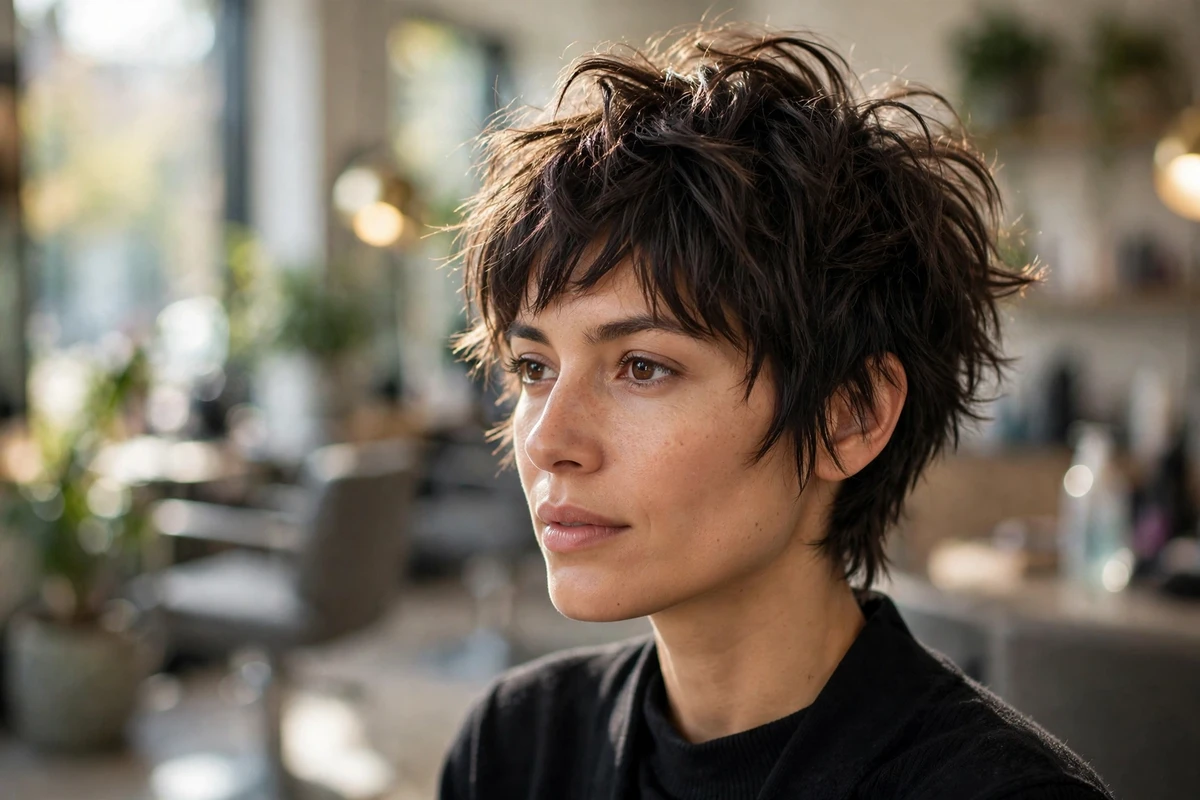
A short shaggy pixie haircut is a pixie built like a shag: close through the sides and nape, with choppy, uneven layers on top that move instead of lying flat. It is shorter than a shag, messier than a classic pixie, and one of the lowest-effort short cuts you can own. These 20 short shaggy pixie haircuts cover every version of the cut, with styling tips, realistic costs, and notes on who each one suits.
Every idea below includes a “Try this” tip plus a difficulty rating and a cost estimate, so you know the full picture before you book the cut.
Quick Takeaways
- A shaggy pixie means choppy layers on top with tapered or close sides. The texture, not the length, makes it a shag.
- It suits straight, wavy, curly, and coily hair. Fine hair looks thicker; thick hair loses bulk without losing shape.
- Most versions style in under 10 minutes with matte paste, clay, or texturizing spray.
- Book trims every 4 to 6 weeks. Short shag layers lose their edge faster than longer cuts.
- Use heat protectant before any flat iron or curling wand. Thinned ends show heat damage first.
1. Classic Textured Shaggy Pixie
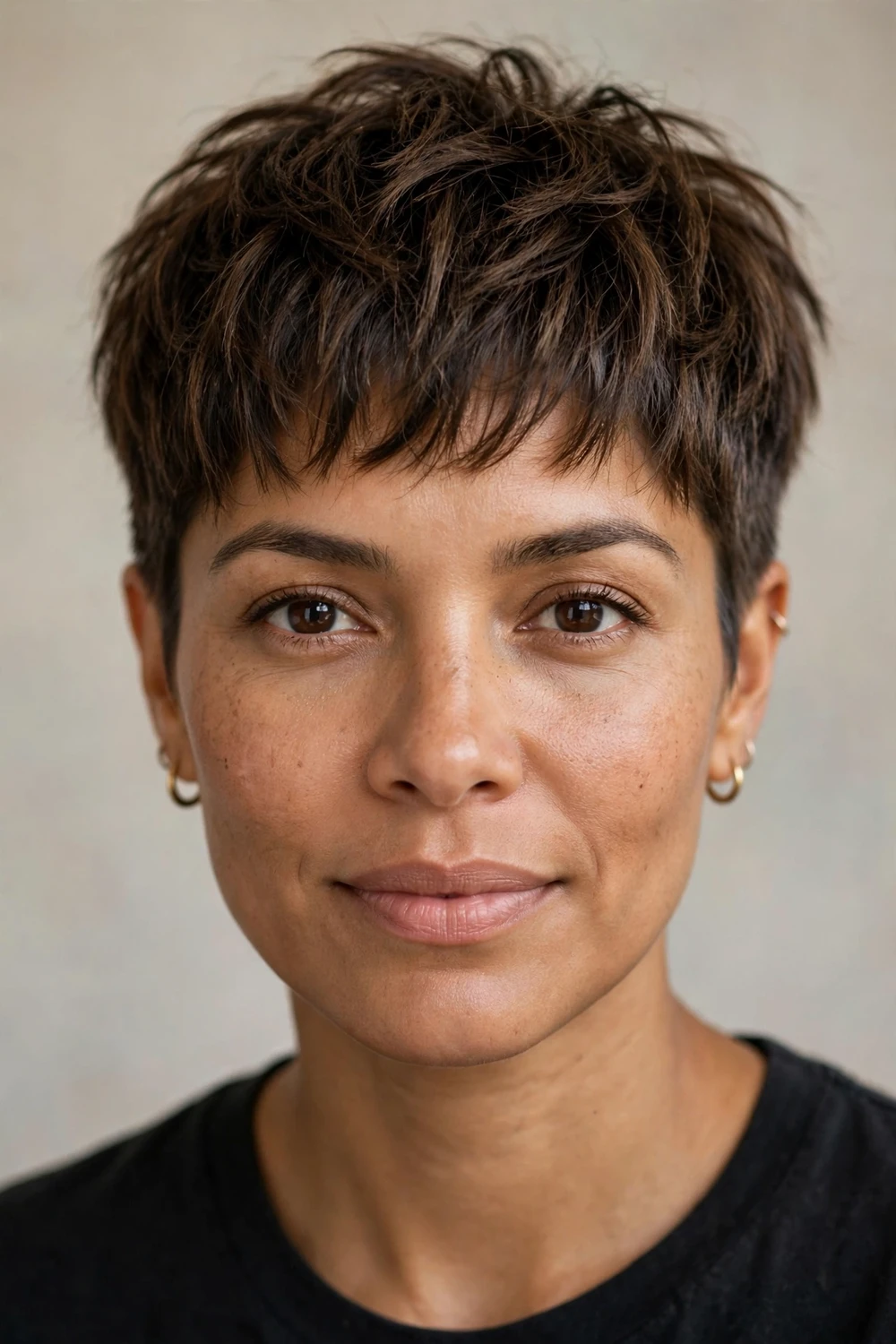
The baseline shaggy pixie: short tapered sides, and 2 to 3 inches of choppy layers on top that are cut to move. Ask your stylist for point-cut ends rather than blunt ones, so the top pieces separate naturally. This is the version to show when you are not sure which variation you want.
Style it by rubbing a pea-sized amount of matte paste between your palms and pushing the top forward and apart. Morning styling takes about 4 minutes. It suits straight to wavy hair in fine to medium density and most face shapes.
Try this: twist two or three pieces at the crown while the paste is fresh for extra separation.
Difficulty: Easy · Cost: $45–$85
2. Choppy Blonde Shaggy Pixie with Balayage
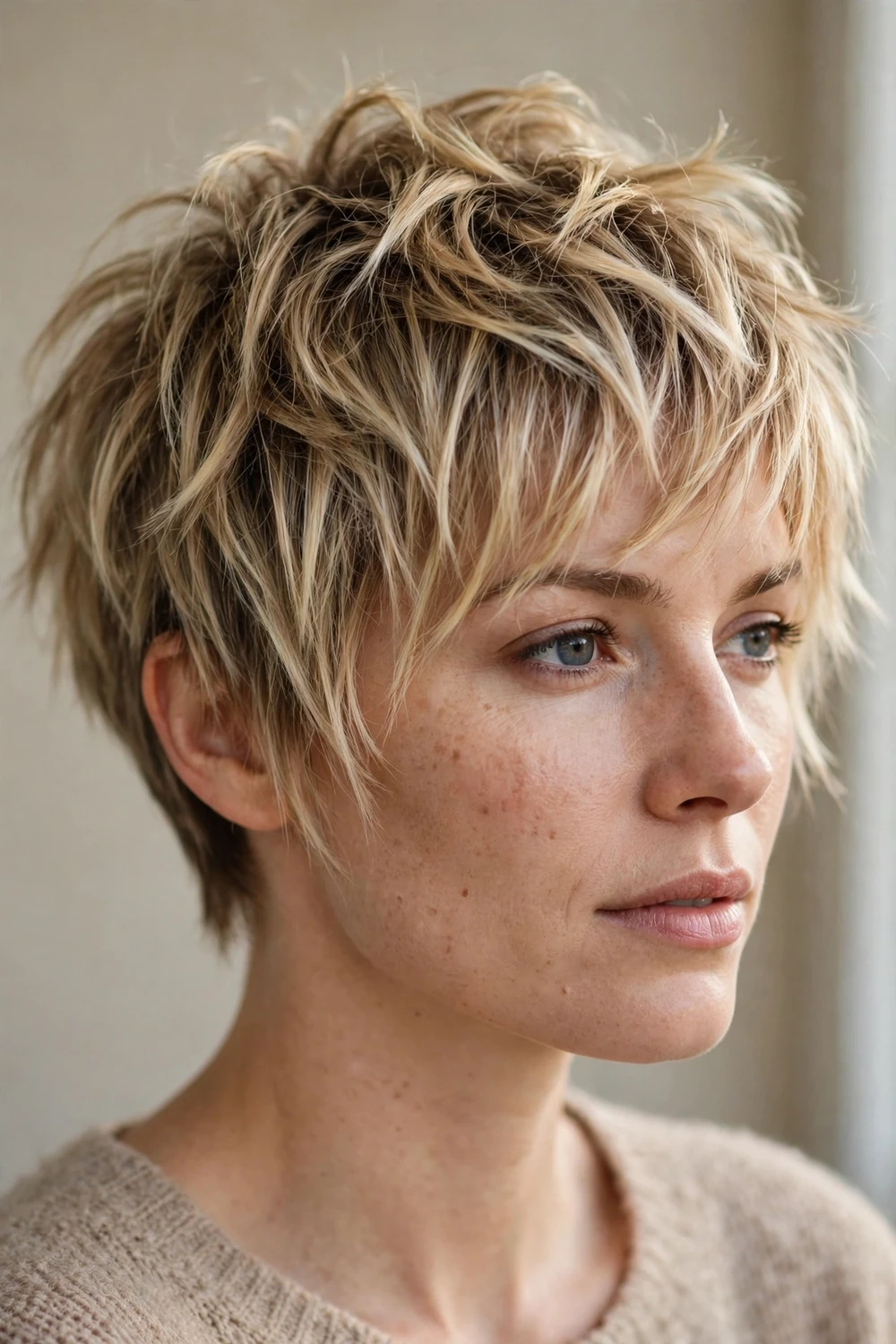
Hand-painted blonde through the top layers makes every choppy piece visible. The color sits mostly on the mid-lengths and tips, so regrowth stays soft and the cut reads dimensional even air-dried. Ask for the lightest pieces around the face and crown, where light hits first.
Balayage on a pixie needs a toner refresh every 6 to 8 weeks to stay bright. Purple shampoo once a week slows brassiness. The cut itself needs only paste and fingers. Suits straight to wavy hair; flatters oval and heart faces.
Try this: ask for a shadow root at the part so the blonde grows out without a hard line.
Difficulty: Easy · Cost: $120–$220 (color and cut)
3. Curly Shaggy Pixie

Curls and shag layering work well together. The layers remove the weight that pulls curls flat, and each curl gets room to spring. Get it cut dry so the stylist sees your true curl length, and ask for the top left long enough for the pattern to form.
Scrunch curl cream into damp hair and diffuse on low heat or air-dry. A satin pillowcase keeps the top defined overnight. This is the wash-and-go version of the shaggy pixie. For more short curly shapes, these curly pixie haircuts show what curl patterns can do at pixie length.
Try this: pick the roots at the crown once dry for extra height without disturbing the curl clumps.
Difficulty: Easy · Cost: $60–$110 (curl-specialist cut)
4. Shaggy Pixie with Micro Fringe
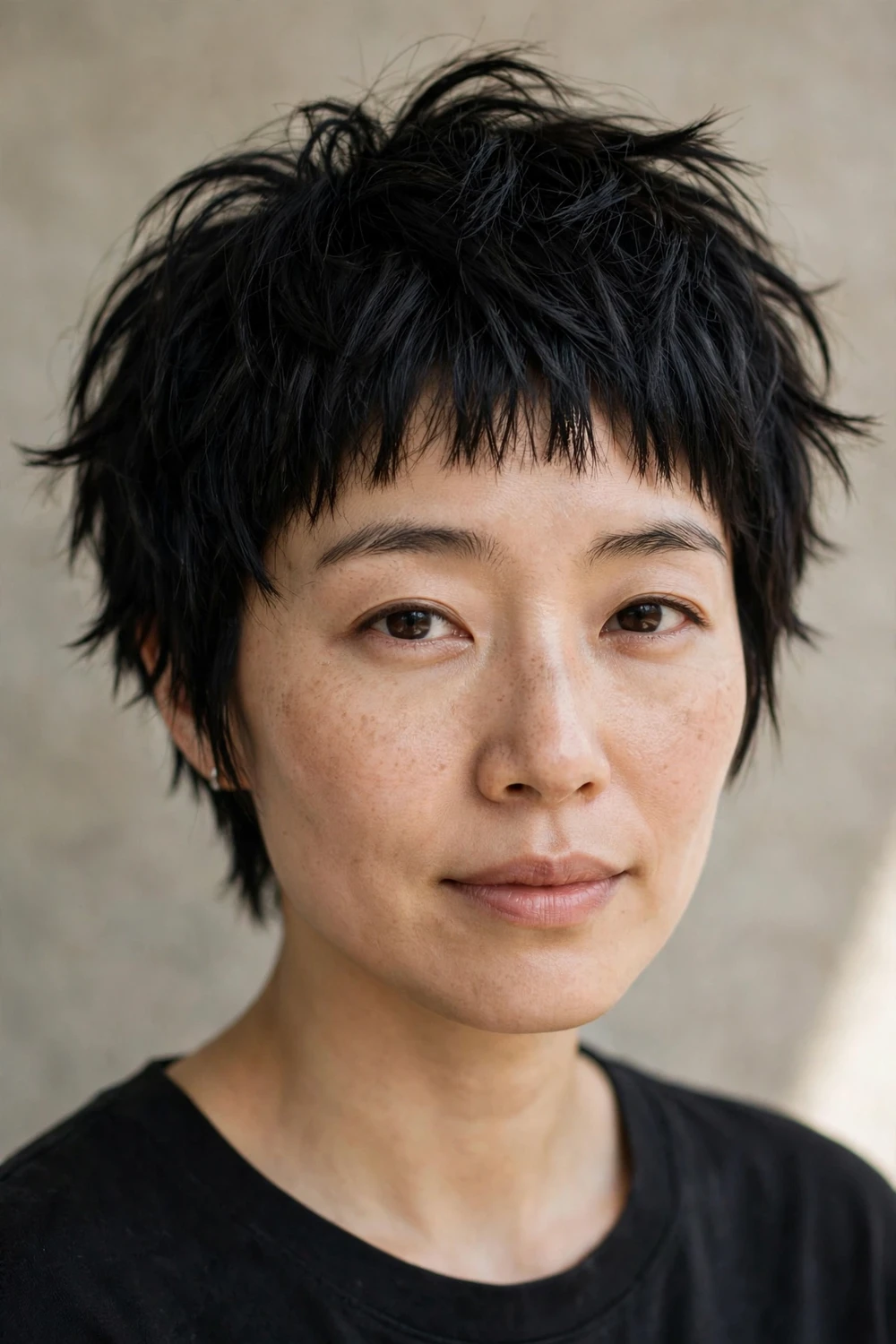
A fringe cut well above the brows gives the shaggy pixie a bold, graphic front. The short fringe opens up the face while the choppy top keeps the cut from looking severe. Small faces wear this best, since there is less forehead to expose.
The fringe grows fast, so book fringe trims every 3 weeks. Style the top with a little wax and leave the fringe alone after one quick blow-dry forward. Do not try to stretch a micro fringe into longer bangs without a plan; the middle months need pinning back.
Try this: keep the fringe slightly uneven, not ruler-straight, so it matches the shaggy texture.
Difficulty: Medium · Cost: $45–$85 plus fringe trims
5. Side-Swept Shaggy Pixie
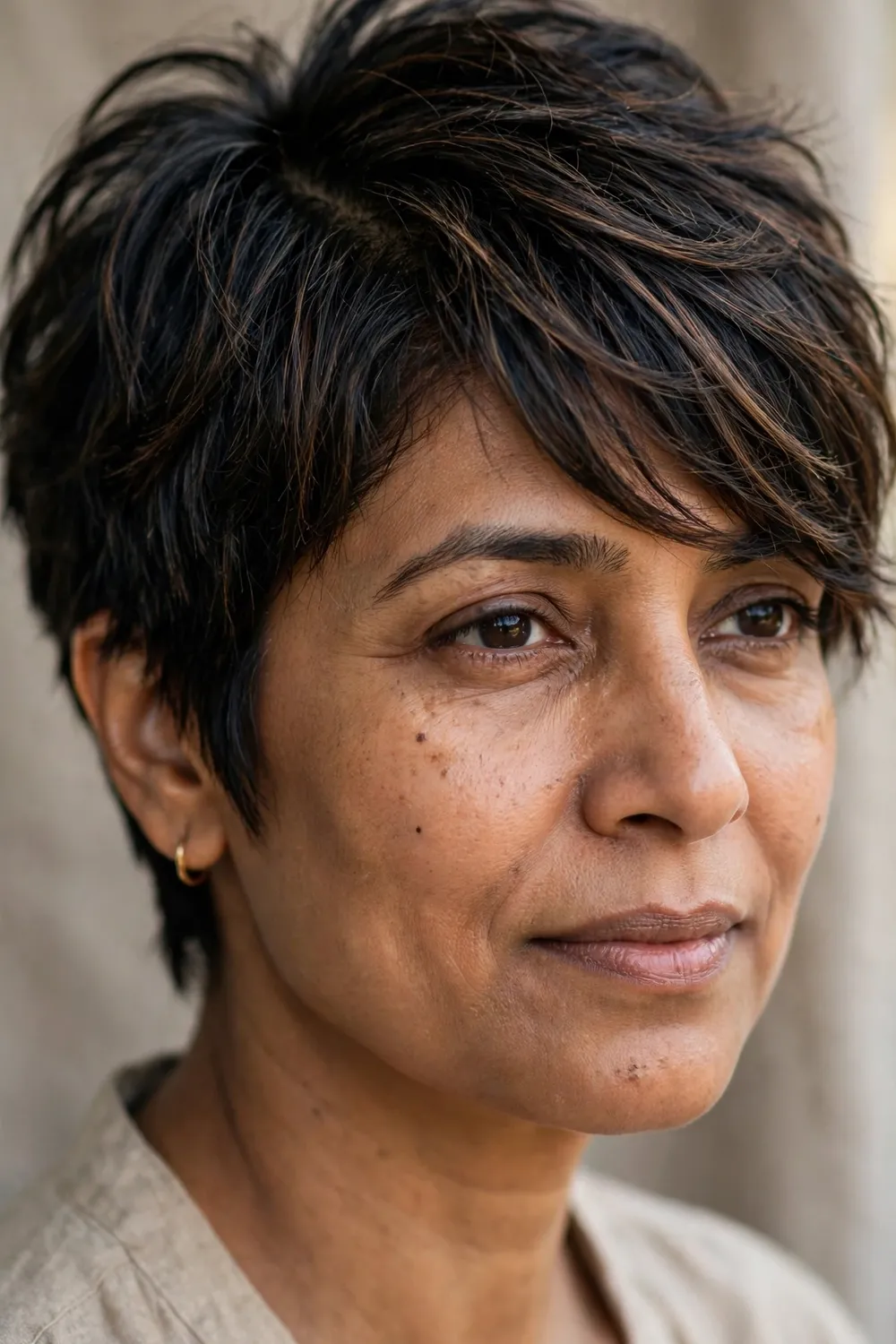
The top stays long enough to sweep across the forehead from a deep side part, while the back and sides stay short and textured. The diagonal line flatters round and square faces, and the sweep covers a high forehead without a separate fringe cut.
Set the part while the hair is damp so it dries in place. Blow-dry the fringe toward the opposite side first for root lift, then sweep it over. A dab of matte paste keeps the sweep from sliding by afternoon.
Try this: flip the part to the other side every few weeks for instant root volume and a fresh feel.
Difficulty: Easy · Cost: $45–$85
6. Undercut Shaggy Pixie
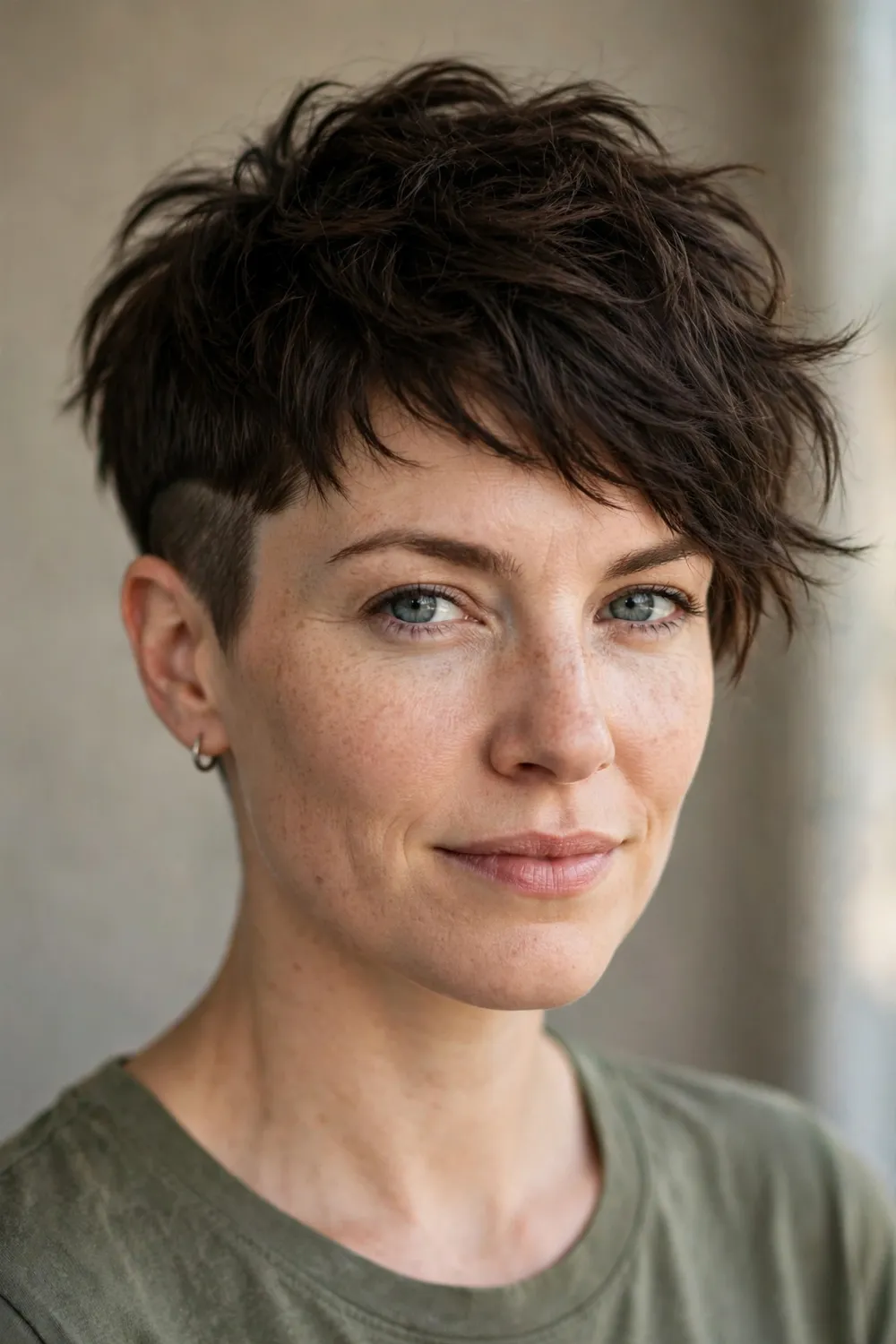
One or both sides are clipped short while the top keeps full shaggy length. The contrast makes the texture on top look even fuller, and the cut dries in minutes. It suits thick hair especially well, since the undercut removes bulk where it does nothing for you.
The clipped sections need edging every 3 to 4 weeks to stay sharp. Style the top with paste or clay for separation. Grow-out stays manageable if the undercut is faded rather than harsh. For more shaved-side ideas, these pixie cut shaved sides show the full range.
Try this: start with one side undercut, not both. You can take the other side at the next appointment.
Difficulty: Easy · Cost: $50–$90
7. Silver Shaggy Pixie

Natural gray or silver gives the shaggy pixie built-in dimension. Each choppy layer catches light differently, which makes the texture look deeper. The cut is also kind to graying hair, since the short length means less visible dryness at the ends.
Use purple shampoo once a week to keep silver bright instead of yellow, and a lightweight cream to control flyaways. Silver ends need a trim every 5 to 6 weeks. The color grows out gracefully, with roots blending into the pattern instead of drawing a line.
Try this: a clear gloss every couple of months adds shine without changing the silver tone.
Difficulty: Easy · Cost: $45–$85
8. Copper Shaggy Pixie
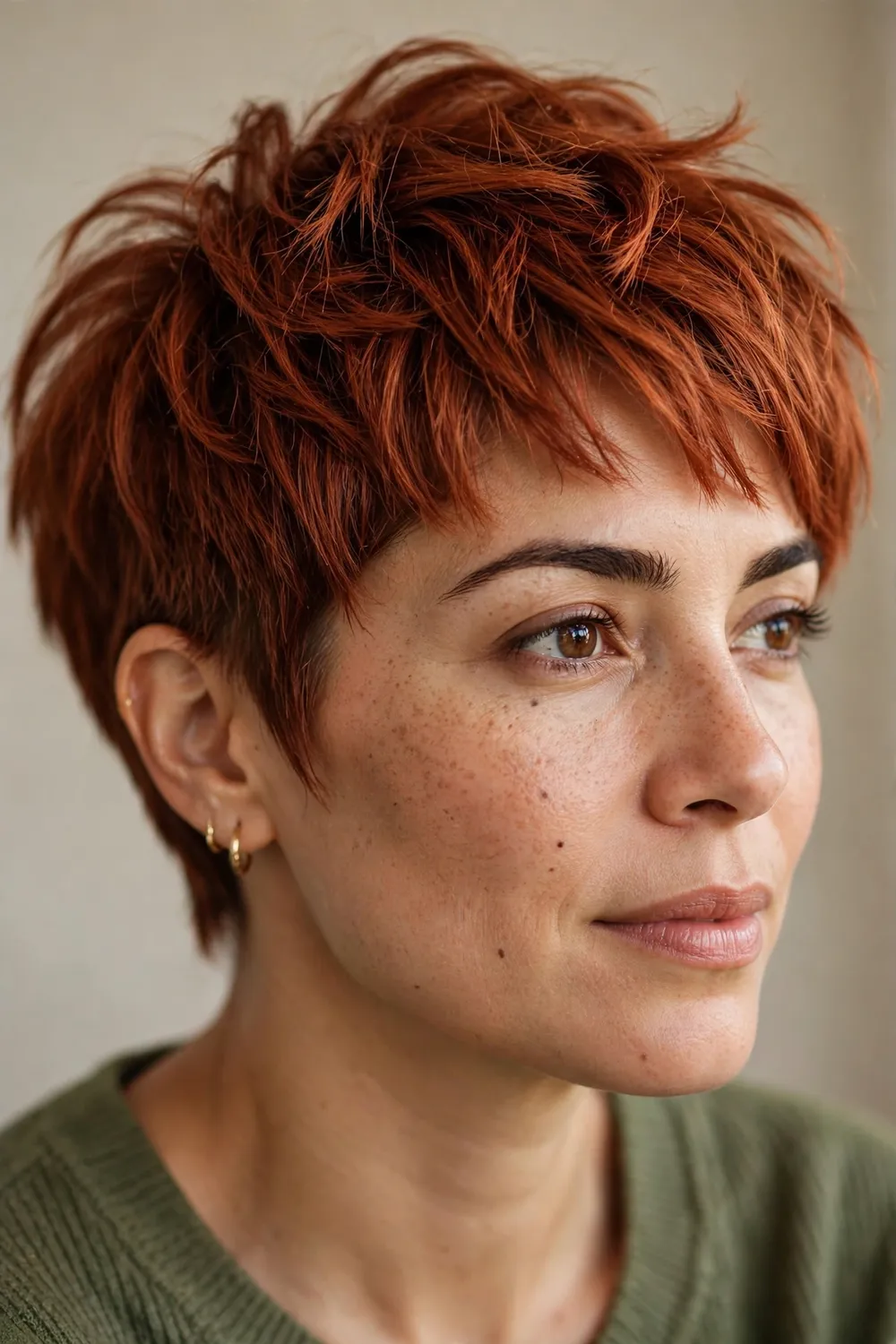
Copper turns the shaggy pixie into a statement. The warm red reflects light through every separated piece, which makes the choppy texture more visible. Warm copper flatters fair to medium skin with warm undertones especially well.
Copper fades faster than most shades, so wash in cool water with color-safe shampoo and use a color-depositing conditioner weekly. The cut itself styles in minutes with paste. Plan color refreshes every 5 to 6 weeks.
Try this: keep the copper slightly deeper at the roots and brighter at the tips for low-effort dimension.
Difficulty: Easy · Cost: $100–$180 (color and cut)
9. Platinum Shaggy Pixie
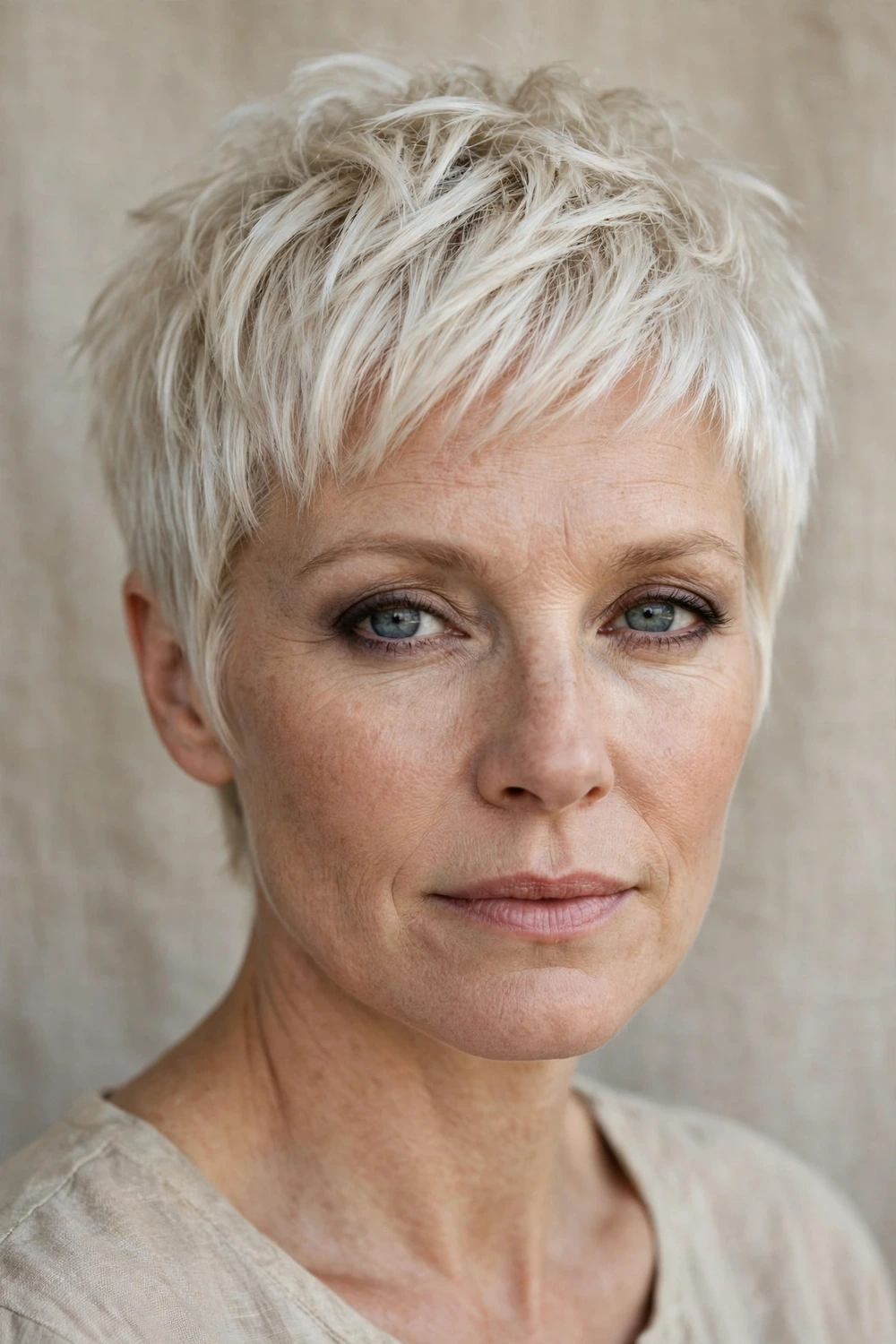
Bleached to clean platinum, the shaggy pixie reads bold and modern. The pale color shows off every layer, and the short length keeps the bleach commitment manageable. Fine to medium hair holds the texture best at this color.
Platinum needs toning every 4 to 6 weeks and weekly deep conditioning, since bleach dries ends fast. Use purple shampoo once a week. Style with a small amount of wax, starting with less than you think. The cut grows out in about 4 weeks, so trims stay on schedule.
Try this: spike only the crown and keep the sides flat some days for a faux-hawk effect from the same cut.
Difficulty: Medium · Cost: $120–$220 (bleach, tone, and cut)
10. Shaggy Pixie with Extended Nape
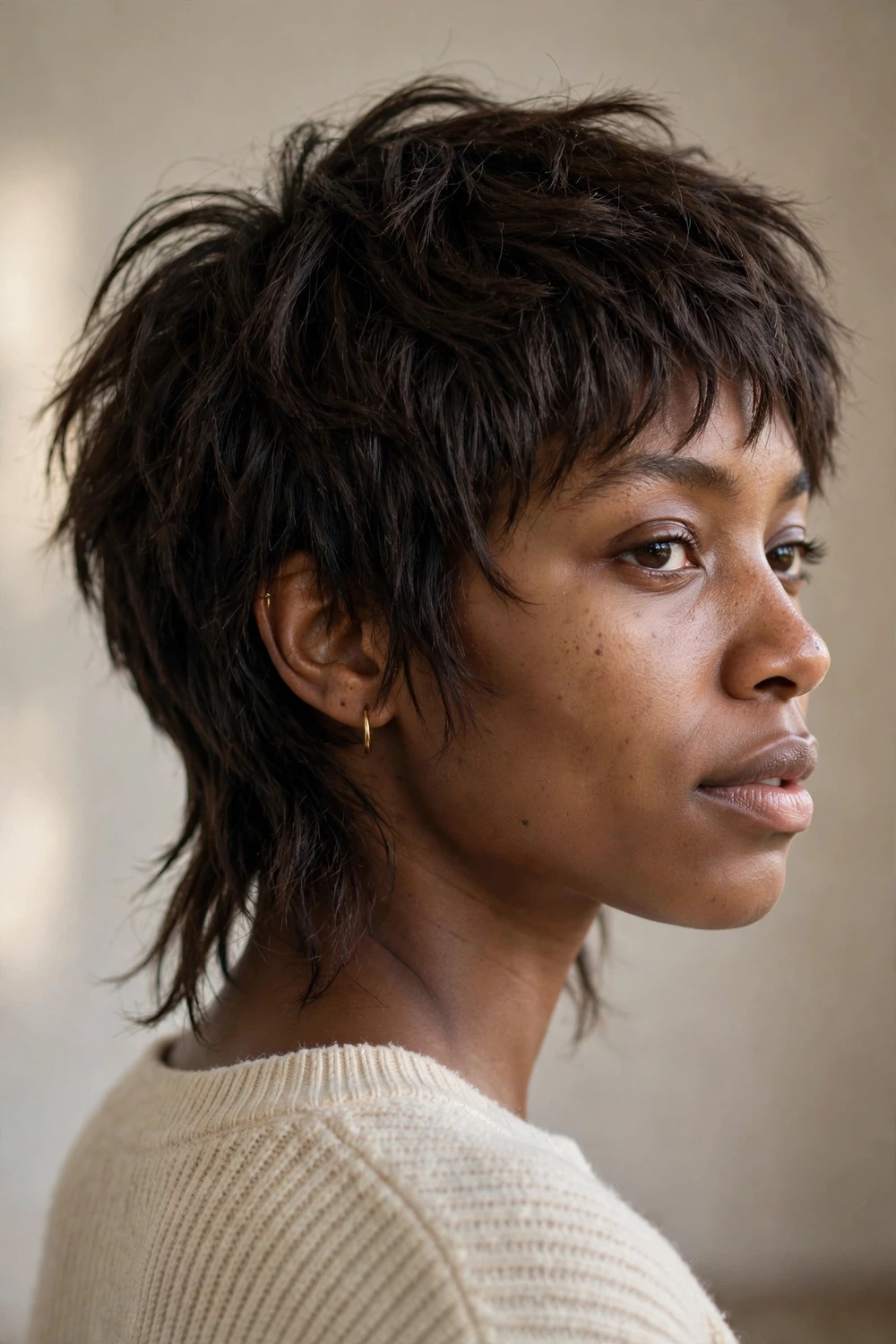
The top stays short and choppy like a pixie while the nape grows several inches longer with shaggy texture. The contrast creates a silhouette with real personality, and it is the easiest shaggy pixie to grow out, since the back is already ahead.
Trim the nape occasionally to keep its shape deliberate rather than accidental. Style the top with paste for piecey definition and let the nape fall naturally. Suits straight to wavy hair. If this length contrast appeals to you, these short wolf cut ideas push the idea further.
Try this: tuck the front pieces behind your ears to emphasize the top-to-nape contrast.
Difficulty: Easy · Cost: $50–$95
11. Wispy Shaggy Pixie for Fine Hair
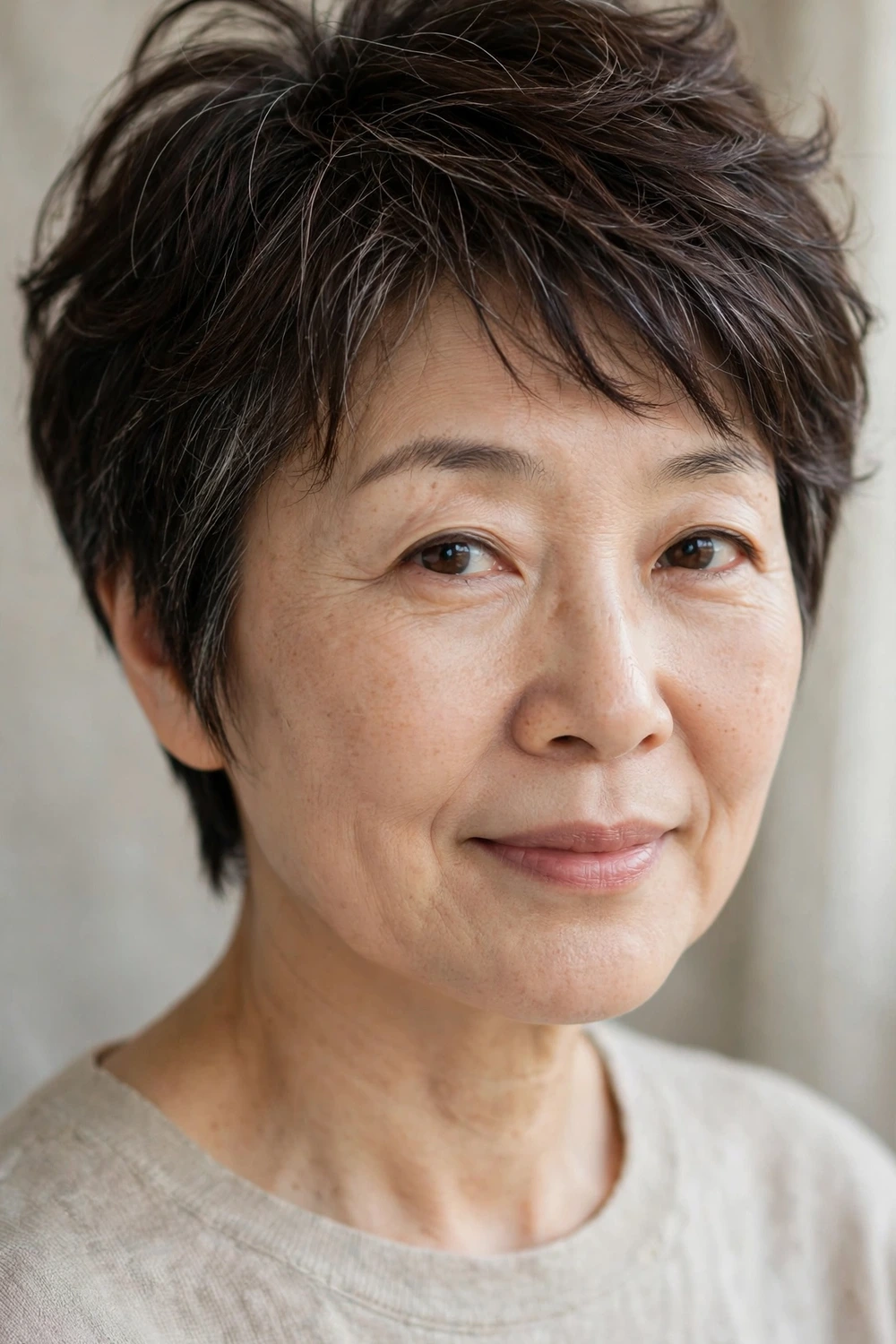
Fine hair needs a light hand. Feathered, wispy layers build the look of volume without removing the density fine hair cannot spare. The ends are soft rather than chunky, and the top pieces are cut to stand apart, which reads as fullness.
Over-thinning is the common mistake, so ask your stylist to keep the perimeter full. Root-lifting mousse on damp hair makes the biggest difference, then rough-dry with your fingers. Suits straight to wavy fine hair. For more fine-hair shapes, these short hairstyles for thin hair use the same density-first logic.
Try this: lightly tease the crown on flat days. Short layers underneath hide the teasing.
Difficulty: Easy · Cost: $45–$85
12. Shaggy Pixie with Curtain Bangs
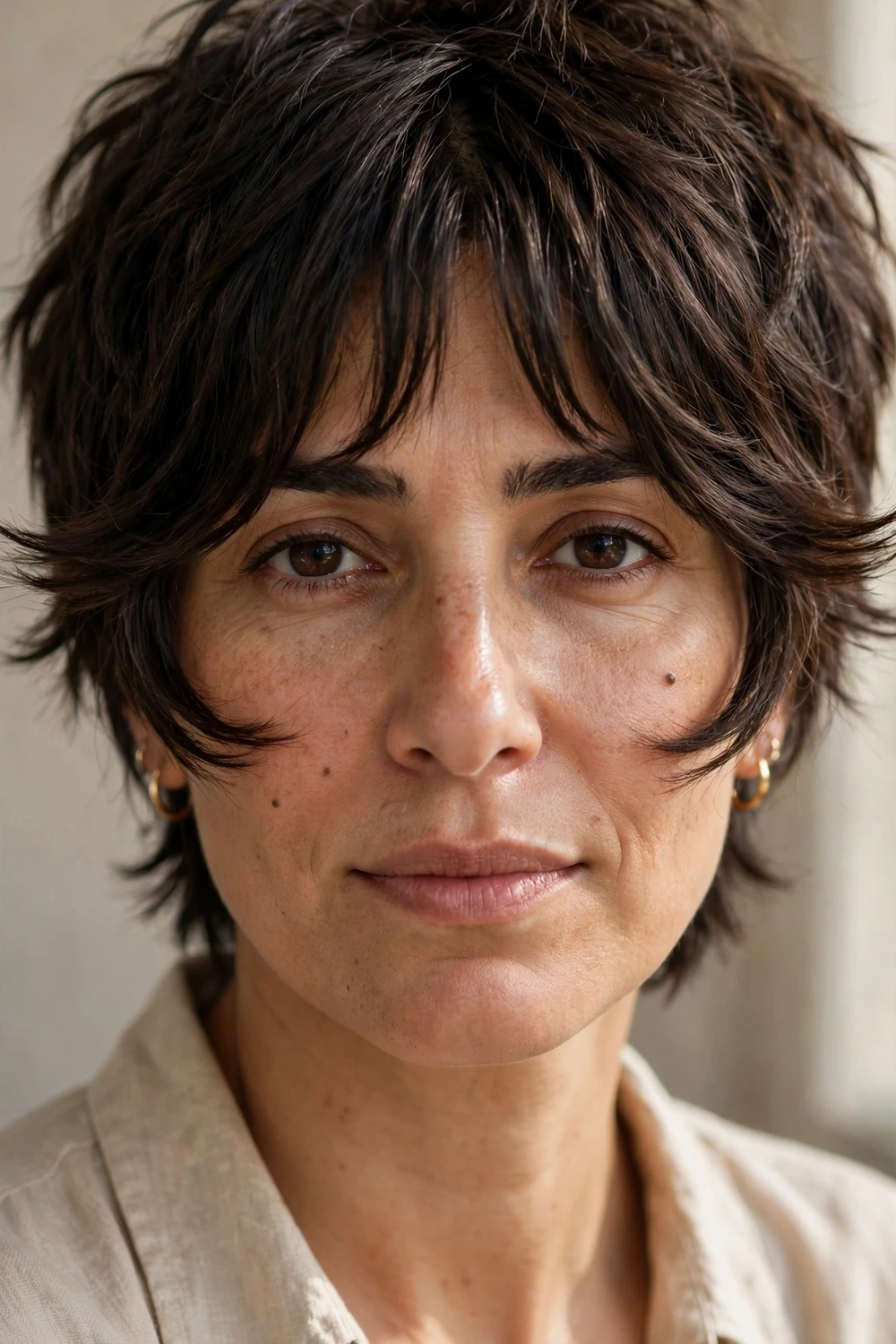
Curtain bangs part in the center and sweep outward to the cheekbones, softening the pixie’s edge. They blend straight into the shaggy top layers, so the whole cut reads as one continuous shape. This is the lowest-commitment fringe for a shaggy pixie.
The bangs need a trim every 4 to 6 weeks, more often than the rest of the cut. Blow-dry them away from the face with a round brush for the signature sweep. They grow out gracefully into face-framing layers, so there is no awkward stage.
Try this: part the bangs slightly off-center on some days for an asymmetric sweep from the same cut.
Difficulty: Easy · Cost: $50–$90
13. Tapered Shaggy Pixie
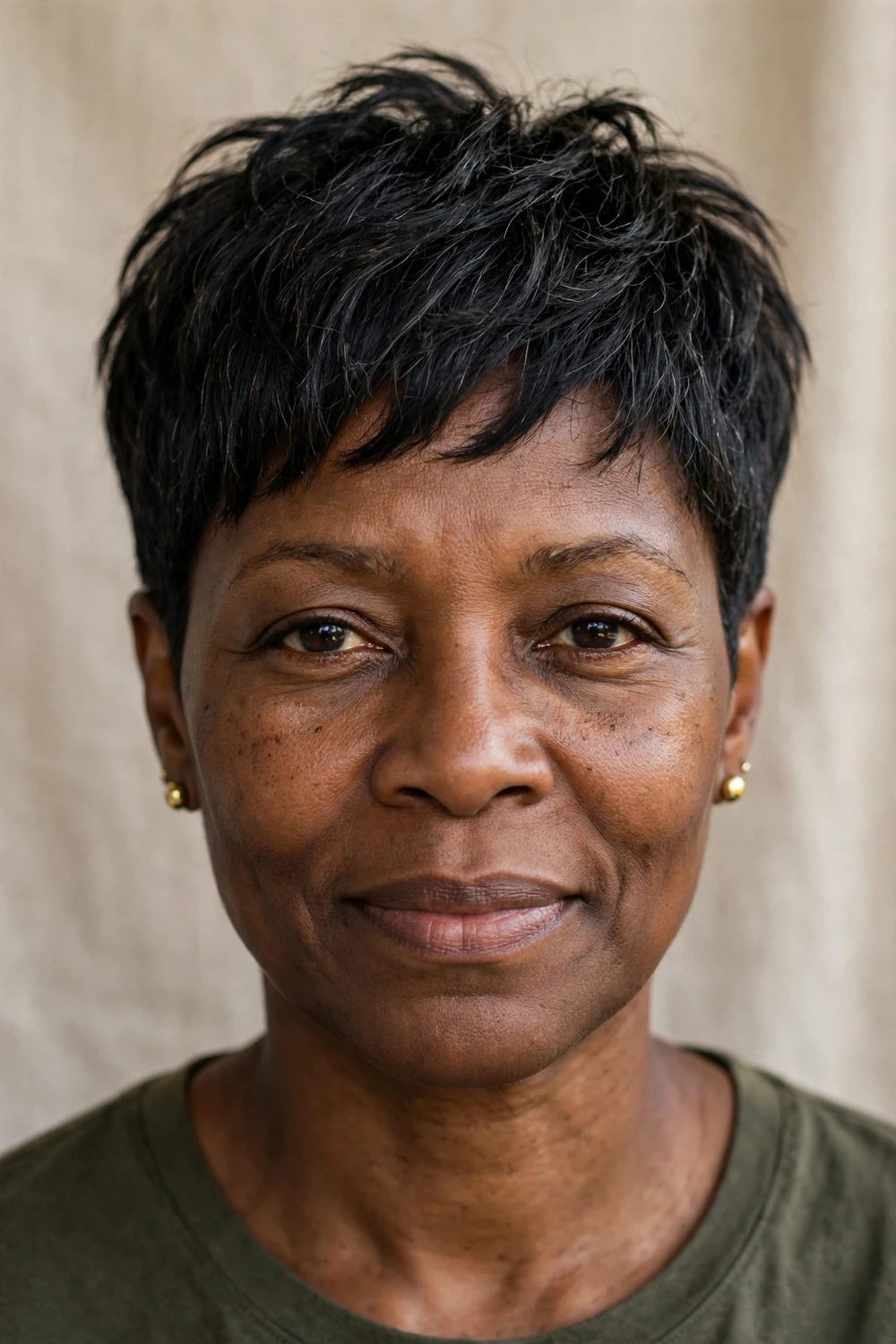
The sides and back are tapered close with clippers or shears, following the head shape, while the top keeps full shaggy texture. The clean taper gives the cut a neat outline that works in conservative settings, while the top keeps its edge.
The taper needs a cleanup every 4 to 5 weeks or it grows shaggy and ruins the contrast. Style the top with matte clay for separation. A tiny amount of styling cream is enough; the shape holds itself. Suits straight to wavy hair in medium density.
Try this: ask for the taper done with clippers over comb for the softest grow-out line.
Difficulty: Easy · Cost: $45–$80
14. Shaggy Bixie
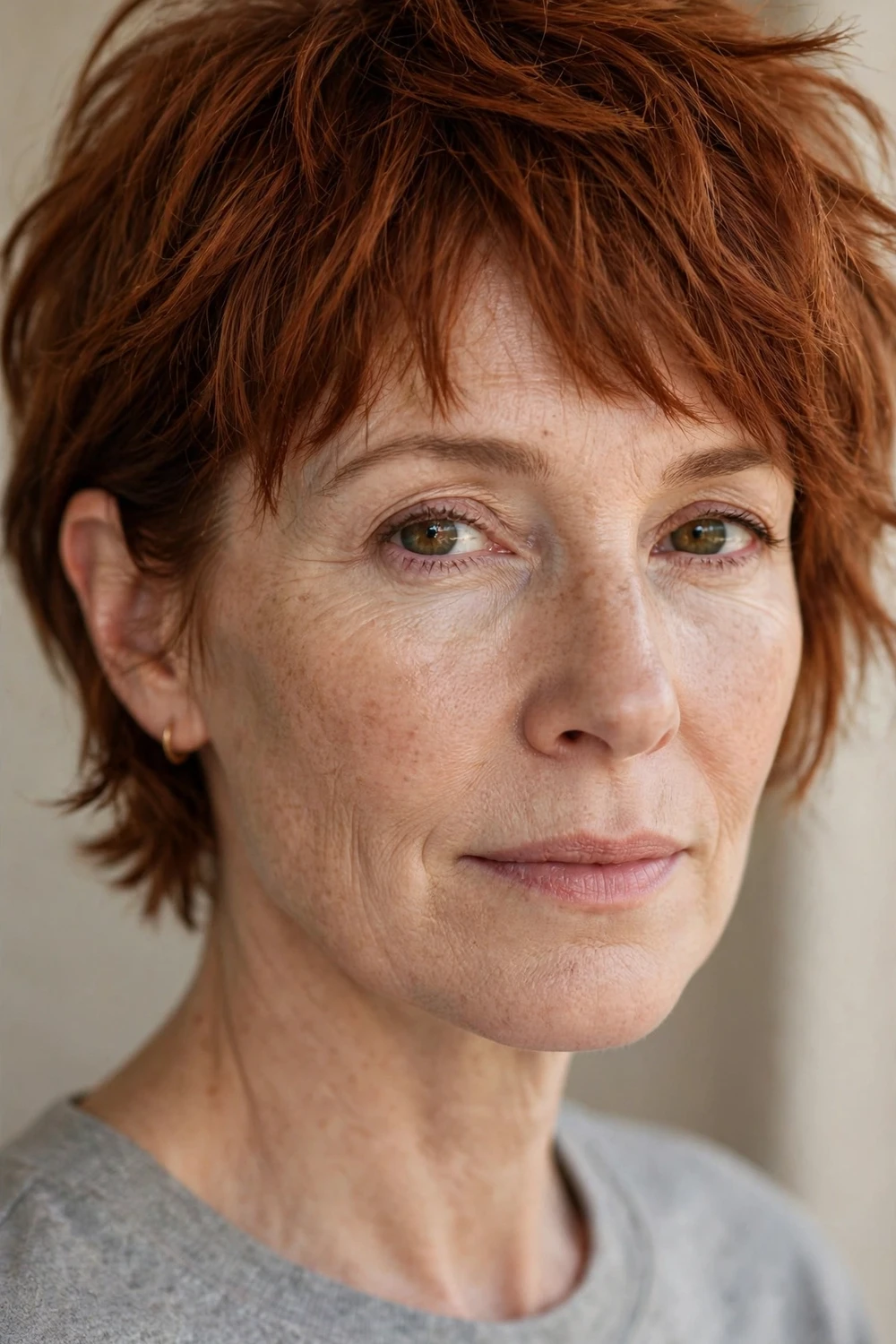
Between a bob and a pixie, the shaggy bixie ends around the nape with choppy layers through the crown and ends. It keeps enough length to tuck behind the ears yet stays light and textured. Choose it if you keep going back and forth between short and very short.
It grows out gracefully since the layers are uneven by design. Pomade on the ends defines pieces without stiffness. Air-dry with texturizing spray for a lived-in finish. Suits fine to medium hair with a side part or soft fringe.
Try this: flip random ends outward with a flat iron, leaving others straight. Apply heat protectant first.
Difficulty: Easy · Cost: $55–$100
15. Razored Shaggy Pixie
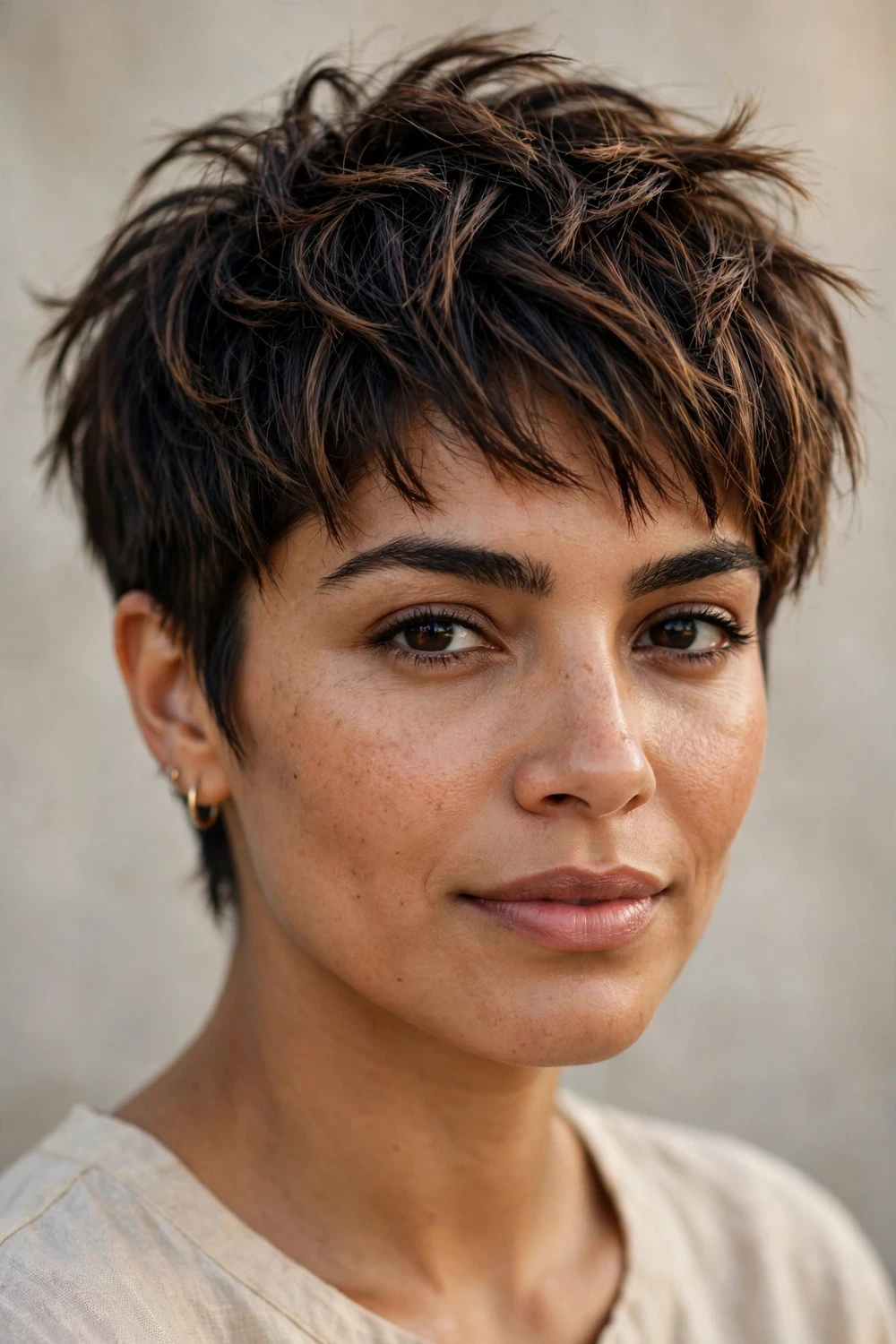
Cut with a razor instead of shears, this version has the sharpest, most feathered ends on the list. The razor creates wispy tips that separate on their own, so the texture needs almost no product. Thick hair benefits most, since the razor removes bulk while keeping length.
Razored ends can frizz on very coarse or damaged hair, so this cut suits healthy hair best. A smoothing cream on the mid-lengths keeps the feathering soft. Trims every 5 to 6 weeks keep the razor texture crisp.
Try this: scrunch a little sea salt spray into dry hair for extra separation on the razored ends.
Difficulty: Easy · Cost: $55–$100
16. Shaggy Pixie with Dark Root Fade
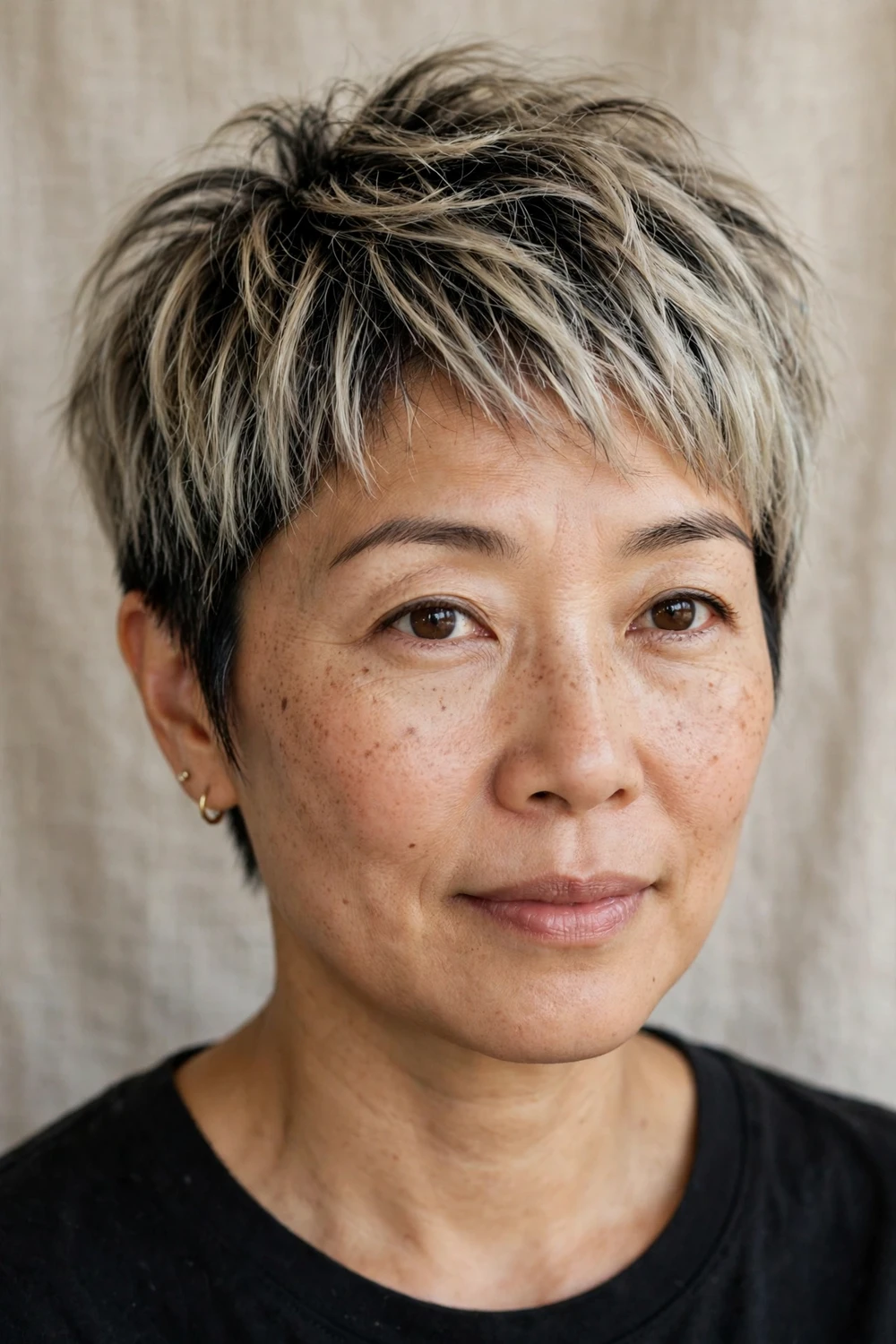
Dark roots melt into lighter lengths on a choppy pixie. The shadow-root effect adds depth and stretches the time between color appointments to 8 or 10 weeks. It suits women growing out color who want the transition to look deliberate.
Finger-style with texturizing paste for separation. The dark root means less visible regrowth, so the color maintenance drops sharply. Use purple shampoo once a week to keep the light ends bright. Works on straight to wavy hair.
Try this: ask for a smudged root rather than a hard line so grow-out stays soft for months.
Difficulty: Easy · Cost: $110–$190 (color and cut)
17. Piecey Fringe Shaggy Pixie
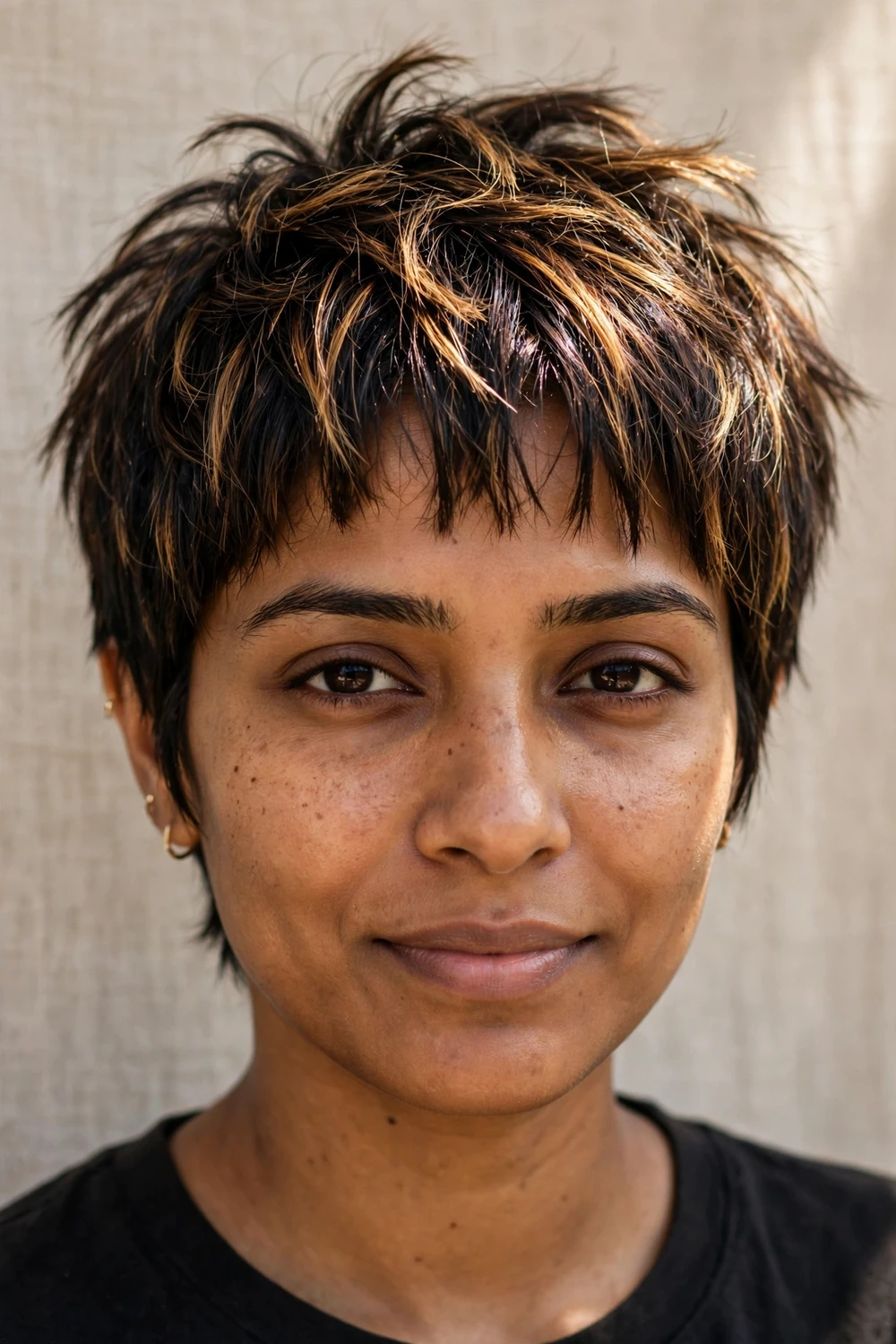
The fringe is separated into defined clumps rather than falling as one sheet, showing a little forehead between the pieces. On a shaggy pixie it gives a playful finish and keeps the cut from feeling heavy around the face. Caramel balayage through the pieces catches the light.
Create the pieces by working a tiny amount of matte wax through the fringe with your fingertips, pinching small sections together. Less product than you think; too much wax turns piecey into greasy. Piecey fringes need a trim every 3 to 4 weeks.
Try this: define the pieces while the fringe is slightly damp. They hold the separation better as they dry.
Difficulty: Easy · Cost: $55–$100 (cut), color extra
18. Tousled Wavy Shaggy Pixie
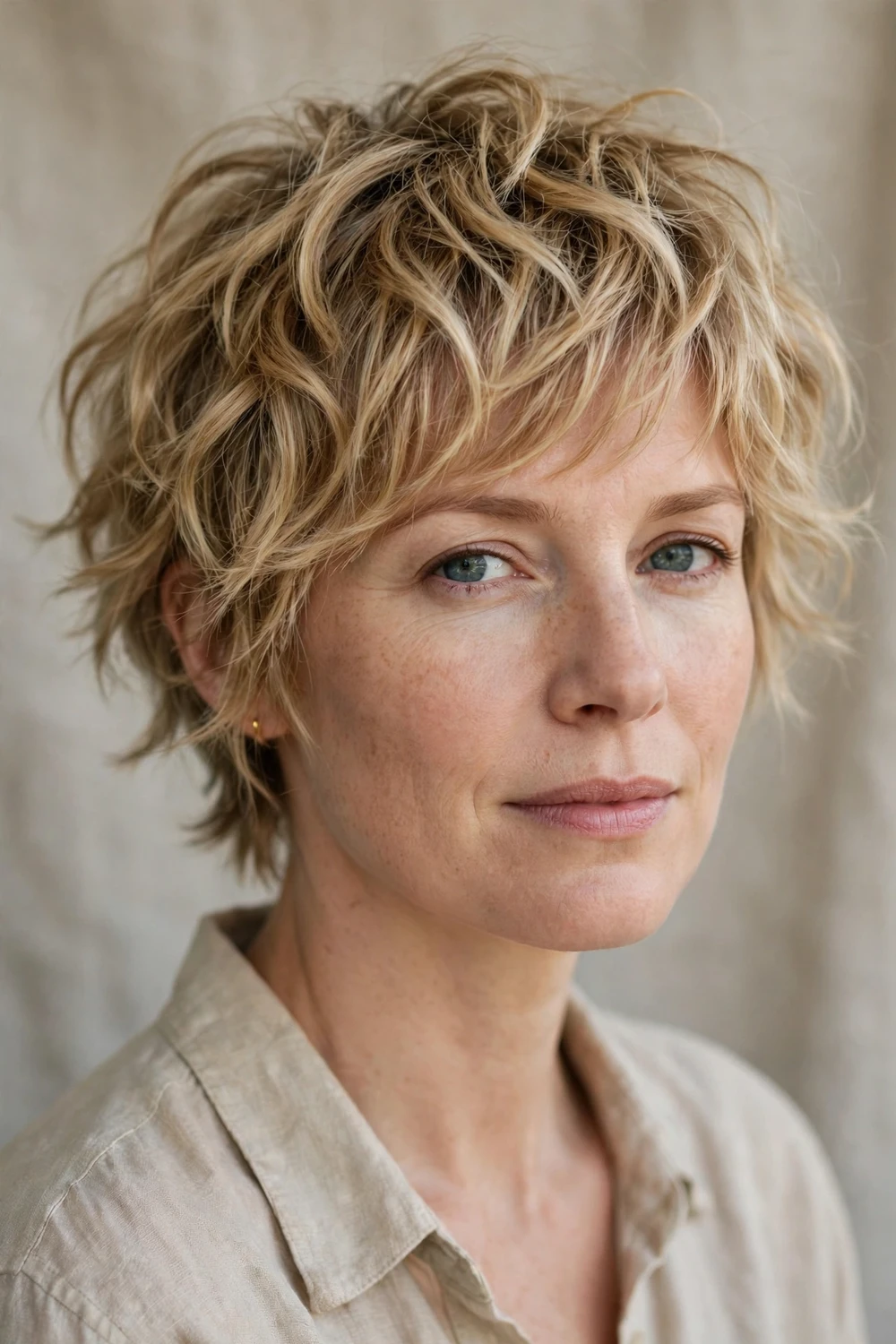
Natural waves do half the work here. Shaggy layers break up the wave pattern just enough to stop it looking uniform, creating undone texture that people try to fake with tools. Any natural bend makes this the lowest-effort shaggy pixie on the list.
Sea salt spray on damp hair, a quick scrunch, and you are done. Very straight hair may need a few flat-iron bends; apply heat protectant first. The uneven texture hides growth for weeks, stretching trims to 6 or 7 weeks. For more layered short shapes, these short layered haircuts use the same texture-first approach.
Try this: twist sections while damp and release once dry for soft, matching waves.
Difficulty: Easy · Cost: $50–$90
19. Debulked Shaggy Pixie for Thick Hair
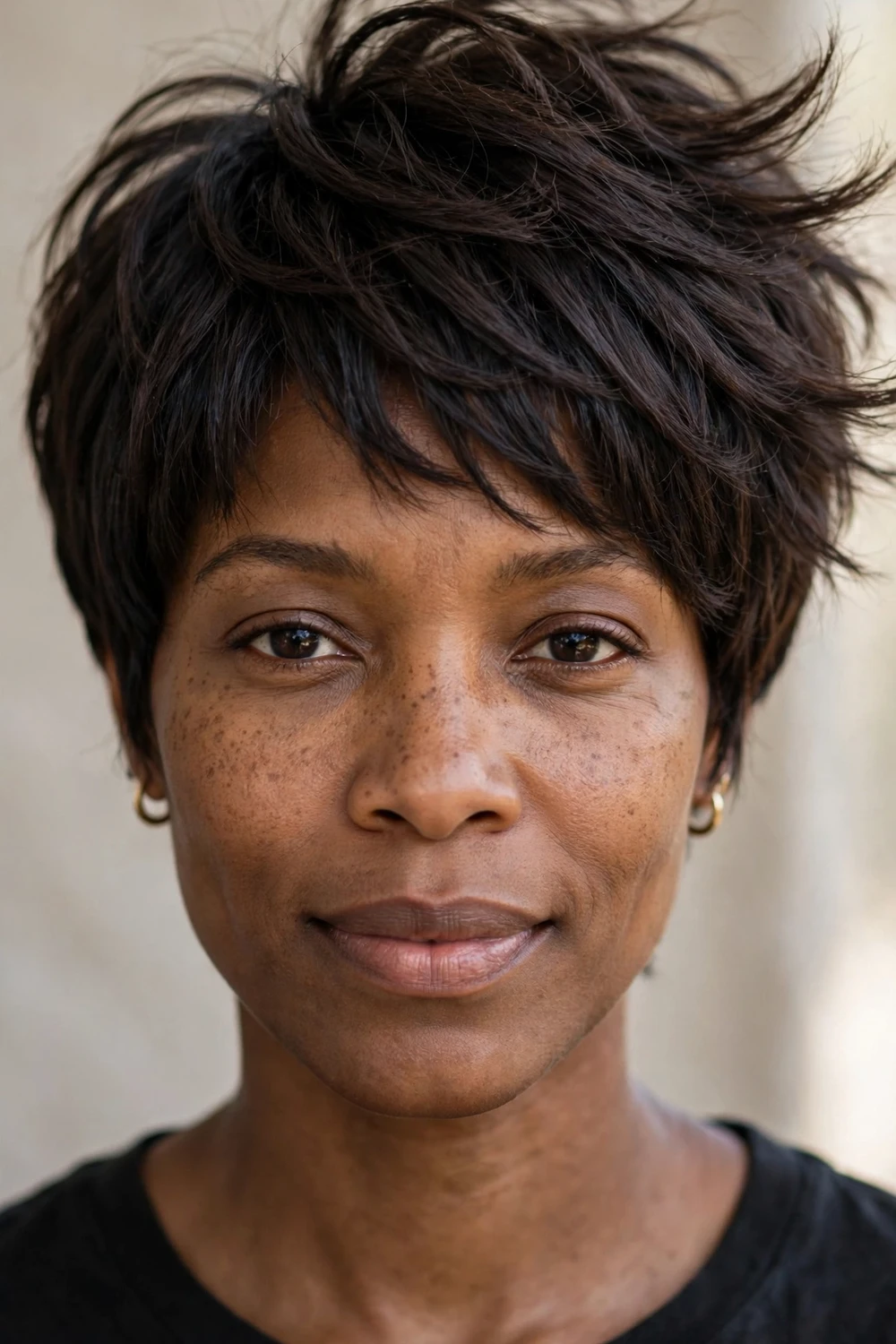
Very thick hair turns a shaggy pixie into a triangle without the right internal work. Deep layering plus careful weight removal through the mid-lengths lets dense hair move instead of sitting in one mass. The perimeter stays strong so the outline keeps its shape.
Ask for weight removal, not just layers; the interior gets thinned while the outside stays intact. It air-dries well on thick wavy or straight hair. Skip heavy oils and use a light leave-in so the layers keep moving.
Try this: finger-dry roots first for lift, then let mid-lengths air dry for natural movement.
Difficulty: Medium · Cost: $60–$110 (cut with weight removal)
20. Wash-and-Go Shaggy Pixie
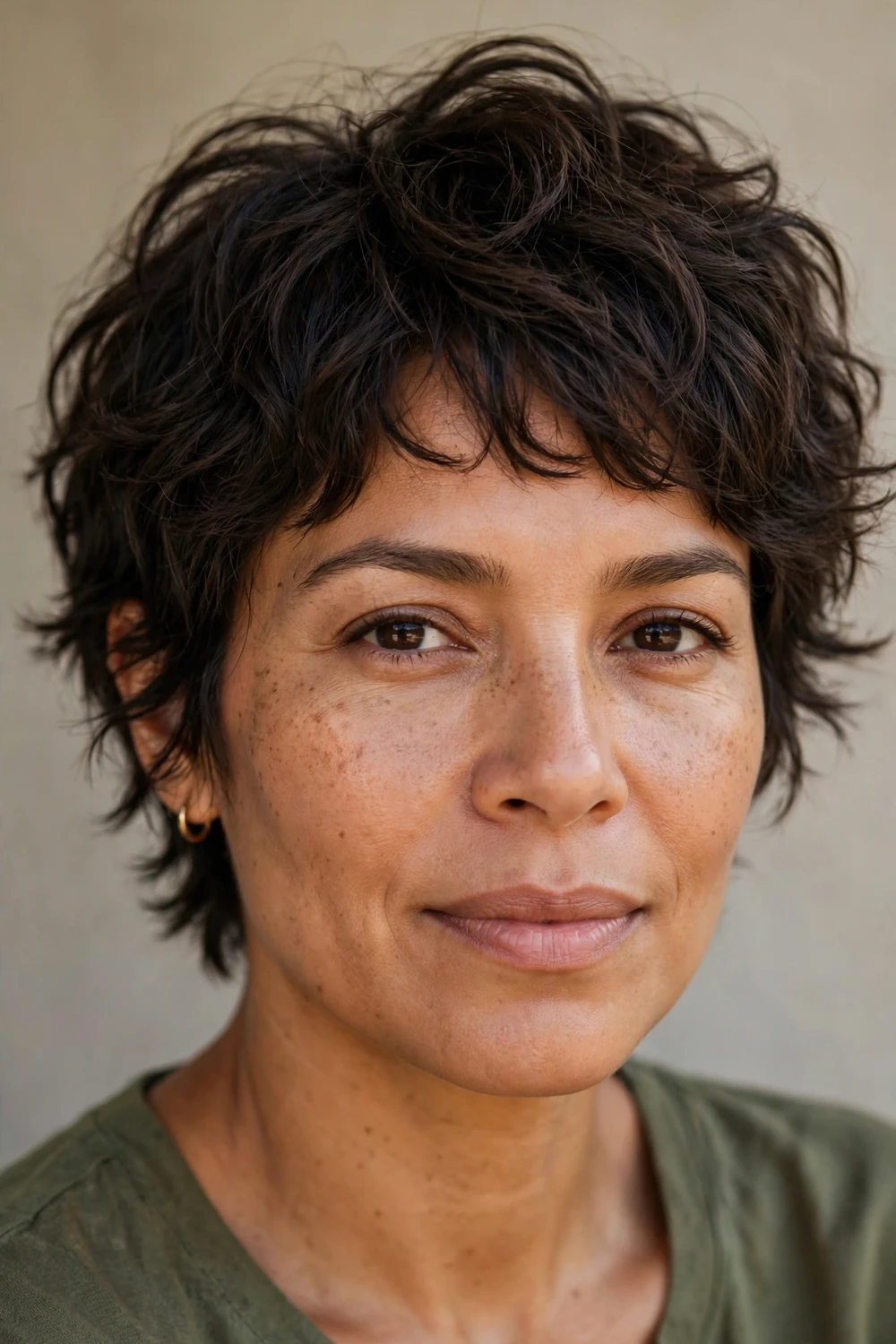
The lowest-maintenance shaggy pixie is cut for your natural texture, with layers placed where your hair already wants to move. Wash it, add one product, and walk out. No blow dryer, no round brush, no flat iron.
Tell your stylist you want wash-and-go before they cut; it changes layer placement. Most people need only a leave-in or curl cream. This suits wavy, curly, and coily hair best, and hair recovering from damage. Trims every 6 to 8 weeks keep the shape.
Try this: apply product to soaking-wet hair and do not touch it until fully dry for the cleanest texture.
Difficulty: Easy · Cost: $50–$95 (texture-focused cut)
Short Shaggy Pixie Comparison Table
| Variation | Best for | Daily styling time | Trim cycle |
|---|---|---|---|
| Classic textured (1) | First shaggy pixie; most hair types | 4 min | 4–6 weeks |
| Curly and wavy (3, 18, 20) | Natural texture; wash-and-go goals | Under 5 min | 6–8 weeks |
| Fringe versions (4, 5, 12, 17) | Face-framing; hiding foreheads | 5–8 min | 3–6 weeks |
| Undercut and tapered (6, 13) | Thick hair; sharp outlines | 5 min | 3–5 weeks |
| Color versions (2, 8, 9, 16) | Dimension; making texture visible | 5 min | 4–8 weeks |
| Fine and thick hair (11, 19) | Density problems, both directions | 5 min | 5–6 weeks |
How to Ask for a Shaggy Pixie at the Salon
The words “shaggy pixie” mean different things to different stylists, so bring photos and use specific language. Say “choppy layers on top with tapered sides” rather than just asking for texture. Mention the fringe by name: micro, piecey, curtain, or side-swept.
Talk about your routine honestly. If you will never blow dry, say so; a wash-and-go shaggy pixie is cut differently from one built for heat styling. Plan trims every 4 to 6 weeks, and fringe versions more often. For edgier pixie takes beyond the shag, these edgy pixie haircuts show where the two styles overlap.
What to Avoid with a Short Shaggy Pixie
A shaggy pixie is forgiving, but a few missteps will keep you from loving it. Keep these in mind:
- Over-thinning fine hair. Aggressive thinning removes the density a shaggy pixie needs. Ask for soft, blended layers.
- Skipping trims. Short layers lose definition after about a month. Book every 4 to 6 weeks.
- Heavy products. Thick creams flatten shaggy layers. Stick to lightweight pastes, clays, and sprays.
- Blow-drying it smooth. A shaggy pixie is built for texture; smoothing it flat erases the layers you paid for.
- Fringe you will not style. Micro and piecey fringes need a quick morning touch-up. If you will not give them 2 minutes, skip the fringe.
- Heat without protection. Always apply heat protectant before flat irons or curling wands. Thinned ends show damage first.
Frequently Asked Questions
What is the difference between a shaggy pixie and a regular pixie?
A regular pixie is cut smooth and close with blended layers. A shaggy pixie keeps the short pixie outline but adds choppy, uneven shag layers on top that move and separate. The result looks textured and undone instead of neat and polished.
Is a shaggy pixie good for fine hair?
Yes, with the right technique. Soft, blended layers build the look of volume without removing density. Avoid aggressive thinning and ask for a full perimeter, plus root-lifting mousse. The wispy shaggy pixie in idea 11 is cut specifically for fine hair.
How often does a shaggy pixie need trimming?
Every 4 to 6 weeks for the full cut. Fringe versions need separate trims every 3 to 4 weeks, and undercut or tapered sides need edging every 3 to 5 weeks. Short shag layers lose their shape faster than longer cuts, so staying on schedule keeps the texture crisp.
Can I get a shaggy pixie if I have curly hair?
Absolutely. Curls and shag layers suit each other well, since the layers remove the weight that pulls curls flat. Get it cut dry so the stylist sees your true curl length, and use curl cream on damp hair. Diffuse or air-dry for the best definition.
How do I style a shaggy pixie each morning?
Most versions take under 5 minutes. Rub a pea-sized amount of matte paste or clay between your palms and push the top layers into place with your fingers. For wavy or curly versions, scrunch in product and leave it alone. No brush needed for most shaggy pixies.
Final Thoughts
Short shaggy pixie haircuts have staying power because the formula works: a short, easy outline with texture on top that styles itself. Match the version to your hair type and your real routine, low effort to wash-and-go, bolder moods to undercut or platinum.
Save the ideas that caught your eye, bring photos to your appointment, and use the salon language from each idea to get exactly the cut you want. For more short cuts across every texture and face shape, explore the full PrimeHairPicks hairstyle collection.
For even more short-texture ideas beyond the shag, see these choppy pixie cuts for women with 30 cuts for every hair type and face shape.

