


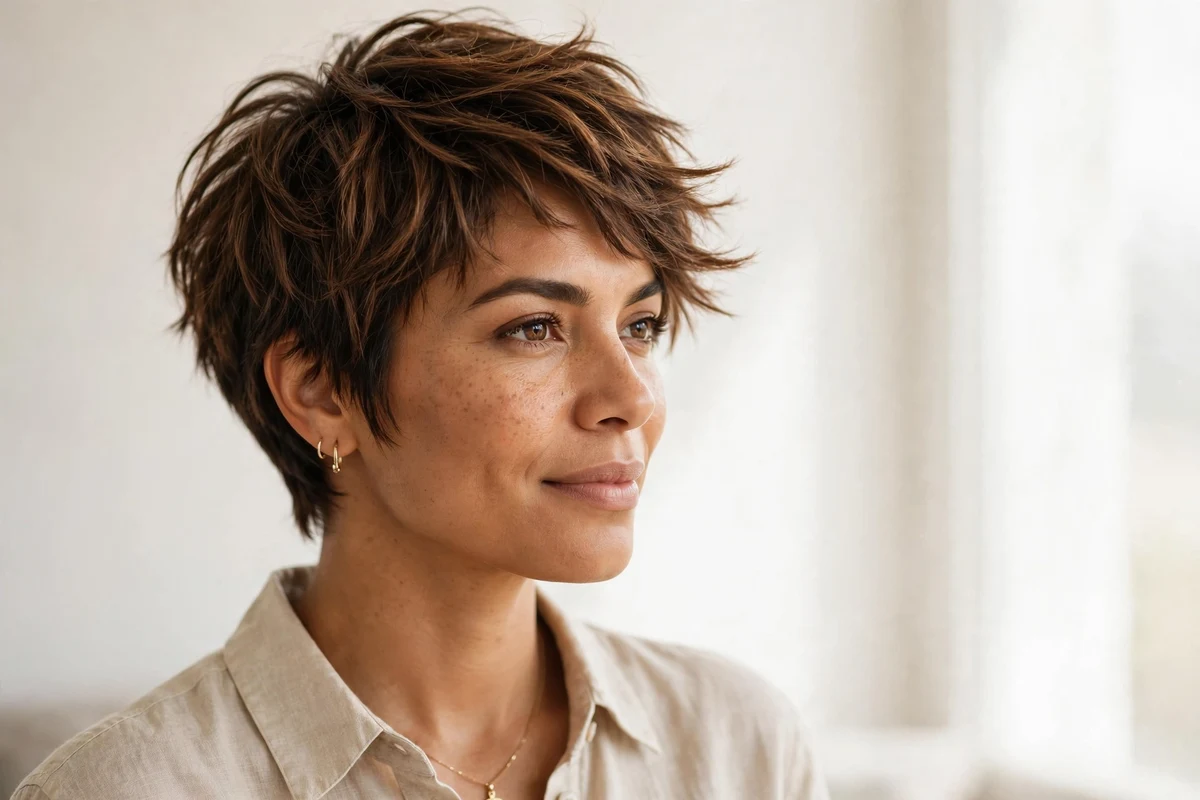
A choppy pixie is the short cut that never sits still. Ragged ends, piece-y layers, and texture you can see from across the room make it one of the boldest ways to wear short hair. It suits fine hair that needs lift, thick hair that needs weight removed, and curls that need shape.
I’ve spent years testing short cuts on every hair type imaginable, and the choppy pixie keeps winning for one reason: it looks styled even when you do almost nothing. Below you’ll find 30 ideas, from the classic tousled pixie to edgy two-tone color versions, plus a face-shape guide, a 5-minute styling routine, and the mistakes that ruin a good chop.
Quick answer: A choppy pixie uses point-cutting or razor techniques to create uneven, separated texture instead of a smooth finish. The best version for you depends on hair type and face shape: fine hair needs soft choppy layers, thick hair needs weight removed at the nape, and round faces gain length from height on top.
Quick Takeaways
- A choppy pixie is defined by visible texture: uneven, piece-y ends cut with point-cutting or a razor.
- Fine hair needs soft choppy layers to fake density; thick hair needs an undercut or tapered nape to remove bulk.
- Round faces look slimmer with height on top; square jaws soften with wispy, piece-y ends around the hairline.
- The 5-minute routine: damp hair, sea salt spray, finger blow-dry, a pea-sized amount of matte clay, pinch and twist.
- Trim every 4 to 6 weeks to keep the shape; grow-out blends gracefully into a shaggy bob.
Why the Choppy Pixie Works on Nearly Everyone
The secret is customization. A blunt pixie is one rigid shape, but choppy texture can be adjusted strand by strand. Your stylist can leave more length where your face needs balance and chop harder where hair needs movement. That’s why the same cut looks completely different on a 25-year-old with coils and a 60-year-old with fine silver hair.
It also forgives regrowth. Even, blunt edges show every week of growth; uneven ends blur it. Most women stretch trims to six or even eight weeks, which makes this one of the lowest-maintenance short cuts you can get.
1. The Classic Tousled Piece-y Pixie
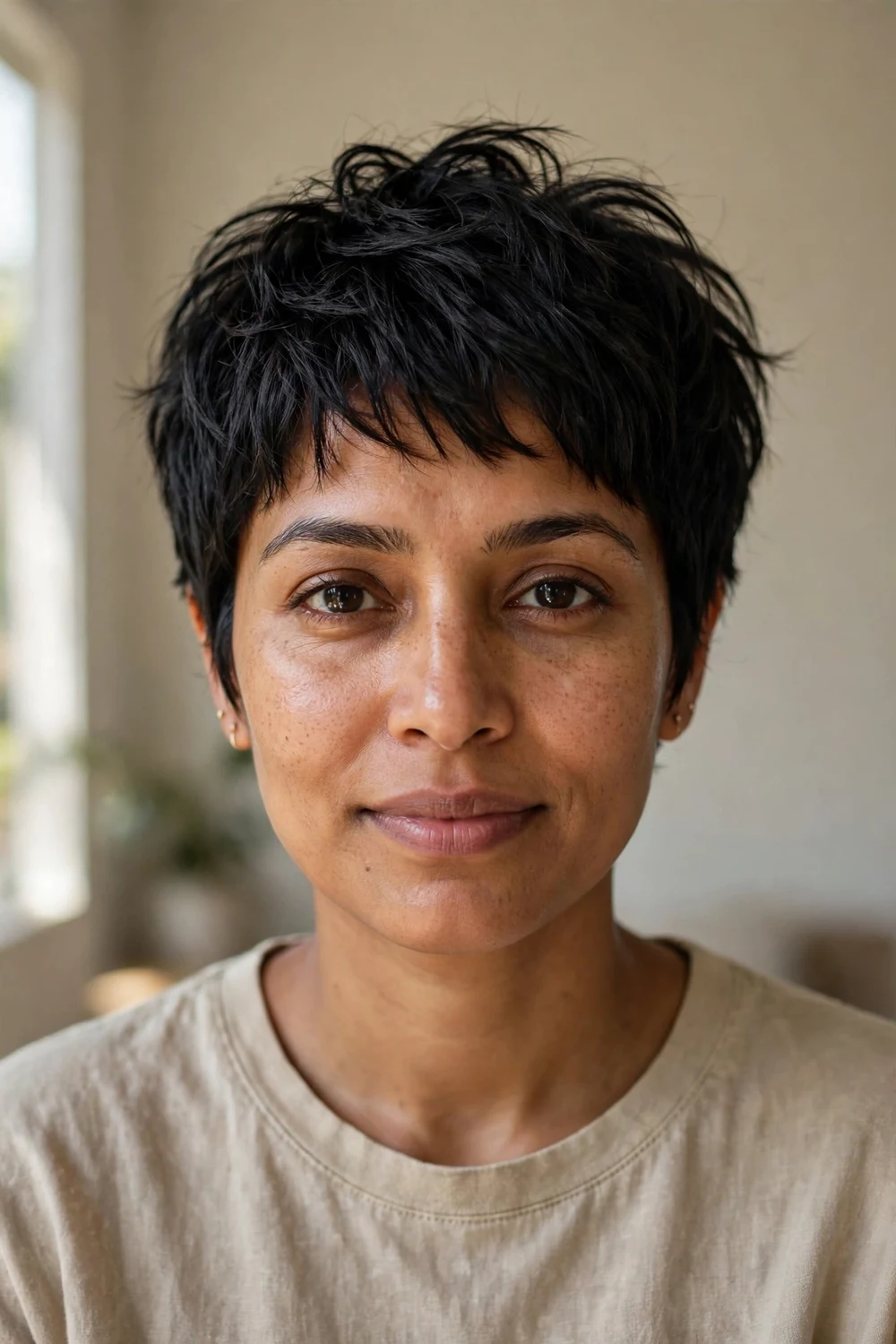
Start with the foundation every other cut on this list builds on. Tapered back and sides, longer choppy layers on top, and that undone bedhead finish that takes four minutes to style. Sea salt spray on damp roots, a rough finger blow-dry, and you’re done. It flatters straight and slightly wavy hair most, and it’s the safest first pixie because the shape is forgiving if you cut it slightly long.
Try this: warm a pea-sized dab of matte clay between your palms, then pinch and twist individual pieces on top to define the chop.
2. The Spiky Crop
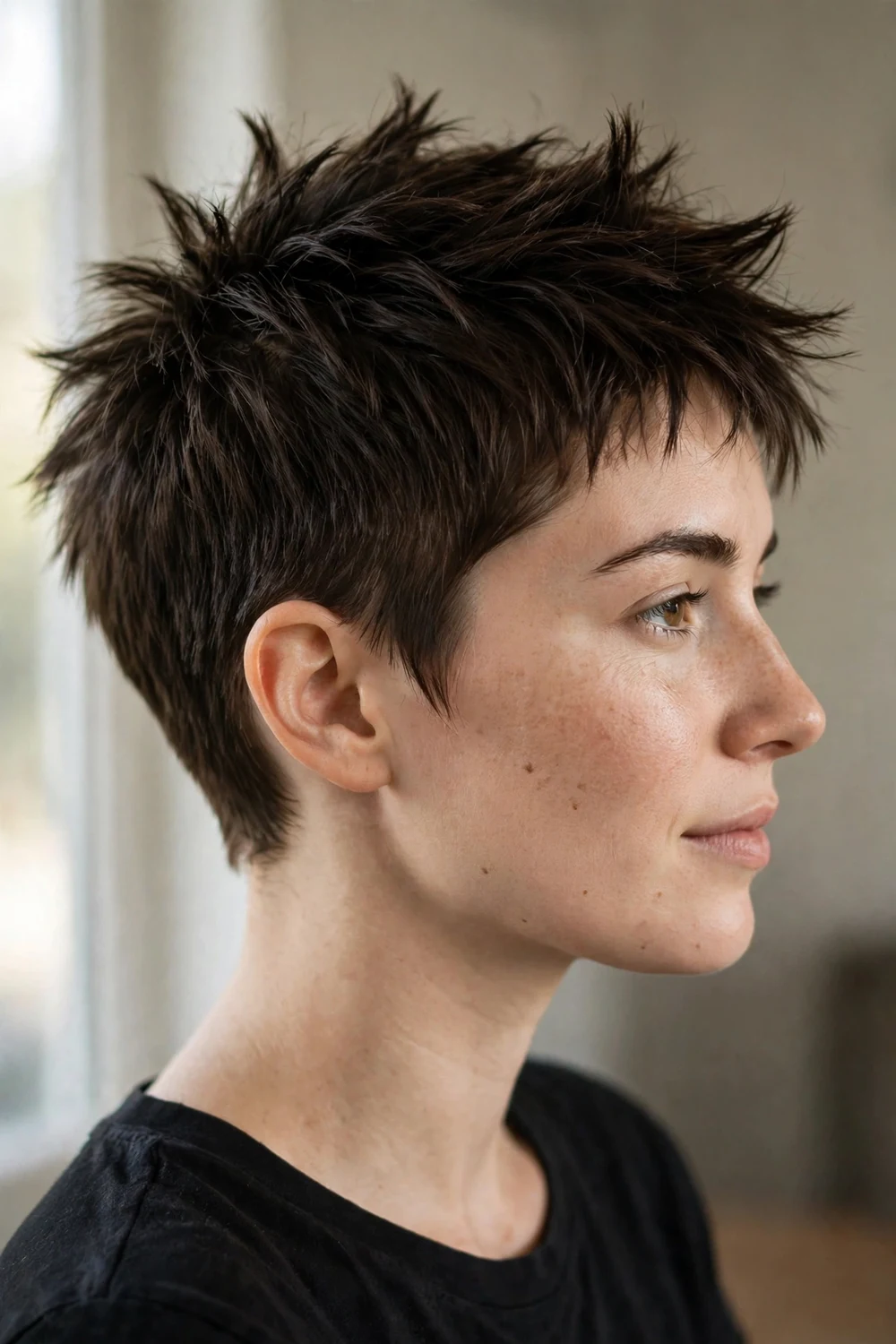
Turn up the attitude and the texture responds. Very short sides, a slightly longer top, and ends pieced into defined spikes with strong-hold paste. The punk edge is real, but it also reads modern and clean when the spikes are subtle. This cut shows off cheekbones better than almost any style on this list, and it dries in minutes, which makes it a practical pick for thick hair that takes forever to blow out.
Try this: apply paste to dry hair only; on wet hair it clumps and the spikes collapse by noon.
3. Long, Wispy Bangs with Choppy Ends
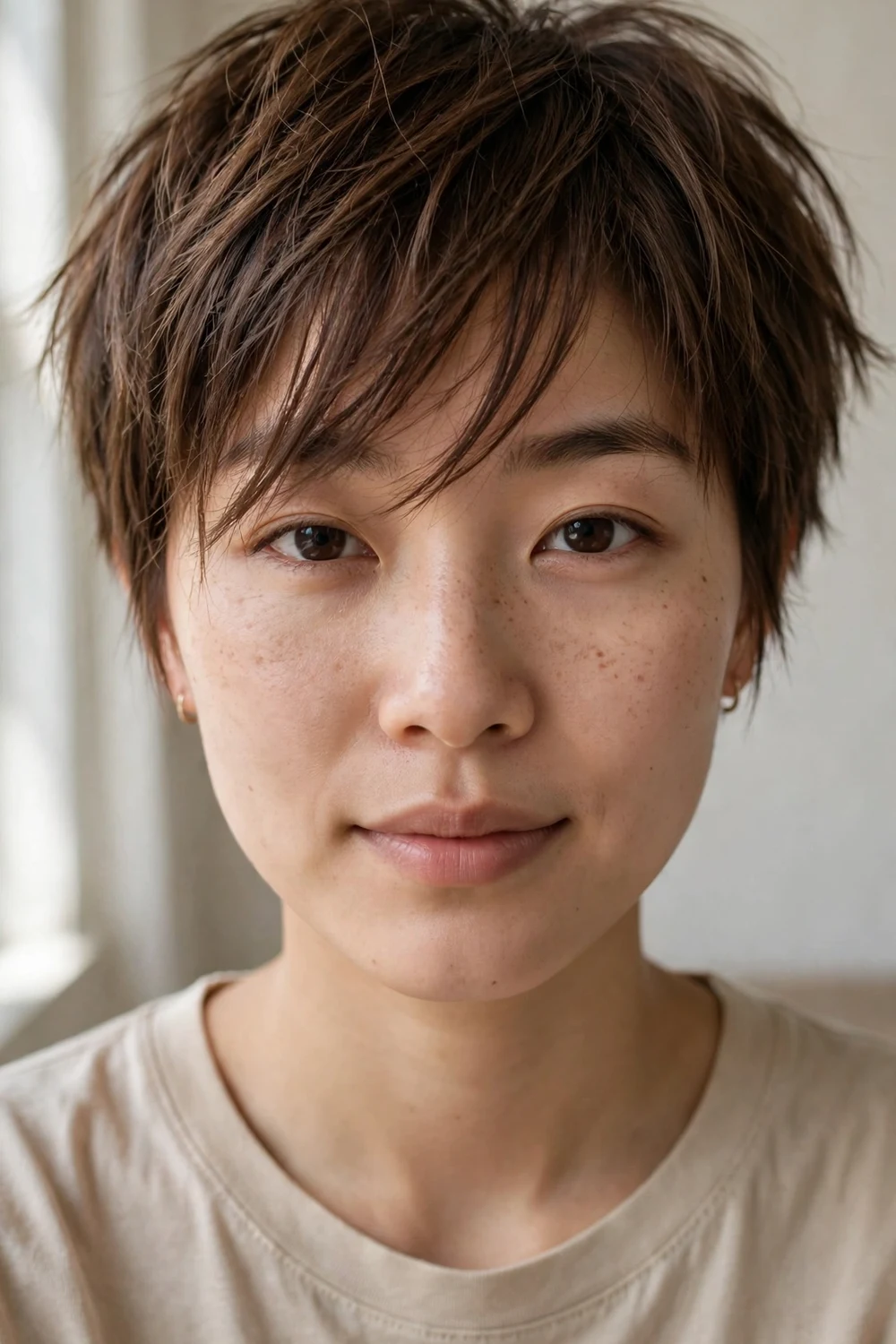
Here’s the version for women who want fringe without commitment to heavy bangs. Length stays in the front and sweeps across the forehead, while the ends get razor-cut so the bang never looks thick or blocky. Oval and heart-shaped faces wear it best, and it hides a higher hairline without hiding your whole forehead. The rest of the cut stays classic and textured, so the bang is the star. It also transitions well into grown-out length if you ever decide to grow your pixie into a bob.
Try this: trim the bangs yourself between appointments with point-cutting (snipping upward into the ends), never straight across.
4. The Undercut Choppy Pixie
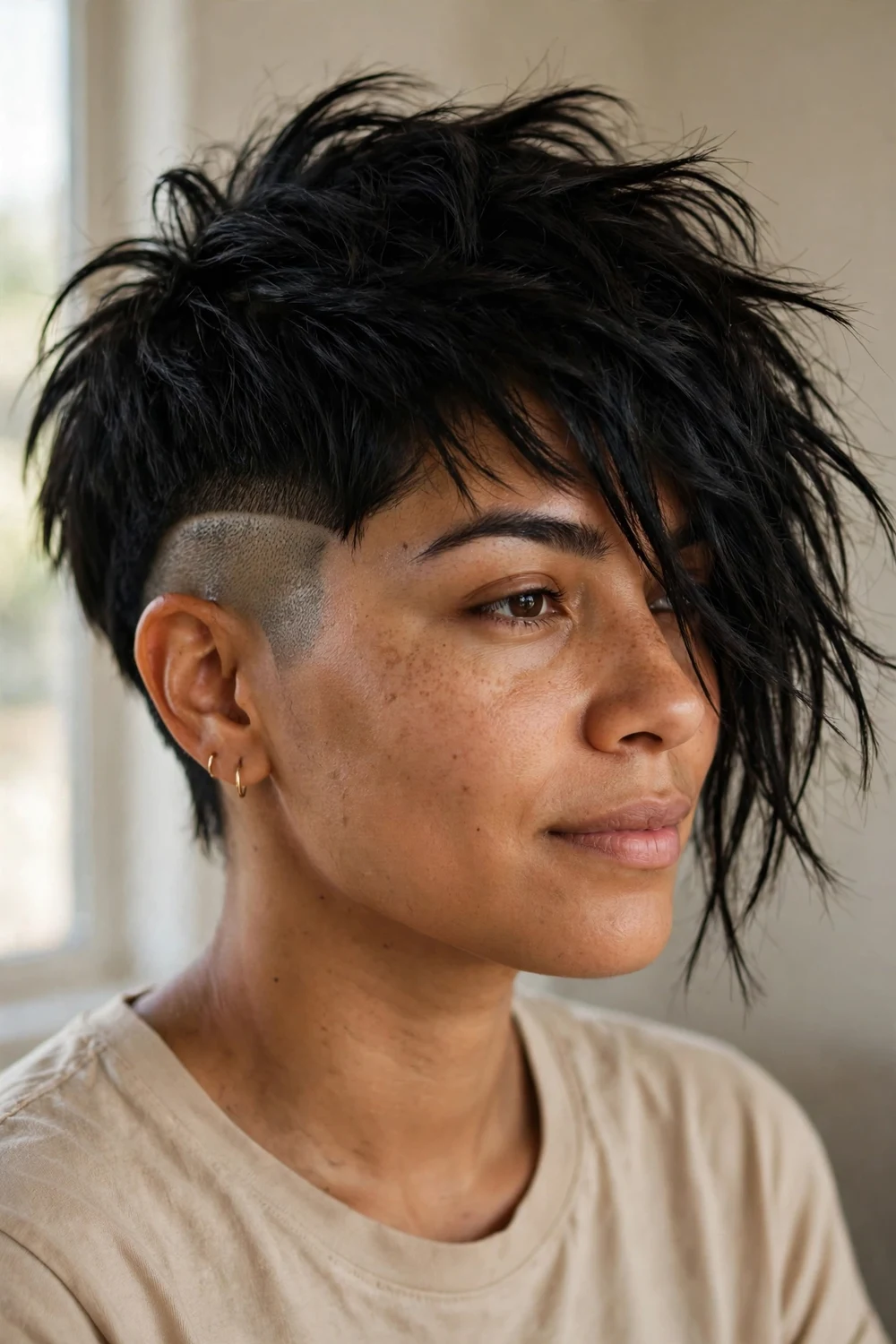
Buzz or closely clip the back and sides, then leave the top long and aggressively chopped. The contrast between sleek shaved hair and a jagged crown is the entire point of this cut. It removes the most weight of any pixie on this list, so thick-haired women love it in summer. Grow it out and the undercut hides under the top layer, which makes the awkward phase almost painless. Because the undercut removes so much hair, fine-haired women may find this version looks thinner than expected.
Try this: book a 10-minute nape cleanup between full cuts every 3 to 4 weeks to keep the undercut sharp.
5. The Curly Choppy Pixie
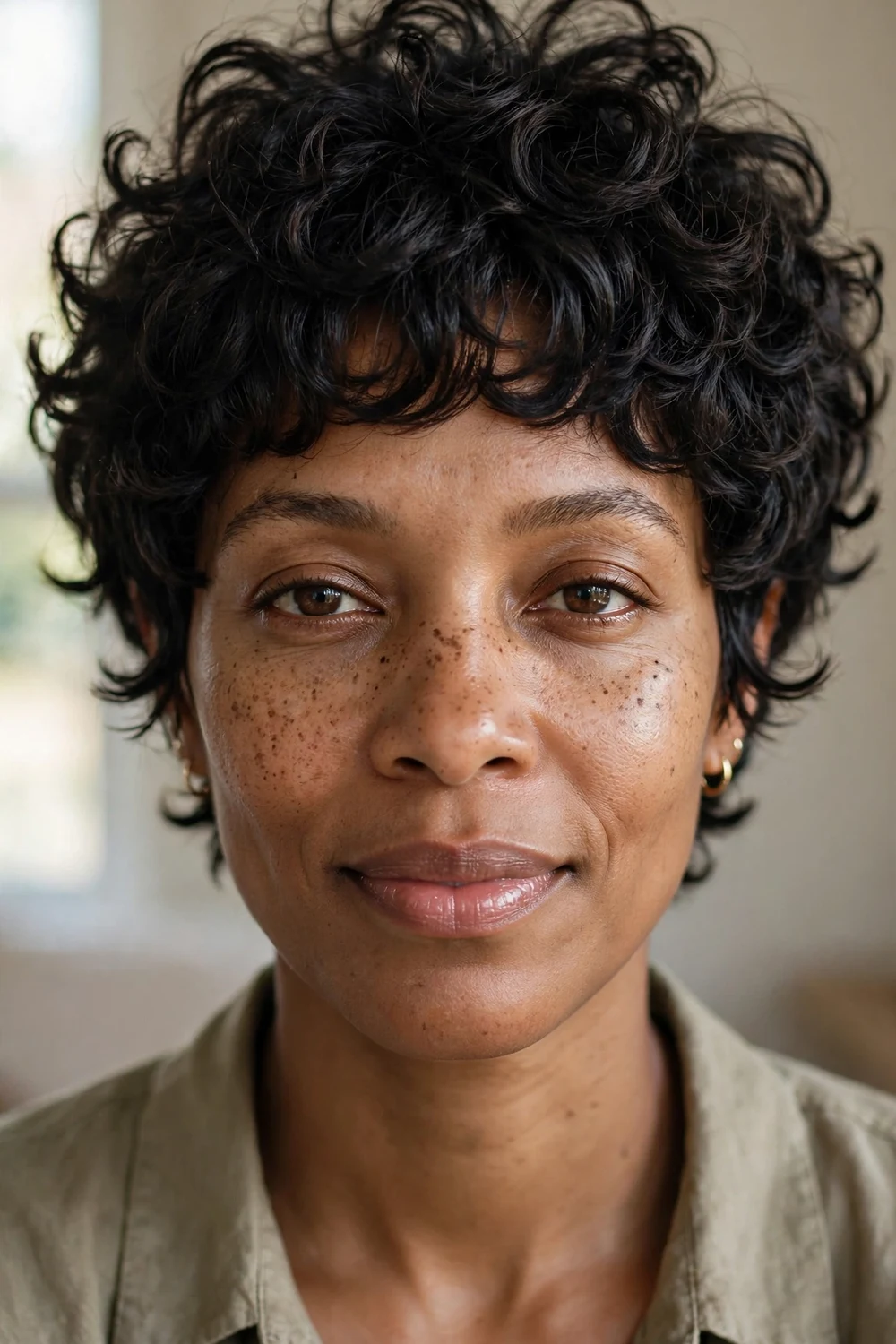
Natural curls were made for choppy layers. Instead of fighting the curl pattern, your stylist cuts dry curls at different lengths to remove bulk and let each ringlet spring up on its own. The result is a round, cloud-like silhouette with visible definition and no heavy triangle shape. Ask for a dry cut from a curl specialist; cutting curls wet hides how much they’ll shrink, and shrinkage is what creates the chop here.
Try this: scrunch in a golf-ball-sized amount of curl cream on soaking-wet hair, then diffuse or air-dry without touching it.
6. The Asymmetrical Chop
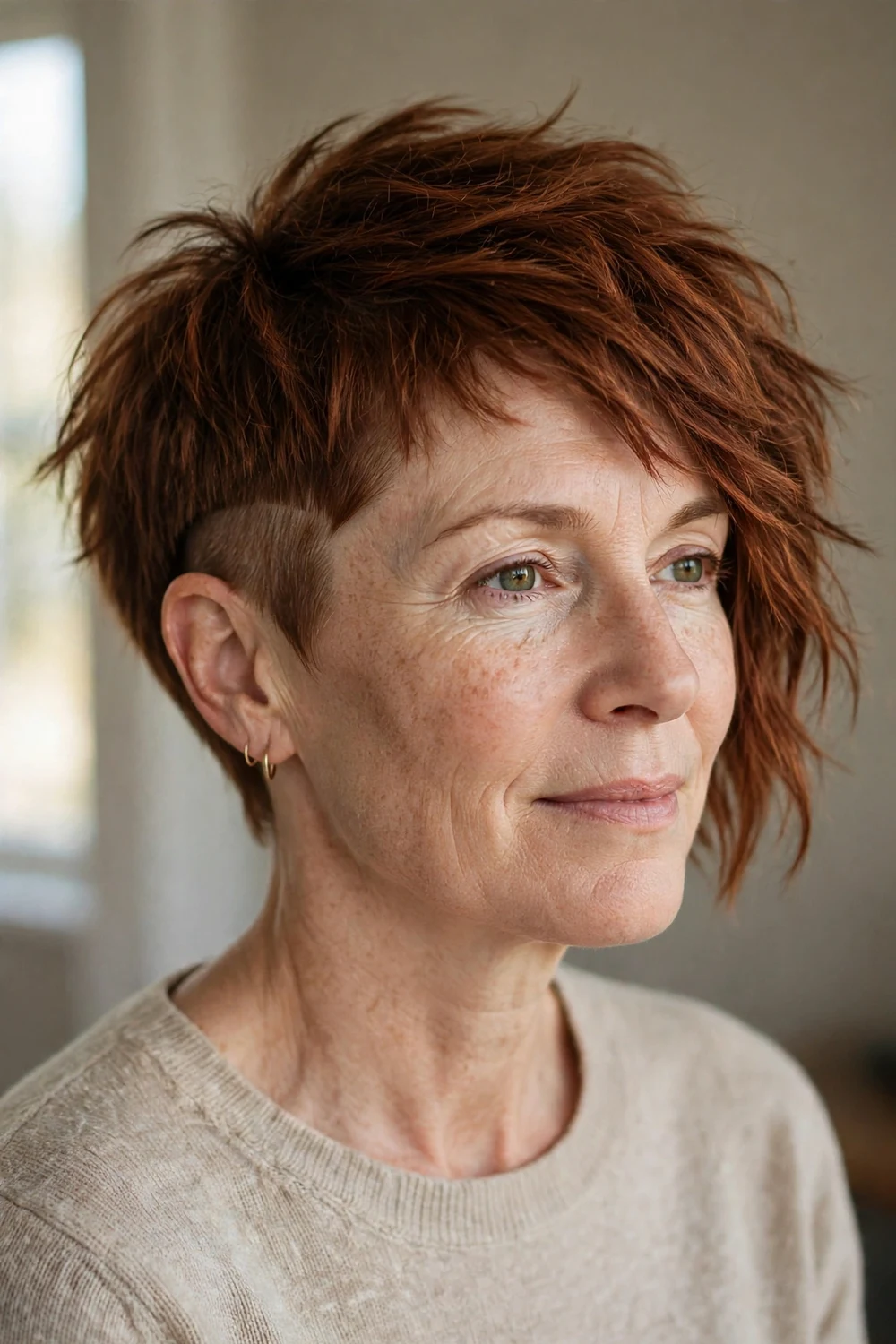
One side stays noticeably longer and chunkier, with deep choppy notches through it, while the other side gets cropped tight to the head. The unevenness is the feature, not a flaw. It draws the eye diagonally across your face, which slims round faces and softens square ones. Oval and heart-shaped faces carry it most easily. The longer side can tuck behind the ear for a day look and flip forward at night.
Try this: part deep on the short side so the long side has maximum sweep and drama.
7. The Silver Fox Choppy Pixie

Grey hair and choppy texture are a natural pair. Layered cuts break up a solid block of grey, letting light hit each strand differently, and the silver tones catch that light like jewelry. Women growing out their natural color find the chop disguises the transition line between dyed and virgin hair. Use purple shampoo once a week to keep the silver bright instead of yellow. Silver tones need committed upkeep, but short hair makes salon visits cheaper and quicker than long hair ever could.
Try this: ask for a razor finish on the ends; it makes silver hair look feathery and expensive instead of wiry.
8. The Textured Pixie Bob
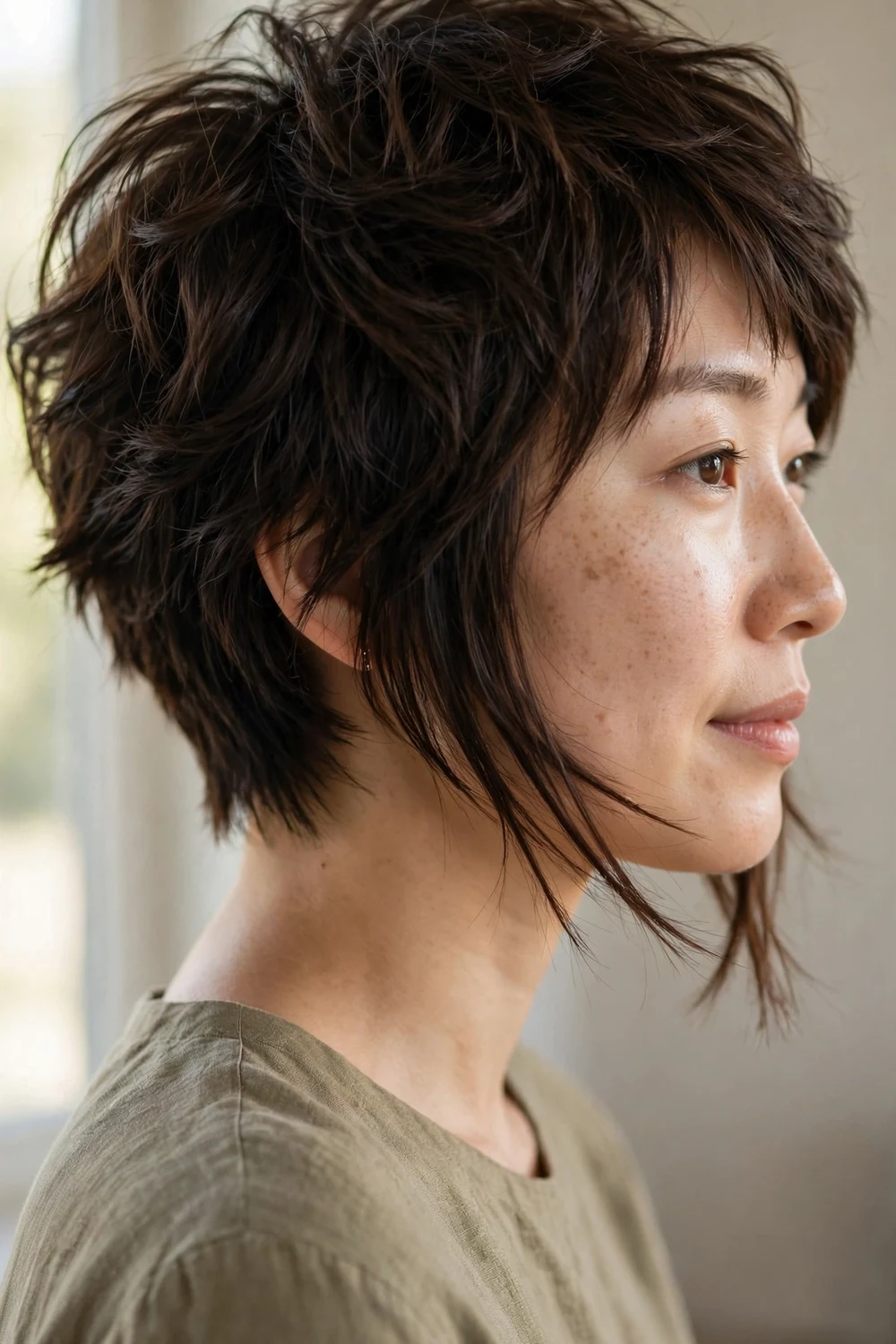
Longer than a pixie, shorter than a bob: the back stacks up choppy while the front angles down toward the chin. It’s the version to choose when you’re not ready to go fully short but want the choppy texture. Fine hair benefits most, since the shorter back removes weight that drags thin hair flat. Style it with a side part for extra volume at the crown. Regular trims keep the stacked back from growing into a mullet shape, so book every five to six weeks.
Try this: blow-dry the crown forward with your fingers, then flip it back once dry for instant root lift.
9. The Finger-Wave Choppy Pixie
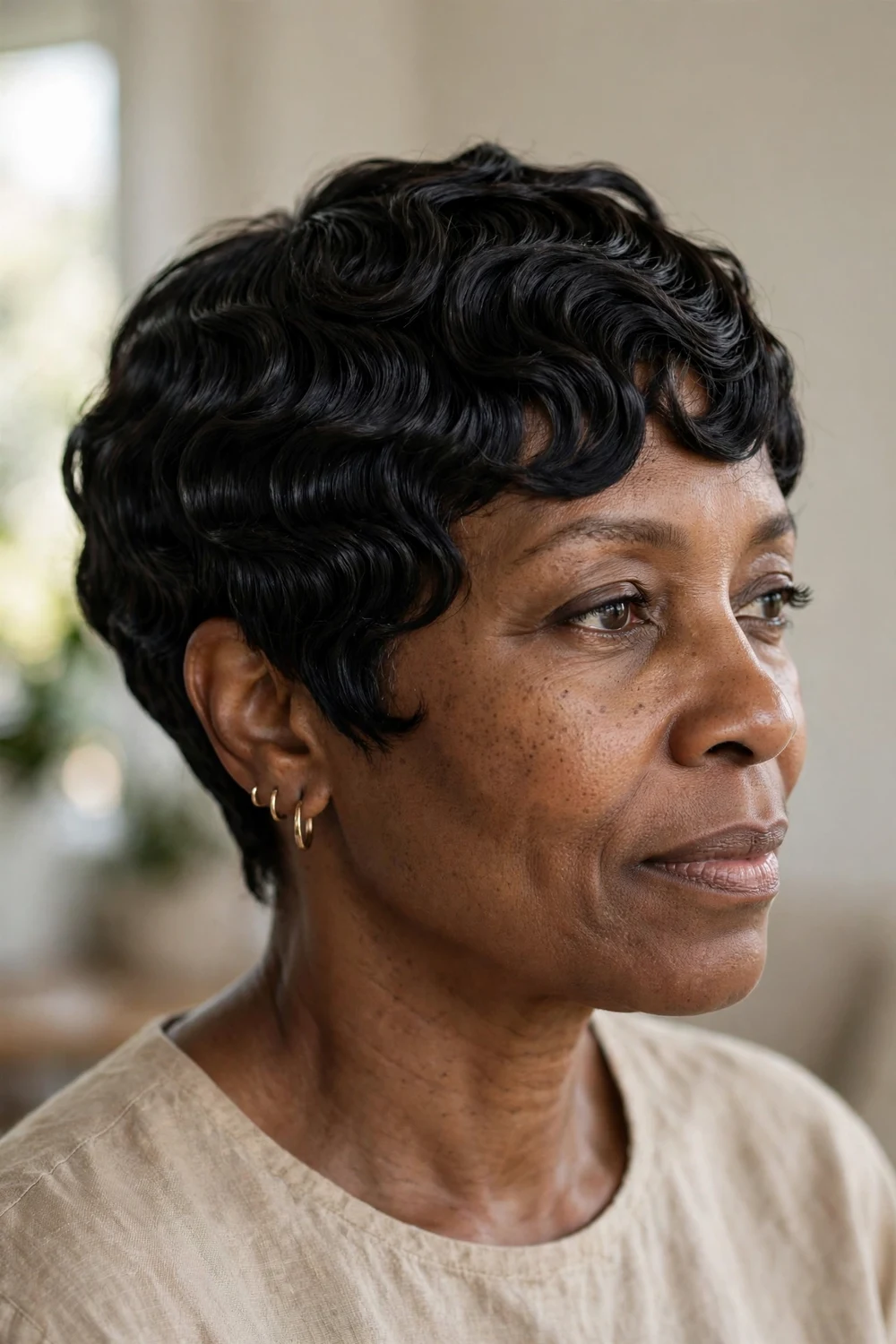
Vintage technique, modern cut. The hair gets deep choppy layers first, then gets styled into soft sculpted finger waves for a structured, dressed-up finish. It’s the only pixie on this list that suits formal events without looking out of place, and it holds its shape for hours once set. You’ll need a strong-hold gel and a fine-tooth comb to mold the waves while the hair is damp. Practice the waves a few times before the big day; finger waves are a skill, not a one-try style.
Try this: set the waves the night before an event and sleep in a silk scarf; morning touch-ups take five minutes.
10. The Bleached Blonde Pixie with Dark Roots
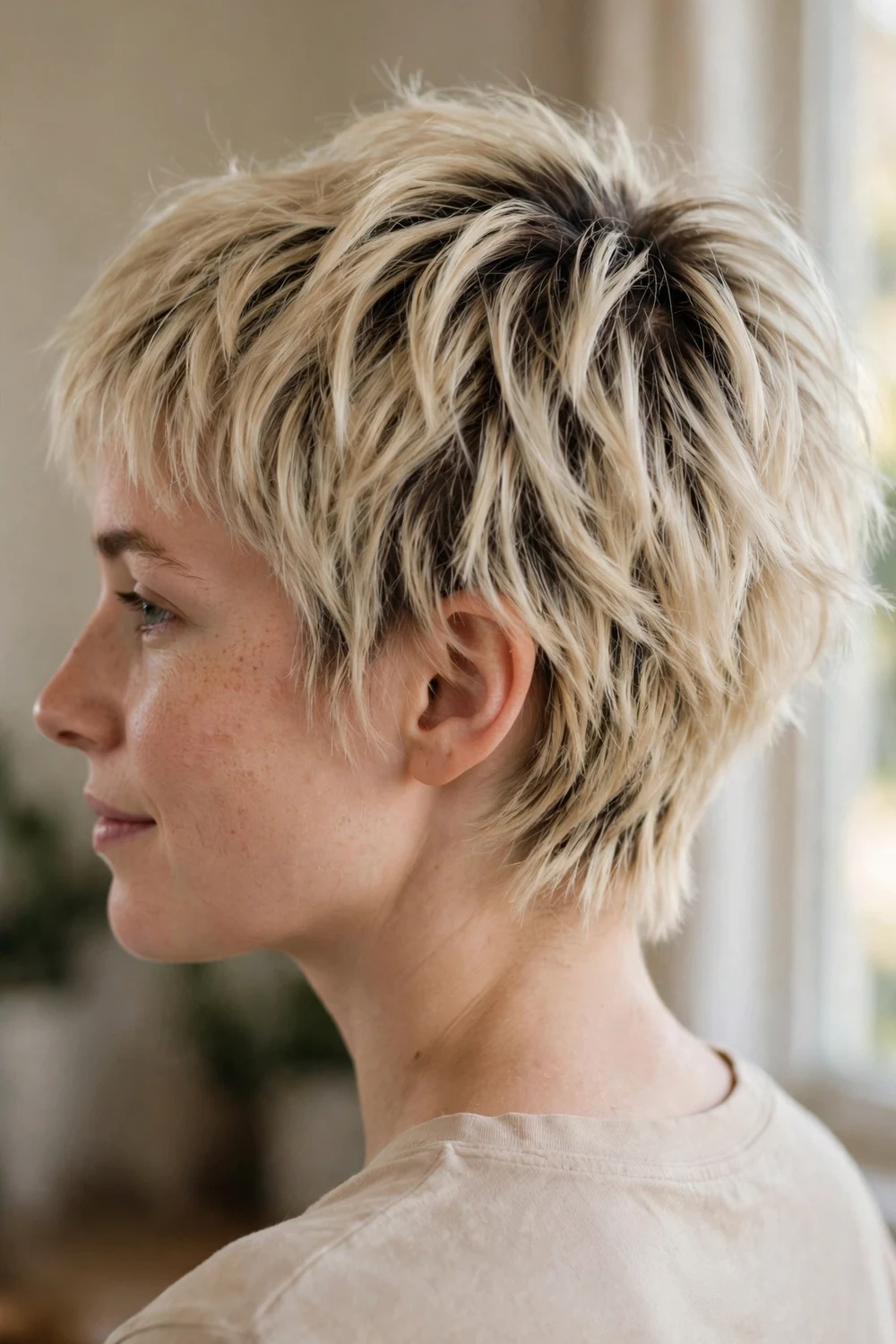
Keep the lengths icy blonde and let 1 to 2 inches of natural dark root show on purpose. The choppy layers emphasize the color break, so grow-out looks intentional instead of neglected. This combo stretches salon visits to 8 or even 10 weeks, since the root is part of the look. The bleach also roughs up the cuticle slightly, which adds grip and texture to fine hair. Touch up the bleach with a professional, since overlapping bleach on short regrowth causes breakage fast.
Try this: use a bond-building mask weekly; bleached short hair snaps easily at the nape if it gets too dry.
11. The Messy Micro Pixie
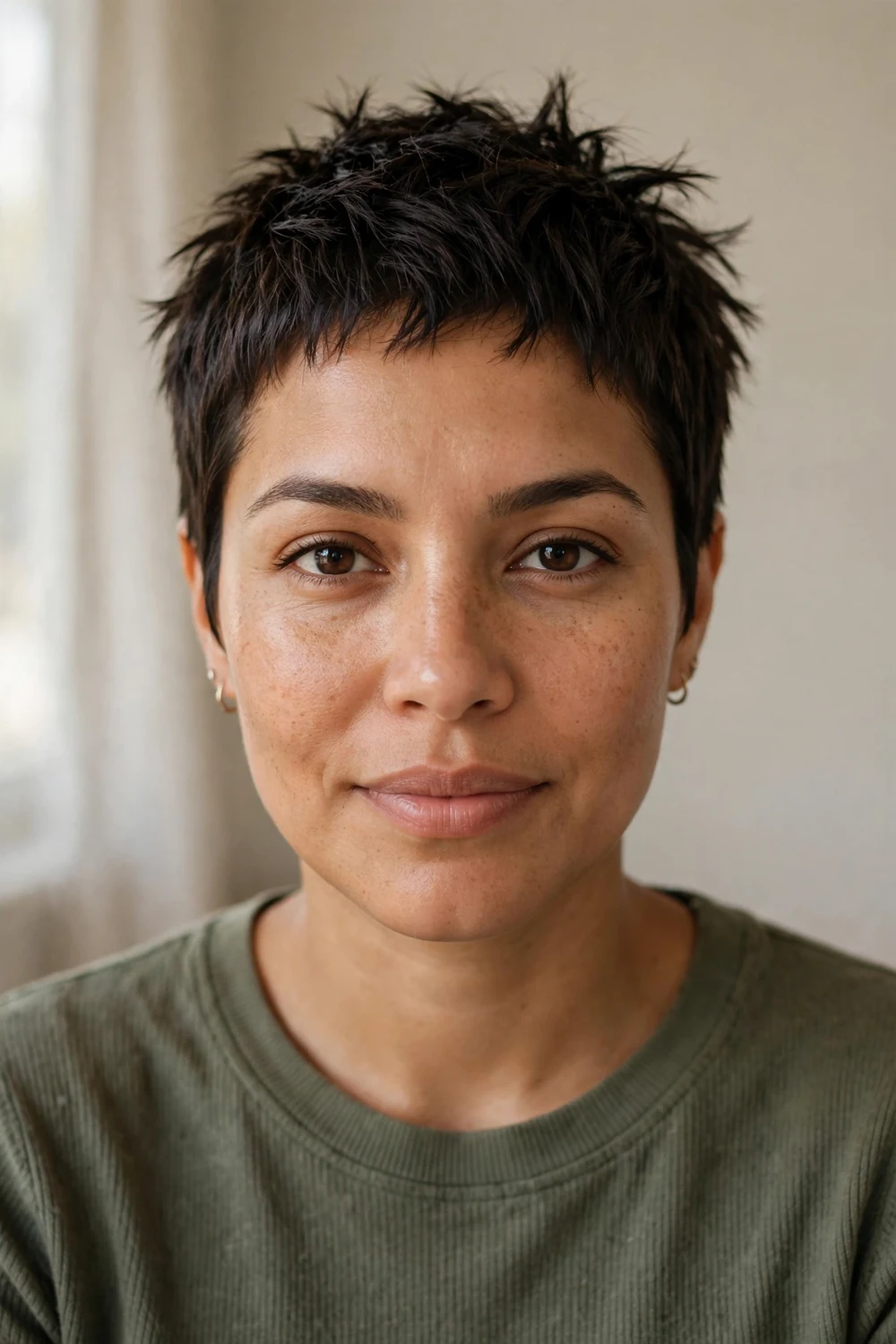
Under an inch on top and chopped to the extreme, this is the shortest cut on the list. The texture comes from irregular lengths within that tiny space, not from long layers. A matte clay rough-up is the entire styling routine, and many women skip product altogether. One warning: micro lengths expose the scalp on very fine hair, so this suits medium to thick density best. The trade-off is frequent trims; micro lengths lose their shape in three weeks flat.
Try this: rub a tiny amount of matte clay into dry hair and twist pieces in different directions for maximum mess.
12. The Choppy Pixie with a Shaved Design
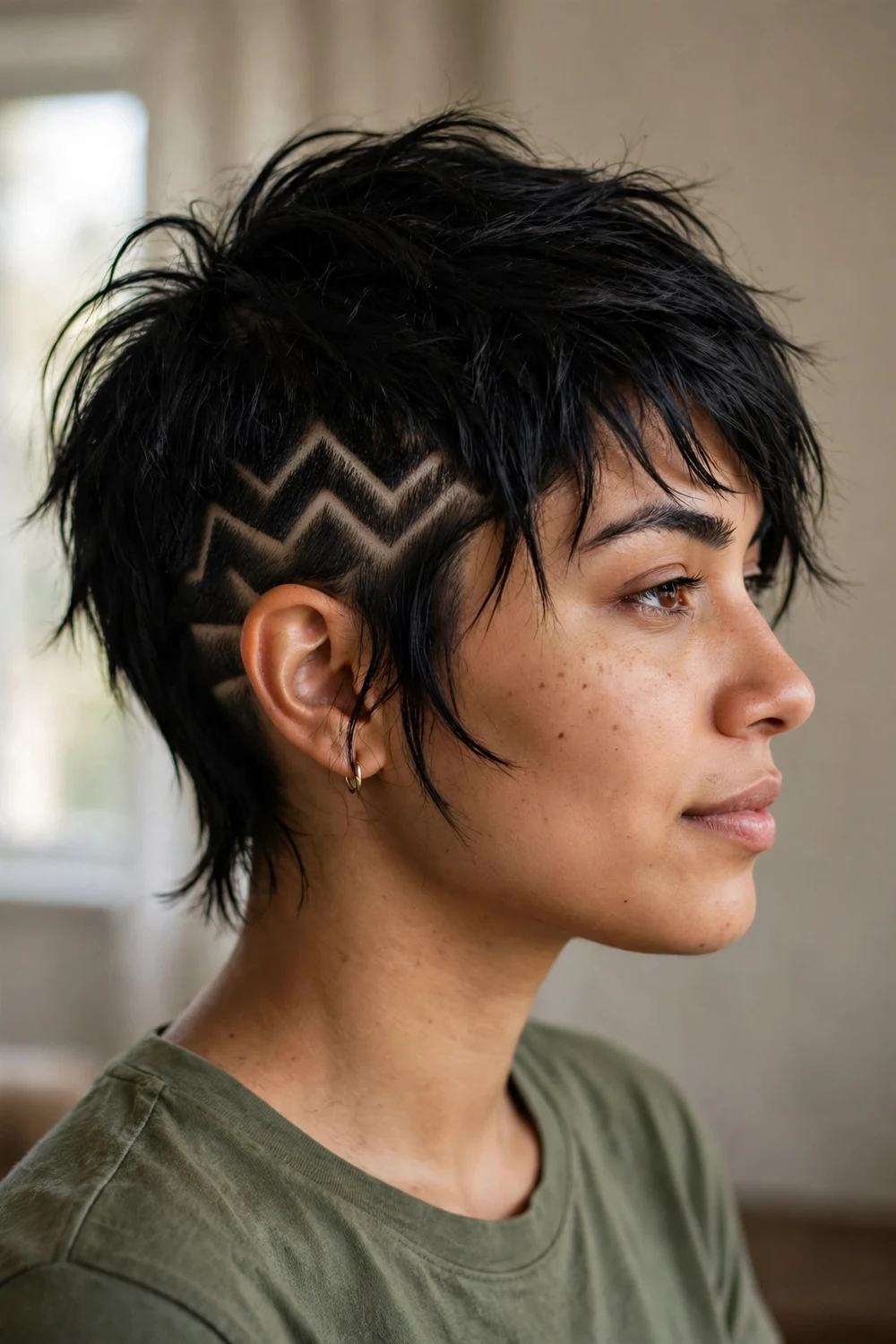
Take the undercut one step further by shaving a geometric line, zigzag, or dot pattern into one side or the nape. The choppy top falls over the design and reveals it only when you move your head or tuck your hair back. It’s the boldest statement on this list, and it grows out in about three weeks, so it’s low commitment. Designs show best on straight, dark hair where the shaved lines have maximum contrast.
Try this: photograph the design fresh from the salon; you’ll want the reference when it needs refreshing.
13. The Deep Side-Swept Chop
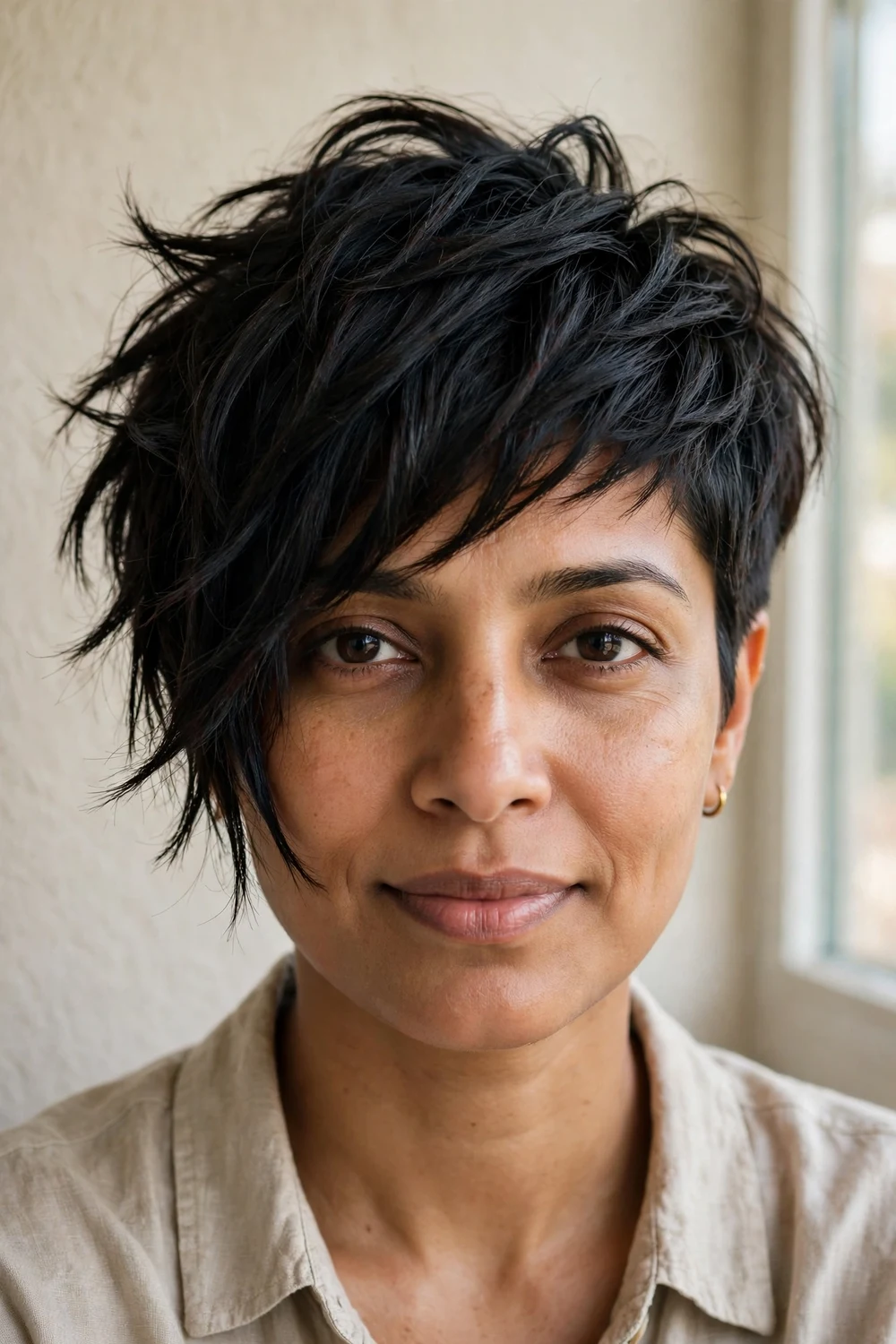
Pile all the length to one side with a deep part, cut the heavy side with deep vertical notches, and crop the opposite side short. The diagonal line across the forehead slims round faces and adds drama to strong jawlines. It’s one of the most versatile choppy pixies because the sweep can flip sides, tuck behind the ear, or pin back. Fine to medium hair holds the sweep best; very thick hair may need thinning at the heavy side.
Try this: set the sweep with a light-hold hairspray after styling, not before, so the texture stays piece-y.
14. The Copper Red Velvet Choppy Pixie
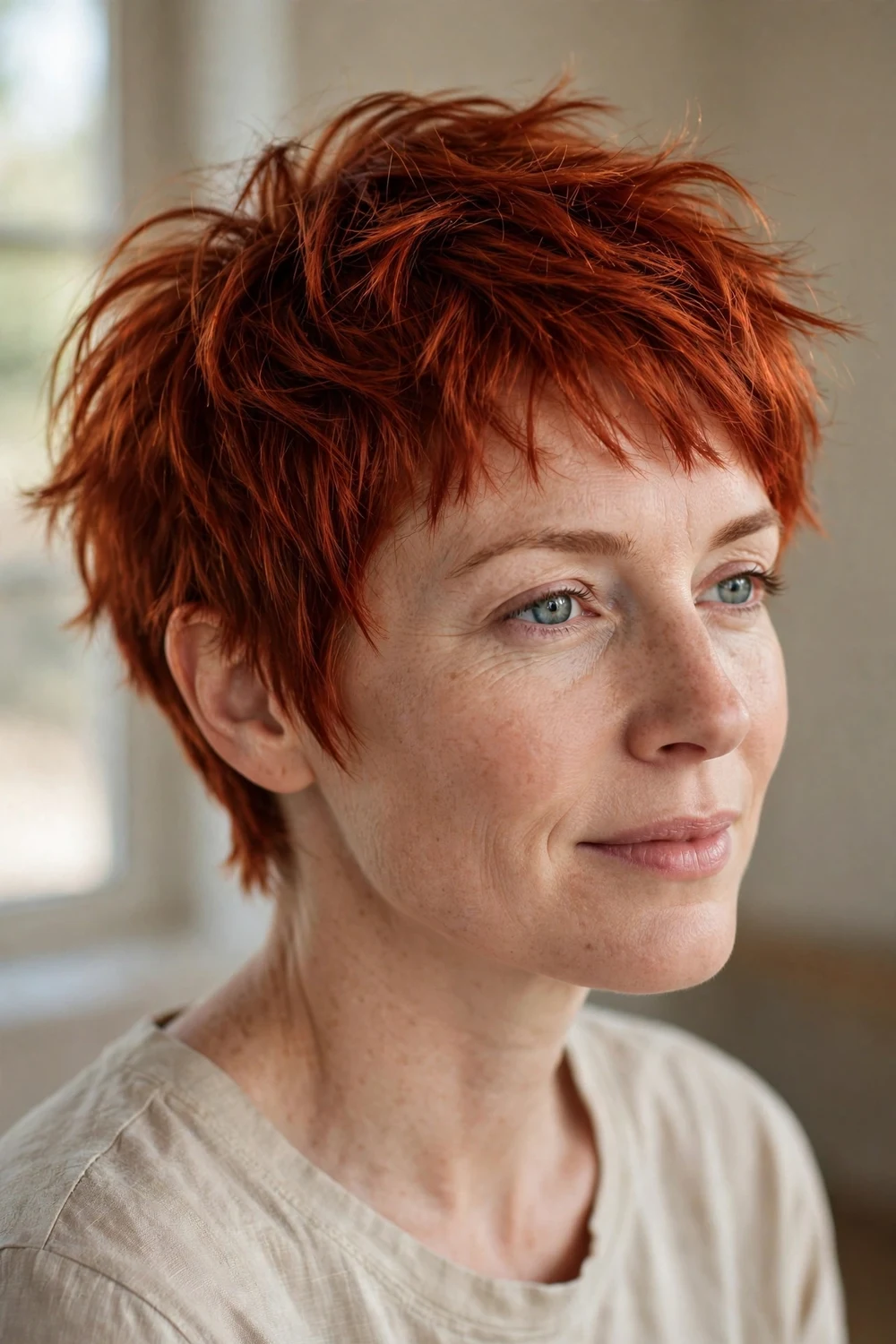
A deep auburn or burgundy shade turns choppy layers into a color show. The varied lengths catch light differently, so the red looks multidimensional from every angle. Warm copper flatters warm and neutral skin tones, and the color fades gracefully on short hair since trims remove faded ends fast. This is a fall and winter favorite, but there’s no rule against wearing it in July. Copper also plays well with warm makeup tones, so keep your blush in the peach family.
Try this: wash with cool water and a sulfate-free shampoo; hot water strips red pigment faster than any other color.
15. The Faux-Hawk Pixie
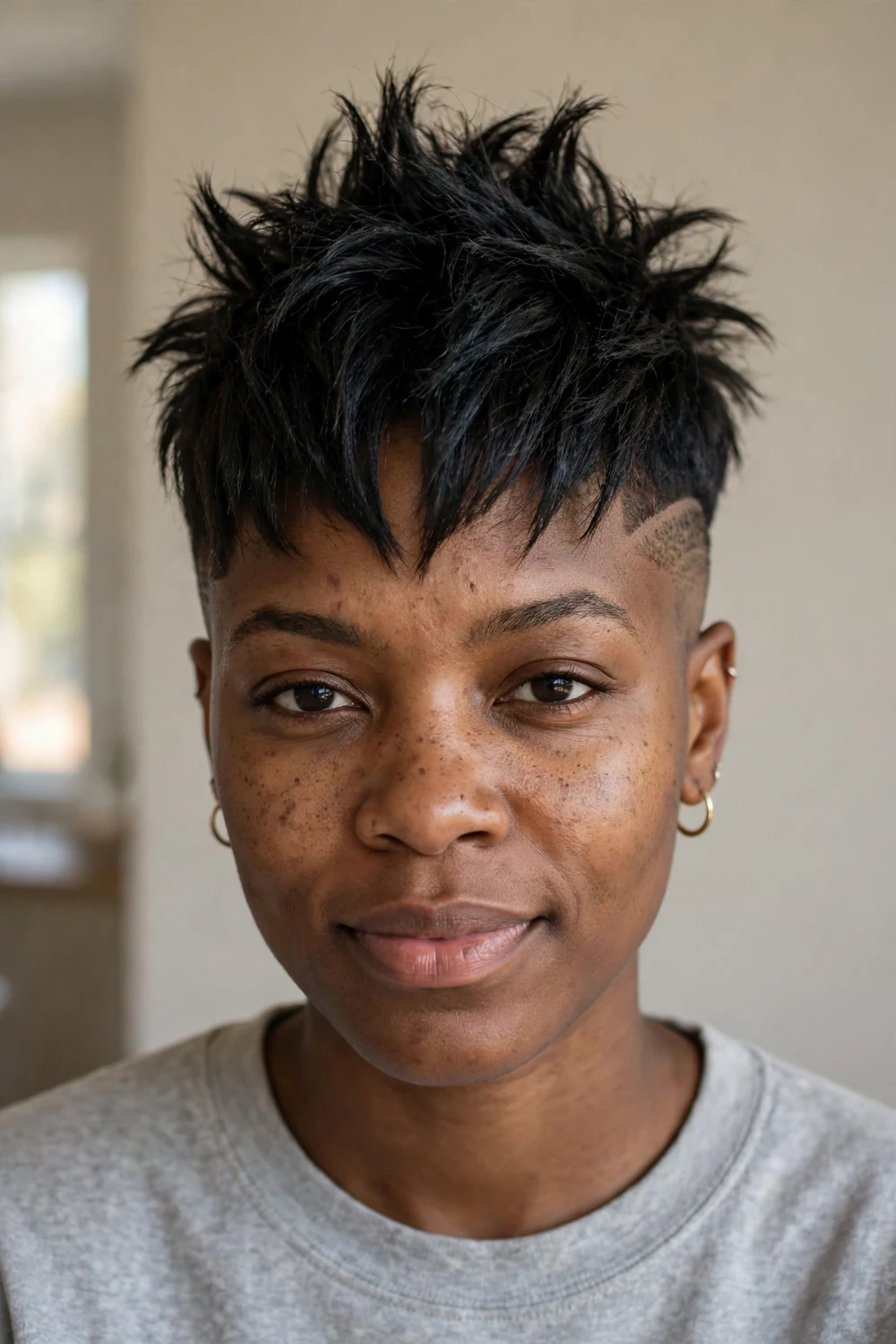
Leave the center strip longest and choppiest, fade or clip both sides short, and style the top upward for a mohawk look without the commitment of a shave. It creates dramatic height that lengthens round faces, and it dries almost instantly since the sides are so short. This is the highest-maintenance styling pick of the list (daily product), but the lowest-maintenance cut, since the faded sides stay neat for weeks.
Try this: blow-dry the center strip upward with your fingers, then lock it with a firm-hold wax, not gel.
16. The Soft Choppy Pixie for Fine Hair
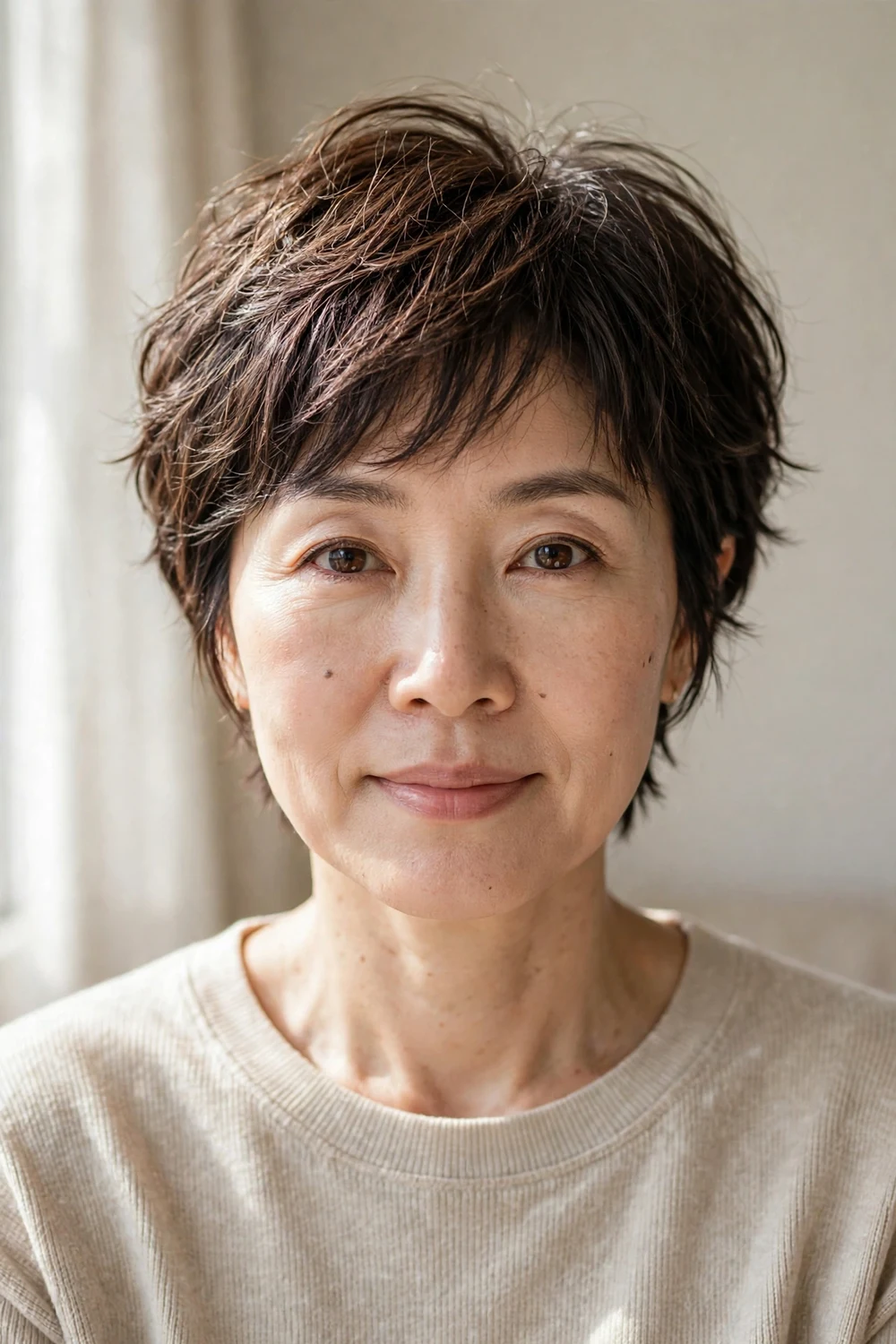
Fine hair and choppy texture can work together if the chop stays soft. Wispy, piece-y layers create the illusion of density because the ends stack and prop each other up. The trick is restraint: ask your stylist to avoid aggressive thinning, which makes thin hair disappear, and skip heavy products that flatten what little volume you have. A light mousse at the roots before drying is usually enough. Ask for point-cutting rather than a razor here, since razors can frizz fine hair at the ends.
Try this: sleep with your hair flipped upside down; morning volume is free and lasts for hours.
17. The Razor-Cut Choppy Pixie
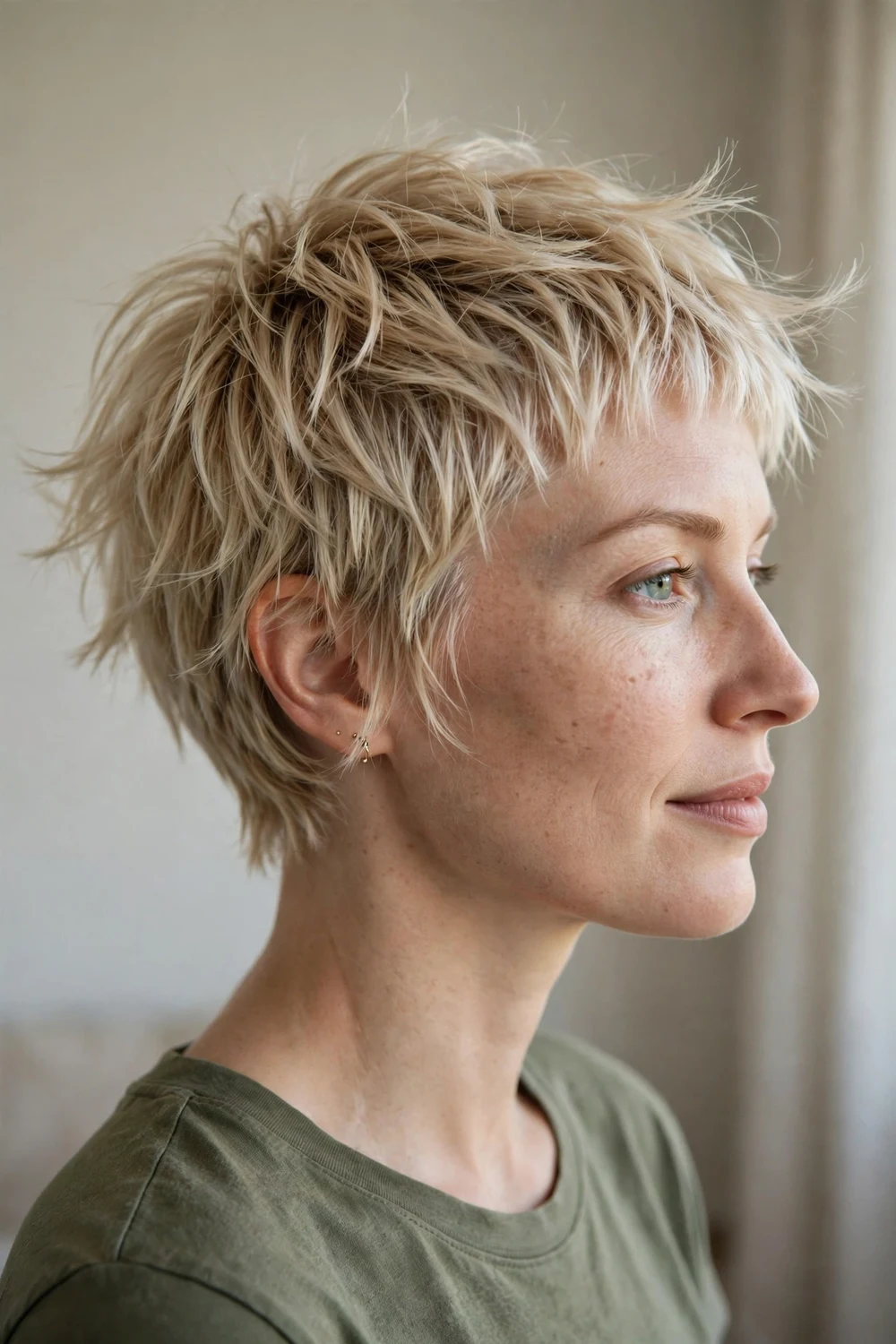
Cut entirely with a straight razor instead of scissors, this version has soft, feathered, almost shredded ends rather than blunt chop. The texture looks undone and airy, and it moves when you move. Fine to medium hair gets the most from a razor cut, since the technique adds movement without removing weight. It grows out softer than scissor-cut texture, so the grow-out phase is one of the easiest. Because the razor removes bulk softly, this is one of the few choppy pixies that suits damaged hair.
Try this: make sure your stylist uses a fresh blade; a dull razor drags and creates split ends instead of clean feathering.
18. The Jet Black Pixie with Choppy Fringe
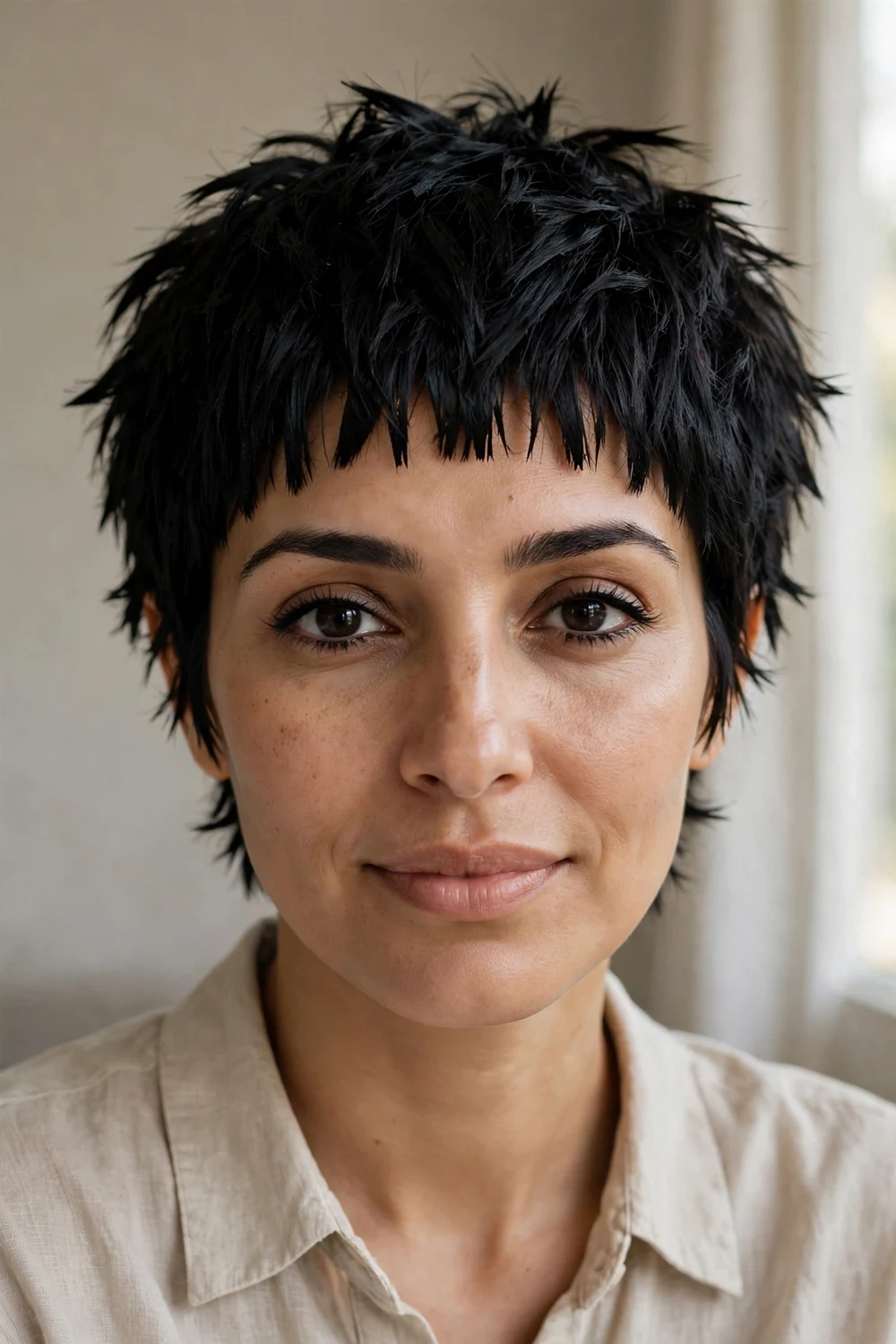
High-contrast and graphic. Black hair makes every cut line visible, so the choppy chunks read bold and deliberate, especially around the fringe. It flatters pale and deep skin tones equally because the dark frame brings out the eyes. The look stays sharpest with a gloss treatment every few weeks, since black shows dullness faster than lighter colors. The shine does the heavy lifting, so invest in a gloss treatment and skip matte products that flatten the reflection. A silk pillowcase also keeps the dark color looking rich by morning.
Try this: add a clear gloss at the salon between color appointments to keep the black reflective.
19. The Curly Top with Tapered Sides
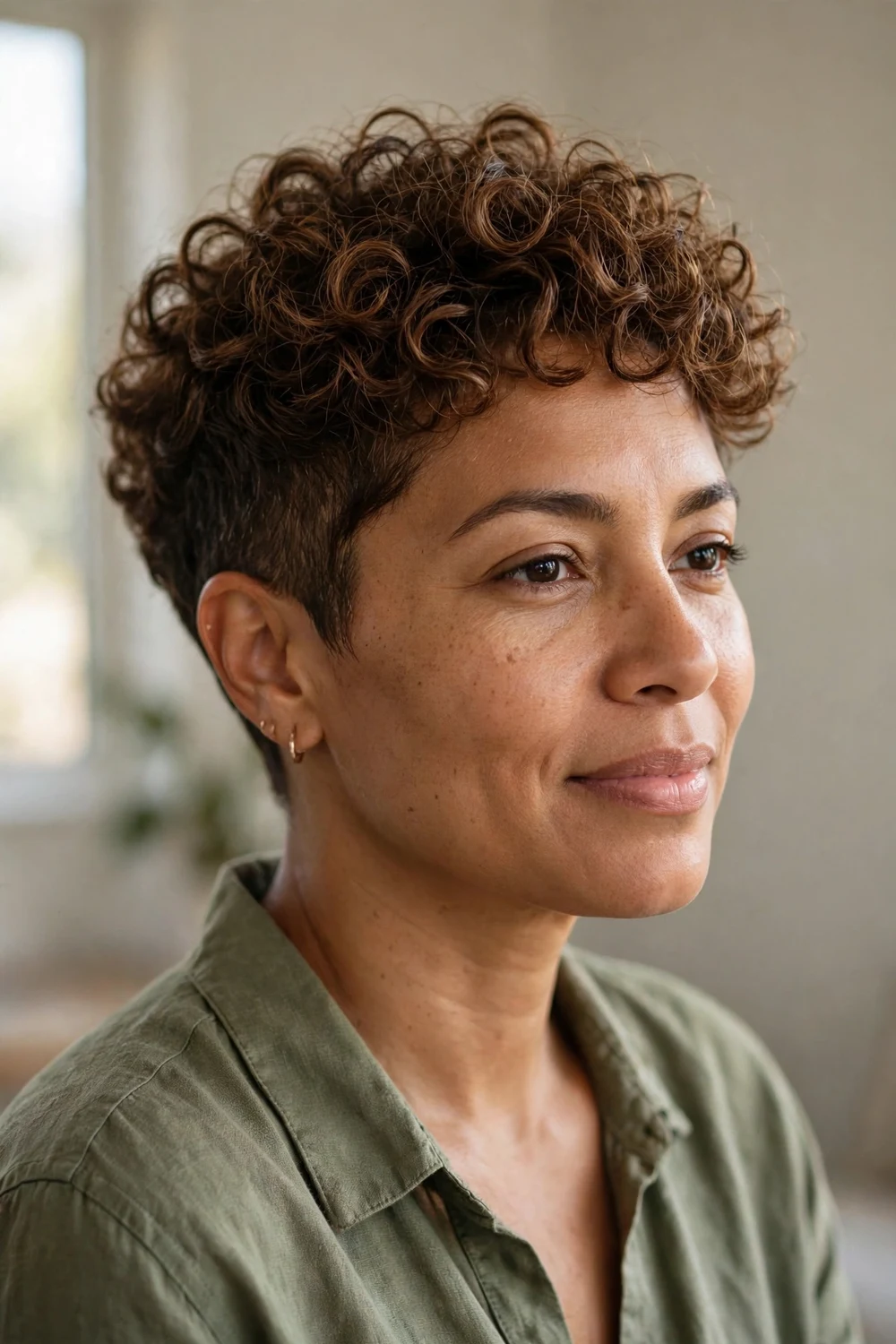
For tight curls and coils, keep the top longer and rounded while tapering the back and sides short. The tapered sides prevent the dreaded triangle shape, and the longer top shows off your curl pattern at its best. This cut is wash-and-go friendly: define the top with curl cream, let it air-dry, and the tapered sides take care of themselves. Barbers and curl specialists both cut this well. Edge-ups at the barber keep the tapered sides crisp between full salon visits.
Try this: pineapple your hair in a loose high ponytail at night to protect the curly top while you sleep.
20. The Choppy Pixie with Baby Bangs
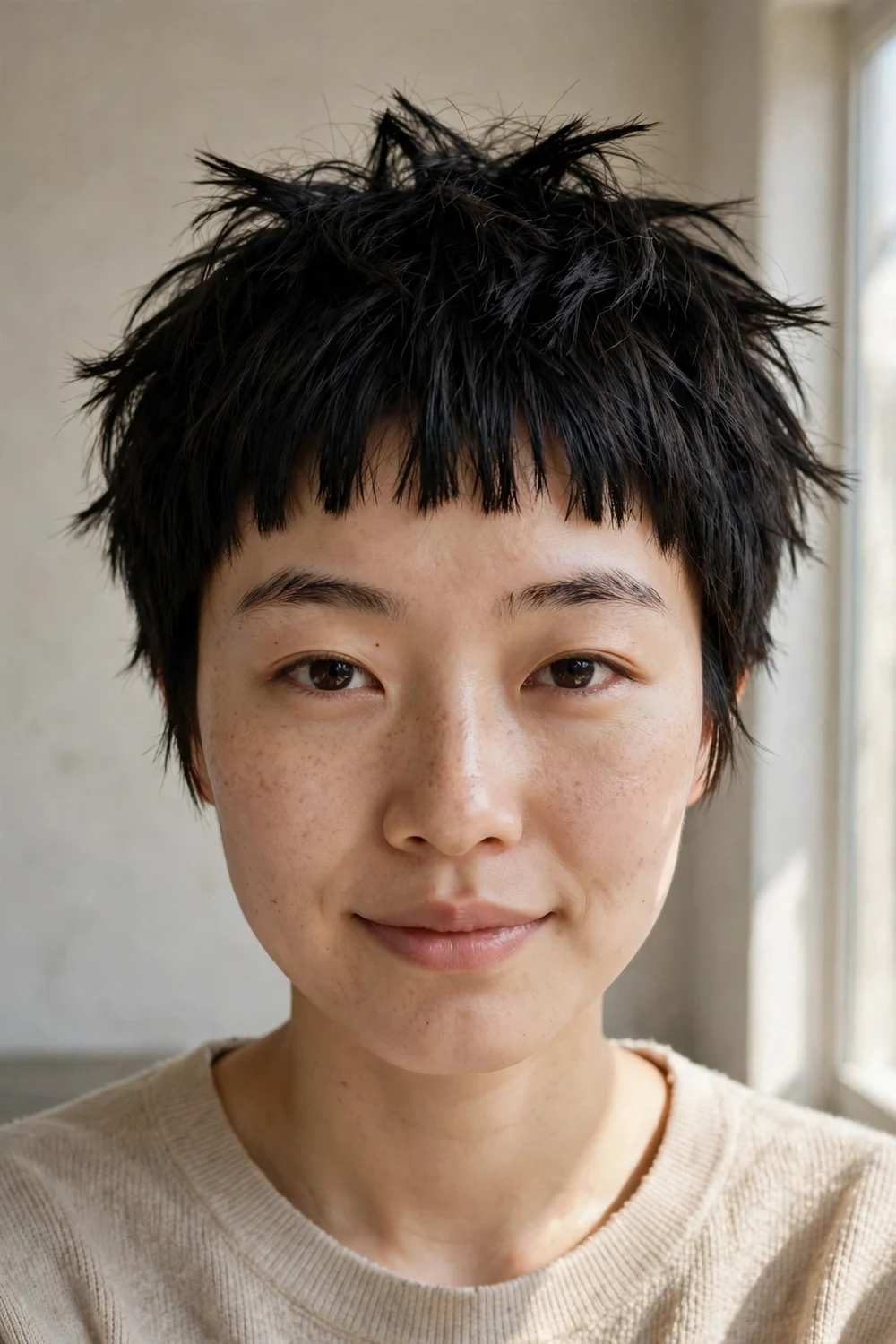
Baby bangs end mid-forehead, well above the brows, and cutting them unevenly with strands at different lengths keeps them from looking severe. Paired with a textured crown, the result is fashion-forward without trying too hard. The short bang length elongates round faces and puts your eyes front and center. This is a confident-wearer cut: it works on any face shape if you love the look, but it does draw attention.
Try this: pair baby bangs with statement earrings; the open forehead is a natural frame for bold jewelry.
21. The Graduated Choppy Pixie
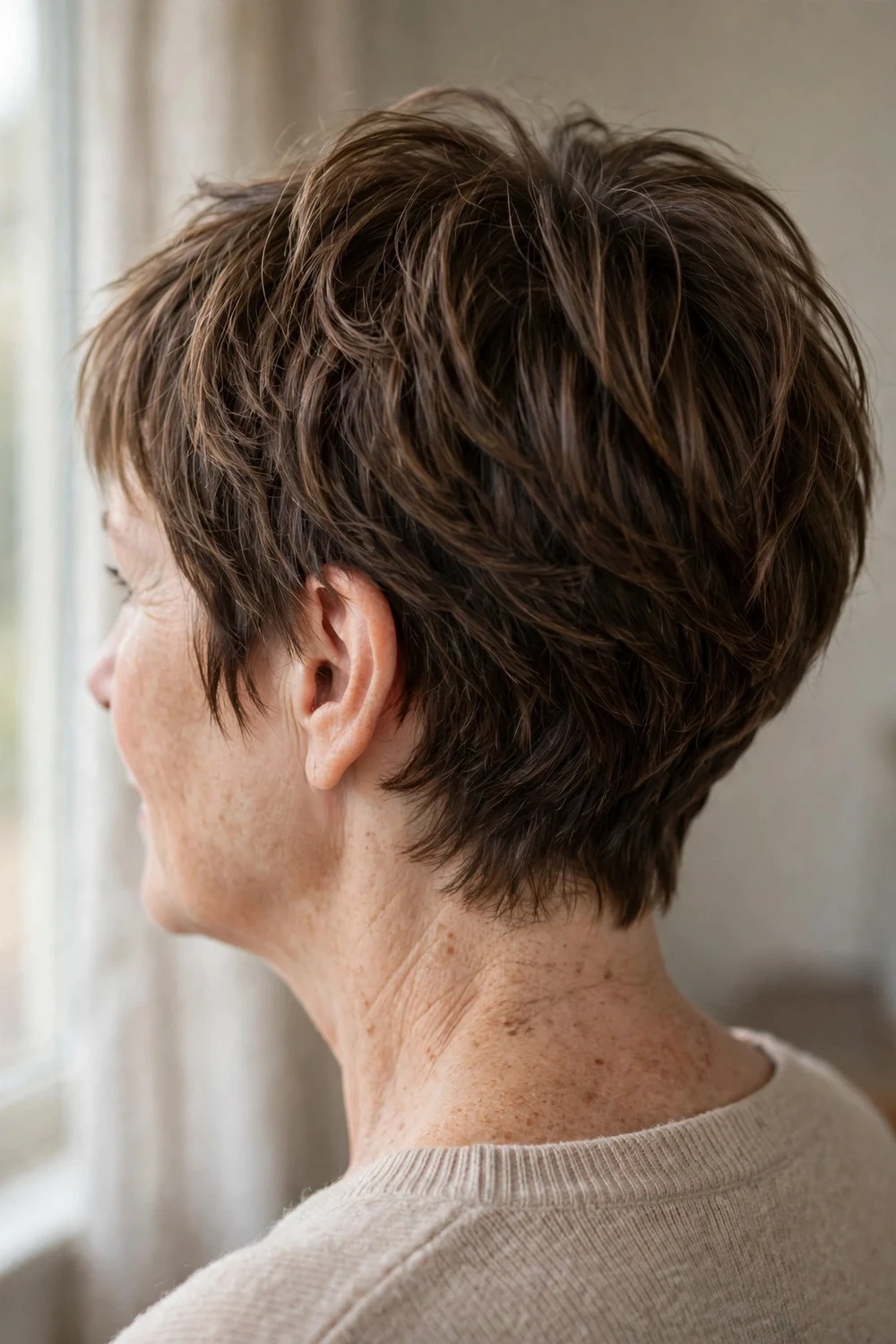
Shorter at the nape, gradually longer toward the front, with each grade point-cut to remove weight. The back gets a soft stacked effect while the front keeps piece-y volume. It’s one of the most flattering options for women over 40 because the shape is structured but never stiff. Thick hair loses its bulk at the nape, and fine hair gains a fuller-looking front section. This shape also works beautifully with glasses, since the clean nape keeps the frame area tidy.
Try this: ask for the nape “dusted” at trims, not re-cut hard, so the graduation stays soft as it grows.
22. The Two-Tone Peekaboo Pixie
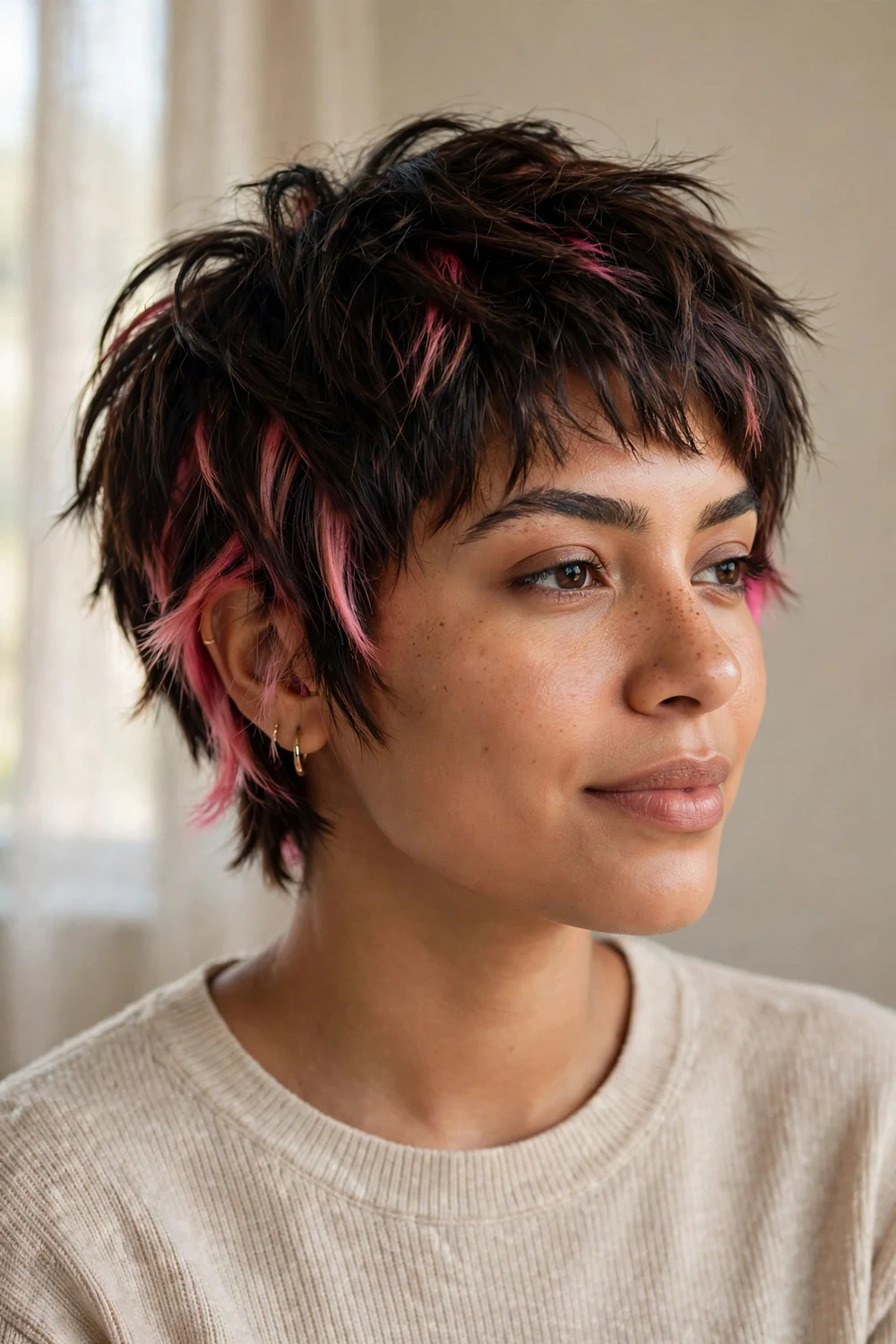
Hide a vivid color panel (pink, blue, violet, or copper) underneath a natural or darker top layer. The choppy pieces let the under-color slip through when your hair moves, which gives you a surprise flash of color without an all-over dye job. It’s playful, it’s office-friendly (the color hides when hair sits still), and the regrowth line stays hidden under the top layer for weeks. The top layer hides the panel completely when you want a conservative look for work.
Try this: refresh the peekaboo panel with a semi-permanent color at home; short lengths make DIY touch-ups easy.
23. The Choppy Pixie with Long Sideburns
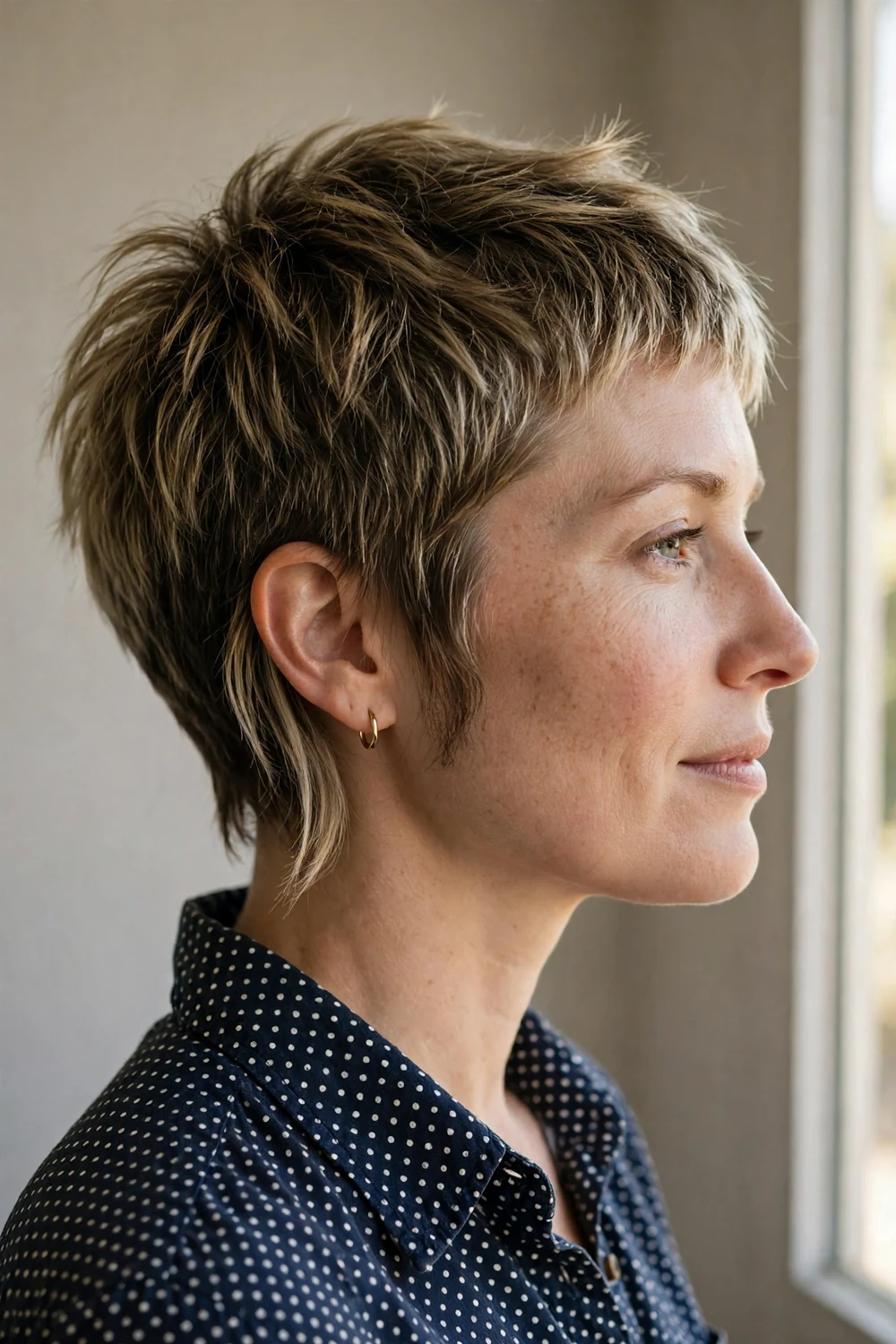
A retro rockabilly detail that frames the face in an unexpected way: leave the hair just in front of the ears an inch or two long while the rest stays chopped short. The sideburns draw attention to the eyes and cheekbones and soften angular or square jawlines. Straight or wavy hair holds the shape best. It’s a small detail that completely changes the personality of a classic pixie. Keep the sideburns conditioned; short pieces in front of the ears show dryness fast.
Try this: keep the sideburns slightly longer than you think; they shrink up as they dry and settle.
24. The Choppy Pixie with Flicked-Out Ends

Take a choppy cut and flip the ends outward around the ears and bangs for a playful 60s-modern finish. A small flat iron or round brush on dry hair creates the flick in seconds, and the flip adds width that flatters narrow faces. Heart-shaped faces wear this especially well. The look reads retro in the best way when the flicks are subtle; go bigger for an evening-out version. Set the flicks with a cool shot from the dryer so they hold through the evening.
Try this: flick only the ends, not the roots; heated roots create lift in the wrong places on a pixie.
25. The Choppy Pixie with a Wispy Nape
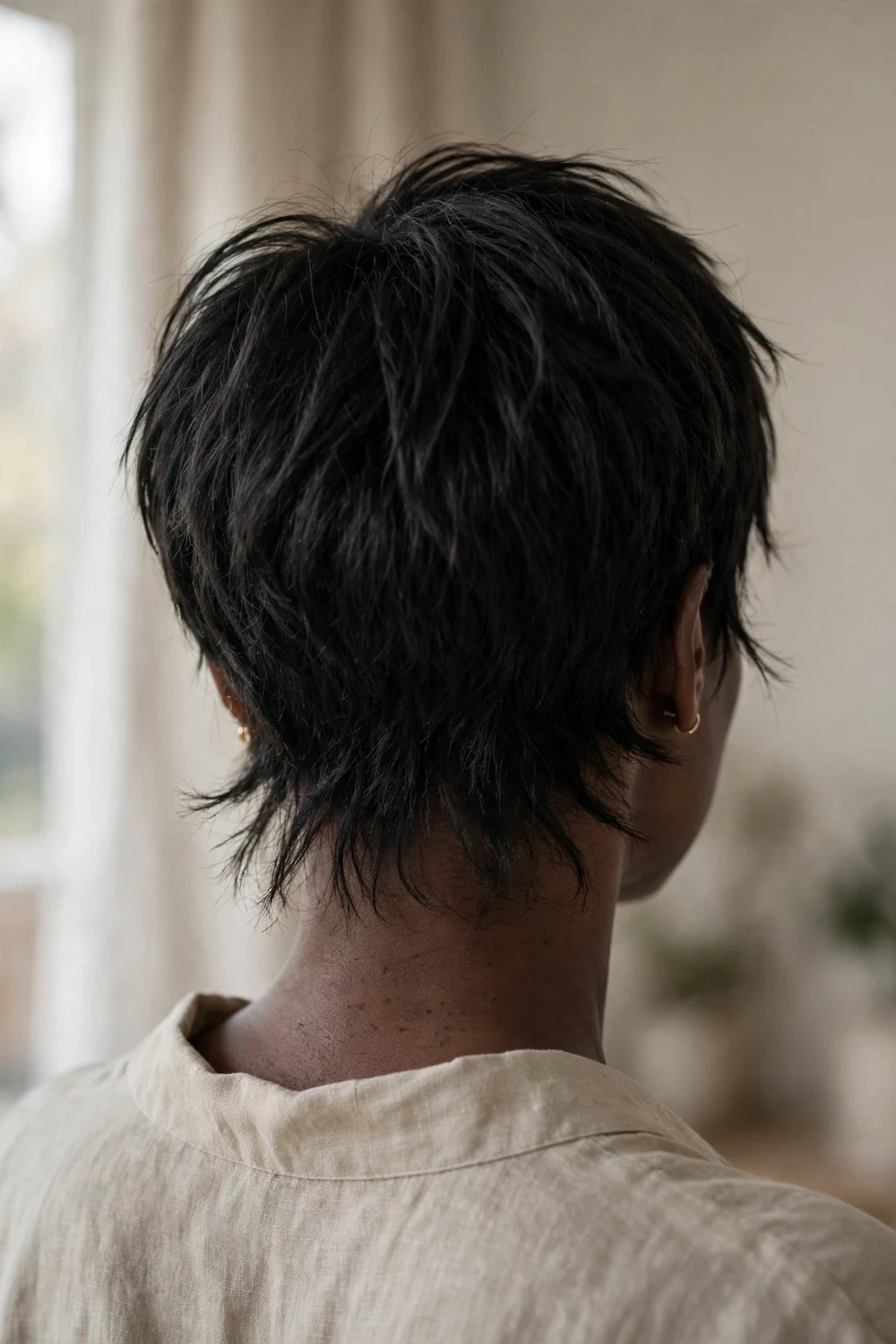
Instead of a tight clean taper, the back stays softly choppy and wispy, with feathery ends grazing the upper neck. From the front it reads as a standard pixie; from the back it’s delicate and romantic. Thick or coarse hair benefits most, since the wispy finish softens a cut that could otherwise feel severe. It’s also the kindest version on a neck you’d rather not emphasize. This version suits women who wear their hair up often, since the wispy nape looks intentional from every angle.
Try this: tell your stylist “feathery, not blunt” at the nape; one wrong snip turns wispy into stubby.
26. The Swept-Back Choppy Pixie
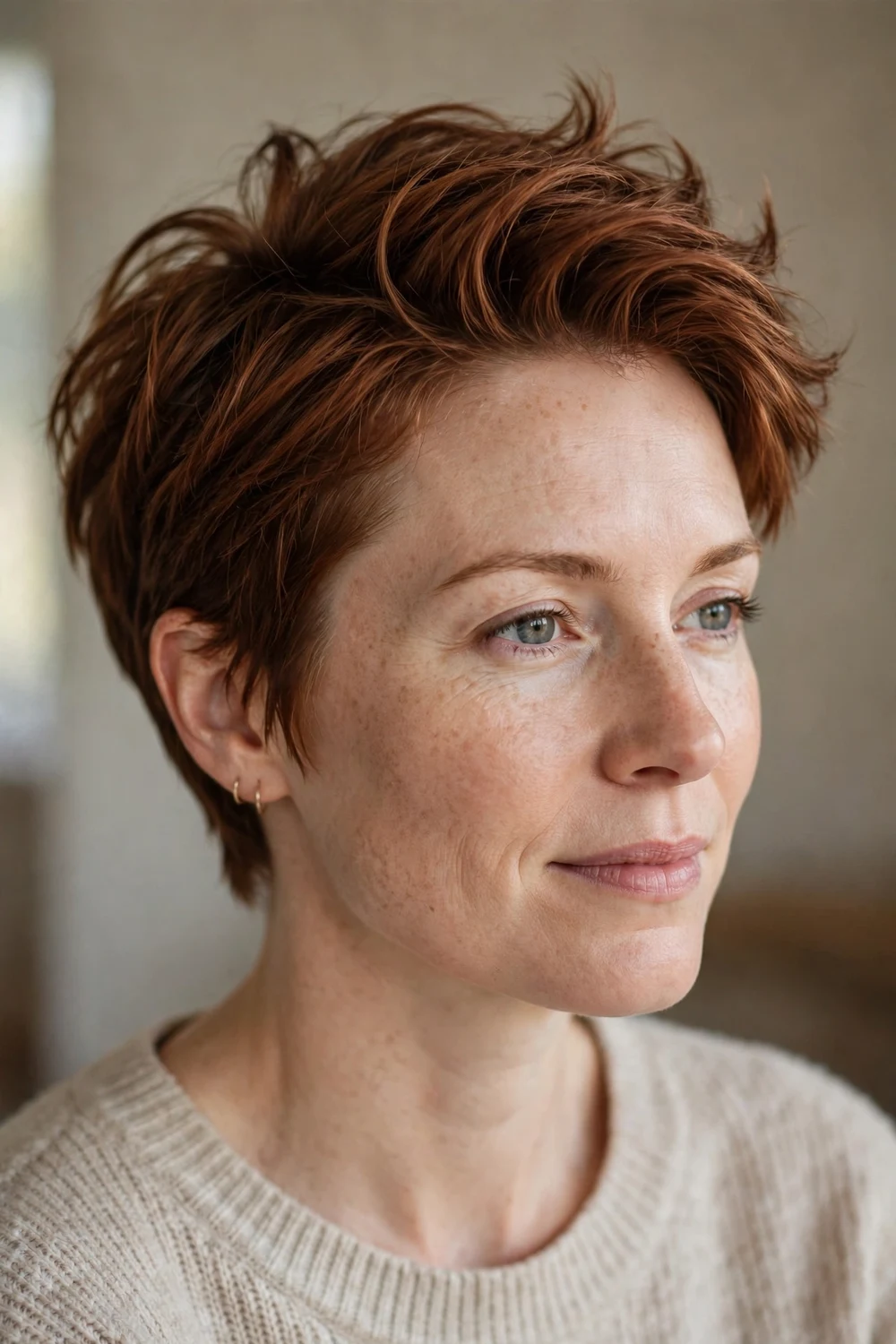
Brush the longer top layers straight back and let the choppy texture do the talking. This version keeps thick hair under control better than any forward-styled pixie, and it opens up the face completely, which suits women who like their features front and center. A medium-hold pomade gives the sweep staying power without helmet stiffness. Auburn and warm brown shades look especially rich swept back. The sweep also keeps hair out of your face at the gym, which forward-styled pixies cannot claim.
Try this: apply product to towel-dried hair, then blow-dry backward with a vent brush for a smooth-but-textured finish.
27. The Highlighted Balayage Choppy Pixie
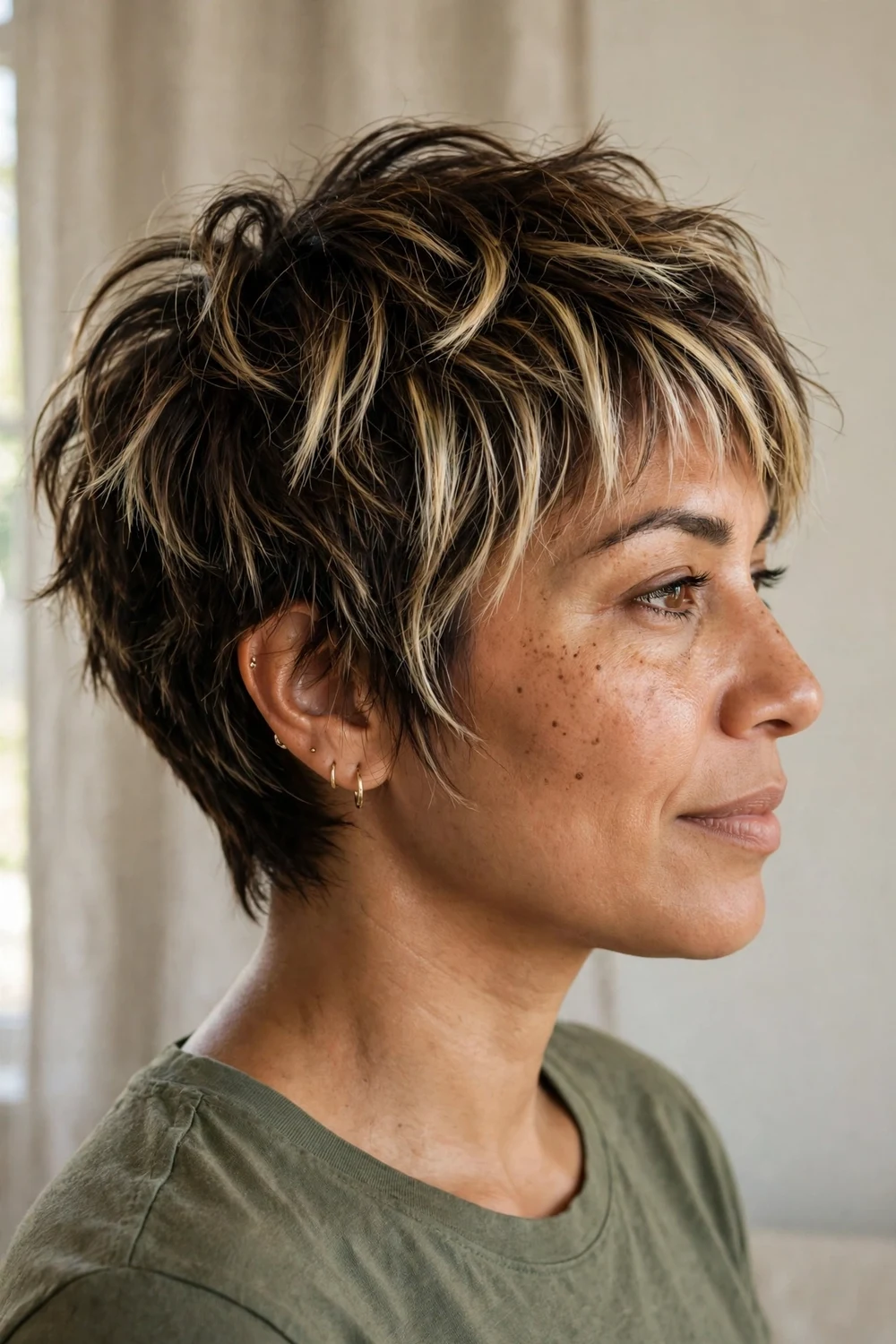
Face-framing highlights or full balayage applied to follow the texture: lighter on the choppy ends and pieces, darker underneath. The color creates huge dimension because light catches each uneven piece differently. It works on any base color and any hair type, and it grows out gracefully since balayage has no harsh line. Fine to medium hair shows the dimension best. Because balayage grows out without a harsh line, you can stretch appointments to eight weeks or more.
Try this: ask your colorist to paint the highlights on the pieces that stick out most; that’s where the light hits.
28. The Platinum Pixie with Jagged Fringe
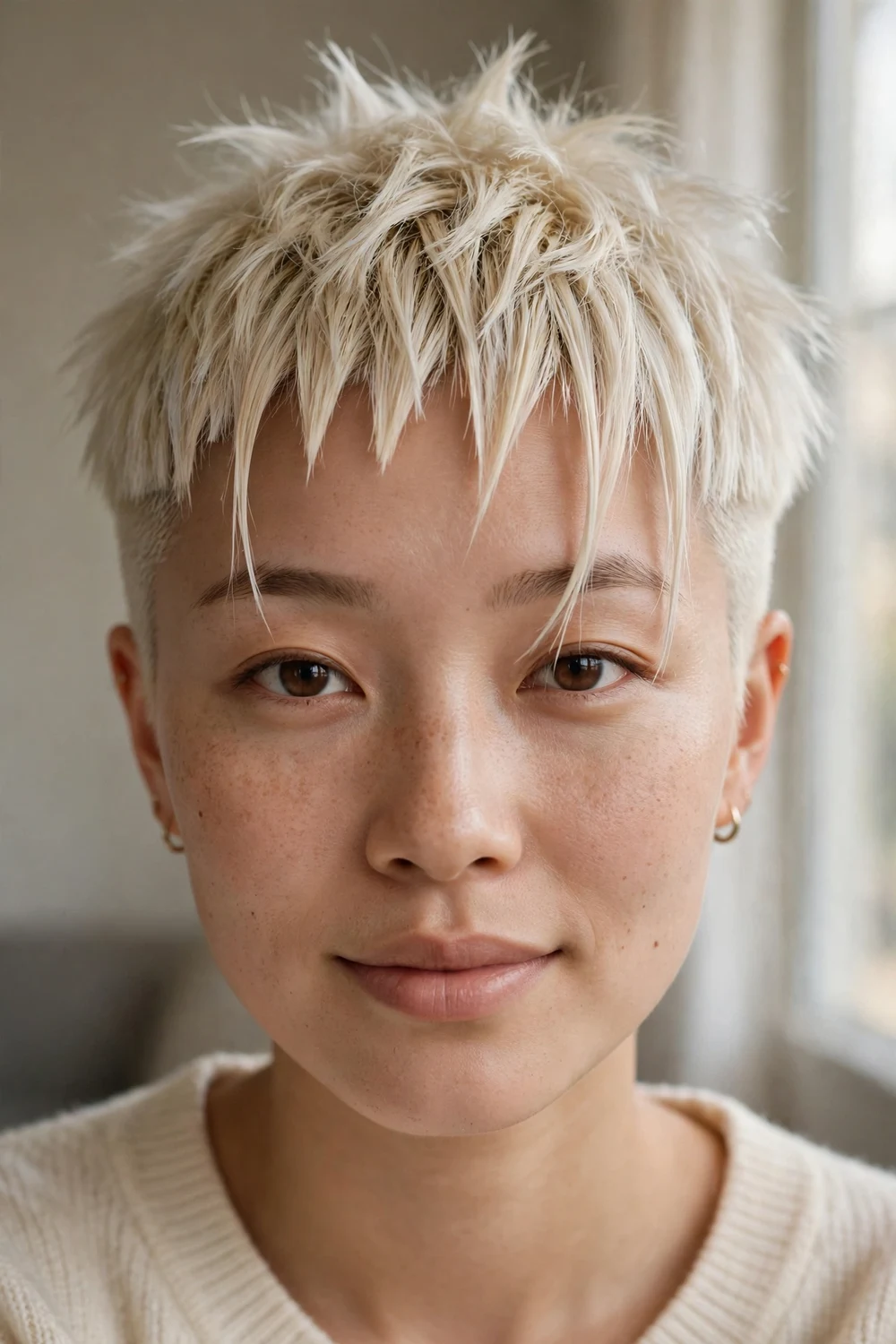
Platinum all over, a jagged razor-cut fringe alternating from long to short, and sides buzzed to less than an inch. There’s an edgy and a soft way to wear bangs on platinum; this is the edgy one, and it doesn’t apologize. The pale color makes every jagged edge visible. Maintenance is real: toner every 3 to 4 weeks and purple shampoo between visits keep it icy instead of brassy. One more tip: platinum pixies photograph beautifully, so this is a great choice before a big event.
Try this: schedule the fringe trim between color appointments; jagged bangs lose their edge fast as they grow.
29. The Choppy Pixie with Wispy Curtain Bangs

Pair a piece-y choppy crown with longer face-framing bangs that part naturally down the middle. The curtain shape softens the entire face, and it works on virtually every face shape and age. Style it by air-drying with a leave-in cream and separating the bangs with your fingers. Trim the curtain pieces every 4 to 5 weeks to keep the parted shape. The soft part means you can skip heat tools entirely and still look put together.
Try this: part the bangs while the hair is still damp; curtain bangs set their part as they dry.
30. The Layered Pixie with a Longer Nape
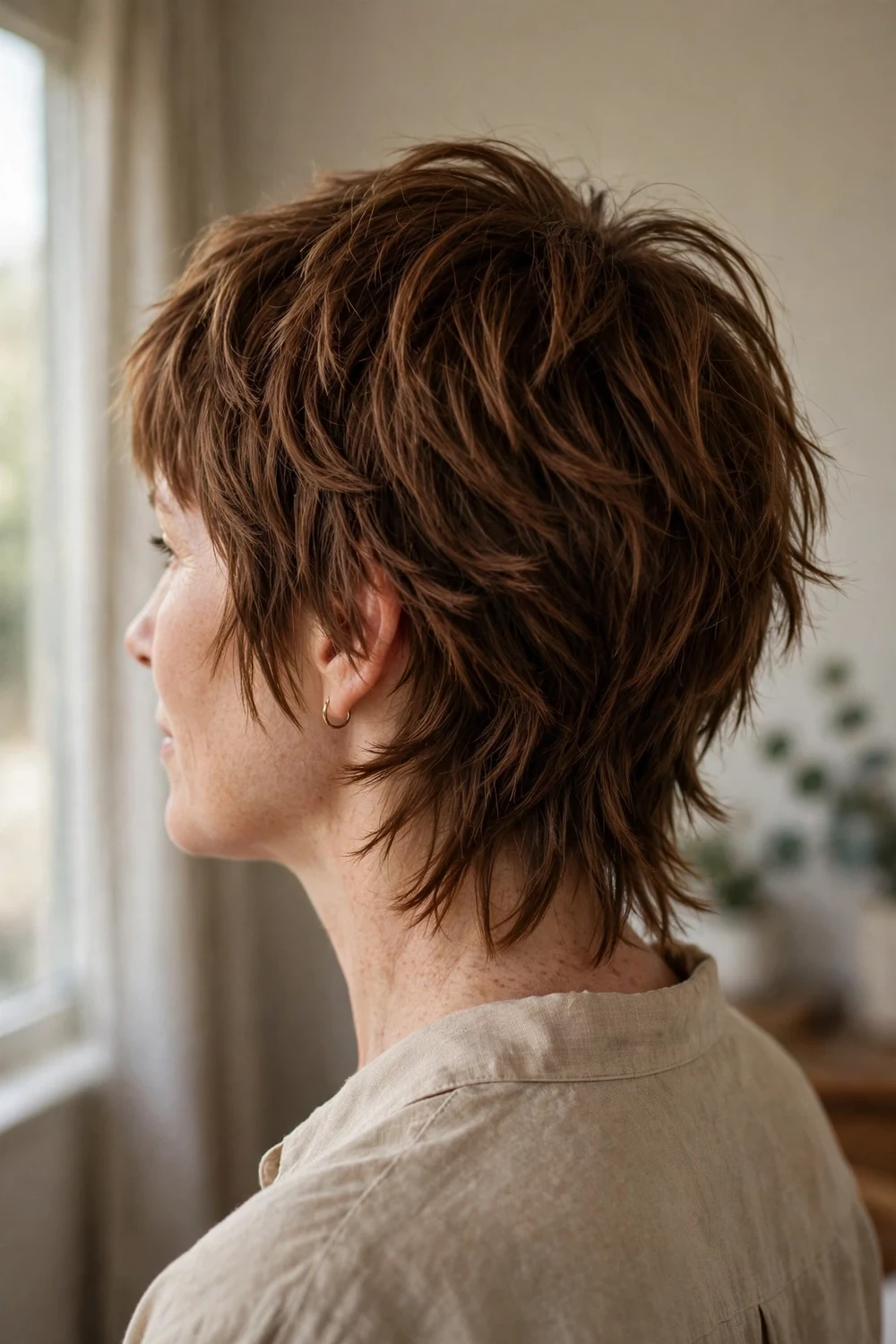
A 70s-inspired take: longer at the back and layered all throughout to create a shag-pixie hybrid. The longer nape balances long faces and gives the cut a relaxed, lived-in feel that a tight taper can’t. It’s also the easiest choppy pixie to grow out, since you’re already halfway to a short shag. Wavy hair gets the most natural movement from this version. It also suits women growing out a pixie, since the longer nape keeps the awkward stage minimal.
Try this: scrunch the nape layers with a light cream while damp to encourage the shaggy wave.
Choppy Pixie Cuts Comparison at a Glance
| Style | Best Occasion | Difficulty | Hold Time |
|---|---|---|---|
| Classic Tousled Piece-y Pixie | Everyday, casual | Easy | 4-6 weeks |
| Spiky Crop | Nights out, concerts | Medium | 3-4 weeks |
| Long Wispy Bangs with Choppy Ends | Work, everyday | Easy | 4-6 weeks |
| Undercut Choppy Pixie | Edgy everyday | Medium | 4-5 weeks |
| Curly Choppy Pixie | Everyday, natural | Easy | 6-8 weeks |
| Asymmetrical Chop | Evenings, creative work | Medium | 4-5 weeks |
| Silver Fox Choppy Pixie | Everyday, polished | Easy | 5-6 weeks |
| Textured Pixie Bob | Work, everyday | Easy | 5-7 weeks |
| Finger-Wave Choppy Pixie | Weddings, formal events | Hard | 4-5 weeks |
| Bleached Blonde with Dark Roots | Everyday, trendy | Medium | 8-10 weeks |
| Messy Micro Pixie | Everyday, low-key | Easy | 3-4 weeks |
| Choppy Pixie with Shaved Design | Festivals, bold days | Medium | 2-3 weeks |
| Deep Side-Swept Chop | Work, evenings | Easy | 4-6 weeks |
| Copper Red Velvet Pixie | Fall, evenings | Medium | 4-6 weeks |
| Faux-Hawk Pixie | Concerts, nights out | Medium | 3-4 weeks |
| Soft Choppy Pixie for Fine Hair | Everyday, work | Easy | 5-6 weeks |
| Razor-Cut Choppy Pixie | Everyday, casual | Easy | 5-7 weeks |
| Jet Black with Choppy Fringe | Evenings, graphic looks | Easy | 4-6 weeks |
| Curly Top with Tapered Sides | Everyday, natural | Easy | 4-6 weeks |
| Choppy Pixie with Baby Bangs | Creative, fashion | Medium | 3-4 weeks |
| Graduated Choppy Pixie | Work, everyday | Easy | 4-6 weeks |
| Two-Tone Peekaboo Pixie | Weekends, creative work | Medium | 5-7 weeks |
| Choppy Pixie with Long Sideburns | Everyday, retro | Easy | 4-5 weeks |
| Choppy Pixie with Flicked-Out Ends | Evenings, retro | Medium | 4-5 weeks |
| Choppy Pixie with Wispy Nape | Everyday, soft looks | Easy | 5-6 weeks |
| Swept-Back Choppy Pixie | Work, everyday | Easy | 4-6 weeks |
| Highlighted Balayage Pixie | Everyday, polished | Medium | 6-8 weeks |
| Platinum Pixie with Jagged Fringe | Fashion, bold days | Hard | 3-4 weeks |
| Choppy Pixie with Wispy Curtain Bangs | Everyday, work | Easy | 4-6 weeks |
| Layered Pixie with Longer Nape | Everyday, casual | Easy | 6-8 weeks |
How to Choose the Right Choppy Pixie for You
Match the cut to your face shape first. Round faces gain length from height on top, so the spiky crop, faux-hawk, or curly top with tapered sides work well. Square jaws soften with wispy, piece-y ends, which makes the soft fine-hair pixie or the long wispy-bang version a safe pick. Oval faces can wear almost anything; try the asymmetrical chop or baby bangs for maximum effect. Long or oblong faces need side fullness or a longer pixie bob to avoid extra length. Heart-shaped faces balance with side-swept volume at the crown.
Then match to your hair type. Fine hair needs soft, blunt-ish choppiness that stacks, never aggressive thinning. Thick hair needs weight removed, which means an undercut, a graduated nape, or a razor cut. Curls need a dry cut from a specialist. And be honest about maintenance: platinum and shaved designs need frequent salon visits, while the classic tousled and curly versions practically take care of themselves.
Mistakes to Avoid
Don’t ask for “choppy” while showing a photo of a neat, polished pixie. Bring 2 or 3 reference photos and say the words “uneven, piece-y, razored” out loud. Don’t use too much product; choppy hair needs tiny amounts, or the pieces clump together and the texture disappears. Don’t skip trims for months; even a forgiving chop turns into a shapeless mullet eventually. And don’t blow-dry with a round brush, which creates smooth uniform ends, the exact opposite of choppy. Fingers or a diffuser only.
If bangs are the part you love most, our guide to choppy pixie cut with bangs breaks down 25 fringe styles for every face shape.
For a longer, shaggier take on short texture, these short shaggy pixie haircuts show 20 cuts with choppy layers throughout.
If you want maximum attitude, browse these edgy pixie haircuts with choppy layers, shaved sides, and bold color.
The undercut approach also shines later in life, as these undercut pixie haircuts for over 50 prove with 20 grown-up ideas.
Frequently Asked Questions
What is the difference between a choppy pixie and a regular pixie?
A regular pixie has smooth, even edges and a polished finish. A choppy pixie is cut with point-cutting or razor techniques that create uneven, piece-y ends and visible texture throughout. The choppy version looks undone on purpose, grows out more gracefully, and usually needs less daily styling.
Do choppy pixie cuts work on thin or fine hair?
Yes, with the right technique. Fine hair needs soft choppy layers that stack on each other to create the illusion of density, not aggressive thinning, which makes thin hair disappear. Avoid heavy products and use a light mousse or texture powder at the roots for lift.
How do I ask my stylist for a choppy pixie cut?
Bring 2 to 3 reference photos and say: “I want a choppy pixie. Please use point-cutting or razor-cutting to create uneven, piece-y texture. Don’t make it blunt or smooth. I want visible separation between strands.” Avoid saying “just a trim” or “keep it neat,” which mean the opposite of choppy.
How often does a choppy pixie need trimming?
Most choppy pixies need a trim every 4 to 6 weeks to keep their shape, since uneven edges hide regrowth better than blunt cuts. You can stretch to 6 to 8 weeks as it grows into a shaggy bob. Platinum, shaved designs, and baby bangs need more frequent touch-ups, closer to every 3 weeks.
Can I style a choppy pixie in under five minutes?
Yes. Start with damp, towel-dried hair and apply a pea-sized amount of sea salt spray or texture mousse to the roots. Blow-dry with your fingers, lifting and scrunching as you go. Warm a tiny amount of matte clay between your palms, then pinch and twist individual pieces to define the choppy ends. Finish with a texture powder at the roots for extra lift.
Final Thoughts
The choppy pixie is the short cut that does the work for you. It thrives on imperfection, forgives regrowth, and adapts to fine hair, thick hair, curls, and every face shape. Pick the version that matches your texture and your maintenance tolerance, bring the photos, and enjoy the mornings when your hair looks styled before you touch it.

