

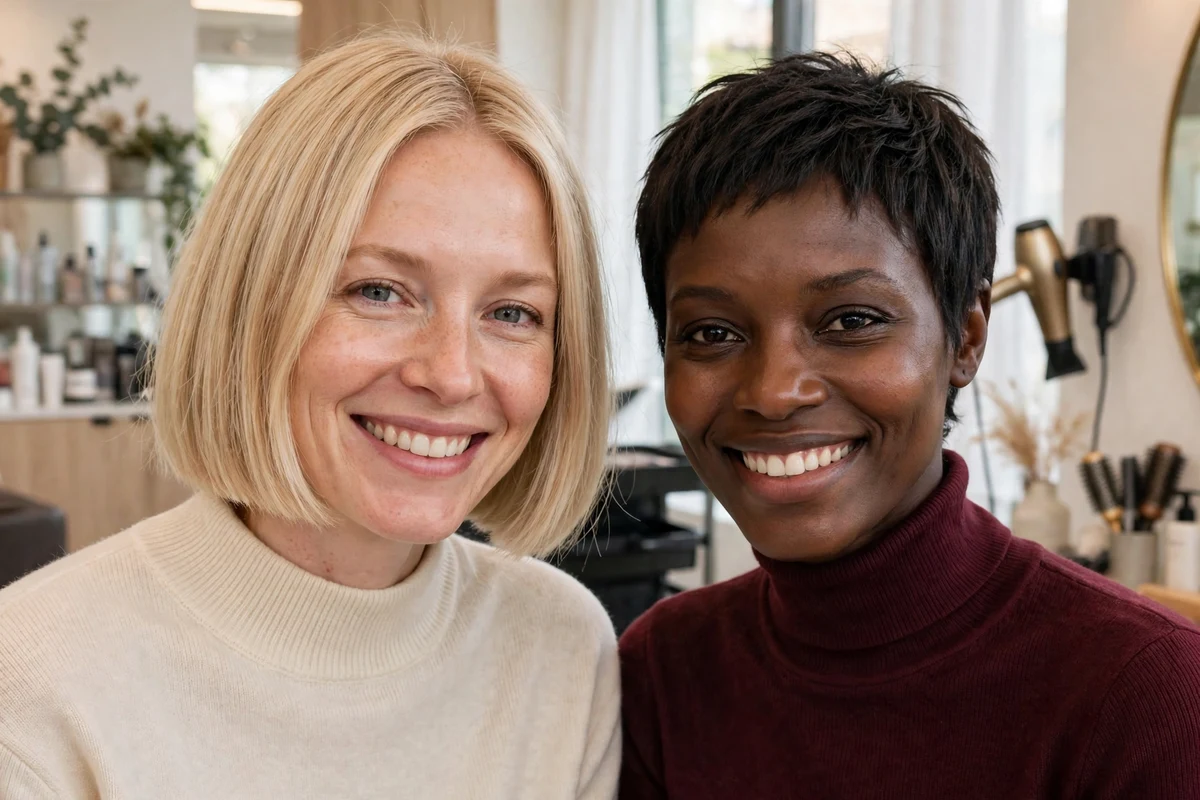
Fine hair has a way of making a promising cut look flat by day three, so I judge short cuts by their ends and their grow-out rather than by the salon photo. Fine describes the width of each strand, and strands with a small width bend easily, tangle around product, and lose root lift fast. A good short cut works with that: it keeps the ends solid, puts weight only where it supports lift, and asks very little from styling.
This list gathers 27 short hairstyles for fine hair, from blunt bobs and lobs to pixies, crops, and soft shags. Each one explains how the cut is built, what to ask for in the chair, and how much upkeep it needs. If your main concern is low density as well as fine strands, our guide to short hairstyles for thin hair takes a volume-first approach, while our roundups of bob hairstyles for fine hair and lob hairstyles for fine hair go deeper on those two lengths.
Quick Takeaways
- Blunt, one-length ends make fine hair look fuller than any layering trick, because no weight is cut away from the edge.
- Layers help only when they are long, light, and kept inside the cut. Short, heavy layers leave fine ends looking wispy.
- Fine hair looks densest between ear length and the collarbone, and it loses fullness as it grows past the shoulders.
- Light products win on fine hair. Mousse and root spray add lift, while heavy creams and oils pull strands flat.
- Short cuts need regular trims: bobs hold their shape for six to eight weeks, and pixies and crops for four to six weeks.
1. Blunt Bob
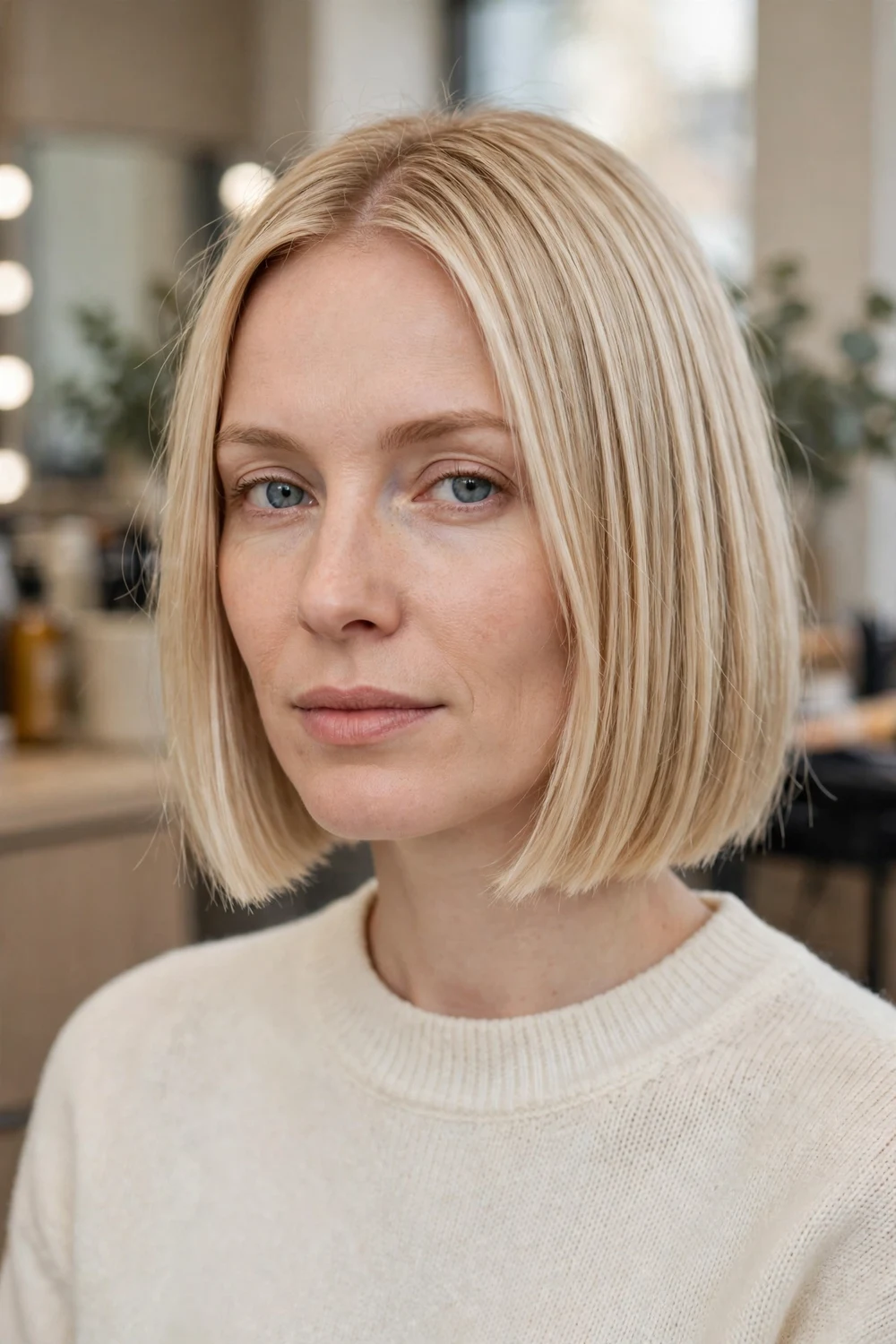
A blunt bob is cut in one clean line all the way around, with no layers and no thinning at the ends. Every strand finishes at the same length, so the bottom edge looks solid and full. On fine hair, that strong edge does more for the look of thickness than any layering trick, because nothing is cut away from the perimeter.
Ask for a one-length cut at the jaw or just below it, with no thinning shears and no razor work on the ends. It suits straight and slightly wavy fine hair and most face shapes. Blow-dry with a round brush turned under, or wear it air-dried with a light root spray. Plan a trim every six to eight weeks so the edge stays sharp.
Try this: Flip your part to the opposite side after drying. Hair that has settled one way stands up at the root when it is moved.
Difficulty: Low · Cost: $$
2. French Bob

The French bob sits between the cheekbones and the jaw and is worn with a little natural movement. The ends are blunt enough to look full, while a few soft interior pieces stop the shape from sitting heavy or flat. A short fringe is common with this cut, and fine hair handles a light fringe well because it adds weight at the front where hair often looks sparse.
Ask for a chin-length bob with blunt ends, subtle interior texture, and a soft fringe if you want one. It works on straight, wavy, and lightly curly fine hair. Scrunch in a small amount of mousse and air-dry, or diffuse on low heat for more bend. The shape grows out softly, so trims every seven to eight weeks are usually enough.
Try this: Dry the fringe forward first, then let the rest air-dry. The front sets while the back keeps its natural movement.
Difficulty: Low · Cost: $$
3. Classic Chin-Length Bob

The classic chin-length bob curves gently under at the ends and may carry a touch of graduation at the back. That small lift at the nape helps fine hair sit away from the neck and hold a rounded shape through the day. It reads polished at work and still looks relaxed with the front tucked behind the ears.
Ask for a bob that lands right at the chin, with light graduation at the back only and the front kept full. It suits oval, heart, and square faces and straight to wavy textures. A round brush at the ends gives the curved-under finish in a few minutes. Keep the sides blunt if your hair is very fine, since graduation removes weight.
Try this: Blow-dry the back first and the front last. The nape sets the shape, and the front pieces frame the face once the back is dry.
Difficulty: Low · Cost: $
4. A-Line Bob
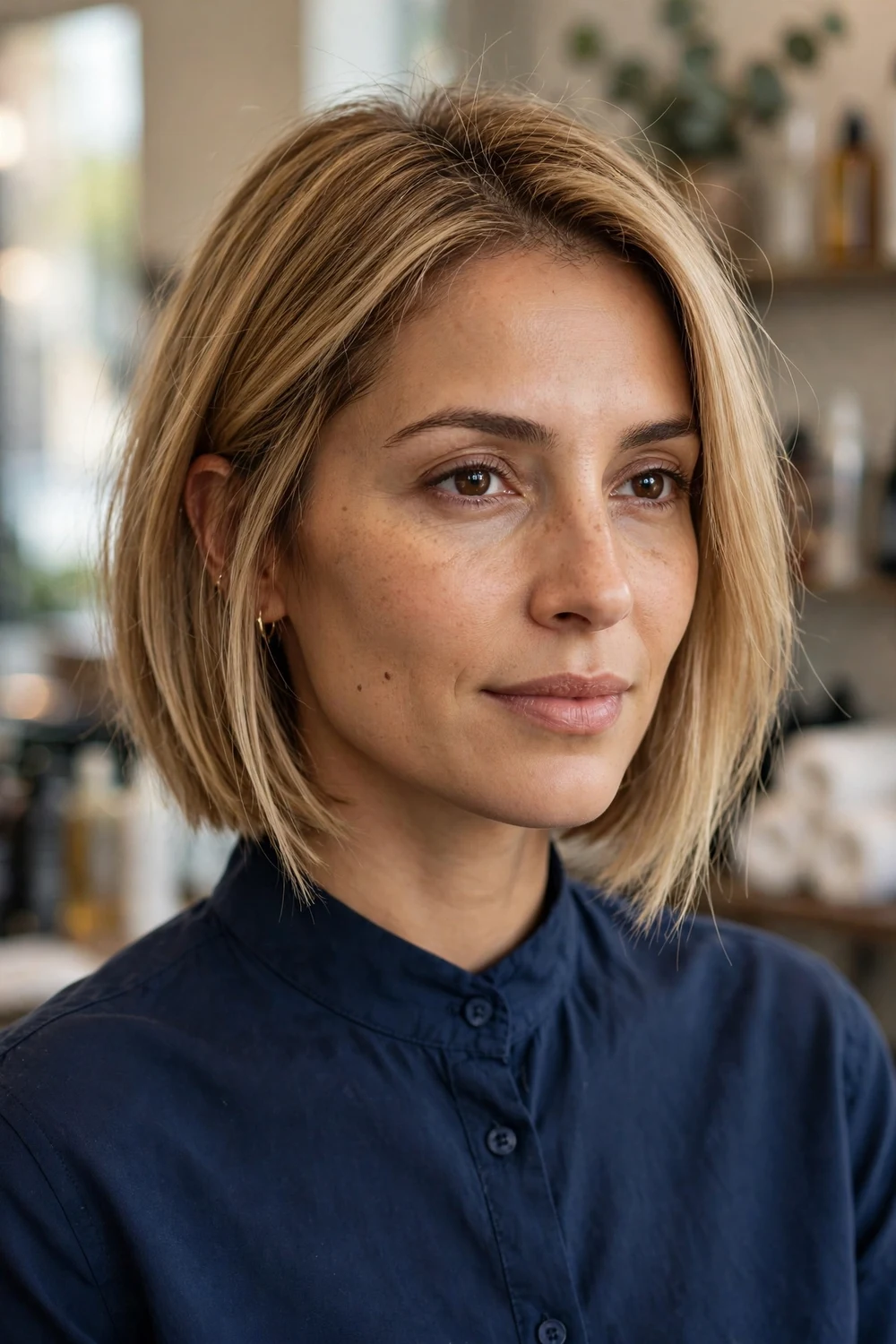
An A-line bob is shorter at the back and angles down toward longer front pieces. The shorter back lifts the crown area, and the longer front keeps the face-framing length many people want from a bob. On fine hair, a gentle angle works better than a steep one, because a sharp drop can leave the front ends looking thin.
Ask for a soft A-line with a modest angle and blunt front ends. The cut suits round and heart faces well, since the longer front adds length at the sides of the face. Blow-dry the back with a round brush for lift and smooth the front pieces with the same brush. Trims every six to eight weeks hold the angle.
Try this: Use a deep side part with this cut. The diagonal line adds height at the crown and shows off the angled shape.
Difficulty: Medium · Cost: $$
5. Graduated Stacked Bob

A graduated stacked bob builds short layers at the back that stack on top of each other. Each layer supports the one above it, so the back of the head gains a rounded, full shape that fine hair rarely holds on its own. The front stays longer, usually around the chin, which keeps the cut soft around the face.
Ask for stacking through the back with the front left at chin length, and ask the stylist to keep the layers close so the ends stay dense. It suits fine hair that falls flat at the crown and works for most face shapes. Blow-drying the back with a small round brush shows the stacked shape best. This cut needs trims every five to six weeks.
Try this: Lift the back sections with the brush and hold each one for a few seconds as it cools. Cooled hair keeps the stacked curve longer.
Difficulty: Medium · Cost: $$
6. Layered Bob with Invisible Layers
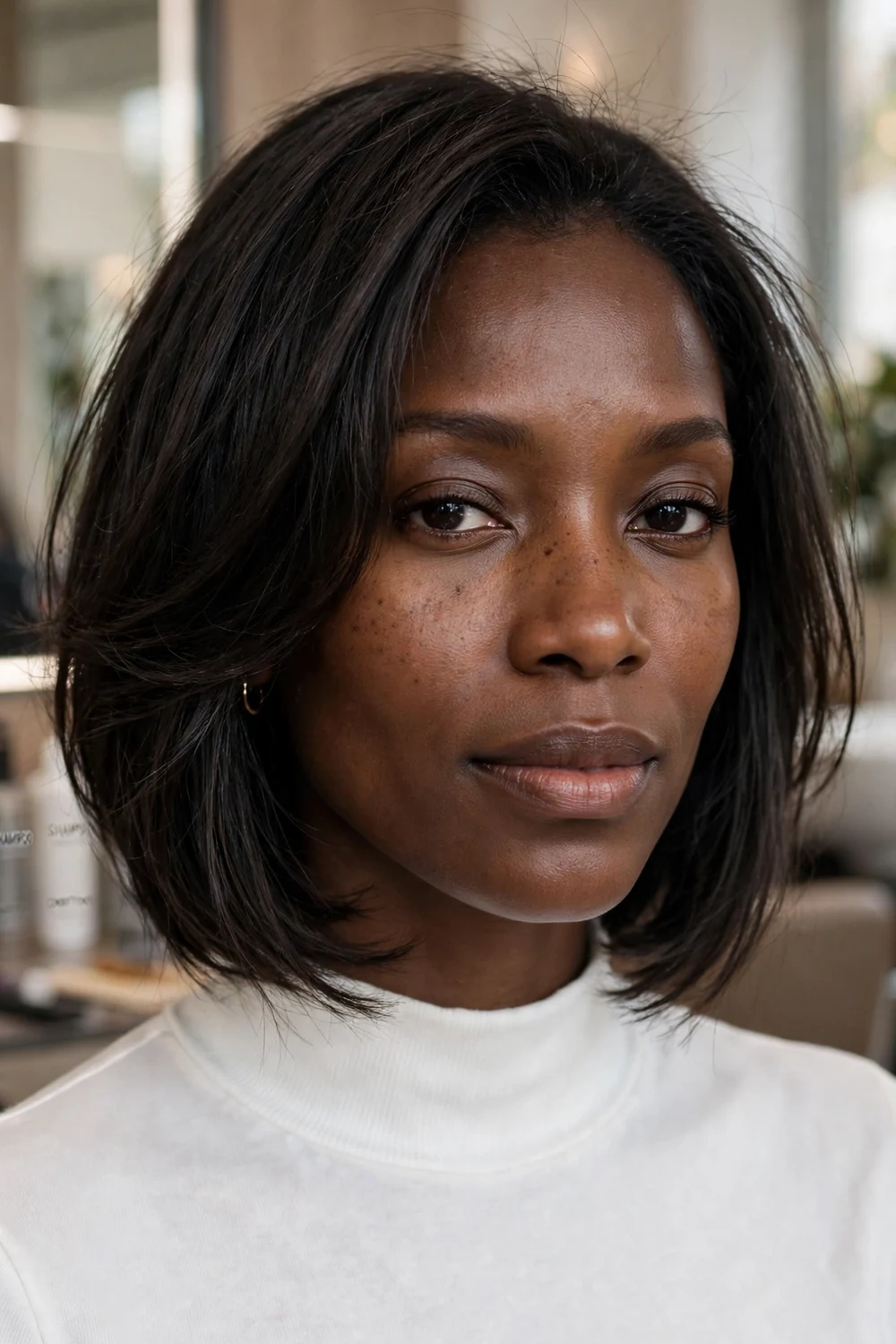
Invisible layers are long layers cut inside the hair, away from the surface and the ends. They remove a little weight from the middle of the cut, which lets fine hair move and bounce, while the outer shape and the bottom edge stay solid. This is the layered bob to pick if your hair has enough density to spare a little weight.
Ask for long internal layers only, with the perimeter kept blunt and no short layers at the crown. It suits fine hair with medium density and a natural bend. If your hair is fine and sparse, skip the layers and choose a blunt cut instead. Style with a light mousse and a rough blow-dry so the movement shows.
Try this: Scrunch the ends upward while drying instead of pulling them down. The internal layers spring up and the bob looks fuller.
Difficulty: Medium · Cost: $$
7. Rounded Bob
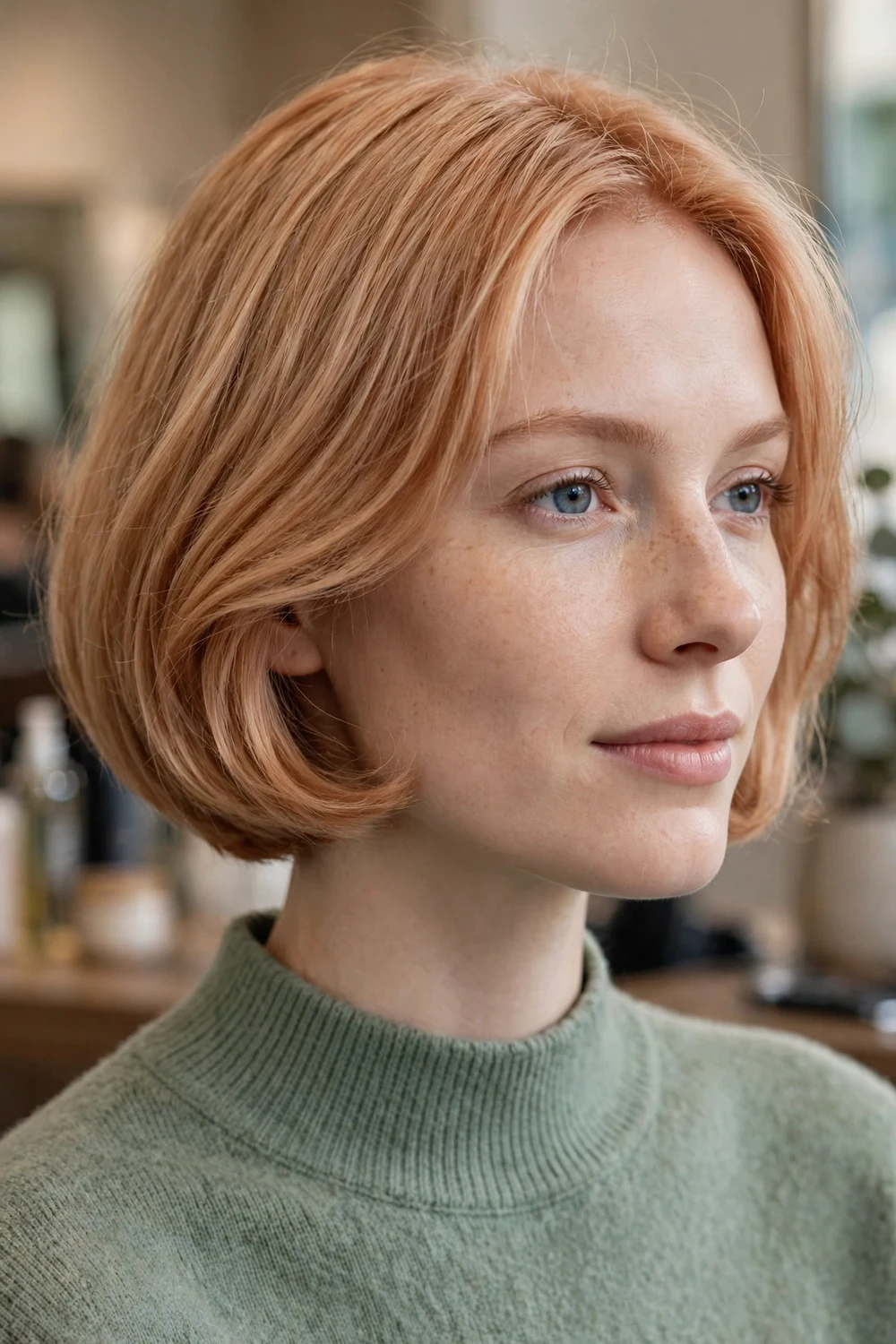
A rounded bob follows the shape of the head, with the sides curving in toward the chin. The curve gives fine hair a smooth, full outline, and the tucked-under ends hide the wispy finish fine strands can get at bob length. It is a tidy cut that holds its shape well between salon visits.
Ask for a rounded silhouette with the ends bevelled under and the surface kept smooth. It suits oval and long faces, since the width at the cheeks balances length. Blow-dry with a round brush rolled under at the ends. A light smoothing cream on the mid-lengths only keeps flyaways down without flattening the roots.
Try this: Tuck one side behind your ear and leave the other side down. The small asymmetry keeps a neat cut from looking too formal.
Difficulty: Low · Cost: $$
8. Choppy Bob
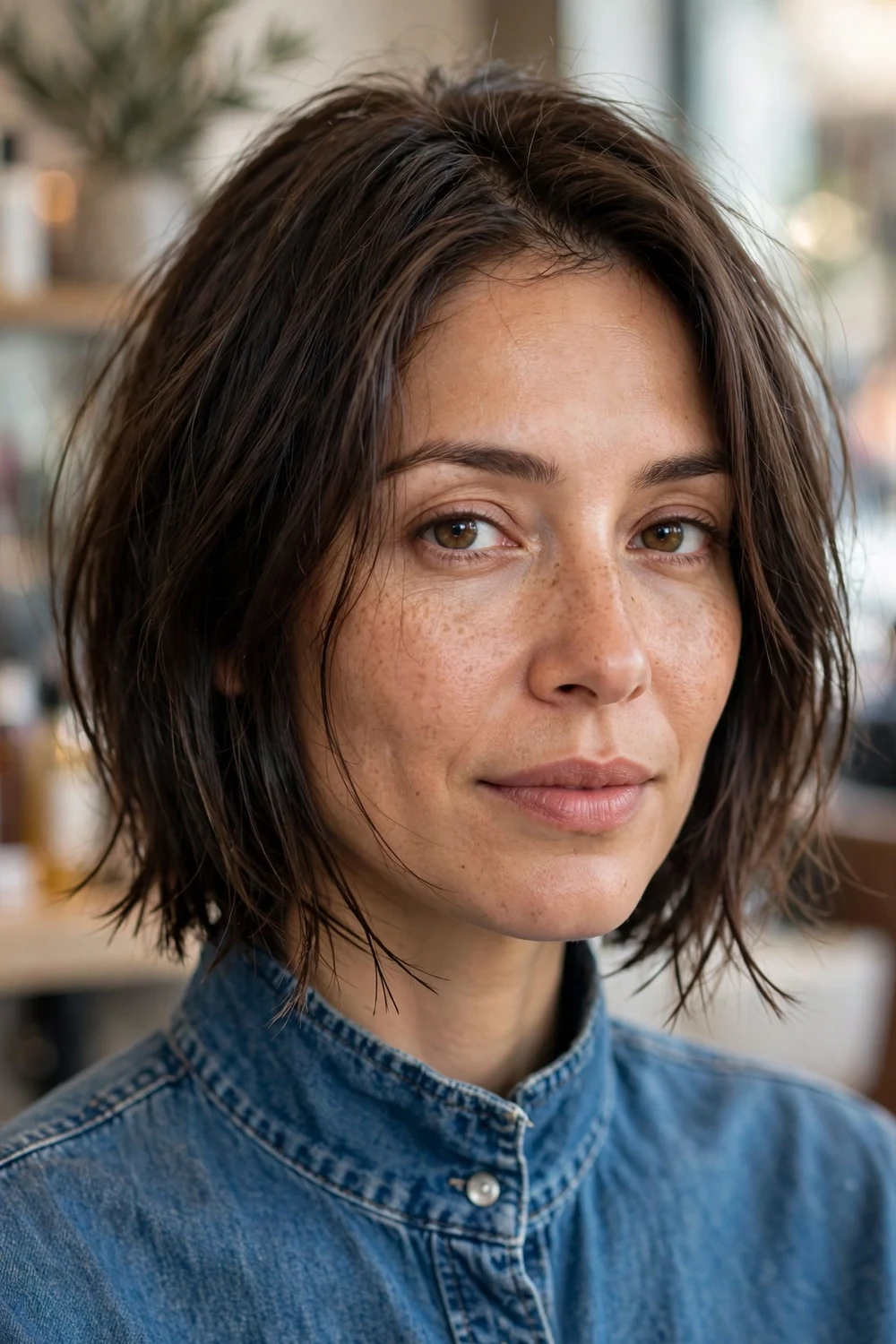
A choppy bob uses point cutting at the ends, where the scissors snip in at an angle to create small, separated pieces. The piecey finish breaks up the surface, so fine hair looks textured instead of flat. The length stays around the chin, which keeps enough weight in the cut for the pieces to read as texture rather than thinness.
Ask for point-cut ends with the choppiness kept to the last inch or two, and no thinning shears through the body of the cut. It suits straight and wavy fine hair. Work a pea-size amount of texture paste through dry ends to define the pieces, and refresh on day two with dry shampoo at the roots.
Try this: Pinch and twist small sections of the ends with paste on your fingertips. Defined pieces catch light and make the bob look thicker.
Difficulty: Medium · Cost: $$
9. Feathered Bob
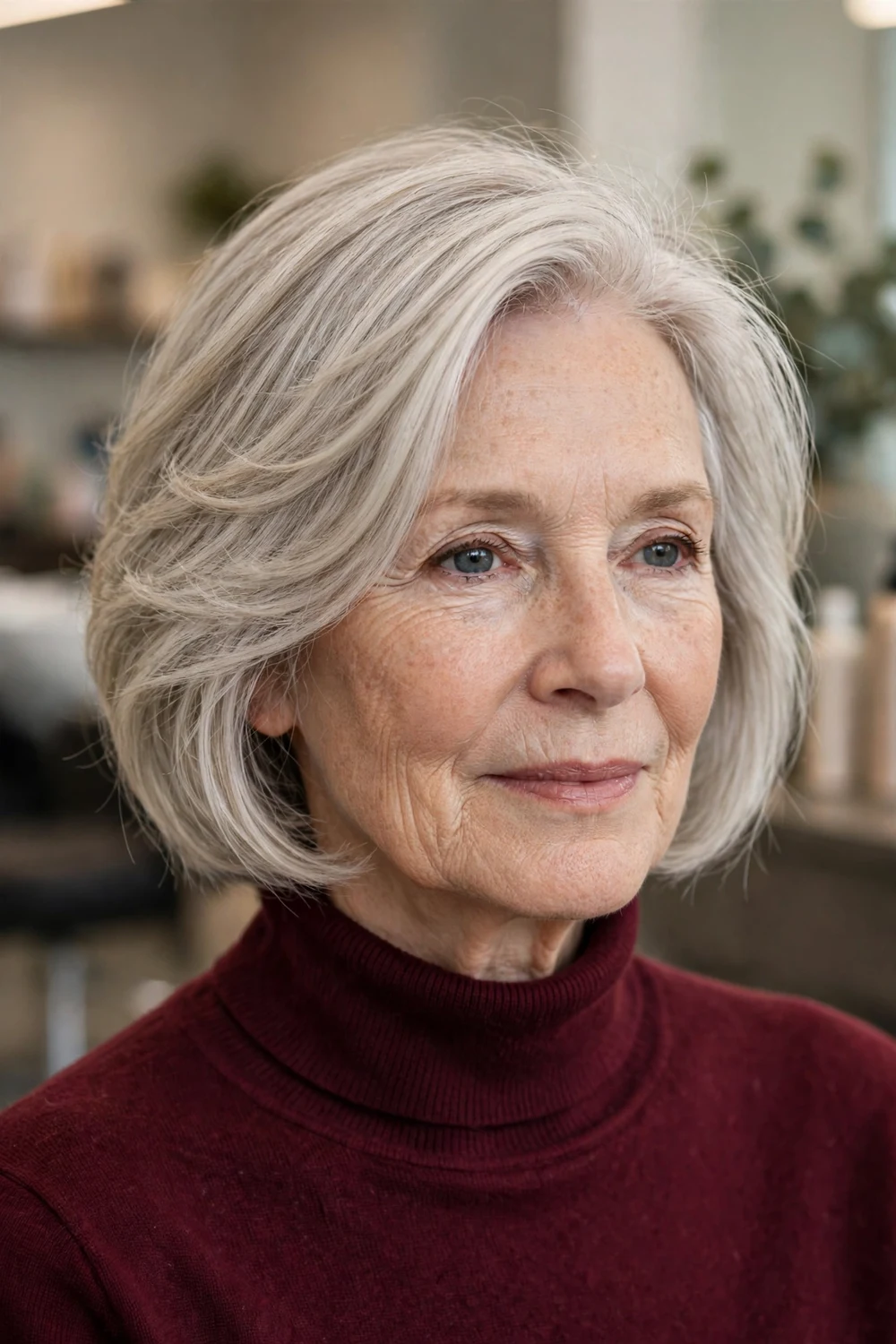
A feathered bob has soft layers around the crown and face that sweep back in light, separated pieces. The feathering lifts the top and sides, which helps fine hair that clings to the head. Because the layers are long and light, the ends keep enough fullness to avoid a wispy finish.
Ask for long feathered layers through the crown and around the face, with blunt ends at the jaw. It suits fine hair that is straight or slightly wavy and grows out gently, so it is a forgiving choice if you prefer longer gaps between appointments. Blow-dry the face-framing pieces away from the face with a round brush to set the sweep.
Try this: Blow-dry the crown sections forward first, then sweep them back. Drying against the final direction builds lift that lasts.
Difficulty: Medium · Cost: $$
10. Tousled Wavy Bob

Waves push fine hair outward, so a wavy bob reads wider and fuller than the same cut worn straight. The tousled wavy bob keeps the length at the jaw and uses loose bends through the mid-lengths, with the ends left fairly blunt so the shape stays dense at the bottom.
Ask for a jaw-length bob with blunt ends and very light layering to release your natural wave. If your hair is straight, add bends with a flat iron, alternating the direction of each bend and leaving the ends out. Scrunch a light mousse into damp hair and air-dry for the lowest-effort version. A salt spray on dry hair revives the bends on day two.
Try this: Sleep with the bob in two loose twists. In the morning, shake them out and mist the roots with dry shampoo for quick volume.
Difficulty: Low · Cost: $
11. Bob with Wispy Bangs

Wispy bangs are cut in light, separated pieces that show a little forehead through them. They suit fine hair because they need very little hair to work, so the rest of the bob keeps its fullness. Paired with a chin-length bob, the soft fringe adds density at the hairline, which is often the first place fine hair looks sparse.
Ask for a light, piecey fringe blended into the sides of the bob rather than cut as a heavy block. Wispy bangs suit oval, long, and heart faces. Blow-dry them side to side with a small brush so they lie flat, and use dry shampoo at the fringe roots on day two to stop them separating. Fringe trims every three to four weeks keep the length right.
Try this: Carry a small amount of dry shampoo for the fringe only. A quick mist at midday stops wispy bangs from splitting into strands.
Difficulty: Low · Cost: $$
12. Sleek Glass Bob

The glass bob is a precision bob worn very straight and smooth, with a sharp center or side part and a glossy finish. The cut itself is one length, which is why it suits fine hair: the solid edge carries the look, and the smooth surface reflects light evenly so the hair looks dense and healthy.
Ask for a one-length bob cut with clean, even ends and no texture taken out. It suits straight fine hair, or wavy hair you are happy to smooth daily. Use a heat protectant, blow-dry downward with the nozzle close to the hair, then pass a flat iron once over the surface. Keep serum on the ends only, since product at the roots breaks the sleek finish.
Try this: Dry the part line first with the hair brushed flat. A set part keeps the whole cut looking sharp for the rest of the day.
Difficulty: Medium · Cost: $$
13. Ear-Length Micro Bob

The micro bob stops around the ears or the cheekbones, well above the usual chin length. At this length, fine hair has almost no weight pulling it down, so it sits fuller and swings when you move. The short line also shows off the jaw and cheekbones and keeps every end looking thick, since fine hair loses density as it grows longer.
Ask for a blunt micro bob that lands at the ears, with the option to tuck it behind the ears. It suits oval, heart, and square faces and straight to wavy textures. Styling takes a few minutes: a light mousse at the roots and a rough dry is enough. The trade-off is upkeep, since a short line shows grow-out sooner and needs a trim every five to six weeks.
Try this: Tuck both sides behind your ears while the hair is damp. As it dries, the front pieces hold a soft bend that frames the face.
Difficulty: Low · Cost: $$
14. Blunt Lob

A blunt lob, or long bob, rests at the collarbone and keeps the same one-length edge as a blunt bob. It is the easiest step into short hairstyles for fine hair if you are leaving long hair behind, because you keep enough length to tie back while the solid ends make the hair look thicker straight away.
Ask for a collarbone-length lob cut in one length, kept at or above the shoulders. Past shoulder length, fine ends tend to flip and look thin. The blunt lob suits most face shapes and straight to wavy textures. It grows out gracefully into longer hair, so it is also the most forgiving cut on this list if you are unsure about going short.
Try this: Wear it with a deep side part on busy days. The diagonal sweep adds root height that a center part rarely gives fine hair.
Difficulty: Low · Cost: $
15. Layered Lob
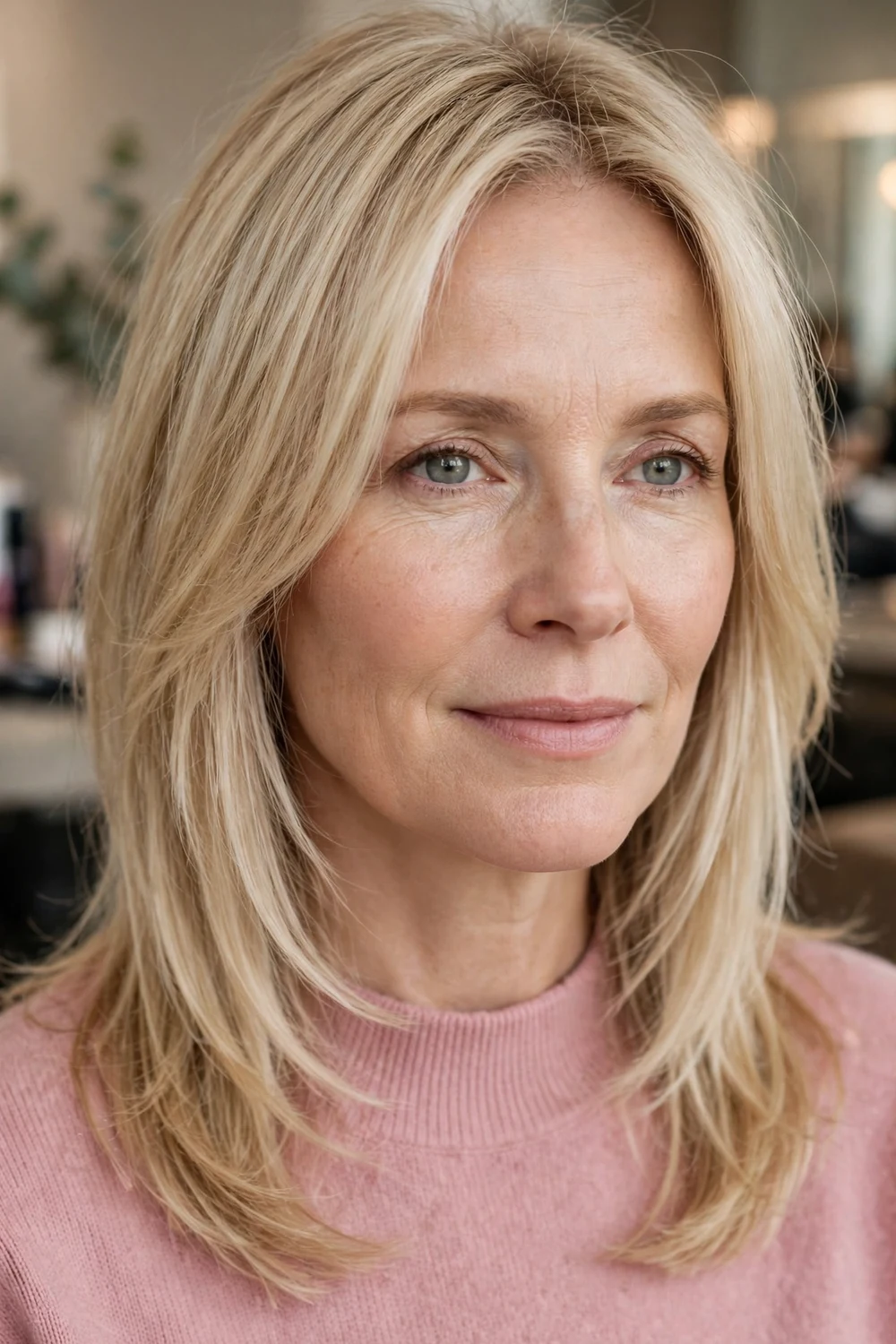
The layered lob adds long, soft layers to a collarbone-length cut. The layers sit low and stay long, so they add movement around the face and through the ends while the overall length and the bottom edge stay full. For fine hair with a natural wave, those layers release the bend and stop the lob from hanging in one flat sheet.
Ask for long layers that start below the chin, with face-framing pieces and a solid perimeter. It suits fine hair with medium density best. If your density is low, keep the layers very long or choose the blunt lob instead. Scrunch in mousse and diffuse, or blow-dry with a large round brush for a smoother finish.
Try this: Braid the lob loosely overnight. The soft wave you shake out in the morning makes fine hair look twice as thick.
Difficulty: Low · Cost: $$
16. Shaggy Lob
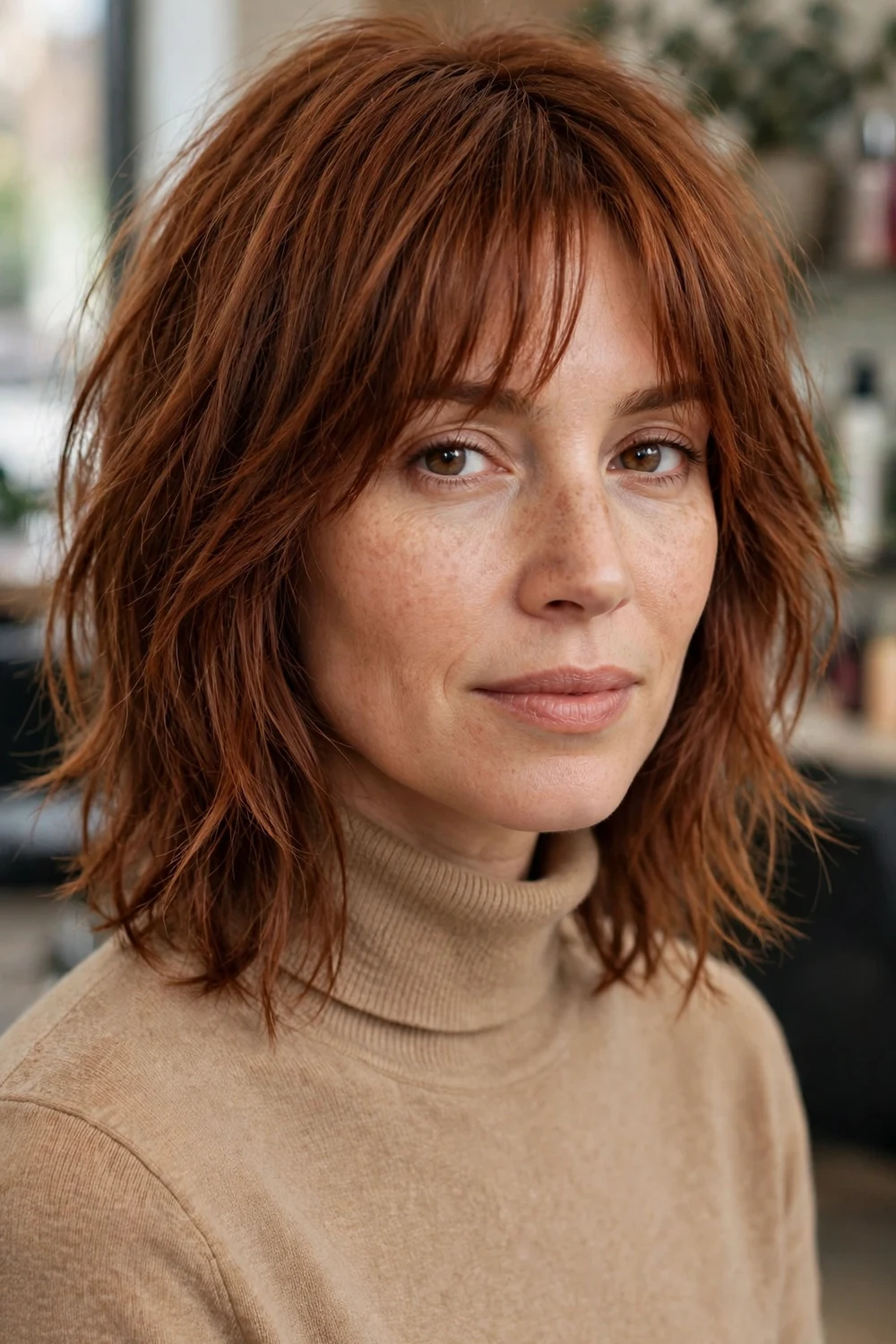
The shaggy lob takes the lob length and adds choppy layers plus a soft curtain fringe. The layers are concentrated around the crown and face, which builds height where fine hair usually collapses. At lob length, the shag effect stays gentle, so the cut looks relaxed and modern rather than heavily layered.
Ask for a soft shag at collarbone length, with curtain bangs blended into face layers and the ends kept fairly full. It suits wavy fine hair best of all, though straight hair can wear it with bends added by a wand. Keep the layering light if your hair is very fine, and use texture spray instead of cream to hold the piecey finish.
Try this: Dry the curtain bangs by brushing them forward, then parting them in the middle. The forward dry gives them their curved sweep.
Difficulty: Medium · Cost: $$
17. Textured Pixie

A textured pixie is cropped close at the back and sides with a longer, piecey top. Removing the length removes the weight that drags fine hair flat, so the top can stand up and show real texture. Point-cut layers on top create separated pieces that read as thickness, even on very fine strands.
Ask for a pixie with a tapered back, short sides, and point-cut texture on top, with no thinning shears. It suits oval, heart, and square faces. Styling takes a few minutes: rub a small amount of matte paste between your fingertips and push the top up and forward. Pixies need trims every four to six weeks to keep the shape clean. For more length options, see our full guide to pixie haircuts for fine hair.
Try this: Apply paste to dry hair only. Paste on damp fine hair weighs the top down and the texture disappears.
Difficulty: Low · Cost: $$
18. Side-Swept Pixie with Lifted Roots
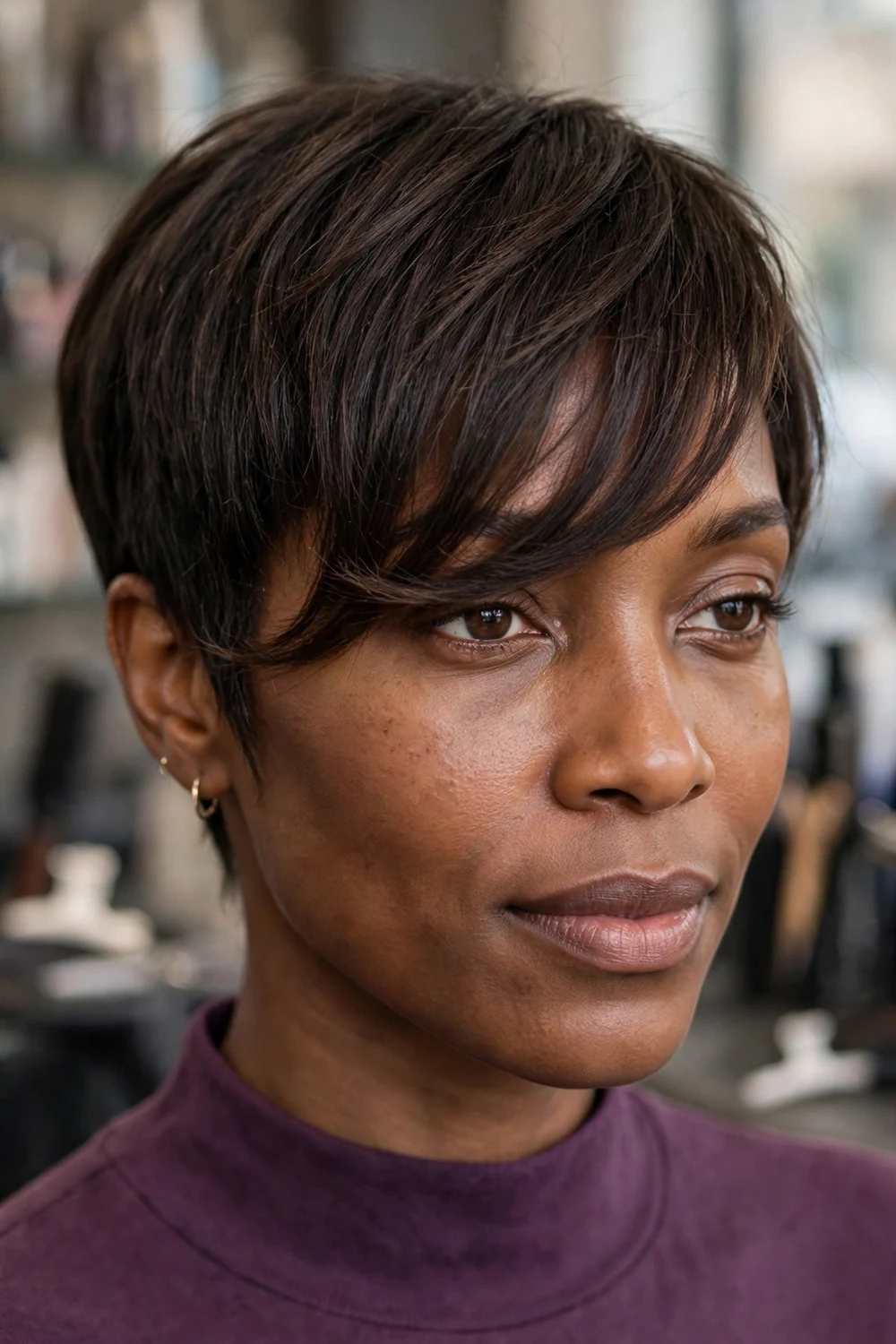
The side-swept pixie keeps the top long enough to sweep across the forehead in one smooth section. That sweep adds width and movement at the front, and the deep side part underneath it lifts the roots on the heavier side. The back and sides stay short, so the long front section looks fuller by contrast.
Ask for a pixie with a long top that reaches the cheekbone when swept over, tapered sides, and a soft nape. It suits most face shapes and is a kind choice if your hairline is fine, since the sweep covers the front softly. Blow-dry the top forward and then sweep it to the side so the roots keep their lift. A light hairspray holds the sweep without stiffness.
Try this: Sweep the fringe to the opposite side of your natural part once a week. The change of direction keeps the roots trained upward.
Difficulty: Low · Cost: $$
19. Asymmetrical Pixie with a Blunt Edge
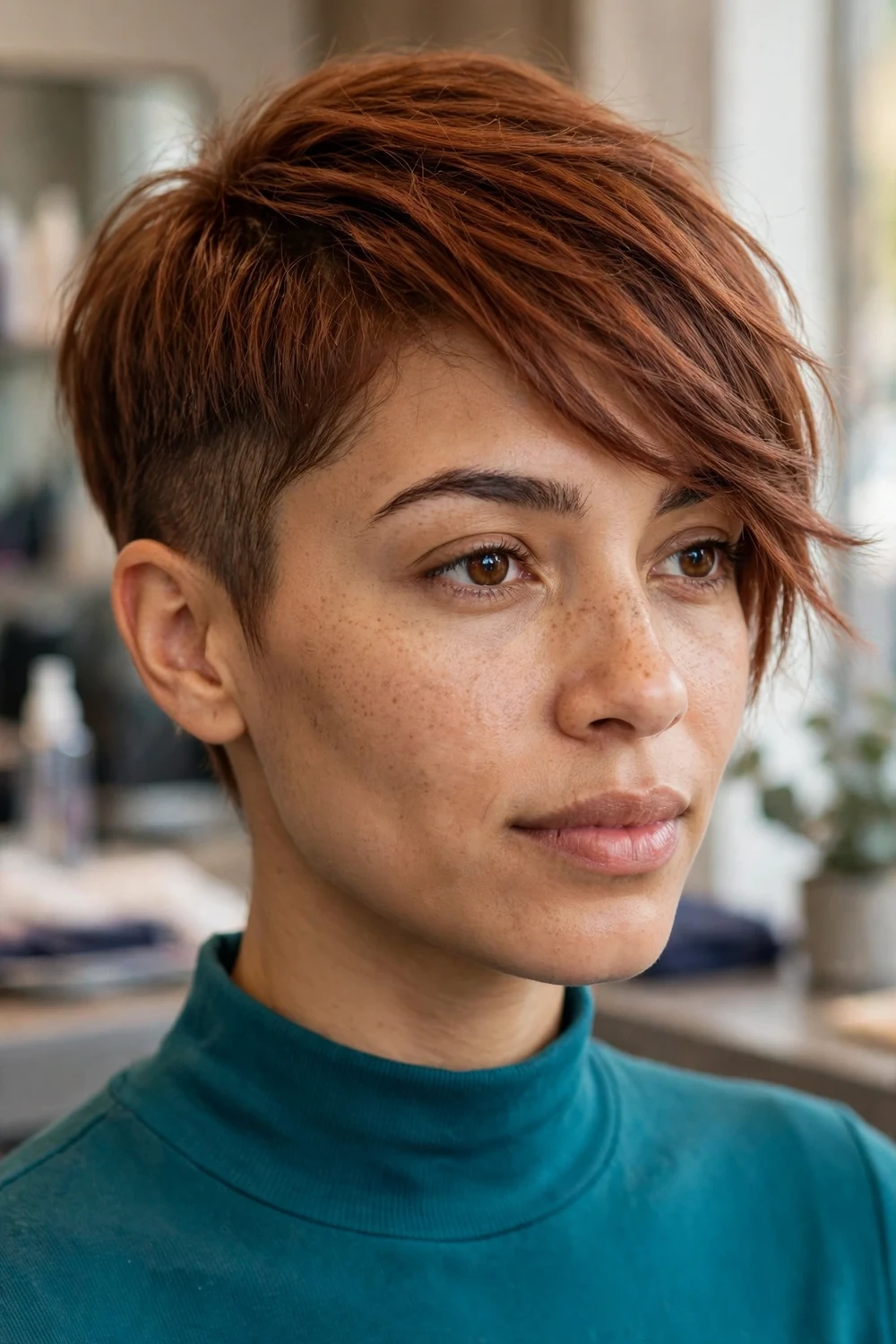
An asymmetrical pixie is short on one side and longer on the other, often with a deep part and a long fringe falling over the longer side. The contrast between the two sides draws the eye across the cut, and the longer side carries enough hair to look full and deliberate. Fine hair holds this shape well because the short side needs almost no styling.
Ask for one side cropped close, the other side left long enough to sweep over, and a tapered nape. It suits oval and heart faces and straight to wavy textures. Keep the longer side blunt at the ends so it reads as a strong shape. Style the long section with a flat iron bend or leave it natural, and use a touch of paste to keep the part in place.
Try this: Show your stylist which side you part on before the cut starts. The asymmetry has to be built around your real part.
Difficulty: Medium · Cost: $$
20. Curly Pixie

A curly pixie lets fine curls spring up into a rounded shape instead of being pulled down by length. The sides and back are cut short, and the top keeps enough length for the curls to form fully. Because curls shrink as they dry, this cut should be shaped on dry hair so the finished length lands where you want it.
Ask for a dry cut, with the top left long enough for two full curl turns and the sides tapered. Use a leave-in conditioner and a light curl cream, scrunched in and diffused on low heat or air-dried. Keep products light, since fine curls flatten under heavy butters and oils. Refresh on day two with a mist of water and a little cream worked through the top.
Try this: Sleep with the top gathered loosely on top of your head in a silk scrunchie. The curls keep their shape instead of pressing flat.
Difficulty: Medium · Cost: $$
21. Long Pixie with a Longer Top

The long pixie keeps extra length on top and at the front, with front pieces that can reach the cheekbones or chin. It sits between a pixie and a bob, so you get the lift and easy care of a short cut with more hair to style and tuck. On fine hair, the longer top can be worn smooth, tousled, or swept to either side.
Ask for a long pixie with a tapered back, short sides, and front pieces left at cheekbone length or longer. It suits anyone growing out a shorter pixie or trying short hair for the first time. Blow-dry the top with your fingers for a soft finish, or smooth it with a round brush for a polished one. Trims every six weeks keep the front pieces at the right length.
Try this: Tuck the front pieces behind your ears for a cleaner look, then pull one side loose. The mix of tucked and loose reads styled with no effort.
Difficulty: Low · Cost: $$
22. Bixie

The bixie blends a pixie and a bob: bob length around the ears and chin, with pixie-style short layers through the crown. The crown layers lift the top, while the bob outline keeps coverage around the face and neck. For fine hair, it offers more texture than a plain bob and more length than a true pixie.
Ask for a bixie that lands between the ear and the chin, with short layers at the crown and the outline kept fairly blunt. A soft micro fringe suits this cut if you want a fringe, since it takes very little hair. It works on straight and wavy fine hair. Style with mousse at the roots and let the layers fall naturally, or flick the ends out with a flat iron.
Try this: Flick just the front ends outward with a flat iron. Two small bends frame the face and make the crown layers look taller.
Difficulty: Medium · Cost: $$
23. Textured Crop
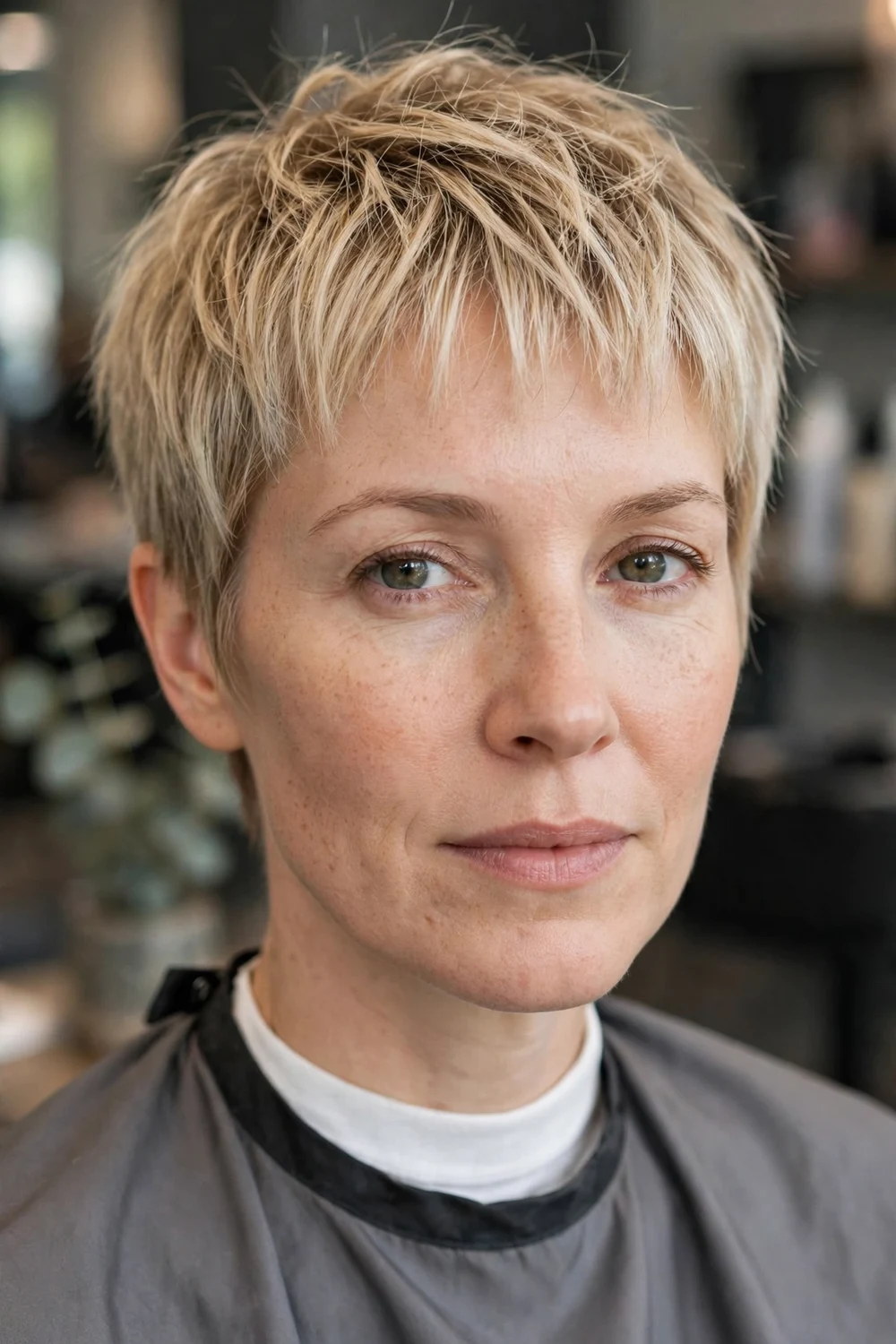
The textured crop is short all over, with point-cut ends on top that create a piecey, slightly messy finish. With so little length, fine hair has almost nothing weighing it down, which makes this one of the most reliable cuts for hair that goes flat by midday. The short fringe sits forward and adds a strong line at the hairline.
Ask for a crop with a short tapered back and sides, point-cut texture on top, and a short forward fringe. It suits oval and square faces and straight fine hair. Rub a pea-size amount of texture paste through the dry top with your fingertips and push it up for height. The cut needs a trim every four to five weeks, and daily styling takes under five minutes.
Try this: Push the top up while it is still slightly damp, then leave it alone. Touching the crop as it dries pulls the lift back out.
Difficulty: Low · Cost: $
24. 1960s-Inspired Crop with Wispy Bangs
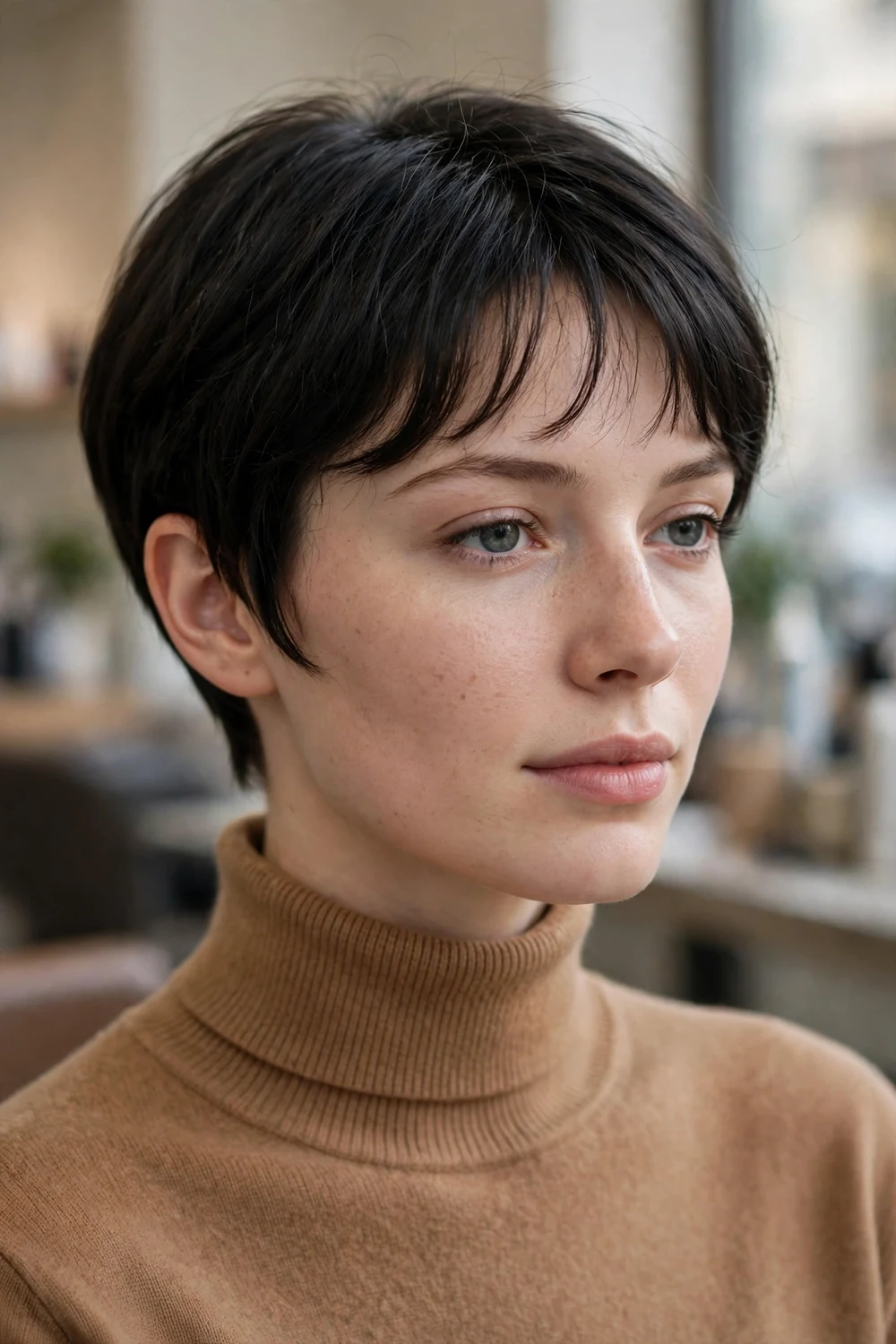
This crop pairs closely tapered sides with a longer, smooth top and wispy bangs that hover just above the brows. The contrast between the neat sides and the fuller top concentrates all the visual weight at the crown, which is where fine hair benefits most. The short bangs show the eyes and brows and add a clean, polished finish.
Ask for tapered sides, length kept on top, and a light wispy fringe cut above the brows. It suits oval and heart faces and straight fine hair. The fringe needs to stay light, since a heavy bang section would borrow too much hair from the top. Style the top smooth with a small round brush, and plan fringe trims every three to four weeks.
Try this: Dry the bangs straight down with the dryer pointing downward. They settle flat and even, with no gap in the middle.
Difficulty: Medium · Cost: $$
25. Soft Short Shag

A soft short shag uses light, choppy layers and a wispy fringe to build movement into fine hair. The key word is soft: the layers stay long and few, so the ends keep their density while the surface gains texture. Worn around chin to neck length, it gives fine hair a relaxed shape that looks styled even when it is air-dried. Our guide to shaggy bob hairstyles for fine hair covers the bob-length versions in more depth.
Ask for a soft or micro shag, with light layers through the crown, a wispy fringe, and weight kept at the ends. It suits wavy fine hair best, and straight hair with bends added. Say clearly that you want no heavy razor work, since strong razor cutting can leave fine ends looking sparse. Scrunch in a light mousse and air-dry, or diffuse for more separation.
Try this: Scrunch with a microfiber towel instead of a bath towel. It dries the shag with less frizz and keeps the layers separated.
Difficulty: Medium · Cost: $$
26. Curly Short Shag

The curly short shag layers fine curls so they stack into a round, lifted shape with a soft curly fringe. Each curl gets room to form on its own, which stops the cut from collapsing into a triangle with heavy ends and a flat top. The fringe is cut long and light, so it blends into the layers around the face.
Ask for a dry, curl-by-curl cut with layers that start at the crown and a long, light fringe. It suits fine curls and coils that feel weighed down at short lengths. Scrunch in leave-in conditioner and curl cream, then diffuse on low heat with your head tilted to each side. Avoid heavy oils, which pull fine curls down and separate them into strings.
Try this: Refresh the fringe with a wet fingertip twist on each curl. Single-curl touch-ups blend in better than rewetting the whole fringe.
Difficulty: Medium · Cost: $$
27. Undercut Pixie with a Full Crown

An undercut pixie clips one or both sides very short and leaves the top long and full. Taking the sides down removes bulk where fine hair often sticks out, and all the remaining length sits on top, where it can be swept, lifted, or worn forward. The contrast makes the top section look thicker than the same hair worn at one length.
Ask for a clipped undercut at the sides with the top left long enough to sweep over, blended so the edge between the two zones stays soft. It suits oval and long faces and straight to wavy fine hair. The clipped sections grow out fast, so expect a tidy-up every three to four weeks if you like the contrast sharp. Style the top with mousse for lift or smooth it down for a sleeker finish.
Try this: Decide how sharp you want the contrast before the cut. A soft blend grows out far more gracefully than a hard line.
Difficulty: Medium · Cost: $$
Quick Comparison
Use this table to narrow the list by your texture, your face shape, and the trim cycle you can keep.
| Cut | Best for | Trim every | Daily styling |
|---|---|---|---|
| Blunt Bob | Straight or slightly wavy fine hair, most face shapes | 6 to 8 weeks | About 5 minutes |
| French Bob | Straight, wavy, or lightly curly fine hair | 7 to 8 weeks | About 5 minutes |
| Graduated Stacked Bob | Fine hair that falls flat at the crown | 5 to 6 weeks | About 10 minutes |
| Blunt Lob | Anyone moving from long hair to short | 8 to 10 weeks | About 5 to 10 minutes |
| Layered Lob | Fine hair with medium density and a natural wave | 7 to 8 weeks | About 10 minutes |
| Textured Pixie | Oval, heart, and square faces, low daily styling | 4 to 6 weeks | About 5 minutes |
| Bixie | Anyone who wants pixie texture with bob length | 5 to 6 weeks | About 5 to 10 minutes |
| Soft Short Shag | Wavy fine hair that needs movement | 7 to 8 weeks | About 5 to 10 minutes |
Frequently Asked Questions
What is the difference between fine hair and thin hair?
Fine hair describes the width of each single strand, while thin hair describes how many strands grow on the head. You can have fine hair with plenty of strands, or fine hair that is also thin, and the best short cut depends on both. Fine hair with good density can carry soft layers, while fine and thin hair usually looks fuller with blunt ends and very light layering.
What is the best short hairstyle for fine hair?
A blunt bob at the jaw is the most reliable choice for most people, because the one-length edge makes the ends look full and the short length lifts the roots. A textured pixie is a strong pick if you want the shortest daily routine, and a blunt lob suits anyone who wants to keep enough length to tie the hair back.
Do layers help fine hair look fuller?
Long, light layers can help by adding movement, as long as the ends stay blunt and full. Short, heavy layers usually have the opposite effect, because they remove weight from the ends and leave them looking wispy. Ask for long internal layers only, and say no to thinning shears on the ends.
How often does short fine hair need a trim?
Most bobs and lobs hold their shape for six to eight weeks. Pixies and crops grow out faster and usually need a trim every four to six weeks, while fringes need a tidy-up every three to four weeks. Regular trims matter because the blunt edge is what makes fine hair look full.
Which products work best on short fine hair?
Lightweight products work best: volumizing mousse or root spray on damp roots, dry shampoo for second-day lift, and a small amount of matte paste on dry ends for texture. Heavy creams, oils, and thick serums weigh fine strands down, so keep them away from the roots and use them on the ends only, if at all.
Final Thoughts
Short hair suits fine strands because the cut does the work that products struggle to do: it removes dragging weight, keeps the ends at their fullest, and holds lift at the root. Start from your density. Fine hair with plenty of strands can enjoy the layered bobs, lobs, and soft shags on this list, while fine and sparse hair will look fullest in the blunt bob, the glass bob, and the shorter pixies and crops.
Take two or three photos to your appointment, name the trim cycle you can keep, and ask for the perimeter to stay blunt with no thinning shears on the ends. A short cut that matches your texture and your routine will still look good on day three, and that is the test that counts for fine hair.

