


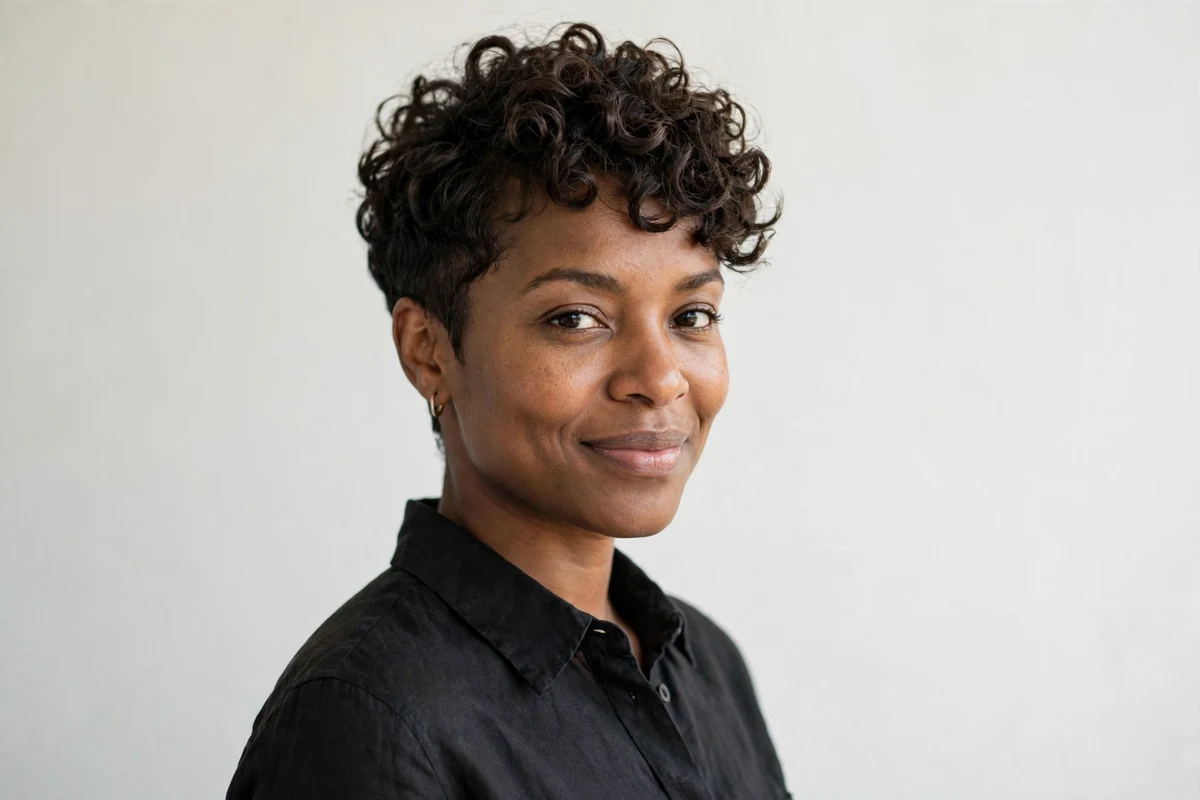
A curly pixie is one of the boldest ways to wear natural texture short. It keeps your curls front and center while cutting your morning routine down to minutes.
I have spent years researching short haircuts for textured hair, and curly pixies come up again and again as the cut Black women ask about most. This guide covers 26 versions, from tapered fades to finger waves, with styling and upkeep notes for each.
Quick answer: The best curly pixie haircuts for Black women follow your natural curl pattern instead of fighting it. Tapered sides with length on top flatter most face shapes, and curls need trims every 4 to 6 weeks to hold the shape. Pick the version below that matches your curl type, lifestyle, and how much styling time you want to spend.
Quick Takeaways
- Cut the pixie to follow your curl pattern, not against it, for easier styling and less frizz.
- Tapered or faded sides with longer curls on top flatter round, oval, heart, and square faces.
- Expect shrinkage: curls sit 1 to 2 inches shorter dry than they look when wet or stretched.
- Plan trims every 4 to 6 weeks, and deep condition on wash day to keep short curls healthy.
- Color works on curly pixies, but lightening dark hair needs bond protection and regular moisture.
Why Curly Pixie Cuts Work So Well on Natural Hair
A pixie removes the weight that pulls curls down. Without that weight, your pattern springs up with more bounce and shape.
Short curls also dry faster and need less product per application. A wash-and-go routine that takes 45 minutes on shoulder-length hair can take 15 on a pixie.
The cut frames your face instead of your shoulders. Cheekbones, eyes, and jawlines get more attention, which is why so many women describe the chop as freeing.
Before Your Salon Visit
Bring photos of curly pixies on hair like yours, not straight-hair references. A stylist needs to see your curl type, density, and shrinkage to plan the cut.
Ask whether they cut curls dry or wet. Dry cutting accounts for shrinkage as it happens, so the length lands where you expect. Wet cutting can leave the pixie shorter than planned once it dries.
Talk through your maintenance plan honestly. Fades and undercuts need touch-ups every 2 to 4 weeks, while softer tapered cuts stretch to 6. Pick the version you will actually maintain.
1. Classic Curly Pixie
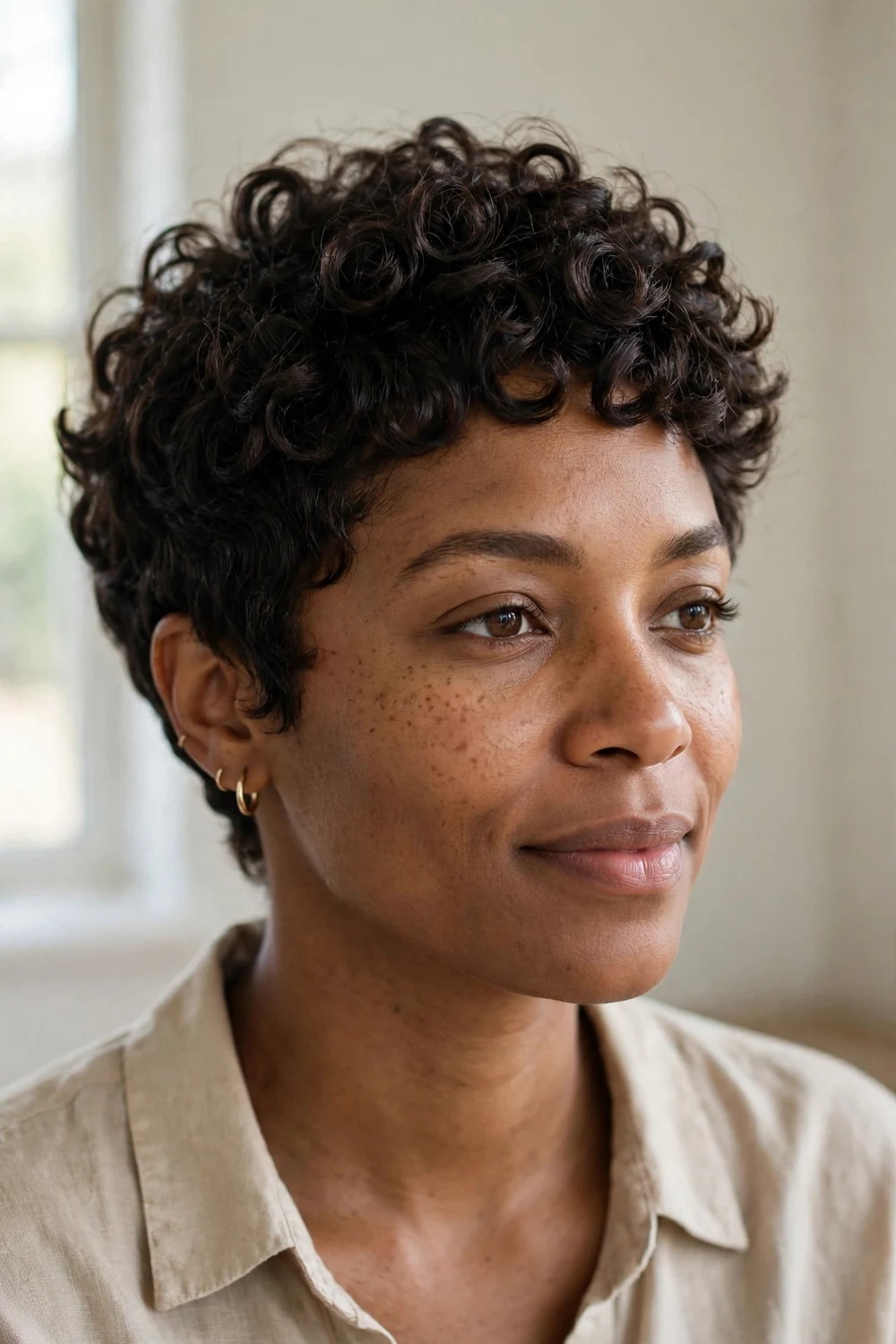
This is the starting point every other curly pixie builds on. Hair stays short all around with a little extra length on top, and your natural curl pattern does the styling work. It suits oval, heart, and square faces because the soft curl volume balances angular features.
Ask for even length with light layering so curls stack instead of mushrooming outward. A curl cream scrunched into damp hair, then air-dried or diffused, gives definition that holds for days.
Try this: Apply leave-in conditioner to soaking wet hair, follow with curl cream, and do not touch the curls until they are fully dry. Touching breaks the cast and invites frizz.
2. Tapered Curly Pixie
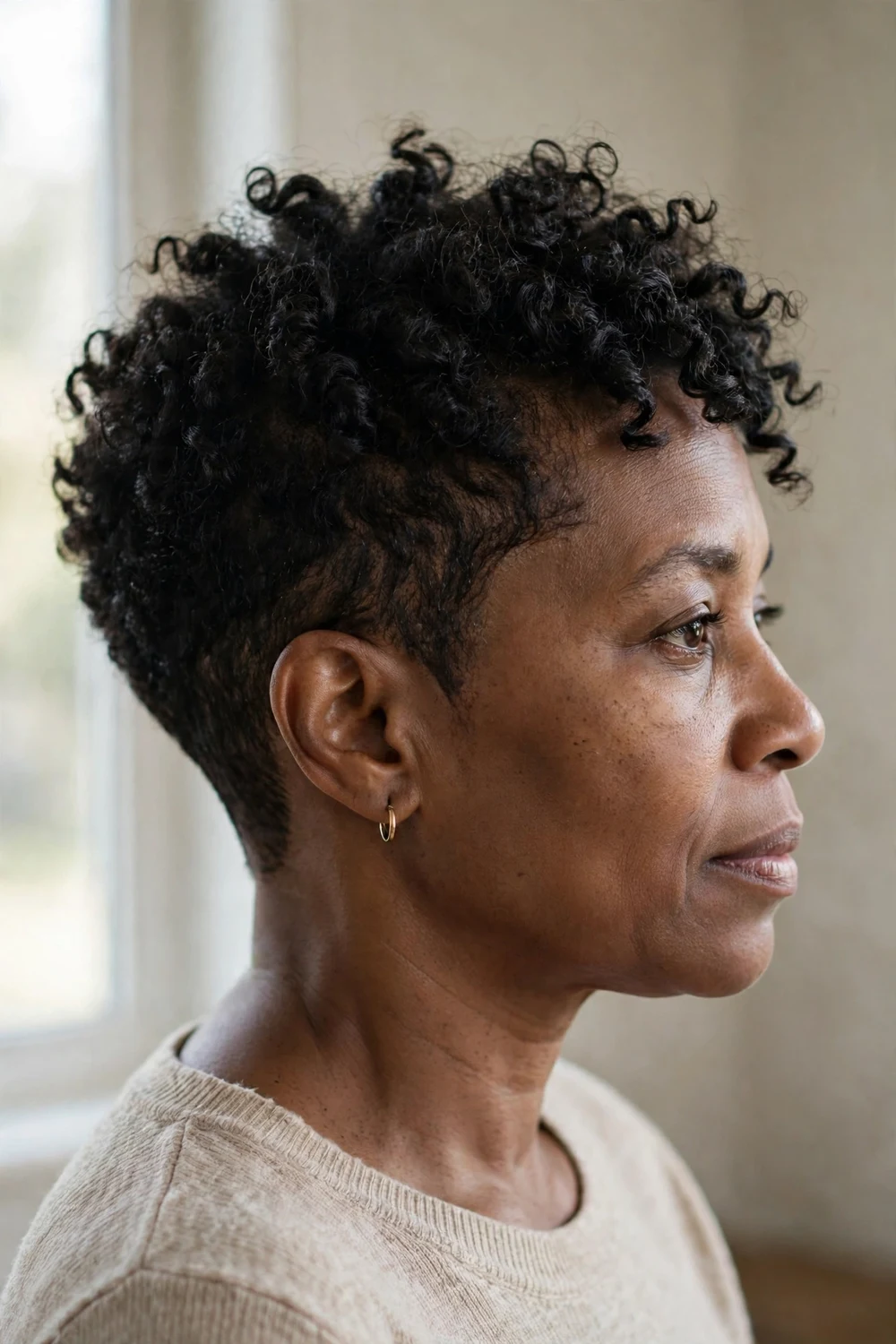
Sides and back graduate shorter toward the nape while the top keeps its curl length. The taper gives the pixie a clean outline that looks sharp even between salon visits. Round and square faces benefit most because the gradual fade slims the lower half of the head.
This cut works in professional settings without reading as edgy. The curls up top still move and catch light, so it never looks severe.
Try this: Keep the taper crisp with edge trims every 3 to 4 weeks, even if the top can go longer. The neat outline is what sells the whole cut.
3. Curly Pixie with a Fade
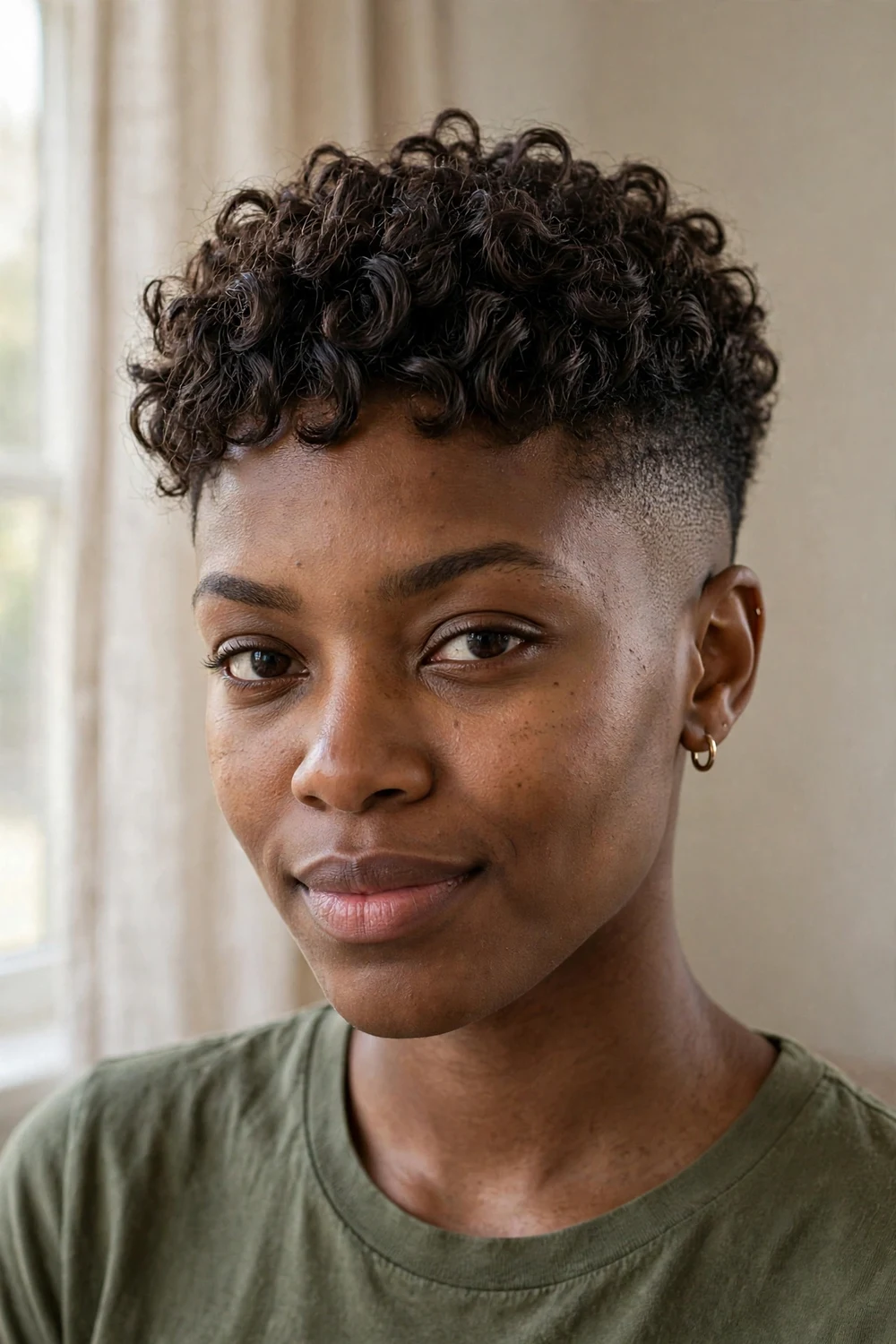
A barber-style fade melts from skin to curl over an inch or two. The contrast between the clean fade and the full curly top makes this the most modern curly pixie on the list. It handles thick, dense hair well because the fade removes bulk where it is not needed.
Fades grow out fast, so this is a commitment. Book your barber every 2 to 3 weeks to keep the gradient sharp.
Try this: Ask for a low or mid fade rather than a high one if you want the look to stay office-friendly. The lower the fade starts, the softer the effect.
4. Curly Mohawk Pixie
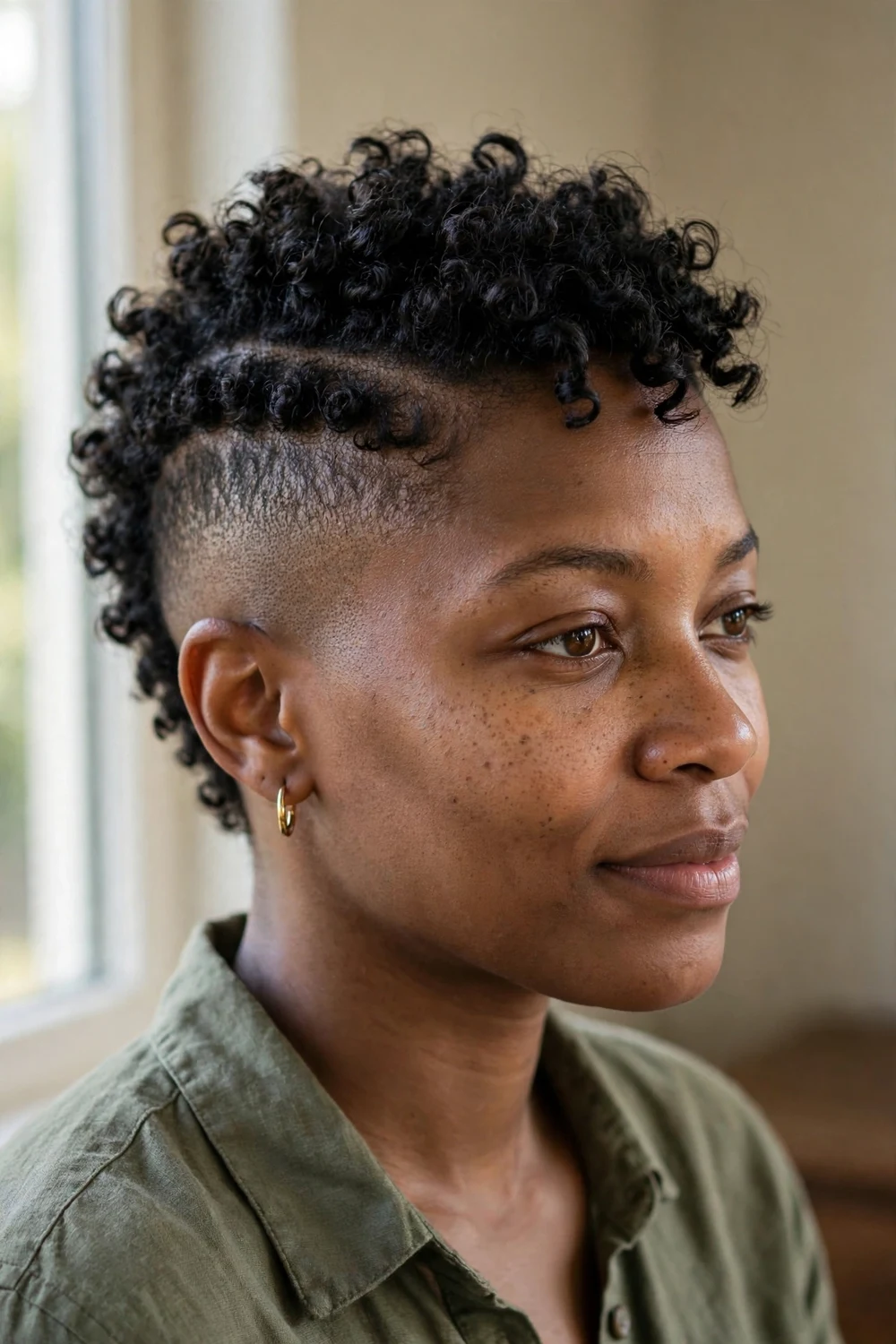
The center strip runs from forehead to crown with serious length while the sides stay tight or shaved. Worn flat, it reads as a regular pixie. Pushed up with gel, the mohawk appears. That split personality makes it two haircuts in one.
Strong-hold gel or mousse lifts the strip on days you want height. On low-key days, finger-comb it forward and let it fall like a textured fringe.
Try this: Keep the center strip at least 2 inches long if you want the mohawk styling option. Shorter than that, and it will not lift no matter how much product you use.
5. Asymmetrical Curly Pixie
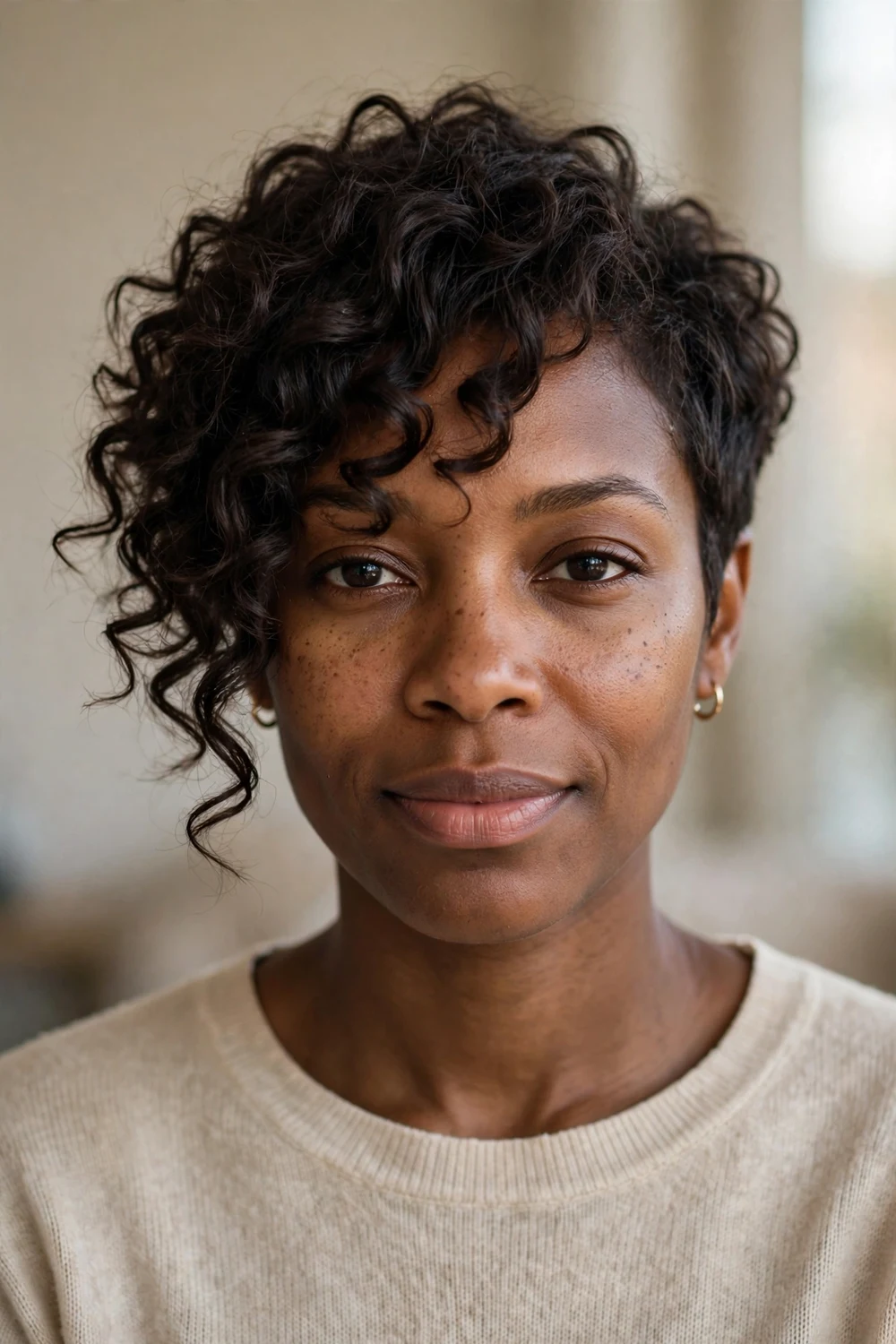
One side stays noticeably longer than the other, with curls sweeping across the forehead or tucked behind the ear. The uneven lengths pull attention to your cheekbones and eyes. Oval and heart faces carry this best, but the cut adapts to most shapes.
Maintenance is the price of the drama. The longer side needs trims on a different schedule than the short side to keep the imbalance intentional.
Try this: Photograph the cut from the front on day one so your stylist can match the exact length difference at every trim.
6. Defined Curls Wash-and-Go Pixie
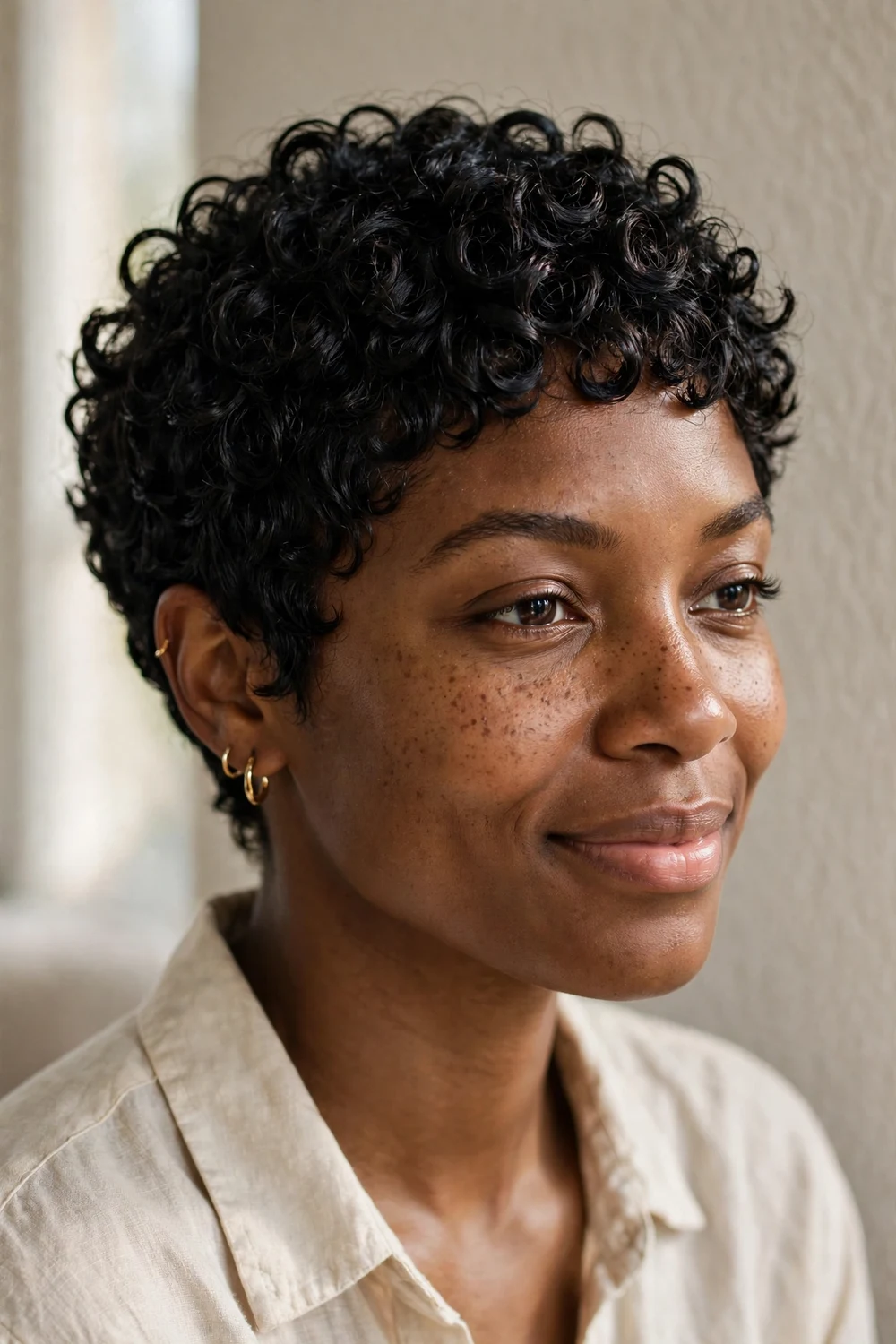
This version is all about curl definition. Every coil is separated, glossy, and springy, achieved with a layered product routine on wet hair. It shows off 3a to 3c patterns best, where individual curls are visible enough to read from a distance.
The cut itself stays simple because the styling does the talking. Even layers and a clean nape keep the definition from turning into bulk.
Try this: Use the raking-then-shingling method: rake product through soaking wet sections, then smooth each curl between your fingers to clump it before diffusing.
7. Lifted-Crown Curly Pixie
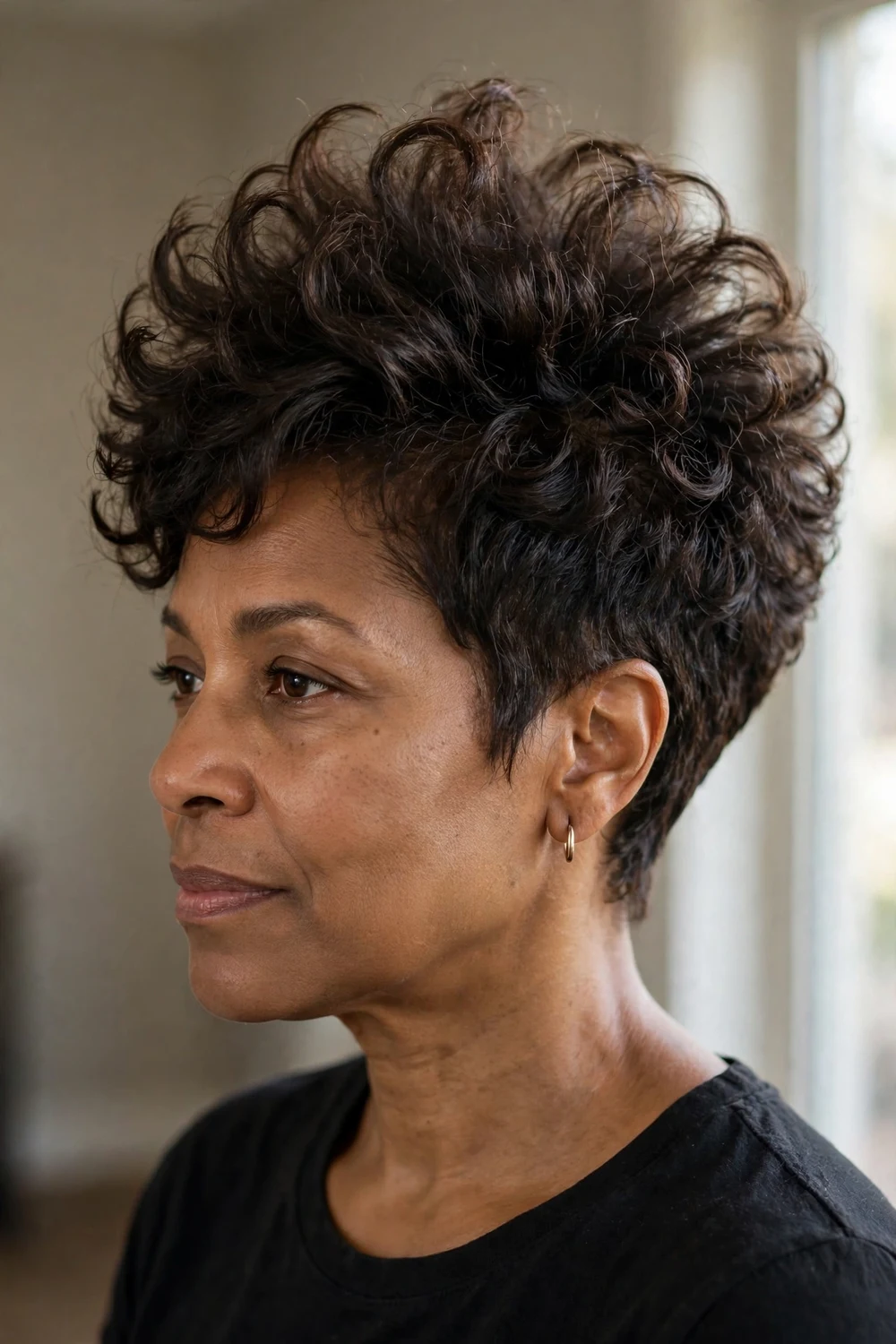
Extra height at the crown lengthens the face and gives fine or low-density curls the illusion of fullness. Layers cut shorter at the crown encourage curls to stand up instead of lying flat. Round faces get the most from this trick because vertical volume balances width.
Diffusing upside down for two minutes at the roots builds the lift faster than any product. A light root spray adds staying power without crunch.
Try this: Clip the crown roots with small metal clips while the hair dries. The clips prop curls upright so the volume sets in place.
8. Copper-Toned Curly Pixie
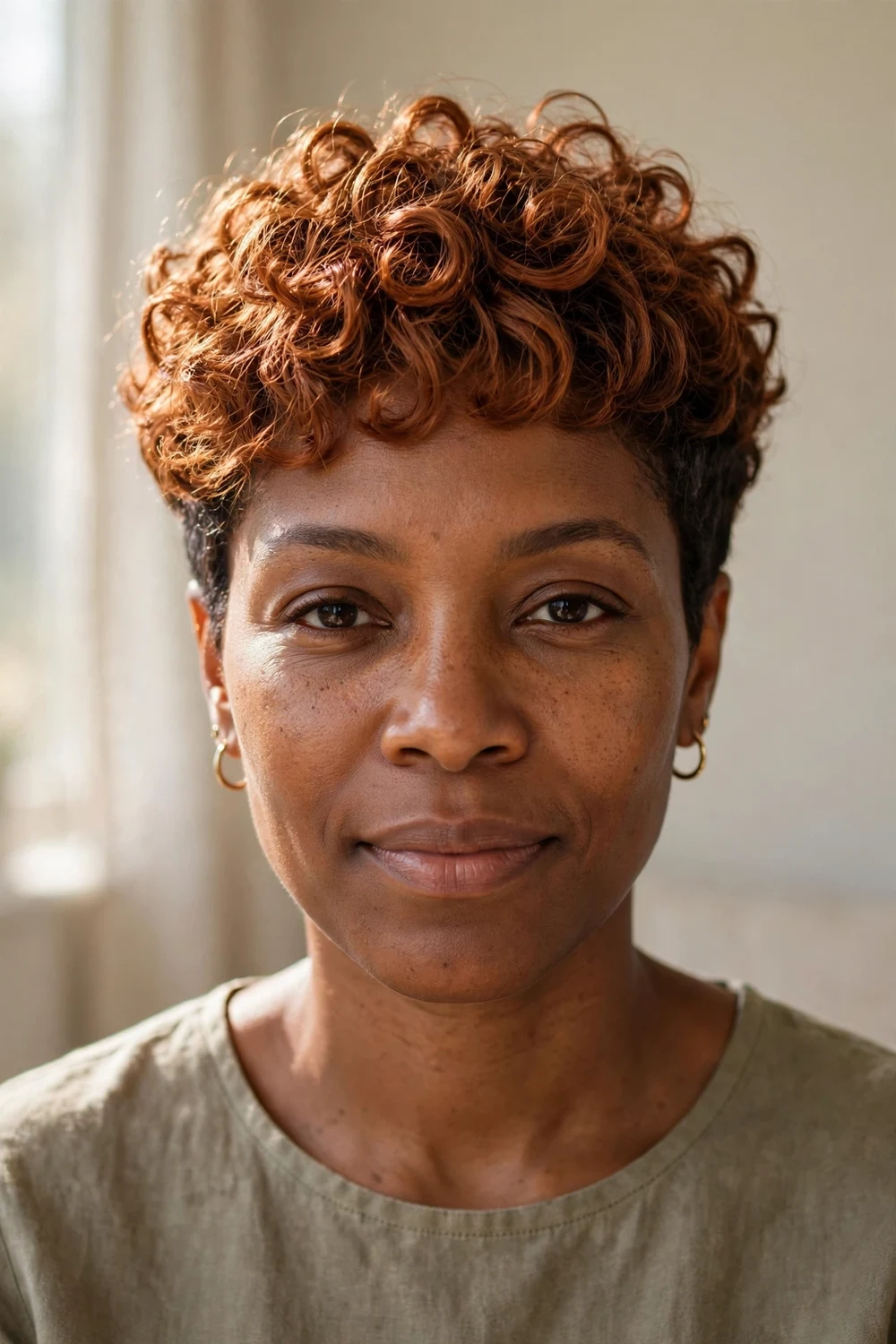
Warm copper color traces each curl, making the pattern look deeper and more dimensional. The shade flatters golden and warm undertones in darker skin. Copper also needs less bleaching than blonde on dark hair, which is kinder to curl health.
Color and curls both pull moisture from hair, so this combo needs real upkeep. Deep condition every two weeks and use color-safe shampoo.
Try this: Refresh the copper with a color-depositing conditioner between salon visits. It keeps the tone rich without another full dye session.
9. Honey Blonde Highlight Curly Pixie
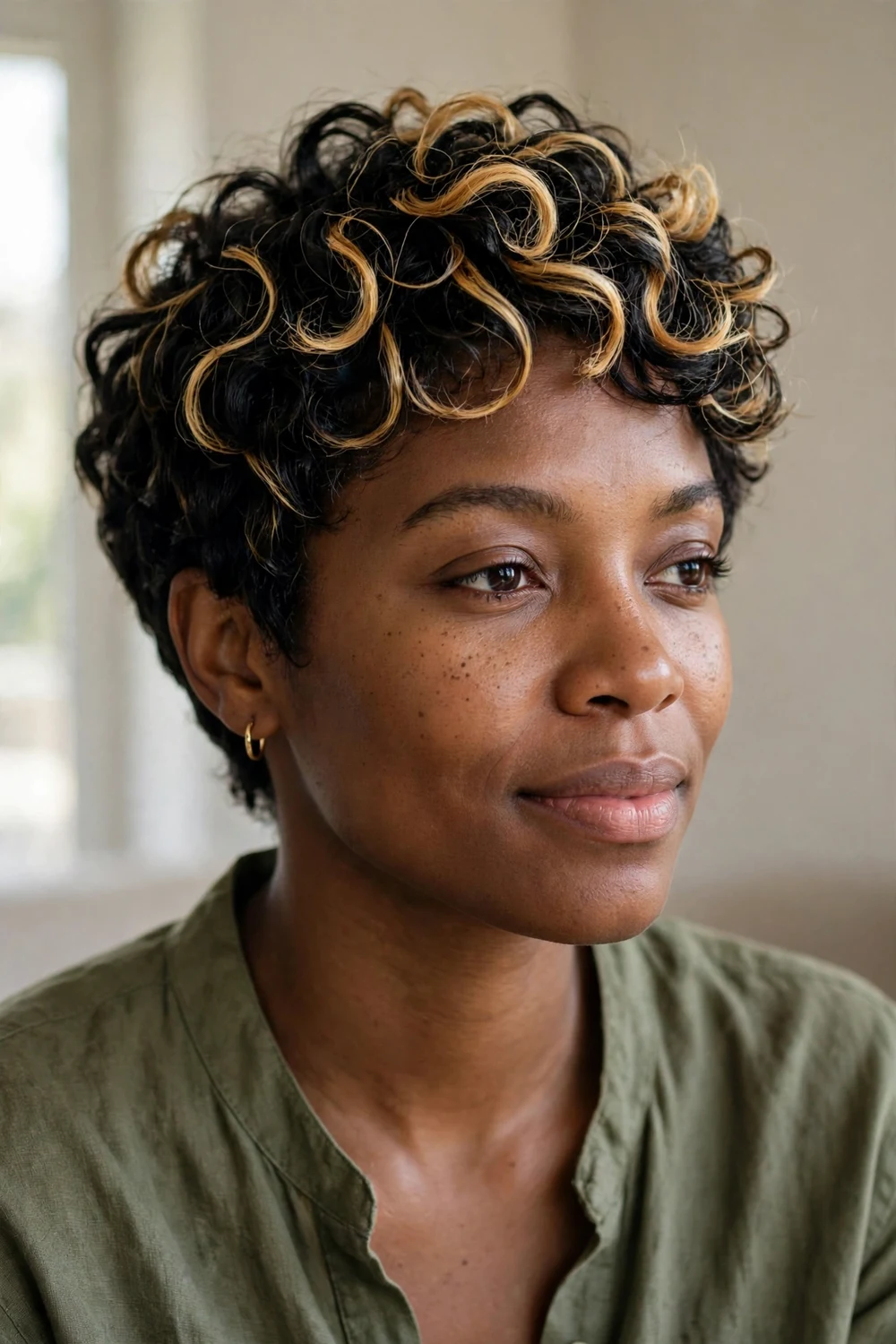
Honey blonde highlights sit on the longest curls, usually across the top and crown. The golden pieces catch light as you move and make the curl pattern easier to see. Placement on top means roots grow out softly, so touch-ups can wait 8 to 10 weeks.
This coloring suits women who want brightness without committing to all-over blonde. Keep your natural dark base underneath for contrast and depth.
Try this: Ask for hand-painted highlights rather than foils. The softer grow-out line matters more on a short cut where regrowth shows quickly.
10. Curly Afro Pixie
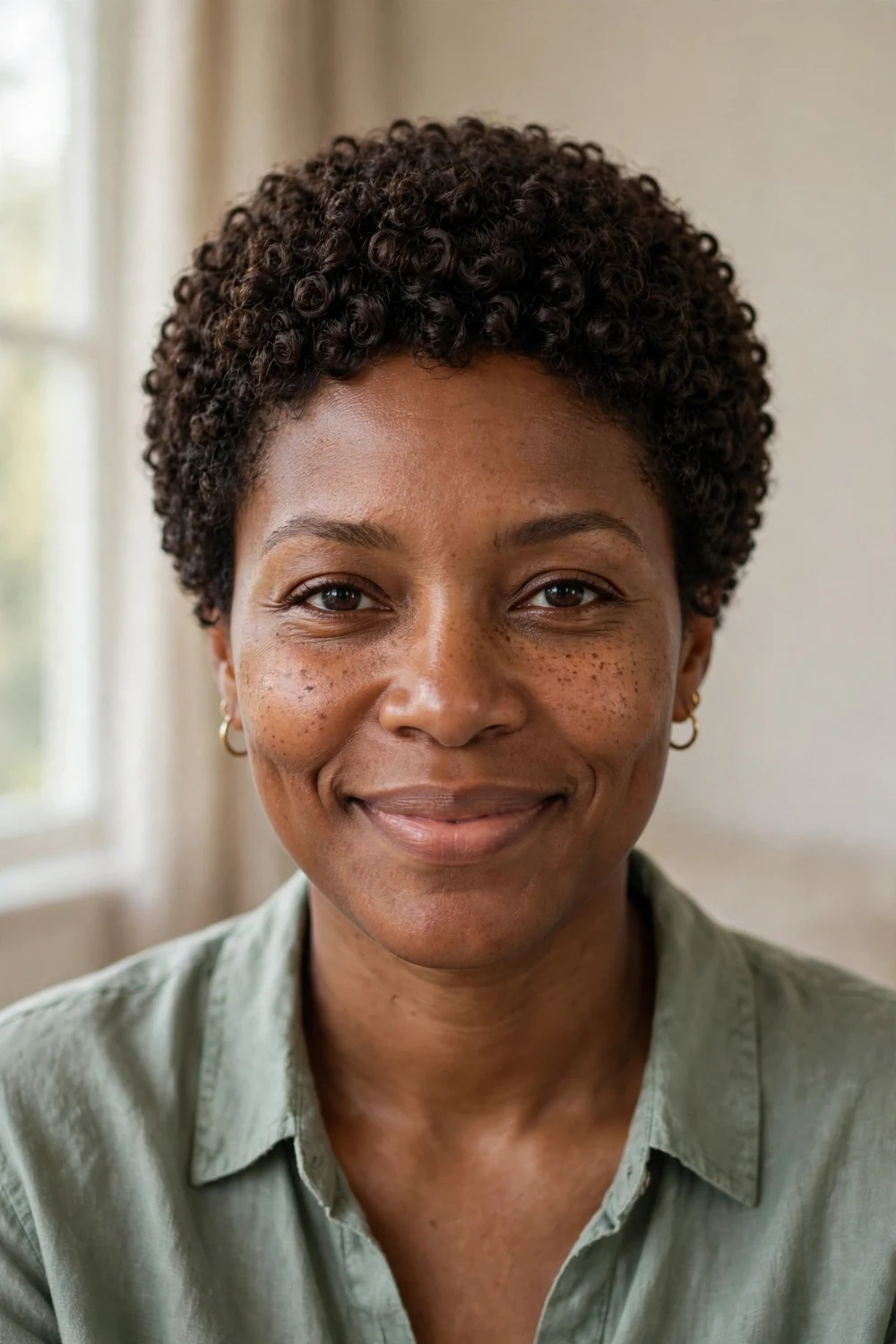
The curly afro pixie keeps length fairly even all over, forming a small rounded silhouette. It is the closest short cut to a full afro and celebrates curl pattern without the weight of longer hair. Round and oval faces look great with the balanced shape.
Pick combing or finger fluffing at the roots builds the round form. Moisture is the priority here: short afro-textured hair still needs sealing oil or butter after wash day.
Try this: Shape the silhouette by trimming in the round while hair is dry and picked out. Wet trimming shrinks up unevenly and breaks the circle.
11. Twist-Out Curly Pixie
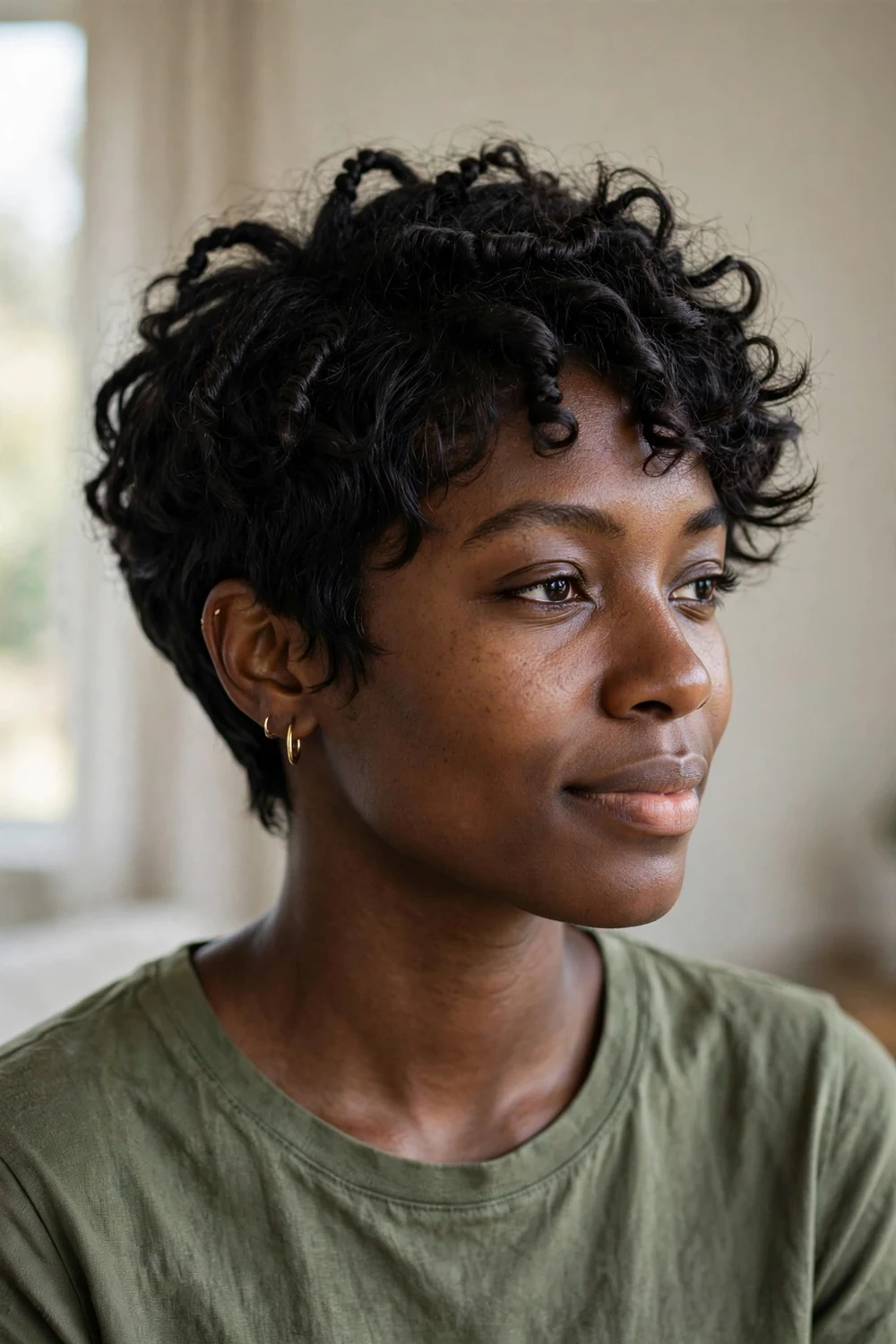
Small two-strand twists set on damp pixie-length hair unravel into stretched, defined waves. The technique elongates your pattern and fights shrinkage, so the pixie looks longer than a wash-and-go on the same cut. You need about 2 to 3 inches of length for the twists to hold.
Setting cream or custard defines the pattern without crunch. The texture typically lasts 2 to 4 days before needing a refresh.
Try this: Twist on damp, not soaking, hair so it dries fully overnight. Damp twists that stay wet go frizzy when you unravel them.
12. Side-Swept Curly Bangs Pixie
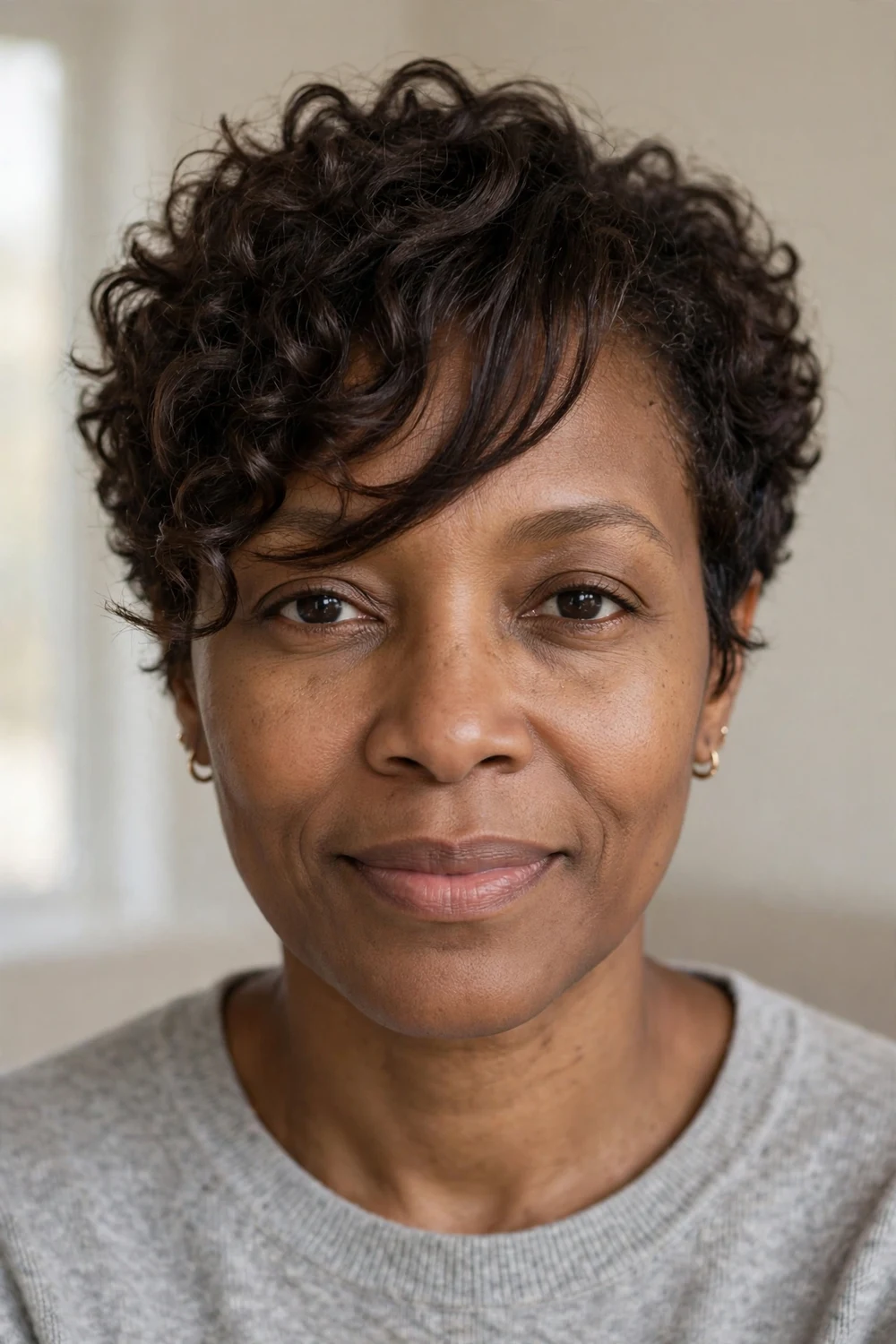
Longer curls from the top sweep diagonally across the forehead as bangs. The diagonal line softens the whole cut and draws eyes to your eyes and cheekbones. Higher foreheads balance out nicely under the coverage, and the asymmetry flatters most face shapes.
The bangs need enough length to drape, so the top stays longer than a standard pixie. A dab of light pomade keeps the sweep in place without stiffness.
Try this: Sweep the bangs to the side your hair naturally falls toward. Fighting the growth direction means restyling it every few hours.
13. Deep Side Part Curly Pixie
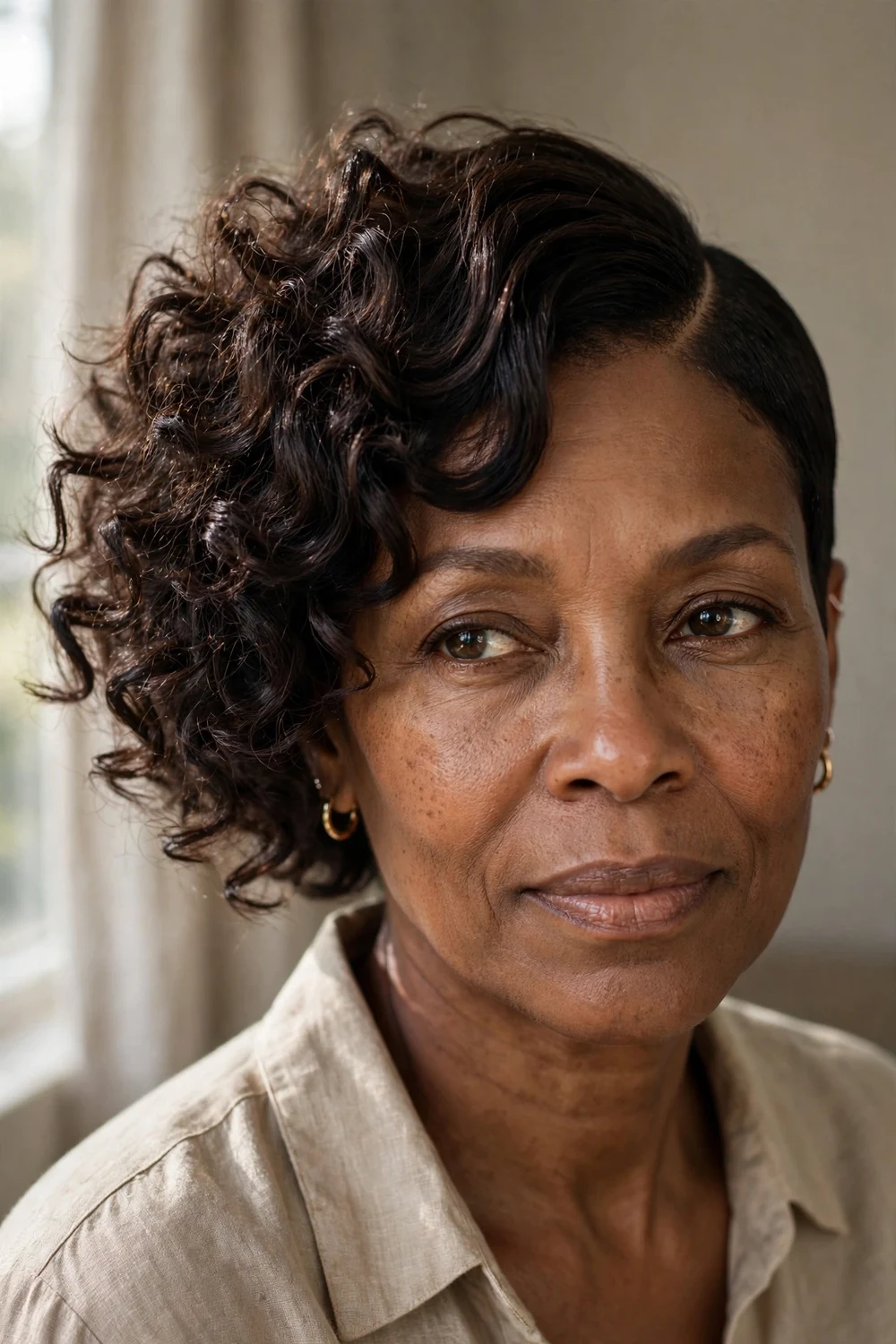
A dramatic part, set a few inches off center, throws fullness to one side and sleekness to the other. The lopsided volume adds a polished, almost vintage feel to a curly pixie. Oval and heart faces wear this especially well.
Blow-drying or diffusing away from the part line boosts the volume on the heavy side. Switch the part side every few weeks so one spot does not thin from constant tension.
Try this: Set the part while hair is wet with a tail comb for a clean line. A crisp part is the difference between intentional and accidental.
14. Blonde Curly Pixie
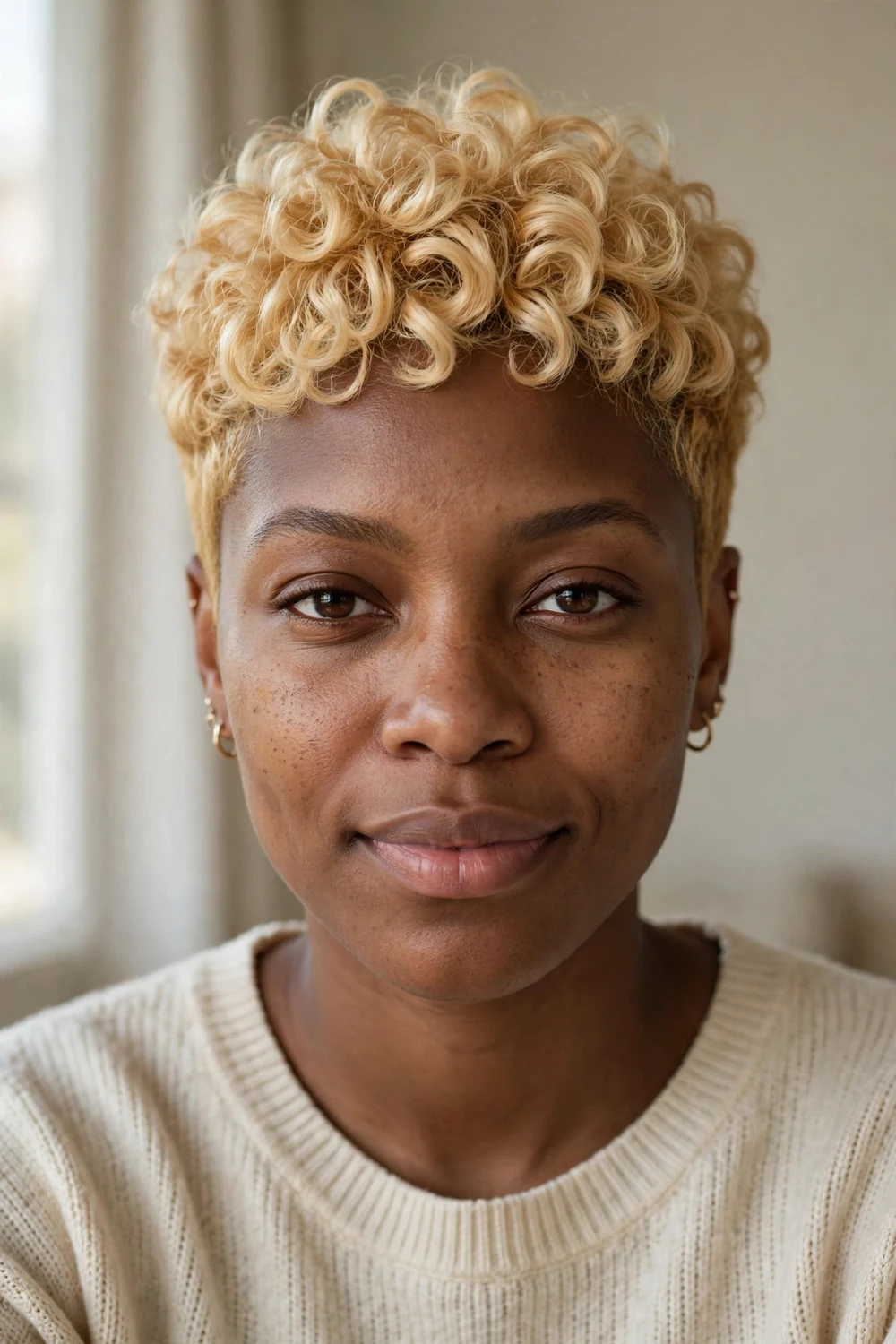
All-over blonde on a curly pixie makes a bold statement against deeper skin tones. The light color shows every curl and wave, so the cut’s shape reads clearly from across the room. Golden blonde suits warm undertones, while ashy blonde works on cooler ones.
Going blonde on dark hair takes lifting, often in two sessions, and curls need bond-building treatment during the process. Purple shampoo keeps the tone from going brassy.
Try this: Budget for deep conditioning twice a month after going blonde. Bleached curls dry out faster, and dryness kills the pixie shape.
15. Choppy Curly Pixie
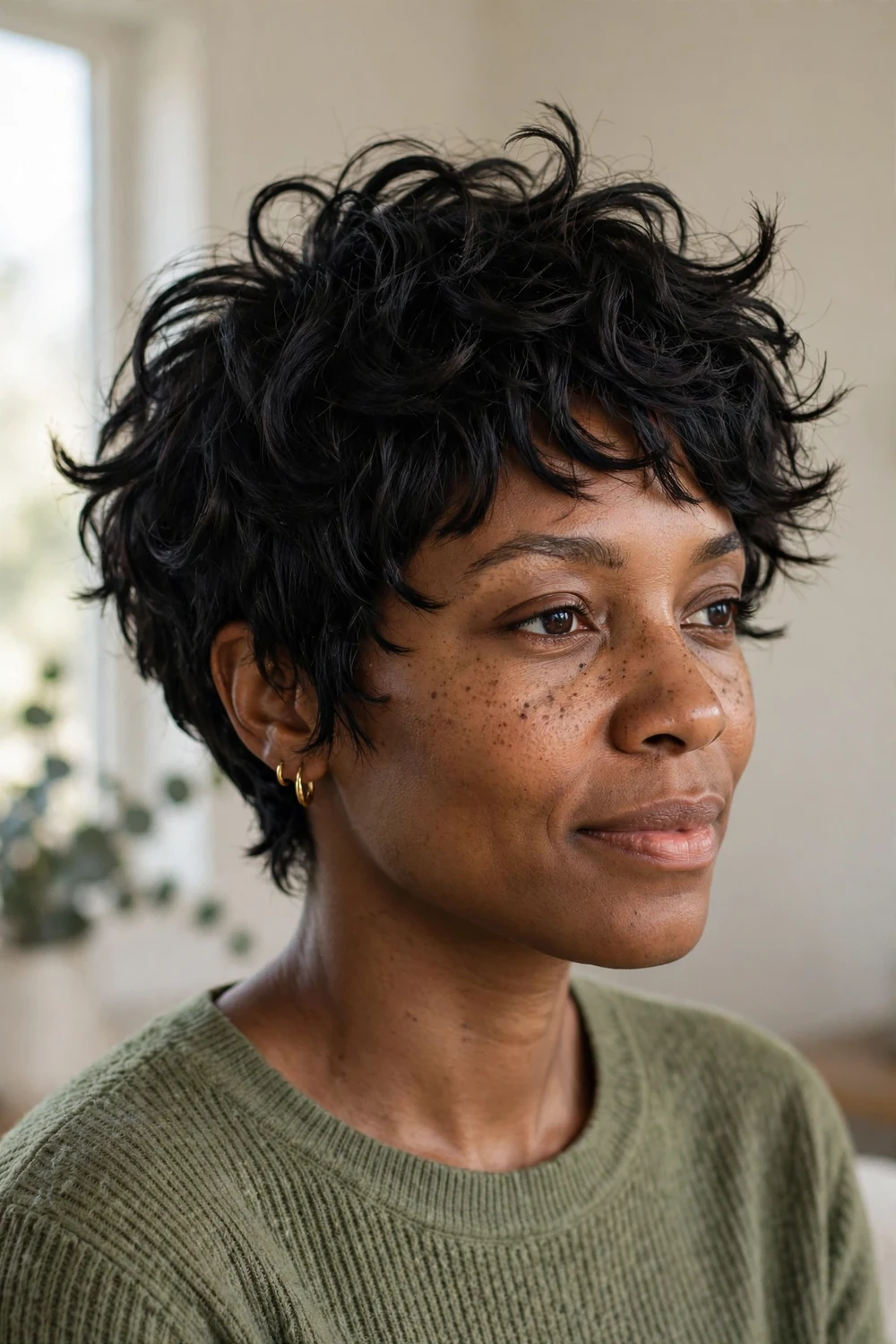
Point-cut ends create disconnected, piece-y layers through the curls. The choppy texture keeps the pixie from looking too neat or done, and it grows out more gracefully than a blunt cut. Thick hair loses bulk through the texture; fine hair gains the look of fullness.
Minimal product lets the choppy layers show. A pea-sized amount of texturizing paste pinched into the ends adds separation.
Try this: Ask for the choppy texture to be cut into dry hair. Wet cutting hides how the pieces will actually fall once curls spring up.
16. Layered Curly Pixie
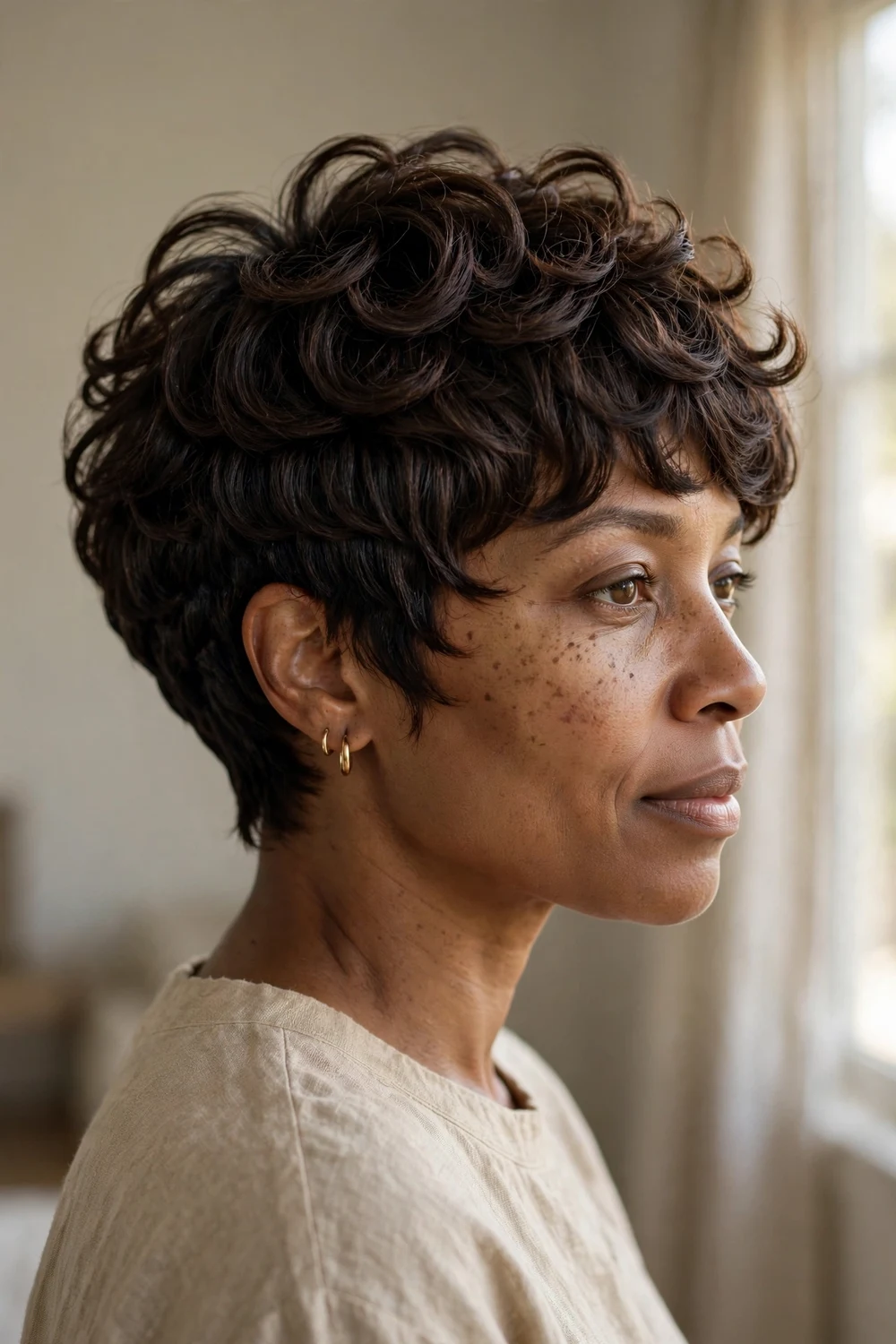
Graduated layers run through the whole cut, building a rounded shape with dimension. The layering prevents the dreaded triangle effect, where curls go wide at the bottom and flat at the top. Every curl type from 3a to 4c benefits from strategic layering at pixie length.
Layers also make the cut more forgiving between trims. As it grows, the shape holds longer than a one-length pixie.
Try this: Tell your stylist where you want the widest point of the shape to sit, at the crown for height or at the cheeks for width. That one instruction guides the whole layer map.
17. Spiky Curly Pixie
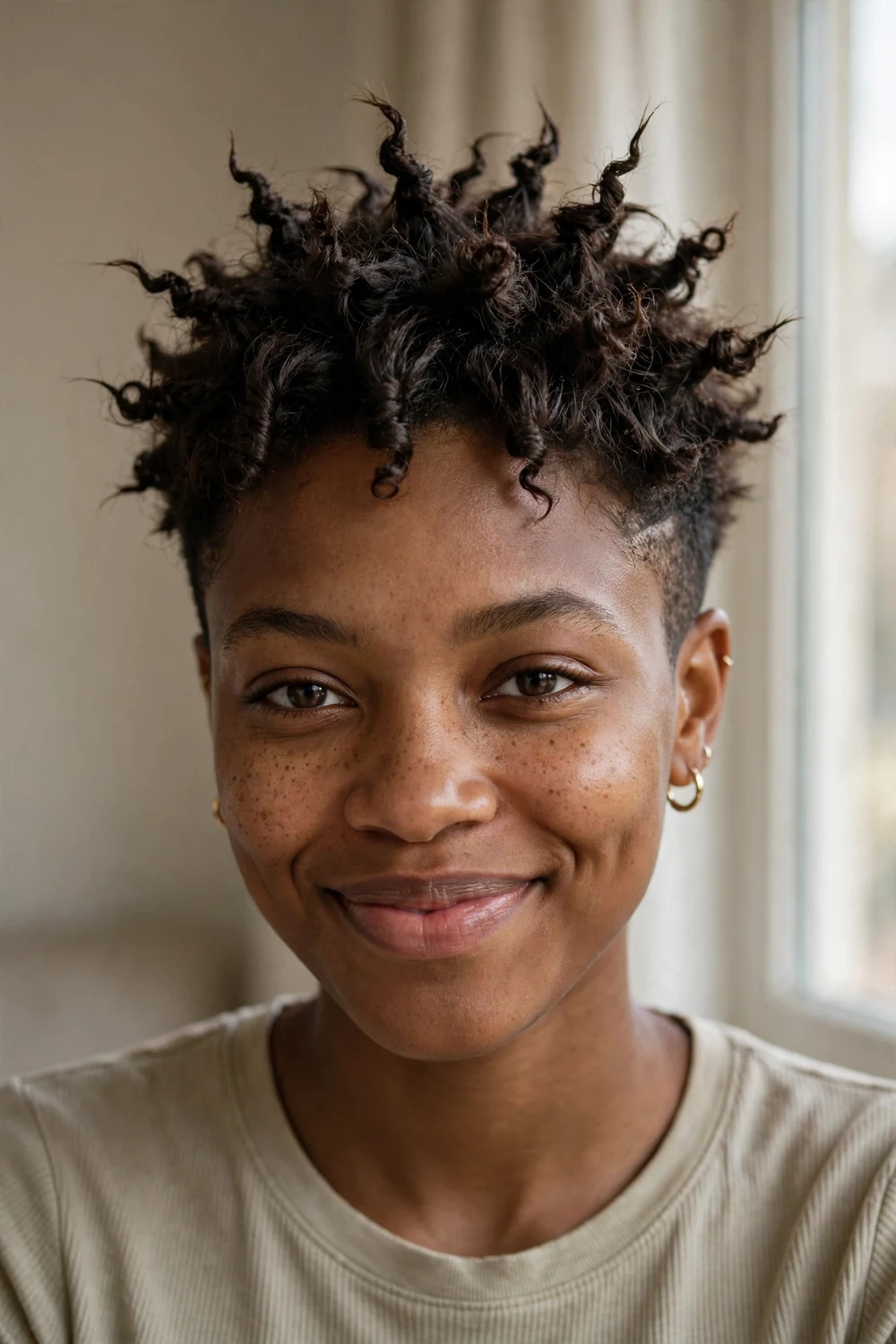
Defined curls get pinched upward into textured points across the crown. The spikes read as playful and bold without the harshness of straight-hair spikes, since curls soften every point. Short tapered sides keep the focus on the lifted top.
A strong-hold gel or wax applied to dry curls builds the spikes fastest. Work in small sections and pinch, don’t rake, to keep the points separated.
Try this: Build spikes on second-day hair when curls have some natural grip. Freshly washed curls are too slippery to hold the shape.
18. Curly Pixie with Shaved Designs
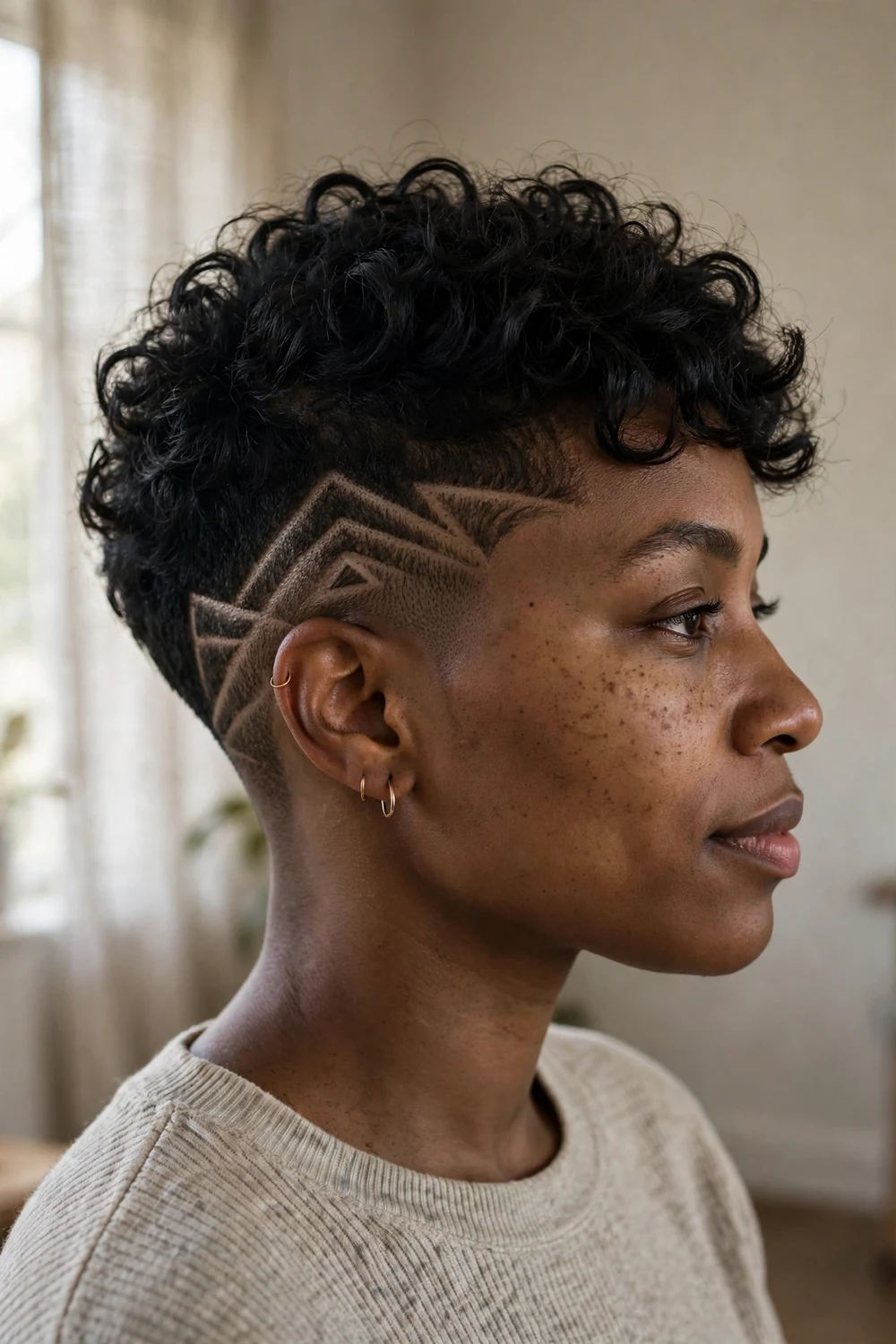
Clipper-etched lines, curves, or geometric shapes turn the tapered sides into art. The design sits in the shortest sections while curls rule the top. Because designs grow out in 1 to 2 weeks, you can change the pattern with the seasons.
A skilled barber matters more here than with any other curly pixie. Multiple clipper guards create the depth that makes a design look crisp instead of scratchy.
Try this: Start with a single clean line or curve before committing to complex art. Simple designs stay sharp longer and cost less to maintain.
19. Burgundy Curly Pixie
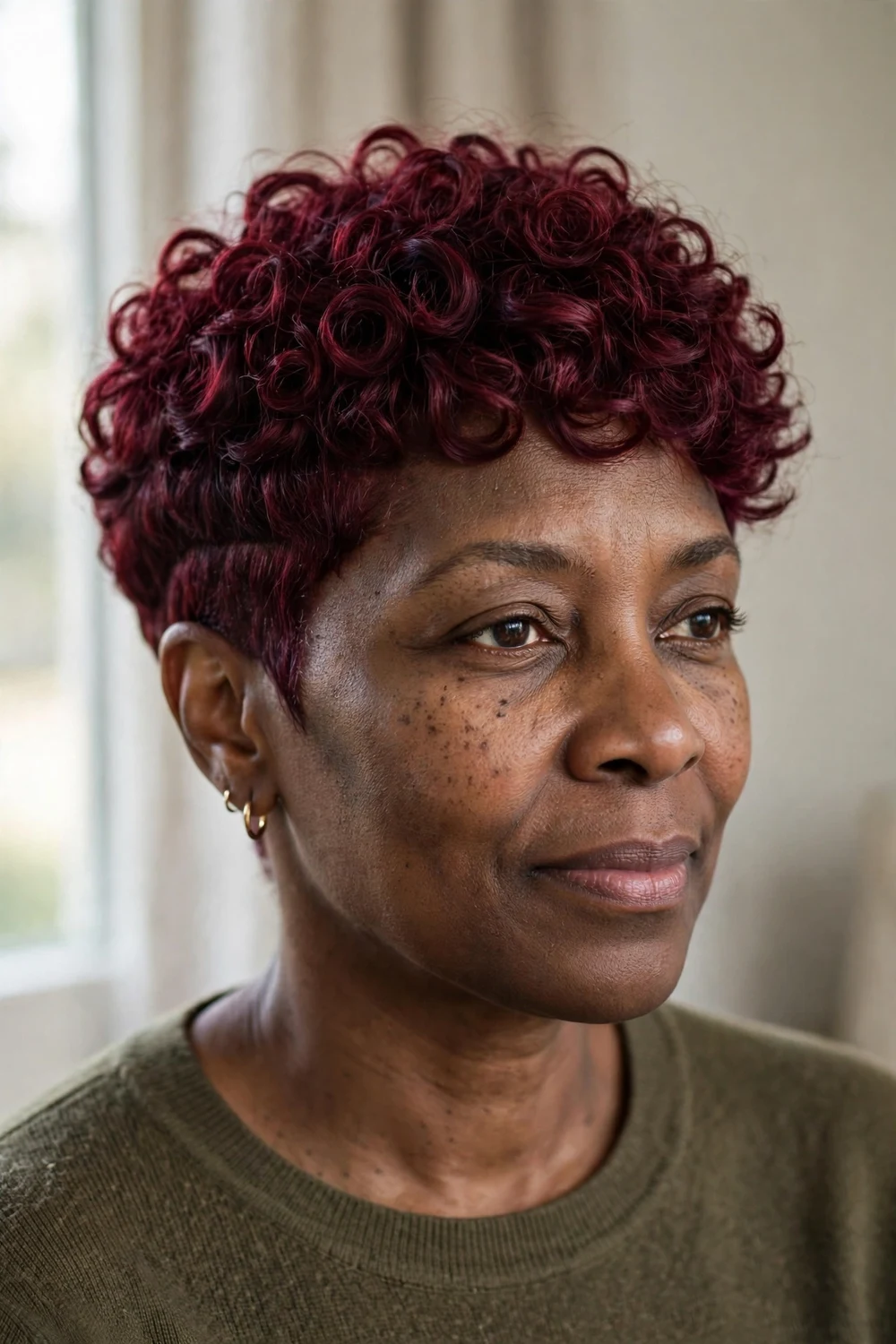
Deep wine-red tones add richness without the maintenance of blonde. Burgundy flatters deeper skin tones and photographs with real depth in different lighting. The color sits between natural and fashion-forward, so it works in conservative settings too.
Strategic placement on the longest curls gives dimension without dyeing the whole head. Color-depositing masks between appointments keep the red from fading to brown.
Try this: Wash colored curls in cool water. Hot water opens the cuticle and rinses red pigment out faster than any other color family.
20. Platinum Blonde Curly Pixie
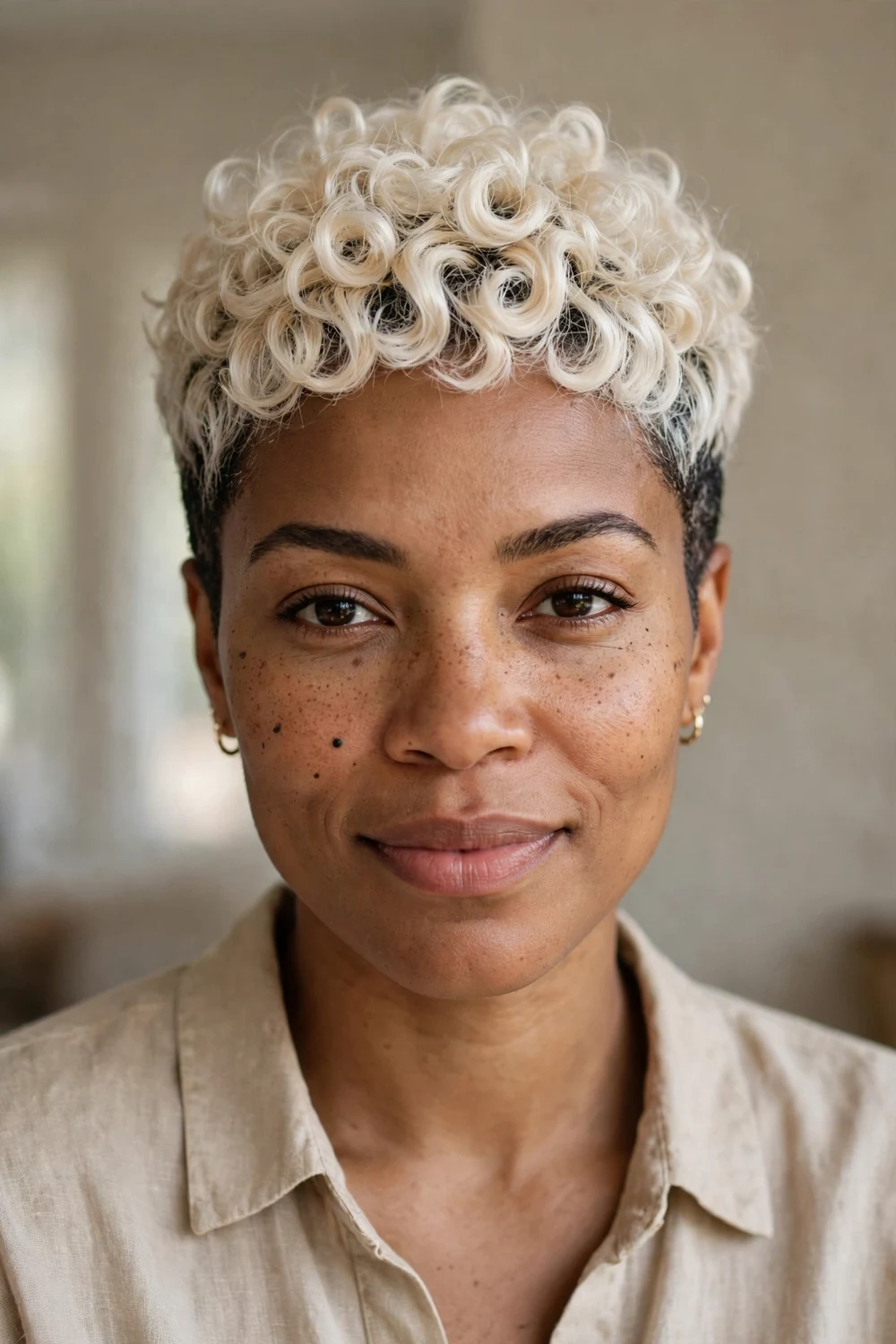
Pale platinum against darker skin creates maximum contrast and an editorial look. The icy tone shows curl definition dramatically, and the pixie length keeps the bleaching damage manageable compared to long hair. This is the highest-maintenance color on the list.
Expect multiple lightening sessions with bond protection, then root touch-ups every 4 to 6 weeks. Purple shampoo and toner are non-negotiable to stop yellowing.
Try this: Do a strand test before the full bleach. Fine or previously colored curls may not lift to platinum without breaking, and it is better to learn that on one strand.
21. Finger Wave Curly Pixie
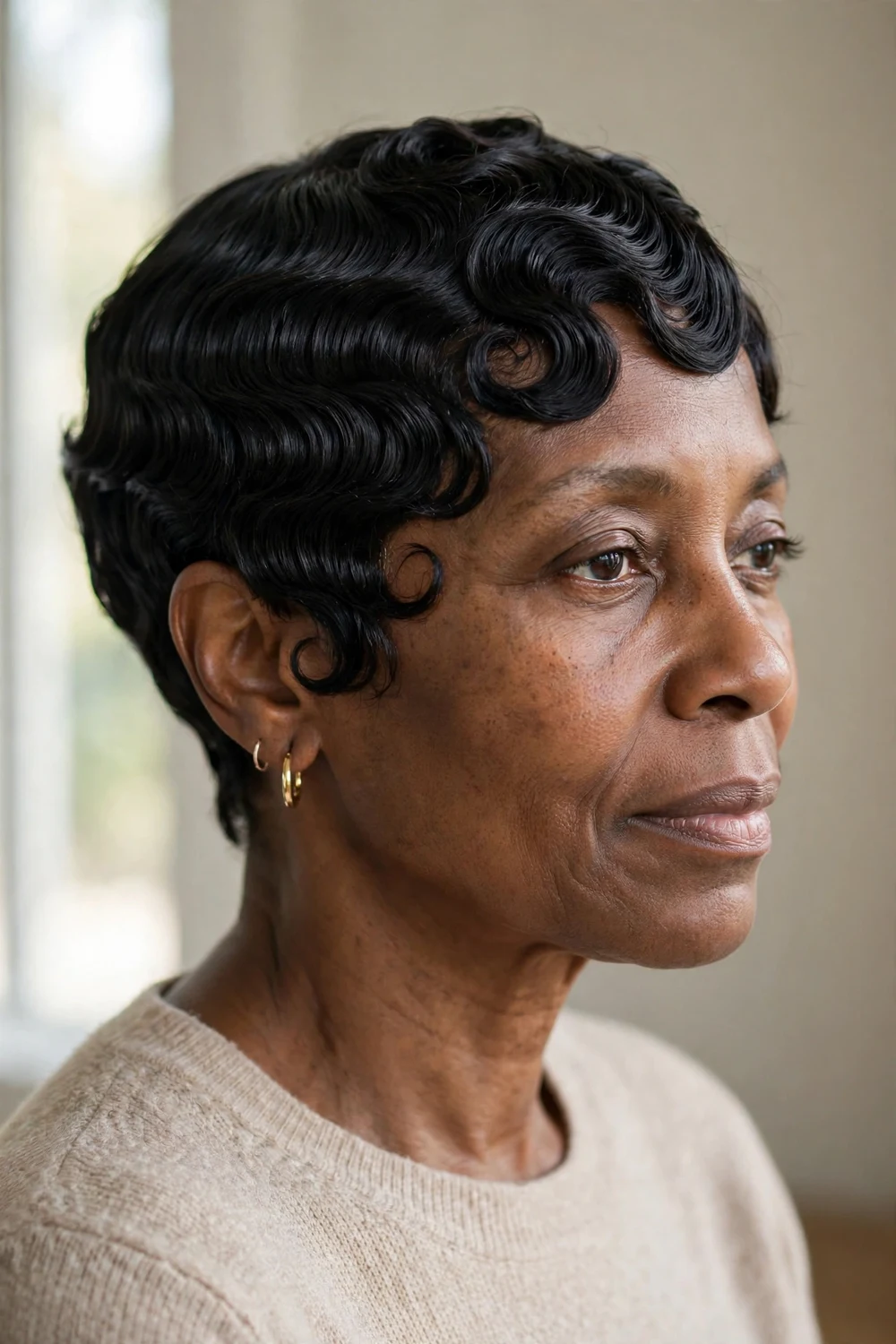
Vintage finger waves get adapted to pixie length for sculpted, glossy S-curves. Setting lotion and precise combing create the pattern, which then sets close to the head. The polished finish suits formal events, photoshoots, and any night you want old-Hollywood drama.
You need at least 2 to 3 inches on top for the waves to form. A silk scarf tied down overnight preserves the set for several days.
Try this: Let the waves dry completely under a hooded dryer or with a diffuser on low before removing any clips. Disturbing damp waves breaks the ridges.
22. Curly Pixie with Laid Edges
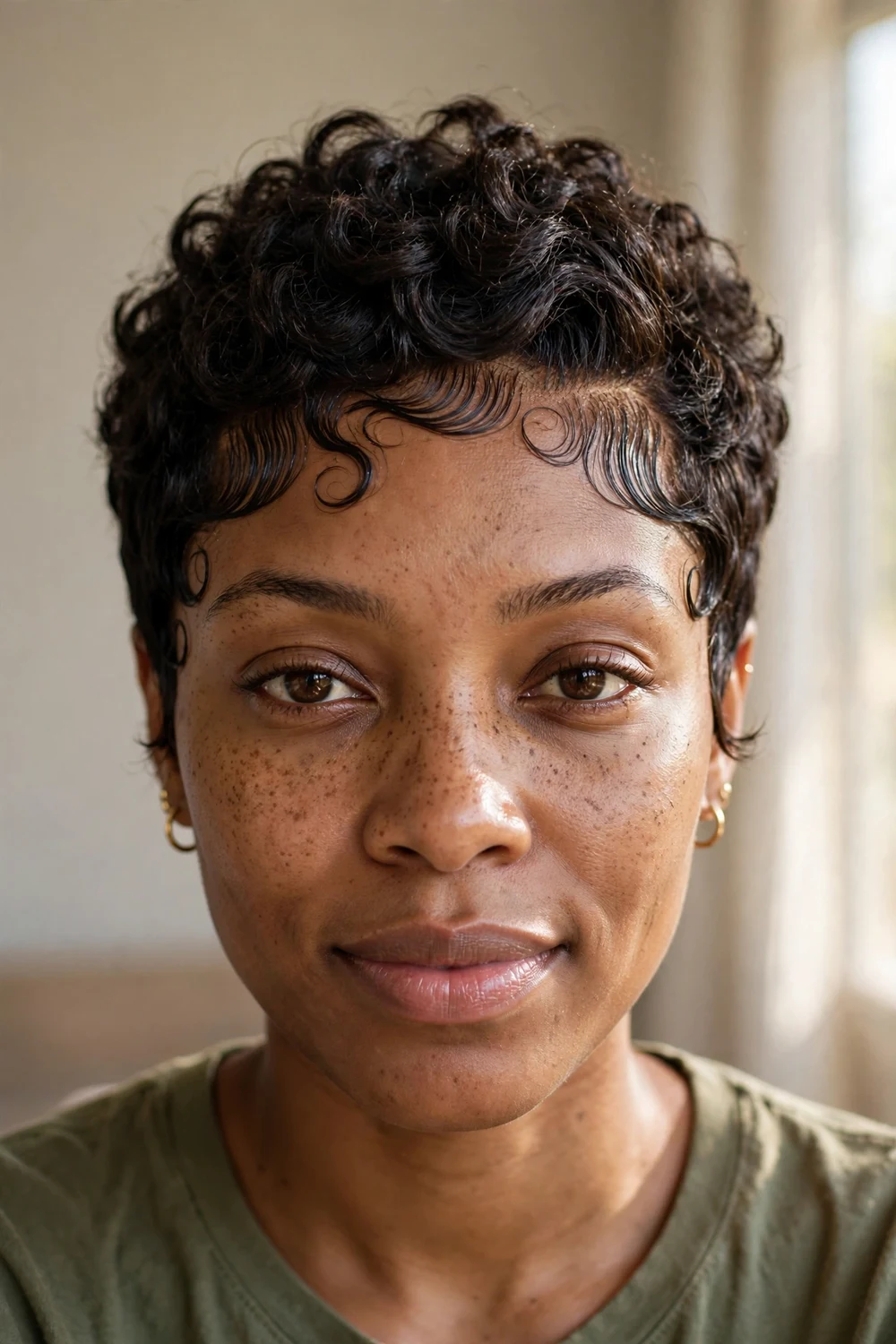
Textured curls on top meet precisely sculpted baby hairs along the hairline. The contrast between soft volume and sharp edges gives the cut a finished, intentional look with minimal effort. A small boar-bristle brush and edge control create the swoops.
Tie the edges down with a silk scarf for 10 minutes after styling to set them. At night, the scarf keeps them smooth until morning.
Try this: Use edge control made for textured hair, not regular gel. Standard gels flake on baby hairs by midday, while formulas for Black hair stay flexible.
23. Textured Messy Curly Pixie
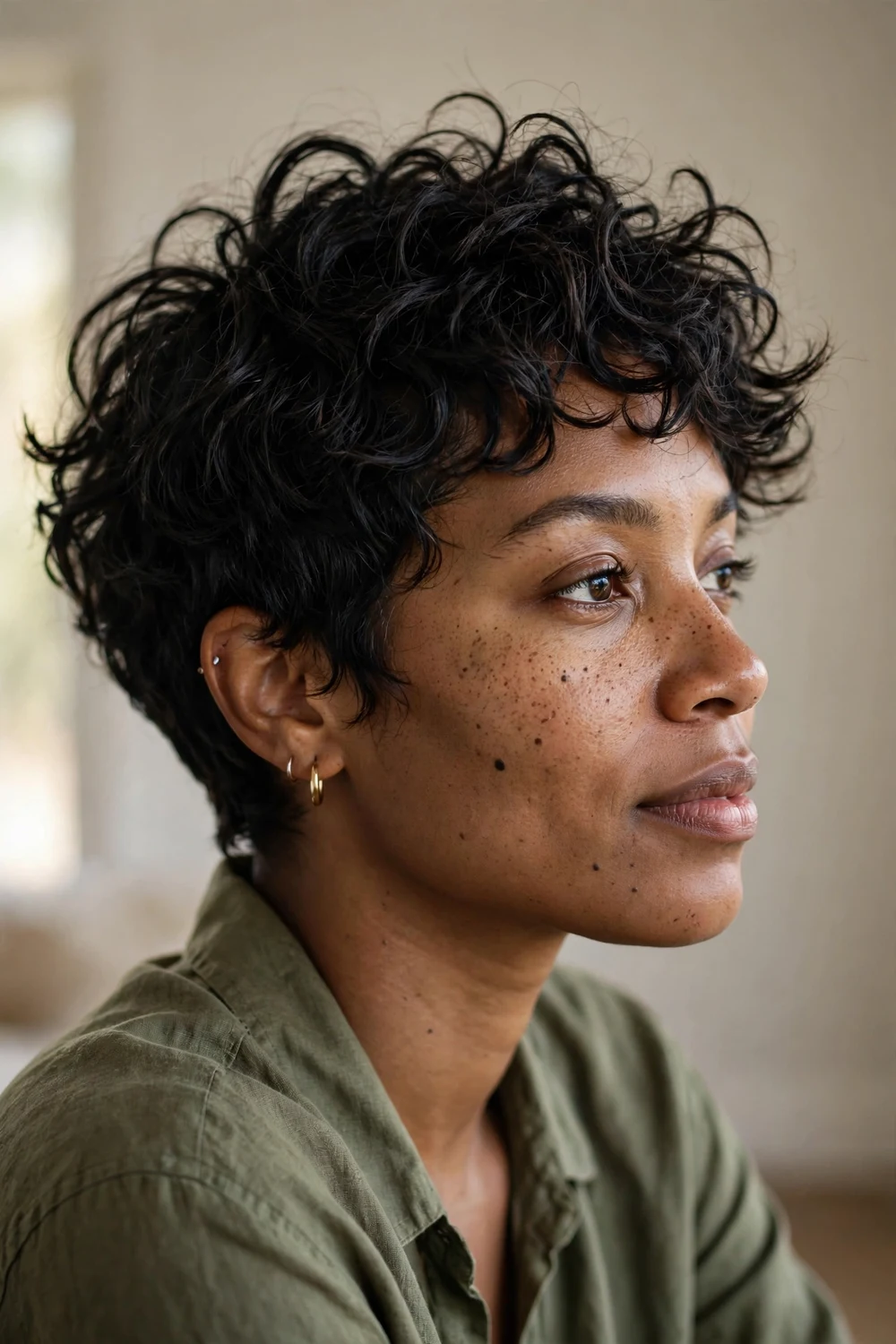
The deliberately undone pixie leans into disarray: tousled curls, piece-y separation, and movement in every direction. The lived-in look grows out better than precise cuts and suits casual, creative lifestyles. Finger-styling instead of combing keeps the tousle intact.
A texturizing spray or sea salt mist on dry curls builds the gritty separation this style needs. Less is more with product here.
Try this: Refresh the messy texture on day two by misting with water and scrunching, not by adding more product. Product buildup kills the airy look.
24. Soft Romantic Curly Pixie
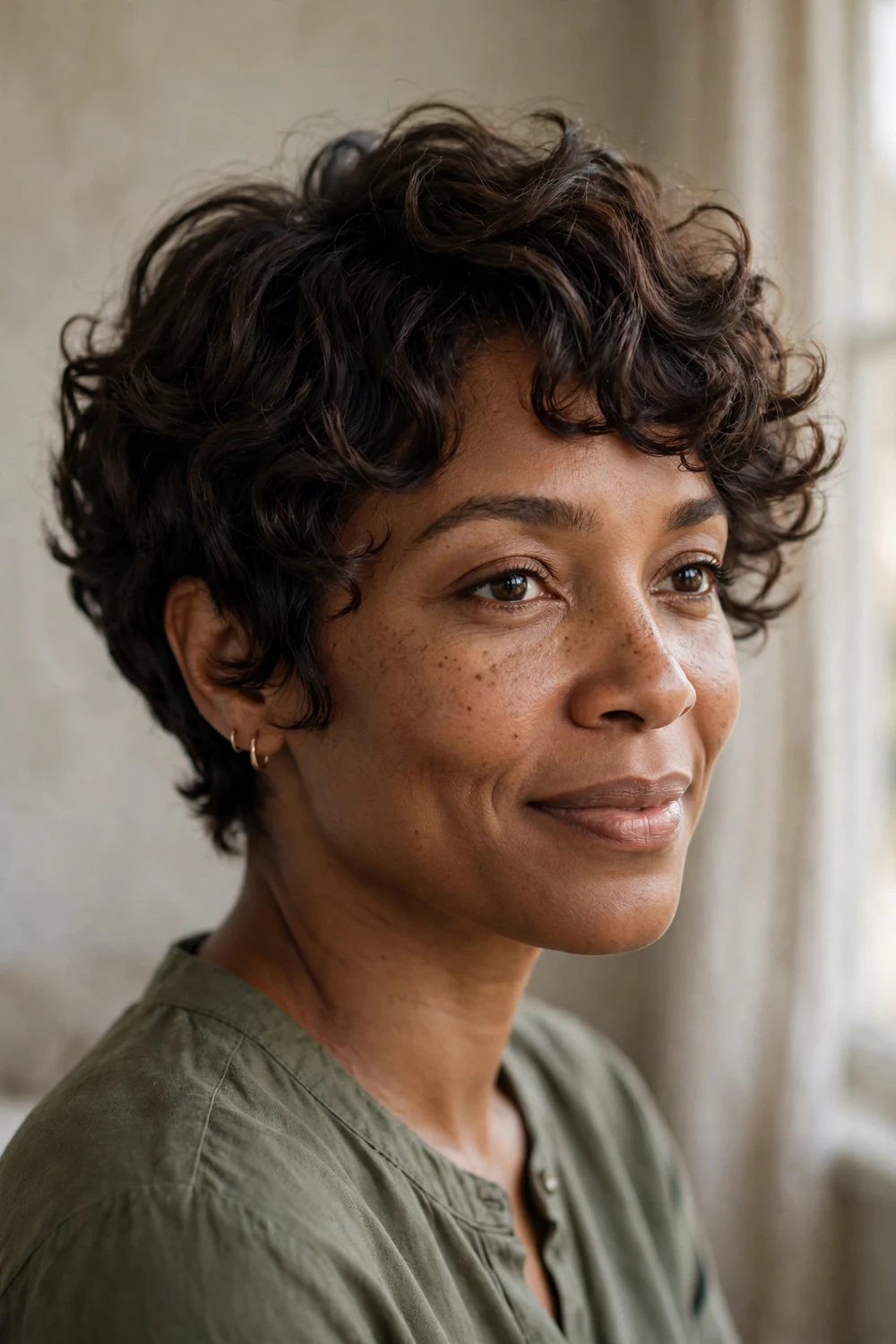
Gentle, loose curls and a rounded silhouette give this pixie a soft, feminine finish. Light mousse and a diffuser on low heat create movement without stiffness or crunch. The styling proves a pixie can feel delicate, not just edgy.
This version suits special occasions and anyone who wants short hair without sharp lines. Blow-drying with a round brush on the top section adds the gentle curves.
Try this: Finish with a pea-sized drop of shine serum smoothed over the surface. It adds light reflection without weighing soft curls down.
25. 4C Coily Pixie
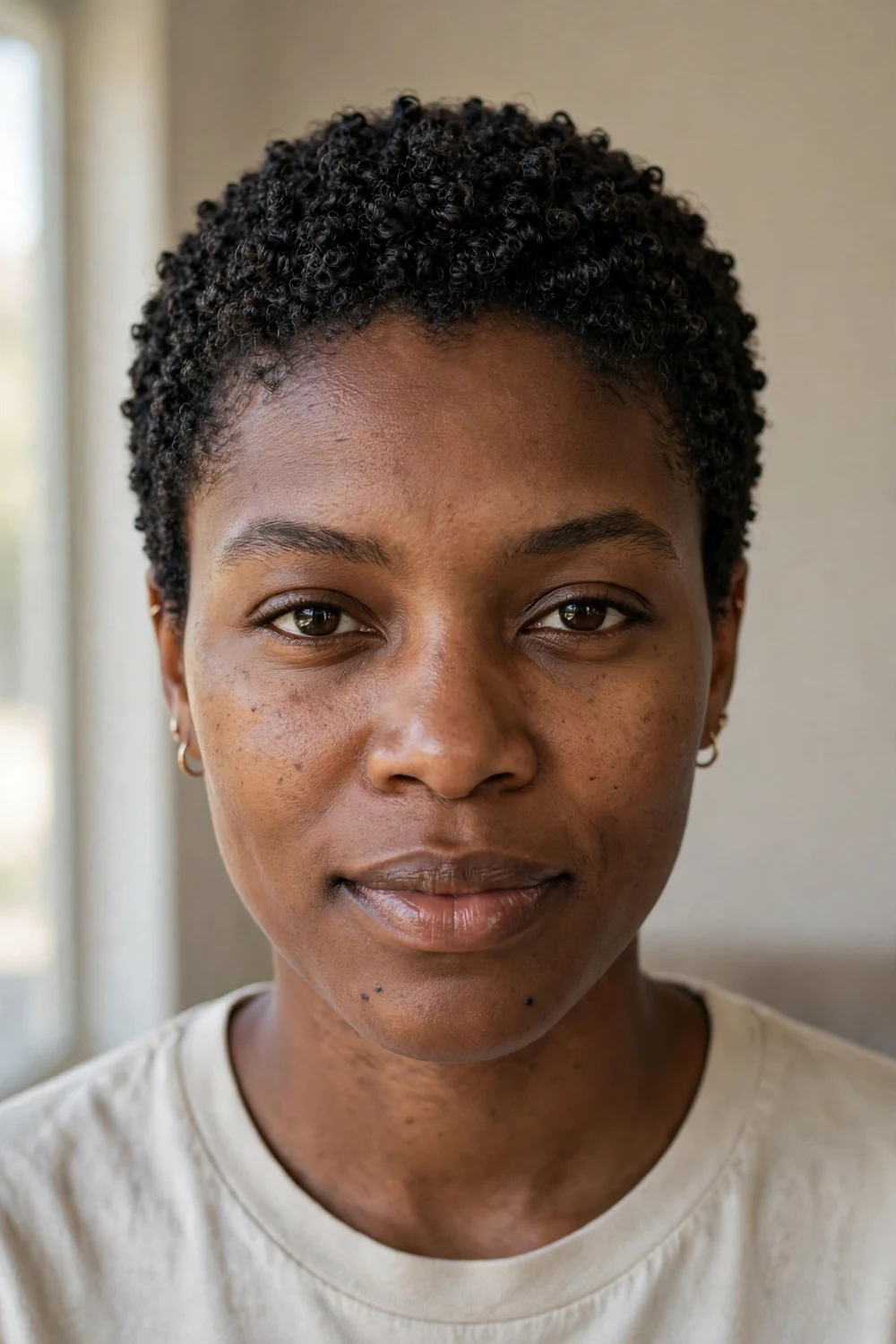
Tight 4c coils get their own pixie because the texture behaves differently from looser curls. Coils shrink up to 75 percent, so the cut must be planned on stretched or dry hair to land at the right length. The result is a compact, springy pixie with incredible density and shape.
Moisture layering matters more here than anywhere on this list. Leave-in, cream, and oil in that order keep tight coils supple at short lengths where dryness shows fast.
Try this: Cut 4c hair in its shrunken state if you wear it shrunken, or stretched if you wear it stretched. Cutting one way and wearing the other guarantees a surprise.
26. TWA Grow-Out Curly Pixie
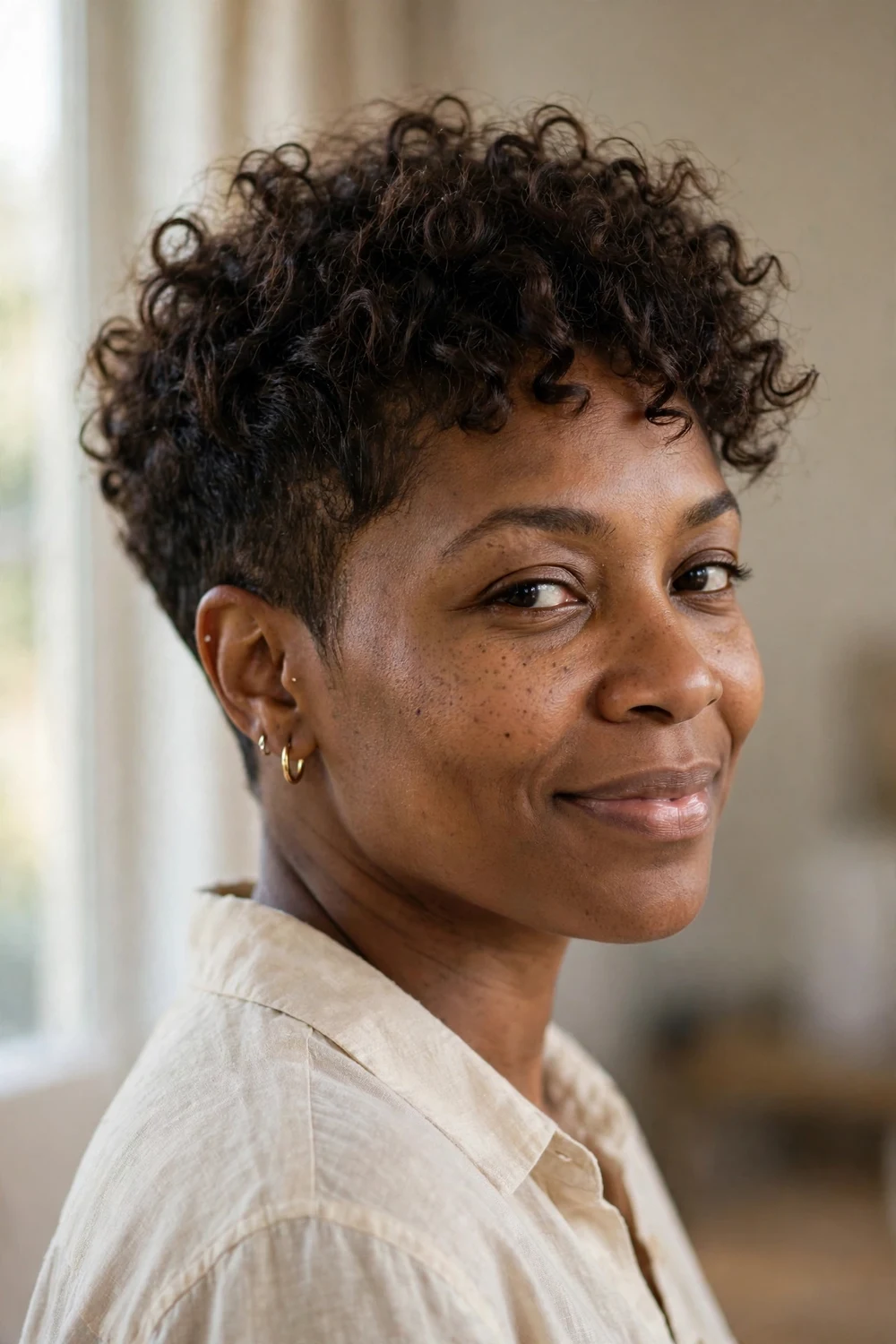
Growing out a TWA into a curly pixie is a stage, not a setback. At 2 to 3 inches, the curls gain enough weight to form a real pixie shape with a longer top and shaped sides. Regular trims during the grow-out keep the back and sides from going mullet-shaped.
This is the stage where many women quit growing out. A shaping trim every 6 to 8 weeks keeps the awkward phase looking intentional instead of neglected.
Try this: Protective styling like flat twists on the top section gets you through the in-between weeks without heat. The pixie underneath keeps growing undisturbed.
Curly Pixie Comparison at a Glance
| Style | Best Occasion | Difficulty | Upkeep |
|---|---|---|---|
| Classic Curly Pixie | Everyday wear | Easy | Trims every 4-6 weeks |
| Tapered Curly Pixie | Work and office | Easy | Edge trims every 3-4 weeks |
| Curly Pixie with a Fade | Weekends and nights out | Medium | Barber visits every 2-3 weeks |
| Curly Mohawk Pixie | Events and concerts | Medium | Sides every 2-3 weeks |
| Asymmetrical Curly Pixie | Creative workplaces | Medium | Trims every 4 weeks |
| Defined Curls Wash-and-Go Pixie | Daily routine | Medium | Wash day every 3-4 days |
| Lifted-Crown Curly Pixie | Photos and occasions | Medium | Trims every 4-6 weeks |
| Copper-Toned Curly Pixie | Fall and winter | Medium | Color refresh every 6-8 weeks |
| Honey Blonde Highlight Pixie | Spring and summer | Medium | Highlights every 8-10 weeks |
| Curly Afro Pixie | Everyday wear | Easy | Trims every 6-8 weeks |
| Twist-Out Curly Pixie | Weekends | Medium | Re-twist every 2-4 days |
| Side-Swept Curly Bangs Pixie | Date nights | Easy | Bang trims every 4 weeks |
| Deep Side Part Curly Pixie | Formal events | Easy | Trims every 4-6 weeks |
| Blonde Curly Pixie | Statement looks | Hard | Roots every 4-6 weeks |
| Choppy Curly Pixie | Casual days | Easy | Trims every 6-8 weeks |
| Layered Curly Pixie | Everyday wear | Easy | Trims every 6-8 weeks |
| Spiky Curly Pixie | Nights out | Easy | Trims every 4-6 weeks |
| Curly Pixie with Shaved Designs | Festivals and events | Medium | Design touch-ups every 1-2 weeks |
| Burgundy Curly Pixie | Evening events | Medium | Color every 6-8 weeks |
| Platinum Blonde Curly Pixie | Editorial looks | Hard | Roots every 4-6 weeks |
| Finger Wave Curly Pixie | Weddings and galas | Hard | Re-set every 3-5 days |
| Curly Pixie with Laid Edges | Daily polish | Easy | Edges styled daily |
| Textured Messy Curly Pixie | Casual weekends | Easy | Trims every 6-8 weeks |
| Soft Romantic Curly Pixie | Dates and dinners | Easy | Trims every 4-6 weeks |
| 4C Coily Pixie | Everyday wear | Medium | Moisture routine every 2-3 days |
| TWA Grow-Out Curly Pixie | Transition phase | Easy | Shaping trims every 6-8 weeks |
How to Choose the Right Curly Pixie for You
Start with your curl type and shrinkage. Tight 4c coils need a different cutting approach than loose 3a curls, and a stylist who understands your pattern is worth the search. Ask to see their short curly cuts before you book.
Next, be honest about maintenance. A fade looks sharp only with barber visits every few weeks. If that schedule does not fit your life, a soft tapered pixie gives a similar feel with half the appointments.
Face shape guides the details, not the whole decision. Tapered sides slim round faces, crown height lengthens them, and side-swept bangs soften strong jawlines. Any curly pixie works on any face with the right tweaks.
Finally, think about your styling time. Wash-and-go pixies need 15 minutes on wash day and seconds after. Twist-outs and finger waves need evening prep. Pick the routine you will actually do, because the best cut is the one you maintain.
Mistakes to Avoid
Cutting curls wet without accounting for shrinkage is the most common error. Hair that hits your ears wet can sit an inch above them dry. Dry cutting or cutting on stretched hair prevents the shock.
Skipping trims ruins the shape faster on a pixie than on long hair. There is nowhere for overgrowth to hide, so a pixie past its trim date looks grown out in weeks, not months.
Using heavy butters and oils on fine curls weighs the pixie down and kills volume. Match product weight to your density: light creams and foams for fine hair, richer butters only for thick, dense coils.
Brushing dry curls breaks the curl pattern into frizz. Detangle only when wet and conditioned, with fingers or a wide-tooth comb, working from ends to roots.
If you want to compare curly pixies across all curl types and ages before choosing, browse our full roundup of curly pixie haircuts for the complete picture.
For pixie inspiration beyond curls, including tapered, asymmetrical, and colored versions, see our pixie hairstyles for black women collection.
Women over 50 have their own curly pixie considerations, from gray blending to softer shapes, covered in curly pixie haircuts over 50.
After a big chop, the grow-out stage brings its own questions, and our guide to short pixie haircuts for older women covers low-maintenance pixie upkeep in detail.
Frequently Asked Questions
Will a curly pixie work on 4c hair?
Yes, 4c coils make an excellent pixie because the tight pattern holds shape well at short lengths. The cut should be planned on dry or stretched hair since 4c hair shrinks up to 75 percent. Keep a consistent moisture routine with leave-in, cream, and oil, and trim every 6 to 8 weeks to maintain the silhouette.
How do I handle shrinkage in a curly pixie?
Expect curls to sit 1 to 2 inches shorter dry than they look wet. Ask your stylist to cut your hair dry or stretched so the length lands where you want it. Twist-outs and braid-outs stretch the pattern for more visible length, while wash-and-go styling shows the most shrinkage.
How often does a curly pixie need a trim?
Most curly pixies need trims every 4 to 6 weeks to hold their shape. Fades, undercuts, and shaved designs need touch-ups more often, every 2 to 3 weeks. Softer tapered and layered cuts can stretch to 8 weeks between appointments.
Can I color a curly pixie without damaging my curls?
Yes, but lightening dark hair always causes some stress, so work with a colorist who understands textured hair. Bond-building treatments during bleaching protect the curl pattern, and deep conditioning twice a month keeps colored curls healthy. Copper and burgundy need less lifting than blonde, making them gentler options.
What is the nighttime routine for a curly pixie?
Cover the pixie with a satin bonnet or scarf to protect curls while you sleep. For wash-and-go styles, pineappling does not work at pixie length, so a bonnet is the better option. In the morning, mist with water and scrunch to refresh the curls instead of restyling from scratch.
Final Thoughts
A curly pixie is a commitment to your natural texture, and it pays off in faster mornings and a cut that turns heads. Start with the version that matches your curl pattern and maintenance appetite, bring photos to your stylist, and give the cut two weeks to settle before judging it. If you are on the fence, the tapered curly pixie is the safest first step into short curly hair.

