


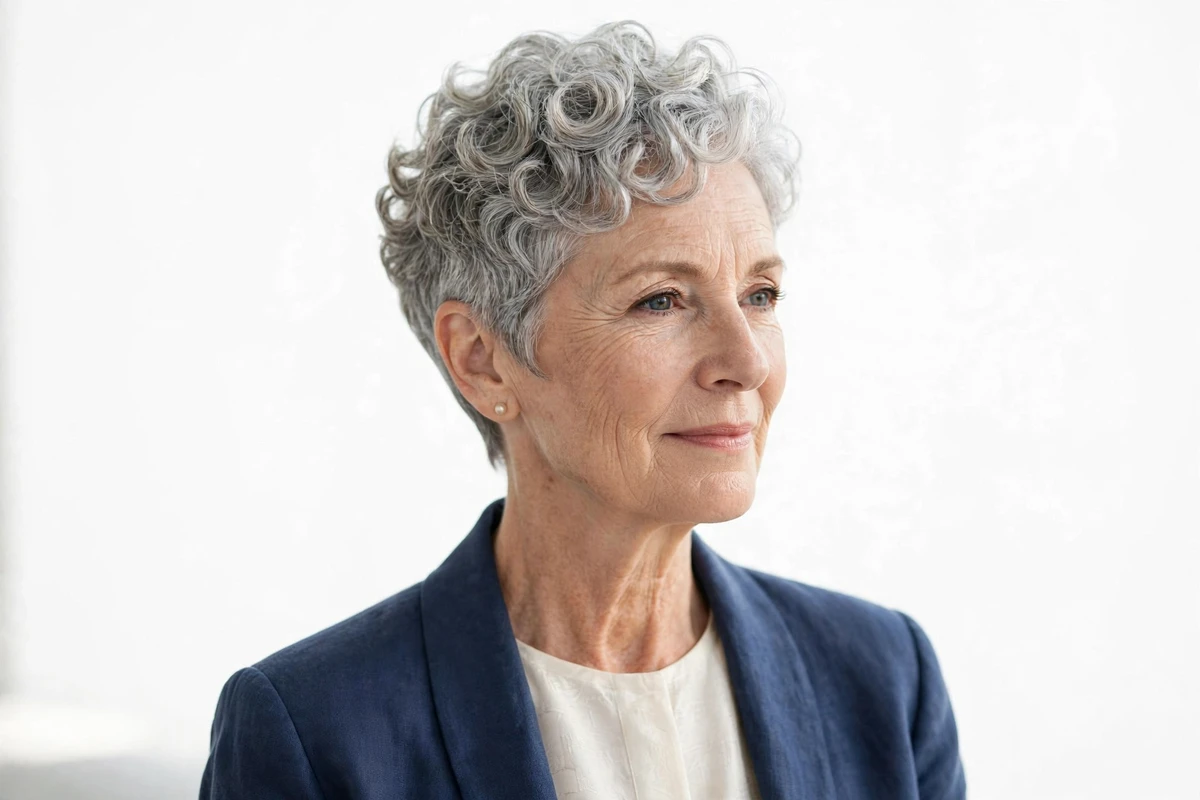
Curly hair and pixie cuts belong together. The short length takes the weight off your curls, so they spring up instead of dragging down, and that natural lift does more for mature faces than any layered long cut could.
This list covers 30 curly pixie haircuts over 50, from classic tapered cuts to silver showpieces and bold color ideas. I’ve spent years covering short hair for mature women, and one lesson keeps repeating: curls want cooperation, not control. Every style below works with your texture instead of against it.
Quick answer: A curly pixie over 50 keeps curls 1 to 3 inches long on top with tapered or closely cut sides. This shape prevents the triangle effect, cuts styling time to under 10 minutes, and flatters both natural gray and colored hair. Trims every 4 to 6 weeks keep the silhouette sharp.
Quick Takeaways
- Tapered sides and nape stop curly pixies from puffing out into a pyramid shape.
- Leave 1 to 3 inches on the crown so curls can form their natural pattern.
- Hydration matters more than hold: curl cream and leave-in conditioner beat stiff gels.
- Your 50s are the sweet spot for gray transition styles or rich color, since the short length grows color out fast.
- Book a trim every 4 to 6 weeks; short curls lose their shape fast as they grow.
Why a Curly Pixie Works So Well After 50
Hair texture starts shifting in your 50s. Curls often get drier, a little finer, and less predictable, and long lengths exaggerate every one of those changes. A pixie removes the weighed-down ends and leaves the healthiest part of your hair.
Short curls also frame the face instead of pulling it down. When the sides sit close to the head and the crown carries the volume, the eye moves up toward your cheekbones and eyes. That upward lift reads as energy, which is exactly what most women ask their stylist for at this age.
Then there is the maintenance math. Washing, conditioning, and styling a pixie takes minutes, not the better part of an hour. Between work, grandkids, and travel, most women over 50 would rather spend their morning on anything but their hair.
How to Prep Curls Before the Big Cut
Walk into the salon with your hair in its natural state. Wash it the night before, skip heavy stylers, and let your curls do what they do. Your stylist needs to see your real curl pattern, shrinkage, and growth direction to cut the shape correctly.
Bring reference photos, but stay flexible. The exact cut from a photo may not suit your curl type or density, so ask your stylist which elements will translate to your hair. A good consultation takes 10 minutes and saves months of growing out a mismatch.
Stock up on the basics before cut day: a sulfate-free shampoo, a rich conditioner, a curl-defining cream, and a diffuser attachment for your dryer. With short curls, you will use a fraction of the product you used on long hair, so one set lasts months.
1. Classic Curly Pixie With Tapered Sides
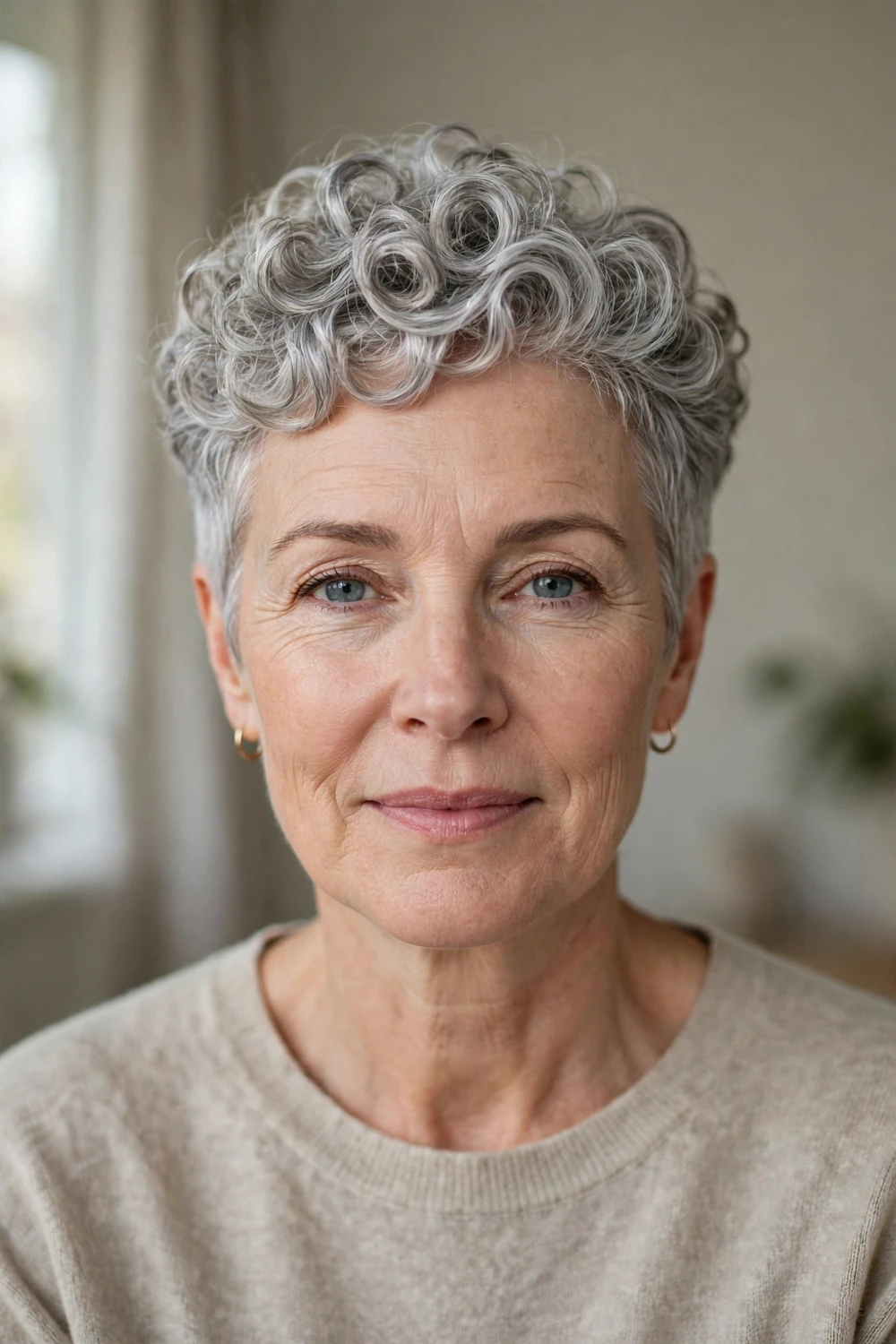
If you only pick one style from this list, make it this one. The sides and nape are tapered close to the head while the crown keeps 2 to 3 inches of curl, which stops the cut from widening into a triangle. It suits 3A to 3C curl patterns best, since looser curls need extra length on top to show their shape. The silhouette stays neat for weeks and grows out evenly, so it is forgiving between appointments.
Try this: ask your stylist for a low taper on the sides with scissor-cut length on top. Scrunch a pea-sized amount of curl cream into damp hair, then diffuse for 5 minutes to set the definition.
2. Tousled Textured Curly Pixie
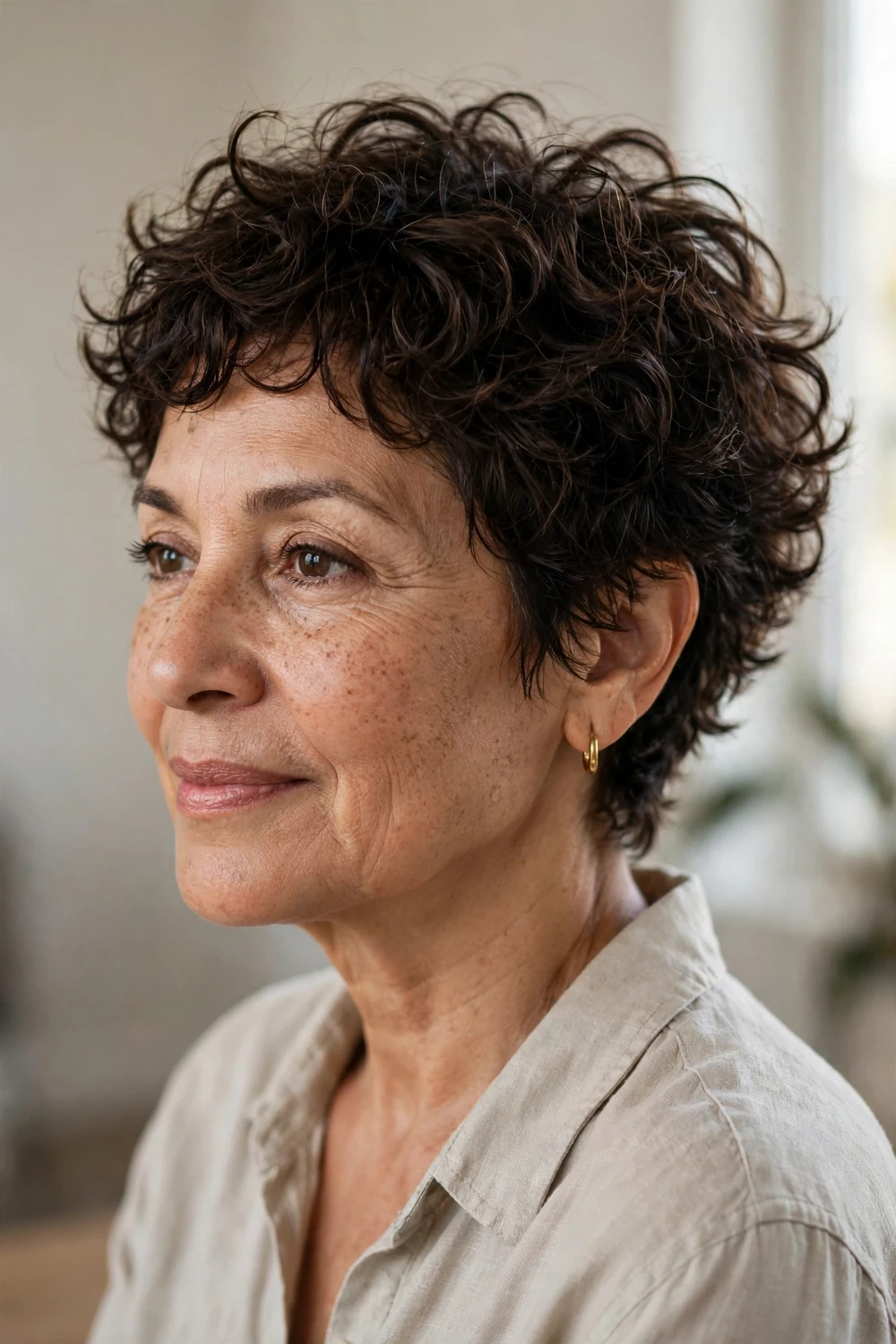
Embrace the bedhead, on purpose this time. This cut uses point-cut layers all over so curls fall in different directions, giving you a lived-in texture that looks deliberate instead of messy. It is the lowest-effort style here: the whole point is that the curls do whatever they want. Thick 3B to 3C hair wears it best, since the density fills out the silhouette. A light curl cream is enough; anything heavier kills the airy finish.
Try this: apply curl cream to soaking-wet hair, scrunch hard, and air-dry without touching. Once dry, shake the roots with your fingertips for separation.
3. Silver Gray Curly Pixie
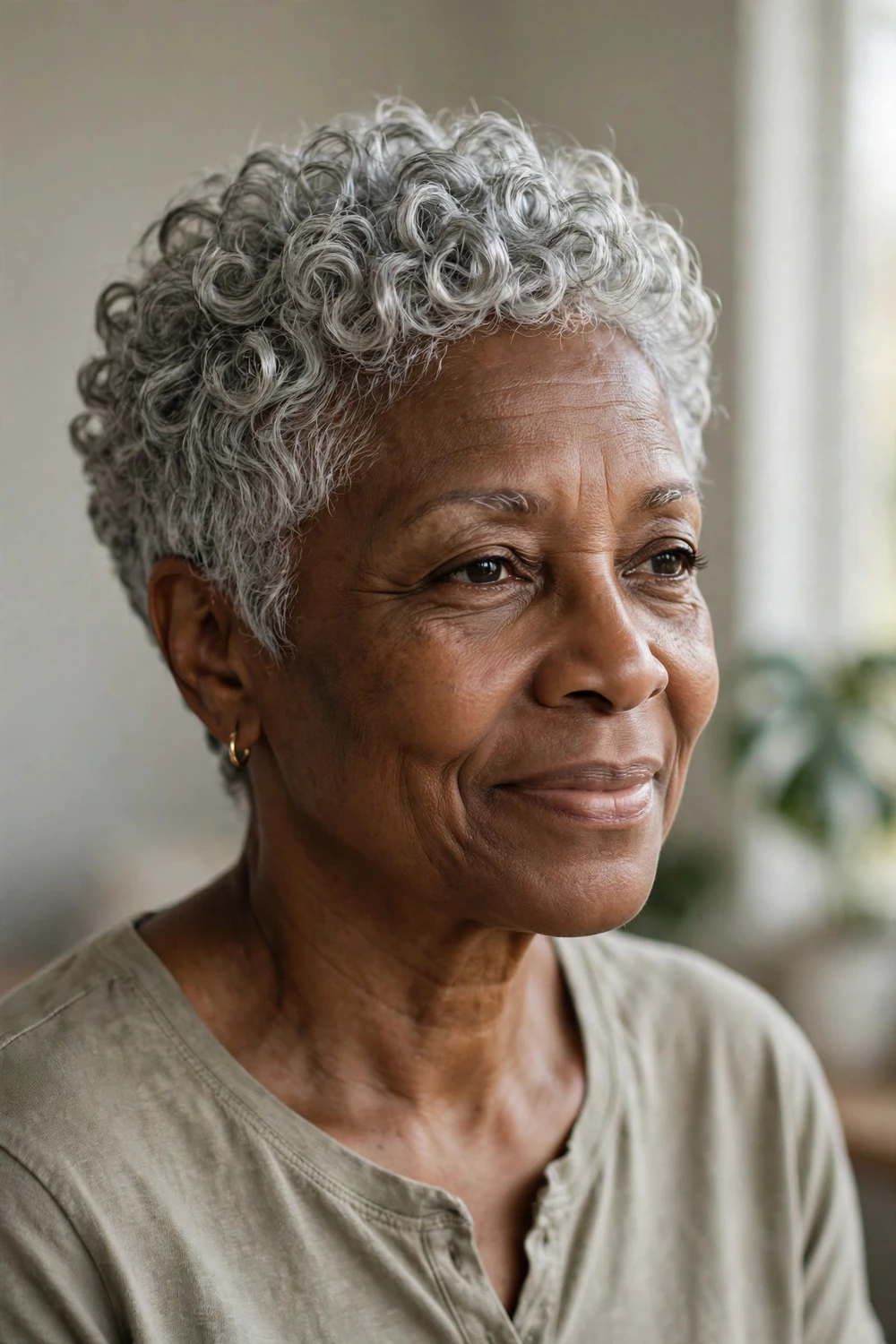
Going gray does not mean going quiet. This tapered pixie lets a full head of silver curls take center stage, with the short length keeping every coil springy and defined. Gray curls tend to run drier and wirier than pigmented hair, so the cut pairs best with a hydrating routine. The uniform silver reads as intentional and chic, and the color needs zero salon appointments to maintain. A pea-sized amount of curl cream on damp hair is all the styling this cut needs.
Try this: use a purple-tinted shampoo once a week to keep the silver bright instead of yellow. Follow with a deep-conditioning mask, since gray curls soak up moisture fast.
4. Salt-and-Pepper Chopped Curly Pixie
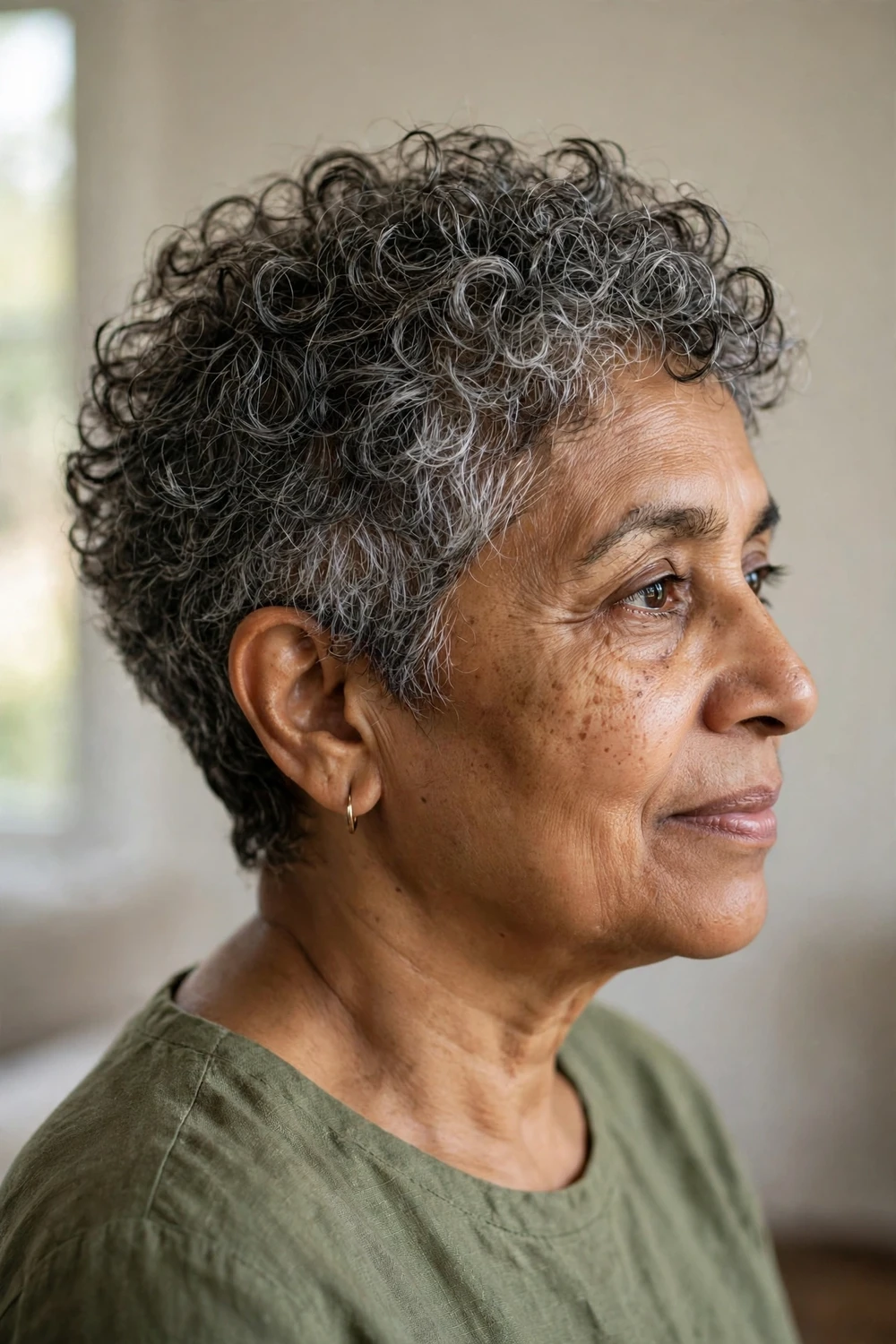
Let your gray do the talking. This chopped cut celebrates the natural mix of dark and silver strands, keeping curls short enough that the color variation shows in every section. The choppy texture adds movement, and the short length means the healthiest hair is what people see. It is one of the lowest-maintenance options here: no color appointments, no root touch-ups, just trims. Many women in their 50s wear this while transitioning fully gray.
Try this: blow-dry with a diffuser and a light mousse for a finished look, or wash and go. Either way, a trim every 5 weeks keeps the choppy layers crisp.
5. Curly Pixie Bob
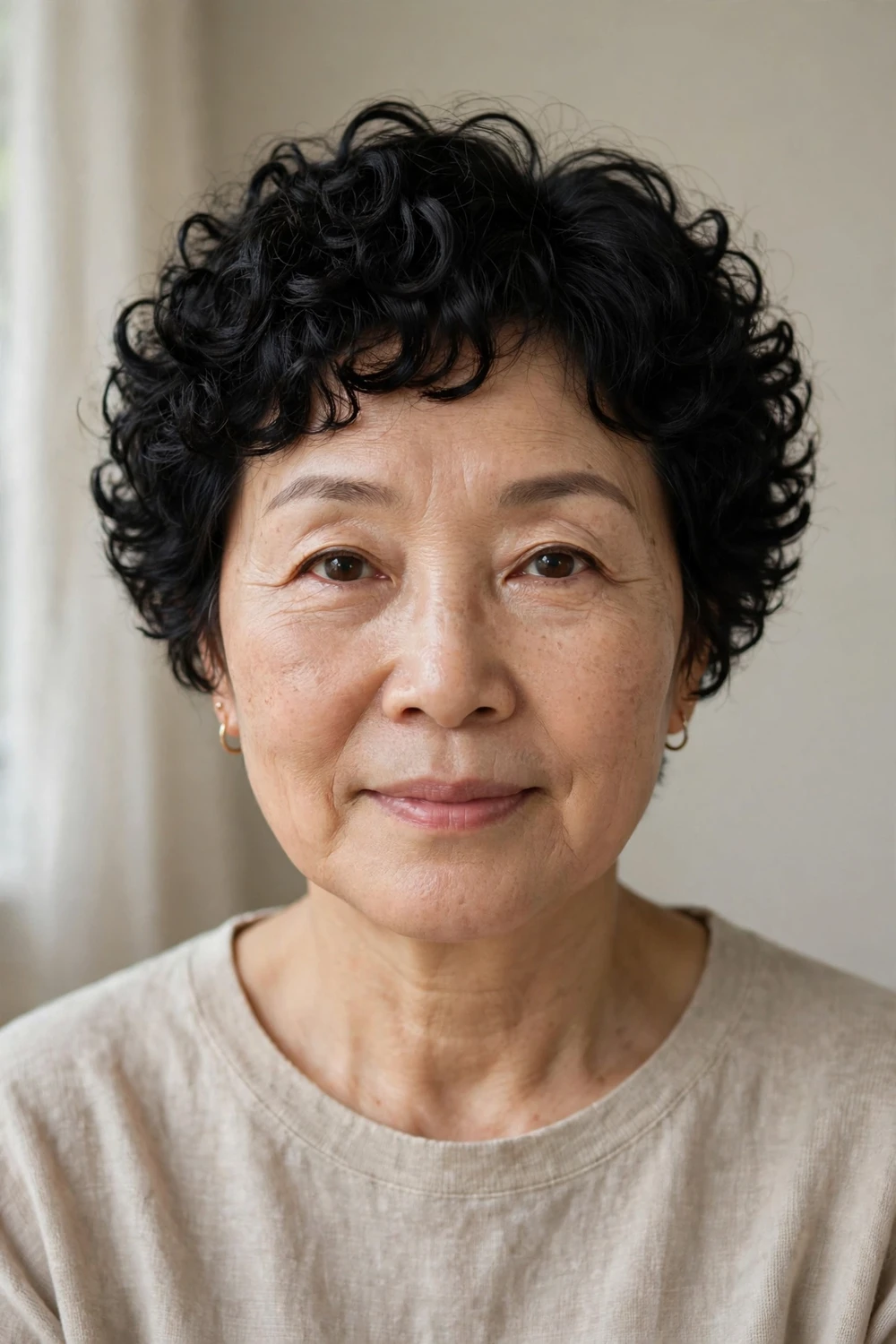
Sitting between a pixie and a bob, this cut ends just above the jawline with dense, defined curls all over. It gives more coverage than a true pixie, which comforts women who feel exposed with very short hair. The extra length also means the curls can form full ringlets instead of tight crops. Oval and heart-shaped faces wear it especially well, and a dab of pomade or shine cream keeps the finish polished rather than frizzy.
Oval faces follow a slightly different playbook, since balanced proportions favor different details than the cuts covered here. See curly pixie haircuts for oval faces for the styles that suit that shape best.
Try this: rake a small amount of shine cream through dry curls to separate them. If the ends puff out by week five, your stylist can dust the perimeter without touching the shape.
6. Curly Pixie With Undercut
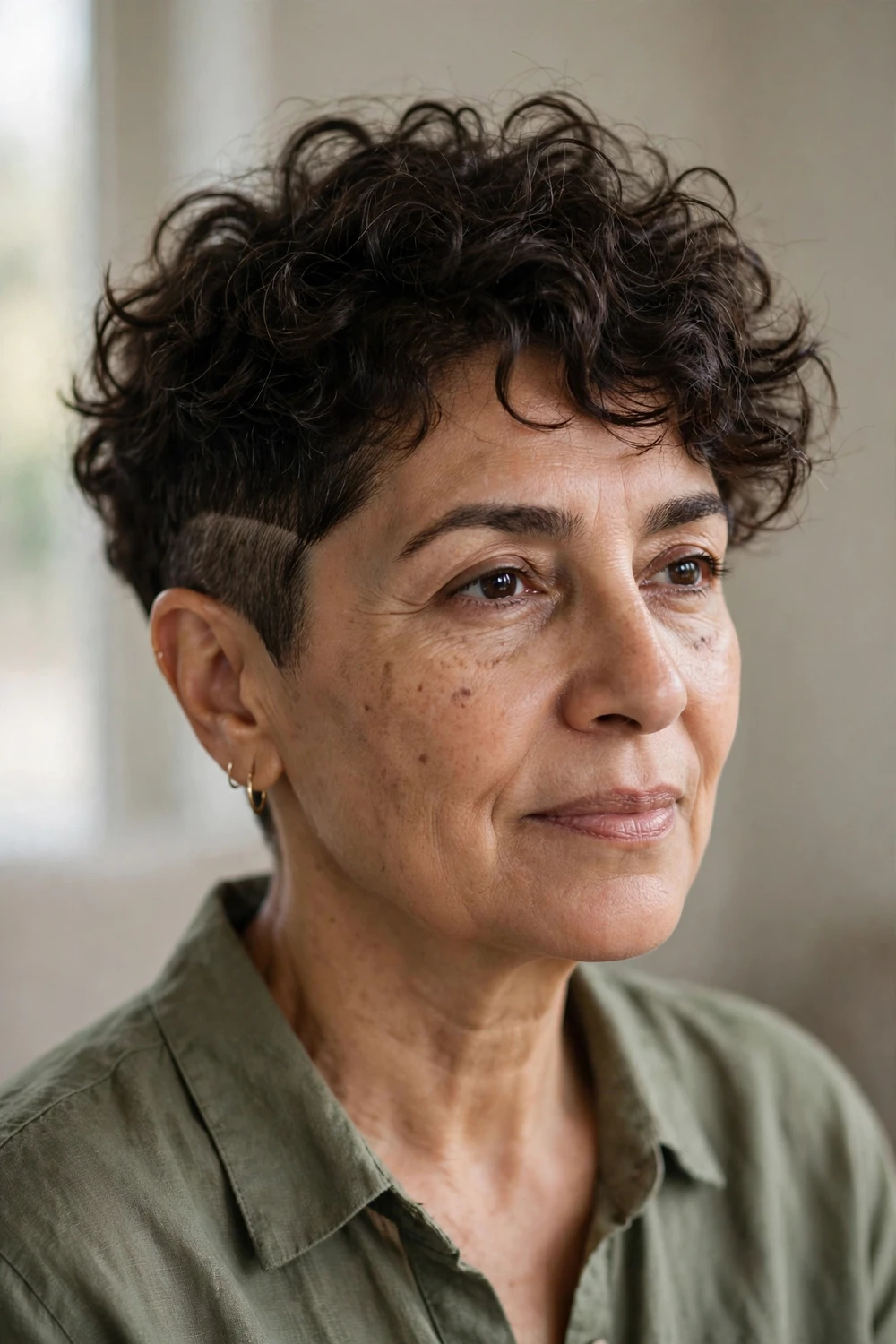
Bulk is the enemy of curly pixies, and the undercut solves it directly. The sides and nape are clipped very short, removing the weight that makes curls mushroom outward. The remaining curls sit longer around the crown and front, giving height and a tousled finish. It is a practical choice for very thick or coarse curls, and it keeps the neck cool in warm weather. The contrast reads as modern without trying too hard.
Try this: keep the undercut crisp with a touch-up every 3 to 4 weeks. Between visits, a little texturizing spray on the crown curls adds separation.
7. Disconnected Curly Pixie
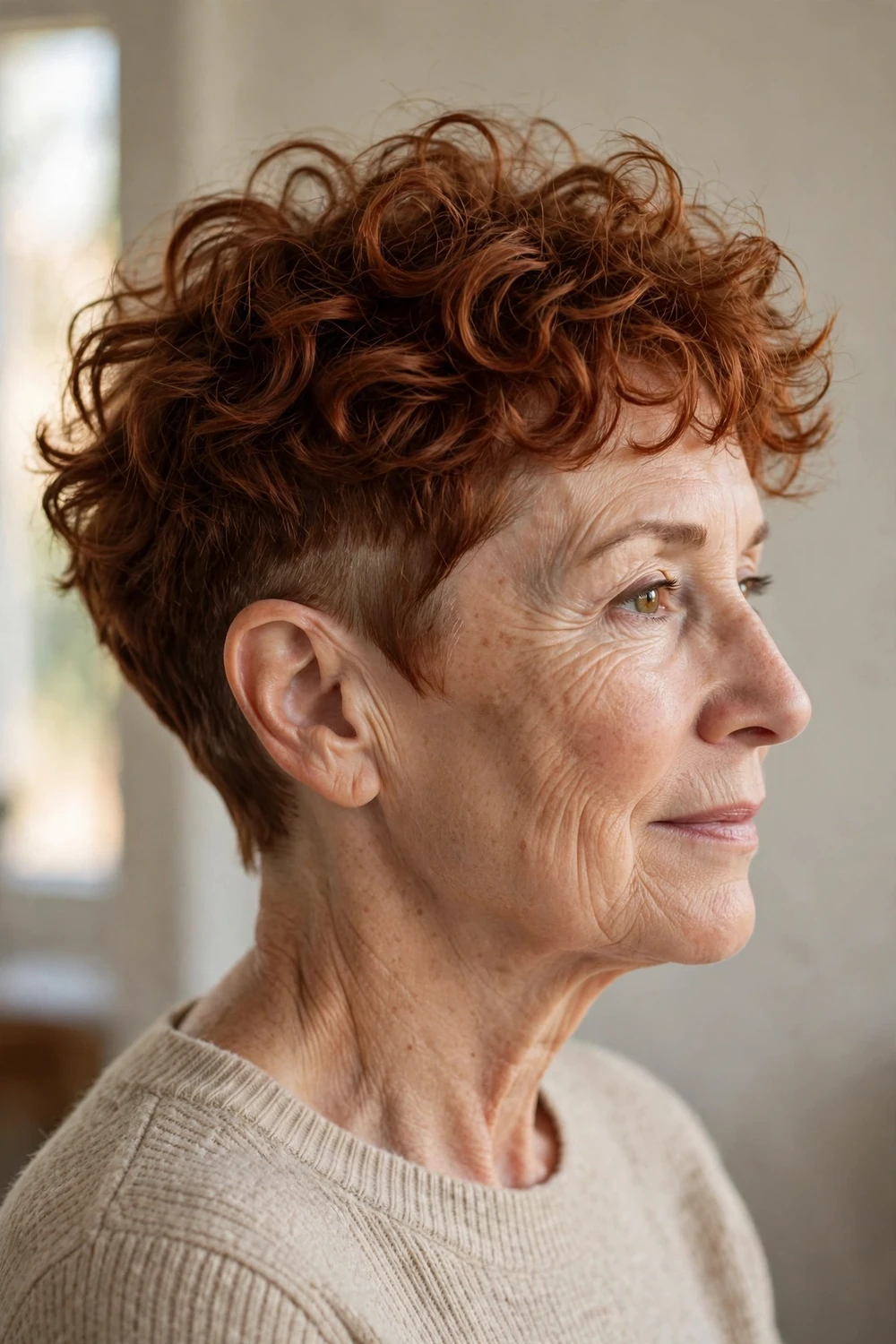
Short meets long in a single cut. The disconnected pixie deliberately mixes very short layers with longer curl pieces on top, creating a shape with built-in contrast. It suits women who want edge without a full undercut, since the longer sections keep the style soft around the face. The cut demands a stylist who understands curly hair, because the disconnection has to be placed where your curls naturally fall. Done right, it looks artful rather than unfinished.
Try this: bring two or three reference photos showing the exact contrast you want. Twist individual longer curls around your finger with curl cream to define them.
8. Curly Pixie With Wispy Bangs
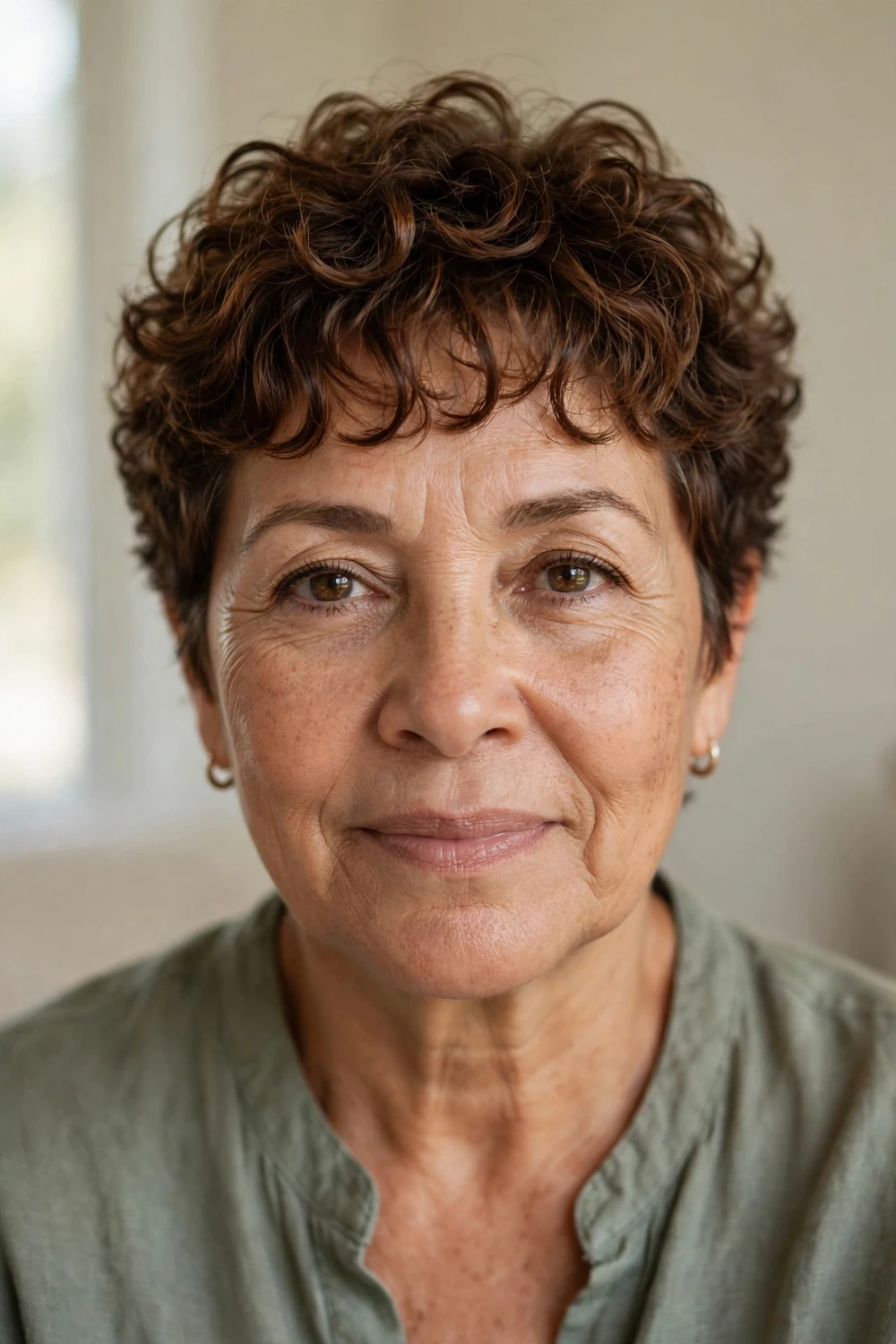
Want bangs without the upkeep of a full fringe? Wispy curly bangs sit lightly across the forehead, softening the face while the rest of the pixie stays cropped and clean. Strategic layering keeps the bangs from turning into a heavy curtain, so the curls spiral instead of clumping. This style flatters high foreheads and draws attention to the eyes. Because the bangs are curly, they need less precision than straight bangs and grow out without an awkward phase.
Try this: style the bangs first while they are damp, coiling each curl around your finger. A diffuser on low heat sets them in under two minutes.
9. Boyish Curly Pixie Crop
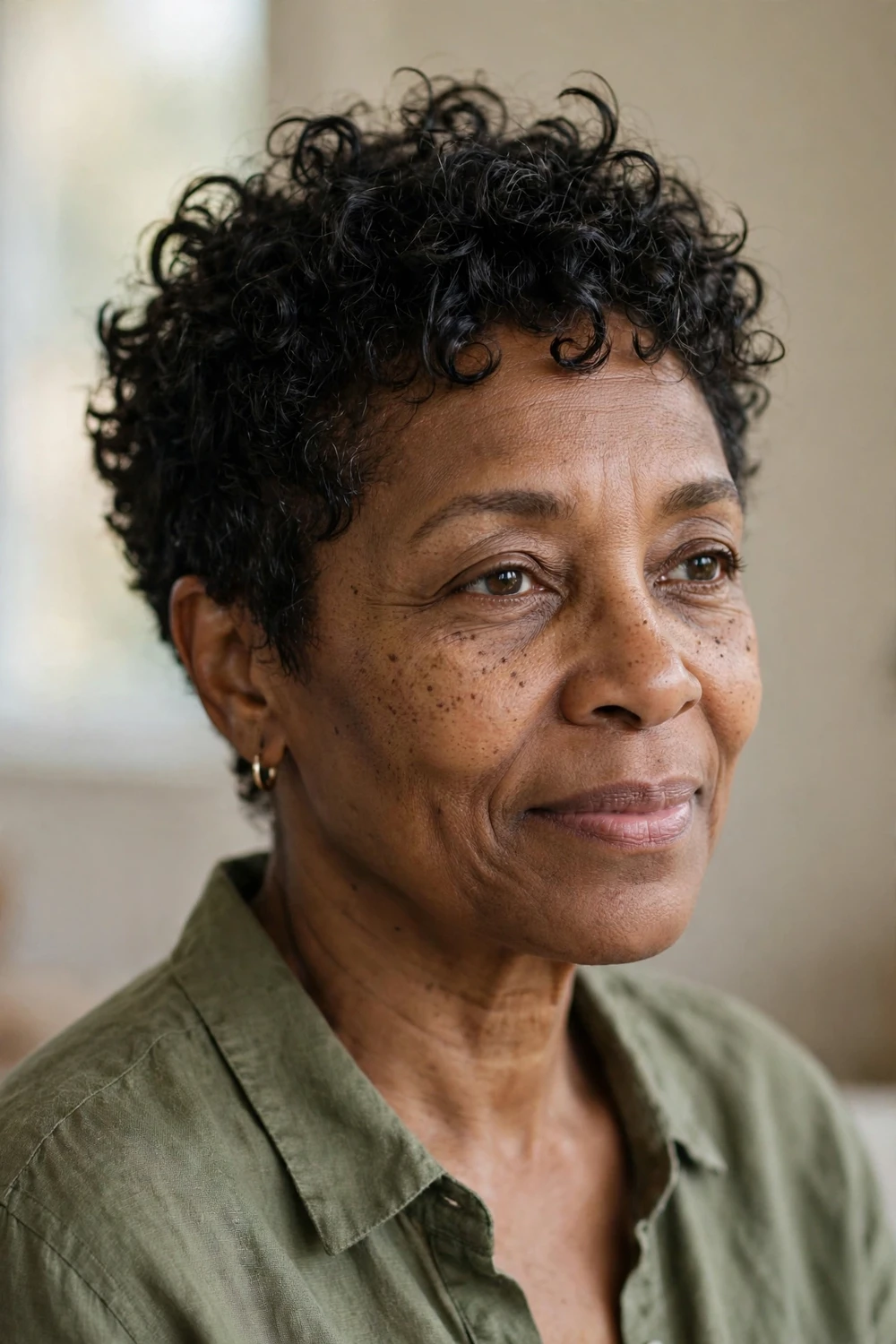
Androgynous cuts flatter mature faces more than people expect. This boyish crop keeps curls short and slightly untamed all over, with subtle texture that gives the style its personality. It needs almost nothing in the morning, which makes it a favorite for women who want to wash and go. The cut also grows out gracefully, since the even length means no awkward stages. Pair it with strong brows or a bold lip and the whole look feels intentional.
Try this: work a dime-sized amount of pomade through dry curls for piecey definition. Schedule a shape-up every 6 to 8 weeks to keep the edges clean.
10. Feathered Wispy Curly Pixie
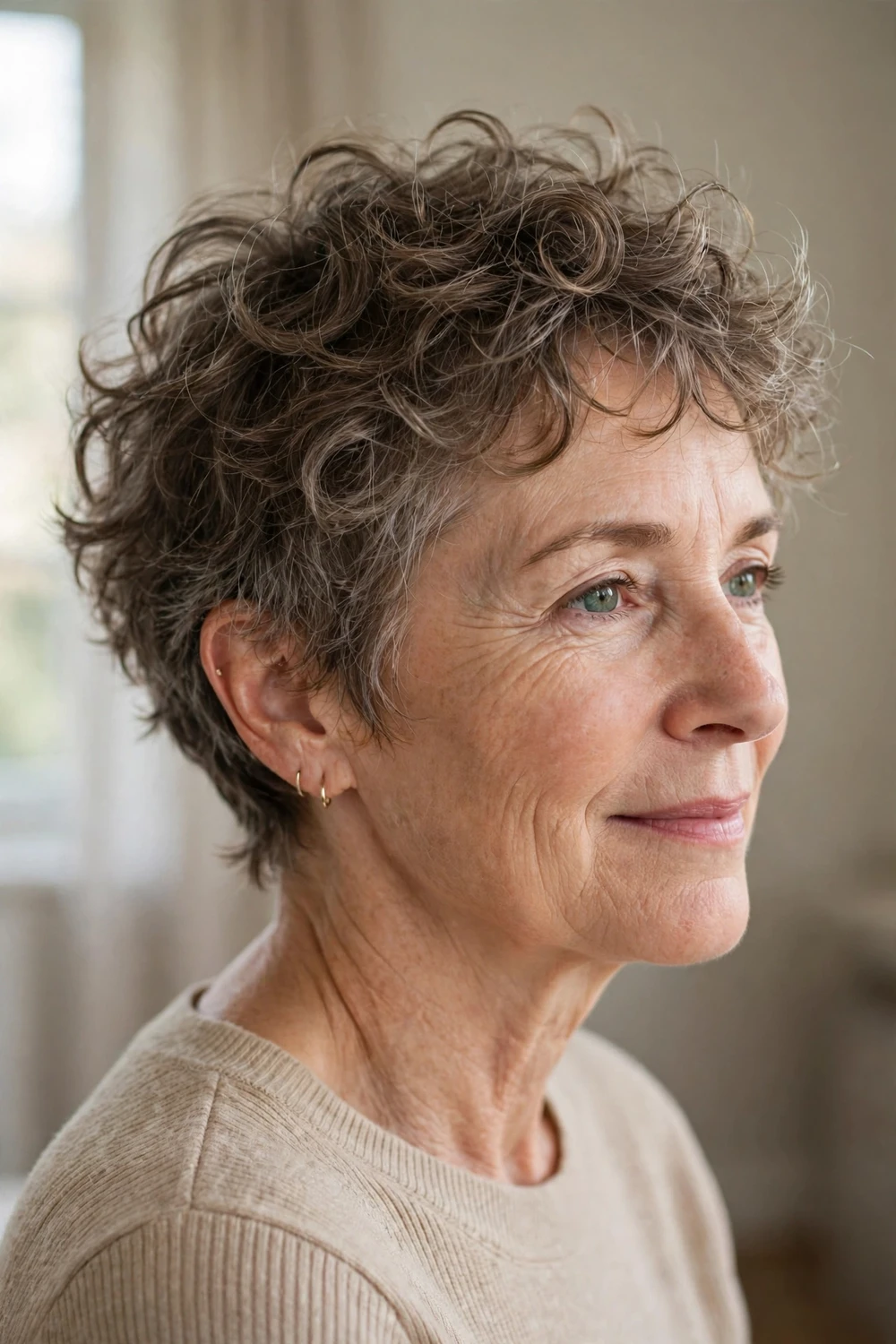
For the softest take on the list, feathering wins. The ends are cut with a razor or point-cutting technique so each curl tapers into a wispy finish instead of a blunt edge. This removes bulk without removing length, which suits thick curls that feel heavy in a standard pixie. The result looks light and moves when you do. Women with coarse or wiry curls often find feathering tames the texture better than thinning shears, which can create frizz.
Try this: ask for feathered ends rather than blunt ones at your appointment. A light mist of flexible-hold hairspray keeps the wisps in place without stiffness.
11. Curly Pixie With Side-Swept Fringe
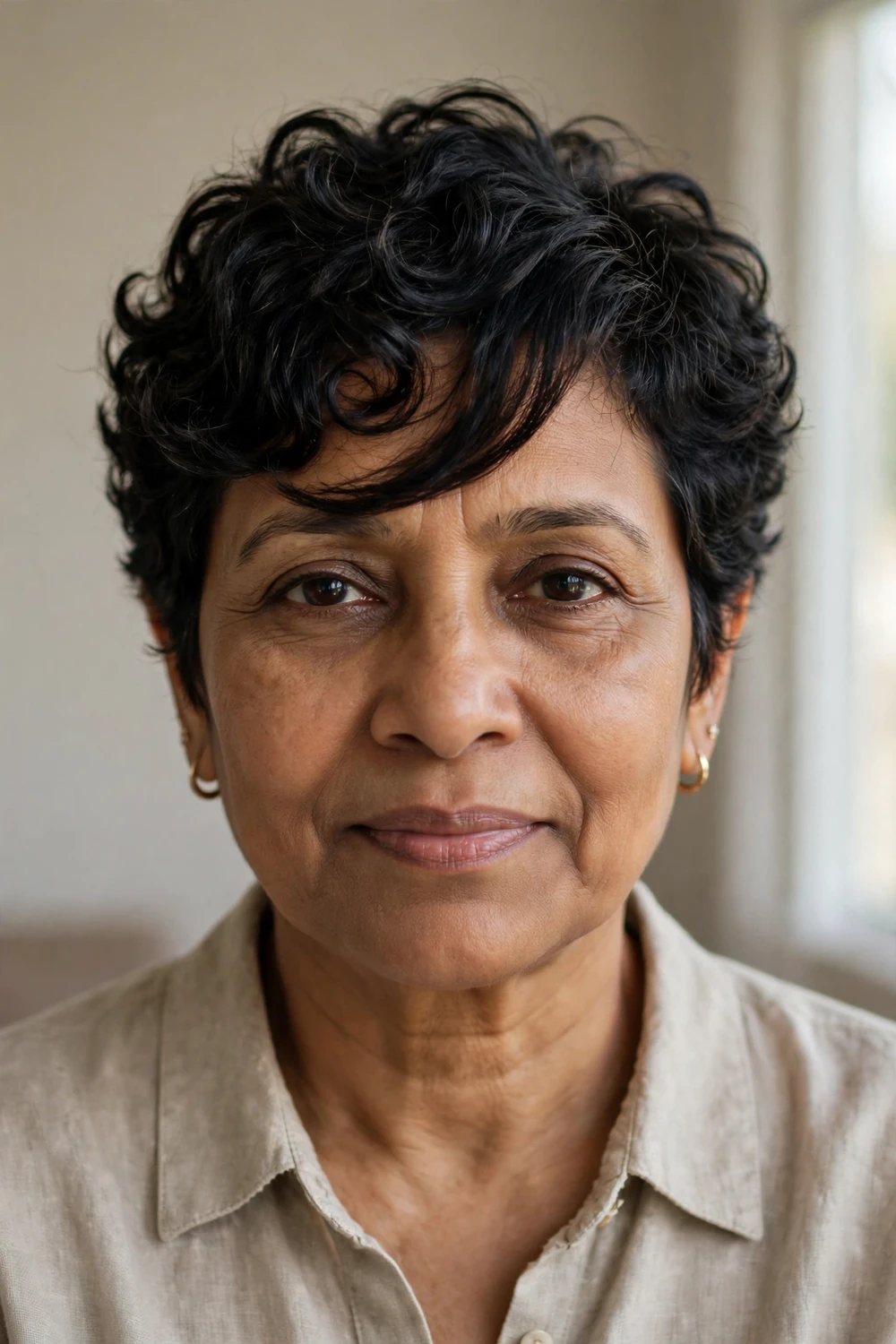
One long fringe changes the whole mood of a pixie. This cut sweeps the front curls diagonally across the forehead, drawing the eye sideways and visually lengthening round faces. The asymmetry also softens strong jawlines, and the long bang can tuck behind the ear on busy days or sweep forward for evenings. Because the fringe is curly, it needs far less precision than a straight-cut bang, and it grows out without an awkward phase.
Try this: blow-dry the fringe with a medium round brush, rolling it away from the face. A drop of smoothing serum on the ends keeps it polished all day.
12. Asymmetrical Curly Pixie
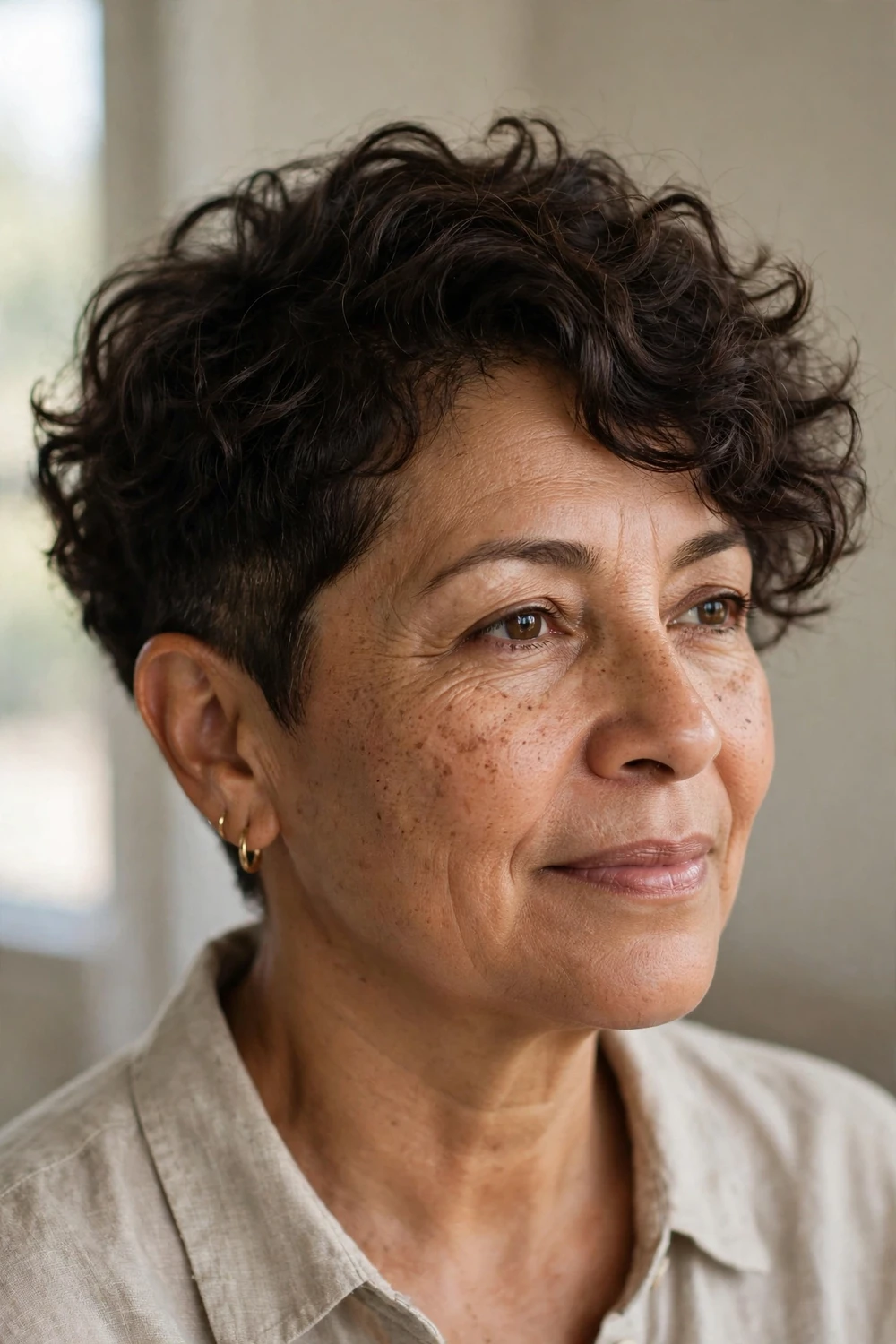
One side short, one side long, and the difference does all the work. The asymmetrical pixie cuts one side close while the other keeps longer curls that sweep across the head. That diagonal line visually elongates the face and adds movement to the style. It suits women who find symmetrical cuts a little flat, and it photographs well from every angle. The longer side can be pinned back or tucked behind the ear when you want a change of pace.
Try this: part the hair on the shorter side to exaggerate the sweep. A flat iron pass on the longer side curls adds polish for evenings out.
13. Short Curly Mushroom Pixie
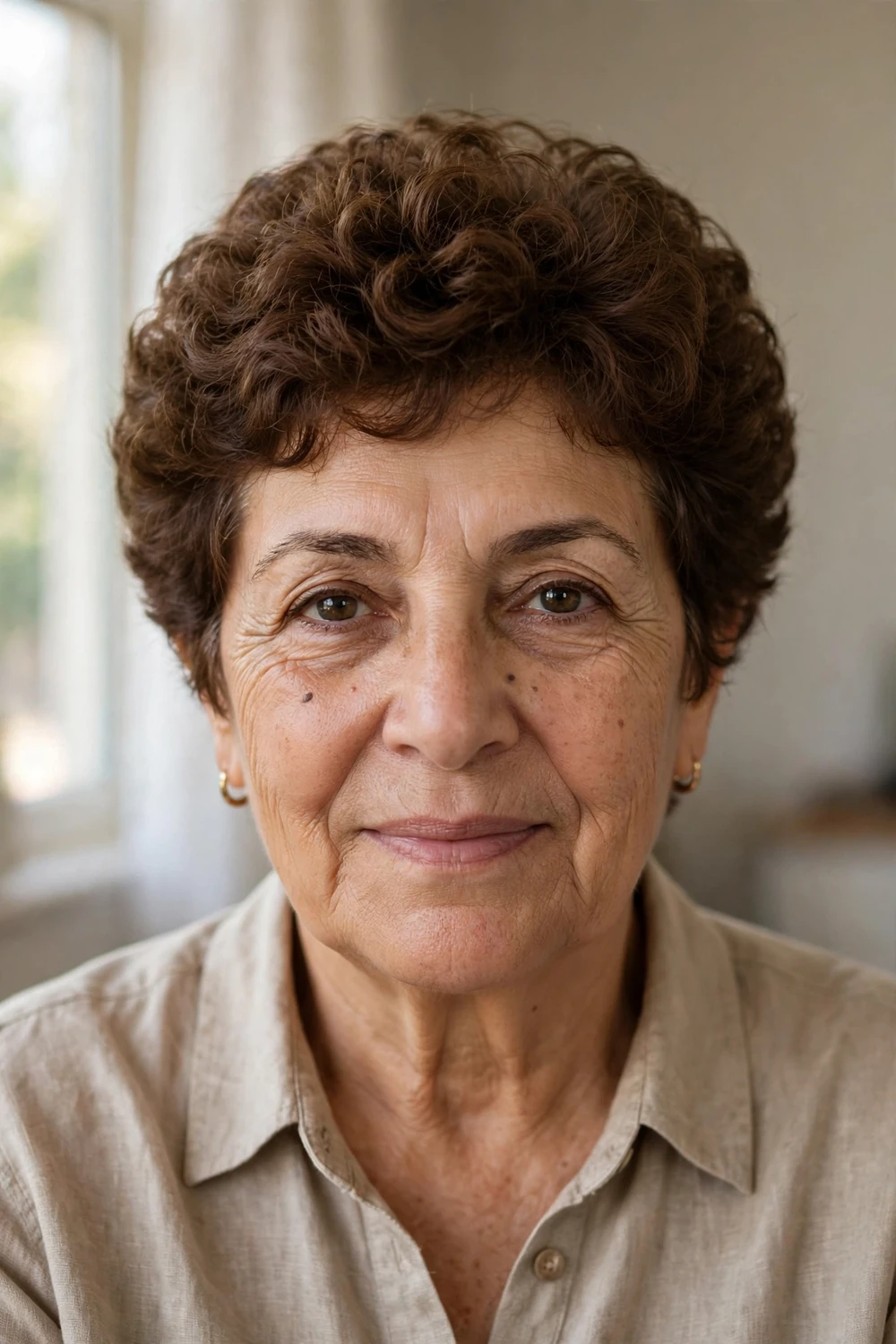
A rounded mushroom shape gives this pixie a retro twist that feels fresh again. The curls are cut into a smooth, curved silhouette that hugs the head, with the fullness concentrated at the crown. It suits tight 3C to 4A curls especially well, since the coily texture holds the rounded shape on its own. The compact cut is easy to style and even easier to maintain, with trims every 5 to 6 weeks keeping the curve intact.
Try this: scrunch curl-defining gel into damp hair and diffuse upside down to build the crown volume. Avoid heavy oils, which weigh the rounded shape down.
14. Warm Chestnut Tousled Curly Pixie
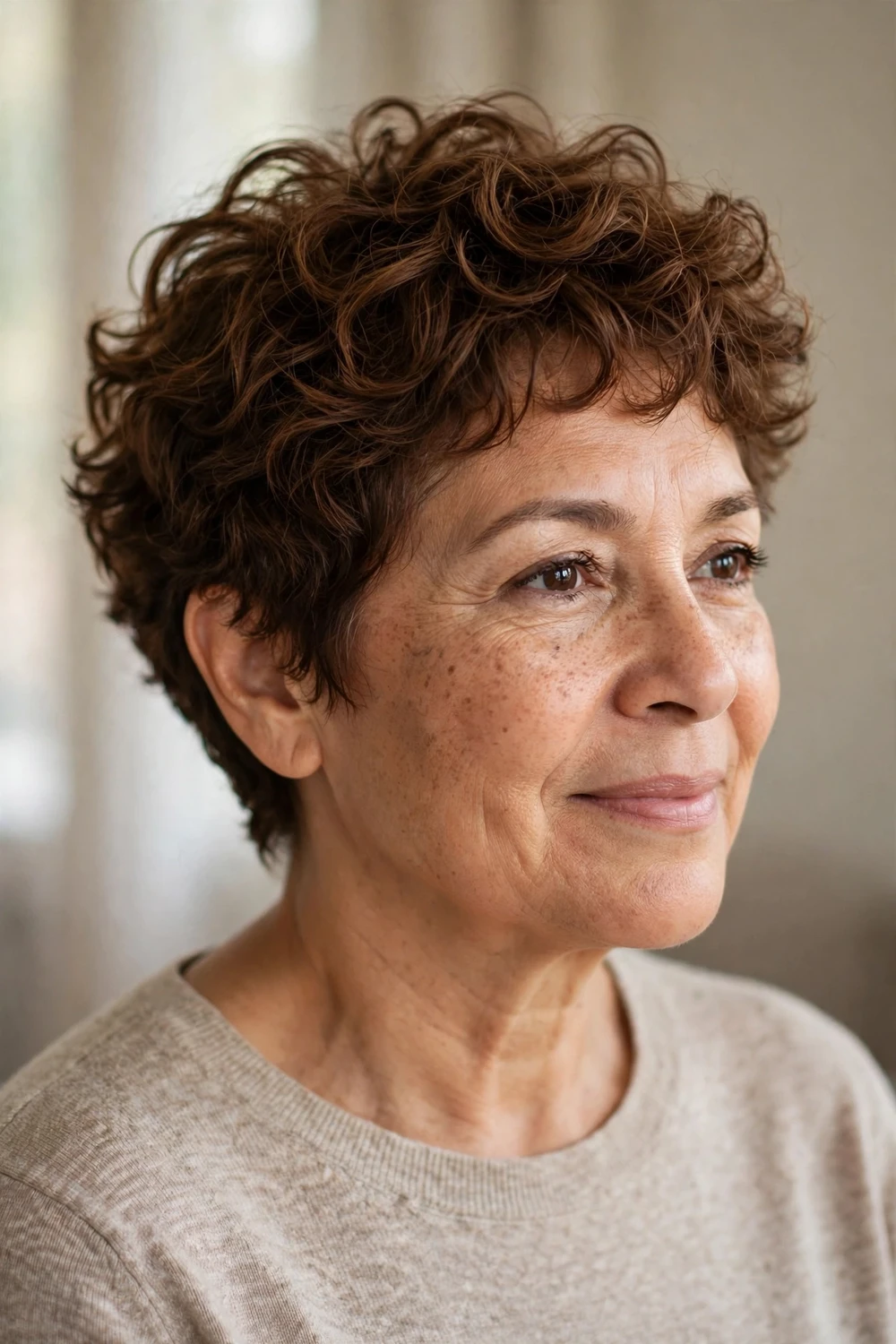
Color does half the work in this cut. A warm chestnut brown brings richness to the tousled layers, flattering warm and olive skin tones that can look washed out in gray. The tousled cutting keeps the shape casual, so the color reads as sun-touched rather than salon-perfect. Chestnut also blends early grays gracefully, which makes it a smart pick if you are coloring every few weeks but want the grow-out to stay soft.
Try this: ask your colorist for a single-process chestnut with a warm undertone, no highlights needed. A color-safe sulfate-free shampoo keeps the warmth from fading brassy.
15. Caramel Toned Pixie With Defined Curls
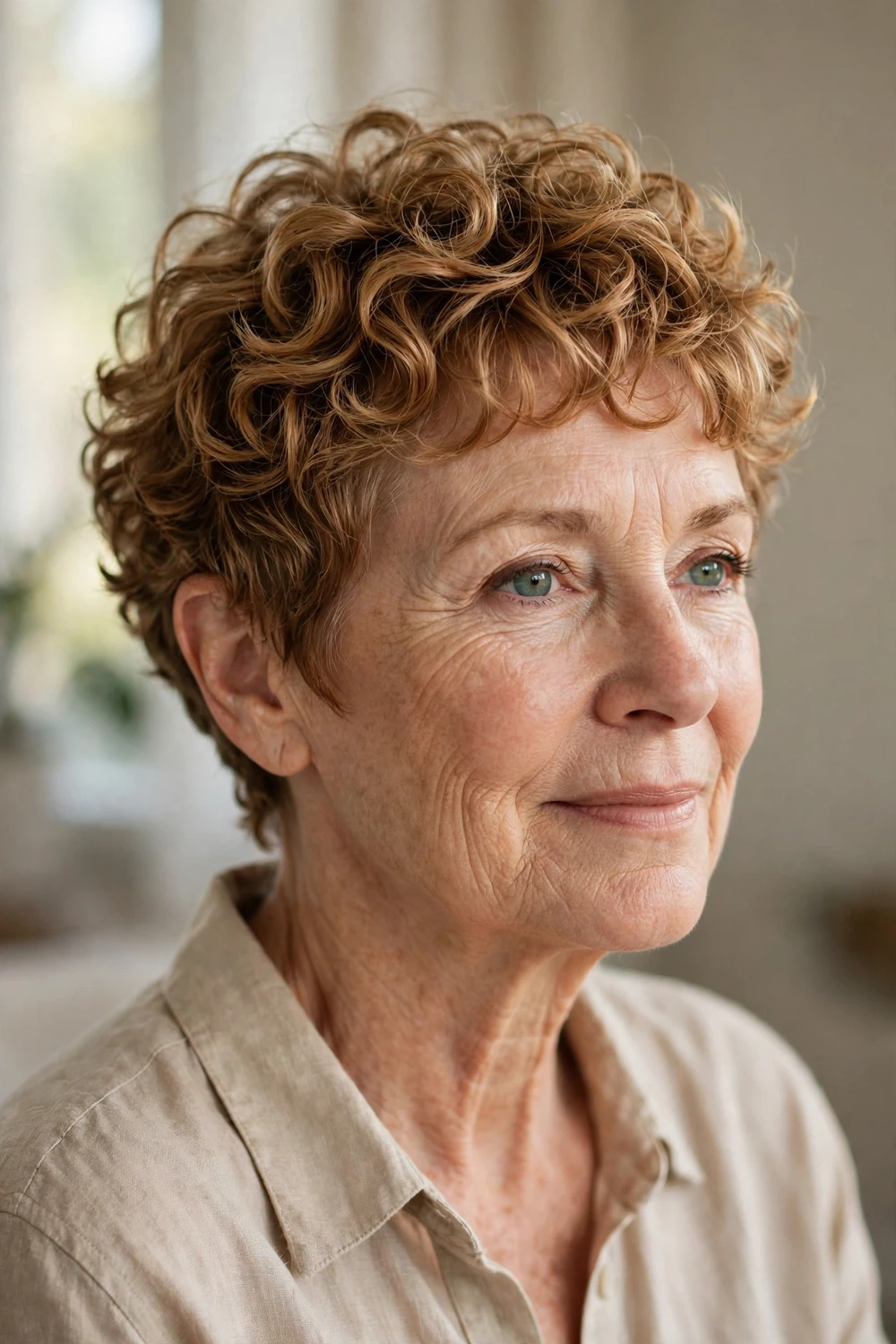
Defined ringlets and caramel tones are a combination that keeps showing up for a reason. The golden-brown color catches the light in each curl, adding depth that flat color cannot match. Subtle internal layering lets the ringlets form individually instead of merging into one mass. This is a working-week cut: polished enough for the office, easy enough for a 10-minute morning routine. It flatters medium to deep skin tones especially well.
Try this: define each ringlet with a curl cream on damp hair, then cup and diffuse. A caramel gloss between color appointments keeps the tone rich.
16. Light Ash Blonde Curly Pixie

Cool-toned and current, this light ash blonde pixie gives curls lift and movement with a modern edge. The ashy shade softens the grow-out line, which is why so many women over 50 choose it when transitioning away from darker color. Subtle layers through the crown let the curls move instead of sitting in one block. The color pairs well with silver jewelry and cooler wardrobes, and it photographs with a clean, bright finish.
Try this: use a purple shampoo every other wash to keep the ash tone from warming up. Keep washes to twice a week, since blonde curls dry out faster than darker hair.
17. Dark Chocolate Layered Curly Pixie
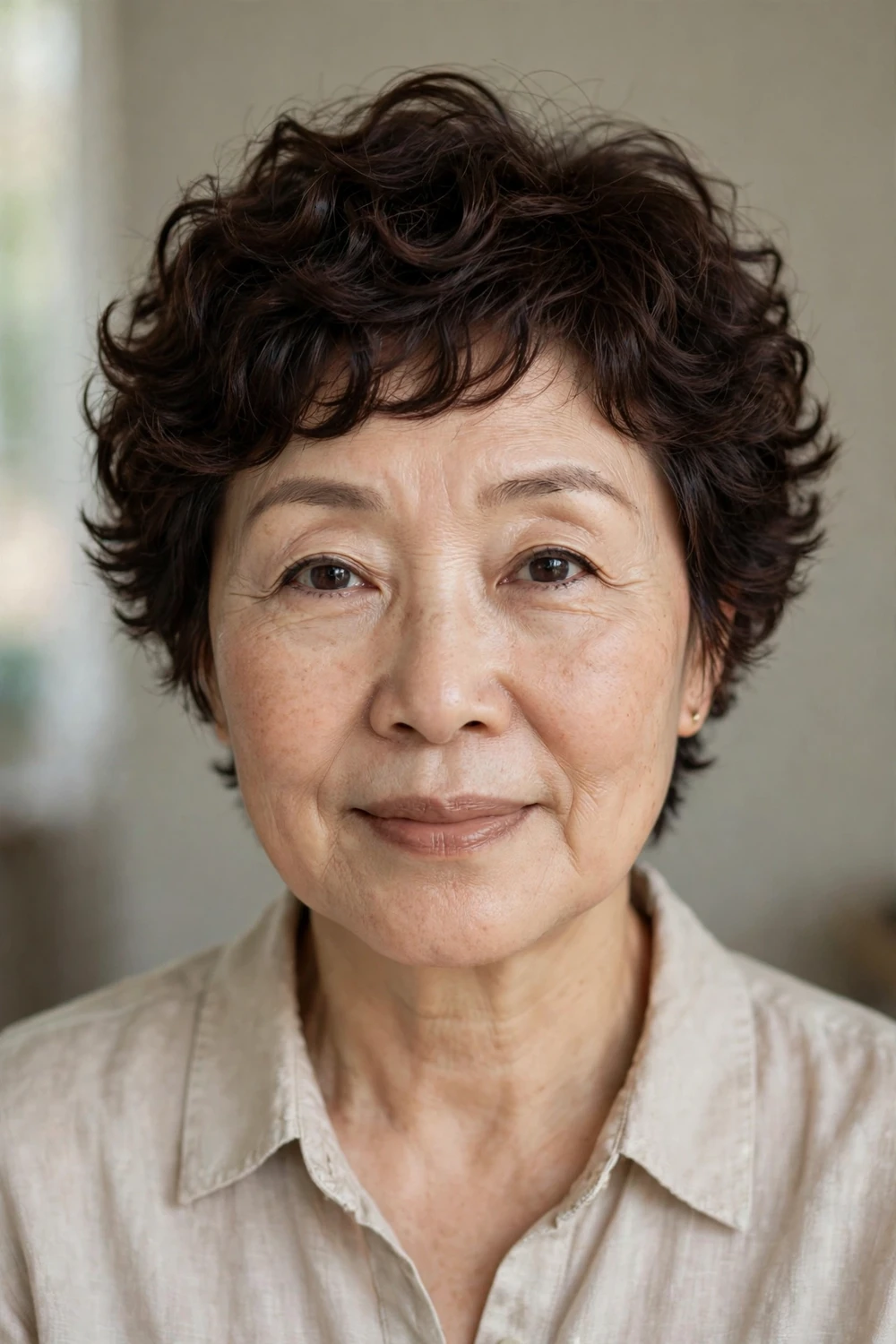
Rich dark chocolate tones highlight the structure of this layered curly pixie, giving a polished yet playful look. The deep color adds visual weight, so the layers matter: they keep the shape from looking like a solid helmet. This is a strong choice if you are still coloring your gray and want maximum coverage, since dark chocolate hides regrowth better than lighter shades. The finish reads as classic and put-together.
Try this: ask for long layers through the crown to keep the dark color from looking flat. A shine serum on dry curls brings out the chocolate depth.
18. Jet Black Cropped Curly Pixie
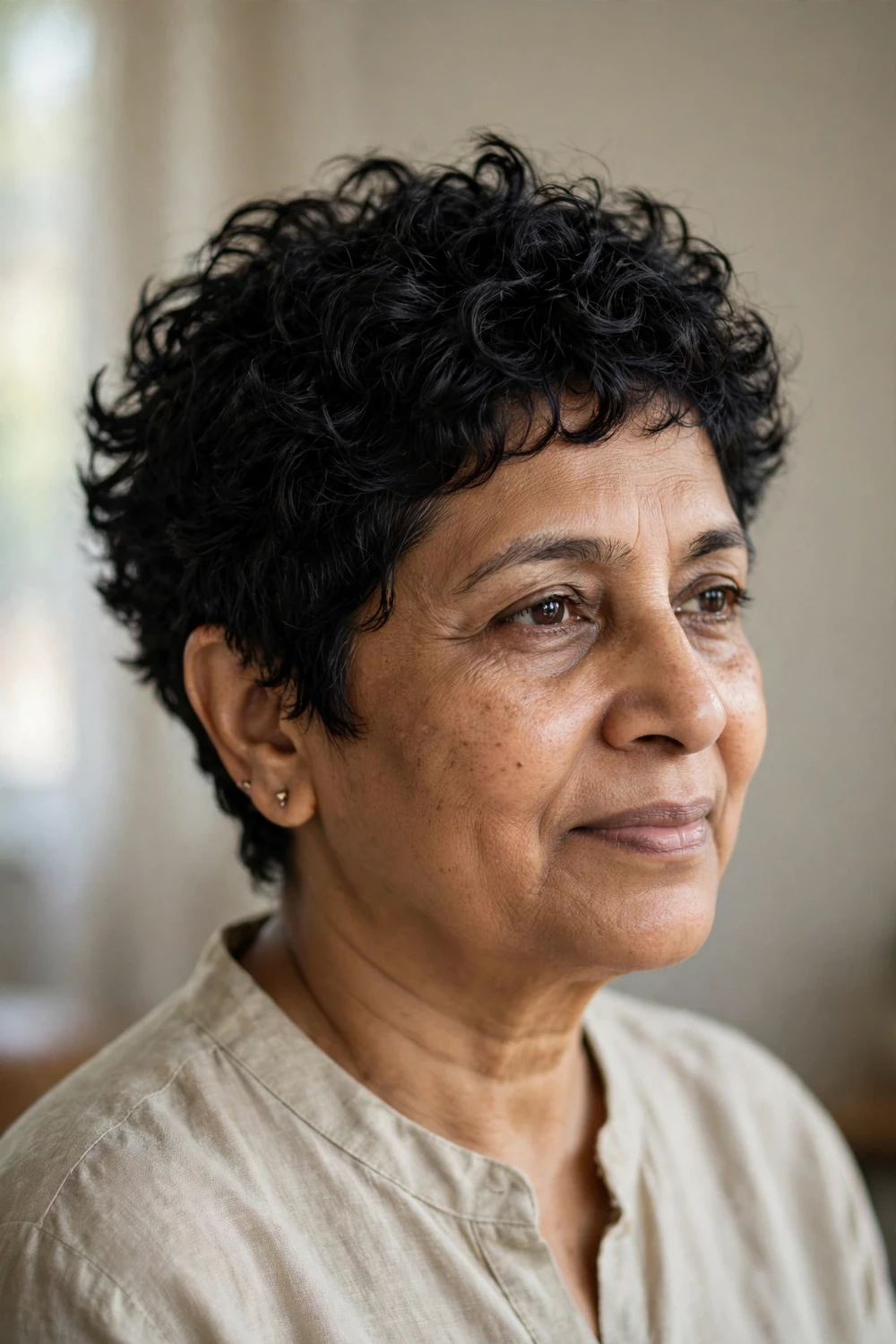
Short cropped curls in jet black make a statement that needs no apology. The deep, uniform color creates a striking frame for the face, and the tight crop keeps the silhouette sharp and modern. Choppy layers add texture so the black reads as dimensional rather than flat. This cut suits women with naturally dark hair who want full gray coverage with zero blending, and it pairs well with bold brows and a strong lip.
Try this: moisturize aggressively, since black color-treated curls show dryness fast. A weekly deep-conditioning treatment keeps the color glossy instead of dull.
19. Warm Auburn Curly Pixie
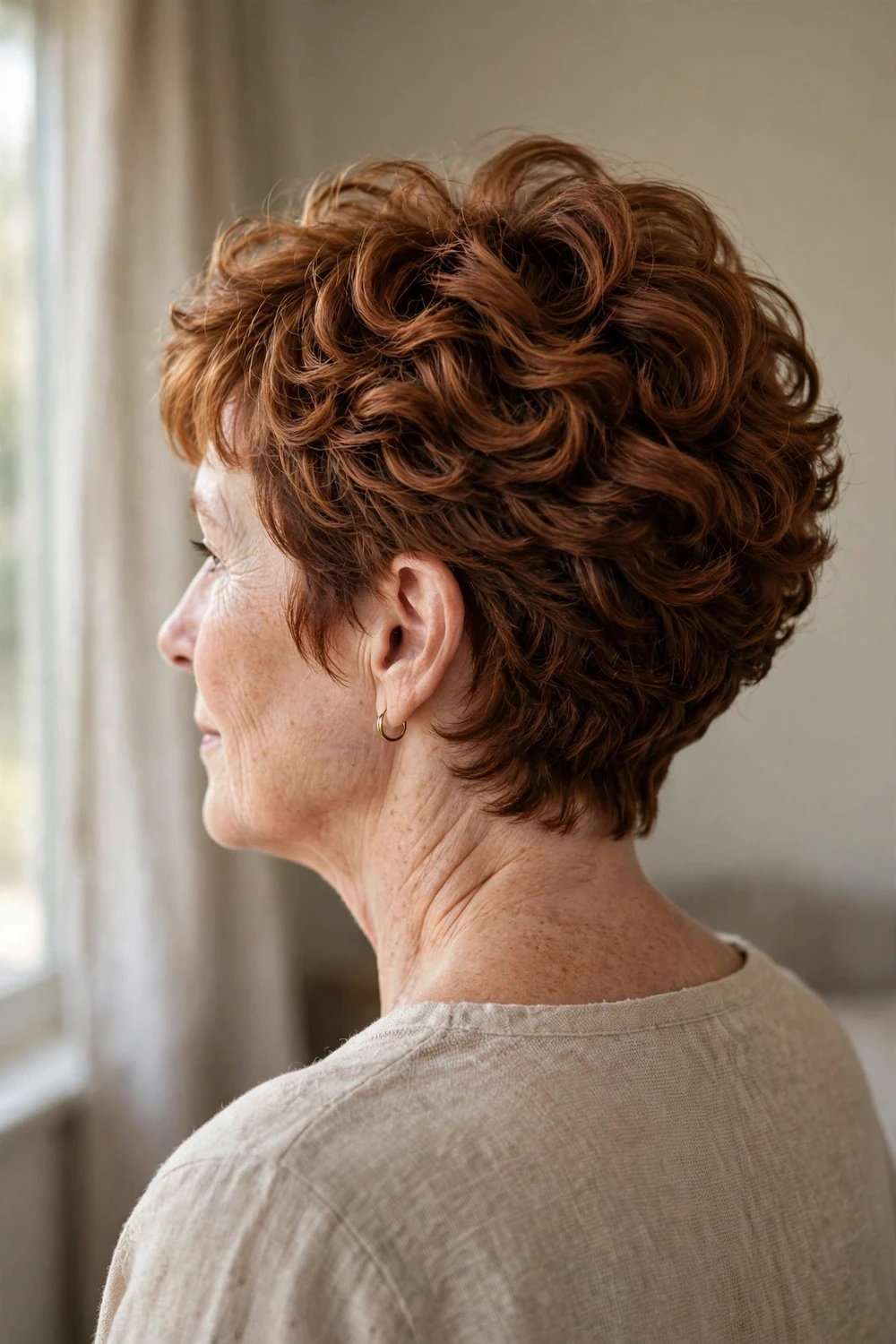
A warm auburn tint wakes up a curly pixie like nothing else. The red-brown shade adds warmth to the complexion, which many women over 50 find flattering as skin tone shifts with age. Stacked layering through the back builds bounce and shape, so the curls lift instead of lying flat. Auburn also camouflages early gray better than most shades, since the red pigment blends with silver strands instead of clashing.
Try this: red tones fade fastest, so wash with cool water and a color-safe shampoo. A copper-toned gloss every 6 weeks keeps the warmth from going muddy.
20. Fiery Red Curly Pixie
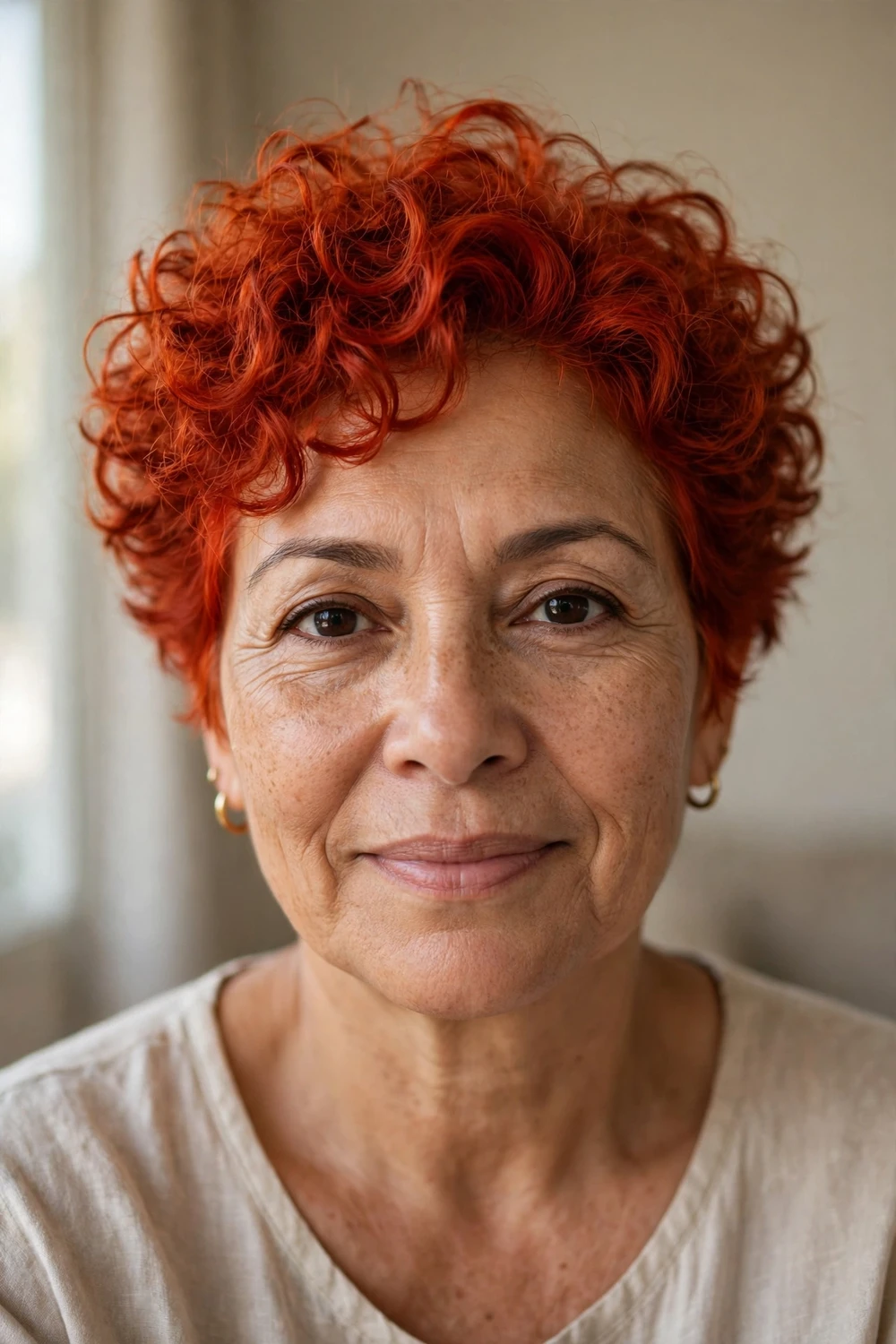
Bouncy, disheveled red curls turn a pixie into a personality. The bold shade gives the cut its energy, and the curls provide the volume to carry it. This is the pick for women who want their hair to say something before they do. Fiery red needs commitment: the color fades faster than any other shade, and the short length means roots show quickly. But the payoff is a cut nobody forgets.
Try this: book color touch-ups every 4 weeks and use a red-depositing conditioner between visits. Keep styling simple so the color stays the star.
21. Brushed Forward Curly Pixie
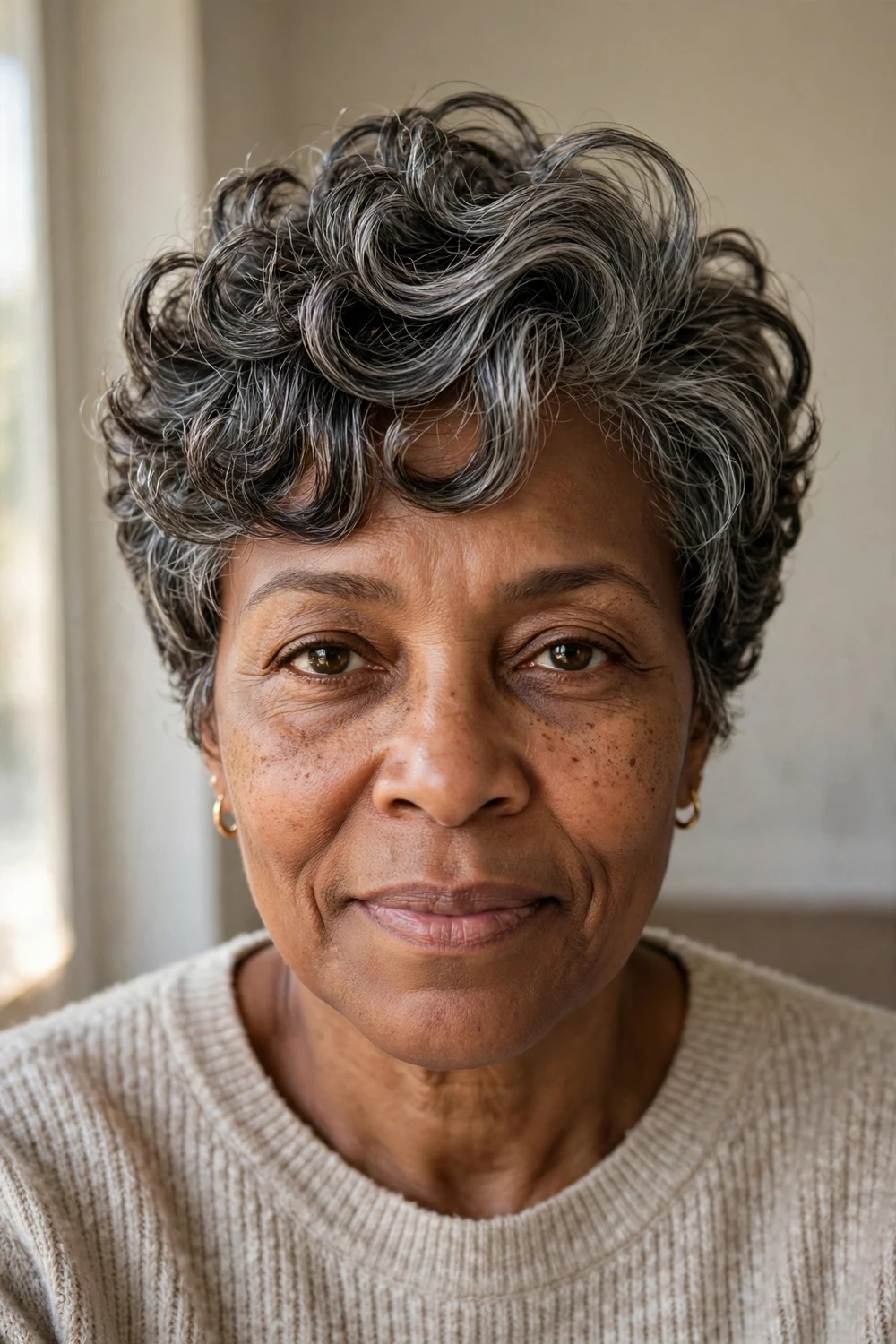
Styling direction is the whole trick here. The curls are brushed forward and up from the crown, creating height and a windswept finish that flatters thinning hairlines. This works on any curly pixie with enough top length, which makes it a technique more than a separate cut. It suits women who want their forehead coverage without committing to bangs, and it photographs with a youthful, energetic lift. Ask your stylist to leave an extra half inch on top at your next trim so the forward style keeps its volume.
Try this: lift the roots with a round brush while blow-drying forward, then break the curls apart with your fingers. A light mousse gives the forward style its staying power.
22. Ear-Length Curly Pixie Crop
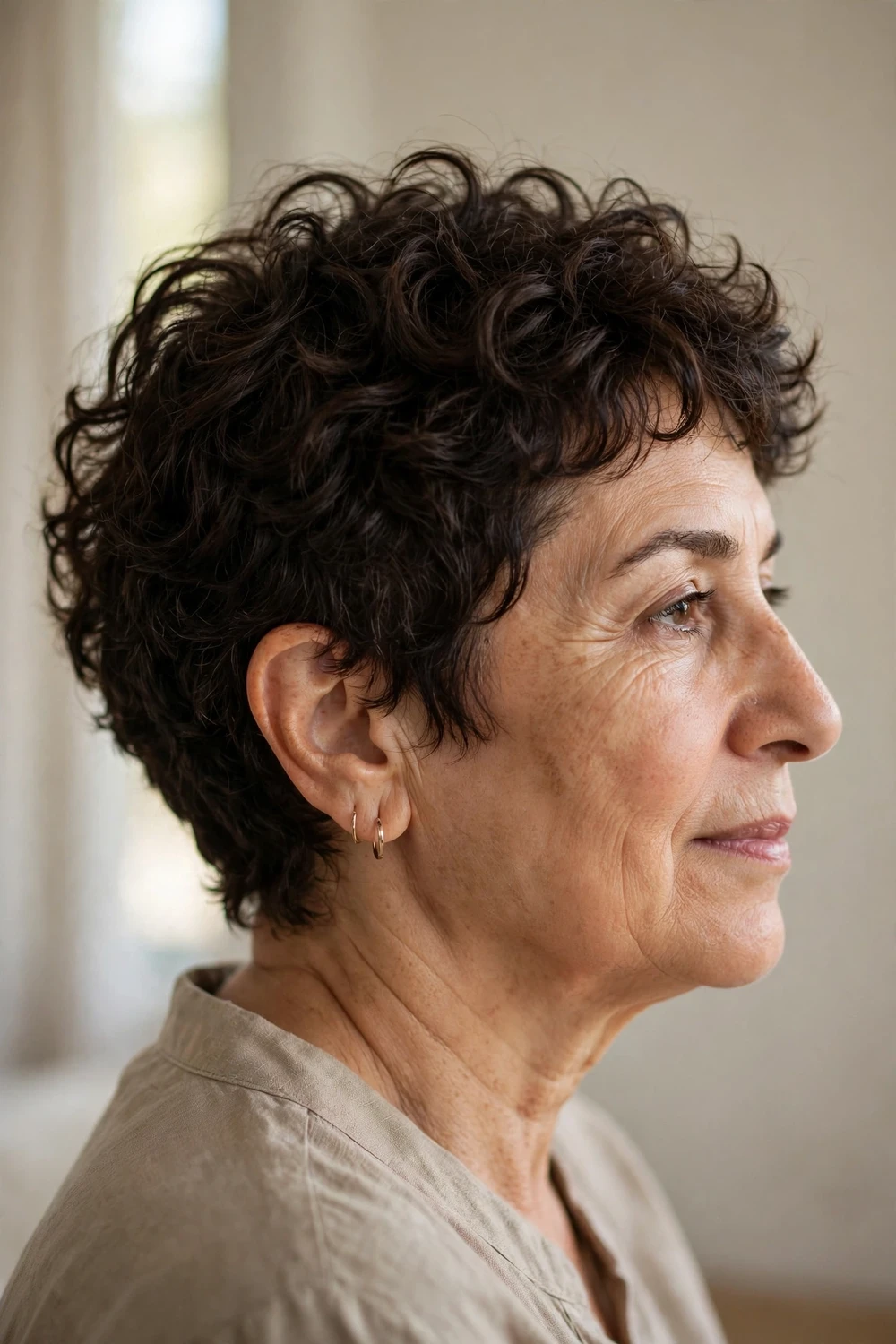
Show off your earrings with this one. The curls are cropped to ear length in a choppy, defined silhouette that keeps the neck and ears visible. It is one of the easiest curly pixies to maintain, since the short perimeter needs almost no daily styling. The exposed ear line also draws attention to jewelry, glasses, and cheekbones. Women with smaller features often find this length the most flattering, because nothing competes with their face.
Try this: smooth a tiny amount of curl cream over the top layer only. Leave the underneath alone so the crop keeps its natural, lived-in edge.
23. Stacked Curly Crown Pixie
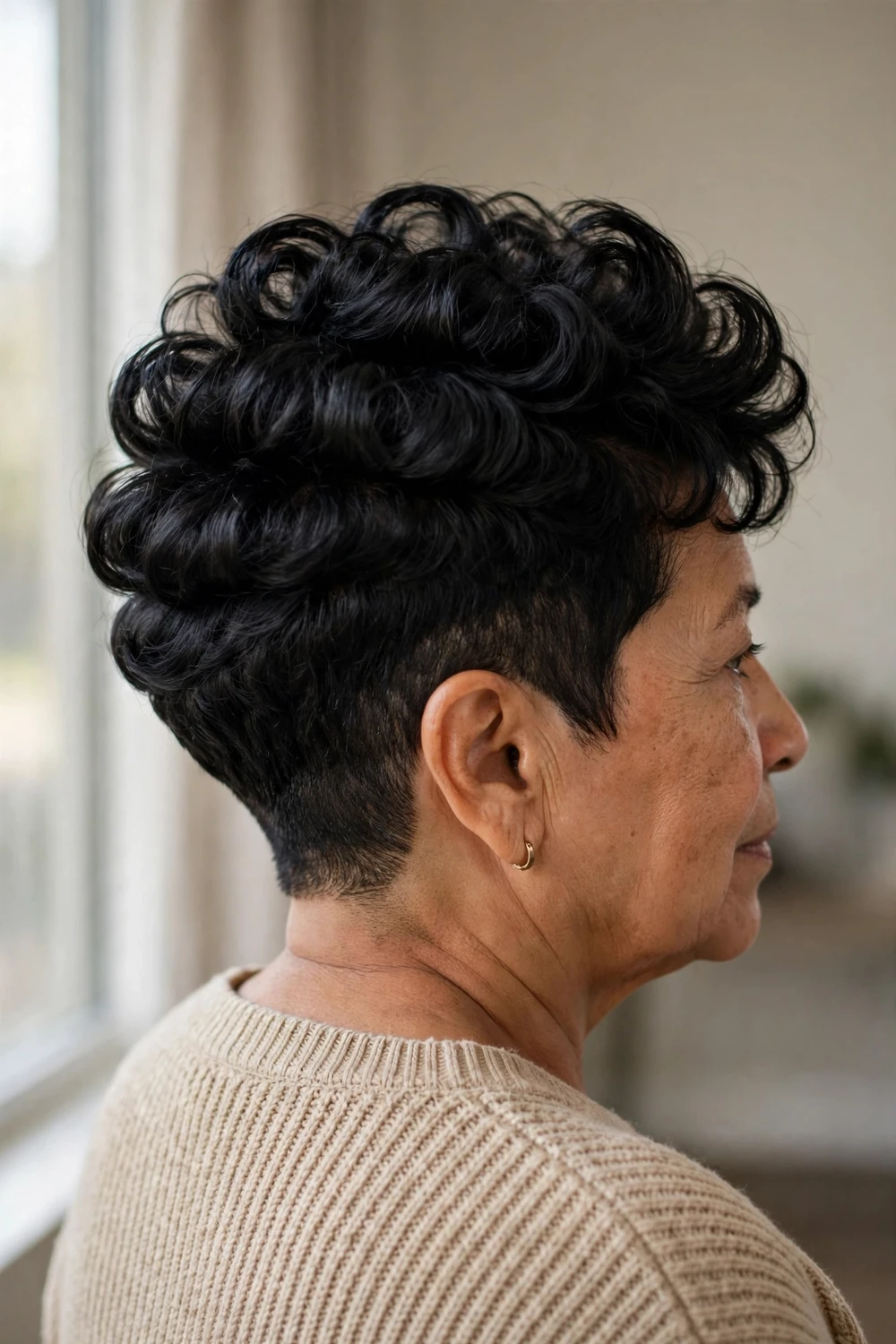
Tightly cropped sides meet serious crown volume in this cut. Stacked layers through the top build height exactly where flat curls need it, while the close sides keep the silhouette from widening. It is the most reliable fix for curls that go limp by midday, since the stacking gives each layer something to sit on. The shape flatters round faces in particular, because the vertical volume lengthens the overall look.
Try this: clip the crown roots while air-drying to lock in the lift. A root-lifting spray at the crown before diffusing adds extra staying power.
24. Curly Shag Pixie

The shag and the pixie had to meet eventually. This cut brings shaggy, curvy layers of varied heights into a pixie length, giving a dimensional finish that looks interesting from every angle. The layered texture is especially flattering on dense curls that feel heavy in a one-length crop. It is a low-fuss style: the layers do the shaping, so your morning routine barely exists. Round faces benefit most, since the varied layers break up width without adding bulk at the sides.
Try this: scrunch a texturizing cream into dry curls to emphasize the piecey layers. Trim the ends every 6 weeks, since shaggy layers grow out shaggy.
25. Curly Pixie With Dimensional Highlights
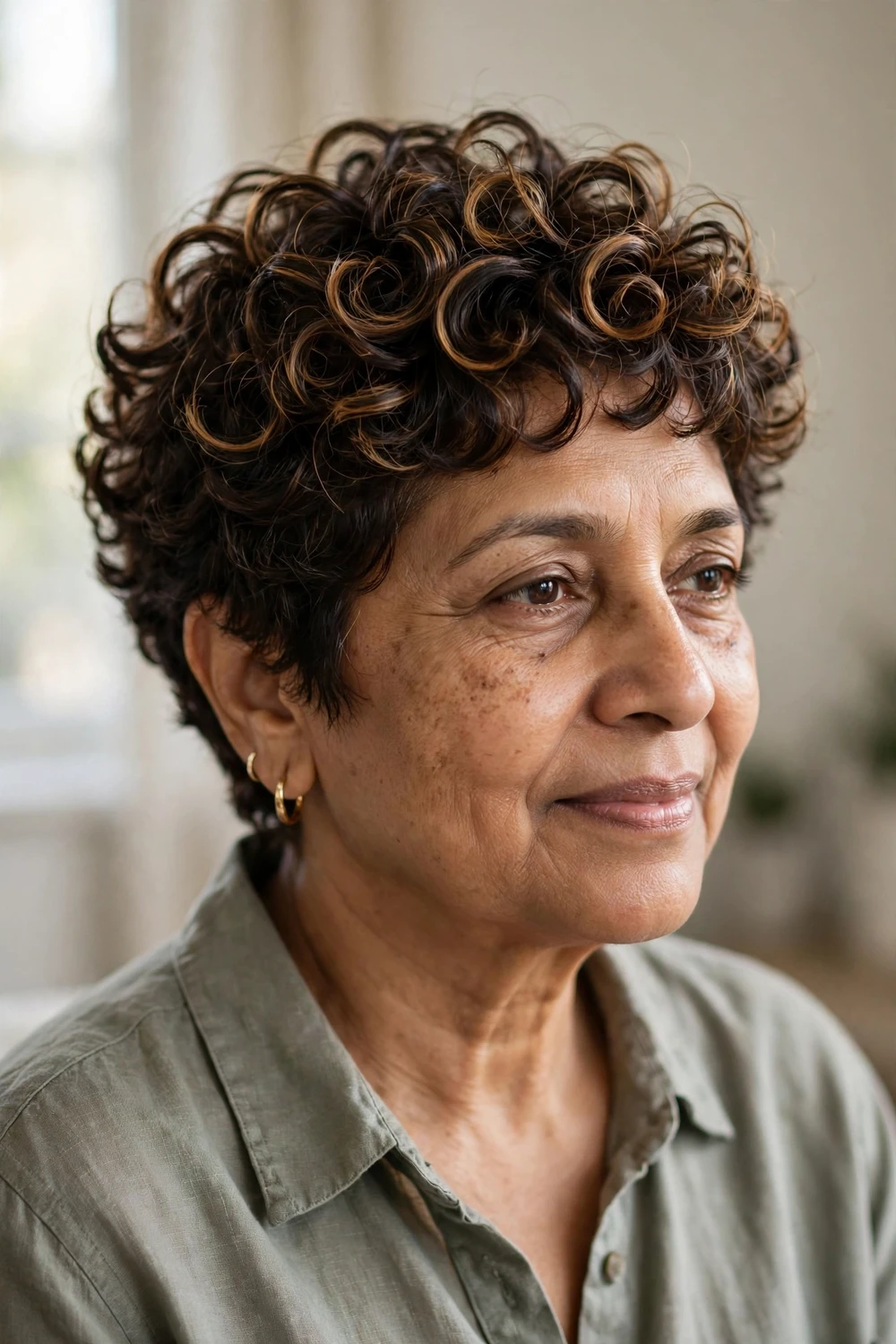
Single-process color can flatten a curly pixie, but dimensional highlights fix that. Strategically placed lighter pieces catch the light in each curl, adding depth and movement that reads as natural fullness. This is the color trick stylists recommend most for fine curls, since the dimension creates the illusion of density. It also grows out more gracefully than all-over color, which stretches your salon visits further. Ask your colorist for two to three complementary tones so the highlights look sun-touched rather than striped.
Try this: ask for balayage-style highlights painted on the top layer only, where the light hits. A gloss between appointments keeps the tones from going dull.
26. Tight-Coil Curly Pixie
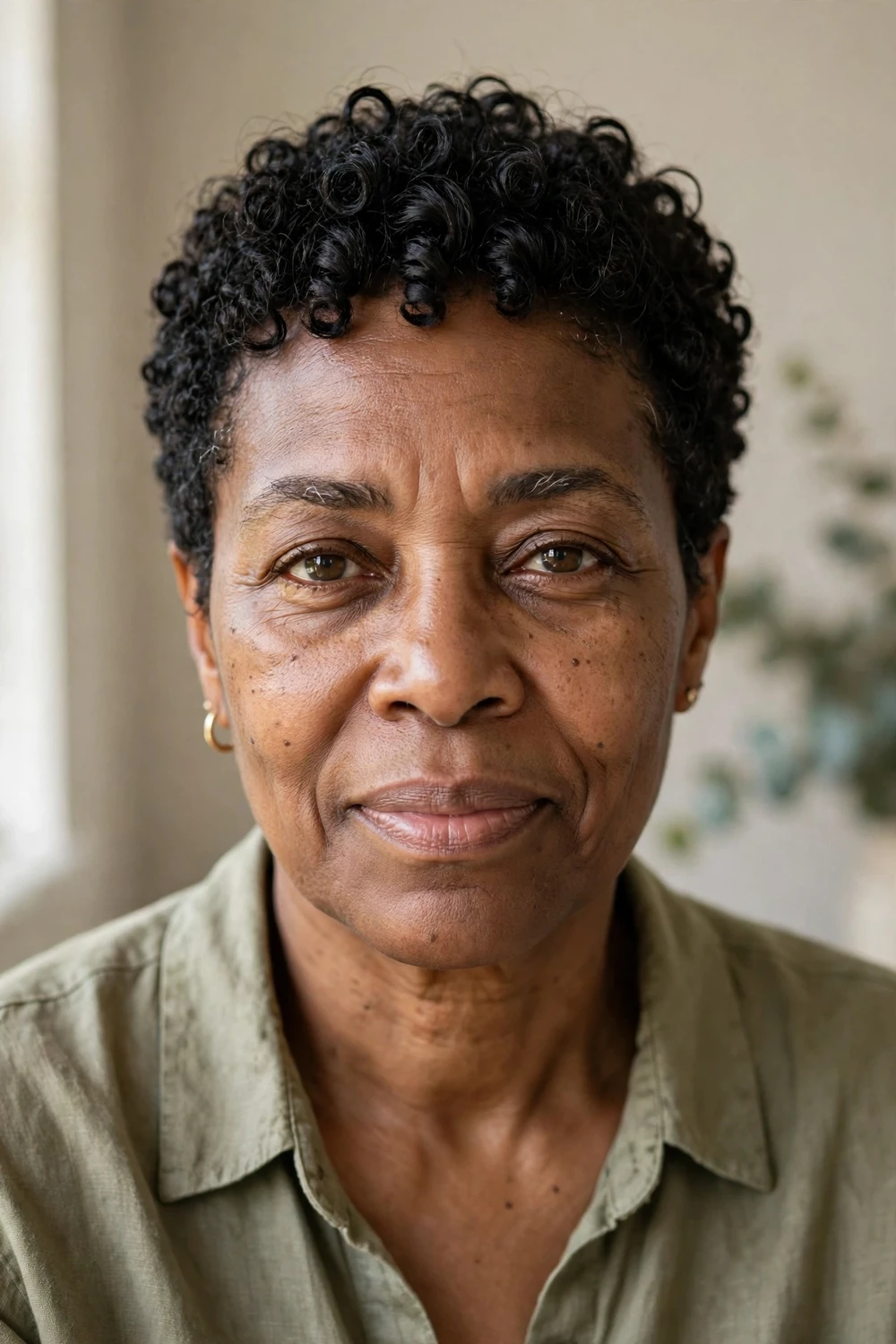
Cut for the coils, not against them. This pixie is shaped specifically for 4A to 4C curl patterns, keeping enough length on top for the coils to spring while the sides stay neat. The right cut respects shrinkage, so ask a stylist experienced with tight curls who cuts dry or stretched. Hydration is everything here: coily hair loses moisture faster than any other type, and short lengths make dryness visible. Done right, the coils look sculpted and deliberate.
Try this: apply leave-in conditioner to damp hair in sections, then seal with a light oil. Twist individual coils around your finger for definition that lasts days.
27. Curly Faux Hawk Pixie
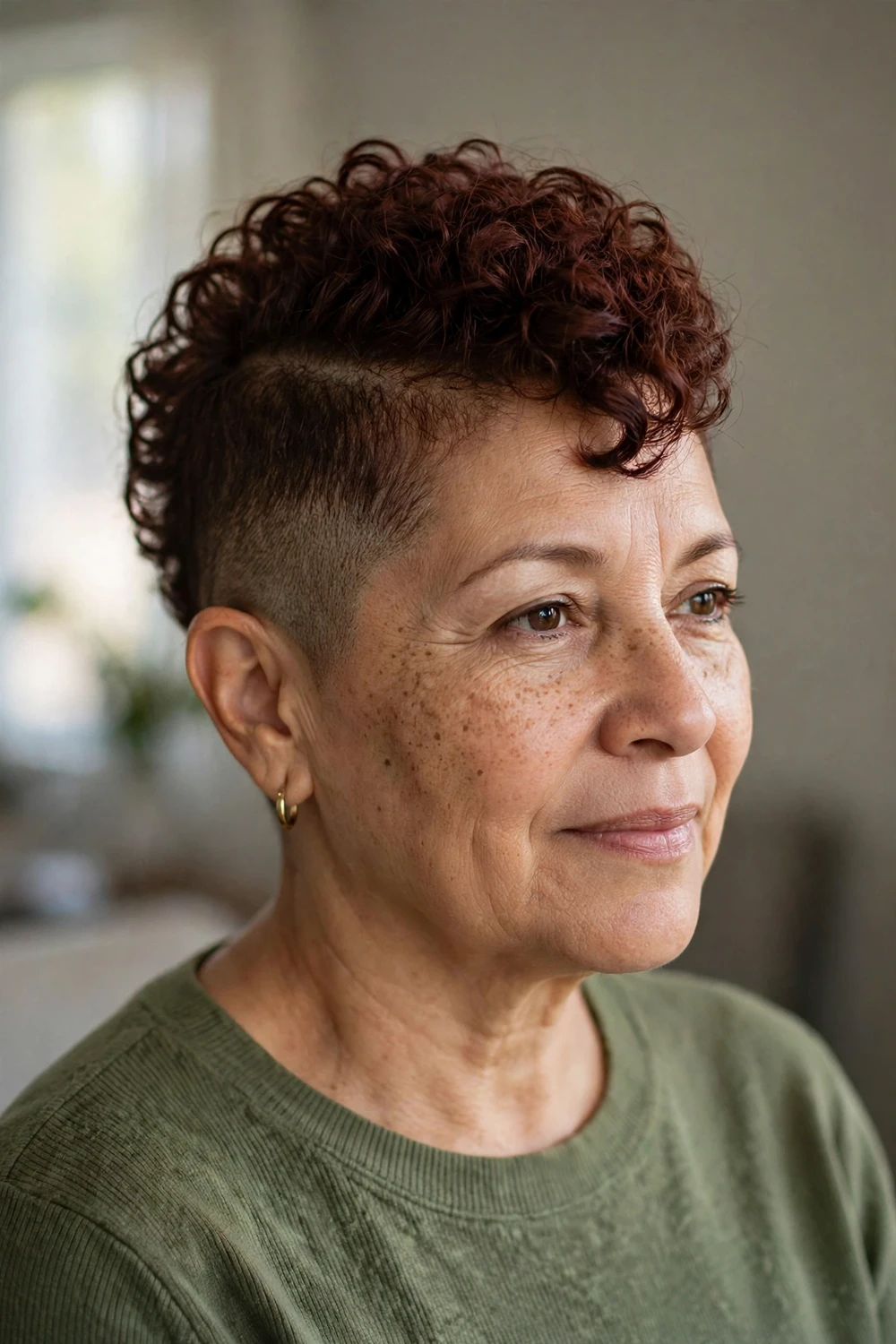
For the woman who never outgrew her edge. The sides are cut close while a strip of curls runs down the center, giving the attitude of a mohawk without the commitment. The longer center curls can be worn tousled for daytime or defined and lifted for evenings. It suits thick, coarse curls that have the body to stand up on their own. This is the boldest cut on the list, and it rewards confidence.
Try this: work a strong-hold mousse through the center strip while damp, then diffuse upward. Keep the sides tidy with a shape-up every 3 weeks.
28. Curly Pixie for Thinning Curls
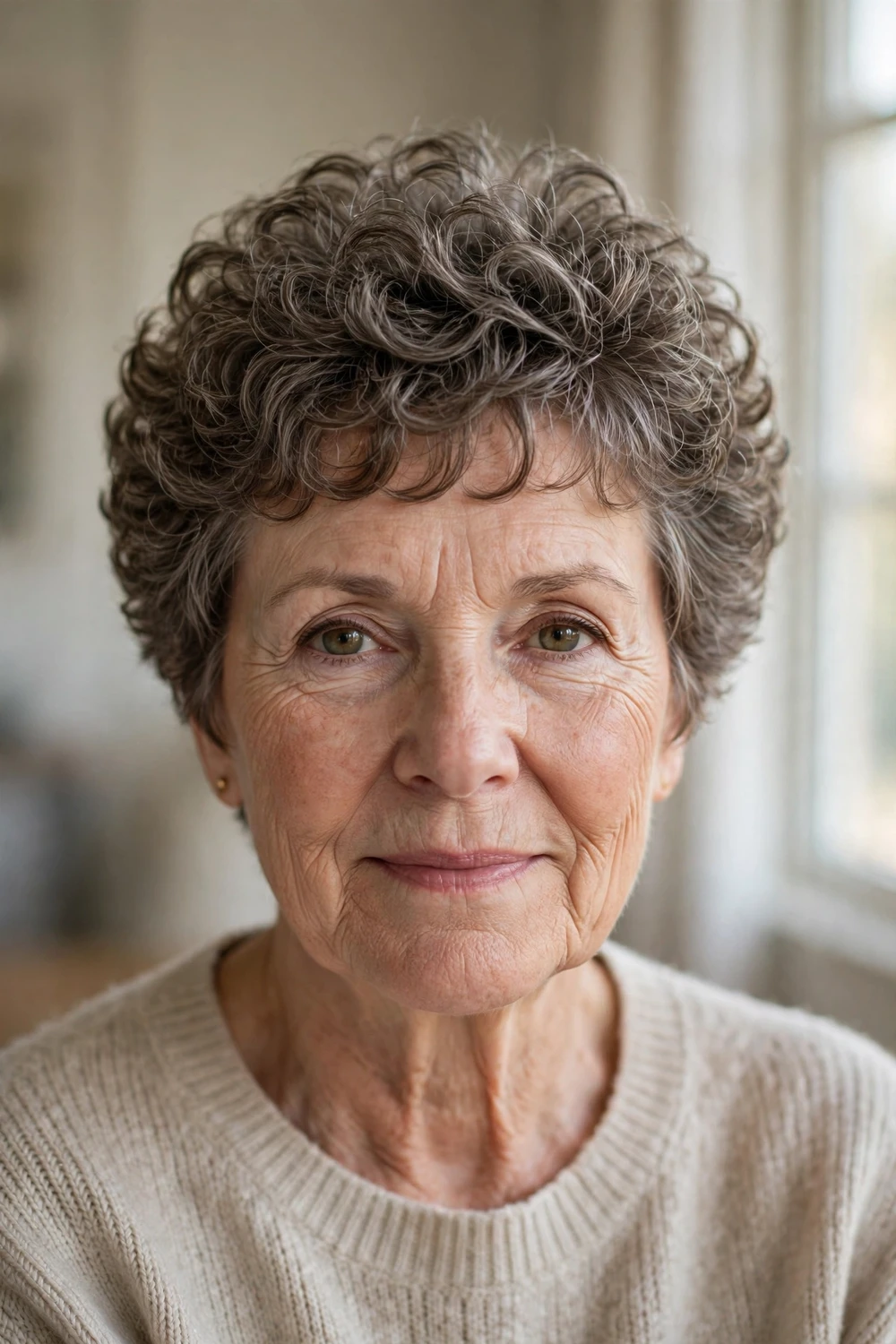
Thinning hair and a pixie are a better match than most women expect. Short, point-cut layers stack the curls to create the illusion of density, and a rounded shape hides sparse areas better than long hair ever could. The key is what to avoid: thinning shears, which can make fine curls look stringy, and heavy products that separate curls into wisps. With the right cut, nobody guesses the hair underneath is fine.
Try this: apply a volumizing mousse at the roots on damp hair, then diffuse upside down. Ask your stylist to point-cut rather than thin, every time.
29. Curly Pixie for Women With Glasses
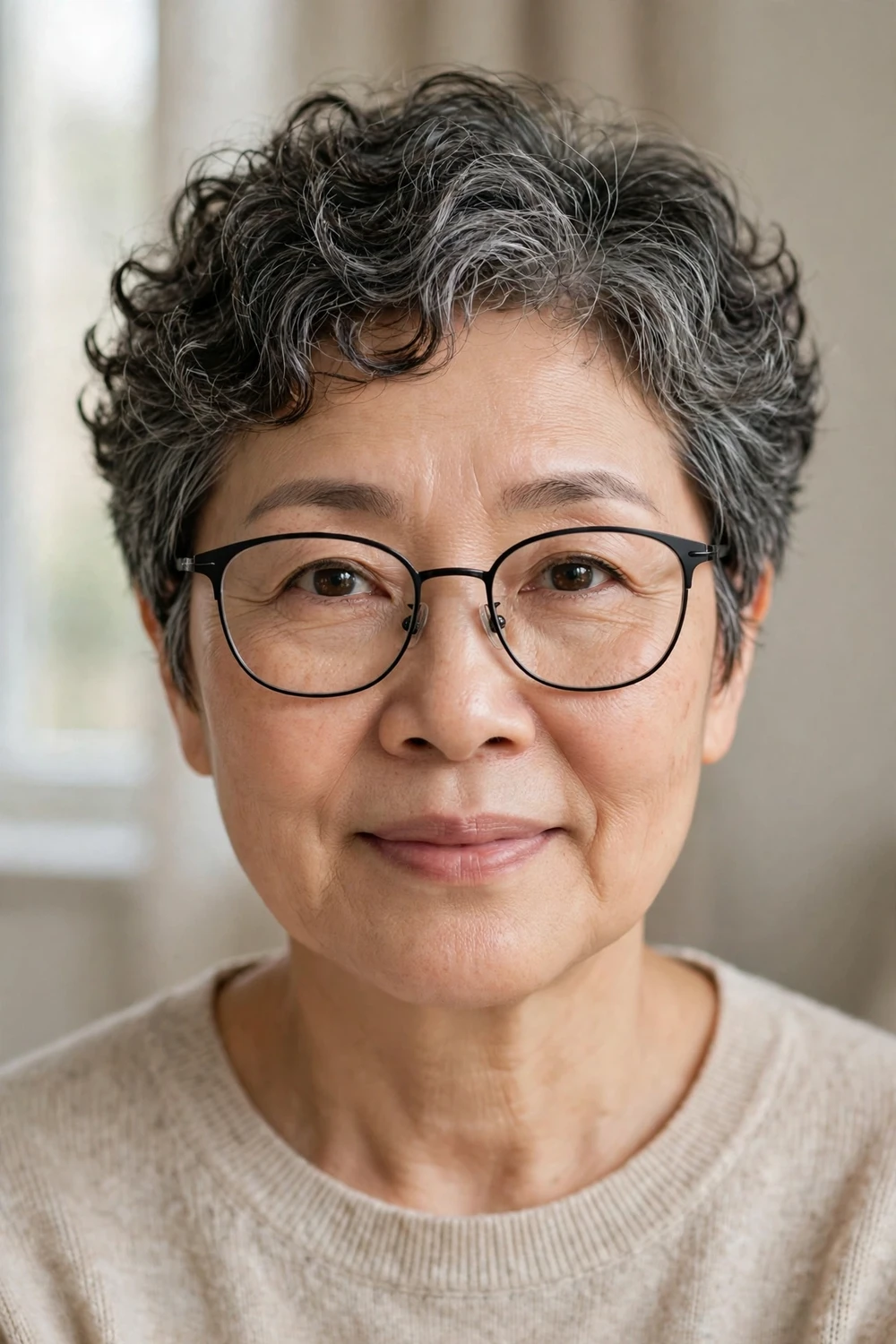
Glasses change the geometry of a haircut, and this pixie accounts for it. The sides are kept neat so frames sit cleanly, while soft curls around the temples and forehead balance the lines of the glasses. Wispy length near the ears prevents the frames from looking stranded. It is a practical detail most cut guides skip, but anyone who wears glasses daily knows the difference a temple-friendly cut makes. The style works with any frame shape.
Try this: bring your everyday glasses to the appointment so your stylist can cut around the temples precisely. Keep the sideburn area tidy between trims.
30. Permed Curly Pixie for Straight Hair
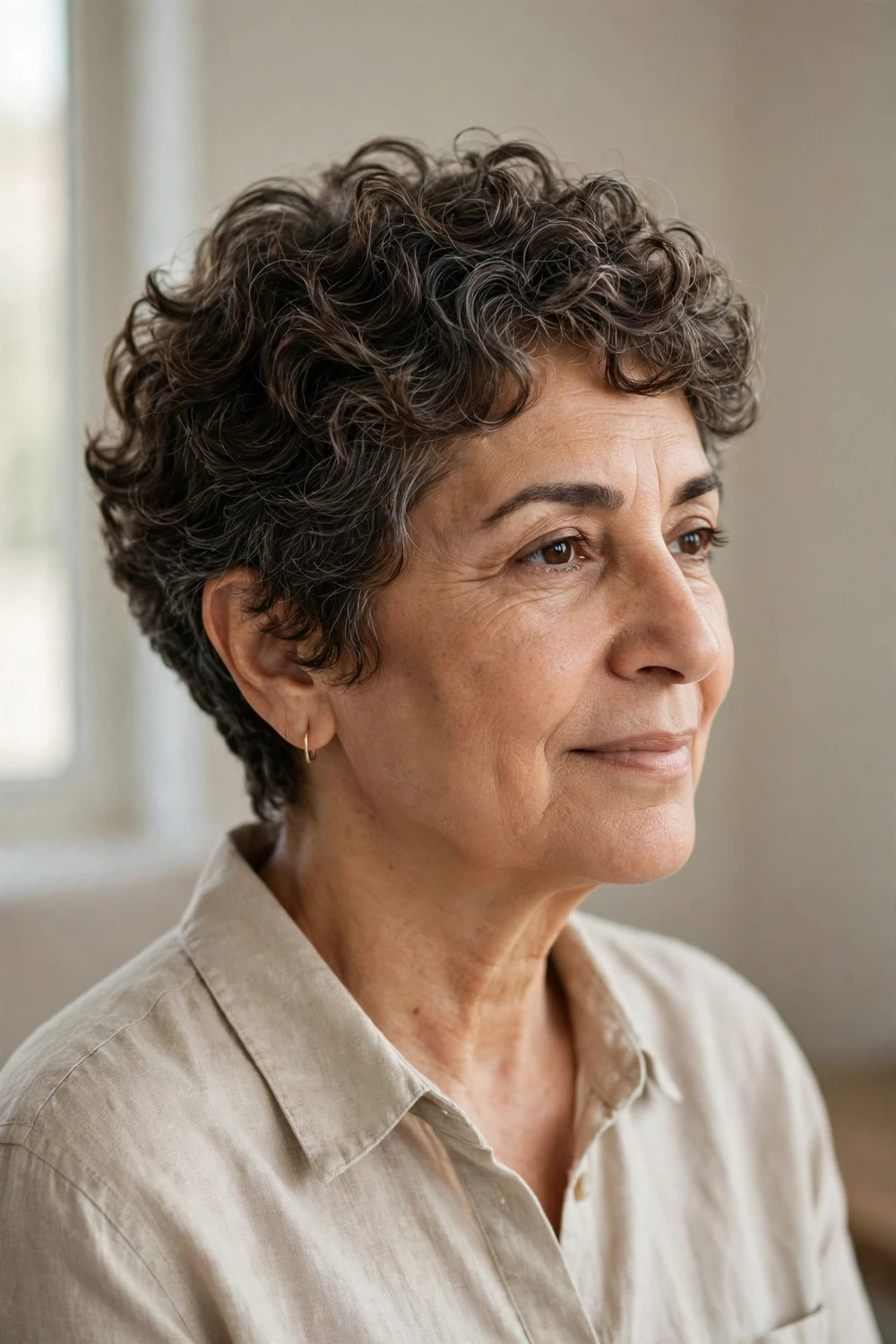
No natural curls? You can still play. This starts as a classic short pixie, then a body-wave perm adds the curl pattern, giving you the freedom to wear curls on some days and a smoother finish on others. It suits straight or wavy hair that holds a perm well, though very fine or damaged hair may not take the chemical process. The perm needs a refresh every 3 to 4 months, and the pixie itself keeps its 4-to-6-week trim schedule.
Try this: ask for a body wave rather than a tight perm, so the curls look natural. Use a sulfate-free shampoo to protect the perm, and skip heat styling for the first 48 hours.
Curly Pixie Comparison at a Glance
| Style | Best Occasion | Difficulty | Hold Time |
|---|---|---|---|
| Classic Curly Pixie With Tapered Sides | Everyday | Easy | All day |
| Tousled Textured Curly Pixie | Casual weekends | Easy | All day |
| Silver Gray Curly Pixie | Everyday | Easy | All day |
| Salt-and-Pepper Chopped Curly Pixie | Everyday | Easy | All day |
| Curly Pixie Bob | Work and events | Medium | All day |
| Curly Pixie With Undercut | Nights out | Medium | All day |
| Disconnected Curly Pixie | Creative settings | Medium | All day |
| Curly Pixie With Wispy Bangs | Everyday | Medium | All day |
| Boyish Curly Pixie Crop | Active days | Easy | All day |
| Feathered Wispy Curly Pixie | Everyday | Easy | All day |
| Curly Pixie With Side-Swept Fringe | Work and events | Medium | All day |
| Asymmetrical Curly Pixie | Evenings out | Medium | All day |
| Short Curly Mushroom Pixie | Everyday | Easy | All day |
| Warm Chestnut Tousled Curly Pixie | Everyday | Easy | Until next wash |
| Caramel Toned Pixie With Defined Curls | Work and events | Medium | Until next wash |
| Light Ash Blonde Curly Pixie | Everyday | Easy | Until next wash |
| Dark Chocolate Layered Curly Pixie | Work and events | Easy | Until next wash |
| Jet Black Cropped Curly Pixie | Nights out | Easy | Until next wash |
| Warm Auburn Curly Pixie | Everyday | Easy | Until next wash |
| Fiery Red Curly Pixie | Special occasions | Medium | Until next wash |
| Brushed Forward Curly Pixie | Everyday | Medium | All day |
| Ear-Length Curly Pixie Crop | Active days | Easy | All day |
| Stacked Curly Crown Pixie | Work and events | Medium | All day |
| Curly Shag Pixie | Casual weekends | Easy | All day |
| Curly Pixie With Dimensional Highlights | Work and events | Medium | Until next wash |
| Tight-Coil Curly Pixie | Everyday | Medium | Several days |
| Curly Faux Hawk Pixie | Nights out | Hard | All day |
| Curly Pixie for Thinning Curls | Everyday | Easy | All day |
| Curly Pixie for Women With Glasses | Everyday | Easy | All day |
| Permed Curly Pixie for Straight Hair | Everyday | Medium | 3 to 4 months |
How to Choose the Right Curly Pixie for You
Start with your curl pattern, not the photo. Tight coils need enough top length to spring, loose waves need stacked layers for volume, and fine curls need point-cutting rather than thinning. A stylist experienced with curly hair will cut according to shrinkage, which is the single biggest factor in whether a pixie grows out well.
Next, be honest about your routine. If you style daily, an undercut or faux hawk stays crisp with minimal effort. If you wash and go, a tousled textured cut or a salt-and-pepper chop asks almost nothing of you. And if you color, remember that short hair grows color out in weeks, which makes your 50s the ideal decade to experiment or transition to gray.
Mistakes to Avoid
The most common mistake is cutting a curly pixie on straightened hair. Curls shrink as they dry, so a cut that looks right on blown-out hair ends up inches shorter once the curls spring back. Always get the cut on your natural texture, or at least with your stylist accounting for shrinkage.
Skipping regular trims is the second mistake. Short curls lose their shape within weeks, and tapered sides blur into the top fast. A trim every 4 to 6 weeks costs less than growing out a shapeless cut. Finally, do not load short curls with heavy butters and oils. What nourishes long hair weighs a pixie down; lightweight creams and mousses give definition without the drag.
Women in their 60s have their own version of this list, so the curly pixie haircuts for women over 60 roundup covers 20 cuts tuned for that decade.
If you like the cropped length with a touch more coverage, the pixie bob haircuts for older women collection sits between pixie and bob with 20-plus ideas.
For a bolder take on the short-sides idea, the undercut pixie haircuts for over 50 roundup shows how to wear the clipped-side look after 50.
Glasses wearers should also browse the short pixie haircuts for women with glasses guide, which is built around frame-friendly cutting.
Frequently Asked Questions
Are pixie cuts good for curly hair over 50?
Yes. A pixie removes the weight that drags curls down, so the remaining curls spring up with more definition and bounce. Short sides keep the shape controlled, and the cut takes minutes to style. It also suits the drier, finer texture that curls often develop in your 50s, since the damaged ends are gone.
How do I transition to gray with a curly pixie?
A pixie is the fastest way to go gray, since the short length grows out in months instead of years. Many women cut to a pixie first, then let the gray grow in while keeping the shape trimmed. A salt-and-pepper stage blends the transition, and purple shampoo keeps new gray bright as it comes in.
How often should I trim a curly pixie after 50?
Every 4 to 6 weeks. Short curls lose their shape quickly as they grow, and tapered sides blur into the top within weeks. Undercuts and faux hawks need attention even sooner, around every 3 weeks. Regular trims keep the silhouette sharp and the curls springy.
What products work best for a curly pixie over 50?
A sulfate-free shampoo, a rich conditioner, a curl-defining cream, and a leave-in conditioner cover almost every need. Hydrating formulas matter more than strong hold, since curls in your 50s run drier than they used to. Add a diffuser attachment for your dryer and a flexible-hold hairspray for finished styles.
Will a curly pixie work on thinning hair?
Yes, with the right cut. Short, point-cut layers stack curls to create the illusion of density, and a rounded shape hides sparse areas better than long hair does. Avoid thinning shears, which can make fine curls look stringy. A volumizing mousse at the roots adds lift where it counts.
Final Thoughts
Thirty cuts, one shared idea: your curls are the feature, not the problem. Pick the shape that fits your curl pattern and your routine, book that first trim, and give the cut two weeks before you judge it. Short curls settle into their best shape once they adjust to the new length. And if you take one thing from years of covering this beat, let it be this: the women who love their curly pixies most are the ones who stopped fighting their texture and let the cut do the work.

