

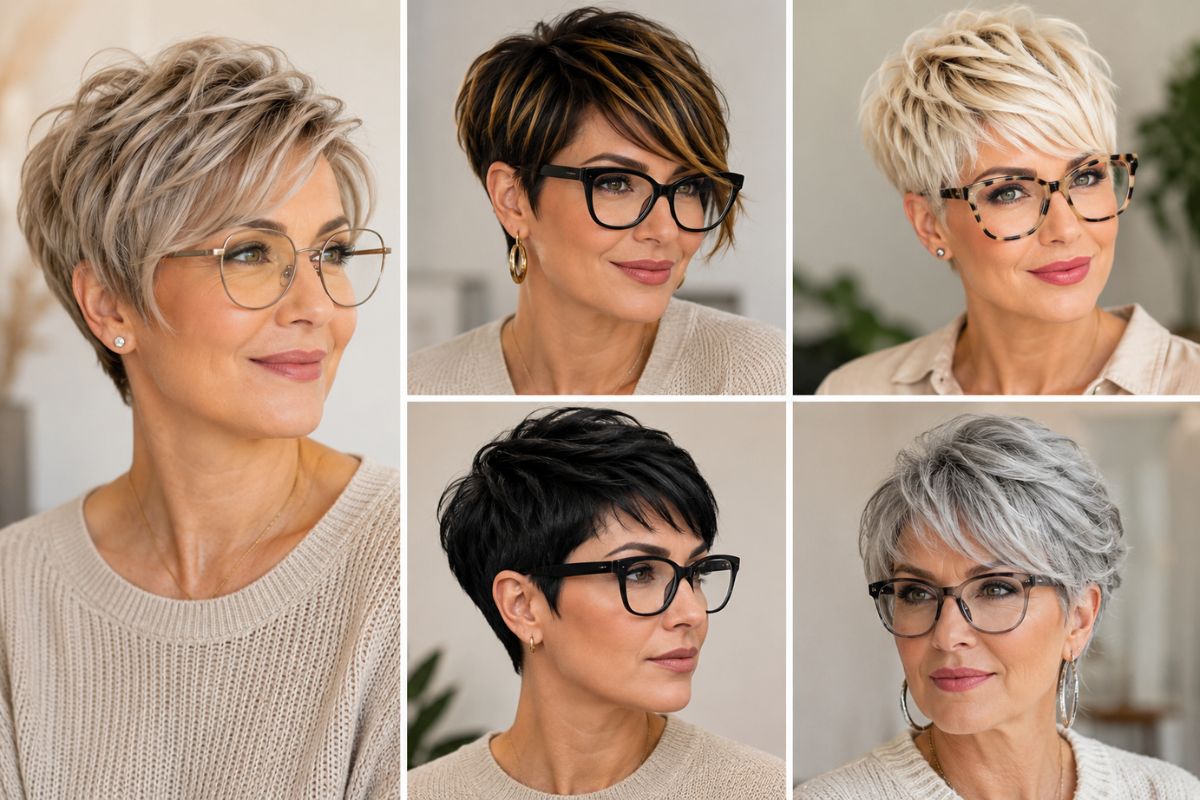
Short pixie haircuts for women with glasses work because the cut clears hair away from your frames. Short sides, an open forehead, and clean lines around the ears let your glasses read as a deliberate style choice instead of something fighting your hair. This list covers 15 specific pixie cuts, each paired with the frame style it suits and a styling tip you can use at home.
Each of the 15 cuts below is paired with the frame style it suits best and a practical styling tip for everyday wear.
Quick Takeaways
- Short pixies keep hair clear of your frames, so your glasses become the focal point of your face.
- Match the cut to your frames: soft pixies suit oversized tortoiseshell, sharp tapers suit thin metal rectangular frames.
- Most pixies need a trim every 4 to 6 weeks to keep the shape sharp around your glasses.
- Texture paste or styling cream handles most pixie styling in under 10 minutes a day.
- Bring your glasses to the salon appointment so your stylist can shape the cut around your actual frames.
1. Soft Feathered Pixie

Soft feathered layers are cut with a razor or point-cut scissors so the ends turn inward with a light, airy finish. The layers stay long enough around the temples to sit beside your glasses instead of bunching behind them. This cut suits silver, salt-and-pepper, and natural gray hair, since the feathering shows off the color variation.
Style it with a dime-sized amount of lightweight styling cream, working from roots to ends. The cut holds its shape between washes, so you can refresh it with dry shampoo on day two. A trim every 4 to 6 weeks keeps the feathered ends from going stringy.
Try this: ask your stylist to keep the sideburn area short so your tortoiseshell frames sit flat against your face.
Difficulty: Easy · Cost: $ (salon cut)
2. Side Swept Pixie

A side-swept fringe moves the hair across your forehead instead of straight down, which keeps it clear of your glasses. This version works well with rectangular frames because the diagonal line of the fringe echoes the straight lines of the glasses. Ask for the fringe to end at brow level, not below.
Blow-dry the fringe across your forehead using your fingers for direction, then finish with a small amount of texture paste on the ends. If your glasses slip down your nose, the swept fringe helps because there is no bulk pushing against the frames. Plan a trim every 4 to 6 weeks to keep the sweep in shape.
Try this: part your fringe on the opposite side from your glasses’ heaviest corner to balance the look.
Difficulty: Easy · Cost: $ (salon cut)
3. Tapered Pixie Cut

A tapered pixie graduates from slightly longer on top down to very short at the nape and around the ears. The clean taper means nothing competes with your glasses’ arms or temples. This cut suits thin metal frames especially well, since both the hair and the frames have a precise, streamlined feel.
The tapered sides and nape grow out faster than the top, so this cut needs a trim every 4 to 6 weeks to stay sharp. Daily styling takes minutes: a dab of texture paste through the top, smoothed or spiked depending on your mood. It is one of the lowest-maintenance pixies on this list.
Try this: bring your glasses to the salon appointment so your stylist can taper the sides around the arms of your frames.
Difficulty: Easy · Cost: $ (salon cut)
If tapered sides appeal to you, our short pixie cuts roundup covers more takes on this clean, close-cut style.
4. Textured Blonde Pixie

Choppy texture through a blonde pixie creates volume on top while the sides stay close. The uneven pieces catch the light, which keeps blonde from looking flat. Oversized tortoiseshell frames pair well here because the bold glasses balance the light hair and keep the look grounded.
Work a pea-sized amount of texture paste into dry hair and pull pieces in different directions. Blonde pixies show roots quickly, so plan color touch-ups every 6 to 8 weeks. Use purple shampoo once a week to keep the blonde from turning brassy.
Try this: keep the sides shorter than the top so oversized frames stay the clear focal point.
Difficulty: Moderate · Cost: $$ (cut and color)
5. Platinum Pixie

Platinum is the lightest blonde you can go, and on a pixie it makes a strong statement in a small amount of hair. The pale shade creates sharp contrast against dark or tortoiseshell frames. Keep the cut close on the sides so the bright color does not overwhelm your face.
Platinum needs the most upkeep of any color on this list. Toner refreshes every 4 to 6 weeks keep it from yellowing, and purple shampoo once or twice a week is non-negotiable. Deep condition weekly, since bleached short hair dries out fast. If hot tools touch it, apply heat protectant first.
Try this: pair platinum with bold frames. The contrast is what makes this combination work.
Difficulty: Moderate · Cost: $$ (bleach and tone)
6. Curly Pixie

A curly pixie keeps length on top for your natural curls and trims the sides and back short. The volume sits at the crown, which draws the eye up and gives round or oversized glasses room to shine. This cut works with your natural texture instead of fighting it.
Scrunch a curl-defining styling cream into damp hair and let it air-dry. Avoid brushing dry curls, which breaks the curl pattern and creates frizz. Trims every 4 to 6 weeks keep the sides neat so the curls on top keep their shape.
Try this: ask your stylist to cut curls dry so the length lands exactly where you want it.
Difficulty: Easy · Cost: $ (curly cut)
7. French Pixie Cut

The French pixie is soft all over, with a wispy fringe that ends just above the brows. It never touches your glasses, which is the whole point. Cat-eye frames are the classic pairing here, since the lifted corners of the frames echo the light, lifted feel of the cut.
This cut asks very little of you in the morning. Finger-dry it, add a touch of styling cream, and go. The fringe needs shaping every few weeks, so book your trim every 4 to 6 weeks to keep it from creeping toward your frames. It suits fine to medium hair best.
Try this: skip heavy products. This cut looks best when the hair moves freely.
Difficulty: Easy · Cost: $ (salon cut)
8. Choppy Pixie With Long Fringe

Longer fringe pieces frame the face while choppy layers through the top add texture. The trick with glasses is keeping the fringe either clearly above the frames or swept to one side. This cut suits cat-eye glasses, since the longer pieces follow the upward sweep of the frames.
Style with texture paste, pinching the fringe ends for definition. The common mistake is letting the fringe grow until it rests on the lenses, which smudges glasses and blurs your vision. A trim every 4 to 6 weeks fixes that. If you use a flat iron on the fringe, apply heat protectant first.
Try this: check your fringe length while wearing your glasses, not before putting them on.
Difficulty: Easy · Cost: $ (salon cut)
9. Messy Textured Pixie

Uneven, piecey layers give this pixie its relaxed feel. The cut is shorter underneath with longer, disconnected pieces on top. Rectangular frames work well because their clean lines contrast with the tousled hair. This is a forgiving cut for thick hair, since the layers remove weight without removing length.
Mist with texturizing spray, scrunch, and leave it alone. The less you fuss, the better it looks. This is one of the most low maintenance cuts on the list, though you still need a trim every 4 to 6 weeks to keep the layers from merging into one solid shape.
Try this: sleep on it. Day-two messy pixie often looks better than freshly washed hair.
Difficulty: Easy · Cost: $ (salon cut)
10. Asymmetrical Pixie

One side of this pixie runs clearly longer than the other, usually by an inch or two. The longer side can fall toward the cheek or tuck behind the ear, which gives you two looks from one cut. Oversized frames suit the boldness, since they hold their own against the uneven lines.
The longer side needs smoothing to look deliberate, so keep a flat iron handy and apply heat protectant first. The short side stays neat with texture paste. Because the cut relies on the contrast between the sides, book a trim every 4 to 6 weeks to keep the difference visible.
Try this: wear the longer side on the same side as your glasses’ boldest detail for balance.
Difficulty: Moderate · Cost: $ (salon cut)
Want to push the asymmetry further? Our edgy pixie haircuts collection leans into sharper lines and bolder shapes.
11. Copper Pixie
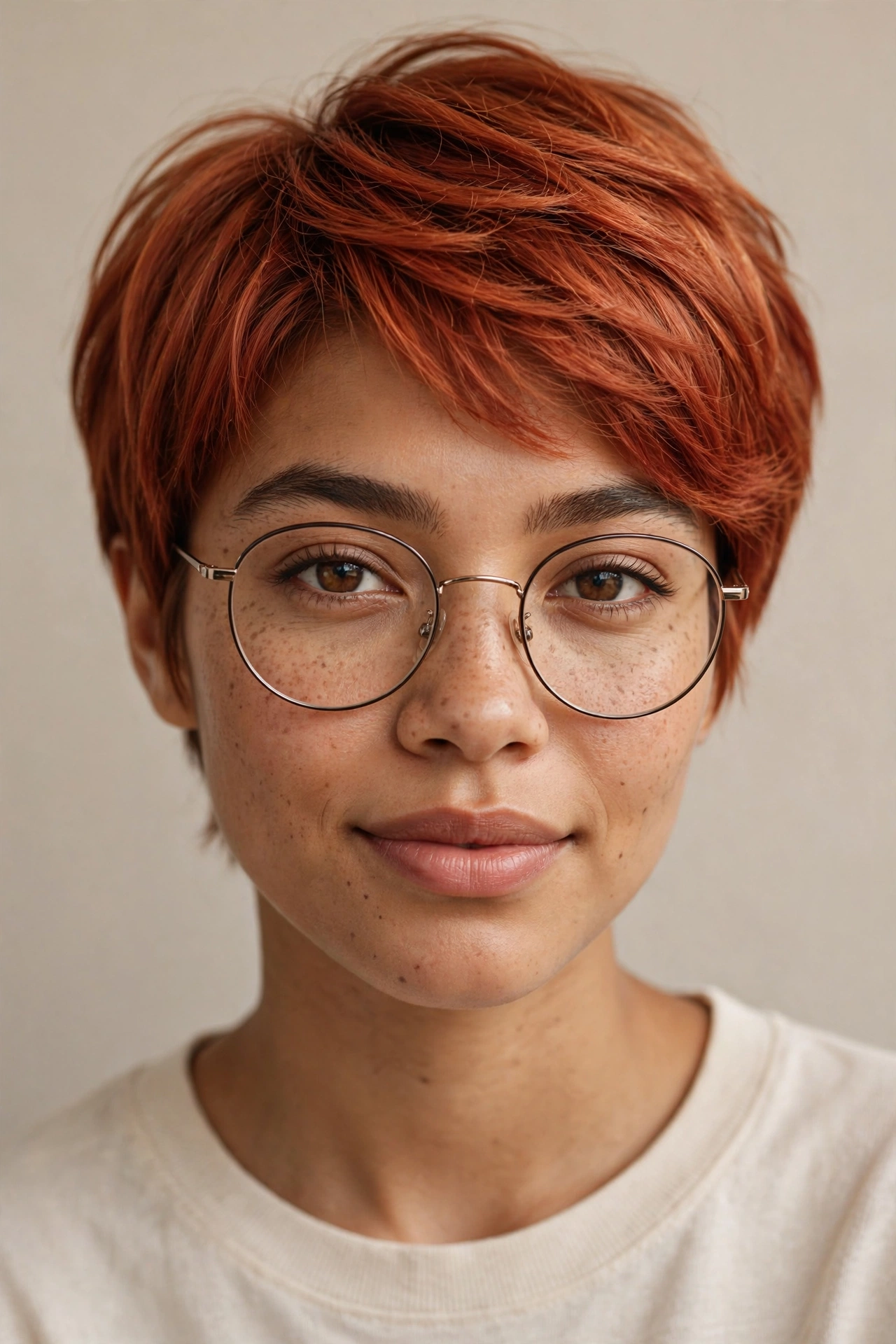
Copper sits between red and brown, warm without going orange. On a pixie, the shade shows best with choppy layers that let the light hit different pieces. It pairs nicely with thin metal frames, since the light frames do not fight the warm hair for attention.
Copper fades faster than most shades, so wash with a color-safe shampoo and rinse with cool water. A gloss appointment every 6 to 8 weeks keeps it rich. If you smooth the cut with a flat iron, apply heat protectant first, since colored hair dries out faster.
Try this: test copper against your skin tone with a temporary gloss before committing to permanent color.
Difficulty: Moderate · Cost: $$ (cut and color)
12. Sleek Black Pixie

This pixie is polished flat with clean lines and a glossy finish. The sides tuck close to the head, which leaves your frames completely unobstructed. Dark rectangular or thin metal frames suit the precision of the cut. It reads polished enough for formal settings but takes real effort each morning.
Blow-dry smooth with a paddle brush, then pass a flat iron over the top layer for the glossy finish. Apply heat protectant before any hot tool, and finish with a drop of shine serum. Humidity is the enemy here, so an anti-frizz product helps on damp days.
Try this: a center or deep side part changes the whole look without changing the cut.
Difficulty: Moderate · Cost: $ (salon cut)
13. Wavy Pixie

Gentle waves through a pixie add movement without adding bulk around the frames. The waves sit through the top and crown while the sides stay short. Tortoiseshell frames are a natural match, since the warm tones in the frames echo the softness of the waves.
Scrunch texturizing spray into damp hair and let it air-dry for the softest result. If your hair is naturally straight, twist small sections around your finger while drying to encourage the wave. Trims every 4 to 6 weeks keep the waves from growing into a shapeless mass.
Try this: keep the waves looser near the temples so they do not push against your glasses.
Difficulty: Easy · Cost: $ (salon cut)
14. Shaggy Pixie

Soft, feathered layers through the whole cut give the shaggy pixie its easy shape. The layers fall naturally around the face, which softens the look of strong frames like thick rectangles or bold cat-eyes. It suits straight to wavy hair and flatters most face shapes.
This cut styles itself more than most. Wash, add a little styling cream, and let it fall. The layers do the work. You still need a trim every 4 to 6 weeks, since grown-out layers lose their shape fast. Fine hair gets the most lift from this cut.
Try this: ask for the layers to start at cheekbone level so they frame your glasses nicely.
Difficulty: Easy · Cost: $ (salon cut)
This cut is a favorite with mature readers. See more options in our short pixie haircuts for older women roundup.
15. Classic Wash-and-Go Pixie

The wash-and-go pixie is cut to fall into place with zero styling. Short all over with just enough length on top to show texture, it suits silver and salt-and-pepper hair especially well. Dark rectangular frames stand out against light hair, which is why this pairing is so popular.
Wash, towel-dry, and go. That is the whole routine. A tiny amount of styling cream adds control on humid days, but the cut is designed to work without products. Keep the trim cycle at every 4 to 6 weeks, since this cut loses its shape faster than layered versions when it grows out.
Try this: this is the cut to pick if you want the lowest possible daily effort.
Difficulty: Easy · Cost: $ (salon cut)
Love zero-effort hair? Our wash and wear haircuts for women over 60 guide has more cuts that style themselves.
Quick Comparison
| Pixie | Best frame pairing | Styling time | Maintenance |
|---|---|---|---|
| Tapered Pixie Cut | Thin metal rectangular | 5 minutes | Trim every 4–6 weeks |
| Side Swept Pixie | Rectangular | 5–10 minutes | Trim every 4–6 weeks |
| Platinum Pixie | Dark or tortoiseshell | 5 minutes | Toner every 4–6 weeks |
| Curly Pixie | Round or oversized | 5 minutes (air-dry) | Trim every 4–6 weeks |
| French Pixie Cut | Cat-eye | Under 5 minutes | Trim every 4–6 weeks |
| Asymmetrical Pixie | Oversized | 10 minutes | Trim every 4–6 weeks |
| Wavy Pixie | Tortoiseshell | 5 minutes (air-dry) | Trim every 4–6 weeks |
| Classic Wash-and-Go Pixie | Dark rectangular | Almost none | Trim every 4–6 weeks |
How to Choose the Right Pixie for Your Glasses
Start with your frames. Cat-eye frames want a soft fringe that follows their lifted corners, like the French pixie. Rectangular frames want clean lines, which is why tapered and sleek cuts pair so well with them. Oversized frames need a cut with presence: choppy texture, asymmetry, or bold color. Thin metal frames disappear into the look, so any pixie works, while tortoiseshell adds warmth that suits textured and wavy cuts.
Then check your face shape. Round faces benefit from height on top, so try the curly, textured blonde, or messy pixie. Oval faces can wear almost anything. Square faces soften with a wispy fringe, like the French or feathered versions. Heart-shaped faces do well with a side-swept fringe that fills out the forehead. Bring your glasses to the salon appointment and wear them while the stylist checks the fringe length and the fit around the frames.
Finally, be honest about maintenance. Pixies need a trim every 4 to 6 weeks no matter what, but daily effort varies. The wash-and-go and tapered cuts are true low maintenance choices. Platinum and copper demand color upkeep, including purple shampoo for the platinum. Silver and salt-and-pepper hair looks great in feathered and wash-and-go cuts but benefits from the same purple shampoo once a week to keep yellow tones away.
Frequently Asked Questions
What is the best pixie cut for women with glasses?
The best pixie for glasses wearers keeps hair off the frames: tapered sides, short fringe, or a side-swept fringe that clears the lenses. Cuts with clean lines around the ears, like the tapered pixie and the sleek black pixie, let your frames sit comfortably and stay fully visible.
Should I bring my glasses to my hair appointment?
Yes. Bring the glasses you wear most often to the salon appointment. Your stylist can check the fringe length against the frames, shape the sideburns so they do not clash with the arms, and make sure the cut frames your face the way your glasses do.
How do I stop my fringe from touching my glasses?
Keep the fringe either clearly above your frames or swept to one side. A French-style fringe that ends above the brows never reaches the lenses. For longer fringes, use a small amount of texture paste to direct the hair to the side, and trim every 4 to 6 weeks before it grows onto the lenses.
How often should I get my pixie trimmed?
Every 4 to 6 weeks. Pixies lose their shape fast as they grow, and the areas around the nape and ears are the first to look messy. Fringe wearers may need a quick fringe trim between full cuts to keep hair off their glasses.
Which glasses frames look best with short pixie hair?
Cat-eye, rectangular, oversized, and thin metal frames all pair well with pixies. Cat-eye frames add lift, rectangular frames add structure, oversized frames make a statement, and thin metal frames keep the look light. Tortoiseshell warms up textured and wavy cuts. Pick frames with enough presence to balance very short hair.
Final Thoughts
A short pixie and glasses are a natural match. The cut keeps your hair out of the way, and your frames do the styling work for you. Pick a cut that clears your lenses, bring your glasses to the appointment, and keep the trim cycle at every 4 to 6 weeks. The rest is easy.
For more short hair ideas across every style, browse the full collection at PrimeHairPicks.

