


Bangs change a haircut more than any other single step, and they do it without taking away length. For older women, the choice is wide: curtain bangs that split at the center, side-swept bangs that cross on a diagonal, wispy bangs that sit lightly on the forehead, and blunt bangs that give full coverage. Each type pairs with several base cuts, from pixies and bobs to lobs and long layers, so the starting point is the bang shape you like and the upkeep you will actually keep.
This list collects 27 hairstyles with bangs for older women, organized by bang type. Every idea names the bang type and the base cut, notes how the bangs sit with forehead lines and glasses where that matters, and gives the styling effort and trim schedule in plain terms. Grey and silver hair, curly hair, and glasses all get their own entries, since those three factors change which bang length works.
Key Takeaways
- Pick the bang type first, then the base cut. Curtain and side-swept bangs are the most forgiving as they grow out.
- Wispy and feathered bangs sit lightly on fine hair, while blunt and full bangs need thicker hair to hold a solid line.
- Glasses set the bang length: bangs should end above the frames or sweep clear of them.
- Bang trims run every three to eight weeks depending on the style, and many salons offer quick fringe trims between cuts.
- Grey and silver hair wears soft, blended bangs well, especially feathered, wispy, and piecey shapes.
1. Curtain Bangs with Shoulder-Length Layers

Curtain bangs split in the center and sweep out to the cheekbones on each side. On shoulder-length layers, the longest bang pieces blend straight into the front layers, so there is no hard line across the forehead. Forehead lines sit partly in view and partly covered, which keeps the look soft and honest.
Blow-dry the bangs away from the face with a round brush, then let the layers fall loose. The center split grows out gently, so trims can wait six to eight weeks. This is a steady first bang for anyone who has worn a center part for years.
Try this: dry the bangs first, before the rest of your hair, so the center split sets while the hair is still damp.
Difficulty: Medium · Cost: $$ (salon)
2. Curtain Bangs with a Wavy Lob

A lob that rests near the collarbone pairs well with curtain fringe cut to cheekbone length. The waves carry the bang pieces into the sides, so the fringe reads as part of the cut rather than a separate block. It suits straight to wavy hair and needs very little heat.
Air-dry with a light mousse, or add loose bends with a large barrel iron on the mid-lengths only. Curtain pieces forgive a skipped trim better than most bangs, since a longer curtain bang still frames the face well.
Try this: pin the curtain pieces back for one day a week to train them to sweep outward instead of falling into your eyes.
Difficulty: Low to Medium · Cost: $$ (salon)
3. Curtain Bangs with Long Layered Hair
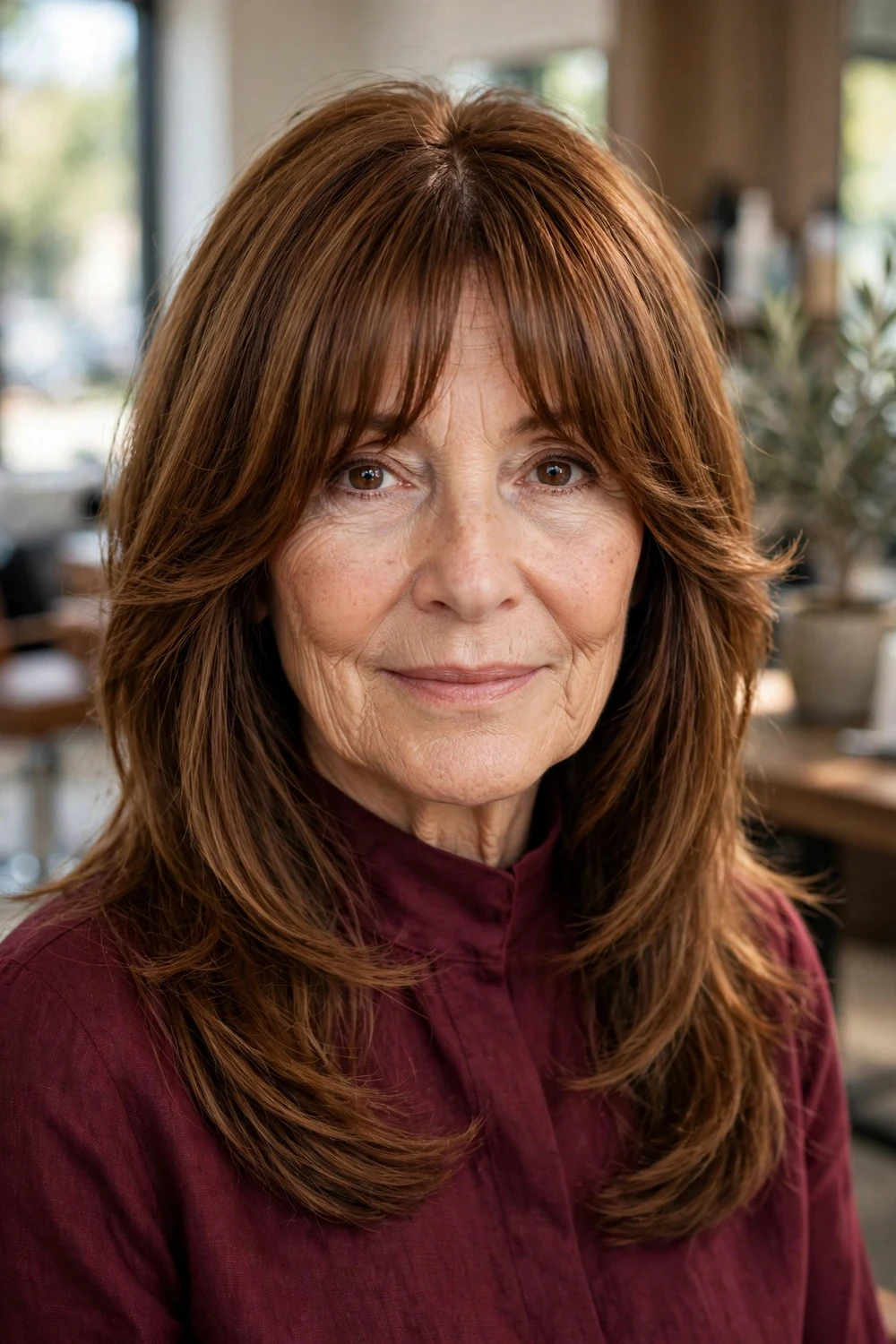
Long hair keeps its length here, while curtain bangs and long layers add shape around the face. The bangs start short at the center, near brow level, and step down to the jaw at the sides. Readers who want this pairing in more depth can browse the long hairstyles with curtain bangs collection.
Long layers stop the lengths from hanging in one heavy sheet. Style with a soft blowout, rolling the front sections away from the face. Trim the bangs every six weeks and the layers every eight to ten weeks to hold the shape.
Try this: ask for the shortest curtain piece to sit at cheekbone level, which keeps long hair feeling light around the face.
Difficulty: Medium · Cost: $$ (salon)
4. Side-Swept Bangs with a Classic Bob

A classic chin-length bob gets a softer front from side-swept bangs cut on a diagonal. The bang crosses the forehead at an angle and tucks into the longer side, so forehead coverage is partial and the finish stays neat. It works well on straight and gently wavy hair.
Blow-dry the bang across the forehead with a paddle brush, then curve the bob ends under. The diagonal line grows out into a longer face frame, so salon visits stay at six to eight weeks.
Try this: keep the part deep on one side if you want more height at the crown and a longer diagonal line.
Difficulty: Low to Medium · Cost: $$ (salon)
5. Side-Swept Bangs with a Textured Silver Pixie
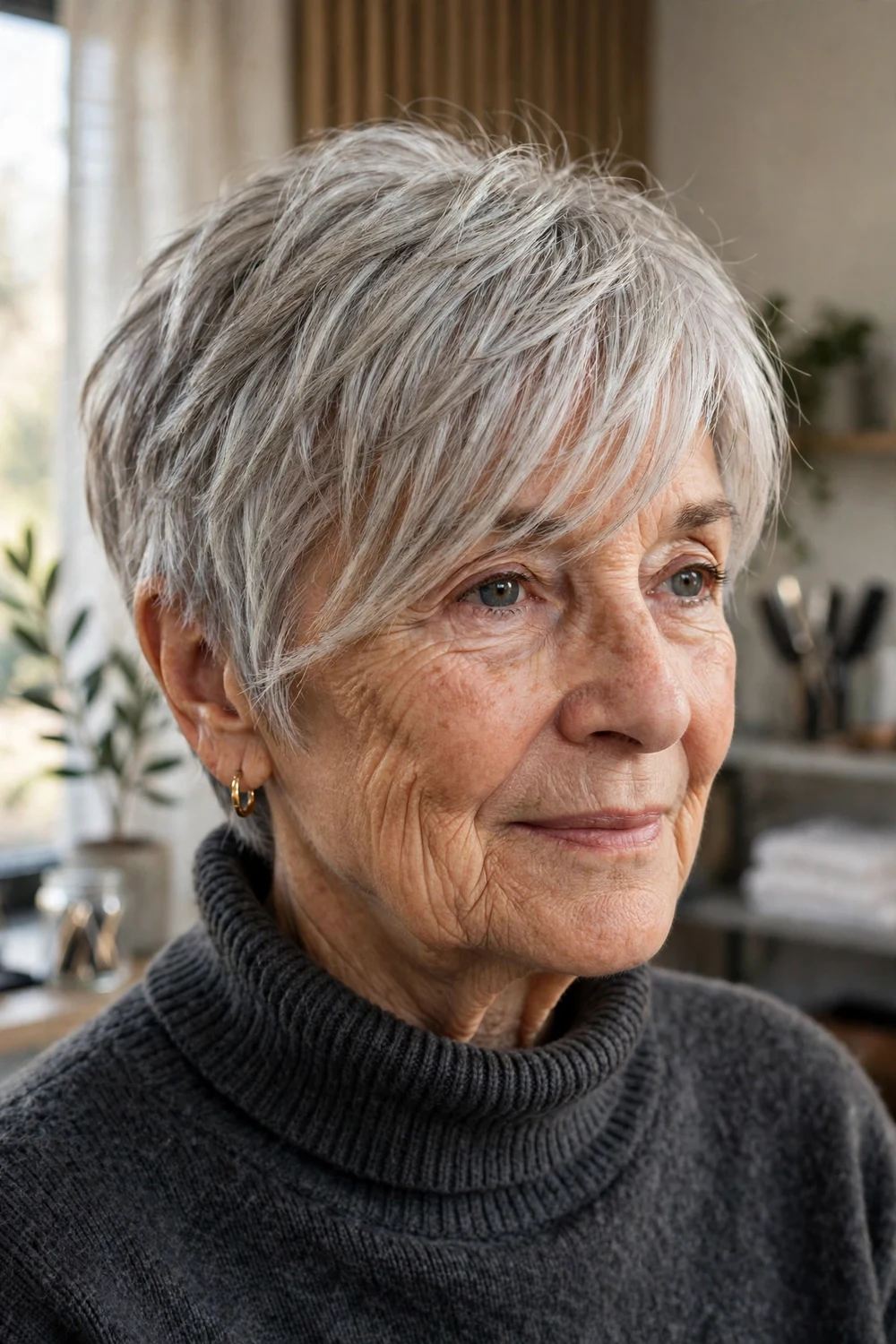
A textured pixie in natural silver uses a longer side bang to soften the short shape. Piecey layers on the crown add movement, and the silver tone shows the texture clearly. The side bang can be worn forward or brushed back on days when you want a cleaner forehead.
Work a pea-size amount of light styling cream through dry hair with your fingers. Pixies need a shape trim every four to six weeks, but daily styling stays short, often under five minutes.
Try this: let the side bang grow a little longer than the rest of the pixie, so you keep two styling options in one cut.
Difficulty: Low · Cost: $ (salon)
6. Side-Swept Bangs with a Layered Lob
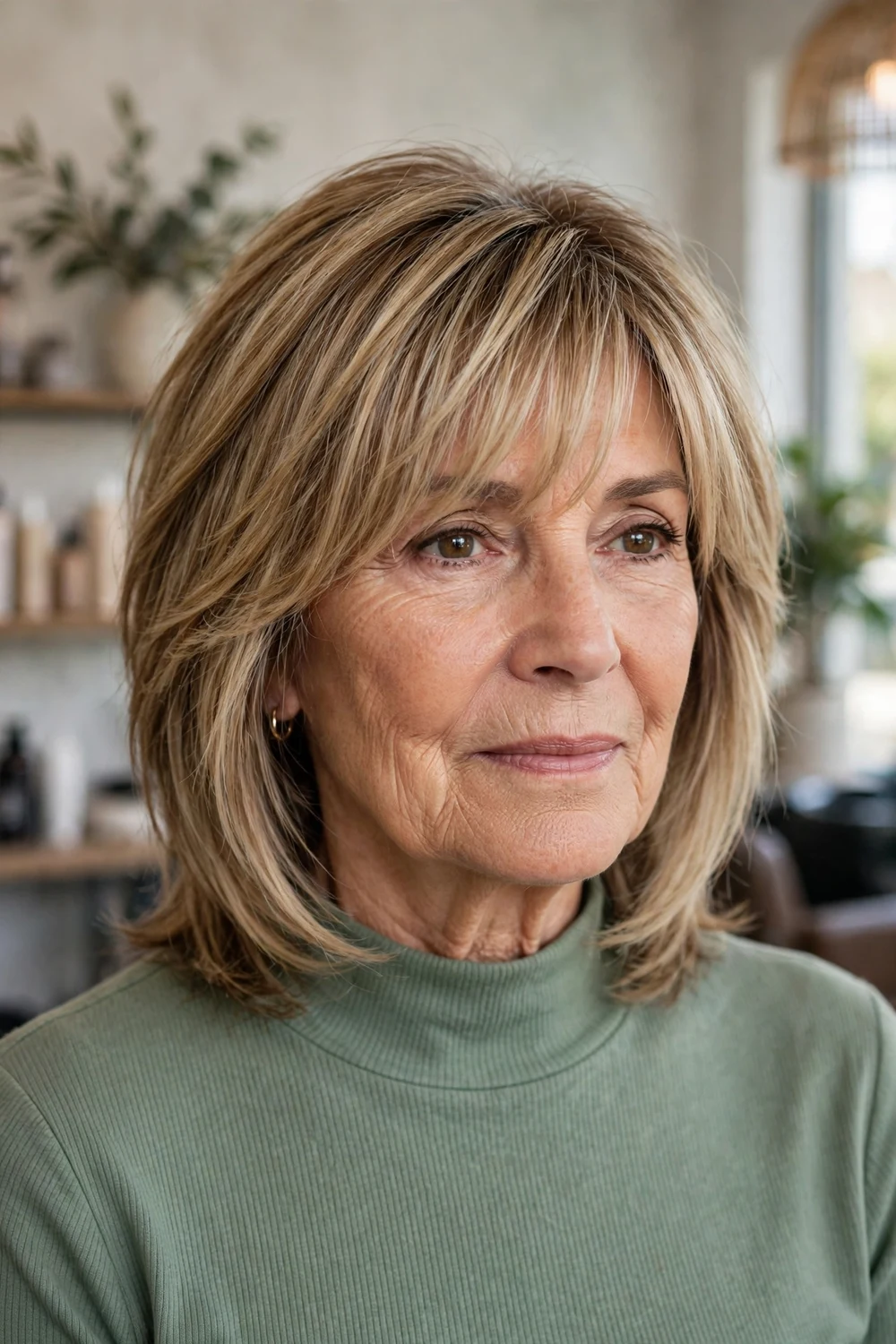
A layered lob with side-swept fringe suits women who want length without weight. The fringe starts at a deep side part and blends into graduated front pieces, which draws the eye across the face and down to the collarbone layers.
Softly curl the ends away from the face, or wear the lob smooth with the fringe swept over. The layered shape holds for six to eight weeks, and the fringe can be trimmed on its own between full cuts.
Try this: use a light hold spray on the fringe only, so the sweep stays in place while the lob keeps its movement.
Difficulty: Low to Medium · Cost: $$ (salon)
7. Long Side Bangs with an Asymmetrical Bob

An asymmetrical bob keeps one side longer than the other, and a long side bang follows the same angle. The longer front piece and the diagonal bang work together, so the cut has direction without heavy layering. Thicker hair carries the heavy side bang best.
Blow-dry smooth and tuck the shorter side behind the ear to show the shape. Keep the longer side at or below the chin to hold the angle. A trim every five to six weeks keeps the two sides clearly different.
Try this: bring a photo that shows how much length difference you want, since a small step reads very differently from a bold one.
Difficulty: Medium · Cost: $$ (salon)
8. Wispy Bangs with a Layered Bob

Wispy bangs are cut light and see-through, with space between the strands. On a layered bob, they soften the forehead without adding weight at the front, which suits fine hair well. The bob baseline stays blunt enough to give the ends a fuller look.
Blow-dry the wispy fringe straight down with a small brush, using low heat so it stays airy. Avoid heavy oils at the front, since wispy bangs show product build-up fast. Trim every four to five weeks to keep the light finish.
Try this: ask your stylist to point-cut the ends of the bangs, which keeps them wispy instead of blunt.
Difficulty: Medium · Cost: $$ (salon)
9. Wispy Bangs with Wavy Shoulder-Length Hair

Loose waves at shoulder length pair with delicate wispy bangs that follow the same relaxed texture. Small layers around the face stop the waves from widening at the cheeks. The fringe sits lightly on the forehead and moves with the hair.
Scrunch a light mousse into damp hair and air-dry, or diffuse on low heat. Define the bangs with your fingers rather than a brush, so they keep their soft separation.
Try this: refresh second-day bangs with a light mist of water and a quick finger reshape, instead of washing the whole head.
Difficulty: Low to Medium · Cost: $$ (salon)
10. Wispy Bangs with a Long Pixie
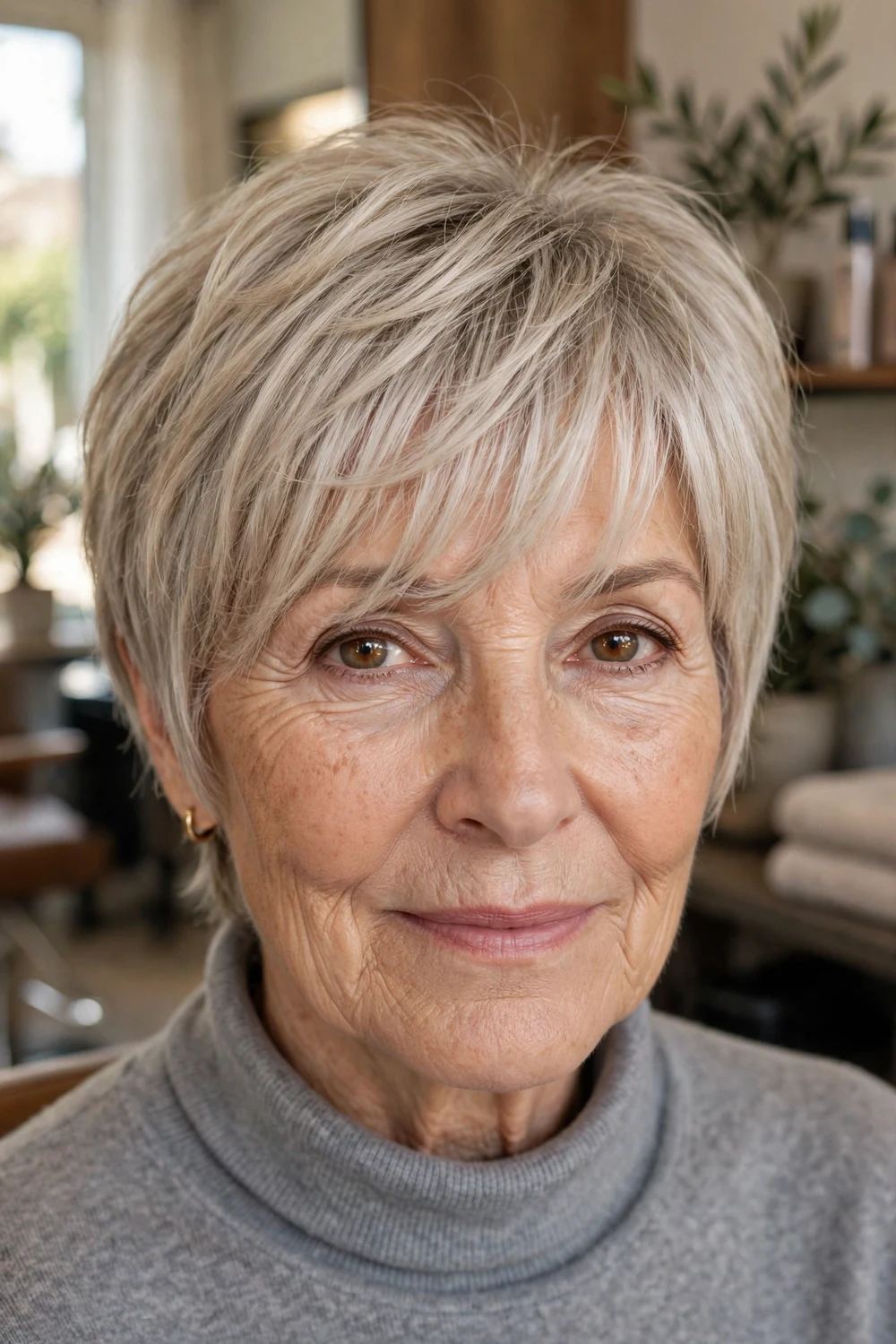
A long pixie keeps extra length on top and around the ears, and wispy bangs keep the front light. The longer top can be swept forward, to the side, or back, so one cut gives several looks. Fine to medium hair suits this version best.
Add root lift with a light mousse at the crown, then direct the wispy fringe forward with a small brush. Plan a trim every five to six weeks, since the longer top loses its shape as it grows.
Try this: keep the sides neat and let the top stay longer, which gives the wispy bang something to blend into.
Difficulty: Low to Medium · Cost: $ (salon)
11. Blunt Bangs with a Sleek Chin-Length Bob
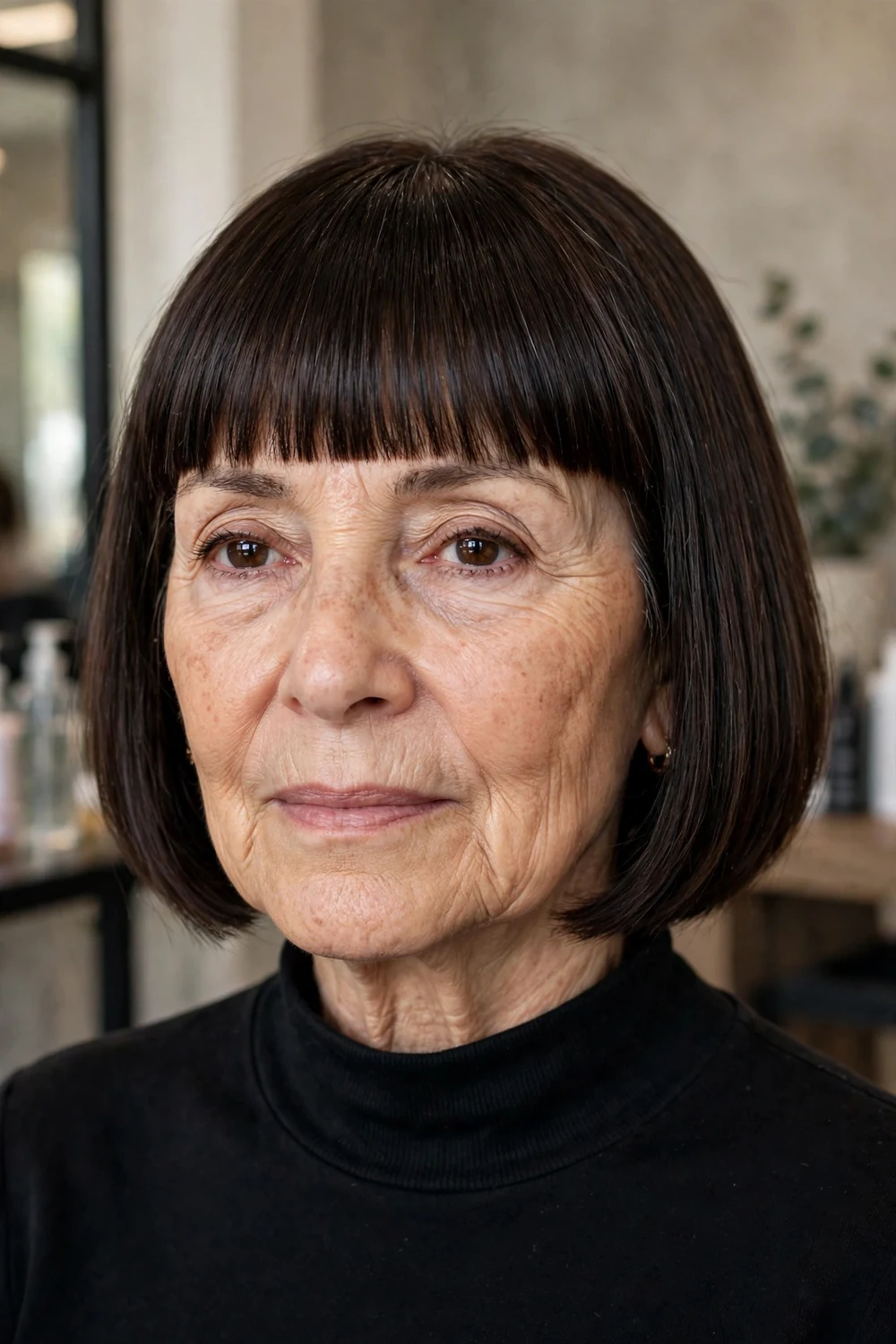
Blunt bangs are cut straight across at brow level with a solid edge. Paired with a sleek chin-length bob, the line is clean and clear, and forehead coverage is full. Straight hair shows this shape best, and thicker hair holds the solid fringe without separating.
Blow-dry the bangs side to side first, then straight down, to settle any cowlick at the hairline. Smooth the bob with a round brush and tuck the ends under. Blunt bangs need a trim every three to four weeks to stay at brow level.
Try this: have the bangs cut slightly longer at the outer corners, so the line follows the curve of the forehead.
Difficulty: Medium to High · Cost: $$ (salon)
12. Full Straight Bangs with a Collarbone Lob
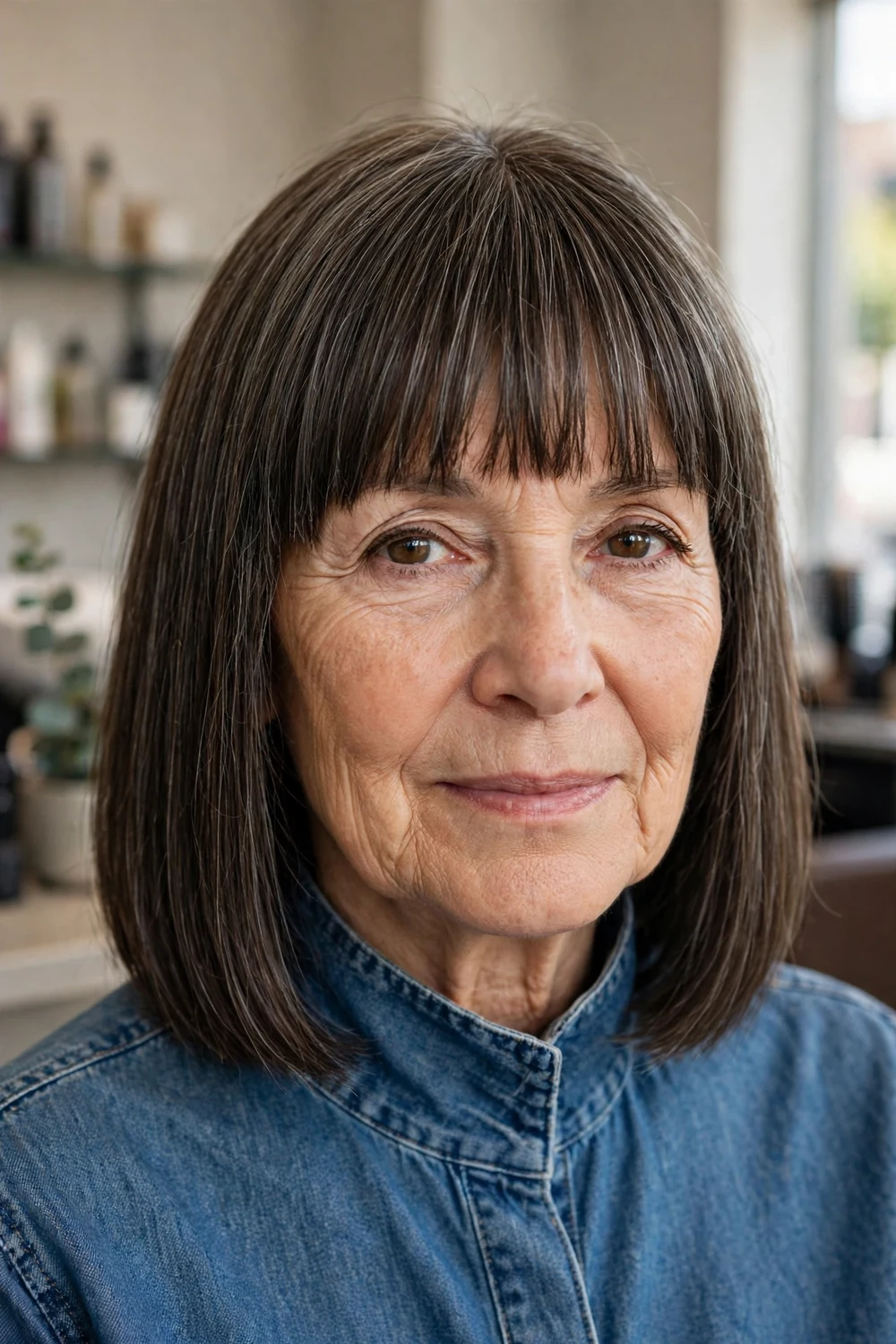
A collarbone lob with full straight bangs balances length with a clear fringe. The lob ends stay blunt, while the bangs are point-cut at the tips so the edge reads soft rather than severe. This pairing works on straight and lightly wavy hair.
The lob can be worn smooth or with a loose wave through the lower half. Keep the bangs smooth with a quick pass of a small round brush. Full bangs need trimming at three to four weeks, while the lob holds for eight weeks.
Try this: if your hair is fine, ask for the bangs taken from a shallow section, so the lob keeps enough thickness at the sides.
Difficulty: Medium · Cost: $$ (salon)
13. Brow-Skimming Bangs with a French Bob
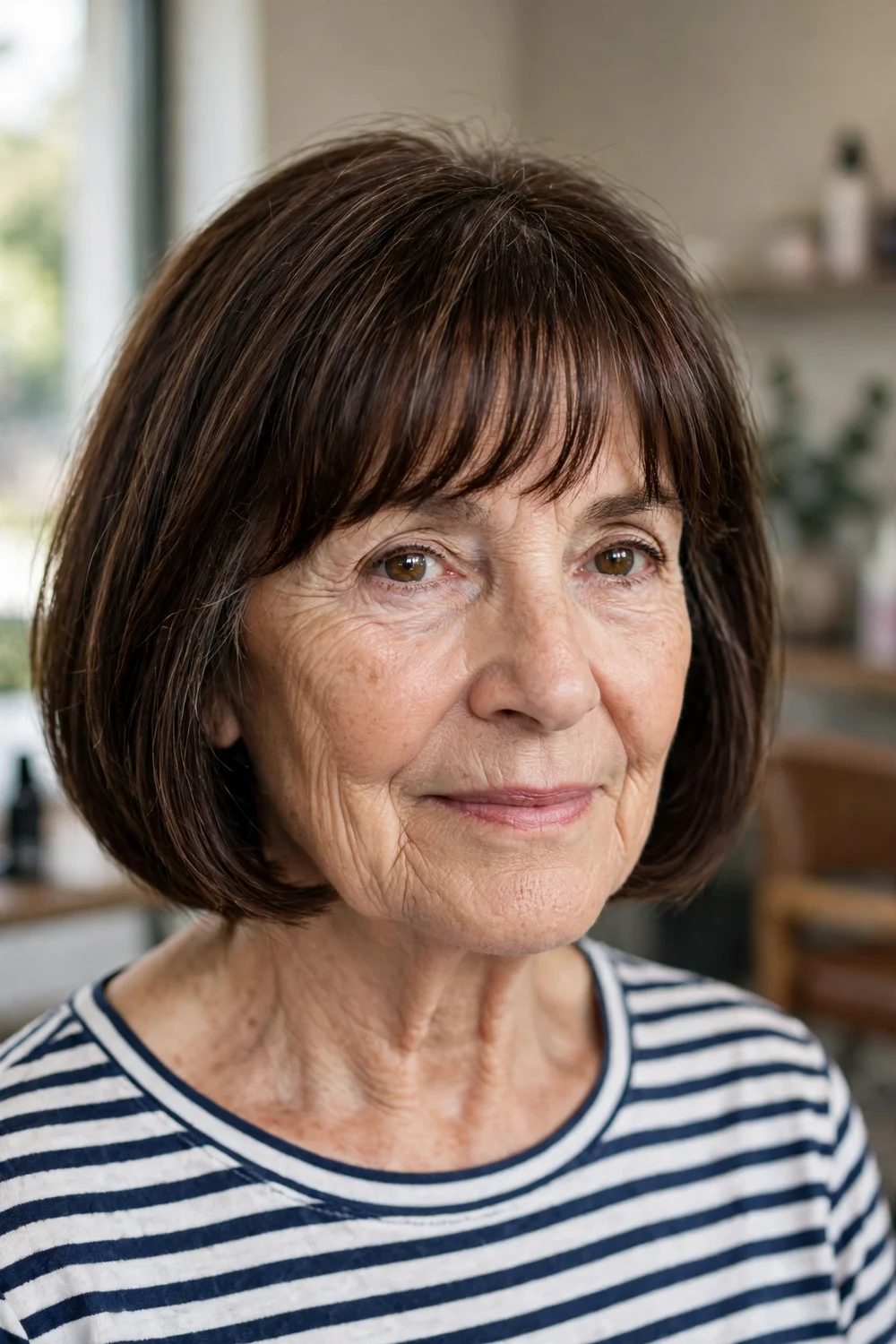
The French bob sits at the jaw and pairs with bangs that skim the brows. The ends are slightly tousled rather than sharply blunt, which keeps the short shape relaxed. More versions of this cut sit in the French bob hairstyles guide.
Wash, add a light cream, and let the bob air-dry for a soft finish, or smooth it with a brush for a neater day. The jaw length needs a trim every five to six weeks to stay clear of the shoulders.
Try this: keep the bangs just at brow level, since longer bangs change the proportions of a short French bob fast.
Difficulty: Low to Medium · Cost: $$ (salon)
14. Bottleneck Bangs with a Medium Layered Cut

Bottleneck bangs are narrow and shorter in the center, then step longer toward the sides, like the shape of a bottle neck. On a medium layered cut, they blend into face-framing layers at the cheekbones and give curtain-style framing with a clearer center opening.
Blow-dry the center piece forward and the longer sides outward, so the step shape stays visible. The layers and bangs grow out together well, with trims at six to eight weeks.
Try this: ask for the side pieces to reach the cheekbones, which is where bottleneck bangs connect to the layers.
Difficulty: Medium · Cost: $$ (salon)
15. Feathered Bangs with a Rounded Bob

Feathered bangs are layered and brushed so the ends flick softly rather than lying flat. On a rounded bob, the feathering keeps the front light and stops the curved shape from looking heavy. A round brush blowout gives the bob its full, curved profile.
Dry the bangs back and then let them settle forward, which creates the feathered lift at the roots. This style uses more brush work than most on this list, so allow a few extra minutes in the morning.
Try this: use a medium round brush on the bangs and a larger one on the bob, so each section gets the right amount of curve.
Difficulty: Medium to High · Cost: $$ (salon)
16. Feathered Bangs with a Voluminous Layered Cut

Longer feathered layers through the whole cut pair with feathered bangs brushed away from the face. The layers start high, around the cheekbones, and add lift at the crown. This is a good route for medium hair that tends to lie flat.
Blow-dry with a round brush, lifting each layer up and back. Set the crown with a light spray while the hair cools. Layered cuts like this hold their shape for seven to eight weeks between trims.
Try this: keep the feathering focused above the shoulders, so the ends stay full enough to balance the volume on top.
Difficulty: Medium to High · Cost: $$ (salon)
17. Piecey Bangs with a Bixie Cut

The bixie sits between a bob and a pixie, with more length at the nape and ears than a true pixie. Piecey bangs, separated into small sections, match the textured finish. Related short shapes are collected in the pixie bob haircut ideas roundup.
Define the pieces with a small amount of matte paste on dry hair. The bixie grows toward a bob, so decide at each trim, every five to six weeks, whether to keep the shorter pixie line or let it grow.
Try this: ask for the bangs point-cut into pieces at the salon, rather than trying to separate a blunt fringe at home.
Difficulty: Low to Medium · Cost: $ (salon)
18. Choppy Bangs with a Wavy Mid-Length Cut

Choppy bangs are cut uneven on purpose, with varied lengths across the forehead. On a wavy mid-length cut, they match the natural wave and keep the style relaxed. This pairing needs little heat and suits women who prefer air-dried hair.
Enhance the waves with a salt spray or light curl cream, then scrunch and air-dry. Choppy edges are forgiving as they grow, so bang trims can stretch to five or six weeks.
Try this: keep the choppy pieces above the brows at the shortest point, so longer pieces do not fall into your eyes between trims.
Difficulty: Low · Cost: $$ (salon)
19. Curly Bangs with a Curly Bob

Curly bangs keep the natural curl pattern at the front instead of straightening it. On a rounded curly bob, a few curls are cut to fall over the forehead, and the shape is set while the hair is dry so each curl sits where it will live.
Use curl cream on wet hair and diffuse on low heat, or air-dry without touching the curls. Never judge the bang length while wet, since curls spring up as they dry. Shape trims land every eight to ten weeks.
Try this: book a dry cut for curly bangs, so the stylist cuts each curl at the length it will actually wear.
Difficulty: Medium · Cost: $$$ (salon)
20. Textured Bangs with a Curly Shag

A curly shag uses graduated layers to give curls room to move, and textured bangs become part of the curl pattern at the front. The layers reduce weight at the sides, which helps the shape stay rounded rather than wide.
Apply curl cream in sections, scrunch upward, and diffuse until just dry. Refresh the bangs on later days with water and a small amount of cream, worked in with your fingers.
Try this: ask for the top layers kept shorter, which lifts the shag and keeps the bangs from being weighed down.
Difficulty: Medium · Cost: $$$ (salon)
21. Curtain Bangs with a Soft Shag

A soft shag keeps the layers gentler than a classic shag, with less contrast between the crown and the lengths. Curtain bangs open at the center and feed into the shortest layers, so the whole front works as one frame.
Tousle the layers with texture spray on dry hair for a lived-in finish. The soft shag holds up well between cuts, with a trim every seven to eight weeks to refresh the crown layers.
Try this: if your hair is fine, ask for fewer, longer layers, so the shag adds movement without thinning the ends.
Difficulty: Low to Medium · Cost: $$ (salon)
22. Wispy Bangs with Glasses and a Chin-Length Bob

Glasses change where bangs should end, and this pairing is planned around the frames. Wispy bangs on a chin-length bob are cut to sit just above the top of the frames, so the fringe and the glasses do not overlap or catch when you take the glasses off.
Bring your everyday glasses to the appointment and wear them during the cut. At home, dry the wispy fringe straight down and check the gap above the frames before you finish styling.
Try this: choose the frame you wear most often as the guide for bang length, and mention any second pair with a different shape.
Difficulty: Medium · Cost: $$ (salon)
23. Side-Swept Bangs with Glasses and Shoulder-Length Hair

For glasses wearers who want longer bangs, a side sweep is the practical route. The bang crosses the forehead on a diagonal and tucks past the outer corner of the frames, so no hair sits on the lenses and nothing gets trapped in the hinges.
Sweep the bang to the side away from your usual part for more lift, and let the shoulder-length ends rest smooth. The diagonal grows out into a face frame, which stretches trims to six weeks.
Try this: test the sweep with your glasses on in the salon mirror, from the front and from the side, before the final snip.
Difficulty: Low to Medium · Cost: $$ (salon)
24. Salt-and-Pepper Layered Crop with Piecey Bangs

This short layered crop treats salt-and-pepper color as part of the design. Piecey bangs add texture across the forehead, and short graduated layers give shape at the crown. Finger styling keeps the finish soft and quick. More short options sit in the short layered hairstyles for women over 60 list.
Work a light pomade through dry hair to separate the pieces. Crops need a trim every four to five weeks to keep the graduated crown tidy, but daily styling takes only a few minutes.
Try this: let the darker and silver pieces mix in the bangs rather than sorting them, which keeps the salt-and-pepper pattern natural.
Difficulty: Low · Cost: $ (salon)
25. Silver Layered Hair with Soft Bangs

Fully silver hair at shoulder length pairs with soft bangs that blend into the side layers instead of ending in a hard line. The layered shape keeps silver hair from hanging flat, and the blended front keeps the look polished. Ideas for adding depth to grey sit in the gray hair with lowlights over 50 guide.
Use a purple shampoo once a week or as your stylist advises, to keep silver tones clear. Blow-dry the soft bangs under with a small brush so they merge with the layers.
Try this: ask for the bangs blended at the corners, so there is no visible step between the fringe and the side layers.
Difficulty: Low to Medium · Cost: $$ (salon)
26. Arched Bangs with a Sleek Shoulder-Length Cut

Arched bangs follow a curve: shorter in the center of the forehead and longer at the temples. On a sleek shoulder-length cut, the arch adds structure and frames the eyes, while the straight lengths keep the overall shape clean.
Dry the bangs with a small round brush, rolling under so the curve holds. The arch needs a trim every four weeks, since the center piece reaches the brows quickly as it grows.
Try this: have the arch cut conservatively at first, because the curve can always be deepened at the next trim.
Difficulty: Medium · Cost: $$ (salon)
27. Micro Bangs with a Short Crop
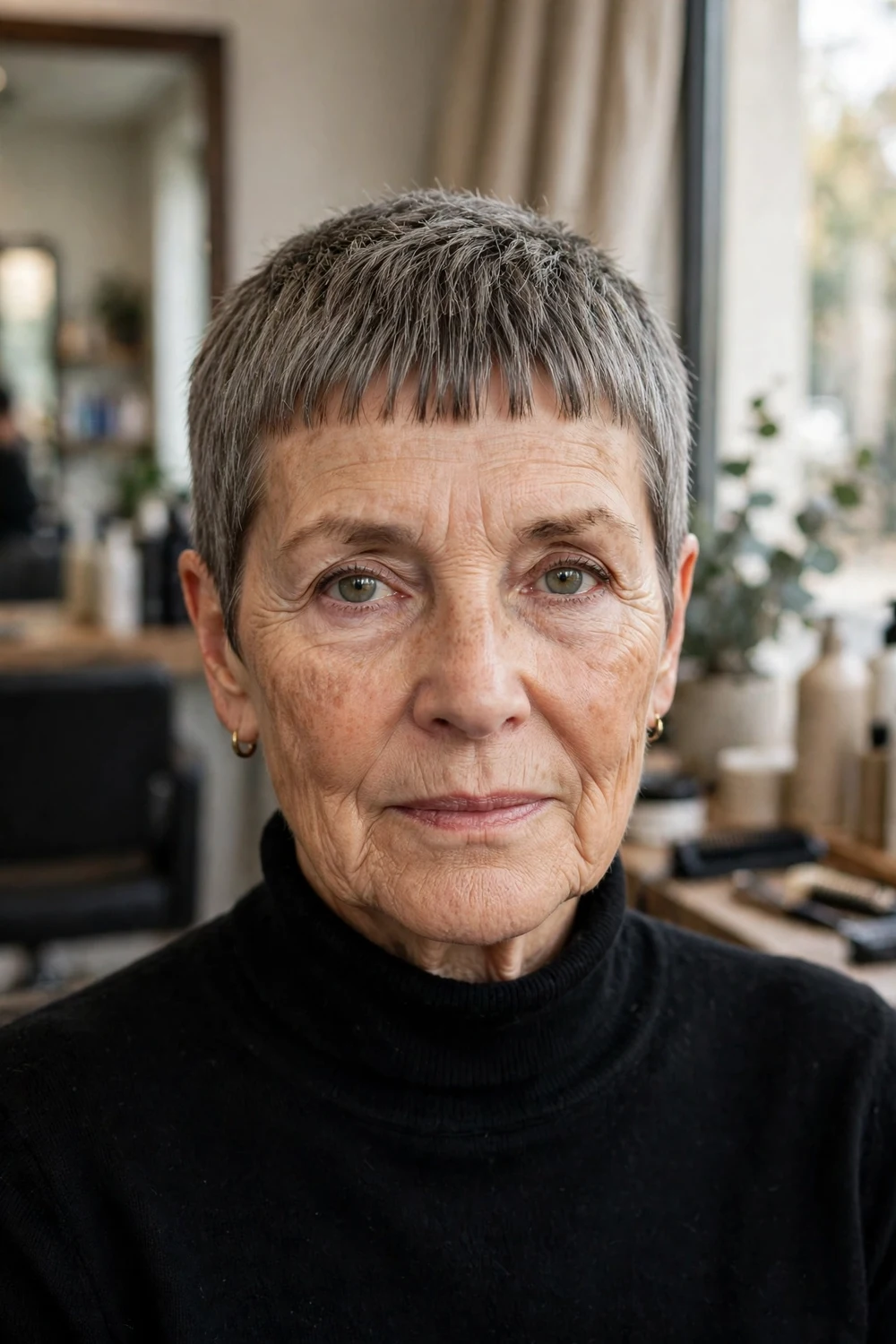
Micro bangs sit high above the eyebrows, well clear of glasses, and pair here with a very short tailored crop. The short fringe is a clear style choice and suits women with delicate features who like a tidy, wash-and-go cut.
Daily styling is minimal: wash, smooth with your fingers, and go. The trade-off is upkeep, since micro bangs show even a small amount of growth. Plan a fringe trim every three weeks to hold the line.
Try this: start with bangs a fraction longer than true micro length, so you can adjust the height at the next visit.
Difficulty: Low · Cost: $ (salon)
| Bang type | Best base cuts | Works with glasses | Trim interval | Styling effort |
|---|---|---|---|---|
| Curtain bangs | Layers, lob, long hair, soft shag | Yes, sides clear the frames | 6 to 8 weeks | Low to medium |
| Side-swept bangs | Bob, pixie, lob, shoulder-length hair | Yes, sweeps past the frames | 5 to 6 weeks | Low |
| Wispy bangs | Layered bob, long pixie, wavy shoulder-length hair | Yes, if cut above the frames | 4 to 5 weeks | Low to medium |
| Blunt and full bangs | Sleek bob, collarbone lob, French bob | Only if cut above the frames | 3 to 4 weeks | Medium to high |
| Bottleneck bangs | Medium layered cut, face-framing layers | Yes, center stays open | 6 to 8 weeks | Medium |
Frequently Asked Questions
Do bangs cover forehead lines?
Bangs cover part or all of the forehead, depending on the style. Full and blunt bangs cover the most, wispy bangs cover lightly with skin showing through, and curtain and side-swept bangs cover the sides while leaving the center partly open. Many women choose the coverage level they like and treat any softening of forehead lines as a bonus of the style.
How often do bangs need to be trimmed?
Most bangs need a trim every three to six weeks. Blunt and full bangs sit at brow level and show growth fastest, so they usually need trimming at three to four weeks. Curtain, side-swept, and wispy bangs grow out into face-framing layers and can often wait five to eight weeks. Many salons offer short bang trims between full haircut appointments.
Can I wear bangs with glasses?
Yes, with the length planned around your frames. Bangs should either end above the top of the frames, as wispy and micro bangs can, or sweep to the side and clear the frames, as side-swept and curtain bangs do. Bangs that rest on the frames can catch in the hinges and push the glasses down. Bring your everyday glasses to the appointment so your stylist can cut to the frames you actually wear.
Which bangs work well on grey hair?
Soft, blended bangs work well on grey hair at any length, including silver layered hair and salt-and-pepper crops. Grey hair can have a coarser texture than pigmented hair, so feathered, wispy, and piecey bangs that work with that texture tend to sit better than a heavy blunt fringe, which can separate. Ask for the bangs cut dry if your grey hair has a strong wave or curl pattern.
Which bangs are the easiest to style at home?
Curtain bangs and side-swept bangs are the easiest to style at home for most women. Both can be dried with a brush in under a minute, both grow out into face-framing layers, and both can be pinned back on a busy day. Wispy bangs are also low effort, though they need more frequent trims. Blunt bangs take the most daily work, since the straight line shows any wave or cowlick.
Final Thoughts
Start with the bang type that fits your hair texture and your mornings, then match it to a base cut you already like. Curtain and side-swept bangs are the safest first step, wispy and feathered bangs keep fine or grey hair light at the front, and blunt bangs give the clearest change when your hair is thick enough to hold the line. Take a photo of your favorite two or three ideas to your stylist, bring your glasses if you wear them, and agree on the trim schedule before the first cut.

