

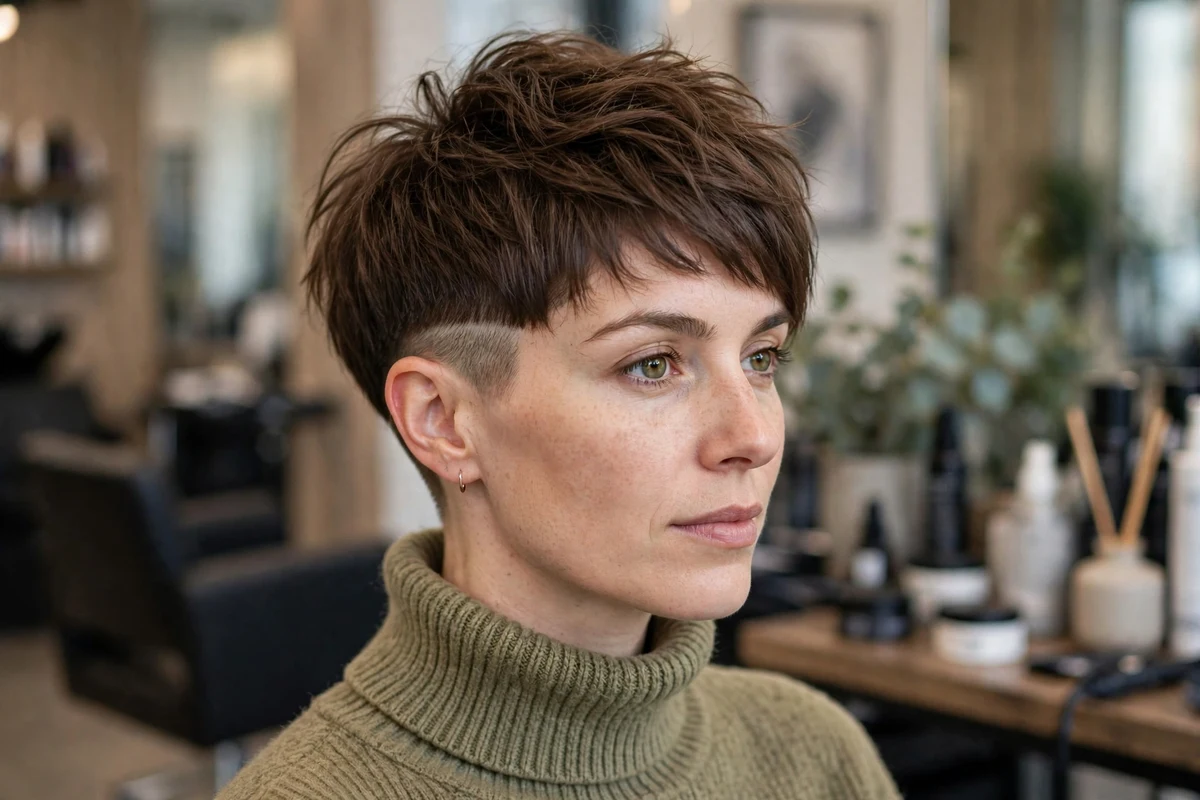
An undercut pixie bob keeps the part I like most about a bob, the length around the face, and removes the part that often fights you, the heavy bulk at the nape and sides. The top stays long enough to part, tuck, and sweep, while the hair underneath is clipped short. You can hide that clipped section on a quiet day and show it the moment you tuck a side behind your ear.
This list collects 24 undercut pixie bob hairstyles, starting with the core shapes and moving through fringe, texture, and color versions. If you want the wider family first, the pixie bob haircut ideas roundup covers the hybrid without the undercut. Every idea below notes who it suits, how to style it, and how much upkeep to expect.
Quick Takeaways
- The top keeps bob length at the ears and jaw. The undercut sits underneath at the nape, sides, or temples.
- A low, hidden undercut is the easiest place to start. A fade or a shaved side gives a stronger contrast and a faster trim cycle.
- Thick hair gains the most because the undercut removes bulk. Fine hair needs a smaller undercut and blunt ends on top.
- Clipped sections need a tidy-up every 3 to 4 weeks. Softer undercuts can wait for the full trim at 4 to 6 weeks.
- Bring a back-view photo to your appointment. The nape placement is where this cut is decided.
Choosing Your Undercut Type
Undercuts on this list fall into four groups. A nape undercut stays hidden under the top and only shows when the hair is lifted. A temple or side undercut shows when you tuck your hair and hides when the top falls over it. A disconnected undercut meets the top at a sharp line with no blending. A fade blends from short to shorter in a gradient, so the contrast is smooth rather than sharp.
| Undercut type | Best for | Trim cycle | Cost band |
|---|---|---|---|
| Hidden nape undercut | First undercut, thick hair, work settings | Every 4 to 6 weeks | $ to $$ |
| Temple or side undercut | One small panel, tuck-and-show styling | Every 3 to 4 weeks | $$ |
| Disconnected undercut | Straight hair, sharp contrast | Every 3 to 4 weeks | $$ |
| Faded undercut | Smooth gradient, silver and short sides | Every 3 weeks | $$ to $$$ |
| Color-led undercut | Two-tone and fashion color versions | Color refresh at 4 to 6 weeks | $$$ |
1. Classic Nape Undercut with a Long Top
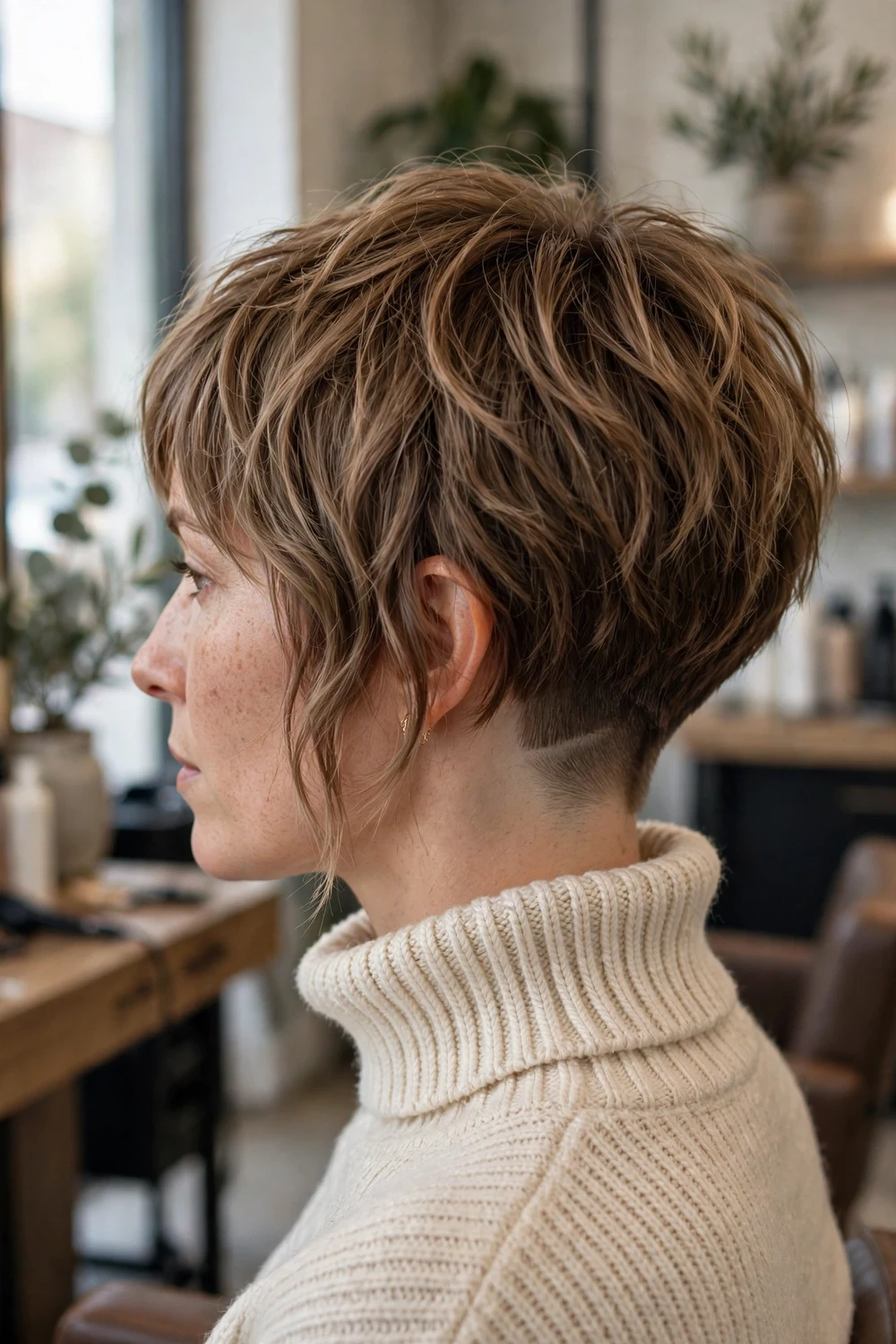
The nape is clipped short under a longer top that falls to ear and jaw length. From the front the cut reads as a soft pixie bob. From the back the clipped nape shows and keeps the neckline clean.
This version suits straight and wavy hair and most face shapes because the top length can be parted in the middle or to the side. Dry the top with your fingers for a soft finish, or use a small round brush when you want more polish. Book a nape clean-up between full cuts to keep the line sharp.
Try this: Ask for the undercut to stop below the occipital bone on your first visit. That placement leaves enough weight on top and can be raised later if you want a stronger contrast.
Difficulty: Low to Medium · Cost: $$
2. Blonde Tapered Pixie Bob with a Dark Undercut

Light blonde length on top sits over a darker clipped section at the nape and sides. The color gap makes the undercut easy to see and gives the top more visual height.
Root shadow helps here because the darker underlayer blends with new growth. Style the top forward with a pea-sized amount of matte paste, then smooth the sides down with the product left on your hands. Color upkeep is higher than the cut upkeep, so plan both appointments together.
Try this: Bring two photos, one with the hair down and one with the top lifted. Your stylist needs to see how much of the dark section you want on show.
Difficulty: Medium · Cost: $$$
3. Side-Swept Pixie Bob with a Temple Undercut

One temple is clipped close while a long side fringe sweeps across from the opposite side. The undercut stays covered when the fringe hangs down and shows when you tuck the hair behind your ear.
This is a good first undercut because the commitment stays on one small panel. It works well on straight and wavy hair and helps balance a round face because the deep side part adds height. The temple panel needs a tidy-up every three to four weeks.
Try this: Start with a longer clipper guard on the temple panel. You can go shorter at the next visit once you know how fast your hair grows.
Difficulty: Low to Medium · Cost: $$
4. Asymmetrical Pixie Bob with a Shaved Side
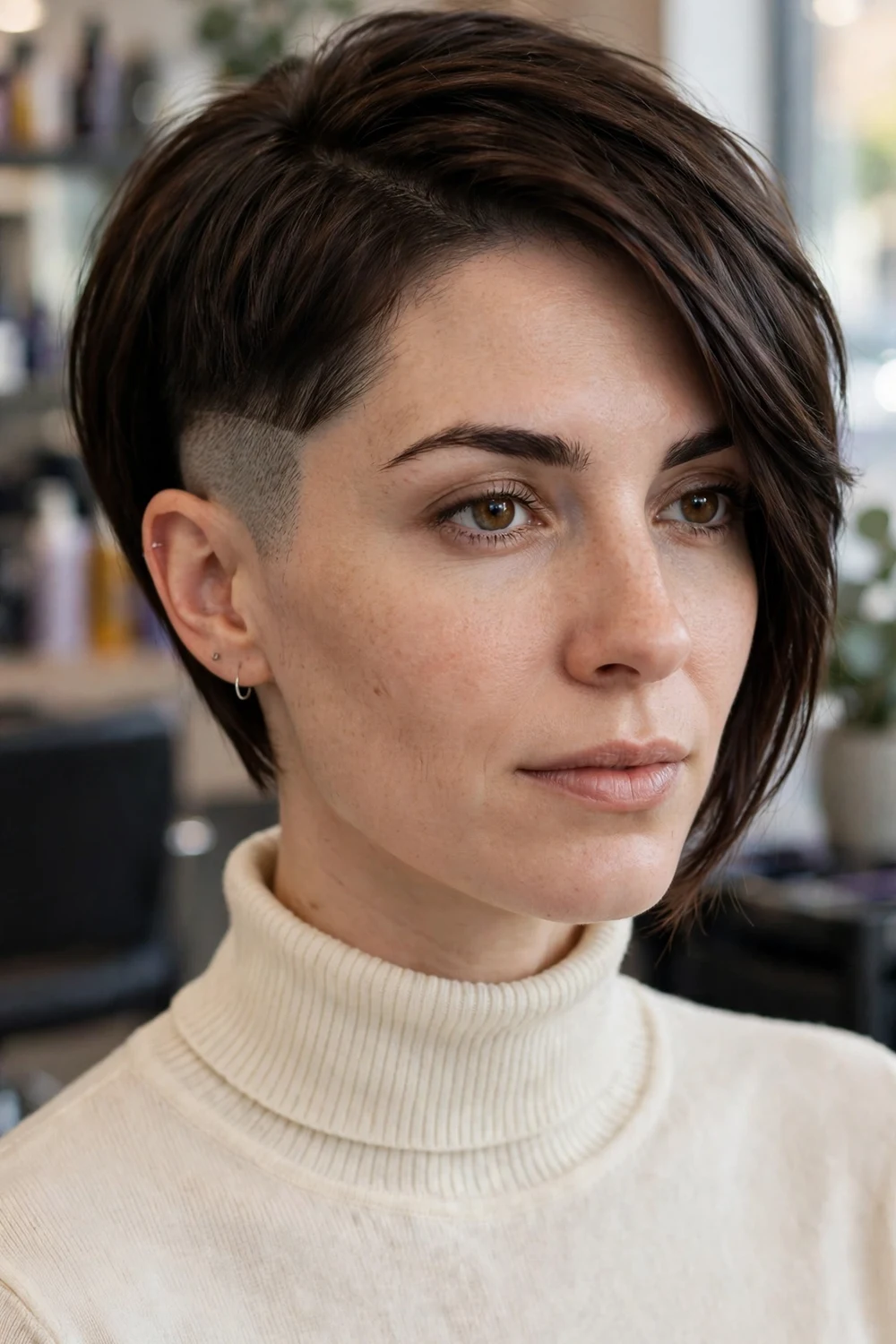
One side is shaved short and the other side keeps bob length at the jaw. The top connects the two sides with a clear diagonal line, so the shape looks planned from every angle.
Asymmetry draws the eye across the face and suits oval, square, and heart face shapes well. Keep the long side blunt at the ends to hold the line. The shaved side will soften after two weeks, so expect short tidy-up visits between full cuts.
Try this: Decide your part first and build the asymmetry around it. Changing the part after the cut will fight the shape.
Difficulty: Medium · Cost: $$
5. Stacked Pixie Bob with a Hidden Nape Undercut
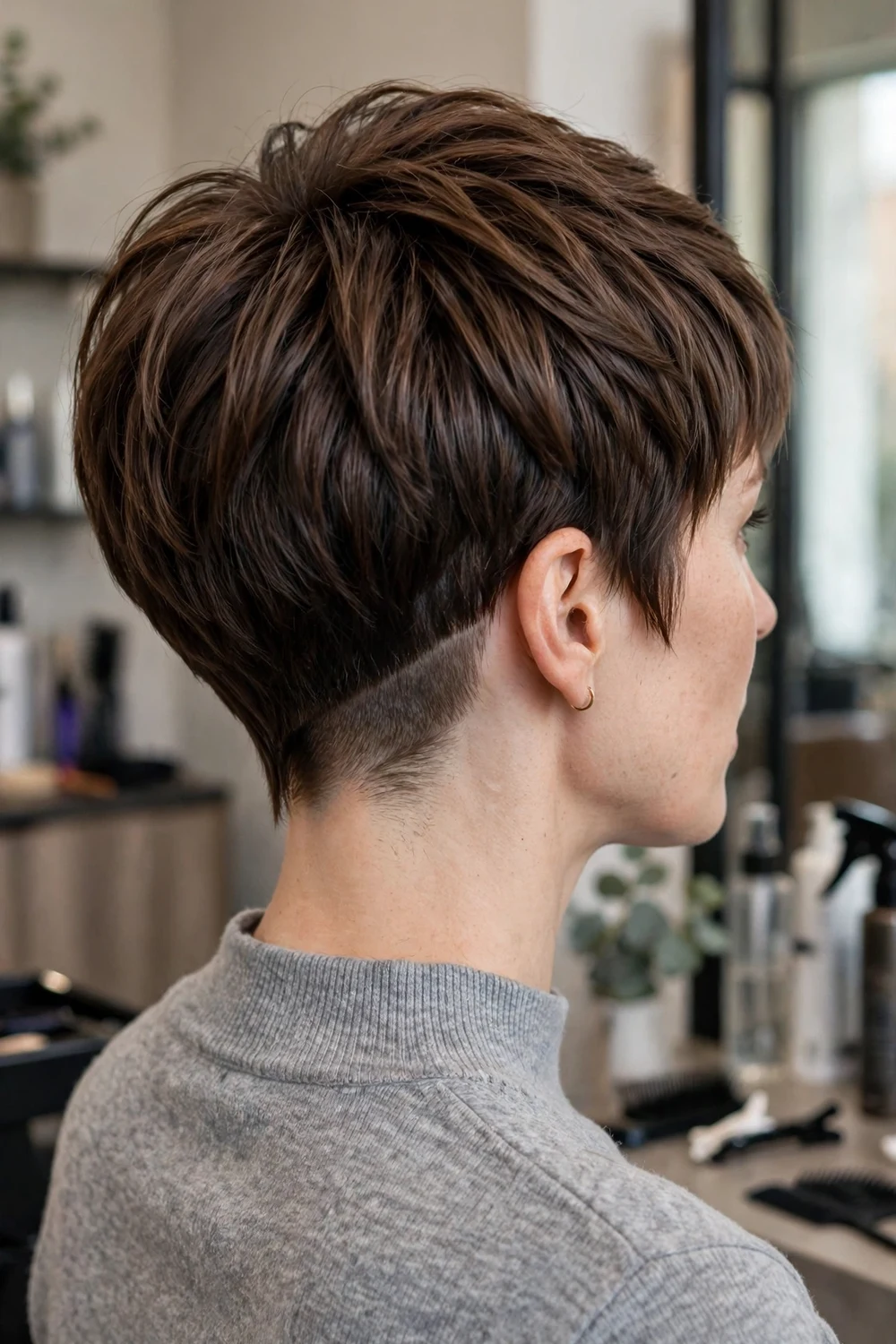
Short stacked layers build volume at the back while a hidden undercut removes weight at the nape. The undercut only shows when the hair is lifted, which keeps the look tidy for work.
Stacking suits fine to medium hair that needs height at the crown. Blow-dry the back layers with a small brush lifting up and forward. The hidden panel also helps thick hair sit closer at the neck instead of pushing out.
Try this: Ask for soft stacking rather than hard shelves. Soft graduation grows out more evenly and needs less correction later.
Difficulty: Medium · Cost: $$
6. Shaved Side and Nape Pixie Bob with an Angled Front
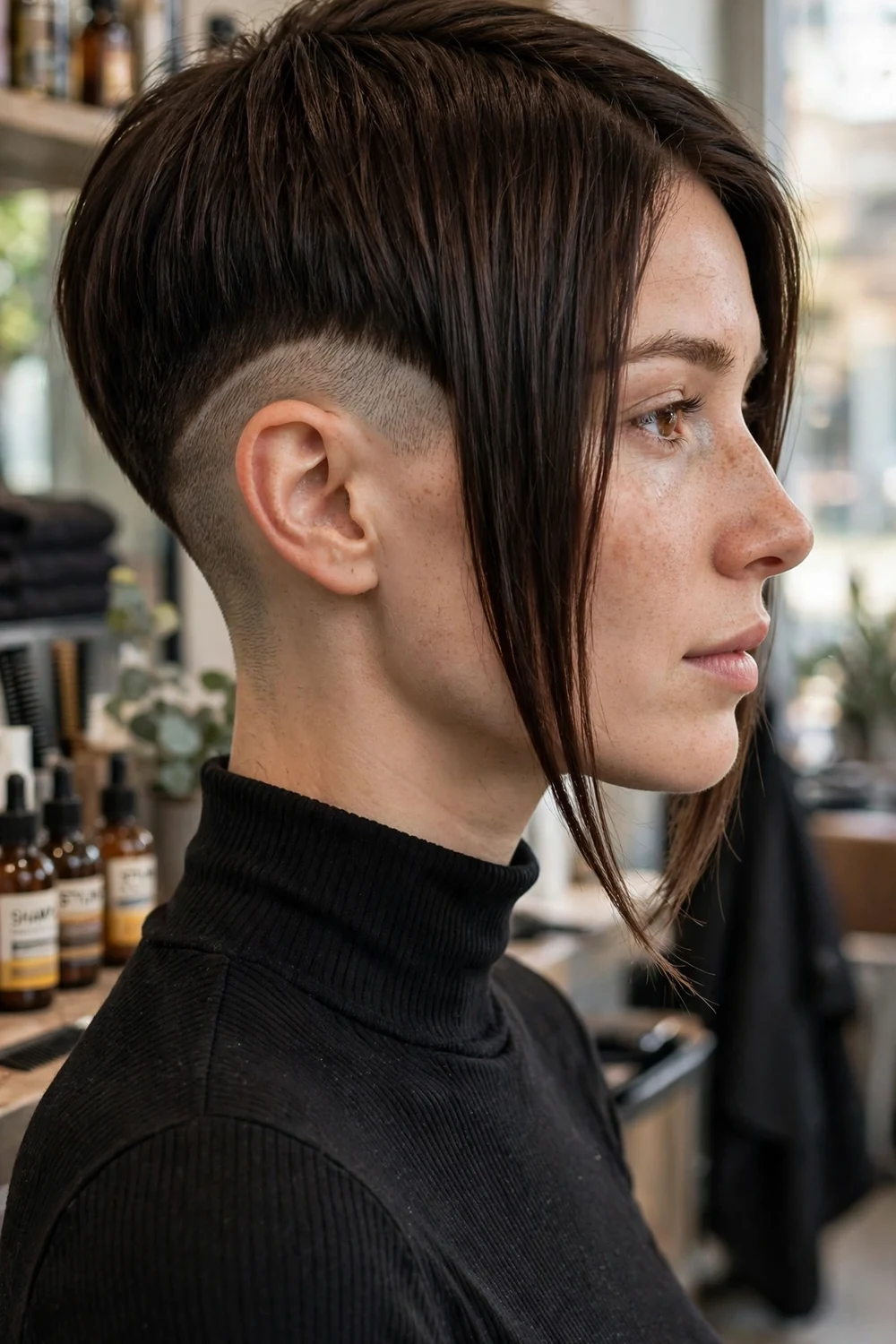
Both the side and the nape are shaved while the front angles down toward the chin. The long front keeps a bob outline at the face and the clipped back keeps the cut light.
This version removes a lot of bulk, so it suits thick, straight, and wavy hair best. The angled front frames a square jaw well and adds length to a round face. Daily styling is fast because only the front section needs heat.
Try this: Keep the front angle gradual if your hair curls. A steep angle on curls springs up and can look uneven between cuts.
Difficulty: Medium · Cost: $$
7. Highlighted Long Pixie Bob with a High Undercut
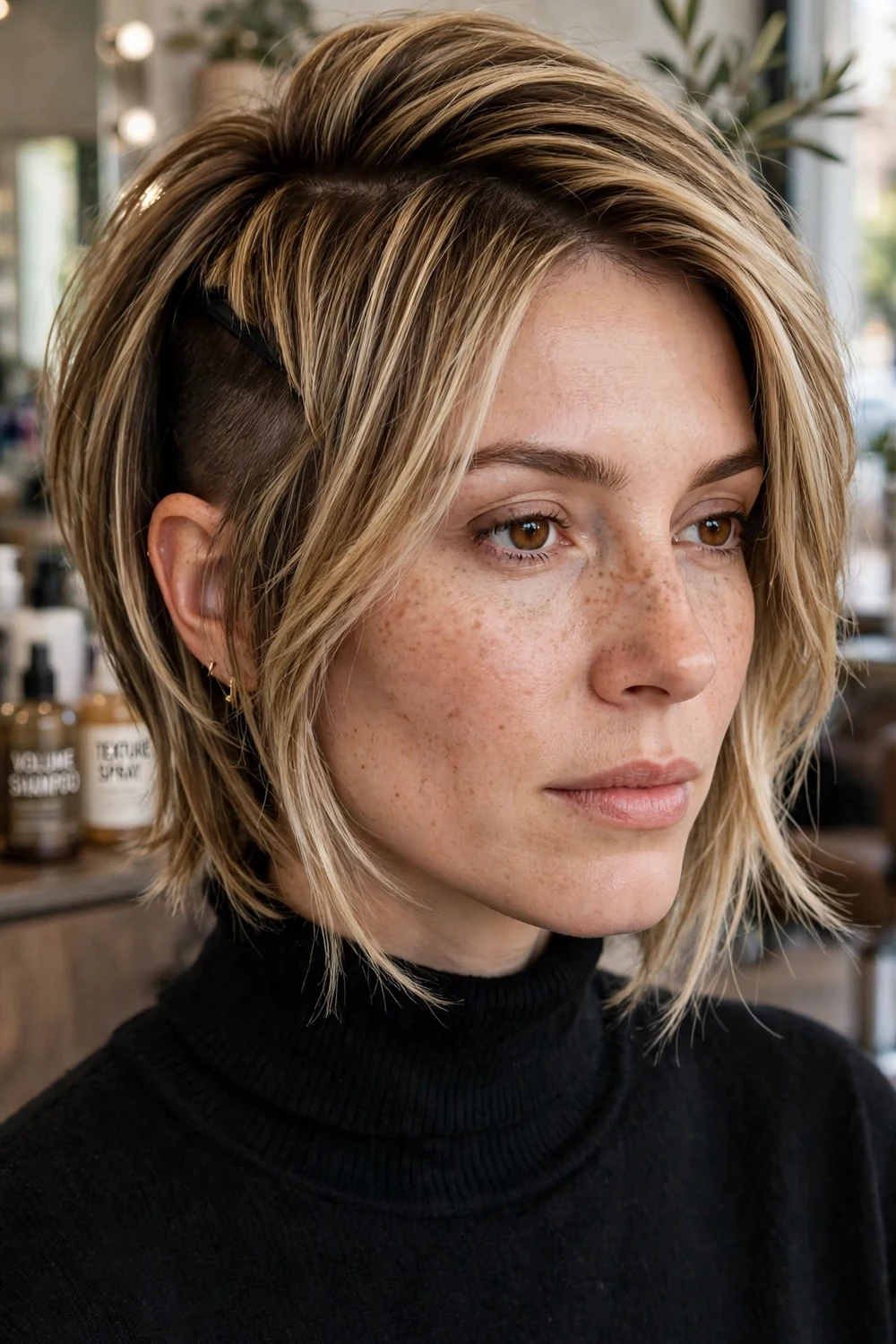
The undercut is cut higher at the sides and back while the top stays long enough to reach the jaw. Highlights run through the top layers and catch the light where the layers separate.
Length on top gives you more styling choices, including tucking, pinning, and a small half-up style. The high undercut keeps the sides from widening, which helps thick hair hold a narrower shape. Highlights need a toner refresh between full color visits.
Try this: Ask your colorist to keep highlights off the clipped section. Light pieces on very short hair can look spotty as they grow.
Difficulty: Medium to High · Cost: $$$
8. Chin-Length Pixie Bob for Fine Hair with a Low Undercut
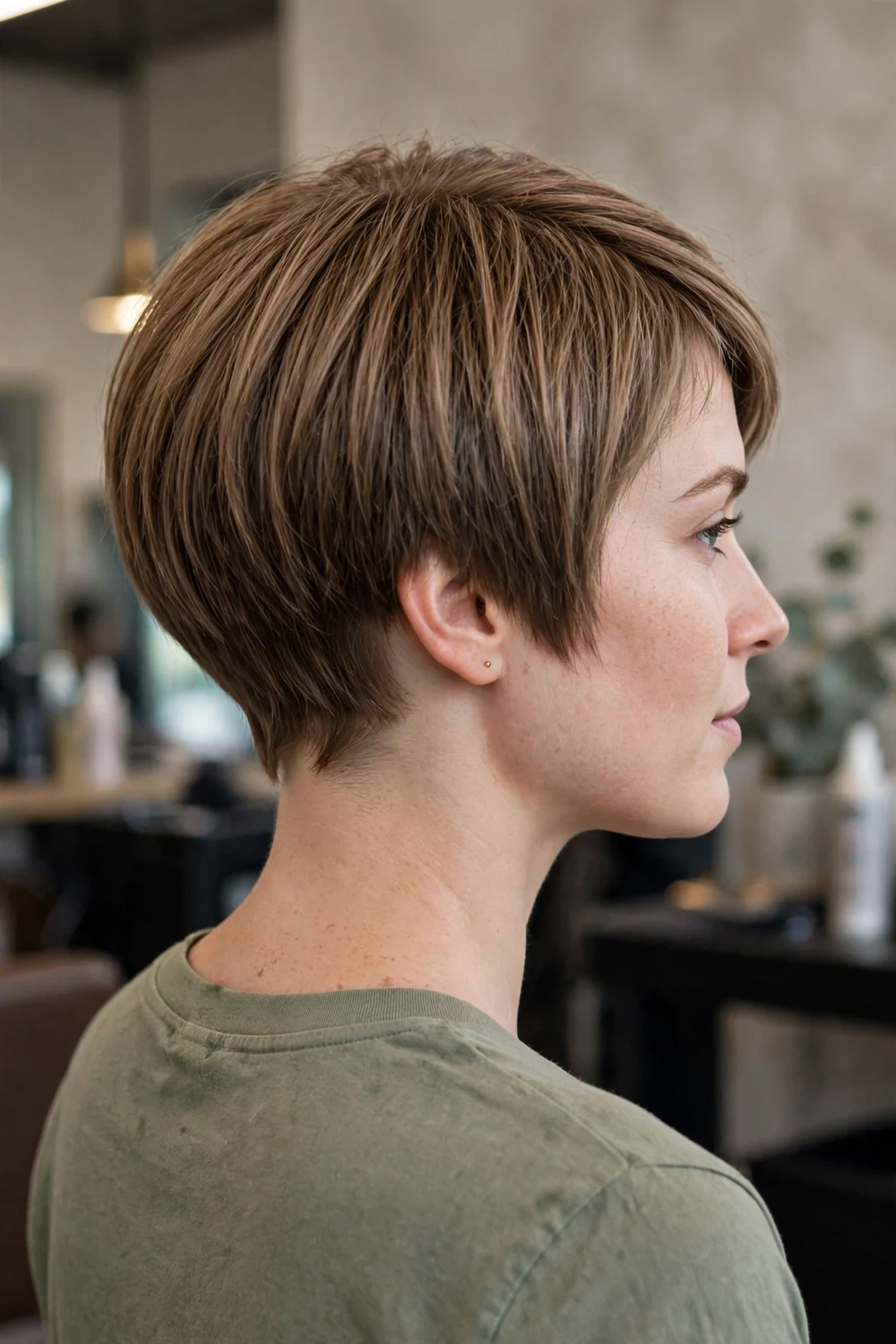
A low, subtle undercut at the nape supports a chin-length top with blunt ends. The clipped section is small, so fine hair keeps as much visible length and fullness as possible.
If you are comparing options, the pixie haircuts for fine hair guide shows how layer length changes fullness. For this cut, use short layers only at the crown and keep the sides fuller. A volumizing mousse at the roots before drying helps the top sit up.
Try this: Avoid heavy oils and thick creams on this version. They weigh fine ends down and make the undercut look stringy.
Difficulty: Low to Medium · Cost: $$
9. Thick Layered Pixie Bob with Long Side Bangs
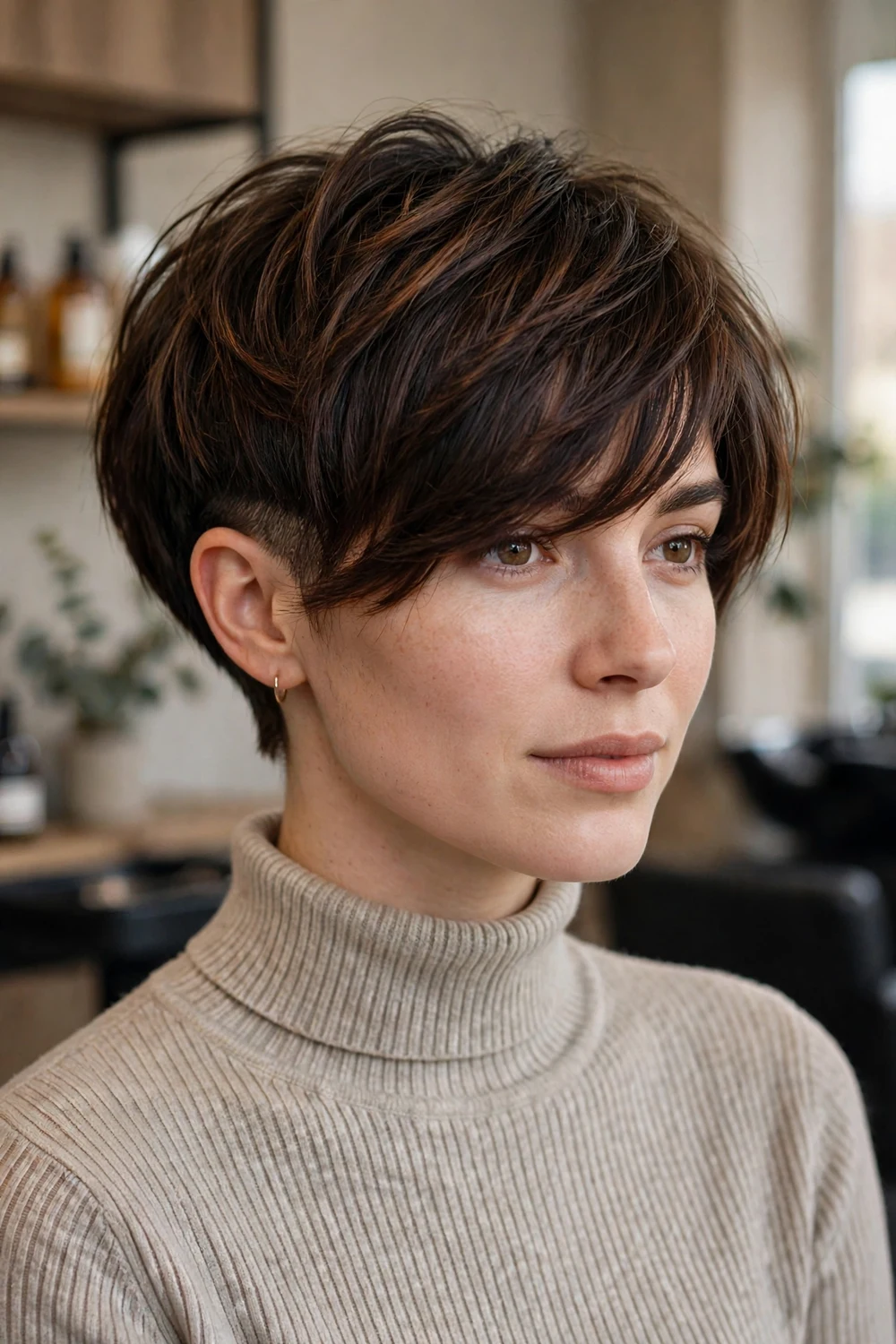
Long side bangs soften the face while layers and a nape undercut remove bulk from thick hair. The back sits close, the crown keeps movement, and the bangs can be swept or tucked.
Readers with dense hair may also like the pixie bob haircuts for thick hair collection for more debulking ideas. For daily styling, dry the bangs first with a brush sweeping them to the side, then rough-dry the rest. A light texturizing spray adds separation without shine.
Try this: Ask for internal layers in the back rather than short layers on the surface. Internal work removes weight while the outer shape stays smooth.
Difficulty: Medium · Cost: $$
10. Textured Pixie Bob with Choppy Layers and a Nape Undercut
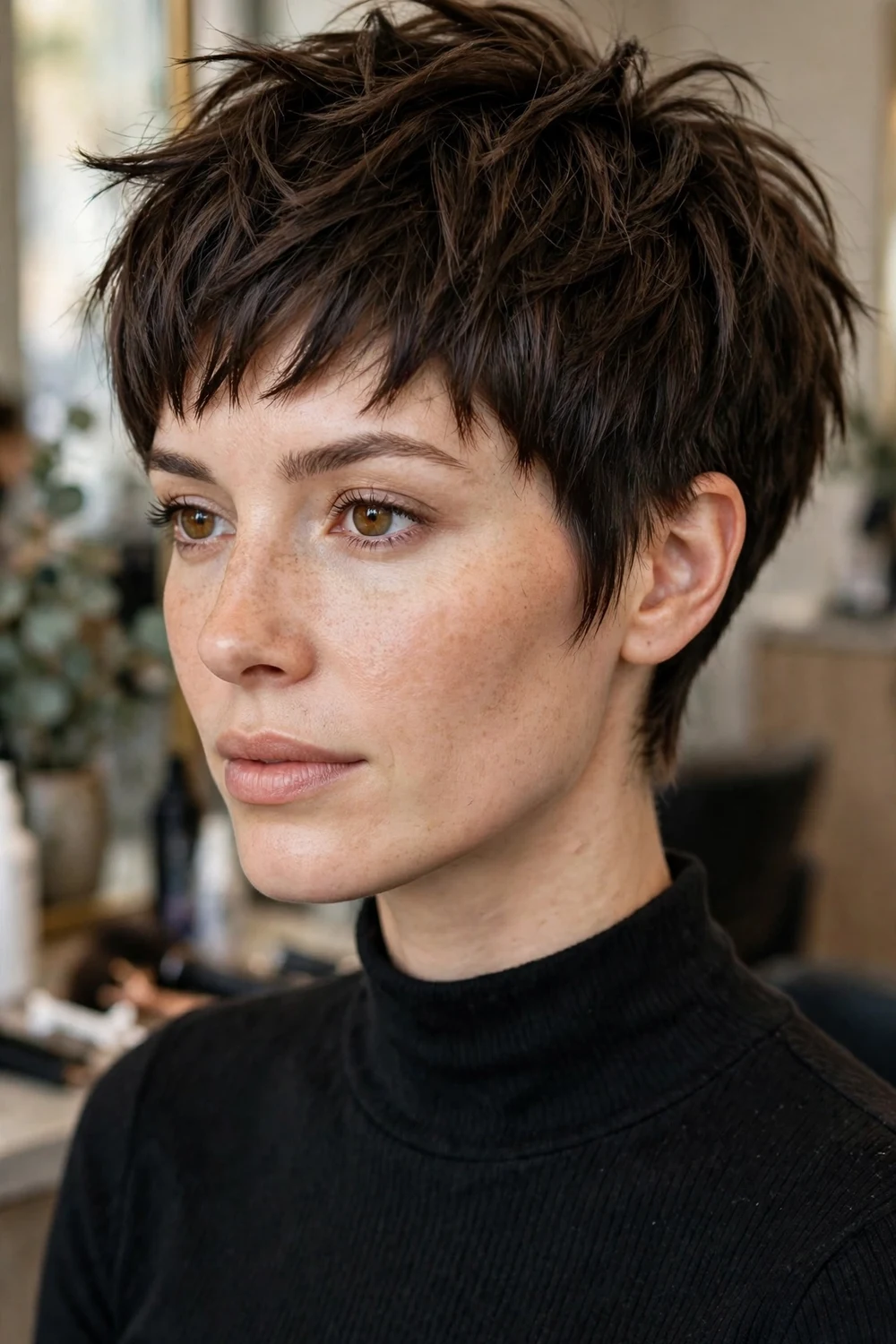
Choppy, point-cut layers run through the top and a clipped nape keeps the back neat. The piecey ends give straight hair movement and give wavy hair a clear shape to fall into.
This is one of the easiest versions to style at home. Work matte paste through dry hair and pinch the ends apart. The choppy finish also hides grow-out well, so the trim cycle can stretch to five or six weeks for many people.
Try this: Take a photo after your first home styling, not just after the salon visit. Show your stylist what you could and could not recreate.
Difficulty: Low · Cost: $
11. Disconnected Pixie Bob with a Deep Side Part
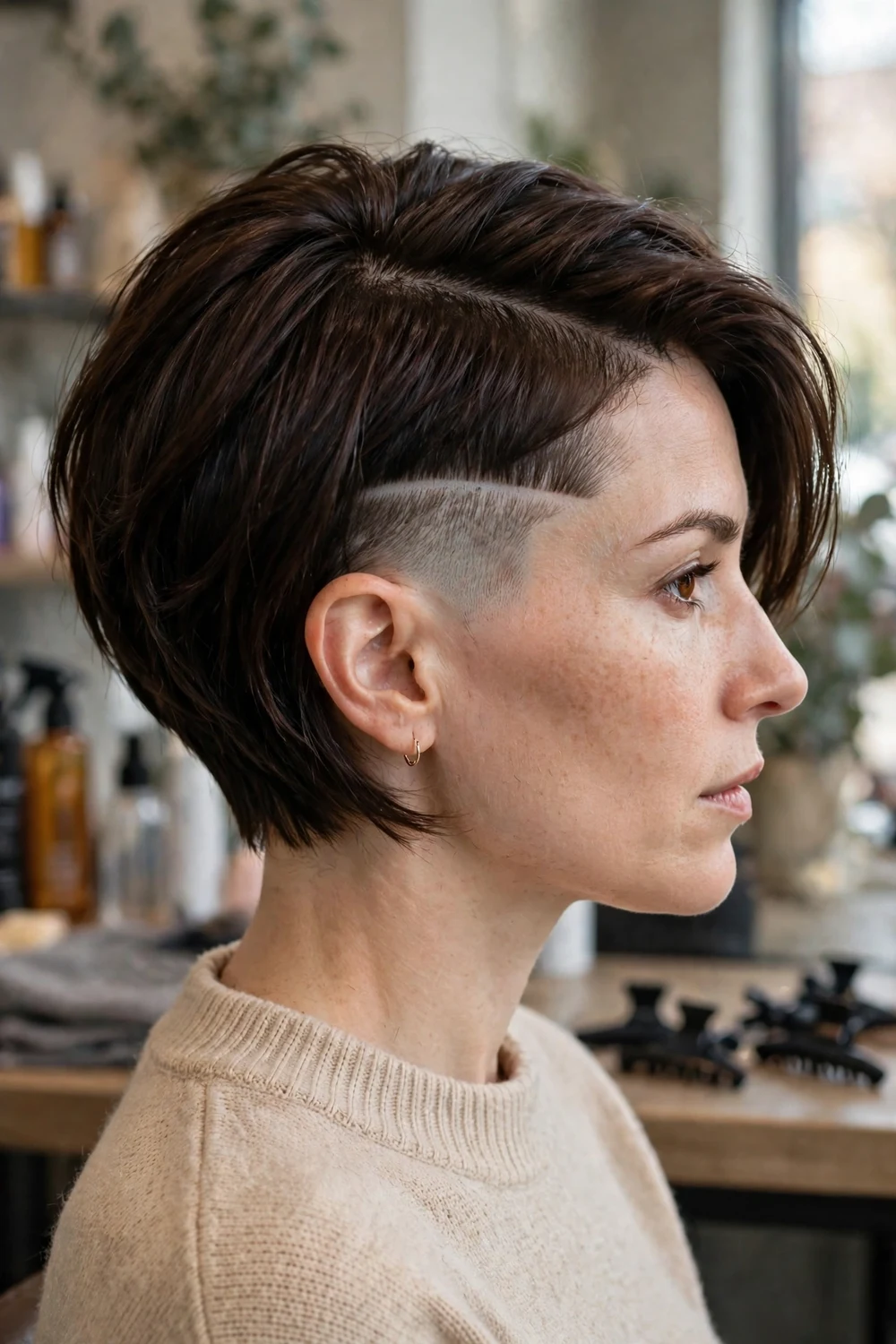
A deep side part sits over a disconnected undercut, where the clipped side and the long top meet at a sharp, unblended line. The top falls over the line and creates a strong sweep.
The disconnection is the detail, so blending it out would change the whole cut. It suits straight and lightly wavy hair best because waves soften the line. Keep the top long enough to cover the join when you want a quieter look.
Try this: Wear your part in the same place for the first two weeks. Training the roots early makes the sweep hold with less product later.
Difficulty: Medium · Cost: $$
12. Curly Pixie Bob with a Tapered Undercut

Curls keep length and volume on top while the sides and nape are tapered short. The tapered section follows the head shape and lets the curls on top form a rounded outline.
Ask for the top to be cut dry, curl by curl, because curls shrink as they dry. Use a leave-in cream on wet hair, scrunch, and air-dry or diffuse on low heat. The tapered sides need a refresh every four weeks to keep the outline clean.
Try this: Leave the top longer than your target length at the first appointment. You can shorten curls at a second pass, and that order prevents a too-short result.
Difficulty: Medium · Cost: $$
13. Wavy Pixie Bob with a Side Undercut
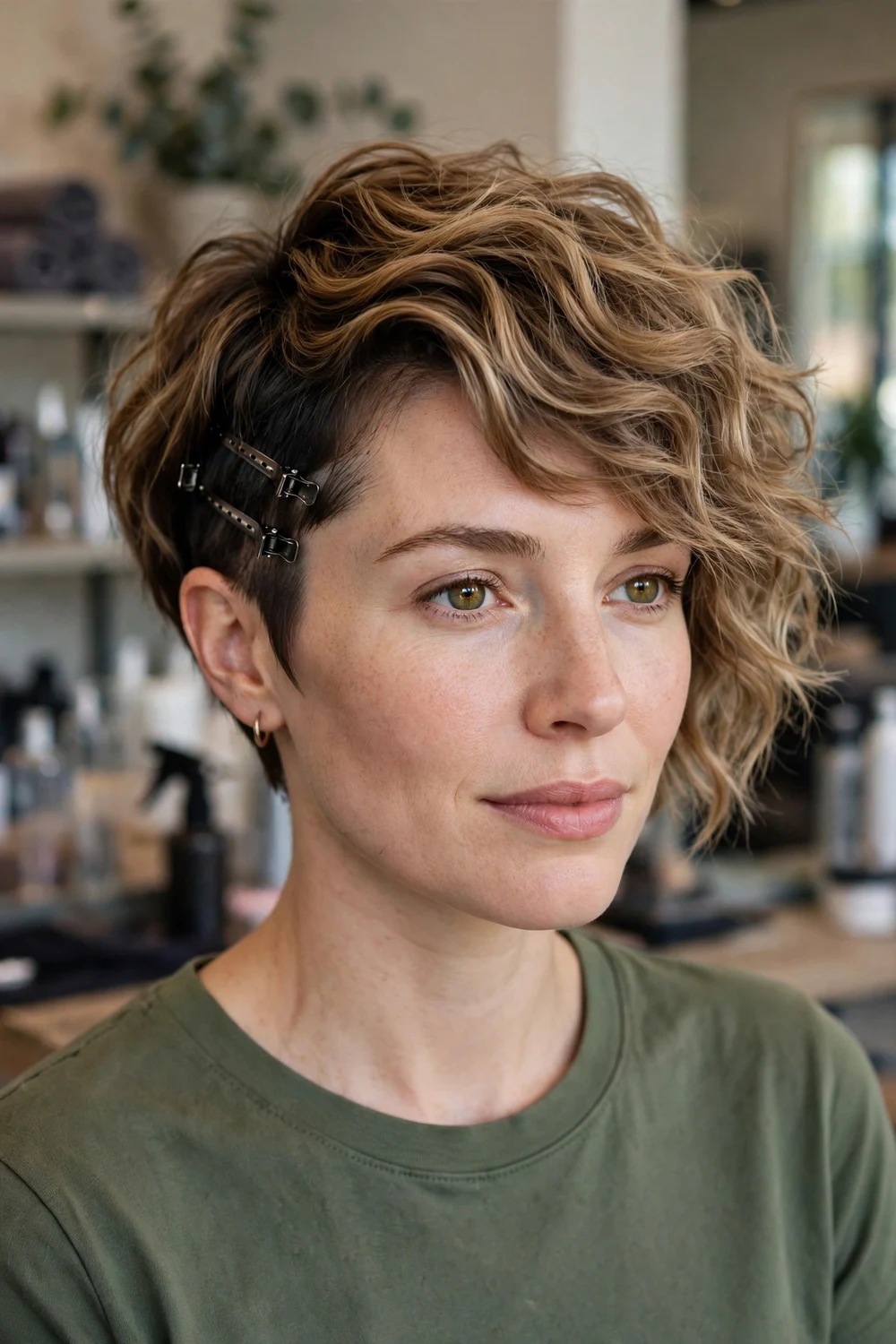
Soft waves cover most of the cut while one side panel is clipped short. The wave pattern stays the focus at the front, and the clipped panel adds contrast at the side.
This version works with natural waves or waves added with a small iron. Scrunch a sea salt spray into damp hair for a loose finish, or smooth the waves with a brush for a tidier day. The side panel can be hidden by sweeping more hair over it.
Try this: Cut the waves a little longer than you think you need. Wave patterns tighten after washing and the length will sit higher.
Difficulty: Low to Medium · Cost: $$
14. Sleek Straight Pixie Bob with a Clean Undercut

The top is worn smooth and straight over a clean undercut at the nape and lower sides. Sharp edges and a smooth surface give this version the most polished finish on this list.
It suits straight hair and relaxed hair that sits flat without much effort. Use a heat protectant, blow-dry down with a paddle brush, and finish with a flat iron only on the top layer. Wavy and curly hair can wear it, but daily heat will add time and upkeep.
Try this: Keep a small amount of light serum on the ends only. Serum at the roots will make a short sleek cut look flat by midday.
Difficulty: Medium · Cost: $$
15. Two-Tone Pixie Bob with a Dark Underlayer

A dark underlayer sits under lighter top layers, so color does the work that a stronger shave does in other versions. Lifting the top, tucking a side, or sweeping the fringe shows the dark section.
You can build this with your natural base as the dark layer and light pieces only on top, which lowers color cost and grow-out lines. The contrast reads best on straight and wavy hair where the layers separate cleanly.
Try this: Choose tones with a clear gap between them. Close shades blur together on short hair and the two-tone effect gets lost.
Difficulty: Medium · Cost: $$$
16. Pixie Bob with Wispy Bangs and a Soft Undercut
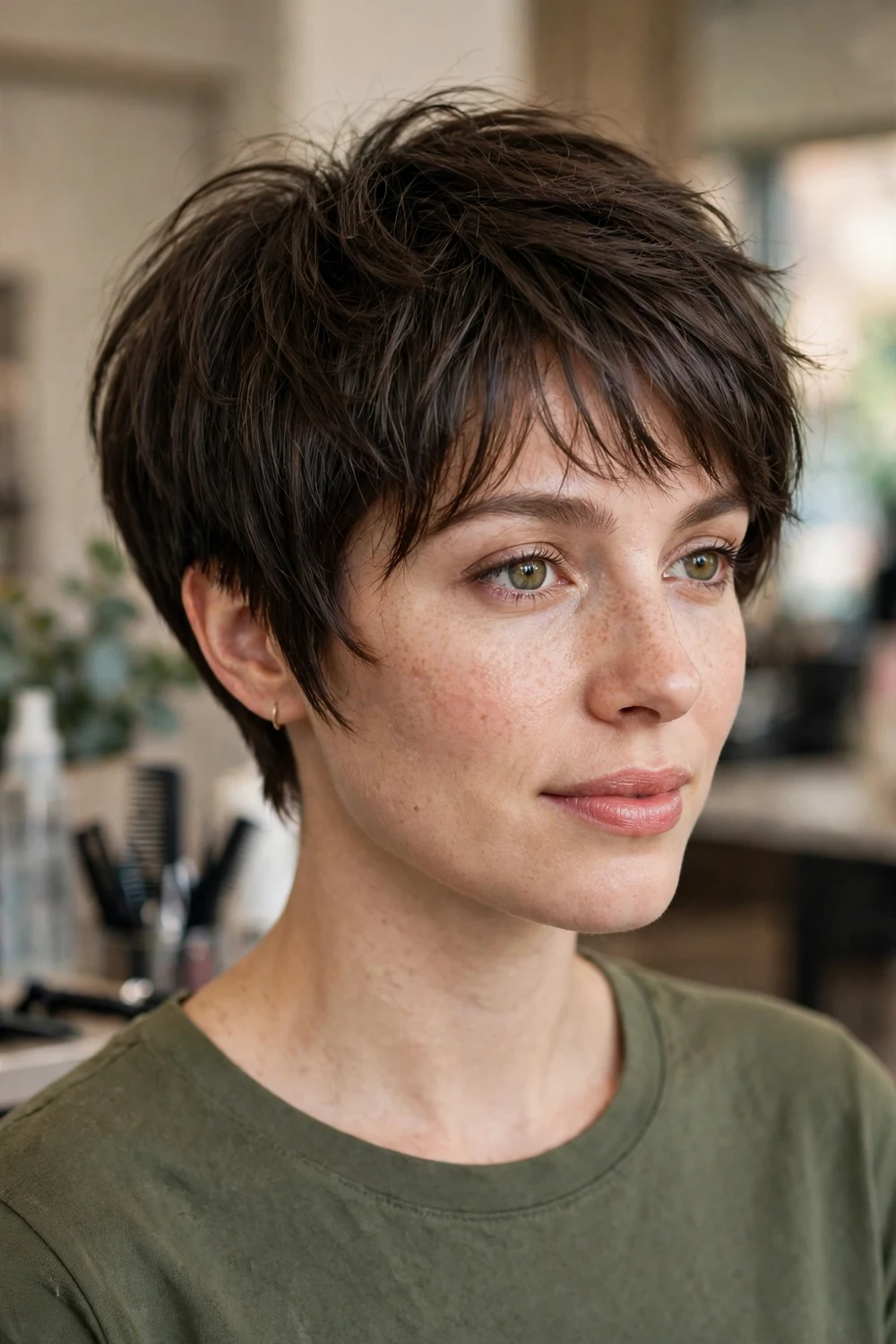
Wispy bangs and a soft, low undercut keep this version light at both the front and the back. The fringe is cut into fine points that sit on the forehead without a heavy line.
Wispy bangs suit fine hair and smaller foreheads well because they add coverage without weight. They also grow out into a side fringe, which gives you a second look before the next cut. Trim the fringe little and often rather than waiting for a full appointment.
Try this: Ask for the bangs to be cut dry and longer at the sides. That shape blends into the bob length as it grows.
Difficulty: Low to Medium · Cost: $
17. Pixie Bob with Curtain Bangs and a Nape Undercut

Curtain bangs part in the middle and curve away from the face while the nape is clipped short under bob length. The front feels soft and open, and the back stays light and tidy.
Curtain bangs need a quick blow-dry away from the face to hold the curve. A round brush for two minutes is enough for most hair types. This fringe suits oval, heart, and square faces and can be swept to one side on days you want a change.
Try this: Blow-dry curtain bangs forward first, then sweep them back. That order gives the roots lift and helps the curve last.
Difficulty: Low to Medium · Cost: $$
18. Silver Pixie Bob with a Faded Undercut
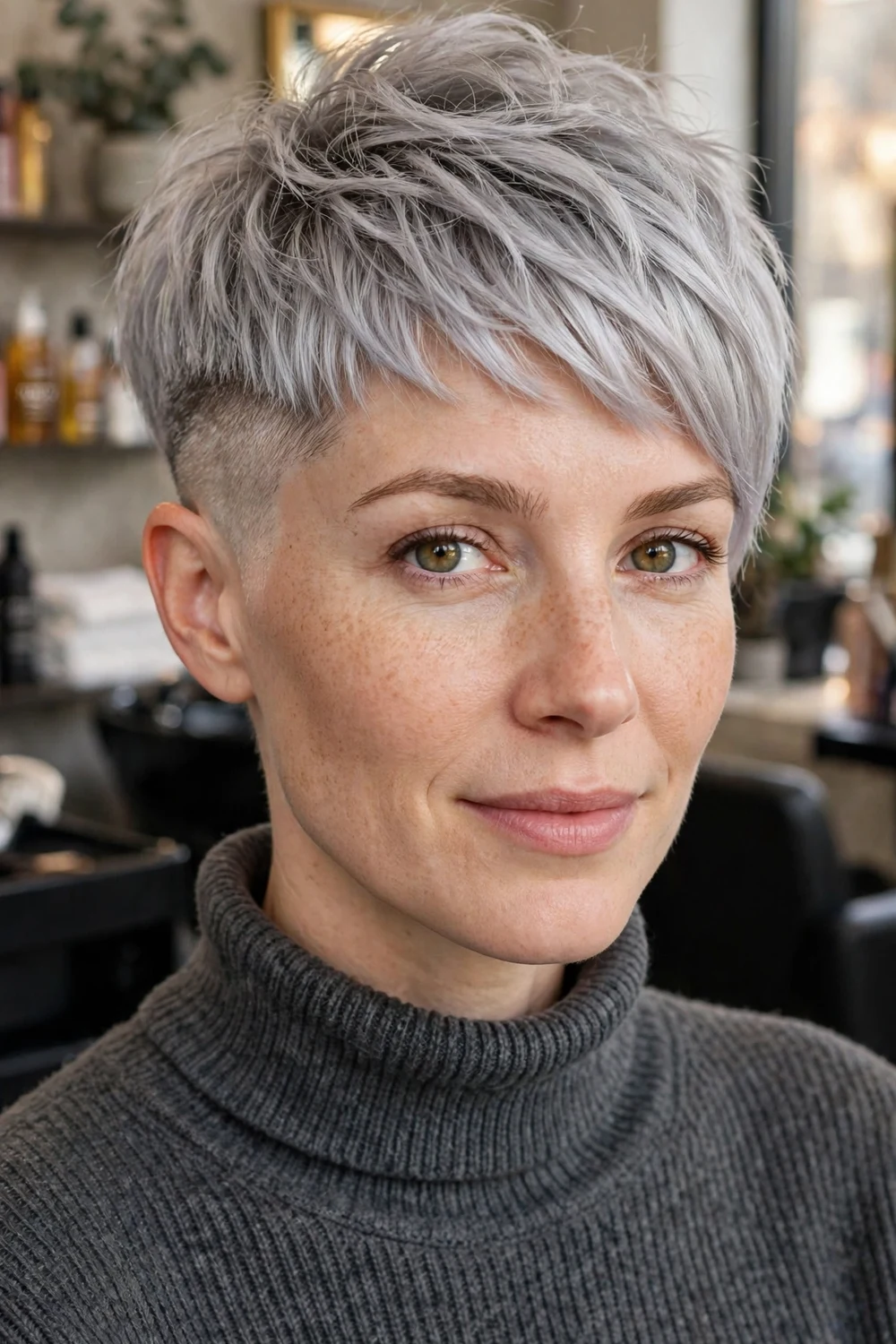
Silver length on top fades into a skin-close fade at the sides and nape. The gradual fade keeps the contrast smooth, and the silver tone makes the texture on top easy to see.
This version suits natural gray hair and pre-lightened hair colored silver. Purple shampoo once a week helps manage yellow tones, and a fade needs a refresh every three weeks to stay gradual. Dryness is common on silver hair, so use a weekly conditioning mask on the top length.
Try this: Book the fade and the toner for the same visit. Fresh color on a grown-out fade rarely looks as clean.
Difficulty: Medium to High · Cost: $$$
19. Copper Pixie Bob with Clipped Sides
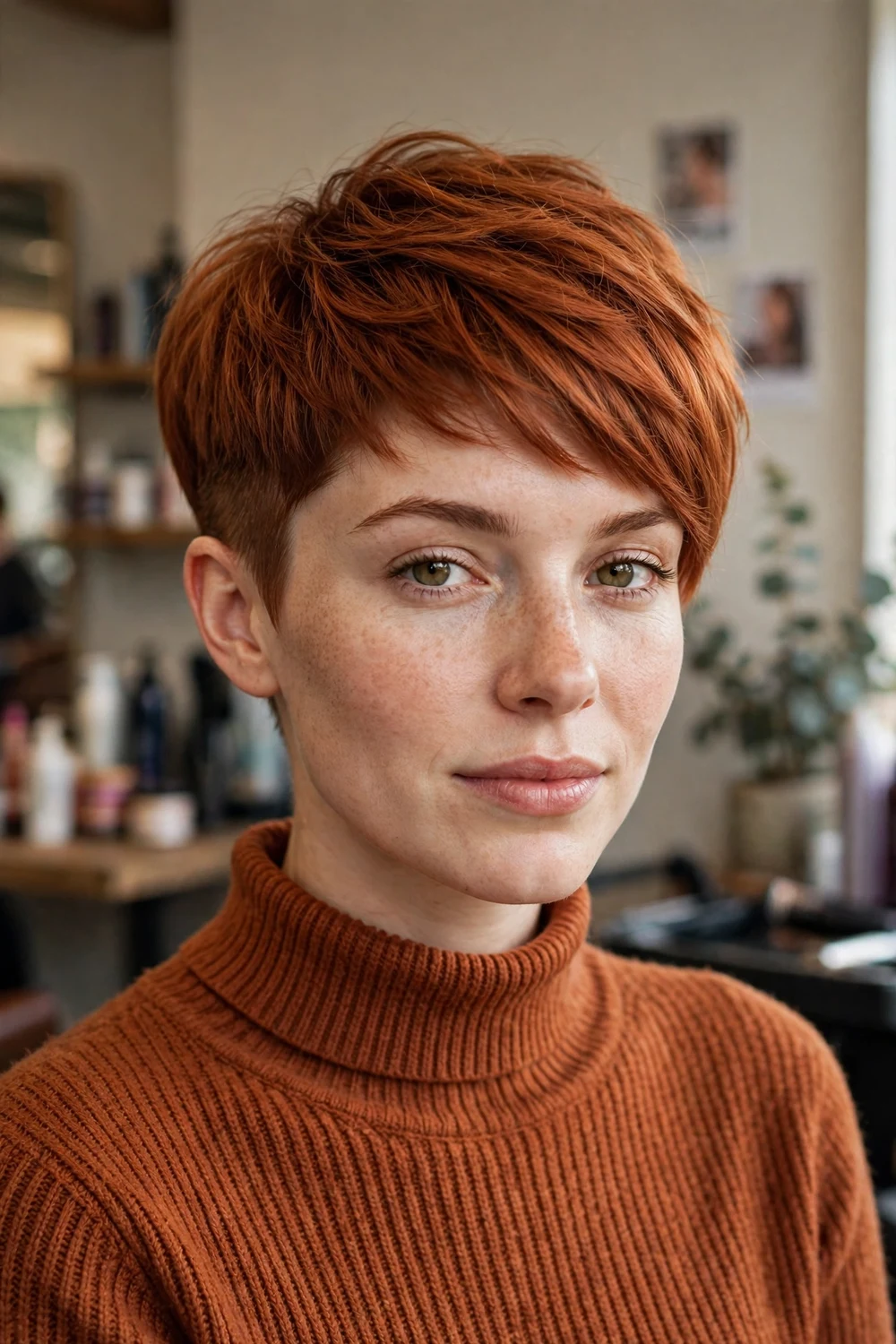
Warm copper covers the longer top while the sides are clipped short and left a touch deeper in tone. The short sides keep the shape tight and let the copper on top stand out.
Copper fades faster than most salon colors, so wash with cool water and use a color-safe shampoo. The cut itself is simple to style with a light cream worked through the top. Clipped sides need a tidy-up every three to four weeks.
Try this: Ask for a copper gloss at your trim visit. A gloss refreshes tone on short hair quickly and costs less than a full color service.
Difficulty: Medium · Cost: $$$
20. Pastel Pink Pixie Bob with a Soft Undercut
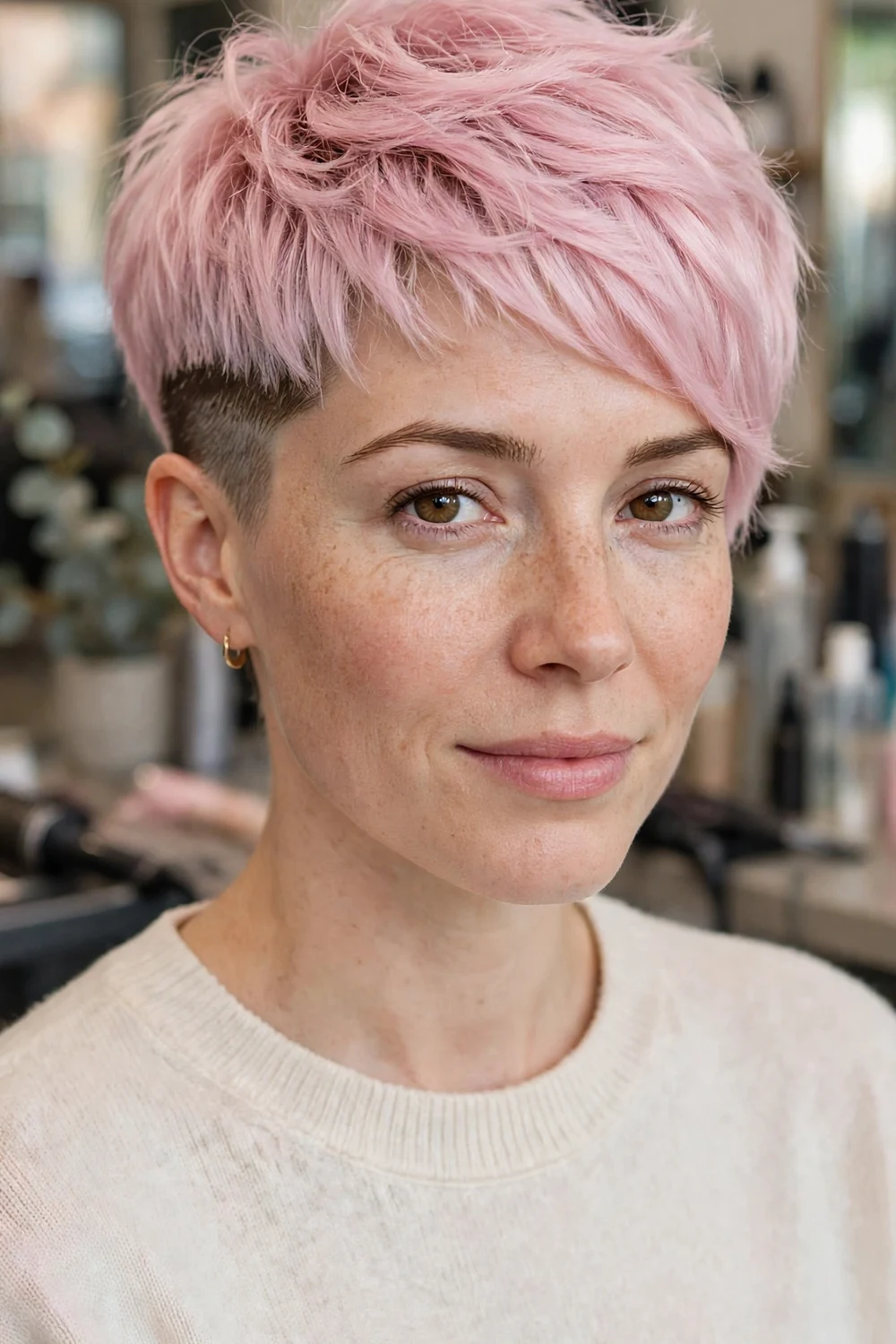
Pastel pink sits on a pre-lightened top while a soft, low undercut keeps the shape light at the nape. The undercut is kept gentle so the color, rather than the shave, carries the look.
Pastel tones fade with every wash, so expect a toner top-up every few weeks. Style with low heat and a protectant to slow fading. This version is a good way to test a fashion color because the short length needs less product and grows out fast.
Try this: Start with a deeper pink than your target pastel. It will fade down to the softer tone and last longer between visits.
Difficulty: Medium to High · Cost: $$$
21. Spiky Crown Pixie Bob with Faded Sides

The crown is cut into short spikes while the front keeps bob length and the sides fade down. The mix gives height on top without losing the face-framing length that defines a pixie bob.
Spikes need a strong matte product worked into dry hair, lifted up with your fingertips. This version suits thick and medium hair with some natural lift at the roots. Fine hair can wear it with shorter spikes and a volumizing powder at the crown.
Try this: Apply product to the crown only. Product on the front length will pull down the bob shape you are trying to keep.
Difficulty: Medium · Cost: $$
22. Messy Shaved Pixie Bob with Piecey Layers
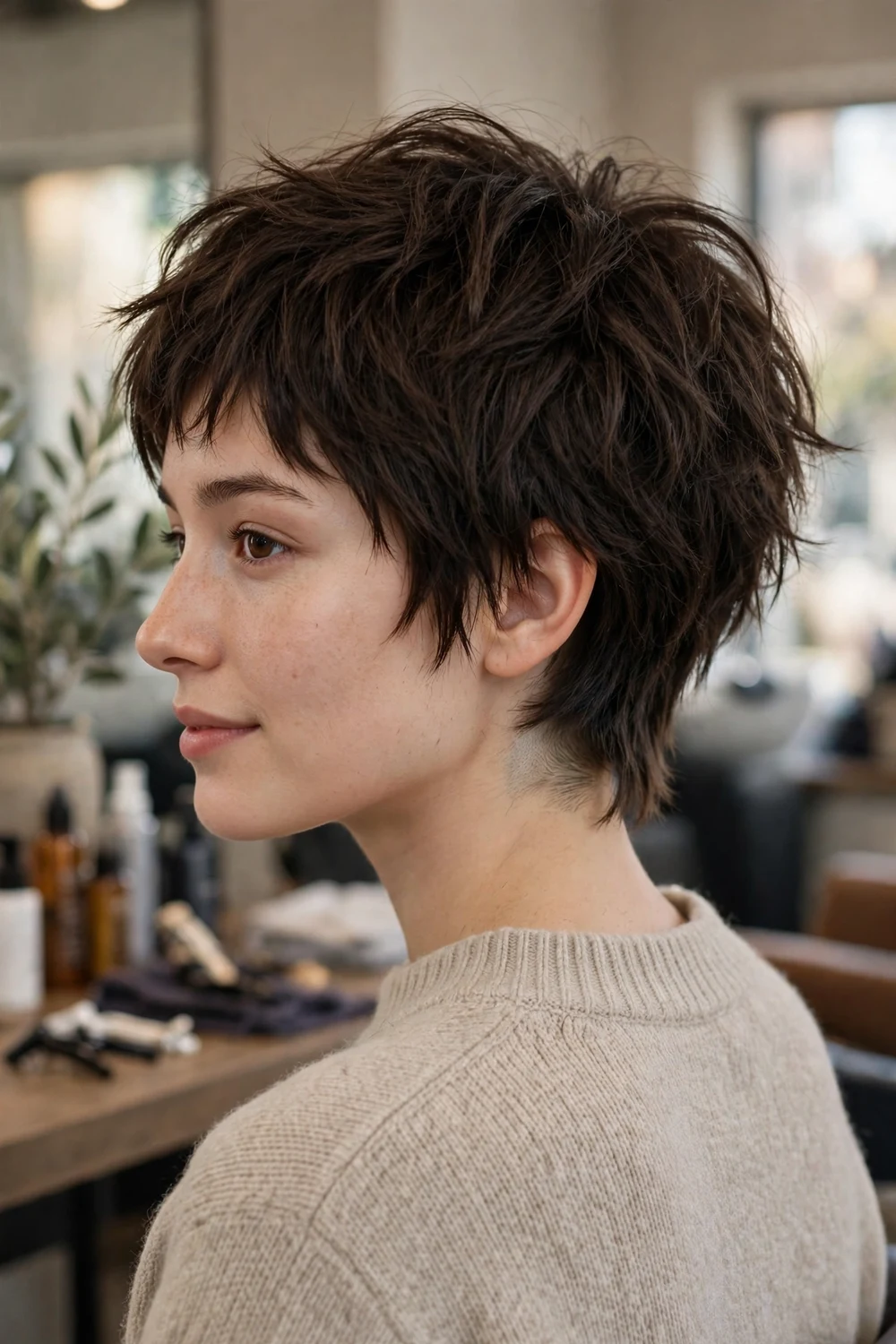
Piecey, uneven layers sit over a shaved nape section for a deliberately messy finish. The ends are left varied in length, and the shaved section keeps the mess from looking bulky at the back.
This is a low-effort morning cut. Finger-dry, add texture spray, and pinch a few ends. It suits wavy and thick hair that already has movement, and it hides an uneven grow-out better than a sleek version does.
Try this: Keep one tidy option in mind for formal days. A side part and a smooth cream can calm this cut down in five minutes.
Difficulty: Low · Cost: $
23. Pixie Bob with a Shaved Design at the Nape
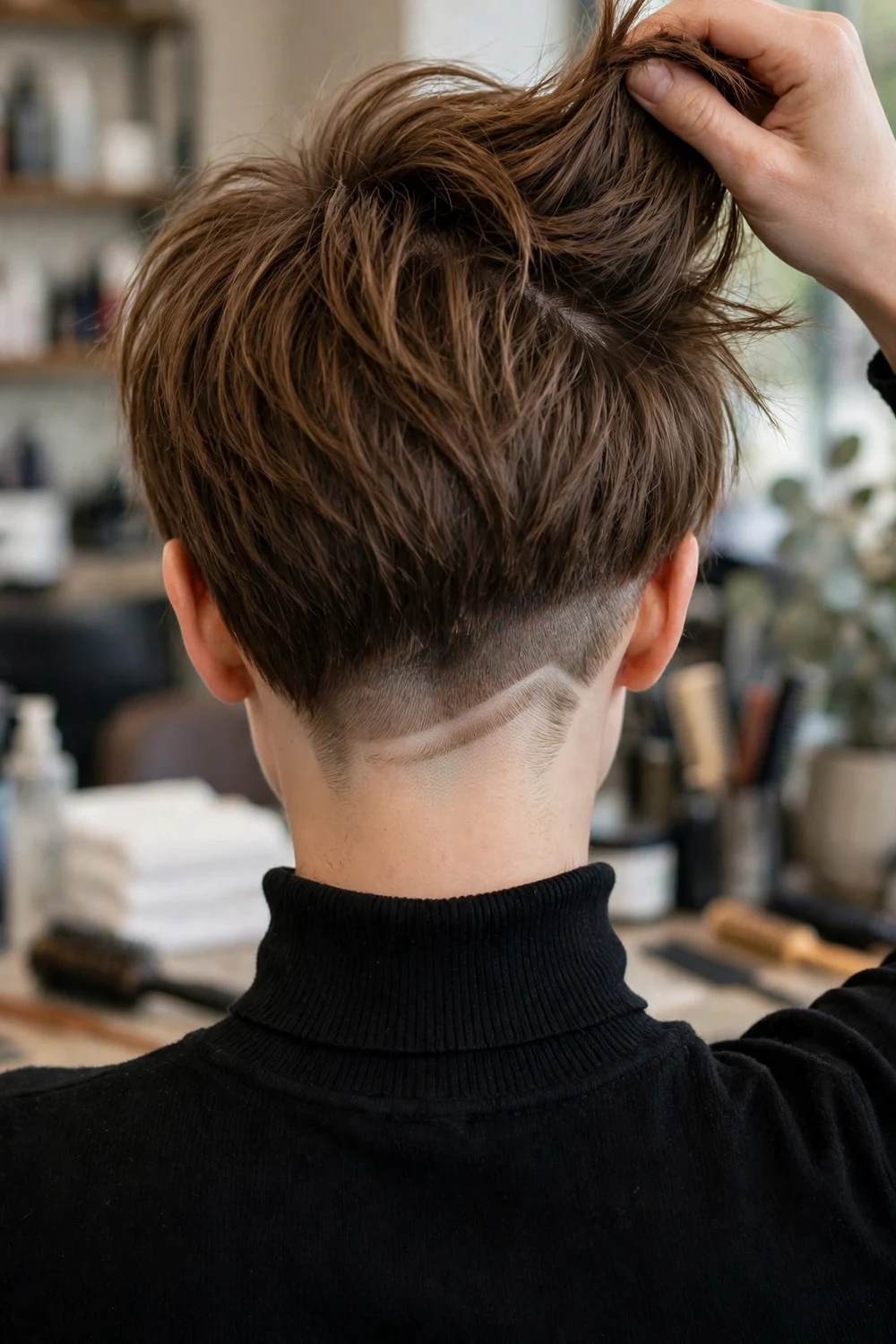
A simple shaved line or small shape is cut into the nape undercut while the top keeps standard pixie bob length. The design shows when the hair is lifted or pinned and stays hidden when the top hangs down.
Designs grow out in about two weeks and blur as the hair lengthens, so treat this as a short-term detail added at a regular trim. One clear line reads better and lasts longer than fine, detailed work on most hair types. For more debulking and shape ideas, see the pixie haircuts for thick hair roundup.
Try this: Choose the design with your stylist before the clippers start. Changing a shaved line halfway through leaves uneven lengths.
Difficulty: Medium · Cost: $$
24. Textured Pixie Bob for Women Over 50 with a Soft Undercut
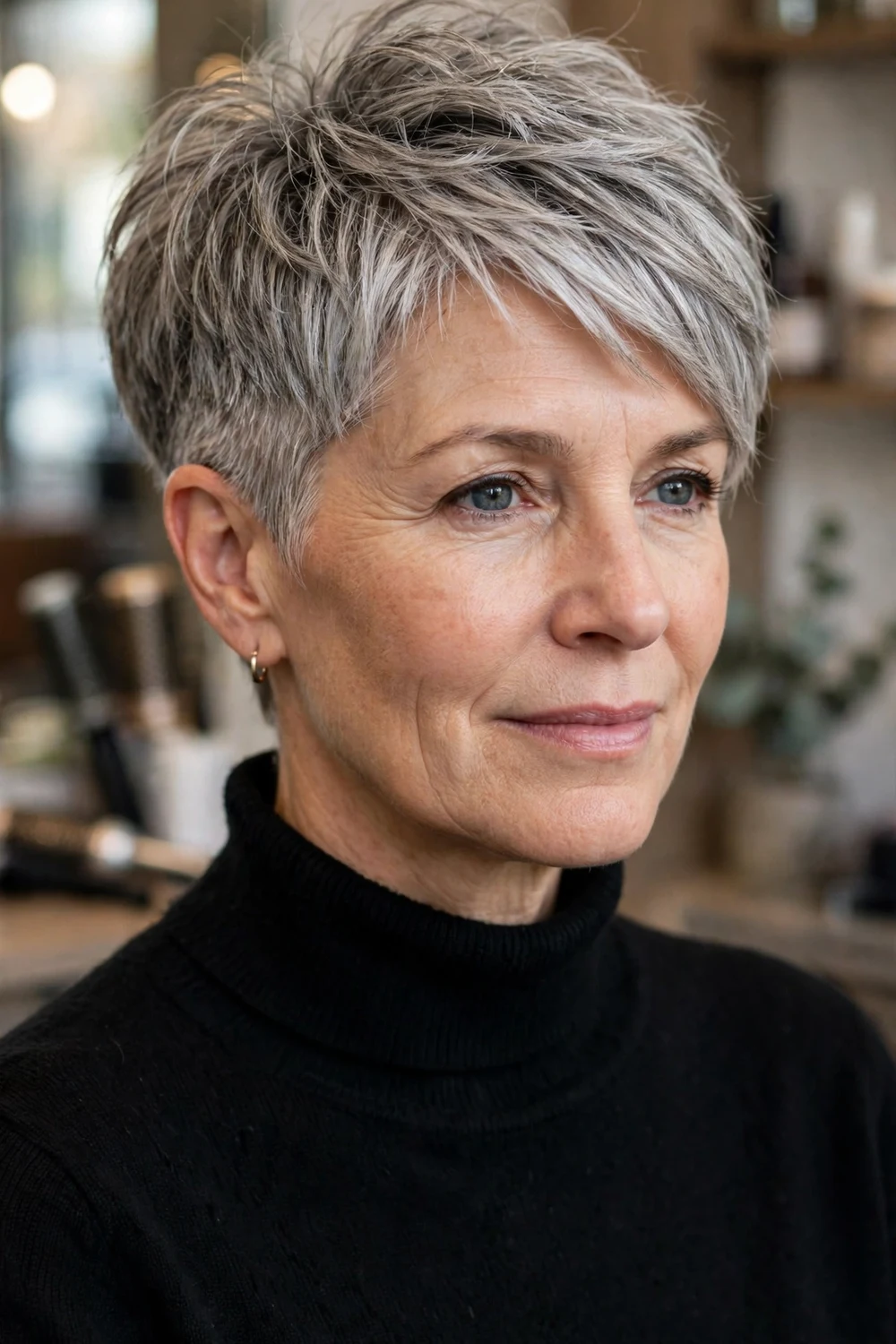
Soft texture on top and a low, gentle undercut at the nape keep this version light without a harsh shaved line. The top length reaches the ears and can be worn with a soft side fringe or a middle part.
Texture at the crown helps fine or thinning hair look fuller, and the soft undercut stops the back from sitting heavy on the neck. Styling is a light mousse at the roots and finger-drying. The gentle undercut grows out softly, so the trim cycle is more forgiving than a fade.
Try this: Ask for texture with scissors rather than a razor if your hair is fine. Scissor texture keeps the ends stronger and less wispy.
Difficulty: Low to Medium · Cost: $$
More Ideas to Explore
Frequently Asked Questions
What is an undercut pixie bob?
An undercut pixie bob keeps bob length on top, usually around the ears and jaw, while the hair at the nape, sides, or temples is clipped much shorter underneath. The longer top can cover the clipped section for a softer look or be tucked and lifted to show it. The cut sits between a pixie and a bob in length.
How often does an undercut pixie bob need trimming?
Most versions need a full trim every 4 to 6 weeks to keep the top length and the undercut in balance. Clipped panels and fades grow out fastest and often need a tidy-up every 3 to 4 weeks. Softer, low undercuts grow out more gently and can wait until the full trim.
Does an undercut pixie bob work on thick hair?
Yes. Thick hair often benefits the most because the undercut removes bulk at the nape and sides while the top keeps its shape. Ask for internal layering in the back as well, so the top sits closer to the head. Without that weight removal, thick pixie bobs can push out at the sides.
Can an undercut pixie bob work on fine or curly hair?
Yes, with changes to the undercut size and the layering. Fine hair does best with a small, low undercut and blunt ends on top so fullness is kept where it shows. Curly hair does best with a tapered undercut and a top cut dry, curl by curl, because curls shrink as they dry.
How do you style an undercut pixie bob at home?
Start with dry or nearly dry hair. Work a pea-sized amount of matte paste or light cream through the top with your fingers, pinch the ends for separation, and smooth the sides with the product left on your hands. Most versions take about five minutes, and the undercut section needs no styling at all.
Final Thoughts
Start smaller than you think you need to. A low nape undercut under a classic pixie bob tells you within one trim cycle whether you like the clipped feel, the faster drying time, and the cleaner neckline. From there you can raise the undercut, fade the sides, or add color with a clear sense of what each step adds. I would pick the version that matches your real morning routine, book the tidy-up visit before you leave the salon, and let the cut earn a bolder second version.

