


A shag is one of the most forgiving cuts you can choose after 55. The choppy layers add lift at the crown, soften the outline around the face, and give fine or thinning hair movement that a one length cut cannot. The versions in this list are the classic shag family adapted for older women, with softer texture and controlled layers, so the finish reads polished in daily life rather than wild. Lengths run from a cropped pixie shag to a long shag that keeps the hair below the shoulders.
Every idea below notes where the layers sit, how to style the cut at home, who it suits, and how often it needs a trim. Grey and silver hair feature throughout, since layering is one of the simplest ways to give natural grey shape and dimension. If your hair is fine, look for the ideas that keep the layers longer and the ends fuller. If your hair is thick, look for the versions that take weight out through the interior of the cut.
Key Takeaways
- A shag is defined by choppy layers through the crown and lengths. Feathering is a different technique that flicks the ends outward in smooth, swept layers.
- Fine and thinning hair needs soft, longer layers and fuller ends. Thick hair can take stronger interior layering to remove weight.
- Bob and shoulder lengths are the easiest to maintain, with reshapes at eight to ten weeks for most versions.
- Grey and silver hair suit shag layering well, because the layers give natural grey texture a clear shape and add dimension.
- Ask where the shortest layer will sit before the cut starts. That single layer controls the lift and volume of the whole style.
How to Choose a Shag That Stays Polished
Start with texture control. The classic shag can be cut with heavy separation and razored ends, and that finish suits a younger, edgier brief. For a polished result, ask for point cut ends, blended transitions between layers, and separation that shows when the hair moves rather than all the time. Then match the length to your routine. Short shags style in minutes and need frequent trims. Medium and long shags style more slowly and forgive a missed appointment.
Use the table below to compare the four length families before you settle on an idea from the list.
| Length family | Best for | Daily styling | Trim cycle |
|---|---|---|---|
| Pixie and crop shags | Fine hair, glasses wearers, fastest mornings | Finger styling with cream or paste | 5 to 7 weeks |
| Bob shags | Most face shapes, first time shag wearers | Air dry or quick blow dry | 8 to 10 weeks |
| Medium and lob shags | Grey blending, curtain bangs, tie back length | Light mousse, round brush at the front | 8 to 10 weeks |
| Long shags | Thick hair, keeping length, face framing layers | Conditioning care plus heat protection | 10 to 12 weeks |
1. Soft Shaggy Bob with Wispy Bangs

The shaggy bob is the most requested starting point in this family, and the soft version keeps the choppy layers light rather than heavy. Layers sit from the cheekbones down, the ends are point cut so they taper, and a wispy fringe skims the eyebrows. On grey and silver hair the layering stops the bob from reading as a solid helmet shape.
Styling stays short. Work a pea sized amount of mousse through damp hair, dry with your fingers lifting at the root, and let the ends fall where they want. The cut suits oval and heart shaped faces, and it grows out evenly for eight to ten weeks before the shape needs a tidy.
Try this: ask your stylist to keep the shortest layer at cheekbone level. Layers that start higher can puff out at the sides on fine hair.
Difficulty: Low · Cost: $$ (salon)
2. Shaggy Pixie with Crown Lift

A shaggy pixie keeps the sides and back short while the top carries the choppy texture that defines a shag. The crown layers are cut shorter than the fringe area, so the height sits at the top of the head where most women want lift. The nape is tapered clean, which keeps the outline neat from behind.
This is a wash and go length for many wearers. A small amount of styling cream raked through the top with your fingers is the whole routine on most days. It suits smaller faces and women who wear glasses, since the fringe can be cut to sit clear of frames. Trims land every five to seven weeks to hold the shape.
Try this: bring a photo of your glasses to the appointment if you wear them daily, so the fringe length is cut around the frames.
Difficulty: Low · Cost: $$ (salon)
3. Chin-Length Shaggy Bob

The chin length shaggy bob ends right at the jaw, with choppy layers that flick softly around the chin and draw attention to the cheekbones. The perimeter stays fairly full, so the ends hold their line instead of stringing out. It is a good middle ground for women leaving a classic one length bob who want movement without going short at the back.
Blow dry with a small round brush only at the front if you like polish, or air dry with a light cream for a softer finish. The length suits round and square faces, since the layers at the chin break up width at the jaw. Expect a reshape every eight weeks.
Try this: if your hair is straight, ask for the layers to be cut slightly longer at the front. Straight hair drops as it dries and the front can ride up shorter than planned.
Difficulty: Low to Medium · Cost: $$ (salon)
4. Collarbone Shag with Curtain Bangs

This length lands at the collarbone, long enough to pull back and short enough to keep its shape. Curtain bangs part in the middle and sweep to each side, opening the face and blending into the first layer at the cheekbones. The layers through the lengths stay blended and smooth, which is what keeps this version looking polished at work or at formal events.
Curtain bangs ask for a minute of direction with the dryer, swept away from the face on each side. The rest of the cut air dries well with a light leave in conditioner. It suits long and oval faces, and the fringe softens a strong forehead line. Readers comparing fringe options can also look at the short layered hairstyles for women over 60 roundup for shorter lengths with similar face framing.
Try this: ask for the curtain bangs to start at the cheekbones rather than the nose if you want the lowest upkeep version. Longer curtain pieces blend in as they grow.
Difficulty: Medium · Cost: $$ (salon)
5. Medium Shag for Natural Grey Hair

A medium shag built for natural grey hair uses gentle crown shaping and wispy layers near the jaw and neck. Grey hair often carries more texture and wiriness than pigmented hair, and choppy layers work with that texture instead of fighting it. The cut gives movement without removing so much weight that the ends look thin.
Wash day styling is simple: a smoothing cream on damp hair, then air dry or diffuse on a low setting. Grey hair can look dull when it is dry, so a weekly moisture mask keeps the layers lying well. Trims every eight to ten weeks keep the ends clean. For color based grey options, the gray hair with lowlights guide shows how lowlights add depth through a cut like this one.
Try this: ask your stylist to cut the layers dry at the end of the appointment. Grey texture changes as it dries, and a dry check catches pieces that sit too heavy.
Difficulty: Low · Cost: $$ (salon)
6. Silver Shaggy Bob with Layered Fringe

The silver shaggy bob keeps fuller sides for a balanced, rounded shape and pairs them with a layered fringe that opens the face. On bright silver and white hair, the choppy layers catch light at different angles, which gives the color dimension without any dye. The back is cut with stacked layers at the nape so the shape holds between appointments.
A purple toning shampoo once a week keeps silver hair from picking up yellow tones from water and sun. Styling is a quick blow dry with the fingers or a paddle brush, since the cut does most of the shaping. It suits fair and medium skin and reads smart with very little daily work.
Try this: if your silver hair is fine, ask for the sides to be left fuller and the layering kept mostly at the crown. Full sides protect the outline.
Difficulty: Low to Medium · Cost: $$ (salon)
7. Shaggy Lob with Soft Layers

The shaggy lob falls near the shoulders and takes weight out through soft, placed layers while keeping enough length for a low ponytail. The layers are longer and more blended than in a classic short shag, so the finish reads smooth rather than tousled. Caramel and honey tones through the layers show the cut clearly, though it works just as well in one solid color.
This length suits almost every face shape, which is why stylists reach for it as a first shag. Style with a large round brush for a smooth finish, or scrunch with a light mousse for waves. A reshape every ten weeks is typical, and the grow out phase is forgiving if you stretch it further.
Try this: ask for the front pieces to be cut a touch longer than the back. The small difference keeps the lob from swinging forward when you move.
Difficulty: Medium · Cost: $$ (salon)
8. Long Shag with Face-Framing Layers

A long shag keeps length below the shoulders and earns its shape from choppy layers through the mid lengths and a set of shorter face framing layers at the front. The contrast between the short top layers and the longer base is what gives a long shag its movement. Worn by women who are not ready to give up length, it lightens thick hair and adds body to hair that has thinned at the crown.
Long layers need a little more care. Use a heat protectant before any hot tool work, and keep the ends conditioned, since the longest hair is also the oldest. A trim every ten to twelve weeks keeps the layers separate. The cost band runs higher here because long hair takes more cutting time at most salons.
Try this: ask your stylist to show you the shortest top layer against your cheek before cutting. That one layer decides how much volume the whole cut will have.
Difficulty: Medium · Cost: $$$ (salon)
9. Shoulder-Length Shag with Full Bangs

A full fringe paired with a shoulder length shag frames the whole face. The bangs are cut soft and a little piecey at the ends, so they sit lightly rather than as a heavy block. Choppy layers through the body of the cut add volume at the crown, and the combination works well with salt and pepper hair, where the fringe shows the color mix at the front.
Bangs are the upkeep here. Plan a quick fringe trim every four to six weeks, which many salons do free or cheaply between full cuts. On busy mornings, only the fringe needs a pass with the dryer while the rest can air dry. The style suits oval and long faces and can soften a high forehead.
Try this: if you have a strong cowlick at the front hairline, tell your stylist before the fringe is cut. The parting may need to shift slightly off center.
Difficulty: Medium · Cost: $$ (salon)
10. Wispy Medium Shag for Fine Hair

Fine hair needs a lighter hand with a shag. This version uses soft, longer layers and wispy ends, with the shortest layers kept long enough that the ends stay full. The result is movement and a little lift at the crown without the see through ends that heavy chopping can cause on fine hair. On silvery white hair the wispy finish reads soft and light.
Use lightweight products only. Heavy creams and oils flatten fine layers within hours, while a light mousse or root spray holds the shape. Readers with fine hair can compare this cut with the trendy shag haircuts for fine hair collection, which leans toward bolder texture, while this version keeps the texture quieter for a more classic finish.
Try this: ask for razor work to be kept off the ends if your fine hair frizzes easily. Scissor point cutting gives wispy ends that stay smoother.
Difficulty: Low · Cost: $$ (salon)
11. Curly Shag for Natural Texture

Curly hair and shag layers suit each other, because the layers let each curl spring into its own shape instead of stacking into a triangle. A curly shag is cut curl by curl, usually dry, with shorter layers at the crown and longer layers through the sides. Straight bangs can be swapped for a curly fringe that sits above the eyebrows when dry.
Care matters more than styling here. Condition well, add a curl cream to wet hair, and diffuse or air dry without touching the curls while they set. The cut grows out softly because the curl pattern hides the layer lines. Book with a stylist who cuts curly hair regularly, since wet cutting can leave the layers shorter than expected once the curls spring up.
Try this: take a photo of your curls on a good day to the consultation. It shows your stylist your natural curl pattern better than any description.
Difficulty: Low to Medium · Cost: $$$ (salon)
12. Tousled Wavy Shag with Piecey Layers

The tousled wavy shag is the most relaxed version on this list, built on piecey layers that separate into soft waves. It works with a natural wave rather than asking for one to be styled in, and the piecey ends keep the shape from looking heavy at the bottom. Honey blonde and blended grey roots both show the layer separation clearly.
Enhance the wave with a salt free texture spray on damp hair and scrunch as it dries. Avoid brushing the waves out once dry, since brushing turns piecey waves into frizz. The cut suits square and heart shaped faces, and the texture at the sides softens a strong jaw.
Try this: if your wave only shows at the ends, ask for the layers to be concentrated from the cheekbones down. Crown layers on mostly straight hair can fall flat and add frizz.
Difficulty: Medium · Cost: $$ (salon)
13. Shaggy Pixie Bob

The shaggy pixie bob, often called a bixie, sits between a pixie and a bob: longer than a pixie at the front and sides, shorter and cleaner than a bob at the back. Choppy layers run through the whole cut, and a soft, chunky fringe gives it a fresh frame. It is a strong pick for women growing out a pixie, or for bob wearers who want the back taken shorter for easier care.
Styling takes minutes. Dry the fringe forward, push the sides behind the ears or leave them forward, and finish with a small amount of texture paste on the ends. The in between length needs trims every six to eight weeks, since it passes through more shape changes as it grows than a standard pixie does.
Try this: decide with your stylist whether you are growing toward a bob or holding the bixie shape. The trim plan differs, and saying so early avoids an awkward middle stage.
Difficulty: Low · Cost: $$ (salon)
14. Salt-and-Pepper Shag with Grey Blending

Salt and pepper hair has a built in mix of dark and silver strands, and a shag spreads that mix through choppy layers so no single band of grey takes over. This version keeps the layers medium length and even, which blends regrowth at the parting and softens the line between colored and natural hair for women who are easing away from full coverage dye.
Ask your colorist about a gloss or a few lowlights only if you want them. Many wearers keep this cut fully natural, and upkeep drops to trims every eight to ten weeks. A clarifying shampoo once a month keeps the silver strands bright against the dark ones.
Try this: bring an honest account of your dye history to the first appointment. Old color on the ends changes how the blending should be planned.
Difficulty: Low · Cost: $$ (salon)
15. Layered Shag for Thick Hair

Thick hair carries a shag well because the cut has weight to spare. Layers are cut through the interior of the hair, not just at the surface, which removes bulk at the back and sides while keeping the outline full. The result dries faster, sits closer to the head, and stops the wide triangle shape that one length cuts give thick hair.
Ask your stylist about slide cutting or interior layering if your hair has felt heavy after past cuts. At home, a smoothing serum through the mid lengths keeps thick layers calm in humid weather. Reshapes land every eight to ten weeks, and thick hair holds the shape well between visits.
Try this: if your hair is thick and coarse, ask for the ends to be point cut rather than razored. Razored ends on coarse hair can look frayed within weeks.
Difficulty: Medium · Cost: $$ (salon)
16. Wash-and-Wear Short Shag
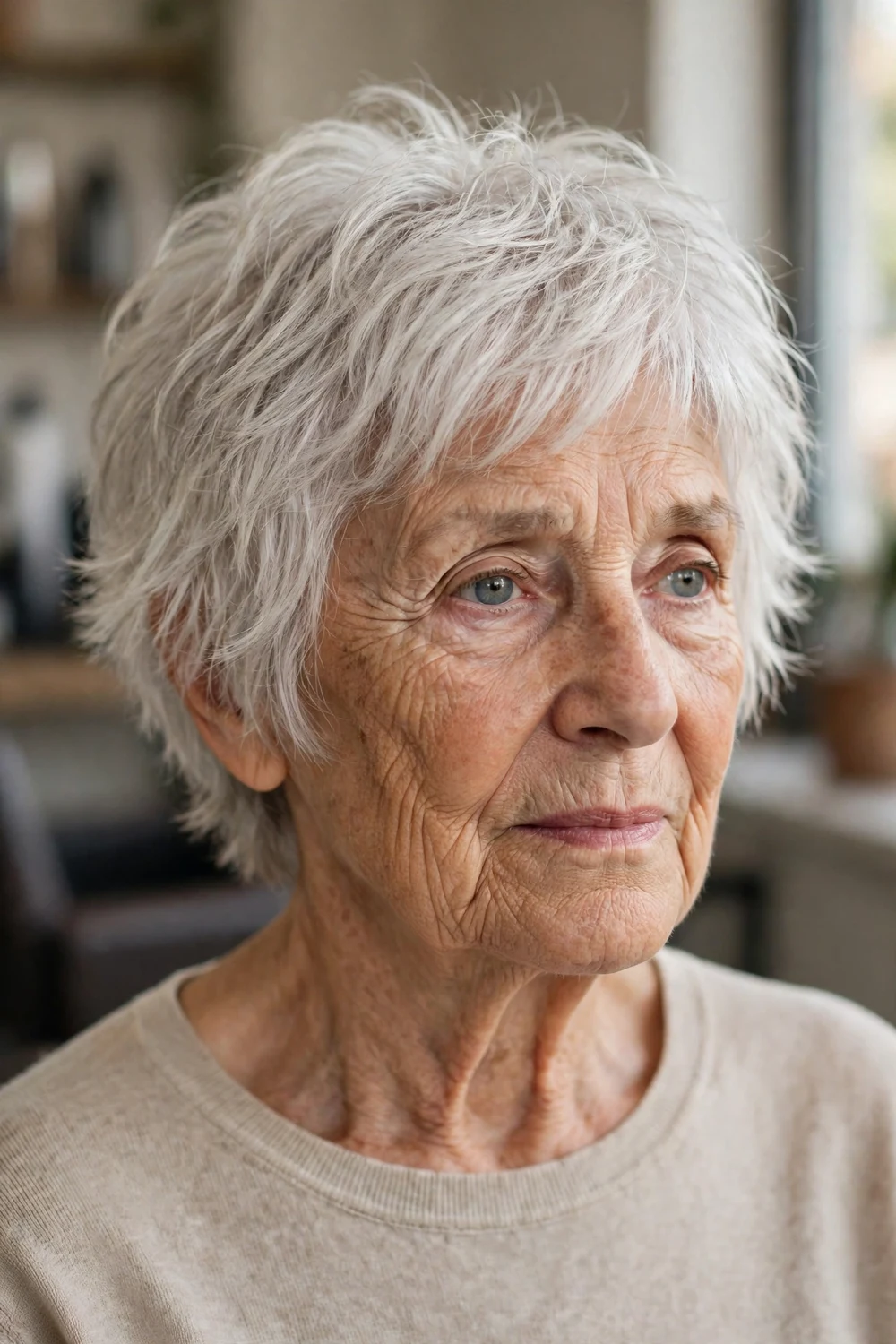
The wash and wear short shag is cut so the layers fall into place as they air dry, with no brush work and no hot tools in the daily routine. Length sits between a pixie and a bob, the crown layers give lift without product, and the fringe is cut to sit forward on its own. It is the lowest effort cut on this list, and a close cousin of the styles in the wash and wear haircuts roundup.
The one rule is the trim cycle. A cut built to style itself needs its shape back every six to eight weeks, because grown out layers stop falling into place. In return, mornings take under five minutes: wash, towel dry, finger comb, and leave it alone while it dries.
Try this: test the cut honestly at the salon. Ask to see it air dried, or at least dried with a diffuser and no brush, before you leave.
Difficulty: Low · Cost: $ (salon)
17. Shag with Side-Swept Bangs

Side swept bangs are the softest fringe option in the shag family. The front section is cut long, swept across the forehead, and blended into the first side layer, so there is no hard fringe line to maintain. The sweep draws the eye across the face, which many women find kinder than a straight fringe, and it grows out into a face framing layer with no awkward stage.
Blow dry the front section across, then let it fall to your natural side. If the sweep separates during the day, a tiny amount of light hairspray on your fingertips, patted over the fringe, resets it. This version suits round faces well, since the diagonal line adds length to the face shape.
Try this: choose your sweep side based on your natural parting. Fighting a natural part every morning is the main reason side fringes get abandoned.
Difficulty: Low to Medium · Cost: $$ (salon)
18. Low-Texture Shag for Thin Hair

Some women want the shape of a shag without visible chop. The low texture version uses gentle, blended layers with very little separation at the ends, so the silhouette is a shag but the finish is smooth and quiet. It is a sensible route for thin hair, where heavy texture can make the ends look sparse, and for workplaces or tastes that run classic.
Keep the layers long and the ends blunt cut with light point cutting only. Style with a blow dry and a soft brush for a smooth finish, and skip texture sprays, which rough up the surface this cut is trying to calm. Fine hair readers can compare the fuller outline approach in the shaggy bob hairstyles for fine hair guide, which keeps more weight at the perimeter.
Try this: ask your stylist to show you the layer lengths at the back before cutting. Low texture shags fail when the back layers are cut shorter than agreed.
Difficulty: Low · Cost: $$ (salon)
19. Shoulder-Length Shag with Blended Layers
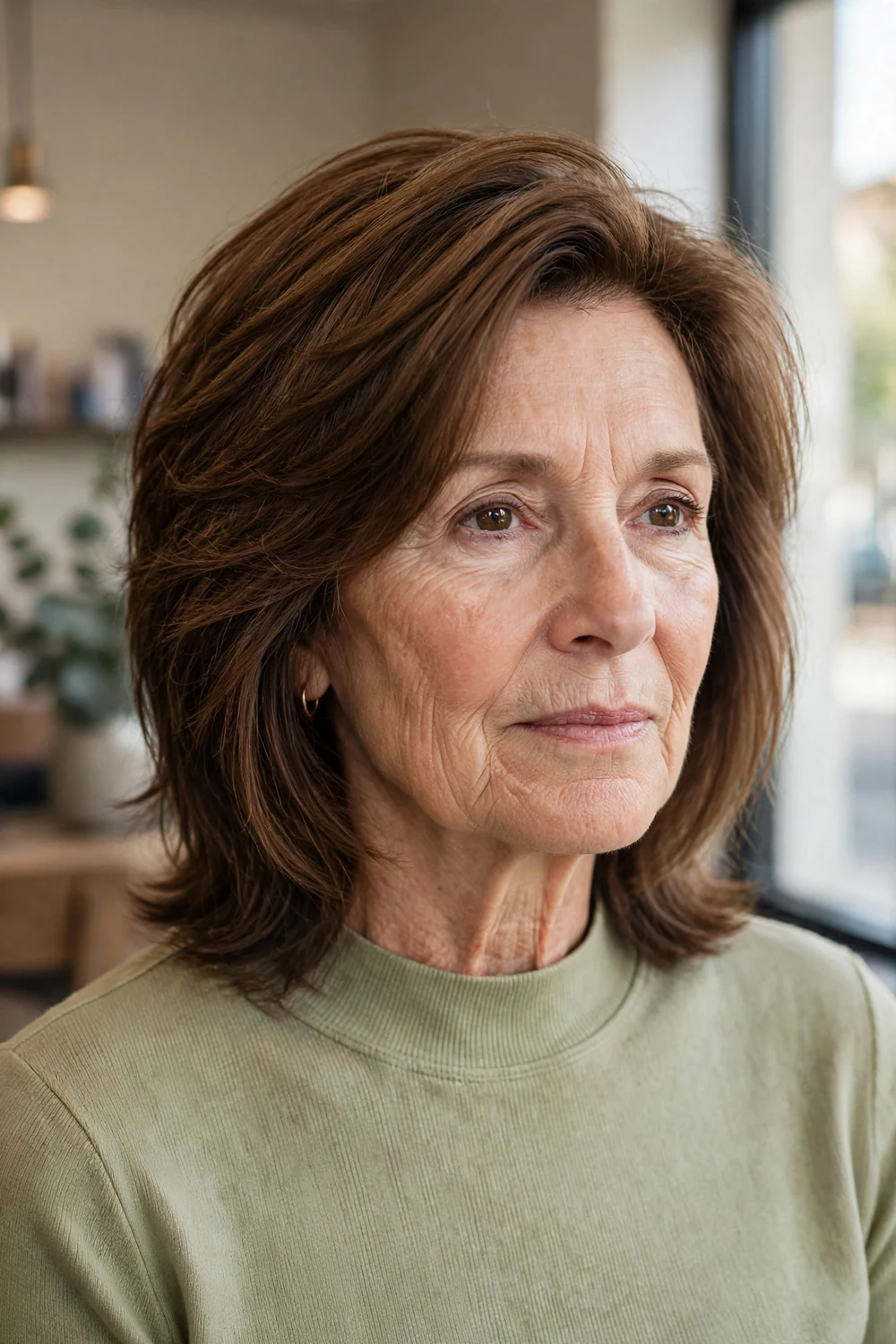
This version skips bangs entirely and relies on long, blended layers for its shape. The first layer starts around the chin, the layers step down smoothly, and the whole cut moves as one piece when you turn your head. It suits women who dislike fringe, who wear their hair parted in the middle, or who tie their hair back often and need the front long enough to reach.
Without a fringe, upkeep is the lowest of the medium lengths: a reshape every ten to twelve weeks and no fringe trims in between. Style it smooth with a paddle brush, or add loose waves with a large iron on the mid lengths only. The clean front also shows earrings and necklines well.
Try this: if you tie your hair back daily, tell your stylist. The front layers should be left long enough to reach a ponytail without falling loose.
Difficulty: Low to Medium · Cost: $$ (salon)
20. Shaggy Bob with Lowlights for Dimension

On silver and white hair, a shaggy bob can look flat in photos because there is little color contrast between layers. Lowlights solve that: strands a shade or two deeper than your natural silver are woven through the bob, and the choppy layers then show as light and shade as the hair moves. The cut itself is a standard shaggy bob with a soft fringe or a side part.
Lowlights on grey hair are usually demi permanent, so they fade softly with no hard regrowth line and can be refreshed every ten to twelve weeks alongside a trim. Keep the lowlight shade close to your own darker strands for a natural result. Strong contrast belongs to fashion color, and it dates quickly on a classic cut like this one.
Try this: ask for a strand test first if your silver hair is porous. Porous grey hair can grab lowlight color darker than the swatch suggests.
Difficulty: Medium · Cost: $$$ (salon)
21. Tousled Crop Shag
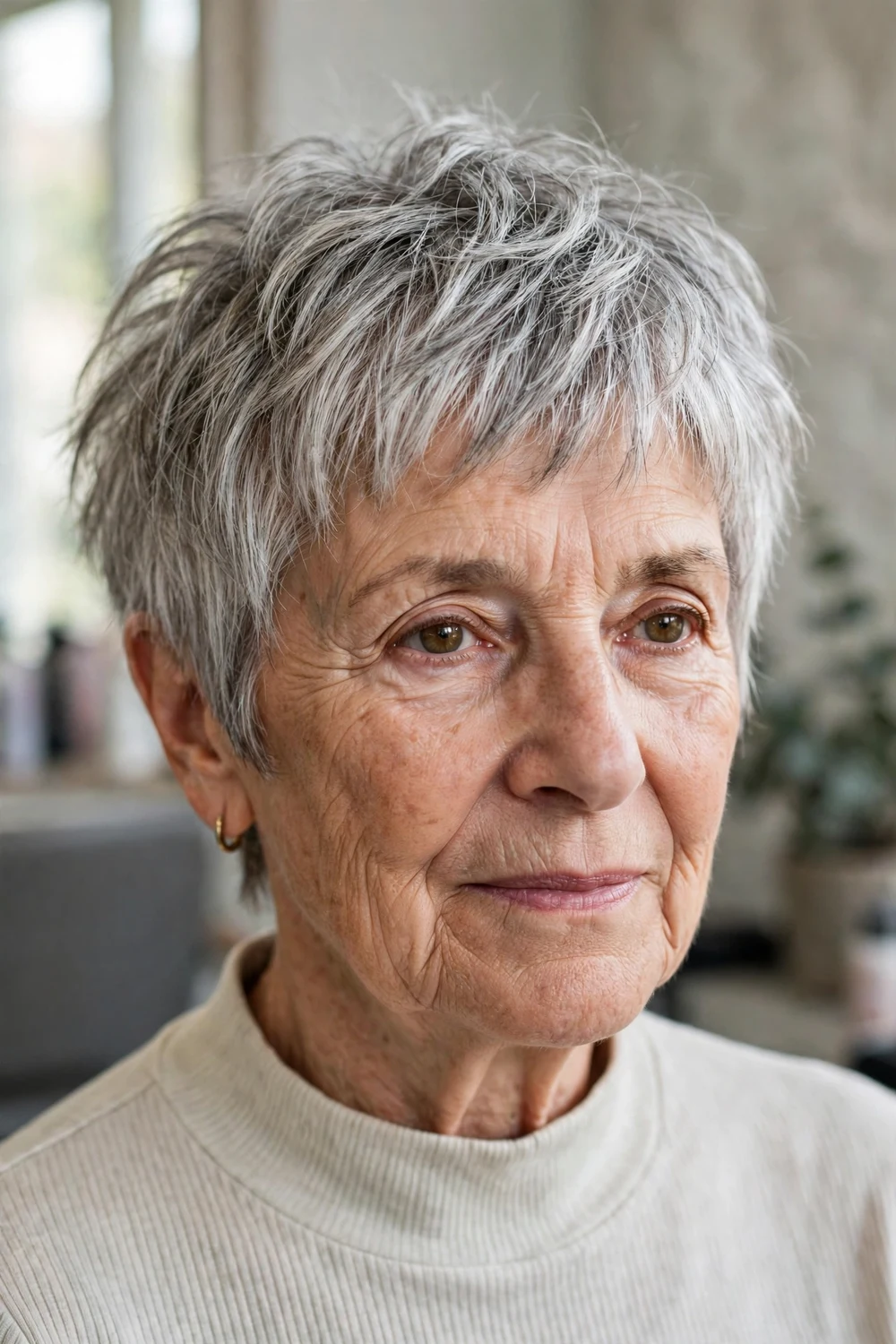
The crop shag is the shortest cut on this list: a cropped back and sides, choppy texture through the top, and a short soft fringe. It reads neat rather than severe because the edges are point cut and left a little soft. For women with very fine hair, the short length keeps every strand close to the head, which makes the hair look thicker than a longer cut would.
Daily styling is a towel dry and a fingertip amount of matte paste through the top. The trade off is the salon cycle: crops need a trim every five to six weeks to stay clean at the ears and neckline. Many salons offer quick neckline tidies between full appointments, which stretch the shape further.
Try this: if you have never worn your hair this short, try a shaggy pixie first for one cycle. You can always take the crop shorter at the next visit.
Difficulty: Low · Cost: $ (salon)
22. Polished Shag with a Smooth Finish
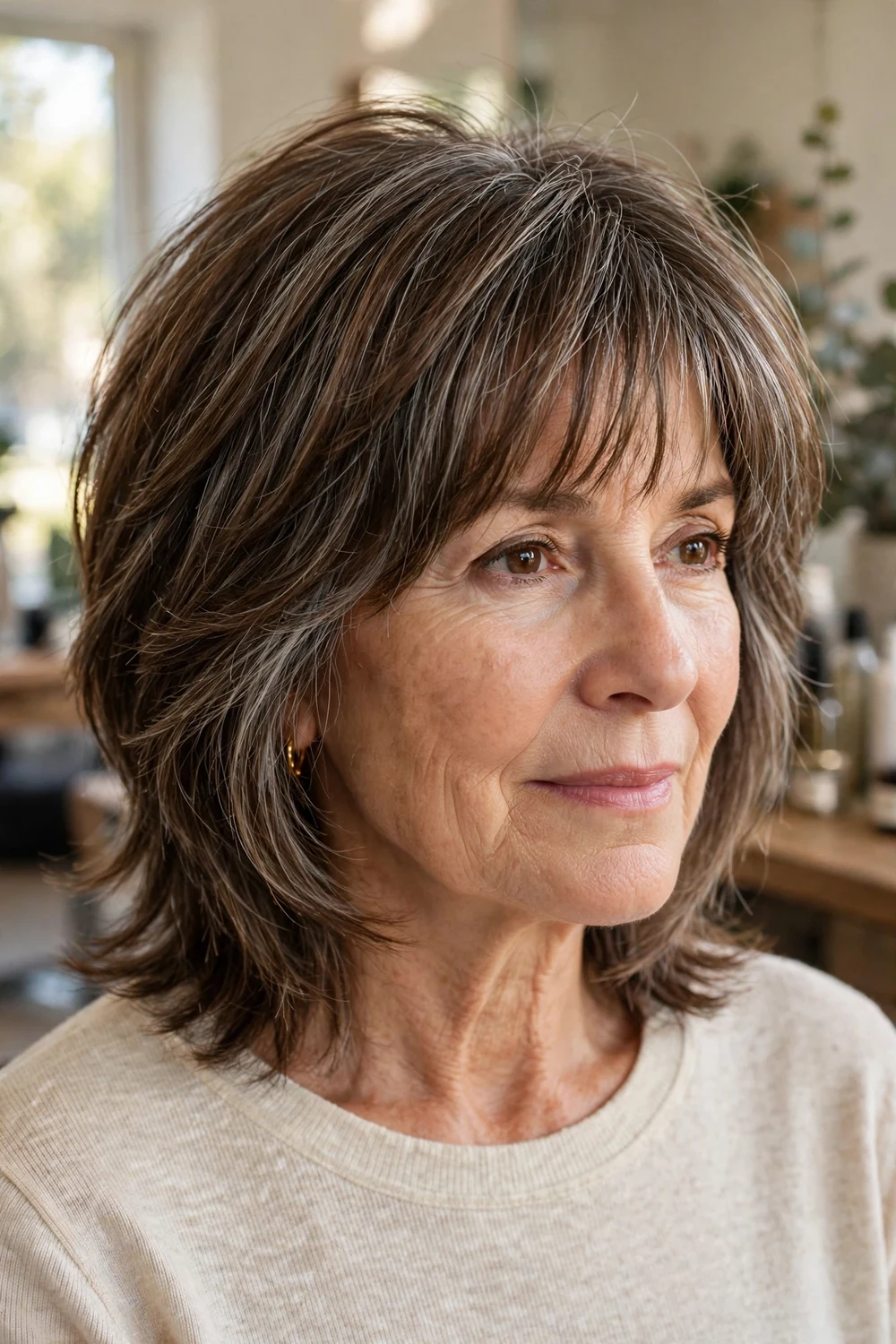
A shag does not have to be tousled. The polished version keeps the classic shag layer pattern, shorter at the crown and stepping down through the lengths, and then blow dries it smooth so the layers read as clean lines rather than texture. The fringe is dried flat and the ends are turned under slightly. It is the version to choose for formal settings, photos, and anyone who simply prefers a finished look.
The routine takes longer than the air dry versions: a blow dry with a round brush, working in sections, about fifteen minutes for medium lengths. The payoff is a cut that holds its shape for two to three days with a light refresh at the front. A trim every eight weeks keeps the smooth lines clean.
Try this: use a heat protectant every time, without exception. Smooth styling on a regular schedule is the one routine on this list that can dry the ends if you skip protection.
Difficulty: Medium · Cost: $$ (salon)
Frequently Asked Questions
What is the difference between a shag and a feathered cut?
A shag is built on choppy layers that are cut at varied lengths through the crown and lengths, with point cut or razored ends that separate into pieces. Feathering is a finishing technique where the ends are cut to flick outward away from the face in smooth, swept layers. The two can look similar in photos, but a shag has more interior layering and piecey separation, while a feathered cut keeps its layers blended and swept in one direction.
Which shag length is easiest to maintain for older women?
A bob length or shoulder length shag is usually the easiest balance. It is long enough to air dry in shape and to tie back, and short enough that the layers hold their lift between trims. Pixie and crop shags are faster each morning but need trims every five to seven weeks, while long shags need more conditioning and heat care at the ends.
Does a shag work on fine or thinning hair?
Yes, with the layering adjusted. Fine and thinning hair does better with soft, longer layers, fuller sides, and blunt or lightly point cut ends, which keep the outline looking full. Heavy chopping and strong razor work can make fine ends look sparse. Tell your stylist your hair is fine even if it looks thicker when freshly washed, and ask where the shortest layer will sit before cutting starts.
How often does a shag need trimming?
Most shags hold their shape for eight to ten weeks. Short pixie and crop versions need a trim at five to seven weeks, bangs need a quick tidy at four to six weeks, and long shags can stretch to ten to twelve weeks because the layers have more room to grow. Letting a shag grow far past its cycle flattens the crown layers first, which is the part of the cut that gives lift.
Can a shag work with natural grey hair?
Yes. Choppy layers suit grey hair because grey strands often carry more texture, and layering gives that texture a shape instead of letting it spread outward. Silver and salt and pepper hair also gain dimension from layers, since each layer catches light at a different angle. A toning shampoo once a week keeps silver hair clear, and a moisture mask helps grey layers lie smoothly.
Final Thoughts
The right shag for this stage of life is a matter of control: choppy layers for lift and movement, kept soft and blended enough that the cut looks deliberate on an ordinary Tuesday morning. Pick your length by your routine, pick your layer strength by your hair thickness, and let grey hair be part of the design rather than a problem to cover. Take two or three photos from this list to your stylist, agree on where the shortest layer will sit, and you will leave with a cut that asks very little of you between appointments.

