



Chic is not about chasing trends. At 60 and beyond, it is about a cut with intention: clean lines, flattering shape, and hair that looks healthy and deliberate every single day.
This guide collects 30 chic hairstyles for women over 60, drawn from what stylists and top salons actually recommend for mature hair. You’ll find short pixies and bobs, mid-length lobs, longer styles that keep their polish, and updos for special occasions. I’ve spent years studying age-specific cuts, and one lesson keeps repeating itself: the right shape does more for your look than any product. Each idea below includes styling detail and a practical “Try this” tip so you can walk into the salon knowing exactly what to ask for.
Quick answer: The most reliably chic cuts for women over 60 are bobs with clean lines (classic blunt, layered, angled), textured pixies, and soft lobs. Choose based on your hair texture and how much daily styling you want to do. Fine hair benefits from stacked and layered shapes that build volume; thick hair benefits from thinning and long layers that remove bulk.
Quick Takeaways
- Chic at 60+ comes from shape and condition: clean lines and healthy ends matter more than length.
- Pixies and bobs dominate because they frame the face and need less daily work.
- Fine or thinning hair looks fuller with stacked backs, crown layers, and textured ends.
- Gray and silver hair needs purple shampoo and regular trims to stay polished, not dull.
- Bring reference photos to your stylist and name the cut: “textured pixie with a tapered neckline” beats “something short.”
What Makes a Hairstyle Chic After 60
Hair changes with age, and the smartest cuts work with those changes instead of fighting them. Texture often becomes finer, gray grows in with a coarser feel, and the hairline can recede slightly. Chic styles for this stage share three traits.
First, they have structure. A defined perimeter, whether a blunt bob line or a shaped pixie, reads as intentional. Second, they add movement where faces need softness: around the cheekbones and jawline. Third, they are honest about maintenance. A cut you can’t be bothered to style is not chic, so pick one that fits your real routine, not your ideal one.
Color plays a role too. Gray blending, silver highlights, and lowlights add dimension that flat all-over color can’t. The ideas below note where color work pulls extra weight.
1. Textured Layered Pixie
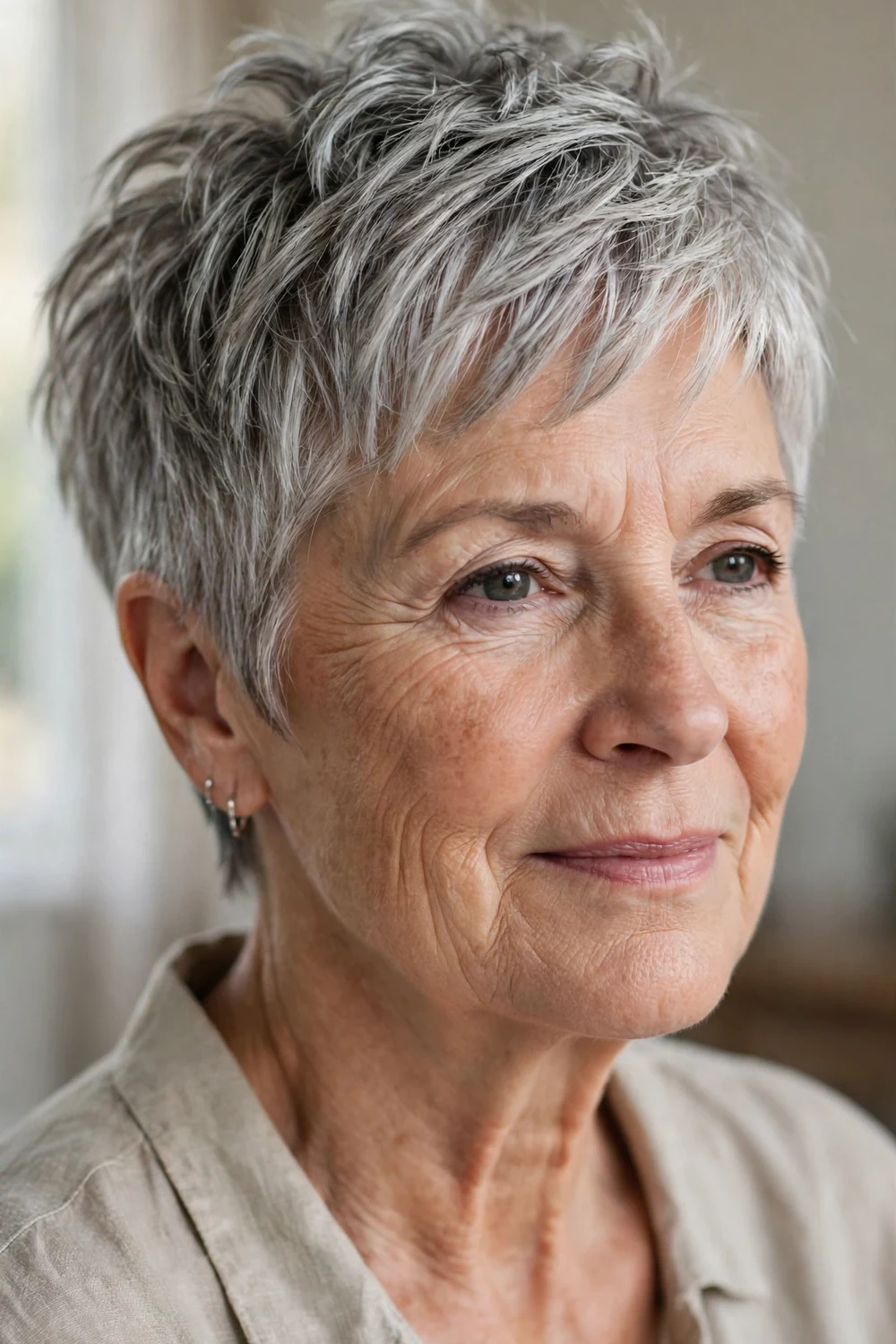
Choppy layers through the crown give this pixie its lift and personality. The texture breaks up the silhouette so fine hair doesn’t lie flat against the scalp, and the piecey ends keep the whole thing feeling current rather than severe. It grows out gracefully too, since the layers just get softer instead of losing their shape. This is the workhorse cut of the chic over-60 world, and it suits straight to slightly wavy hair best.
Try this: Work a pea-sized amount of texturizing paste through dry hair, then pinch the ends. Skip conditioner at the roots on wash day to keep the crown from going limp.
2. Soft Feathered Pixie
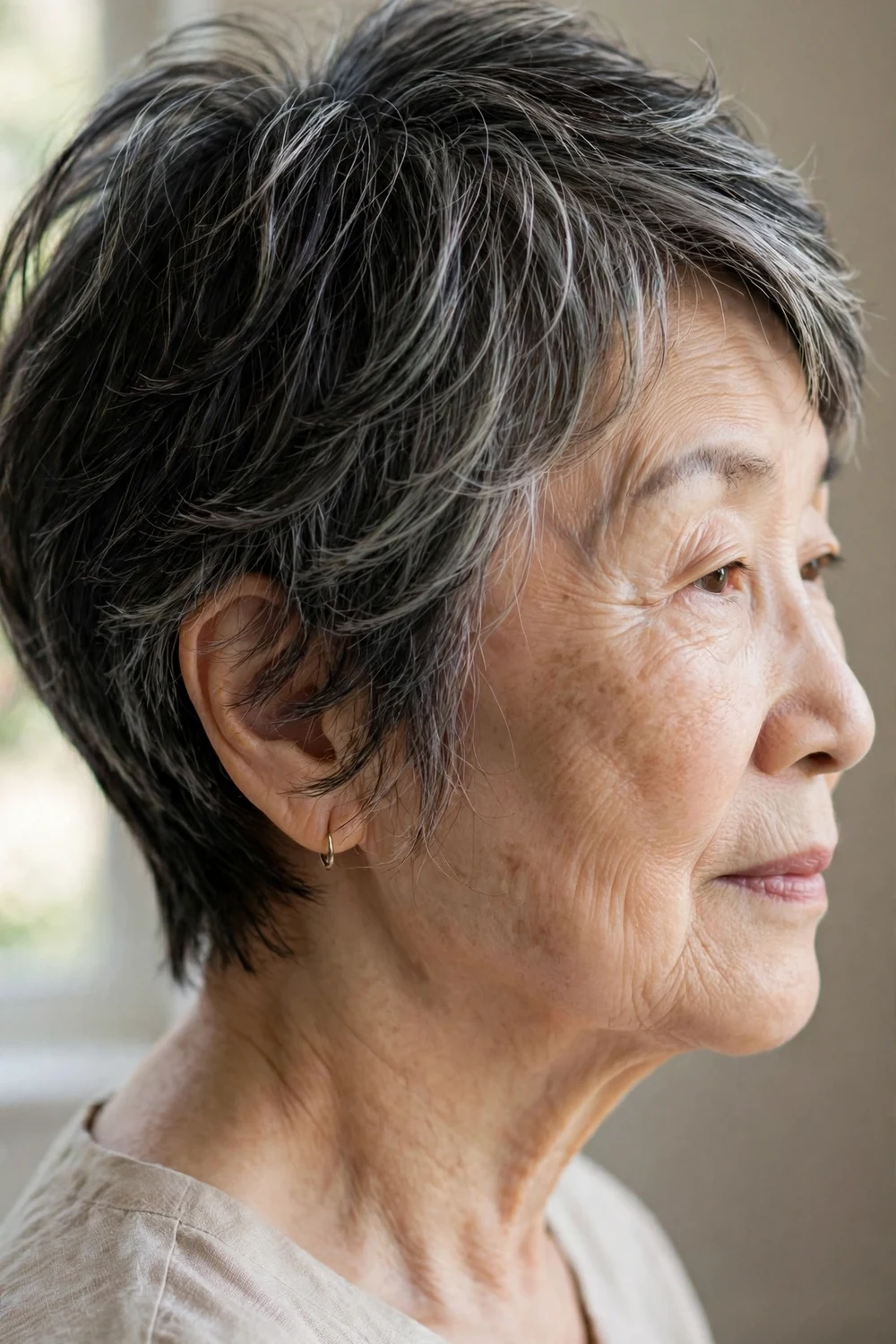
If a choppy pixie feels too bold, the feathered version is its gentler sibling. Wispy, tapered layers around the face soften cheekbones and the jawline without hiding them. Stylists often cut this with a razor for edges that blend instead of ending abruptly. It needs almost no daily effort: finger-comb, add a dab of light cream, and go. The softness also flatters rounder faces, since the feathering draws the eye upward.
Try this: Ask your stylist to feather the layers around the ears. Air-dry with a little leave-in cream for the softest finish.
3. Curly Pixie
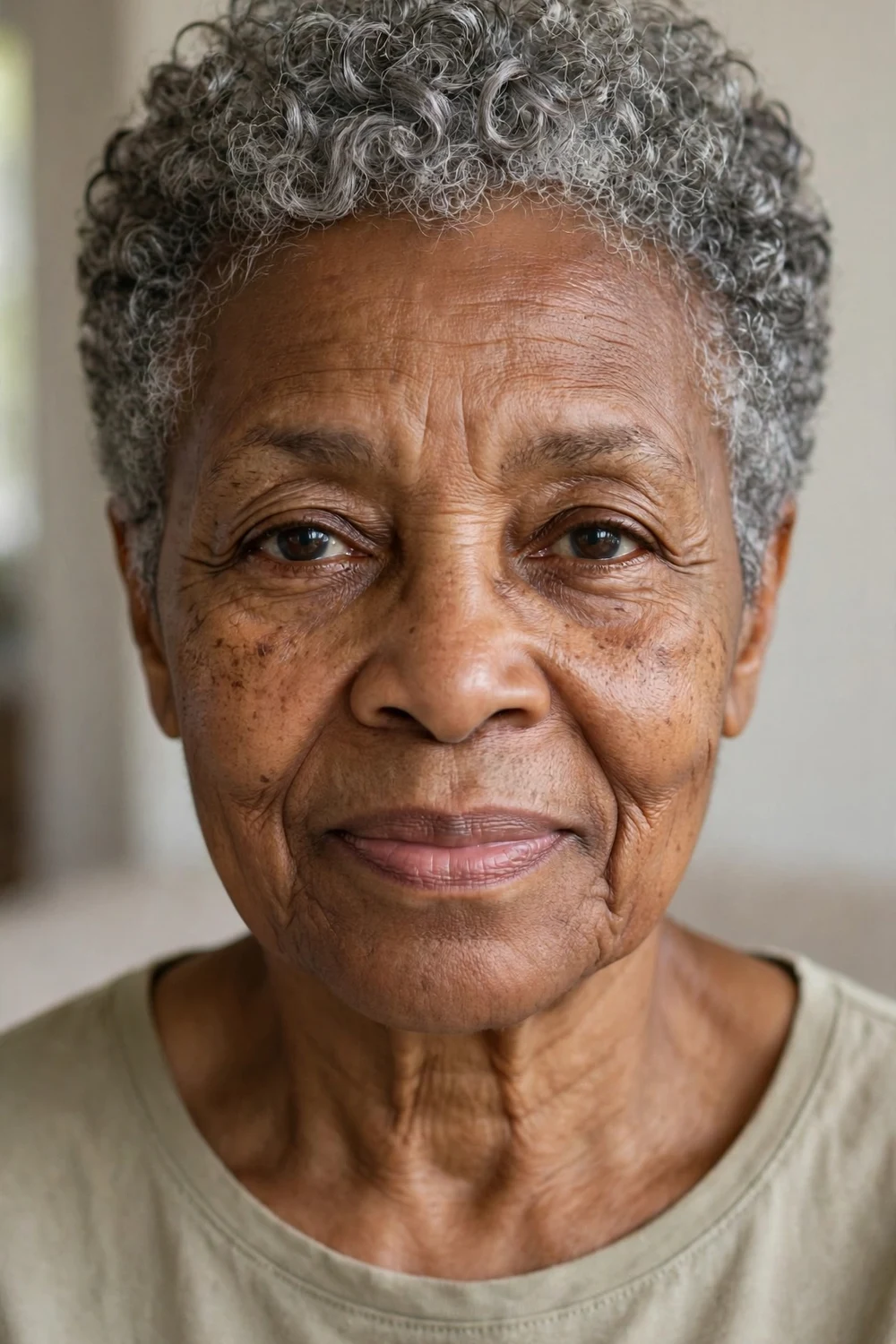
Natural curls are an asset in a pixie, not a problem. Kept short on the sides with length on top, curls create built-in volume that no product can fake. The key is a cut that follows your curl pattern instead of fighting it: your stylist should cut it dry or in sections so each curl lands where it should. This style flatters women with tight curls, coils, or loose ringlets alike, and it shows off earrings and necklines.
Try this: Apply curl cream to damp hair, then diffuse on low heat. Refresh second-day curls with a water spritz rather than re-washing.
4. Pixie with Side Bangs
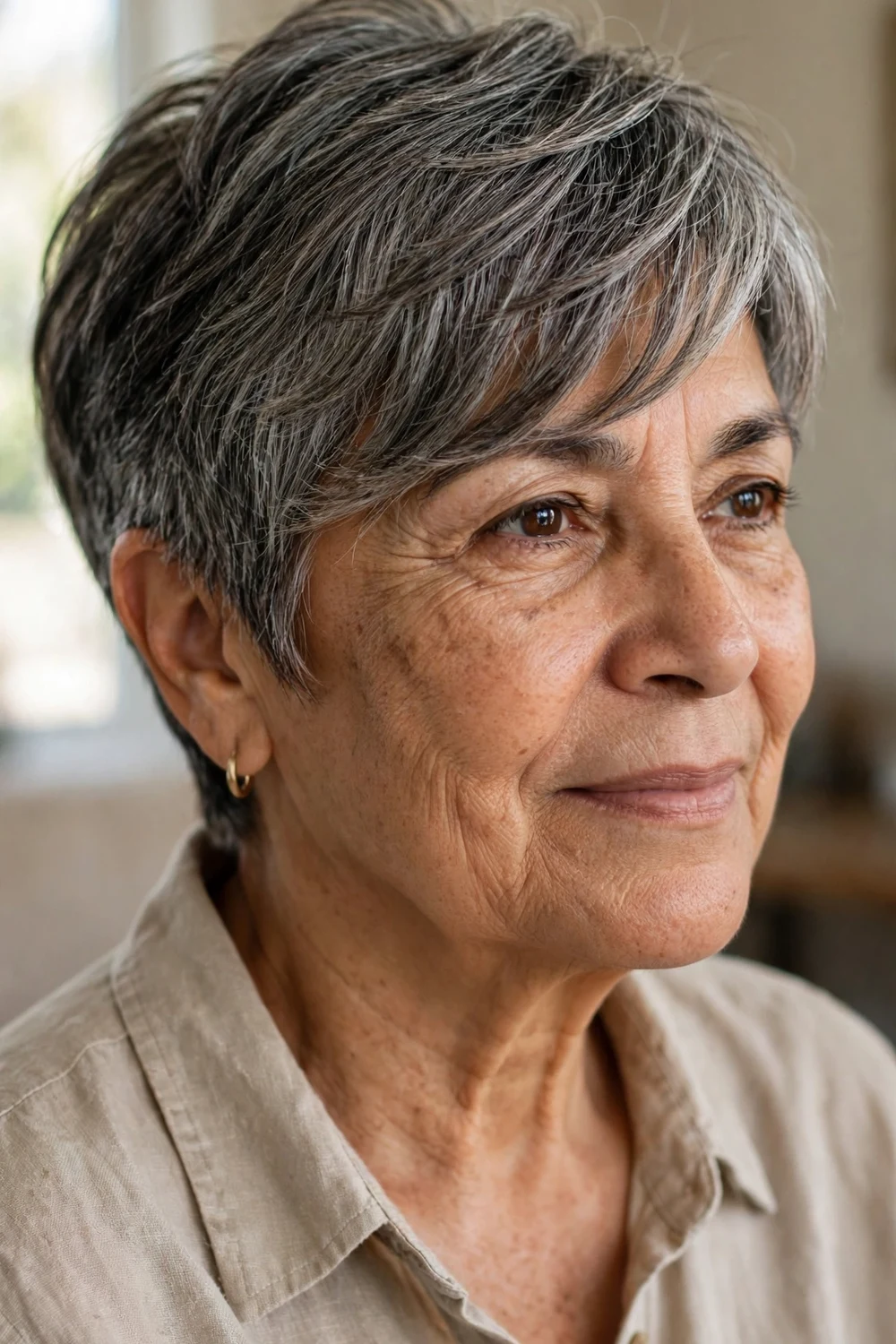
Long side-swept bangs turn a basic pixie into something with real style. The diagonal line across the forehead softens forehead lines and creates a flattering asymmetry that works on most face shapes. Keep the bangs long enough to tuck behind one ear for versatility. This is a strong pick if you want a pixie but worry about looking too severe, since the sweep adds instant softness.
Try this: Blow-dry bangs to the side with a small round brush, then set with a light-hold spray. Trim bangs every three weeks to keep the sweep landing right.
5. Brushed-Forward Pixie
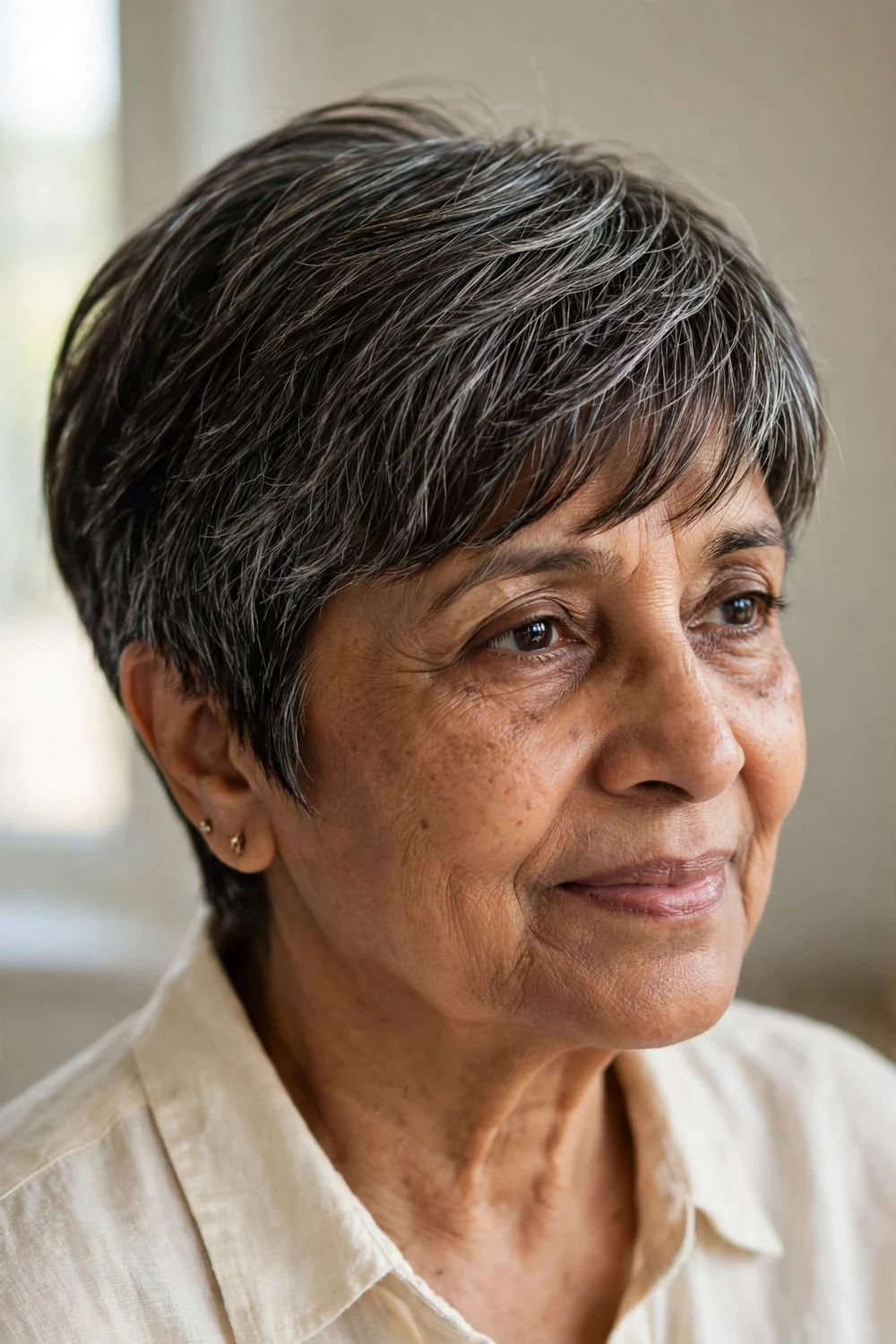
Everything pushes forward from the crown in this cut, creating fullness across the top where thinning often shows first. The forward direction adds coverage at the hairline and gives the style a modern, almost windswept energy. It works especially well for straight to slightly wavy hair that won’t hold a curl. A lightweight styling cream defines the front sections without making them stiff.
Try this: Blow-dry hair forward using your fingers for lift, then smooth the front pieces with a dab of cream. Experiment with the part to find your best angle.
6. Cropped Pixie with Tapered Neckline
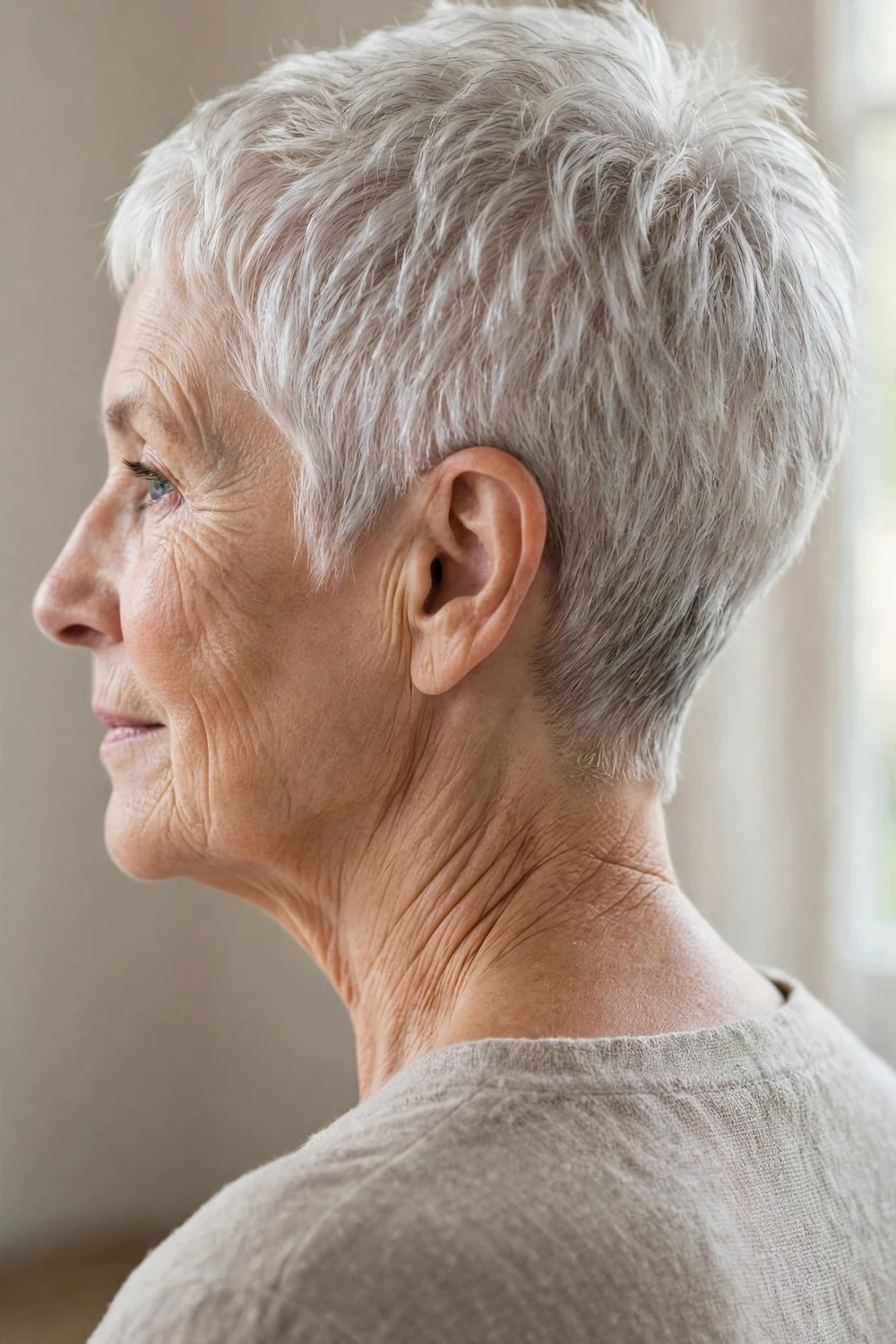
The shortest option on this list is also one of the most refined. A clean tapered neckline gives the nape a crisp, tailored finish that looks sharp for weeks, while the slightly longer textured top keeps it feminine. This cut puts your face front and center, so it suits women with strong bone structure who don’t mind the attention. Maintenance is simple: trims every four to five weeks keep the taper tight.
Try this: Show your stylist where you want the taper to end at the nape. A little pomade on the top adds definition without weight.
7. Classic Blunt Bob
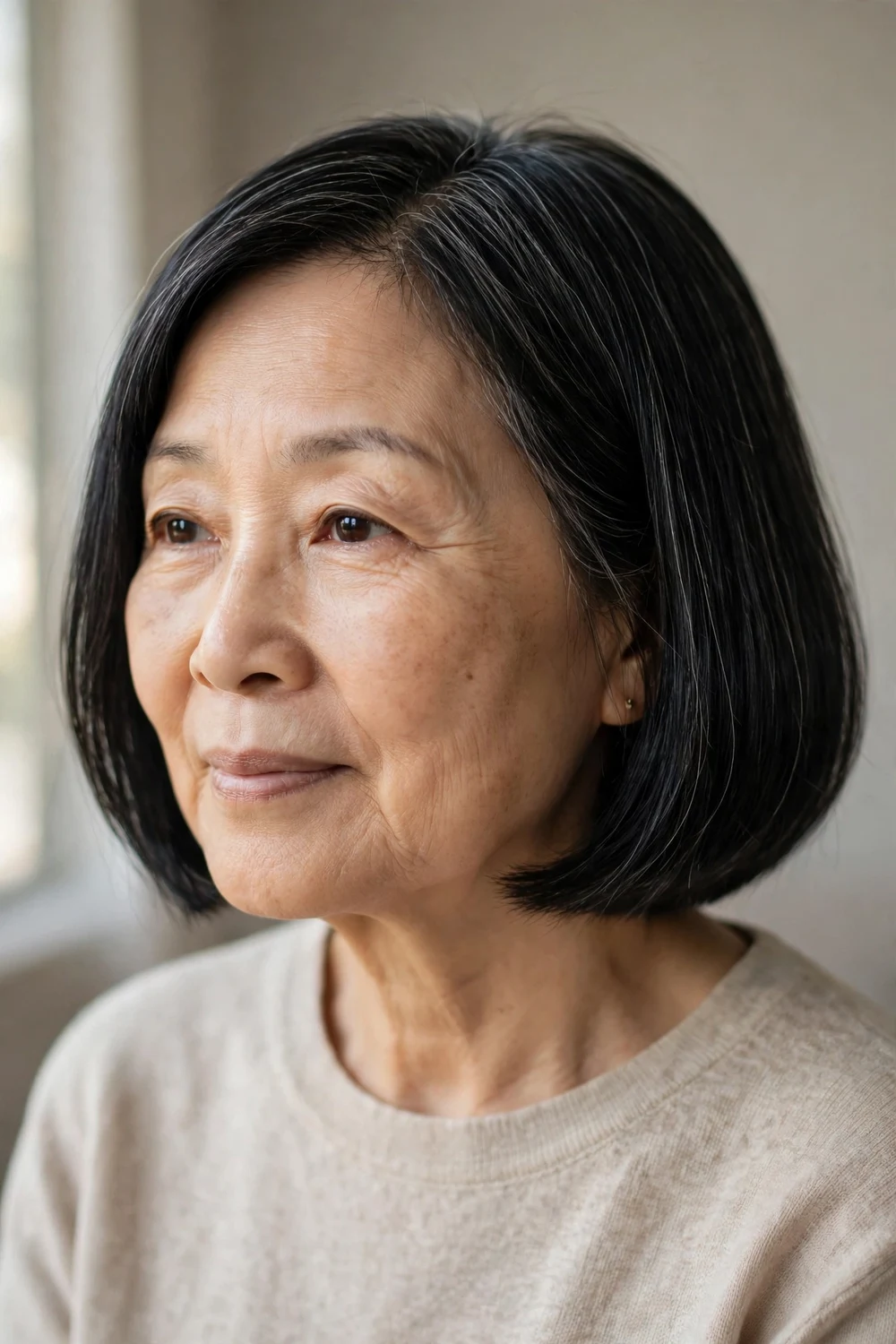
One clean line at the jaw or chin: that’s the whole idea, and it never dates. A blunt perimeter makes hair look thicker instantly because the ends are all the same length, which is why stylists recommend it for fine hair. The sharpness frames the jawline and gives the face a lifted, defined look. Wear it straight for maximum polish, or add a slight bend with a flat iron for a softer take on evenings out.
Try this: Flat-iron in small sections for a glassy finish, then tuck the ends under slightly. A shine serum on the mid-lengths adds the polished touch.
8. Layered Bob
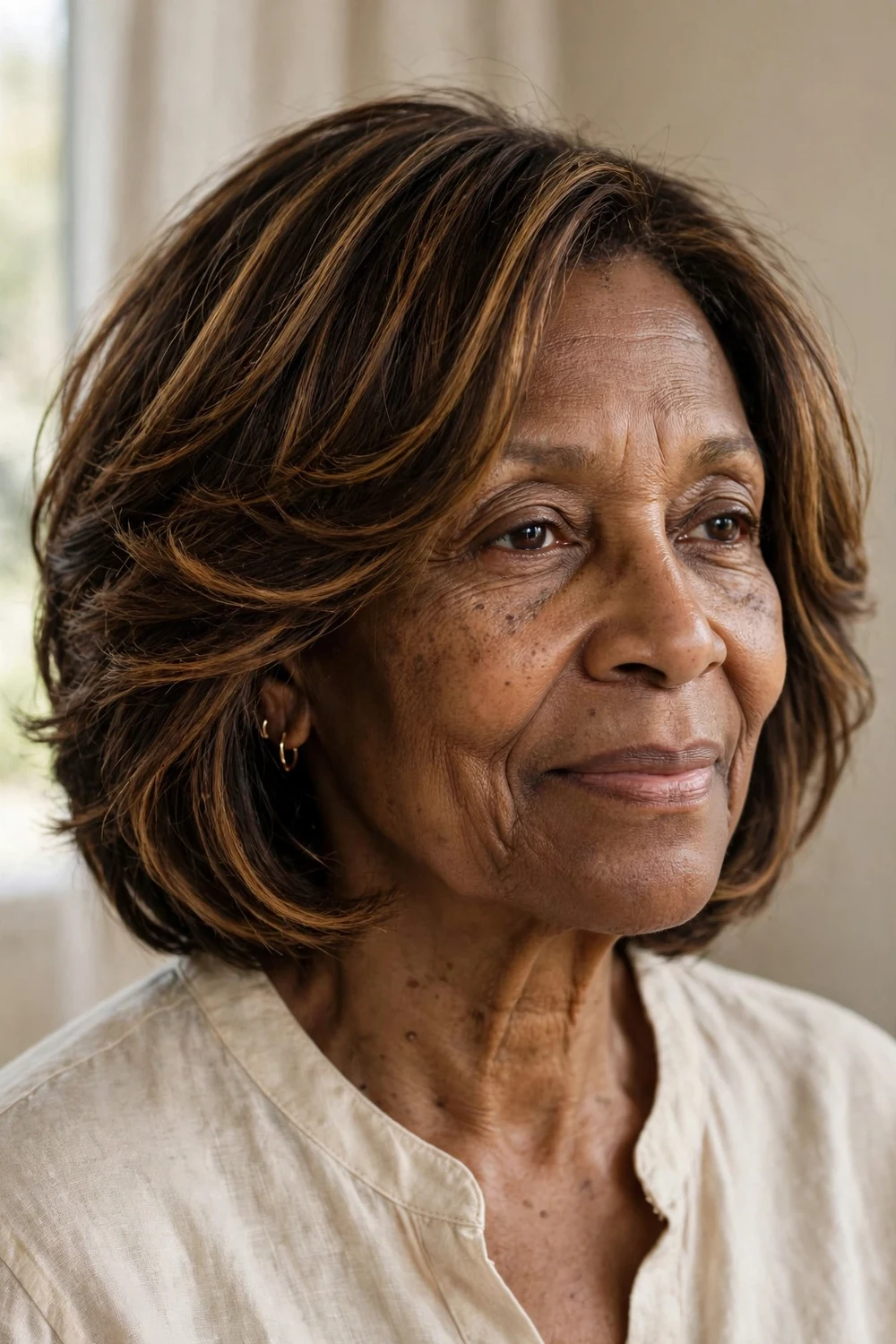
Layers through the interior of a bob create movement that a blunt cut can’t. This version suits medium to thick hair, since the layers remove bulk and let the shape swing instead of sitting like a helmet. The length usually lands between chin and shoulders, and the layers can be adjusted to flatter your specific face shape. It’s the bob for women who find blunt cuts too strict but still want that polished perimeter.
Try this: Blow-dry with a paddle brush, flipping the ends under. Ask for long layers if your hair is thick, shorter ones if it’s fine.
9. Sleek Straight Bob
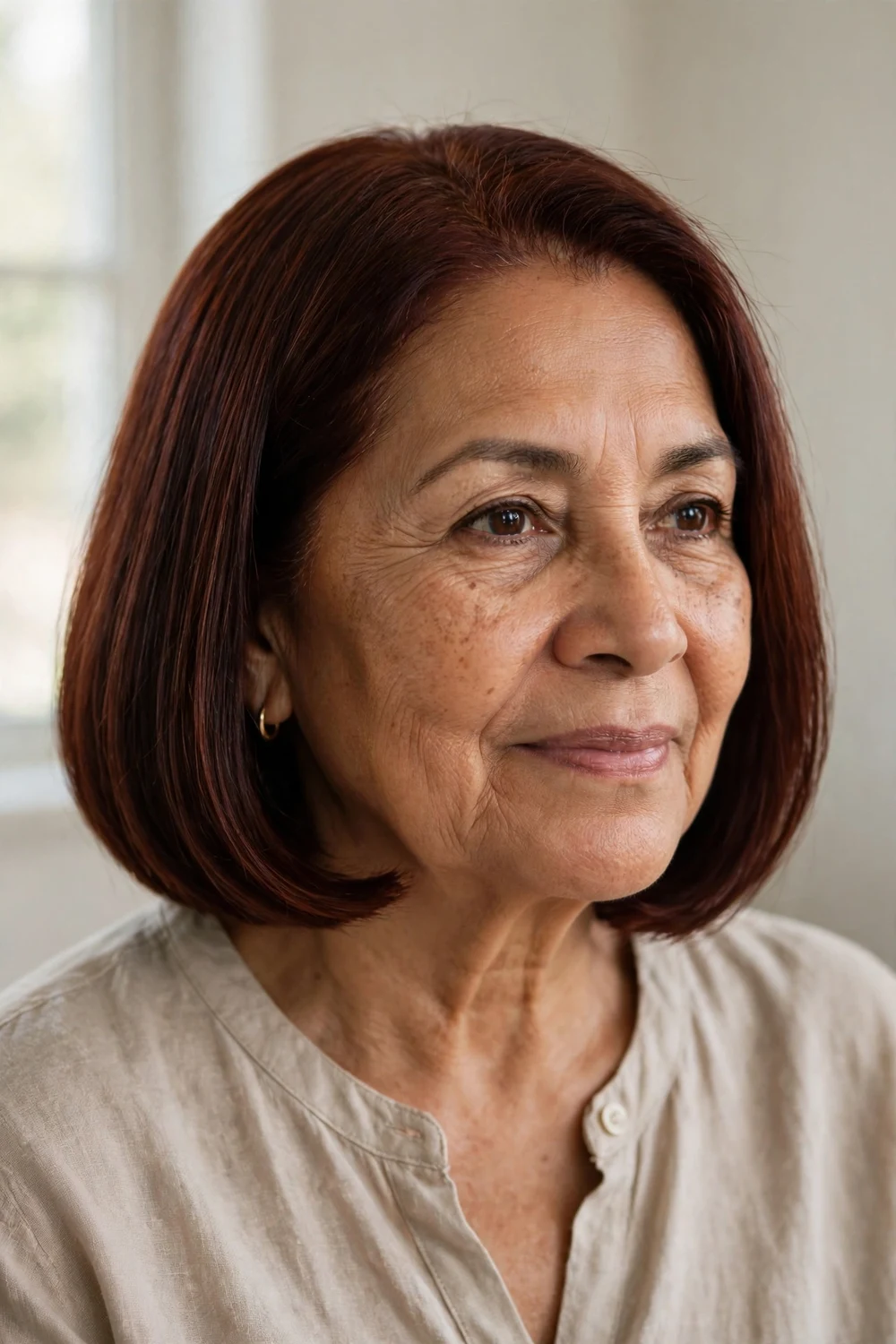
Gloss is the whole point here. A sleek straight bob reads as expensive because the smooth surface reflects light, which makes color look richer and hair look healthier. The cut sits just above the shoulders with minimal layering, so the line stays clean. It’s a strong choice for naturally straight hair, since it needs little heat to behave. Keep the ends sharp with trims every six to eight weeks.
Try this: Use a heat protectant before every flat-iron pass. Finish with a drop of shine oil, focusing on the ends.
10. Layered Feathered Bob
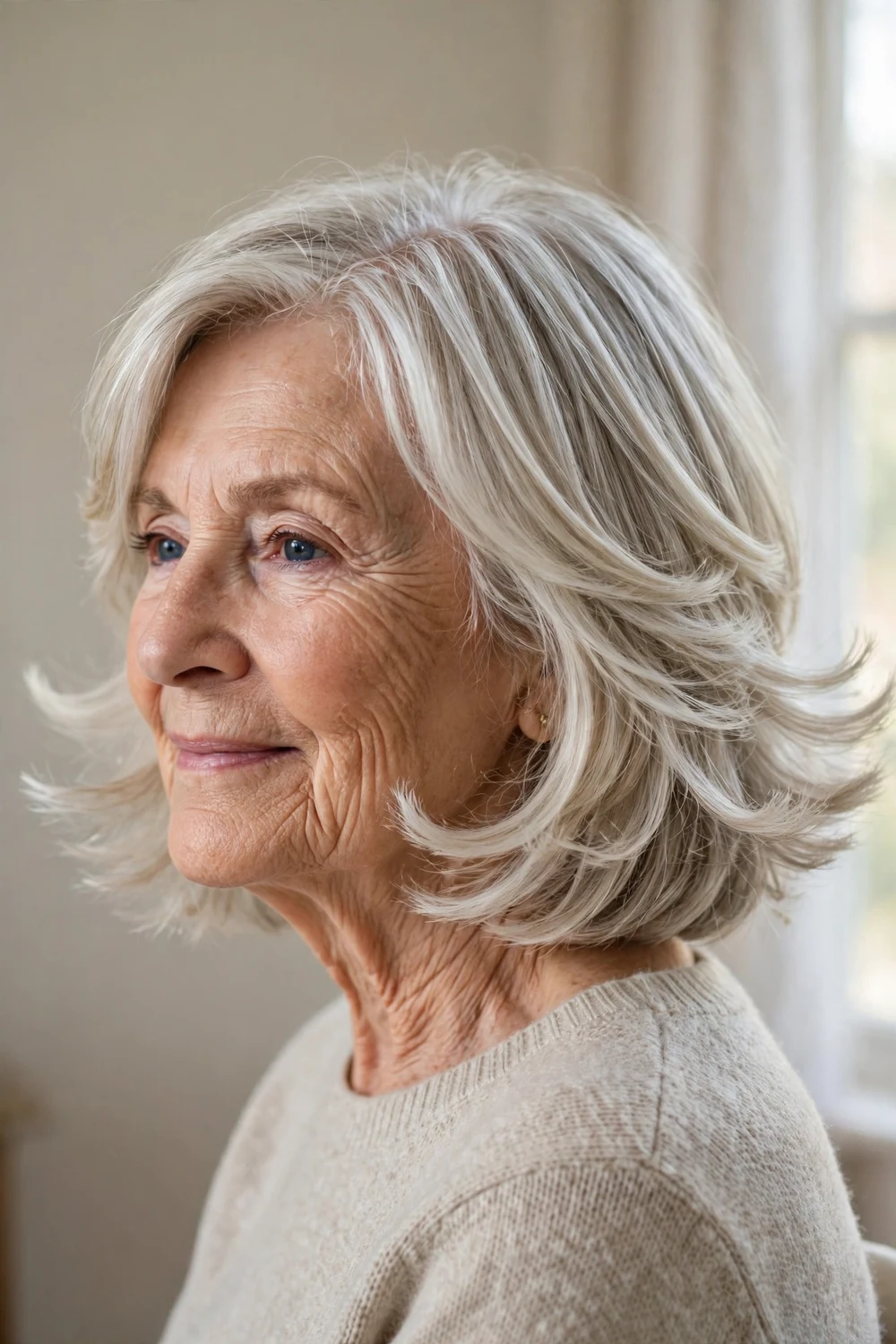
Feathered ends that flip outward give this bob a light, airy quality that heavier cuts lack. The technique works well on silver and gray hair, where the feathery texture catches light and adds dimension. It’s softer than a blunt bob but more defined than a shag, sitting comfortably in the middle. Women with fine hair get fullness; women with thick hair get movement without bulk.
Try this: Flip the ends outward with a round brush while blow-drying. A volumizing spray at the roots adds lift before you start.
11. Chin-Length Bob with Bangs
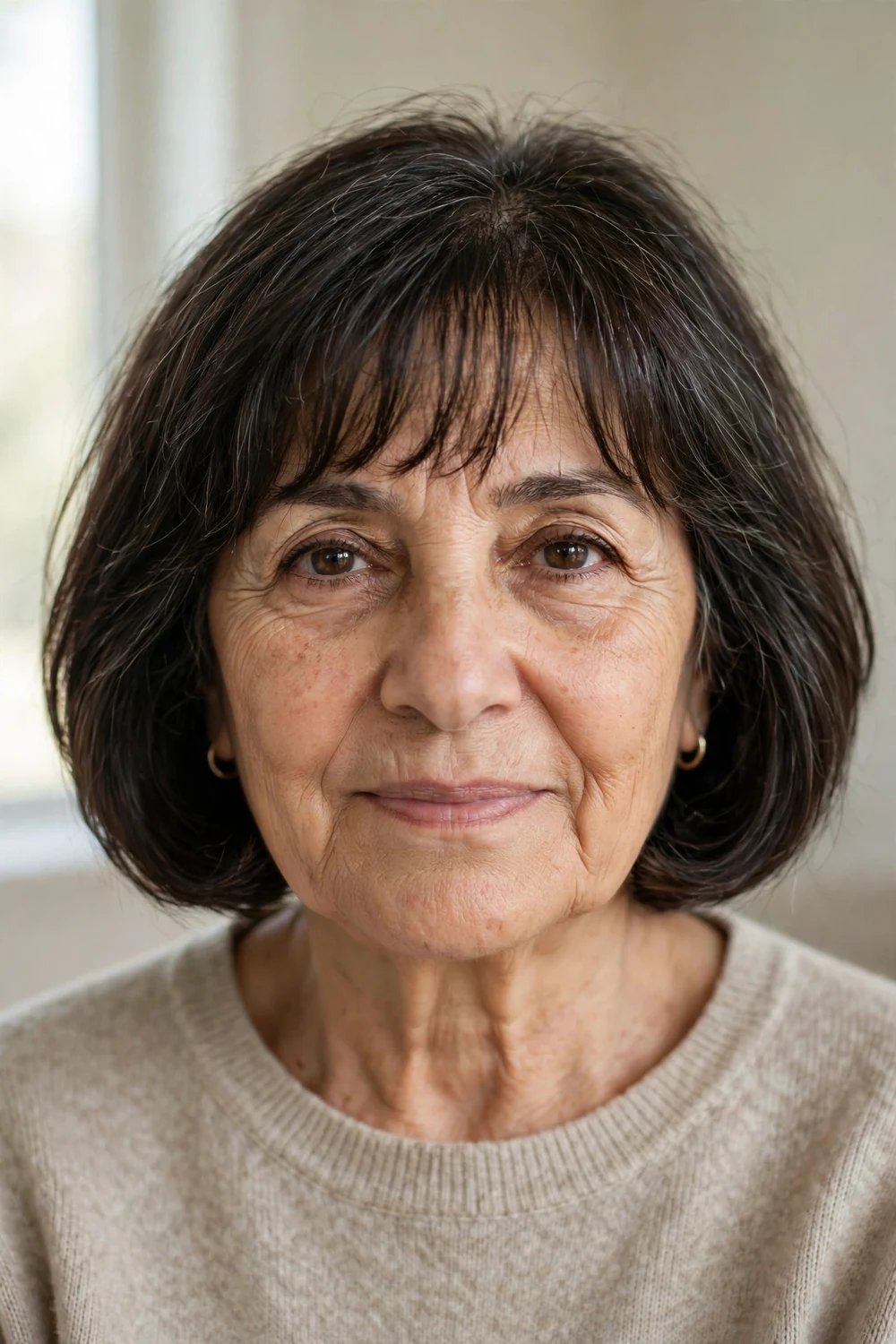
Bangs change the entire character of a bob. At chin length, they frame the eyes and soften the forehead, which many women over 60 find flattering. Wispy bangs are the safer bet over blunt ones: they’re more forgiving as they grow and they blend into the sides instead of creating a hard line. This cut works on straight to wavy hair and pairs well with glasses, since the bangs sit above the frames.
Try this: Ask for wispy, not blunt, bangs if your hair is fine. Blow-dry bangs forward with a paddle brush the morning of, not the night before.
12. Asymmetrical Bob
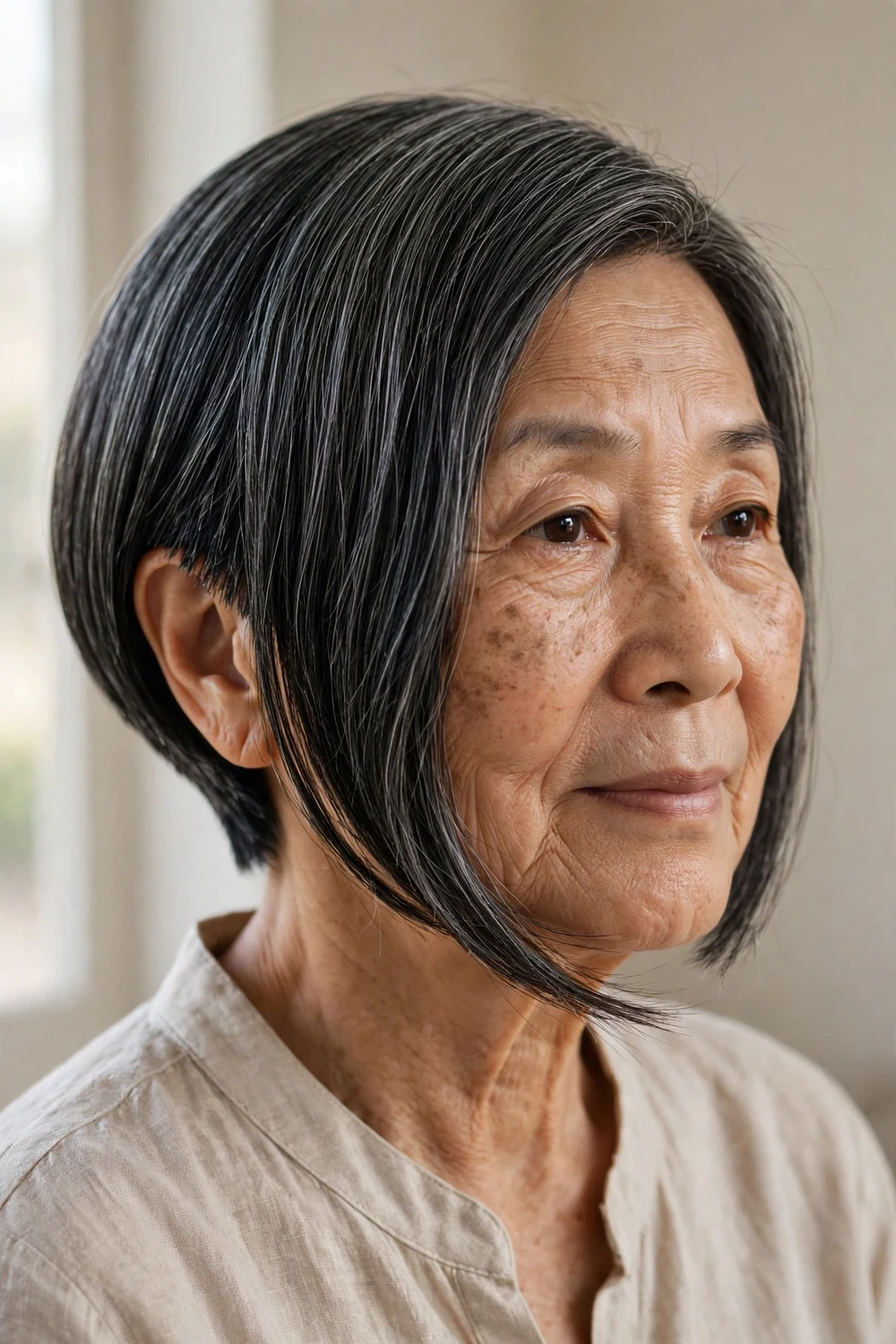
One side lands at the chin, the other stops near the ear. That imbalance is deliberate, and it gives the cut a fashion-forward edge without any styling gymnastics. The longer side draws the eye diagonally, which flatters fuller faces and adds interest to fine hair. It needs trims every five to six weeks to keep the asymmetry intentional rather than accidental. This is the pick for women who want their hair to say something.
Try this: Style both sides in opposite directions with a blow-dryer to emphasize the contrast. A strong-hold mousse keeps the longer side in place.
13. Angled Bob
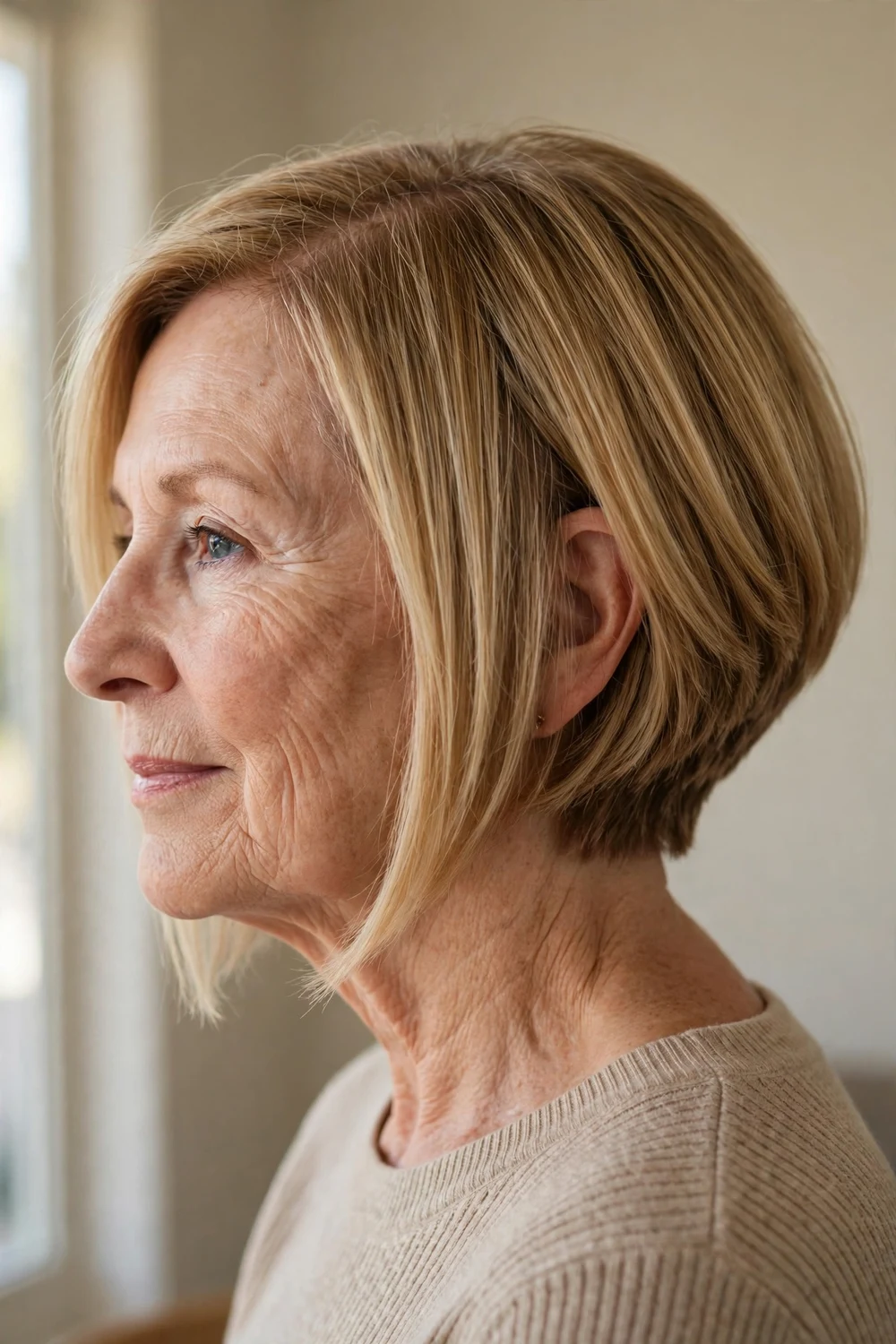
Shorter at the back nape, longer toward the chin: the angled bob is all about the diagonal. The sharp line elongates the neck and gives the jawline definition, which is why it photographs so well. It suits straight hair best, since the angle shows most clearly on a smooth surface. The back needs regular upkeep to keep the stack crisp, but the front can grow out gracefully.
Try this: Blow-dry the back with a round brush to emphasize the stack. Flat-iron the front pieces for a sleek finish that shows off the angle.
14. Inverted Bob
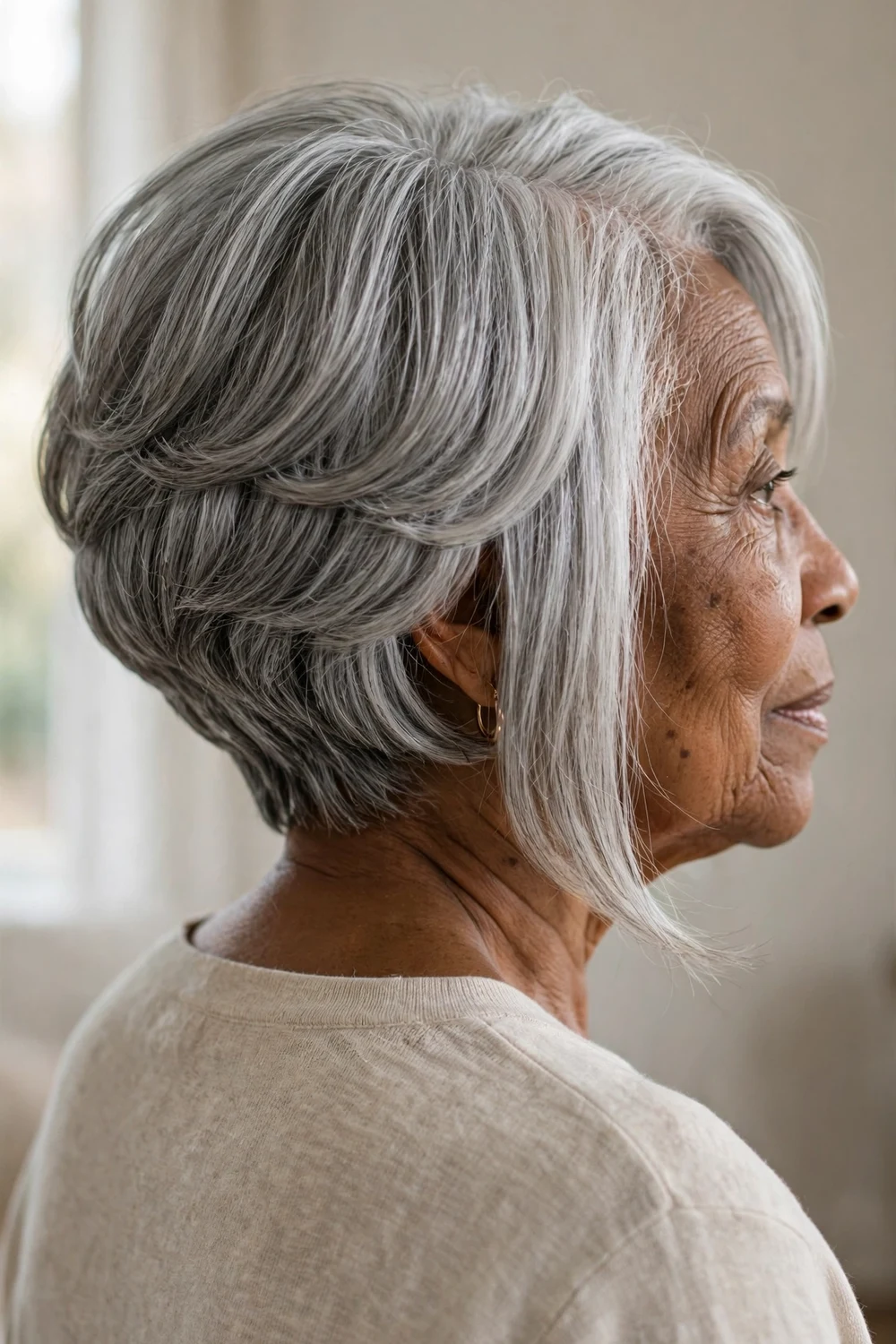
Stacked layers at the back crown build serious volume where fine hair needs it most, while the longer front sections keep the look sleek and modern. This is the bob stylists reach for when a client says “my hair is flat.” The graduation does the lifting so you don’t have to tease or backcomb. It flatters round and square faces because the front length draws the eye downward.
Try this: Blow-dry the crown with a round brush, lifting at the roots. A volumizing powder at the crown adds staying power on day two.
15. Salt-and-Pepper Bob
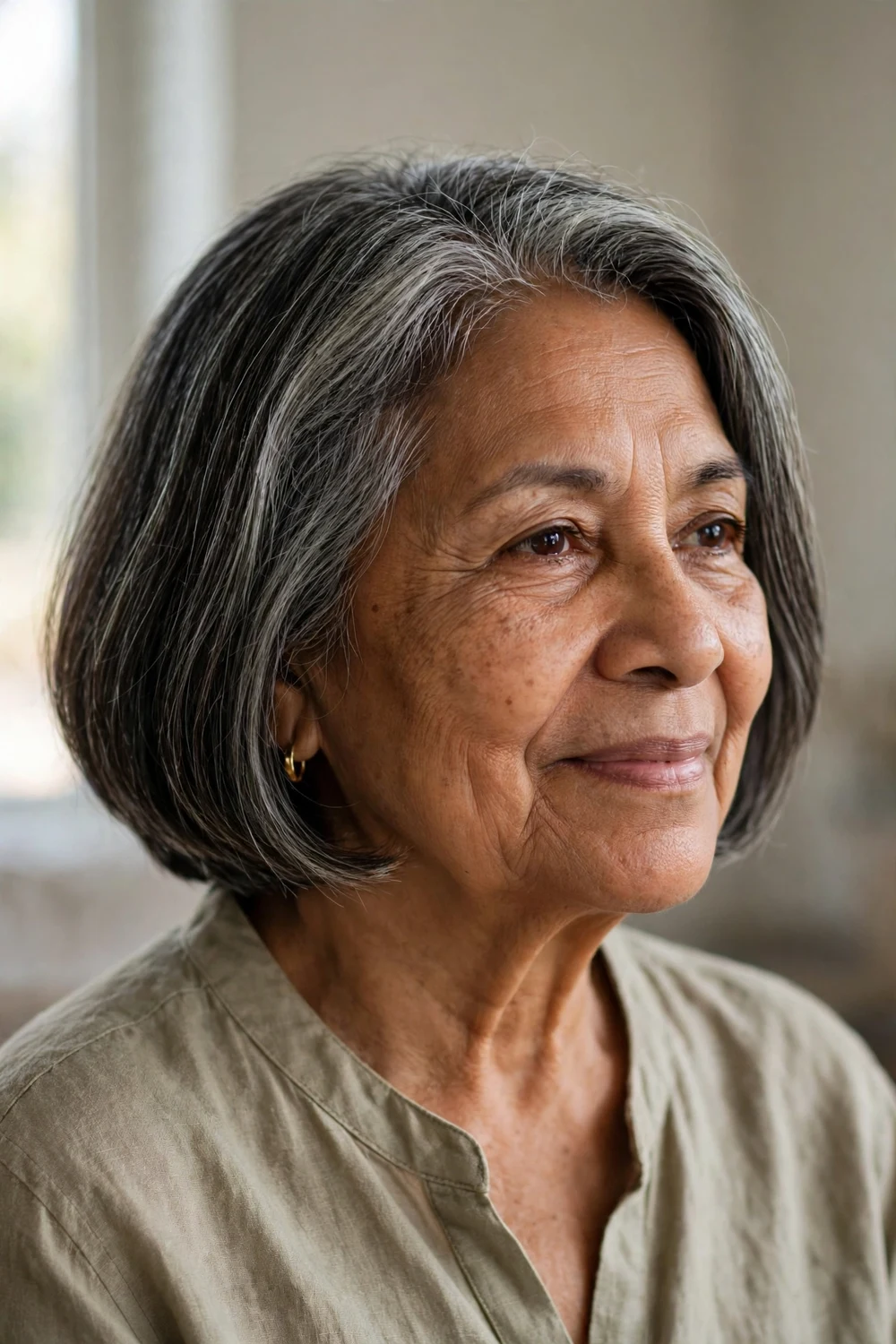
This cut celebrates the natural mix of gray and dark strands instead of covering it. A chin-length bob shape keeps it polished while the salt-and-pepper color does the talking. The two tones create natural dimension that dyed hair has to fake with highlights. Purple shampoo once a week keeps the gray strands bright instead of yellow, and regular trims keep the shape sharp enough to look intentional.
Try this: Use purple shampoo weekly and a shine spray for gloss. Don’t over-condition the gray strands or they can go limp.
16. Voluminous Blowout Bob
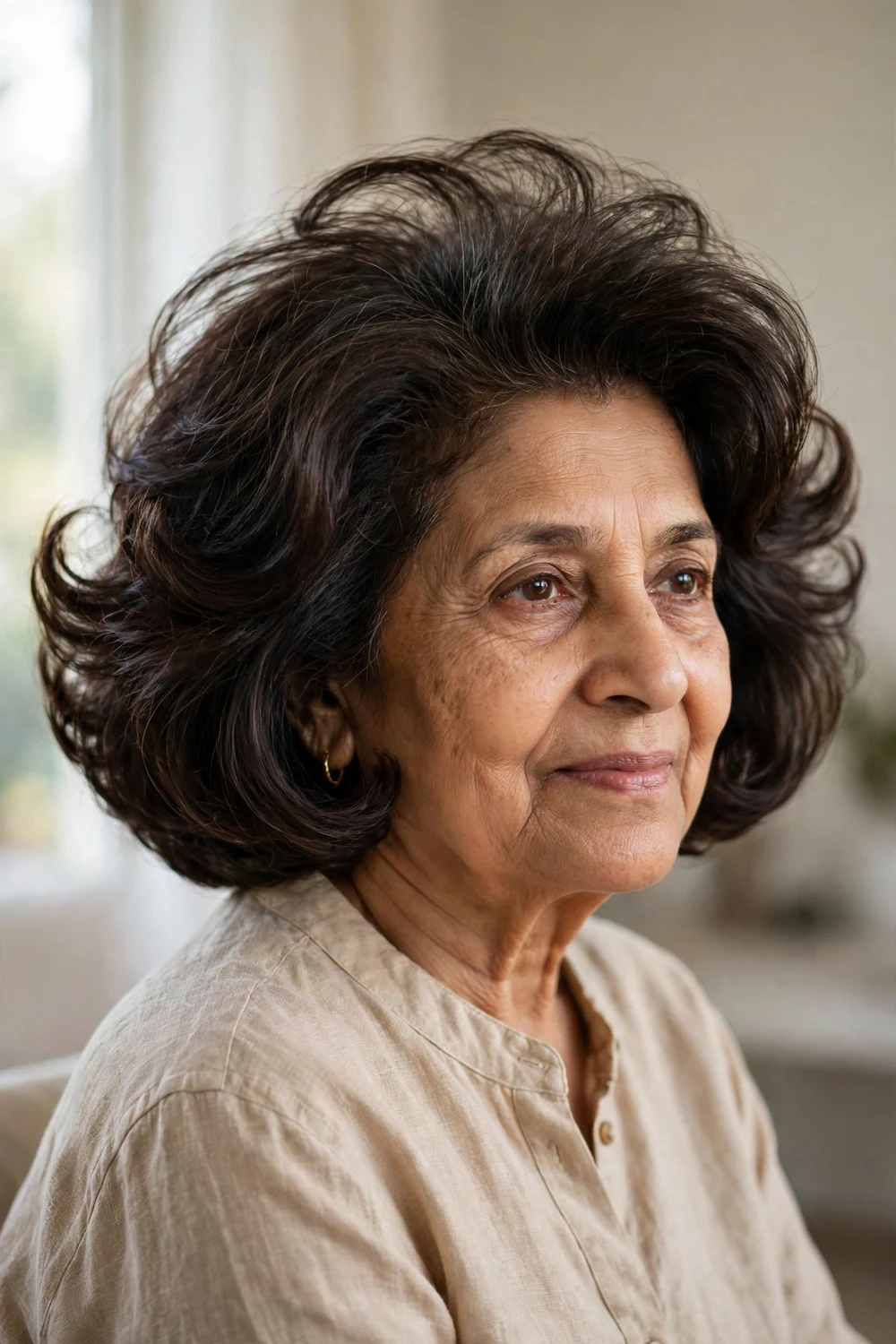
The salon blowout, made permanent. Rounded shape, bouncy ends, lifted roots: this bob is engineered for body. It’s a strong choice for events or for women who love a polished daily look and don’t mind ten minutes with a round brush. The fullness also balances longer faces and adds width where narrow faces need it. Heat protectant is non-negotiable with this much hot styling.
Try this: A round brush does the real work on the lift. Mist with flexible-hold hairspray after styling to keep the bounce without stiffness.
17. Curly Graduated Bob
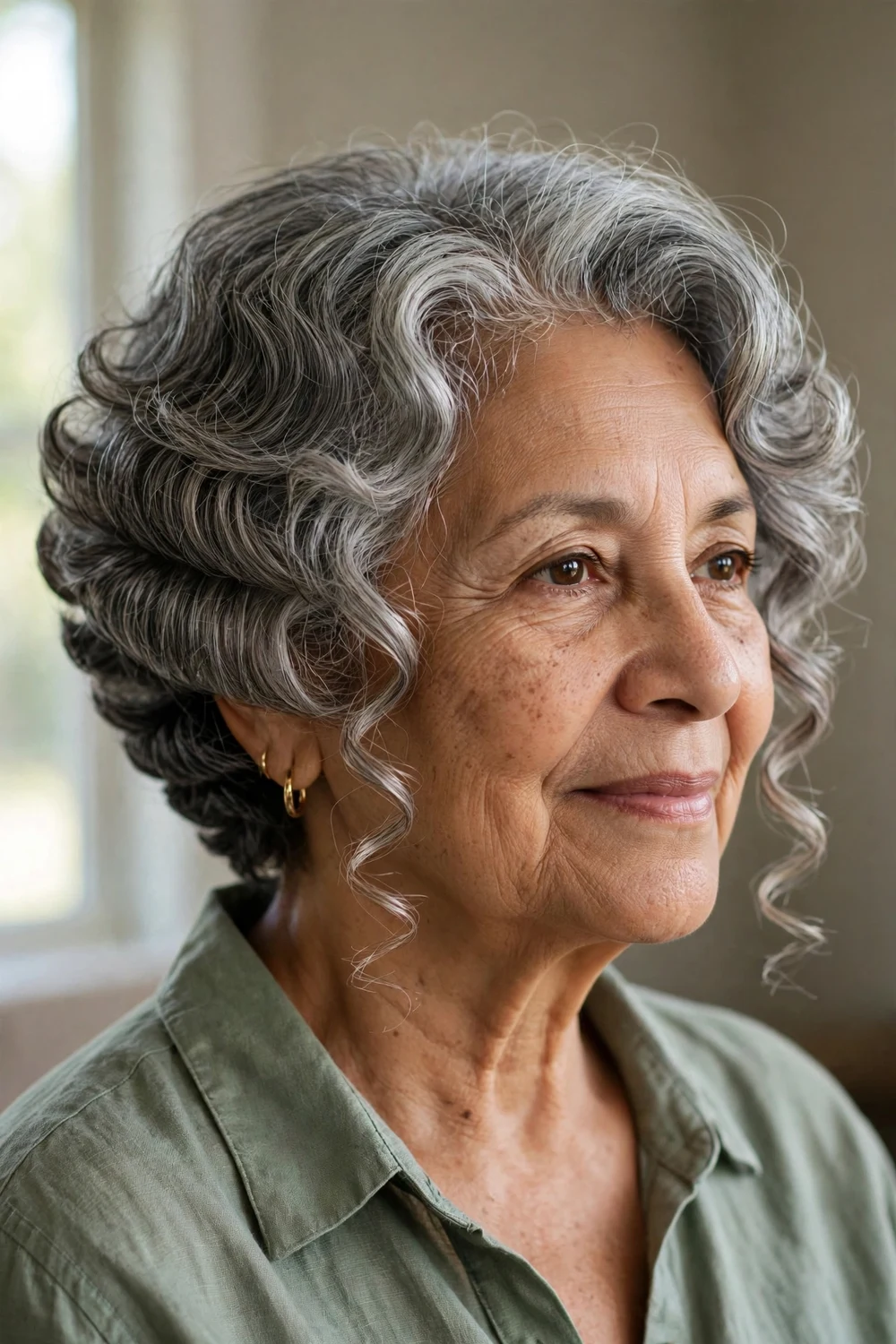
Graduation and curls are a natural pair. The shorter stacked back gives curls a place to spring from, while the longer front pieces frame the face with soft spirals. This cut enhances your natural curl pattern instead of stretching it out, and the shape keeps curls from widening into a triangle. It’s one of the most flattering curly options for this age group because it balances volume top to bottom.
Try this: Scrunch curl cream into damp hair and diffuse. Trim every eight to ten weeks to keep the graduation from growing heavy.
18. Short French Bob
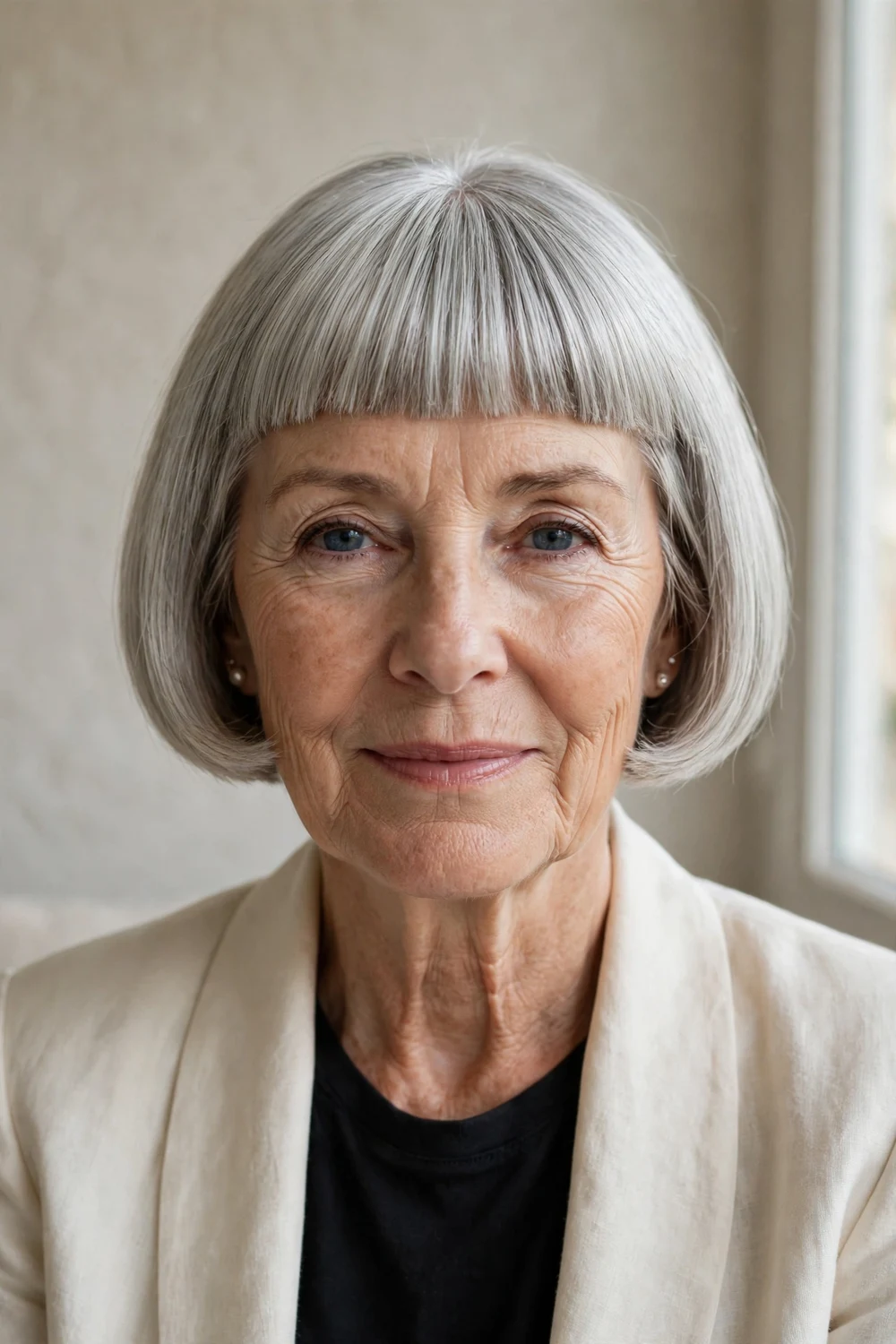
The Parisian classic: above the chin, slightly tousled, often with straight bangs. It reads as effortlessly chic because the cut does the work, not the styling. The short length opens up the face and neck, which suits petite women and anyone who wants to show off their features. It does need more frequent trims than longer bobs, since the precision is the point. A little texture keeps it modern rather than costume-like.
Try this: Curl the ends inward with a flat iron for the polished Parisian finish. Book trims every four to five weeks.
19. Stacked Bixie
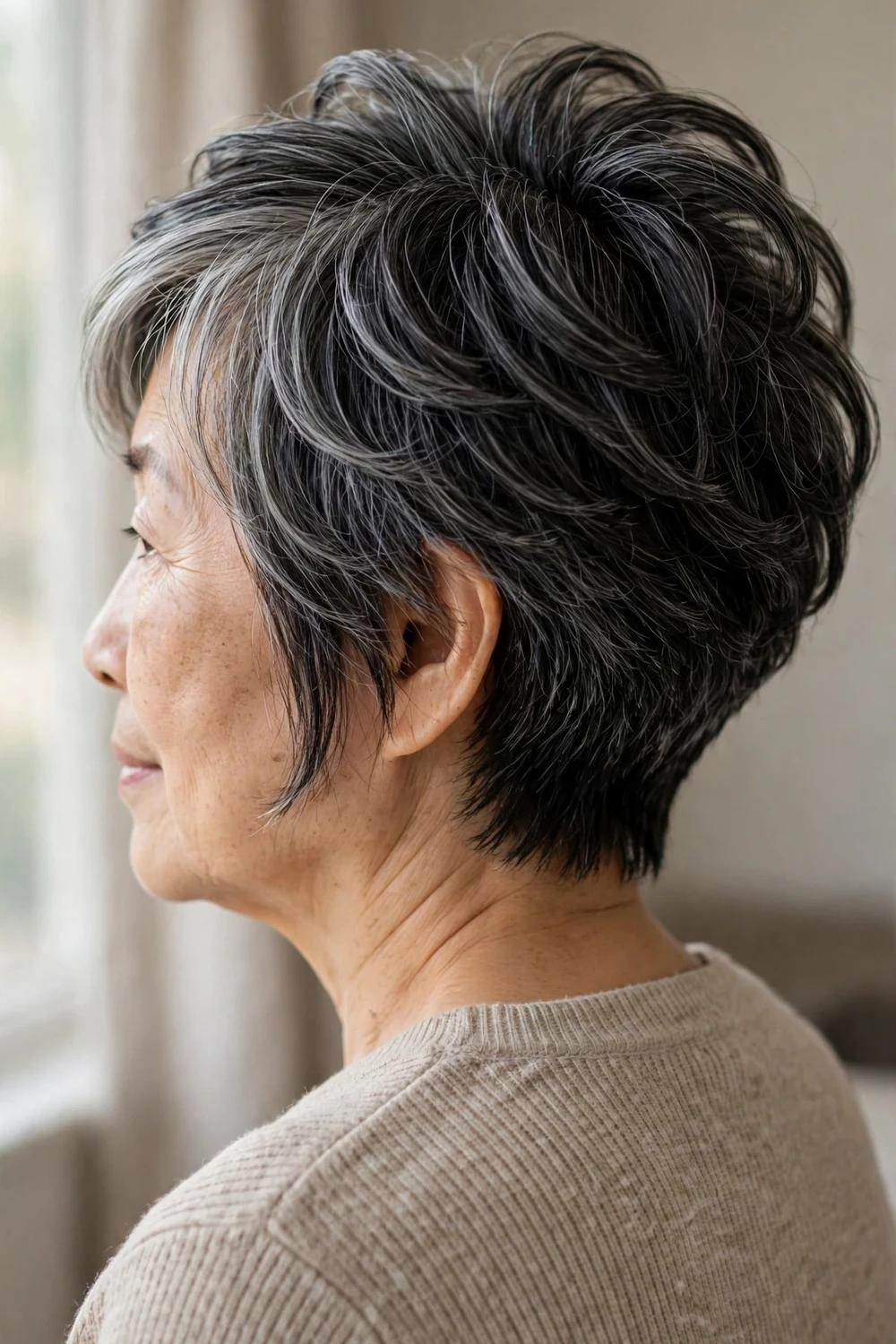
Half bob, half pixie: the bixie gives you the volume of a stacked back with longer strands in front that you can still tuck or style. It’s the compromise cut for women torn between short and shorter. The stacked layers add fullness at the crown, which helps thinning hair look denser. Style it smooth for polish or tousled for a relaxed day. Few cuts offer this much range at this length.
Try this: Use a round brush while blow-drying for bounce at the back. A dry shampoo at the roots adds daytime volume between washes.
20. Tapered Cut
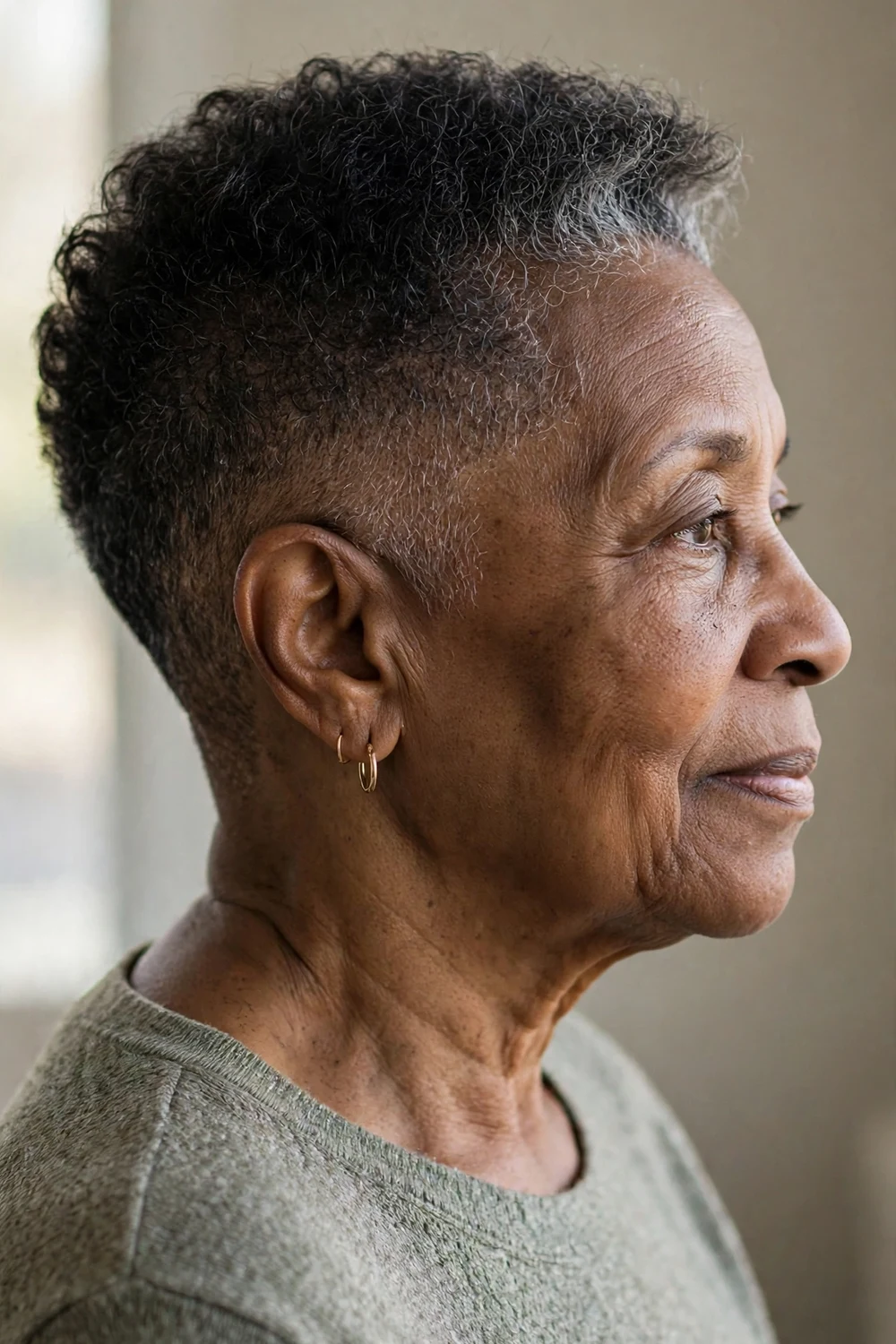
Neatly tapered sides and back with a longer textured top: this cut is tailoring for hair. The clean sides keep it sharp and low-maintenance, while the top gives you styling options, from smooth to tousled. It suits straight to wavy hair and works well for women who want short hair without the softness of a pixie. The contrast between the close sides and the fuller top is what makes it chic rather than plain.
Try this: Keep the sides tight with trims every four weeks. A pea-sized amount of styling wax defines the top without shine overload.
21. Layered Wavy Lob
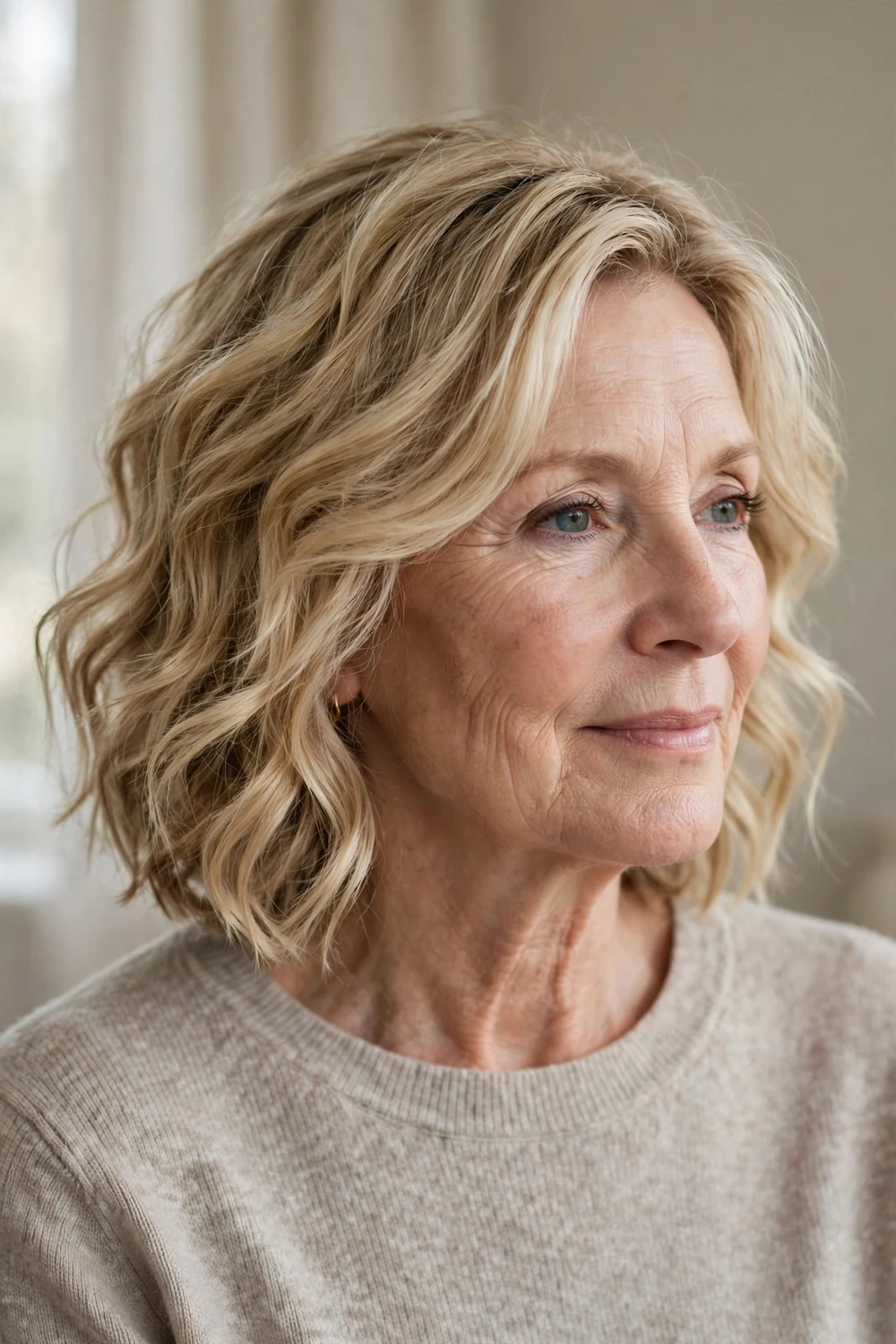
The lob remains the safest way to keep length after 60 without looking dated. Layers through the ends add texture, and soft waves bring movement that straight hair at this length can lack. It lands around the collarbone, which is flattering on most necklines. This cut transitions easily from day to evening: wear it smooth for work, add waves for dinner. It’s also forgiving during grow-out, since the layers keep their shape.
Try this: Wrap mid-lengths around a large-barrel curling iron, leaving the ends out for a modern wave. A texturizing spray adds grip for fine hair.
22. Straight Lob
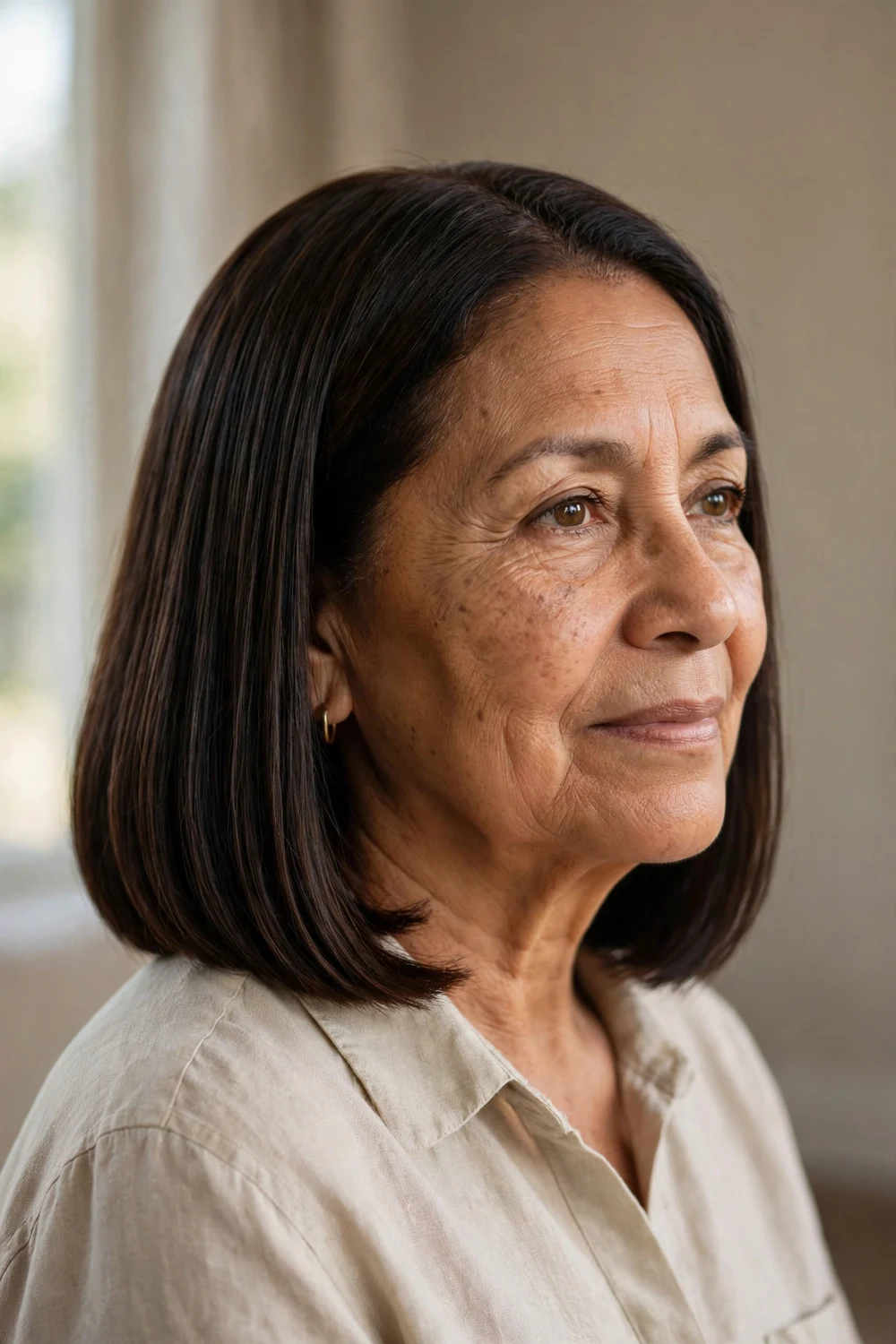
For women who want length with zero fuss, the straight lob delivers. One smooth line just above the shoulders, minimal layering, maximum shine. It’s the low-maintenance long option: wash, blow-dry smooth, done. The clean perimeter keeps it chic rather than shapeless, and it grows out evenly. This suits naturally straight hair best and pairs well with center or side parts alike.
Try this: Blow-dry with a paddle brush for smoothness. A smoothing serum on the ends prevents the frizz that ruins the clean line.
23. Shoulder-Length Waves
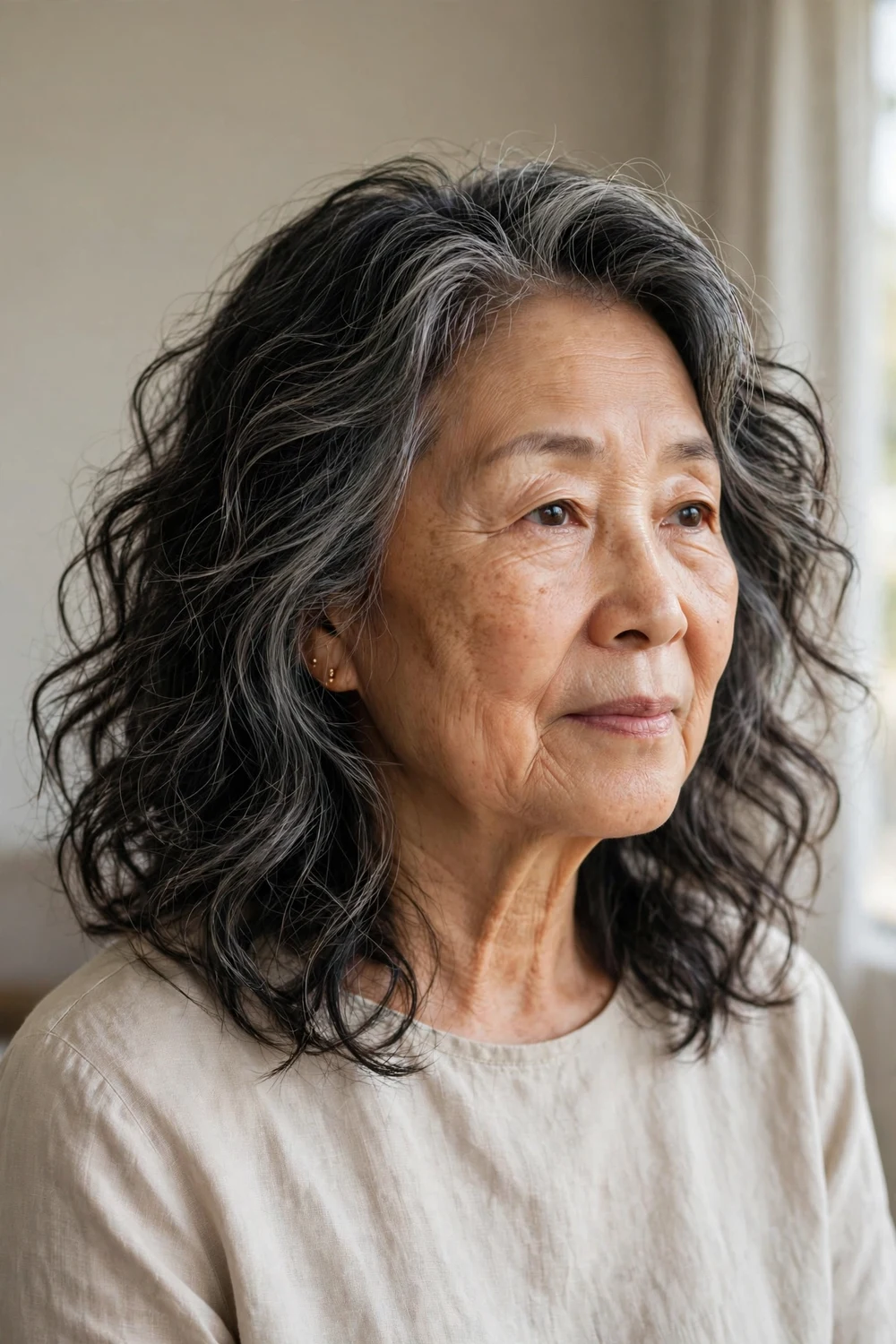
Soft waves at shoulder length are the definition of relaxed chic. The texture adds body to fine hair and softness to strong features, and the length is short enough to stay manageable. This is a wash-and-style cut: scrunch in product, let it air-dry or diffuse, and the waves do the rest. It suits wavy and wavy-straight hair types best, and it looks good with both gray and colored hair.
Try this: Braid damp hair loosely overnight for heat-free waves. Finish with a light-hold spray that keeps movement without stiffness.
24. Voluminous Waves with Curtain Bangs
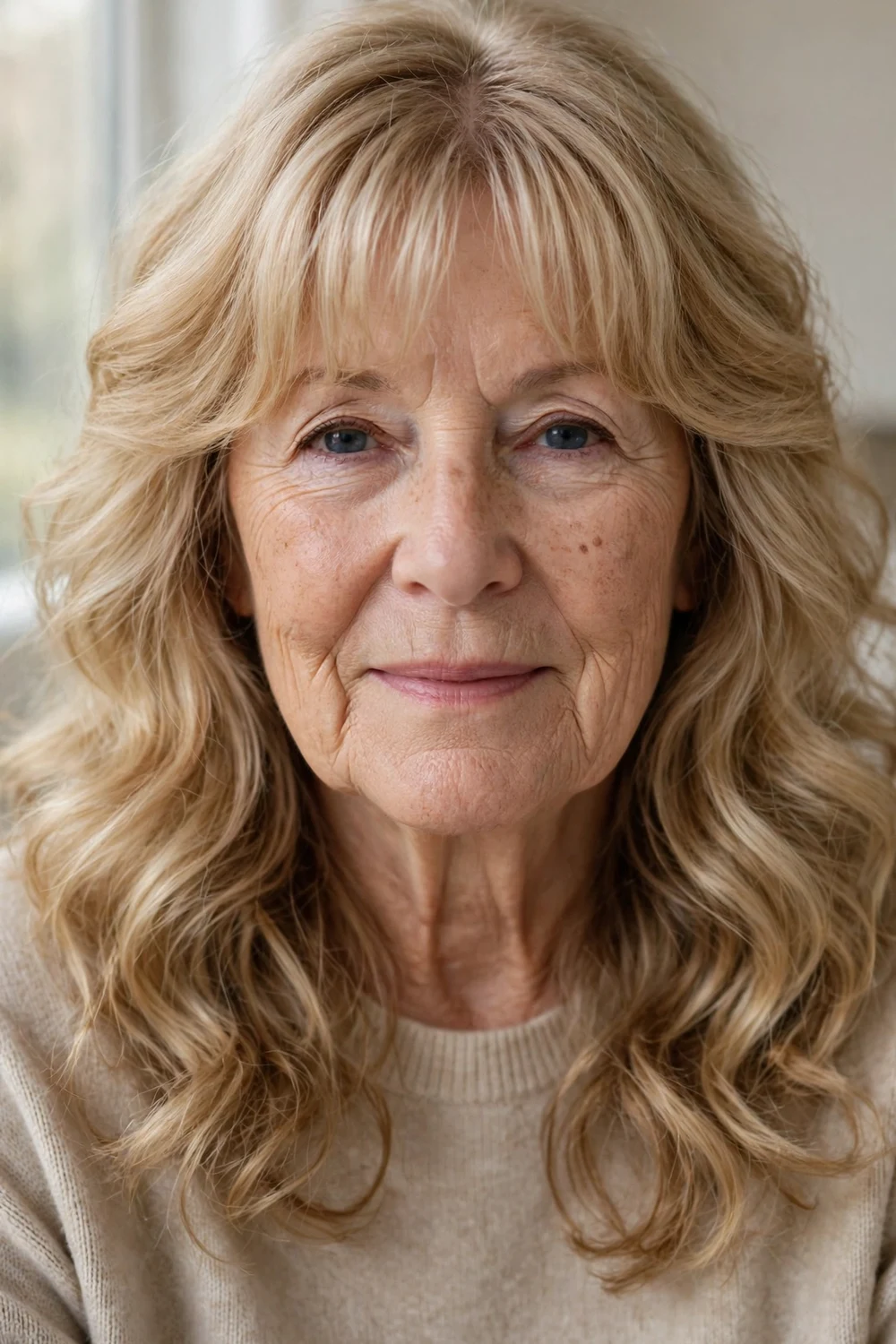
Curtain bangs part in the middle and sweep to each side, framing the face like curtains on a window. Paired with voluminous medium-length waves, they create a soft, glamorous look that suits almost everyone. The bangs draw attention to the eyes and cheekbones, and the waves add the body that flat hair lacks. This style photographs well and feels special without needing an occasion.
Try this: Style curtain bangs with a round brush while blow-drying for the natural swoosh. Thickening mousse at the roots boosts the waves’ body.
25. Shoulder-Length Layers
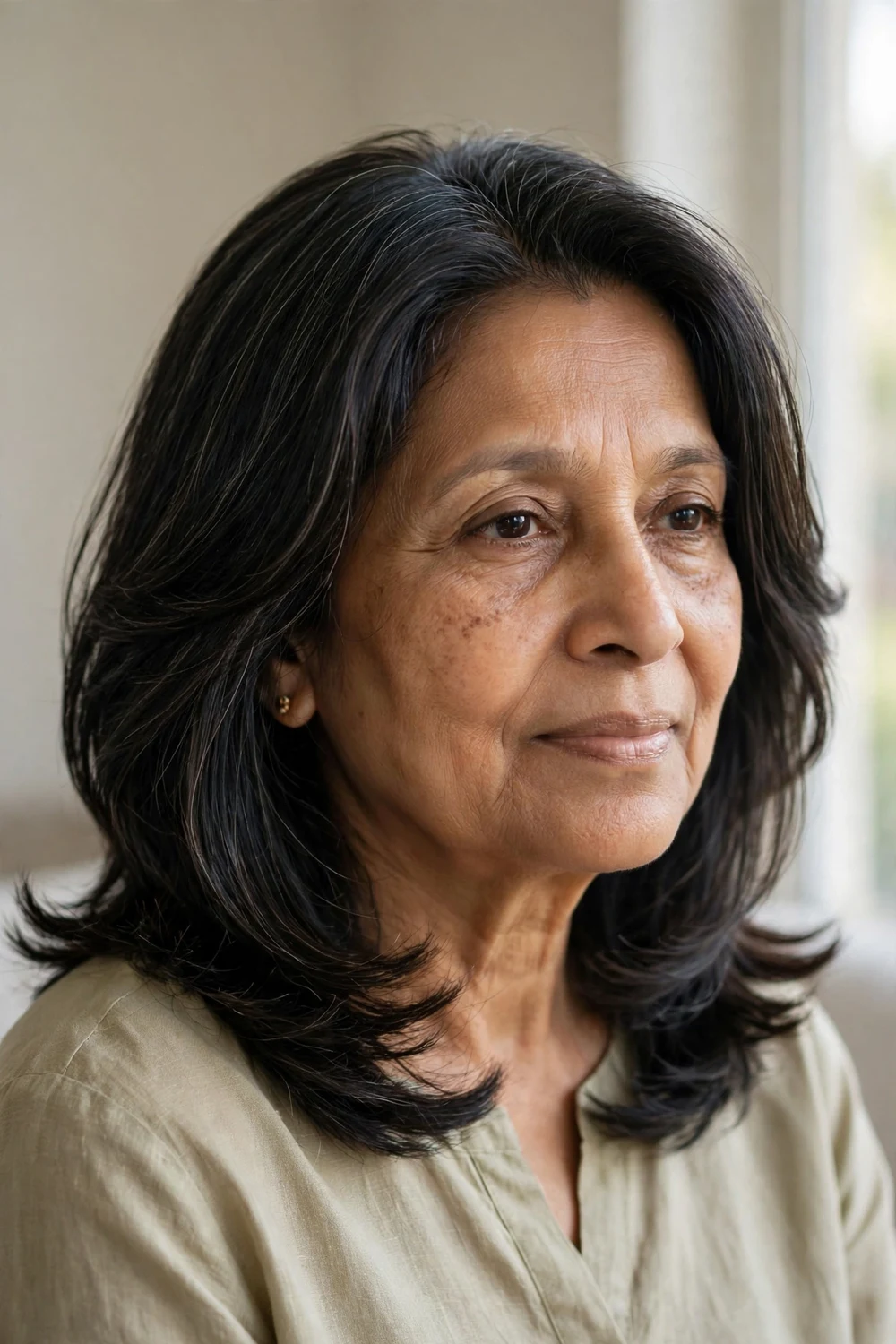
Long layers from the chin down add movement without sacrificing the security of length. This is the cut for women who aren’t ready to go short but want their hair to look styled rather than just long. The layers can be worn straight or wavy, and they lighten thick hair so it doesn’t drag the face down. Face-framing pieces in front add the softness that makes it chic at this age.
Try this: Ask for face-framing layers starting at the chin. Blow-dry the front pieces away from the face for lift.
26. Shaggy Layered Cut
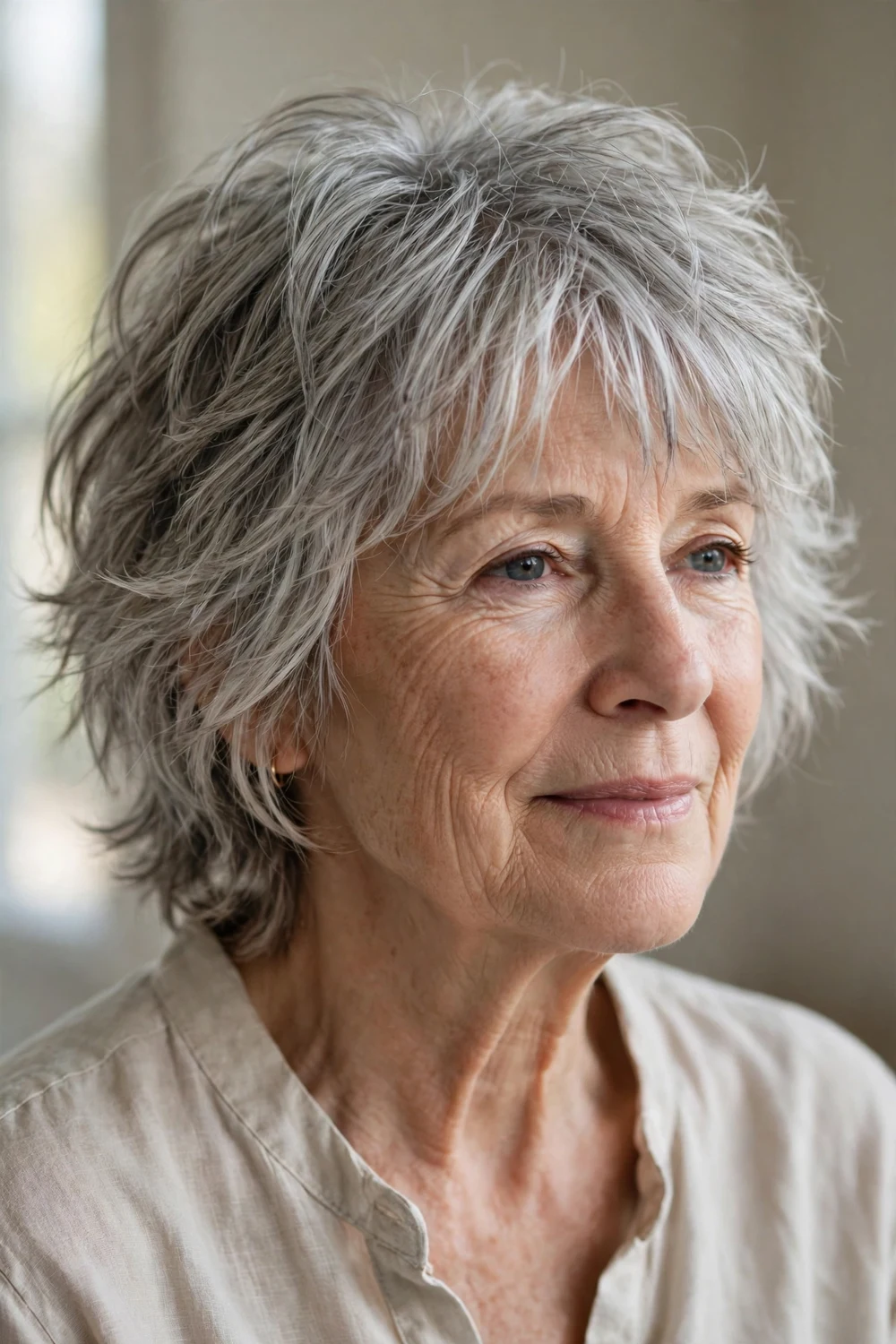
Choppy layers and a tousled finish give the shag its lived-in charm. It’s the anti-stiff option: the messier it looks, the better it works. For women over 60, the shag adds youthful energy without trying to look young. The layers create volume through the crown and movement at the ends, which suits fine to medium hair. It needs the least styling of any cut here: wash, scrunch, go.
Try this: Apply mousse to damp roots for volume, then let it air-dry. Finger-comb, never brush, to keep the texture intact.
27. Long Textured Waves
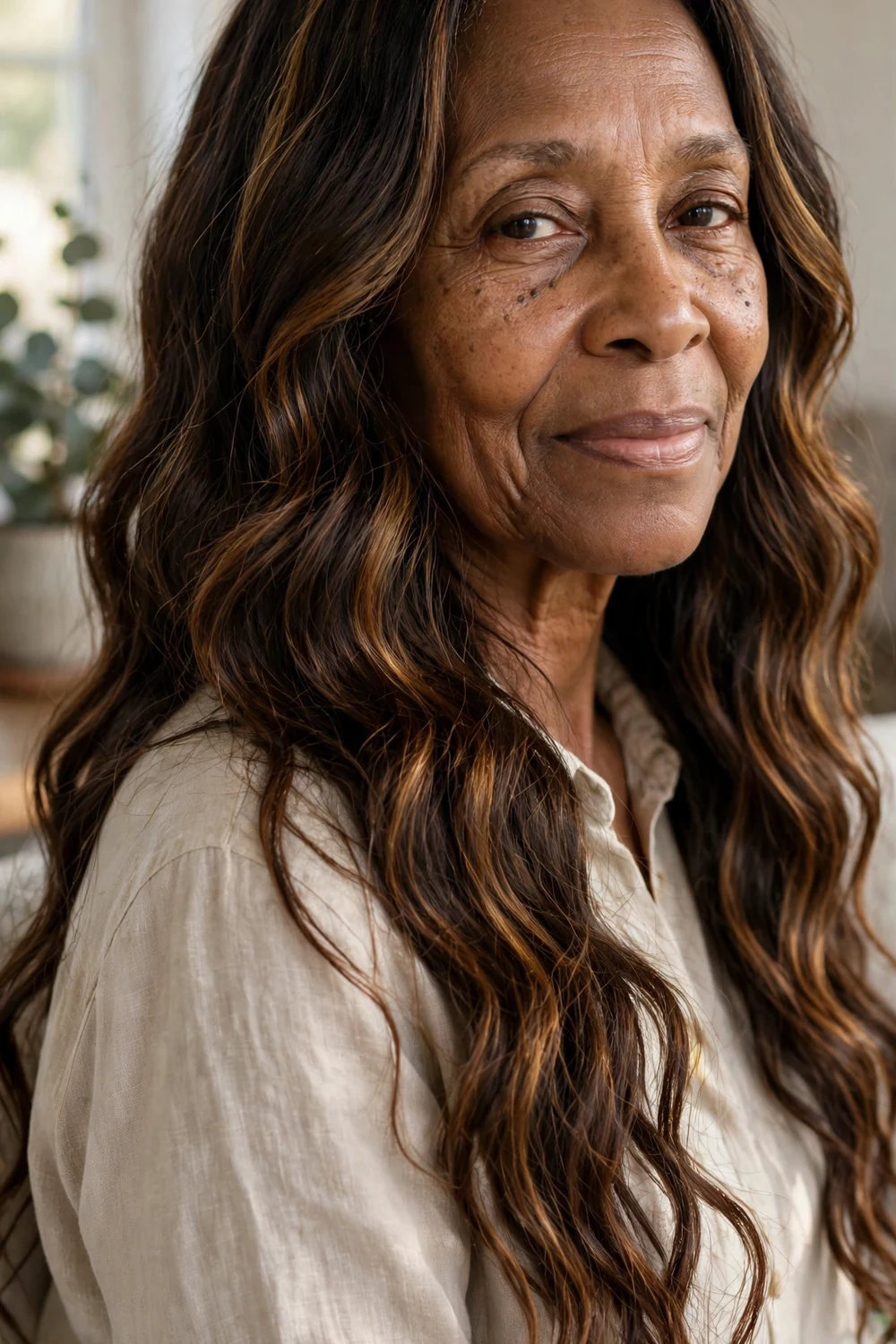
Long hair after 60 can absolutely be chic, but it needs texture and care to avoid looking neglected. Long layered waves keep the length while adding the movement that prevents a flat, heavy look. The layers start around the shoulders so the top stays full. This style demands healthy ends: regular trims and deep conditioning are part of the deal. When the hair is in good condition, the result is striking.
Try this: Get trims every eight weeks to keep the ends thick. A large-barrel iron creates the soft waves; beach-wave spray adds texture.
28. Modern Perm
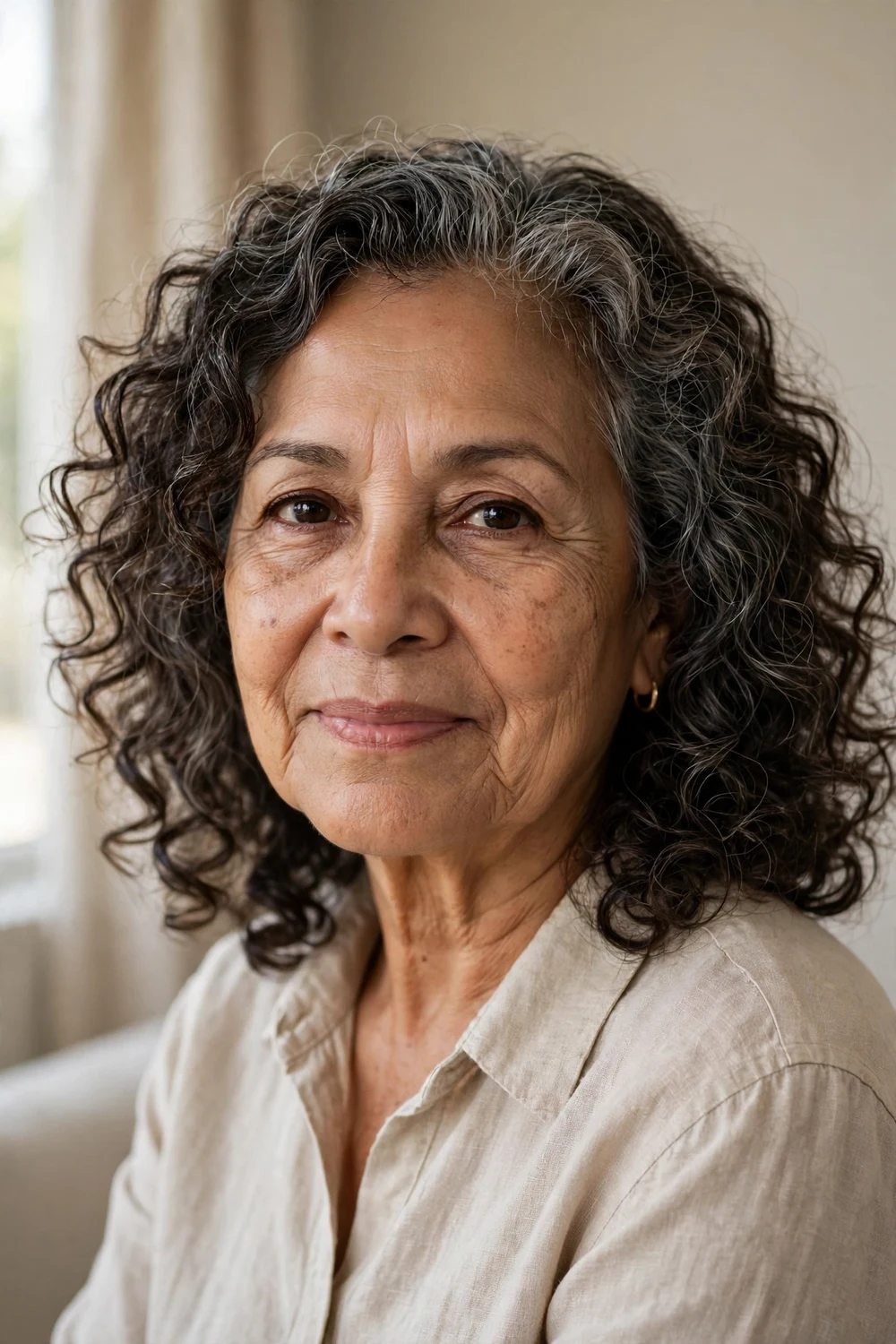
Forget the tight curls of decades past. The modern perm creates soft, natural-looking waves that add permanent body to fine, limp hair. It’s a strong option for women whose hair won’t hold a curl on its own, since the texture is built in. The result looks like naturally wavy hair, not a “perm.” Maintenance is simple: moisturizing products and occasional trims. Discuss your hair’s condition with your stylist first, since perms work best on healthy hair.
Try this: Use sulfate-free shampoo to protect the curl pattern. Scrunch with curl cream after washing and let it air-dry.
29. Classic French Twist
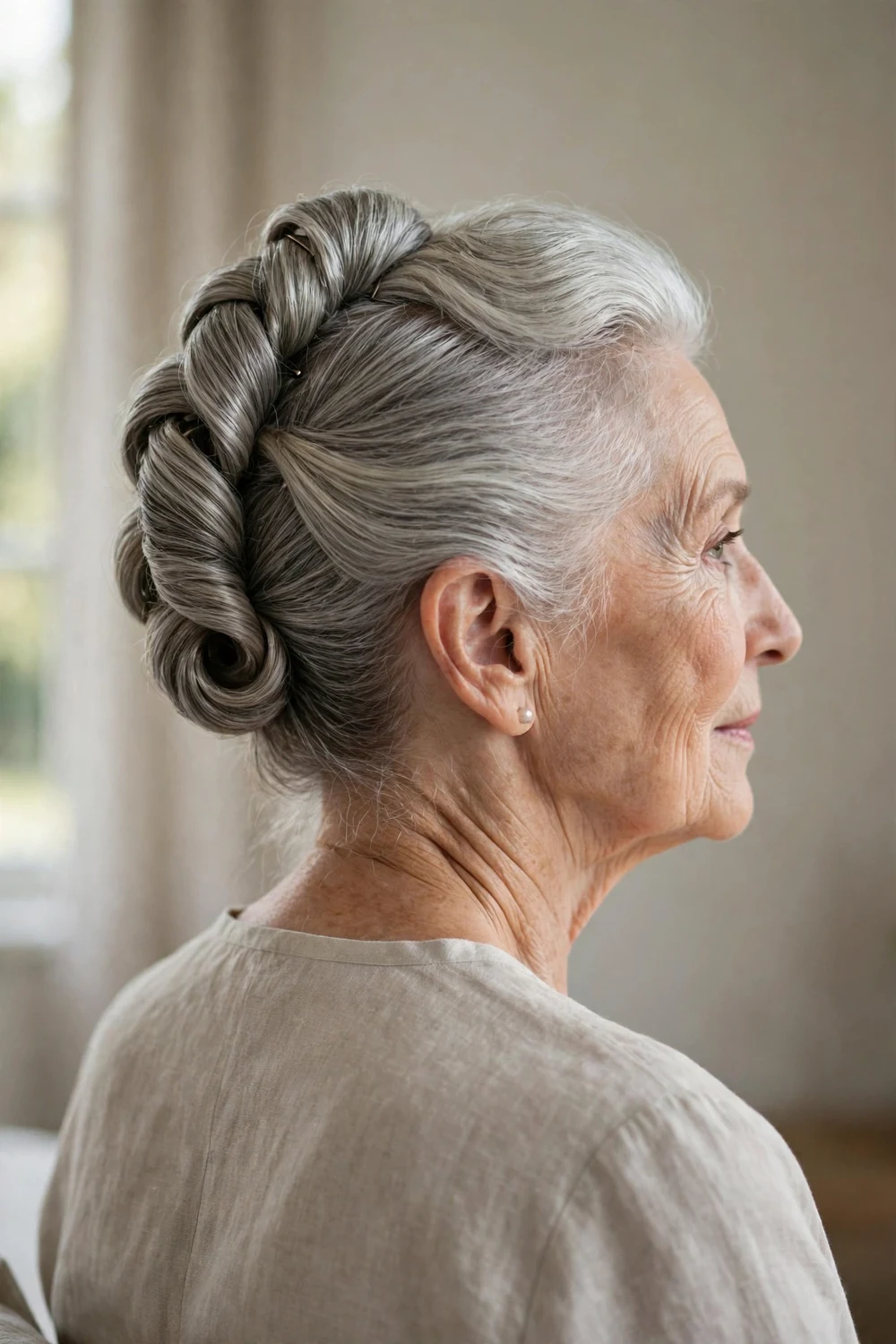
The French twist is the definition of timeless. Hair sweeps up and tucks into a vertical roll at the back, creating a sleek, sculpted silhouette that suits weddings, dinners, and any event where you want to look polished. It works on medium to long hair and holds well with bobby pins placed in a crossed pattern. A few face-framing tendrils pulled loose keep it from looking severe.
Try this: Work on second-day hair or add dry shampoo for grip. Secure with pins in a crossed pattern so the twist holds for hours.
30. Low Chignon
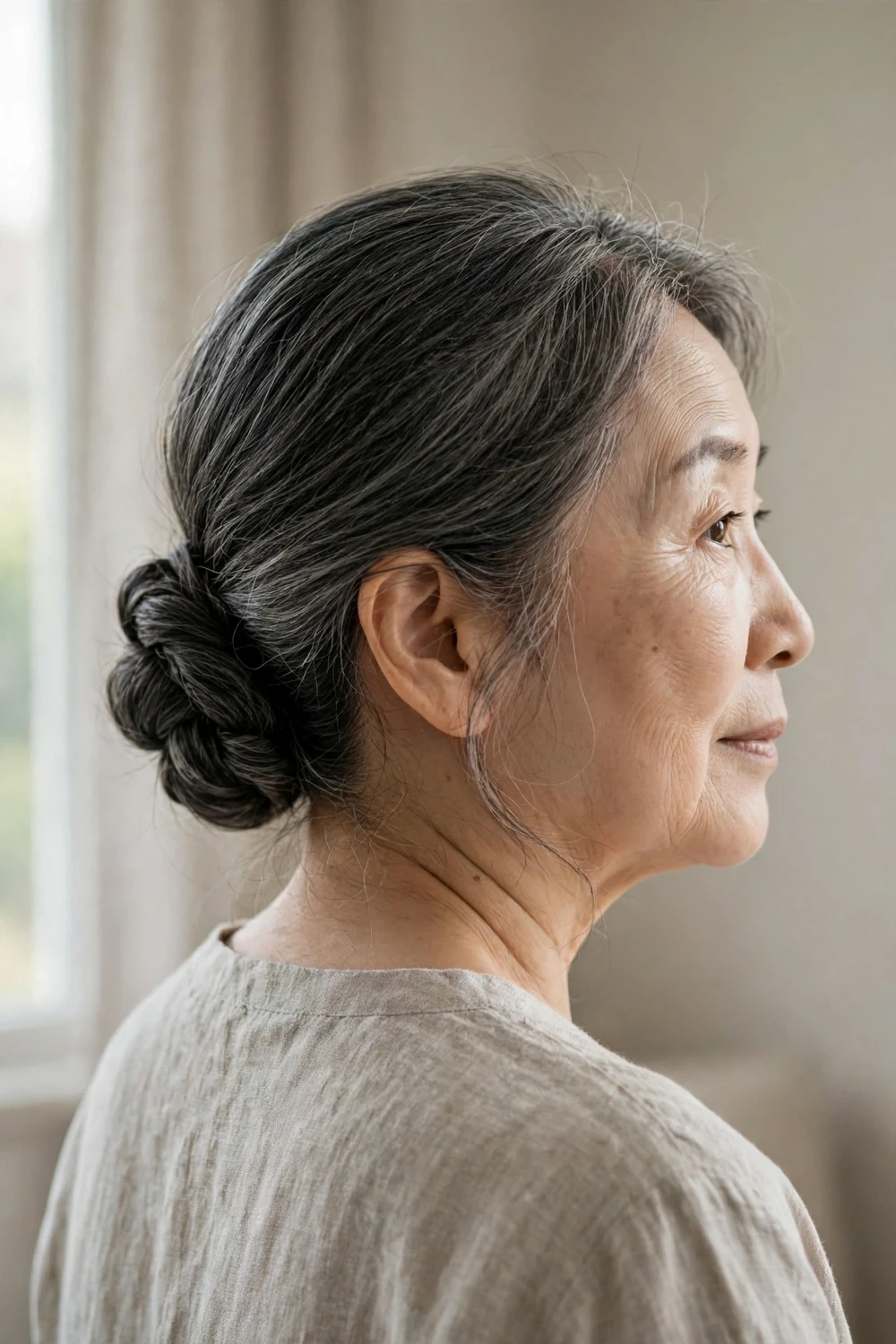
Gathered at the nape and pinned into a neat bun, the low chignon is grace in its simplest form. It’s the updo that never looks like it’s trying too hard, which is exactly why it stays chic. The low placement flatters longer necks and pairs well with statement earrings. Smooth the top for a formal look or leave it slightly textured for daytime elegance. It takes five minutes once you’ve done it twice.
Try this: Twist the ponytail loosely and wrap it around its base, pinning as you go. Pull out a few soft strands around the face for softness.
Chic Hairstyles Comparison at a Glance
| Style | Best For | Difficulty | Upkeep |
|---|---|---|---|
| Textured Layered Pixie | Fine, straight hair | Easy | Trims every 4-6 weeks |
| Soft Feathered Pixie | Round faces | Easy | Trims every 5-6 weeks |
| Curly Pixie | Natural curls and coils | Easy | Trims every 6-8 weeks |
| Pixie with Side Bangs | Most face shapes | Easy | Bang trims every 3 weeks |
| Brushed-Forward Pixie | Thinning crowns | Easy | Trims every 4-6 weeks |
| Cropped Pixie, Tapered Neckline | Strong bone structure | Easy | Trims every 4-5 weeks |
| Classic Blunt Bob | Fine hair needing thickness | Easy | Trims every 6-8 weeks |
| Layered Bob | Medium to thick hair | Medium | Trims every 6-8 weeks |
| Sleek Straight Bob | Naturally straight hair | Easy | Trims every 6-8 weeks |
| Layered Feathered Bob | Silver and gray hair | Medium | Trims every 6 weeks |
| Chin-Length Bob with Bangs | Glasses wearers | Medium | Bang trims every 3 weeks |
| Asymmetrical Bob | Fuller faces | Medium | Trims every 5-6 weeks |
| Angled Bob | Straight hair | Medium | Back trims every 5 weeks |
| Inverted Bob | Flat, fine hair | Medium | Trims every 5-6 weeks |
| Salt-and-Pepper Bob | Natural gray hair | Easy | Purple shampoo weekly |
| Voluminous Blowout Bob | Special occasions | Hard | Daily round-brush styling |
| Curly Graduated Bob | Natural curls | Easy | Trims every 8-10 weeks |
| Short French Bob | Petite frames | Medium | Trims every 4-5 weeks |
| Stacked Bixie | Thinning hair | Medium | Trims every 5-6 weeks |
| Tapered Cut | Straight to wavy hair | Easy | Side trims every 4 weeks |
| Layered Wavy Lob | Most hair types | Medium | Trims every 8 weeks |
| Straight Lob | Naturally straight hair | Easy | Trims every 8 weeks |
| Shoulder-Length Waves | Wavy hair | Easy | Trims every 8-10 weeks |
| Voluminous Waves, Curtain Bangs | Most face shapes | Medium | Bang trims every 4 weeks |
| Shoulder-Length Layers | Thick hair | Easy | Trims every 8 weeks |
| Shaggy Layered Cut | Fine to medium hair | Easy | Trims every 8 weeks |
| Long Textured Waves | Healthy long hair | Medium | Trims every 8 weeks |
| Modern Perm | Limp, fine hair | Easy | Moisturizing routine |
| Classic French Twist | Events | Medium | Occasional wear |
| Low Chignon | Events and daily | Easy | Occasional wear |
How to Choose the Right Chic Hairstyle After 60
Start with your hair texture, not the photo. Fine hair needs cuts that manufacture volume: stacked backs, crown layers, textured ends. Thick hair needs cuts that remove weight: long layers, thinning at the ends, shapes that swing. Curly hair needs a stylist who cuts for curl pattern, dry or in sections.
Next, be honest about maintenance. If you won’t pick up a round brush, skip the blowout bob and choose a textured pixie or shag that air-dries well. If you love a polished daily look, the sleek bob or straight lob rewards the effort.
Consider your face shape and features. Side parts and asymmetry flatter fuller faces. Bangs soften foreheads and frame eyes, and they pair well with glasses. Shorter cuts open up the neck and jawline, which suits women who want to show bone structure.
Finally, talk color with your stylist. Gray blending with fine highlights softens the grow-out line for women transitioning to gray. Salt-and-pepper hair looks best with shine products and purple shampoo. Bring two or three reference photos and name the specific cut you want.
Mistakes to Avoid
Don’t ask for “just a trim” without a plan. That habit slowly turns a shaped cut into a shapeless one, and shapeless reads as dated. Every appointment should have a goal: maintain the shape or change it.
Don’t go too dark with all-over color. Very dark dye against mature skin can look harsh and draws attention to the regrowth line. Softer shades with dimension, or embracing gray with the right care, usually look more refined.
Don’t skip regular trims to “grow it out.” Straggly ends undo every chic intention. If you’re growing length, trim every ten weeks to keep the ends thick while the length builds.
Don’t over-style fine hair with heavy products. Waxes and thick creams flatten what the cut built up. Lightweight mousses, texturizing sprays, and root powders do the job without the weight.
If your hair is on the finer side, our guide to hairstyles for women over 60 with thin hair goes deeper on cuts that build real volume.
Wear glasses? See hairstyles for women over 60 with glasses for frames-friendly cuts and bang pairings.
For the lowest-effort options in this age group, browse wash and wear haircuts for women over 60 next.
And if bangs caught your eye, bangs hairstyles for older women covers every bang style that works past 60.
Frequently Asked Questions
What is the most flattering haircut for a woman over 60?
There is no single winner, but stylists most often recommend bobs and textured pixies for this age group. A classic blunt bob or a layered pixie frames the face, adds the appearance of fullness, and needs minimal daily styling. The best choice depends on your hair texture: fine hair does well with stacked or layered shapes, while thick hair benefits from long layers that remove bulk.
Should women over 60 have long or short hair?
Either can look chic if the hair is healthy and the cut has shape. Short to medium lengths are easier to keep polished and tend to flatter mature faces, which is why most over-60 style guides lean that way. Long hair works when the ends stay thick and healthy, with layers for movement. The deciding factor is condition and maintenance, not a rule about age.
What hairstyle makes you look younger at 60?
Cuts that add volume at the crown and softness around the face tend to have a freshening effect: layered bobs, textured pixies, and styles with side-swept or curtain bangs. Avoiding very dark all-over color in favor of softer shades or well-kept gray also helps. That said, the goal is looking polished and current, not chasing a younger age.
How do I keep gray hair looking chic instead of dull?
Use a purple shampoo once a week to prevent yellowing, and add shine with a lightweight serum or gloss spray. Regular trims keep the shape sharp, which matters more with gray since dull ends show easily. Some women add subtle lowlights for dimension. Well-maintained gray in a defined cut is one of the chicest looks on this list.
What should I tell my stylist to get one of these cuts?
Bring two or three reference photos and name the cut specifically, for example “textured pixie with a tapered neckline” or “chin-length blunt bob with wispy bangs.” Mention your daily routine honestly so the stylist can adjust: how you dry your hair, how often you want trims, and whether you color. Specific language gets you much closer to the photo than “something short and easy.”
Final Thoughts
Chic after 60 is simpler than the magazines make it sound. Pick a cut with clean lines that suits your texture, keep it trimmed, keep the color intentional, and style it in a way you’ll actually do every morning. Any of these 30 will do that job. Start with the one that matches your hair as it is today, and let the stylist fine-tune it to your face. Good hair at this age isn’t luck; it’s a good cut, kept up.

