


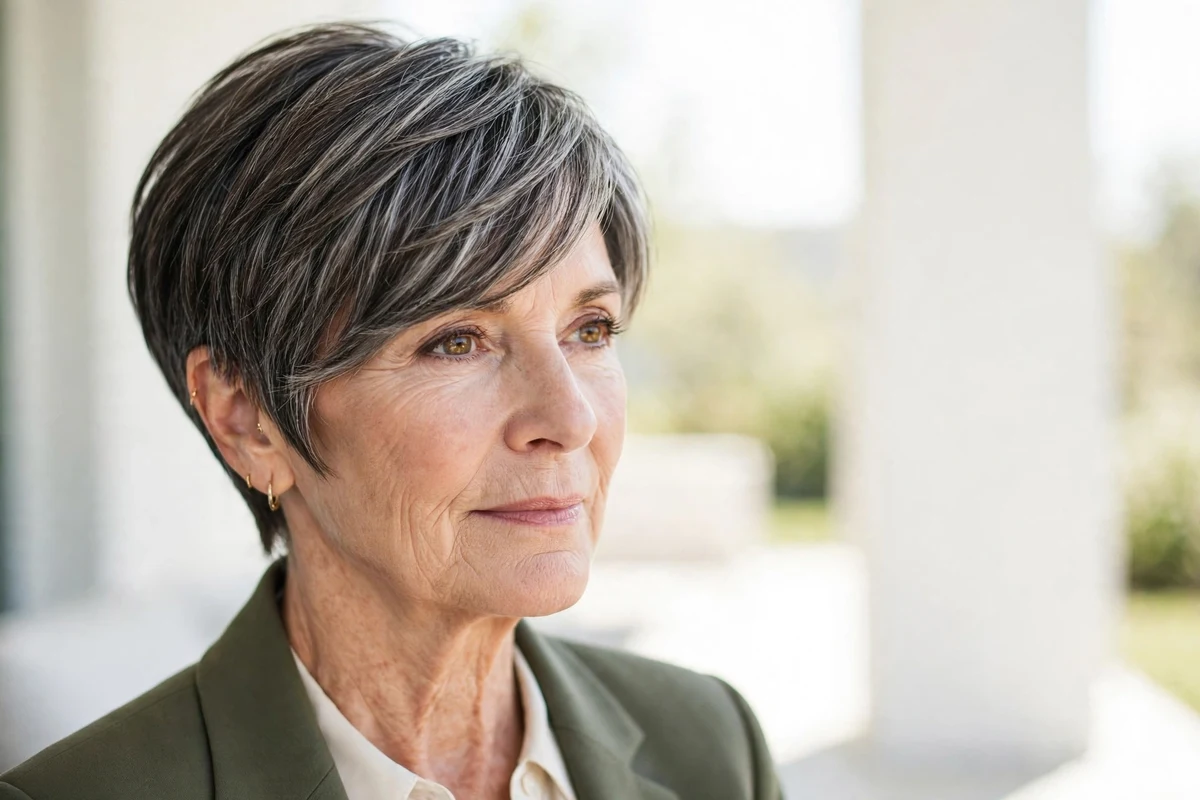
Asymmetrical pixie cuts over 50 have become one of the most requested short styles in salons, and the reason is simple. One side falls longer while the other stays neatly tapered, which gives short hair instant movement, lift, and shape without a complicated routine.
Below you’ll find 30 distinct versions of the cut, from soft feathered styles to sharp undercuts. Each idea includes honest upkeep notes and a practical styling tip. I’ve spent years testing short cuts on fine hair, and asymmetry is the detail that keeps a pixie looking intentional instead of plain.
Quick answer: An asymmetrical pixie pairs a longer sweeping side with a shorter tapered side, creating lift and movement that flatters women over 50. It works on straight, wavy, curly, fine, and thick hair. Most versions need a trim every 4 to 6 weeks to keep the lines sharp.
Quick Takeaways
- The longer side of an asymmetrical pixie adds volume where fine or thinning hair needs it most, around the crown and face.
- Dial the contrast up or down: a subtle length difference reads classic, while a dramatic sweep reads modern.
- Most asymmetrical pixies take under 10 minutes to style with a blow dryer and a small amount of product.
- Bring reference photos to your appointment and ask whether a true asymmetrical cut or a bias-cut version suits your styling habits.
- Trims every 4 to 6 weeks keep the asymmetry looking deliberate rather than grown out.
Why Asymmetry Works So Well After 50
Symmetrical short cuts can sit flat on the head, especially on fine hair. Asymmetry breaks that up. The uneven lengths create natural lift at the crown and draw the eye along a diagonal line, which adds the illusion of fullness.
It also solves a common complaint about pixies: that they all look the same. Shifting the part, extending one side, or tapering the other changes the whole character of the cut. You get a style that looks custom instead of generic.
The cut adapts to almost every texture. Straight hair shows off the geometric lines. Waves and curls add organic movement that softens the angles. Thick hair benefits from the weight removed on the shorter side, while fine hair gains the appearance of density on the longer side.
1. Classic Side-Swept Asymmetrical Pixie
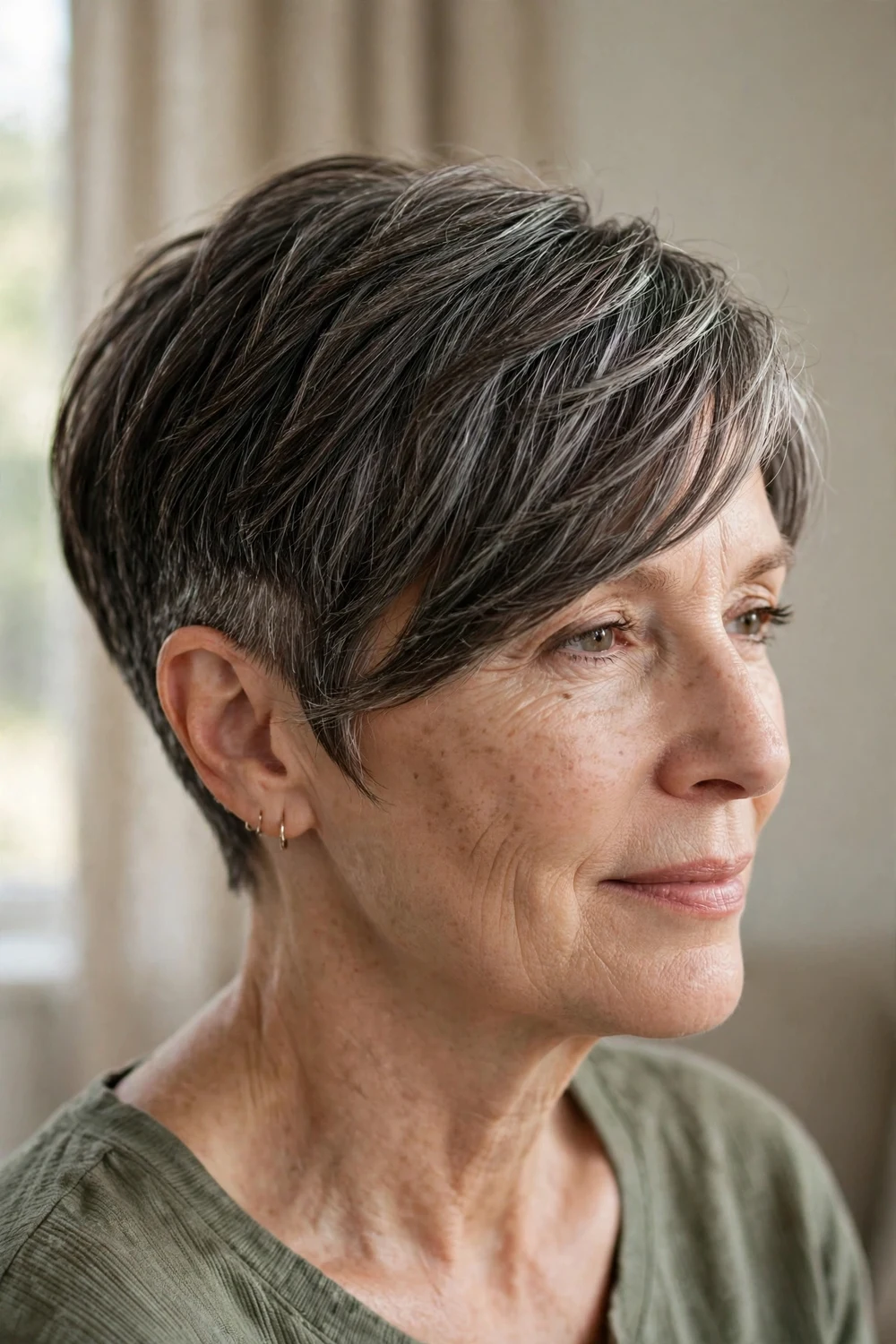
Start with the version that made the style famous. One side stays close to the head with a clean taper while the other sweeps across the forehead in a longer line. The contrast is clear but not extreme, which makes it an easy first step into asymmetry. It flatters oval, heart, and round faces because the diagonal line breaks up width. Straight to wavy hair shows the shape best. Wear it smooth for the office or roughed up with fingers for the weekend.
Try this: Blow-dry the longer side forward and across with a flat brush, then press a pea-sized amount of smoothing cream through the ends for a clean finish.
Difficulty: Easy | Upkeep: Low
2. Asymmetrical Pixie with Side-Swept Fringe
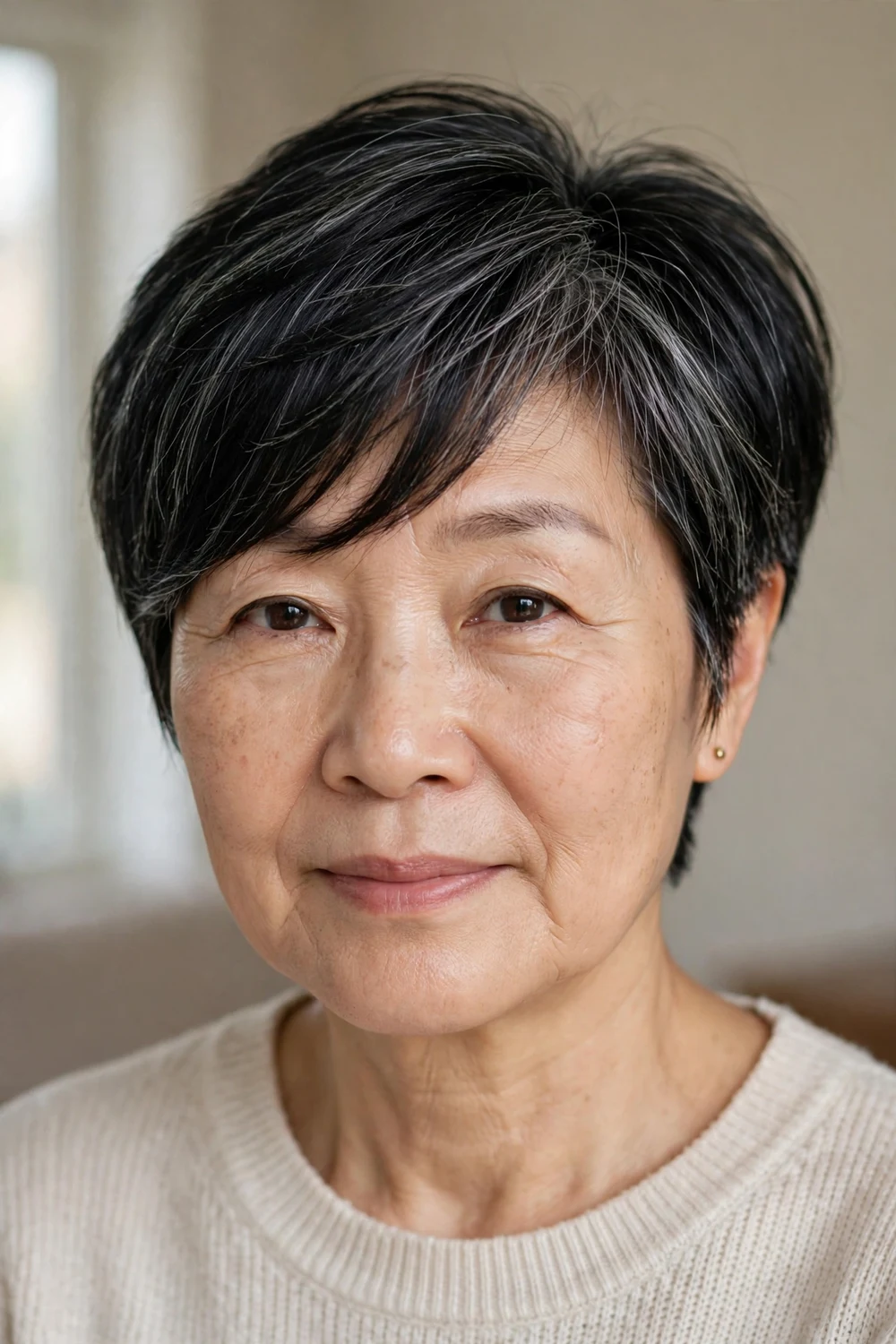
If your forehead or fine lines bother you, this is the asymmetrical pixie to ask for. The fringe grows out of the longer side and angles softly across the brow, blending into the cheekbone area. The shorter side stays neat and controlled behind the ear. The fringe adds softness without hiding the asymmetry, and it gives you a built-in face frame. It suits women who want the modern edge of the cut with a gentler front.
Try this: Part hair on the shorter side while damp, then direct the fringe across with a round brush for natural bend and lift at the root.
Difficulty: Easy | Upkeep: Low
3. Textured Choppy Asymmetrical Pixie
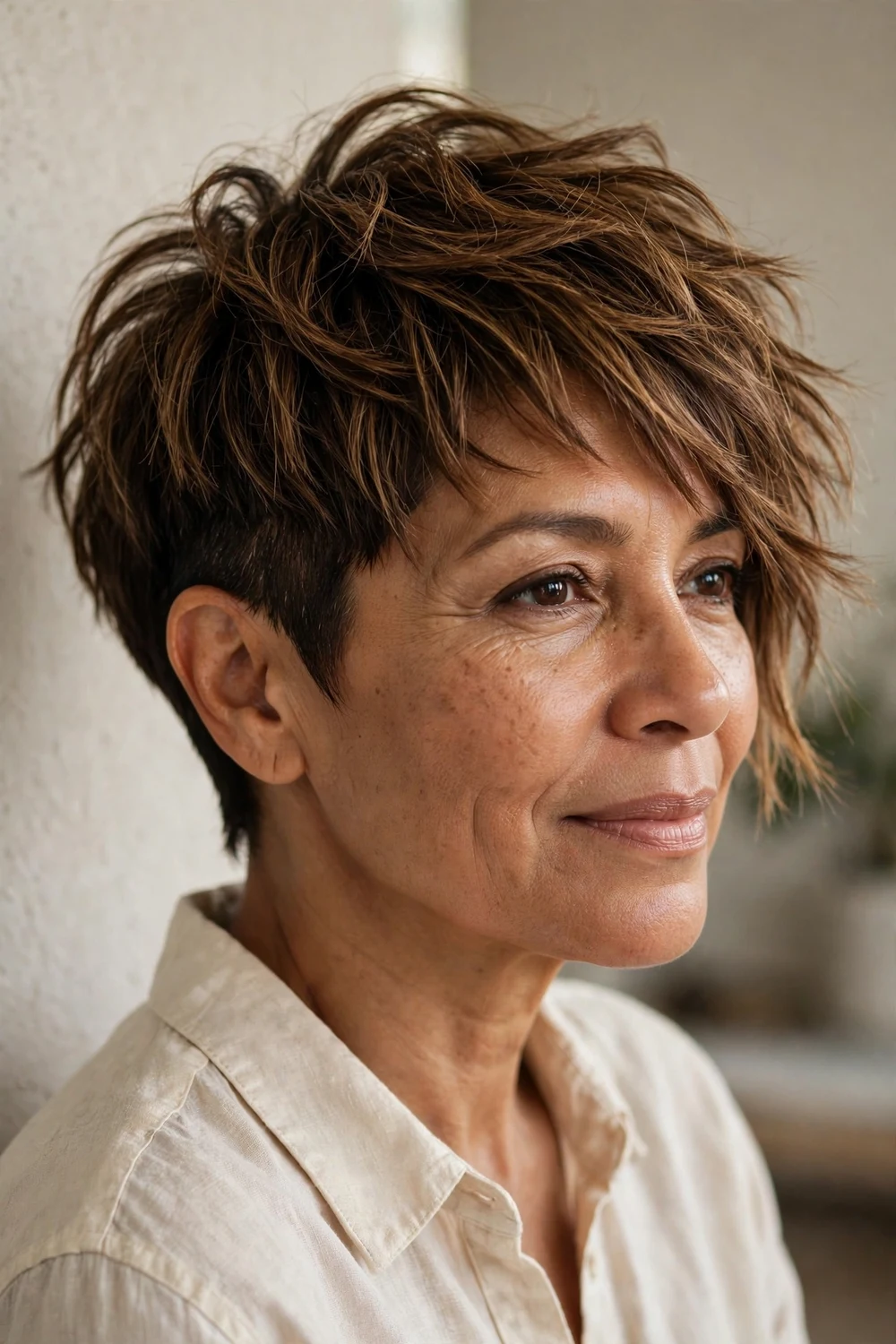
Ask your stylist for point-cut layers through the longer side and a closely shaped shorter side. The choppy texture creates separation and lift that fine hair often lacks, and the uneven ends keep the cut from looking severe. A dime-sized amount of texturizing paste worked through dry hair defines the pieces without stiffness. This version reads youthful and energetic, and it grows out more gracefully than blunt versions because the layers blur the grow-out line.
Try this: Sprinkle a little texture powder at the crown, then pinch random sections on the longer side to build height that lasts all day.
Difficulty: Easy | Upkeep: Low to medium
4. Feathered Asymmetrical Pixie
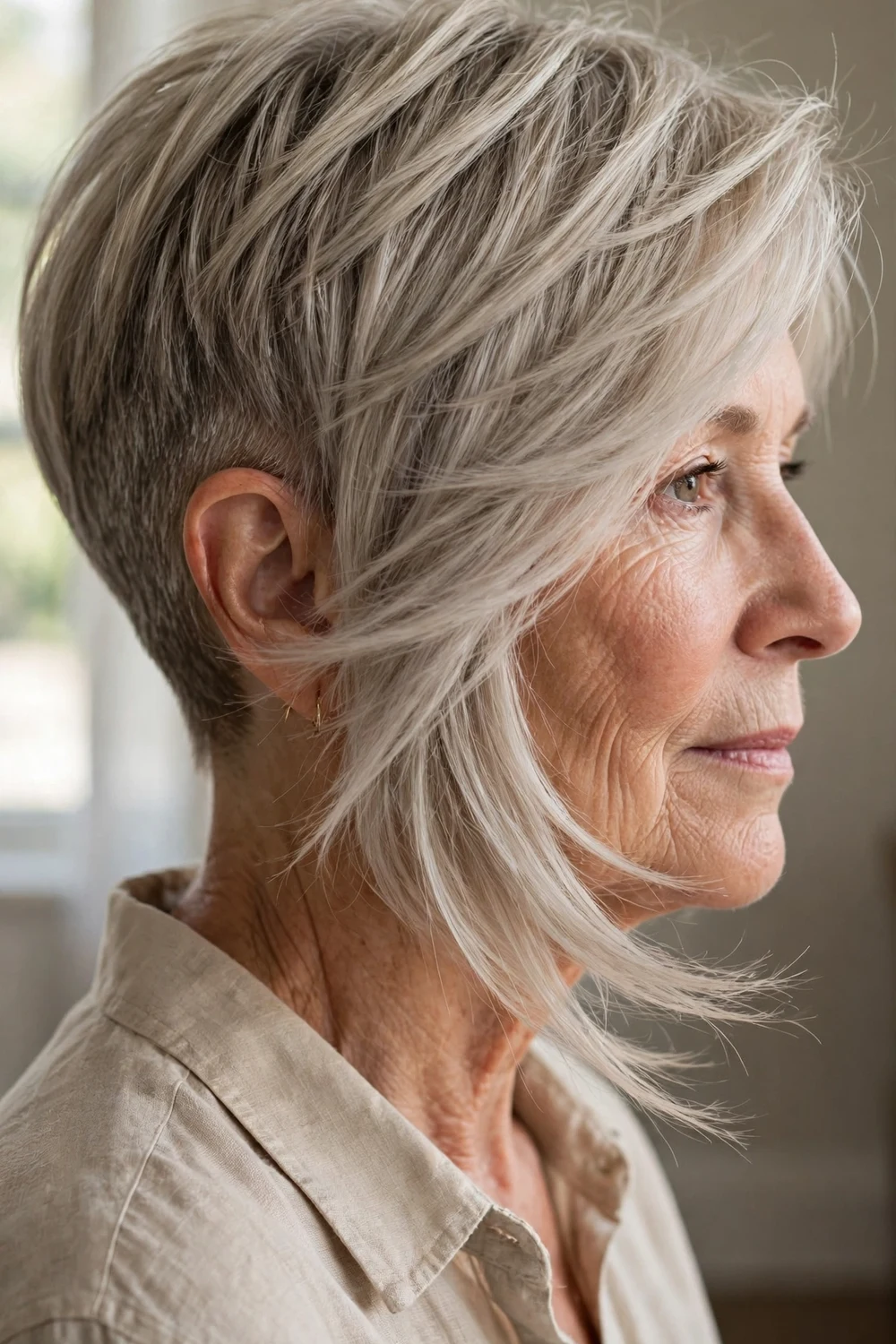
Feathering cuts each layer at a slight angle so the ends lie soft instead of blunt. On an asymmetrical pixie, that means the longer side flows with airy movement while the shorter side keeps its tidy shape. The technique removes bulk without removing length, which suits thicker hair. Women with strong jawlines or sharp features often prefer this version because the soft edges balance angular bone structure. Blow-drying with a vent brush enhances the feathered flick at the ends.
Try this: Ask for a razor-cut finish on the longer side; it thins the ends so they feather outward instead of sitting heavy.
Difficulty: Medium | Upkeep: Low
5. Tapered Back Asymmetrical Pixie
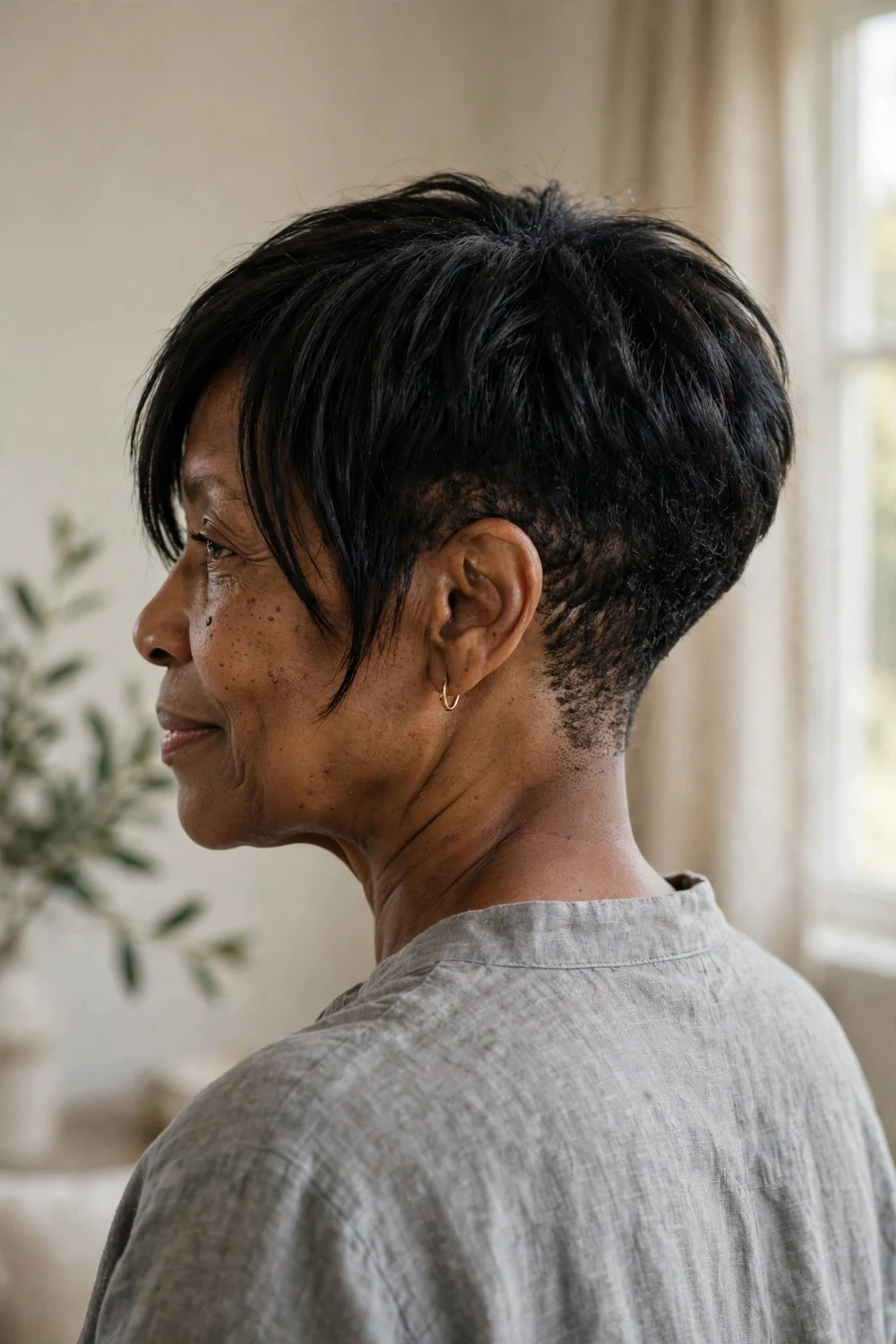
The interest here sits at the back of the head. Hair graduates closely from the nape upward while the front and longer side keep their length. The taper follows the natural curve of the skull, which gives the cut a sculpted look from every angle. It reduces bulk for thick hair and keeps the neckline clean between appointments. Because the shape does most of the work, daily styling takes minutes: the structure holds even with minimal product.
Try this: Keep the nape crisp by booking a neckline cleanup between full cuts; many salons do it in 10 minutes for a small fee.
Difficulty: Easy | Upkeep: Medium
6. Long-Top Asymmetrical Pixie
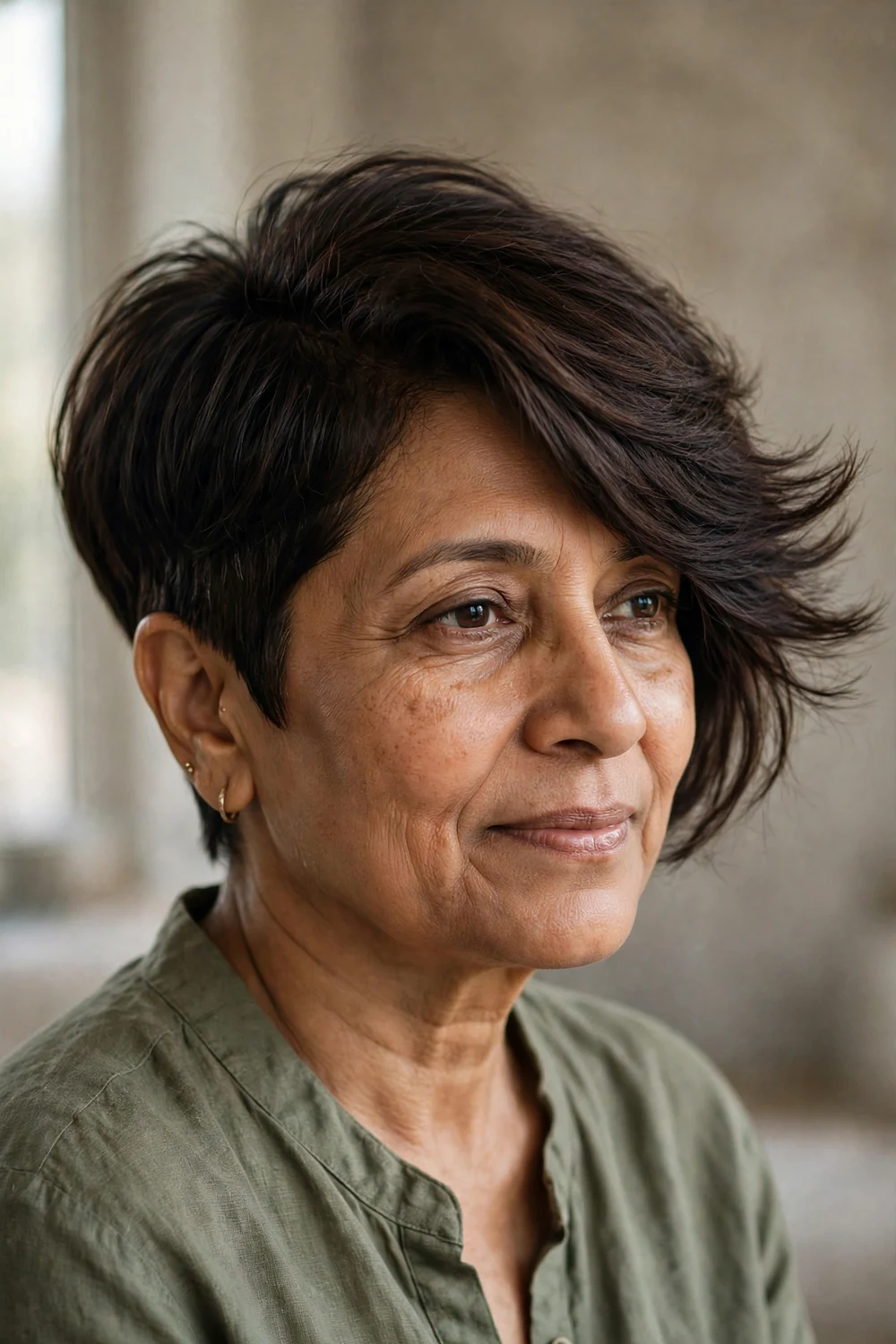
Keep extended length through the crown and let it sweep dramatically to one side while the other side stays anchored and short. The extra length on top gives you styling options that shorter pixies don’t: sleek it down, push it back, or build it up for height. It suits women transitioning from longer hair who aren’t ready to go fully short. The weight on top also helps the style survive windy days without collapsing.
Try this: For evening, sweep the long top over to the short side and pin it flat for a faux-deep-part look with real drama.
Difficulty: Easy | Upkeep: Low
7. Asymmetrical Pixie Bob Hybrid
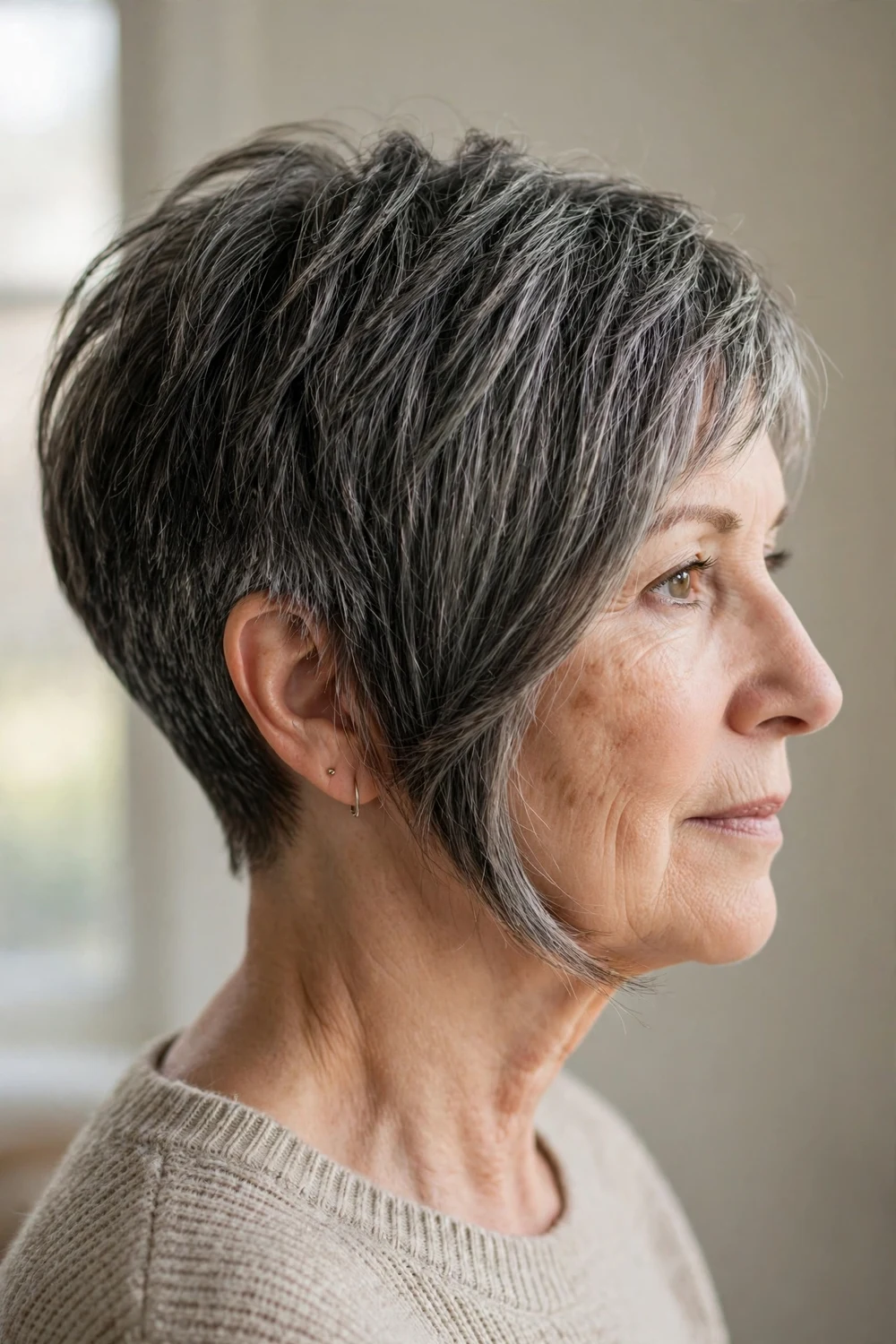
Can’t decide between a pixie and a bob? This hybrid keeps pixie-short graduation at the back and nape while the front extends toward bob length on one side. The result covers more of the jaw and neck than a true pixie, which many women over 50 prefer. Style it smooth for a polished finish or add wave for softness. It needs slightly less frequent trims than a short pixie because the extra length hides grow-out.
Try this: Tuck the shorter side behind your ear and let the longer front fall forward; the contrast reads instantly more modern.
Difficulty: Easy | Upkeep: Low
8. Curly Asymmetrical Pixie
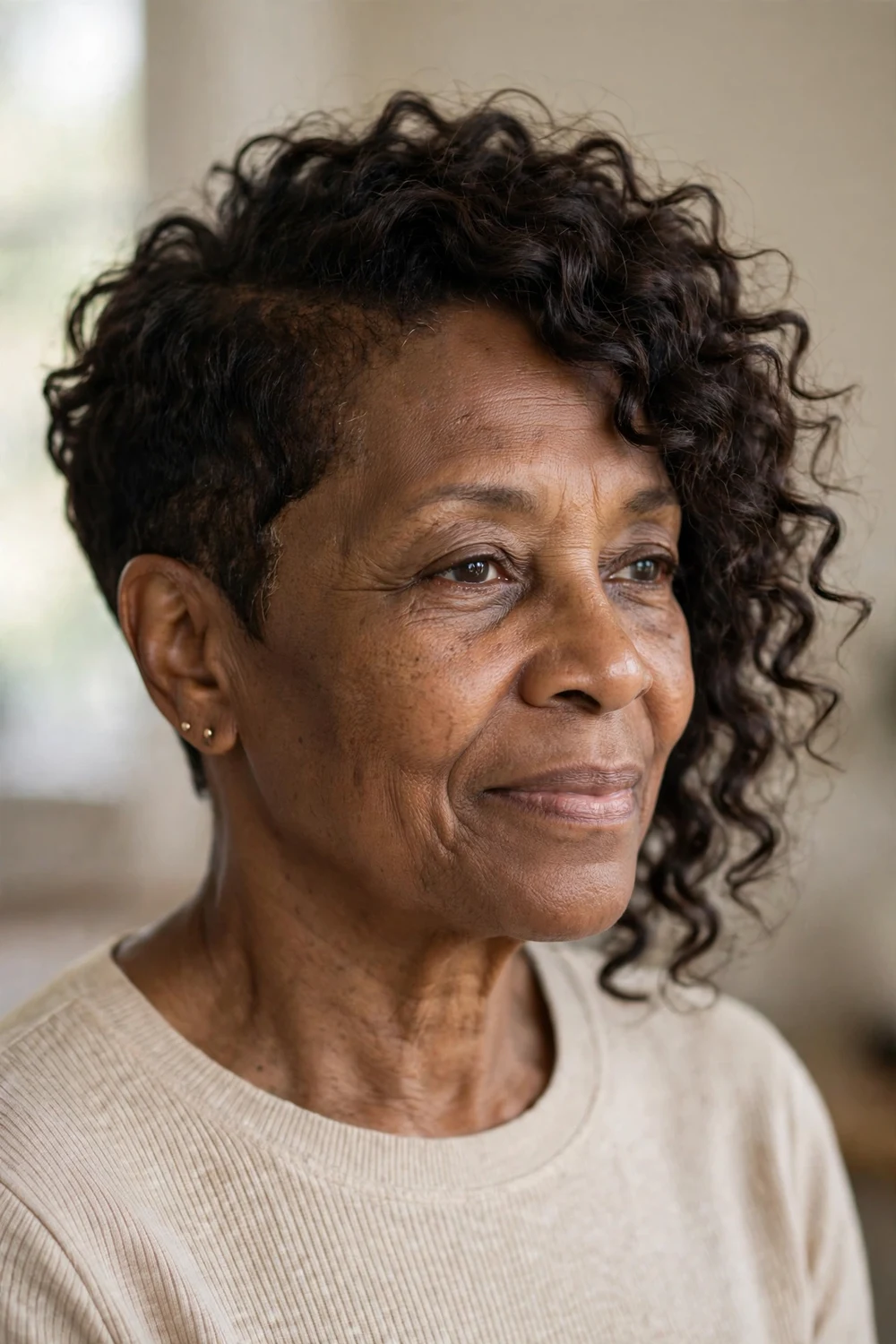
Natural curls and asymmetry are a strong match. One side gets cut close to the head to control bulk while the other keeps enough length for curls to spring and form. The contrast between tight and free curls creates shape that wash-and-go styling can actually maintain. Use a curl-defining cream on damp hair and let it air-dry or diffuse. Each curl pattern behaves differently, so ask your stylist to cut it dry or partially dry to see how the curls truly fall.
Try this: Sleep on a satin pillowcase and refresh the longer side in the morning with a water-and-cream mist instead of rewashing.
Difficulty: Medium | Upkeep: Low
9. Natural Wavy Asymmetrical Pixie
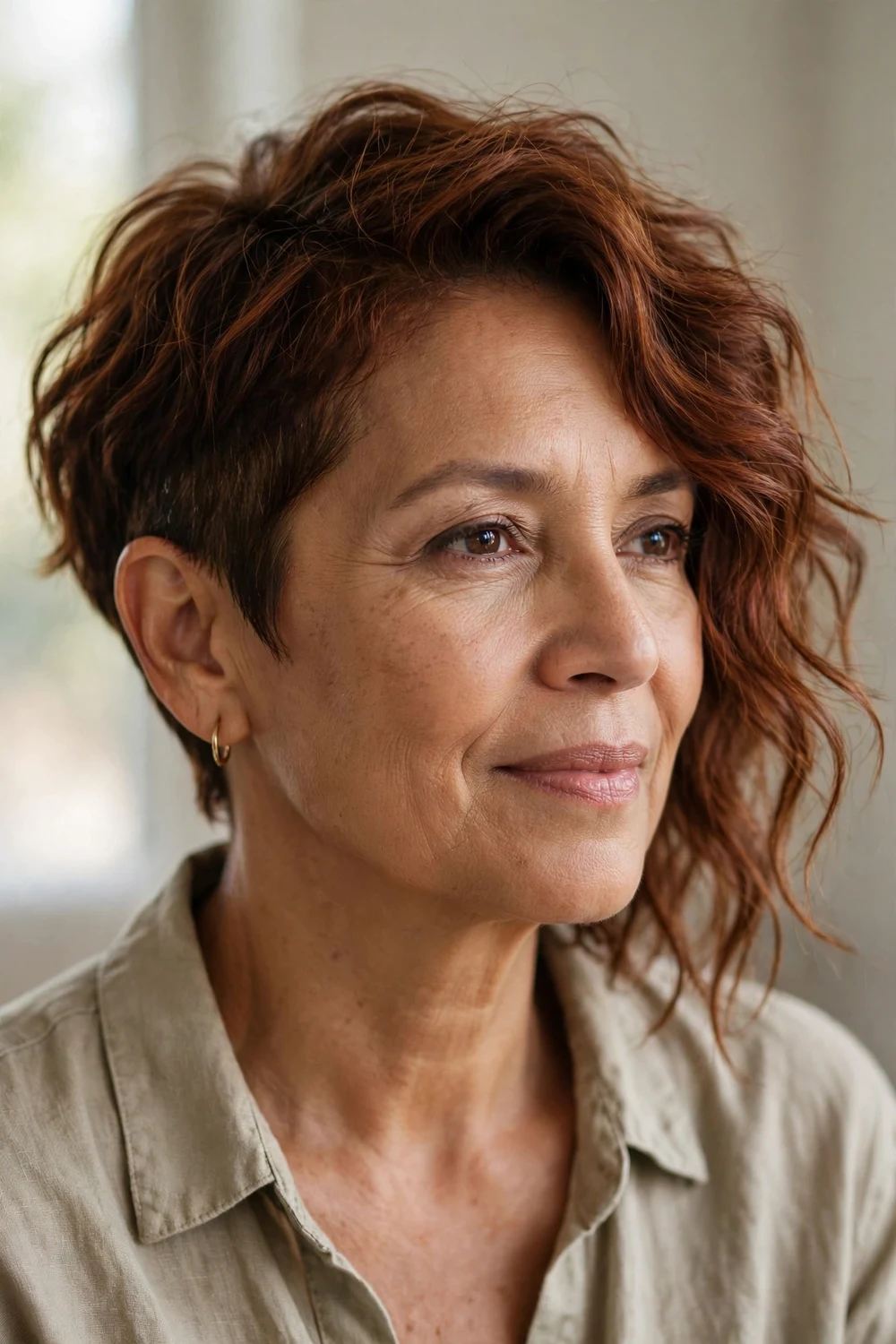
Waves do half the styling work in this cut. The uneven lengths follow your natural wave pattern instead of fighting it, so shorter sections tighten up while longer pieces fall in soft bends. The texture adds organic softness that keeps the asymmetry from looking harsh. Apply a wave-enhancing mousse to damp hair, scrunch, and go. Women with natural wave often find this the lowest-maintenance version of all because the cut and the texture agree with each other.
Try this: Diffuse on low heat with your head flipped forward for 2 minutes to build root lift that holds through the day.
Difficulty: Easy | Upkeep: Low
10. Sleek Asymmetrical Pixie
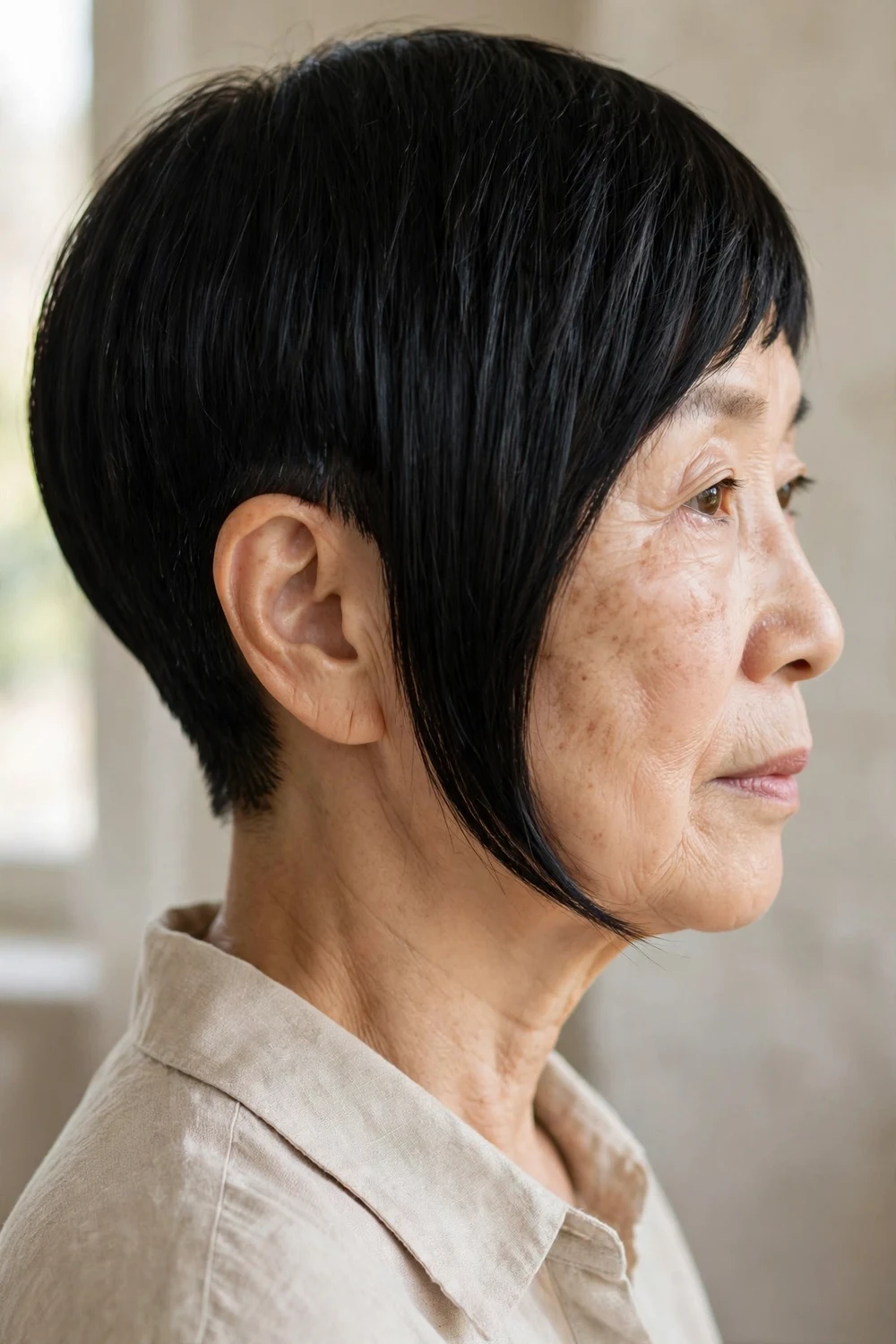
For a polished, put-together look, wear the asymmetry smooth. Hair gets blow-dried straight with the longer side pressed flat to emphasize the clean line difference between the two sides. A light serum adds shine and controls flyaways without greasiness. This version suits professional settings and formal events, and it flatters heart-shaped faces because the sleek longer side balances a narrower chin. Straight or straightened hair shows the geometry best.
Try this: Flat-iron only the longer side in 1-inch sections; leave the shorter side natural for contrast in texture as well as length.
Difficulty: Medium | Upkeep: Medium
11. Undercut Asymmetrical Pixie
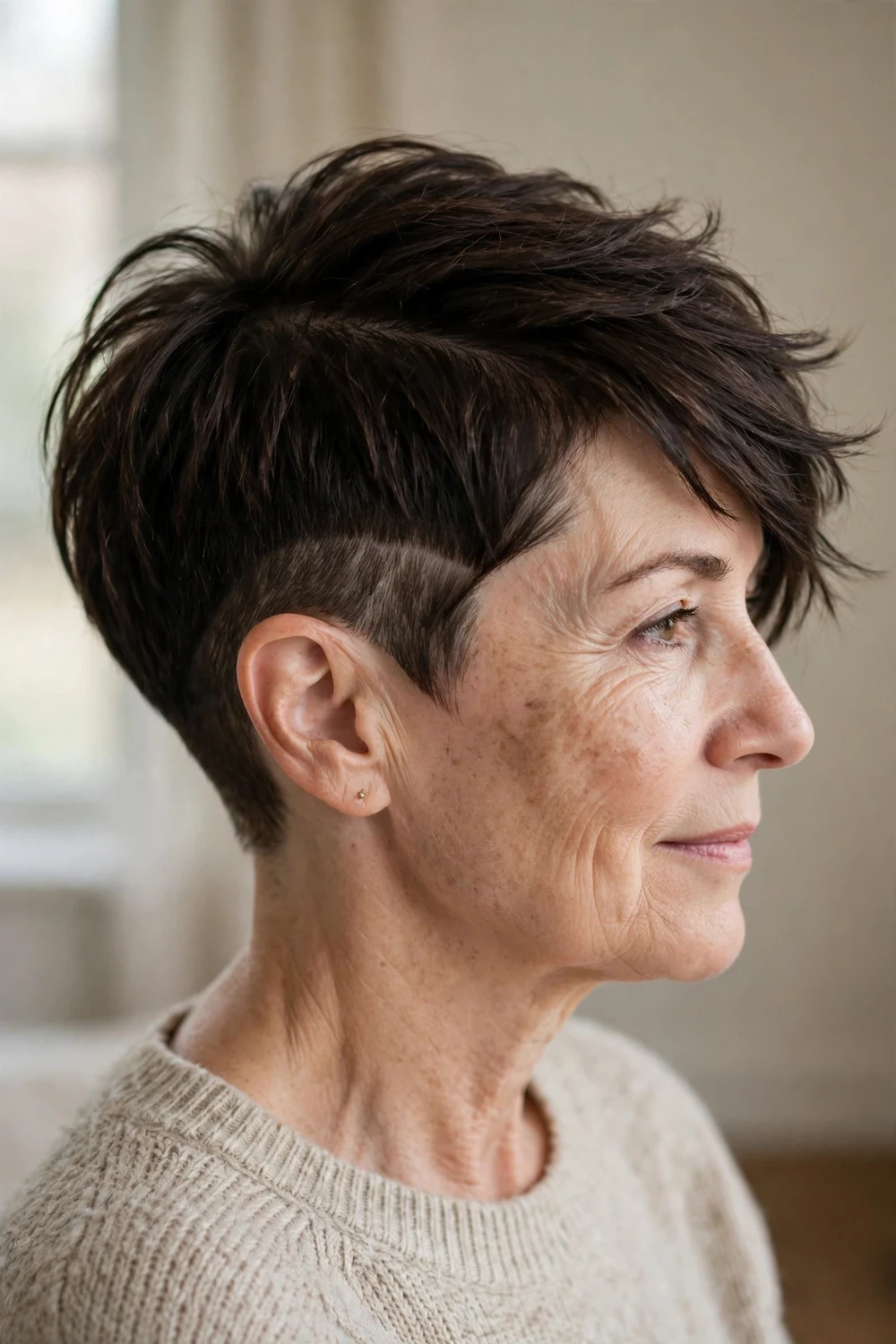
An undercut removes the bulk underneath one side entirely, clipping it close while the top and longer side keep their length. The contrast is bold but practical: less hair means faster drying and cooler summers. Thick or coarse hair benefits most because the undercut takes out real weight. The longer top can sweep across, slick back, or stand textured depending on your mood. Regrowth needs attention, so plan on a clipper cleanup every 3 to 4 weeks if you want the line crisp.
Try this: Ask your stylist to fade the undercut into the longer side rather than leaving a hard line; it grows out far more gracefully.
Difficulty: Medium | Upkeep: Medium to high
12. Pixie with Undercut Design
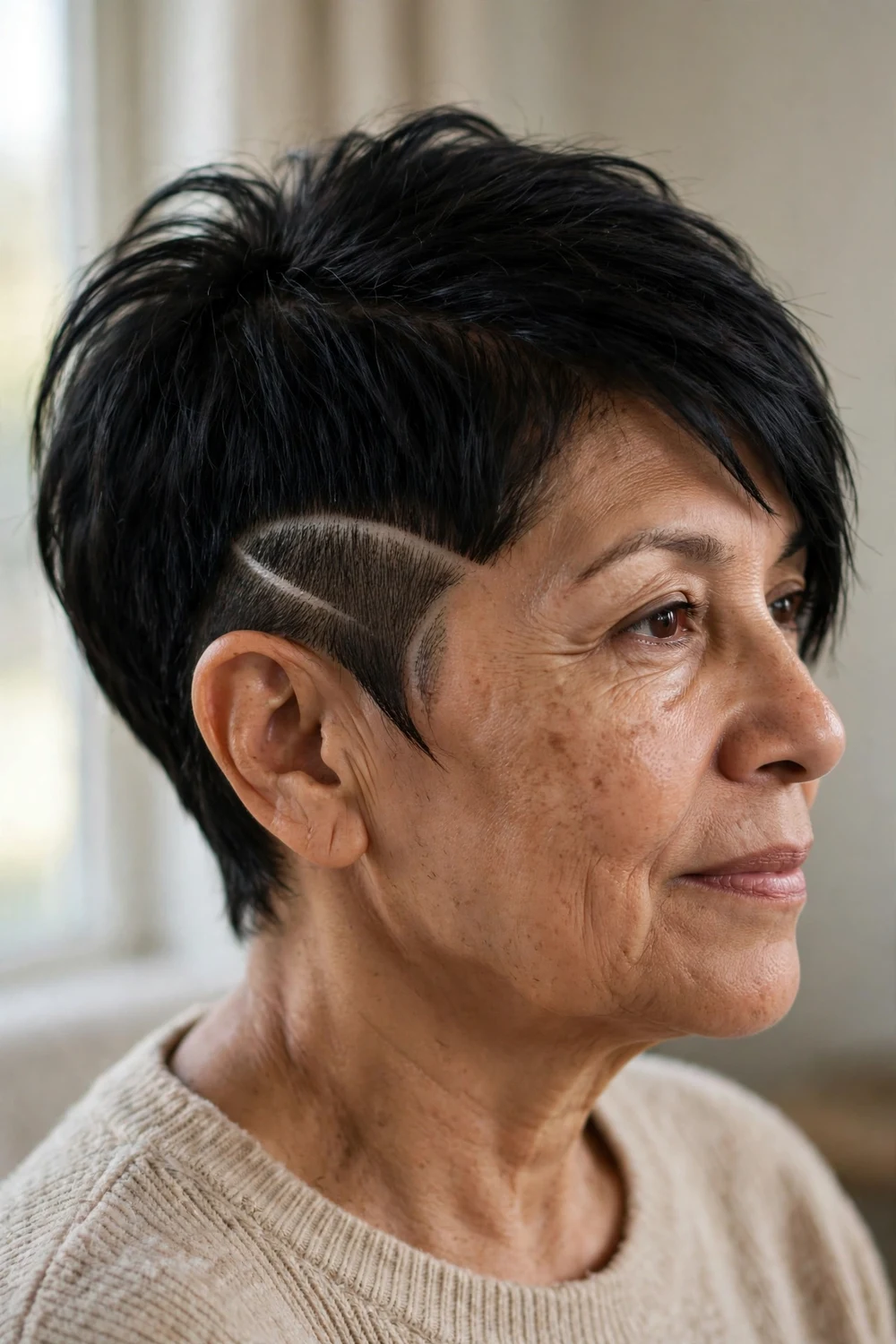
Take the undercut further with a shaved detail: a single curved line, parallel stripes, or a subtle geometric pattern etched into the clipped side. The design turns the asymmetry into wearable art and makes the shorter side a feature instead of an afterthought. Keep the longer side simple so the design gets full attention. Designs blur as hair grows, so this version commits you to touch-ups every 2 to 3 weeks. It’s a confident choice that reads creative rather than rebellious at any age.
Try this: Start with one simple line; you can always add more detail at the next appointment once you know you like the effect.
Difficulty: Hard | Upkeep: High
13. Disconnected Asymmetrical Pixie
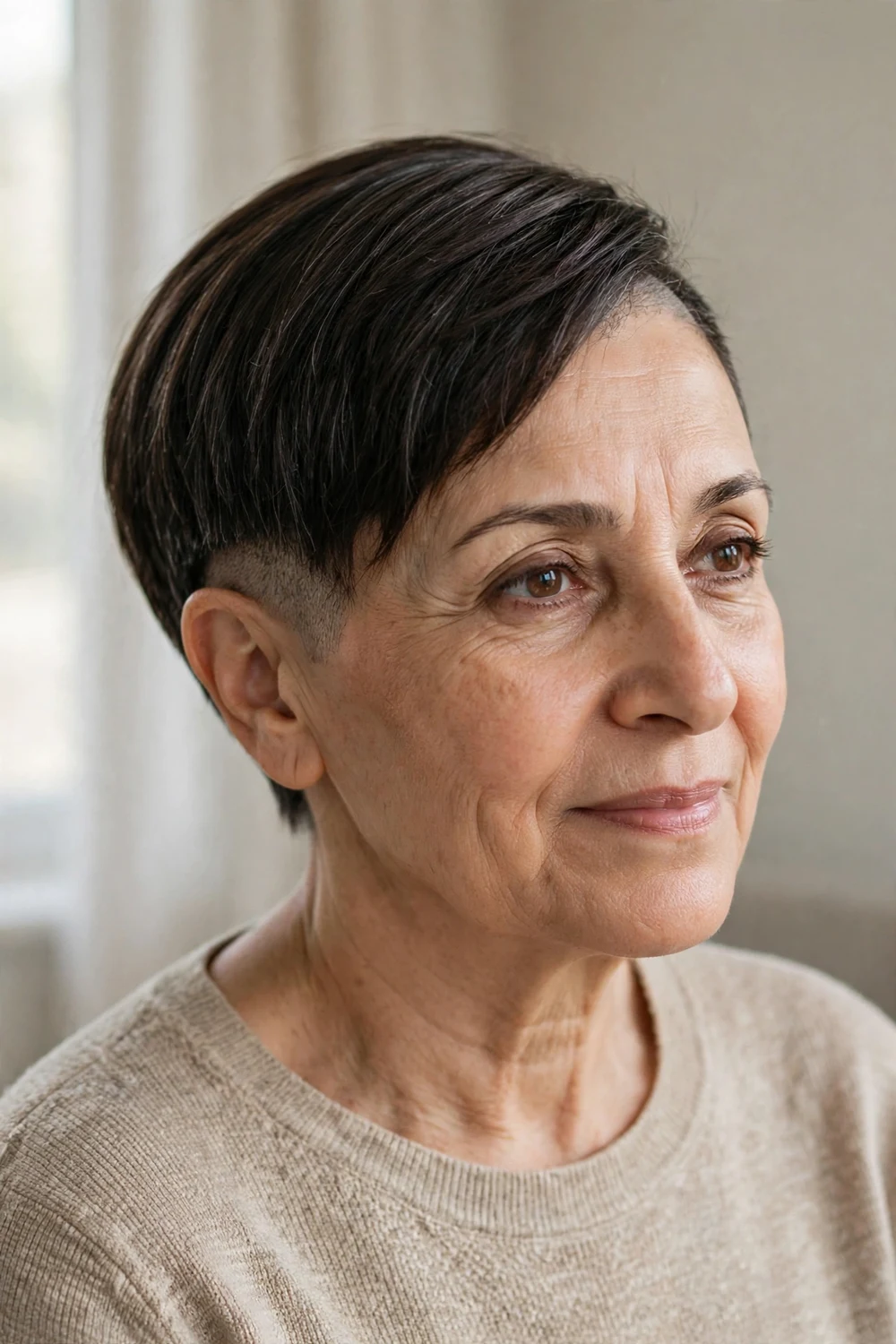
Instead of blending the lengths, this cut keeps them visibly separate. The long fringe or top section sits disconnected from the cropped sides and back, creating distinct zones that make the asymmetry unmistakable. It takes a skilled stylist to balance separation with cohesion; the sections need enough length difference to read as intentional. The payoff is a modern, editorial look with strong lines. Style each section according to its length and let the contrast do the talking.
Try this: Use a flat iron on the longer section only; the smooth finish against textured short sides sharpens the disconnect.
Difficulty: Medium | Upkeep: Medium
14. Deep Asymmetrical Sweep Pixie

Shift the part deep to one side and sweep nearly all the length across the forehead in a strong diagonal. The shorter side stays sleek and close, which amplifies the directional flow. This is the highest-drama styling of the asymmetry family, and it suits women who want their hair to make the first impression. It works on straight and slightly wavy hair; very curly hair resists the flat sweep. A light-hold hairspray keeps the sweep in place without stiffness.
Try this: Create the part while hair is wet and comb everything across before drying; setting the direction early makes it hold all day.
Difficulty: Easy | Upkeep: Low
15. Short Crop Asymmetrical Pixie
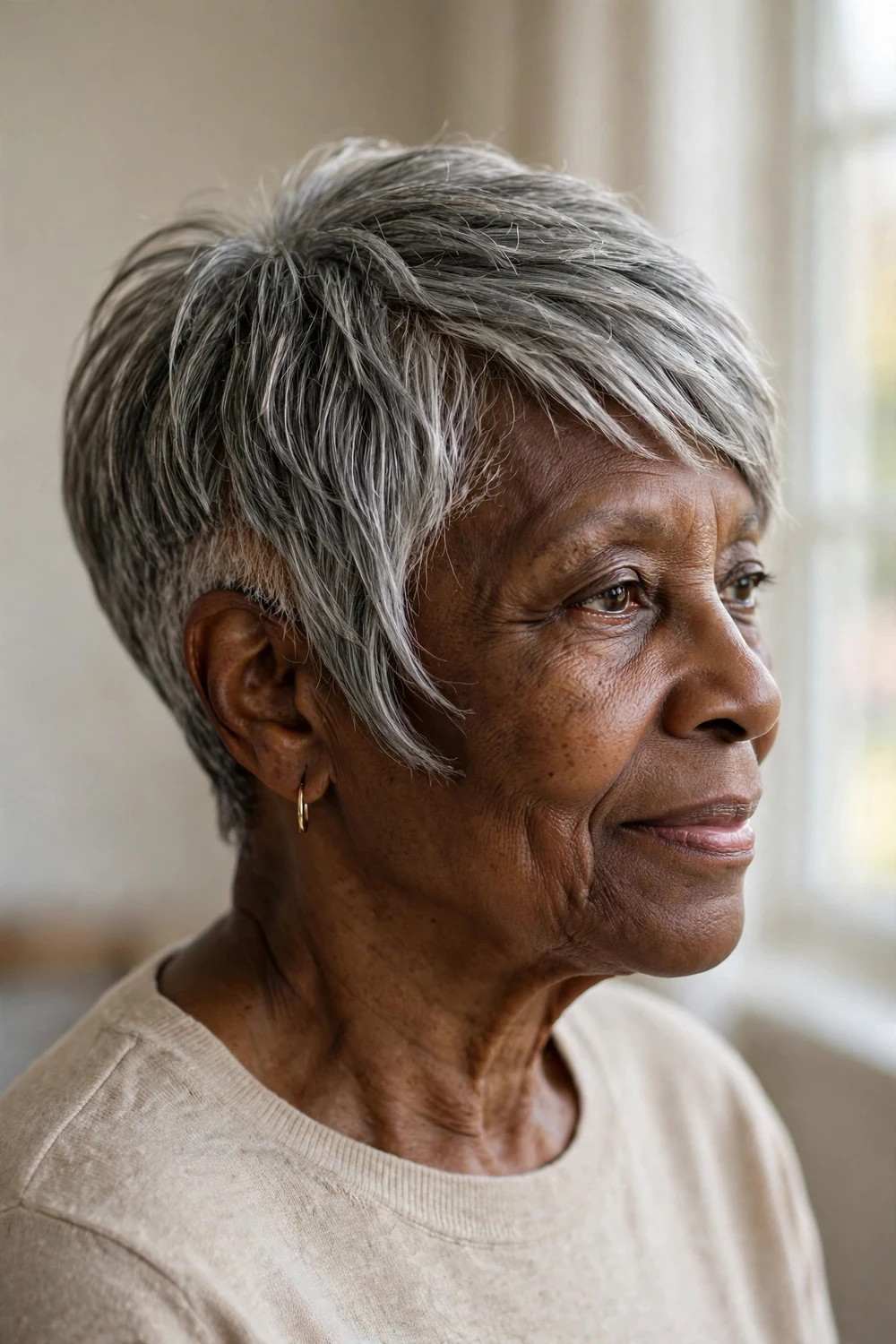
Keep the overall length minimal and let a subtle length difference between the sides do the work. This is the most understated take on the trend: clean, neat, and wash-and-wear. It suits active women and anyone who wants the modern feel of asymmetry without a statement cut. The shorter length also means the least styling time of any version here. Because there’s little length to hide behind, the cut itself must be precise, so choose a stylist experienced with short hair.
Try this: Rub a tiny amount of matte paste between palms and press it into dry hair for definition without shine.
Difficulty: Easy | Upkeep: Low
16. Crown-Volume Asymmetrical Pixie
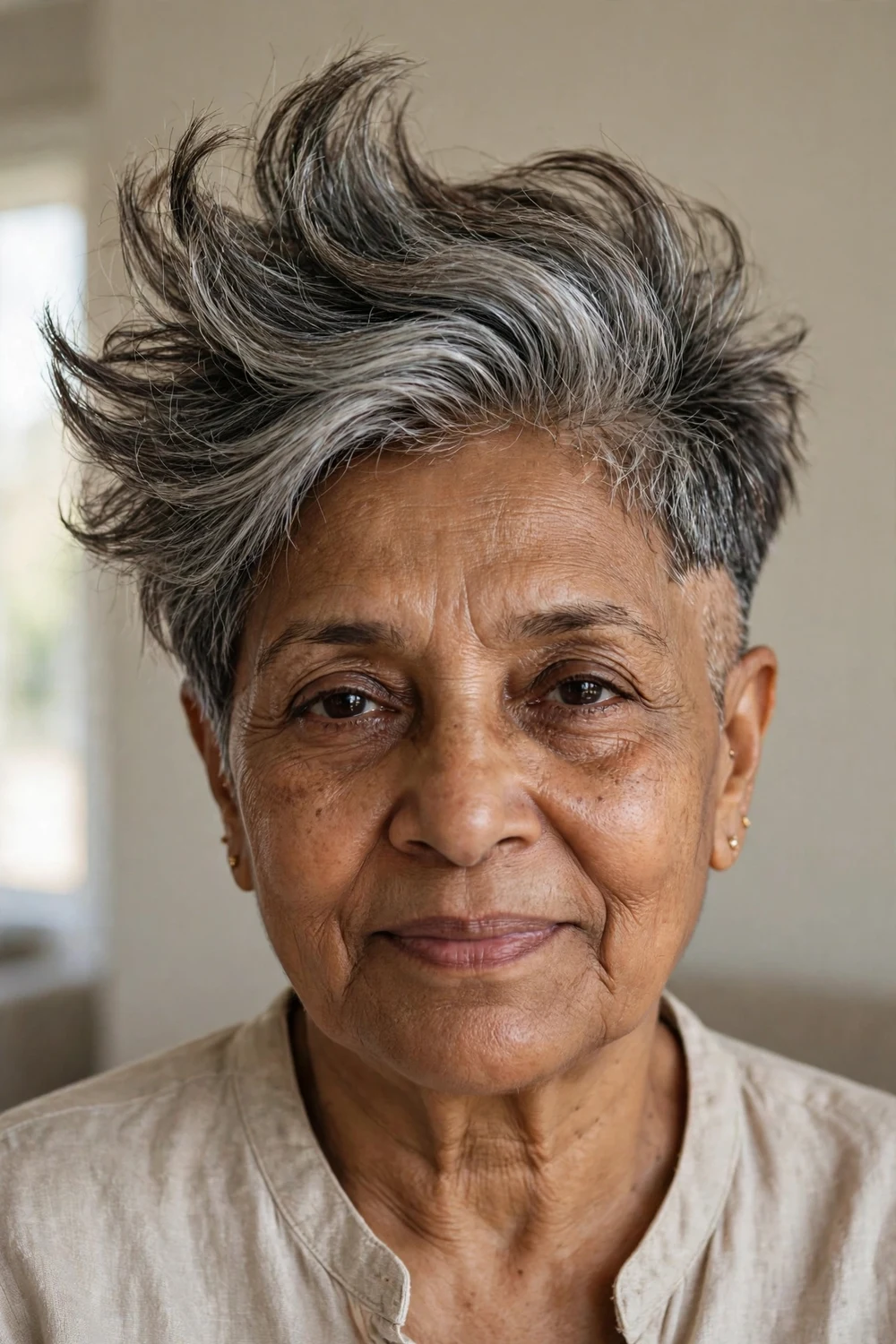
Build deliberate height at the crown while keeping one side short for contrast. The lift creates a balanced silhouette and gives fine or thinning hair the appearance of real density. Your stylist layers the top shorter underneath and longer on the surface so the volume has structure to stand on. Blow-dry the crown upward with a round brush, then lock it with a light mist of volumizing spray. This version photographs well and holds its shape through long days.
Try this: Backcomb just the under-layers at the crown with a fine-tooth comb, then smooth the top layer over; the hidden teasing adds hours of lift.
Difficulty: Medium | Upkeep: Low
17. Graduated Asymmetrical Pixie
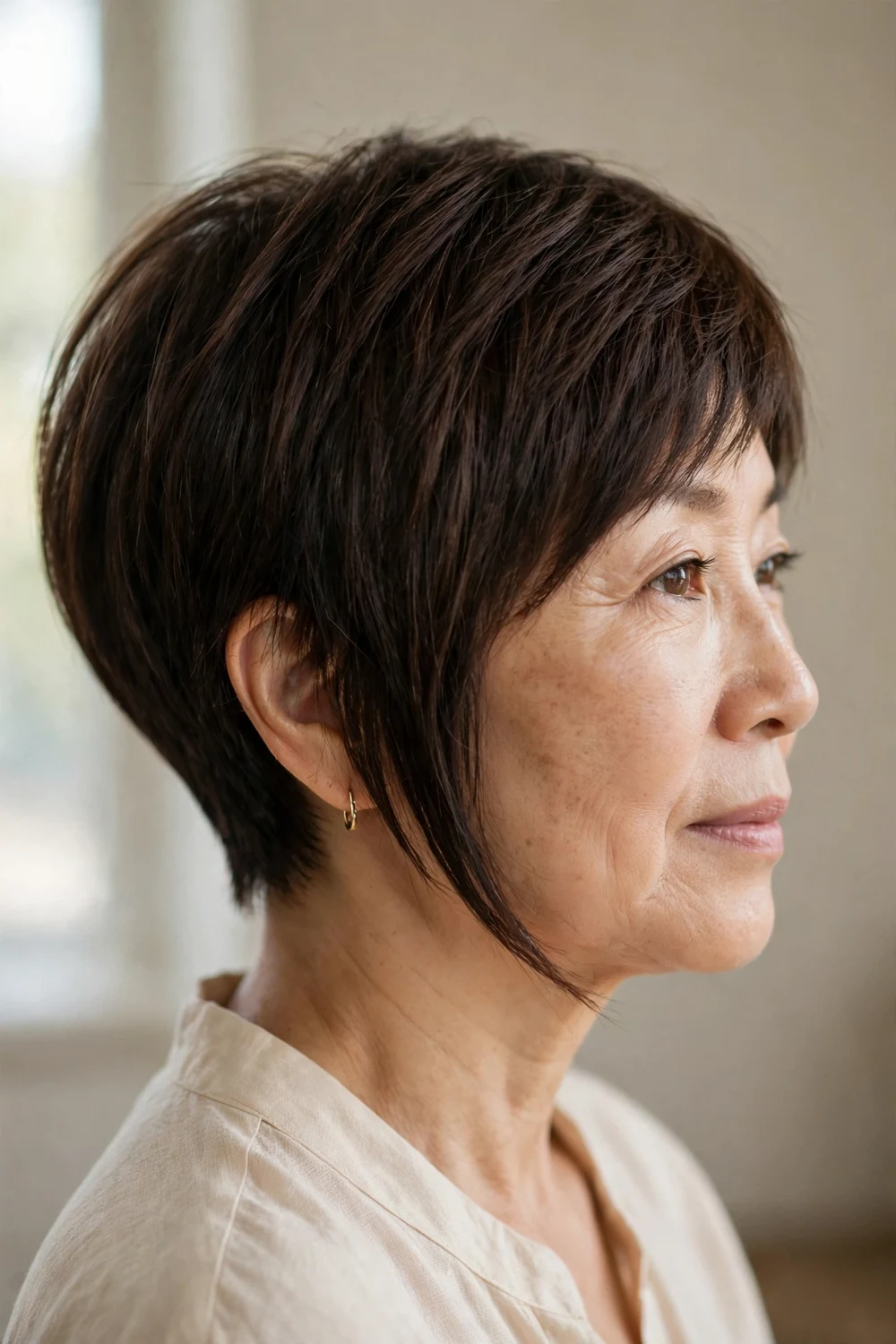
Graduation builds the asymmetry through a smooth slope: longer in front, stacking shorter toward the back, with one side extended. The technique creates the uneven effect without any harsh lines, which makes it the most wearable version for conservative settings. It suits all hair types and face shapes because the slope can be adjusted to your features. The cut grows out evenly too, stretching the time between appointments a little longer than choppier versions.
Try this: Ask your stylist to show you the profile in a hand mirror before you leave; the slope should look smooth from every angle.
Difficulty: Easy | Upkeep: Low
18. Spiky Layered Asymmetrical Pixie
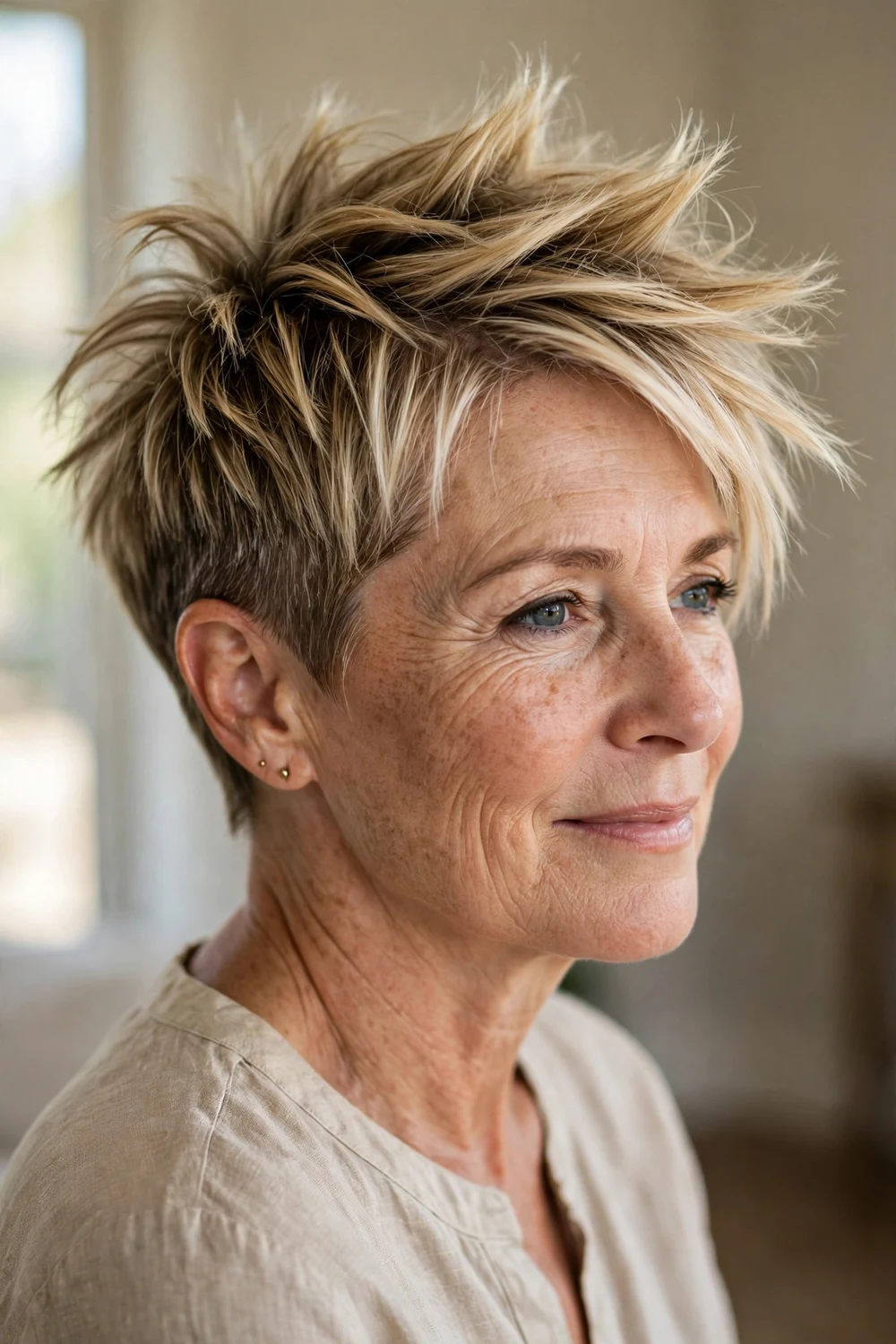
Short, choppy layers get worked upward with wax or paste to create piece-y spikes across the longer side. The shorter side stays neat, which keeps the spikes from reading messy. This is the most playful version here, full of attitude and movement. It works best on straight to wavy hair with some natural texture; very fine hair may need a thickening product first. The spikes also add the illusion of height, which flatters rounder faces.
Try this: Warm the wax between your palms first, then twist small sections on the longer side upward; cold product clumps instead of defining.
Difficulty: Medium | Upkeep: Medium
19. Shaggy Asymmetrical Pixie
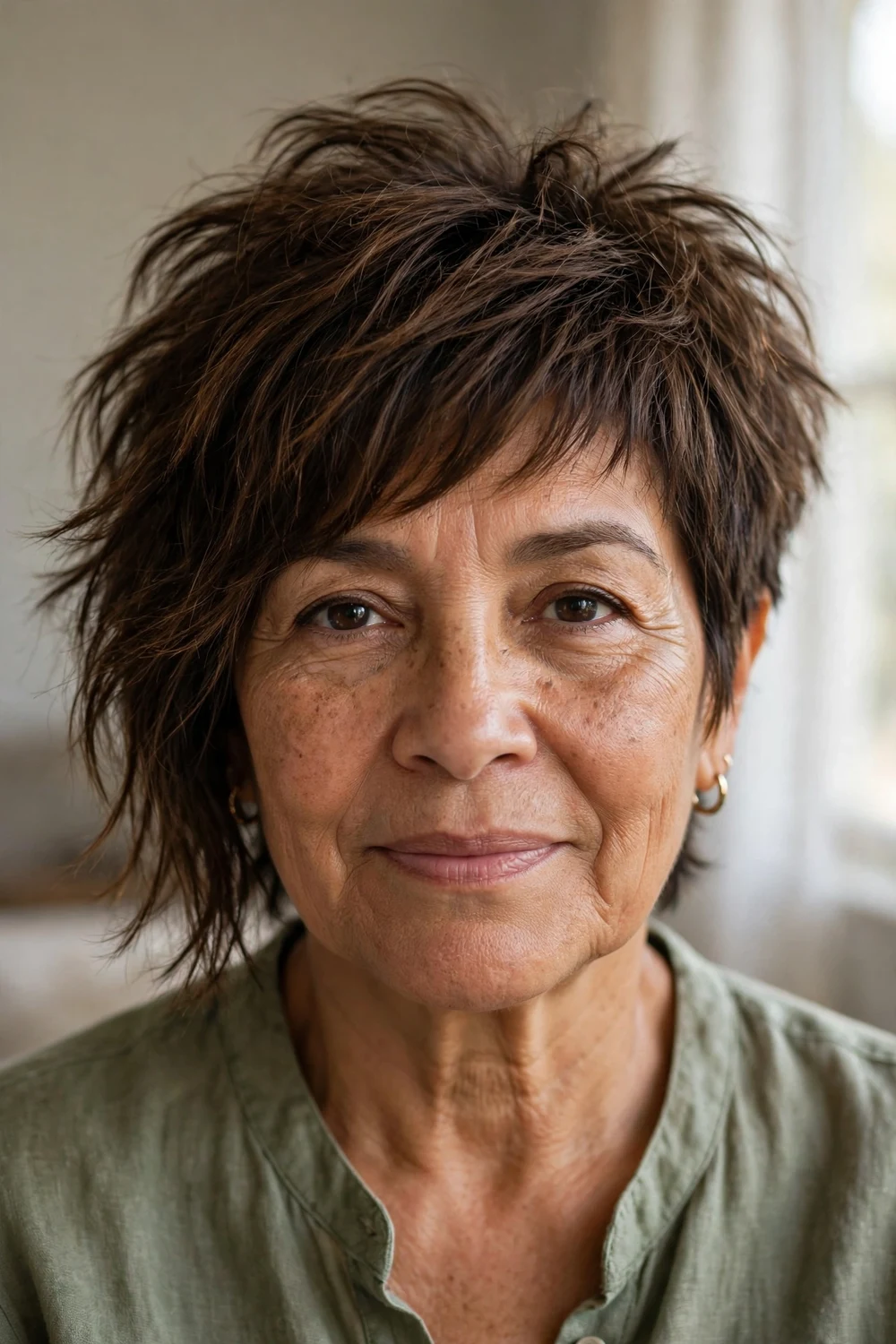
Multiple choppy layers and a deliberately undone finish give this version its relaxed character. The shaggy texture means the cut actually looks better slightly messy, which makes it genuinely low-maintenance. Wavy and curly hair types shine here, but straight hair can get there with texturizing spray and a scrunch. The piece-y ends soften the asymmetry so it reads effortless rather than edgy. If you hate fussing with your hair, start here.
Try this: Skip the brush entirely; finger-style with a dab of sea-salt spray on damp hair and let it air-dry for the best shaggy finish.
Difficulty: Easy | Upkeep: Low
20. Asymmetrical Pixie with Short Bangs

Pair the uneven sides with a short, eye-grazing fringe for a bold geometric look. The bangs can be cut blunt for drama or textured for softness; either way they pull focus upward to the eyes and brows. This version suits smaller foreheads and strong brow lines. The combination of short fringe and asymmetrical sides creates multiple angles that read confident and modern. Keep the bangs trimmed between cuts or they quickly lose their edge.
Try this: Trim the bangs yourself between appointments with sharp hair scissors, cutting dry hair a millimeter at a time.
Difficulty: Medium | Upkeep: Medium
21. Long Asymmetrical Pixie with Side Bangs
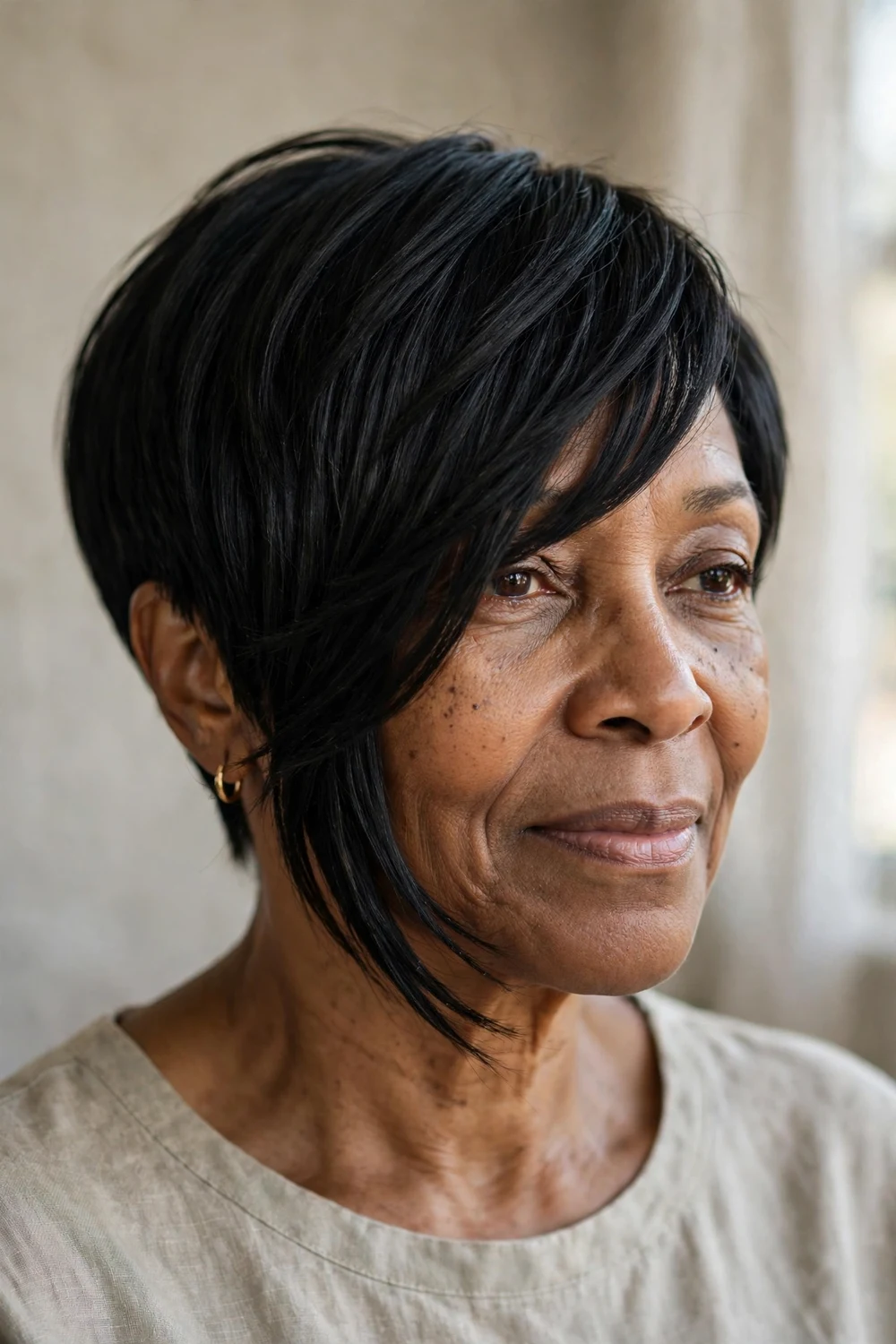
Keep more length all over while holding the signature uneven structure. One side carries longer bangs that sweep past the cheek while the other stays close to the head. The extra length makes this the most versatile version: tuck it behind the ear for a neat look or leave it loose for drama. It suits women easing out of bob length and anyone who wants coverage around the jaw. The longer pieces also give you room to experiment with waves or curls.
Try this: Curl just the longer side with a 1-inch iron for an evening look; the contrast with the straight short side looks deliberate and chic.
Difficulty: Easy | Upkeep: Low
22. Asymmetrical Pixie with Soft Fringe
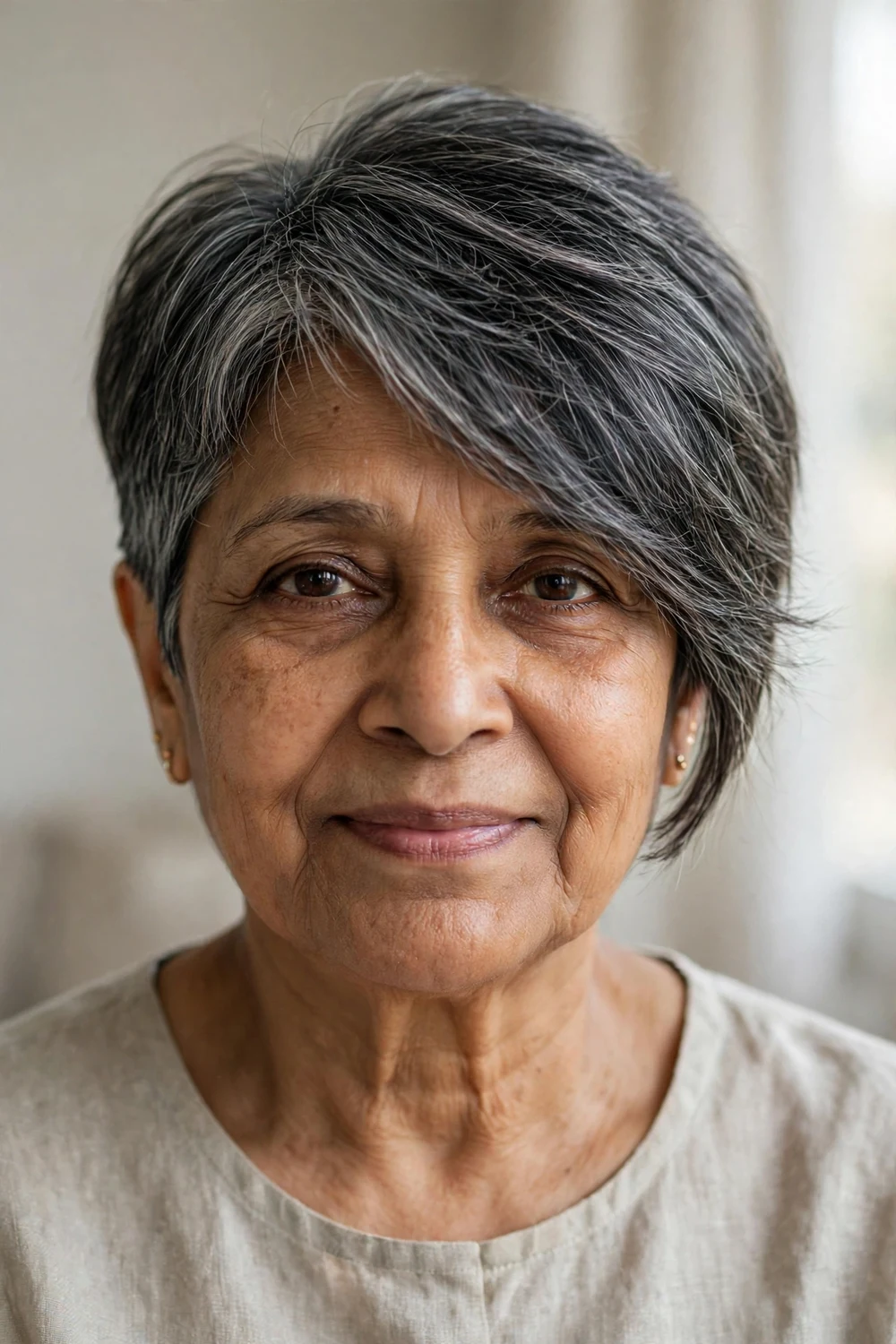
A gentle, wispy front section blends into the longer side and softens the whole cut. Unlike blunt bangs, the soft fringe moves naturally and doesn’t demand daily precision. It frames the face without hiding it and takes the edge off the asymmetry for women who want modern but approachable. The fringe grows out gracefully, blending into the longer side over a few weeks. This is a forgiving choice if you’re trying bangs with a pixie for the first time.
Try this: Blow-dry the fringe side to side with a paddle brush instead of straight down; the movement keeps it from sitting flat on the forehead.
Difficulty: Easy | Upkeep: Low
23. Asymmetrical Pixie with Elongated Side Bangs for Fine Hair

Ask your stylist to leave the sides longer than a standard pixie, with the bangs extending past the chin on the long side. The elongated pieces create the illusion of density on fine hair because there’s simply more hair to work with around the face. Razor-cutting the ends removes bulk and builds movement. The sweeping length draws attention to the cheekbones and away from areas you’d rather not emphasize. It’s a tailored solution for the most common over-50 hair concern.
Try this: Use a volumizing powder at the roots of the longer side only; it lifts without weighing down fine strands.
Difficulty: Easy | Upkeep: Low
24. Chic Grey Asymmetrical Pixie for Women 60 and Beyond
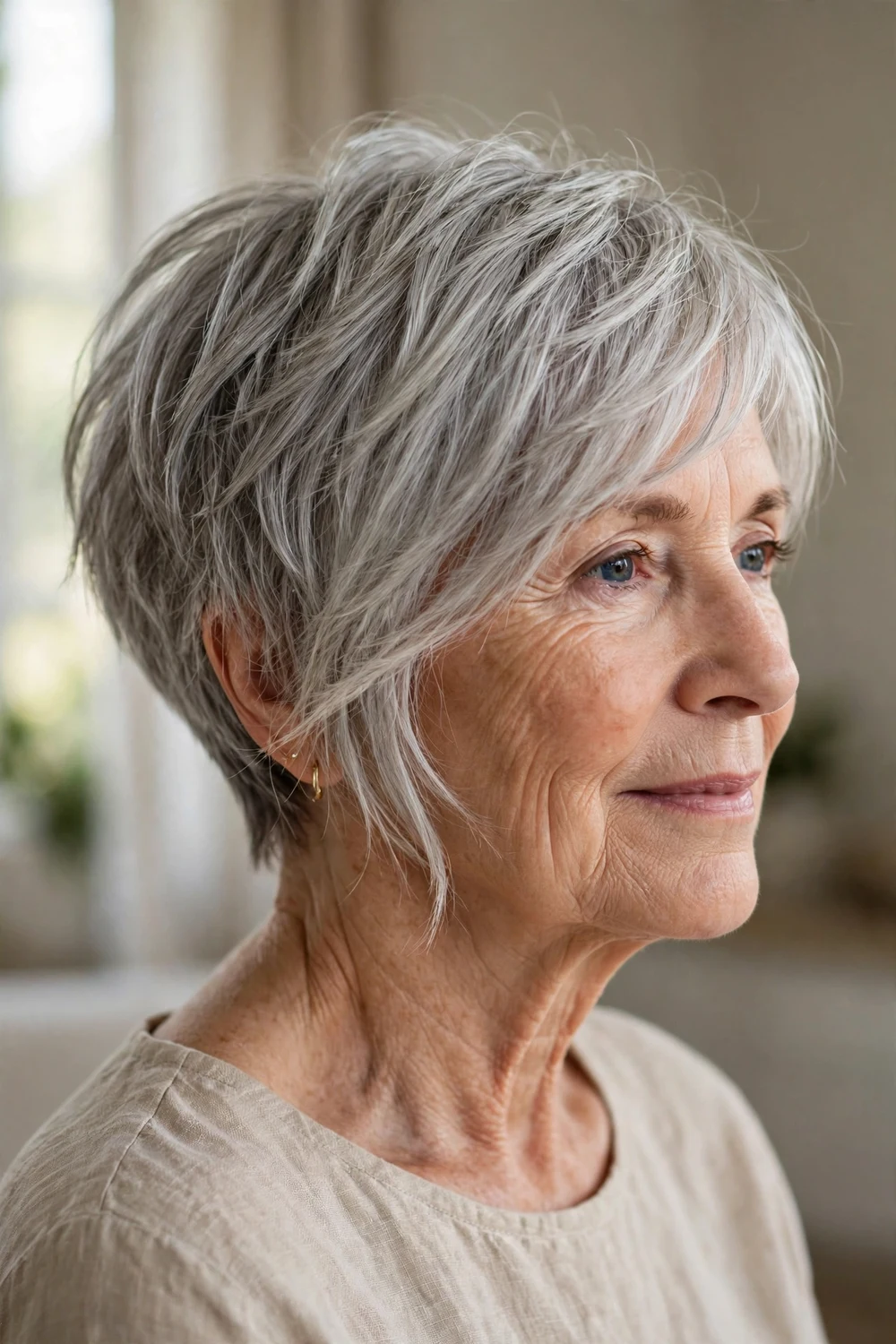
Growing out natural grey works well with asymmetry. The modern cut keeps silver hair from reading dated, and the uneven lines show off the dimension in salt-and-pepper tones. Keep the shape slightly longer and softer than edgier versions; the goal is contemporary, not severe. A purple-toned shampoo once a week keeps grey bright instead of yellow. This combination proves that embracing your natural color and wearing a fashion-forward cut aren’t opposites.
Try this: Add a clear gloss treatment at the salon every couple of months; it makes grey hair reflect light like a much younger head of hair.
Difficulty: Easy | Upkeep: Low
25. Blonde Balayage Asymmetrical Pixie
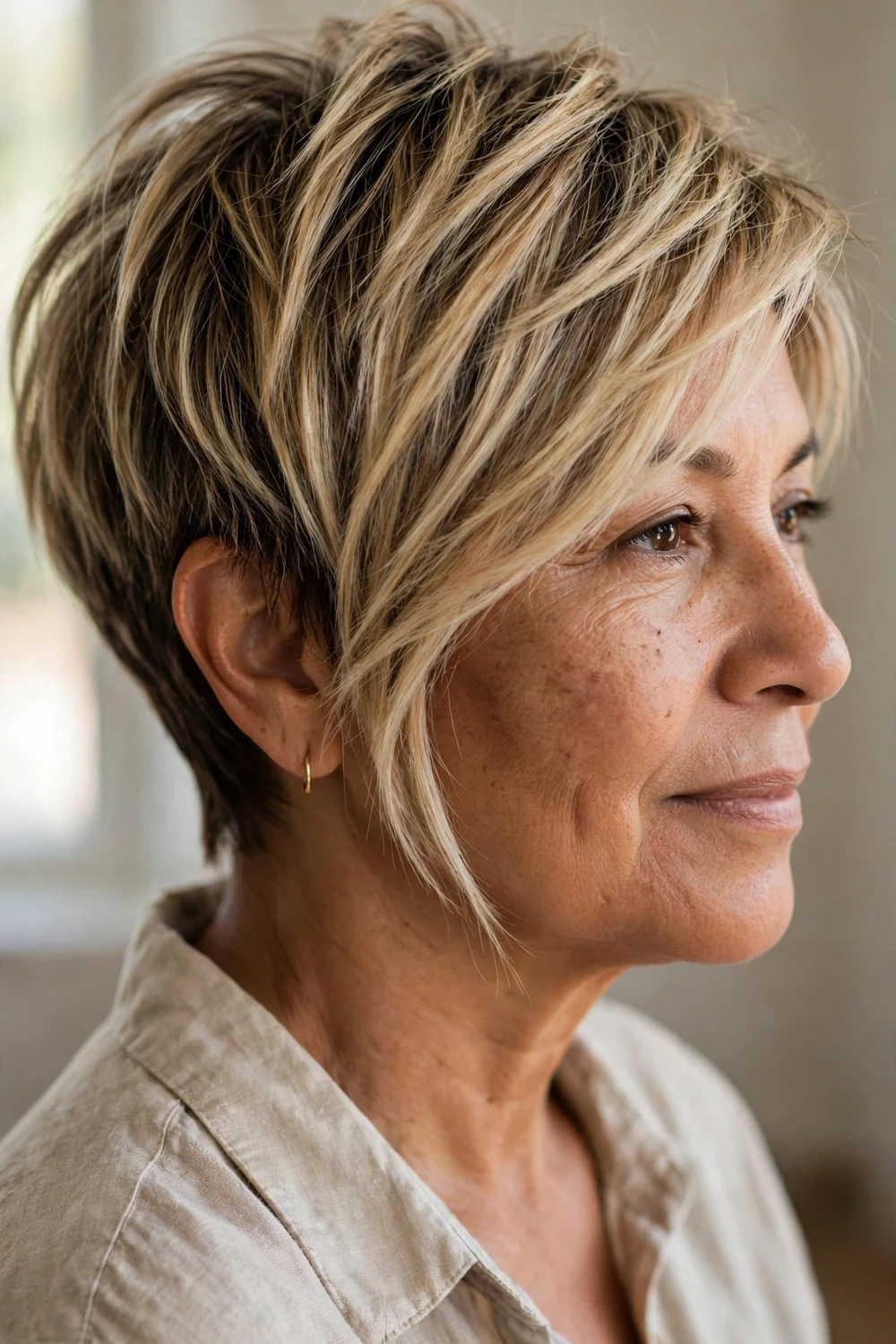
Hand-painted blonde pieces through the longer side emphasize the sweep and make every layer visible. Balayage grows out softer than foil highlights, which matters on a cut that needs trims every few weeks anyway. Place the lightest pieces where the hair moves most, usually the longer fringe and crown. Warm honey tones flatter deeper skin while ash tones suit fair skin. The color dimension makes even a subtle asymmetry look dynamic.
Try this: Refresh the blonde between appointments with a toning gloss at home; it takes 10 minutes and keeps brassiness away.
Difficulty: Medium | Upkeep: Medium
26. Platinum Asymmetrical Pixie
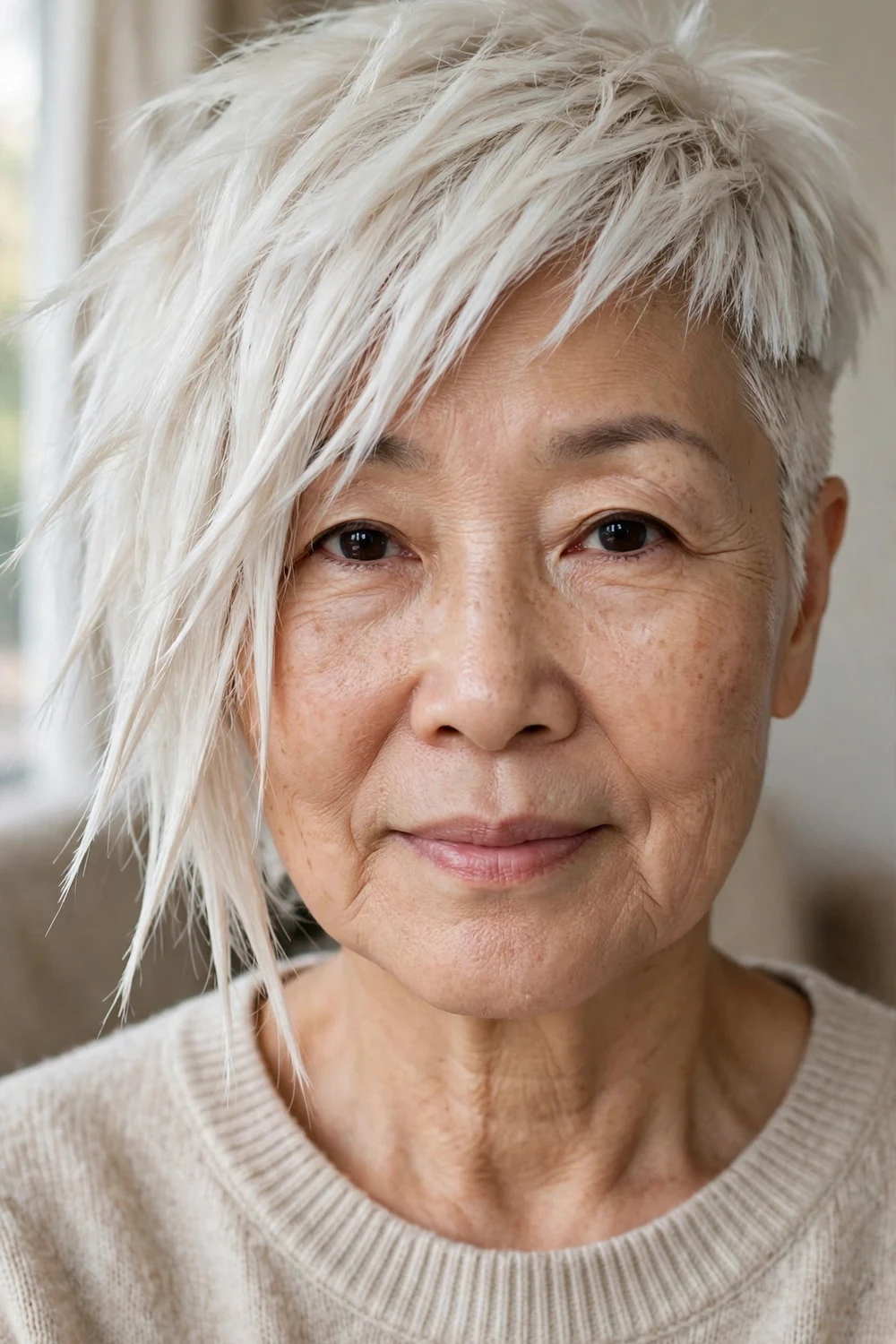
Platinum takes the cut into high-impact territory. The bright, cool tone makes every angle and layer pop, so even a modest length difference reads dramatic. Reaching platinum on darker or grey hair usually needs bleaching, and keeping it icy requires purple shampoo and regular toning. It’s a commitment, but the payoff is a head-turning look that pairs surprisingly well with mature features. The pale color also blends incoming grey seamlessly between appointments.
Try this: Deep-condition weekly with a mask made for bleached hair; platinum pixies show damage faster because there’s nowhere to hide it.
Difficulty: Hard | Upkeep: High
27. Burgundy Asymmetrical Pixie
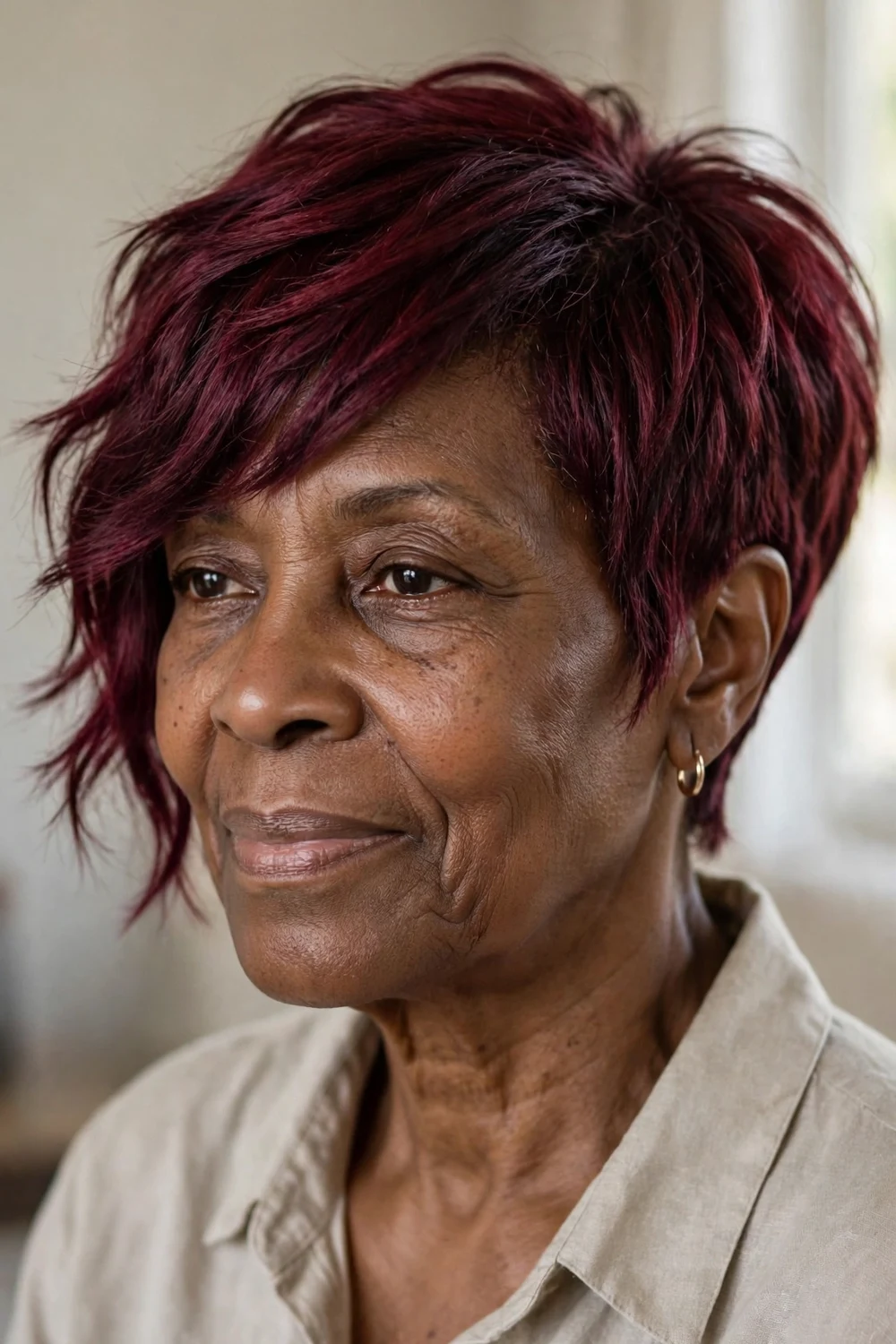
Rich wine tones add warmth and depth that flatter most skin tones after 50. The deep color makes the asymmetry feel elegant rather than edgy, and it hides fade better than lighter fashion shades. Burgundy works as an all-over color or concentrated on the longer side for a color-block effect. It needs color-safe shampoo and cooler water to hold its richness. This is the fashion color for women who want creativity without neon.
Try this: Rinse with lukewarm water instead of hot; heat opens the cuticle and lets red tones escape fastest.
Difficulty: Medium | Upkeep: Medium
28. Ginger Red Asymmetrical Pixie
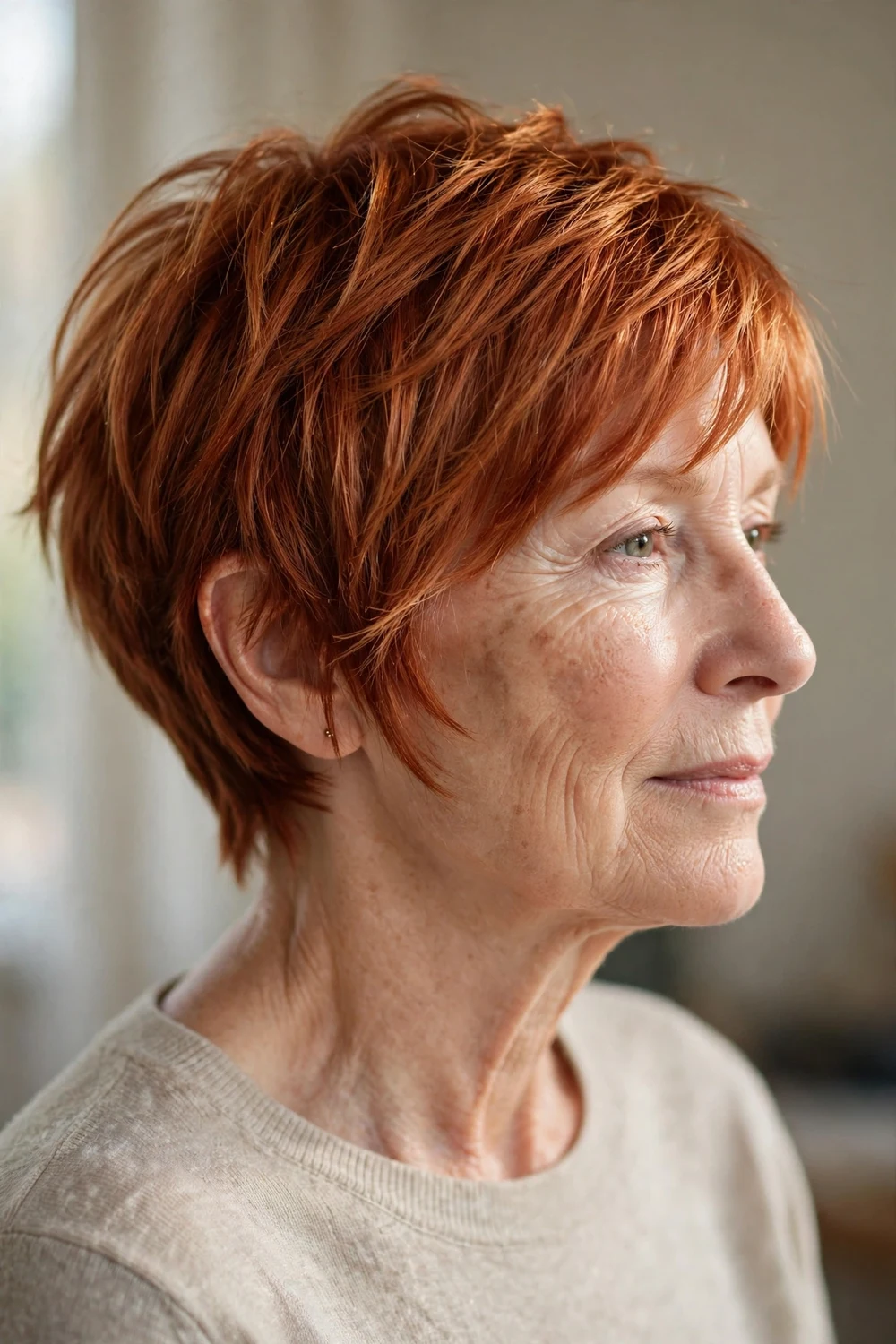
Copper and ginger tones bring warmth to the complexion and make the cut glow in natural light. The color pairs naturally with the asymmetry because both feel spirited and individual. On the longer side, the red catches light with every movement, which emphasizes the uneven lines. Ginger shades fade faster than most colors, so plan on a gloss refresh between full color appointments. Fair to medium skin tones wear this shade most easily.
Try this: Mix a color-depositing conditioner in copper into your routine once a week to top up the tone at home.
Difficulty: Medium | Upkeep: Medium
29. Purple Asymmetrical Pixie
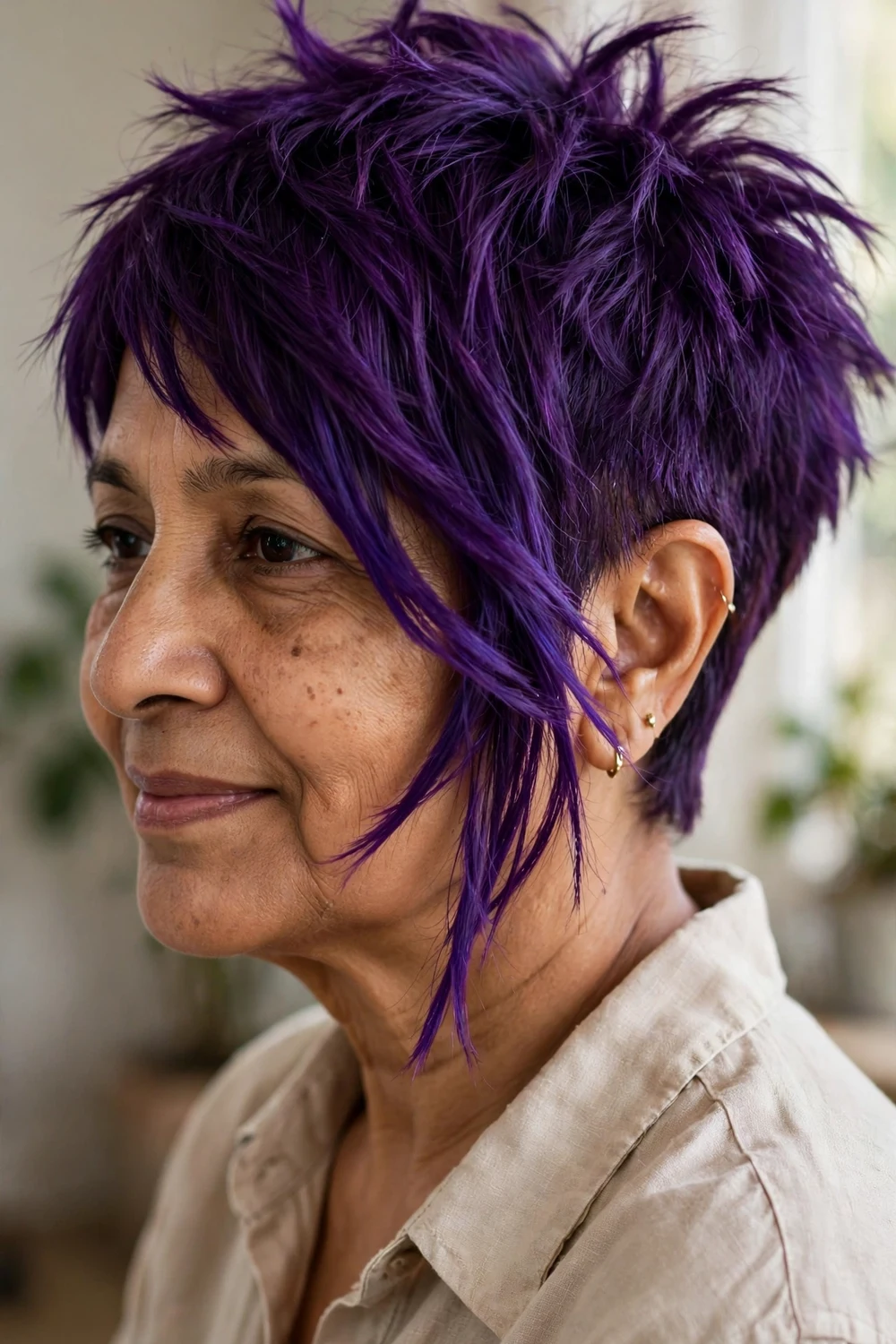
A violet or lavender pixie is playful without being juvenile when the cut underneath is sharp. The asymmetry gives the fashion color a structured base, so the overall effect reads intentional. Pastel purples fade within weeks, while deeper violets hold longer; choose based on how often you want salon visits. Keep the rest of your styling simple and let the color carry the look. It’s a confident choice that gets compliments from strangers.
Try this: Wash as infrequently as your scalp allows and use dry shampoo between washes; every wash strips fashion color.
Difficulty: Medium | Upkeep: High
30. Two-Tone Asymmetrical Pixie
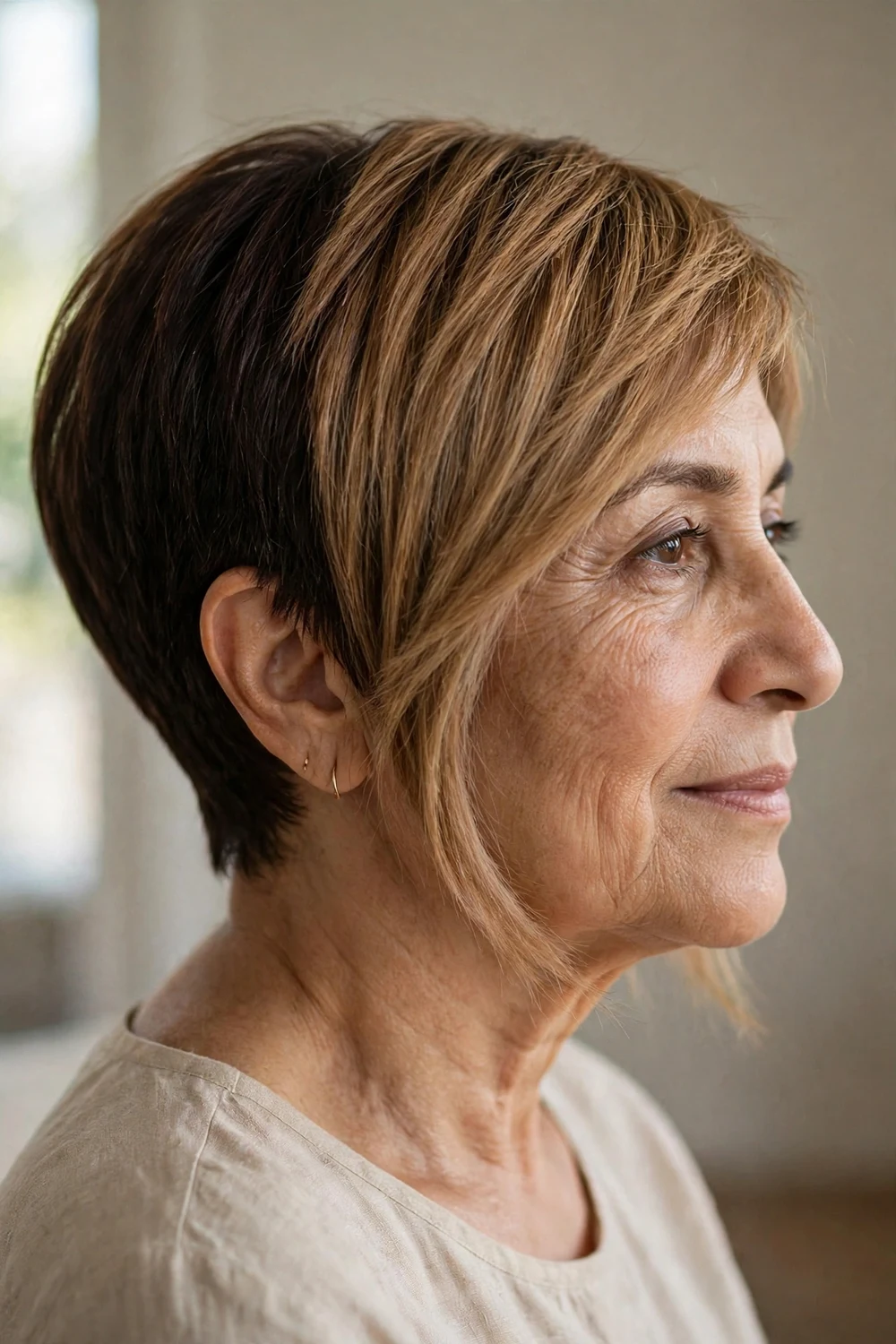
Color the two sides differently and the asymmetry becomes a design element, not just a cut. A darker tone on the short side adds visual weight while a lighter shade on the long side brings brightness and movement. The contrast makes even subtle length differences look dramatic. Popular pairings include dark brown with caramel, black with silver, or natural with one fashion shade. Regrowth shows at the part line, so this version needs the most frequent color maintenance of all.
Try this: Keep one side your natural color and color only the other; grow-out and upkeep get much simpler.
Difficulty: Hard | Upkeep: High
Asymmetrical Pixie Cuts Comparison at a Glance
| Style | Best For | Difficulty | Upkeep |
|---|---|---|---|
| Classic Side-Swept | First-time asymmetry, oval and heart faces | Easy | Low |
| Side-Swept Fringe | Softening the forehead area | Easy | Low |
| Textured Choppy | Fine hair needing lift | Easy | Low to medium |
| Feathered | Thick hair, angular features | Medium | Low |
| Tapered Back | Clean neckline, sculpted shape | Easy | Medium |
| Long-Top | Transitioning from longer hair | Easy | Low |
| Pixie Bob Hybrid | Wanting jaw coverage | Easy | Low |
| Curly | Natural curls, wash-and-go | Medium | Low |
| Natural Wavy | Lowest-maintenance texture | Easy | Low |
| Sleek | Professional settings, straight hair | Medium | Medium |
| Undercut | Thick hair, bold contrast | Medium | Medium to high |
| Undercut Design | Creative statement looks | Hard | High |
| Disconnected | Editorial, high-fashion feel | Medium | Medium |
| Deep Sweep | Maximum drama, straight hair | Easy | Low |
| Short Crop | Active lifestyle, wash-and-wear | Easy | Low |
| Crown-Volume | Thinning hair needing fullness | Medium | Low |
| Graduated | Conservative settings, easy grow-out | Easy | Low |
| Spiky Layered | Playful attitude, texture lovers | Medium | Medium |
| Shaggy | Effortless, undone finish | Easy | Low |
| Short Bangs | Bold geometry, strong brows | Medium | Medium |
| Long with Side Bangs | Versatility, jaw coverage | Easy | Low |
| Soft Fringe | First-time bangs, gentle look | Easy | Low |
| Elongated Side Bangs | Fine hair, face-framing density | Easy | Low |
| Chic Grey 60+ | Natural grey, modern update | Easy | Low |
| Blonde Balayage | Dimension on the longer side | Medium | Medium |
| Platinum | High-impact color commitment | Hard | High |
| Burgundy | Warmth, elegant fashion color | Medium | Medium |
| Ginger Red | Warm complexions, glowing color | Medium | Medium |
| Purple | Playful fashion color | Medium | High |
| Two-Tone | Maximum color contrast | Hard | High |
How to Choose the Right Asymmetrical Pixie for You
Start with your hair texture, not the photo. Straight hair shows geometric lines best, so sleek, disconnected, and deep-sweep versions shine on it. Wavy and curly hair brings its own movement, which suits shaggy, curly, and feathered versions. Fine hair needs the volume-building cuts: textured choppy, crown-volume, and elongated side bangs.
Next, be honest about maintenance. If you won’t visit the salon more than every 6 weeks, choose graduated, long-top, or pixie-bob versions that grow out gracefully. Undercuts, designs, and fashion colors demand touch-ups every 2 to 4 weeks; skip them if that schedule doesn’t suit you.
Consider your face shape as a final filter. Round faces benefit from height and diagonal lines: crown-volume, deep sweep, and spiky versions. Longer faces do better with width from side-swept fringe or soft fringe. Square jawlines soften under feathered and shaggy textures. Bring two or three reference photos and ask your stylist which version fits your growth patterns.
Mistakes to Avoid
The most common mistake is asymmetry that’s too subtle. If the sides differ by less than an inch, the cut reads as uneven rather than intentional. Ask your stylist to make the difference obvious; you can always soften it, but a timid cut satisfies nobody.
Another mistake is choosing a true asymmetrical cut when your routine needs flexibility. True asymmetry locks the styling direction, so the hair only sweeps one way. If you like switching your part, ask for a bias-cut version that can be worn to either side.
Skipping trims ruins the effect fastest. Asymmetry depends on precise lines, and 6 weeks of growth blurs them. Book your next trim before leaving the salon. Finally, don’t overload short hair with heavy products; a pea-sized amount is usually enough, and too much collapses the very volume the cut was built to create.
If you want a broader look at short pixie options before committing to asymmetry, short pixie haircuts for women over 50 covers the full range of classic and modern short styles.
For readers who like the edgier side of short hair, edgy choppy pixie haircuts over 50 pairs texture and attitude in ways that complement several ideas above.
The undercut versions above have a dedicated guide with maintenance schedules at undercut pixie haircuts for over 50, worth reading before you ask for clipped sides.
If the longer asymmetrical versions appealed to you most, long pixie cuts for older women explores extended pixie lengths with the same low-maintenance appeal.
Frequently Asked Questions
Will an asymmetrical pixie work for fine or thinning hair over 50?
Yes, it’s one of the better short cuts for fine hair. The longer side creates the appearance of density around the face and crown, while the tapered shorter side removes weight that would drag hair flat. Ask for textured or razor-cut ends rather than blunt ones, since piece-y ends look fuller than a solid line. A volumizing powder or texture spray at the roots adds lift that lasts through the day.
How often do I need trims to keep the asymmetry sharp?
Most asymmetrical pixies need a trim every 4 to 6 weeks to keep the lines deliberate. Very short or undercut versions may need attention every 3 to 4 weeks, since regrowth shows fastest on closely clipped areas. Longer, graduated versions can stretch toward 6 to 8 weeks because the softer shape hides growth. Book your next appointment before leaving the salon so the shape never gets the chance to blur.
What should I ask my stylist for at the appointment?
Bring two or three reference photos showing the exact asymmetry you want, not just the general vibe. Discuss your face shape, hair texture, and how much daily styling you’ll actually do. Ask whether a true asymmetrical cut or a bias-cut version suits you better: true asymmetry locks the sweep direction, while a bias cut can be worn to either side. Confirm the length difference between the sides before cutting begins.
Can I still look professional with an asymmetrical pixie?
Absolutely. Sleek, graduated, feathered, and classic side-swept versions read polished in any workplace. The key is keeping the lines clean with regular trims and choosing a styling finish that suits your office: smooth and controlled rather than spiky or disconnected. Many women find the cut actually looks more put-together than longer styles because the shape holds all day with minimal touch-ups.
How do I grow out my natural grey with an asymmetrical pixie?
A pixie is one of the fastest ways to grow out grey because there’s simply less dyed hair to remove. Ask your stylist to blend the line of demarcation with babylights or a gloss in a transitional shade while the grey grows in. The chic grey asymmetrical pixie in idea 24 shows how good the end result looks. Use purple shampoo once a week to keep the incoming grey bright instead of yellow.
Final Thoughts
An asymmetrical pixie is proof that short hair after 50 doesn’t have to be safe or predictable. Whether you choose a soft side-swept version or a bold undercut, the uneven lines bring movement and personality that symmetrical cuts can’t match. Pick the version that fits your texture and your routine, find a stylist who cuts short hair well, and keep those trims on schedule. I’ve seen this cut turn hesitant first-timers into lifelong pixie wearers, and it might do the same for you.

