


An edgy pixie on a round face lives or dies on proportion. Width at the cheeks is the widest point of the face, so the cuts that work all do the same three things: they take bulk away from that zone, they build height at the crown, and they put one clear diagonal line across the outline, usually a side part, a swept fringe, or an uneven silhouette. When those three things are in place, short hair stops feeling like a risk and starts doing real shaping work.
I put this list together for readers who want the bold versions, the undercuts, spikes, shaved details, and strong colors, without giving up the face-flattering structure underneath. Every idea below explains where the length sits, which hair texture it suits, and how to style it at home. If you want the broader face-slimming picture first, our guide to hairstyles to slim a round face covers longer lengths as well as short ones.
Key Takeaways
- Height at the crown, close sides, and one diagonal line are the three features that make an edgy pixie flatter a round face.
- Undercuts, tapers, and fades remove bulk above the ears, which narrows the widest part of the face.
- Side-swept, angled, and swoop bangs work. Heavy blunt bangs add a horizontal line and are the hardest to carry.
- Short shapes need trims every four to six weeks. Shaved details and line designs need attention sooner, at two to three weeks.
- Bold color works best placed on top. Keeping color and highlights at the crown pulls the eye upward.
How to Choose Your Edgy Pixie
Start with the detail you want most. If it is the shaved work, look at the undercut, faux hawk, and shaved-side ideas. If it is texture, the choppy, razor-cut, and disconnected versions carry the look without any shaving. If it is color, the platinum, crimson, violet, and blue ideas pair strong shades with shapes that already have the right proportions.
Then match the cut to your hair texture and your calendar. Thick hair carries undercuts and disconnects well. Fine hair does better with stacked, choppy, and feathered shapes that build height without exposing the scalp at the sides. Every cut below lists its difficulty and its cost band, so you can weigh the salon commitment before you book.
1. Undercut Pixie with Tapered Sides
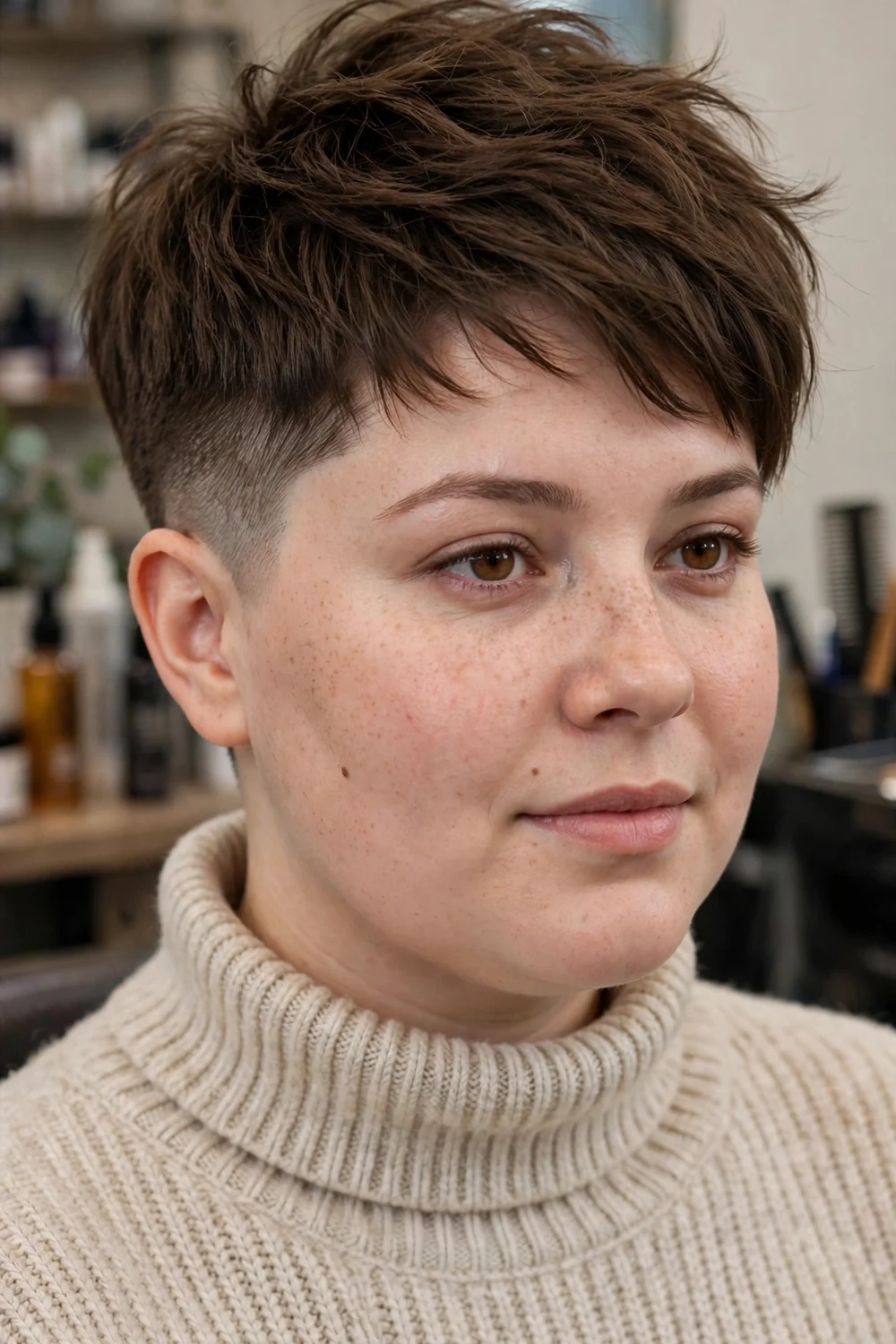
The sides drop close with a taper or a soft undercut, and the top keeps two to three inches of textured length. That contrast does the face work: bulk leaves the cheek zone, which is the widest point on a round face, and the eye travels up to the crown instead of across.
Ask for the taper to start above the ears and blend into the top with no hard shelf. Straight and fine hair shows the blend lines most, so a scissor finish looks softer than a clipper-only finish on those textures.
Try this: Blow-dry the top up and slightly back with mousse at the roots, then press the sides down with a pea-size amount of matte paste.
Difficulty: Easy · Cost: $
2. Asymmetrical Pixie with Long Side Sweep

One side falls long, often to the cheekbone or jaw, and the other side crops in close near the ear. The long diagonal cuts across the face and breaks its symmetry, which is why this shape reads so well in photos from the front.
Keep the long side in one piece with point-cut ends. If it gets layered too heavily it splits apart and the diagonal line, the whole point of the cut, disappears.
Try this: Train the part for a week by blow-drying the long section across the forehead in the direction you want it to fall.
Difficulty: Medium · Cost: $$
3. Choppy Textured Pixie with Crown Height
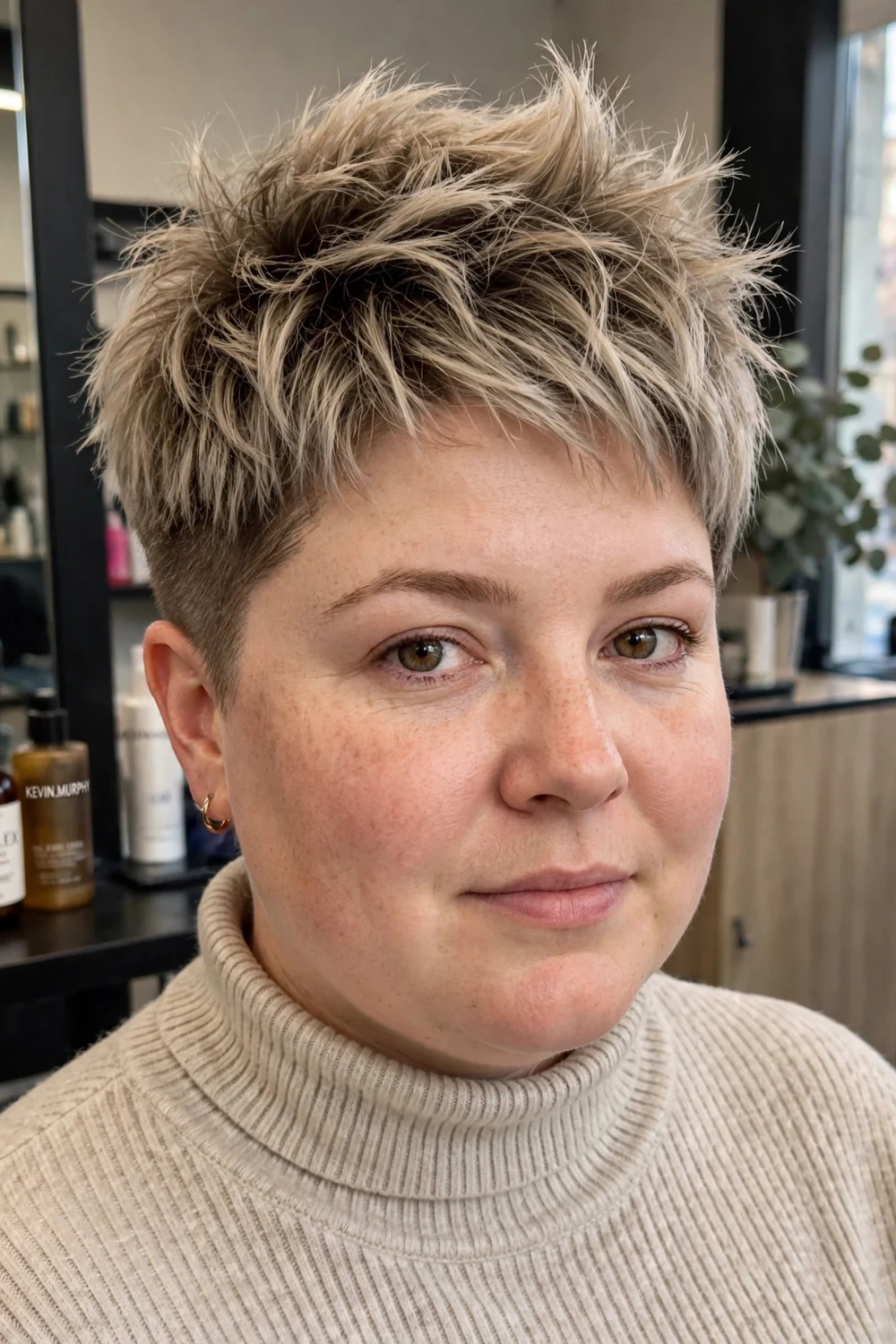
Short, uneven layers are point-cut through the crown so the top stands up in separated pieces. The sides stay close and flat. Height at the crown adds vertical length, and the broken texture keeps the outline from forming one round curve that mirrors the face.
This is a forgiving first edgy cut. It grows out softly, works on straight, wavy, and thick hair, and needs no color to carry it.
Try this: Work texture powder into dry roots on day two and pinch the crown pieces apart with your fingers instead of brushing them flat.
Difficulty: Easy · Cost: $
4. Spiked Pixie with Short Bangs

Layers on top are cut short enough to stand, then styled straight up with gel or pomade while the sides stay tight. All of the height sits at the crown, so the face reads longer from every angle.
On fine hair, keep the spikes at the crown only and leave the front fringe swept to one side. If you have fine strands, the styling notes in our guide to pixie haircuts for fine hair cover which products add grip without weight.
Try this: Apply product to dry hair, not wet hair. Spikes set on wet hair collapse as they dry and lose the height by midday.
Difficulty: Medium · Cost: $
5. Faux Hawk Pixie with Faded Sides
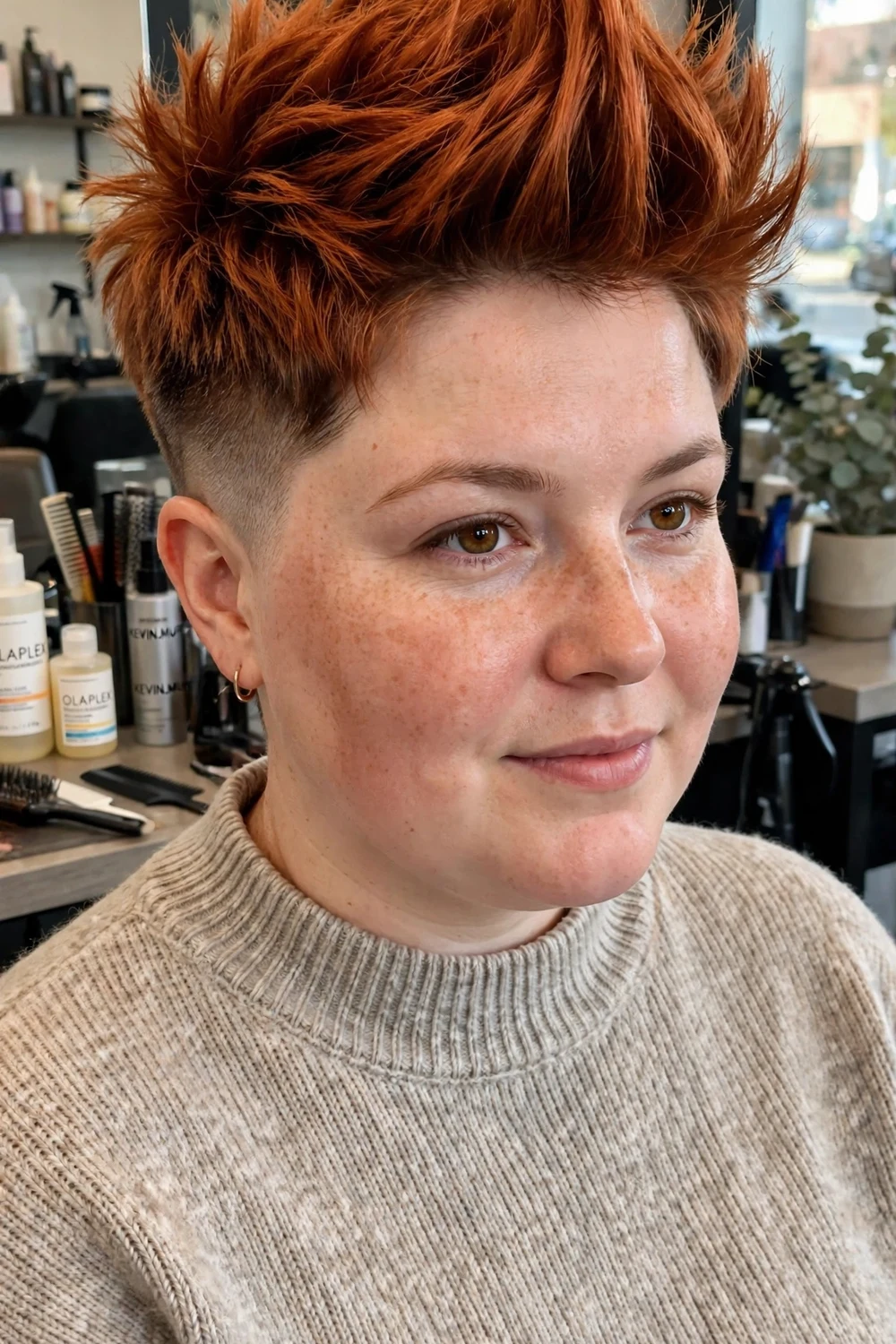
A central strip of longer hair runs from the forehead to the nape and stands up in a textured ridge, while both sides fade down short. The ridge gives the strongest vertical line on this list, and the faded sides remove width at the temples and cheeks.
The strip can stay subtle, around an inch of extra height, or go tall for a bolder result. Thick and wavy hair holds the shape with less product than fine hair needs.
Try this: Blow-dry the center strip upward with a vent brush before adding pomade. Heat sets the direction, and product alone rarely holds a faux hawk past noon.
Difficulty: Hard · Cost: $$
6. Platinum Pixie with Swoop Bangs
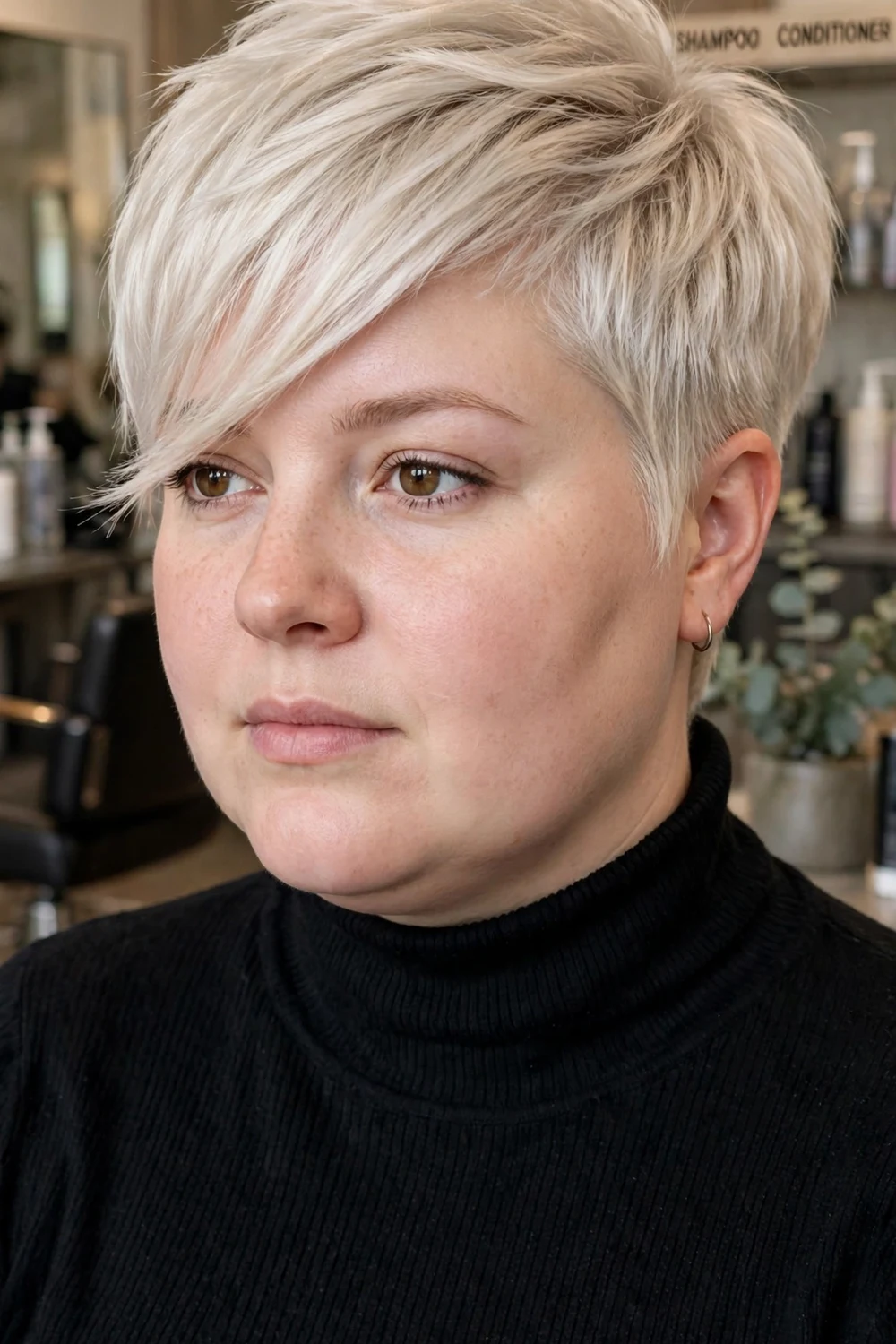
Platinum color plus a long swoop fringe makes the structure of the cut easy to see. The fringe crosses the forehead in one strong diagonal, and the blended sides keep the silhouette narrow.
Platinum on a pixie means bleach to the root, so plan on toner appointments and a purple shampoo routine. The short length helps: damaged ends are cut away every few weeks instead of accumulating.
Try this: Book the root touch-up at the same visit as the trim. Running both on one four to six week cycle keeps the color and the shape in sync.
Difficulty: Hard · Cost: $$$
7. Disconnected Pixie with Tousled Top

Disconnected means the top length does not blend into the sides. A clear step sits between the long, tousled top and the clipped sections below it, and that hard contrast is what gives the cut its edge.
The top can be worn forward, swept to one side, or pushed back, so one cut gives three distinct looks. It suits medium to thick hair best, since fine hair can look thin where the disconnect exposes the sides.
Try this: Ask your stylist to show you where the disconnect line sits. Styling gets much easier once you know which hair belongs to the top section.
Difficulty: Easy · Cost: $
8. Pixie Mullet with Choppy Back

The front and sides follow a classic pixie, short and close, and the back keeps choppy length past the nape. From the front the face gets the slimming benefit of short sides, and from the side and back the extra length adds movement.
For more variations on this shape, see our roundup of edgy pixie mullet hairstyle ideas. Keep the back layers thinned and piecey so the length reads light rather than heavy.
Try this: Scrunch the back section with a small amount of texture cream while it dries. Brushing it smooth removes the choppy finish that defines the style.
Difficulty: Medium · Cost: $$
9. Micro Bang Pixie with Blunt Perimeter

Micro bangs stop well above the eyebrows, and the rest of the pixie follows a clean, blunt perimeter. The short fringe opens up the forehead and draws attention to the eyes, while the sharp outline sets up a clear contrast with soft facial curves.
This fringe is a commitment. Bangs grow about half an inch a month, so the micro length holds for only a few weeks before it needs a tidy-up trim.
Try this: Schedule short fringe-only trims between full cuts. Many salons offer them as a quick, low-cost appointment that keeps the line exact.
Difficulty: Medium · Cost: $
10. Silver Asymmetrical Pixie
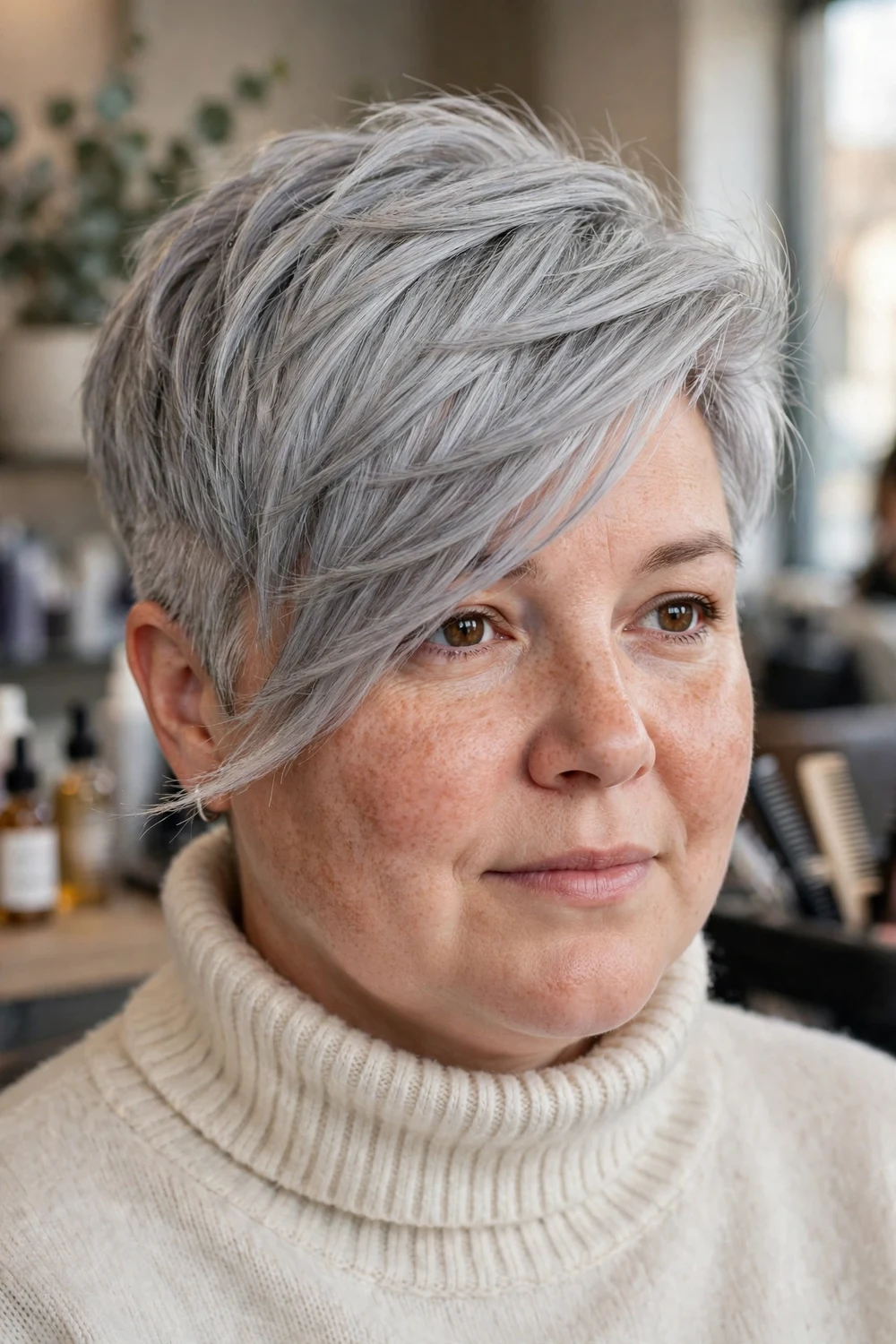
Silver color shows every angle of an asymmetrical cut, including the longer swept side and the cropped side beneath it. The color also softens the transition if you are growing in natural grey and want the blend to look deliberate.
Silver needs a light base and regular toning to stop yellow tones creeping in. A gloss at each trim keeps the shade clean without a full color service every time.
Try this: Use a purple toning mask once a week and skip daily heat. Silver hair is porous, and high heat speeds up fading more than washing does.
Difficulty: Medium · Cost: $$
11. Crimson Undercut Pixie
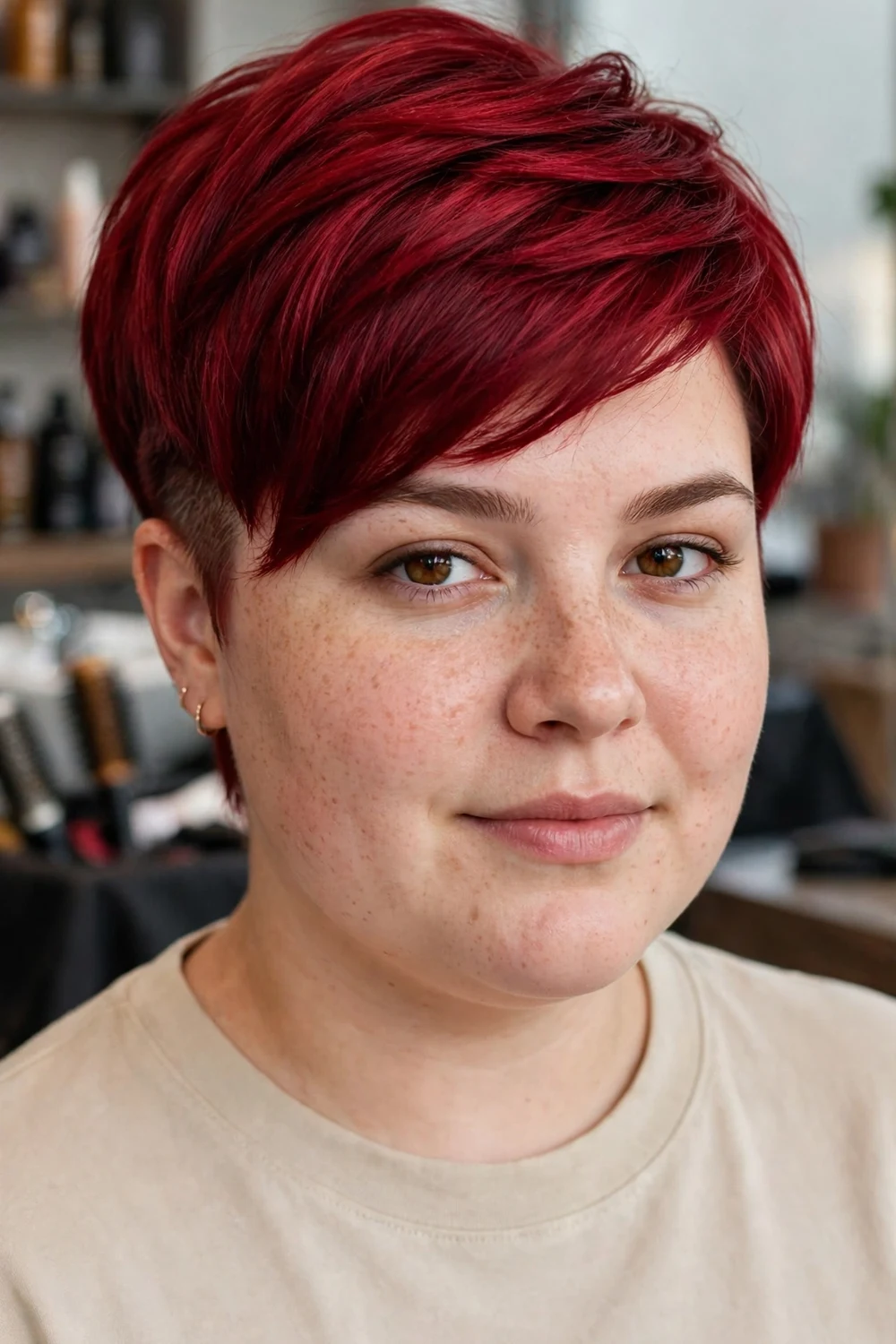
A deep crimson shade covers the top layers, and an undercut clears the back and sides underneath. The color draws the eye to the longest part of the cut, up top, and the undercut keeps the outline narrow at cheek level.
Red shades fade faster than brown or blonde shades. Rinsing with cool water and washing less often will stretch the color between salon visits.
Try this: Ask for a matching color gloss to take home for mid-cycle refreshes. A ten minute gloss at home holds crimson far better than extra shampoo care alone.
Difficulty: Hard · Cost: $$$
12. Curly Asymmetrical Pixie
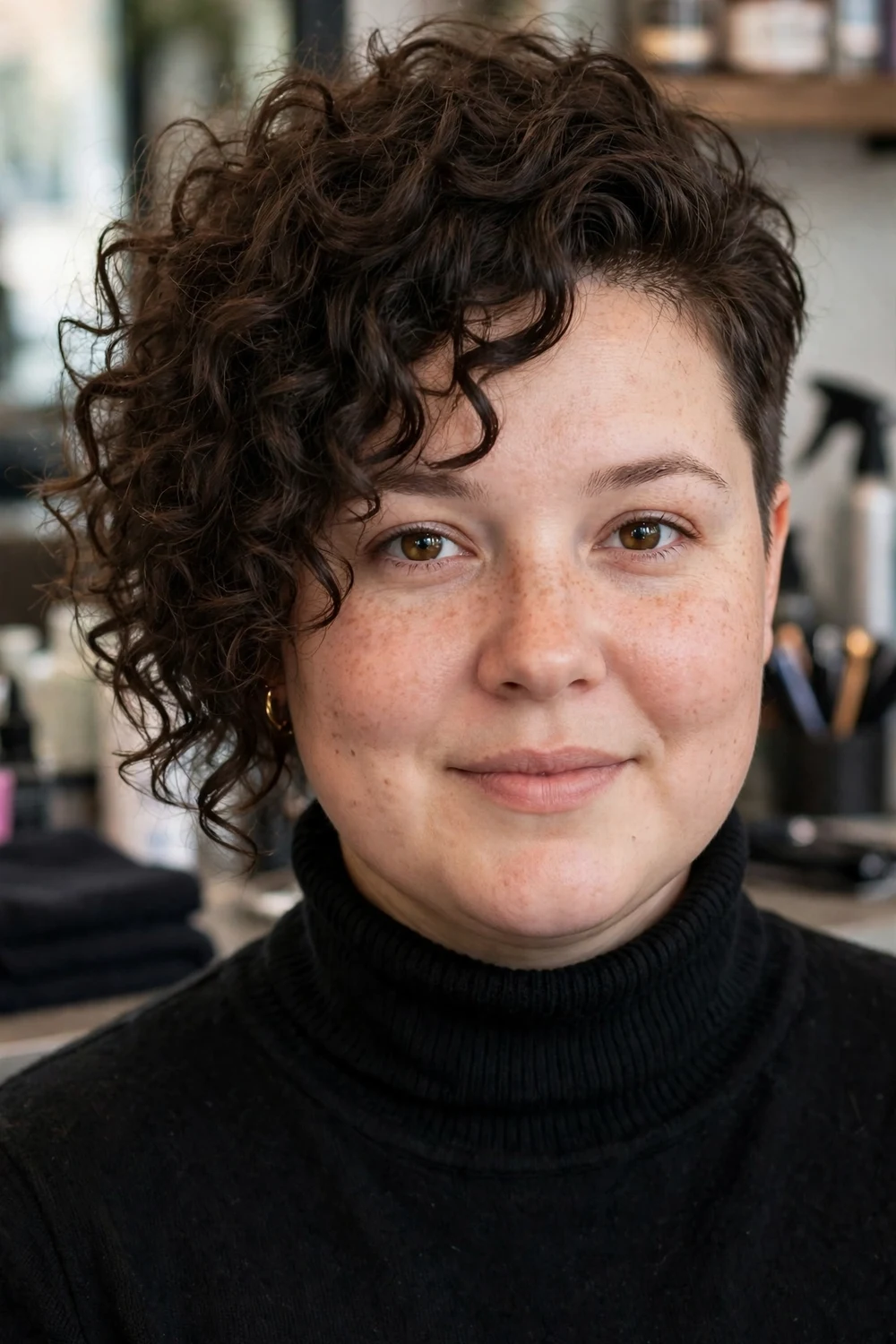
Natural curls stay longer and fuller on one side, and the other side tapers in close. The uneven weight pulls the eye along a diagonal, and the curl volume sits high instead of spreading out at cheek level.
Ask for the cut to be shaped on dry curls, or at least finished dry. Curls spring up when they dry, and a wet-only cut can end up shorter and rounder than planned.
Try this: Define the longer side with a small amount of curl cream scrunched in while damp, then leave it alone. Touching curls as they dry creates frizz at the crown.
Difficulty: Easy · Cost: $
13. Tapered Afro Pixie with Line Design
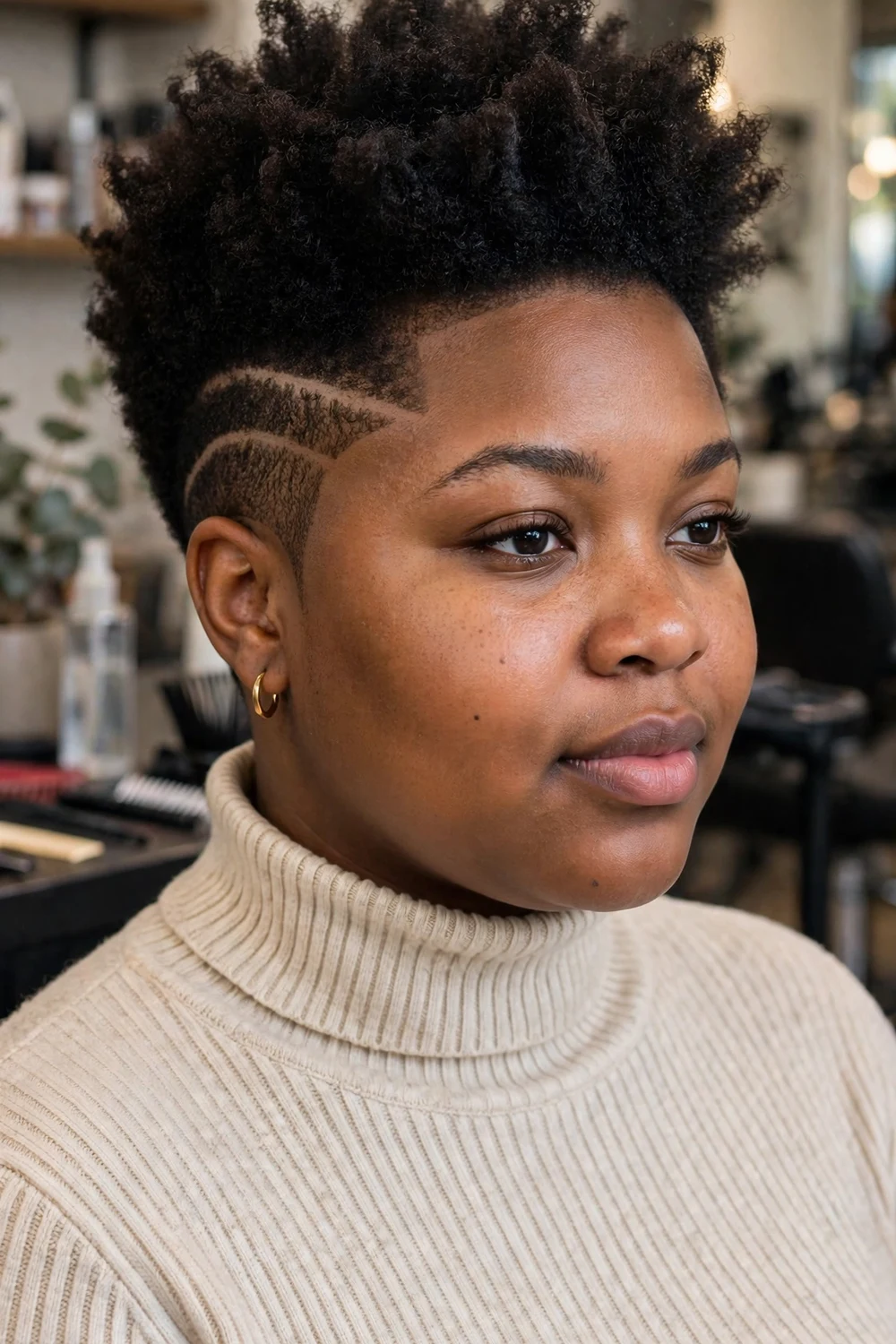
Coily hair is tapered short at the sides and back with height kept on top, and a shaved line or simple geometric detail is carved at one side. The height lengthens the face, and the carved detail adds the sharp detail that defines the look.
Keep the design simple for the first cut, such as one clean line above the ear. Intricate patterns grow out within two weeks and need frequent re-cutting to stay readable.
Try this: Moisturize the tapered sections daily with a light oil. Very short coily hair dries out fast, and dry sides lose the clean finish quickly.
Difficulty: Medium · Cost: $
14. Bixie with Side-Swept Fringe
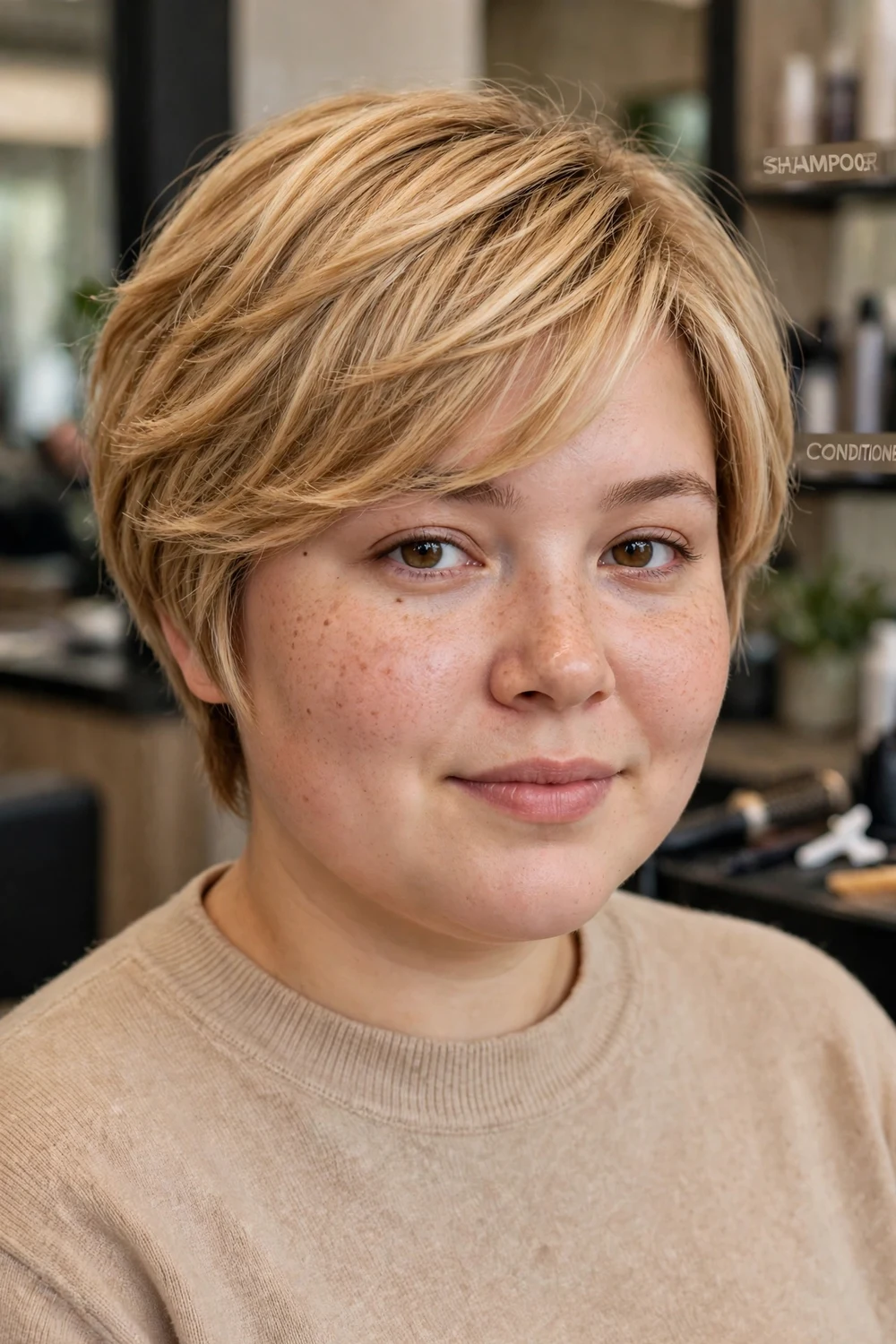
A bixie sits between a bob and a pixie: longer around the crown and fringe, shorter and cleaner at the back. The side-swept fringe draws the diagonal line a round face needs, and the extra length makes it a gentler step down if you are cutting long hair for the first time.
Our collection of pixie bob haircut ideas shows how much length variation fits inside this one hybrid shape.
Try this: Blow-dry the fringe across the forehead with a round brush, then tuck the shorter side behind one ear to sharpen the asymmetry.
Difficulty: Easy · Cost: $$
15. Long Pixie with Deep Side Part
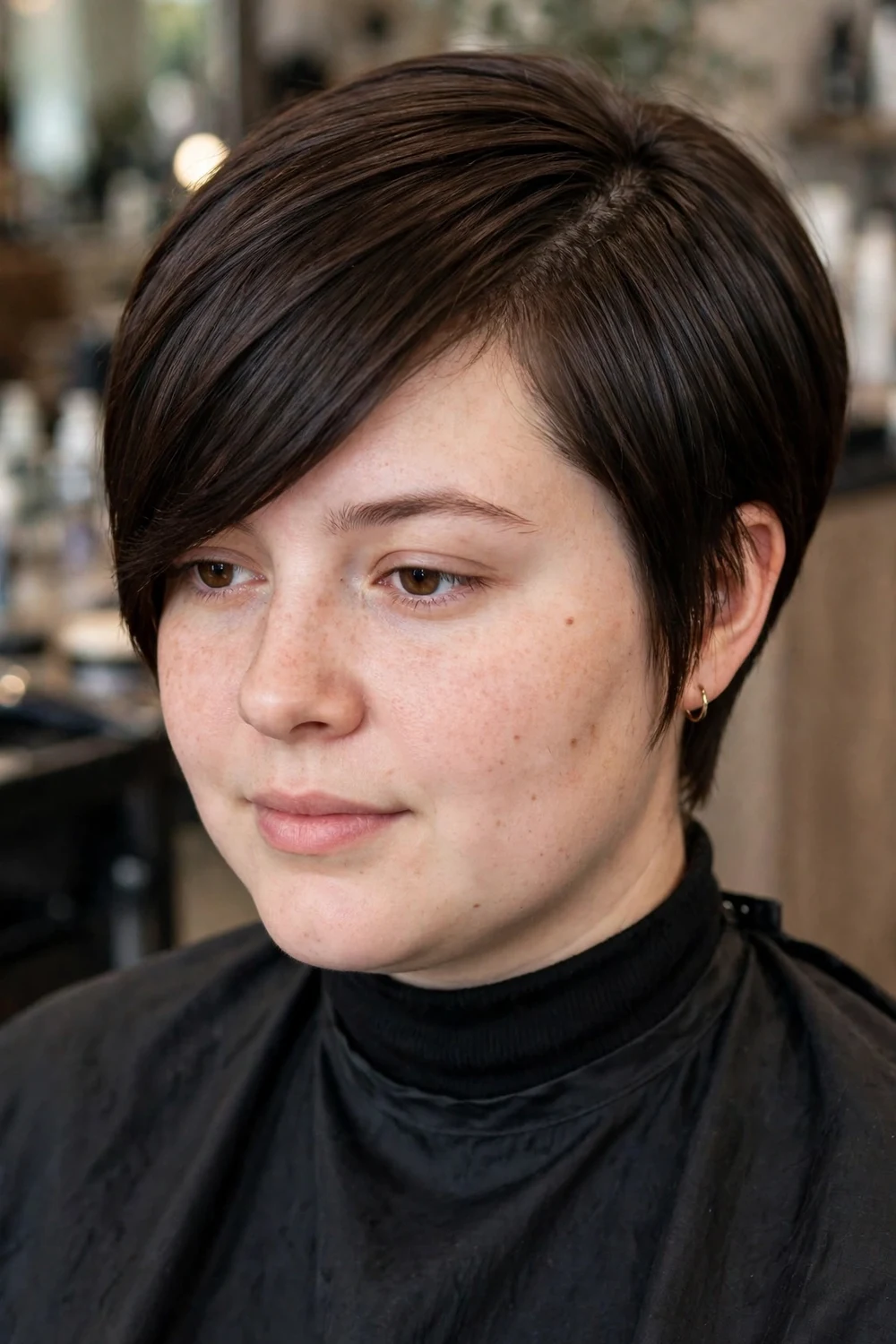
The top and fringe keep three inches or more, parted deeply to one side so the hair falls across the face at an angle. The sides stay short to ear level. That part placement does most of the work, shifting volume off center so the face reads oval in outline.
Longer pixies like this one also give you styling range: swept forward, tucked back, or lifted at the roots. The trade-off is more daily styling time than the tight crops on this list need.
Try this: Set the part while your hair is wet. A deep side part trained from wet hair holds all day, while a part forced into dry hair drifts back to center.
Difficulty: Easy · Cost: $
16. Razor-Cut Pixie with Piecey Layers

A razor cuts the layers into separated, piecey ends instead of clean scissor lines. The result looks lived-in from day one, with wispy tips around the face that soften the jaw area without adding width at the cheeks.
Razor work suits straight and wavy hair with medium density. On very fine or very curly hair, razor ends can turn wispy and thin, so ask your stylist to point-cut instead if that matches your texture.
Try this: Use a light styling cream on the ends only. Razor-cut pieces separate on their own, and heavy wax clumps them back together.
Difficulty: Easy · Cost: $
17. Violet Pixie with Wispy Bangs
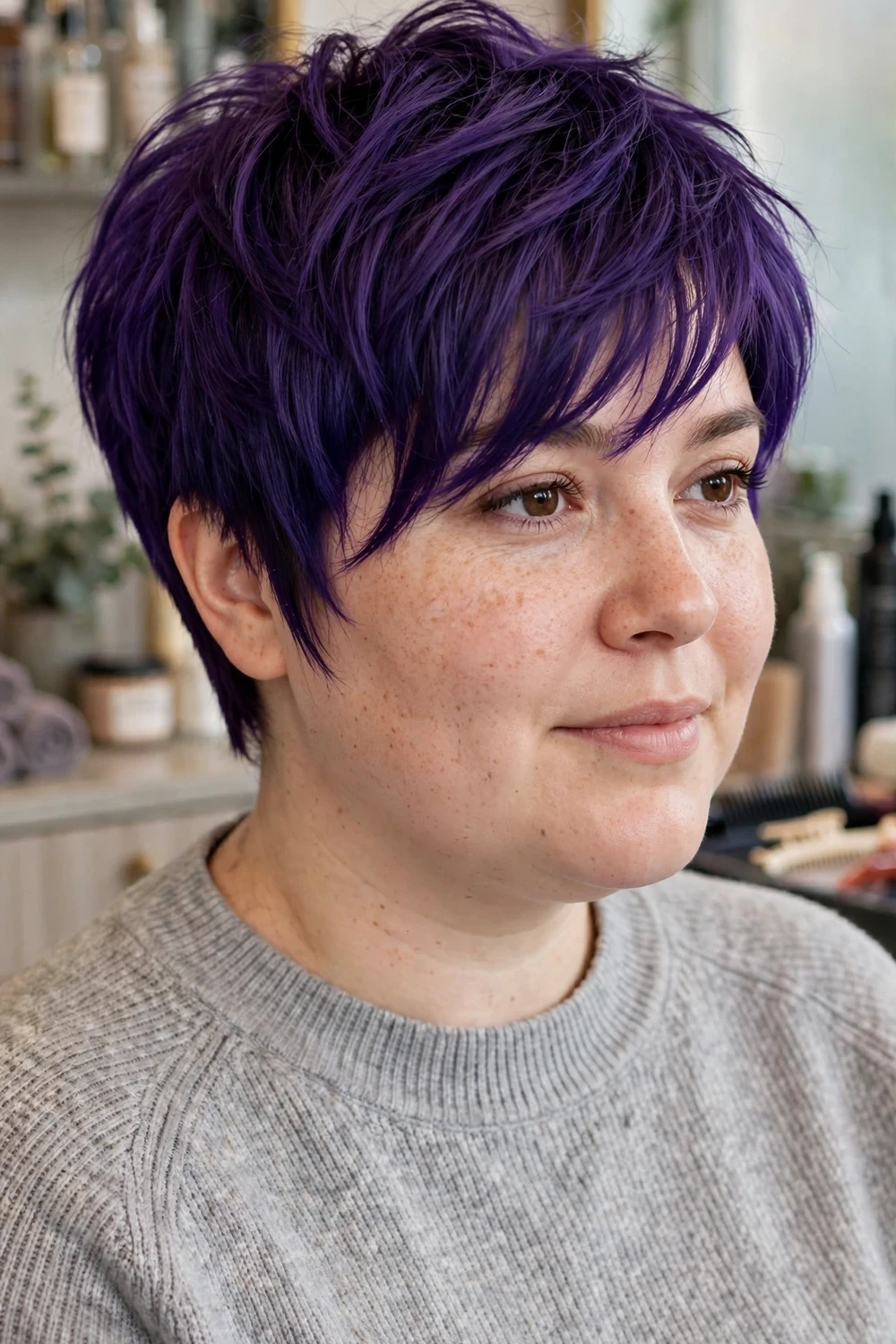
Deep violet color over a textured pixie with longer, wispy bangs gives a bold result that still frames the face softly. The bangs fall at a slight angle rather than straight across, which keeps the diagonal line that flatters a round face.
Violet fades toward lavender and then silver as it washes out. Many people enjoy that fade path, but it helps to know it is coming before you commit to the shade.
Try this: Wash with cool water and a color-safe shampoo, and plan a gloss refresh at three to four weeks to hold the deep violet tone.
Difficulty: Hard · Cost: $$$
18. Blue Frosted Pixie with Side Bang
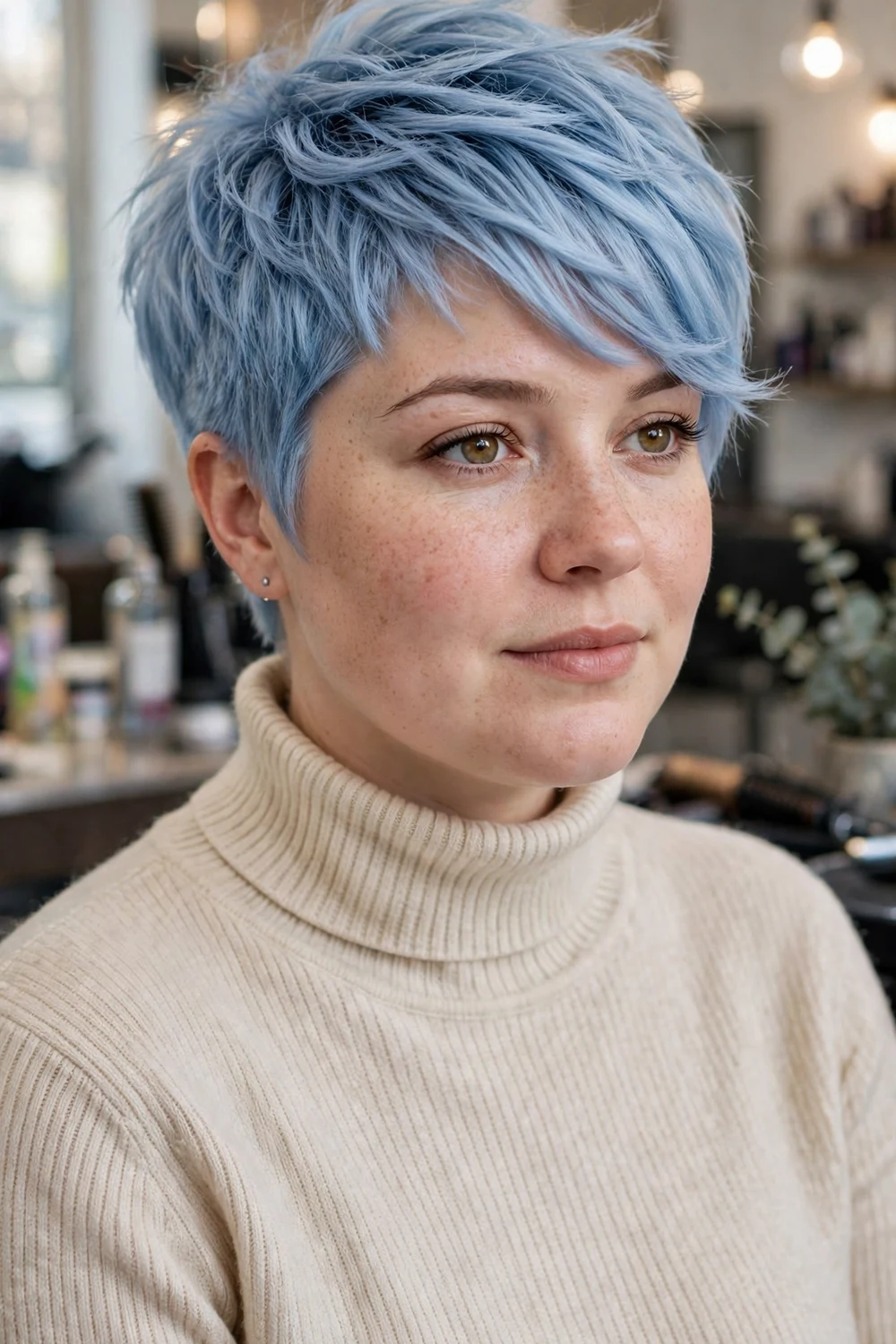
An icy blue shade over layered, feathered texture makes a strong color statement, and the side bang keeps a soft diagonal across the forehead. Light, cool shades like this one show the layering clearly, so the cut needs to be precise.
Reaching icy blue usually means lifting the hair to a very pale blonde first. That process is the main cost and upkeep driver here, more than the cut itself.
Try this: Ask your colorist for a bond-building treatment during the lift. Short hair tolerates lightening well, but repeated lifts for fashion shades add up.
Difficulty: Hard · Cost: $$$
19. Wavy Pixie with Dark Gloss
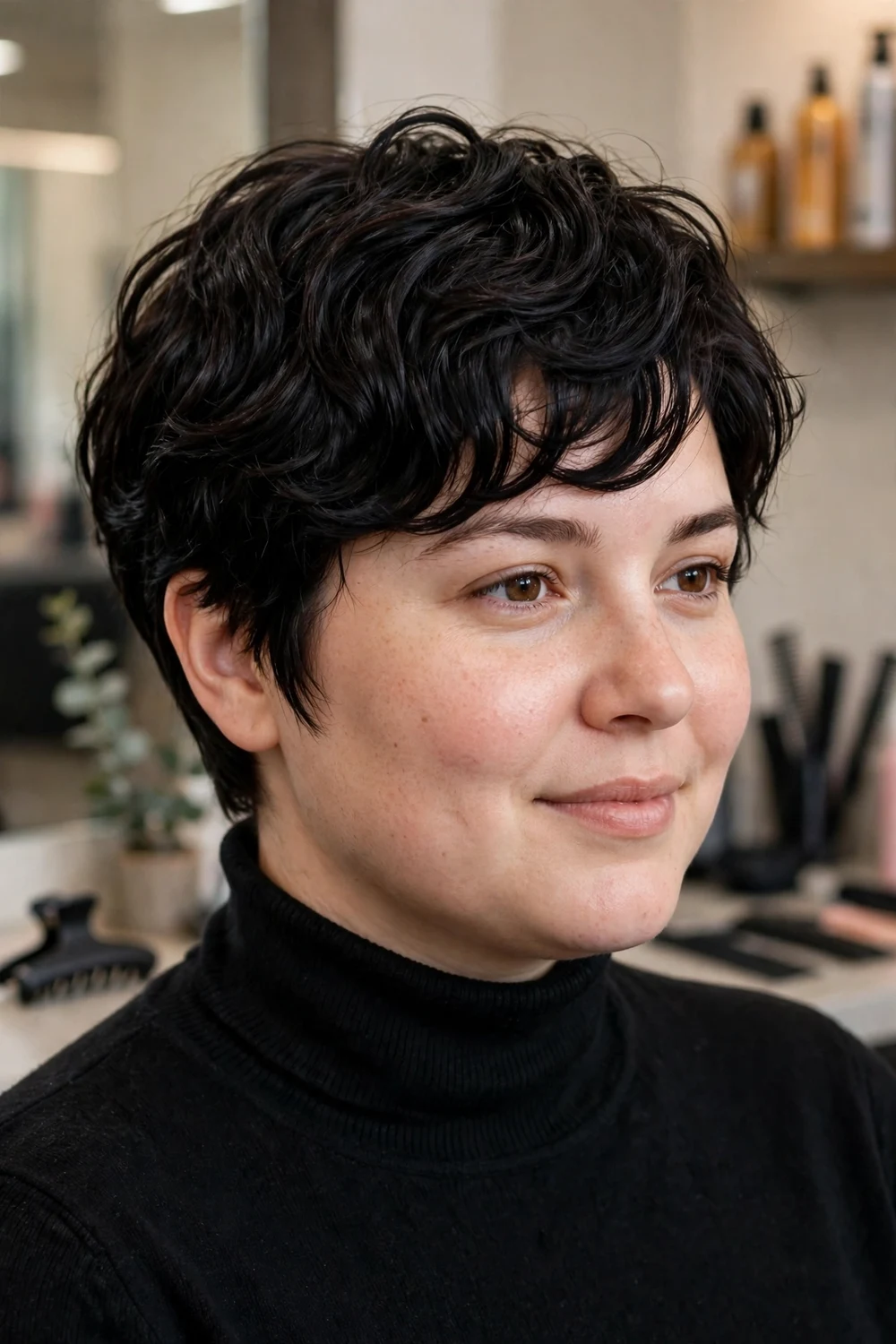
This wavy pixie, often called a wixie, follows the natural wave pattern instead of fighting it. The top stays slightly longer so the waves can form, the sides stay close, and a dark glossy shade keeps the whole shape looking polished.
Because the wave adds its own volume, this version needs the least daily heat styling on the list. A dark single-process shade also keeps color upkeep simple.
Try this: Enhance the wave with a salt spray or wave cream on damp hair and air-dry. Flat ironing a wixie removes the texture that makes it work.
Difficulty: Easy · Cost: $
20. Shaved-Side Pixie with Long Top
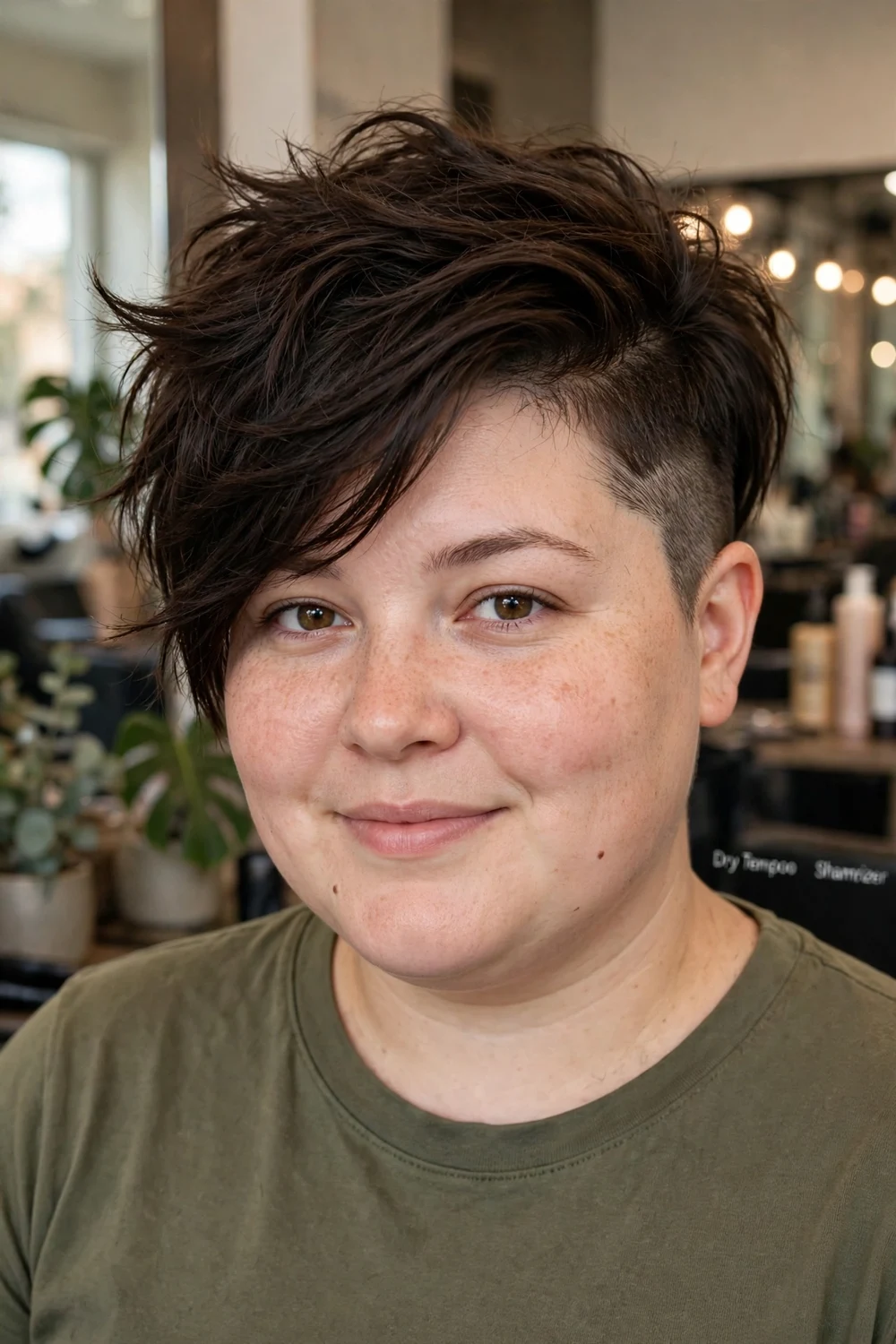
One side is shaved or clipped to skin level, and the long top sweeps over to the opposite side. The exposed side shows the jaw and ear, which sharpens the profile, and the sweep creates the longest diagonal line of any cut here.
The shaved section needs clipping every two to three weeks to stay clean. Some people maintain that one section at home with clippers between salon visits.
Try this: Decide your shaved side based on your natural part. Sweeping the top against its natural growth direction gives more lift but needs more product to hold.
Difficulty: Medium · Cost: $
21. Feathered Taper Pixie in Ash Brown

Feathered layers sit lightly through the top, and the cut tapers gradually shorter toward the nape and ears. Ash brown is a cool, muted shade that keeps the focus on the shape and pairs well with the soft, wispy finish.
The edge in this version comes from the close taper and the lifted crown rather than from color or shaving, so it fits dress codes and workplaces where bolder versions may not.
Try this: Blow-dry the feathered top forward, then sweep it back with your fingers. That two-direction drying builds lift that a single direction does not.
Difficulty: Easy · Cost: $
22. Ruby Layered Pixie with Side Bangs

Ruby red layers stack through the top for volume, and the side-swept bangs pull the eye across the face instead of straight down. Ruby sits deeper than crimson, so it fades more gracefully and suits a wider range of skin tones.
Keep the layers concentrated at the crown. Ruby color draws attention wherever it sits, and you want that attention up top rather than at cheek level.
Try this: Use a red color-depositing conditioner once a week. Ruby tones lose depth gradually, and a depositing conditioner replaces pigment between color visits.
Difficulty: Medium · Cost: $$
23. Balayage Long Pixie with Angled Fringe
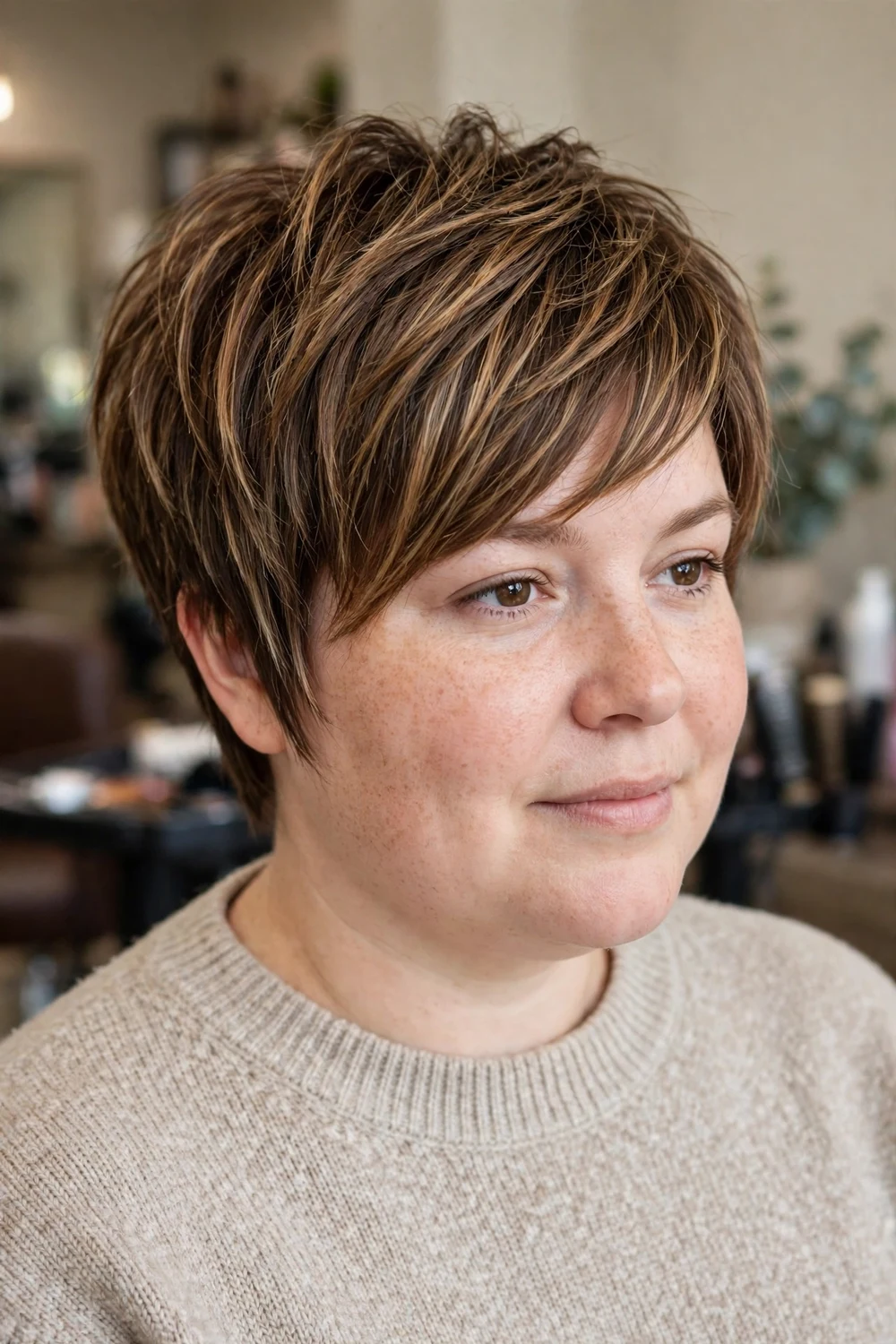
Hand-painted balayage highlights run through a longer pixie, placed around the face and through the crown. The lighter pieces draw the eye upward and along the angled fringe, and the darker root keeps regrowth soft.
Balayage grows out more gently than foil highlights, so this is the lowest upkeep color option among the bold looks on this list. The longer length also gives the painted pieces room to show.
Try this: Ask for the lightest pieces at the crown and fringe only. Keeping highlights away from the sides stops them adding visual width at the cheeks.
Difficulty: Medium · Cost: $$
24. Stacked Nape Pixie with Statement Bang

The nape is graduated into a stacked shape that props the crown up from behind, and a bold fringe sweeps across the forehead at a strong angle. The stack gives lasting height that does not depend on product alone.
This cut holds its outline well between trims because the structure is built into the graduation. It suits straight and slightly wavy hair best, since strong curl springs out of the stacked shape.
Try this: Blow-dry the stacked back downward and the fringe across, in two separate passes. Drying the whole cut in one direction flattens the stack.
Difficulty: Medium · Cost: $
Quick Comparison
| Idea | Best for | Trim cycle | Daily styling |
|---|---|---|---|
| Undercut Pixie with Tapered Sides | Maximum slimming at the cheeks | 4 to 6 weeks | About 5 minutes |
| Asymmetrical Pixie with Long Side Sweep | A strong diagonal line | 4 to 6 weeks | 5 to 10 minutes |
| Spiked Pixie with Short Bangs | Fine hair that needs height | 4 to 5 weeks | About 10 minutes |
| Faux Hawk Pixie with Faded Sides | The boldest vertical shape | 3 to 5 weeks | 10 to 15 minutes |
| Bixie with Side-Swept Fringe | First short cut after long hair | 6 to 8 weeks | 5 to 10 minutes |
| Wavy Pixie with Dark Gloss | Low daily styling time | 5 to 7 weeks | About 5 minutes |
The table covers six of the most requested shapes. Shorter trim cycles almost always mean a sharper outline, while the longer cycles trade a little sharpness for fewer salon visits.
Frequently Asked Questions
Can a pixie cut work on a round face without making it look wider?
Yes. Choose a pixie with height at the crown, close or tapered sides, and a diagonal element such as a side-swept fringe or a deep side part. Those features add vertical lines and remove bulk at cheek level, which is the widest point of a round face. Avoid equal length all around, blunt straight-across bangs, and volume at the sides.
Which bangs suit an edgy pixie on a round face?
Side-swept, angled, and swoop bangs suit a round face best because they cross the forehead on a diagonal. Micro bangs also work when the rest of the cut keeps crown height, since they open the forehead and draw focus to the eyes. Heavy, blunt, straight-across bangs are the hardest to carry because they add a horizontal line at the widest part of the face.
How often does an edgy pixie need a trim?
Most edgy pixies need a trim every four to six weeks. Undercuts, fades, shaved sides, and carved line designs grow out fastest and may need a tidy-up at two to three weeks. Longer versions, such as a bixie or a long pixie, can stretch to six to eight weeks because the extra length hides regrowth.
Does an undercut pixie grow out well?
An undercut pixie grows out in stages. The top lengthens first and can be swept over the growing sides, and after a few months the shape softens into a longer pixie or a bixie. The sides look uneven for a period during grow-out, so plan on taper trims to keep the outline tidy while the lengths even up.
Will a spiked or faux hawk pixie suit fine hair?
Yes, with adjustments. Keep the spikes or the center strip concentrated at the crown, keep the sides tight, and set the height with heat before adding a light product. Heavy wax weighs fine hair down and flattens the height by midday, so mousse, root powder, and light pomade work better.
What should I ask my stylist for at the first appointment?
Bring two or three photos of the exact cut, including a side view. Ask for height at the crown, close sides that remove bulk above the ears, and one diagonal element such as a side part or angled fringe. Book the next trim before you leave, since a four to six week cycle is what keeps a short shape looking sharp.
Final Thoughts
An edgy pixie and a round face are a strong pairing when the cut is built on height, close sides, and a diagonal line. Pick the detail that excites you most, whether that is an undercut, a spike of height at the crown, a shaved side, or a bold color on top, and let the proportions underneath stay disciplined. Bring clear photos to your appointment, agree the trim cycle before the first cut, and your pixie will hold its shape and its edge between visits.

