

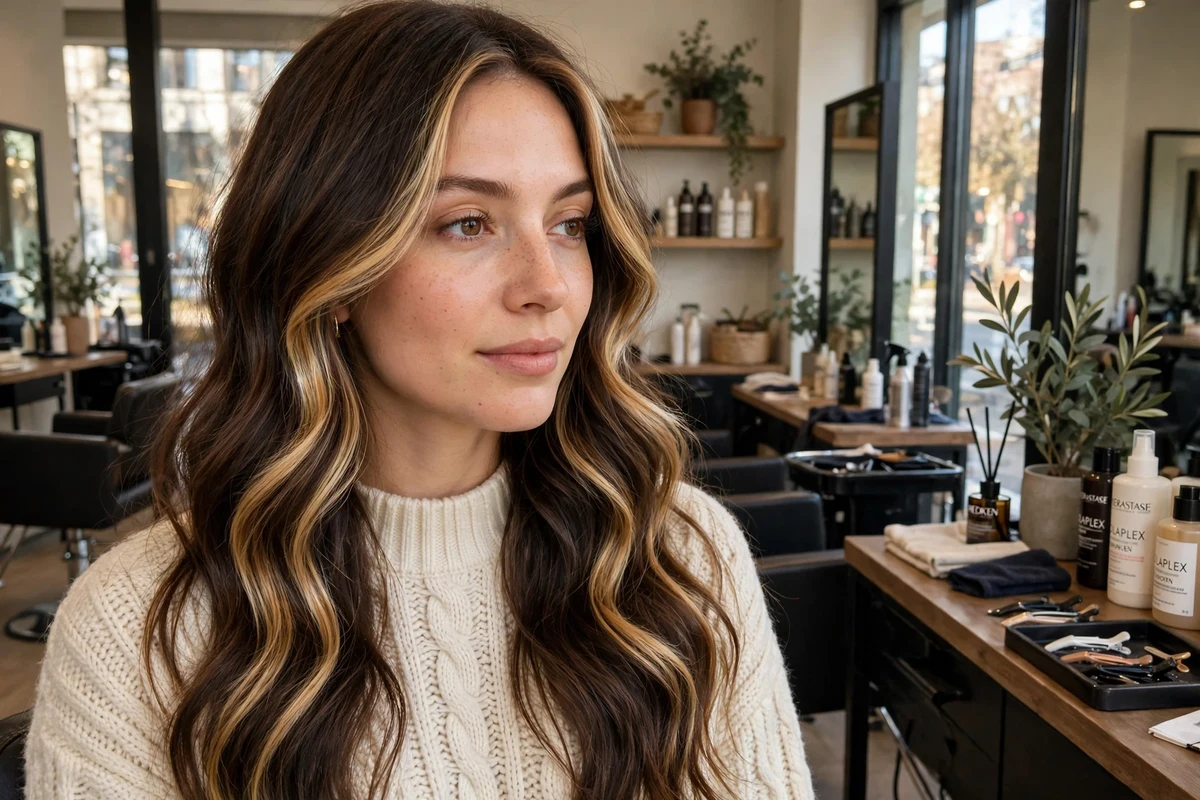
Face framing balayage puts the lightener only where it changes how your face reads: the two front sections, the front layers, and the curtain pieces that sit against your cheeks. On long wavy hair, that placement does more work than a full head of color, because the waves carry the bright front pieces forward every time the hair moves. The rest of your length stays close to your base color, which keeps the service shorter and the grow-out soft.
This list collects 26 face framing balayage ideas for long waves, and every one of them is a front-frame variation. They run from a barely-there sandy frame that sits one level above your base to a platinum halo frame at full brightness, with caramel, honey, ash, copper, and rose shades in between. Each idea notes the frame width, where the brightness starts, who it suits, and what the upkeep looks like. If you want brightness through the whole head instead, the fall balayage hair colors roundup covers full placements for the season.
Quick Takeaways
- Every idea here colors the front sections only. Your back lengths and underneath stay at or near your base color.
- Pick brightness in levels: one to two levels above your base reads soft, three to four levels reads bold, and platinum frames need a high lift.
- Width changes the effect as much as shade. Fine babylight frames soften, while wide ribbon and panel frames draw a clear line around the face.
- Root-diffused and low-start frames grow out the softest and can stretch to ten or twelve weeks between visits.
- Long waves show a frame best when the lightest pieces start at or above the cheekbone, where the wave bends forward.
How to Pick Your Face Frame
Start with the start point. A frame that begins at the root gives the strongest brightness around the eyes and suits anyone who wants a clear change. A root-diffused frame feathers the lightener down from a few inches below the part, so regrowth blurs instead of lining up. A low-start frame begins at the cheekbone or jaw, which keeps the top of the head dark and puts all the light where long waves curve outward. Then pick width: fine woven pieces for a soft read, ribbons about a finger wide for the classic money piece look, or full front panels for high contrast.
Match the shade family to your undertone last. Warm skin carries caramel, honey, toffee, and copper frames with the least toning work. Cool and neutral skin usually settles better with beige, ash, mushroom, and smoky sandy frames, which stay clean longer between glosses. Brunettes planning a deeper base for the season can pair any frame on this list with the shades in the fall brunette hair colors guide, since the frame and the base are booked and priced as separate decisions in most salons.
| Frame style | Brightness vs base | Best starting base | Upkeep |
|---|---|---|---|
| Soft frames (barely-there sandy, babylight, peachy caramel) | 1 to 2 levels lighter | Any base | Low |
| Classic money pieces (caramel, beige, honey, bronde) | 2 to 3 levels lighter | Light brown to dark brown | Low to medium |
| Cool frames (ash ribbons, mushroom, smoky sandy) | 2 to 3 levels lighter | Medium brown to dark brown | Medium, toner-led |
| Bold frames (chunky creamy, high-contrast on black) | 3 to 4 levels lighter | Dark brown to black | Medium |
| High-lift frames (platinum, icy halo) | 4+ levels lighter | Light brown to dark blonde lifts cleanest | High |
1. Soft Caramel Money Piece
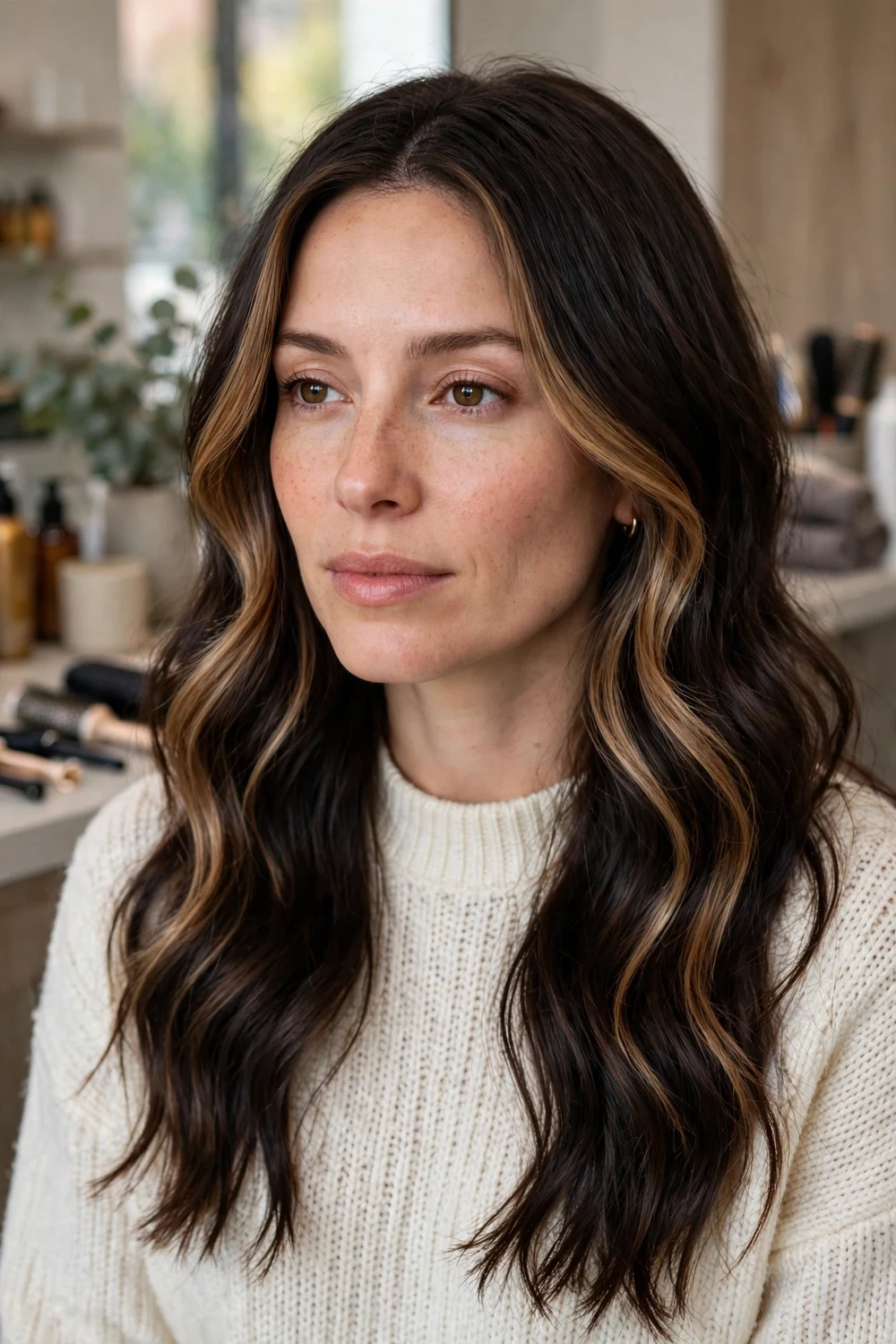
The soft caramel money piece is the standard front frame: two caramel sections at the hairline, lifted about two levels above a brown base and toned warm. On long waves the caramel sits right at the cheekbones, where the front wave bends toward the face. Warm and olive skin carry this shade with the least effort, and it works on bases from light brown to dark brown.
Because only the front is lightened, the appointment is shorter than a full balayage and the grow-out stays soft for eight to ten weeks. Caramel on dark bases drifts warm between visits, so a gloss at six weeks keeps the tone caramel rather than orange.
Try this: ask for the money piece two levels lighter than your base, no more, so the frame reads as light around your face rather than as two separate stripes.
Difficulty: Medium · Cost: $$ (salon)
2. Wide Golden Caramel Ribbons

This version widens the frame. Instead of fine strands, the colorist paints golden caramel in ribbons about a finger wide on each side of the part, running from the hairline down the full front length. The wider ribbon reads bolder at the same brightness, which suits long, thick waves that would swallow a finer frame.
The ribbons are hand-painted through the front layers only, with the mid-lengths at the back left dark for contrast. Warm skin tones get the most from the golden tone. Plan a toner refresh at eight weeks, since wide lightened sections show fade sooner than fine ones.
Try this: if your waves are thick, ask for two ribbons per side rather than one, so the frame still shows when your hair falls behind your shoulders.
Difficulty: Medium · Cost: $$ (salon)
3. Root-Diffused Caramel Ribbons
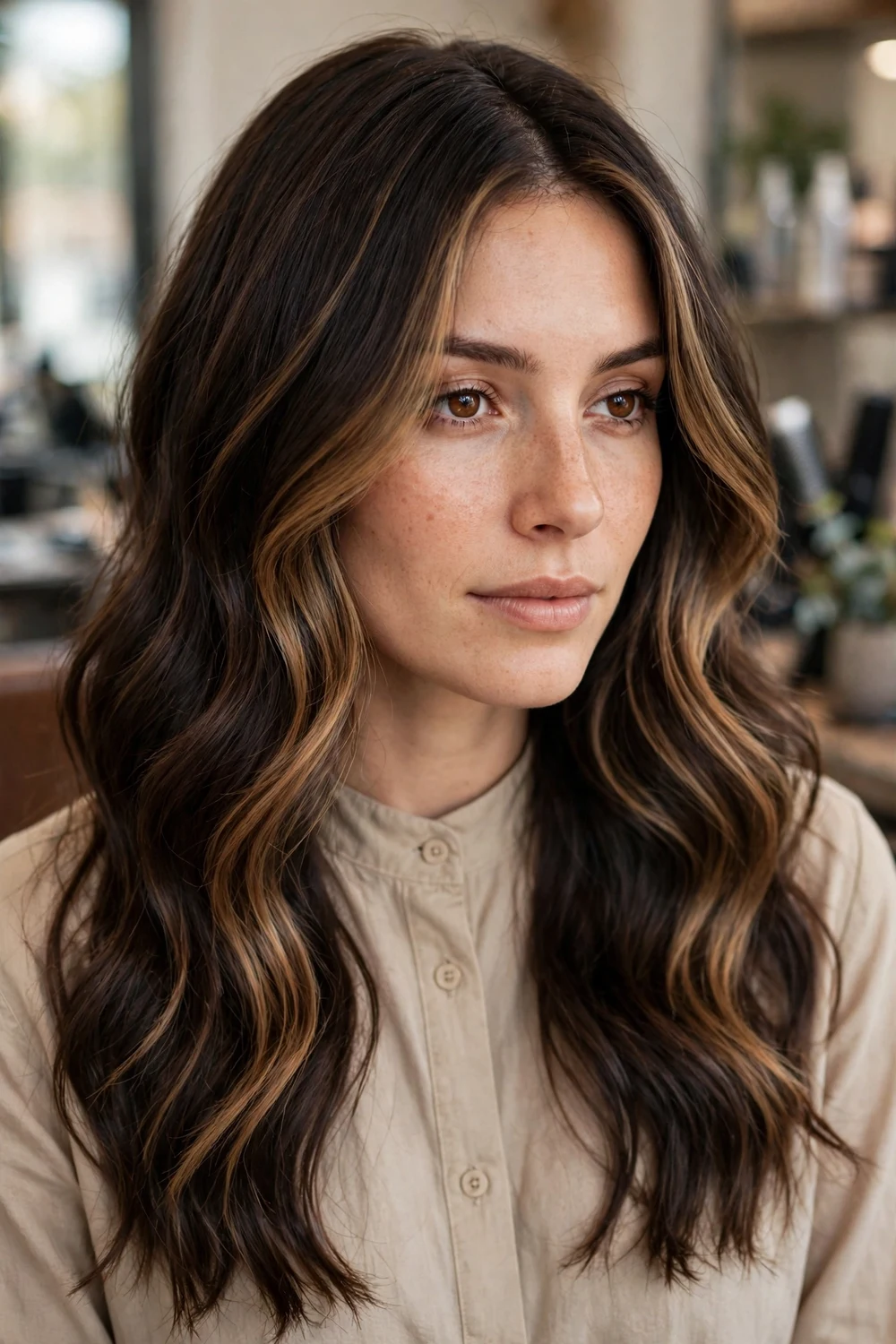
Root-diffused ribbons keep the top two to three inches of the front sections dark, then feather caramel in so the brightness builds toward the cheekbones and ends. The effect is a frame that looks grown in from day one. It suits anyone whose roots grow fast or who wants a salon gap of ten to twelve weeks.
The diffusion is done by painting the lightener in a swept, uneven top edge rather than a straight line. On long waves the dark root section also protects the finest hair at the hairline from the strongest lightener. Upkeep is a gloss only, since there is no hard regrowth line to correct.
Try this: ask your colorist to keep the diffused zone longer on the side you part most often, since that side shows regrowth first.
Difficulty: Medium · Cost: $$ (salon)
4. Honey Blonde Curtain Frame
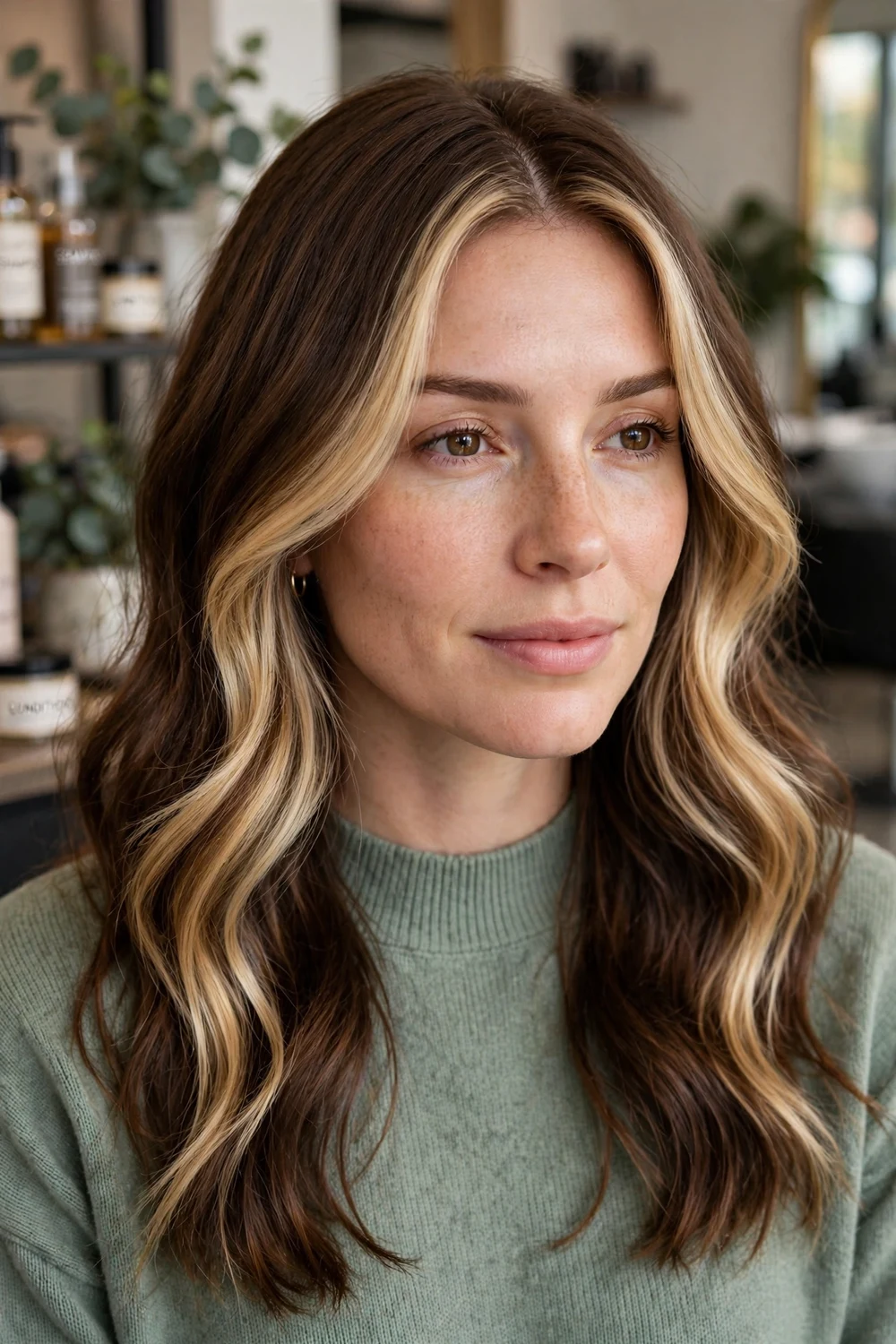
The curtain frame colors the curtain sections themselves: the two front panels that split at the part and sweep back past the cheekbones. Honey blonde keeps the panels warm and close to the base in tone, so the frame reads as sunlight on the front of the hair. It pairs well with long waves worn in a center part, where both panels stay on show.
This is a good first frame for light brown and dark blonde bases, which reach honey in one session with moderate lift. The curtain pieces sit against the face all day, so they fade from sun and washing faster than the back. A honey-toned gloss at six weeks restores the warmth.
Try this: have the curtain sections cut to end just below the cheekbone, so the lightest part of the frame lands at eye level when the waves fall.
Difficulty: Medium · Cost: $$ (salon)
5. Peachy Caramel Frame
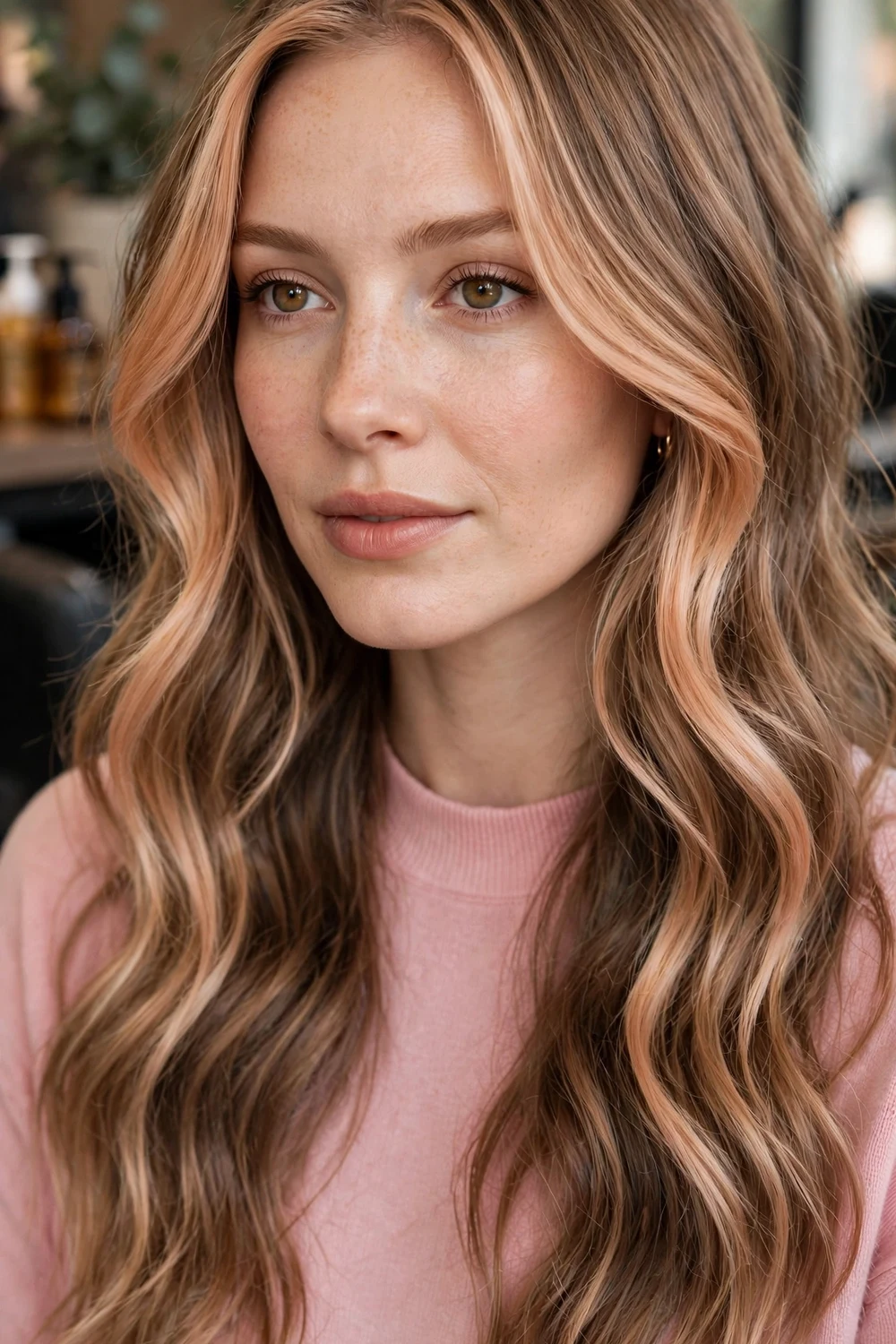
A peachy caramel frame adds a peach tone over caramel front pieces, which gives warm skin a lift that plain gold does not. The peach sits in the toner rather than in extra lightening, so the front sections only need a moderate lift before the tone goes on. It suits fair to medium warm skin and light brown bases best.
Peach tones are the fastest to rinse out of the warm family, so treat this as a gloss-led look. The frame itself can be refreshed with toner alone at four to six weeks, without re-lightening. Between visits, a peach or caramel color-depositing conditioner once a week holds the tone.
Try this: book the first round as a peach gloss over a standard caramel frame, so you can judge the tone against your skin before it becomes part of your regular formula.
Difficulty: Low to Medium · Cost: $$ (salon)
6. Graduated Toffee Frame
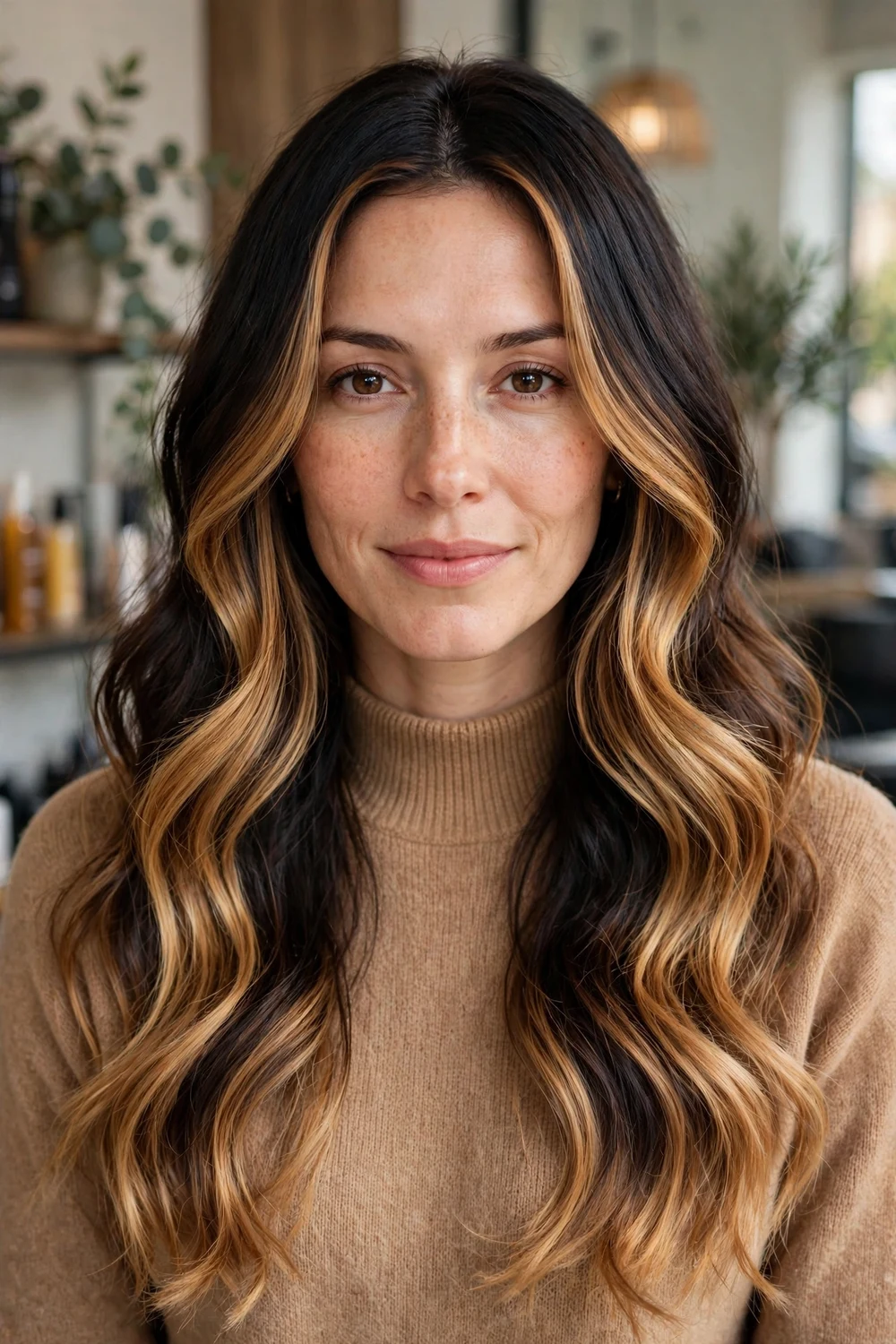
A graduated frame changes width as it travels. The front sections start narrow and close to the base shade at the root, then widen into toffee ribbons from the cheekbone down, gaining brightness toward the ends. On long waves this puts the widest, lightest part of the frame at jaw level, which suits round and heart-shaped faces.
The graduation also spreads the lightening work over stronger hair. The fine hair at the hairline gets the least lift, while the sturdier mid-lengths take the brightest toffee. Grow-out is soft at the root by design, and the ends can be trimmed without losing the whole frame.
Try this: ask for the widening to start at your cheekbone, not above it, so the top of the frame stays narrow and the brightness pools where your waves are fullest.
Difficulty: Medium · Cost: $$ (salon)
7. Beige Blonde Money Piece
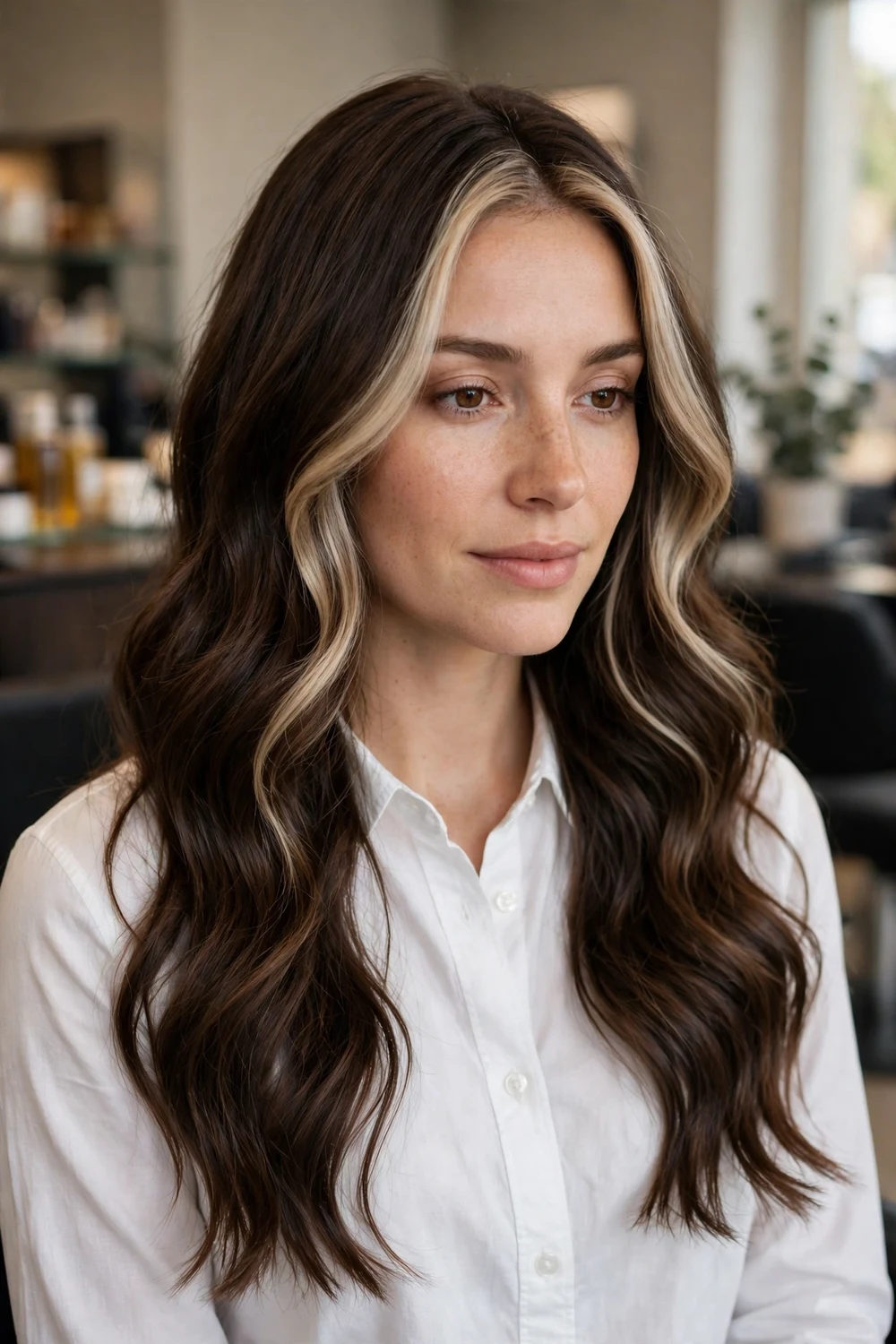
Beige blonde is the neutral money piece: brighter than caramel, toned to sit between gold and ash so it flatters both warm and cool skin. The front sections go heavy at the hairline while the rest of the head stays brunette, which keeps the contrast focused on the face. It is the most requested frame shade for medium brown bases.
Neutral tones need a balanced lift. If the front pieces lift too warm, the beige toner turns muddy within weeks, so most colorists foil the frame for an even result. A beige gloss at six weeks and purple shampoo no more than every other week keep the tone clean.
Try this: bring a photo of beige blonde in daylight rather than salon light, since beige shifts the most of any frame shade between the two.
Difficulty: Medium · Cost: $$ (salon)
8. Bright Champagne Money Piece
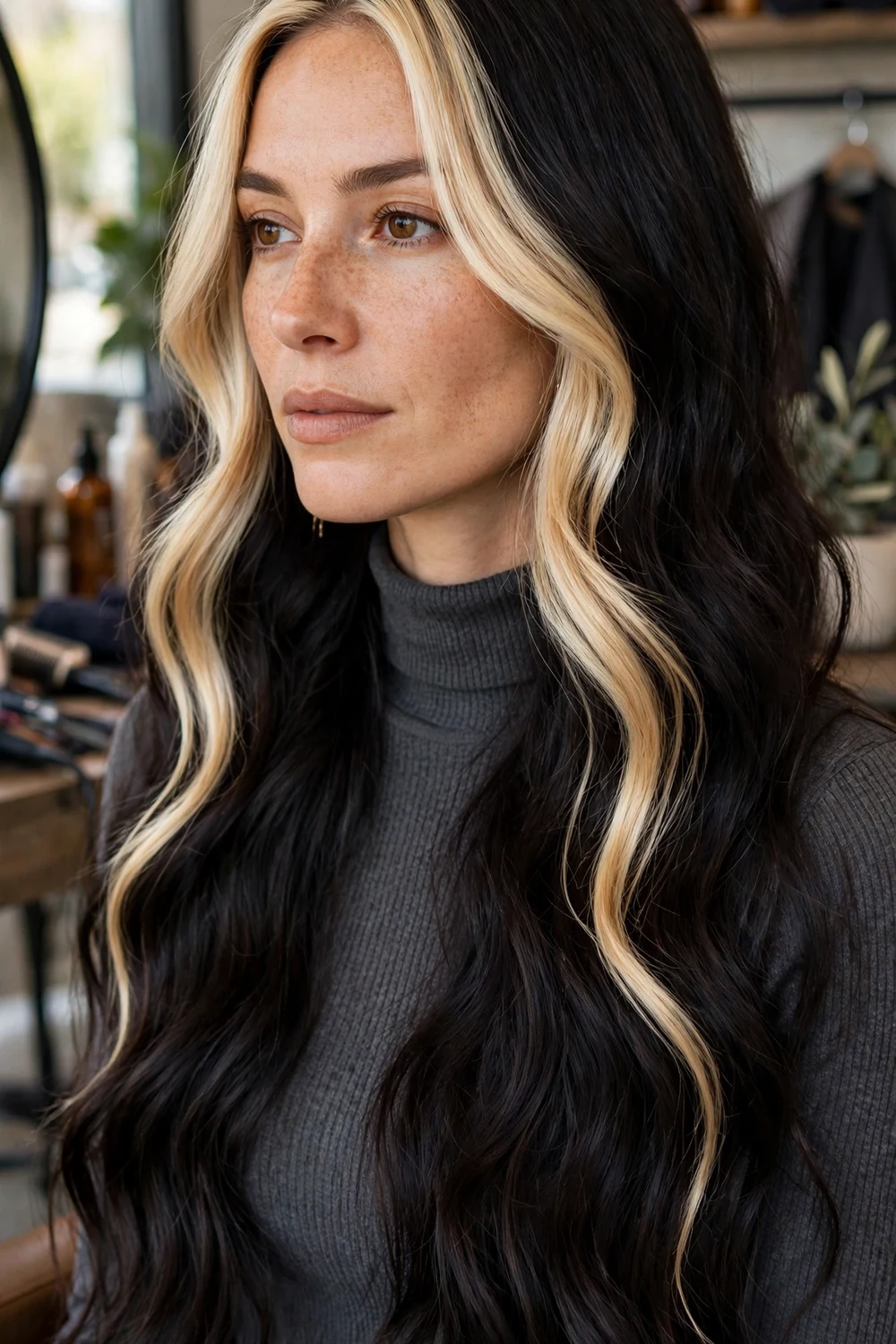
The champagne money piece pushes the front panels three to four levels above the base and tones them pale gold. Against a dark brunette base the frame reads clearly from across a room, and on long waves the bright panels alternate with dark lengths as the hair moves. Fair and medium skin carry the contrast best.
This level of lift on the finest hair of the head is the main caution. The front sections are thinner and more fragile than the back, so a bond-building treatment during the service is standard practice. Refresh the toner at five to six weeks, since pale gold fades toward yellow first at the frame.
Try this: ask for the champagne kept to the front panels only, with the layer behind left one level darker, so the brightness has depth behind it.
Difficulty: Medium to High · Cost: $$$ (salon)
9. Platinum Money Piece

A platinum money piece takes the two front sections to the palest blonde a base can reach, toned cool and clean. The rest of the head stays brown, so the platinum works as a frame rather than a full color change. Dark blonde and light brown bases reach true platinum in one session; dark brown bases may need two.
High lift at the hairline is the highest-upkeep frame on this list. Roots show against platinum within four weeks, and the lightened front pieces need weekly deep conditioning to hold their strength. Cool and neutral skin tones suit the icy tone; warm skin can find it harsh at full strength.
Try this: start with platinum on narrower sections than you think you want. The shade is bright enough that a slim panel reads wide, and you can widen it at the next visit.
Difficulty: High · Cost: $$$ (salon)
10. Icy White-Blonde Halo Frame
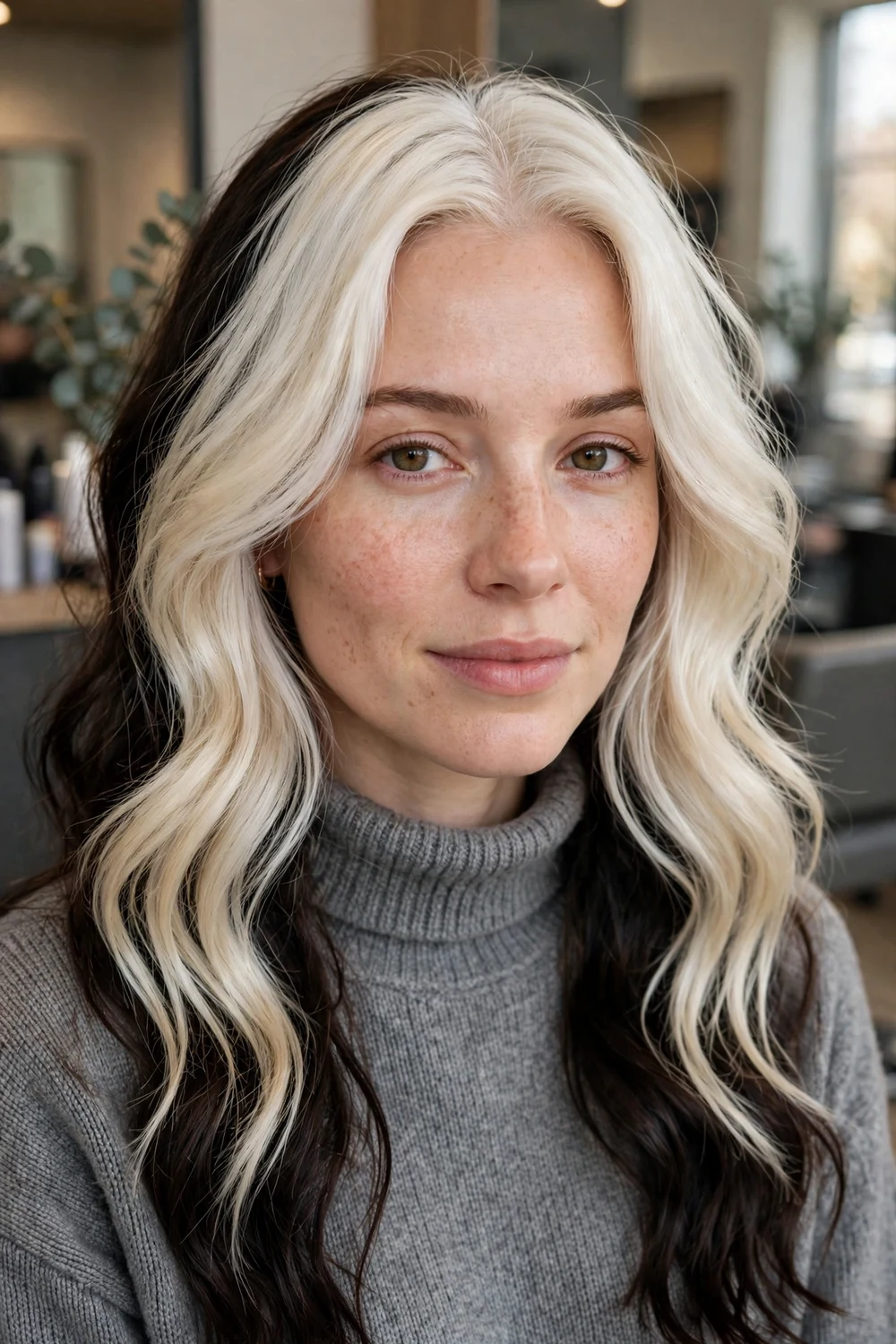
The halo frame widens the platinum idea around the whole face. Front sections and the first set of front layers are lifted to icy white-blonde, forming a continuous light border from temple to jaw on both sides, while the crown and back stay dark. On long waves the halo shows in every parting and every side view.
More lightened hair means more upkeep than a two-panel money piece: toning every four to five weeks, purple shampoo on the frame only, and heat kept low on the front layers. This frame suits cool skin and anyone who already wears silver or grey tones in the rest of their color.
Try this: ask for the halo to follow your front layers rather than a fixed width, so it still frames your face after your next trim changes the layer lengths.
Difficulty: High · Cost: $$$ (salon)
11. Buttery Blonde Front Layers
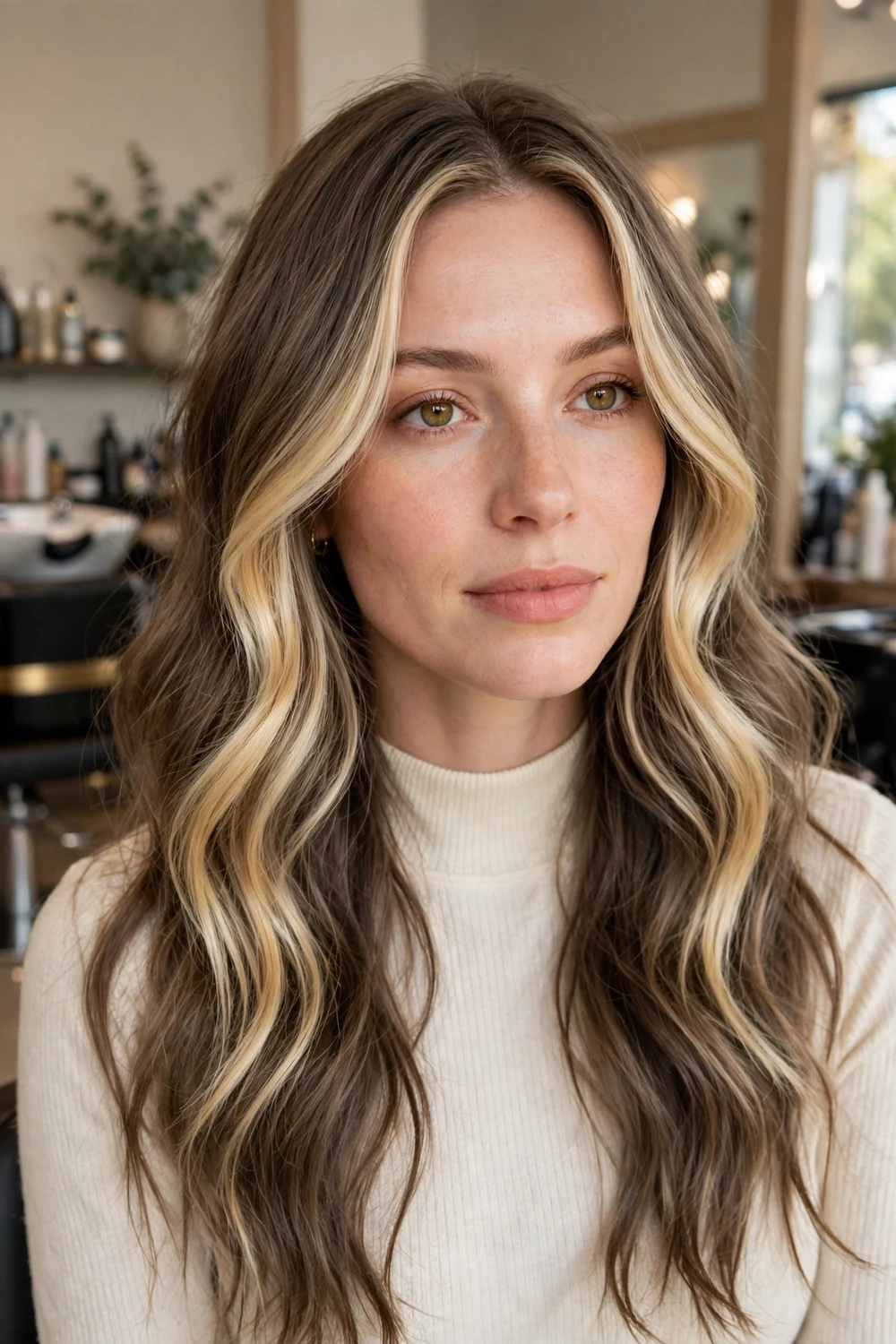
Buttery blonde front layers spread the frame across the first two layers on each side instead of a single panel. The tones alternate between butter blonde and a lighter ashy brown, so the frame has movement built into it. Long, thick waves carry this wider frame well because each layer catches the light at a different point in the wave.
The layered placement grows out in steps rather than as one line, which stretches the refresh to eight weeks. Warm-neutral skin suits the buttery tone, and the ashy pieces keep it from reading too yellow against cooler makeup.
Try this: if your front layers start at the chin, ask for the brightest butter pieces on the shortest layer, so the light sits at cheek level where it does the most work.
Difficulty: Medium · Cost: $$ (salon)
12. Golden Frame on Chestnut Waves

A golden frame on a chestnut base keeps both colors in the same warm family, with the front sections lifted to a clear gold that is two to three levels above the base. The match in undertone makes this one of the most forgiving frames as it fades, since gold over chestnut drifts softer rather than brassy. Neutral and warm skin tones suit it.
Chestnut bases lift evenly, so the frame is usually a single session with hand-painted or foiled front sections. Upkeep is a gold gloss at six to eight weeks. The shades in the autumn hair colors roundup show how this frame pairs with the deeper bases that come into rotation in the colder months.
Try this: ask for a clear gloss over the whole head at the frame appointment, so the chestnut lengths shine at the same level as the new golden front.
Difficulty: Medium · Cost: $$ (salon)
13. Bronde Contouring Frame
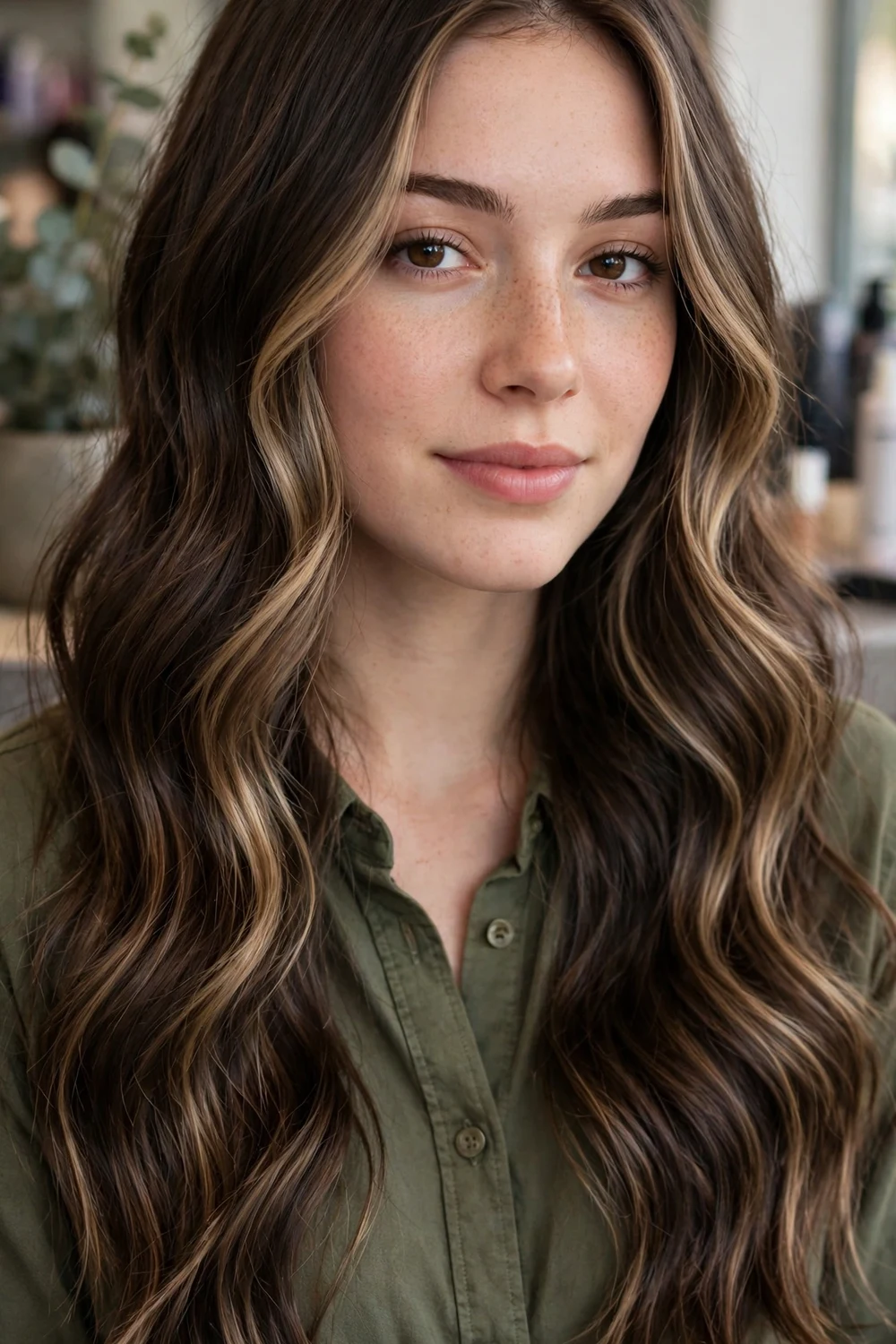
A bronde contouring frame places a brown-blonde mix at the front, using lighter pieces at the cheekbones and slightly deeper pieces at the jaw to shape how the face reads. The placement follows contour logic: brightness where you want width, depth where you want narrowing. On long waves the effect is subtle in person and clear in photos.
Because bronde sits between blonde and brunette, it suits almost every undertone and needs only a moderate lift on brown bases. The contour placement has to be mapped to your face at the consultation, so bring your usual parting and wear your hair down as you normally do.
Try this: ask your colorist to place the brightest piece at the point of your cheekbone and check the placement in the mirror before the toner goes on.
Difficulty: Medium · Cost: $$ (salon)
14. Ash Blonde Front Ribbons
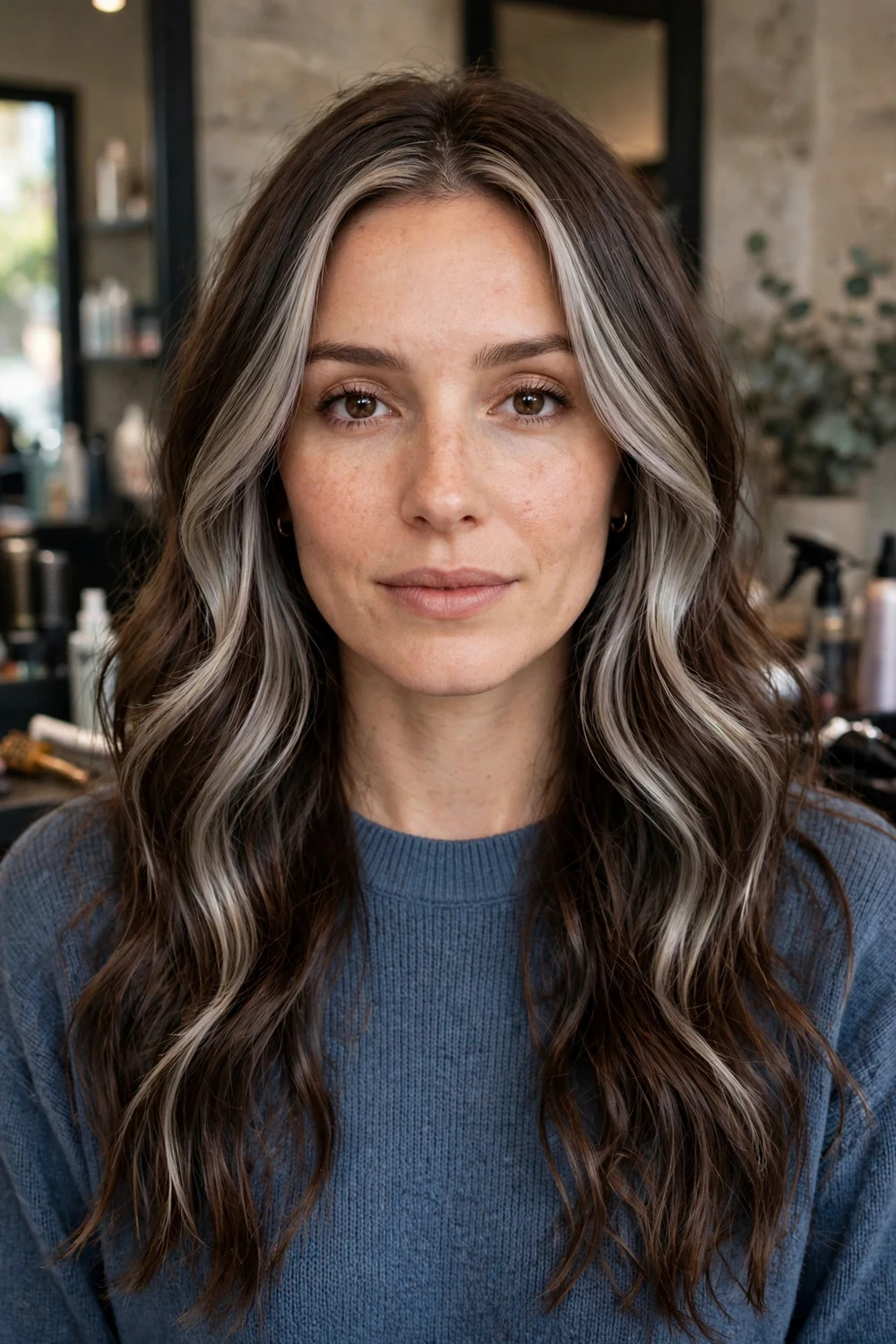
Ash blonde front ribbons cool the frame down. The front sections are lifted and toned to a smoky ash that sits against a brunette base without any gold in it. On long waves styled loose, the ash ribbons read almost grey in soft light and stay clearly blonde in bright light. Cool skin tones carry this family best.
Ash is a toner-led shade, and the toner is the part that fades. Expect the ribbons to warm up at four to five weeks and need a re-tone, while the lightening underneath lasts until it grows out. Purple shampoo once a week on the front sections only slows the warm-up.
Try this: ask for the ash toned slightly deeper than your target shade. Ash lightens visibly in the first two weeks of washing, and starting deeper lands you on tone for longer.
Difficulty: Medium · Cost: $$ (salon)
15. Mushroom Ash Frame
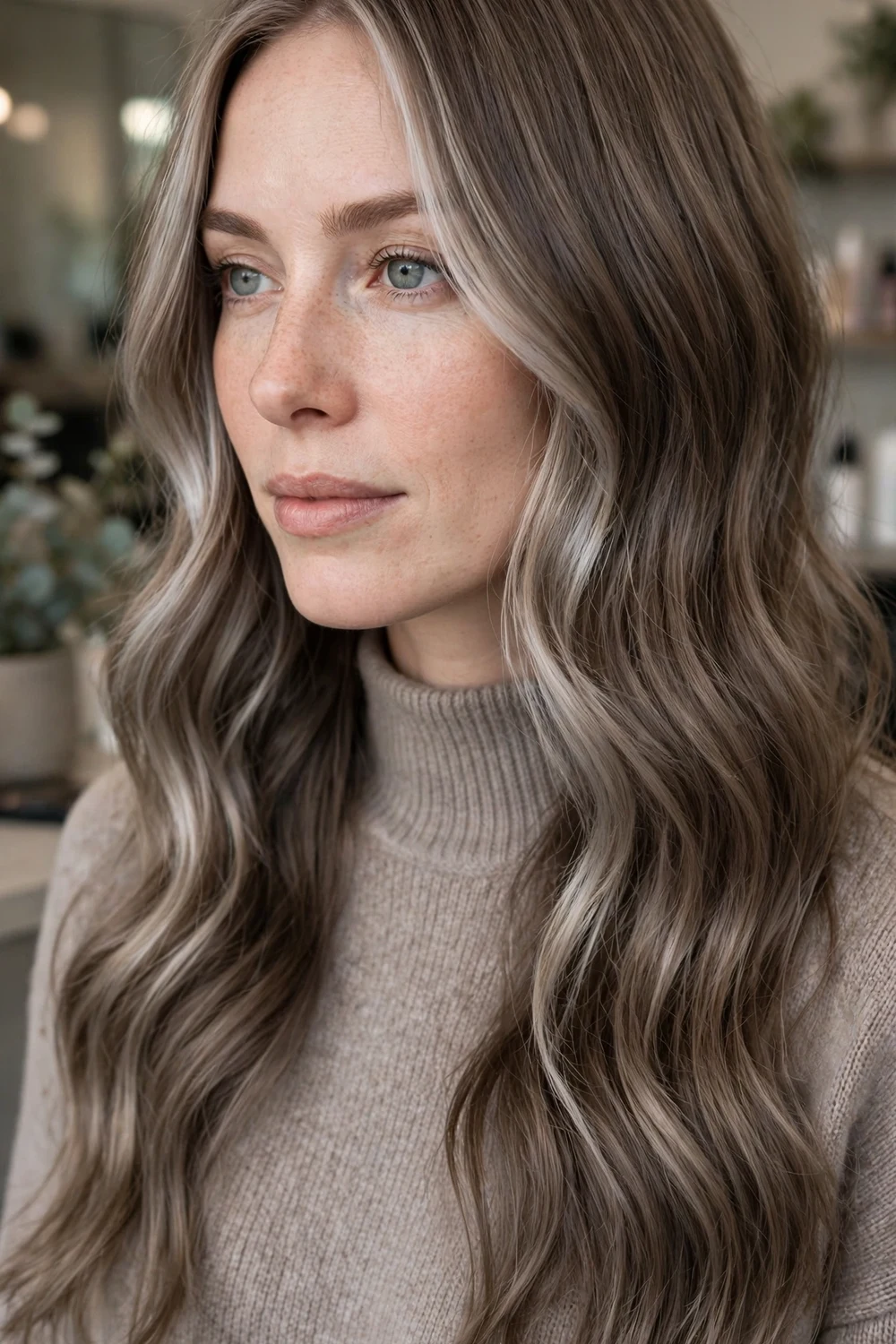
The mushroom ash frame pairs a muted taupe-brown base with a brighter ash frame, so the front pieces brighten the face while staying inside the same cool, muted family. The contrast is lower than ash on a warm brunette, which makes this the quietest of the cool frames. It suits cool and neutral skin and bases that already lean ash.
Muted tones depend on the toner holding its grey-brown balance. Hard water and frequent washing pull the frame warm faster than any other cool shade, so a chelating wash once a month and a mushroom gloss at five weeks keep the family intact.
Try this: if your base is warm brown now, ask for the base glossed mushroom at the same visit. A warm base under an ash frame makes the frame read grey instead of bright.
Difficulty: Medium · Cost: $$ (salon)
16. Smoky Sandy Frame

The smoky sandy frame sits between the warm and cool families: sandy blonde with the gold toned down and a light smoke over it, placed on an iced brunette base. It is the cool frame for anyone who found full ash too grey. The front pieces brighten the face and keep a sandy warmth at the core that flatters a wide range of skin tones.
This balance is why the shade holds well in practice. As the smoky toner fades, the sandy base underneath is still a wearable color, so the frame ages gracefully between five-week toner visits. Long waves show the tone shift clearly as the front pieces move between light and shade.
Try this: ask for the frame one level lighter than the sandy pieces you may already have through the lengths, so the front still leads the color.
Difficulty: Medium · Cost: $$ (salon)
17. Barely-There Sandy Frame
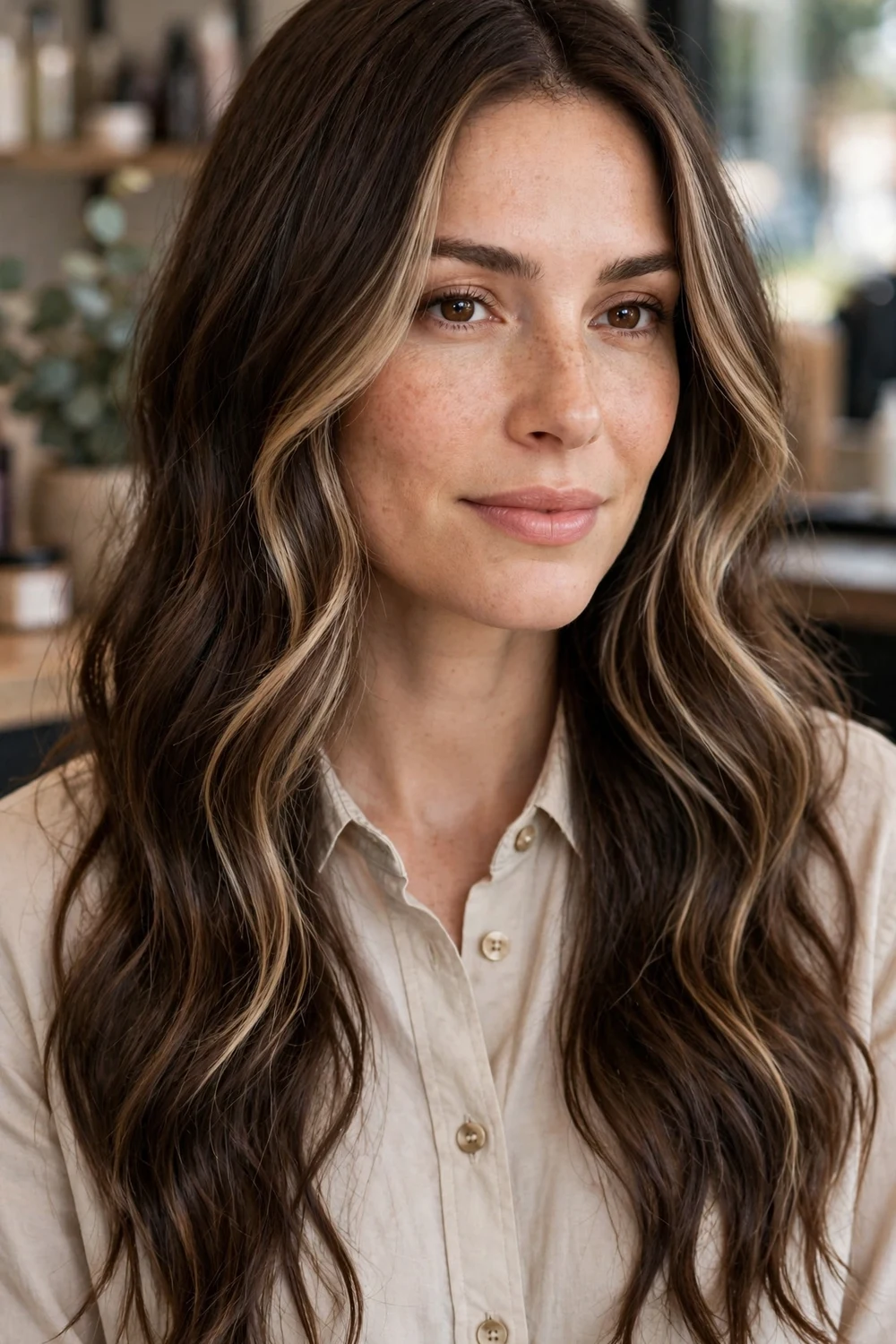
The barely-there frame lifts the front sections only one to two levels and tones them sandy, so the brightness shows as a glow around the face rather than as visible highlights. It is the frame for anyone who has never colored the front of their hair, or who works in a setting where a clear money piece would read as too much.
The low lift is gentle on the fine hair at the hairline and grows out with almost no line at all. Most wearers refresh it two or three times a year. It suits every base from dark blonde to dark brown, since the lift is relative to whatever you start with.
Try this: judge this frame outdoors or by a window. At one to two levels, indoor salon mirrors understate it, and many clients ask for more lift than they actually want.
Difficulty: Low to Medium · Cost: $ (salon)
18. Tiny Babylight Frame

A babylight frame weaves the front sections in very fine slices, so the lightened hair is spread as dozens of thin strands from the hairline back through the front layers. On a dark chocolate base the effect is a flicker of light around the face when the waves move, with no single strand wide enough to read as a stripe.
Fine weaving takes longer in the chair than painting, even though the area is small, because each slice is foiled separately. The payoff is the softest grow-out of any frame here and an easy refresh: the same fine sections can be re-woven at eight to ten weeks without overlapping much lightened hair.
Try this: ask for the babylights concentrated in the first inch at the hairline and spaced wider behind it, so the brightness peaks right at the face.
Difficulty: Low to Medium · Cost: $$ (salon)
19. Chunky Creamy Frame
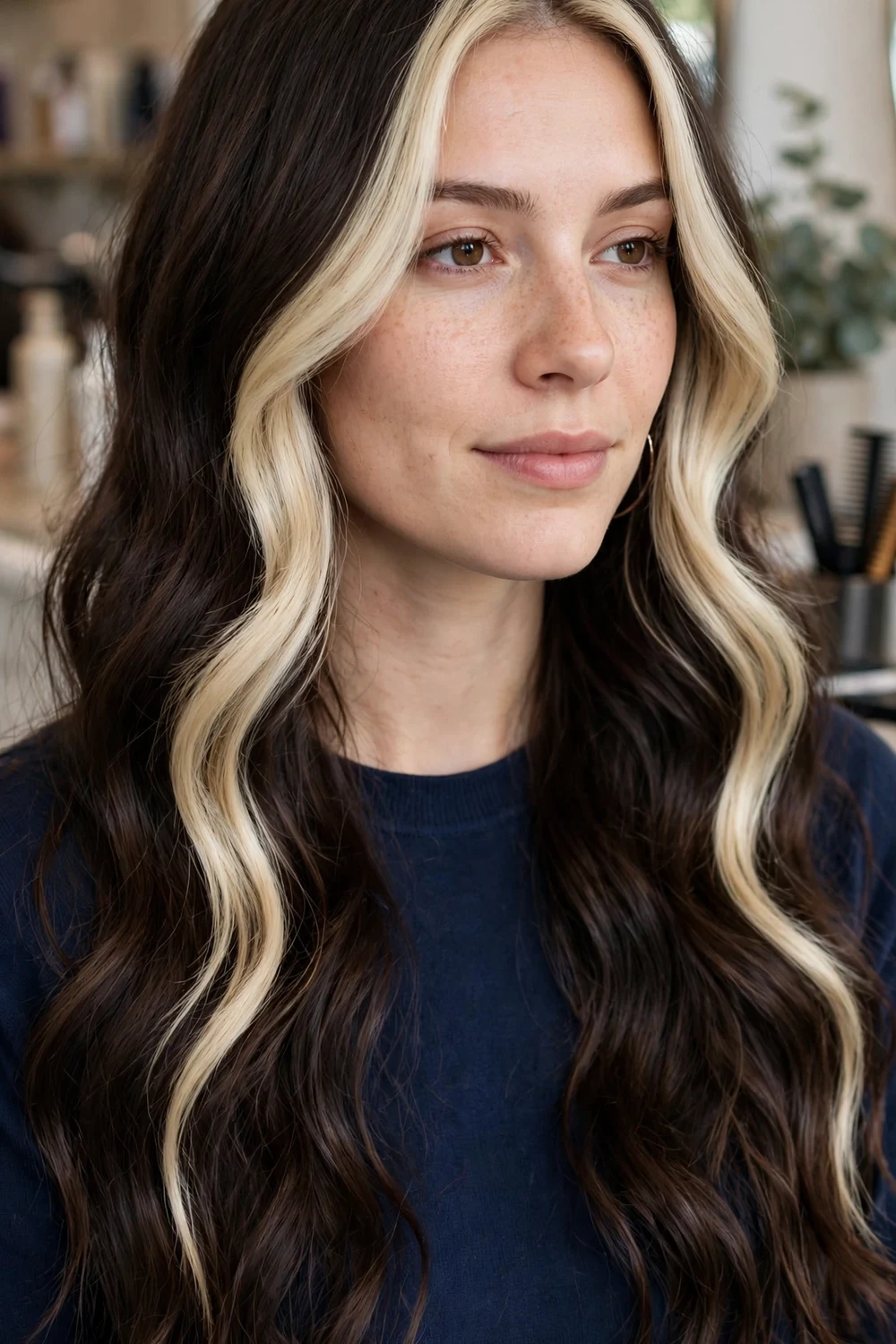
The chunky creamy frame goes wide on purpose: front sections of two to three centimeters in a creamy blonde that holds its width from root to end. Against dark brown waves the wide sections read as a clear frame in every photo. The creamy tone, which sits warm of neutral, keeps wide sections from reading harsh the way an ash or platinum panel of the same width can.
Width at this size needs the right mix of shades inside the panel. A single flat tone looks painted on, so most colorists run two creamy levels through each section. Refresh lands at six weeks, when the root line on a wide panel starts to show as a block.
Try this: wear your hair in your usual part for the consultation. A chunky frame cut for a center part sits unevenly if you later switch to a side part.
Difficulty: Medium · Cost: $$ (salon)
20. High-Contrast Frame on Black Waves
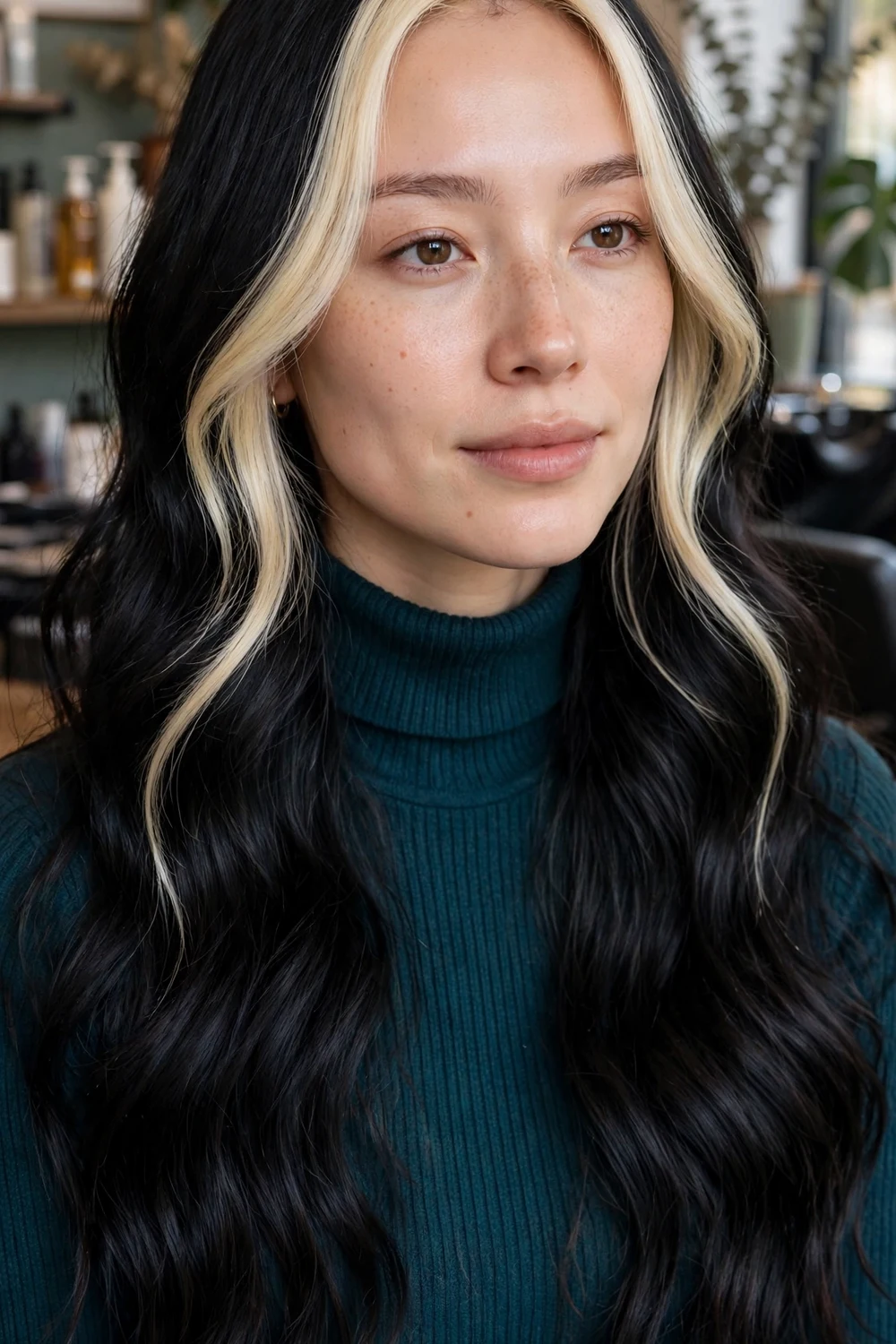
On a black base, a frame lifted to pale blonde gives the strongest contrast available in this technique. The front panels start an inch or so below the root rather than at the hairline, which puts the brightest point at eye level and softens the root line as it grows. Long black waves make the panels swing in and out of the dark lengths, so the contrast keeps moving.
Lifting black hair to pale blonde at the front usually takes the longest single session on this list, and the panels need toning at four to five weeks to stop them settling yellow. The reward is a frame that needs no other color anywhere on the head to hold its effect.
Try this: ask for a strand test on one front section first. Black bases vary widely in how fast they lift, and the test sets the session length and the final tone.
Difficulty: Medium to High · Cost: $$$ (salon)
21. Copper Front Ribbons

Copper front ribbons run a warm copper through the front layers over a brown base, so the face is framed in the red family while the rest of the head stays brunette. The copper is placed as ribbons rather than panels, which lets brown show between them and keeps the frame wearable for a first step into red tones.
Copper pigment fades faster than blonde toner, so the upkeep here is color care rather than re-lightening: a copper color-depositing conditioner once a week and a copper gloss at five weeks. Warm skin tones suit it best, and green and hazel eyes stand out against the copper at the frame.
Try this: pair the copper frame with a clear gloss on the brunette lengths at the same visit, so the back of the hair keeps pace with the shine of the new front.
Difficulty: Medium · Cost: $$ (salon)
22. Copper Chocolate Frame
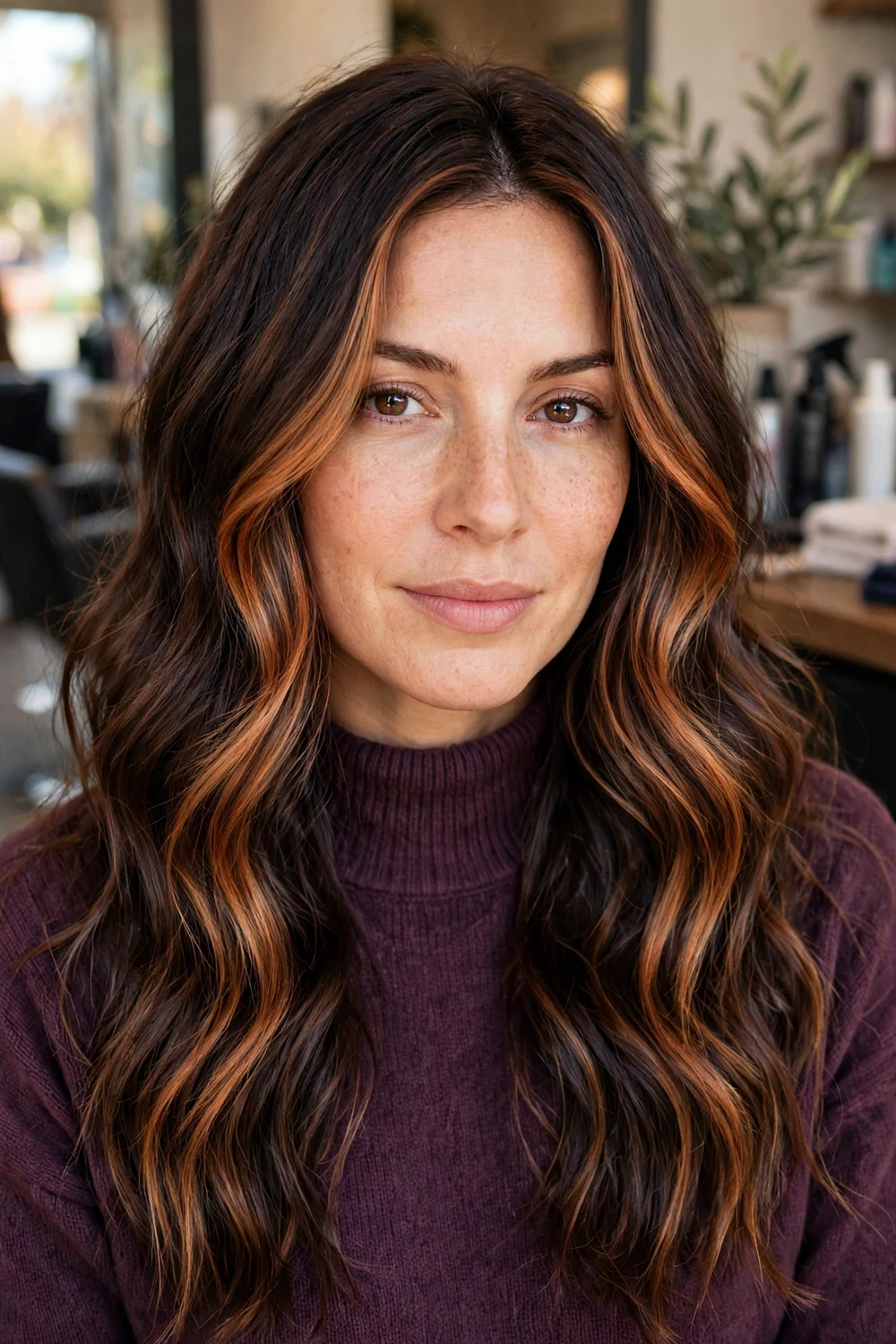
The copper chocolate frame keeps a deep chocolate base and warms only the front with caramel-copper highlights, two levels above the base. The result is a frame that reads as warmth and shine around the face in indoor light and shows its copper clearly outdoors. It suits medium and deep warm skin, and it is the softest entry into the copper family on this list.
Because the lift is modest and the copper sits over a deep base, many heads reach this frame with a gloss-led service after a light front lift. Upkeep is low for a red-family shade: a warm gloss at six to eight weeks rebuilds both the copper and the chocolate depth.
Try this: if you are testing copper for the first time, start with this depth. A deeper frame can be brightened at the next visit, while an over-bright copper frame takes months to tone back down.
Difficulty: Medium · Cost: $$ (salon)
23. Rose Gold Low Frame
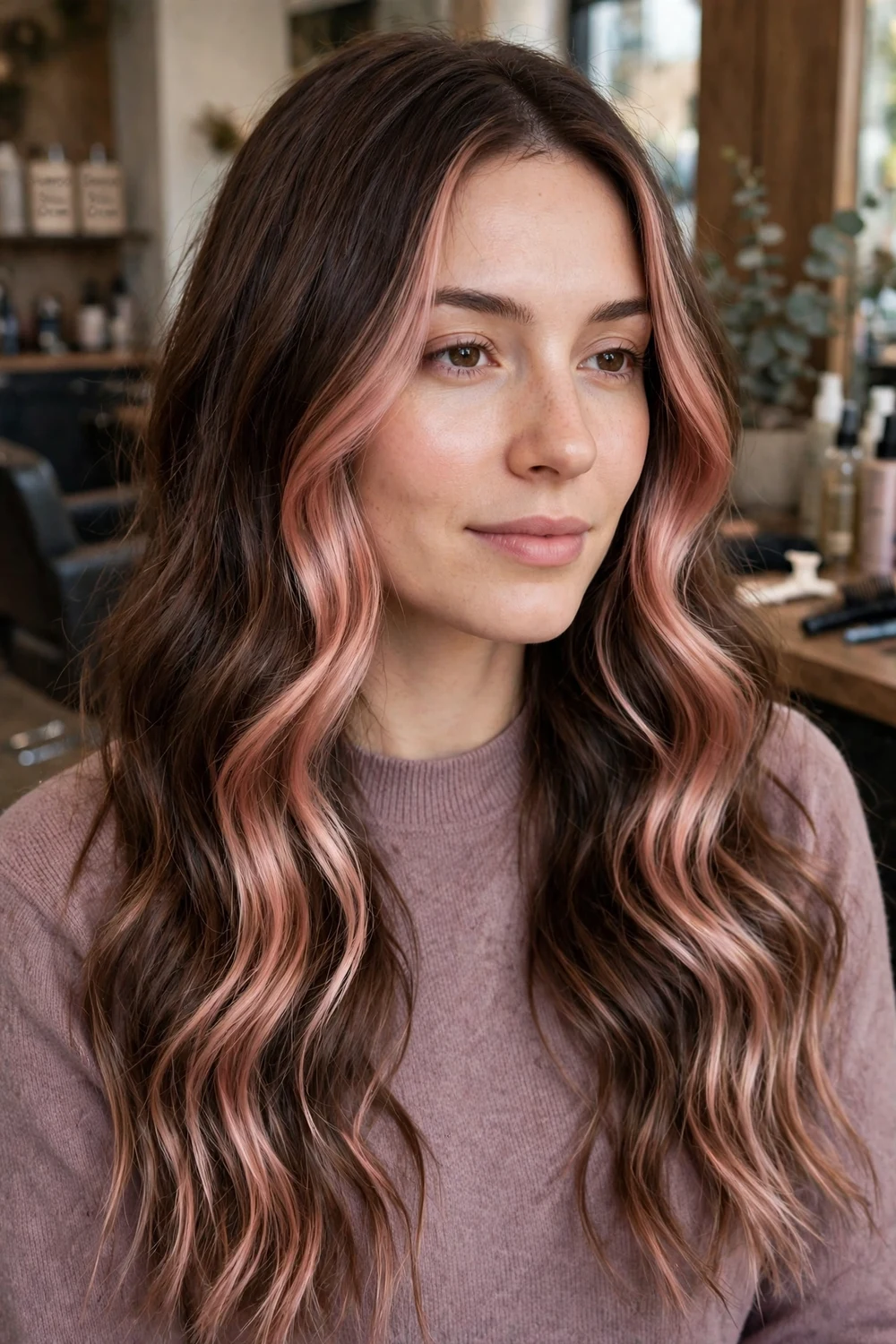
The rose gold frame starts low. The front sections stay at base color from the root to just below the cheekbones, then shift into rose gold for the remaining length. A low start elongates the read of the face and keeps pink tones away from the skin at the hairline, which is where rose shades can clash with redness in the complexion.
Rose gold is a toner over a blonde lift, so the front sections are lightened first and toned pink-gold. The pink half fades within four to six weeks and can be re-toned without new lightener. Fair and neutral skin tones suit the shade, and long waves show the low color shift each time the front pieces swing forward.
Try this: ask for the color change to begin at the same point on both sides, checked with your head level. A low frame that starts unevenly reads as a mistake rather than a placement choice.
Difficulty: Medium · Cost: $$ (salon)
24. Strawberry Blonde Frame Melt
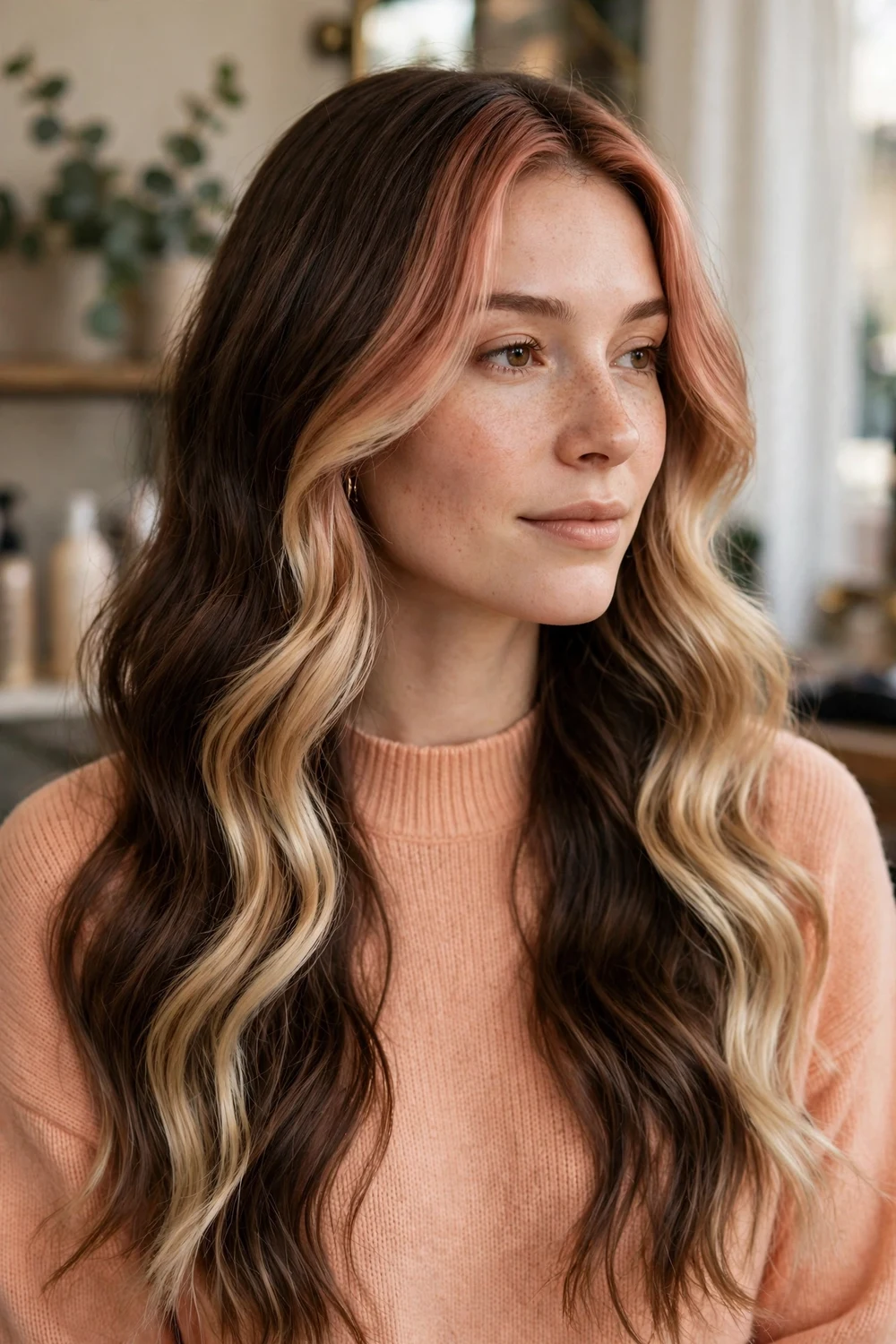
A frame melt runs two tones down the front sections: strawberry at the top of the frame melting into blonde at the ends, over a brunette base. The melt gives the face both warmth near the skin and brightness at the tips, and on long waves the two tones separate and remix as the hair moves. Fair warm skin suits the strawberry end of the blend.
Melts are built with a root tone and an end tone applied in one sitting, then blended while wet. The strawberry tone fades first, so the frame drifts blonder over six weeks, which most wearers treat as a gradual change rather than a fault. A strawberry gloss at the halfway point restores the original balance.
Try this: ask for the melt point to sit at cheekbone height. Higher melts put strawberry against the forehead, and lower melts lose the warmth where the face needs it.
Difficulty: Medium · Cost: $$ (salon)
25. Asymmetric Side-Part Frame

Most frames are symmetrical, and most wearers part their hair on one side. The asymmetric frame accepts that: the heavy side of a side part carries a brighter, wider frame, while the light side carries a narrower frame one level deeper. Worn in the part it was colored for, the brightness lands where the hair actually falls across the face.
This placement only works if you part your hair the same way most days, so it suits committed side-part wearers. The two sides are refreshed on the same cycle, and your colorist should record both formulas, since the sides are toned differently on purpose. Long waves in a deep side part show the contrast between the two sides at their clearest.
Try this: arrive at the appointment with your hair parted exactly as you wear it, unwashed and dry, so the heavy side can be marked before any sectioning begins.
Difficulty: Medium · Cost: $$ (salon)
26. Silver Grey-Blending Frame

Grey usually shows first and strongest at the front hairline. A silver grey-blending frame turns that pattern into the design: the front sections are lifted and toned silver-blonde, so new grey grows into a section that is already light and cool rather than showing as a line against dark color. On long waves, the silver front also brightens the face without any color through the back.
This is a blending service rather than a coverage service. The back and crown keep their natural mix, and the frame is re-toned at six to eight weeks as the silver warms. It suits cool skin tones and anyone moving away from full root color who wants the front, where grey is most visible, handled first.
Try this: ask for blending at the frame before you change anything else. If the front blend satisfies you for two cycles, you may not need the wider grey work you were planning.
Difficulty: Low to Medium · Cost: $$ (salon)
Frequently Asked Questions
What is face framing balayage?
Face framing balayage is a hand-painted lightening service that concentrates color on the front sections of the hair: the hairline pieces, front layers, and curtain sections. The back and underneath lengths stay at or near your base color. On long wavy hair, the light front pieces sit against the face and brighten it, while the untouched lengths keep the service shorter and the grow-out soft.
How is a money piece different from face framing balayage?
A money piece is the boldest part of a face frame: the two front sections at the hairline, usually lifted brighter than everything around them. Face framing balayage is the wider service. It can include the money piece plus the front layers and curtain sections behind it, blended in brightness so the whole front of the hair frames the face. Every money piece is a face frame, but a face frame can also be soft, fine, and low in contrast.
How long does face framing balayage last on long wavy hair?
The lightening itself lasts until it grows out or is cut off. What changes is the toner, which fades over four to eight weeks depending on the shade family: ash and rose tones fade fastest, caramel and honey hold longer. Root-diffused and low-start frames hide regrowth the longest and commonly go ten to twelve weeks between visits. Root-level platinum and high-contrast frames show regrowth sooner, at about four to six weeks.
Does face framing balayage damage the front of the hair?
The front sections are the finest hair on the head, so they need a gentler lift than the back would. A colorist manages this by lifting the frame in one controlled session, using a bond-building additive, and keeping the brightest shades for hair that tests strong enough on a strand test. The advantage of a frame service is the small area involved: only the front sections carry lightener, and the rest of your long hair stays unprocessed.
Which face frame shade suits dark wavy hair?
Dark wavy hair carries warm frames with the least lift: soft caramel, toffee, honey, and copper chocolate all read clearly on a dark base at two levels of lift. For a cooler result, smoky sandy and ash ribbons work, but they need a cleaner lift and more toning upkeep. The highest contrast option is a pale blonde frame on black or dark brown hair, which suits anyone who wants the frame to be the main feature of the color.
Final Thoughts
A face frame is the smallest color service that changes how long wavy hair reads, and this list shows how much range fits inside the front sections alone: shade from sandy to silver, width from babylight strands to full panels, and starts from the root to below the cheekbone. Pick the brightness in levels first, then the width, and book the frame before you commit to any larger color, since many readers find the front was the only part they wanted changed. When the seasons turn, the same frame can be re-toned deeper or brighter to sit with the shades in the winter hair color ideas roundup, with no change to the placement you already wear.

