


An inverted bob is cut shorter and stacked at the back, with longer pieces falling forward toward the jaw. For women over 50, that shape answers common concerns in a practical way: the stacked back adds lift where hair thins at the crown, the longer front keeps softness around the face, and the whole cut stays short enough for easy upkeep.
Grey blending also works well with this shape. Silver strands mix through the stacked layers without a hard line, and balayage or lowlights can be placed on the longer front pieces to soften regrowth. The 24 ideas below cover fine, thick, curly, wavy and straight hair, plus options for glasses wearers and low upkeep routines. If you are comparing shapes first, our guide to bob haircuts for women over 50 gives the wider picture.
Key Takeaways
- Stacked layers at the back build crown lift for fine or thinning hair.
- Longer front pieces frame the jaw and soften the overall line.
- Silver, salt and pepper, balayage and copper all blend well with this shape.
- Most versions dry in 5 to 15 minutes and need a trim every six to eight weeks.
1. Sleek Classic Inverted Bob with Graduated Back

The back is graduated in short, blended steps while the front stays longer and skims the jaw. Worn smooth, the diagonal line gives the cut a clean profile from every angle.
It suits straight to slightly wavy hair well. The blunt front edge keeps fine ends looking thicker, and a single pass with a flat iron bends the front pieces slightly under.
Try this: Blow dry the back first, lifting at the roots with a small round brush, then smooth the front panels under.
Difficulty: Low | Cost: $ | Time: 10 mins
2. Stacked Crown-Lift Inverted Bob for Fine Hair
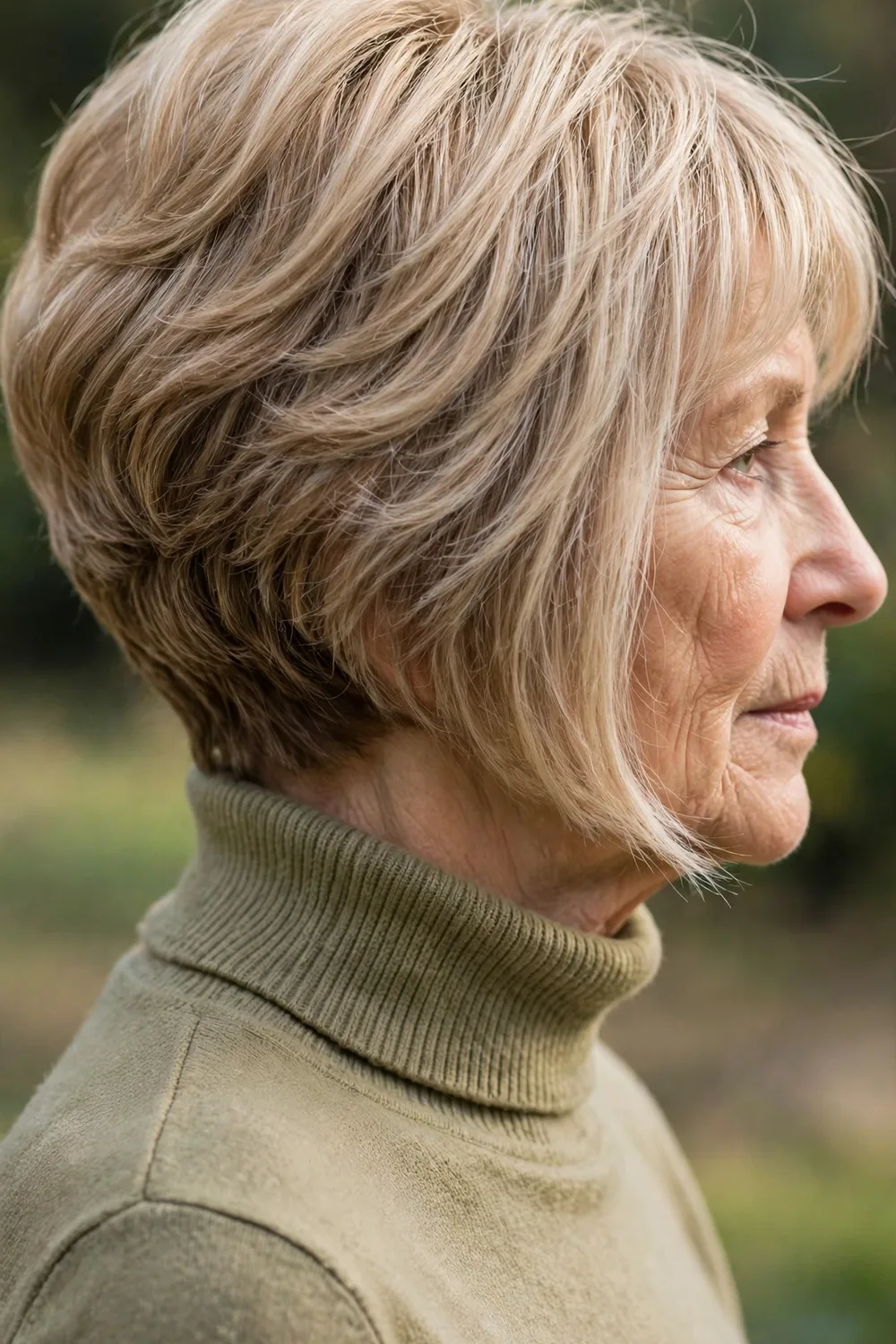
Short layers stack at the back and build height at the crown where fine hair often sits flat. The lift comes from the cut itself, so the shape holds through the day.
The front drops to chin length and balances the lifted back. This is a strong choice if your crown needs support but you want to keep length around the face.
Try this: Apply mousse at the crown before drying and lift roots upward with your fingers as the air hits them.
Difficulty: Medium | Cost: $ | Time: 15 mins
3. Side-Swept Fringe Inverted Bob
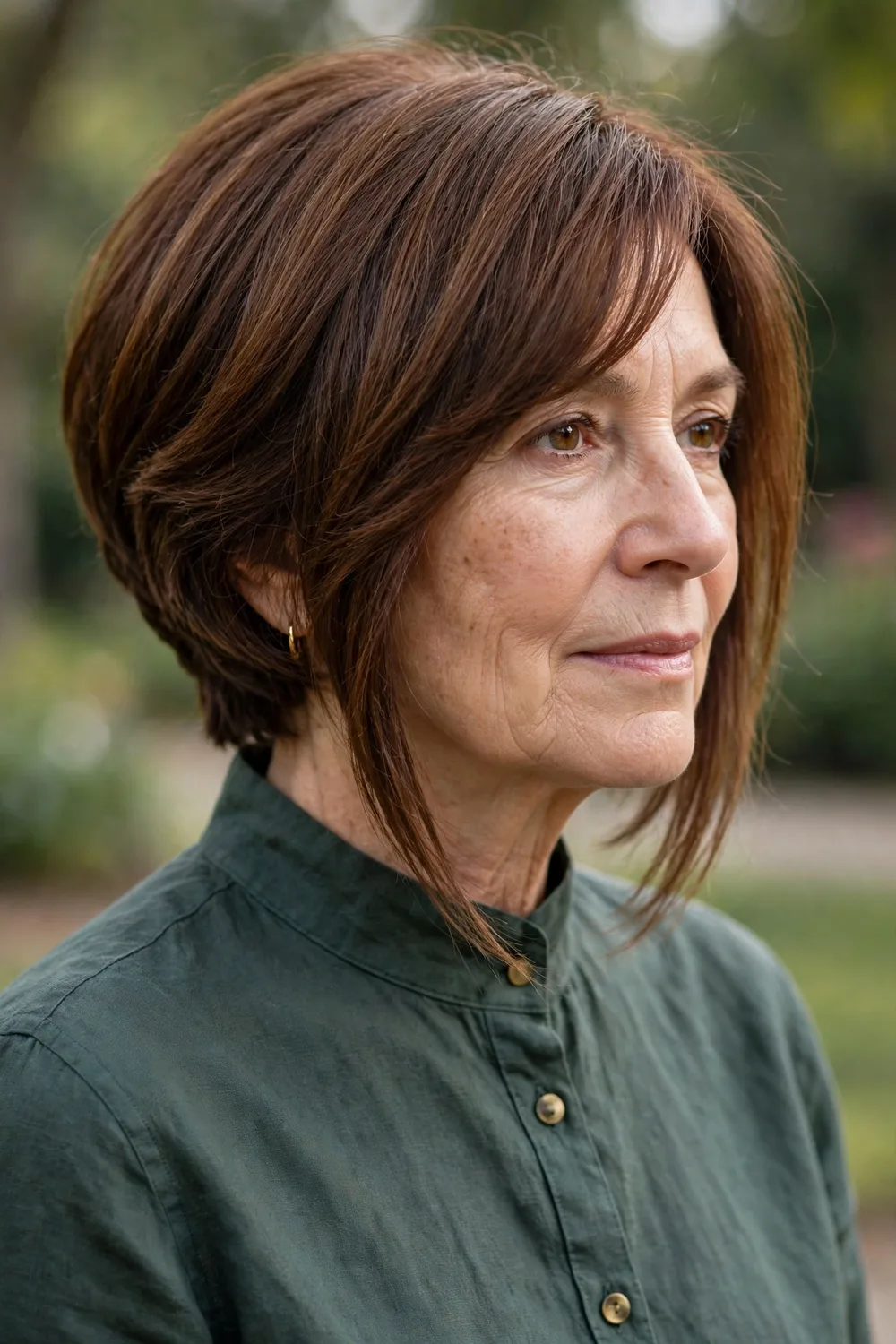
A long side-swept fringe adds a second diagonal across the forehead. It draws attention to the eyes and softens the strong line of the cut.
Ask for the fringe to blend into the longer front side with no hard step. A light flexible spray holds the sweep without making it stiff.
Try this: Keep the fringe long enough to tuck behind one ear on days you want it off your face.
Difficulty: Low | Cost: $ | Time: 10 mins
4. Chin-Length Inverted Bob with Tucked Ends

The front ends finish right at the chin and curve under, while the back sits higher and frees the neck. Collars, scarves and turtlenecks sit cleanly against the shorter nape.
Chin length frames oval and heart shaped faces well. A dryer brush in the morning keeps the ends turning under in a few minutes.
Try this: Use a dryer brush on the front ends only; the back needs just a quick root lift.
Difficulty: Low | Cost: $ | Time: 10 mins
5. Collarbone Angled Lob Inverted Bob

This longer version keeps the higher, tidier back and lets the front reach the collarbone. You keep enough length to tie hair back on warm days.
It works as a gentle first step into shorter hair. Use a large round brush to add a smooth bend at the ends and keep the angle clear.
Try this: Bring a photo showing the front at collarbone level so the angle is agreed before cutting.
Difficulty: Low | Cost: $$ | Time: 15 mins
6. Soft Wavy Textured Inverted Bob
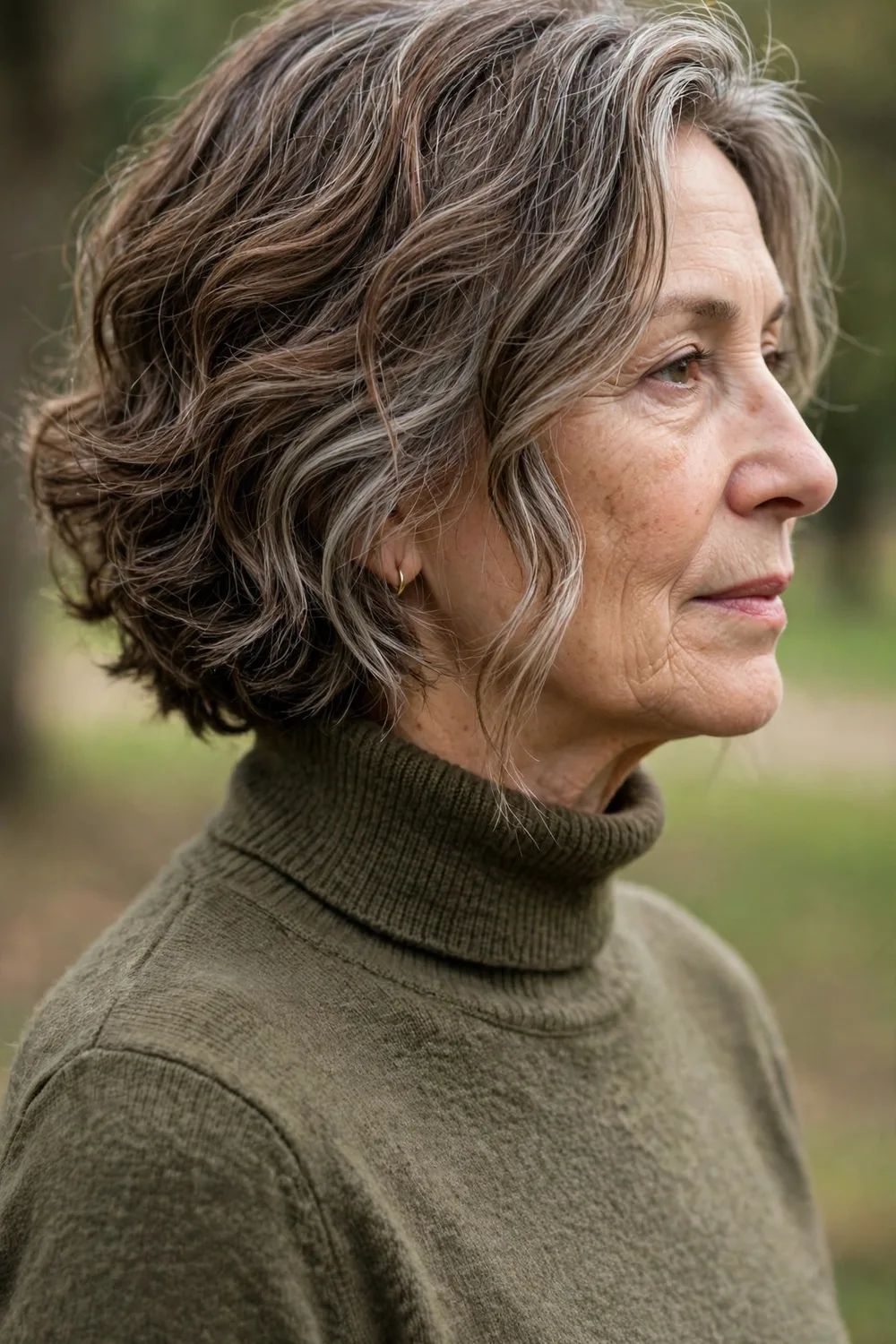
Loose waves soften the diagonal while the stacked back still gives lift underneath. The texture makes fine hair look fuller without heavy styling.
Scrunch a light salt spray into damp hair and air dry or diffuse. The shape grows out softly, which helps stretch time between appointments.
Try this: Scrunch waves while damp and avoid brushing them once dry to keep the texture soft.
Difficulty: Low | Cost: $ | Time: 10 mins
7. Natural Curl Inverted Bob for Over 50

Cut dry, curl by curl, this version lifts the back into a gentle stack so curls avoid a wide, flat shape at the bottom. Longer front curls frame the face.
Shorter stacked layers take weight off each curl and let it spring up. Keep hands off while curls dry so the pattern stays defined.
Try this: Ask for a dry cut if your curls shrink a lot, so the front length is judged accurately.
Difficulty: Low | Cost: $ | Time: 10 mins
8. Full Silver Inverted Bob with Smooth Finish

On full silver hair, the clean diagonal reads clear and sharp. The stacked back keeps the shape lifted, which helps coarser grey strands sit neatly.
A purple shampoo once a week helps reduce yellowing tones. A satin pillowcase can reduce friction and frizz overnight.
Try this: Use purple shampoo once a week and rinse well so silver strands stay bright.
Difficulty: Low | Cost: $ | Time: 10 mins
9. Cheekbone Face-Framing Inverted Bob
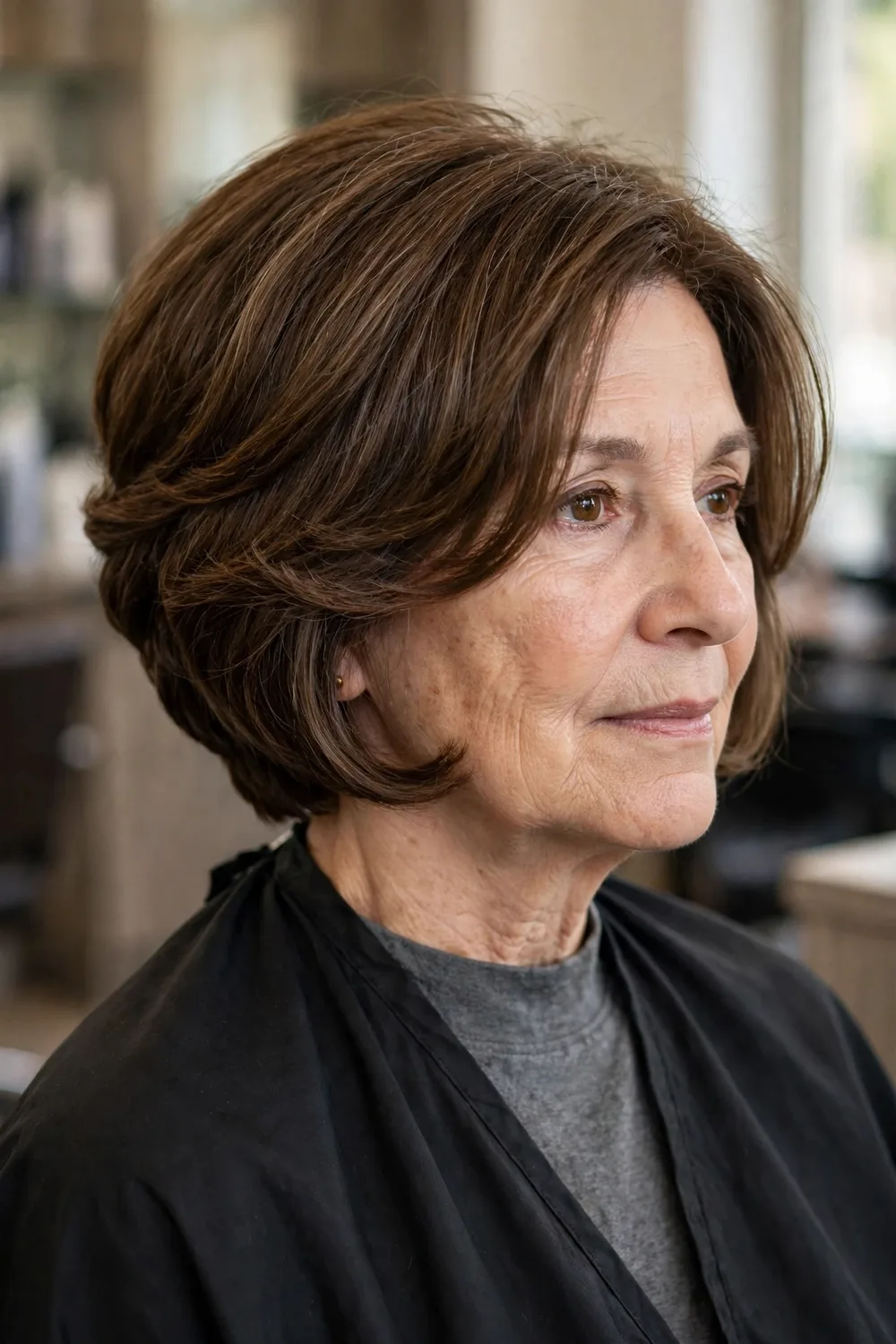
The back keeps its stacked lift while the front is layered to curve around the cheekbones and jaw. The framing pieces break up a straight line and add movement near the face.
Your stylist can start the shortest framing layer at cheekbone or jaw level depending on what you want to highlight. The layers also help fine hair look fuller around the face.
Try this: Point to the exact spot where you want the shortest framing layer to start.
Difficulty: Low | Cost: $ | Time: 10 mins
10. One-Side Longer Asymmetrical Inverted Bob
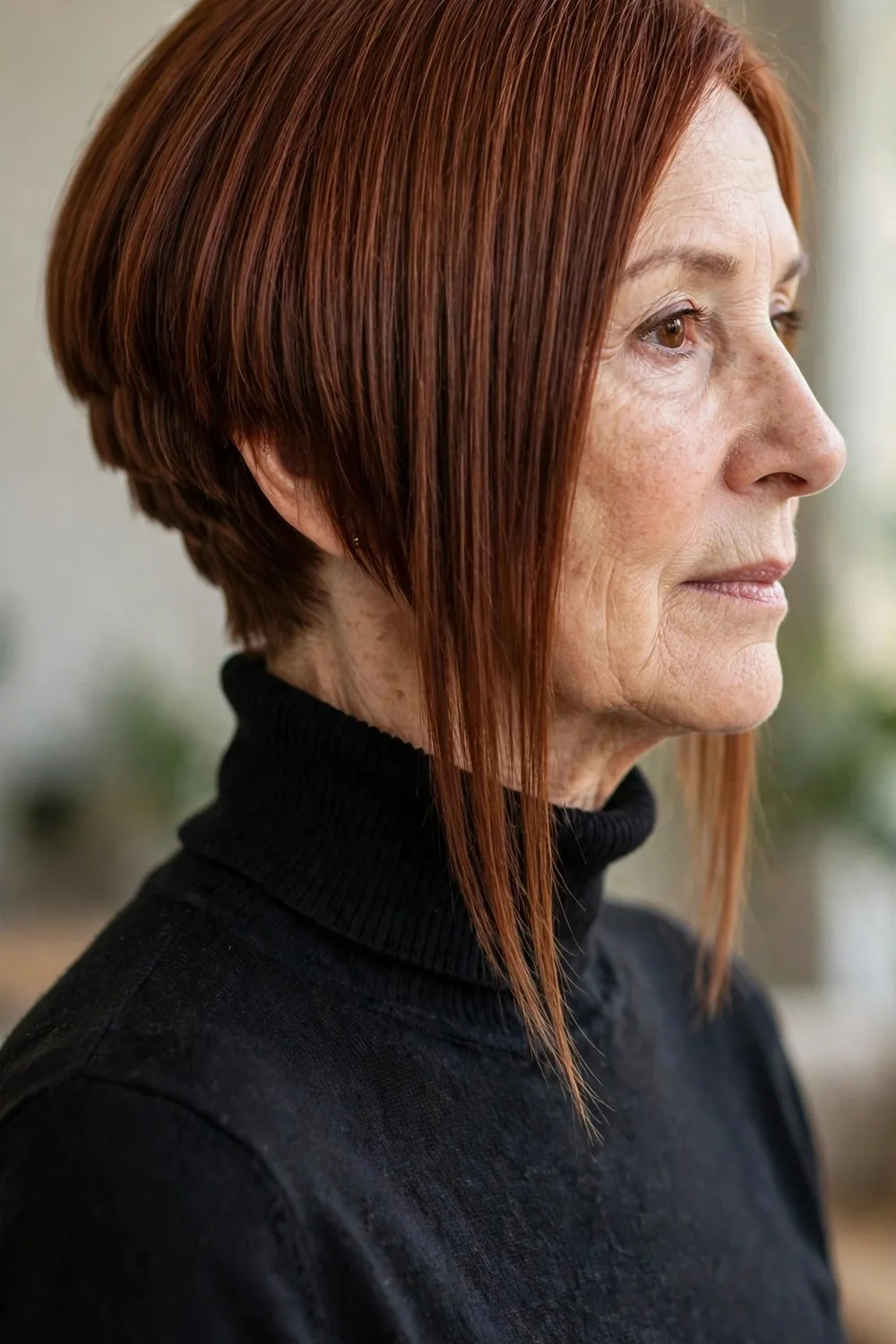
One side falls noticeably longer than the other over the classic inverted angle. Worn sleek, the difference in length stays clear and tidy.
Keep the part deep to show the contrast. This version shows best on straight or straightened hair, where both lengths stay visible.
Try this: Wear the longer side tucked behind the ear once a week to check both lengths still sit well.
Difficulty: Medium | Cost: $$ | Time: 15 mins
11. Feathered Wispy-Layer Inverted Bob
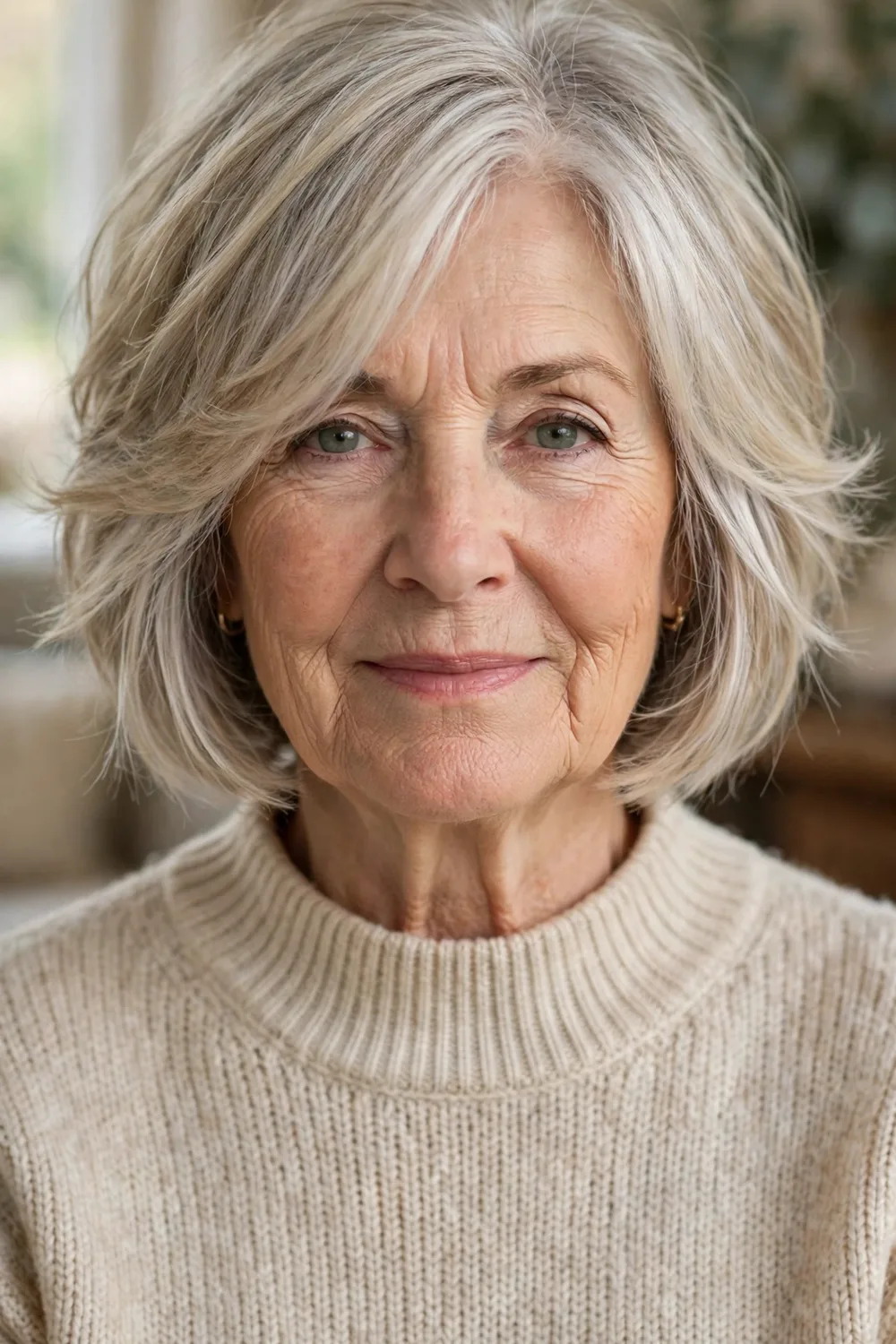
Light feathered layers flick through the back and sides while the front stays a touch longer. The whole cut moves easily and feels light on fine hair.
Feathered ends avoid the sparse look a solid line can give very thin hair. Blow dry with a vent brush, directing layers back off the face.
Try this: Rake a tiny amount of light oil through the ends only, keeping roots clean for lift.
Difficulty: Low | Cost: $ | Time: 10 mins
12. Sharp Blunt Perimeter Inverted Bob
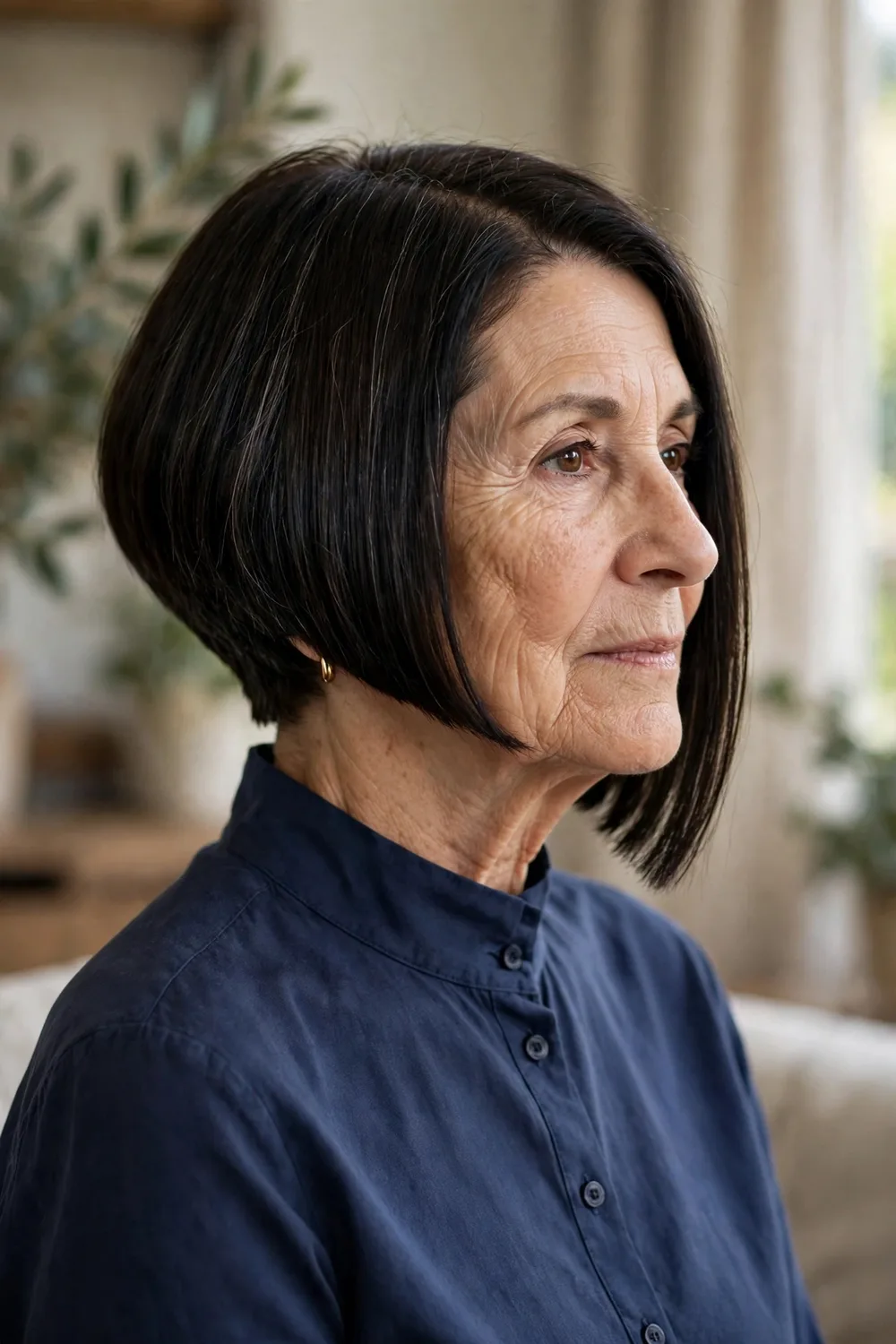
A precise blunt edge gives this inverted bob a strong, graphic line. The back is shorter and cleanly tapered, and the front keeps a straight, solid finish.
Blunt ends help the front look thicker. Keep trims regular so the edge stays sharp and the angle does not soften into a regular bob.
Try this: Book tidy up trims every six weeks so the blunt line stays clean.
Difficulty: Medium | Cost: $ | Time: 10 mins
13. Caramel Balayage Inverted Bob

Hand painted caramel ribbons sit through the longer front panels and ends, where the cut moves most. The lighter pieces trace the diagonal and make the angle easier to see.
Balayage grows out without a hard line at the roots, which suits a lower upkeep color routine. Ask for placement mainly on the front and surface layers.
Try this: Ask for balayage placement away from the shortest back layers to keep upkeep low.
Difficulty: Medium | Cost: $$ | Time: 15 mins
14. Choppy Piecey Inverted Bob

Choppy, piecey ends add texture through the front and sides while soft stacking lifts the back. The finish looks relaxed and modern.
Work a pea sized amount of texture paste through dry ends to separate the pieces. Avoid heavy products at the roots, which pull the lift down.
Try this: Separate the choppy ends with paste after drying, never before, for clearer texture.
Difficulty: Low | Cost: $ | Time: 10 mins
15. Deep Side Part Inverted Bob with Root Lift

A deep side part creates height on one side and lets the longer front sweep across the face. Root lift at the crown keeps the top from sitting flat.
Blow dry roots in the opposite direction first, then flip them into the part. That simple switch adds lift that lasts longer through the day.
Try this: Try the part on both sides at home; one side usually gives more natural lift.
Difficulty: Low | Cost: $ | Time: 10 mins
16. Tapered Nape Inverted Bob with Hidden Undercut

A clean tapered nape and a small hidden undercut remove bulk under the back of the cut. Thick hair sits closer to the neck and feels lighter in warm weather.
The front stays long enough to frame the jaw. Show your stylist how high you want the taper to sit before cutting begins.
Try this: Start with a low taper; you can take the nape shorter at the next visit if you like it.
Difficulty: Medium | Cost: $$ | Time: 15 mins
17. Rounded Silhouette Inverted Bob

A gently curved, rounded shape softens the inverted back. The silhouette feels calm and neat, with no sharp corners at the nape or jaw.
This shape suits women who find a strong diagonal too severe. Keep graduation soft and blended so the curve stays smooth all around.
Try this: Ask for blended graduation with no shelf at the back so the rounded curve stays soft.
Difficulty: Low | Cost: $ | Time: 10 mins
18. Curtain Fringe Inverted Bob

Curtain bangs part in the middle and sweep to each side, blending into the longer front. They cover the forehead softly without a straight across line.
Blow dry the fringe forward first, then split and sweep each side back. The fringe grows out into face framing layers between trims.
Try this: Dry curtain bangs with the brush rolling away from the face on each side.
Difficulty: Low | Cost: $ | Time: 10 mins
19. Tousled Root-Lift Inverted Bob

Tousled texture on top and lifted roots give this version a relaxed finish while the back stays stacked and tidy. It suits busy mornings well.
Lift damp roots with your fingers while drying, then tousle the ends once dry. A light dry shampoo at the crown on day two refreshes the lift.
Try this: Sleep with hair loose and refresh only the crown in the morning with a light mist of water.
Difficulty: Low | Cost: $ | Time: 10 mins
20. Bright Face-Framing Money Piece Inverted Bob

Two bright strands frame the face while the rest of the hair stays deeper in tone. The contrast draws the eye forward and highlights the longer front panels.
The bright pieces need toning at color appointments to stay clear. Keep the rest of the color simple so the front stays the focus.
Try this: Keep heat low on the bright front pieces, since lightened hair dries out faster.
Difficulty: Medium | Cost: $$ | Time: 15 mins
21. Salt-and-Pepper Blended Inverted Bob

Natural black and silver strands blend through the whole cut, so regrowth has no hard line to hide. The stacked back keeps mixed texture hair lifted and neat.
Ask your stylist to work with your natural pattern of silver rather than covering it. A clarifying wash now and then keeps silver strands bright.
Try this: Let your stylist map where your silver grows strongest and place the part to show it.
Difficulty: Low | Cost: $ | Time: 10 mins
22. Glasses-Friendly Inverted Bob with Ear Tuck

The sides are shaped to tuck cleanly behind the ears, so glasses arms sit without pushing hair out of place. The front still falls long enough to frame the jaw.
Bring your glasses to the appointment and wear them during the cut. Your stylist can check the tuck and the temple pieces with them on.
Try this: Check the ear tuck with your glasses on before you leave the salon chair.
Difficulty: Low | Cost: $ | Time: 10 mins
23. Low-Maintenance Air-Dry Inverted Bob

This version is cut to fall into place as it dries, with a natural slight wave and a stacked back doing the shaping work. Mornings need little more than finger combing.
Ask for layers that follow your natural wave pattern. Scrunch damp ends once, then leave hair alone until it is fully dry.
Try this: Scrunch once while damp, then keep hands off until hair is dry for a cleaner wave.
Difficulty: Low | Cost: $ | Time: 5 mins
24. Warm Copper Inverted Bob with Soft Layers

Warm copper color and soft layers make the angle easy to read, with feathered pieces softening the jaw. The stacked back keeps the shape lifted behind the color.
Copper tones fade faster than brown tones, so use color safe shampoo and lukewarm water. A gloss appointment between full color visits refreshes the tone.
Try this: Use a color depositing conditioner between visits if your stylist recommends one for copper.
Difficulty: Medium | Cost: $$ | Time: 15 mins
For a fuller back with a rounder finish, compare these ideas with stacked bob hairstyles for older women and short stacked bob hairstyles for women over 50. If you prefer a looser finish, messy bob hairstyles for women over 50 show softer styling, and for natural curls see inverted bob hairstyles for curly hair.
At a Glance: Popular Inverted Bobs Compared
| Style | Best for | Difficulty | Cost | Note |
|---|---|---|---|---|
| Sleek Classic | Fine, straight | Low | $ | Smooth and tidy |
| Stacked Crown-Lift | Fine, thinning crown | Medium | $ | Lift built into cut |
| Soft Wavy Textured | Fine to medium, wavy | Low | $ | Air dry friendly |
| Full Silver | Grey, coarse | Low | $ | Blends natural silver |
| Caramel Balayage | Medium, straight or wavy | Medium | $$ | Soft regrowth line |
| Tapered Nape Undercut | Thick, heavy | Medium | $$ | Removes back bulk |
| Air-Dry | Wavy, busy routine | Low | $ | 5 minute mornings |
| Warm Copper | Fine to medium | Medium | $$ | Color needs gloss upkeep |
Frequently Asked Questions
How often does an inverted bob need a trim?
Most inverted bobs need a trim every six to eight weeks. The stacked back loses its lift as it grows, so a tidy up keeps the angle clear and the crown height in place.
Does an inverted bob work on thinning hair?
Yes. Short stacked layers at the back build the look of fullness at the crown, and keeping the front blunt helps fine ends look thicker. Ask your stylist to keep layers blended so ends do not look sparse.
Can I wear an inverted bob with natural grey hair?
Yes. Silver and salt and pepper hair suit the clean diagonal of this cut, and there is no hard regrowth line to maintain. A purple shampoo once a week helps reduce yellowing on silver strands.
Is an inverted bob hard to style at home?
Most versions take 5 to 15 minutes. Blow dry the back roots upward for lift, smooth the front pieces under, and finish with a light spray or a small amount of texture paste on the ends.
What face shapes suit an inverted bob?
Oval, heart and round faces all suit versions of this cut. Longer front pieces help lengthen the look of a round face, while softer graduation and face framing layers suit a stronger jaw.
What should I ask my stylist for at the first appointment?
Ask for a shorter stacked back with longer front pieces at chin or collarbone length, and show photos of the angle you want. Mention your natural texture, grey pattern and how much daily styling you want to do.
Final Thoughts
The inverted bob earns its place in so many salons because the shape does practical work: lift at the back, length at the front, and a line that stays neat as it grows. Pick the version that matches your texture and your morning routine, take photos to your appointment, and start with a moderate angle. You can always go shorter or sharper at the next trim once you see how the shape lives with your hair.

