


Hairstyle ideas for Black women cover a wider range than any other roundup on this site, because the starting point can be natural coils worn out, a protective install that lasts for weeks, a press that straightens for a fortnight, or a wig that changes length in minutes. This list puts those routes side by side, so you can compare them by wear time, install time, and daily upkeep before you book or start styling.
The 28 ideas below run in a set order: braids first, then twists, locs and crochet, natural styles worn out, short cuts, silk presses, and finally weaves, wigs, and pulled back styles. Each idea notes how it is installed or styled, how long it wears, and what upkeep it needs. If you already know you want a short shape, the pixie bob haircuts for Black women guide goes deeper on that one length.
Quick Takeaways
- Braids, twists, and faux locs are the long wear routes, at four to eight weeks per install, with the highest time and cost on install day.
- Natural styles worn out, such as a wash and go, twist out, and high puff, cost the least and can be redone at home in under an hour.
- Short cuts, a TWA, tapered pixie, and finger waves, put the work into regular trims and sets rather than daily styling.
- A silk press lasts one to two weeks and returns to your natural pattern at the next wash, with no chemical straightening.
- Edges and tension decide how protective a style really is. Loose front braids, adjustable bands, and breaks between installs protect the hairline.
How to Choose by Wear Time and Upkeep
Start with wear time. If you want weeks away from daily styling, choose an install, braids, twists, crochet, or faux locs, and accept a long install day. If you like changing your hair often, choose a natural style worn out or a wig, where the change takes minutes to an hour.
Then check tension and your hairline. Any style that pulls at the front, braids, ponytails, and tight installs, needs loose front sections and a firm take-down date. Styles that sit on your own hair with no added weight, a wash and go, finger coils, mini twists, carry the least tension and suit fine or thinning edges best.
| Style group | Typical wear time | Upkeep | Install or styling time |
|---|---|---|---|
| Braids (knotless, Fulani, cornrows, Ghana, lemonade, boho) | 2 to 7 weeks by size | Low daily, scalp care weekly | 1 to 8 hours |
| Twists (passion, Marley, Senegalese, mini twists) | 3 to 8 weeks | Low, front refresh as needed | 2 to 8 hours |
| Locs and faux locs (Sisterlocks, starter locs, faux locs) | 4 to 6 weeks for faux, long term for real locs | Scheduled retightening or retwist | 2 hours to long sessions |
| Natural worn out (wash and go, twist out, afro, puff, coils) | 1 to 7 days per set | Moisture and nightly scarf | 10 to 60 minutes |
| Short cuts (TWA, tapered pixie, finger waves) | Ongoing with trims | Trim every 2 to 4 weeks | 30 to 90 minutes |
| Pressed, weave and wig (silk press, weave, bob wig, ponytail) | 1 to 2 weeks for a press, 6 to 8 weeks for a weave | Wrap at night, keep base dry | 30 minutes to 4 hours |
1. Knotless Box Braids with Curly Ends

Knotless braids start with your own hair at the root, and the braider feeds extension hair in gradually, so there is no tight knot sitting on the scalp. The curly ends soften the last few inches and give the set movement when you turn or tie it up.
Ask for medium parts if you want a full look without a very long install. The set usually wears for five to seven weeks. Keep the scalp clean with a diluted shampoo rinse every one to two weeks, and sleep in a satin bonnet so the curly ends stay smooth.
Try this: Ask your braider to leave the front braids a touch looser. The edges are the first place tension shows, and loose front braids protect them for the whole wear.
Difficulty: Medium | Cost: $$ | Time: Install 5 to 8 hours, wear 5 to 7 weeks
2. Classic Fulani Braids with Beads

Fulani braids pair cornrows across the front with single braids hanging behind. One center cornrow, side rows angled toward the ears, and loose length at the back make the pattern. Small beads or cuffs at the ends add detail without changing the base style.
The install takes four to seven hours depending on length. The cornrow section needs a light scalp oil along the parts two or three times a week, because that skin is exposed. Take the style down at six to eight weeks, even if it still looks neat.
Try this: Bring a photo of the front pattern and the back length as two separate pictures. Fulani patterns vary a lot, and one photo rarely shows both clearly.
Difficulty: Medium | Cost: $$ | Time: Install 4 to 7 hours, wear 5 to 7 weeks
3. Straight-Back Cornrows with Curved Parts
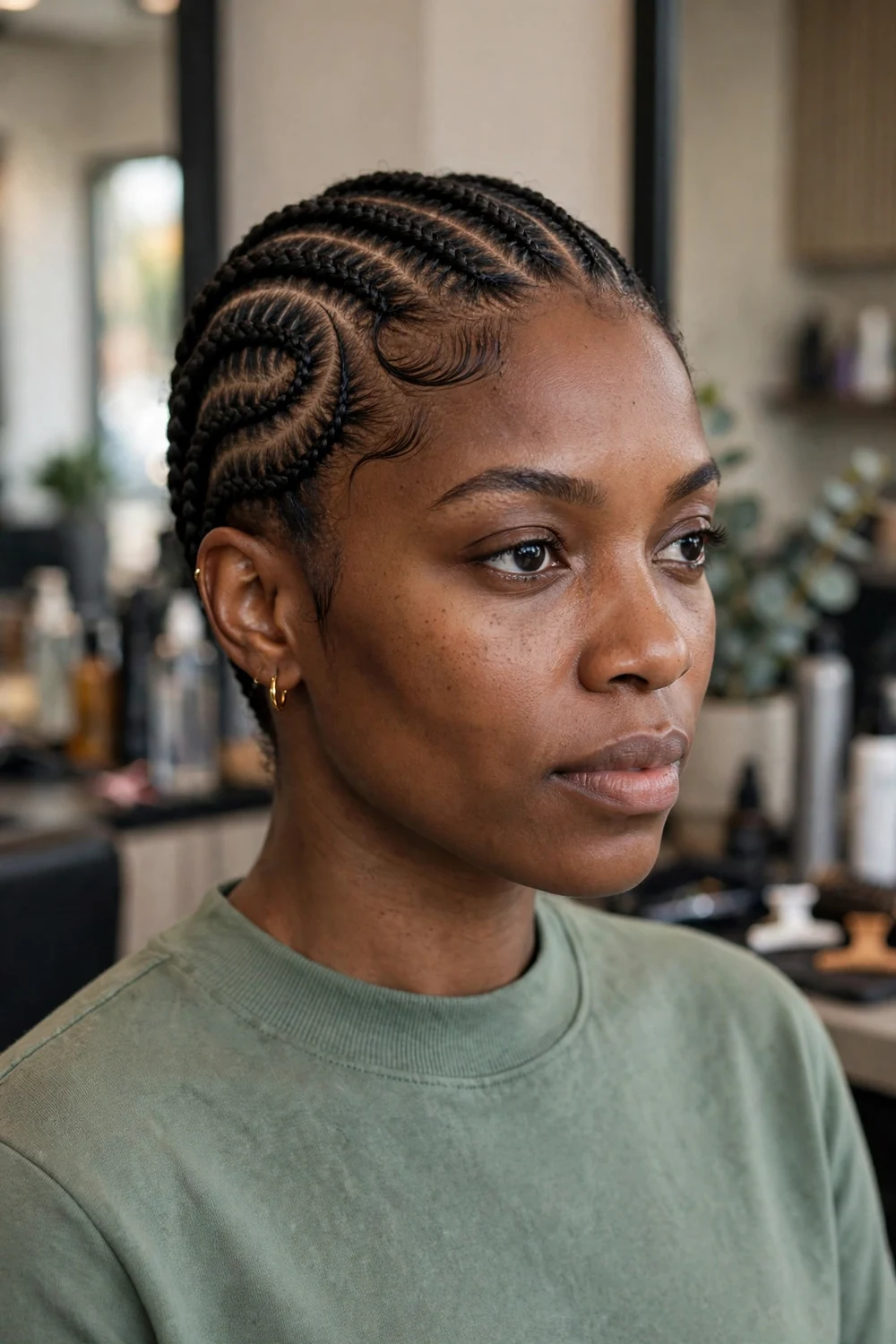
Straight-back cornrows run from the hairline to the nape in clean rows. Curved parts soften the lines and let the braider follow the shape of your head, so the rows sit flat with less pulling at the temples.
This is a good base style on its own and a flat base under a wig. On its own it wears for two to four weeks. Keep the rows neat with a light mousse applied under a scarf for ten minutes in the morning.
Try this: Ask for the size in rows, for example eight, ten, or twelve rows. Row count sets both the look and the time in the chair more than any other detail.
Difficulty: Low to Medium | Cost: $ | Time: Install 1 to 3 hours, wear 2 to 4 weeks
4. Lemonade Braids Swept to One Side

Lemonade braids are side-swept cornrows that feed into long single braids falling over one shoulder. The sweep changes the whole silhouette compared with straight-back rows, and the length can be worn loose, in a low ponytail, or pinned up.
Medium lemonade braids take four to six hours to install and wear for four to six weeks. The swept side puts more tension on one edge, so check that edge weekly and loosen any style that pulls it tighter.
Try this: Decide your sweep side before the first row goes in. It should match the side you part on most days, because changing it later fights the braid direction.
Difficulty: Medium | Cost: $$ | Time: Install 4 to 6 hours, wear 4 to 6 weeks
5. Ghana Braids in Thick Rows

Ghana braids are thick feed-in cornrows. The braider adds hair gradually along each row, so each braid starts fine at the hairline and grows thicker toward the back. Fewer, larger rows mean a faster install than small cornrows.
Six to eight thick rows can be done in two to three hours. The style wears for three to five weeks. Because each row carries more added hair, keep the weight in mind if your scalp is sensitive, and keep the first row behind the hairline looser.
Try this: Ask for a photo of the row thickness at the back, not just the front. Ghana braids look very different once the added hair reaches full thickness.
Difficulty: Medium | Cost: $$ | Time: Install 2 to 4 hours, wear 3 to 5 weeks
6. Passion Twists at Shoulder Length

Passion twists are two-strand twists made with wavy extension hair, so the finish is soft and loose rather than tight and rope-like. Shoulder length keeps the set light and lets the twists move when you walk.
The install takes three to five hours, often over crochet or individual twists. The set wears for four to six weeks. Twists frizz faster than braids, so refresh the front rows with a little mousse rather than redoing the whole head.
Try this: Choose the twist size by how you wear your hair down. Medium twists at shoulder length give the fullest look without daily separating and fluffing.
Difficulty: Medium | Cost: $$ | Time: Install 3 to 5 hours, wear 4 to 6 weeks
7. Marley Twists with Natural Texture

Marley twists use kinky textured extension hair that sits close to natural hair texture. The twists look fuller and less shiny than silky twist hair, so the style reads like your own hair at a longer length.
Medium to large Marley twists install in three to five hours and wear for five to seven weeks. The textured hair tangles more at the roots as your hair grows, so take-down needs patience, conditioner, and small sections.
Try this: Ask your braider to twist, not braid, the first inch at the root if your edges are fine. A twisted root is gentler and blends better with the Marley texture.
Difficulty: Medium | Cost: $$ | Time: Install 3 to 5 hours, wear 5 to 7 weeks
8. Senegalese Twists in Long Lengths

Senegalese twists are two-strand twists made with smooth extension hair, twisted tightly for a clean, rope-like finish. In long lengths they fall past the chest and can be worn in a high bun, a side sweep, or a half-up style.
Long twists add weight, so medium thickness is a safer choice than very thick twists at this length. The install takes five to eight hours and the set wears for six to eight weeks with a satin scarf at night.
Try this: Weigh one finished twist in your hand during the install. If the first few already feel heavy, switch to a smaller amount of hair per twist before the set is done.
Difficulty: Medium | Cost: $$ | Time: Install 5 to 8 hours, wear 6 to 8 weeks
9. Crochet Curls over Cornrows
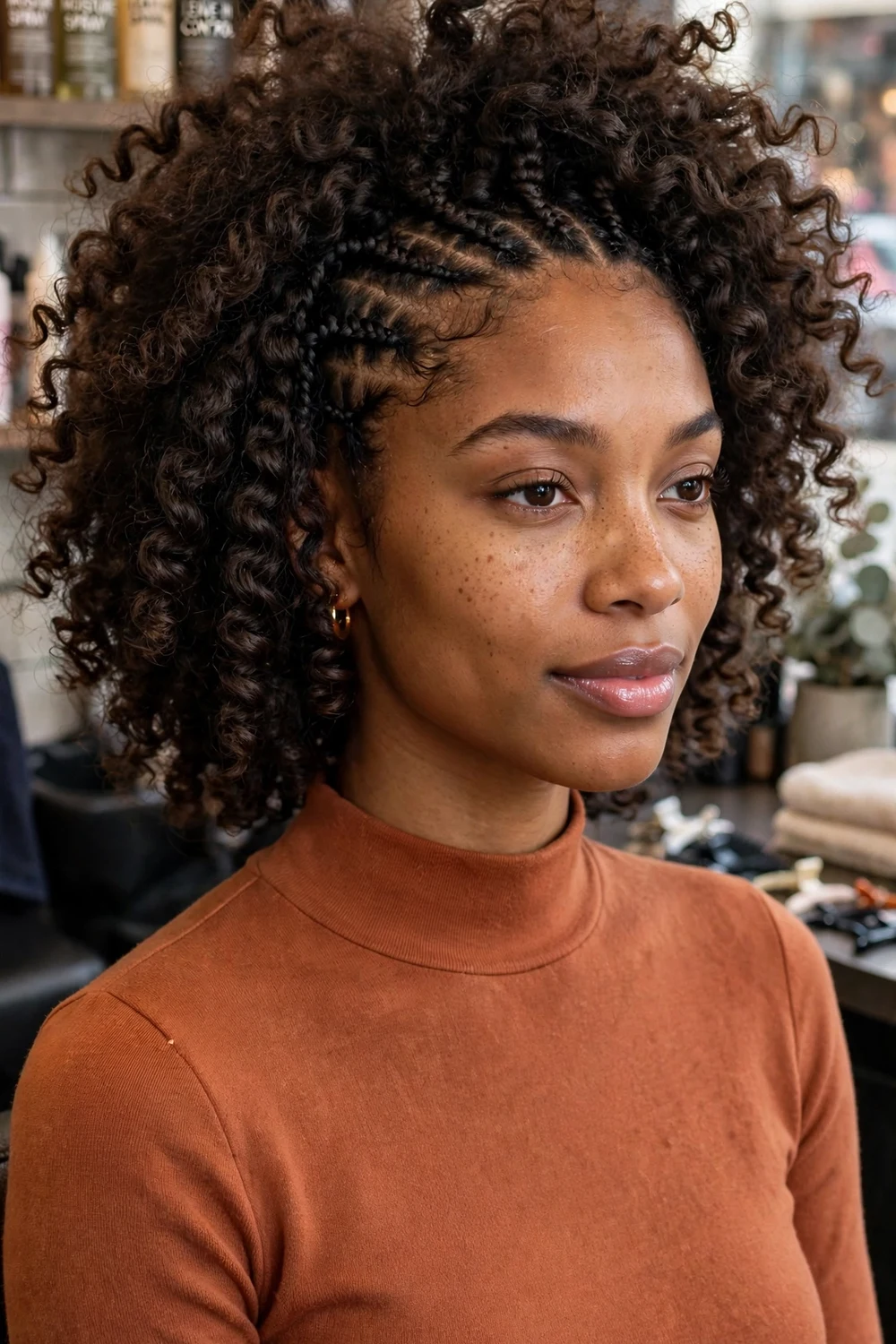
Crochet curls are looped through a cornrow base with a latch hook, so your own hair stays braided underneath while pre-curled extension hair gives the length and volume on top. You get a full curly look in a fraction of a braid install time.
Most crochet installs take two to three hours. The style wears for four to six weeks. Keep the cornrow base washed with a nozzle bottle, and separate the curls with your fingers and a light spray rather than a brush.
Try this: Ask how many packs and what curl pattern before you book. Two packs of a tight curl and two packs of a loose curl give very different volume at the same length.
Difficulty: Low to Medium | Cost: $$ | Time: Install 2 to 3 hours, wear 4 to 6 weeks
10. Faux Locs at Waist Length

Faux locs wrap or crochet extension hair around your own braided hair to give a loc look without a long term commitment. At waist length the locs have real presence, so the install needs to balance length against weight.
A waist length set takes five to eight hours and wears for four to six weeks. Ask for lighter locs at the front and nape. Those areas carry tension all day, and heavy locs there are the usual cause of headaches in the first week.
Try this: Try a shorter faux loc set first if you have never worn locs. You learn how the weight and stiffness feel before you commit to waist length.
Difficulty: Medium to High | Cost: $$$ | Time: Install 5 to 8 hours, wear 4 to 6 weeks
11. Sisterlocks Styled Loose

Sisterlocks are very small locs installed with a special tool and a grid pattern, by a trained consultant. Because there are so many locs, you can curl them, braid them, and wear them loose in ways that thicker locs do not allow.
The first install is a long process spread over one or more sessions, and retightening is done on a set schedule as the locs settle. This is a long term style, so the consultation matters as much as the install day itself.
Try this: Ask about retightening timing and cost at the consultation, not after the install. The schedule is part of the style, and it runs for as long as you wear the locs.
Difficulty: High | Cost: $$$ | Time: Install spread over long sessions, long term wear with scheduled retightening
12. Starter Locs with Coil Definition

Starter locs begin as small coils or two-strand twists that are left to lock over time. In the early months the coil pattern still shows, and the locs are short, light, and easy to wash on a regular routine.
Expect the early stage to need patience. Locs swell, frizz, and change shape before they mature, and that is normal. Keep a simple routine, water based moisture, light oil, and retwists only as often as your loctician advises.
Try this: Take a dated photo each month. Starter locs change slowly day to day, and monthly photos show progress that the mirror does not.
Difficulty: Low to Medium | Cost: $ | Time: Install 2 to 4 hours, locs mature over many months
13. Wash and Go with Defined Coils
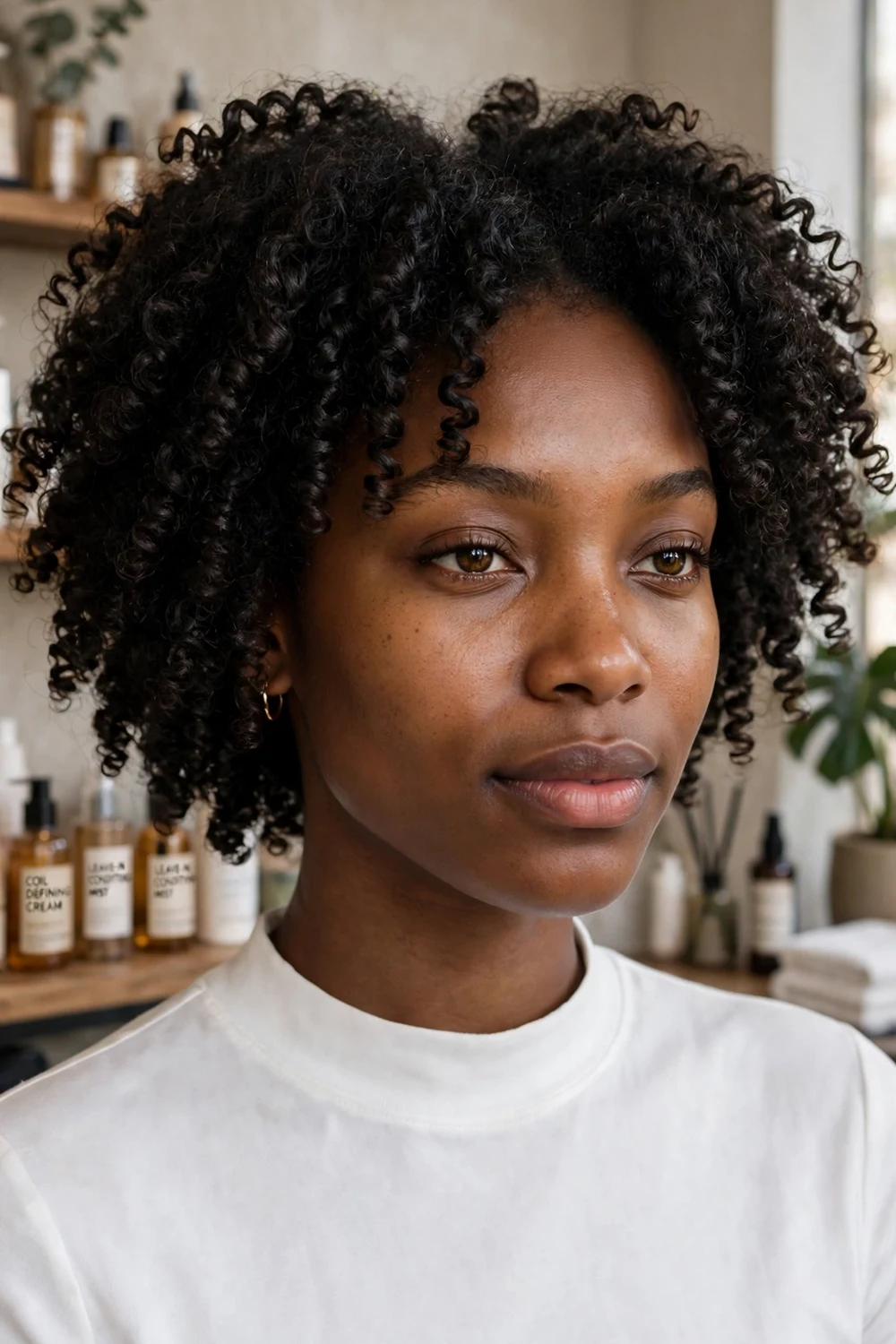
A wash and go applies leave-in and gel to soaking wet hair, section by section, then lets the coils dry in their natural pattern. The result shows your true curl size and shrinkage, with definition coming from product and technique rather than heat.
Work in four to six sections so every coil gets coated. Drying with a diffuser on low heat speeds the process and reduces frizz from touching. The style lasts three to five days, refreshed with a water and leave-in spray. If you wear short natural hair often, the easy 4C short hairstyles list has more low manipulation options at this length.
Try this: Apply gel to hair that is still dripping wet. Adding gel after the hair has started to dry is the most common reason a wash and go turns frizzy by noon.
Difficulty: Low | Cost: $ | Time: Styling 30 to 60 minutes, lasts 3 to 5 days
14. Twist Out on Stretched Hair
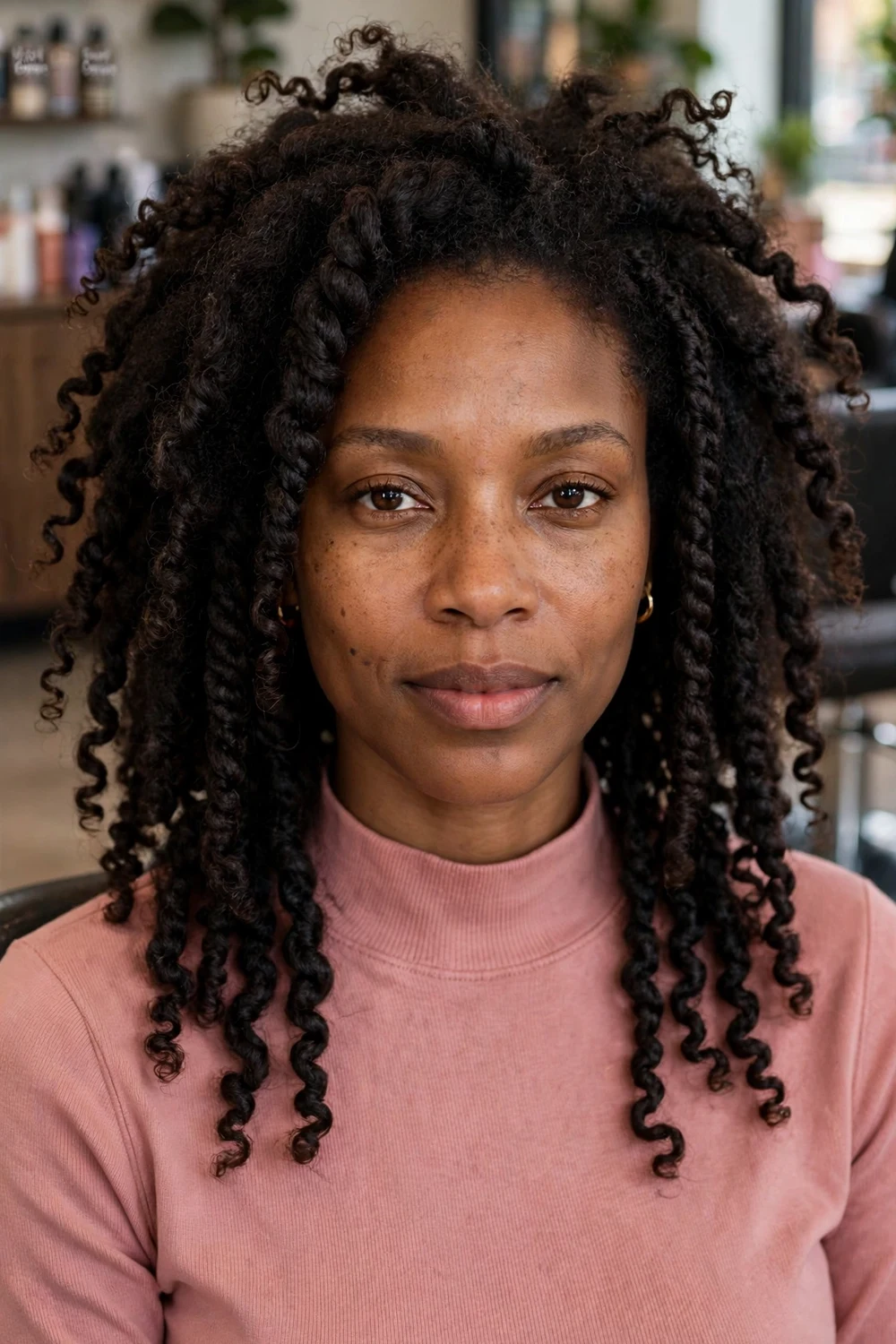
A twist out sets damp hair in two-strand twists overnight, then unravels them for stretched, defined curls in the morning. Stretching gives more visible length than a wash and go and a softer pattern than your natural coil.
Use eight to fourteen twists depending on how defined you want the result. Chunkier twists dry faster and give looser waves, finer twists give tighter definition and take longer to dry fully. Unravel with a little oil on your fingers to cut frizz.
Try this: Do the twist out on hair that is damp, not wet. Hair that is too wet will still be damp in the center of each twist in the morning and the set will fall flat.
Difficulty: Low | Cost: $ | Time: Setting 30 to 45 minutes plus overnight drying, lasts 3 to 5 days
15. Bantu Knot Out Curls

A bantu knot out twists sections of damp hair into small knots, lets them dry, then unravels them into spiral curls. The knots can also be worn as a style on their own for a day before you take them down.
Smaller knots give tighter spirals, larger knots give looser waves. The set needs the hair fully dry before unraveling, which usually means overnight. Pineapple the curls up in a loose scarf at night to keep the spiral shape for day two and three.
Try this: Test one knot at the back first and unravel it after a few hours. You can see the curl size your knot size produces before you commit the whole head.
Difficulty: Low | Cost: $ | Time: Setting 45 to 60 minutes plus overnight drying, lasts 2 to 4 days
16. Finger Coils on Short Natural Hair

Finger coils twirl small sections of damp hair around a finger with gel or cream, one coil at a time. On short natural hair the method gives even definition across the whole head, including areas where a wash and go stays frizzy.
The style takes time at short lengths, usually forty five minutes to an hour, but it lasts five to seven days with a satin scarf at night. Keep the coils small and consistent, because mixed coil sizes are visible at short length.
Try this: Work from the back forward. The back is where coils get missed or rushed, and starting there keeps the finish even all over.
Difficulty: Low to Medium | Cost: $ | Time: Styling 45 to 60 minutes, lasts 5 to 7 days
17. Full Afro Picked to a Rounded Shape
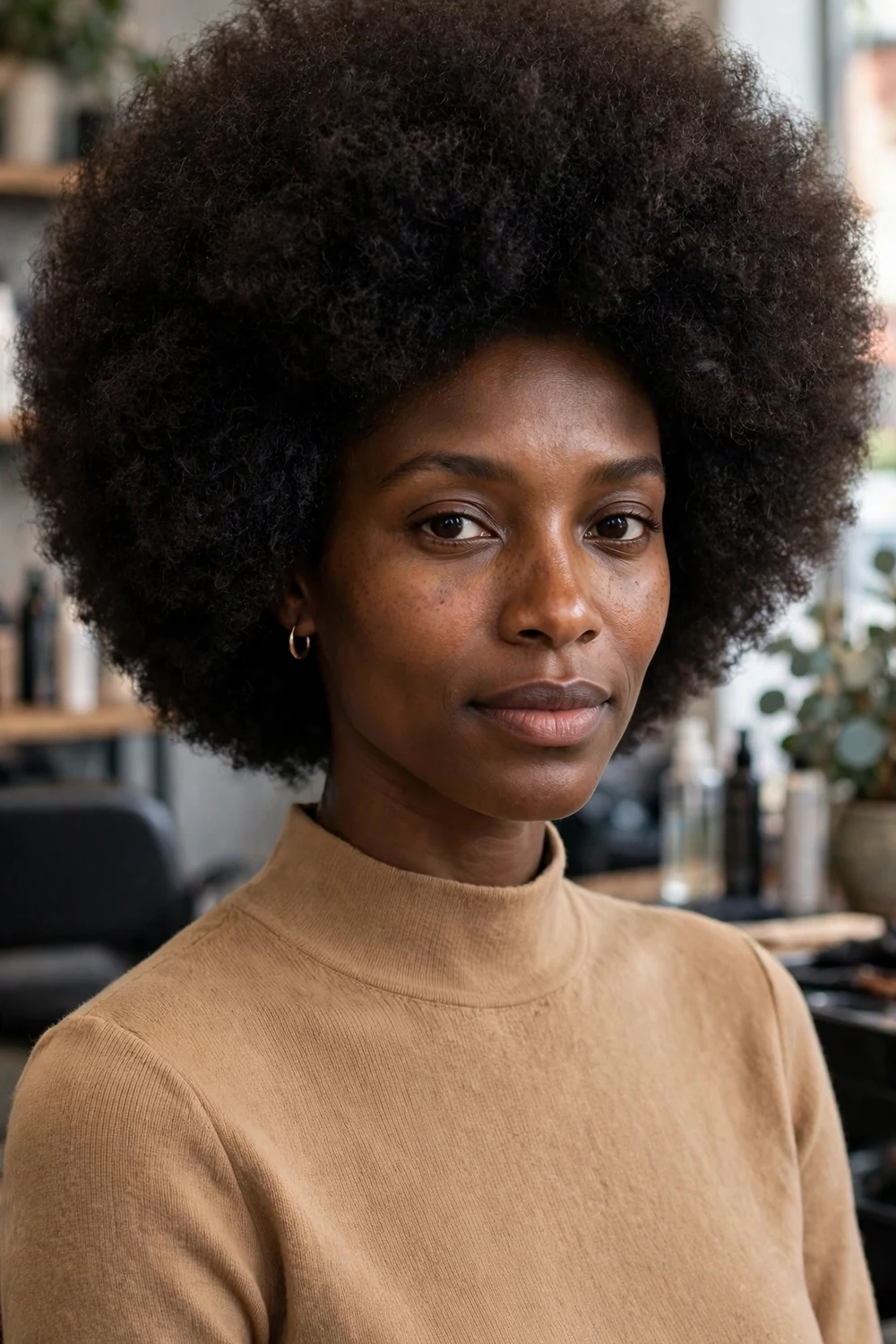
A full afro wears natural hair out in a rounded shape, lifted at the roots with a pick and shaped by a cut done on dry hair. The shape is the style, so the cut matters more than daily product.
Keep the hair moisturized in layers, water based leave-in first, then a cream, then a light oil to seal. Pick only at the roots and only when the hair is dry and moisturized, because picking through dry ends causes breakage. A shape trim every three to four months keeps the outline clean.
Try this: Ask for the cut in the shape you wear daily, picked out and dry. A cut done on wet, shrunken hair will sit shorter and uneven once it is picked.
Difficulty: Low | Cost: $ | Time: Daily styling 10 to 15 minutes, shape trim every 3 to 4 months
18. High Puff with Laid Edges

A high puff gathers natural hair up to the crown with a stretched band or puff cuff, leaving the ends free in a rounded puff. Laid edges at the hairline, smoothed with edge control and a small brush, finish the front.
The puff works on medium and longer natural hair and takes minutes once the hair is moisturized. Change the puff position slightly from day to day, a little higher or lower, so the band does not stress the same spot on your edges all week.
Try this: Use a band you can adjust rather than a tight elastic. You want the puff secure with the least tension possible, and an adjustable band lets you loosen it during the day.
Difficulty: Low | Cost: $ | Time: Styling 10 to 20 minutes, lasts 1 to 3 days per set
19. Tapered TWA with a Shaved Part

A tapered TWA, or teeny weeny afro, keeps a short layer of coils on top while the back and sides are clipped closer. A shaved part line adds a sharp detail that your barber can redraw at each line-up.
This cut suits the first months after a big chop and any stage where you want short hair with shape. Upkeep is a trim every two to three weeks to hold the taper, plus daily moisture, because short coils lose moisture fast.
Try this: Bring a photo showing the top length and the side taper separately. Top length and taper closeness are two different decisions, and photos settle both in one visit.
Difficulty: Low | Cost: $ | Time: Cut 30 to 45 minutes, trim every 2 to 3 weeks
20. Tapered Pixie with Longer Top

A tapered pixie clips the back and sides close and leaves a few inches on top to sweep, curl, or finger style toward the face. It works on relaxed, pressed, and natural hair, with the top texture setting the daily routine.
The cut grows out fast at the sides, so plan a clean-up every three to four weeks. The top can be worn with a soft curl set, a side sweep, or finger waves for an evening, which makes one cut cover workdays and events.
Try this: Ask how the top will look at week three, not just on cut day. A good tapered pixie is cut for the grow-out, with the top long enough to still style as the sides fill in.
Difficulty: Low to Medium | Cost: $ | Time: Cut 45 to 60 minutes, clean-up every 3 to 4 weeks
21. Finger Waves for Special Occasions

Finger waves mold damp hair into flat S-shaped waves with gel, a comb, and the stylist fingers, then set under a dryer. The finish is smooth and close to the head, and it suits short hair and short pixie lengths best.
Book this as a set, not a cut, and plan it close to the event, because the waves hold one to two days at their sharpest. Sleep in a snug satin scarf to keep the wave pattern flat overnight. Humidity softens the set faster than anything else.
Try this: Bring a photo of the wave size you want. Wide waves and tight waves are different sets, and the comb work changes from the first pass.
Difficulty: Medium | Cost: $ | Time: Set 60 to 90 minutes, lasts 1 to 2 days
22. Silk Press Bob with Body

A silk press bob straightens natural hair with a blowout and flat iron, then cuts or wears it at bob length with body at the ends. The bob length keeps the press light, so the hair moves when you turn rather than sitting flat.
Heat protectant before the blowout and again before the iron is the base rule. Wrap the hair in a circle at night and pin it, or use a satin scarf over a wrap, to keep the ends curved. A press lasts one to two weeks until the next wash or heavy humidity.
Try this: Ask for one pass of the iron per section at the right heat for your texture. Multiple slow passes add damage without adding smoothness.
Difficulty: Medium | Cost: $$ | Time: Appointment 90 to 120 minutes, lasts 1 to 2 weeks
23. Silk Press with Long Layers

A long silk press keeps the length and adds long layers so the straightened hair falls with movement and the ends do not look blunt and heavy. It is the press to choose when you want a length check and a straighter look at the same time.
Long pressed hair needs the ends protected most, because they are the oldest hair on your head. Keep the press dry, avoid reapplying heat at home between washes, and schedule trims by how the ends look, not only by the calendar. Color ideas that work over a press are covered in the fall hair colors for Black women list.
Try this: Take a length photo from the back before the press and after. Pressed length is the clearest record of retention you will get all year.
Difficulty: Medium | Cost: $$ | Time: Appointment 2 to 3 hours, lasts 1 to 2 weeks
24. Bob Wig in a Curly Texture

A curly bob wig gives a bob length and a curly texture without cutting or straightening your own hair, which stays braided or in flat twists underneath. Glueless styles with an adjustable band are the easiest entry point for daily wear.
Fit is the main detail. Measure your head, adjust the band and straps, and trim the lace only after the wig sits where you will wear it. Store the wig on a stand so the curls keep their shape, and refresh them with water and a light mousse, not daily brushing.
Try this: Wear the wig at home for an hour before the first full day out. You can adjust the band, the part, and the baby hair while you still have time to change them.
Difficulty: Low | Cost: $$ | Time: Daily wear in minutes, wig lasts months with care
25. Long Body Wave Weave

A body wave weave installs extension hair with a loose, soft wave pattern that falls past the chest. The wave is large and relaxed, so the hair can be worn as is, curled for more definition, or straightened for a different look from the same install.
A sew-in with a closure gives the most protected base, with your own hair braided underneath. Keep the braid base clean and fully dry after washing, and use a satin bonnet at night so the waves do not mat. Most installs wear for six to eight weeks before removal.
Try this: Ask how much of your own hair, if any, will be left out. Leave-out means daily blending and heat, while a closure means none, and that choice changes your whole routine.
Difficulty: Medium to High | Cost: $$$ | Time: Install 3 to 4 hours, wear 6 to 8 weeks
26. Sleek Low Ponytail with a Curly Extension

A sleek low ponytail smooths your own hair back with gel and a soft brush, secures it at the nape, and adds a curly ponytail extension for length and volume. Laid edges at the front finish the look without heat on the lengths.
This style suits interviews, dinners, and events, and it can be done at home in under an hour once you have the extension. Keep tension low at the nape and take the ponytail down at night rather than sleeping in it, so the hairline is not pulled for hours at a time.
Try this: Match the extension texture to the look you want in photos. A kinky curly extension reads as your own hair blown out and curled, while a silky one reads as a pressed ponytail.
Difficulty: Low | Cost: $ | Time: Styling 30 to 45 minutes, lasts 2 to 4 days
27. Mini Two-Strand Twists on Natural Hair

Mini twists twist your own hair in many small two-strand twists, with no extension hair added. The result is a light, flexible protective style that can be worn down, pinned up, or gathered into a low bun, and the twists can be unraveled later for a twist out.
The install takes two to four hours depending on size, and the style wears for three to five weeks. Wash with the twists in, using a diluted shampoo and focusing on the scalp, then dry fully. Retwist only the front row to refresh the look in week three.
Try this: Twist on damp hair with a cream, and twist each section in the same direction and tension. Even tension is what keeps mini twists looking neat past the first week.
Difficulty: Low to Medium | Cost: $ | Time: Install 2 to 4 hours, wear 3 to 5 weeks
28. Boho Braids with Loose Curl Pieces

Boho braids start as knotless or box braids, with loose curly pieces left out along each braid and at the ends. The mix of neat braids and free curls gives a softer, less uniform finish than a standard braid set.
The loose pieces are the upkeep. They tangle faster than the braids, so detangle them gently with water and conditioner every few days and keep them separate from the braids at night under a bonnet. The set wears for four to six weeks, and the curl pieces usually need attention before the braids do.
Try this: Ask what hair is used for the loose pieces. Human hair curl pieces last the full wear and can be washed and detangled, while synthetic pieces often need replacing sooner.
Difficulty: Medium | Cost: $$$ | Time: Install 5 to 8 hours, wear 4 to 6 weeks
Frequently Asked Questions
How long can I keep braids or twists in?
Most braid and twist sets should come out at six to eight weeks at the latest, even if they still look neat. Your own hair keeps growing and shedding under the install, and leaving a set in past that point leads to matting at the roots and harder take-down. Smaller styles and faux locs sit at the shorter end, at four to six weeks.
Which hairstyles on this list are protective styles?
Braids, twists, cornrows, crochet styles, faux locs, mini twists, and weaves with a braided base are protective styles, because your ends are tucked away and daily handling is low. A style only protects your hair if the tension is low, the hair was moisturized before installing, and the style comes out on schedule.
How do I protect my edges with braids and ponytails?
Ask for the front braids to be installed looser and keep some styles, such as high ponytails, to short wear rather than daily wear. Use adjustable bands instead of tight elastics, change ponytail position from day to day, and take a break between installs so the hairline rests. Pain, bumps, or redness at the edge are signs to loosen or remove the style.
Can I wash my hair while it is in braids, twists, or a weave?
Yes, and you should. Use a nozzle bottle to apply diluted shampoo to the scalp and parts, rinse well, and dry the base fully, with a hooded dryer if the install is thick. A clean scalp every one to two weeks keeps an install comfortable for its full wear time.
Will a silk press damage my natural curl pattern?
A silk press is a temporary straightening method that uses heat, and the hair returns to its pattern at the next wash when heat is used with care. Use heat protectant, keep to one iron pass per section at a suitable heat, and avoid daily heat touch-ups at home. Repeated high heat over many presses can loosen the pattern over time, so space presses out and keep up trims.
What is the lowest upkeep hairstyle for Black women on this list?
For daily upkeep, short natural cuts such as a tapered TWA and a full afro need only moisture and a short morning routine, with the work moved to regular trims. For weeks with no daily styling, cornrows and medium knotless braids need the least day to day care after install day. The right answer depends on whether you prefer a long install day or a regular trim.
Final Thoughts
Choose the style by the routine you will actually keep. If a long install day and weeks of low daily care suit you, start with braids, twists, or crochet. If you prefer your own hair out and a short morning routine, start with a wash and go, a twist out, or a short tapered cut, and if you want a pulled back style for a gathering, the Thanksgiving hairstyles for Black women list shows that shape in dressier versions. Save front and back photos of two or three favorites, note the wear time you want, and take both to your braider or stylist before you book.

