


Short 4c hair changed my mornings more than any product ever did. Once the length came off, the wash days got shorter, the styling got simpler, and my coils finally did what they wanted to do anyway. I keep coming back to short styles because the routine stays honest: moisture, a little definition, and a shape that grows out well.
This list collects 25 easy 4c short hairstyles for women, running from closely cropped cuts through defined coil styles, twist and braid sets, and short protective options. Every idea notes how the style is done, how long it lasts, and what the upkeep asks of you. If you are still weighing up lengths, the wider roundup of short natural hair styles shows how these looks sit next to other textures and cuts.
Quick Takeaways
- The lowest upkeep cuts are the teeny weeny afro, the buzz cut, and the tapered cut. Wash, moisturize, and go.
- Twist-based styles do double duty: mini twists and chunky twists protect the hair while they are in, and the take-down gives you a twist out.
- Short 4c hair still needs moisture daily. A water-based leave-in and a light oil keep coils soft and cut down on breakage.
- Protective short styles, cornrows, flat twists, and short box braids, rest the hair for two to six weeks at a time.
- Most cuts on this list hold their shape for three to five weeks before a trim or a refresh is due.
How to Pick Your Short 4c Style
Start with the time you will honestly give your hair each morning. If the answer is five minutes, stay with the cropped cuts: a teeny weeny afro, a buzz cut, or a tapered cut with defined coils on top. If you can give one longer session on the weekend, twist and braid sets pay you back all week, since mini twists, flat twists, and cornrows need only a light scalp oil and a satin scarf at night.
Then think about growth. Short cuts show new growth fast, and a style that looks good at two lengths is easier to keep. The guide to awkward length 4c hairstyles covers the in-between stage, when a teeny weeny afro is growing toward bob length and the shape needs small changes rather than a full restyle.
| Style group | Time to do | How long it lasts | Upkeep |
|---|---|---|---|
| Closely cropped cuts (TWA, buzz cut, tapered cut) | Salon or barber visit, under an hour | Shape holds 3 to 5 weeks | Low |
| Defined coil styles (finger coils, wash and go, twist out) | 20 to 45 minutes at home | 3 to 7 days per set | Low to medium |
| Twist sets (mini twists, chunky twists, flat twists) | 1 to 3 hours at home or in salon | 1 to 4 weeks | Low |
| Protective short styles (cornrows, short box braids) | 2 to 4 hours in salon | 2 to 6 weeks | Low |
1. Teeny Weeny Afro

The teeny weeny afro, usually called a TWA, keeps 4c hair at about three inches or less. It is the cut most women start with after a big chop, and many stay with it because the routine is so short. The coils sit close to the head, so the shape comes from the cut itself rather than from daily styling.
Care is a daily spritz of water or leave-in, a small amount of cream worked through with your palms, and a satin scarf or pillowcase at night. Wash day takes minutes at this length. Book a shape-up trim every three to four weeks so the outline stays clean as it grows.
Try this: apply your leave-in and cream to damp hair right after a shower, when the coils take moisture best, then leave the hair alone while it dries.
Difficulty: Low · Cost: $ (salon)
2. Tapered Cut

A tapered cut keeps length and coils on top while the sides and back are cut shorter, fading down toward the hairline. The contrast gives short 4c hair a clear shape, and the top can be worn defined, sponged, or picked out into a soft halo. It suits most face shapes because the height sits on top rather than at the sides.
Upkeep is a trim every three to five weeks to hold the fade, plus daily moisture on the longer top section. The short sides need almost nothing. Women who like a pixie shape with natural texture often land here, and the pixie haircuts for curly natural hair roundup shows the softer, scissor-cut version of the same idea.
Try this: ask your stylist to leave the top longer than you think you need. You can always take more off at the next visit, and the extra length gives you twist out and coil options.
Difficulty: Low to Medium · Cost: $$ (salon)
3. Buzz Cut
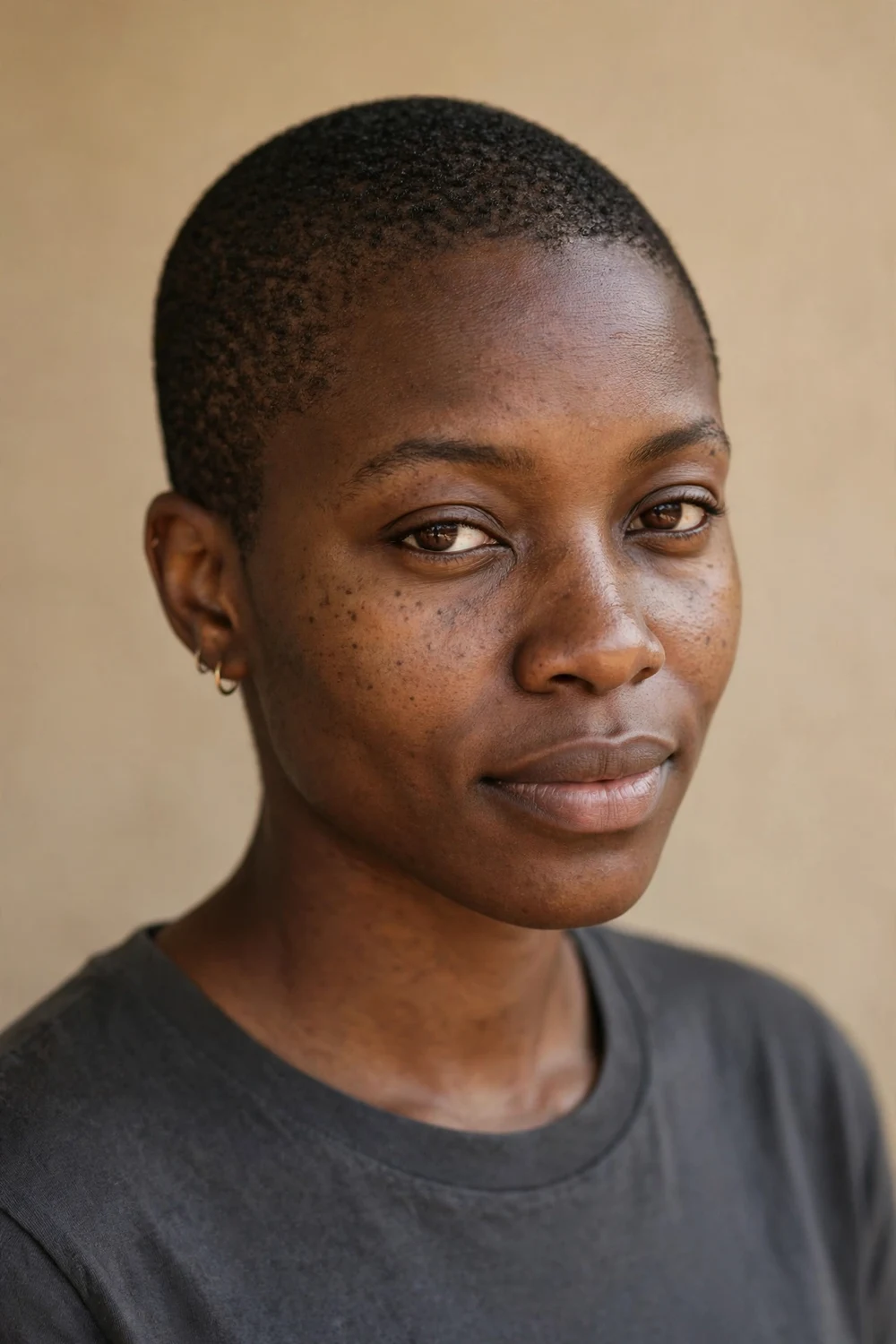
A buzz cut clips the hair to one short, even length all over the head. There is no styling step in the morning at all: wash, moisturize the scalp and hair, and go. It is the lowest upkeep cut on this list, and it shows the natural coil pattern at its tightest.
The trade-off is frequency. The cut looks sharpest for about two weeks, and most wearers re-clip every two to three weeks, at a barber or at home with clippers once they are confident. Keep the scalp moisturized, since short hair exposes it to sun and dry air.
Try this: get the first buzz cut done by a barber and watch the guard size used, so you can match the same length at home later.
Difficulty: Low · Cost: $ (salon)
4. Finger Coils

Finger coils are made by twirling small sections of damp, gelled hair around a finger from root to tip, one section at a time. On short 4c hair the result is a head of neat, springy spirals that show the coil pattern at its most defined. The set takes about 30 to 45 minutes on short lengths.
A good set lasts five to seven days. Sleep with a satin scarf, and in the morning separate any coils that have fused and fluff the roots with your fingertips. Refresh dry coils with a light mist of water and a pea-sized amount of cream rather than more gel, which can flake.
Try this: coil in the direction your hair naturally curls. The coils hold longer and frizz less when they follow the pattern instead of fighting it.
Difficulty: Medium · Cost: $ (salon)
5. Sponge Coils
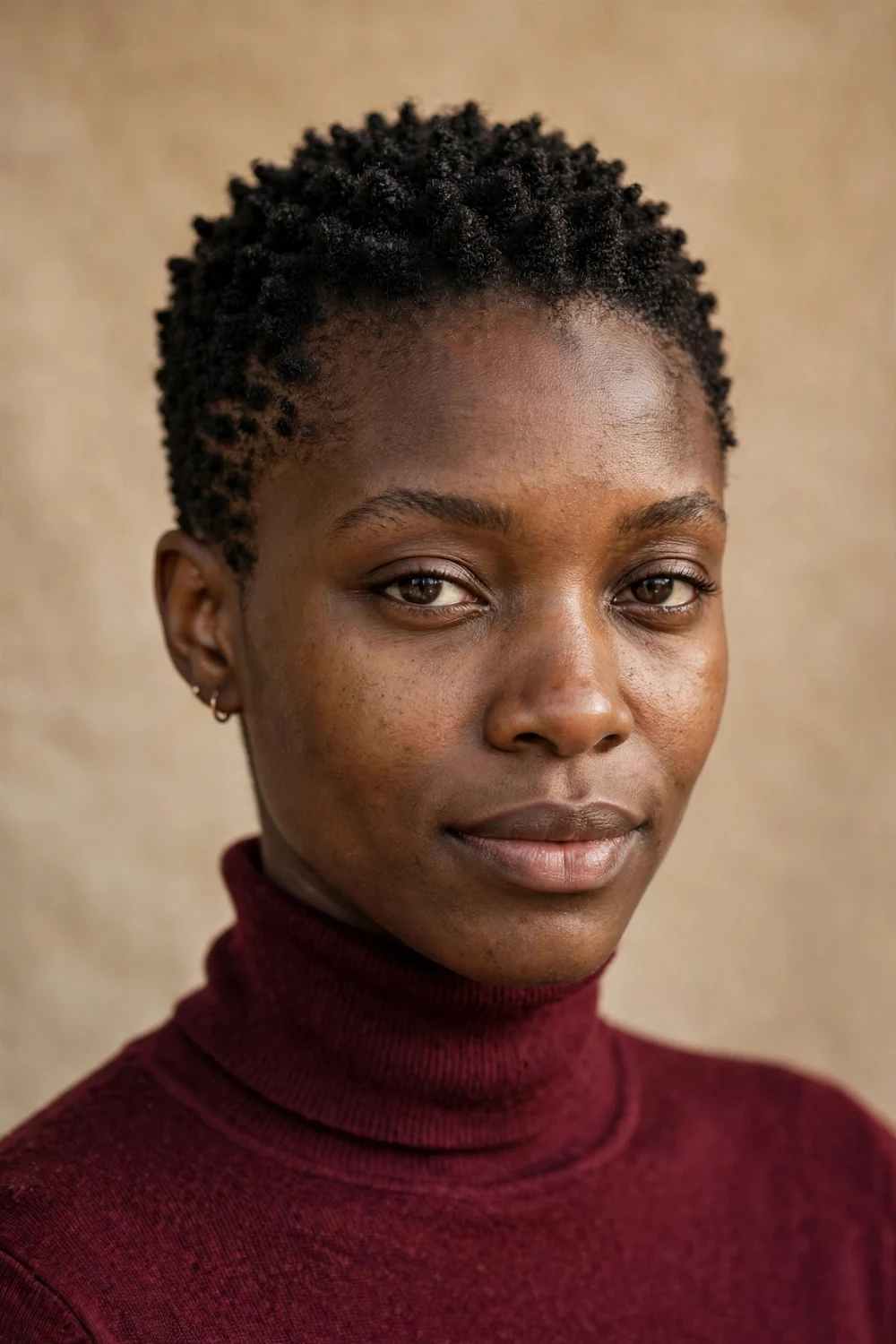
Sponge coils use a curl sponge, a foam tool with small holes, rubbed in circles over damp hair with leave-in or gel. The motion pulls short 4c hair into small, uniform coils in about five to ten minutes. It is one of the fastest ways to define very short hair, including a fresh TWA.
The coils last a day or two at full definition, and the style is quick enough to redo after a wash or a workout rinse. Keep the pressure light and keep the sponge moving in one direction, since rubbing back and forth creates tangles and breakage at the roots.
Try this: use the sponge on hair that is damp and coated, never dry. Dry rubbing roughs up the cuticle and leaves the coils fuzzy by midday.
Difficulty: Low · Cost: $ (salon)
6. Wash and Go

A wash and go means washing, conditioning, and raking a leave-in and gel through soaking wet hair, then letting the natural coil pattern dry as it falls. On short 4c hair there is less hair to weigh down, so definition is easier to get and the style dries faster than it does at longer lengths.
Expect three to five days from each set. At night, a satin scarf or a loose pineapple with a soft band keeps the shape. In the morning, steam from a shower plus a light water mist revives the coils without a full restyle. Shrinkage is part of this style, so judge it by health and definition rather than by length.
Try this: apply gel to hair that is still dripping wet and work in small sections. Adding product to damp or half-dry 4c hair is the main cause of a frizzy wash and go.
Difficulty: Low · Cost: $ (salon)
7. Twist Out

A twist out starts as two-strand twists on damp hair with a cream or mousse. Once the hair is fully dry, the twists come down and the hair keeps the stretched, wavy pattern they set. On short 4c hair a set of 10 to 16 twists is enough, and the style gives more visible length than a wash and go because the hair dries stretched.
The result lasts three to six days. Retwist in large sections at night if you want a second week, or let it expand into a softer, fuller shape as the days pass. Dryness is the main risk, so start with a leave-in under your styler and take the twists down with a little oil on your fingers.
Try this: let the twists dry completely before you unravel them, even if that means setting them the night before. Taking down damp twists is what turns definition into frizz.
Difficulty: Low to Medium · Cost: $ (salon)
8. Braid Out

A braid out works like a twist out, but the hair is set in simple three-strand braids instead. The pattern it leaves is a deeper, crimped wave, and the stretch is stronger, which makes it a good pick for women who want short 4c hair to show more length. Six to ten braids cover a short head of hair.
Wear it for three to five days, sleeping in a satin scarf to protect the wave. Because braiding grips the hair more than twisting, work on detangled, well-moisturized hair and keep the braids firm rather than tight, especially around the hairline.
Try this: braid the front sections smaller than the back. The finer pattern at the front frames the face and looks deliberate even as the style softens.
Difficulty: Low to Medium · Cost: $ (salon)
9. Flat Twists
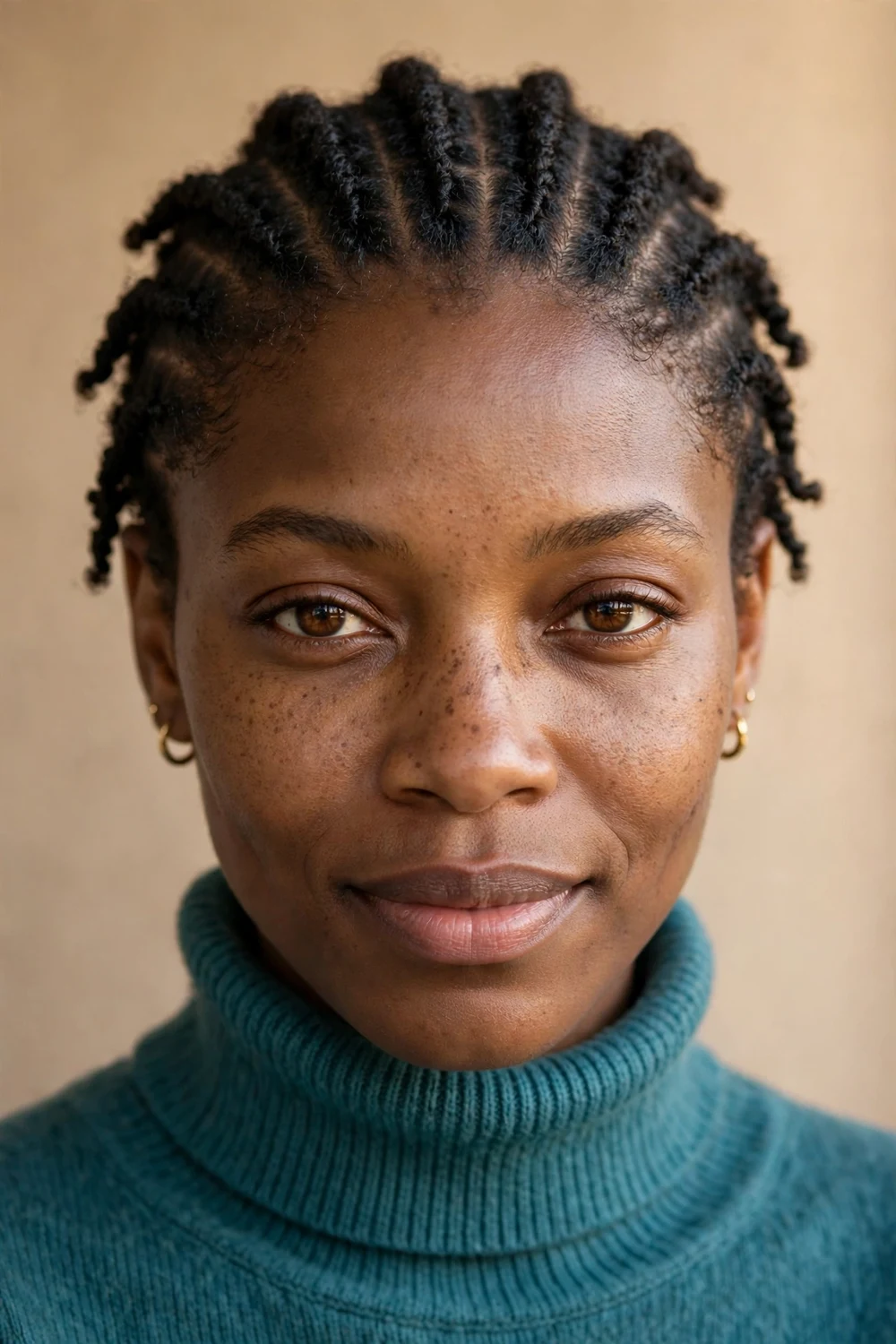
Flat twists are two-strand twists worked flat against the scalp, the way cornrows are braided flat. They sit close to the head, keep the ends tucked away, and give short 4c hair a neat pattern that reads well from every angle. Straight-back rows are the simplest version and suit work and formal settings.
A set lasts one to two weeks. Care while they are in is light: a scalp oil two or three times a week, a spritz of water on the twists if they feel dry, and a satin scarf at night. When the twists come out, the hair underneath is already set for a twist out, so one install gives two styles.
Try this: keep the parts clean and the tension even rather than tight. Flat twists that pull at the hairline will cost you edges, which defeats the point of a protective style.
Difficulty: Medium · Cost: $$ (salon)
10. Chunky Twists

Chunky twists are large two-strand twists, usually eight to fourteen across the whole head. Because each twist is big, the install is fast, about an hour on short hair, and the take-down is fast too. The twists hang with some weight, which gives short 4c hair movement and a fuller outline.
Wear them for one to two weeks. They are too large to hold much longer without frizzing at the roots. Moisturize by misting the twists and sealing with a light oil, and wash the scalp with diluted shampoo if you keep them in past the first week.
Try this: twist on stretched hair, for example after a braid out or a banding session, if you want the chunky twists to hang longer and swing more.
Difficulty: Low to Medium · Cost: $ (salon)
11. Mini Twists

Mini twists are small two-strand twists, fine enough that a short head of hair can hold forty or more of them. They take the longest to install of the twist styles here, two to three hours, and they repay that time by lasting the longest: two to four weeks with basic care.
While they are in, the routine is a light mist and oil every few days and a scarf at night. Mini twists move like loose hair, can be pinned back or worn in a small puff, and they protect the ends the whole time. Take them down gently and detangle each section as you go, since small twists tangle at the roots if they are left too long.
Try this: install mini twists on freshly washed, deep-conditioned hair. Clean, well-moisturized twists stay neat far longer than twists put in on dry, product-heavy hair.
Difficulty: Medium · Cost: $$ (salon)
12. Bantu Knots

Bantu knots are made by twisting each section of hair and coiling it around itself into a small knot at the scalp. On short 4c hair the knots sit in neat rows and hold without pins in most cases, because the coil texture grips itself. The style keeps every end tucked in and off the neck and shoulders.
Wear the knots for up to a week. Keep the scalp oiled and cover the knots at night so they stay smooth. Avoid making the knots very tight: the twist at the base is what holds them, and extra tension only adds soreness without adding hold.
Try this: part the hair in even sections before you start, using the same grid you would use for braids. Even sections are what make the finished knots look orderly.
Difficulty: Low to Medium · Cost: $ (salon)
13. Bantu Knot Out
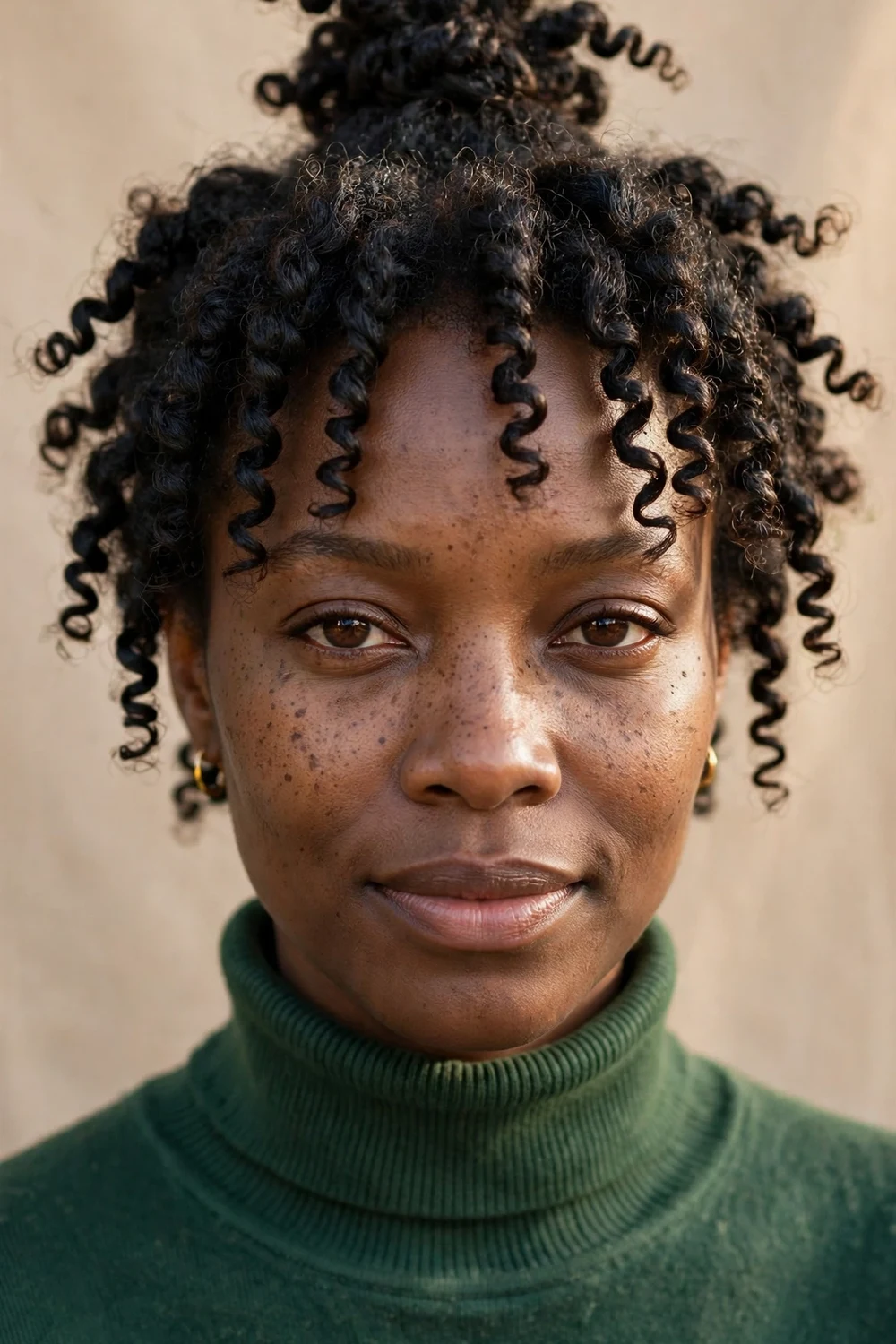
A bantu knot out is what you get when the knots come down: springy spiral curls set by the coiled shape of the knot. The curls are tighter and more uniform than a twist out, and on short 4c hair they give strong definition with no heat and no extra tools. Most women get the knot out free, as the second wear of a set of bantu knots.
The curls hold for three to five days. Set the knots on damp hair with a cream, let them dry fully, and unravel with oiled fingers, separating each curl once at most. Over-separating breaks the spiral pattern and shortens the life of the style.
Try this: if the roots look flat after the take-down, lift them with a wide pick at the scalp only. Leave the curl lengths untouched so the spirals stay intact.
Difficulty: Low to Medium · Cost: $ (salon)
14. Cornrows
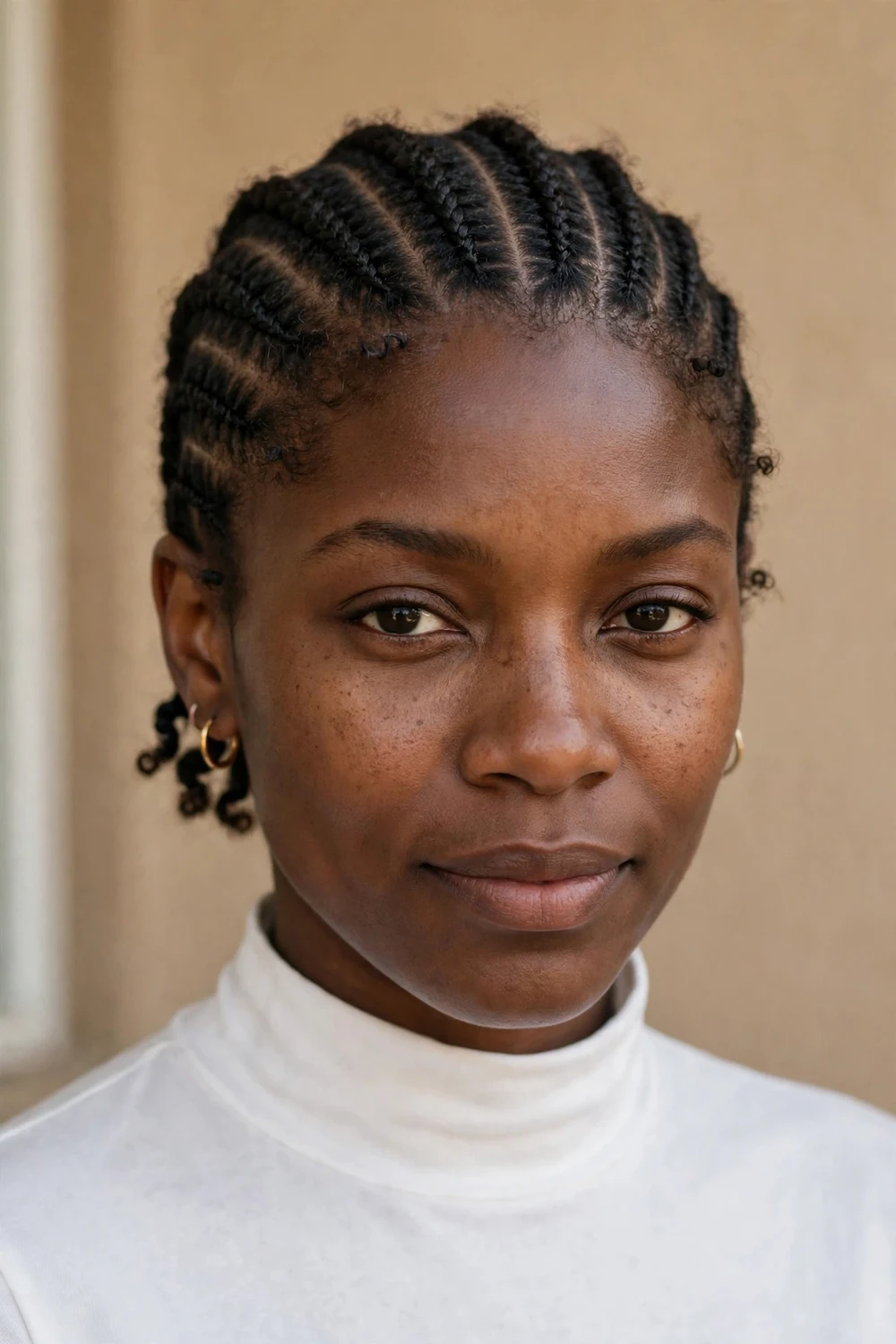
Cornrows braid the hair flat against the scalp in rows. Short 4c hair holds cornrows well because the texture grips the braid, and straight-back rows on short hair need no added hair to look complete. The style keeps the hair fully protected and the neck and face clear.
A set lasts two to three weeks on short hair. Care is a light scalp oil, a weekly wash or scalp cleanse with diluted shampoo on a cloth, and a scarf at night to keep the rows smooth. This is one of the strongest options in the wider family of short hairstyles for Black women, since it suits almost every age and setting.
Try this: ask for medium rows rather than very small ones on short hair. Medium rows go in faster, come out faster, and put less tension on short edges.
Difficulty: Medium · Cost: $$ (salon)
15. Short Box Braids

Short box braids are individual braids, usually with a small amount of added hair, cut to a bob at chin or jaw length. The short length keeps the braids light, which matters for comfort and for the health of the hairline. The bob shape keeps the style tidy enough for work while the braids rest your own hair.
Plan on four to six weeks of wear. Wash the scalp every one to two weeks, keep the braids moisturized with a light spray, and sleep with the braids gathered under a satin bonnet. Because the braids are short, the install and the take-down both run shorter than long box braids.
Try this: keep the braids medium sized and the added hair light. Heavy braids on short natural hair pull at the roots and shorten how long you can comfortably wear the style.
Difficulty: Medium to High · Cost: $$$ (salon)
16. Finger Waves

Finger waves mold very short hair into smooth S-shaped waves that lie flat against the head. The style is built with a strong-hold gel or mousse, a fine comb, and your fingers shaping each ridge, then the hair dries hard and glossy under a scarf or a dryer. It suits very short cuts, from a buzz length to a short TWA.
The set holds for several days if you tie it down each night. It is a popular pick for events because the finish looks deliberate and polished, and it needs no heat. The limit is length: once the hair passes about two inches, the waves stop lying flat and the style gives way to coils or a tapered cut.
Try this: work on soaking wet hair with plenty of gel, and tie a scarf over the waves for at least twenty minutes while they set. Lifting the scarf early softens the ridges.
Difficulty: Medium · Cost: $$ (salon)
17. Slicked-Back Short Cut
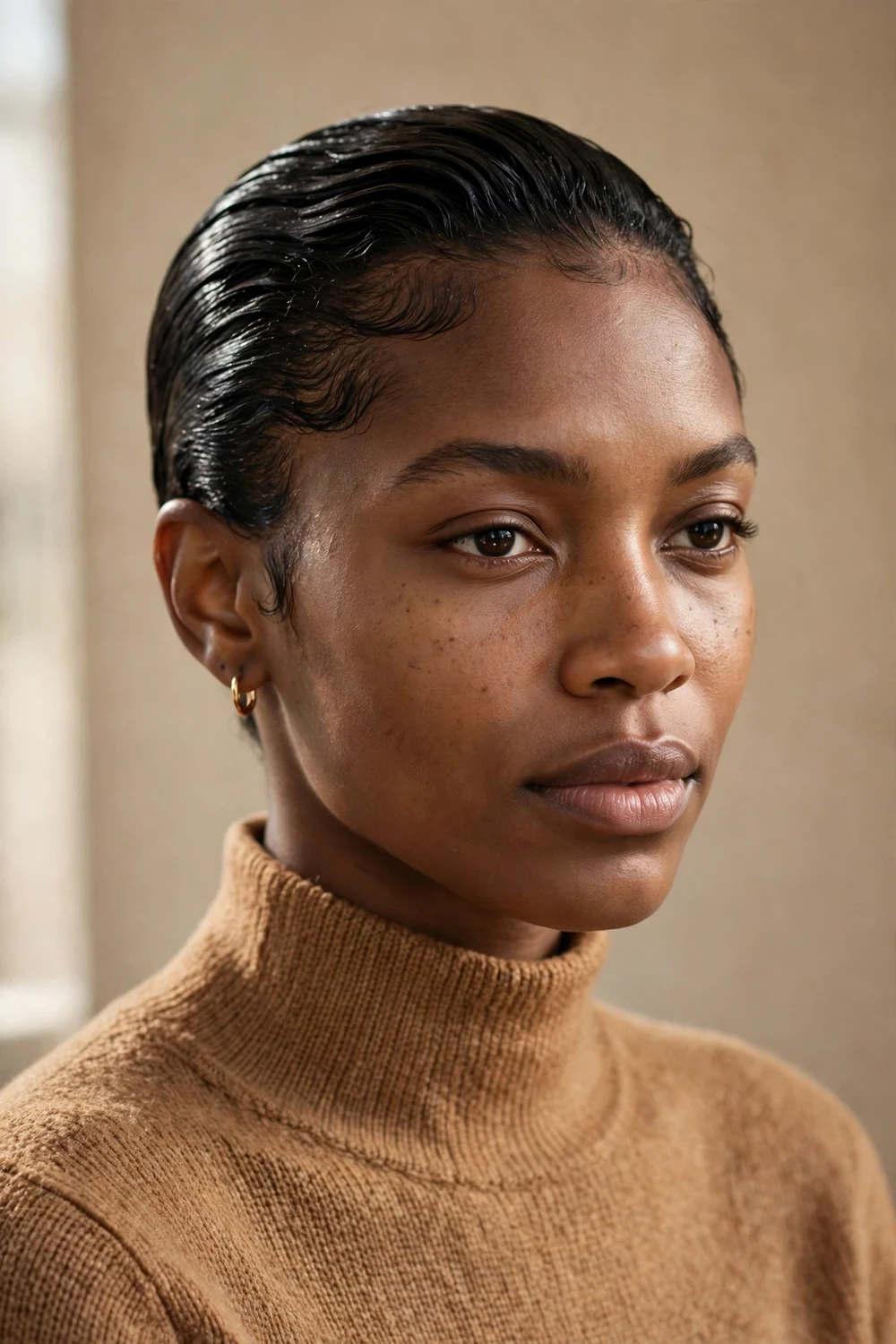
A slicked-back style brushes short hair straight back from the hairline and holds it flat with a strong gel. On 4c hair the texture gives the surface a soft sheen once it is smoothed, and the look reads clean and formal without any heat or stretching. It works best at TWA and tapered lengths.
The style takes about ten minutes and lasts the day, or two days if you tie it down at night. Use a water-based gel so the hair rinses clean without buildup, and lay the edges last with a small brush. On wash days, clarify well, since daily gel use builds up fast on short hair.
Try this: smooth the hair back in the direction it will lie while it is still damp from a rinse. Gel on dry 4c hair tends to sit on top and flake instead of holding.
Difficulty: Low · Cost: $ (salon)
18. Frohawk
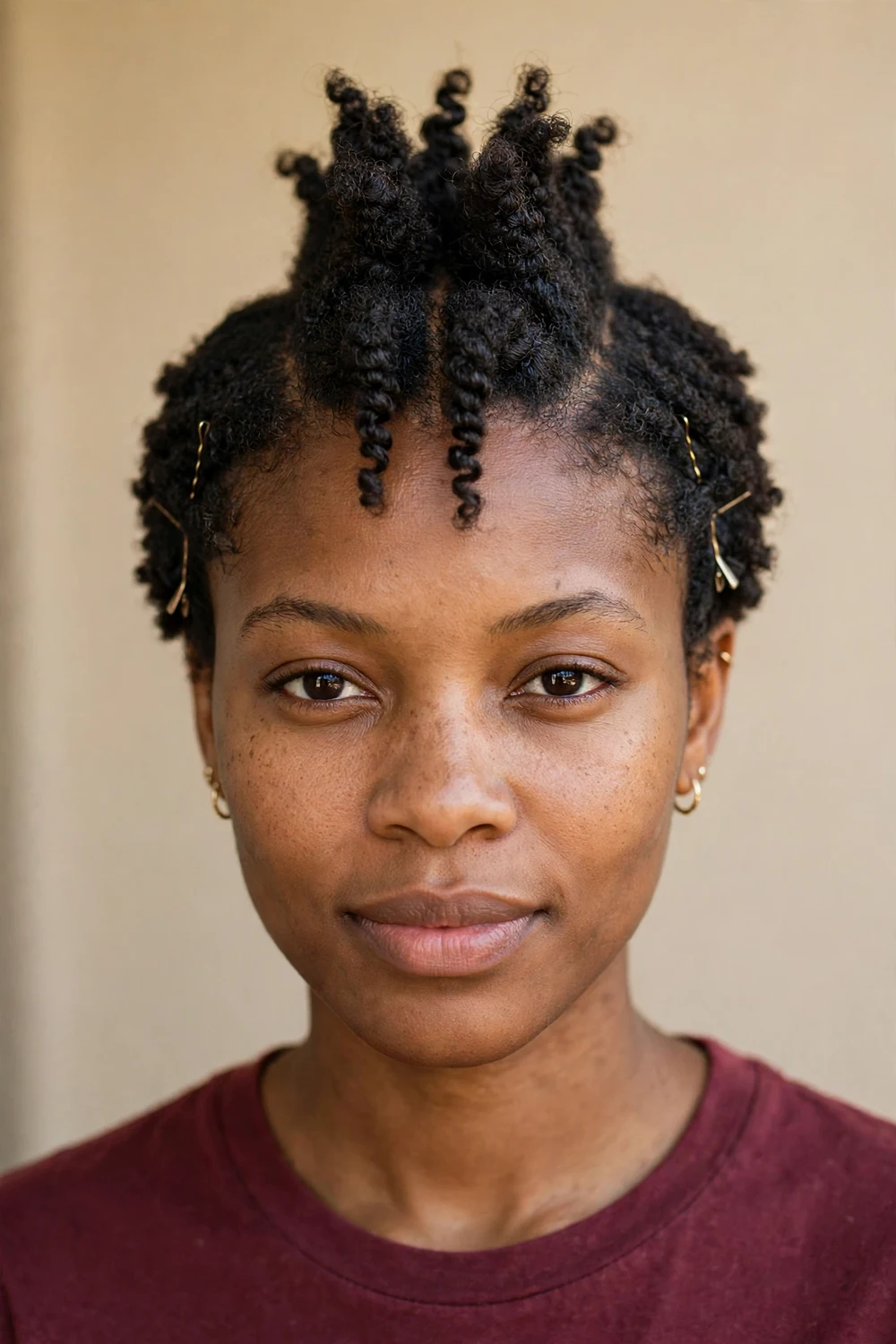
A frohawk shapes the hair up into a center strip of coils while the sides are pinned, twisted, or gelled close to the head. On a tapered cut the shape is already half built, since the sides are short and the top is long. On an even-length short cut, flat twists or pins on each side create the same outline for a day.
The style lasts one to three days depending on how the sides are held. Define the center coils with a cream or a twist out taken down only in the middle section, and fluff upward rather than out. It is an easy way to change the read of a basic tapered cut without a new cut.
Try this: use flat twists on the sides instead of pins if you want the frohawk to last the weekend. Twists hold through sleep with a scarf; pins rarely do.
Difficulty: Low to Medium · Cost: $ (salon)
19. Curly Pixie Cut

A curly pixie on 4c hair is a scissor cut that is short at the back and sides with longer coils left on top and at the front. The top length lets the coils fall slightly forward, which softens the face and keeps the cut feminine without any styling heat. Daily styling is a small amount of cream raked through the top.
Book a trim every four to five weeks, since the pixie outline blurs faster than a fade as it grows. The cut suits women growing out a TWA who want shape before bob length, and women coming down from longer hair who want to keep some length to play with.
Try this: bring photos of pixies on 4c hair specifically, not on loose curls. The same cut reads much shorter on tight coils because of shrinkage, and your stylist needs to plan for that.
Difficulty: Medium · Cost: $$ (salon)
20. Short Natural Bob
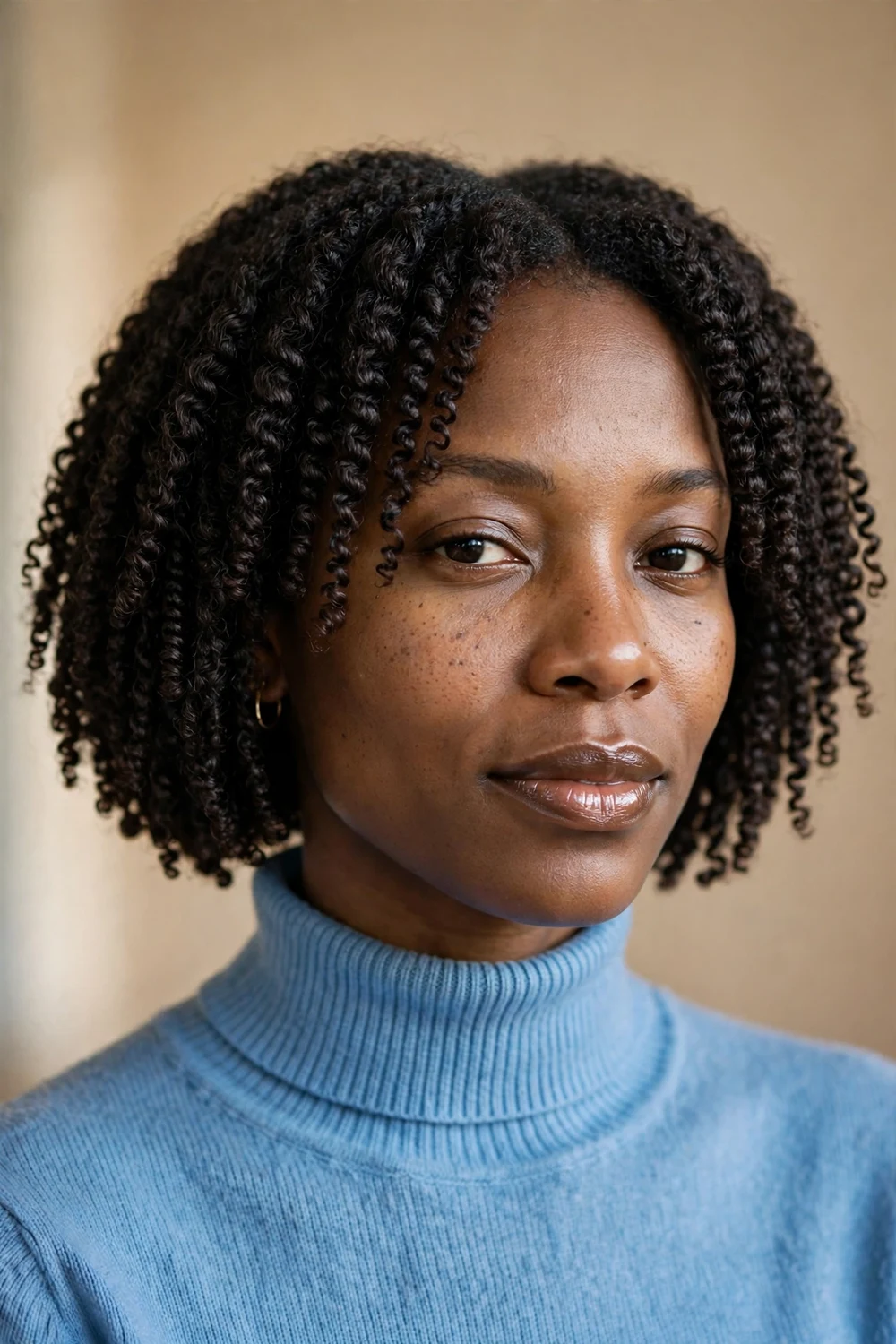
A short natural bob keeps 4c hair at chin or jaw length with even ends all around. The weight of the extra length lets the coils hang and frame the face, and the shape works worn as a wash and go, a twist out, or twists left in. It is the longest style on this list and the natural next step when a TWA grows out.
Upkeep is a trim every six to eight weeks to hold the line, plus the same daily moisture routine as any short style. Detangling takes a little longer than at TWA length, so work in sections on wash day and keep the ends moisturized, since they are the oldest hair on your head.
Try this: get the bob cut in its shrunken state or only lightly stretched. A bob cut while fully stretched can dry much shorter and uneven once the coils spring back.
Difficulty: Low to Medium · Cost: $$ (salon)
21. Undercut with Natural Top
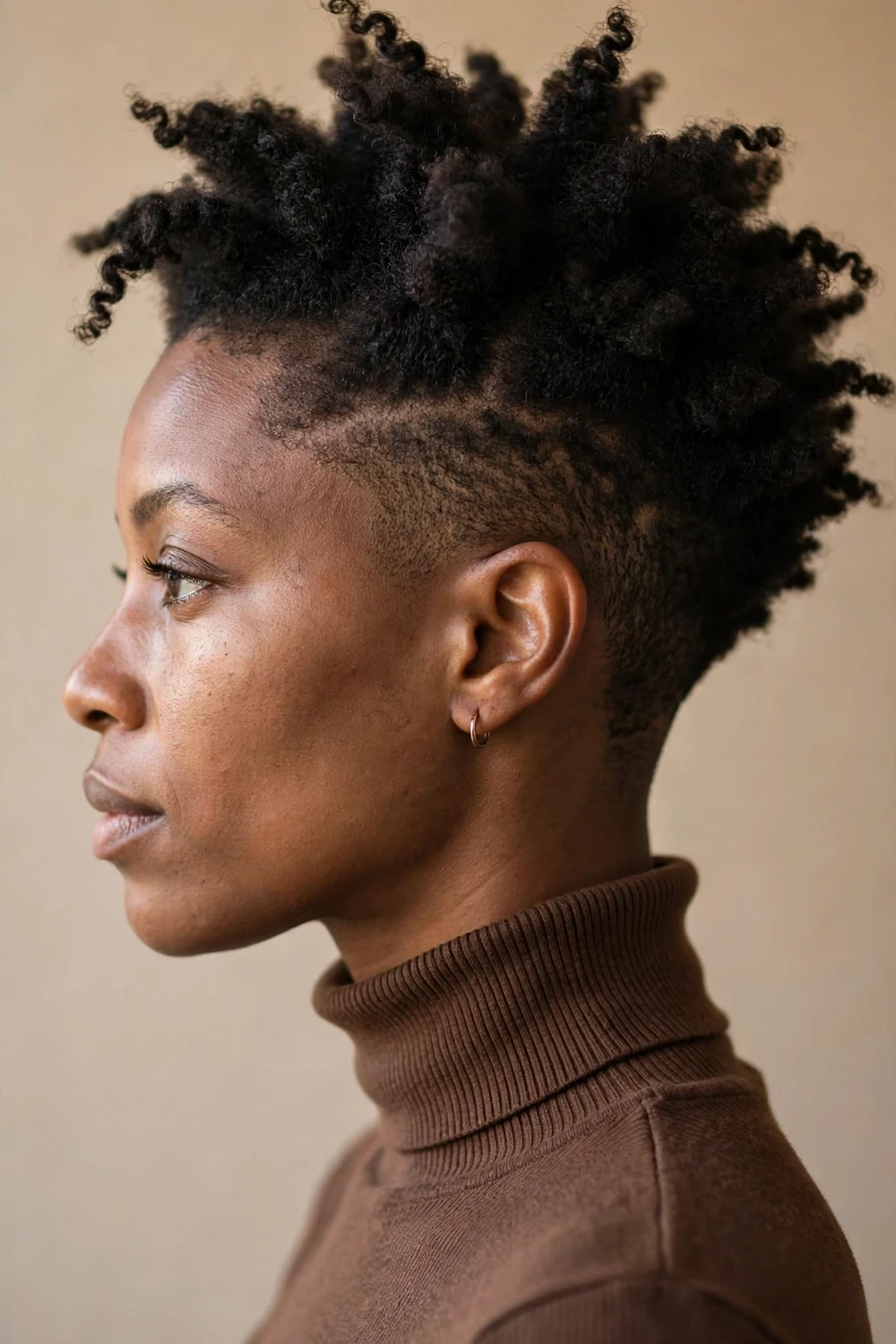
An undercut clips the sides and back very short, sometimes to the skin at the lowest point, and leaves the top long enough for coils, twists, or a small puff. The sharp contrast is the whole look. It also removes a lot of bulk, which makes wash day and drying noticeably faster.
The clipped sections grow out fast and need a touch-up every two to three weeks to stay crisp, while the top follows a normal trim schedule. If you like the shape but want a softer edge, ask for the sides tapered into the top instead of a hard disconnect.
Try this: start with the undercut only at the back, below the crown. It gives the shape and the easy wash day, and it grows out more gracefully than a full side undercut.
Difficulty: Medium · Cost: $$ (salon)
22. Short Cut with Curly Bangs
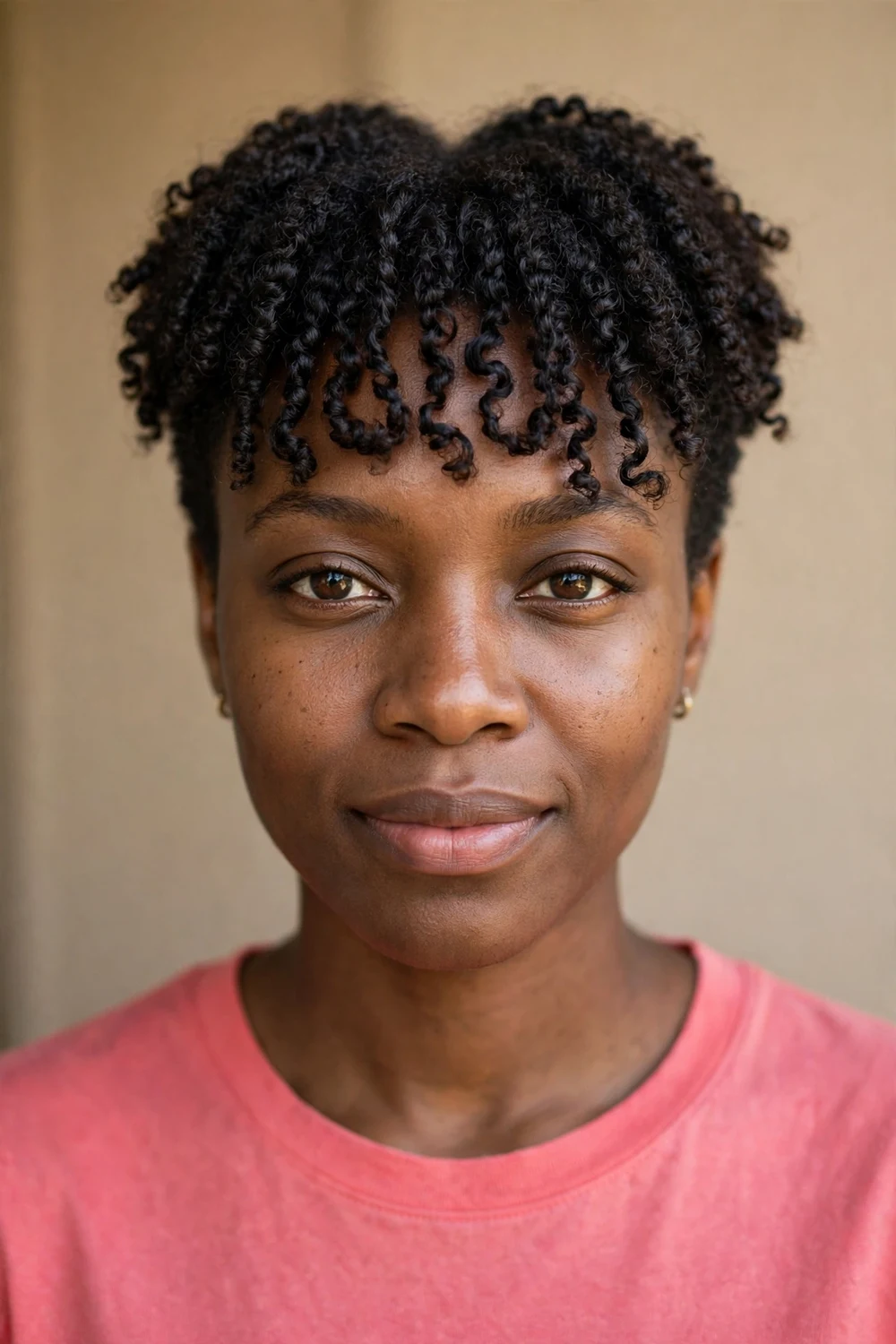
Curly bangs add a fringe of coils across the forehead to a short cut, usually a tapered cut or a short bob. The bangs change the whole read of the cut without changing its routine: the fringe is cut to fall forward, and the rest of the hair keeps its usual shape.
Style the bangs by defining the front coils with a little gel and letting them fall where they were cut. Because 4c hair shrinks, bangs are cut longer than the finished look and checked dry. Trim the fringe every three to four weeks, since even a small amount of growth changes where it lands.
Try this: ask for the bangs to be cut dry, coil by coil, at the length you want to see in the mirror. Wet cutting guesses at shrinkage and usually guesses wrong.
Difficulty: Low to Medium · Cost: $$ (salon)
23. Mini Afro Puffs

Mini afro puffs gather short hair into one or two small puffs using soft bands or drawstring ties. Two puffs with a middle part is the classic version. The style needs hair of about three inches or more, stretched a little with a pick or a gentle brush-up so the puffs sit round.
Each puff takes minutes to put in and the style lasts a day or two. Keep the bands loose and move their position between wears, since a tight band in the same spot every day breaks the hair at that point. A light gel at the roots and a brush give the base a smooth finish.
Try this: use bands without metal clasps, or small satin scrunchies. They grip short hair without snagging the coils on the way out.
Difficulty: Low · Cost: $ (salon)
24. Flat Twist Updo
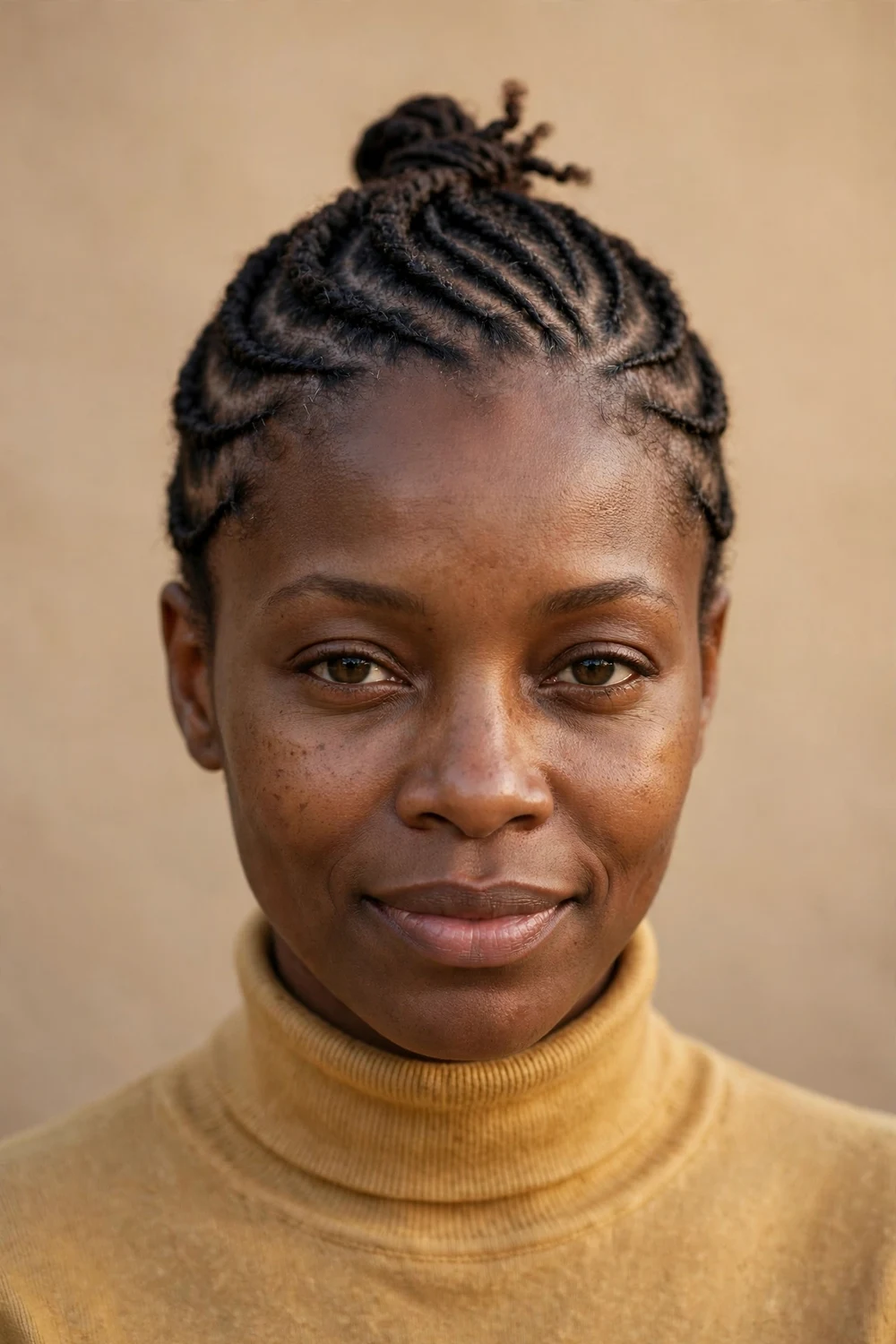
A flat twist updo twists the hair flat against the scalp in upward-sweeping rows and pins the ends into a small bun or roll at the crown. It lifts all the hair off the neck, protects every end, and looks formal enough for weddings and work events while using only your own short hair.
The updo lasts five to ten days with a scarf at night and a light oil on the scalp. It is usually a salon style, since twisting the back rows upward on your own head takes practice. Readers building a rotation of pinned styles can pair it with the quick updos for short hair collection for shorter sessions at home.
Try this: book the updo a day before your event rather than the morning of. One night of sleep settles the twists and softens any tight spots.
Difficulty: Medium · Cost: $$ (salon)
25. Short Cut with Shaved Design

A shaved design adds lines, curves, or a small geometric pattern into the short side or back of a cut, done with clippers or a razor by a barber. The top keeps its coils, twists, or definition as usual. The design is detail work on a cut you already wear, so it adds no time to your daily routine at all.
Designs stay sharp for about one to two weeks and fade as the hair grows, so most wearers refresh them at each regular cut appointment. Keep the design simple on the first try: one or two clean lines read clearly on short 4c hair, while fine detail blurs within days.
Try this: bring a photo of the exact design and ask the barber to draw it larger than the reference. Slightly bigger lines stay readable longer as the hair grows back in.
Difficulty: Medium · Cost: $$ (salon)
Frequently Asked Questions
How often should I moisturize short 4c hair?
Most short 4c hair does well with moisture every day or every other day. A water-based leave-in or a simple water spritz followed by a small amount of cream or oil is enough at short lengths, because the product reaches all of the hair easily. If your hair feels dry by the evening, add a light cream at night and sleep with a satin scarf rather than adding more product in the morning.
How long do mini twists last on short 4c hair?
Mini twists on short 4c hair last two to four weeks with basic care. A satin scarf at night, a light mist and oil every few days, and gentle handling when you wash the scalp stretch them toward the longer end of that range. Take them down by the fourth week even if they still look neat, because the roots begin to mat and tangle after that point.
What is the easiest short 4c hairstyle for a beginner?
The teeny weeny afro is the easiest place to start. The routine is wash, moisturize, and shape with your hands, and the cut itself does the styling work. A buzz cut is even lower upkeep, but it needs re-clipping every two to three weeks. Both styles let you learn what your hair likes, in terms of moisture and products, without learning a styling technique at the same time.
How do I reduce shrinkage on short 4c hair?
Styles that dry the hair in a stretched state reduce shrinkage the most: twist outs, braid outs, and bantu knot outs all set the hair stretched, so it hangs longer once it is taken down. Banding and threading also stretch the hair without heat. Keep in mind that shrinkage is a sign of healthy, elastic coils, so the goal is a stretched style for the days you want length, not a permanent change to your texture.
How often does a tapered cut on 4c hair need a trim?
A tapered cut usually needs a trim every three to five weeks. The faded sides and back grow out first and blur the shape, while the longer top can often go a visit longer between cuts. If you wear the top in twists or coils, you can stretch the appointment a little, since defined styles hide uneven growth better than a picked-out shape does.
Final Thoughts
Short 4c hair rewards a simple routine more than a complicated one. Pick a cut that fits the time you actually have, keep the moisture steady, and let the twist and braid sets do the protective work when you need a break from daily styling. My own short-hair seasons have gone best when I treated the shape as the style and everything else as upkeep. Start with one look from this list, wear it through a full trim cycle, and you will know quickly whether it belongs in your regular rotation.

