

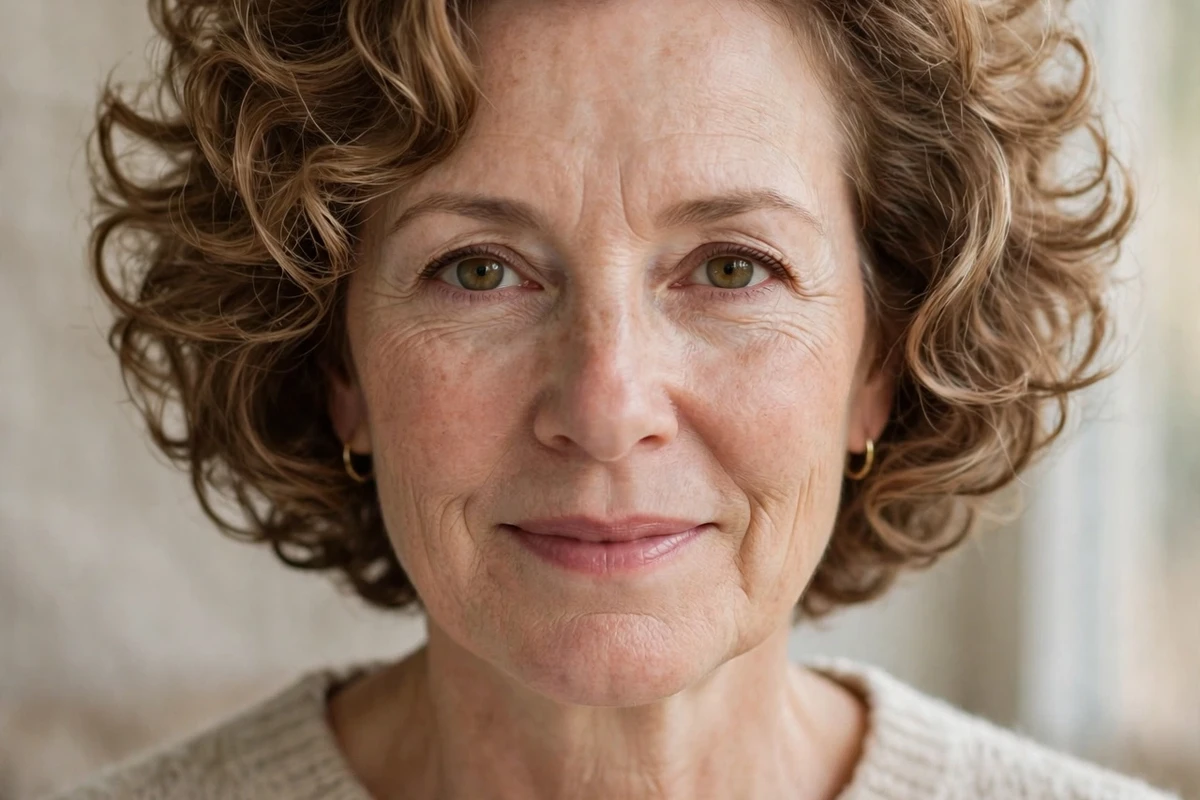
The inverted bob and curly hair were made for each other. The cut’s stacked back lifts curls at the crown where they need it most, while the longer front pieces give ringlets and waves room to hang and move. Because the shape is built into the cut, you spend less time fighting flat roots and more time enjoying defined, bouncy curls. A dry cut matters here, since curls spring up as they dry and a wet cut always lands shorter than you expect.
This list rounds up 29 inverted bob hairstyles for curly hair, from classic dry-cut shapes to feathered, choppy, and balayage-tinted takes. Every idea here is chosen for natural curls and waves, with notes on what to ask your stylist, how to style each shape, and which curl types each suits. Pick the cut that matches your curl pattern and your routine, and bring a photo to your appointment.
Quick Takeaways
- Ask for a dry cut so your stylist shapes each curl at its true length; wet cuts spring up shorter.
- The stacked back removes the triangle effect, giving lift at the crown instead of width at the bottom.
- Hydration is non-negotiable: a leave-in conditioner plus a curl cream keeps the angle crisp and frizz low.
- The sharper the angle, the more often you will need trims, usually every six to eight weeks.
- Diffuse on low heat or air-dry completely; rough towel-drying breaks the curl pattern.
1. Classic Curly Inverted Bob

The classic version starts with a dry cut, curl by curl, so each ringlet lands at its true length. Your stylist stacks the back just enough to lift the crown while the front pieces fall past the chin, creating the signature diagonal. Because curls are shaped individually, the curl pattern stays intact instead of being chopped into a generic layer. This is the safest first inverted bob for curls, and it flatters nearly every face shape.
It suits type 2 waves through type 3 curls. Style on wash day with a leave-in conditioner followed by a curl cream, then scrunch upward to encourage the pattern. Let it air-dry or diffuse on low heat, and avoid touching the curls while they set. Refresh on day two with a water mist and a quick scrunch rather than a full restyle, and sleep on a satin pillowcase to keep the stacked shape from flattening overnight.
Try this: ask your stylist to cut each curl dry at its natural fall so the front diagonal lands exactly where you want it.
Difficulty: Low · Cost: $$ (salon)
2. Stacked Curly Bob with Crown Lift

This is the boldest stacking of the bunch, with short graduated layers packed through the back to build genuine height at the crown. From the side, the silhouette rises steeply before the longer front pieces dive toward the chin, giving the most architectural shape on this list. The stacked layers take weight off the back so each curl springs up instead of hanging limp. It is a strong pick if your crown goes flat while your ends puff out.
It works best on medium to thick curls that can carry the built-in volume. Blow-dry the back first with a small round brush, lifting at the roots, then let the front fall where it wants. Because the shape is cut in rather than styled in, it survives wind and humidity better than most curly cuts. Book trims every six weeks, since the sharp graduation grows out faster than softer versions and loses its lift as it does.
Try this: flip your head upside down for the last minute of diffusing to push extra lift into the stacked layers.
Difficulty: Medium · Cost: $$ (salon)
3. Layered Curly Inverted Bob

Layers are what bring curls back to life when they have gone heavy and stringy. This version spreads staggered layers through the whole cut, so each curl gets room to coil instead of being dragged down by the weight above it. The inverted angle still runs through the shape, with the back sitting higher and the front falling longer, but the movement comes from the layers as much as the angle. It is the liveliest, most dimensional take here.
It suits thick or dense curls that need weight removed. Ask for internal layering rather than razoring if your hair frizzes easily, since razored ends can rough up the cuticle on curly hair. Style with a curl-defining cream scrunched into soaking-wet hair, then diffuse. Scrunch in sections so the cream reaches the interior layers, and let the hair dry completely before shaking the roots gently for bounce and maximum definition.
If you like this layered movement at a shorter length, these short french bobs show how layered shapes behave on a chin-grazing cut.
Try this: ask for point-cut ends rather than blunt ones so the layers blend into the curls without a hard line.
Difficulty: Medium · Cost: $$ (salon)
4. Side-Parted Curly Bob

A side part changes the whole personality of an inverted bob. Sweeping the curls over from a deep side part creates instant root lift, which is why stylists reach for this parting whenever curls need to look fuller in photos. The longer front becomes a soft curtain that falls across one side of the face, softening the strong diagonal of the cut. You can test this on any inverted bob you already have, since no scissors are required to try it.
It flatters round and square faces, because the diagonal sweep breaks up the symmetry. For maximum volume, flip the part to the opposite side from where your hair naturally falls, since hair resists lying in a new direction and stands up at the root. A little volumizing mousse worked in before diffusing keeps the sweep lofty all day. Refresh the part with a water mist on day two rather than re-wetting the whole head.
Try this: set the part while your hair is soaking wet, since curls lock their direction as they dry.
Difficulty: Low · Cost: $$ (salon)
5. Chin-Length Curly Inverted Bob

Ending the front right at the chin is the sweet spot for a curly inverted bob. It is long enough to feel feminine and frame the face, yet short enough at the back to free the neck and keep curls off your collar. The shorter nape means far less hair competing with scarves, necklaces, and jacket collars. The angled line adds definition to a softening jaw, and the curls sit neatly above the shoulders instead of piling up.
It flatters oval and heart-shaped faces particularly well. Wear it tucked behind one ear on busy days for an instant polished look, since the curls at the front spring right back out. A quick pass with a diffuser in the morning revives the shape, and a pea-sized amount of curl cream smooths the front pieces. Because the front sits at the jaw, keep the ends hydrated or they will fuzz up first.
Try this: tuck one side behind your ear and let the longer curls on the other side frame your face for an easy asymmetric look.
Difficulty: Low · Cost: $$ (salon)
6. Graduated Curly Bob

The graduated bob runs on transitioning layers that move from shorter at the crown to longer toward the bottom, giving full-bodied, bouncy curls with real structure. It reads a little softer than a hard stacked back, since the graduation is spread evenly instead of packed at the nape. That even layering is what stops curls from forming the dreaded triangle, wide at the bottom and flat on top. Each layer supports the one above it, so the shape holds its roundness for days.
It suits medium to thick curls that need both lift and length. Ask your stylist for a dry cut so the graduation is placed where your curls actually sit, not where they look when wet and stretched. Scrunch a curl cream through damp hair and diffuse with your head tilted, since the graduation needs heat-free volume to spring properly. Trim every seven to eight weeks to keep the layers from growing into one heavy shelf.
Try this: clip the roots at the crown with small jaw clips while drying for extra lift in the graduated layers.
Difficulty: Medium · Cost: $$ (salon)
7. Asymmetrical Curly Inverted Bob
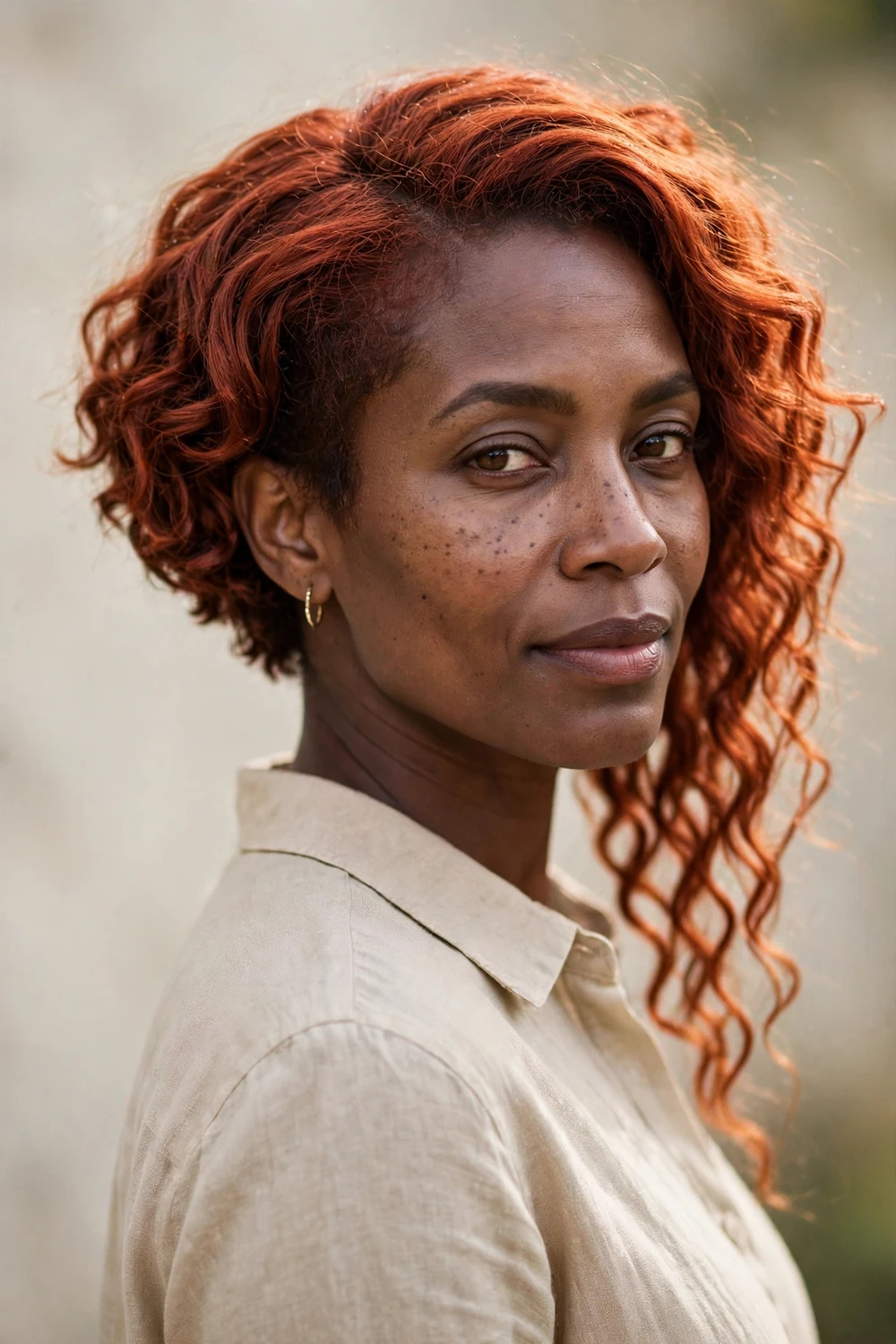
One side falls noticeably longer than the other, layered over the classic inverted angle. The imbalance sounds daring, but on curls it reads as artistic rather than severe, since the texture softens the difference in length. The shorter side shows off the precision stacking of the inverted back, while the longer side creates a bold sweeping curtain of curls. It photographs well from every angle, which is part of why it gets so many compliments.
The longer side gives you a dramatic sweep to style, while the shorter side keeps things cool and tidy at the neck. Keep the parting deep to maximize the contrast between the two sides, and ask for the shorter side to be shaped dry so it does not spring up unevenly. Use a curl cream with medium hold so the longer side keeps its drape without frizzing. Expect slightly more frequent trims on the short side to keep the asymmetry crisp.
Try this: part deeply on the shorter side so the longer curtain of curls falls with maximum drama.
Difficulty: Medium · Cost: $$ (salon)
8. Wavy Inverted Bob
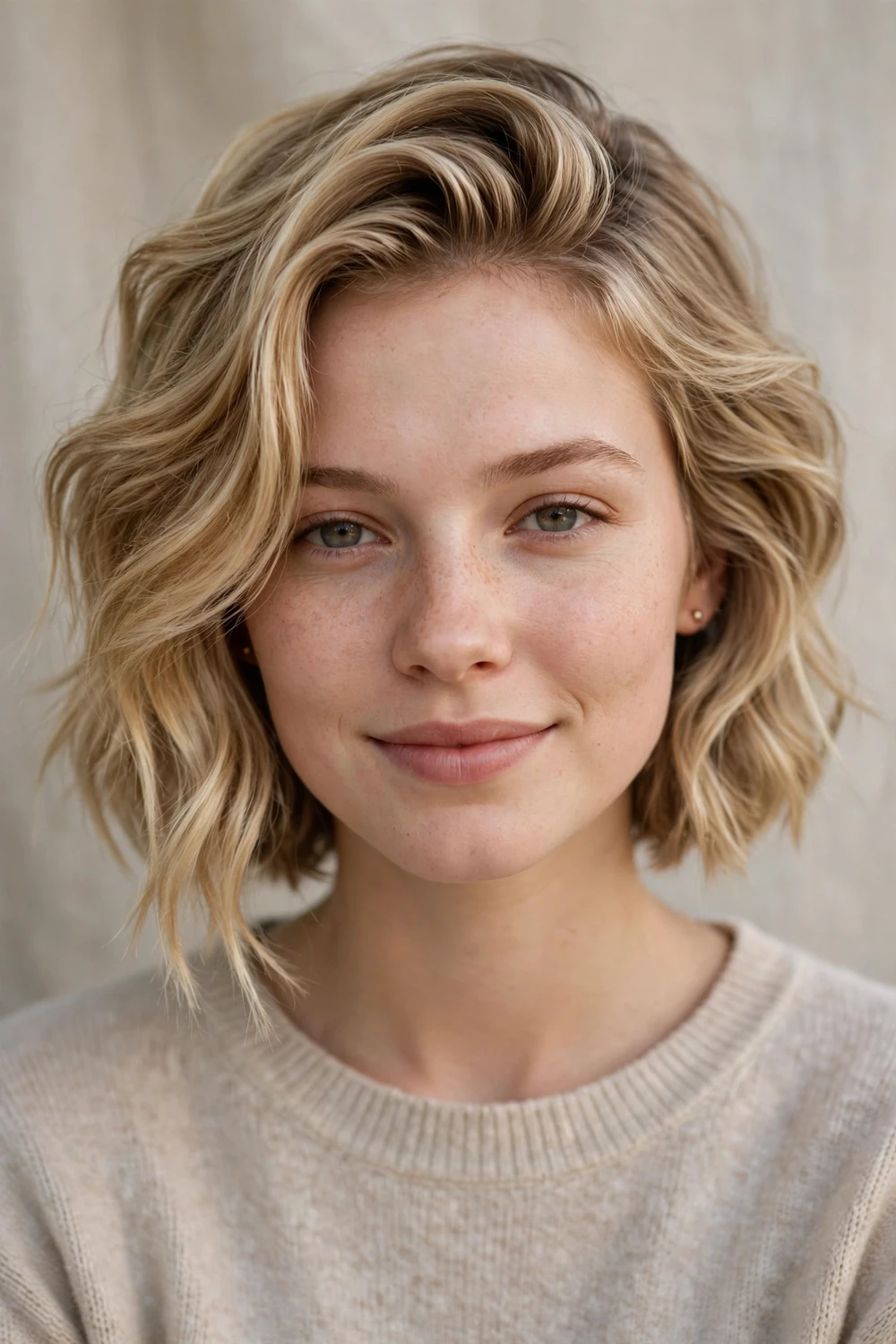
Loose waves relax the inverted bob’s geometry in the prettiest way. The stacked back still gives a lifted foundation, but soft waves blur the hard diagonal into something beachy and modern. It is the version to choose if blunt lines feel too strict for your personality or your hair has a natural wave you would rather encourage than fight. The texture makes fine hair appear thicker, and the style is genuinely low maintenance compared to tighter curl patterns.
Enhance the wave with a sea-salt spray scrunched into damp hair, then air-dry or diffuse on low heat. For more wavy texture at a similar length, these short shag hairstyles for women show how choppy layers play with natural wave. It grows out gracefully, buying you extra weeks between salon visits, since the soft shape has no sharp lines to maintain. A little tousling with your fingers in the morning is most of the routine.
Try this: braid damp hair in two loose braids overnight for soft, even waves with zero heat.
Difficulty: Low · Cost: $ (salon)
9. Coily Natural Curls Inverted Bob

This version is shaped specifically for tight coils, working with the natural shrinkage instead of against it. The back is carved into a gentle stack that lifts the coils at the crown, while the front is left long enough that the coils hang past the chin even after shrinkage. A stylist experienced with type 4 hair cuts each section dry, since wet coils stretch several inches longer than they will ever sit. The result is a sculpted shape that celebrates the texture rather than fighting it.
Hydration is everything here: layer a leave-in conditioner under a rich curl cream, and seal with a light oil to lock in moisture. Protective nighttime habits matter too, so sleep in a satin bonnet to keep the coils defined and the stacked back from flattening. Stretch the time between washes with a co-wash, and plan trims every eight to ten weeks to keep the shape from growing into a round ball.
Try this: band the front coils overnight by sectioning them loosely, which stretches them just enough to show off the angle.
Difficulty: Medium · Cost: $$ (salon)
10. A-Line Curly Bob

Want the inverted shape without the drama? The A-line version keeps the angle subtle and balanced, with a gentle slope from a slightly higher back to a longer front. The curls take center stage here rather than the architecture of the cut, which makes it the most wearable entry point if you are nervous about short hair. The balanced frame contours the face softly while letting your natural pattern shine through. It is quiet, flattering, and very hard to get wrong.
It suits every curl type and most face shapes, and it is one of the most forgiving shapes to grow out. Ask your stylist for a subtle angle and a soft perimeter rather than a blunt line, so the grow-out stays seamless. Style with your usual curl routine and let the shape do the work. Because the angle is gentle, you can stretch trims to eight or nine weeks without the cut losing its identity.
Try this: ask for a subtle angle so the cut stays soft as it grows out between appointments.
Difficulty: Low · Cost: $ (salon)
11. Dramatic Angled Curly Bob
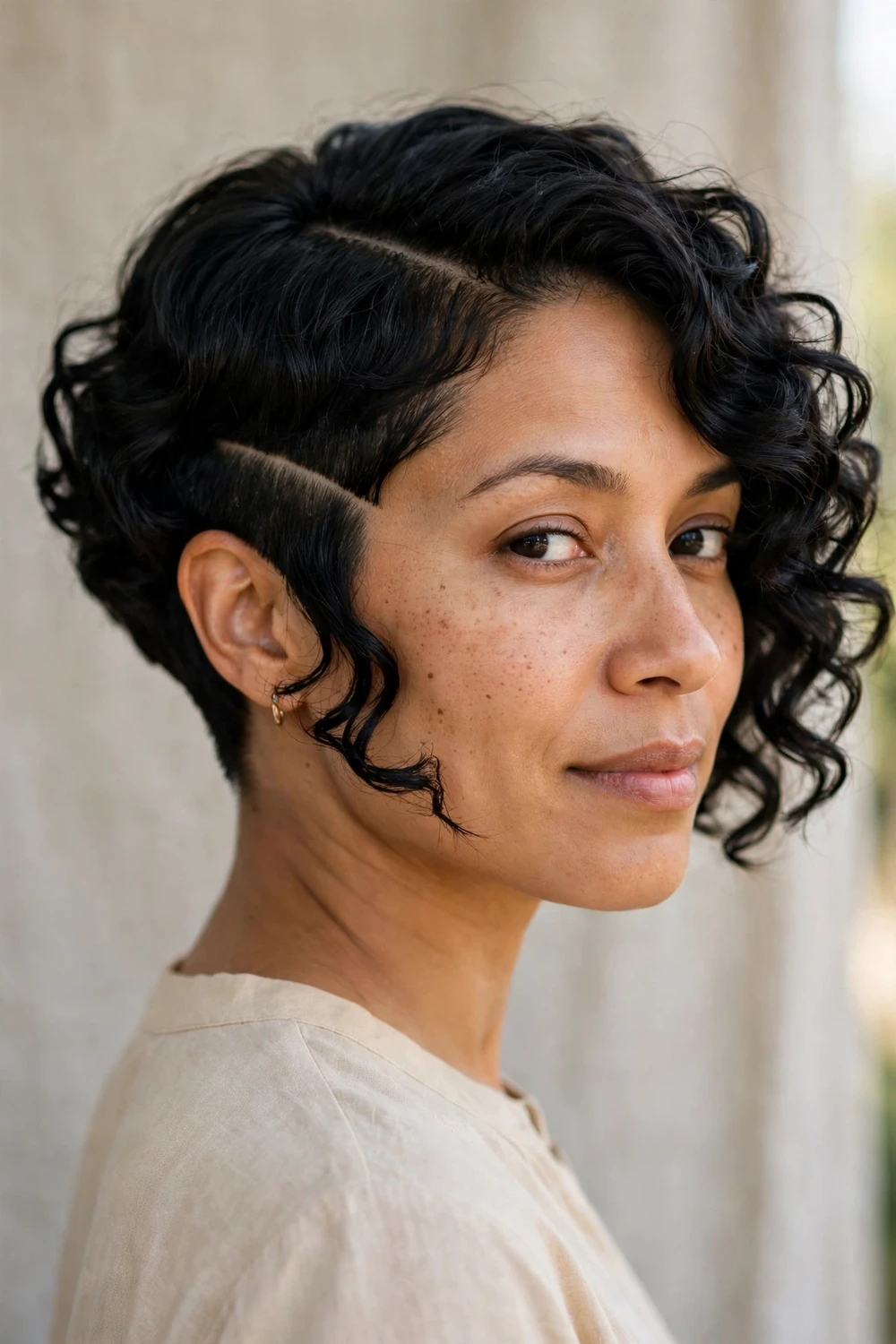
This is the steepest angle on the list, with an extreme diagonal from a very short stacked back to significantly longer front pieces. The sharp line creates a bold geometric shape that defines the jawline and draws the eye downward, which is quietly slimming on a fuller face. On curls, the drama needs management: the front pieces must be shaped dry so the curls do not spring the angle shorter than planned. When it is done right, the contrast between the cropped back and the long curls in front is striking.
Defined curls keep the angle readable, so finish with a strong-hold gel scrunched in well; if the front pieces go frizzy, the whole line disappears. It suits tighter curl patterns best, since loose waves can blur the diagonal. Plan trims every five to six weeks, because this shape shows every millimeter of growth. Keep the back hydrated with a leave-in, since short stacked curls are the first to dry out.
Try this: smooth the front pieces with a pea-sized amount of gel while damp so the angle stays crisp all day.
Difficulty: High · Cost: $$ (salon)
12. Shoulder-Length Curly Inverted Bob

Not ready to go short? The shoulder-length version keeps the inverted idea, tidier and higher at the back with long sweeping front pieces, but the front falls to the shoulders. You keep your length while gaining the structure and lift that long, one-length curly hair so often lacks. The longer front gives you ponytail options on hot days and still frames the face with the classic diagonal. It is the gentlest way into the inverted family.
It works on almost every curl type, and the longer front is deeply flattering on round faces because it stretches the silhouette vertically. Style with a big diffuser cup for smooth, defined bends at the ends, and keep the roots lifted with a volumizing mousse. The grow-out is painless, so trims can stretch to ten weeks. If shrinkage eats your length, ask for the front pieces to be shaped longer than feels necessary while dry.
Try this: pull the front curls into a loose half-up style to show off the stacked back on second-day hair.
Difficulty: Low · Cost: $$ (salon)
13. Feathered Curly Inverted Bob
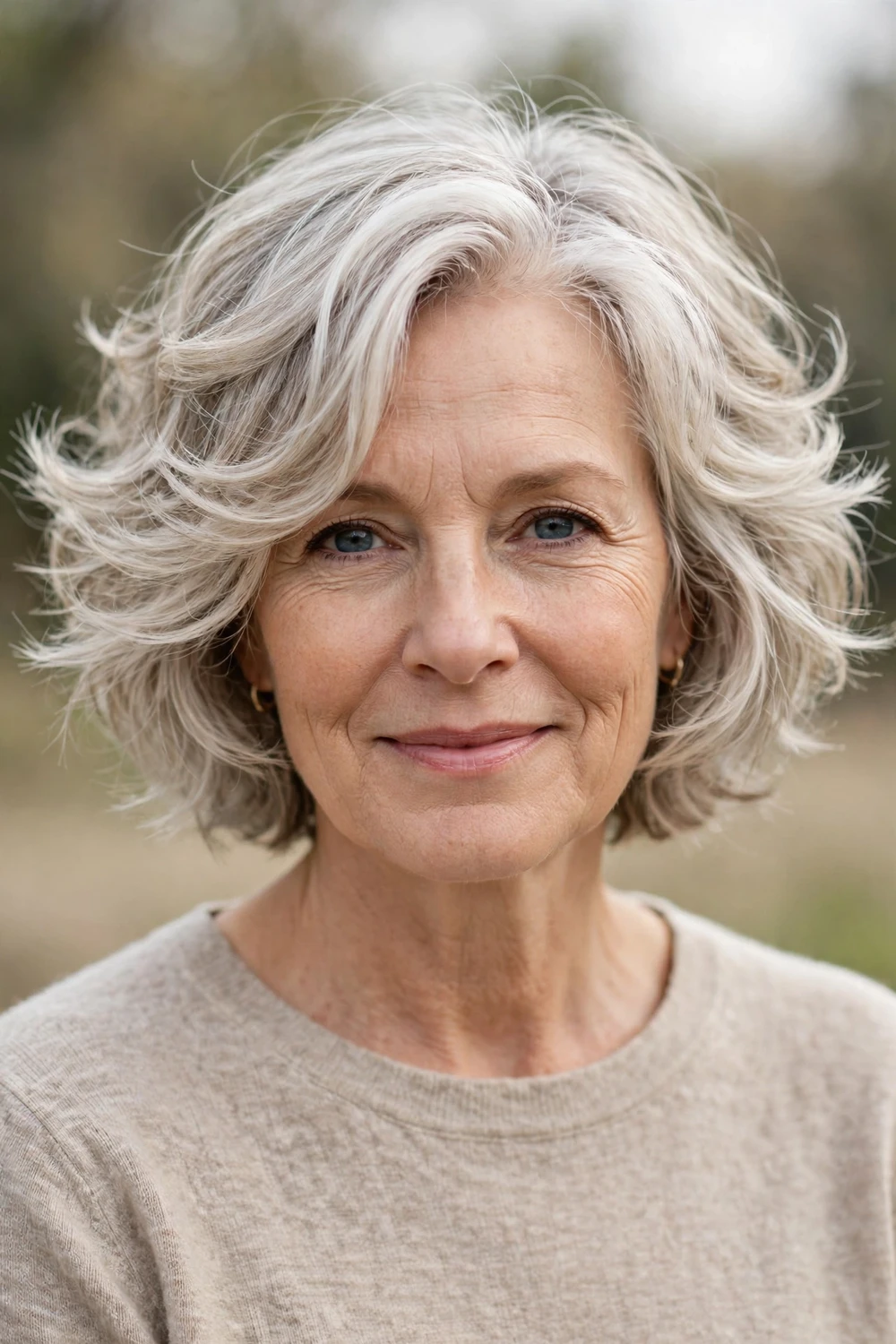
Feathering takes the inverted bob to its softest, most romantic version. Light, wispy layers flick softly through the back and sides while the front stays a touch longer, so the whole cut moves like fabric instead of sitting like a helmet. It is an excellent pick for fine curls that cannot carry blunt weight, since feathered ends never look sparse the way a solid line can on thin hair. The softness also keeps the inverted angle from reading too severe.
Blow-dry with a vent brush, directing the layers back off the face, and finish by raking through with your fingers instead of a brush. Expect a soft grow-out, since this is one of the most forgiving shapes to maintain between appointments. A light curl cream is enough product here; heavy gels weigh feathered ends down. It suits fine to medium curls and oval or heart-shaped faces best. Refresh on day two with a water mist and a quick scrunch to wake the feathered layers.
Try this: rake a pea-sized amount of cream through the ends with your fingers for soft separation without stiffness.
Difficulty: Low · Cost: $$ (salon)
14. Choppy Curly Inverted Bob

The choppy version trades polish for attitude. Point-cut, piecey ends are worked through the stacked back and the longer front so nothing lies too neatly, giving texture, separation, and movement in every direction. It is the inverted bob for anyone who found the classic version a little too done. Choppiness is brilliant at disguising thin patches, because the varied lengths create shadow and depth where hair is sparse. Second-day hair often looks even better than wash day here.
Work a pea-sized amount of texturizing putty between your palms and pinch it through the ends to define the pieces, then leave the curls alone. It suits medium to thick curls with a strong natural pattern, since the texture needs body to read as intentional. Ask your stylist to point-cut rather than razor, which keeps curly ends from frizzing. Trims every seven weeks keep the pieces from growing into shapeless bulk.
Try this: pinch texturizing putty through the ends instead of raking it through, which keeps the pieces separated.
Difficulty: Medium · Cost: $$ (salon)
15. Deep Side-Parted Curly Bob
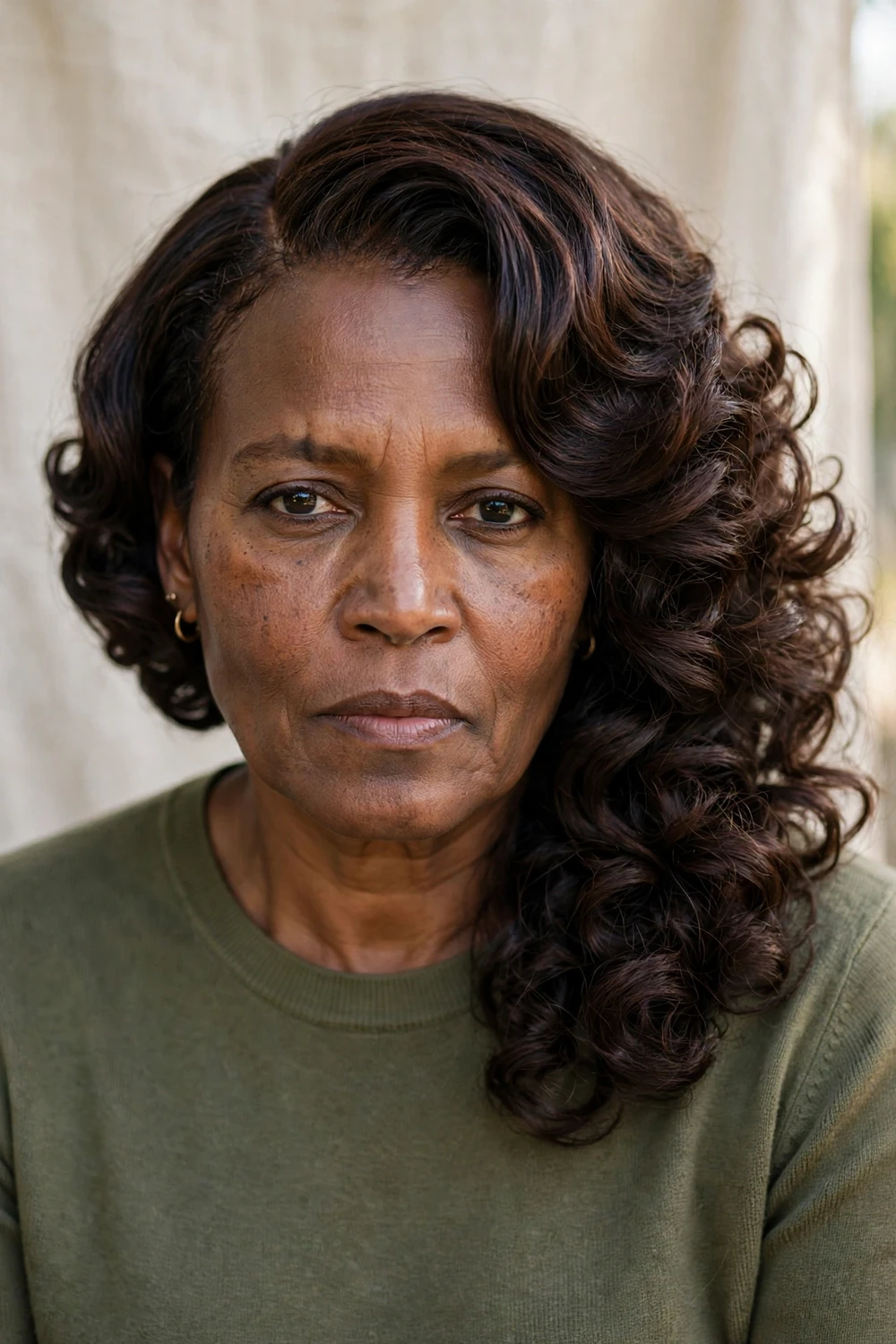
This one brings old-Hollywood glam to natural curls. A deep side part sweeps the inverted bob into an asymmetric fall of defined curls, with serious root lift on the heavy side and a sleek sweep across the forehead. The longer front pieces become a curtain that lifts at the root and drops across one cheek, which is why stylists love it for photos and evenings out. The gilded-era vibe works best with highly defined curls rather than loose waves.
Set the part while your hair is soaking wet, then finger-coil the front pieces to train them into the sweep. A strong-hold gel keeps the part from migrating back to the center as the curls dry. It suits tighter curl patterns that hold a shape, and oval or long faces that can carry the asymmetry. Refresh the sweep with a water mist and a quick scrunch on day two instead of re-parting dry curls, which causes frizz.
Try this: flip the part to the opposite side for maximum volume, since hair stands up when it resists a new direction.
Difficulty: Medium · Cost: $$ (salon)
16. Voluminous Curly Bob
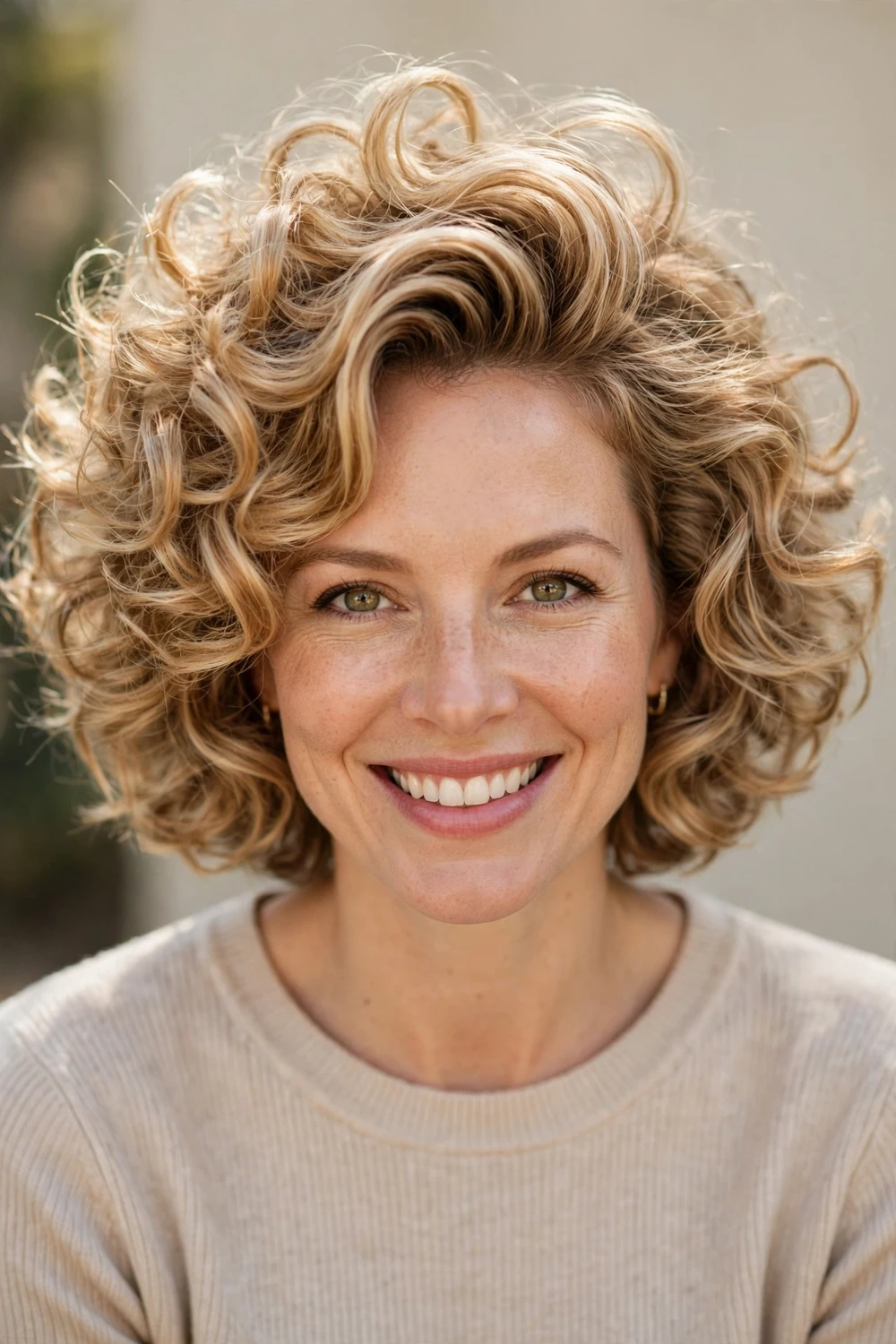
This is the high-volume showpiece of the list, with stacked layering through the back that sets the whole head up for maximum fullness. The rest of the hair is shaped to look fuller, thicker, and bouncier, giving a high-energy silhouette that turns heads. It works because the inverted shape controls the volume: instead of a wide triangle, you get height at the crown and a tapered line toward the front. If your curls have always wanted to go big, this is their permission slip.
It suits medium to thick curls with a strong pattern; very fine curls may not hold the shape. Build the volume with a mousse at the roots and a curl cream on the lengths, then diffuse upside down for the fullest result. Keep the ends trimmed regularly, since straggly tips flatten big volume fast. A pick at the roots on day two revives the lift without disturbing the curl pattern.
Try this: diffuse with your head flipped upside down, then shake the roots gently once the cast is fully dry.
Difficulty: Medium · Cost: $$ (salon)
17. Sleek Defined Curly Bob
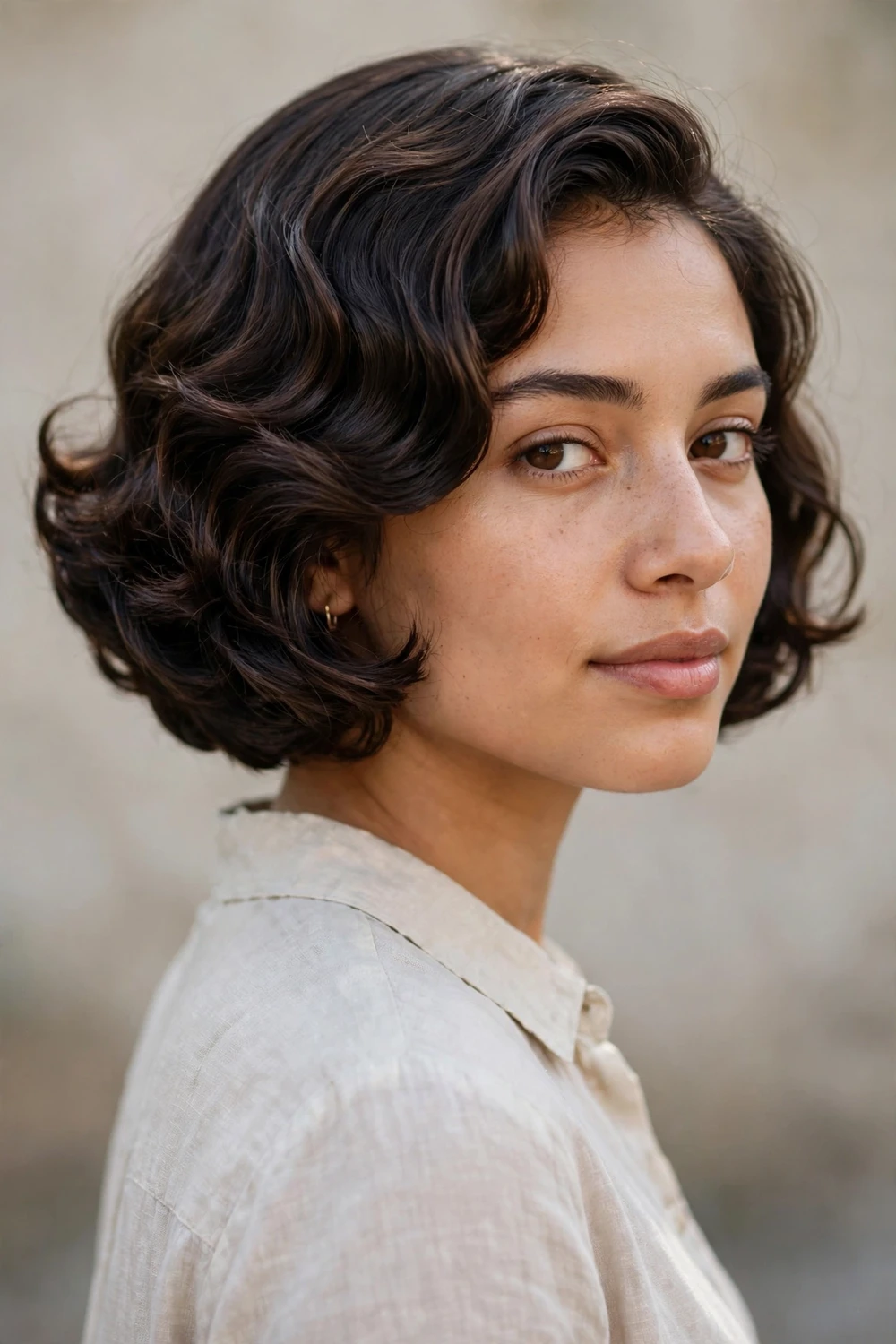
The sleek version is for curl wearers who love polish. Subtle layering keeps the shape smooth and controlled while every curl is defined to glossy perfection, giving a low-key but refined finish. The inverted angle reads almost sculptural here, since there is no frizz to blur the diagonal. Worn smooth, the line from the high back to the long front does the work of contouring the face. It is the most office-friendly cut on this list.
Achieving it takes product discipline: apply a leave-in and a strong-hold gel to soaking-wet hair, then smooth each section with your fingers before diffusing. Avoid touching the curls until they are completely dry, or the sleek finish breaks into frizz. It suits type 3 curls best, which define cleanly, and anyone whose workplace favors a tidy look. Sleep on a satin pillowcase to protect the definition overnight. A final scrunch with a pea-sized drop of oil breaks the gel cast without disturbing the sleek finish.
Try this: smooth gel through each section with praying hands before diffusing for the glossiest curl definition.
Difficulty: Medium · Cost: $$ (salon)
18. Face-Framing Curly Inverted Bob

If the blunt inverted bob feels a little severe, face-framing layers are the softener. The back keeps its stacked lift, but the front is feathered into graduated strands that curve around the cheekbones and jaw, breaking up the hard line and adding flattering movement exactly where you want eyes to land. The layers can be adjusted to highlight cheekbones, soften a strong jaw, or add width to a narrow face, which makes this one of the most universally forgiving versions.
Ask your stylist to start the shortest layer at your best feature and let it cascade from there, cutting dry so each curl lands where it will live. It is kind to fine curls, because the framing pieces create the impression of fullness around the face. For more face-framing layer ideas at this length, these short layered hairstyles for women over 60 show flattering options with similar soft shapes. Style with a curl cream and diffuse, keeping the front pieces curled under.
Try this: finger-coil the two front pieces while damp to train them into perfect face-framing curls.
Difficulty: Medium · Cost: $$ (salon)
19. Blunt-Cut Curly Inverted Bob

No layers, no feathering, no apologies: the blunt inverted bob is pure line, cut with precision so the ends form one unbroken diagonal from the high back to the long front point. On curls this reads as high-fashion clarity, since the crisp perimeter contrasts with the softness of the texture. Bluntness is also a density trick: a solid perimeter makes ends look dramatically thicker than layered cuts do. The trade-off is upkeep, since this shape shows every millimeter of growth.
It suits thicker curl patterns that can carry a heavy perimeter without puffing out; very fine curls may look weighed down. Always use heat protection before smoothing, because the whole point of this cut is an unbroken, defined surface. Plan trims every five to six weeks to keep the diagonal crisp. A strong-hold gel scrunched through damp curls keeps the blunt edge defined instead of frizzy. Ask for the perimeter to be shaped dry so the blunt line lands evenly across your curl pattern.
Try this: get the ends dusted every five weeks rather than waiting for a full trim, which keeps the line sharp.
Difficulty: High · Cost: $$ (salon)
20. Layered Spiral Curl Bob
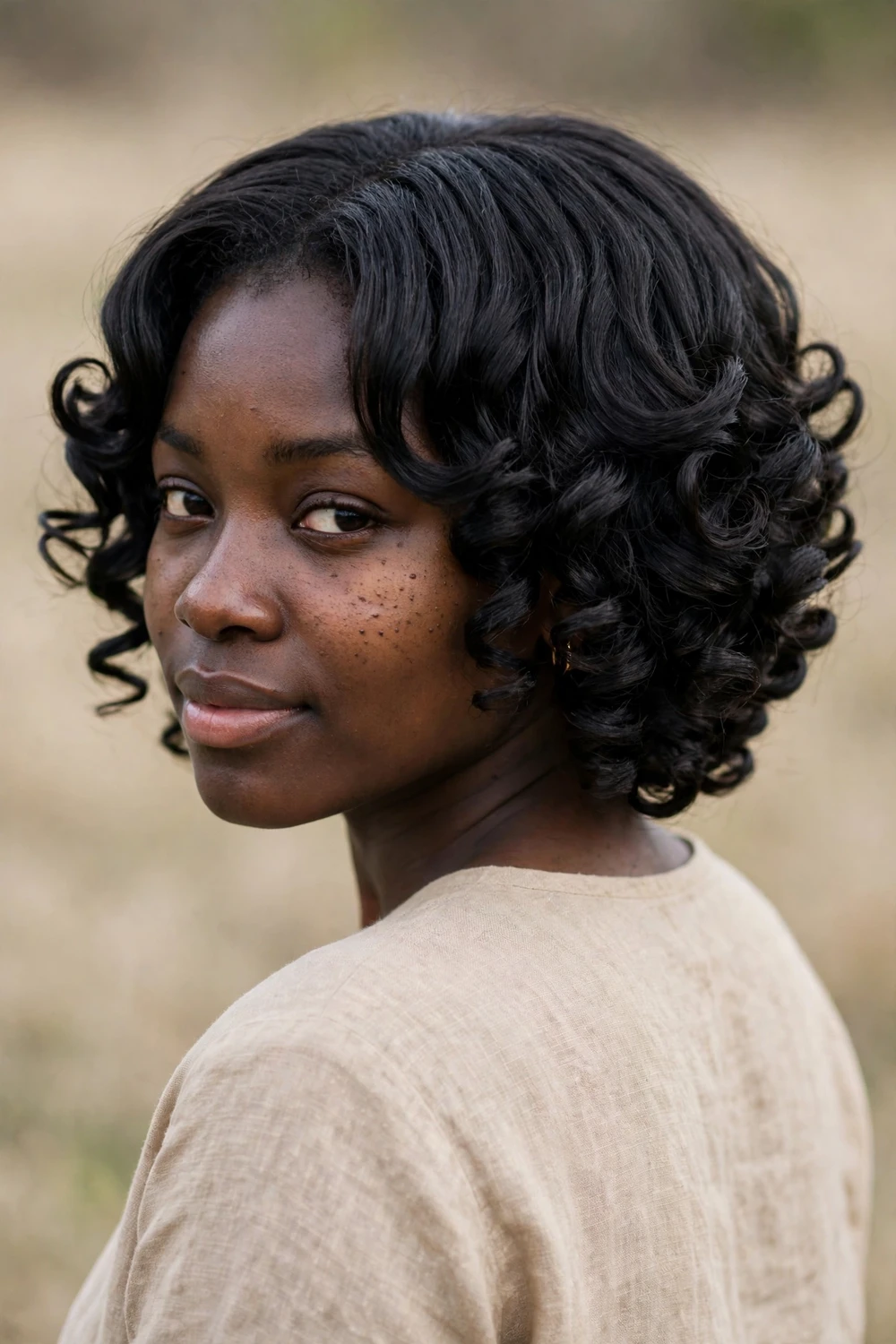
Tight spiral curls get their own dedicated cut here. The layers are placed specifically to give spirals more body and bounce, with the back carrying the classic stacked shape that gradually grows longer toward the face. Because spirals shrink the most of any curl type, this cut is shaped entirely dry, coil by coil, so the length lands exactly where you expect it. The layering keeps each spiral springing independently instead of clumping into one mass.
It suits type 3B to 3C spirals best. Keep the definition high with a curl cream followed by a light gel, and diffuse on low heat or air-dry completely. Avoid brushing at all costs, since a brush turns spirals into frizz in seconds; detangle only with your fingers on wash day. Trim every eight weeks, since spiral ends are prone to splitting, and split ends travel fast on tight curls.
Try this: twist any frizzy spiral around your finger with a dab of cream to re-form it without re-wetting your head.
Difficulty: Medium · Cost: $$ (salon)
21. Tousled Curly Inverted Bob

Think slept-in texture but intentional. This bob pairs the inverted shape with tousled, piecey layers that give it a lived-in look, best suited to looser curls and waves that fall naturally into soft bends. Because the shape is already a little undone, it grows out gracefully, which means fewer salon visits. It is a fun change if your usual curly cut feels too serious, and it asks almost nothing of your mornings.
Style with your fingers instead of a brush, since rough texture is the whole point of the cut. A little dry shampoo at the roots or a texturizing powder gives the undone finish without disturbing the curls. It suits type 2 waves and loose type 3 curls that air-dry well. If this lived-in texture makes you curious about going shorter, these short pixie haircuts for older women show how short texture can stay soft and flattering. Sleep on a satin pillowcase and refresh with a water mist on day two.
Try this: scrunch in a little texturizing powder at the roots for piecey separation with no crunch.
Difficulty: Low · Cost: $ (salon)
22. Rounded Curly Bob

Where the blunt version is all straight lines, the rounded curly bob is all curves. The back is graduated so the silhouette bowls gently under at the nape, and the front pieces hug the jaw in a soft arc. It is an elegant, ladylike take on the angle, polished without a single sharp corner. The rounded shape is particularly kind to angular and square faces, because it introduces softness where the bone structure is strong.
It suits fine to medium curls, since the curved-under ends make the hair look denser. A round brush creates the under-curve on the front pieces in minutes, or you can finger-coil the ends under while damp for a heat-free version. The soft grow-out means trims can stretch to eight or nine weeks. Keep the ends moisturized, since the tucked-under shape shows dryness quickly. This is a graceful pick if you want the inverted idea without any edge.
Try this: coil the front ends under with your fingers while damp for a heat-free rounded finish.
Difficulty: Low · Cost: $$ (salon)
23. Curly Inverted Bob with Curly Bangs

A full curly fringe changes everything about an inverted bob. The bangs skim the brows and draw every eye straight to yours, while the stacked back and longer sides keep the classic diagonal intact. The trick is that the fringe must be cut dry, curl by curl, because wet curly bangs spring up as much as two inches shorter when they dry. Keep the fringe light and piecey rather than heavy, so you see individual curls instead of a shelf.
It suits oval, heart, and longer faces best. Finger-coil the front pieces while damp to train them into place, and let the sides blend into the bob with no hard line where the bangs end. Style the fringe with a light curl cream and avoid heavy gels, which make curly bangs crunchy. Trim the fringe every three to four weeks, since curly bangs grow into the eyes fast. Sleep with the fringe loosely pinned up to preserve its shape.
Try this: twist each bang curl around your finger while damp to set its direction before it dries.
Difficulty: High · Cost: $$ (salon)
24. Curly Inverted Bob with Side-Swept Bangs

A side-swept fringe gives the strong diagonal of the inverted bob a second, softer diagonal across the forehead. The sweep draws attention straight to the eyes, softens forehead lines, and makes the whole style feel romantic rather than severe. Long side bangs blend seamlessly into the longer front pieces, creating a sleek face-framing effect that flatters nearly everyone. It is a lovely option if you want fringe without committing to a full bang.
Ask your stylist to cut the bangs long and blend them into the longer front side so there is no harsh step between the fringe and the cut. A light mist of flexible hairspray keeps the sweep in place without freezing it, and the cut itself stays wash-and-go simple. It suits round and square faces especially well. Grow-out is painless, since the long sweep simply becomes part of the front layers.
Try this: train the sweep by clipping it to the side while your hair dries, then remove the clip once set.
Difficulty: Low · Cost: $$ (salon)
25. Curly Inverted Bob with an Undercut Nape
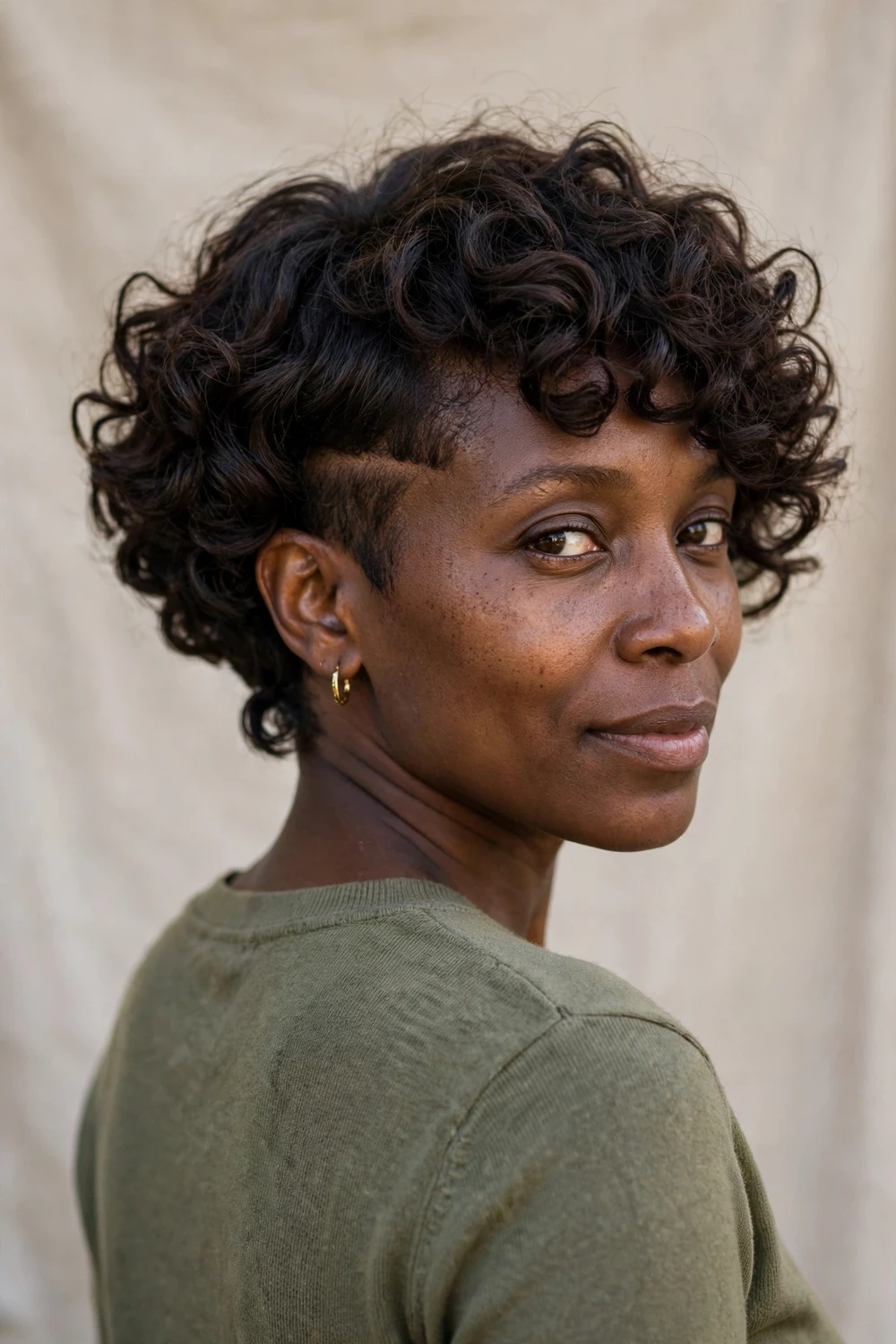
Thick, heavy curls that swallow every short cut get relief from a hidden undercut nape. The very lowest section at the back is clipped short and tucked beneath the stacked bob above it, removing a surprising amount of bulk while the visible shape stays soft and classic from the front. The hidden undercut keeps your neck cool, stops the back of the cut from puffing into a shelf, and helps very thick curls actually hold the inverted angle. From the front, nobody would guess the engineering underneath.
It suits very thick or dense curls that otherwise expand uncontrollably at the nape. The undercut needs tidying every three to four weeks, though many salons offer quick nape clean-ups between full appointments. Style the visible curls as usual with cream and a diffuser, and keep the undercut moisturized with a light oil so the short regrowth stays soft. It is the most practical pick here for heavy hair in warm weather.
Try this: ask for the undercut to follow your natural hairline so it grows out without a harsh line.
Difficulty: Medium · Cost: $$ (salon)
26. Curly Inverted Bob with Balayage

Balayage and the inverted bob were made for each other. Hand-painted ribbons of caramel, honey, or toffee are placed where the cut moves most, through the longer front panels and the ends, so the color traces the diagonal and makes the angle look even more pronounced. The darker root keeps regrowth soft for months, which makes this one of the lowest-maintenance color choices. It also adds the visual dimension that makes medium and fine curls look thicker.
Protect the painted pieces with a heat protectant before diffusing, and gloss treatments every couple of months keep the ribbons luminous. Use a sulfate-free shampoo and a color-safe conditioner to keep the balayage from fading, since curly hair is porous and lets color escape faster. Ask your colorist to keep the lightest pieces around the face, where they brighten the cut most. It suits anyone ready to add dimension to their curls without high-maintenance roots.
Try this: ask your colorist to paint the lightest ribbons through the front pieces so the diagonal angle pops.
Difficulty: Medium · Cost: $$$ (salon, cut plus color)
27. Silver Gray Curly Inverted Bob
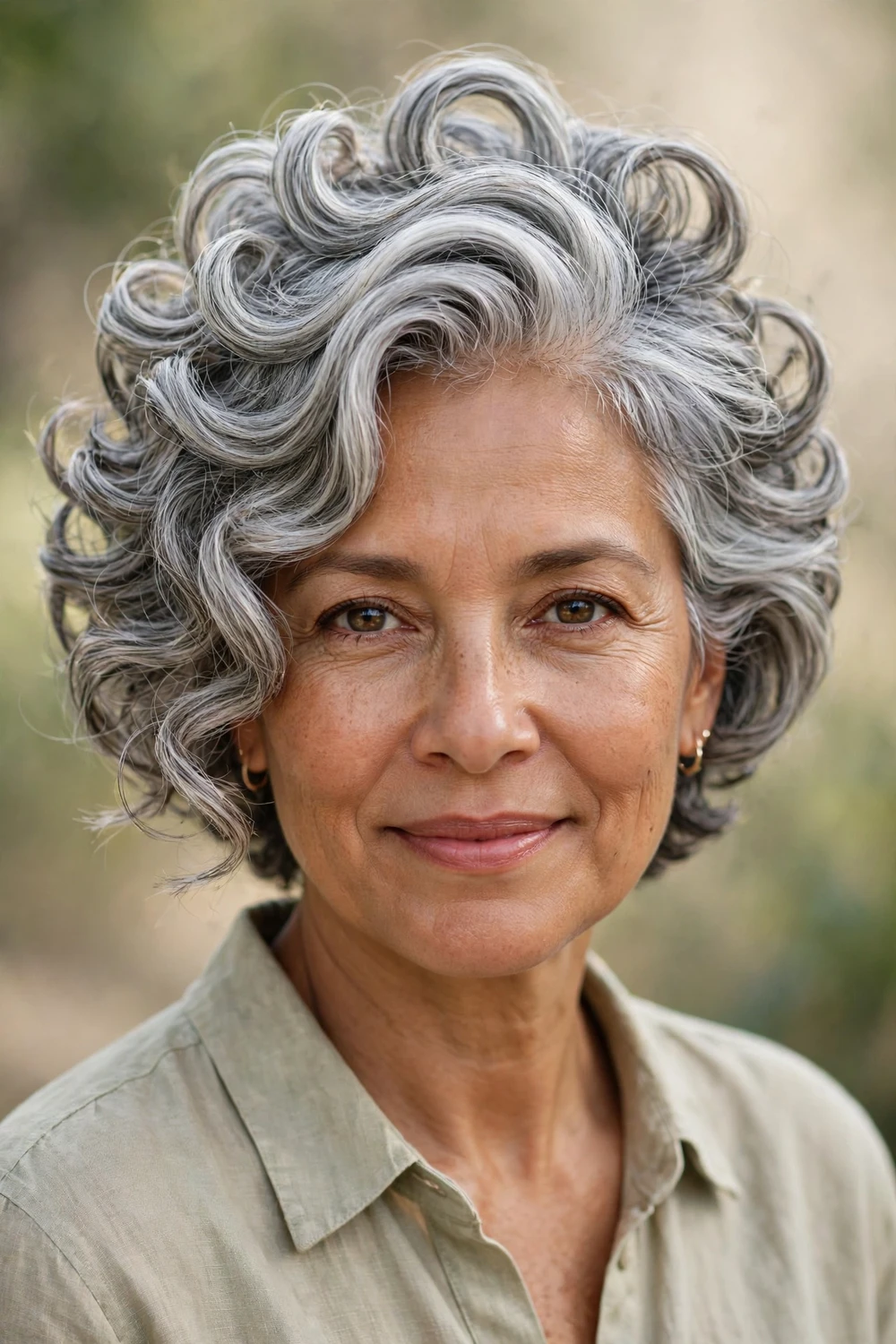
Going gray can look like a deliberate style statement on an inverted bob. On silver hair, the clean diagonal reads almost sculptural, since the shape is so strong that the color simply glows. The stacked back keeps the silhouette youthful and lifted, which matters because gray hair’s coarser texture can otherwise drag a style down. This cut is a confident choice for anyone who has finished the gray transition and wants a shape as bold as the color.
Keep the silver bright with a purple shampoo once a week to cancel any yellowing, and sleep on a satin pillowcase to reduce the frizz gray strands are prone to. Gray curls need extra moisture, so layer a rich leave-in under your curl cream and deep-condition weekly. Ask your stylist to keep the angle crisp with trims every six to seven weeks, since the sculptural line is the whole point of the cut.
Try this: use purple shampoo once a week and follow with a deep-conditioning mask to keep silver curls bright and soft.
Difficulty: Low · Cost: $$ (salon)
28. Curly Inverted Bob for Thick Hair

Thick hair can absolutely work with this cut if it is layered right. The key is balancing volume with shape: the back is carved out enough to remove bulk, while the front stays long and flowing so the curls have room to move. Strategic internal layering takes out weight without creating frizz, and the inverted angle keeps the silhouette structured instead of bulky. The result has major movement and presence without the pyramid effect thick curls are prone to.
Ask for internal layering or point-cutting to lighten things up, and skip razoring if your hair frizzes easily. Style in sections with a leave-in and a curl cream so every layer gets product, then diffuse thoroughly, since thick curls hold water and damp roots kill volume. It suits dense type 3 curls best. Plan trims every seven to eight weeks to keep the interior layers from growing heavy. A satin bonnet at night keeps the interior layers from tangling as they reset.
Try this: style in four sections so product reaches the interior layers, not just the surface curls.
Difficulty: Medium · Cost: $$ (salon)
29. Curly Inverted Bob for Fine Hair
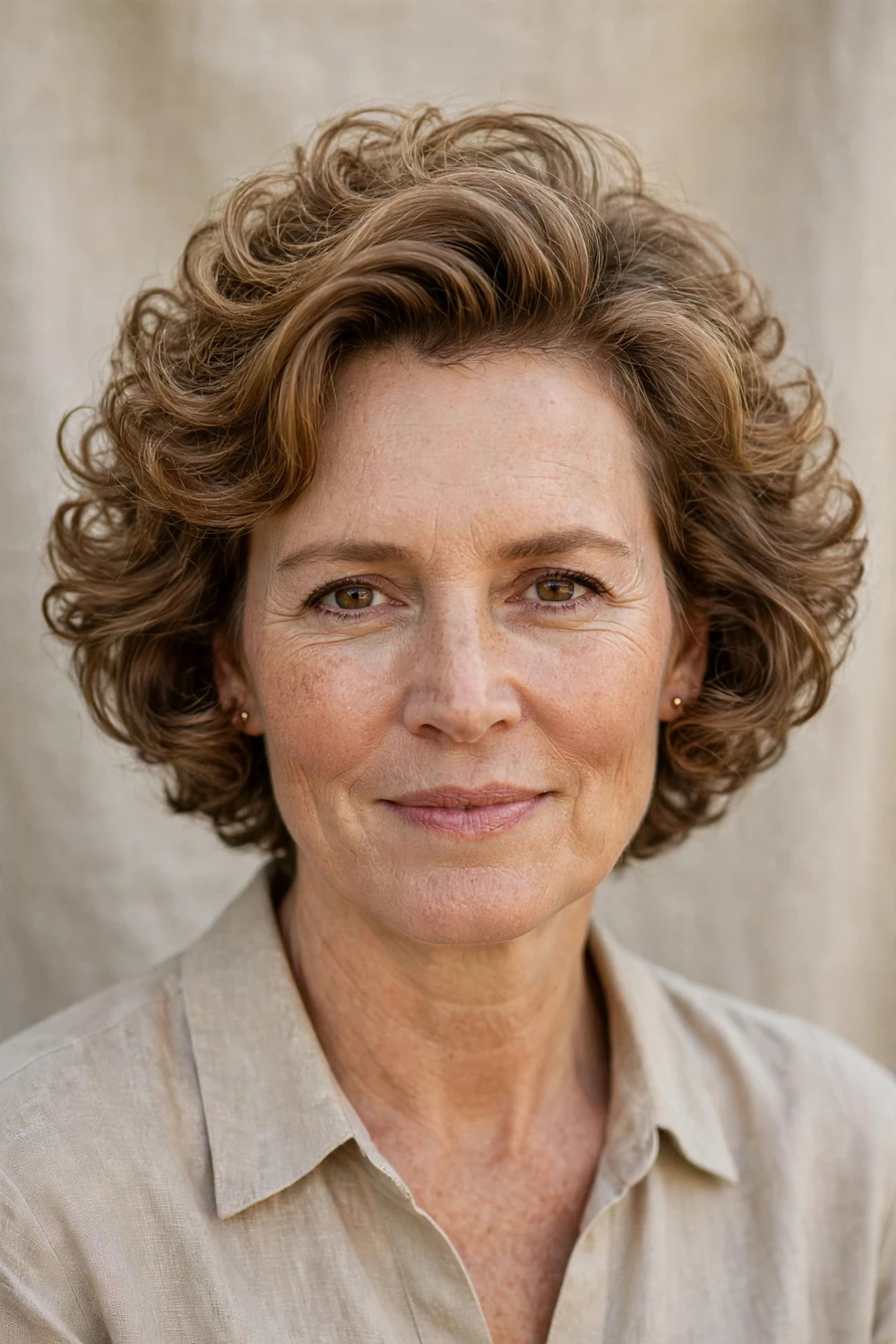
Fine curls love the inverted shape. The stacked back naturally creates lift where fine hair goes flat, making the hair look fuller without a ton of styling. Keep the ends blunt-ish to maximize the appearance of density, and add a soft wave or light stacking for texture. Avoid anything too long in the front, since it can make fine curls look stringy. The whole trick is building volume into the cut so you do not have to fake it daily. That built-in structure is why fine curls often look better short than long.
Use lightweight products only: a volumizing mousse at the roots and a light curl cream on the lengths, since heavy butters flatten fine curls. Diffuse upside down for maximum lift, and skip oils on the roots. It suits fine type 2 waves and loose type 3 curls. Trim every six to seven weeks, since fine ends thin out fast and the stacked back loses its lift as it grows. On day two, revive the roots with a water mist and a quick upside-down scrunch.
Try this: apply mousse to the roots before any cream, and keep all product off the last inch of the ends for lift.
Difficulty: Low · Cost: $ (salon)
At a Glance: 29 Curly Inverted Bobs Compared
| Cut | Best for | Curly perk | Upkeep |
|---|---|---|---|
| Classic Curly Inverted Bob | Type 2 to 3 curls | Dry-cut diagonal keeps the pattern intact | Leave-in plus curl cream |
| Stacked Curly Bob with Crown Lift | Medium to thick curls | Maximum lift where crowns go flat | Round-brush blow-dry, trims every 6 weeks |
| Layered Curly Inverted Bob | Thick, dense curls | Staggered layers let curls coil freely | Curl cream, diffuse |
| Side-Parted Curly Bob | Round and square faces | Instant root lift, no scissors needed | Mousse at the roots |
| Chin-Length Curly Inverted Bob | Oval and heart faces | Curls clear the collar and scarves | Morning diffuser refresh |
| Graduated Curly Bob | Medium to thick curls | Even layering kills the triangle shape | Root clips while drying |
| Asymmetrical Curly Inverted Bob | Tighter curl patterns | Artistic shape softened by texture | Medium-hold curl cream |
| Wavy Inverted Bob | Type 2 waves | Beachy texture, truly low maintenance | Sea-salt spray, air-dry |
| Coily Natural Curls Inverted Bob | Type 4 coils | Shaped for shrinkage, not against it | Leave-in, cream, and oil seal |
| A-Line Curly Bob | Every curl type | Gentle angle, painless grow-out | Usual curl routine |
| Dramatic Angled Curly Bob | Tighter curl patterns | Bold diagonal defines the jawline | Strong-hold gel, trims every 5 to 6 weeks |
| Shoulder-Length Curly Inverted Bob | Round faces | Length kept with inverted structure | Big diffuser cup, trims every 10 weeks |
| Feathered Curly Inverted Bob | Fine to medium curls | Wispy ends never look sparse | Light curl cream, finger-style |
| Choppy Curly Inverted Bob | Medium to thick curls | Piecey texture hides thin patches | Texturizing putty on ends |
| Deep Side-Parted Curly Bob | Oval and long faces | Glam sweep with serious root lift | Strong-hold gel for the part |
| Voluminous Curly Bob | Medium to thick curls | Big volume with a controlled silhouette | Mousse, diffuse upside down |
| Sleek Defined Curly Bob | Type 3 curls | Glossy definition shows the angle | Leave-in plus strong-hold gel |
| Face-Framing Curly Inverted Bob | Fine curls | Layers flatter every face shape | Curl cream, diffuse front under |
| Blunt-Cut Curly Inverted Bob | Thicker curl patterns | Solid perimeter reads as density | Trims every 5 to 6 weeks |
| Layered Spiral Curl Bob | Type 3B to 3C spirals | Dry-shaped for true spiral length | Cream plus gel, finger-detangle only |
| Tousled Curly Inverted Bob | Type 2 to loose 3 curls | Lived-in look, fewest salon visits | Finger-style, texturizing powder |
| Rounded Curly Bob | Fine to medium curls | Soft curves kind to square faces | Finger-coil ends under |
| Curly Inverted Bob with Curly Bangs | Oval, heart, and long faces | Fringe cut curl by curl, no shelf | Fringe trims every 3 to 4 weeks |
| Curly Inverted Bob with Side-Swept Bangs | Round and square faces | Soft second diagonal, easy grow-out | Flexible hairspray mist |
| Curly Inverted Bob with an Undercut Nape | Very thick, dense curls | Hidden bulk removal at the nape | Nape tidy-ups every 3 to 4 weeks |
| Curly Inverted Bob with Balayage | Medium and fine curls | Color traces the diagonal | Sulfate-free routine, gloss every few months |
| Silver Gray Curly Inverted Bob | Gray and silver curls | Sculptural shape lifts coarse gray hair | Purple shampoo weekly |
| Curly Inverted Bob for Thick Hair | Dense type 3 curls | Interior layers remove weight, no frizz | Sectioned styling, full diffuse |
| Curly Inverted Bob for Fine Hair | Fine type 2 to 3 curls | Built-in lift, no daily faking | Lightweight mousse only |
How to Choose Your Curly Inverted Bob
Start with your curl pattern. Tight type 3 and 4 curls need a stylist who cuts dry, curl by curl, since wet cutting always lands shorter than planned once the curls spring up. Loose waves and type 2 hair are more forgiving and can carry softer versions like the wavy or tousled bobs. If you are unsure of your pattern, bring photos of your hair air-dried with no product, which shows your stylist the real texture they will be working with.
Next, be honest about your face shape and your routine. Round faces do well with longer front pieces and a deep side part, which stretch the silhouette vertically. Sharper angles and blunt perimeters demand trims every five to six weeks, while softer shapes like the A-line or rounded bob can stretch to eight or nine. Pick the maintenance schedule you will actually keep, since a grown-out precise angle looks worse than a fresh easy cut.
Finally, think about density. Thick curls need interior layering or even a hidden undercut so the back does not puff into a shelf. Fine curls need the opposite: blunt-ish ends, light products, and stacking that builds volume into the cut. Bring reference photos of the exact angle you want, because “inverted bob” means very different things to different stylists, and the photo matters more than the terminology.
Curly Inverted Bob Care
Hydration. Curls are naturally drier than straight hair, and a short stacked cut shows dryness fast. Layer a leave-in conditioner under a curl cream on soaking-wet hair, and seal with a light oil if your curls are tight or porous. Deep-condition weekly, and wash with lukewarm water instead of hot, which strips moisture. Hydrated curls define cleanly and keep the inverted angle readable instead of frizzy.
Frizz and definition. The inverted bob’s diagonal only shows when the curls are defined, so frizz control is part of the haircut. Apply gel to soaking-wet hair with praying hands, then do not touch the curls until they are completely dry; touching wet curls breaks the clumps and creates frizz. Sleep on a satin pillowcase or in a satin bonnet to preserve definition overnight. Refresh on day two with a water mist and a quick scrunch instead of re-wetting your whole head.
Trims and grow-out. The sharper your angle, the faster it grows out of shape, so dramatic and blunt versions need trims every five to six weeks. Softer versions like the A-line, rounded, and tousled bobs can stretch to eight or ten weeks. When growing out, ask your stylist to gradually soften the angle over several cuts rather than letting the back grow into a shelf. A dry cut at each appointment keeps the curl lengths true.
Frequently Asked Questions
Will an inverted bob work for curly hair?
Yes, an inverted bob is one of the best cuts for curly hair when it is shaped correctly. The stacked back lifts curls at the crown and removes the triangle effect, while the longer front pieces let curls hang and frame the face. The key is a dry cut, curl by curl, so the stylist works with the true length. Ask for longer layers to accommodate shrinkage, and make sure your stylist has real experience with curly hair before you book.
Should curly hair be cut wet or dry for an inverted bob?
Dry, always. Curls spring up as they dry, sometimes by several inches, so a wet cut lands shorter than planned and the inverted angle comes out uneven. A dry cut lets your stylist see exactly where each curl falls and shape the diagonal at its true length. The only exception is a very loose wave that behaves like straight hair when wet, and even then most curl specialists prefer to finish the shaping dry.
How do I stop the triangle effect with a curly inverted bob?
The triangle effect, wide at the bottom and flat on top, comes from layers that are too long and heavy at the ends. The inverted bob fixes it structurally: graduated or stacked layers through the back build volume at the crown while the ends are shaped to taper. Layered, graduated, and stacked versions on this list are specifically designed to prevent it. Keep the ends hydrated and trimmed, since straggly dry ends widen the bottom again.
How often should I trim a curly inverted bob?
It depends on how sharp the angle is. Dramatic, blunt, and heavily stacked versions need trims every five to six weeks to keep the diagonal crisp, since they show every millimeter of growth. Softer versions like the A-line, rounded, and tousled bobs can stretch to eight or ten weeks. Curly bangs need their own schedule of every three to four weeks. A dry cut at each trim keeps the curl lengths true.
Can an inverted bob work on tight coils and type 4 hair?
Yes, with a stylist experienced in type 4 hair. The back is carved into a gentle stack that lifts the coils at the crown, while the front is left long enough to hang past the chin after shrinkage. Everything is cut dry, since wet coils stretch several inches longer than they will ever sit. Hydration is critical: layer a leave-in under a rich curl cream and seal with oil, and sleep in a satin bonnet to keep the shape defined.
Final Thoughts
The inverted bob gives curly hair what it rarely gets from other cuts: structure without stiffness. Pick the version that matches your curl pattern and the maintenance you will actually keep, find a stylist who cuts curls dry, and let the angle do the work your arms used to do.

