

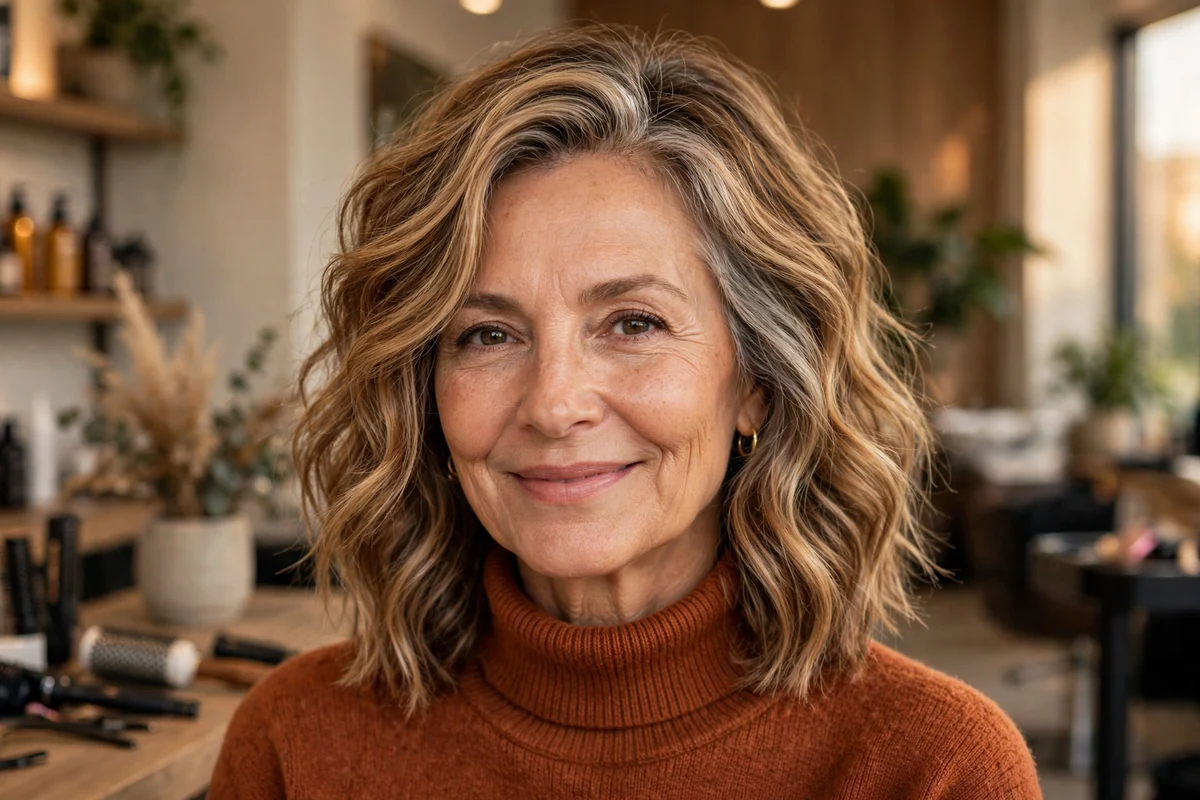
Fall color after 50 works best when it does three jobs at once: it softens the contrast between colored hair and new grey growth, it adds dimension so finer hair looks fuller, and it puts warmth or brightness next to the face. Flat, single tone color does none of that, which is why the shades below lean on blending, lowlights, glosses, and face framing placement rather than one solid dye from root to tip.
This list collects 25 fall hair colors for women over 50 and runs from soft blondes and brondes through warm brunettes, reds and coppers, and into silver and grey blending options at the end. Every idea notes the undertone, the grey strategy, and the upkeep it asks for, so you can pick by the salon schedule you will actually keep. For the wider season roundup across all ages, the general fall hair colors guide covers every family side by side.
Quick Takeaways
- Dimension is the main tool after 50. Highlights, lowlights, and balayage break up flat color and make hair look fuller.
- Grey blending stretches appointments. Demi-permanent color and placed highlights blur new growth instead of leaving a hard line.
- Warmth near the face does the brightening work. Honey, caramel, toffee, and soft copper tones sit well against mature skin.
- Cool skin still has options: champagne blonde, mushroom brown, and smoky silver keep the palette cool without going flat.
- Glosses are the lowest commitment route. A tinted gloss tests a fall tone for four to six weeks and fades with no regrowth line.
How to Pick a Fall Shade After 50
Start with your grey pattern, because it sets the upkeep. Scattered grey through the top and temples blends well with highlights, bronde, and demi-permanent glosses, and those routes can run eight weeks or more between visits. Mostly grey roots against dark dyed hair show a line within three to four weeks on permanent color, so a lighter blend, a root smudge, or a move toward silver usually costs less time in the chair across a year.
Then match undertone and depth to your skin. Warm and neutral skin carries honey, toffee, caramel, cinnamon, and copper tones with ease. Cool skin does better with champagne, mushroom, ash bronde kept soft, and the red shades that lean cherry or plum rather than orange. If most of your wardrobe is already fall brunettes, the fall brunette hair colors roundup shows the brown family in more depth before you decide.
| Shade family | Grey strategy | Best for | Upkeep |
|---|---|---|---|
| Soft blondes and brondes (honey bronde, strawberry, champagne) | Blending: grey reads as extra highlights | Fair to medium skin, fine hair | Low to medium |
| Warm brunettes (toffee, candlelit, caramel balayage) | Coverage with a soft grow-out | Warm, neutral, and olive skin | Low to medium |
| Deep brunettes (espresso, mushroom) | Full coverage, gloss keeps it from going flat | Medium to deep skin, cool skin | Medium |
| Reds and coppers (cinnamon auburn, copper rose, cherry) | Demi-permanent stains grey for a blended fade | Warm skin, natural redheads going grey | Medium |
| Silvers and grey blends (smoky silver, warm pearl grey) | Embracing: natural grey becomes the color | Mostly grey hair, any undertone by variant | Low |
1. Honey Bronde
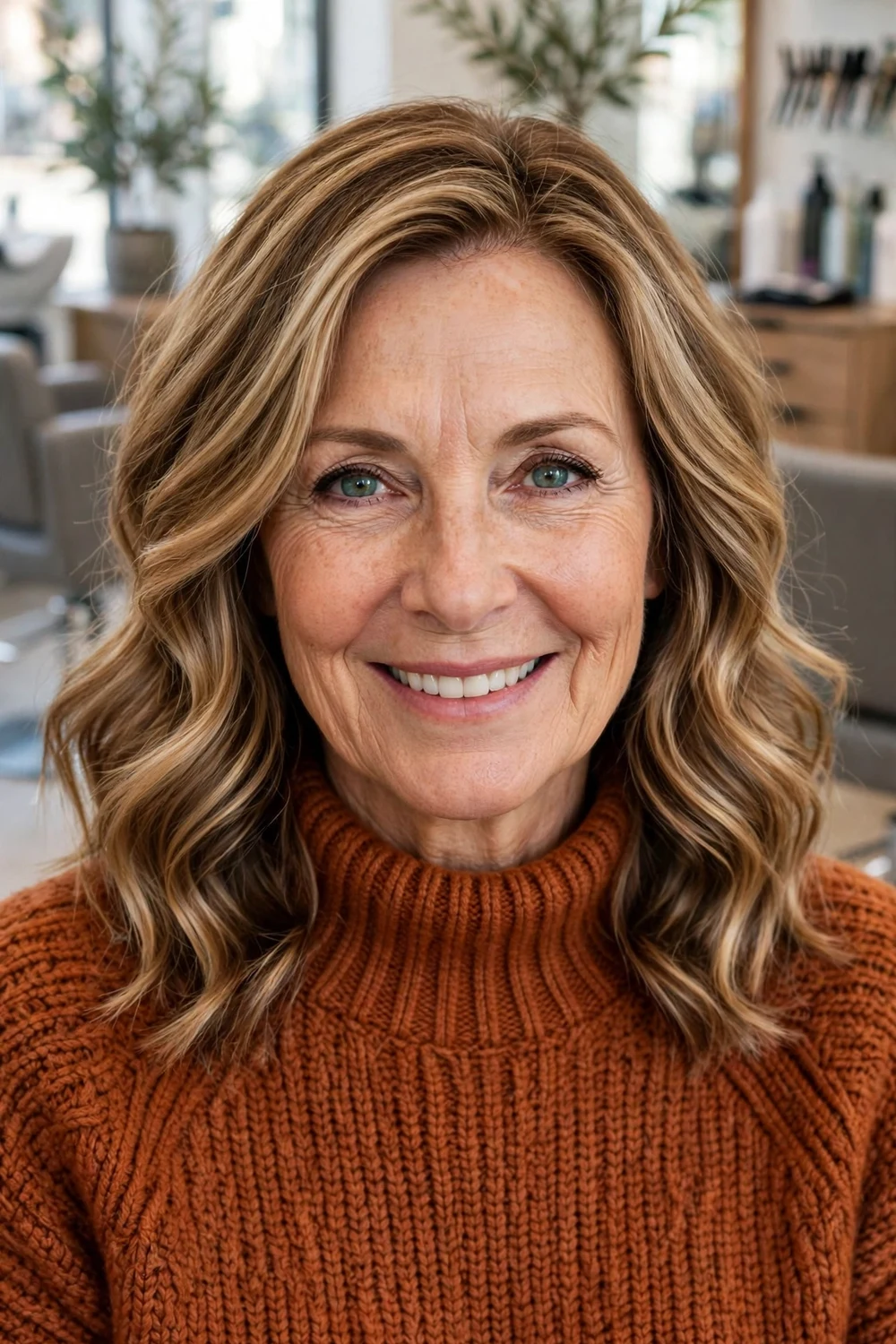
Honey bronde sits between blonde and brunette: a light brown base lifted with honey and caramel pieces, heaviest around the face. The warm gold undertone brightens skin that has lost some color with age, and the mix of light and mid tones keeps the color from reading flat on finer hair.
The grey strategy is blending. Scattered grey at the temples and part reads as two more pale highlights in this mix, so regrowth stays soft for eight weeks or longer. The honey pieces need lightening, which puts the first appointment at the higher end, but refresh visits are usually a partial foil and a gloss.
Try this: ask for the lightest pieces at the front hairline and through the top layer only, and keep the underneath closer to your natural brown for depth.
Difficulty: Medium to High · Cost: $$$ (salon)
2. Strawberry Blonde
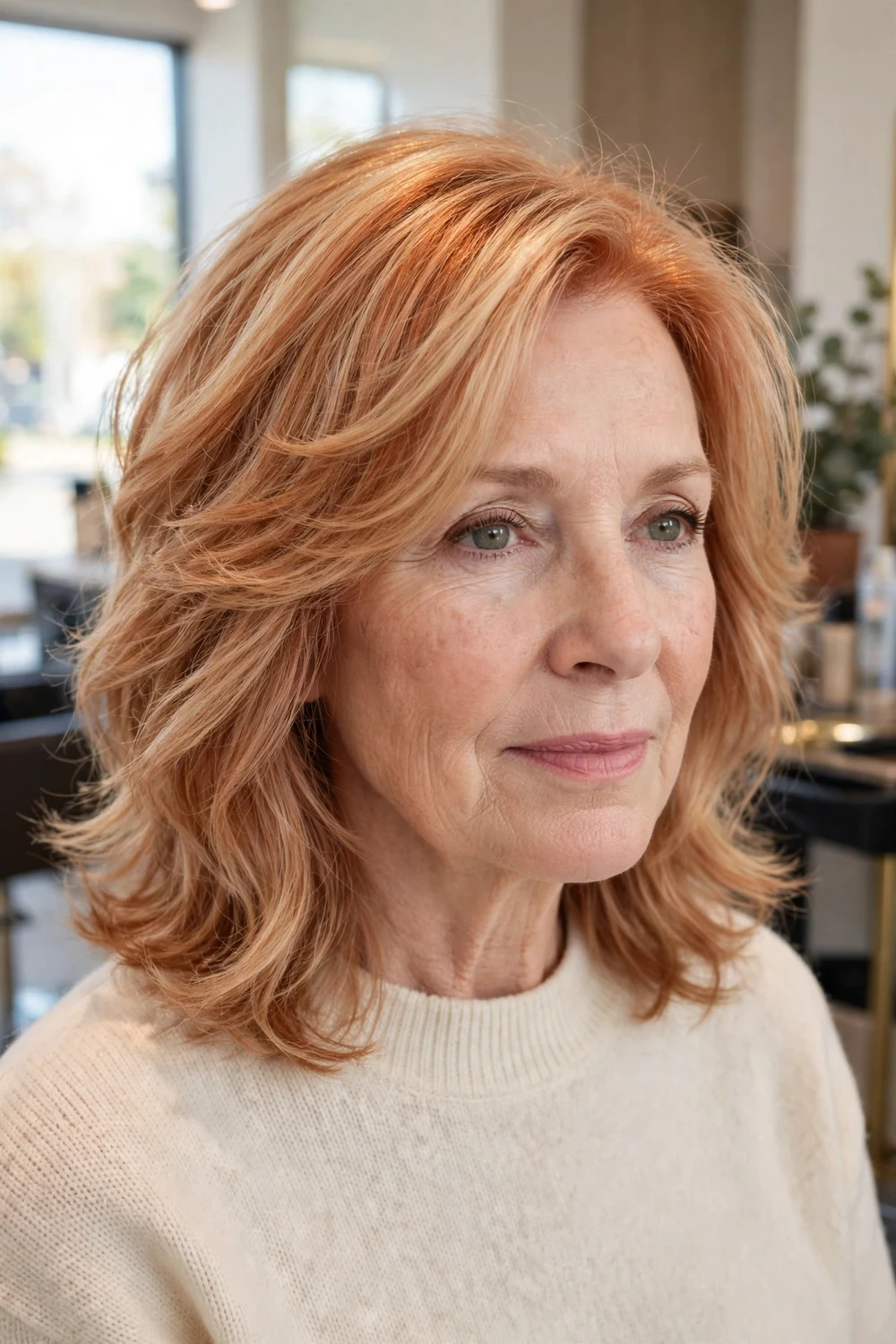
Strawberry blonde is golden blonde with a wash of light red through it. The red content is low, so the shade reads warm blonde in most light and copper tinted in sunlight. It suits fair skin and natural redheads whose color has faded with grey, because it restores the tone they started with.
On a blonde or light brown base, a high lift permanent color or a red gold gloss reaches this shade with no bleach. Grey takes the strawberry tint as a stain under demi-permanent formulas, which softens regrowth. The red portion fades first, so plan a gloss at five to six weeks to keep the warmth even.
Try this: if you are a natural redhead going grey, ask for strawberry blonde highlights through the top instead of all over color, and let the grey act as the lightest tone.
Difficulty: Medium · Cost: $$ (salon)
3. Champagne Blonde
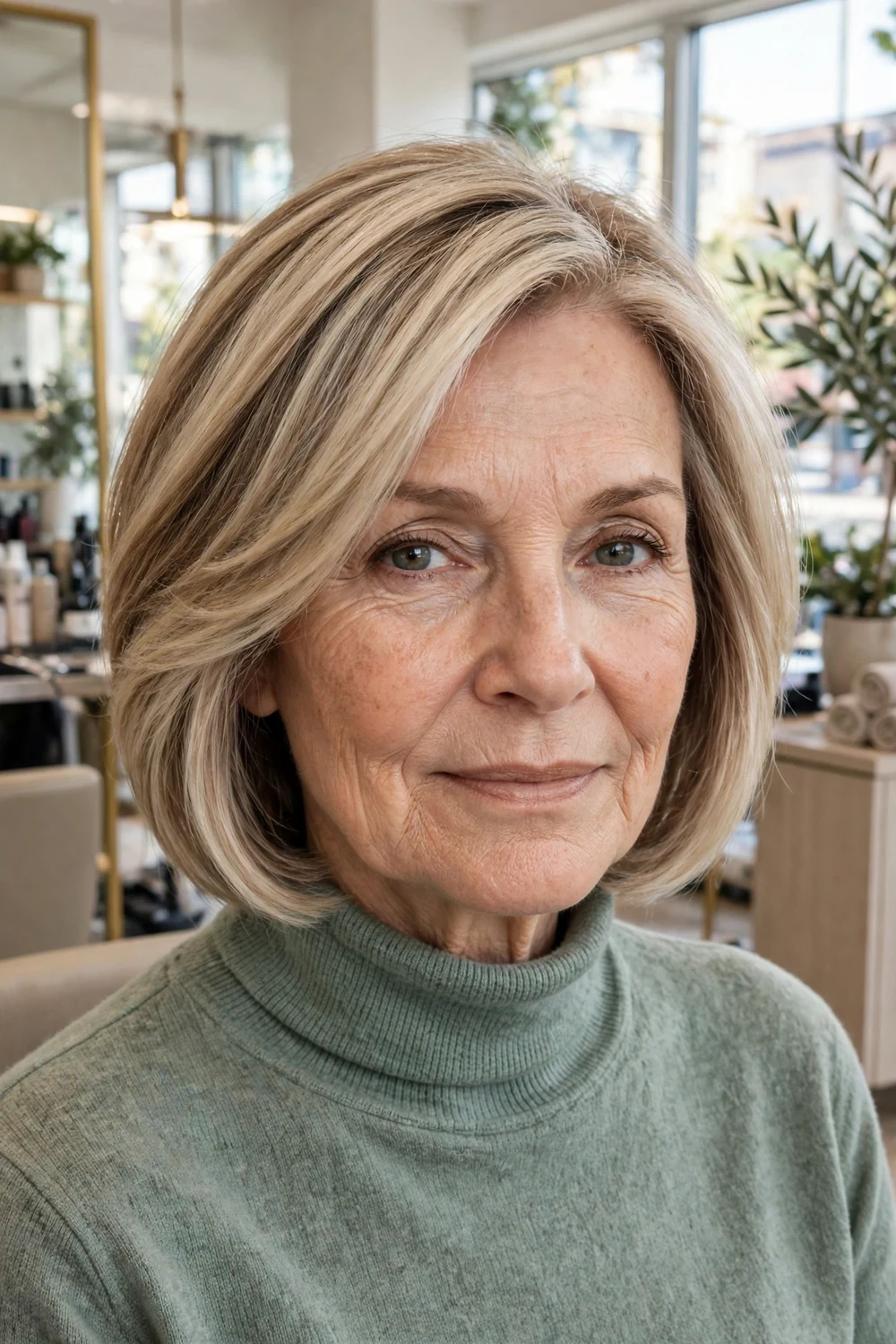
Champagne blonde is a neutral beige blonde, toned down from bright blonde with subtle lowlights one to two shades deeper. The lowlights do the work for mature hair: they add the depth that all over blonde loses, and they stop the color looking washed out against fair to medium skin.
Because the technique adds color rather than lifting it, this is a gentle route for hair that is already blonde or mostly grey and colored pale. Regrowth blends into the lowlight pattern instead of showing as a band. A toner refresh at six to eight weeks keeps the beige tone from drifting yellow.
Try this: ask for lowlights in a neutral light brown, placed underneath and at the crown, and keep the face frame pale for brightness.
Difficulty: Medium · Cost: $$ (salon)
4. Peach Blonde
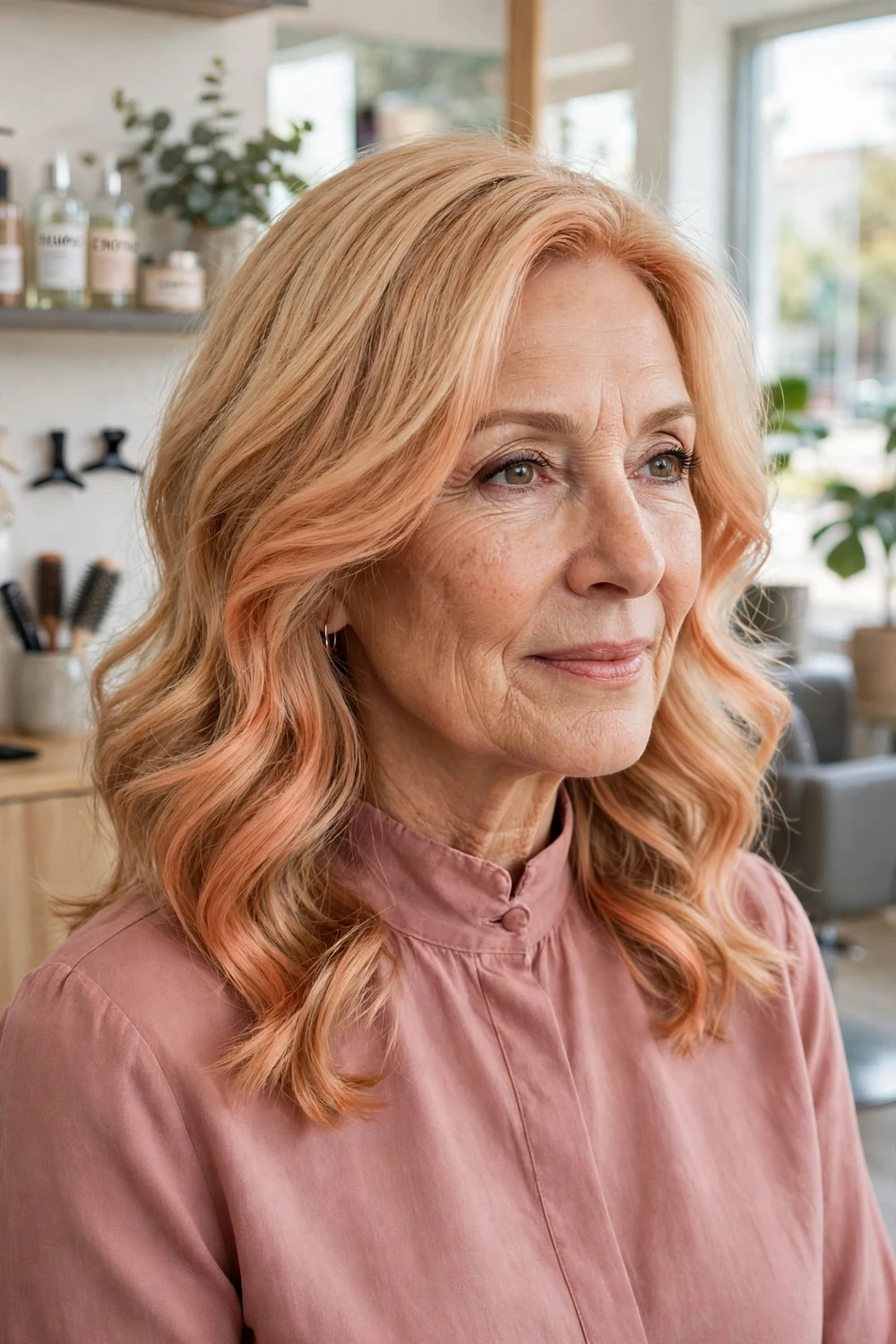
Peach blonde keeps a warm honey blonde base and adds a whisper of peach copper, concentrated around the face and through the ends. The copper content is small, so the result is a warmed blonde rather than a red. It suits fair and neutral skin that finds plain gold blonde too yellow.
Most heads reach it with a tinted gloss over existing blonde or highlights, which makes it a low risk fall change. The peach tone fades within four to six weeks and leaves the blonde underneath untouched, and grey roots stay low contrast against the pale base the whole time.
Try this: book the peach as a gloss first. If the warmth suits you, your colorist can fold the same tone into your next highlight appointment.
Difficulty: Low to Medium · Cost: $$ (salon)
5. Ash Bronde
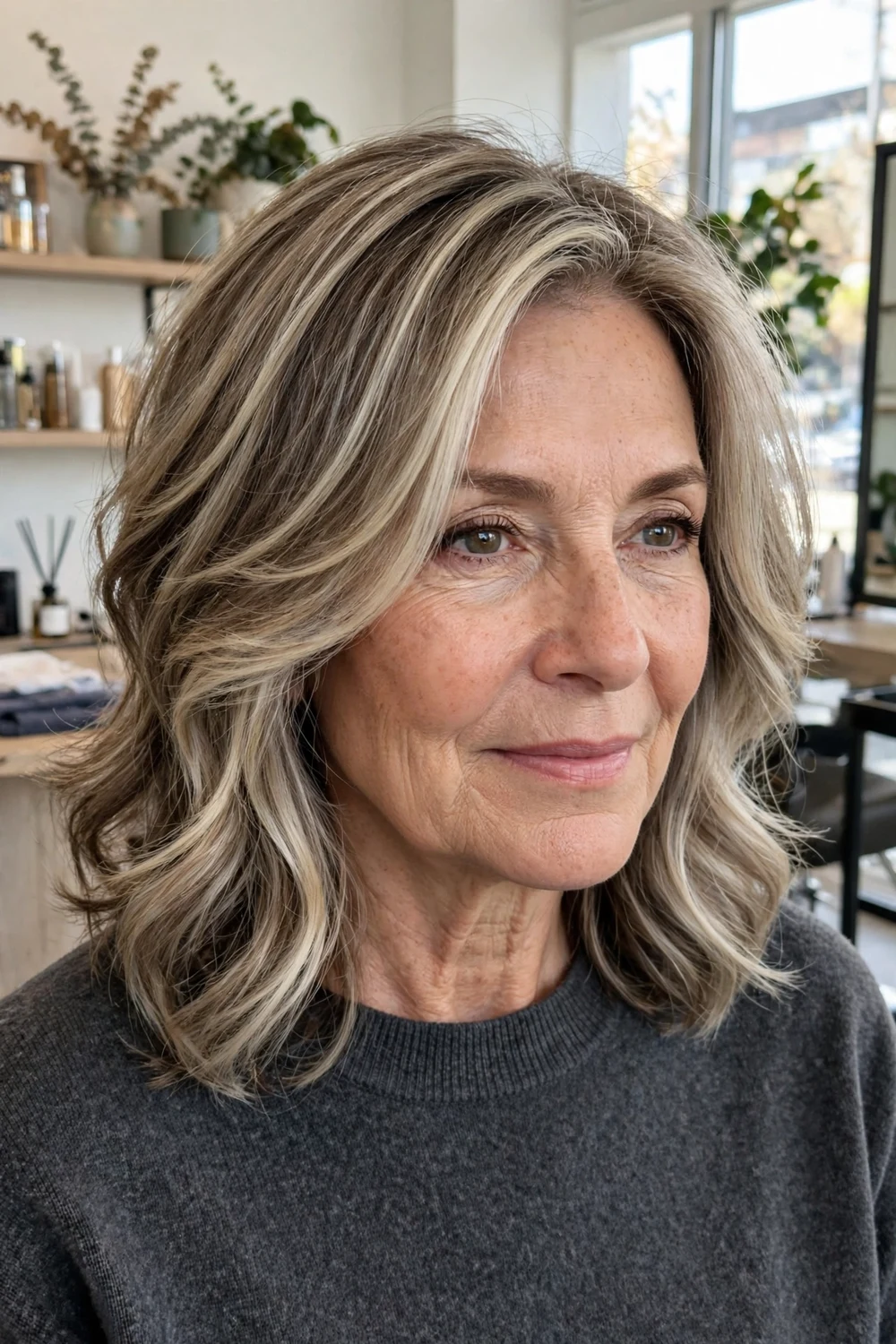
Ash bronde mixes a brunette base with cool, smoky blonde pieces. It is the cool toned entry on this list, and it has one clear condition: it suits cool skin with pink or blue undertones. On warm skin, flat ash can drain the face, so colorists keep the pieces around the face brighter and slightly neutral to hold the balance.
The cool blonde pieces sit close in tone to natural grey, which makes this a practical blend for women whose grey is coming in evenly. The base stays darker for coverage while the light pieces disguise new growth. Cool tones fade toward warmth over time, so a blue or purple toning shampoo once a week holds the shade.
Try this: ask for a strand test near your face first. Ash shades look different against the skin than they do on a swatch, and one test foil settles it.
Difficulty: Medium to High · Cost: $$$ (salon)
6. Warm Toffee Brown
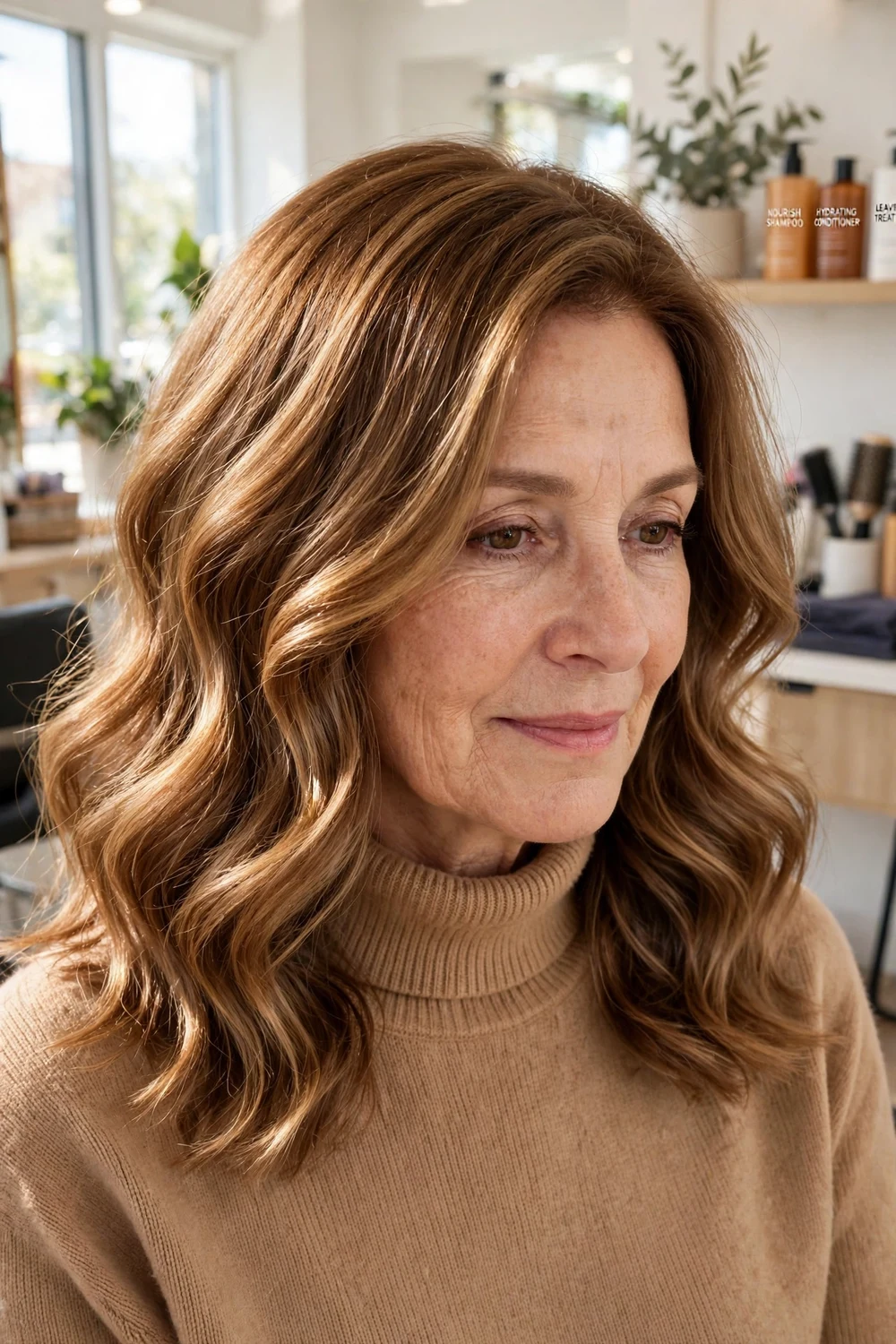
Warm toffee brown is a soft medium brown with golden undertones spread evenly through it. The gold is diffused rather than placed in stripes, so the color catches light without a highlighted look. It suits warm and neutral skin, and the medium depth is softer against the face than dark espresso or near black shades.
A single process permanent color gives full grey coverage in this shade, and the warm base means regrowth shows less contrast than it does against a cool dark brown. If your grey is still scattered, the same shade in a demi-permanent formula stains it gold and stretches the interval between visits.
Try this: bring a photo of the depth you want. Toffee sits one shade apart from caramel and chestnut on most salon charts, and names vary between brands.
Difficulty: Low to Medium · Cost: $$ (salon)
7. Candlelit Brunette
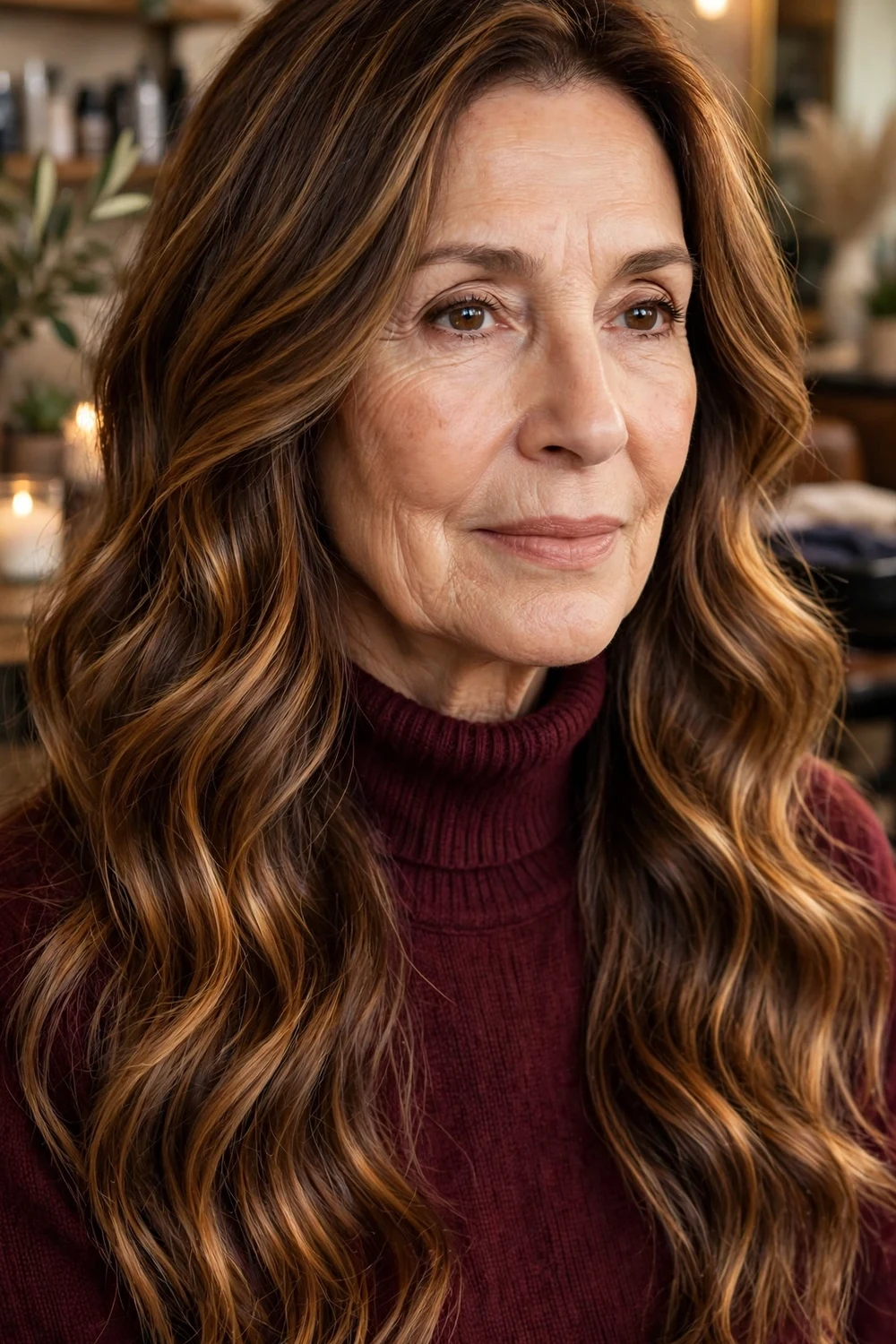
Candlelit brunette builds a rich brown base and weaves caramel and amber tones through the mid lengths, so the hair looks lit from inside when it moves. The warm reflect suits most skin tones, cooler complexions included, because the brightness sits away from the roots and close to the cheeks and jaw.
The painted pieces also serve fine hair well. Alternating deep and lit sections reads as thickness, and the darker root keeps grey coverage where it matters most. Refresh visits can target the front and top only, which keeps both the cost and the lightening exposure down.
Try this: ask for the amber pieces to start at cheek level. Brightness placed at the eyes and cheeks does more for the face than brightness at the crown.
Difficulty: Medium to High · Cost: $$$ (salon)
8. Glossed Espresso
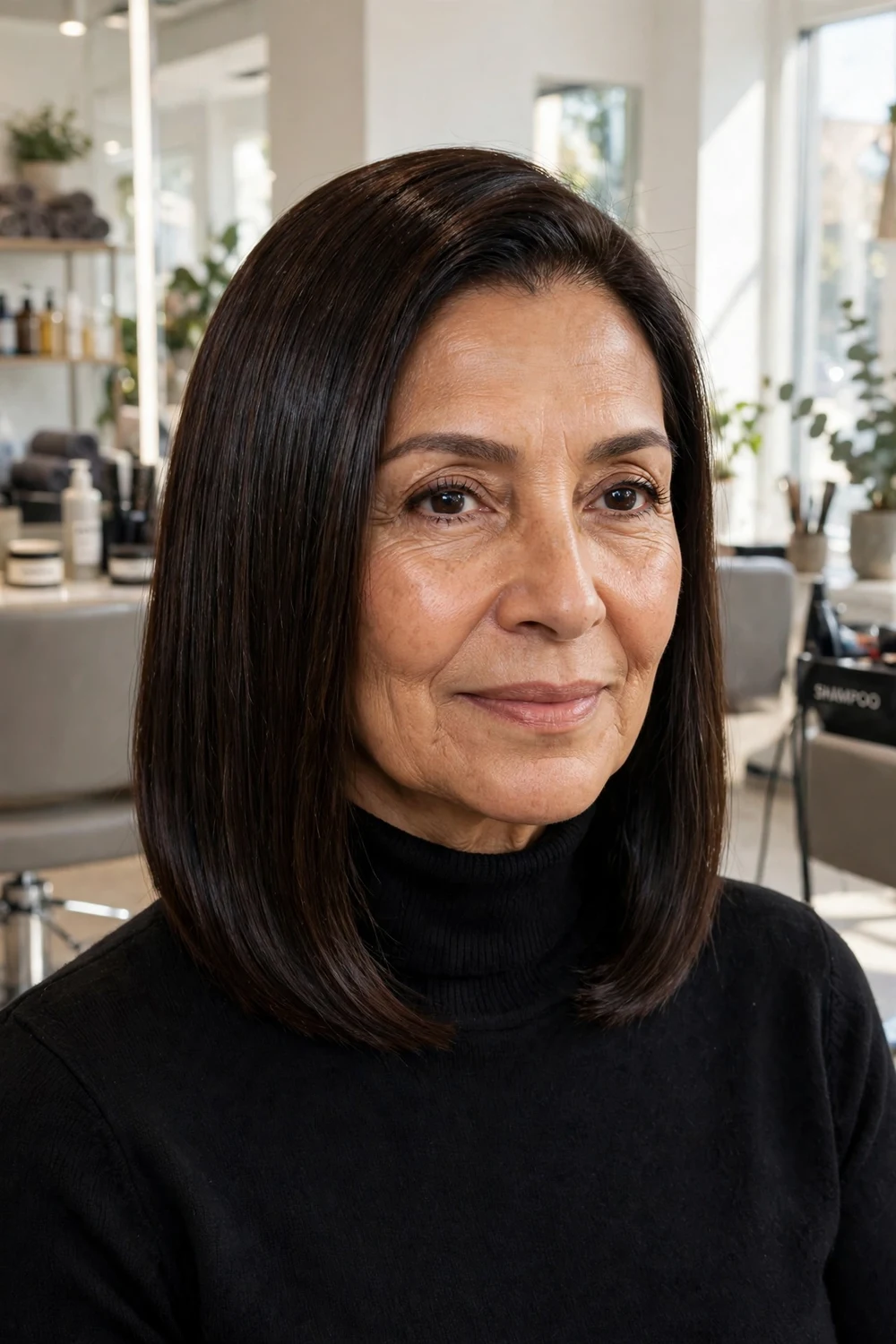
Glossed espresso is a deep, cool leaning brunette finished with a clear or tinted gloss for a reflective surface. Dark color after 50 fails when it goes flat and matte, and the gloss is the fix: shine reads as healthy hair at any age. It suits medium and deep skin, and anyone whose natural base is still dark.
The trade is regrowth contrast. Grey roots against espresso show sooner than against any other shade here, usually at three to four weeks, so this shade suits readers who are comfortable with a regular root appointment. Between visits, a tinted espresso gloss at home or in salon keeps the surface even.
Try this: if you like this depth but want a longer interval, ask your colorist about the same espresso with a root smudge, covered later in this list.
Difficulty: Low to Medium · Cost: $$ (salon)
9. Toasted Mushroom Brown
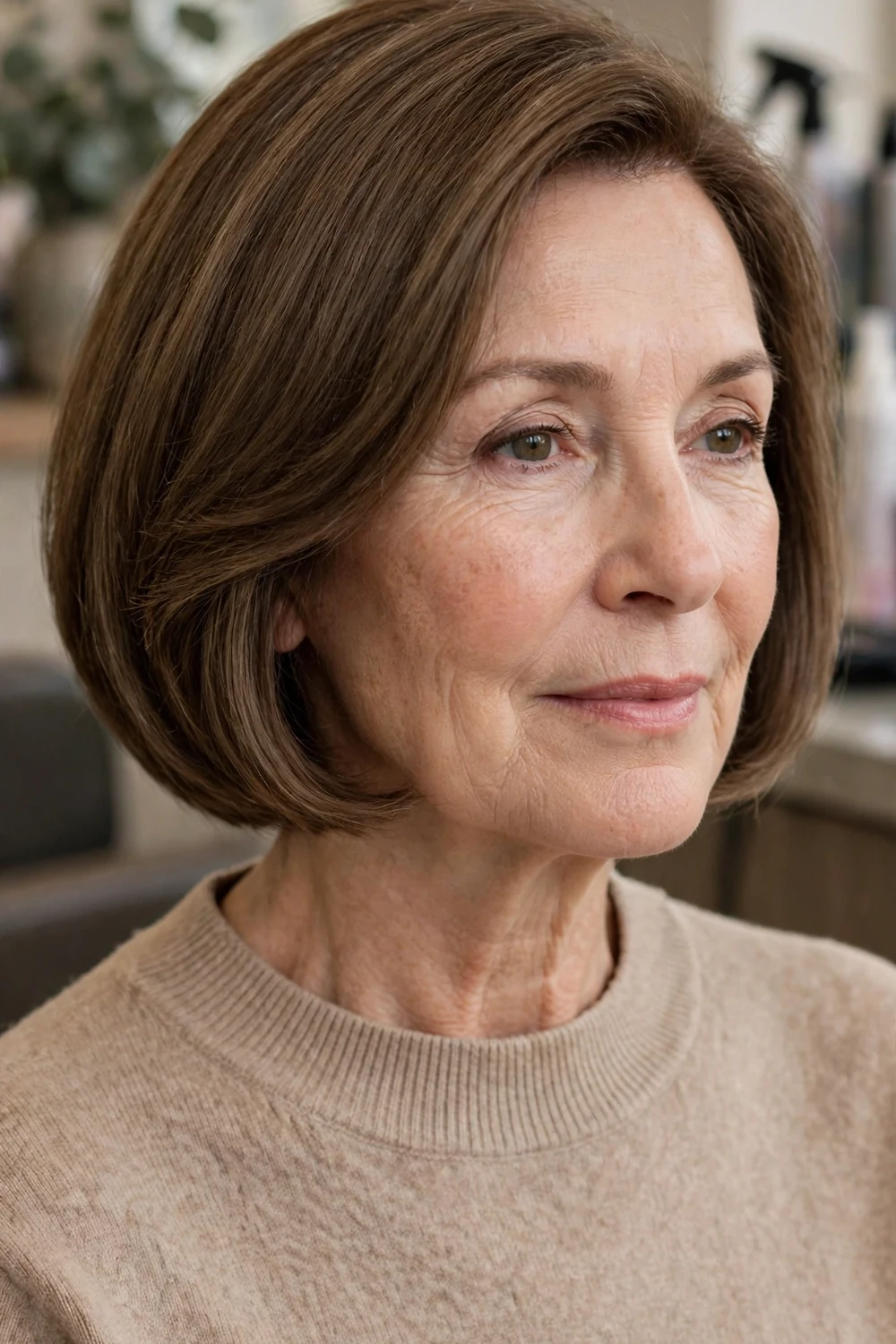
Toasted mushroom brown sits between warm and cool: a taupe brown with no strong red, gold, or copper pull. That neutrality is its value. Warm shades can turn orange as they fade and cool shades can go dull, while mushroom brown fades into a slightly lighter version of itself.
It works on nearly every skin tone and gives full grey coverage in a single process. Readers who have fought brassiness in warm browns or flatness in ash browns usually land here. Keep the formula neutral at the root and a touch warmer through the ends if your skin is warm, so the face keeps some light.
Try this: ask for a gloss in the same neutral family at the refresh visit instead of a full recolor, since this shade holds its tone longer than most browns.
Difficulty: Low to Medium · Cost: $$ (salon)
10. Maple and Mocha Blend
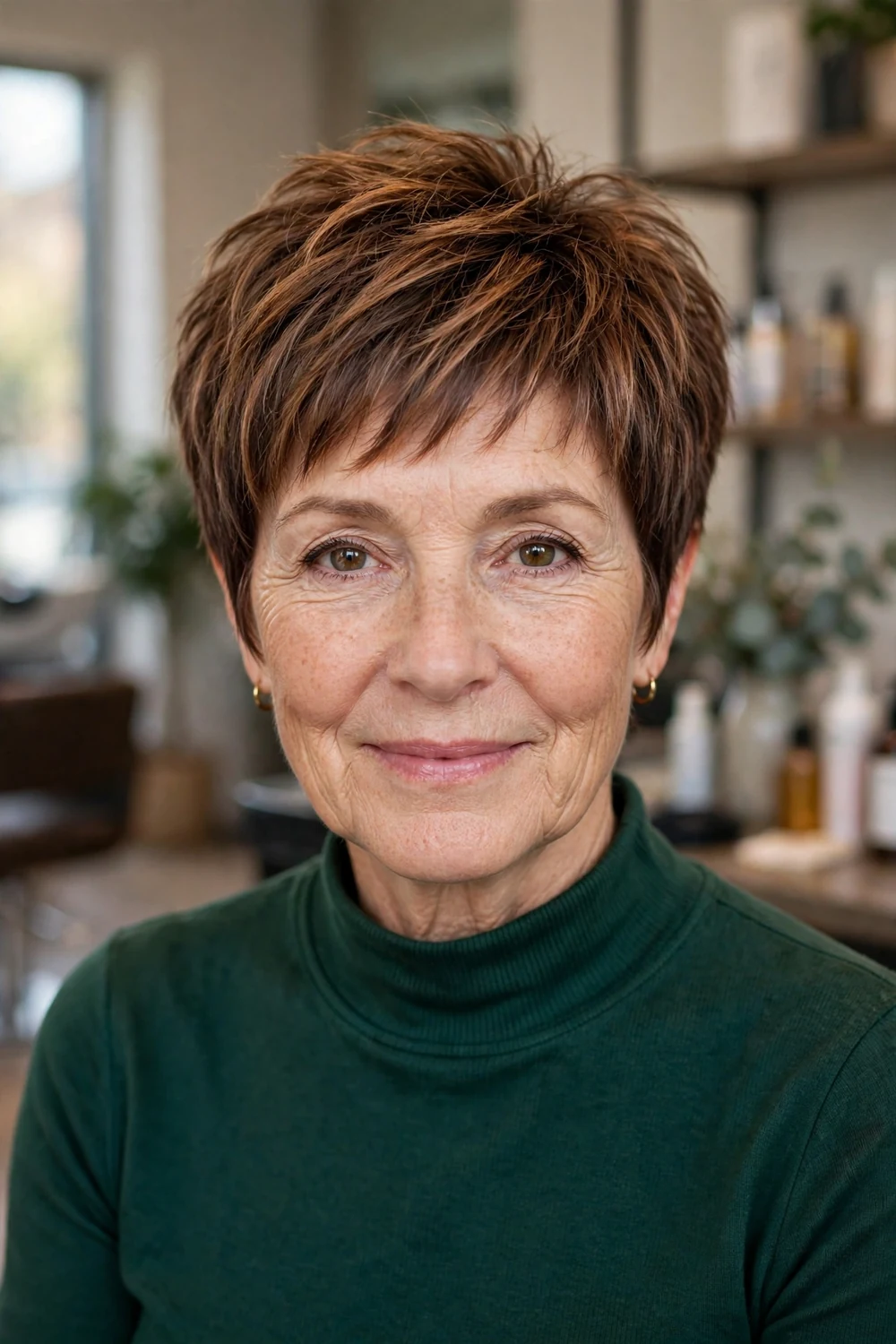
The maple and mocha blend mixes warm maple brown with deeper mocha sections, usually on short cuts where the two tones can be placed with precision. The contrast between the warm top tones and the deeper base gives short, fine hair the look of more density.
Short hair shows regrowth fast simply because there is less length to hide it, and a two tone blend buys time: new grey breaks up the pattern instead of drawing a line. The service uses foils or hand placement to lift the maple pieces, so the first visit runs longer than a single process color.
Try this: on a pixie or short crop, ask for the maple tones on the top and fringe and the mocha kept at the sides and nape for a clean shape.
Difficulty: Medium to High · Cost: $$$ (salon)
11. Caramel Brunette Balayage
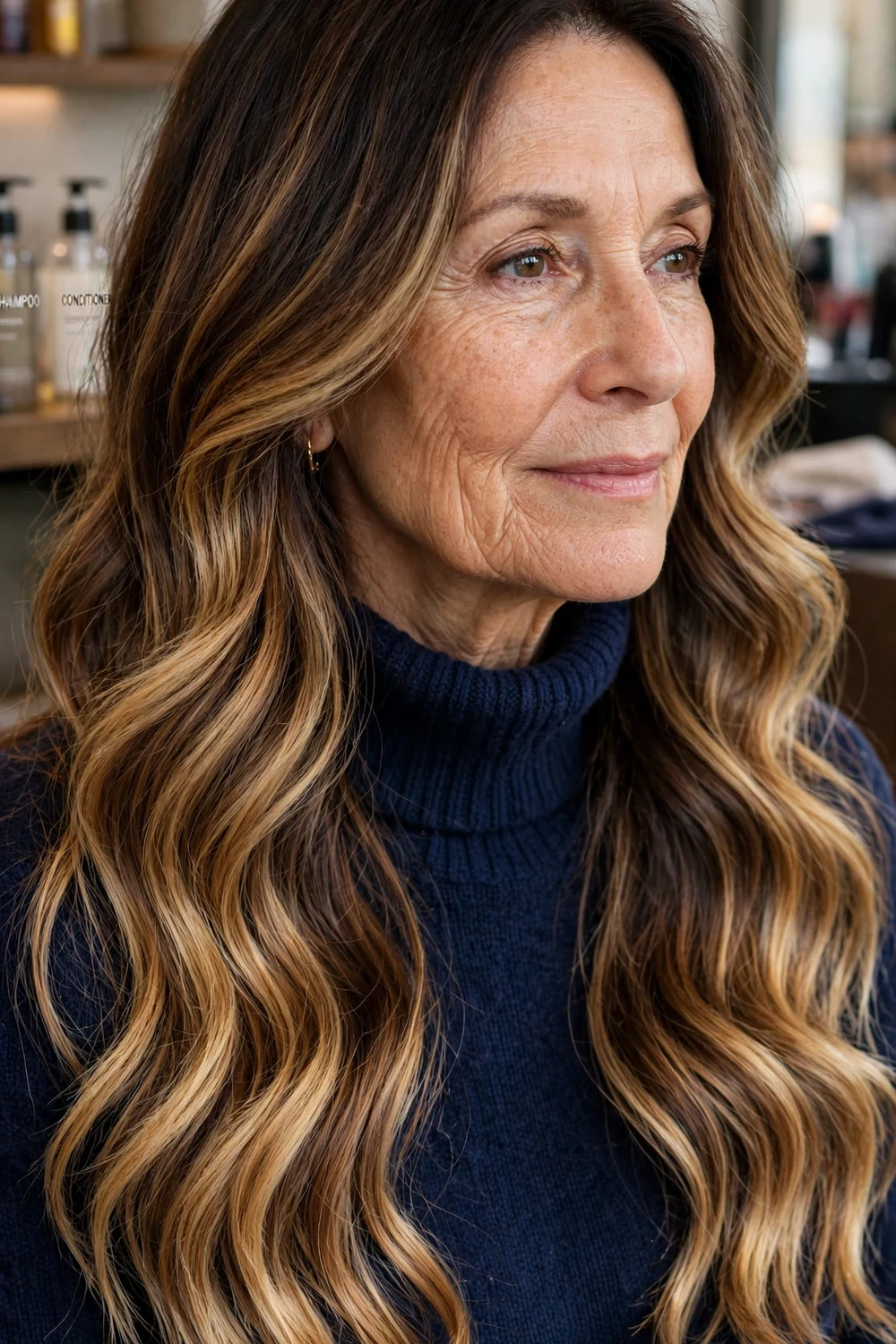
Caramel brunette balayage keeps a brunette root and paints caramel and honey pieces from the mid lengths down. The color change sits away from the scalp, which is the whole point for upkeep: grey regrowth at the root stays your natural blend, and the lightened ends grow out with no line at all.
Balayage needs pre-lightening on the painted sections, so it grades high on technique even though the maintenance after is low. Many readers pair it with a root color at the same visit for coverage, then run the balayage itself for three to four months between refreshes.
Try this: keep the caramel two to three shades lighter than your base, no more. A bigger jump looks striped on straight hair and dates the color.
Difficulty: High · Cost: $$$ (salon)
12. Cinnamon Auburn
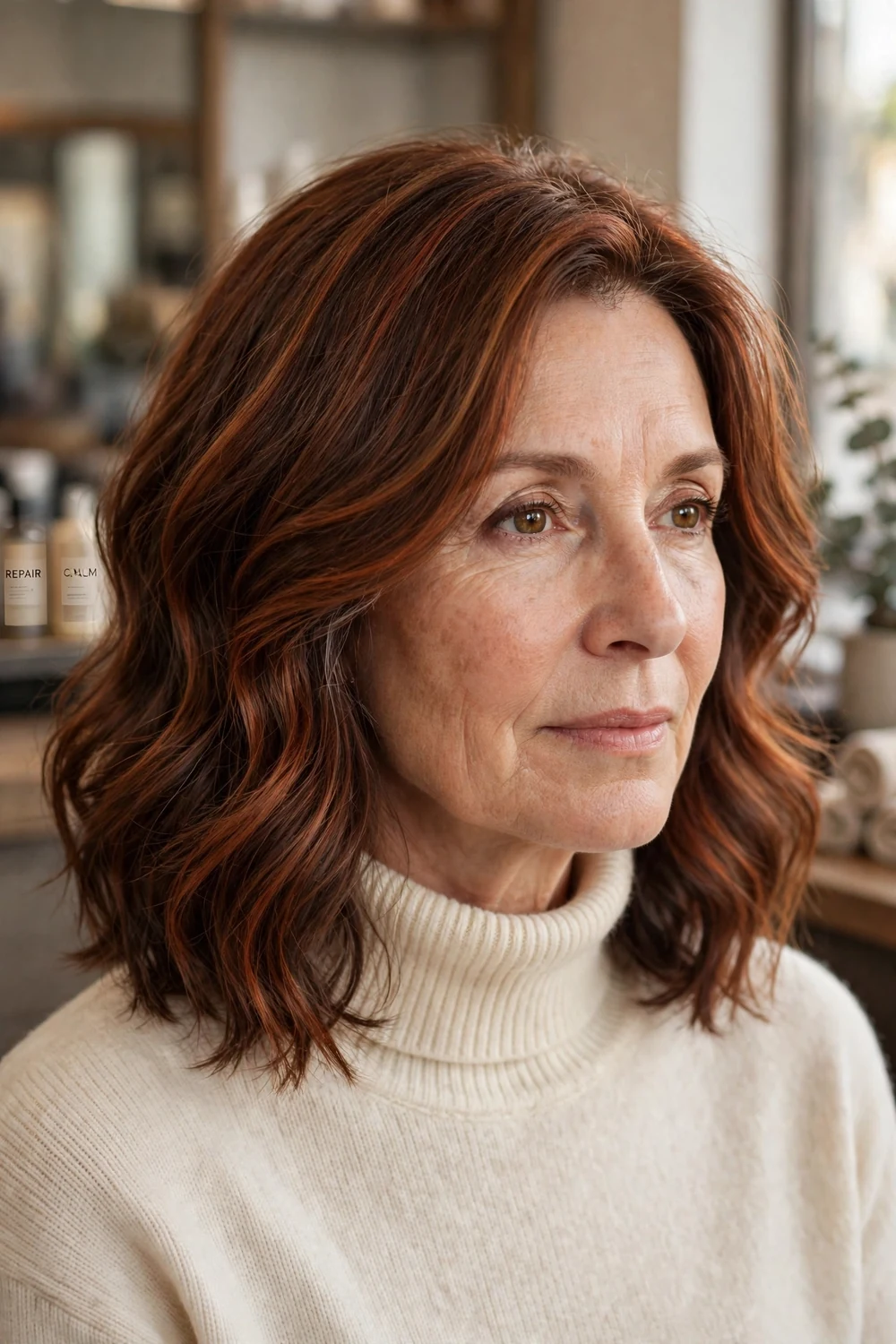
Cinnamon auburn is brunette first, with copper red showing through when light hits it. The brown base keeps the red wearable for readers who want a fall change they can carry into a conservative workplace, and the warm reflect softens the look of fine lines better than a cool dark shade does.
Because the base is brown, new growth blends instead of striping, and demi-permanent versions stain grey a warm gold red that fades evenly. Red tones rinse out with washing, so wash two to three times a week in cool water and expect a gloss refresh at five weeks.
Try this: ask your colorist to write the formula down as brunette with a copper reflect. The same name means a much redder shade in some salon lines.
Difficulty: Medium · Cost: $$ (salon)
13. Chestnut and Cinnamon Highlights
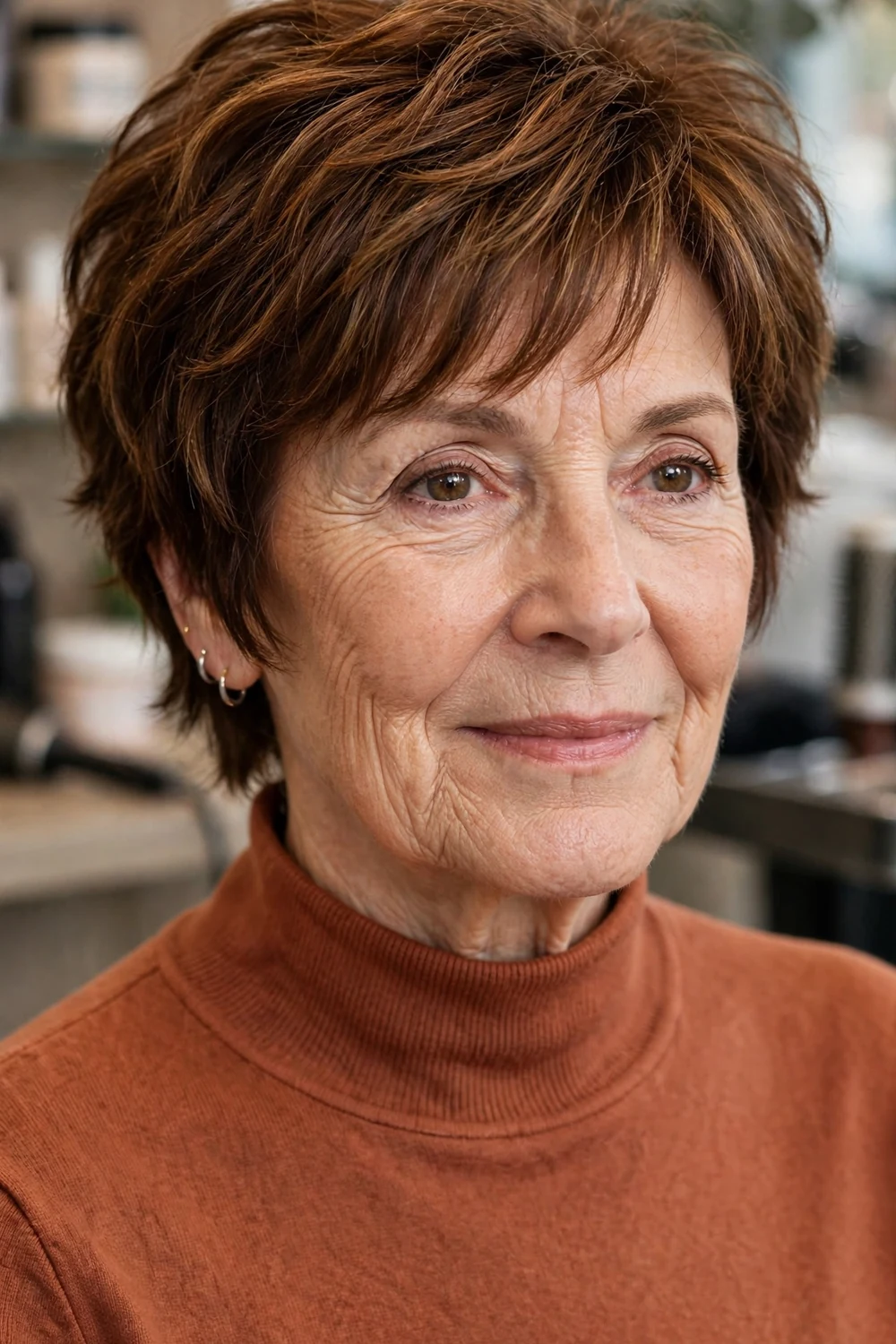
This blend keeps a chestnut brown base and threads lighter cinnamon highlights through it. Where cinnamon auburn colors the whole head, this version places the warmth in ribbons, so the overall read stays brunette with movement. It flatters most skin tones and adds visible dimension to short and medium cuts.
The highlights need lightening before the cinnamon tone goes on, and they grow out softly because the contrast is low. Grey at the part mixes with the lightest ribbons. A cinnamon gloss over the whole head at the halfway point evens the fade between foil appointments.
Try this: ask for fine highlights rather than chunky ones. Fine ribbons read as dimension on mature hair, while wide stripes can look dated.
Difficulty: Medium to High · Cost: $$$ (salon)
14. Muted Copper Rose
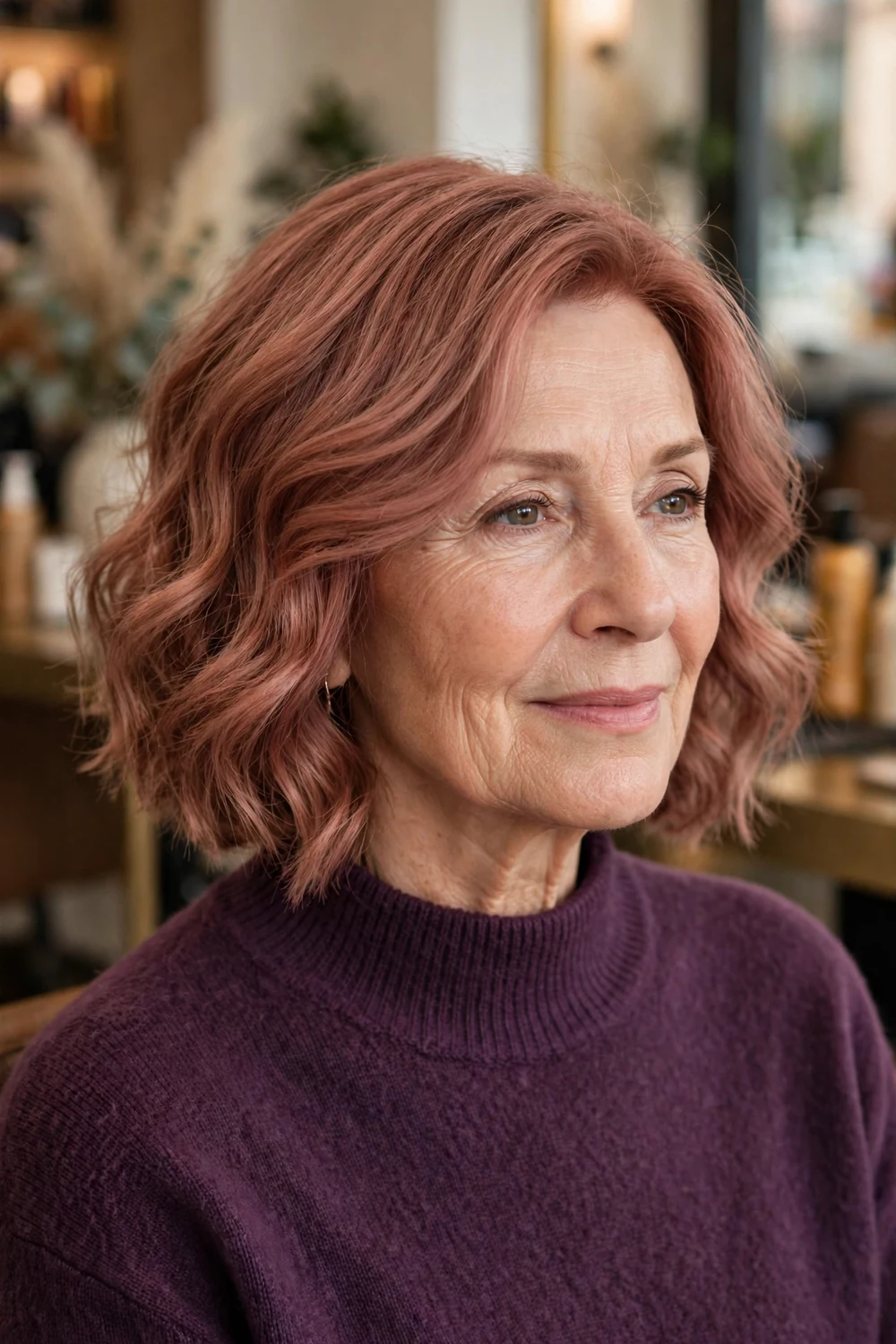
Muted copper rose takes copper down to a soft, rosy register: copper with a rose undertone and the brightness turned down. Full copper can wash out light skin, while the rose content adds color back to the face. It is the copper route most colorists suggest first for fair, mature skin. The wider copper family is covered in the fall copper hair colors roundup if you want to compare depths.
On blonde and light brown bases, a demi-permanent copper rose reaches the shade with no bleach and stains grey lightly, so the grow-out stays soft. The tone is delicate and fades toward a warm blonde, which most wearers find easy to live with between visits at five to six weeks.
Try this: test the rose undertone with a gloss before permanent color. Rose reads stronger on porous ends than it does at the root.
Difficulty: Low to Medium · Cost: $$ (salon)
15. Deep Golden Copper
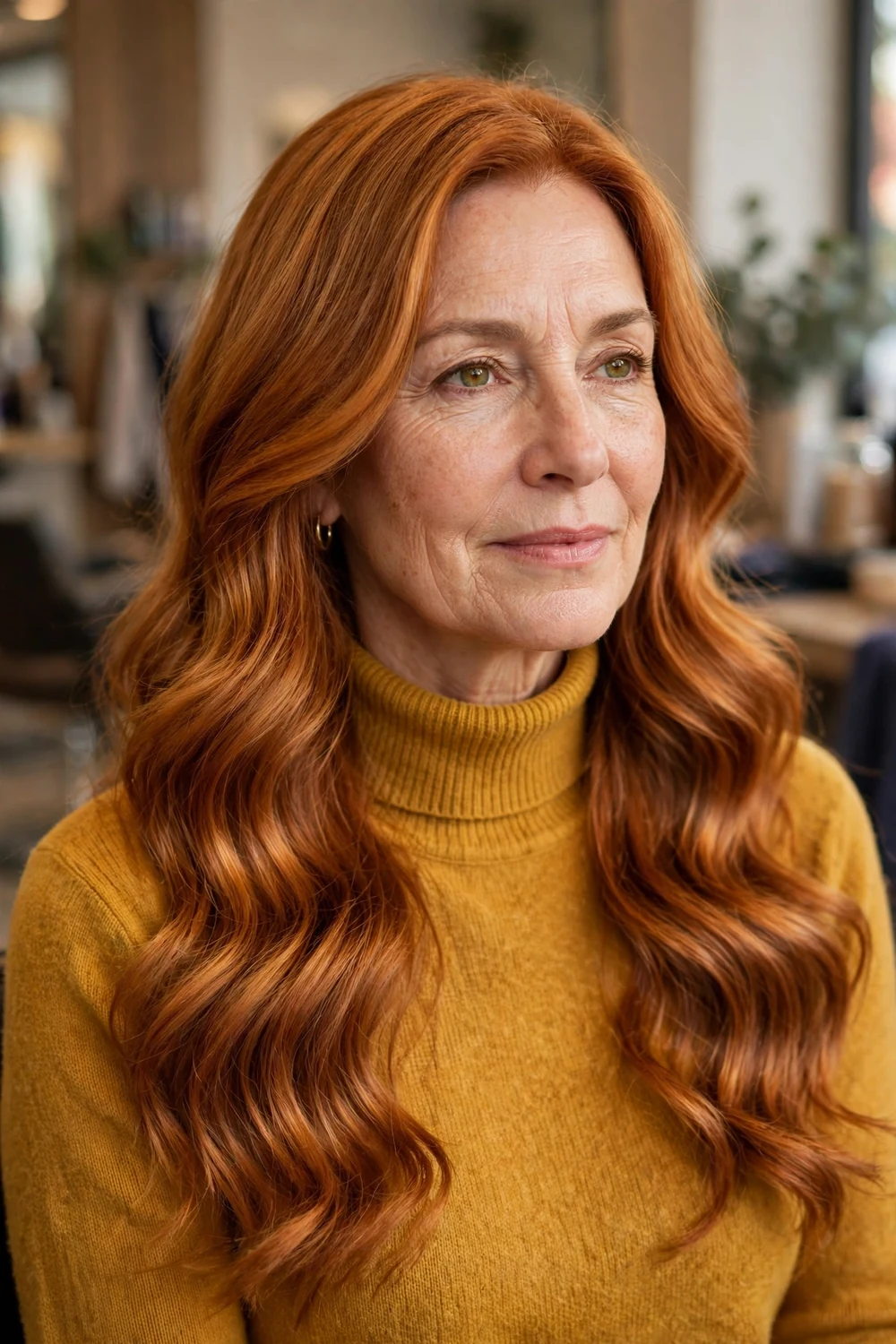
Deep golden copper sits between amber and penny copper, with enough depth to read as a fall shade rather than a summer one. It suits warm skin best and pairs well with gold jewelry and the warm neutrals that fill fall wardrobes. Medium and olive skin carry the saturation without it overpowering the face.
Light brown and dark blonde bases reach it in a single process. Darker bases need some lift first, which your colorist can judge in a consultation. Copper fades faster than brown, so budget for a tone refresh at five to six weeks and use a color depositing conditioner in a copper shade once a week at home.
Try this: if all over copper feels like a big step, start with this shade as balayage through the front and ends and keep your natural base at the root.
Difficulty: Medium · Cost: $$$ (salon)
16. Ginger Apricot
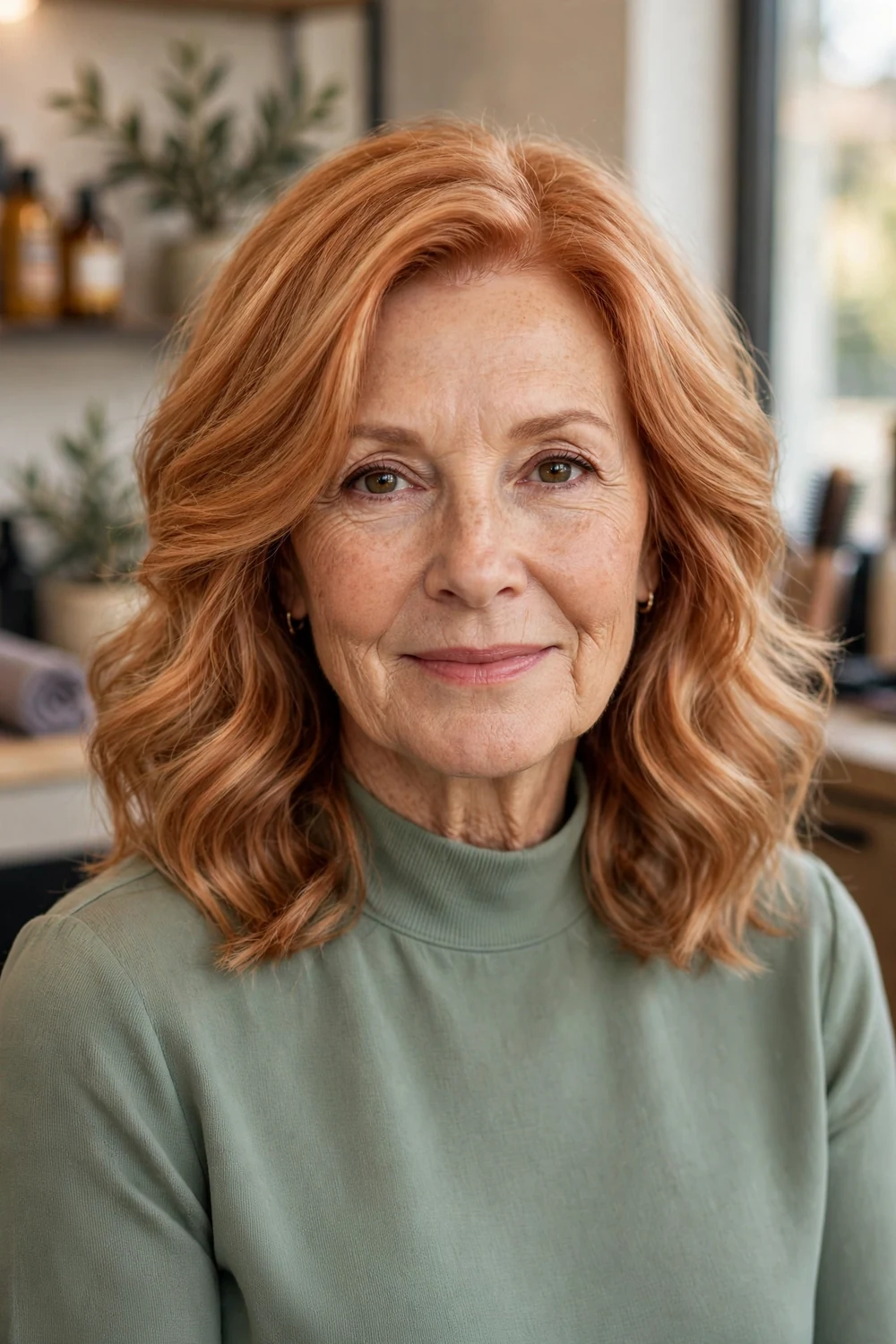
Ginger apricot is the light end of the red family: orange red softened with gold, so it reads apricot rather than fire. It freshens natural red hair that has faded as grey came in, and it suits fair to medium skin with warm undertones. On mid length hair with soft waves, the light tone keeps the face bright.
A high lift permanent color reaches it on light bases with no separate bleach step. Grey takes the apricot stain well under demi-permanent color, though the lightest roots can look paler than the lengths, so many colorists deepen the root formula by half a shade to even it out.
Try this: ask for a slightly deeper ginger at the root and the apricot kept for the lengths. The small gradient hides regrowth for an extra week or two.
Difficulty: Medium · Cost: $$ (salon)
17. Chocolate Cherry
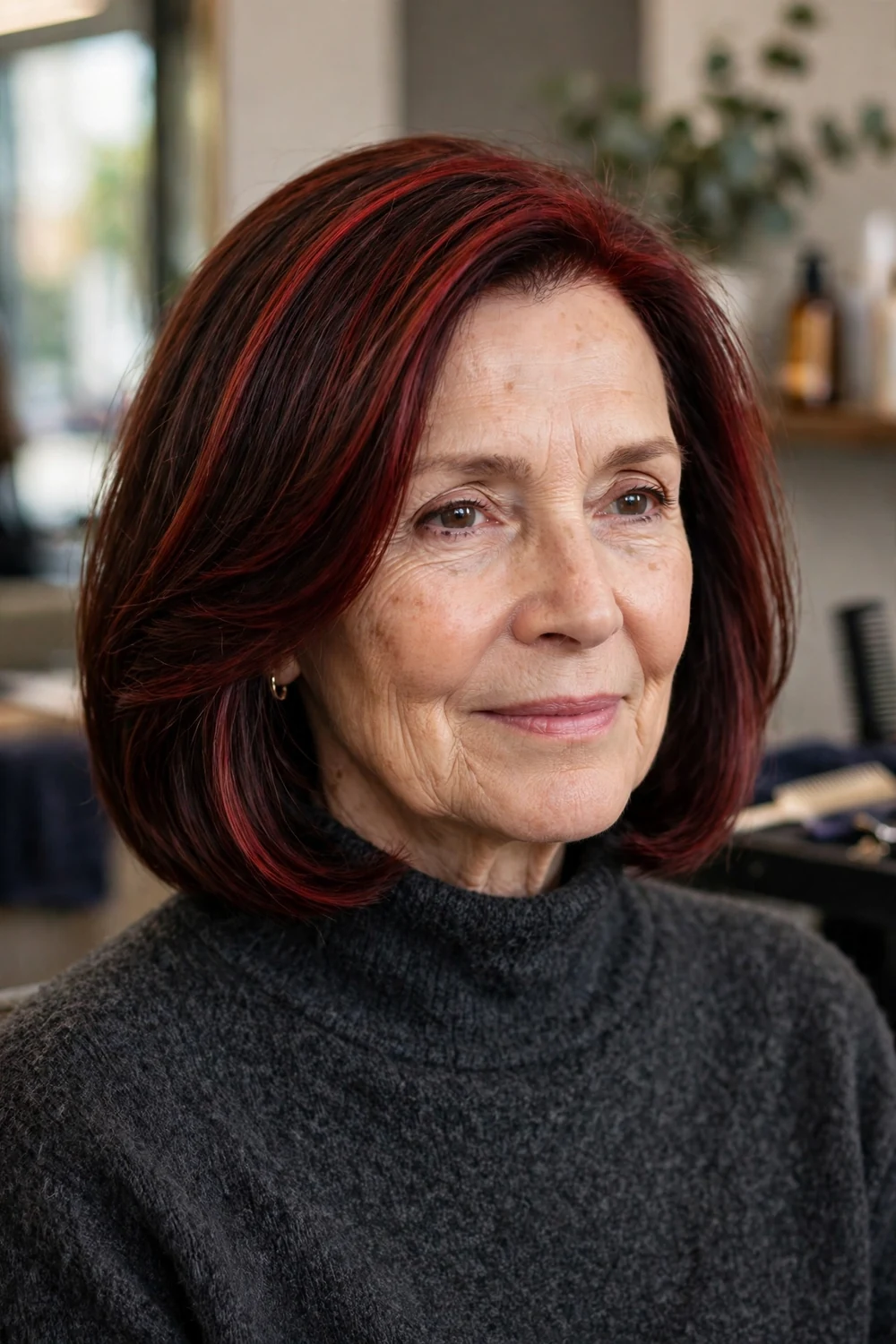
Chocolate cherry blends a deep brown base with cherry red tones that show in direct light and settle back to brunette indoors. It gives dark hair a fall change without lightening, and the red reflect adds warmth that plain dark brown lacks against mature skin.
A single process color plus a red toned gloss builds the shade, and grey coverage is full. The cherry portion fades faster than the brown base, softening into a warm brunette rather than anything brassy. A red boosting, color safe shampoo helps hold the reflect between visits.
Try this: ask for the cherry as a gloss over your current brunette first. One short appointment shows you the tone in daylight before you commit the base color to it.
Difficulty: Low to Medium · Cost: $$ (salon)
18. Deep Plum Burgundy
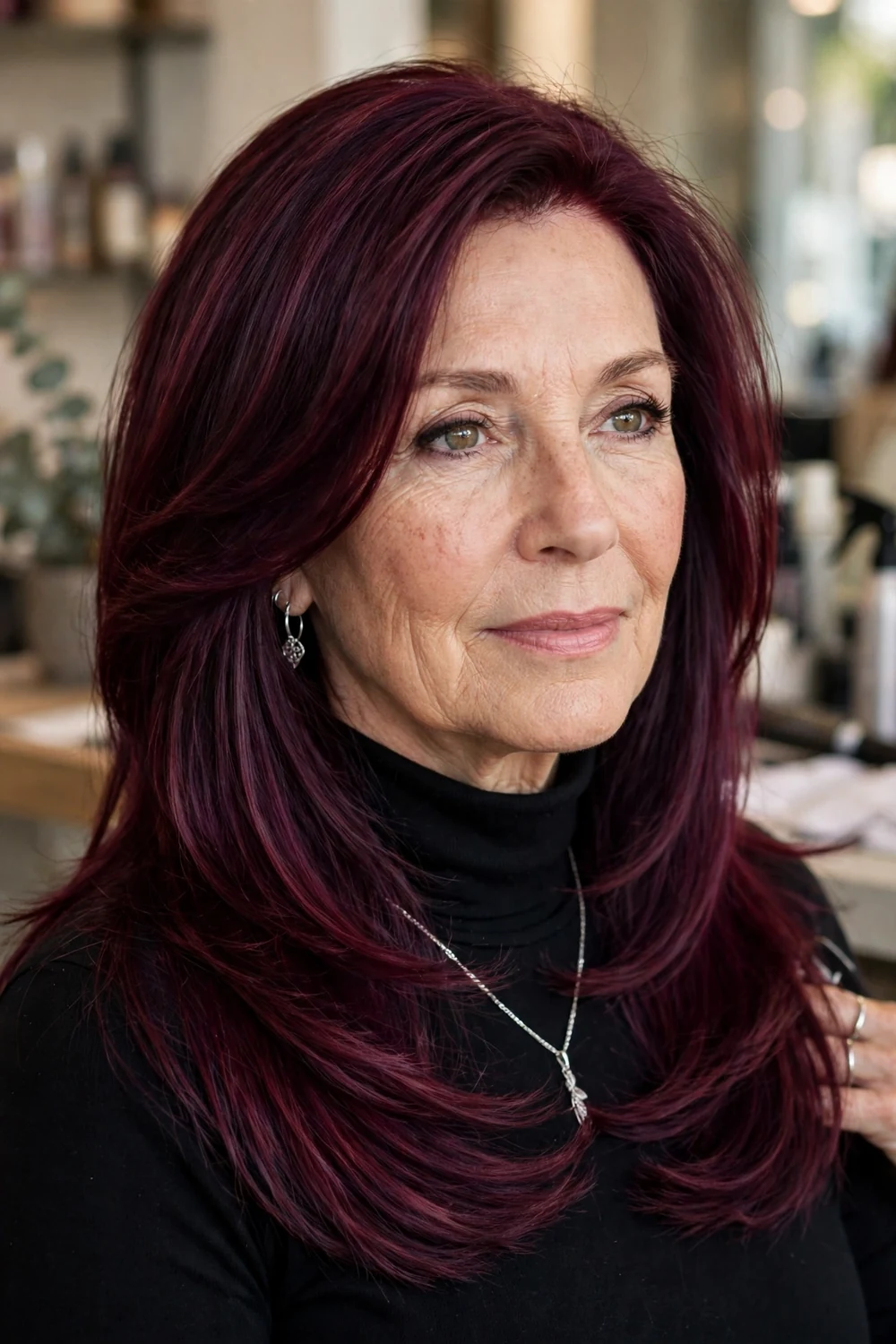
Deep plum burgundy is the bold, cool leaning red on this list: a dark base carrying plum and burgundy tones with a jewel like depth. It works across most skin tones, reads well with silver jewelry, and gives deep skin in particular a rich fall option that stays on the cool side of red.
Burgundy pigments fade faster than browns, and the fade lands in a mauve brown that still looks intentional. Wash two to three times a week with a color safe shampoo to slow it down. Grey coverage is full with permanent color, and the dark base means roots show at the usual four week mark.
Try this: if full burgundy feels strong, ask for it as a balayage over your natural dark base, so the jewel tone lives in the lengths only.
Difficulty: Medium · Cost: $$ (salon)
19. Dimensional Burnt Orange
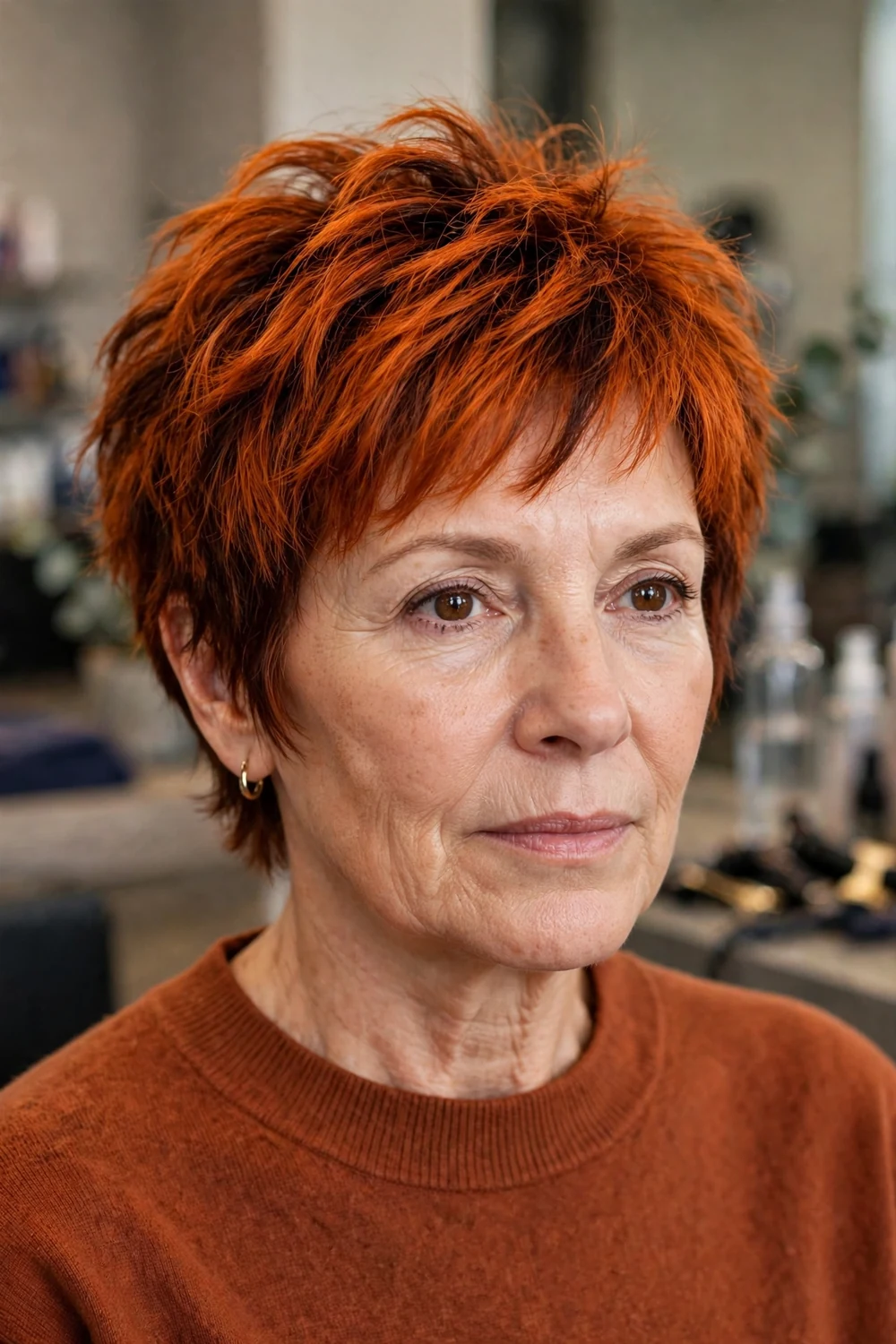
Dimensional burnt orange pairs a vivid orange shade with deeper tones kept at the roots, so the color has depth instead of one flat level of brightness. It suits thick hair and short cuts well, where the darker root keeps the shape grounded. Warm and medium skin tones carry it best.
This is the highest upkeep red here. The bright sections need pre-lightening to show true orange, and orange pigment fades with every wash. Readers who choose it usually accept a gloss at four weeks as part of the deal. In exchange, the rooted depth hides the first stage of grey regrowth better than a flat all over bright shade does.
Try this: keep the burnt orange for the top layers and ends, and ask for your natural depth at the root. You get the fall color with a softer grow-out.
Difficulty: High · Cost: $$$ (salon)
20. Golden Caramel Copper
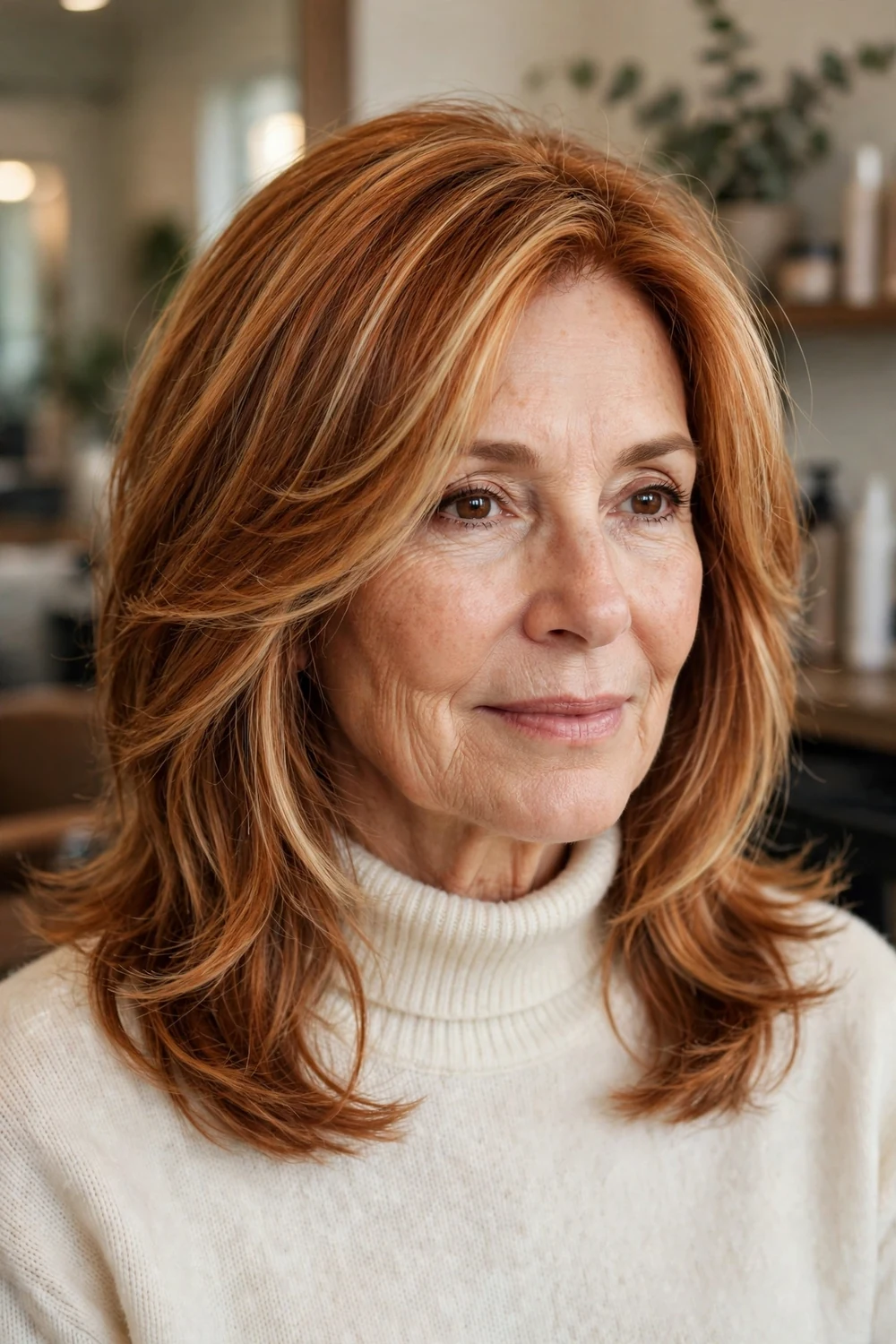
Golden caramel copper blends a warm copper base with caramel tones and soft blonde highlights around the face. Where deep golden copper colors the whole head one shade, this version layers three tones, and the pale front pieces do the brightening work that matters most after 50.
The foil work means lightening is involved, and the copper base needs its own tone refresh at five to six weeks. Grey blends into the layered tones well, since no single root line defines the color. This shade suits fair and medium skin with warm undertones.
Try this: ask for the face framing highlights in a soft blonde, one to two shades lighter than the copper, so the frame glows without striping.
Difficulty: Medium to High · Cost: $$$ (salon)
21. Smoky Silver
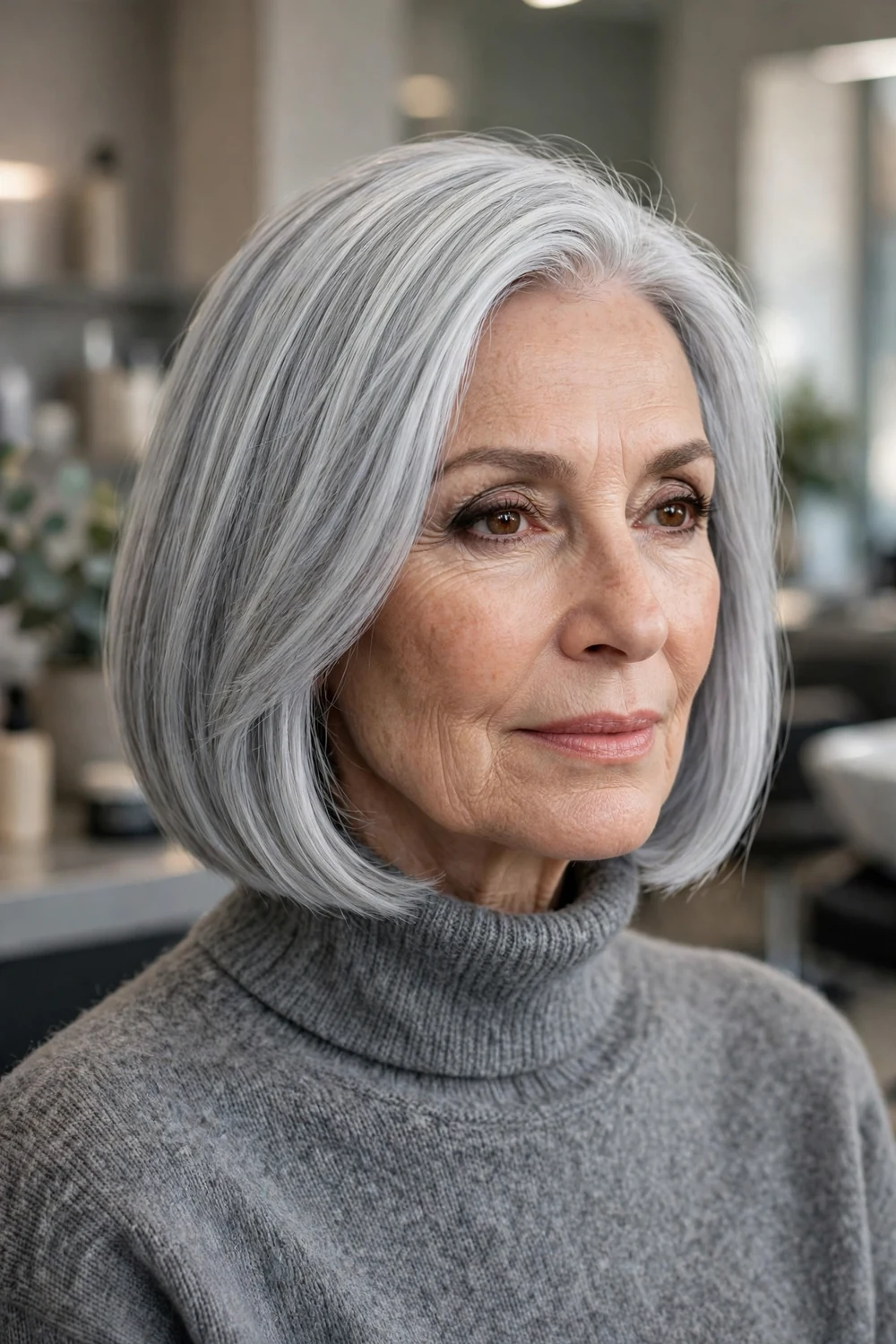
Smoky silver takes natural grey and finishes it with cool toning that removes yellow and adds a polished, even reflect. The color is the hair you already grow, styled on purpose. It suits cool skin, and it ends the root touch-up cycle entirely once the transition is done.
The honest part is the transition. Hair that has been dyed dark for years needs a blending plan over several appointments, usually highlights and lowlights that meet in the middle, before the silver can stand alone. Hair that is already mostly grey needs only toning. Purple shampoo once or twice a week keeps the silver bright and clear.
Try this: start the transition in fall, when hats and shorter days make the in between stage easier, and ask your colorist to map the stages before the first appointment.
Difficulty: Medium · Cost: $$ (salon)
22. Warm Pearl Grey
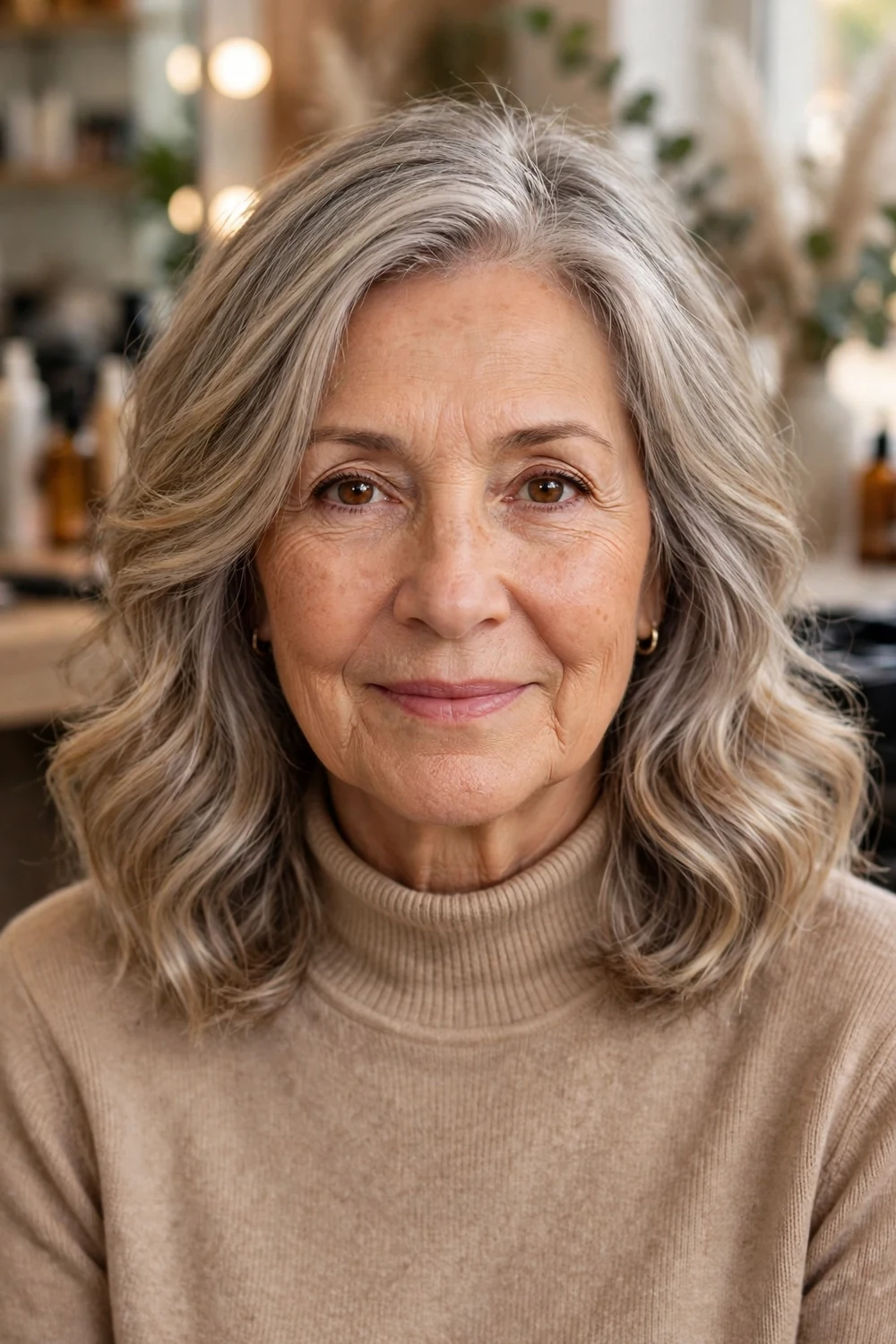
Warm pearl grey blends silver strands with soft beige and golden undertones, so the grey reads warm instead of steely. It is the silver option for warm skin, and for readers who tried cool grey toners and felt the result drained their face. The blend is built with highlights and lowlights that ease dyed hair into natural grey over a few appointments.
Upkeep drops sharply once the blend is established: no root line forms, because the root is the color. A warm beige gloss every eight to ten weeks refreshes the tone. Readers comparing silver routes can also look at gray hair with lowlights for the lowlight first version of this idea.
Try this: bring photos of warm grey rather than silver grey to the consultation. The two toner families differ, and the photo keeps the appointment on the warm track.
Difficulty: Medium to High · Cost: $$$ (salon)
23. Cinnamon Brown with Silver Money Piece
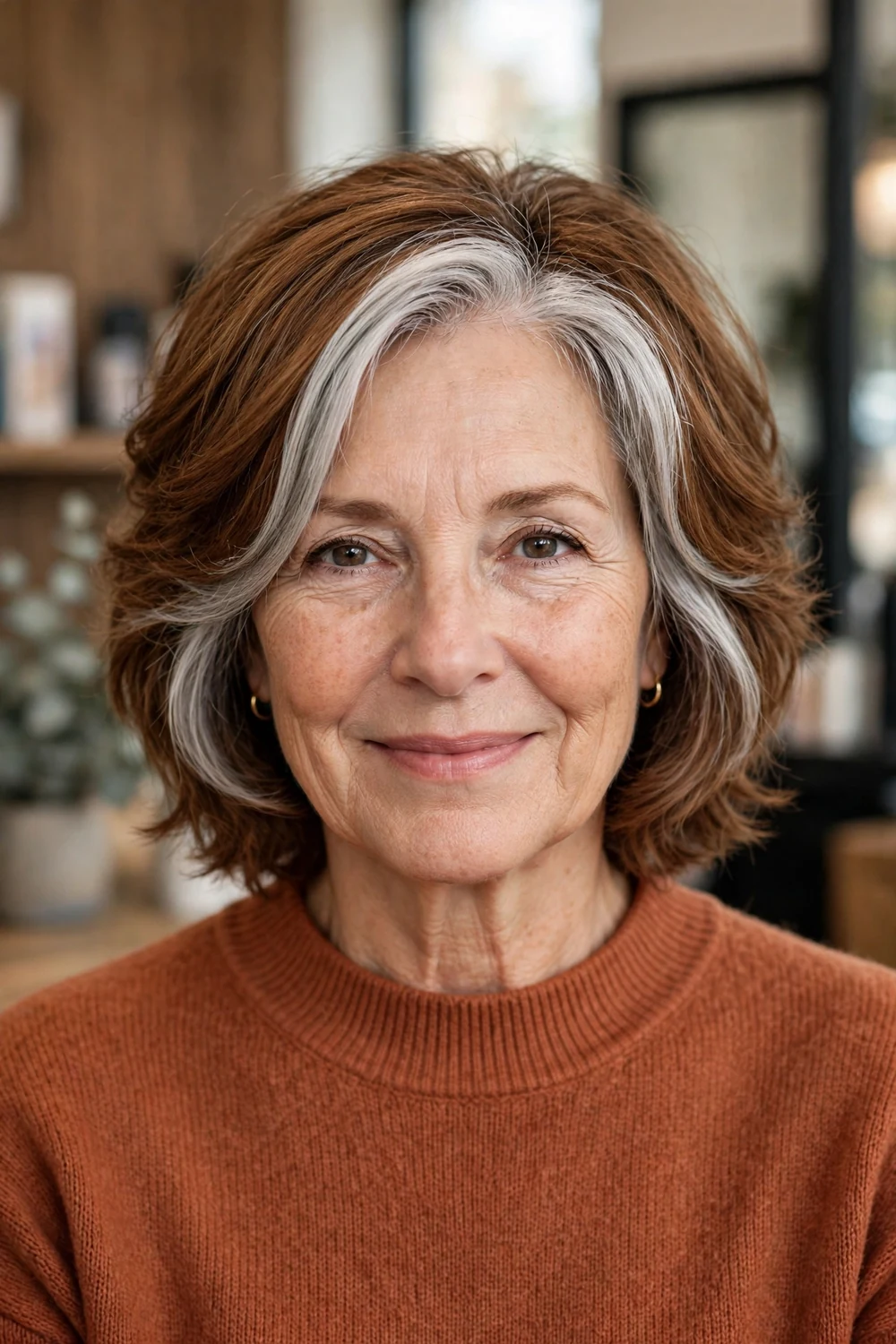
This look keeps a warm cinnamon brown base and leaves, or places, silver panels at the front hairline. The silver frame is the grey you grow, worn as the feature of the style rather than covered. It suits readers whose grey comes in first and thickest at the front, which is a common pattern.
The base takes a standard single process color for coverage through the back and sides, while the front panels are toned clear or silver and left light. Because the brightest grey sits exactly where regrowth shows most, the style hides its own upkeep better than almost any full coverage shade.
Try this: ask your colorist to stop the brown color about an inch back from the hairline at the front, so the silver panel keeps a clean edge as it grows.
Difficulty: Low to Medium · Cost: $$ (salon)
24. Warm Beige Grey-Blending Gloss
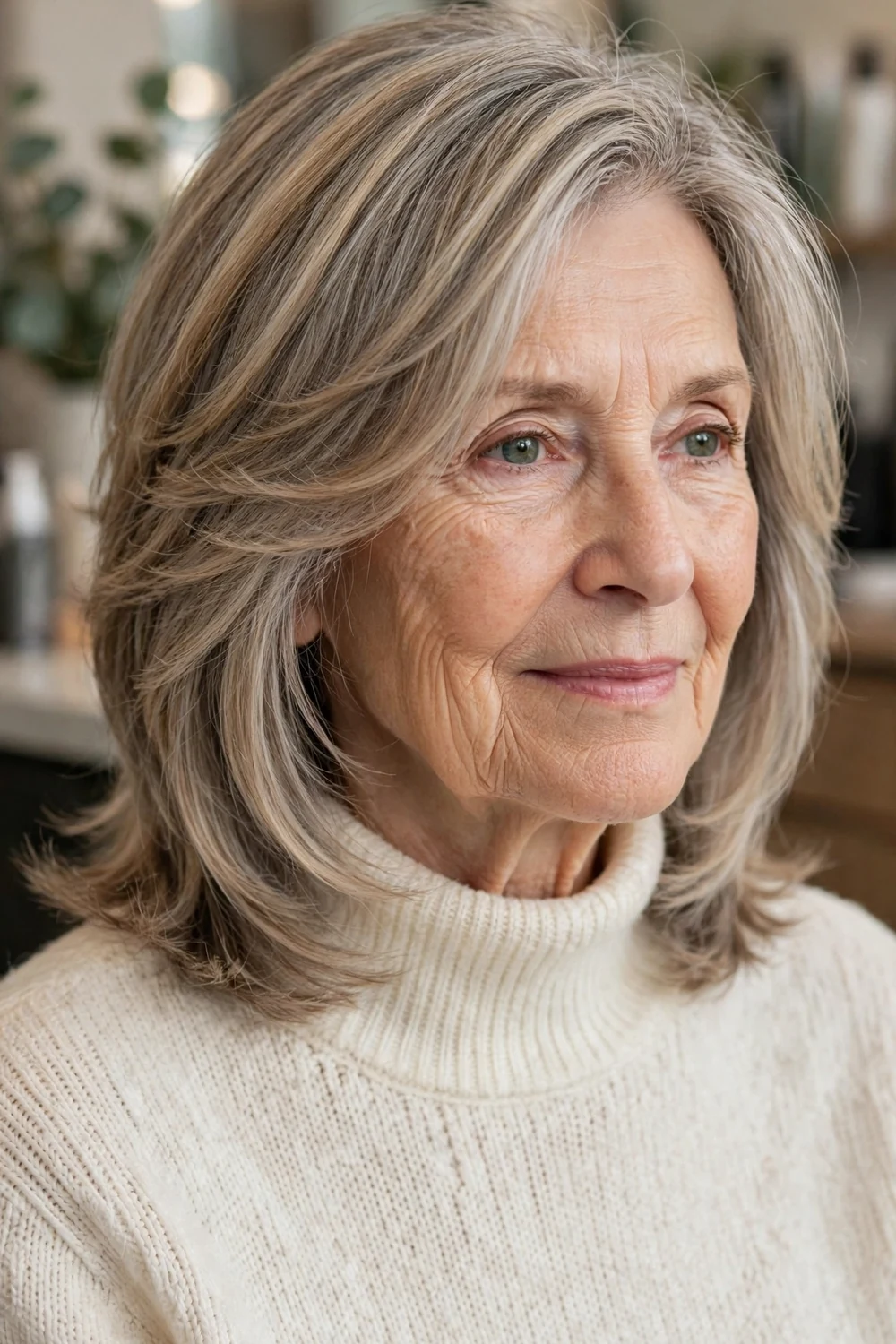
A grey-blending gloss is a demi-permanent color in a warm beige tone that stains grey strands instead of covering them flat. The grey stays visible as lighter pieces inside the color, so the result looks like your hair on a good day rather than a new dye. It adds shine and a fall warmth at the same time.
This is the lowest upkeep color service on the list. The gloss fades evenly over six to eight weeks with no regrowth line at any point, and the appointment itself is short. It suits readers with up to about half grey who want to soften the grey rather than erase it, in any fall beige or light brown tone.
Try this: choose a gloss one shade lighter than the color you think you want. Demi-permanent color reads deeper on grey hair than the swatch suggests.
Difficulty: Low · Cost: $ (salon)
25. Root Smudge Brunette
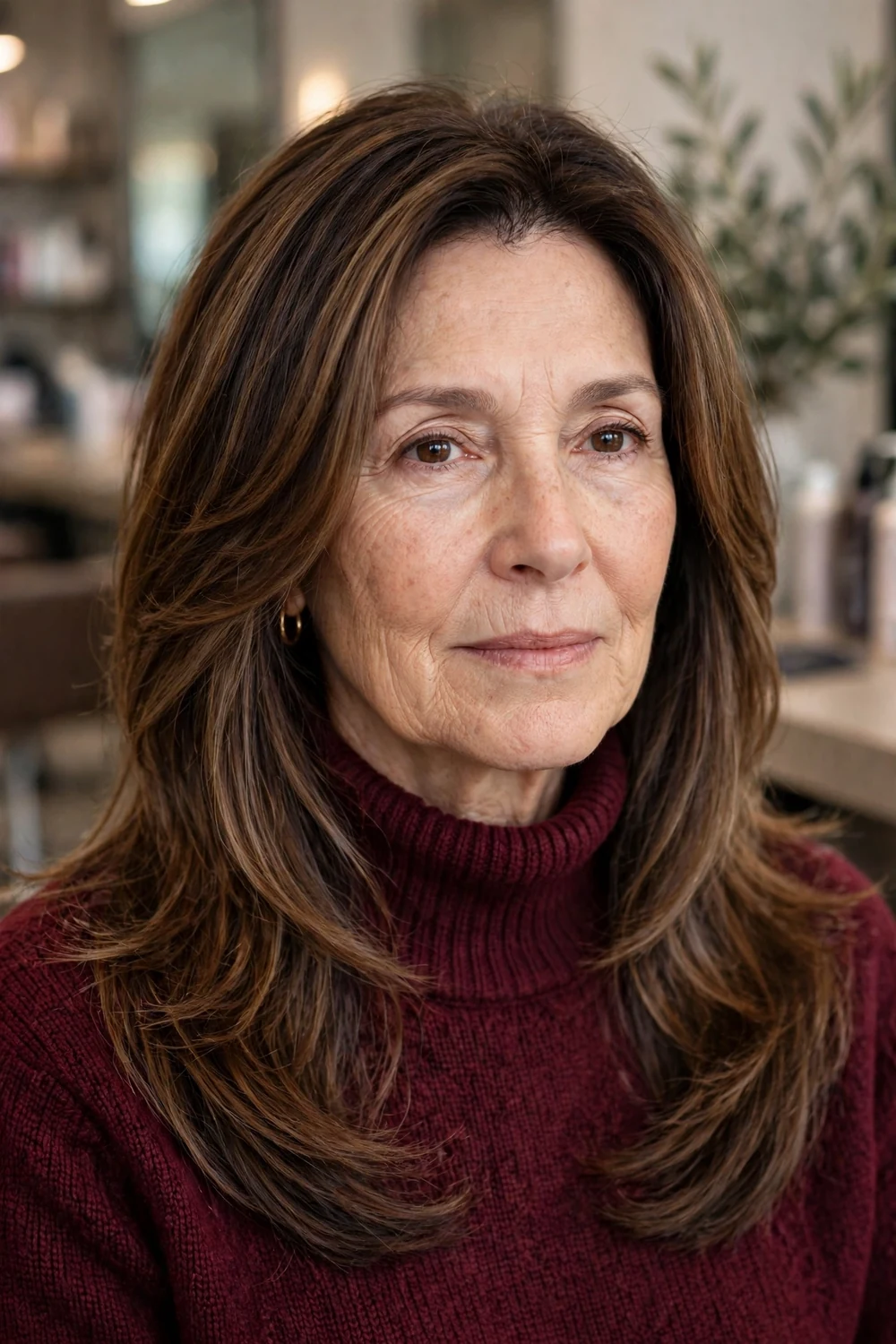
A root smudge takes a standard brunette root color and blurs its lower edge into the lengths, so there is no straight line where the dye ends. The technique works with any fall brunette depth, from toffee to espresso, and its whole purpose is time: the blurred edge lets regrowth read as shadow for two to three extra weeks.
The service adds a few minutes to a normal root appointment and no lightening at all. It pairs well with glossed espresso for readers who love dark color but want a five to six week interval instead of three to four. Grey coverage at the scalp stays full; only the grow-out line changes.
Try this: ask for the smudge in a shade half a level lighter than your root color. The small step down is what makes the blend invisible as it grows.
Difficulty: Low to Medium · Cost: $$ (salon)
Frequently Asked Questions
What is grey blending and how is it different from full coverage color?
Full coverage color uses permanent dye to hide every grey strand, and new growth shows as a clear line at the roots within a few weeks. Grey blending works with the grey instead: demi-permanent color stains it, or highlights and lowlights are placed so grey reads as part of the pattern. Blending grows out softly with no hard line, and most blending routes run eight weeks or more between appointments.
Which fall hair colors need the least upkeep after 50?
The lowest upkeep options are the grey-blending gloss, warm pearl grey and smoky silver once the transition is done, and balayage styles that keep color away from the roots, such as caramel brunette balayage. Honey bronde and root smudge brunette also stretch appointments well. Solid dark permanent color on mostly grey hair sits at the other end, with roots usually showing at three to four weeks.
Do warm fall colors suit cool skin tones?
Some do, with care. Cool skin usually does better with the red shades that lean cherry or plum, with champagne blonde, mushroom brown, and soft ash bronde kept bright around the face. Strong orange tones, such as dimensional burnt orange and deep golden copper, can clash with pink undertones. A strand test near the face is the reliable way to check any warm shade before a full appointment.
How often does grey hair need a root touch-up with permanent color?
With permanent color, visible regrowth usually appears at three to four weeks when the contrast between the dye and the grey is high, as with dark espresso shades. Medium browns and warm toffee tones hide the line a little longer. Root smudging, blending glosses, and lighter overall shades are the standard ways to stretch that interval to six to eight weeks.
Can I try a fall shade without permanent dye?
Yes. Demi-permanent color and tinted glosses cover most of the soft end of this list, including peach blonde, muted copper rose, chocolate cherry as a gloss, and the warm beige grey-blending gloss. They fade evenly over four to eight weeks, leave no regrowth line, and wash out without a correction appointment if you decide the tone is not for you.
Final Thoughts
The right fall shade after 50 is the one that fits your grey pattern and your calendar first, and the trend list second. Pick a blending route if you want fewer appointments, a warm brunette or copper if you want brightness next to the face, or a silver blend if you are ready to stop covering grey altogether. Take two or three photos from this list to your colorist and talk through the upkeep out loud before anyone mixes color. When winter comes, the broader autumn hair colors collection shows how these same warm families carry into the colder months.

