


Copper is the color family that takes over salons every fall, and the range is wider than most people expect. At one end sit soft peach and strawberry shades that barely lift a blonde base. At the other end sit burnt copper and mahogany shades that deepen a brunette without a full red commitment. I have followed this shade family through several fall seasons, and the versions that hold up best are always the ones matched to skin undertone and starting color first.
This list collects 29 fall copper hair colors and runs them in order: soft and light shades first, then the classic mid-tone coppers, the deep shades, the bold shades, and finally the placement techniques and low-commitment routes. Every idea notes the undertone, who it suits, what it usually costs at a salon, and how much upkeep it asks for. If you want the full spread of fall shades beyond copper, the general fall hair colors guide covers every family side by side.
Quick Takeaways
- Copper is a spectrum: peach and strawberry sit at the soft end, penny and spiced copper in the middle, and burnt copper and mahogany at the deep end.
- Match undertone before depth. Golden and orange coppers flatter warm skin, while deeper red-leaning coppers are the safer route for cool skin.
- Balayage, ombre, and glaze placements grow out softly and can stretch salon visits to 8 to 10 weeks.
- All-over vivid copper fades the fastest. Plan a gloss refresh at 4 to 6 weeks to hold the tone.
- Dark hair does not always need bleach. Glazes, melts, and deep coppers can sit over a brunette base.
How to Pick Your Fall Copper Shade
Start with your undertone. Fair skin with warm or neutral undertones carries the soft end of the family: peach, strawberry, honey, and apple cider copper. Medium and olive skin handle the classic mid-tones, penny, spiced, and golden copper, along with most melts and balayage placements. Deep skin takes the saturated end well, especially burnt copper, mahogany copper, and copper ombre over a dark base. Cool undertones are the one tricky match: ask your colorist for a copper with more gold or more red in it, and less orange.
Then check your starting base and your calendar. Blonde and light brown hair can reach almost every shade on this list in one session. Medium and dark brown hair reaches the deep half of the list directly, and needs lightening only for the bright shades. The wider roundup of autumn hair colors shows how copper sits next to the season’s browns and blondes if you are still deciding between families.
| Shade family | Undertone | Best starting base | Upkeep |
|---|---|---|---|
| Soft coppers (peach, strawberry, honey) | Warm gold | Blonde to light brown | Medium |
| Classic coppers (penny, spiced, ginger) | Warm orange-gold | Light brown to medium brown | Medium to high |
| Deep coppers (burnt, mahogany, cherry) | Red-brown | Medium brown to dark brown | Low to medium |
| Bold coppers (molten, calico) | Saturated orange | Pre-lightened base | High |
| Placed copper (balayage, ombre, money piece) | Varies by shade | Any base | Low |
1. Soft Peach Copper

Soft peach copper is the gentlest way into this color family: a pale peach tint laid over a blonde or light brown base, with the copper kept quiet. The undertone is peach-gold, and the result reads as a warmed-up blonde rather than a true red. It suits fair skin best, where deeper coppers can overpower.
Because the color sits on a light base, most heads need little or no lightening before the peach goes on. The trade-off is fade speed. Peach tones wash out within a few weeks and settle back toward blonde, so upkeep is a regular gloss rather than a full recolor.
Try this: ask for a peach copper gloss over your existing highlights first, so you can live with the tone for a month before committing to permanent color.
Difficulty: Low to Medium · Cost: $$ (salon)
2. Strawberry Copper

Strawberry copper mixes three tones: blonde, a wash of rose pink, and light copper. The balance matters. More blonde keeps it soft and wearable, while more pink pushes it toward a fashion shade. It suits fair skin and light eyes, and it is a common pick for anyone moving away from strawberry blonde who wants more depth for fall.
Light bases take this shade in one session with demi-permanent or permanent color. As it fades, the copper drops first and the hair settles into a pink-tinged blonde, which most wearers still like. A color-depositing conditioner in a copper or rose shade stretches the tone between visits.
Try this: ask your colorist for a strand test on the ends, since porous ends grab the pink tones faster than the roots do.
Difficulty: Medium · Cost: $$$ (salon)
3. Honey Copper

Honey copper pairs warm honey gold with a copper sheen, so the hair shifts between gold and copper as it moves. The undertone is fully warm, and the shade flatters warm and neutral skin across a wide range. It works on blonde and light brown bases without heavy lifting.
This is one of the softer grow-outs on the list. Ask for a root smudge in a shade close to your natural color and the line between new growth and color stays blurred for weeks. A honey copper gloss every six weeks or so keeps the sheen from going flat.
Try this: if your hair is already highlighted, a honey copper gloss over the top warms the whole head in one short appointment.
Difficulty: Low to Medium · Cost: $$ (salon)
4. Golden Copper
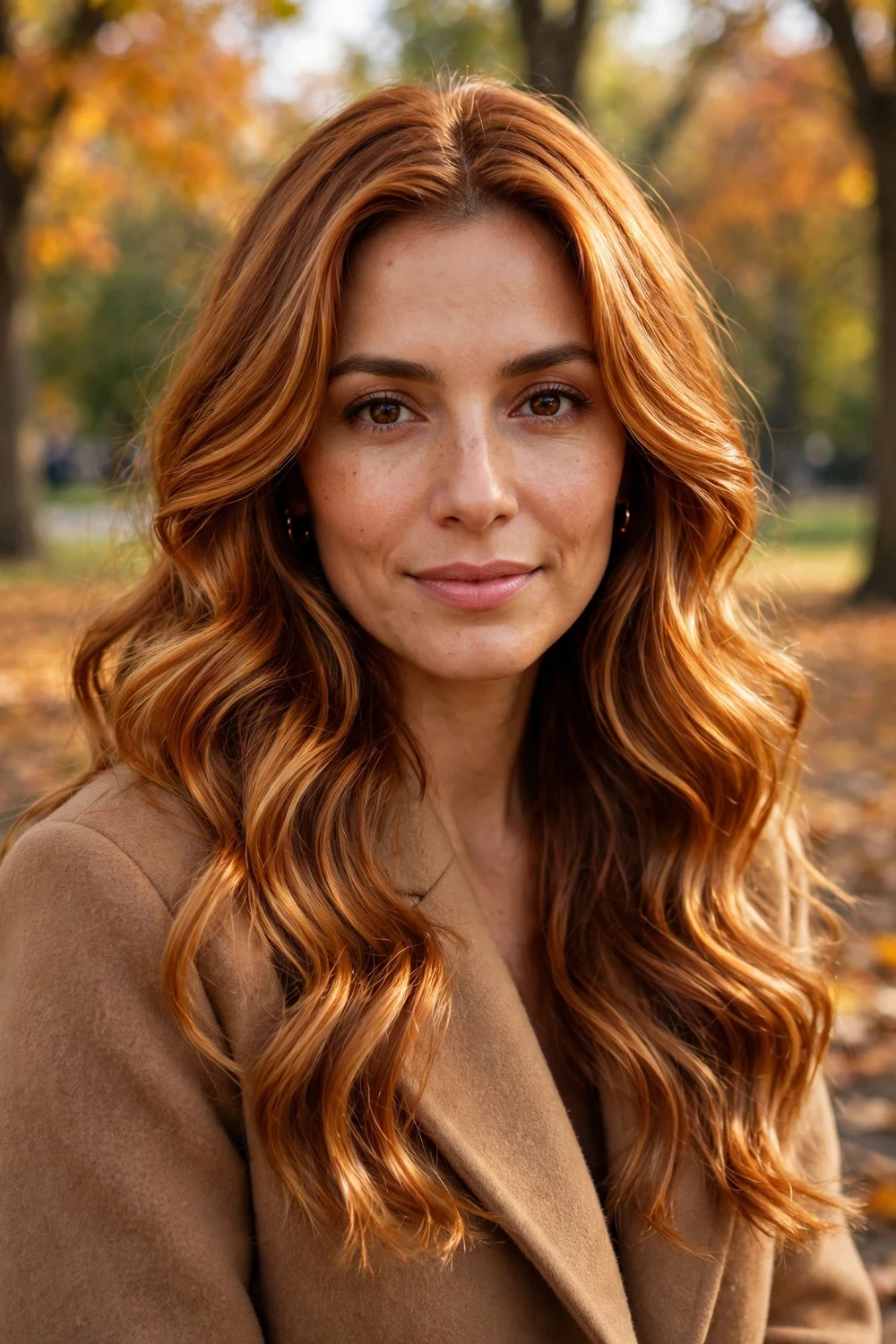
Golden copper is a rich mid-tone copper threaded with golden highlights. The gold keeps the shade bright in low autumn light and stops it from reading flat or heavy. Warm and neutral undertones carry it best, and medium and olive skin get the most from the golden reflect.
It sits comfortably on light brown and dark blonde bases with a single process color, and the highlight pieces can be painted in for extra dimension. Upkeep is middle of the road: the copper base needs a gloss at five to six weeks, while the golden pieces hold longer.
Try this: start with golden copper pieces around the face and through the top layer if you are not ready for an all-over change.
Difficulty: Medium · Cost: $$$ (salon)
5. Apple Cider Copper
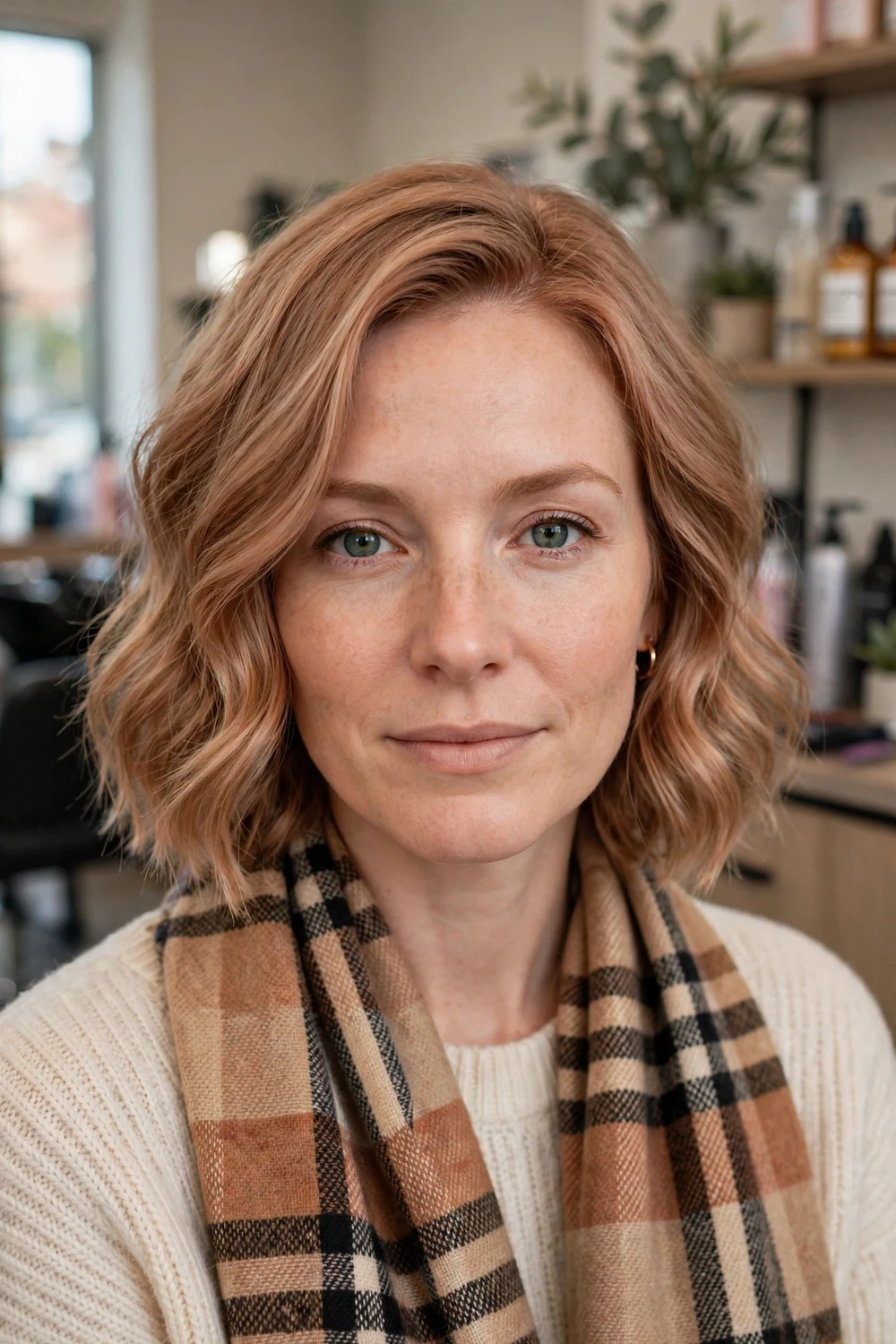
Apple cider copper is a muted light copper softened with gold and light brown. Nothing about it shouts. The brown content keeps the color grounded, which makes it a practical first copper for anyone who works in a conservative setting. It flatters a wide span of warm skin tones, from fair to medium.
Blonde and light brown bases reach it easily, and a demi-permanent formula gives the same muted tone with a softer fade and no hard regrowth line. Because the shade is low contrast, it also forgives a skipped appointment better than the brighter coppers do.
Try this: book the first round as a demi-permanent color. If you love the tone after six weeks, switch to permanent at the next visit.
Difficulty: Low to Medium · Cost: $$ (salon)
6. Copper Blonde

Copper blonde keeps a light blonde base and weaves soft copper and caramel tones through it. It is the standard route for blondes who want a fall change without giving up their lightness. Fair warm skin and freckles suit it especially well, since the copper echoes the warmth already in the skin.
The color is usually built with lowlights and a gloss rather than an all-over dye, so the blonde you already have does most of the work. Keep purple shampoo to rare use here: it dulls the copper pieces. A color-safe shampoo and a copper gloss at six weeks hold the balance.
Try this: ask for copper lowlights plus a clear gloss instead of a full color change, and your blonde stays recoverable for spring.
Difficulty: Medium · Cost: $$$ (salon)
7. Classic Penny Copper

Classic penny copper is the benchmark shade of the family: a true, bright copper with an orange-gold undertone, worn in one even tone from root to tip. It suits warm and neutral skin, and it brings out brown and green eyes. This is the shade most reference photos show when someone asks for copper, full stop.
On blonde and light brown bases it is a single process job. On medium and dark brown hair, expect lightening first, which adds time and cost. The even tone is also what makes upkeep real: roots show as a clear line, and the gloss refresh lands at four to six weeks.
Try this: bring reference photos of penny copper in both indoor and outdoor light, since this shade shifts a lot between the two.
Difficulty: Medium to High · Cost: $$$ (salon)
8. Spiced Copper

Spiced copper weaves cinnamon, amber, and toasted brown through a warm copper base. The mix gives the color depth, so it reads rich in person instead of flat. It flatters warm skin across the fair to medium range and works over blonde, light brown, and brunette bases alike.
The dimensional build is the point: ask for a dimensional copper rather than a single flat tone. Upkeep sits in the middle of this list. A color-depositing copper conditioner once a week holds the spice tones, and a salon gloss at six weeks restores the amber reflect.
Try this: ask your colorist to keep the brown tones underneath and the brightest copper on the top layers, where light hits first.
Difficulty: Medium · Cost: $$$ (salon)
9. Ginger Copper

Ginger copper is the natural-looking end of the mid-tones: a warm ginger red that could pass for hair someone was born with. The undertone is a balanced red-orange, and fair skin carries it best. On straight hair with a smooth finish it reads polished; on waves it reads softer.
Because the shade sits close to natural redhead tones, dyed grow-out is kinder than with the brighter coppers. Dyed ginger still fades toward a soft auburn between visits, so plan touch-ups at four to six weeks and a gloss finish at each appointment to keep the shine up.
Try this: ask for a gloss finish at the end of the service. Ginger shades look twice as rich with the extra shine sealed in.
Difficulty: Medium · Cost: $$$ (salon)
10. Pumpkin Spice Copper

Pumpkin spice copper blends warm copper with hints of orange and brown. It is the most season-specific shade on this list and the one most tied to fall. The brown content keeps it wearable, and fair to medium warm skin suits it best.
Medium brown bases reach this shade without drama, and lighter bases take it in a single process. Over time it fades toward a soft auburn, which keeps it looking decent between appointments. A slightly deeper root melt stretches the time between visits further.
Try this: ask for a root melt one shade deeper than the lengths, so the grow-out stays soft through the whole season.
Difficulty: Medium · Cost: $$$ (salon)
11. Cowboy Copper
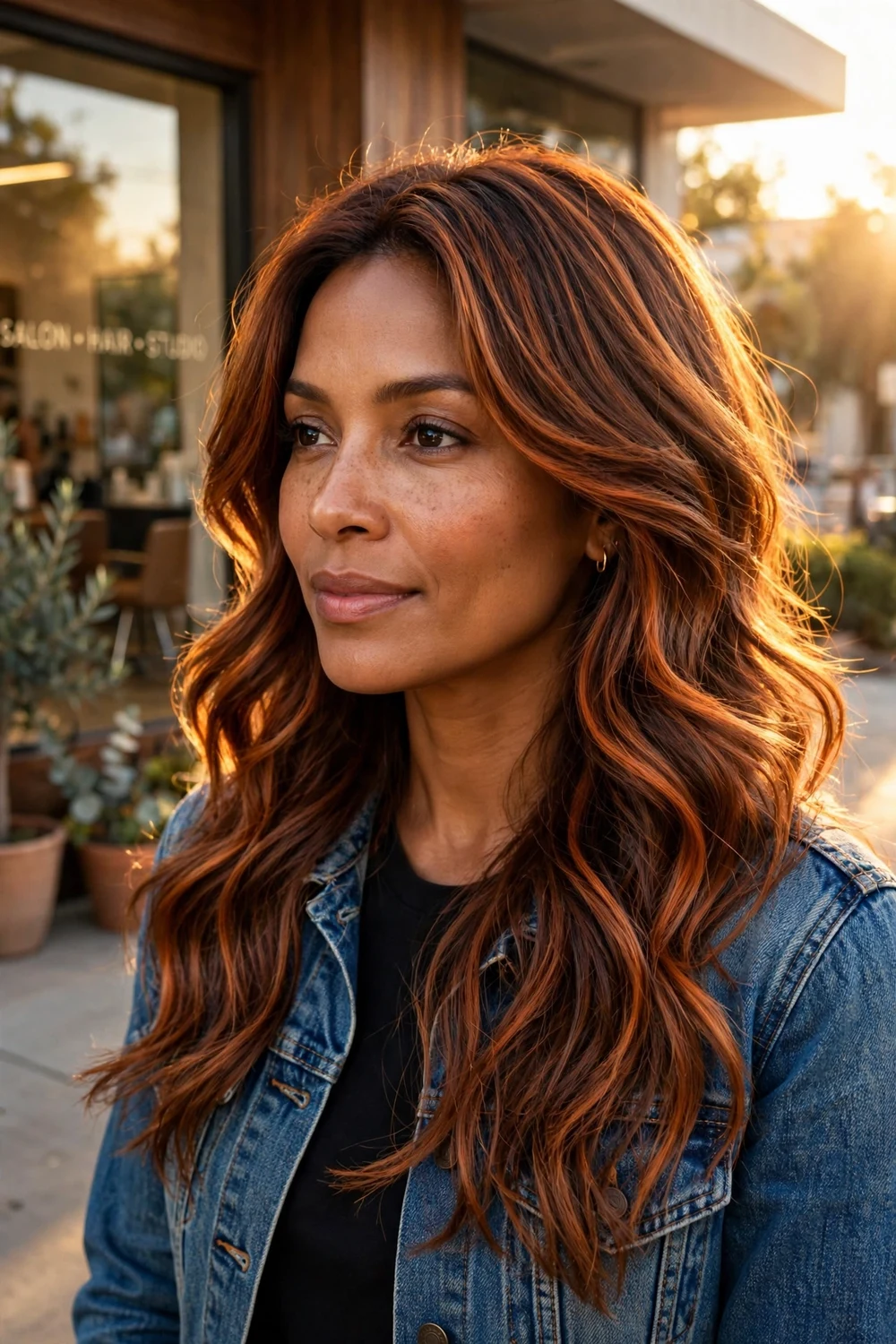
Cowboy copper mixes deep copper with a solid share of warm brown, which gives it a worn-in, leathery richness. The brown does the heavy lifting for wearability: this is the copper that reads as a natural brunette-red in most lighting. Medium to deep warm skin gets the most from it.
Brunettes reach cowboy copper without pre-lightening in most cases, since the target shade sits close to their base. The tone needs a gloss refresh at about six weeks to stay rich rather than muddy. Soft waves show the copper-brown shift best.
Try this: if your workplace is conservative, ask for the ratio weighted toward brown, with copper concentrated in the mid-lengths.
Difficulty: Medium · Cost: $$$ (salon)
12. Cinnamon Copper

Cinnamon copper leans further toward red than most of the mid-tones: a cinnamon spice shade with copper brightness at the edges. It holds its own on medium skin and suits warm and neutral undertones. Layered cuts show it off, since each layer catches light at a different angle and the cinnamon tones separate.
Light brown bases take it directly; darker bases need a lift first. The red content fades faster than the copper content, so the shade drifts more copper over the weeks. A cinnamon-toned gloss at five weeks keeps both halves of the color in balance.
Try this: a cinnamon gloss over a light brown base gives you this exact tone as a low-commitment trial before permanent color.
Difficulty: Medium · Cost: $$$ (salon)
13. Burnt Copper

Burnt copper is a deep, smoky version of the shade, darkened with brown and usually worn with a natural or shadowed root. It adds warmth and dimension to brown hair without committing to full red. Medium to deep warm skin suits it best, and the muted finish keeps it office-friendly.
This is a forgiving shade for brunettes: the target sits close to a dark base, so most heads skip lightening. The smoky tone still needs a gloss at about six weeks, because burnt copper that loses its shine reads as plain brown.
Try this: keep your natural root color as a shadow root and place the burnt copper from the mid-lengths down for the softest grow-out in the deep group.
Difficulty: Medium · Cost: $$$ (salon)
14. Burnt Orange Copper

Burnt orange copper is the saturated, orange-forward member of the deep group. It sits at the bright end of the orange hair color ideas spectrum, with enough brown in the base to keep it seasonal rather than neon. Warm skin carries the intensity best.
Dark bases need lightening before this much orange will show, so the first appointment runs longer and costs more. It also fades faster than the other deep shades on this list. A color-depositing conditioner in an orange-copper shade is close to mandatory between visits.
Try this: book the gloss refresh when you book the color itself, at five weeks, so the orange never gets a chance to go dull.
Difficulty: High · Cost: $$$ (salon)
15. Mahogany Copper
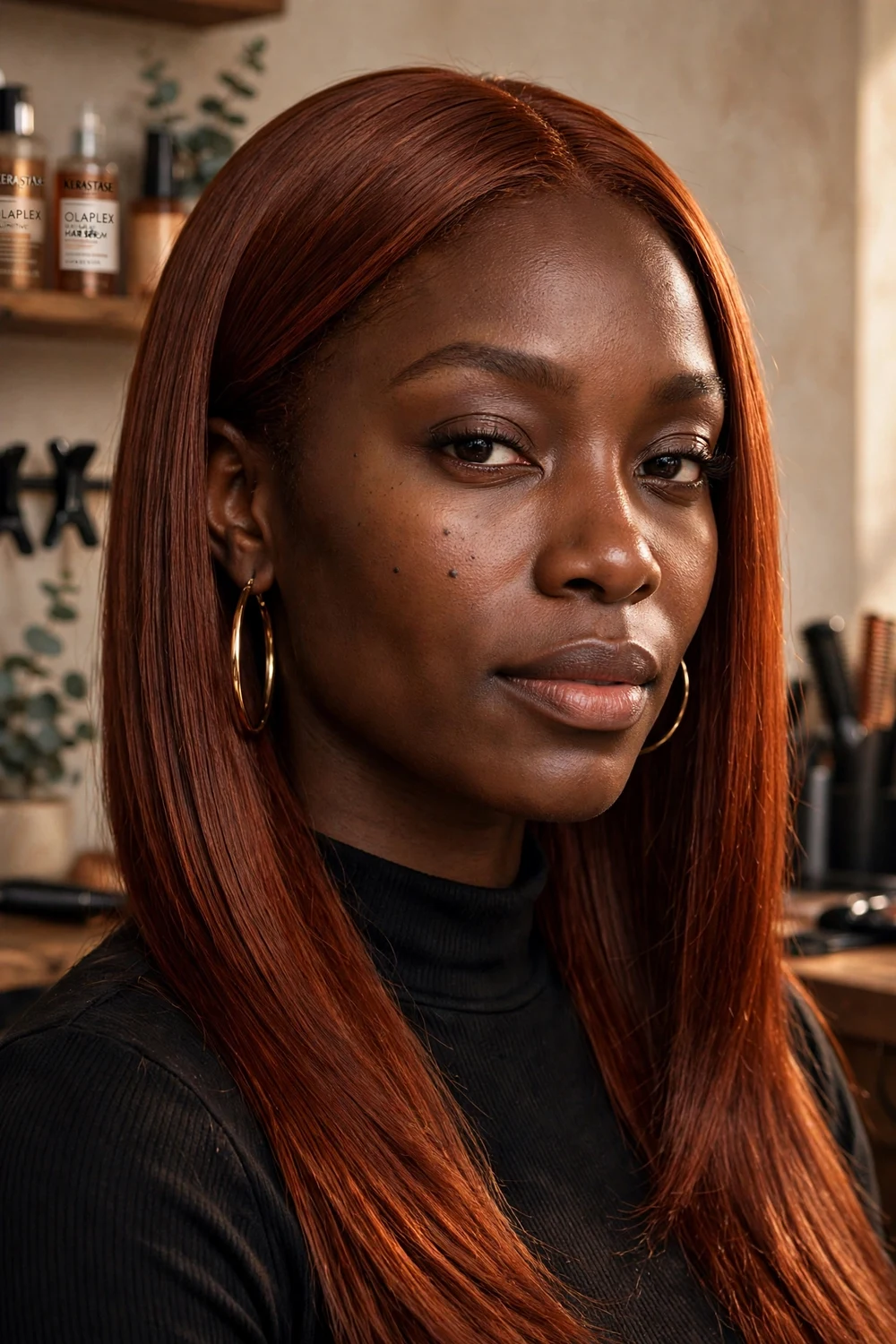
Mahogany copper blends brown, red, and copper into one deep shade. The brown base gives it weight, the red gives it warmth, and the copper keeps it from going flat. It suits deep skin especially well, since the red-brown depth works with rich complexions instead of fighting them.
It is also one of the calmer shades to maintain. The depth hides regrowth better than the bright coppers, and a clear gloss on top keeps the surface reflective. Sleek, straight styling shows the shade at its richest.
Try this: finish the service with a clear gloss coat. Mahogany copper depends on shine more than any other shade in the deep group.
Difficulty: Medium · Cost: $$$ (salon)
16. Dark Cherry Copper
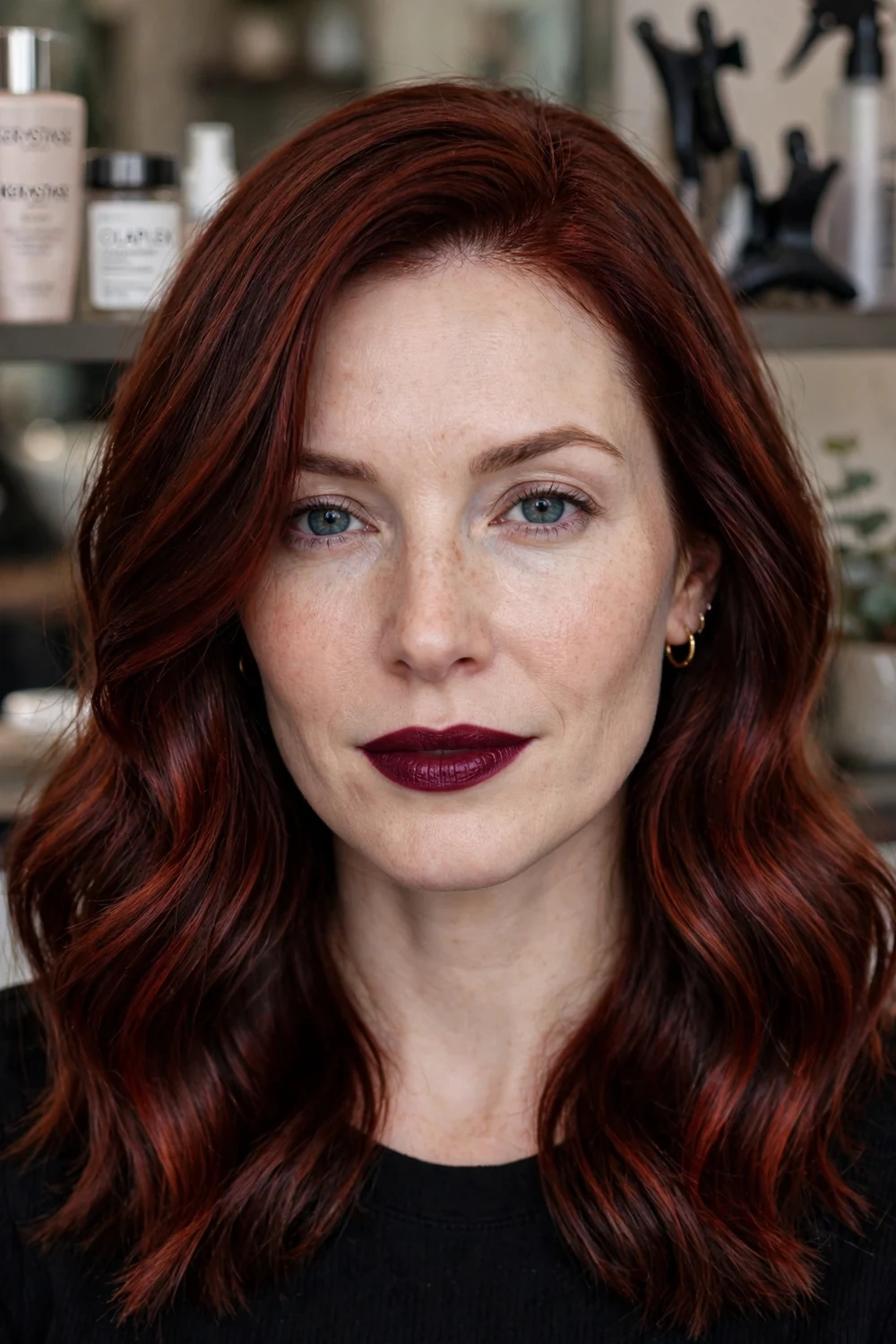
Dark cherry copper folds a cherry red undertone into deep copper. The result is the most dramatic shade in the deep group, and one of the few coppers that works on cool skin, since the cherry pulls the tone away from orange. Fair cool skin and deep skin both carry it well.
The cherry half of the formula fades first, so the shade drifts toward plain copper over the weeks. A red-copper gloss at four to five weeks holds the cherry note. Dark bases reach it with less lightening than the bright shades need.
Try this: ask your colorist to note the cherry-to-copper ratio in your formula, so the refresh appointment can rebuild the exact same balance.
Difficulty: Medium to High · Cost: $$$ (salon)
17. Auburn-Copper Melt

An auburn-copper melt runs deep auburn at the root and melts it into brighter copper through the lengths. The gradient gives you both shades at once and keeps the darkest color at the root, where regrowth shows. Medium and olive skin suit the blend well. Readers who want this family in depth can browse the full auburn copper hair collection after this list.
Because the root stays close to a natural auburn or brunette, grow-out is soft and visits can stretch to eight weeks. The copper lengths still need gloss care, since the ends are the lightest and oldest hair on the head.
Try this: ask for the melt to start lower, around ear level, if your roots grow fast. A lower melt buys you extra weeks between appointments.
Difficulty: Medium · Cost: $$$ (salon)
18. Molten Copper

Molten copper is the brightest, most saturated shade in the family, worn at full strength from root to tip. It needs a lightened base to reach this level of brightness, so dark hair goes through a lift first. Fair and medium warm skin carry the intensity best.
Commitment is the honest headline here. Vivid copper fades faster than any other group on this list, and holding it takes a color-depositing conditioner in the weekly routine, cool water, and a gloss at four weeks. If that routine sounds like too much, pick a deep shade instead and keep your weekends.
Try this: wash with cool water and a sulfate-free shampoo from day one. The first two weeks decide how much brightness you keep.
Difficulty: High · Cost: $$$ (salon)
19. Calico Copper

Calico copper places panels of copper, blonde, and brunette in bold blocks across the head. The copper does the seasonal work while the blonde and brunette panels keep the pattern grounded. It suits medium skin and layered cuts, where the panels shift as the hair moves.
Placement is everything with this one, so the consultation matters more than the color itself. Bring photos that show the panel size you want. Grow-out comes in blocks rather than a soft blend, which means the refresh appointment rebuilds the pattern instead of just topping up roots.
Try this: start with two copper panels at the front before you commit to a full calico pattern across the whole head.
Difficulty: High · Cost: $$$ (salon)
20. Copper Balayage on Brunette

Copper balayage hand-paints copper pieces through a brunette base, keeping the roots dark and the brightness in the mid-lengths and ends. The copper placement brightens the face and wakes up a flat brunette without a full color change. It suits medium and warm skin and every brunette base from light to dark.
This is the lowest-upkeep route into copper on this list. The painted placement grows out with no hard line, and most wearers refresh the toner at eight to ten weeks. The ends still need moisture care, since they carry the lightest color.
Try this: ask for the copper concentrated on the top layers and around the face, with the underneath left dark for contrast.
Difficulty: Low to Medium · Cost: $$$ (salon)
21. Copper with Caramel Ribbons

This version starts with a copper base and weaves caramel highlights through it as ribbons. The caramel lightens the overall read and adds dimension, which helps fine hair look thicker. Warm skin tones carry the pairing best, and curls or waves show the ribbon placement clearly.
The two tones fade at different speeds, so maintenance is a gloss that rebalances both rather than a root job. Ask for the ribbons kept fine and numerous instead of chunky, unless you want a stronger contrast.
Try this: if your copper keeps going flat, add caramel ribbons at the refresh appointment instead of changing the base shade.
Difficulty: Medium · Cost: $$$ (salon)
22. Copper Ombre on Dark Hair

Copper ombre keeps natural dark roots and fades them into copper lengths. The dark-to-copper gradient suits deep skin and dark bases well, and the untouched roots make regrowth a non-issue. Where balayage scatters the color, ombre concentrates it in the bottom half of the hair.
The ends carry the lightest, brightest color, so they need the most care: weekly deep conditioning and gentle handling when wet. The gradient itself can go months between salon visits, with a gloss on the copper section at eight weeks to keep it from fading pale.
Try this: sleep with the ends in a loose braid. Ombre ends are the oldest hair on your head and tangle first.
Difficulty: Medium · Cost: $$$ (salon)
23. Espresso Copper Tips

Espresso copper tips color only the ends of a dark espresso base. It is the smallest copper commitment for dark hair: no root work, no all-over change, and the color leaves the head gradually as the hair is trimmed. Medium and deep skin suit the dark base with warm ends.
The service is short and the upkeep is close to zero. If you dislike the result, a trim removes it. If you like it, the same appointment can extend the copper higher next time. This is the standard trial run colorists suggest for dark-haired clients who are unsure about copper.
Try this: pair the tips with a gloss over the whole head so the espresso base shines as much as the copper ends do.
Difficulty: Low to Medium · Cost: $$ (salon)
24. Copper Money Piece

A copper money piece places two bright, copper-blonde panels at the front hairline over a deeper copper base. The panels brighten the face more than any other single change at this size. It suits fair and medium skin, and it works on long hair, bobs, and layered cuts alike.
The panels are the lightest hair on the head, so they fade first and need a mini gloss at four weeks. The rest of the base keeps its own schedule. As a side benefit, the money piece is the cheapest way to test how a brighter copper looks against your skin before a full change.
Try this: ask for the panels one to two shades brighter than your base, no more, so the frame blends instead of striping.
Difficulty: Low to Medium · Cost: $$ (salon)
25. Copper Glaze over Brunette
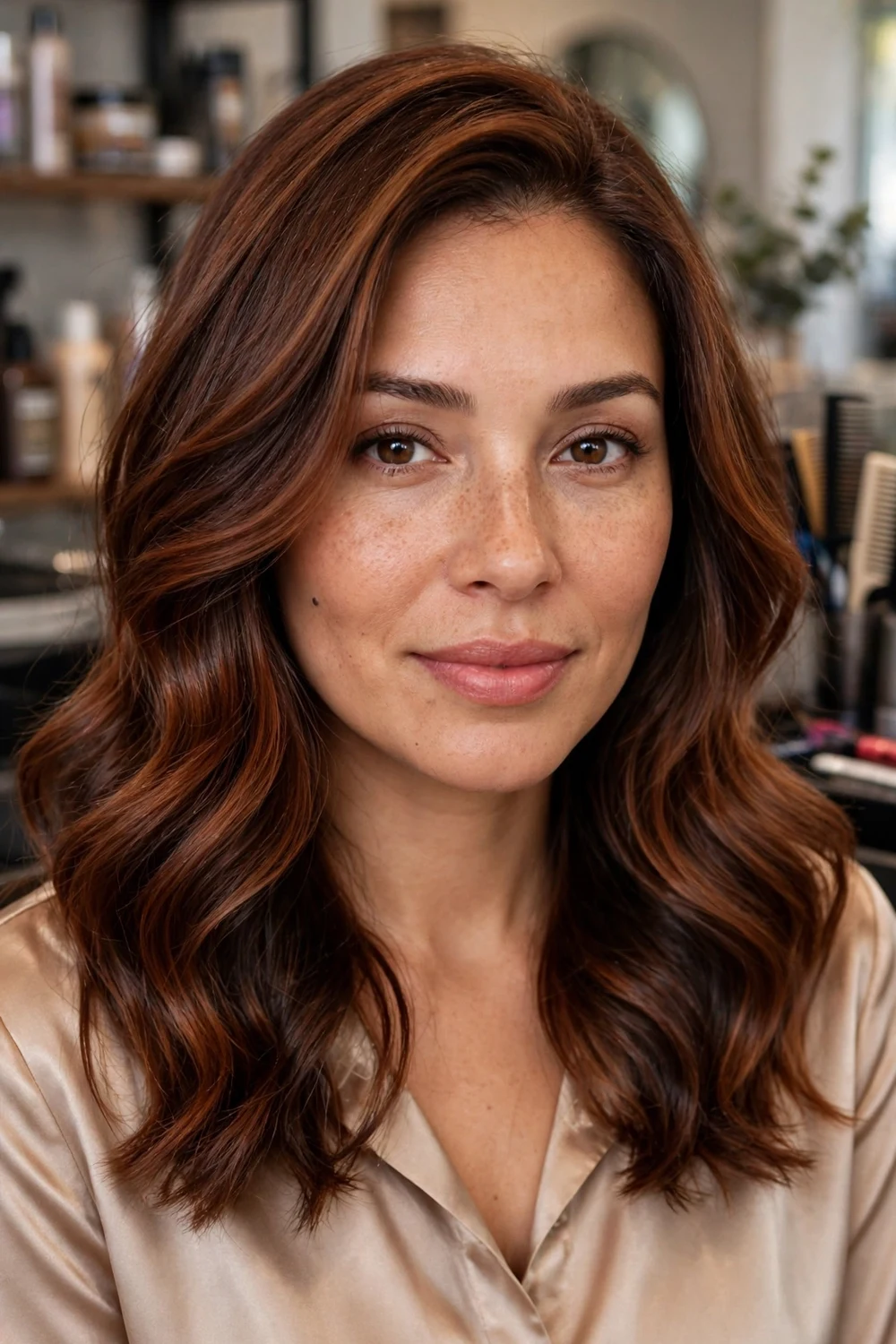
A copper glaze is a demi-permanent copper gloss laid over brunette hair. It adds a copper tint and a lot of shine without lifting the base at all. The effect is subtle in indoor light and clear in sunlight. It suits anyone with brown hair who wants to test copper with an exit plan.
The glaze fades out evenly over four to six weeks and leaves no regrowth line, which makes it the lowest-risk idea on this list. The same service refreshes natural redheads whose copper has gone dull over the summer. One appointment runs under an hour in most salons.
Try this: time the glaze two weeks before an event or photos, when the tint and shine are at their peak.
Difficulty: Low · Cost: $$ (salon)
26. Copper Lowlights on Blonde

Copper lowlights weave copper strands through blonde hair to add fall depth without darkening the whole head. The blonde stays in charge; the copper sits underneath and between, showing as the hair moves. Fair skin and summer-highlighted hair that has gone too pale suit this fix best.
Lowlights grow out softly and can be refreshed on the same cycle as a toner, around every eight weeks. If you later decide against copper, the lowlights fade and blend back into the blonde with no harsh correction needed.
Try this: ask for lowlights two shades deeper than your blonde, placed mostly underneath, for depth that reads natural.
Difficulty: Medium · Cost: $$$ (salon)
27. Glossed Copper Bob
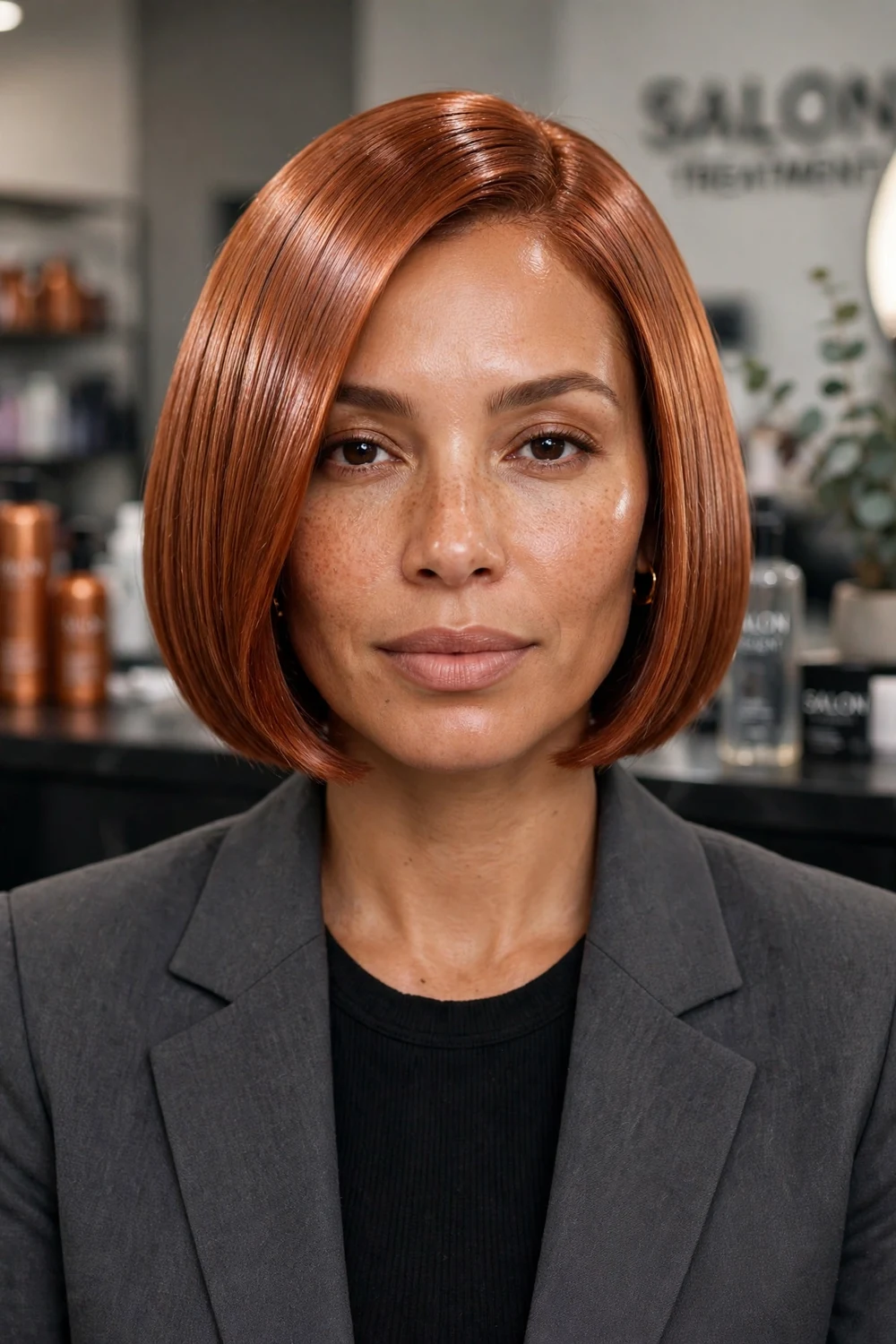
A glossed copper bob pairs a blunt, chin to shoulder length cut with an all-over copper and a clear gloss finish. Short, smooth hair reflects light in one sheet, so copper looks more polished on a bob than on almost any other cut. It suits medium skin and anyone who styles their hair sleek most days.
The trade-off is root visibility. On short hair, regrowth sits close to the face and shows sooner, so touch-ups land at four to five weeks. The gloss topcoat at each visit keeps the surface reflective.
Try this: keep the bob one length with no layers if shine is the goal. Layers break up the reflection that makes this look work.
Difficulty: Medium · Cost: $$$ (salon)
28. Copper Curls

Copper curls place dimensional copper through curly hair, with the brightest pieces on the top layers and around the face, where curls catch light first. Most copper roundups show straight or wavy hair, but curls take the color well when it is painted curl by curl instead of foiled flat. Medium and deep skin carry the warm depth especially well.
Curly hair runs drier than straight hair, and color adds to that dryness, so the care plan matters as much as the shade: weekly deep conditioning, gentle diffusing, and minimal heat. The dimensional placement grows out softly because curl patterns hide regrowth lines.
Try this: book with a colorist who cuts and colors curly hair dry, so the copper lands on the curls as you actually wear them.
Difficulty: Medium · Cost: $$$ (salon)
29. Copper for Gray Blending

Copper is a practical gray-blending color. Warm copper and strawberry tones placed through silver roots blur the line between colored and gray hair, so new growth reads as part of the color instead of a stripe against it. Demi-permanent formulas do most of this work, since they stain the gray rather than covering it flat.
The grow-out is the selling point. Where solid dye leaves a hard line at four weeks, a copper blend stays soft for eight weeks or more, and each appointment simply rebalances the warmth. It suits warm skin tones and anyone moving away from full coverage color.
Try this: ask for blending, not full coverage, at the consultation. The goal is a soft mix of copper and silver, and the formula differs from a standard root color.
Difficulty: Low to Medium · Cost: $$ (salon)
Frequently Asked Questions
What is the difference between copper and auburn hair?
Copper is orange-forward and bright, while auburn leans brown-red and deeper. Copper reflects more light and reads as a true red-orange; auburn reads as a warm brunette with red in it. Many fall looks melt the two together, running auburn at the root and copper through the lengths, which is why the two shades are often confused.
Do I need to bleach my hair to get a fall copper color?
It depends on your starting color and the shade you want. Brunettes can reach burnt copper, cowboy copper, mahogany copper, and copper glazes with little or no lightening. Blonde and light brown hair reaches most of the list in one session. The bright shades, molten copper and burnt orange copper, need a lightened base to show their true color. Your colorist can confirm the lift you need in a consultation.
How long does copper hair color last?
All-over copper starts to fade visibly at four to six weeks, because red-family pigments rinse out with every wash. Placed color lasts longer in practice: balayage, ombre, and melts can go eight to ten weeks between refreshes since the grow-out is soft. Glazes fade out fully at four to six weeks and leave no line. Cool water, fewer washes, and a color-depositing conditioner stretch every version of the color.
Which fall copper shade suits cool skin tones?
Cool skin does best with the red-leaning end of the family: dark cherry copper, mahogany copper, and burnt copper, where brown and red outweigh the orange. Golden copper can also work, since gold behaves better on cool skin than pure orange does. The shades to approach with care are the orange-forward ones, molten copper and burnt orange copper, which can clash with pink undertones in the skin.
How do I stop copper hair from fading so fast?
Wash less often, use lukewarm or cool water, and switch to a sulfate-free, color-safe shampoo. Add a color-depositing copper conditioner once a week to replace the pigment that washing removes. Book a gloss refresh at four to six weeks, and cover your hair in strong sun, since UV light fades red-family color quickly.
Final Thoughts
Fall copper works because the family is wide enough to meet you where you are: a glaze over brunette if you want a trial run, a penny or spiced copper if you want the classic shade, or a burnt copper melt if you want depth that lasts the season. Pick by undertone first, then by the upkeep you will honestly keep, and the color will hold. When the season turns cold, the same warmth carries forward in deeper reds, and the winter red hair colors roundup picks up where this list leaves off.

