


Orange hair gets a bad rap as a Halloween-only choice, but the shade range is wide enough to wear all year. Burnt orange and copper land right in the middle of fall trends, soft peach and apricot work as gentle warm blondes, and tangerine or neon deliver a full fashion statement. I’ve spent years tracking how hair color trends move through the seasons, and orange is one of the most versatile families out there.
This list rounds up 29 orange hair color ideas, from wearable coppers and gingers to pastel peaches and bold neons, plus the techniques that place the color best. Every idea includes who it suits, what it costs at a salon, and how much upkeep it asks for, so you can pick the shade that fits your hair, your skin tone, and your routine.
Quick Takeaways
- Burnt orange, copper, and pumpkin are the most wearable shades and flatter the widest range of skin tones.
- All-over tangerine and neon need a pre-lightened blonde base and fade the fastest of the bunch.
- Keeping some natural root or asking for a melted root makes grow-out softer and salon visits less frequent.
- Cool water, sulfate-free shampoo, and washing less often keep orange from washing down the drain.
- Fair to deep skin tones can wear orange: peach suits fair skin, copper suits medium, and pumpkin shines on deep skin.
1. Bright Tangerine Orange

Full-saturation tangerine is the boldest pure orange you can wear, a citrus-bright shade that looks like it was squeezed from the fruit itself. It needs a light blonde base to grab properly, so dark hair has to be pre-lightened to around a level 9 before the color goes on. Sunlight makes this shade glow in a way indoor lighting never quite matches, so it photographs especially well outdoors.
Warm and neutral undertones carry this shade best, since there is no cool version of tangerine. It suits straight, wavy, and curly hair equally, and a textured bob or lob shows off the saturation without letting the color swallow your face. Because the color is direct dye, it fades with every wash, so plan on gloss refreshes or a color-depositing conditioner to hold the brightness.
Try this: ask your colorist for a slightly deeper tangerine at the roots so the fade line stays soft between appointments.
Difficulty: High · Cost: $$$ (salon)
2. All-Over Neon Orange
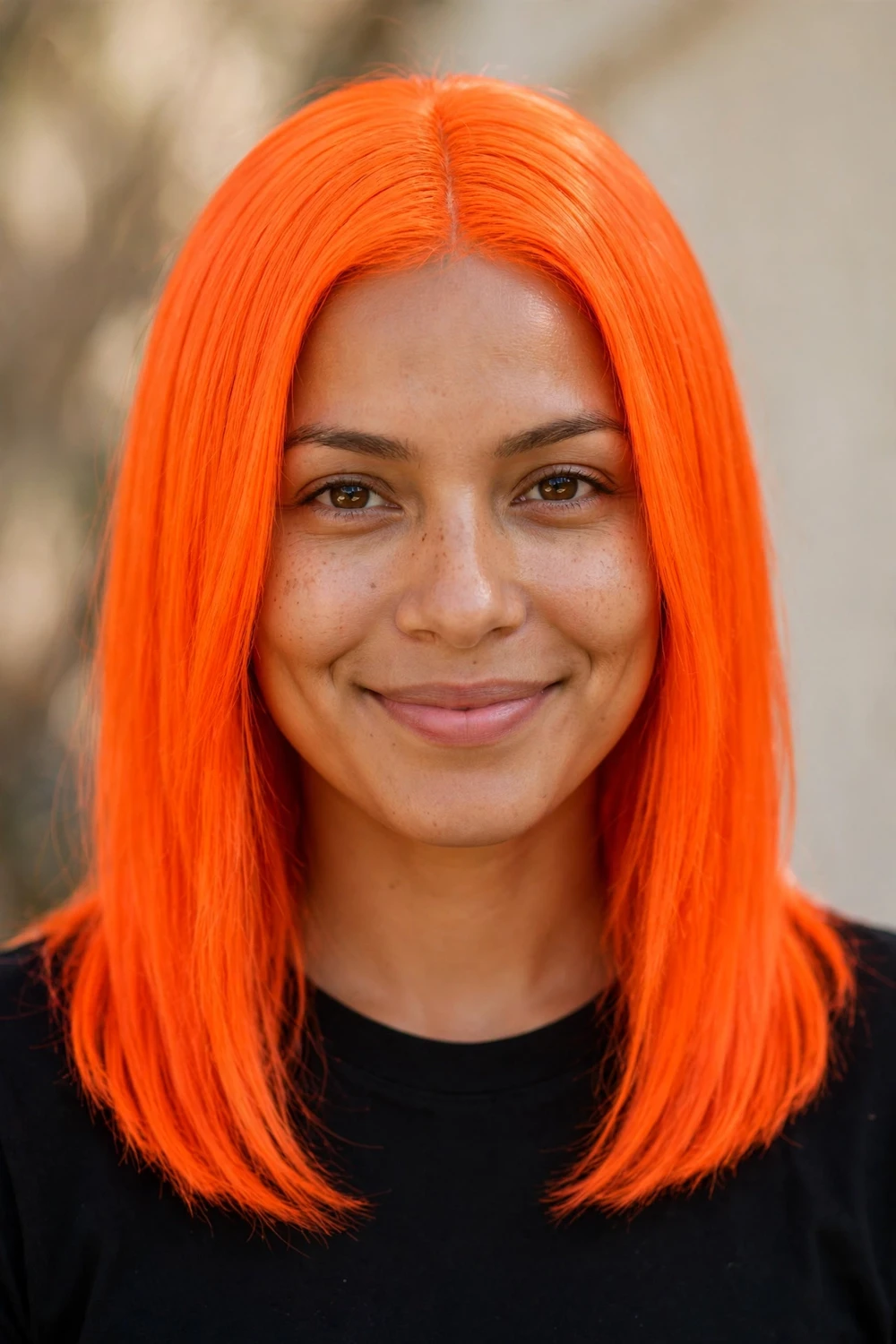
Neon orange takes tangerine one step further into almost-glowing territory. It is an electric, high-pigment shade worn solid from roots to ends, and it gets noticed in every room. Like tangerine, it demands a pre-lightened base, sometimes near-white on naturally dark hair, which is why the service takes longer and costs more than a standard color.
This is the highest-commitment shade on this list: expect root touch-ups every four to six weeks and a strict sulfate-free routine with cool water. It also works on short shapes like pixies and undercuts, where the smaller canvas makes the intensity easier to carry. If you want maximum impact and you are ready for the upkeep, neon is the pick.
Try this: keep a color-depositing orange conditioner in the shower to top up the neon between salon visits.
Difficulty: High · Cost: $$$ (salon)
3. Neon Orange Melt with Dark Roots

A neon orange melt keeps the electric brightness through the lengths but lets dark shadow roots anchor the look. Your colorist blends your natural depth at the crown into the neon over a few inches, which softens the grow-out line and means you can stretch appointments to eight or ten weeks instead of four. Wispy bangs often frame the face against the intensity and keep the color from feeling costume-like.
Brunettes love this version because the dark root matches their natural color and the regrowth blends in. It works on long waves, lobs, and shags alike. You still need pre-lightening on the mid-lengths and ends, but leaving the root alone cuts both damage and maintenance in half compared to all-over neon.
Try this: ask for the melt to start a few inches down so your natural root does the blending work for you.
Difficulty: High · Cost: $$$ (salon)
4. Blood Orange

Blood orange sits at the deeper end of the orange family, a red-orange with crimson depth that reads sultry rather than playful. It looks rich on fair through deep skin tones, and the red undertone gives it dimension that flat oranges lack. Long layers show the color off best, since the movement lets the crimson and orange tones shift against each other.
There is also a brighter, fiery red-orange variant that leans more orange than red, which suits anyone who wants blood orange’s drama with more punch. Both versions need some lift on dark hair but less than tangerine or neon, since the deeper base covers more easily. A red-safe shampoo and gloss refreshes every five or six weeks keep the depth from going flat.
Try this: add a clear gloss at the six-week mark to bring back the shine that makes this shade glow.
Difficulty: Medium · Cost: $$$ (salon)
5. Safety Orange

Safety orange is the yellow-leaning member of the bold family, a punchy, high-visibility shade that feels confident and unapologetic. The yellow pigment gives it a warmer, almost golden cast compared to red-leaning oranges, and it looks sharp with natural waves on a choppy lob. It needs a lifted base to reach full saturation, though the yellow tones show up a little more forgivingly than red ones.
This shade suits warm undertones and medium to deep skin best, where the yellow cast harmonizes instead of clashing. Wear it with minimal makeup for a street-style feel, or pair it with strong eyeliner for a bolder look. Like all direct-dye oranges, it needs cool water and fewer washes to stay bright.
Try this: wear it with a choppy, textured cut so the shape is as bold as the color.
Difficulty: High · Cost: $$$ (salon)
6. Classic Copper Orange
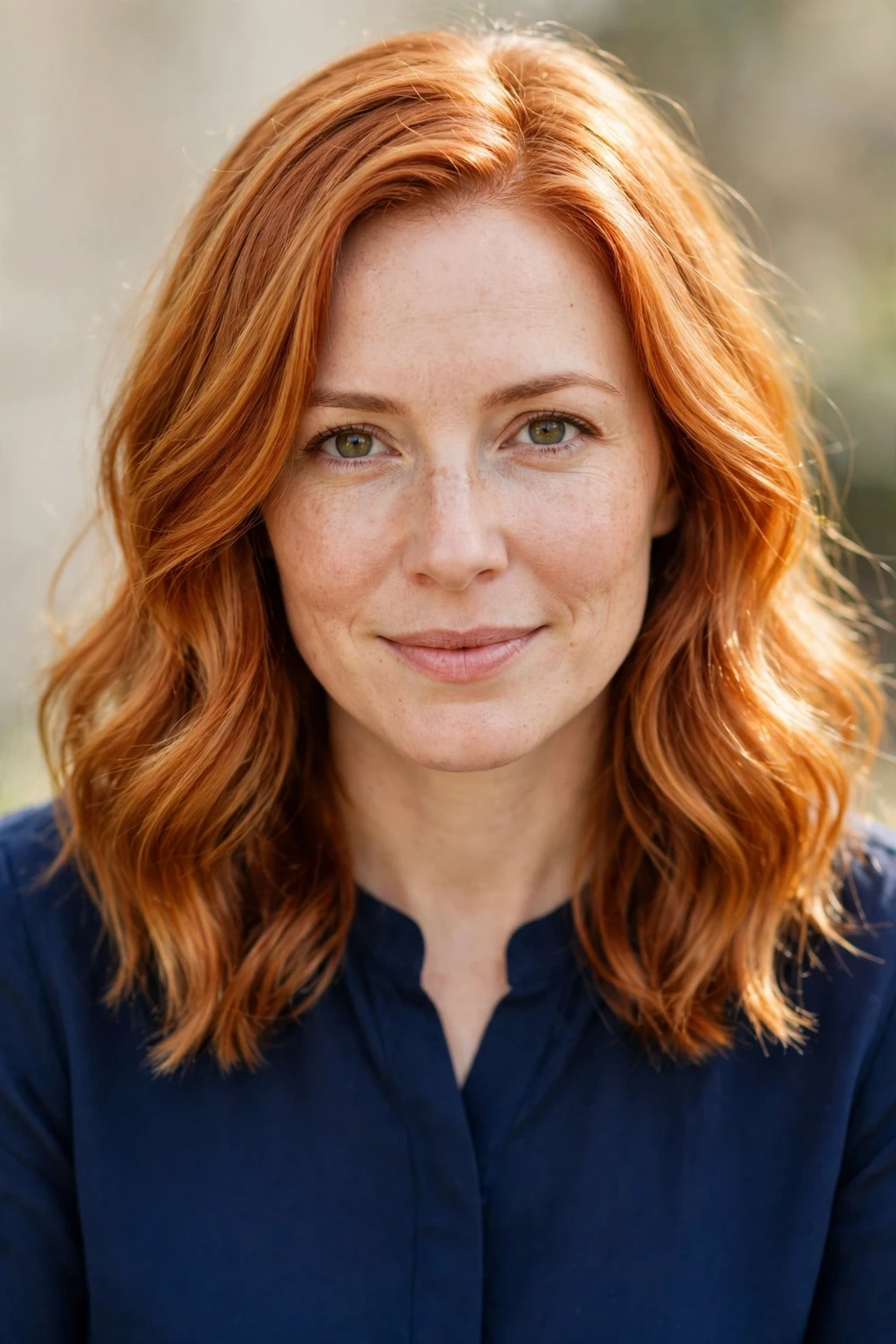
Classic copper is the most natural-looking orange on this list, a pure copper with gold and yellow hints that catches light like polished metal. It glistens in sunlight and looks like it could be your real hair, which is why it is the top pick for anyone nervous about going orange. Midi lengths show off the shine best, with the movement letting the golden dimension come through.
It suits fair to medium skin with warm or neutral undertones, and it works on blonde through light brown starting bases with minimal lift. Upkeep is modest: a copper gloss every six to eight weeks keeps the tone rich without a full recolor.
If copper is your lane, these copper hair color ideas go deeper into the shade family with more variations to try.
Try this: ask your colorist to weave in slightly lighter golden pieces so the copper reads dimensional instead of flat.
Difficulty: Low · Cost: $$$ (salon)
7. Copper-Orange Melt

A copper-orange melt takes the wearable copper family and adds depth: darker roots flow into bright copper-orange ends with no harsh line anywhere. The result looks expensive and dimensional, like your hair naturally catches more light toward the ends. It flatters olive and medium skin tones, where the copper warmth plays well against green and golden undertones.
The forgiving grow-out is the real selling point. Because the root is already dark, regrowth blends in and you can stretch salon visits to ten or twelve weeks. This is the rich, low-drama way to wear orange, and it works on every length from lob to long layers.
Try this: keep the root close to your natural shade so the grow-out stays invisible for months.
Difficulty: Medium · Cost: $$$ (salon)
8. Auburn Copper

Auburn copper runs deeper and redder than classic copper, with warm orange undertones woven through a rich auburn base. It is one of the most flattering shades on this list for olive complexions, since the red depth complements green-golden undertones without washing them out. Soft waves show off the color best, letting the copper ribbons surface as the hair moves.
This shade needs the least lift of any orange here, since brunettes can often reach it with permanent color alone. That makes it the gentlest entry point for dark hair, and the upkeep is easy: a gloss every six to eight weeks keeps the copper tones from settling into plain brown.
For more ways to wear this shade family, these auburn copper hair for women cover cuts and tones that pair well with the color.
Try this: style with loose waves rather than straight heat, since movement brings out the copper dimension.
Difficulty: Low · Cost: $$$ (salon)
9. Burnt Orange

Burnt orange is the signature autumn shade: a deep, muted brown-orange that reads rich and sophisticated rather than loud. It sits between red and brown with just enough orange to feel seasonal, and it pairs well with shags and layers that let the muted depth show. Brunettes reach it with far less lift than brighter oranges, which keeps the hair healthier.
This is the shade that made orange a fall staple, and it suits medium to deep skin tones especially well. It fades more gracefully than neon oranges, settling into a soft copper that still looks intentional. A gloss refresh every two months keeps the depth from going dull.
Burnt orange leads the pack of autumn shades in these fall hair colors if you want more seasonal options in the same family.
Try this: pair it with a shaggy, layered cut so the muted tones get plenty of movement to show through.
Difficulty: Low · Cost: $$$ (salon)
10. Pumpkin Orange

Pumpkin orange lands between bright tangerine and burnt orange: warm, saturated, and festive without going neon. It is the shade that reads most like the season, grounded and rich with real depth. On deep skin it looks especially striking, and it holds up well in protective styles like passion twists, where the color reads evenly through the texture.
It needs moderate lift on dark hair but takes well to a level 7 or 8 base, so it is less damaging than the neons. The saturation fades gradually into a soft copper, and a color-depositing conditioner every few washes keeps the pumpkin tone alive between appointments.
Try this: wear it through October and November, then let it fade into a soft copper for winter.
Difficulty: Medium · Cost: $$$ (salon)
11. Pumpkin Spice Copper
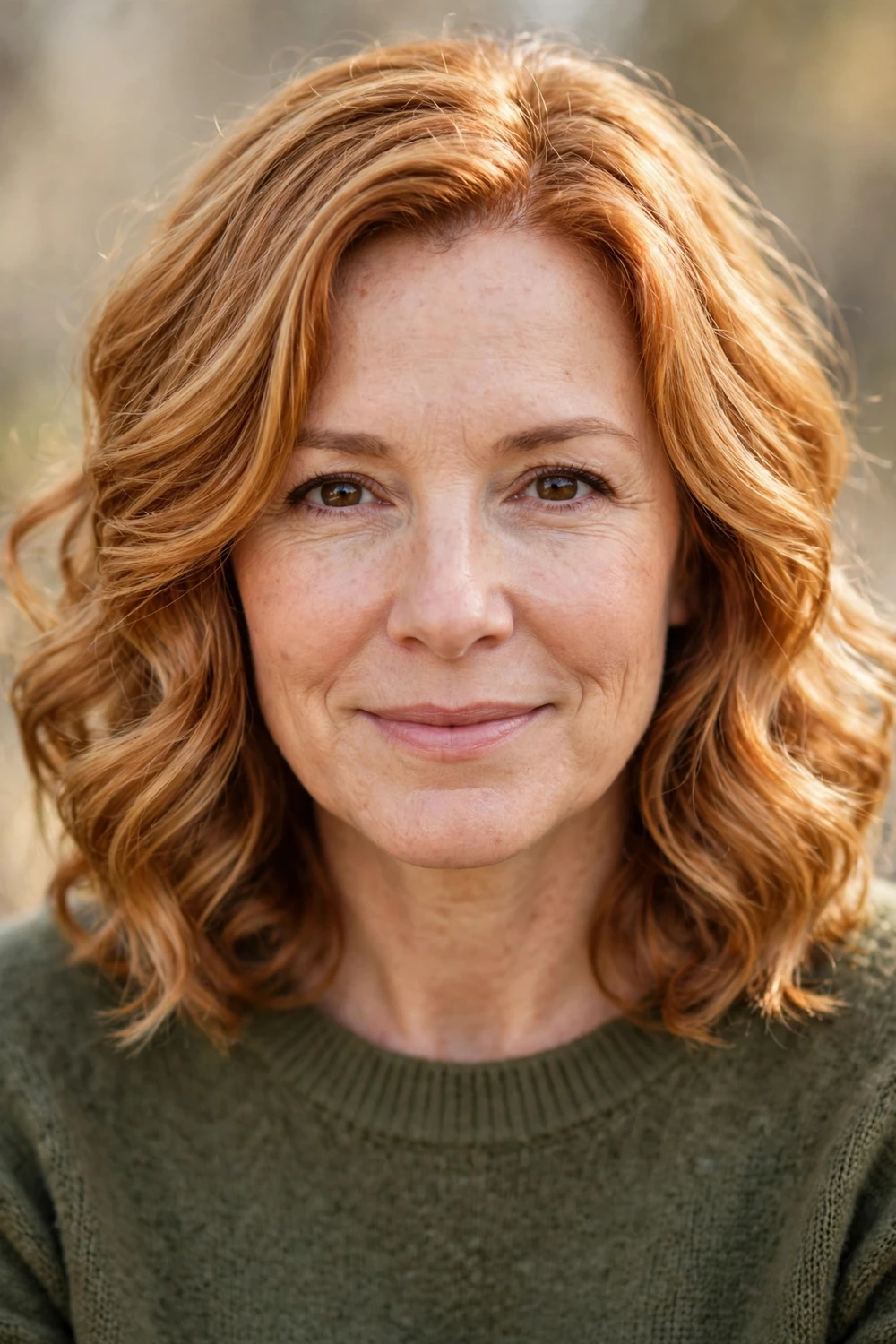
Pumpkin spice copper takes the autumn idea in a metallic direction: a golden copper with warm spice depth that shimmers like the surface of a latte. It is fall-perfect without being literal, and it suits fair skin especially well, where the golden tones brighten the complexion. Babylights woven through add contrast and keep the color from looking one-note.
This is one of the more forgiving bold-ish shades, since the metallic gold base fades into a pretty warm blonde rather than something muddy. It needs light brown or lighter hair to take well, or partial lift on darker bases. Refresh with a copper gloss every six weeks to hold the spice tone.
Try this: ask for fine babylights two shades lighter than the base so the metallic finish reads multidimensional.
Difficulty: Medium · Cost: $$$ (salon)
12. Ginger Orange

Ginger orange has a warm, spicy glow that looks like it could be completely natural, and that believability is its whole appeal. It sits between copper and auburn with a soft orange cast, and soft waves or a 70s shag texture suit it perfectly. Fair skin with warm undertones is the classic pairing, since the shade echoes natural redhead tones.
Light brown hair often reaches ginger with permanent color and no bleach at all, making it one of the healthiest orange options. Upkeep is simple: a gloss every couple of months and color-safe shampoo keep the spice from washing out.
Try this: skip heavy styling and let your natural wave do the work, since texture sells the natural look.
Difficulty: Low · Cost: $$$ (salon)
13. Strawberry Copper

Strawberry copper is the lightest member of the copper family, an airy mix of warm gold with subtle red tones that looks luminous in daylight. It reads more like a warm blonde with copper depth than a true orange, which makes it the most approachable shade on this list for anyone nervous about bold color. Fair to medium skin tones carry it well, especially with warm undertones.
Blonde and light brown bases reach it easily, and the fade is gentle, settling into a warm golden blonde. Because it is so light, sun and heat styling can push it brassy, so a heat protectant and a hat in strong sun go a long way.
Try this: use it as a stepping stone: strawberry copper is the easiest shade to deepen into full copper later.
Difficulty: Low · Cost: $$$ (salon)
14. Dark Orange

Dark orange delivers boldness without neon brightness: a deep, saturated orange that reads intense but not electric. Brunettes can often keep their natural roots and just color the lengths, which makes grow-out easy and keeps damage low. Curls add volume to the intensity, turning the shade into a full, rich halo of color.
This shade suits medium to deep skin tones and works on hair that has been lifted to a level 6 or 7. It fades slower than the neons thanks to the depth, settling into a warm auburn. Gloss refreshes every six to eight weeks keep the saturation where it should be.
Try this: keep the roots natural if you are a brunette, since the dark base makes the orange look richer.
Difficulty: Medium · Cost: $$$ (salon)
15. Soft Peach Orange
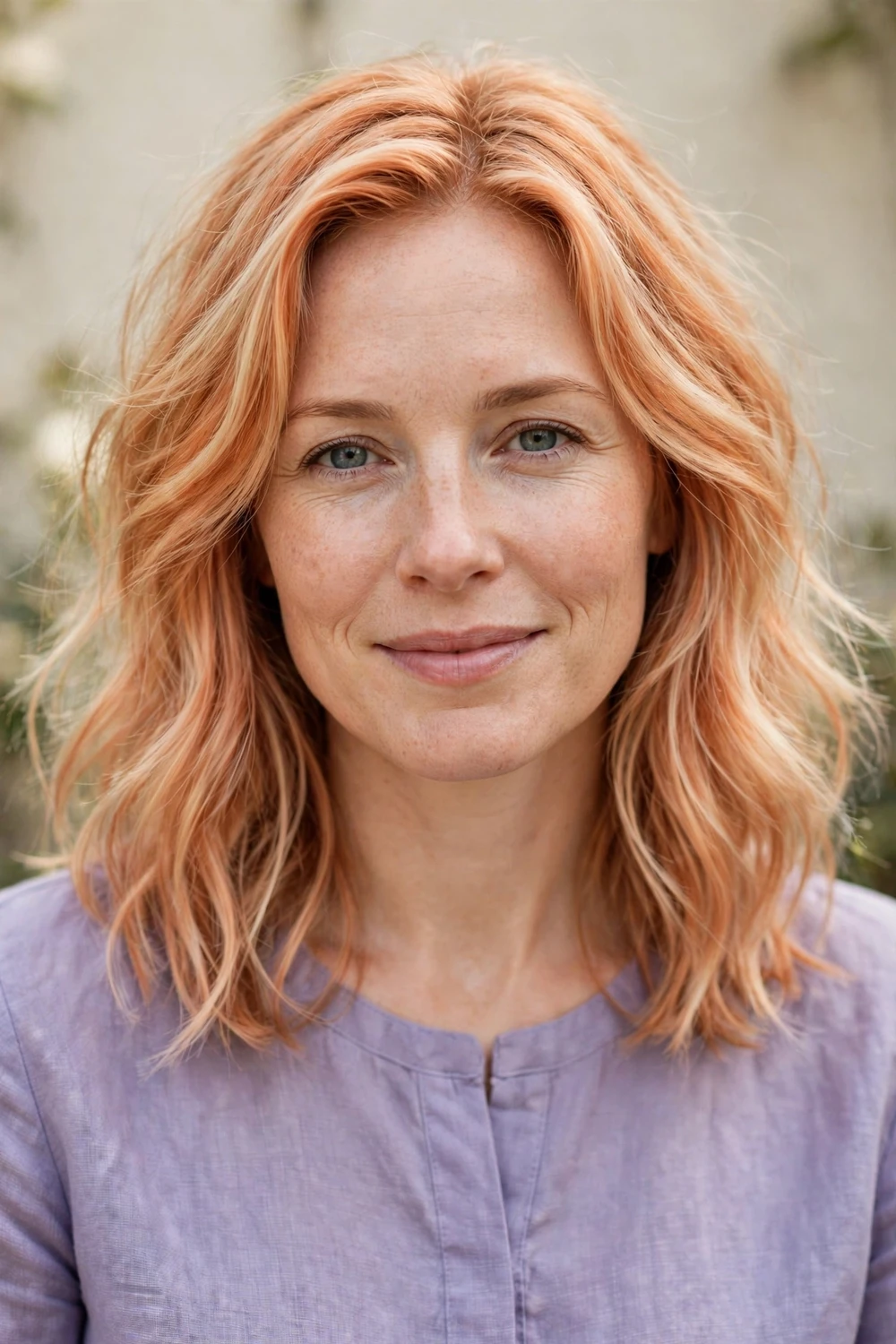
Soft peach orange is the gentlest entry point into the orange family: a light peach-gold-copper mix that stays airy on blonde bases. The orange is present but subtle, reading as a warm blush of color rather than a statement. It looks fresh and modern, and it flatters fair skin, where the warmth brightens without overwhelming.
The trade-off is fade: pastels wash out faster than any other orange, so cold water, minimal washing, and a peach gloss refresh every four weeks are part of the deal. Think of it as a low-commitment way to test whether orange suits you, since it washes out cleanly if you change your mind.
Try this: mix a drop of peach direct dye into your conditioner for a DIY top-up between salon visits.
Difficulty: Low · Cost: $$ (salon)
16. Pastel Orange
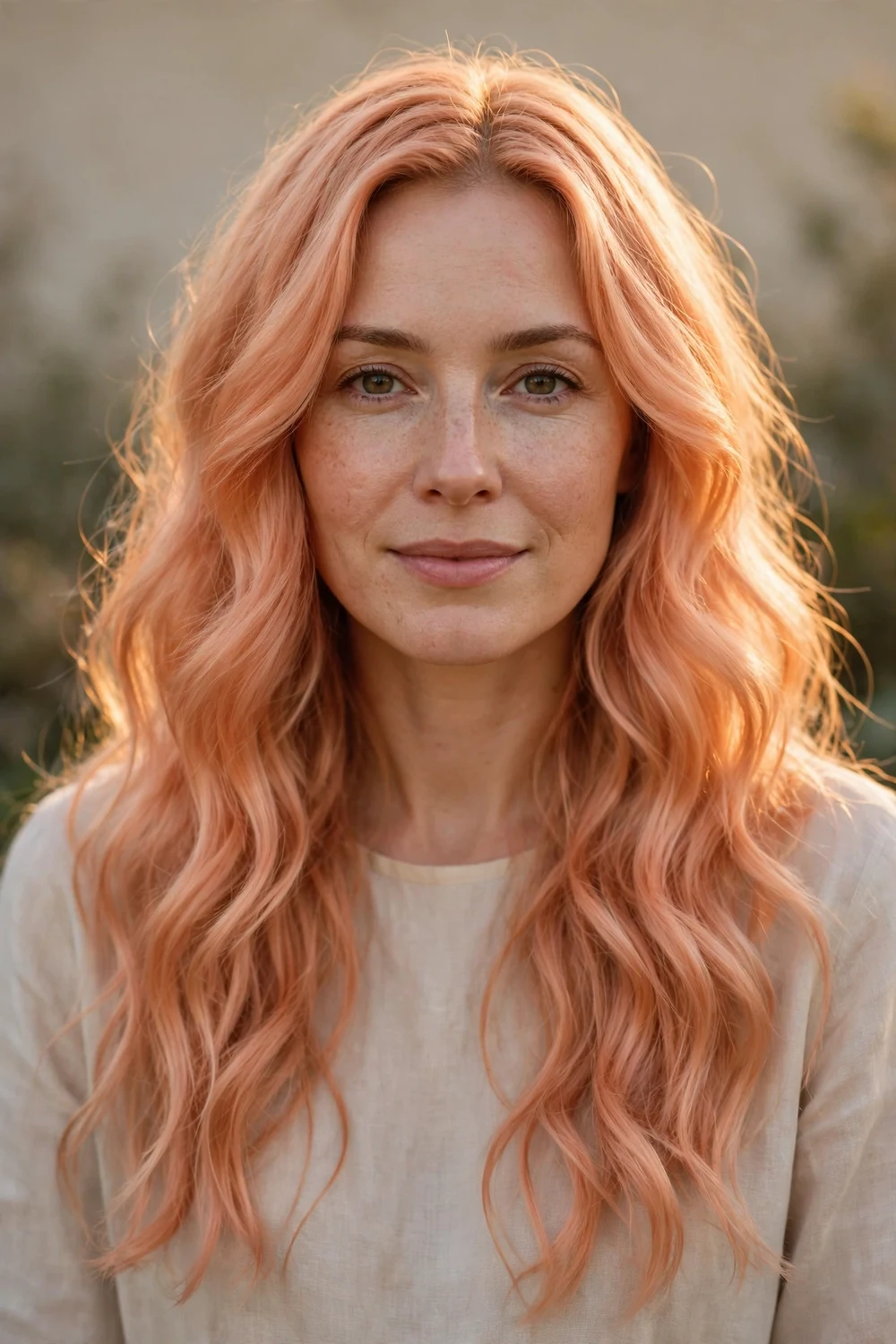
Pastel orange washes the color down to a delicate, dreamy tint with a warm sunset glow. Worn on long waves, it looks ethereal in daylight and soft indoors. It needs a very light blonde base to show properly, which means pre-lightening is non-negotiable on anything darker than dark blonde.
Maintenance is high for a shade this soft: cold water only, minimal washing, and gloss refreshes every three to four weeks. The upside is that when it fades, it simply becomes a warm blonde. It is a good pick if you love the idea of orange but want the softest possible version.
Try this: wash twice a week at most and use dry shampoo in between to protect the pastel tone.
Difficulty: Medium · Cost: $$$ (salon)
17. Apricot Orange

Apricot orange is a soft golden-orange with a natural sunlit glow, warmer than peach but softer than tangerine. It has an elegant, understated quality that works year-round, and it is one of the lowest-maintenance oranges here. Light brown through blonde hair takes it with minimal lift, and the fade is gradual and pretty.
It suits warm undertones and fair to medium skin, and it looks best on hair with some movement, since the golden tones need light play to show. A gloss every six to eight weeks keeps the apricot from settling into plain warm blonde.
Try this: ask your colorist to keep the formula golden rather than pink, since pink-leaning apricot fades faster.
Difficulty: Low · Cost: $$$ (salon)
18. Coral Orange

Coral orange keeps its feet firmly in the orange family while borrowing a whisper of pink: a soft pinkish-orange on a light blonde base that reads subdued and pretty rather than loud. The orange stays dominant, so it never drifts into pink territory, and the hint of rose keeps it from feeling flat. Fair skin carries it especially well.
It needs a level 9 or lighter base and fades faster than deeper oranges, so plan on gloss refreshes every four to five weeks. The papaya variant leans slightly more golden and lasts a touch longer. Both versions look best with minimal heat styling, since hot tools speed up the fade.
Try this: pair it with soft, undone waves rather than sleek styling so the coral reads romantic, not harsh.
Difficulty: Medium · Cost: $$$ (salon)
19. Melon Orange

Melon orange blends orange, pink, and yellow into a muted, playful tone that still reads unmistakably orange. It is wearable across skin tones, from fair to deep, because the mixed pigments harmonize instead of fighting undertones. The hyped-up saturated version pairs well with textured bangs and a choppy cut for a bolder take.
It needs a light base to show the melon mix properly, and it sits in the middle on maintenance: glosses every five or six weeks and cool water keep it from washing out. If you like the idea of a fashion shade but want something softer than neon, melon is the middle ground.
Try this: try the saturated version with point-cut bangs if your face shape suits a fringe.
Difficulty: Medium · Cost: $$$ (salon)
20. Rose Gold and Orange Blend
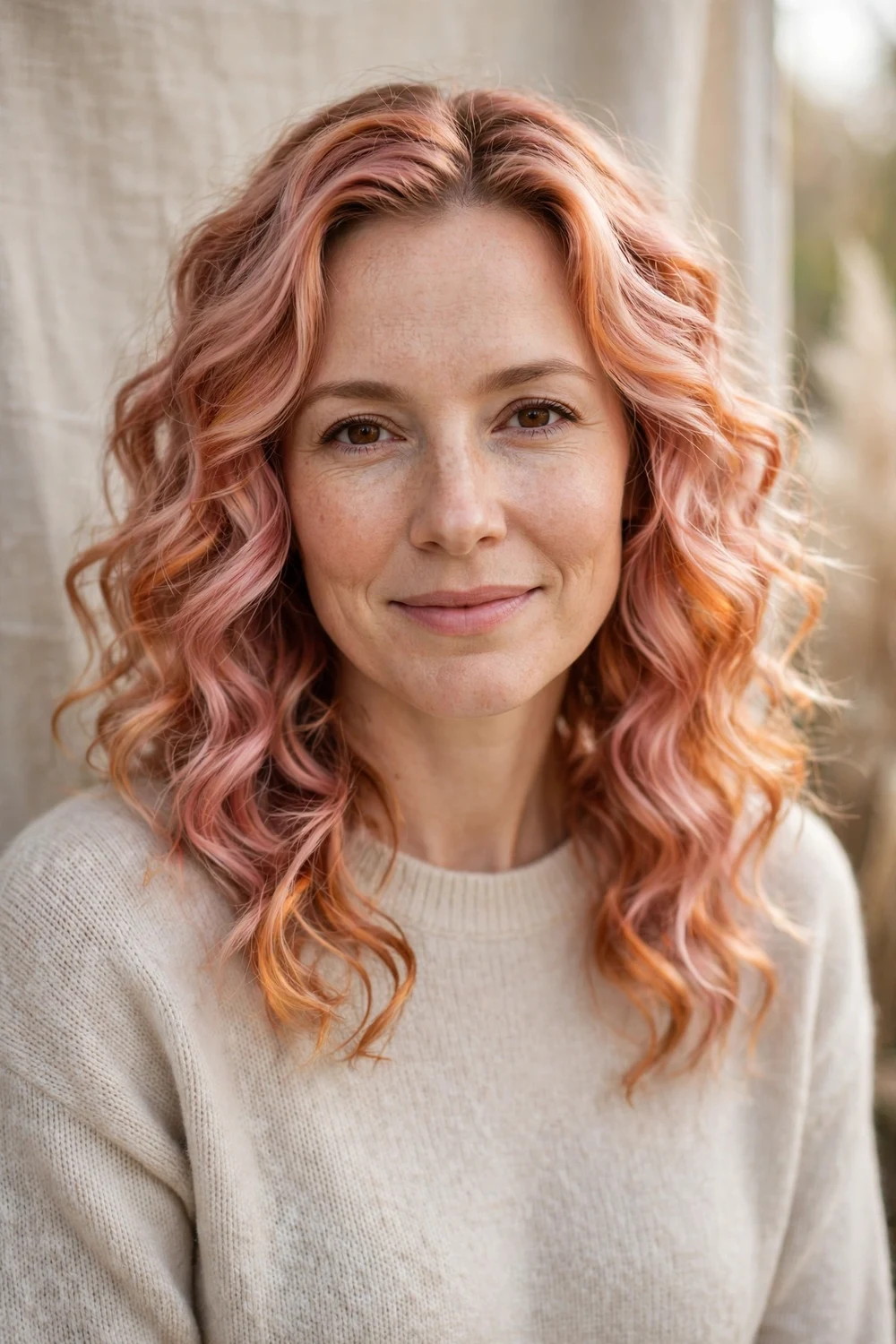
This blend keeps orange in charge: soft pink melted through warm orange for a modern, peachy multidimensional finish that shifts between rose, copper, and apricot as the light changes. The orange base anchors the whole look, so it reads as an orange shade with pink dimension, not the other way around. It needs a light blonde base and looks best on fair to light-medium skin.
Like other pastels, it fades faster than deeper oranges, so expect gloss refreshes every four to six weeks and a strict cool-water routine. The payoff is a shade that photographs well and feels current without committing to full fashion color.
Try this: ask your colorist to keep the orange ratio higher than the pink so the blend stays firmly in orange territory.
Difficulty: Medium · Cost: $$$ (salon)
21. Orange Balayage
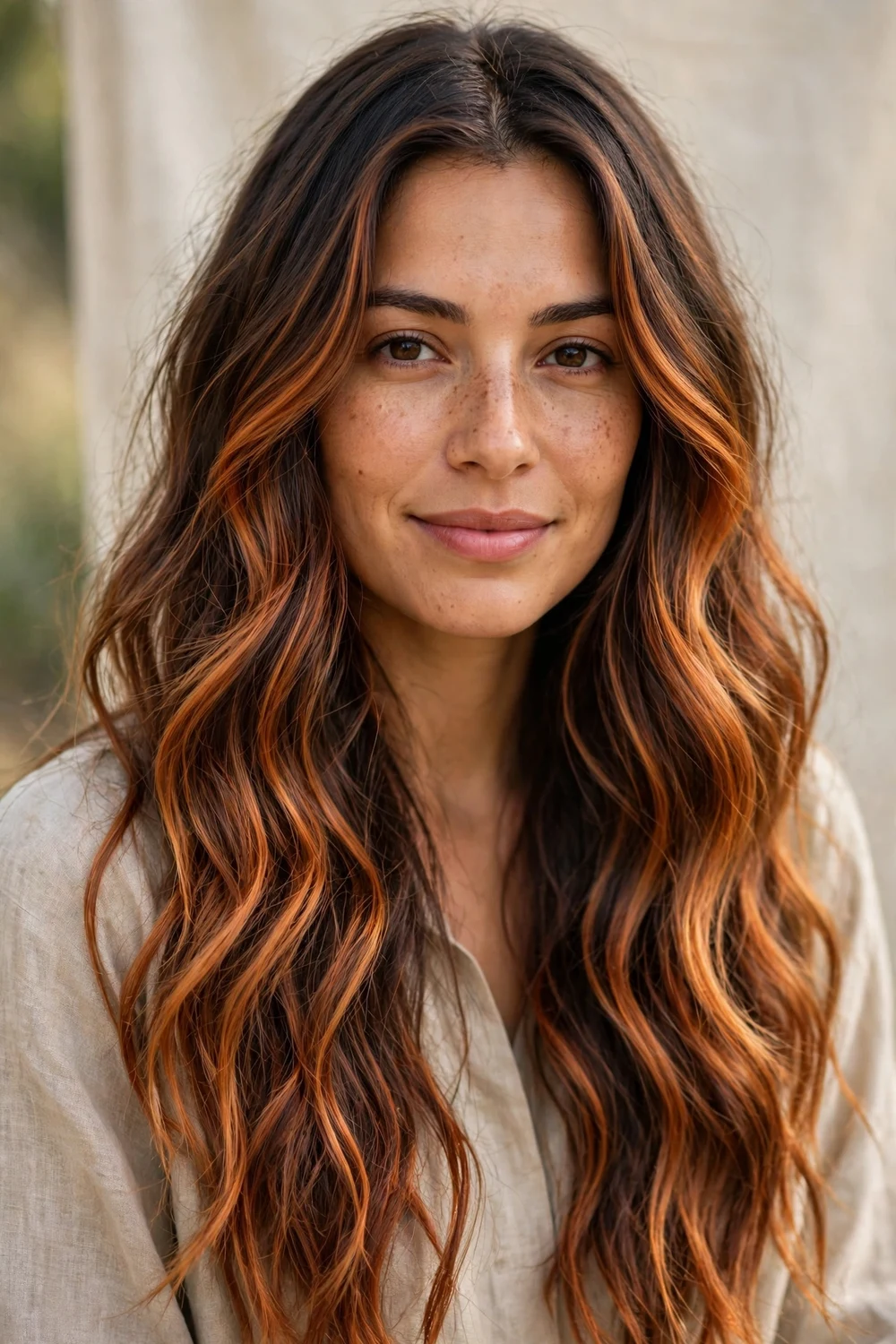
Orange balayage is the low-commitment way into the family: orange hand-painted through the lengths while the natural root stays untouched. The result is sun-kissed and dimensional, with copper undertones that suit light and olive skin tones. Blonde-and-orange variations add contrast for anyone who wants the orange to pop more against lighter hair.
Grow-out is graceful, since there is no line of demarcation, and appointments can stretch to twelve weeks or more. Toner refreshes every six to eight weeks keep the orange from going brassy. It is the technique to pick if you want orange without the maintenance schedule of all-over color.
Not sure which technique fits your hair? This balayage vs highlights comparison breaks down the upkeep and grow-out differences.
Try this: start with copper-toned balayage and go brighter at your next appointment if you want more impact.
Difficulty: Medium · Cost: $$$ (salon)
22. Orange Highlights on Brown Hair

Ribbons of orange on a dark brown base give you sunlit dimension without a full color commitment. The highlights can be chunky for a bolder read or scattered for a softer glow, and waves show the placement off best as the hair moves. Only the highlighted sections need lightening, so the damage stays limited and the cost stays lower than all-over color.
This is one of the most popular orange techniques for brunettes, and it flatters medium to deep skin tones. Toner refreshes every six to eight weeks keep the ribbons from turning brassy, and the grow-out is soft since the highlights blend into the base.
Try this: ask for the highlights concentrated through the mid-lengths and ends so the root area stays untouched.
Difficulty: Medium · Cost: $$$ (salon)
23. Orange Money Piece
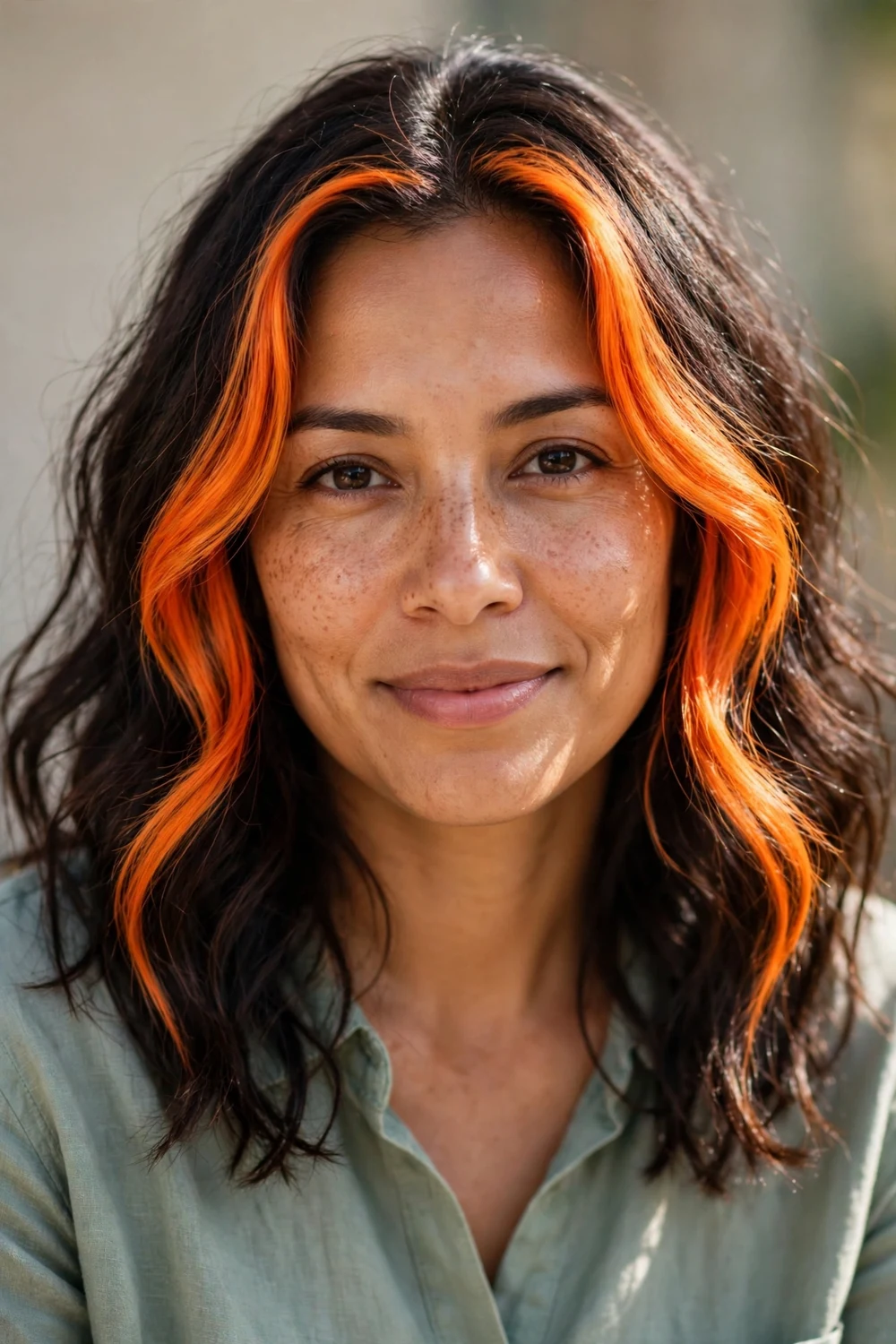
An orange money piece puts bright orange in the front sections only, where it catches the light and gives the skin a warm glow. It works on light and dark bases alike, and the upkeep is lighter than all-over color since only two sections need refreshing. It is the fastest way to test-drive orange: one appointment, minimal commitment, and it grows out without a harsh line.
The placement flatters most face shapes because the brightness sits right at the cheekbones. Fair skin pairs well with the bolder orange money pieces, while medium skin suits a slightly deeper tone. Touch-ups every six to eight weeks keep the front sections bright.
Try this: keep the rest of your hair natural so the orange front sections get full attention.
Difficulty: Low · Cost: $$ (salon)
24. Sunset Orange Gradient

A sunset gradient layers red, orange, and yellow into a glowing blend that moves from a darker base into full luminous color. It is editorial and eye-catching, and it needs length to blend smoothly, so long hair carries it best. The colorist melts each tone into the next so there are no visible bands, which is what separates a good sunset from a striped one.
This is a complex, high-skill service that takes several hours and needs a lifted base. Maintenance is real: the yellows fade fastest, so expect gloss or toner refreshes every four to six weeks. Book it when you want a true statement, not a casual change.
Try this: bring three reference photos showing the exact red-to-yellow ratio you want, since sunsets vary widely.
Difficulty: High · Cost: $$$ (salon)
25. Flaming Orange Ombre

A flaming ombre moves from a deep brown shadow root into fiery orange and apricot ends, like a glowing flame running down the hair. The dark root keeps the grow-out soft while the ends carry all the drama, and the apricot tips keep the finish from feeling harsh. It is a complex colorist service with dramatic payoff, and it needs length to show the full gradient.
The shadow root means you can stretch appointments to ten or twelve weeks, but the ends still need gloss refreshes every six weeks to stay fiery. Medium to deep skin tones suit the warm palette best. This is the ombre to pick when you want maximum drama with minimum root maintenance.
Try this: ask for the apricot to peak at the very ends so the tips look like they are catching fire.
Difficulty: High · Cost: $$$ (salon)
26. Reverse Orange-to-Black Ombre
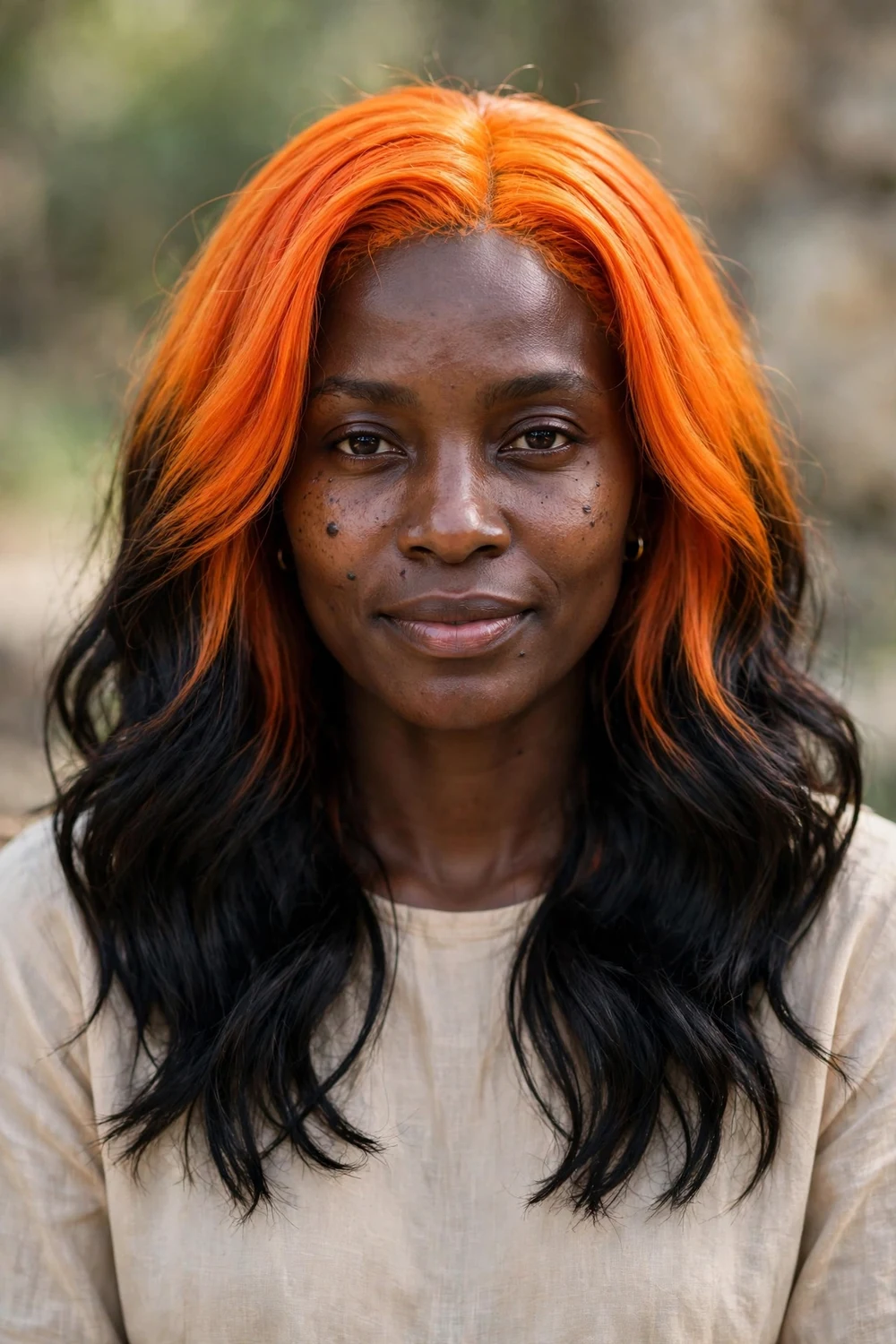
A reverse ombre flips the usual script: orange melts down into black at the ends instead of the other way around. It is daring and a little gothic, and it works as a black-and-orange blend for anyone who wants the contrast without committing the whole head. The practical bonus is real: when you are done with it, the black simply gets cut away.
This suits fair to medium skin tones and works best on medium to long hair, where the gradient has room to blend. The orange mid-section needs a lifted base, but the black ends are low-maintenance. It is a statement look, so book it when you want one, not as an everyday shade.
Try this: wear it with the orange starting at cheekbone level so the color frames your face before the black takes over.
Difficulty: High · Cost: $$$ (salon)
27. Magenta-to-Orange Ombre

Magenta melting into bright orange is a bold multi-tone statement that still grows out gracefully on brunettes, since the darker magenta root blends into natural depth. Purple and blue variants work the same way, each giving the orange a different cast as they blend. The contrast is high, but the ombre placement keeps it wearable in a way all-over multi-tone color is not.
This is a high-skill service that needs a pre-lightened base and careful blending to avoid muddy mid-tones. Expect gloss refreshes every five to six weeks, since the magentas and oranges fade at different rates. It is a festival-and-photo favorite that still looks intentional months later.
Try this: start the magenta at the root and let the orange take over from the mid-lengths down for the cleanest blend.
Difficulty: High · Cost: $$$ (salon)
28. Orange with Rainbow Peekaboo Accents

An orange base with hidden pops of green, yellow, and blue gives you a color that reveals itself with movement. The peekaboo sections sit underneath the top layer, so the hair reads solid orange until you move, tie it up, or catch a breeze. A rainbow money piece offers a bolder version of the same idea for anyone who wants the reveal up front.
This is commitment-lite in the best way: the accent sections are small, cheap to refresh, and easy to grow out or cut away. Only the peekaboo pieces need pre-lightening. It suits anyone who wants a playful, personal color without wearing it all over.
Try this: place the peekaboo sections at the nape and behind the ears so they show when you move your hair.
Difficulty: Medium · Cost: $$$ (salon)
29. Vermilion Orange Roots on Platinum Blonde

Red-orange vermilion roots painted down to the midshaft on white blonde create a peekaboo gradient that looks intentional and artistic. The contrast between the warm root and the icy lengths is striking, and because the orange sits only at the roots, the upkeep stays light. A hidden-blonde-underdye variation flips it: fiery melon orange underneath with platinum on top.
This works best on hair that is already platinum or close to it, since the base does the heavy lifting. Root touch-ups every six to eight weeks keep the vermilion fresh, and the grow-out blends because the orange is meant to look melted, not precise.
Try this: keep the vermilion application soft and diffused at the edges so the blend looks painted, not striped.
Difficulty: Medium · Cost: $$$ (salon)
At a Glance: 29 Orange Hair Colors Compared
| Shade | Best for | Color story | Upkeep |
|---|---|---|---|
| Bright Tangerine Orange | Warm and neutral undertones | Full-saturation citrus, loud and playful | Color-depositing conditioner, frequent refresh |
| All-Over Neon Orange | Maximum-impact seekers | Electric, almost-glowing solid orange | Touch-ups every 4 to 6 weeks |
| Neon Orange Melt with Dark Roots | Brunettes wanting neon | Neon brightness anchored by shadow roots | Appointments every 8 to 10 weeks |
| Blood Orange | Fair to deep skin tones | Deep red-orange with crimson depth | Red-safe shampoo, gloss every 5 to 6 weeks |
| Safety Orange | Warm undertones, medium to deep skin | Yellow-leaning, punchy and confident | Cool water, fewer washes |
| Classic Copper Orange | Fair to medium skin | Pure copper with gold hints, natural-looking | Copper gloss every 6 to 8 weeks |
| Copper-Orange Melt | Olive and medium skin | Dark roots flowing into bright copper ends | Visits every 10 to 12 weeks |
| Auburn Copper | Olive complexions, brunettes | Deeper, redder copper with orange undertones | Gloss every 6 to 8 weeks |
| Burnt Orange | Medium to deep skin, fall lovers | Deep muted brown-orange, rich and sophisticated | Gloss refresh every 2 months |
| Pumpkin Orange | Deep skin tones | Warm saturated pumpkin, festive and grounded | Color-depositing conditioner between visits |
| Pumpkin Spice Copper | Fair skin | Metallic golden copper with spice depth | Copper gloss every 6 weeks |
| Ginger Orange | Fair skin, natural redhead look | Warm spicy glow that could be real | Gloss every couple of months |
| Strawberry Copper | Fair to medium skin | Light airy copper with gold and red tones | Heat protectant, gentle fade |
| Dark Orange | Medium to deep skin, curly hair | Deep saturated orange, bold without neon | Gloss every 6 to 8 weeks |
| Soft Peach Orange | Fair skin, first-time orange | Light peach-gold-copper, airy and gentle | Gloss every 4 weeks, cold water |
| Pastel Orange | Very light blonde bases | Washed-out dreamy tint with sunset warmth | Wash twice a week max |
| Apricot Orange | Warm undertones, fair to medium skin | Soft golden-orange with a sunlit glow | Gloss every 6 to 8 weeks |
| Coral Orange | Fair skin | Soft pinkish-orange, subdued and pretty | Gloss every 4 to 5 weeks |
| Melon Orange | Fair to deep skin | Muted orange-pink-yellow mix, playful but wearable | Gloss every 5 to 6 weeks |
| Rose Gold and Orange Blend | Fair to light-medium skin | Pink melted through warm orange, peachy and multidimensional | Gloss every 4 to 6 weeks |
| Orange Balayage | Low-commitment color lovers | Hand-painted orange with natural roots | Toner every 6 to 8 weeks |
| Orange Highlights on Brown Hair | Brunettes | Orange ribbons for sunlit dimension | Toner every 6 to 8 weeks |
| Orange Money Piece | Testing orange for the first time | Bright orange front sections framing the face | Touch-ups every 6 to 8 weeks |
| Sunset Orange Gradient | Long hair, statement seekers | Red, orange, and yellow glowing blend | Gloss every 4 to 6 weeks |
| Flaming Orange Ombre | Medium to deep skin, long hair | Shadow root into fiery orange and apricot ends | Gloss every 6 weeks, visits every 10 to 12 |
| Reverse Orange-to-Black Ombre | Bold, edgy style lovers | Orange melting into black at the ends | Low upkeep, cut away when done |
| Magenta-to-Orange Ombre | Brunettes wanting multi-tone color | Magenta, purple, or blue melting into orange | Gloss every 5 to 6 weeks |
| Orange with Rainbow Peekaboo Accents | Playful, commitment-lite color | Hidden green, yellow, and blue pops under orange | Refresh small sections only |
| Vermilion Orange Roots on Platinum Blonde | Platinum blondes | Red-orange roots painted onto white blonde | Root touch-ups every 6 to 8 weeks |
How to Choose Your Orange Shade
Start with your skin’s undertone. Warm undertones carry nearly every orange on this list, from copper to neon. Neutral undertones suit copper, burnt orange, and the peachy pastels. Cool undertones have the narrowest options: stick with deeper shades like blood orange or burnt orange, where the red-brown depth harmonizes better than bright yellow-leaning tones. A quick wrist check helps: greenish veins suggest warm undertones, bluish veins suggest cool, and a mix means neutral.
Next, match the shade to your starting hair color and your tolerance for bleach. Brunettes can reach auburn copper, burnt orange, and dark orange with permanent color and little to no lightening. Light brown and blonde hair opens up the coppers, gingers, and peachy pastels. The neons, tangerines, and sunset gradients need a pre-lightened base, which means more salon time, more cost, and more damage to manage. Be honest about whether you want a one-appointment change or a multi-session project.
Finally, think about the cut and the maintenance you will actually keep up. Long layers and shags show off dimensional oranges like copper melts and sunsets, while bobs and pixies suit bold single shades like tangerine and neon. If you wash daily, pick a deeper shade that fades gracefully; if you can stretch washes and use cool water, the pastels and neons stay brighter longer. Pick the shade whose upkeep fits your real routine, not your ideal one.
Orange Hair Color Care
Orange fades faster than most colors because the molecules are large and wash out with each shampoo. Wash in cool or lukewarm water, use a sulfate-free color-safe shampoo, and stretch washes to two or three times a week with dry shampoo in between. Every hot wash visibly dulls the tone, so the water temperature matters more than the product for the brightest shades.
Sun is the other big fader. UV breaks down orange pigment quickly, so wear a hat in strong sun or use a UV-protectant spray, especially on pastels and neons. Chlorine and salt water strip color too, so wet your hair with clean water and add a leave-in conditioner before swimming. Heat styling speeds fading as well, so keep hot tools at moderate temperatures and always use a heat protectant.
Gloss refreshes are the maintenance backbone for orange hair. A copper or orange gloss every four to eight weeks, depending on the shade depth, restores the tone without a full recolor. Between appointments, a color-depositing orange conditioner keeps the brightness up in the shower. When the color finally fades, it usually settles into a warm golden or soft copper that still looks intentional, so even the grow-out phase works in your favor.
Frequently Asked Questions
What skin tone is best for orange hair?
There is an orange for every skin tone. Fair skin suits peach, apricot, coral, and strawberry copper, where the soft warmth brightens without overwhelming. Medium and olive skin carry classic copper, auburn copper, and copper melts with ease. Deep skin shines in pumpkin, burnt orange, and dark orange, where the rich depth harmonizes. Warm undertones have the widest options, while cool undertones do best with deeper shades like blood orange or burnt orange rather than yellow-leaning neons.
Do I need to bleach my hair before going orange?
It depends on your starting color and the shade you want. Brunettes can reach auburn copper, burnt orange, ginger, and dark orange with permanent color and little to no lightening. Light brown and blonde hair opens up most coppers and pastels with minimal lift. The bright fashion shades, tangerine, neon, safety orange, and sunset gradients, need a pre-lightened blonde base to show their true color, sometimes near-white on naturally dark hair. Your colorist can tell you how much lift your hair needs in a consultation.
How long does orange hair color last?
Orange is one of the faster-fading colors because the pigment molecules are large and rinse out with each wash. All-over neon and pastel shades start fading noticeably within two to three weeks without careful maintenance. Deeper shades like burnt orange, copper, and blood orange hold for four to six weeks before needing a refresh. Cool water, sulfate-free shampoo, washing two to three times a week, and gloss refreshes every four to eight weeks stretch the color significantly. When orange fades, it usually settles into a warm golden or soft copper tone.
What is the difference between copper, ginger, and burnt orange hair?
Copper is the brightest of the three: a pure orange-red with gold and yellow dimension that catches the light. Ginger is softer and more natural-looking, a warm spicy red-orange that could pass as a real redhead shade. Burnt orange is the deepest and most muted, a brown-orange that reads rich and sophisticated rather than bright. Think of it as a spectrum from bright (copper) to natural (ginger) to deep and muted (burnt orange). All three suit warm undertones, but burnt orange also works well on cool undertones because of its brown depth.
Can I wear orange hair year-round, or is it just a fall color?
Orange works year-round, even though burnt orange, pumpkin, and copper peak in fall. Soft peach, apricot, and strawberry copper read as warm spring and summer shades, especially in sunlight. Neon, tangerine, and sunset gradients are seasonless fashion colors that suit festival season and summer just as well. The fall association comes from the autumnal shades, but the full family covers every season, so pick the tone that fits the time of year rather than skipping orange outside of October.
Final Thoughts
Orange hair has a shade for every mood, from the soft whisper of peach to the full shout of neon. Pick the tone that suits your skin, your starting color, and the maintenance you will actually keep up, and the color will reward you. Fall is the perfect season to start, but the right orange works any month of the year.

