

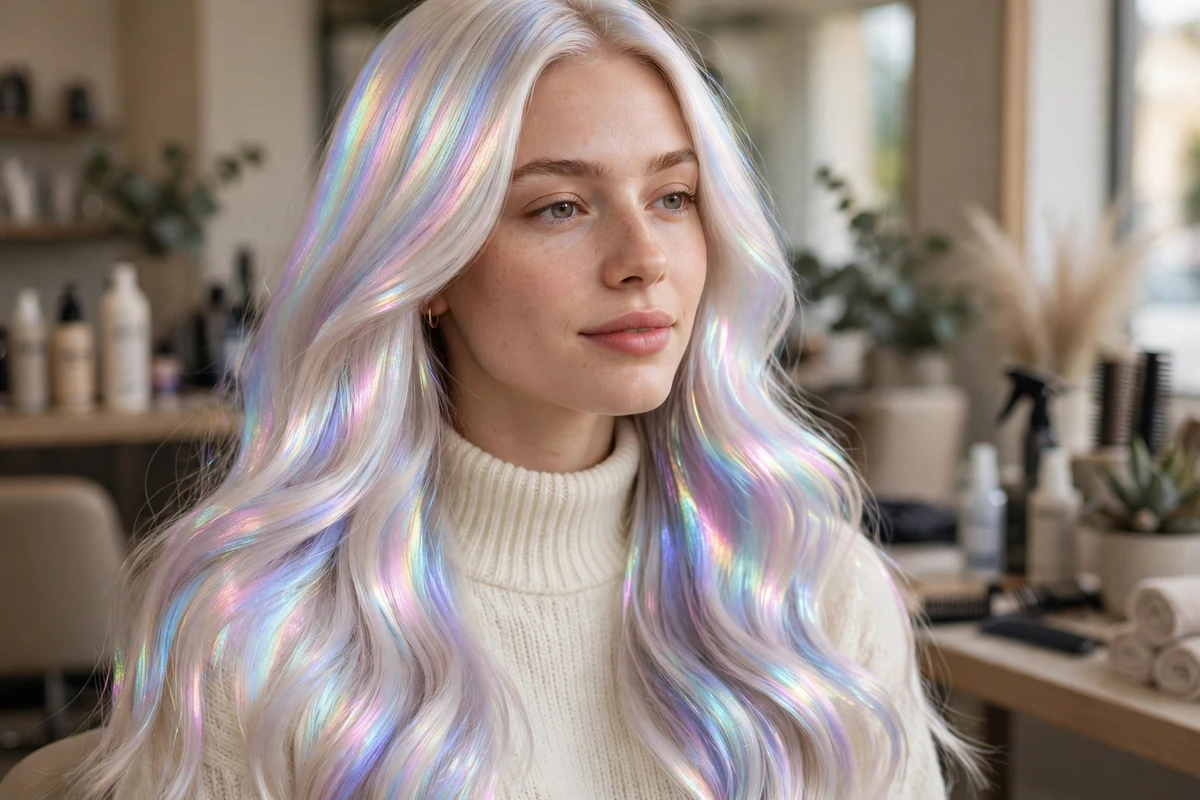
Holographic hair is built from several pastel tones at once, laid over a pale base so the colour changes as light moves across it. One angle reads pink, the next reads blue or lavender, and a turn of the head brings mint or peach forward. The effect comes from placement and tone mix, so two people wearing the same idea can end up with quite different results.
This list collects 27 holographic hair ideas and runs them in a clear order: the soft opal looks first, then the full prism looks, then placement options that keep part of your own colour, and finally cut-led versions. Every idea notes the tone mix, who it suits, and how fast it fades. If you want a single pastel family instead of a multi-tone shift, the pink hair color ideas roundup covers that route on its own.
Quick Takeaways
- Holographic colour is a mix, not a single shade: pastel pink, blue, lavender, mint, and peach placed together so the hair shifts tone in different light.
- Almost every look on this list needs a pale, pre-lightened base first. Dark hair usually needs more than one lightening session to get there safely.
- Pastel tones fade fast. Expect visible fade in three to five weeks and a toner or gloss refresh at four to six weeks.
- Placement controls commitment: underlayers, ends, and a gloss show the shift with less regrowth than an all-over colour.
- Oil-slick pastel is the one route that works over a dark base, because the tones sit deeper and show mainly when light hits them.
How to Pick Your Holographic Look
Start with your base, and be honest about it. Holographic pastels only show true on hair lifted to a pale blonde, close to the lightest level a colourist works with. Yellow or orange tones left in the hair will distort the pastels, turning blue muddy and lavender grey. If your hair is dark, plan for staged lightening over several appointments, with conditioning care between them, rather than one long session. Readers starting from blonde can compare pale base options in the winter blonde hair color ideas guide before adding pastel tones on top.
Then pick by upkeep. All-over prism and opal looks ask for cool water, fewer washes, sulfate-free shampoo, and a salon refresh every four to six weeks. If that routine does not fit your life, choose a placed version from the second half of this list: an underlayer, ends, or balayage keeps the shift while your roots grow out on their own schedule. Cool skin tends to suit blue, lavender, and silver-led mixes, while warm skin carries peach, rose, and gold-led mixes with less clash.
| Look family | Tone mix | Best starting base | Upkeep |
|---|---|---|---|
| Opal and pearl (opal, mother of pearl, holographic blonde) | Pale pink, blue, lavender over platinum | Platinum or pale blonde | High |
| Full prism (prismatic, dappled, colour melt) | Full pastel spectrum in panels or melts | Pre-lightened pale blonde | High |
| Deep shift (oil-slick pastel, sea glass) | Blue, green, purple at deeper levels | Dark blonde to brunette | Medium to high |
| Placed colour (underlayer, ends, balayage, gloss) | Pastel mix in one zone only | Blonde to light brown | Medium |
1. Classic Opal Hair

Classic opal hair starts with a platinum base and adds thin washes of peach, lavender, blue, and silver. No single tone leads. Indoors the hair reads as a soft pearl blonde, and in daylight the pastel washes separate and show one at a time. It suits fair and cool skin, where the pale base and cool washes sit comfortably together.
The base does most of the work here, so the first appointment is mainly lightening. Dark hair will rarely reach a clean platinum in one visit. The pastel washes themselves fade within three to five weeks and leave the platinum behind, which makes a toner refresh a short appointment rather than a full recolour.
Try this: ask for the peach wash kept smallest of the four tones, since peach fades slowest and can take over the mix by week three.
Difficulty: High · Cost: $$$ (salon)
2. Holographic Blonde

Holographic blonde keeps blonde as the visible colour and adds the shift as a sheen. Fine pink, blue, and lavender toners are layered over a pale blonde base at low strength, so the hair looks blonde straight on and shows colour at the edges and in movement. It suits blondes who want the effect at work-friendly strength.
Because the pastel layer is thin, this is also the fastest-fading blonde on the list. Expect the sheen to soften after two to three weeks of washing. A diluted pastel gloss at home or a quick salon toner keeps it going without another lightening session, as long as the base stays pale.
Try this: photograph your blonde in daylight before the appointment and show your colourist exactly how pale the base already is, so the toner strength can be matched to it.
Difficulty: Medium to High · Cost: $$$ (salon)
3. Mother of Pearl Hair

Mother of pearl hair uses the inside of a shell as the reference: platinum hair with soft hints of blue, pink, and lavender laid in wide, blended sections. The sections are broader than in classic opal, so each colour shows as a soft panel when the hair moves. Fair skin carries the pale palette best.
Smooth styling shows this look at its clearest, since the panels need a flat surface to reflect from. Waves blur the panels into a general sheen, which some wearers prefer. Upkeep is a toner refresh at four to five weeks, plus gloss care, because a dull surface hides the whole effect.
Try this: ask for a clear gloss finish at the end of the service. The pearl effect depends on surface shine more than on colour strength.
Difficulty: High · Cost: $$$ (salon)
4. Pearly Holographic Hair

Pearly holographic hair blends metallic pastel streaks of pink, pale yellow, blue, and green over a pale base, with the streaks kept fine and close together. The mix reads as one pearly surface rather than separate stripes. It suits long and mid-length hair, where there is enough length for the streaks to overlap.
The fine placement takes time in the chair, and each tone fades at its own speed, so the balance shifts week by week. Green and blue usually outlast pink. Plan a refresh that rebalances the faded tones only, instead of redoing every streak from scratch.
Try this: keep a photo of the fresh result on your phone and bring it to the refresh, so your colourist can see which tones have dropped out.
Difficulty: High · Cost: $$$ (salon)
5. Rose Quartz Holographic Hair
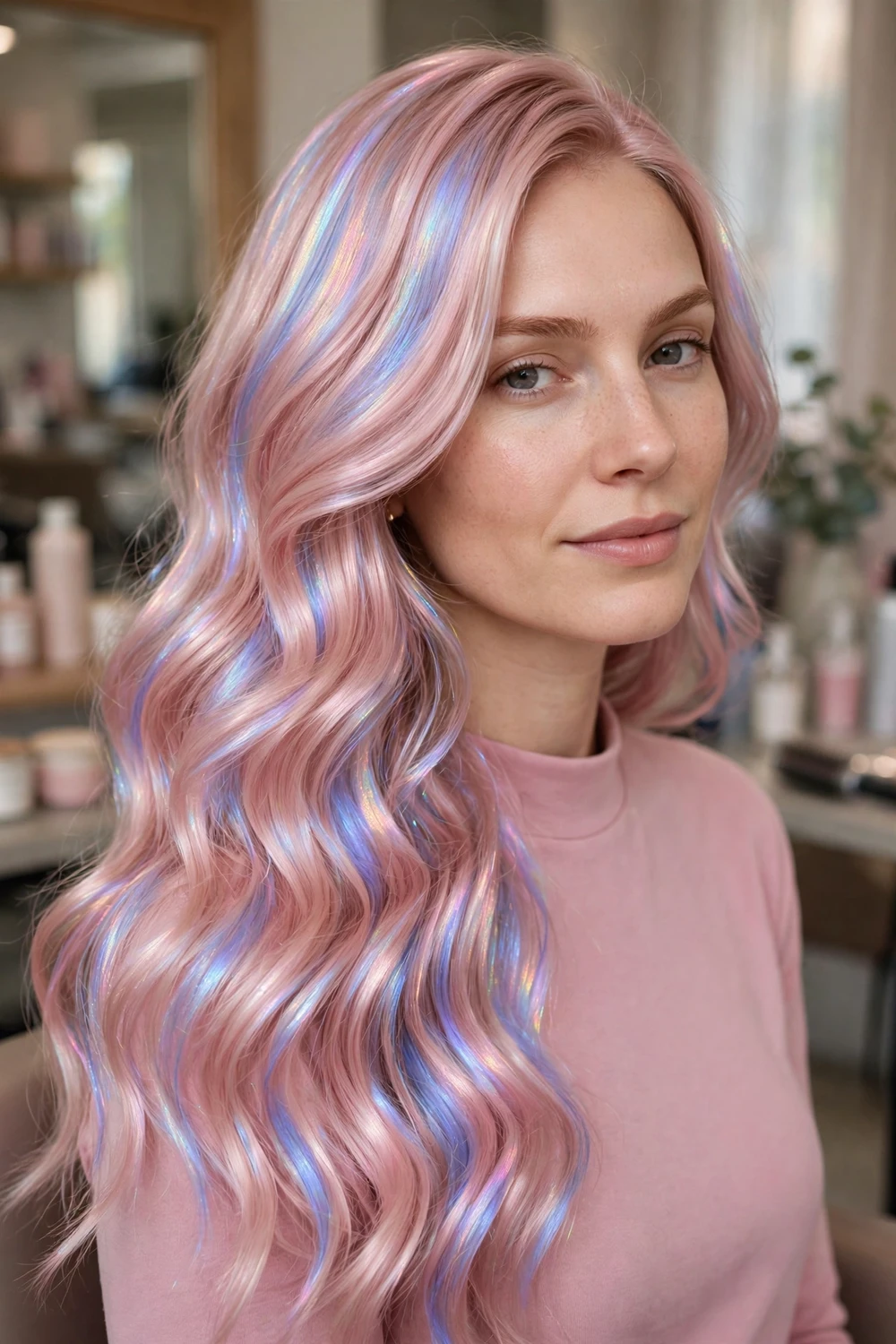
Rose quartz holographic hair sets the pastel mix over a warm pink base. The pink leads, and blue, lavender, and peach streaks sit inside it as the shifting layer. Warm and neutral skin suits the pink base, and the look is a natural next step for anyone already wearing a soft pink shade.
The pink base holds longer than the streaks inside it, so the fade path is kind: the hair settles toward plain rose pink over four to six weeks. A colour-depositing pink conditioner maintains the base at home, while the blue and lavender streaks need a salon visit to return at full strength.
Try this: if you already wear pink, book the holographic streaks as a second appointment rather than starting over, and keep your existing base.
Difficulty: High · Cost: $$$ (salon)
6. Lavender Holographic Hair

Lavender holographic hair uses a metallic lavender base with rainbow pastel dapples worked across it in short horizontal sections. Lavender leads the read, and pink, blue, and mint flashes appear inside it as the hair moves. Cool skin suits the lavender base, and the dapple placement keeps the extra colours controlled.
Lavender fades toward silver-grey, which most wearers still like, so the grow-out and fade are forgiving. The dapples fade faster than the base and need topping up at four weeks if you want the rainbow layer to stay visible. Purple shampoo helps the lavender, but overuse can dull the pink dapples.
Try this: ask for the dapples placed through the mid-lengths only, leaving the top layer lavender, if you want the rainbow layer to show mainly in movement.
Difficulty: High · Cost: $$$ (salon)
7. Pastel Rainbow Holographic Hair

Pastel rainbow holographic hair applies blue, green, pale yellow, and pink on a diagonal over a pale base, at pastel strength throughout. The diagonal placement stops the colours lining up in stripes and gives the translucent, light-through-glass read the family is known for. It suits anyone ready for a full-head fashion colour with a soft finish.
All four tones sit at the same pale level, so the whole head fades together and fairly evenly. The trade-off is that there is no deeper tone to hide behind: once fade starts, the colour looks washed out across the whole head at once. A full refresh lands at four to five weeks.
Try this: wash with cool water from the first wash and keep shampoo to the scalp only, letting the rinse run through the lengths.
Difficulty: High · Cost: $$$ (salon)
8. Subtle Holographic Gloss

A subtle holographic gloss is a sheer iridescent toner laid over hair that is already pale blonde. The colour is barely there indoors and shows as a pink-blue sheen in sunlight or under bright salon light. It suits blondes who want to test the family before paying for panel work.
This is the lowest-commitment idea on the list. There is no extra lightening if your base is already pale, the appointment is short, and the gloss fades out fully in two to four weeks with no line and no residue. If you like the sheen, the same toner mix can be rebuilt at stronger strength next time.
Try this: book the gloss a few days before an event where photos will be taken in daylight, when the sheen is fresh and most visible.
Difficulty: Low to Medium · Cost: $$ (salon)
9. Prismatic Holographic Hair
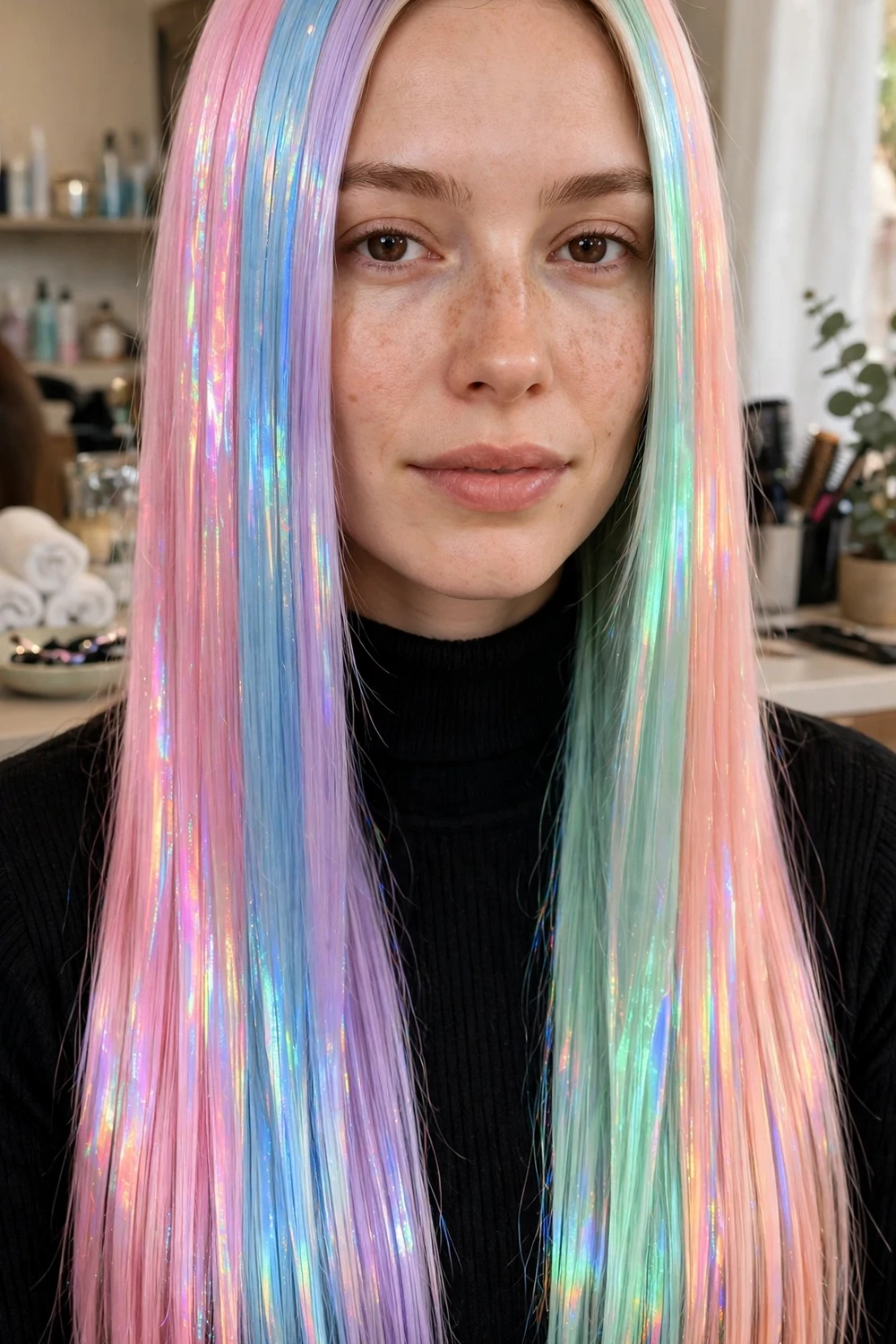
Prismatic holographic hair places the full pastel spectrum in planned panels around the head, so different colours meet at the parting, the hairline, and the ends. As the hair is restyled, new colour pairs sit next to each other and the pattern changes. It suits wearers who style their hair in several ways across a week.
Panel work is the most planning-heavy service on this list. Your colourist maps the head before any colour goes on, and the refresh has to follow the same map. Bring photos that show the panel width you want, since wide panels read bold and narrow panels read blended.
Try this: ask your colourist to photograph the panel map at your first appointment and keep it on your file for the refresh.
Difficulty: High · Cost: $$$ (salon)
10. Holographic Dappled Hair
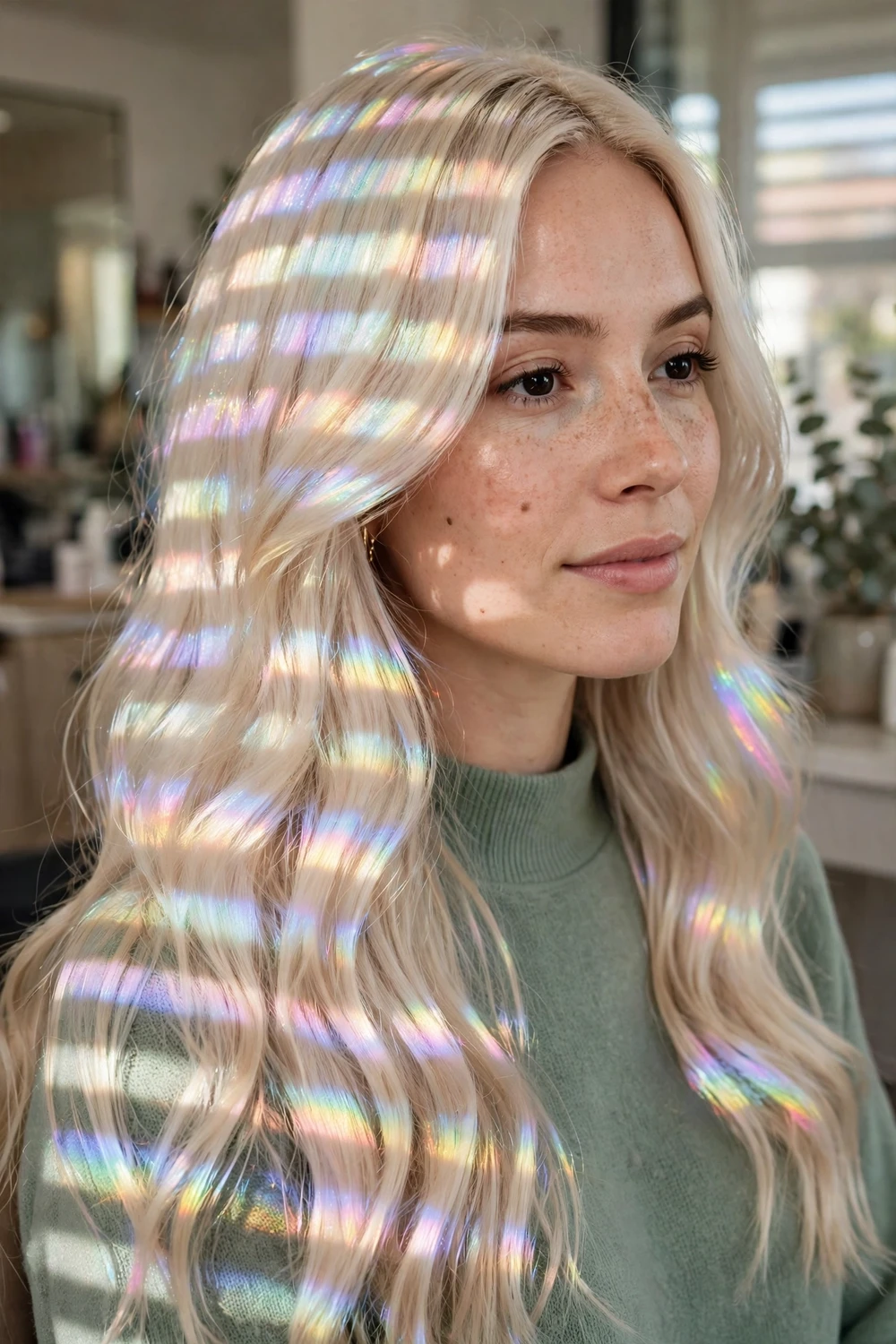
Holographic dappled hair lays short horizontal streaks of pastel rainbow across the hair, like light falling through a window onto a pale surface. The streaks sit on the top layers, so the effect is strongest with the hair down and still. It suits straight and wavy hair, where the horizontal lines stay readable.
On curly hair the dapple lines break up and read as a general pastel mix, which is a different result from the reference photos. The top-layer placement also means the colour takes the most sun and fades first on the surface, while the hair underneath stays closer to the base tone.
Try this: wear a hat or a UV spray on bright days. Surface colour has no depth to protect it, and sun fade shows here first.
Difficulty: High · Cost: $$$ (salon)
11. Melted Holographic Colour Melt

A melted holographic colour melt blends the pastel mix downward into a cool, watery blue over a silvery white base, with no hard line where one tone ends. The top of the head reads pearly and pale, and the colour deepens through the lengths. It suits long hair, where the melt has room to travel.
Melts grow out softly at the root if the top tone sits close to a pale natural shade, but the blue lengths hold their own schedule. Blue is one of the slower-fading pastel tones, so the lengths often outlast the paler top and need toning down rather than topping up at the refresh.
Try this: ask where the melt will start before colour goes on. A melt that starts at cheek level keeps the face area pale and bright.
Difficulty: High · Cost: $$$ (salon)
12. Cool Gradient Holographic Hair

Cool gradient holographic hair runs a smooth shift of blue into purple into pink, with streakier pink touches worked through to keep the shift from reading flat. Every tone sits on the cool side, so the gradient stays calm even at full length. Cool and neutral skin suits the palette, and deep skin carries the saturated version well.
The middle tone, purple, is where gradients usually fail, because blue and pink mix into a muddy band if the sections overlap too far. A colourist who works in fashion colour will keep the purple section wide enough to read as its own tone. Refresh work targets the pink first, since it fades ahead of the blue.
Try this: sleep with the hair in a loose braid. Long gradients tangle at the point where tones meet, and that friction speeds up fade there.
Difficulty: High · Cost: $$$ (salon)
13. Sea Glass Holographic Hair
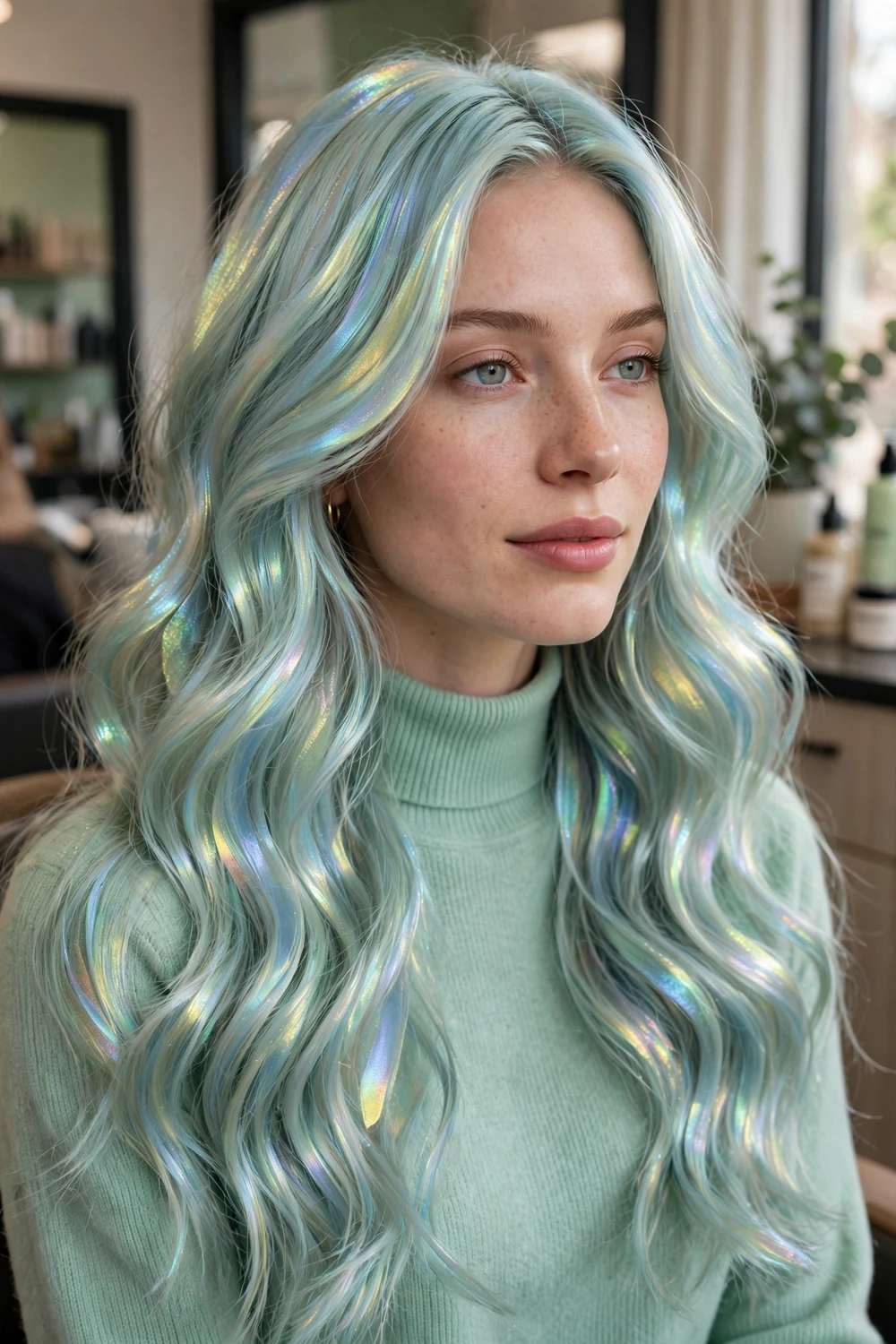
Sea glass holographic hair stays inside the water end of the spectrum: aqua, mint, soft blue, and pale green, diffused into each other with hints of pale yellow where light would catch. The tones are close in depth, so the shift is gentle and the overall read stays green-blue. It suits cool skin and anyone who wants holographic placement without pink in the mix.
Green-family tones are the most stubborn pastels to remove later, so treat this as a longer commitment than the colour strength suggests. If you plan to return to blonde soon after, pick a pink-led idea instead. A blue-toned shampoo routine can push this palette grey, so stick to clear, colour-safe products.
Try this: tell your colourist about any future colour plans at the consultation. Green residue shapes what can be done at the next change.
Difficulty: High · Cost: $$$ (salon)
14. Periwinkle Holographic Hair

Periwinkle holographic hair builds on a blue-violet base and works lavender, pink, and silver through it, so the base colour itself shifts between blue and purple in different light. The extra tones keep the periwinkle from reading as one flat shade. It suits a wide range of skin tones, and the mid-depth base is kinder to hair that cannot reach platinum.
Because the base sits a level deeper than the palest ideas here, some light brown hair can reach it with less lightening. The silver pieces fade first and turn the mix cooler over time, so the refresh is mostly about restoring warmth in the pink sections.
Try this: ask for the pink placed around the face, where its fade is easiest to top up with a short front-section appointment.
Difficulty: Medium to High · Cost: $$$ (salon)
15. Unicorn Pastel Holographic Hair

Unicorn pastel holographic hair is the playful end of the family: pink, purple, blue, and mint placed in larger, clearer sections over the whole head. The sections are easier to tell apart than in the opal looks, and the overall read is brighter. It suits wearers who want the colour to be the main feature of the look, worn with simple clothes and makeup.
The clearer sections make home care simpler in one way, since a faded section is easy to spot and describe at the refresh. The cost is chair time: four or more tones placed cleanly across a full head is a long appointment, and dark bases add lightening sessions before it.
Try this: book a consultation first and agree the section order in writing, warm tones on one side and cool tones on the other, or fully mixed.
Difficulty: High · Cost: $$$ (salon)
16. Sunset Holographic Hair

Sunset holographic hair blends pink, orange, and pale yellow in a warm gradient, with a lavender sheen worked over the top to give the warm tones their shift. Without that cool sheen layer, a warm gradient reads as a standard sunset colour, so the lavender layer is the part that makes this version holographic. Warm skin suits the palette, and readers comparing warm single-family shades can browse the orange hair color ideas list alongside this one.
Yellow is the weakest pastel in the mix and fades first, leaving a pink-orange gradient that still looks planned. The lavender sheen fades at a similar speed, so the holographic layer needs refreshing at three to four weeks to stay visible over the warmer base.
Try this: ask for the yellow kept to the mid-lengths, where it is protected by the layers above and below, rather than at the exposed ends.
Difficulty: High · Cost: $$$ (salon)
17. Oil-Slick Pastel on Dark Hair

Oil-slick pastel lays deep blue, green, and purple tones over a dark base, at a depth where they show mainly when light hits the hair. Indoors the hair reads as a glossy dark shade with a cool cast, and outdoors the colour bands separate across the surface. It suits brunettes who want the holographic family without a platinum base.
This is the one idea here that skips full lightening. Some lift is still needed for the blue and green to show, but the target level is far lower, so the process is gentler and regrowth blends into the dark base. The purple fades toward a cool brown, which keeps the fade path wearable for six weeks or more.
Try this: check the result in daylight before leaving the salon. Oil-slick tones can look too subtle indoors and read very differently outside.
Difficulty: Medium to High · Cost: $$$ (salon)
18. Holographic Highlights
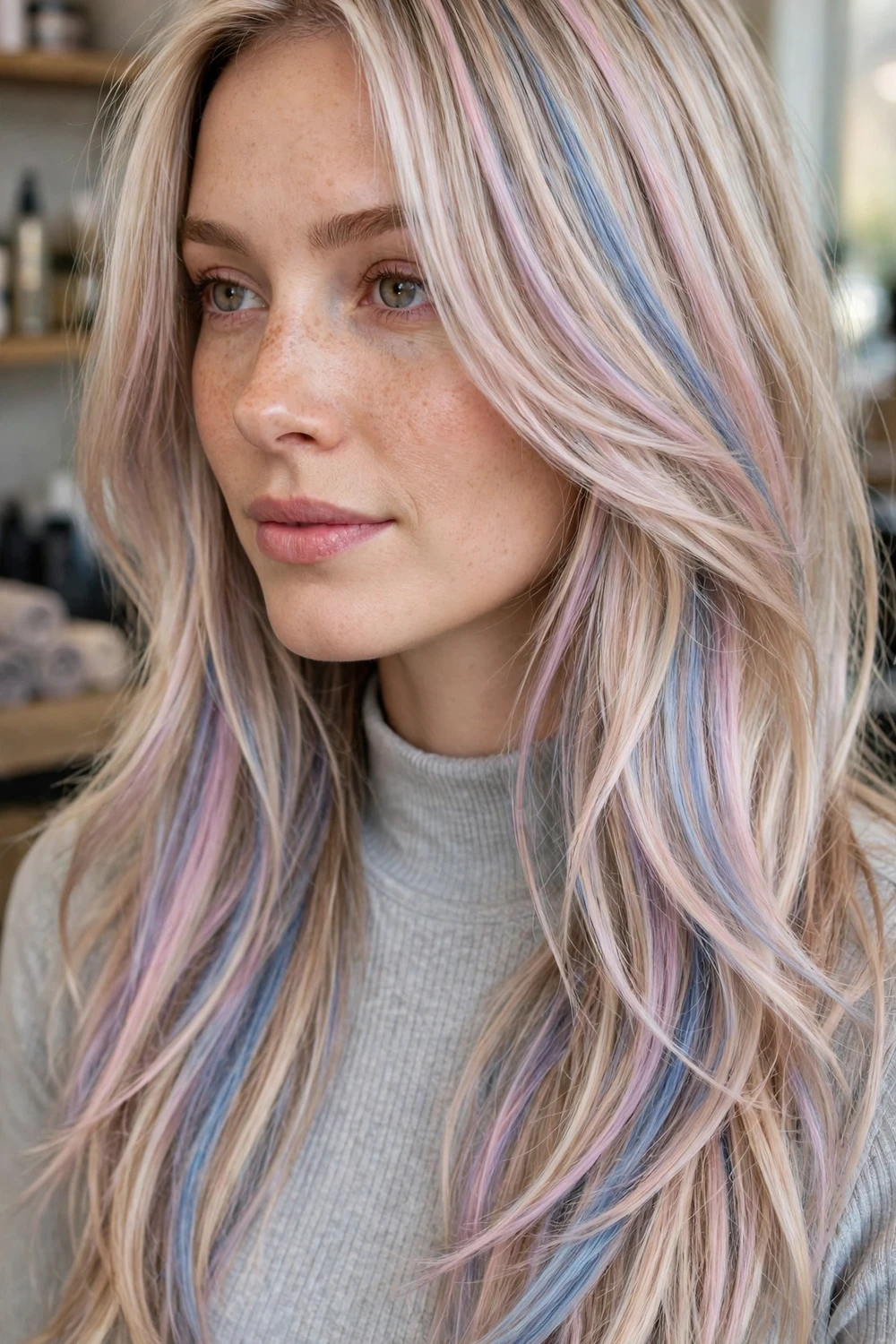
Holographic highlights weave fine pastel pieces through a blonde or light brown base, keeping most of your own colour in place. The pastel pieces are placed where hair moves most, through the top layers and around the face, so the shift shows in normal movement rather than only when the hair is lifted.
Highlights grow out as soft lines rather than a solid root band, so the salon cycle can stretch to six to eight weeks for the placement, with a toner in between for the pastel tones. On a light brown base the pieces need lightening first, which adds time but only to the highlighted sections.
Try this: start with highlights through the top layer only. If you like the mix, the same placement can go full head at the next appointment.
Difficulty: Medium to High · Cost: $$$ (salon)
19. Holographic Balayage
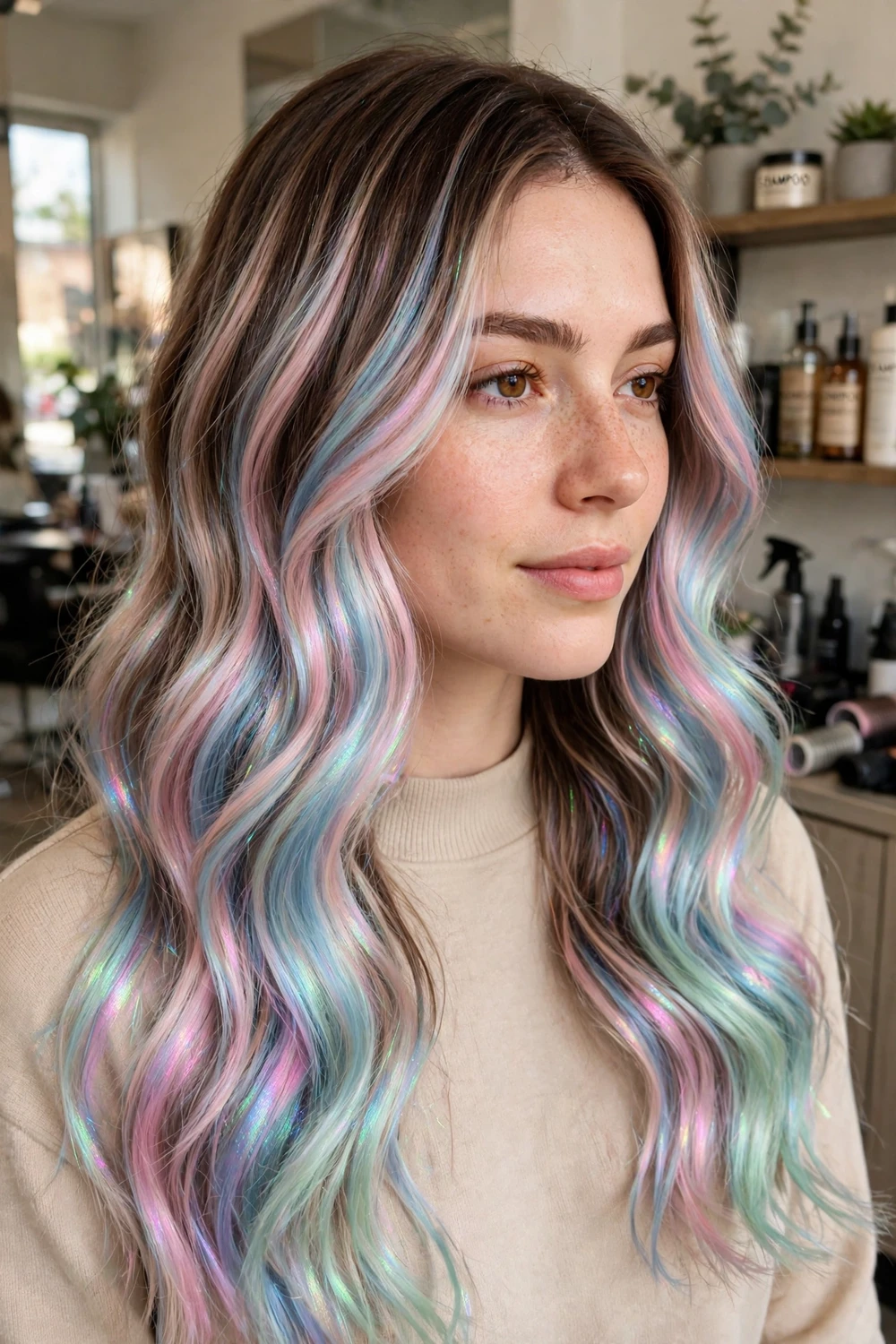
Holographic balayage keeps natural roots and hand-paints the pastel mix through the mid-lengths and ends. The colour gets stronger toward the tips, and the root area stays your own, so regrowth has nothing to clash with. It suits long and mid-length hair and anyone whose schedule rules out monthly root work.
The lengths still fade on the usual pastel schedule, so the upkeep moves rather than disappears: a toner or gloss on the painted section at five to six weeks, and a re-paint two or three times a year. The painted ends are the lightest and oldest hair, so weekly deep conditioning matters here.
Try this: ask for the brightest pastel pieces kept away from the very ends if your ends are fragile, and placed just above them instead.
Difficulty: Medium to High · Cost: $$$ (salon)
20. Holographic Underlayer
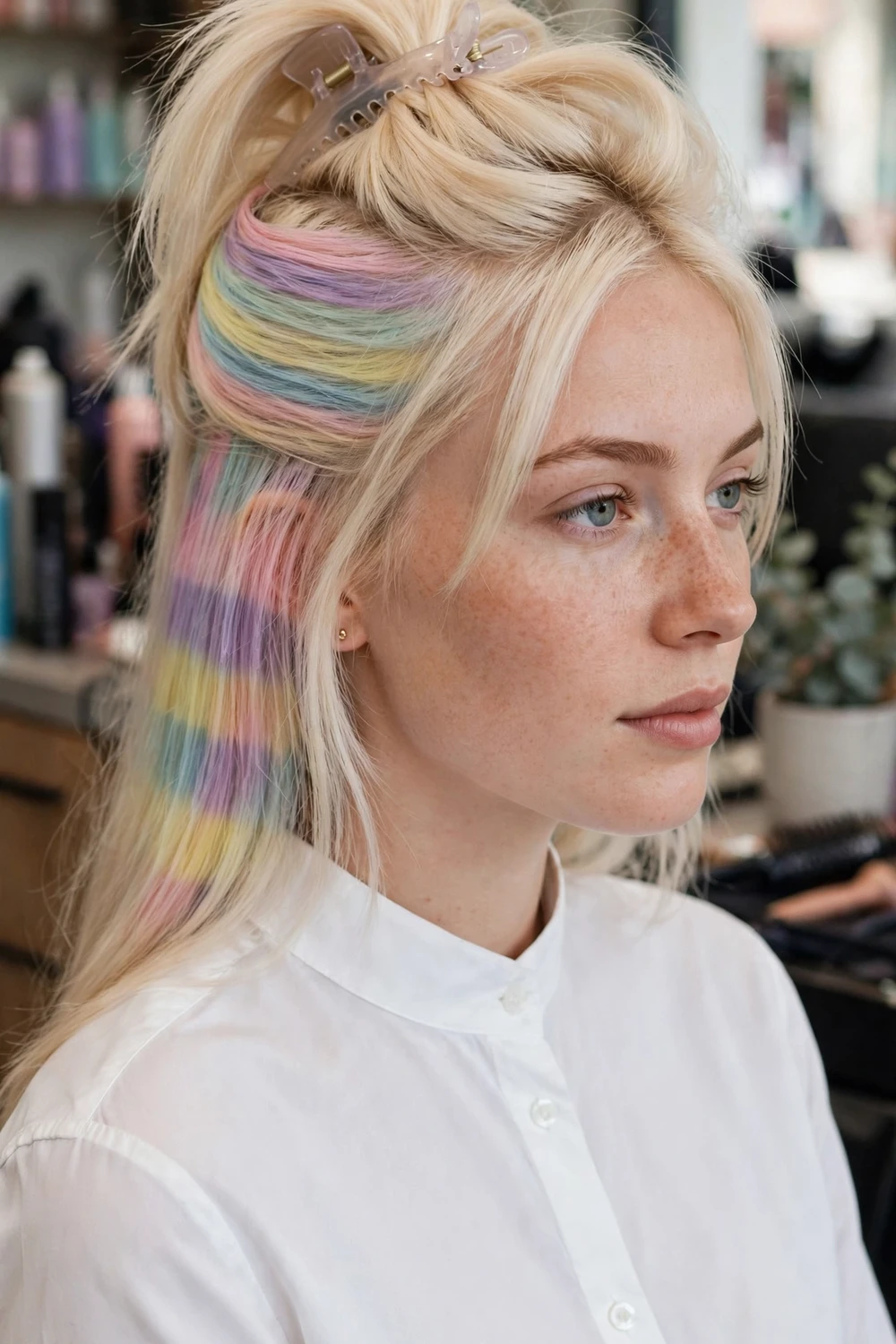
A holographic underlayer puts the pastel rainbow in the bottom layer of the hair and leaves a pale or natural top layer over it. With the hair down, flashes of colour show at the edges and in movement. With the hair half up or in a ponytail, the full stripe pattern is on show. It suits anyone who needs a calmer look for work and a bolder one outside it.
Only the underlayer needs lightening, which keeps the visible top layer in better condition. The hidden placement also fades slower, since the colour sees less sun and less shampoo contact. Refresh appointments are shorter, because the colourist works on one section of the head.
Try this: decide your usual parting and ponytail height before the appointment, so the stripes are placed where your own styling will actually show them.
Difficulty: Medium to High · Cost: $$$ (salon)
21. Holographic Ombre

Holographic ombre fades deeper roots into pastel ends, with pink, blue, and lavender blended across the bottom half of the hair. Where balayage scatters the colour, ombre concentrates it, so the ends carry the full shift and the top half stays close to your starting shade.
The gradient can go months between salon visits, since there is no root line to manage. The ends take the wear instead: they are lightened the most, washed the most, and brushed the most. A gloss on the pastel section at six weeks and regular trims keep the gradient looking planned rather than tired.
Try this: if you are unsure about the full gradient, start the colour lower, at the bottom third, and raise it at the next visit if you want more.
Difficulty: Medium to High · Cost: $$$ (salon)
22. Holographic Ends

Holographic ends colour only the last few inches of the hair in the pastel mix. It is the smallest salon commitment in the family: no root work, no all-over lightening, and the colour leaves the head gradually as the hair is trimmed. It suits first-time fashion colour wearers and anyone growing out a previous colour.
The ends still need lightening before pastel will show, unless your ends are already pale from earlier highlights. Because the coloured section is small, a refresh is quick, and a trim can remove the whole look in one appointment if you change your mind.
Try this: pair the ends with a clear gloss over the whole head, so the uncoloured lengths shine at the same level as the pastel tips.
Difficulty: Medium · Cost: $$ (salon)
23. Holographic Roots
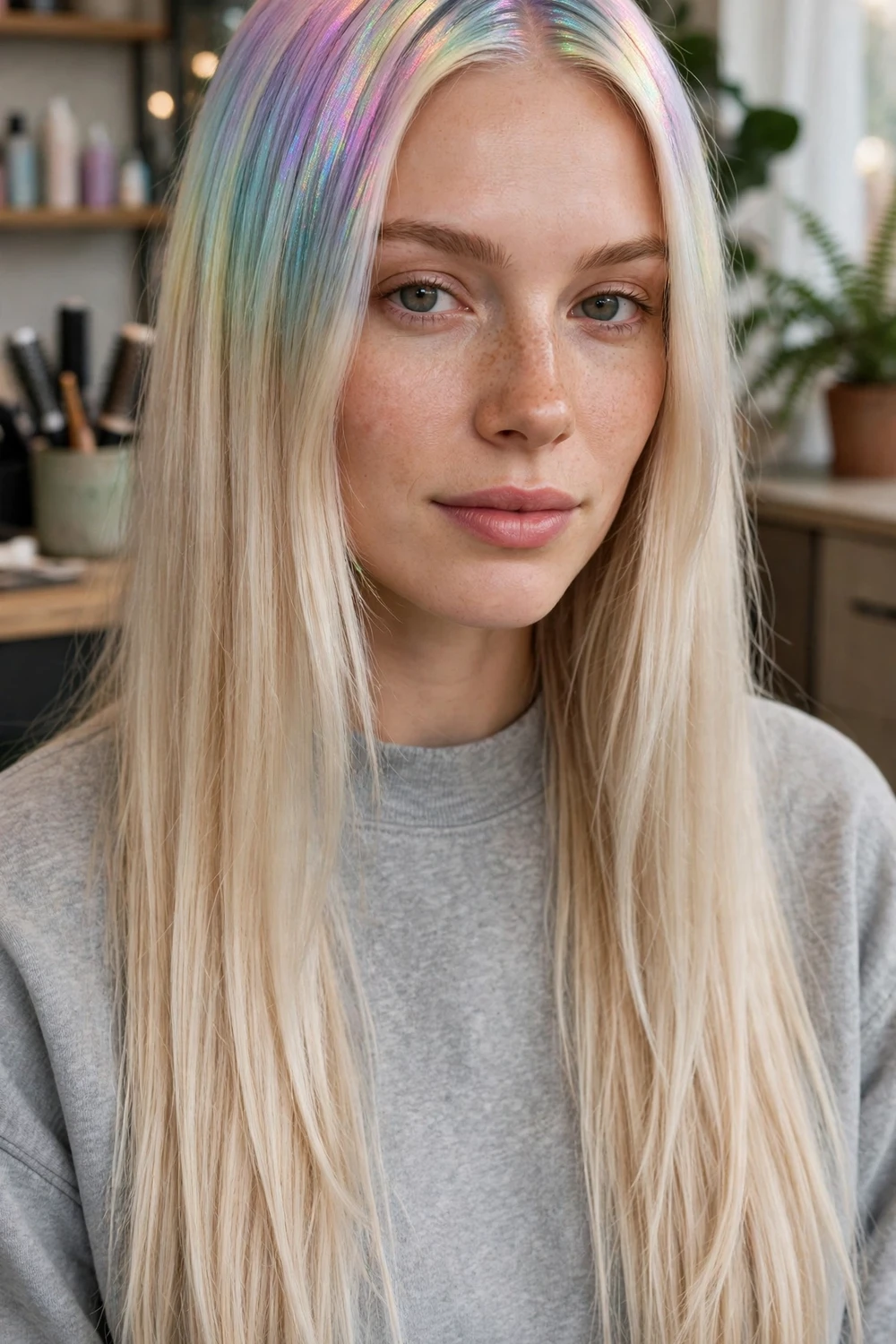
Holographic roots place the pastel mix at the root area and melt it into pale blonde or pastel lengths. The colour is strongest where the hair parts, so the shift shows from above and at the hairline. It suits wearers who like colour close to the face and who already keep a short salon cycle.
Be clear about the trade-off before booking: roots grow, and coloured roots show new growth faster than any other placement here. Expect a root refresh at three to four weeks. The lengths, by contrast, need very little work once the melt is in place.
Try this: ask for a shadow of your natural tone blended at the very top of the root section, which softens the first two weeks of regrowth.
Difficulty: High · Cost: $$$ (salon)
24. Holographic Fringe and Face Frame
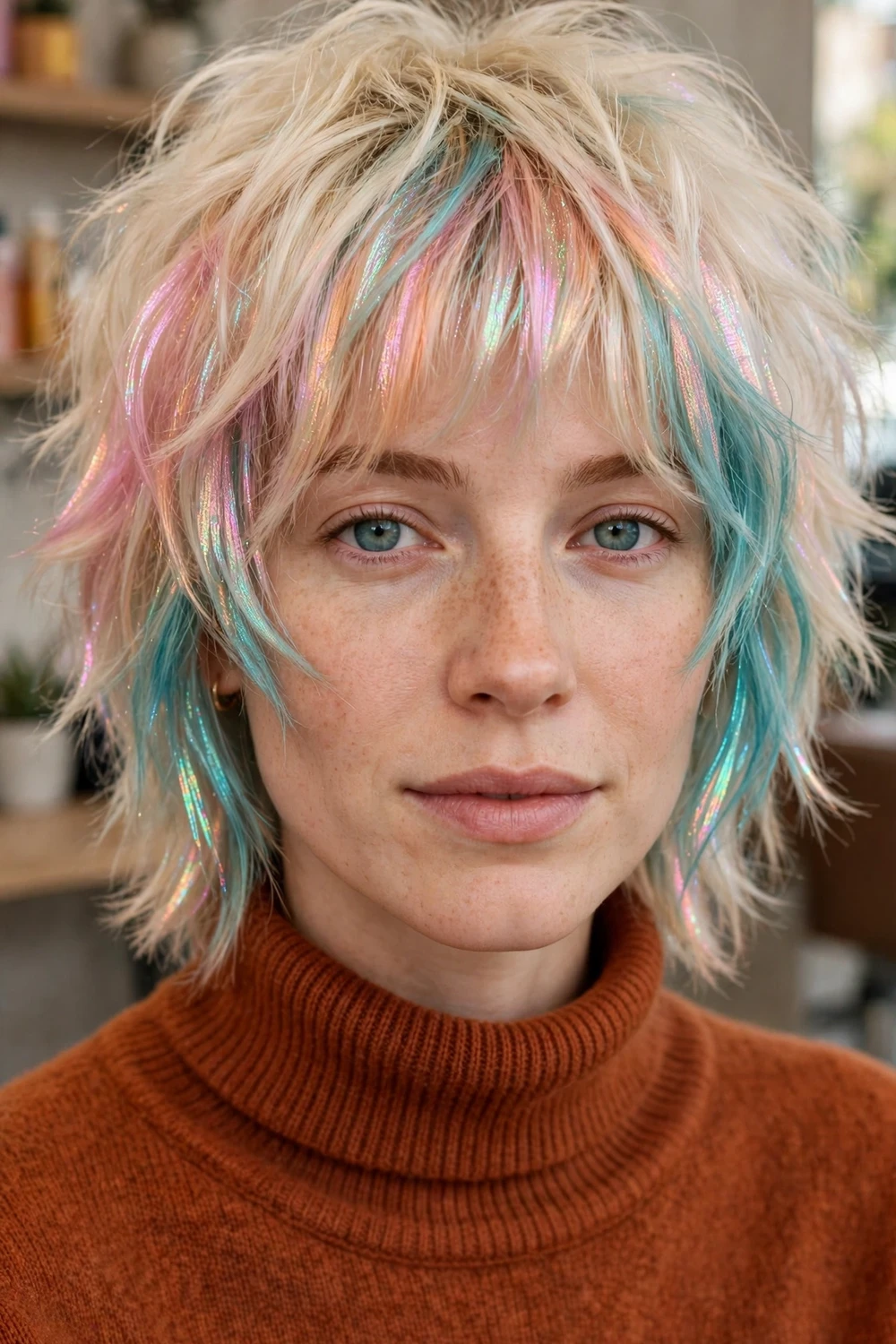
A holographic fringe and face frame concentrates the pastel mix in the fringe and the two front sections, over a pale or natural base behind it. Peach, pink, and teal are common front mixes because they sit well against skin. The colour frames the face in every photo, while most of the head stays low-effort.
Front sections fade and grow out in full view, so this small placement still asks for regular care: a front-only toner at three to four weeks is a short appointment. It is also the cheapest way in the family to test how pastel tones look against your own skin before a larger service.
Try this: bring a photo of your usual fringe shape to the consultation, since the colour placement has to follow the fringe line you actually wear.
Difficulty: Medium to High · Cost: $$ (salon)
25. Split Holographic Hair

Split holographic hair divides the head at the centre parting: warm pastel tones on one side, pink, orange, and pale yellow, and cool tones on the other, blue, green, and purple. Each side still shifts within its own family, so the holographic effect survives the split. It suits centre partings and wearers who keep one hairstyle most of the time.
Changing your parting changes the look, since the two sides mix at the top when the hair is moved. Washing needs care as well, because warm and cool tones rinsing together can dull each other. Rinse the sides separately with cool water for the first few washes.
Try this: agree which side gets the warm family before colour starts, and check it against the side you usually photograph.
Difficulty: High · Cost: $$$ (salon)
26. Holographic Bob

A holographic bob puts the pastel mix on a chin to shoulder length cut. Short, smooth hair reflects light in broad sections, so the tone shift reads clearly even with a softer mix than long hair needs. The cut also removes damaged ends before colouring, which helps hair that has been lightened before.
Root growth shows sooner on short hair, since there is less length to draw the eye away from it, so touch-ups land at four weeks. The smaller head of hair keeps each appointment shorter than the long versions, and a gloss finish at each visit keeps the surface reflective.
Try this: keep the bob mostly one length if the shift is the goal. Heavy layering breaks the surface into small pieces and the colour reads as confetti instead of a shift.
Difficulty: High · Cost: $$$ (salon)
27. Holographic Curls

Holographic curls place the pastel mix curl by curl, with the brightest tones on the top layer and around the face, where curls catch light first. Painting dry, in the curl pattern, keeps each tone where it will actually sit when worn. It suits curly and coily hair that most holographic roundups skip, and the curl pattern hides regrowth lines well.
Curly hair runs drier than straight hair, and lightening adds to that dryness, so the care plan carries this look: weekly deep conditioning, gentle diffusing, and low heat. The dimensional placement grows out softly, and a toner can refresh the top layer without redoing every curl.
Try this: book with a colourist who colours curly hair in its dry, natural state, so the pastel lands on the curls as you wear them.
Difficulty: High · Cost: $$$ (salon)
Frequently Asked Questions
What is holographic hair?
Holographic hair is a colour result built from several pastel tones at once, usually pink, blue, lavender, mint, and peach, placed over a pale base. Because the tones sit side by side, different colours show as light and angle change, so the hair appears to shift colour when it moves. It differs from a single pastel shade, where one tone covers the whole head evenly.
Do I need to bleach my hair for holographic colour?
For most holographic looks, yes. Pastel tones only show true on hair lifted to a pale blonde, and any yellow or orange left in the hair changes the pastel result. Dark hair usually needs staged lightening over more than one appointment. The exception on this list is oil-slick pastel, which uses deeper blue, green, and purple tones over a dark base with much less lift.
How long does holographic hair last?
The pastel layer starts to fade visibly in three to five weeks, because pastel pigments rinse out with every wash and fade in sunlight. A toner or gloss refresh at four to six weeks restores the mix. Placed versions such as balayage, ombre, and underlayers keep looking planned for longer, since their regrowth is soft even while the pastel itself fades.
Can brunettes get holographic hair?
Yes, with the right route. Oil-slick pastel works over a dark base, using deep blue, green, and purple tones that show when light hits the hair. Brunettes can also wear a holographic underlayer, ends, or balayage, where only the coloured section is lightened. A full opal or prism look on dark hair means lightening the whole head to pale blonde first, usually over several sessions.
How do I stop holographic hair from fading so fast?
Wash less often, use cool water, and switch to a sulfate-free, colour-safe shampoo. Keep heat styling low and cover your hair in strong sun, since UV light fades pastel colour quickly. A weekly deep conditioning treatment protects the lightened base, and a gloss or toner at four to six weeks replaces the tones that washing has removed.
Final Thoughts
Holographic hair rewards planning more than impulse: pick the tone family first, cool opal mixes or warm rose and sunset mixes, then pick the placement that matches the upkeep you will actually keep, from a gloss or underlayer at the low end to a full prism panel map at the high end. Get the base pale and clean before any pastel goes on, and the shift will show. For readers who decide a single colour family suits them better after all, the wider fall hair colors guide shows the full range side by side.

