

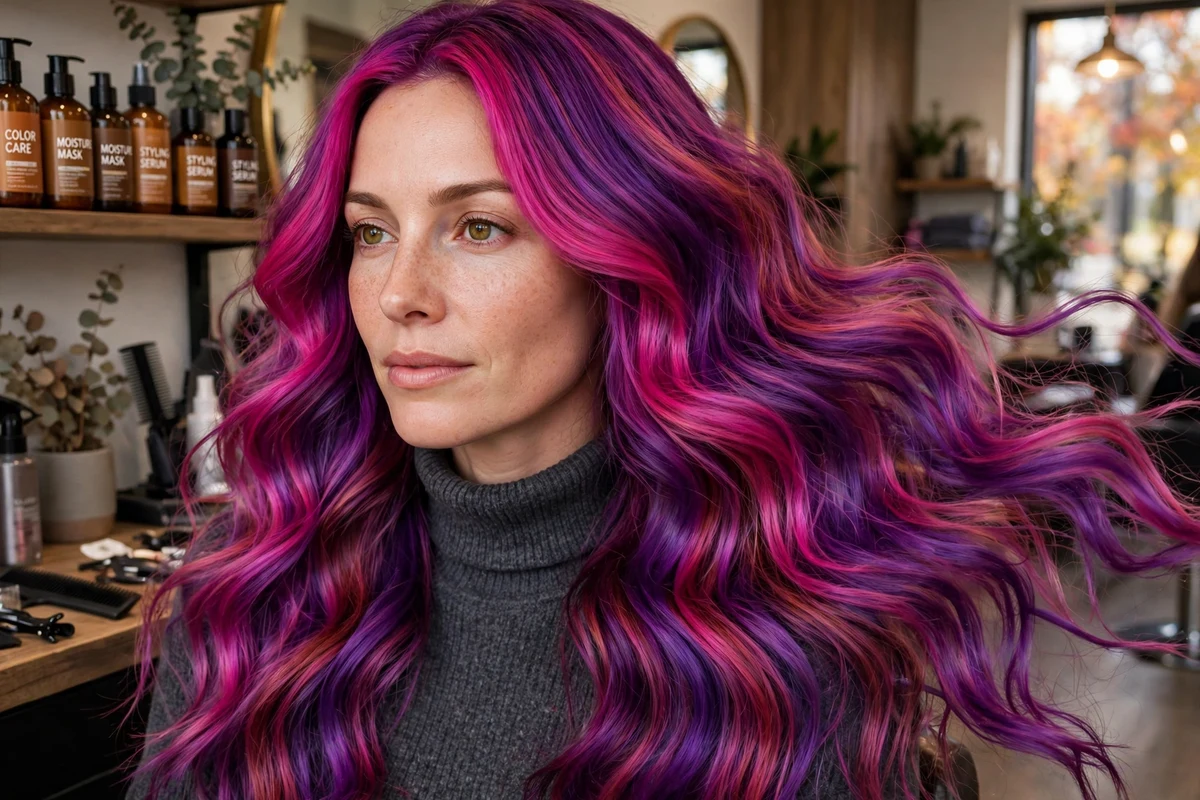
Fall color does not have to mean brown, blonde, or a quiet red. Vivid fall hair colors take the high-saturation fashion shades, copper-orange, scarlet, magenta, cobalt, teal, and emerald, and frame them for the season: deeper jewel versions, warm oranges that match the leaves, and dark-base options that work when the light gets low. If you want the full fall spread across every family first, the general fall hair colors guide covers the softer end as well.
This list collects 24 vivid fall hair colors. Every idea is a saturated fashion color with an autumn lean, grouped warm shades first, then pinks and purples, then blues and greens, and finally the melts, panels, and split placements. Every idea notes the lift it needs, who it suits, and how it fades. For the natural copper end of the orange family, see the fall copper hair colors list alongside this one.
Quick Takeaways
- Most vivid shades need a lifted base. The exceptions are midnight violet over dark hair, oil slick panels, peekaboo panels, and a vivid money piece.
- Warm vivids for fall: copper-orange, pumpkin orange, scarlet, and crimson. Cool vivids: violet, cobalt, sapphire, and teal.
- Blue and green pigments hold the longest. Pink and orange pigments fade first and need a depositing conditioner in the routine.
- Deep jewel versions, crimson, amethyst, sapphire, and emerald, give a fall feel while staying fully saturated.
- Plan a gloss or direct dye refresh at four to six weeks for most shades on this list.
How to Pick Your Vivid Fall Shade
Start with undertone. Warm skin pairs with the warm half of the list: copper-orange, pumpkin orange, scarlet, hot pink, and moss green. Cool skin pairs with crimson, ruby, violet, cobalt, and sapphire. Neutral skin can take teal, magenta, and amethyst, since those shades carry warm and cool notes together. The autumn hair colors roundup shows how these vivid shades sit next to the softer seasonal colors if you are deciding how far to go.
Then be honest about lift and upkeep. A full vivid needs pre-lightening, a longer first appointment, and a refresh routine at home. If that is too much for this season, pick a contained service instead: a money piece, peekaboo panels, or midnight violet over your natural base. Shade depth matters too. Deep jewel shades fade slower and hide an uneven base better than pale, bright shades do.
| Shade family | Undertone | Best starting base | Upkeep |
|---|---|---|---|
| Warm vivids (copper-orange, pumpkin, scarlet) | Warm orange and warm red | Pre-lightened base | High |
| Jewel reds and pinks (crimson, ruby, magenta, hot pink) | Pink-red and purple-pink | Pre-lightened base | High |
| Cool vivids (violet, amethyst, cobalt, teal, emerald) | Blue, green, and blue-purple | Pre-lightened base | High |
| Dark-base vivids (midnight violet, oil slick, peekaboo) | Deep jewel tones over dark hair | Dark brown to black, little or no lift | Medium |
| Multi-color melts and split dye (sunset, galaxy, split) | Two or three vivid shades together | Pre-lightened base | High |
1. Vivid Copper-Orange
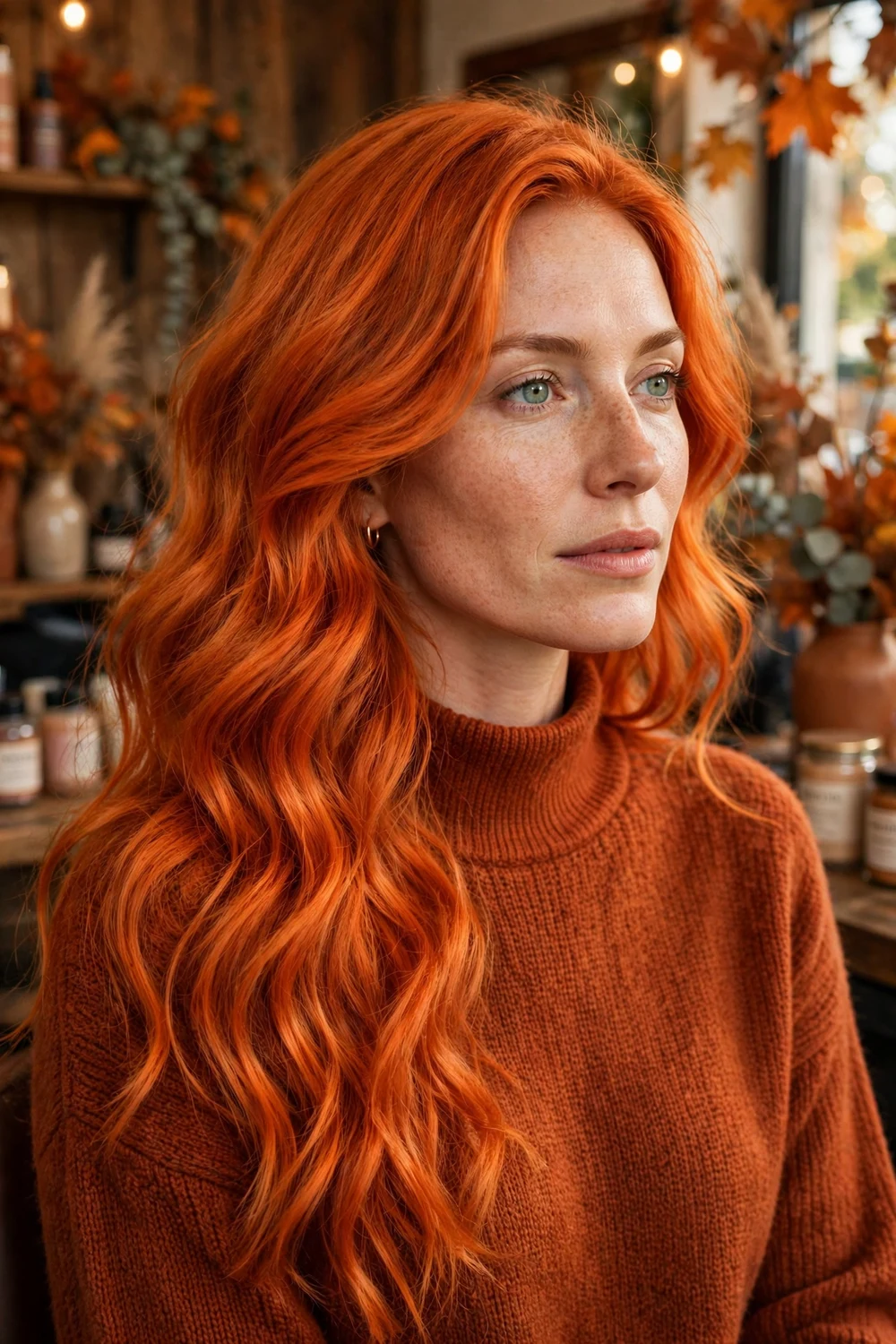
Vivid copper-orange pushes the familiar fall copper into fashion territory: a saturated orange with a copper reflect, worn at full strength from root to tip. It keeps an autumn lean because the base note is still copper, but the intensity is far past a natural redhead shade. Warm and neutral skin carry it best, and brown and green eyes stand out against it.
Dark hair needs a lift to a light, even base before this shade will read true. On a pale base the orange stays clean; on a yellow or uneven base it can turn muddy. Orange pigments rinse out fast, so expect the brightest phase in the first two to three weeks and a softer copper fade after that.
Try this: ask for a copper-orange direct dye over an evenly lifted base, and take home the matching color-depositing conditioner at the same appointment.
Difficulty: High · Cost: $$$ (salon)
2. Vivid Pumpkin Orange

Vivid pumpkin orange is a deeper, truer orange than copper-orange, with less copper shine and more solid pigment. It is the fall end of the orange family, closer to pumpkin skin than to penny copper. Warm skin handles the depth well, and deep skin carries the saturation without it looking washed out.
A clean lift matters more here than with copper, because any leftover warmth in the base shifts the result toward red. The shade fades toward a soft amber, which still suits the season. Readers comparing the wider orange range can check the orange hair color ideas roundup for softer versions.
Try this: book a strand test first if your hair has old dark dye on the ends, since old pigment is the usual reason pumpkin orange comes out patchy.
Difficulty: High · Cost: $$$ (salon)
3. Red-Orange Flame

Red-orange flame sits between scarlet and pumpkin: a fiery blend where red leads in the depth and orange leads in the shine. Worn all over, it reads warm in every light and suits warm and olive skin. It is a single shade, mixed before application, rather than a melt of two colors.
The base needs lifting to a light level so both halves of the mix show. As it fades, the orange half leaves first and the hair settles redder, which many wearers treat as a second shade for free. A red-orange depositing mask slows that shift.
Try this: ask your colorist to write down the red to orange ratio in your formula, so the refresh can rebuild the same balance instead of drifting.
Difficulty: High · Cost: $$$ (salon)
4. Electric Scarlet
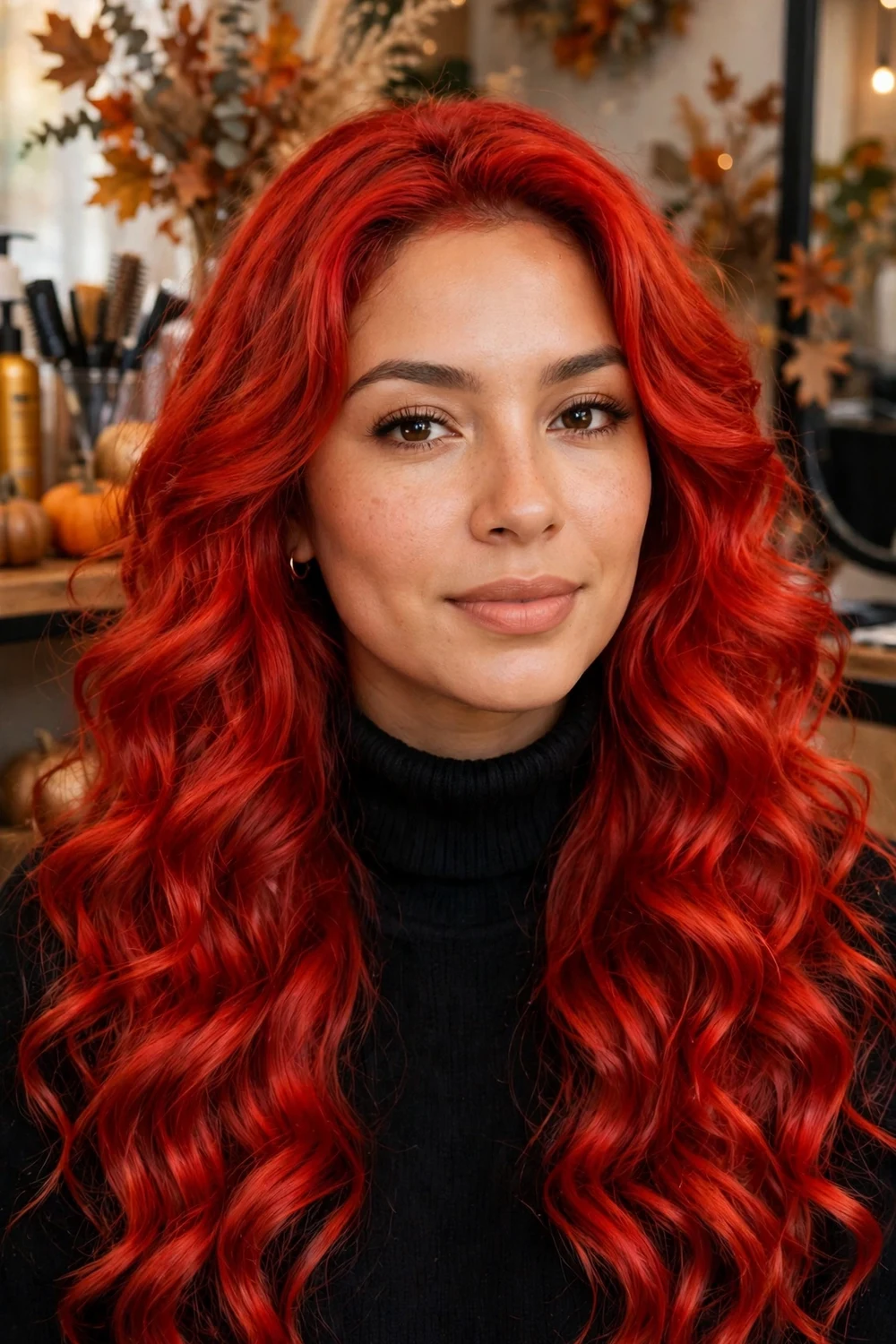
Scarlet is a bright, warm, primary red with no brown and no burgundy in it. That clarity is what separates it from the classic wearable reds in the fall red family. It suits warm and neutral skin, and it holds its own against dark fall clothing and heavy coats.
On light bases scarlet goes on in one direct dye step after lifting. On dark bases the lift is the whole job: scarlet over under-lifted hair reads dull and brick-like. Red pigment rinses out steadily, so cool water and fewer washes make a real difference to how long the brightness lasts.
Try this: rinse with cool water from the first wash and skip hot tools on high heat for the first week, while the pigment settles.
Difficulty: High · Cost: $$$ (salon)
5. Crimson Red
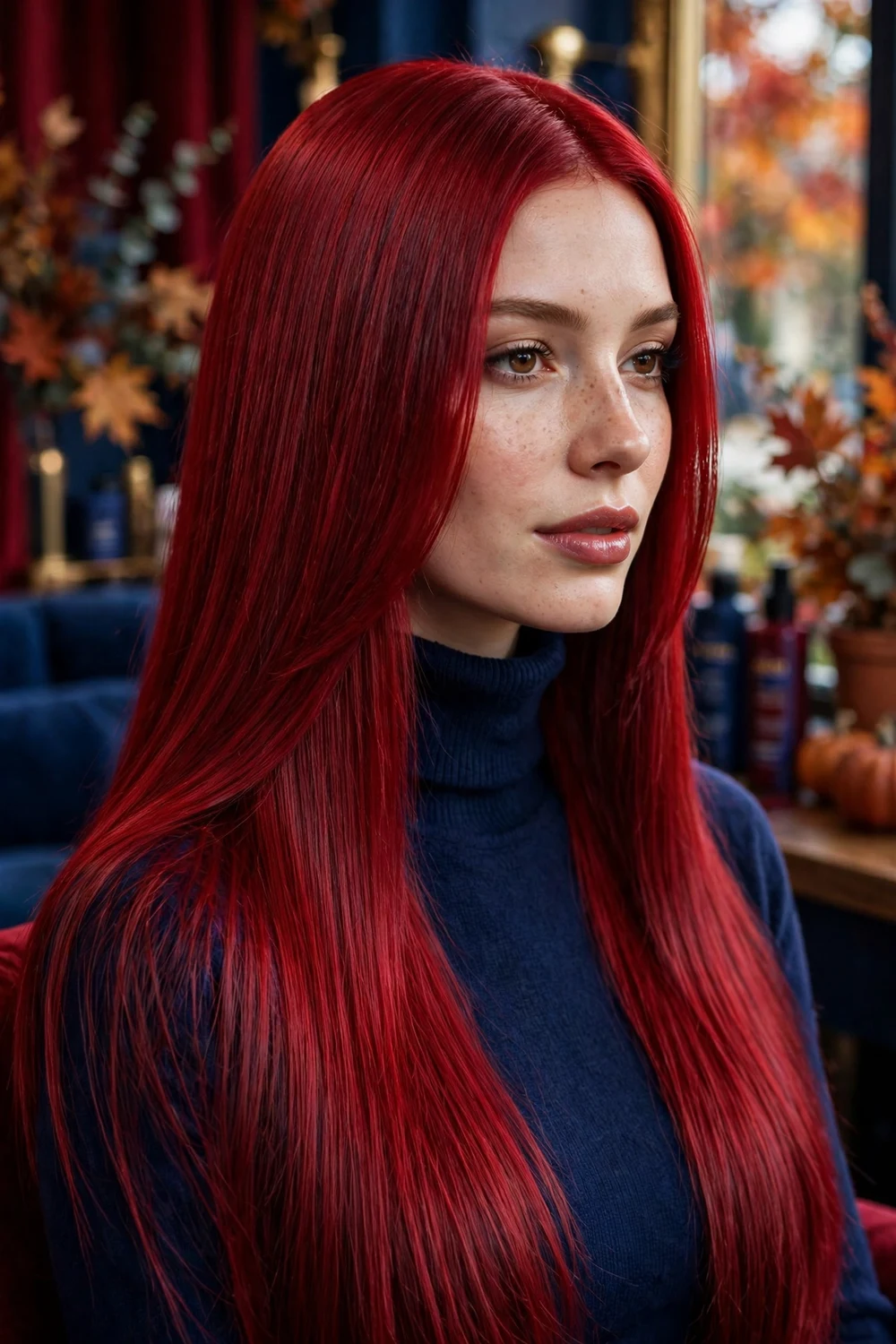
Crimson is the deep jewel version of red: saturated, blue-leaning, and darker than scarlet. The cool undertone makes it the red on this list that suits cool and pink-leaning skin best. On deep skin it reads rich rather than bright, which keeps it strong in low fall light as well as in daylight.
Crimson can be built over a medium brown base with less lifting than the bright reds need, because the target shade is deep. It also fades slower than scarlet and hot pink. The fade moves toward a deep red, then a soft red-brown, and a gloss at five weeks restores the jewel tone.
Try this: choose crimson if you want a vivid red with a longer salon interval, and ask for a blue-red gloss as the refresh service.
Difficulty: Medium to High · Cost: $$$ (salon)
6. Ruby Red

Ruby red is a pink-leaning jewel red, brighter than crimson and cooler than scarlet. The pink reflect gives it a gem-like shine in photos and under salon light. Cool and neutral skin suit it best, and it pairs well with black, grey, and deep green fall clothing.
Ruby needs a lifted base to keep the pink note visible; over a warm base it collapses into a plain red. It fades toward a rose tone, which is softer but still deliberate. A pink-red depositing conditioner keeps the jewel character between visits.
Try this: ask for ruby on a bob or lob first if you are testing jewel reds, since shorter hair makes the refresh appointments faster.
Difficulty: High · Cost: $$$ (salon)
7. Magenta
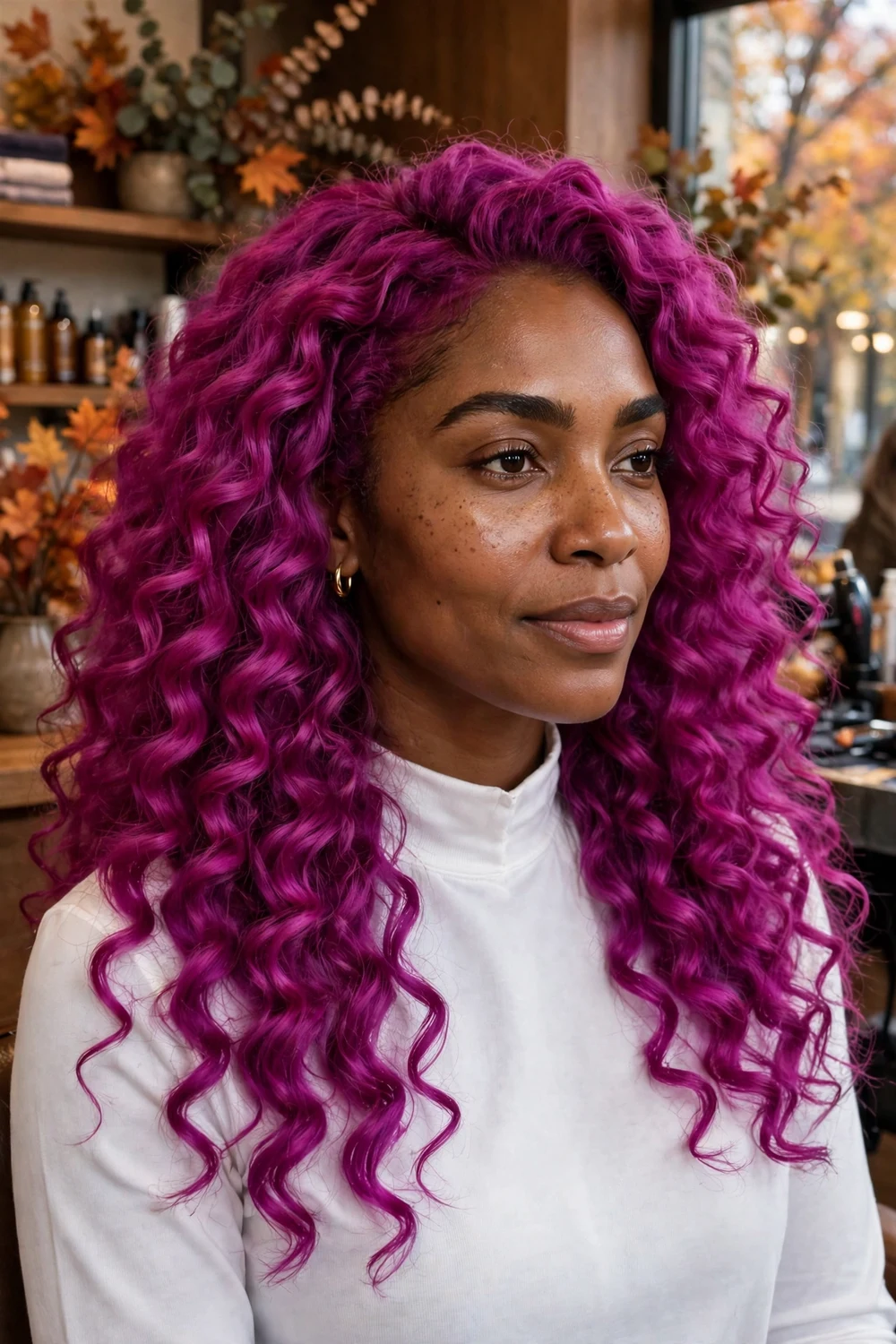
Magenta is a saturated mix of pink and violet, deep enough to read bold and bright enough to read pink first. It suits a wide range of skin tones because it carries both warm pink and cool violet. Curls show it especially well, since each curl catches a slightly different mix of the two tones.
Magenta needs a light base for the violet half to show. It is also one of the longer-lasting vivid shades, because the blue pigment inside it holds well. When it does fade, it moves toward a softer berry pink rather than a dull tone, so the later weeks still look tidy.
Try this: use a magenta depositing mask every second wash instead of every wash, since magenta builds up fast and can go darker than you planned.
Difficulty: High · Cost: $$$ (salon)
8. Hot Pink
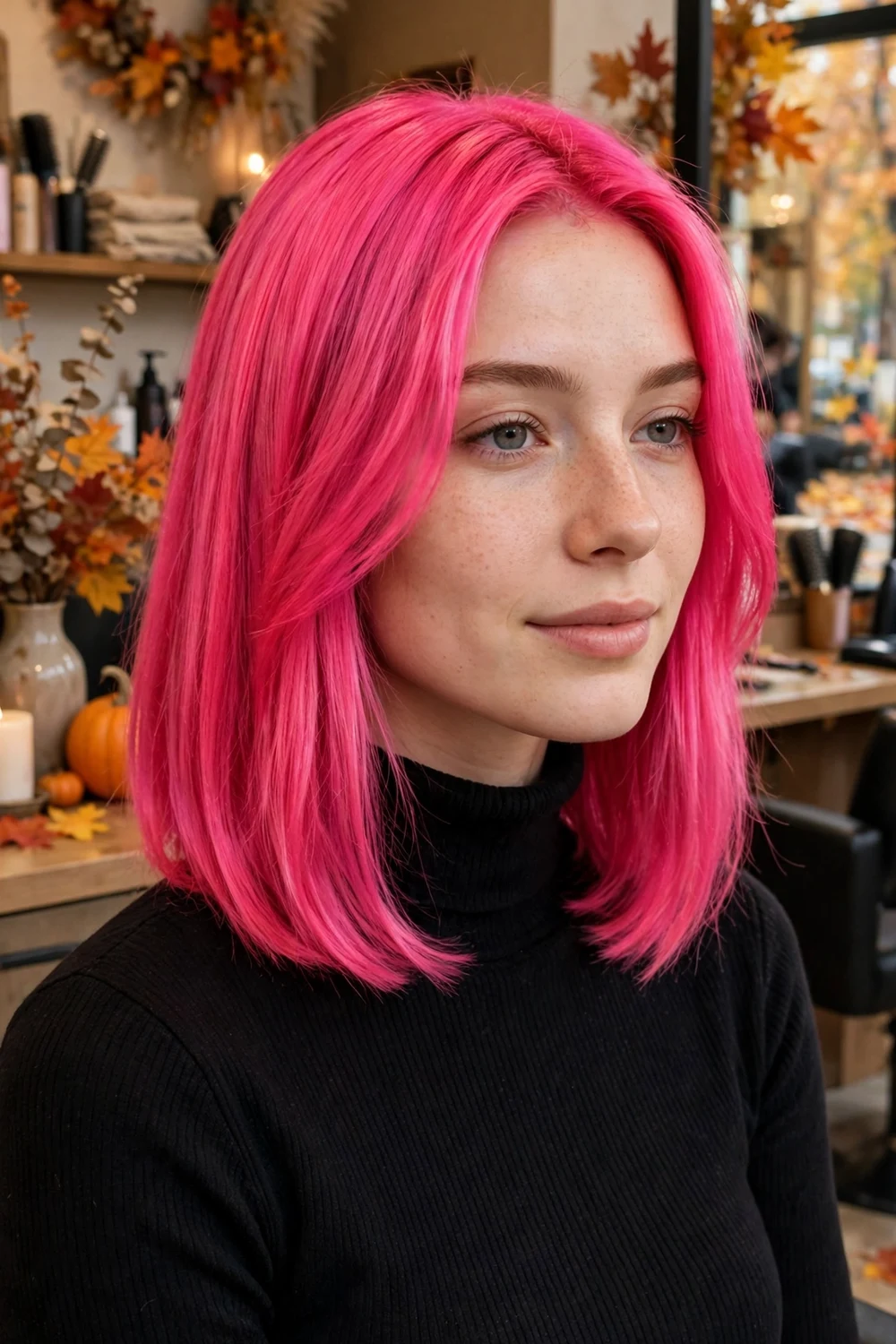
Hot pink is the warmest, brightest pink on this list: no violet depth, no pastel softness. It suits warm and neutral skin and makes a clear contrast against the muted browns and greys of a fall wardrobe. The wider pink hair color ideas list covers softer pinks if this level of saturation feels like too much.
Hot pink asks for the lightest base of any shade here. Any yellow left in the hair turns it coral, and any orange left in the base turns it salmon. It also fades the fastest in the pink family, moving through rose to a pale pink within weeks, so a depositing conditioner belongs in the routine from the start.
Try this: plan the first appointment on freshly lightened hair with no warm toner in it, and ask your colorist to keep the formula slightly deeper than your target, since the first washes will lighten it.
Difficulty: High · Cost: $$$ (salon)
9. Vivid Rose Copper

Vivid rose copper blends copper with a clear pink overlay, so the hair shifts between copper in warm light and rose in cool light. It is the fashion version of the rose copper shade in salon vinyl ranges, pushed brighter than a natural copper. Warm and neutral skin suit it, and it softens the jump for copper wearers moving toward pink.
A light brown or dark blonde base can reach rose copper with a moderate lift, while dark brown hair needs a fuller lightening step. The pink half fades before the copper half, so the shade drifts copper over the weeks. A rose toned gloss brings the pink back without a full recolor.
Try this: ask for the pink kept strongest through the mid-lengths and ends, where it shows most as the hair moves.
Difficulty: Medium to High · Cost: $$$ (salon)
10. Vivid Violet
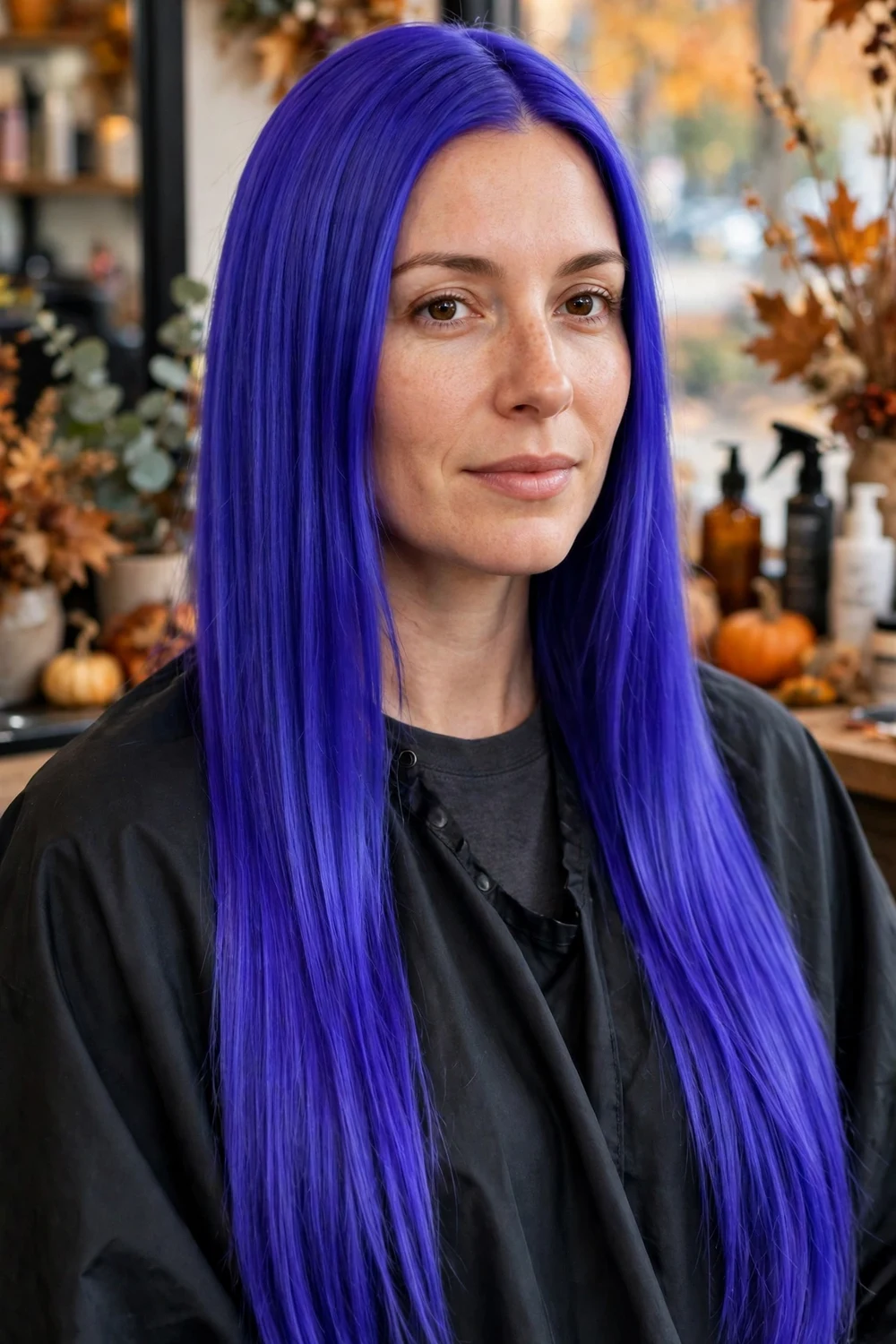
Vivid violet is a bright blue-purple at full saturation, lighter and bluer than a deep purple. It suits cool and neutral skin best and reads clean against fair skin. Straight and sleek styling shows the even tone best, since violet shows every uneven patch in a base.
The base needs lifting past the yellow stage, because yellow under violet turns the result muddy and grey in patches. Violet fades toward lavender and then a silver-toned blonde, a fade path many wearers like. Purple shampoo can be used sparingly here to keep the fade cool.
Try this: ask for a pre-toned, even base before the violet goes on, even if it adds time to the first appointment. An uneven base is the main cause of patchy violet.
Difficulty: High · Cost: $$$ (salon)
11. Amethyst Purple

Amethyst purple is a jewel-toned vivid purple: rich, saturated, and balanced between blue and red. It reads purple in all lights, deep enough for fall and bright enough to count as a fashion shade. Cool, neutral, and deep skin tones carry the depth well.
Amethyst needs a lifted base, though not as pale as hot pink or aqua need. The depth hides minor unevenness better than lighter vivids do. It fades toward violet and then a muted lavender, and a purple depositing mask once a week holds the jewel tone for longer between salon visits.
Try this: wear it in glossy waves for the first photos, since the jewel reflect shows most when the surface of the hair is smooth.
Difficulty: High · Cost: $$$ (salon)
12. Midnight Violet

Midnight violet lays a dark violet direct dye over a brunette or black base with no lightening. Indoors the hair reads near-black; in sunlight and under bright light the violet shows clearly. That shift makes it the lowest-commitment vivid on this list and a common first step into fashion color for dark-haired wearers.
Because there is no lift, the service is shorter and the hair takes less stress. The trade-off is intensity: midnight violet will never look like bright violet, and it washes out over four to six weeks back to your base color. Reapplication is a single direct dye step with no bleach involved.
Try this: try midnight violet as a one-season test. If you like living with violet, the next step is a lifted vivid violet with a clear idea of the upkeep.
Difficulty: Medium · Cost: $$ (salon)
13. Cobalt Blue

Cobalt blue is a saturated royal blue with no green and no pastel in it. It is the blue named again and again in fall vivid shade launches, because it holds its depth against dark fall clothing. Cool skin suits it best, and deep skin carries the richness well.
Cobalt needs a pale, even base. Blue pigment is strong and lasts a long time, which cuts both ways: the shade holds for weeks, and removing it later is a long correction job. It fades toward teal-green as the blue lifts out, so a blue depositing conditioner helps hold the true cobalt tone.
Try this: decide before the appointment that you are staying in the blue and green family for a while, since cobalt is one of the hardest vivid shades to remove cleanly.
Difficulty: High · Cost: $$$ (salon)
14. Sapphire Blue

Sapphire blue is the jewel version of blue: deeper than cobalt, with a slight navy depth and a bright blue shine. It suits cool skin and reads more polished than the brighter blues, which makes it the blue most often chosen by wearers in office settings who still want a fashion shade.
Sapphire can be built over a medium lifted base, since the target is deep. It fades slowly and evenly toward a denim-like blue. Because the depth hides regrowth contrast better than pale shades do, salon intervals can stretch a little longer than with cobalt.
Try this: ask for sapphire with a clear gloss finish, since shine is what separates a jewel blue from a flat navy dye job.
Difficulty: High · Cost: $$$ (salon)
15. Aqua Blue

Aqua blue is the lightest bright blue here: a clear water-toned blue with a hint of green in the shine. Against fall knits and dark coats it stands out more than any other shade on this list. Fair and cool skin suit it best, though a deep skin tone makes the contrast even stronger.
Aqua asks for a near-white base, the palest lift on this list alongside hot pink. Any yellow left behind turns aqua green in patches. It fades fast toward mint and then pale blonde, so it is a shade for wearers who enjoy the fade stages as part of the look.
Try this: book aqua only when your base is already very light or freshly lifted, and plan a teal-leaning gloss if the first fade goes greener than you like.
Difficulty: High · Cost: $$$ (salon)
16. Teal
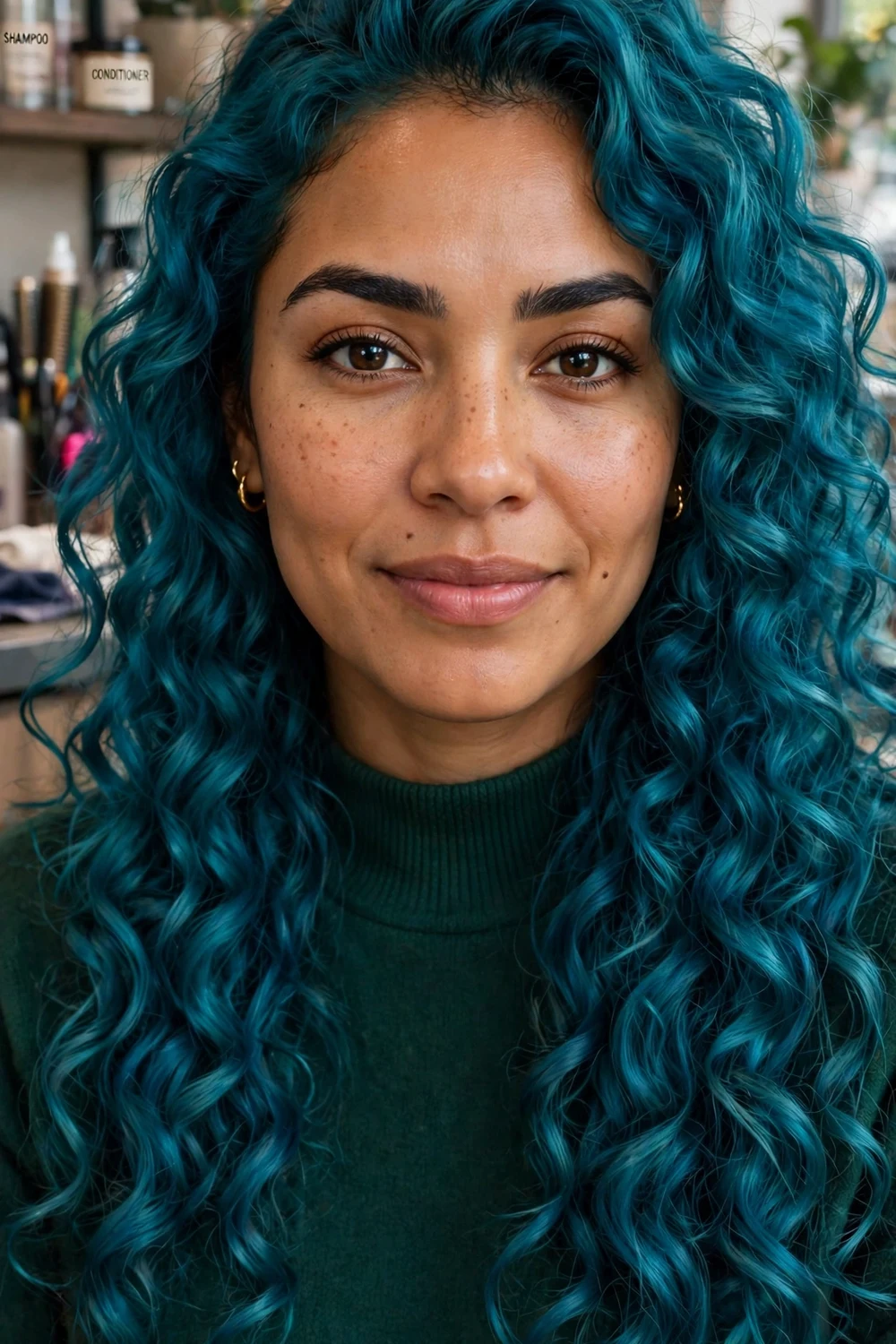
Teal balances blue and green in one saturated shade. It leans autumn because the green half echoes deep fall foliage and dark knitwear, while the blue half keeps it in fashion color territory. Neutral skin suits it most easily, since teal carries warm and cool notes at once.
Teal needs a light base and is known for lasting: blue and green pigments hold in the hair for a long time and fade slowly toward a softer sea green. Removal later takes patience, so treat teal as a medium-term commitment. A teal depositing conditioner once a week holds the blue-green balance.
Try this: ask your colorist to mix teal slightly bluer than your target if your base holds any warmth, since warmth in the base pushes teal toward green.
Difficulty: High · Cost: $$$ (salon)
17. Emerald Green

Emerald green is a rich jewel green, deep and saturated, named in every fall jewel tone roundup. It suits deep and neutral skin especially well, and the depth gives it a seasonal feel that a bright summer green does not have. Worn long and glossy, the shine does most of the styling work.
Emerald needs a lifted base light enough for green to read true, but the depth forgives a base that is not fully pale. Green fades toward a softer moss tone and can linger in the hair, so future color changes usually stay in the green, teal, or blue family for a while.
Try this: keep heat styling low in the first two weeks, since heat opens the cuticle and emerald loses its richest tone early if it is styled hot every day.
Difficulty: High · Cost: $$$ (salon)
18. Moss Green
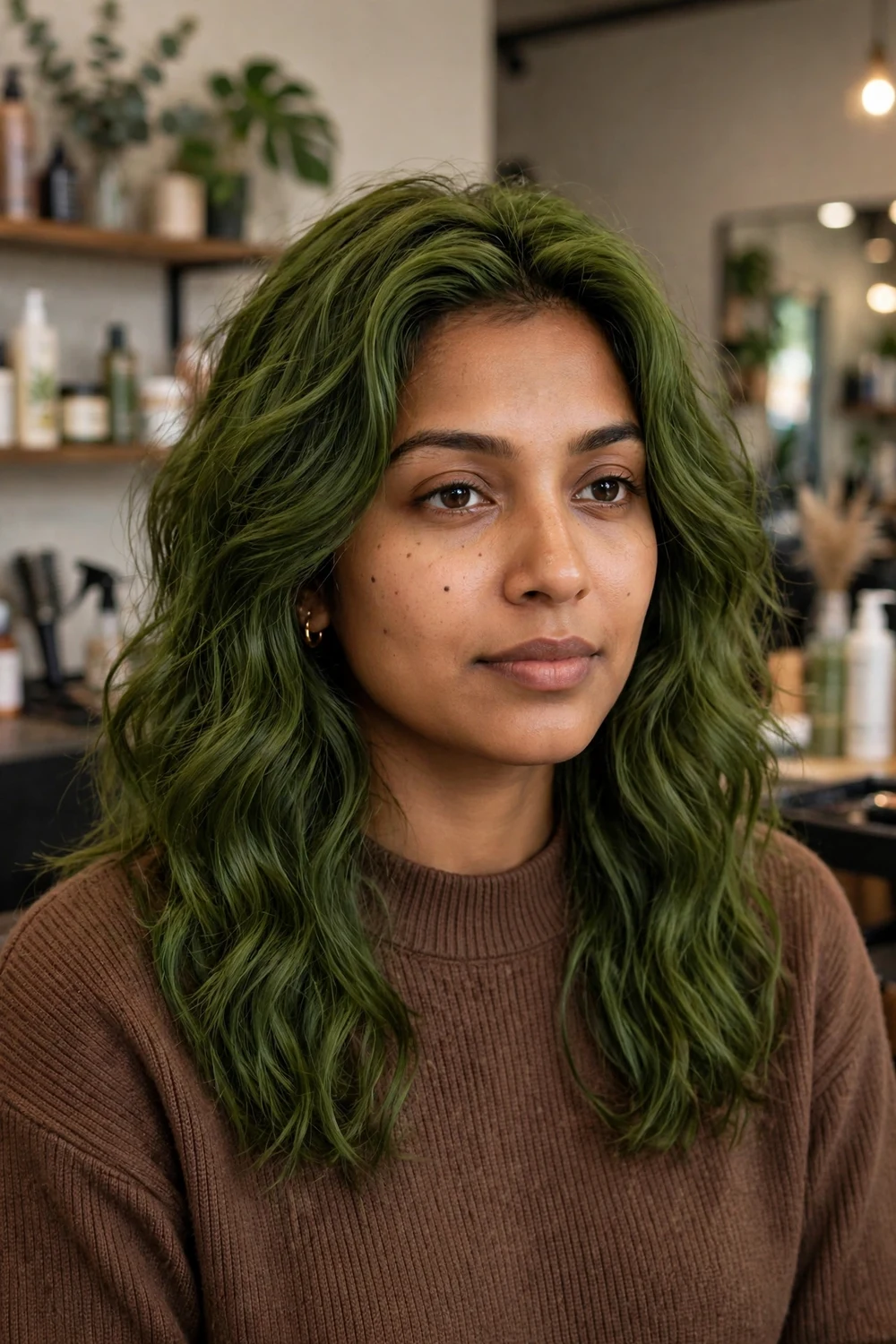
Moss green is a saturated olive-toned green, earthier than emerald and closer to fall foliage on the ground than to a jewel. It suits warm and olive skin, where a blue-green can clash. The muted depth makes it the green most often picked by wearers who want a fashion shade that still feels grounded.
Moss is built by laying green over a base that keeps a little of its natural warmth, so the lift is moderate compared with aqua or emerald. It fades softly toward a khaki-toned green. A green depositing mask keeps the olive tone from going dull between appointments.
Try this: bring photos of moss and emerald side by side to the consultation, since the two greens are often confused and the formulas differ.
Difficulty: High · Cost: $$$ (salon)
19. Sunset Melt
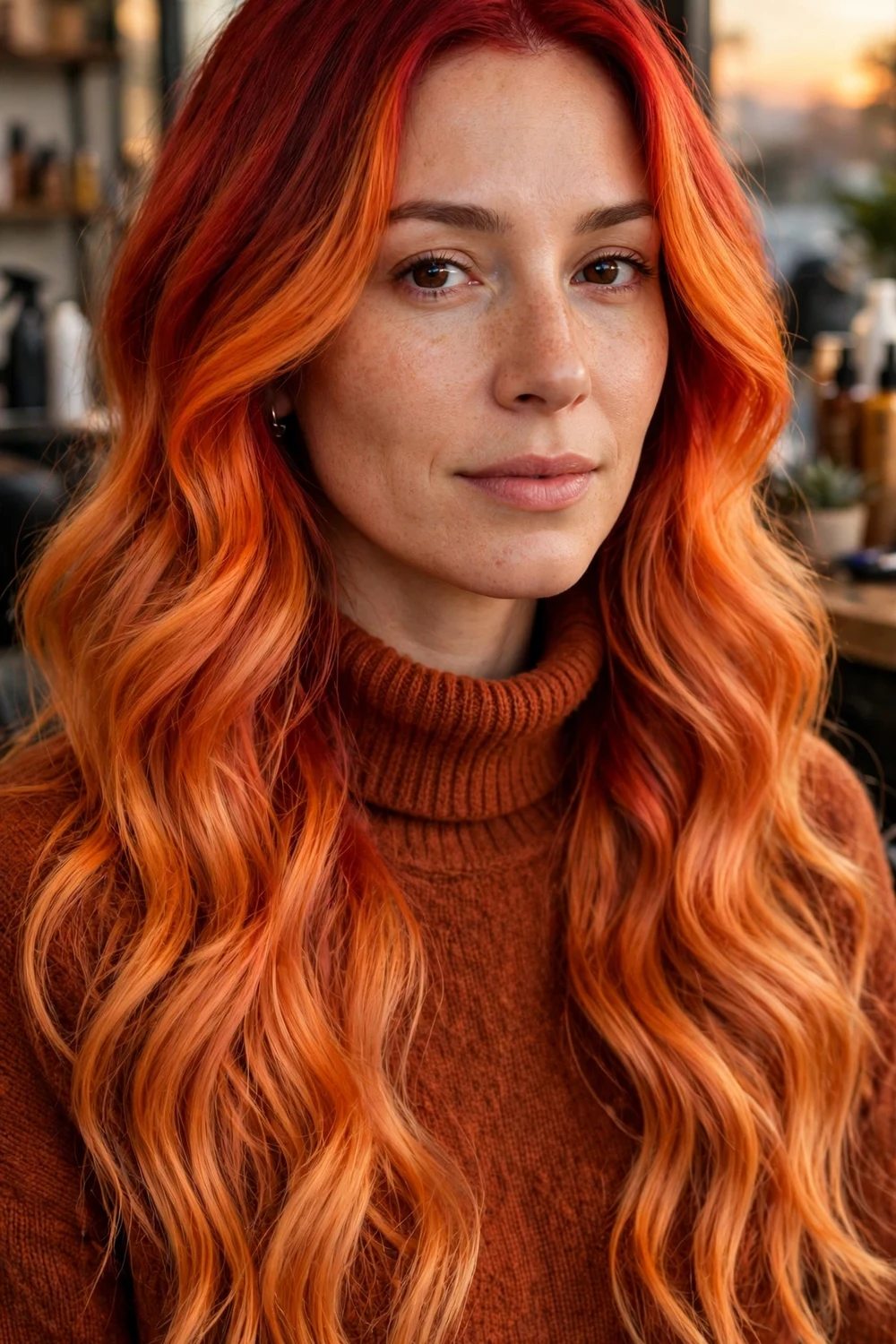
A sunset melt blends red at the top through red-orange into orange at the ends, like the fall ombre looks that run from red to orange. It gives a wearer three vivid shades in one service and suits warm and olive skin. Long hair shows the full gradient best, since each band needs length to read clearly.
The whole head is lifted first, then the shades are melted in bands with no hard lines. Fade happens at different speeds per band: the orange ends soften first, while the red top holds. A gloss that refreshes only the ends is a common upkeep pattern for this look.
Try this: ask for the bands blended with a brush melt rather than foil lines, so the gradient has no stripes as it grows out.
Difficulty: High · Cost: $$$ (salon)
20. Oil Slick Jewel Mix
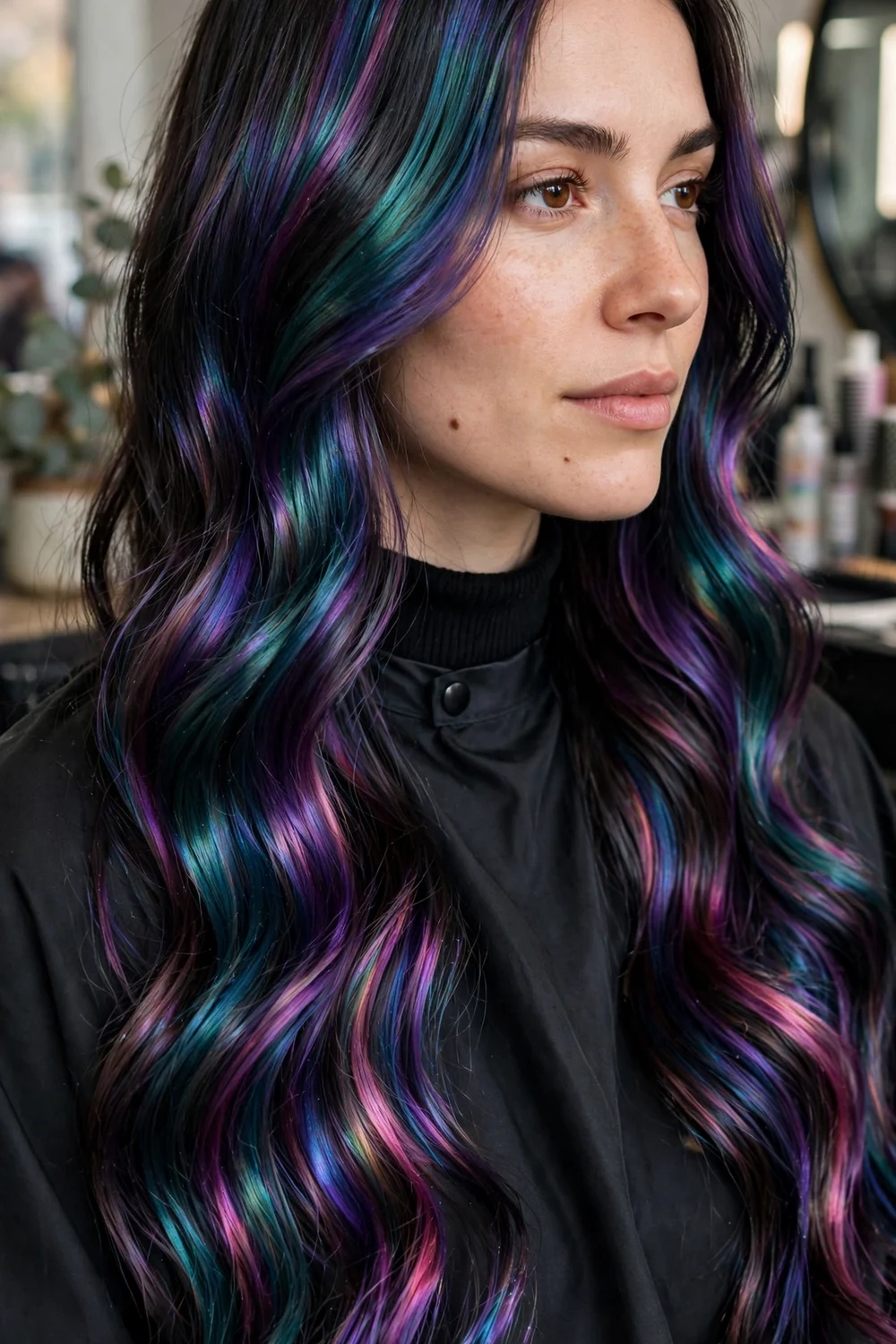
Oil slick color lays jewel tones, teal, violet, magenta, and cobalt, in shifting panels over a dark base. The dark base stays visible between the panels, so the effect changes as the hair moves. It suits most skin tones because several vivid shades sit next to the face at once, and it is a strong route for dark hair that cannot take a full lift.
Only the panel sections are lightened, and they only need a moderate lift because the tones going over them are deep. Upkeep is a gloss over the panels at five to six weeks. The dark base grows out with no line, which stretches the time between full appointments.
Try this: choose three jewel tones at most. Oil slick with five or more colors tends to read muddy once the shades start to fade into each other.
Difficulty: Medium to High · Cost: $$$ (salon)
21. Vivid Money Piece on Dark Hair
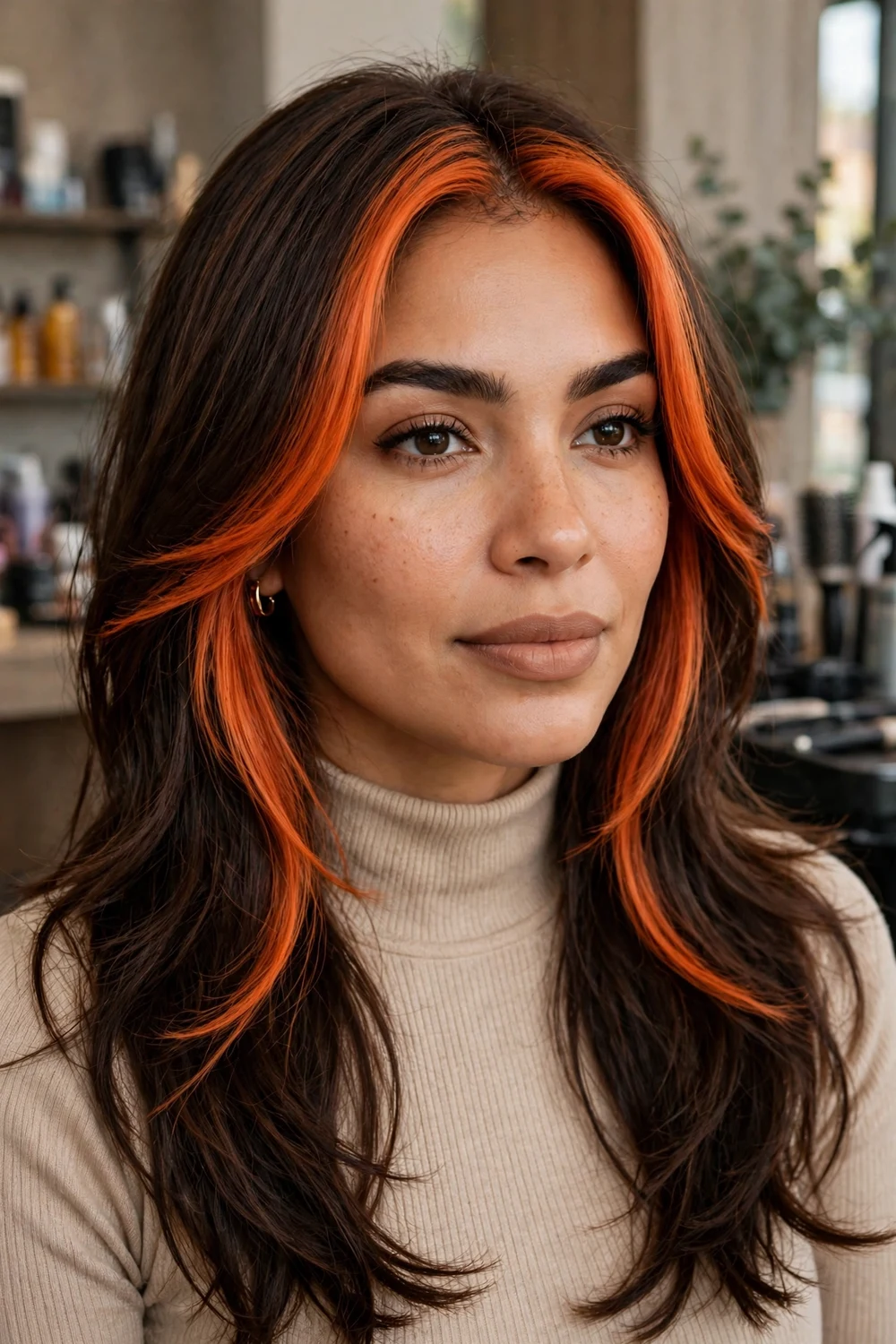
A vivid money piece lightens and colors only the two front panels of the hair, leaving the rest dark. Copper-orange and magenta are the most requested fall versions, since both warm up the face. It suits any skin tone once the vivid shade is matched to undertone, and it works on long hair, bobs, and layered cuts.
Only a small section is lifted, so the service is shorter and the stress is limited to the front. The panels fade faster than the rest of the head simply because they are the lightest hair, and a mini gloss at four weeks refreshes them alone. It is also a practical test: live with a vivid shade at your face before coloring the whole head.
Try this: pick the exact shade you would want all over, not a safer one, so the test tells you what you actually need to know.
Difficulty: Medium · Cost: $$ (salon)
22. Split Dye in Two Vivid Shades

Split dye colors one half of the head in one vivid shade and the other half in a second shade, split at the center part. Fall pairings that work well are magenta with teal, copper-orange with cobalt, and scarlet with violet. It suits wearers who style a center part most days, since the part is what makes the split read cleanly.
Both halves are lifted to the same level first, then colored separately, which makes this one of the longer first appointments on the list. Each side fades on its own schedule, so refreshes are booked per side. At home, washing the two sides apart for the first few washes stops the darker side staining the lighter one.
Try this: choose two shades with similar fade speeds, such as magenta and violet, if you want the split to stay balanced for as long as possible.
Difficulty: High · Cost: $$$ (salon)
23. Vivid Peekaboo Panels

Peekaboo panels hide vivid color in the underlayers of the hair, under a natural dark top layer. The vivid shows when the hair is tied up, curled, or moving, and stays mostly hidden in a sleek, down style. Magenta, violet, and teal are the usual fall picks because their depth reads well in small sections.
The panels are lifted and colored while the top layer is left alone, so the service is contained and the top of the head takes no bleach at all. Upkeep is flexible: panels can be refreshed, changed to a new vivid shade, or left to fade out under the top layer with no visible regrowth problem.
Try this: ask for panels at the nape and above the ears, the two spots that show most when hair goes up.
Difficulty: Medium to High · Cost: $$$ (salon)
24. Galaxy Melt

A galaxy melt blends cobalt, violet, and magenta in soft panels with no hard borders, a color melt pattern used in salon vivid work for years. The cool palette suits cool and neutral skin, and the mix means no single shade has to carry the whole look. Waves show the shift between colors best.
The head is lifted to a light, even base first, because all three shades need clarity to stay separate. The blue sections hold longest and the pink sections fade first, so the melt drifts bluer over time. A gloss refresh usually rebuilds the magenta first and leaves the blue alone.
Try this: keep the three shades in the same depth range. A pale shade next to two deep ones washes out early and leaves a gap in the melt.
Difficulty: High · Cost: $$$ (salon)
More Ideas to Explore
Frequently Asked Questions
How long do vivid fall hair colors last?
Most vivid direct dyes look brightest for two to four weeks and then soften with every wash. Deep shades such as crimson, cobalt, teal, and emerald hold their tone longer than hot pink, aqua, and orange shades, which fade first. A color-depositing conditioner in your shade, cool water, and fewer washes stretch the bright phase, and a gloss refresh at four to six weeks restores most shades without a full recolor.
Do vivid hair colors always need bleach?
Most do, because direct dyes are translucent and need a light base to show their true color. Dark hair can still join in without a full lift: midnight violet lays over a dark base with no lightening, oil slick panels lift only small sections, and a vivid money piece lightens only the front panels. Your colorist can judge how much lift your starting color and your target shade need at a consultation.
Which vivid fall shade fades the slowest?
Teal, cobalt blue, and emerald green tend to hold the longest, because blue and green pigments stay in the hair through many washes. Crimson and magenta also hold well. The fastest fades are hot pink, aqua blue, and the orange shades, which soften within a few weeks. Slow fading is a trade-off, since the long-lasting blue and green shades are also the hardest to remove later.
Can I put a vivid color over dark dyed hair?
Old dark dye is the main obstacle. Direct dye over previously dyed dark hair usually shows as a tint in bright light rather than a true vivid, and lifting dyed hair is slower and less even than lifting natural hair. A strand test shows what your ends can reach. Many wearers start with peekaboo panels or a money piece on the dyed hair while the rest grows out.
How do I keep vivid hair color from fading so fast?
Wash less often with a sulfate-free, color-safe shampoo, rinse in cool water, and add a color-depositing conditioner in your shade once a week. Turn hot tools down and use a heat protectant, since heat opens the cuticle and lets pigment out. Cover your hair in strong sun, and book gloss refreshes instead of waiting until the shade has fully washed out.
Final Thoughts
Pick a vivid fall shade the same way a colorist would: undertone first, then the lift you are willing to sit through, then the fade you are willing to maintain. A full head of cobalt or emerald is a commitment with a long life. A magenta money piece or a set of peekaboo panels gives you the same seasonal color with a short appointment and an easy exit. Either way, start with a consultation and a strand test, and let the shade you pick be the saturated one you actually wanted, toned to the depth that suits your skin and your calendar.

