

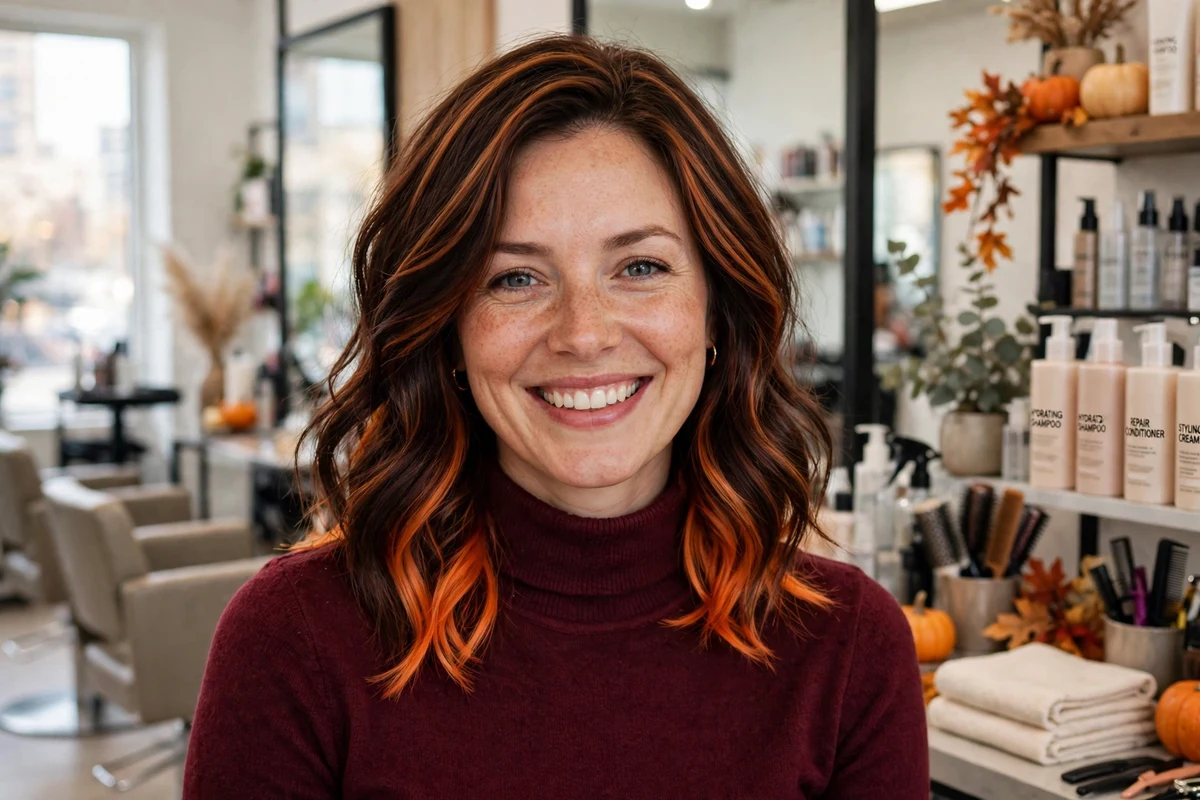
Fun fall hair color is about placement as much as shade. A hidden underlayer of pumpkin orange, a cherry red frame at the face, or rainbow stripes under black hair can change your whole look while your everyday color stays in charge. This list leans into those playful placements and mixes, from peekaboo panels to two-tone sections and melted ends.
Every idea here is built for real wear. Hidden color hides at work and shows in a ponytail. Ends-only color leaves by haircut. Money pieces and single streaks test a bold tone before you commit a full head. If you want all-over saturated color instead, our vivid fall hair colors guide covers that route, and the fall red hair colors list covers the red family in depth.
Quick Takeaways
- Placement is the fun part. Peekaboo panels, underlayers, and hidden sections give bold color an off switch for workdays.
- Ends-only color is the lowest risk route. Dip dyes and melted ends leave with a trim when you are ready for a change.
- Small sections, big effect. A money piece, a single streak, or two face panels can carry a whole new look.
- Fall tones keep bold color wearable. Pumpkin, wine, copper, and leaf green sit well with autumn wardrobes and light.
- Plan the fade. Jewel and pastel tones need a gloss or depositing conditioner rhythm to stay on shade.
How to Pick a Fun Fall Shade
Decide how visible you want the color to be on an ordinary Tuesday. Hidden placements, meaning underlayers, peekaboo panels, and underlights, show only when hair moves or goes up. Face placements, meaning money pieces and front streaks, show all the time in a small area. All-over melts and full ginger show everywhere. Most first timers land happily in the first two groups.
Then count the upkeep honestly. Anything lightened before coloring needs cool water, fewer washes, and a refresh every five to eight weeks. Deposit-only color over your natural base, like a wine panel on brunette or violet on silver, skips the lightening and fades more kindly. Your colorist can strand test a hidden section first, which settles both the shade and the fade before the full service.
1. Pumpkin Peekaboo Underlayer

Pumpkin peekaboo color hides a band of pumpkin orange under the top layer of a brunette or dark blonde base. Down and loose, the hair reads as your everyday color. Lifted, pinned, or caught by wind, the orange shows in flashes.
The underlayer is the easiest bold placement to live with, since roots grow out hidden and office wear stays simple. It needs lightening only on the hidden section, which keeps the rest of your hair undamaged.
Try this: Ask for the orange to start an inch below the part line. That gap keeps the reveal controlled and the grow-out invisible.
Difficulty: Medium | Cost: $$ | Time: 2 hours, refresh every 8 weeks
2. Calico Patchwork Melt

Calico patchwork melts three fall tones in one head of hair: brunette, blonde, and auburn placed in alternating panels. Each wave shows a different mix, so the color changes as you style it.
Colorists build it with a mix of foils and painted panels, which makes every result one of a kind. It suits wavy and curly hair best, where the patchwork reads clearly. Straight hair shows the panels as stripes, which some wearers love.
Try this: Agree the ratio before you start. A common split is half brunette, a quarter blonde, a quarter auburn.
Difficulty: High | Cost: $$$ | Time: 3 hours, refresh every 8 to 10 weeks
3. Copper and Gold Ribbon Lights

Ribbon lights are wide, bold highlights that run the full length of wavy hair like ribbons. For fall, copper and gold ribbons over a brunette base give strong contrast with a warm, seasonal palette.
Wide ribbons need fewer foils than fine highlights, so the appointment is faster than a full fine highlight service. The bold width also means regrowth shows sooner at the root, so plan touch-ups on a six week rhythm.
Try this: Ask for ribbons to start slightly below the root on the underneath layers. A soft start stretches the style between visits.
Difficulty: Medium | Cost: $$ | Time: 2 hours, touch-up every 6 weeks
4. Cherry Cola Money Piece
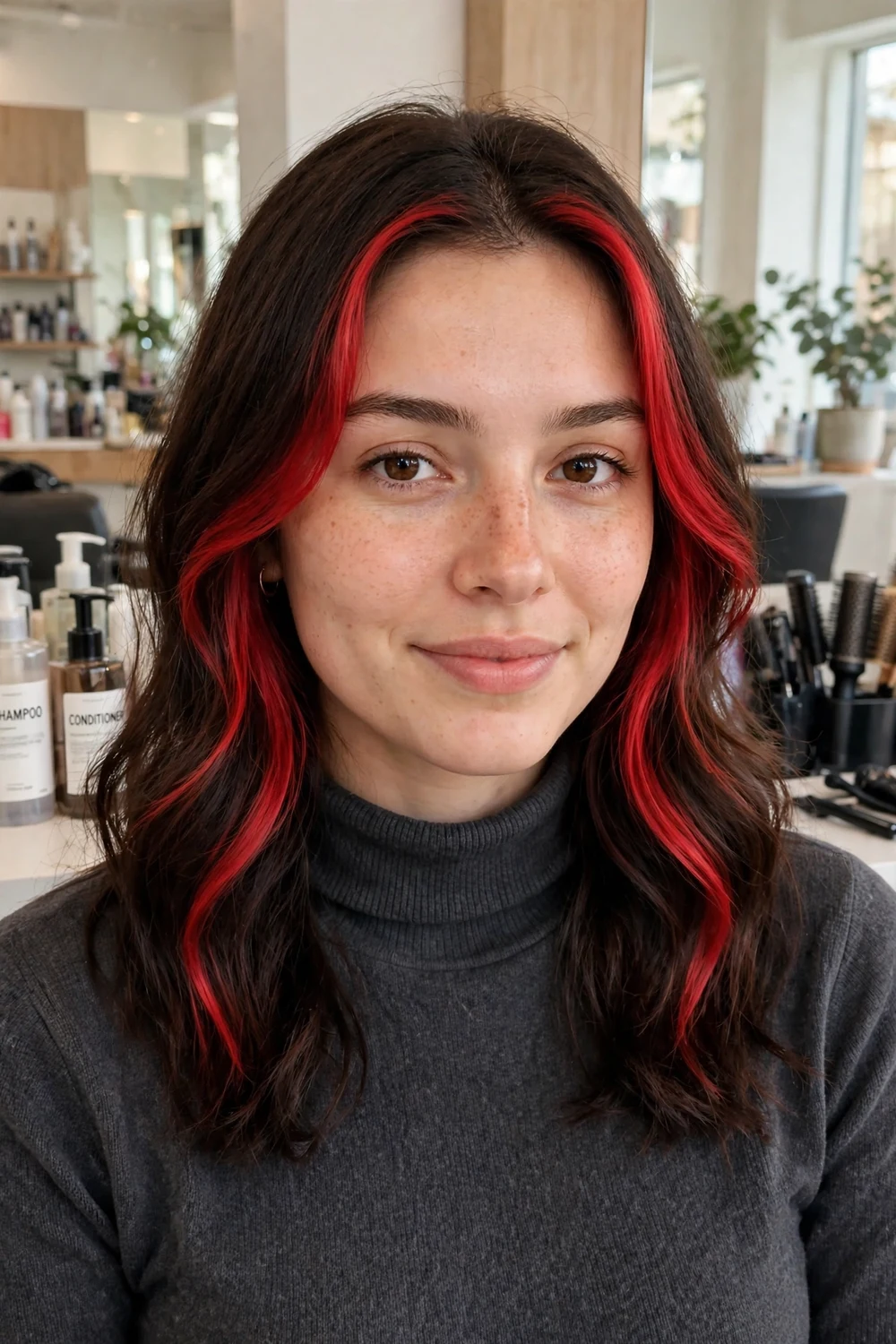
A cherry cola money piece colors only the two front sections of hair in a deep cherry red, leaving the rest dark. The frame of red sits right beside the face, so a small amount of color makes a large change.
It is the fastest route on this list and a fair test run for red. If you like living with the tone, you can extend it later. If red fades faster than you like, only two sections need attention.
Try this: Keep the sections about an inch wide. Narrower reads as a streak, wider starts to read as a full color change.
Difficulty: Low | Cost: $ | Time: 45 minutes, refresh every 4 to 5 weeks
5. Maple Leaf Melt
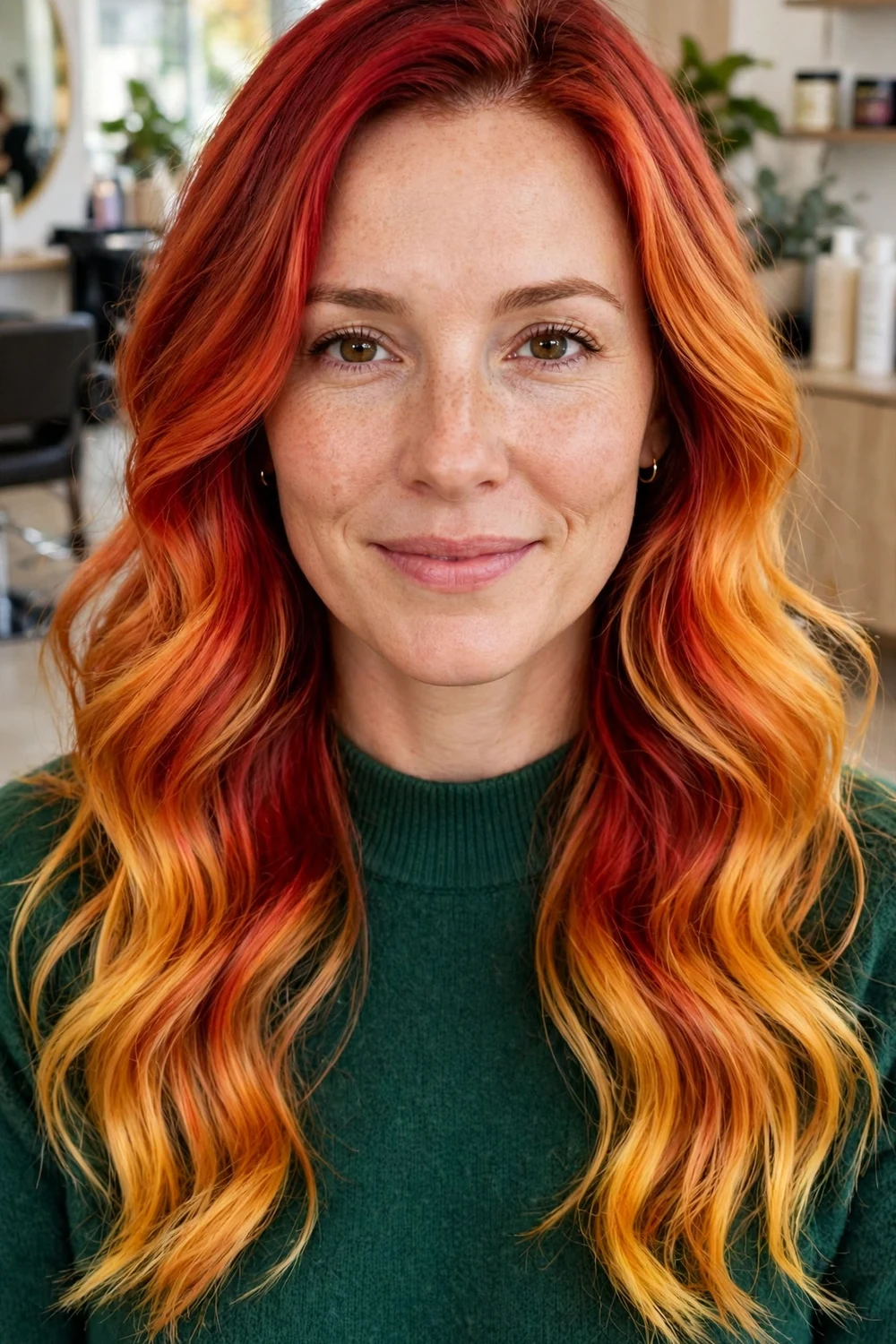
The maple leaf melt copies fall foliage in order: deep red at the roots, orange through the middle, and golden yellow at the ends. The three tones blend in soft bands, so no single line marks where one color stops.
It needs a light base or lightened lengths to show the yellow clearly, so it suits blondes and light brunettes best, or anyone ready for a full lightening session first. The payoff is a melt that photographs well in autumn light.
Try this: Yellow ends fade fastest. Book a gold gloss at three weeks to keep the bottom band bright.
Difficulty: High | Cost: $$$ | Time: 3.5 hours, gloss at 3 weeks
6. Bonfire Ombre Tips
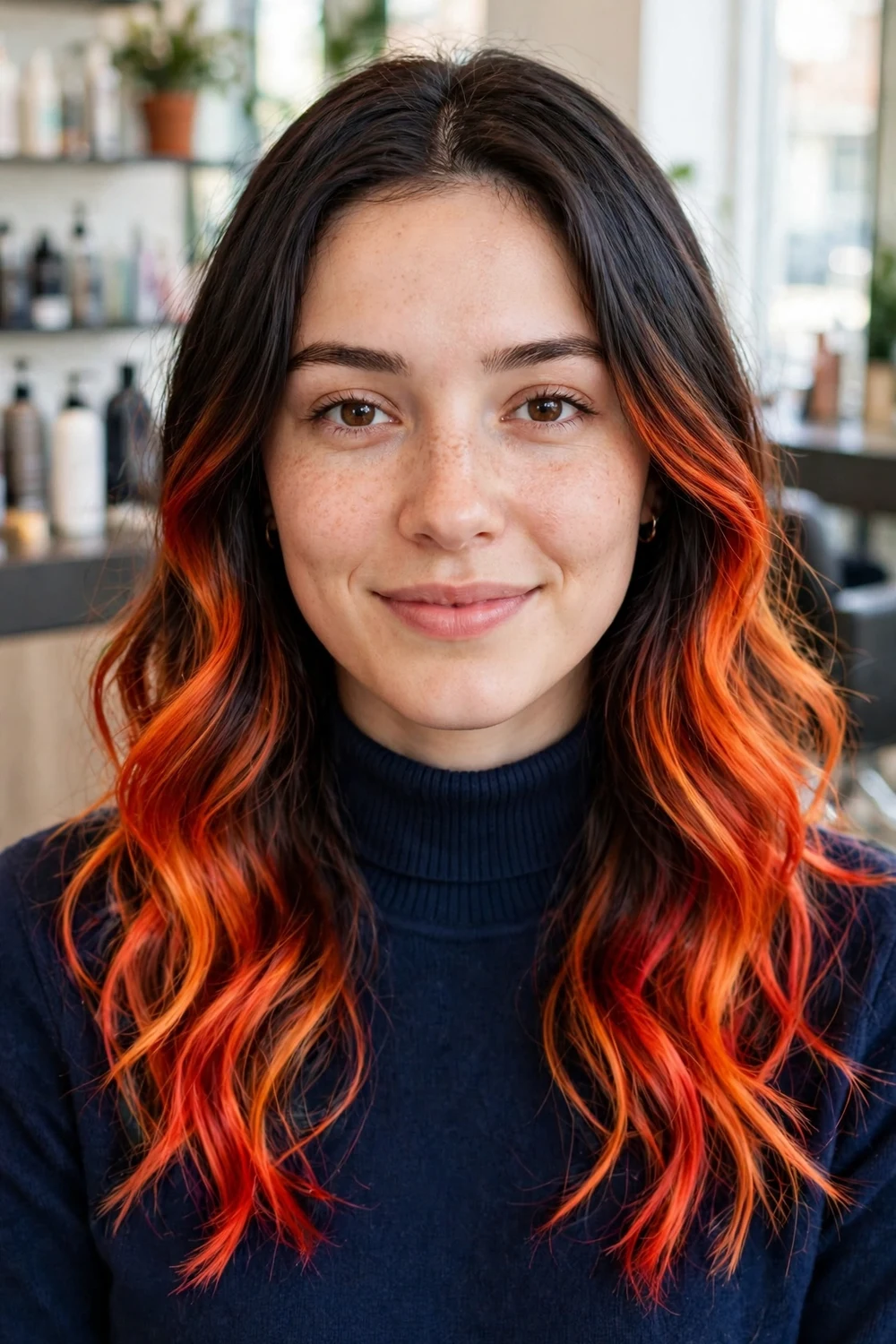
Bonfire ombre keeps your natural color for the top two thirds and dyes only the ends in orange and red flame tones. The ends carry all the color, which makes this a low commitment way to wear the boldest fall shades.
When you tire of it, a trim removes the color entirely. It also avoids bleach near the scalp and face, which suits sensitive skin. Curly and wavy ends show the flame blend best.
Try this: Ask for orange at the very tips with red above it. Reversing the order can look like regrowth instead of flame.
Difficulty: Medium | Cost: $$ | Time: 90 minutes, trim or refresh at 8 weeks
7. Mulled Wine Hidden Panel

A mulled wine panel places deep burgundy red in one hidden section, usually behind the ear or under one side. The panel shows in updos, side parts, and braided styles, and hides under loose hair.
Burgundy sits well on brunette bases without lightening first for many hair types, since the red tone can deposit over medium brown. That keeps the service gentle and the cost in the middle band.
Try this: Choose the side you part toward least. The panel then peeks out when you tuck hair back on the other side.
Difficulty: Medium | Cost: $$ | Time: 90 minutes, refresh every 6 to 8 weeks
8. Cider and Plum Two-Tone Panel

This two-tone look splits the front or side panels into warm cider orange on one side and deep plum on the other. The contrast is the point: warm against cool, with your natural color holding the rest.
It works on bobs, lobs, and long hair, and it reads playful without coloring the whole head. Both tones fade at similar rates when your colorist uses the same color line, which keeps the pair balanced.
Try this: Style it with a center part to show both sides evenly, or a side part to lead with one tone.
Difficulty: High | Cost: $$ | Time: 2.5 hours, refresh every 6 weeks
9. Berry Pink Underlights

Berry pink underlights place pink through the lower layers and ends, so the color glows through the top layer rather than sitting on it. The effect is soft at rest and clear when hair moves or catches light.
Underlights need a lightened underlayer, so the top hair stays healthy. Pink fades toward a pale berry, which still looks planned against brunette and dark blonde bases.
Try this: Ask for the pink to be mixed with a touch of red. Berry tones hold longer than pure pastel pink.
Difficulty: Medium | Cost: $$ | Time: 2 hours, refresh every 6 to 8 weeks
10. Teal Peekaboo on Brunette
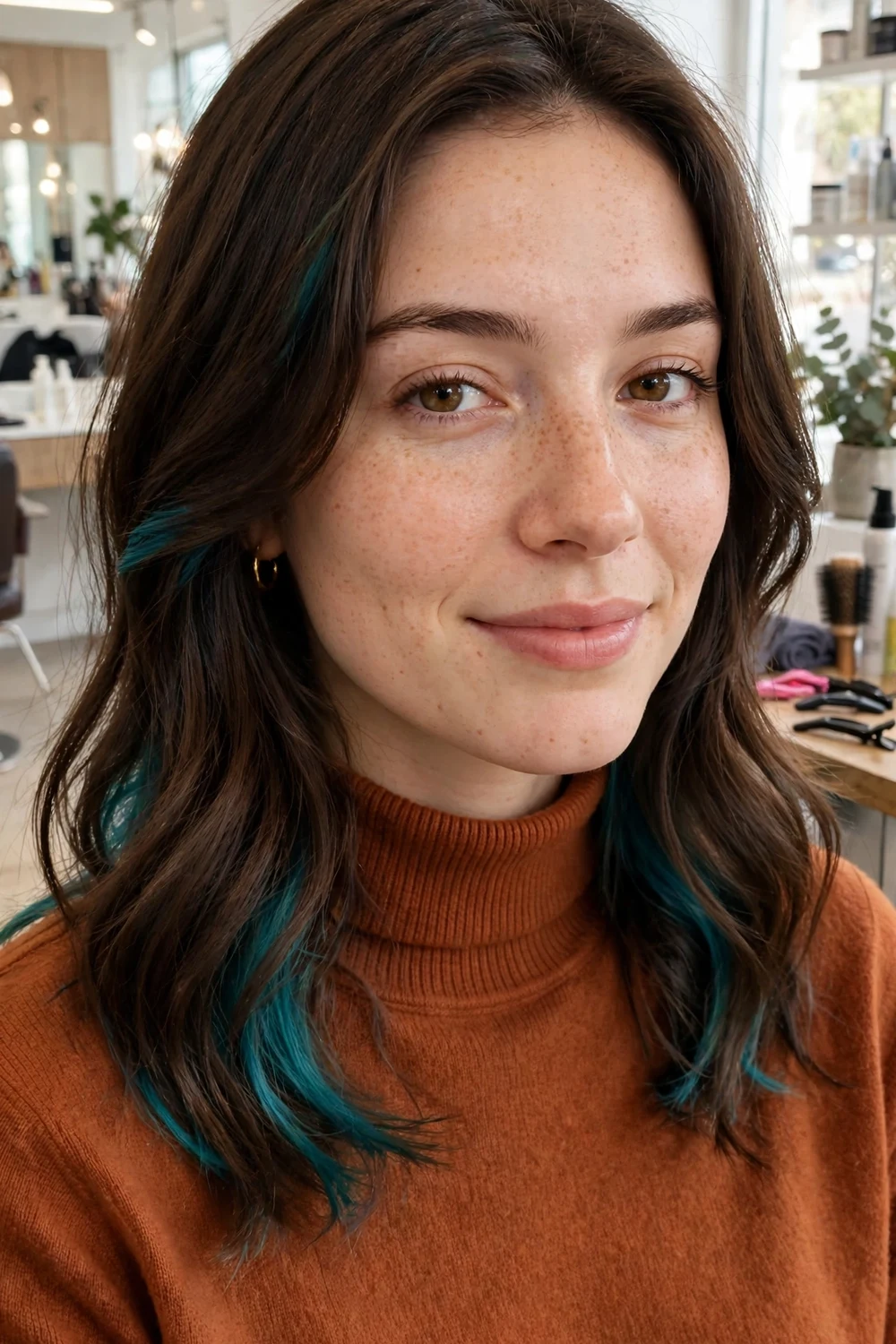
Teal peekaboo puts a blue green section under brunette hair, one of the strongest contrasts on this list. Brunette on top keeps the look grounded, and the teal appears at the nape, the sides, and in braids.
Teal needs a pale base to read true, so the hidden section is lightened first. Because the section is small, the extra step stays affordable and the grow-out hides completely.
Try this: Wash the teal section with cool water at the sink when you can. Heat and hot water pull blue green pigment fast.
Difficulty: High | Cost: $$ | Time: 2.5 hours, refresh every 6 weeks
11. Emerald Underlayer on Black Hair
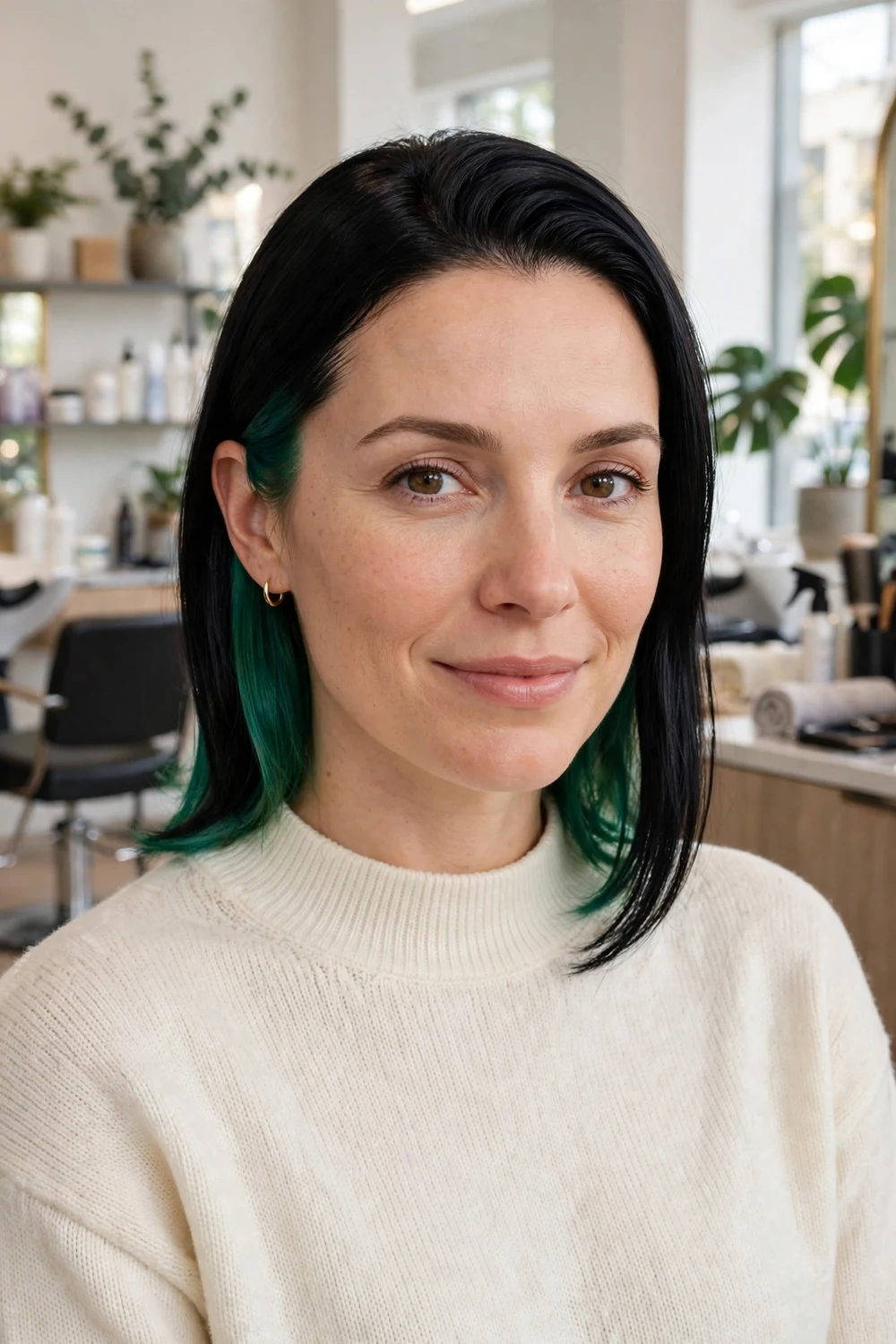
An emerald underlayer colors the bottom layer of black hair a deep green. On sleek straight styles the green lines the edge of the cut, and on curled styles it flashes through the lengths.
Deep green over a lightened underlayer keeps its richness longer than bright green, and it pairs well with fall wardrobes built on black, cream, and camel. The top layer stays natural and untouched.
Try this: Ask for the underlayer to follow your haircut line. A blunt cut shows a clean green edge.
Difficulty: High | Cost: $$ | Time: 2.5 hours, refresh every 6 to 8 weeks
12. Rainbow Peekaboo Stripes
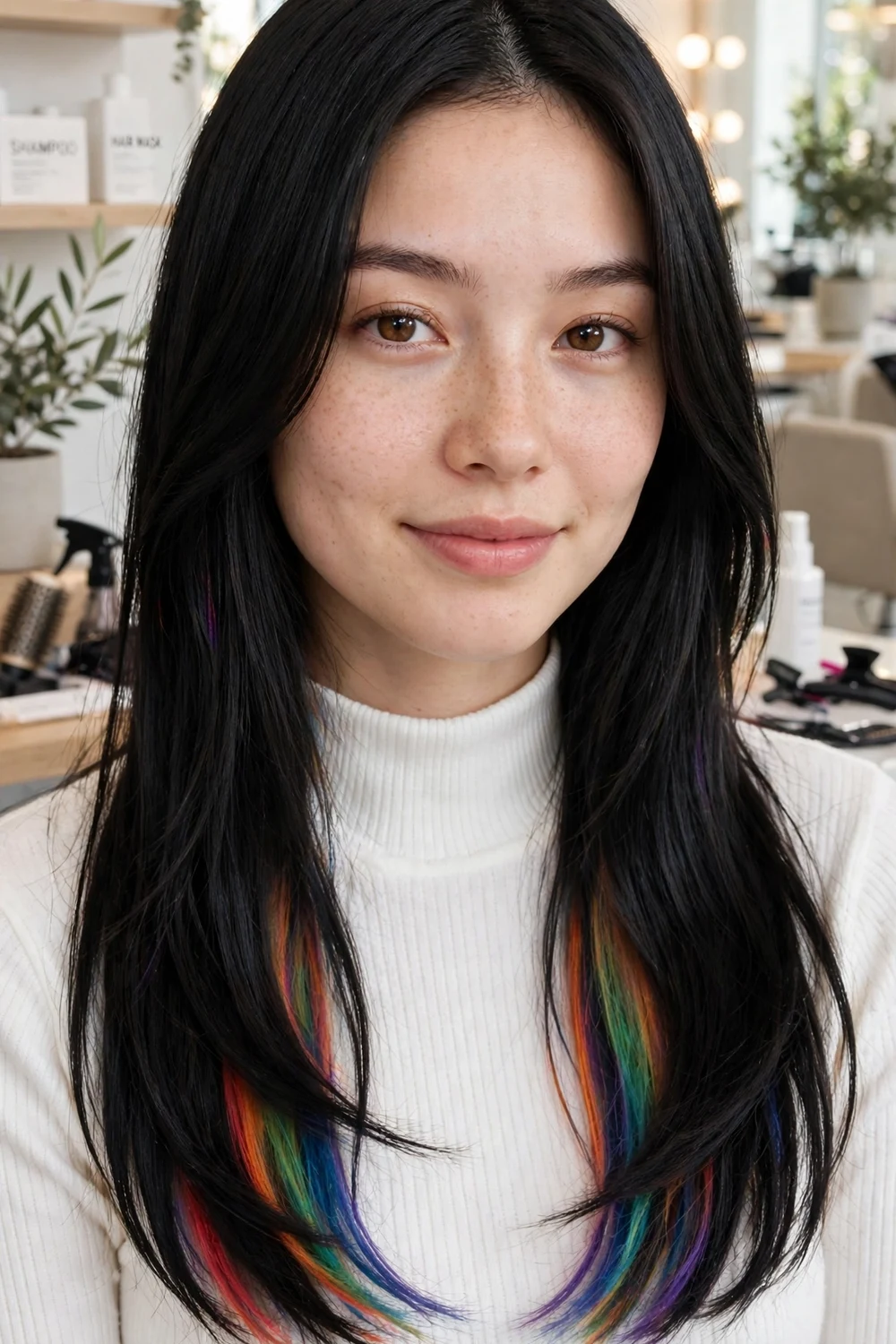
Rainbow peekaboo stripes hide thin bands of red, orange, green, blue, and purple under a black or very dark top layer. Loose hair looks classic. A ponytail or half-up style shows the full set of stripes.
Each stripe is small, so your colorist can place the full rainbow in one foil session. It is a strong pick for someone who wants many colors with an off switch built in.
Try this: Keep stripes at least half an inch apart. Crowded stripes blend into muddy tones as they fade.
Difficulty: High | Cost: $$$ | Time: 3 hours, refresh every 6 weeks
13. Sweet Tea Rose Copper
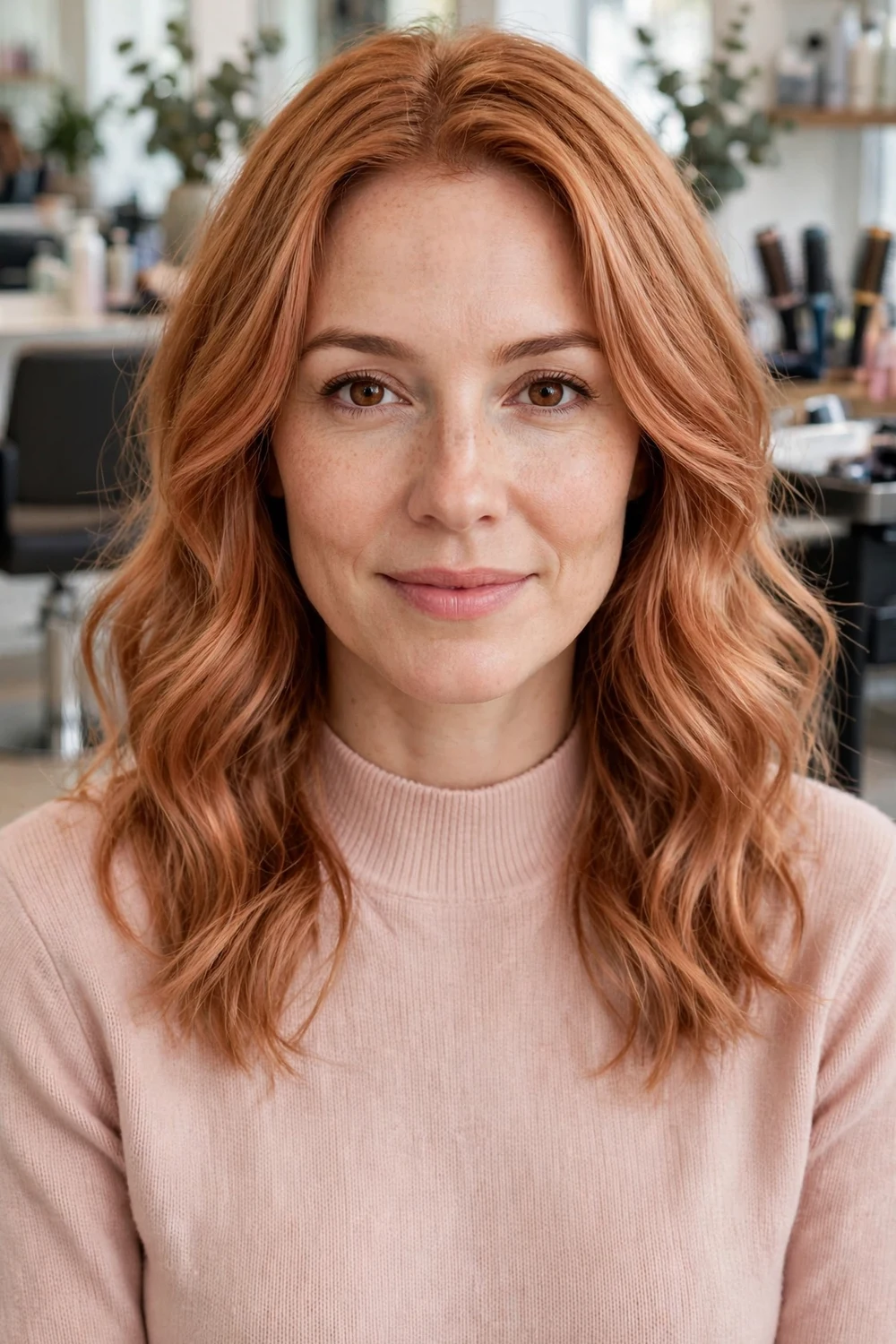
Sweet tea rose copper adds a hint of rose to golden copper hair, giving the red family a cooler edge for fall. It reads as copper in shade and rose gold in sunlight.
The rose tint comes from the toner, so your colorist can adjust it at each visit: more rose in fall, more gold later. It suits golden and strawberry bases and fades evenly toward a soft copper blonde. For the wider copper family, see our fall copper hair colors list.
Try this: Ask for the rose kept subtle on the first visit. You can deepen the tint once you see it in your own light.
Difficulty: Medium | Cost: $$ | Time: 2 hours, tone every 6 weeks
14. Coral Root Melt
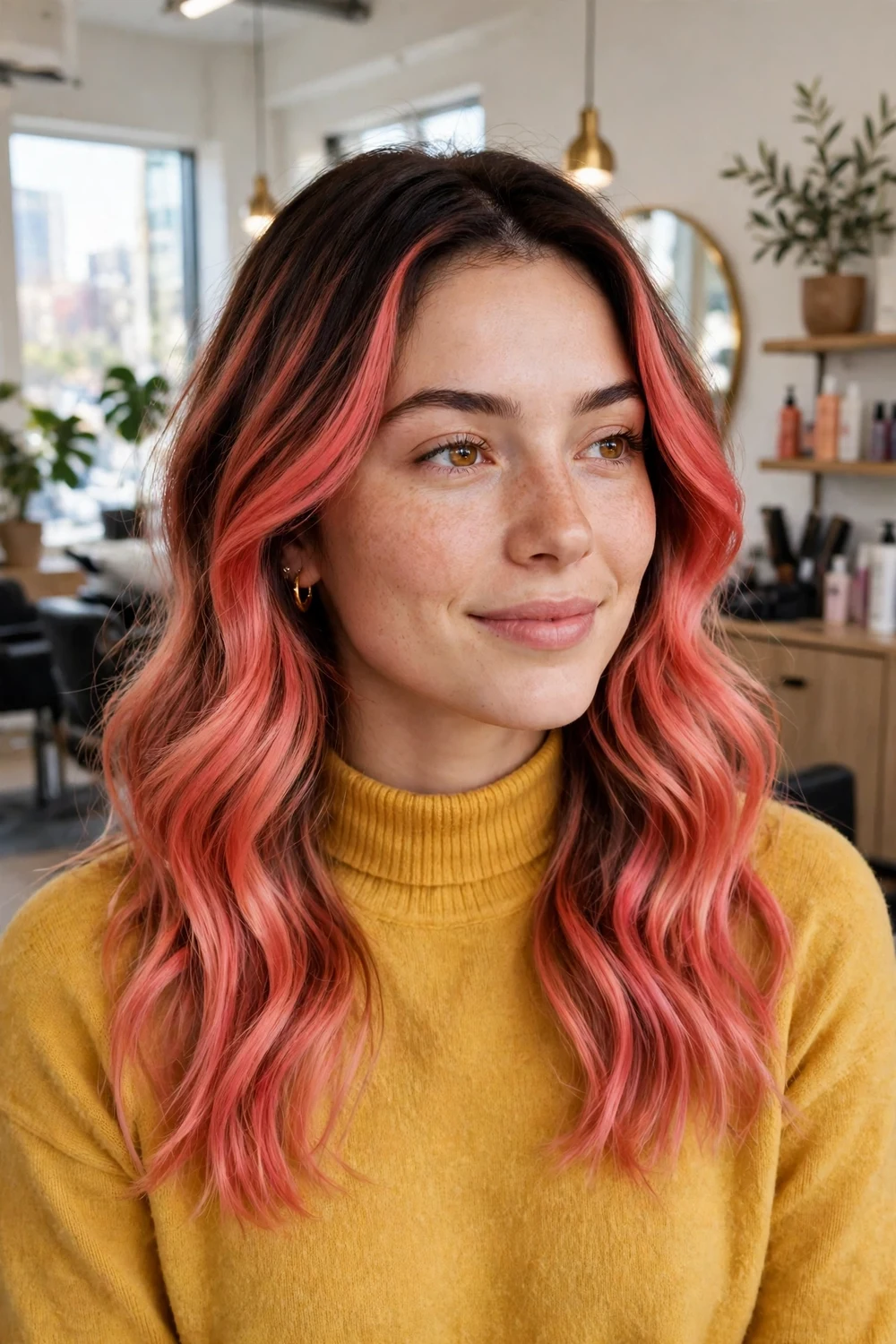
A coral root melt keeps deep roots and melts them into coral pink lengths with a balayage blend. The dark root gives the coral depth and removes the root upkeep that all-over pink demands.
Coral sits between orange and pink, which makes it a natural fall version of summer pink hair. It fades toward peach, then blonde, and each stage still looks deliberate.
Try this: Use a coral depositing conditioner once a week. Coral loses its pink half first without one.
Difficulty: High | Cost: $$$ | Time: 3 hours, gloss every 4 to 6 weeks
15. Fuchsia and Violet Melted Ends
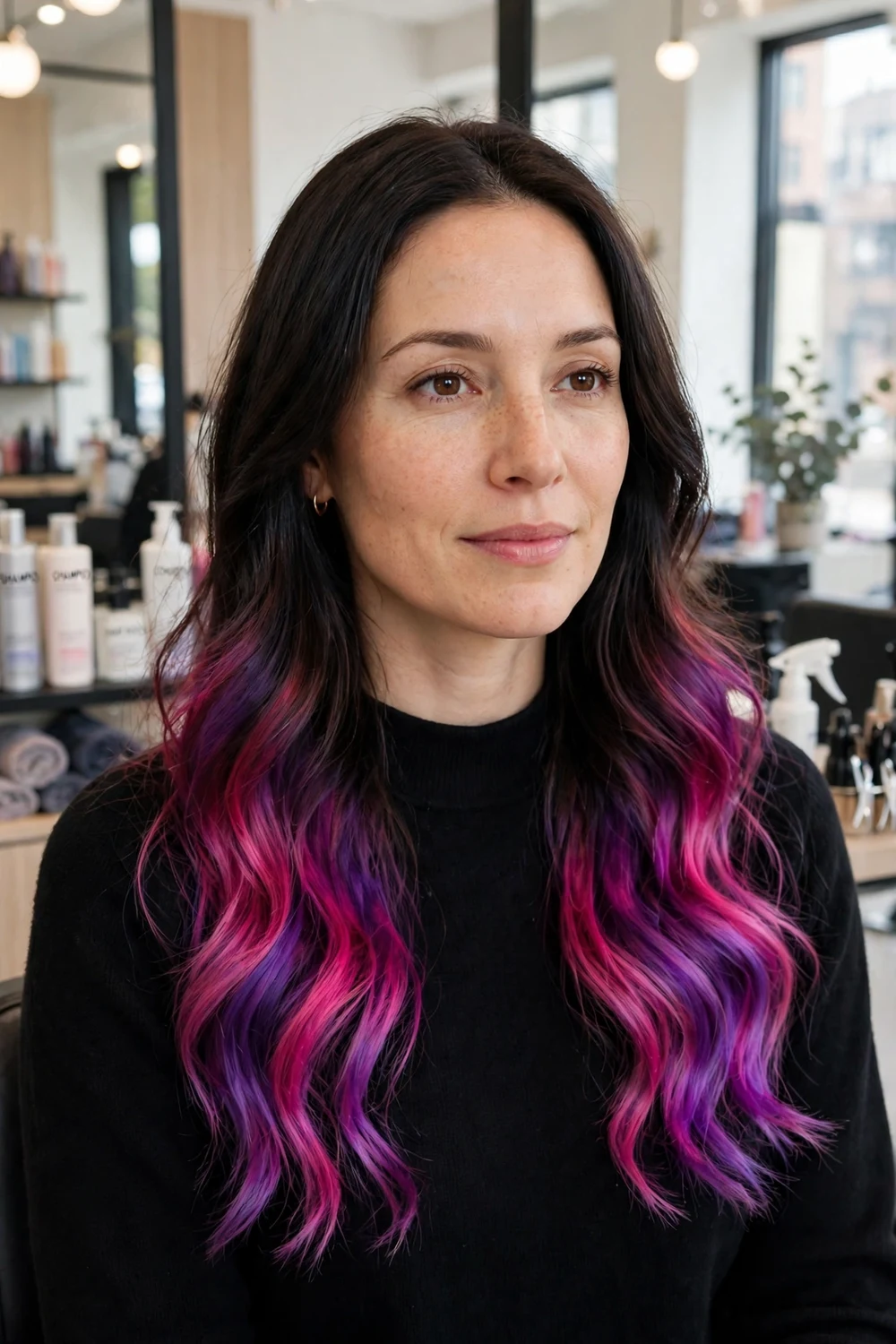
Fuchsia and violet melted ends blend two jewel tones through the last third of dark hair, fuchsia above and violet at the tips, or the two swirled through each other.
Ends-only placement keeps bleach away from the scalp and lets you cut the color out when you are done. The pair fades toward berry and lavender, which suits fall layers and dark coats.
Try this: Ask for more violet than fuchsia if your wardrobe leans cool, and the reverse if it leans warm.
Difficulty: High | Cost: $$ | Time: 2.5 hours, refresh every 6 to 8 weeks
16. Aquamarine Dip Ends
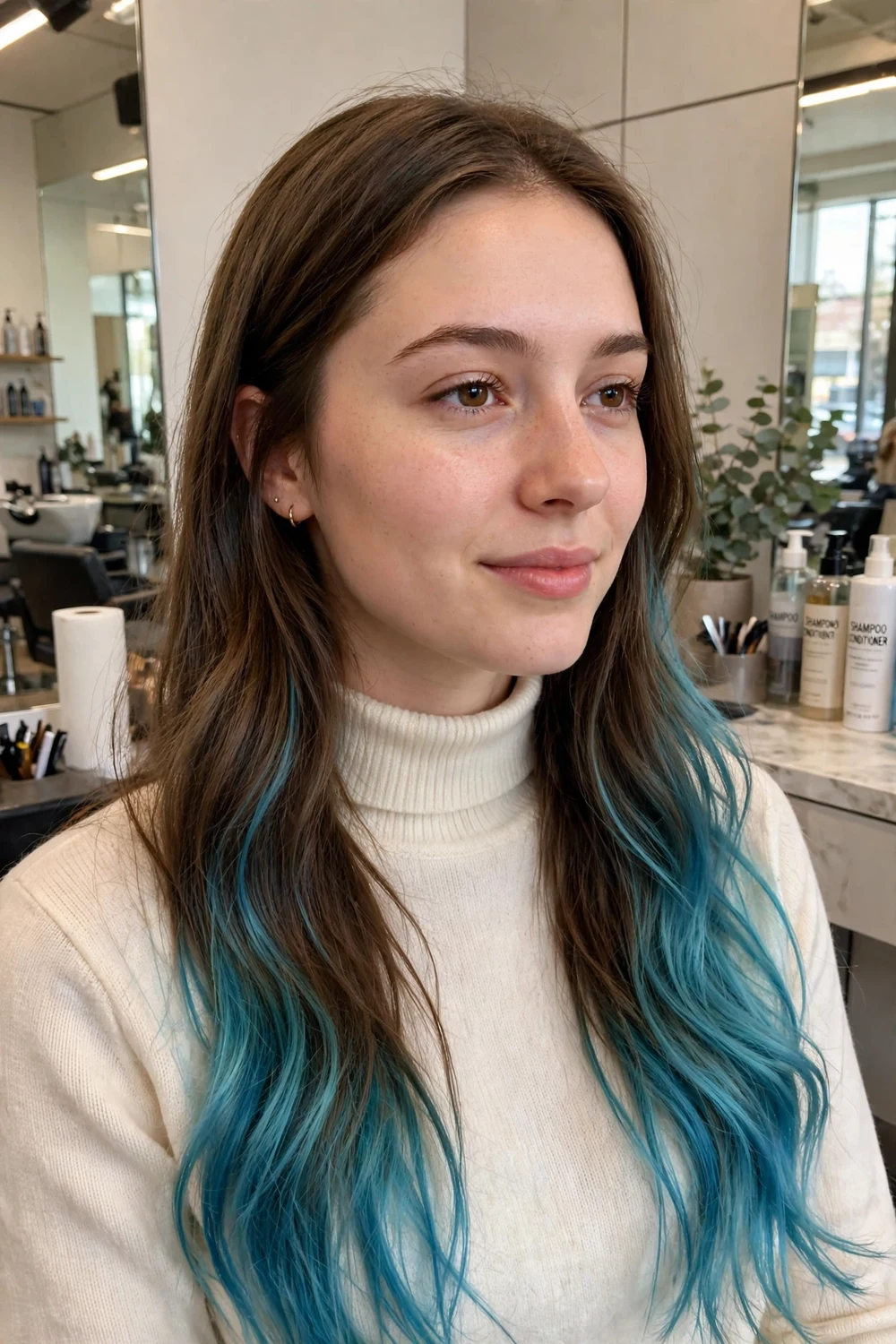
Aquamarine dip ends dye the last few inches of long brown hair a clear blue green, with a fairly straight line where the color starts. The sharp line is part of the look and reads as a deliberate dip.
It is one of the simplest bold services: one section, one color, no blending. It also grows out by trimming, so the exit plan is a haircut. It suits long straight and lightly wavy hair.
Try this: Bring the exact shade on your phone. Aquamarine ranges from green leaning to blue leaning, and the difference matters.
Difficulty: Medium | Cost: $$ | Time: 90 minutes, trim or refresh at 8 weeks
17. Leaf Green Dip-Dyed Ends
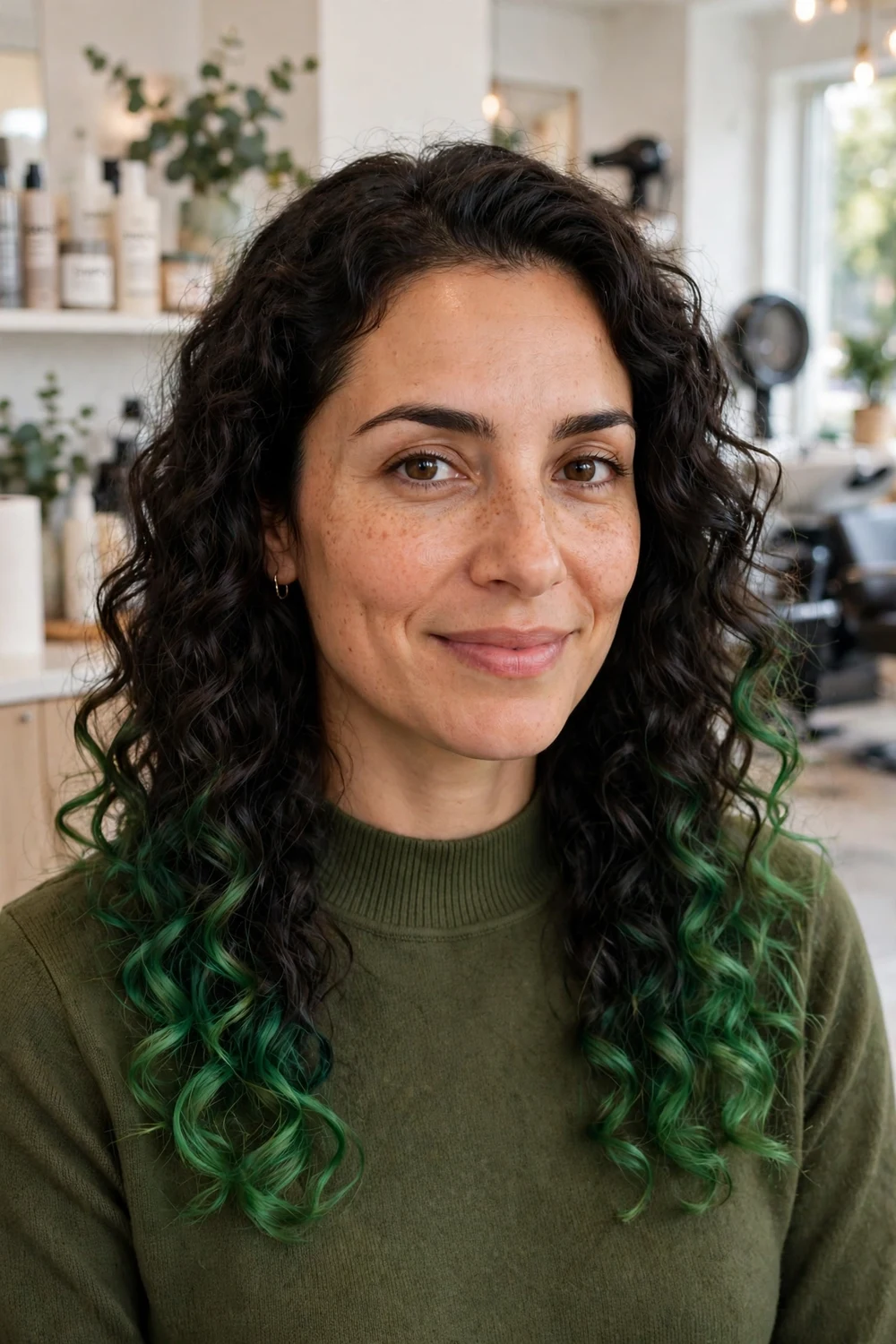
Leaf green dip ends take the dip idea into fall territory with a rich green on the ends of dark curls. On curly hair the color gathers at the curl tips, so the green reads as scattered leaf tones.
Curly ends are often the driest part of the hair, so your colorist may add a bond care step. The green family fades toward moss and sage, both of which stay in the fall palette.
Try this: Define curls with a cream after coloring and let them dry naturally. Heat speeds green fade.
Difficulty: Medium | Cost: $$ | Time: 2 hours, refresh every 6 to 8 weeks
18. Pink Ombre on Blonde
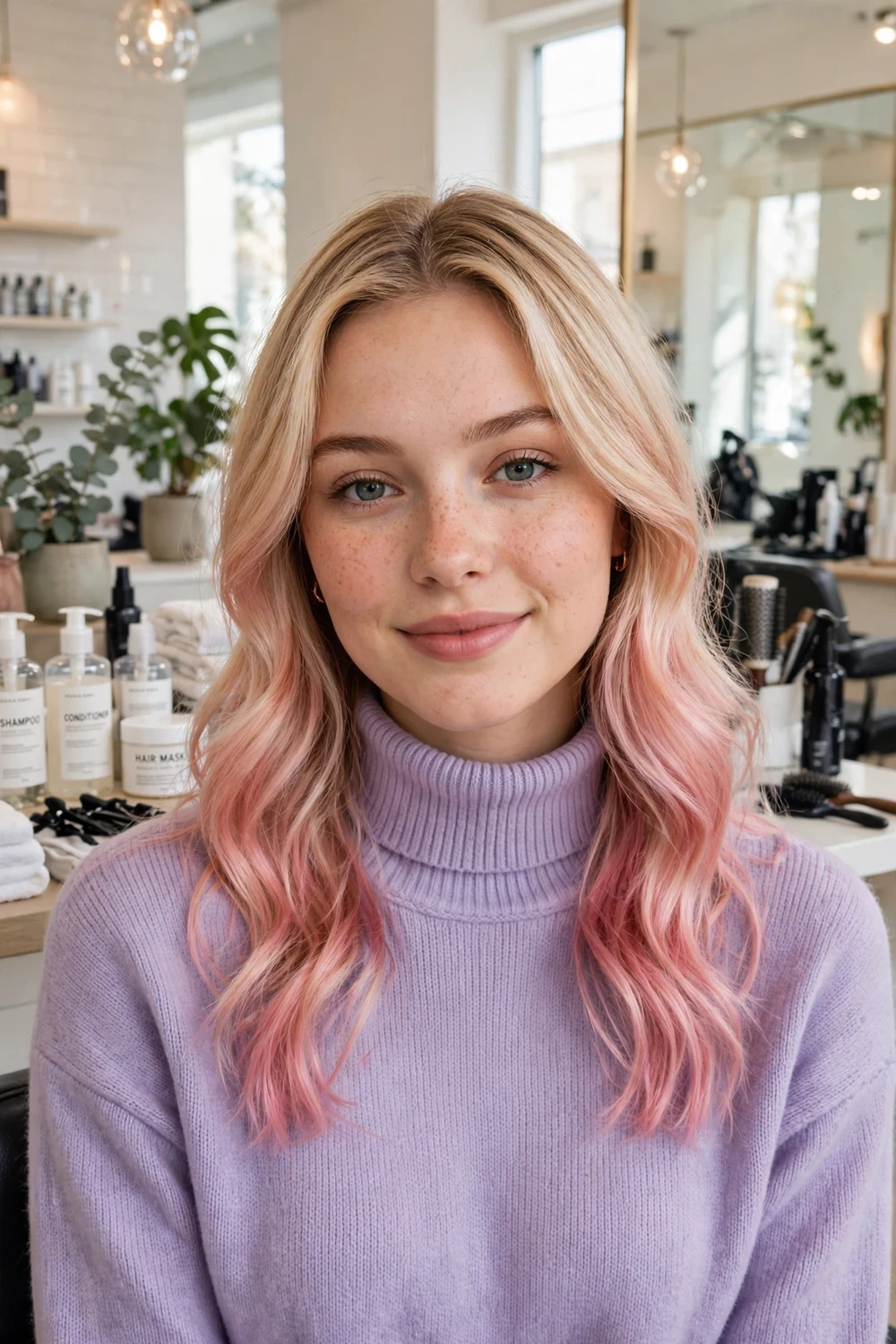
Pink ombre fades blonde hair from its natural roots into pink ends, passing through a pale rose in the middle. It is the softest bold look on this list and a gentle entry into fashion color.
Blondes often skip the lightening step entirely, which makes this service fast. The pink fades in four to six weeks, and a rose gloss brings it back in half an hour.
Try this: Ask for the pink to start lower than you first think. Ombre that starts at chin level lasts longer between cuts.
Difficulty: Low | Cost: $$ | Time: 90 minutes, gloss every 4 to 6 weeks
19. Teal and Lavender Mermaid Waves

Mermaid waves blend teal through the top and mid-lengths into lavender at the ends, worn on long wavy hair. The two pastel-leaning tones melt where the waves bend, which hides the join.
This look needs a light base across most of the hair, so it is a bigger commitment than the hidden placements. In return it gives the fullest color change on this list, the kind our vivid fall hair colors readers tend to ask about.
Try this: Wash twice a week at most, with dry shampoo between. Every wash takes a little of both tones with it.
Difficulty: High | Cost: $$$ | Time: 4 hours, refresh every 5 to 6 weeks
20. Bold Ginger on Natural Curls
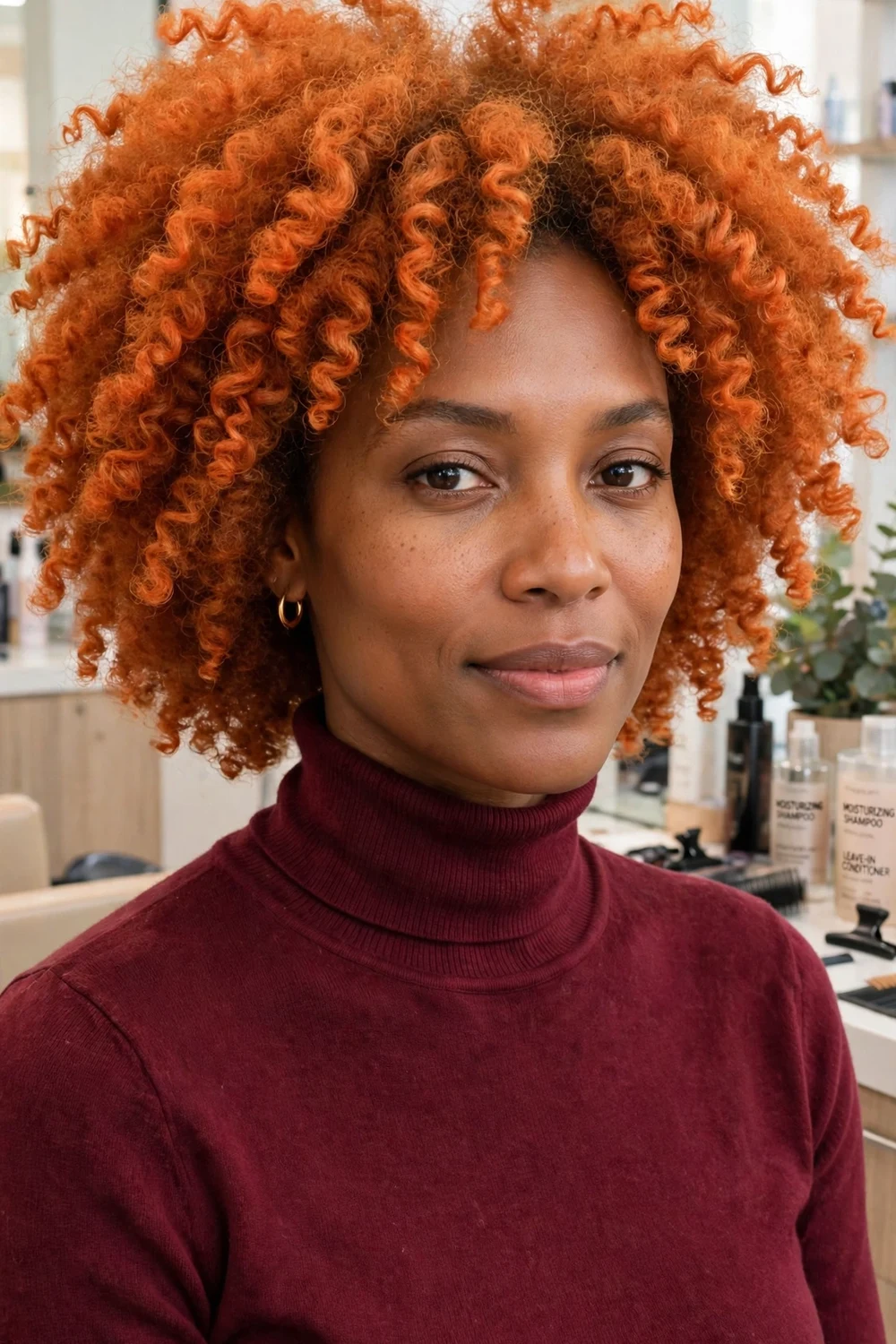
Bold ginger takes natural curls to a full, saturated ginger orange. Curl by curl the color varies slightly, which gives the shade depth that straight hair has to fake with extra tones.
Ginger on curls needs moisture care built into the plan, since lightening and color can dry curl patterns. Many wearers keep their natural texture routine and add a weekly mask.
Try this: Ask your colorist to color curls in their natural clumps rather than combing them straight. The color then lands where the curls actually sit.
Difficulty: High | Cost: $$ | Time: 2.5 hours, gloss every 5 weeks
21. Rust Copper Pixie

A rust copper pixie pairs the shortest cut on this list with a warm rust tone. Short hair shows color at full strength, and a pixie grows fast enough that experimenting costs little.
You can change the tone at nearly every cut while you find your shade: rust this fall, deeper copper next. It also dries in minutes, which keeps bold color practical on busy mornings.
Try this: Book color and cut together every five weeks. A pixie loses its shape and its color impact at the same pace.
Difficulty: Medium | Cost: $ | Time: 1 hour, every 5 weeks with the cut
22. Purple Peekaboo on Silver Waves
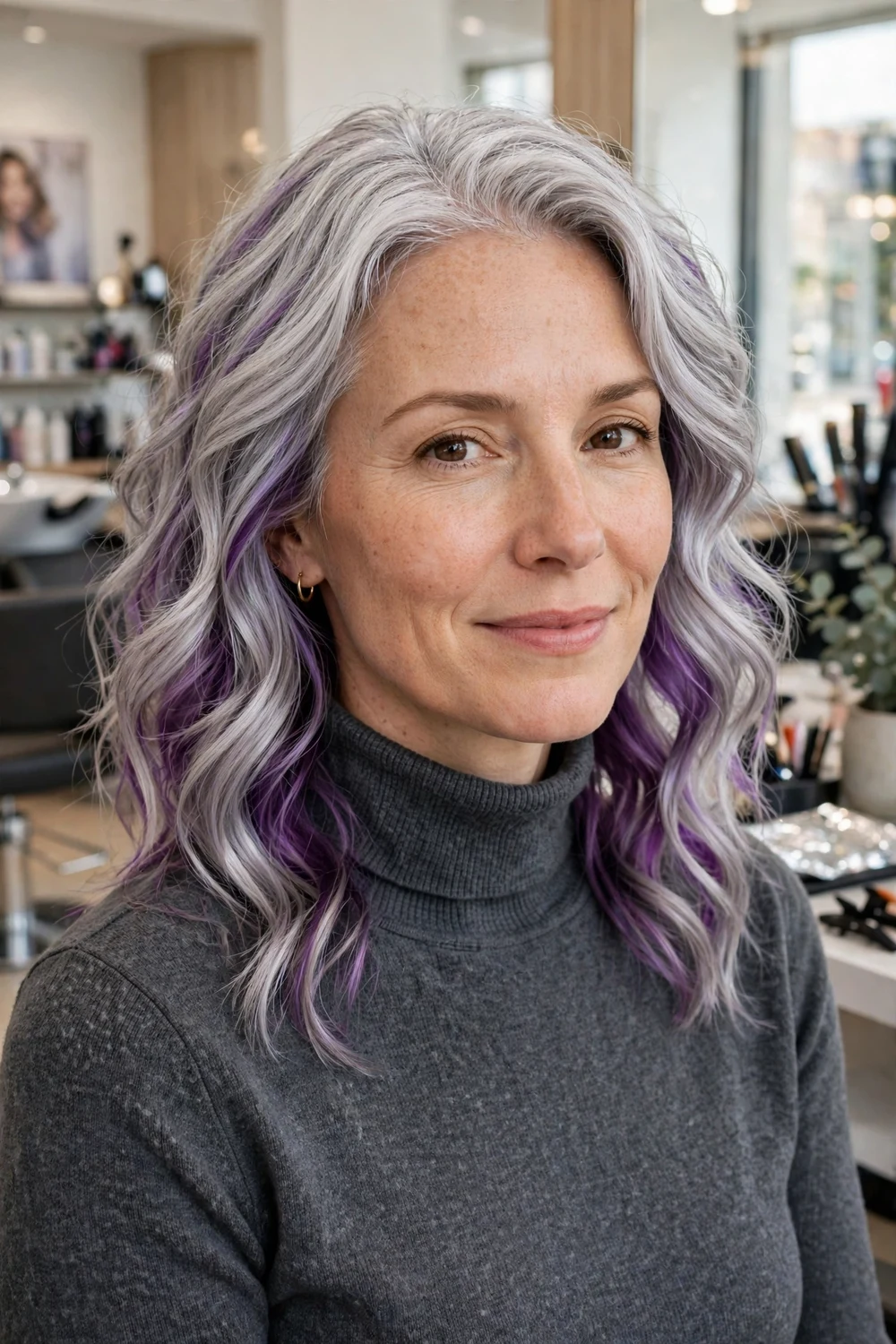
Purple peekaboo places violet panels under silver or grey wavy hair. Silver is already a light base, so the violet deposits without any lightening at all, which makes this the gentlest vivid route here.
The violet fades toward lavender against the silver, a pairing that stays soft rather than clashing. It suits women who wear their grey proudly and still want a playful fall change.
Try this: Try one panel behind the ear first. If you love it, a full underlayer is an easy second step.
Difficulty: Low | Cost: $ | Time: 1 hour, refresh every 5 to 6 weeks
23. Blue Streak Blunt Bob
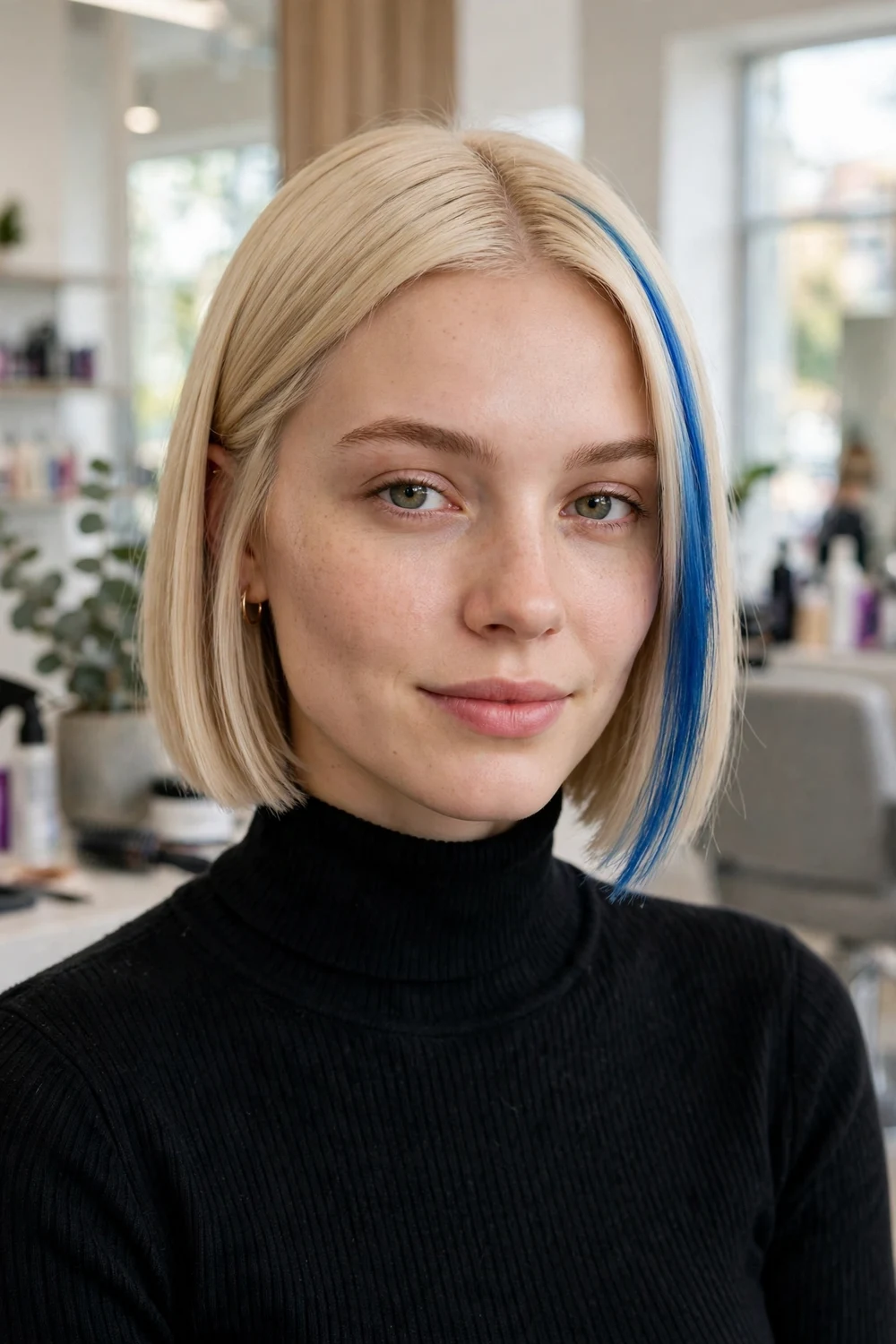
A blue streak puts one bold blue section into a blunt blonde or light bob, usually at the front side. The clean cut keeps the look sharp, and the single streak does all the talking.
One streak means one small lightened area, quick to place and easy to grow out or color over. It pairs well with the blunt bob because the streak follows the straight edge of the cut.
Try this: Part your hair on the streak side. Moving the part to the other side hides it for formal days.
Difficulty: Low | Cost: $ | Time: 1 hour, refresh every 6 weeks
24. Harvest Gold Chunky Ribbons

Harvest gold chunky ribbons place wide bands of deep gold and chestnut through blonde hair. The wide bands give a strong two-tone pattern that nods to early 2000s color, updated with fall tones.
Chunky ribbons suit straight and smooth styles, where the bands read as clean stripes of gold. On wavy hair they soften into wide highlights. Either way the placement is fast, with a short foil pattern.
Try this: Keep ribbons at least an inch wide. Narrower pieces lose the chunky effect and read as ordinary highlights.
Difficulty: Medium | Cost: $$ | Time: 90 minutes, refresh every 6 weeks
| Placement type | Where it shows | Best for | Upkeep |
|---|---|---|---|
| Hidden color (peekaboo, underlayer) | Shows in updos and movement | Bold color with a workday off switch | Medium |
| Face framing (money piece, streak) | Shows at the front only | Testing a bold tone cheaply | Low to medium |
| Ends only (dip dye, melted ends) | Shows at the lengths | Short term change, exits by trim | Low to medium |
| All-over melts and full color | Shows everywhere | Maximum change for the season | High |
Frequently Asked Questions
What is peekaboo hair color?
Peekaboo color places a contrasting shade under the top layer of hair. The top layer keeps your everyday color, and the hidden shade shows when hair is lifted, braided, or put up. Pumpkin orange, teal, and rainbow stripes are common fall choices.
How long do fun fall colors last?
Deposit tones on unlightened hair fade in 4 to 6 weeks. Colors placed on lightened sections hold 6 to 8 weeks with cool water and limited washing, then need a gloss or refresh. Reds and pinks fade fastest, blues and greens hold longest.
Can I get bold fall color without bleaching all my hair?
Yes. Hidden panels, underlayers, money pieces, and ends-only color limit lightening to one small area. Some shades need no lightening at all, such as a mulled wine panel over medium brown or violet panels over silver hair.
Which fun fall color is easiest to remove?
Ends-only placements are easiest, since a trim removes them. Next are glosses and deposit tones, which fade out on their own. Full-head lightened color takes the longest to change and usually needs a colorist plan.
Will peekaboo color work on curly hair?
Yes. Color placed under the top curls shows as scattered flashes when curls move, and dip-dyed ends gather color at the curl tips. Ask your colorist to place color on curls in their natural clumps for the most even result.
Final Thoughts
Fun fall color does not need a full head commitment. Start with the placement that matches your life: hidden for flexibility, front facing for a daily lift, ends only for a season long trial. Pick one shade from the fall palette, keep the upkeep plan simple, and let the color earn a bigger role next time if it deserves one.

