

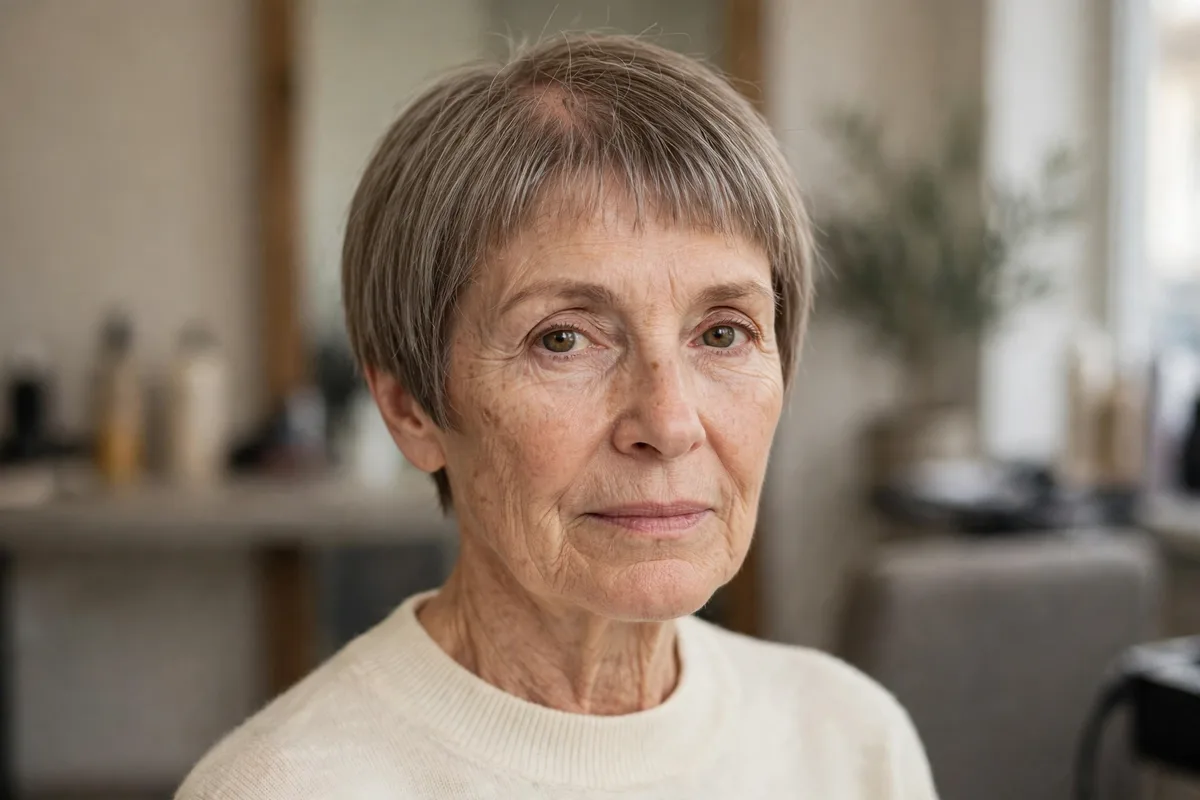
Quick Picks: A pixie bob suits thin hair because it keeps the back short and light while the front keeps enough length to look full at the ends. Blunt perimeters, stacked crowns, and layers placed only at the top are the details that make thin hair read denser than it is.
Start with the Blunt-End Pixie Bob for Thin Hair Over 50 (idea 1) if you want the safest first version, move to the Stacked-Crown Pixie Bob for Thin Hair Over 50 (idea 2) for a bigger change in shape, and save the Jaw-Length Pixie Bob with Ghost Layers Over 50 (idea 10) for the most defined finish in the list. For shorter options first, see the pixie haircuts for fine hair collection, and for the general hybrid in all hair types, the pixie bob haircut ideas list is the broader starting point. The long pixie haircuts for fine hair also help if you want to keep more length while you decide.
Key Takeaways
- Keep the perimeter blunt. A solid baseline is the single biggest reason thin hair looks fuller at the ends.
- Put layers at the crown only. Layers through the sides of thin hair remove the little density that is there.
- A stacked or graduated back lifts a flat crown and disguises thinning at the top.
- Use lightweight foam or mousse at the roots. Creams and oils weigh thin hair flat within hours.
- Plan trims every five to seven weeks. Thin ends show split and see-through tips sooner than thick hair does.
1. Blunt-End Pixie Bob for Thin Hair Over 50
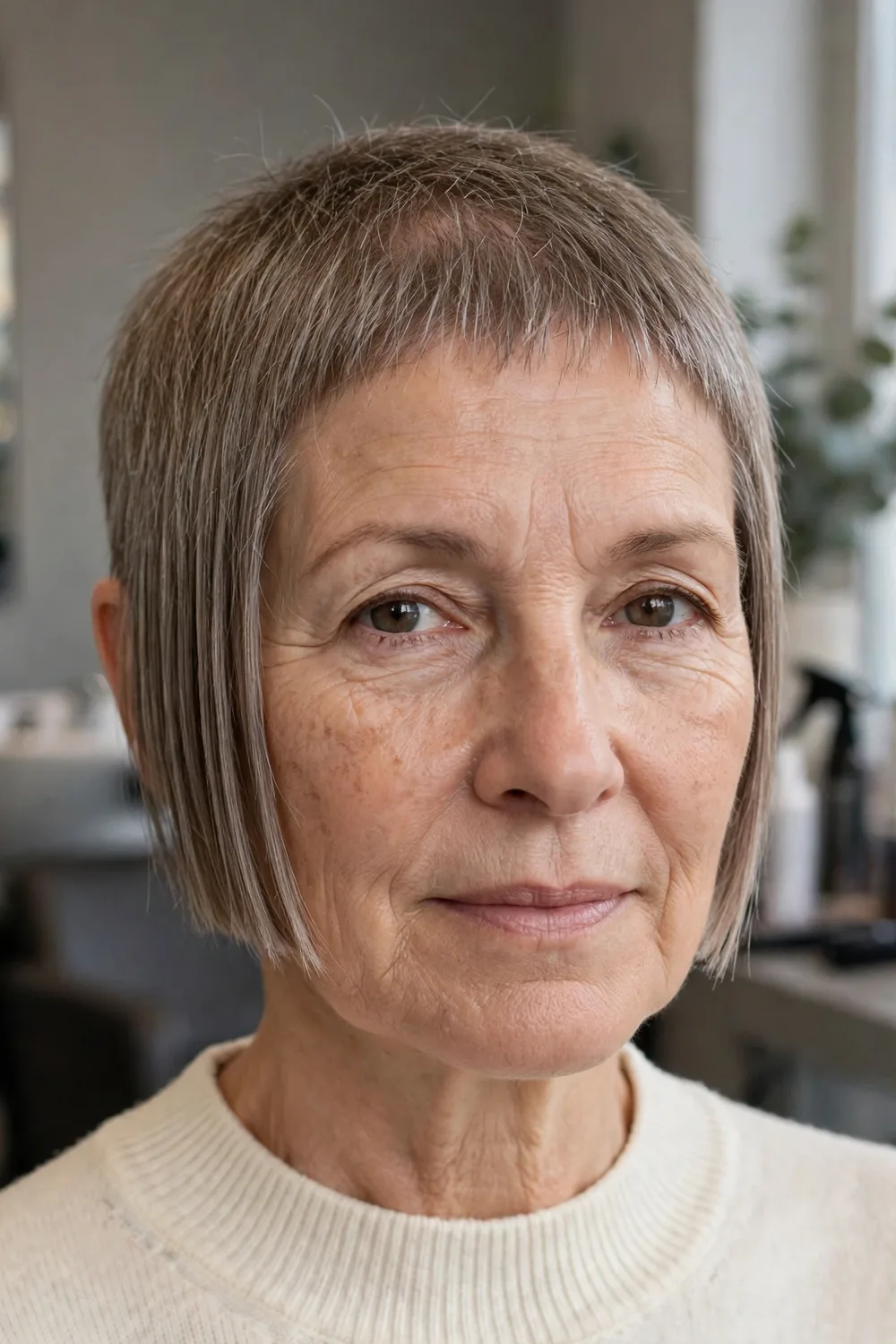
The front and sides end in one blunt line at cheek to jaw level while the back is cut short like a pixie. That blunt baseline is what makes thin ends look dense instead of wispy.
It suits straight thin hair and oval faces. It is also a good first pixie bob because the front length feels familiar if you are leaving a bob.
Try this: Ask for the baseline to be checked with the hair dry. Wet thin hair stretches and a wet check can leave the blunt line uneven.
Difficulty: Low | Cost: $ | Time: 6 minutes
2. Stacked-Crown Pixie Bob for Thin Hair Over 50

Short graduated layers stack at the back and crown, building a rounded shape that lifts where thin hair usually lies flat. The front stays longer and blunt to keep the ends full.
It suits women whose thinning shows most at the crown. The stacked back also suits a flat back of the head.
Try this: Blow-dry the crown layers forward first, then back. That double direction is what locks in the stacked lift on thin hair.
Difficulty: Medium | Cost: $$ | Time: 7 minutes
3. Side-Swept Pixie Bob with a Fuller Front Over 50
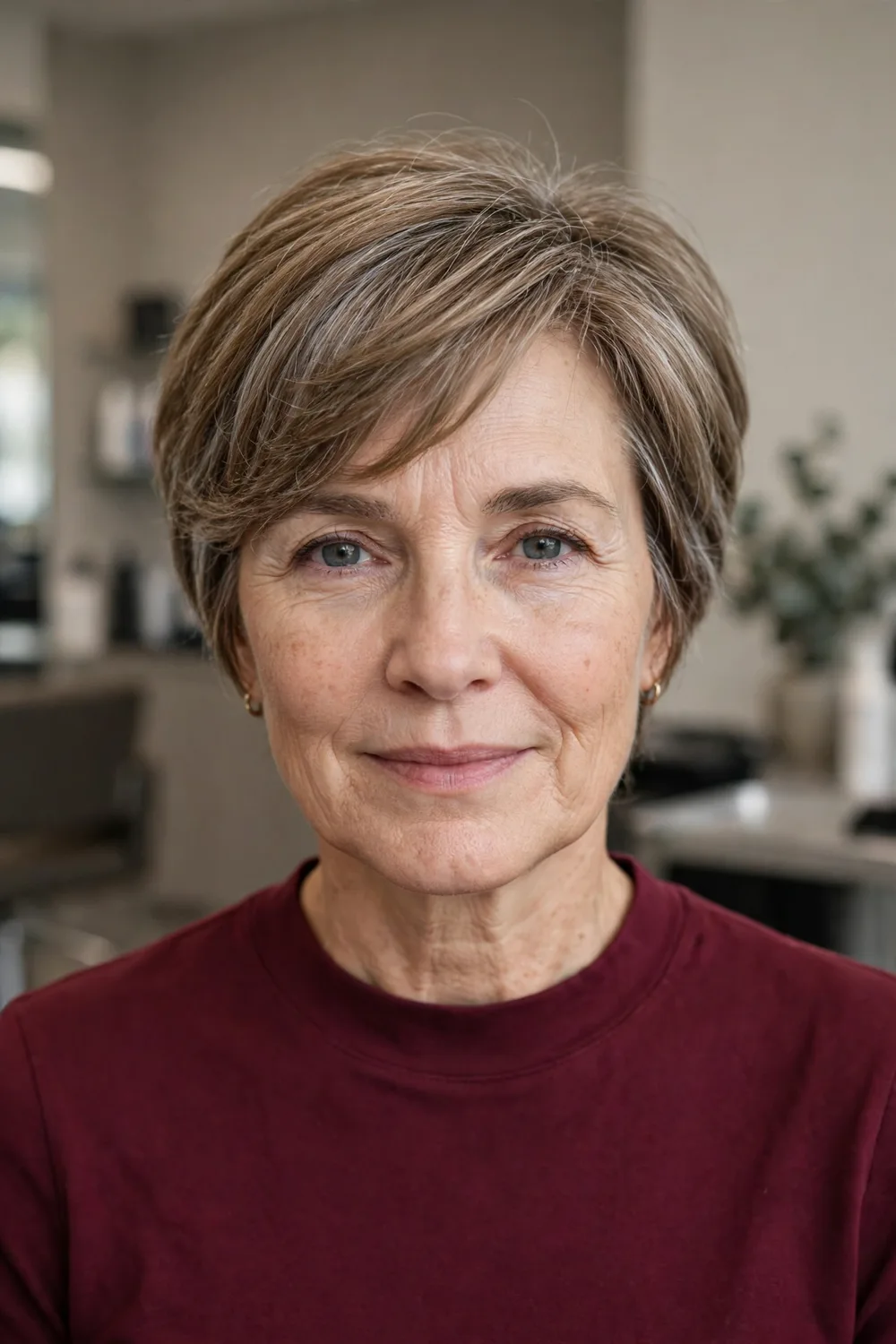
Most of the front length sweeps to one side, doubling the visible hair on that side of the face. The short side tucks behind the ear so the sweep stays the focus.
It suits anyone with a natural side part and thinning at the temples, since the sweep covers the lighter side. It works on straight and wavy thin hair.
Try this: Part it deeper than feels natural at first. A deep part is what creates the fuller-looking sweep on thin hair.
Difficulty: Low | Cost: $ | Time: 6 minutes
4. Silver Pixie Bob with Blunt Front Pieces Over 50

Natural silver hair is often a little coarser than pigmented hair, which helps this cut hold shape. The front pieces stay blunt and jaw length while the back is tapered short.
It suits women wearing their natural gray who want front length without long hair dragging the roots down. Silver tones also show the blunt line clearly.
Try this: Use a violet-toned shampoo once a week at most. More than that can make thin silver ends look dry and darker at the tips.
Difficulty: Low | Cost: $ | Time: 6 minutes
5. Wispy-Fringe Pixie Bob for Thin Hair Over 50

A light, see-through fringe softens the hairline and covers a thinning front edge without using much hair. The rest of the front keeps its blunt length so the fringe does not steal density from the sides.
It suits high foreheads and anyone whose hairline has thinned unevenly. Wispy fringes grow out softly, so they are forgiving between trims.
Try this: Keep the fringe as dry styling only. Wetting and re-drying a wispy fringe daily makes thin ends separate and look thinner.
Difficulty: Low | Cost: $ | Time: 5 minutes
6. Curtain-Fringe Pixie Bob for Thin Hair Over 50
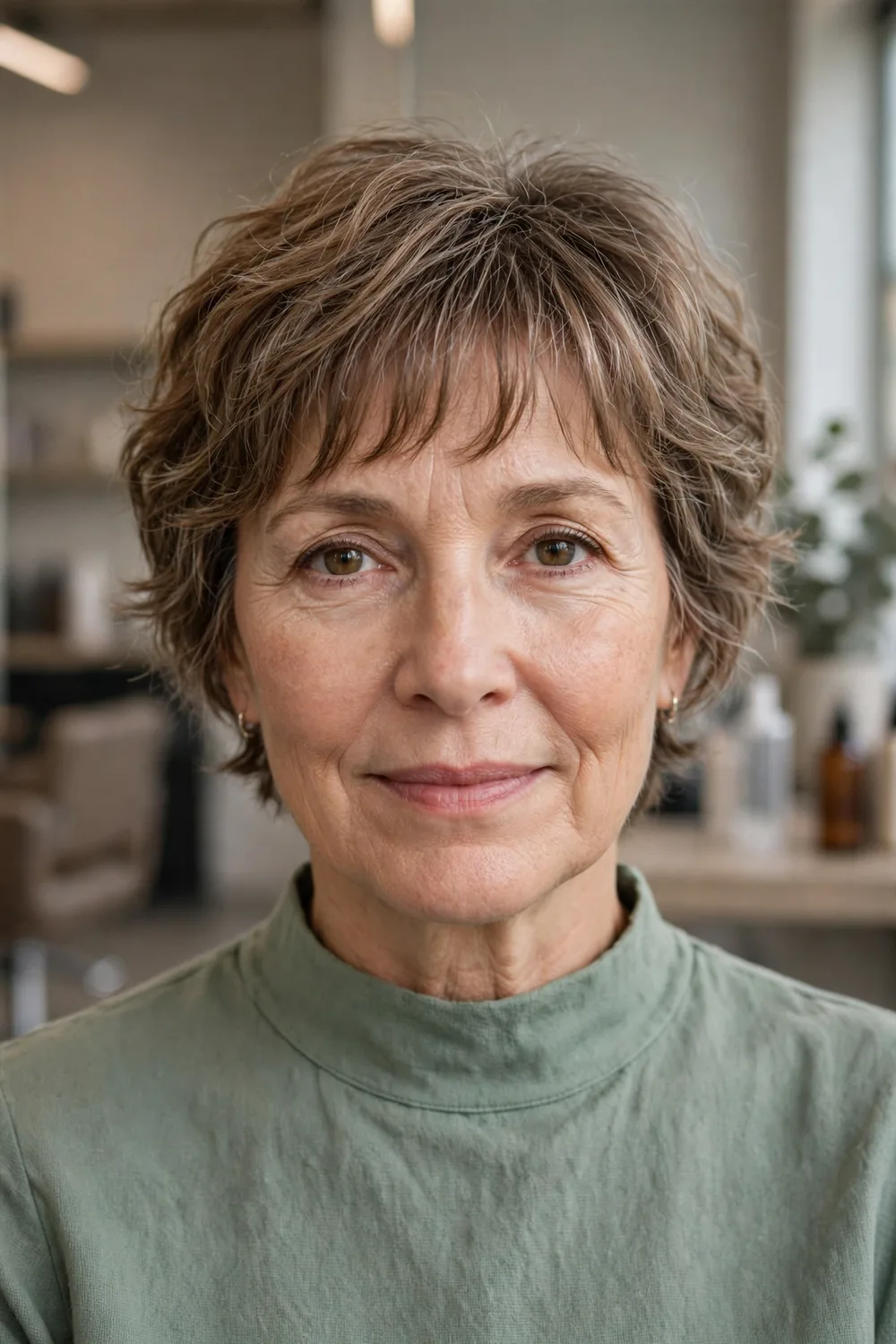
The fringe parts in the middle and sweeps to both sides, blending into the longer front of the pixie bob. Because it is split, it uses less hair at the center hairline than a full fringe.
It suits wavy thin hair and longer faces. The two-sided sweep also frames glasses without sitting on the frames.
Try this: Dry the fringe away from the face on both sides with a small brush. Drying it forward flattens the curtain split.
Difficulty: Low | Cost: $ | Time: 6 minutes
7. Deep Side Part Pixie Bob for Thin Hair Over 50

Moving the part far to one side stacks most of the hair on one side of the head, which covers a widening part line and adds root height on the heavy side. The back stays short and tapered.
It suits straight thin hair and round faces, since the diagonal line lengthens the face. It is also the fastest change here because it starts with a part move, then a trim to match.
Try this: Flip your part to the opposite side every few weeks. Alternating stops one part line from widening under daily wear.
Difficulty: Low | Cost: $ | Time: 6 minutes
8. Angled Pixie Bob with a Lifted Back Over 50

The back is cut short and lifted while the front angles down to a longer point near the chin. On thin hair the angle keeps the longest pieces at the front, where fullness matters most.
It suits square jaws and anyone who likes a defined profile. The short back dries fast, which suits a short morning routine.
Try this: Keep the front points blunt at the very ends. Tapering the points is what makes an angled cut look thin at the front.
Difficulty: Medium | Cost: $$ | Time: 7 minutes
9. Ear-Length Pixie Bob with Point-Cut Ends Over 50

The length sits at the ears all around, longer than a classic pixie and shorter than a bob. Light point cutting at the ends adds movement without removing the density a blunt cut would keep.
It suits petite faces and thin hair that looks stringy at jaw length. Ear length is often the longest thin hair can go while the ends still look full.
Try this: If your ends look see-through at ear length, go half an inch shorter at the next cut rather than adding layers.
Difficulty: Low | Cost: $ | Time: 5 minutes
10. Jaw-Length Pixie Bob with Ghost Layers Over 50

Ghost layers are shorter pieces cut underneath the top layer. They support the surface hair from below, so thin hair gains lift at the roots while the visible outline stays blunt and full at jaw length.
It suits thin straight hair that falls flat by midday. Because the layers are hidden, the cut still reads as a classic pixie bob from the outside.
Try this: Ask your stylist to show you the ghost layer length before cutting. On very thin hair they should stay long, or the support effect is lost.
Difficulty: Medium | Cost: $$ | Time: 7 minutes
11. Root-Shadow Pixie Bob for Thin Hair Over 50
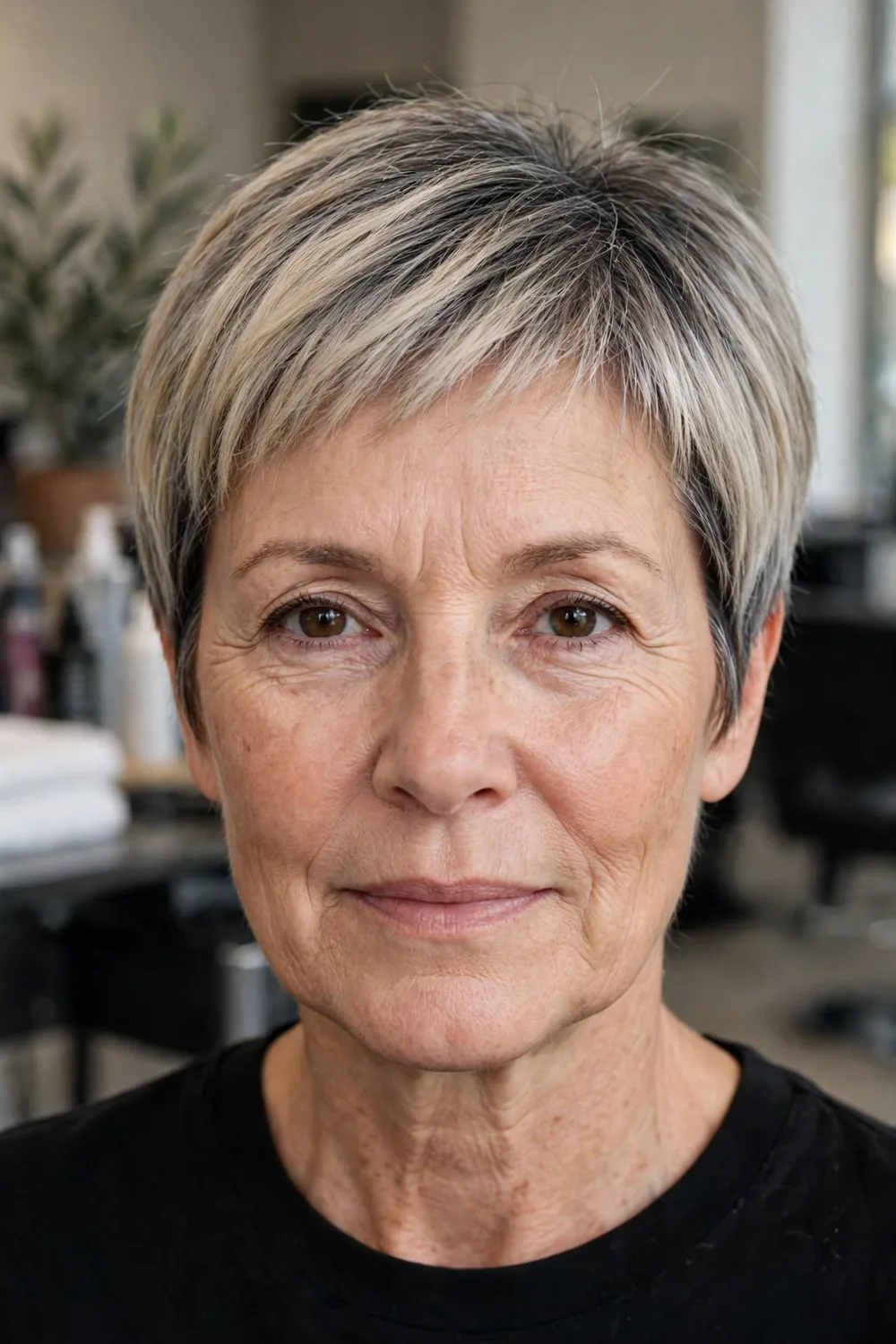
A slightly darker root area is kept or colored at the base while the lengths stay lighter. The darker base makes the hair at the scalp look denser and softens the line as gray roots grow in.
It suits women who color their hair and are tired of a hard root line every three weeks. It also suits thinning at the crown, where contrast against the scalp shows most.
Try this: Book the root shadow as a gloss appointment between full cuts. It is quicker than a full color service and keeps the base looking dense.
Difficulty: Medium | Cost: $$$ | Time: 7 minutes
12. Feathered-Top Pixie Bob with a Solid Perimeter Over 50
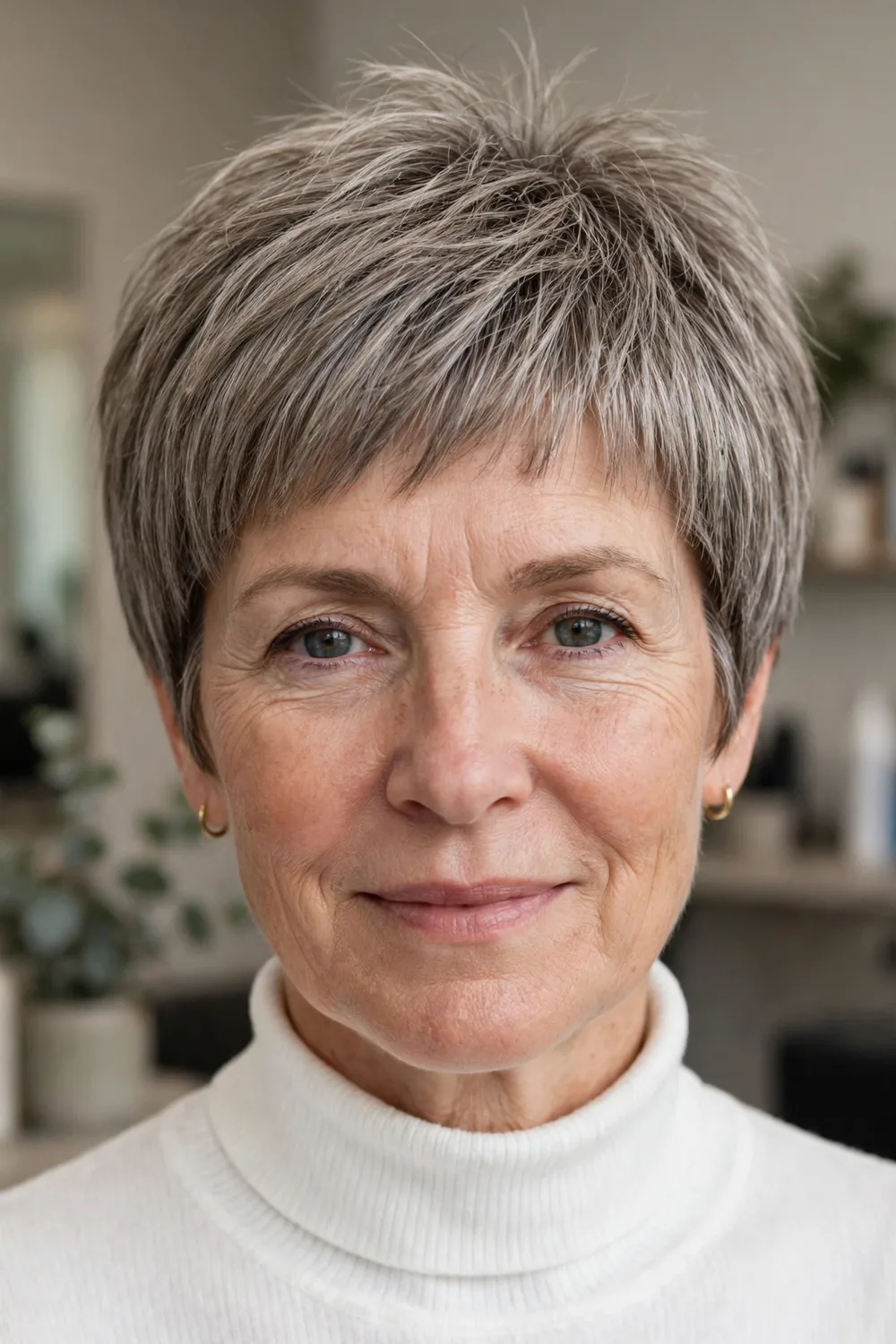
Only the top is feathered for movement, while the edge all around stays one solid line. That split approach gives thin hair texture where it helps and density where it shows.
It suits fine straight hair and anyone who found fully layered cuts made their ends look sparse. The solid edge also suits a neat, tidy finish.
Try this: Be specific at the salon: feather the top only. General layering through the sides is the change that thins this cut out.
Difficulty: Low | Cost: $ | Time: 6 minutes
13. Asymmetric Pixie Bob with a Longer Front Side Over 50

One front side reaches the jaw while the other stops at the cheek, and the back is uniformly short. The longer side carries the visible fullness, and the eye reads that side as the density of the whole cut.
It suits oval faces and a natural side part. It also suits anyone bored with a symmetrical bob who does not want a very short cut.
Try this: Style the longer side with a slight bend at the ends. Straight and flat, a longer thin side can look stringy by the afternoon.
Difficulty: Medium | Cost: $$ | Time: 6 minutes
14. Wavy Pixie Bob for Thin Hair Over 50

The cut follows the natural wave, with the back short and the front long enough for the wave to form a full bend. Waves add width and shadow, which is why wavy thin hair often looks fuller than straight thin hair at the same length.
It suits natural waves and anyone who air-dries. Keep the ends blunt so each wave ends in a solid tip.
Try this: Scrunch with a light foam, not a cream. Foam supports the wave without coating thin strands and pulling them flat.
Difficulty: Low | Cost: $ | Time: 6 minutes
15. Straight Sleek Pixie Bob with a Dense Baseline Over 50
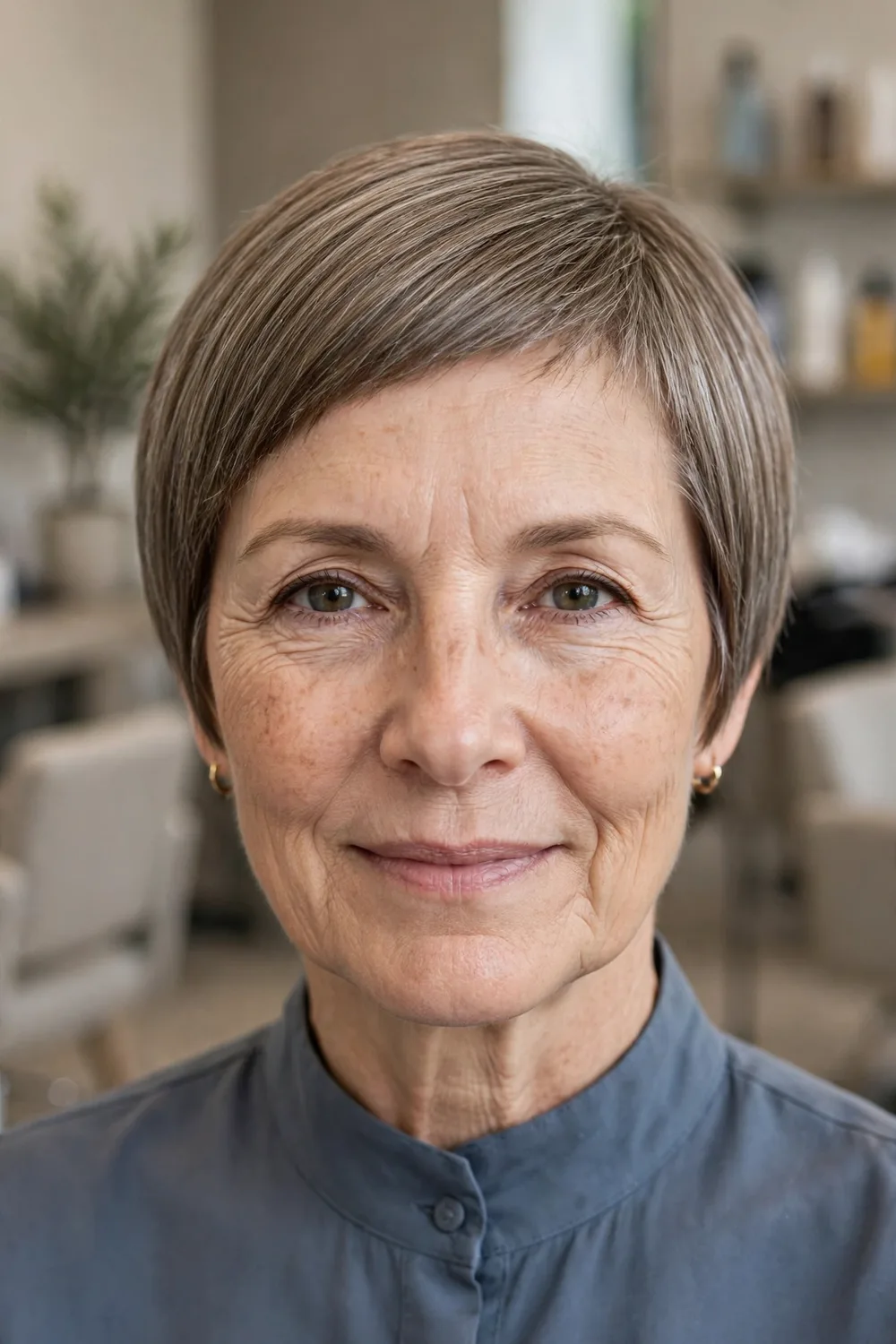
This version is worn smooth and straight, with the baseline cut dense and even and the back tapered close. The smooth finish shows off the solid edge, which is the fullness signal on thin hair.
It suits formal settings and straight hair that frizzes with texture products. A smooth finish also suits silver and light blonde shades.
Try this: Use heat protection every time you smooth it. Thin hair shows heat damage at the ends faster than thick hair does.
Difficulty: Medium | Cost: $$ | Time: 8 minutes
16. Pixie Bob with Babylights for Thin Hair Over 50

Babylights are very fine highlights placed close together through the top and front. The mix of light tones creates shadow and depth, so thin hair looks like it has more strands than it does.
It suits light brown and blonde bases and women who want color dimension without chunky highlights. Fine placement matters more than brightness here.
Try this: Ask for babylights through the top and front only. The short back grows and trims too fast to be worth highlighting.
Difficulty: Medium | Cost: $$$ | Time: 7 minutes
17. Tuck-Back Pixie Bob for Thin Hair and Glasses Over 50
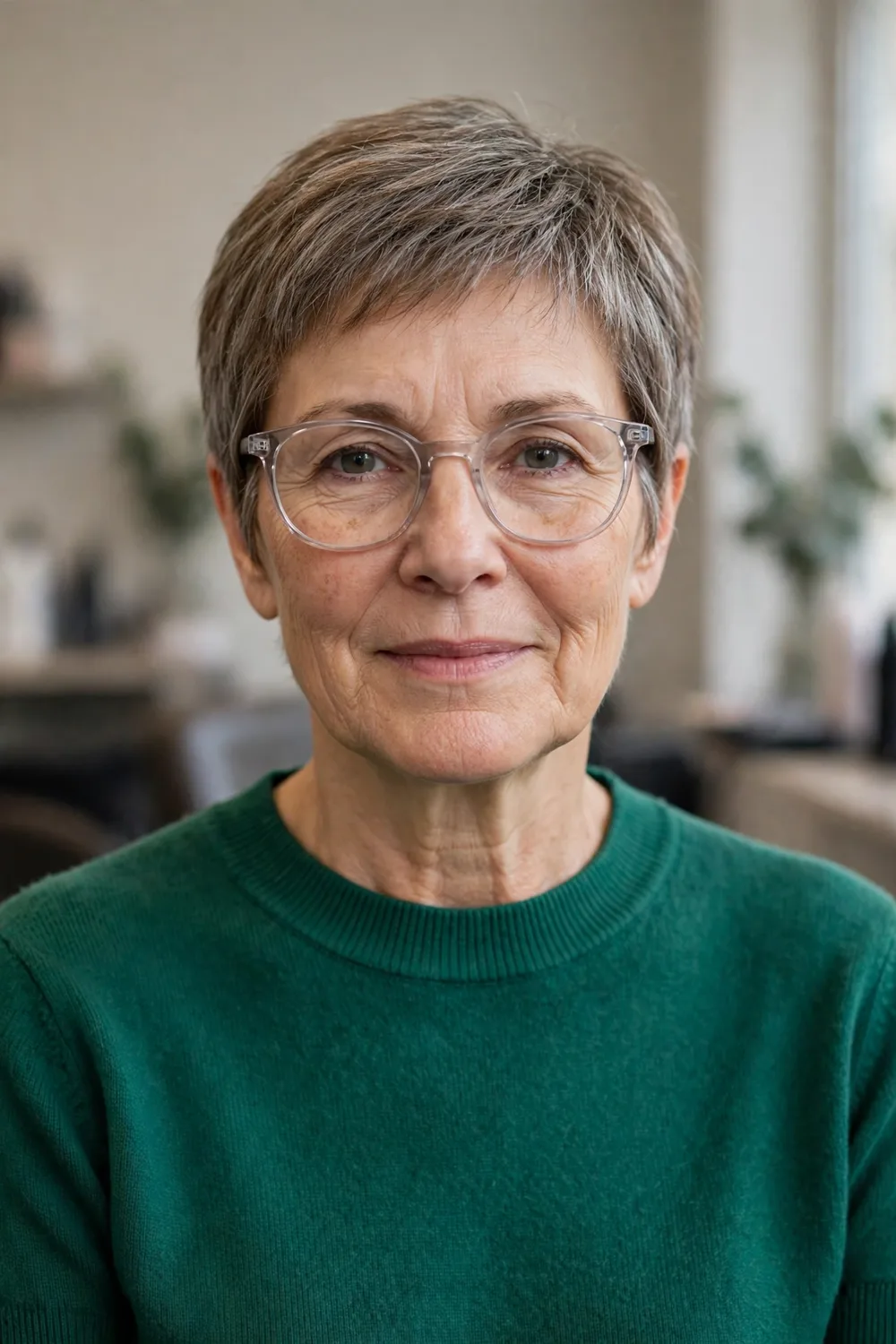
The sides are cut to tuck cleanly behind the ears and sit flat under glasses arms, while the front keeps its length. There is no side bulk to push frames outward or hide the front pieces.
It suits daily glasses wearers and anyone who tucks their hair back all day anyway. Building the tuck into the cut stops the sides breaking from constant handling.
Try this: Bring your everyday frames to the appointment. The tuck length should be cut with the arms in place.
Difficulty: Low | Cost: $ | Time: 5 minutes
18. Choppy-Crown Pixie Bob with Soft Sides Over 50

The crown is cut choppy and piecey for lift while the sides stay soft and longer, blending into the bob front. Keeping the chop at the crown only protects the density at the sides.
It suits thinning that shows at the top of the head. The piecey crown also breaks up a flat silhouette in photos.
Try this: Pinch the crown pieces with a tiny amount of dry texture powder. Wet products collapse a choppy crown on thin hair.
Difficulty: Low | Cost: $ | Time: 6 minutes
19. Center-Part Pixie Bob for Thin Hair Over 50

A center part splits the longer front evenly on both sides, framing the face in matching panels. The back is short, so the even front panels carry the style. It works when the hairline is even on both sides.
It suits oval and longer faces and symmetrical features. If one side of your hairline is thinner, a side part from this same list will cover it better.
Try this: Check both panels in daylight before leaving the salon. Thin hair can look even indoors and uneven in bright light.
Difficulty: Low | Cost: $ | Time: 6 minutes
20. Grow-Out Pixie Bob That Becomes a Short Bob Over 50

The back is left slightly longer than a standard pixie bob and there are no clipped sections, so the whole cut grows evenly into a short bob over about three months. That makes it a low-commitment way to try the shape.
It suits women testing short hair for the first time and anyone who stretches salon visits. There are no hard lines to look untidy as it grows.
Try this: Get only the baseline tidied at the halfway point. Cutting the back short again restarts the grow-out clock.
Difficulty: Low | Cost: $ | Time: 6 minutes
21. Pixie Bob with a Short Fringe for a Thin Hairline Over 50

A short fringe is cut from further back on the crown, which borrows hair from a denser area to cover a thin front hairline. The fringe sits above the brows and blends into the longer pixie bob front at the sides.
It suits a receding or sparse front hairline and shorter foreheads. Cutting the fringe from further back is the key detail to ask for by name.
Try this: If the fringe separates by midday, a light mist of dry shampoo at the roots absorbs oil and keeps the coverage even.
Difficulty: Low | Cost: $ | Time: 5 minutes
22. Air-Dry Pixie Bob for Thin Wavy Hair Over 50

This version is cut to dry on its own: blunt ends, a short back, and front pieces long enough for the wave to settle without heat. Thin wavy hair gains body as it dries because the wave lifts the strands off the scalp.
It suits no-heat routines and warm climates. The whole routine is foam on damp hair, a part set by hand, and no touching while it dries.
Try this: Set your part with your fingers while the hair is wet, then leave it. Re-parting dry thin wavy hair breaks the wave and flattens the roots.
Difficulty: Low | Cost: $ | Time: 4 minutes
Pixie Bob Haircuts For Thin Hair Over 50 at a Glance
| Name | Best For | Difficulty | Cost | Time |
|---|---|---|---|---|
| Blunt-End Pixie Bob for Thin Hair Over 50 | Thin straight hair | Low | $ | 6 minutes |
| Stacked-Crown Pixie Bob for Thin Hair Over 50 | Thin hair, flat crown | Medium | $$ | 7 minutes |
| Side-Swept Pixie Bob with a Fuller Front Over 50 | Thin hair, side part | Low | $ | 6 minutes |
| Silver Pixie Bob with Blunt Front Pieces Over 50 | Natural silver thin hair | Low | $ | 6 minutes |
| Wispy-Fringe Pixie Bob for Thin Hair Over 50 | Thin hairline | Low | $ | 5 minutes |
| Curtain-Fringe Pixie Bob for Thin Hair Over 50 | Thin wavy hair | Low | $ | 6 minutes |
| Deep Side Part Pixie Bob for Thin Hair Over 50 | Thin hair at the part line | Low | $ | 6 minutes |
| Angled Pixie Bob with a Lifted Back Over 50 | Thin hair, angled shape | Medium | $$ | 7 minutes |
| Ear-Length Pixie Bob with Point-Cut Ends Over 50 | Thin hair, ear length | Low | $ | 5 minutes |
| Jaw-Length Pixie Bob with Ghost Layers Over 50 | Thin hair wanting hidden lift | Medium | $$ | 7 minutes |
| Root-Shadow Pixie Bob for Thin Hair Over 50 | Thin hair with gray roots | Medium | $$$ | 7 minutes |
| Feathered-Top Pixie Bob with a Solid Perimeter Over 50 | Thin hair, feathered top | Low | $ | 6 minutes |
| Asymmetric Pixie Bob with a Longer Front Side Over 50 | Thin hair, asymmetric shape | Medium | $$ | 6 minutes |
| Wavy Pixie Bob for Thin Hair Over 50 | Thin wavy hair | Low | $ | 6 minutes |
| Straight Sleek Pixie Bob with a Dense Baseline Over 50 | Thin straight hair, polished finish | Medium | $$ | 8 minutes |
| Pixie Bob with Babylights for Thin Hair Over 50 | Thin hair with fine color | Medium | $$$ | 7 minutes |
| Tuck-Back Pixie Bob for Thin Hair and Glasses Over 50 | Glasses wearers, thin hair | Low | $ | 5 minutes |
| Choppy-Crown Pixie Bob with Soft Sides Over 50 | Thin hair, choppy crown | Low | $ | 6 minutes |
| Center-Part Pixie Bob for Thin Hair Over 50 | Thin hair, center part | Low | $ | 6 minutes |
| Grow-Out Pixie Bob That Becomes a Short Bob Over 50 | Thin hair, growing out | Low | $ | 6 minutes |
| Pixie Bob with a Short Fringe for a Thin Hairline Over 50 | Thin hairline at the front | Low | $ | 5 minutes |
| Air-Dry Pixie Bob for Thin Wavy Hair Over 50 | Thin wavy hair, no-heat routine | Low | $ | 4 minutes |
Frequently Asked Questions
Will a pixie bob make thin hair look fuller?
It can, because the short back removes weight that pulls roots flat, and a blunt front baseline makes the ends look dense. Layers should stay at the crown. Layers through the sides usually make thin hair look sparser.
What length is a pixie bob for thin hair?
The back is pixie short and tapered, while the front usually sits between the cheekbone and the jaw. Going longer than the jaw at the front often makes thin ends look see-through, so most stylists keep the front at or above the jaw.
How often does a pixie bob need trimming on thin hair?
Every five to seven weeks suits most thin hair. The blunt baseline is the fullness signal, and once the ends split or thin out, the cut stops reading as full even if the shape is still there.
Which products help a thin-hair pixie bob hold volume?
Lightweight mousse or foam at the roots on damp hair, dried upward, gives the most hold without weight. Dry texture powder at the crown helps on day two. Heavy creams, oils, and waxes usually flatten thin hair within hours.
Can a pixie bob cover a thinning crown or part line?
A stacked crown, a deep side part, and a root shadow all help in different ways. Stacked layers lift a flat crown, a deep side part covers a widening part line, and a darker base reduces contrast against the scalp.
Final Thoughts
Pick the version in this list that matches your hair as it is now, not as it was ten years ago, and take the photo of that single idea to your appointment. For pixie bob haircuts for thin hair over 50, the cutting details matter more than the name of the style: where the weight comes out, where the layers sit, and where the length ends are what decide whether the cut still looks right at week five.

