


Every few seasons, short hair takes over my saved photos folder again, and this year the pull is stronger than usual. The cuts filling salon chairs right now are softer than the sharp crops of a few years ago: bobs with movement, pixies with a longer top, and hybrids that let you test short hair without giving up every styling option on day one.
This list gathers 23 trendy short haircuts for women, ordered from the bob family through pixies and crops to the edgier layered cuts at the end. Each one covers the shape, the hair types it suits, the daily styling it actually needs, and how often it needs a trim. Read the trim timing as carefully as the photo, because a cut that needs a salon visit every four weeks is a different commitment from one that holds for eight.
Quick Takeaways
- Bobs lead the trend list: French, blunt, textured, Italian, and bubble bobs all sit between the ears and the jaw.
- The bixie is the safest first step into very short hair, with a pixie back and a bob length front.
- Trim timing splits the list. Pixies and crops need four to six weeks; bobs and lobs can stretch to eight or ten.
- Fine hair does best with blunt edges and light, low layers. Thick hair does best with angled, layered, and undercut shapes that remove weight.
- Wavy and curly hair have dedicated options here: the textured bob, the shaggy bob, and the curly bob are all cut around natural texture.
How to Pick Your Short Haircut
Start with your trim budget in time, not just in visits. If you can get to a salon every month, pixies, crops, and undercuts stay sharp and easy. If you go every two months, stay with bobs, layered cuts, and the long bob. The roundup of easy short hairstyles for busy mornings is a useful second read once you know which trim cycle fits your life.
Then match the cut to your hair type. Fine hair needs blunt edges and weight kept at the bottom, so look at the blunt bob, the soft bob, and short layered cuts with low layers. Thick hair needs weight removed, so look at angled bobs, wolf cuts, and pixies with undercuts. Wavy hair should lean into texture with the textured or shaggy bob, and curly hair should start with the curly bob. Seasonal lists such as the short fall hair ideas roundup show how these same cuts shift with color and styling through the year.
| Cut family | Ideas on this list | Best for | Trim cycle |
|---|---|---|---|
| Classic bobs | French, blunt, soft, Italian, bubble | Straight and wavy hair, polished finish | 6 to 8 weeks |
| Textured bobs | Textured, flippy, angled, asymmetric, side-part, shaggy, curly | Movement, fine hair fullness, wavy texture | 5 to 8 weeks |
| Layered and long | Short layered, long bob | Softest grow-out, first short cut | 8 to 10 weeks |
| Pixies and crops | Bixie, modern pixie, French crop, shaggy crop, pixie with undercut, buzz cut | Fast mornings, thick hair weight removal | 3 to 6 weeks |
| Edgy layered cuts | Short wolf cut, short mullet, short jellyfish cut | Bold shape, strong personal style | 5 to 6 weeks |
1. French Bob with Micro Bangs

The French bob sits at the chin or just below it, cut blunt at the ends with a short, soft fringe across the forehead. The shape is boxy at the bottom and light at the top, so the hair swings as one piece when you move. It suits straight and wavy hair, and it frames round and oval faces well because the fringe shortens the face while the sides add width at the jaw.
Styling takes about ten minutes. Blow dry with a round brush for a smooth finish, or scrunch in a light mousse and air dry for a softer bend. The fringe needs a quick tidy every three weeks or so, and the full cut holds its line for six to eight weeks.
Try this: ask for the ends to be cut a fraction longer than your target length. A French bob shrinks up as it dries, and that small allowance saves you from a shorter result than you planned.
Difficulty: Medium · Cost: $$
2. Glossy Blunt Bob
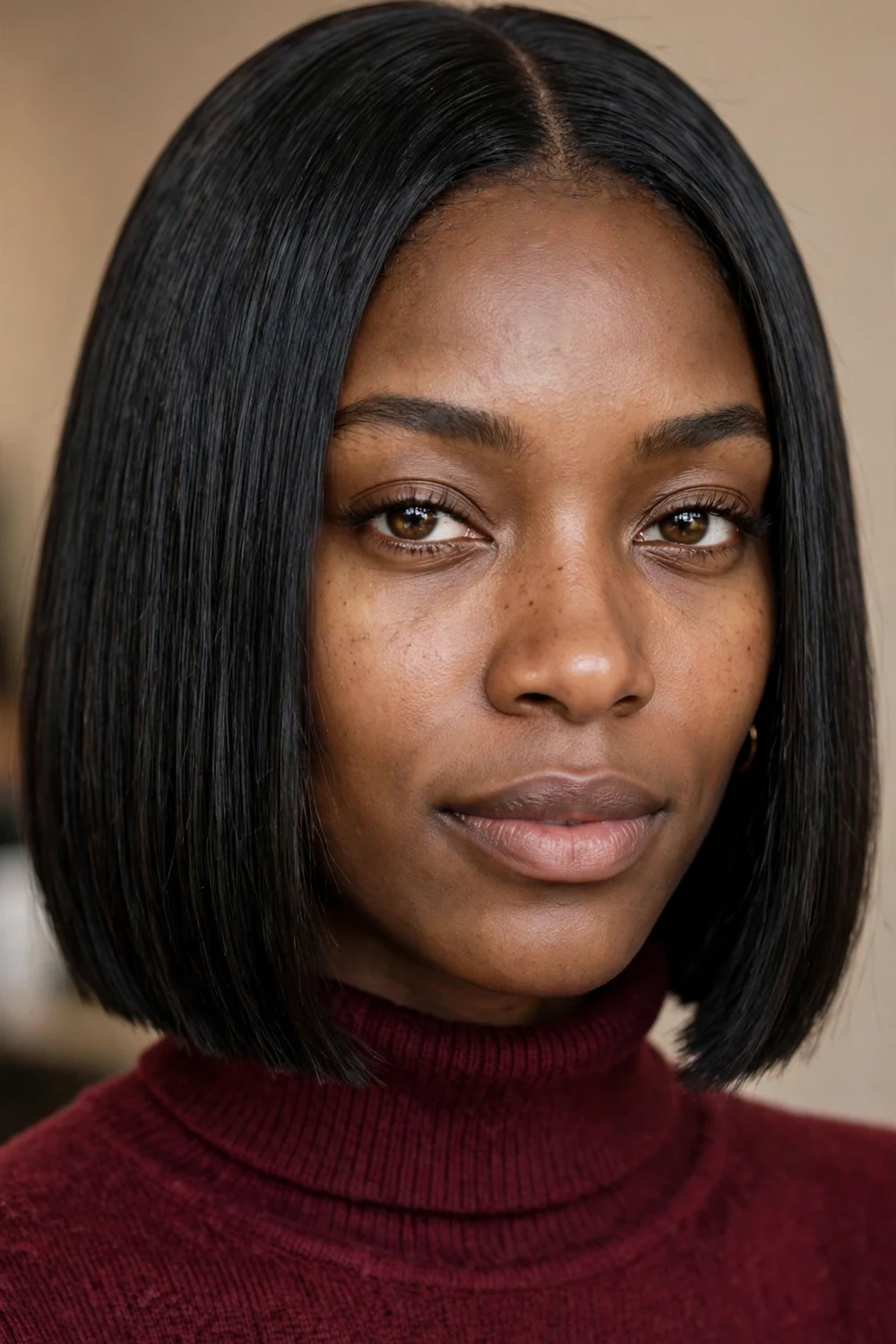
A blunt bob is cut straight across at jaw level with no layers and no graduation, so all the weight sits in one clean line at the bottom. That density is why the cut reads so polished on fine and medium hair: the ends look full instead of wispy. A center part keeps the shape graphic, while a side part softens it.
This cut lives or dies on the finish. Run a flat iron through the ends or blow dry them under with a paddle brush so the line stays unbroken. Book a trim every six weeks, since even a small amount of growth blurs the edge that makes the style work.
Try this: wear the blunt bob one length longer at the front if your hair curls under on its own. The front pieces will land level with the back once they settle.
Difficulty: Medium · Cost: $$
3. Soft Bob

The soft bob lands just below the jaw with gentle layers through the ends and a loose wave through the body of the hair. Where the blunt bob is one hard line, this version breaks the edge up, so the cut moves more and forgives more on busy mornings. It is a kind first short cut for anyone leaving longer hair behind.
Fine hair gets lift from the shorter length, and wavy hair can air dry into the shape with a small amount of cream. Straight hair needs a quick pass with a large curling iron or a round brush to build the bend. Trims run every seven to eight weeks because the soft edge grows out gracefully.
Try this: ask your stylist to point cut the ends instead of cutting them straight across. Point cutting removes tiny notches that keep the edge feathery rather than blunt.
Difficulty: Low to Medium · Cost: $$
4. Italian Bob

The Italian bob is a full, chin length bob with real body through the sides and ends that curve under. It is usually worn with a deep side part and a smooth blowout, which gives the cut its rounded, generous shape. Medium and thick hair carry it best, since the style needs natural volume to fill the silhouette.
Plan on blow drying after most washes. Use a round brush and lift at the roots, then roll the ends under and let them cool before you touch them. The shape holds for days with a dry shampoo refresh at the roots. Trims sit at six to seven weeks.
Try this: flip your part to the opposite side on day two. The roots lift again on the new side and the bob looks freshly blown out with no heat at all.
Difficulty: Medium · Cost: $$
5. Textured Bob

A textured bob takes a standard chin length bob and breaks it up with choppy layers, piecey ends, and a tousled finish. The uneven lengths catch light at different points, so the hair looks thicker and more active than a smooth bob of the same length. Wavy hair falls into this cut with almost no help.
Daily styling is a texturizing spray scrunched through dry hair, worked in with your fingers rather than a brush. Straight hair needs a few bends from a flat iron, left to cool and then shaken out. Because the finish is deliberately uneven, this bob stretches to eight weeks between trims.
Try this: apply texturizing spray to dry hair only. On wet hair the product spreads too thin and the piecey separation you want never forms.
Difficulty: Low to Medium · Cost: $$
6. Flippy Bob

The flippy bob, also called the bell-bottom bob, is a chin length bob finished with the ends flipped outward instead of curled under. The flick at the bottom gives a plain bob a retro shape and makes fine hair look wider and fuller at the ends. It works at chin length and at lengths just past the shoulders.
The flip is a styling choice, so the underlying cut is a simple bob that also wears smooth on days you skip the styling. To build the flip, run a flat iron down each section and turn your wrist outward at the last inch, or roll the ends outward on a round brush. The cut itself needs a trim every six to eight weeks.
Try this: flip only the front sections and the top layer if you want a softer read. A full head of flips is bold; a partial flip reads as movement.
Difficulty: Low to Medium · Cost: $
7. Angled Bob
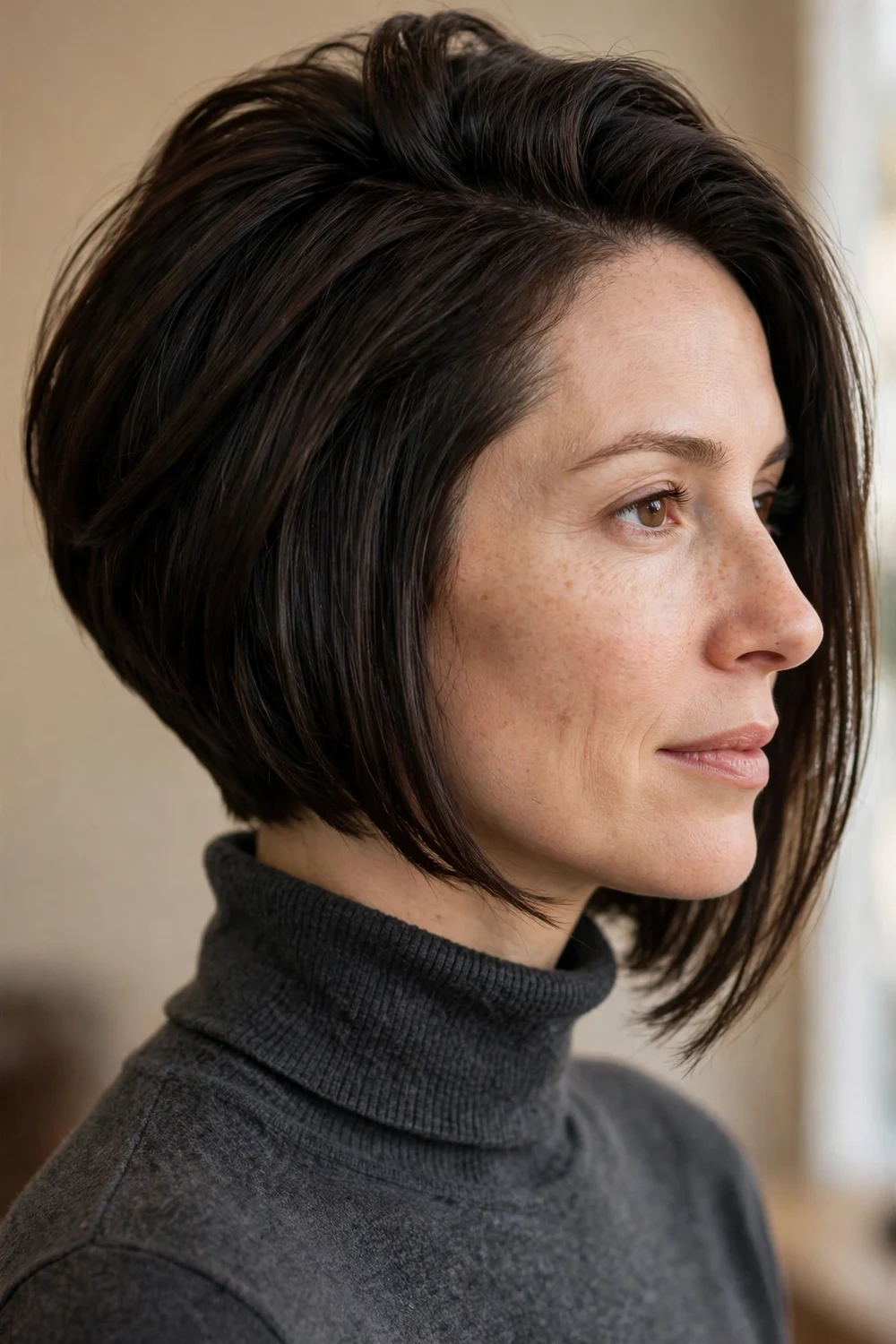
An angled bob is cut shorter at the back and longer at the front, with the back often stacked in short layers that build height at the crown. The long front pieces frame the face and draw a diagonal line that suits square and heart shaped faces, since the angle softens a strong jaw. Thick hair benefits most, because the short back removes weight where it bunches.
Wear it sleek with a flat iron to show the angle, or add loose waves for a softer version. The stacked back grows out faster than the front, so plan trims every five to six weeks to keep the gradient clean. Ask how steep you want the angle before the cut starts, since a dramatic slope is hard to soften later.
Try this: bring a side view photo of the exact angle you want. Front photos hide the slope, and the back is where angled bobs differ most from one another.
Difficulty: Medium · Cost: $$
8. Asymmetric Bob

An asymmetric bob is cut at two different lengths: one side sits near the ear while the other falls to the jaw or below it, joined by a deep side part. The mismatch is deliberate and gives the cut a built in focal point, so styling can stay very simple everywhere else. It suits straight and wavy hair and works on most face shapes.
The longer side needs the most care, since it shows split ends first. Keep the parting consistent when you style, because the cut is built around that one part line. Book trims every five to six weeks; asymmetry loses its read quickly once the short side grows down toward the long side.
Try this: start with a mild difference of about an inch between sides. You can widen the gap at the next appointment once you know you like living with the shape.
Difficulty: Medium · Cost: $$
9. Bubble Bob

The bubble bob is a rounded chin length bob with the ends tucked under all the way around, which builds a full, curved silhouette that sits away from the neck. The shape reads smooth and deliberate, and the volume at the sides flatters the jawline on oval and long faces. Straight and slightly wavy hair hold the curve best.
Blow dry with a round brush and roll every section under, then let the hair cool in that curve before dressing it out. A light smoothing serum keeps the surface clean. Curly hair can wear this cut, but the tuck needs heat each time, so weigh that routine before you commit. Trims run every six weeks.
Try this: dry the nape section first and roll it under while it is still warm. The back sets the curve for the whole head, and the sides follow it easily.
Difficulty: Medium · Cost: $$
10. Side-Part Bob

A side-part bob pairs a jaw length bob with a deep side part and long side-swept bangs that cross the forehead diagonally. Sweeping the hair over from one side builds volume at the crown and adds width through the top of the cut, which helps fine hair look fuller. The diagonal fringe also softens a high forehead.
Blow dry the fringe in the opposite direction first, then sweep it back across. That small step stops the bangs from splitting at the part. The bob follows a standard six to eight week trim cycle, and the fringe may need a quick tidy between full cuts.
Try this: tuck the short side behind your ear and leave the long side loose. The contrast sharpens the part and shows off the sweep of the fringe.
Difficulty: Low · Cost: $
11. Shaggy Bob with Wispy Bangs

A shaggy bob layers a chin length bob with choppy, feathered cuts throughout and finishes it with wispy see-through bangs. The layers stack shorter at the crown and longer at the ends, so the hair gains volume on top and keeps movement at the bottom. It is a forgiving cut for wavy hair and for fine hair that needs body. Readers with fine hair can compare cuts in the shaggy bob hairstyles for fine hair roundup before booking.
Scrunch a light mousse into damp hair and air dry, or diffuse for more lift. The shag shape is meant to look lived in, so it tolerates second day hair well and grows out softly over seven to eight weeks. Keep the bangs trimmed every three weeks so they stay wispy rather than heavy.
Try this: ask for the layers to start below the crown if your hair is fine. Layers that start too high remove weight the ends need to look full.
Difficulty: Low to Medium · Cost: $$
12. Short Layered Haircut

A short layered haircut keeps the overall length above the shoulders and cuts layers at varied lengths through the whole head. The layers remove bulk from thick hair and build the look of fullness in fine hair, so the same basic cut serves both hair types with different layer placement. It is the most adaptable short cut on this list.
Styling is flexible: blow dry for a smooth finish, scrunch for texture, or tuck it back on rushed days. Because no single hard line defines the shape, this cut has the softest grow-out here and can stretch to eight or even ten weeks between trims for slow growing hair.
Try this: tell your stylist where your hair feels heaviest, not just where you want it shorter. Good layering removes weight from that exact zone first.
Difficulty: Low to Medium · Cost: $$
13. Long Bob

The long bob, or lob, falls between the chin and the collarbone and counts as the longest cut in this roundup. It keeps enough length to tie back in a small ponytail while still reading as a short, deliberate shape. Blunt ends keep it tidy, and a soft bend through the mid-lengths stops it from hanging flat.
Almost every face shape wears a lob well, and the length elongates round faces in particular. Upkeep is the lightest of the bob family: trims every eight to ten weeks hold the line, and the cut grows into medium length without an awkward stage if you change your mind.
Try this: ask for the front to sit a finger width longer than the back. The slight slope stops the lob from reading as a plain one-length cut.
Difficulty: Low · Cost: $$
14. Curly Bob

A curly bob is cut to follow the natural curl pattern, usually in a rounded shape at chin length with layers shaped curl by curl. Cutting with the curl in mind keeps the silhouette even once the hair dries and shrinks, which is where straight-cut bobs on curly hair often go wrong. The result is volume at the sides and a defined outline.
Style on wet hair with a leave-in and a curl cream, then air dry or diffuse without touching the curls until they are fully dry. Refresh on day two with a water mist at the roots. Book shaping appointments every eight to ten weeks, since curly bobs are trimmed for shape rather than for a hard line.
Try this: book a stylist who cuts curly hair dry. A dry cut shows the true length and shape of each curl, so the finished bob lands where you expect it.
Difficulty: Medium · Cost: $$
15. Bixie Cut
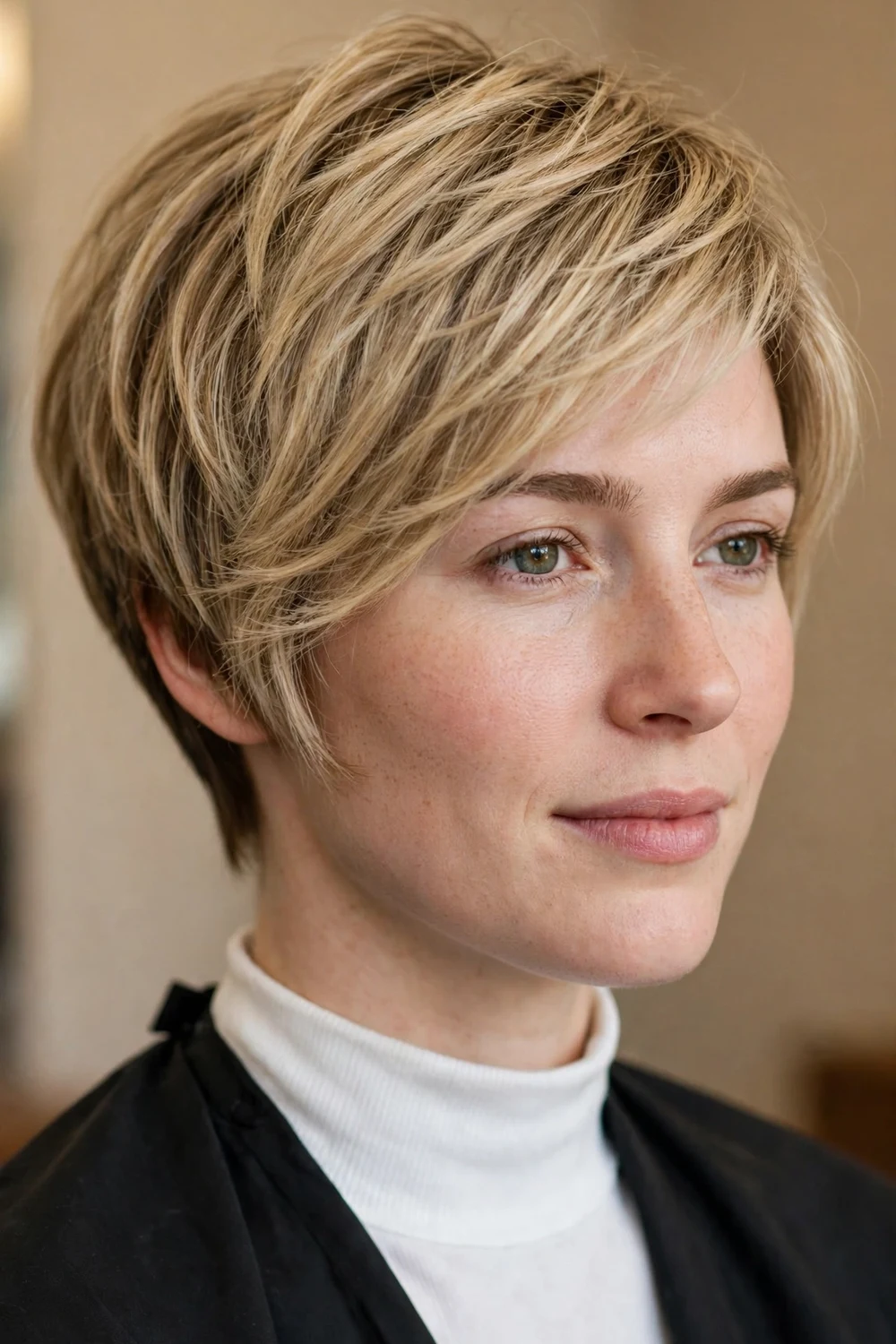
The bixie blends a bob and a pixie: the nape and sides are cut short and tapered like a pixie, while the top and front keep bob length and fall toward the jaw. It is the standard pick for a first move into very short hair, since the longer front keeps the face framed while the back goes short. The pixie bob haircut ideas gallery shows the same hybrid family at a few different lengths.
Style the top forward for a pixie read or sweep it back for a bob read; the cut supports both with a small amount of styling paste. Wavy hair settles into the layers easily. The tapered back needs a tidy every four to five weeks, while the top can grow a little longer between visits.
Try this: decide your bixie ratio before the appointment: more pixie at the back, more bob at the front, or an even split. The ratio changes the whole upkeep schedule.
Difficulty: Medium · Cost: $$
16. Modern Pixie Cut

The modern pixie keeps the sides and back short and softly tapered, with a longer textured top that can sweep forward, lift up, or part to one side. That top length is what separates the current version from the very close crops of the past: the cut is short everywhere, but the top still gives you styling choices. It suits oval and heart shaped faces and takes weight off thick hair. Fine hair plans are covered in the pixie haircuts for fine hair guide.
Daily styling takes about five minutes with a pea sized amount of paste worked through the top. Blow dry the top forward with your fingers for the most lift at the roots. Pixies blur at the edges as they grow, so book trims every four to six weeks to hold the outline.
Try this: grow the top for two extra weeks before your first pixie appointment if you can. A slightly longer top gives your stylist more to shape and gives you more styling range.
Difficulty: Medium · Cost: $$
17. French Crop

The French crop is a very short, lightly tousled crop with a short soft fringe and gentle volume on top. The overall length stays close to the head, and the fringe is cut to fall forward in small pieces rather than one straight line. It is a low styling cut with a distinct shape, well suited to fine hair and small features.
Wash, towel dry, push the top forward with your fingers, and the style is done. A tiny amount of matte paste adds separation on days you want more texture. The fringe and edges need a trim every three to four weeks, which is the trade you make for a cut this short and this simple each morning.
Try this: ask for the fringe to be point cut in small pieces. A straight fringe on a crop this short can look severe; a broken fringe keeps the cut soft.
Difficulty: Low · Cost: $
18. Shaggy Crop

The shaggy crop applies shag layering to a short crop: choppy layers around the crown, feathered ends around the ears and nape, and plenty of piecey separation throughout. It gives fine and flat hair a lifted, active shape without any bob length to manage. The finish is deliberately undone, so small imperfections in styling never show.
Work a small amount of texturizing cream through dry hair and pinch the crown layers upward. The crop holds its shape for five to six weeks, and the feathered edges grow out softly, which makes it a kind pick for anyone stretching salon visits. It also pairs well with a short fringe or a side-swept front.
Try this: style this cut with your fingers only. A brush pulls the feathered ends straight and removes the separation the layers were cut to create.
Difficulty: Low to Medium · Cost: $
19. Pixie with Undercut

A pixie with an undercut clips the sides and back very short, sometimes down to a fade, and leaves a longer top that sweeps across or falls forward. The hard contrast between the clipped sections and the long top is the whole point of the cut. It removes a lot of bulk, which makes washing and drying fast, and it gives thick hair a much lighter feel.
The top styles like a standard pixie with paste or a light wax. The clipped sections are the upkeep: they soften within two to three weeks and most wearers refresh them at every cut appointment, every four weeks or so. If you want the shape with a softer edge, ask for a taper that blends into the top instead of a full disconnect.
Try this: start with the undercut at the nape only. You get the light feel and the easy wash day, and the cut grows out far more evenly while you test the look.
Difficulty: Medium to High · Cost: $$
20. Buzz Cut

A buzz cut clips the hair evenly very short all over, at one guard length or with a slight fade at the edges. With no length left to arrange, the cut puts the focus on face shape and head shape, and the daily routine drops to washing and moisturizing. It is also the fastest full reset for hair that is damaged or over-processed.
Upkeep is about frequency rather than effort. Most wearers re-clip every two to three weeks to keep the length even, at home with clippers or at a barber. A scalp moisturizer and sun protection on exposed skin become part of the routine at this length. Grow-out is even and simple, passing through a short crop stage on the way to a pixie.
Try this: try one guard length longer than your target on the first cut. You can take it shorter the same day; you cannot add length back once it is clipped.
Difficulty: Low · Cost: $
21. Short Wolf Cut

The short wolf cut combines heavy choppy layers on top, a wispy tapered fringe, and thinner shaggy ends that finish around the jaw. The top is full and the bottom is light, which gives the cut its wild outline. Thick and wavy hair holds the shape with the least work, since the natural texture fills the top layers on its own.
Scrunch in a texturizing product and let the layers fall where they land; neat styling fights the shape of this cut. Fine hair can wear it, but plan on daily root lift to stop the top from going flat. Trims run every six weeks to clear the wispy ends before they thin out too far.
Try this: show your stylist a photo of the fringe as well as the overall shape. Wolf cuts fail most often at the fringe, where too much weight kills the wispy finish.
Difficulty: Medium · Cost: $$
22. Short Mullet
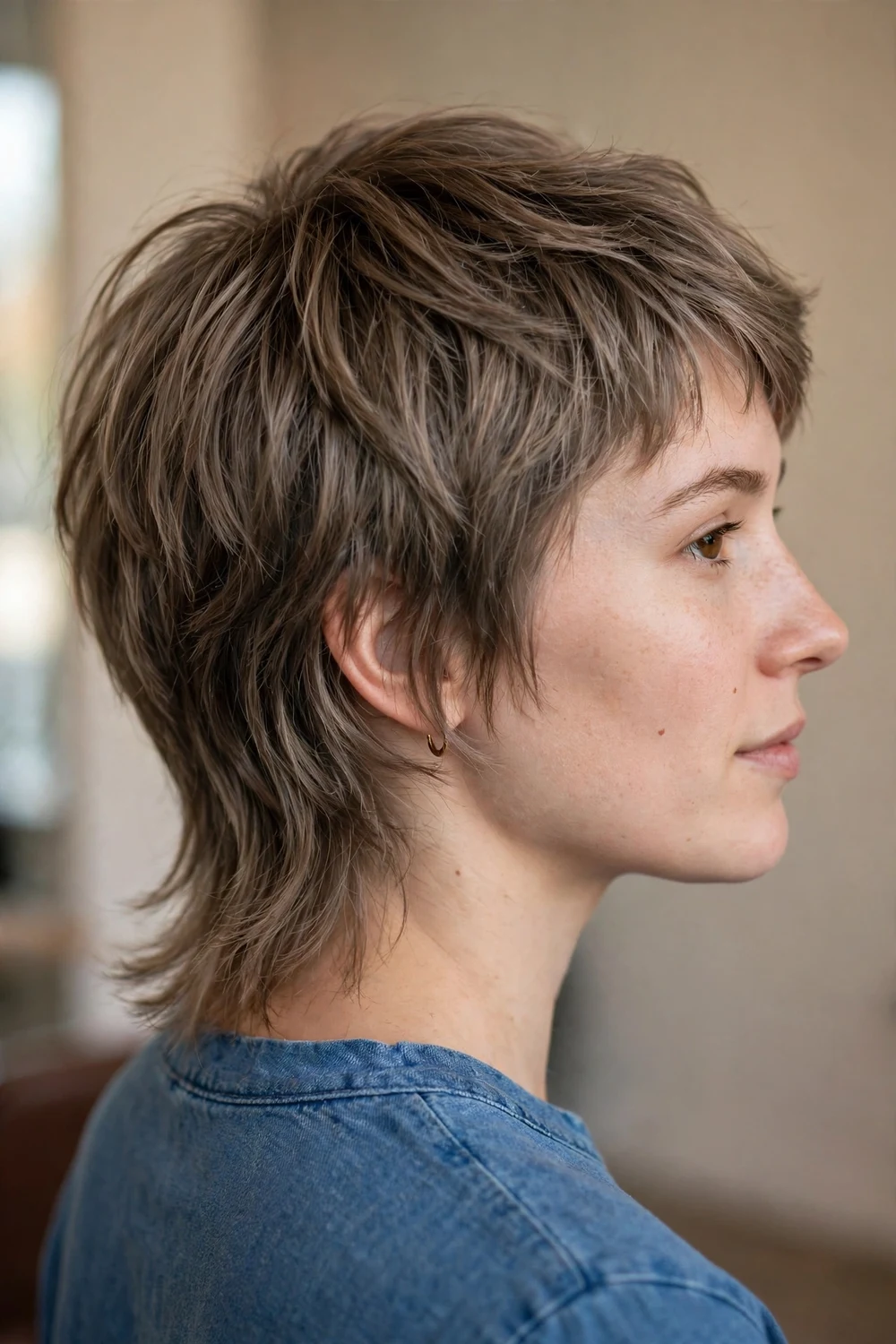
A short mullet keeps the top and sides short and textured while the back keeps a longer layered tail that reaches the nape or just past it. The current version is softer than the classic: the tail is layered and wispy rather than long and solid, and the top blends into it with shaggy pieces. It suits wavy and straight hair and reads as a deliberate fashion cut.
Style the top forward with a small amount of paste and let the tail dry with its natural texture. The shape needs a trim every five to six weeks, mostly to keep the tail layered and to stop the sides from growing over the ears in a way that breaks the outline.
Try this: keep the tail shorter than you first picture it. A short, layered tail reads modern; extra length pushes the cut toward a costume read very quickly.
Difficulty: Medium · Cost: $$
23. Short Jellyfish Cut

The jellyfish cut is built from two separate layers: a rounded bob on top at about chin length, and a second, thinner layer of strands that falls below it. In the short version here, that lower layer stops just past the shoulders, so the two levels stay close and the contrast stays clear. Straight hair shows the two layers most sharply.
The appeal is flexibility. Tuck the lower layer up or pin it under and the cut reads as a plain bob; leave it down and the second layer shows. Styling is mostly smoothing, with a flat iron pass on the lower strands. Book trims every six weeks, since the gap between the two layers is the feature and it closes as the top layer grows.
Try this: bring a photo that shows the back view. The jellyfish cut is judged from behind, and your stylist needs to see the exact layer gap you want.
Difficulty: Medium to High · Cost: $$$
Frequently Asked Questions
What is the most popular short haircut for women right now?
The textured bob and the bixie lead salon requests at the moment. Both work across many face shapes and hair types, and both style in about ten minutes. The French bob runs close behind them for anyone who wants a blunt shape with a fringe.
How often do short haircuts need a trim?
Most short haircuts need a trim every four to eight weeks. Pixies, crops, and undercuts sit at the short end of that range at four to six weeks, while bobs and long bobs can stretch to eight or even ten weeks because their edges grow out more softly.
Which short haircut works best for fine hair?
Blunt bobs, short layered cuts, and pixies work best for fine hair. Shorter lengths stop fine hair from lying flat, and a blunt or lightly layered edge keeps the ends looking full. Heavy layering and long wispy ends usually make fine hair look thinner, so keep layers light and start them low.
Can I wear a short haircut with curly or wavy hair?
Yes. Wavy hair suits textured bobs, shaggy bobs, and wolf cuts with very little daily styling, since the natural bend fills the layers. Curly hair does best in a curly bob or a layered cut that is shaped dry, curl by curl, so the finished length accounts for shrinkage.
How do I grow out a short haircut without a rough in-between stage?
Grow the top first and keep the back and sides trimmed as it gains length. A pixie becomes a bixie, then a short bob, then a long bob in that order if you tidy the nape and edges every six weeks or so. Each stage is a complete cut on its own, which keeps the grow-out looking deliberate.
Final Thoughts
The right trendy cut is the one that still works on your busiest week, not just on the day you leave the salon. My own rule is simple: pick the shape you like, then check its trim cycle and its five minute styling version, and only book when both fit your routine. Start with one cut from this list, wear it through a full trim cycle, and you will know whether short hair is a visit or a new default.

