


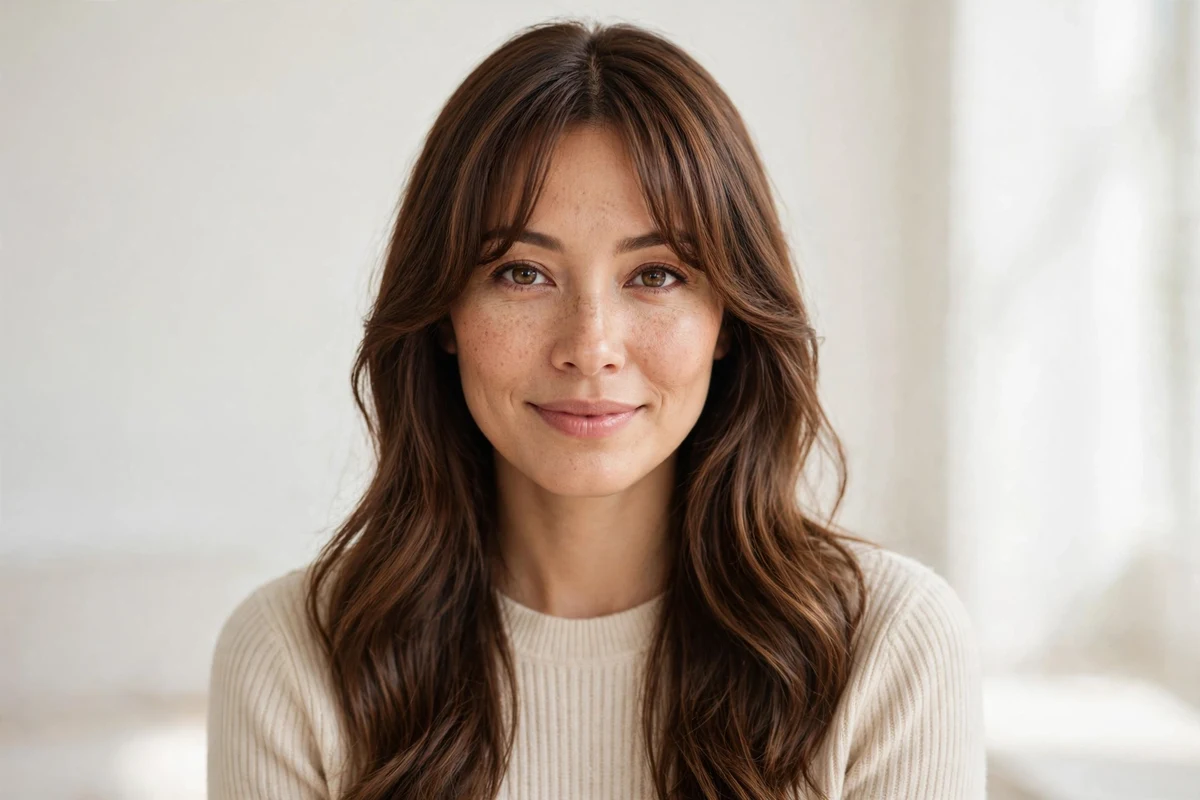
Curtain bangs are the kind of haircut change that looks like a big deal but doesn’t lock you in. The fringe parts in the middle and sweeps open on each side like curtains, framing the eyes and cheekbones while blending into the rest of your layers.
I’ve gone through the top curtain bang looks across every length and texture to build this list. Below you’ll find 24 ideas, each with styling notes and a practical tip, so you can pick one that fits your hair type and routine.
Quick answer: Curtain bangs hairstyles work on straight, wavy, curly, and coily hair at almost any length. Soft layered and wispy versions suit beginners, while blowout, butterfly, and glam styles give more volume for dressier days.
Quick Takeaways
- Curtain bangs are center-parted fringe that sweeps open on both sides of the face.
- They suit every hair texture, from straight to coily, and nearly every face shape.
- Wispy and soft layered versions are the easiest to style and grow out.
- A round brush and blow dryer are the two tools that do most of the work.
- Trims every 4 to 6 weeks keep the fringe from losing its shape.
Why Curtain Bangs Work on So Many People
The cut itself is flexible. Curtain bangs can be long and blended or short and wispy, thick or airy, and they connect to the side layers instead of sitting apart from them. That’s what makes them wearable for weeks between trims.
Styling is simple once you learn the basic move: dry the fringe away from the face. A medium round brush and a blow dryer set the shape in under five minutes, and a flexible-hold hairspray keeps it in place without stiffness. Avoid heavy oils right at the front, since they flatten the piece and make it separate.
1. Soft Layered Curtain Bangs

This is the safest first pick if you’ve never had fringe. The bangs are cut long enough to sit at the cheekbones and melt straight into face-framing layers, so there’s no harsh line anywhere. It works on straight and wavy hair, and it flatters most face shapes because the open shape keeps the forehead covered softly. The fringe sits between the eyebrows and the cheekbones, long enough to tuck behind your ears when you want it gone. Maintenance is light because the layered edges don’t form a hard grow-out line.
Try this: blow dry the fringe with a large round brush, rolling the pieces away from your face, then smooth the top layers down. Finish with a flexible spray.
2. Bouncy Blowout Curtain Bangs

Want salon volume on a regular Tuesday? A blowout version uses mousse at the roots and a round brush worked through section by section. The fringe lifts at the crown and opens around the cheekbones, which reads polished without any tight curls. It’s a good match for medium to thick straight or wavy hair. This is the look to ask for when you bring your stylist a salon blowout photo. It photographs well because the volume catches light across the crown and the front pieces frame the face at their widest point.
Try this: roll the fringe away from the face and let each section cool on the brush for 10 seconds before releasing. The hold lasts noticeably longer.
3. Shoulder-Length Wavy Curtain Bangs

Loose waves and curtain fringe were made for each other. The waves help the bangs blend into the rest of the cut, so even a brand-new fringe looks settled-in by the second day. Keep the layers around shoulder length so the ends have enough weight to sit flat. This one suits fine to medium wavy hair best. A texturizing spray on dry hair gives the waves more grip if yours fall flat quickly. Second-day hair actually suits this style best, since the waves relax into the fringe overnight.
Try this: curl the mid-lengths loosely, then bend just the ends of the fringe outward with the same iron and break everything apart with your fingers.
4. Sleek Straight Curtain Bangs

Straight hair can look plain at the front without any shape, and this version fixes that. The lengths stay glassy and smooth while the fringe splits softly at the center, adding motion around the eyes and jawline. It works on collarbone cuts, lobs, and long straight hair, and it reads polished for office days and dinners. A middle part keeps it modern; anything off-center shifts it toward a different fringe family. The look holds up well in humidity if you finish with an anti-frizz serum.
Try this: flat-iron the fringe last, after the rest, with a slight outward flick. Add one drop of smoothing serum to the ends only.
5. Wispy Curtain Bangs

For anyone worried about fringe looking too heavy, the wispy version keeps things airy. Thin, soft pieces frame the front without covering much forehead, which also means the grow-out phase is nearly invisible. Fine to medium straight or wavy hair takes to this cut most easily. Ask your stylist to point-cut the ends rather than blunt-cut them. Because the pieces are so thin, they dry fast and rarely need a full restyle. If the fringe gets oily at the roots by midday, a quick blast with the dryer resets the shape.
Try this: dry the fringe first with your fingers, then split it lightly at the center. A pea-sized amount of dry shampoo at the roots keeps it from separating by afternoon.
6. Voluminous Butterfly Curtain Bangs

The butterfly cut pairs short curtain layers on top with long layers underneath, and the fringe ties it all together. Blow the top layers up and away from the face and you get that lifted crown and bouncy finish that photographs so well. It needs medium to thick hair to hold the shape; very fine hair can struggle with the lift. The top layers are usually cut between chin and collarbone length, which is what creates the lift. Ask your stylist to keep the bottom layers long so the contrast reads clearly.
Try this: work mousse through damp roots before you blow dry, then roll the fringe away from the face and brush through gently once cool.
7. Curly Curtain Bangs

Curly girls can absolutely wear this fringe. The trick is cutting it to follow the natural curl pattern so the pieces fall around the eyes and cheekbones instead of sitting flat across the forehead. Style the fringe while it’s wet with curl cream, scrunch gently, and diffuse on low heat. Ask your stylist to cut dry if your curls shrink a lot when they dry. Curly fringe shrinks as it dries, so it should be cut longer than it will be worn. Dry-cutting makes a real difference here, and it’s worth asking whether your stylist offers it.
Try this: fluff only at the roots once dry. Touching the ends too much breaks the curl clumps apart.
8. Textured Lob Curtain Bangs

A textured lob is already one of the lowest-maintenance cuts out there, and curtain bangs give it a face-framing upgrade without adding morning effort. Create loose bends with a flat iron through the lengths, smooth out the fringe, and mist texture spray through the mid-lengths. The result looks undone but still put together. The lob length means the fringe doesn’t have far to blend, so the whole cut looks connected. It’s a strong option for anyone growing out shorter hair who wants fringe along the way.
Try this: keep the fringe one to two inches longer than you’d guess. Shorter fringe on a lob tends to spring up and lose the drape.
9. Half-Up Curtain Bangs

Second-day hair days are where this look earns its place. Pull the top section back loosely and puff the crown a little, then let the curtain bangs do the framing work at the front. It works on straight, wavy, or curly hair, and it reads just as well for work as for a casual evening out. A tiny backcomb at the crown before securing the top keeps the half-up from lying flat. Leave a few strands out around the ears for a softer, less done-up feel.
Try this: secure the half-up section with a small claw clip instead of an elastic for extra lift and a softer finish.
10. Loose Shag Curtain Bangs

Shag cuts and curtain bangs share the same DNA: choppy layers, soft edges, and movement everywhere. Scrunch texture product through the lengths, dry the fringe with a gentle bend, and separate a few ends with your fingers. If you like a slightly undone style with personality, this is the one to try. Shags work on the most textures of any cut on this list, from straight to coily. The curtain bangs are cut as part of the layering, not added on top, so the whole thing grows out evenly.
Try this: skip the round brush here. A diffuser or air-dry keeps the shag texture looking natural rather than polished flat.
11. High Ponytail Curtain Bangs

A high ponytail can feel severe on its own, but loose curtain bangs soften the whole thing. Tie the ponytail up, let the fringe fall naturally around your face, and set it with a light spray. It’s youthful and practical, and it keeps the front from looking pulled-back and flat. Smooth the sides with a soft-bristle brush before tying up so there are no bumps under the ponytail. A silk scrunchie marks less of a crease if you wear this look daily.
Try this: backcomb the crown just slightly before tying up. The extra height makes the ponytail sit more flatteringly.
12. Highlighted Curtain Bangs

Color makes curtain bangs pop. Subtle highlights through the fringe add dimension and draw attention to the frame around your face, especially on darker base colors. Keep the highlights fine and blended rather than chunky so the grow-out stays graceful. This pairs well with almost any length underneath. Foilyage or babylights through the front two pieces give the most natural result. The lighter pieces make the curtain split more visible, which sharpens the whole shape.
Try this: ask for the highlights to concentrate on the two front pieces. That’s where the light catches and where the effect matters most.
13. Money Piece Curtain Bangs

A money piece is a bolder take on the highlighted idea: defined, lighter sections right at the front worn alongside long curtain bangs. The contrast frames the face sharply and gives the whole cut more edge. It looks best when the bright pieces start at the part and sweep open with the rest of the fringe. This version needs the most color maintenance of any idea here, with toner refreshes every 6 to 8 weeks. The contrast also works on shorter lengths, not just long hair.
Try this: use a color-safe shampoo and a weekly toning mask to stop the blonde sections from going brassy.
14. Neck-Length Curtain Bangs

Shorter hair isn’t off-limits for this fringe. On neck-length cuts, the bangs sit a little higher and the frame feels neat and tailored rather than soft and sweeping. It suits straighter textures best, since curls add width at this length. Pair it with tucked sides for a clean finish or leave it loose for something more casual. Because the canvas is smaller, the fringe gets more visual attention, so keep it neat with regular trims. A sleek finish suits office settings while a tousled one fits weekends.
Try this: dry the fringe with a small round brush for more control at this shorter length. A big brush overpowers the pieces.
15. Choppy Layered Curtain Bangs

Some people want their fringe to have edge. Choppy curtain bangs are cut with deliberate texture and piecey ends, which gives the front more attitude than the soft blended versions. It works well on thicker hair where the pieces have enough body to sit apart naturally. A bit of texture paste on the ends defines each piece. Point-cutting and slide-cutting are the techniques that create the piecey ends, so ask for them by name. Thick hair holds the separated pieces best; fine hair can look stringy with too much texture.
Try this: twist tiny sections of the fringe while damp and let them air-dry for extra piece-y separation.
16. Blonde Step Layers with Curtain Bangs

Step layers have those distinct, visible ledges between lengths, and curtain bangs give the front the same structured-but-soft treatment. On blonde hair the steps catch light at every level, which is why this combination photographs so well. Keep the steps blunt-ish and the fringe soft to balance the two textures. The step structure shows best on hair below the shoulders, where each ledge has room to sit. A gloss treatment between color appointments keeps the blonde bright and the steps defined.
Try this: style the steps with a flat iron using slight flips at each ledge. That contrast is what shows off the step structure.
17. Center-Parted Glam Curtain Bangs

For evenings and events, take the center part seriously. A precise middle part with long, glossy curtain bangs swept cleanly away from the face reads formal without needing an updo. Flat-iron the fringe smooth, add a shine spray, and keep the part straight with a rattail comb. Long, healthy hair carries this look best. This is the highest-maintenance everyday version on the list, best saved for occasions. A shine mist after flat-ironing gives the mirror-like finish the style is known for.
Try this: apply a heat protectant and iron the fringe in sections no wider than two inches for the glossiest finish.
18. Loose Waves with Curtain Bangs

If the shoulder-length wavy version appealed to you, the long-hair take is even easier to wear. Loose waves give the curtain bangs a head start because they fall in the same direction the fringe wants to go. Let the waves start below the cheekbones so the fringe stays the hero of the front. Waves from the mid-lengths down keep the top smooth so the fringe stands out. A wide-barrel iron creates the loose bend fastest on thick hair.
Try this: curl away from the face on both sides. Curling toward the face fights the open curtain shape.
19. U-Cut Curtain Bangs

The U-cut keeps the back long and rounded while the front gets layered, and curtain bangs finish the face frame. It’s a good pick for long hair that feels shapeless without sacrificing length. The fringe should be long enough to reach the cheekbones so it connects with the side layers smoothly. The U-cut’s rounded back needs length to show its shape, so it suits hair at bra-strap length or longer. Trim the ends every 8 to 10 weeks to keep the U silhouette crisp.
Try this: wear the U-cut with a smooth blowout rather than curls if you want the rounded silhouette to read clearly from behind.
20. Textured Shaggy Curtain Bangs

This is the long-hair sibling of the loose shag: more length, same choppy attitude. Heavy texturing through the layers keeps the weight down, and the curtain bangs blend into the messiest part of the cut on purpose. It suits wavy to curly textures and anyone who dislikes fussy styling. This cut is forgiving about bad hair days because the texture hides frizz and cowlicks. It’s also one of the fastest to style: scrunch, air-dry, go.
Try this: sleep on this one. The second-day bedhead version of a shaggy cut usually looks better than the freshly washed one.
21. Flip-Out Curtain Bangs

The retro flip is back, and curtain bangs carry it naturally. Flip the ends outward instead of under, add volume at the crown, and let the fringe sweep open the same way. It reads playful rather than vintage if you keep the finish soft and the flips loose instead of stiff. Medium to long hair shows the flipped ends best. The flip needs a medium round brush and enough length for the ends to turn; very short hair can’t hold the curve. This look borrows from 90s styling but reads fresh with a soft finish.
Try this: flip with a round brush and blow dryer, not a flat iron. The dryer gives a softer curve that drops more naturally through the day.
22. Curtain Bangs with Soft Curls

Tighter curls give the fringe a bouncy, springy quality that straight versions can’t copy. Keep the bangs a touch longer than the rest of the curls so they fall past the eyebrows rather than springing up short. Define the fringe curls separately from the side curls so the split stays open and visible. A hooded dryer or diffuser on low heat sets the shape gently without stretching the curls out.
Try this: pineapple your hair at night to protect the fringe curls. They lose definition faster than the rest because you touch them more.
23. Low Ponytail Curtain Bangs

The low ponytail is the minimal, polished counterpoint to the high ponytail look. Gather the hair at the nape, keep it smooth, and let the curtain bangs frame the face. It works for formal settings and looks intentional rather than lazy because the fringe gives the front its shape. Straight hair suits it best. This is the version to choose for interviews and formal events because the shape reads polished with minimal effort. A center part keeps it modern; a side part softens it.
Try this: wrap a small section of hair around the elastic to hide it. The detail makes a simple ponytail look finished.
24. Side-Swept Blend Curtain Bangs

If a strict center part isn’t your thing, nudge the part off-center and sweep the fringe more to one side. The curtain shape still opens the face, just with a gentler, more casual feel. It flatters longer foreheads and gives older hair a softer frame. This is also the most forgiving version if your part wanders through the day. Growing this version out is seamless because the pieces are already long and blended.
Try this: set the part while the fringe is damp. A dry part rarely holds an off-center position for long.
Curtain Bangs Hairstyles Comparison at a Glance
| Style | Best Occasion | Difficulty | Styling Time |
|---|---|---|---|
| Soft Layered | Everyday | Easy | 5 min |
| Bouncy Blowout | Work, dinners | Medium | 15 min |
| Shoulder-Length Wavy | Casual outings | Easy | 8 min |
| Sleek Straight | Office, events | Easy | 10 min |
| Wispy | Everyday | Easy | 4 min |
| Voluminous Butterfly | Nights out | Medium | 15 min |
| Curly | Everyday | Medium | 10 min |
| Textured Lob | Work, casual | Easy | 8 min |
| Half-Up | Second-day hair | Easy | 5 min |
| Loose Shag | Casual, weekends | Easy | 7 min |
| High Ponytail | Gym, casual | Easy | 5 min |
| Highlighted | Photos, events | Easy | 6 min |
| Money Piece | Nights out | Easy | 6 min |
| Neck-Length | Office | Medium | 10 min |
| Choppy Layered | Weekends | Medium | 10 min |
| Blonde Step Layers | Events | Medium | 12 min |
| Center-Parted Glam | Formal events | Medium | 15 min |
| Loose Waves | Dates, dinners | Easy | 10 min |
| U-Cut | Everyday | Easy | 8 min |
| Textured Shaggy | Casual | Easy | 7 min |
| Flip-Out | Retro occasions | Medium | 12 min |
| Soft Curls | Everyday | Medium | 12 min |
| Low Ponytail | Formal, work | Easy | 5 min |
| Side-Swept Blend | Everyday | Easy | 4 min |
How to Choose the Right Curtain Bangs for You
Match the fringe to your texture first. Fine hair does best with wispy or soft layered bangs that won’t collapse; thick hair can handle the butterfly or choppy versions with more body. If you want an even lighter feel, airier options in our guide to wispy bangs hairstyles show how thin fringe behaves on different hair types.
Then think about your routine. If you spend more than 10 minutes on hair in the morning, the blowout, butterfly, and glam versions are realistic for you. If you’re a five-minute person, stick with wispy, side-swept, or soft layered bangs. Also be honest about growth: curtain bangs need a trim every 4 to 6 weeks to keep their shape.
Length matters too. Longer fringe (cheekbone and below) is more forgiving and easier to grow out, while shorter fringe needs more frequent upkeep. On long hair specifically, the layering around the fringe matters as much as the fringe itself; see our picks for layered hairstyles for long hair to understand how the pieces connect.
Finally, bring reference photos to your stylist and say how much forehead coverage you want. “Soft curtain bangs” means different things to different stylists, so the photo does the talking.
Mistakes to Avoid
The most common mistake is cutting the fringe too short. Short curtain bangs spring up, refuse to part, and grow out awkwardly. Start longer; you can always take more off. Blended, longer fringe is easier to style and generally looks softer.
The second mistake is overloading product at the front. Curtain bangs should feel light and touchable, so go easy on oils and thick creams around the fringe. They make the pieces separate and look greasy by afternoon. If you want a fuller, more rounded fringe instead, butterfly cuts build volume in a way that still keeps the front open.
Third: don’t skip the cool-down. Blowing the fringe out and immediately walking into wind or humidity undoes the shape. Let the pieces cool for 30 seconds before you move on. And if your fringe style sits somewhere between curtain and bottle-neck, compare notes with bottleneck bangs hairstyles to find which shape your cut actually is.
Frequently Asked Questions
Are curtain bangs hard to style every day?
No, most curtain bangs need just a quick blowout with a round brush or a light bend with a styling tool. The basic move is drying the fringe away from the face, which takes about five minutes. Wispy and side-swept versions are the lowest effort of all.
Do curtain bangs suit round faces?
Yes, longer curtain bangs are particularly flattering on round faces because the open shape creates vertical lines that slim the cheeks. Keep the fringe at cheekbone length or longer and avoid cutting it too short or too wide, which can add width instead.
What hair length works best with curtain bangs?
Curtain bangs work on short, medium, and long hair. They look especially good on medium to long hair where the fringe can blend into face-framing layers. On short hair, keep the bangs tailored and slightly higher so they don’t overwhelm the cut.
How often do curtain bangs need a trim?
Every 4 to 6 weeks is the standard schedule. The fringe loses its shape as it grows because the pieces stop opening cleanly at the part. Many salons offer quick fringe trims between full appointments at little or no cost.
Can you get curtain bangs without cutting your hair?
Clip-in curtain bangs exist and they’re a decent way to test the look, but they don’t blend as naturally as a real cut. If you’re unsure, try clip-ins for a week first. Most people who test them end up getting the real cut because the blended version looks so much better.
Final Thoughts
Curtain bangs earned their popularity because they work: low commitment, easy styling, and a frame that flatters nearly everyone. Pick the version that matches your texture and morning routine, and don’t be afraid to start long. You can always go shorter on the next trim.

