



Fine hair after 50 plays by its own rules. It gets thinner at the temples, flatter at the crown, and less willing to hold a style past noon. The right cut changes all of that without adding a single step to your morning.
These 30 low maintenance haircuts for women over 50 with fine hair were picked for one reason: the shape does the work. Each one adds the look of volume, air-dries well or needs only a quick blow-dry, and grows out without losing its shape. I’ve watched stylists reach for the same handful of shapes again and again for fine, mature hair, and this list covers every one of them.
Quick answer: The best low-maintenance haircuts for women over 50 with fine hair are short layered shapes like textured pixies, stacked bobs, and bixies. They build volume at the crown, need trims every 4 to 6 weeks, and style in under 10 minutes with lightweight mousse or texturizing spray.
Quick Takeaways
- Shorter cuts with texture make fine hair look thicker than long one-length hair.
- Graduated layers at the crown add lift without thinning out the ends.
- Most of these cuts air-dry well or need only a 5-minute blow-dry.
- Plan trims every 4 to 6 weeks to keep the shape sharp and ends full.
- Lightweight mousse and dry shampoo beat heavy creams and oils for fine hair.
Why Fine Hair Over 50 Needs Its Own Cuts
Hair changes after 50. Strands grow in finer, the hairline can recede slightly, and gray or white regrowth has a coarser texture that behaves differently from pigmented hair. A cut that worked at 40 can suddenly look flat and tired.
Fine hair has low density, so every inch of length pulls the roots flatter. Cuts that remove weight strategically, through stacking, graduation, or textured ends, let the roots stand up instead of lying down. That is the whole secret: lift at the root, density at the ends.
Color plays a role too. Dimensional color, gray blending, or even natural silver creates the illusion of depth that single-process color cannot. Many of the cuts below pair well with low-commitment color that grows out softly.
What to Tell Your Stylist
Ask for texture over thinning. Thinning shears remove bulk but can leave fine hair wispy; point cutting and slide cutting create movement while keeping the perimeter solid.
Bring photos of the exact shape you want, not just the length. Say how much time you will spend each morning, honestly. A good stylist will cut to your real routine, not the one you wish you had. Mention cowlicks, thinning spots, and whether you air-dry or blow-dry so the cut is built around your habits.
1. Soft Textured Pixie
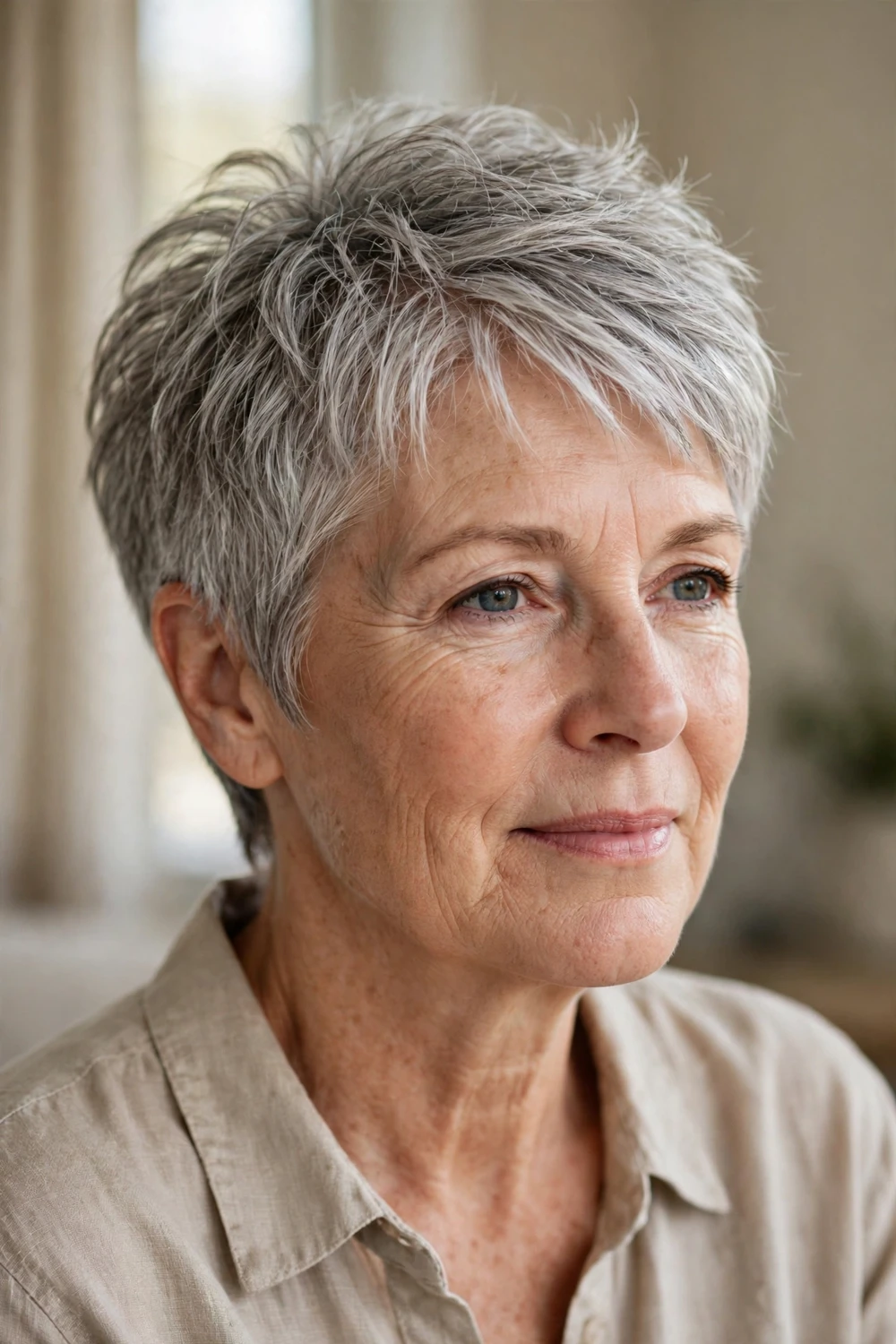
Start short and the volume problem gets easier fast. A soft textured pixie keeps length through the top with point-cut ends that separate into light, airy pieces. The crown gets built-in lift because there is simply less weight pulling it down, and the textured perimeter keeps the grow-out soft instead of blunt. It suits straight to wavy fine hair and works well with natural gray since the layers catch the light. Styling takes about three minutes: a pea-sized amount of lightweight pomade or a spritz of texturizing spray, then finger-style.
Try this: Blow-dry the crown forward with your fingers, not a brush, for 60 seconds to set root lift that lasts all day.
2. Side-Swept Pixie
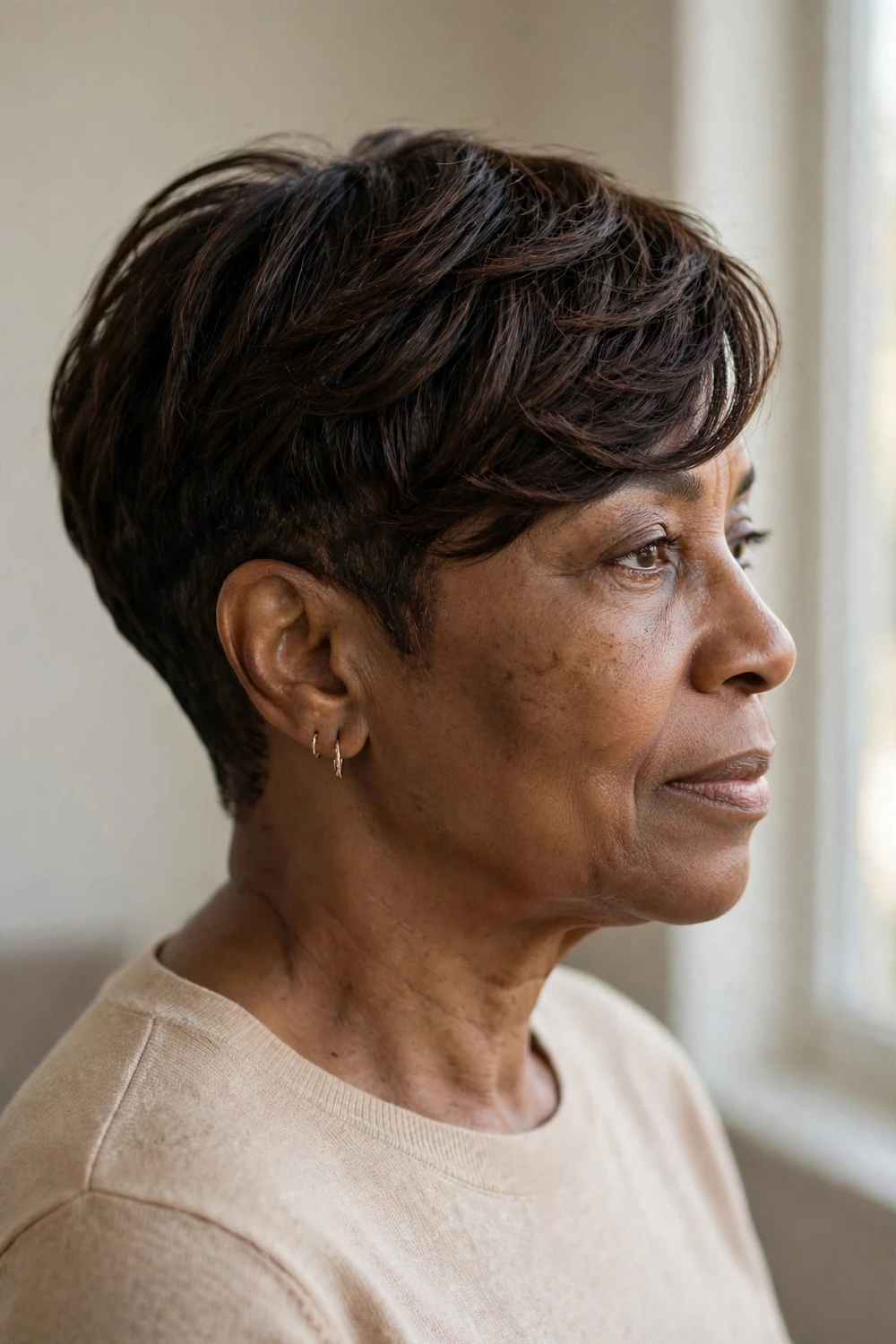
If a super-short crop feels too stark, the side-swept pixie keeps things soft. The back and sides stay tapered and neat while the top grows long enough to sweep across the forehead in a deep side part. That diagonal line across the face adds width where fine hair usually lies flat, and it covers thinning at the temples without any teasing. The cut flatters round and square faces especially well because the asymmetry breaks up the symmetry of the face. Maintenance is a trim every 5 weeks to keep the taper clean.
Try this: Apply volumizing mousse to damp roots on the heavy side of the part, then blow-dry with a small round brush for a smooth sweep.
3. Tapered Pixie with Choppy Crown
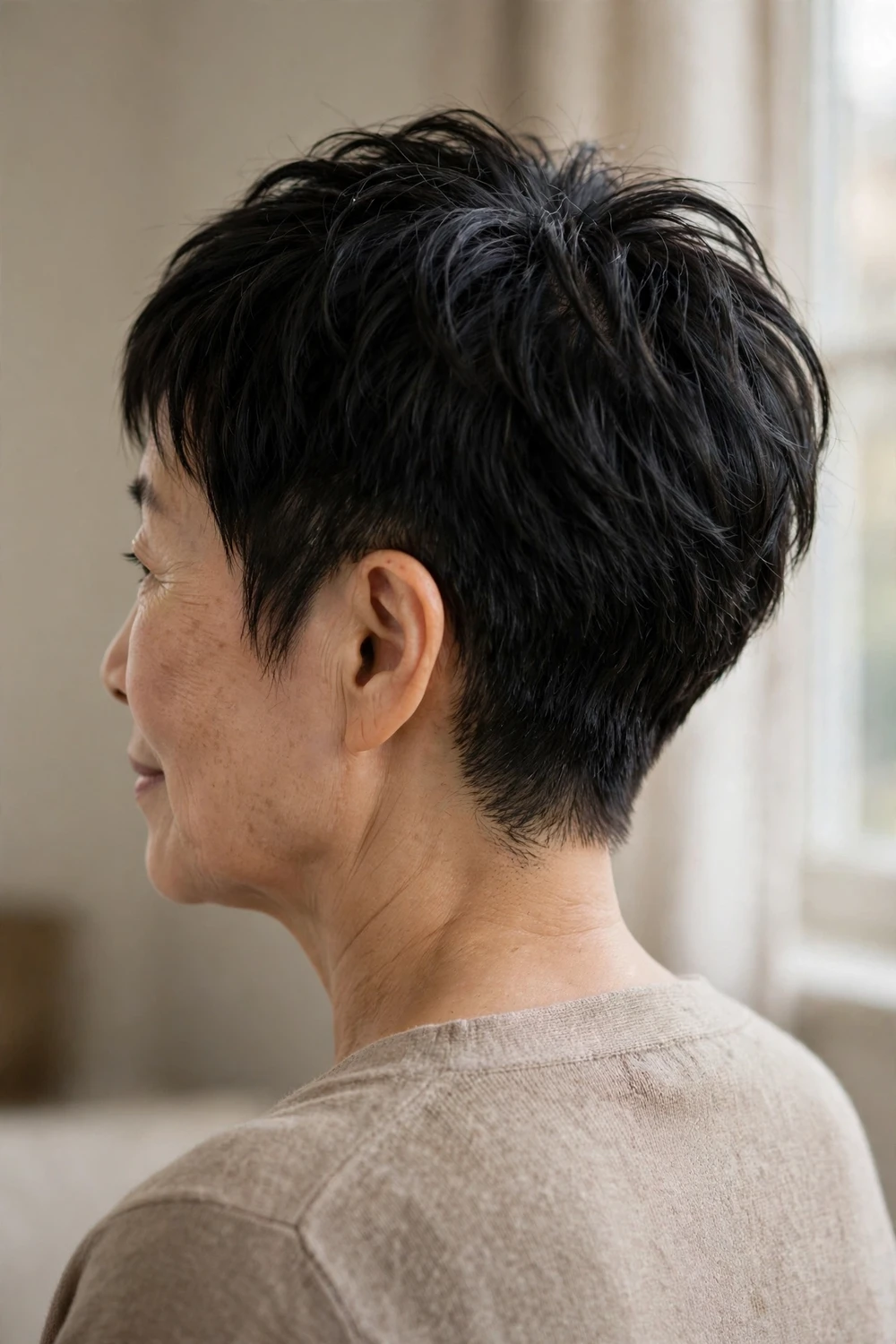
Volume lives at the crown, and this cut builds it in permanently. A tapered pixie keeps the nape and sides closely cropped while the crown carries longer, choppy layers that stack on top of each other. Each stacked layer pushes the one above it up, which is exactly the support fine hair cannot make on its own. The silhouette stays neat from every angle, so it looks deliberate even on day three. It grows out into a longer pixie gracefully, which buys you an extra week or two between appointments if your schedule is tight.
Try this: Rub a pinch of dry texture powder into the crown layers for instant lift that needs no heat at all.
4. Asymmetric Spiky Pixie
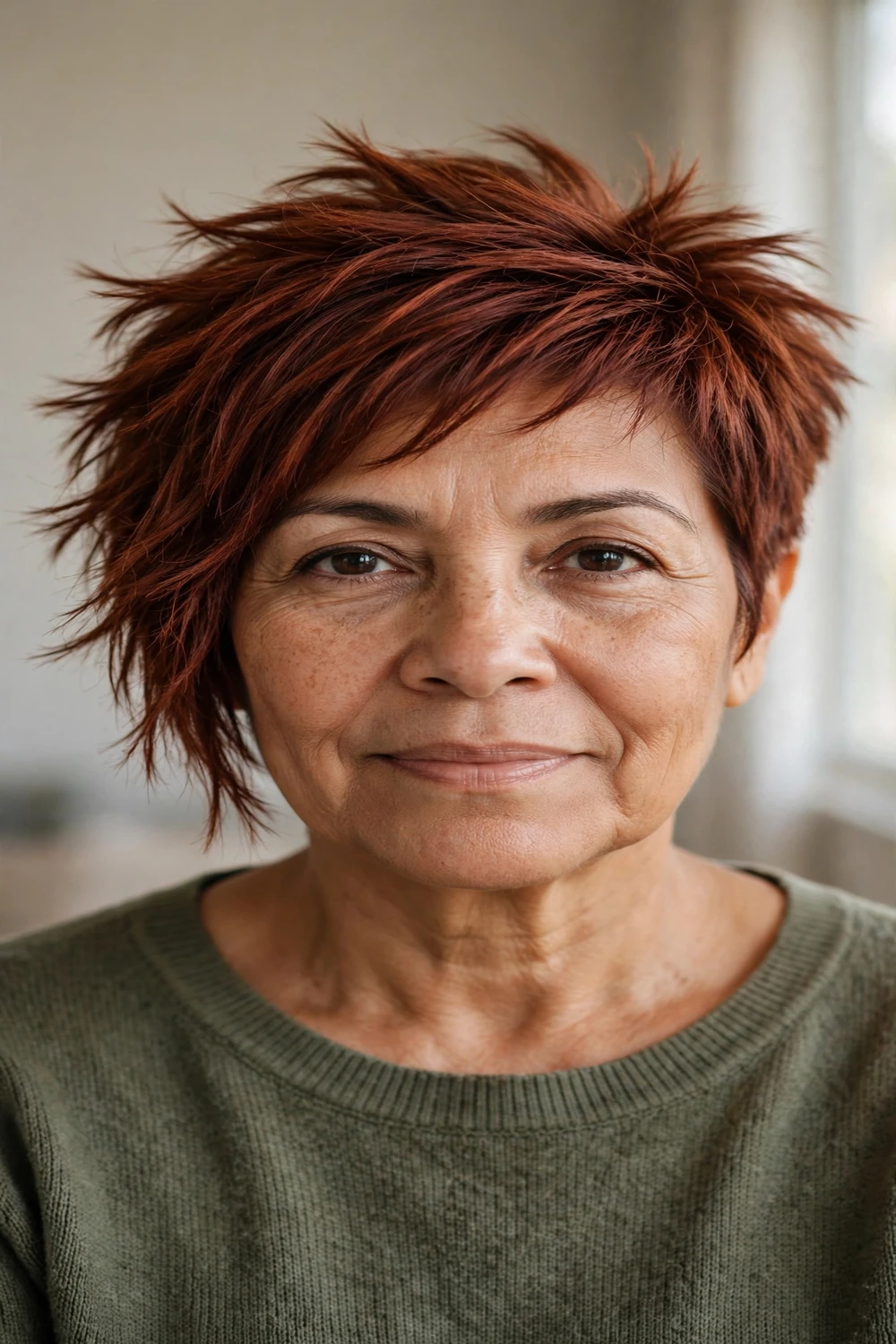
Spikes are not just for the young, they are one of the smartest tricks for fine hair. An asymmetric pixie with piece-y, separated ends creates dozens of tiny points of texture, and each point reads as fullness. Keeping one side slightly longer than the other adds a modern edge and stops the cut from looking too uniform. This style works with your hair’s natural direction instead of fighting it, so cowlicks become part of the design. A dab of matte pomade is the only product you need, and the whole routine takes under two minutes.
Try this: Twist small sections between your fingertips with pomade instead of raking product through, which keeps the pieces separated.
5. Salt-and-Pepper Textured Crop
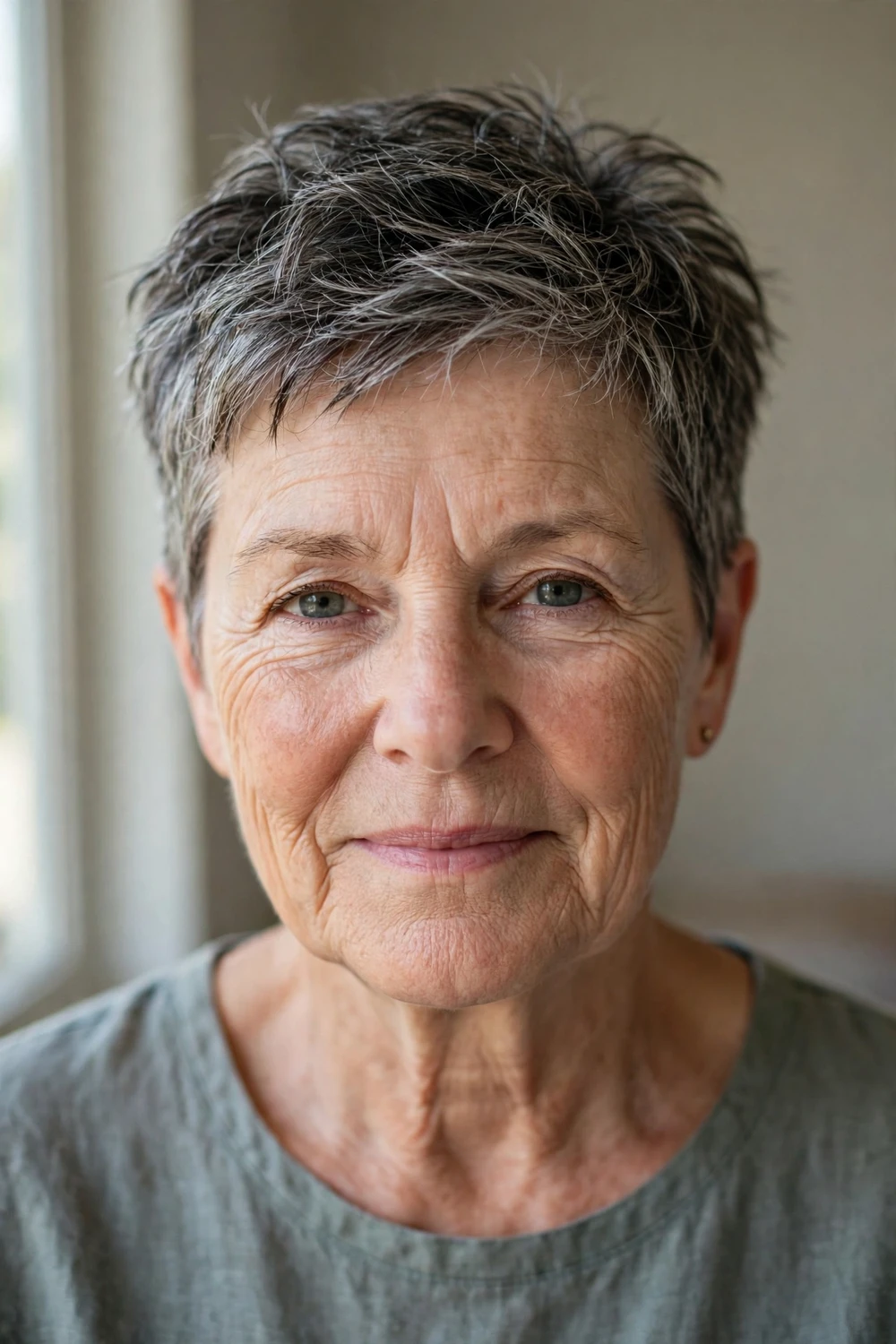
Going natural with your gray is the lowest-maintenance color decision you can make, and a textured crop shows it off at its best. Short, piece-y layers let the mix of silver and dark strands create natural dimension that single-color hair never has. The texture keeps the cut from looking severe, which matters when the color contrast is high. Ask your stylist to keep the perimeter soft around the ears and neckline so the grow-out stays tidy for 6 weeks. A purple shampoo once a week keeps the silver bright instead of yellow.
Try this: Scrunch a lightweight styling cream through dry hair to define the pieces without flattening them.
6. Tousled Bixie
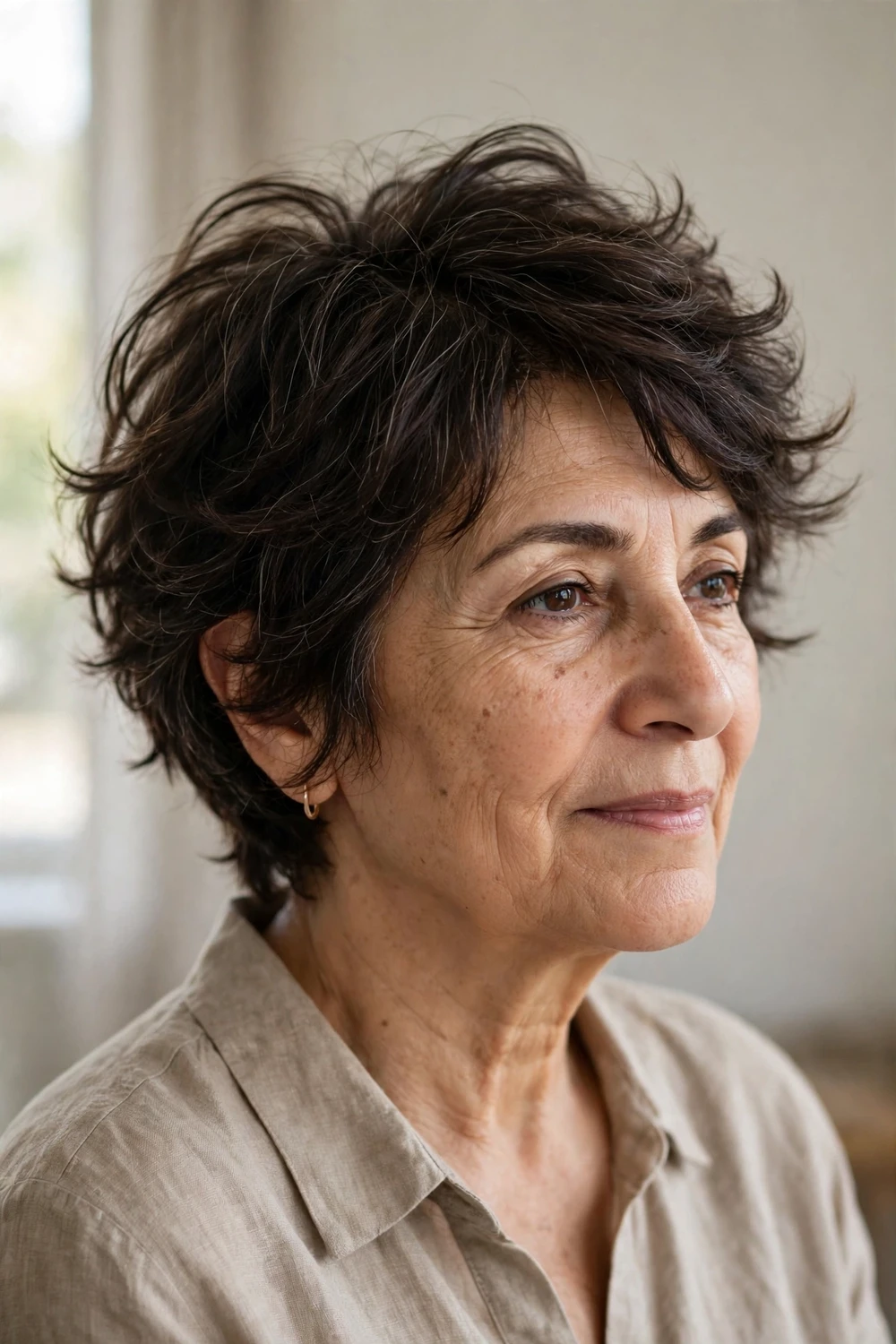
Half bob, half pixie, all easy. The bixie keeps the length of a short bob through the back with pixie-like layering on top, giving you more styling options than a true pixie with barely more effort. The tousled finish is the point: air-dry with a little mousse and the layers fall into soft, separated waves that look fuller than they are. It is a forgiving cut for growing out a pixie too, since the shape stays intentional through every stage. Fine hair loves it because the layers remove just enough weight to let the roots lift.
Try this: Sleep on it. This cut genuinely looks better on day two, when natural oils give the layers extra separation.
If you want more quick ideas for fine hair that style in minutes, these easy hairstyles for thin hair pair well with the cuts in this list.
7. Bixie with Curtain Bangs
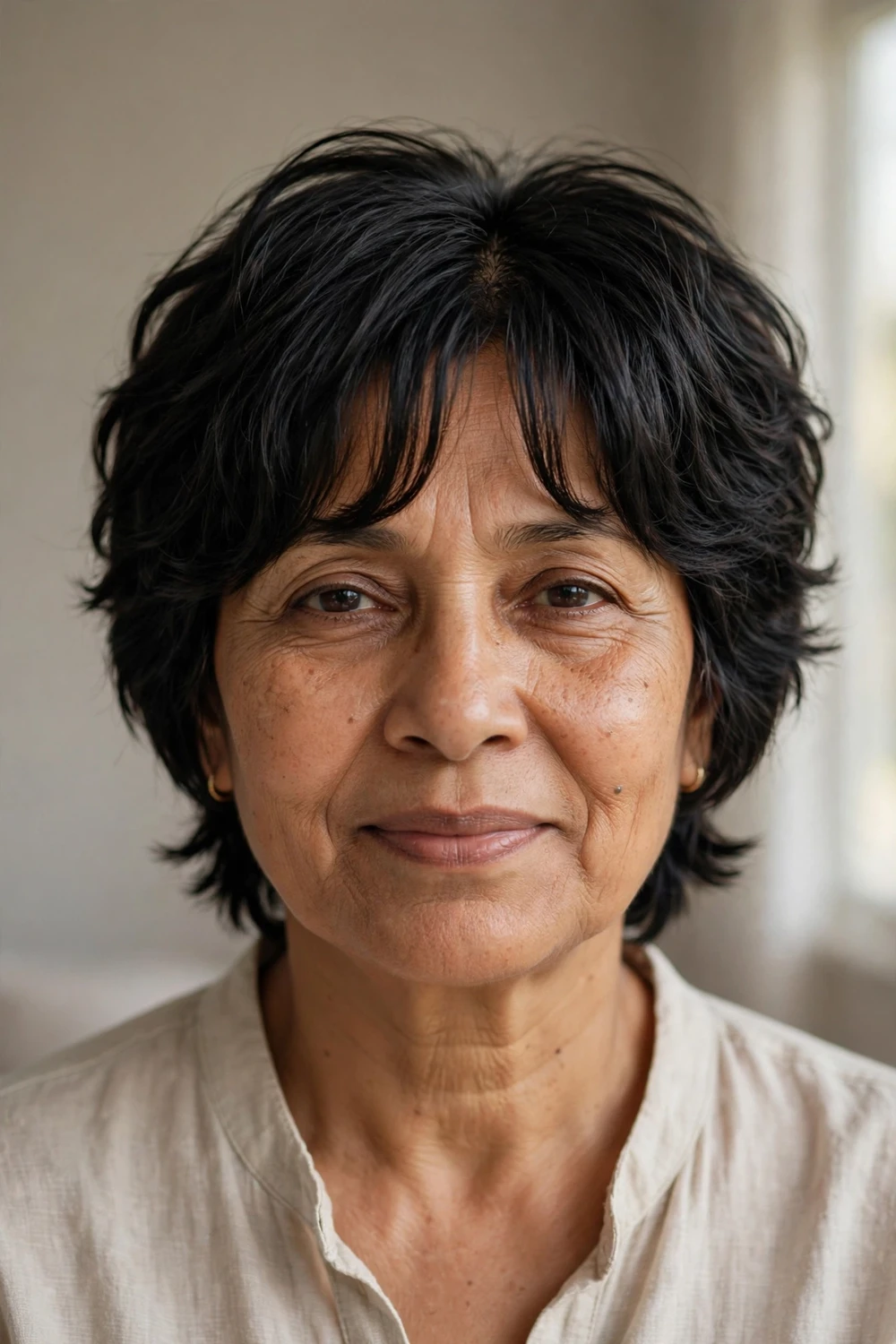
Curtain bangs turn a simple bixie into a face-framing shape with almost no extra work. The fringe parts softly in the middle and blends into the front layers, which draws attention to the eyes and cheekbones instead of a thinning hairline. For fine hair, the key is keeping the bangs light and wispy rather than thick, so they do not separate into strings by midday. They air-dry into place with a quick finger-comb, and they grow out into regular layers without an awkward phase. This is one of the most requested salon cuts for women over 50 right now.
Try this: Blow-dry curtain bangs forward with a round brush for 30 seconds, then let them fall to each side for a natural part.
8. Brushed-Back Bixie
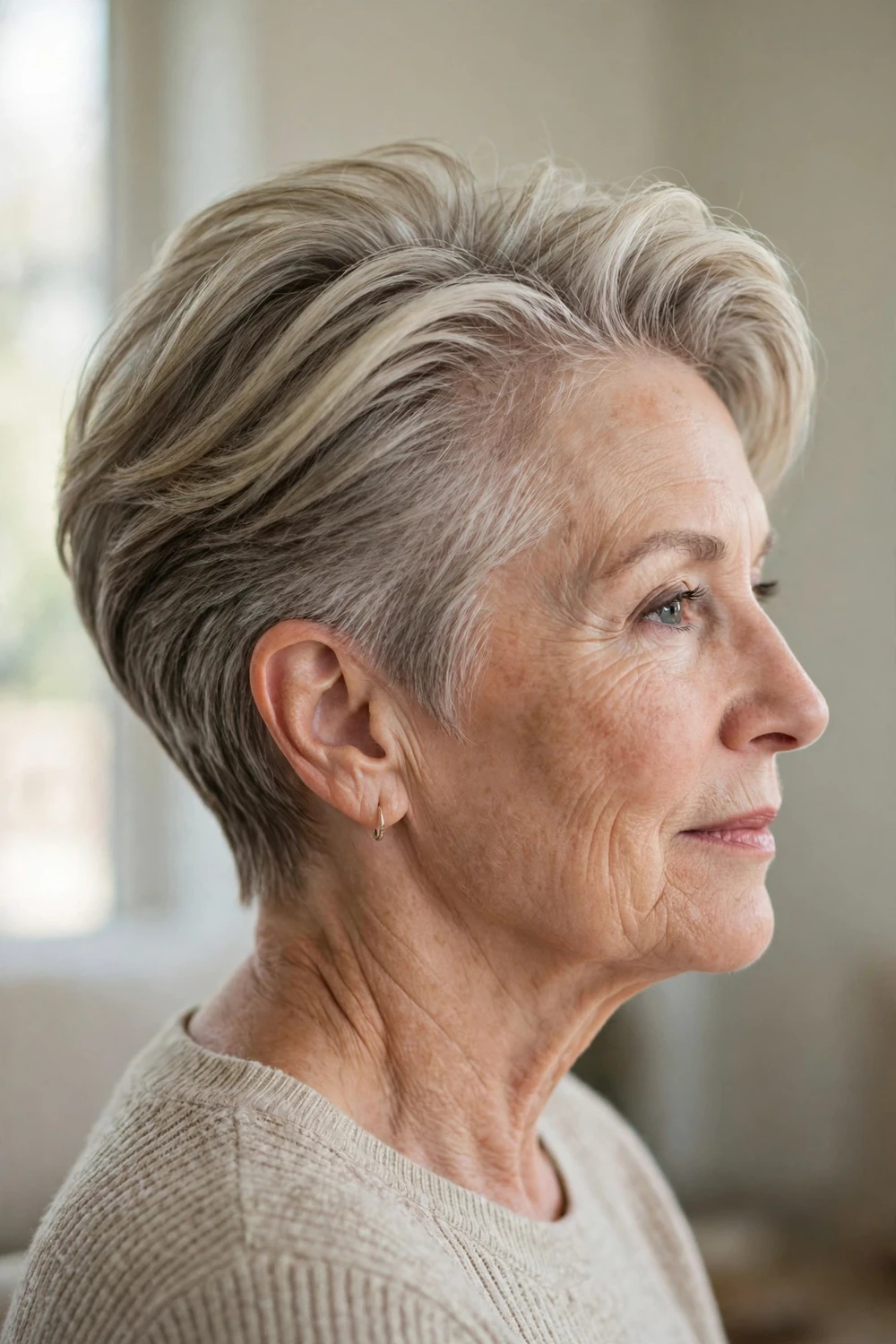
Sweep everything back and fine hair suddenly has presence. A brushed-back bixie keeps the sides tapered and neat while the top is cut long enough to push away from the face, creating height that fine hair rarely achieves on its own. The open forehead shows off your features and works well with glasses, since there is no fringe competing for space. It reads polished with almost zero daily effort: blow-dry back with a vent brush or simply brush back damp hair and let it set. Root-lifting spray at the crown adds staying power.
Try this: Direct the blow-dryer at the roots from underneath while brushing back to lock in lift for the whole day.
9. Stacked Bob
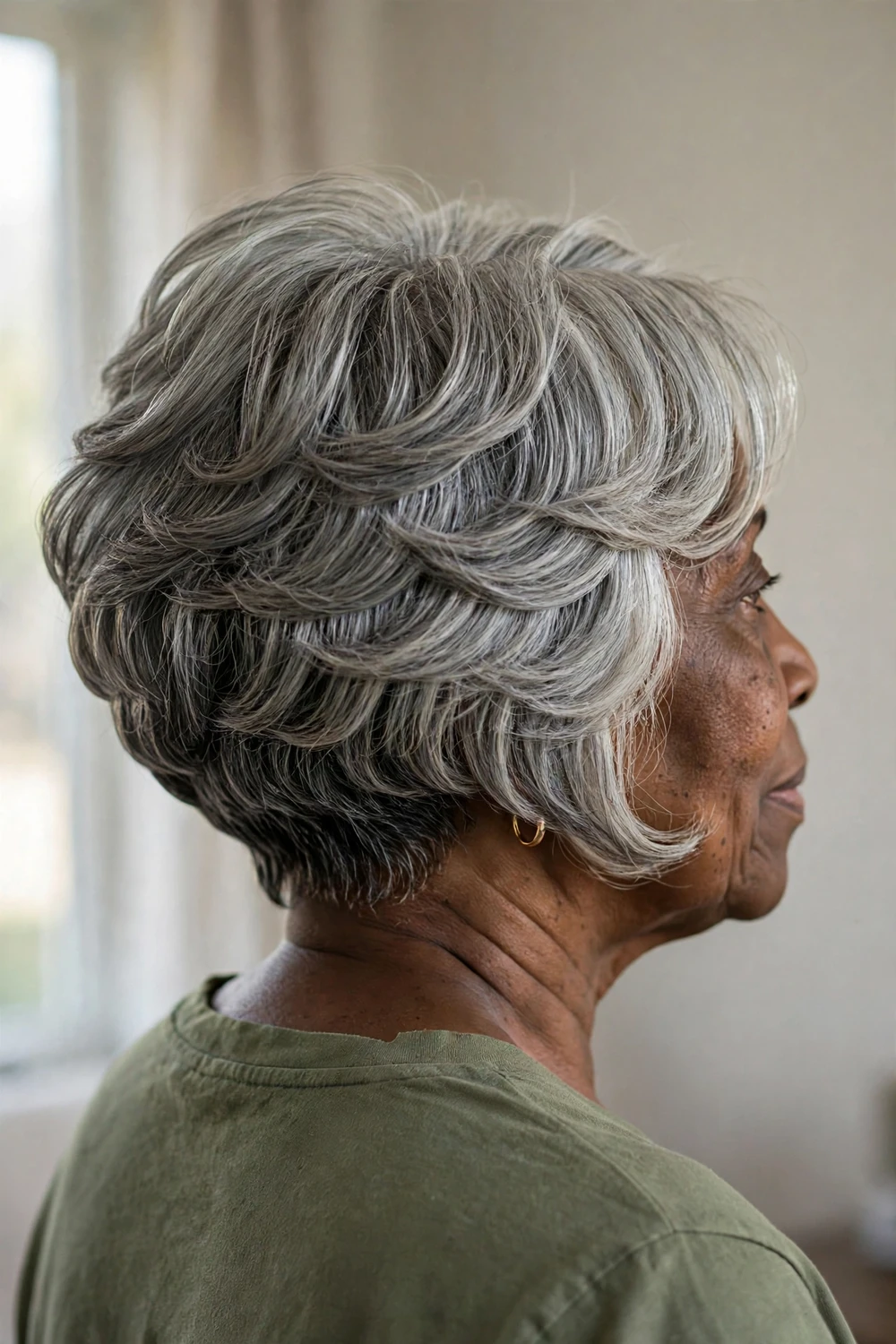
The stacked bob is engineered for volume. Graduated layers at the back, shortest at the nape and getting longer toward the front, push the hair up and out to create a rounded, full silhouette. For fine hair this is transformative: the stacking does what backcombing tries to do, permanently. The front stays long enough to frame the face at chin length, which keeps the look feminine rather than severe. Trims every 5 to 6 weeks keep the graduation crisp, since the shape depends on the precision of the stack.
Try this: Apply texturizing spray to the crown layers only, not the ends, so the fullness stays where the cut built it.
10. Classic Chin-Length Bob
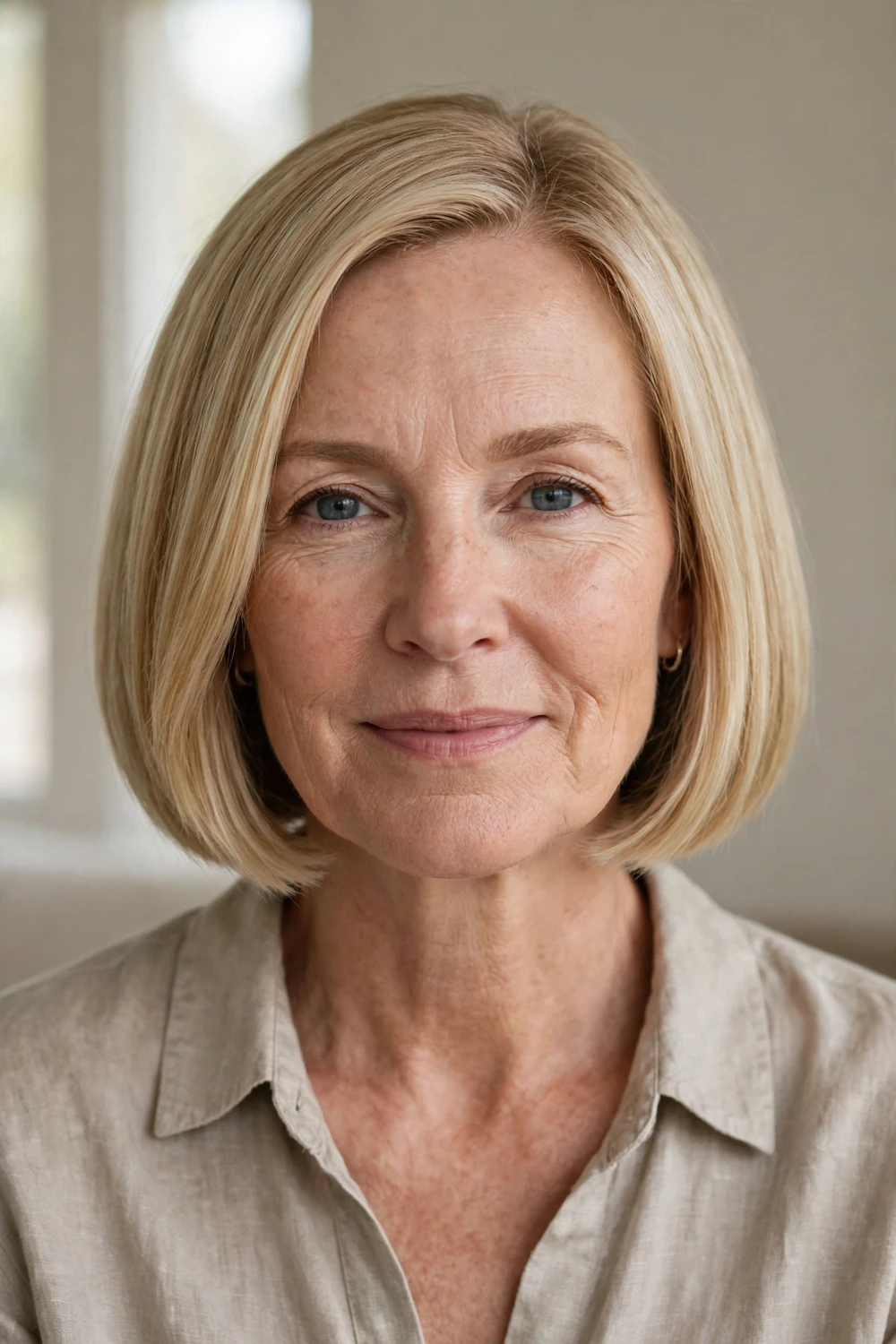
Some cuts never leave the salon request list, and this is one of them. A classic chin-length bob with a clean, one-length perimeter gives fine hair the densest possible edge: every strand ends at the same point, so the hemline looks thick instead of wispy. It frames the face neatly, tucks behind the ears for a change of pace, and needs nothing more than a paddle-brush blow-dry or a smooth air-dry. If your hair is very fine, ask for the ends to be cut blunt with no thinning, since any layering at the perimeter costs you visible density.
Try this: Tuck one side behind your ear to show off earrings and create an asymmetric line that adds interest.
11. French Bob with Side Bangs
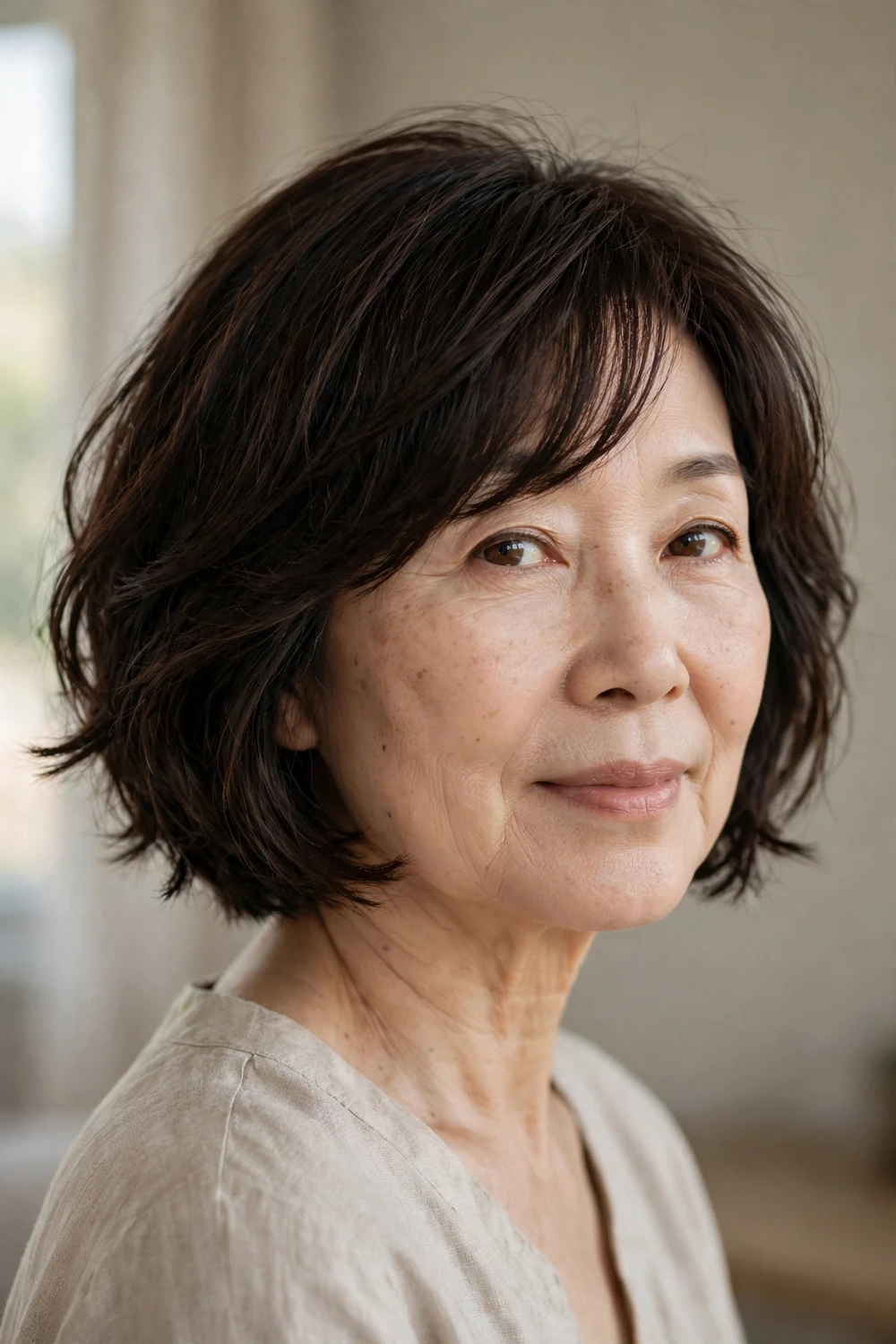
Chin-skimming with a little Parisian attitude, the French bob brings texture to a short shape. Light, choppy ends keep it from looking heavy, and soft side bangs add movement across the forehead that flatters mature features. The cut suits natural wave with no fuss, which means wash-and-go mornings are genuinely possible. On straight fine hair, a quick pass with a flat iron bent outward at the ends gives the signature flick in under five minutes. It is a confident cut that asks almost nothing of you after the salon.
Try this: Add a light mist of sea salt spray to damp hair and scrunch for texture that holds without stiffness.
12. Italian Bob
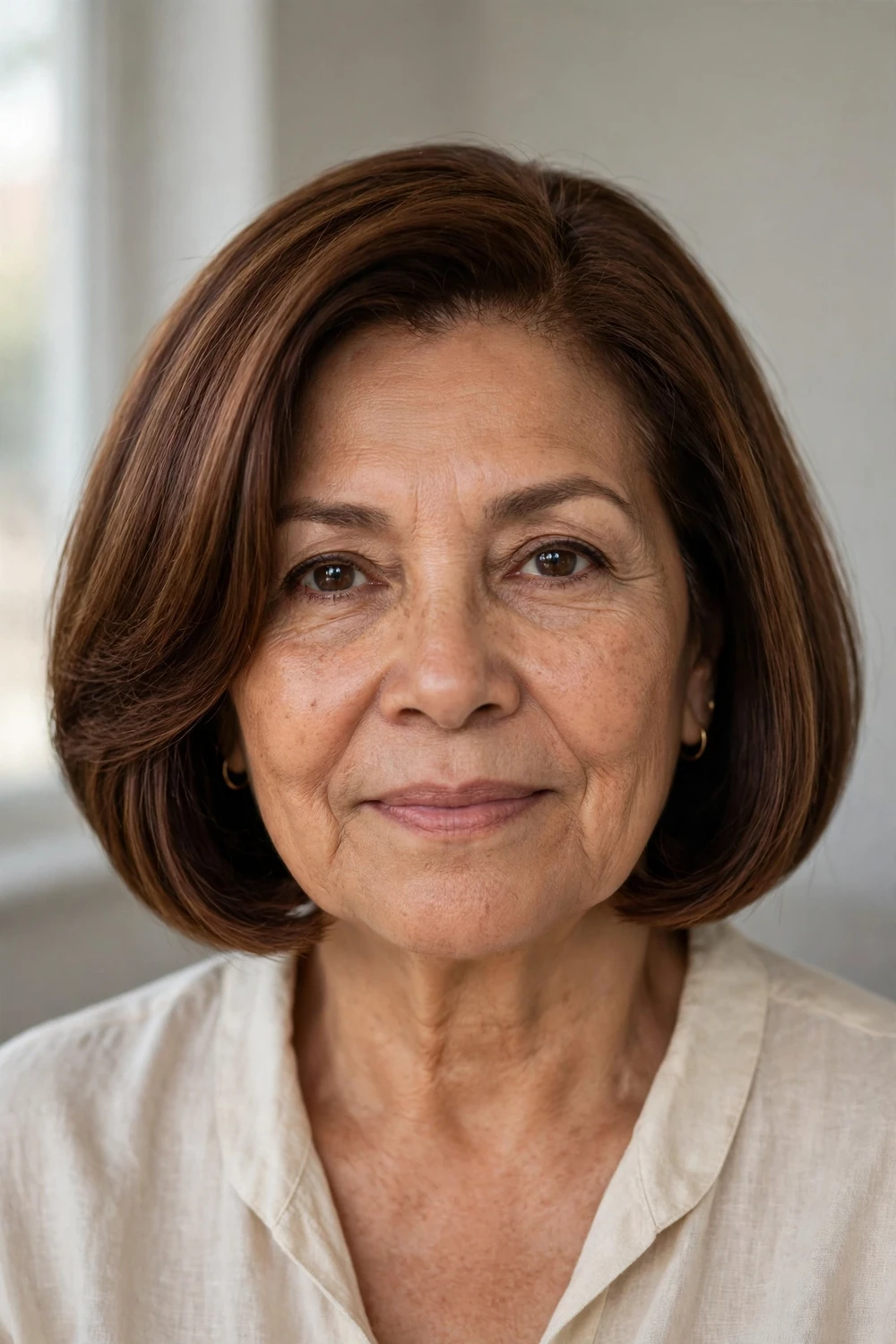
Cut at one length with full, chunky ends, the Italian bob is a density trick in disguise. Unlike layered bobs that can wisp out fine hair, this version keeps every bit of weight at the bottom, so the hemline reads thick and healthy. A deep side part adds natural lift at the root on the heavier side. The 1960s-inspired shape is timeless rather than trendy, which means it will not look dated in photos a year from now. Straight strands show off the geometric line best, and a smoothing serum keeps frizz away in seconds.
Try this: Flip your part to the opposite side every few days to refresh root volume without any product.
Short on time every morning? These simple hairstyles for short hair take under 10 minutes and work with any of the short cuts above.
13. Sleek Blunt Bob
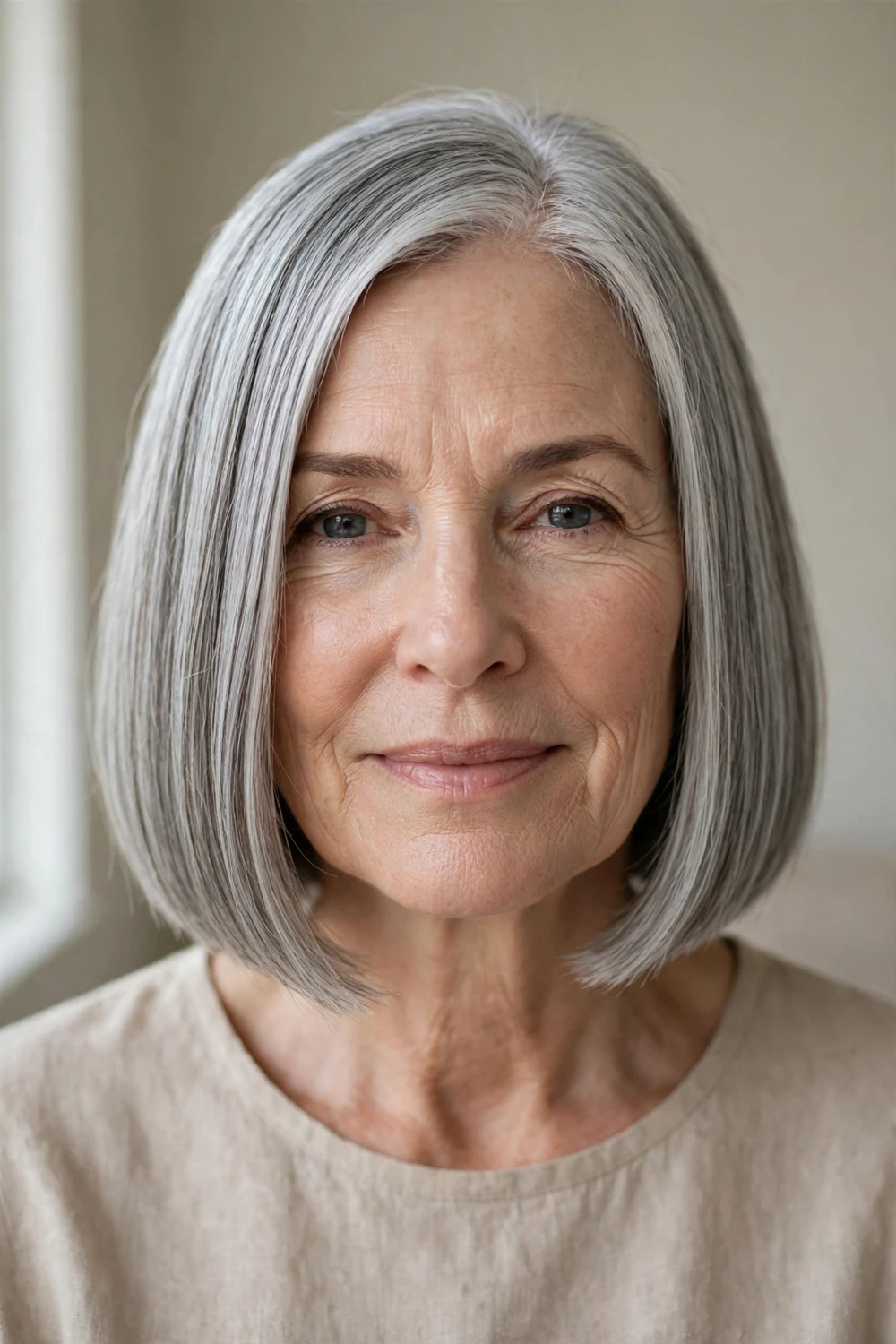
Clean lines do the heavy lifting here. A sleek blunt bob with a geometric, even hemline gives fine hair structure that no amount of product can fake. Gray blending, where silver strands are woven with beige blonde and light brown, adds dimension that makes straight hair look thicker and grows out without a harsh line. The cut air-dries into a smooth shape on straight hair and needs only a paddle brush to look finished. Keep the edges sharp with trims every 4 to 6 weeks, since the whole effect depends on that crisp line.
Try this: Run a flat iron over just the last two inches to refresh the blunt edge between washes.
14. Asymmetrical Inverted Bob
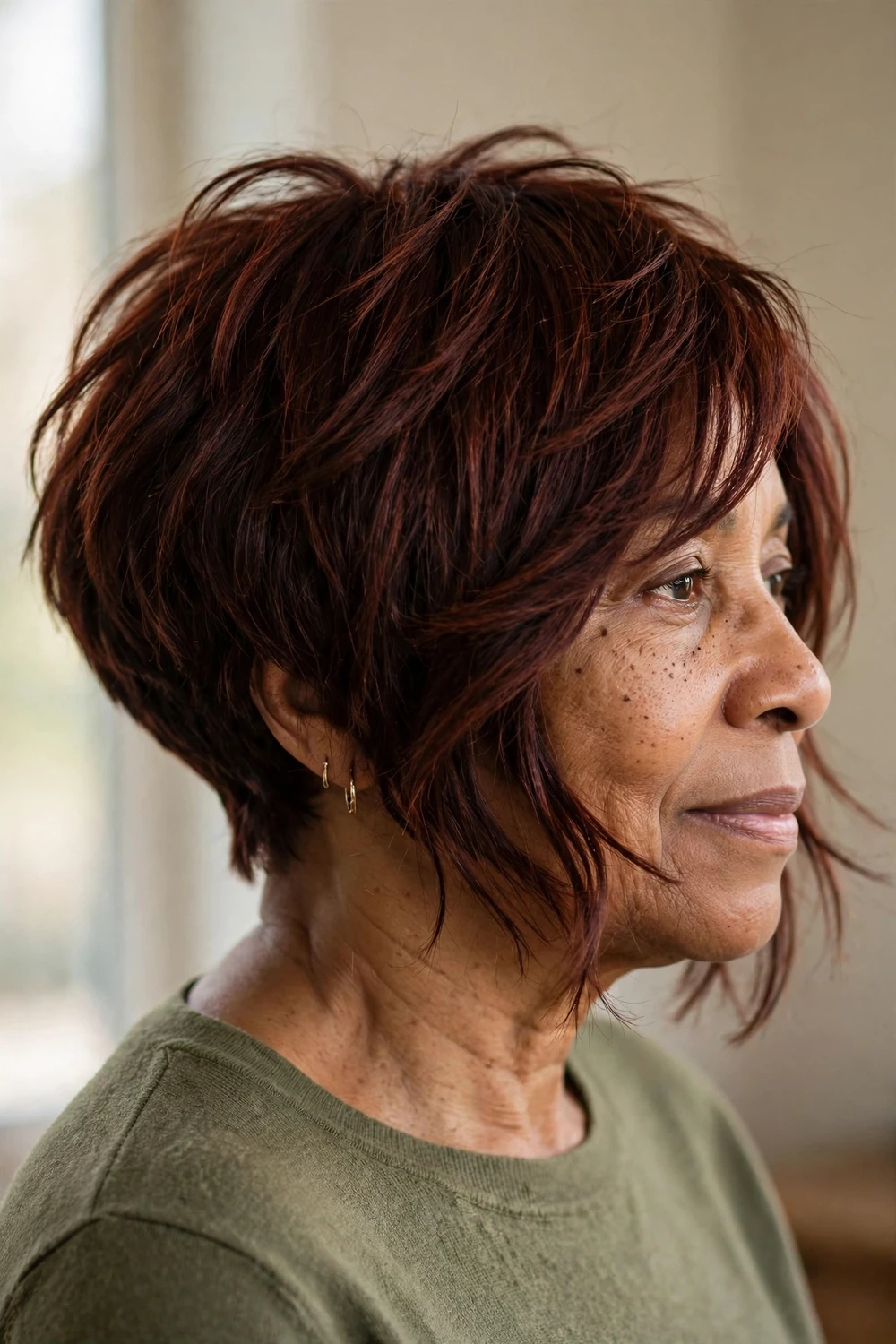
One side shorter, the other falling longer past the chin: the asymmetry creates movement that fine hair cannot make on its own. The inverted graduation at the back adds the same lift as a stacked bob, while the longer front pieces keep the look soft around the face. Choppy, piece-y layers through the ends stop the cut from looking too severe and help it grow out without a shelf. It flatters most face shapes because the diagonal line draws the eye across rather than down. Style it by blow-drying the longer side forward for polish.
Try this: Tuck the shorter side behind your ear and let the longer side frame your face for an evening-ready shape in seconds.
15. Flippy-Layered Bob
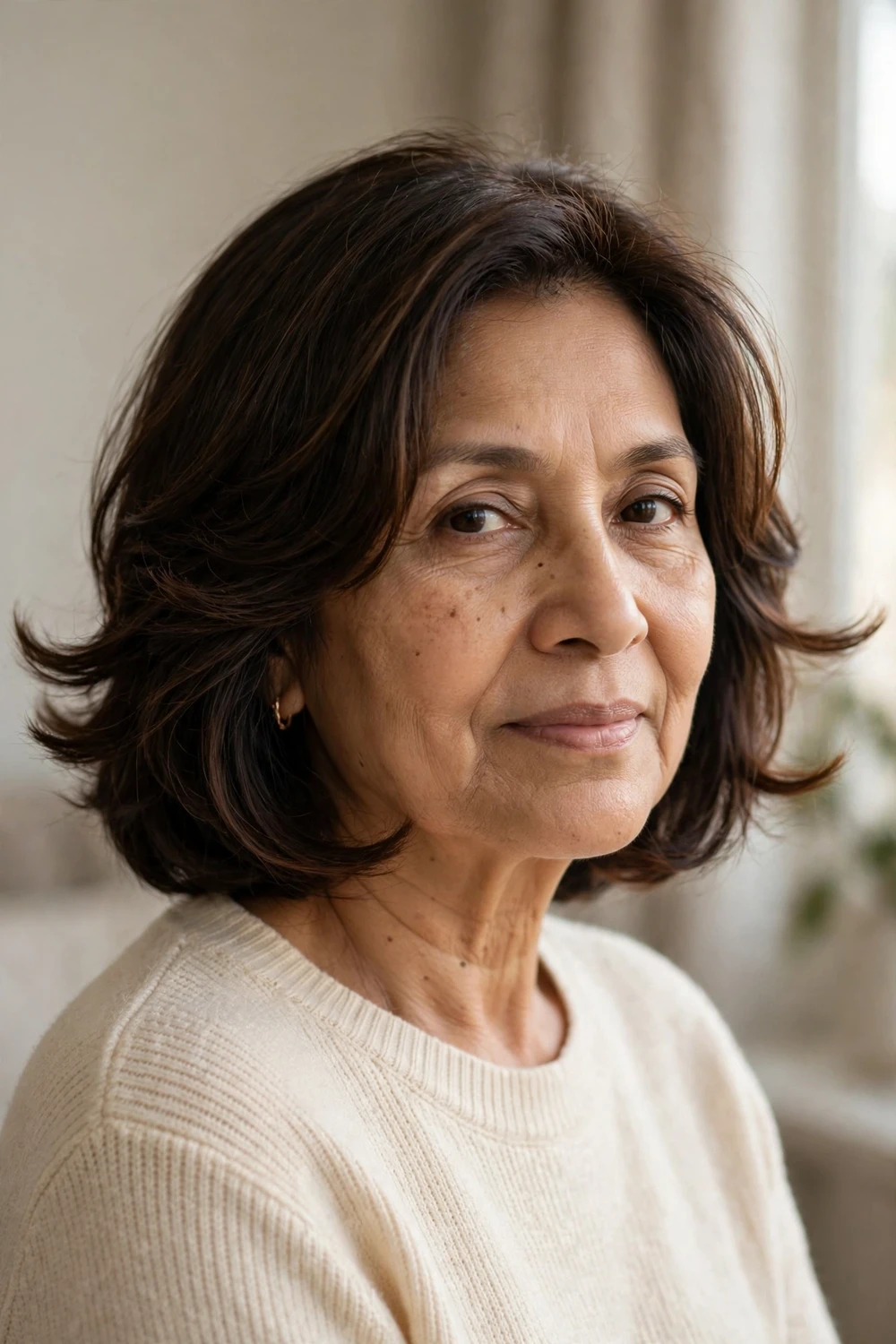
Ends that flick outward at the cheekbones do two jobs at once: they add width that makes fine hair look fuller, and they lift the eye upward for a fresher look. A flippy-layered bob sits at chin length with soft layers cut to turn out naturally, so the shape practically styles itself. A quick flick with a round brush sets the flip in minutes, or you can air-dry and let the layers do their thing for a softer result. Subtle highlights through the layers catch the light and add visible dimension to fine strands.
Try this: Blow-dry with a medium round brush, rolling the ends outward instead of under, to set the flip that defines this cut.
16. Textured Messy Bob
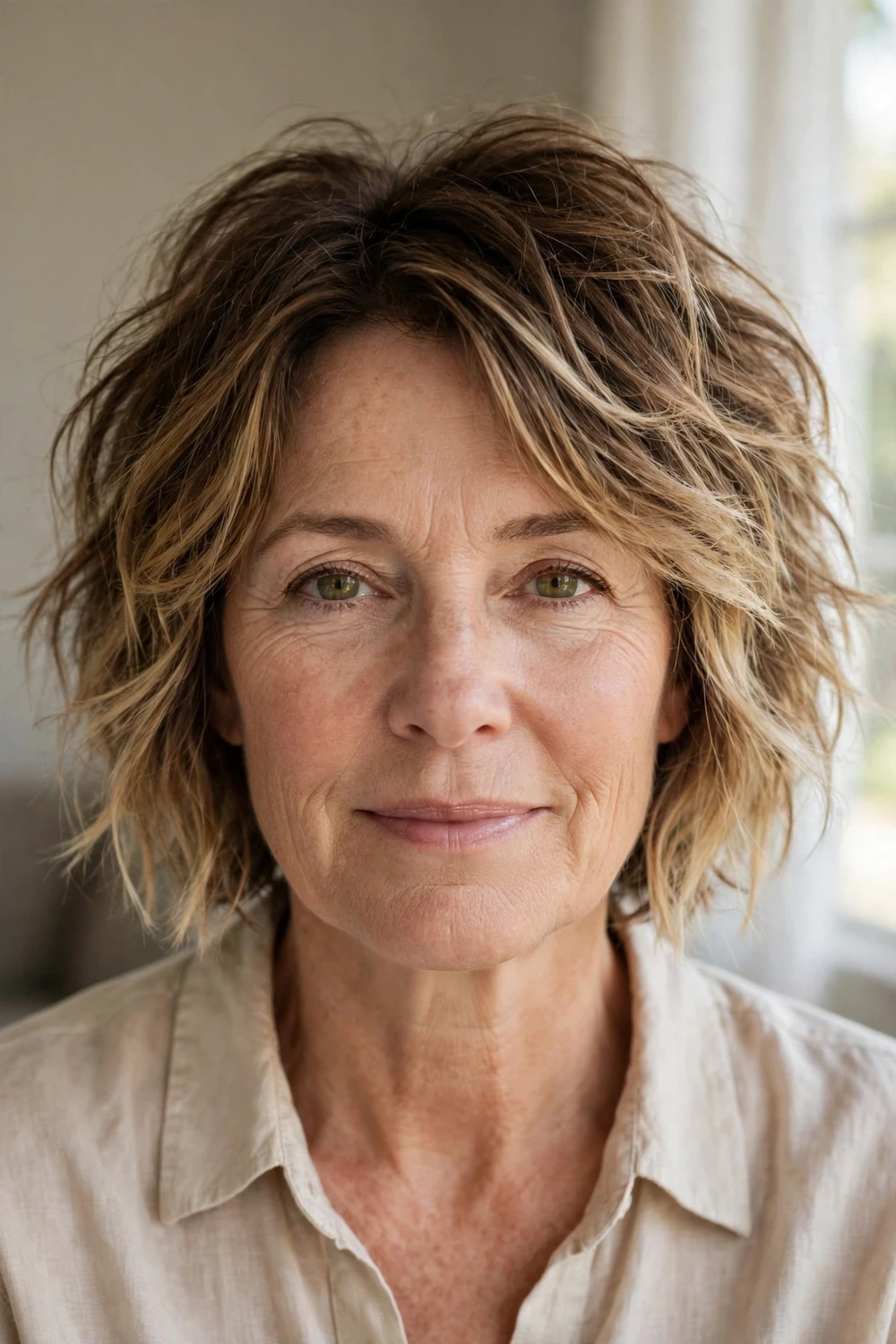
Deliberately undone is the easiest texture to maintain. A textured messy bob with choppy layers throughout lets fine hair separate into piece-y sections that read as volume. The messiness is strategic: when every piece points a slightly different direction, the eye sees fullness instead of flatness. A soft ombre from darker roots to lighter ends adds depth without frequent salon visits, since the darker root melts into regrowth. This is a true wash-and-go cut: towel dry, add texturizing spray, and leave it alone.
Try this: Twist random one-inch sections while damp and let them air-dry for piece-y definition with zero heat.
17. Bob with Curtain Bangs
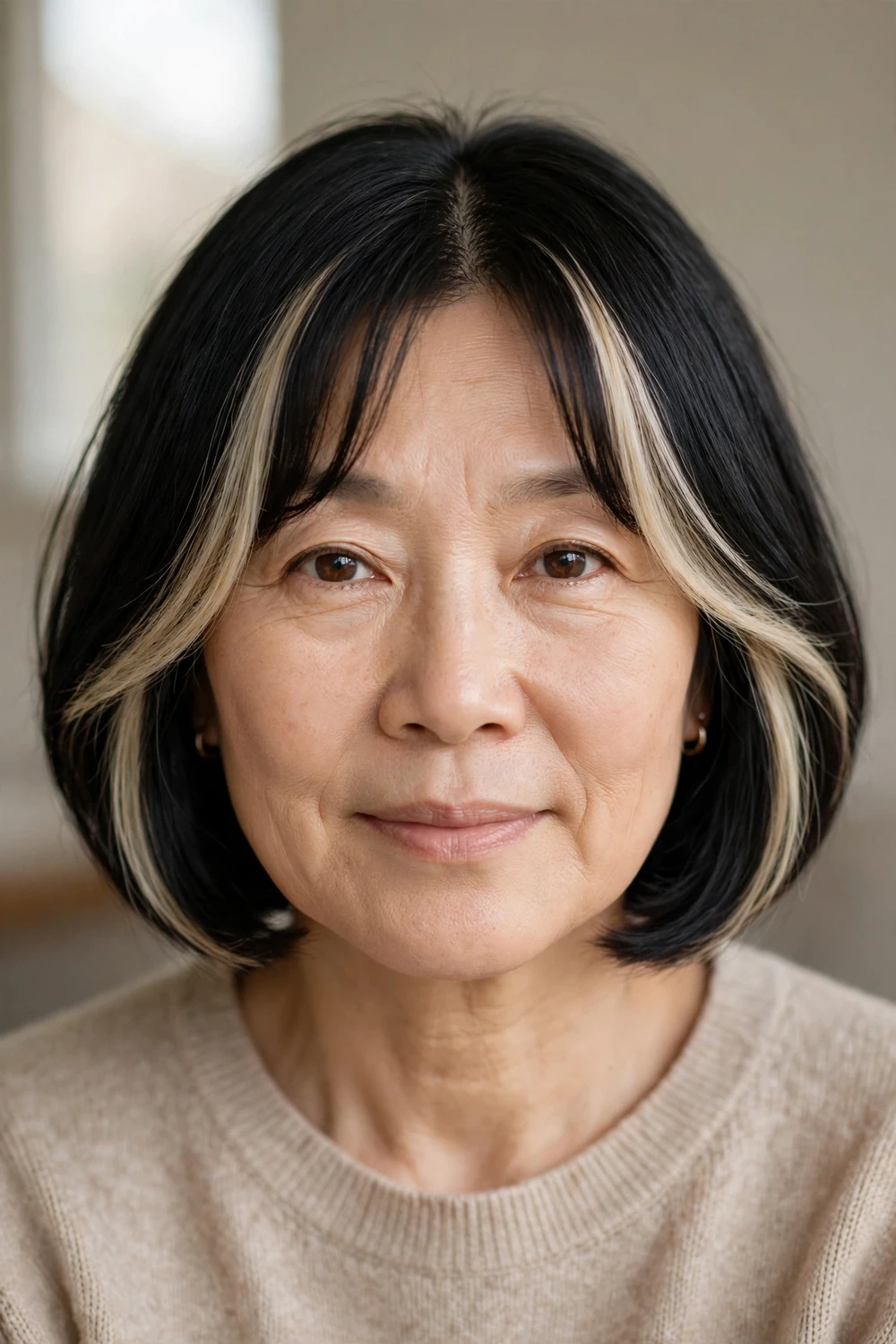
Here the curtain fringe does the talking. On a chin-length bob, soft curtain bangs that part in the middle and melt into the front layers frame the eyes and cheekbones while adding movement to an otherwise simple shape. For fine hair, the trick is ordering the bangs cut with light, feathery ends rather than a thick curtain, so they stay airy all day. They need a trim every 3 to 4 weeks to stay at the right length, but the daily styling is nothing: finger-comb them into place and go.
Try this: Wrap curtain bangs around a large round brush and blow-dry upward for 20 seconds to get the signature swoop.
18. Bob with Side Bangs for Thinning Hair
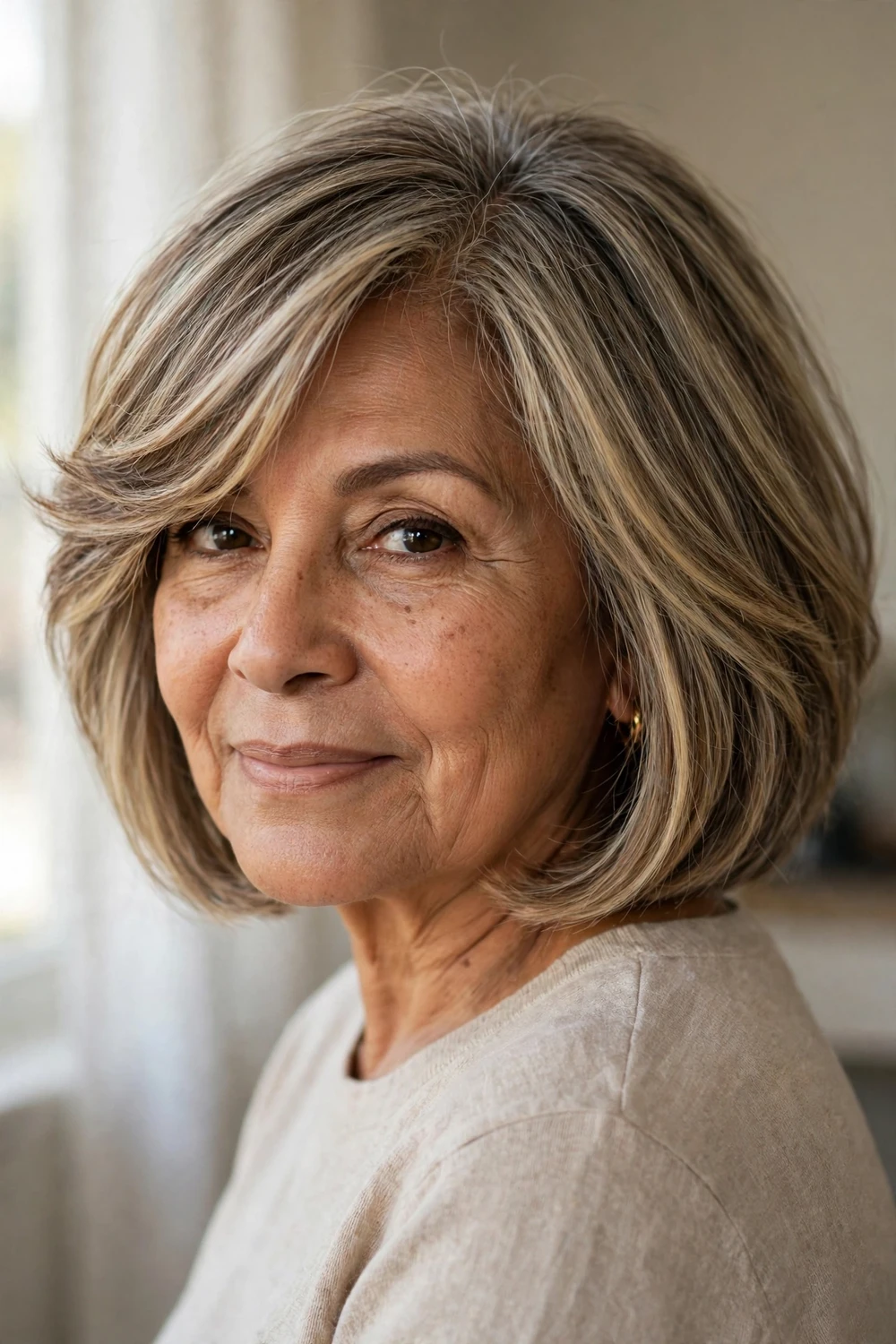
Thinning hair needs coverage strategy, and long side bangs are one of the best. Swept across the forehead from a deep side part, they add density exactly where hair tends to thin first while the bob’s blunt perimeter keeps the ends looking full. A dimensional dirty blonde or soft bronde color brings depth that single-tone color cannot, and it grows out gracefully alongside graying. The side sweep also creates instant root lift on the heavy side. Keep the bangs long enough to tuck behind the ear so you have two looks in one cut.
Try this: Dust a little dry shampoo along the part before styling to add grip and thickness at the roots.
For more volume-focused styling ideas made for sparse strands, see these cute hairstyles for thin hair.
19. Silver Lob with Feathered Side Part
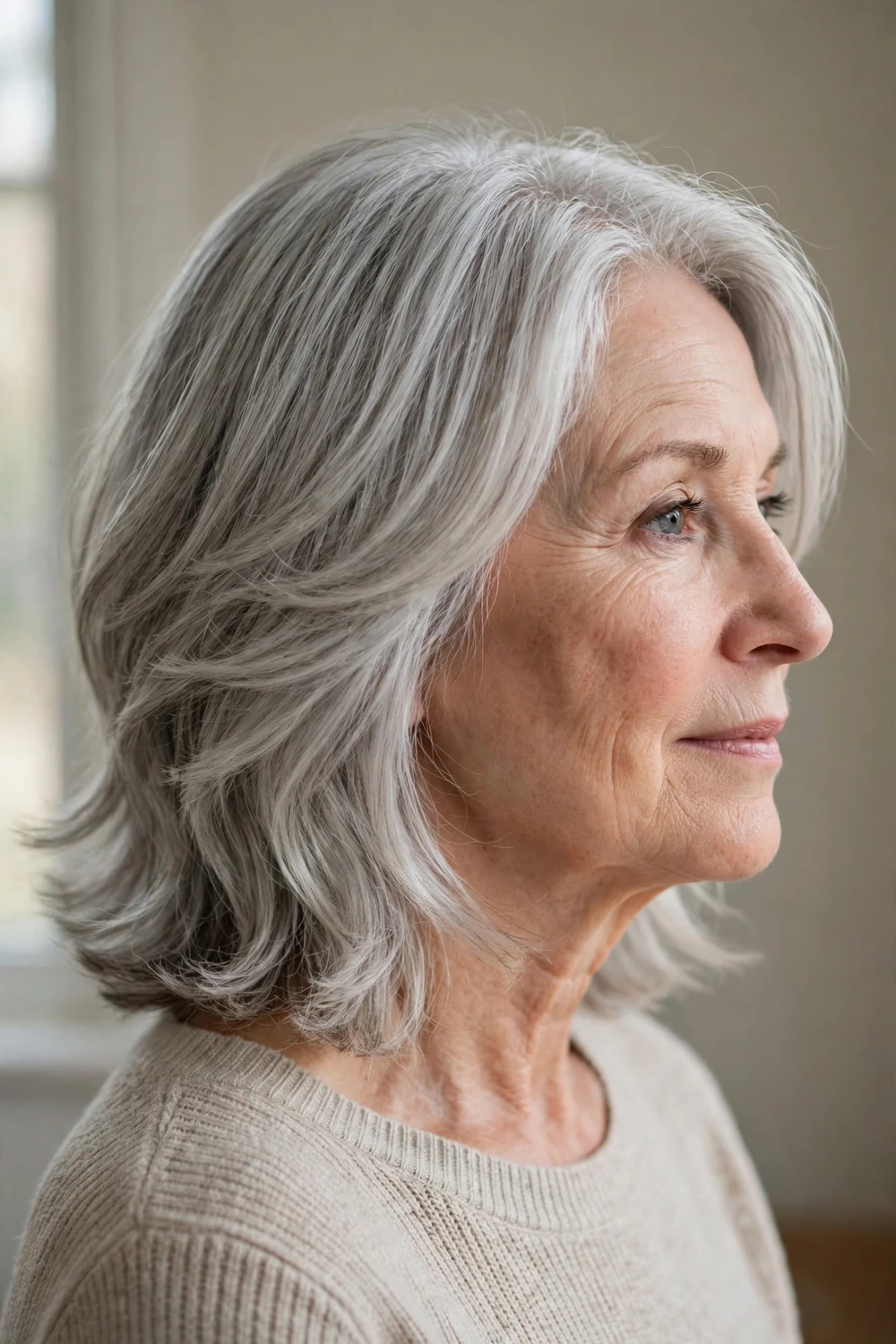
The lob is often called the most forgiving length for mature hair, and this version proves why. Falling to the collarbone with relaxed, feathered layers sweeping away from the face, it gives you length without the weight that drags fine hair down. Natural silver or light gray shines here: the shine makes fine strands look thicker, and the color needs no touch-ups. It blow-dries straight in minutes or air-dries into soft bends. Hidden internal layers near the face create movement while the blunt ends stay dense.
Try this: Ask your stylist to keep the ends blunt while layering only the interior, which protects density where fine hair needs it most.
20. Soft A-Line Lob
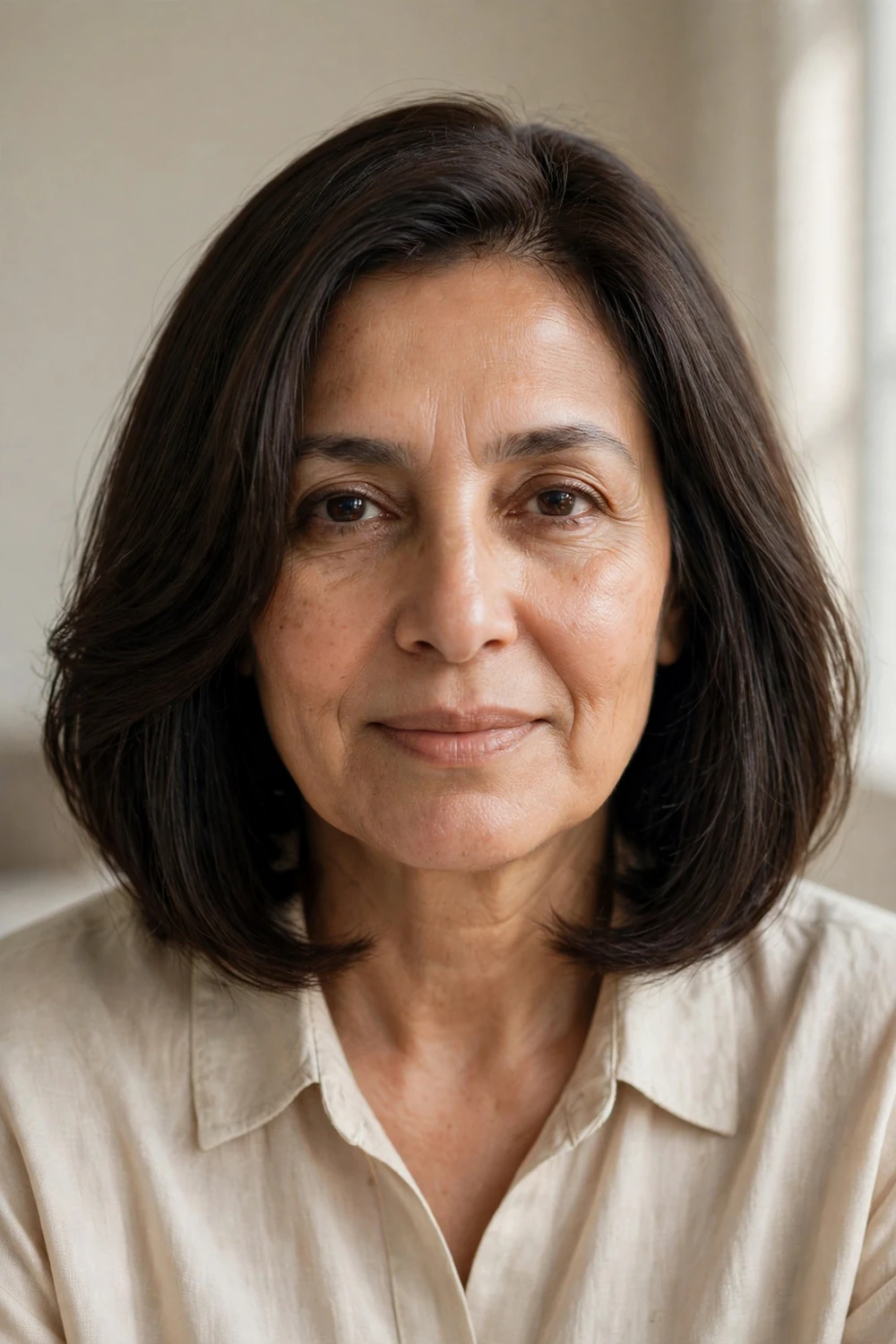
An A-line silhouette, slightly shorter at the back and longer in front, builds shape into fine hair without layers that could thin it out. The gentle forward angle creates the look of density at the front while the back stays neat and easy. A soft wave through the lengths adds movement that straight fine hair often lacks, and warm honey or beige tones keep the color dimensional. The length is still short enough to style in under ten minutes and long enough to pull back on busy days. It is a practical middle ground that suits most face shapes.
Try this: Curl just the front sections away from your face with a large barrel for a polished wave that frames everything.
21. Layered Wavy Lob
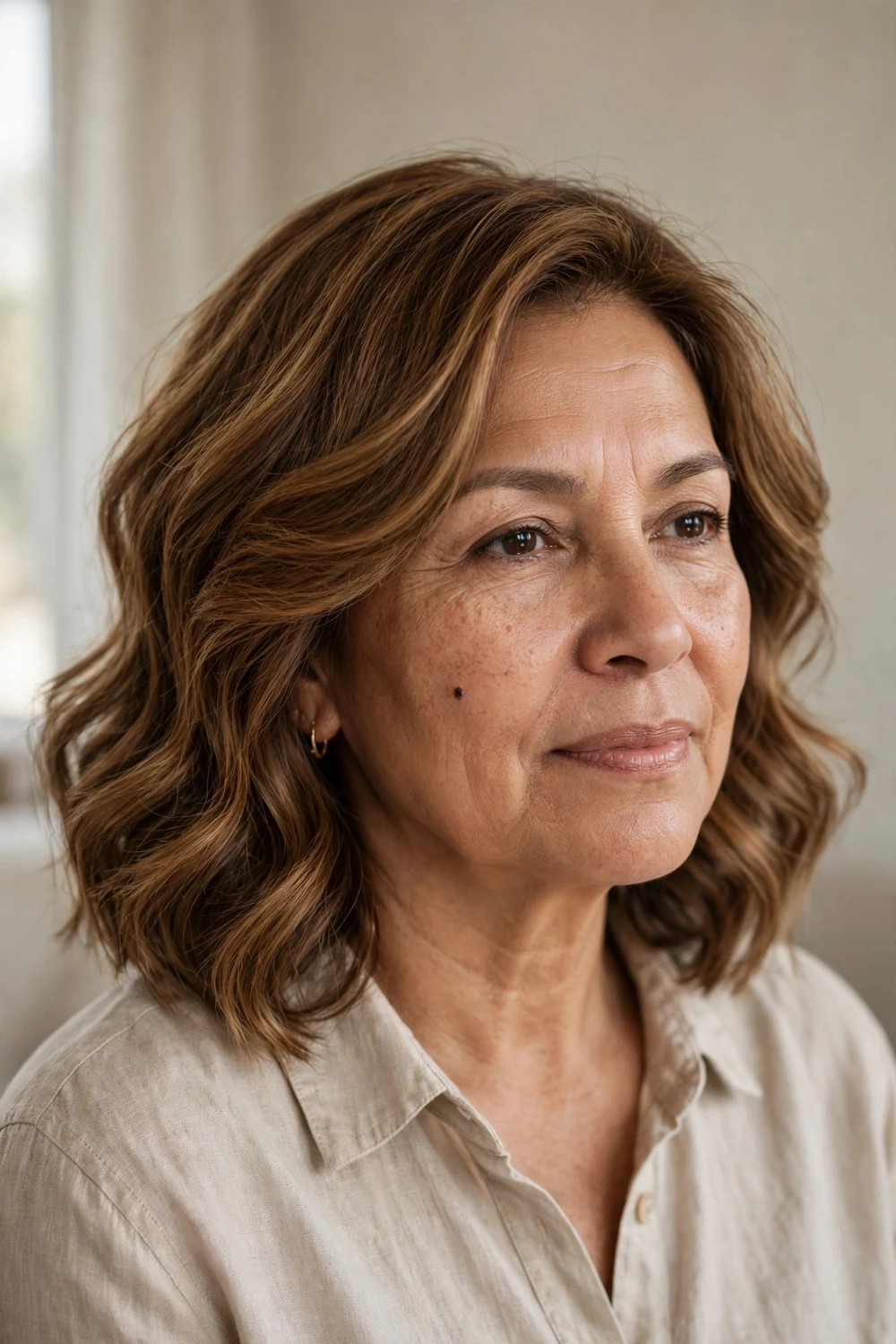
Loose waves are fine hair’s best friend because each bend adds visual width. A layered wavy lob uses long layers to encourage natural wave while keeping enough length for versatility. Just a couple of added bends with a large curling iron, or even braiding damp hair overnight, creates waves that last for days on fine hair. The layers remove bulk from the mid-lengths so the waves do not fall flat by afternoon. Sea salt spray on damp hair brings out texture with almost no effort, and the cut grows out gracefully for 8 weeks.
Try this: Braid damp hair into two loose braids before bed for heat-free waves that hold through the next day.
22. Sleek Straight Lob
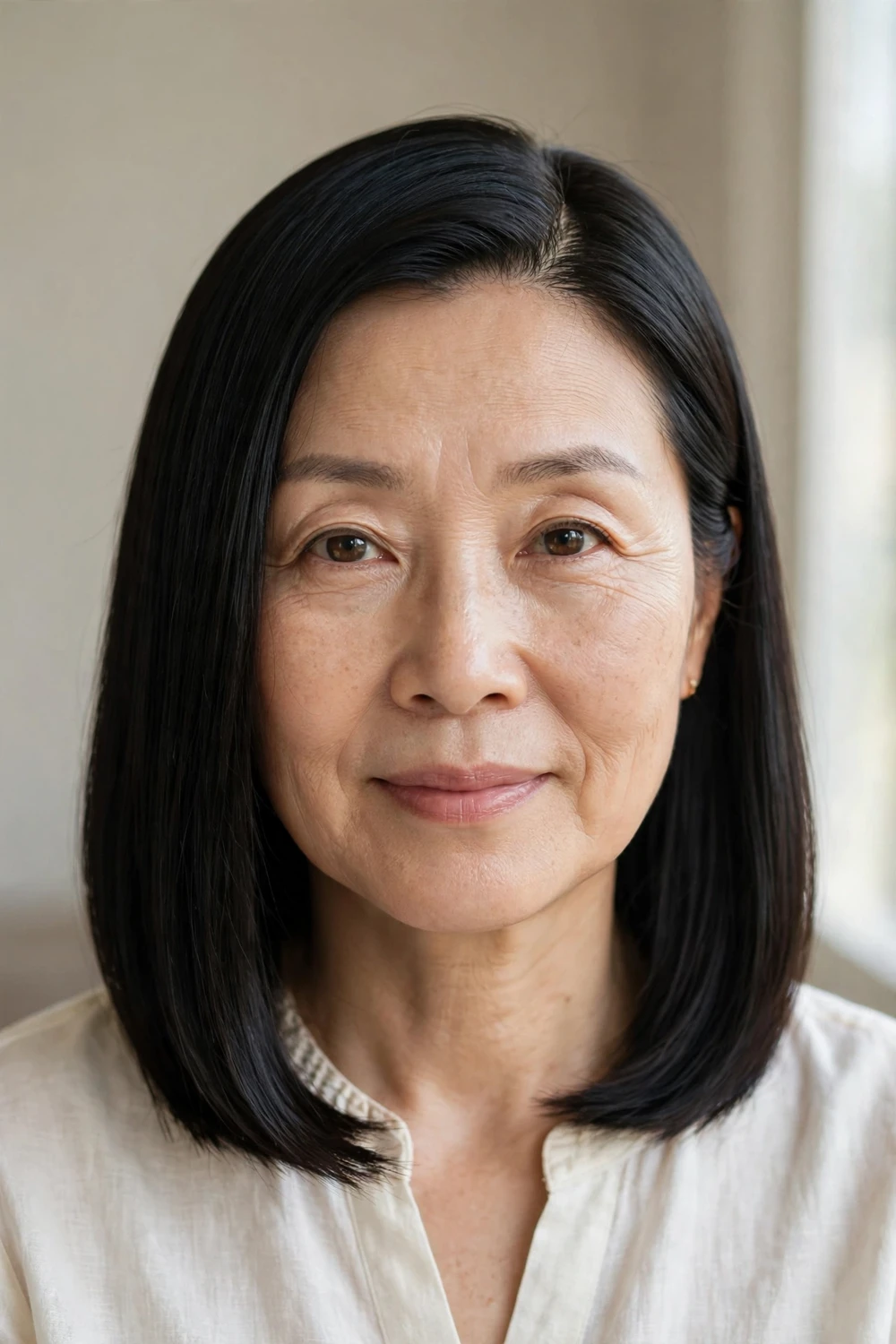
Not every fine-haired woman wants texture, and this cut respects that. A sleek straight lob with a deep side part gives a neat, polished silhouette that stays chic all day with minimal heat styling. The deep part creates a natural fall around the face and instant root lift on the heavier side. On straight fine hair, the one-length cut looks dense and intentional, and a smoothing serum handles any frizz in seconds. It is the definition of wash-and-go for straight textures: paddle brush, quick blow-dry, done.
Try this: Blow-dry with a paddle brush using a downward nozzle angle to seal the cuticle for extra shine and smoothness.
23. Salt-and-Pepper Lob with Soft End Curls
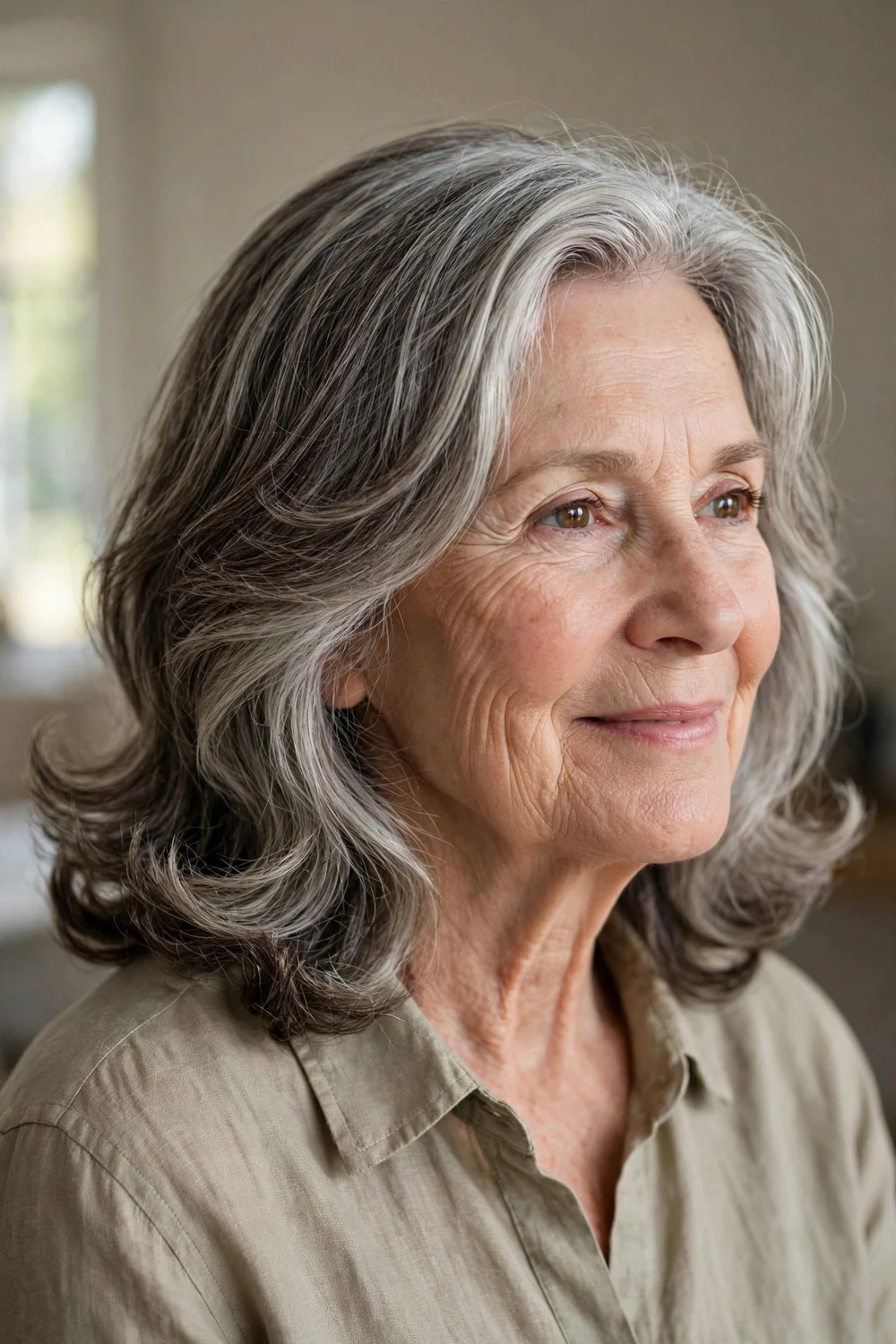
Letting your natural silver grow in does not mean giving up on style. This shoulder-length lob celebrates the mix of silver and deeper tones with ends that curl softly outward for bounce without hot-tool marathons. The natural variation in gray hair acts like built-in highlights, adding dimension that makes fine hair look fuller. For women transitioning to gray, this length hides the demarcation line as it grows out. A round brush flicked outward at the ends during a quick blow-dry is the entire styling routine.
Try this: Use a purple-toned shampoo every other wash to keep silver strands bright and prevent brassiness.
24. Wavy Shag with Curtain Bangs
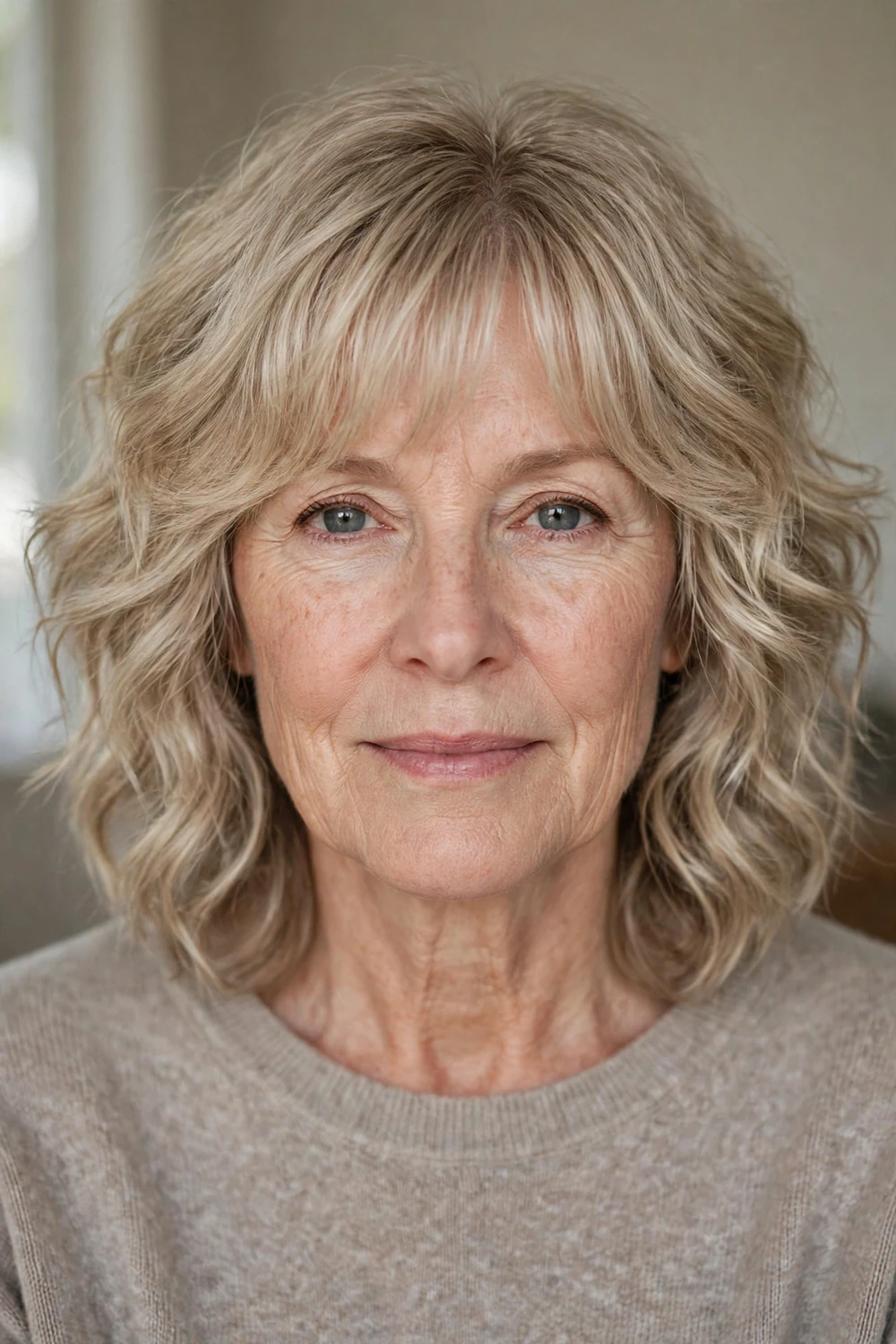
The modern shag is built for fine, wavy hair. Choppy layers throughout create the separation and movement that make hair look thicker, while side-swept curtain bangs frame the eyes and soften the forehead. On fine hair, the shag’s texture does the volumizing so you do not have to: a spritz of texturizing spray on damp hair and an air-dry is genuinely enough. The cut also hides thinning patches well, since the layers break up the scalp line. It is playful without trying too hard, and it grows out into soft layers rather than an awkward shape.
Try this: Scrunch a pea-sized amount of curl cream into damp ends to define the shag’s texture without weighing it down.
If you prefer to keep some length past the shoulders, these medium hairstyles for fine hair over 60 show more volume-building options for fine hair.
25. Chin-Length Shag
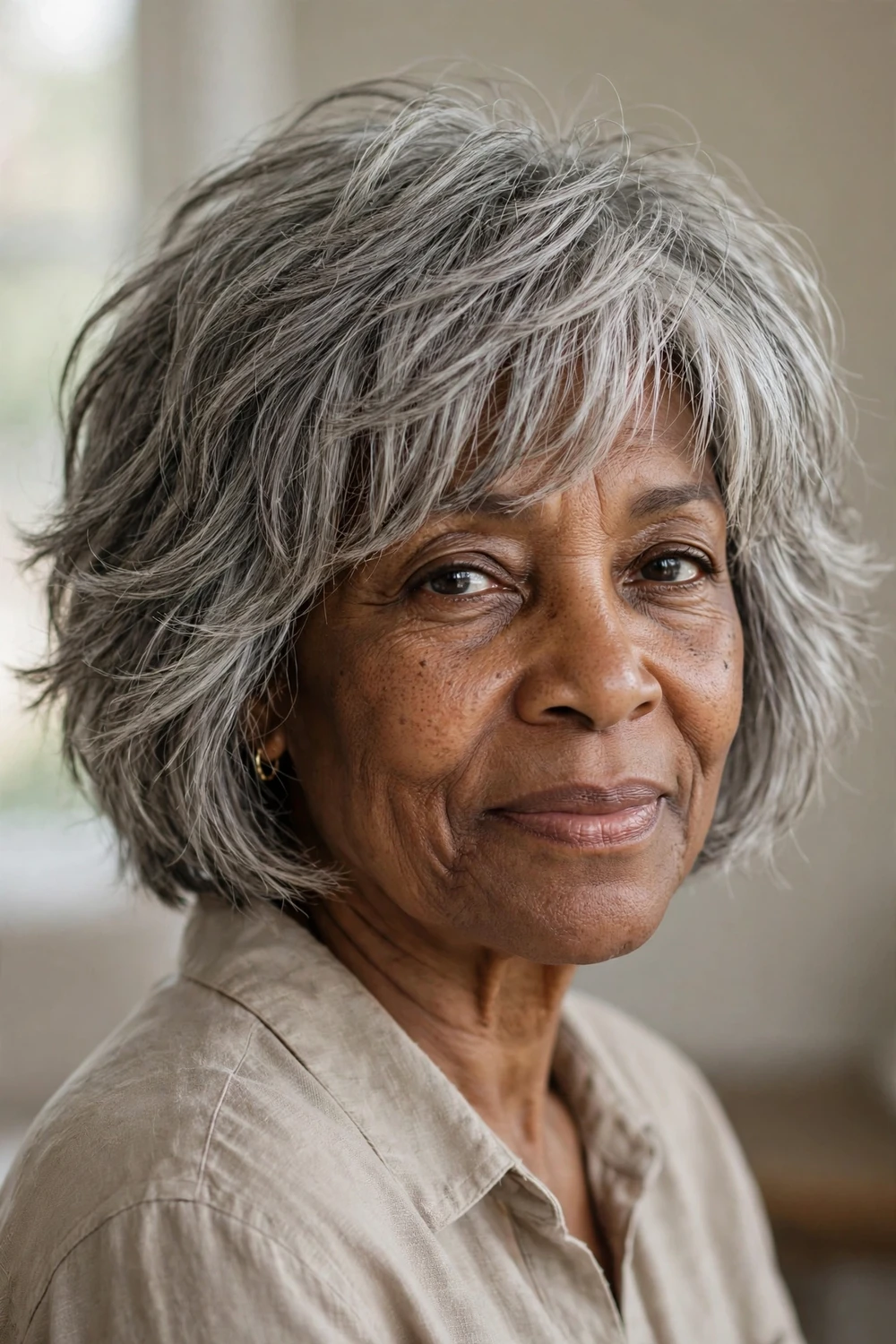
Shorter than the classic shag but with all the same benefits. A chin-length shag uses separated layers that fall naturally apart, creating fullness through the mid-lengths without any backcombing or teasing. For fine hair that is starting to thin, this separation is useful: it breaks up the scalp line so sparse areas are less visible. The length keeps it feminine and easy to tuck behind the ears, and the whole cut air-dries into shape. Lightweight mousse at the roots before air-drying gives the layers extra lift.
Try this: Flip your head upside down for the last minute of air-drying to encourage root lift that sets as it dries.
26. Medium Layered Shag with Wispy Fringe
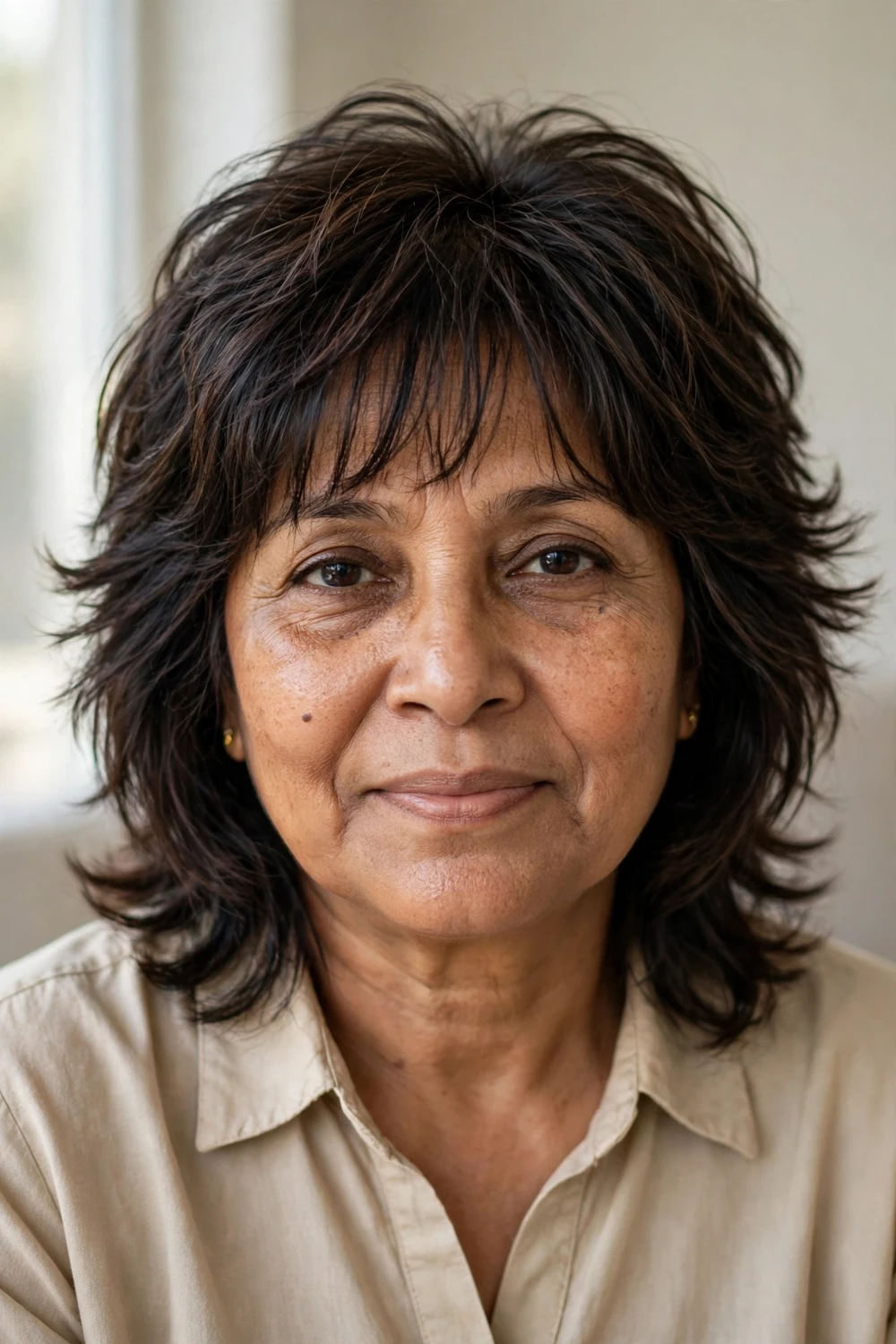
Shoulder length with a light touch. This medium shag keeps soft, piece-y layers through the crown for natural lift while a wispy fringe draws attention to the eyes and quietly covers forehead lines. The fringe is cut light enough to air-dry without separating, which is the detail that makes or breaks bangs on fine hair. Because the layers are blended rather than choppy, the cut grows out gracefully and looks good for two months between trims. A touch of texturizing spray is the only product the layers ask for.
Try this: Point the blow-dryer down at the fringe while finger-combing it side to side for 15 seconds to prevent it splitting.
27. Shoulder-Length Layers
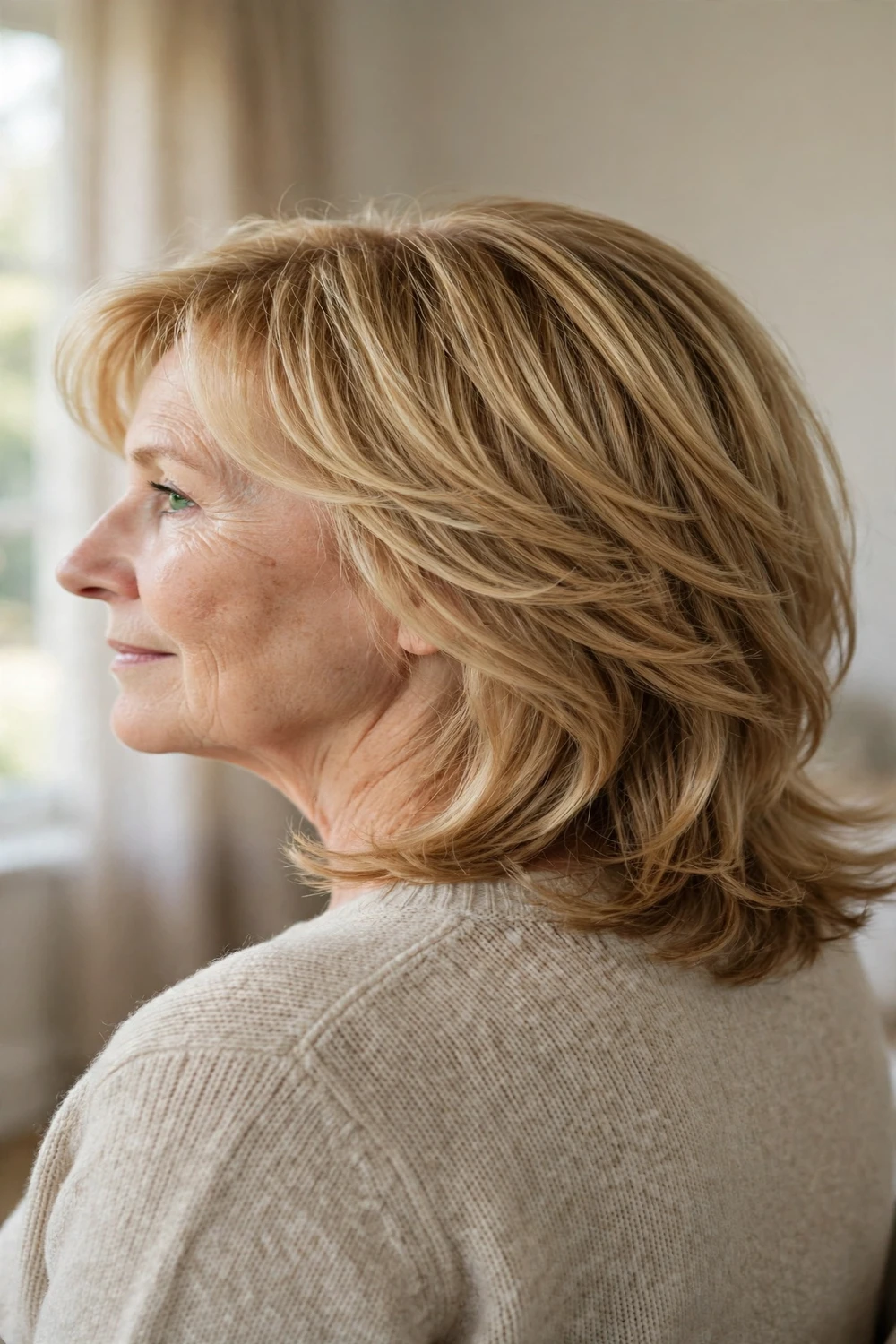
The safe choice that is not boring. Shoulder-length layers with a soft, rounded shape give fine hair movement while keeping enough length for ponytails and clips on lazy days. The rounded silhouette makes the ends look thicker than they are, which matters when fine hair tends to wisp out. It does not rely on short, intricate layers to hold its shape, so it stays low-maintenance for weeks. Blow-dry with a round brush for polish or let it air-dry for a relaxed finish: both work because the shape is built into the cut.
Try this: Ask for long layers only, nothing shorter than chin length, to protect the density fine hair needs at the ends.
28. Armpit-Length Cut with Textured Ends
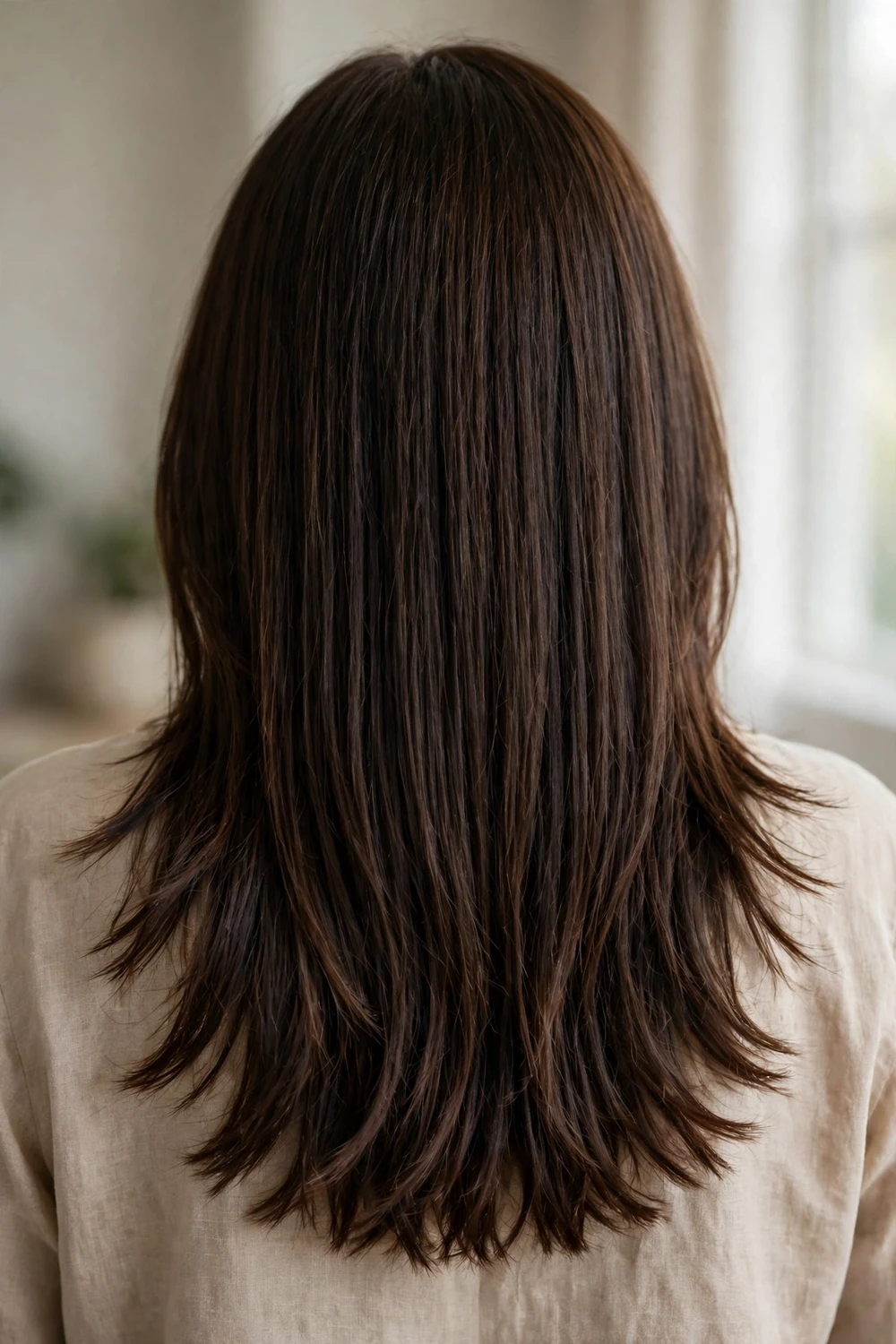
Yes, you can keep length after 50 with fine hair if the cut is smart about it. This midi length sits at the armpit with slightly layered, thinned ends that remove just enough weight to let the hair move. The built-in versatility is the appeal: wear it down with little styling, pull it into a low ponytail, or twist it up. The key for fine hair is keeping the layering minimal through the top so the roots keep their density, with the texture concentrated at the bottom third. It needs trims every 8 weeks to keep the ends from looking stringy.
Try this: Sleep in a loose topknot to wake up with soft bends that need no morning styling at all.
29. Face-Framing Layers
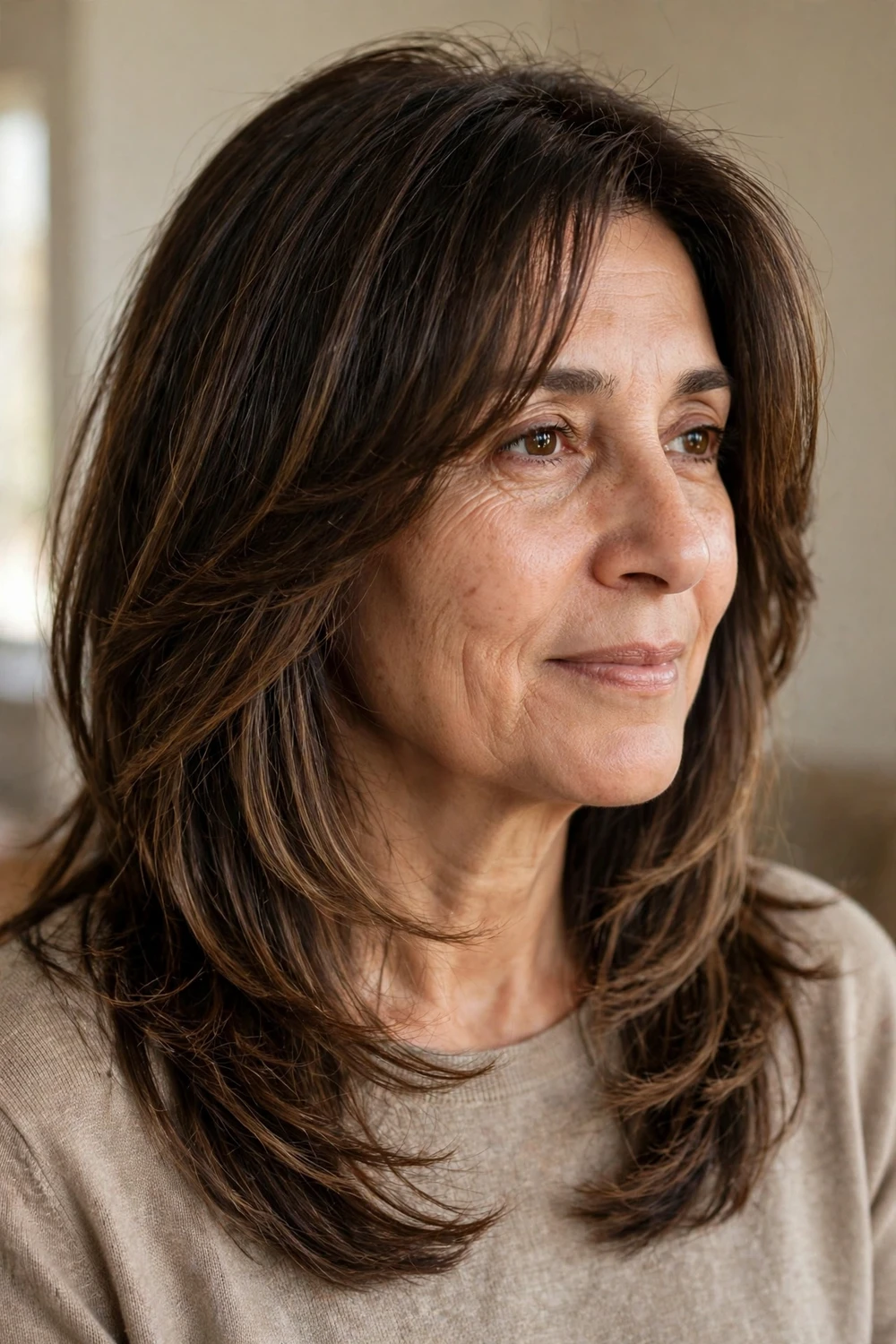
Long layers that start at the jawline and cascade down do the contouring that makeup cannot. Face-framing layers soften the jaw and neck area while the length stays one-density through the back, which protects fine hair from looking thin. A low-maintenance balayage that grows out softly pairs well here, since it needs fewer touch-ups than solid color. The layers move when you do, giving the impression of fullness without any styling skill required. It is an easy grow-out cut too, since the layers simply get longer.
Try this: Part your hair in the middle and let the front layers fall forward to frame the face with zero effort.
30. Layered Curly Bob
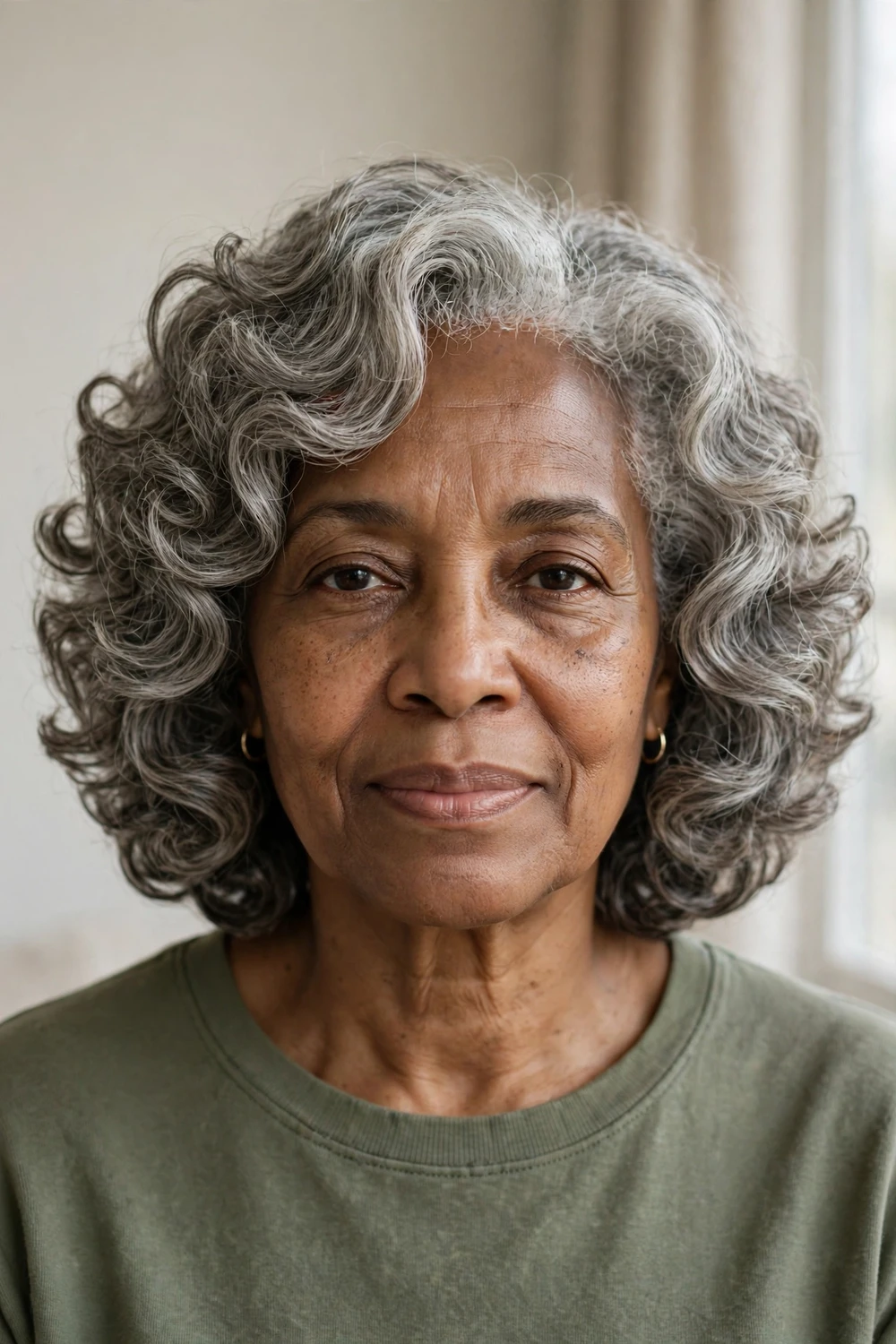
Natural curls are an asset, and a layered curly bob lets them work for you. Removing excess length takes the weight off the curls so they spring up instead of dragging down, and layers shape each curl cluster while keeping the overall silhouette rounded. For fine curly hair, this creates the illusion of density that long curls can never give. A curl-defining cream and lightweight leave-in conditioner are the whole routine: scrunch into damp hair and let it air-dry or diffuse. The cut also grows out well, since curls hide uneven growth better than straight hair.
Try this: Scrunch curls with a microfiber towel instead of a regular towel to reduce frizz while keeping definition.
Low-Maintenance Cuts Comparison at a Glance
| Style | Best For | Trim Schedule | Daily Styling Time |
|---|---|---|---|
| Soft Textured Pixie | Straight to wavy fine hair | Every 4-5 weeks | 3 minutes |
| Side-Swept Pixie | Thinning temples, round faces | Every 5 weeks | 5 minutes |
| Tapered Pixie with Choppy Crown | Flat crowns needing lift | Every 4-6 weeks | 2 minutes |
| Asymmetric Spiky Pixie | Cowlicks, active lifestyles | Every 4-5 weeks | 2 minutes |
| Salt-and-Pepper Textured Crop | Natural gray, low color upkeep | Every 5-6 weeks | 3 minutes |
| Tousled Bixie | Growing out a pixie | Every 5-6 weeks | 5 minutes |
| Bixie with Curtain Bangs | Forehead lines, glasses wearers | Every 4-6 weeks | 5 minutes |
| Brushed-Back Bixie | Glasses wearers, open face | Every 5 weeks | 4 minutes |
| Stacked Bob | Maximum volume at the back | Every 5-6 weeks | 7 minutes |
| Classic Chin-Length Bob | Densest hemline, all face shapes | Every 6 weeks | 5 minutes |
| French Bob with Side Bangs | Natural wave, chic low effort | Every 5-6 weeks | 5 minutes |
| Italian Bob | Straight fine hair, thick ends | Every 6 weeks | 5 minutes |
| Sleek Blunt Bob | Straight hair, gray blending | Every 4-6 weeks | 5 minutes |
| Asymmetrical Inverted Bob | Diagonal movement, most faces | Every 5-6 weeks | 7 minutes |
| Flippy-Layered Bob | Cheekbone emphasis, width | Every 6 weeks | 7 minutes |
| Textured Messy Bob | Wash-and-go, low color upkeep | Every 6-8 weeks | 3 minutes |
| Bob with Curtain Bangs | Soft face framing | Every 4-6 weeks | 4 minutes |
| Bob with Side Bangs | Thinning hair, temple coverage | Every 5-6 weeks | 5 minutes |
| Silver Lob with Feathered Side Part | Natural silver, some length | Every 6-8 weeks | 7 minutes |
| Soft A-Line Lob | Most face shapes, easy grow-out | Every 6-8 weeks | 8 minutes |
| Layered Wavy Lob | Natural wave, lasting style | Every 8 weeks | 5 minutes |
| Sleek Straight Lob | Straight hair, polished look | Every 6-8 weeks | 8 minutes |
| Salt-and-Pepper Lob with Curls | Gray transition, bounce | Every 6-8 weeks | 8 minutes |
| Wavy Shag with Curtain Bangs | Wavy texture, thinning patches | Every 6-8 weeks | 5 minutes |
| Chin-Length Shag | Short shag, easy air-dry | Every 6 weeks | 4 minutes |
| Medium Layered Shag with Fringe | Shoulder length, forehead lines | Every 8 weeks | 5 minutes |
| Shoulder-Length Layers | Versatility, ponytail option | Every 8 weeks | 8 minutes |
| Armpit-Length Cut | Keeping length, updo option | Every 8 weeks | 10 minutes |
| Face-Framing Layers | Softening jawline, grow-out | Every 8 weeks | 7 minutes |
| Layered Curly Bob | Natural curls, spring and shape | Every 8-10 weeks | 5 minutes |
How to Choose the Right Cut for You
Start with your morning reality. If you have five minutes, pick from the pixies, bixies, and textured crops. If you have ten, the bobs and lobs open up. Be honest about air-drying versus blow-drying, since some cuts look better one way.
Next, look at where your hair is thinnest. Crown thinning calls for stacked or tapered shapes that build height. Temple thinning calls for side-swept shapes or bangs that cover the area. All-over fineness calls for blunt perimeters that keep the ends dense.
Finally, think about your color routine. If you are growing out gray, choose cuts that celebrate the mix, like the salt-and-pepper crop or the silver lob. If you color, pick shapes that do not depend on fresh roots to look good.
Mistakes to Avoid
Do not over-layer fine hair. Layers remove weight, which helps, but too many short layers through the ends leave the perimeter wispy and thin-looking. Keep layers concentrated at the crown and interior.
Do not skip trims to save money. Fine hair shows split ends faster, and ragged ends drag the whole cut down. A trim every 4 to 8 weeks, depending on length, costs less than the products people buy trying to fix a grown-out shape.
Do not use heavy products. Thick creams, oils, and silicone-heavy serums coat fine strands and flatten them within hours. Lightweight mousse, dry texture spray, and dry shampoo give grip and lift without the weight. Less product almost always looks like more hair.
Frequently Asked Questions
What is the best low-maintenance haircut for fine hair over 50?
The best options are short textured shapes like a soft textured pixie, a stacked bob, or a tousled bixie. These cuts build volume at the crown, style in under 10 minutes, and keep their shape between trims. The right choice depends on your face shape and how much daily styling you will actually do.
How often should women over 50 with fine hair get a trim?
Short cuts like pixies and stacked bobs need trims every 4 to 6 weeks to keep their shape crisp. Bobs and lobs can go 6 to 8 weeks, and longer layered cuts stretch to 8 weeks. Regular trims keep the ends looking full, which matters more for fine hair than for thick hair.
Will layers make fine hair look thinner?
It depends where the layers sit. Short layers at the crown add lift and make hair look fuller, while heavy layering through the ends removes density and makes fine hair look wispy. Ask your stylist for interior and crown layers with a blunt or full perimeter to get volume without losing thickness.
Can I air-dry fine hair with these cuts, or do I need to blow-dry?
Many of these cuts air-dry well, especially the textured pixies, shags, messy bobs, and curly bob. Applying lightweight mousse to damp roots before air-drying gives lift without heat. A quick 5-minute blow-dry adds polish and root volume for bobs and lobs, but it is optional rather than required for most of these shapes.
What products work best for fine hair over 50 without weighing it down?
Stick to lightweight formulas: volumizing mousse for root lift, dry texturizing spray for separation, and dry shampoo for grip and second-day volume. Skip heavy creams, oils, and silicone serums, which flatten fine strands. A pea-sized amount of light pomade works for short textured cuts to define pieces.
Final Thoughts
Fine hair over 50 does not need more products or more effort. It needs a smarter shape. Pick one cut from this list that matches your mornings, show your stylist the photo, and let the haircut do the work from here. Years of trial and error taught me that the simplest cuts are usually the ones women keep the longest.

