



Finding a cut that makes fine hair look fuller gets trickier after 60. Strands grow thinner with age, gray hair can turn wiry, and heavy one-length cuts tend to fall flat by noon.
This guide rounds up 21 medium hairstyles for fine hair over 60, from layered lobs to soft shags, all picked to build volume and movement. I’ve spent years trying different cuts for fine hair, and medium length keeps winning.
Quick answer: This guide covers the best styles, who they suit, and how to get them right.
Quick Takeaways
- Medium length keeps enough weight for styling but removes the drag that flattens fine hair.
- Long, blended layers are the main volume tool. Short, choppy layers can make thin ends look wispier.
- A side part or curtain bangs can make the crown look thicker in seconds.
- Use a heat protectant every time you reach for hot tools. Mature hair breaks more easily.
- Trims every 6 to 8 weeks keep ends thick and stop fine hair from looking stringy.
Why Medium Length Works for Fine Hair After 60
Very long hair pulls fine strands down, and very short cuts leave nowhere to hide thin spots. Medium length sits in the middle. It gives you styling options while keeping the ends light enough to hold lift at the roots.
It also grows out gracefully. A shoulder-length cut with layers still looks intentional at week six, which helps when salon visits get harder to schedule. You can wear it smooth, wavy, or tucked behind the ears without a full restyle.
For mature hair, medium length flatters the neck and jawline without the upkeep of a precision pixie. It suits natural gray too, since silver strands catch the light and add the look of dimension.
Fine Hair Basics After 60
Fine hair means each strand is thin. That is not the same as having less hair, though many women over 60 deal with both. After menopause, slower growth and a wider part are common, so cuts should create the look of density.
Handle fragile aging hair gently. Use a wide-tooth comb on wet hair, skip tight elastics, and keep hot tools on a medium setting with a heat protectant. Rough brushing and daily high heat thin the ends fast.
Wash with a volumizing shampoo and condition only from mid-length down. A root-lifting mousse on damp hair adds body where fine hair needs it most. Small habits matter more than expensive products when the goal is lasting fullness.
If you want styles that take minutes in the morning, browse these easy hairstyles for thin hair for more quick ideas.
1. Shoulder-Length Layers
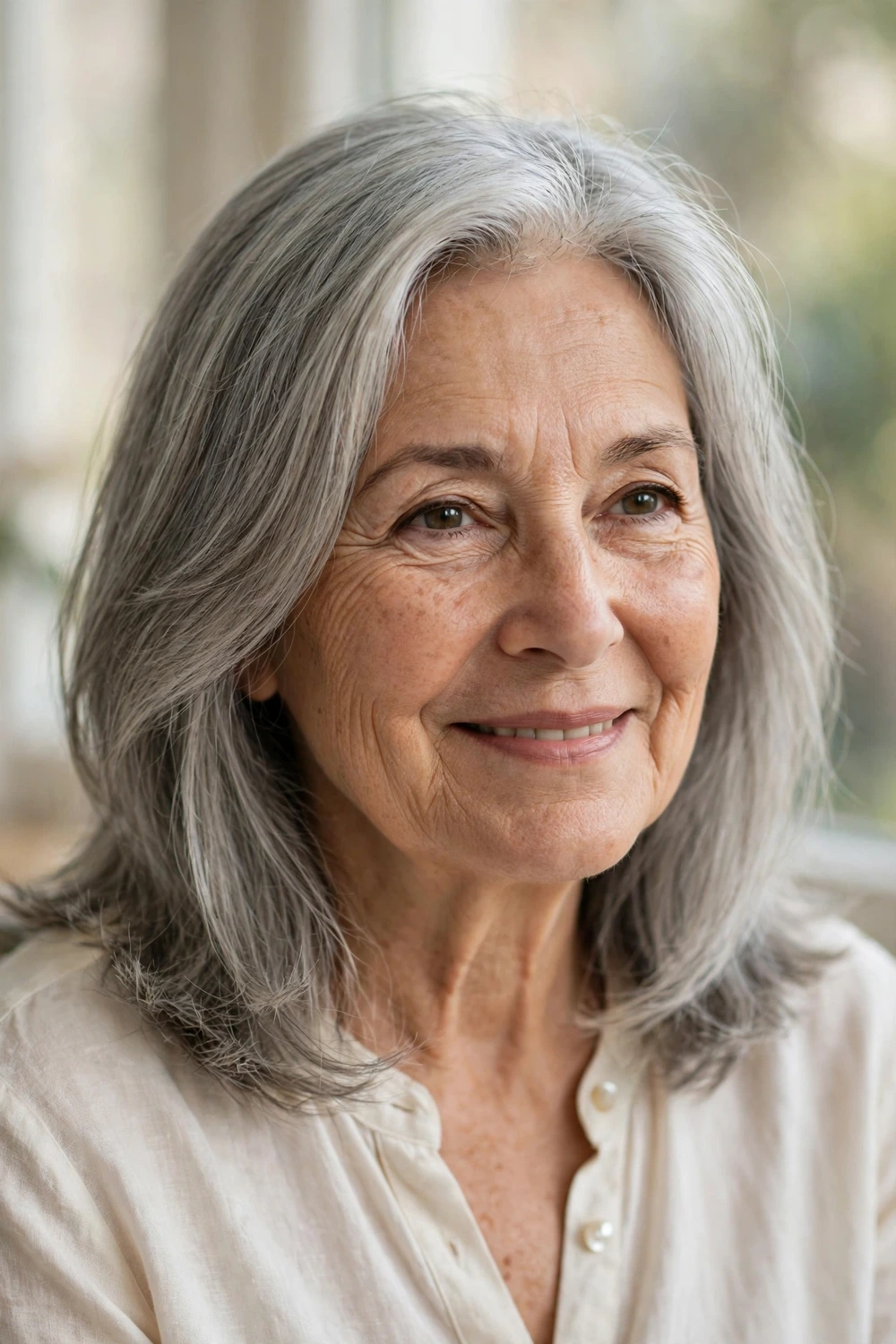
Shoulder length is the sweet spot for fine hair that needs body. Long, blended layers through the mid-lengths remove just enough weight to let the roots lift, while the perimeter stays thick enough to look full. This cut works with straight, wavy, or graying hair and flatters most face shapes. Ask your stylist to keep the layers below the chin so the front stays strong. A round brush and five minutes is all the styling it needs.
Try this: Blow-dry upside down for two minutes, then flip back and smooth only the top layer. A pea-sized amount of root mousse at the crown adds lift that lasts all day.
2. Soft Shag
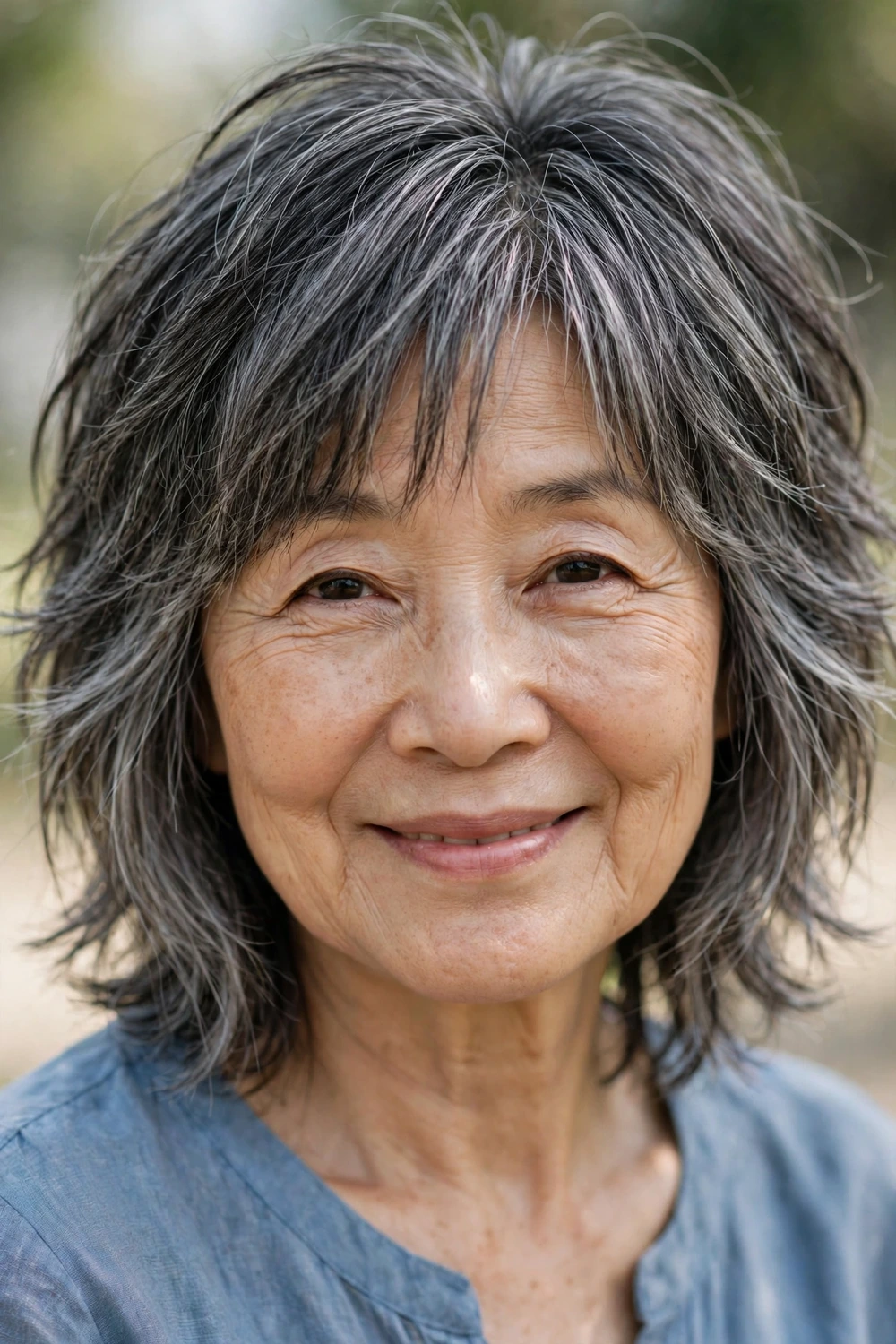
Want texture without sacrificing fullness? A soft shag delivers it. Feathered layers are cut through the mid-lengths and ends to create airy movement, while the top keeps enough length to cover thin spots at the crown. This cut is kind to natural wave and grows out without harsh lines. Face-framing pieces around the cheekbones keep it current. It suits women who prefer air-drying over daily heat styling and want a cut that looks finished with almost no effort.
Try this: Scrunch a lightweight mousse into damp hair and let it air-dry. The layers do the work, so skip the round brush on busy days.
3. Layered Lob
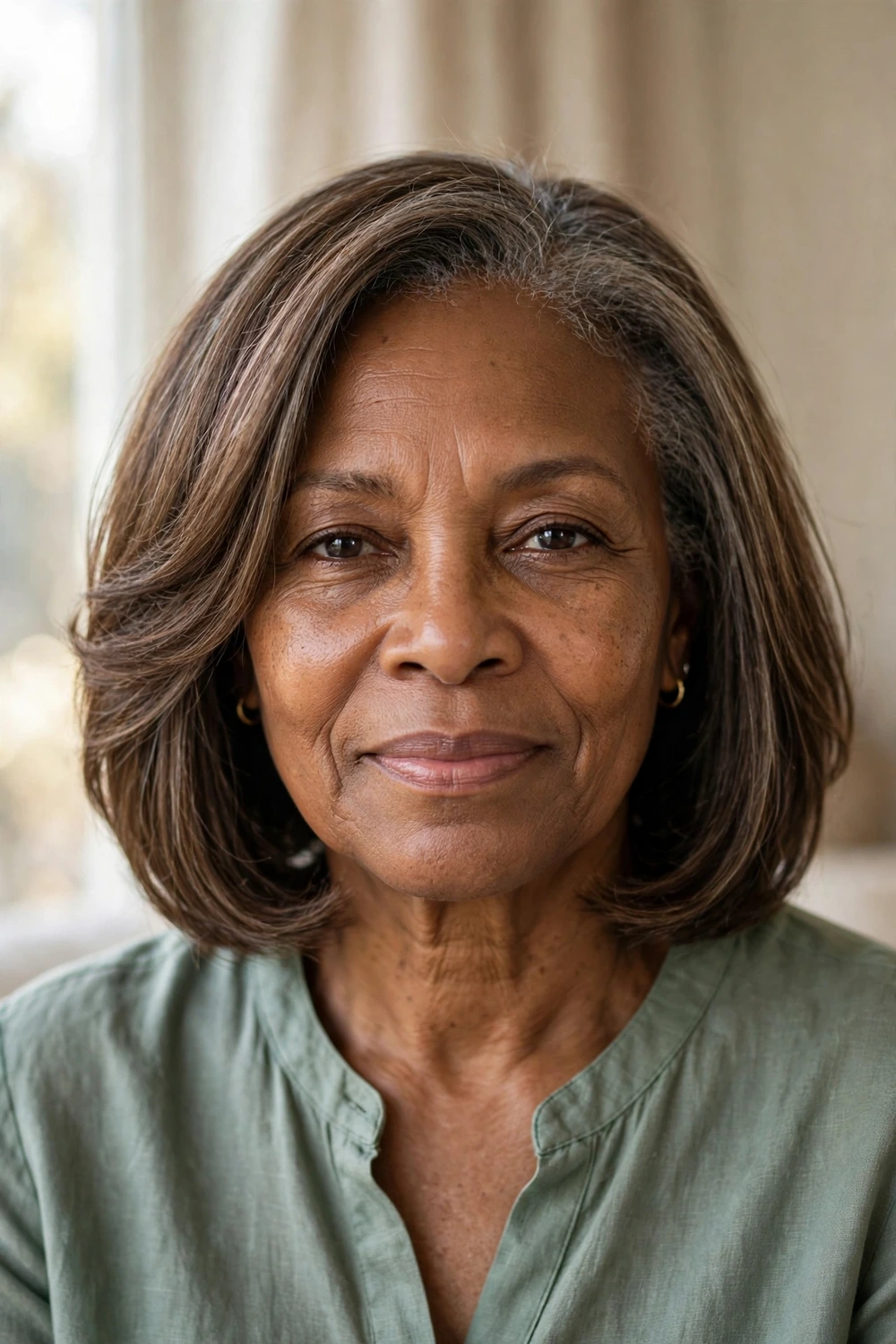
Ask your stylist for a lob that hits right at the collarbone with long layers. The collarbone length keeps the ends swinging instead of dragging, and the layers stop the bottom from looking shelf-like. A fairly blunt perimeter preserves the look of thickness, which matters most for thin hair. Wear it straight for polish or scrunched for texture. It is one of the most requested cuts for mature women, and it suits gray, silver, and colored hair alike.
Try this: Flat-iron only the mid-lengths and bend the ends under. That tucked-under edge reads as thickness.
4. Wispy Layered Cut
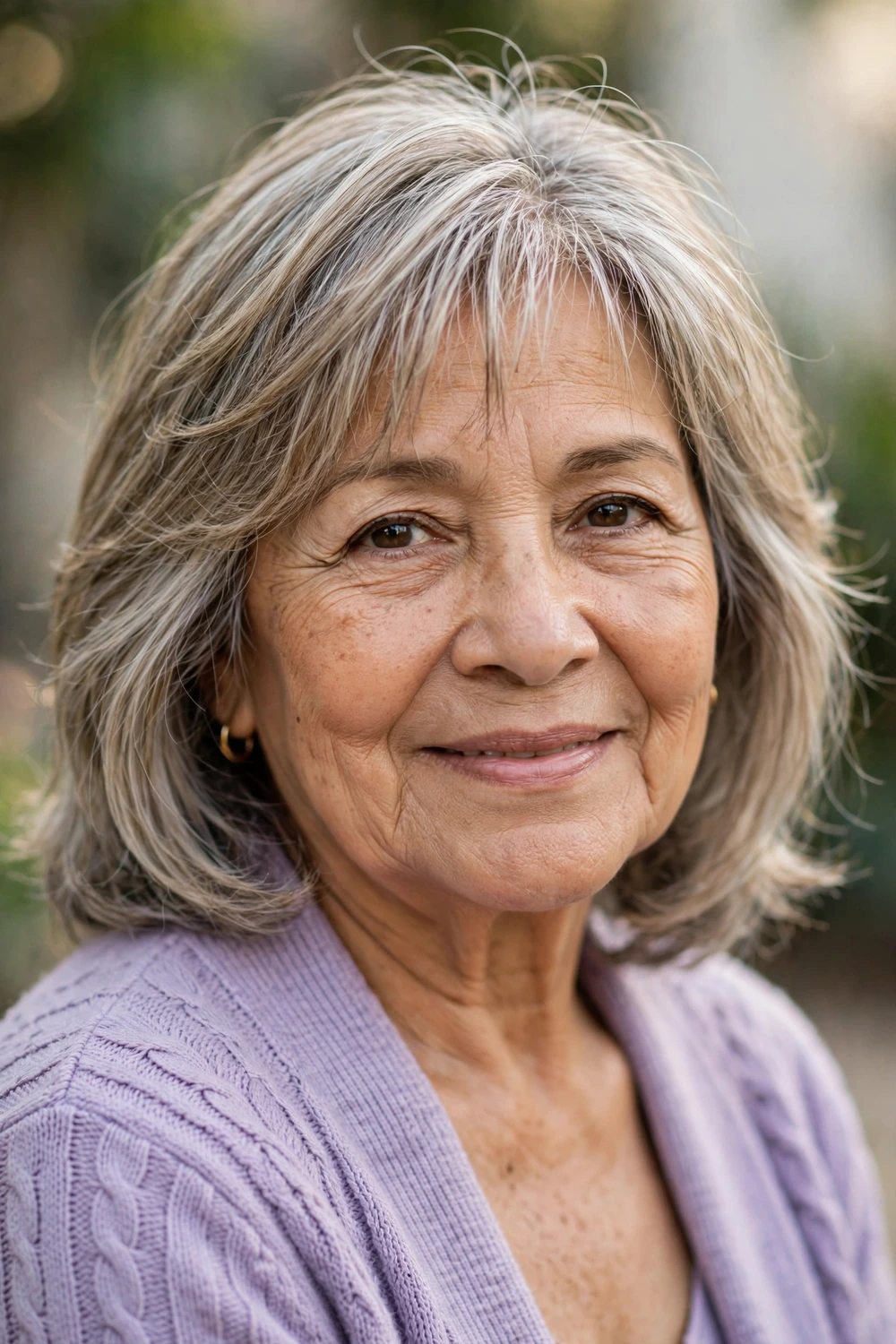
On days when your hair falls flat by lunch, wispy layers are the fix. Fine, feathered layering is cut through the ends to create airy movement without removing real density. The length stays, so you keep your styling options, but the hair moves instead of hanging. This suits straight fine hair best, since the wisps show clearly. Soft pieces around the jawline keep the look gentle rather than severe. Regular trims keep the wispy ends fresh instead of ragged.
Try this: Use a texturizing spray at the roots instead of heavy wax. It keeps the wisps separated without weighing them down.
5. Curtain Bangs with Layers
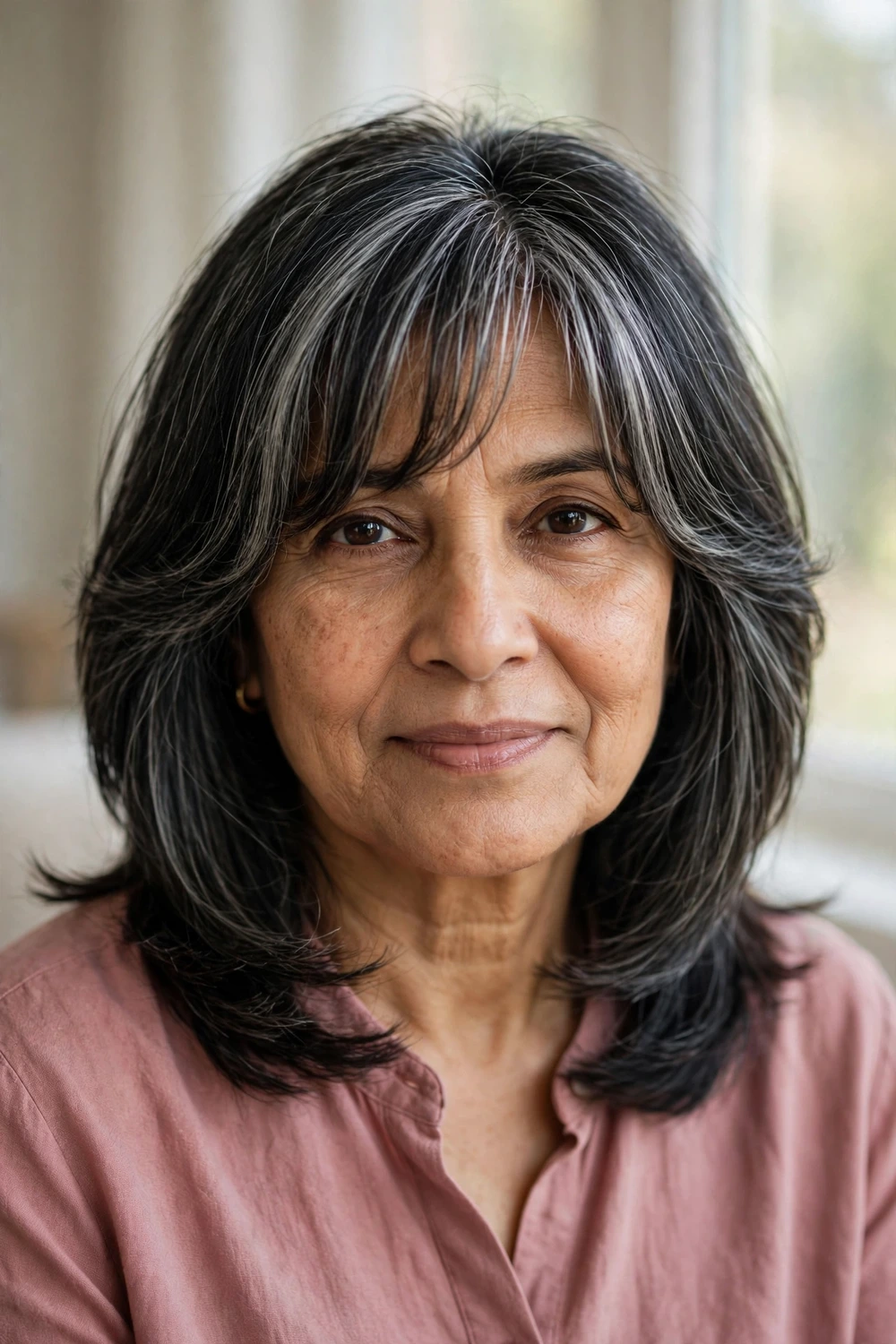
If your hairline has thinned, curtain bangs hide it while adding shape. The center-parted fringe opens at the middle and melts into face-framing layers, which draws attention to the cheekbones instead of the forehead. Because the bangs are long, they grow out without an awkward phase. This pairing works well with glasses and suits oval and round faces. Keep the rest of the layers long so the overall cut stays full.
Try this: Blow-dry the bangs with a small round brush, rolling them away from your face. That outward bend is what makes them sit right.
6. Layered Bob with Textured Ends
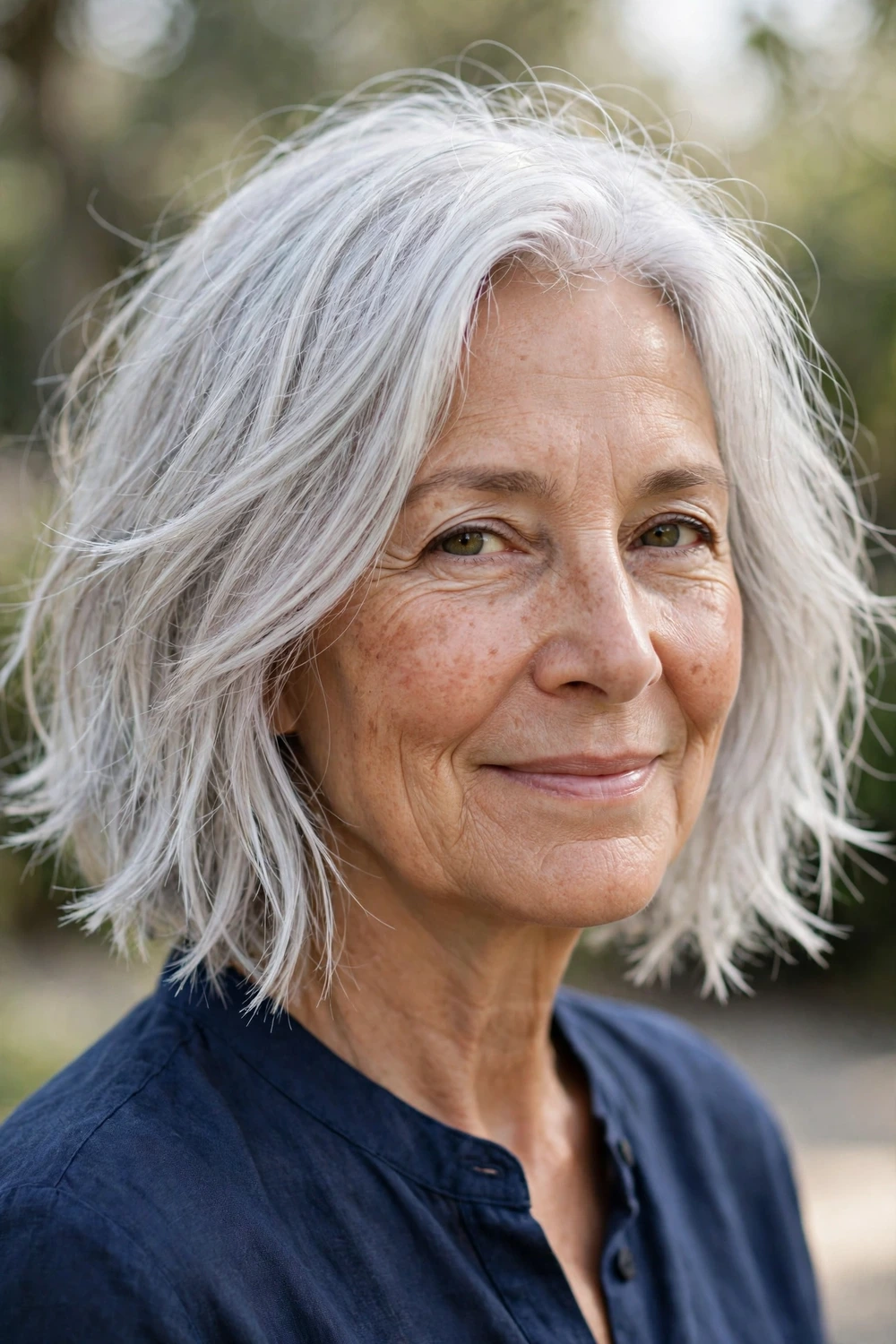
Textured ends keep a bob from looking heavy at the bottom. This chin-to-neck cut uses point cutting through the ends to remove bulk, plus light interior layers for lift at the crown. The result is a bob with movement that does not collapse by afternoon. It works for straight and wavy fine hair and frames the jawline cleanly. Maintenance is simple: the shape holds between trims and styles in under ten minutes.
Try this: Point a flat iron outward on just the bottom inch. Those flipped ends read as thickness.
7. Tousled Bob with Beachy Waves
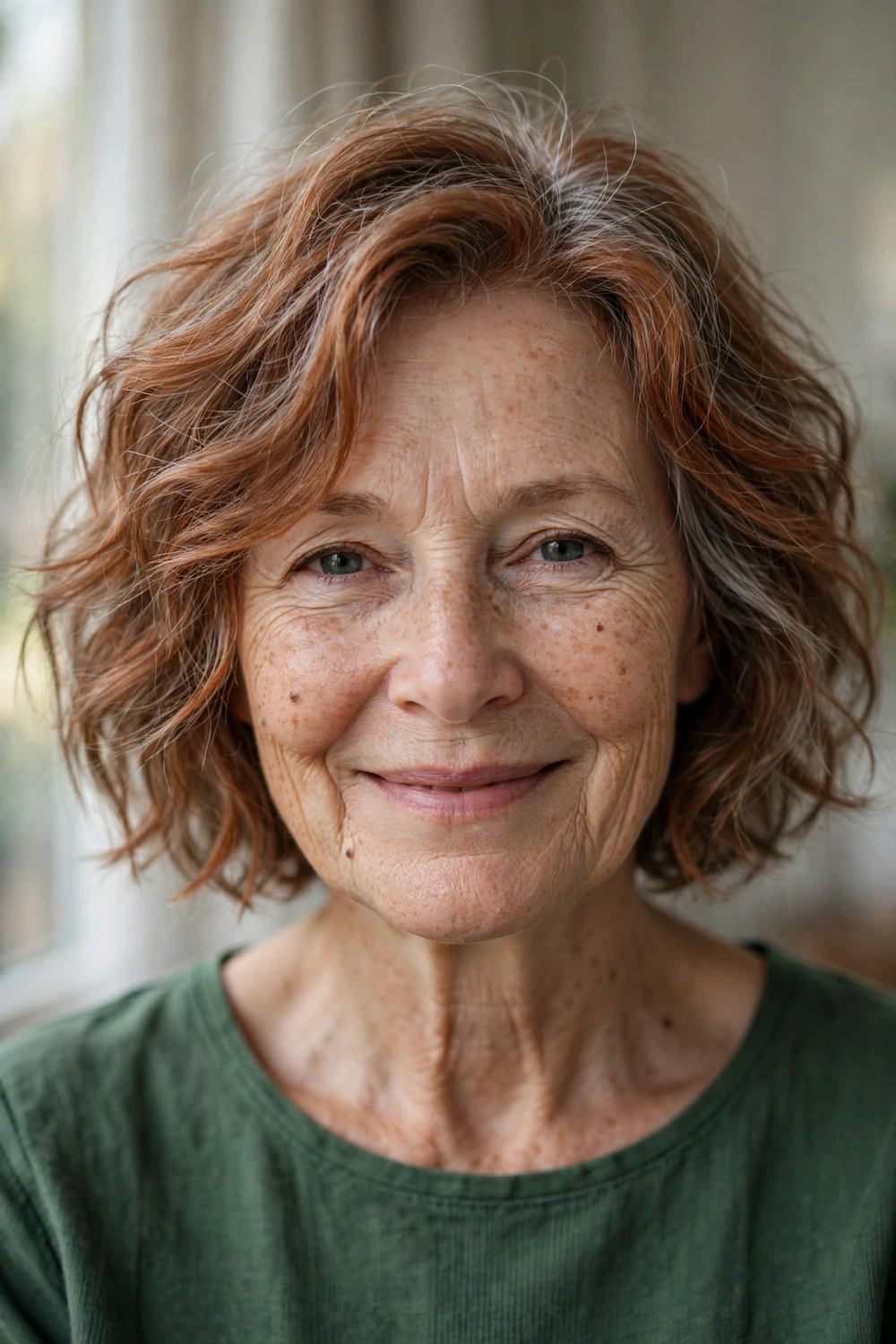
Salt spray and a chin-length bob are a dependable pair for fine hair. Loose, uneven waves push the hair outward, which creates width exactly where thin hair looks narrowest. The tousled finish hides thin spots better than a sleek style ever could. This is a warm-weather favorite, but it works year-round with the right spray. Keep the waves loose; tight curls on fine hair drop out fast and leave frizz behind.
Try this: Braid damp hair loosely overnight for heat-free waves. Undo it in the morning and shake out the roots.
8. Softly Layered Bob with Side Part
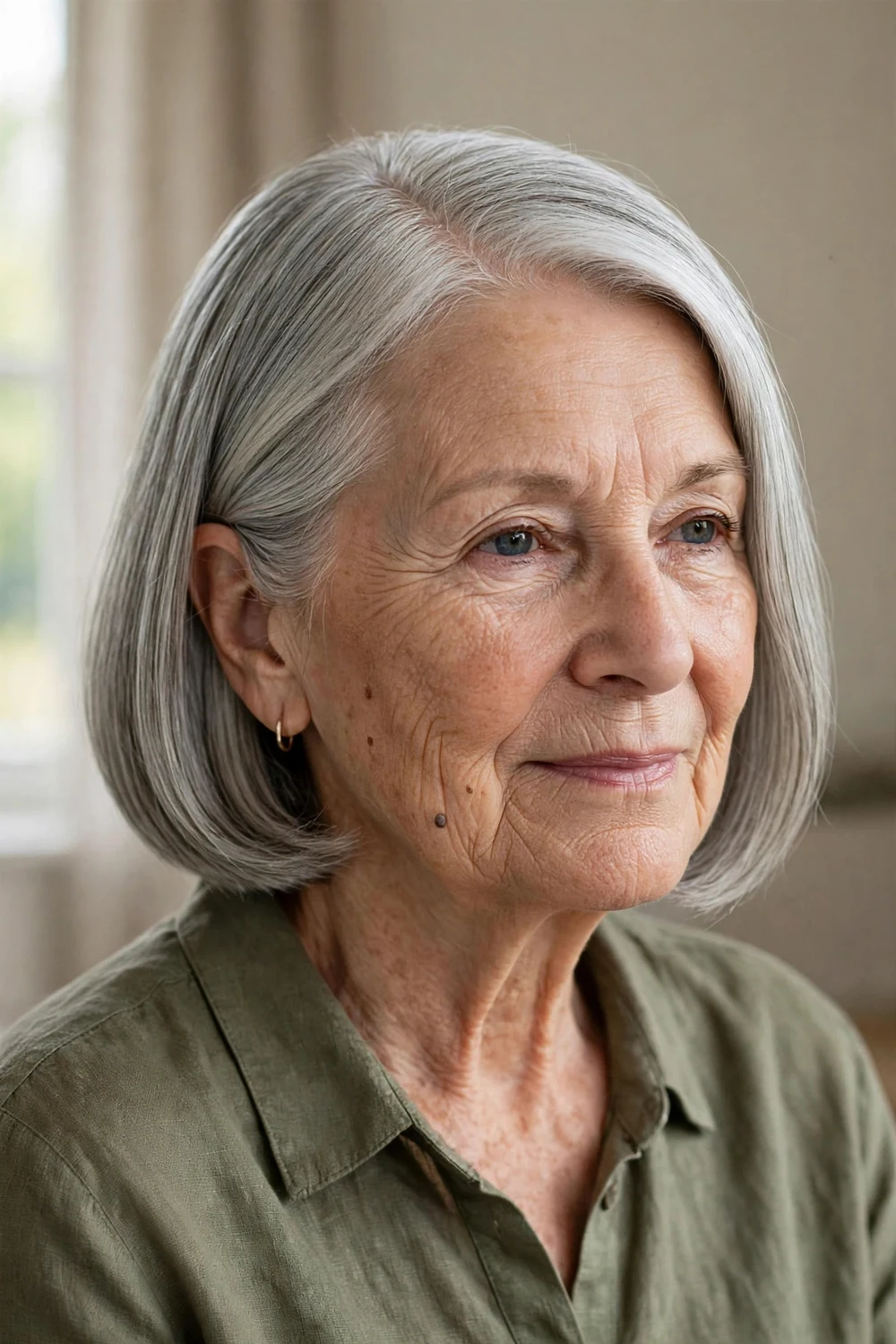
A deep side part is the fastest volume trick there is. Shifting the part over lifts the roots on the heavy side and creates instant height at the crown. Paired with soft, barely-there layers, this bob stays polished without looking stiff. It suits most face shapes and grows out cleanly. The styling routine is short, which makes it a strong everyday choice for women who want fullness without fuss. A little root powder on day two revives the lift.
Try this: Train the part while hair is damp by combing it over and clipping the roots flat. It sets in about ten minutes.
9. Chin-Length with Face-Framing
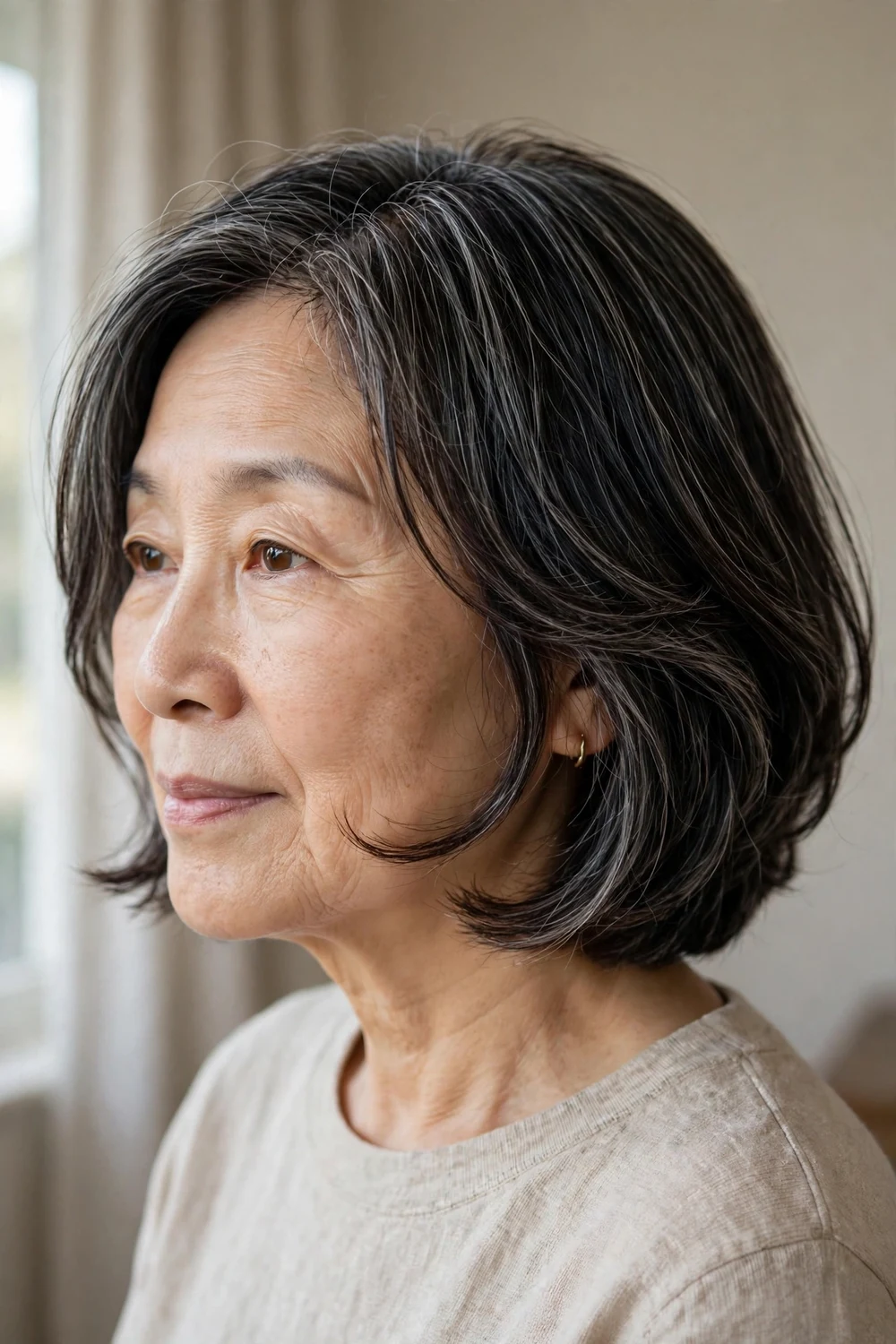
Shorter pieces in front pull attention toward your features, not toward thin ends. This chin-length base cut adds face-framing layers starting at the cheekbone, which opens up the face and adds movement where a blunt cut would hang. It is a good pick for glasses wearers, since the layers sit below the frames. Styling takes minutes: the shape is built into the cut, so even air-dried hair looks finished. Ask for the shortest layer to start no higher than the cheekbone.
Try this: Tuck one side behind your ear to show off earrings. The asymmetry adds interest without any heat.
10. Voluminous Bob with Side-Swept Bangs
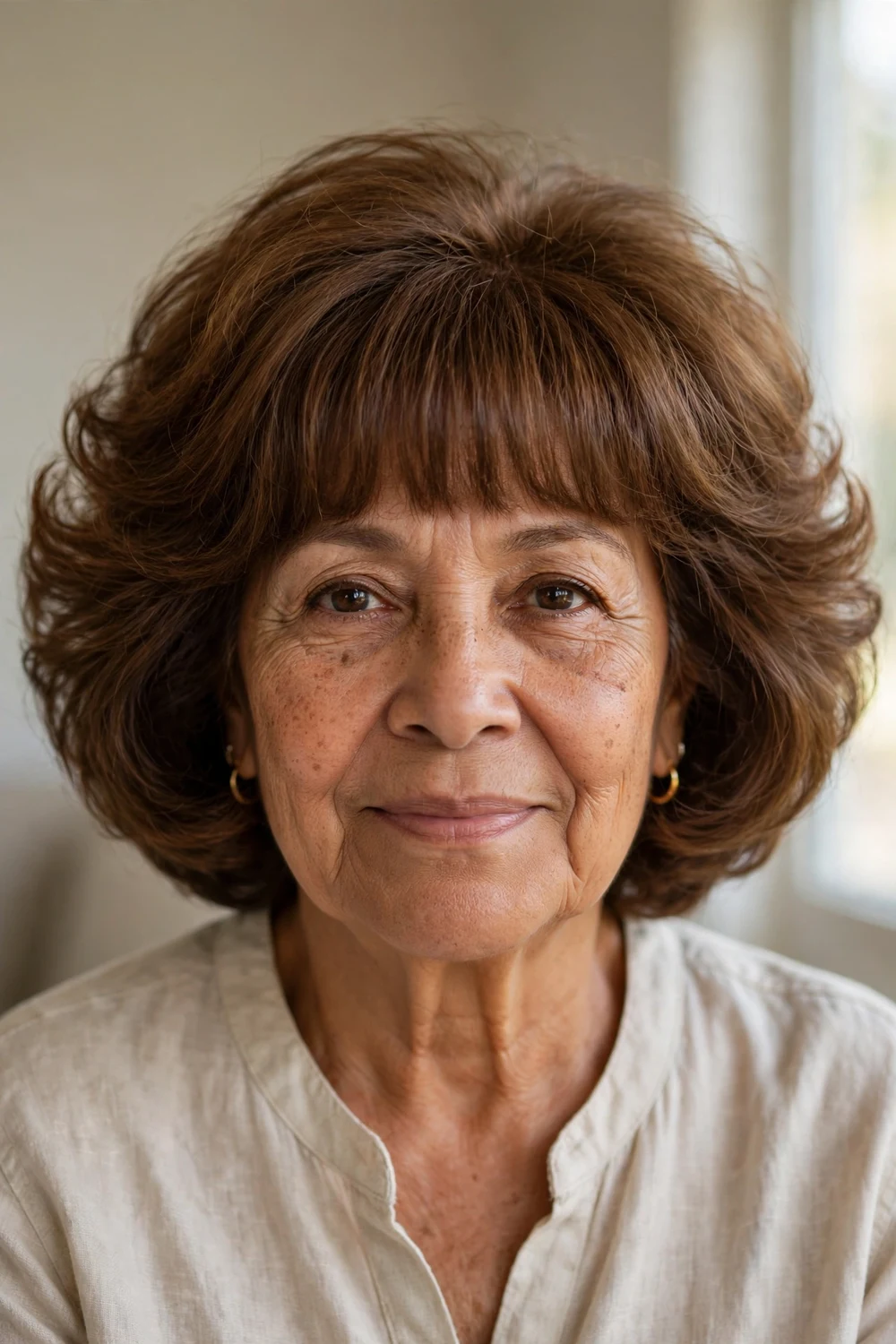
Round brushes earn their keep with this cut. A stacked back builds height at the crown while side-swept bangs blend into the layers, covering a thinning hairline without a hard fringe line. The silhouette is full and rounded, which is exactly what fine hair needs. This suits straight to slightly wavy hair and holds its shape well between salon visits. It reads polished enough for events but simple enough for daily wear.
Try this: Dry the bangs first, sweeping them across the forehead. They set the direction for the whole style.
11. Layered Shag with Wispy Bangs
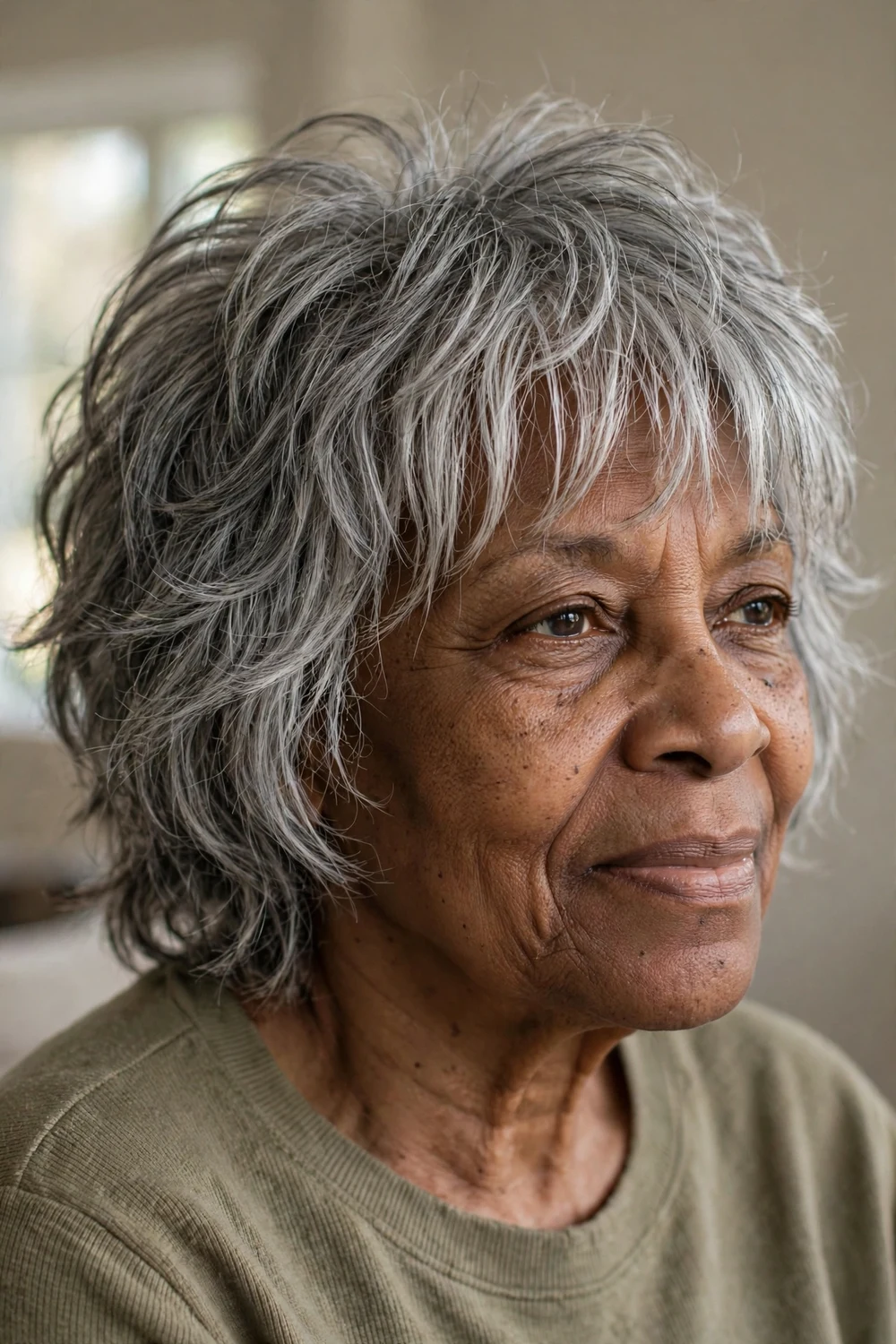
This is the cut for women who air-dry more than they blow-dry. Choppy layers through the crown and mid-lengths build texture, while wispy bangs soften the forehead and blend into the shaggy shape. The finish is piecey rather than sleek, which is forgiving on thin hair: gaps and separations look intentional. It works with natural wave and straight hair alike. Grow-out is graceful, with no harsh lines appearing between trims.
Try this: Work a dab of lightweight cream through the ends only. It defines the layers without flattening the crown.
For even more volume-building inspiration, look through these cute hairstyles for thin hair next.
12. Feathered Pixie with Longer Crown
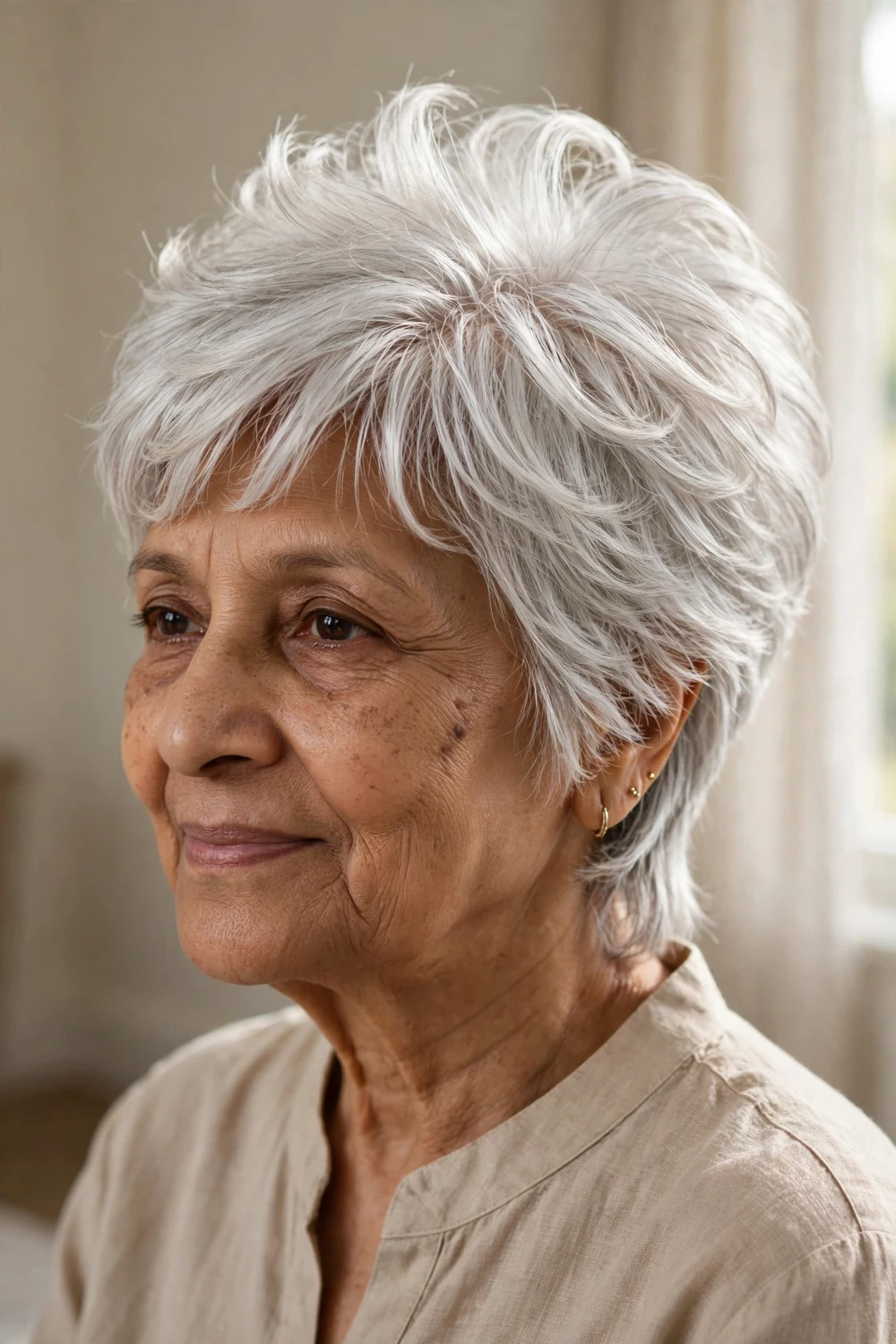
Do not let the word pixie scare you off. This version keeps real length on top, with feathered texture that can be pushed forward, swept to the side, or lifted for height. The nape stays tapered and neat, which shows off the neckline. For very fine hair, less length means less weight pulling the roots flat. It is close to wash-and-go, needing only fingers and a little product to style.
Try this: Push the crown forward with your fingers and a touch of pomade. That forward motion covers thin spots at the part.
13. Rounded Shag with Wispy Layers
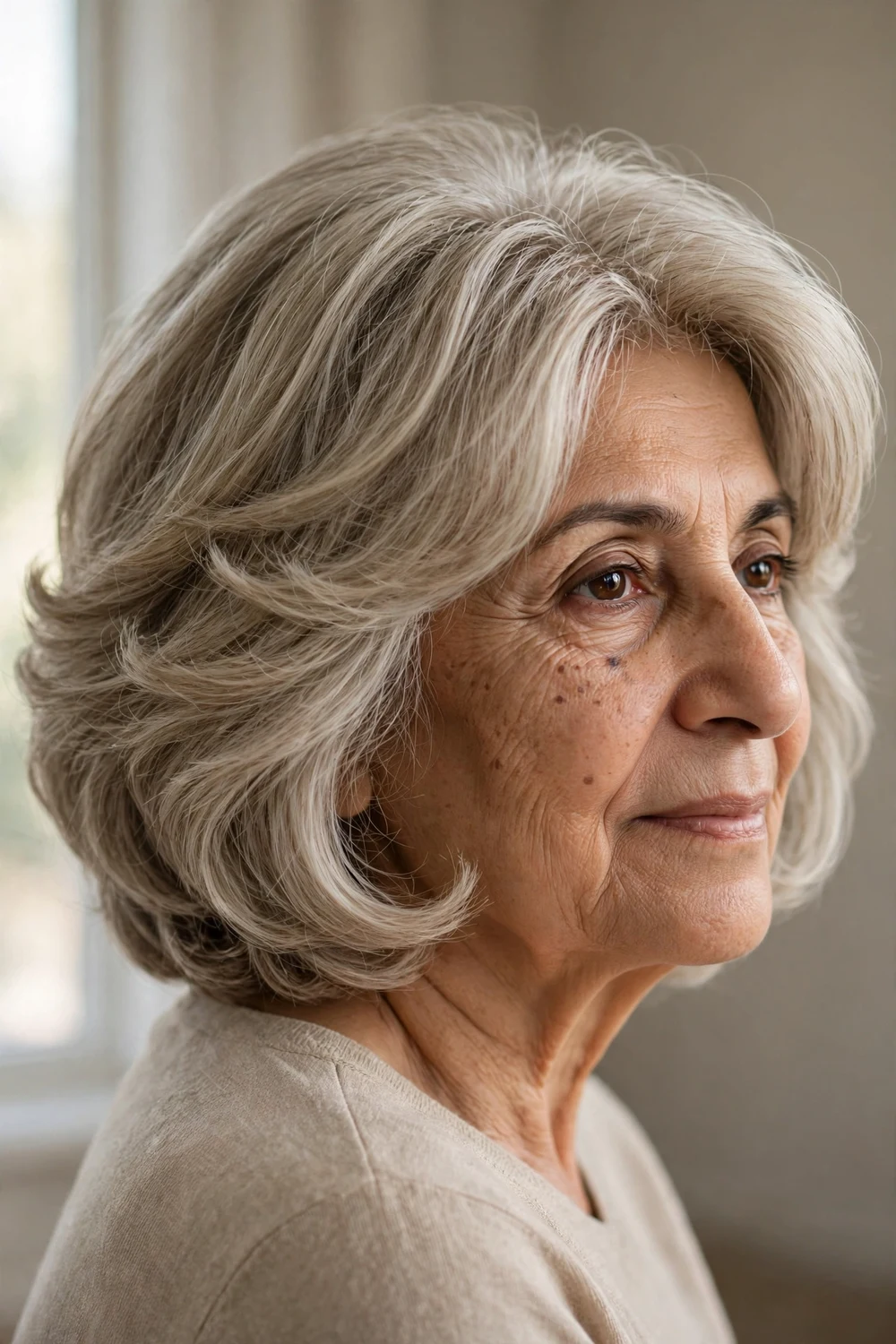
Roundness at the crown is what makes this shag different. The silhouette is curved and full on top, tapering softly through the ends, which gives fine hair a cushioned shape instead of a flat one. Wispy layers keep the edges light so the cut moves. This suits oval faces especially well and works with gray or colored hair. It is friendly to air-drying, since the round shape is cut in rather than styled in.
Try this: Diffuse on low heat for five minutes to set the shape. Then leave it alone, since touching it flattens the roundness.
14. Side-Parted Collarbone Cut

Parting your hair to the side takes five seconds and adds visible lift. This collarbone cut pairs that easy trick with a strong one-length perimeter and light layering through the ends. The result keeps maximum thickness at the bottom while the side part builds height on top. It is versatile: wear it straight, wavy, or half pulled back. Lowlights or subtle dimension make the layers show even more. It also tucks neatly behind the ears on no-style days.
Try this: Switch your part to the other side once a month. Hair gets trained flat, and the switch restores bounce.
15. Gray Medium-Length with Face-Framing
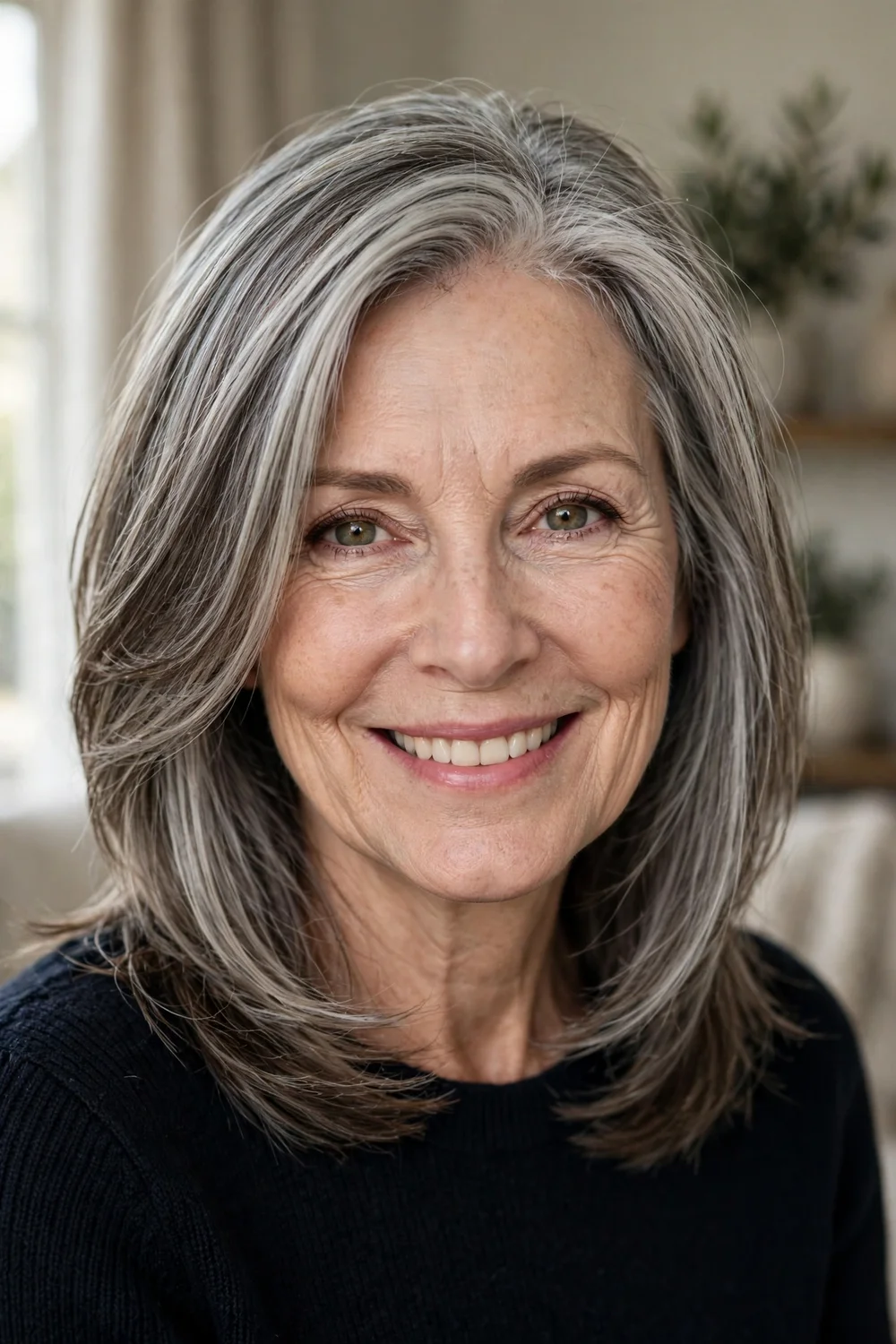
Silver hair reflects light, and this cut puts that to work. Medium length with face-framing layers lets natural gray shine around the face, where brightness matters most. The layers stop gray hair from looking wiry or puffy by giving it a clear shape. A weekly purple shampoo keeps the silver bright instead of dull, and dull gray always looks thinner. This is an elegant, low-color-maintenance choice that suits women embracing their natural shade.
Try this: Use a purple shampoo once a week to keep silver bright. Bright gray looks dense; yellowed gray looks thin.
16. Smooth Blonde Lob
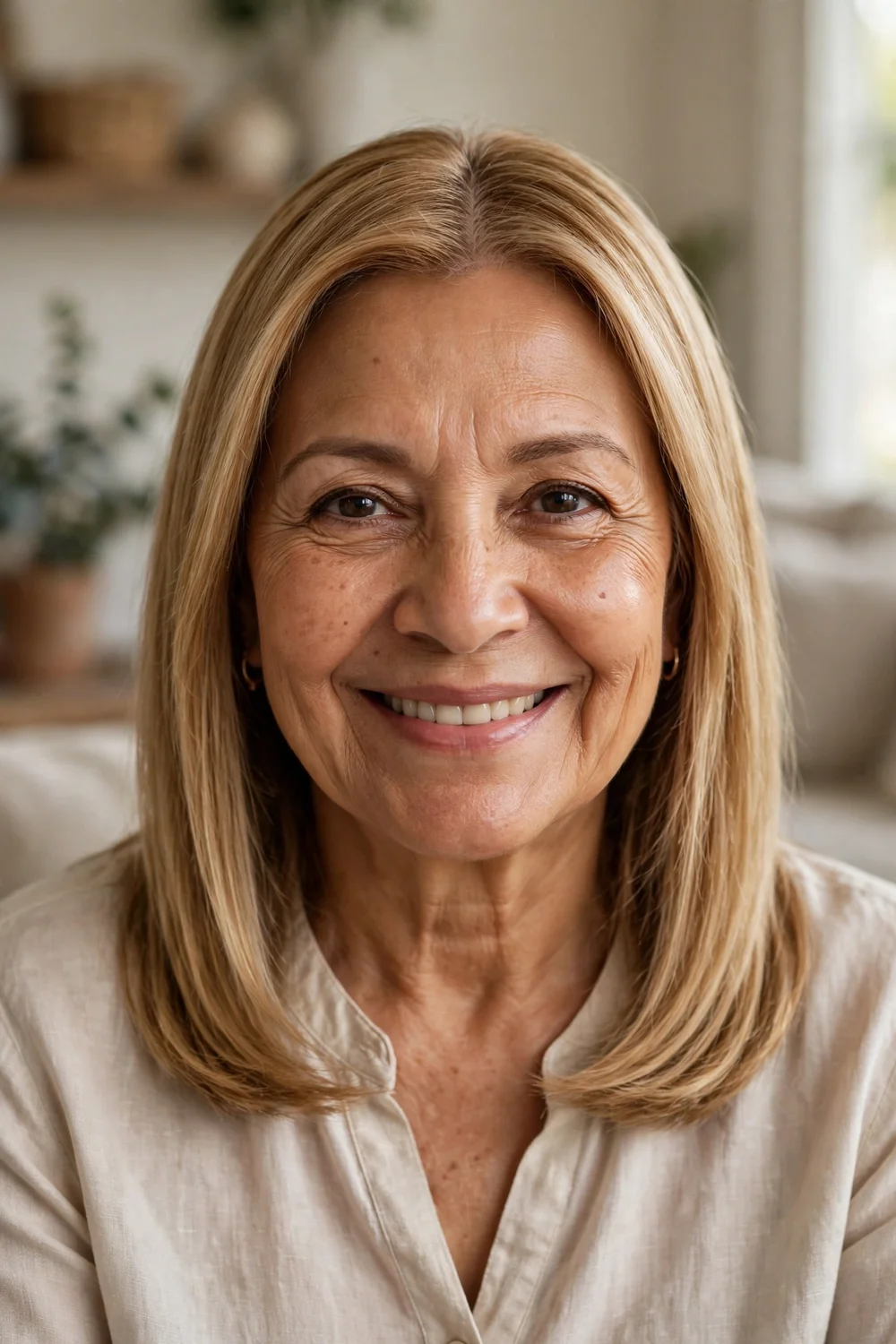
One even blonde tone can make fine hair look denser than scattered highlights. Without dark roots showing through, the eye reads the hair as one full sheet. This smooth lob is worn sleek with the ends tucked under, which keeps the perimeter looking thick. Heat protection is non-negotiable here: fine blonde hair shows damage faster than any other color. A serum on the ends keeps them polished between trims. Keep the length at or above the collarbone so the ends stay thick.
Try this: Apply heat protectant to every section before flat-ironing. Skipping even one section shows up as frizz by evening.
17. Curly Bob with Curtain Bangs
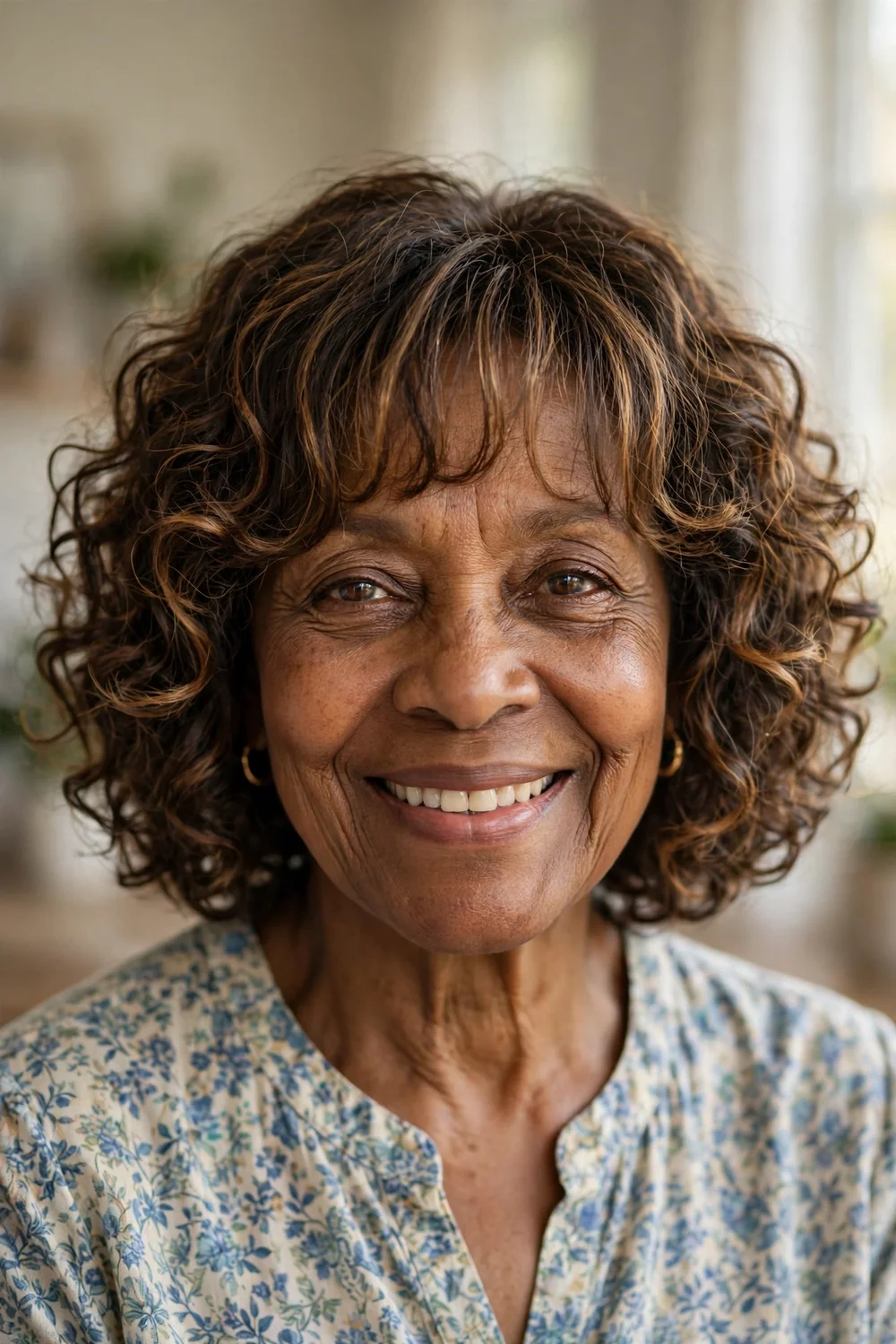
Natural curl is an advantage for fine hair, and this cut shows it off. A chin-length curly bob keeps the weight off so curls spring up instead of stretching out. Curtain bangs are cut to blend with the curl pattern, not fight it. Layers prevent the dreaded triangle shape by removing bulk where curls stack. A curl cream scrunched into soaking-wet hair gives the best definition with the least frizz.
Try this: Scrunch with a microfiber towel, never a regular one. Less frizz means curls clump thicker.
18. Elongated Bob with Wispy Bangs
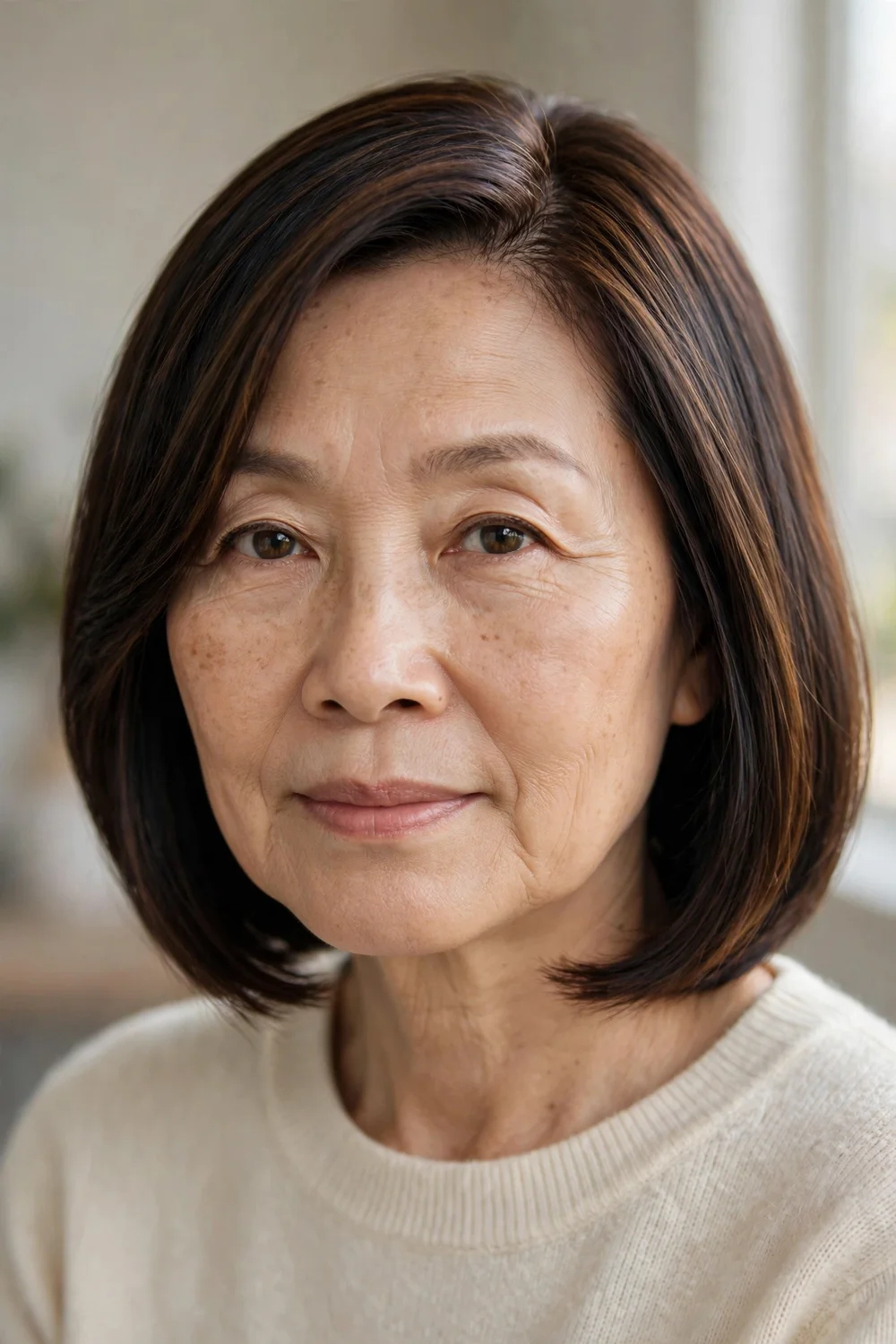
A few extra inches in front make a bob feel longer without adding weight. This elongated cut keeps the back at neck length while the front pieces reach toward the collarbone, which draws the eye downward and slims the face. Wispy bangs soften the forehead and keep the look light. It suits round faces well and styles two ways: sleek for polish or wavy for texture. The longer front also blends well as it grows out.
Try this: Straighten just the front pieces and leave the back natural. The contrast keeps the style interesting.
If medium length is your sweet spot, you will find more wearable ideas in these cute hairstyles for medium hair.
19. Classic Blowout with Face-Framing Layers
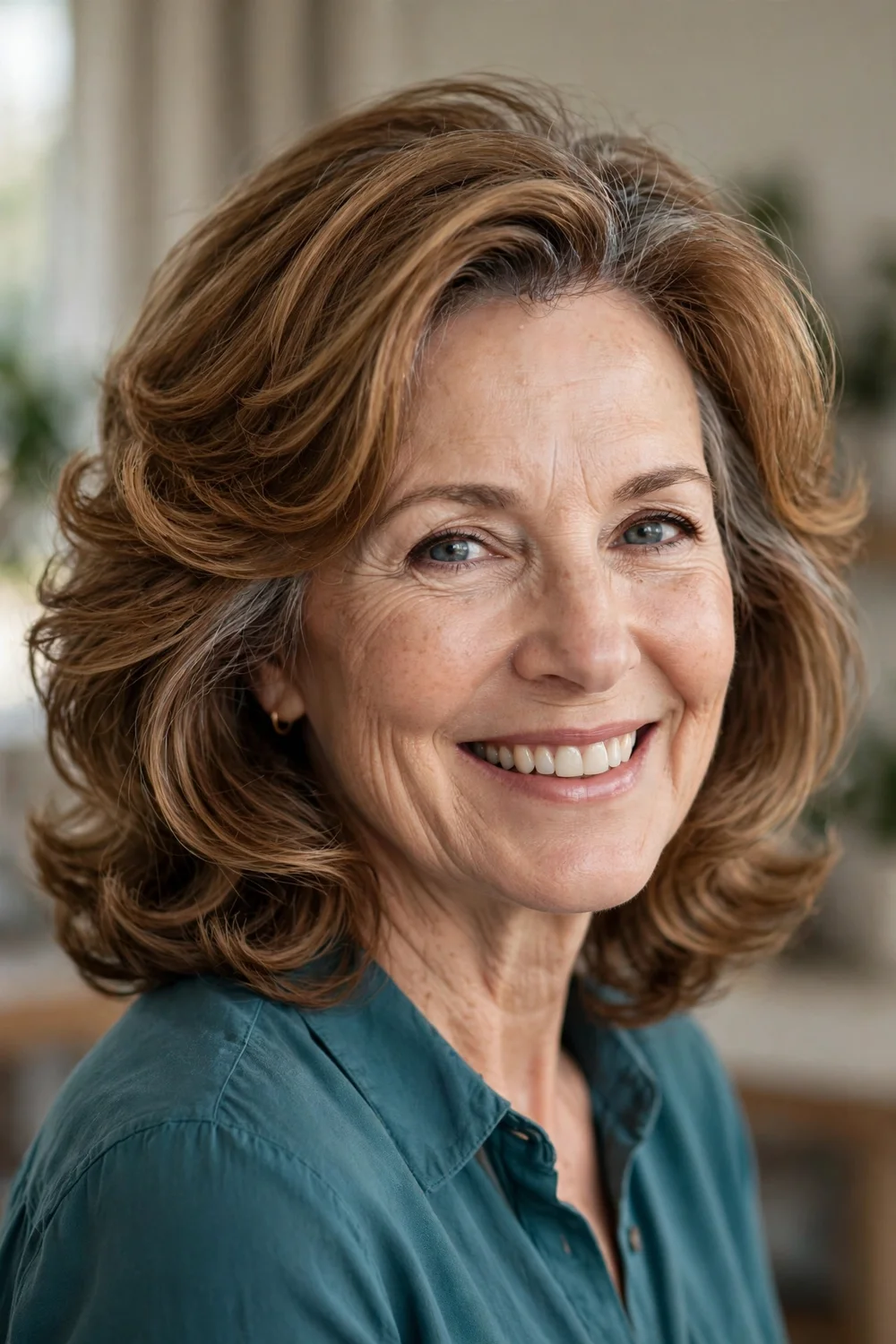
A salon blowout at home is doable with the right brush. This style pairs bouncy, round-brushed volume with face-framing layers that curve inward toward the chin. The layers give the brush something to shape, which is why blowouts look better on layered cuts. Always use a heat protectant first, since mature hair is more fragile. The volume typically lasts two to three days with a silk pillowcase and a light dry shampoo at the roots.
Try this: Roll the top section in large Velcro rollers while it cools. Ten minutes of cooling sets more volume than extra heat ever will.
20. Soft Waves
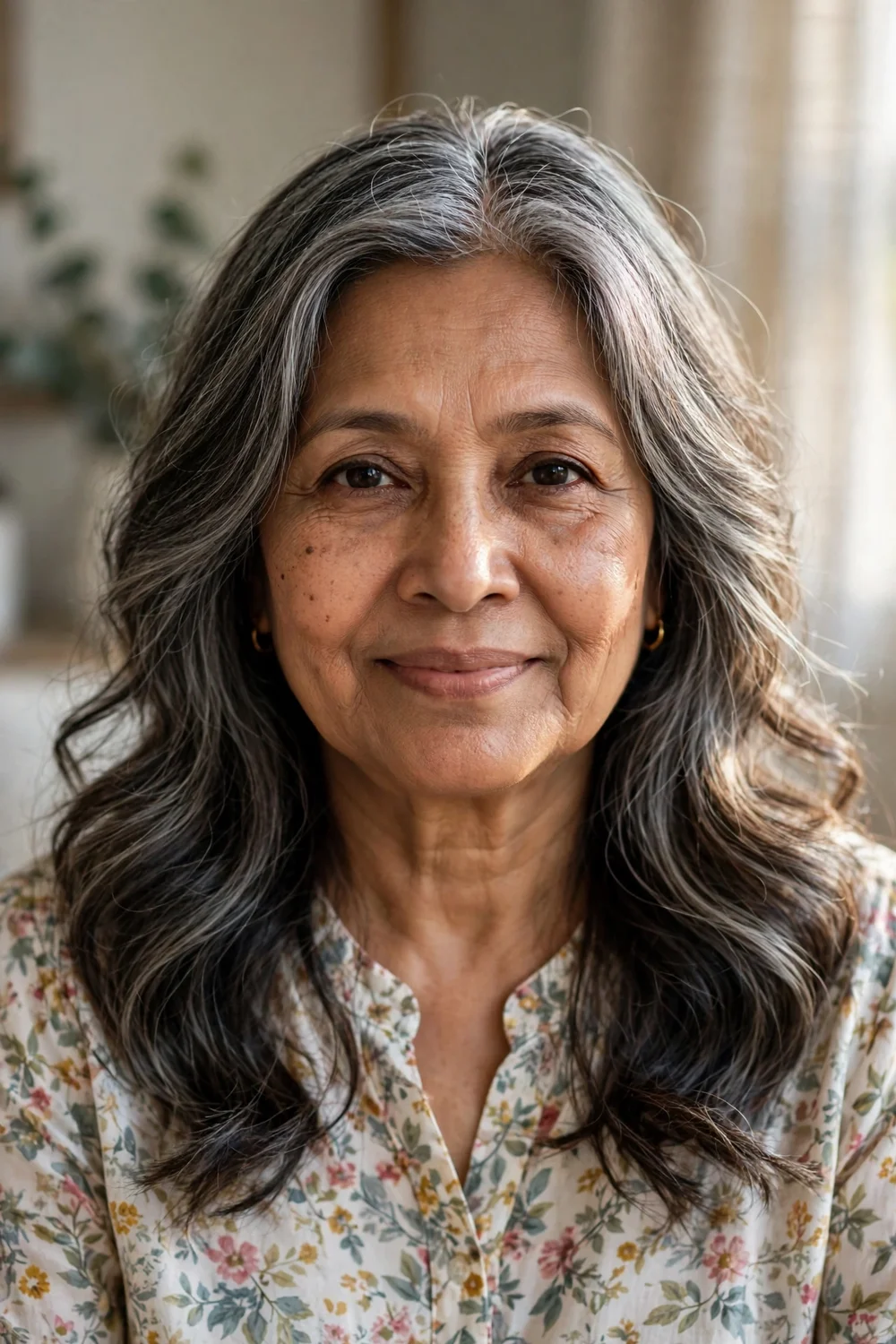
Loose waves add width where fine hair needs it most. On medium length, soft bends through the mid-lengths push the hair outward and create the look of a fuller perimeter. A one-inch curling wand gives the most control, but overnight braids work for a heat-free version. Brush through once after curling so the waves merge into one soft pattern instead of separate ringlets. Finish with a flexible-hold spray, not a stiff one.
Try this: Curl away from your face in one-inch sections, then brush through once. Always apply heat protectant before the wand touches your hair.
21. Sleek Backbrushed Lob
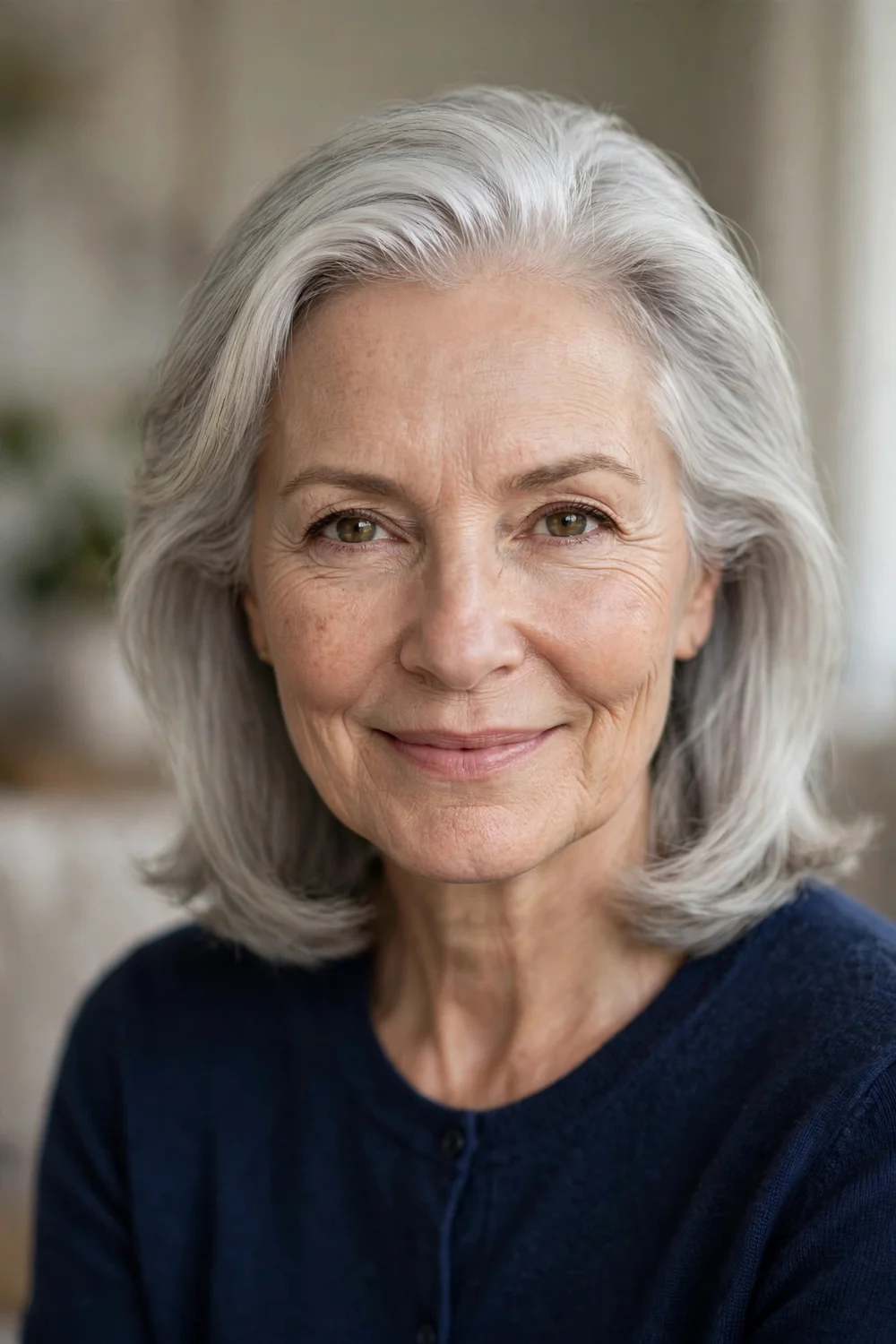
Smoothing everything back sounds risky for thin hair, but the technique works. The trick is building hidden volume first: the crown is lightly teased, then the top layer is smoothed over it for a sleek finish with fullness underneath. The lob length keeps the look modern rather than severe. This is a strong evening choice, and it keeps hair off the face without a single pin. A light-hold spray locks it without stiffness.
Try this: Tease the crown gently before smoothing the top layer over it. That hidden padding is what creates the fullness.
Medium Hairstyles for Fine Hair Comparison at a Glance
| Style | Volume Effect | Maintenance |
|---|---|---|
| Shoulder-Length Layers | High | Low |
| Soft Shag | High | Low |
| Layered Lob | Medium-High | Low |
| Wispy Layered Cut | Medium | Low |
| Curtain Bangs with Layers | Medium | Medium |
| Layered Bob with Textured Ends | High | Low |
| Tousled Bob with Beachy Waves | High | Low |
| Softly Layered Bob with Side Part | High | Low |
| Chin-Length with Face-Framing | Medium | Low |
| Voluminous Bob with Side-Swept Bangs | High | Medium |
| Layered Shag with Wispy Bangs | High | Low |
| Feathered Pixie with Longer Crown | Medium-High | Low |
| Rounded Shag with Wispy Layers | High | Low |
| Side-Parted Collarbone Cut | Medium-High | Low |
| Gray Medium-Length with Face-Framing | Medium | Low |
| Smooth Blonde Lob | Medium | Medium |
| Curly Bob with Curtain Bangs | High | Medium |
| Elongated Bob with Wispy Bangs | Medium | Low |
| Classic Blowout with Face-Framing Layers | High | High |
| Soft Waves | Medium-High | Medium |
| Sleek Backbrushed Lob | Medium-High | Medium |
How to Choose the Right Cut for You
Start with your daily routine. If you style for five minutes or less, pick a cut with built-in shape like the soft shag or the layered bob. If you enjoy a round brush and have the time, the classic blowout cut rewards the effort.
Consider your hair’s texture alongside its thinness. Straight fine hair shows layers clearly, so blended layering matters. Wavy or curly fine hair gets volume from its pattern, so the cut should remove weight without creating frizz.
Think about color upkeep too. Natural gray and silver pair well with face-framing layers that catch the light. If you color, ask for dimension near the face rather than a single dark shade, which can make the scalp show through.
Bring photos to your stylist and point to what you like: the length, the fringe, the texture. A good consultation beats any single reference photo, since your stylist can adapt the cut to your density and growth patterns.
Mistakes to Avoid
One-length cuts past the shoulders are the most common mistake. Without layers, fine hair hangs straight down and looks thinner than it is. Even two or three long layers change the shape completely.
Heavy products are the second culprit. Thick creams, oils, and silicones coat fine strands and pull them flat. Use pea-sized amounts, keep conditioner off the roots, and choose mousses and sprays labeled lightweight or volumizing.
Skipping trims thins the ends over time. Split ends travel upward and force you to cut more later. A small trim every 6 to 8 weeks keeps the perimeter thick, which is where fullness shows most.
Daily high heat without protection is the fastest way to break mature hair. Turn tools to medium, use a heat protectant every time, and give your hair heat-free days with braids or air-dried styles.
For styles that fit a packed schedule, these medium hairstyles for busy women keep styling time under ten minutes.
Frequently Asked Questions
Is medium length good for fine hair over 60?
Yes. Medium length removes the weight that drags fine hair flat while keeping enough length for versatile styling. It also grows out gracefully between salon visits. Most stylists recommend shoulder to collarbone length as the most flattering range for mature thin hair.
Should women over 60 with fine hair get layers?
Layers help, but the type matters. Long, blended layers add movement and lift without removing density. Short, choppy layers can backfire on very fine hair by making the ends look sparse. Ask for layering that starts at or below the chin.
How often should I trim fine hair after 60?
Every 6 to 8 weeks is the standard advice. Regular trims keep the ends thick and prevent splits from traveling up the strand. Waiting longer usually means cutting off more length at the next visit, which defeats the purpose.
Can fine hair over 60 hold curls or waves?
It can with the right prep. Apply mousse to damp hair, use a heat protectant before hot tools, and let each section cool before touching it. Loose waves hold better than tight curls on fine hair, and a flexible-hold spray extends the style without stiffness.
What products add volume to fine mature hair?
Root-lifting mousse, lightweight texturizing spray, and dry shampoo at the crown are the three most useful. Apply mousse to damp roots before drying, and use dry shampoo on second-day hair for grip. Avoid heavy oils and thick creams, which flatten fine strands.
Final Thoughts
The right medium cut does the heavy lifting for fine hair after 60. Pick one idea from this list, show it to your stylist, and give it two weeks of real wear before judging it. I have found that the cuts people almost skip are often the ones they end up loving.
Prefer shorter cuts that style themselves? These low maintenance haircuts women over 50 fine hair focus on pixies, bixies, and stacked bobs that add volume with almost no daily effort.
If you are in your 50s rather than your 60s, these medium hairstyles for fine hair over 50 cover the same volume-building ideas with a younger-decade angle.

