

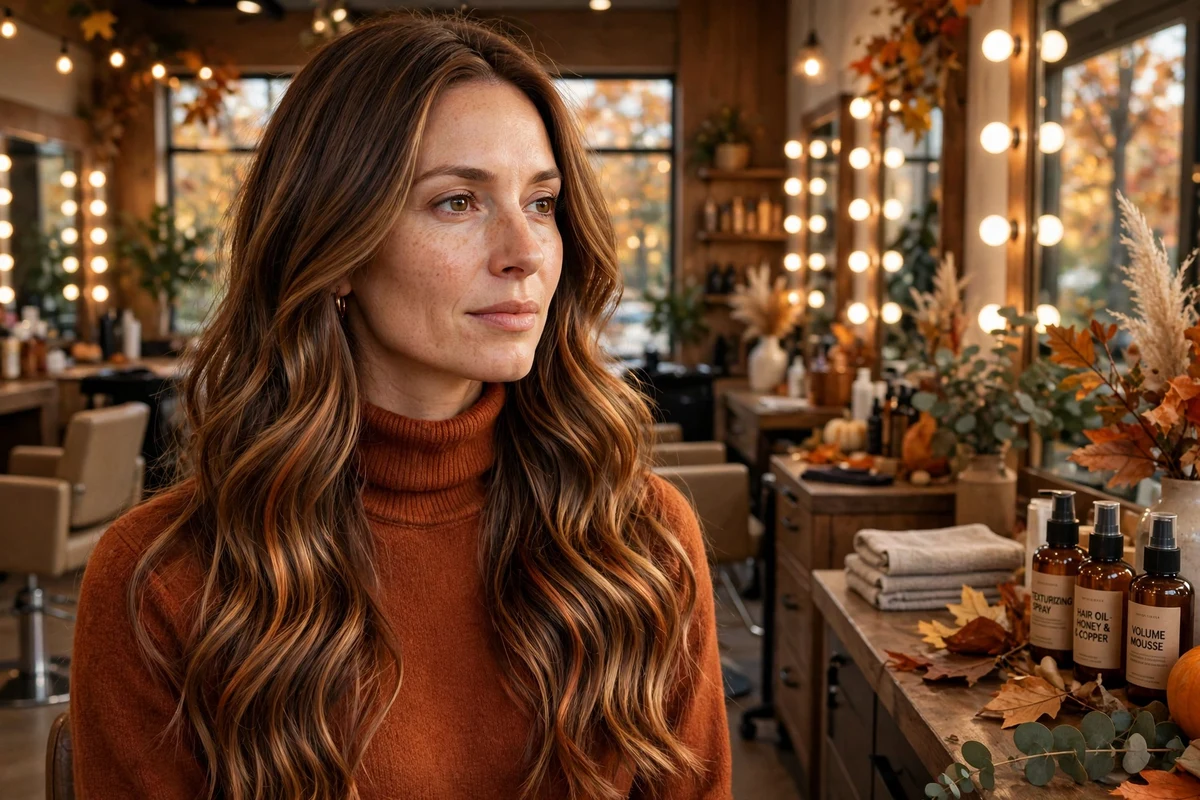
Brown hair does not need a full color change for fall. Highlights do the seasonal work instead: caramel, honey, copper, and cinnamon pieces placed through a light, medium, or dark brown base add warmth and movement while your own color stays in charge. The base keeps the look grounded, and the lighter or warmer pieces do the brightening.
This list collects 26 fall highlights for brown hair and runs them by technique as much as by shade: foil highlights and ribbons first, then balayage, babylights, face-framing pieces, and the deeper placements underneath. Every idea names the brown base it suits, where the pieces sit, how the grow-out behaves, and the upkeep it asks for. If you want the all-over shades that sit behind these pieces, the fall brunette hair colors roundup covers the bases themselves, while the fall balayage hair colors guide goes deeper on hand-painted color.
Quick Takeaways
- Every idea on this list is pieces on a brown base: foils, balayage, babylights, ribbons, or face-framing sections, with the natural base left showing.
- Caramel and honey suit warm skin and medium brown bases. Copper, cinnamon, and auburn add the red-leaning warmth fall is known for.
- Cool brown bases have routes too: mushroom ash highlights and cream babylights keep the tone cool.
- Foil highlights grow out with a visible line and need earlier refreshes. Balayage, babylights, and ombre placements grow out softly and stretch visits.
- Small placements change the whole read: a money piece, face-framing pieces, or peekaboo panels brighten brown hair in one short appointment.
How to Pick Your Fall Highlights for Brown Hair
Start with contrast. Pieces one to two shades lighter than your base, such as milk chocolate on dark brown or chestnut on medium brown, read as a subtle shift and grow out quietly. Pieces three or more shades lighter, such as honey foils or a copper money piece, read as a clear change and need toner care to stay clean. Then match the shade family to your skin: warm skin carries caramel, honey, copper, and cinnamon well, while cool skin suits mushroom ash, cream beige, and burgundy pieces.
Then pick the technique by your calendar. Foils sit close to the root, so the refresh lands sooner. Balayage and ombre placements start lower and can go months between visits. Babylights blend so finely that regrowth is hard to spot, though the first appointment runs long. The wider fall hair colors guide shows how these highlighted looks sit next to the season’s solid shades if you are still choosing between the two routes.
| Technique | Best brown base | Contrast | Upkeep |
|---|---|---|---|
| Foil highlights and ribbons | Light brown to dark brown | Medium to high | Medium to high |
| Babylights | Medium brown to espresso | Low | Low |
| Balayage | Medium brown to dark brown | Medium | Low |
| Face-framing pieces and money piece | Any brown base | High at the front only | Low to medium |
| Lowlights and peekaboo panels | Light brown to dark brown | Low to medium | Low |
1. Caramel Ribbon Highlights

Caramel ribbon highlights are wide, flat sections of warm caramel woven through a medium or dark brown base with foils. The ribbons sit mostly in the mid-lengths and ends, where waves and curls separate them and the caramel shows in bands. Warm and olive skin carry this shade well, and brown and green eyes pick up the gold in it.
Because the ribbons are wider than standard highlights, the contrast is clear from day one. Roots stay darker, so grow-out reads as a soft shadow for the first weeks, then the foil line starts to show. Plan a partial refresh at eight weeks and a toner whenever the caramel starts to look brassy.
Try this: ask for ribbons in two caramel depths, one lighter and one closer to your base, so the bands layer instead of striping.
Difficulty: Medium to High · Cost: $$$ (salon)
2. Caramel Balayage on Dark Brown Hair
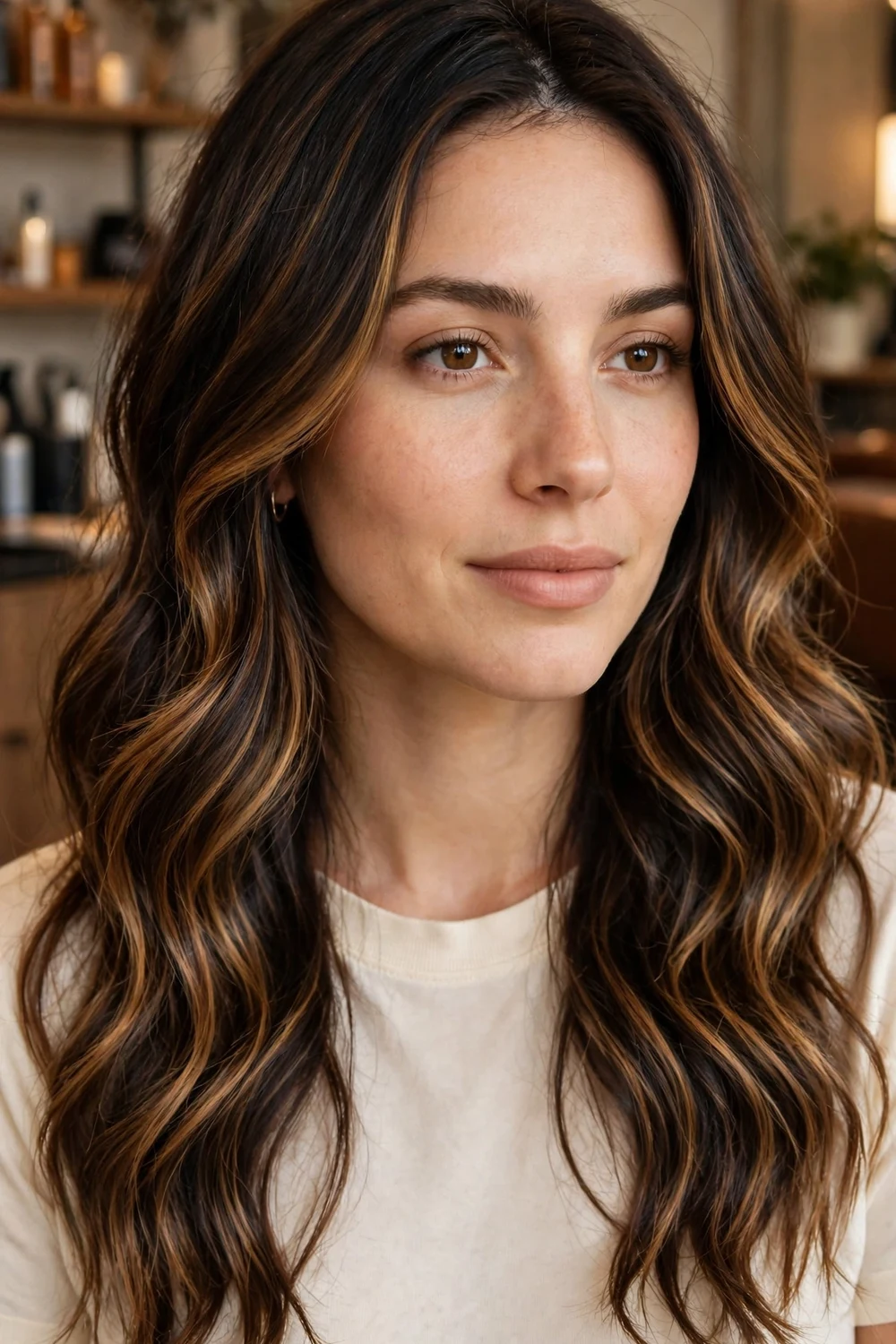
Caramel balayage hand-paints the same caramel family onto dark brown hair, with the pieces swept on freehand rather than folded in foils. The color starts below the root zone and builds toward the ends, so the darkest part of the head stays at the crown. It suits medium and dark brown bases that want warmth without a root commitment.
The painted placement is why this version grows out so well: there is no foil line to chase, and most wearers refresh the gloss at eight weeks and repaint at four to six months. The lightened ends are the driest part of the head, so a weekly conditioning mask belongs in the routine from the first wash.
Try this: ask your colorist to keep the caramel off the very top layer at the back, so the dark base shows through and the contrast stays strong.
Difficulty: Medium · Cost: $$$ (salon)
3. Honey Foil Highlights on Medium Brown
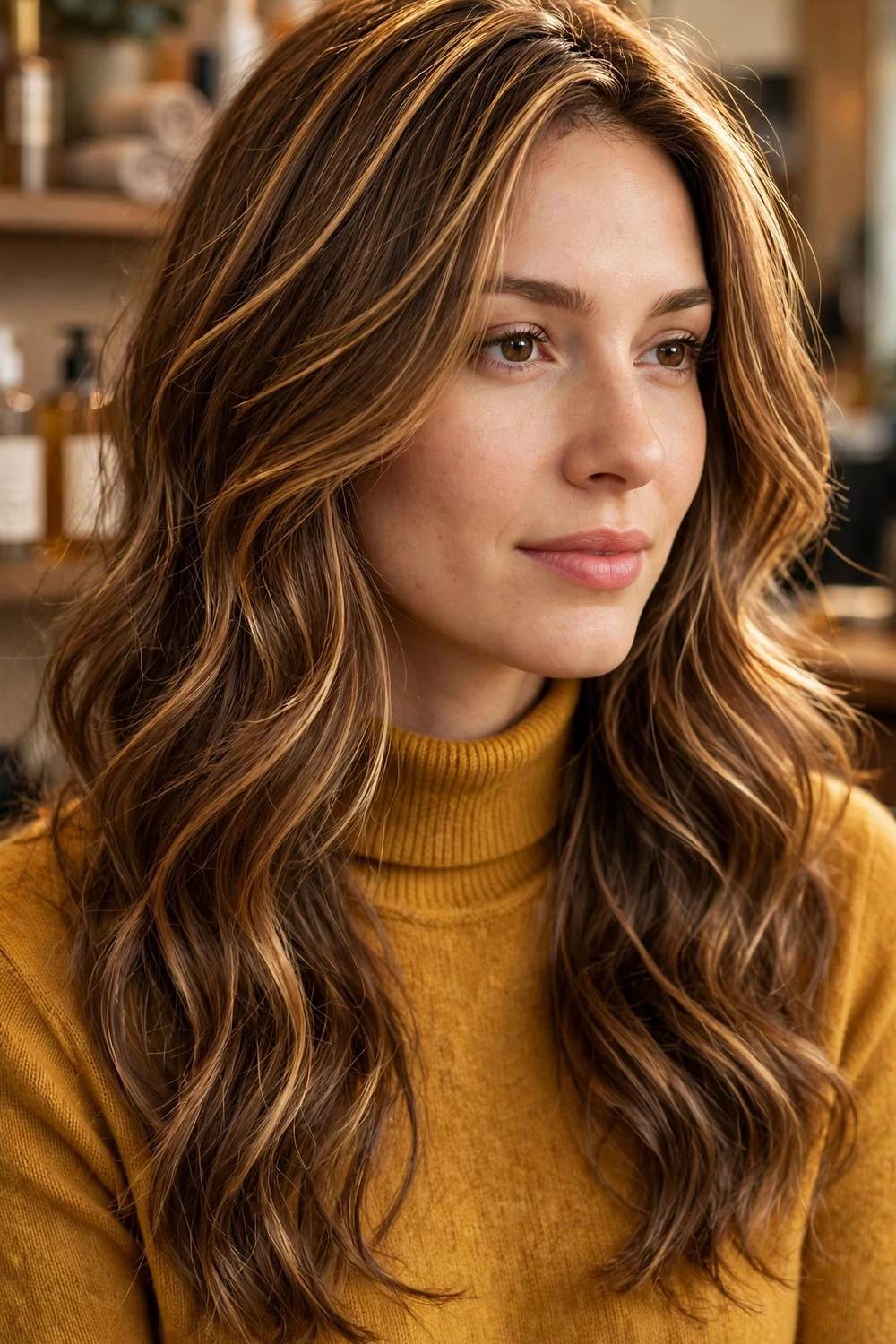
Honey foil highlights place fine golden honey pieces through a medium brown base, from close to the root through the ends. Here honey works strictly as a highlight shade: the brown base stays visible between every foil, and the overall read stays brunette with gold running through it. Warm and neutral skin suit the gold best.
A full head of honey foils is a longer, lighter service, since medium brown needs real lift before the honey tone reads clean. Grow-out shows as a line at the root, so refreshes land at six to eight weeks, with a toner in between if the pieces start to yellow. Fine hair should ask for fewer, finer foils to protect the ends.
Try this: book a partial foil, top and sides only, for the first round. You get the brightening around the face at a shorter appointment, and you can go full head later.
Difficulty: High · Cost: $$$ (salon)
4. Golden Bronde Highlights
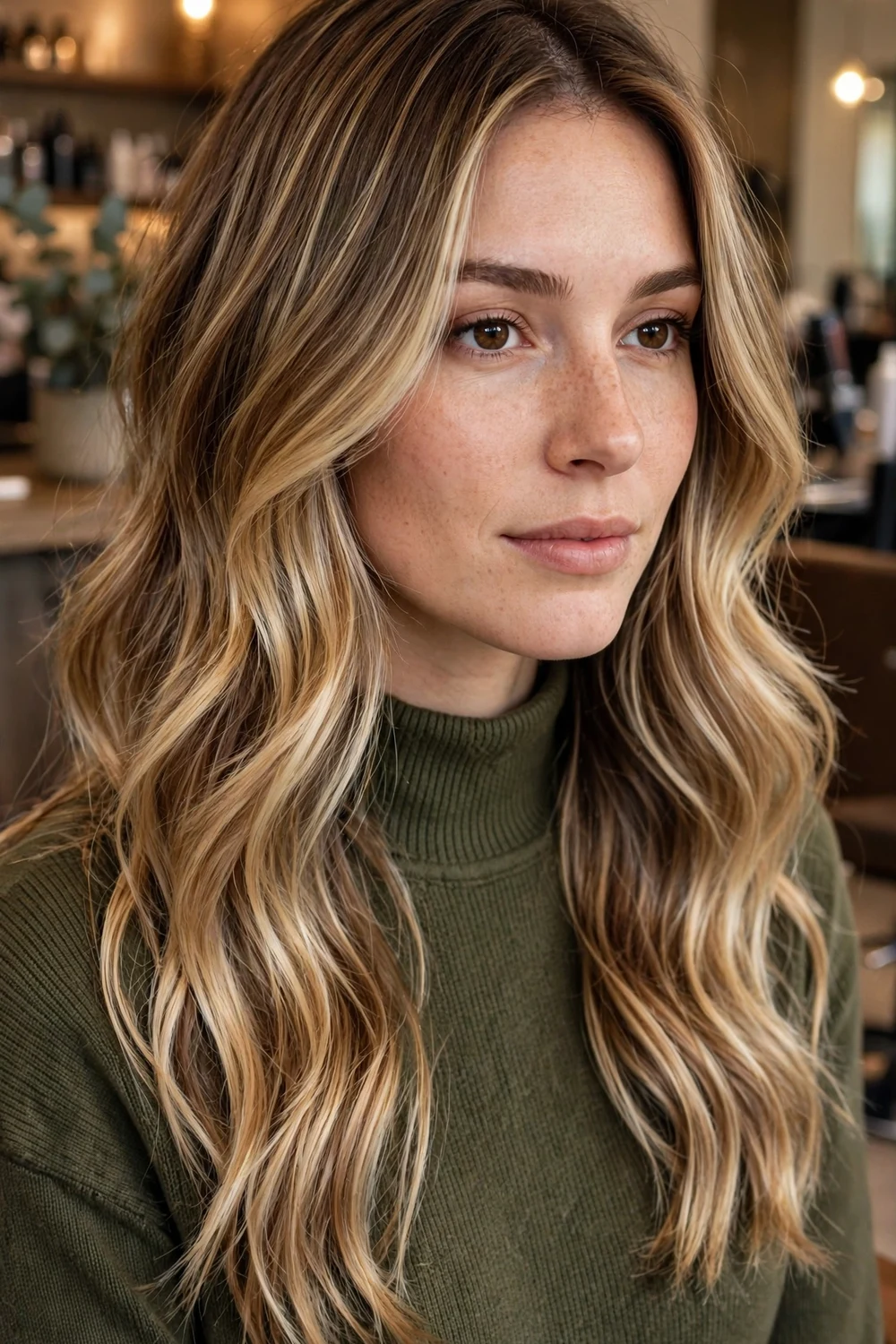
Bronde highlights blend brown and blonde pieces over a brown base until the head reads between the two colors. Buttery caramel and honey blonde pieces run through the mid-lengths and ends, the roots stay darker, and the face gets the lightest sections. The mix suits a wide range of skin tones because the brown base anchors the blonde.
This is one of the bigger first appointments on the list, since it combines foil work, painted pieces, and a toner to bring the tones together. After that, upkeep settles down: the darker root area hides regrowth, and a gloss at eight weeks keeps the blonde pieces from going dull or brassy.
Try this: decide your ratio before the appointment. More brown pieces keep you clearly brunette, while more blonde pieces push the result toward a dark blonde.
Difficulty: High · Cost: $$$ (salon)
5. Toffee Balayage Highlights

Toffee balayage paints warm toffee brown pieces through a dark brown base, keeping the shade closer to the base than caramel does. The result is a lower-contrast warmth that shows most in the lower half of the hair and at the ends. It is a sound first highlight for dark brunettes who want a change they can still call subtle.
The service lightens less than the brighter balayage options, which keeps the ends in better condition and the gloss schedule simple. Grow-out is soft because the painted pieces start low. A toffee-toned gloss at eight weeks restores the warmth as the painted pieces fade toward plain light brown.
Try this: wear your hair in the parting you use daily on appointment day, so the painted pieces land where light actually hits your hair.
Difficulty: Medium · Cost: $$$ (salon)
6. Chestnut Foil Highlights
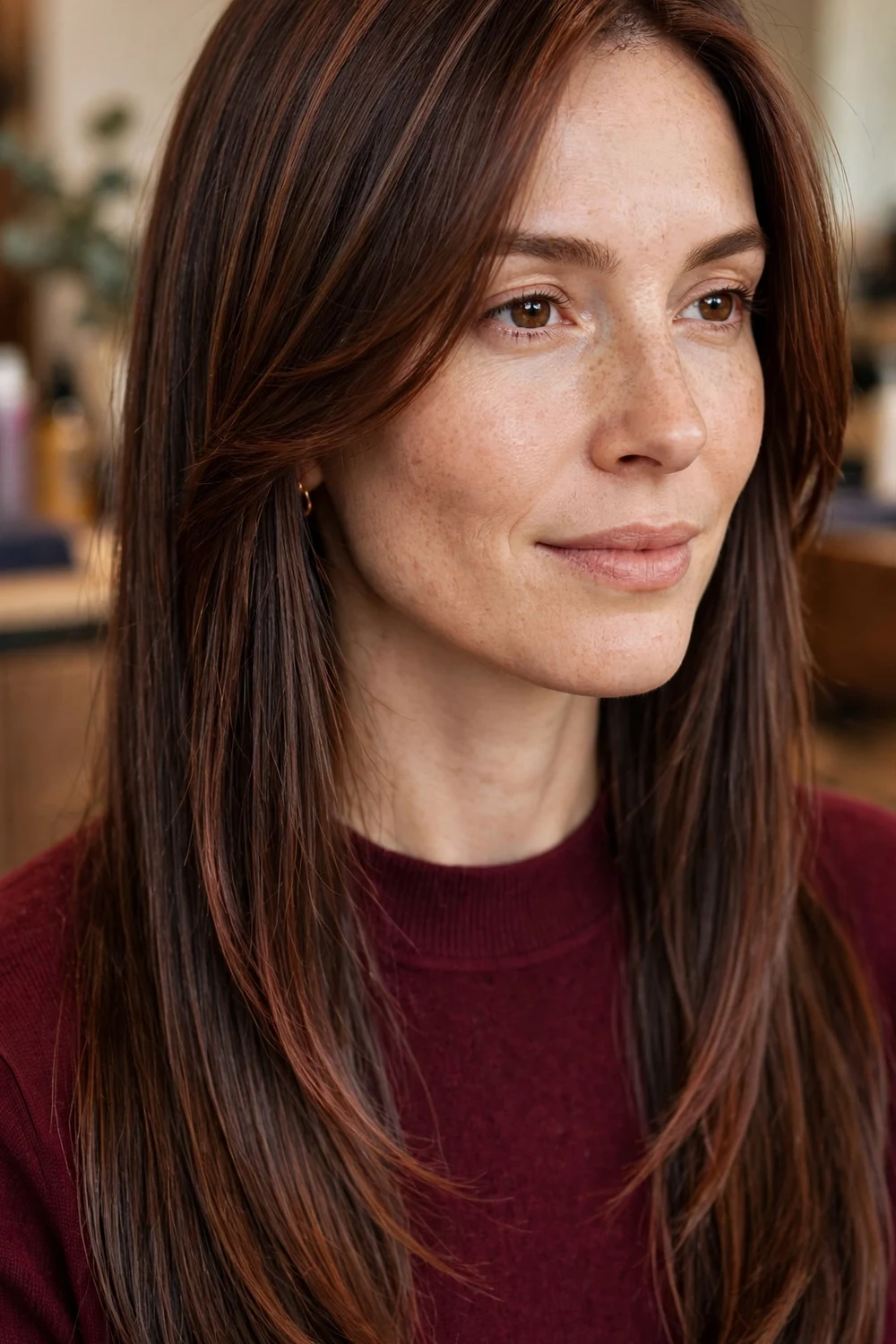
Chestnut foil highlights add muted reddish-brown strands to a medium or dark brown base. The red content is kept quiet, so the pieces read as warmth in sunlight and as depth indoors. Cool, neutral, and olive skin can wear this family more easily than the brighter copper shades, since chestnut stays closer to brown.
Chestnut pieces need little lift on most brown bases, because the target shade sits only a level or two above the base. That keeps the appointment shorter and the cost band lower than the blonde-leaning foils. The red tone fades first, so a chestnut gloss at six weeks keeps the pieces from settling into ordinary light brown.
Try this: place a few chestnut pieces around the face and through the ends only, and leave the crown dark for the most natural fall version.
Difficulty: Medium · Cost: $$ (salon)
7. Milk Chocolate Highlights

Milk chocolate highlights are fine pieces one to two shades lighter than a dark brown base, woven through the whole head. The small step in depth is the point: the hair gains dimension and shine without a visible color change from across the room. Long layers, blowouts, and soft curls show the tonal shift best.
Because the lift is small, this is gentle work for the hair and one of the easier foil services to sit through. Grow-out is quiet, since the pieces sit so close to the base color. Most wearers refresh at ten to twelve weeks, and many stretch longer with a clear gloss in between to keep the surface reflective.
Try this: ask for the lighter pieces concentrated where your hair parts and falls forward, so the dimension shows in your usual style rather than only in the chair.
Difficulty: Low to Medium · Cost: $$ (salon)
8. Mocha Balayage Highlights
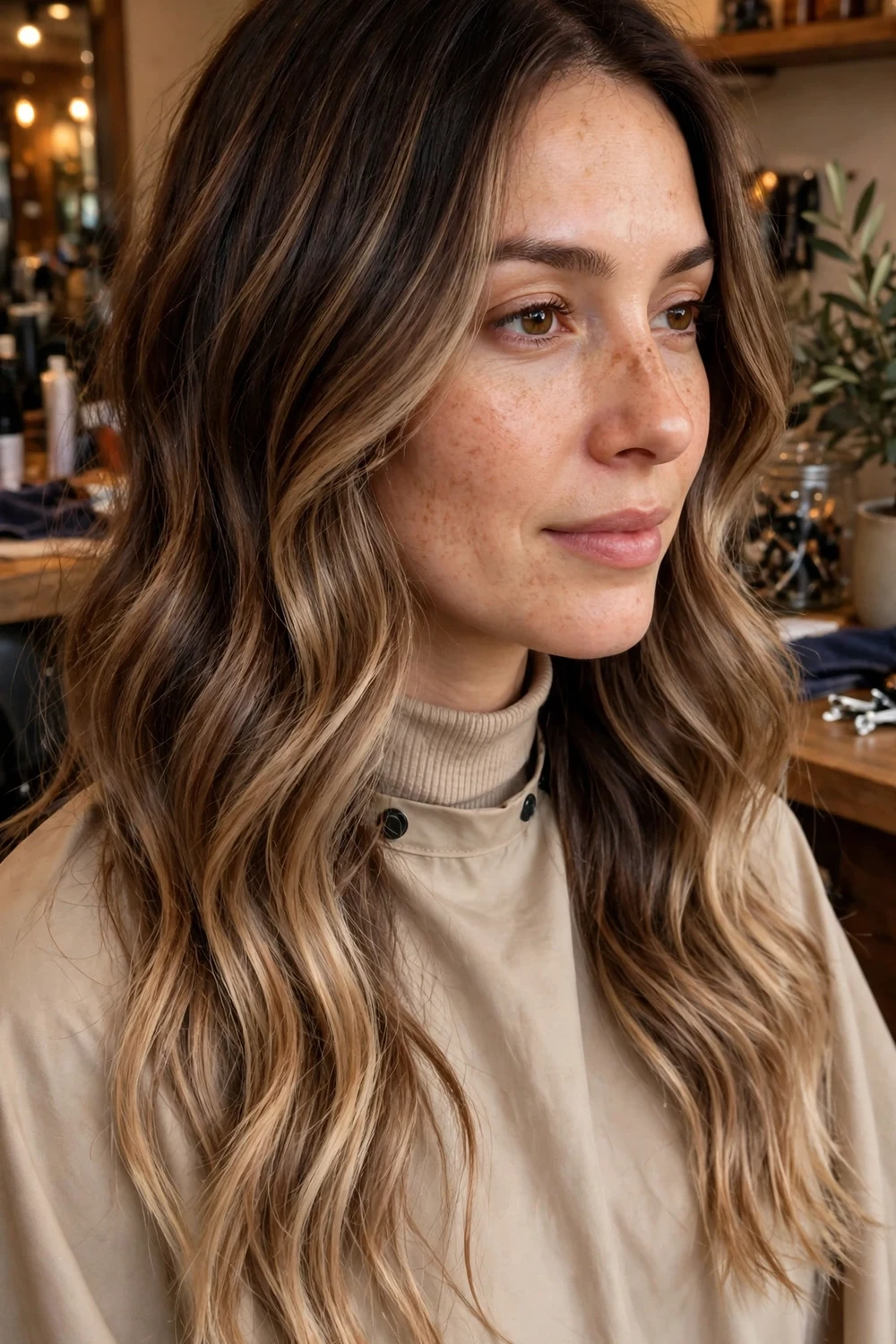
Mocha balayage paints milk chocolate and mocha ribbons over an espresso base, with the lightness building from the mid-lengths to the ends. The crown and roots stay cool and dark, which keeps the overall read deep. It suits cool and neutral skin that finds caramel and honey too warm.
The hand-painted blend grows out without a line, and the cooler toner is the main upkeep item: mocha pieces drift warm over time, so a cool gloss at eight weeks pulls them back. The contrast stays moderate, which makes this a workable option for conservative workplaces that still want visible dimension.
Try this: ask for the lightest ends kept to the front and the surface layers, with the underneath left espresso for depth when the hair moves.
Difficulty: Medium · Cost: $$$ (salon)
9. Mushroom Ash Highlights
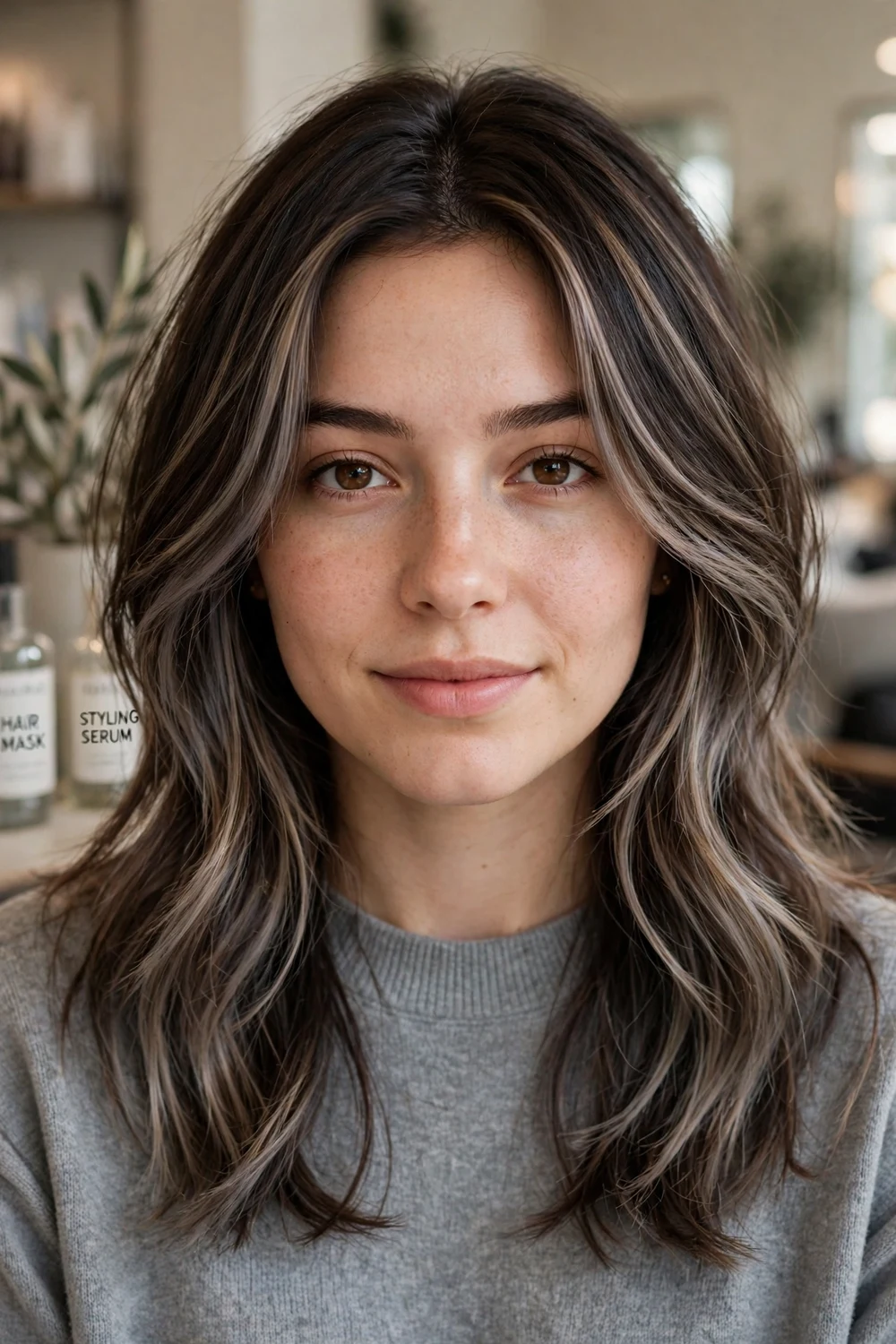
Mushroom ash highlights place cool, ashy light brown pieces over a dark brown base. The brightest pieces sit around the face and through the ends, and the tone stays smoky rather than golden. This is the fall route for cool skin and for brunettes whose hair pulls red the moment it is lightened.
Ash tones need toning discipline. The pieces are lightened, then toned cool, and that toner fades with washing, so plan a toner refresh at six to eight weeks and a purple shampoo once a week at home. Skipping the toner is what lets mushroom pieces drift into the brassiness they were meant to avoid.
Try this: bring a photo of the exact ash depth you want. Ash reads darker than the same level in a warm tone, and the photo settles that difference before the foils go in.
Difficulty: Medium to High · Cost: $$$ (salon)
10. Espresso and Cream Babylights
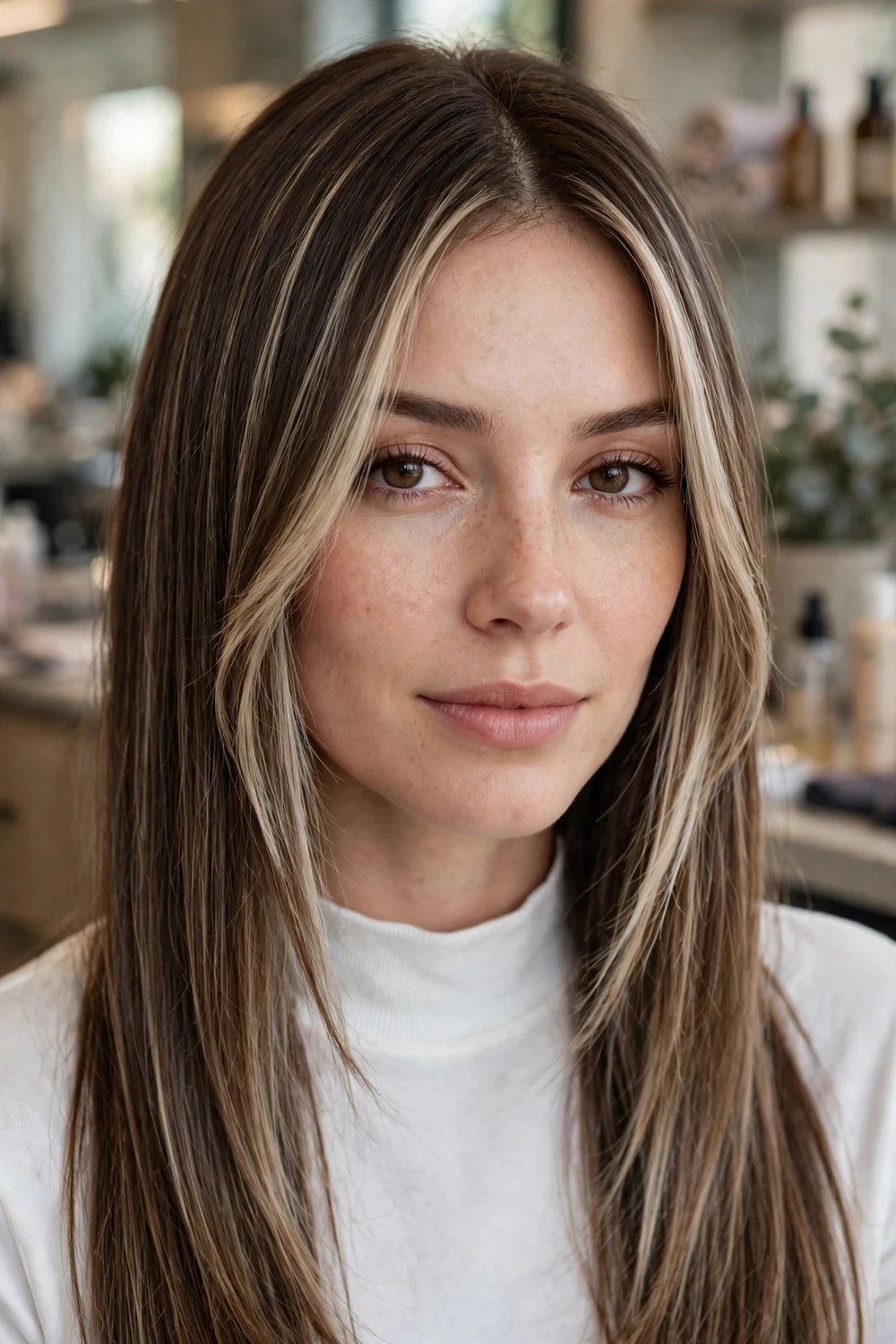
Babylights are micro-fine highlights, and this version weaves creamy beige babylights through an espresso base. The pieces are fine enough that no single strand stands out; the whole head simply looks lighter and softer. Brighter fine pieces around the face lift the front without a visible frame line.
The trade is time in the chair. A full head of babylights takes many small foils, so the first appointment runs long and the difficulty grade reflects that. The payoff comes later: the blend grows out with almost no line, and refreshes can wait four to six months, with a gloss in between if the cream tone dulls.
Try this: if a full head sounds like too long a day, ask for babylights through the parting and hairline only. The softening effect is similar at a fraction of the time.
Difficulty: High · Cost: $$$ (salon)
11. Cinnamon Swirl Highlights
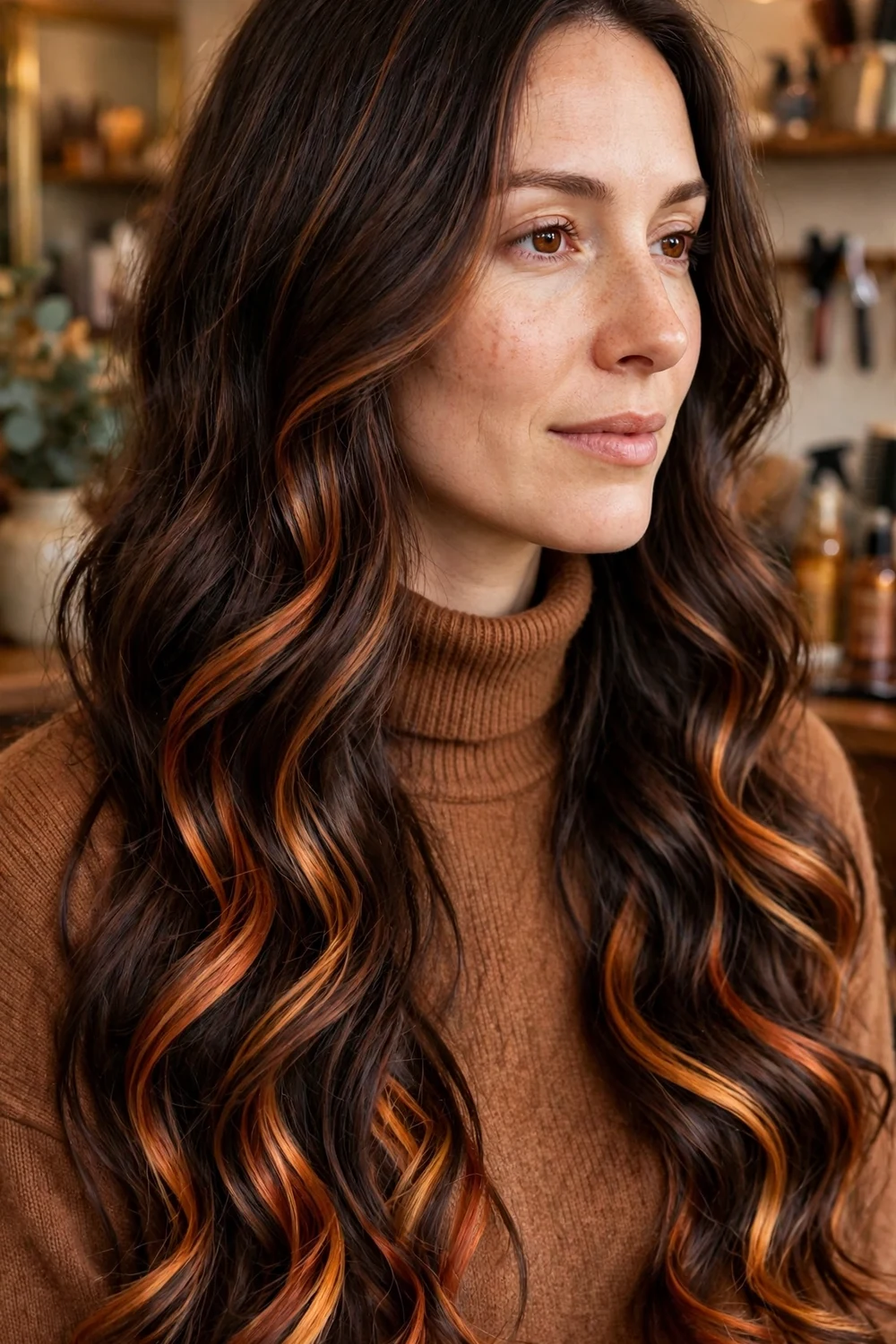
Cinnamon swirl highlights run warm copper, amber, and cherry-leaning ribbons through dark brown hair, concentrated in the lower half. The mix of warm tones keeps any single ribbon from dominating, and the color reads spiced rather than red. Olive and medium to deep skin carry the warmth well.
The copper family fades faster than the brown family, so this placement needs a color-depositing conditioner in a copper or cinnamon shade once a week and a gloss at five to six weeks. Grow-out at the root stays calm because most of the color sits low, away from the parting.
Try this: finish the appointment with a clear gloss over the whole head, so the dark base shines at the same level as the new ribbons.
Difficulty: Medium to High · Cost: $$$ (salon)
12. Cinnamon Babylights

Cinnamon babylights take the spiced tone family down to a micro-fine scale: thin ribbons of cinnamon, copper, and chestnut blended around the face and crown of a medium brown base. The effect is a low glow rather than visible stripes, and it suits brunettes who already have warm or auburn tones in their natural color.
The fine scale makes grow-out exceptionally soft, and refreshes can stretch to four months or more depending on how fast your hair grows. The spiced tones still fade, so wash with color-safe shampoo and space washes out where you can. A cinnamon gloss revives the warmth without new foils.
Try this: ask for the finest pieces at the front hairline and slightly wider pieces at the crown, so the glow builds where the eye lands first.
Difficulty: Medium to High · Cost: $$$ (salon)
13. Copper Foil Highlights

Copper foil highlights weave bright copper strands evenly through a medium or dark brown base, from close to the root to the ends. The brown between the foils keeps the result in brunette territory, while the copper does the seasonal work. The full fall copper hair colors list shows the same family worn as all-over shades, which makes the contrast between the two routes easy to see.
Copper pieces on a dark base usually need lightening first, then a copper toner over the lift, which is why the difficulty sits high in the middle range. The toner fades toward light brown over five to six weeks. A copper-depositing conditioner at home holds the tone between salon glosses.
Try this: ask for copper on the top layers and around the face, with chestnut pieces underneath, so the brightness sits where light hits and the depth stays below.
Difficulty: Medium to High · Cost: $$$ (salon)
14. Auburn Ribbon Highlights
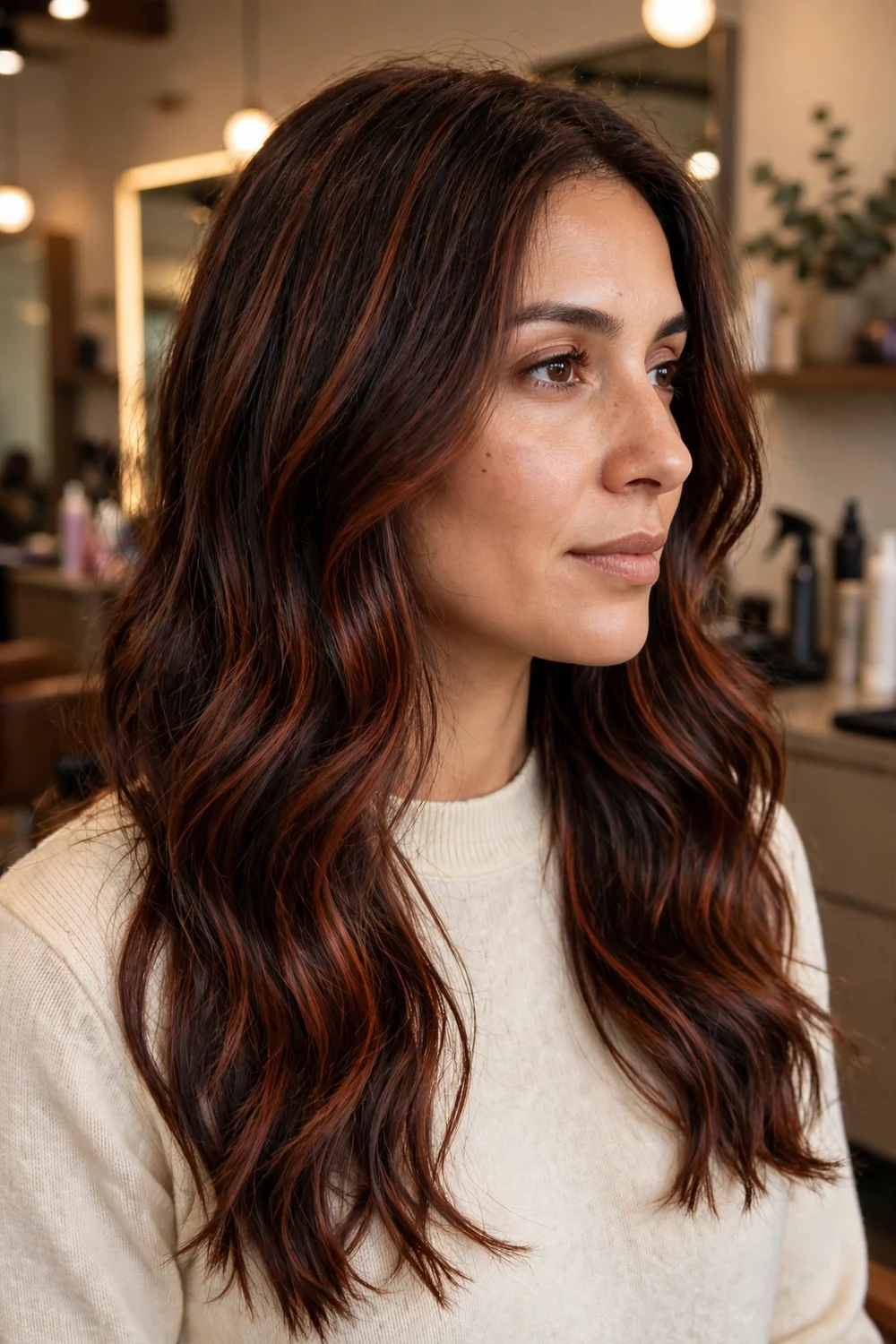
Auburn ribbon highlights weave deep auburn strands through a dark chestnut base, placed mainly in the mid-lengths and ends. Waves show the ribbons at their best, since each curve separates an auburn band from the dark base around it. Long, thick hair holds this placement well, because the ribbons have room to spread.
Auburn sits close enough to brown that the lift is modest and the grow-out is gentle. The red half of the tone fades first, leaving the ribbons closer to chestnut by week six, so a warm gloss at the refresh keeps the auburn note in place. Fewer, wider ribbons read bolder; more, finer ribbons read softer.
Try this: ask your colorist to vary the ribbon width, wide at the front and fine at the back, so the color looks placed by hand rather than measured.
Difficulty: Medium · Cost: $$$ (salon)
15. Copper Money Piece on Brown Hair
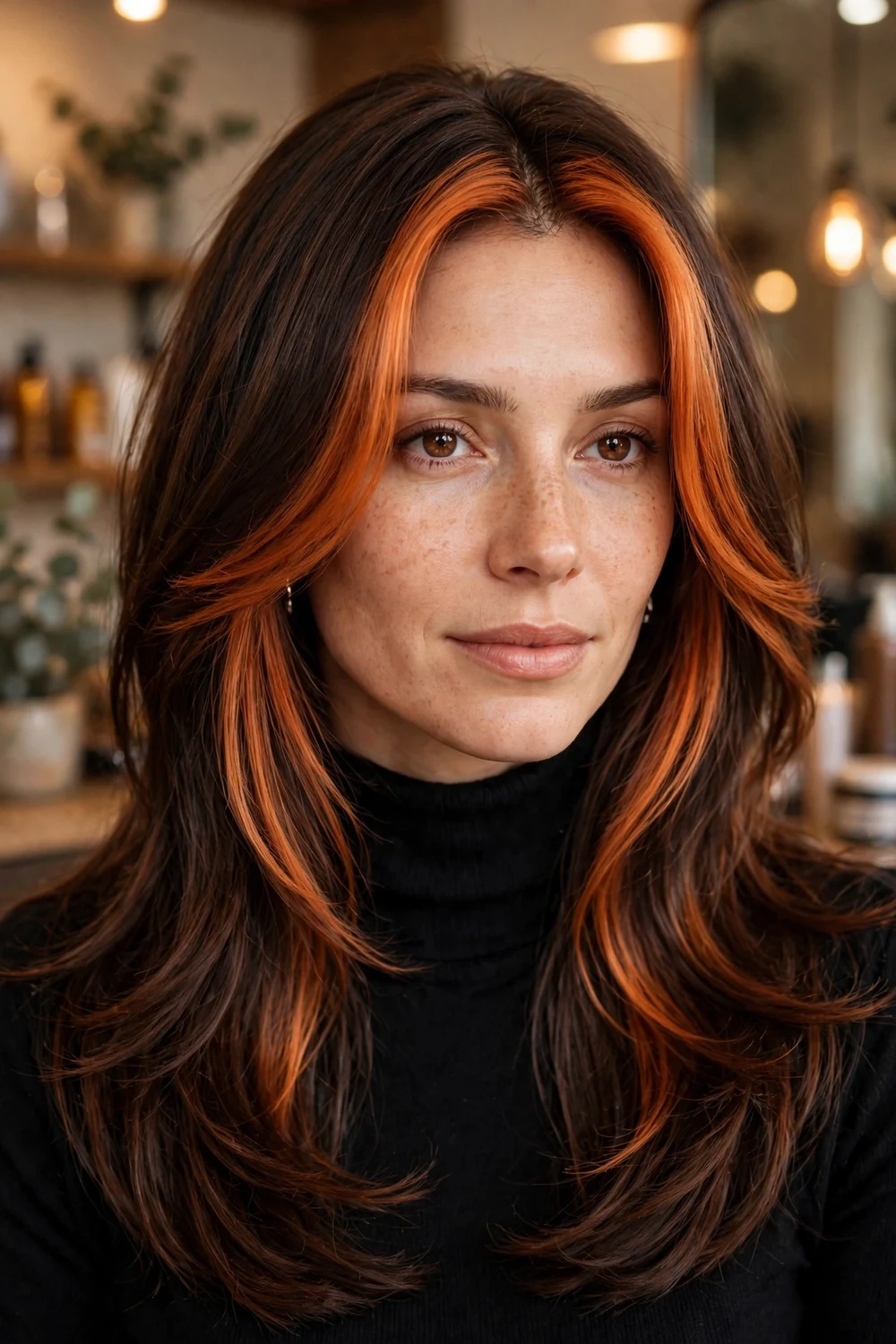
A copper money piece lightens and tones just the two front sections of a dark brown base, leaving the rest of the hair untouched. The bright copper at the hairline changes how the whole head reads, even though very little hair is colored. It suits medium to thick hair and anyone who wants a clear fall change in a short appointment.
The front pieces are the lightest hair on the head, so they fade first and benefit from a mini gloss at four weeks. Root grow-out shows at the hairline sooner than with low placements, but the refresh is small and quick. This is also a practical test of copper against your skin before wider copper work.
Try this: keep the copper panels one to two shades brighter than any other pieces you wear, and blend the back edge of each panel into the brown so the frame has no hard side line.
Difficulty: Low to Medium · Cost: $ (salon)
16. Burgundy Highlights on Dark Brown

Burgundy highlights run deep wine-red pieces through a dark brown base, blended through the lengths and stronger at the ends. The tone leans cool-red, which makes it one of the warmer-looking options that cool skin can still wear. Soft waves show the burgundy where the hair turns and catches light.
Burgundy pigment sits over lightened pieces, and red-family tones rinse out with washing, so expect the color to soften toward a reddish brown between visits. A burgundy gloss at five to six weeks restores the wine tone. Wash with cool water and keep heat styling moderate to slow the fade.
Try this: start with burgundy through the ends and lower layers only. If the tone suits you, your colorist can carry it higher at the next appointment.
Difficulty: Medium to High · Cost: $$$ (salon)
17. Red Peekaboo Highlights

Peekaboo highlights place red panels under the top layer of dark brown hair. With the hair down and still, the brown covers most of the red. When the hair moves, is tucked back, or is worn up, the red panels show. It is a workable route for workplaces where visible fashion color is limited.
The hidden placement protects the red from sun and washing a little, yet red tones still fade, so a red gloss or color-depositing conditioner keeps the panels true. Grow-out hides under the top layer as well, which stretches the refresh to eight weeks or more. The panels need lightening first on dark bases.
Try this: place one panel on each side above the ear, so tying your hair up reveals both panels evenly.
Difficulty: Low to Medium · Cost: $$ (salon)
18. Rose Gold Balayage Highlights on Light Brown

Rose gold balayage paints soft pink-peach pieces through a light brown base, brightening around the face and through the lengths. The base needs to start light: on medium or dark brown, the rose tone barely shows unless the pieces are lightened well first. Warm and neutral skin suit the peach side of the tone.
Rose tones are among the fastest to fade on this list, often softening within a few weeks toward a warm light brown. A rose-toned gloss extends the color, and color-safe washing matters more here than with the deeper shades. The painted grow-out, at least, asks for little: the blend stays soft for months.
Try this: ask for the rose kept to the painted pieces and the face frame, with your light brown base left at the root, so fading pieces blend instead of leaving a line.
Difficulty: Medium · Cost: $$$ (salon)
19. Amber Ribbon Highlights

Amber ribbon highlights mix pecan, honey, gold, and copper ribbons over an espresso or medium brown base. The multi-tone mix is the idea: no single shade repeats often enough to stripe, and the hair shifts tone as it moves. Straight and wavy hair show the separate ribbons most clearly.
Multi-tone work takes planning at the foil stage, since the colorist alternates formulas ribbon by ribbon, and the warm mix needs corrective toning if any ribbon drifts brassy. Keep the roots darker and the balance holds as it grows. A gloss at six weeks reunites the tones as they fade at different speeds.
Try this: mix fine babylight ribbons with a few wider amber ribbons at the front, so the face gets contrast and the rest of the head gets glow.
Difficulty: Medium to High · Cost: $$$ (salon)
20. Brown Sugar Balayage
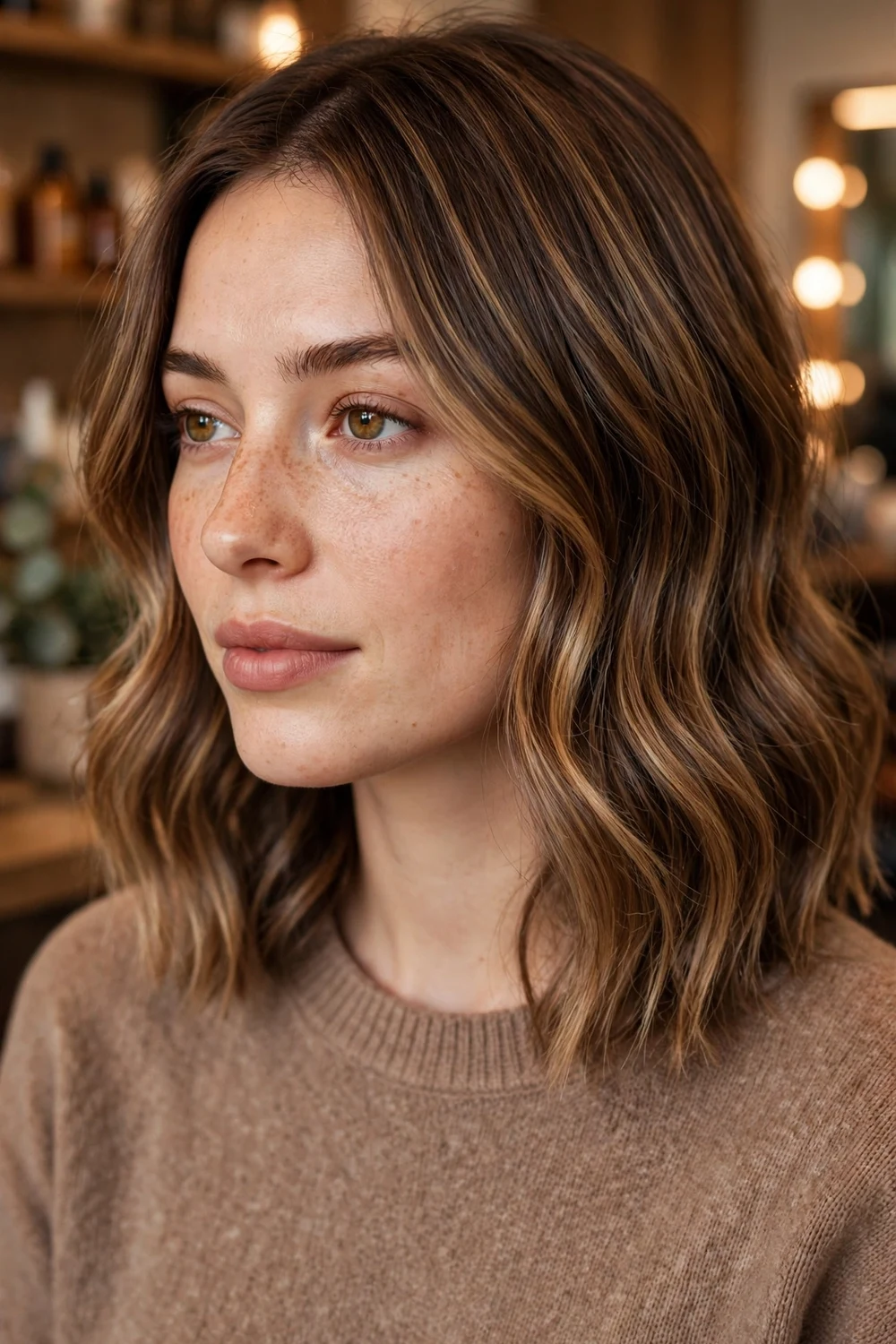
Brown sugar balayage hand-paints warm light brown pieces over a medium brown base, with a soft transition that starts well below the root. The tone sits between the base and a true blonde highlight, so the change reads warm and gradual. It suits shoulder length and longer hair, where the painted gradient has room to show.
This is a low-upkeep placement by design: no root line, a gloss at eight weeks to hold the warmth, and a repaint two or three times a year for most wearers. The painted ends still need moisture care, since even modest lightening dries the oldest hair on the head.
Try this: if your base is dark brown rather than medium, ask for the brown sugar tone one shade deeper, so the contrast stays soft instead of turning stripy.
Difficulty: Medium · Cost: $$ (salon)
21. Chai Latte Highlights
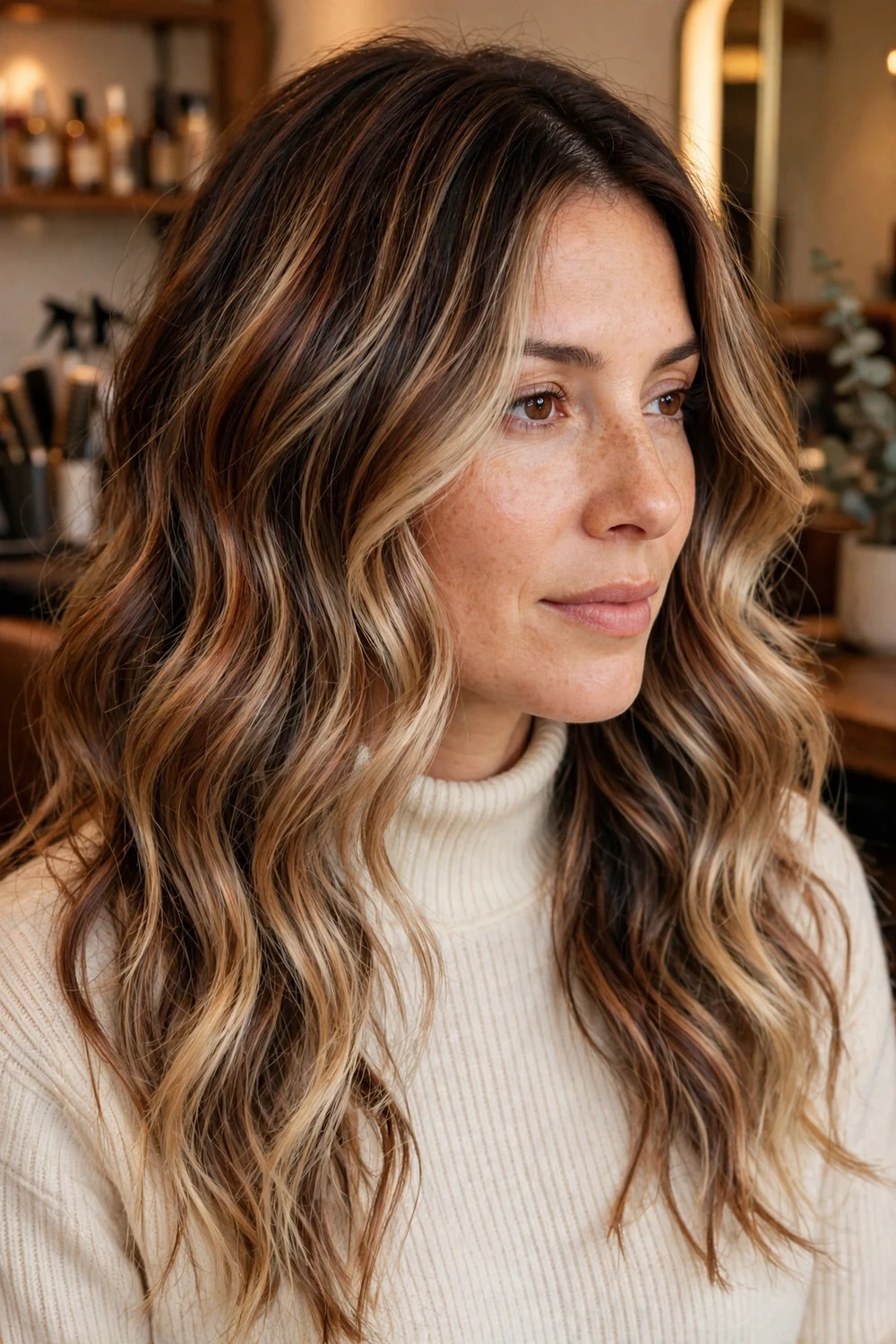
Chai latte highlights vary the piece size and shade on purpose: cinnamon, honey brown, and creamy blonde tones placed at different depths through dark brown hair. The roots stay darker and the ends carry the buttery pieces. Olive and medium to deep skin suit the warm, spiced mix.
Because three tones are in play, this is detailed color work and a longer appointment, and the refresh has to rebalance the mix rather than simply redo one shade. Straight and wavy hair show the variation clearly; very tight curl patterns blend the tones together, which some wearers prefer. A clear gloss keeps the whole mix glossy between visits.
Try this: ask your colorist to note the placement map, which tones went where, so the refresh rebuilds the same balance instead of drifting lighter each time.
Difficulty: High · Cost: $$$ (salon)
22. Maple Sugar Highlights
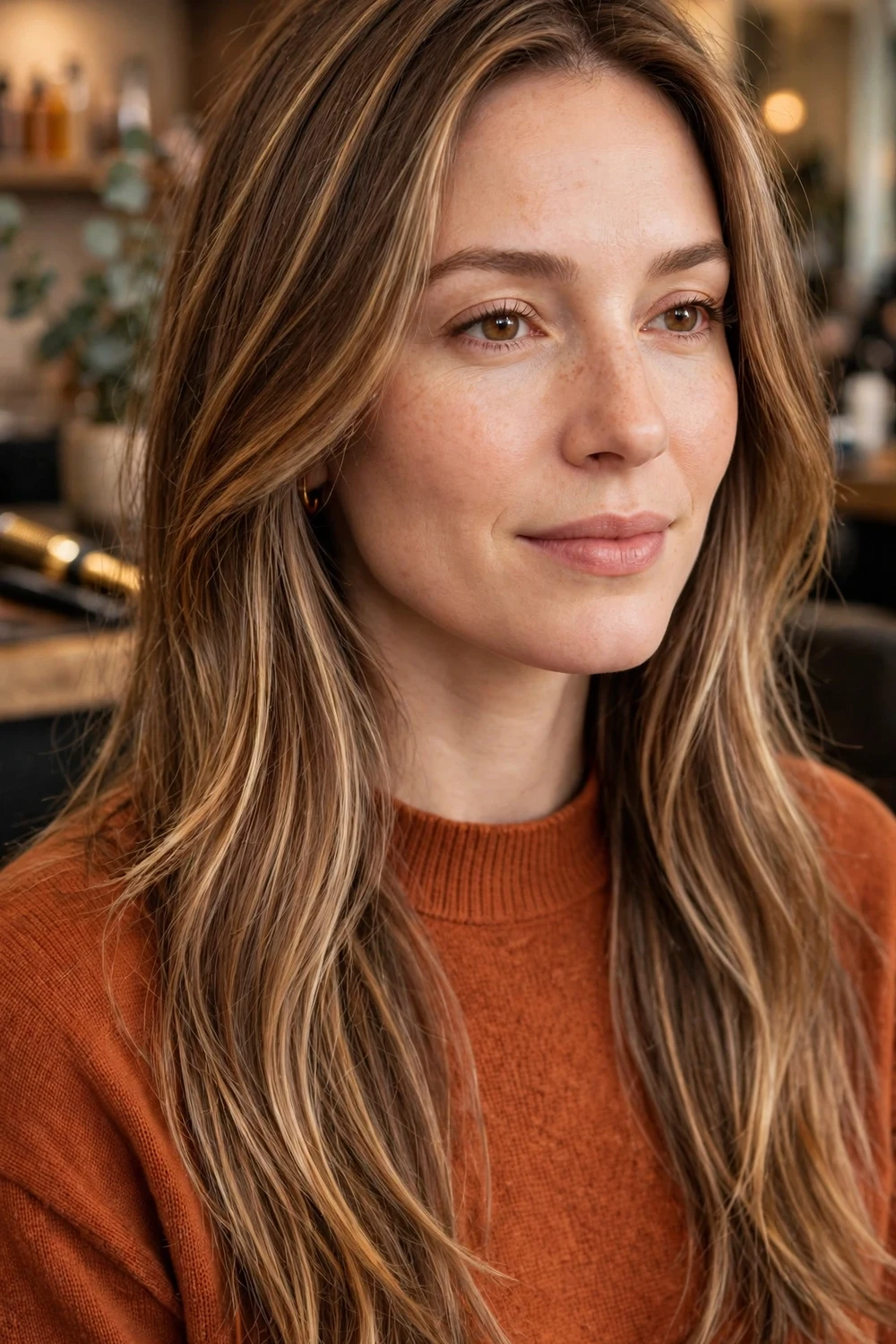
Maple sugar highlights place warm maple and light golden brown foil pieces through a medium brown base. Maple sits between caramel and copper, so the pieces warm the hair without pushing it red or blonde. The shade suits warm skin and reads clearly in flat fall light, where paler highlights can wash out.
The foil placement grows out with a soft line if the pieces are kept fine, and the refresh lands at eight weeks. Maple tones fade toward golden brown, which most wearers still like, so a skipped gloss does less damage here than with copper or burgundy pieces. Keep heat protectant in the routine to hold the warmth.
Try this: add two slightly deeper maple pieces under the parting on each side, so the top layer never looks washed out as the lighter pieces fade.
Difficulty: Medium · Cost: $$ (salon)
23. Face-Framing Caramel Highlights

Face-framing highlights lighten only the front sections of a dark brown base, in caramel, with a few supporting pieces through the mid-lengths so the front does not sit alone. The crown and back stay dark. On dark bases, caramel at the front brightens the face more per foil than any other placement on this list.
The appointment is short and the cost band is the lowest here, since so little hair is lightened. The front pieces fade and show regrowth at the hairline first, yet the fix is equally small: a front-only refresh at six to eight weeks. Blend the back edge of the front sections into the dark base to avoid two stark panels.
Try this: match the caramel depth to your eye color depth. Darker eyes carry deeper caramel at the front, while lighter eyes suit the paler end.
Difficulty: Low · Cost: $ (salon)
24. Copper Ombre Highlights on Dark Brown

Copper ombre keeps dark brown roots and the top half natural, then fades the color into copper through the lower lengths and ends. The gradient concentrates all the fall color where it is cheapest to keep, because ends can be glossed, trimmed, and eventually cut off without touching the root area at all.
The copper ends carry the lightest color and the most lightening, so they need weekly deep conditioning and gentle handling when wet. The gradient itself can go months between salon visits, with a copper gloss on the ends at eight weeks. Medium to thick hair holds the gradient best, since fine ends can look thin in a lighter tone.
Try this: start the fade lower than you think you want it. You can raise the copper at the next visit; lowering it means waiting for a trim.
Difficulty: Medium to High · Cost: $$$ (salon)
25. Caramel Lowlights on Dark Brown

Lowlights work in the opposite direction from the rest of this list: deeper caramel-brown pieces are placed under and between the lengths to add depth and shadow. On dark brown hair that has gone flat or on hair lightened too evenly over summer, lowlights restore the contrast that makes the lighter pieces read as highlights again.
No lightening is involved, so the service is gentle and the pieces fade softly rather than growing out with a line. Thick hair benefits most, since the darker pieces define the wave pattern and keep long hair from reading as one solid mass. Refresh on the same cycle as a gloss, around every eight to ten weeks.
Try this: if your highlights have merged into one flat tone, ask for lowlights first before adding any new light pieces. Depth may be the only thing missing.
Difficulty: Low to Medium · Cost: $$ (salon)
26. Pintura Highlights for Curly Brown Hair
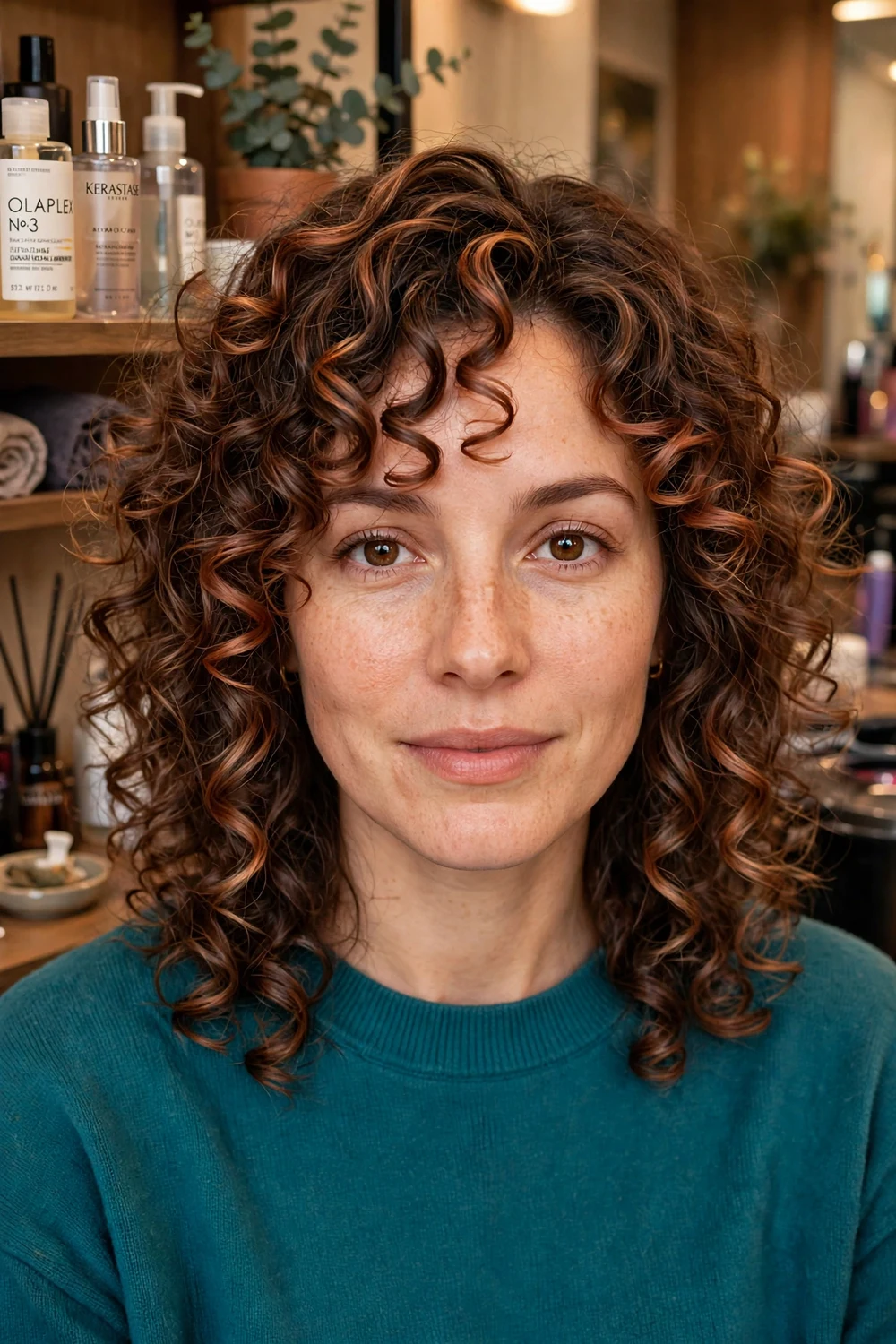
Pintura is a painting method built for curls: the colorist paints caramel and light copper pieces onto individual curls, on the top layers and around the face, where curls catch light first. Most highlight lists show straight or wavy results, yet curls take painted pieces well when the placement follows the curl pattern rather than a foil grid.
Curly hair runs drier than straight hair, and lightened pieces add to that dryness, so weekly deep conditioning and gentle diffusing matter as much as the shade choice. The painted placement grows out softly because the curl pattern hides regrowth. Book with a colorist who works on dry curly hair, so the pieces land on the curls as you wear them.
Try this: arrive with your curls styled as you normally wear them, washed and dry, so the painting follows your real curl fall.
Difficulty: Medium to High · Cost: $$$ (salon)
Frequently Asked Questions
What highlight color looks best on brown hair for fall?
Caramel is the most requested fall highlight on brown hair, because it warms medium and dark bases without a big lift. Copper and cinnamon suit brunettes who want a red-leaning change, honey suits medium brown bases that can lift cleanly, and mushroom ash is the main cool option. The right pick depends on your base depth and skin undertone more than on the trend list.
Do highlights on brown hair need bleach?
Most do need some lightening, since a highlight has to sit lighter than the base to show. The amount varies: milk chocolate and chestnut pieces on dark brown need only a small lift, while honey, cream, and rose gold pieces need more. Lowlights are the exception on this list, because they add deeper pieces and involve no lightening at all.
Which highlight technique grows out with the least upkeep?
Balayage, ombre, and babylights grow out the softest, because none of them place a hard line of light pieces at the root. Balayage and ombre can go four to six months between painting appointments with gloss visits in between. Foil highlights placed close to the root show regrowth sooner and usually refresh at six to eight weeks.
Will fall highlights work on very dark brown hair?
Yes, with the right depth choices. Caramel balayage, copper pieces, auburn ribbons, burgundy highlights, and peekaboo panels all show on dark brown bases. Very pale pieces such as cream and rose gold need stronger lightening on a dark base, which adds time, cost, and care. A strand test at the consultation shows how your hair lifts before you commit.
How do I keep highlights on brown hair from going brassy?
Warm pieces shift brassy when the toner fades and the underlying lifted pigment shows. A salon gloss or toner at six to eight weeks resets the tone. At home, use color-safe shampoo, wash in warm rather than hot water, and use a purple shampoo only on cool ash or cream pieces, since it dulls warm caramel and copper tones.
Final Thoughts
Fall highlights for brown hair work because the base does half the job: your own brown stays, and the placed pieces supply the warmth, brightness, or contrast the season calls for. Pick the shade family by undertone, the technique by the upkeep you will honestly keep, and the contrast by how visible you want the change to be. For the deeper end of the season, the dark fall hair colors roundup shows the bases these highlights sit on at their richest.

