

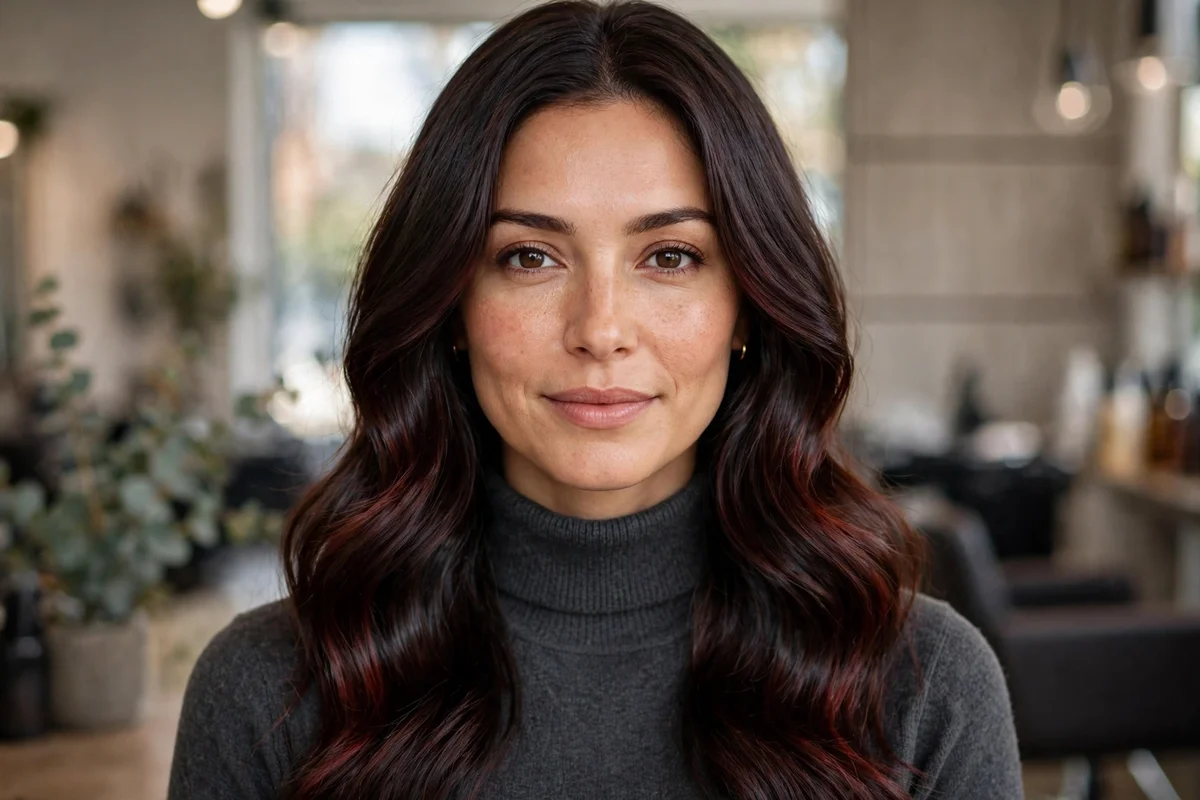
Fall color gets serious at the dark end of the shade chart. Near-black browns, black cherry, wine reds, and violet-black shades all read deeper in the softer light of the season, and most of them sit over a dark base with little or no lightening. I have watched clients move darker every fall for years, and the shades that last are the ones picked by undertone and starting base first, with the trend name second.
This list collects 24 dark fall hair colors and runs them in a clear order: near-black browns first, then true black shades, then the wine and berry reds, then the violet and plum shades, and finally the deep red-browns. Every idea notes the undertone, who it suits, the salon cost band, and how much upkeep it asks for. If you want the lighter red side of fall instead, the fall copper hair colors list covers that family, and the wider fall hair colors guide shows every family side by side.
Quick Takeaways
- Dark fall shades sit at levels 1 to 5: near-black browns, true blacks, wine reds, plum shades, and deep red-browns.
- Match undertone before depth. Warm browns and deep auburn flatter warm skin, while blue-black, violet-black, and cherry shades flatter cool skin.
- Most dark shades need little or no lightening on a brown or black base, so the first appointment is usually a single process color or a gloss.
- Red and violet tones fade first. Plan a gloss refresh at 4 to 6 weeks for cherry, burgundy, and plum shades.
- Brown and black shades are the lowest upkeep group. A clear gloss every 6 to 8 weeks keeps the surface reflective.
How to Pick Your Dark Fall Shade
Start with your undertone. Warm skin carries the warm half of this list: dark chocolate, dark mocha, deep auburn, and deep cinnamon brown. Cool skin carries the cool half: glossy blue-black, violet-black, black cherry, and deep plum brown. Neutral skin sits in the middle and handles rich dark brown, espresso, mahogany brown, and merlot well. If you are unsure, hold a deep berry lip color and a warm brown lip color near your face in daylight and note which one makes your skin look clearer.
Then check your starting base and how far you want to go. Brown and black hair reaches almost every shade here in one session, since the target is darker or equal in depth. Blonde and light brown hair can go dark in one session too, and your colorist may add a filler step first so the dark shade holds evenly. The autumn hair colors roundup shows how these dark shades sit next to the lighter fall families if you are still deciding how deep to go.
| Shade family | Undertone | Best starting base | Upkeep |
|---|---|---|---|
| Near-black browns (espresso, black coffee, dark chocolate) | Warm to neutral brown | Medium brown to black | Low |
| True blacks (blue-black, raven black, violet-black) | Cool blue or violet | Dark brown to black | Low to medium |
| Wine and berry reds (black cherry, cherry cola, burgundy, merlot) | Red-violet | Dark brown to black | Medium |
| Violet and plum shades (deep plum brown, mulberry brown) | Cool violet | Medium brown to dark brown | Medium |
| Deep red-browns (mahogany brown, deep auburn, oxblood) | Warm red-brown | Light brown to dark brown | Low to medium |
1. Glossy Espresso Brunette
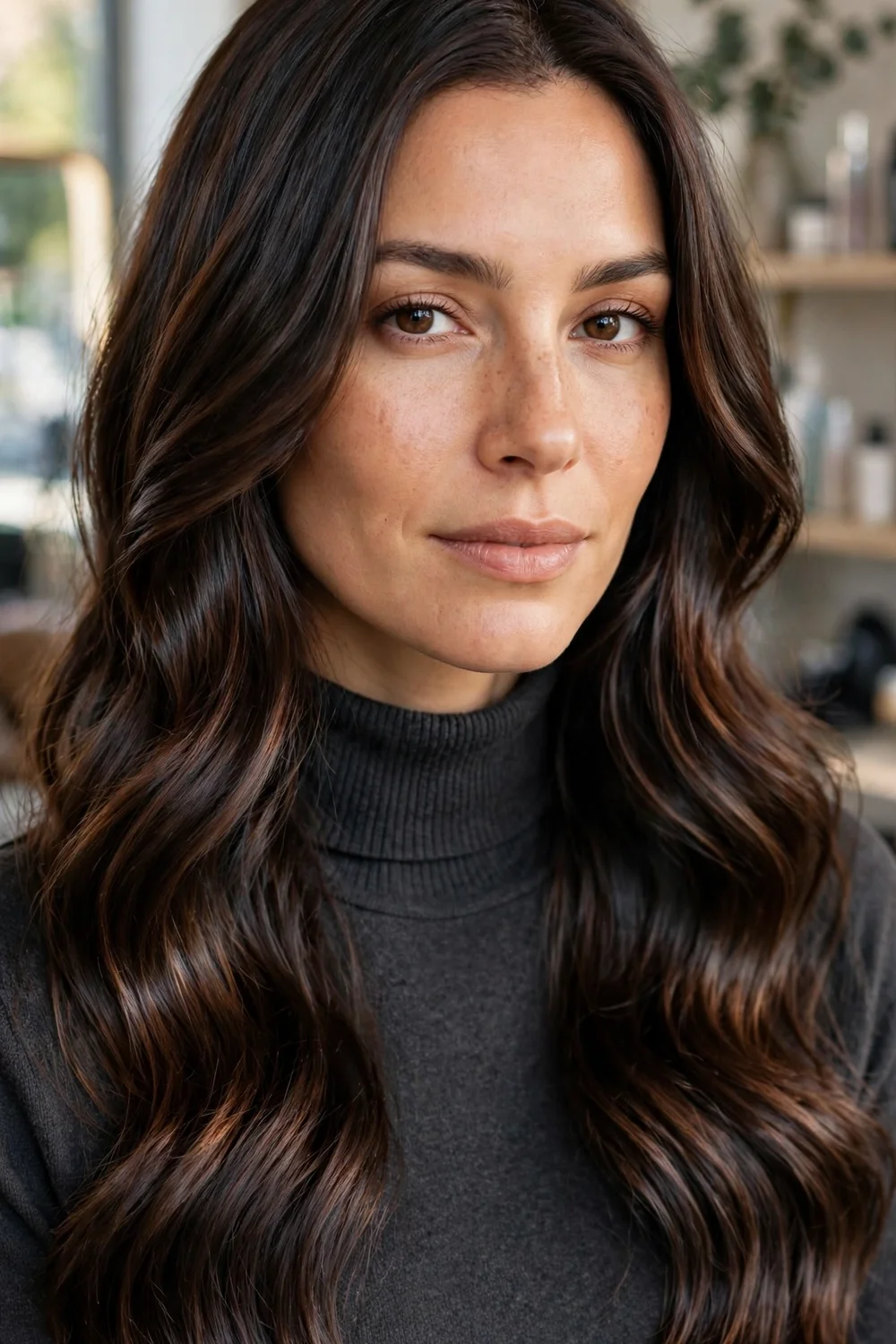
Glossy espresso brunette is a deep brown that sits one step away from black, with a warm brown reflect that keeps it soft in daylight. The undertone is warm and low in contrast, so the hair reads as one rich shade from root to tip. It suits warm, neutral, and olive skin, and it is the standard first dark shade for anyone leaving lighter brown behind.
On a medium or dark brown base this is a single process color with a clear gloss finish, and regrowth blends softly because the target sits close to most natural depths. Dark shades show dullness quickly, so a clear gloss at 6 to 8 weeks keeps the surface reflective between full color visits.
Try this: ask for espresso one to two levels darker than your natural color, finished with a clear gloss, so the depth reads rich rather than flat.
Difficulty: Low to Medium · Cost: $$ (salon)
2. Dimensional Espresso Brunette
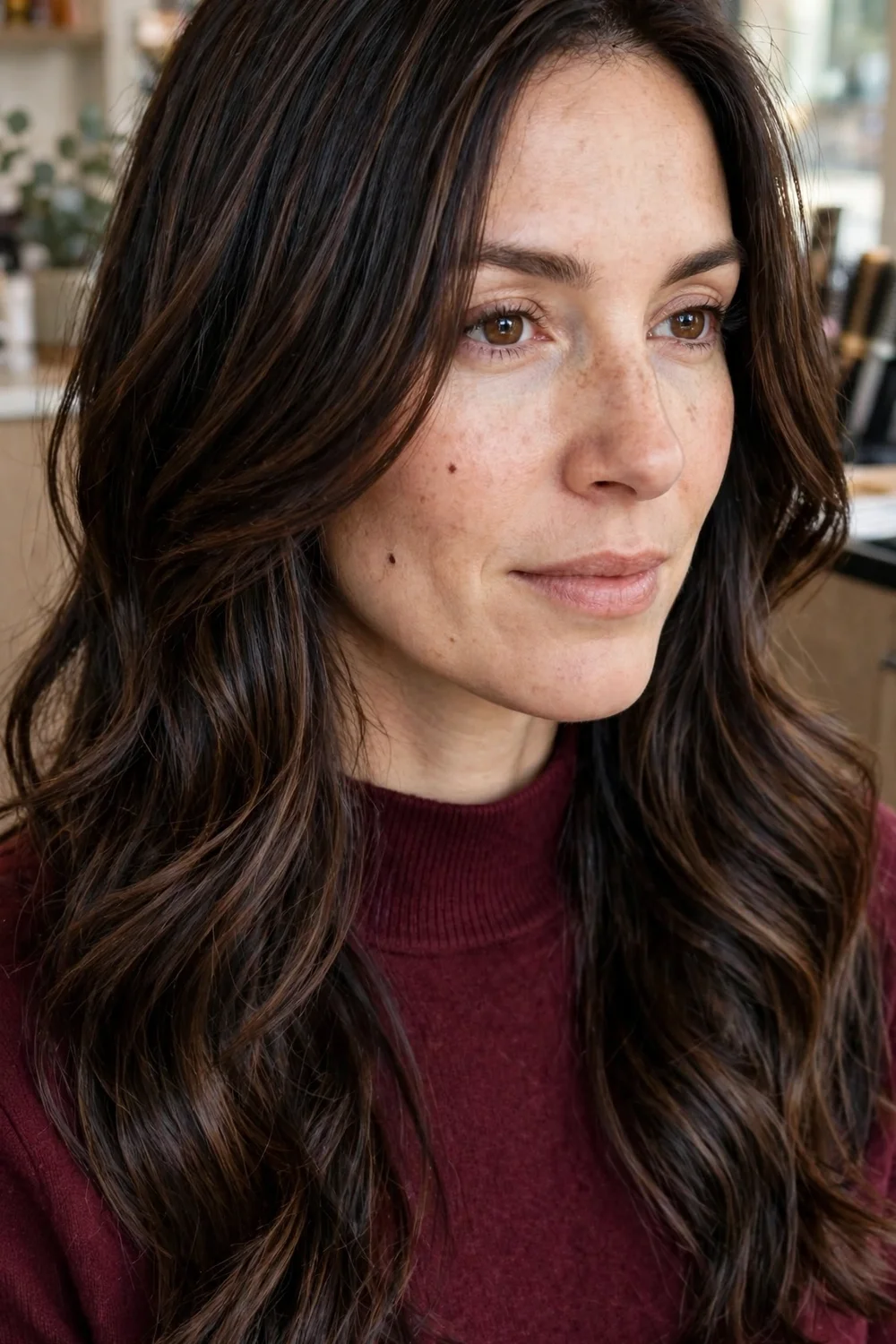
Dimensional espresso brunette keeps the same near-black brown base and weaves fine dark chocolate ribbons through the mid-lengths and ends. The ribbons sit only one to two levels lighter than the base, so the hair gains movement in light and still reads dark indoors. It suits medium to deep skin and longer, layered hair where the ribbons have room to separate.
The ribbon pieces need lightening before toning, which raises the time and the cost band over a plain all-over color. The base itself grows out softly, and most wearers refresh the ribbons with a partial service at 10 to 12 weeks and gloss the whole head in between.
Try this: ask for fine ribbons two levels lighter at most, placed through the mid-lengths, so the contrast stays low and the grow-out stays soft.
Difficulty: Medium · Cost: $$$ (salon)
3. Black Coffee Brunette
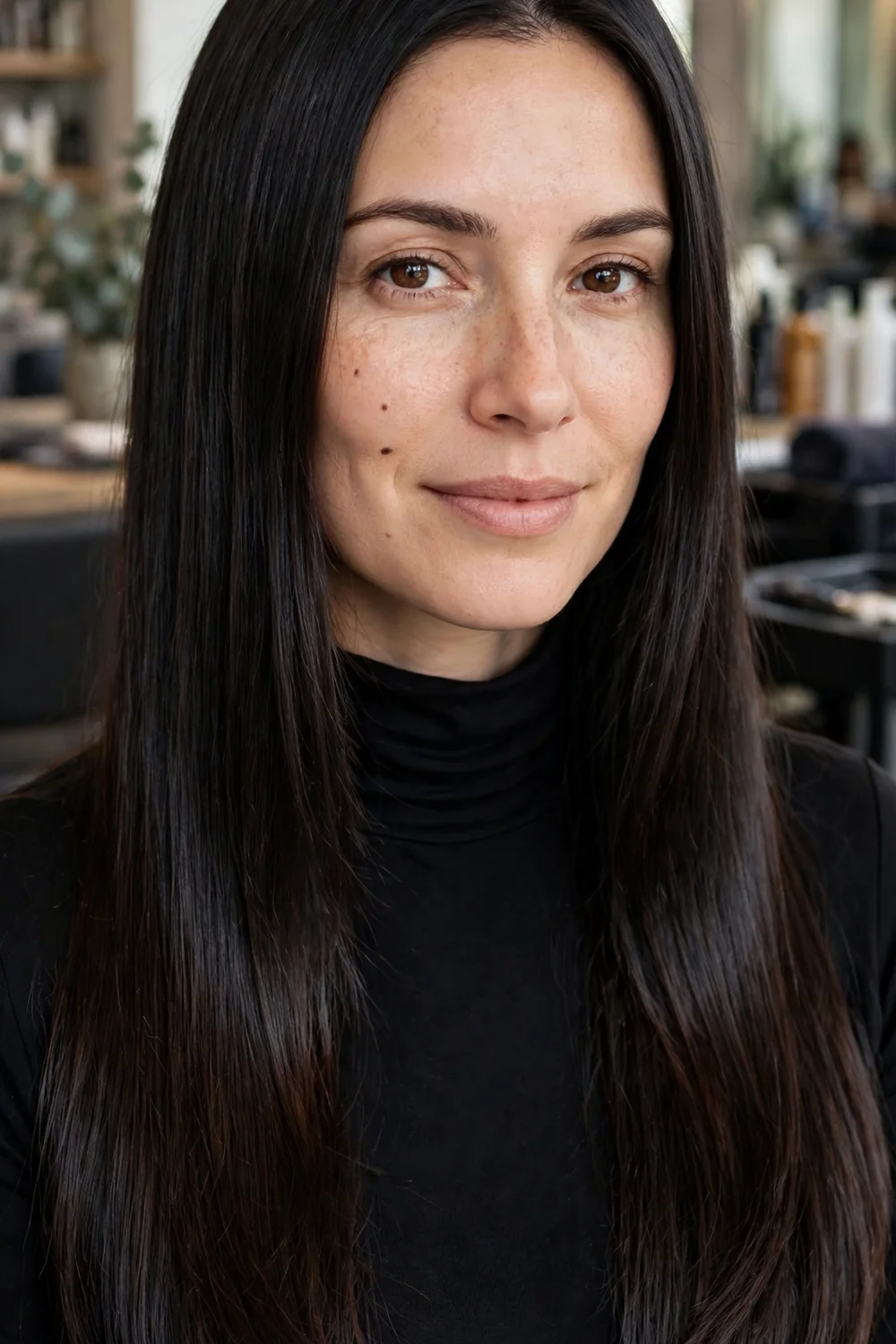
Black coffee brunette is the darkest neutral brown on this list, deeper than espresso and short of a true black dye. The undertone stays neutral, with a brown reflect that shows under direct light. It suits deep skin especially well, and fair skin with cool or neutral undertones carries the contrast cleanly.
Regrowth is close to invisible on dark natural bases, which makes this one of the lowest upkeep shades here. Near-black hair shows frizz and dry ends faster than lighter shades, so weekly conditioning and heat protection matter more than extra color visits.
Try this: pair this shade with a sleek, smooth finish at the salon so you can judge the true depth and shine before you leave.
Difficulty: Low to Medium · Cost: $$ (salon)
4. Rich Dark Brown
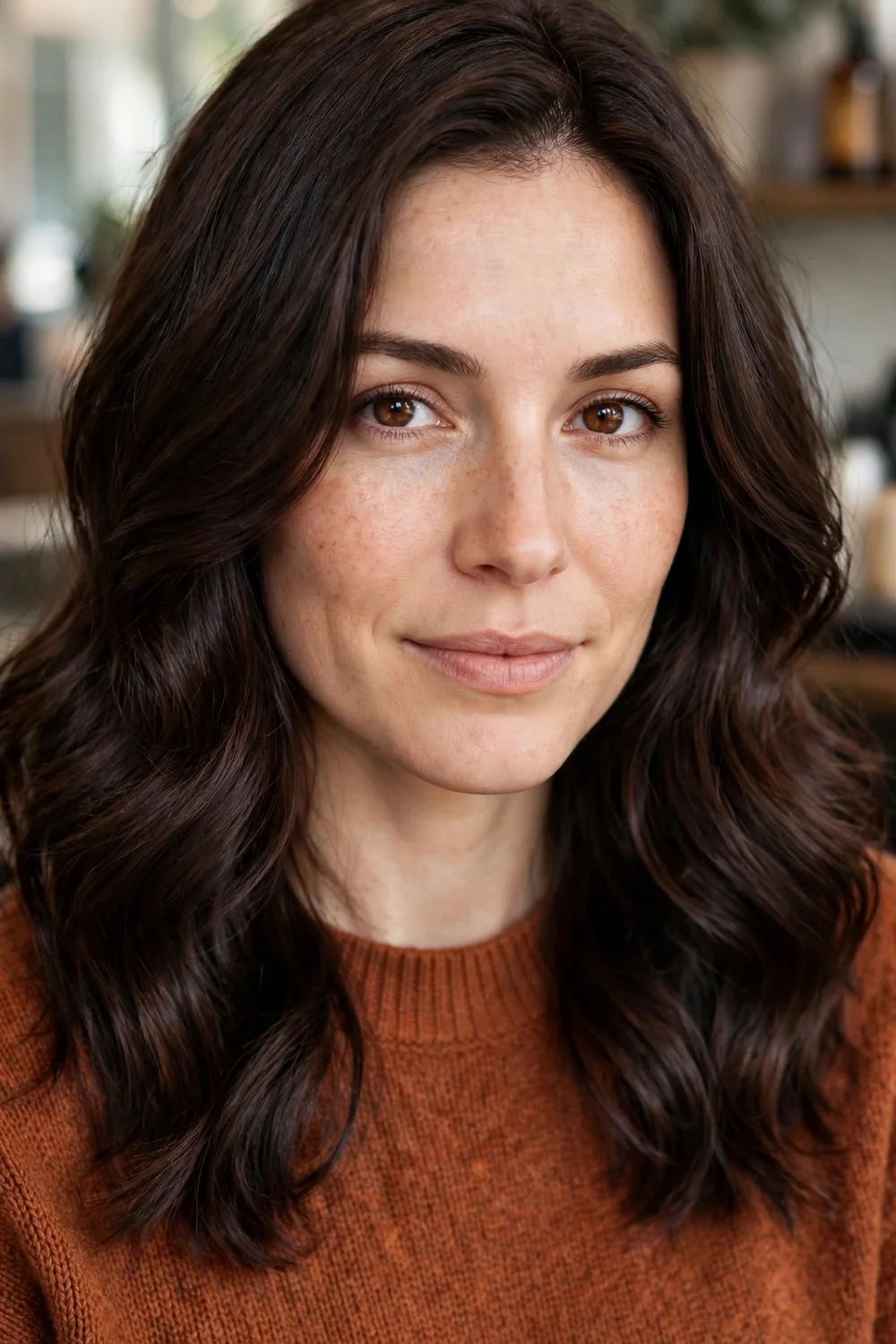
Rich dark brown is a deep, warm, single tone brunette at level 3 to 4. The warmth is baked into the shade itself, so the hair holds a steady brown reflect in indoor and outdoor light alike. It suits nearly every skin tone, and it is a steady pick for a first full color appointment.
Most bases reach this shade with a single process color and no lightening step. The even tone grows out with a soft line on brown bases, and a monthly gloss at home or a salon gloss at 6 weeks keeps the warmth from fading toward a dull brown.
Try this: ask for a level 3 to 4 warm brown and check the swatch in daylight, since warm dark browns read one level darker indoors.
Difficulty: Low to Medium · Cost: $$ (salon)
5. Dark Chocolate Brown

Dark chocolate brown is a warm brown with a smooth, even depth and a slight red warmth under the surface. It sits a touch warmer and softer than rich dark brown, and the warmth flatters warm and neutral skin across the fair to deep range. Readers comparing deep shades for deeper complexions can also browse the fall hair colors for dark skin guide, where chocolate depths are shown on deep skin.
This shade fades slowly for a warm color, since the brown base holds while only the warm reflect softens. A gloss at 6 to 8 weeks restores the warmth. Weekly deep conditioning keeps the surface smooth, and smooth hair is what makes a dark chocolate shade read rich.
Try this: ask your colorist to keep the formula warm with no ash in it, since ash turns chocolate shades flat under indoor light.
Difficulty: Low to Medium · Cost: $$ (salon)
6. Dark Mocha Brown
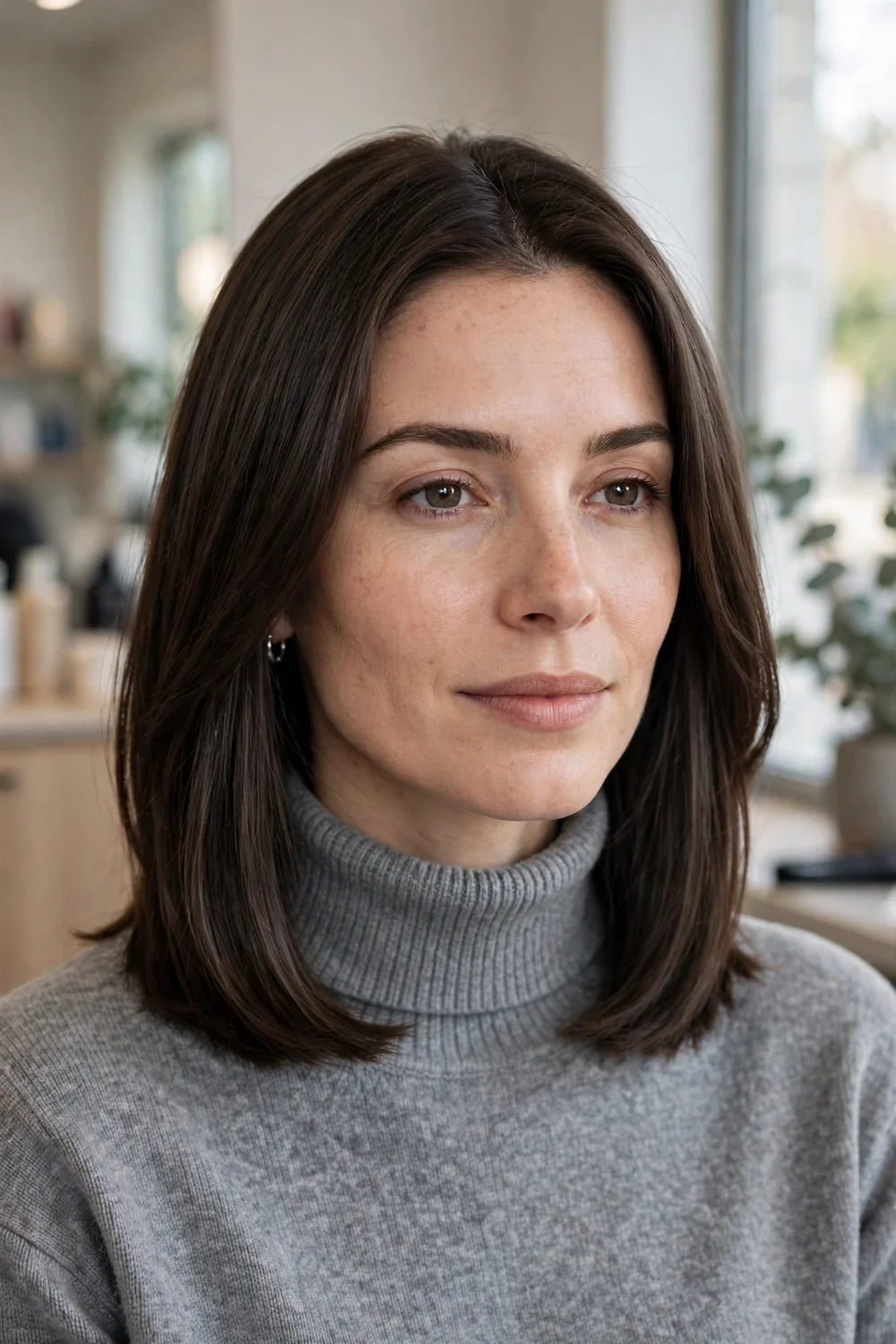
Dark mocha brown is a deep brown with cool, creamy undertones and no warm reflect. It is the polished dark shade for cool and neutral skin, and for anyone whose brown tends to turn warm and brassy between visits. The cool tone reads calm and even on smooth, medium to long hair.
The service is a single process color in most cases. Cool browns can fade warm over time, so a blue toned gloss or a color care routine for brunettes helps hold the cool finish. A clear gloss every couple of months keeps the shade from reading flat.
Try this: bring a photo of mocha in daylight and in indoor light, since cool browns shift more between the two than warm browns do.
Difficulty: Low to Medium · Cost: $$ (salon)
7. Dark Walnut Brown
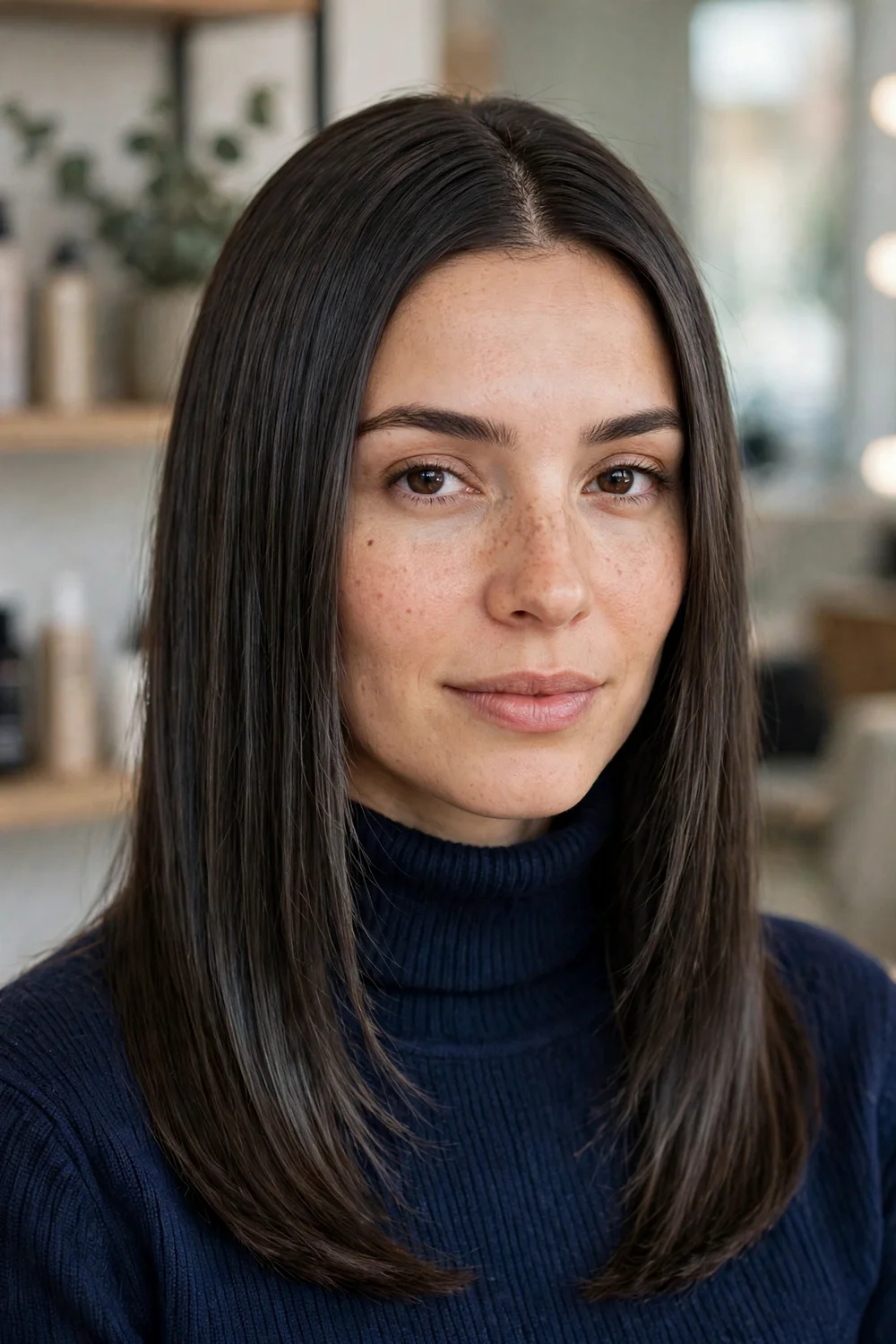
Dark walnut brown is a cool, muted deep brown with ash depth and a low shine, matte leaning finish. It suits cool and neutral skin and anyone who wants depth with no warmth at all. Sleek, straight styling shows the even tone best, and the shade holds a quiet, understated read in professional settings.
Walnut sits close to many natural cool brown bases, so grow-out is gentle and visits can stretch to 8 weeks or more. Cool dark browns can still fade warm at the ends, so an occasional blue toned treatment at home keeps the ash depth in place.
Try this: ask for a level 4 walnut with cool reflect and tell your colorist to skip any warm gloss at the end of the service.
Difficulty: Low to Medium · Cost: $ (salon)
8. Glossy Blue-Black
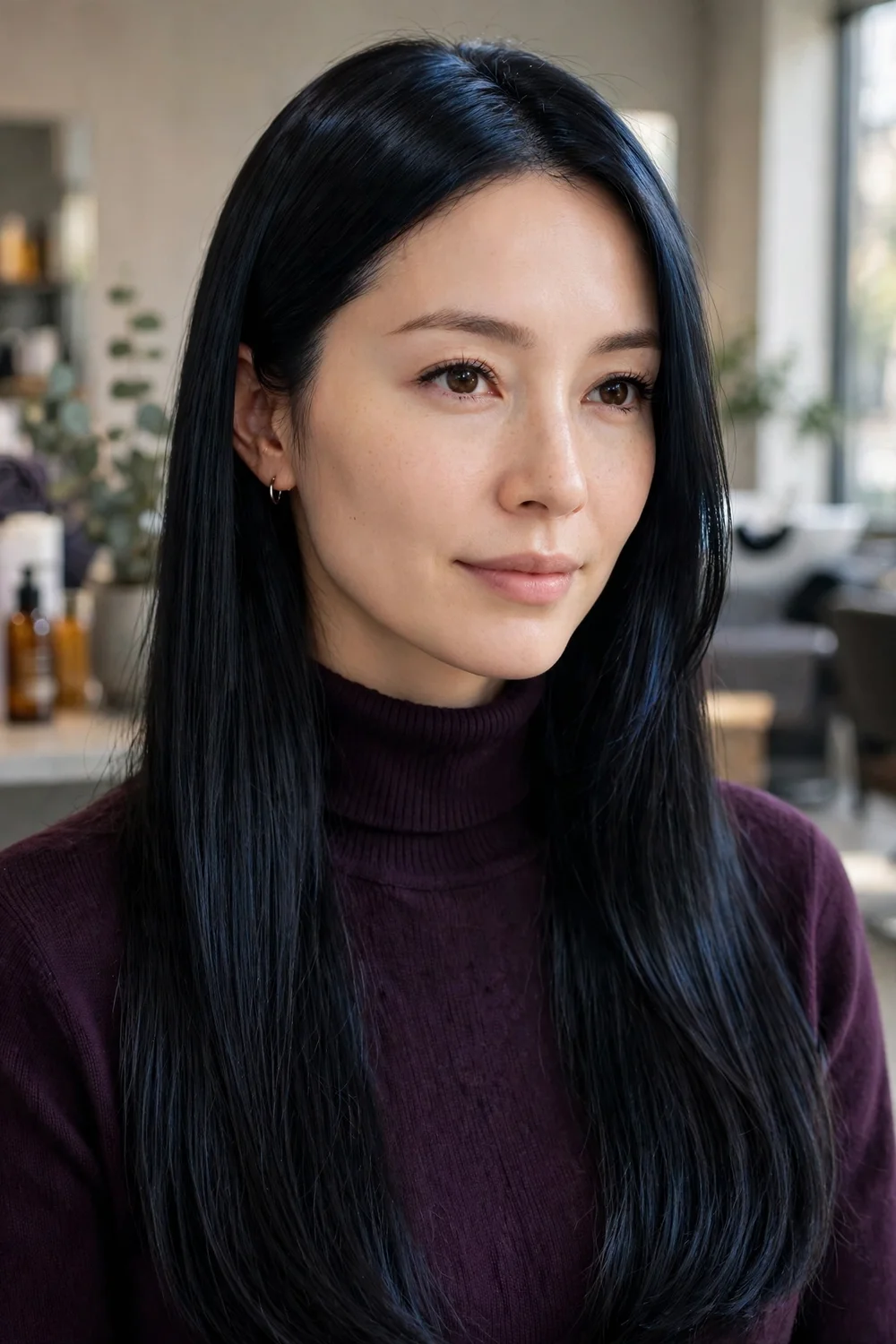
Glossy blue-black is a true black shade with a blue reflect that shows when light hits the hair. The blue keeps the black from reading harsh or flat, and the high shine finish is a large part of the look. It suits cool skin tones and deep complexions, and it pairs well with sharp cuts and smooth styling.
On dark bases this is a single process color with a gloss finish. On lighter bases the jump to black is a long term decision, since lifting black dye back out takes several correction sessions. Condition matters at this depth: dry ends scatter light and dull the blue reflect.
Try this: ask for a blue-black formula with a clear gloss on top, and judge the result under the salon door light where the blue reflect shows.
Difficulty: Low to Medium · Cost: $$ (salon)
9. Raven Black
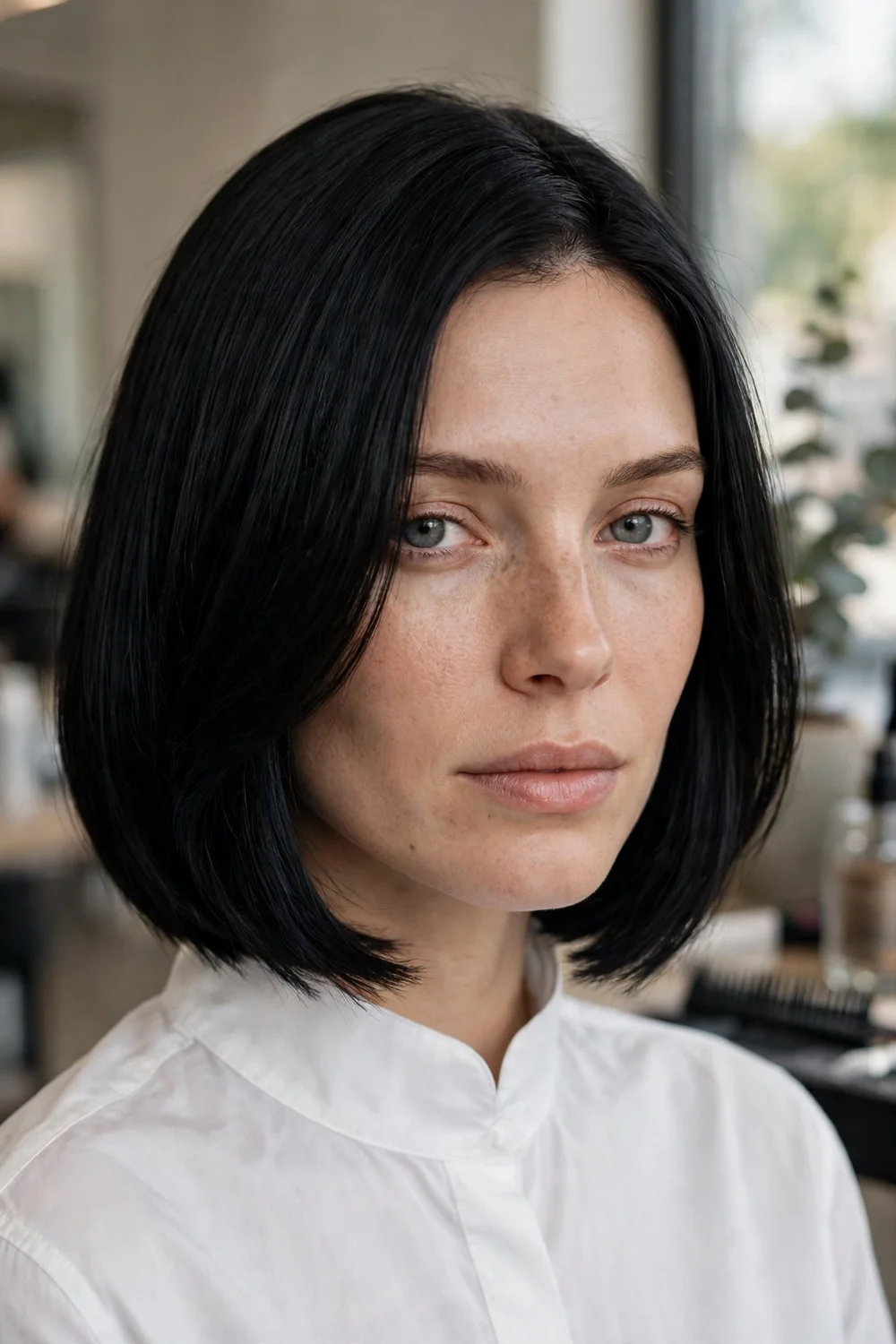
Raven black is a pure, neutral black with no brown, blue, or violet reflect added. The shade depends fully on condition and shine: healthy raven black reflects light in one even sheet, while dry raven black reads dull. It suits cool and neutral skin, and short sleek cuts show the even tone with the most clarity.
For natural dark hair, raven black is mainly a gloss and tone service that evens out faded ends. For lighter hair it is a full commitment color. Root growth shows as a clear line on light bases, so light haired wearers should plan touch-ups at 4 to 5 weeks.
Try this: if your ends are faded brown from summer, ask for the ends to be filled and toned black first so the shade sits even from root to tip.
Difficulty: Low to Medium · Cost: $ (salon)
10. Violet-Black

Violet-black is a black base with a deep violet sheen that appears in bright light and fades back to black indoors. The violet sits on the surface of the shade rather than through the whole base, which keeps the color wearable at work and stronger in sunlight. It suits cool skin tones best, and the violet reflect flatters green and hazel eyes.
The violet tone is the first part to fade, usually at 4 to 6 weeks, and a violet toned gloss restores it in a short appointment. The black base underneath holds much longer, so upkeep is a gloss schedule rather than a full recolor schedule.
Try this: ask for the violet as a gloss over a black base first. If you like the sheen after a month, your colorist can build it into the permanent formula.
Difficulty: Medium · Cost: $$ (salon)
11. Black Cherry
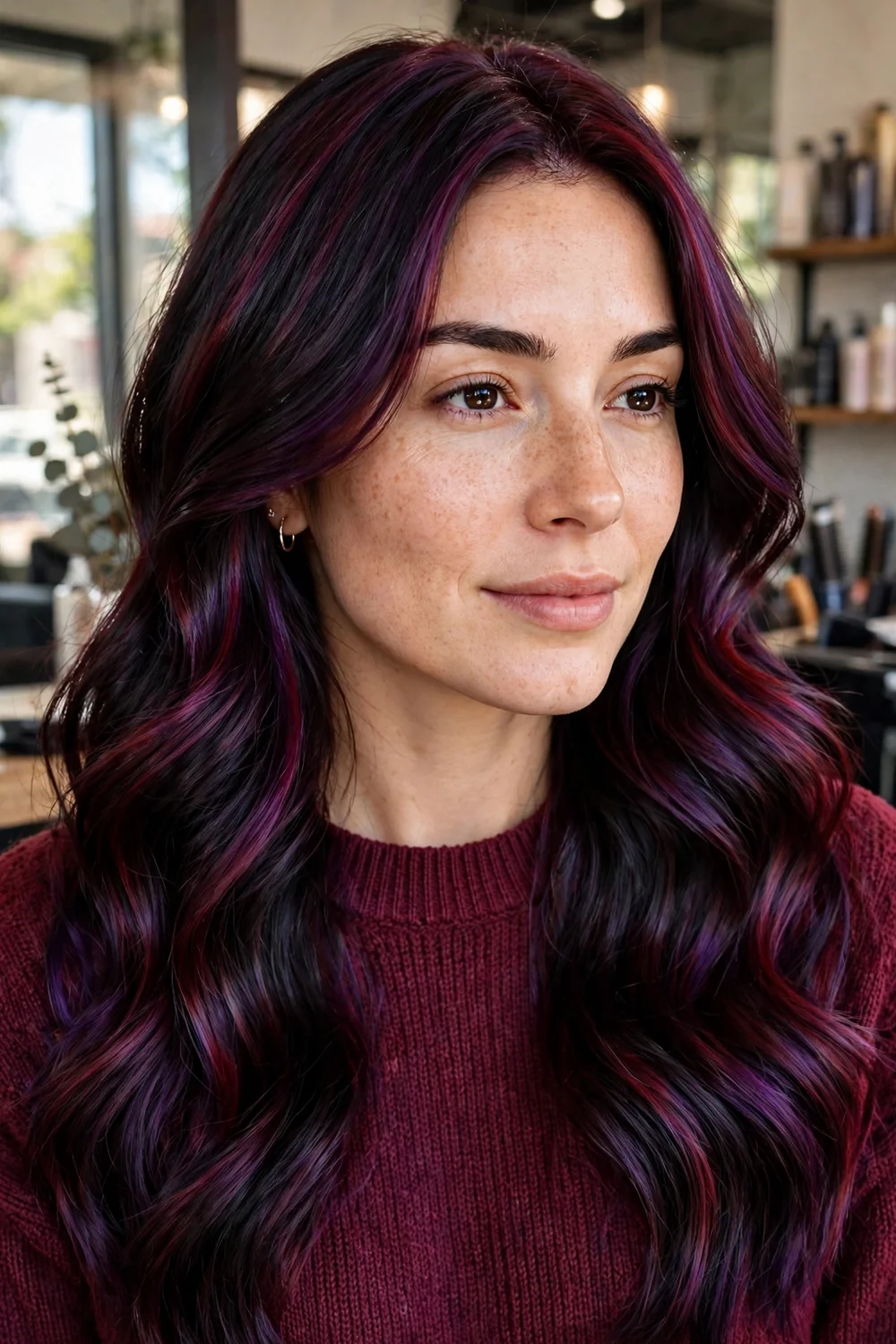
Black cherry is a near-black base with deep cherry red and violet tones held under the surface. Indoors the hair reads almost black, and in sunlight the cherry reflect opens up across the lengths. It suits medium to deep skin and cool neutral skin, and waves show the hidden red better than straight styling does.
Dark bases reach black cherry with an all-over color and no lightening in most cases. The cherry half of the formula fades first, so a red-violet gloss at 5 to 6 weeks and a color-depositing conditioner in a dark red shade keep the reflect alive between visits.
Try this: ask for a black-brown base with cherry reflect applied all over, and check the result in daylight before you leave the salon.
Difficulty: Medium · Cost: $$ (salon)
12. Cherry Cola

Cherry cola is a dark brown base with a red-violet tint that sits closer to the surface than black cherry does. Indoors it reads as a deep brunette, and outdoors the cola red glows through the lengths. It suits cool and neutral skin, and it is a common first red shade for brunettes who want depth with a clear red note.
On dark brown hair the tint can go on as a gloss for a low commitment trial, or as permanent color for a stronger result. Like all red family shades, it fades with washing, so cool water, fewer washes, and a gloss at 4 to 6 weeks hold the tint.
Try this: start with a cherry cola gloss over your current dark brown. The gloss fades in 4 to 6 weeks and leaves no root line if you decide against the shade.
Difficulty: Low to Medium · Cost: $$ (salon)
13. Deep Burgundy
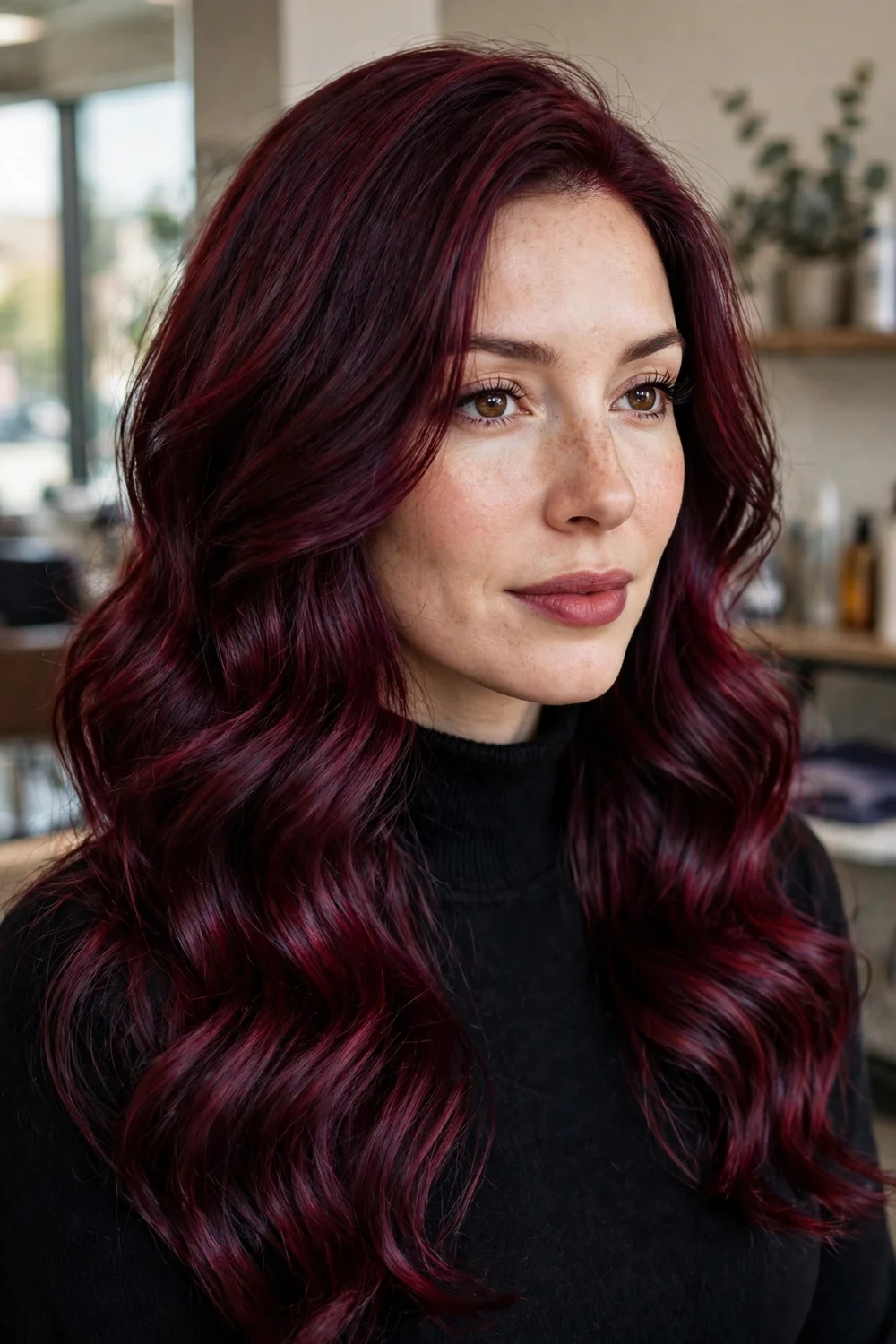
Deep burgundy is a dark wine red built from equal parts red and violet over a deep base. The shade holds its red read in most lighting, which sets it apart from the cherry shades where the red hides indoors. It suits medium to deep skin and cool neutral skin, and longer hair shows the wine tones across the full length.
Burgundy formulas fade toward brown as the red and violet leave the hair, so plan a red-violet gloss at about 6 weeks. Dark bases take the shade directly, while medium brown bases may need a deeper deposit first so the wine tone reads at full strength.
Try this: ask your colorist to write down the red to violet ratio in your formula, so the gloss refresh rebuilds the same wine tone each time.
Difficulty: Medium · Cost: $$ (salon)
14. Deep Merlot

Deep merlot blends burgundy tones into a brown base, so the finished shade reads as a wine tinted brunette rather than a full red. The brown share keeps the color calm in indoor light, and the wine note shows in warmer light and in photos. It suits cool to neutral skin and dark brunette bases that already hold depth.
Merlot works well on hair that has been colored dark before, since the existing depth helps the wine tone read richer with no lightening step. A sulfate-free, color-safe shampoo is the main home rule here, since deep reds lose tone quickly with harsh washing.
Try this: ask for merlot as an all-over color with a gloss finish, and book the first gloss refresh at 6 weeks to hold the wine note.
Difficulty: Medium · Cost: $$ (salon)
15. Mulberry Brown
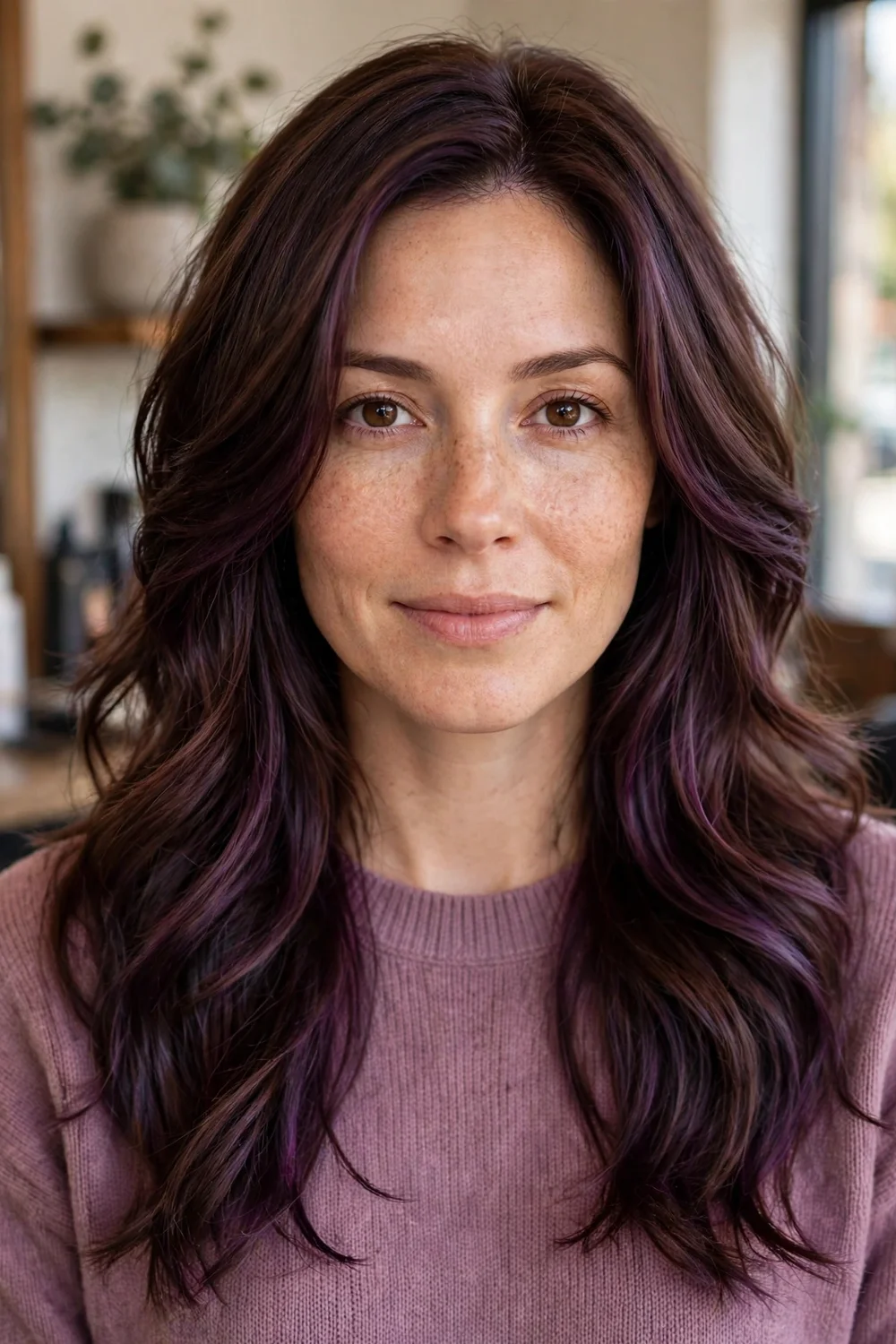
Mulberry brown is a deep brown shade with a berry purple tint mixed through it. The berry note is softer than burgundy and cooler than cherry, so the hair reads as a dark brunette with a purple berry cast in bright light. It suits cool and neutral skin, and medium to deep skin carries the berry depth well.
The berry pigment fades ahead of the brown base, and the shade settles toward plain dark brown at 5 to 6 weeks without a gloss. A purple toned gloss refresh restores the tint in one short visit, and the brown base needs no extra work at that appointment.
Try this: ask for the berry tint kept subtle at the first appointment. A soft tint is easier to deepen later than a strong tint is to soften.
Difficulty: Medium · Cost: $$ (salon)
16. Deep Plum Brown

Deep plum brown pairs a deep brunette base with a plum purple sheen across the surface. In dim light the plum recedes and the hair reads as a plain deep brown, while direct light brings the purple sheen forward. It suits cool undertones best, and straight or smooth styling shows the sheen with the most clarity.
Balance is the skill in this shade: too much plum overpowers the brown, and too little vanishes at the first wash. A plum toned gloss at 6 to 8 weeks keeps the sheen in place, and the service itself is a deposit only color on dark bases.
Try this: show your colorist two photos, one where the plum is faint and one where it is clear, and point to the level you want in daylight.
Difficulty: Medium · Cost: $$ (salon)
17. Oxblood Red Brown

Oxblood red brown is a deep brownish red with a strong red reflect and a small violet note underneath. The shade takes its name from dark red leather, and it holds that same brown first, red second read in person. It suits medium to deep skin and warm neutral skin, and thick hair shows the depth well.
Oxblood fades toward plain brown as the red leaves, so a red-brown color-depositing conditioner once a week is a practical part of the routine. Washing less often stretches the red further than any single product does.
Try this: ask for a dark red-brown with strong red reflect, and plan the first conditioner treatment for the second wash after your appointment.
Difficulty: Medium · Cost: $$ (salon)
18. Deep Mahogany Brown

Deep mahogany brown is a dark brown shade with red and violet mahogany tones mixed in equal measure. The brown base gives the shade weight, the red gives it warmth, and the violet keeps the red from turning orange as it fades. It suits medium to deep skin, and sleek straight styling shows the glossy finish at its strongest.
Mahogany brown is a calm shade to maintain for a red family color. The depth hides regrowth better than brighter reds, and a gloss at 6 to 8 weeks restores the red-violet balance. Shine is a large part of this shade, so a clear gloss finish at each visit is worth the time.
Try this: finish the service with a clear gloss coat. Mahogany brown depends on surface shine to show its red and violet tones.
Difficulty: Low to Medium · Cost: $$ (salon)
19. Deep Auburn
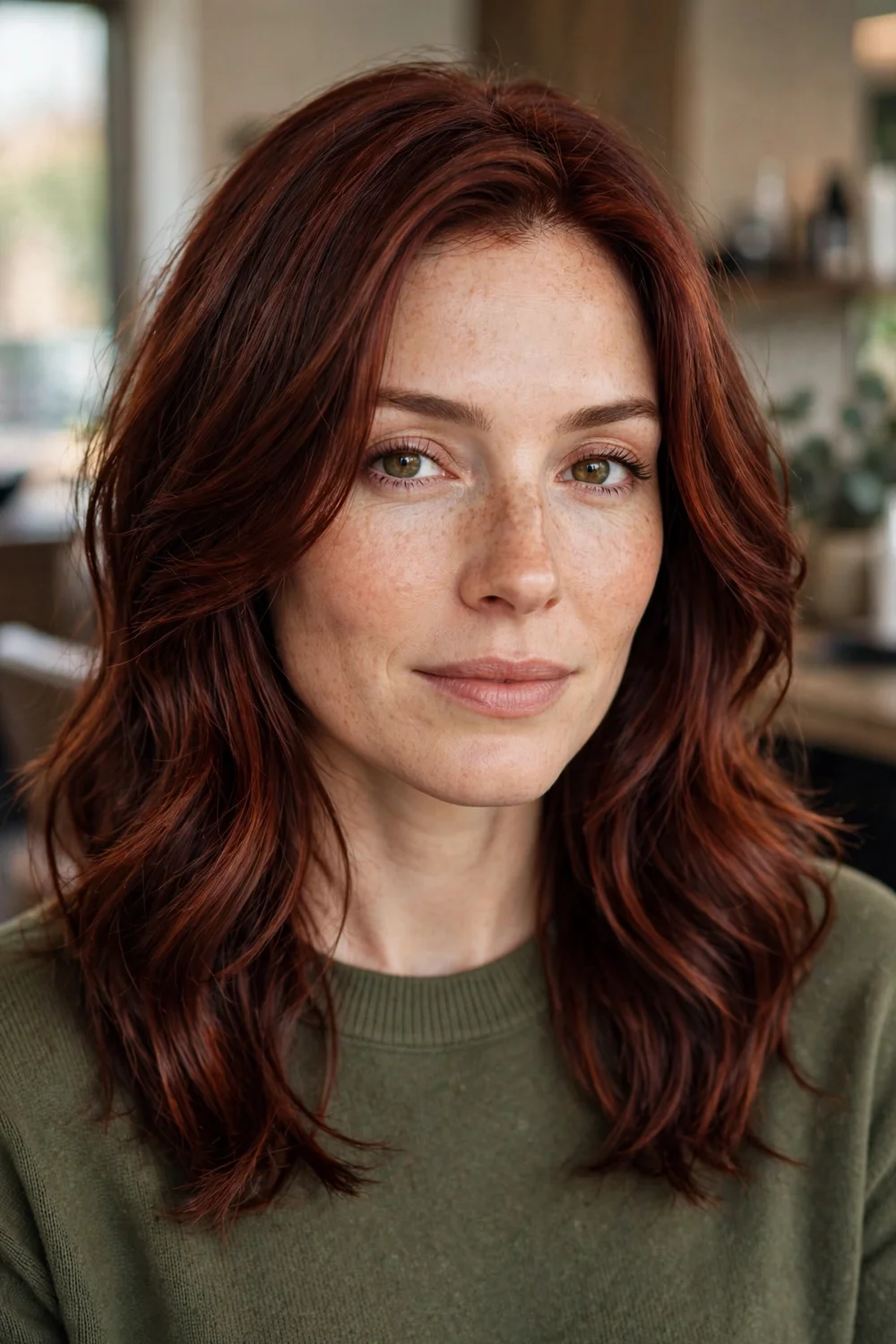
Deep auburn is a brown-red shade where brown and red sit in near equal parts, with the red reading as a warm auburn reflect in the light. It is the most wearable dark red on this list for warm skin, and it suits light to medium warm skin and olive skin well. Indoors it can read almost brown, so daylight shows the true shade.
Light and medium brown bases reach deep auburn in one process. Dark brown bases reach it with a deeper auburn formula and no lightening in most cases. The red content fades ahead of the brown, and a warm red-brown gloss at 5 to 6 weeks keeps both parts in balance.
Try this: check your color in natural daylight at the salon before the final rinse decision, since auburn reads browner indoors than it will outside.
Difficulty: Medium · Cost: $$ (salon)
20. Deep Cinnamon Brown

Deep cinnamon brown is a dark brunette base warmed with spiced red-brown tones through the lengths. The spice tones stay deep and muted, so the shade reads as a warm dark brown with a red warmth at the edges. It suits warm and olive skin, and layered hair shows the warm tones as each layer moves.
The warm pieces fade faster than the dark base, and a demi-permanent warm gloss at about 8 weeks restores them without a full recolor. This shade is a steady route for brunettes who want fall warmth while staying firmly in the dark range.
Try this: ask for the warm tones concentrated from the mid-lengths down, with the root kept deep, so the grow-out stays soft.
Difficulty: Medium · Cost: $$ (salon)
21. Deep Red Brown

Deep red brown is the most saturated dark red on this list: a brown base carrying a full red tone from root to tip. It reads as red in most lighting, with the brown keeping the shade deep rather than bright. It suits light to medium skin with warm or neutral undertones, and medium to long hair shows the full tone best.
Red pigment at this depth still fades faster than brown or black shades, so this idea asks for the most care in the red-brown group: fewer washes, cool water, and a red color-depositing mask in the weekly routine. On a dark base, some lift may be needed for the red to read clearly, which raises the difficulty.
Try this: book the gloss refresh at the same time as the color appointment, at 4 to 5 weeks, so the red tone stays ahead of the fade.
Difficulty: Medium to High · Cost: $$$ (salon)
22. Black with Dark Chocolate Ribbons

Black with dark chocolate ribbons weaves soft dark brown pieces through a natural or colored black base. The ribbons add dimension and break up the flat read that solid black can have, while the overall shade stays firmly dark. It suits deep skin well, and long hair gives the ribbons room to show as separate pieces.
The ribbon pieces need lightening and careful toning so they land as dark chocolate rather than warm orange. Regrowth is forgiving, since the base stays black and the ribbons sit away from the root. A partial refresh at 10 to 12 weeks rebuilds the ribbons, with a gloss in between.
Try this: ask for the ribbons kept fine and blended, placed mostly through the mid-lengths and ends, so the black base stays in charge.
Difficulty: Medium · Cost: $$$ (salon)
23. Dark Berry Brown

Dark berry brown mixes berry red and purple tints into a deep brown base in smaller amounts than the burgundy and plum shades above. The result is a dark brunette with a faint berry cast that shows mainly in bright light and in photos. It suits cool and neutral skin, and it works as a first berry shade for anyone who wants the tone kept quiet.
Because the berry tint is light in the formula, it fades early, and the hair settles back toward dark brown over 4 to 6 weeks. That soft fade is the appeal for cautious wearers: the shade trials itself and then leaves quietly, with a gloss available if you want it back.
Try this: ask for a berry tinted gloss over your current dark brown first, and move to permanent color only after you have lived with the cast for a month.
Difficulty: Low to Medium · Cost: $ (salon)
24. Dark Wine Gloss over Brunette
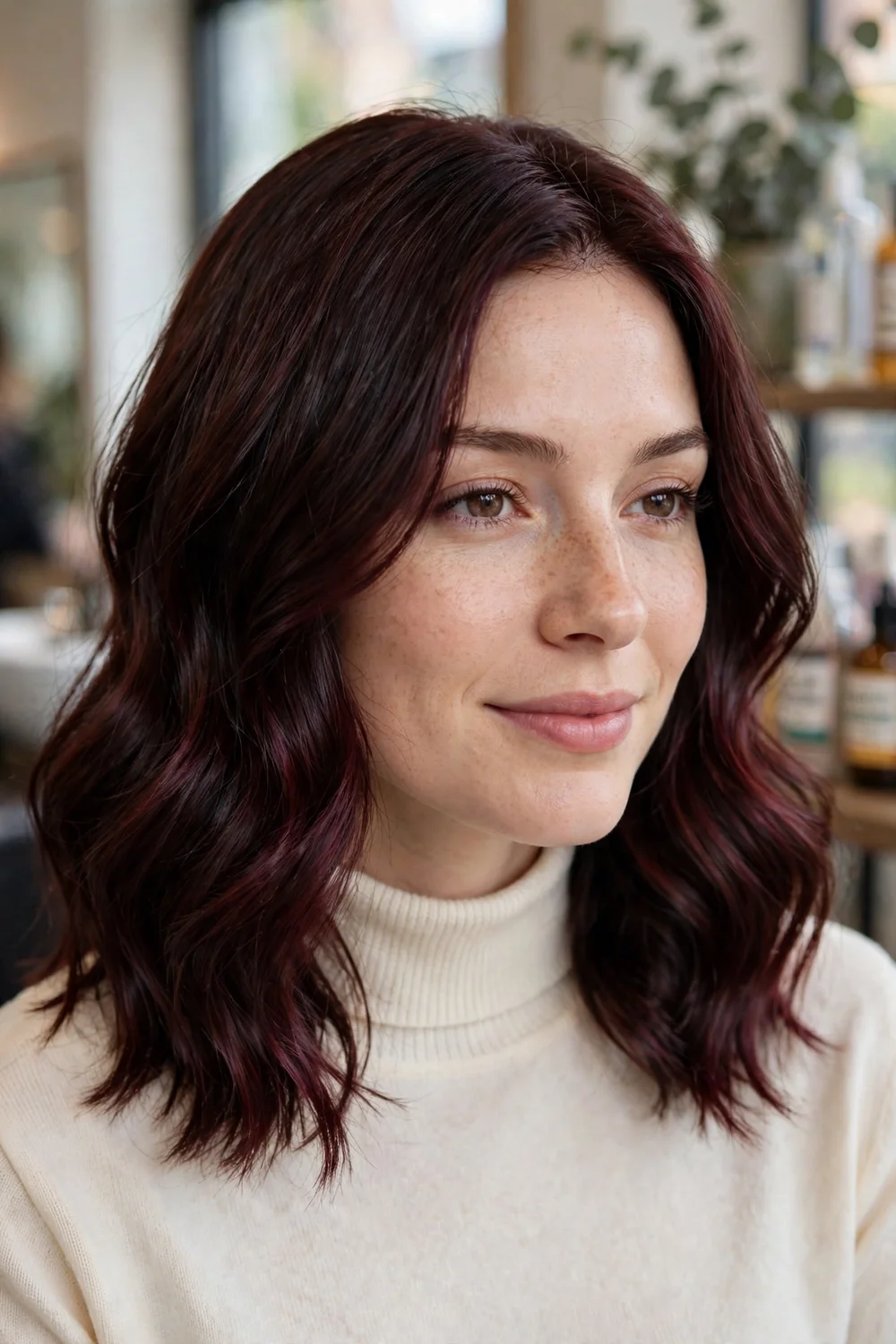
A dark wine gloss is a demi-permanent wine red gloss laid over brunette hair. It adds a wine tint and a strong shine with no lift to the base at all. The tint is clear in sunlight and subtle indoors, and the gloss leaves the hair smoother than a permanent color service does. It suits brunettes who want a fall red trial with a clean exit plan.
The gloss fades evenly over 4 to 6 weeks and leaves no regrowth line, which makes it the lowest risk idea on this list. The same service refreshes faded burgundy and merlot shades between full color visits. One appointment runs under an hour in most salons.
Try this: time the gloss about two weeks before an event or photos, when the wine tint and the shine are at their peak.
Difficulty: Low · Cost: $ (salon)
Frequently Asked Questions
Do I need to bleach my hair for a dark fall color?
Most dark fall shades need little or no bleach. Brown and black bases reach espresso, dark chocolate, black cherry, burgundy, and mahogany brown with deposit only color or a gloss. Lightening is needed only for the dimensional ribbon ideas, where small pieces are lifted one to two levels before toning, and for deep red brown on a very dark base. Your colorist can confirm the lift you need in a consultation.
Which dark fall shade suits cool skin tones?
Cool skin suits the cool half of this list: glossy blue-black, violet-black, black cherry, cherry cola, deep plum brown, and mulberry brown. In these shades blue, violet, and red-violet outweigh the warm brown tones, so they sit well with pink and blue undertones in the skin. Dark mocha brown and dark walnut brown also work for cool skin, since both browns are mixed with cool undertones.
Which dark fall shade suits warm skin tones?
Warm skin suits the warm half of this list: dark chocolate brown, rich dark brown, glossy espresso brunette, deep auburn, deep cinnamon brown, and deep mahogany brown. These shades carry warm brown and warm red tones that match gold and olive undertones in the skin. If your skin sits between warm and neutral, start with rich dark brown or mahogany brown, since both hold a balanced warmth.
How long do dark fall hair colors last?
Brown and black shades hold the longest. Espresso, dark chocolate, and black shades stay true for 6 to 8 weeks and fade mainly by losing shine. Red and violet shades fade faster: black cherry, burgundy, plum, and deep red tones start to soften at 4 to 6 weeks as the red and violet pigments rinse out with washing. Gloss shades fade fully at 4 to 6 weeks and leave no root line.
How do I keep dark hair glossy through fall?
Wash less often with a sulfate-free, color-safe shampoo and lukewarm or cool water. Add a weekly deep conditioning treatment, since dark shades show dryness and frizz faster than lighter shades. Book a clear gloss at 6 to 8 weeks to restore the reflective surface, use heat protection before styling, and cover your hair in strong sun, since UV light dulls dark pigment.
Final Thoughts
Dark fall color works because the range is wide enough to meet you at your current shade: a wine gloss over brunette for a trial run, an espresso or dark chocolate for a steady deep brunette, or a black cherry or violet-black for a shade with a hidden reflect. I recommend picking by undertone first, then by the gloss schedule you will honestly keep, and the color will hold through the season. When winter arrives, these same depths carry forward, and the winter hair color ideas roundup shows where dark shades go next.

