

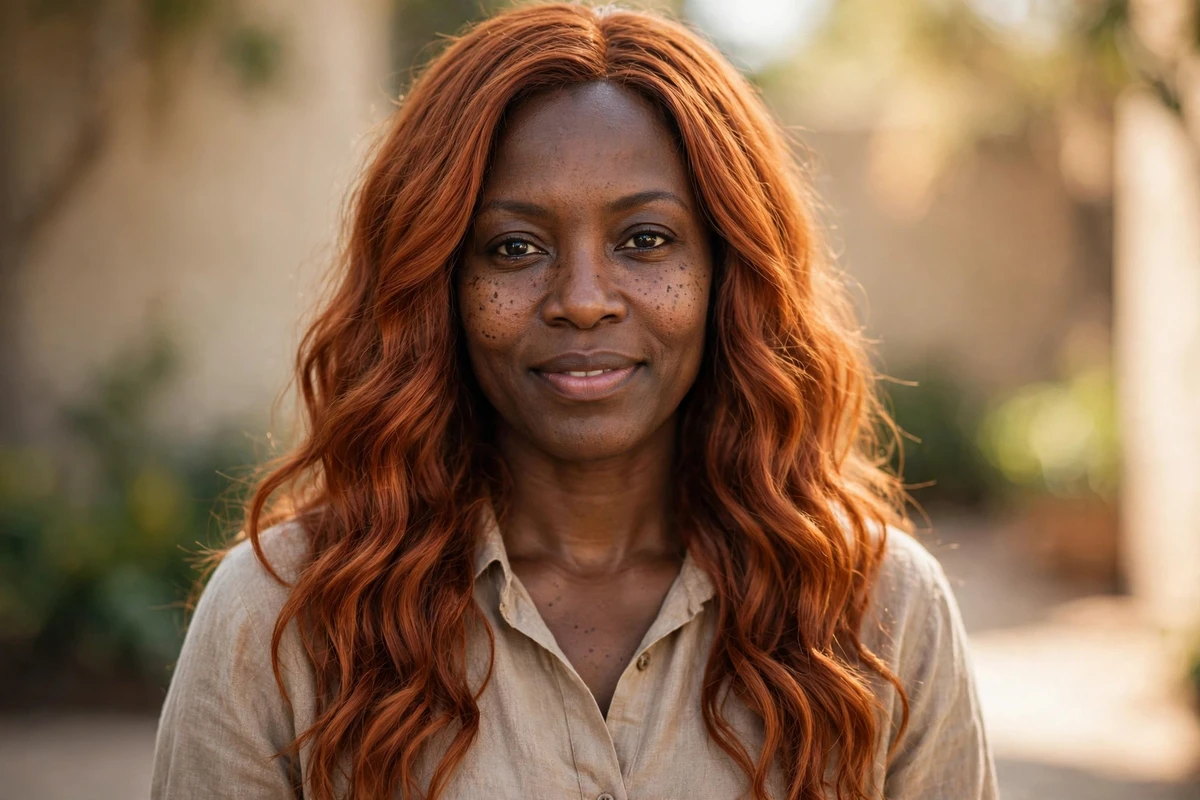
Fall is when deep, rich color starts calling. The warm tones of the season, copper, caramel, auburn, chocolate, have a way of looking especially rich against dark skin. Warmth in the hair picks up the warmth already in the complexion, and the softer autumn light gives everything a flattering, golden glow. A seasonal color refresh can be as small as a gloss or as bold as a full new shade.
This list rounds up 29 fall hair colors for dark skin that span every commitment level. Every idea names the shade, the placement technique, and why it flatters deep skin tones, so you can walk into the salon knowing exactly what to ask for. Pick the one that fits your maintenance routine and the amount of change you want this season.
Quick Takeaways
- Warm browns and reds, like copper, auburn, and cinnamon, glow against dark skin because they echo the warmth already in the complexion.
- A gloss or semi-permanent refresh is the lowest-commitment way to try a fall shade; it adds tone and shine for four to six weeks.
- Keep the color one to two shades lighter than your natural base for dimension, or go all-over when you want a bold seasonal reset.
- Reds and coppers fade fastest, so plan on a color-depositing conditioner and a gloss refresh between salon visits.
- Sulfate-free shampoo, cool rinse water, and a weekly deep-conditioning mask keep fall color rich and hair healthy.
1. Dark Chocolate Brown

Dark chocolate brown is the classic fall brunette, and it never looks out of place against dark skin. The shade sits a step warmer than natural black, so it reads as a deliberate change without an obvious line where color meets roots. A warm gloss on top gives it that glossy, healthy shine that catches light as you move, and it works on every texture from silk presses to voluminous curls to locs. It also pairs well with the season’s richer wardrobe tones, from camel coats to deep burgundy sweaters, which keeps the whole look cohesive from October through the holidays.
Ask your colorist for an all-over dark chocolate with a warm gloss, and ask them to keep the tone rich rather than flat. Because it is close to many people’s natural color, the grow-out is soft and the upkeep is low. A clear gloss between appointments keeps the warmth from fading, and a sulfate-free shampoo protects the tone between visits. If you wear wigs or sew-ins, a dark chocolate unit gives you the same seasonal update with zero commitment to your natural hair.
Try this: ask for a warm gloss over the chocolate so it stays rich instead of going dull.
Difficulty: Low · Cost: $$ (salon)
2. Espresso Brunette Gloss

Espresso is deep brown just short of black, and the fall 2026 version is all about shine rather than flat one-note darkness. Your colorist can customize it warm, neutral, or cool around your undertone, which is why this is one of the easiest trends to wear on dark skin. On naturally dark hair it may only take a gloss or a subtle tonal shift to make the base look richer and more intentional. The result looks expensive in daylight and even richer at night, when the glossy finish catches indoor light and gives the hair visible depth.
This is one of the lowest-commitment changes you can make, since there is no lifting involved and the grow-out is nearly invisible. It looks striking on silk presses, defined curls, and glossy locs alike, and it flatters every age group because the change is about richness rather than drama. Book a gloss every six to eight weeks to keep the depth looking fresh, and use a sulfate-free shampoo so the tonal shift lasts as long as possible between appointments.
Try this: skip the lift and ask for a gloss only, which keeps the color rich without any damage.
Difficulty: Low · Cost: $$ (salon gloss)
3. Jet Black Gloss

Sometimes the best fall change is going back to the basics. Jet black with a high-shine gloss gives curls definition, makes sleek styles look almost mirror-like, and creates a sharp frame for dark skin that works with every makeup look. It is also the easiest reset if you are coming off summer highlights and want one even, polished color before the holidays. The key is the gloss: without it, black hair can look flat, but with a reflective finish it looks intentional and expensive.
Shine is the whole point here, so the care routine matters more than the color itself. A smoothing serum and regular trims keep the inky finish looking deliberate rather than flat, and a weekly deep-conditioning mask keeps the hair healthy under the gloss. If a jet black bob is calling your name, these short french bobs show how the cut works with different hair textures. Finish with a cool rinse after every wash to lock the mirror-like shine in place.
Try this: finish every wash with a cool rinse to lock in the mirror-like shine.
Difficulty: Low · Cost: $$ (salon)
4. Mocha Brown
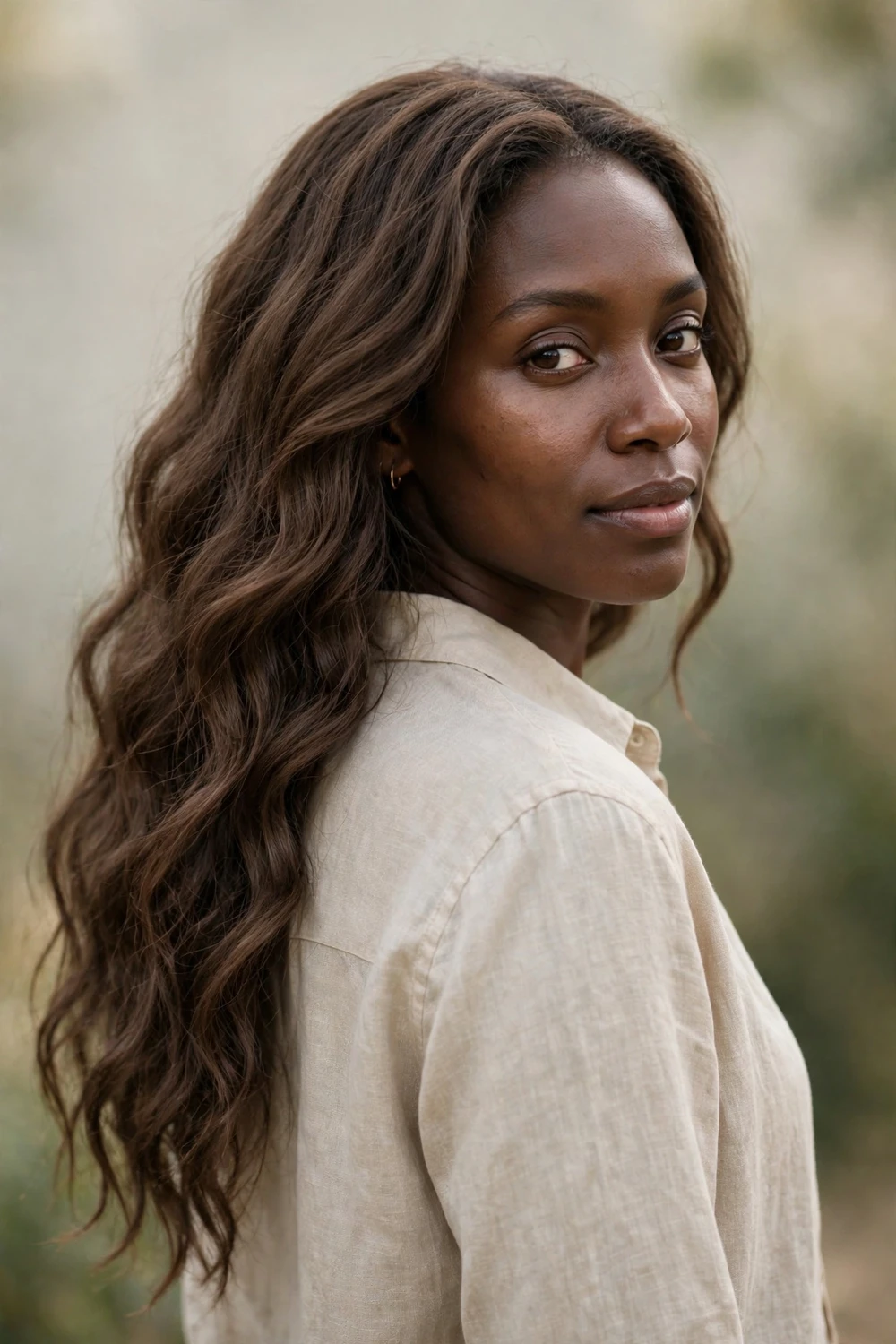
Mocha is the cooler cousin of chocolate brown, a rich dark brunette with neutral to cool undertones that suit dark skin with pink or neutral undertones. It reads sophisticated and low-contrast, giving you depth without the warmth of caramel or the fire of red, which makes it a strong pick if warm browns tend to look brassy on you. Worn all over in long waves, it looks expensive with very little daily styling, and the cool tone photographs well in both daylight and indoor light.
Ask for an all-over mocha with no warm gloss so the cool tone stays true from root to ends. It fades more gracefully than warmer browns because there is no brassiness to correct, though a clear gloss every couple of months keeps the shine up. It grows out softly and needs nothing more than good conditioner between visits, which makes it one of the most low-maintenance brunette options on this list.
Try this: use a clear gloss instead of a warm one to protect the cool mocha tone.
Difficulty: Low · Cost: $$ (salon)
5. Copper
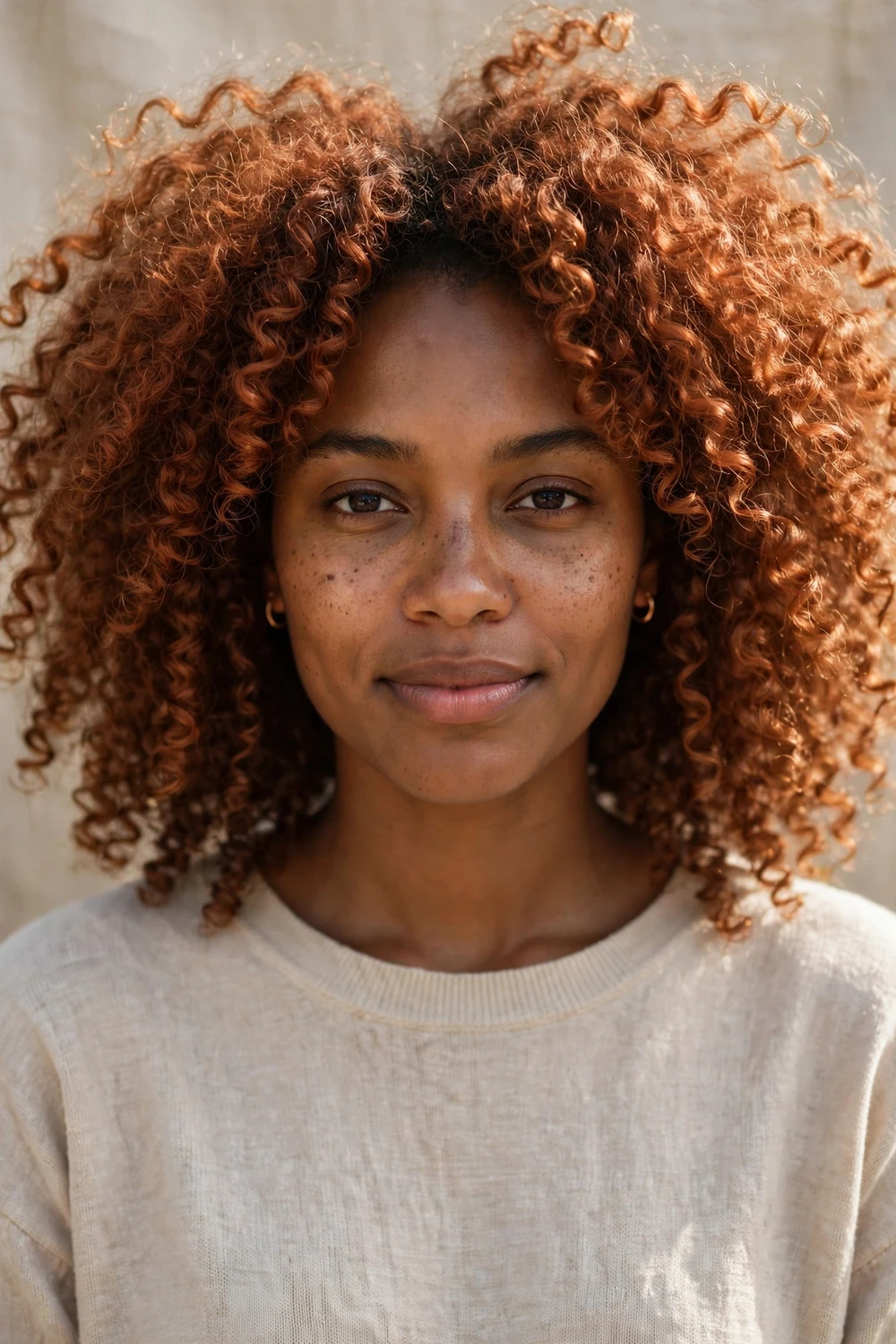
Copper is fall’s signature shade, and it looks electric against dark skin. The warm orange-red picks up golden undertones in the complexion and catches light in a way few colors can, especially on curls where the tone shifts as the hair moves. Cowboy copper, the softer, more wearable 2026 version, keeps the warmth without going neon, so it works in daylight and office lighting alike. If you have been waiting for a reason to go red, this is the season to do it.
This is a higher-maintenance red, so go in with a plan. Copper fades faster than brown, which means a gloss every four to six weeks and a color-depositing conditioner at home. Ask your colorist for a natural copper rather than an overly orange formula, and keep the depth so the shade stays rich against dark skin. Washing in cool water and skipping daily heat styling both slow the fade noticeably.
Try this: wash in cool water and use a color-depositing mask to slow the fade.
Difficulty: High · Cost: $$$ (salon)
6. Spiced Auburn

Auburn returns every fall because it understands the assignment. The 2026 version is a believable red-brown, chestnut, copper, and red layered together so the color reads rich instead of bright. On dark skin, a warm coppery auburn creates a striking contrast that still feels natural, and it looks especially dimensional on curls and layered cuts where light moves through the strands. It is the red to pick when copper feels like too much and brown feels like not enough.
Ask for a spiced auburn with a red-brown base and a warm gloss that layers copper over the brown. It is easier to keep up than bright copper because the brown base hides fading longer, which stretches your appointments to a comfortable schedule. Reds still need care, so plan a gloss between appointments and keep heat styling moderate to protect the tone. A color-depositing conditioner once a week keeps the spice from washing out.
Try this: ask for copper woven into a brown base so the color fades gracefully.
Difficulty: Medium · Cost: $$ (salon)
7. Cinnamon Brown

Cinnamon brown is the gateway red: it reads brown first, but there is enough copper and red warmth underneath to make brunette hair look completely different in sunlight. Against dark skin, that subtle red shift warms up the whole face without the commitment of a full red, which makes it one of the most wearable ways into the fall red trend. Indoors it looks like a rich brunette, and outside it glows warm, so you get two moods in one shade.
On dark hair, your colorist can keep the base deep and let the cinnamon show through as dimension rather than a dramatic change, which keeps the upkeep low. Ask for a warm cinnamon brown with a soft red tint and a glossy finish that catches the light. Maintenance is moderate, with a gloss refresh every six weeks or so keeping the red tones from going muddy. This is a smart first red if you have never colored your hair warm before.
Try this: keep the base deep and let the cinnamon live in the midlengths for low upkeep.
Difficulty: Medium · Cost: $$ (salon)
8. Mahogany

Mahogany is a deep red-brown with cooler, wine-leaning undertones, which makes it the auburn alternative for dark skin with cool or neutral undertones. It looks almost brunette indoors and glows red-brown in natural light, giving you two looks in one shade that shifts through the day. Worn sleek and straight, the color reads polished and rich, and the wine notes keep it from ever looking flat or one-dimensional. It suits medium to long hair especially well, where the light play has room to show.
Ask for an all-over mahogany with a cool-leaning red formula rather than a coppery one, so the wine notes stay true. The depth of the shade means it needs no lift on naturally dark hair, and the grow-out is soft enough to stretch appointments. Refresh with a red-toned gloss every five to six weeks to keep the wine notes from fading, and use a color-depositing conditioner at home to protect the cool red between visits.
Try this: ask for the cool red version if warm auburns tend to look brassy on you.
Difficulty: Medium · Cost: $$ (salon)
9. Burgundy Wine
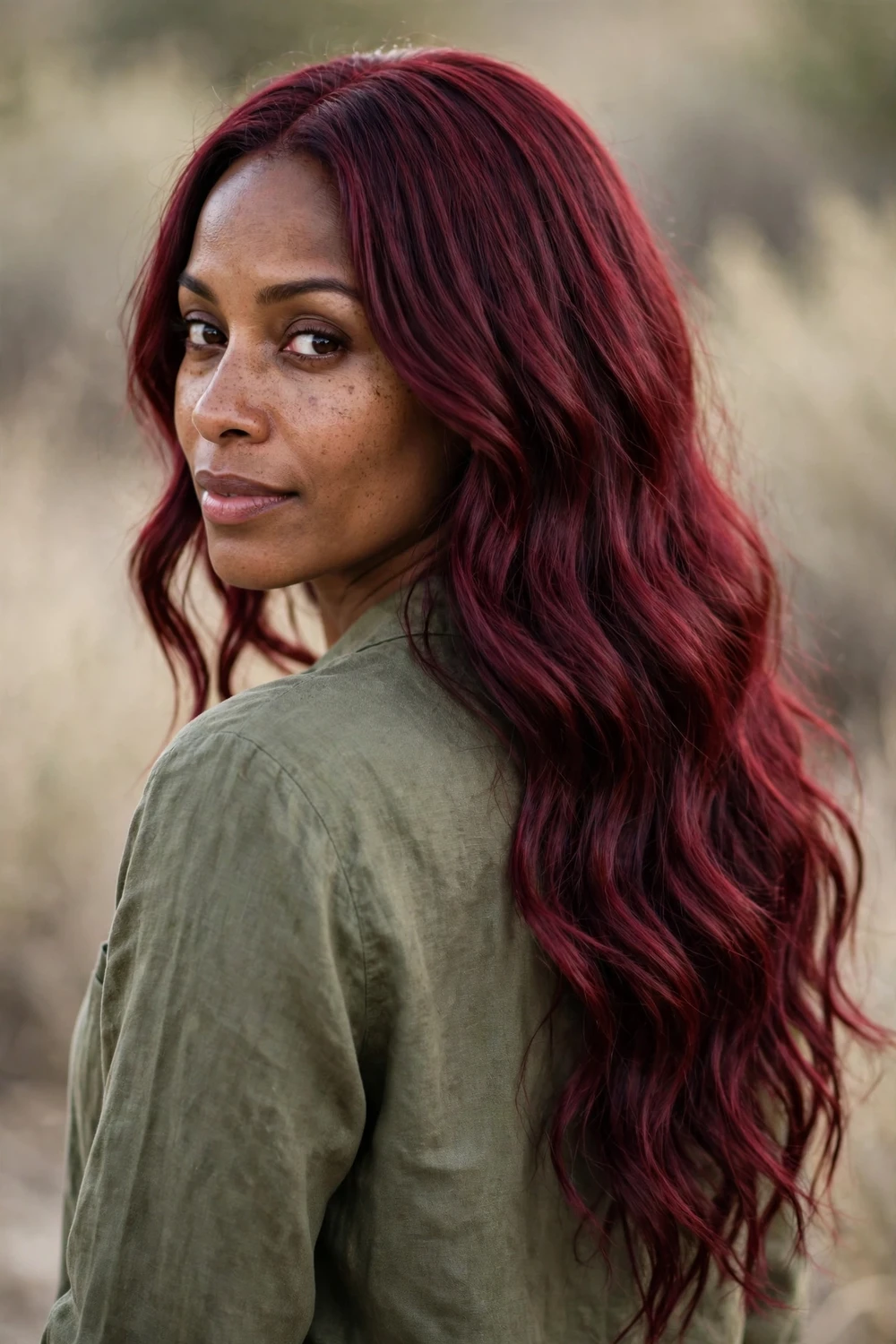
Burgundy wine brings drama to fall color with deep red, wine, and berry undertones that look striking against dark skin while keeping the depth darker colors have. It shifts between deep wine and brighter berry tones as the light changes, which gives long waves and voluminous curls a lot of visual interest. Choose a deeper wine shade for a subtle statement or a brighter berry-red when you want more intensity.
You can wear burgundy as an all-over color for a bold transformation or keep it deeper so it blends naturally with your roots for a subtler statement. It looks particularly striking in voluminous curls and long waves, where the color shifts between deep wine and brighter berry tones as the light changes. Red pigments fade fast, so this shade asks for a sulfate-free routine and a color-depositing conditioner at home. A gloss refresh every four to six weeks keeps the wine tones rich and luminous.
Try this: start with a deeper wine shade; you can always go brighter at the next visit.
Difficulty: High · Cost: $$ (salon)
10. Cherry Cola
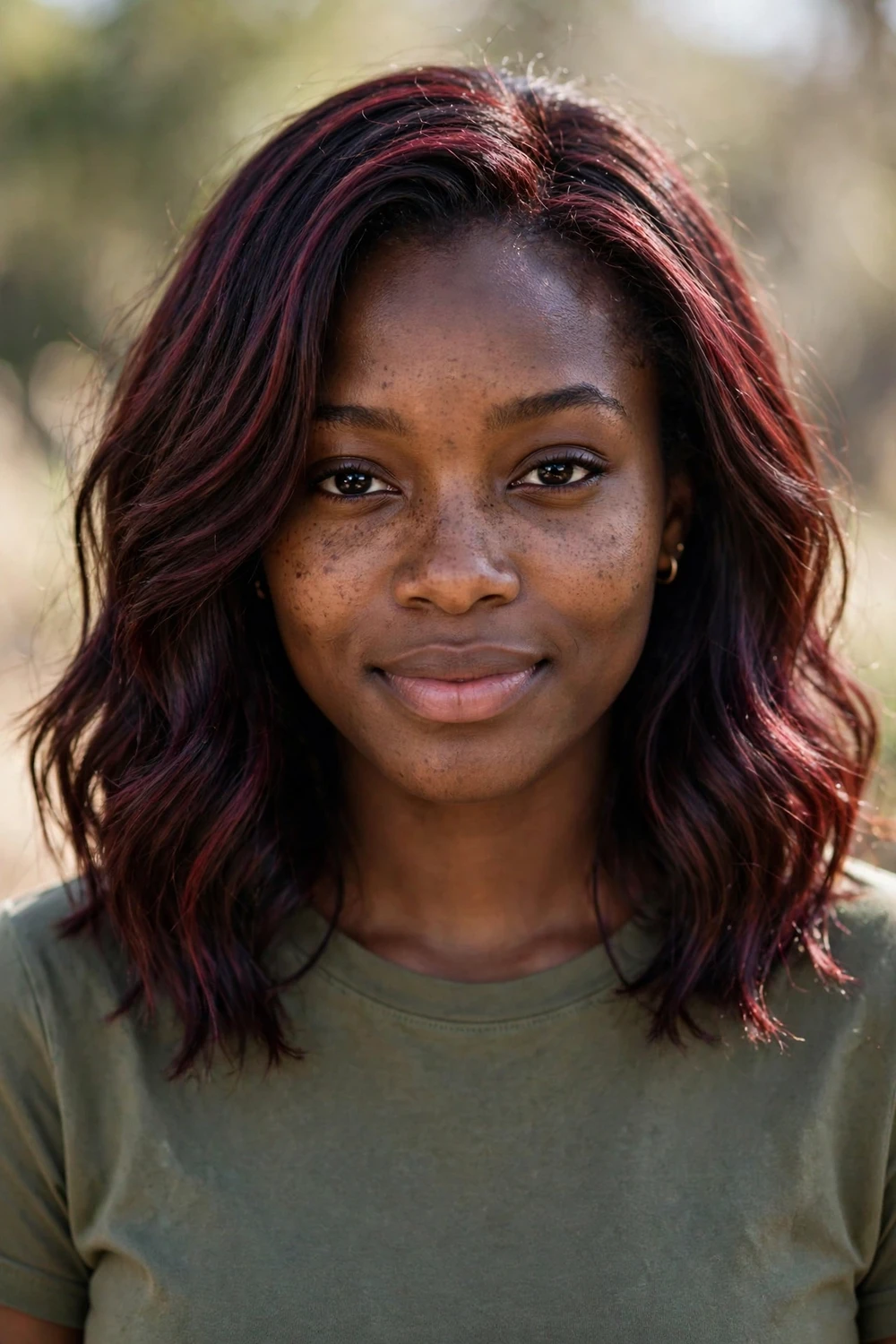
Cherry cola is dark brown with a red-violet tint that behaves like a secret: indoors it reads as brunette, and outside it glows burgundy. It is the boldest shade you can wear without going bright, and the cool red-violet tone flatters dark skin with cool undertones especially well. The tint shows up most in the lengths, so the look has built-in dimension that moves as the hair moves, and it works on every hair texture.
Ask for a dark brown base with a red-violet cherry cola gloss, concentrated more visibly through the lengths where the light hits. Like most reds, it fades faster than brown, so keep a color-depositing conditioner in your routine and wash in cool water. Book a gloss every four to six weeks to keep the cola tone rich, and step into daylight after each appointment to check the true payoff in person.
Try this: step into daylight after the gloss to check the true red-violet payoff.
Difficulty: Medium · Cost: $$ (salon)
11. Navy Blue

Navy blue is the wildcard fall shade: a deep, inky color between midnight blue and black with a cool-toned edge. Against dark skin, the subtle blue undertones create an intriguing contrast that shows up when the light catches it, especially on sleek straight hair. A midnight navy reads almost black indoors for a wearable look, while a brighter navy with hints of cobalt makes a bolder statement for nights out.
A glossy finish is what makes this color work, so ask for a clear gloss over the navy and keep the hair smooth with a serum. A navy pixie is one of the boldest ways to wear this shade, and these short pixie haircuts for older women show how cropped cuts keep strong color looking wearable. The gloss also protects the blue tone from fading too quickly without looking flat.
Try this: pick midnight navy first; the subtle version is easier to maintain.
Difficulty: Medium · Cost: $$ (salon)
12. Berry Purple Ombre
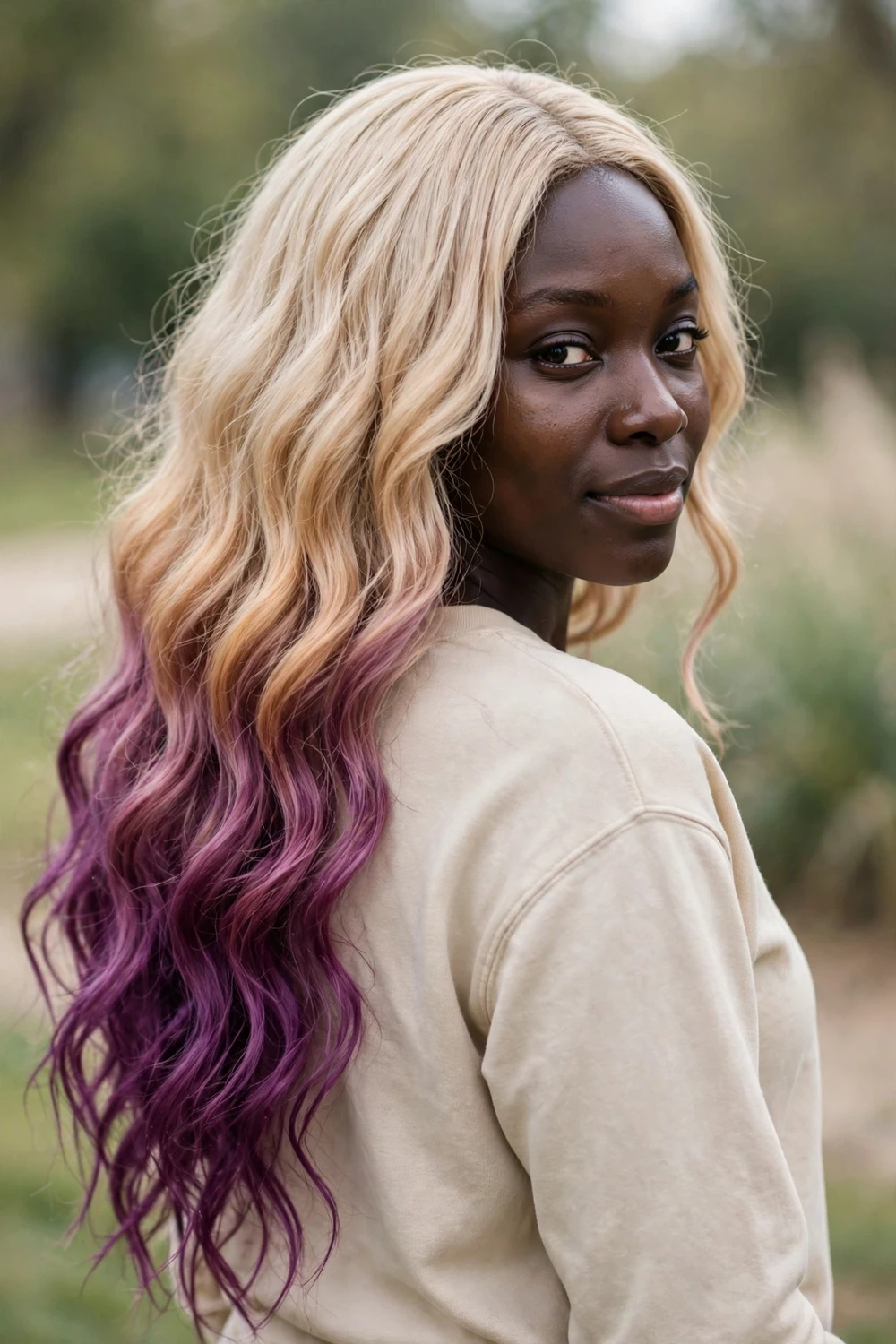
Beige blonde melting into berry purple is for the person who wants a statement with a polished finish. The blonde through the lengths creates brightness against dark skin, while the rich purple at the ends adds a moody finish that suits the autumn palette. The gradual transition keeps the two tones visually cohesive, so the contrast looks intentional rather than random, and long waves show the blend off best in daylight.
Wear it in long waves to show off the blend, or go sleek and straight to emphasize the gradient from blonde to berry. This is a high-lift color on naturally dark hair, so expect more than one session and a serious conditioning routine. Cool water washes and a color-safe shampoo help both tones last longer between appointments, and a weekly mask protects the lightened ends. Deep conditioning also keeps the purple from looking dull as it fades.
Try this: wear it wavy to show the full gradient between the two tones.
Difficulty: High · Cost: $$$ (salon)
13. Pumpkin Spice
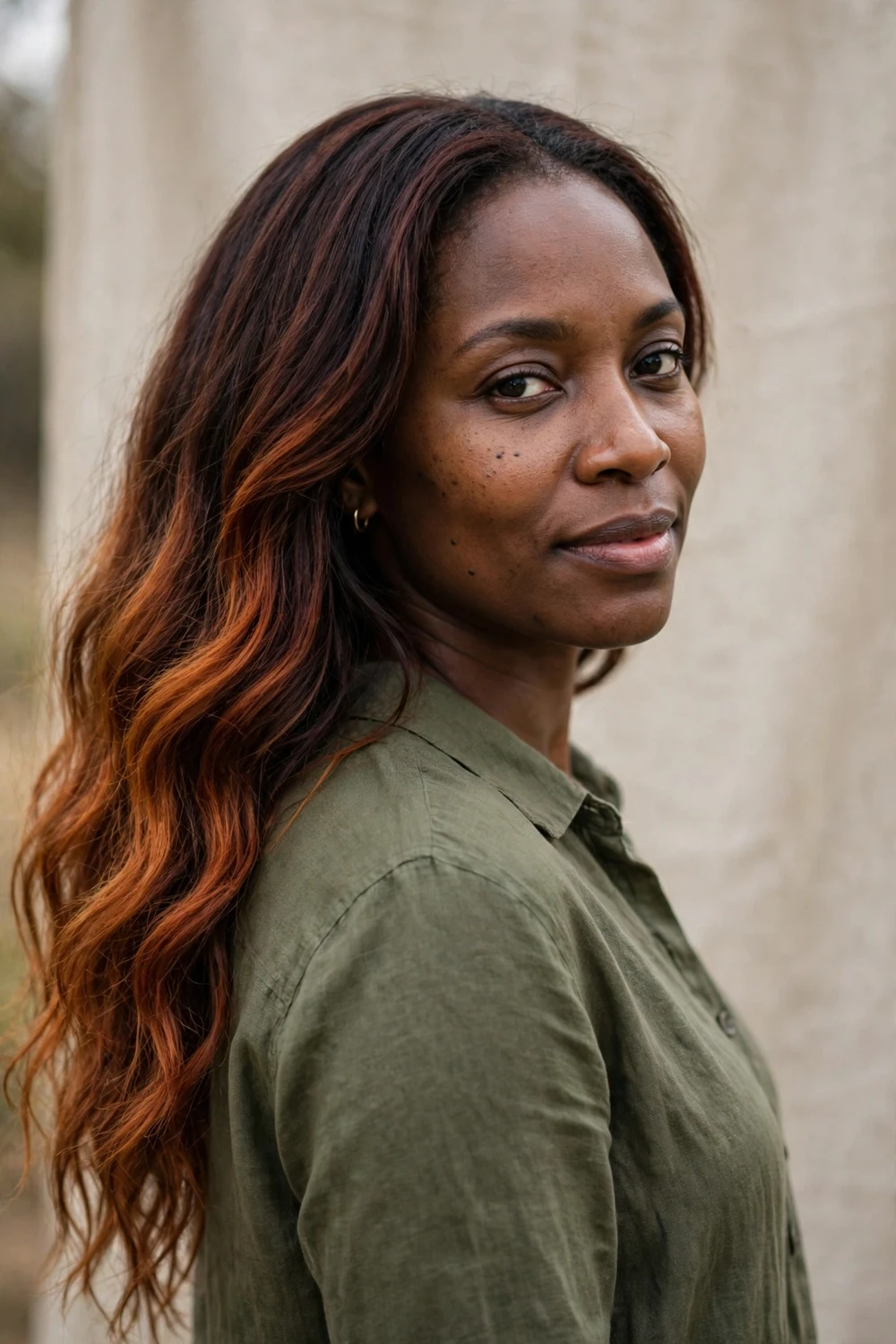
Pumpkin spice keeps the crown shadowed with mahogany roots and places the lighter, spiced tones toward the bottom and around the face. The dark root means the grow-out is forgiving, while the warm pumpkin ends give you the season’s signature glow. Against dark skin, the mahogany-to-pumpkin shift looks rich rather than costume-like because the dark base anchors it, and the face-framing pieces brighten the complexion. It works on long layers, loose waves, and curls alike.
Ask for a shadowed mahogany root melting into pumpkin spice through the midlengths and ends, with the brightest pieces around the face. The warm tones need gloss refreshes to stay true, so plan a visit every six weeks or so. A deep-conditioning mask protects the lightened ends from dryness, and a color-safe shampoo keeps the spice from fading too fast. This is a strong pick if you want fall color that still reads dimensional in every light.
Try this: ask for a shadowed root so the grow-out stays soft for months.
Difficulty: High · Cost: $$$ (salon)
14. Caramel Highlights
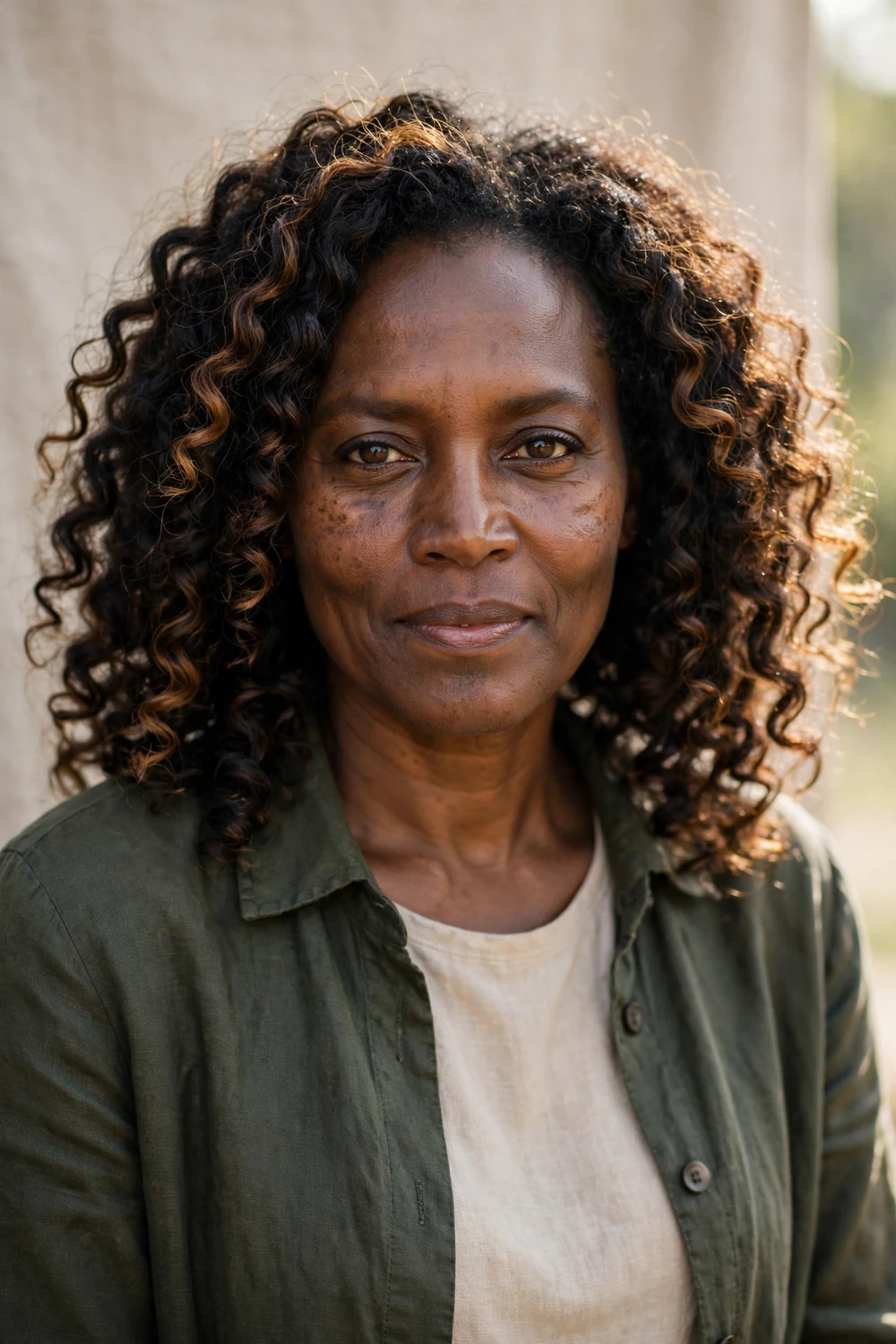
Caramel highlights are one of the easiest ways to warm up dark hair for fall without changing the whole head. Toffee and honey-brown pieces woven through a dark base create dimension, and on curls the lighter pieces catch different parts of the curl pattern for a particularly dimensional look. On straight hair they read as soft ribbons running through the hair, and on braids or sew-ins they add the same warmth with no bleach.
Golden caramel suits warm undertones, while a deeper, more neutral caramel works when you want less orange against the skin. Caramel pieces show up best in layered cuts, and these short layered hairstyles for women over 60 gather flattering options with similar face-framing movement. The placement grows out softly, so upkeep stays reasonable and touch-ups can wait ten to twelve weeks. Ask your colorist to keep the pieces close to caramel rather than blonde for the softest grow-out.
Try this: keep the highlights closer to caramel than blonde for a softer grow-out.
Difficulty: Medium · Cost: $$$ (salon)
15. Golden Caramel Face-Framing Highlights

Golden face-framing highlights brighten the face while the rest of the hair stays dark, which gives you the glow of a lighter color without a full-head commitment. The lighter pieces around the face open up the features and warm the complexion, a trick that works on every face shape. It is an elegant change for anyone who wants visible color with minimal upkeep, and the placement takes less time in the chair than full highlights.
Ask your colorist for golden caramel pieces concentrated around the face, kept two to three shades lighter than your base. A toner refresh every six to eight weeks keeps them from going brassy, and a color-safe shampoo protects the tone at home. Because the lightened area is small, the appointment is shorter and the grow-out is one of the easiest on this list. This is the ideal first highlight if you have never lightened your hair before.
Try this: keep the pieces two shades lighter than your base for a natural glow.
Difficulty: Low · Cost: $$ (salon)
16. Toffee Teasylights
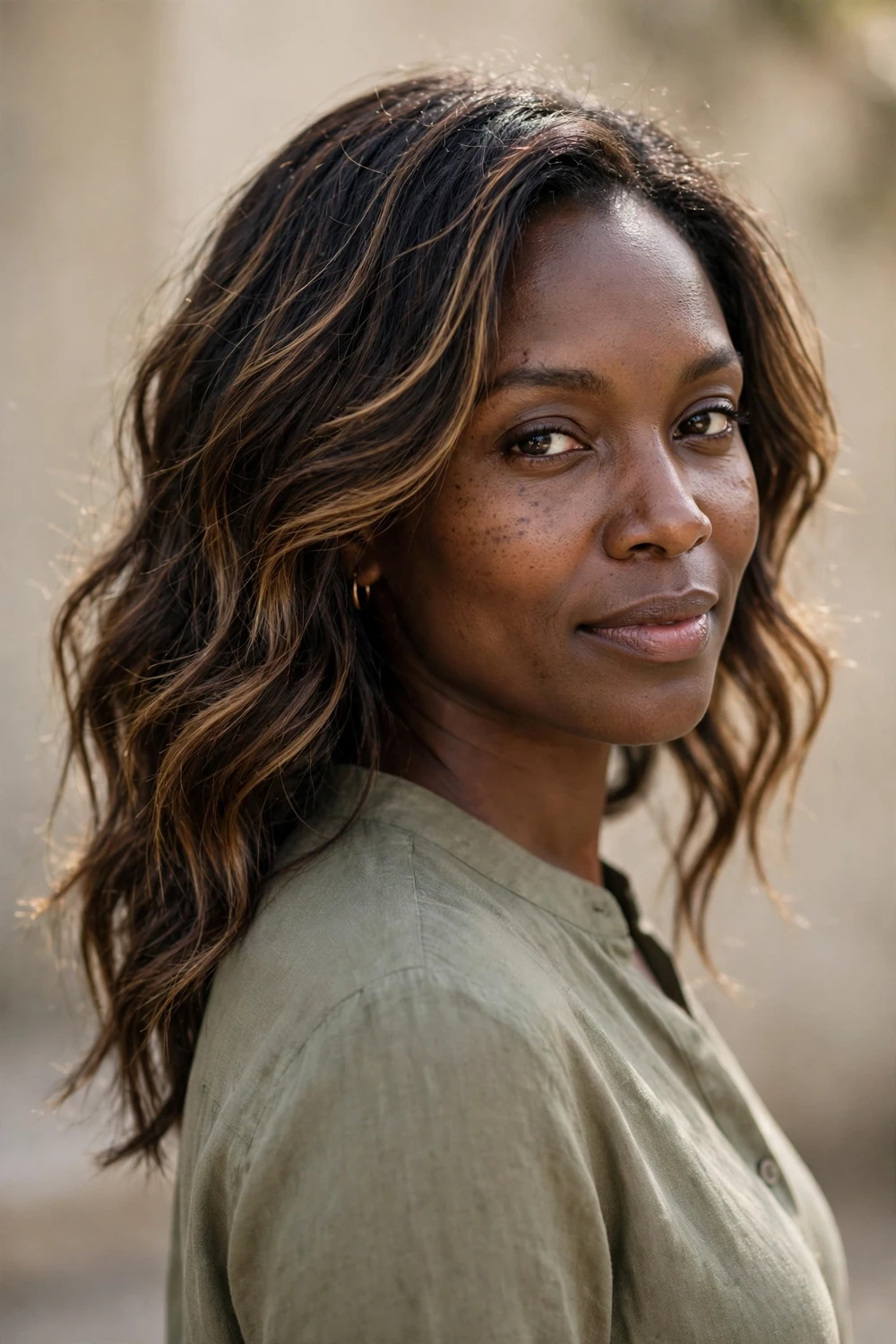
Teasylights use teased sections to create a soft, diffused lift that blends into the base with no harsh lines. In a toffee tone on dark hair, they add depth and movement that looks sun-warmed rather than striped, and the grow-out is the softest of any highlighting method. The technique flatters layered and shaggy cuts where the texture hides any hint of a regrowth line, and it works on curls, waves, and straight hair alike.
Ask for toffee teasylights placed through the midlengths with a shadowed root so the blend stays seamless as it grows. Teasylights pair naturally with choppy texture, and these short shag hairstyles for women show how layers and dimensional color work together. Expect touch-ups only every ten to twelve weeks, and use a toning gloss between visits to keep the toffee from warming up. This is one of the most forgiving highlighting methods for busy schedules.
Try this: ask for a shadowed root with the teasylights to stretch time between visits.
Difficulty: Medium · Cost: $$$ (salon)
17. Chocolate Brown Balayage

Chocolate brown balayage keeps the dimension subtle: brown-toned streaks hand-painted through a dark base so the hair looks glazed rather than striped. The effect reads natural on dark skin because the pieces stay close to the base color, and the hand-painted placement means the regrowth line is soft. It is the balayage to pick when you want movement without an obvious color change, and it suits every hair texture from straight to coily.
Ask for subtle chocolate balayage with a melted root so nothing grows out with a line. A toner gloss every eight weeks keeps the chocolate tones from warming up, and a sulfate-free shampoo protects the color at home. This works on long layers, curls, and straight hair, and the maintenance schedule is one of the easiest among lightened looks. Bring a reference photo so your colorist matches the level of subtlety you want.
Try this: request a melted root so the balayage grows out without a visible line.
Difficulty: Medium · Cost: $$$ (salon)
18. Warm Chestnut Balayage
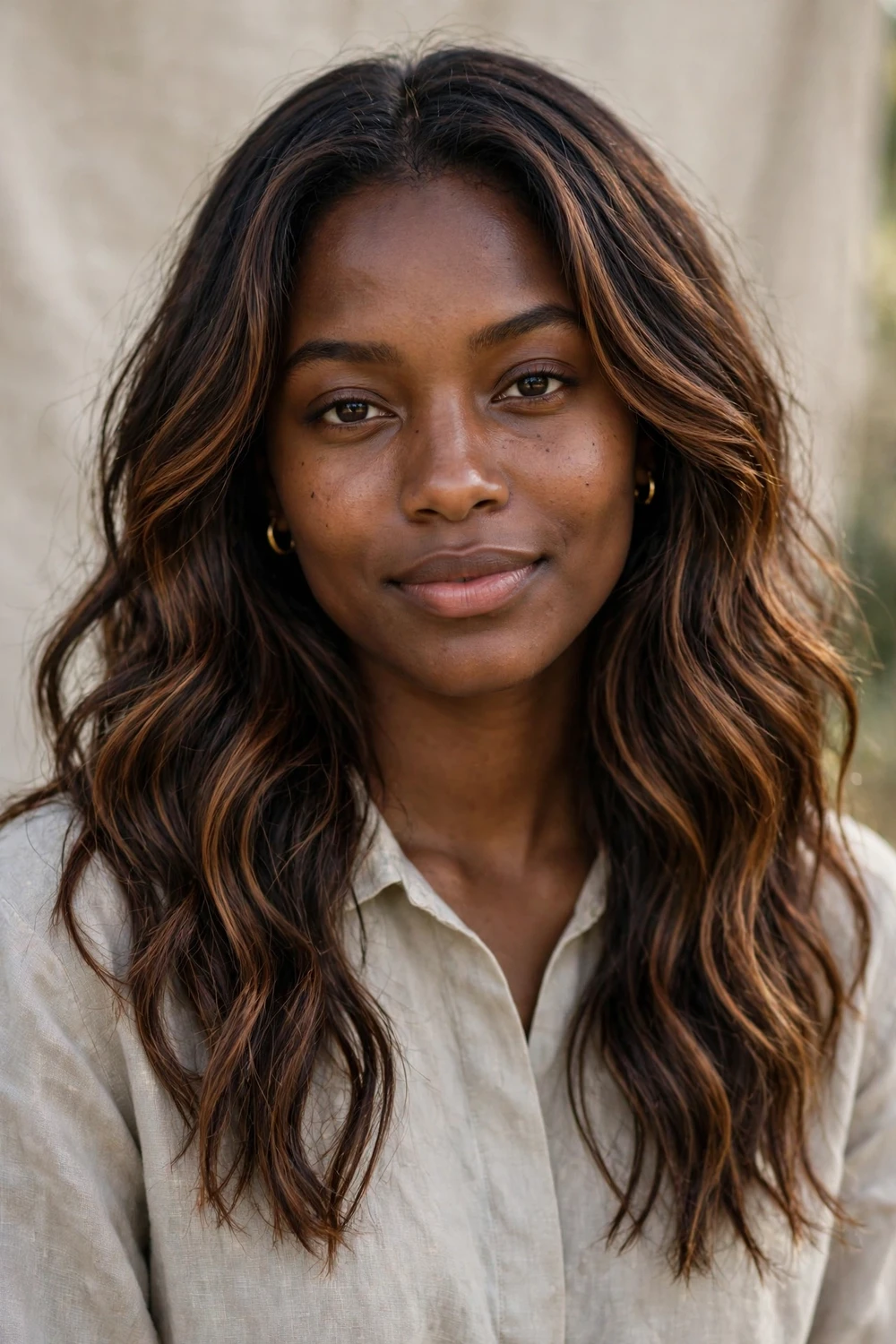
Warm chestnut balayage paints soft chestnut through a dark base from the midlengths down, keeping a little of summer’s brightness while going deeper overall. The warm brown tone flatters dark skin because it adds glow without pushing into red, and the soft root makes the whole thing grow out gracefully. It is a safe, flattering middle ground between all-over brunette and full balayage, and it looks rich in both daylight and evening light.
Ask for hand-painted chestnut balayage from the midlength down with a soft root that melts into your natural base. The placement concentrates color where light hits, so it looks expensive with minimal lift. A gloss every couple of months keeps the chestnut from fading to plain brown, and the look survives months without a touch-up appointment. This is a reliable choice if you are new to balayage and want a low-risk first try.
Try this: concentrate the chestnut through the midlengths so the grow-out stays clean.
Difficulty: Medium · Cost: $$$ (salon)
19. Golden Bronze Balayage
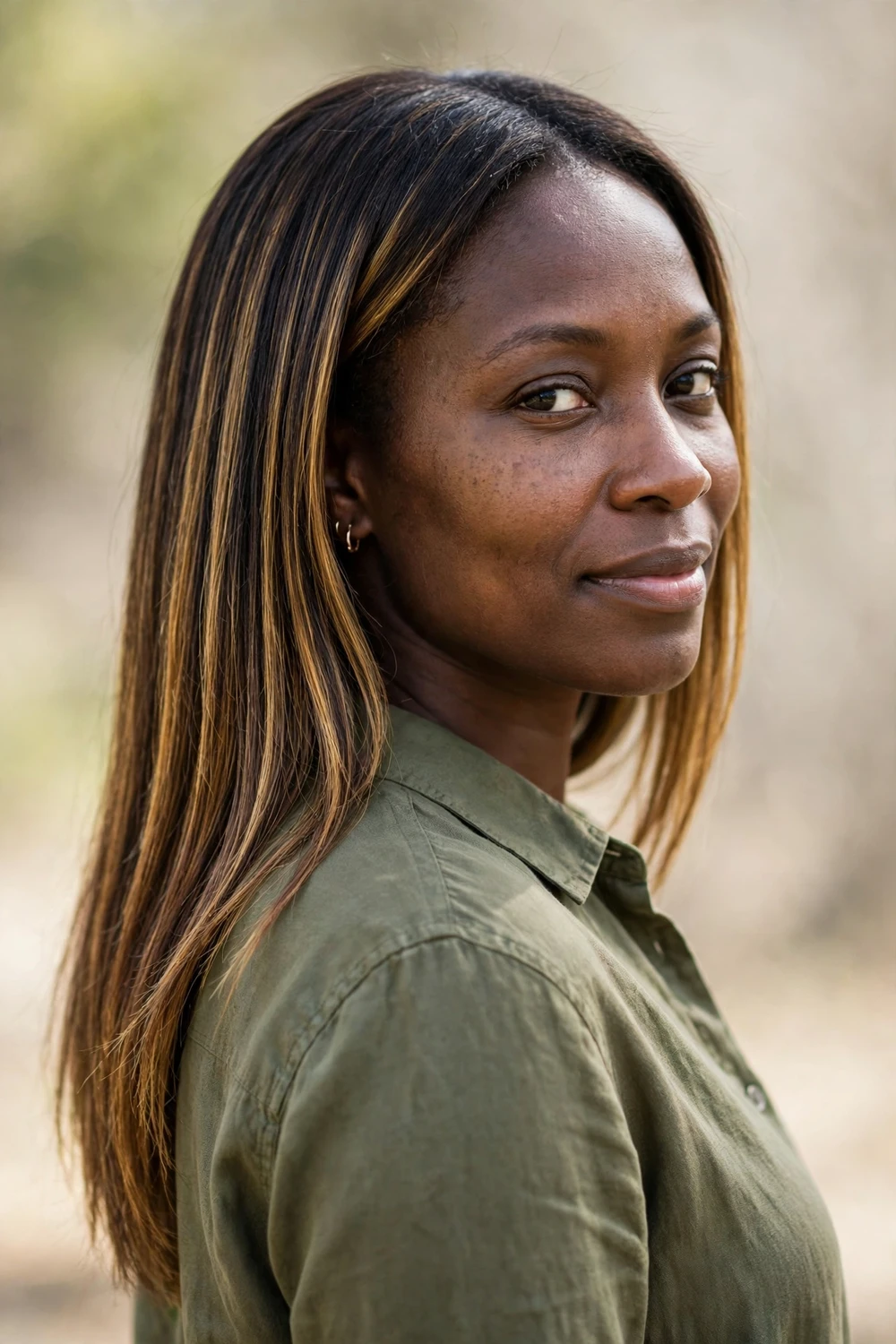
Golden bronze is one of the most requested fall shades, full of glowing golden tones that sit between brown and copper. Painted as a balayage with lighter golden-copper pieces near the face, it gives dark skin a lit-from-within warmth without a full color commitment. The metallic gold reflection catches light in a flattering way on straight hair and sleek styles, and the warmth reads rich rather than brassy against deep skin.
Ask for a bronze balayage with the lightest pieces placed close to the face for the glow effect. The golden tones can fade warm, so a toning gloss every six to eight weeks keeps the bronze looking deliberate. It needs less lift than full blonde balayage, which keeps the appointment shorter, the hair healthier, and the cost more manageable than a full lighten. A color-safe shampoo at home stretches the time between gloss visits.
Try this: put the lightest bronze pieces near the face where they brighten the complexion.
Difficulty: Medium · Cost: $$$ (salon)
20. Gingerbread Copper Balayage
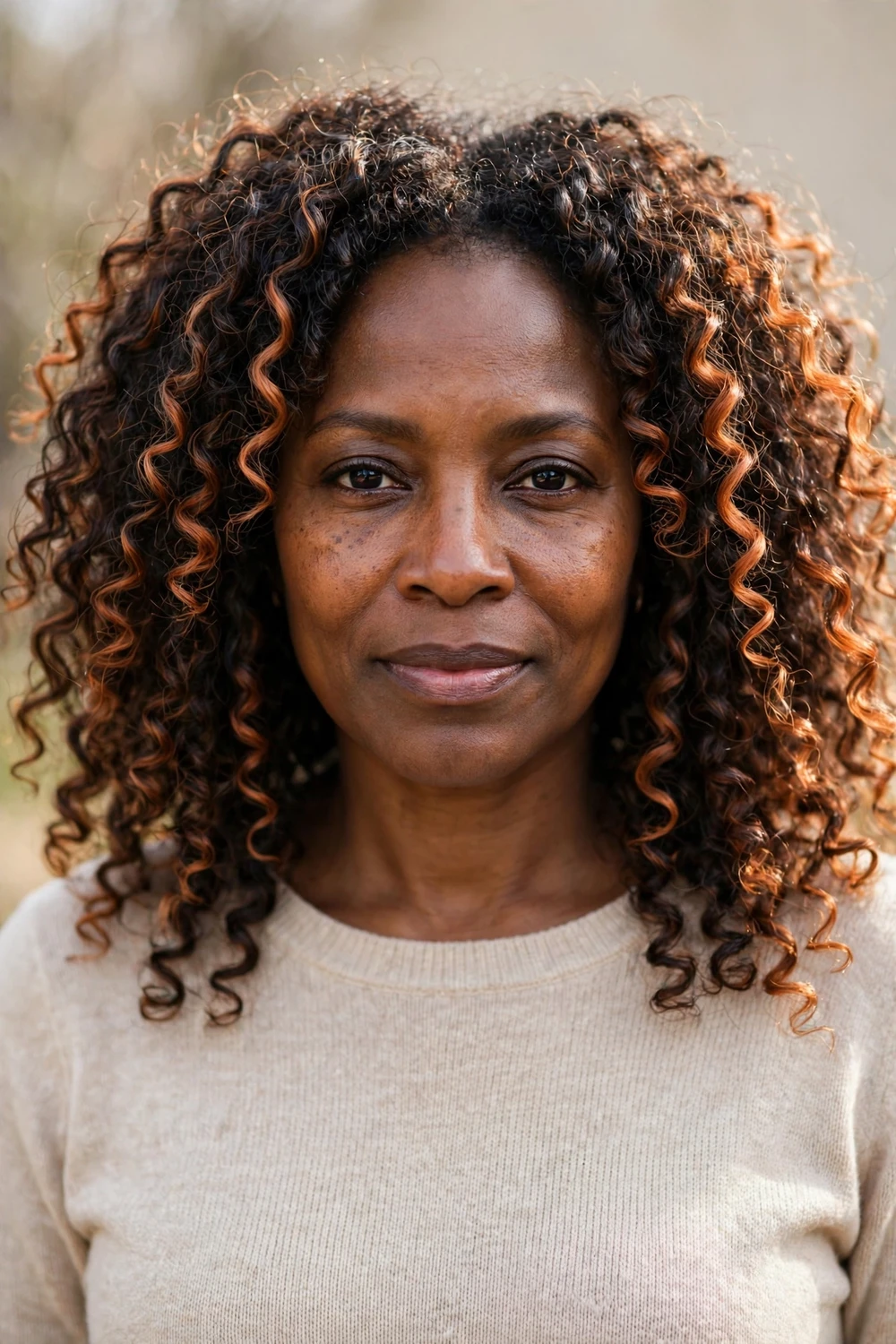
Gingerbread copper balayage blends warm brown with ginger and copper tones for a multidimensional finish that reads cozy against dark skin. The brown base keeps it grounded while the copper ribbons add the seasonal warmth, and on curls the tones shift as the hair moves. It is a gentler entry into copper than an all-over red, since the base stays brunette and only the ribbons carry the fire. This balance makes it wearable in any setting.
Ask for a dark brown base with ginger and copper balayage ribbons painted through the lengths. The copper pieces need the most care, so use a color-safe shampoo and a gloss refresh to keep them from fading to plain brown. This is a strong pick if you want fall reds without committing your whole head, and the grow-out stays soft for months. A color-depositing conditioner once a week keeps the ginger tones lively.
Try this: keep the base brown so the copper pieces can fade without a harsh grow-out.
Difficulty: Medium · Cost: $$$ (salon)
21. Coppery Red Balayage
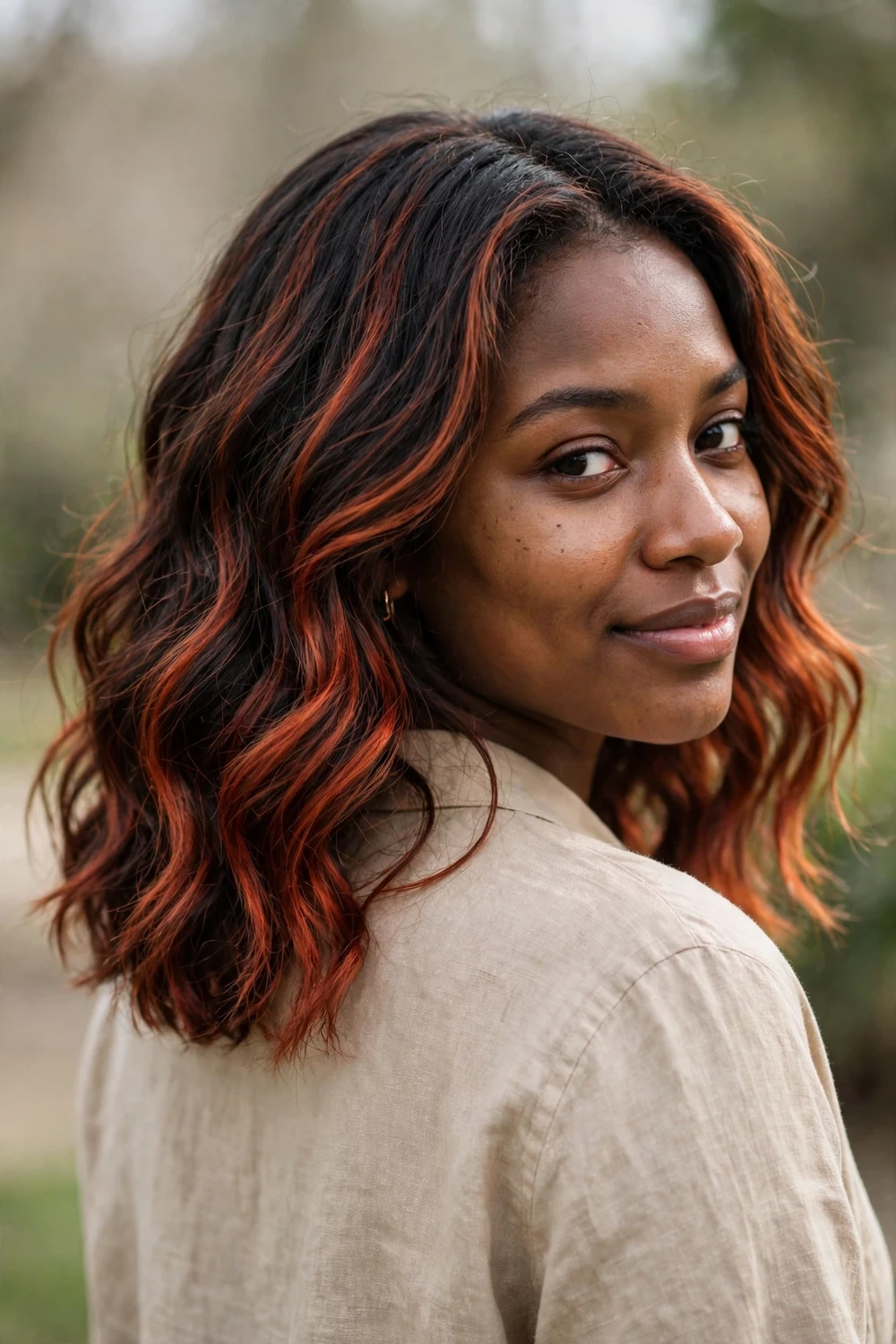
Coppery red balayage layers auburn, light copper, golden, and toasted red-brown tones through a dark base for maximum dimension. The mix of warm reds looks rich against dark skin because the dark base keeps the contrast from washing out the complexion. This is the balayage version of fall’s red trend, with all the warmth of all-over red and a softer grow-out that needs fewer salon visits. It shines on medium to long hair where the layers can show.
Ask for a toasted red-brown base stepped up with auburn and light copper highlights and lowlights woven through. The reds fade fastest, so plan on a color-depositing conditioner and gloss refreshes at home and in the salon. The hand-painted placement means touch-ups come every ten to twelve weeks rather than every single month. Limit heat styling to keep the red tones rich for as long as possible, and use a heat protectant whenever you do reach for hot tools.
Try this: mix highlights and lowlights so the red tones stay dimensional as they fade.
Difficulty: High · Cost: $$$ (salon)
22. Auburn-Toned Balayage
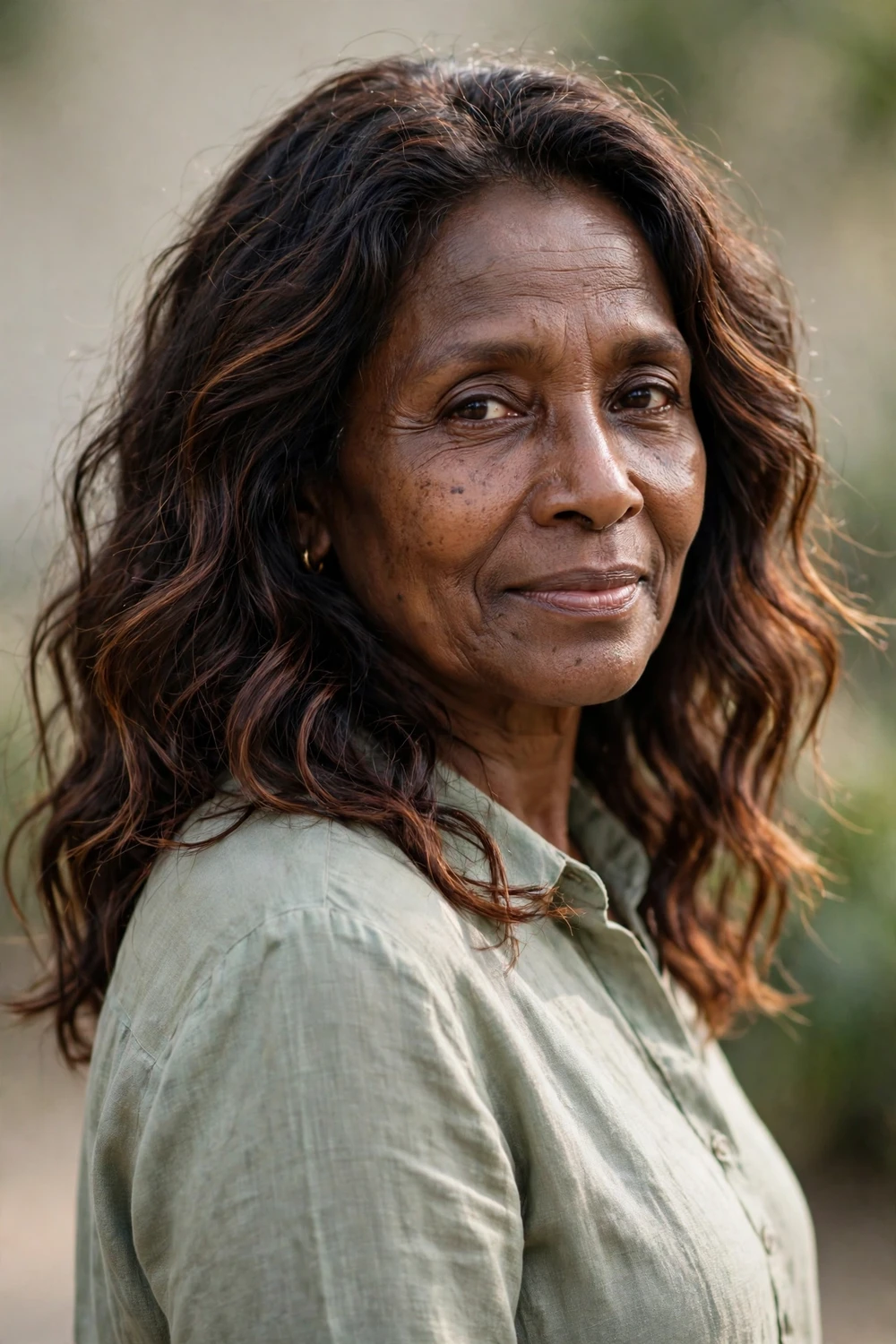
Auburn-toned balayage adds richness to dark hair with a subtle but noticeable brown-and-red blend that brings you into a fall mood without a dramatic change. The auburn pieces sit close to the base color, so the effect is more glow than contrast, which flatters dark skin by adding warmth that looks entirely natural. It is the quietest way to join the red trend, and it works on every length from bobs to long layers.
Ask for a dark brown balayage with auburn tones woven through, keeping the hues close together so they complement each other. A warm gloss keeps the auburn from fading flat, and the soft placement means months between appointments. This is a good first balayage if you have never lightened your hair, since most of the hair stays untouched. Use a sulfate-free shampoo to protect the warm tones between visits at home.
Try this: keep the auburn pieces close to your base color for the softest grow-out.
Difficulty: Medium · Cost: $$$ (salon)
23. Cinnamon Ribbon Balayage
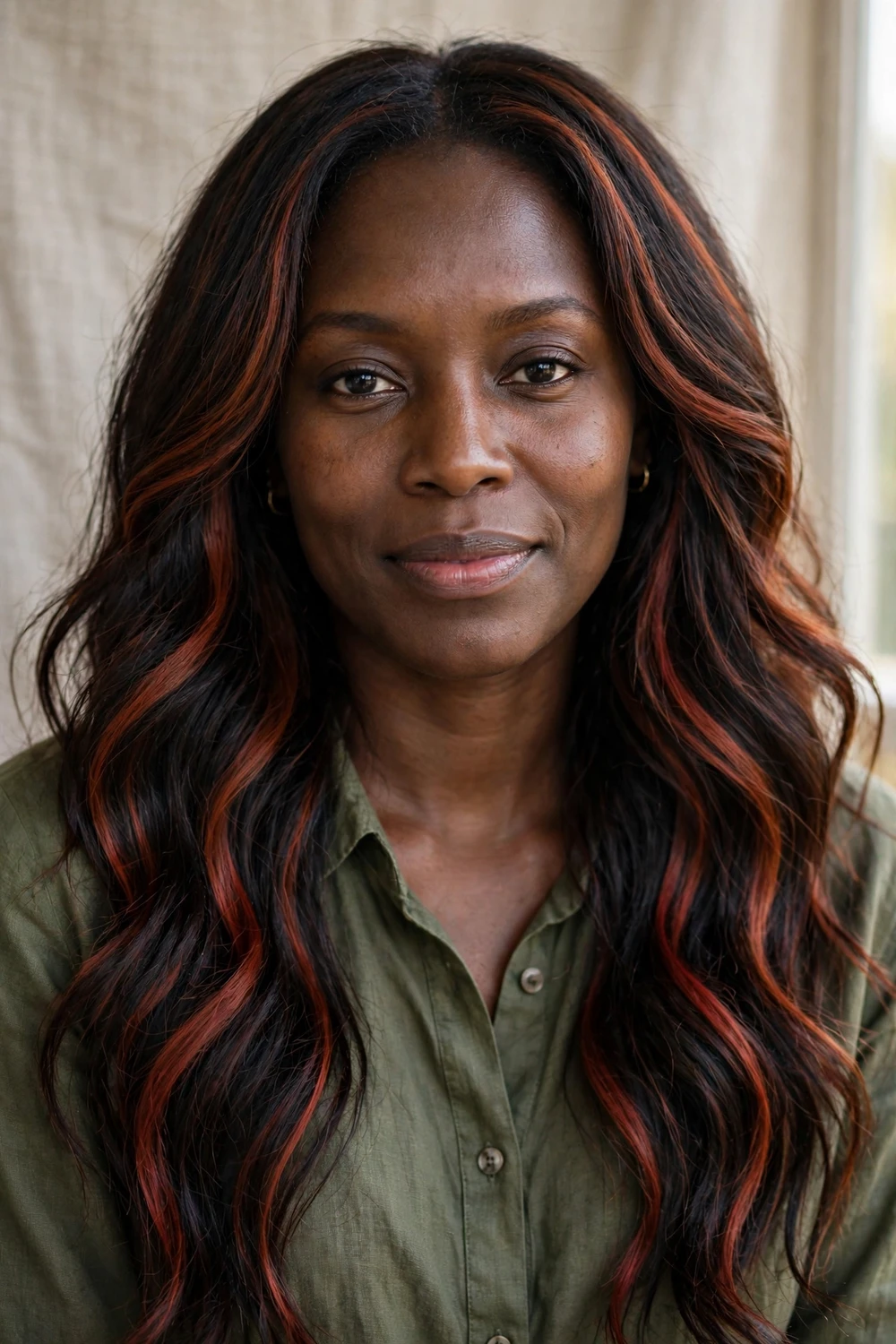
Cinnamon ribbon balayage uses the ribbon technique, wider painted sections, to add dimension to naturally dark hair in warm cinnamon tones. The ribbons read as distinct bands of color against the dark base, which emphasizes the radiance of dark skin more than fine babylights would. It is a bolder placement than classic balayage, made for hair with enough length to show the ribbons off, and it looks best in loose waves.
Ask your stylist for the ribbon balayage technique with cinnamon red tones through the lengths, keeping the root dark for contrast. The wider sections show fading sooner than finer pieces, so a gloss refresh every six weeks keeps the cinnamon true. This look loves long layers and loose waves, and a color-safe routine protects the red tones. Bring reference photos so your stylist matches the ribbon width you want exactly.
Try this: wear it in loose waves so the cinnamon ribbons separate and show.
Difficulty: Medium · Cost: $$$ (salon)
24. Chocolate Caramel Ombre
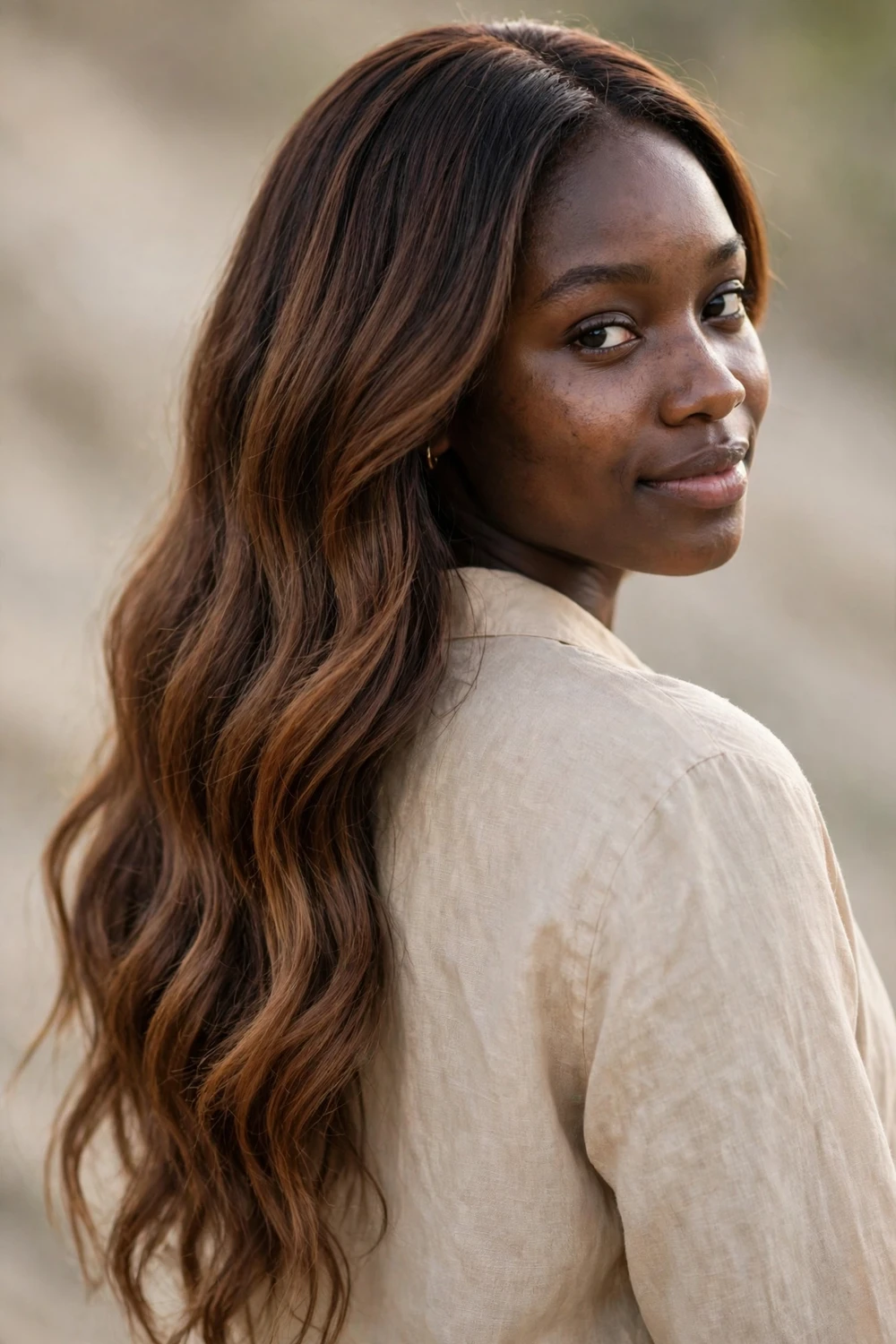
Chocolate caramel ombre blends dark chocolate roots into golden brown tips in a smooth gradient that suits naturally dark hair especially well. The dark root makes the grow-out seamless, while the caramel ends bring warmth and brightness that flatter dark skin. It is a forgiving technique if you want a visible change without constant salon visits, and the gradient looks good worn straight, wavy, or curly. The ombre effect also makes hair look thicker at the ends.
Ask for dark chocolate at the root melting into caramel through the ends, with the transition starting at the midlengths. The lightened ends need more moisture, so a weekly deep-conditioning mask matters here. A toning gloss keeps the caramel from going brassy as it fades, and trims every eight to ten weeks keep the ombre looking fresh. This is one of the easiest lightened looks to maintain long term for busy schedules.
Try this: start the ombre at the midlengths so the root area stays low-maintenance.
Difficulty: Medium · Cost: $$$ (salon)
25. Copper with Vanilla Money Pieces
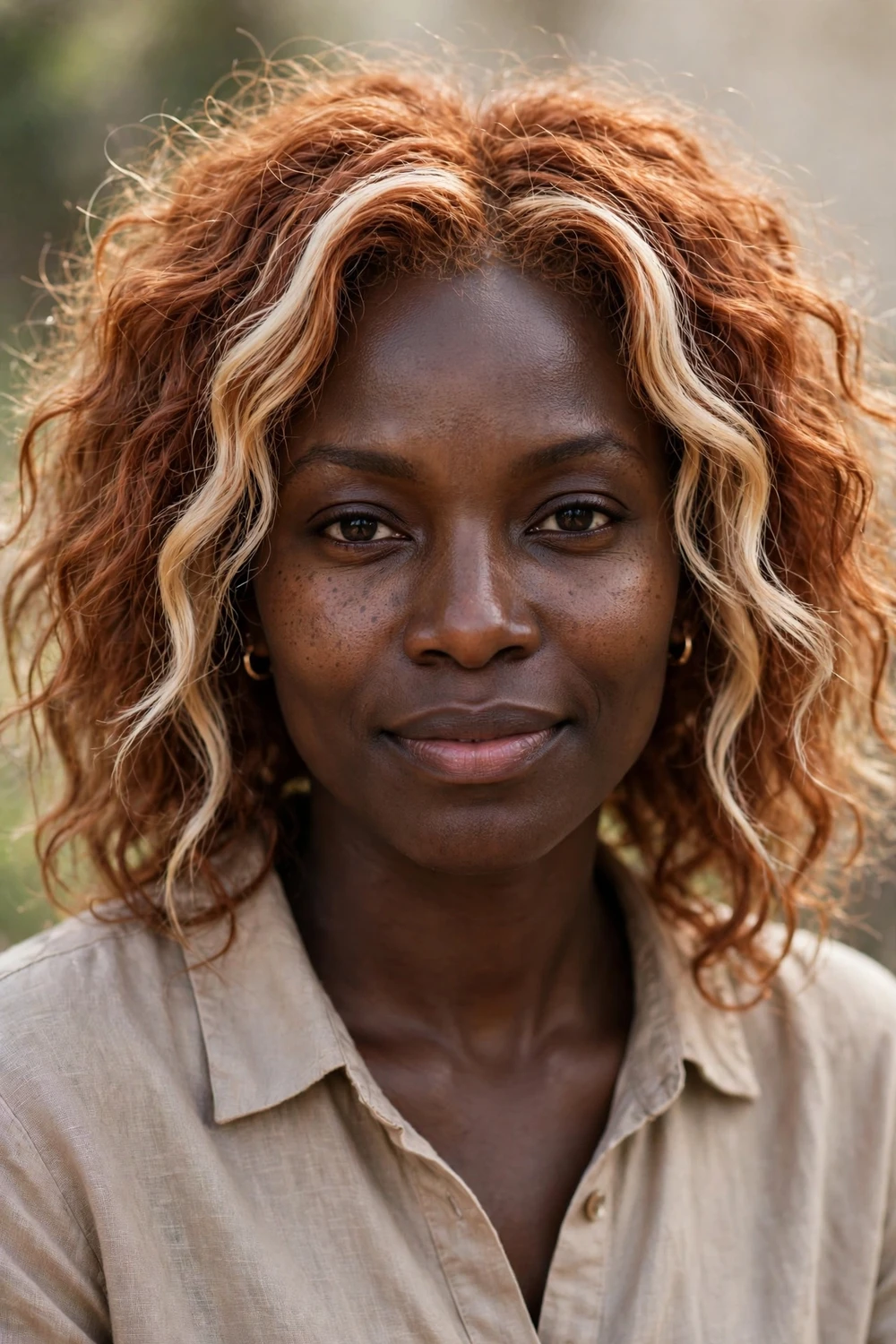
A rich copper base with chunky vanilla money pieces framing the face is one of fall’s boldest color placements. The contrast between warm copper and pale blonde streaks creates striking dimension, and the bright pieces near the face draw attention to the eyes and cheekbones. Against dark skin, the pairing reads fashion-forward without losing the seasonal warmth, and the chunky placement makes the color look modern rather than classic and edgy.
Ask for darker melted roots to keep the grow-out manageable, with chunky blonde streaks placed right around the face. The money pieces need toner refreshes to stay vanilla rather than yellow, so plan a gloss every six weeks. The rest of the copper follows a normal red maintenance routine with a color-depositing conditioner and cool water washes. This is a high-impact look, so commit to the upkeep before you book.
Try this: ask for melted roots so the chunky streaks grow out without a hard line.
Difficulty: High · Cost: $$$ (salon)
26. Honey Bronde

Honey bronde splits the difference between blonde and brunette, keeping enough depth to feel grounded for fall while golden ribbons run through the lengths and around the face. The darker root is part of what makes it forgiving, since it grows out without a visible line. On dark skin, the honey tones create a warm contrast that looks sunlit rather than stripped, and the overall effect stays soft and wearable.
Ask for honey bronde with the golden ribbons concentrated through the midlengths and face frame. It is one of the smartest blonde-adjacent options for naturally dark hair because your colorist controls exactly how much hair gets lightened. A toning gloss every couple of months keeps the honey from warming up too much, and a color-safe shampoo protects the tone at home. This is a great middle ground if full blonde feels like too much.
Try this: control the lift level with your colorist so only the ribbons get lightened.
Difficulty: Medium · Cost: $$$ (salon)
27. Golden Honey Blonde
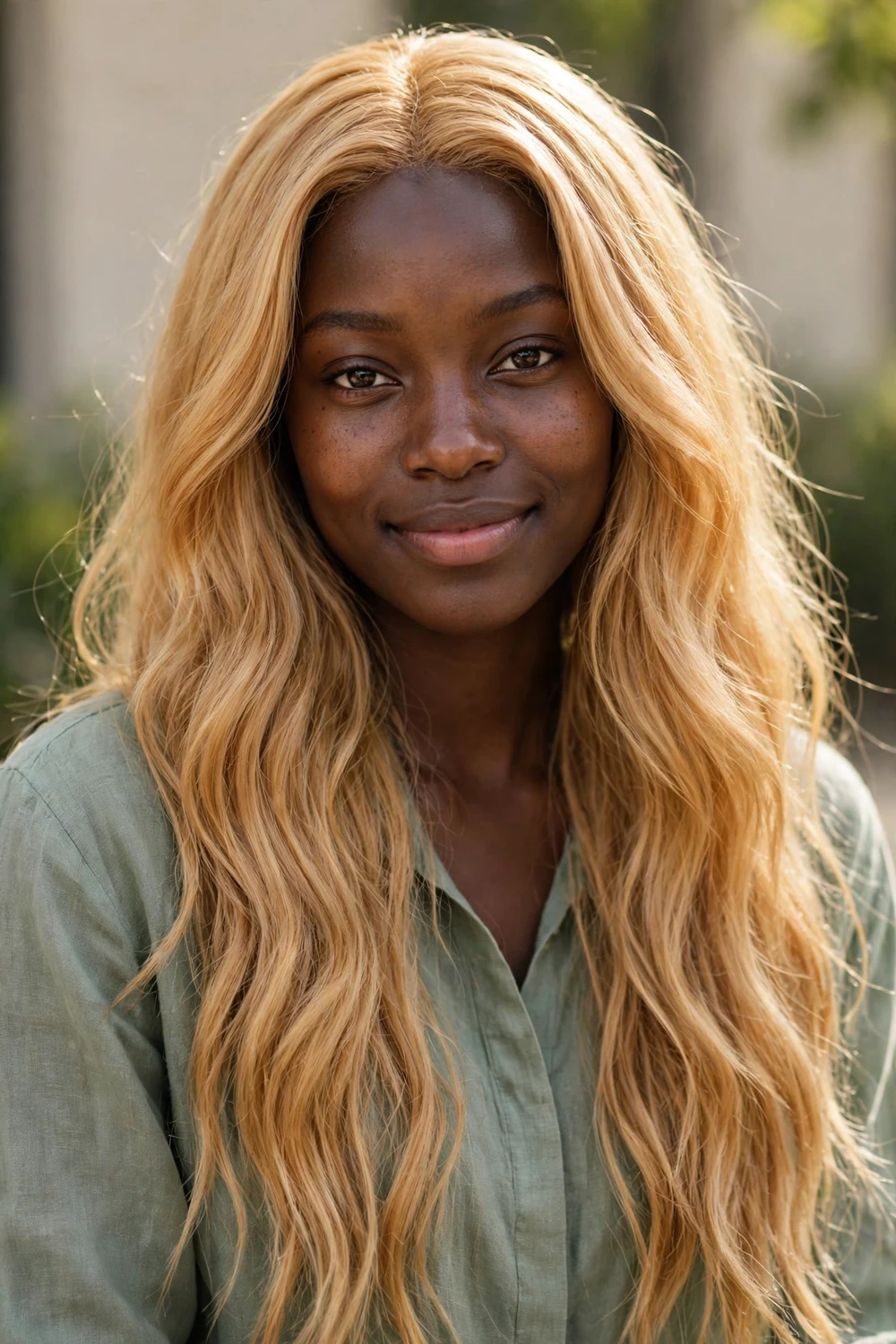
Warm blonde is having a strong fall, and the honey version skips the icy tones for gold, butter, and caramel. On dark skin, golden honey blonde creates an incredible contrast that still connects with the warmth in the complexion, which is why it keeps showing up on mood boards. Keeping a soft darker root makes the whole look more wearable and much easier to maintain, and the golden tone glows in autumn light.
Getting naturally dark hair to a clear honey blonde takes lifting, so this is not a one-appointment change on very dark hair. Talk through your hair’s condition with your colorist first, and plan for multiple sessions if needed. Deep conditioning between visits protects the lightened hair through the process, and a bond-building treatment helps keep it strong. A toner refresh between sessions keeps the blonde from going brassy along the way.
Try this: keep a soft darker root so the blonde grows out without a harsh line.
Difficulty: High · Cost: $$$ (salon)
28. Butterscotch Blonde
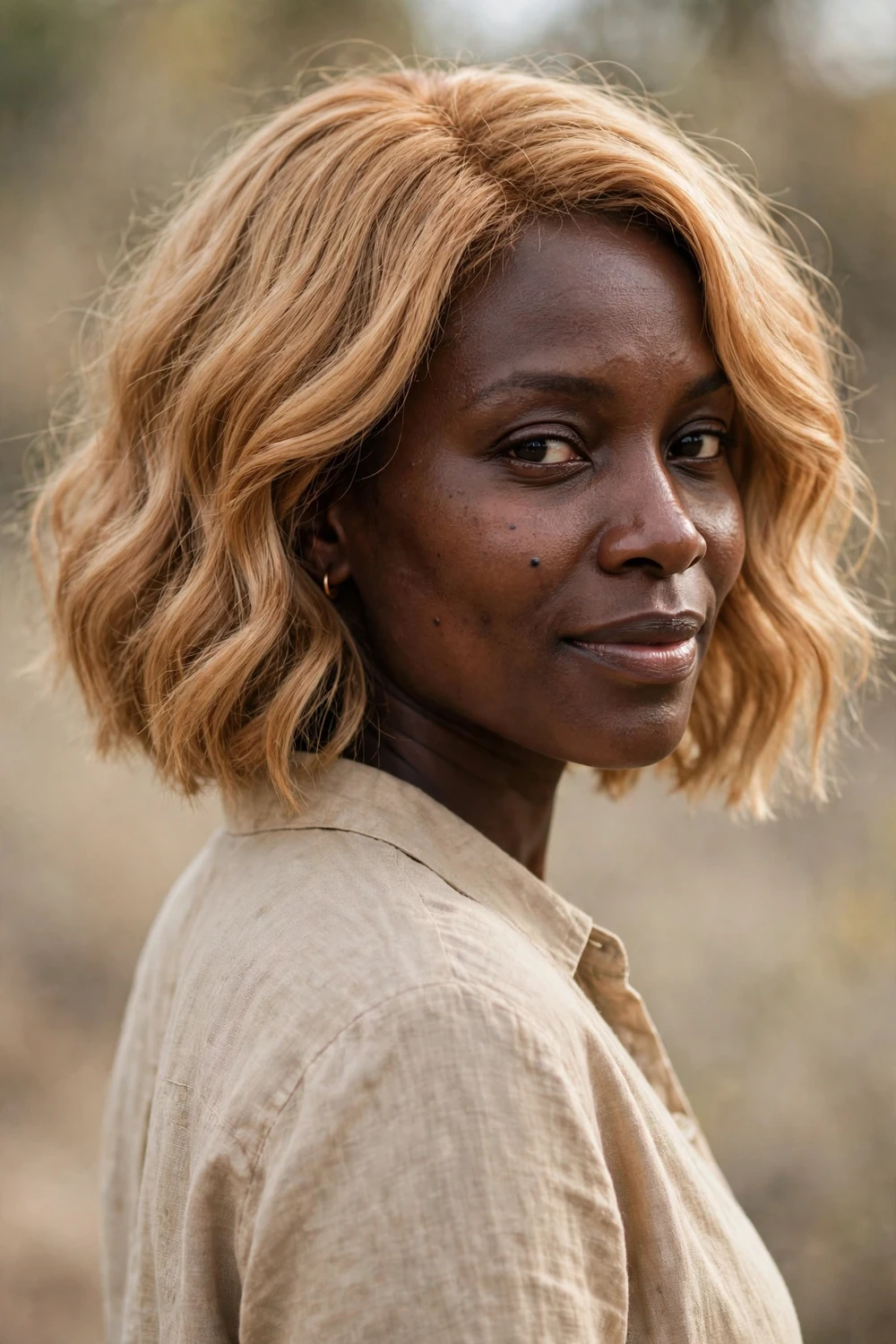
Butterscotch blonde is a warm golden blonde with a caramel depth that sits between honey and full blonde. Face-framing highlights in this hue make thick waves look even fuller, and the warm tone flatters dark skin by adding glow without the starkness of platinum. It is a good pick if honey blonde feels too light but you still want real brightness, and it works on bobs, lobs, and long layers.
Ask for butterscotch with the brightest pieces around the face and a slightly deeper tone through the back. The warm formula needs a toning gloss to keep it from tipping orange, so plan refreshes every six to eight weeks. On a bob, the color shows off the cut’s shape and movement, and a shine serum finishes the look. A color-safe shampoo at home keeps the warmth golden rather than brassy.
Try this: put the brightest butterscotch pieces around the face for maximum glow.
Difficulty: Medium · Cost: $$$ (salon)
29. Mushroom Brown
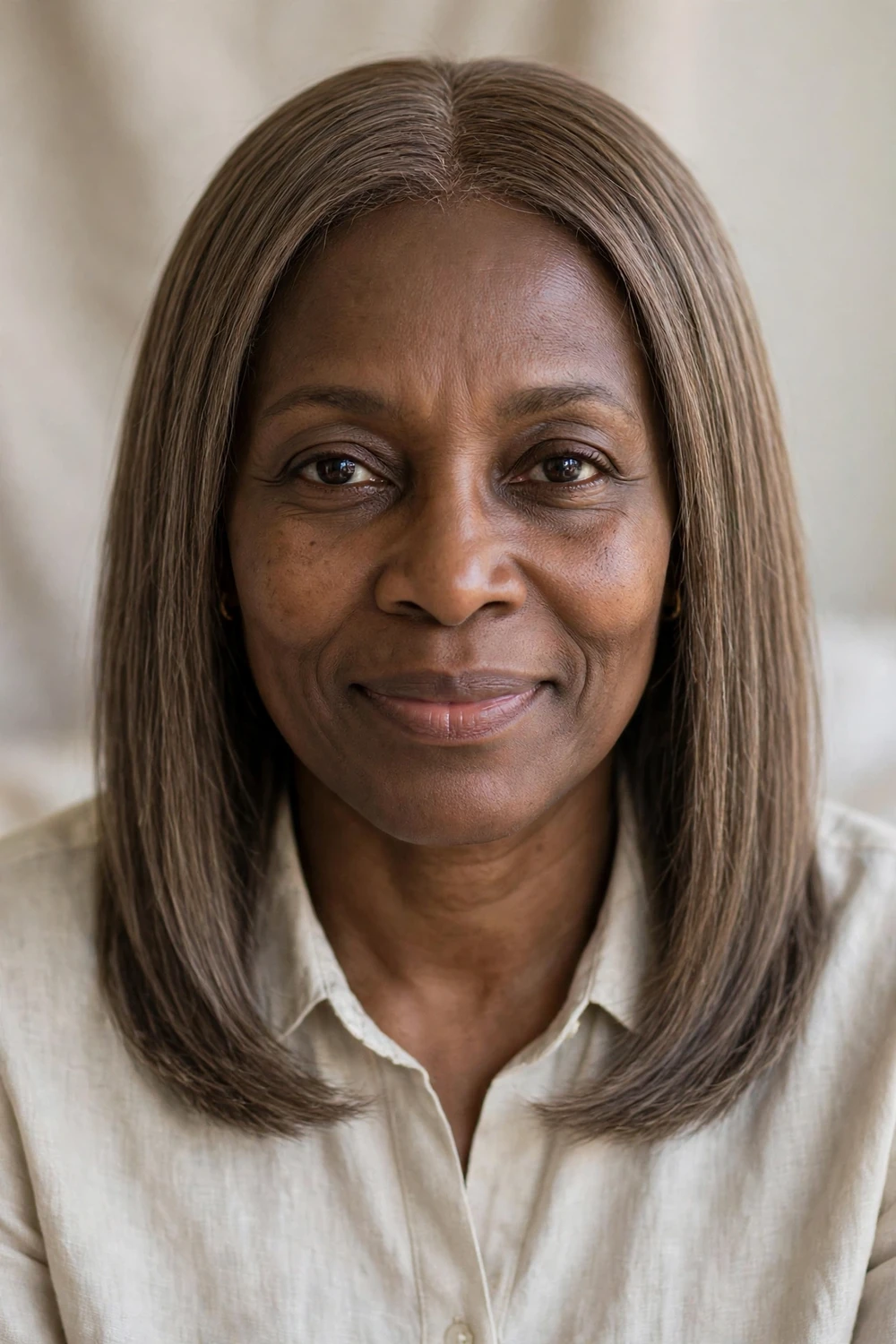
Mushroom brown is fall’s cool-toned outlier: a muted brown with soft grey-beige tones for dark skin with cool undertones. It gives you the seasonal depth without any of the season’s usual warmth, and the ashy finish looks modern against deep skin. If warm browns tend to look brassy or heavy on you, this is the shade to try instead, and it needs almost no special care. The muted tone also photographs well in soft light.
Ask for a cool mushroom brown with an ash toner and no added warmth. The key is keeping the formula from turning dull or flat, so your colorist should customize the depth to your complexion. A clear gloss keeps the shine up without warming the tone, and upkeep is refreshingly low compared to the reds on this list. Skip purple shampoo here, since it can push the cool tone too far into grey.
Try this: avoid purple shampoo here; it can push the cool tone too far into grey.
Difficulty: Low · Cost: $$ (salon)
At a Glance: 29 Fall Colors Compared
| Shade | Technique | Why it flatters dark skin | Upkeep |
|---|---|---|---|
| Dark Chocolate Brown | All-over + warm gloss | One step warmer than black, soft glow | Gloss every 8 weeks |
| Espresso Brunette Gloss | Gloss on dark base | Deep shine, nearly invisible grow-out | Gloss every 6 to 8 weeks |
| Jet Black Gloss | All-over + clear gloss | Sharp frame, mirror shine | Cool rinses, regular trims |
| Mocha Brown | All-over | Cool depth for cool undertones | Clear gloss every 8 weeks |
| Copper | All-over | Echoes golden undertones in skin | Gloss every 4 to 6 weeks |
| Spiced Auburn | All-over + warm gloss | Rich contrast that stays natural | Gloss between visits |
| Cinnamon Brown | All-over | Subtle red warms the whole face | Gloss refresh as needed |
| Mahogany | All-over | Cool red-brown for cool undertones | Red gloss every 5 to 6 weeks |
| Burgundy Wine | All-over | Wine tones glow against deep skin | Gloss every 4 to 6 weeks |
| Cherry Cola | Gloss on dark base | Red-violet light play on brunette | Gloss every 4 to 6 weeks |
| Navy Blue | All-over + clear gloss | Cool contrast that catches light | Clear gloss for shine |
| Berry Purple Ombre | Ombre | Blonde brightness + moody ends | Color-safe shampoo, cool water |
| Pumpkin Spice | Ombre, shadowed root | Mahogany base anchors the glow | Gloss to keep warmth true |
| Caramel Highlights | Foil highlights | Dimension without a full change | Soft grow-out, toner as needed |
| Golden Caramel Face-Framing Highlights | Face-frame pieces | Brightens the face, opens features | Toner every 6 to 8 weeks |
| Toffee Teasylights | Teasylights | Softest grow-out of any highlight | Touch-ups every 10 to 12 weeks |
| Chocolate Brown Balayage | Balayage | Glazed, natural-looking movement | Toner gloss every 8 weeks |
| Warm Chestnut Balayage | Balayage | Warmth that stays close to brunette | Gloss every couple of months |
| Golden Bronze Balayage | Balayage | Lit-from-within warmth | Toning gloss every 6 to 8 weeks |
| Gingerbread Copper Balayage | Balayage | Cozy copper with a brown anchor | Color-safe shampoo + gloss |
| Coppery Red Balayage | Balayage | Maximum warm dimension | Gloss every 10 to 12 weeks |
| Auburn-Toned Balayage | Balayage | Natural-looking warmth | Months between appointments |
| Cinnamon Ribbon Balayage | Ribbon balayage | Bold bands of warm color | Gloss every 6 weeks |
| Chocolate Caramel Ombre | Ombre | Seamless dark-to-warm gradient | Weekly deep-conditioning mask |
| Copper with Vanilla Money Pieces | Money pieces | Bright frame around the face | Toner every 6 weeks |
| Honey Bronde | Balayage ribbons | Sunlit contrast with brunette depth | Toning gloss every few months |
| Golden Honey Blonde | Full lightening | High contrast, warm connection | Multiple sessions, deep conditioning |
| Butterscotch Blonde | Face-frame highlights | Warm glow without stark blonde | Toning gloss every 6 to 8 weeks |
| Mushroom Brown | All-over + ash toner | Cool depth without warmth | Clear gloss, low upkeep |
How to Choose Your Fall Shade
Start with your undertone. Warm undertones, which often read golden or peachy, suit copper, auburn, cinnamon, caramel, and honey shades because the hair echoes the skin’s warmth. Cool undertones, which read pink or bluish, do better with espresso, mocha, mushroom brown, mahogany, and cherry cola. Neutral undertones can wear most of this list, and chocolate and chestnut are the safest picks if you are unsure.
Next, be honest about maintenance. Reds and coppers fade fastest and ask for gloss refreshes every four to six weeks, so they suit people who will actually book the follow-ups. Balayage, ombre, and teasylights grow out softly and stretch to ten or twelve weeks between visits, which fits a busier schedule. If you want almost no upkeep, a gloss-only change like espresso or a cherry cola tint is the way in.
Finally, consider how much change you want. A gloss one to two shades different from your natural color is a low-risk seasonal refresh. Going from dark brown to honey blonde is a multi-session project that needs healthy hair to start. Bring reference photos to your appointment, and ask your colorist what your hair can handle in one sitting.
Fall Color Care
Wash less, wash gently. Use a sulfate-free, color-safe shampoo and lukewarm water, since hot water and sulfates strip tone fast. Washing two to three times a week keeps color richer for longer than daily washing.
Refresh the tone. Book a gloss halfway between color appointments to bring back richness and shine. Reds, coppers, and cherry cola fade fastest, so a color-depositing conditioner at home keeps them true between salon visits.
Protect from heat. Always use a heat protectant before flat irons or curling tools, since heat fades color and roughs up the cuticle. Let hair cool before brushing out curls to set the style.
Deep-condition weekly. A weekly deep-conditioning mask keeps lightened ends from drying out and helps color look glossy rather than dull. This matters most for balayage, ombre, and blonde looks where the ends have been lifted.
More Ideas to Explore
Frequently Asked Questions
What are the best fall hair colors for dark skin?
The shades that flatter dark skin most are warm and rich: copper, spiced auburn, cinnamon brown, caramel highlights, and burgundy wine. These tones echo the warmth already in the complexion and glow in softer autumn light. For cool undertones, espresso, mocha brown, mushroom brown, and cherry cola work well. The full list above has 29 ideas with placement techniques and maintenance notes for each.
Does copper hair look good on dark skin?
Yes, copper looks striking on dark skin. The warm orange-red picks up golden undertones in the complexion and catches light in a way few colors can, especially on curls. Softer versions like cowboy copper keep the warmth wearable in daylight, and gingerbread copper balayage is a lower-commitment way to try the tone. Copper fades faster than brown, so plan on a gloss every four to six weeks.
What fall hair color needs the least maintenance?
Gloss-only changes need the least maintenance: an espresso gloss, a cherry cola tint, or a dark chocolate refresh on naturally dark hair. These add tone and shine without lifting, grow out softly, and only need a gloss refresh every six to eight weeks. Balayage, ombre, and teasylights are the next-easiest because their soft roots stretch touch-ups to ten or twelve weeks.
How do I keep red fall color from fading?
Reds fade faster than any other color family. Wash with a sulfate-free, color-safe shampoo in cool water, and use a color-depositing conditioner made for red or copper tones once a week. Book a gloss refresh every four to six weeks, limit heat styling, and always use a heat protectant. Avoid clarifying shampoos unless you need them, since they strip tone quickly.
Can I get fall highlights without bleaching my natural hair?
Yes. Highlighted wigs, sew-ins, and clip-in extensions recreate caramel, honey, and copper dimension with no bleach at all, which is a good way to test a shade before committing. Braiding hair and faux locs in fall tones are another option. If you do color your natural hair, balayage and teasylights lift only selected pieces, so most of your hair stays untouched.
Final Thoughts
Fall color on dark skin is about warmth, depth, and shine. Whether you go for a glossy espresso refresh, a spiced auburn change, or caramel dimension through your natural base, pick the shade that fits your undertone and the maintenance you will actually keep. Bring reference photos to your stylist, start with a gloss if you are unsure, and enjoy the season in rich color.

