

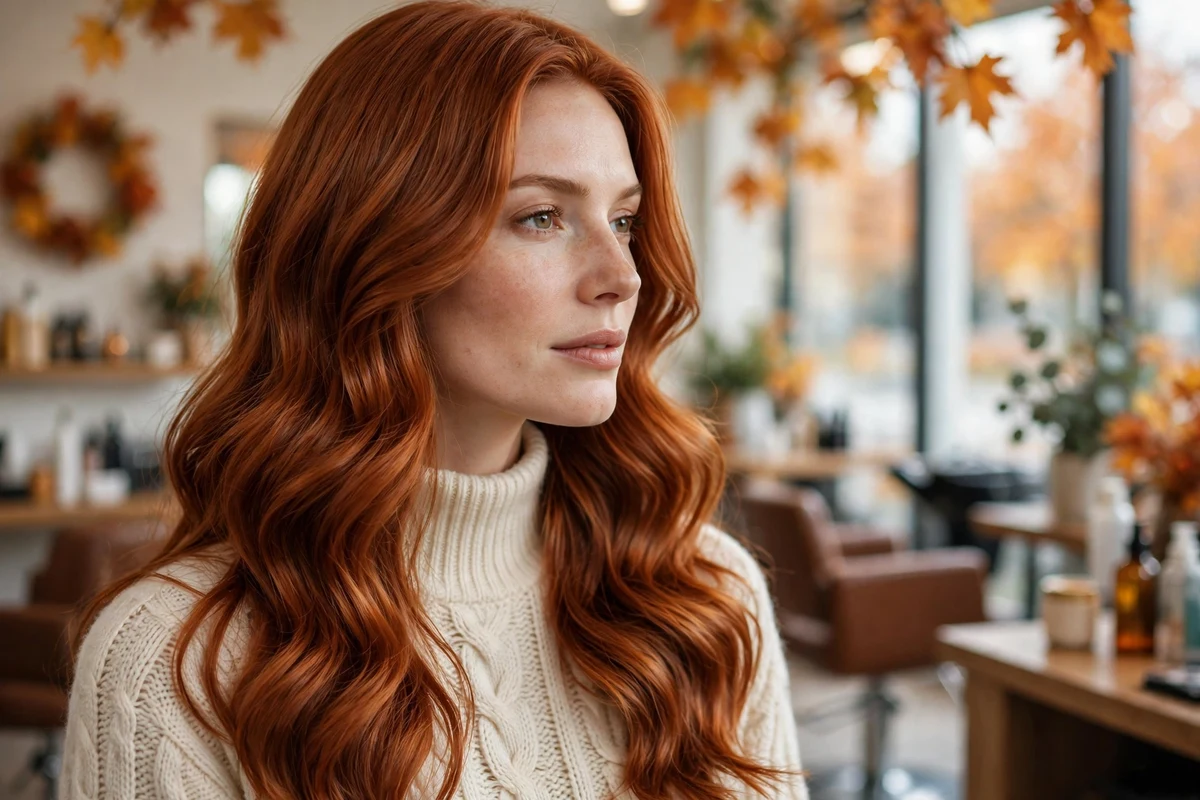
Fair skin gives you a wide fall color range, and it also shows a bad match faster than deeper skin does. A shade that is too ashy can drain color from a cool face, and a shade that is too dark or too orange can sit heavily against porcelain skin. The fix is simple: pick by undertone first, then by depth. Warm fair skin needs gold, honey, copper, and chestnut warmth. Cool fair skin needs beige, ash, mushroom, and red-violet tones with the orange kept down. Neutral fair skin can move between the two camps.
This list collects 26 fall hair colors for fair skin and runs them by undertone, warm shades first, then cool shades, then the neutral shades that sit in the middle. Every idea notes the undertone it suits, which fair faces it can wash out, what the salon work involves, and how much upkeep it asks for. If you want the wider seasonal spread across every skin tone, the general fall hair colors guide covers all families side by side.
Quick Takeaways
- Undertone decides the family: honey, copper, and chestnut for warm fair skin; mushroom, ash, and cherry cola for cool fair skin; bronde, fawn, and mocha for neutral fair skin.
- Depth is the second call. Fair skin usually carries light to medium shades with the least effort, and deep shades work best with dimension or a gloss finish.
- The shades that wash fair skin out most often are flat ash on warm skin, strong orange on cool pink skin, and solid jet-dark color with no dimension on very pale skin.
- Balayage, ombre, melts, and lowlights grow out softly and stretch salon visits to 8 to 10 weeks.
- Red-family shades fade fastest on every base. Plan a gloss refresh at 4 to 6 weeks for copper, auburn, and cherry tones.
How to Pick a Fall Color for Fair Skin
Check your undertone in daylight. Veins on the inner wrist that look green point to warm undertones, veins that look blue or purple point to cool undertones, and a mix of the two points to neutral. Gold jewelry flattering your face more than silver is another warm clue, and silver winning is a cool clue. Freckles and a peachy cast usually travel with warm fair skin, while a pink or rosy cast usually travels with cool fair skin.
Then weigh depth against your natural color. Staying within two levels of your starting shade gives the softest grow-out and the lowest upkeep. Going much deeper adds contrast that can sharpen fair features, which suits some faces and overwhelms others, so ask for dimension, a root smudge, or a gloss finish on any shade darker than a medium brown. Blondes weighing a seasonal shift can compare the lighter end of this list with the dedicated fall blonde hair colors roundup before booking.
| Fair skin undertone | Go-to fall families | Use with care | Typical upkeep |
|---|---|---|---|
| Warm (golden, peachy, freckled) | Honey and golden blonde, copper, chestnut, cinnamon, auburn | Flat ash brown, icy platinum, blue-leaning black | Gloss at 4 to 6 weeks for red tones |
| Cool (pink, rosy) | Cool beige blonde, mushroom brown, ash brown, cherry cola, plum | Strong orange copper, heavy gold, brassy caramel | Toner at 5 to 6 weeks to hold the ash |
| Neutral (mix of warm and cool) | Bronde, fawn brown, mocha, sandy blonde, rose gold | Very saturated shades at either temperature extreme | Refresh at 6 to 8 weeks, longer for placed color |
1. Honey Blonde
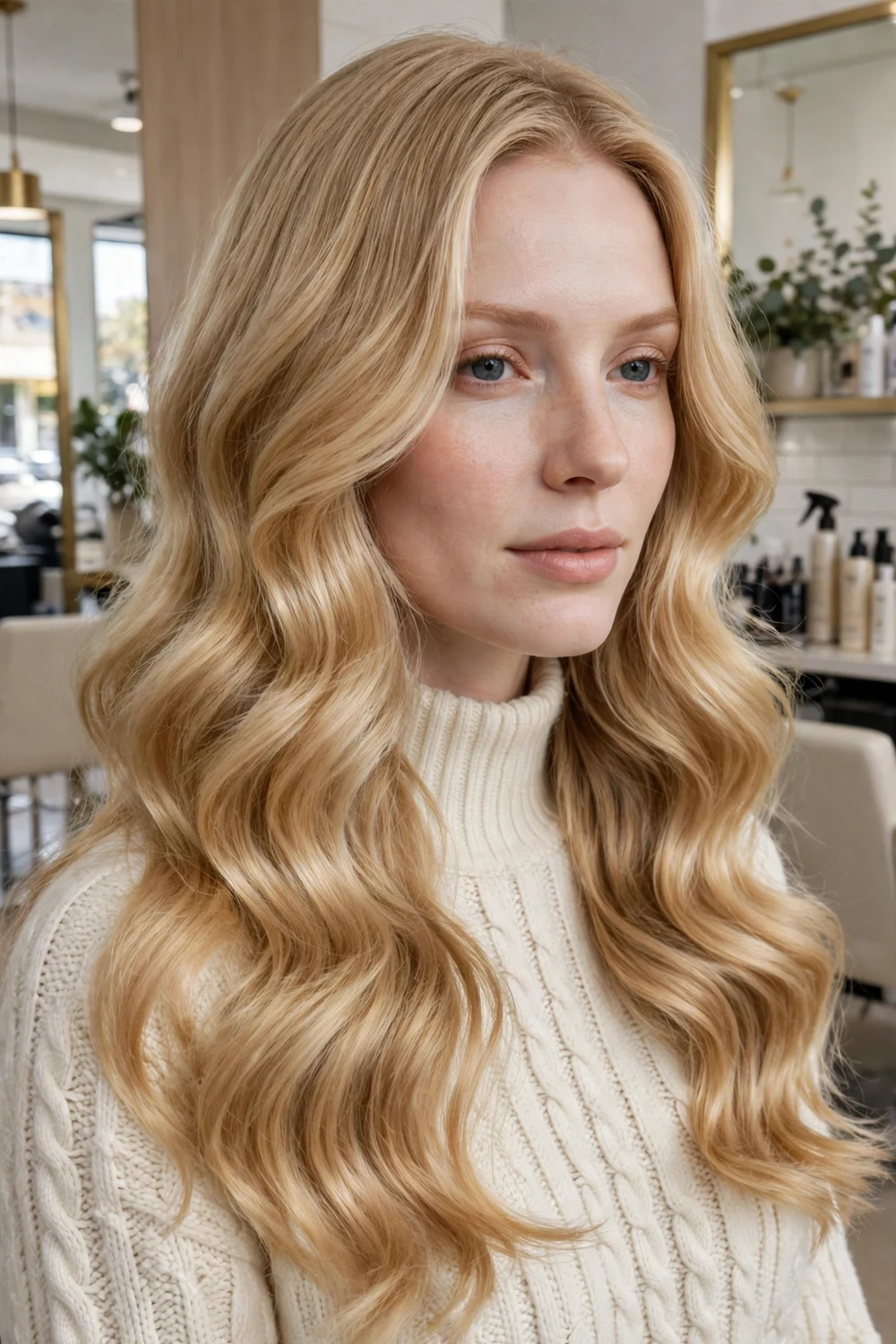
Honey blonde lays warm honey gold over a blonde or light brown base. The gold content is the point for warm fair skin: it echoes the peachy and golden tones already in the face and keeps pale skin from looking drained as the light gets flatter in fall. Green, hazel, and light brown eyes all pick up the warmth.
Light bases reach this shade with a single process color or a gloss over existing highlights. Roots show softly because the tone sits close to natural dark blonde. A gloss at about six weeks keeps the honey tone rich and stops it sliding toward brass.
Try this: ask for a slightly deeper honey root smudge if your natural color is light brown, so the grow-out stays blurred through the season.
Difficulty: Medium · Cost: $$ (salon)
2. Golden Blonde

Golden blonde is a bright, yellow-gold blonde that keeps summer lightness and adds fall warmth. It suits warm and neutral fair skin, where the gold reads as healthy color on the face. On cool pink skin the same gold can clash, so cool readers should look at the beige blonde in this list first.
Most golden blonde work is highlights or all-over color on a light base, done in one session. The shade fades toward pale gold between visits, which most wearers accept happily. A warm gloss at five to six weeks restores the depth at the roots and mid-lengths.
Try this: keep a few lighter pieces around the face. The bright frame stops a full golden blonde from reading as one flat tone.
Difficulty: Medium · Cost: $$ (salon)
3. Golden Creme Brulee Babylights

Creme brulee babylights weave ultra-fine golden highlights through a blonde base, so the color looks woven and buttery with no stripe or chunk. The fine placement suits fair skin well, since the brightness builds gradually around the face and never lands as one hard block of light color against pale skin.
Babylights take time. The foils are tiny and numerous, and dark bases need lightener in every foil, so the first appointment is one of the longer ones on this list. Grow-out is the payoff: the fine lines blur as they grow, and most wearers refresh at eight to ten weeks.
Try this: ask for babylights through the top and face frame only if your base is already blonde. A partial placement gives the same effect with a shorter appointment.
Difficulty: Medium to High · Cost: $$$ (salon)
4. Strawberry Blonde

Strawberry blonde blends golden blonde with a wash of pink copper. The muted fall version keeps the copper quiet, so the hair reads as a warm blonde with a blush through it. It suits warm and neutral fair skin, and it is a natural partner for freckles, since the copper tone echoes the warmth freckled skin already carries.
On a blonde base this is often a gloss or demi-permanent color, which makes it one of the lower commitment routes into red tones. The pink-copper wash fades first and the hair settles back toward blonde over four to six weeks. A rose copper color-depositing conditioner slows that fade at home.
Try this: start with a strawberry gloss over your current blonde. If the blush suits your skin, your colorist can deepen it at the next visit.
Difficulty: Low to Medium · Cost: $$ (salon)
5. Peachy Spiced Amber

Peachy spiced amber softens red with peach and amber tones, so the result sits between copper and a light auburn. The peach reflect is what makes it work on warm fair skin: it adds color to the face and keeps very pale skin from looking washed out next to a deeper red. It is a sound first red for blondes and light brunettes.
Light bases take the shade in one session with permanent or demi-permanent color. Darker hair may need a gentle lift first so the peach tones can show. Amber shades fade toward a soft copper, and a gloss at five weeks brings the peach note back.
Try this: show your colorist photos in daylight as well as salon light. Peach tones shift the most between the two, and you want to approve the outdoor version.
Difficulty: Medium · Cost: $$ (salon)
6. Soft Copper
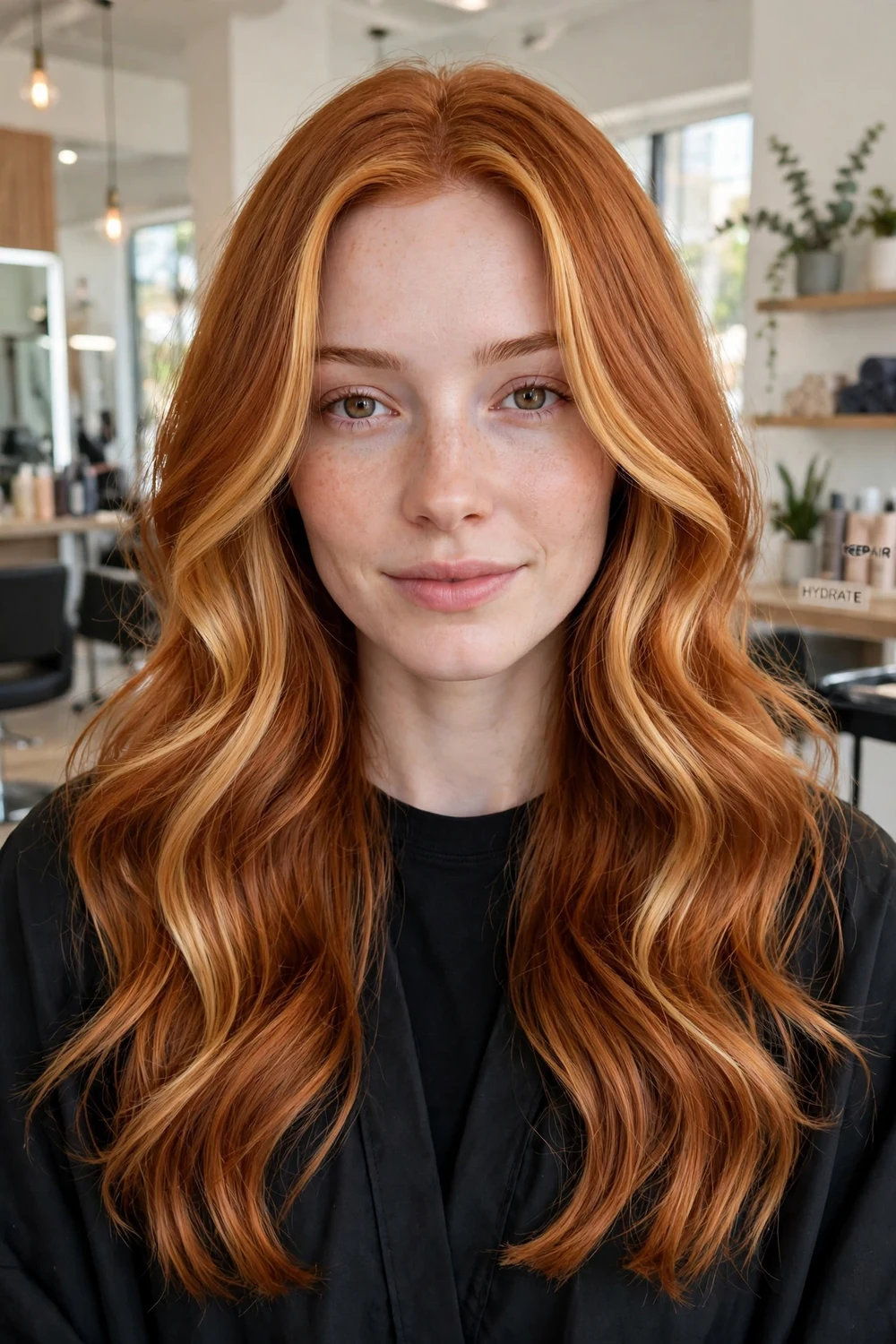
Soft copper is a gentle, light copper with golden ribbons placed around the face. It is the copper to choose when a full saturated copper would overpower a fair face: the base stays muted and the bright ribbons do the work near the skin, lifting the complexion and drawing attention to the eyes. Warm and neutral fair skin carry it best.
The base color goes on in a single process, and the ribbons are a small set of foils at the front. Copper fades faster than brown, so plan a gloss at four to six weeks and a copper color-depositing conditioner at home. Readers who want the full copper family can browse the fall copper hair colors list after this one.
Try this: ask for the ribbons one shade lighter than the base, placed only at the hairline, for brightness that still reads as one color.
Difficulty: Medium to High · Cost: $$$ (salon)
7. Spiced Cider Copper
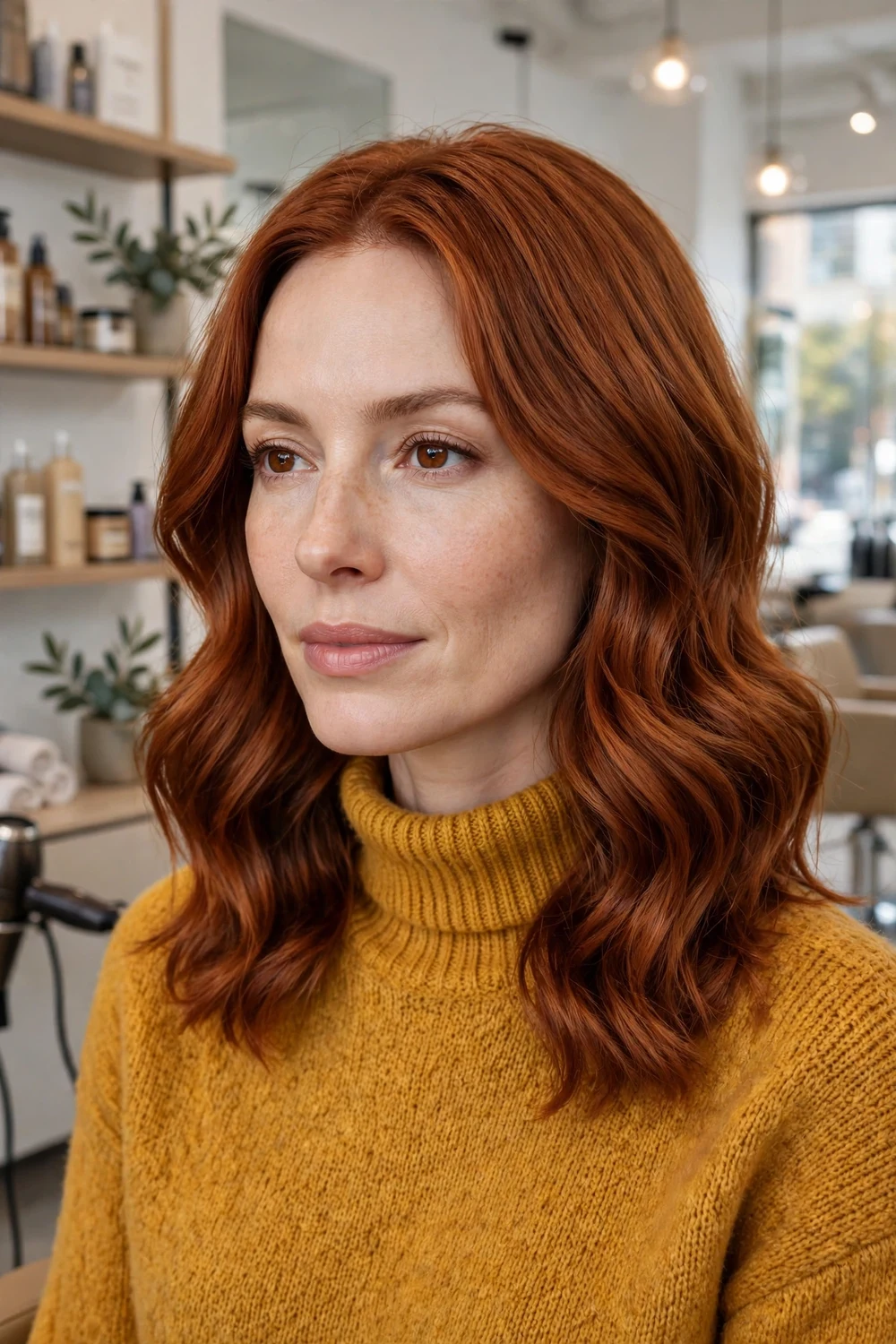
Spiced cider copper deepens soft copper with cinnamon and brown spice tones. The brown content keeps the shade grounded, which helps fair skin: the color adds warmth and depth around the face without the brightness of a true orange copper. It suits warm fair skin and light brown bases that want a clear seasonal change.
Most light and medium brown bases reach it without pre-lightening. The spice tones fade at different speeds, with the red notes going first, so the shade drifts browner over the weeks. A cinnamon copper gloss at five to six weeks rebuilds the balance.
Try this: pair this shade with a root melt one level deeper than the lengths. The deeper root softens regrowth and adds contrast that flatters pale skin.
Difficulty: Medium · Cost: $$ (salon)
8. Chestnut Brown
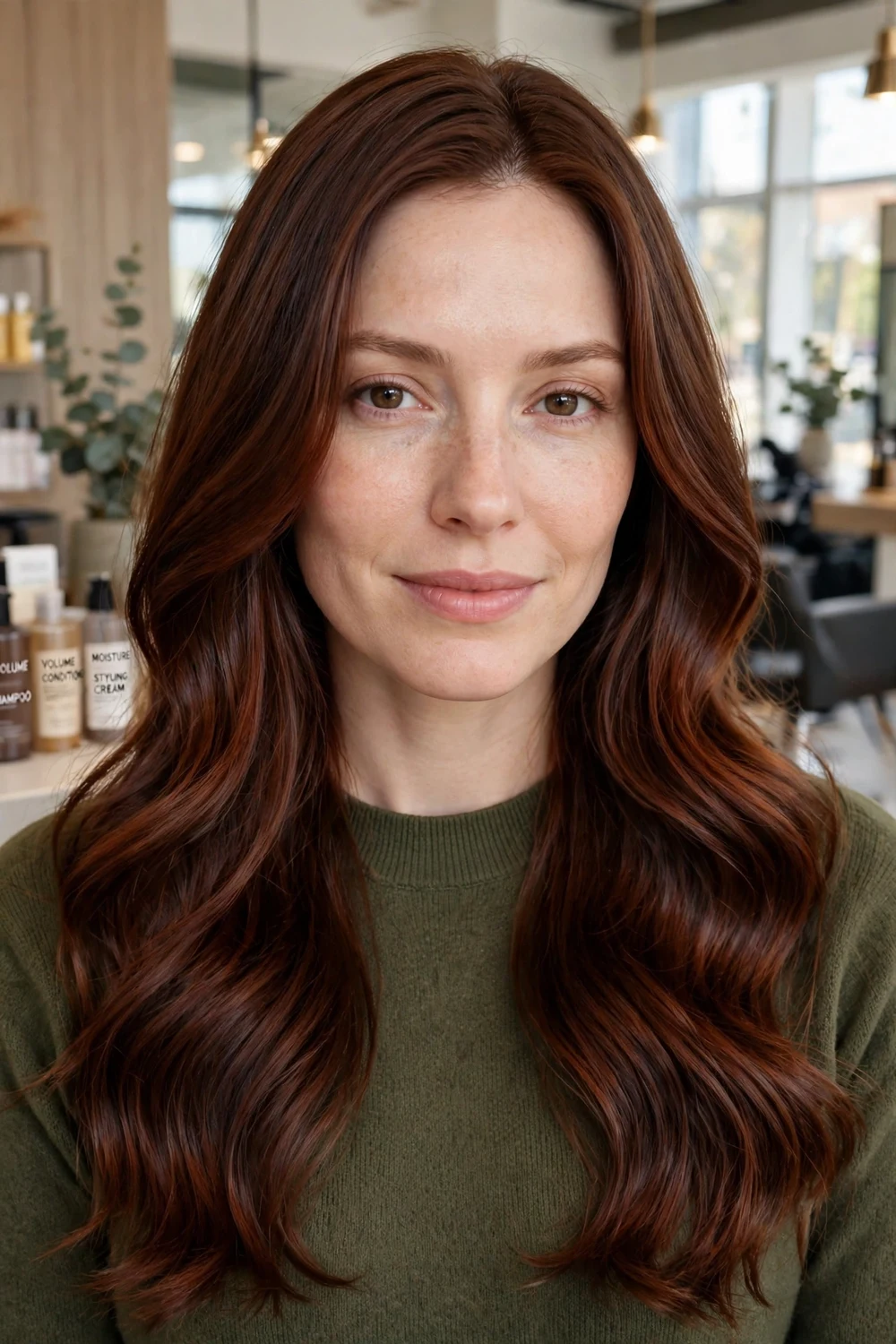
Chestnut brown is a medium brown with warm red undertones running through it. For warm fair skin it is one of the safest brunette routes on this list: the red warmth stops the brown from looking heavy or grey against a pale face, and the medium depth adds definition without harsh contrast. Hazel and green eyes stand out against it.
Chestnut is usually an all-over color, and it can also be laid as a gloss over a faded summer brunette. It holds well for a warm shade, with a gloss refresh at six to eight weeks to keep the red undertone alive. Shine matters here, since chestnut that goes dull reads as plain brown.
Try this: ask for a clear gloss over the chestnut at the same appointment. The sealed shine is what separates chestnut from a standard medium brown.
Difficulty: Low to Medium · Cost: $$ (salon)
9. Cinnamon Brown

Cinnamon brown sits between chocolate and auburn: a warm medium brown with a soft red tint. It warms up fair skin in the way a full red would, while the brown base keeps the overall read calm and wearable for work. It suits warm and neutral fair skin, and it is a practical step for brunettes who want red tones with an exit route.
The shade goes on as an all-over color or a rich gloss, and medium bases reach it in one session. Like most red-leaning browns, the cinnamon tint fades ahead of the brown, so expect the color to settle browner between visits. A warm gloss at six weeks restores the tint.
Try this: book the first round as a cinnamon gloss over your current brown. The tint and shine land in one short appointment and fade out cleanly if you change your mind.
Difficulty: Low to Medium · Cost: $$ (salon)
10. Muted Auburn

Muted auburn is an earthy, brown-leaning auburn with the brightness turned down. That muting is exactly why it works on fair skin: bright copper can shout against a pale face, while a browner auburn adds warmth and depth at a level the skin can match. A soft root smudge in your natural shade keeps the grow-out gentle.
Light and medium brown bases reach muted auburn with all-over color in one session. The root smudge stretches appointments to about eight weeks. Auburn pigments fade toward brown, so the shade stays presentable even when a visit slips, and a gloss brings the red back when you are ready.
Try this: ask your colorist to keep the auburn muted and brown based, with the clearest red placed through the mid-lengths where it catches light.
Difficulty: Medium · Cost: $$ (salon)
11. Auburn Ombre

An auburn ombre keeps deep auburn or brunette roots and fades them into lighter copper auburn ends. For fair skin, the placement is the advantage: the deeper tone sits near the face, where it frames pale features, and the lighter ends carry the seasonal brightness lower down, away from the skin.
The ends need lightener to reach the copper level, so the first appointment involves bleach work on the lengths only. Roots stay natural, which makes regrowth a non-issue, and the gradient can go ten weeks or more between visits. The lightened ends need weekly conditioning to stay smooth.
Try this: start the fade at chin level or lower. A lower fade keeps the bright ends away from the face and suits fair skin that finds strong color near the cheeks too much.
Difficulty: Medium to High · Cost: $$$ (salon)
12. Cool Beige Blonde

Cool beige blonde is a smoky, suede toned blonde with the yellow and gold toned out. It is the fall blonde built for cool fair skin: the beige tone sits comfortably next to pink undertones and never fights them the way golden shades can. A soft root shadow grounds the lightness so very pale skin keeps definition.
Reaching a clean beige usually means lifting the hair first and toning it cool, which is why this shade grades high on darker bases. Blondes already at a light level may only need the toner. Purple shampoo once a week holds the beige, and a toner refresh lands at five to six weeks.
Try this: ask for the root shadow in a cool light brown close to your natural shade. It adds depth at the parting and stretches the time between full appointments.
Difficulty: High · Cost: $$$ (salon)
13. Pearl Platinum Blonde
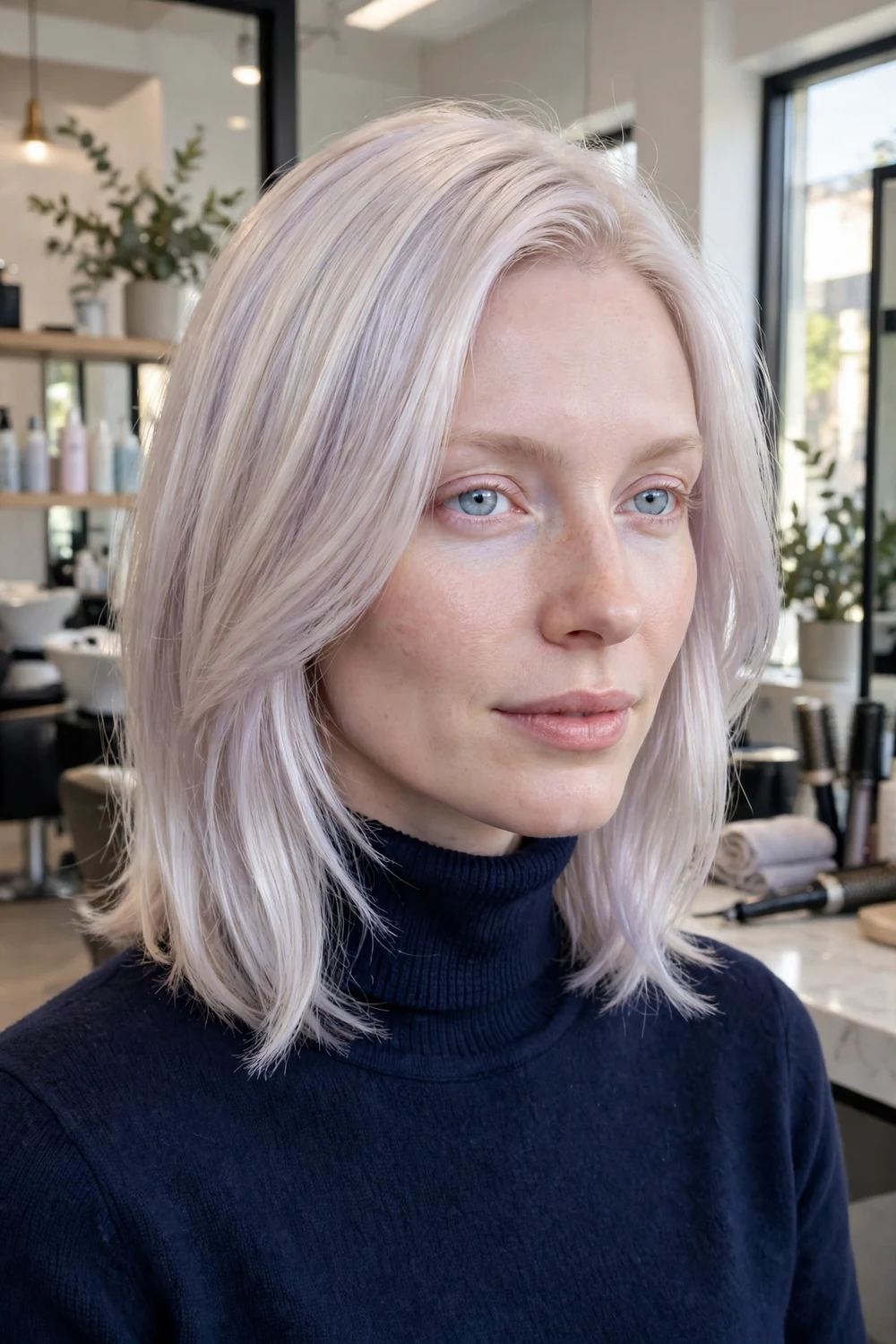
Pearl platinum blonde lifts hair to a very pale level and tones it with a soft violet sheen. On cool fair skin the effect is high contrast and deliberate: pale hair, pale skin, and the definition carried by brows, lashes, and lip color. On warm fair skin the same icy tone can drain the face, which is why this shade sits firmly in the cool group.
This is the highest upkeep idea on the list. It needs a full pre-lightening service, regular toning to hold the pearl sheen, and root touch-ups every four to five weeks once regrowth shows. Bond care and low heat styling protect the lightened lengths.
Try this: keep your brows at their natural depth or one shade deeper. The brow contrast is what stops pearl platinum from washing a fair face out.
Difficulty: High · Cost: $$$ (salon)
14. Mushroom Brown

Mushroom brown is a cool, ashy light to medium brown with taupe and soft grey tones. It is the standard fall answer for cool fair skin whose brown keeps turning brassy: the ash content cancels orange, and the mid-level depth gives pale features definition while the cool temperature keeps pink skin calm.
The service is usually all-over color with an ash toner, plus a root shadow for a softer grow-out. Lighter mushroom versions start from a blonde base with lowlights and a cool gloss. Toner refreshes land at five to six weeks, since ash tones fade and warmth creeps back in.
Try this: if your skin is warm or neutral, test mushroom as a gloss first. On warm skin this shade can read grey and draining, and a gloss lets you check before committing.
Difficulty: Medium · Cost: $$ (salon)
15. Lived-In Ash Brown

Lived-in ash brown keeps your natural root and adds cool taupe dimension through the mid-lengths and ends. For cool fair skin it delivers the ash family without a solid block of grey-brown next to the face. The natural root also anchors the look, so pale skin keeps contrast at the hairline where it matters most.
The lengths are painted or lightly foiled and toned ash, which puts lightener in the service and raises the grade. After that first appointment, upkeep is low: the blend grows out with no hard line, and a toner at eight weeks restores the cool tone.
Try this: bring a photo of your natural root color in daylight. Matching the painted pieces to that root is what makes the grow-out disappear.
Difficulty: Medium to High · Cost: $$$ (salon)
16. Espresso Brunette

Espresso brunette is a deep, glossy brown that sits just short of black, lifted by fine mocha highlights so it never reads flat. On cool and neutral fair skin the depth creates strong, clear contrast that suits blue and grey eyes well. The mocha pieces matter: solid near-black color with no dimension is the version most likely to make very pale skin look tired.
Going darker is gentle work. Most heads reach espresso with all-over color or a deep gloss in one session, with no lightening at all. A clear gloss every six weeks keeps the surface reflective, since shine is what keeps a shade this deep looking healthy against fair skin.
Try this: step down in stages if you are coming from blonde. Book a medium brown first, live with it for a few weeks, then take the espresso step.
Difficulty: Low to Medium · Cost: $$ (salon)
17. Spiced Cola Brunette
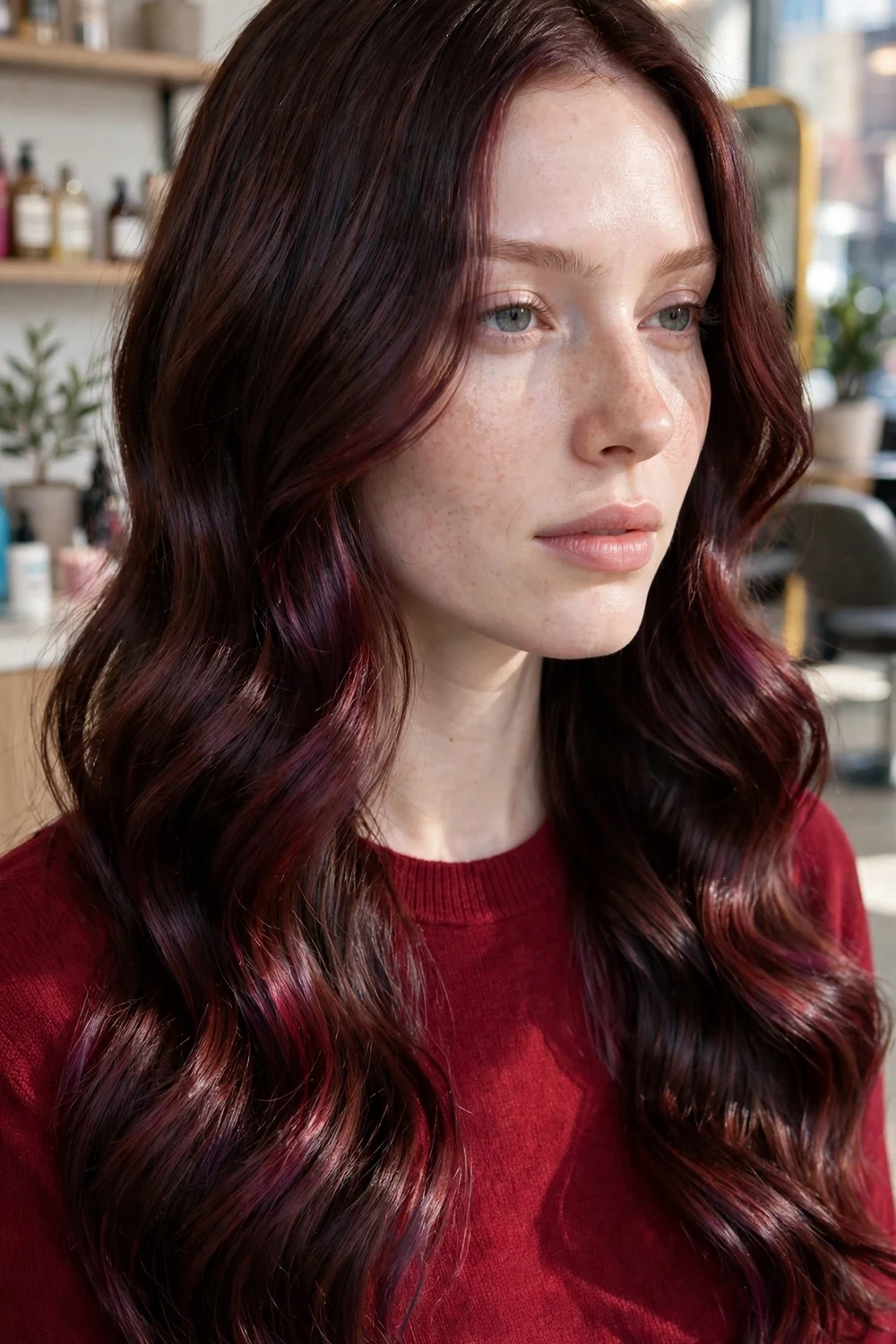
Cherry cola lays a red-violet tint over a dark brown base. Indoors it reads as brunette, and in daylight the cherry tone shows through the lengths. The violet lean is what earns it a place in the cool group: blue based reds sit well on pink and rosy fair skin, where orange based reds can clash and bring out redness in the face.
A cherry cola gloss over an existing brunette base is the low commitment version, done in under an hour in many salons and fading out over four to six weeks. A permanent version holds longer and still needs a red gloss refresh, since red pigments rinse out ahead of the brown base.
Try this: ask for the cherry tint concentrated in the lengths and kept off the root area, so regrowth stays plain brunette and blends easily.
Difficulty: Low to Medium · Cost: $$ (salon)
18. Deep Mahogany Melt
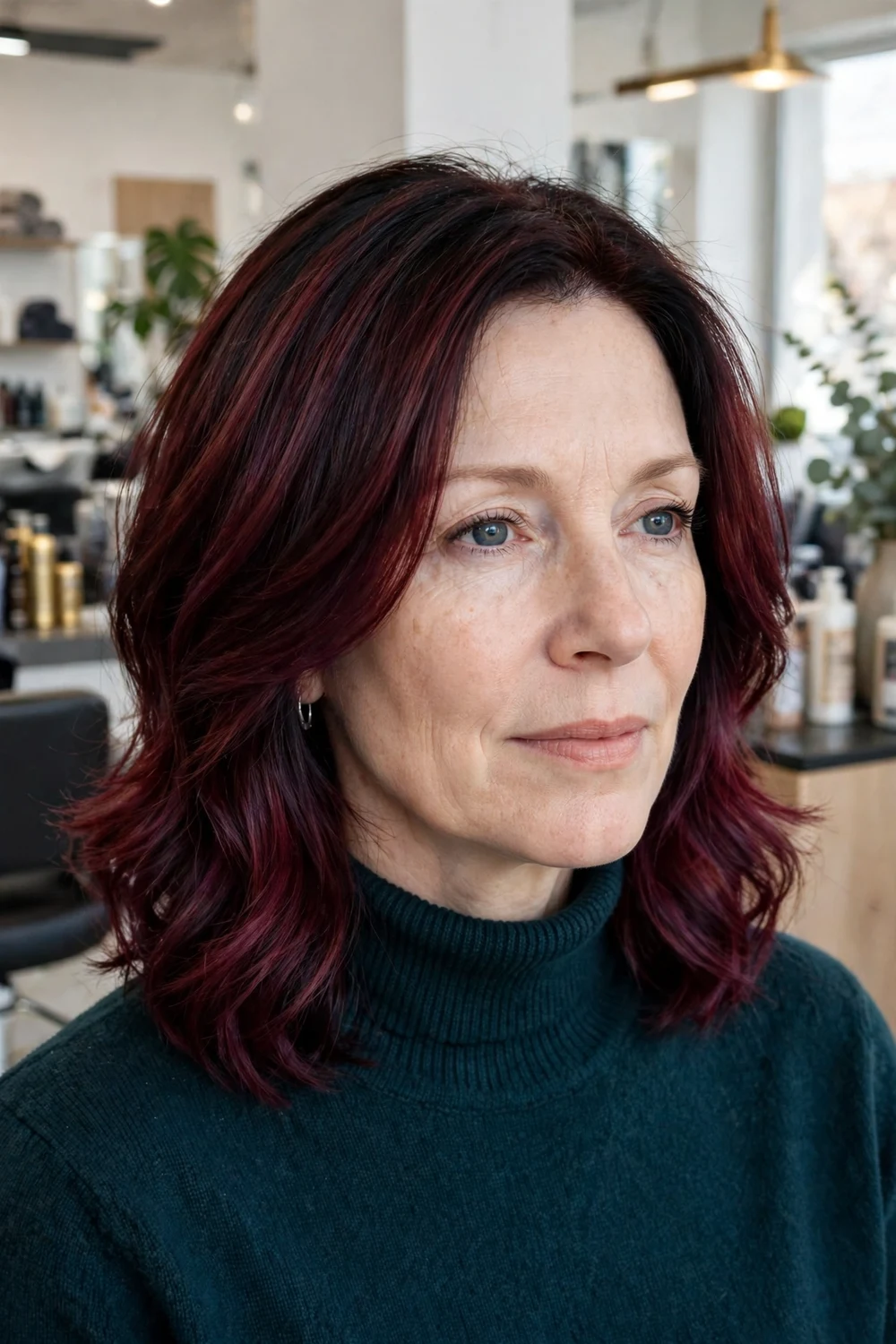
A deep mahogany melt blends a dark natural root into red-violet mahogany lengths with no hard line between them. Mahogany mixes brown, red, and violet, and that violet share makes it one of the few deep reds that cool fair skin wears well. The dark root keeps the deepest tone at the top and lets the color build gradually.
Melts use two or three formulas and careful blending, and dark ends may need a lift before the mahogany will show its red side. The payoff is grow-out: the melted root stretches appointments to eight weeks or more, with a gloss on the lengths at six weeks to hold the red-violet shine.
Try this: ask for the melt to start around ear level if your roots grow fast. A lower melt buys extra weeks and keeps the richest color in the lengths.
Difficulty: Medium to High · Cost: $$$ (salon)
19. Mulberry Lowlights
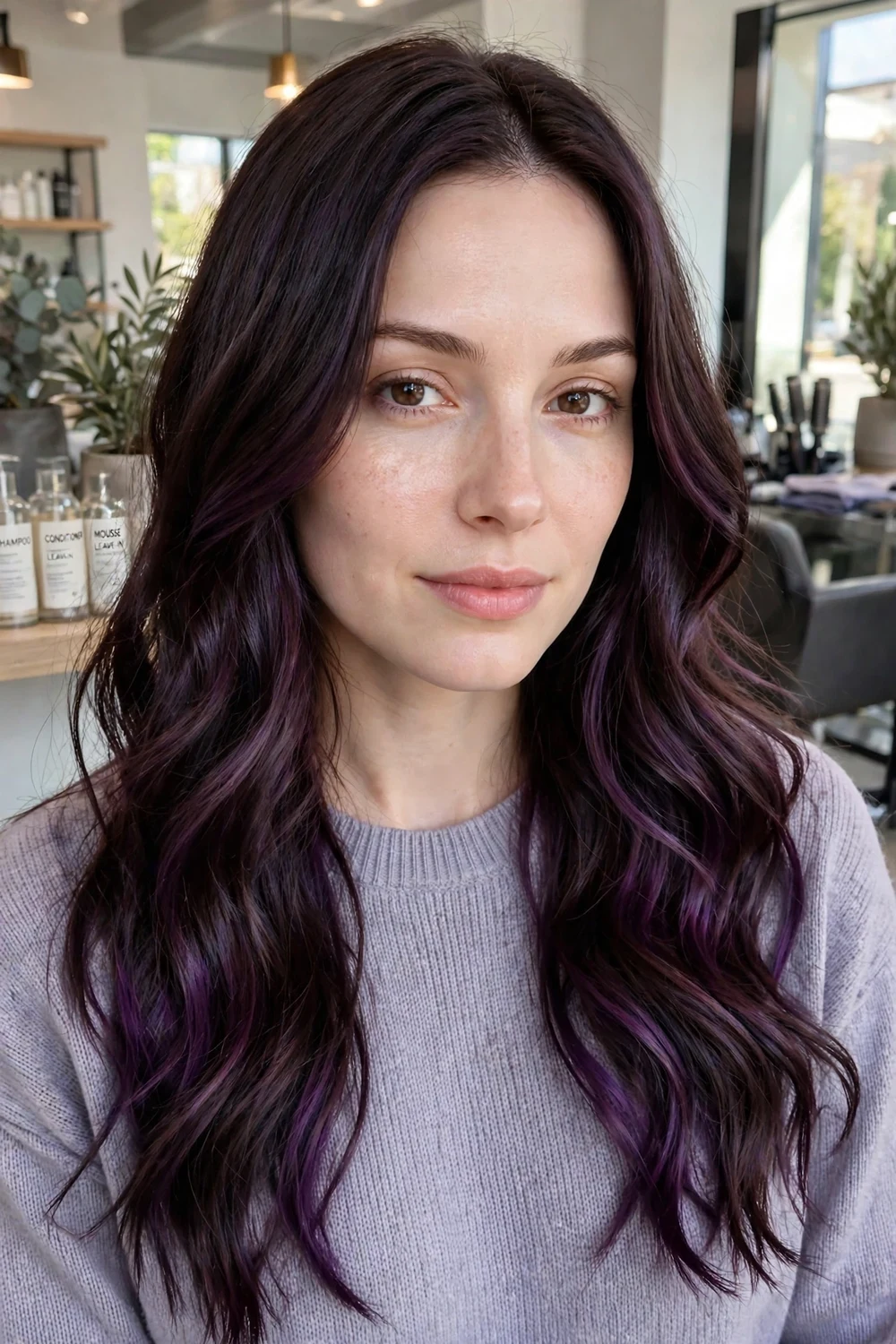
Deep plum lowlights weave purple plum panels through a dark brunette base, visible when the hair moves or catches the light. Plum is a blue based tone, so it belongs with cool fair skin, and the dark base keeps the overall look grounded. It is the boldest cool option on this list and it still reads as brunette in most indoor light.
Lowlights are placed with foils and need no lightener on a brunette base, which keeps the service in the middle range. Plum pigment fades toward a muted violet-brown over five to six weeks. A violet color-depositing conditioner slows the fade and keeps the panels clear.
Try this: start with plum lowlights through the underneath layers only. You get the color movement with none of the plum sitting directly against your face.
Difficulty: Medium · Cost: $$ (salon)
20. Bronde

Bronde weaves brown and blonde together with a mix of highlights and lowlights, landing between the two colors. It is the neutral fair skin staple on this list because the temperature can be tuned either way: a few golden pieces warm it up, a few beige pieces cool it down, and the overall depth stays in the safe middle range for pale faces.
The woven build takes foil work in both directions, so the first appointment runs long. After that, bronde is one of the lowest upkeep full colors here, since the mix of tones hides regrowth and fading alike. Most wearers refresh the gloss at eight weeks and redo the full weave two or three times a year.
Try this: tell your colorist your undertone at the consultation and ask them to weight the mix that way, roughly two warm pieces to one cool piece, or the reverse for cool skin.
Difficulty: Medium to High · Cost: $$$ (salon)
21. Fawn Brown
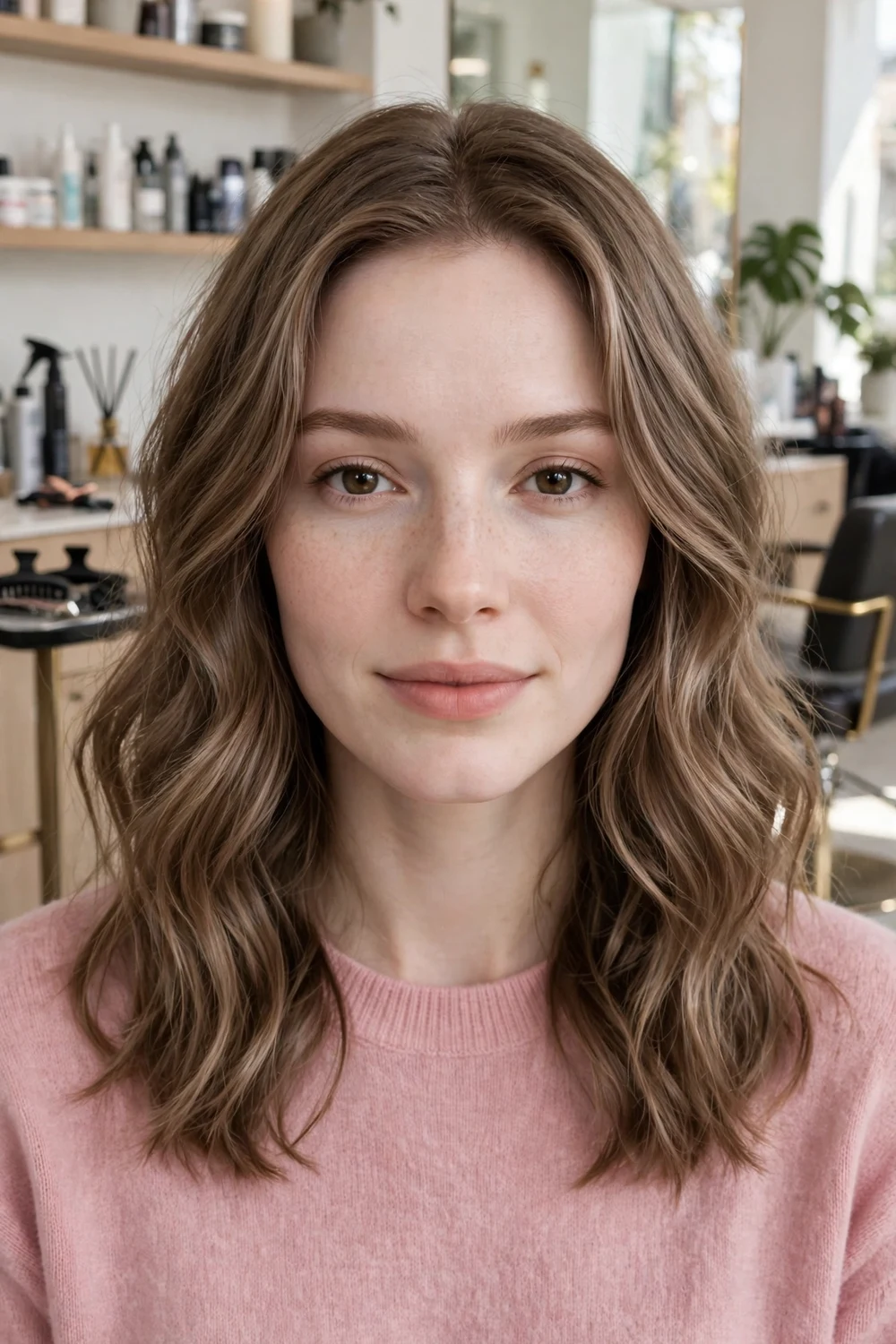
Fawn brown is a soft light to medium brown with a neutral temperature and gentle natural dimension. It suits fair skin that finds warm browns too red and cool browns too grey, which is a common neutral undertone complaint. The light depth keeps the face bright, and the brown base adds enough definition for fall.
Fawn is usually an all-over color, sometimes with a handful of fine lowlights for dimension. It is gentle on the hair and on the calendar: regrowth against a light brown base is soft, and refreshes land at six to eight weeks. A neutral gloss keeps the tone balanced as it fades.
Try this: if you are a blonde going darker for the first time, fawn brown is a low risk first step. It darkens the overall read while staying close to your natural depth.
Difficulty: Low to Medium · Cost: $$ (salon)
22. Dark Chocolate Brown
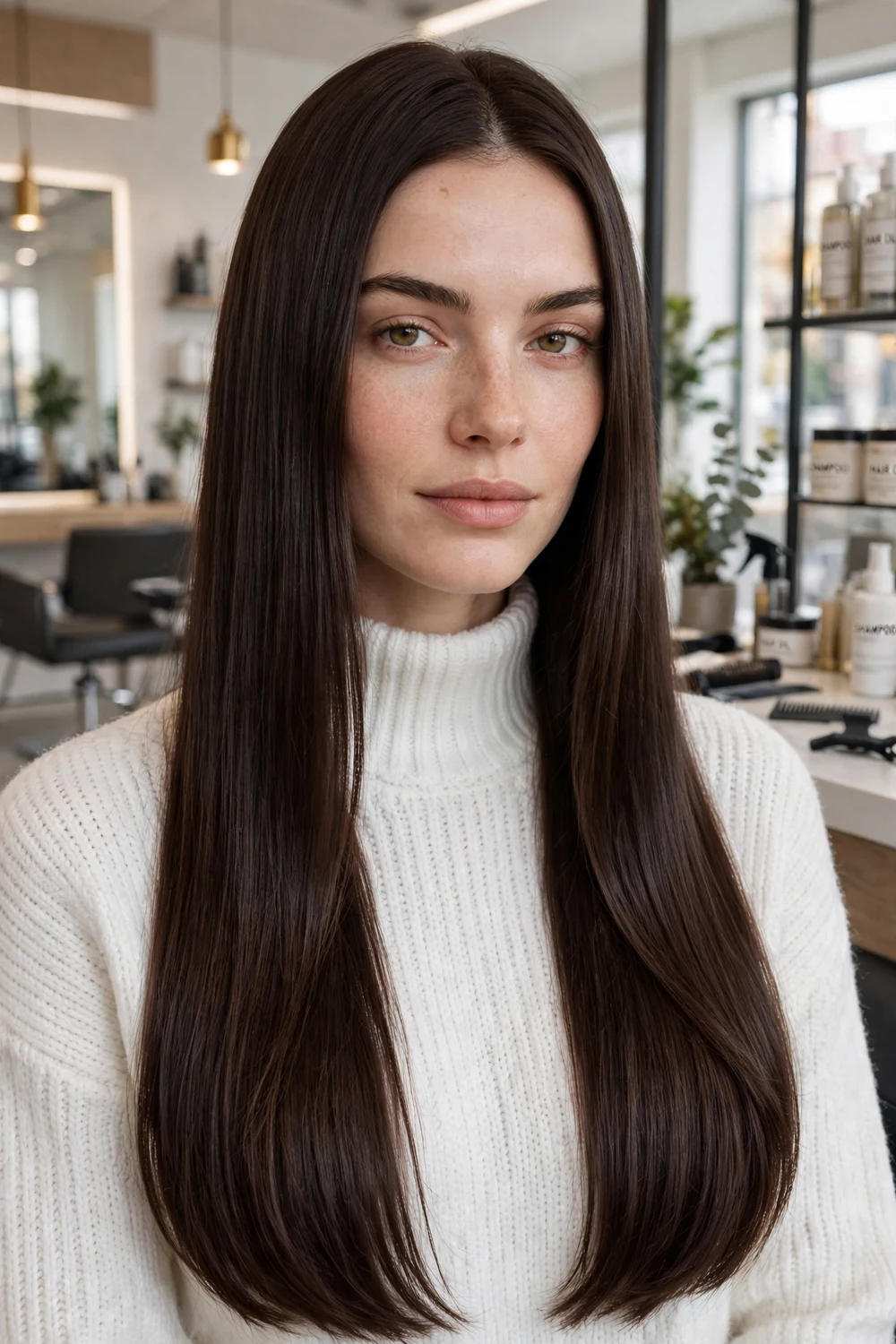
Dark chocolate brown is one rich, saturated brown worn in a single tone with a gloss finish. The hints of red, honey, or gold that colorists fold into chocolate formulas keep it from going flat, and that warmth is what lets neutral and warm fair skin wear a shade this deep. The contrast against pale skin is strong and clean.
Going chocolate is a one session all-over color for most bases, with no lightening involved. The upkeep risk is dullness, since a faded chocolate reads tired against fair skin faster than it does against deeper skin. A gloss at five to six weeks keeps the tone saturated and the surface shiny.
Try this: ask for soft highlights on the ends and around the face in the same chocolate family, one level lighter, if a single solid tone feels too heavy at the first appointment.
Difficulty: Low to Medium · Cost: $$ (salon)
23. Mocha Brown
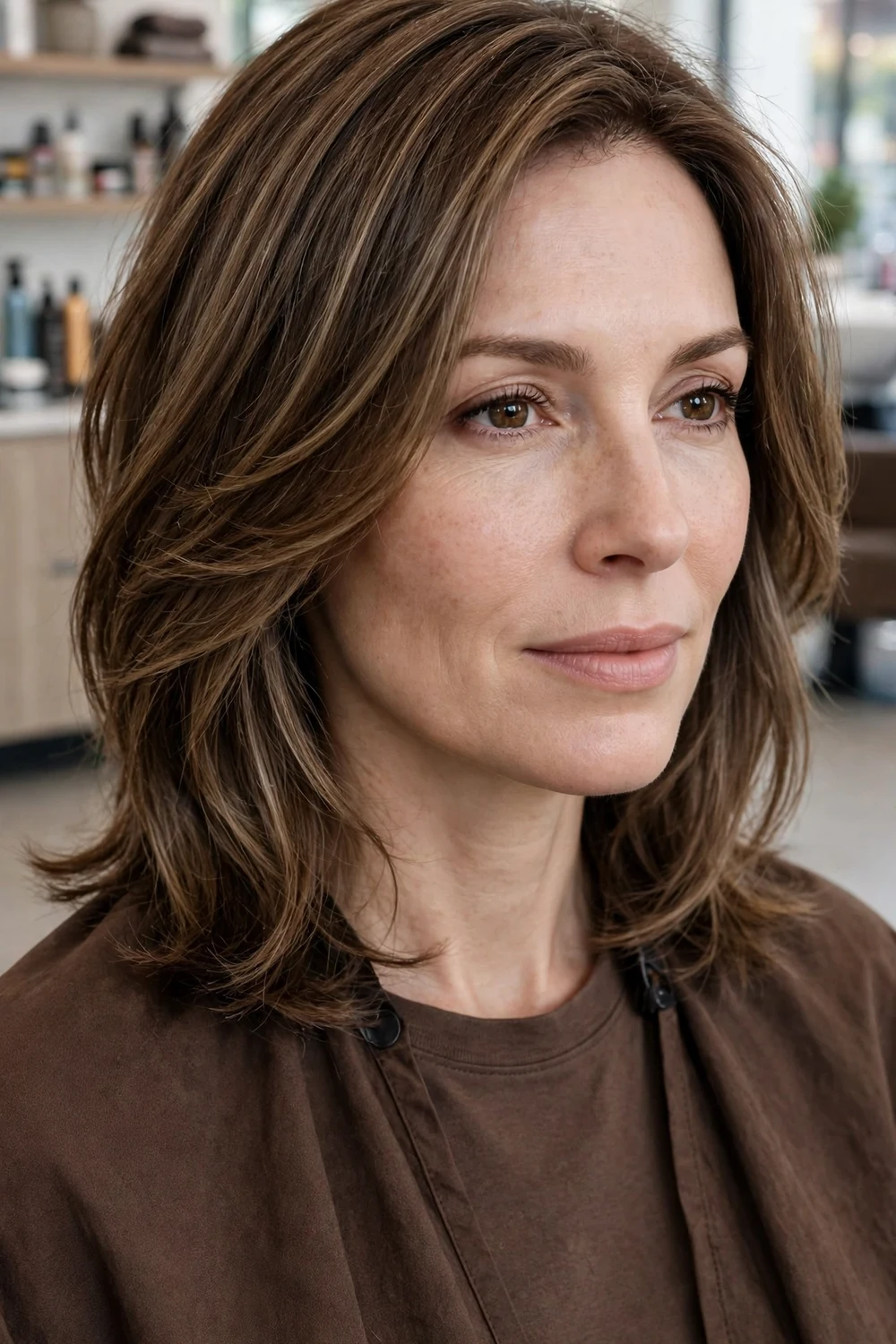
Mocha brown is a neutral coffee brown with fine balayage pieces run through the lengths. It carries less red than chocolate and less grey than mushroom, which places it in the middle where neutral fair skin is most comfortable. The painted pieces add light around the lower face without putting blonde directly against pale skin.
The base color goes on first and the balayage pieces are painted over it, so the appointment combines two services. Grow-out is soft on both parts, and most wearers run eight weeks between visits with a neutral gloss in between to keep the coffee tone clean.
Try this: keep the mocha pieces fine and low, starting below the cheekbones, if you want the brightness to warm the look without changing how the color frames your face.
Difficulty: Medium · Cost: $$$ (salon)
24. Sandy Blonde
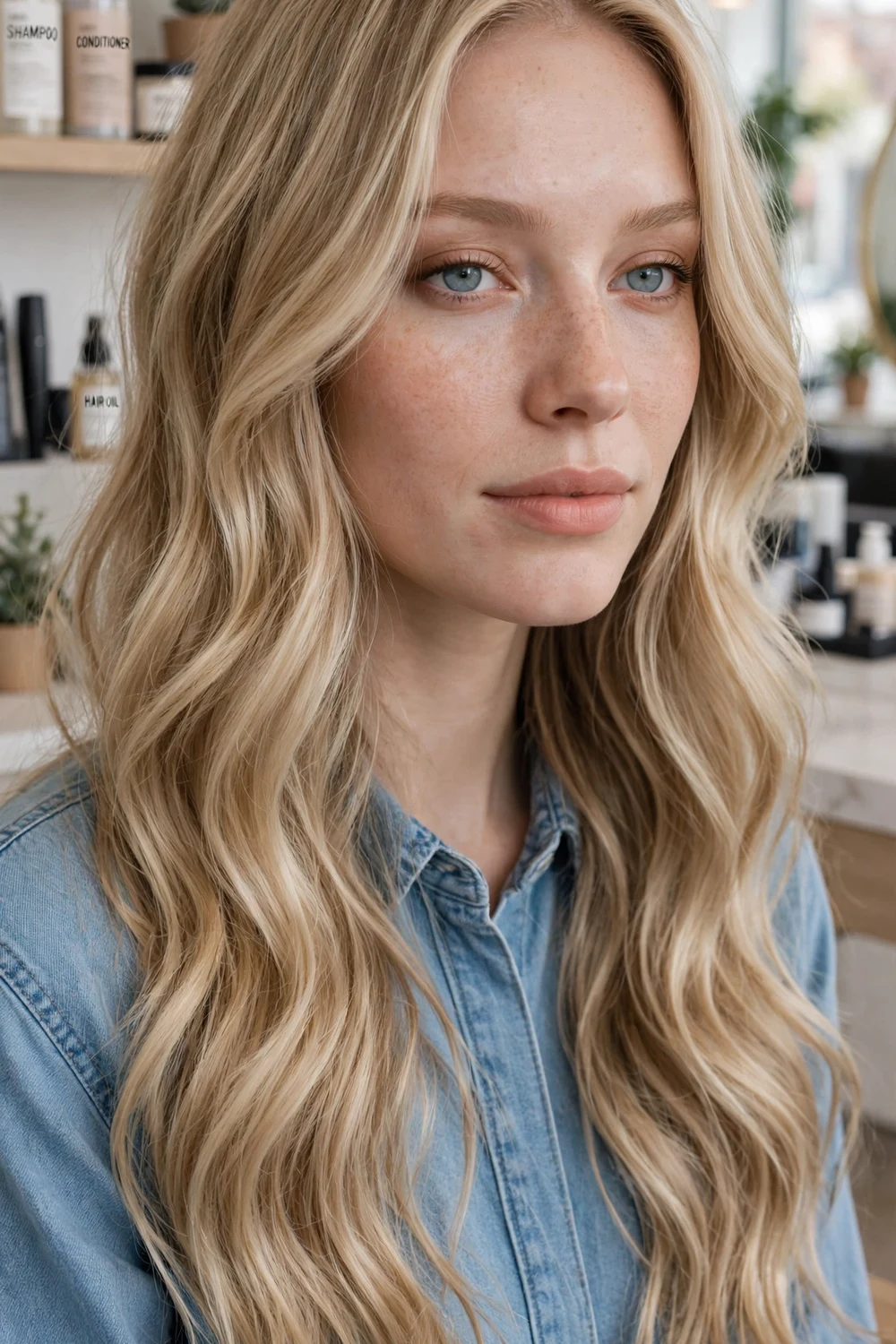
Sandy blonde is a soft wheat toned blonde with gentle highlights and a beige, neutral finish. It deepens a summer blonde just enough for fall while staying light around the face, which suits neutral and warm fair skin that wants to stay blonde without going golden. The beige content also keeps it wearable for cooler skin than most blondes on this list.
Sandy blonde is built with foils and a beige toner over a blonde or light brown base. It fades gracefully toward a pale wheat tone, and the refresh cycle is a relaxed eight weeks for most wearers. A beige gloss at the halfway point keeps the sand tone from drifting yellow.
Try this: ask for a slightly deeper sandy lowlight through the underneath layers. The added depth is what makes a light blonde read as a fall color.
Difficulty: Medium · Cost: $$ (salon)
25. Rose Gold Tint
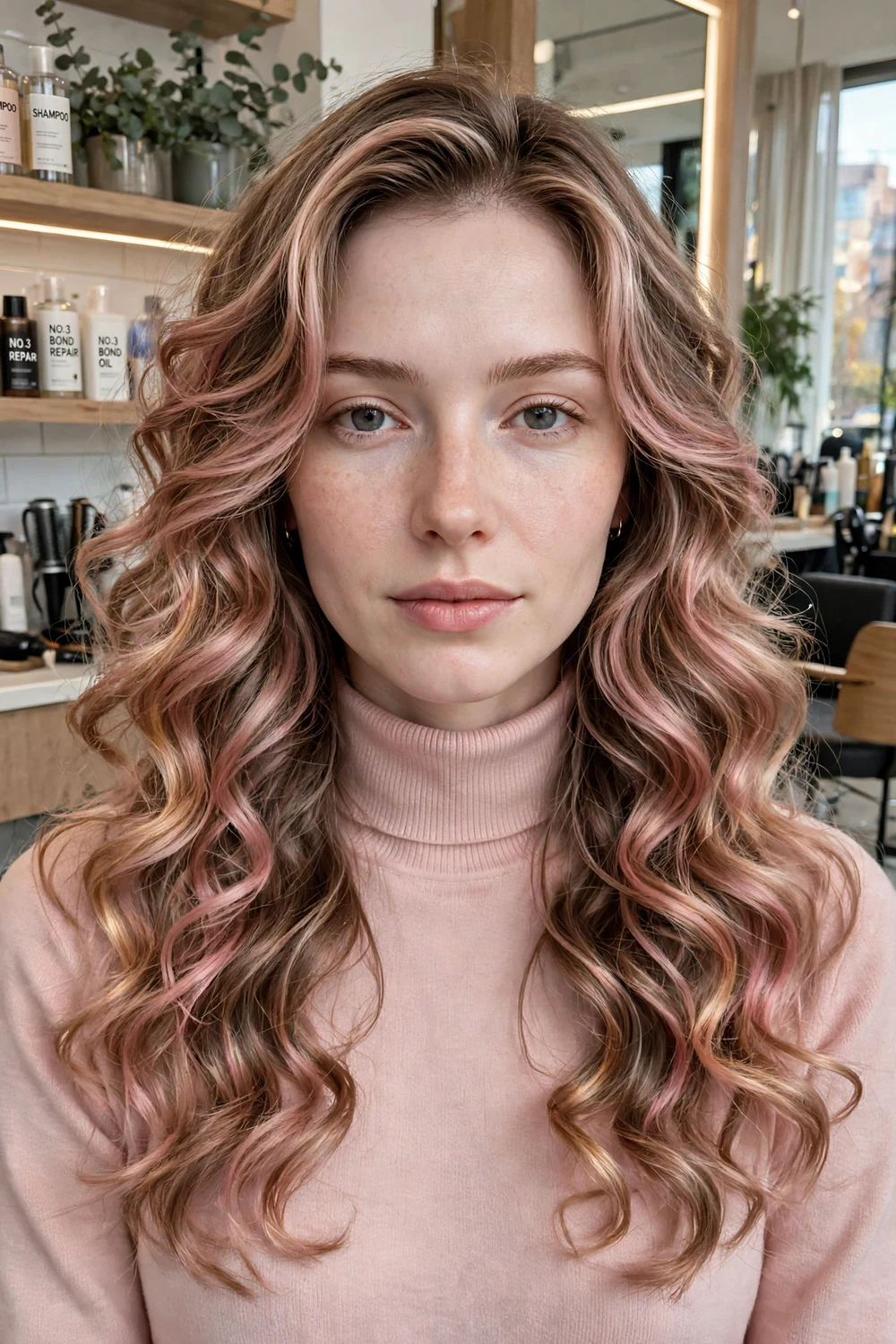
A rose gold tint lays soft pink and gold over a light blonde or light brunette base. The mix of warm gold and cool pink is why it suits neutral fair skin so well, and the pink share also flatters cool fair skin that finds full copper too orange. The effect is a blush through the hair that shows most clearly in daylight.
On light bases this is a tint or gloss service with no lightening, and it fades out evenly over four to six weeks. Darker bases need a lift first, which changes the grade, so ask your colorist to confirm your starting level. A pink toning conditioner at home holds the blush between visits.
Try this: try the tint as a gloss before any permanent version. Rose gold is easy to love in photos and personal in real life, and the gloss fades out if it is not for you.
Difficulty: Low to Medium · Cost: $$ (salon)
26. Caramel Chestnut Balayage

Caramel chestnut balayage hand-paints warm caramel and chestnut ribbons through a brown base, from the mid-lengths down. For fair skin the placement does the protective work: the brunette base stays near the face, where it frames pale features, and the warm ribbons brighten the lengths. It suits warm and neutral fair skin and every brunette base from light to dark. The wider fall balayage hair colors list shows more placements in this family.
Balayage uses lightener on the painted pieces, so the first appointment grades higher, and the ends need moisture care afterward. The grow-out is the reward: no hard root line, a toner at eight to ten weeks, and a repaint two or three times a year for most wearers.
Try this: ask for the ribbons kept warm and golden rather than pale. Pale ribbons against a brown base can read grey on fair skin in flat fall light.
Difficulty: Medium to High · Cost: $$$ (salon)
Frequently Asked Questions
Which fall hair colors suit fair skin with cool undertones?
Cool fair skin suits the cool families in this list: cool beige blonde, pearl platinum blonde, mushroom brown, lived-in ash brown, cherry cola, and deep mahogany. These shades carry ash, beige, or red-violet tones and keep orange and heavy gold away from pink skin, where warm orange tones can bring out redness in the face.
Which fall hair colors warm up fair skin with warm undertones?
Warm fair skin is warmed up by golden and red based shades: honey blonde, golden blonde, strawberry blonde, soft copper, spiced cider copper, chestnut brown, and cinnamon brown. The gold and copper content echoes the peachy and golden tones in warm skin, so the face looks healthier in flat fall light.
What hair colors wash fair skin out?
The common culprits are a temperature mismatch and a flat finish. Flat ash brown or icy blonde can drain warm fair skin, strong orange copper can clash with cool pink skin and heighten redness, and solid jet-dark color with no dimension or gloss can make very pale skin look tired. Dimension, a root smudge, and a gloss finish fix most of these cases.
Do I need to bleach my hair to wear a fall color on fair skin?
Often, no. Brunette and light brown bases reach chestnut, cinnamon, chocolate, mocha, cherry cola, and most glazes and tints with no lightening at all. Bleach or pre-lightening is needed for the lightest shades, pearl platinum, cool beige blonde, and the lightened ends of ombre and balayage looks. Your starting level decides, and a colorist can confirm it in a consultation.
How do I keep a fall hair color from fading?
Wash less often, use lukewarm or cool water, and switch to a sulfate-free, color-safe shampoo. Red family shades fade fastest, so add a color-depositing conditioner matched to your tone once a week for copper, auburn, and cherry shades, and book a gloss refresh at four to six weeks. Cool shades hold longer with a toner refresh at five to six weeks to keep warmth from creeping back in.
Final Thoughts
Fair skin takes fall color well when the match runs in the right order: undertone first, depth second, upkeep third. Warm faces get their color back from honey, copper, and chestnut. Cool faces stay clear and defined with beige, mushroom, and cherry tones. Neutral faces hold the middle ground with bronde, fawn, and mocha. Pick the shade your skin already leans toward, keep some dimension or gloss in the finish, and the color will flatter your face all season. For a season-wide view of these same families across every skin tone, the autumn hair colors roundup is the next read.

