


Platinum blonde is the palest blonde family, and the range inside it is wider than most people expect. One end is icy and almost white, the other end is warm and creamy, and in between sit pearly, silver, smoky, and champagne tones that suit very different skin tones and routines.
I put this list together the way I would want it at a salon consultation: tone first, then placement, then the cut and style pairings that keep showing up for platinum. Each idea notes who it suits, how the color is placed, and what upkeep it asks for, so you can rule ideas in or out before you book.
Key Takeaways
- Platinum is a level, and the tone on top of it is your choice: icy, pearly, silver, smoky, champagne, creamy, or wheat.
- Dark bases usually need staged lightening. A strand test and a consultation come before any full platinum service.
- Balayage, shadow roots, ombre, and peekaboo placements grow out softer than all-over platinum and stretch salon visits.
- Cool platinum suits cool and neutral skin. Warm platinum tones such as champagne and vanilla suit warm and olive skin.
- Toner refreshes land every four to six weeks for most ideas, with purple shampoo once a week in between.
Platinum Tones at a Glance
| Tone family | Feel | Best skin tones | Upkeep |
|---|---|---|---|
| Icy and pearly platinum | Cool, pale, close to white | Cool, neutral | High |
| Silver and smoky platinum | Cool with gray depth | Cool, neutral, olive | Medium to high |
| Champagne and vanilla platinum | Warm, soft, creamy | Warm, neutral, olive | Medium to high |
| Balayage, shadow root, ombre | Pale ends with a deeper root | All | Low to medium |
| Tinted platinum (pink, lavender, rose gold) | Pale base with a soft tint | Depends on tint | High, tints fade fast |
| Placed platinum (money piece, peekaboo, ribbons) | Pale pieces on your own base | All | Low to medium |
1. All-Over Platinum
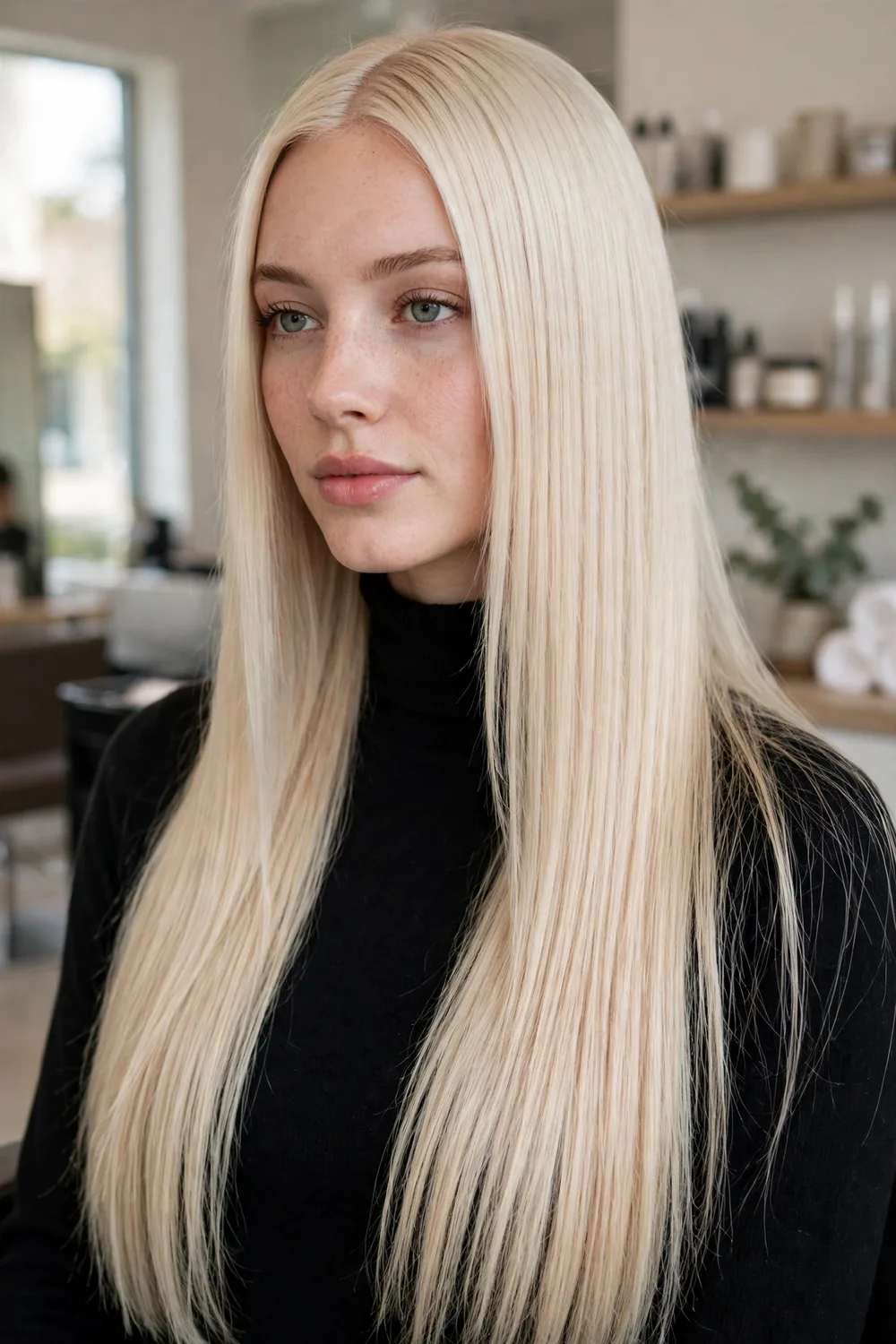
All-over platinum lifts every strand to a pale, even blonde from root to tip. The color reads clean and bright because no darker base shows through. Light and medium bases reach it fastest, while dark bases usually need more than one lightening session before the toner goes on.
Ask for a full scalp lightening service with a cool neutral toner, and book the toner refresh before you leave. Roots show as a clear band, so most wearers return every four to five weeks. A bond care mask once a week helps the lengths stay smooth between visits.
Try this: Take a strand test first if your hair has old color on it, so your colorist can plan the lift in stages.
Difficulty: High · Cost: $$$
2. Icy Platinum
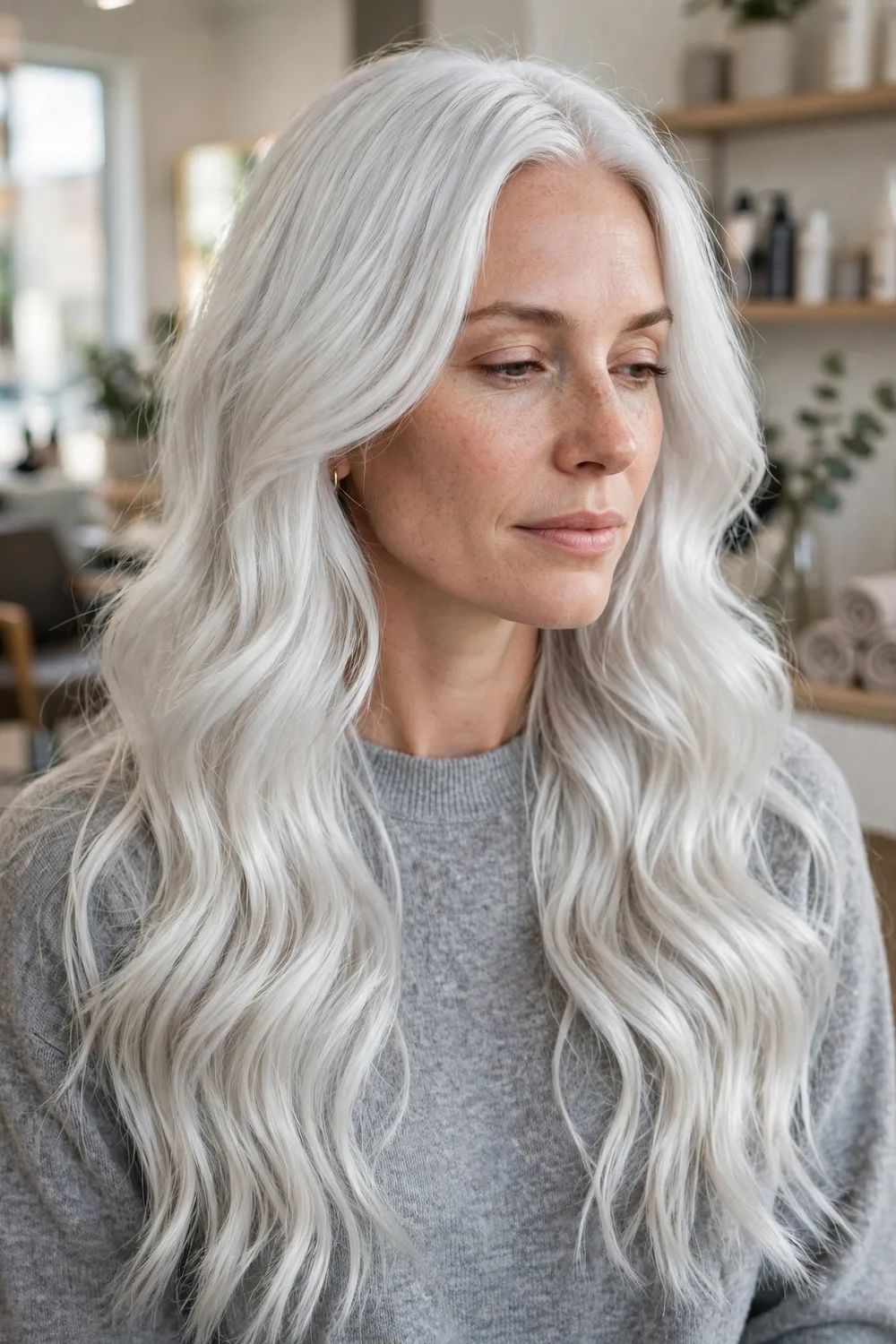
Icy platinum sits at the palest end of the family, close to white with a cool blue-violet tone. Any yellow left in the hair will show, so the lift has to be very clean before toning. Cool and neutral skin tones carry this shade with the least contrast against the face.
Purple shampoo once a week keeps the icy tone clear, and a gloss at four weeks restores shine. Heat styling dulls icy tones fast, so use a heat protectant and keep hot tools on a medium setting. This shade asks for steady upkeep, and the payoff is a crisp, bright finish.
Try this: Ask for an icy toner with a violet base, and check the result under daylight before you leave the salon.
Difficulty: High · Cost: $$$
3. Pearly Platinum

Pearly platinum adds a soft pearl reflect to a pale blonde base. The reflect shifts between pale silver, blush, and cream as the light changes, which keeps a flat single tone from looking dull. Long and medium lengths show the shift best because there is more surface for light to move across.
A pearl toner works on hair lifted to a very pale yellow. The reflect fades faster than the base color, so plan a toner refresh at three to five weeks. Clear gloss at home adds shine without changing the tone.
Try this: Ask your colorist to keep the pearl reflect subtle at the roots and stronger through the mid-lengths, where light hits first.
Difficulty: High · Cost: $$$
4. Silver Platinum
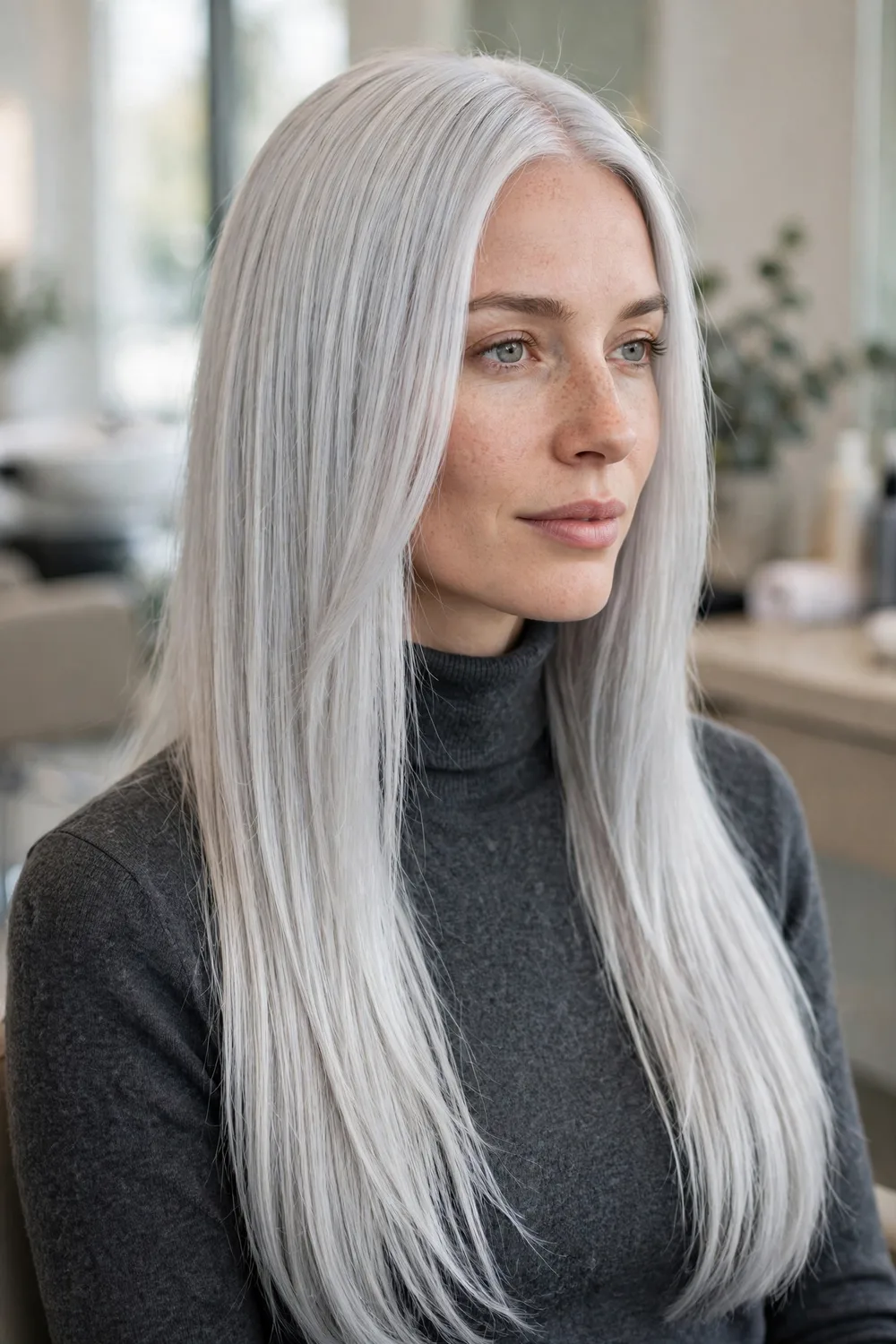
Silver platinum mixes pale blonde with a clear silver tone. It reads cooler and slightly deeper than icy platinum, and it suits people who want a metallic finish. The silver tone needs a pale base, though a small amount of warmth can stay if you prefer a softer silver.
Silver tones fade toward pale blonde over several weeks. A silver depositing mask every week or two puts the tone back without a full salon service. If you have naturally gray strands, this shade blends with them well as it grows out.
Try this: Bring a photo that shows silver in indoor light, since silver can look much paler in bright sun.
Difficulty: High · Cost: $$$
5. Smoky Platinum
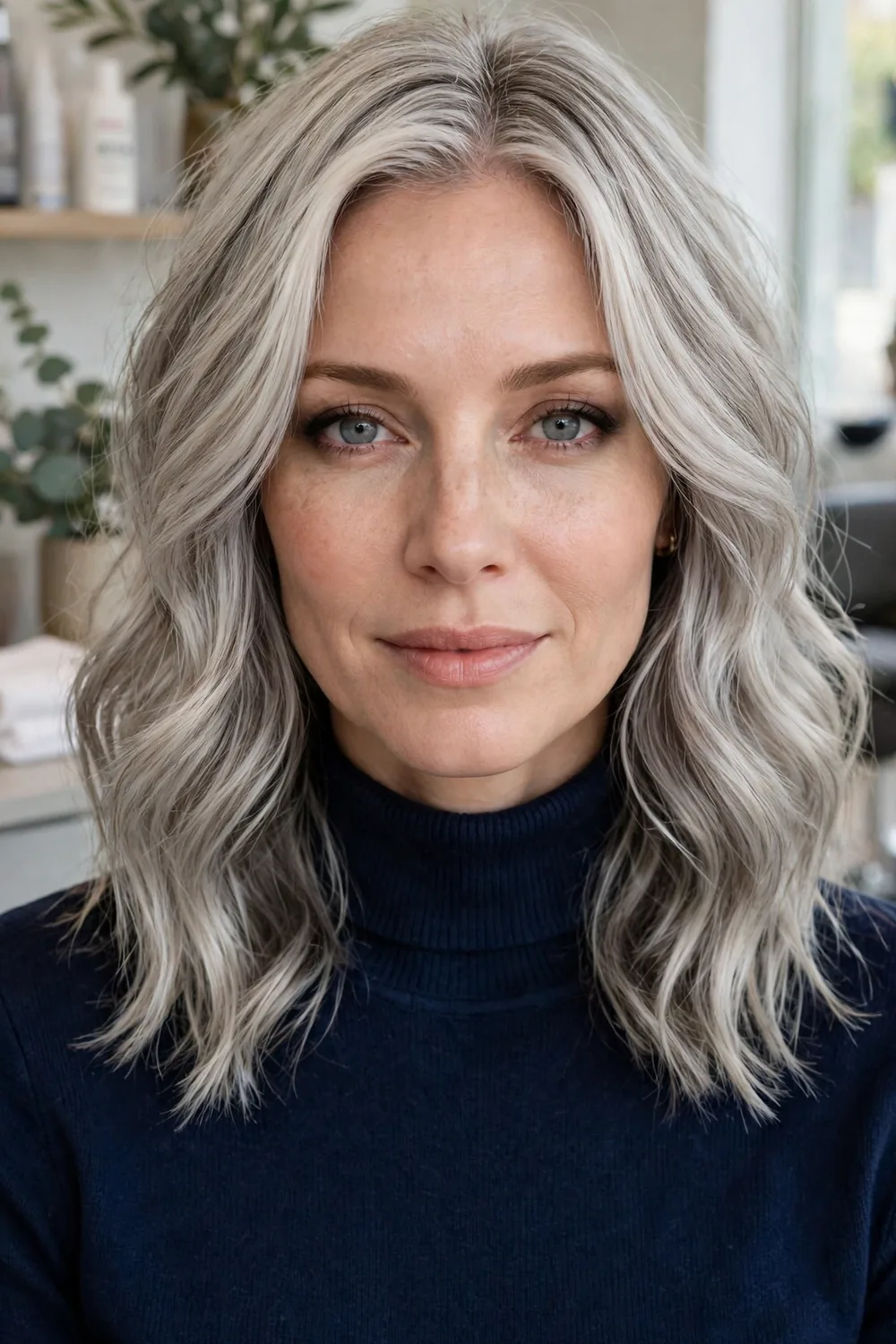
Smoky platinum keeps a soft gray depth inside a pale blonde. The smoky cast makes the color feel calmer and easier to wear than a stark white tone. It is a useful first step for brunettes who want to test cool pale color before going brighter.
The base does not need to lift quite as pale as icy platinum, which can mean a shorter first appointment. Toner at five to six weeks keeps the smoky cast even. Avoid heavy purple shampoo use, since too much can push smoky tones toward dull gray.
Try this: Ask for smoky depth mainly through the mid-lengths, with cleaner pale pieces around the face.
Difficulty: Medium · Cost: $$$
6. Champagne Platinum
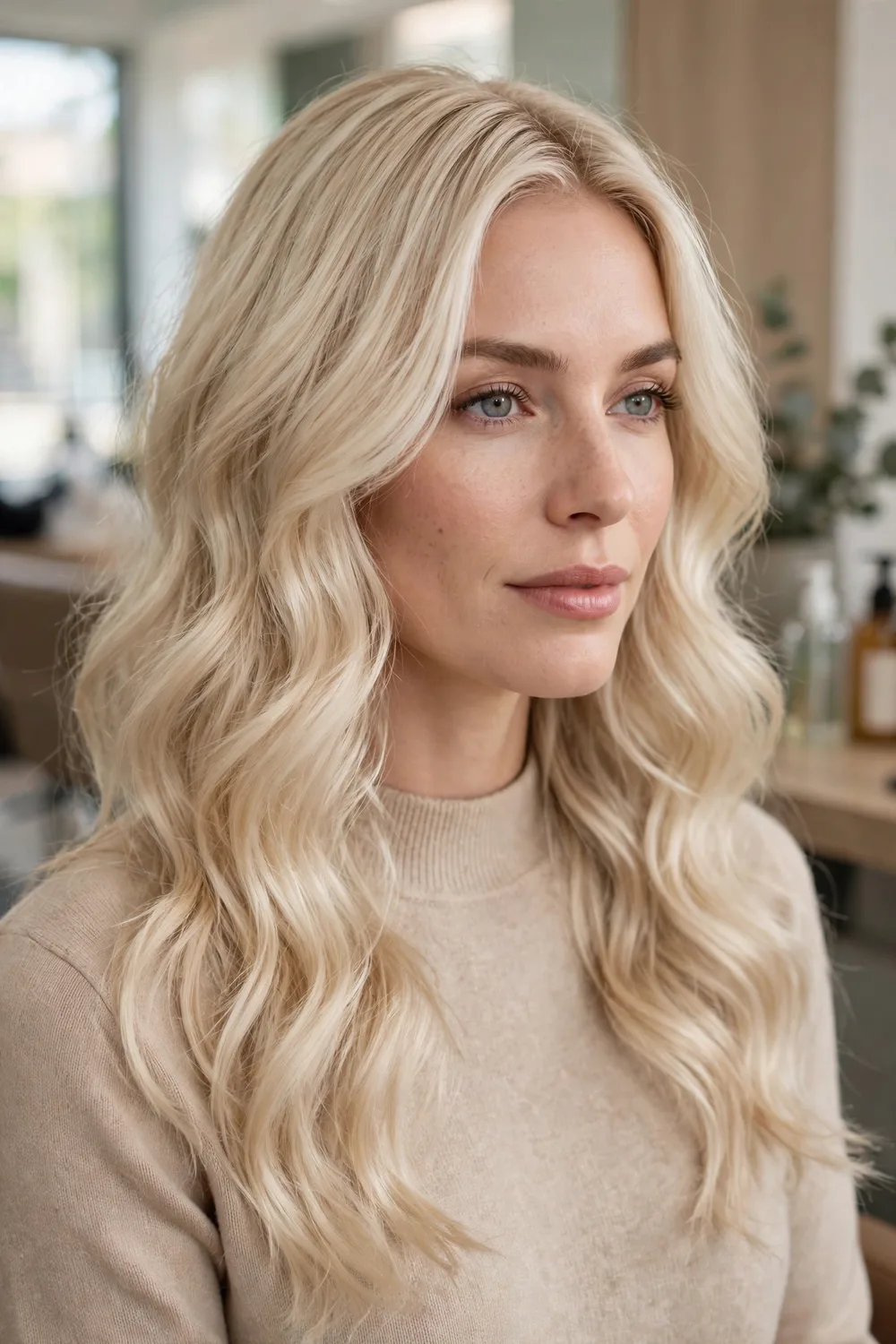
Champagne platinum blends pale blonde with soft peach and gold tones. The warmth keeps the color from feeling stark, and it suits warm and neutral skin tones well. It still reads platinum because the overall level stays very light.
Ask for a champagne toner over a clean pale lift, with a touch more gold around the face. The warm reflect fades gently toward pale blonde, so the grow-out and fade both stay soft. A gloss at five weeks brings the warmth back.
Try this: Try champagne face-framing pieces first if you want to test warm platinum before a full head.
Difficulty: High · Cost: $$$
7. Creamy Vanilla Platinum
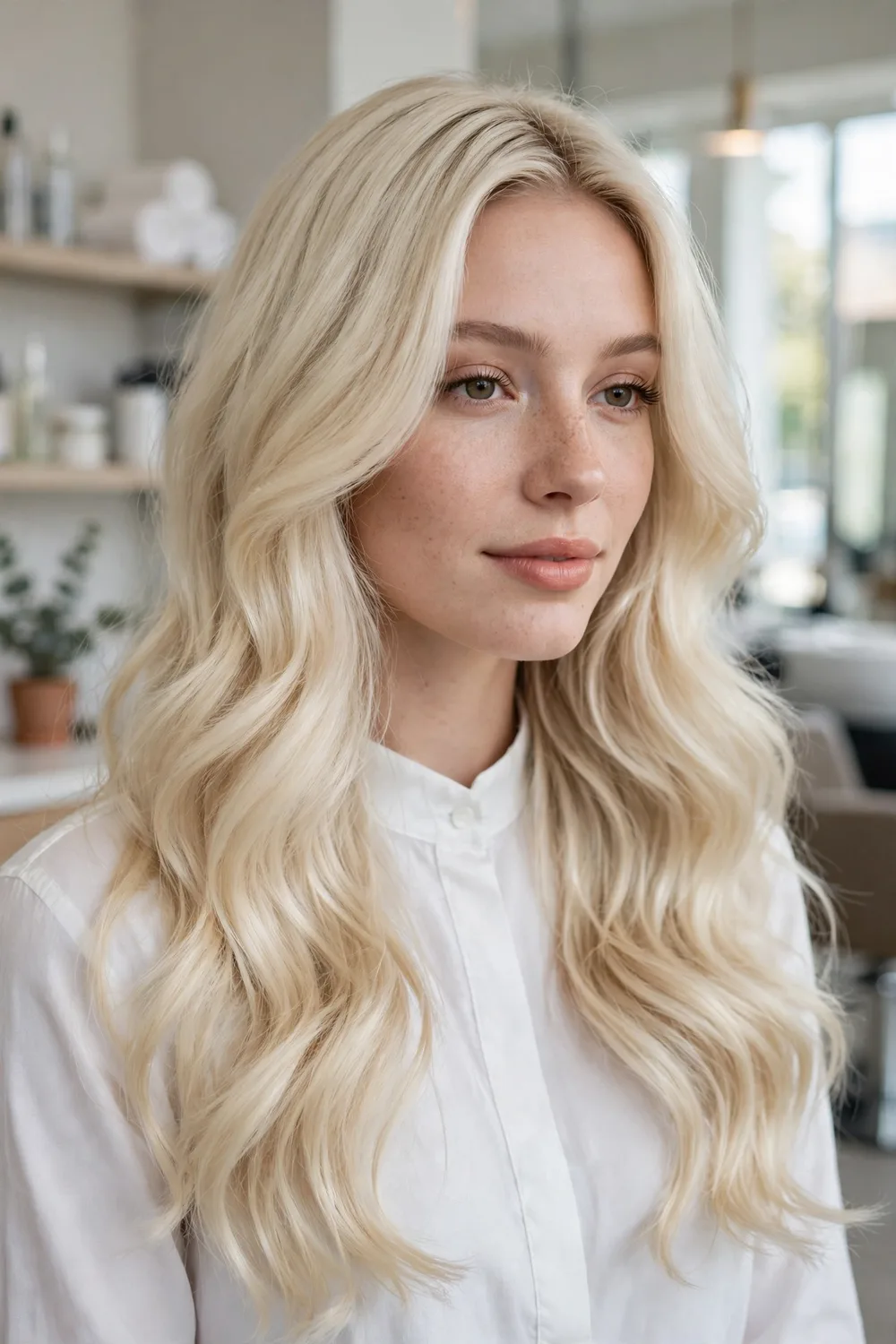
Creamy vanilla platinum mixes pale blonde with warm cream tones. The result feels soft and wearable for people who find icy tones too sharp. Vanilla pieces placed through the lengths stop the color from reading as one flat block.
This tone suits warm, neutral, and olive skin. It also pairs well with a slightly deeper root, which keeps regrowth soft. Use color-safe shampoo and wash in lukewarm water to keep the cream tones from fading brassy.
Try this: Ask for vanilla tones strongest at the front and through the top layers, where they brighten the face.
Difficulty: High · Cost: $$$
8. Warm Wheat Platinum
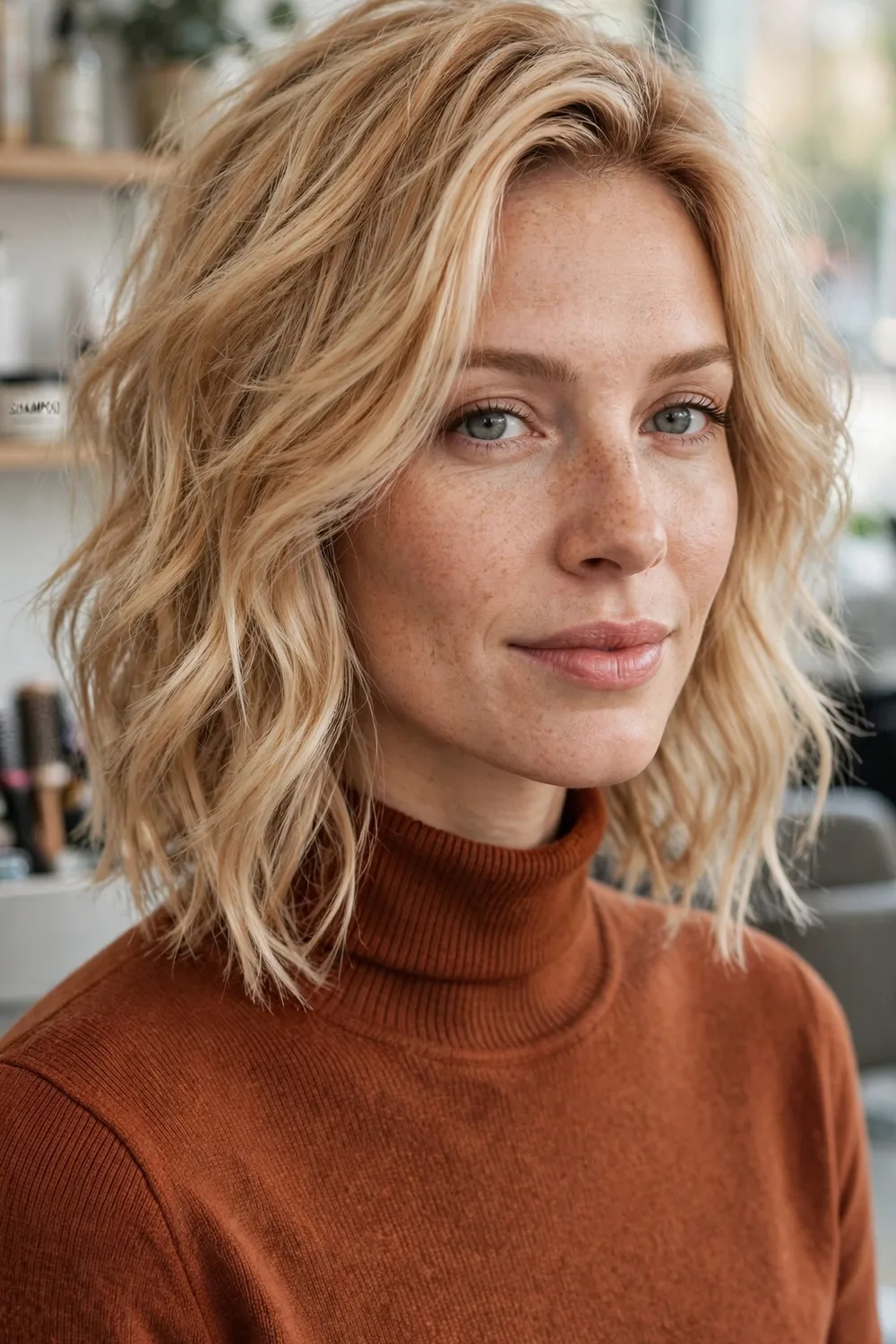
Warm wheat platinum keeps a pale blonde level with a wheat and honey cast. It gives warm skin a platinum option that works with gold undertones instead of fighting them. A frosty face-framing piece can add contrast if you want one cool accent.
Wheat tones are more forgiving as they fade, because a little warmth is part of the shade from the start. Toner visits can stretch to six weeks for many wearers. This is a good route for blondes moving paler who do not want a fully cool result.
Try this: Ask your colorist to keep the wheat cast light, so the hair still reads platinum in photos.
Difficulty: Medium · Cost: $$
9. Platinum Balayage

Platinum balayage paints pale pieces through the mid-lengths and ends while the roots stay closer to your natural color. The painted placement gives brightness without a hard regrowth line. Dark and medium bases get strong contrast from this placement.
Balayage grows out softly, so full appointments can stretch further apart, with a toner refresh in between. The ends carry the lightest color and need weekly deep conditioning. Compare this placement with the tones in the ash blonde hair color ideas list if you want a deeper, smokier blonde instead.
Try this: Ask for the brightest painted pieces around the face and on the top layers, with the underneath left deeper for contrast.
Difficulty: High · Cost: $$$
10. Shadow Root Platinum
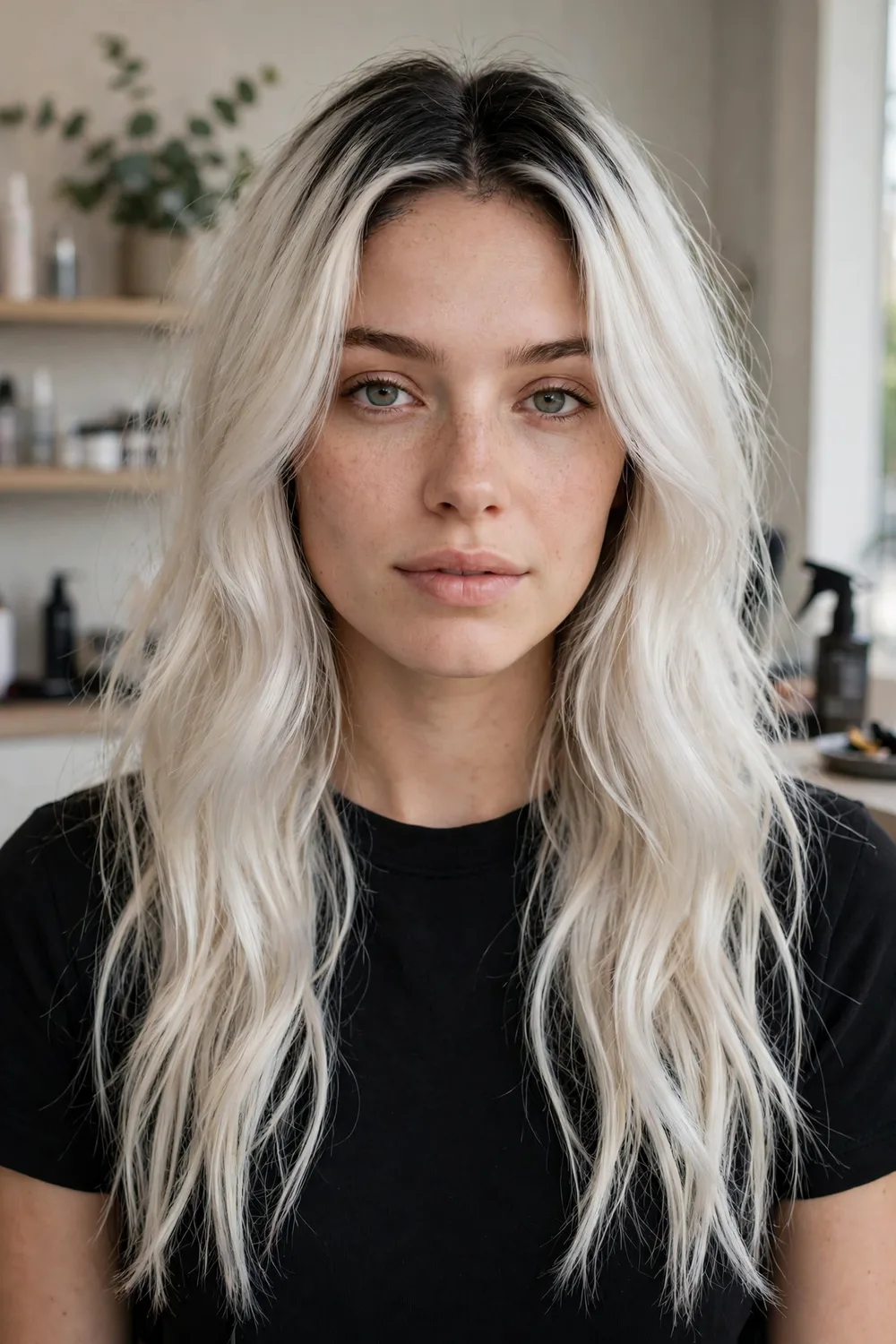
Shadow root platinum keeps a smudged dark root that melts into pale platinum lengths. The root shadow softens regrowth and adds depth at the top of the head. Straight, wavy, and curly styles all show the melt well.
Most wearers stretch root appointments longer than with all-over platinum, and refresh only the toner at four to six weeks. Keep the shadow root short if you want maximum brightness, or longer if you want a lower upkeep routine. The blonde hair with dark roots guide shows how root depth changes the whole look.
Try this: Ask for a smudged root rather than a sharp line, so new growth blends into the shadow area.
Difficulty: High · Cost: $$$
11. Platinum Ribbon Highlights
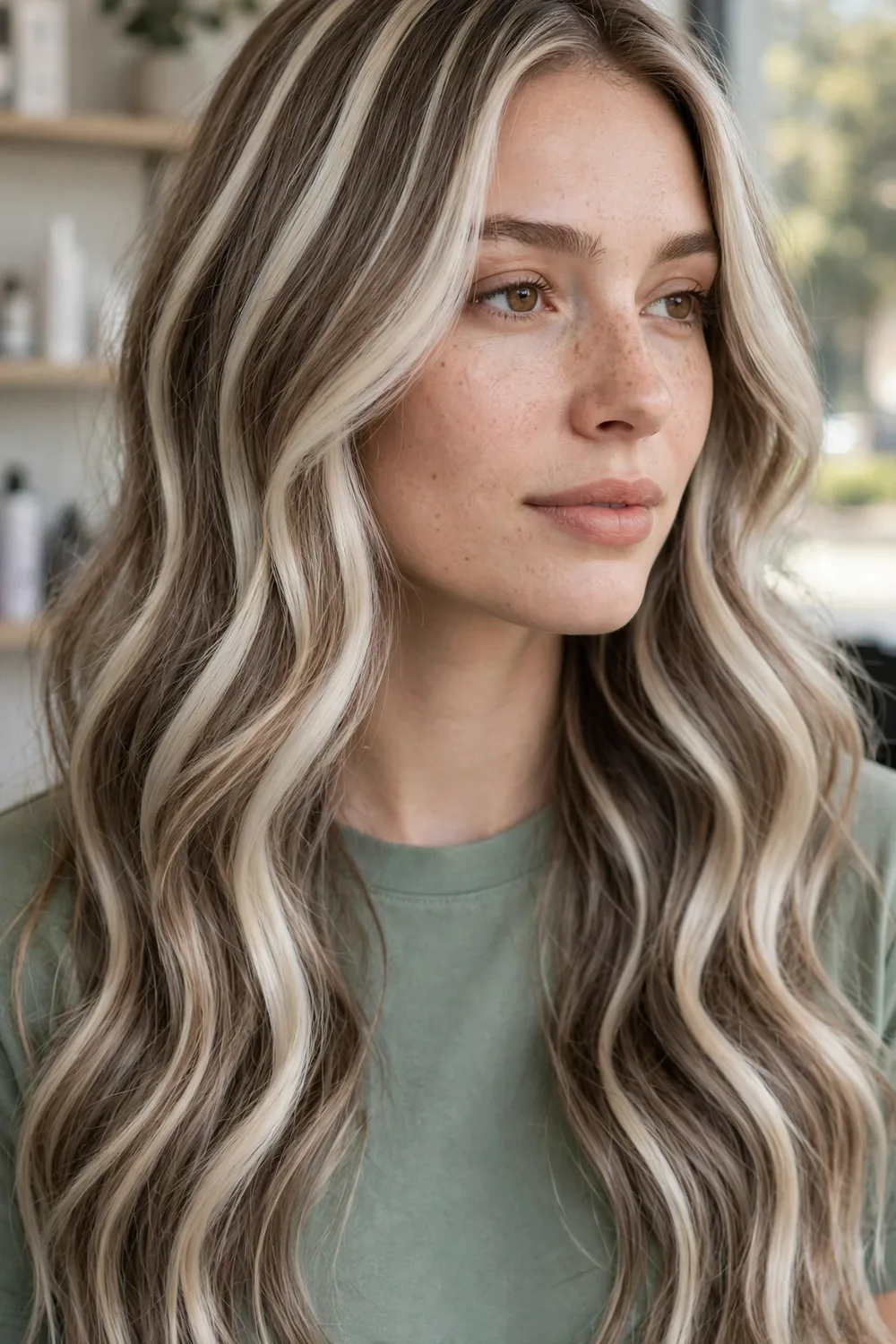
Platinum ribbons are wide, painted highlights that run through an ash brown or dark blonde base. Each ribbon stays visible as a clear pale stripe of color, which gives strong dimension with fewer foils than a full highlight set. Wavy and layered hair shows the ribbons moving as the hair turns.
Ribbons grow out with a softer edge than fine foils. A toner at six weeks keeps the pale pieces clear. Because part of your base stays dark, the first lightening session is usually shorter than a full platinum service.
Try this: Place the widest ribbons at the sides and crown, where they frame the face and catch light.
Difficulty: Medium · Cost: $$
12. Platinum Highlights on Black Hair
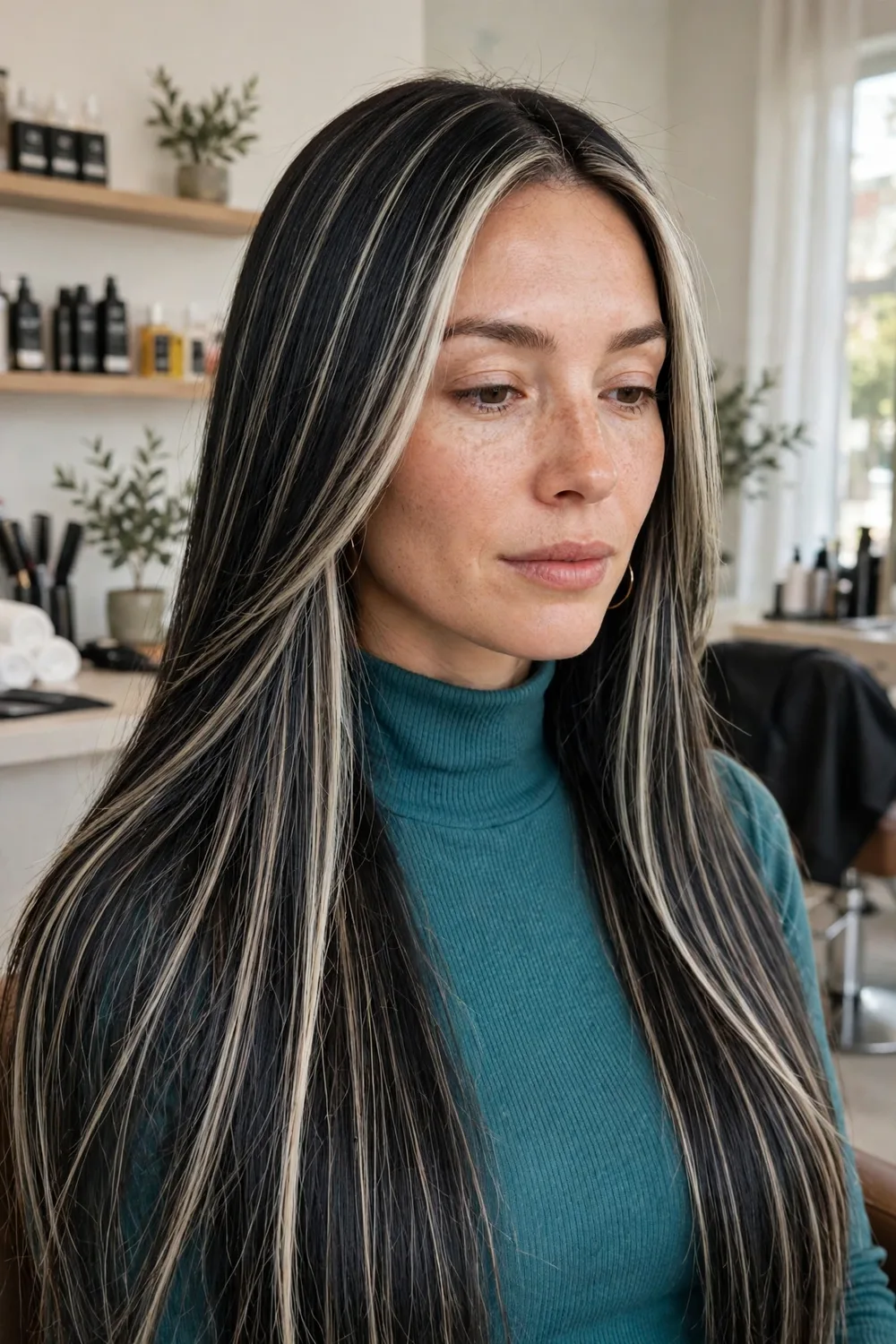
Platinum highlights on black hair place pale pieces against the deepest base, so the contrast is bold and clear. Fine weaves give a scattered shimmer, while wider pieces read as strong panels. Cool skin tones suit the high contrast well.
Black hair needs careful, staged lifting to reach pale platinum without damage, so expect a consultation and possibly two sessions for the lightest pieces. The dark base hides regrowth well, which stretches time between appointments. Toner keeps the pale pieces from turning yellow against the black base.
Try this: Start with highlights around the face and crown if you want to test the contrast before adding more pieces.
Difficulty: High · Cost: $$$
13. Chunky Platinum Highlights on Brown Hair

Chunky platinum highlights place thick pale sections through a brown base. The wide sections are deliberate and graphic, and they read clearly even on straight hair worn down. Medium and dark brown bases give the strongest effect.
Chunky pieces need less precision at grow-out than fine highlights, though the pale sections still need toner at five to six weeks. This placement lightens a smaller share of the head than all-over color, so it suits people testing platinum for the first time.
Try this: Ask for chunky pieces on the top and sides only, and keep the back finer for a balanced result.
Difficulty: Medium · Cost: $$
14. Platinum Ombre
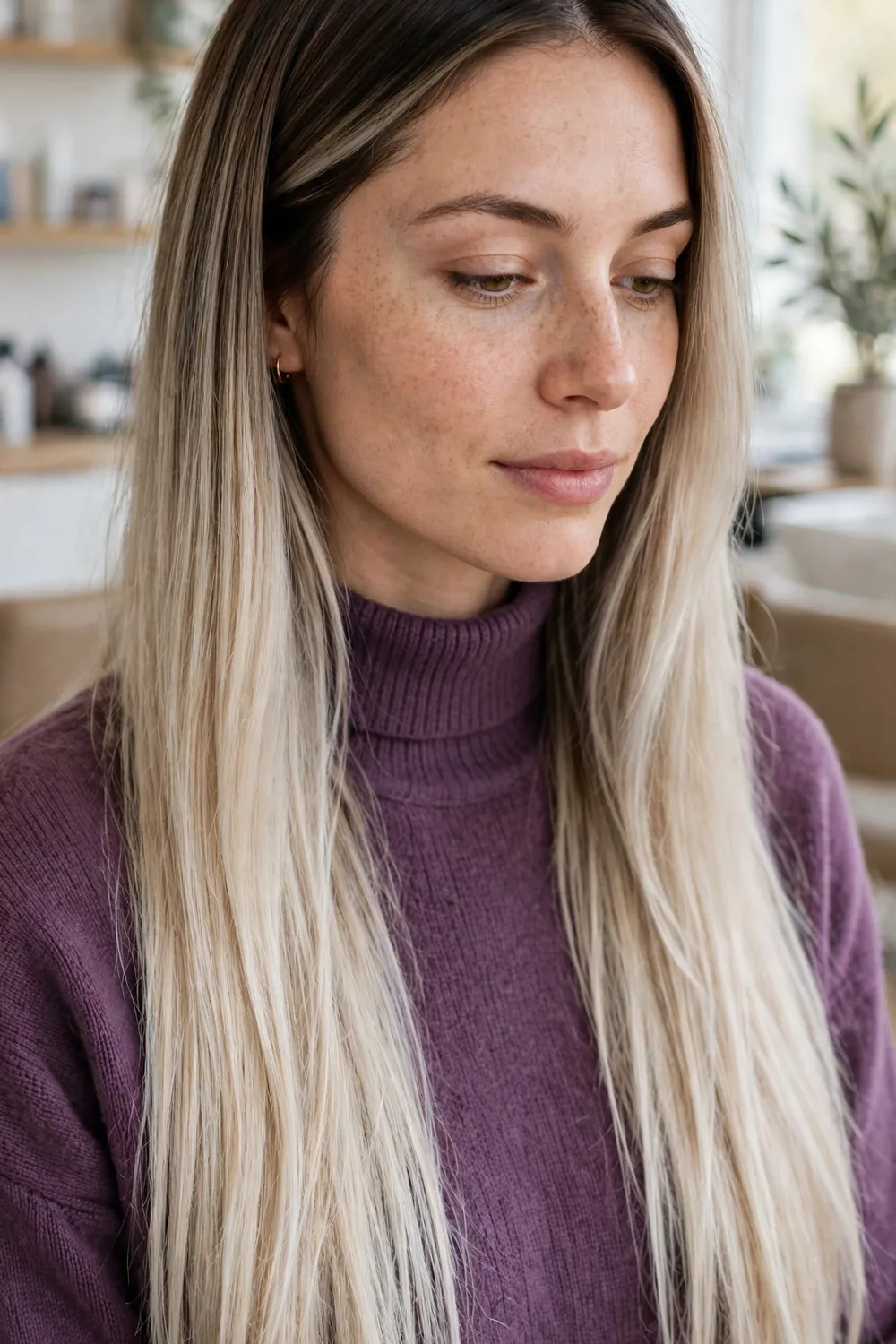
Platinum ombre fades from your natural root color into pale platinum ends. The gradient is gradual, with the lightest color concentrated in the bottom half of the hair. Long hair gives the fade enough room to read clearly.
The untouched roots make regrowth simple, and many wearers go months between full services. The ends are the lightest and oldest hair, so they need gentle brushing and weekly conditioning. A gloss on the platinum section at six to eight weeks keeps the ends clear and shiny.
Try this: Bring a photo that shows where you want the fade to start, since a higher or lower start changes upkeep a lot.
Difficulty: High · Cost: $$$
15. Platinum with Chocolate Lowlights
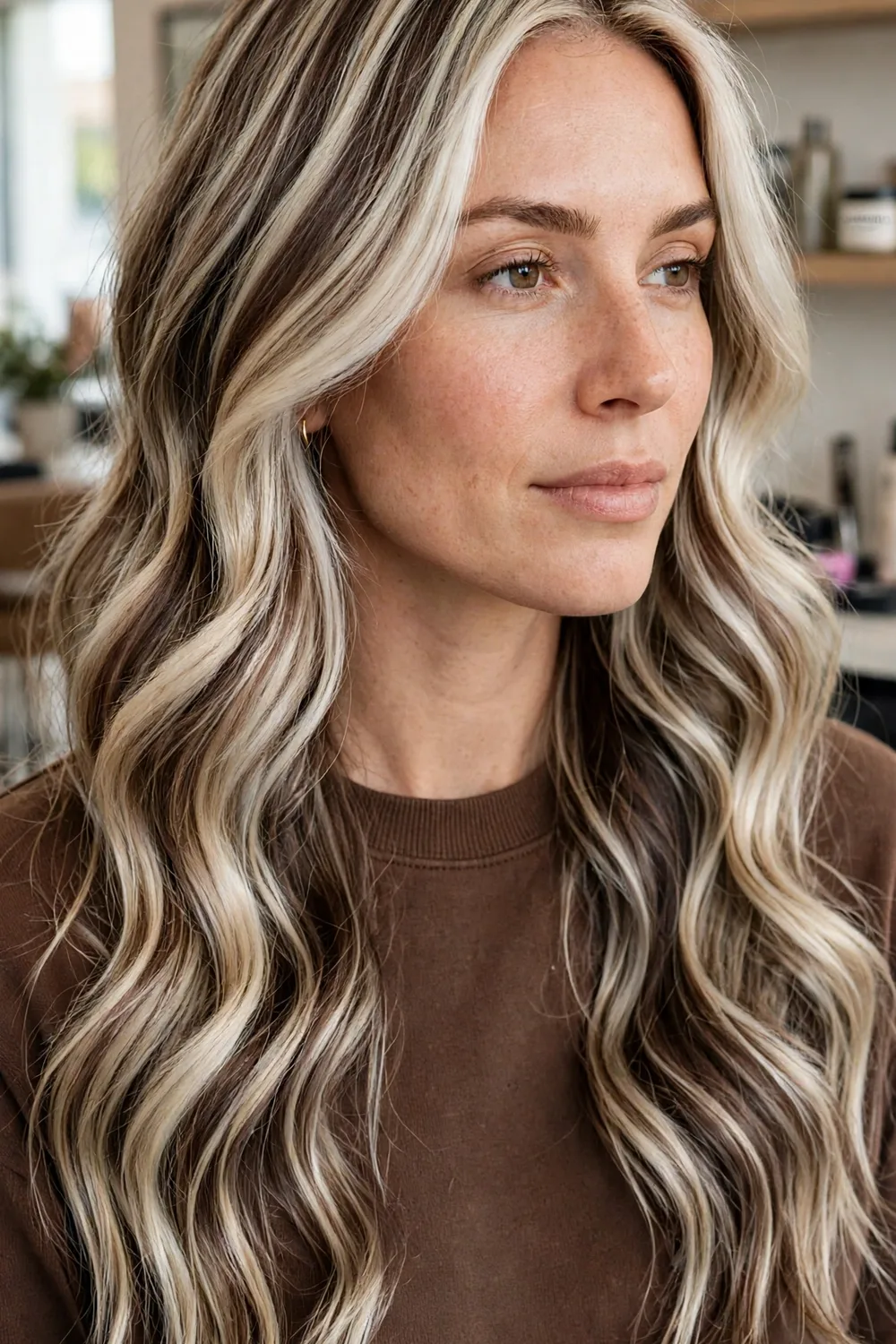
Chocolate lowlights weave deep brown pieces through a platinum base. The dark pieces add depth, make fine hair look fuller, and break up a pale tone that feels too flat. The contrast works best when the lowlights stay two to three shades deeper than the platinum around them.
Lowlights also help as platinum grows out, because the brown pieces blur the line between new growth and lightened hair. Refresh the lowlights every second appointment, since brown pigment holds longer than platinum toner. Keep lowlights off the very front if you want the face frame to stay bright.
Try this: Ask for lowlights mainly through the back and underneath layers, so the top still reads pale and bright.
Difficulty: Medium · Cost: $$
16. Platinum Money Piece
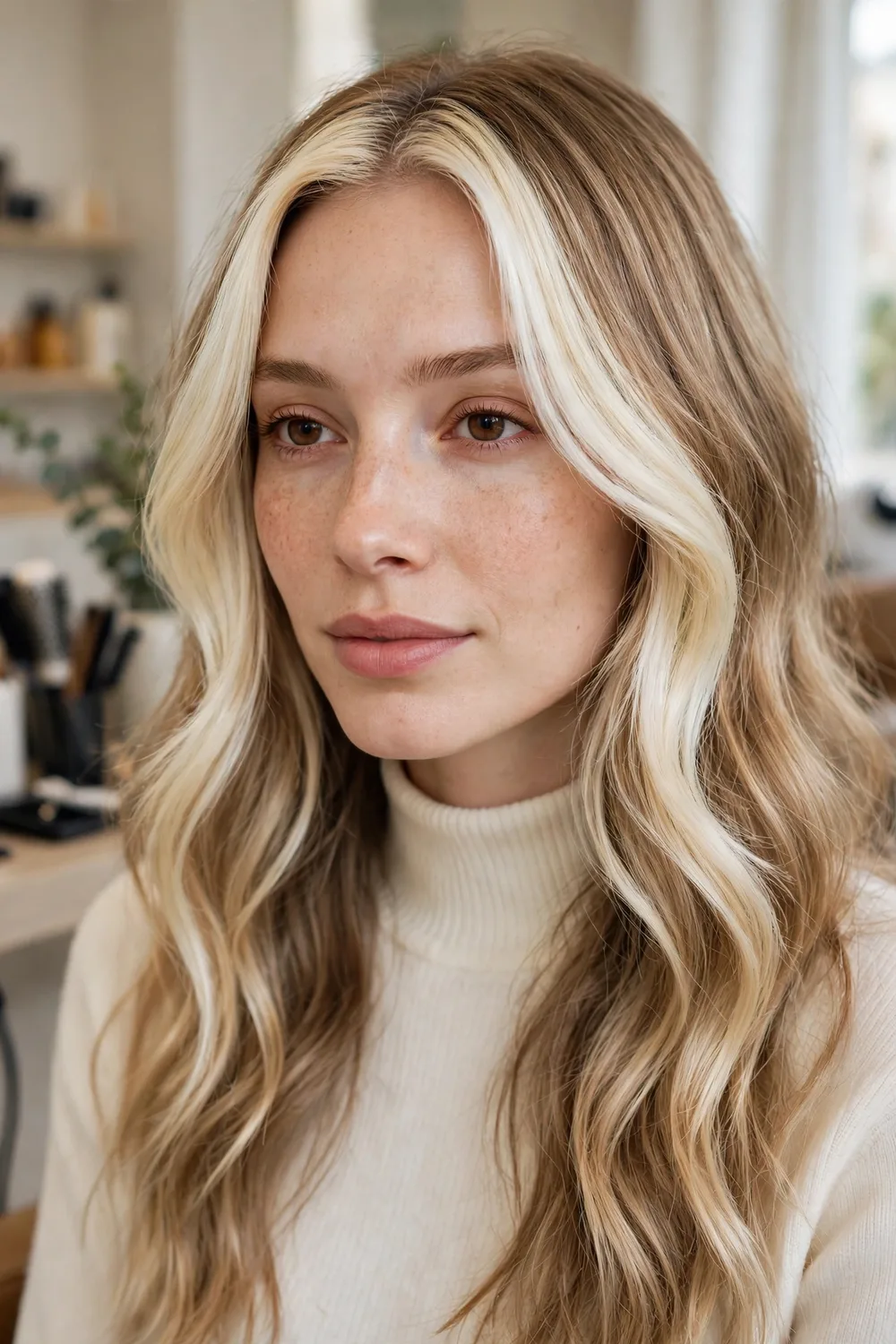
A platinum money piece lightens two bright panels at the front hairline and leaves the rest of your color in place. It is the smallest platinum change on this list, and it gives a clear read on how pale tones suit your skin before you commit to more lightening.
The front panels fade and pick up yellow first, so a mini gloss at four weeks keeps them bright. Because so little hair is lightened, the appointment is shorter and the grow-out is easy to blend or trim away. The silver and white highlight ideas list shows a white money piece version on darker bases.
Try this: Ask for one panel slightly wider than the other for a relaxed frame that still looks deliberate.
Difficulty: Medium · Cost: $$
17. Pastel Pink Platinum
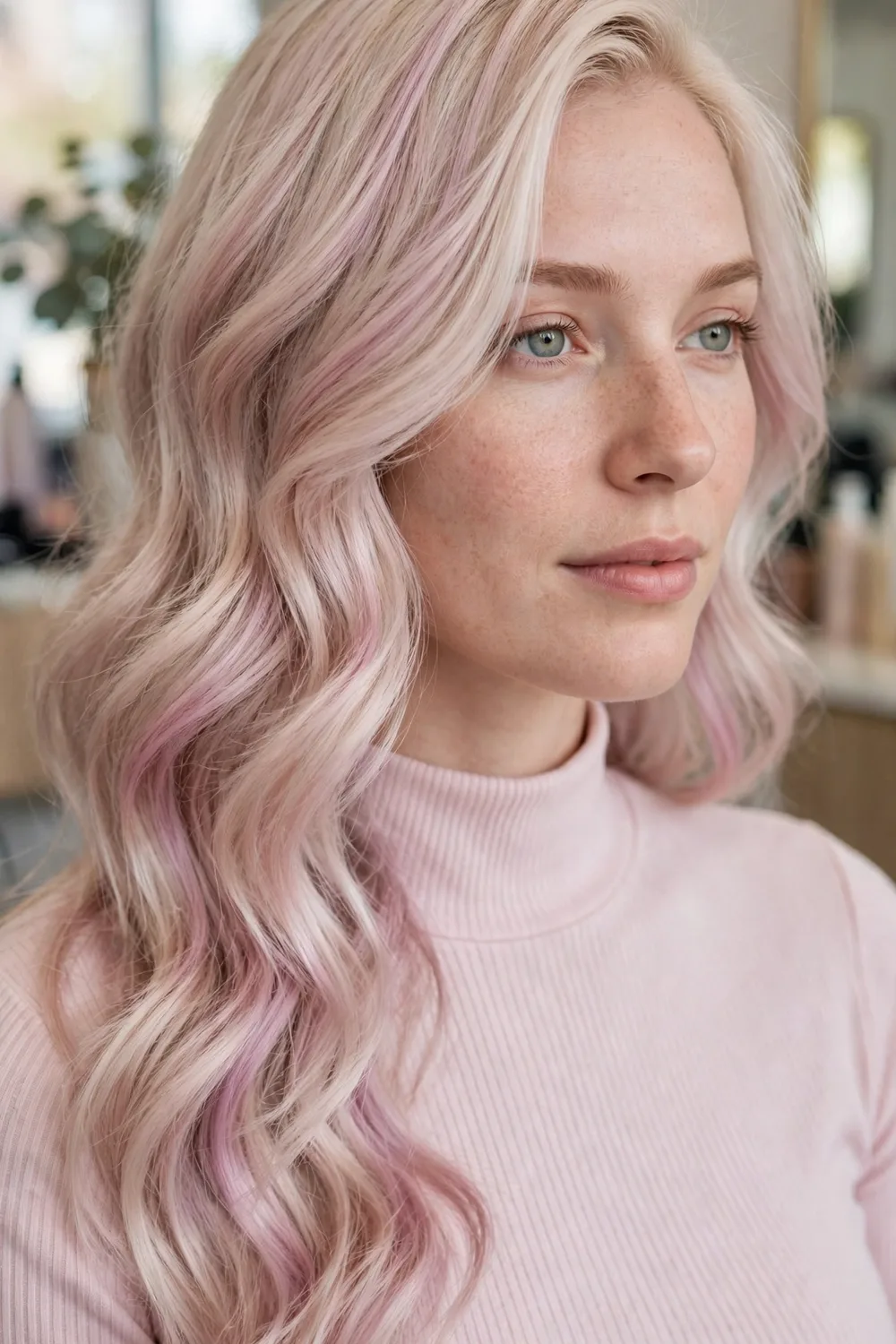
Pastel pink platinum uses a pale platinum base as a canvas for a sheer pink tint. The pink reads soft and light because the base underneath is so pale. Any yellow left in the base will push the pink toward peach, so a clean lift matters.
Pink tints fade within a few weeks, which makes this a short-term way to change platinum without a new permanent color. A pink depositing mask at home can extend the tint. When the pink fades, the hair returns to platinum, ready for a new toner or tint.
Try this: Try the pink as a gloss first, so you can see the tone on your skin before a stronger tint.
Difficulty: High · Cost: $$$
18. Lavender Melt Platinum
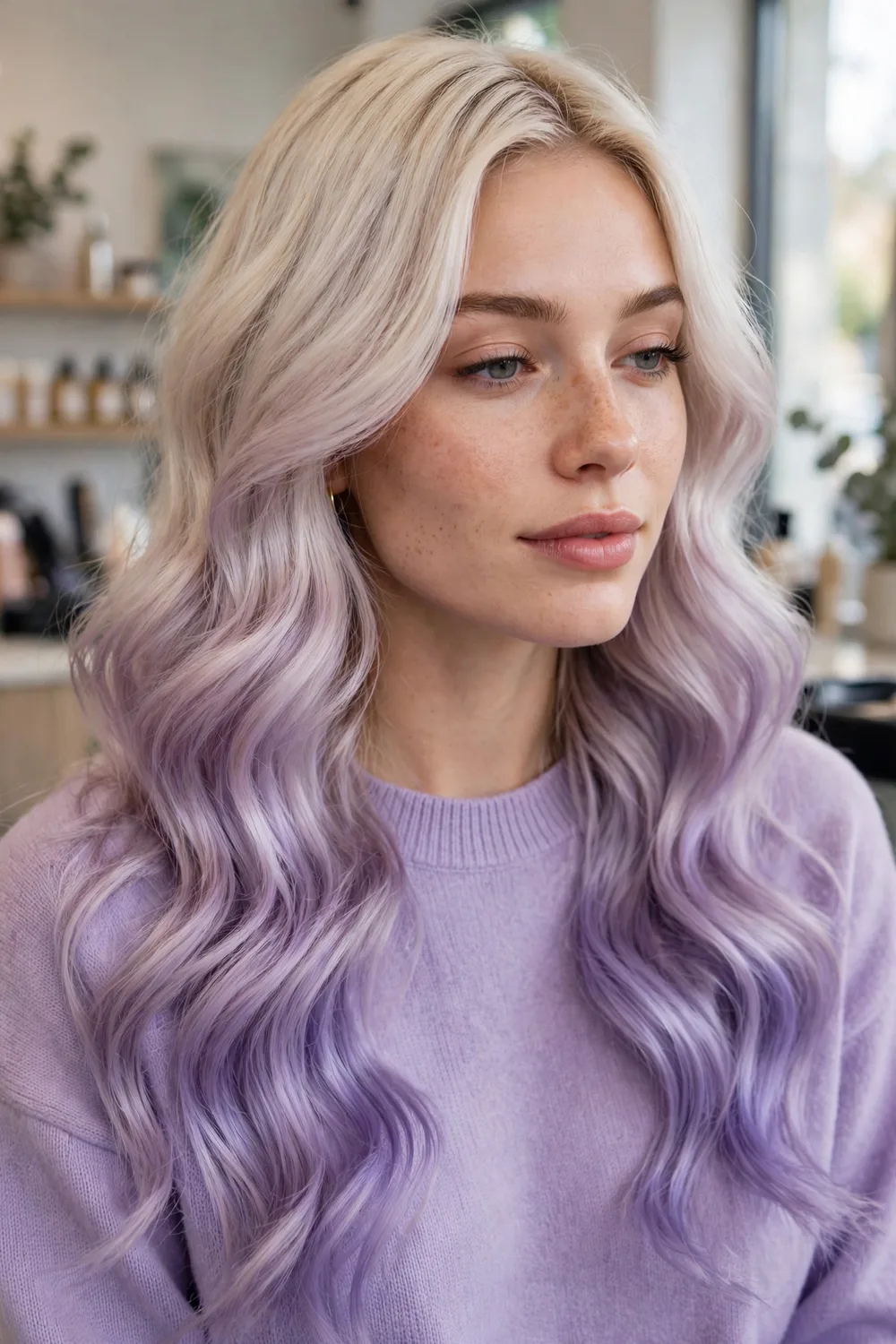
Lavender melt platinum fades pale platinum at the top into lavender through the ends. The melt has no hard line, so the purple looks blended rather than dipped. Cool skin tones suit lavender well, and the tint sits happily over a clean platinum base.
Lavender fades toward silver and then pale blonde, which gives this idea a graceful fade path. Cold water washes and color-safe shampoo slow the fade. A lavender depositing conditioner can refresh the ends between salon visits.
Try this: Ask for lavender only on the bottom third if you want the tint to trim away easily later.
Difficulty: High · Cost: $$$
19. Rose Gold Streaks on Platinum
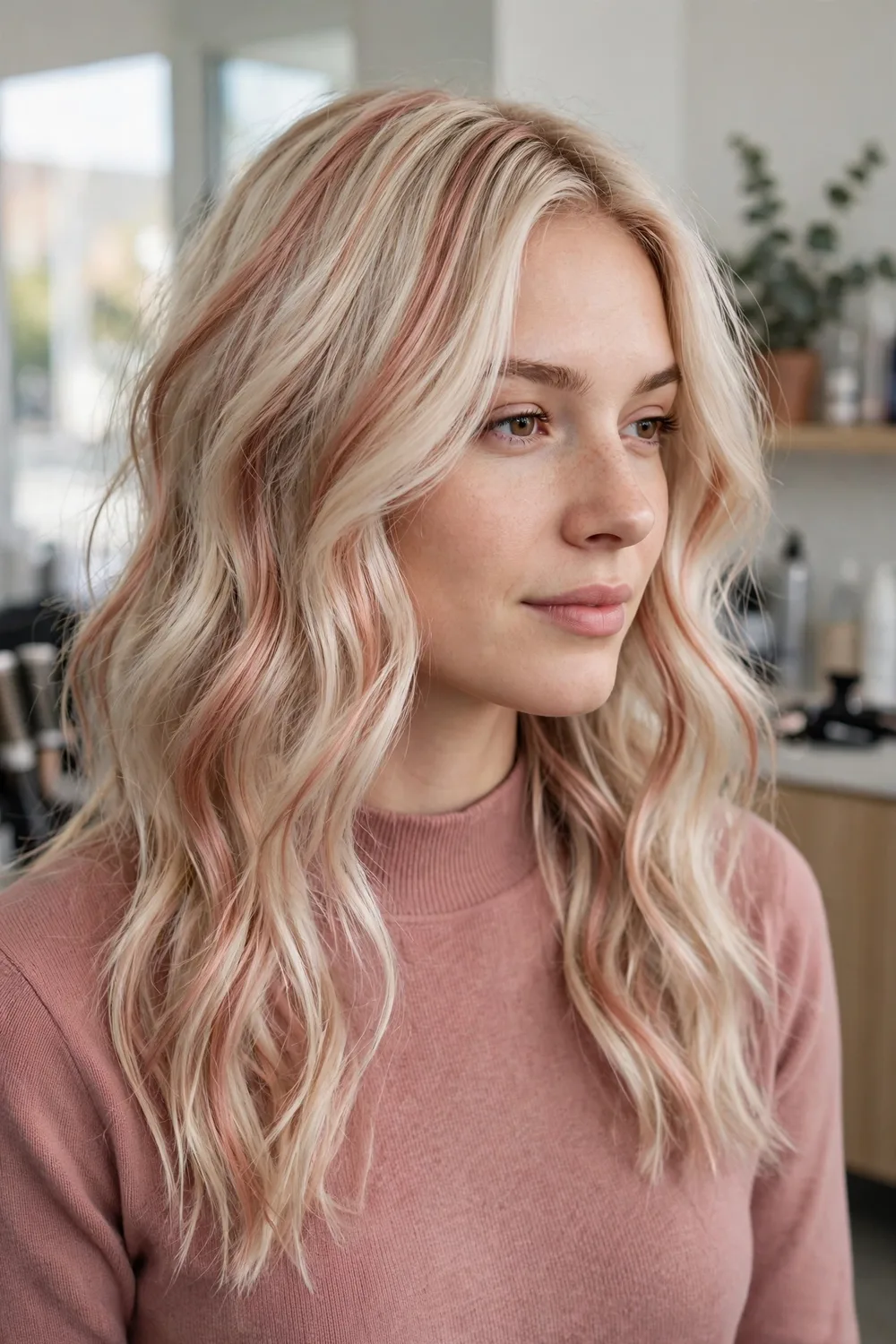
Rose gold streaks weave warm pink-gold pieces through a platinum base. The warm streaks add variety without changing the overall pale level, and they flatter warm and neutral skin tones. Loose waves help the platinum and rose gold pieces shift in the light.
Rose gold streaks fade softer than a full tint, and the platinum base keeps showing through as they fade. A rose gold gloss at five weeks restores the warm pieces. Keep the streaks finer around the face if you want just a hint of warmth.
Try this: Place two or three wider rose gold pieces at one side for a clear accent in photos.
Difficulty: Medium · Cost: $$
20. Charcoal Platinum Balayage
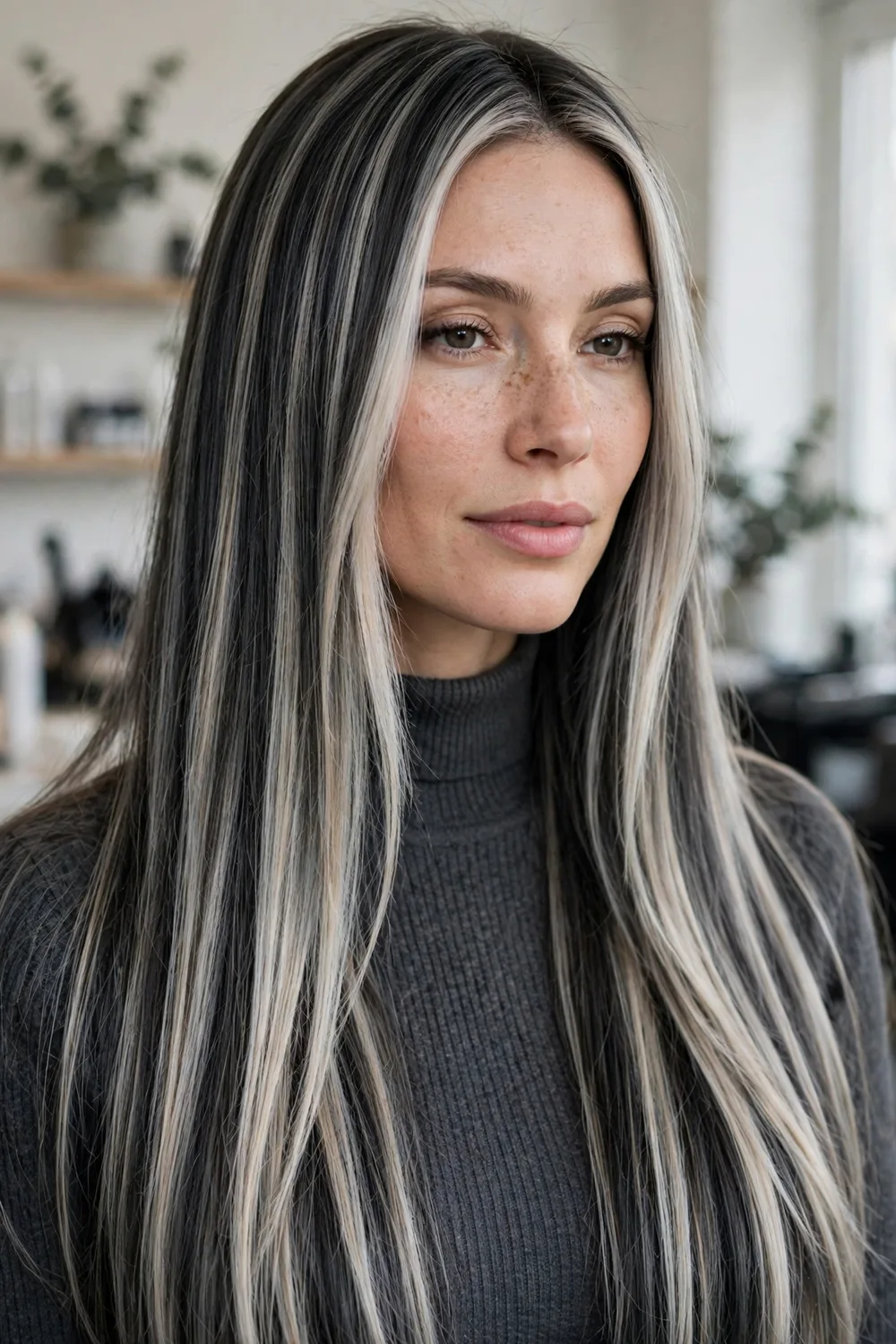
Charcoal platinum balayage paints smoky deep pieces and pale platinum pieces into the same head of hair. The mix gives light and dark in one service, which suits people who find all-over platinum too bright. Dark bases carry this balayage with the least lightening at the roots.
The painted placement grows out softly, and the charcoal pieces need very little upkeep. Toner on the pale pieces at six weeks keeps the contrast clean. This idea also works well in cooler months, when deeper tones match heavier clothing.
Try this: Ask your colorist to keep charcoal pieces underneath and pale pieces on top, so the contrast layers cleanly.
Difficulty: High · Cost: $$$
21. Ash Platinum Lob
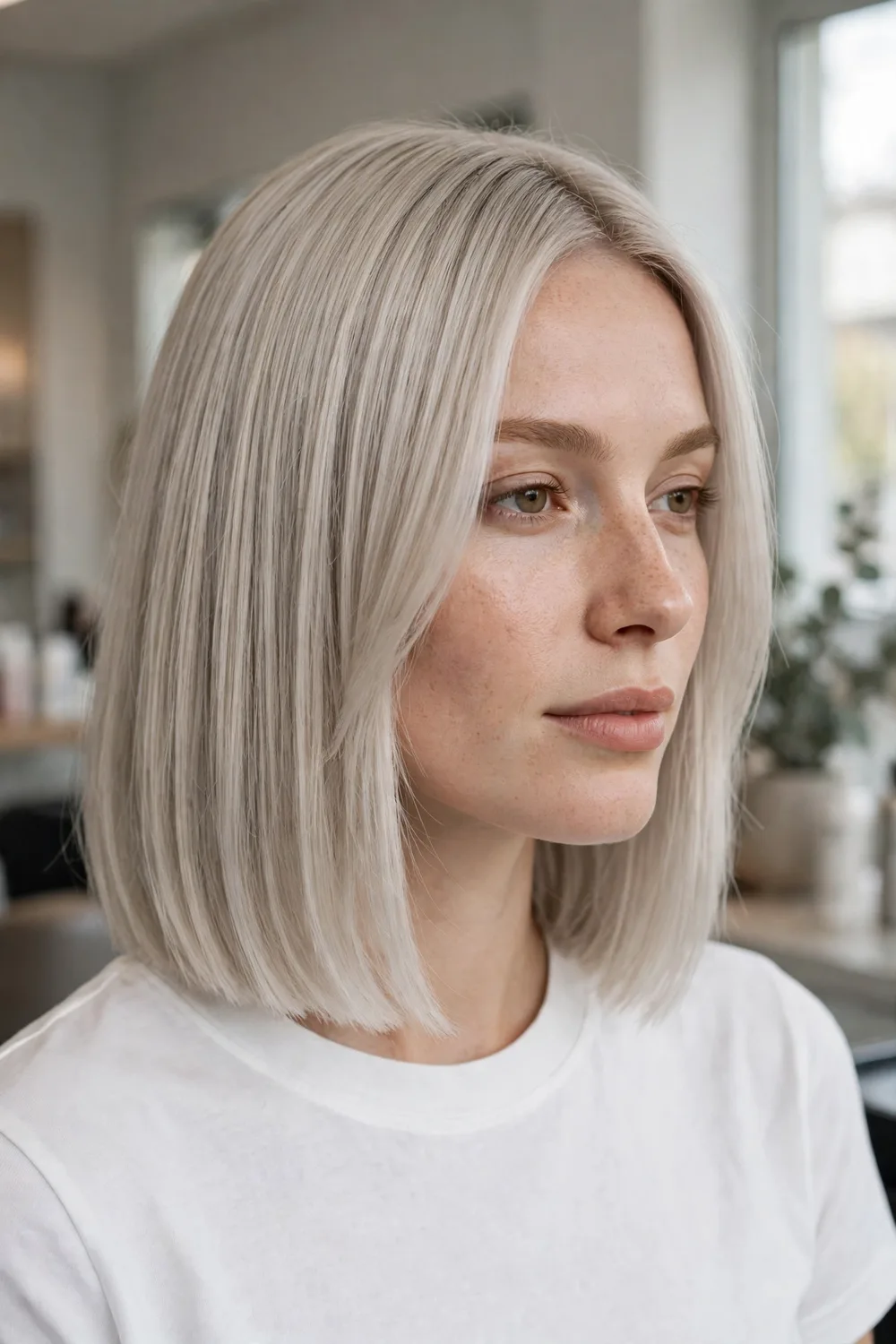
An ash platinum lob pairs a shoulder-length blunt cut with a cool pale tone. The blunt ends make fine hair look thicker, and the ash tone keeps the color crisp. A middle part gives the lob a clean, modern shape.
Shorter lengths make platinum upkeep simpler, because damaged ends are trimmed away more often. Toner at four to five weeks keeps the ash tone from fading warm. Compare ash depth with the winter blonde hair color ideas list if you want seasonal ash tones on longer hair.
Try this: Ask for blunt ends with very light layering only at the front, so the shape stays full.
Difficulty: High · Cost: $$$
22. Platinum Pixie
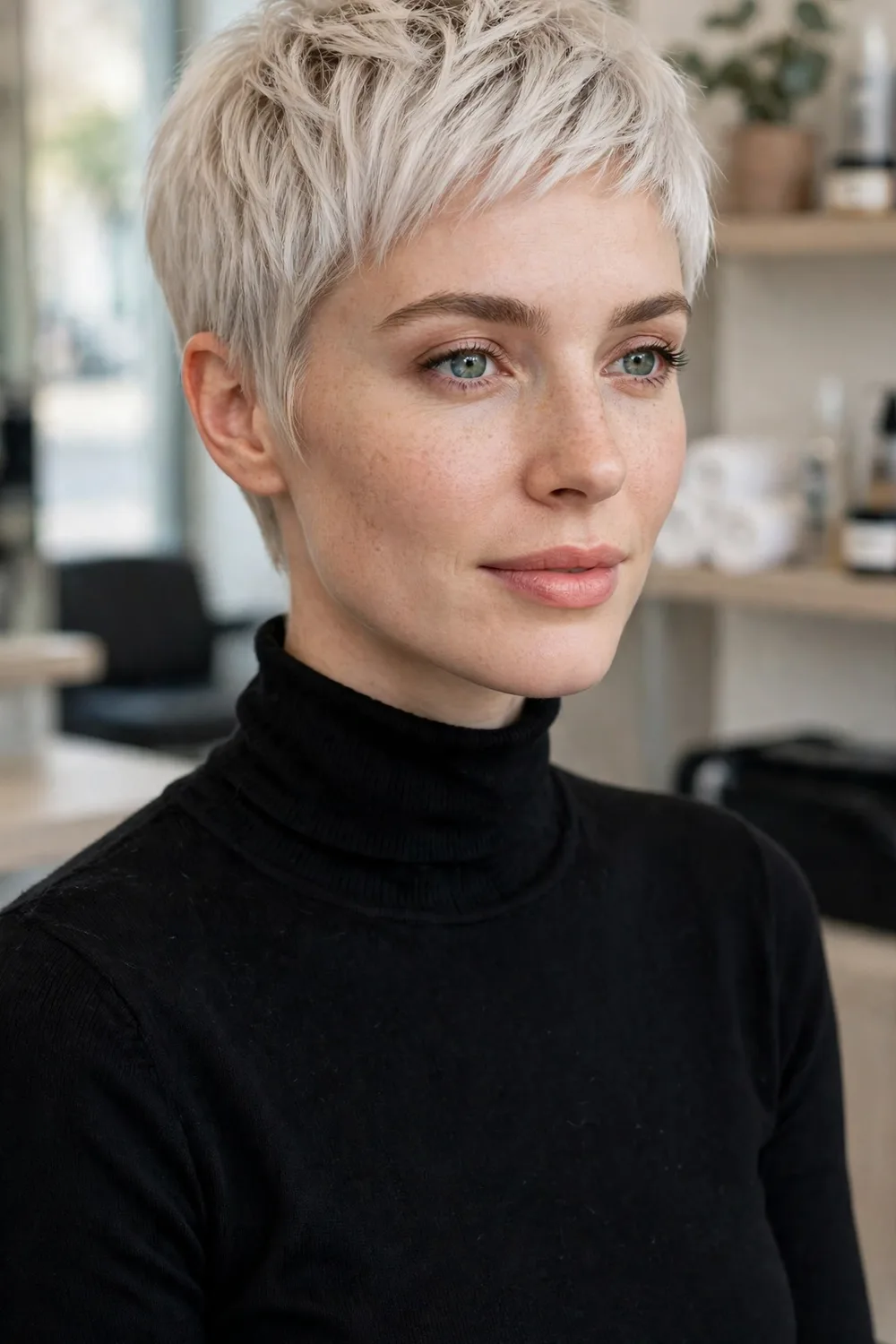
A platinum pixie pairs the palest blonde with a short cropped cut. Short hair shows color clearly, and styling takes minutes. The cut also removes older, damaged ends, which makes a pixie a practical reset after heavy lightening.
Root regrowth shows quickly on short hair, but the small amount of hair makes touch-ups faster. A toner or gloss at each cut appointment keeps the tone even. Use a small amount of styling paste for texture, and keep heat tools low or skip them.
Try this: Book cuts every four to six weeks to hold the pixie shape, and time the toner for the same visit.
Difficulty: Medium · Cost: $$
23. Platinum Bob with Dark Roots
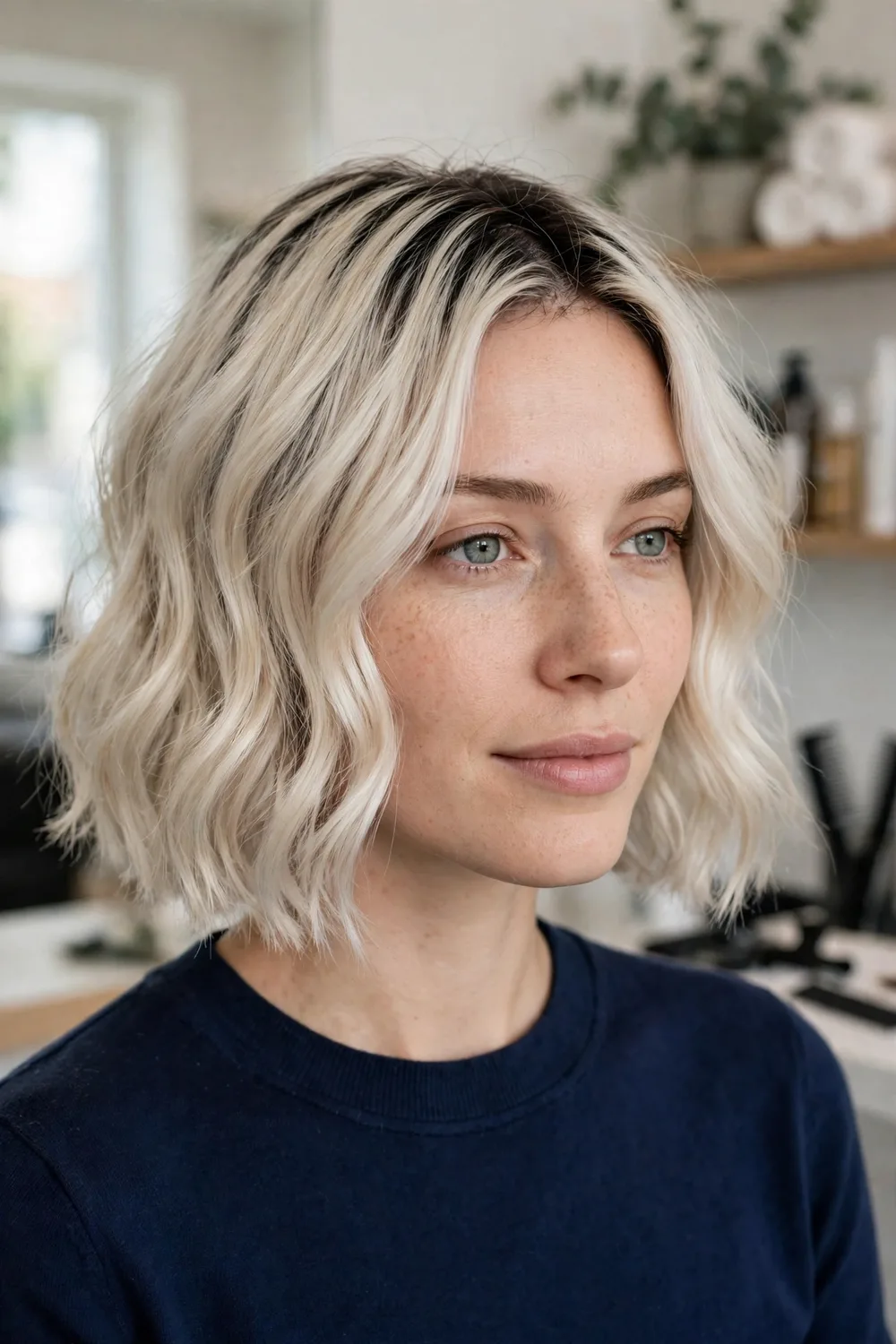
A platinum bob with dark roots keeps depth at the top and pale color through the bob lengths. The dark root stretches time between appointments and gives the bob a stronger shape. Tousled waves add texture and stop the bob from looking too neat.
The bob length keeps lightened hair manageable, and the root area needs no lightening at all. Toner on the lengths at five weeks keeps the platinum clear. This cut and color pair suits fine hair, since the blunt bob shape adds the look of fullness.
Try this: Ask for the dark root to melt a short way into the bob, so the grow-out line stays soft.
Difficulty: Medium · Cost: $$
24. Platinum Shag with Curtain Bangs
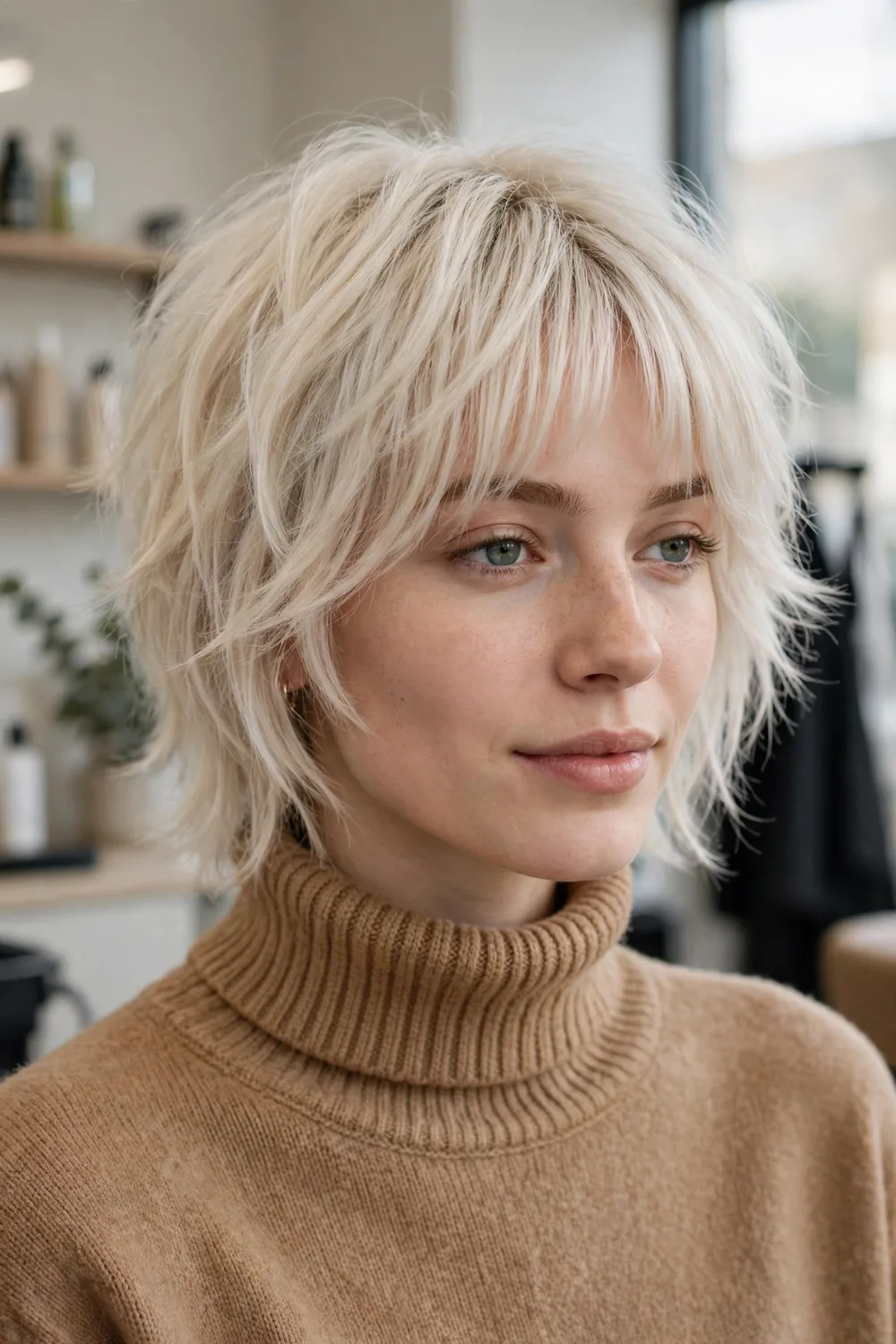
A platinum shag layers pale hair heavily and adds curtain bangs that part in the middle and sweep to the sides. The layers add movement and volume, which helps fine platinum hair look fuller. Curtain bangs soften the forehead and frame the eyes.
Layers grow out gracefully, so the cut can stretch longer between trims than a blunt bob. Keep the bangs a touch brighter than the lengths if you want the face frame to stand out. A light texturizing spray gives the shag its piecey finish without weighing it down.
Try this: Ask your stylist to cut the shag layers after coloring, so the brightest pieces land on the top layers.
Difficulty: Medium · Cost: $$
25. Platinum Curls
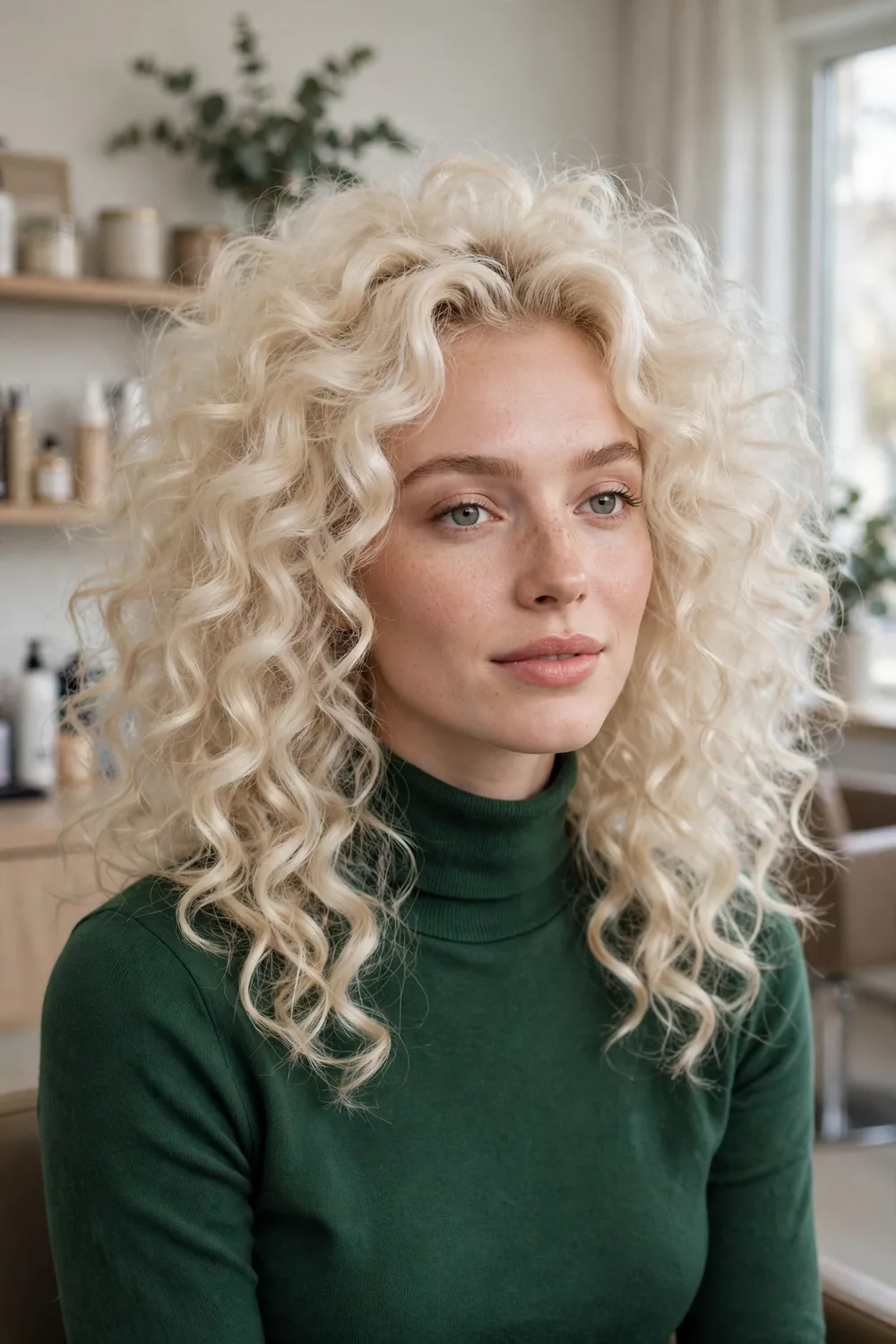
Platinum curls lift coily and curly hair to a pale blonde while keeping the curl pattern as the main feature. Curls catch light on every curve, so platinum on curls reads dimensional even with a single tone. A shadow root can add depth and make grow-out easier.
Curly hair is often drier after lightening, so deep conditioning and gentle detangling matter more than frequent washing. Ask your colorist about lifting in stages to protect the curl pattern. Purple shampoo once a week, used as a short mask, keeps the curls from turning yellow.
Try this: Get a curl-by-curl color placement if you can, so the brightest pieces sit on the curls that frame your face.
Difficulty: High · Cost: $$$
26. Platinum Box Braids
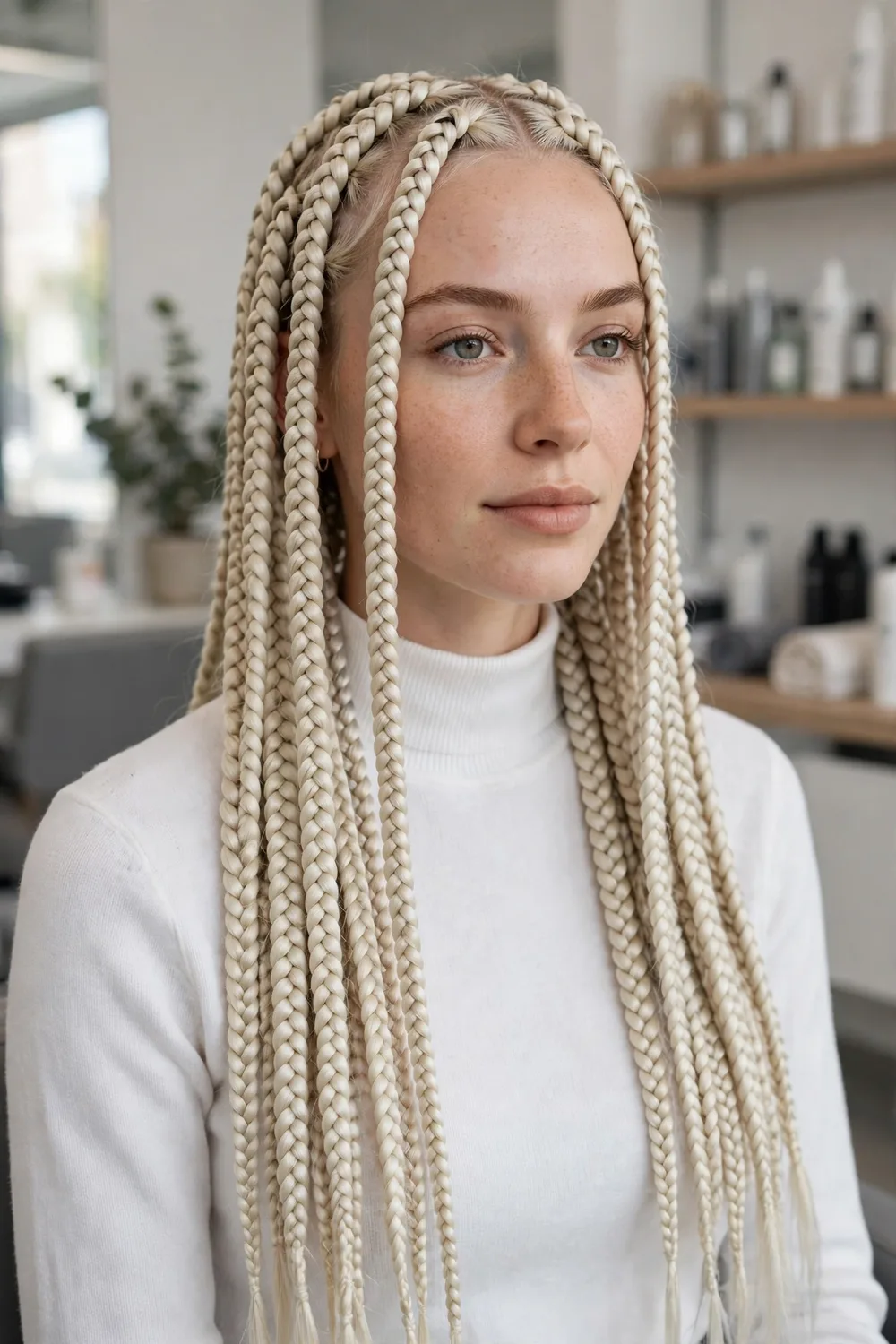
Platinum box braids use pale blonde braiding hair for a protective style with a bold color payoff. Your natural hair stays braided and tucked away, so this idea gives platinum impact without lightening your own hair at all. The braids can be worn long, in a bun, or in a high ponytail.
Upkeep centers on scalp care and keeping the braids neat at the edges. Most wearers keep box braids in for several weeks, then remove them and rest the hair before the next style. Mix two pale shades in the braids if you want extra dimension.
Try this: Ask for a few platinum shades mixed together, such as icy and creamy, for a softer overall result.
Difficulty: Low · Cost: $$
27. Platinum Peekaboo Underlayer
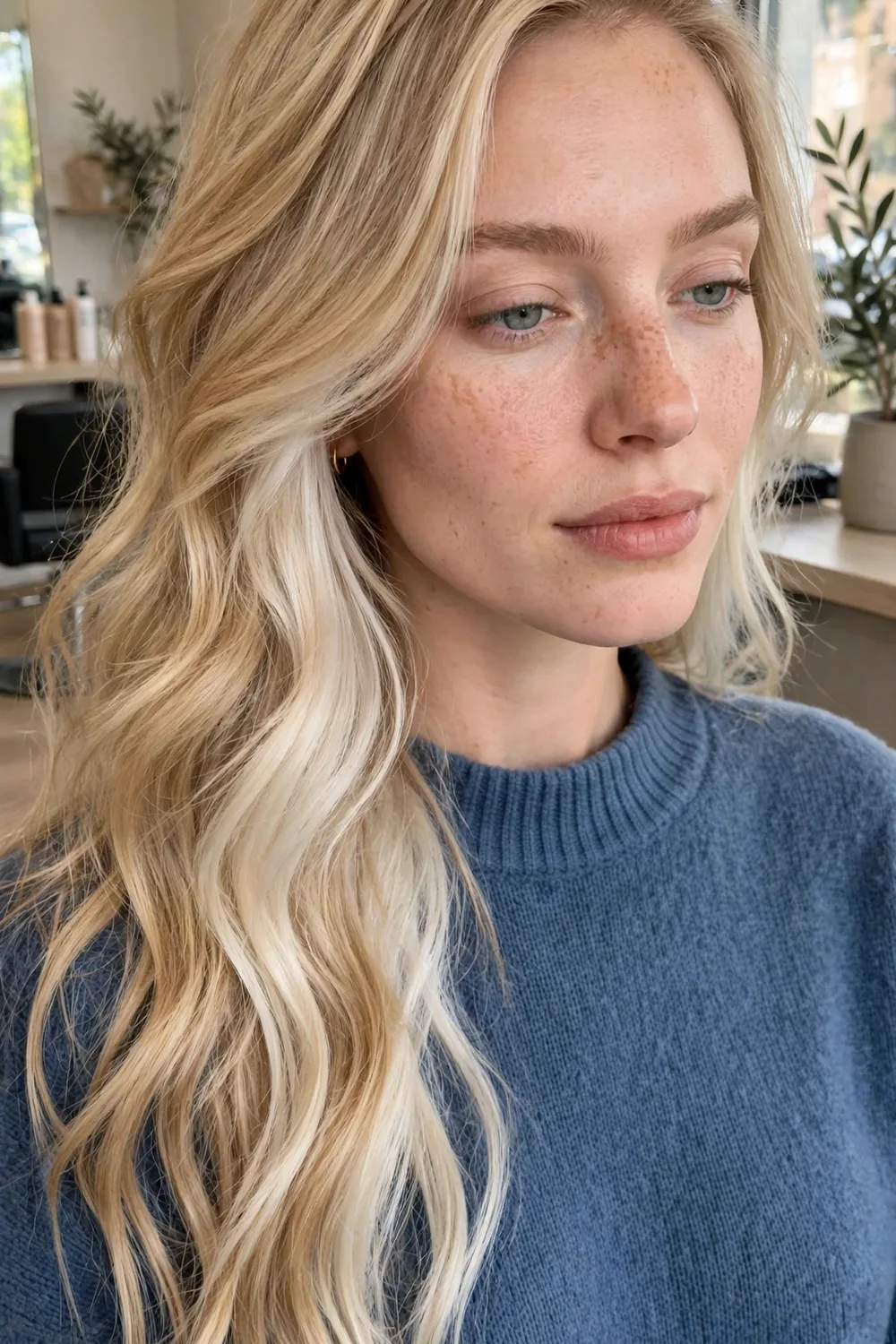
A platinum peekaboo underlayer lightens the hidden layer under your top color. The pale layer shows when you wear your hair up, move, or part it to one side. It is a low-commitment way to wear platinum if your daily setting calls for a calmer top color.
Only the underlayer needs lightening and toner, so appointments stay shorter. The hidden placement also protects the pale hair from sun and heat, which slows fading. Grow-out stays out of sight under the top layer for weeks.
Try this: Ask for the underlayer to start just behind the ears, so it peeks out with movement and updos.
Difficulty: Medium · Cost: $$
28. Gray-Blending Platinum Highlights
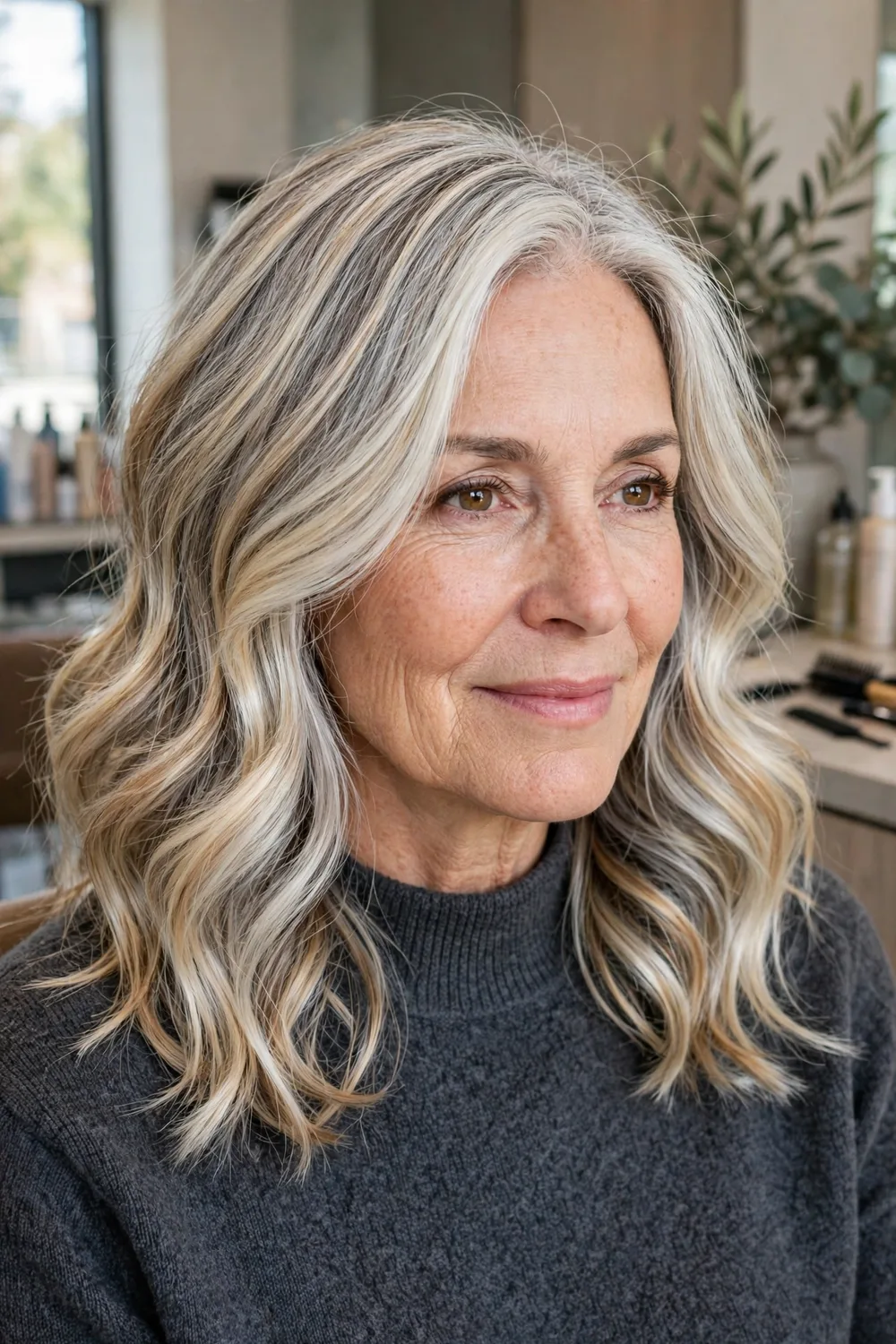
Gray-blending platinum highlights weave pale platinum pieces where gray grows in strongest, usually at the temples and part. The highlights blur the line between gray roots and colored lengths, so regrowth looks gradual. This idea suits people who want to soften gray coverage without a solid root color every few weeks.
The highlight placement follows your own gray pattern, so ask your colorist to map where your gray is most concentrated before foiling. Toner at six to eight weeks keeps platinum pieces and gray strands reading as one blended tone. The honey blonde hair color ideas list is worth a look if you prefer warmer blending tones.
Try this: Start blending at the temples and part first, where gray shows most, and add more pieces over later visits.
Difficulty: Medium · Cost: $$
Frequently Asked Questions
How many sessions does platinum blonde take on dark hair?
Dark hair usually needs more than one lightening session to reach a clean platinum level. Your colorist will lift in stages, tone between sessions, and check the condition of your hair at each step. Trying to reach pale platinum in one long session on a dark base raises the risk of breakage, so a staged plan is the safer route.
How often does platinum blonde need a toner refresh?
Most platinum shades need a toner or gloss refresh every four to six weeks. Icy and pearly tones sit at the shorter end of that range, while balayage, shadow roots, and wheat tones can stretch a little longer. Purple shampoo once a week helps between visits, but it does not replace a salon toner.
Does platinum blonde suit warm skin tones?
Yes, if you pick a warm platinum version. Champagne platinum, creamy vanilla platinum, and warm wheat platinum carry gold and peach tones that sit well on warm skin. Cooler versions such as icy and silver platinum suit cool and neutral skin best. A money piece or face-framing piece is a low-risk way to test a tone against your skin first.
How do I keep platinum hair from turning yellow?
Use purple shampoo once a week, wash with lukewarm water, and use a heat protectant before hot tools. Sun, hard water, and chlorine can all push platinum toward yellow, so rinse hair with clean water before swimming and wear a hat in strong sun. A gloss appointment restores a clear tone when home care is no longer enough.
Can I go platinum if my hair is already colored?
You can, but old color has to lift out first, and that part is unpredictable. A strand test shows your colorist how the old pigment lifts and whether the hair can handle the process. Many people reach platinum in stages, starting with balayage or highlights and going paler over several appointments.
Final Thoughts
Platinum works best when the tone, placement, and upkeep all match your life. If you want the full pale effect and can keep a four to five week salon rhythm, all-over, icy, and pearly platinum deliver it. If you want breathing room, shadow roots, balayage, ombre, and placed pieces such as a money piece or peekaboo underlayer give you platinum brightness with a softer grow-out. Pick one idea from this list, take its photo and upkeep notes to your consultation, and let a strand test set the timeline. That plan protects your hair and gets you a platinum result you can actually maintain.

