
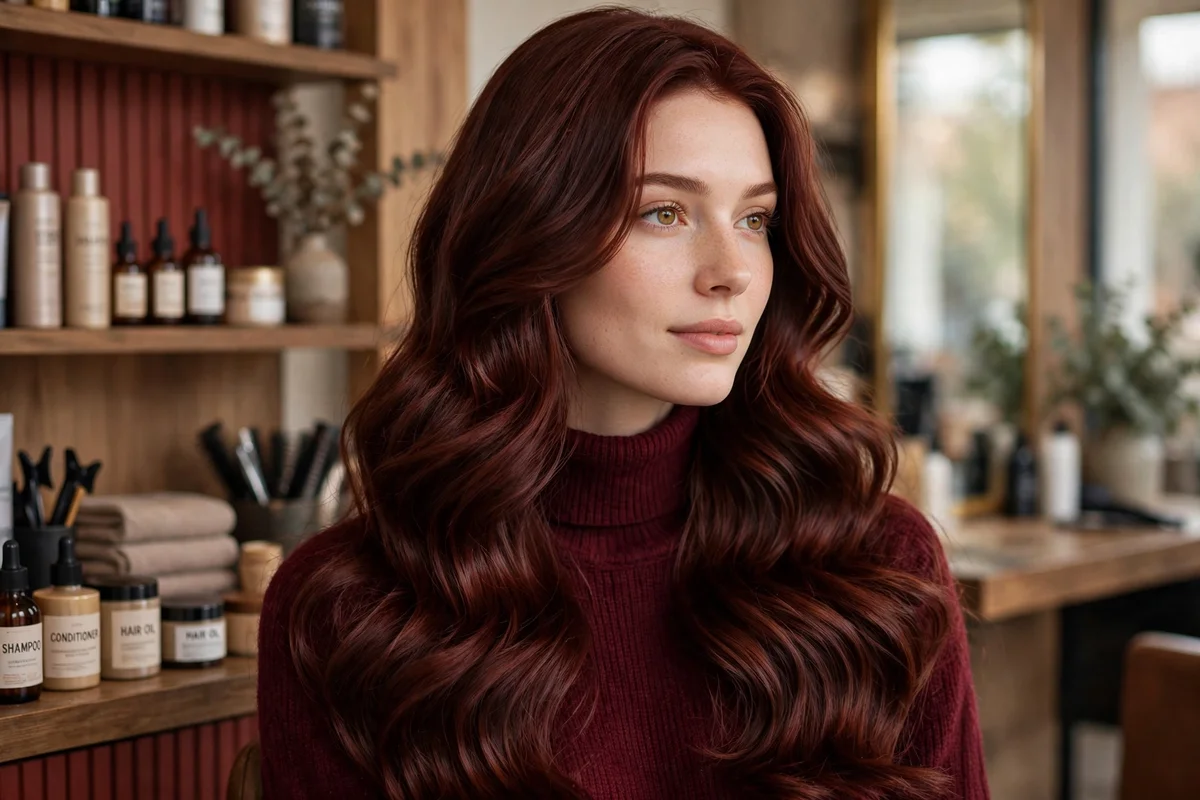
Mahogany sits right between red and brown, and that middle ground is why I keep coming back to it. The base reads like polished wood, with red showing through in the light and brown keeping the whole look grounded and wearable for work, school runs, and everything in between.
This list pulls together 27 mahogany hair color ideas, from soft espresso blends you can grow out quietly to brighter red melts that need a bit more upkeep. Use the table and the difficulty and cost bands under each idea to narrow your shortlist before you book, and bring two or three photos to your appointment so your colorist can match the tone to your skin and your starting color.
Key Takeaways
- Mahogany is a red-brown family. More brown means lower upkeep, more red means faster fading and more gloss appointments.
- Fair skin suits darker mahogany for contrast. Warm skin suits golden and copper mahogany. Cool skin suits violet-leaning mahogany.
- Balayage, root melts, and money piece panels grow out softer than all-over color.
- Red tones fade first, so cool water, sulfate-free wash products, and a color gloss help the shade last.
1. Classic Dark Mahogany Brown with Root Melt
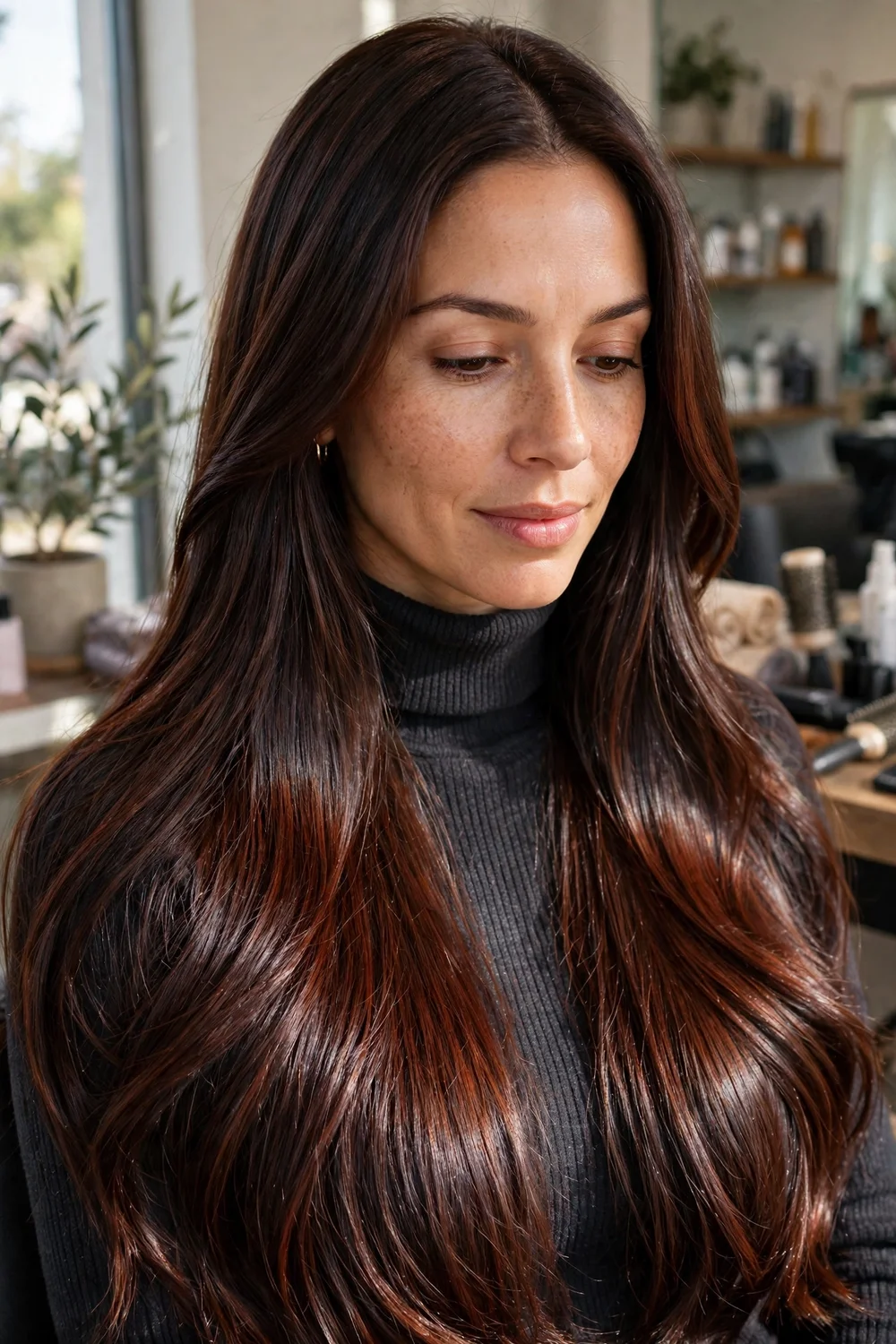
This is the starting point for most people. The color sits deep, close to dark brown, with red surfacing when light hits it. A root melt keeps your natural root shade blended in, so regrowth shows as a soft shadow.
Ask for a level 4 to 5 mahogany with a red-violet reflect. It works well on medium to dark starting bases and needs little lightening, which keeps damage low.
Try this: Book a gloss at week six to refresh the red reflect before it turns dull.
Difficulty: Medium · Cost: $$
2. Glossy Mahogany Highlights

Chunky mahogany ribbons over a very dark base give you contrast you can see from across the room. Copper and berry tones sit side by side, so the hair shifts color as it moves.
Placement matters more than quantity here. Wider pieces around the face and through the top layer read clearly, while fine pieces can get lost in a dark base.
Try this: Ask for ribbons a touch wider than standard highlights if your base is black or near black.
Difficulty: Medium · Cost: $$
3. Deep Mahogany Curls

Curls catch light on every curve, so a balanced mahogany with equal red and violet reads rich from all angles. The shade sits in a neutral zone, which helps it suit both warm and cool skin.
Color can loosen curl pattern if hair is lightened too far. Staying close to your natural depth and using a deposit-only color where possible helps keep ringlets springy.
Try this: Ask your colorist to paint color on dry, defined curls so placement follows your real pattern.
Difficulty: Medium · Cost: $$
4. Cranberry Mahogany
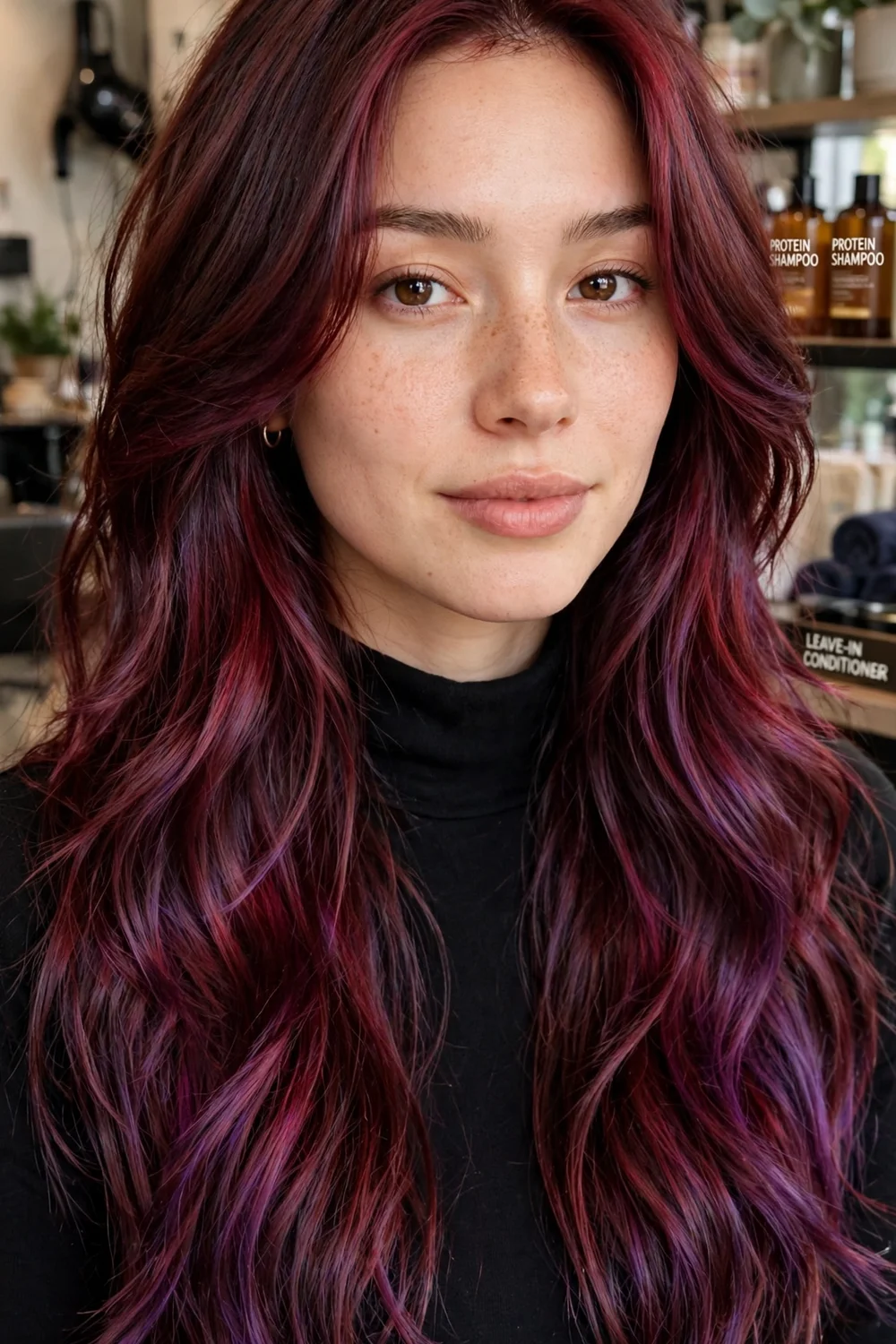
A deep brown base carries a cranberry wash through the layers, with a soft violet edge underneath. The red reads brighter than classic mahogany, yet the brown base keeps it wearable.
Layers help this one. Without them, the cranberry tone can look flat on one-length hair. With them, each layer shows a slightly different mix of red and brown.
Try this: Style with loose waves on day one so you can see how the cranberry pieces fall.
Difficulty: Medium · Cost: $$
5. Purple-Leaning Mahogany Blowout
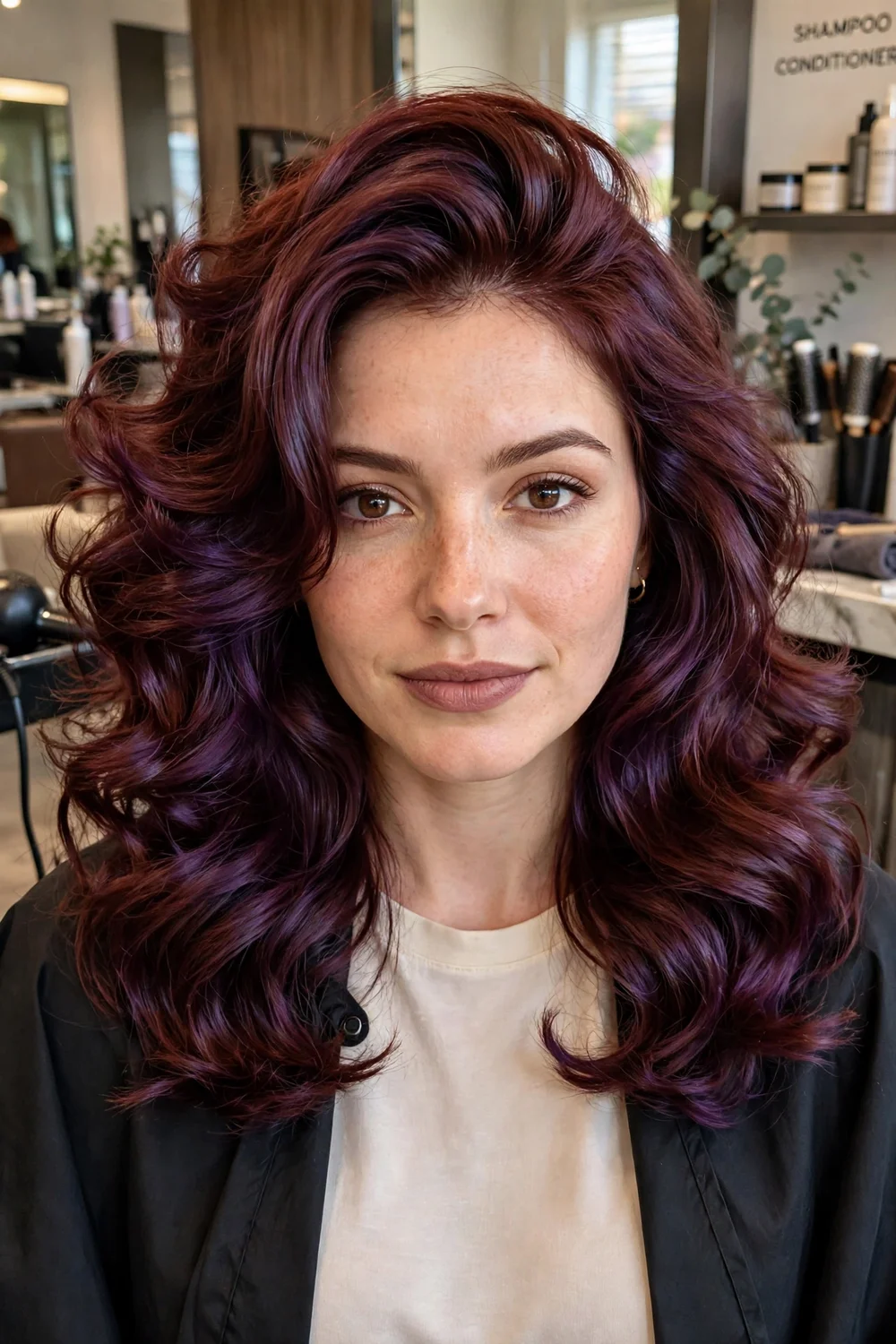
Here the violet side of mahogany does the work. The purple tinge can help balance yellow tones in the skin, and a bouncy blowout shows the cool shift clearly.
This version suits cool and neutral skin best. If your skin runs very warm, ask for a smaller violet share so the color stays flattering.
Try this: Use a purple-toned gloss at home only as your colorist directs, since overuse can push the shade too cool.
Difficulty: Medium · Cost: $$
6. Hand-Painted Red Mahogany

Hand painting gives the softest transitions in this list. Red and brown are swept on in uneven panels, so there are no hard lines and the grow-out stays gentle for months.
If you like the soft warmth in fall copper hair colors, this is the deeper, redder cousin. It pairs well with long hair and loose styling.
Try this: Bring a photo of the placement you want, since hand-painted results vary a lot by colorist.
Difficulty: Medium · Cost: $$$
7. Black Hair with Mahogany Ribbons
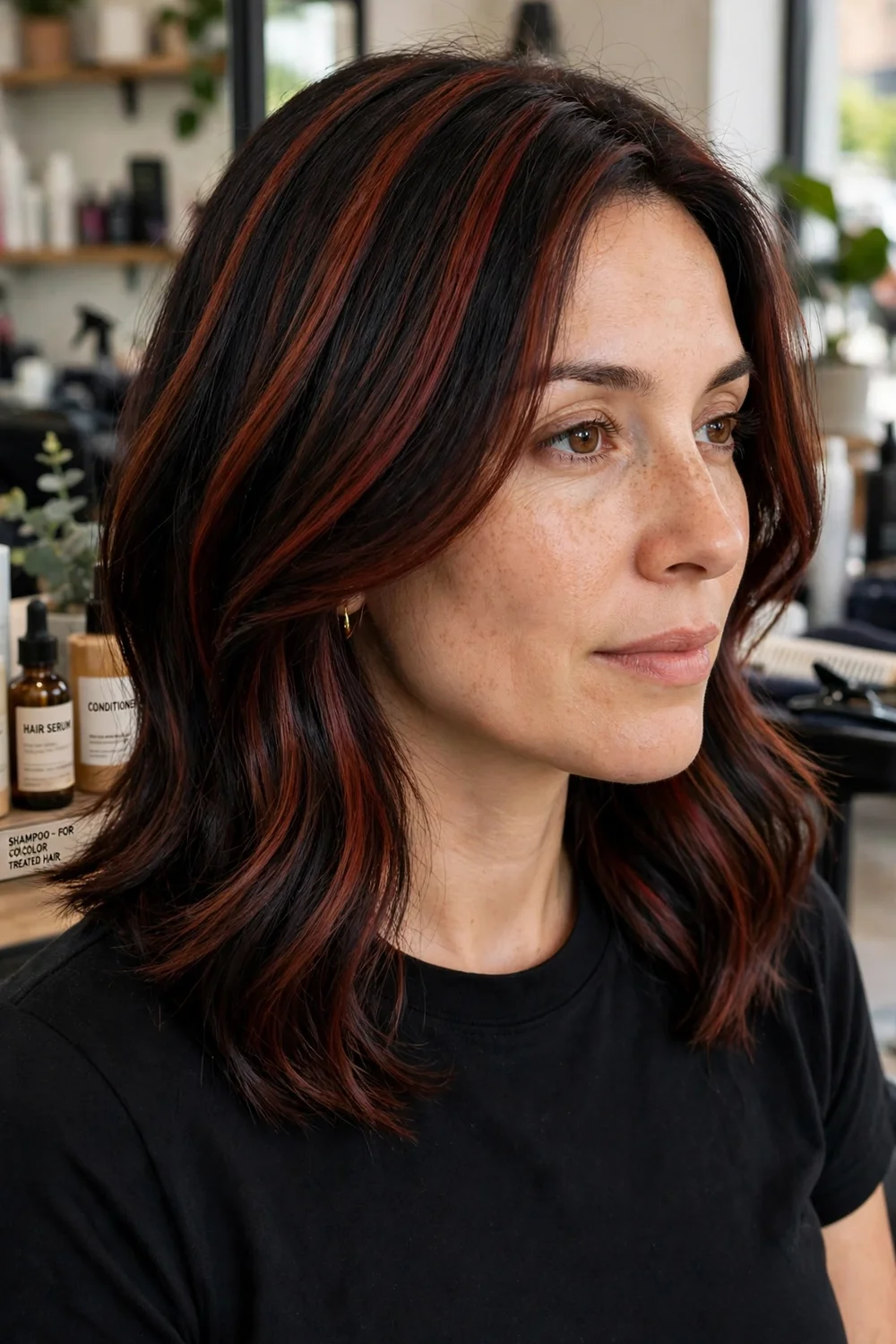
Mahogany works as a highlighter on black hair. Red-brown stripes add depth to a lob or bob without lightening the whole head, and a hint of violet keeps the mix cool.
Because the contrast is high, faded ribbons show quickly. Plan on a tone refresh sooner than you would with a blended balayage.
Try this: Keep ribbons off the very front hairline if you want a softer frame around the face.
Difficulty: Medium · Cost: $$
8. Warm Mahogany Balayage
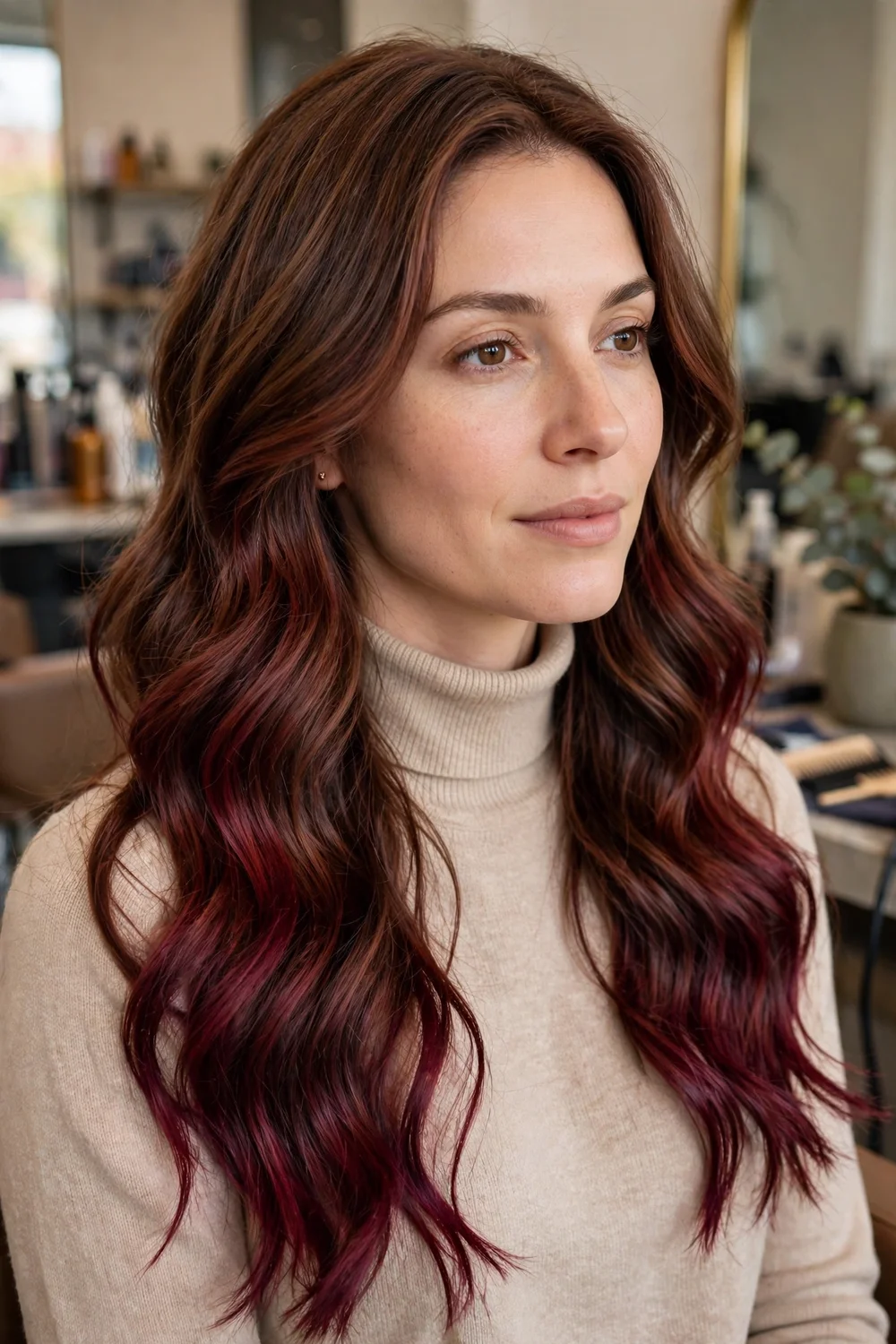
Mulberry and wine tones warm up a brown base through the mids and ends. The roots stay close to your natural shade, so this is a good first step into red if you feel unsure.
The warmth suits autumn and winter wardrobes well, and it fades toward a soft brown rather than an orange tone when done with a red-violet base.
Try this: Ask for the lightest pieces around the face to lift your skin tone on dull days.
Difficulty: Medium · Cost: $$
9. Mahogany and Burgundy Blend

This blend makes the difference between the two shades easy to see. Roots stay coppery brown and mahogany in character, while ends move toward burgundy with more purple and depth.
It is a smart pick if you keep going back and forth between the two colors. You get warmth at the top and a cooler, wine-like finish at the bottom.
Try this: Keep the burgundy share on the ends only if your workplace calls for a conservative look.
Difficulty: Hard · Cost: $$$
10. Low-Maintenance Mahogany Brown
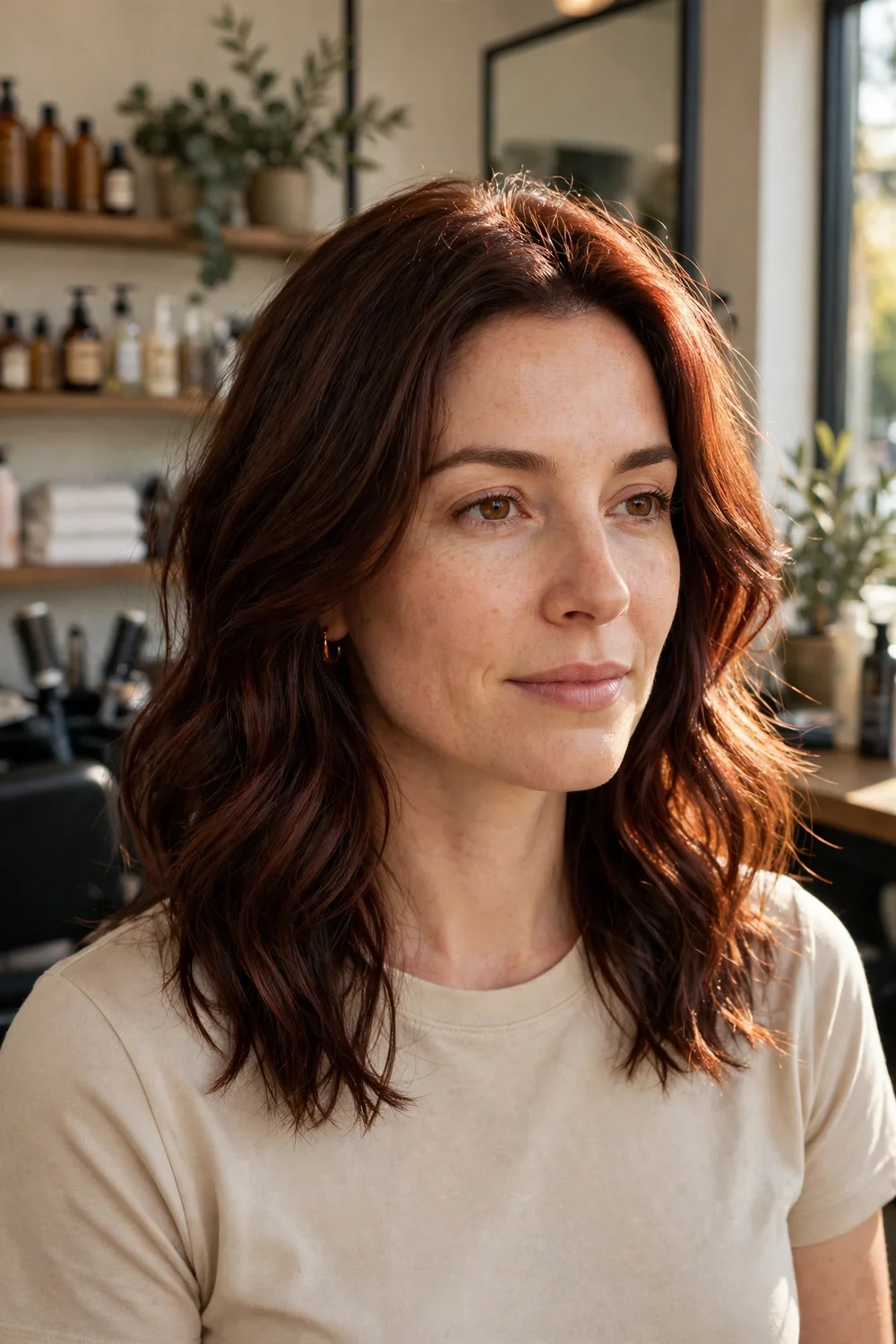
Staying close to the brown end of the family is the practical move. Reds fade fast, and a brown-heavy mahogany holds its tone longer and fades in a way that still looks like your color.
Think of it as brunette with a red sheen in sunlight. If you like the depth in fall brunette hair colors, this adds warmth without a big change in routine.
Try this: Choose a demi-permanent formula first. You can test the tone and let it fade out if you change your mind.
Difficulty: Easy · Cost: $
11. Long Layered Dark Mahogany

Length plus layers gives mahogany room to show all three of its tones at once. Red, brown, and purple appear in different layers as the hair moves.
Long hair needs the ends checked before coloring. Dry or split ends grab color darker and can look patchy, so a trim first usually gives a cleaner result.
Try this: Ask for layers that start below the chin so the color shift stays smooth and grown-up.
Difficulty: Medium · Cost: $$
12. Merlot Mahogany Streaks
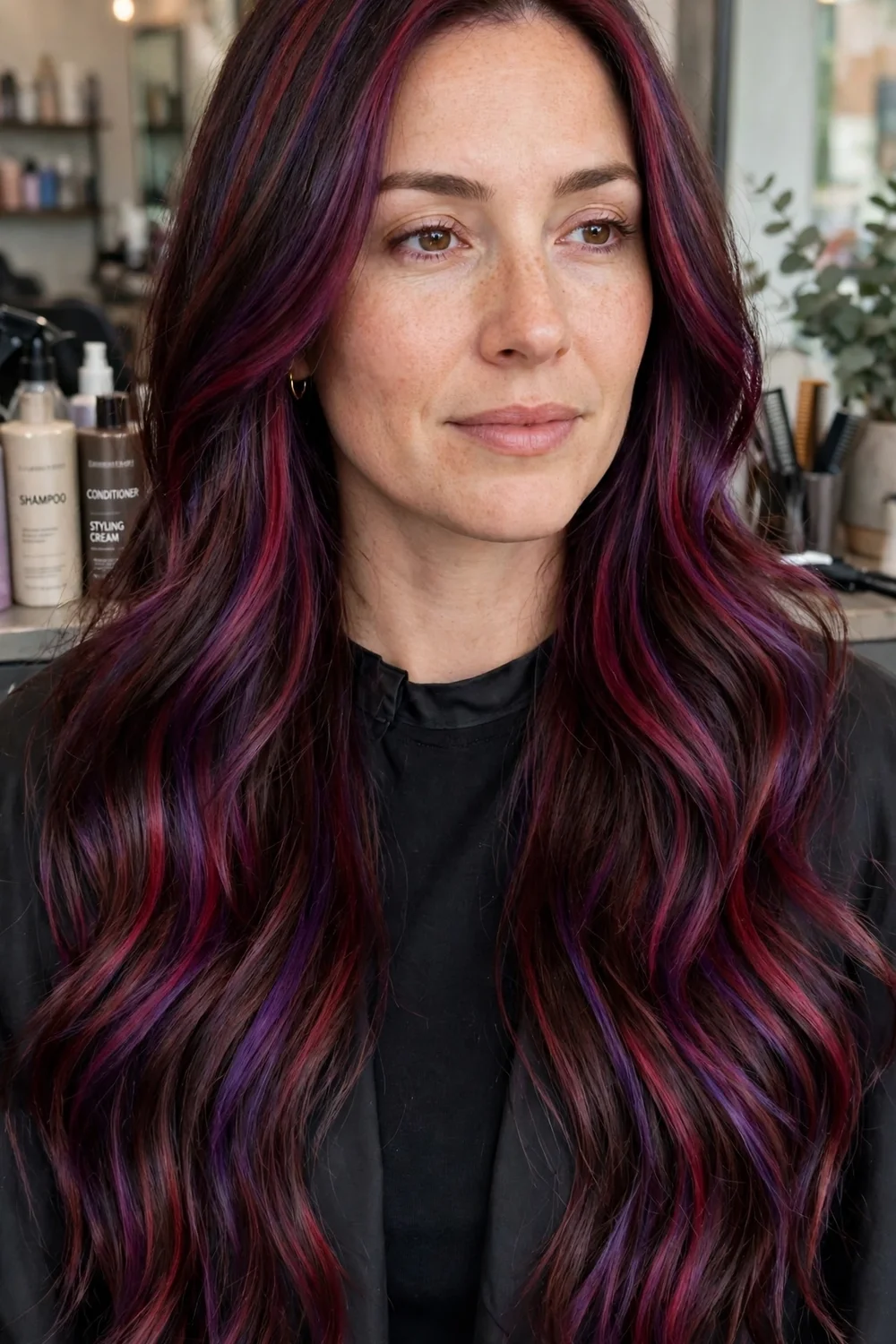
Merlot pushes mahogany toward wine. Streaky placement keeps the violet-red pieces separate, so you get shimmer and movement rather than one flat tone.
This pairs well with dark bases and cool skin. On a light blonde base, the same streaks will read much brighter and need more upkeep.
Try this: Alternate thick and thin streaks for a less uniform, more natural fall of color.
Difficulty: Medium · Cost: $$
13. Golden Mahogany Brown
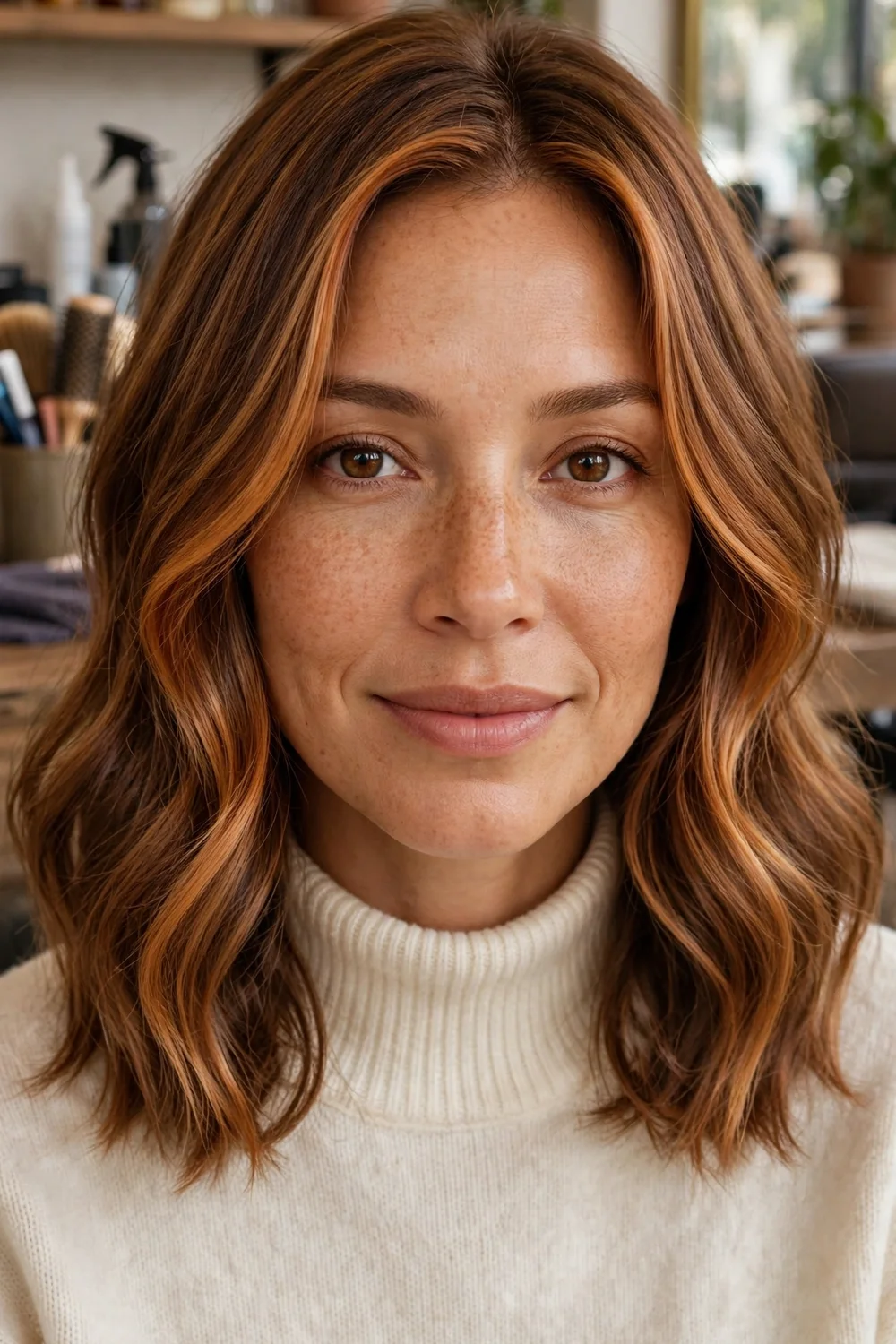
Warm skin tones suit this lighter, golden version. A medium mahogany base gets copper and golden pieces near the face, which lifts the whole look without going blonde.
It is also a forgiving bridge shade if you are moving from brown toward copper. The family in copper hair color ideas shows the brighter end of that path.
Try this: Place the lightest golden pieces at the front and keep depth at the back for balance.
Difficulty: Medium · Cost: $$
14. Mahogany Auburn

This softer take sits between wine and dark auburn, muted with brown so it never shouts. It is a good middle step if full red feels like too much and plain brown feels flat.
Auburn-leaning mahogany fades more gracefully than brighter reds. The fade path goes toward warm brown, which blends well with most natural bases.
Try this: Pair it with a clear gloss every second appointment to keep the muted tone looking polished.
Difficulty: Easy · Cost: $
15. Light Mahogany Brown
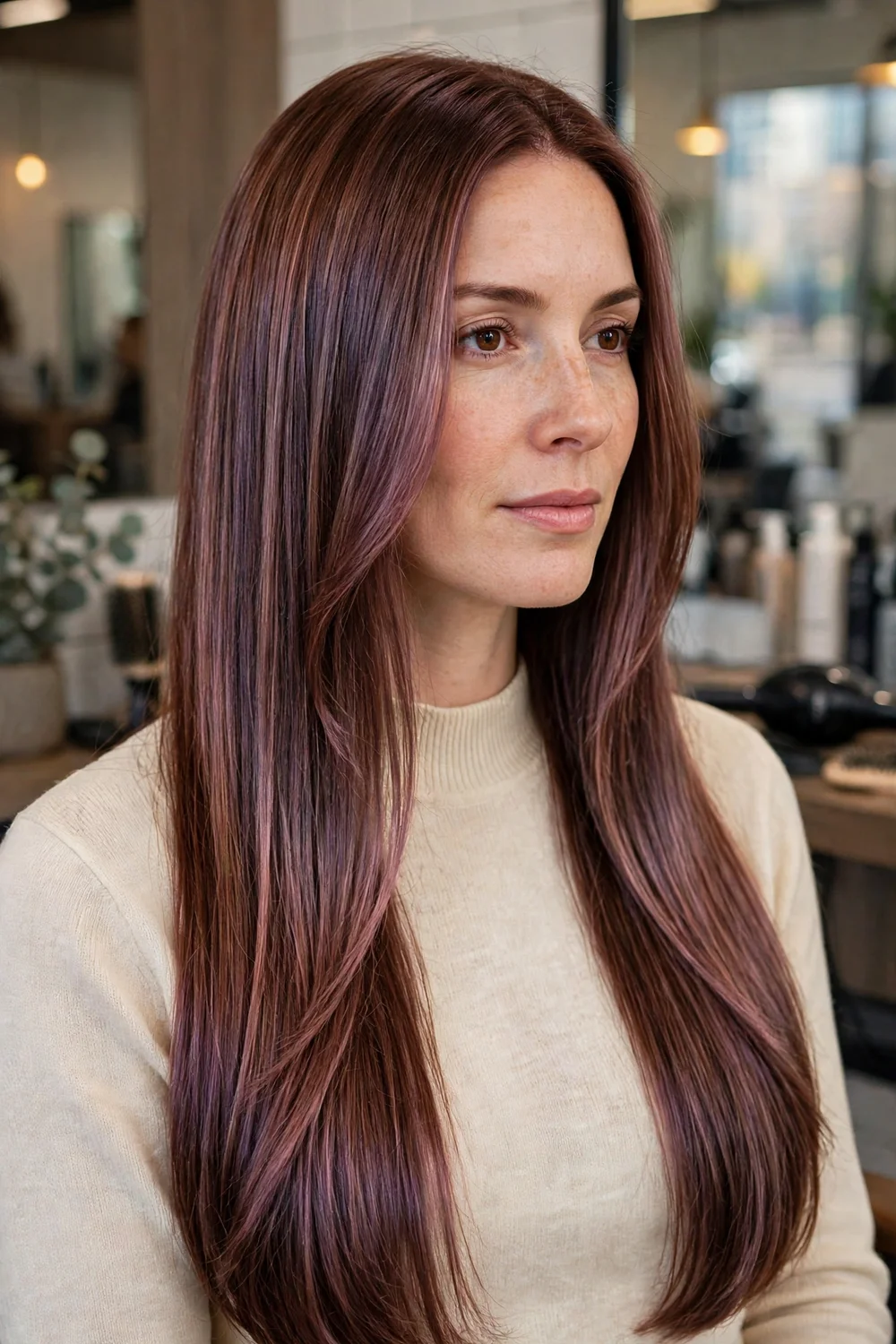
Light mahogany mixes red and chocolate with a small share of rose and violet. The result reads bright in daylight and stays brown enough indoors for a conservative setting.
On dark hair, reaching this level takes lightening first, so budget time for that step. On light brown or dark blonde hair, it can often be done in one color appointment.
Try this: Ask for a strand test if your hair has old dark dye on the ends, since lift can come up uneven.
Difficulty: Medium · Cost: $$
16. Mahogany to Red Ombre
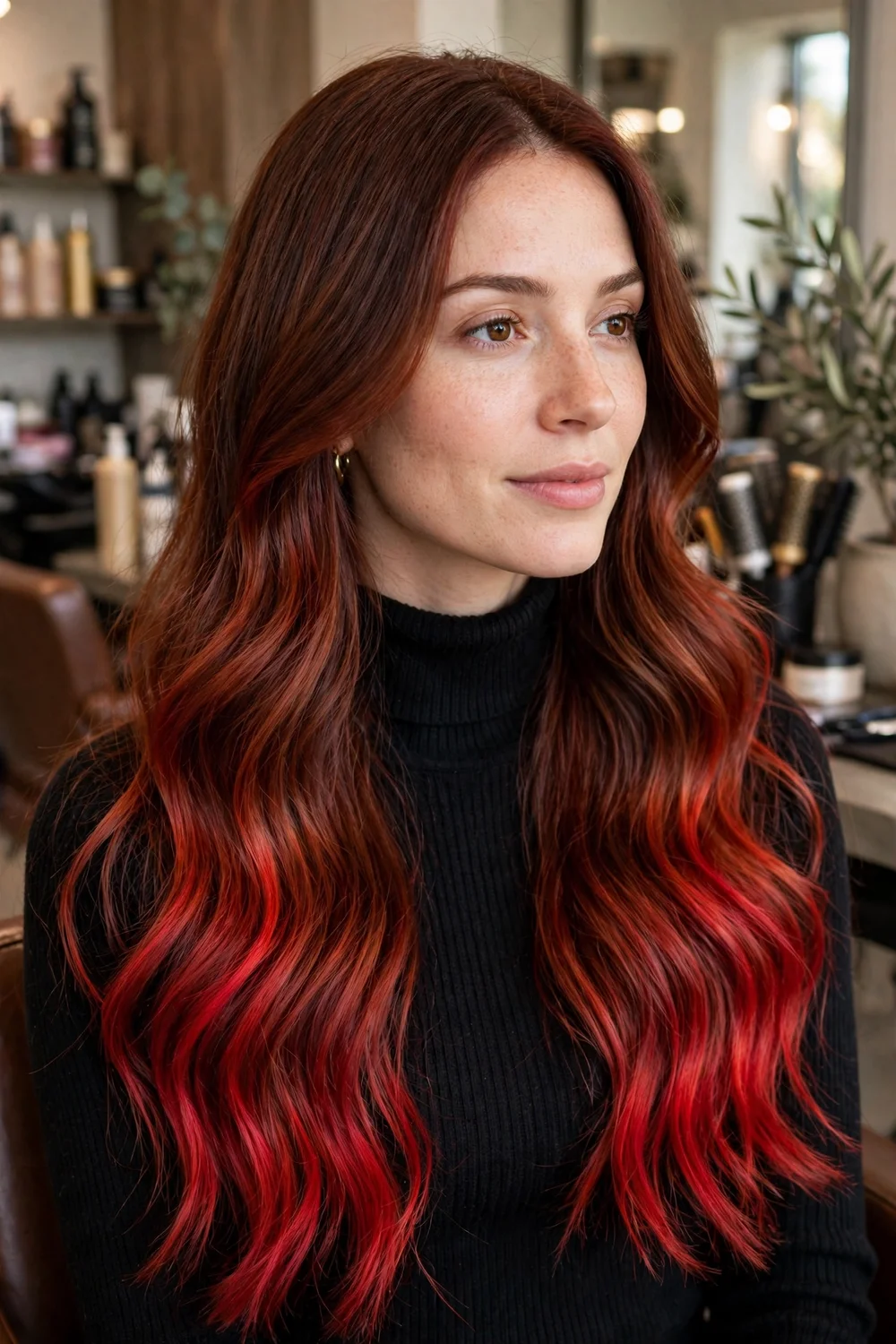
The top half stays medium mahogany brown, then the color turns and finishes in a clear, bright red. The shift is deliberate, so ask for a blended melt in the middle to avoid a hard line.
Ends take the most damage in an ombre because they are lightened the most. A trim and a bond-care routine at home help the red ends stay smooth.
Try this: Start the red lower, around the jaw or below, if you want an easier grow-out.
Difficulty: Hard · Cost: $$$
17. Mahogany Lob

A darker reddish-brown on a lob creates strong contrast on fair skin and brings out pink tones in the cheeks. The cut keeps the color looking neat, since the ends stay thick and even.
This is a tidy option for work. It needs regular trims to hold the lob shape, yet the color itself can be a simple all-over formula.
Try this: Add a soft side part to break up the contrast if a center part feels too sharp.
Difficulty: Easy · Cost: $
18. Glazed Mahogany Waves
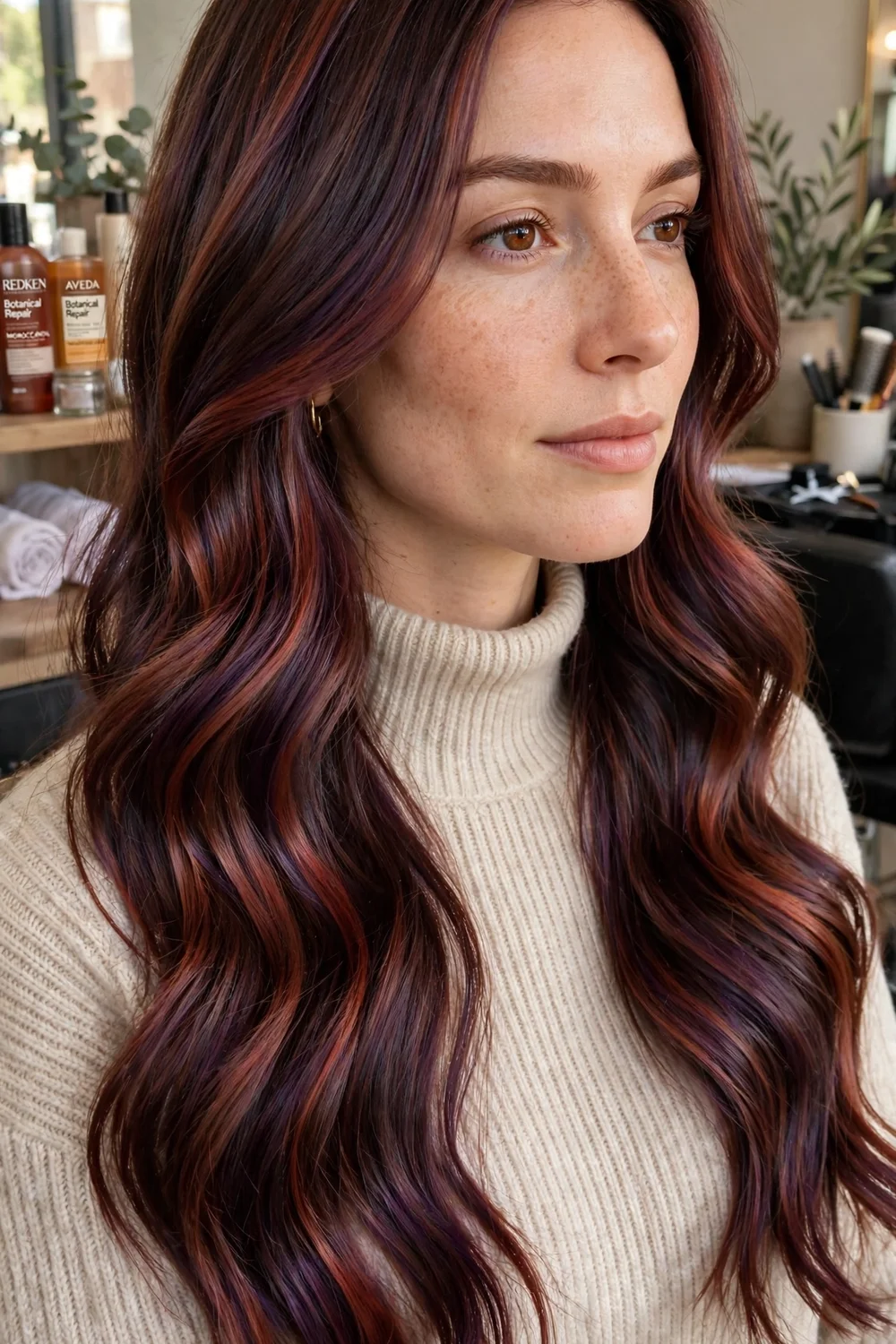
A glaze over a soft balayage gives this wave pattern its shine. Chocolate, violet, and red flow together with no visible stripes, so the finish looks smooth even up close.
Glazes are semi-permanent and fade gradually. That makes this a low-risk way to test mahogany over an existing balayage, as shown among dark fall hair colors.
Try this: Book the glaze as a standalone refresh between full color appointments to stretch your budget.
Difficulty: Easy · Cost: $
19. Mahogany Copper Melt
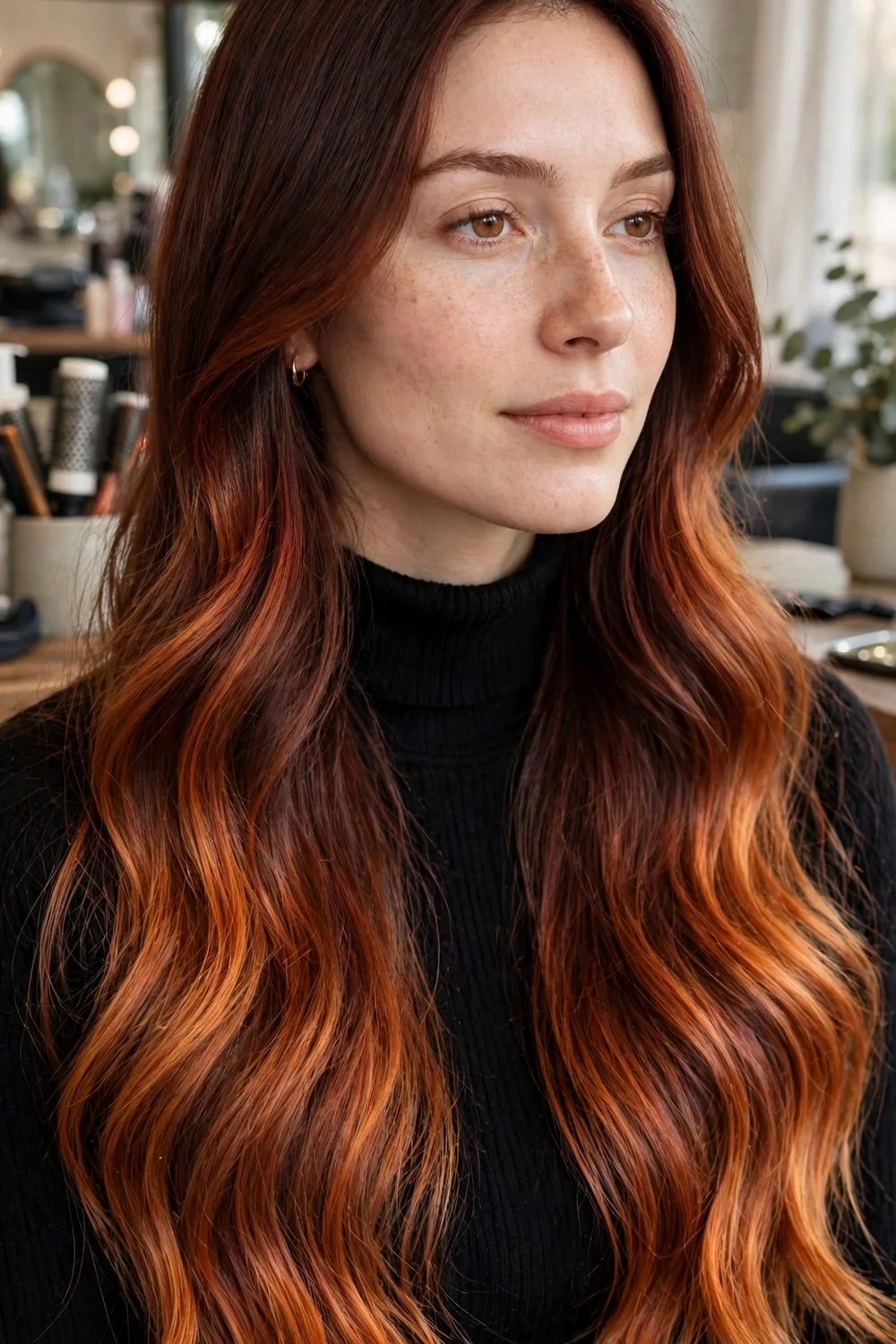
Color melting blends mahogany into copper with no band where one stops and the other starts. The copper adds brightness, so this version suits spring and summer as well as colder months.
Ask your colorist to melt at least three tones: mahogany at the root, a red-brown in the middle, and copper at the ends. Two tones alone can look like a fade rather than a melt.
Try this: Curl the ends loosely to show the copper shift in photos and in daily wear.
Difficulty: Hard · Cost: $$$
20. Chocolate Mahogany with Copper Balayage
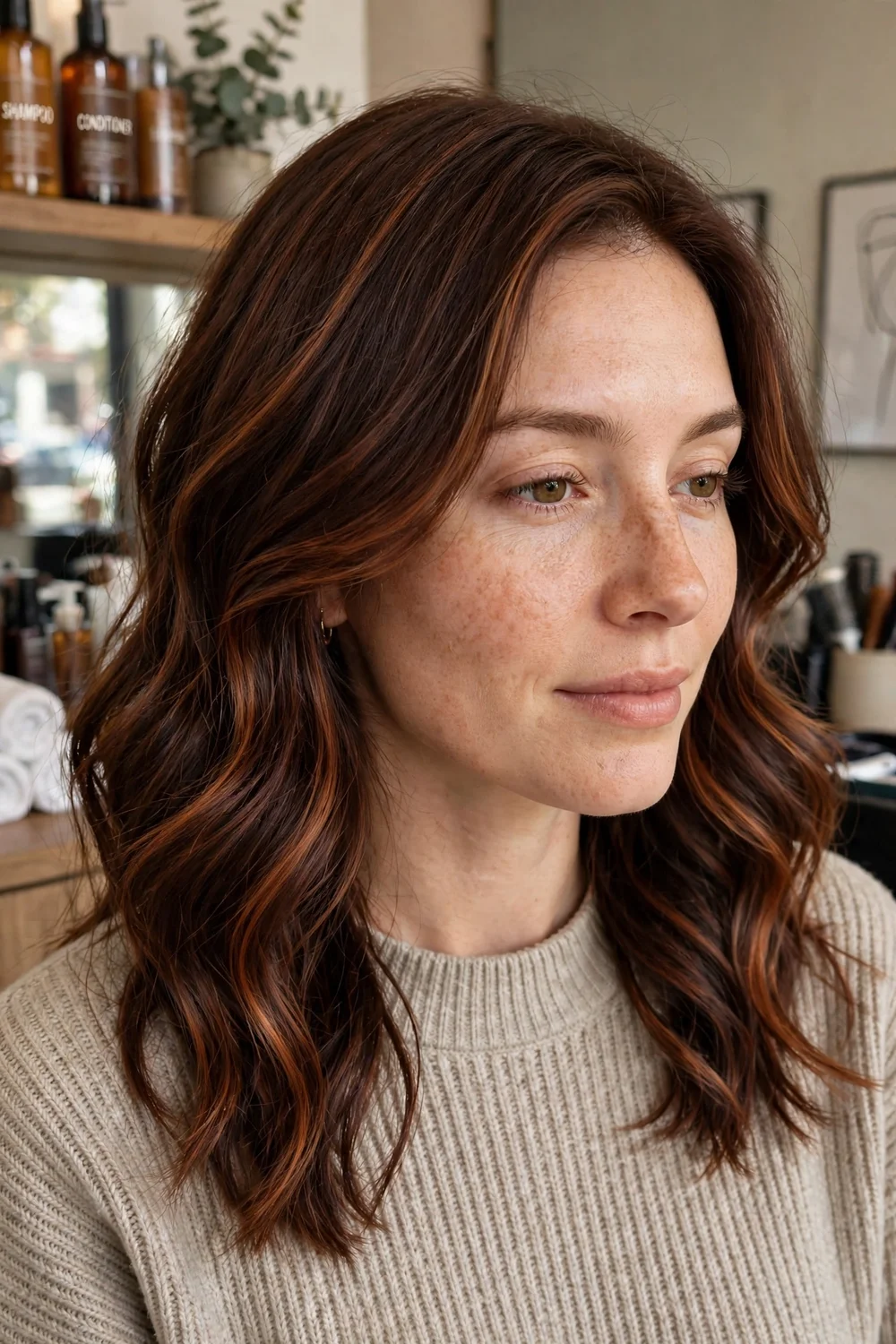
If you love your brunette base and want to enhance it rather than cover it, start here. Chocolate mahogany keeps the depth, and copper balayage pieces lift the surface.
Loose waves show the copper best. Straight styling will still show the warmth, yet the dimension reads flatter.
Try this: Keep copper pieces concentrated from the mids down so roots stay low upkeep.
Difficulty: Medium · Cost: $$
21. Short Mahogany Bob

A smooth bob shows shine better than almost any other cut, and deep mahogany makes that shine read red-brown rather than plain dark. The warm tones keep a sharp cut from feeling severe.
Short hair also means less product per color appointment and faster drying time at home. The trade-off is more frequent trims to keep the bob line clean.
Try this: Ask for a slight undercut at the nape if your hair is thick and the bob tends to puff out.
Difficulty: Easy · Cost: $
22. Mahogany Espresso
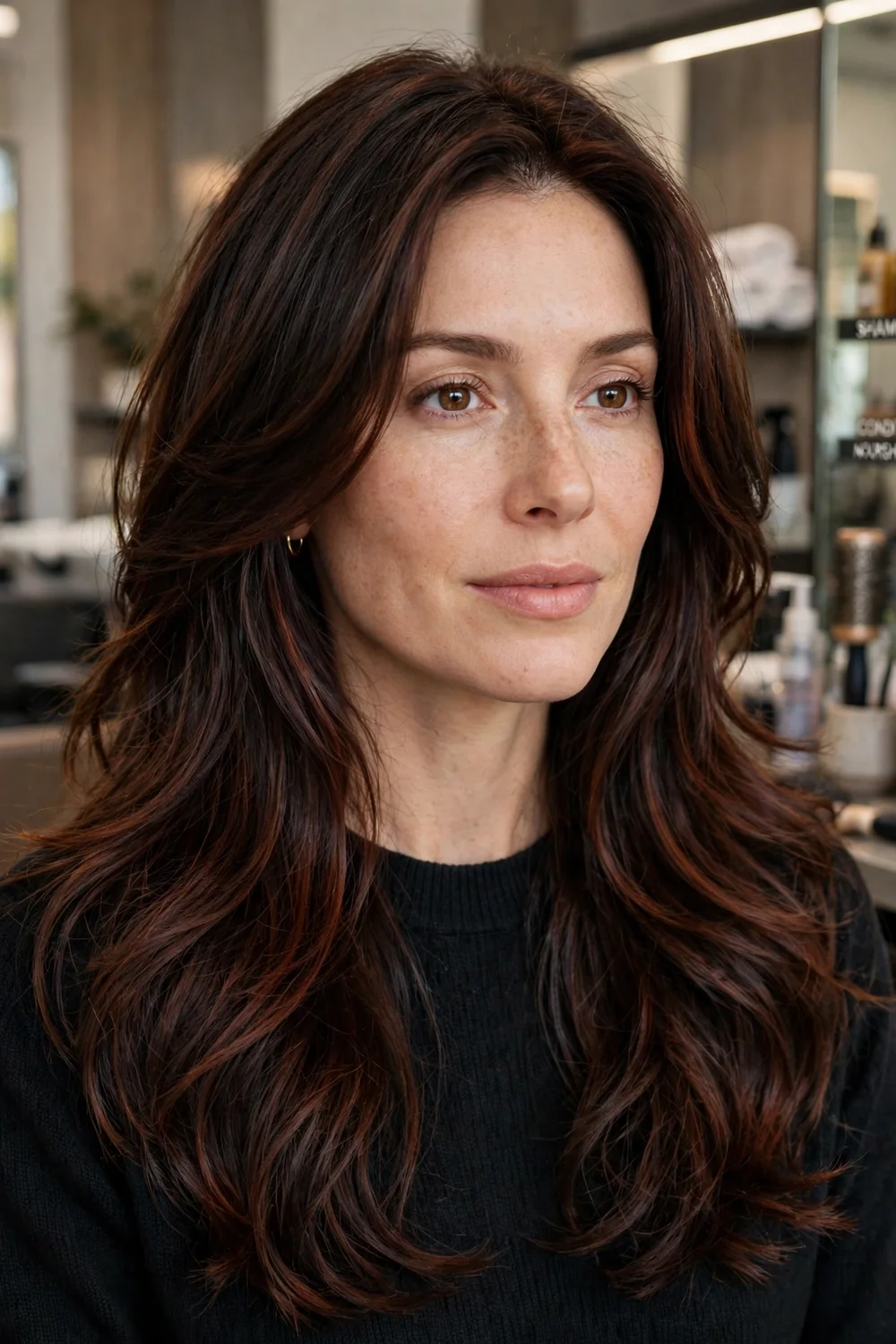
Espresso depth with a mahogany wash gives you the quietest red in this list. Indoors it reads as a rich dark brown. In sunlight, the red warmth shows through the layers.
This suits anyone who wants a change that coworkers notice slowly. It also covers a wide range of natural bases without lightening.
Try this: Take your check photo outdoors, since indoor salon light hides the red shift in this shade.
Difficulty: Easy · Cost: $
23. Mahogany Shag
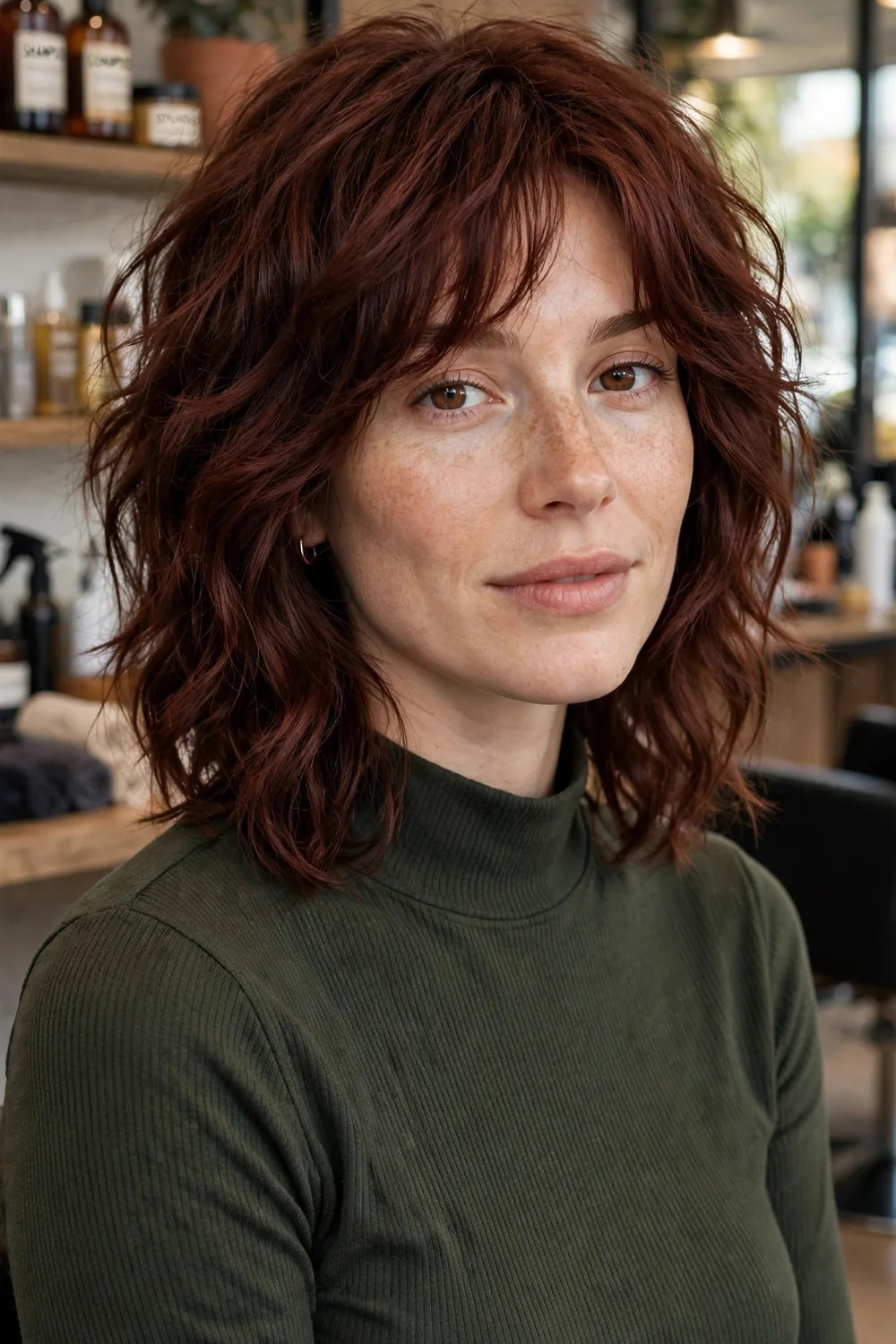
A shag cut and mahogany color help each other. Piecey layers break the color up, and the red-brown tone gives the messy texture a polished finish.
Cool-toned mahogany works well on a shag if you want an edgier feel. Warm mahogany on the same cut reads softer and more retro.
Try this: Style with a light texture spray rather than heavy wax, so the layers stay airy.
Difficulty: Medium · Cost: $$
24. Red Violet Mahogany Pixie
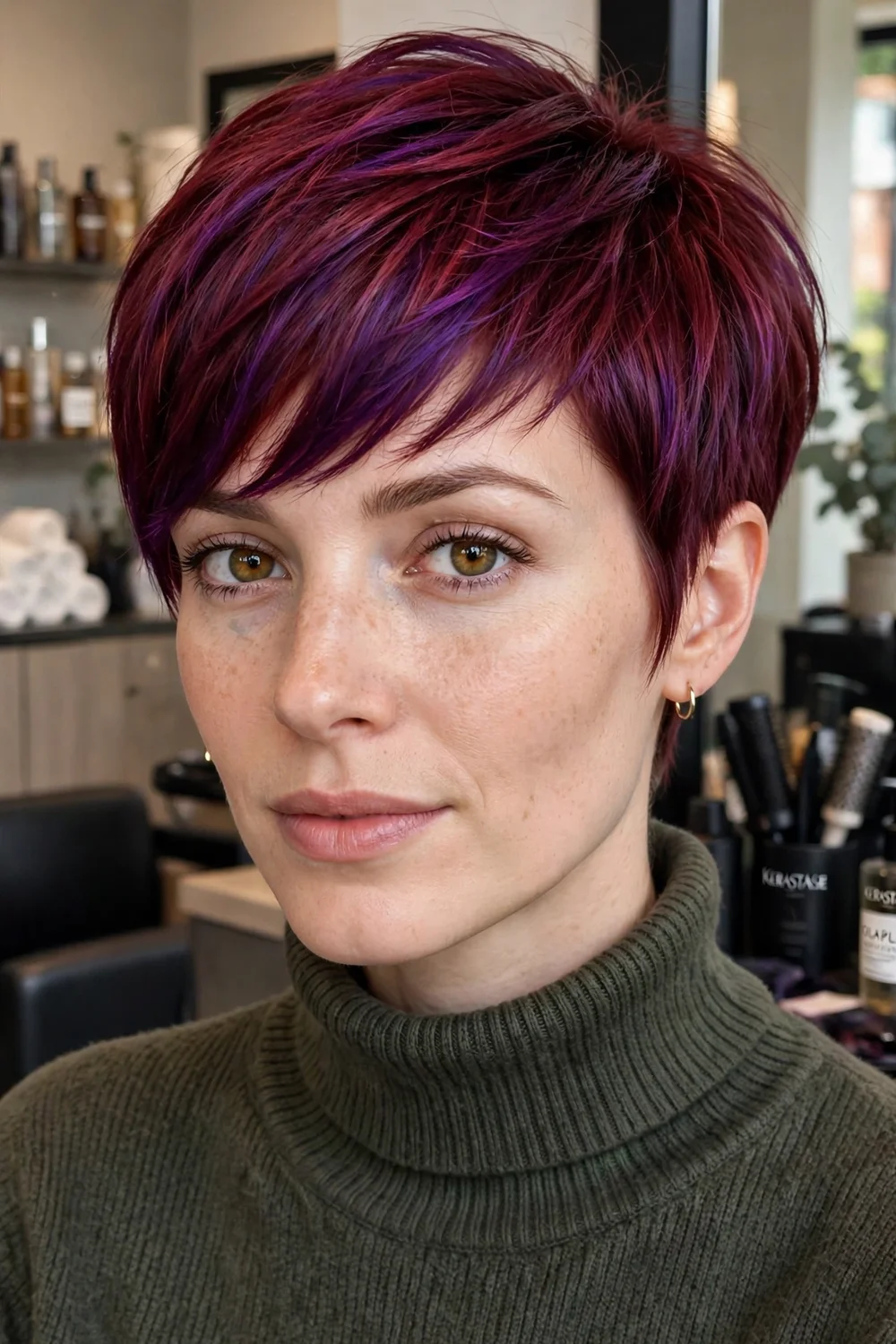
A pixie is a strong platform for rich color because every strand is on show. Deep red mahogany with violet hints and side-swept bangs gives a short cut plenty of character.
Short hair grows out fast, so color appointments come sooner. The upside is that each appointment uses less color and takes less time. Compare the red family further in red brown hair color ideas.
Try this: Keep the sides a shade deeper than the top to add shape and height.
Difficulty: Medium · Cost: $
25. Mahogany Money Piece
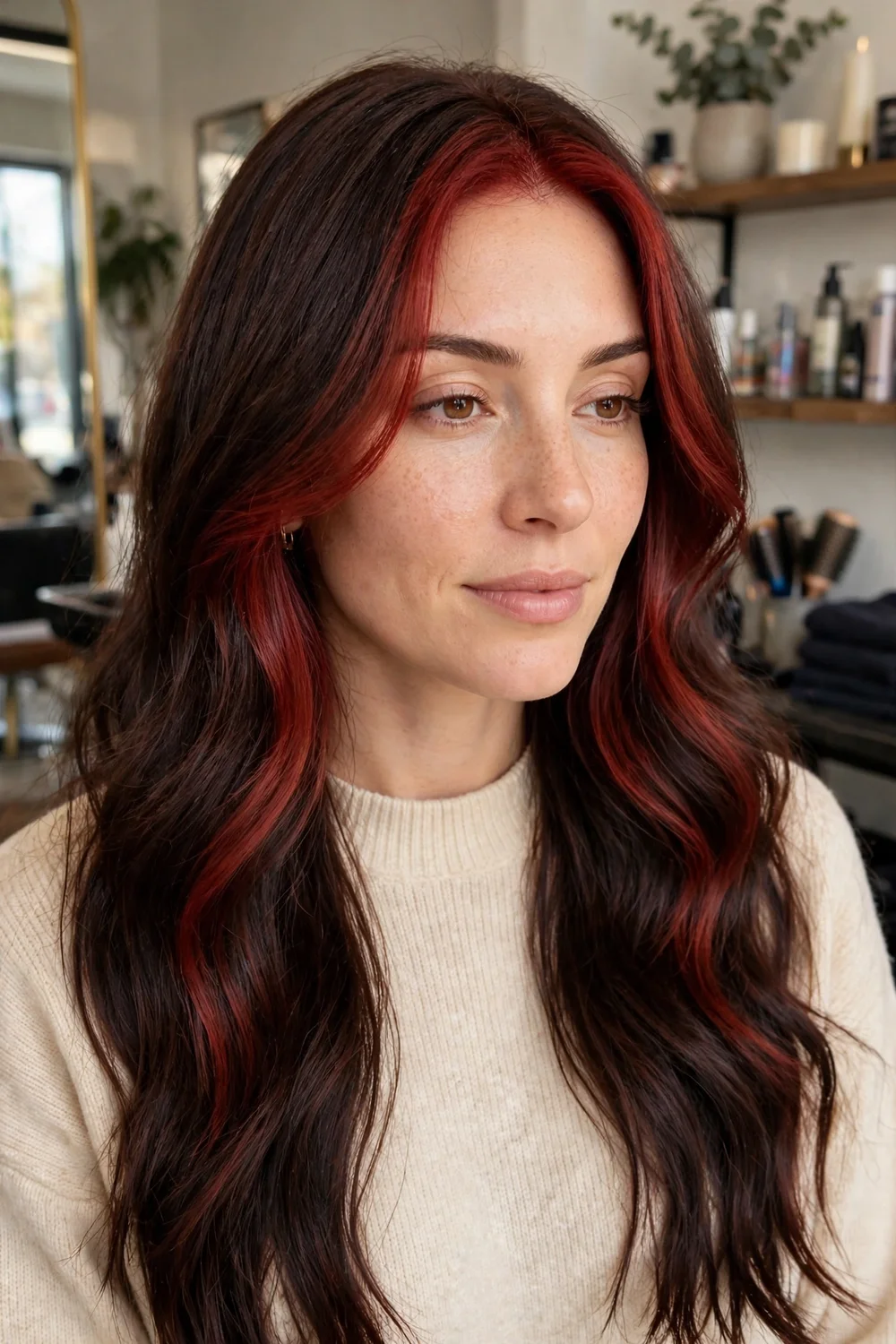
None of the standard mahogany lists give the money piece its own spot, yet it is one of the easiest ways to test red. Two bright mahogany panels frame the face while the rest of your hair stays your natural color.
If you love it, you can expand the panels into a full balayage later. If you change your mind, the front pieces can be toned back down in one short appointment.
Try this: Start with panels about two fingers wide on each side for a clear effect that still feels tidy.
Difficulty: Easy · Cost: $
26. Mahogany for Gray Blending

Mahogany can soften the line between colored hair and gray regrowth. The red-brown tone sits close in depth to many natural bases, and a blended application lets silver strands read as lighter mahogany pieces.
Full coverage dye gives a solid result, while a blend gives a softer grow-out and fewer hard root lines. Talk through both options, since gray hair can resist color and may need a adjusted formula.
Try this: Ask for a demi-permanent blend first if you are new to coloring gray, so the grow-out stays gentle.
Difficulty: Medium · Cost: $$
27. Mahogany Peekaboo Panels

Peekaboo panels hide mahogany under the top layer. With hair down, you see flashes of red-brown when you move. With hair up, the panels show in full.
This is a practical pick for workplaces with strict color rules, and for anyone who wants red on their own terms. Underneath sections also fade away from direct sun, so the tone can last longer.
Try this: Place panels behind the ears and at the nape for the clearest reveal in a ponytail.
Difficulty: Medium · Cost: $$
Mahogany Shades at a Glance
Use this table to match a shade family to your starting point and upkeep level before you commit.
| Shade Family | Best Starting Base | Upkeep | Ideas in This List |
|---|---|---|---|
| Dark mahogany and espresso | Medium brown to black | Low | 1, 10, 11, 22 |
| Balayage and melts | Light brown to dark brown | Low to medium | 6, 8, 18, 19, 20 |
| Violet and wine mahogany | Dark brown to black | Medium | 5, 9, 12, 24 |
| Golden and copper mahogany | Light brown to medium brown | Medium | 13, 15, 20 |
| Partial and hidden color | Any base | Low | 25, 27 |
Frequently Asked Questions
What color is mahogany hair?
Mahogany is a mix of red and brown with a small share of violet. It looks like polished mahogany wood, so it reads brown in low light and shows red and wine tones in bright light.
Does mahogany hair suit fair skin?
Yes. Darker mahogany creates clear contrast on fair skin, while light mahogany gives a softer result. Cool fair skin suits violet-leaning shades, and warm fair skin suits golden mahogany.
How long does mahogany hair color last?
All-over permanent mahogany holds its depth for weeks, yet the red reflect fades first with washing, heat, and sun. A gloss refresh and sulfate-free products help keep the red tone visible for longer.
Can I get mahogany hair without bleach?
Often, yes, if your starting color is light brown or darker brown and you want a shade at a similar depth. Going lighter than your base, or covering old dark dye, usually needs lightening first, so ask for a strand test.
What is the difference between mahogany and burgundy hair?
Mahogany has more brown and a warmer wood-like base. Burgundy has more purple and red wine character and reads cooler and deeper. Many blends use mahogany at the roots and burgundy at the ends.
How do I stop mahogany hair from fading orange?
Wash with cool water, limit heat styling, and use products made for color-treated hair. Ask your colorist for a red-violet based formula and a matching gloss, since that base fades toward brown rather than orange.
Final Thoughts
Mahogany earns its place because it gives you red without giving up brown. My own shortlist from this set would be the low-maintenance brown for a busy season, the money piece for a low-risk test, and the copper melt for a bigger change. Pick the one that fits your upkeep budget as honestly as your color taste, save the photo, and talk through fading and gloss timing with your colorist before the first bowl is mixed. That short conversation saves most of the disappointment people feel with red tones.

