


Caramel balayage is the warm middle ground I point people to when they want light in their hair without a full color change. The base stays close to your natural shade, and hand-painted caramel pieces do the work through the mid-lengths and ends. That is why this list focuses only on caramel tones, from soft melts on dark brunette hair to caramel blonde ends, short bobs, curls, and blonde bases that need depth.
Use this guide by base color and length first. Dark bases carry caramel with the most contrast, light brown bases give a softer blend, and blonde or red bases use caramel in a different way, as depth or as a softener. If you already looked at seasonal color, the fall balayage hair colors guide covers a wider fall palette, while this page stays with caramel in every season.
Key Takeaways
- Caramel balayage keeps your root color and paints warm caramel through mid-lengths and ends for a soft grow-out.
- Dark brunette and chocolate bases show the strongest contrast. Light brown, blonde, strawberry blonde, and copper bases give softer results.
- Length changes placement: long layers carry ribbons, lobs and bobs need color at the ends and front, and curls need painting on dry hair.
- Root melt, money piece, and peekaboo placements lower upkeep and let you test caramel with less commitment.
1. Warm Caramel Ribbons on Long Dark Waves

Long dark waves give caramel ribbons room to show. The colorist paints wider sections through the mid-lengths and ends, so each wave catches a warm band of caramel against the deep base. The root stays dark for several inches, which keeps grow-out soft.
This version suits thick or medium hair that holds a loose wave. On fine hair, ask for thinner ribbons so the color reads blended. A gloss every few weeks helps the caramel stay warm and clear on a dark base.
Try this: Take a photo of this placement to your appointment and point to where you want the lightest piece to start. That one detail prevents most mismatches between long, medium, and short versions of the same idea.
Difficulty: Medium · Cost: $$
2. Soft Caramel Melt on Dark Brunette Hair
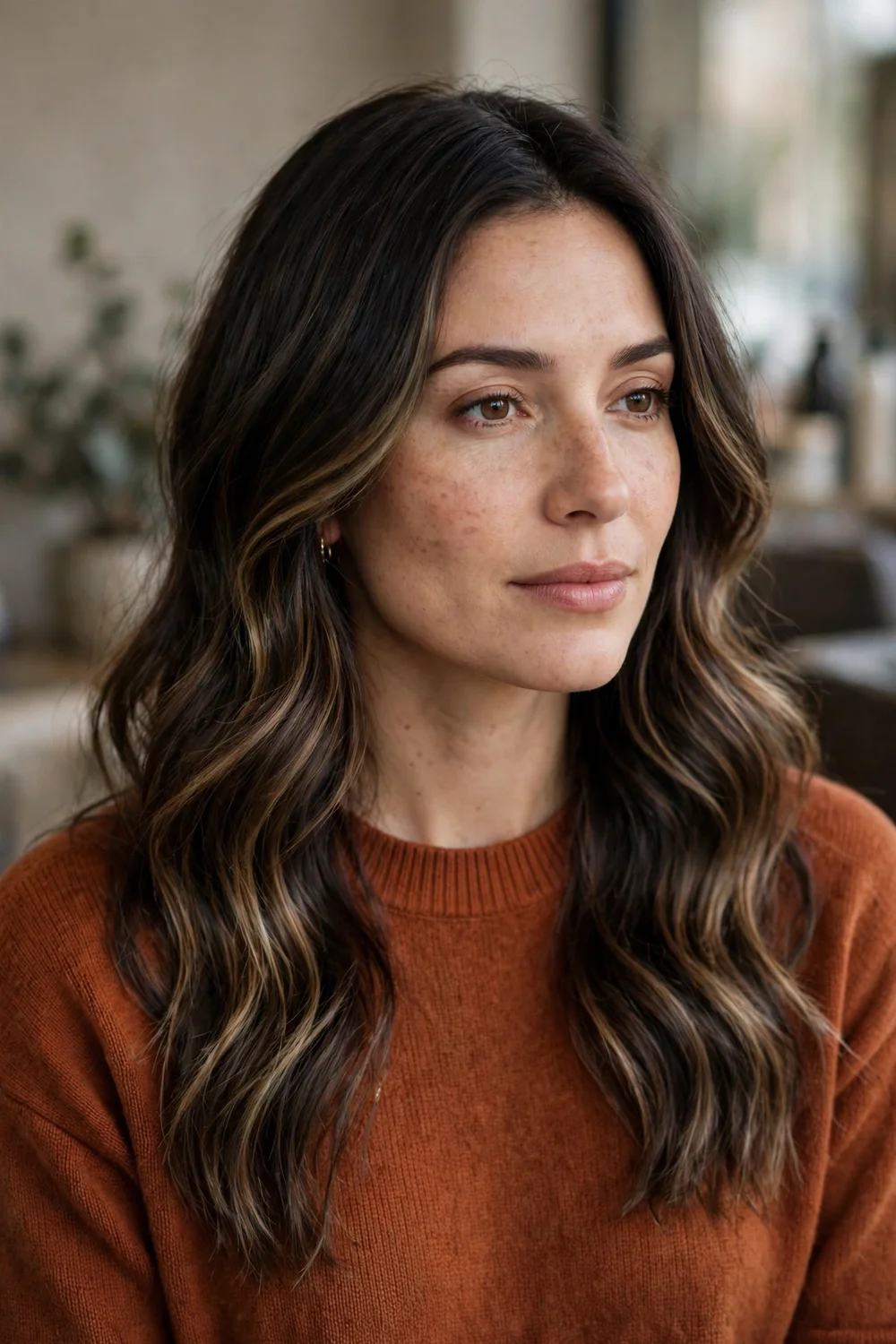
A soft melt uses caramel only a few shades lighter than your natural brunette. The painted pieces start low, brighten gradually, and stay thin at the top. Indoors the change looks gentle, and in daylight the ends pick up a warm glow.
Choose this if you want a first balayage with low upkeep. It pairs well with shoulder length and longer cuts, and it grows out without a hard line. Ask your colorist to keep the front pieces slightly brighter for light around the face.
Try this: Take a photo of this placement to your appointment and point to where you want the lightest piece to start. That one detail prevents most mismatches between long, medium, and short versions of the same idea.
Difficulty: Easy · Cost: $$
3. Chocolate Brown with Creamy Caramel Balayage

Chocolate brown makes a rich base for creamy caramel. The caramel sits in soft panels through the lower half and around the face, adding shine to the darker top section. Gentle waves show the contrast best, since each curve turns a panel toward the light.
This pairing works for medium and warm skin tones and for hair that already leans warm. Keep heat styling moderate and use a color-safe conditioner, since lightened ends on a chocolate base can dry out faster than the roots.
Try this: Take a photo of this placement to your appointment and point to where you want the lightest piece to start. That one detail prevents most mismatches between long, medium, and short versions of the same idea.
Difficulty: Easy · Cost: $$
4. Caramel Bronde Waves for Medium Brown Hair
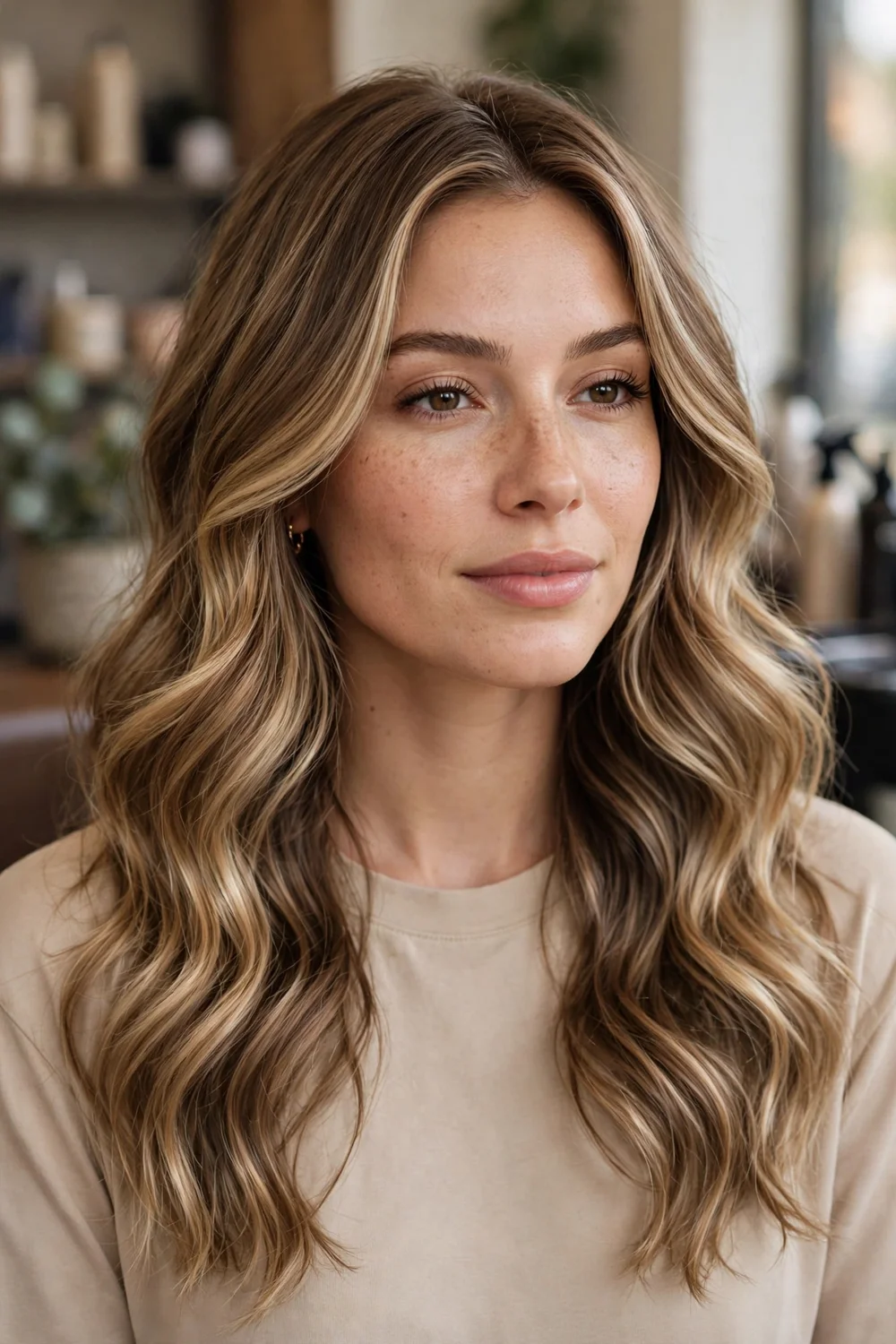
Bronde sits between brown and blonde, and caramel is the bridge tone. Your colorist blends brown roots, caramel mid-lengths, and lighter ends into loose waves. The result reads bright from a distance and still keeps depth close to the scalp.
This is a good pick if you want to go lighter in stages. You can add more lightness at the next visit without redoing the whole head. It suits medium brown bases that lift warm on their own.
Try this: Take a photo of this placement to your appointment and point to where you want the lightest piece to start. That one detail prevents most mismatches between long, medium, and short versions of the same idea.
Difficulty: Medium · Cost: $$
For a brunette-focused version with a lighter, sunlit feel, see the sun-kissed balayage for brunettes ideas.
5. Light Caramel Balayage on Light Brown Hair
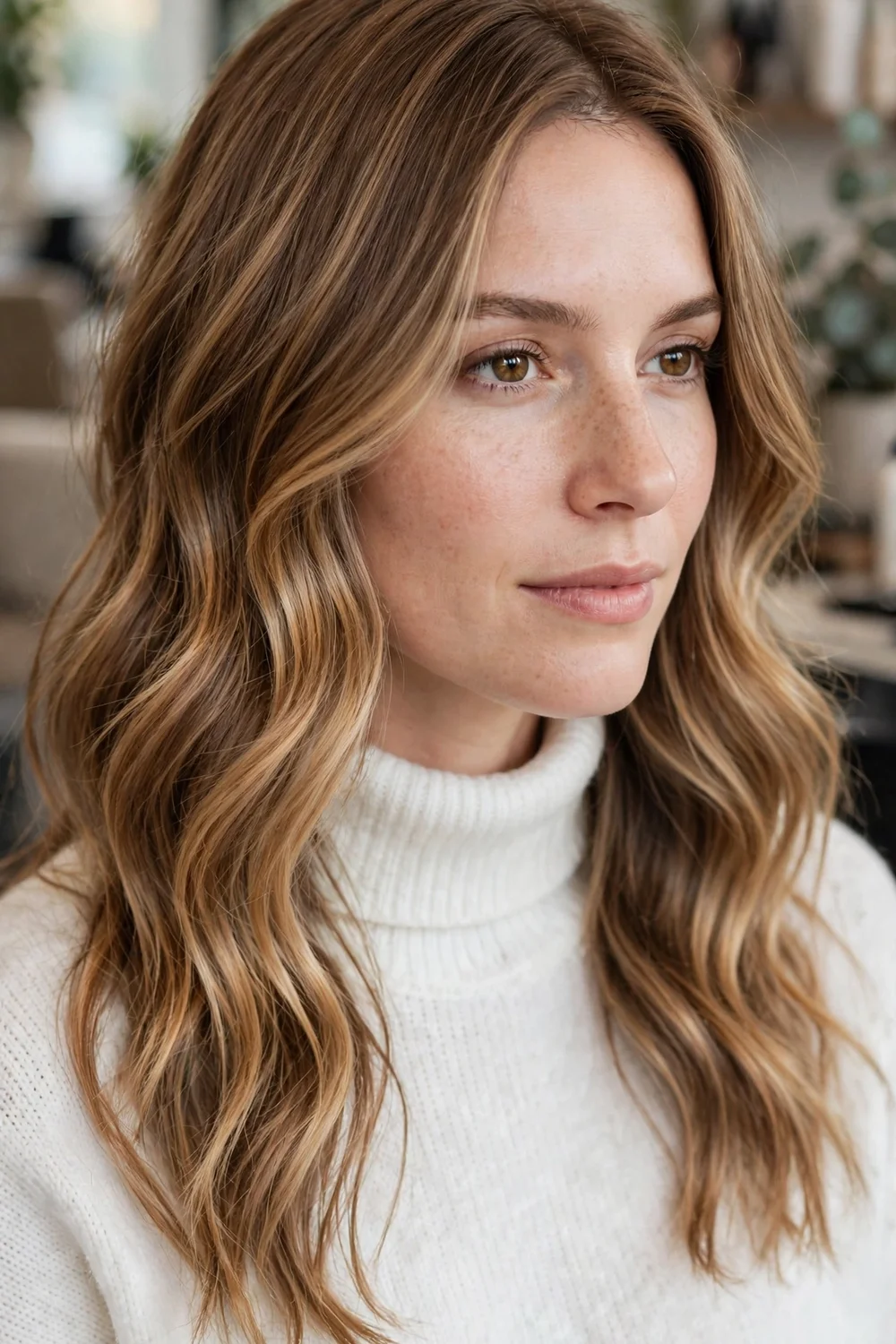
On a light brown base, caramel adds warmth without strong contrast. The painted sections stay fine and frequent, so the whole head looks a touch sunnier. This version works on straight, wavy, and lightly layered cuts.
Ask for the lightest pieces at the ends and around the part line. Since the contrast is low, this style needs a toner refresh to stop the caramel from fading to a pale yellow tone over time.
Try this: Take a photo of this placement to your appointment and point to where you want the lightest piece to start. That one detail prevents most mismatches between long, medium, and short versions of the same idea.
Difficulty: Easy · Cost: $
6. Golden Caramel Balayage on Long Layered Hair

Long layers give golden caramel a place to land. Each layer gets its own painted edge, so the color moves as the hair moves. The longest layers carry the lightest caramel, while shorter top layers stay closer to your natural shade.
Bring photos that show where you want the lightness to start. On long hair the placement matters more than the exact shade. Trim the ends regularly, since long lightened layers split sooner than uncolored hair.
Try this: Take a photo of this placement to your appointment and point to where you want the lightest piece to start. That one detail prevents most mismatches between long, medium, and short versions of the same idea.
Difficulty: Medium · Cost: $$
7. Dark Caramel with Honey Highlights

Dark caramel forms the main balayage, and a few honey pieces add a brighter note on top. The honey stays limited to the front and the very ends, so the look stays warm and deep rather than blonde. Tousled waves mix the two tones together.
This mix suits dark brown and black-brown bases. Tell your colorist how much brightness you want at the front, since honey near the face changes the whole feel of the style. Keep the honey pieces thin if you prefer a softer result.
Try this: Take a photo of this placement to your appointment and point to where you want the lightest piece to start. That one detail prevents most mismatches between long, medium, and short versions of the same idea.
Difficulty: Medium · Cost: $$
If you like warm brown bases in general, the honey brown hair guide shows solid and blended options side by side.
8. Salted Caramel Balayage with Light and Dark Pieces
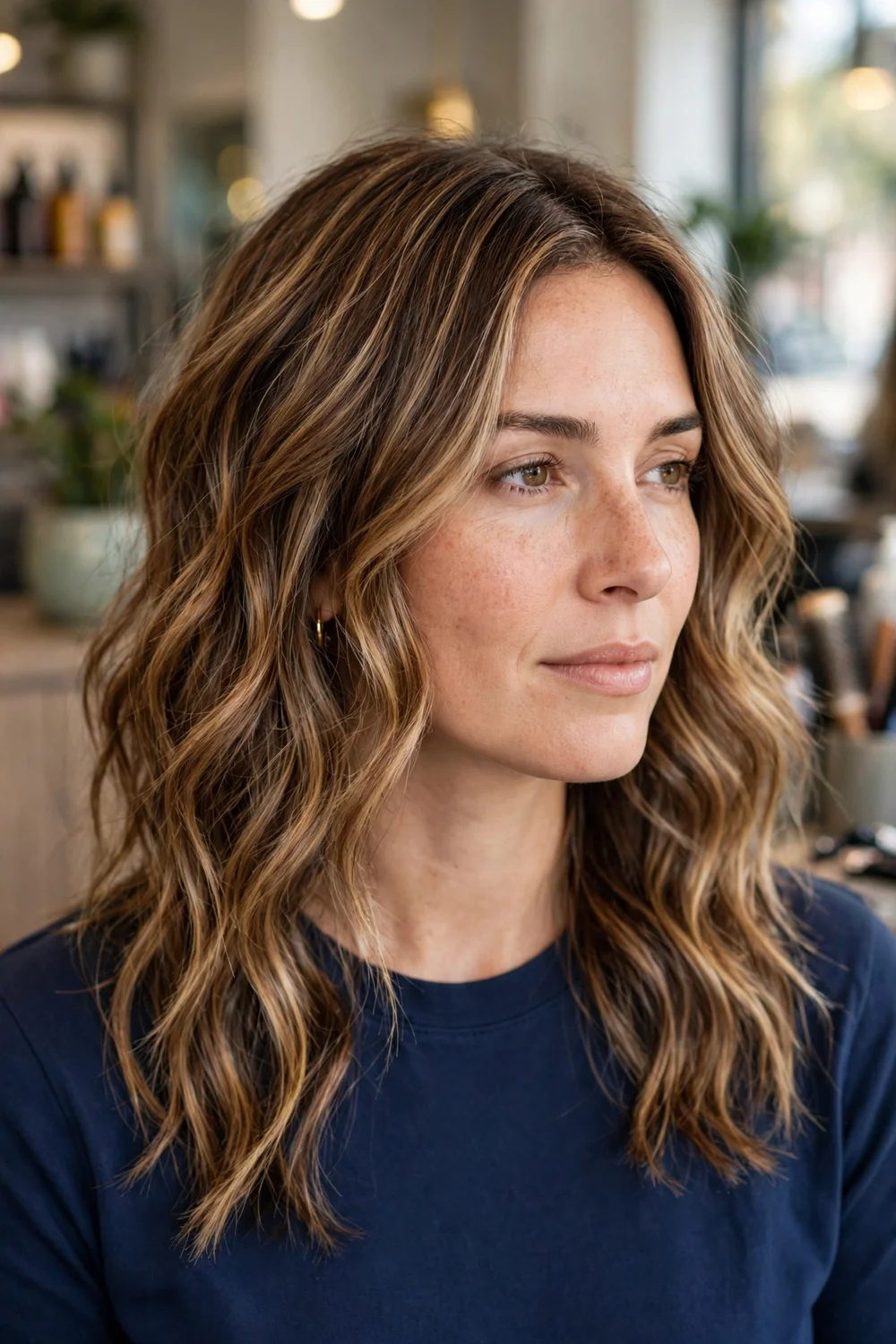
Salted caramel mixes light caramel ribbons with deeper caramel lowlights in the same head of hair. The mix creates depth on flat, one-tone brown and stops the ends from looking solid or washed out. It reads best on wavy or curled styling.
This version helps medium hair look fuller. Ask your colorist to place the darkest pieces underneath, where they support the lighter top layer. A wavy finish shows the mix better than a pin-straight blowout.
Try this: Take a photo of this placement to your appointment and point to where you want the lightest piece to start. That one detail prevents most mismatches between long, medium, and short versions of the same idea.
Difficulty: Medium · Cost: $$
9. Caramel Blonde Balayage with Dark Roots
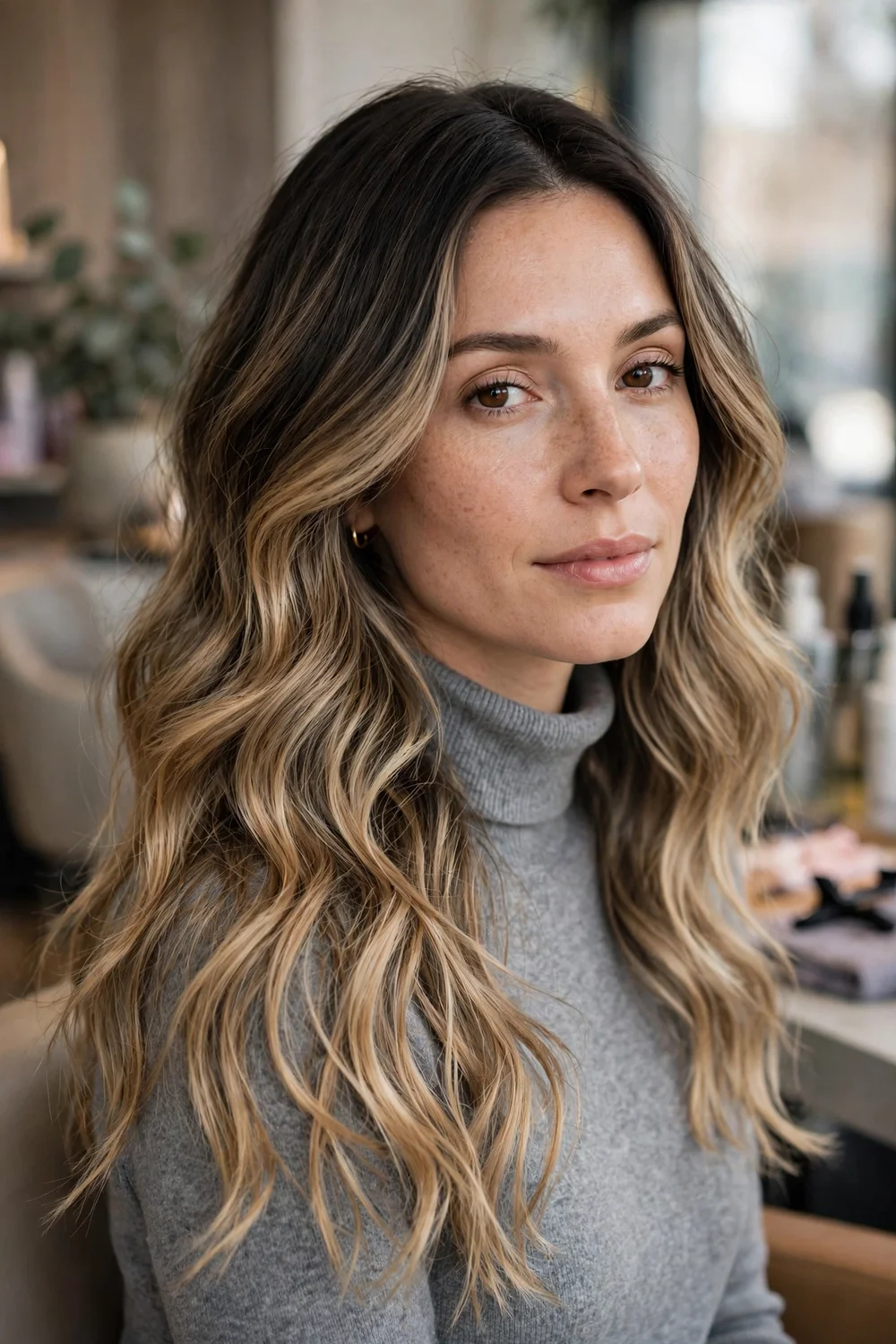
Here the ends go to a caramel blonde while the roots stay dark and natural. The middle section blends the two, so there is no harsh line as the hair grows. Beachy waves or loose curls show the gradient in full.
Plan for more upkeep at the ends. Light ends on a dark base need regular conditioning and a gloss to hold the caramel tone. This style suits anyone who wants a blonde feel while keeping their natural root color.
Try this: Take a photo of this placement to your appointment and point to where you want the lightest piece to start. That one detail prevents most mismatches between long, medium, and short versions of the same idea.
Difficulty: Hard · Cost: $$$
10. Face-Framing Caramel Money Piece

A money piece concentrates caramel in the two front sections that frame the face. The back stays close to your natural color, which keeps the salon work focused and the grow-out easy. The front brightness lifts the whole style, even on a simple cut.
Decide the width with your colorist before you start. A narrow piece looks soft, while a wider piece reads bold. This is a low-commitment way to test caramel if you have never colored the front of your hair before.
Try this: Take a photo of this placement to your appointment and point to where you want the lightest piece to start. That one detail prevents most mismatches between long, medium, and short versions of the same idea.
Difficulty: Easy · Cost: $
11. Caramel Balayage with Root Melt for Easy Grow-Out

A root melt blends your root color down into the caramel, so the transition zone looks smoky and soft. The caramel starts lower than a standard balayage and gets lighter toward the tips. The melted root hides regrowth for longer between visits.
This works well for brunettes who visit the salon a few times a year. Ask for the melt shade to match your natural root as closely as possible. At home, a gloss can refresh the caramel without touching the melt.
Try this: Take a photo of this placement to your appointment and point to where you want the lightest piece to start. That one detail prevents most mismatches between long, medium, and short versions of the same idea.
Difficulty: Easy · Cost: $$
12. Center-Parted Caramel Waves

A center part splits caramel evenly on both sides, so the face frame stays balanced. The colorist mirrors the placement left and right, with the brightest pieces at the cheekbones and the ends. Loose waves keep the symmetry soft.
This style suits oval and heart face shapes and medium to long lengths. If you switch your part often, tell your colorist, since the placement is built around the center line. Style with a large barrel for waves that stay open at the front.
Try this: Take a photo of this placement to your appointment and point to where you want the lightest piece to start. That one detail prevents most mismatches between long, medium, and short versions of the same idea.
Difficulty: Easy · Cost: $$
13. Sleek Straight Caramel Balayage

Balayage shows a smooth gradient on straight hair, with no waves to hide the blend. That makes this version a good test of clean color work. The caramel should melt from root to tip without bands or spots, and the ends should look glossy.
Choose this if you wear your hair straight most days. Ask to see the color dried straight before you leave the salon, since waves can mask uneven spots. A shine spray and a heat protectant keep the finish smooth.
Try this: Take a photo of this placement to your appointment and point to where you want the lightest piece to start. That one detail prevents most mismatches between long, medium, and short versions of the same idea.
Difficulty: Medium · Cost: $$
14. Caramel Balayage Scattered Through Natural Curls

On natural curls, caramel works best when it is painted sparingly on dry, stretched hair. The color lands where each curl catches light, so the pattern looks scattered and natural. The dark root shadow stays deep, which keeps regrowth quiet for months.
Book a colorist who works with curls often. Placement on wet or straightened hair can shift when the curls spring back. Moisture care matters here, since lightener can loosen curl pattern if it is left on too long.
Try this: Take a photo of this placement to your appointment and point to where you want the lightest piece to start. That one detail prevents most mismatches between long, medium, and short versions of the same idea.
Difficulty: Medium · Cost: $$
15. Caramel-Tipped Coils for Textured Hair

This version paints caramel only on the outer tips of coils. When the coils spring back, the color appears as small warm glints across the surface. The inner hair stays dark, which protects most of the length from lightener.
It suits dense coil patterns worn at shoulder length or shorter. Ask your colorist to paint on stretched hair so the tips land in the right place after shrinkage. Deep condition before and after the appointment to support the ends.
Try this: Take a photo of this placement to your appointment and point to where you want the lightest piece to start. That one detail prevents most mismatches between long, medium, and short versions of the same idea.
Difficulty: Hard · Cost: $$
16. Curly Caramel Balayage Bob
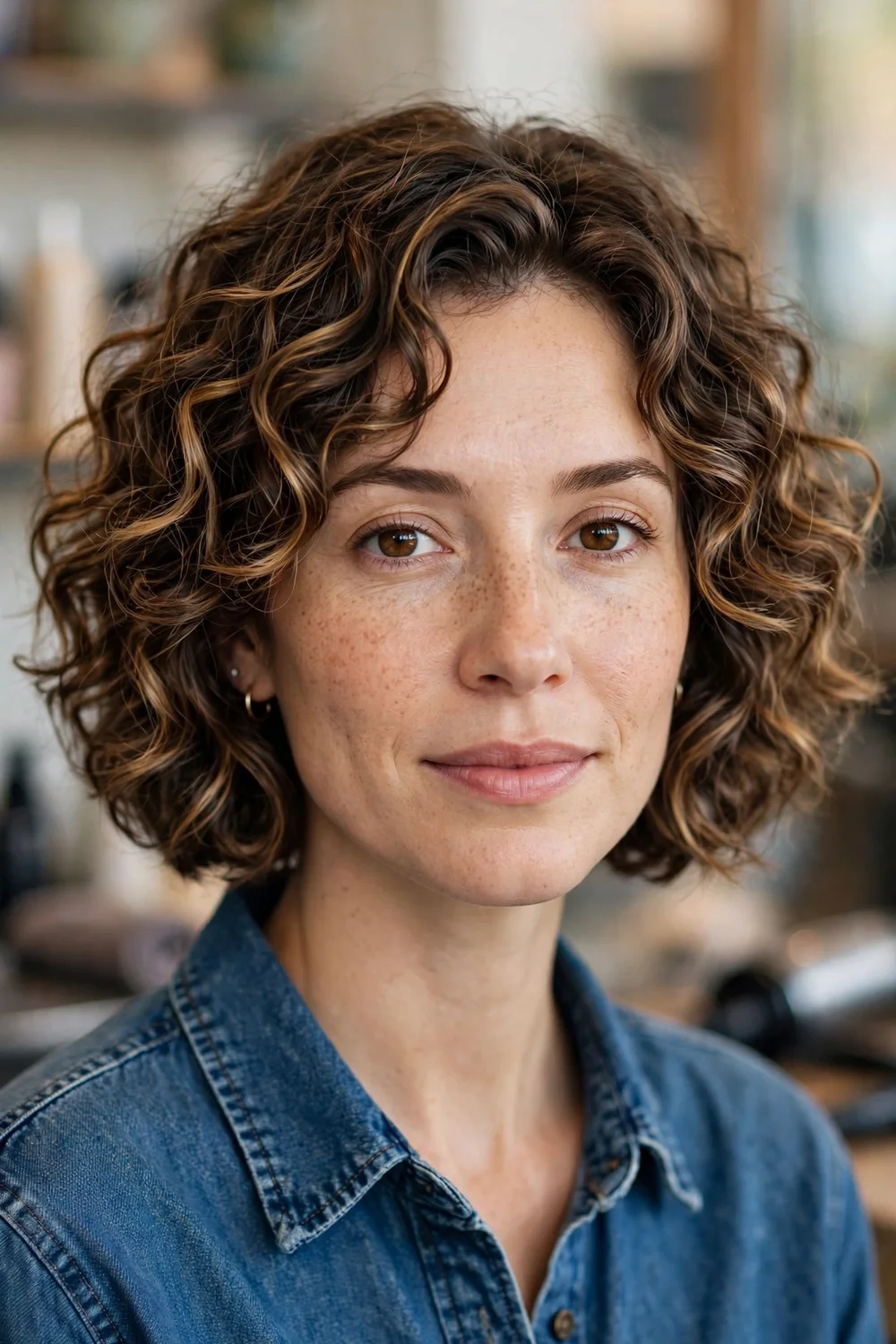
A curly bob gets shape and light from caramel painted through the top and front curls. The color follows the bob line, brighter at the front and softer at the back. Each curl shows a slightly different tone, which adds movement to a short cut.
This cut works for curl patterns that hold a bob shape without daily heat. Keep the ends trimmed to hold the line, since curly bobs lose shape as they grow. A curl cream scrunched in while damp keeps the painted curls defined.
Try this: Take a photo of this placement to your appointment and point to where you want the lightest piece to start. That one detail prevents most mismatches between long, medium, and short versions of the same idea.
Difficulty: Medium · Cost: $$
17. Wavy Caramel Lob with Soft Layers

A lob at collarbone length is a practical home for caramel balayage. Soft layers stop the ends from looking heavy, and the caramel sits through the mid-lengths where the waves bend. The length is easy to tie back and still long enough for loose styling.
This is a strong first balayage length if you are cutting long hair shorter. The grow-out stays tidy, and the color can be refreshed with a partial paint at the front and top. It suits fine to thick hair with a small adjustment to layer depth.
Try this: Take a photo of this placement to your appointment and point to where you want the lightest piece to start. That one detail prevents most mismatches between long, medium, and short versions of the same idea.
Difficulty: Easy · Cost: $$
18. Smoky Caramel Balayage Lob
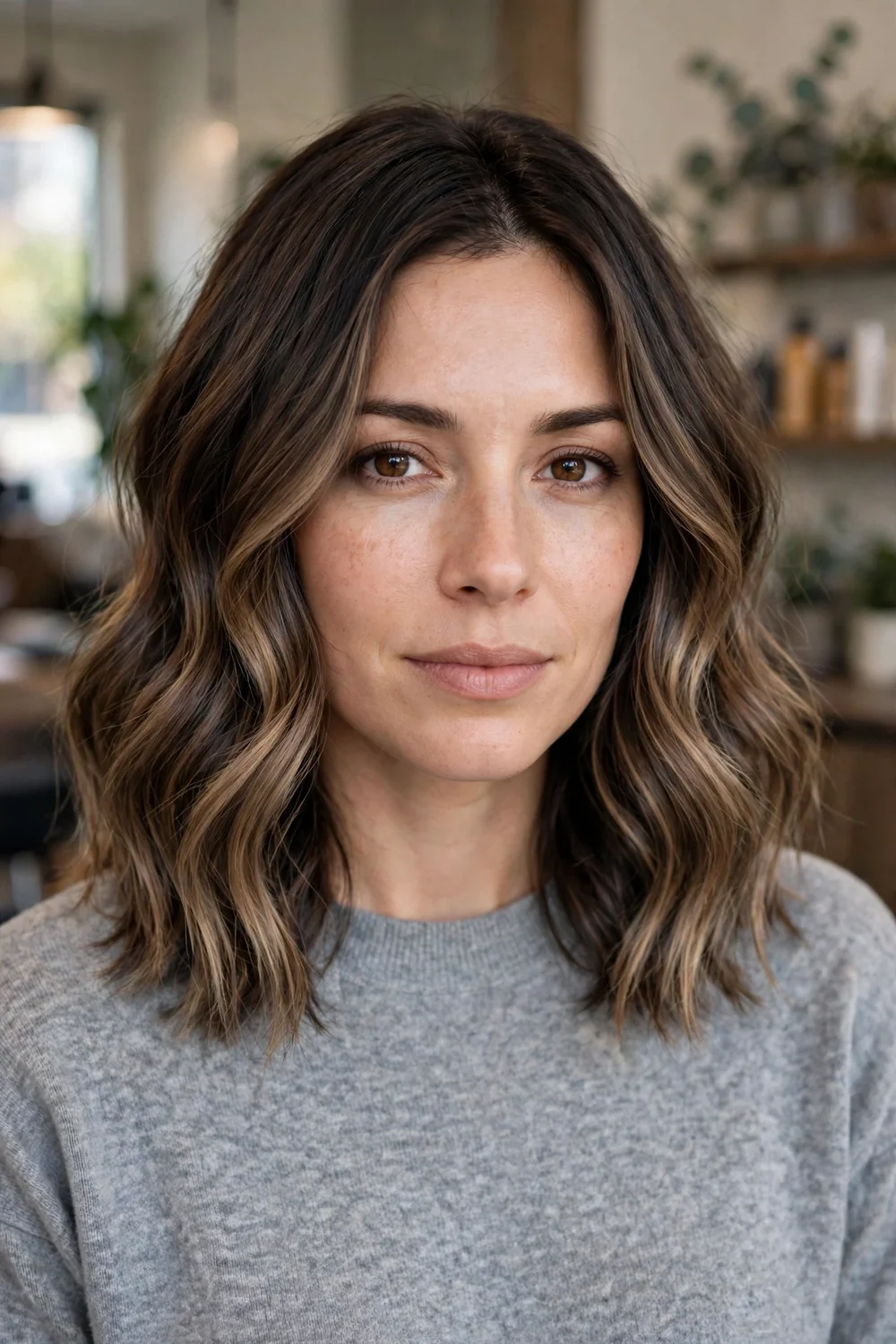
Smoky caramel cools the usual warm mix with a muted, dusty tone. On a wavy lob the effect looks soft and slightly matte, with less gold than a classic caramel. The dark base stays visible at the root and underneath.
Pick this if warm gold tones tend to look brassy on you. Your colorist will tone the caramel down after lifting, so ask how that toner fades and when to refresh it. Cool-toned makeup and clothing pair well with this shade family.
Try this: Take a photo of this placement to your appointment and point to where you want the lightest piece to start. That one detail prevents most mismatches between long, medium, and short versions of the same idea.
Difficulty: Medium · Cost: $$
For deeper seasonal brunette shades, the fall brunette hair colors list is a useful comparison.
19. Blunt Bob with Caramel Tips

On a blunt chin-length bob, caramel lives in the last inch or so of the ends. The dark top stays clean and sharp, and the light tips flash when the hair swings. The blunt cut stacks the ends, so fine hair can look thicker at the perimeter.
This placement grows out fast at short lengths, so plan for either a trim that removes the tips or a repaint sooner than a long style would need. It suits oval and heart face shapes, and it can sharpen a wider jaw, so discuss length with your stylist first.
Try this: Take a photo of this placement to your appointment and point to where you want the lightest piece to start. That one detail prevents most mismatches between long, medium, and short versions of the same idea.
Difficulty: Easy · Cost: $
20. Short Salted Caramel Bob with Fringe

A short wavy bob with a fringe gets salted caramel through the fringe and the front edges. Light and deeper caramel pieces keep the short length from looking flat. The fringe carries color right at the forehead, so the style feels bright even with a small amount of lightener.
Short styles need trims often, and each trim removes some color. Ask your colorist to paint a little higher than usual so the balayage survives a trim or two. Style the fringe with a small round brush for a soft bend.
Try this: Take a photo of this placement to your appointment and point to where you want the lightest piece to start. That one detail prevents most mismatches between long, medium, and short versions of the same idea.
Difficulty: Medium · Cost: $
21. Tousled Shag with Caramel Curtain Bangs
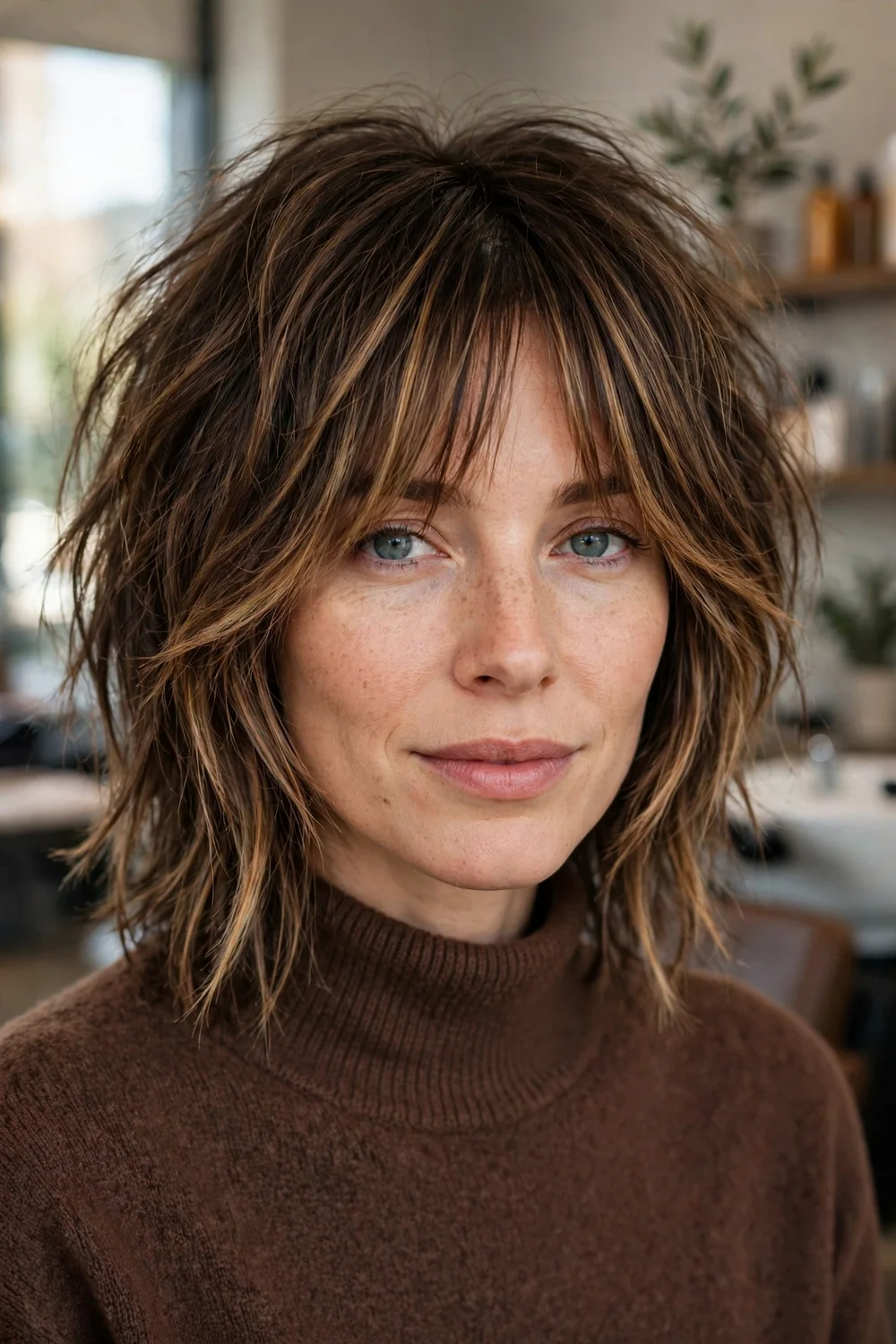
In a collarbone shag, caramel concentrates in the curtain bangs and the pieces around the face. The back stays darker, which keeps the shag shape looking textured and layered. The bright front softens the forehead and draws attention to the eyes.
This cut needs regular texturizing to stop thick hair from going triangular. Fine or straight hair may need daily styling to hold the shag shape. Bring a photo of the bang length you want, since curtain bangs change the whole balance.
Try this: Take a photo of this placement to your appointment and point to where you want the lightest piece to start. That one detail prevents most mismatches between long, medium, and short versions of the same idea.
Difficulty: Medium · Cost: $$
22. Caramel Balayage with See-Through Bangs
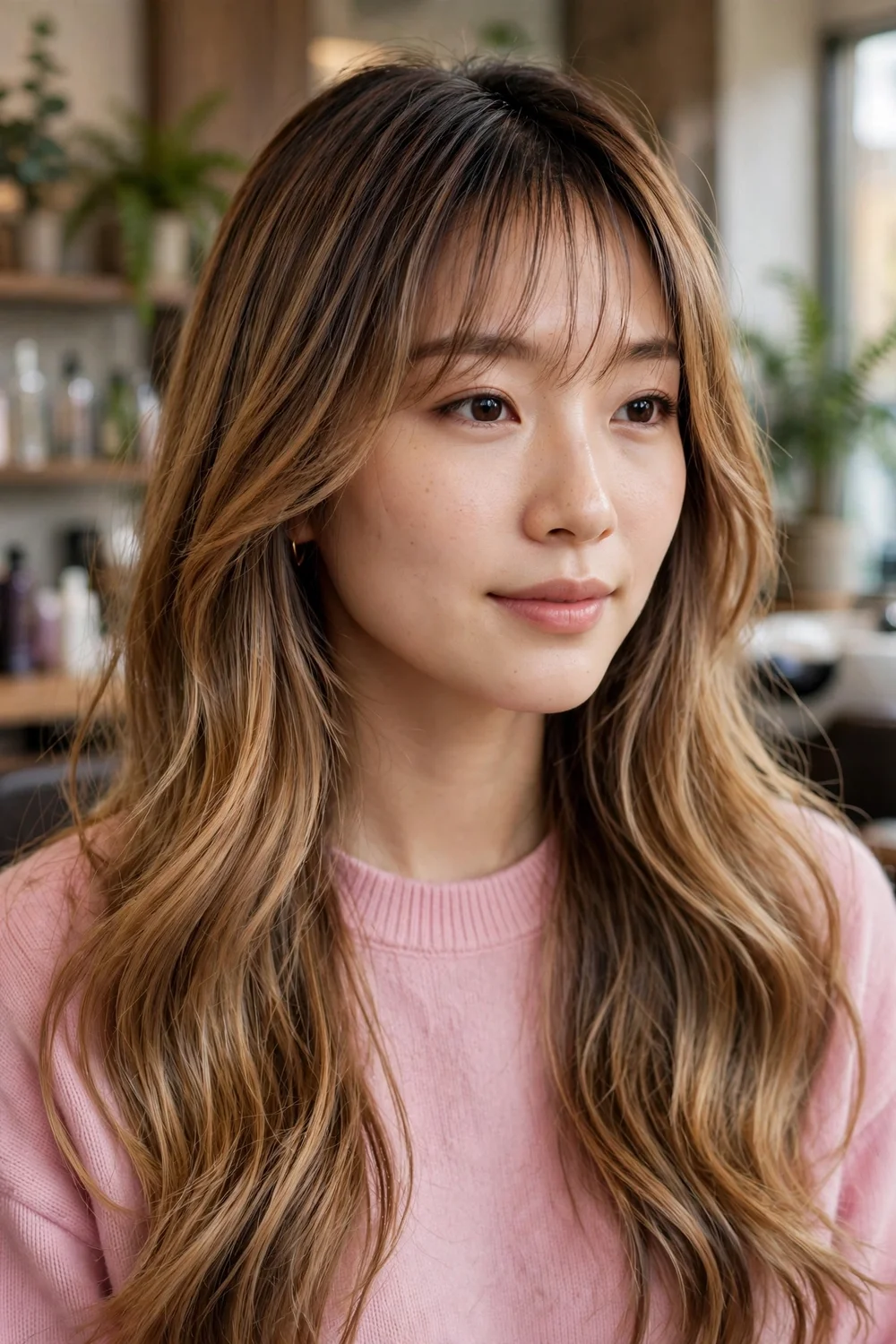
See-through bangs are thin and wispy, and caramel painted through them stays light and airy. The main balayage runs through the lengths in honey caramel tones, while the bangs get the softest pieces. The result suits long hair worn straight or in loose waves.
This fringe needs a quick restyle most mornings with a brush and low heat. If your forehead gets oily, the thin fringe will show it sooner, so dry shampoo at the front helps. Keep the bang color subtle so regrowth at the hairline stays forgiving.
Try this: Take a photo of this placement to your appointment and point to where you want the lightest piece to start. That one detail prevents most mismatches between long, medium, and short versions of the same idea.
Difficulty: Easy · Cost: $$
23. Ash Brown and Caramel Blend

Ash brown at the root cools the base, while caramel through the ends adds warmth back in. The blend works for people who like a neutral overall tone with a warm finish where the light hits. It shows best on longer hair with room for both tones.
Tell your colorist if your hair tends to pull red when lifted, since that changes how the ash and caramel are mixed. This blend can fade in two directions, so a toner plan matters. Ask which gloss to use at home between visits.
Try this: Take a photo of this placement to your appointment and point to where you want the lightest piece to start. That one detail prevents most mismatches between long, medium, and short versions of the same idea.
Difficulty: Medium · Cost: $$
24. Strawberry Blonde with Caramel Threads

Strawberry blonde already leans warm and rosy, and thin caramel threads deepen it without turning it red. The threads run through the mid-lengths and ends, leaving the rosy tone clear at the top. Tousled waves mix the two warm tones together.
This pairing suits fair to medium skin with warm undertones. Keep the caramel threads fine, since wide pieces can cover the strawberry tone you want to keep. Use a sulfate-free wash routine to slow fading on rosy shades.
Try this: Take a photo of this placement to your appointment and point to where you want the lightest piece to start. That one detail prevents most mismatches between long, medium, and short versions of the same idea.
Difficulty: Medium · Cost: $$
25. Copper Red with Subtle Caramel Balayage

Copper red makes a bold base, and subtle caramel softens the edges. The caramel stays thin and low, mostly at the ends and around the face, so the copper remains the main color. The mix reads warm in every light and holds up well in wavy styling.
Copper fades quickly, and the caramel will fade with it. Plan gloss visits to keep both tones clear, and rinse with cool water when you can. Tell your colorist you want the caramel to support the copper, since heavy caramel can dilute the red.
Try this: Take a photo of this placement to your appointment and point to where you want the lightest piece to start. That one detail prevents most mismatches between long, medium, and short versions of the same idea.
Difficulty: Medium · Cost: $$
26. Classic Blonde and Caramel Balayage

On a blonde base, caramel works as a lowlight that adds depth. The colorist paints caramel under the top blonde layer and through the ends, so the blonde looks fuller and warmer. Long waves show the layering of light and warm tones best.
This is a useful route if solid blonde has started to look flat or thin. The caramel pieces need less lightening, so this version can be gentler than going lighter. Ask for the darkest caramel to sit underneath, where it supports the blonde on top.
Try this: Take a photo of this placement to your appointment and point to where you want the lightest piece to start. That one detail prevents most mismatches between long, medium, and short versions of the same idea.
Difficulty: Easy · Cost: $$
27. Caramel Peekaboo Balayage Underlayer for Fine Hair

Peekaboo placement hides caramel in the underlayer, so it shows when hair moves, goes up, or is tucked behind the ears. The top layer stays close to your natural color, which keeps the look quiet at work and brighter in motion. For fine hair, the hidden contrast adds depth without thinning the look of the top layer.
Ask your colorist to keep the underlayer pieces soft at the root so grow-out stays hidden too. This is a good option if you want color that you control day to day. Show your stylist how you usually part and tie your hair, since that decides where the peekaboo should sit.
Try this: Take a photo of this placement to your appointment and point to where you want the lightest piece to start. That one detail prevents most mismatches between long, medium, and short versions of the same idea.
Difficulty: Easy · Cost: $
Caramel Balayage at a Glance
The table below sums up the main caramel routes by base color, so you can narrow the list before you book.
| Base Color | Best Caramel Route | Upkeep Level | Idea Numbers |
|---|---|---|---|
| Dark brunette / black-brown | Warm ribbons, soft melt, root melt | Low to medium | 1, 2, 9, 11 |
| Chocolate / medium brown | Creamy caramel, bronde, salted caramel | Low | 3, 4, 8 |
| Light brown | Light caramel, golden layers | Low | 5, 6 |
| Blonde | Caramel lowlights for depth | Low to medium | 26 |
| Copper / strawberry blonde | Subtle caramel threads | Medium | 24, 25 |
| Curly / coily | Scattered painting, tipped coils | Medium | 14, 15, 16 |
Frequently Asked Questions
How long does caramel balayage last before it needs a refresh?
Caramel balayage grows out softly because the root stays natural or melted. Most people refresh the gloss or toner first and repaint the balayage after a few months, depending on how light the ends are and how warm they want the tone to stay.
Does caramel balayage work on black or very dark hair?
Yes. Dark bases show caramel with strong contrast, as in ideas 1, 2, and 11. The lift takes longer on very dark hair, and the ends need conditioning and gloss care to keep the caramel clear rather than brassy.
Will caramel balayage suit cool skin tones?
It can, with the right tone. Smoky caramel in idea 18 and the ash brown blend in idea 23 cool the mix down. Tell your colorist if gold tones tend to look too warm on you, so the toner can be adjusted.
Can I get caramel balayage on short hair?
Yes. Bobs and lobs carry caramel at the tips, front, and fringe, as in ideas 16, 19, and 20. Short lengths need trims more often, so ask your colorist to paint a little higher so the color survives a trim.
How do I keep caramel balayage from fading fast?
Wash with a color-safe, sulfate-free shampoo, use conditioner on the lightened ends, and limit high heat. A gloss refresh helps hold the warm tone, and cool rinses can slow fading on copper and strawberry bases.
What should I ask for at the salon for a low-upkeep result?
Ask for a root melt, a money piece only, or peekaboo placement, as in ideas 10, 11, and 27. Show a photo, name where the lightest piece should start, and confirm the toner and gloss plan before the color begins.
Final Thoughts
Caramel balayage works because it adapts. The same warm tone family can read bold on long dark waves, soft on a light brown lob, hidden in a peekaboo underlayer, or supportive under a blonde top layer. Start with your base color and your usual length, pick two or three ideas from this list that match both, and take those photos to your colorist. A clear starting point for the lightest piece and a simple gloss plan will do more for the result than chasing the exact shade name.

