


Honey brown hair sits in the warm middle of the brunette family: a brown base warmed with golden honey tones that catch the light like the real thing. The family runs wide. At one end sit pale honey shades that lift a light brown base toward blonde. At the other end sit deep honey browns that add warmth to dark hair without lightening it much at all.
This list collects 28 honey brown hair colors and runs them in order: light shades first, then the classic medium honey browns, the deep shades and the honey looks built on dark bases, and finally the balayage, ribbon and face-framing placements. Every idea notes the undertone, the base it works from, and how much upkeep it asks for. If you want the wider brown family first, the fall brunette hair colors roundup shows where honey sits among the chestnuts, mochas and cinnamons.
Quick Takeaways
- Honey brown is a depth ladder: light honey, honey bronde and honey latte at the pale end, classic medium honey in the middle, and dark honey brown at the deep end.
- The undertone is always warm gold. Honey brown flatters warm and neutral skin first, and olive and deep skin carry the richer shades well.
- Dark bases have real options here: dark honey brown, honey melts, honey on black hair and honey ombre all keep depth at the root.
- All-over honey brown and honey gloss are the lowest-upkeep routes. Balayage, melts and ombre grow out softly and stretch salon visits.
- A honey gloss refresh at 6 to 8 weeks keeps the golden tone from fading flat between color appointments.
How to Pick Your Honey Brown Shade
Start with depth. Fair skin with warm or neutral undertones carries the light end of the family: light honey brown, honey bronde, peach-tinted honey and honey latte. Medium and olive skin handle the classic middle, medium honey brown, butterscotch honey, toffee honey and amber honey, along with most melts and balayage placements. Deep skin takes the saturated end well, especially dark honey brown, golden honey brown and honey pieces placed over a dark base.
Then check your starting base and your calendar. Blonde and light brown hair can reach almost every shade on this list in one session. Medium and dark brown hair reaches the deep half directly, and needs lightening only for the pale honey shades. Black hair needs the most lift, so plan for a staged route through the deep honey shades first. The broader autumn hair colors guide shows how honey brown sits next to the season’s other warm families if you are still deciding.
| Shade family | Undertone | Best starting base | Upkeep |
|---|---|---|---|
| Light honey (light honey, bronde, latte, peach tint) | Pale gold | Blonde to light brown | Medium |
| Classic honey (medium, butterscotch, toffee, amber) | Warm honey gold | Light brown to medium brown | Low to medium |
| Deep honey (dark honey, mocha honey, deep melt) | Rich gold-brown | Medium brown to dark brown | Low |
| Honey on dark bases (chocolate, black, ombre) | Golden contrast | Dark brown to black | Medium |
| Placed honey (balayage, ribbons, money piece, lowlights) | Varies by shade | Any base | Low |
1. Light Honey Brown
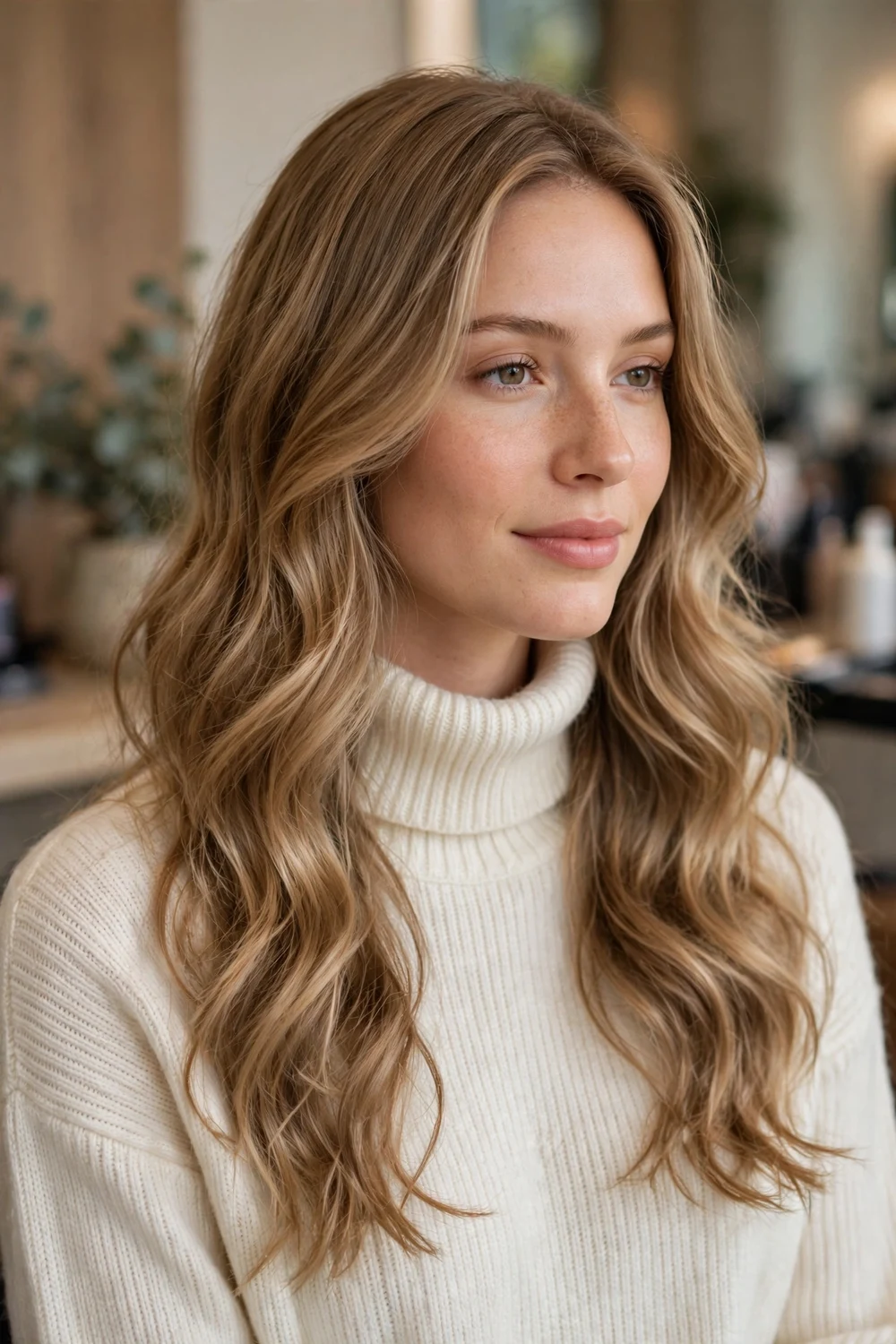
Light honey brown is the palest shade in the family: a light brown base lifted with pale honey gold until it sits close to dark blonde. The undertone is soft gold, and the color reads bright around the face. Fair skin with warm or neutral undertones carries it best.
Light brown and dark blonde bases reach this shade in one session. Medium and dark brown bases need pre-lightening first, which is why the difficulty grade runs high for most brunettes. Once the lift is done, upkeep is a gloss at 6 to 8 weeks to stop the pale honey from fading dull.
Try this: ask for the lift in two stages if your base is dark brown, so the hair stays in good condition on the way to pale honey.
Difficulty: Medium to High · Cost: $$$ (salon)
2. Honey Bronde
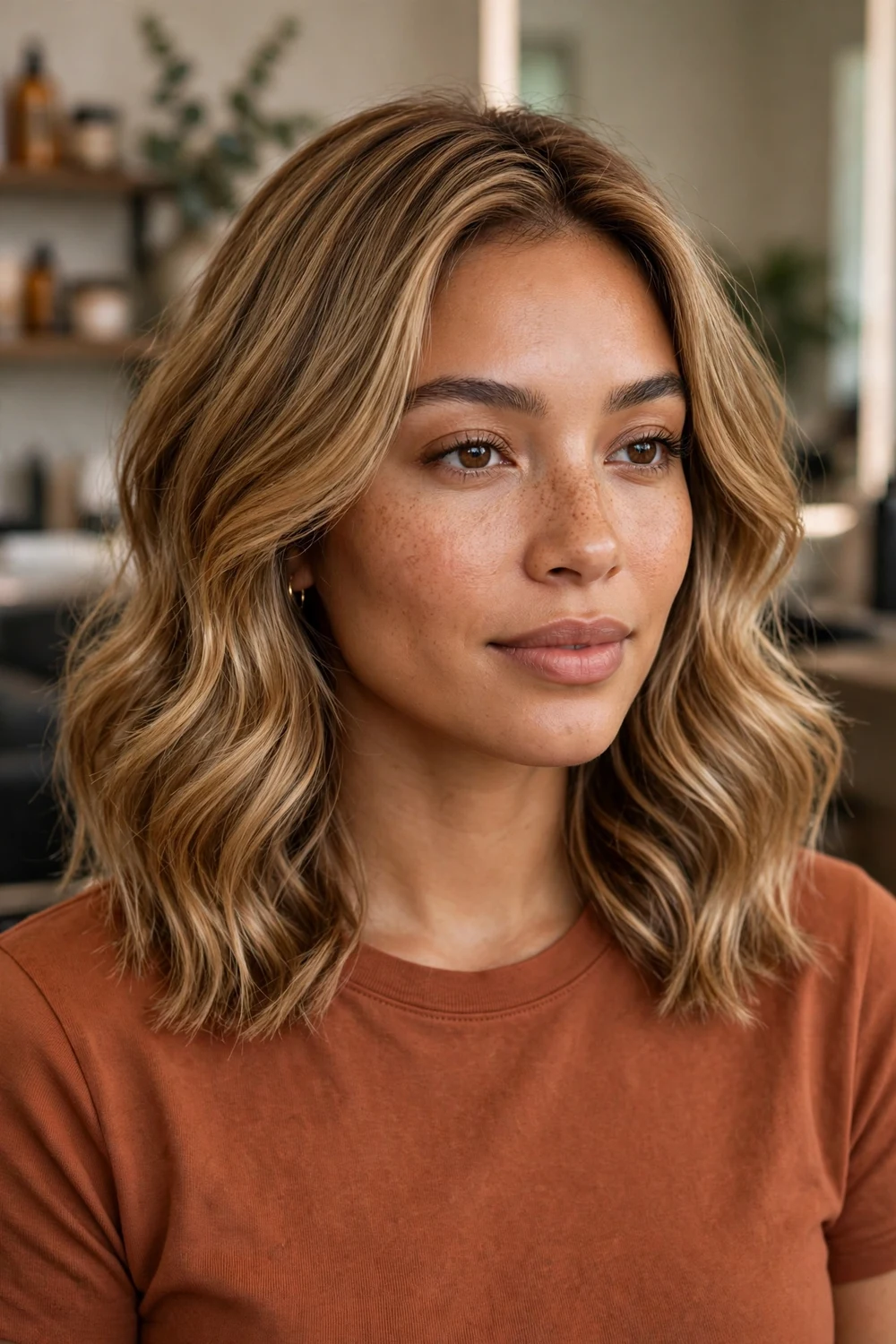
Honey bronde blends light brown and honey blonde so evenly that the eye cannot separate the two. The brown keeps the color grounded while the honey blonde pieces do the brightening. It suits a wide span of warm skin, from fair to medium, and it is a common first step for brunettes who want to go lighter in stages.
The blend is usually built with fine highlights and lowlights plus a honey gloss over the top. Grow-out stays soft because the root area keeps a share of the natural brown. Refresh the gloss at 6 to 8 weeks and the balance holds.
Try this: bring photos that show the ratio you want, since bronde can lean mostly brown or mostly blonde depending on the mix.
Difficulty: Medium · Cost: $$$ (salon)
3. Honey Nut Brown

Honey nut brown pairs a creamy hazelnut brown with a honey gold wash over the top. The nut brown base tones the gold down, so the result reads calm and even rather than bright. Olive skin and neutral undertones suit this muted version of honey well.
Light and medium brown bases reach it with a single process color and a gloss. Because the contrast is low, regrowth shows as a gentle shift in depth instead of a line. It is one of the easier shades on this list to keep looking tidy between visits.
Try this: ask for a honey gloss over your natural medium brown first. The nut honey tone it leaves is close to the full color, with no commitment.
Difficulty: Medium · Cost: $$ (salon)
4. Golden Honey Brown
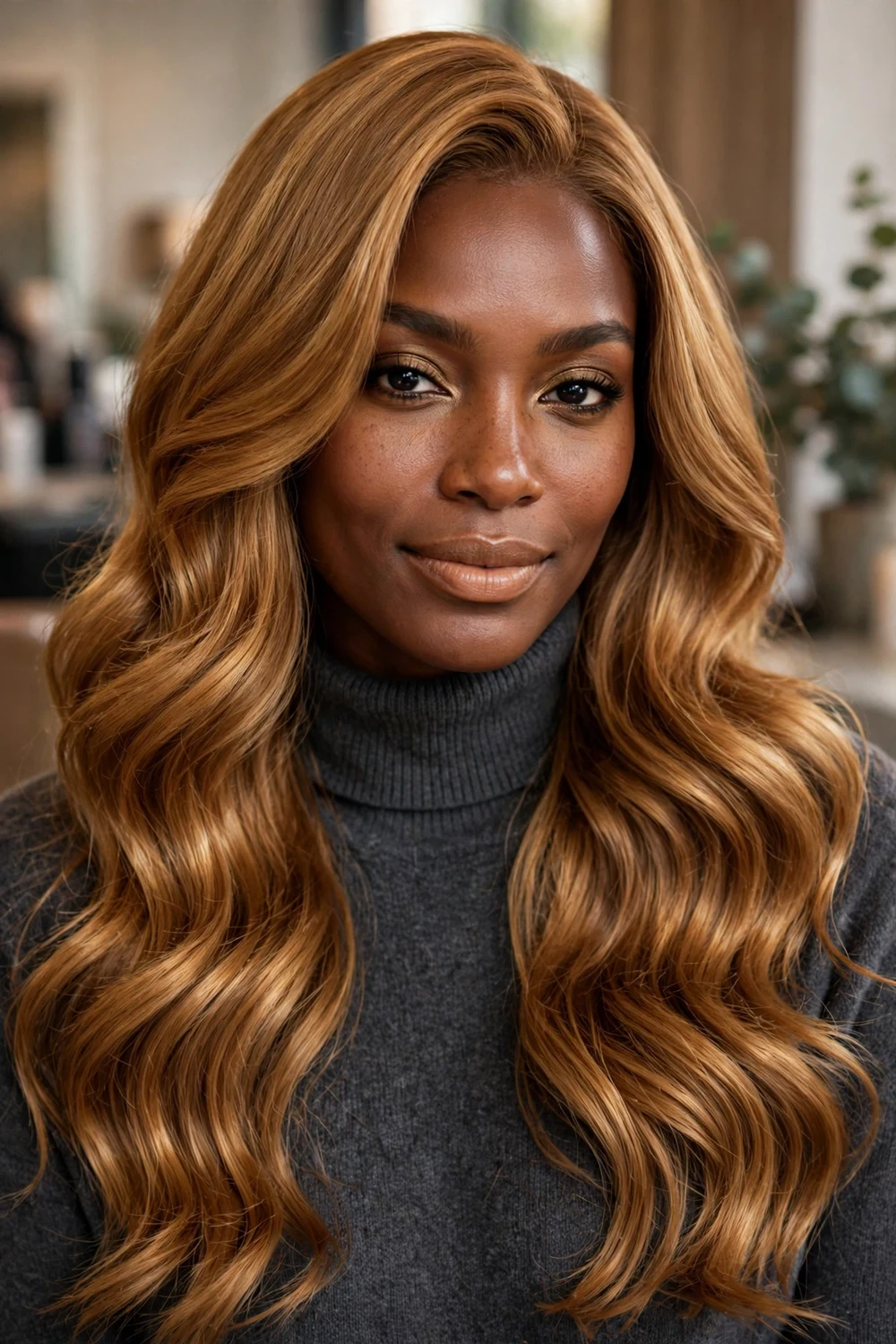
Golden honey brown pushes the gold content higher than the classic shade. The hair shifts between brown and gold as it moves, and the finish looks warm in both indoor and outdoor light. Medium and deep warm skin get the most from this reflect, since the gold echoes the warmth already in the skin.
It sits on light brown and dark blonde bases with a single process color, and painted golden pieces can be added through the top layer for more movement. Upkeep is a gold-toned gloss at about six weeks, before the shade fades toward plain light brown.
Try this: keep the golden pieces concentrated where light lands first, on the top layers and around the face, for the strongest effect from the fewest foils.
Difficulty: Medium · Cost: $$ (salon)
5. Peach-Tinted Honey Brown

Peach-tinted honey brown adds a soft peach tone to a light honey base. The peach warms pale skin and gives the shade a gentle glow that plain gold does not. It stays inside the honey family because the brown and gold still lead, with peach as the tint on top.
This shade needs a light base to show the peach clearly, so blonde and light brown hair take it in one gloss or color session. The peach tint fades first, usually within four to six weeks, and a tinted gloss brings it back without a full recolor.
Try this: test the tint as a gloss first. If the peach suits your skin, your colorist can build the same tone into a longer lasting color next time.
Difficulty: Medium · Cost: $$ (salon)
6. Honey Latte Brown

Honey latte brown layers a creamy honey base with soft blonde highlights through the surface. The lighter pieces sit where the sun would land, so the color looks lit from above. It suits fair to medium warm skin and works well on medium to thick hair, where the layers of tone have room to show.
The build combines hand-painted pieces with a honey gloss to blend the levels together. Because the root area stays closer to the natural shade, grow-out is forgiving and appointments can stretch to eight weeks with a gloss in between.
Try this: ask for the blonde kept to the top layer and the ends, with the underneath left honey brown, so the color keeps its depth.
Difficulty: Medium · Cost: $$$ (salon)
7. Classic Medium Honey Brown
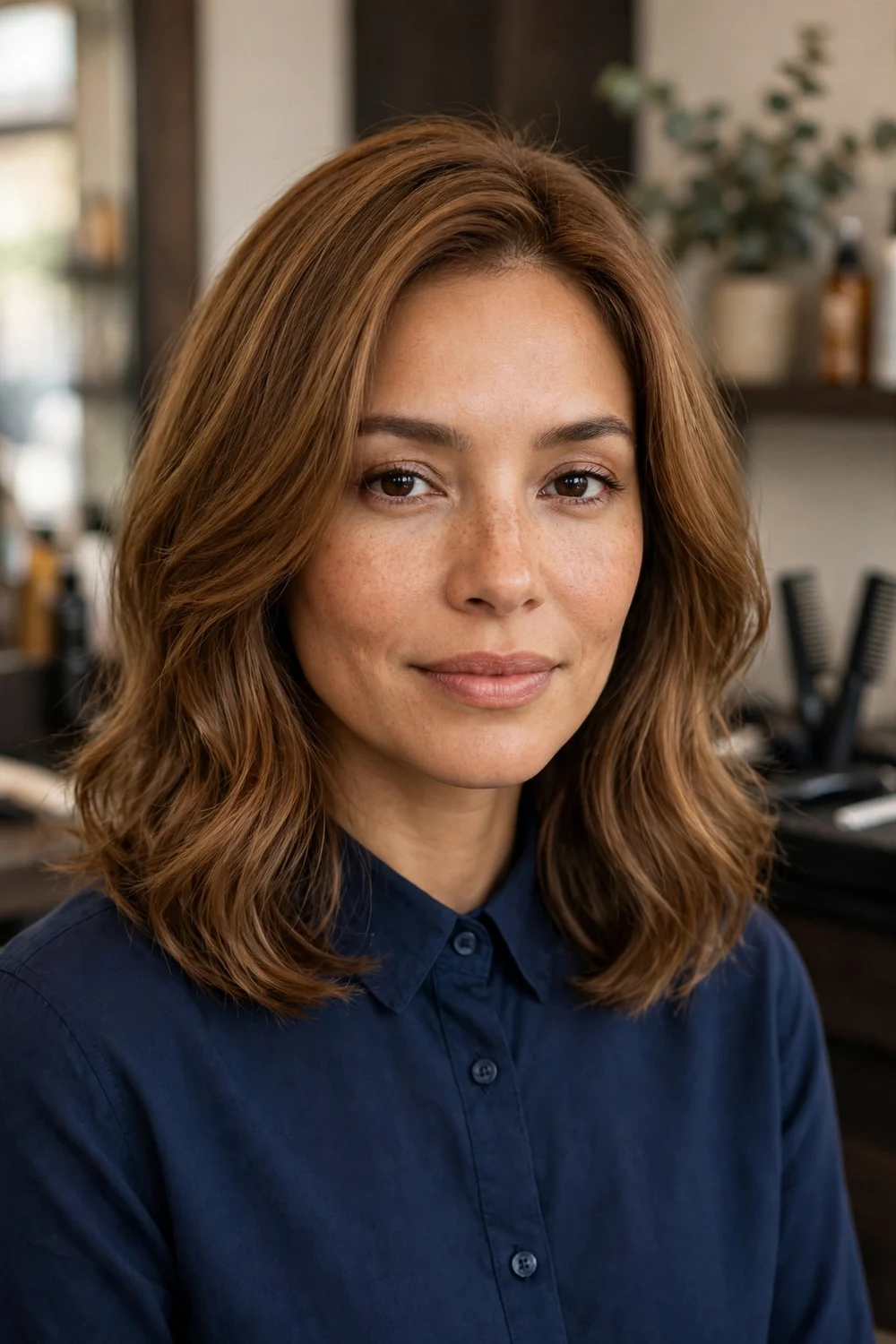
Classic medium honey brown is the benchmark shade of the family: an even, warm honey brown worn in one tone from root to tip. The undertone is a balanced honey gold, warm without tipping into orange or red. It suits warm and neutral skin across a wide range, and most reference photos for this keyword show this depth.
On medium brown hair this is a single process color with no lightening, which keeps the appointment simple and the hair in good condition. The even tone means roots show as a soft line at four to six weeks, and a root touch-up plus gloss restores the full shade.
Try this: if your natural color is already medium brown, ask for a demi-permanent version first. It gives the same honey tone and fades out evenly if you change your mind.
Difficulty: Low to Medium · Cost: $$ (salon)
8. Warm Honey Brown Gloss

A warm honey brown gloss lays a sheer honey tone and a high shine finish over your existing brown. The gloss adds no lift, so the base color stays where it is and the honey shows as warmth and reflect. Long, smooth hair shows this finish at its best, since the light runs down the lengths in one sheet.
This is the lowest commitment idea on the list. The service is short, the tone fades out evenly over four to six weeks, and no regrowth line appears. It also works as a refresh between full color appointments for anyone already wearing honey brown.
Try this: book the gloss two weeks before photos or an event, when the shine and the honey tone are at their peak.
Difficulty: Low · Cost: $ (salon)
9. Honey Brown Root Melt
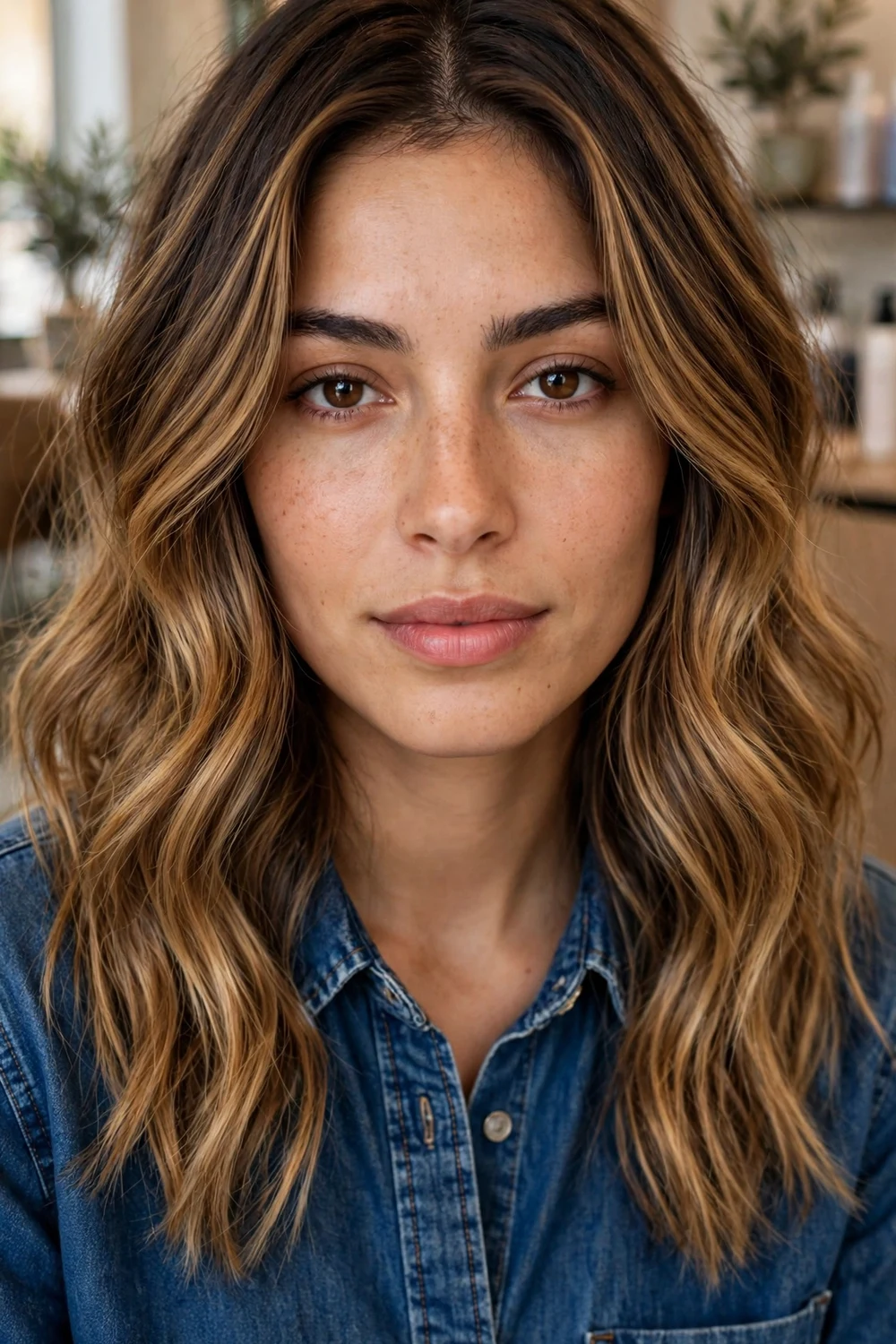
A honey brown root melt keeps a deeper brown at the root and melts it into honey brown through the mid-lengths and ends. The gradient has no hard line where the two tones meet, so new growth blends into the darker root zone instead of showing against light color.
This is the lived-in route to honey brown. Brunettes reach it with lightening placed from the mid-lengths down, and the melt can go eight to ten weeks between appointments. The ends carry the lightest color, so they need the most moisture care at home.
Try this: ask for the melt to start a little lower than you think you need. A deeper root zone buys extra weeks before the first refresh.
Difficulty: Medium · Cost: $$ (salon)
10. Honey Cinnamon Brown

Honey cinnamon brown stirs cinnamon tones through a honey brown base. The cinnamon adds a gentle spice note, while the honey gold keeps the shade inside this family and stops it reading as a red. Warm and neutral skin suit it, and layered cuts show the two tones separating as the hair moves.
Medium brown bases take this shade with a single process color plus a cinnamon-toned gloss. The cinnamon note fades a touch faster than the honey, so the gloss refresh at six weeks rebuilds both halves of the color at once.
Try this: keep the cinnamon pieces fine and spread through the lengths rather than chunky, so the spice reads as warmth instead of stripes.
Difficulty: Medium · Cost: $$ (salon)
11. Honey Copper Brown

Honey copper brown blends a copper sheen into honey brown, so the hair flashes copper in bright light and settles back to warm brown indoors. The honey keeps the copper grounded and wearable for everyday settings. Fair and medium warm skin carry the copper reflect best.
Light and medium brown bases reach this shade without heavy lightening, since the target sits close to their depth. Copper tones fade faster than brown tones, so a copper-honey gloss at five to six weeks keeps the sheen alive between full appointments.
Try this: use a color-depositing conditioner with a warm copper tone once a week. This shade loses its copper half first, and the conditioner replaces it as you wash.
Difficulty: Medium · Cost: $$ (salon)
12. Butterscotch Honey Brown
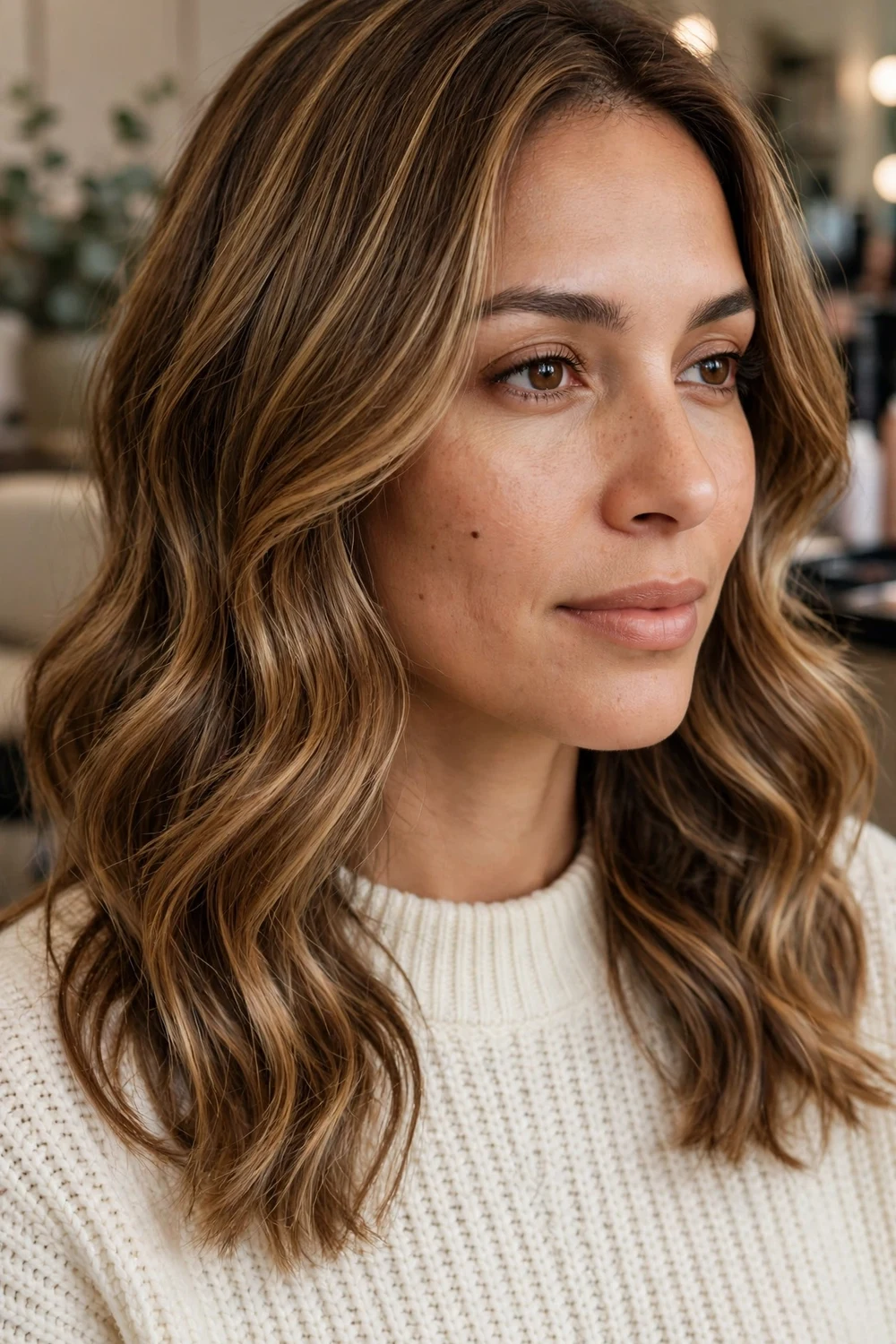
Butterscotch honey brown is a medium honey shade with a buttery, golden-brown richness through the lengths. It reads warm and smooth, with less contrast than the highlighted versions of honey brown. Medium warm skin and naturally dark blonde to medium brown bases suit it well.
Most wearers reach it with a single process color and a butterscotch-toned gloss, with no lightening on medium bases. The low contrast makes it forgiving as it fades, since the whole head lightens evenly rather than in pieces.
Try this: style it in soft waves rather than pin straight. The curve of each wave catches the butterscotch tones and shows the color at its warmest.
Difficulty: Medium · Cost: $$ (salon)
13. Toffee Honey Brown

Toffee honey brown mixes toffee depth with honey brightness in one multi-tonal color. The toffee sits in the lower layers and the honey rides on top, so the hair looks deeper from some angles and lighter from others. It suits warm skin and medium to thick hair, where the layered tones have room to separate.
The color is usually built with a honey base plus toffee lowlights painted through the underneath sections. Upkeep is moderate: the top honey tones need a gloss at six weeks, while the toffee depth underneath holds much longer.
Try this: if your current honey brown looks flat, add the toffee lowlights at your next appointment instead of changing the base shade.
Difficulty: Medium · Cost: $$ (salon)
14. Honey Mocha Brown
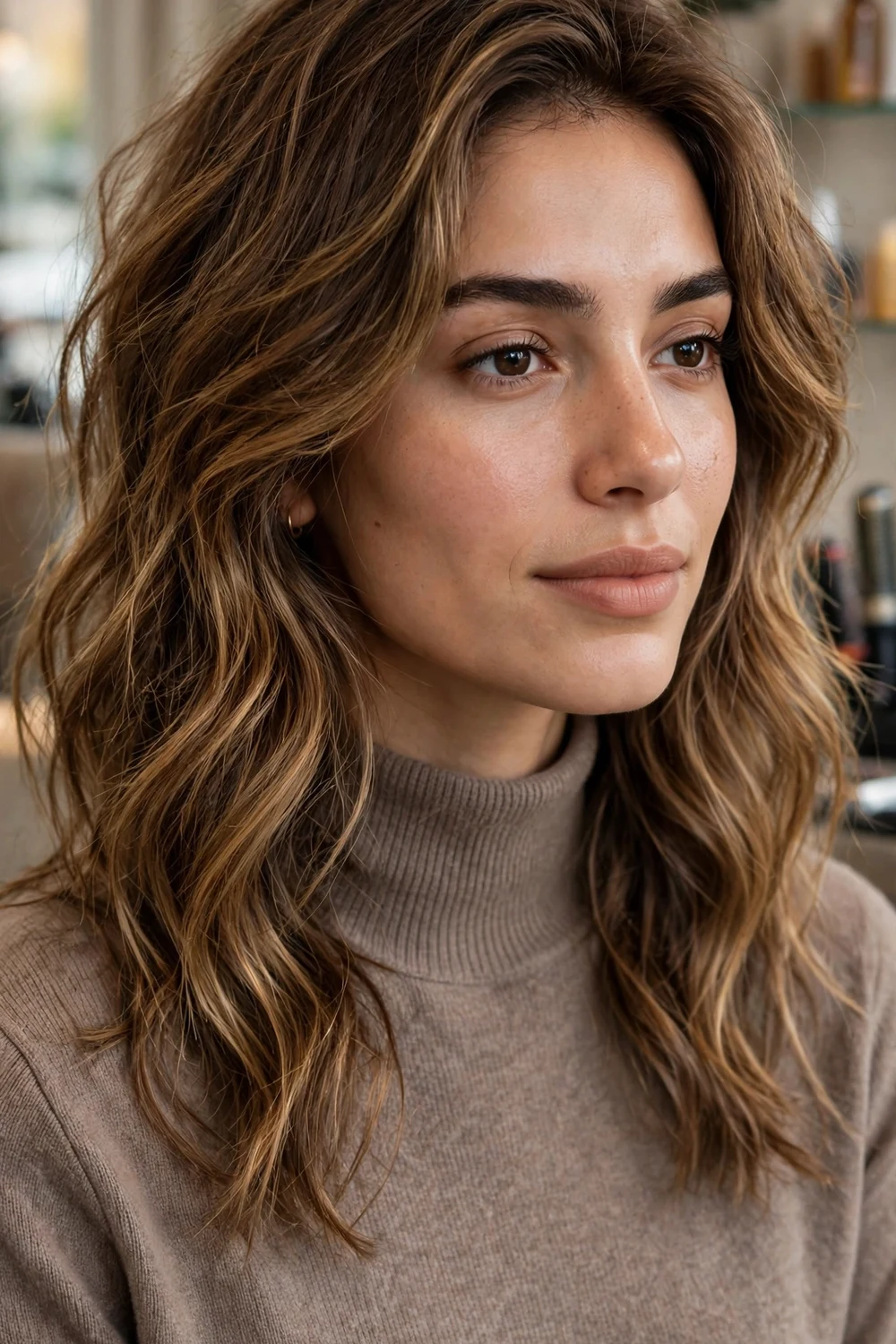
Honey mocha brown starts from a mocha base and warms it with honey tones through the mid-lengths. The mocha keeps the overall depth brunette, while the honey stops the shade from reading cool or flat. Neutral and olive skin suit this balanced version, since the warmth is present but restrained.
Medium brown hair reaches honey mocha with deposit color and a gloss in most cases, with no lightening needed. That makes it a calm first honey shade for anyone whose hair has always been colored on the cooler side.
Try this: ask for the honey placed from the mid-lengths down and kept away from the root, so the mocha depth frames the face.
Difficulty: Low to Medium · Cost: $$ (salon)
15. Amber Honey Brown
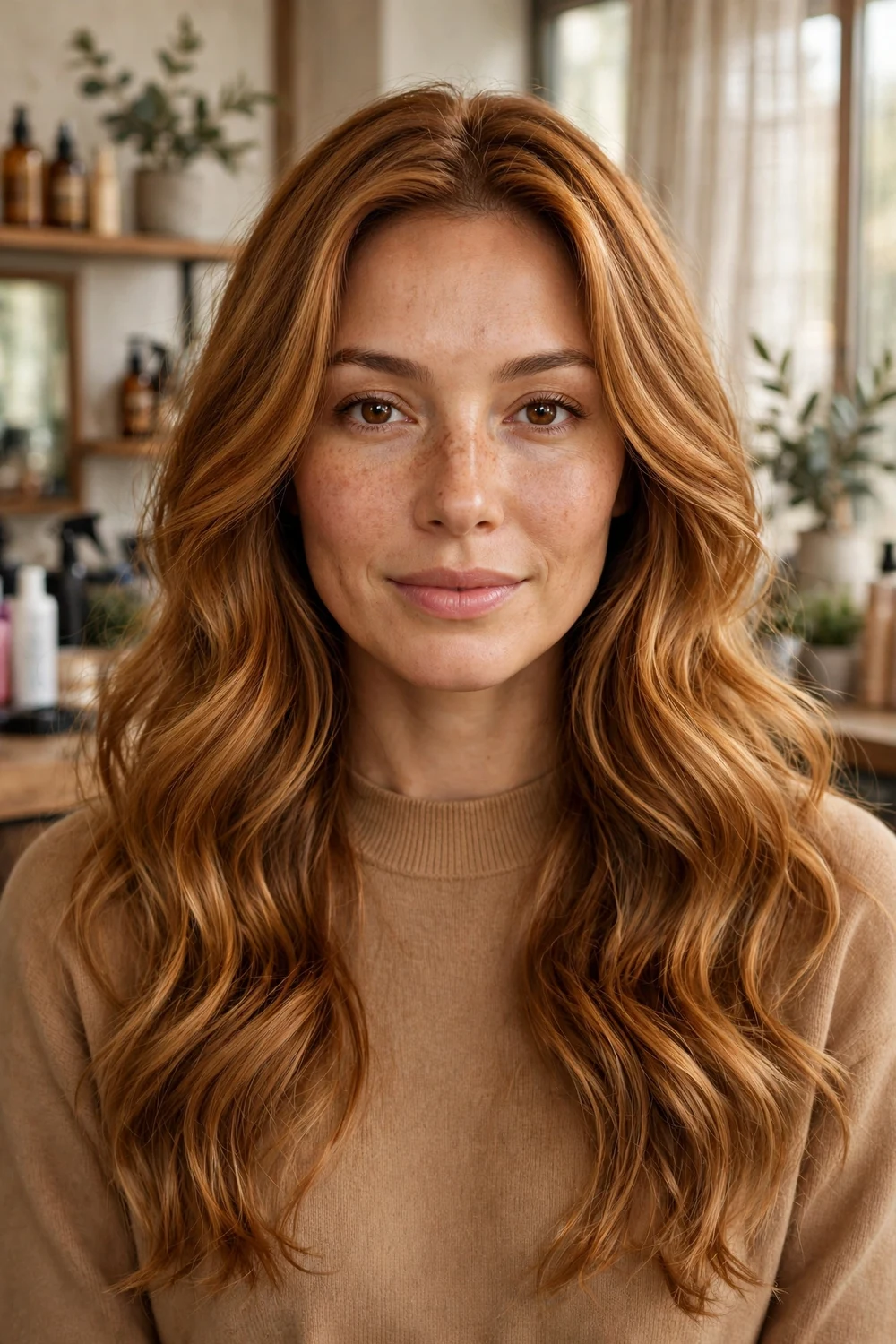
Amber honey brown leans into amber: a warm, resin-gold tone layered through honey brown for a rich, even glow. The amber deepens the gold without adding red, so the shade stays clearly in the honey family. Warm skin across the fair to medium range suits it.
Light brown bases take amber honey in a single process color. Fine golden pieces can be woven through for extra light play, though the all-over version already carries plenty of warmth. A gloss at six weeks keeps the amber from fading toward a plain mid-brown.
Try this: ask your colorist to keep the amber strongest through the mid-lengths, where it shows most when hair is worn down.
Difficulty: Medium · Cost: $$ (salon)
16. Dark Honey Brown

Dark honey brown is the deepest all-over shade in the family: a rich brown warmed through with honey so it glows in sunlight instead of reading flat. The depth stays brunette, and the honey shows as warmth along the lengths and around the face. Medium and deep skin suit this depth well.
Dark brown bases reach it with deposit color alone, which makes it one of the gentlest services on this list for hair condition. Regrowth blends closely with the colored lengths, so touch-ups can wait eight weeks or more for many wearers.
Try this: add a clear gloss on top of the color at the same appointment. Dark honey depends on shine to show its warmth, and the gloss supplies it.
Difficulty: Low to Medium · Cost: $$ (salon)
17. Honey Brown on a Chocolate Base

This version keeps a chocolate brown base and runs honey brown pieces through the lengths, with honey as the lead tone everywhere the light lands. The chocolate underneath gives the honey contrast, so the lighter pieces read clearly even though the overall depth stays brunette. It suits medium and olive skin, and it is a steady route for anyone lightening dark hair in stages.
The honey pieces need lightening before the honey tone goes on, so the first appointment is the longest. After that, upkeep is a toner or gloss on the honey sections at six to eight weeks, while the chocolate base keeps its own slower schedule.
Try this: keep the honey pieces off the very top layer at first if you want a softer result, then add more at the next visit once you see how the tone suits you.
Difficulty: Medium · Cost: $$$ (salon)
18. Honey Brown on Black Hair

Honey brown on black hair places warm honey tones through a black base, usually from the mid-lengths down and around the face. The contrast is the point: the black keeps the depth, and the honey adds warmth and movement that black hair often hides. Deep skin carries this pairing well, since the honey warms the whole look.
Black hair needs the most lift of any base on this list, and the lift has to stay controlled so the honey lands golden rather than orange. Expect your colorist to suggest a staged plan, starting with deep honey pieces and lightening further at later visits.
Try this: start with honey around the face and through the ends only. You get the full effect of the contrast while keeping most of the hair unlightened.
Difficulty: High · Cost: $$$ (salon)
19. Honey Brown Ombre on Dark Brown
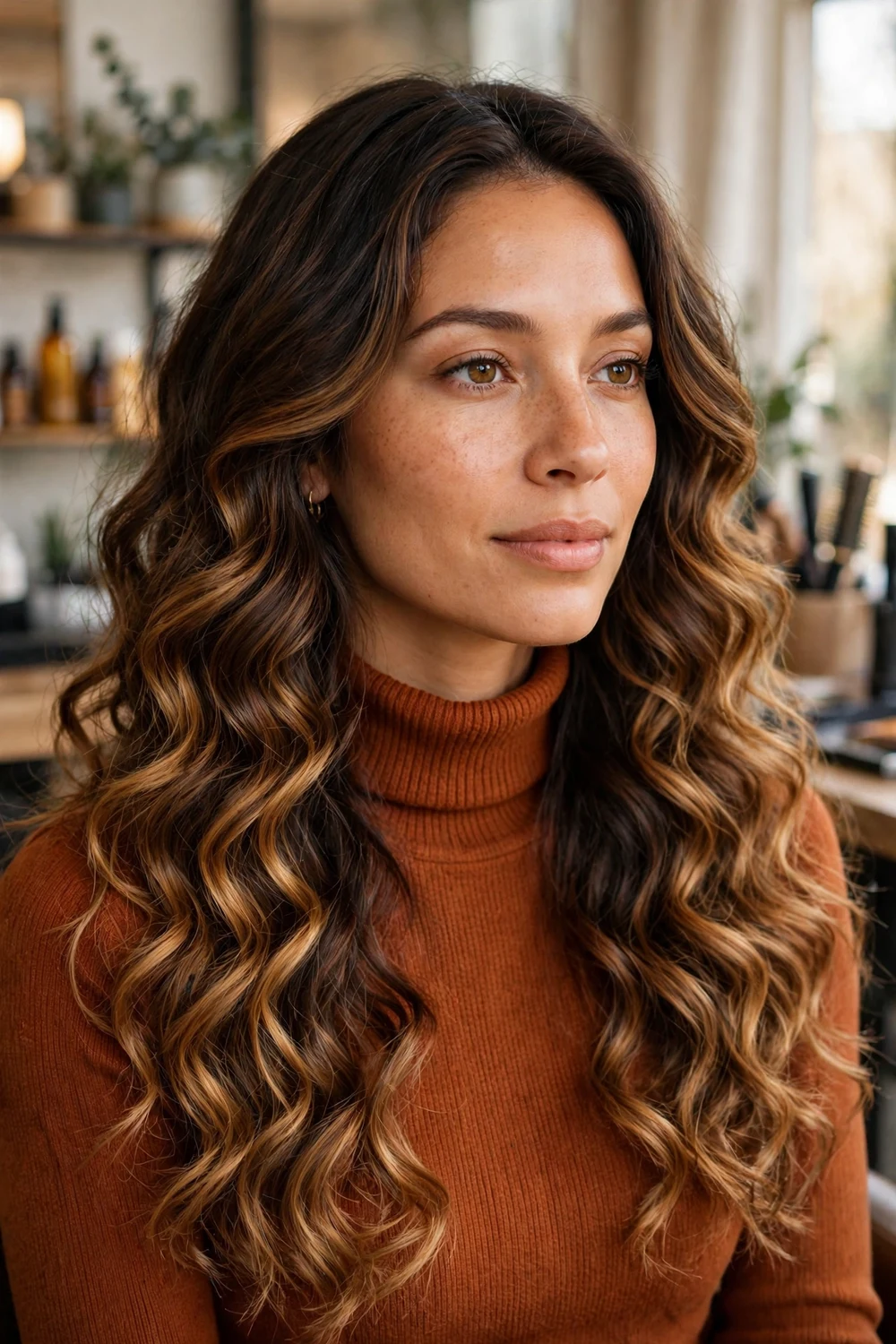
Honey brown ombre keeps dark brown roots and fades them into honey brown lengths, with the lightest honey at the very ends. The gradient concentrates the change in the bottom half of the hair, so the root area needs no color work at all. It suits dark bases and warm skin, and loose curls show the fade clearly.
The ends carry the lightest color, so they set the care routine: weekly deep conditioning and gentle handling when wet. The gradient itself can go months between salon visits, with a gloss over the honey section at about eight weeks to keep it from fading pale.
Try this: ask for the fade to begin around chin level on long hair, so the honey frames the lower face as well as the ends.
Difficulty: Medium to High · Cost: $$$ (salon)
20. Deep Honey Brown Melt

A deep honey brown melt blends deep brown into rich honey brown with no visible line between them. Where the root melt on this list stays lighter overall, this version works at the deep end, so it suits dark bases that want honey warmth without a big jump in depth. Medium and deep warm skin suit it well.
Because the target shades sit close to a dark base, most heads need only modest lightening through the lengths. The melt grows out softly, and a honey gloss at eight weeks refreshes the lighter half of the gradient.
Try this: wear it in soft waves for the first weeks. The movement shows the melt at work and hides any small unevenness as the color settles.
Difficulty: Medium · Cost: $$$ (salon)
21. Honey Brown Balayage

Honey brown balayage hand-paints honey pieces through a brown base, keeping the roots natural and the brightness in the mid-lengths and ends. The painted placement mimics how sun lightens hair, so the result reads as grown-in honey brown rather than a full color change. The wider fall balayage hair colors guide shows this placement in other warm families too.
This is one of the lowest upkeep routes into honey brown. The painted grow-out has no hard line, and most wearers refresh the toner at eight to ten weeks. Light and medium brown bases reach a clear honey tone in one session; dark bases land at deep honey.
Try this: ask for the honey kept strongest on the surface layers and around the face, with the underneath left darker for contrast.
Difficulty: Medium · Cost: $$$ (salon)
22. Honey Brown with Golden Highlights
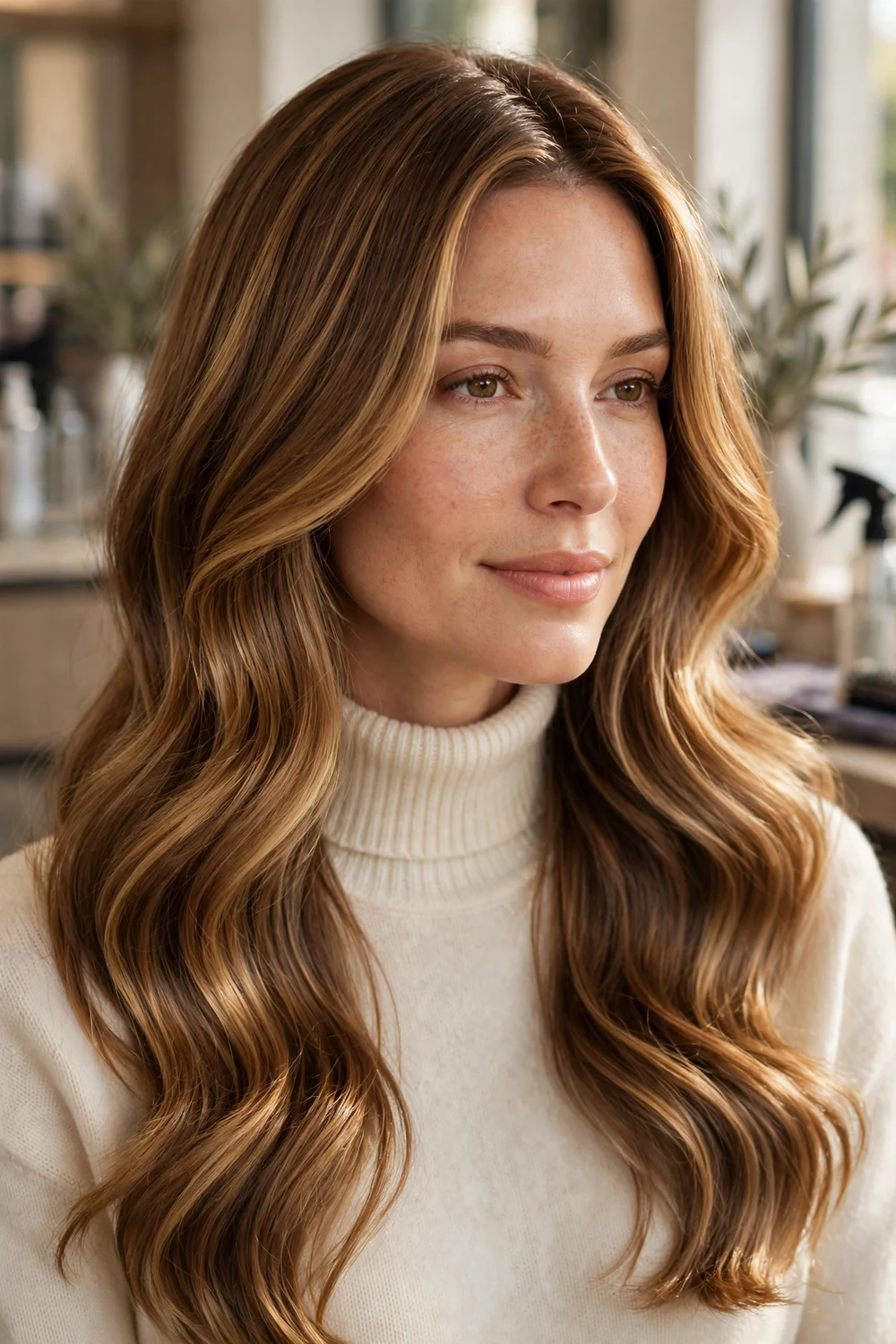
Honey brown with golden highlights starts from a honey brown base and threads brighter golden pieces through it. The highlights lift the whole look and give fine hair the appearance of more texture, since each piece catches light separately. Fair and medium warm skin suit the brighter finish.
The base color and the highlights run on different clocks. The base holds for six to eight weeks, while the golden pieces can turn dull sooner and benefit from a gloss at the halfway point. Keep heat styling moderate, since the highlighted pieces are the most fragile hair on the head.
Try this: ask for the golden pieces kept fine and numerous rather than wide. Fine pieces read as an overall glow instead of stripes.
Difficulty: Medium · Cost: $$$ (salon)
23. Honey Ribbons through Brown Hair

Honey ribbons weave soft, ribbon-wide pieces of honey through brown hair. The pieces are placed so the eye follows them down the length, which makes waves and curls look more defined. The base stays in charge, so this is honey brown at its most gradual.
Ribbon placement grows out softly because the pieces start below the root. Most wearers refresh the honey tone with a gloss at eight weeks and redo the placement two or three times a year. It works on brown bases from light to dark, with the ribbon shade adjusted to the base.
Try this: ask for ribbons on the top and front sections only if your hair is fine. The color shows where it counts and the ends stay in better condition.
Difficulty: Medium · Cost: $$$ (salon)
24. Honey Brown Money Piece

A honey brown money piece places two bright honey panels at the front hairline over a brown base. The panels do the brightening work of a much bigger service, since they sit right against the face. It suits medium and deep skin especially well, where the warm honey frame adds light around the features.
The panels are the lightest hair on the head, so they fade first and take a mini gloss at about four weeks. The rest of the base keeps its own schedule. As a side benefit, the money piece tests how honey looks against your skin before you commit to more of it.
Try this: keep the panels one to two shades lighter than the base, no more, so the frame blends into the rest of the hair.
Difficulty: Low to Medium · Cost: $$ (salon)
25. Honey Brown with Caramel Lowlights

Honey brown with caramel lowlights works in the opposite direction from highlights: deeper caramel pieces are placed through a honey brown base to add shadow and depth. The lowlights stop an all-over honey shade from looking flat, and they make the honey sections appear brighter by comparison.
Lowlights are deposit color, so no lightening is involved and the service is gentle on the hair. They fade slowly and grow out without a line, which keeps upkeep low. This pairing suits light brown bases that went honey and came out a touch too pale.
Try this: place the lowlights mostly underneath and at the back, so the depth supports the honey on top without darkening the face area.
Difficulty: Low to Medium · Cost: $$ (salon)
26. Honey Brown Curls

Honey brown curls place honey tones curl by curl, with the brightest pieces on the top layers and around the face, where curls catch light first. Painting each curl as it sits gives a result that foils cannot match, since the color lands on the curl pattern you actually wear. Medium and deep skin carry the warm depth well.
Curly hair runs drier than straight hair, and lightened pieces add to that dryness, so the care plan matters as much as the shade: weekly deep conditioning, gentle diffusing, and minimal heat. The dimensional placement grows out softly because the curl pattern hides regrowth.
Try this: book with a colorist who works on curly hair dry, so the honey lands on the curls in their natural position.
Difficulty: Medium · Cost: $$$ (salon)
27. Honey Brown Bob

A honey brown bob pairs a blunt, chin to shoulder length cut with an all-over honey brown and a gloss finish. Short, smooth hair reflects light in one even sheet, so the honey tone looks polished and the shade reads clearly. It suits warm skin and anyone who wears their hair sleek most days.
On short hair, regrowth sits close to the face and shows sooner than on long hair, so root touch-ups land at four to five weeks. The color service itself is simple: a single process shade plus the gloss coat at each visit.
Try this: keep the bob one length with minimal layering if shine is the goal. A clean edge shows the honey tone in one unbroken line.
Difficulty: Low to Medium · Cost: $$ (salon)
28. Short Honey Brown Pixie

A short honey brown pixie wears the honey shade across a cropped cut, often with the back and sides kept a shade deeper so the top reads lighter. The small canvas makes the color look deliberate, and the honey warmth softens the edges of a short cut. Warm and neutral skin suit it.
This is the simplest honey brown to maintain on the list. Appointments are short, the color uses little product, and the frequent trims a pixie needs remove faded ends on schedule. Roots still show at three to four weeks simply because the hair is short, so plan the touch-up with the cut.
Try this: book the color and the cut in the same visit, so the honey top and the deeper back are shaped together.
Difficulty: Low · Cost: $ (salon)
Frequently Asked Questions
What color is honey brown hair?
Honey brown is a warm brown shade with golden honey tones through it. It sits between light brown and dark blonde at its palest, and deepens into a rich warm brown at its darkest. The honey gold is what separates it from chestnut or chocolate browns, which lean red or neutral where honey brown leans gold.
What skin tones suit honey brown hair?
Warm and neutral undertones suit honey brown first, since the golden tones echo the warmth in the skin. Fair warm skin carries the light shades, honey bronde, honey latte and peach-tinted honey. Medium and olive skin handle the classic medium shades, and deep skin takes dark honey brown, golden honey brown and honey placed over dark bases well.
Do I need to lighten my hair to get honey brown?
It depends on your starting color and the depth you want. Medium and dark brown hair reaches dark honey brown, honey mocha and honey gloss shades with little or no lightening. The light end of the family, light honey brown and honey bronde, needs pre-lightening on brunette bases. Black hair needs the most lift and usually works best as a staged plan through the deep honey shades first.
How long does honey brown hair color last?
All-over honey brown holds its tone for about six to eight weeks before a gloss refresh, since warm pigments soften with every wash. Placed color lasts longer in practice: balayage, melts and ombre can go eight to ten weeks or more because the grow-out is soft. A honey gloss fades out fully at four to six weeks and leaves no line.
How do I keep honey brown from turning brassy or fading?
Wash less often, use a color-safe shampoo, and keep water lukewarm rather than hot. Add a warm-toned, color-depositing conditioner in a honey or gold shade once a week to replace the pigment washing removes. Book a honey gloss at six to eight weeks, and use heat protectant before styling, since heat dulls warm tones quickly.
Final Thoughts
Honey brown works year-round because the family is wide enough to meet you at your starting point: a gloss over your current brown for a low-commitment trial, a classic medium honey for the benchmark shade, or a deep honey melt if your base is dark and you want warmth without a big lift. Pick by depth first, then by the upkeep you will honestly keep, and refresh the gloss on schedule so the gold stays in the color. When the colder months arrive, the deeper end of this same family carries over into the winter hair color ideas worth a look.

