

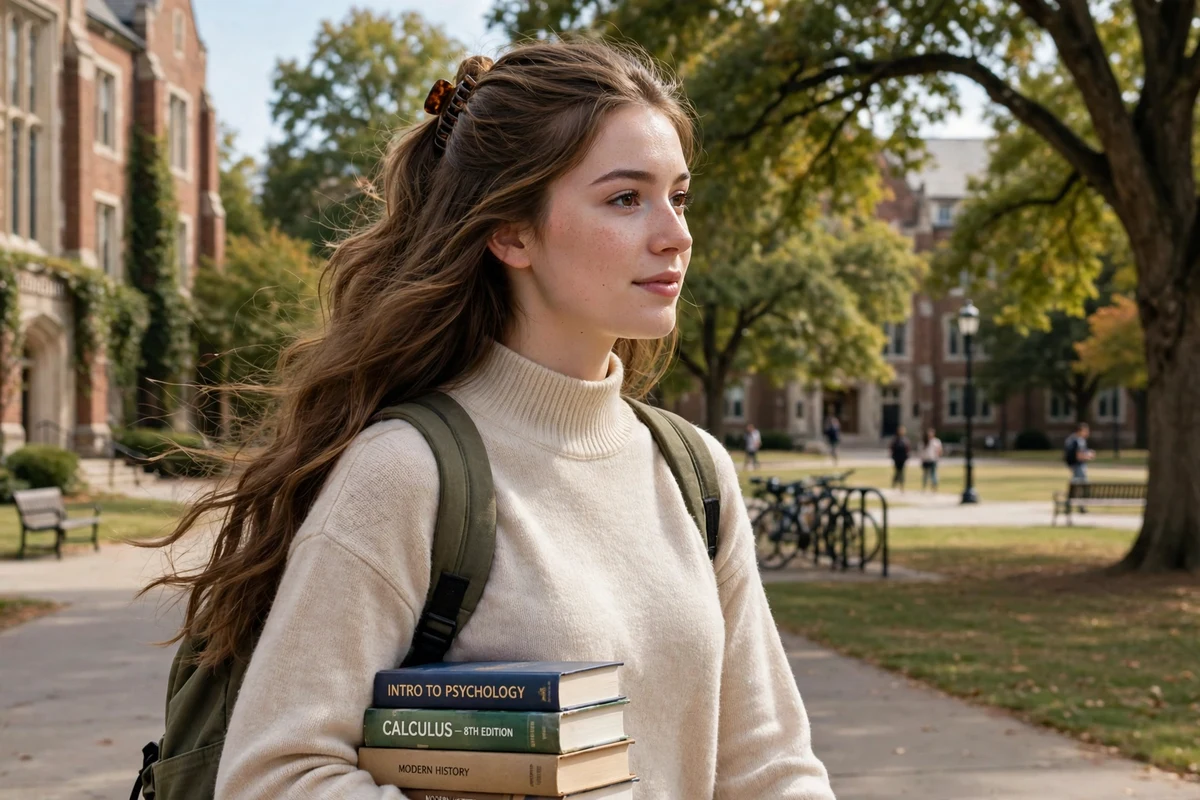
College mornings rarely leave time for a long styling routine. Classes start early, alarms get snoozed, and hair has to work for a lecture, a gym session, and dinner with friends on the same day. The styles that stay popular on campus share a few traits: they take minutes, they hold up for hours, and they forgive second day hair.
This list collects 27 trending hairstyles for college girls, built from the styles students actually wear on repeat. Braids and buns come first for busy days, then ponytails and half-up styles, then the cuts and low upkeep finishes worth booking at the salon. If your hair is long and you want seasonal ideas beyond campus basics, the fall hairstyle ideas for long hair roundup is a good next read.
Key Takeaways
- Most campus favorites take five minutes or less: messy buns, claw clips, ponytails, and single braids.
- Braids and double Dutch braids are the top gym-to-class option because they hold through a workout and still look neat after.
- Second day hair is an asset here. Texture and a little natural oil help buns, braids, and top knots grip and stay put.
- Low upkeep cuts like the textured bob and curtain bangs with long layers cut daily styling time at the source.
- A small dorm kit covers almost every style on this list: elastics, bobby pins, a claw clip, dry shampoo, and one scrunchie.
1. Messy Bun
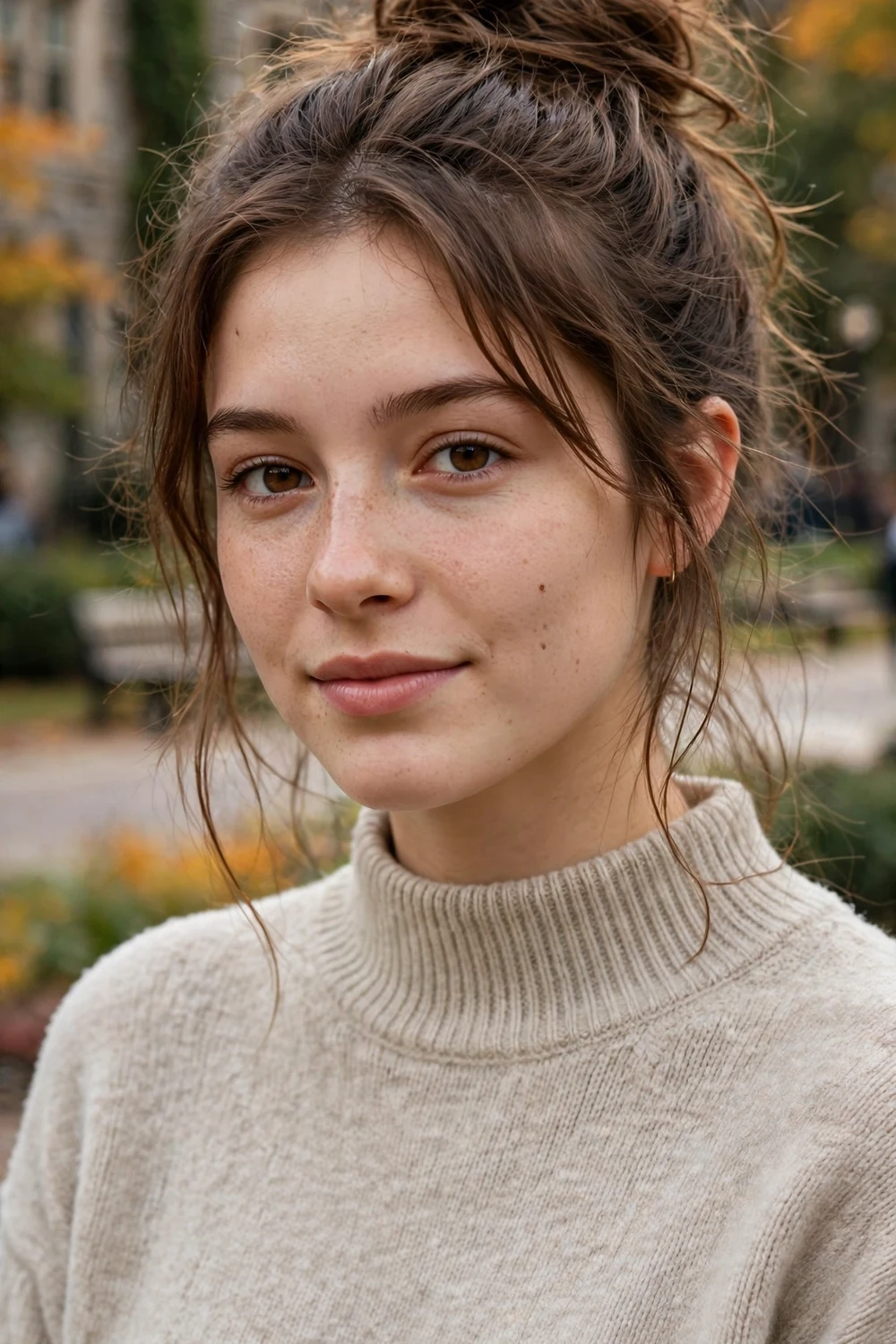
The messy bun is the default campus hairstyle for a reason. Gather your hair into a high ponytail, twist the length around its base, and pin or loop the ends through an elastic. Leave two thin strands loose at the front so the finish looks relaxed rather than rushed.
It works best on second day hair, since clean hair slips out of the twist. On wash day, a pinch of dry shampoo at the roots adds the grip the style needs. The whole thing takes about two minutes and survives a full day of classes.
Try this: build the bun at the crown rather than the back of the head, so it stays comfortable when you lean back in lecture seats.
Difficulty: Low · Cost: $ (salon)
2. Sleek Low Ponytail
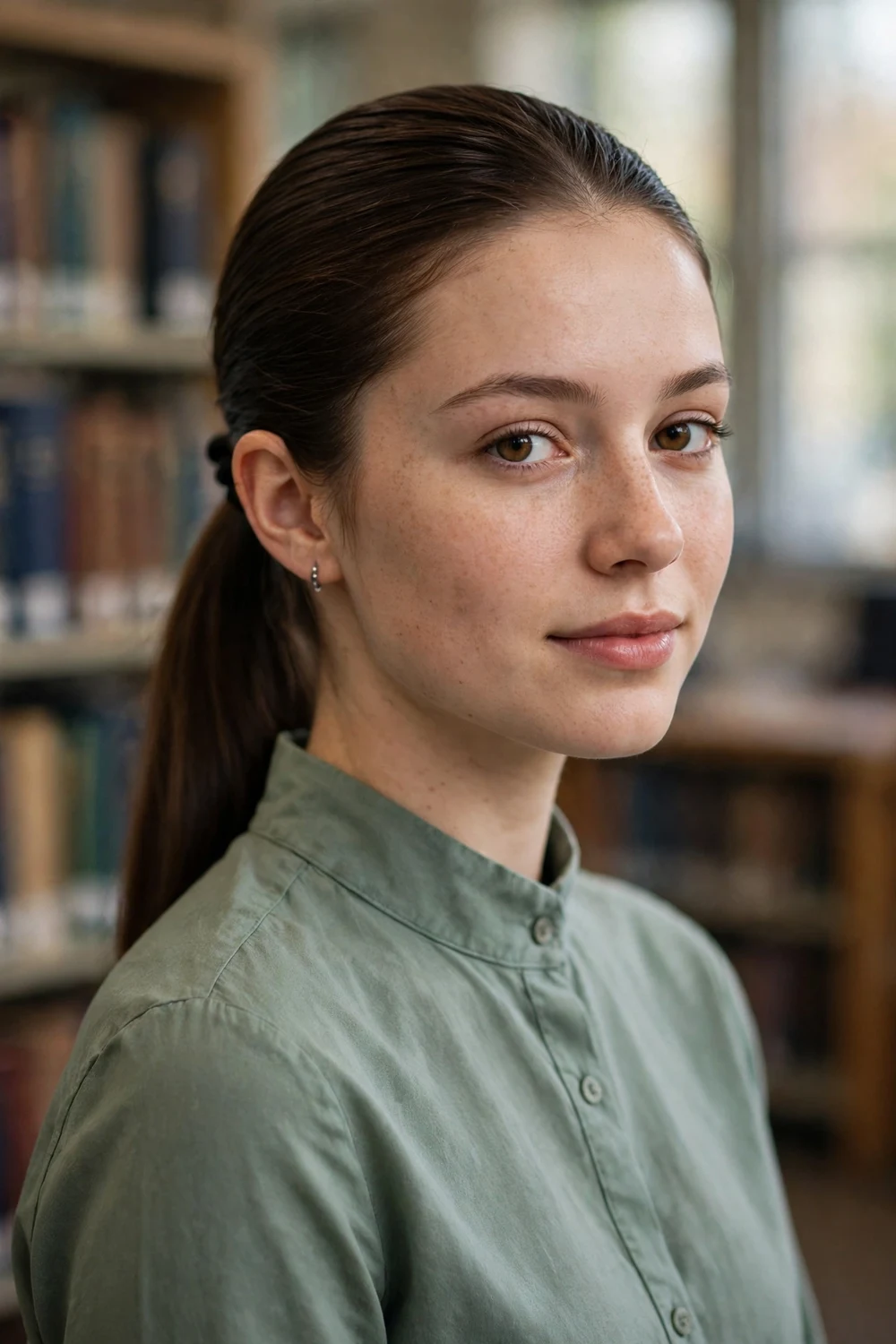
The sleek low ponytail is the polished option for presentation days, internships, and photos. Brush your hair back, smooth the top with a little gel or styling cream on a soft brush, and tie the ponytail at the nape of your neck. A center part keeps it modern; a side part softens it.
Wrap a thin strand of hair around the elastic and pin it underneath to hide the band. Flyaways along the hairline settle with a clean spoolie brush and a light mist of hairspray. The style holds all day and needs no heat tools.
Try this: tie the ponytail with two elastics stacked together if your hair is thick, so the base stays tight through the afternoon.
Difficulty: Low · Cost: $ (salon)
3. High Ponytail with Volume
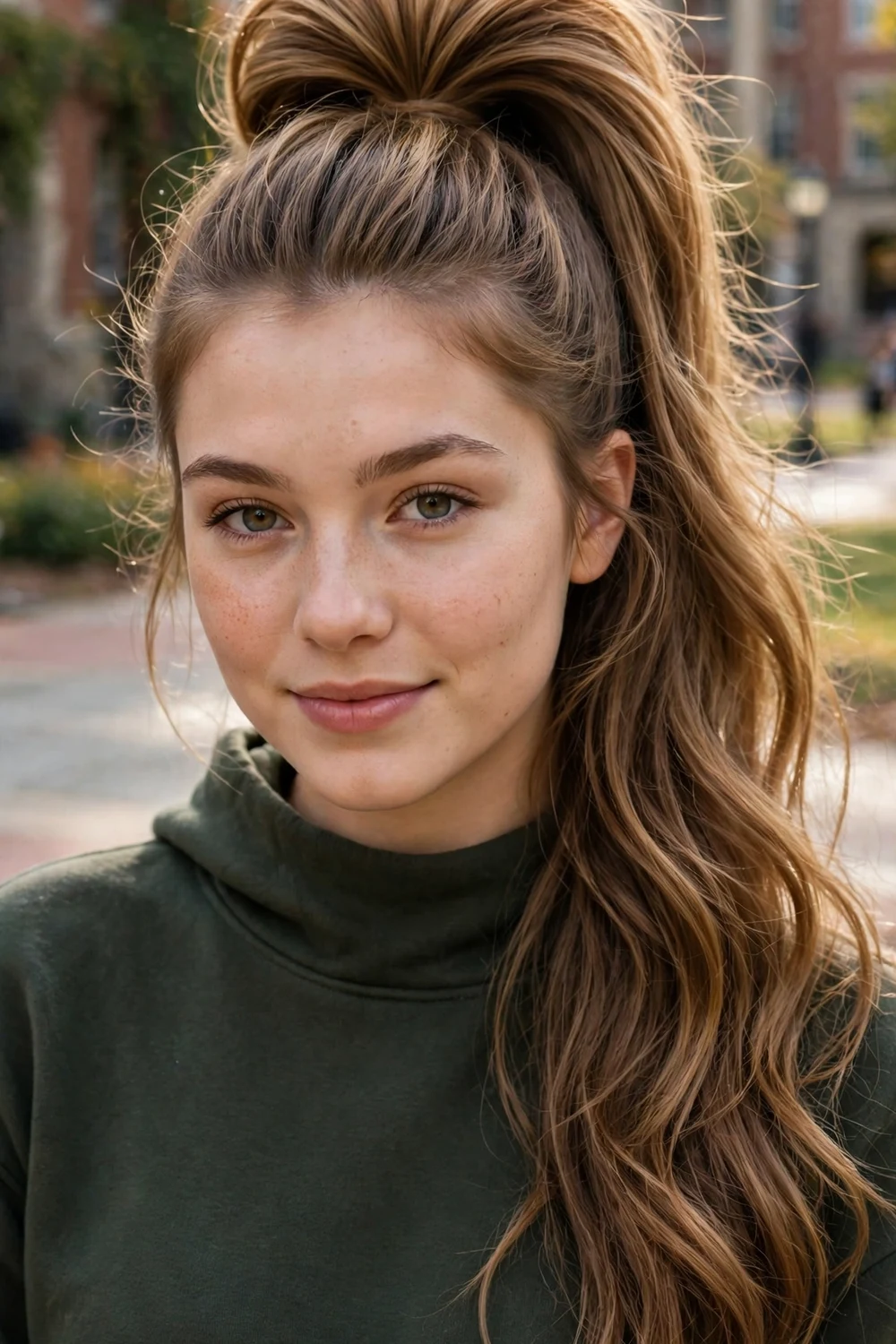
A high ponytail with volume reads sporty and put together at the same time. Flip your head forward, gather the hair at the crown, and secure it high. Tease the top section lightly or mist volumizing spray at the roots before tying, so the crown does not sit flat against your head.
This is a strong gym-to-class style: the hair stays off your neck during a workout, and a quick brush and re-tie afterward restores the shape for class. Curly and wavy hair get the volume for free; straight hair benefits from a texturizing spray through the ponytail length.
Try this: use a bungee elastic or a spiral hair tie for thick hair. Both hold a high ponytail without the headache that a tight standard elastic can cause.
Difficulty: Low · Cost: $ (salon)
4. Half-Up Half-Down Twist
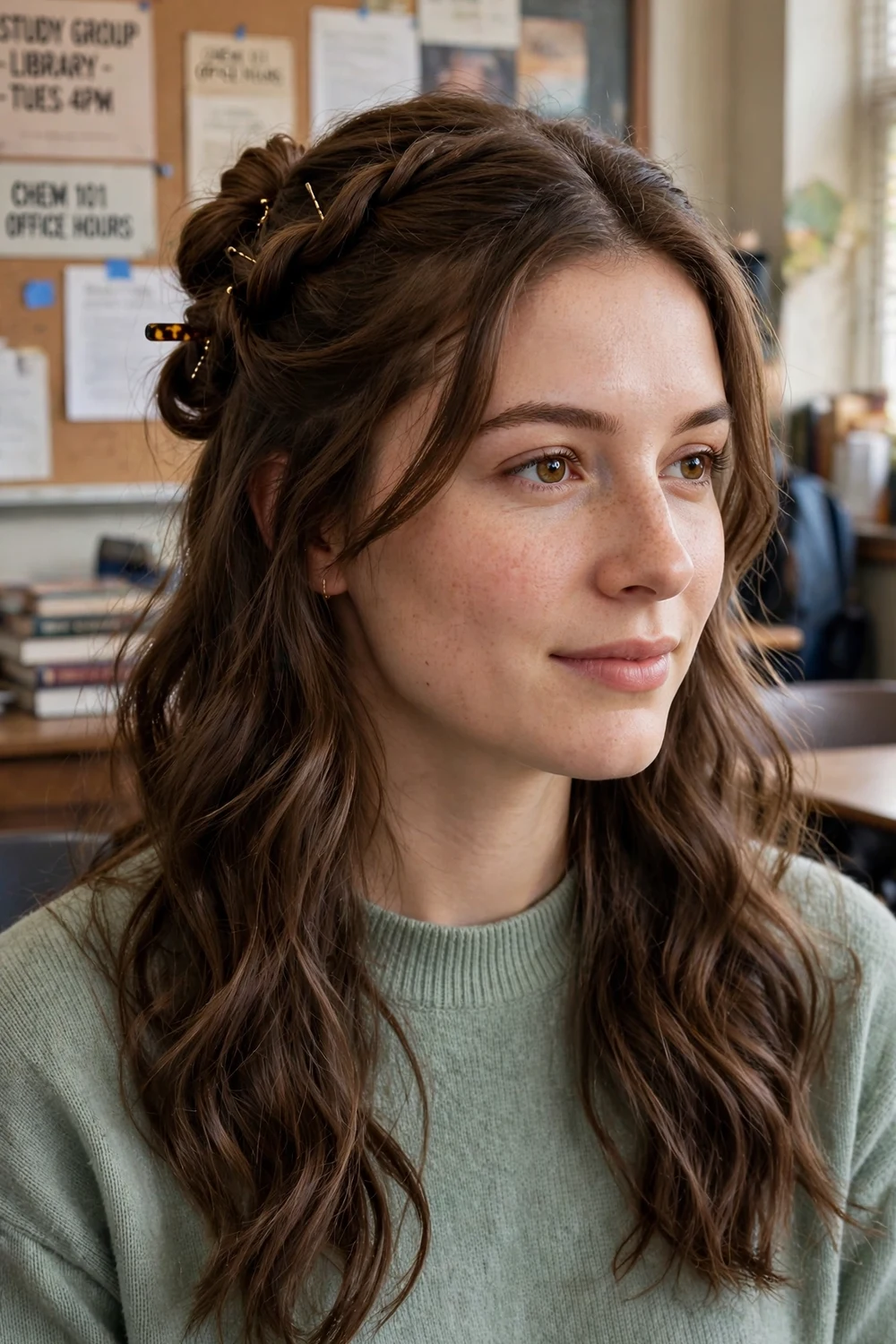
The half-up half-down twist keeps hair out of your face while leaving most of it down. Take a section from each temple, twist both sections toward the back, and pin or tie them where they meet. The rest of your hair falls loose over your shoulders.
It suits days when you want to wear your hair down but have labs, studio work, or a windy walk across campus ahead. The twist takes under three minutes, and it works on straight, wavy, and curly textures without heat. A small clear elastic holds it more securely than pins alone.
Try this: twist the sections loosely and pull the edges of each twist gently outward. The softer volume looks better in photos than a tight twist.
Difficulty: Low · Cost: $ (salon)
5. Half-Up Top Knot
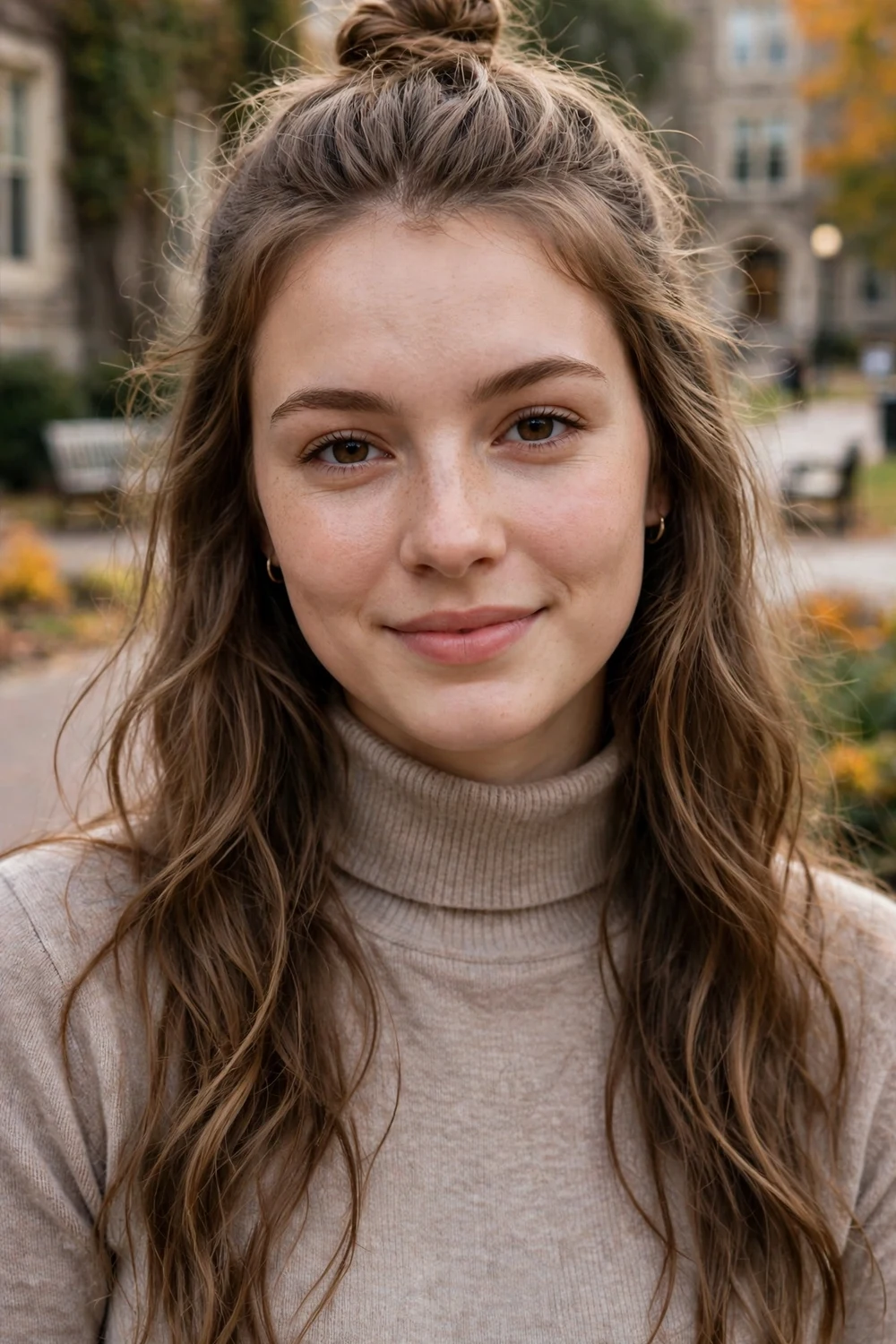
The half-up top knot gathers only the top third of your hair into a small bun at the crown. Section the hair from temple to temple, twist it into a knot, and secure it with an elastic and one or two pins. The lower hair stays down, straight or wavy.
It is a practical fix for growing out bangs or a fringe, since the front sections go up into the knot and stay there. It also stretches a wash by a day: the oiliest hair sits at the crown, and the knot hides it. Total styling time is about three minutes.
Try this: place the knot slightly forward of the crown if your hair is fine, so it reads as a deliberate style rather than a small bun lost on top.
Difficulty: Low · Cost: $ (salon)
6. Classic French Braid
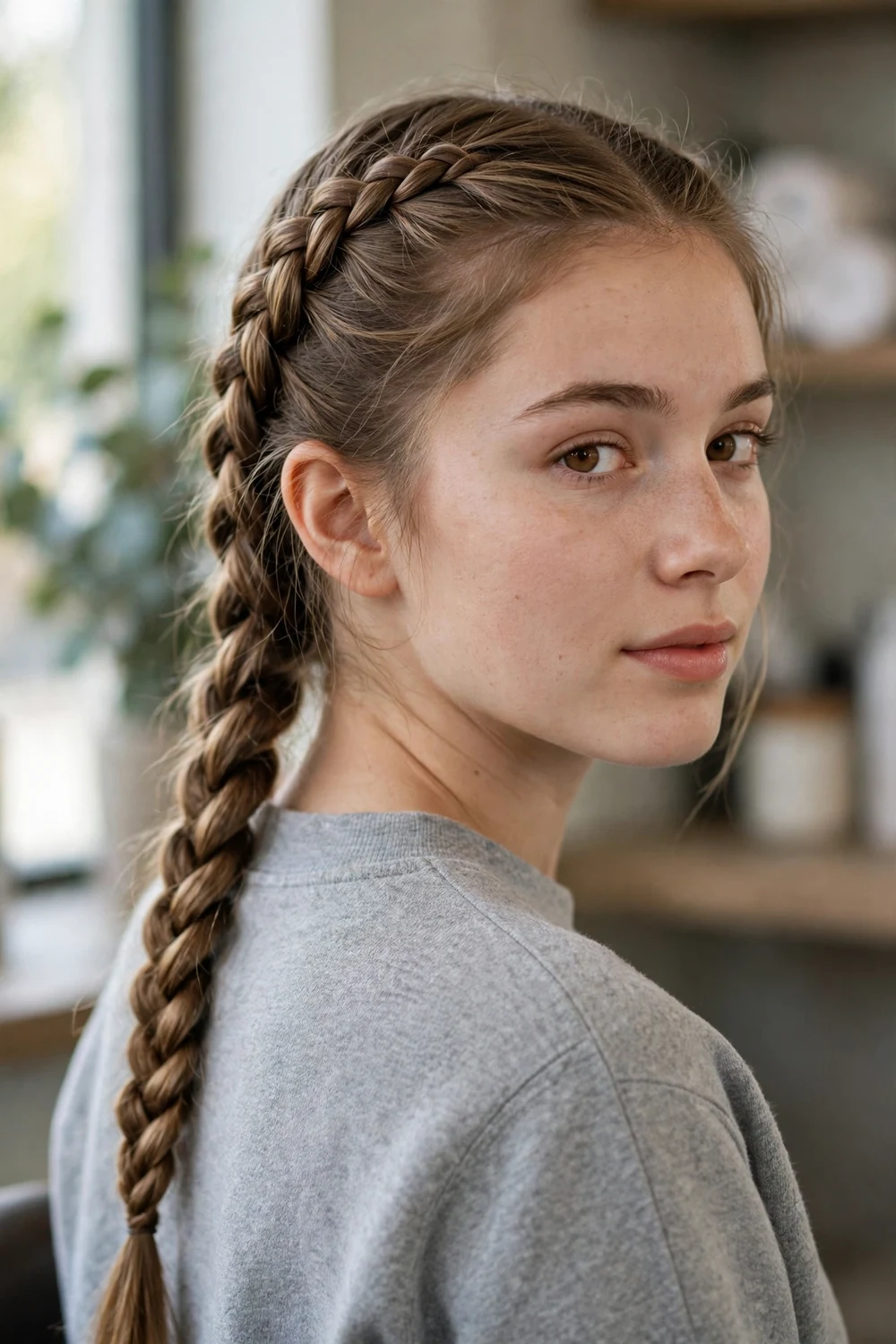
The French braid starts at the crown with three small sections, and you add hair from the sides with each pass as you work down. The result is a single braid that hugs the head, keeps every layer contained, and stays neat for a full day of classes, practice, or lab work.
It is also a heatless styling tool. Braid slightly damp hair in the evening, sleep on it, and undo the braid in the morning for even waves. The braid itself takes about five minutes once the hand pattern clicks, and most people learn it within a week of practice.
Try this: braid on hair that has a little texture spray or day old dry shampoo in it. Slick, freshly washed hair slides out of the sections as you work.
Difficulty: Medium · Cost: $ (salon)
7. Double Dutch Braids
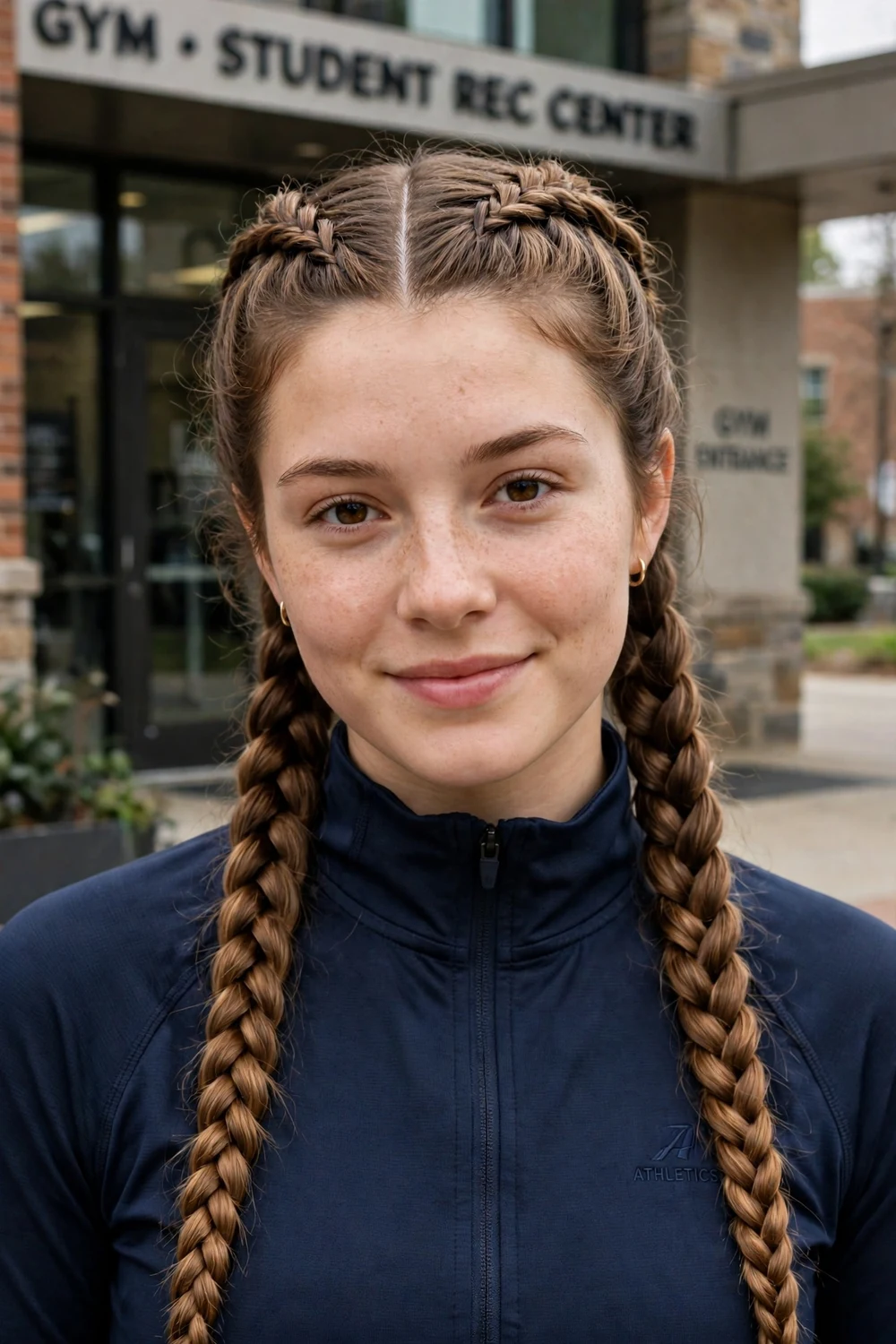
Double Dutch braids cross the sections under instead of over, so each braid sits raised on top of the hair. Part your hair down the middle, then Dutch braid each side from the hairline to the nape and finish with a regular braid through the ends.
This is the most secure style on this list for workouts, dance practice, and game days, since nothing swings or slips. It also protects the hair for one to two days at a time, which cuts down on washing and heat styling during busy weeks. A little edge gel along the part lines keeps it tidy.
Try this: mist each side with water before braiding if your hair is layered. Damp layers tuck into the braid instead of poking out.
Difficulty: Medium · Cost: $ (salon)
8. Fishtail Braid
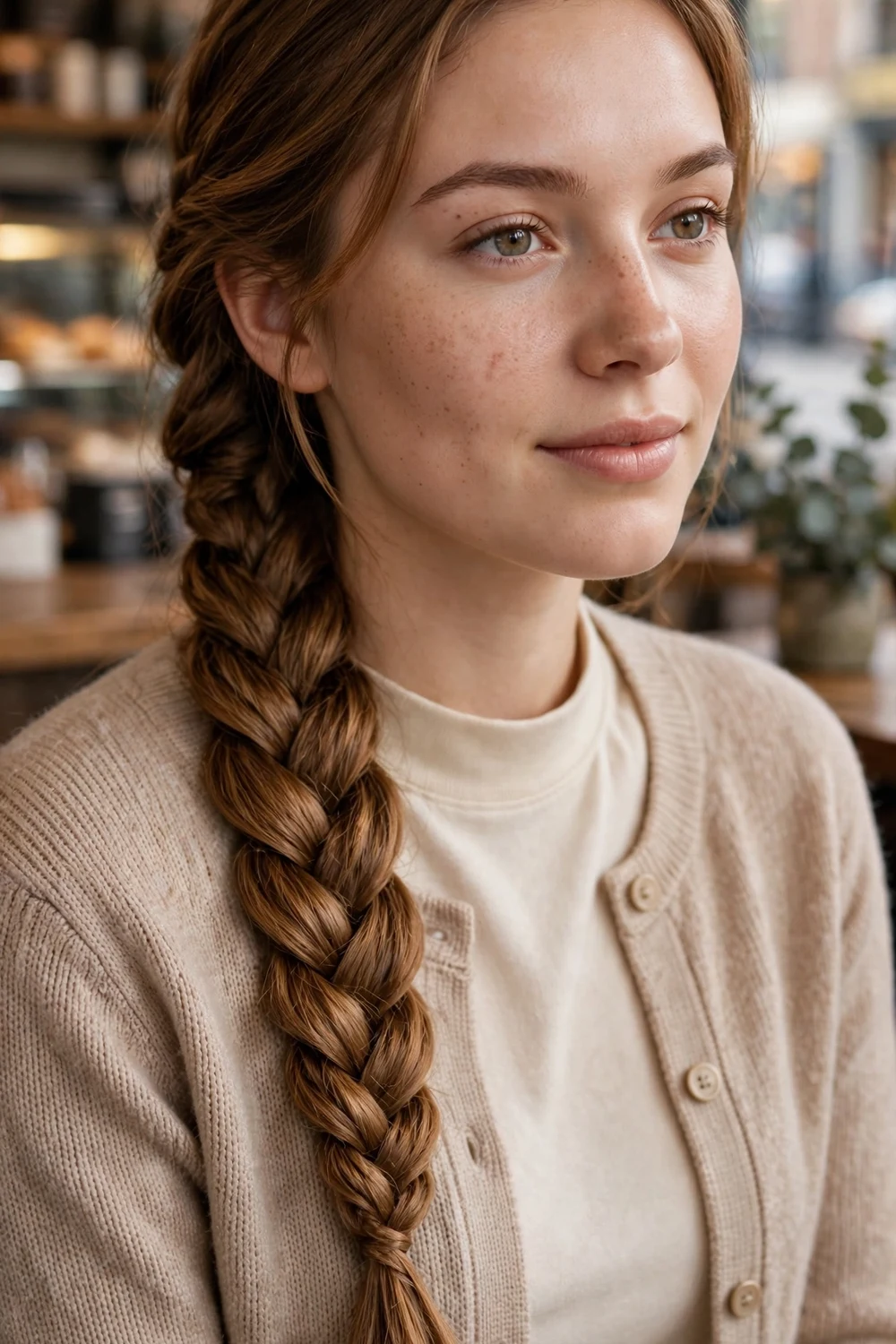
A fishtail braid uses two sections instead of three. Take a small strand from the outside of one section, cross it over, and add it to the other side, then repeat from the opposite side. The pattern builds a woven, herringbone finish that looks detailed but follows one simple rhythm.
Worn over one shoulder, it suits long hair and keeps the length controlled during the day. Once tied off, pinch and pull the edges of the braid gently to widen it. That step doubles the visible width and makes medium hair look thicker.
Try this: start the fishtail inside a low ponytail the first few times. The elastic holds the base steady while you learn the crossing pattern.
Difficulty: Medium · Cost: $ (salon)
9. Side Braid with Ribbon
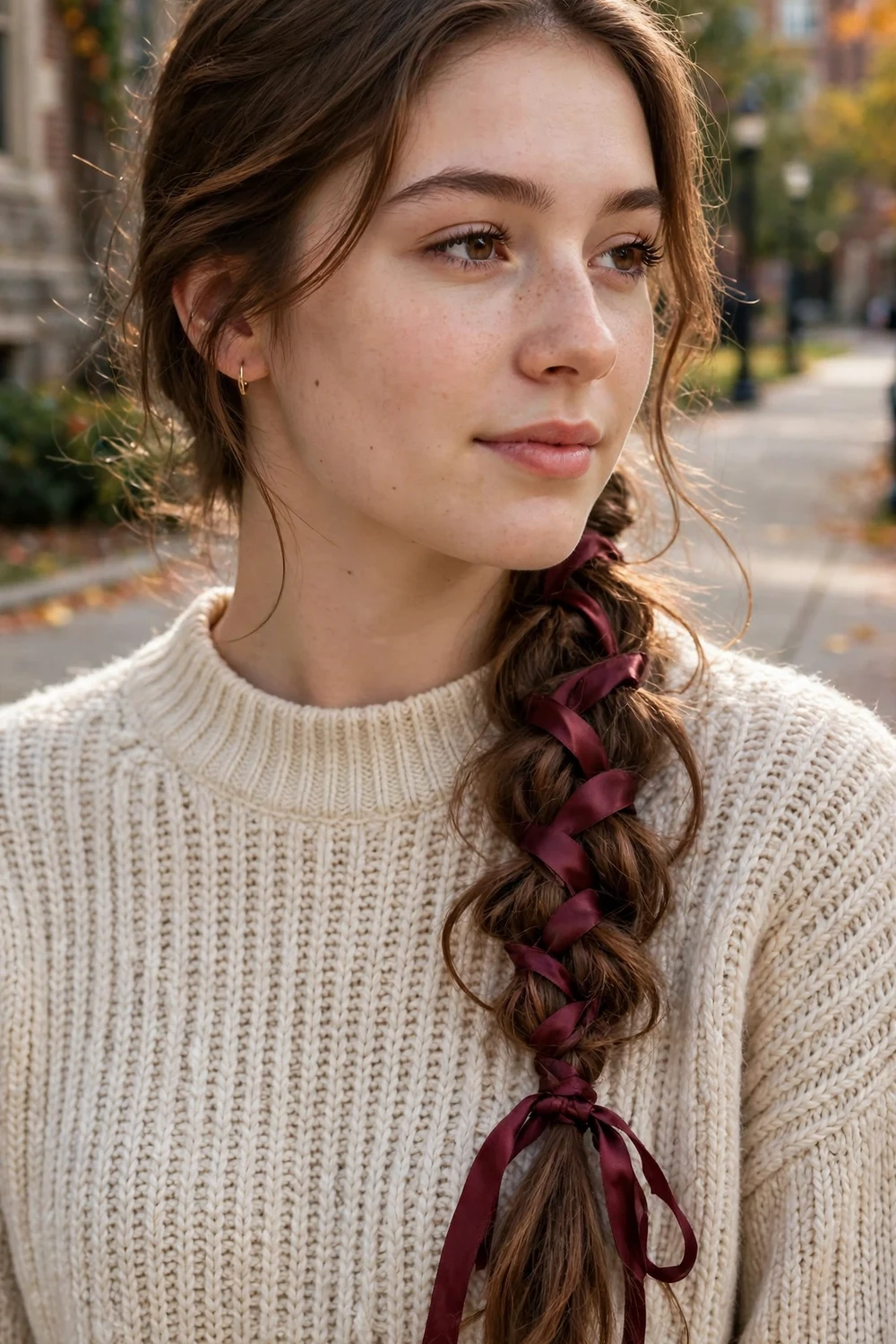
The side braid with ribbon starts by sweeping all your hair over one shoulder and braiding it loosely. Tie a thin ribbon at the top, weave it through the braid as one of the strands, or simply knot it around the elastic at the end for a bow finish.
It is a fast way to make a plain study day outfit feel planned, and the ribbon color can match a team, a club, or a holiday. The braid keeps hair contained on windy walks between buildings, and the loose tension means no scalp ache by evening.
Try this: use a ribbon with a matte finish rather than satin. Satin slides against hair and works its way out of the braid by midday.
Difficulty: Low · Cost: $ (salon)
10. Segmented Bubble Ponytail

The bubble ponytail upgrades a plain ponytail with a row of small elastics. Tie a high or mid ponytail, then add an elastic every two to three inches down the length. Pull each section outward gently between the elastics to round it into a bubble shape.
It holds long hair off your back in warm lecture halls, and it reads well in photos from every angle. The elastics also stop the ponytail from tangling in backpack straps, which is a real problem with loose long hair on campus.
Try this: use clear elastics for a clean finish, or match the elastic color to your outfit for game day and club events.
Difficulty: Low · Cost: $ (salon)
11. Space Buns
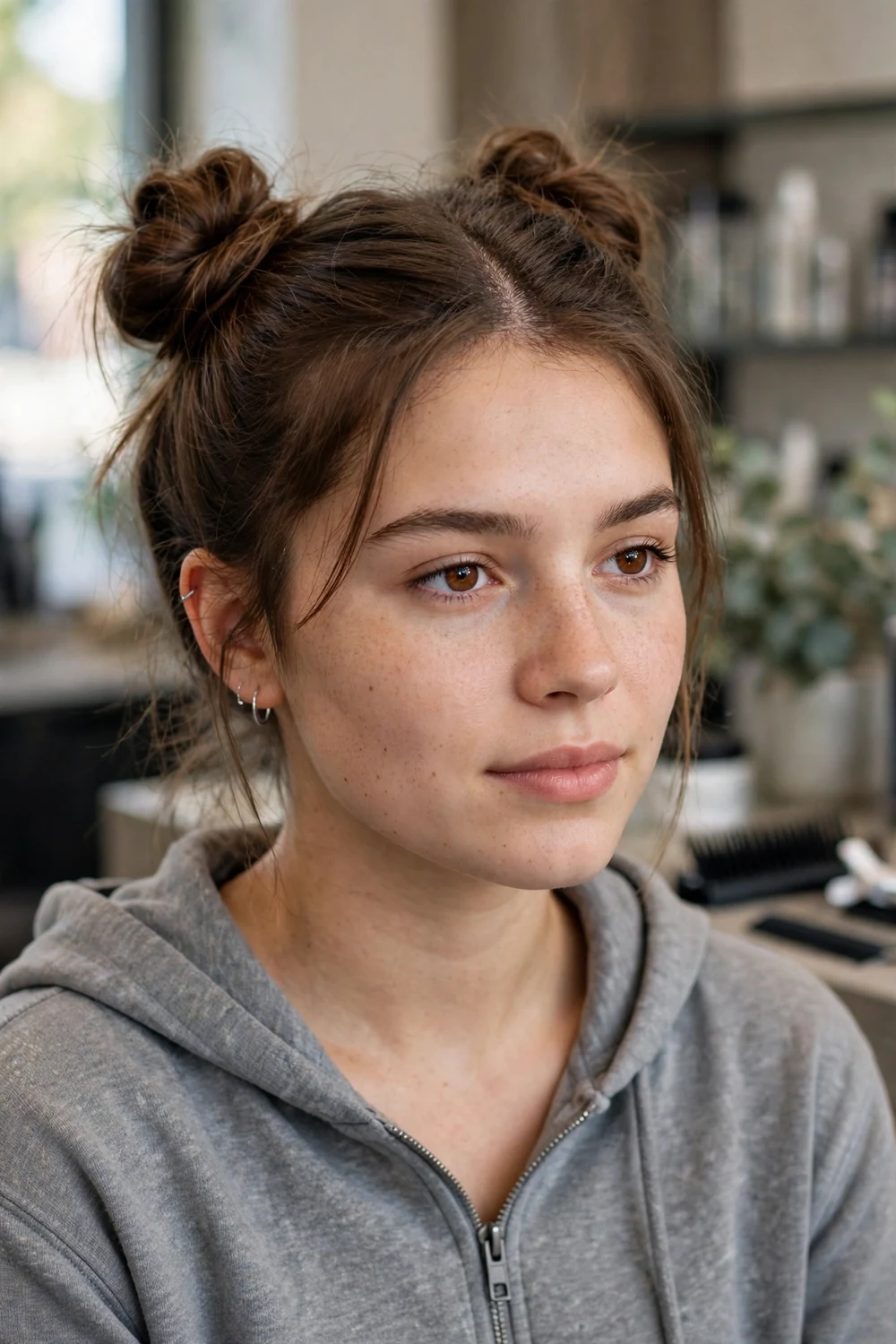
Space buns split the hair into two high pigtails, then twist each one into a bun and pin it in place. The center part does most of the work: get that line straight, and the style looks balanced even if the buns are slightly uneven.
They suit concerts, festivals, theme nights, and any day you want hair fully off your face and neck. The buns hold best on hair with some texture, so this is another good second day option. Two small scrunchies at the base add hold and a color accent.
Try this: leave the front inch of hair loose on each side before you bun the rest. Those two face framing strands soften the style for daytime classes.
Difficulty: Low to Medium · Cost: $ (salon)
12. Braided Crown
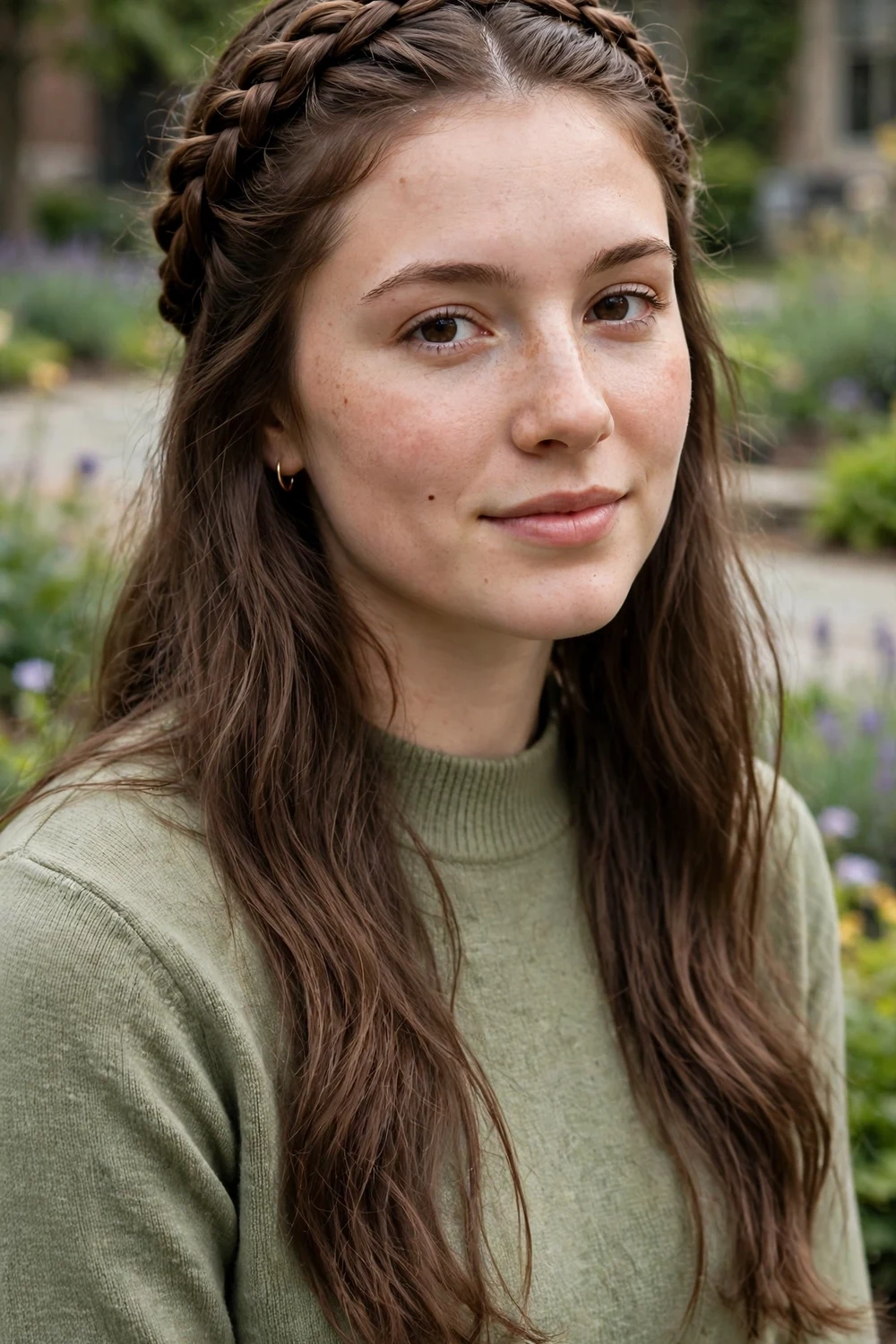
A braided crown runs a braid along the hairline, around the head like a headband. The common route is a Dutch braid that starts behind one ear, travels across the front hairline, and pins behind the other ear, with the remaining hair worn down or gathered into the braid.
It keeps the front hair fully controlled, which helps during labs, clinical placements, and food service shifts where loose strands are not allowed near your face. The style takes longer than most on this list, so save it for days when you have ten unhurried minutes.
Try this: practice the crown on a weekend first and note where your hands get tangled. Most people find one direction around the head far easier than the other.
Difficulty: Medium to High · Cost: $$ (salon)
13. Waterfall Braid
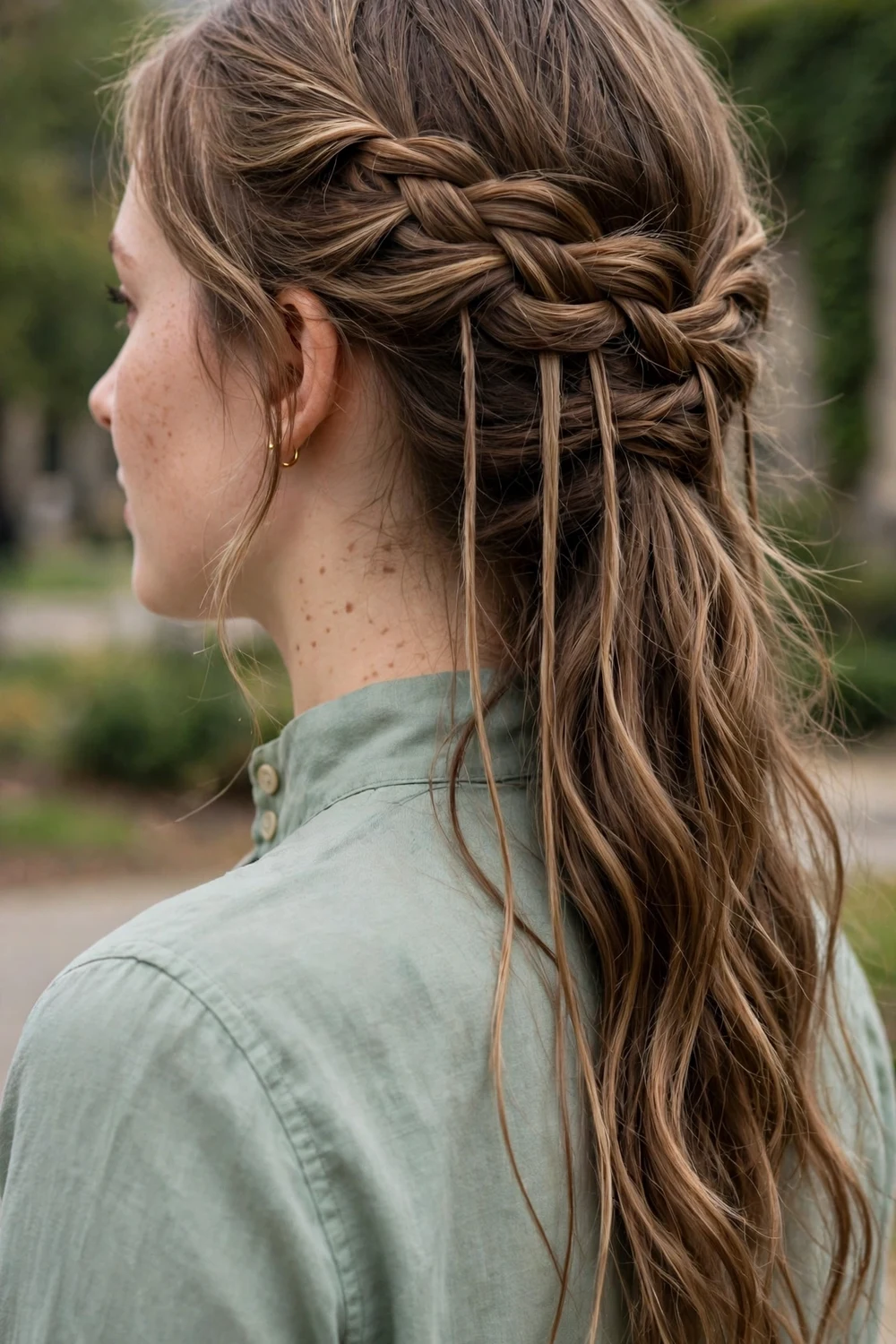
A waterfall braid runs horizontally across the back or side of the head. You braid as usual along the top, but with each pass you drop the bottom strand and pick up a fresh strand of loose hair in its place. The dropped strands fall like water through the braid, which is where the name comes from.
It suits dates, recitals, and end of semester events where you want your hair down with a finished detail at the back. Pair it with loose waves through the lengths. The braid itself is the decoration, so skip heavy accessories with this one.
Try this: hold the dropped strands with a clip as you go, one at a time, so a released strand does not get picked back up by mistake.
Difficulty: Medium to High · Cost: $$ (salon)
14. Braided Low Ponytail
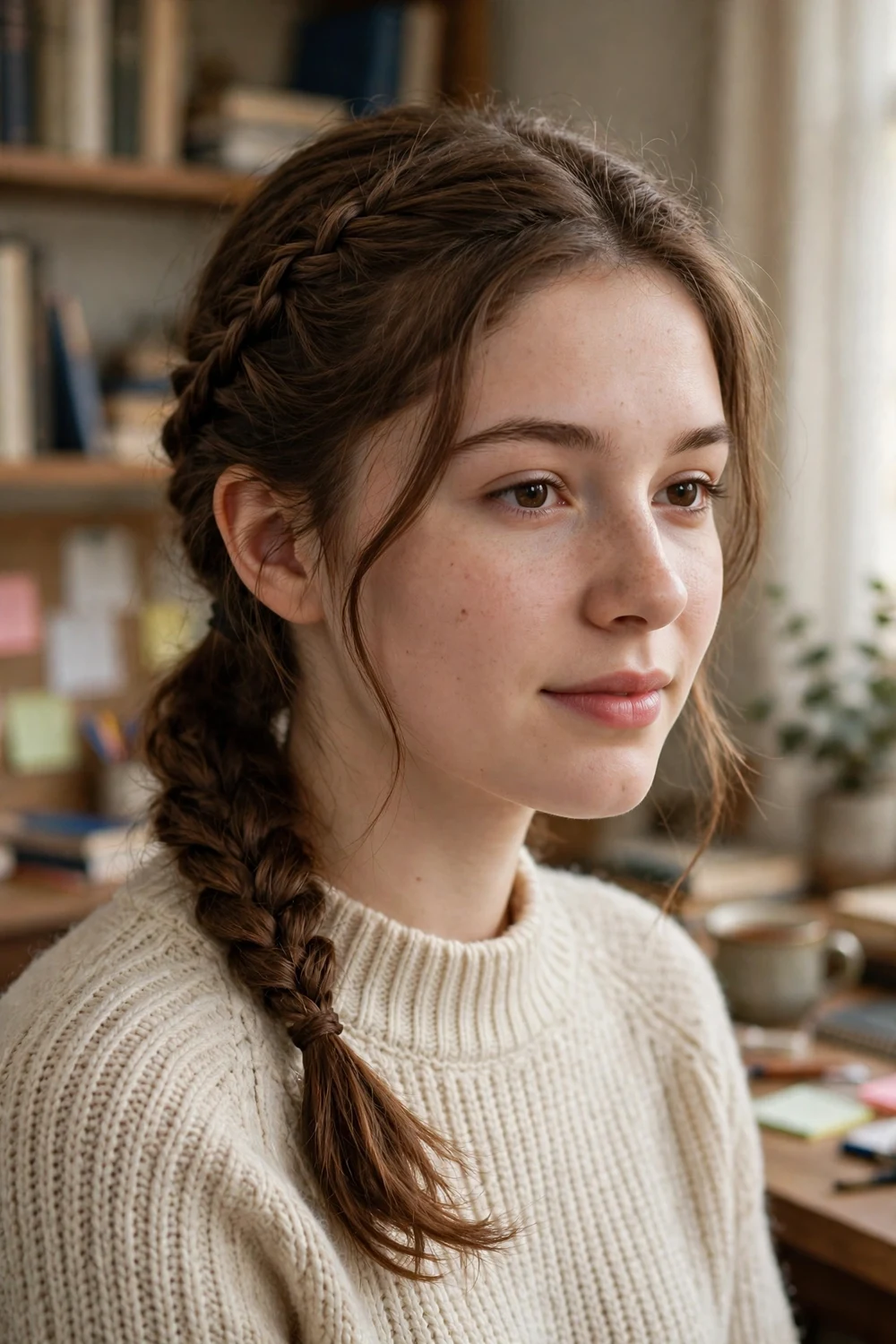
The braided low ponytail combines two basics: braid a section at the front or side of the head, then gather everything, braid included, into a low ponytail at the nape. The braid shows along the top while the ponytail keeps the length simple.
It is a smart pick for long class days followed by an evening event, since it reads casual in the morning and finished at night. It also works for beginners: the front braid is small and freestyle, so uneven sections hide easily inside the ponytail.
Try this: braid both front sections, one per side, and bring both into the ponytail for a balanced finish that photographs well.
Difficulty: Low to Medium · Cost: $ (salon)
15. Sleek Low Bun
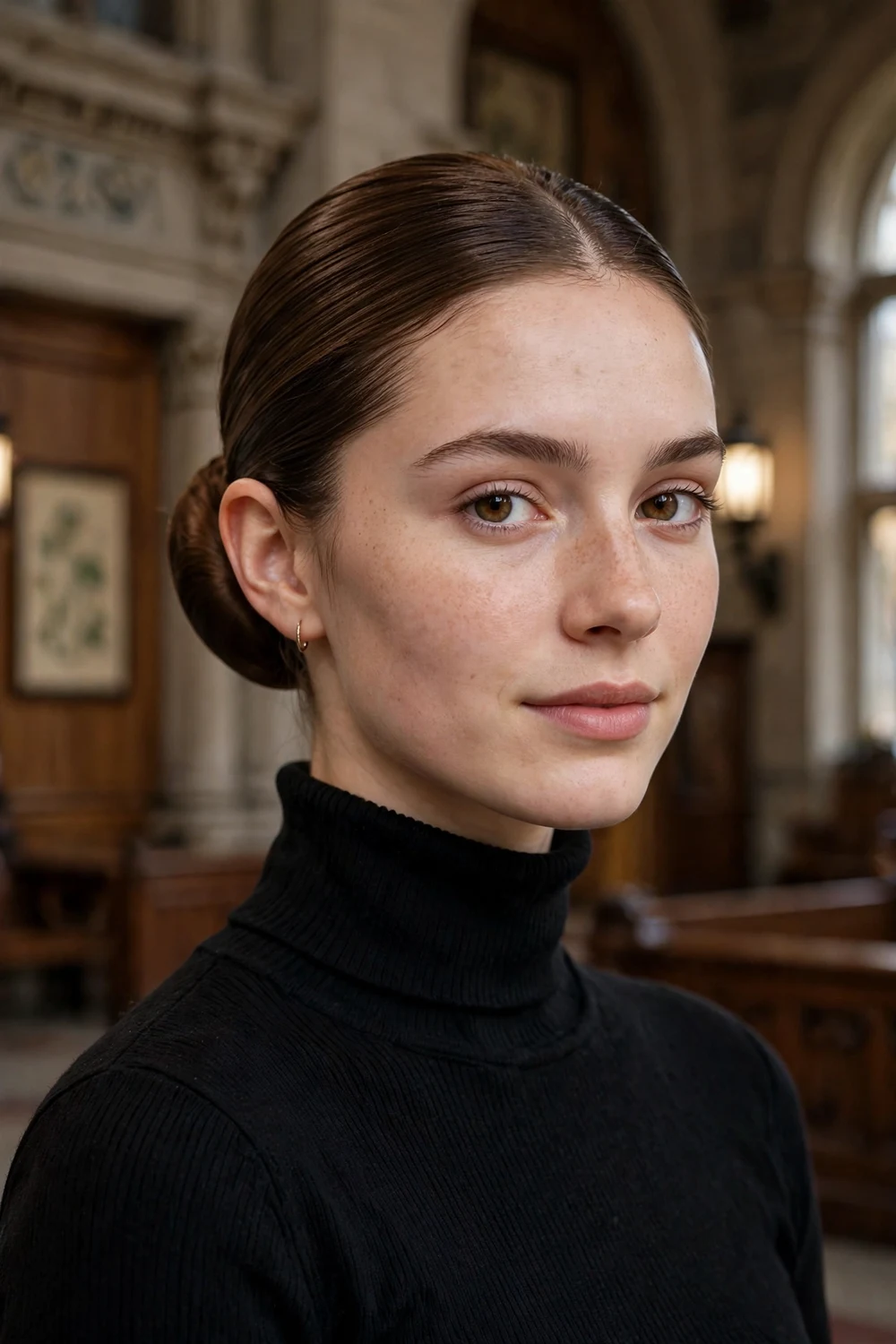
The sleek low bun is a chignon style built from a low ponytail: twist the length, wrap it flat against the nape, and pin the coil in place. Smooth the top and sides with a brush and a small amount of gel as you gather, so the finish stays clean and close to the head.
Reach for it on interview days, formal chapter events, and recitals. It keeps every strand controlled for hours and fits under a graduation cap better than any high style. The pins do the holding, so bring four to six sturdy bobby pins rather than two.
Try this: cross two pins in an X over the thickest part of the bun. Crossed pins lock into each other and hold far longer than parallel pins.
Difficulty: Low to Medium · Cost: $ (salon)
16. Chic Top Knot

A top knot pulls all the hair to the very top of the head and wraps it into a single knot or coil. Unlike the messy bun, the top knot is placed high and worn a little neater, with the sides brushed smooth. It takes about two minutes and needs only one elastic and two pins.
It is the standard library and study session style: hair stays out of your eyes while you read, and nothing rests against your neck during long sittings. Students with shorter hair can gather what reaches and pin the rest at the back. The roundup of quick updos for short hair covers those shorter variations in detail.
Try this: backcomb the ponytail lightly before wrapping it if your hair is fine. The extra bulk keeps the knot from shrinking to a small nub.
Difficulty: Low · Cost: $ (salon)
17. Loose Waves
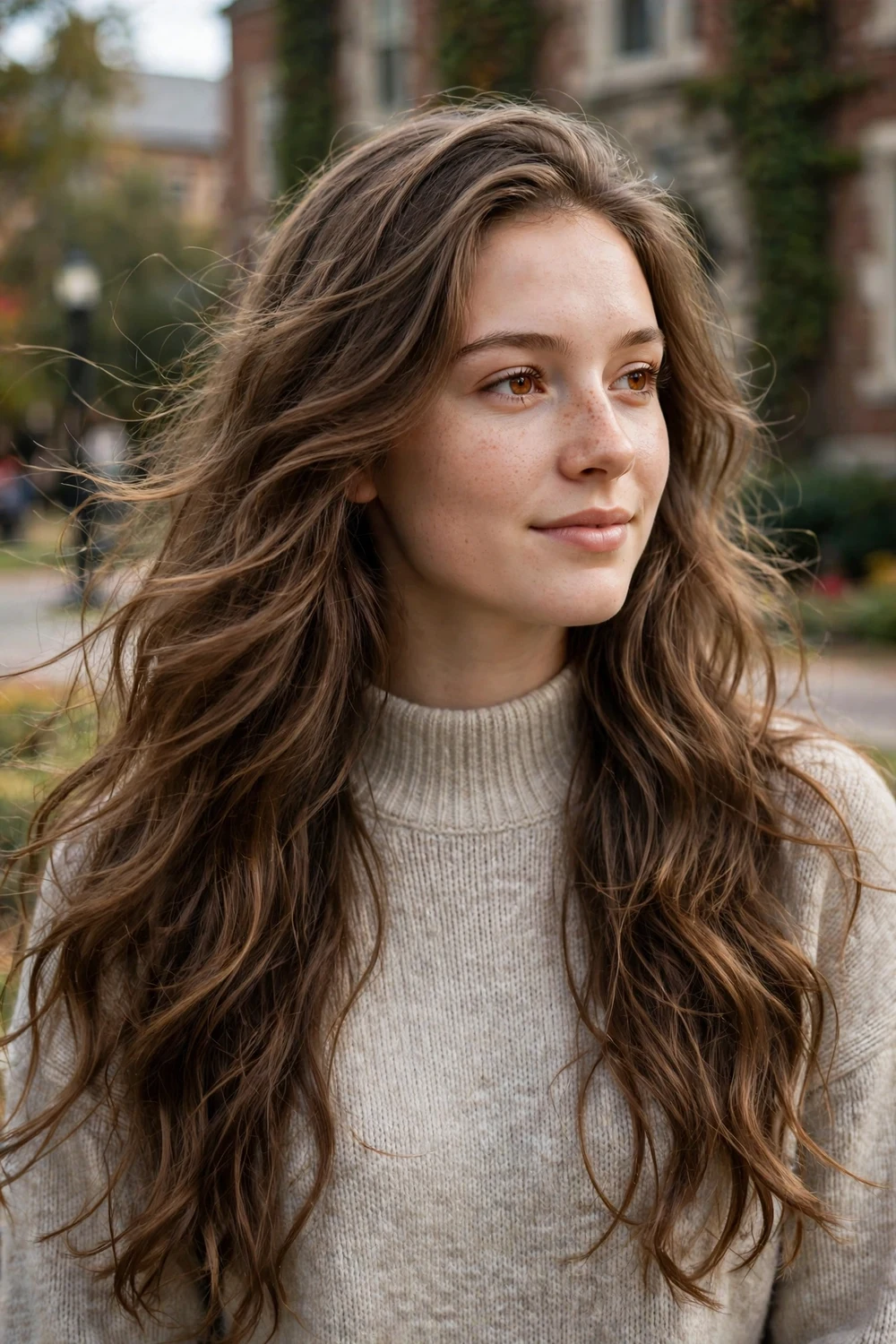
Loose waves are the worn down standard for campus: soft bends through the mid-lengths and ends, with the roots left natural. You can build them with a large barrel curling iron in about ten minutes, wrapping wide sections and leaving the last inch of each end out of the barrel.
Brush the curls out once they cool and the finish turns into waves instead of ringlets. The style lasts into a second day if you sleep with the hair in a loose high ponytail, and a quick pass with the iron on the front sections refreshes it in two minutes.
Try this: alternate the direction of each wrapped section, one toward the face and the next away. Mixed directions keep the waves from clumping into one large curl.
Difficulty: Medium · Cost: $ (salon)
18. Textured Bob
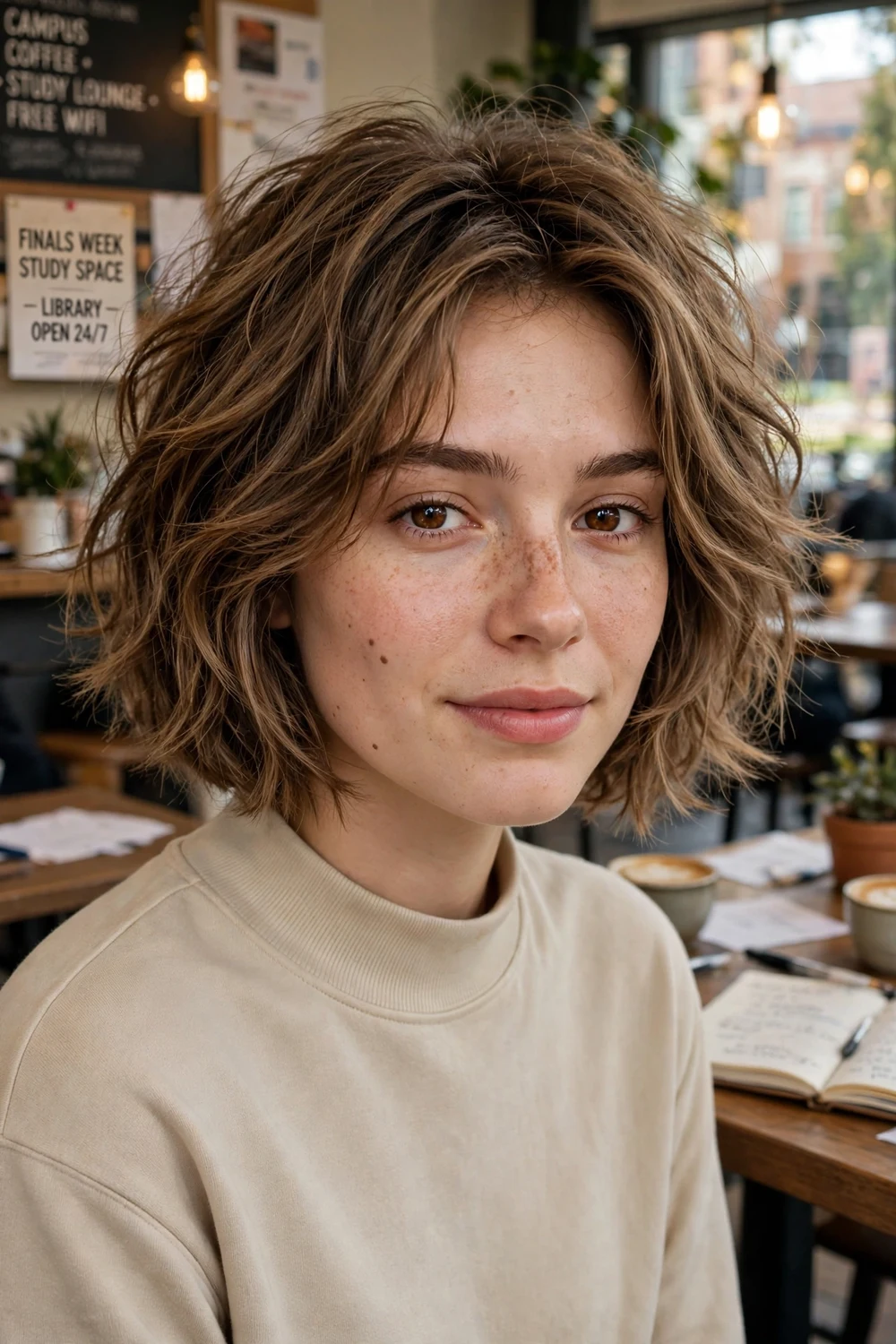
The textured bob is a chin to shoulder length cut with choppy, piecey layers through the ends. The texture is cut in at the salon, so daily styling shrinks to a scrunch with mousse or texture spray and air drying. For students who hate morning routines, the cut does the work for you.
It suits straight and wavy hair best, and it grows out gracefully for around eight to ten weeks before the shape needs a trim. That trim schedule fits a student budget and a semester calendar, with one appointment near the start of term and one near the end.
Try this: ask your stylist for texture on the ends only, not throughout the cut, if your hair is fine. End texture adds movement without thinning the body of the bob.
Difficulty: Low · Cost: $$ (salon)
19. Slicked-Back Pixie
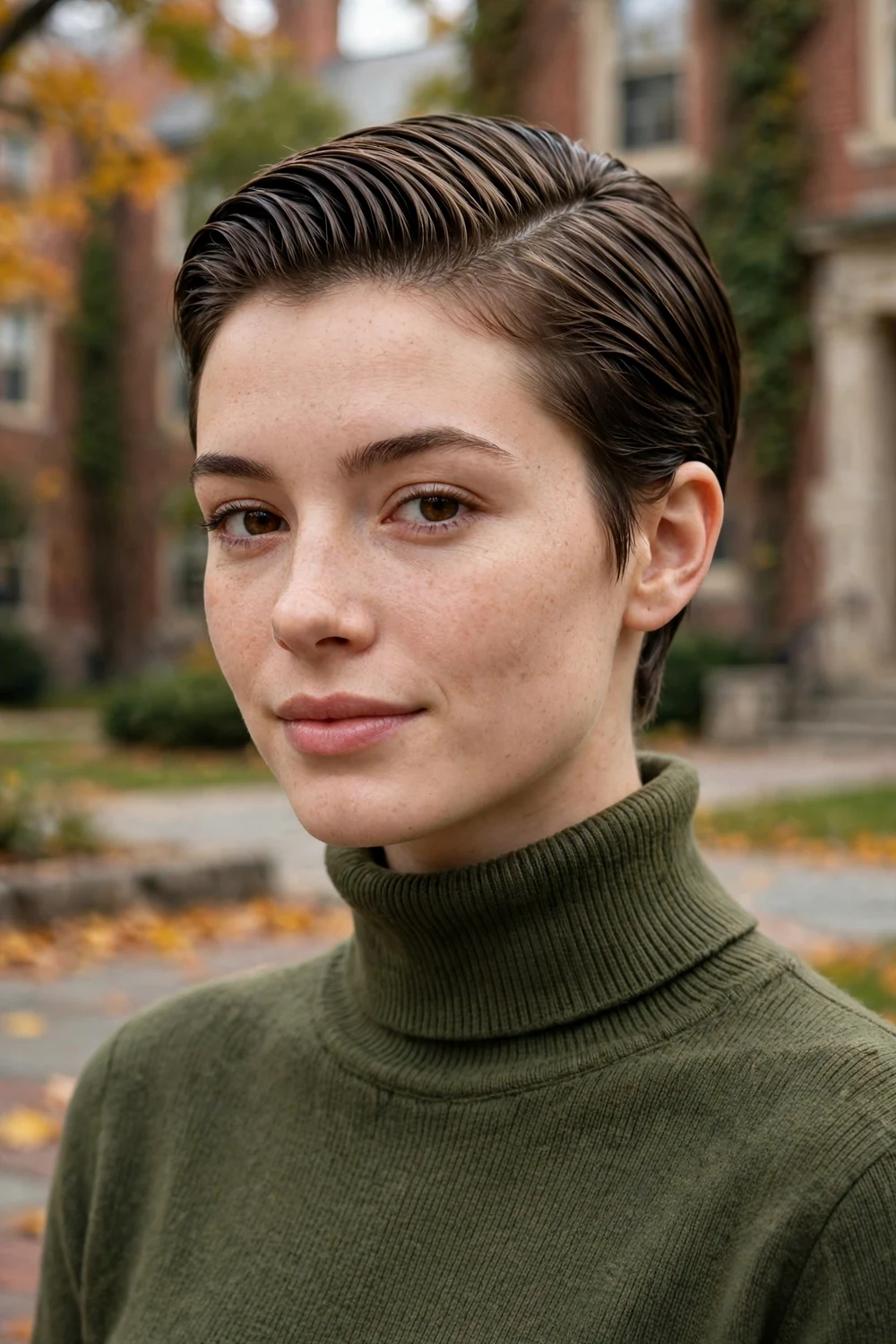
A slicked-back pixie keeps short hair cropped at the sides and back, with a little length on top that you sweep straight back. A pea sized amount of gel or pomade worked through the top gives the smooth finish, and the whole routine takes about one minute.
Short hair cuts wash time, dry time, and product use across the board, which matters in shared dorm bathrooms with morning queues. The trade-off is the salon schedule: a pixie needs a shape-up trim roughly every four to six weeks to keep its lines clean.
Try this: sweep the top to one side instead of straight back on alternate days. The same cut gives you two distinct looks with no extra tools.
Difficulty: Low · Cost: $$ (salon)
20. Sleek Straight Hair
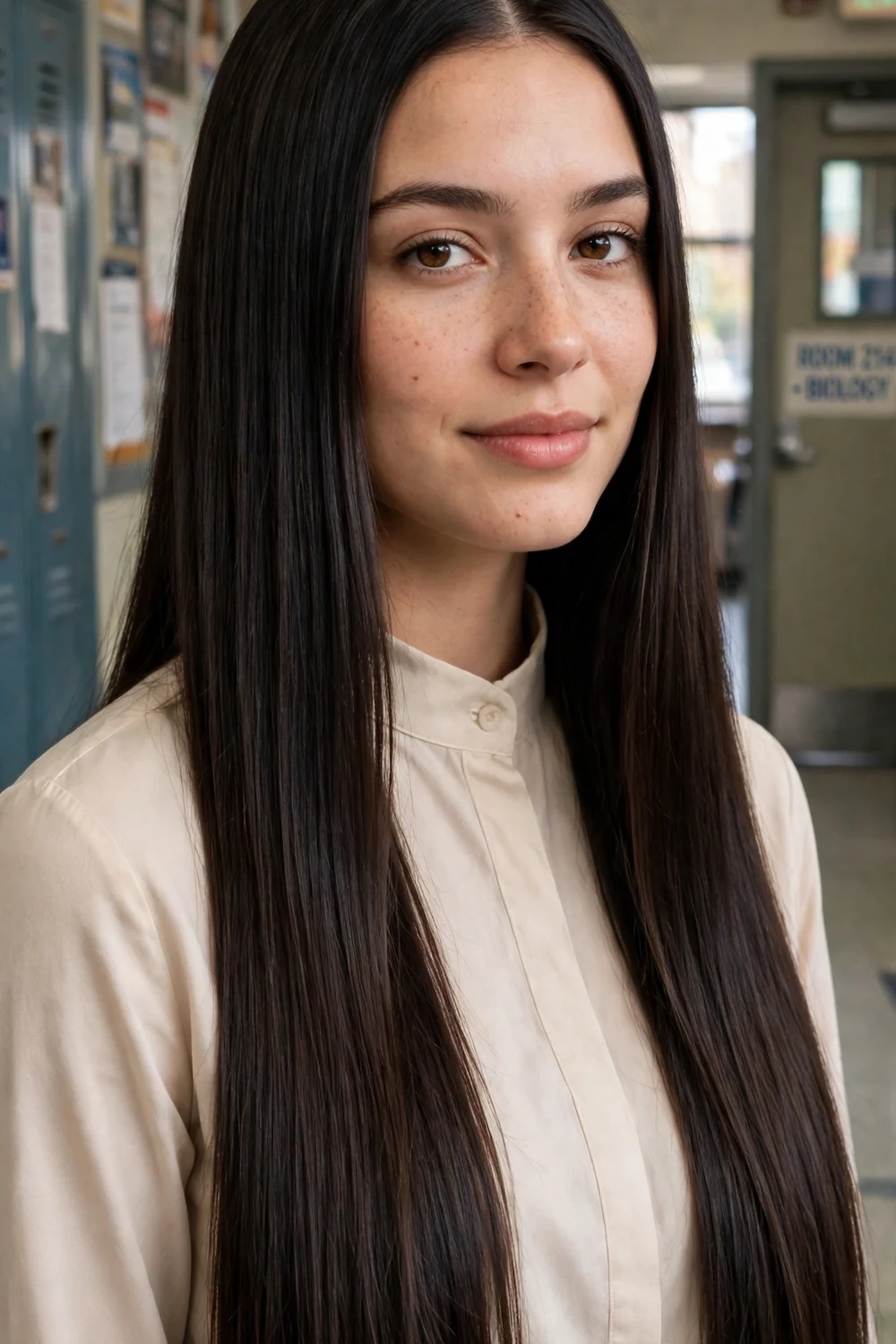
Sleek straight hair is long hair pressed smooth and worn with a clean center part. A flat iron pass over small sections, after heat protectant, gives the glassy finish. Keep the iron moving and work from the bottom layers up so the top layers stay smooth rather than fried.
It suits formal photos, presentations, and any day you want a sharp finish. The style lasts two to three days if you wrap the hair or sleep on a smooth pillowcase, which spreads the twenty minute styling session across several wears.
Try this: finish with the iron on the cool setting if your tool has one, or pass a cool blow dryer over the hair. Cooling sets the straight finish and adds shine.
Difficulty: Medium · Cost: $ (salon)
21. Twisted Updo

A twisted updo builds an up style from rolled sections instead of braids. Twist two or three sections from the sides and front, pin them at the back, then twist the remaining length into a low coil and pin that too. The result looks detailed, but each step is just a twist and a pin.
It is a reliable pick for formals, award nights, and end of year banquets when you want your hair up without a salon visit. Practice it once before the event. On the second attempt most people finish the whole style in about ten minutes.
Try this: pin each twist as you place it instead of holding all the sections at once. Working one section at a time keeps tension even across the style.
Difficulty: Medium · Cost: $$ (salon)
22. Hair Scarf Updo
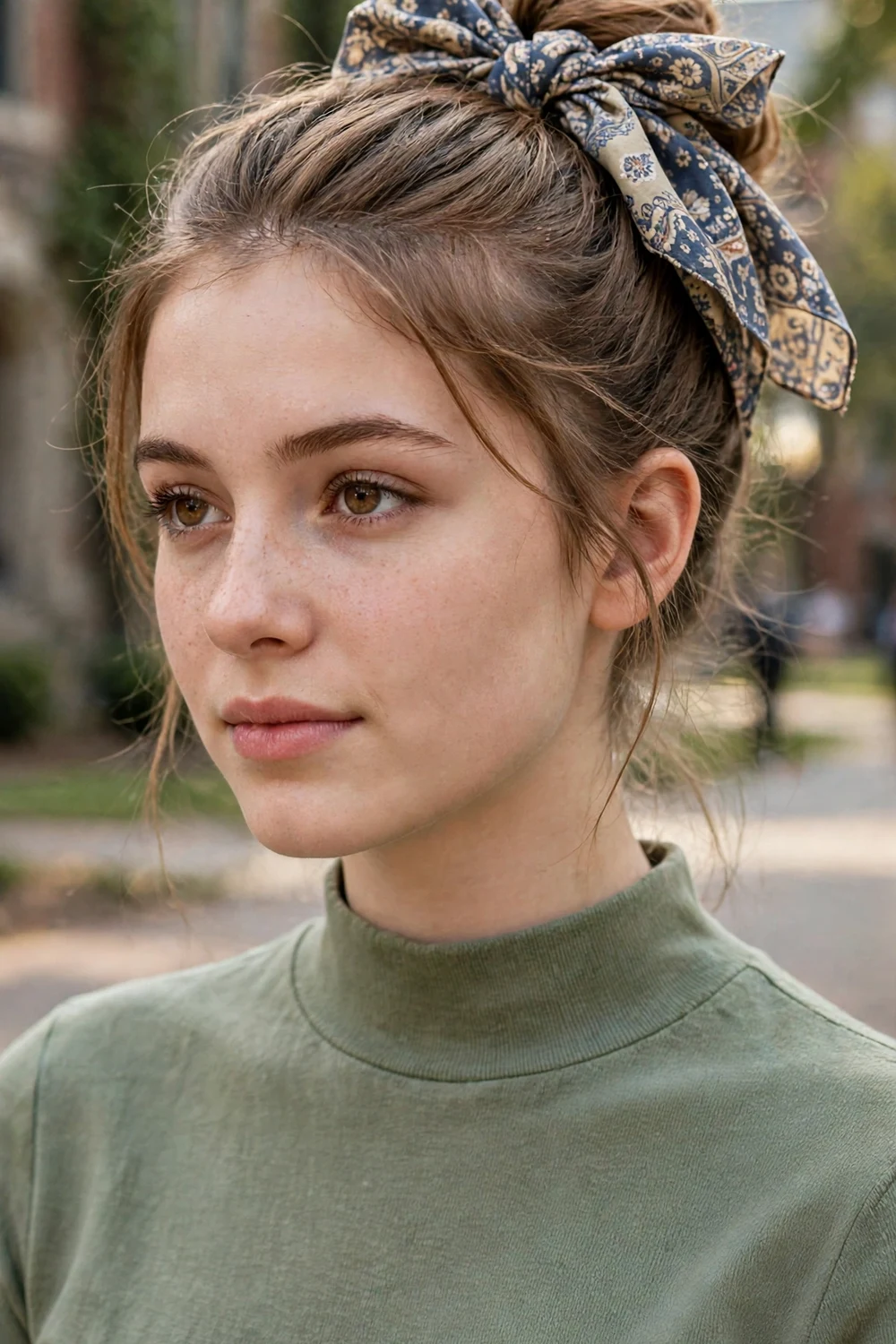
The hair scarf updo starts with any loose bun, then wraps a folded scarf around the base and ties it in a knot or bow on top. The scarf covers the elastic, hides a rushed bun, and adds the color or pattern that carries the outfit.
It is also a kind option for hair between washes, since the scarf covers the roots at the front. Choose a cotton or matte scarf over a silky one for daytime wear: matte fabric grips the hair and stays tied through classes, while silk slips loose within an hour.
Try this: thread the scarf through the elastic before you build the bun, then wrap. Anchoring the scarf to the elastic stops it sliding backward off the bun.
Difficulty: Low · Cost: $ (salon)
23. Side Bun
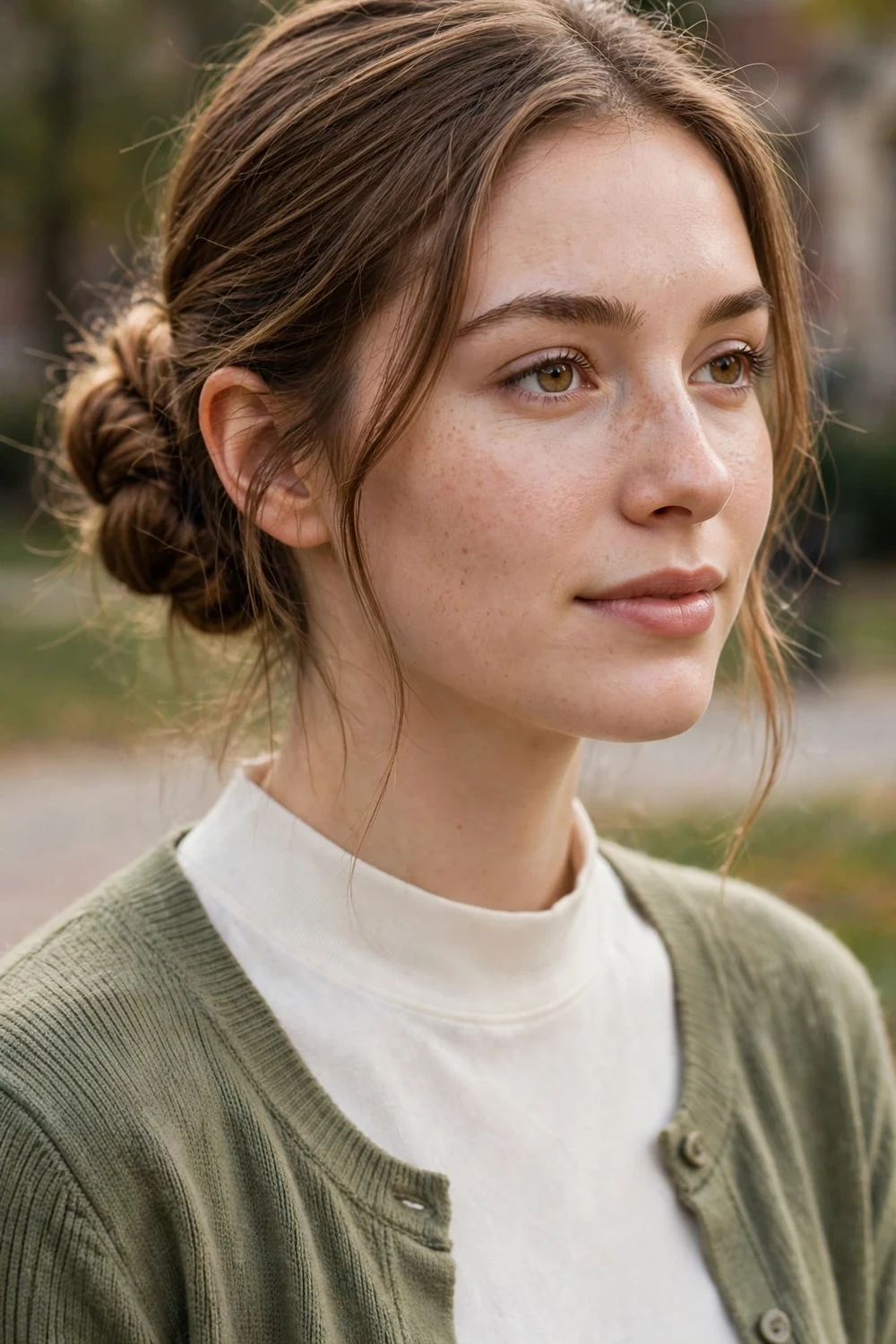
A side bun gathers the hair into a low ponytail behind one ear, then twists the length into a bun and pins it flat. The off-center placement shows in photos from the front, unlike a back bun, which makes it a favorite for events and pictures.
It takes about five minutes and works on medium to long hair. Keep the bun a little loose and pull one thin strand free at the front on the opposite side. The asymmetry is the point of the style, so do not chase a perfectly round shape.
Try this: build the bun on the side opposite your usual bag strap. A bun under a strap gets flattened and pulled loose on the walk to class.
Difficulty: Low to Medium · Cost: $ (salon)
24. Braided Bun

A braided bun starts with a ponytail, braids the length into a simple three strand braid, then wraps the braid around the base and pins the end underneath. The braid ridges give the bun built-in texture, so it looks finished without teasing or padding.
The wrap is very secure: braided hair grips itself, and the bun holds through dance rehearsals, shifts, and long exam days. It also keeps long hair compact under hoods and hats in cold weather, which loose buns rarely manage.
Try this: braid the ponytail a little tighter than feels natural. A loose braid unravels at the wrap stage and makes the bun bulky on one side.
Difficulty: Low to Medium · Cost: $ (salon)
25. Claw Clip Updo
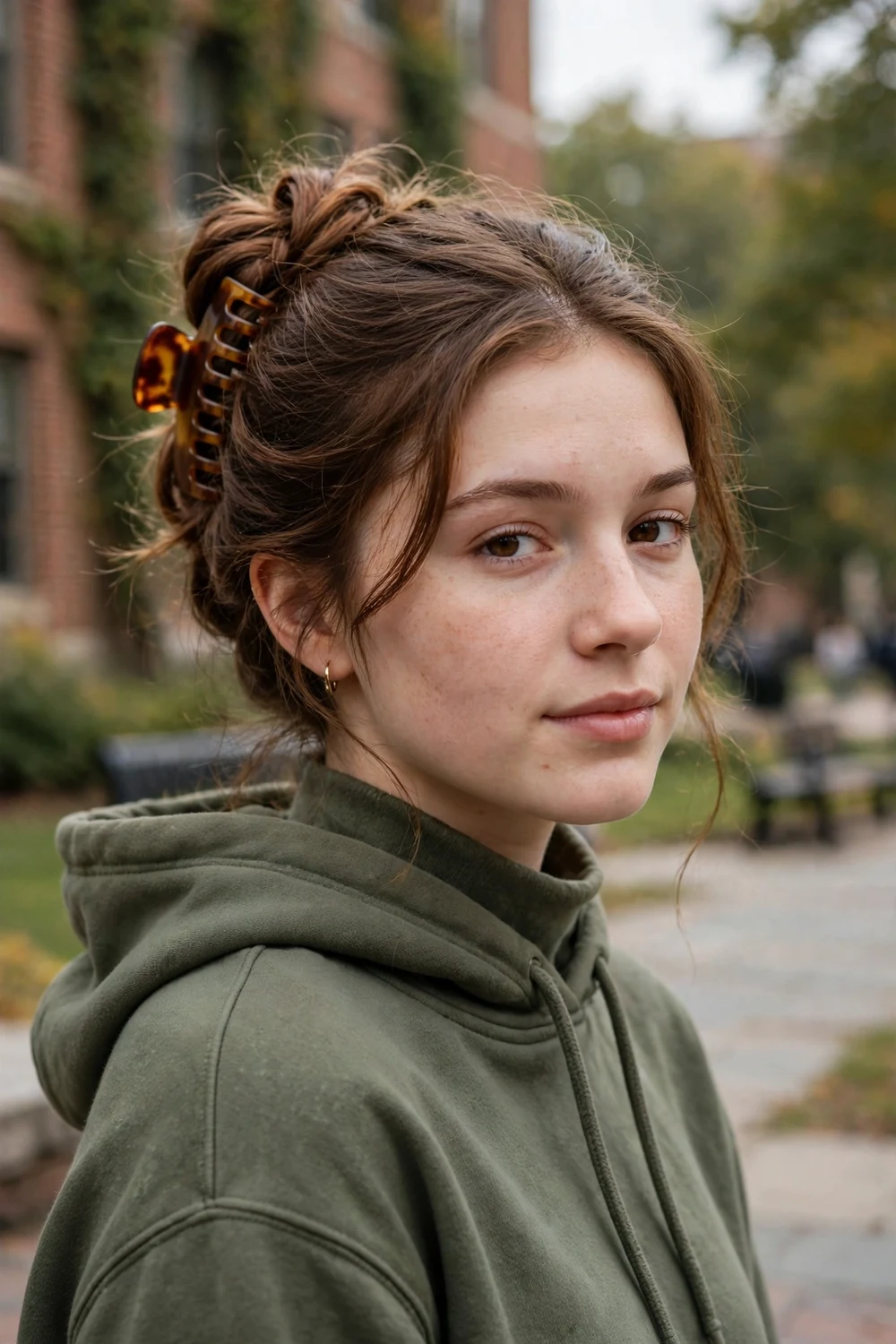
The claw clip updo is the fastest full up style on this list. Gather your hair at the back, twist the whole length upward against your head, fold the ends down, and clamp a large claw clip over the twist. Done well, it takes under a minute.
It is gentle on hair compared with tight elastics, and you can redo it between classes in seconds. Size matters: a clip that is too small for thick hair pops open by mid-morning, so choose a large clip with long teeth if your hair is dense. Students collecting a few quick options can browse more quick updos for short hair for shorter lengths.
Try this: twist the hair twice instead of once before clipping if it keeps slipping. The second twist shortens the fold and gives the clip more to hold.
Difficulty: Low · Cost: $ (salon)
26. Heatless Overnight Curls

Heatless overnight curls trade styling time for sleep time. In the evening, wrap sections of slightly damp hair around a soft rod, a robe belt, or two twisted buns, then sleep on the set. In the morning, unwind everything, shake the curls out, and separate them with your fingers.
The curls come out soft and even, with no heat damage and no morning plug-in tools competing for dorm outlets. The full method, including fixes for common mistakes, is covered in the guide to heatless hairstyles for long hair. Most sets hold through a full class day with a light mist of hairspray.
Try this: start with hair that is about eighty percent dry. Fully wet hair often stays damp at the core overnight and the curls fall flat by noon.
Difficulty: Low to Medium · Cost: $ (salon)
27. Curtain Bangs with Long Layers

Curtain bangs with long layers is a cut rather than a daily style: a center parted fringe that sweeps to both sides, blended into long layers through the lengths. The bangs frame the face on days when the rest of your hair is simply worn down, tied back, or still drying.
Daily effort is small. A two minute blow dry of the bangs with a round brush, sweeping them forward then out to each side, sets the shape, and the layers air dry well on wavy hair. The detailed cut breakdown sits in the guide to long hairstyles with curtain bangs. Trims every eight weeks or so keep the bangs at brow length.
Try this: ask for the shortest point of the bangs at the bridge of the nose on your first cut. You can go shorter at the next trim, but you cannot add length back.
Difficulty: Low · Cost: $$ (salon)
| Style group | Time to do | Best for | Upkeep |
|---|---|---|---|
| Buns and top knots (messy bun, top knot, side bun, braided bun) | 2 to 5 minutes | Late starts, study sessions, second day hair | Low |
| Braids (French, Dutch, fishtail, side, crown, waterfall) | 5 to 10 minutes | Gym to class days, labs, long hold | Low |
| Ponytails (sleek low, high volume, bubble, braided low) | 3 to 5 minutes | Presentations, workouts, warm days | Low |
| Half-up styles (twist, top knot) | 3 minutes | Wearing hair down with the face kept clear | Low |
| Clips and scarves (claw clip updo, hair scarf updo, space buns) | 1 to 5 minutes | Fastest fixes, events, photos | Low |
| Worn down finishes (loose waves, sleek straight, heatless curls) | 10 to 20 minutes, or overnight | Events, photos, formal days | Medium |
| Low upkeep cuts (textured bob, pixie, curtain bangs with layers) | 1 to 3 minutes daily | Cutting daily styling time at the source | Trim every 4 to 10 weeks |
Frequently Asked Questions
What is the fastest hairstyle for a college morning?
The claw clip updo is the fastest full style on this list: gather, twist up, fold, and clip takes under a minute. A messy bun and a high ponytail are close behind at about two minutes each. All three work on second day hair, which removes washing and drying from the morning entirely.
Which hairstyles hold up from the gym to class?
Double Dutch braids hold best, since the braid sits tight to the head and nothing swings loose during a workout. A classic French braid and a high ponytail with a strong elastic also survive training sessions. Afterward, a quick mist of dry shampoo at the roots and a re-tie or a smooth of the edges is usually all a style needs before class.
How can I make a hairstyle last on second day hair?
Second day hair often styles better than clean hair because natural oil and product residue add grip. Add dry shampoo at the roots before bed so it absorbs oil overnight, choose braids, buns, or top knots that use texture instead of fighting it, and sleep with your hair in a loose braid or a high loose ponytail to protect the shape.
What low upkeep haircut suits a busy student schedule?
A textured bob and curtain bangs with long layers both cut daily styling to a few minutes, and both grow out softly for eight weeks or more between trims. A pixie is the fastest daily option at about a minute of styling, but it needs a shape-up trim every four to six weeks, so it trades daily effort for more frequent salon visits.
What hair tools and accessories should I keep in a dorm room?
A small kit covers almost every style on this list: a brush, a pack of elastics in two sizes, bobby pins, one large claw clip, a scrunchie, dry shampoo, and a heat protectant spray if you use hot tools. A thin ribbon and one matte hair scarf add the braided and scarf styles. Everything fits in a single small pouch.
Final Thoughts
A campus hair routine works when it matches your actual mornings. Keep two fast styles you can do without thinking, one braided style for gym and lab days, and one finished style for events, and the list above covers all four slots. If long styling sessions are the real problem, solve it at the salon instead with a textured bob or curtain bangs and long layers, and let the cut do the daily work for you.

