



Finding a bob that flatters both thin hair and a round face comes down to two things: fullness and shape. Thin hair needs a cut that builds body at the roots and keeps the ends looking thick, while a round face needs lines that draw the eye downward and break up width at the cheeks.
I’ve spent years paying attention to which cuts actually hold up on fine hair, and the bob wins more often than any other length. Below you’ll find 20 bob haircuts for thin hair round face shapes, each one picked because it adds volume where you need it and structure where your face needs it.
Quick answer: The best bob haircuts for thin hair and round faces combine blunt or textured ends for fullness with longer front pieces, side parts, or angled lines that slim the cheeks. Chin to shoulder length works best, and a little crown volume goes a long way.
Quick Takeaways
- Blunt ends make thin hair look thicker; ask your stylist to keep the perimeter clean.
- Longer front pieces and side parts visually narrow a round face.
- Chin to shoulder length is the sweet spot; too short can widen, too long can drag.
- Root lift matters more than length: dry shampoo and a round brush do heavy lifting.
- Trim every 6 to 8 weeks to keep thin ends from looking stringy.
Why Bobs Work for Thin Hair and Round Faces
Shorter hair weighs less, so it lifts easier at the roots. That’s the whole trick with thin hair: remove the weight and the roots stand up. A bob ends between the chin and shoulders, which is exactly where you want fullness to sit.
For round faces, the bob gives you control over where the eye lands. Ends that fall past the chin pull the gaze down. An angle or a side part breaks the symmetry that makes a face read rounder. Put the two together and you get a cut that looks fuller and slimmer at the same time.
One honest note: not every bob does both jobs. A heavy one-length bob with no layering can sit flat on very fine hair, and a super-short rounded bob can emphasize cheek width. The 20 cuts below are the ones that handle both.
1. One-Length Blunt Bob
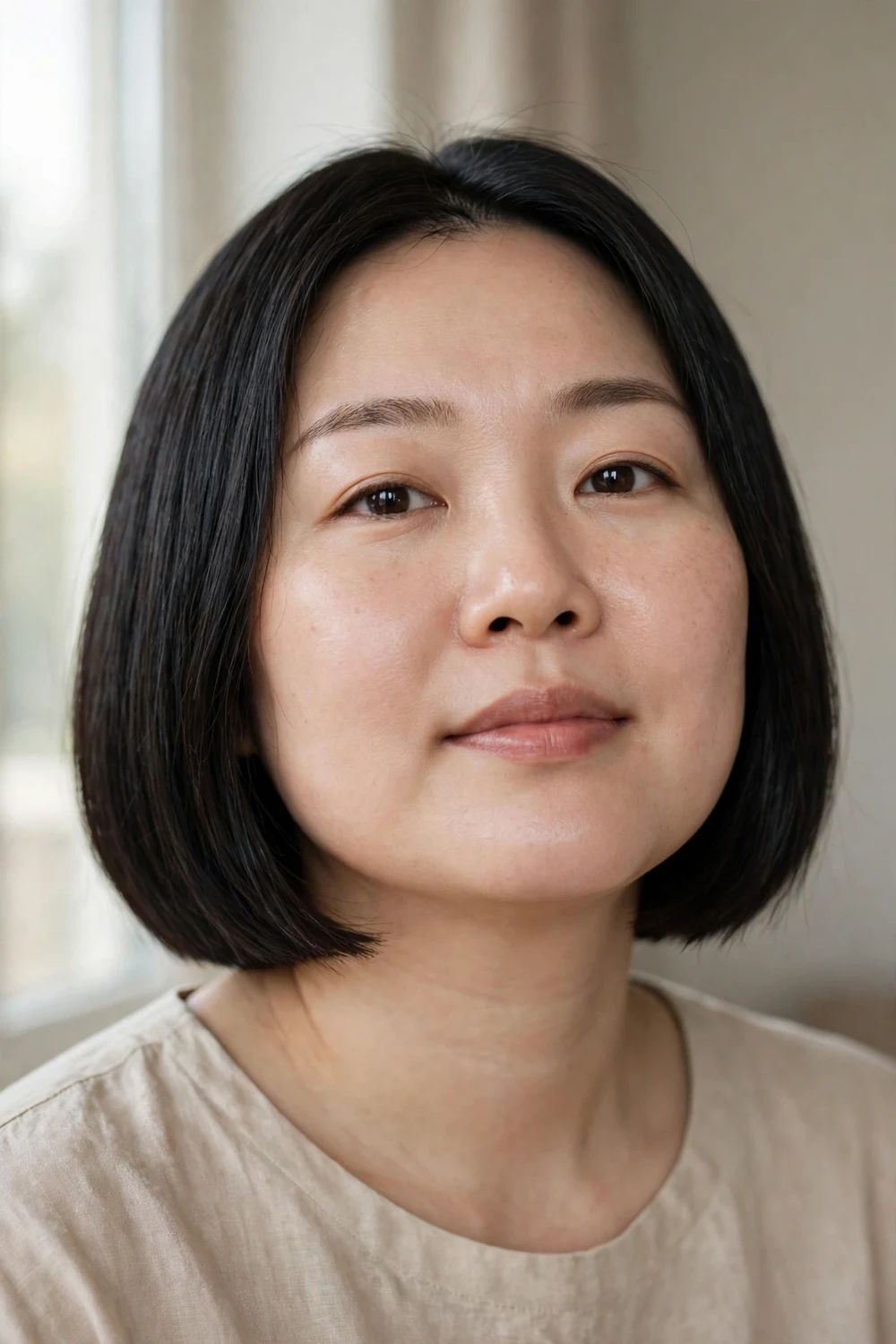
A single clean line at the bottom is the fastest way to make thin hair look denser. When every strand ends at the same point, the hem looks thick instead of wispy, and the jawline gets a sharp frame that adds definition to a round face. Keep it at or just below the chin so the ends sit where they slim, not where they widen. Ask for zero layering through the ends; the bluntness is the whole point.
Try this: Blow-dry with a paddle brush, tucking the ends slightly under for 10 seconds of heat per section to lock the shape.
If you want more short-length options built for fine strands, take a look at short bob haircuts for fine thin hair for cuts that keep the ends looking full.
2. Inverted Angled Bob
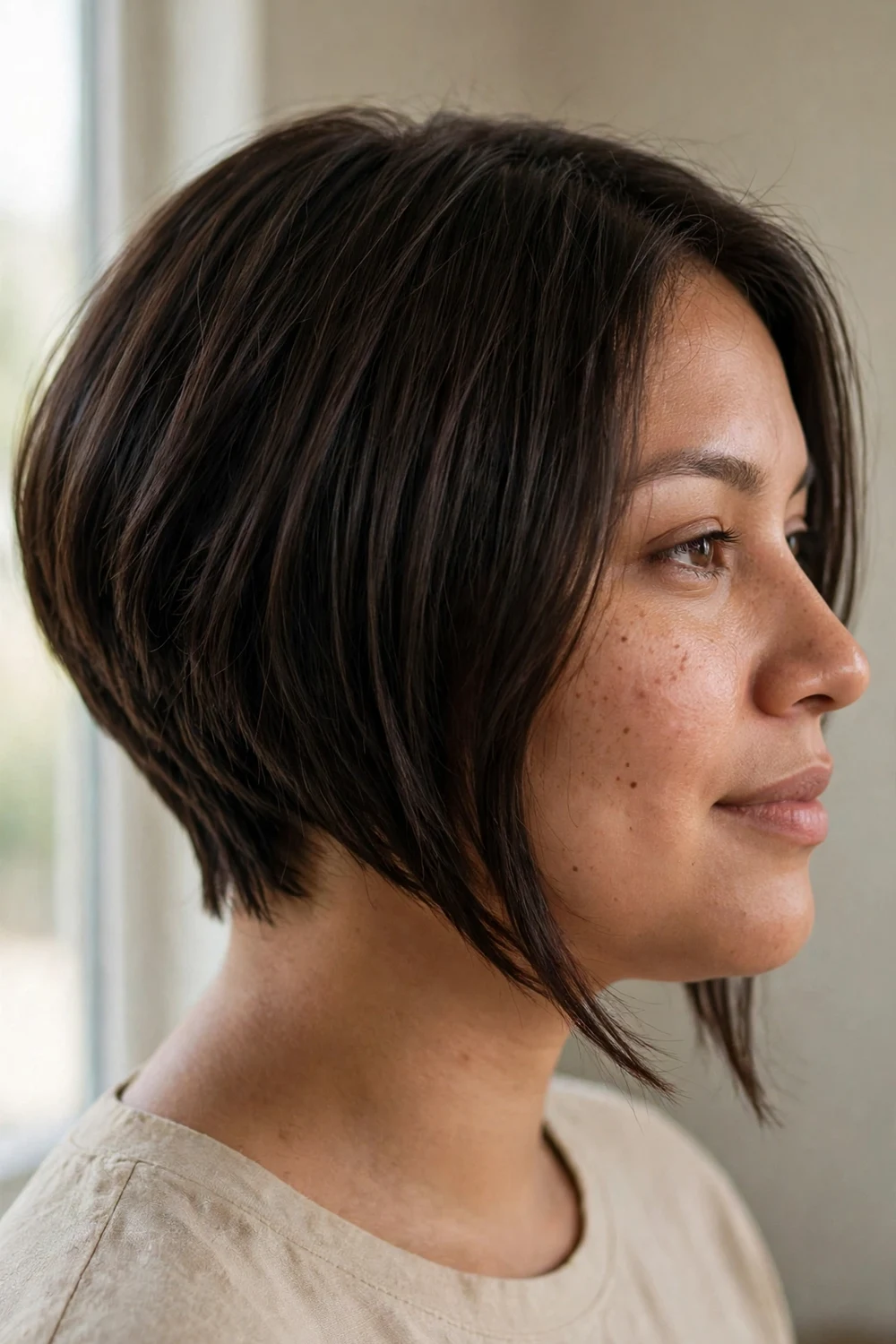
Shorter in the back and longer in the front, this cut does two jobs at once. The stacked layers at the nape build volume where thin hair usually lies flat, and the long front pieces draw a diagonal line past the chin that narrows the cheeks. It’s one of the most requested bobs for this exact hair and face combination. The angle works best when the front lands an inch or two below the chin.
Try this: Flip your head upside down and blast the roots with the dryer for 30 seconds before smoothing the lengths; the crown lift lasts all day.
For a full roundup of angled styles that slim the face, see angled bob haircuts for round faces.
3. French Bob with Bangs
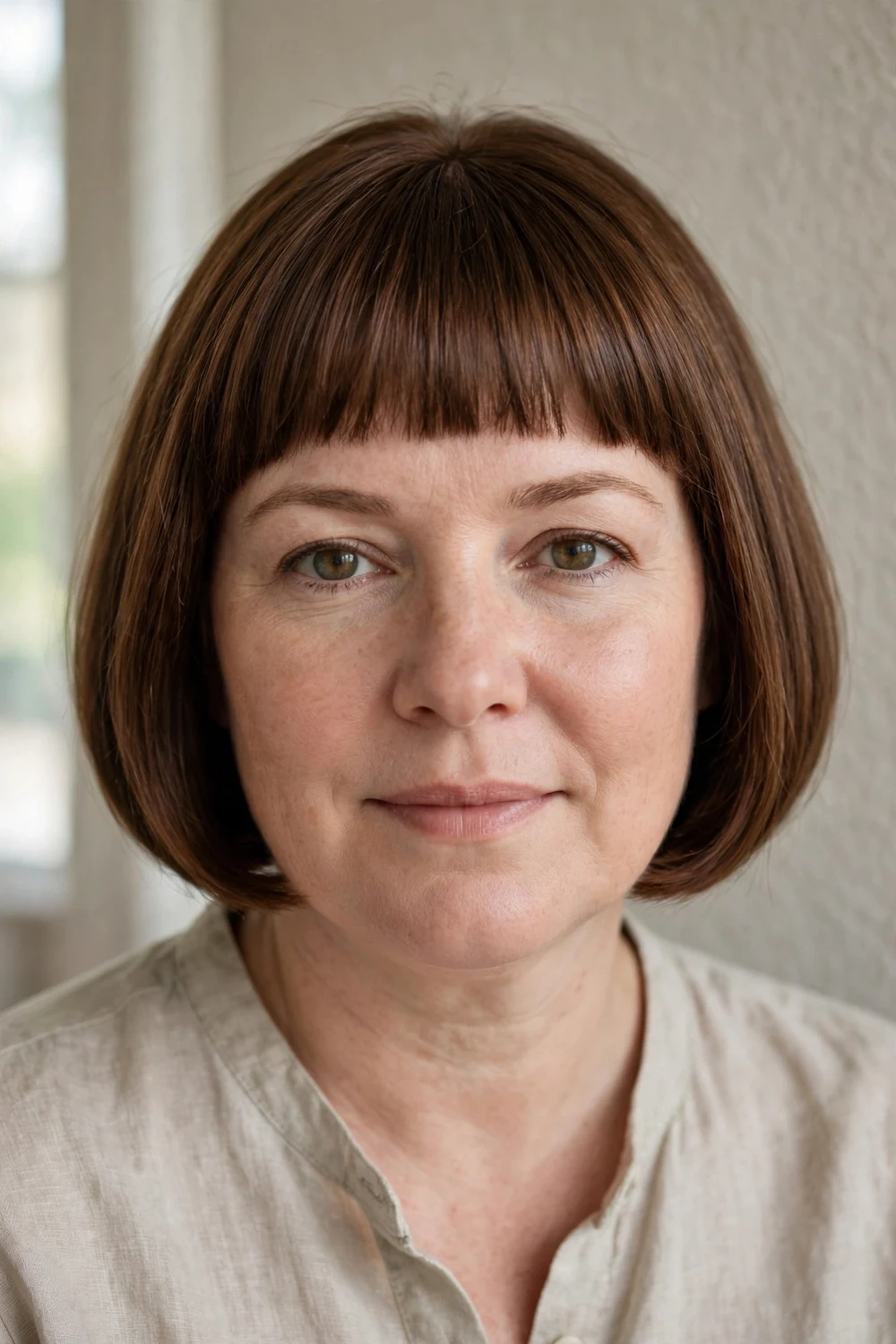
Chin-grazing length, a curved shape, and a straight fringe: the French bob is tailor-made for this combination. The short length keeps thin hair bouncy instead of limp, and the bangs shorten the forehead while the curved sides soften cheek width. It reads polished with almost no styling, which is a gift on busy mornings. Keep the fringe light and piece-y rather than heavy so it doesn’t eat up your density.
Try this: Let the bangs air-dry and smooth them with a flat iron for 5 seconds; over-drying makes fine fringe go flat.
4. Shaggy Bob
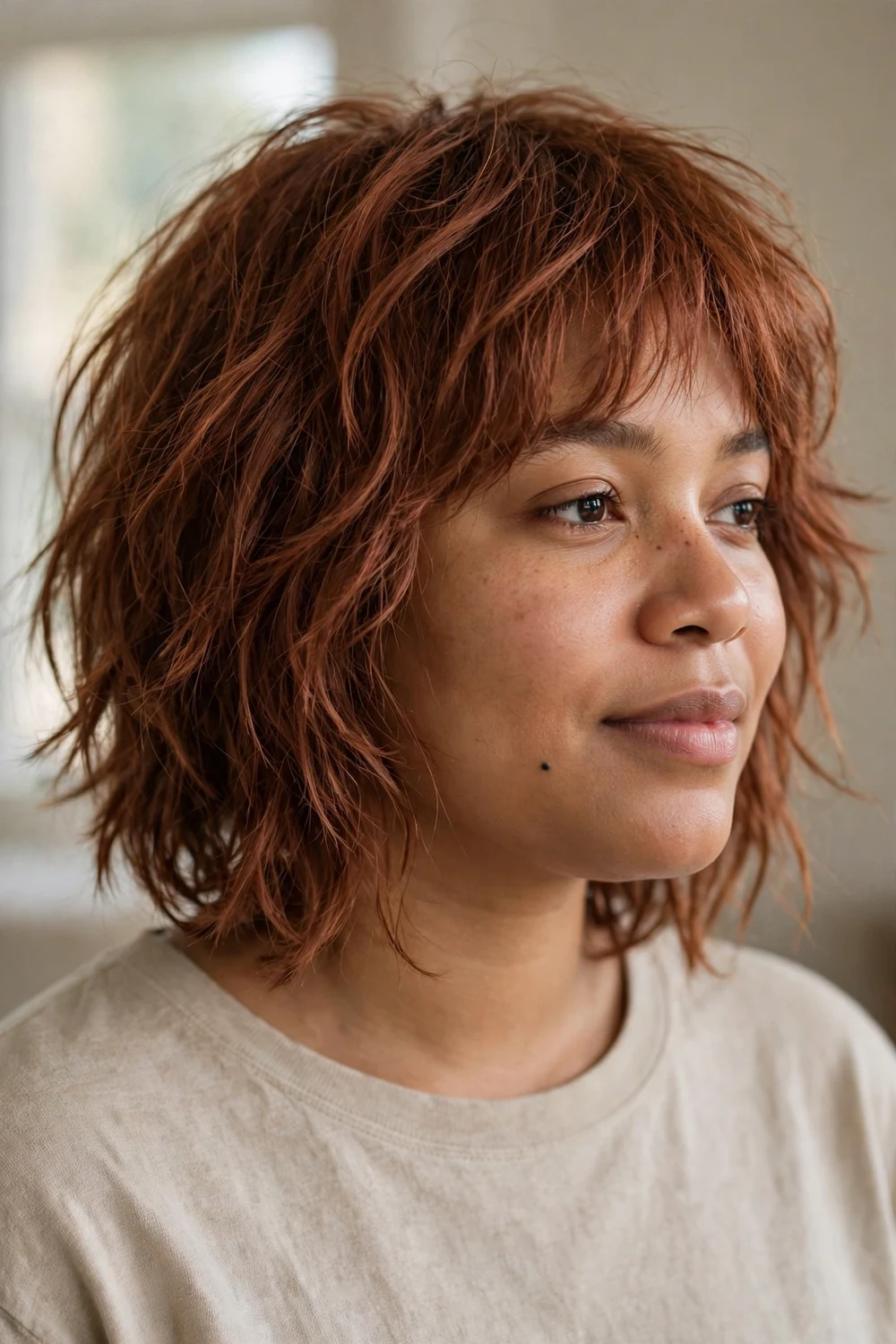
Choppy layers are a volume cheat code for fine hair. Each short layer sits on top of the one below it, which builds the illusion of thickness through the mid-lengths. On a round face, the uneven ends and texture keep the outline from looking too circular. This cut air-dries better than most, so it’s a strong pick if you don’t want to heat-style daily. Ask for texture through the ends but not too much thinning at the roots.
Try this: Scrunch a pea-sized amount of texturizing cream into damp ends and let it air-dry; don’t comb it out once dry.
5. Wavy Bob
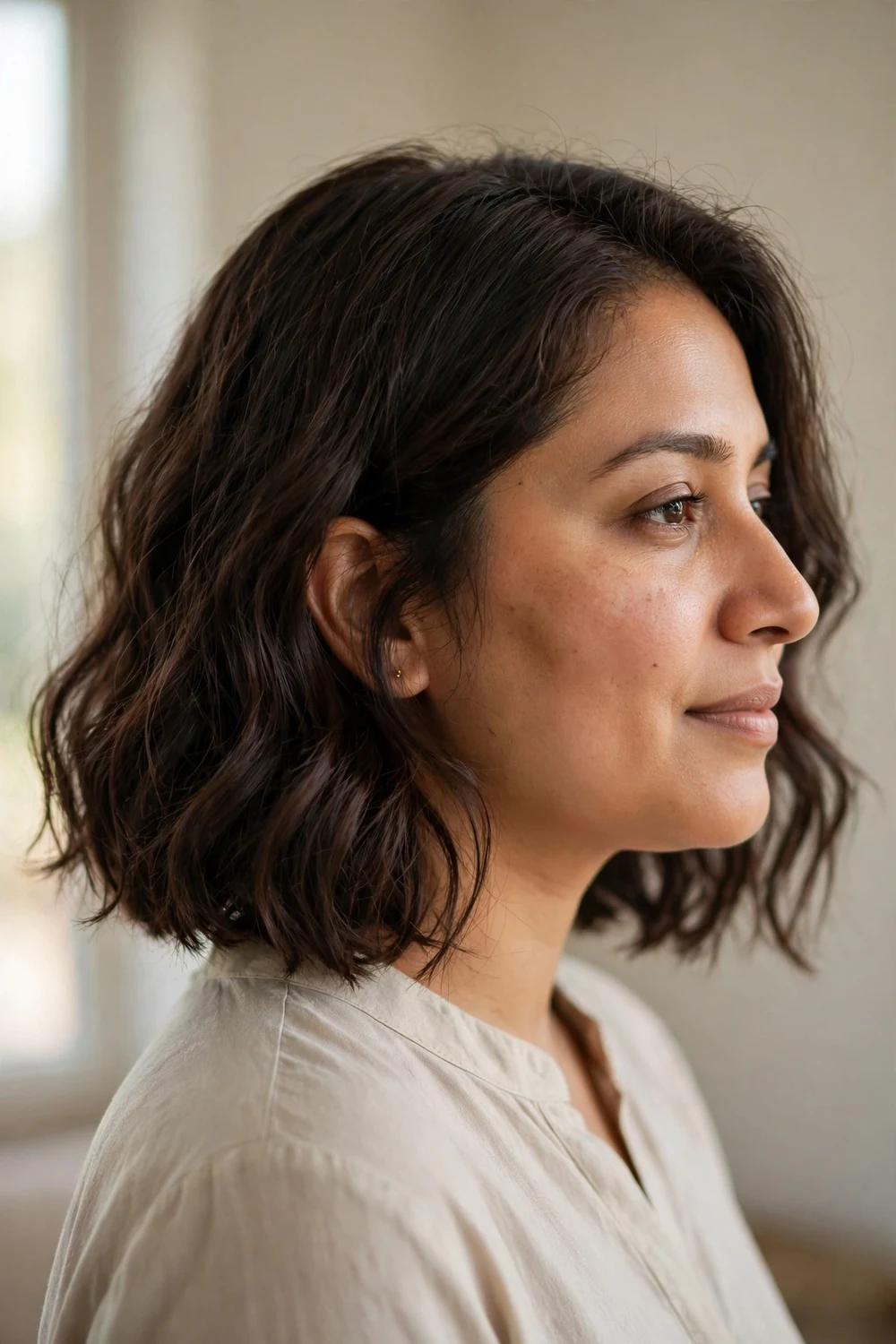
Waves add width in the right place: through the lengths, not at the cheeks. On thin hair, even loose bends make each section look twice as thick, and the movement keeps the style from sitting flat against a round face. A 1-inch curling iron gives the most natural result; wrap sections away from the face and leave the last inch straight so the ends stay piece-y. This is a 10-minute style that looks like you tried harder.
Try this: Mist dry shampoo at the roots before curling; the grit helps fine hair hold a wave for hours longer.
6. Curly Bob
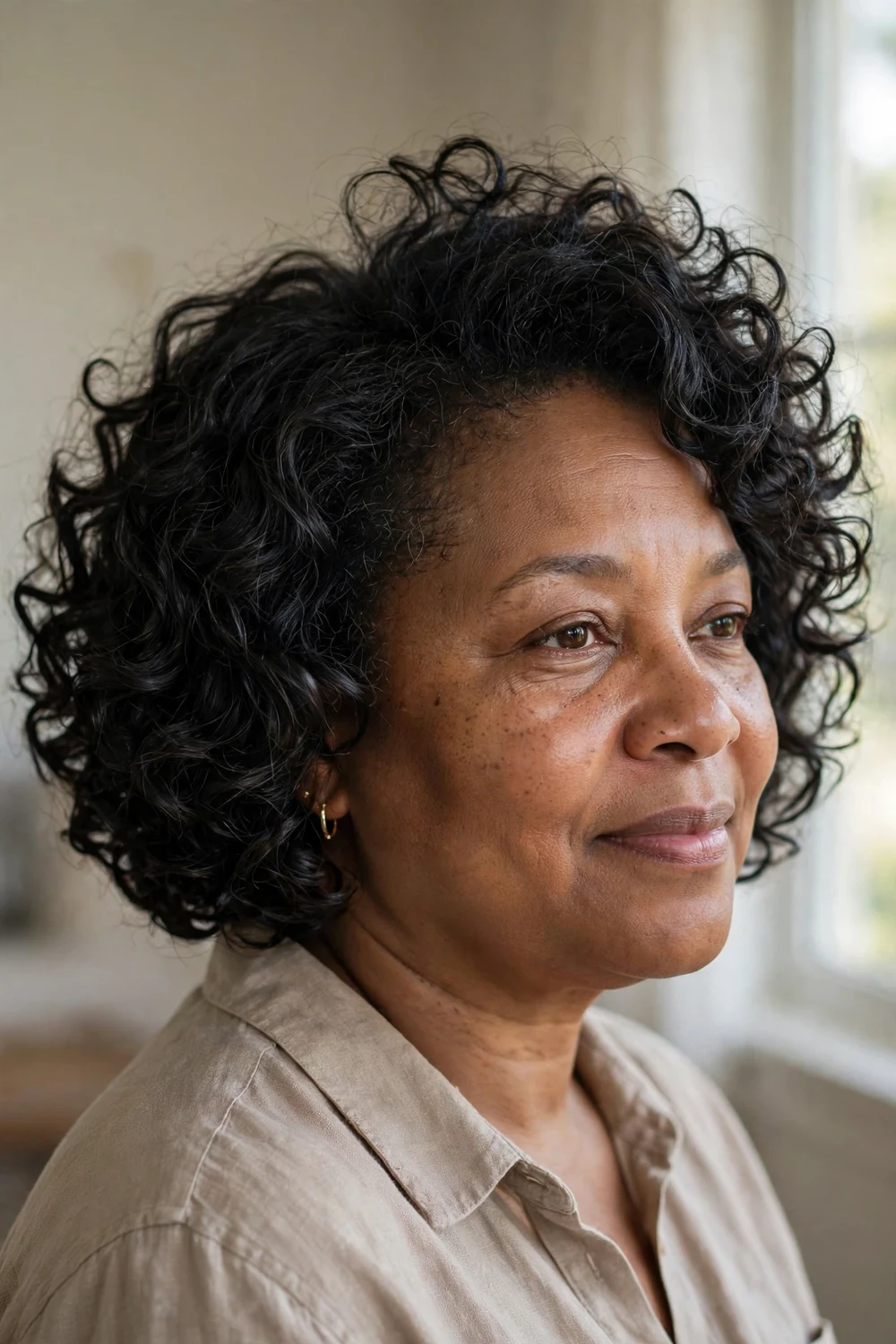
Don’t let thin hair stop you from wearing curls. A chin-length curly bob concentrates all your natural texture in a small area, which reads as fullness, and the height at the crown lengthens a round face. The key is a cut that removes bulk at the bottom while keeping length on top; ask for layers that let the curls stack instead of triangle out. A curl cream on soaking-wet hair sets the pattern without crunch.
Try this: Diffuse on low heat with your head tilted to each side; the side-to-side motion builds root volume fast.
7. Side-Swept Bob with Deep Side Part

Moving your part two inches off-center is the simplest slimming trick in the book. The deep side part breaks the symmetry of a round face and the sweep across the forehead creates a diagonal that the eye follows downward. On thin hair, the part switch also lifts the roots on the heavy side, which adds instant volume where the hair changed direction. Any bob length works; shoulder-grazing shows the sweep best.
Try this: While hair is damp, clip the part in place for 15 minutes; the crease trains fine hair to hold the new part.
8. Center-Parted Bob
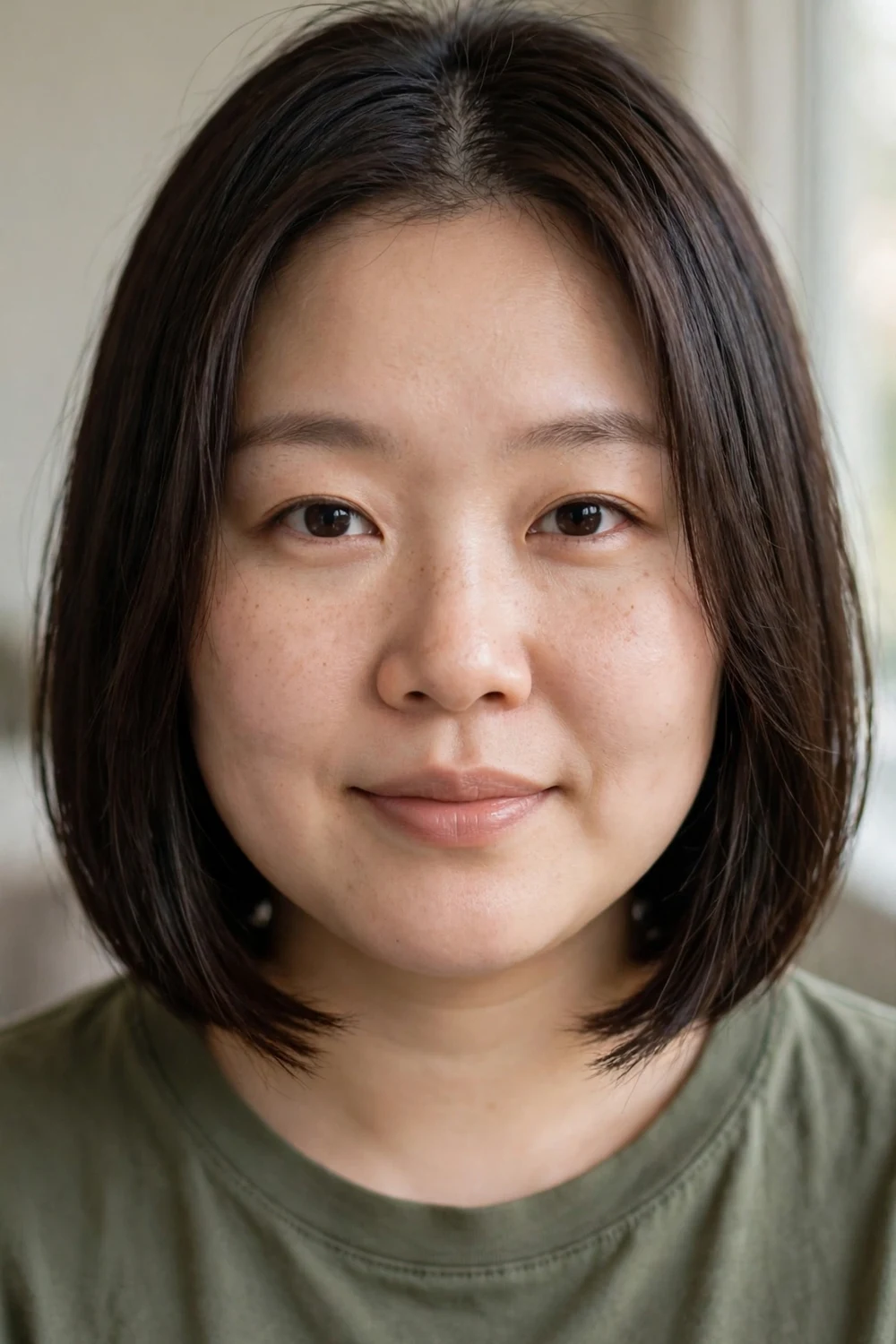
A middle part gets a bad reputation for round faces, but on a bob it can work when the length is right. Ends that fall past the chin on both sides create two vertical lines that frame and narrow the face, and the symmetry gives thin hair a neat, intentional look. The trick is root height: flat roots with a center part widen, lifted roots with a center part lengthen. A little teasing at the crown makes all the difference.
Try this: Backcomb a 2-inch section at the crown, smooth the top layer over it, and set with light hairspray for hidden height.
9. Asymmetrical Bob
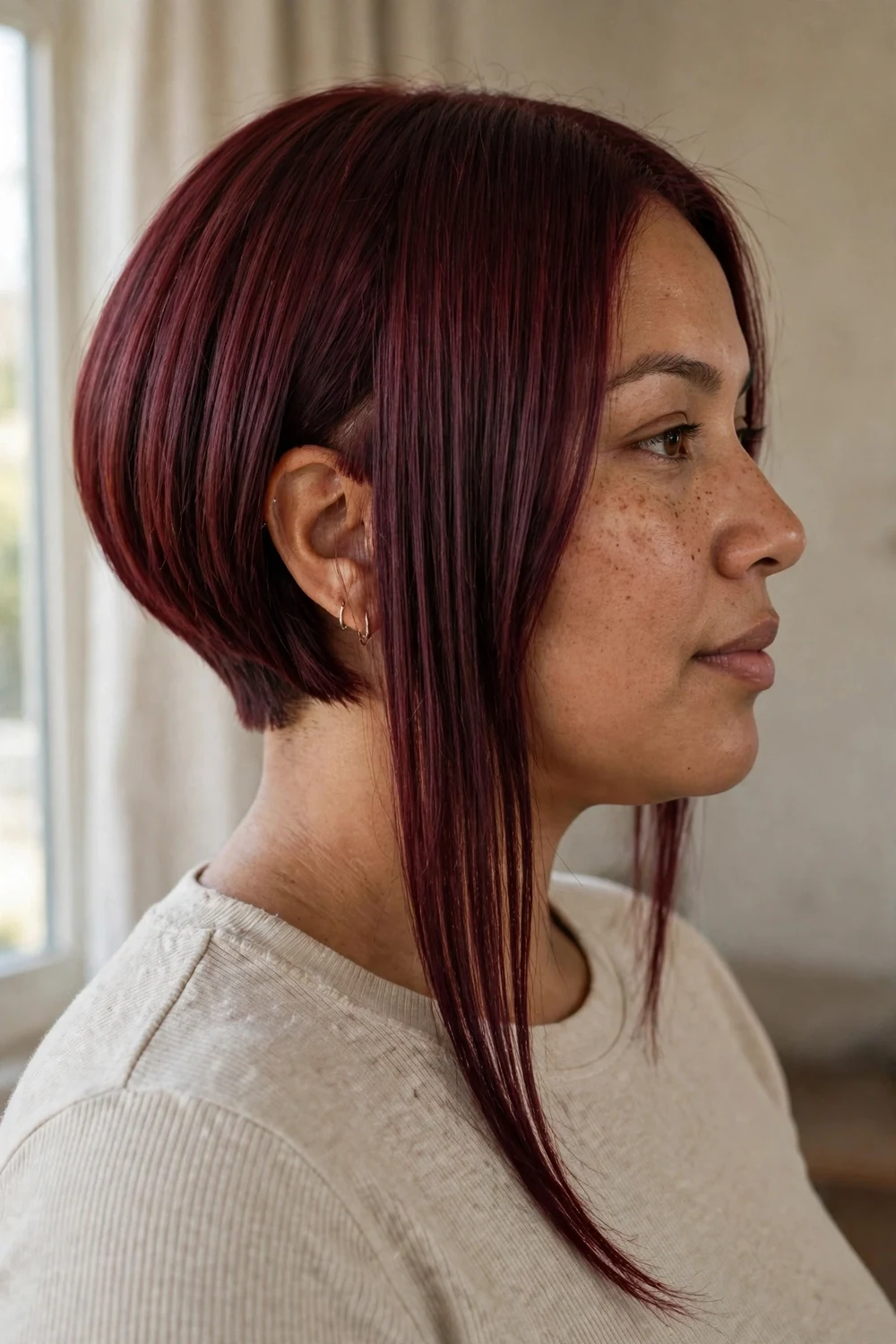
One side longer than the other sounds dramatic, but even a 1 to 2 inch difference changes everything. The uneven line stops the eye from reading the face as a circle, and the longer side gives you a built-in slimming panel along the cheek. For thin hair, the asymmetry adds visual interest that distracts from low density. Keep the shorter side tucked behind the ear to show off the difference.
Try this: Flat-iron the longer side smooth and add a slight bend to the shorter side; the contrast makes the cut look intentional.
10. Long Bob (Lob)
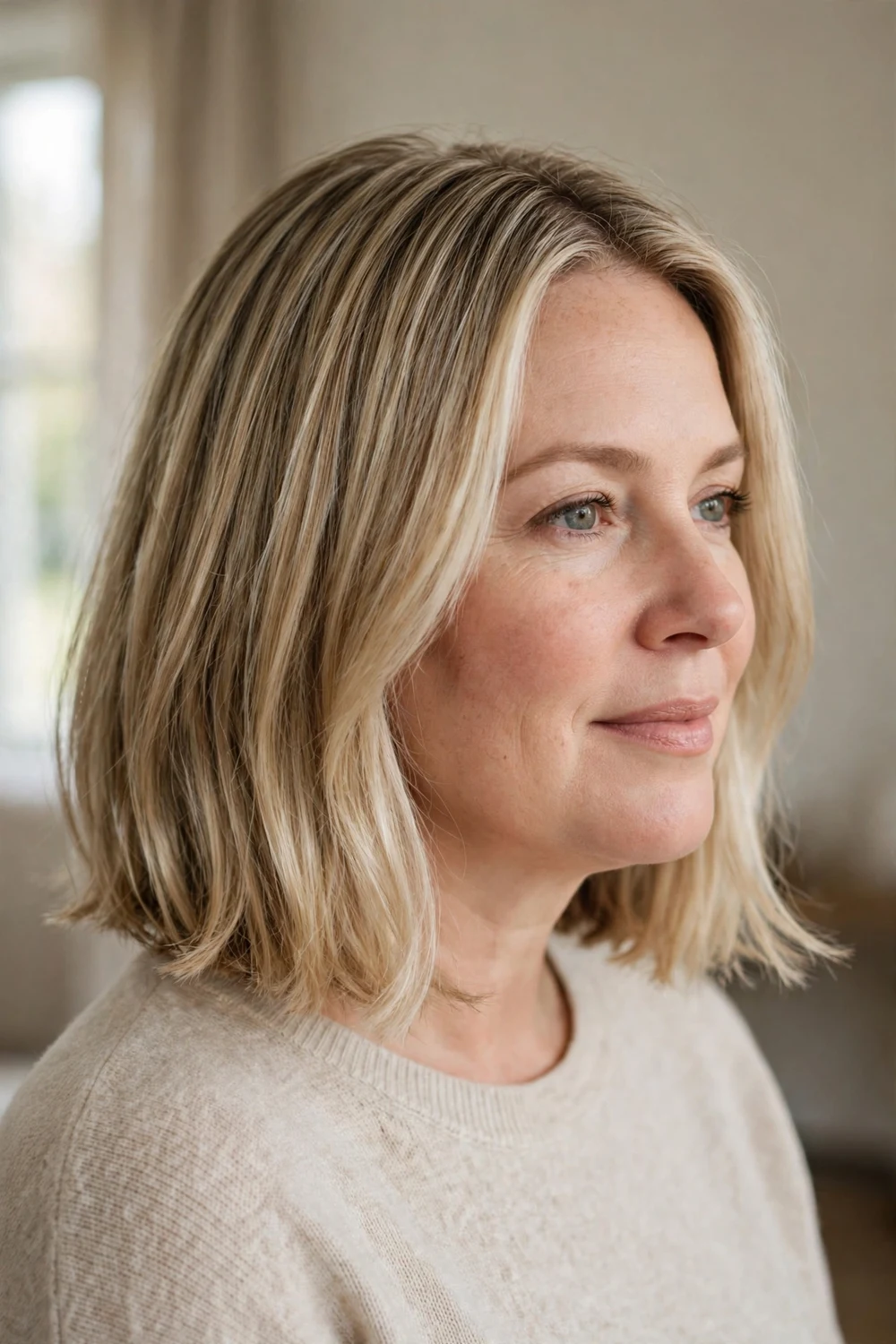
When you’re nervous about going short, the lob is the safe middle ground. Ending right at or just above the shoulders, it keeps enough length to pull back on off days while still being short enough to hold volume. For round faces, this length is ideal because it clears the widest part of the cheeks and lets the hair fall in a slimming curtain. Blunt ends keep thin hair looking thick at the bottom.
Try this: Bend the last 2 inches under with a flat iron; the slight curve stops the ends from flipping out and looking thin.
11. Balayage Bob
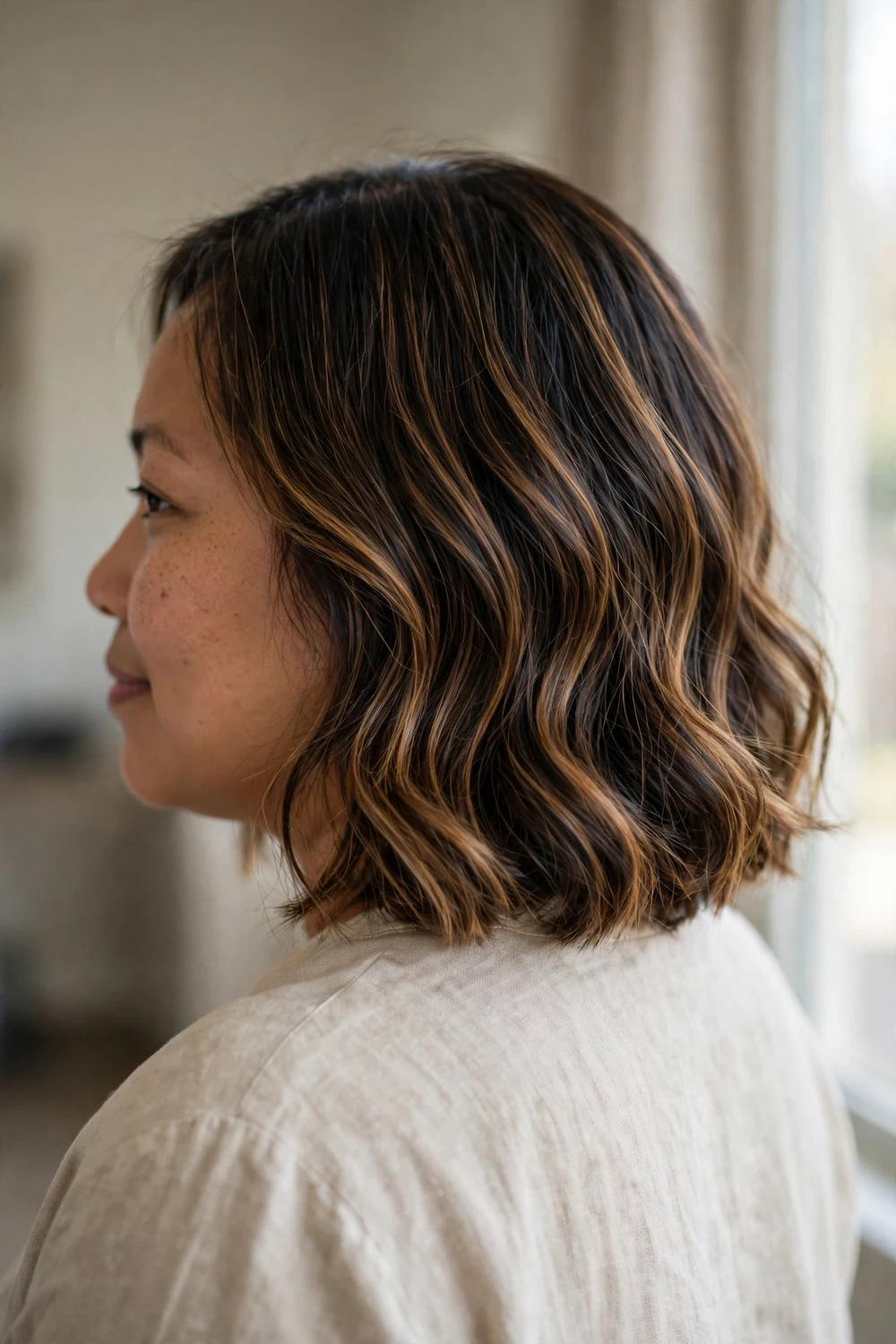
Color can do what scissors can’t: hand-painted highlights create ribbons of light and shadow that make thin hair look like it has twice the strands. On a bob, balayage sits exactly where the eye looks, so the dimension is impossible to miss. For round faces, ask your colorist to keep the brightness toward the ends and slightly darker at the roots; the depth on top keeps the face from looking wider. This is the highest-impact, lowest-maintenance color for fine hair.
Try this: Use a purple shampoo once a week to keep the blonde pieces bright; dull color flattens the dimensional effect.
12. Dimensional Highlighted Bob
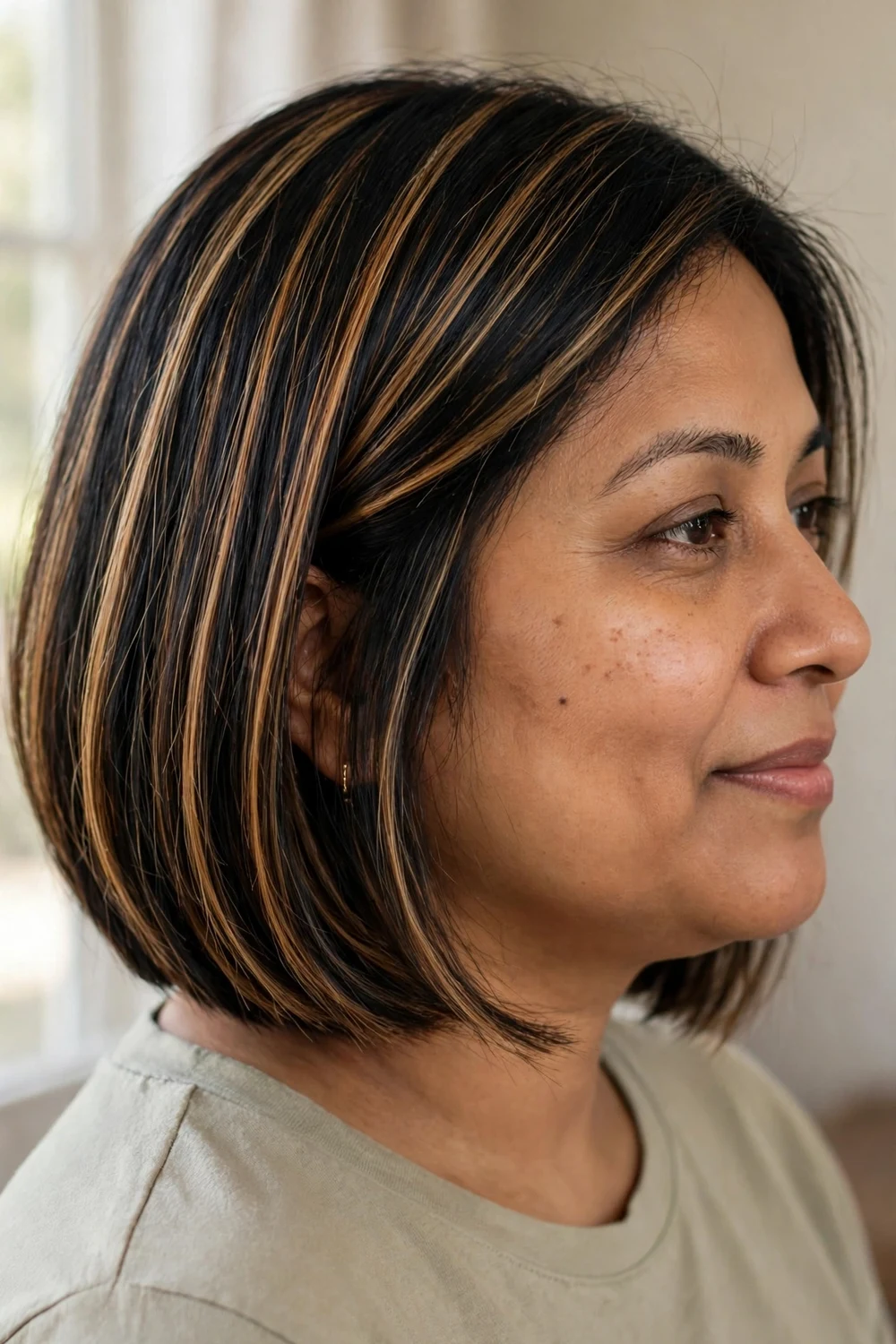
Full balayage isn’t the only way to fake density. A few carefully placed highlights and lowlights through a bob create the same light-and-shadow depth with less upkeep and less damage. On thin hair, the contrast between tones breaks up the flat, one-note look that makes fine strands obvious. Face-framing highlights are especially useful on round faces because they pull attention toward the center of the face and away from the cheeks.
Try this: Ask for babylights around the face; they’re finer than regular highlights and grow out without a harsh line.
13. Sleek Straight Bob
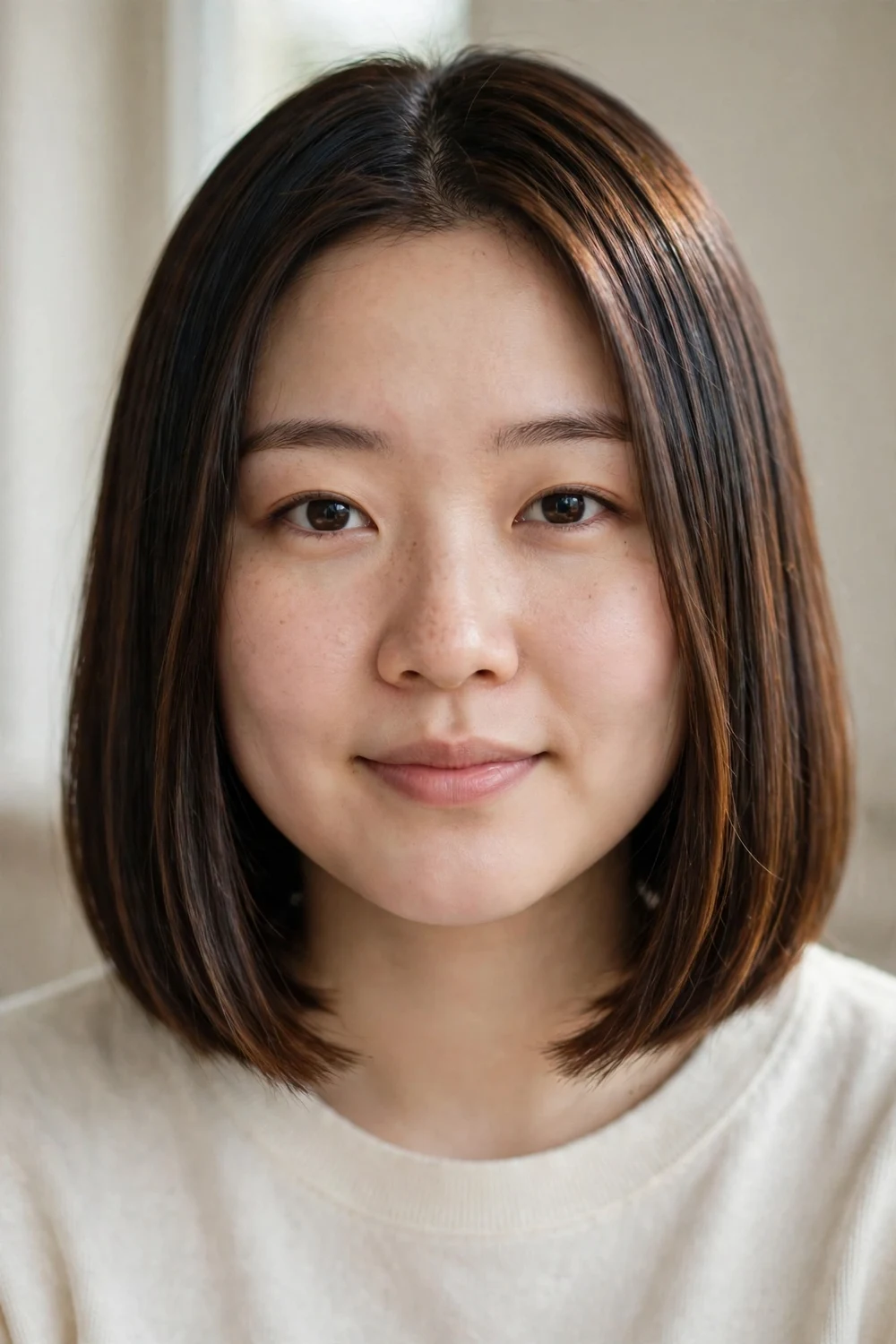
Thin hair takes to sleek styling naturally because there’s less bulk to fight. A straight bob with a glassy finish looks deliberate and polished, and the clean vertical lines run straight past the cheeks for a slimming effect. The risk is flatness, so the cut needs a precise line and you need a root boost. A pea-sized drop of smoothing serum on the mid-lengths only keeps the roots from going limp.
Try this: Blow-dry roots upward with a round brush first, then flat-iron the lengths; volume on top plus sleek ends is the winning combo.
14. Textured Choppy Bob
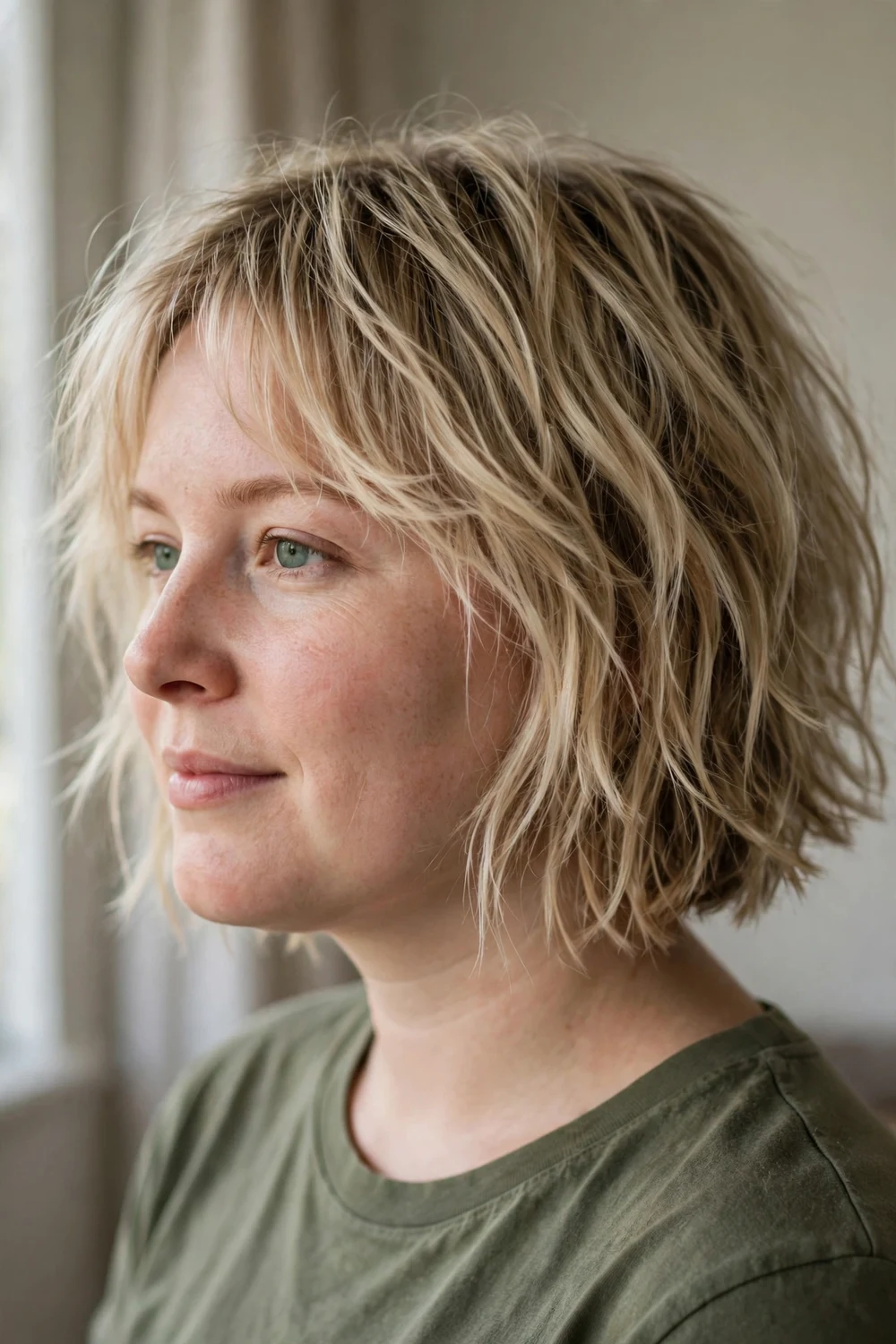
Point-cut ends and piece-y texture turn fine hair into something that looks deliberately edgy instead of just thin. The choppiness creates separation between strands, and that separation reads as movement and fullness. On a round face, the irregular outline keeps things from looking too neat and circular. This cut grows out gracefully, so you can stretch trims to 8 weeks without it looking messy.
Try this: Rub a tiny amount of matte paste between your palms and pinch random ends; the piece-y finish takes 60 seconds.
15. Razor-Cut Bob

A razor doesn’t cut hair the way scissors do; it shaves the ends into soft, feathery points instead of a hard line. For thin hair, that softness is useful: the wispy ends move and separate, which creates the impression of airy fullness rather than a thin, blunt edge. On a round face, the feathered outline softens without adding width. This technique suits straight to slightly wavy hair best; very curly hair can frizz with a razor.
Try this: Let it air-dry with a light leave-in; heat styling can make razor-cut ends look stringy on fine hair.
16. Bob with Wispy Bangs

Wispy bangs give you the face-framing benefit of a fringe without the density cost of a heavy one. The sheer, see-through texture keeps your forehead visible underneath, which stops the bangs from shortening a round face too much. On thin hair, the lightness is the point: a thick fringe can eat up a third of your hair’s volume, but wispy bangs use barely any. They grow out softly too, so there’s no awkward stage.
Try this: Trim the bangs yourself every 3 weeks with the scissors pointed straight up into the ends; the vertical snips keep them wispy.
Wispy fringe lovers should also browse bob haircuts for thin hair with bangs for more fringe styles that keep fine hair looking full.
17. Layered Bob with Face-Framing Layers

Here’s where layering earns its keep: two or three face-framing pieces that start at the cheekbone and curve inward do more slimming than any other single detail. The interior layers stay long enough not to thin out the ends, so you get movement around the face without losing density at the bottom. Tell your stylist you want the shortest face-framing piece no higher than the cheekbone; shorter than that and it can flip out and widen.
Try this: Wrap the face-framing pieces around a round brush and pull down and inward while drying; the inward curve hugs the cheeks.
18. Chin-Length Bob
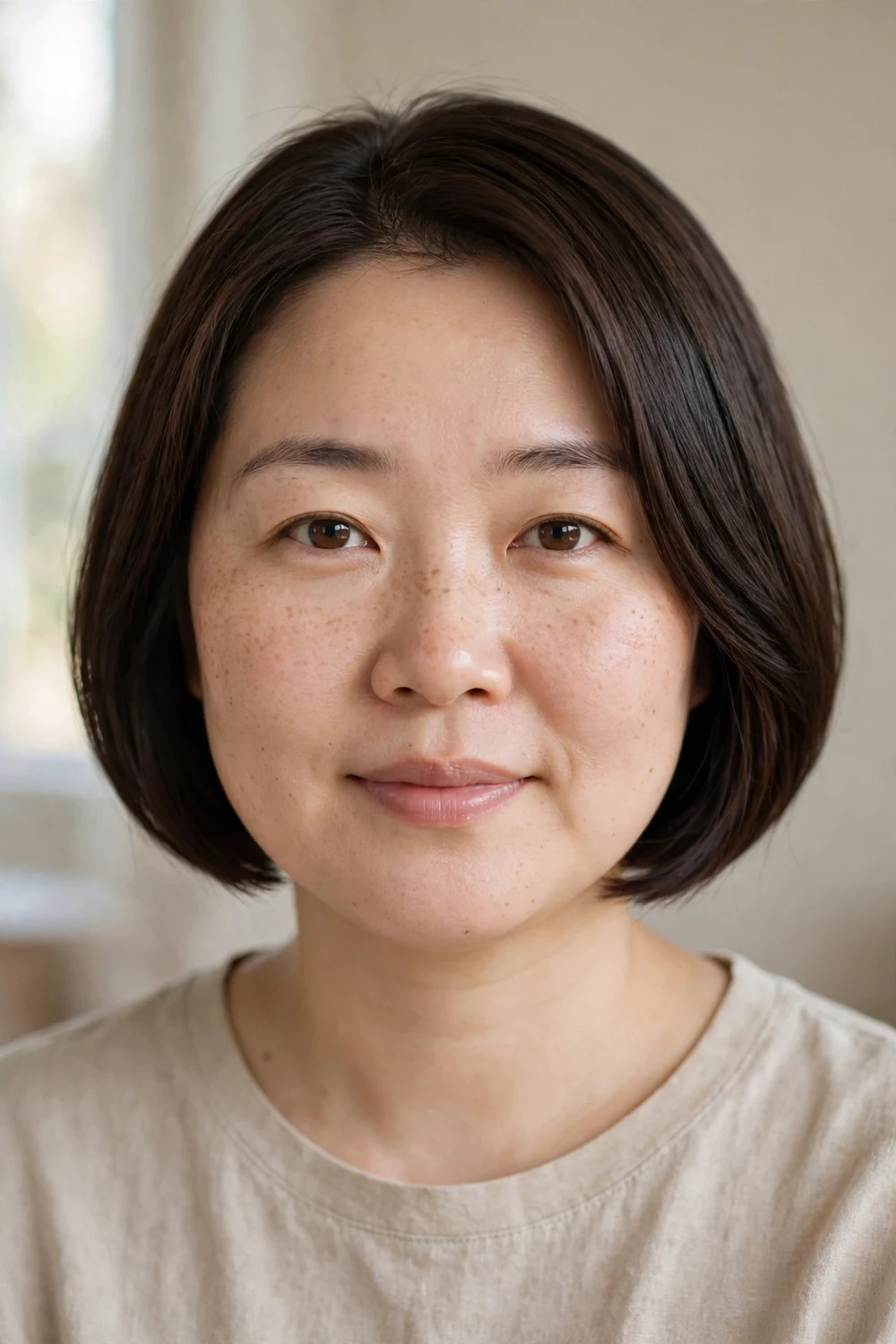
Ending right at the chin is a deliberate choice for round faces: the strong horizontal line at the jaw creates the definition that soft round features lack. For thin hair, this shorter length means maximum bounce, since there’s barely any weight pulling the roots down. The cut looks best with a slight inward bevel at the ends so it cups the jaw instead of flipping out. It’s a confident, graphic shape that needs little styling.
Try this: Sleep on a silk pillowcase; fine chin-length hair shows bedhead fast, and silk keeps the shape intact overnight.
For more cuts at this exact length, check chin length bob hairstyles for thin hair.
19. Bob with Curtain Bangs

Curtain bangs part in the middle and sweep to both sides, which makes them one of the kindest fringe options for a round face. The center opening draws the eye down the middle of the face, and the longer sides blend straight into the bob’s layers. On thin hair they’re low-risk: they use little hair, grow out into face-framing layers, and need only a quick round-brush flick to style. Keep them at cheekbone length or longer.
Try this: Blow-dry the bangs forward first, then sweep each side outward; drying them forward first prevents a harsh middle split.
20. Feathered Bob
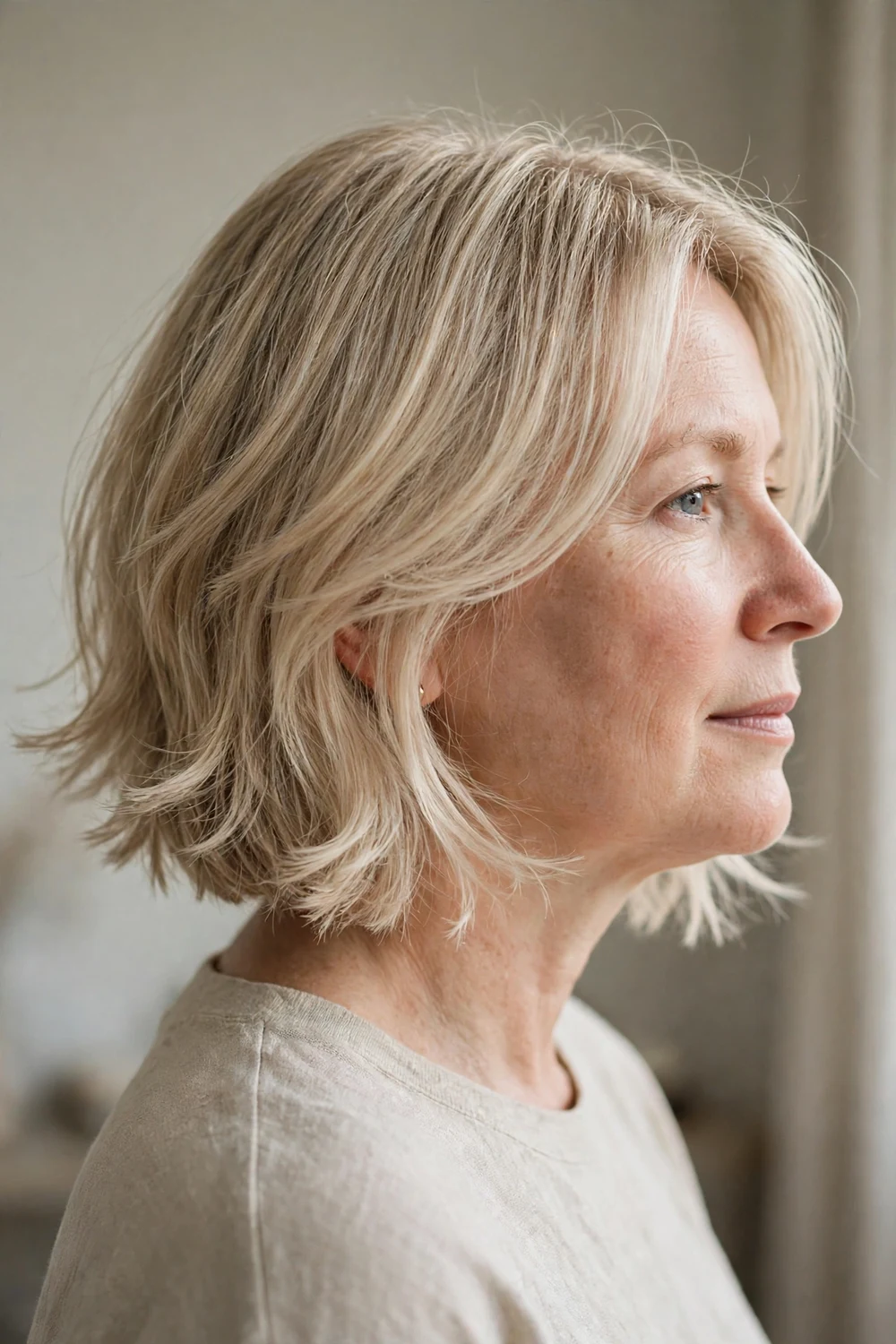
Feathering is layering with a retro soul: soft, flipped-out ends that move away from the face instead of hugging it. That outward movement is exactly what thin hair needs to look airy rather than limp, and on a round face the flipped ends add width only at the jaw, where it balances rather than widens. A round brush and 5 minutes give you the flip; the cut does the rest. It suits women who want softness without losing shape.
Try this: Flip only the bottom 2 inches outward; flipping higher up the head adds width at the cheeks, which you don’t want.
Bob Haircuts for Thin Hair Round Face Comparison at a Glance
| Style | Best For | Difficulty | Upkeep |
|---|---|---|---|
| One-Length Blunt Bob | Maximum thickness at the ends | Easy | Trim every 6 weeks |
| Inverted Angled Bob | Crown volume plus face slimming | Easy | Trim every 6 to 8 weeks |
| French Bob with Bangs | Polished low-effort style | Easy | Bang trims every 3 weeks |
| Shaggy Bob | Air-dry texture lovers | Easy | Trim every 8 weeks |
| Wavy Bob | Soft movement and fullness | Medium | Style 10 minutes daily |
| Curly Bob | Natural curls and crown height | Medium | Diffuse 15 minutes |
| Side-Swept Bob with Deep Side Part | Instant slimming with any length | Easy | Re-part while damp |
| Center-Parted Bob | Neat symmetrical framing | Easy | Root lift daily |
| Asymmetrical Bob | Edgy slimming lines | Easy | Trim every 6 weeks |
| Long Bob (Lob) | Versatility and easy grow-out | Easy | Trim every 8 weeks |
| Balayage Bob | Color-driven fullness | Medium | Tone every 8 to 10 weeks |
| Dimensional Highlighted Bob | Depth without heavy upkeep | Easy | Refresh every 10 to 12 weeks |
| Sleek Straight Bob | Polished minimal styling | Medium | Root volume daily |
| Textured Choppy Bob | Piece-y modern finish | Easy | Trim every 8 weeks |
| Razor-Cut Bob | Soft feathery movement | Easy | Air-dry friendly |
| Bob with Wispy Bangs | Light fringe without density loss | Easy | Bang trims every 3 weeks |
| Layered Bob with Face-Framing Layers | Targeted cheek slimming | Medium | Style 5 minutes daily |
| Chin-Length Bob | Strong jawline definition | Easy | Trim every 6 weeks |
| Bob with Curtain Bangs | Soft center-opening fringe | Easy | Quick round-brush styling |
| Feathered Bob | Airy flipped-out ends | Medium | Round-brush 5 minutes |
How to Choose the Right Bob for You
Start with your styling patience. If you won’t heat-style, pick the shaggy bob, razor-cut bob, or textured choppy bob; they look right air-dried. If you enjoy 10 minutes with tools, the wavy bob, feathered bob, and layered options open up.
Next, think about your hairline and part. A natural deep side part points you toward the side-swept bob. A centered hairline suits the curtain bangs or center-parted bob. Bring photos of your actual face shape to the appointment; a good stylist adjusts the angle and length to your cheeks, not to the photo.
If slimming is your top priority, narrow it to the inverted angled bob, the asymmetrical bob, and the face-framing layered bob. If thickness is the bigger worry, the blunt bob, chin-length bob, and balayage bob deliver the most visible density. For a broader look at face-flattering options, browse bob hairstyles for round faces to compare more slimming cuts.
Mistakes to Avoid
Don’t over-layer fine hair. Long layers add movement, but too many short layers through the ends remove the very density you’re trying to build. Keep layers in the top half and leave the bottom solid.
Don’t go shorter than the chin if slimming matters to you. Above-chin bobs expose the widest part of a round face with nothing to frame it. Chin length or longer gives you that framing line.
Don’t skip the root routine. Thin hair falls flat by midday no matter the cut, so dry shampoo at the roots and a quick upside-down blast aren’t optional extras; they’re part of the haircut.
Don’t choose a heavy straight-across fringe on very fine hair unless you’re ready for the upkeep. It uses a lot of your limited density and needs frequent trims. Wispy or curtain bangs are the safer fringe for thin hair.
Frequently Asked Questions
What is the best bob length for thin hair and a round face?
Chin to shoulder length is the sweet spot. Chin length gives the most bounce and the strongest jawline definition, while shoulder length offers more styling options and a longer slimming line. Avoid going much shorter than the chin if slimming is a priority, and avoid going past the shoulders, where thin hair starts to look stringy.
Should I get bangs with a bob if I have thin hair and a round face?
Light bangs work well; heavy bangs don’t. Wispy bangs, curtain bangs, and a light French fringe frame the face without using up much density. A thick straight-across fringe can eat into thin hair’s volume and needs trims every 3 weeks, so choose it only if you’re committed to the upkeep.
Will layers make my thin hair look thinner?
They can if they’re overdone. Short layers through the ends remove density, which is the opposite of what thin hair needs. The right approach is longer layers concentrated near the crown and around the face, with the bottom few inches left solid. That gives you movement on top and thickness at the ends.
How do I add volume to a bob on thin hair?
Start at the roots: apply dry shampoo or root-lift spray to damp hair, then blow-dry upside down or with a round brush lifting upward. Sleep with your hair loosely clipped on top of your head to preserve lift overnight. During the day, flip your part to the other side for an instant refresh. A trim every 6 to 8 weeks keeps the ends thick, which also reads as volume.
What bob haircuts should round faces avoid?
Skip bobs that end right at the widest part of the cheeks with no layering or part to break the line, since they emphasize width. Very short rounded bobs that hug the head can also make a round face look rounder. Instead choose cuts with longer front pieces, side parts, angles, or face-framing layers that create vertical or diagonal lines.
Final Thoughts
Thin hair and a round face aren’t problems to fix; they’re just two traits that ask for a smarter cut. Any of these 20 bobs gives you both fullness and flattering lines, so pick the one that fits your mornings. When in doubt, the inverted angled bob is the safest first move: volume in the back, slimming in the front, and it grows out well.

